
For all the new Buddhas in the West posts
follow us on Bluesky & Instagram
The idols of Bamiyan? Western knowledge of Buddhist material culture in the 1830s was quite limited. When Alexander Burnes “discovered” the colossal buddhas of Bamiyan in 1832, he only referred to them as idols and believed was one male and the other female.
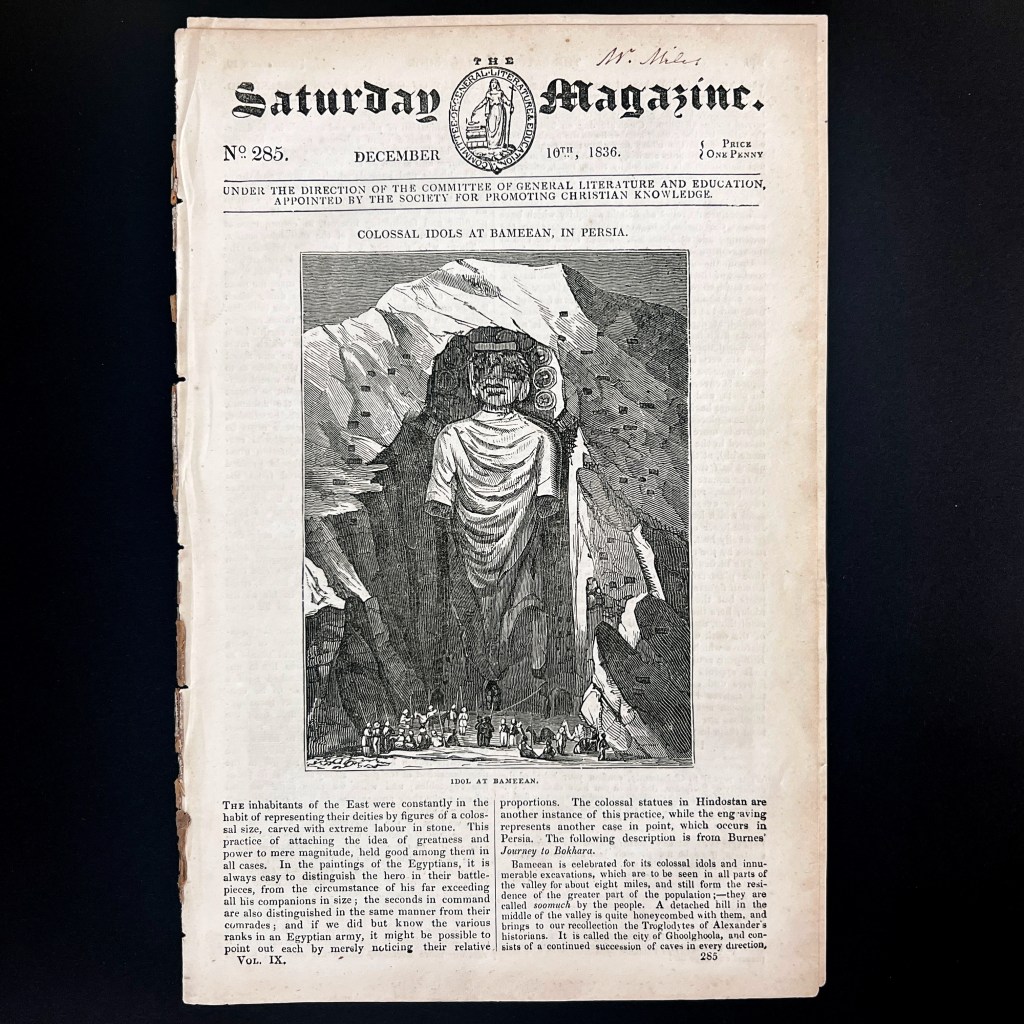
The Saturday Magazine was an illustrated British periodical to help educate the working class. Published during British imperial expansion in the 19th century, articles would often detail exotic locales for the enjoyment of readers.
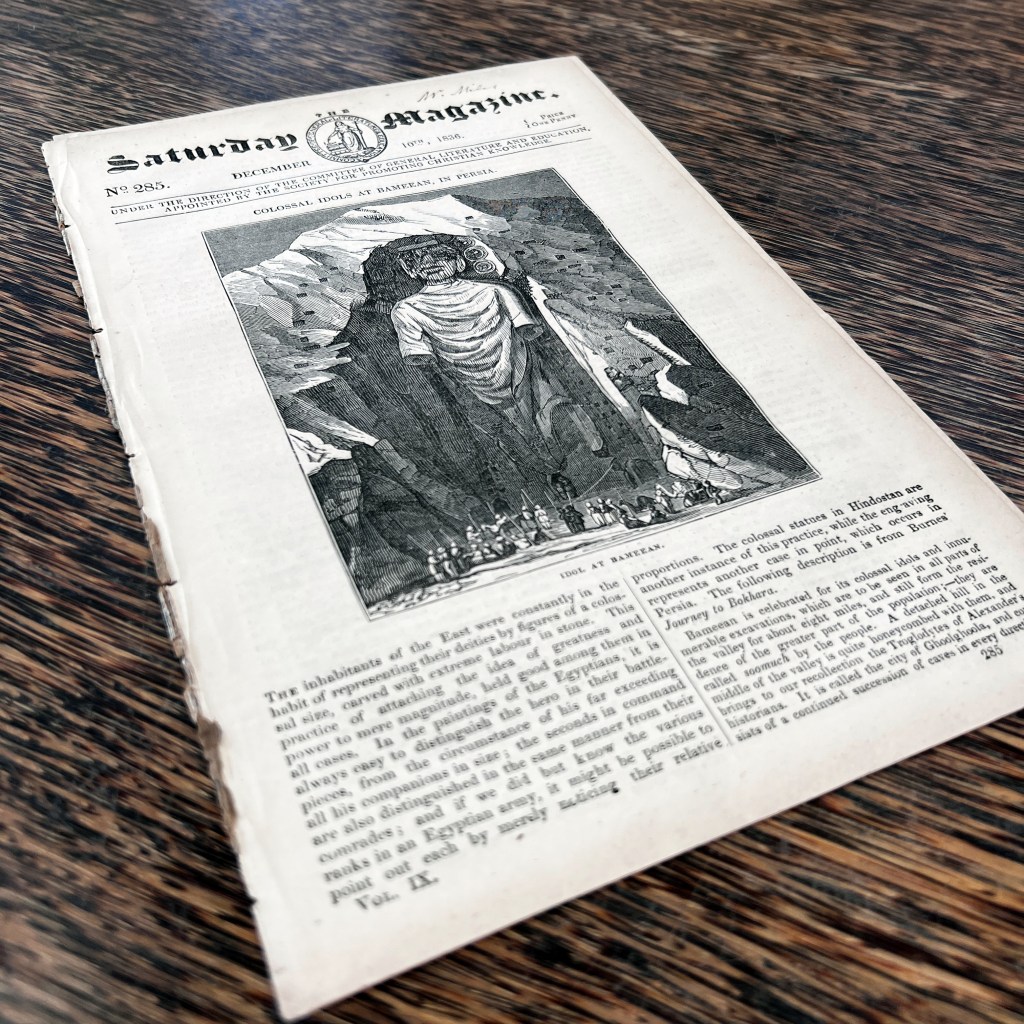
The woodblock print here was based on Burnes’ early sketch included in his Travels into Bokhara. The woodblock would have been locked into a form with hand-set moveable type to create large quantities of prints with relative ease.

Damage to the woodblock could often result in imperfect prints. Here, we can infer a scratch in the woodblock disrupted the ink transfer to the paper. Better mass printing technology would be created in the coming decades.

As for the statues, canon fire broke various segments in the 17th and 18th centuries; this damage is visible in the illustration. The colossal Bamiyan Buddhas were completely destroyed in 2001.


The Buddhas in the West Material Archive is a digital scholarship project that catalogues artifacts depicting Buddhist material culture for Western audiences. It’s comprised of prints, photos, and an assortment of ephemera and other objects. For a brief introduction to this archive, visit the main Buddhas in the West project page.
For Related Buddhas in the West Posts Featuring Historical Magazines:


For the Most Recent Buddhas in the West Posts:
















 Personal Site of Peter Romaskiewicz