Engraving the Grotesque Buddha, 1660–1850 Exhibit

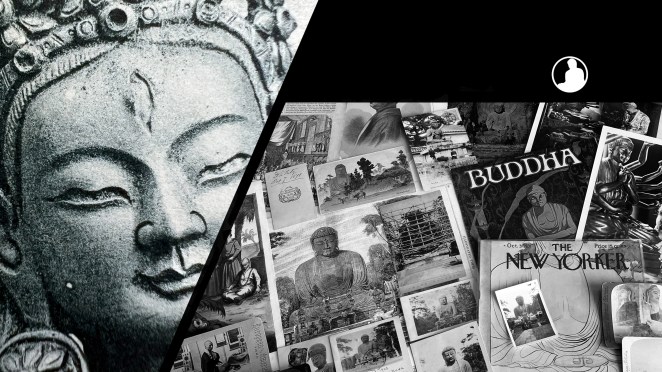
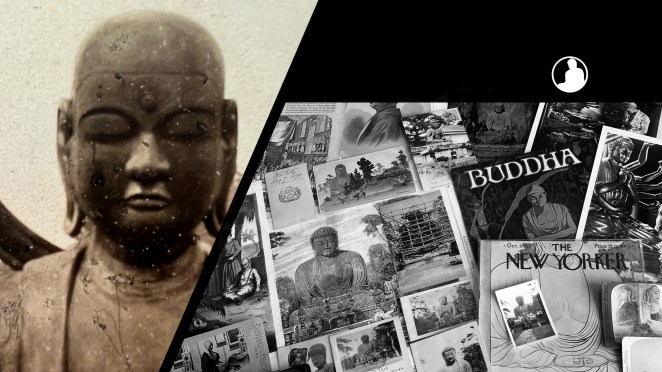
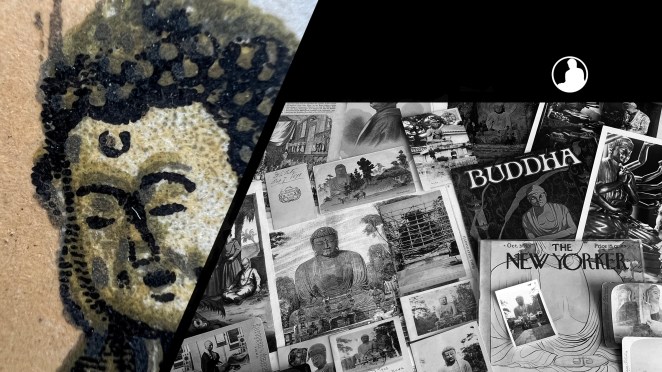
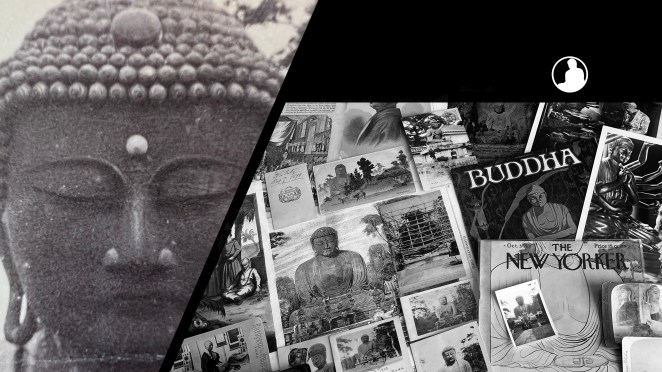
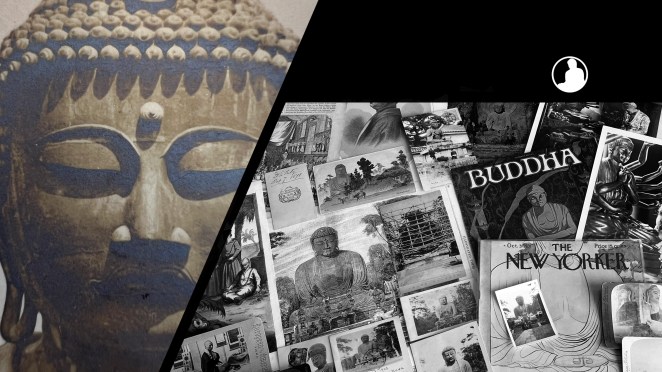
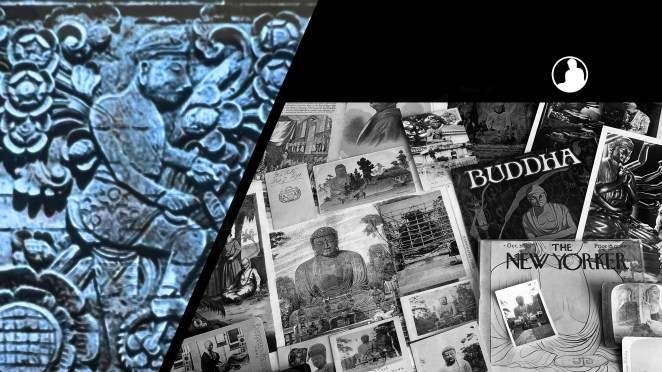
The Buddhas in the West Material Archive pop-up exhibit, entitled “Engraving the Grotesque Buddha, 1660–1850” will be on display November 22, 2025 at CGIS S050 at Harvard University.


Introduction to the Exhibit

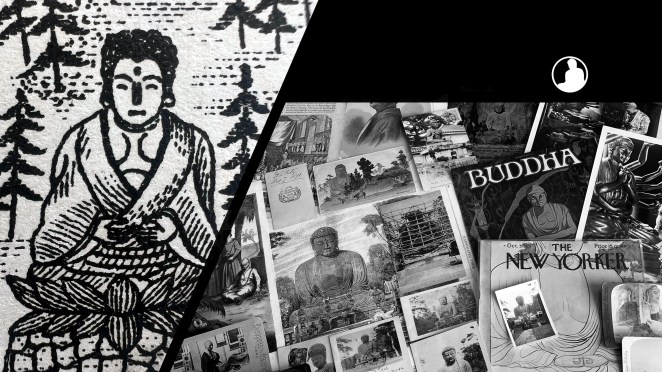
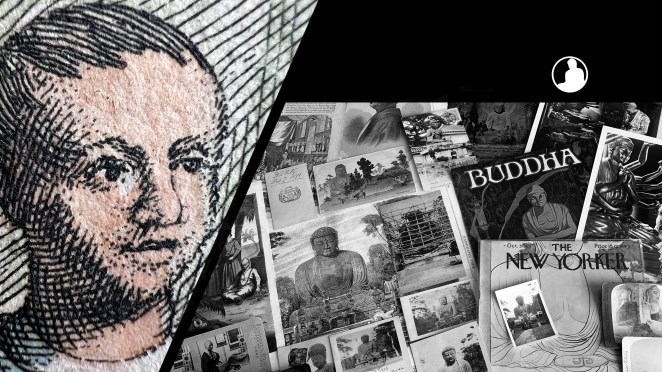
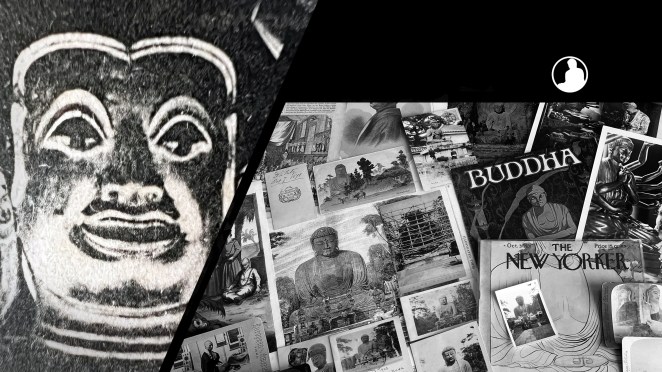
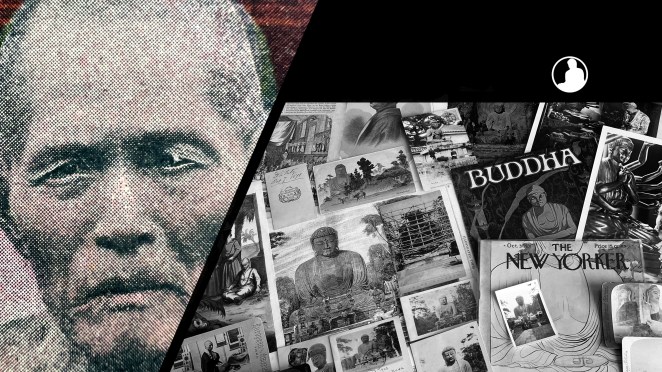
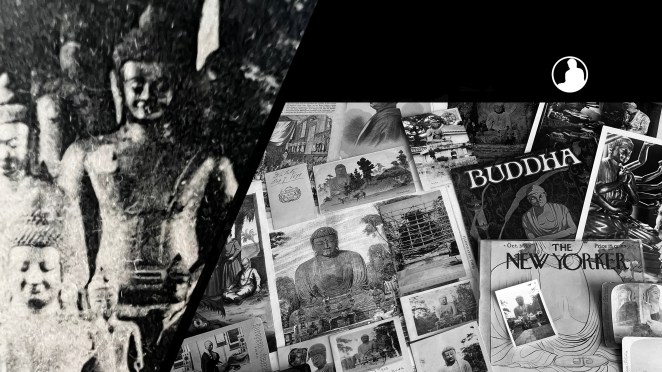
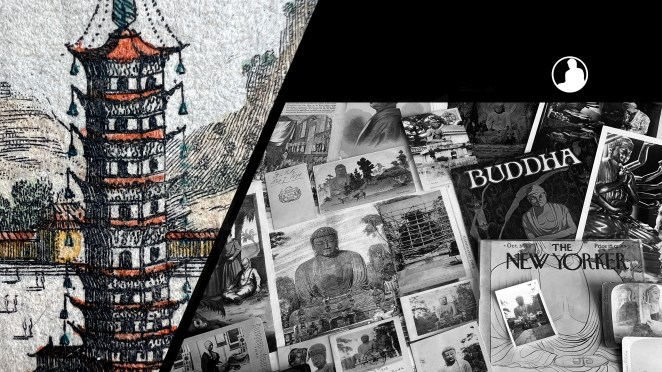
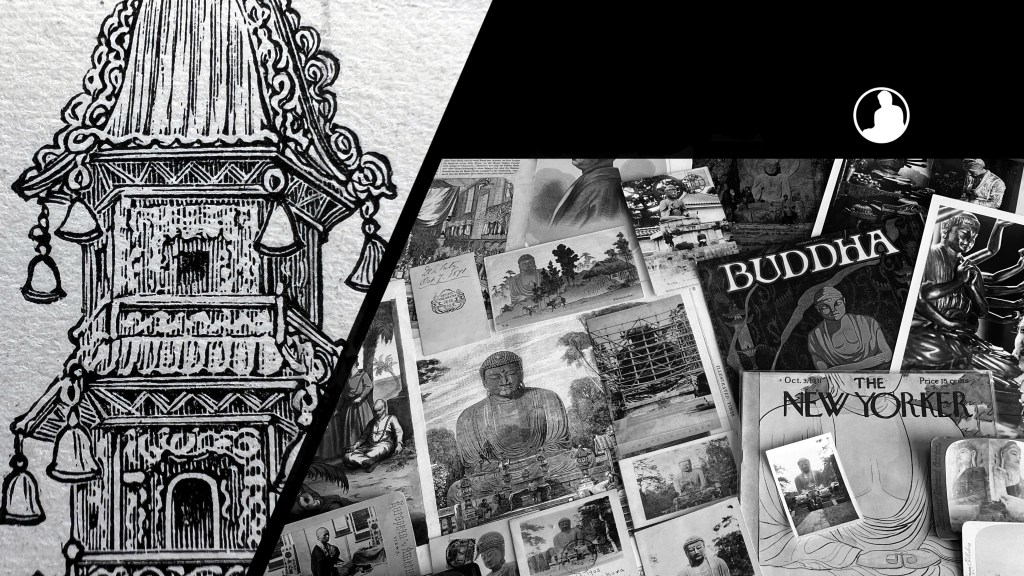
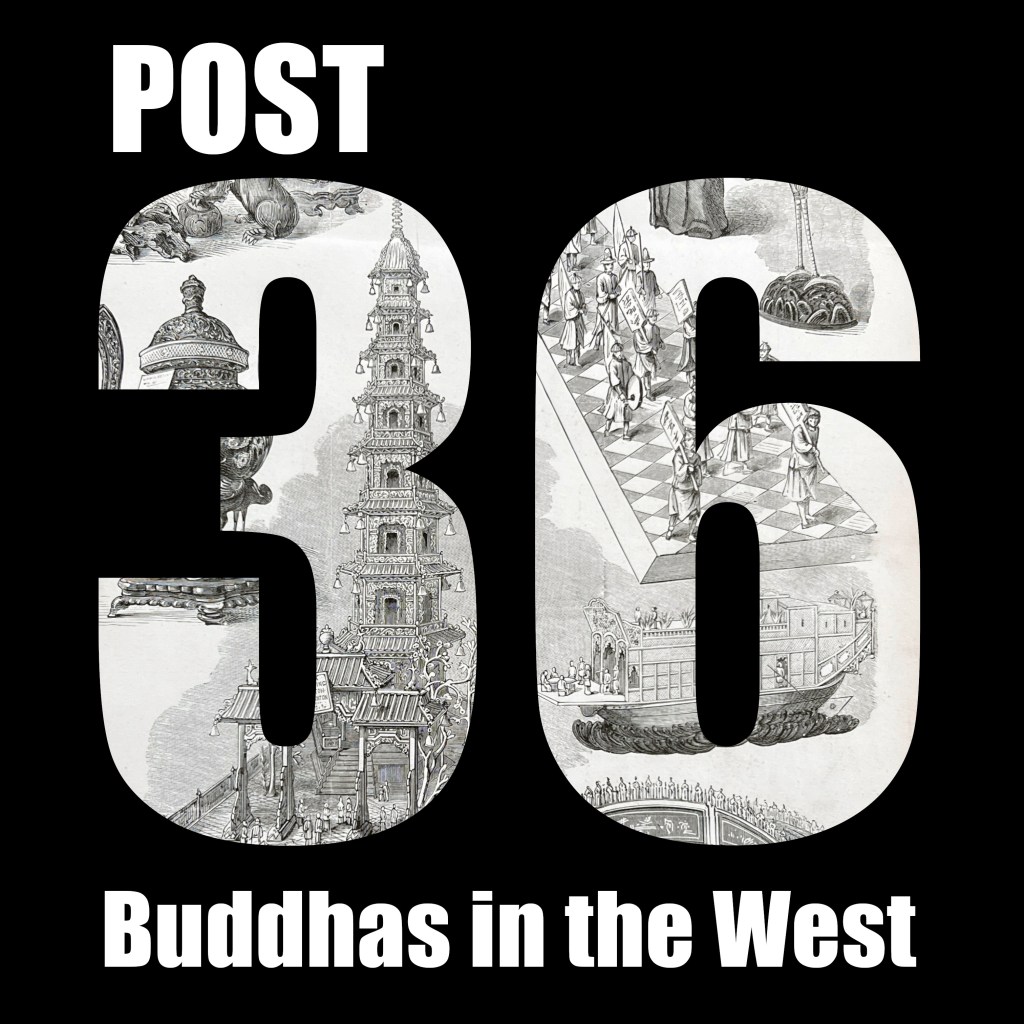
Through the 1650s Buddhist material culture remained an enigma to much of Europe. Yet, in the late 1660s, Amsterdam-based publisher Jacob van Meurs (1619/1620–c.1680) started publishing illustrated books devoted to China and Japan. These works proved popular and helped introduce Buddhist material culture to broader European audiences.

Van Meurs’ influence was substantial. The engravings produced by his workshop were widely reproduced in publications over the next century. Some illustrations continued to be reused well into the nineteenth century until the invention of photography and adoption of photomechanical reproduction finally rendered the illustrations outdated. Consequently, some of the images from van Meurs’ workshop exhibited a strong media echo for nearly two-hundred years.

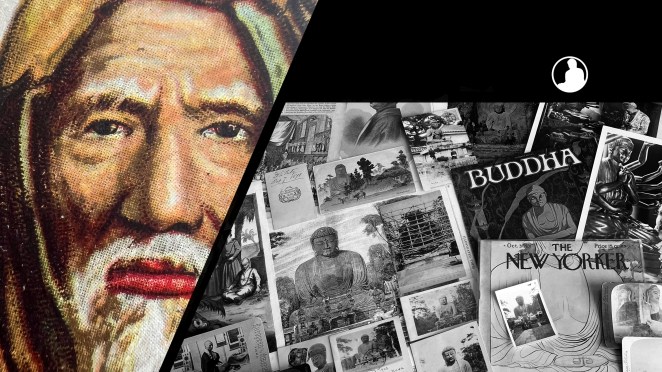
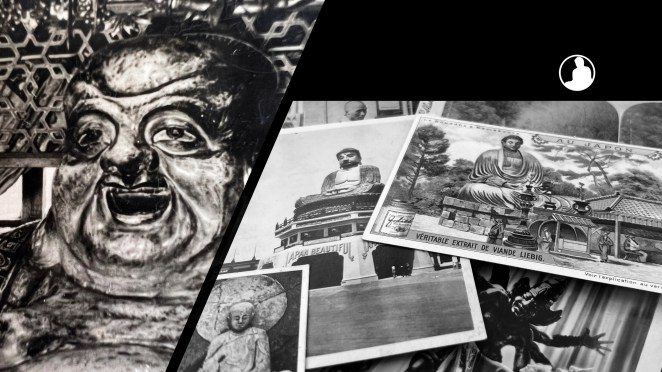
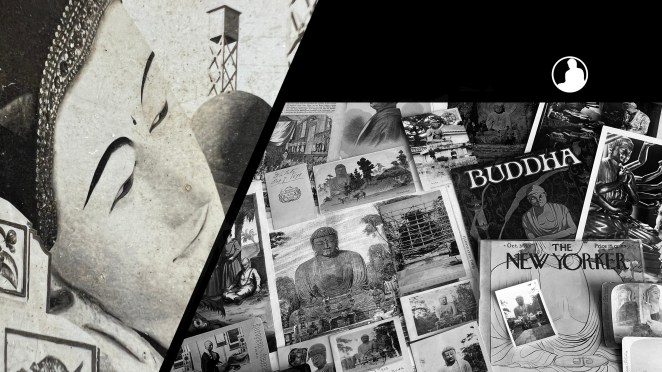
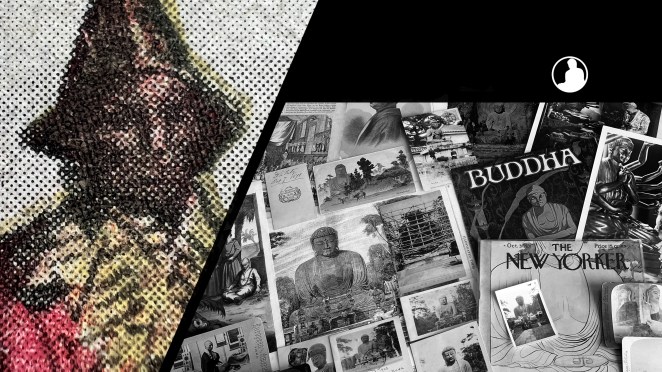
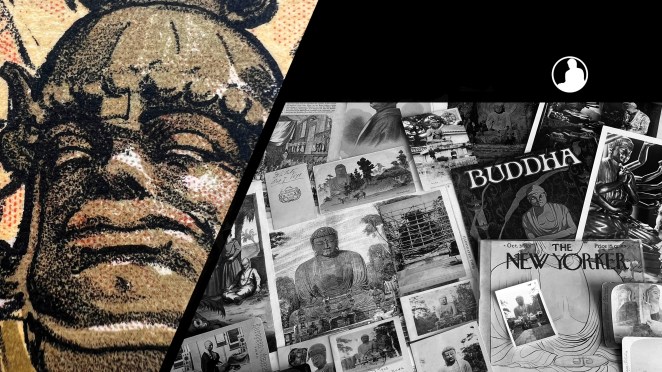
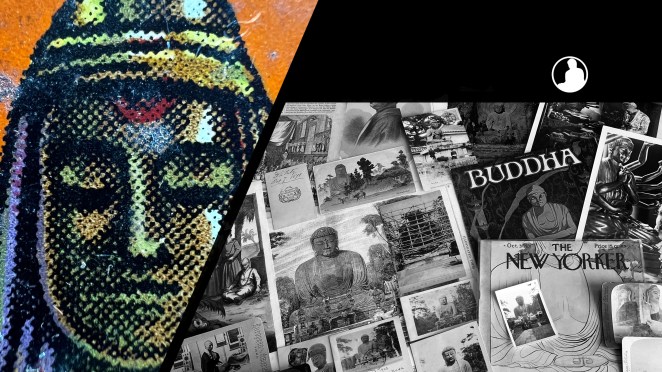
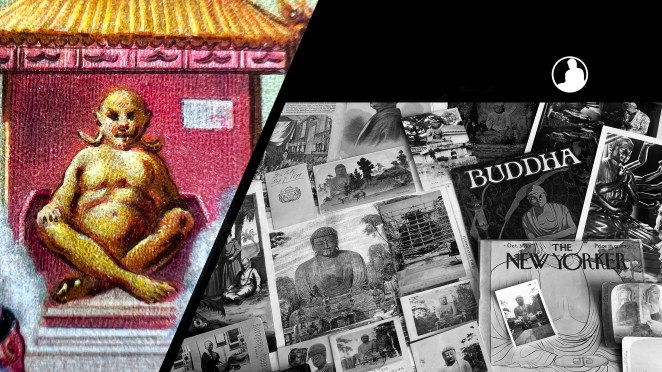
Notably, many of the images of Buddhist icons and Buddhist monks were embellished, often veering towards the uncanny, ghoulish, or grotesque.

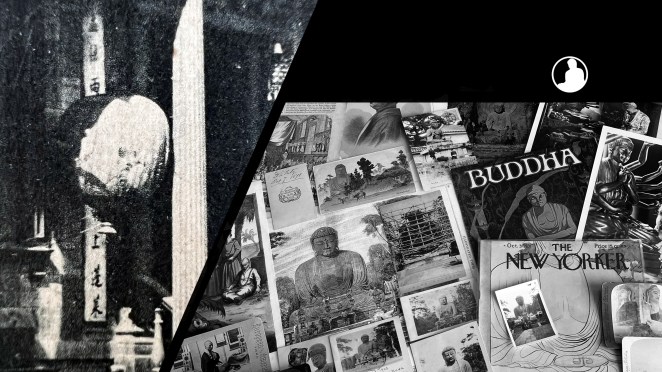
The exhibit will be comprised of eighteen prints published between 1665 and 1863 that show the lasting influence of Jacob van Meurs’ printed works on the visual literacy of Buddhist material culture in the West.


Selected Prints


The Buddhas in the West Material Archive is a digital scholarship project that catalogues artifacts depicting Buddhist material culture for Western audiences. It’s comprised of prints, photos, and an assortment of ephemera and other objects. For a brief introduction to this archive, visit the main Buddhas in the West project page.


For the Most Recent Buddhas in the West Posts:


a

1906 French Colonial Exposition Annam Pavilion Postcard

For all the new Buddhas in the West posts
follow us on Bluesky & Instagram


Following the success of colonial pavilions at World’s Fairs, France initiated its own independent Colonial Expositions in the 1890s. In Marseilles in 1906, famous architectural sites from French Indochina were reconstructed, including a towering Buddhist pagoda representing Annam.

Jules Charles-Roux, organizer of the colonial portions of the Paris World’s Fair of 1900 and head of the 1906 exposition, showcased the pagoda behind the main Indochina gate. The pagoda was also set at the head of a replicated “Hanoi road” populated with real inhabitants of the protectorate.
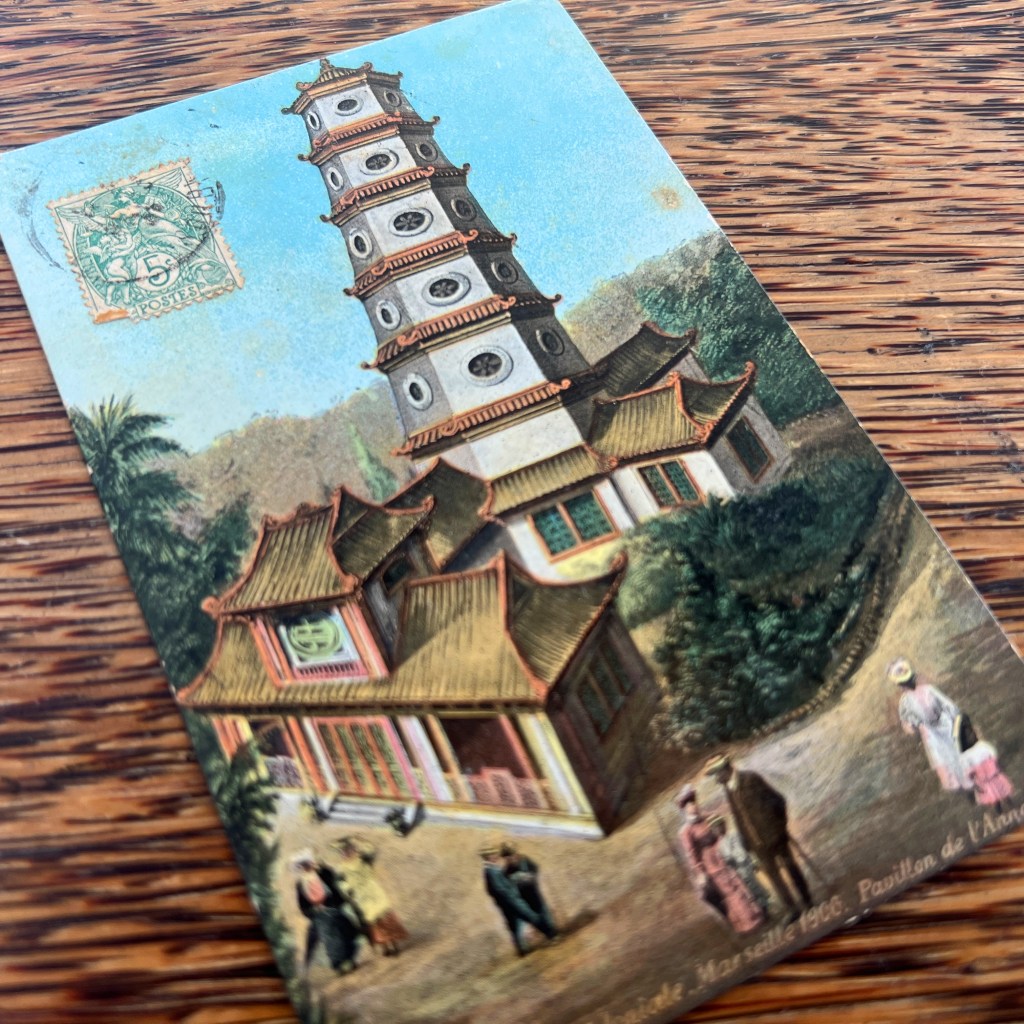
Held during the height of the postcard craze, the exposition grounds opened its own dedicated postcard pavilion. While the cancellation is unclear on the obverse, this card appears to have been sent from Marseilles; its destination was Port-Vendres, further down the Mediterranean coast.

While often obscure in exposition literature, the “Annam Pavilion” was a replica of the pagoda from Tien Mu Temple, in the city of Hue, which was founded in 1601. The pagoda was a popular subject of souvenir photographs sold by studios throughout French Cochinchina, Annam, and Tonkin.

The following year, in 1907, Paris held another colonial exposition, but recreated a different pagoda to represent Annam. A photo illustrated book of the 1906 Marseilles Exposition is digitized by the University of Aix-Marseille, viewable here: https://tinyurl.com/mczsvn6s.


The Buddhas in the West Material Archive is a digital scholarship project that catalogues artifacts depicting Buddhist material culture for Western audiences. It’s comprised of prints, photos, and an assortment of ephemera and other objects. For a brief introduction to this archive, visit the main Buddhas in the West project page.


For Related Buddhas in the West Posts Featuring Vietnam / French Indochina:


For the Most Recent Buddhas in the West Posts:

1922 French Colonial Exposition Angkor Wat Replica Postcard

For all the new Buddhas in the West posts
follow us on Bluesky & Instagram


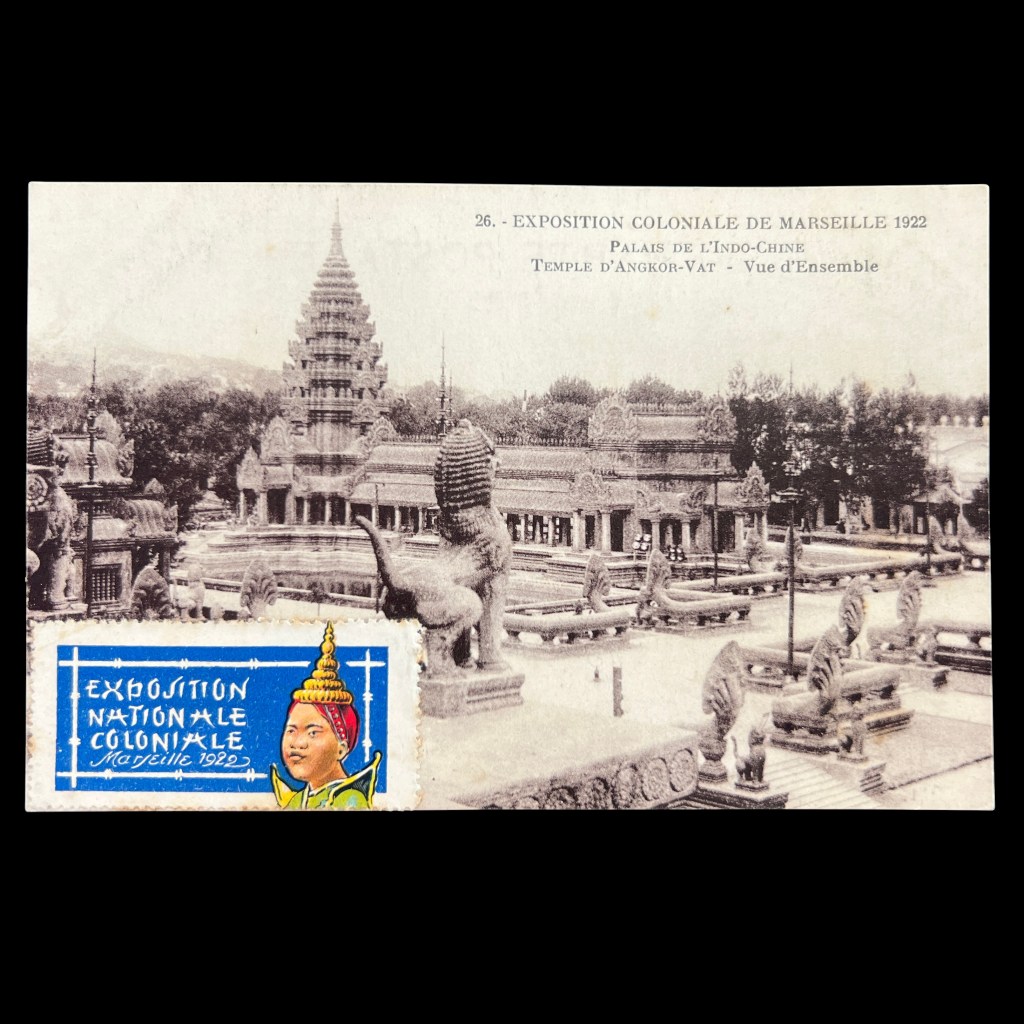
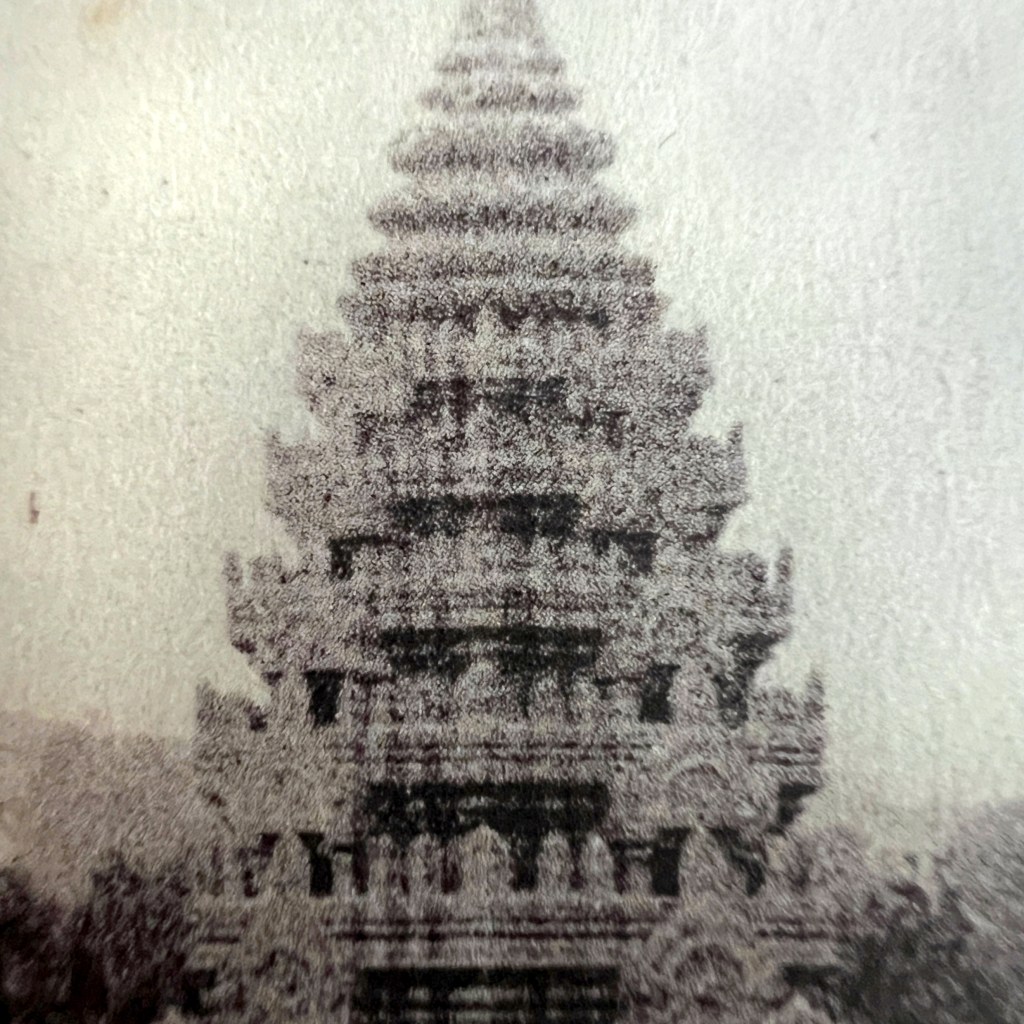
In 1922, the organizers of the Colonial Exposition in Marseille accomplished the impossible – a plaster recreation of Cambodia’s Angkor Wat. While only a partial replica, the central tower, built on a wooden skeleton, was 177 ft. (54m) tall and towered over the exposition grounds.

Cambodian “natives” were also brought in to add authenticity to the fabricated environment. The golden-clad Cambodian royal dance troupe proved to be a “must see” attraction; curiously, they performed the Orientalist opera Lakmé by composer Léo Delibes.

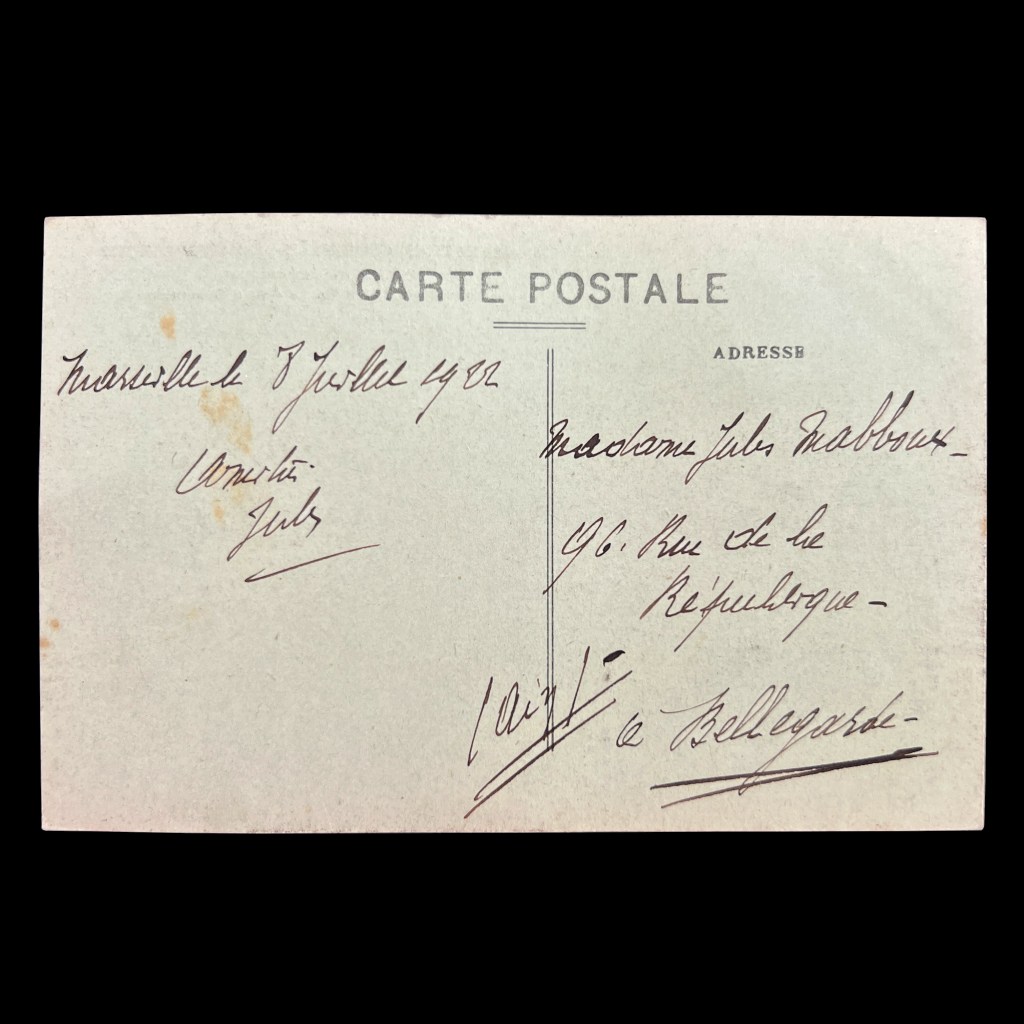
Cambodia was a protectorate of France since 1863 and French troops had already been sending home picture postcards of the real Angkor Wat ruins. Dated July 8, 1922, this card depicting Angkor Wat’s replica was prepared, but never mailed.

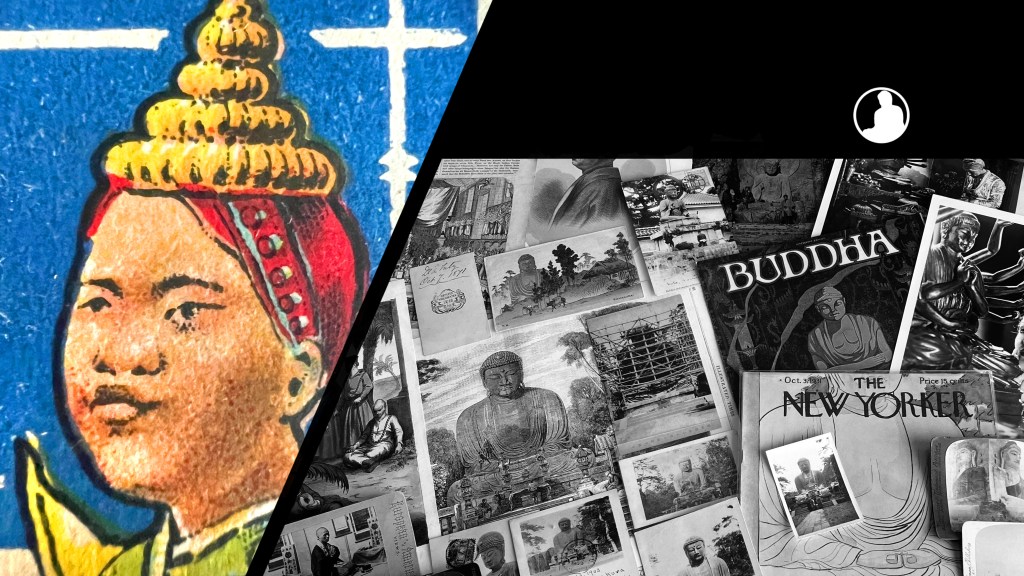
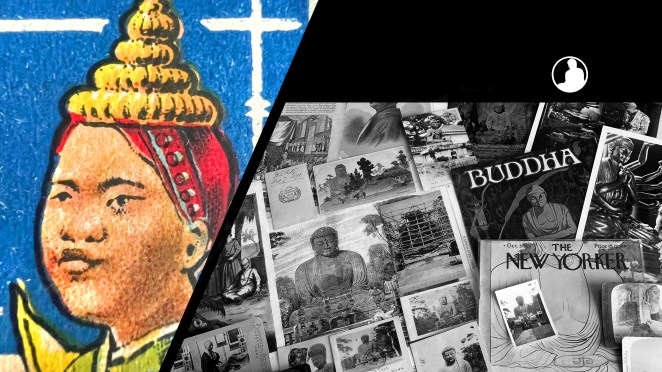
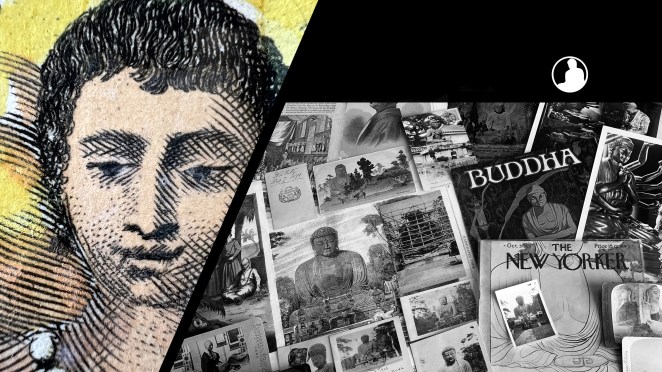
This stamp is a non-postal commemorative stamp, one of twelve designs made for the 1922 Marseille exposition. It depicts a royal dancer wearing a crown shaped like a Southeast Asian Buddhist stupa; such crowns are also seen in the stone reliefs decorating Angkor Wat.

While plasters casts made in Cambodia were used in Marseille, the replica temple had many alterations, creating only a semblance of reality. For more on the use of plasters casts and dancers, see Isabelle Flour’s “Orientalism and the Reality Effect: Angkor at the Universal Expositions” (2014).


The Buddhas in the West Material Archive is a digital scholarship project that catalogues artifacts depicting Buddhist material culture for Western audiences. It’s comprised of prints, photos, and an assortment of ephemera and other objects. For a brief introduction to this archive, visit the main Buddhas in the West project page.


For Related Buddhas in the West Posts Featuring Expositions:


For the Most Recent Buddhas in the West Posts:


1904 Metropolitan Series “Japanese Pagoda” Stereoview

For all the new Buddhas in the West posts
follow us on Bluesky & Instagram


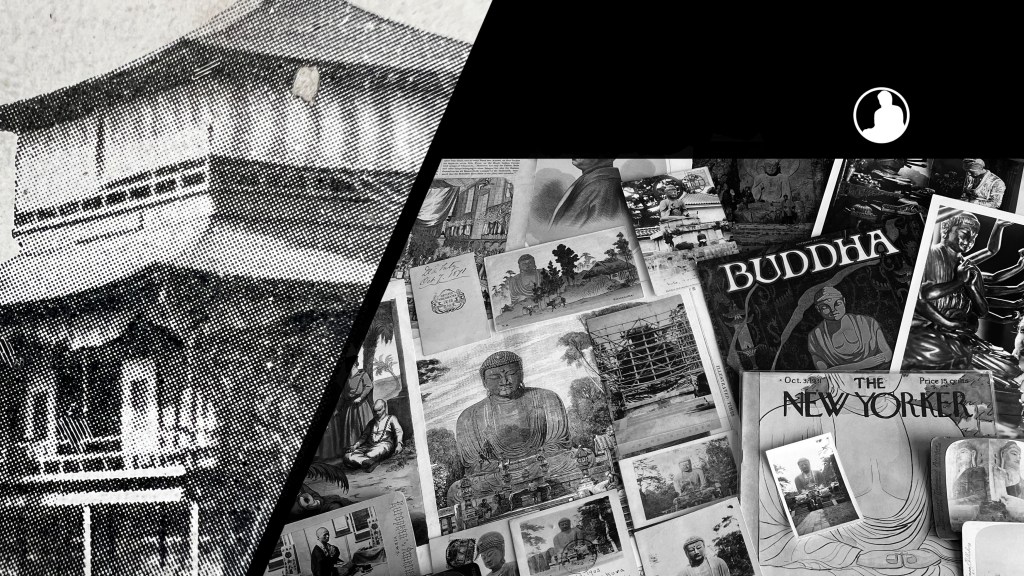
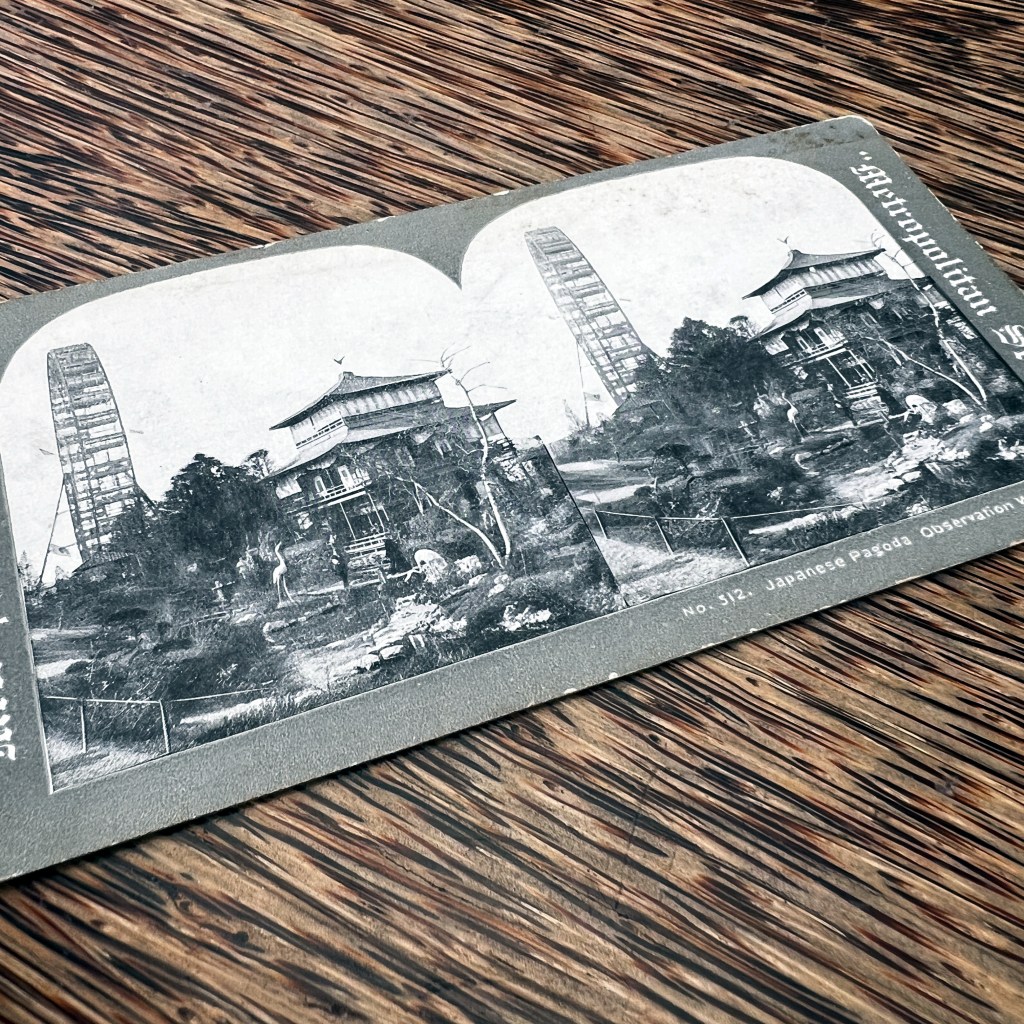
This is not an AI rendered image – it’s a Ferris Wheel towering over Kyoto’s famed Temple of the Golden Pavilion, known as Kinkaku-ji. More accurately, it’s a replica of Kinkaku-ji built for the 1904 St. Louis World’s Fair advertised as a Japanese imperial gardens pagoda.

The Kyoto original, dating to 1400, houses Buddhist relics while the St. Louis replica was built to serve Japanese tea. In both cases the respective buildings are surrounded by a garden and topped with a phoenix roof ornament.

The St. Louis garden was designed by the Japanese landscape architect Yukio Ichikawa 市川之雄.

Japan’s exhibitions were well attended, in part by the generally positive newspaper coverage as well as the publicity of the ongoing Russo-Japanese War. Many companies made stereoviews of the 1904 fairgrounds, with the Metropolitan Series sold through Sears catalogues.

Many attendees of the St. Louis fair expressed a sense of awe at Japan’s exhibitions. For more digitized photos of the St. Louis fair, see the offerings at the State Historical Museum of Missouri here https://tinyurl.com/5d7jcupa


The Buddhas in the West Material Archive is a digital scholarship project that catalogues artifacts depicting Buddhist material culture for Western audiences. It’s comprised of prints, photos, and an assortment of ephemera and other objects. For a brief introduction to this archive, visit the main Buddhas in the West project page.


For Related Buddhas in the West Posts Featuring Kyoto:


For the Most Recent Buddhas in the West Posts:


1933 Golden Pavilion Laughing Buddha Playing Card

For all the new Buddhas in the West posts
follow us on Bluesky & Instagram


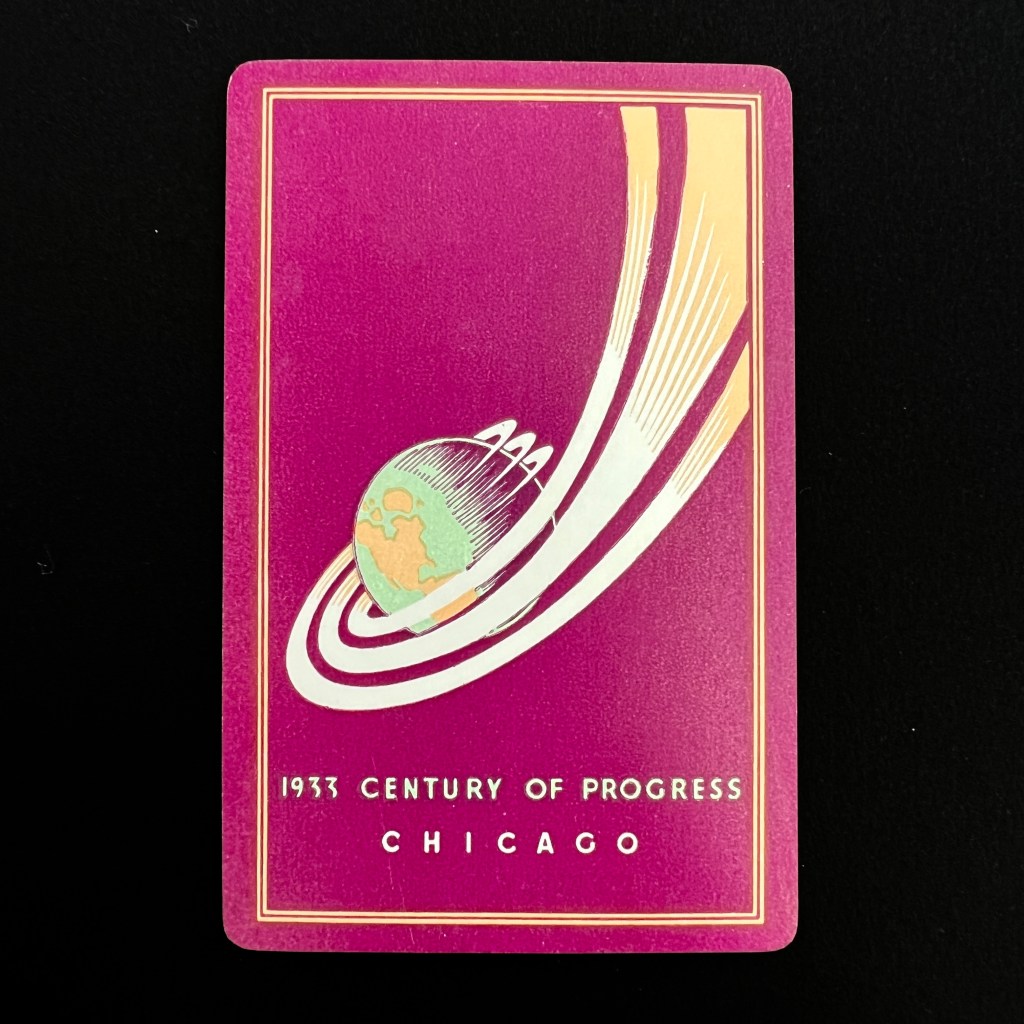
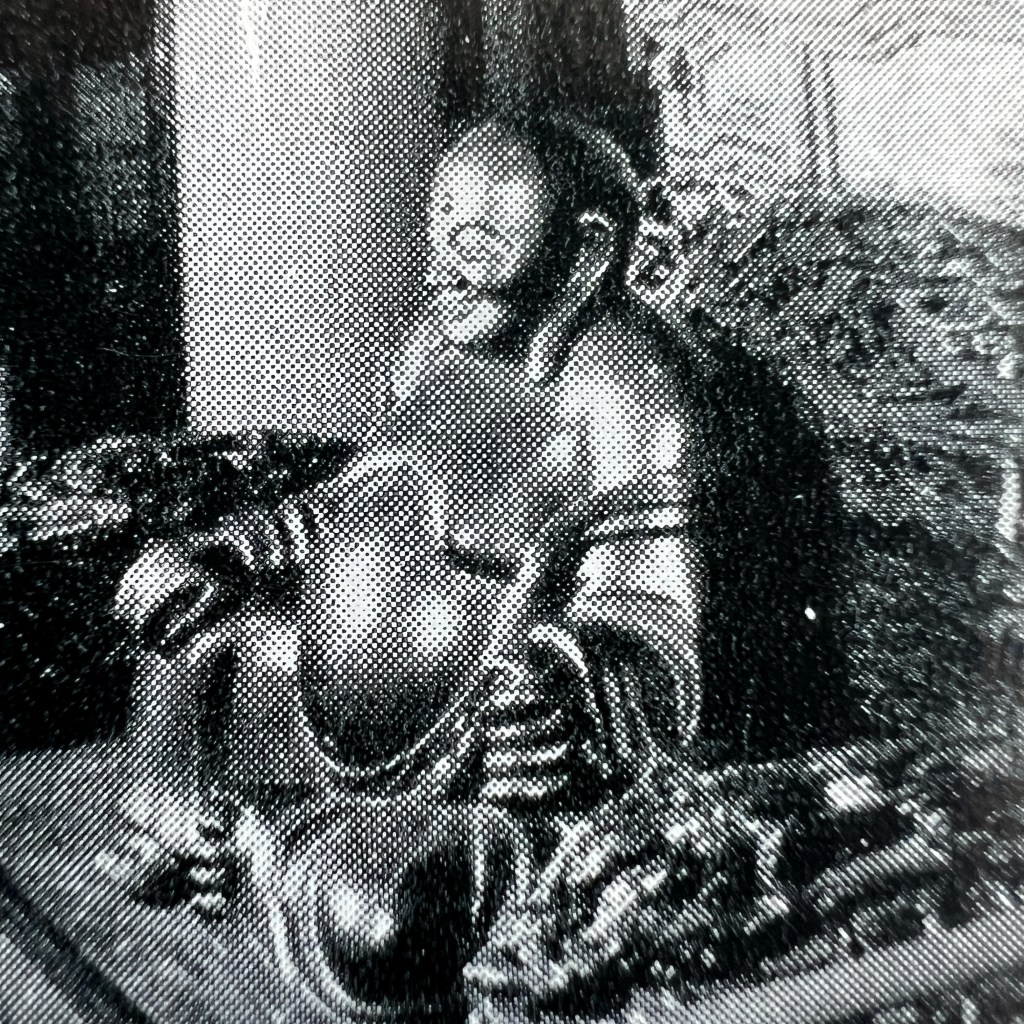
The 1933 Chicago World’s Fair held a true wonder: A Chinese replica of an 18th century Tibetan Buddhist shrine hall, the Golden Temple of Jehol. While the hall included a main shrine to Guanyin, the Laughing Buddha at the front entrance was often used in advertising.

Due to growing conflict in East Asia, the Chinese government withdrew from the 1933 World’s Fair. Subsequently, organizers arranged for display of the recently acquired temple replica of Vincent Bendix, a well-known Chicago industrialist.

Bendix had funded the expedition of Sved Hedin a few years earlier to procure a replica of a Chinese Buddhist temple. The original interest was to display two replica temples with Tibetan religious objects, one in Chicago and one in Stockholm.

Only one replica was made, but Hedin acquired many ritual implements, including thankas and icons, to outfit the building. Named the Bendix Golden Temple (or Pavilion), it was a Chinese-made replica of the Wanfaguiyi Hall in present-day Chengde (Jehol).

The temple was rebuilt for the 1939 World’s Fair in New York. As of 2018 the remains of the temple hall are in Stockholm, but the ritual items and furnishing have all been lost.


The Buddhas in the West Material Archive is a digital scholarship project that catalogues artifacts depicting Buddhist material culture for Western audiences. It’s comprised of prints, photos, and an assortment of ephemera and other objects. For a brief introduction to this archive, visit the main Buddhas in the West project page.


For Related Buddhas in the West Posts Featuring Budai / Laughing Buddha:


For the Most Recent Buddhas in the West Posts:

Paris’ Panorama du Tour du Monde Advertising Card

For all the new Buddhas in the West posts
follow us on Bluesky & Instagram


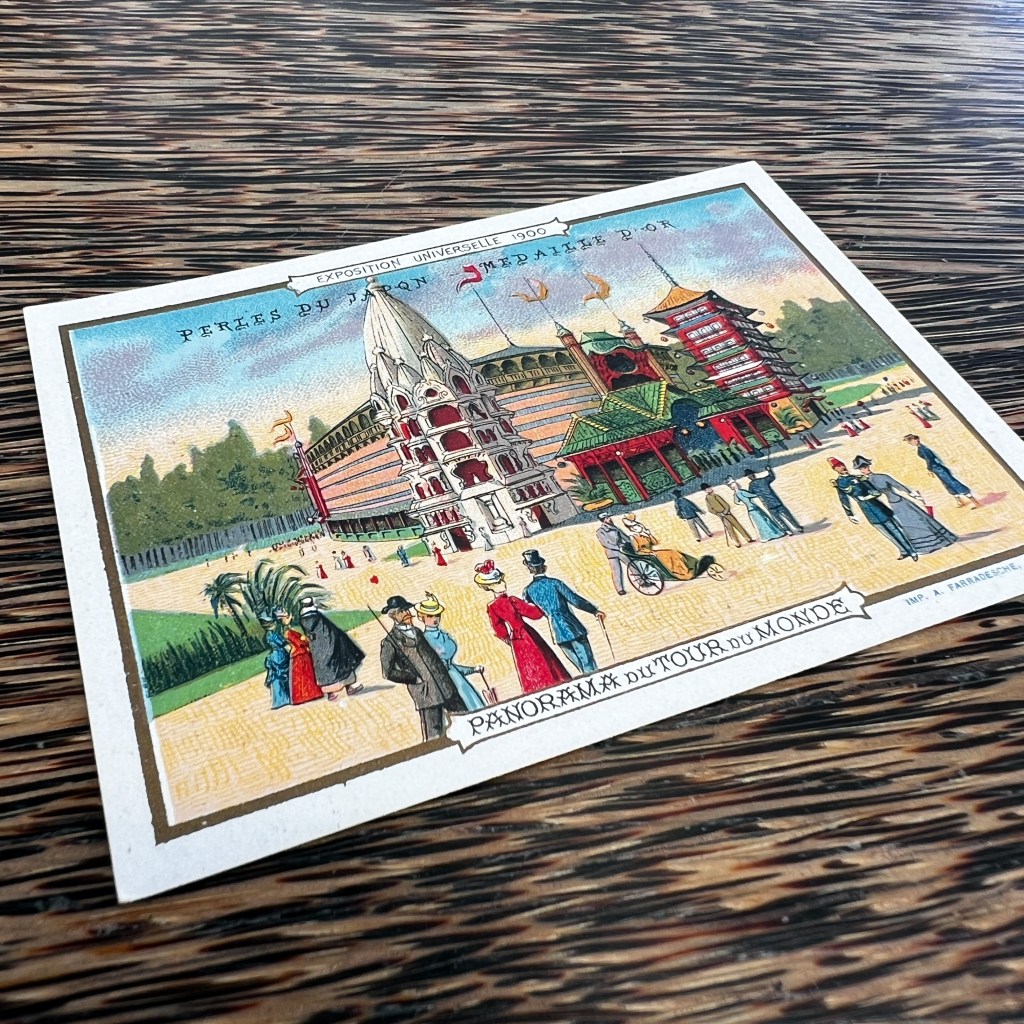
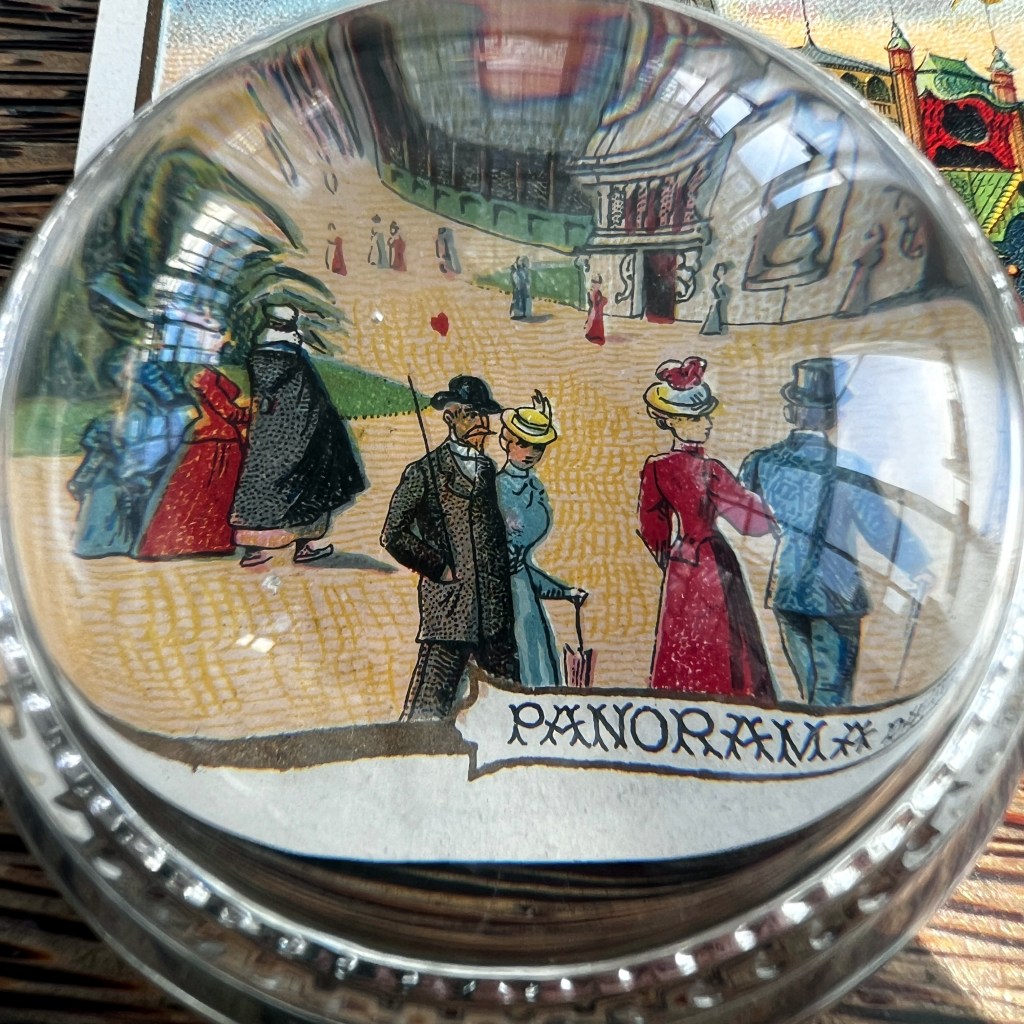
Panorama du Tour du Monde: By the 1900 Paris Exposition, amusement concessions were a major draw for all exposition visitors. Not far from the foot of the Eiffel Tower one found the Panorama du Tour du Monde which took patrons on a virtual voyage from Spain to Japan.

Built by Alexandre Marcel for a French sea-transport company, the architecture called to mind exotic locales with Asian-inspired structures. The main entrance was modeled on the Tōshō-gū in Nikkō, Japan. Some sources claim the red pagoda was based on a Chinese model.

Visitors were drawn in by large panoramic paintings of various foreign countries to give a sense of virtual travel. More astonishingly, the concession integrated many indigenous performers who engaged in various trades while wearing traditional foreign costumes

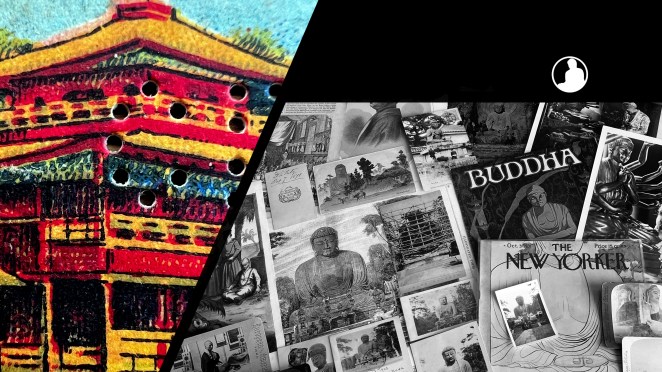
The beautiful lithographic print was part of an advertising campaign for a French company selling tapioca pearls, called “perles du Japon.”

King Leopold II was so struck by the building, he had Marcel build the Japanese Tower in Brussels. For more on the Tour du Monde exhibition, see https://tinyurl.com/2vbmr3c7.


The Buddhas in the West Material Archive is a digital scholarship project that catalogues artifacts depicting Buddhist material culture for Western audiences. It’s comprised of prints, photos, and an assortment of ephemera and other objects. For a brief introduction to this archive, visit the main Buddhas in the West project page.


For Related Buddhas in the West Posts Featuring France:


For the Most Recent Buddhas in the West Posts:

1876 Centennial Ivory Pagoda Print

For all the new Buddhas in the West posts
follow us on Bluesky & Instagram


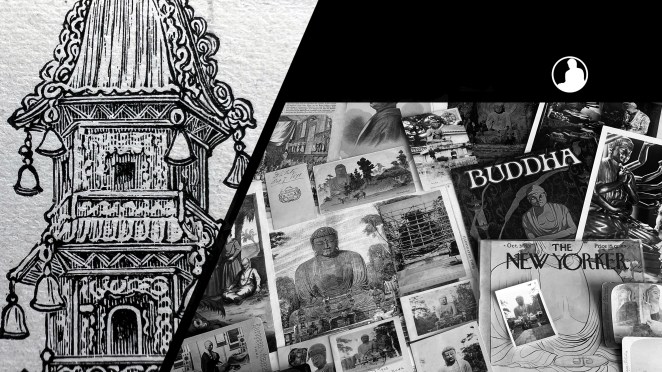
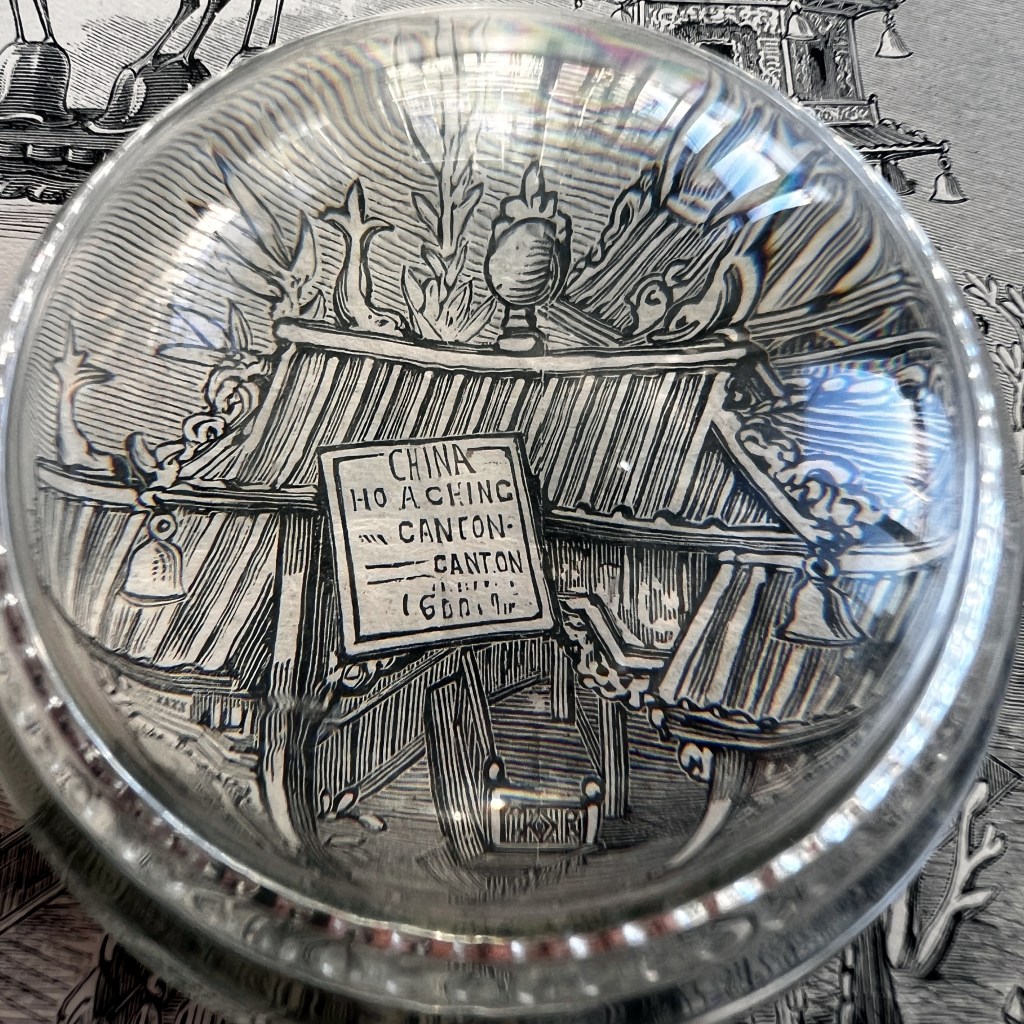
Lost Ivory Pagoda? Japan’s exhibit at the 1876 Centennial Exposition is often credited as inspiring American Japonisme. Less celebrated is China’s involvement who also made a splash with its exhibit, including an intricate 4-foot ivory pagoda.

The 1830s and 40s saw a handful of private Chinese museums open, but the Centennial included objects sent to the US by Chinese representatives. By plan, the objects chosen reflected the tastes of Chinese elite, including silks, porcelain, paintings, and fine teas.

The carved ivory display merited some of the most attention, especially a fenced-in miniature pagoda surrounded by fruit trees and figurines. The artist here, working for the publisher Frank Leslie, notes the name of the Canton manufacturer, Ho A Ching.

We are told the pagoda was priced at $600. Many items were acquired by the Philadelphia Museum of Art, but I have not been able to confirm if its currently in the collection. A photo of the original pagoda can be seen here: https://tinyurl.com/mtkv2wzk.


The Buddhas in the West Material Archive is a digital scholarship project that catalogues artifacts depicting Buddhist material culture for Western audiences. It’s comprised of prints, photos, and an assortment of ephemera and other objects. For a brief introduction to this archive, visit the main Buddhas in the West project page.


For Related Buddhas in the West Posts Featuring the United States:


For the Most Recent Buddhas in the West Posts:

World in Boston Missionary Expo Buddhism Postcard

For all the new Buddhas in the West posts
follow us on Bluesky & Instagram


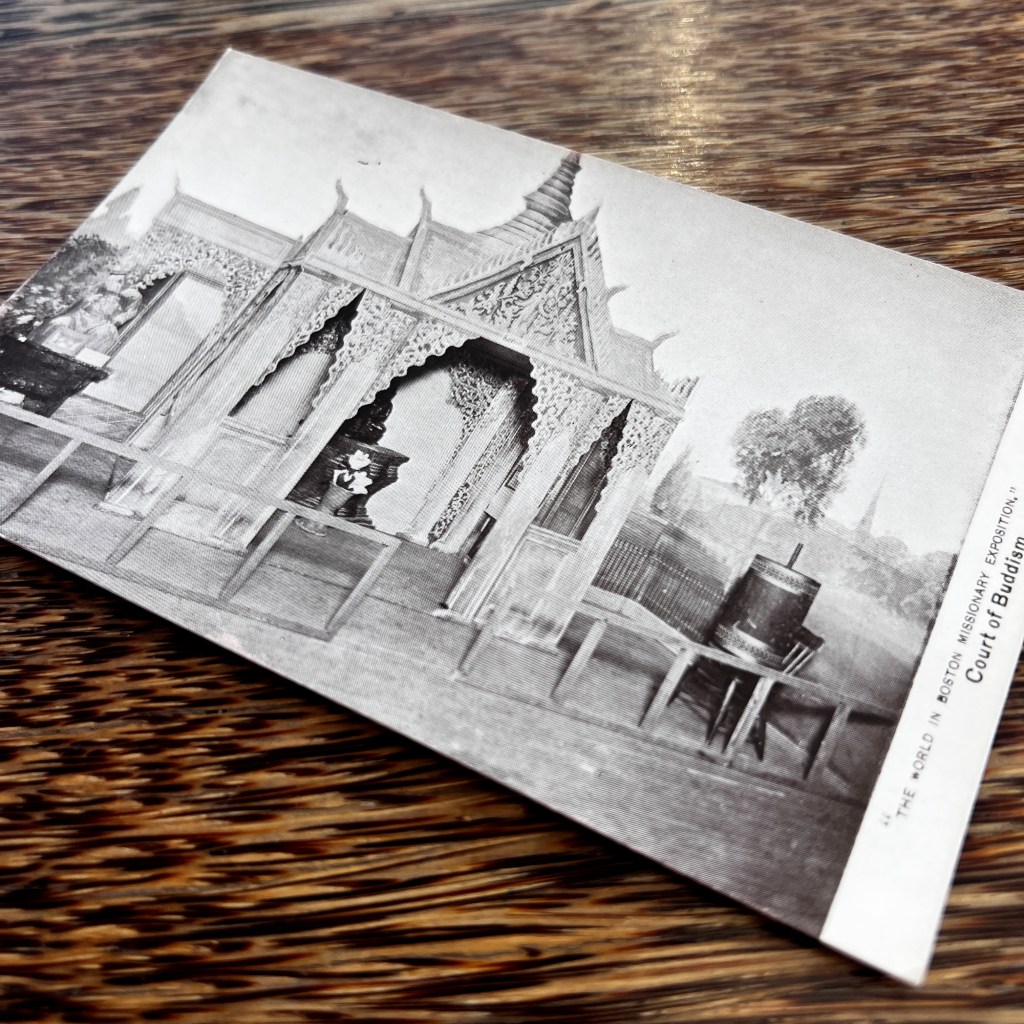
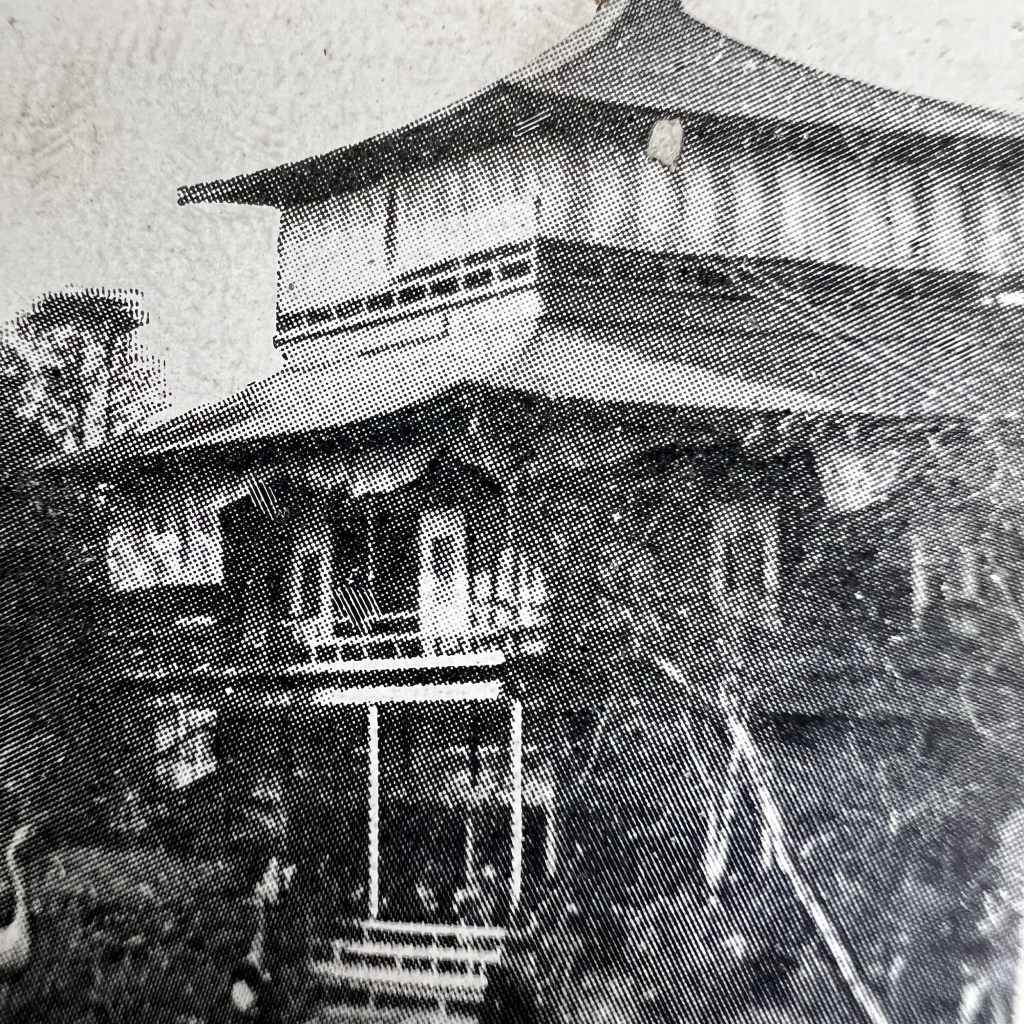
A Buddhist Object Lesson: Buddhist material culture was critical to the first US missionary exposition in 1911. Called The World In Boston, religious artifacts were employed to help give visitors a realistic glimpse into international missionary life.

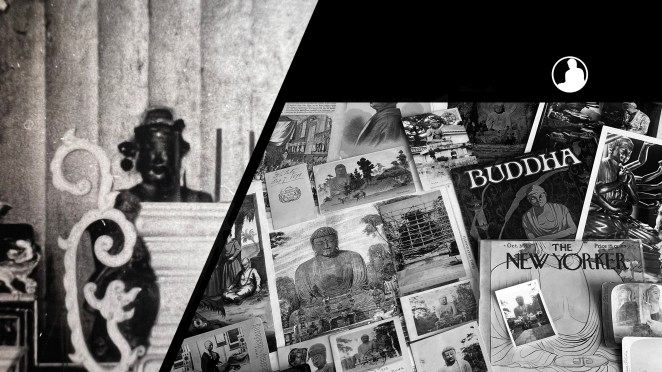
An estimated 400,000 people visited the exposition where “Buddhism” comprised a modest court in the Hall of Religions. In contrast to conventional museum exhibits, a single Burmese Buddhist statue was housed in a small building resembling a typical Southeast Asian temple.

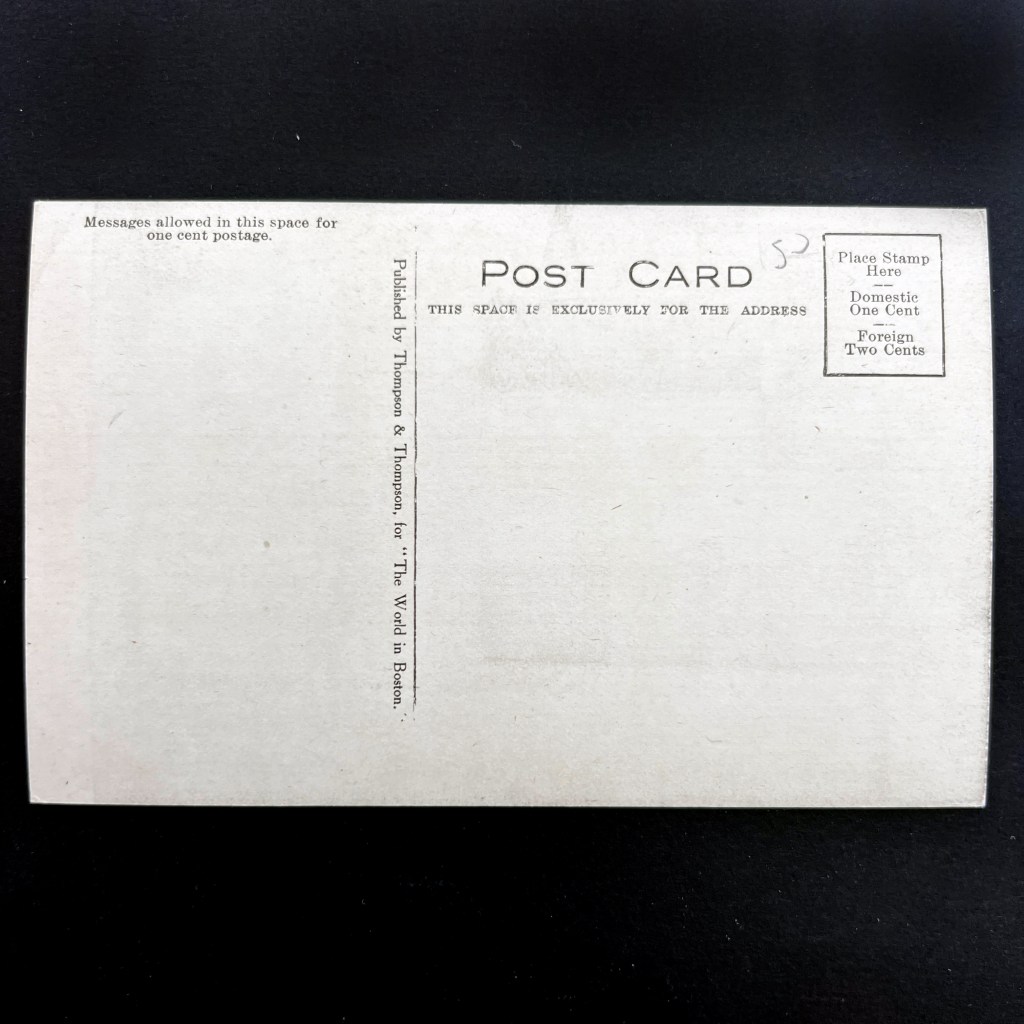
Inexpensive halftone printing allowed photographs to be reprinted as picture postcards, a very popular medium of the era. The image on the front bears only a loose resemblance to real Burmese temples found on postcards published by Philipp Klier and D.A. Ahuja.

On-site docents ensured religious icons were understood as props within a missionary narrative of attempting to save debased heathens. The American Baptist Mission in Burma provided some of the objects on display at The World in Boston, possibly even this enshrined Buddha.

For further exploration of the artifacts on display at the 1911 missionary exhibition, see Hasinoff, Erin L. Faith in Objects American Missionary Expositions in the Early Twentieth Century. New York: Palgrave Macmillan, 2011.


The Buddhas in the West Material Archive is a digital scholarship project that catalogues artifacts depicting Buddhist material culture for Western audiences. It’s comprised of prints, photos, and an assortment of ephemera and other objects. For a brief introduction to this archive, visit the main Buddhas in the West project page.


For Related Buddhas in the West Posts Featuring Expositions:

For the Most Recent Buddhas in the West Posts: