
For all the new Buddhas in the West posts
follow us on Bluesky & Instagram
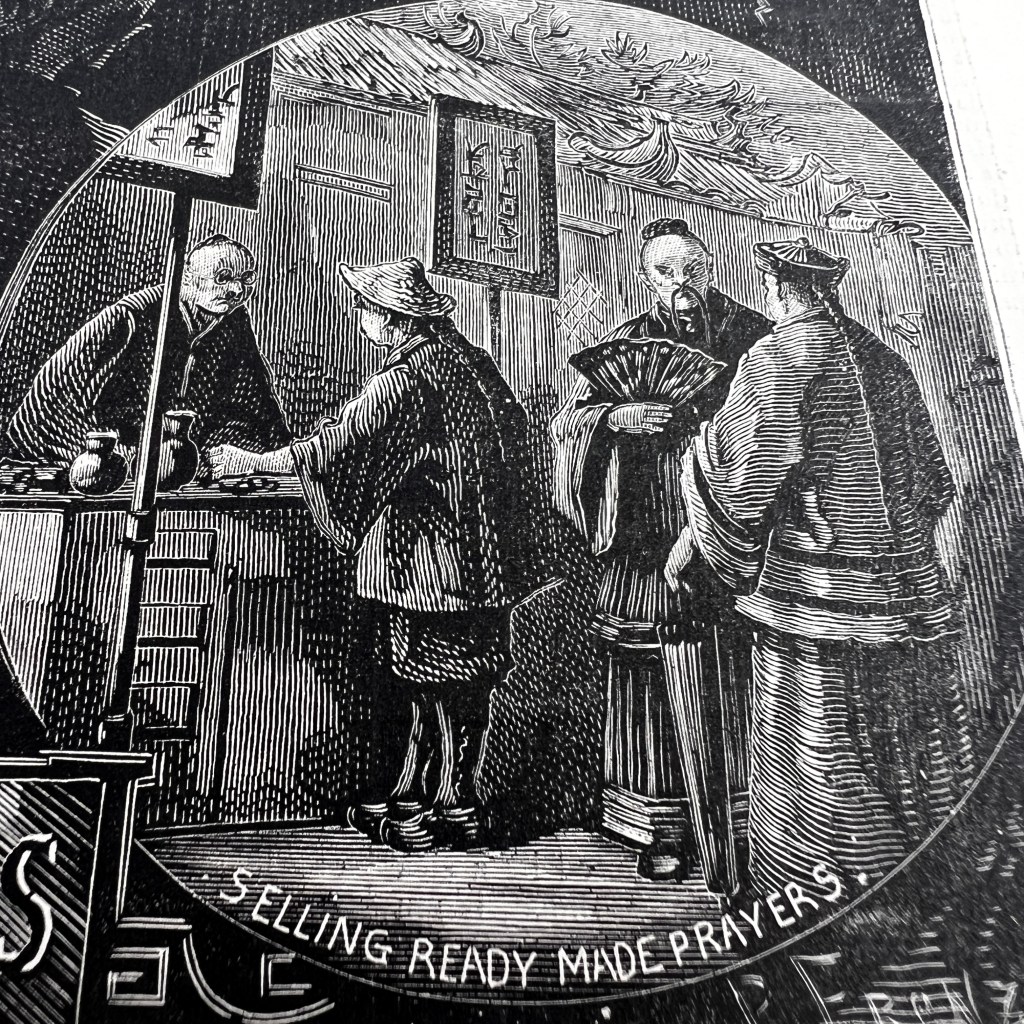
Chinatown Smoke: After completing the transcontinental railroad, many periodicals ran stories about the American west, including the popular illustrated miscellany, Harper’s Weekly. Images of Chinatown joss houses emerged as popular visual tropes for the semi-exotic frontier.

The illustration was made by Paul Frenzeny and the engraving was prepared by the talented Charles Maurand. Frenzeny went on a well publicized tour of the US in 1873, but this dramatic image was likely pieced together from older published images of Chinatown and hearsay.

The illustration was meant to be didactic and moralizing – the image was paired with another engraving showing similar “degraded” devotions in South American Catholic churches. The accompanying text compares the “superstitions” of Chinese American temples and Romish churches.

As Laurie Maffly-Kipp has explored, the focus on material culture – icons, incense smoke, enclosed spaces – tied together anti-Catholic and anti-Chinese sentiment of the period.

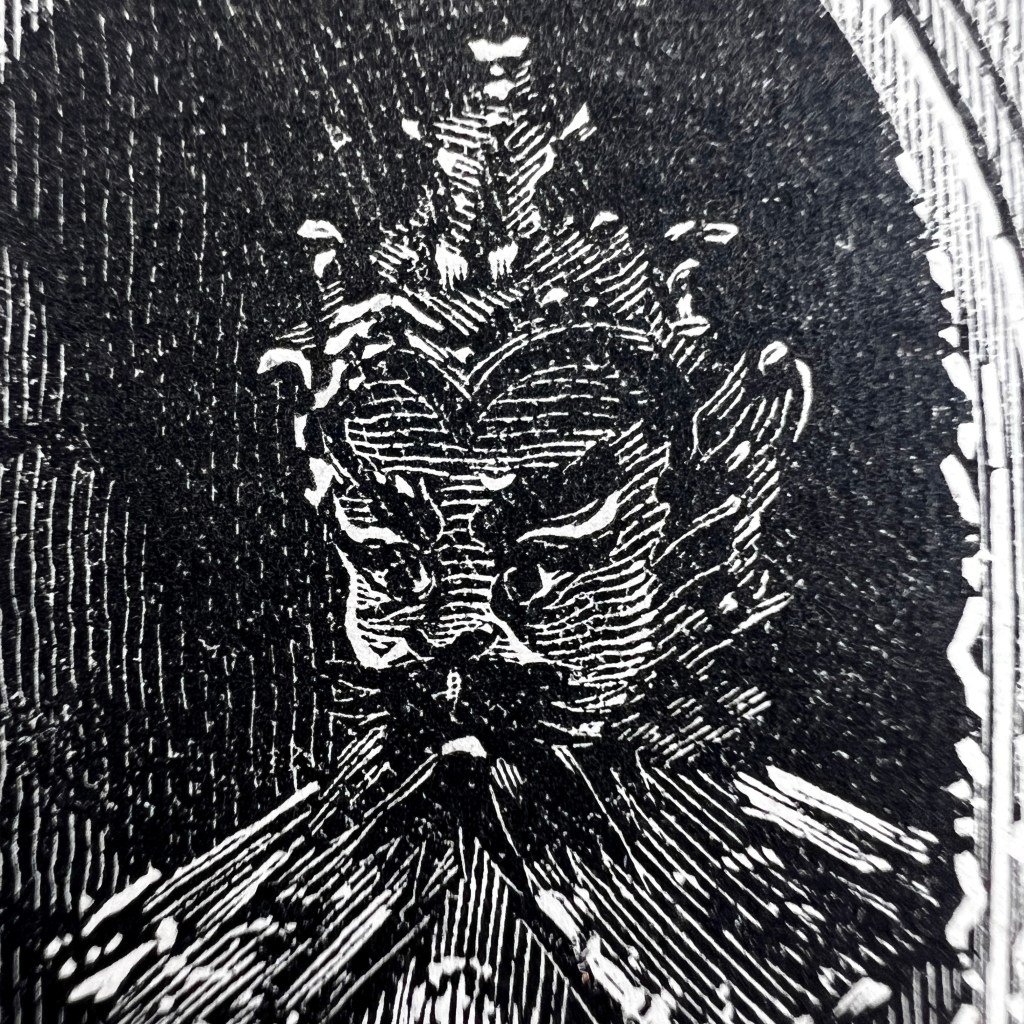
While unidentified, the main icon here is likely a poor rendition of Guandi, one of the most popular figures put on display in Chinese temples.
Maffly-Kipp’s article, “Engaging Habits and Besotted Idolatry,” can be viewed here: https://tinyurl.com/u3zc2nne.

The Buddhas in the West Material Archive is a digital scholarship project that catalogues artifacts depicting Buddhist material culture for Western audiences. It’s comprised of prints, photos, and an assortment of ephemera and other objects. For a brief introduction to this archive, visit the main Buddhas in the West project page.
For Related Buddhas in the West Posts Featuring Chinatown (US):


For the Most Recent Buddhas in the West Posts:



 Personal Site of Peter Romaskiewicz