
For all the new Buddhas in the West posts
follow us on Bluesky & Instagram
The Hualin Temple in Guangzhou, China was well known among foreign tourists at the end of the 19th century for its Hall of Five Hundred Arhats. Reportedly made of clay, the icons were installed in the early 1850 and remained until the Cultural Revolution a century later.
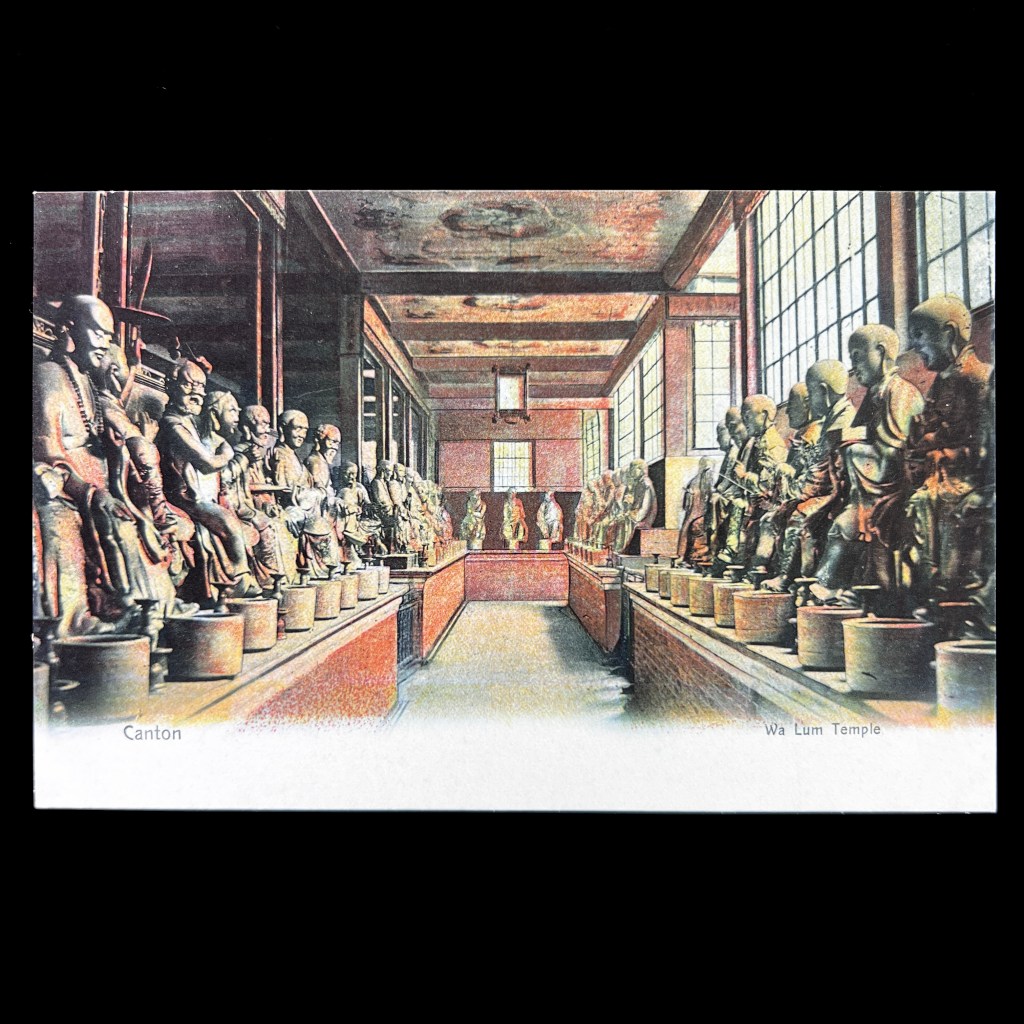
This postcard dates to c. 1910 and was published by the postcard dealer Moritz Sternberg who operated from Queen’s Road in Hong Kong. The original photo, however, is much older and is often attributed to Lai Afong, the most influential Chinese photographer of the late Qing.

While the temple has a history dating to the 6th century, the Arhat Hall was built in the late 1840s. It was one of the sites visited by the pioneering Scottish photographer John Thompson when he sojourned in China from 1868 to 1872.

By Thompson’s visit, rumor had spread that one of the arhat statues was actually an image of Marco Polo (not shown). Thompson notes “careful inquiry proves this statement incorrect,” nevertheless, the belief still persists to the present.
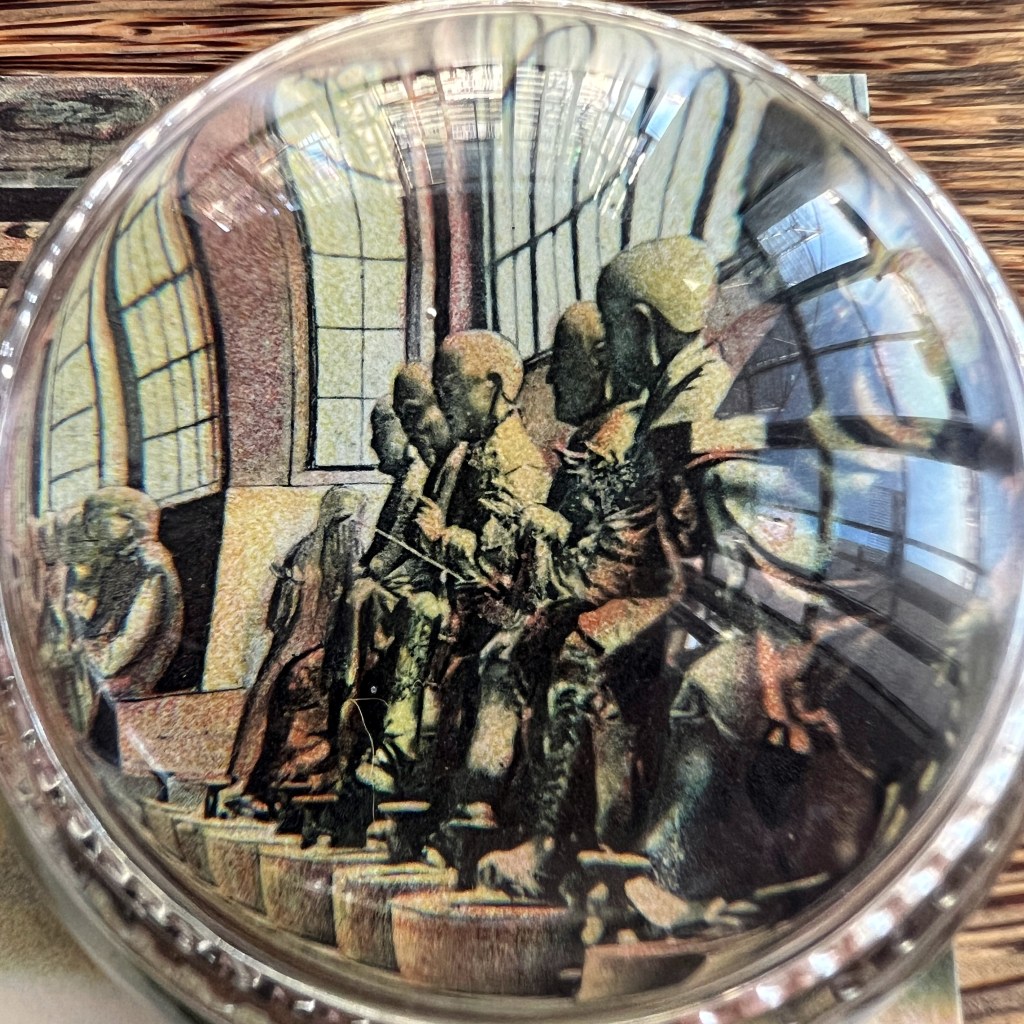
While the icons were replaced in the 1990s, several photographs exist of the originals that were destroyed. A copy of the original photo for this postcard is found in the Hotz Collection of Leiden University Library, viewable here: https://tinyurl.com/2syahybe


The Buddhas in the West Material Archive is a digital scholarship project that catalogues artifacts depicting Buddhist material culture for Western audiences. It’s comprised of prints, photos, and an assortment of ephemera and other objects. For a brief introduction to this archive, visit the main Buddhas in the West project page.
For Related Buddhas in the West Posts Featuring China:





For the Most Recent Buddhas in the West Posts:








 Personal Site of Peter Romaskiewicz