Tamamura Kōzaburō’s Shinkōji Vairocana Photograph

For all the new Buddhas in the West posts
follow us on Bluesky & Instagram


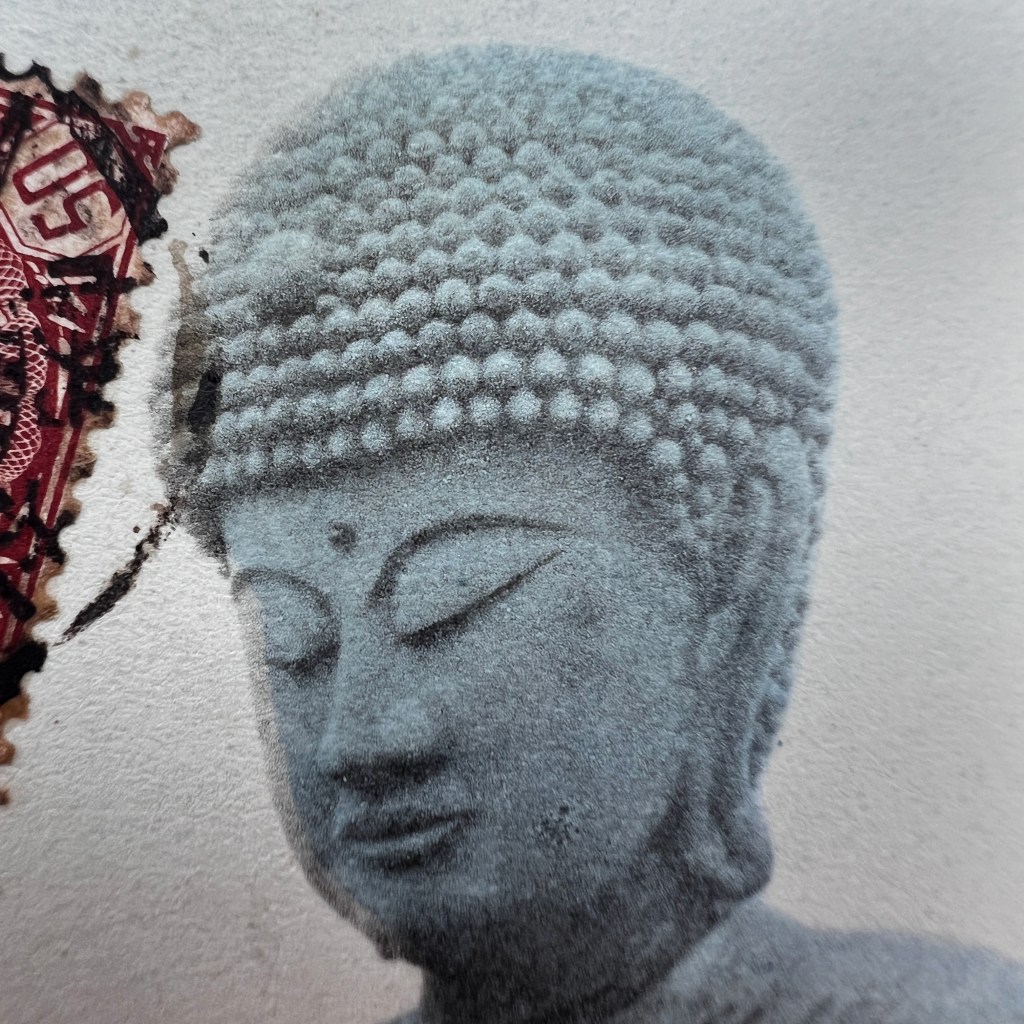
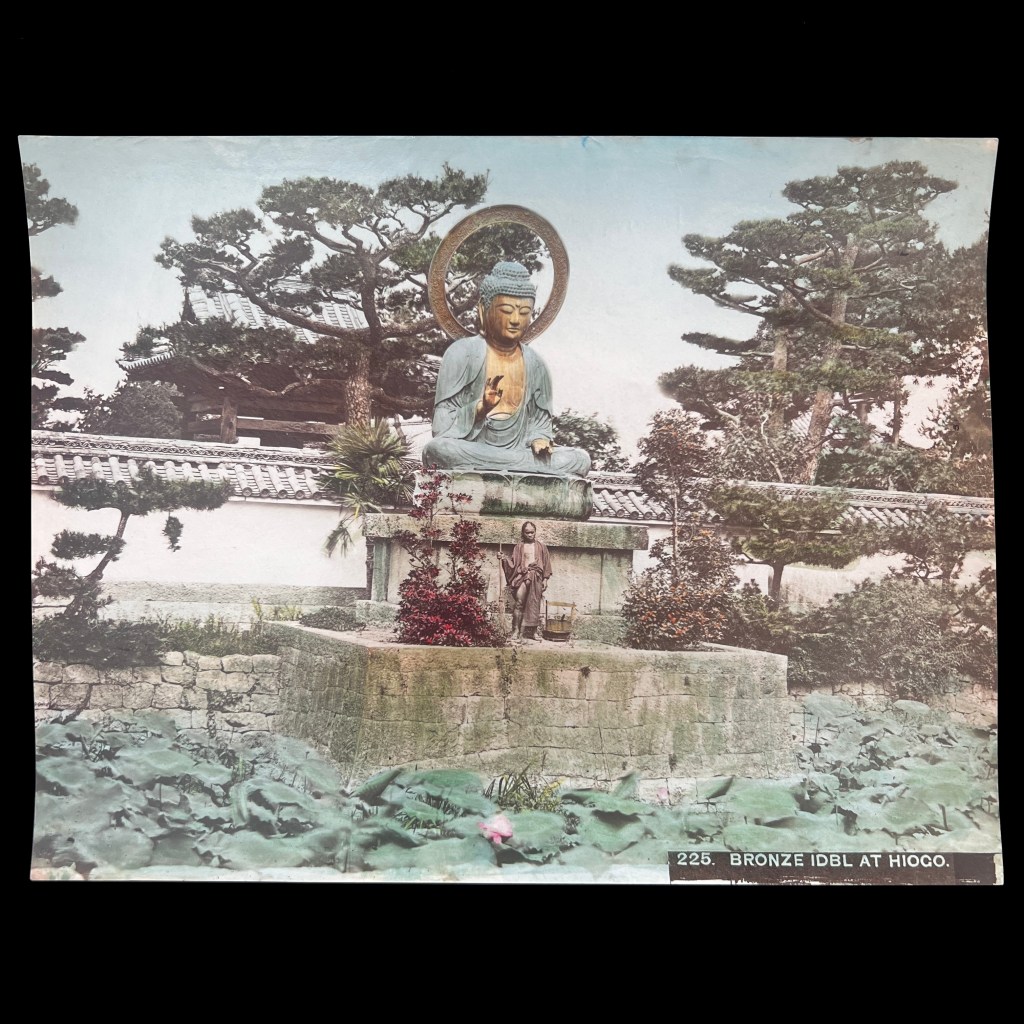
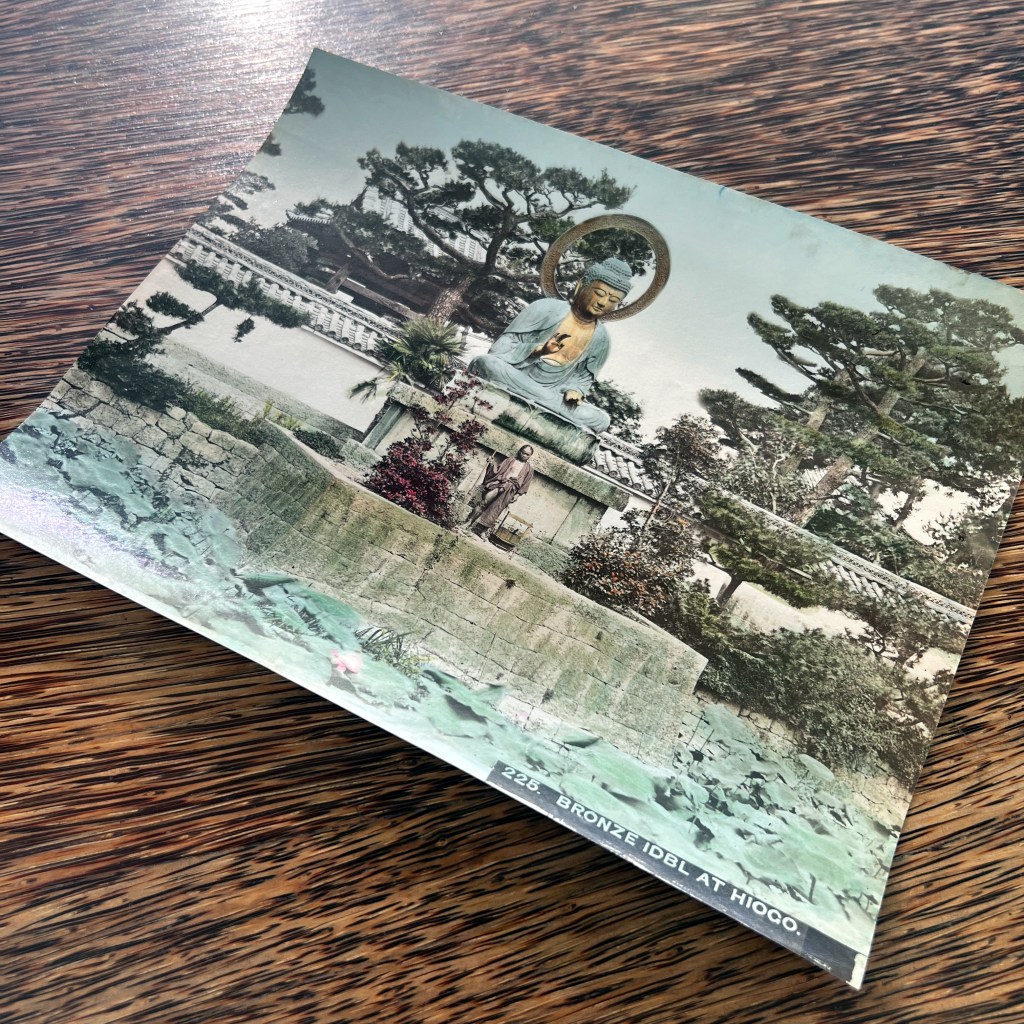
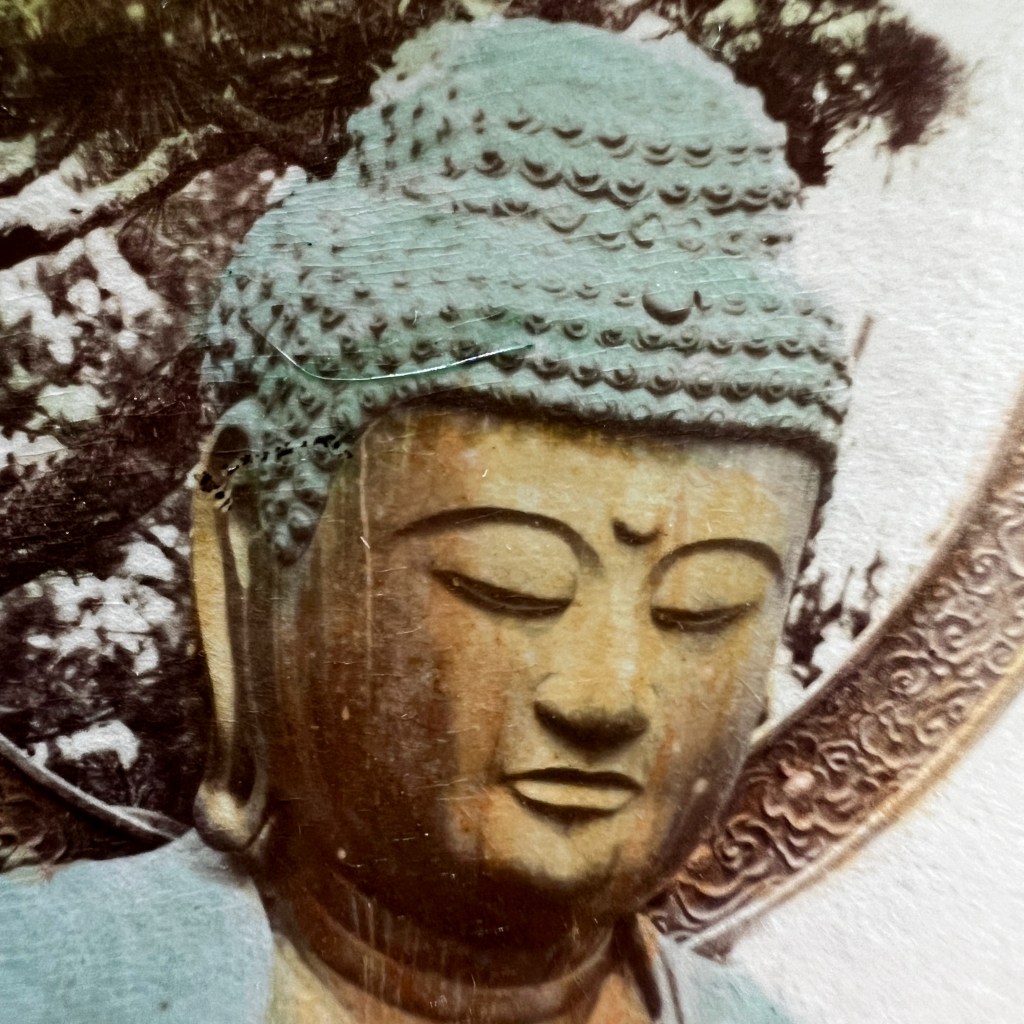
For late Victorian-era globetrotters, religious sites around Japanese port cities were often treated as picturesque tourist destinations. Such a site can be found with the Shinkō-ji lotus pond surrounding a large bronze Buddhist statue, not far from Kobe harbor.

This photograph was taken by Tamamura Kōzaburō who operated a well-known studio based in Yokohama since the early 1880s. Tamamura, like many of his peers, often sold photographic souvenirs of sites, objects, and people sought out by foreign tourists.

It was common for photographers to add people to the scene to help provide a sense of scale. The height of the Shinkō-ji statue is claimed to have been 4.8 meters tall.

While the caption on the photo identifies the statue generically as an idol, Shinkō-ji identifies it as Vairocana Buddha. According to temple records the icon was installed in 1760.

Unfortunately, to the best of my knowledge, this icon was likely destroyed by allied firebomb attacks in March 1945 during World War II. A Tamamura album with 50 photograph has been scanned by Harvard University Library, viewable here: https://tinyurl.com/3jn672n5


The Buddhas in the West Material Archive is a digital scholarship project that catalogues artifacts depicting Buddhist material culture for Western audiences. It’s comprised of prints, photos, and an assortment of ephemera and other objects. For a brief introduction to this archive, visit the main Buddhas in the West project page.


For Related Buddhas in the West Posts Featuring Kobe, Japan:


For the Most Recent Buddhas in the West Posts:


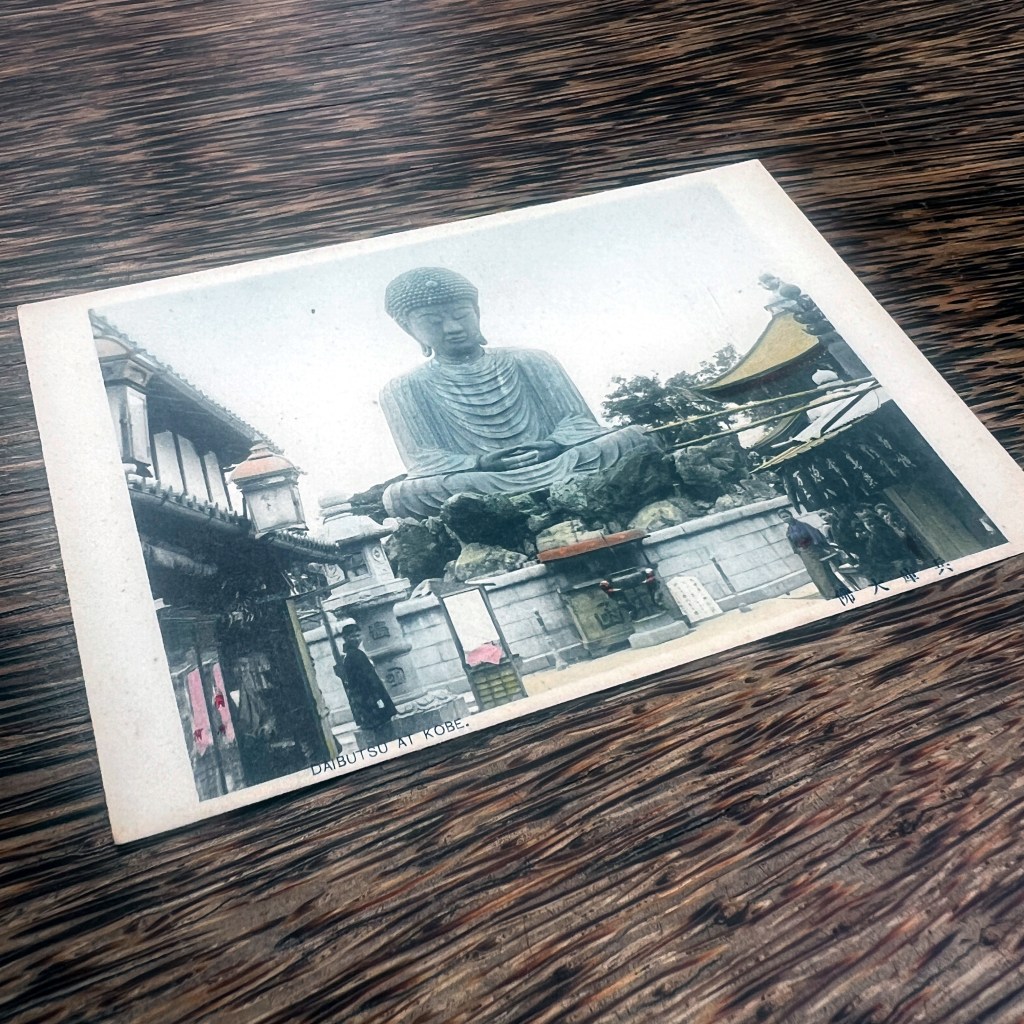
Hyōgo Daibutsu at Kobe F.S. Postcard

For all the new Buddhas in the West posts
follow us on Bluesky & Instagram


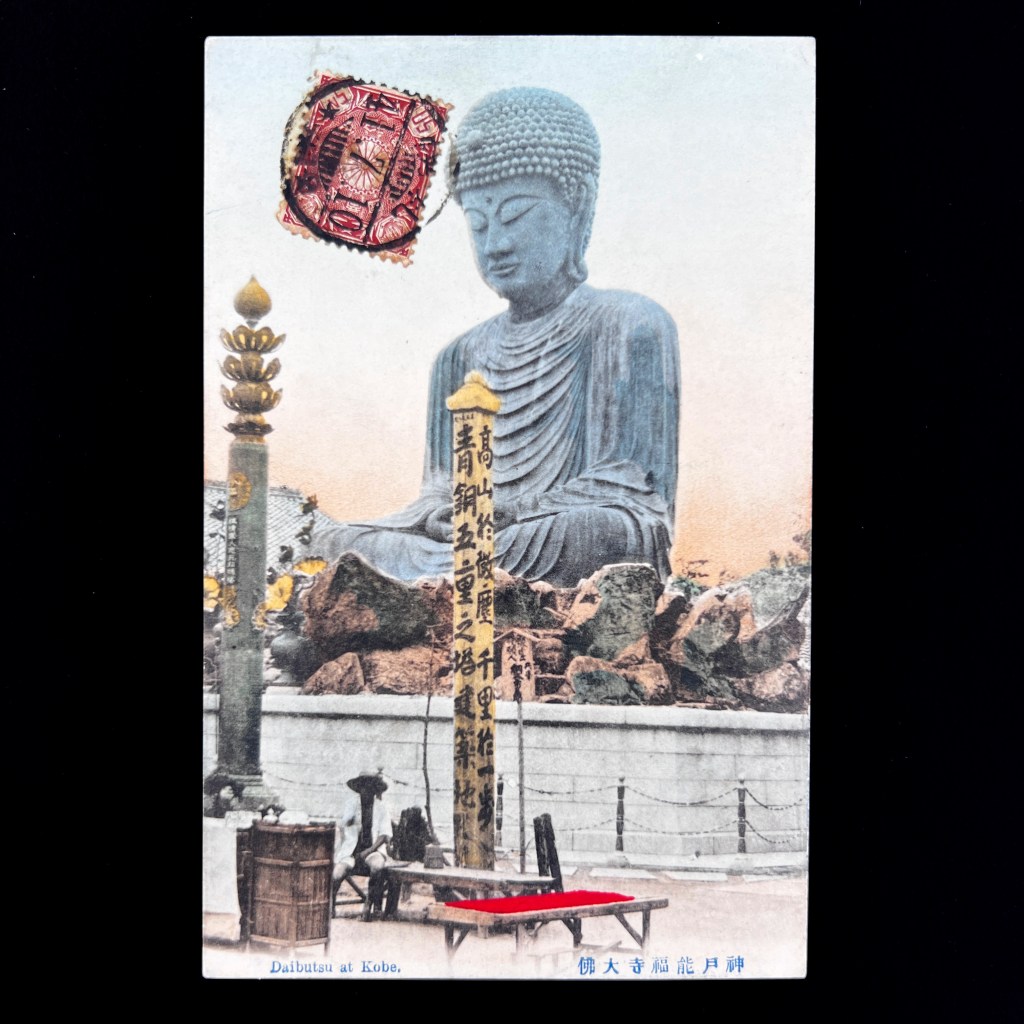
The original Hyōgo Daibutsu at Nōfuku-ji was the third largest Buddhist statue in Japan. It was dismantled by the Ordinance on the Collection of Metals issued in 1941 as part of Japanese war efforts during WWII.

Located in the port city of Kobe, the Daibutsu was approximately 12 meters in height. It became a popular tourist destination at the end of the 19th century, thus many photographs and postcards remain of the now lost icon.

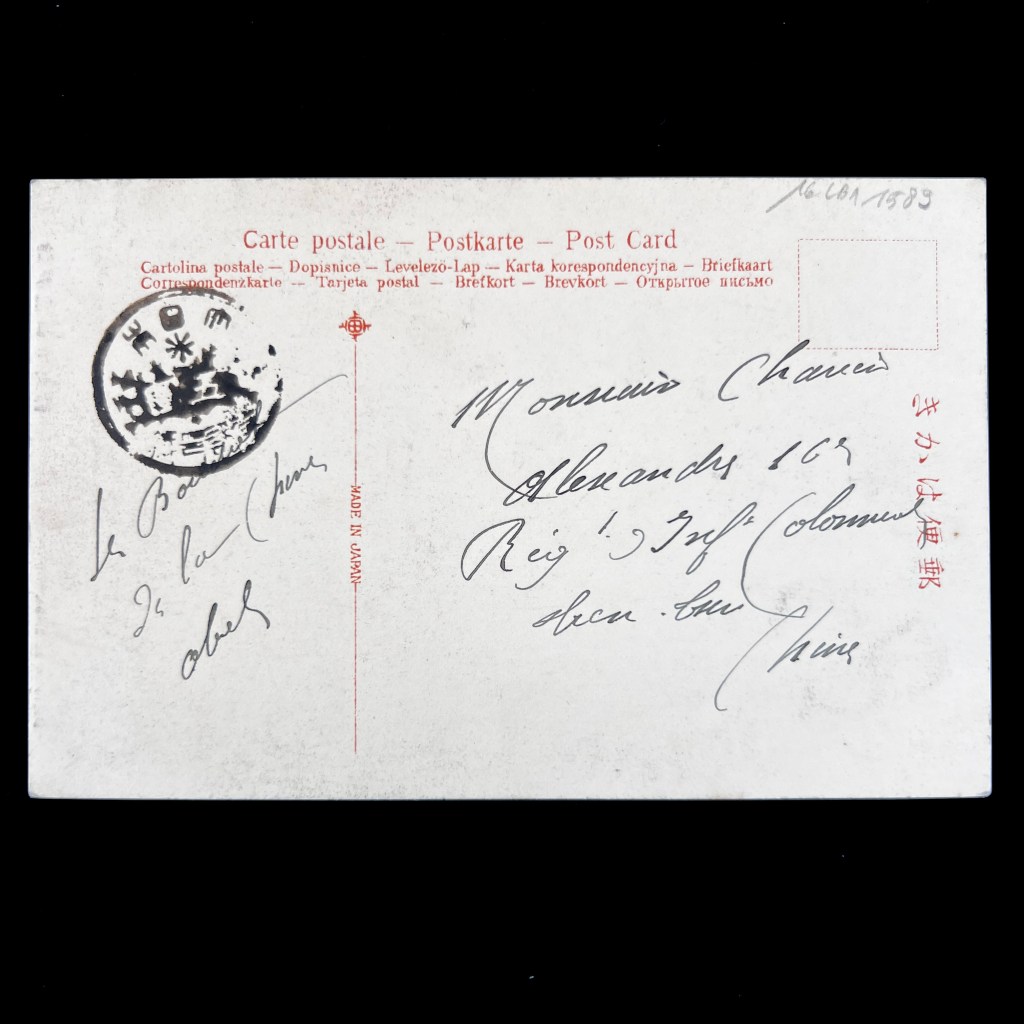
This “undivided back” design informs us the postcard was printed before 1907. The “F.S.” in the stamp box refers to the publisher’s name (which I haven’t identified).

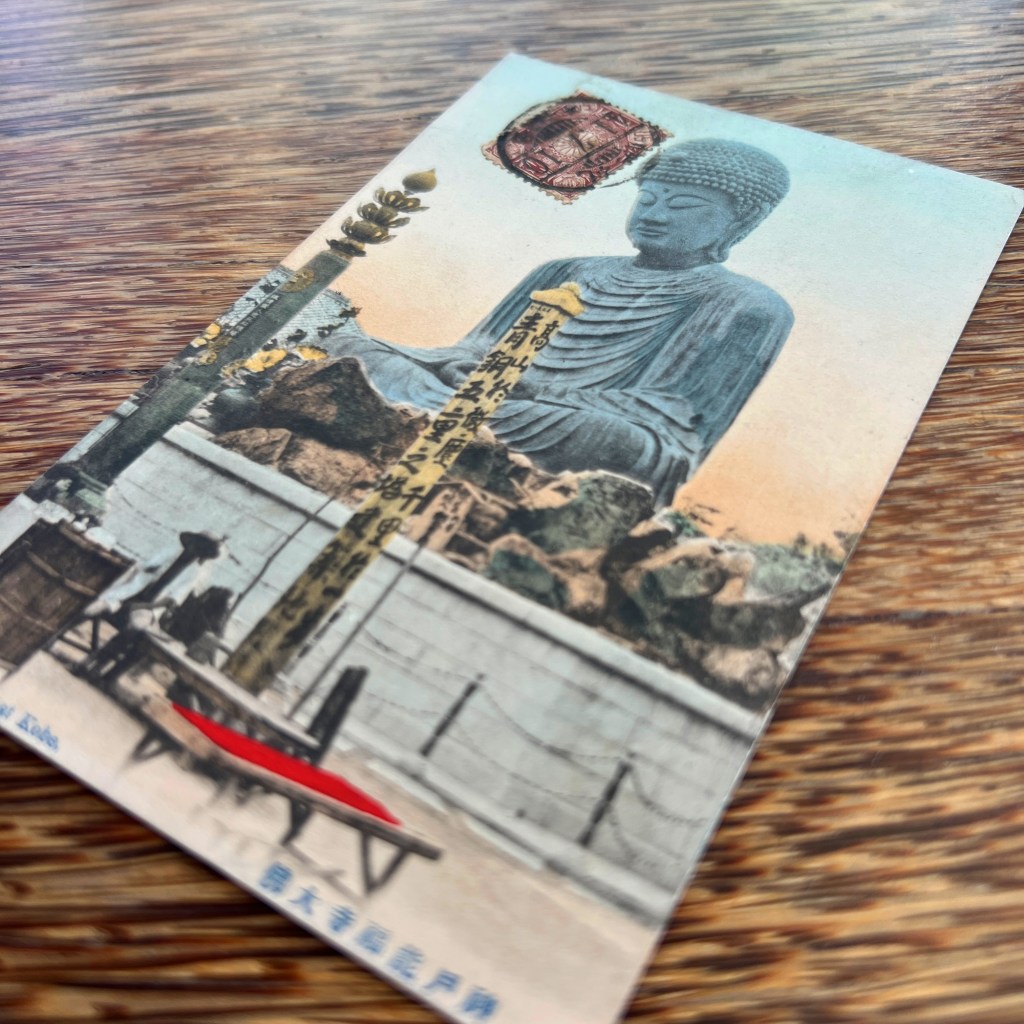
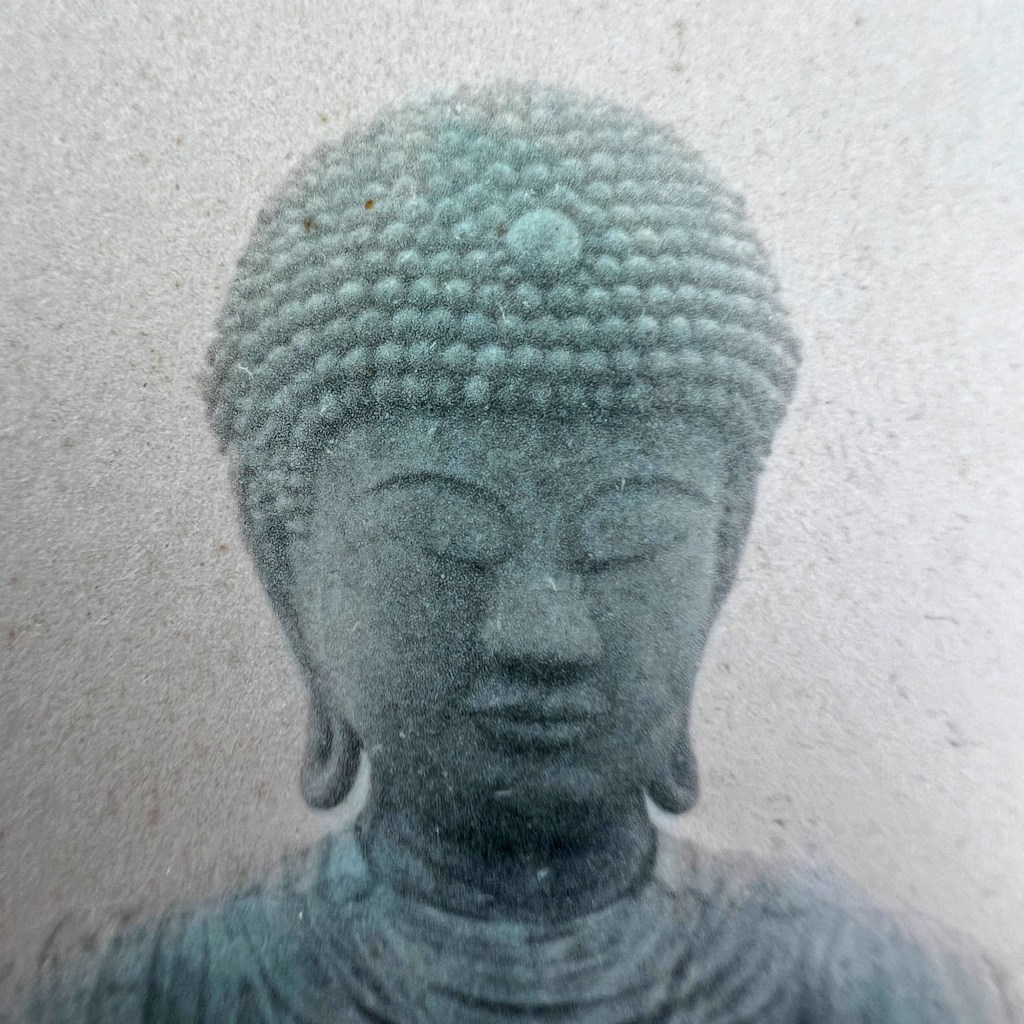
Many Japanese postcards of this period were hand-colored collotype prints. You can see the red ink splotches the colorist used to suggest design elements.

An albumen print photograph by Kusakabe Kinbei is held by the Nagasaki University Library, viewable here: http://oldphoto.lb.nagasaki-u.ac.jp/zoom/jp/record.php?id=1044


The Buddhas in the West Material Archive is a digital scholarship project that catalogues artifacts depicting Buddhist material culture for Western audiences. It’s comprised of prints, photos, and an assortment of ephemera and other objects. For a brief introduction to this archive, visit the main Buddhas in the West project page.


For Related Buddhas in the West Posts Featuring Postcards:


For the Most Recent Buddhas in the West Posts:

Hyōgo Daibutsu Vignette Postcard

For all the new Buddhas in the West posts
follow us on Bluesky & Instagram


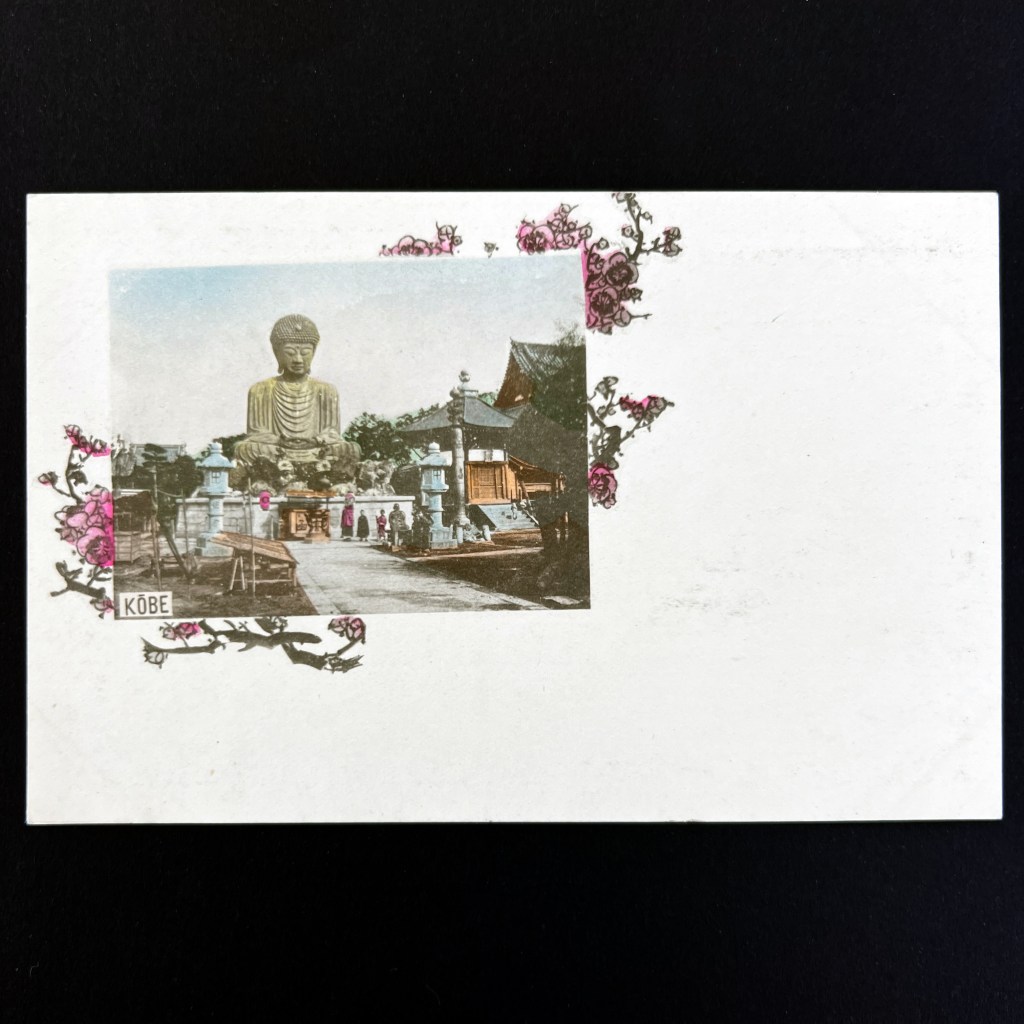
The original Hyōgo Daibutsu 兵庫大仏 was dismantled as part of Japanese war efforts during WWII. It was motivated by the Ordinance on the Collection of Metals issued in 1941. At the time, it was the third largest Buddhist statue in Japan.

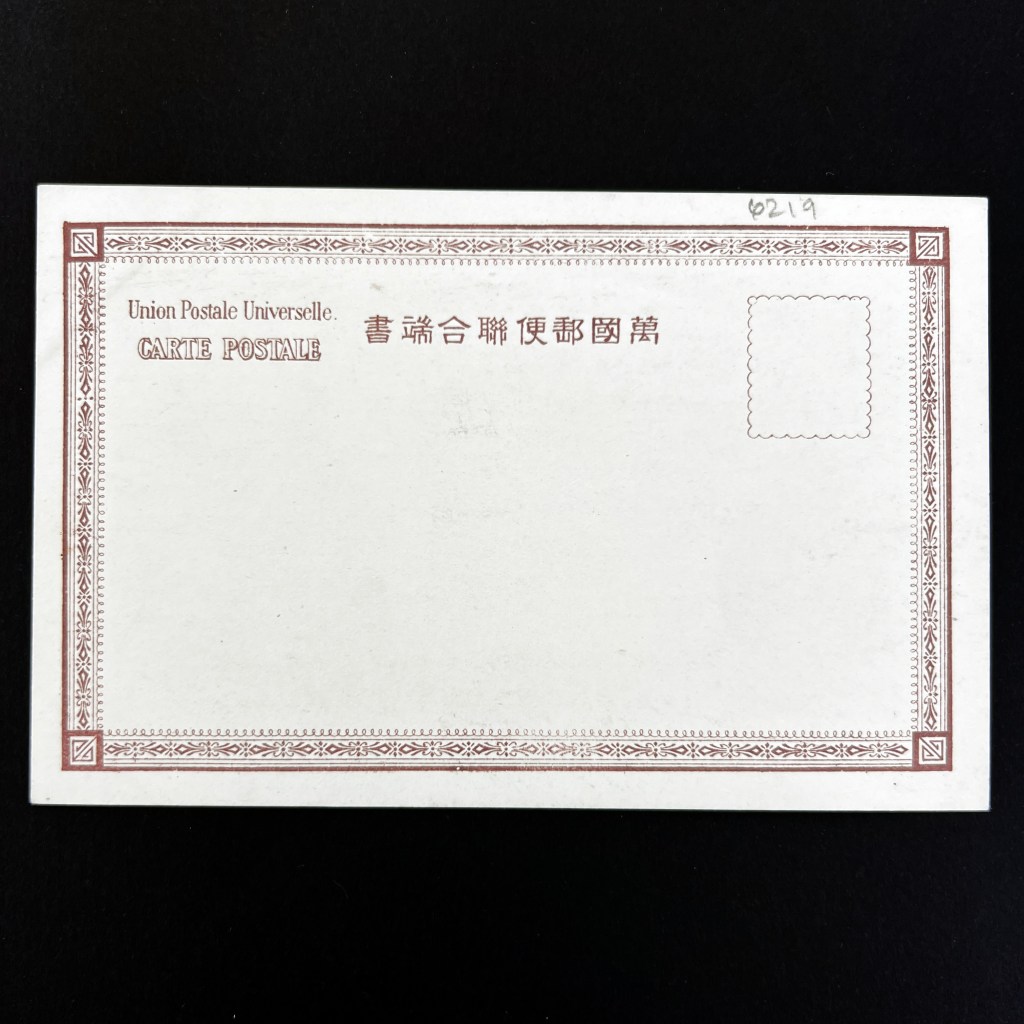
Constructed in 1891, photographs of the Hyōgo Daibutsu were often printed on Japanese postcards of the era. Based on the design on the back of this card we know it was published before 1907.


The blank space on the front of this card was intended for the written message. The reverse was saved for the address only.


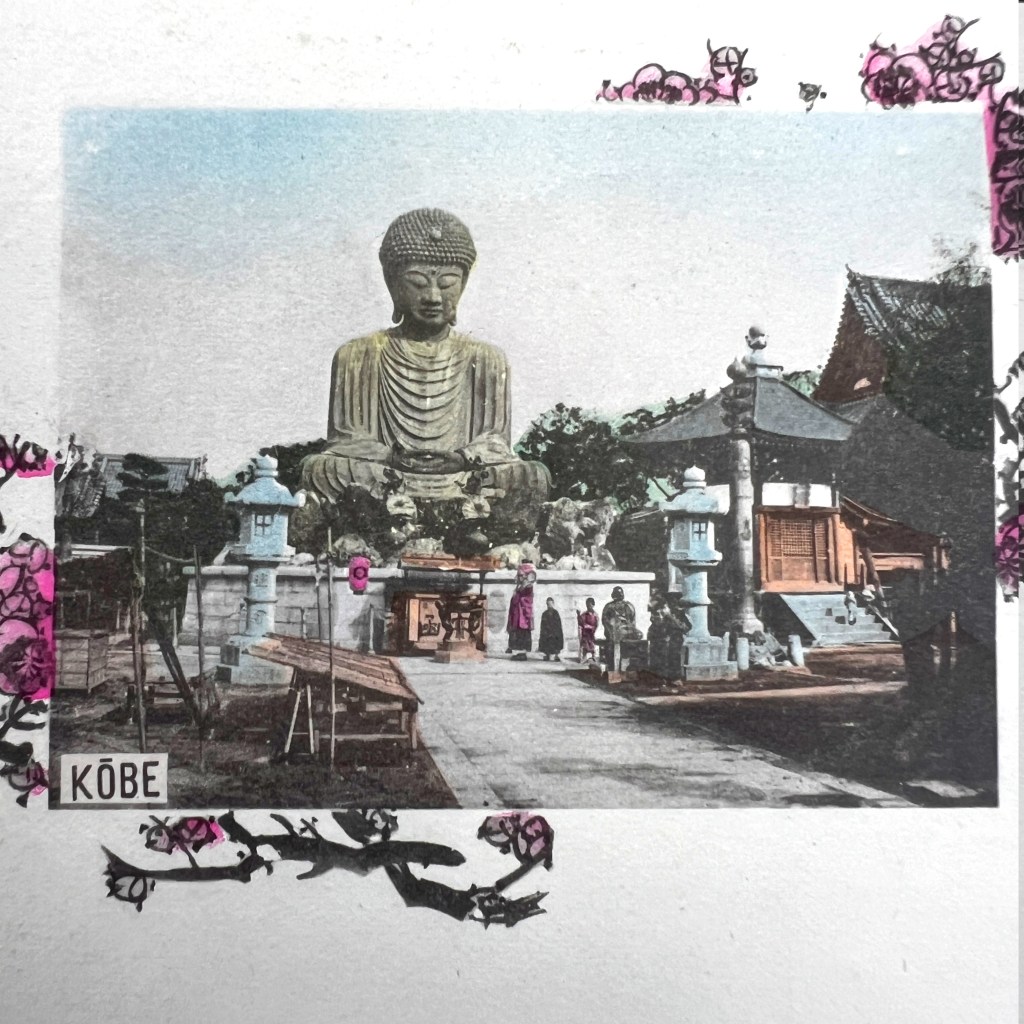
This card is uncommon because it combines a collotype print with an added pink cherry blossom frame. The angular band of discoloration on the corner reveals it was stored in a postcard album.


Most photographic Japanese post cards of this period were individually hand-painted. This continued into the 1910s until multi-color printing became more commonplace.


The Buddhas in the West Material Archive is a digital scholarship project that catalogues artifacts depicting Buddhist material culture for Western audiences. It’s comprised of prints, photos, and an assortment of ephemera and other objects. For a brief introduction to this archive, visit the main Buddhas in the West project page.


For Related Buddhas in the West Posts Featuring Historical Postcards:

For the Most Recent Buddhas in the West Posts: