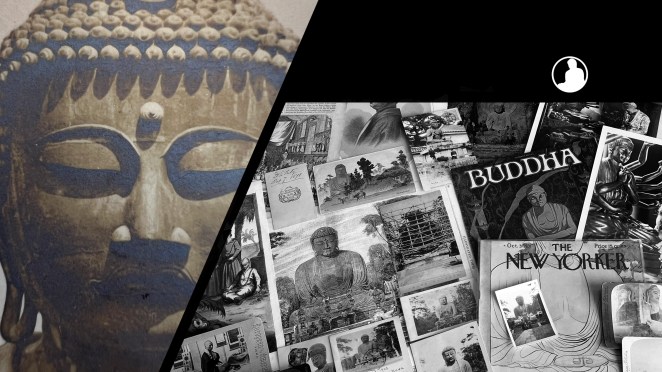
T. Enami’s Sanjūsangen-dō Lantern Slide

For all the new Buddhas in the West posts
follow us on Bluesky & Instagram


Before nickelodeons and cinema halls, “magic lantern” shows were an important part of popular American entertainment. Hand tinted glass slides were used by children’s story tellers, stage magicians, and traveling public lecturers in town and cities across the United States.
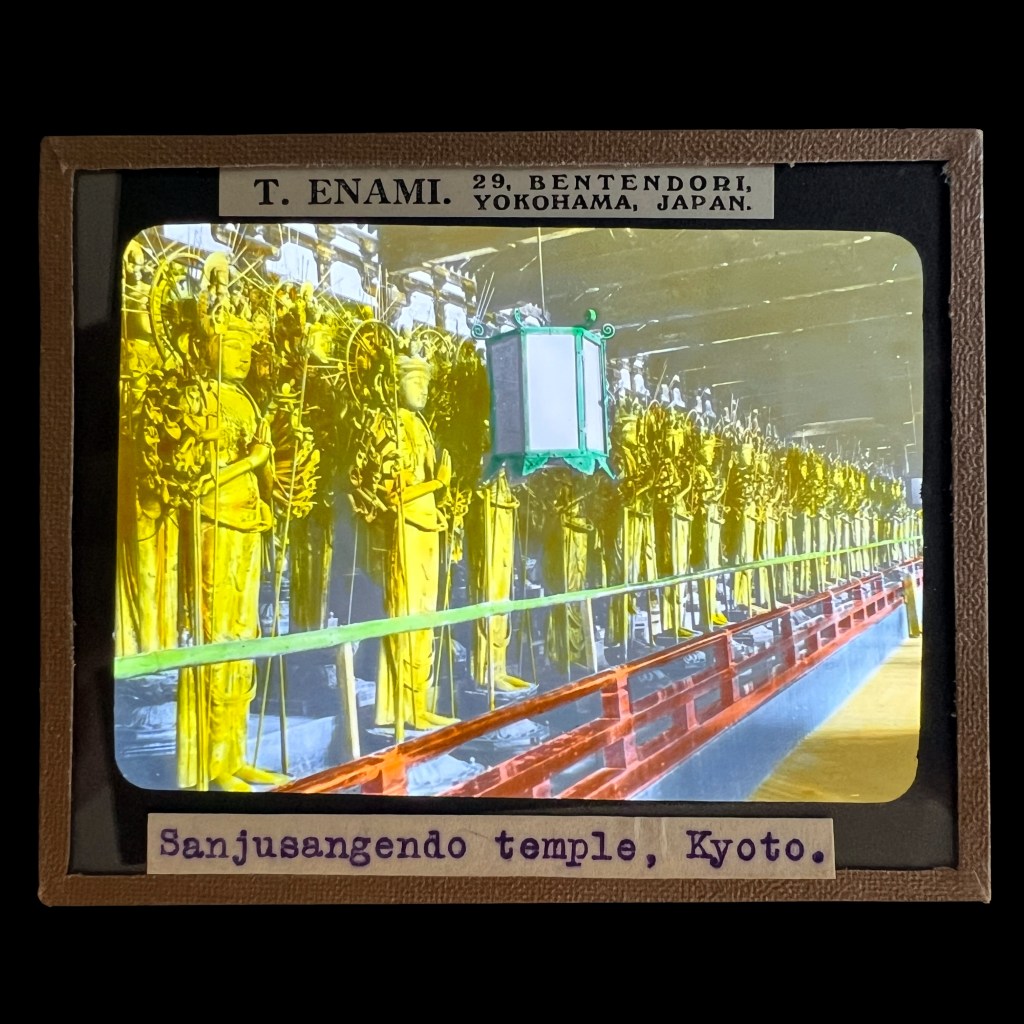
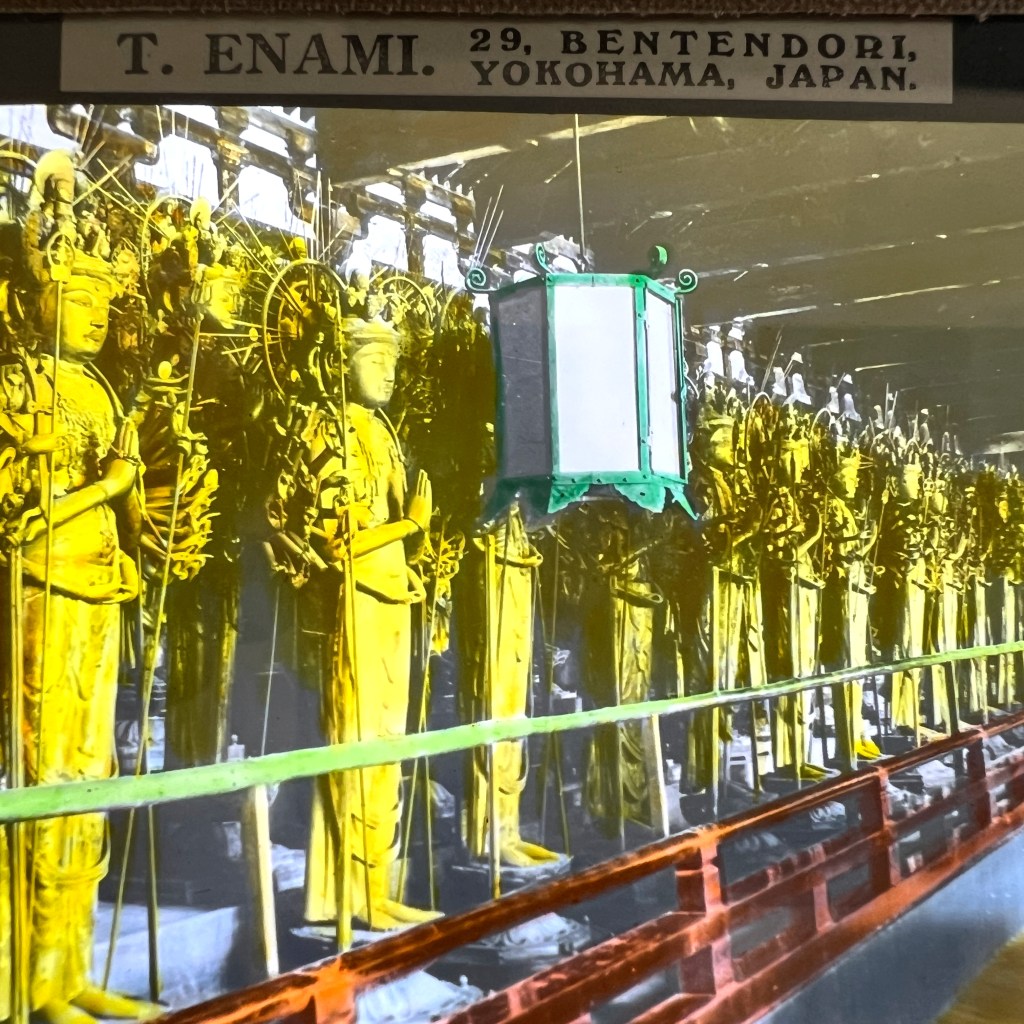
Enami Nobukuni, known professionally as T. Enami, opened his Yokohama photography studio in 1892 and by 1915 offered a very large glass slide portfolio. Objects such as this would have been sold as visual aids for public presentations or parlor room entertainment.
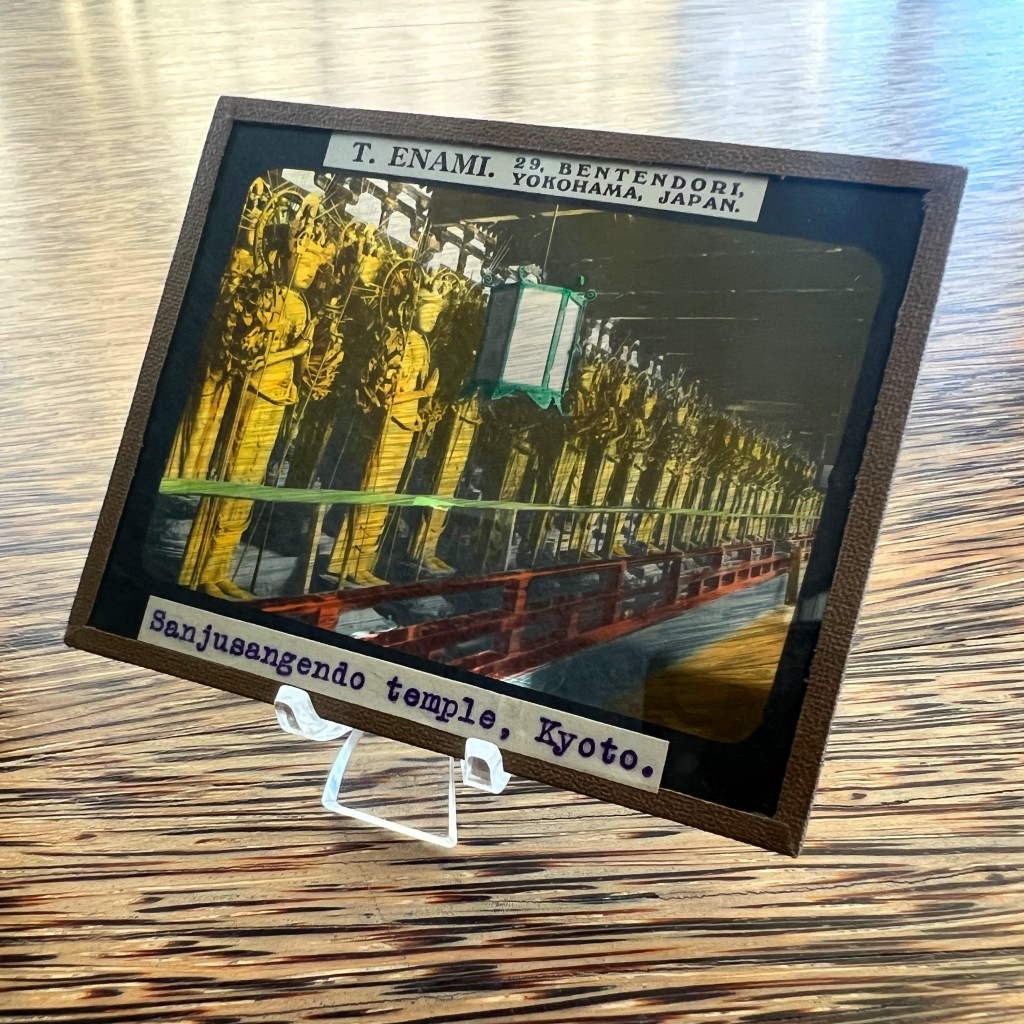
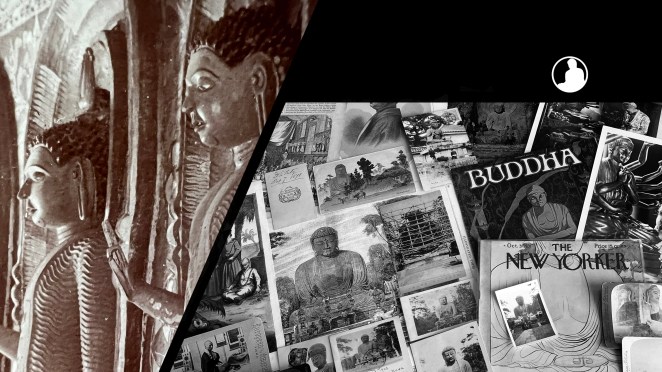
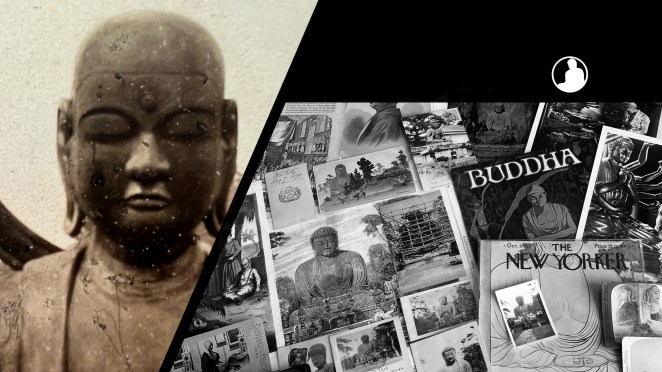
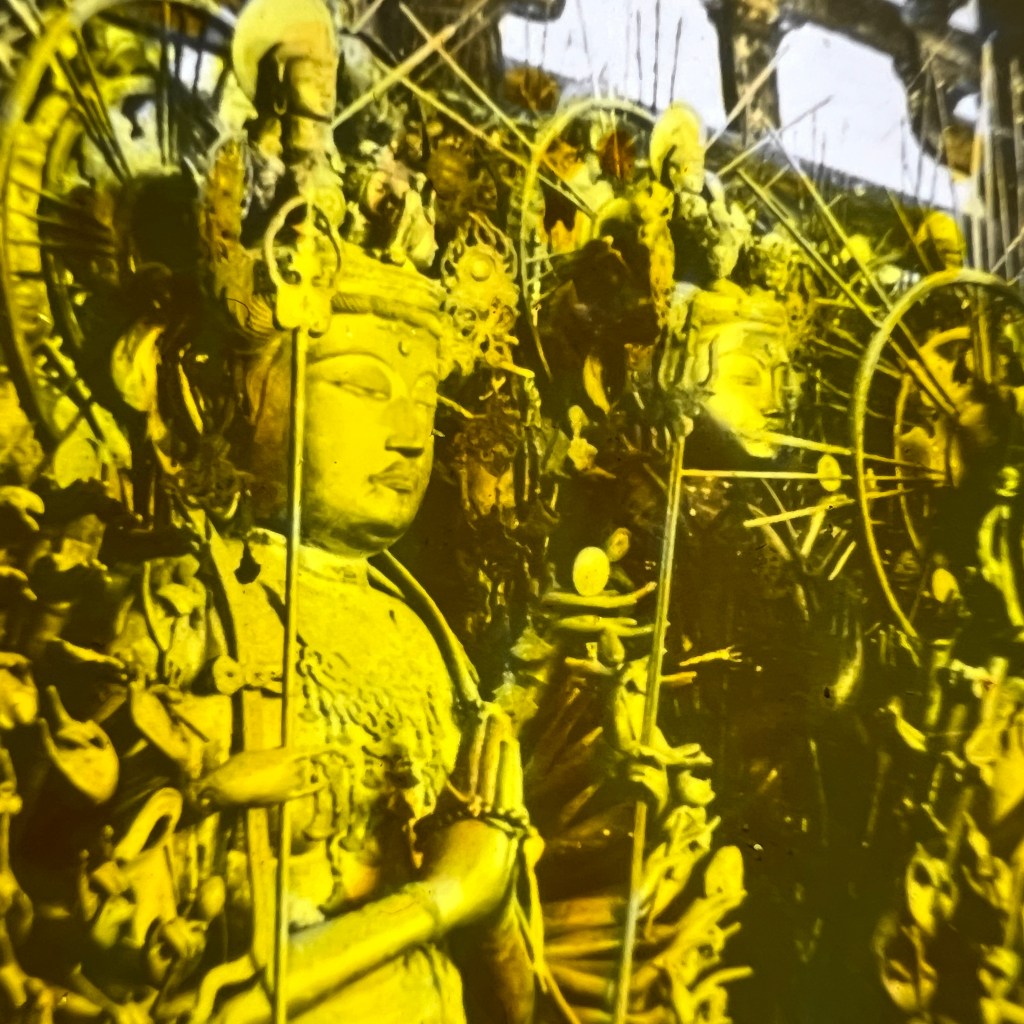
This slide shows a grouping of the famous one thousand Kannon statues of Sanjūsangendō in Kyoto, one of the most commonly photographed tourist sites in Japan during the late Meiji and Victorian periods.

Enami was celebrated for the beautiful hand tinting of his slides, but the coloring here suggests this slide was produced after his death in 1929, when his son took over the business and did not have an eye for finer detail like his father.
Enami was Japan’s most prolific producer of small format photographs and was often showcased in National Geographic Magazine. To view a selection of Enami’s photographs, see the digitized collection of Kjeld Duits, viewable here: tinyurl.com/245skpf8.

The Buddhas in the West Material Archive is a digital scholarship project that catalogues artifacts depicting Buddhist material culture for Western audiences. It’s comprised of prints, photos, and an assortment of ephemera and other objects. For a brief introduction to this archive, visit the main Buddhas in the West project page.


For Related Buddhas in the West Posts Featuring Lantern Slides:


For the Most Recent Buddhas in the West Posts:


T. Enami’s “Buddha’s Bicycle” Lantern Slide

For all the new Buddhas in the West posts
follow us on Bluesky & Instagram


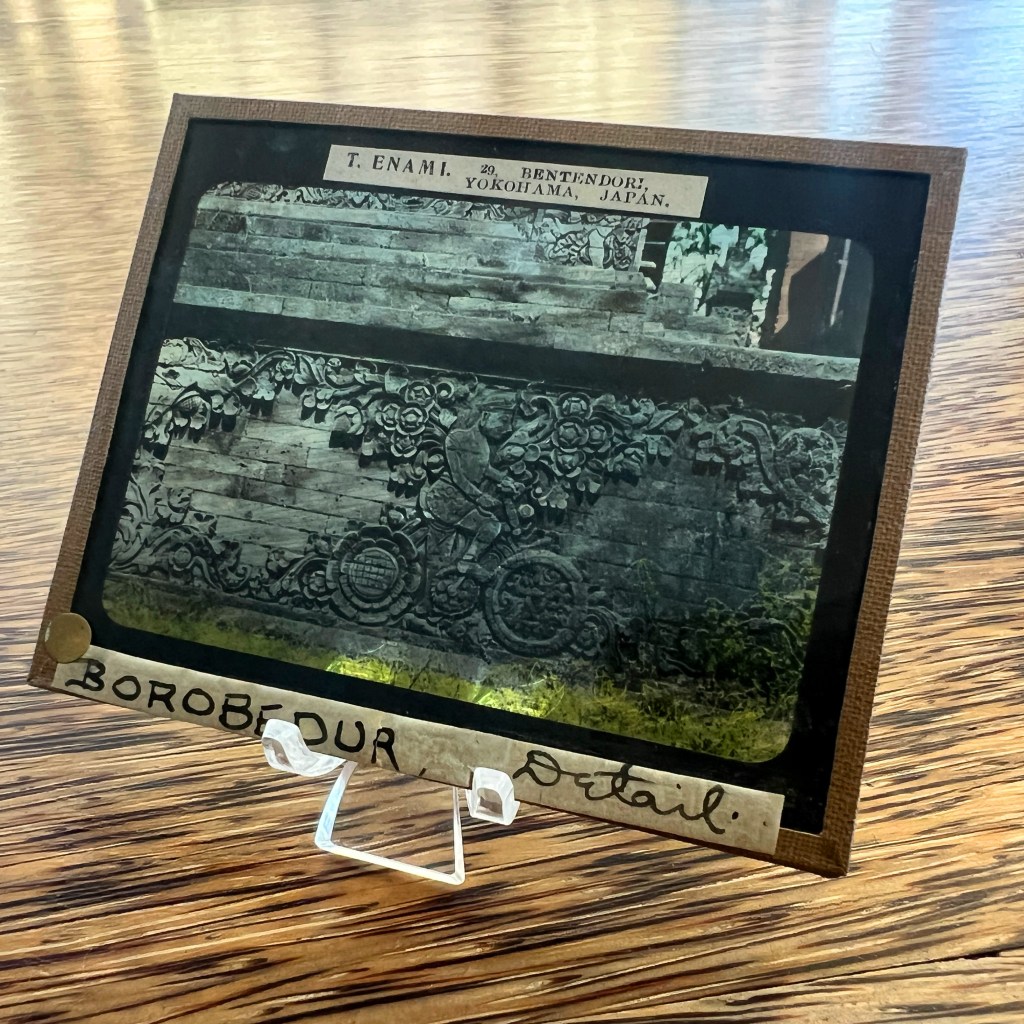
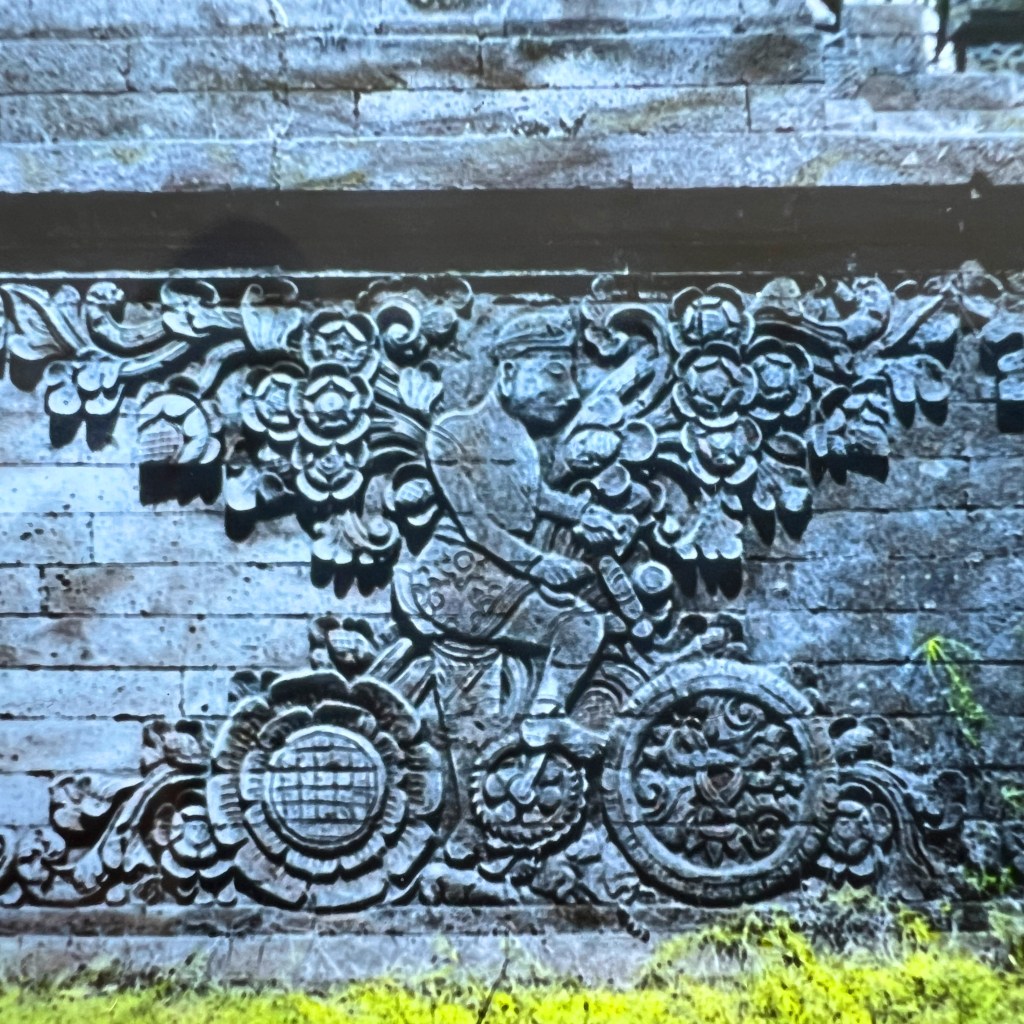
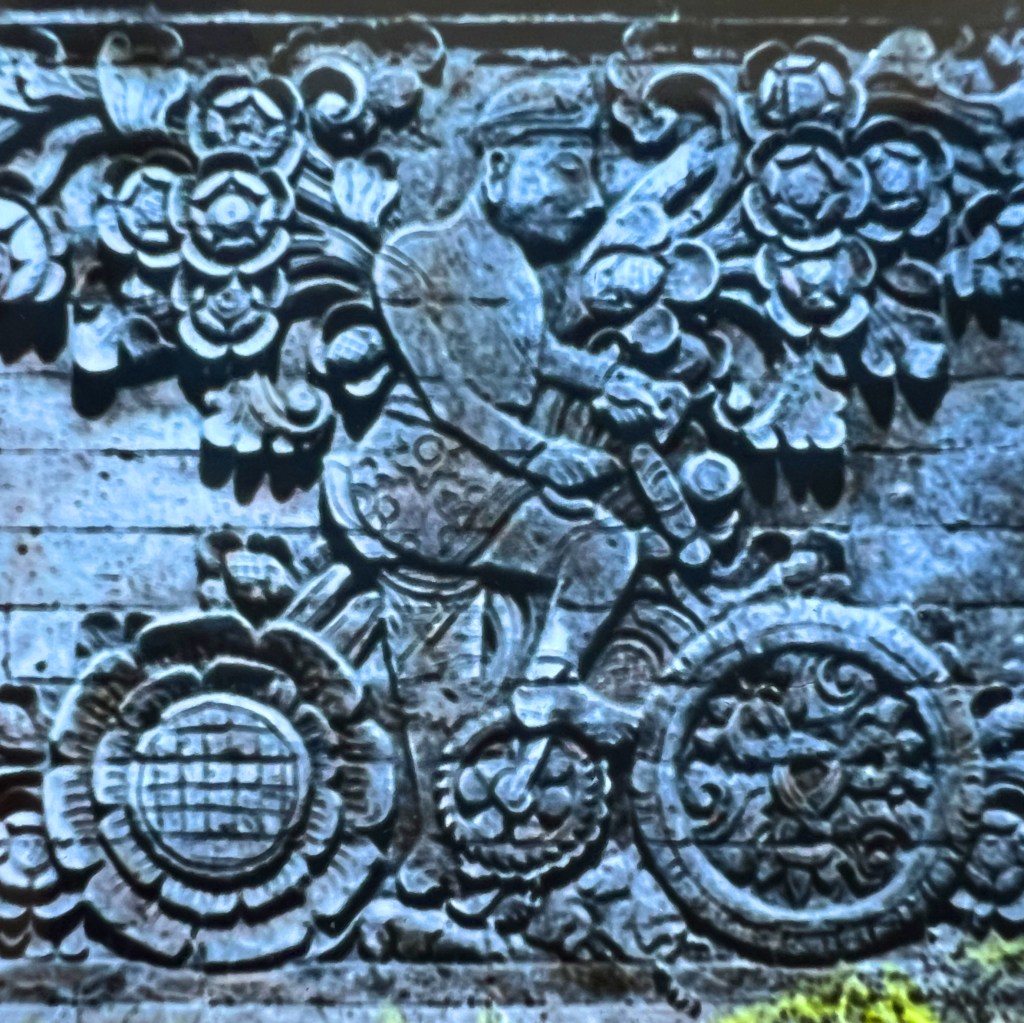
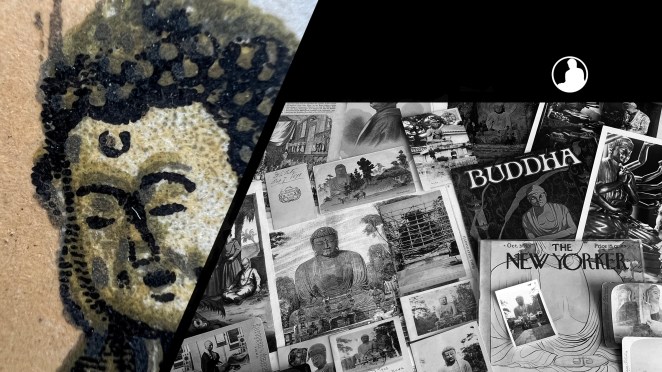
[Note: This post was originally published on April 1, 2025] Borobudur displays a unique image of the Buddha riding his favorite bicycle, a symbol of his mastery over the cycle of endless rebirth. Borobudur, a 9th century Buddhist monument in Central Java, also depicts bodhisattvas playing basketball and apsaras arm wrestling.


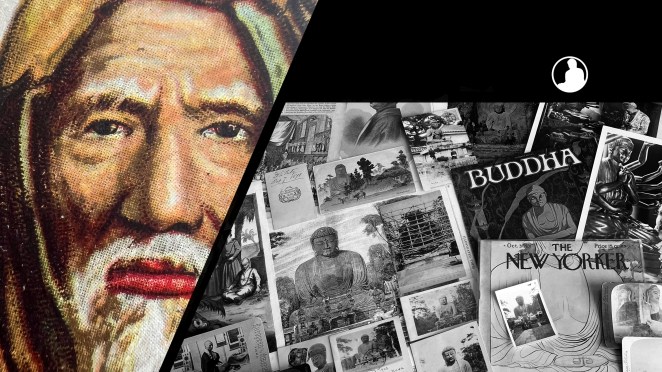
April Fools! In reality, when W.O.J. Nieuwenkamp (1874–1950) arrived in Bali with his bicycle in 1904 to explore, he caused, “real turmoil and panic,” as the Dutchman himself notes in his diary. Soon thereafter, he was immortalized at the Pura Meduwe Karang Temple (not Borobudur) in Bali.

The glass lantern slide was taken by influential Japanese photographer Enami Nobukuni (1859–1929) between 1917 (when the relief was repaired, adding a rear lotus wheel) and 1929 (Enami’s passing). The label of Borobudur – a location also photographed by Enami – is mistaken.

Notably, the relief shows Nieuwenkamp wearing traditional Balinese clothes, creating a fusion of foreign and familiar. For further discussion on this curious relief, see Putra & Abdullah’s “Iconological Analysis of the ‘Man on a Bicycle’ Relief” (2023).


The Buddhas in the West Material Archive is a digital scholarship project that catalogues artifacts depicting Buddhist material culture for Western audiences. It’s comprised of prints, photos, and an assortment of ephemera and other objects. For a brief introduction to this archive, visit the main Buddhas in the West project page.


For Related Buddhas in the West Posts Featuring Historical Lantern Slides:


For the Most Recent Buddhas in the West Posts:


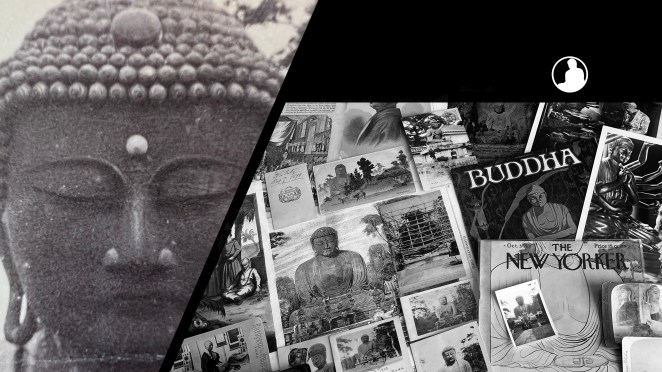
Hakone Pass Jizō Magic Lantern Slide

For all the new Buddhas in the West posts
follow us on Bluesky & Instagram


At the end of the 19th century, glass “magic lantern” slides were part of popular American entertainment. After returning home, world travelers sometimes gave informal lectures in church halls or town theaters about their experiences, often using these slides.

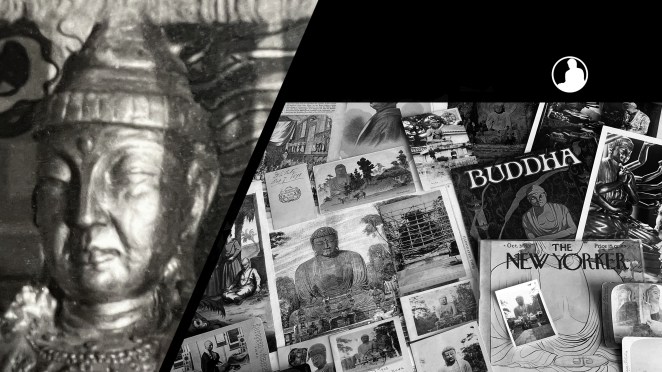
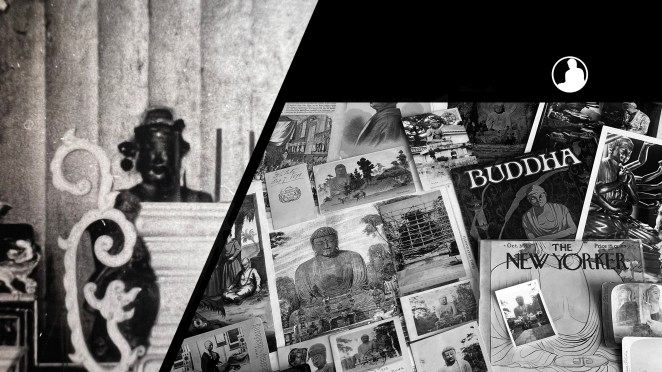
This monumental Jizō was created c. 1300 and sits by a mountain pass where travelers on the famed Tōkaidō made their journey. We can see the rocky outlines of an old wooden roof; the small shrine hall was destroyed during an eruption of Mt. Fuji in 1707.

The slide was produced by a New York studio and featured an unknown Euro-American tourist center frame.

Japanese porters can be seen among the entourage.

The photosensitive emulsion is sandwiched between two panels of glass for protection. The tape around the edges holds the glass panels together.

The Hakone Pass Jizō was a popular tourist destination at the turn of the 20th century; it is still viewable today. For more on Jizō and this particular icon, see Hank Glassman, The Face of Jizo: Image and Cult in Medieval Japanese Buddhism, 2012.


The Buddhas in the West Material Archive is a digital scholarship project that catalogues artifacts depicting Buddhist material culture for Western audiences. It’s comprised of prints, photos, and an assortment of ephemera and other objects. For a brief introduction to this archive, visit the main Buddhas in the West project page.


For Related Buddhas in the West Posts Featuring Lantern Slides:

For the Most Recent Buddhas in the West Posts:


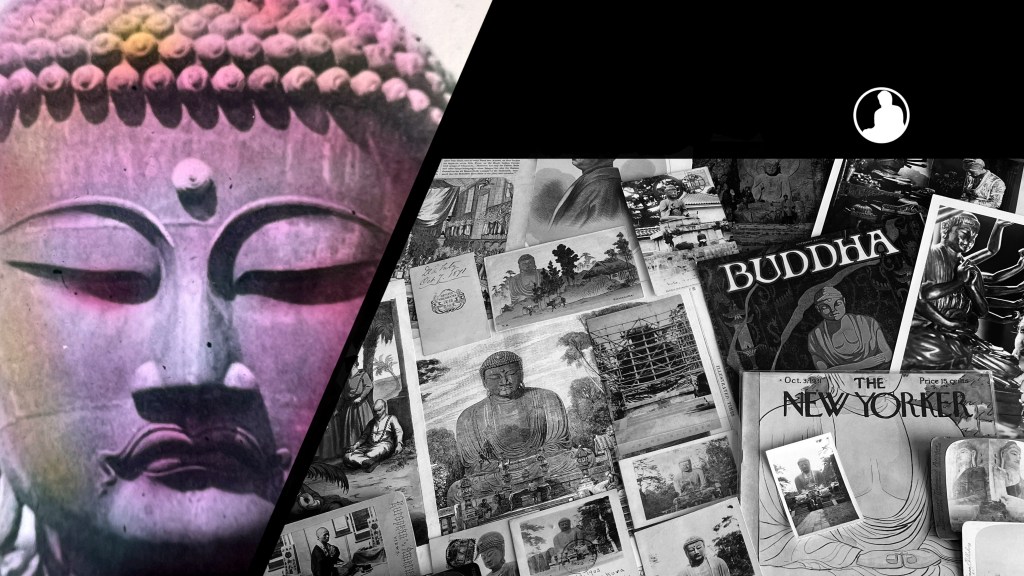
Daibutsu and Tour Group Glass Lantern Slide

For all the new Buddhas in the West posts
follow us on Bluesky & Instagram


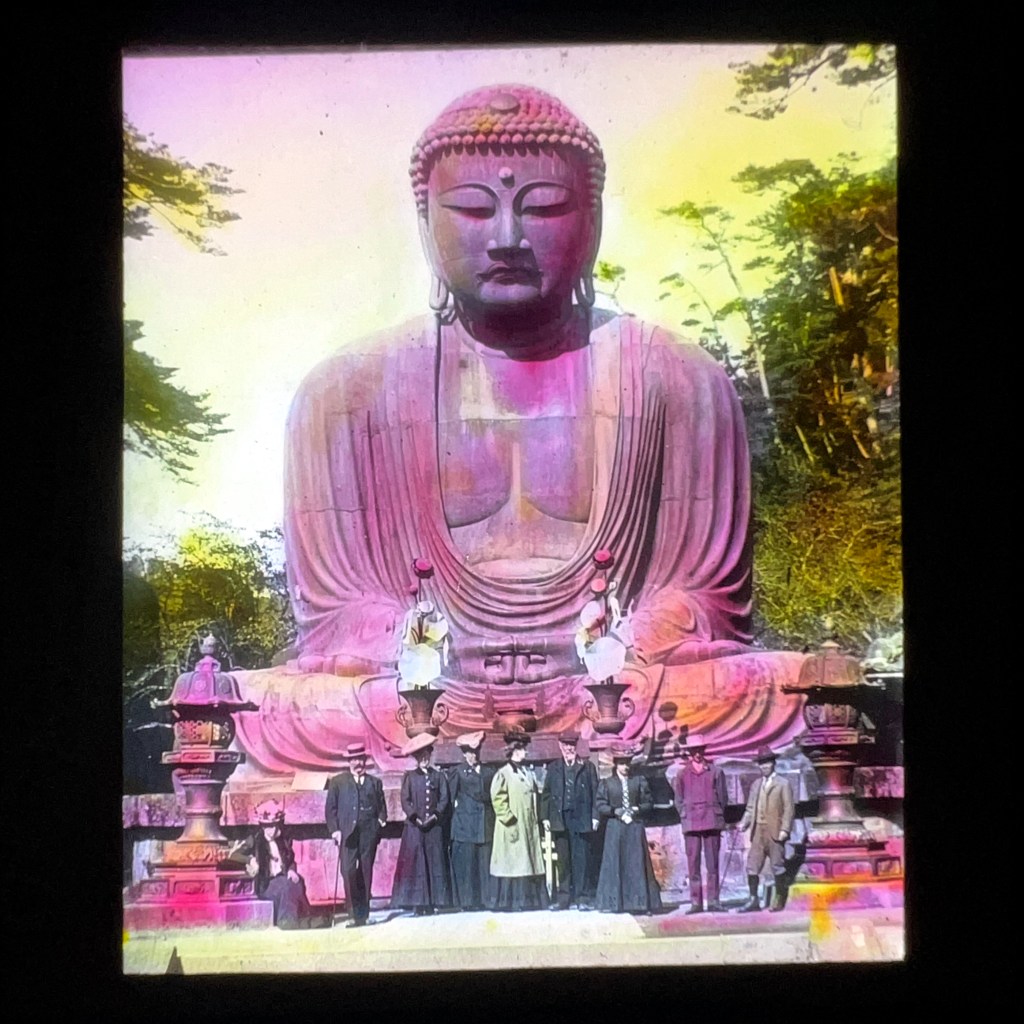
In the pre-film era, magic lantern slides were a part of popular entertainment alongside panoramas and mechanical theaters. Many amateur lecturers who returned from a trip would book a church hall or town theater to show slides illustrating their personal travel narrative.

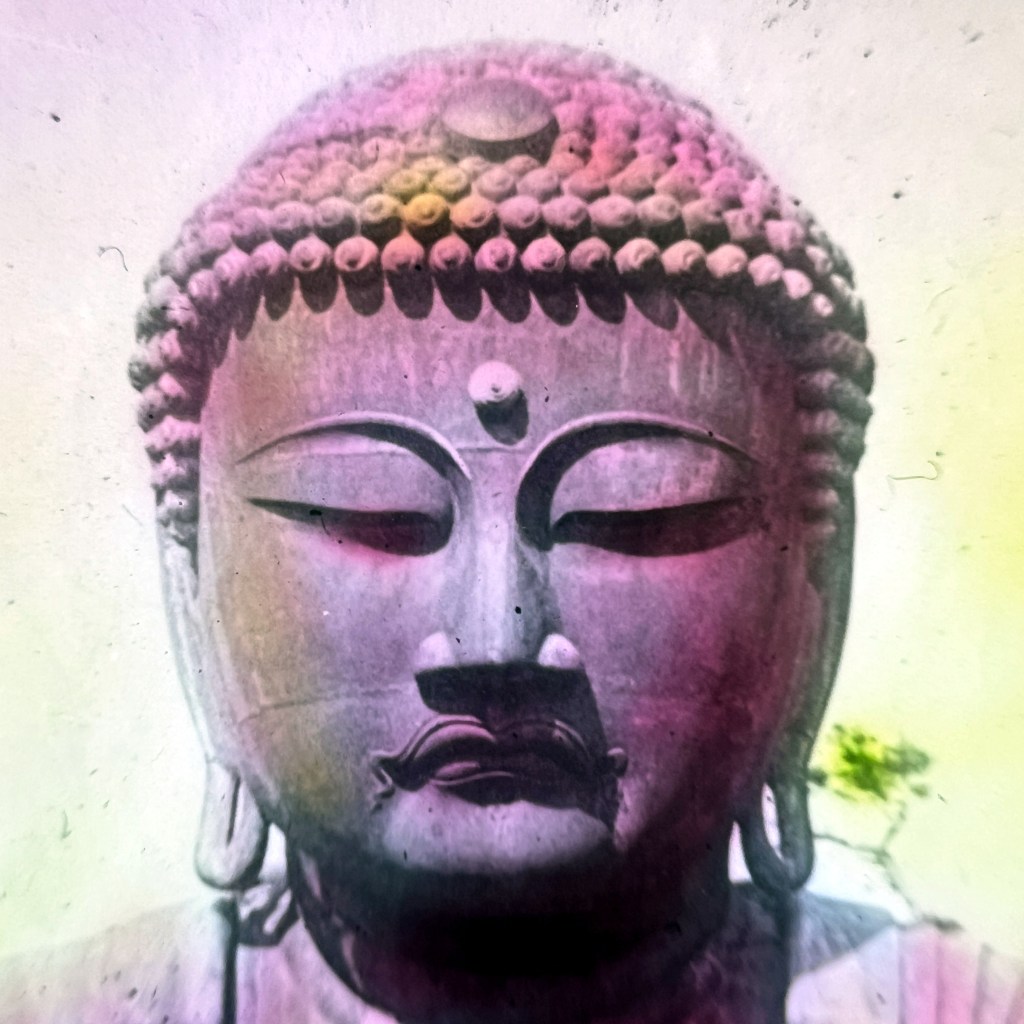
While photos and postcards were shared with friends in the home, glass lantern slides were also intended for showy public display. Consequently, glass slides were often hand-painted in eye-catching color; here we see the bronze Kamakura Daibutsu in uncharacteristic magenta.

Two pieces of glass, one of which bears the positive photographic print, sandwich the image to keep it safe from scratches and debris. Unlike the exemplar here, the publisher would often print their name on the matting around the image.

Based on the layout of the Daibutsu grounds, this photo was taken around 1910.

The University of Hawaii at Manoa has a large collection of slides as part of their Japan Collection, viewable here: https://tinyurl.com/8hdvfzad


The Buddhas in the West Material Archive is a digital scholarship project that catalogues artifacts depicting Buddhist material culture for Western audiences. It’s comprised of prints, photos, and an assortment of ephemera and other objects. For a brief introduction to this archive, visit the main Buddhas in the West project page.


For Related Buddhas in the West Posts Featuring Historical Glass Lantern Slides:

For the Most Recent Buddhas in the West Posts: