For all the new Buddhas in the West posts follow us on Bluesky & Instagram
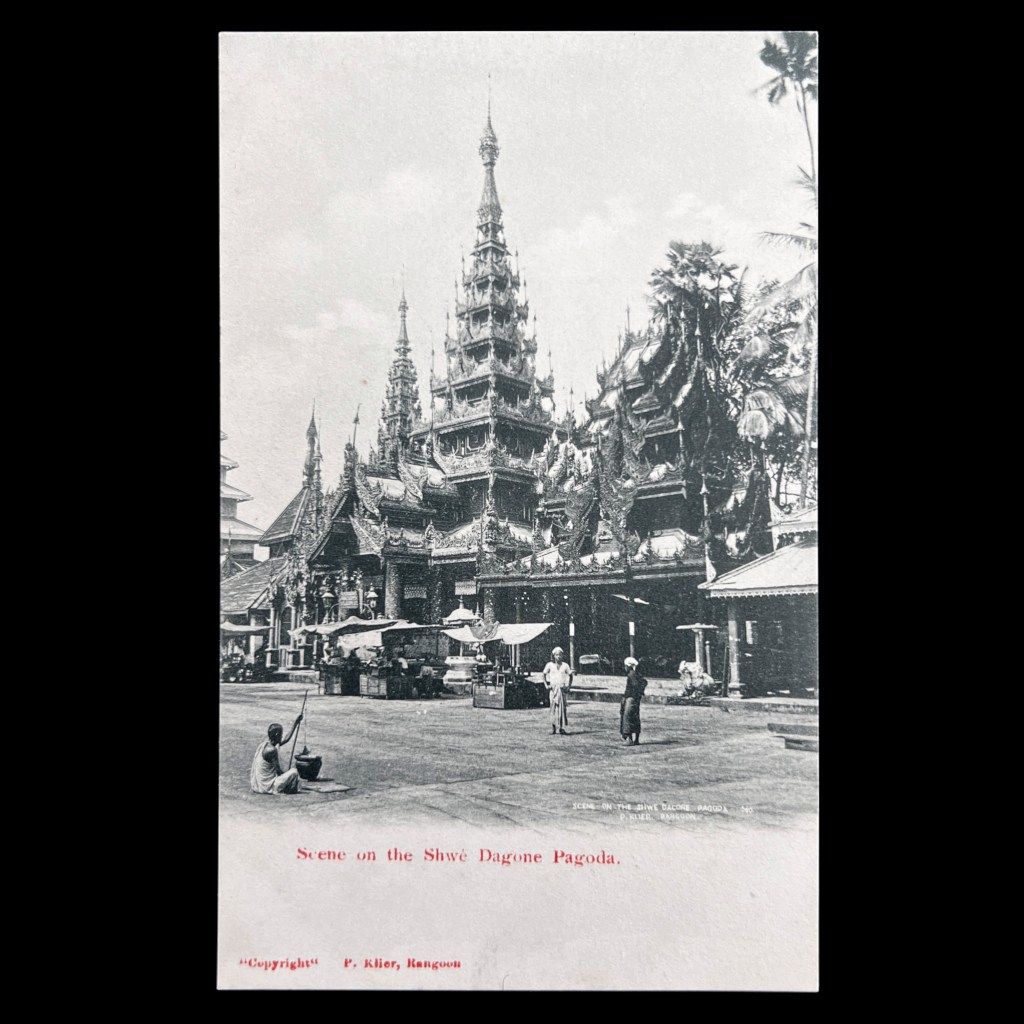
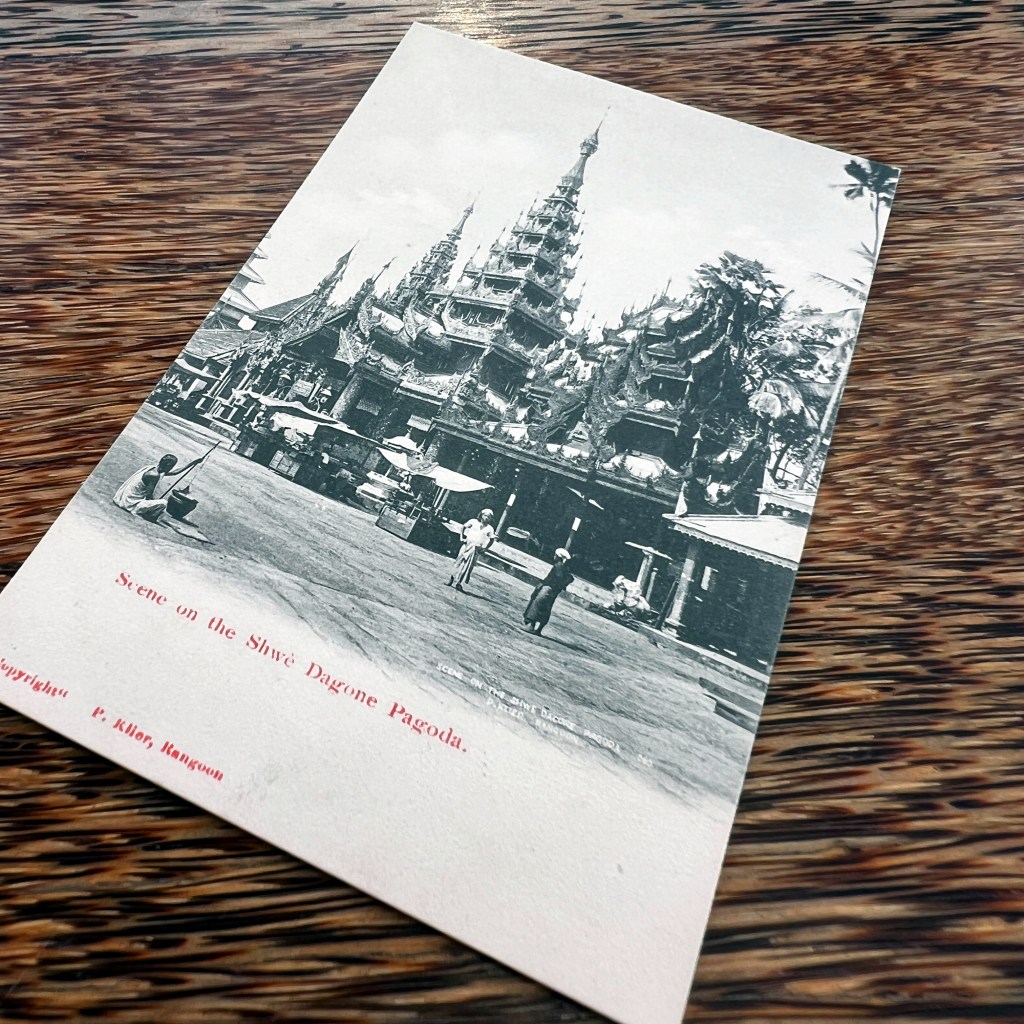
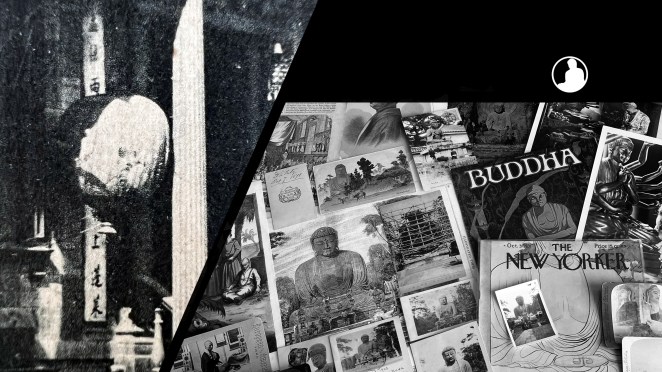
Shwedagon Pagoda is the most sacred Buddhist pilgrimage site in Myanmar, thought to enshrine eight hair strands of the Buddha. Philip Klier’s photo, taken in the 1880s, shows the activities of both monks and merchants on the main platform in front of the pagoda.
Built atop Singutarra Hill in the city of Yangon, four main entrance pavilions on the cardinal directions lead to a spacious open court where vendors sold ritual supplies. Small kiosks with shade coverings can be seen on the far side of the courtyard here.
When German photographer Philip Klier relocated to the British capital at Yangon in c. 1880, he opened a studio just south of Shwedagon Pagoda. By the turn of the century he started selling postcards of his photographs, a media popular among foreign tourists visiting the site.
Klier’s name is inscribed on the negative with the title of his photo: “Scene on the Shwe Dagon Pagoda.” Surprisingly, the Shwedagon Pagoda is not actually in the frame of Klier’s photograph, it sits just off to the left.
In the foreground we see a Theravada monk sitting on the ground with an alms bowl.
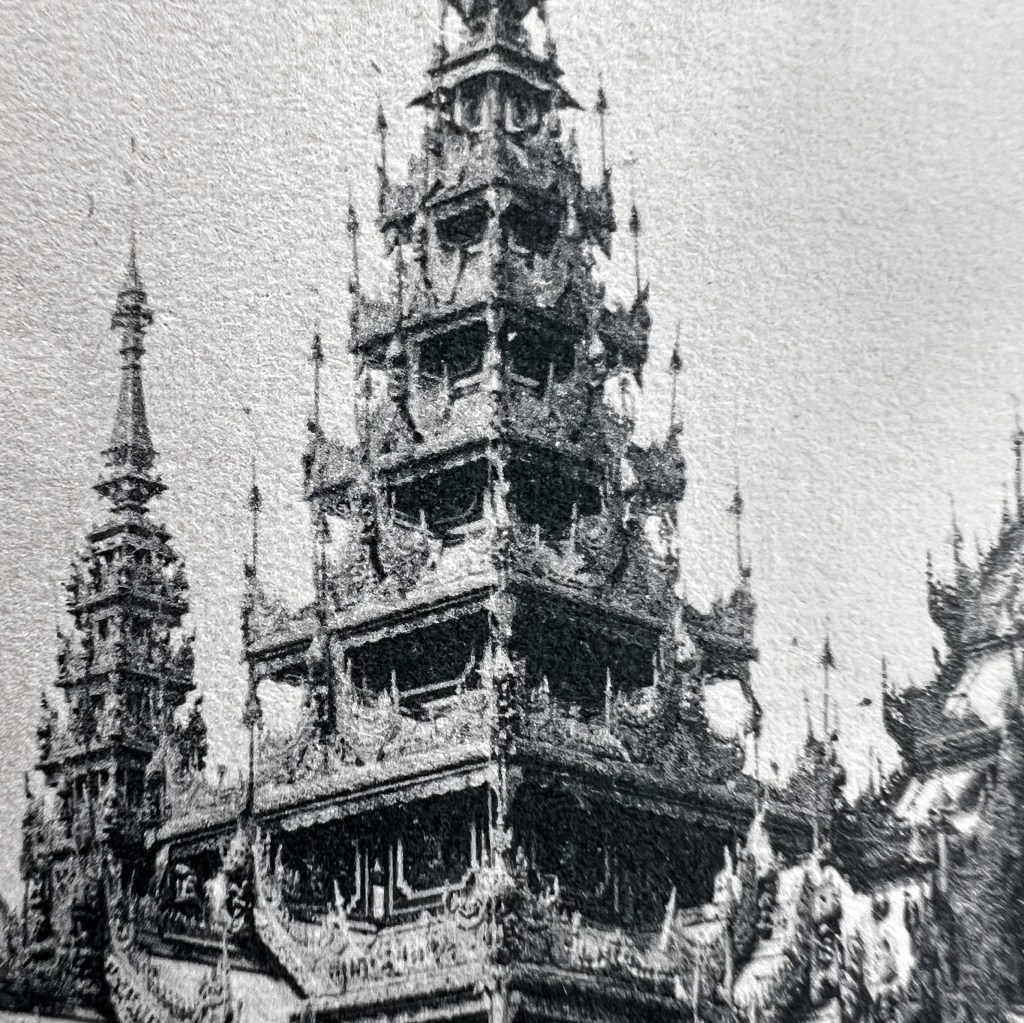
The distinctive building in the back is a seven-tiered pyatthat, characteristic of sacred Burmese architecture. For more of Klier’s photography, see the digitized collection at the National Gallery Singapore, viewable here: https://tinyurl.com/mtd9y72x.
Several of Montanus’ engravings were copied into later works on Japan, helping shape a visual lexicon for Buddhism into the 19th cent. The 1669 Dutch edition of Atlas Japannensis has been digitized by the National Library of the Netherlands, viewable here: tinyurl.com/5n6kstfy.
The Buddhas in the West Material Archive is a digital scholarship project that catalogues artifacts depicting Buddhist material culture for Western audiences. It’s comprised of prints, photos, and an assortment of ephemera and other objects. For a brief introduction to this archive, visit the main Buddhas in the West project page.
For Related Buddhas in the West Posts Featuring Myanmar / Burma:
For all the new Buddhas in the West posts follow us on Bluesky & Instagram
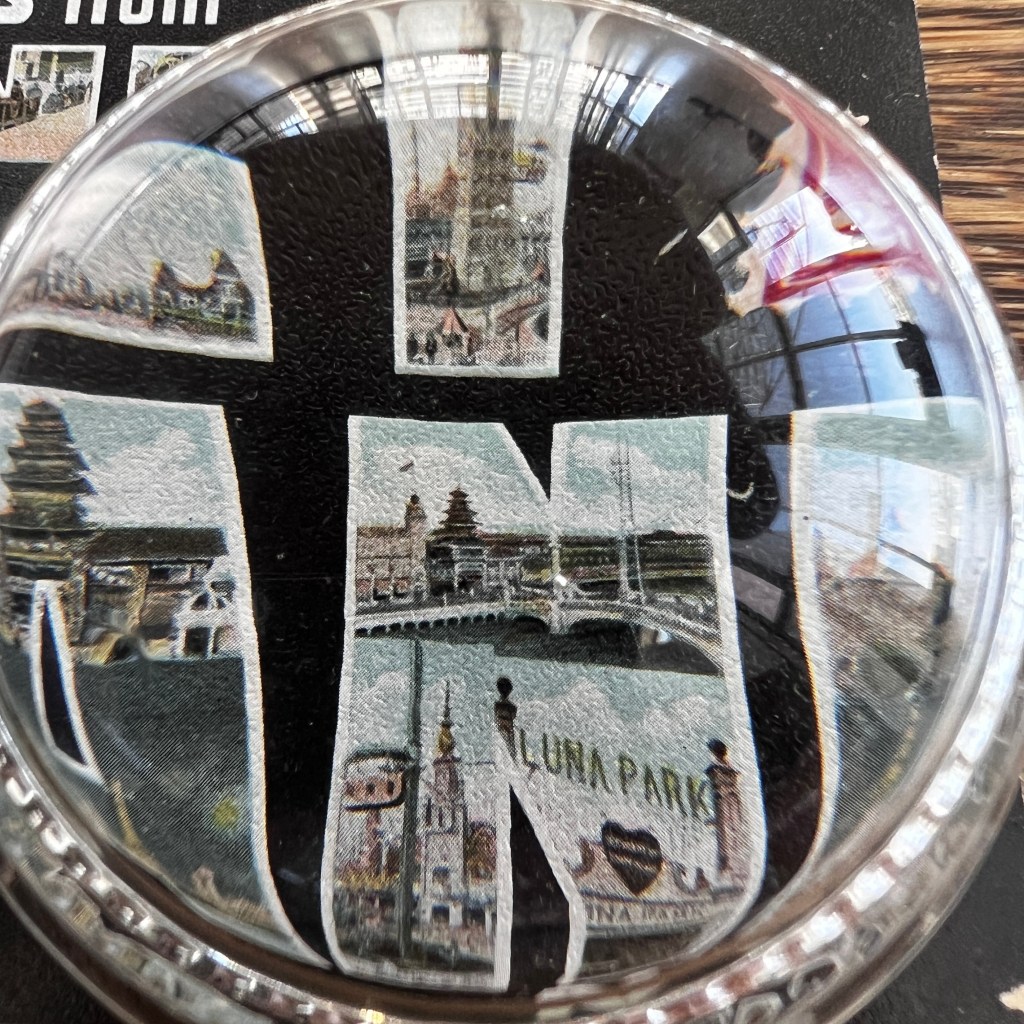
During the Golden Age of American amusement parks, New York’s Coney Island was king, sporting the trifecta of the Steeplechase, Dreamland, and Luna Park. Opening in May 1904, Dreamland advertised a “faithful reproduction of a Japanese temple,” attempting to pull customers away from its rivals.
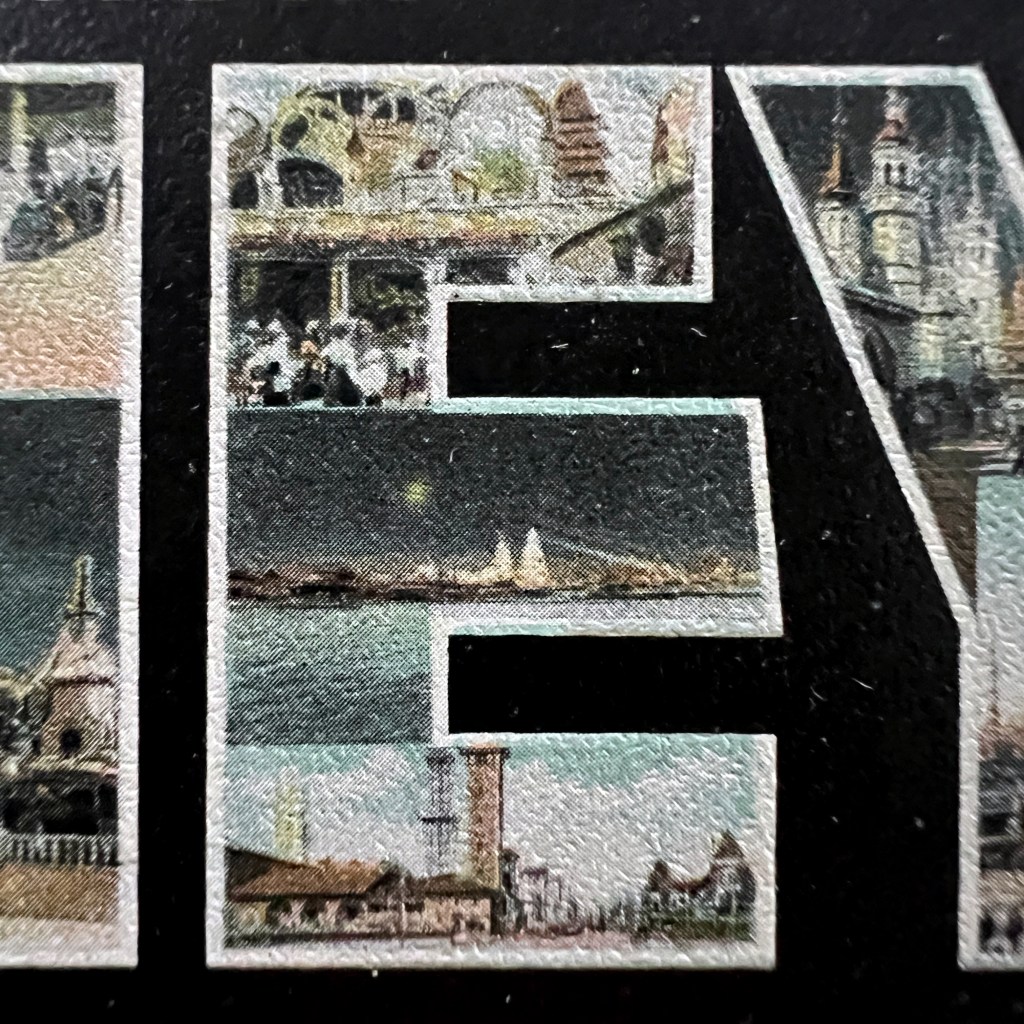
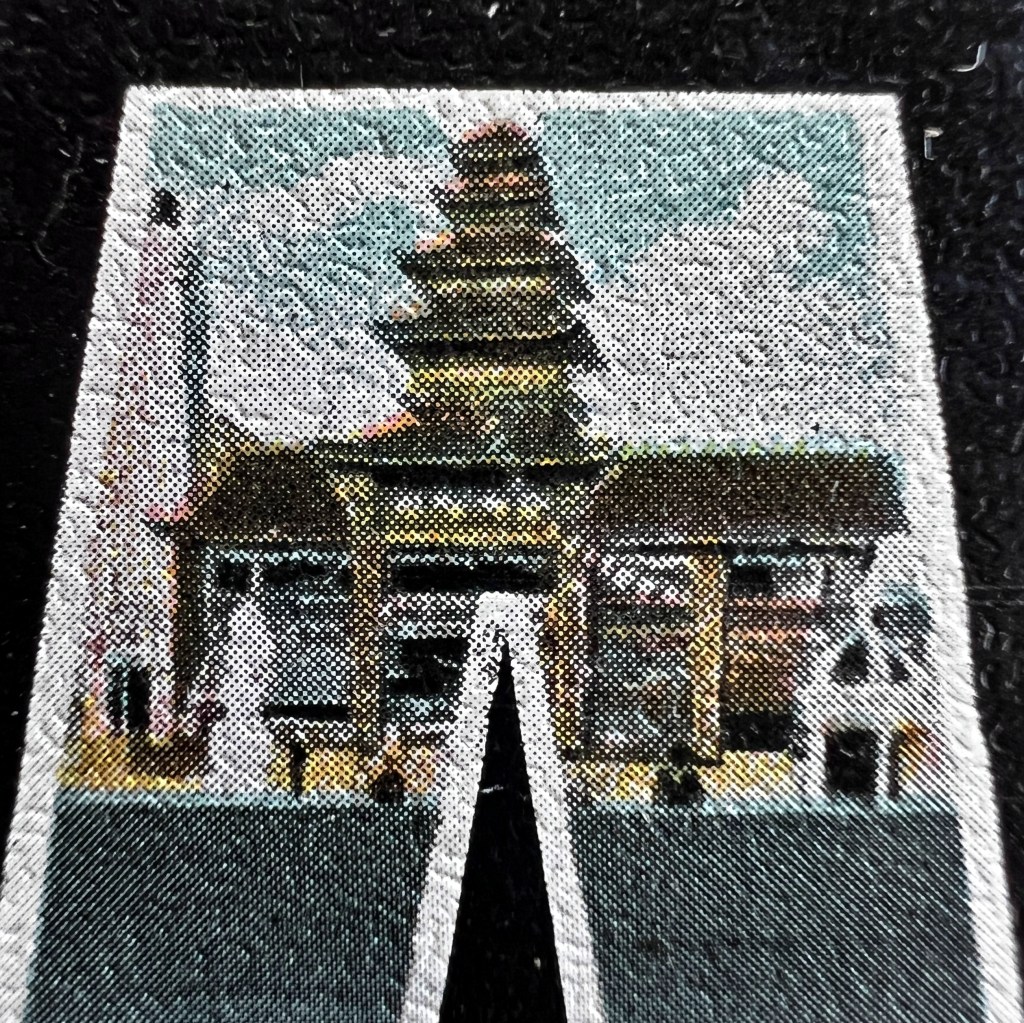
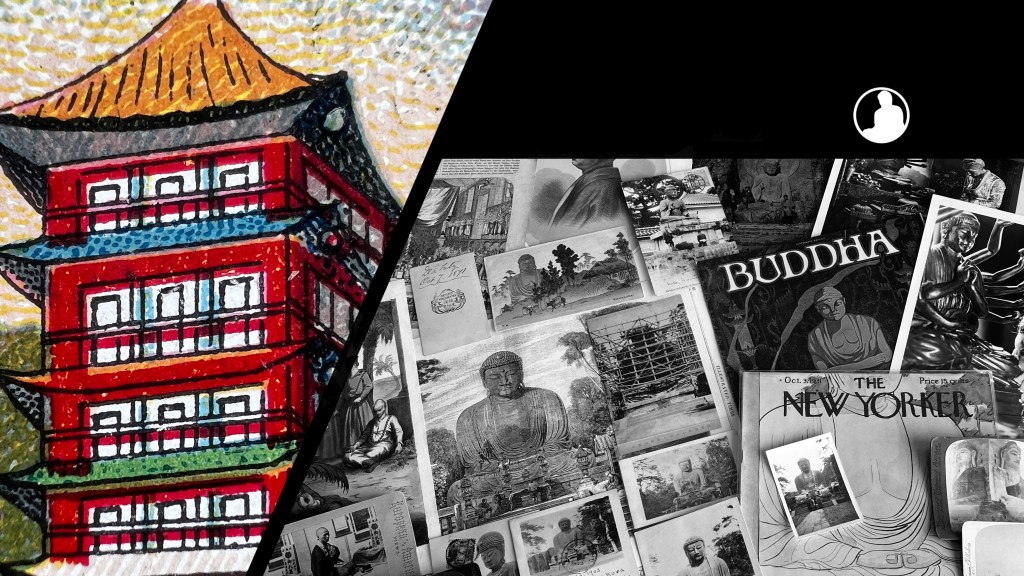
The “temple” attraction was mostly bluster, but a two-story Japanese-style pavilion was built as a tea house, crowned by an additional four-level pagoda. Iconic in its own right, this pagoda is featured at least two times in this classic “Greetings from” postcard design.
Mailed from Brooklyn to Bavaria in 1912, this postcard was originally printed in Germany, the worldwide epicenter of postcard production previous to WWI. Note the stamp indicating the postage was affixed on the obverse; this allowed collectors to display the postcard in an album.
Based on World’s Fair amusement zones, the buildings at Dreamland each had their own architectural style to showcase their offerings: Canals of Venice, Coast through Switzerland, Destruction of Pompeii, etc. The pagoda’s distinctive features (seen in the “N”) identified the Japanese tea garden.
Luna Park, which opened the previous year in 1903, expanded its own Japanese Roof Garden with towering pagodas; this park’s pagoda is just visible in the top of the letter “E”. As new Luna Parks opened across the US, some added their own Japanese style pagodas.
Dreamland was destroyed in 1911 when a fire ripped through the park. An extraordinarily detailed map of Coney Island’s three parks c.1906 is available through the Library of Congress (Dreamland’s pagoda is in the lower right), viewable here: https://tinyurl.com/xvdtw8yt.
The Buddhas in the West Material Archive is a digital scholarship project that catalogues artifacts depicting Buddhist material culture for Western audiences. It’s comprised of prints, photos, and an assortment of ephemera and other objects. For a brief introduction to this archive, visit the main Buddhas in the West project page.
For Related Buddhas in the West Posts Featuring Amusements at World’s Fairs:
For all the new Buddhas in the West posts follow us on Bluesky & Instagram
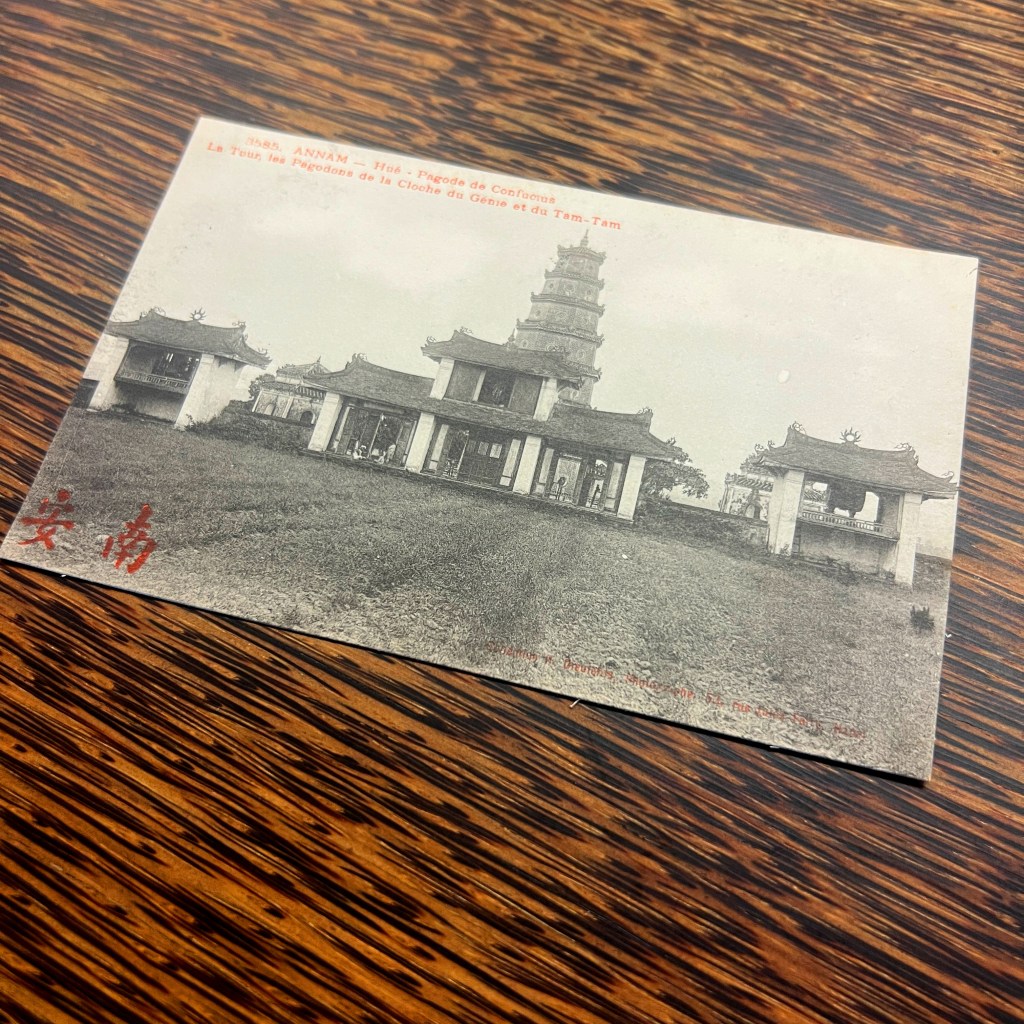
Tien Mu Temple, located in the city of Hue, is among the most historically important Buddhist sites in Vietnam. For its modern political importance, Tien Mu Temple emerged as the center of anti-government protest and was home to Thich Quang Duc who self-immolated in 1963.
Tien Mu Temple, seen here, was founded in 1601, but replaced a much older shrine to local Cham deity, Po Nagar. The seven-story pagoda, now a popular symbol of Hue, was built in 1844 and is nearly 70 ft (21 m) tall; it was originally named the Pagoda of Compassion and Benevolence.
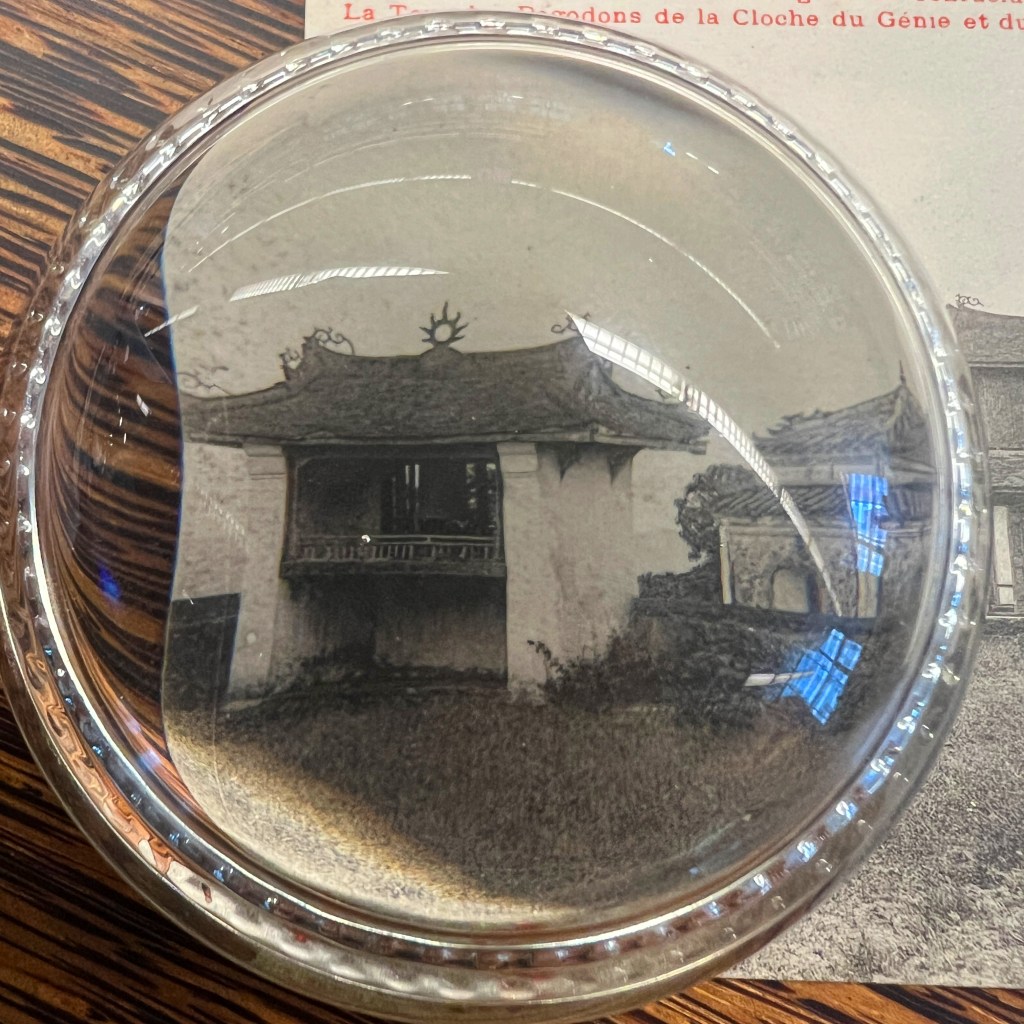
Photographer Pierre Dieulefils opened a studio in Hanoi 1885 and spent the next three decades visually chronicling French Indochina; picture postcards became his specialty. It’s possible the photograph seen on the obverse was taken before a 1904 storm damaged many of the temple structures.
Often misnamed the “Pagoda of Confucius” by turn of the century foreign visitors, the drum and bell tower were also of popular tourist interest. The temple bell was cast in 1710 and is considered an important cultural relic.
The powder blue Austin Westminster car that drove Thich Quang Duc to Saigon in 1963, also seen in the famous photographs of his act of protest against the Diem regime, remains today on display at Tien Mu Temple, a “contact relic” of the venerated monk.
The Buddhas in the West Material Archive is a digital scholarship project that catalogues artifacts depicting Buddhist material culture for Western audiences. It’s comprised of prints, photos, and an assortment of ephemera and other objects. For a brief introduction to this archive, visit the main Buddhas in the West project page.
For Related Buddhas in the West Posts Featuring Historical Temples:
For all the new Buddhas in the West posts follow us on Bluesky & Instagram
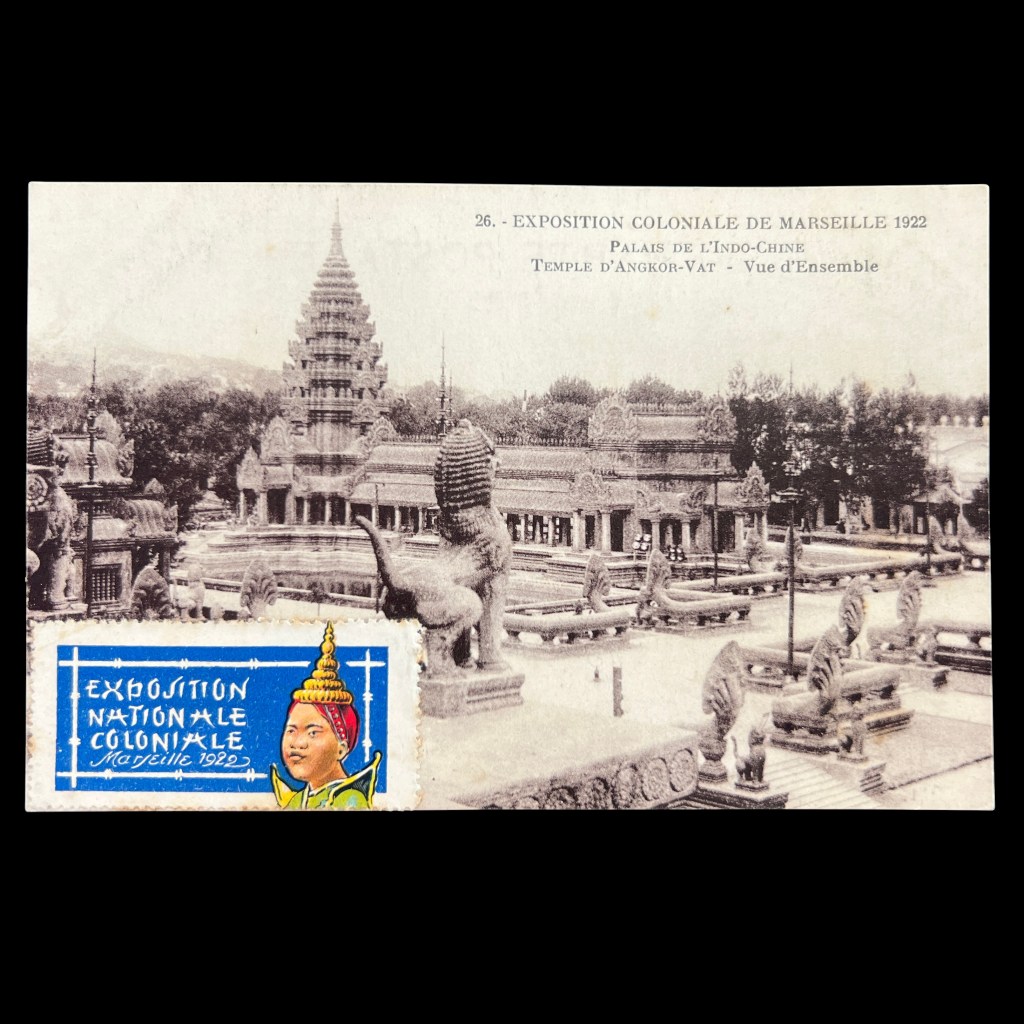
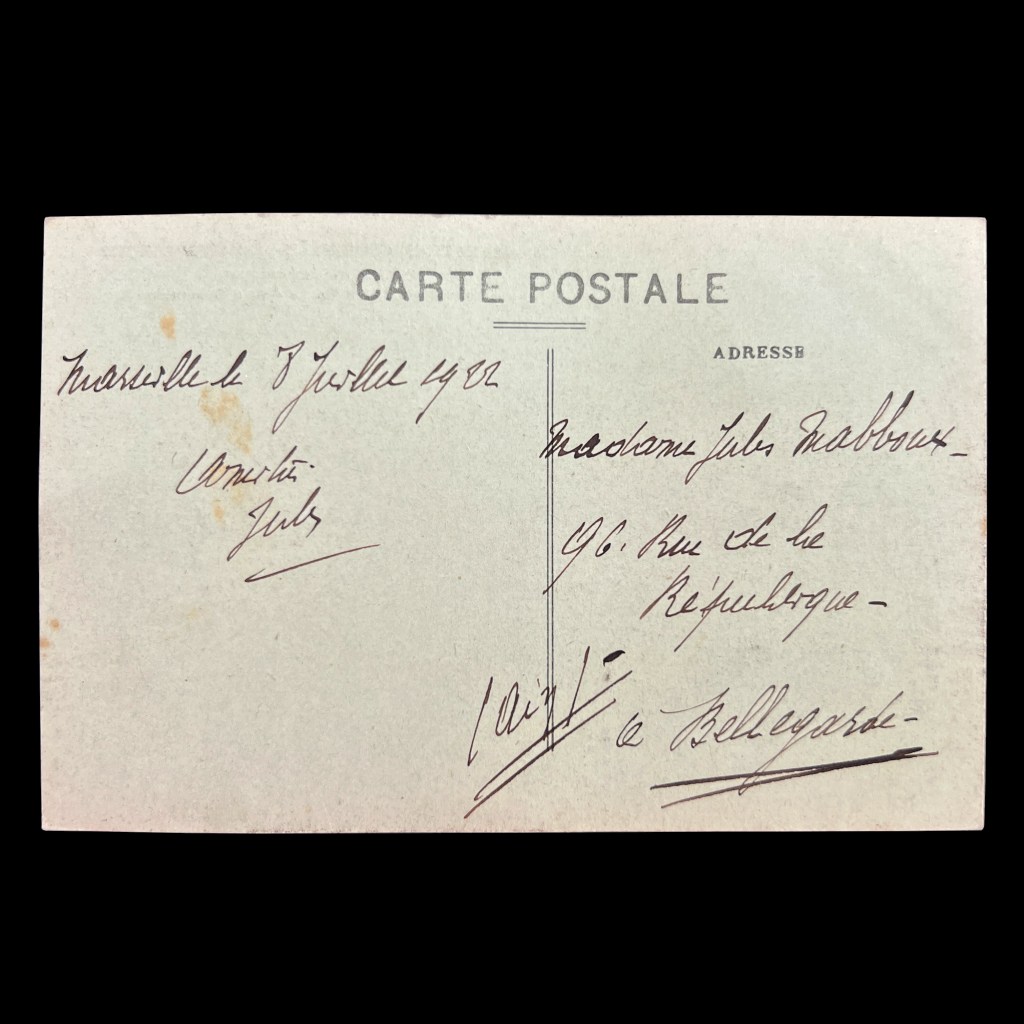
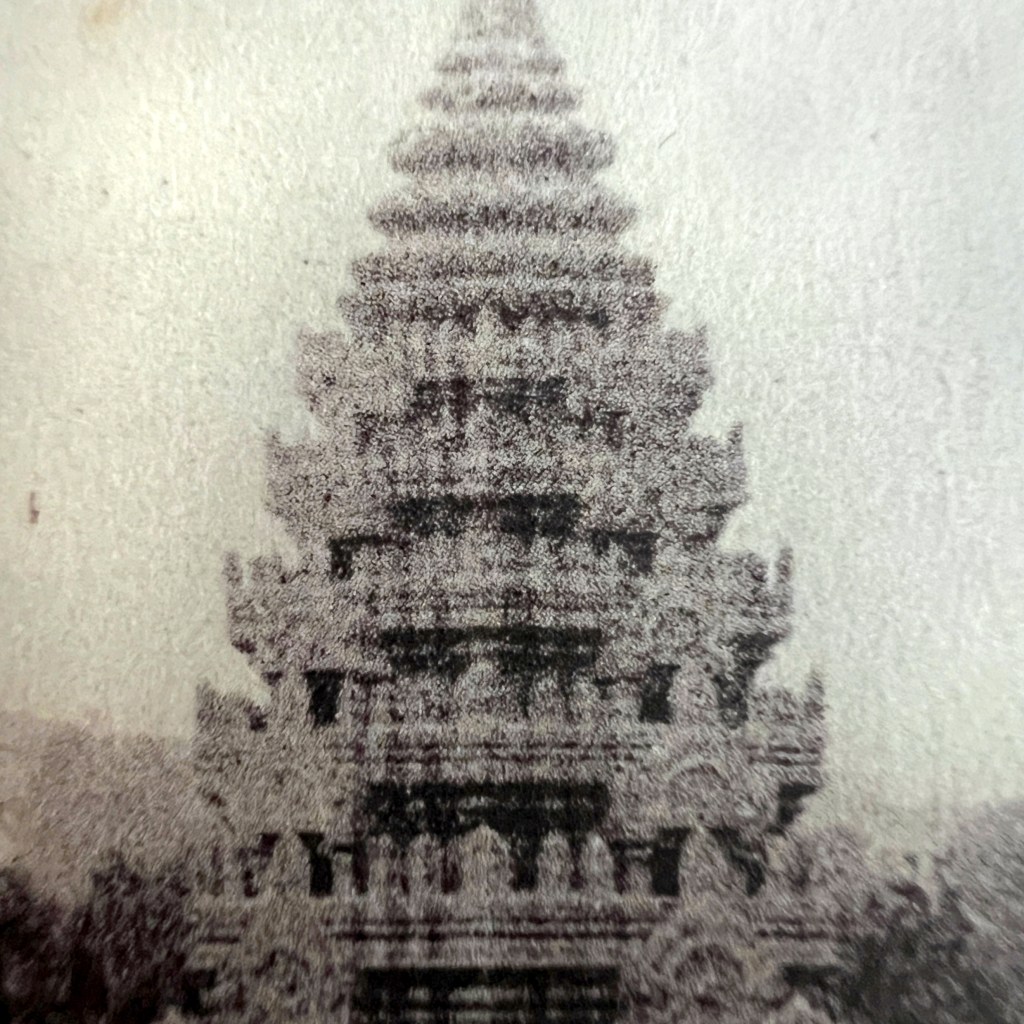
In 1922, the organizers of the Colonial Exposition in Marseille accomplished the impossible – a plaster recreation of Cambodia’s Angkor Wat. While only a partial replica, the central tower, built on a wooden skeleton, was 177 ft. (54m) tall and towered over the exposition grounds.
Cambodian “natives” were also brought in to add authenticity to the fabricated environment. The golden-clad Cambodian royal dance troupe proved to be a “must see” attraction; curiously, they performed the Orientalist opera Lakmé by composer Léo Delibes.
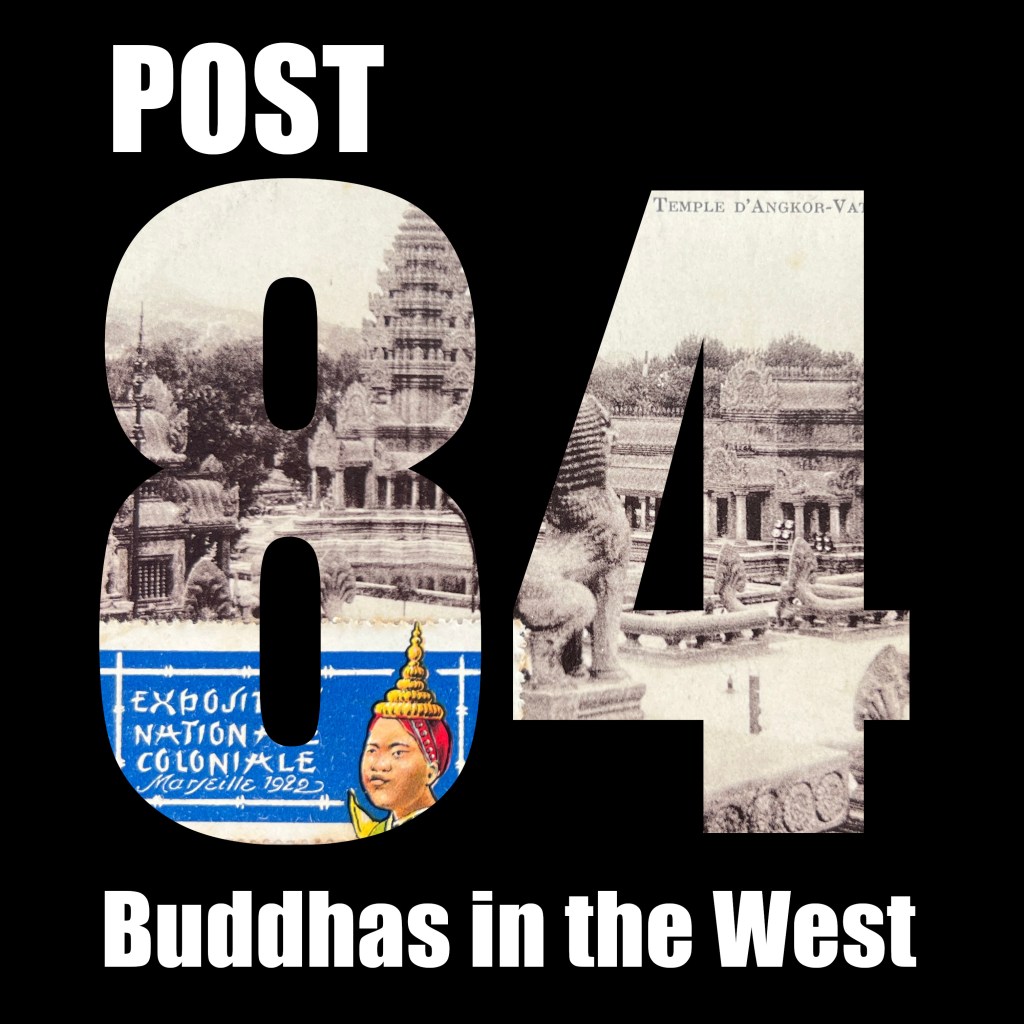
Cambodia was a protectorate of France since 1863 and French troops had already been sending home picture postcards of the real Angkor Wat ruins. Dated July 8, 1922, this card depicting Angkor Wat’s replica was prepared, but never mailed.
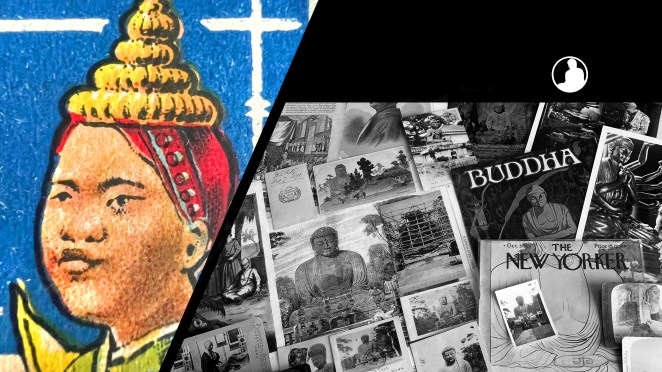
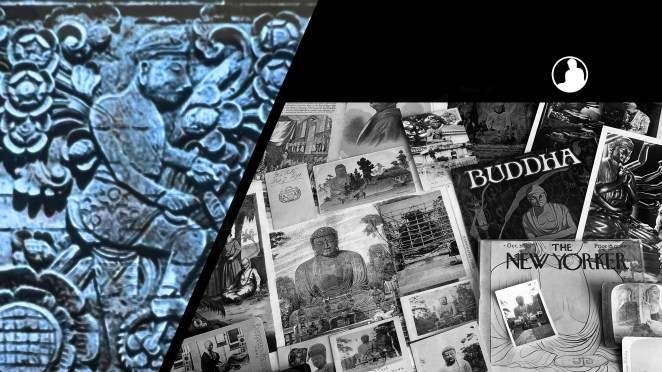
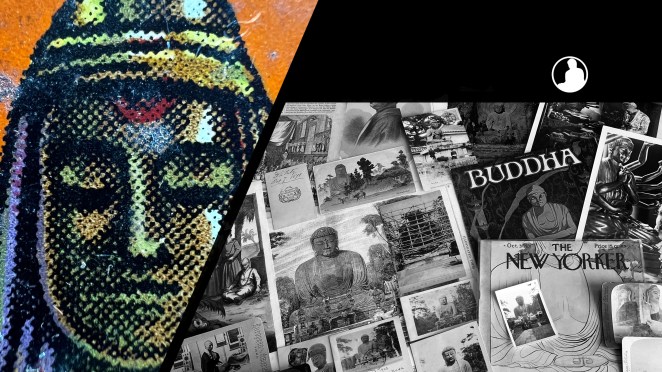
This stamp is a non-postal commemorative stamp, one of twelve designs made for the 1922 Marseille exposition. It depicts a royal dancer wearing a crown shaped like a Southeast Asian Buddhist stupa; such crowns are also seen in the stone reliefs decorating Angkor Wat.
While plasters casts made in Cambodia were used in Marseille, the replica temple had many alterations, creating only a semblance of reality. For more on the use of plasters casts and dancers, see Isabelle Flour’s “Orientalism and the Reality Effect: Angkor at the Universal Expositions” (2014).
The Buddhas in the West Material Archive is a digital scholarship project that catalogues artifacts depicting Buddhist material culture for Western audiences. It’s comprised of prints, photos, and an assortment of ephemera and other objects. For a brief introduction to this archive, visit the main Buddhas in the West project page.
For Related Buddhas in the West Posts Featuring Expositions:
For all the new Buddhas in the West posts follow us on Bluesky & Instagram
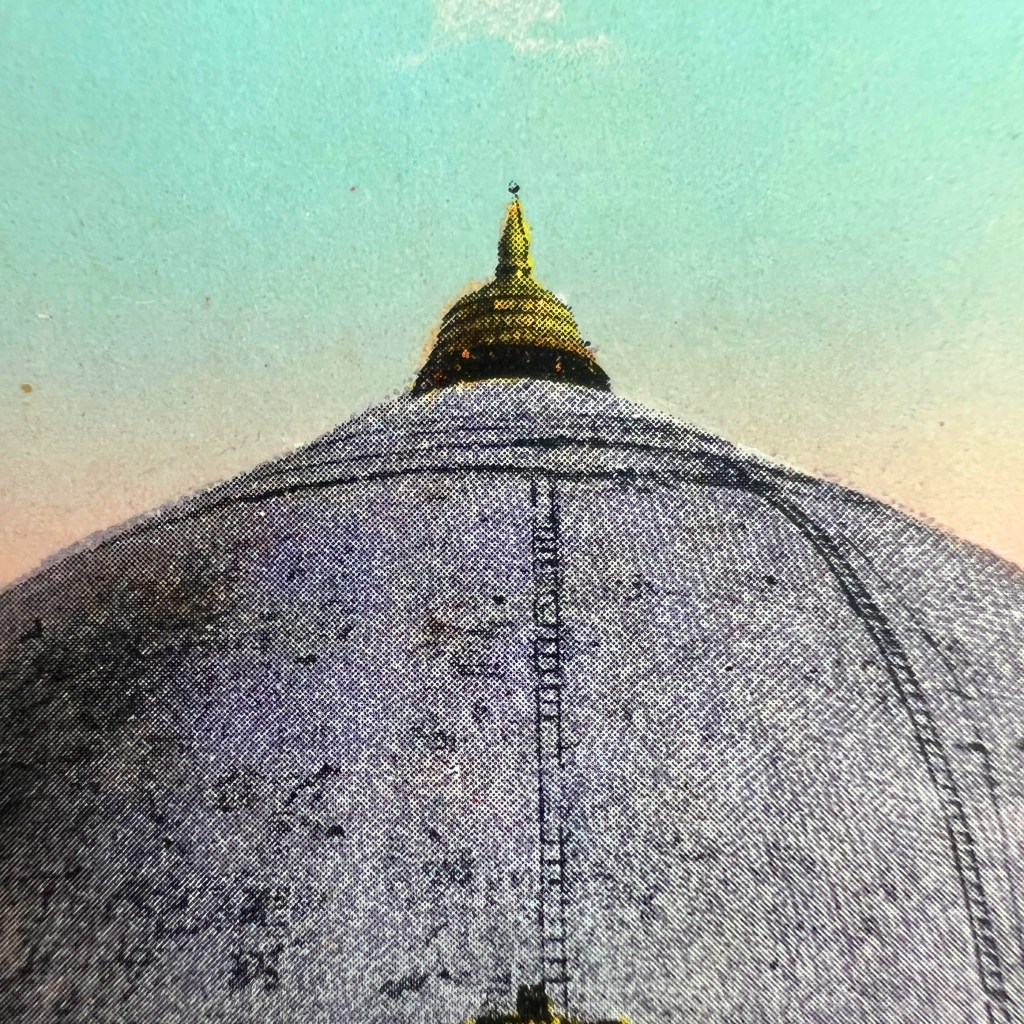
At the height of the worldwide postcard craze, no one produced more vibrant imagery of the Buddhist world than D.A. Ahuja. Here we see Myanmar’s 17th century Kaunghmudaw Pagoda with unique hemispherical dome – most Burmese pagodas are pyramidal structures.
According to Burmese chronicles, the Kaunghmudaw Pagoda enshrines the Buddha’s tooth relic among other religious treasures. This pagoda was intended to resemble Sri Lanka’s Maha Thupa, a structure reputed to hold the largest single cache of the Buddha’s relics.
The image was printed using a lithographic-halftone hybrid process, whereby a black halftone screen was applied on top of a multi-color lithographic substrate. The “divided back” design suggests the card was printed by Ahuja around 1910; he operated out of present-day Yangon.
Constructed in the Sagaing Hills, the Kaunghmudaw Pagoda houses a large marble statue of the Buddha hewn from the local quarry. The dome sits at a height of just over 150 feet (46m).
The use of a white dome was meant to symbolize a connection to the ancient past of Buddhist architecture. Just over a decade ago, however, the military government repainted the dome gold, against the outcry of local Buddhists.
The Buddhas in the West Material Archive is a digital scholarship project that catalogues artifacts depicting Buddhist material culture for Western audiences. It’s comprised of prints, photos, and an assortment of ephemera and other objects. For a brief introduction to this archive, visit the main Buddhas in the West project page.
For Related Buddhas in the West Posts Featuring Stūpas / Pagodas:
For all the new Buddhas in the West posts follow us on Bluesky & Instagram
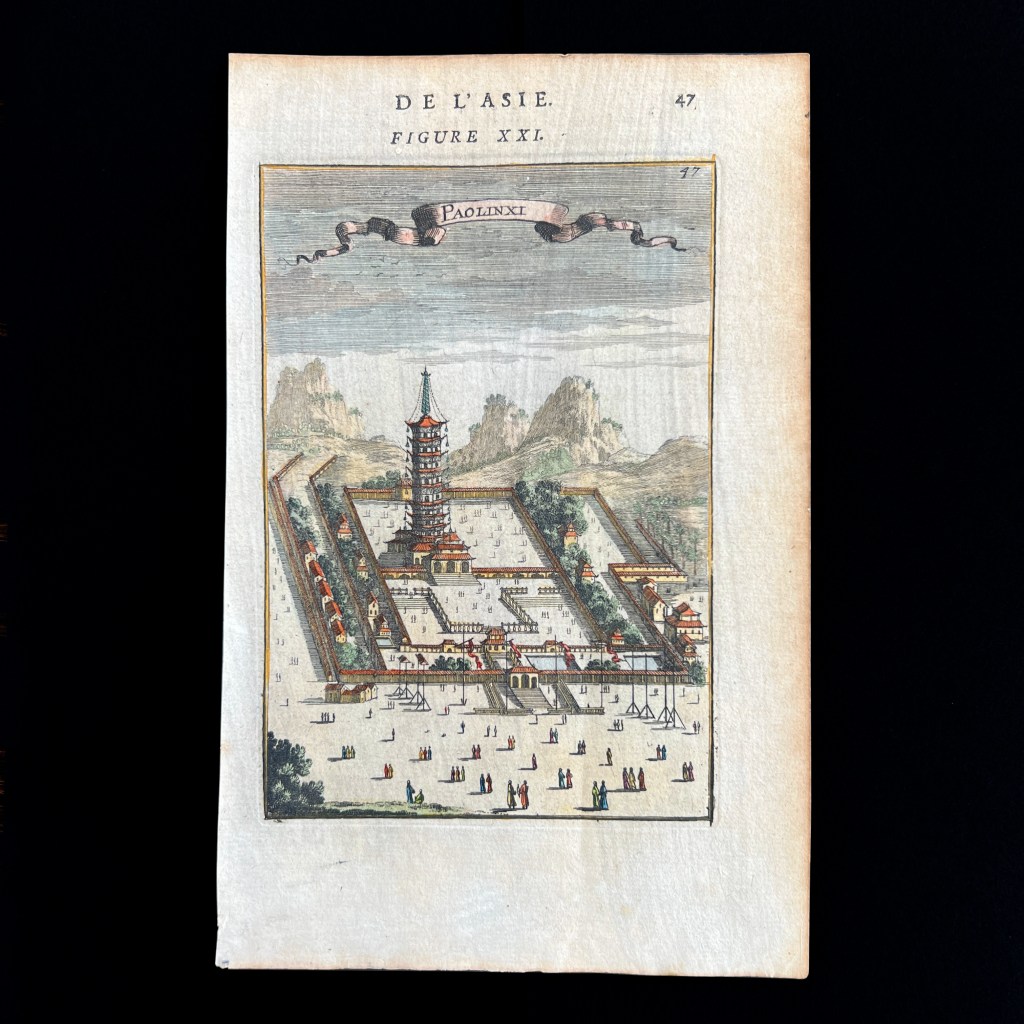
In 1683, the French military commander Alain Mallet published his illustrated five-volume set entitled Description de l’univers. While it received tepid reviews, Mallet’s encyclopedic approach drew together diverse information about East Asia that was still relatively new to European audiences.
Trained as an engineer and draughtsman, Mallet is sometimes claimed to have drawn the images for his books. While his cartography and celestial charts may have been original works, the images of Asia were copies of earlier published illustrations.
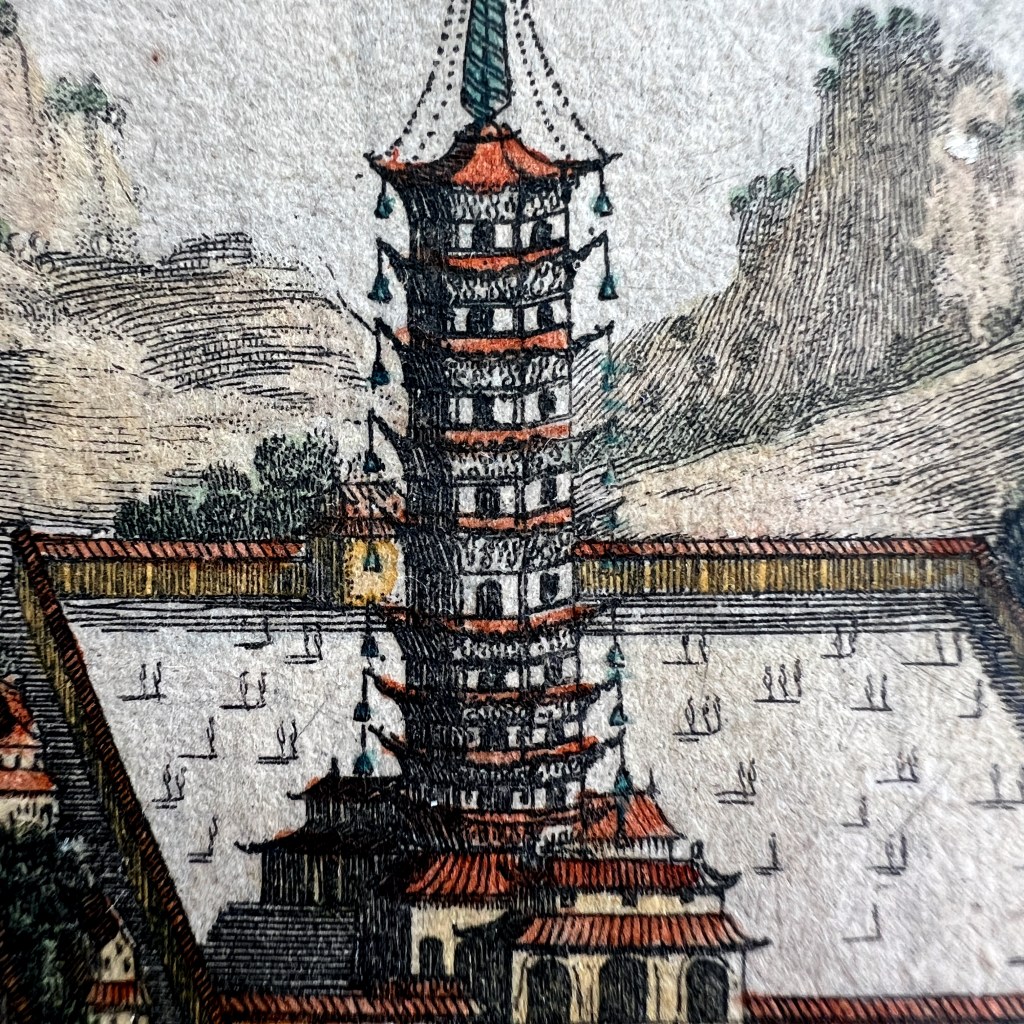
This illustration of the famed Porcelain Pagoda of Baoen Temple in Nanjing was a copy of Johan Nieuhof’s illustration more than a decade earlier. This included the irregular mountains in the back and the people added for scale.
It was publications like Description de l’univers, however, the kept the pagoda alive in the European imagination, making it a key visual element in chinoiserie.
The Buddhas in the West Material Archive is a digital scholarship project that catalogues artifacts depicting Buddhist material culture for Western audiences. It’s comprised of prints, photos, and an assortment of ephemera and other objects. For a brief introduction to this archive, visit the main Buddhas in the West project page.
For Related Buddhas in the West Posts Featuring Historical Engravings:
For all the new Buddhas in the West posts follow us on Bluesky & Instagram
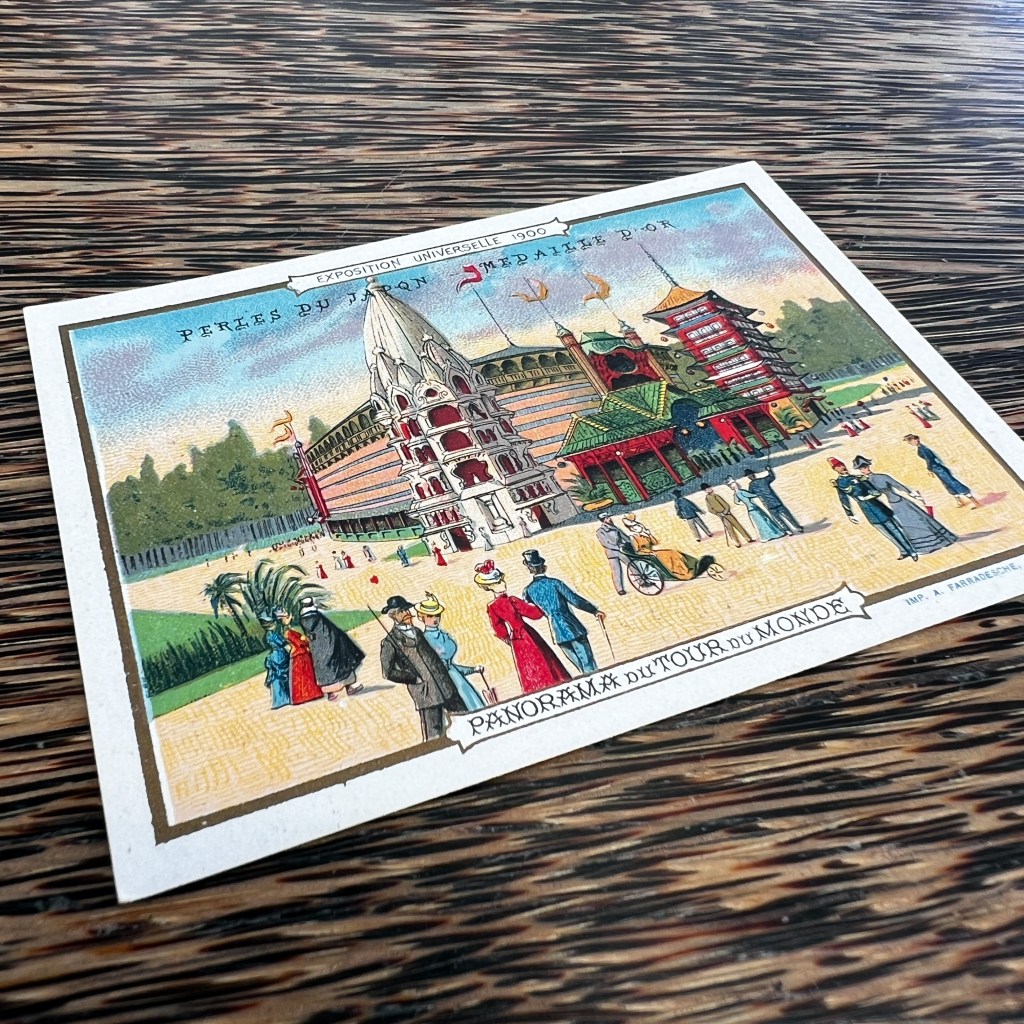
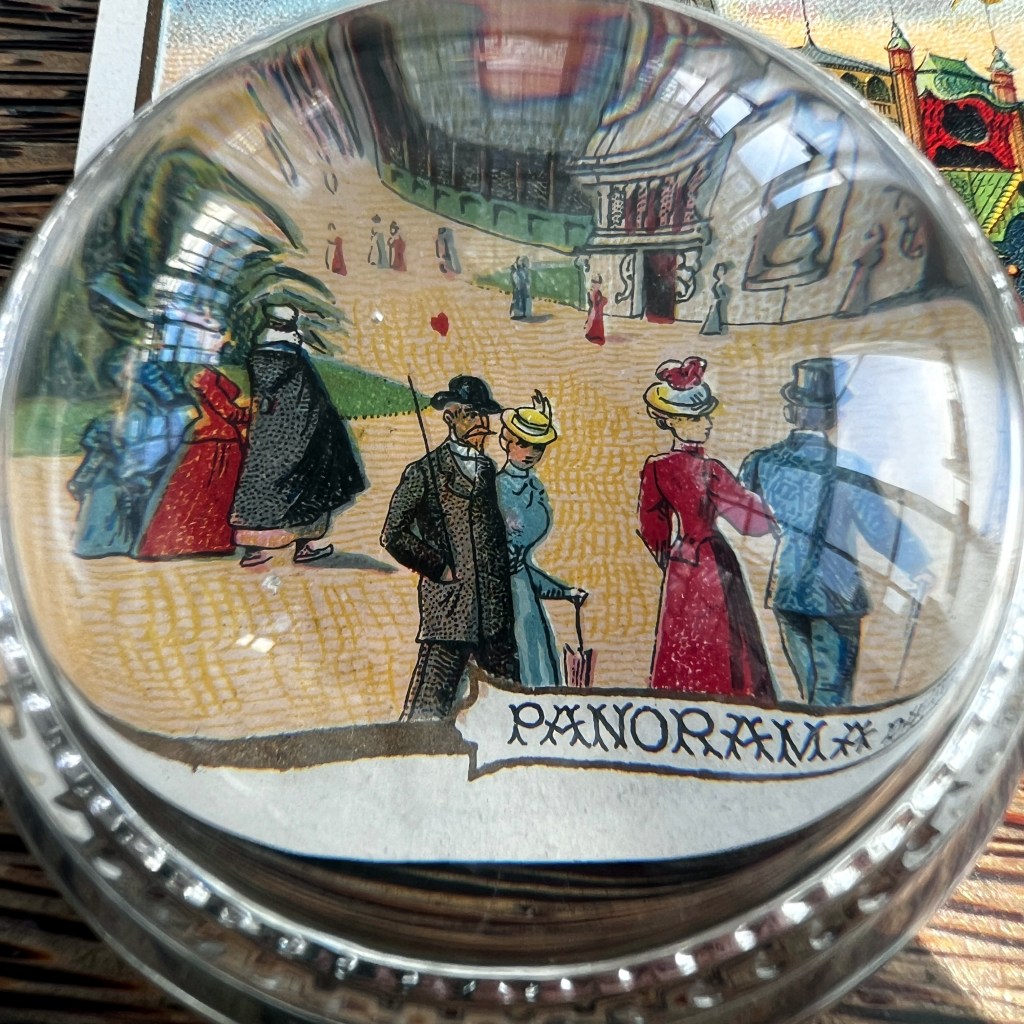
Panorama du Tour du Monde: By the 1900 Paris Exposition, amusement concessions were a major draw for all exposition visitors. Not far from the foot of the Eiffel Tower one found the Panorama du Tour du Monde which took patrons on a virtual voyage from Spain to Japan.
Built by Alexandre Marcel for a French sea-transport company, the architecture called to mind exotic locales with Asian-inspired structures. The main entrance was modeled on the Tōshō-gū in Nikkō, Japan. Some sources claim the red pagoda was based on a Chinese model.
Visitors were drawn in by large panoramic paintings of various foreign countries to give a sense of virtual travel. More astonishingly, the concession integrated many indigenous performers who engaged in various trades while wearing traditional foreign costumes
The beautiful lithographic print was part of an advertising campaign for a French company selling tapioca pearls, called “perles du Japon.”
King Leopold II was so struck by the building, he had Marcel build the Japanese Tower in Brussels. For more on the Tour du Monde exhibition, see https://tinyurl.com/2vbmr3c7.
The Buddhas in the West Material Archive is a digital scholarship project that catalogues artifacts depicting Buddhist material culture for Western audiences. It’s comprised of prints, photos, and an assortment of ephemera and other objects. For a brief introduction to this archive, visit the main Buddhas in the West project page.
For Related Buddhas in the West Posts Featuring France:
For all the new Buddhas in the West posts follow us on Bluesky & Instagram
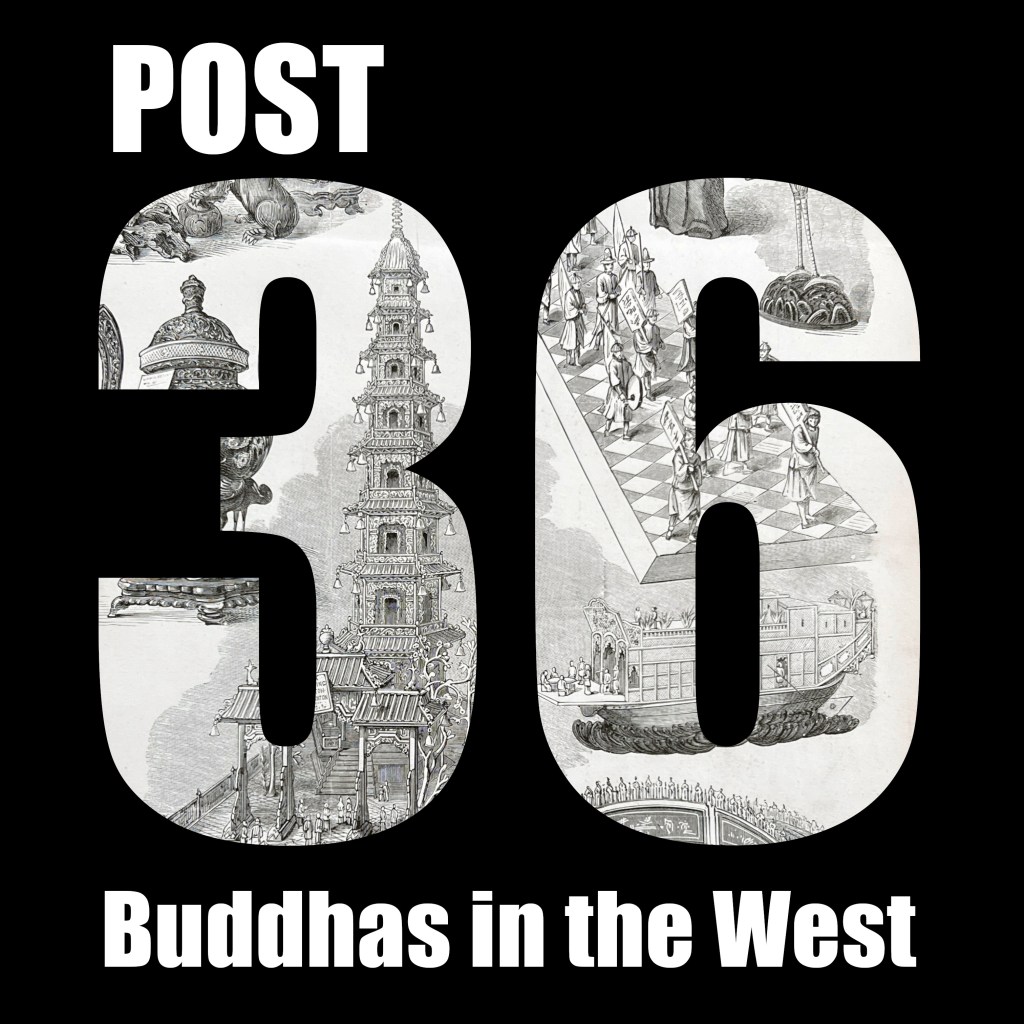
Lost Ivory Pagoda? Japan’s exhibit at the 1876 Centennial Exposition is often credited as inspiring American Japonisme. Less celebrated is China’s involvement who also made a splash with its exhibit, including an intricate 4-foot ivory pagoda.
The 1830s and 40s saw a handful of private Chinese museums open, but the Centennial included objects sent to the US by Chinese representatives. By plan, the objects chosen reflected the tastes of Chinese elite, including silks, porcelain, paintings, and fine teas.
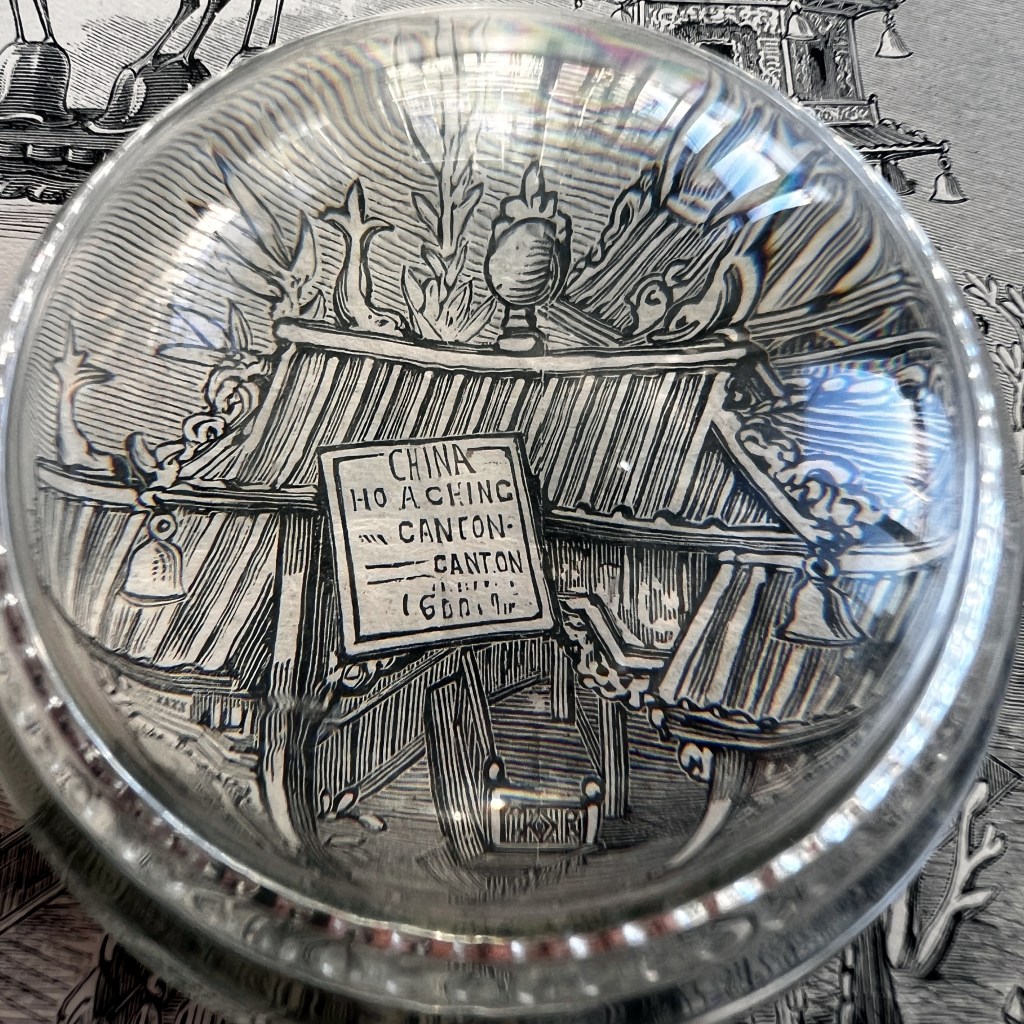
The carved ivory display merited some of the most attention, especially a fenced-in miniature pagoda surrounded by fruit trees and figurines. The artist here, working for the publisher Frank Leslie, notes the name of the Canton manufacturer, Ho A Ching.
We are told the pagoda was priced at $600. Many items were acquired by the Philadelphia Museum of Art, but I have not been able to confirm if its currently in the collection. A photo of the original pagoda can be seen here: https://tinyurl.com/mtkv2wzk.
The Buddhas in the West Material Archive is a digital scholarship project that catalogues artifacts depicting Buddhist material culture for Western audiences. It’s comprised of prints, photos, and an assortment of ephemera and other objects. For a brief introduction to this archive, visit the main Buddhas in the West project page.
For Related Buddhas in the West Posts Featuring the United States:
For all the new Buddhas in the West posts follow us on Bluesky & Instagram
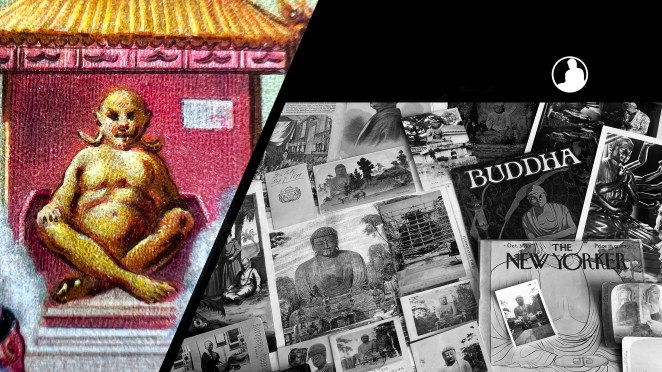
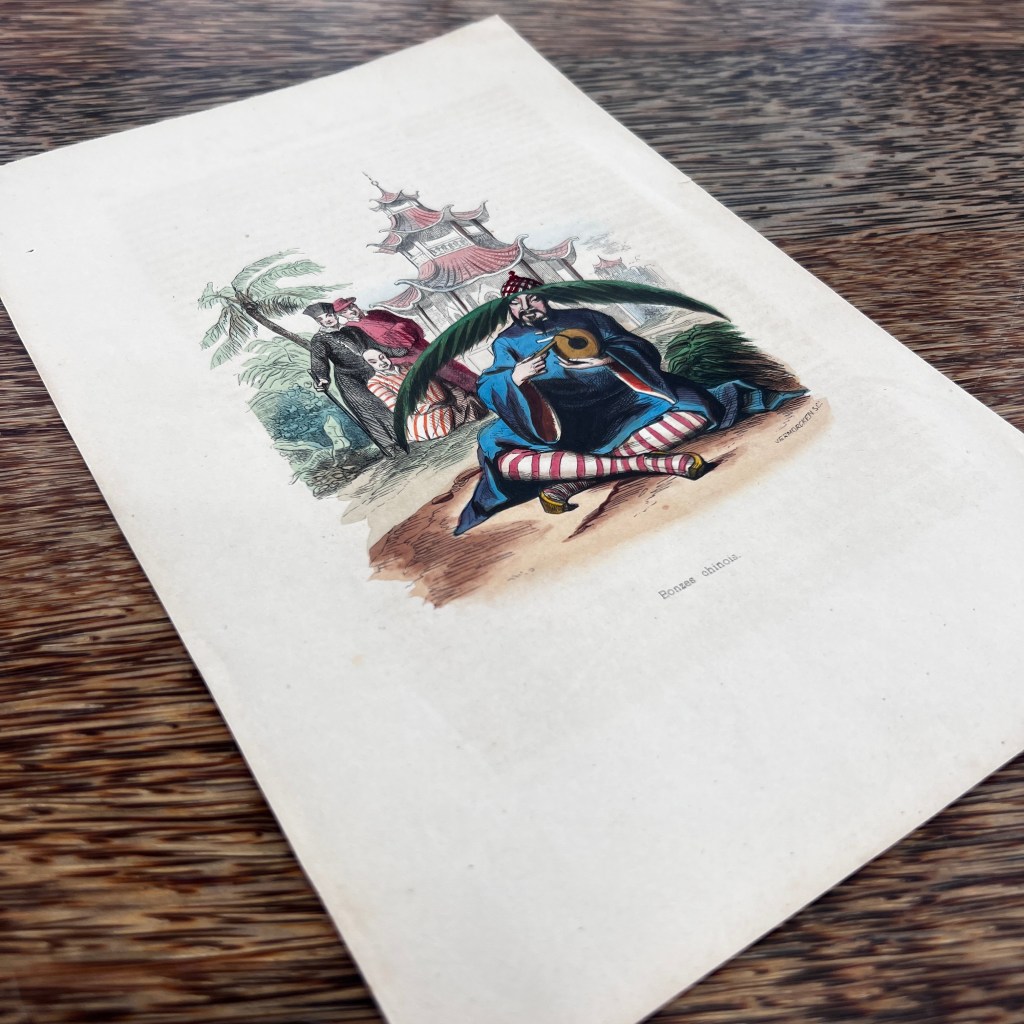
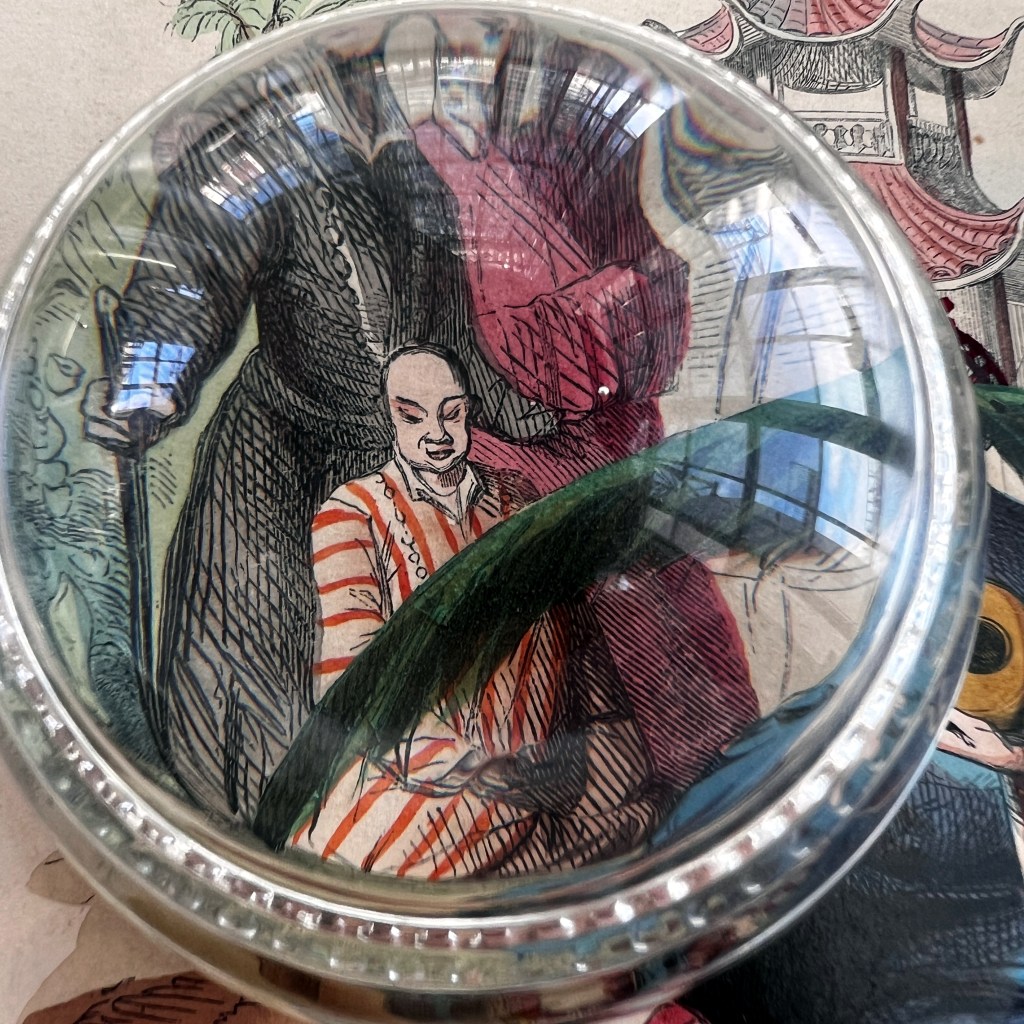
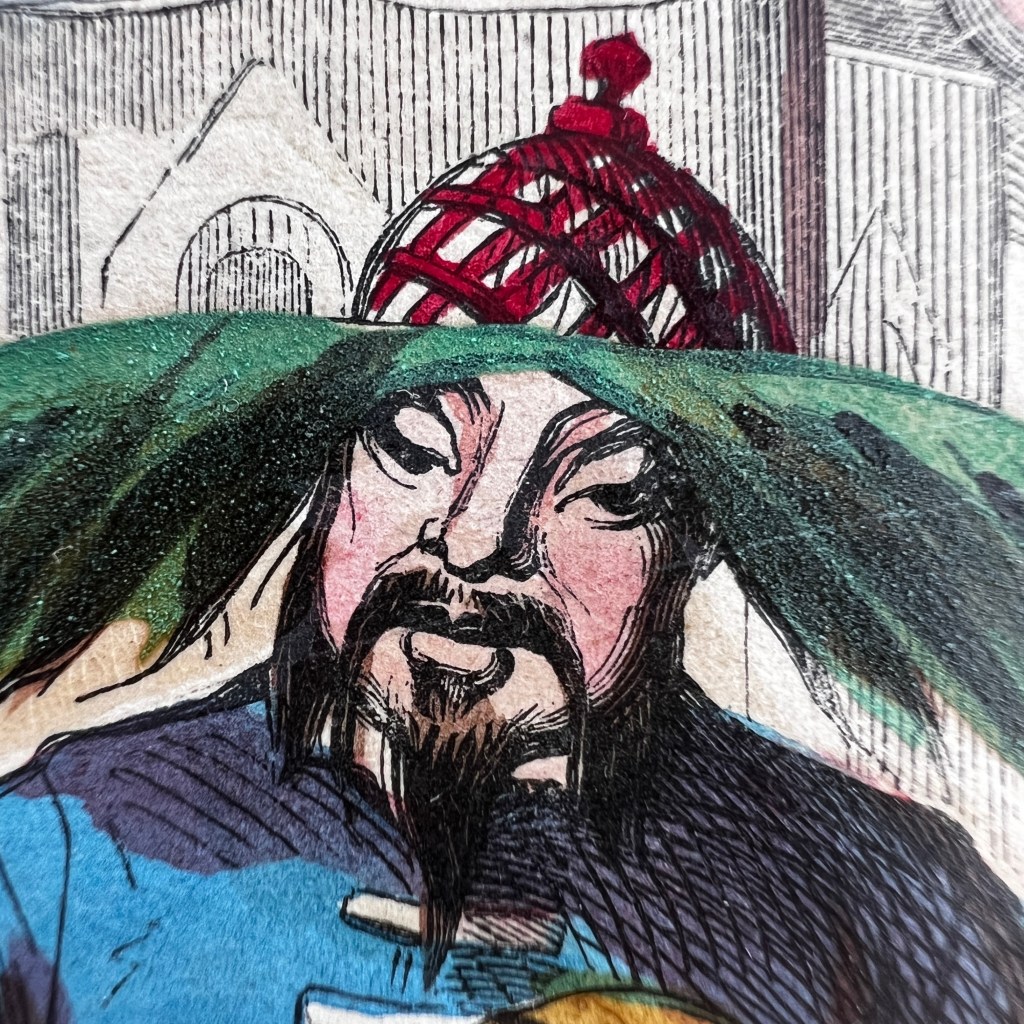
What did Buddhist Monks look like to Europeans? At least one visual tradition going back to the late 17th century depicts Buddhist monks in comedic caricature, possibly wearing attire similar to court minstrels. The figures here are identified as “bonzes chinois” (Chinese clerics).
There’s plenty of research yet to be done in this arena. This image appeared in Auguste Wahlen’s Mœurs, usages et costumes de tous les peuples du monde in 1843, showing the durability of this trope. The illustration was executed by Edouard Vermorcken.
Wahlen tells us Europeans generically call Buddhist monks “bonzes” – which is a corruption of the Japanese bonsō 凡僧, “cleric.” He also acknowledges Chinese monks are called “heshang” 和尚 and Tibetan monks “lamas.”
While Wahlen does not address the monk’s clothing, he does note their use of musical instruments ritual practice. Identified in the text as a “machine de bois, creuse et de forme ovale” (wooden, hollow, oval-shaped instrument), this instrument is now commonly called a “wooden fish.”
The Buddhas in the West Material Archive is a digital scholarship project that catalogues artifacts depicting Buddhist material culture for Western audiences. It’s comprised of prints, photos, and an assortment of ephemera and other objects. For a brief introduction to this archive, visit the main Buddhas in the West project page.
For Related Buddhas in the West Posts Featuring Historical Engravings:
[Click here for the previous post on pagoda history]
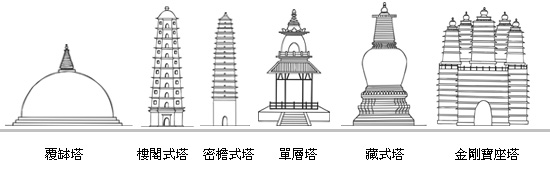
Architecturally, East Asian pagodas are far more diverse than one might assume. Because of this diversity, Chinese art historians have developed several typologies to sort the varied pagoda structures. One categorization, based on architectural style, includes the following six types [depicted left to right below]:
Of these, the first is the classical Indian stūpa, whose round body appears as if a begging bowl has been overturned. The next two have the iconic pagoda profile of a multistory tower accentuated by jutting eaves. The distinction is that the latter is not a true multistory structure because it cannot be ascended via an internal stairway. The fourth type consists of just a single story, while the fifth type is a later evolution of the Indic style, with a elevated and smaller circumference of the dome element. The last type, the Vajra Throne Style Pagoda, is a stylized version of the Mahābodhi Temple constructed on the site of Buddha’s enlightenment (i.e the Vajra seat or throne) in Bodh Gāya, India. This post will focus on this last type of pagoda which is arguably the most distinctive of the six types noted above, being comprised of five spires atop a square foundation.
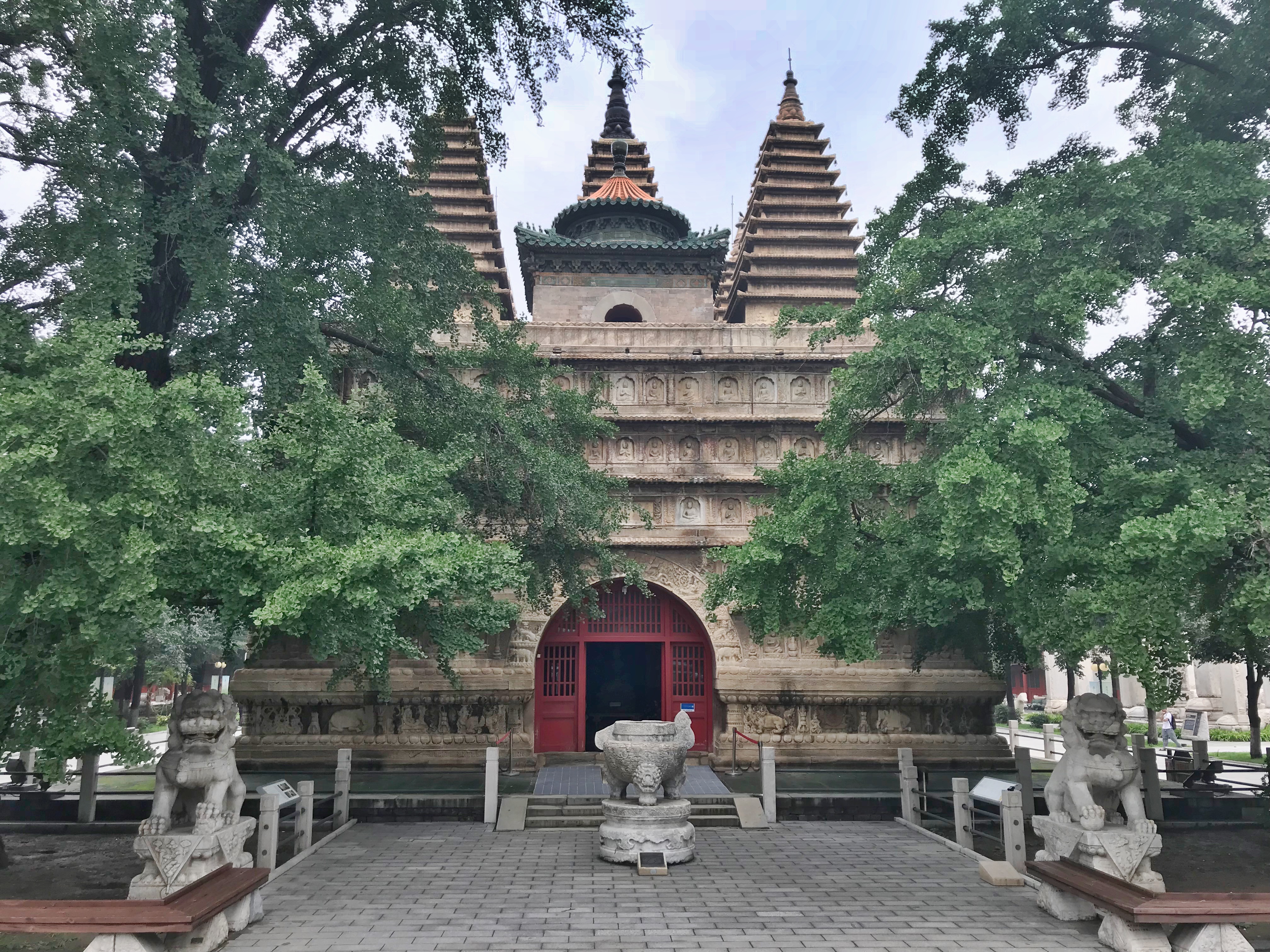
Vajra Throne Pagoda 金剛寶座塔 at Zhenjue Temple 真覺寺 in Beijing
The Mahābodhi Temple in India was likely constructed in the late sixth or early seventh century. This dating is suggested based on the reports of two Chinese pilgrims who visited the site. Faxian 法顯 (337-c. 422), who visited Bodh Gāya in the early fifth century, made no mention of the large structure, while Xuanzang 玄奘 (602-664), who travelled in the middle of the seventh century, comments on the precise measurements of the temple he found which coincides with the temple that remains there today.[2] An early Chinese representation of the Mahābodhi Temple is found in the murals of the Buddhist caves of Dunhuang 敦煌 in western China.[3] Eventually, several Mahābodhi Temple-inspired buildings were constructed in China, mostly during the Ming Dynasty (1368-1644).[4] The most important, completed in 1473, was built at Zhenjue Temple 真覺寺 in Beijing.
Vajra Throne Pagoda 金剛寶座塔 at Zhenjue Temple 真覺寺 in Beijing
This last site is also called the Temple of the Five Pagodas 五塔寺 due to the appearance of the Mahābodhi Temple-inspired building which incorporates five pagodas into its architecture. The Chinese pagoda is named the Vajra Throne Pagoda 金剛寶座塔 after the traditional site where the Buddha was enlightened under the Bodhi Tree in Bodh Gāya, called the vajrāsana (Vajra Throne). Construction of the pagoda at Zhenjue Temple began during the reign of the Ming Emperor Yongle (r.1402-24) when a Buddhist monk named *Paṇḍita [?] 班迪達 from the “Western Regions” donated five Buddhist statues which the emperor instructed were to be housed in a special structure. He ordered that a pagoda be built that matched the architectural plans of the building found at the site of the vajrāsana. A horizontal plaque above the main entrance still reads “Imperially Constructed Vajra Throne Pagoda” 敕建金剛寶座塔. The pagoda was renovated during the Qing Dynasty, but is believed to retain some of the original structural elements. The square base of the Vajra Throne Pagoda is approximately 19 meters by 16 meters, and is about 8 meters high. This functions as a pedestal for five pagoda structures, each for one of the donated statues, of which the tallest central pagoda adds another 10 meters to the total height. These individual pagodas are each of the square, multi-eaved type. In addition a round terrace is placed in the center front, covering the top of a stairway that grants access to the top of the structure.
The sides of the main structure are ornately decorated with Buddhist images and symbols. Most of the space is covered by five horizontal registers which depict various buddhas.
* This post was written as an addendum to the lecture I gave on Sacred Buddhist Architecture at the 2018 Woodenfish.
Notes
[1] This is based on the Encyclopedia of Buddhist Arts published by Foguang Shan, found here. Other typologies may include the Road Spanning Style Pagoda 過街式塔, Sutra Pillar Style Pagoda 經幢式塔, and Flower Pagoda 華塔, among others. Some consider the Tibetan Style Pagoda a subtype of the Overturned Bowl Style Pagoda. Moreover, it seems the Pavillion Style Pagoda 亭閣式塔 is another name for the Single Story Style Pagoda, though I need to revisit this.
[2] Faxian arrived in Bodh Gāya in 409 and noted that a stūpa was found there, presumably an early structure built on the site. Xuanzang arrived in 637 and his descriptions and measurements match the building that remains today. See the comments in Cunningham 1892: 17-8.
[4] These include the pagodas of Biyun Temple 碧雲寺 in Beijing (completed in 1747), Xihuang Temple 西黃寺 in Beijing, Miaozhan Temple 妙湛寺 in Yunnan (built in 1458), Cideng Temple 慈燈寺 in Inner Mongolia (completed in 1732), and Zhenjue Temple discussed here. To this list can be added the Miaogao Pagoda 妙高塔 on Mt. Yuquan 玉泉山 in Beijing. It is worth noting that the famed Chinese architect Liang Sicheng, considered the Flower Pagoda to be a architectural precusor to the Vajra Throne Pagoda.
References
Abe, Stanley K. 2002. Ordinary Images. Chicago and London: University of Chicago Pres. [see esp. pp. 103-06, 123-66]
Di Luo. 2017. “A Grain of Sand: Miniatures as Sacred Repositories, Part I: The Longxingsi Sutra Case,” [https://chinesearchitecture.wordpress.com/2017/05/29/a-grain-of-sand-miniatures-as-sacred-repositories-part-i-the-longxingsi-sutra-case/]
Di Luo. 2017. “A Grain of Sand: Miniatures as Sacred Repositories, Part II: The Huayansi Sutra Cabinets” [https://chinesearchitecture.wordpress.com/2017/05/30/a-grain-of-sand-miniatures-as-sacred-repositories-part-ii-the-huayansi-sutra-cabinets/]
Di Luo. 2017. “A Grain of Sand: Miniatures, Models, Simulacra” [https://chinesearchitecture.wordpress.com/2017/06/04/a-grain-of-sand-miniatures-models-simulacra/]
Fu, Xinian; Guo, Daiheng; Liu Xujie; Pan, Guxi; Qiao, Yun, Sun, Dazhang & Steinhardt, Nancy S. 2002. Chinese Architecture. New Haven: Yale University Press.
Kim, Youn-mi. 2017. “Virtual Pilgrimage and Virtual Geography: Power of Liao Miniature Pagodas (907–1125),” Religions, Vol. 8., pp. 1-29.
Le, Huu Phuoc. 2010. Buddhist Architecture. Lakeville, MN: Grafikol.
Ledderose, Lothar. 1980. “Chinese Prototypes of the Pagoda,” in The Stupa, Its Religious, Historical, and Architectural Significance, ed. Anna Libera Dallapiccola and Stephanie Zingel-ave Lallement. Wiesbaden: Franz Steiner Verlag, pp. 238-45
Liang Ssu-ch’eng [Sicheng]. 1984. Chinese Architecture: A Pictorial History, ed. Wilma Fairbank. Cambridge: MIT Press. [see esp. p. 124]
Lin, Wei-cheng. 2016. “Performing Center in a Vertical Rise: Multilevel Pagodas in China’s Medieval Period,” ARS Orientalis, Vol. 46, pp. 100-34.
Neelis, Jason. 2011. Early Buddhist Transmission and Trade Networks: Mobility and Exchange within and beyond the Northwestern Borderlands of South Asia. Leiden: Brill.
Seckel, Dietrich. 1980. “Stupa Elements Surviving in Eastern Asian Pagodas,” in The Stupa, Its Religious, Historical, and Architectural Significance, ed. Anna Libera Dallapiccola and Stephanie Zingel-ave Lallement. Wiesbaden: Franz Steiner Verlag.
Steinhardt, Nancy Shatzman. 1994. “Liao: An Architectural Tradition in the Making,” Artibus Asiae, Vol. 54, No. 1/2, pp. 5-39.
Steinhardt, Nancy S. 1997. Liao Architecture. Honolulu: University of Hawaii Pres.
Steinhardt, Nancy S. 2011. “The Sixth Century in East Asian Architecture,” Ars Orientalis, Vol. 41, pp. 27-71.
Steinhardt, Nancy S. 2014. Chinese Architecture in an Age of Turmoil, 200-600. Honolulu: University of Hawaii Press.














































































 Personal Site of Peter Romaskiewicz