
For all the new Buddhas in the West posts
follow us on Bluesky & Instagram
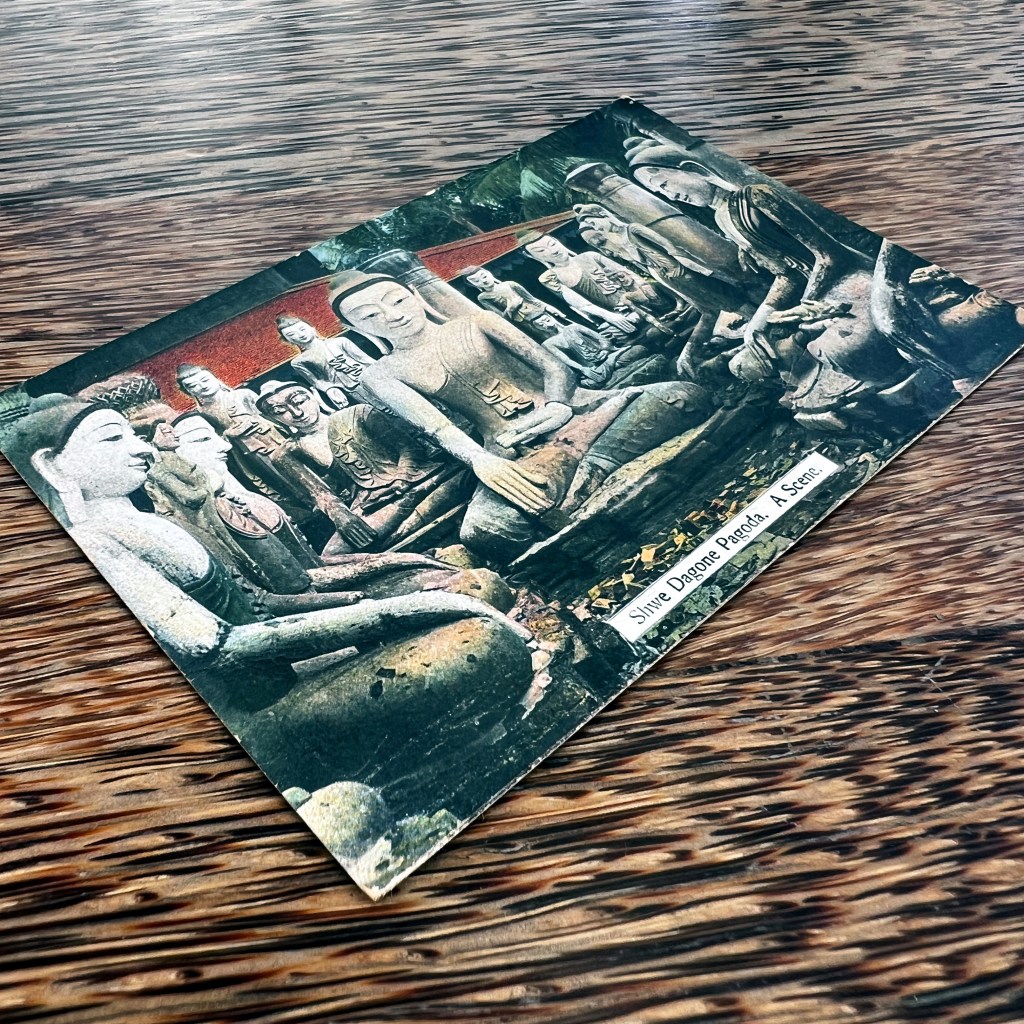
Shwedagon Pagoda is the most sacred Buddhist pilgrimage site in Myanmar, thought to enshrine eight hair strands of the Buddha. Philip Klier’s photo, taken in the 1880s, shows the activities of both monks and merchants on the main platform in front of the pagoda.
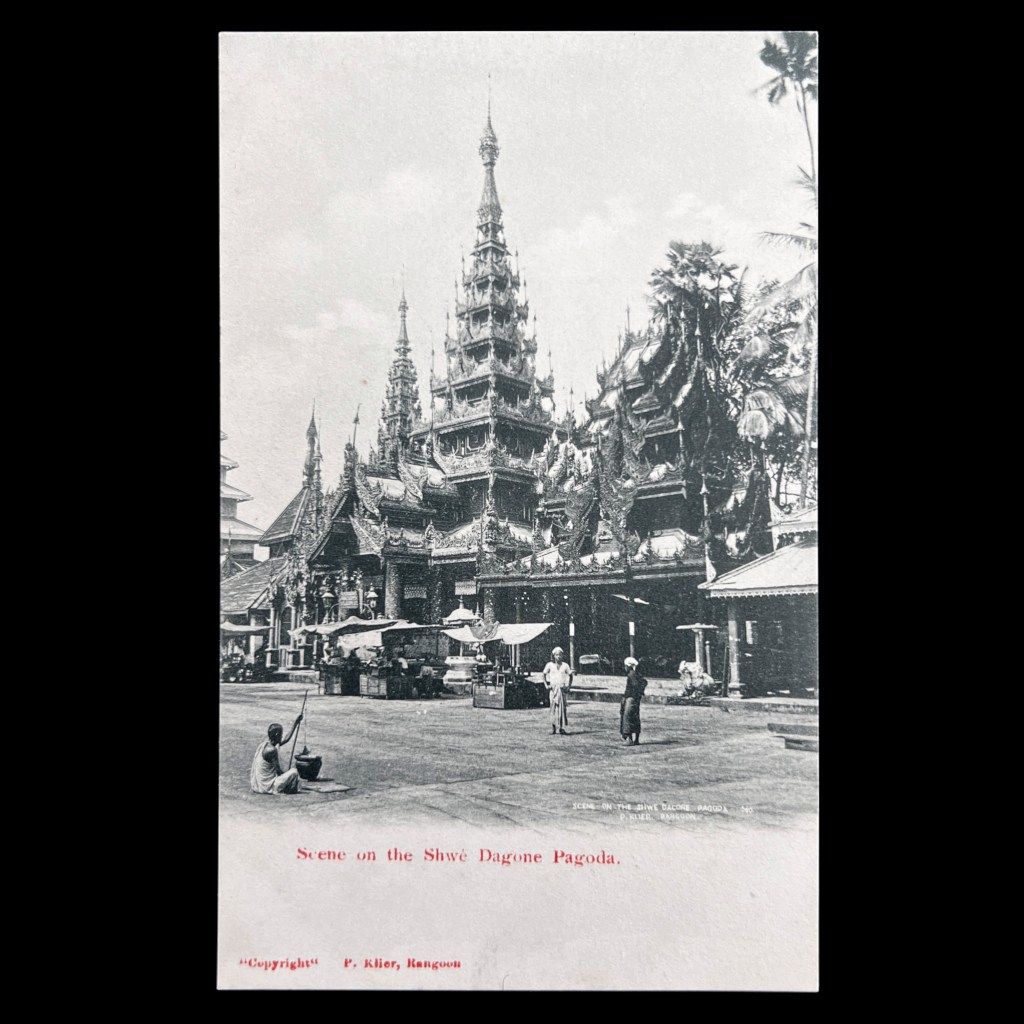
Built atop Singutarra Hill in the city of Yangon, four main entrance pavilions on the cardinal directions lead to a spacious open court where vendors sold ritual supplies. Small kiosks with shade coverings can be seen on the far side of the courtyard here.
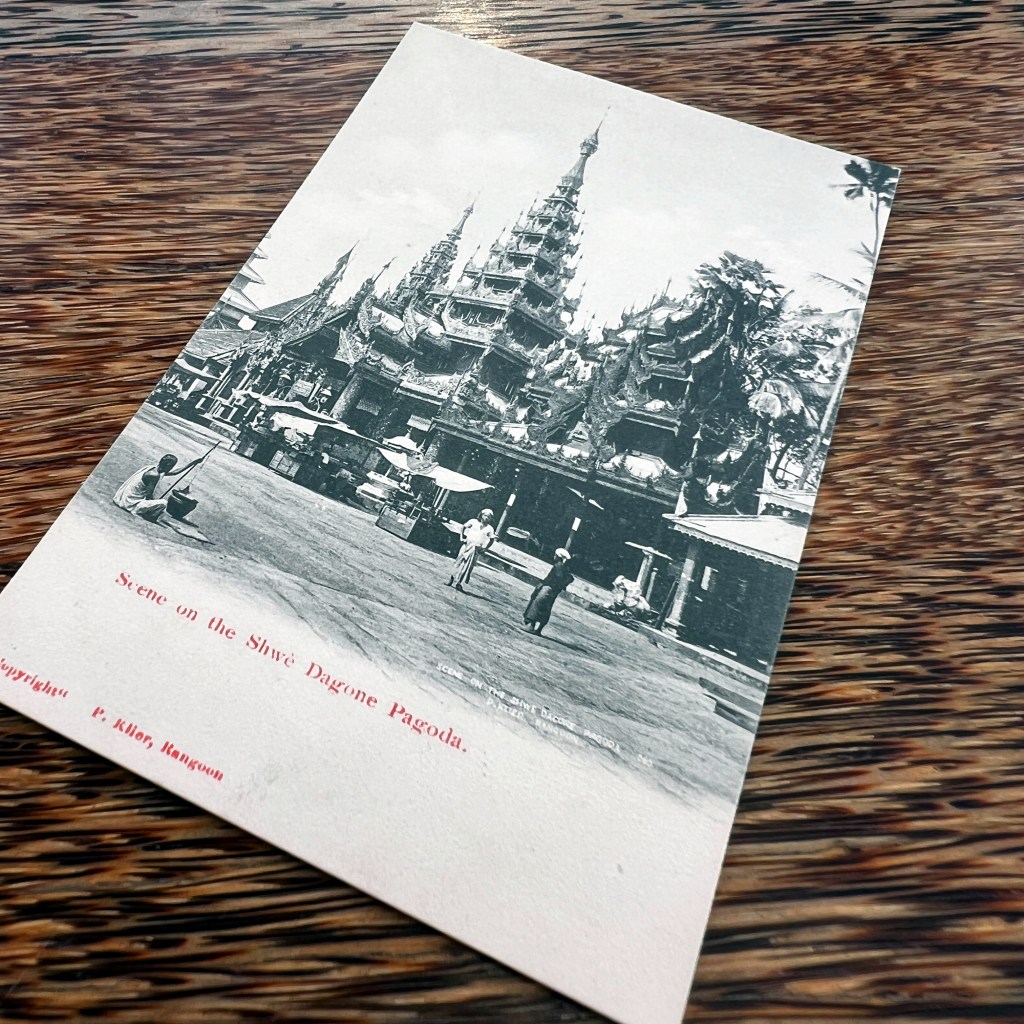
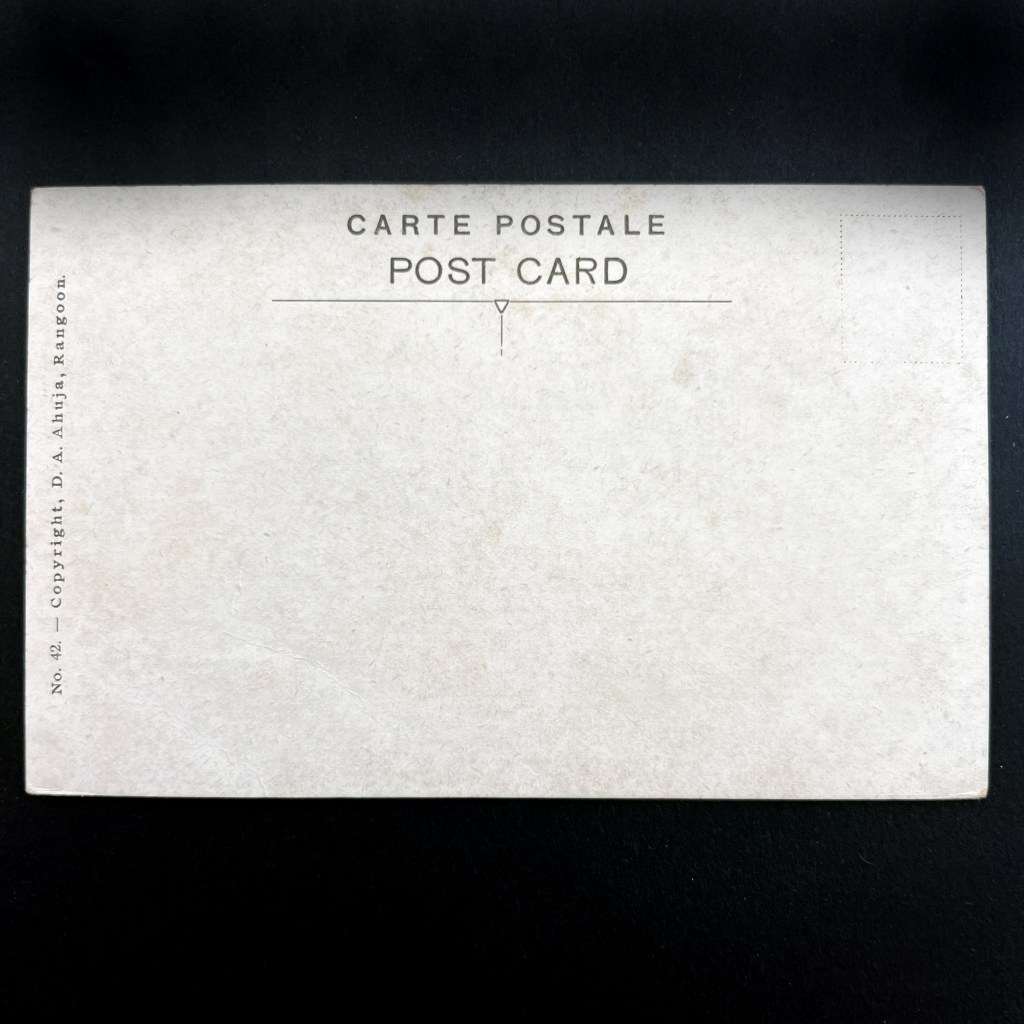
When German photographer Philip Klier relocated to the British capital at Yangon in c. 1880, he opened a studio just south of Shwedagon Pagoda. By the turn of the century he started selling postcards of his photographs, a media popular among foreign tourists visiting the site.

Klier’s name is inscribed on the negative with the title of his photo: “Scene on the Shwe Dagon Pagoda.” Surprisingly, the Shwedagon Pagoda is not actually in the frame of Klier’s photograph, it sits just off to the left.

In the foreground we see a Theravada monk sitting on the ground with an alms bowl.

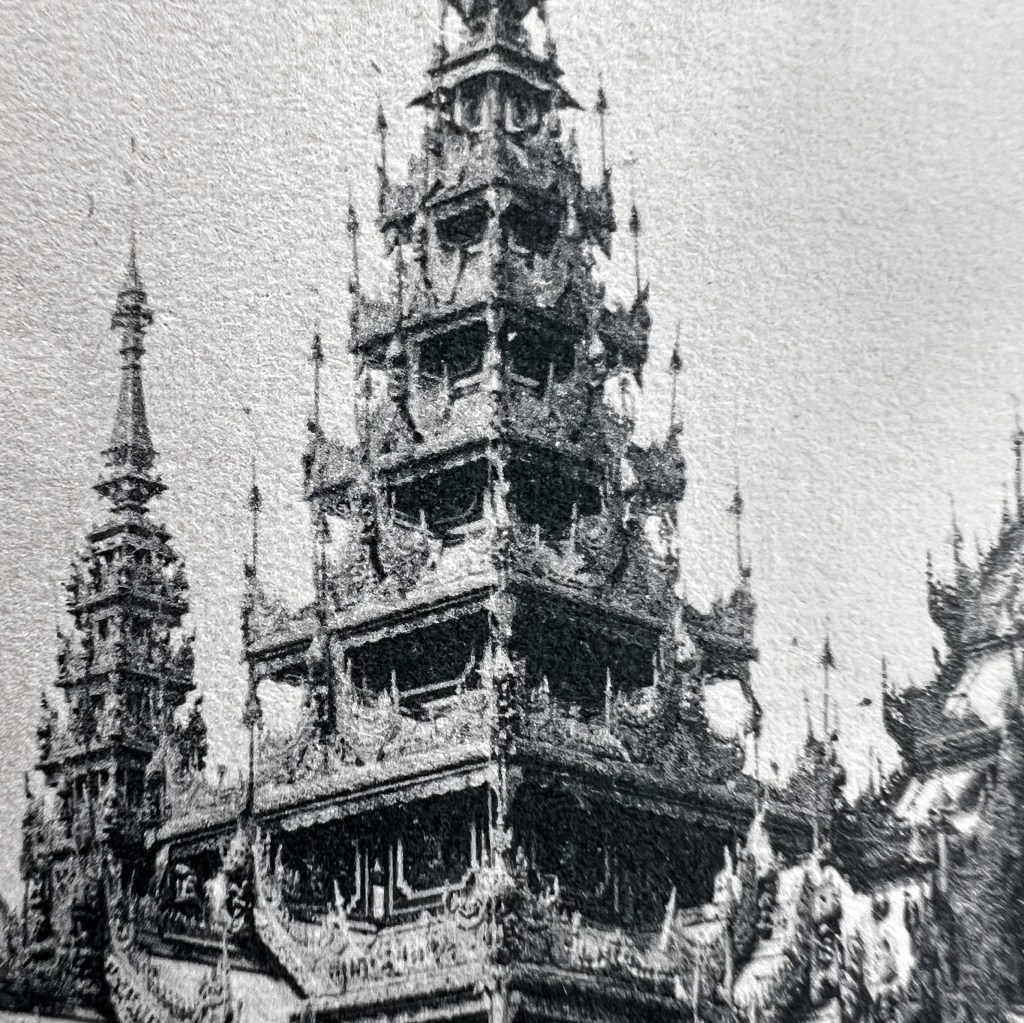
The distinctive building in the back is a seven-tiered pyatthat, characteristic of sacred Burmese architecture. For more of Klier’s photography, see the digitized collection at the National Gallery Singapore, viewable here: https://tinyurl.com/mtd9y72x.
Several of Montanus’ engravings were copied into later works on Japan, helping shape a visual lexicon for Buddhism into the 19th cent. The 1669 Dutch edition of Atlas Japannensis has been digitized by the National Library of the Netherlands, viewable here: tinyurl.com/5n6kstfy.


The Buddhas in the West Material Archive is a digital scholarship project that catalogues artifacts depicting Buddhist material culture for Western audiences. It’s comprised of prints, photos, and an assortment of ephemera and other objects. For a brief introduction to this archive, visit the main Buddhas in the West project page.
For Related Buddhas in the West Posts Featuring Myanmar / Burma:


For the Most Recent Buddhas in the West Posts:















 Personal Site of Peter Romaskiewicz