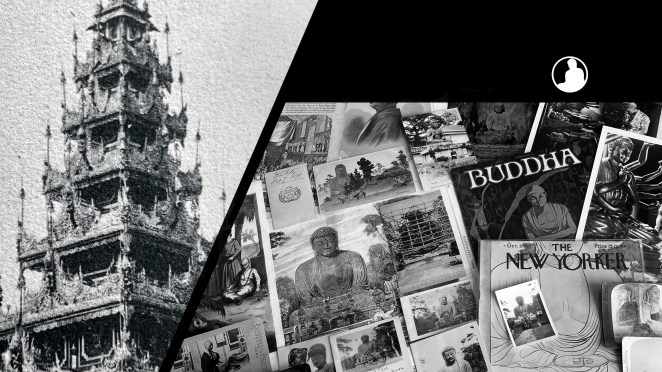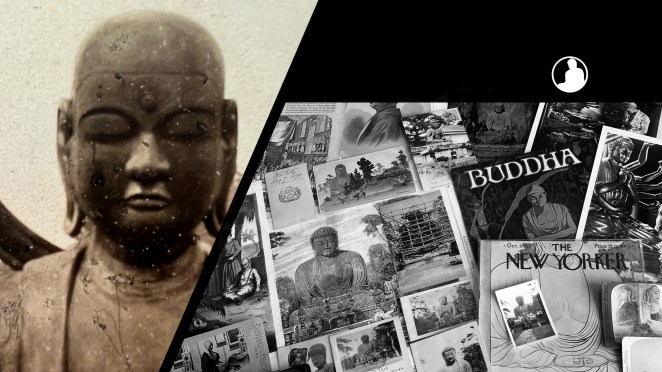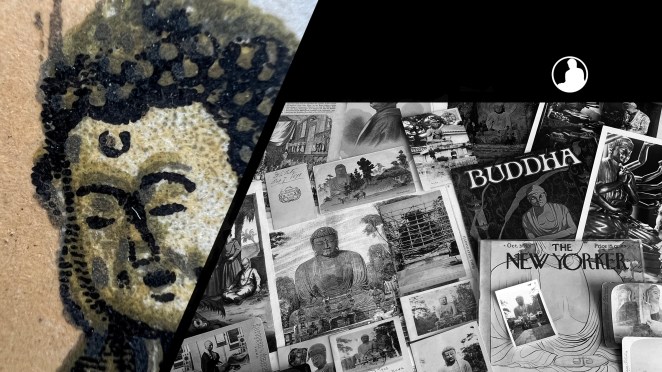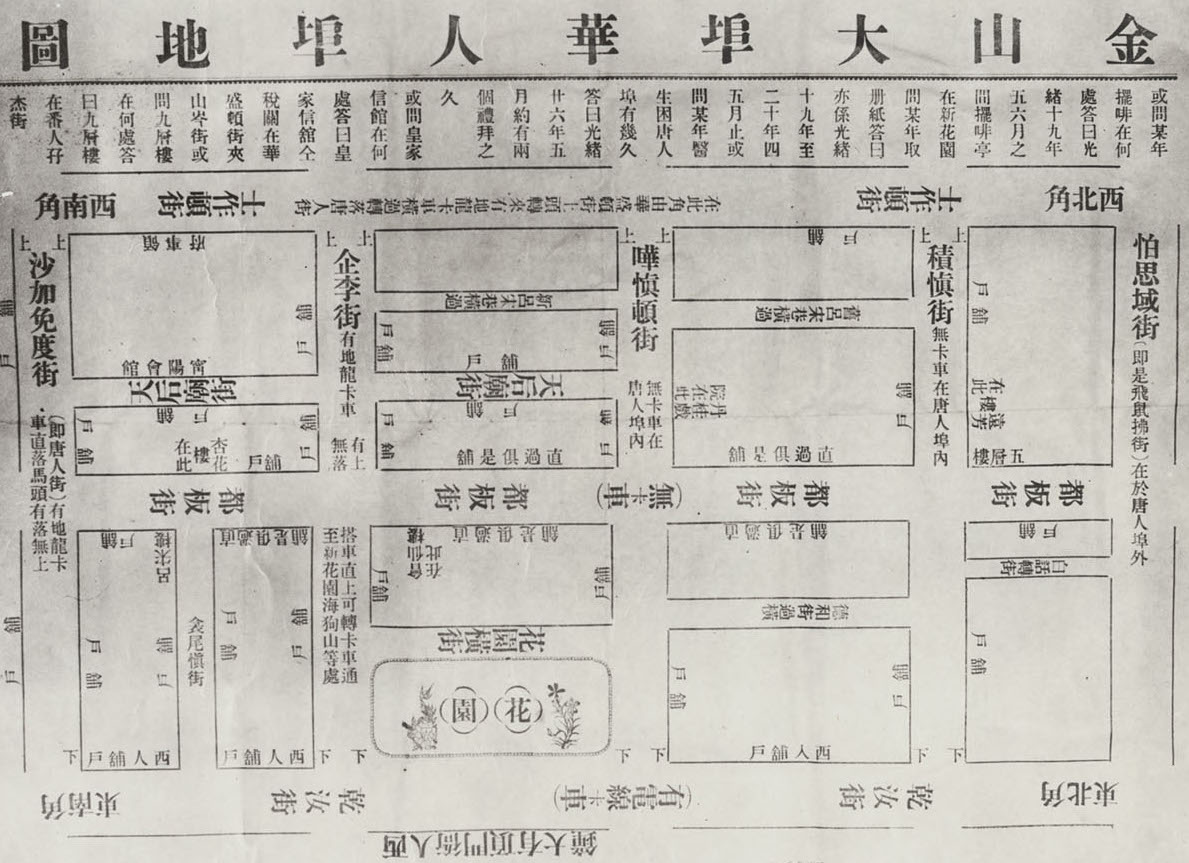
Chinatown’s Tin How Temple / Grass Valley Temple Real Photo Postcard

For all the new Buddhas in the West posts
follow us on Bluesky & Instagram


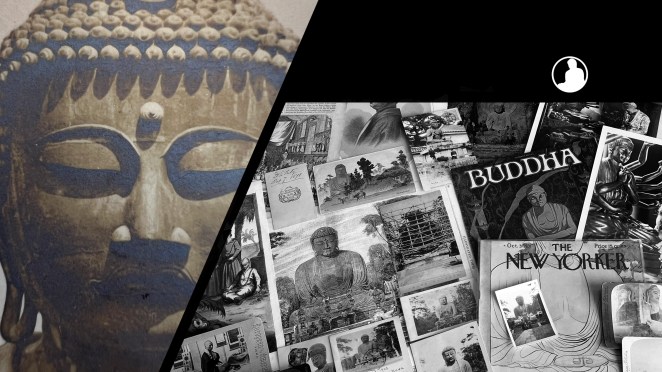
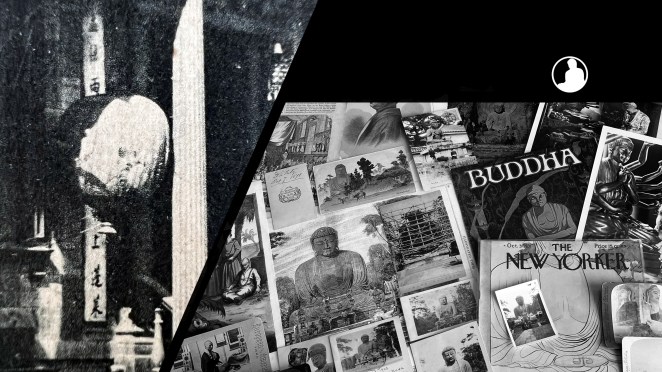
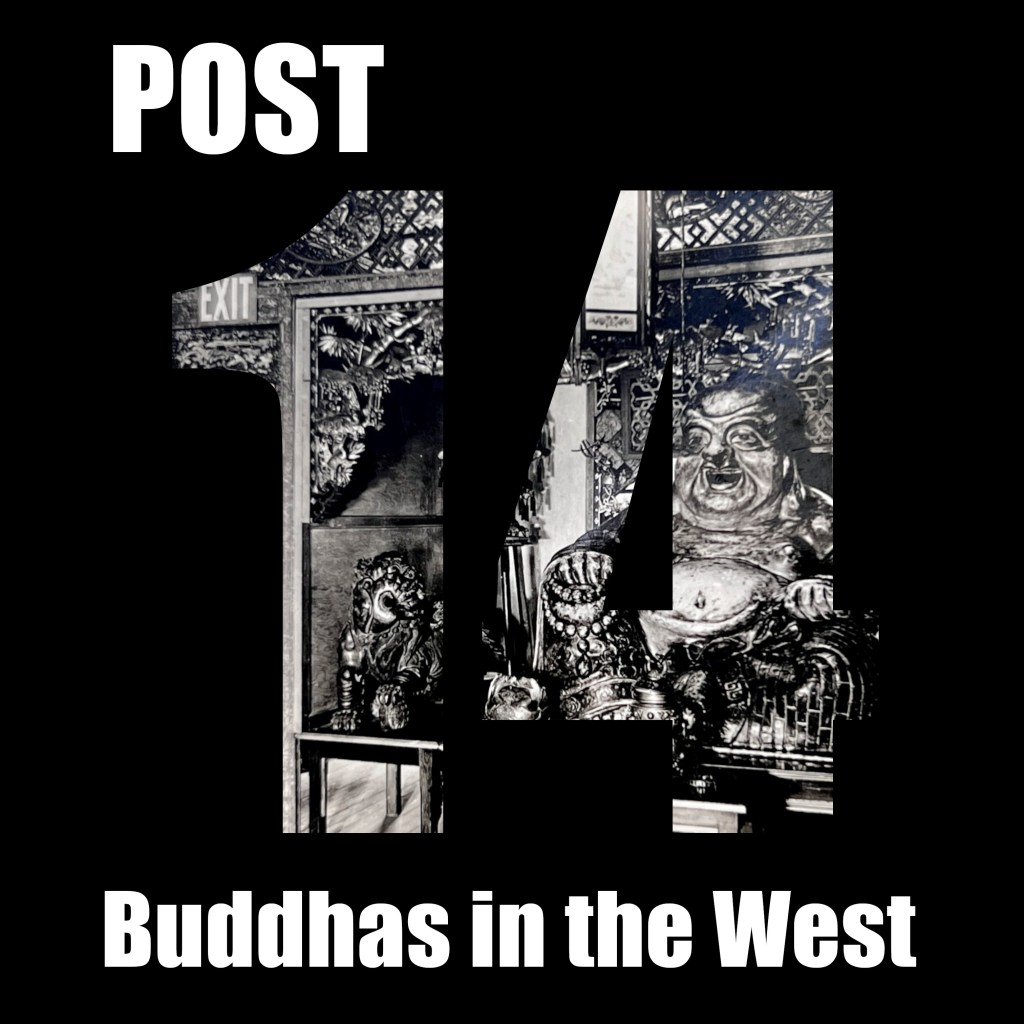
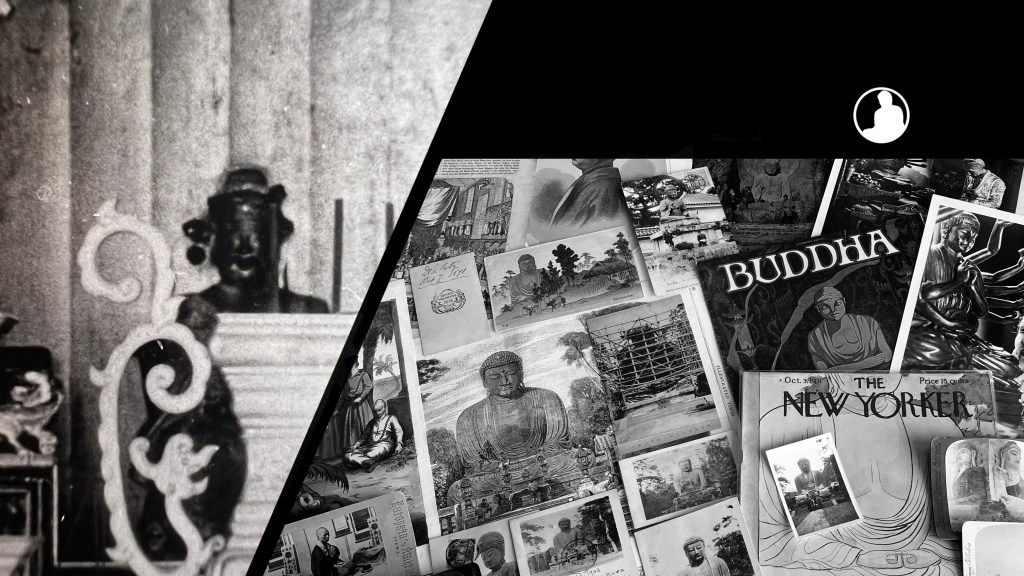
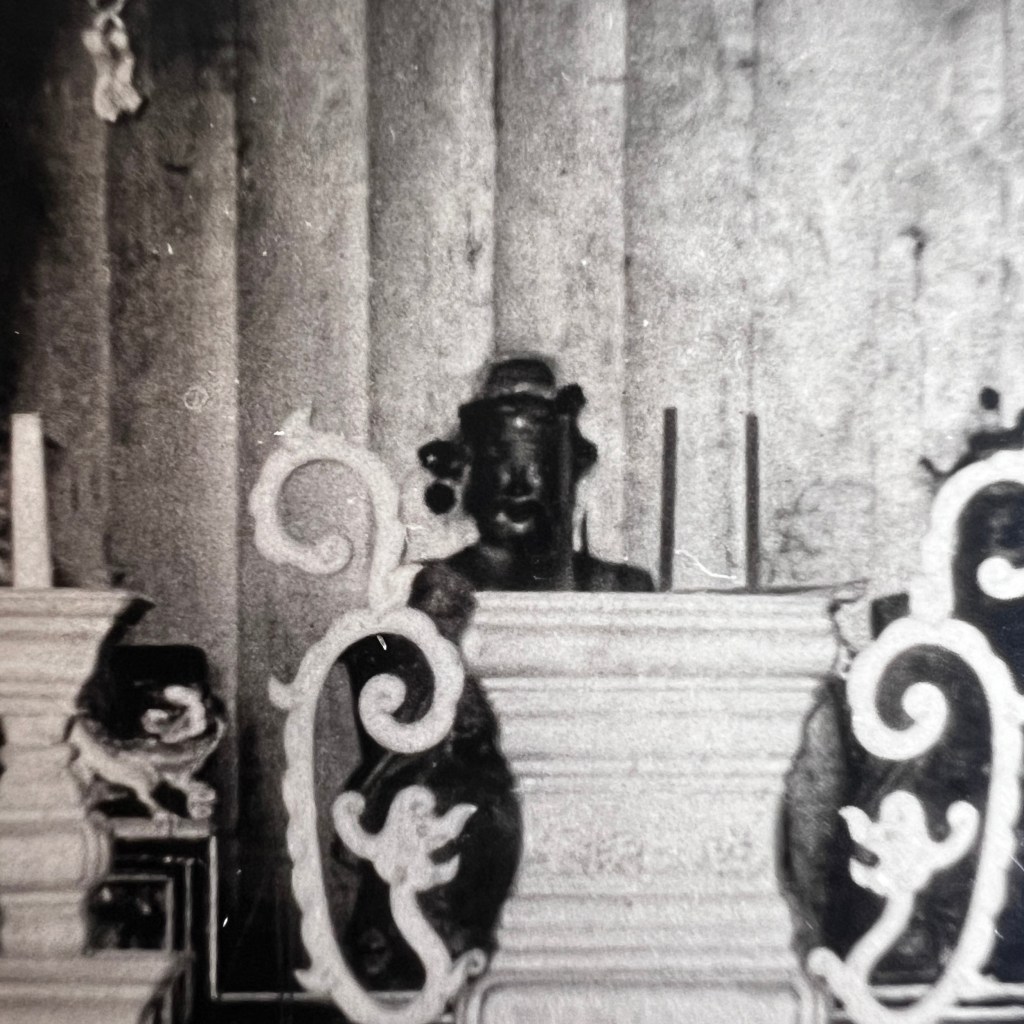
After the 1906 earthquake, San Francisco’s Tin How Temple was one of a fraction of Chinese religious institutions to rebuild, reopening in 1911 on the footprint of the original building. Despite the caption, this photo does not show the pre-1906 altar, nor is it a San Francisco temple.
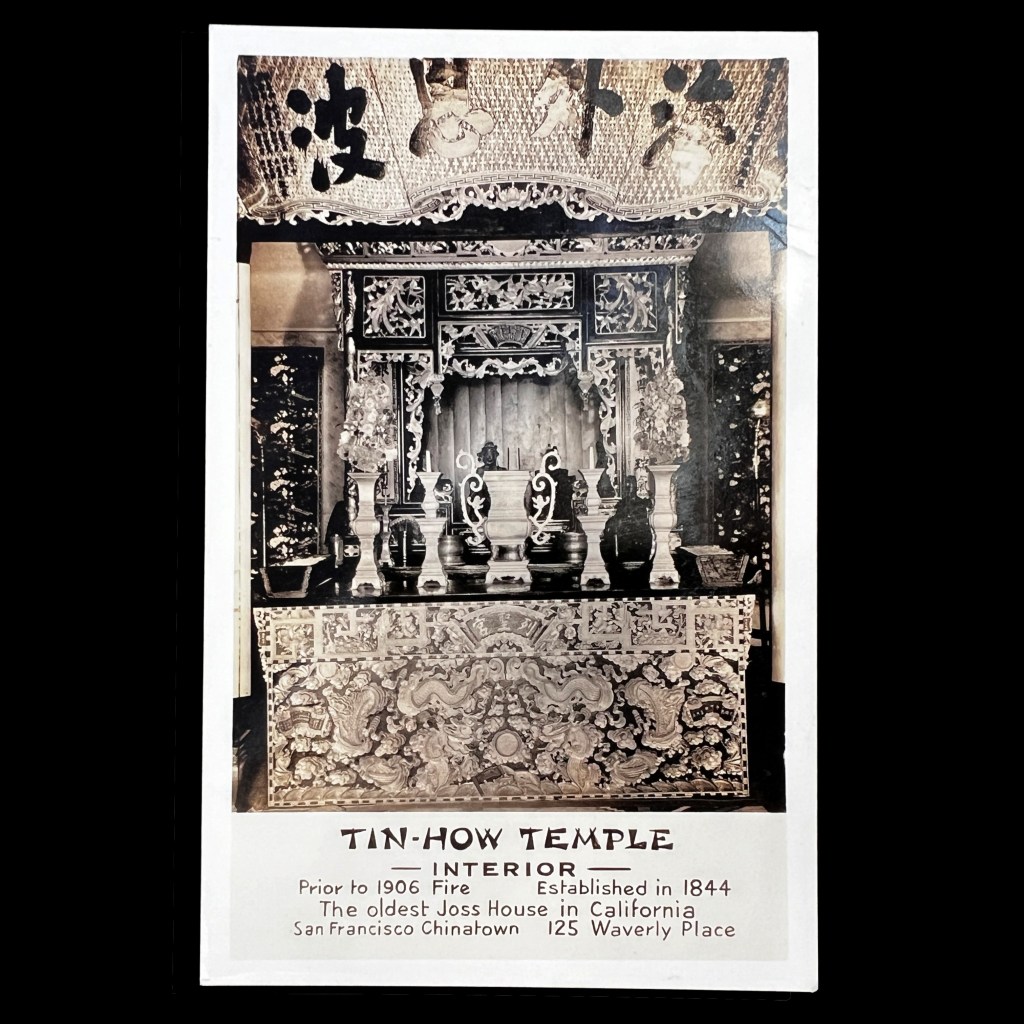
Tin How, the Empress of Heaven, also known as Mazu, was popular along China’s southern coast and revered for her protective powers, especially at sea. Many early Chinese immigrants erected temples dedicated to her and other deities across North America.
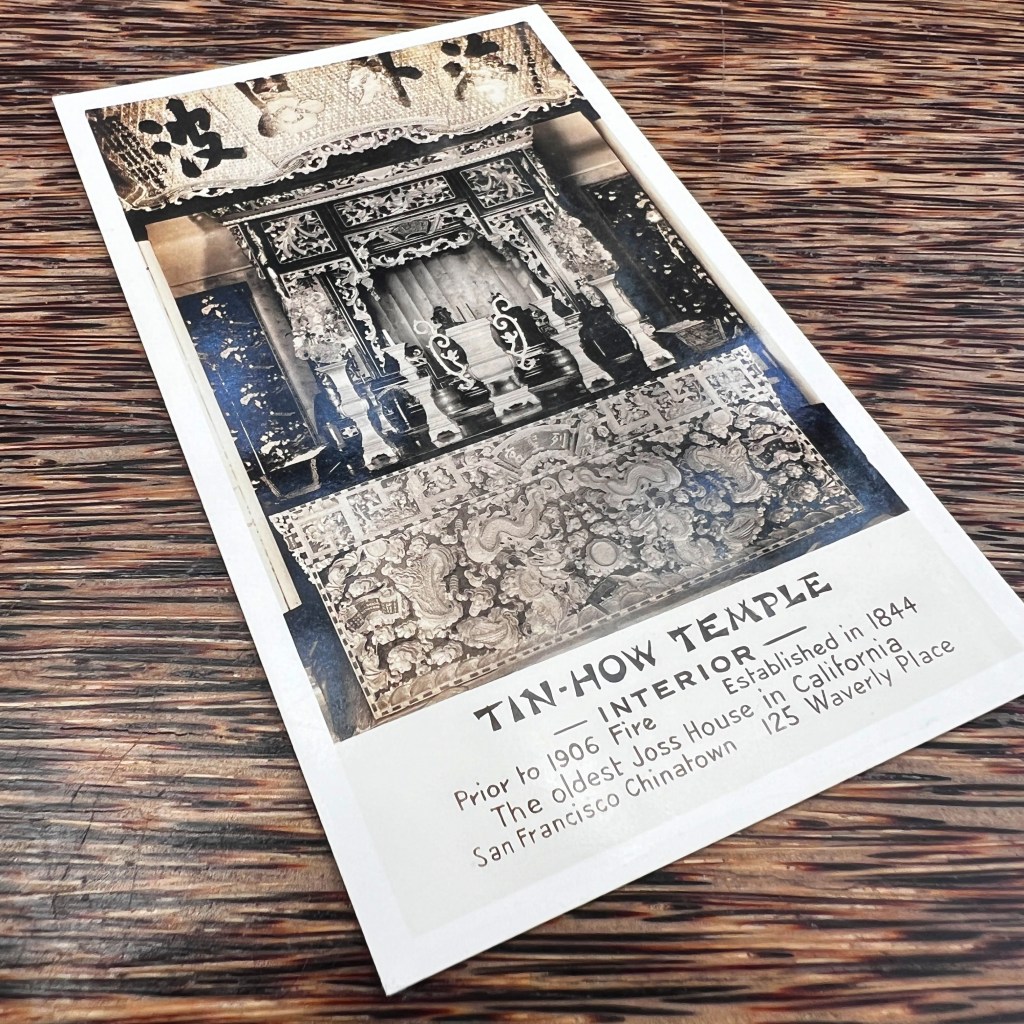
The photo shows the altar of the old Chinese temple in Grass Valley, identifiable by the large carved inscription board reading “Waves of favor cross over the seas.” It’s likely the postcard publisher saw a more lucrative opportunity in selling a visual “relic” of the lost Tin How Temple shrine.
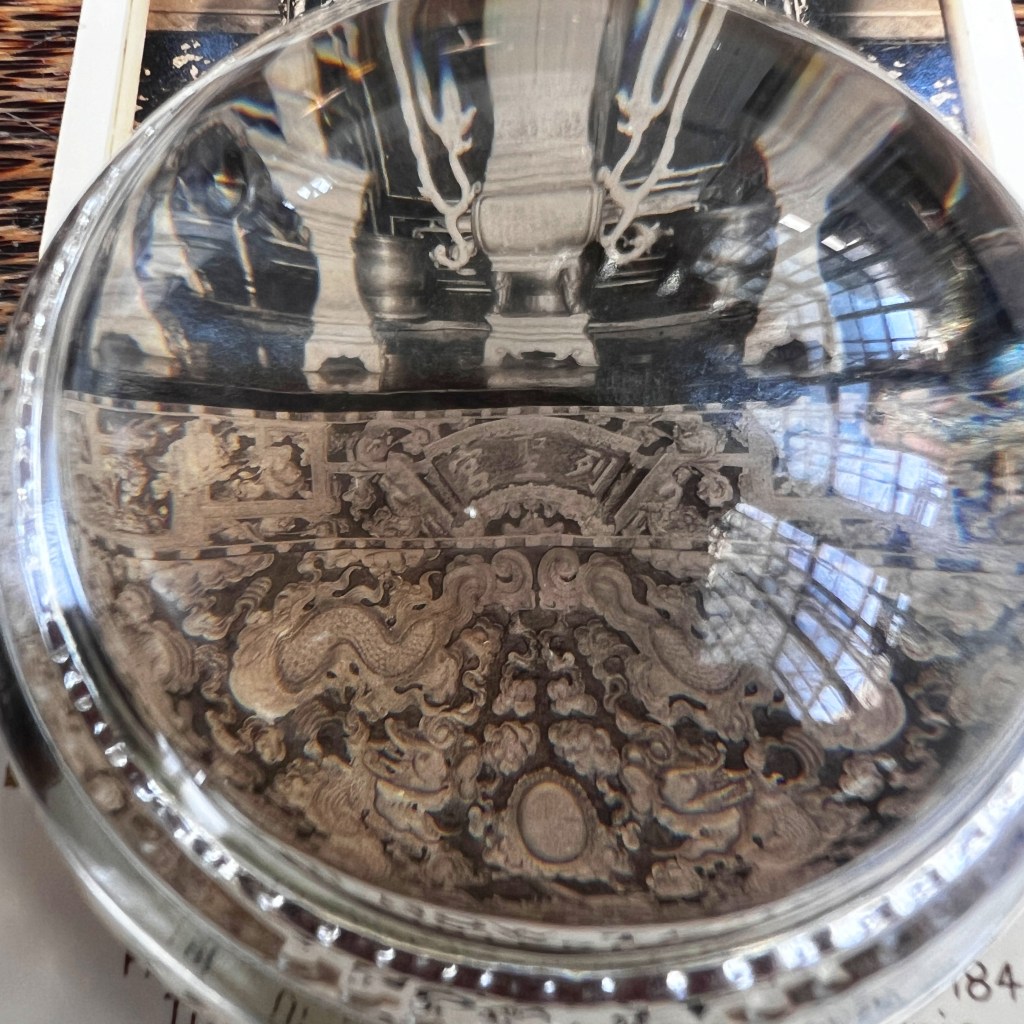
Moreover, the Grass Valley temple was dedicated to Houwang, not Mazu, yet both locations were alternatively called the Temple of Many Saints, seen carved on the altar façade from 1875. The Grass Valley temple fell into disrepair by 1933 and was closed soon thereafter.
The altar was preserved and is now displayed at the Nevada Firehouse No.1 Museum. For more history on the Grass Valley temple, see Chuimei Ho and Bennet Bronson’s Chinese Traditional Religion and Temple in NorthAmerica, 1849–1902 (2022).

The Buddhas in the West Material Archive is a digital scholarship project that catalogues artifacts depicting Buddhist material culture for Western audiences. It’s comprised of prints, photos, and an assortment of ephemera and other objects. For a brief introduction to this archive, visit the main Buddhas in the West project page.


For Related Buddhas in the West Posts Featuring Historical Real Photo Postcards:

For the Most Recent Buddhas in the West Posts:


Eastman Kodak European Tour Group Real Photo Postcard

For all the new Buddhas in the West posts
follow us on Bluesky & Instagram


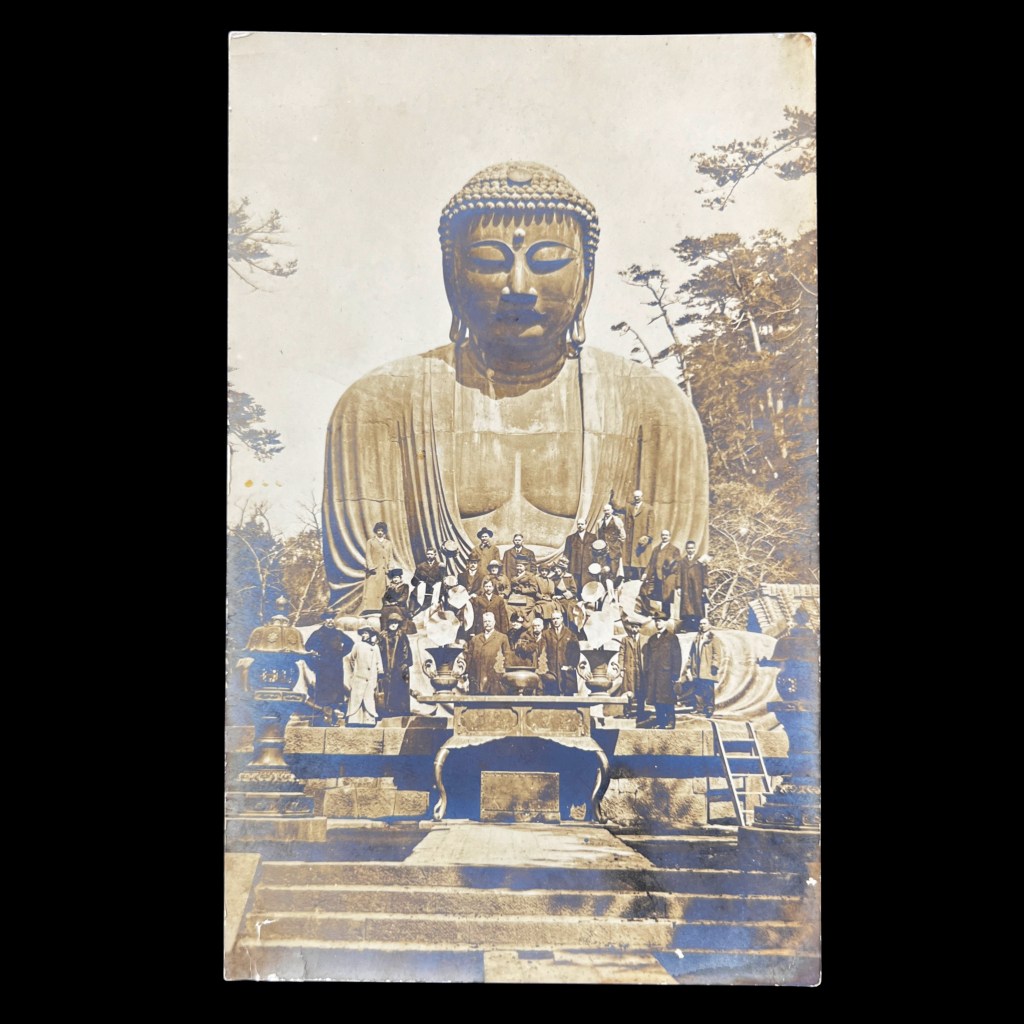
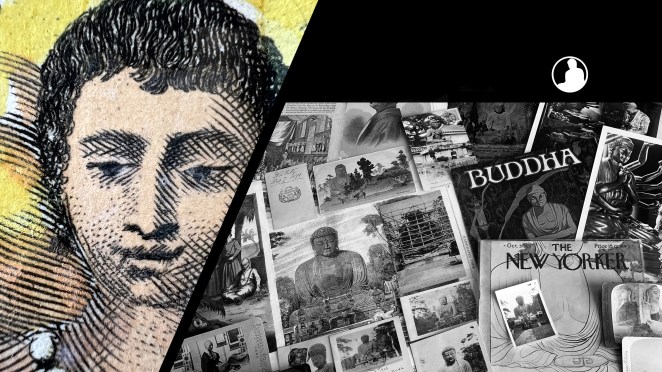
Tales of Tourist Photos, Pt. 1*: If photography changed the way people viewed the world, the Eastman Kodak camera transformed the late Victorian practice of tourism. The handheld Kodak made photography available to casual amateurs, creating the vernacular form of snapshot photography.
*[Part 2]

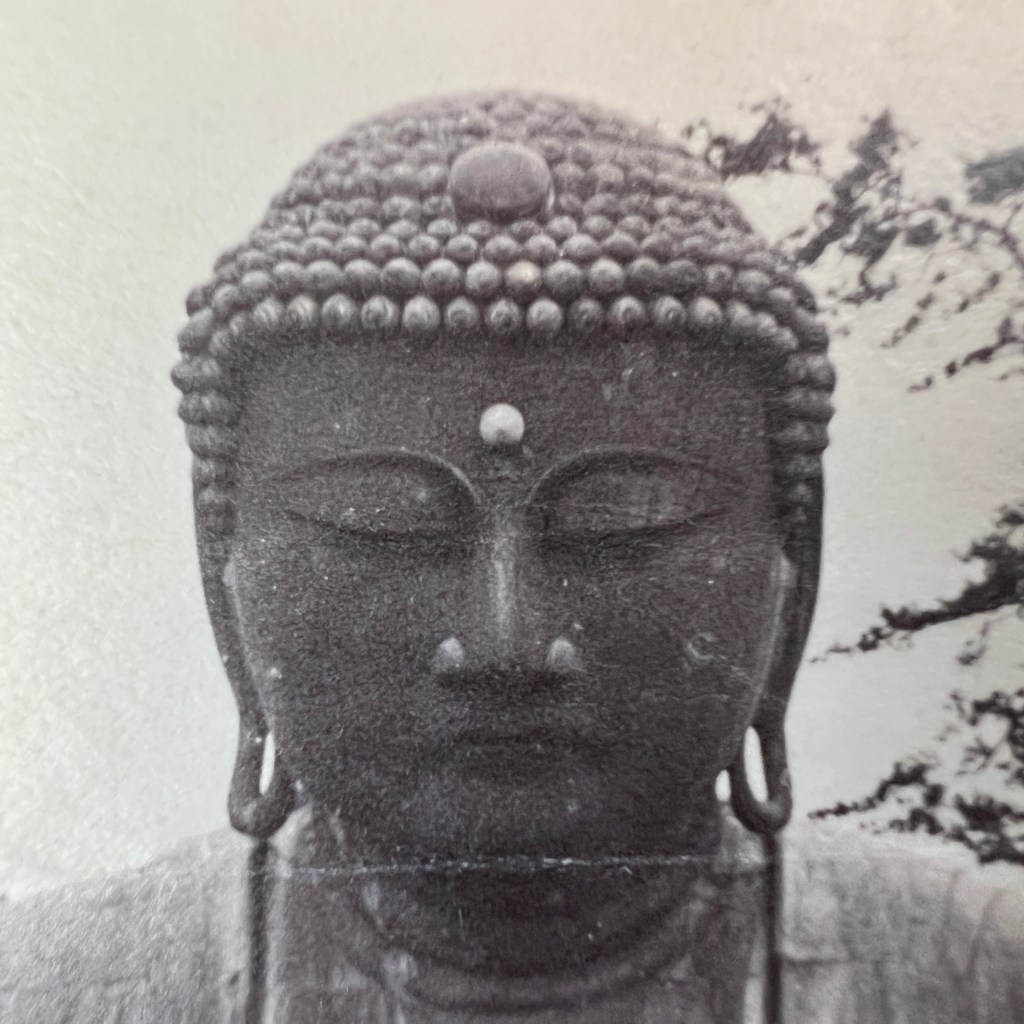
In contrast to a generation earlier, precise technical expertise was not necessary and photography became increasingly linked to personal experience. Foreign travel, such as visiting the Kamakura Daibutsu, increasingly “required” a photograph to validate the exotic experience.

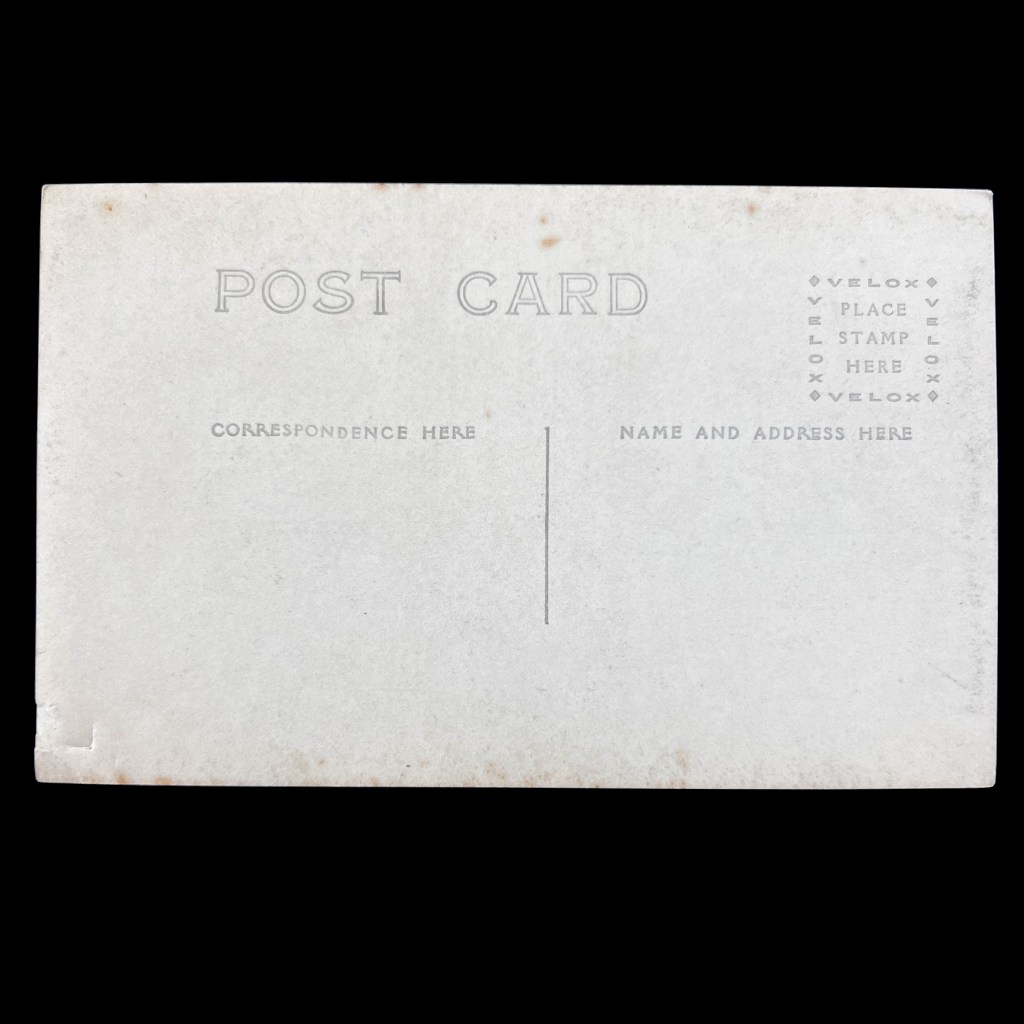
By 1903, the Kodak 3A was released and fitted with rolled film creating negatives measuring 3¼ in. x 5½ in. – the exact size of a standard postcard. Eastman marketed a broad range of supplies for the amateur, including Velox paper for those developing and printing their own postcards.

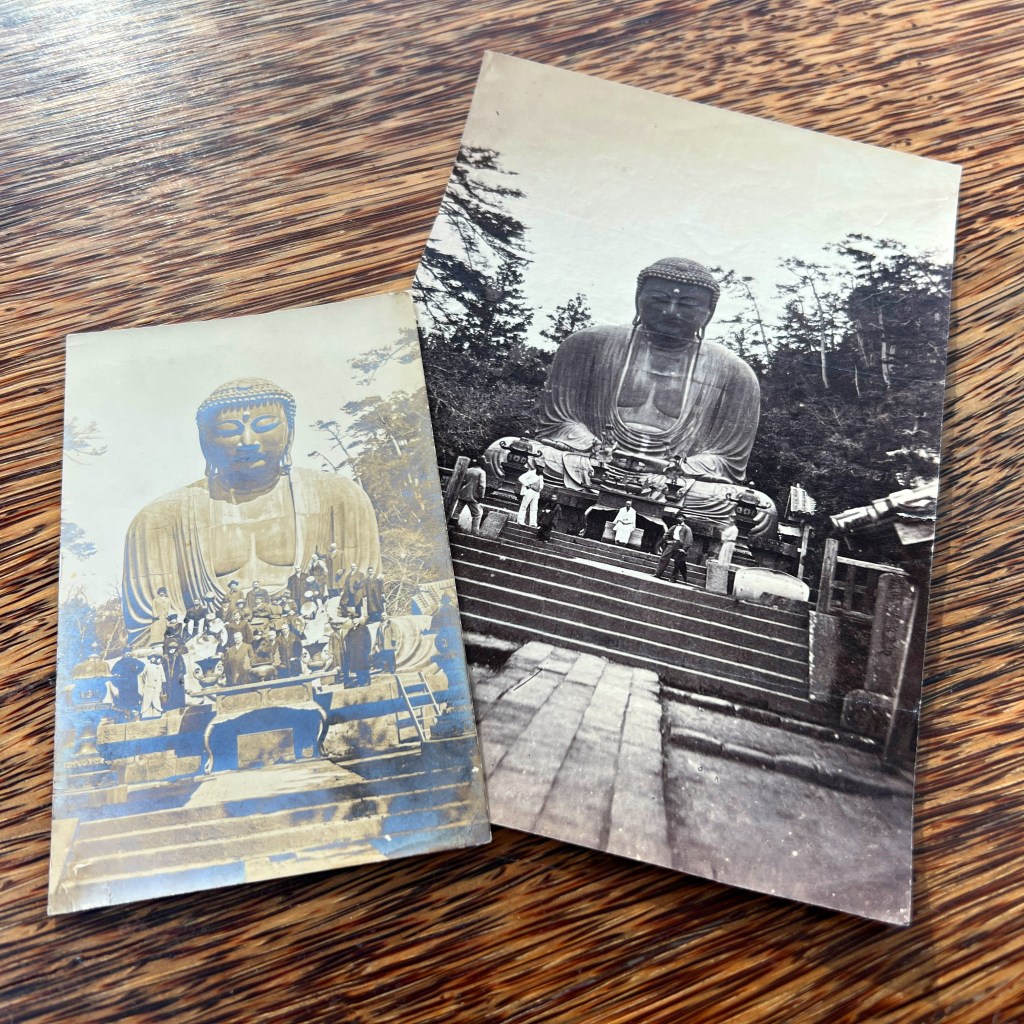
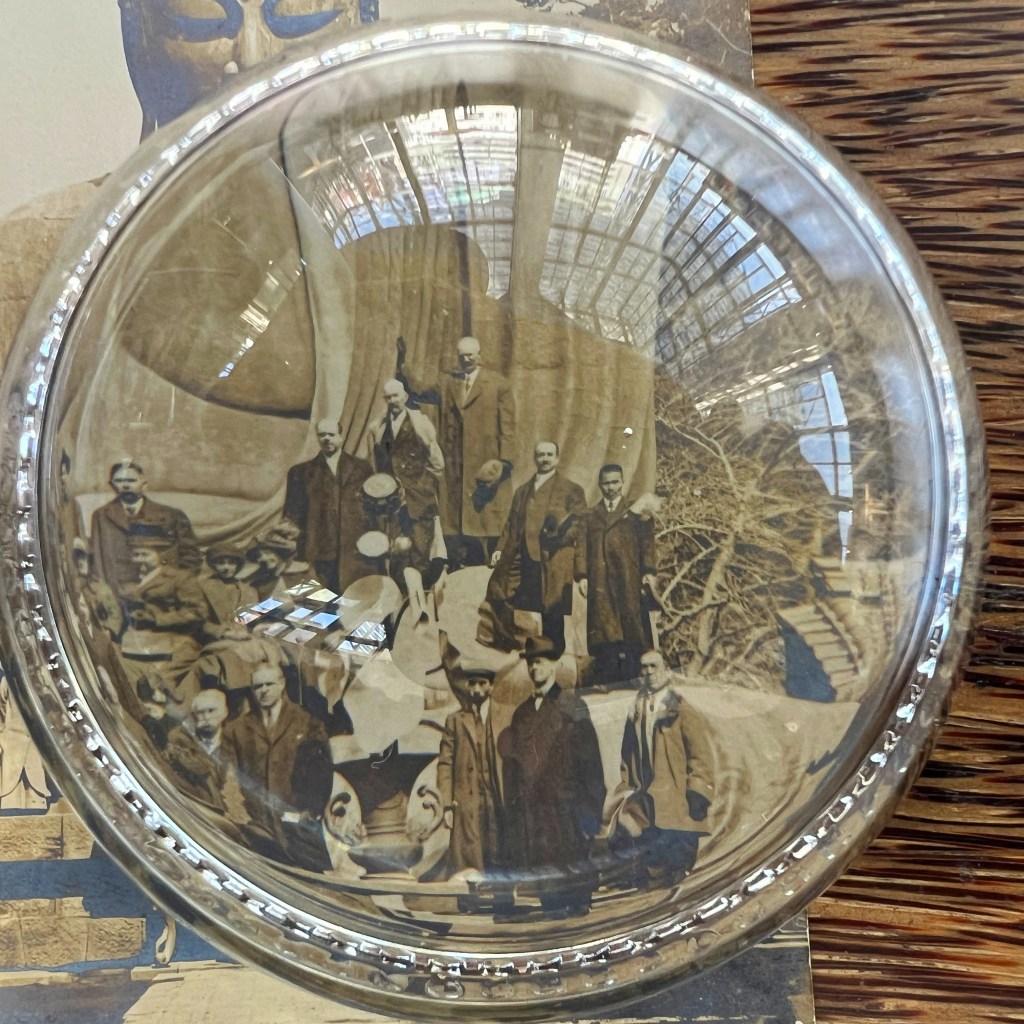
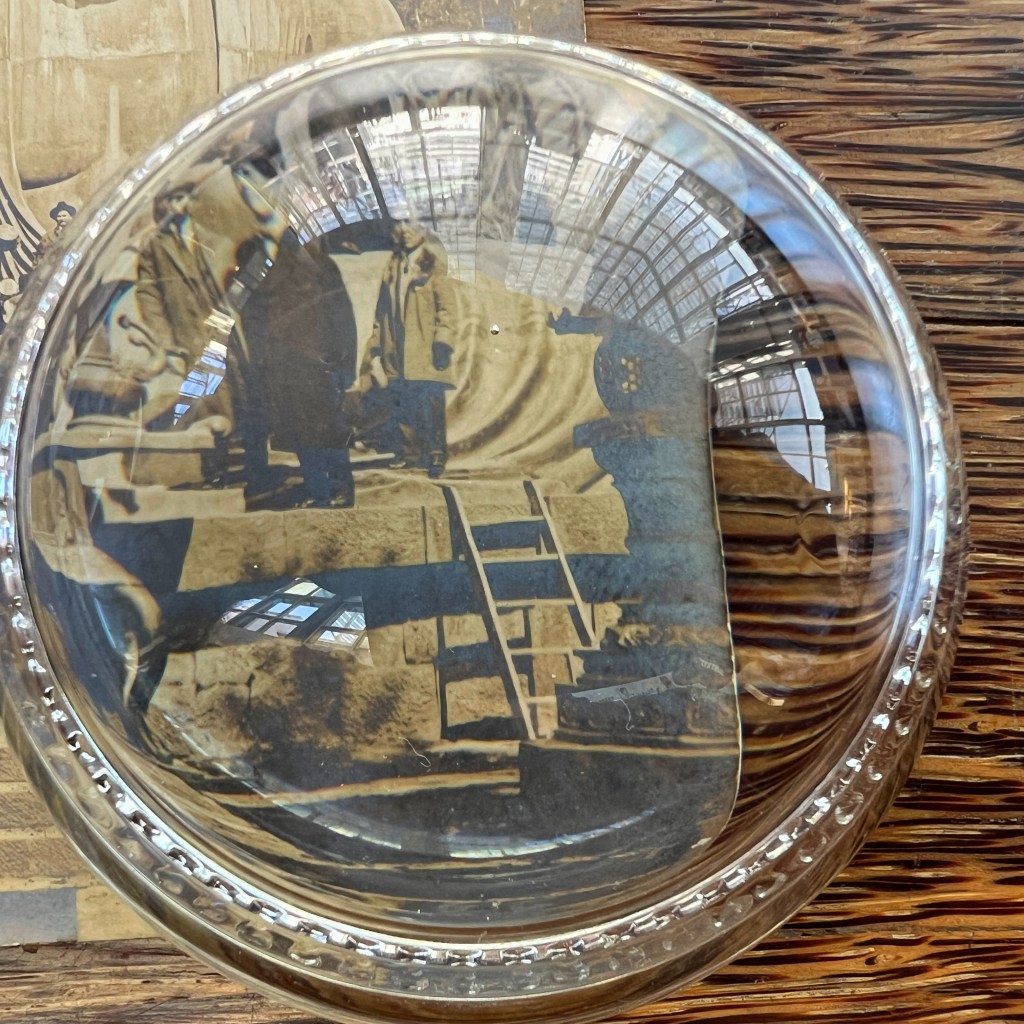
This real photo postcard was shot and printed circa 1910–1915 and captures two dozen tourists arranged along the lap and stone pedestal of the Great Buddha of Kamakura.

Some of the earliest photographs of the Kamakura Daibutsu depict people climbing upon its lap and a ladder can be seen for helping a visitor’s ascent in photographs dating to the 1870s. By around 1915 climbing on the statue was prohibited.

For further discussion on the birth of the snapshot and its cultural impact, see Mia Fineman’s “Kodak and the Rise of Amateur Photography,” viewable here: https://www.metmuseum.org/essays/kodak-and-the-rise-of-amateur-photography.


The Buddhas in the West Material Archive is a digital scholarship project that catalogues artifacts depicting Buddhist material culture for Western audiences. It’s comprised of prints, photos, and an assortment of ephemera and other objects. For a brief introduction to this archive, visit the main Buddhas in the West project page.


For Related Buddhas in the West Posts Featuring Real Photo Postcards:


For the Most Recent Buddhas in the West Posts:

Pacific Curio Shop Niō Statue Postcard

For all the new Buddhas in the West posts
follow us on Bluesky & Instagram


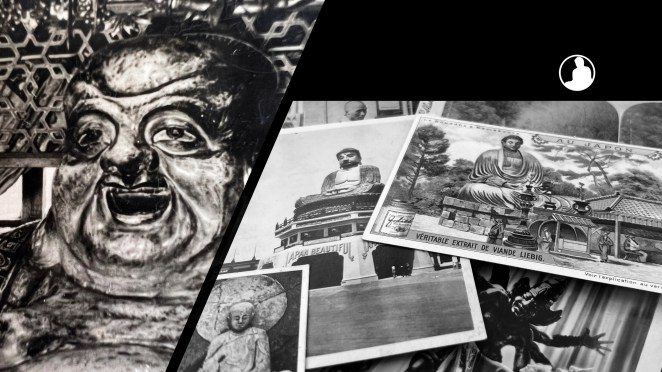
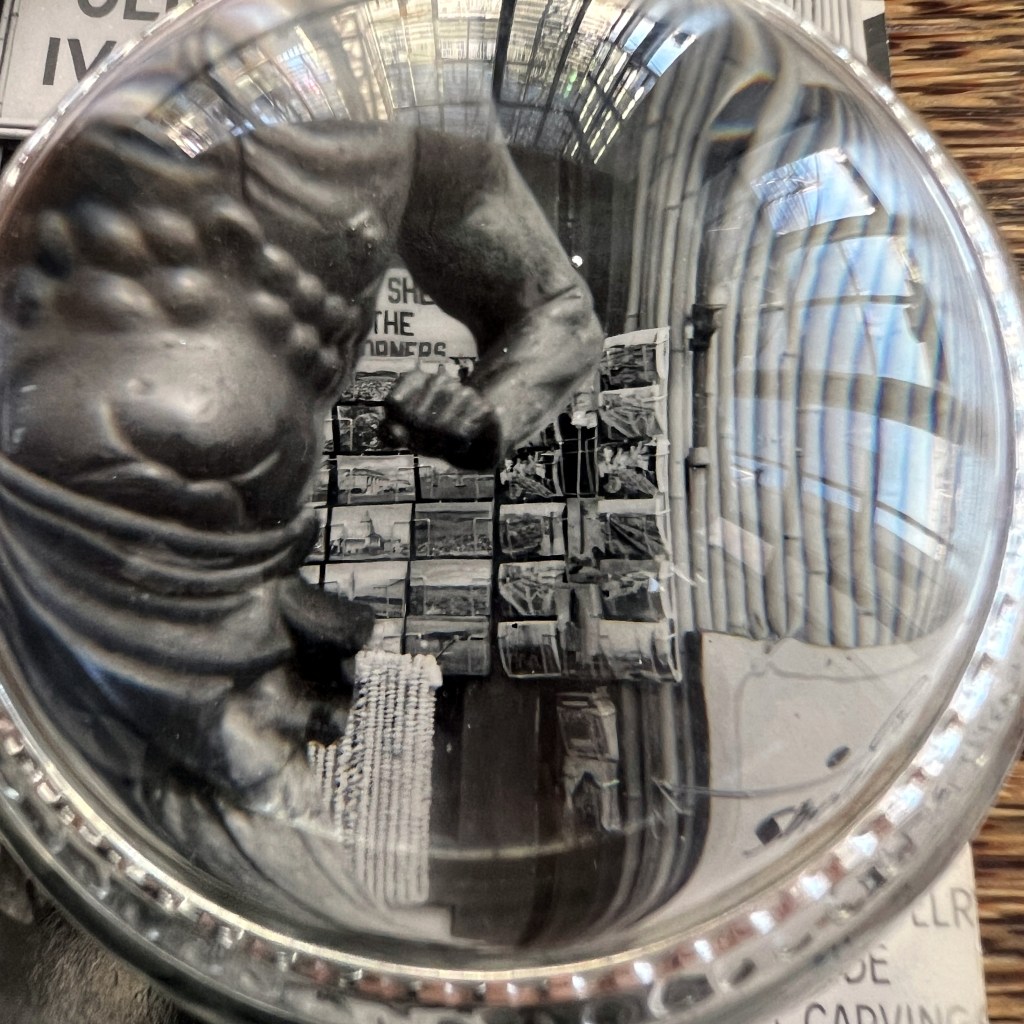
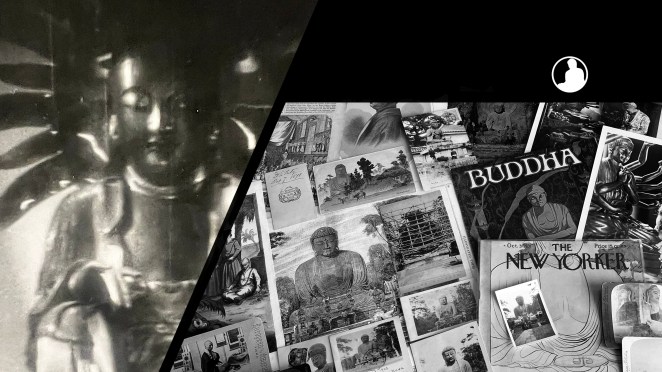
A pair of muscular, wrathful Niō, “Benevolent Kings,” often stand guard at the entrance to Japanese Buddhist temples. In the late 1950s, however, this Niō was stationed outside John Saxby’s Pacific Curio Shop on Fisherman’s Wharf in San Francisco.

Saxby was a WWI veteran and a Merchant Marine who became a well-respected amateur conchologist. In addition to offering a world-class shell exhibit, Saxby imported Japanese curios, a thriving market post-WWII.

Strands of shells and postcards can also be seen for sale.

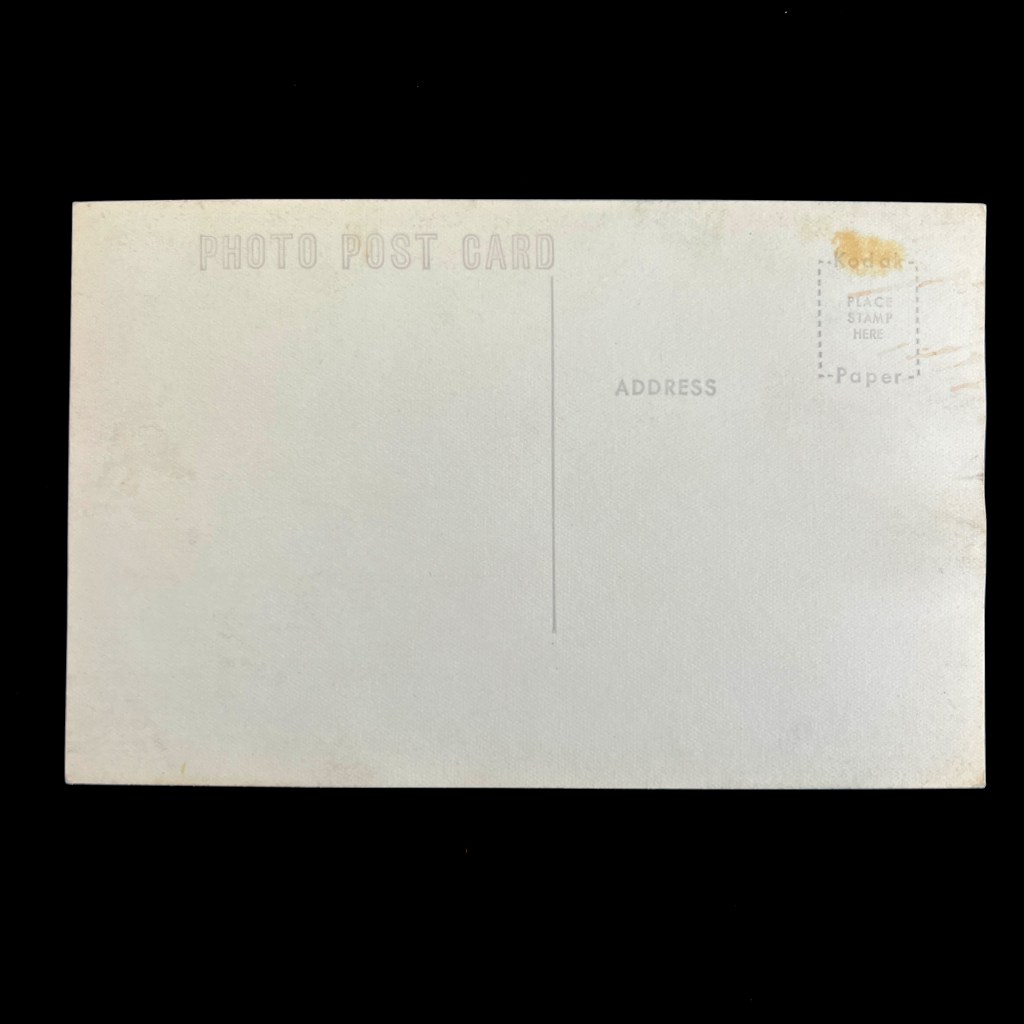
The shop’s “Temple Guardian” was apparently important enough to warrant its own postcard. The “Kodak Paper” stamp box dates this card to after 1950.

The icon’s closed mouth identifies this guardian as Ungyō; I am unsure of where this statue originated. A photo of Saxby inspecting another imported icon can be found at the San Francisco Public Library: https://digitalsf.org/islandora/object/islandora:137138


The Buddhas in the West Material Archive is a digital scholarship project that catalogues artifacts depicting Buddhist material culture for Western audiences. It’s comprised of prints, photos, and an assortment of ephemera and other objects. For a brief introduction to this archive, visit the main Buddhas in the West project page.


For Related Buddhas in the West Posts Featuring San Francisco:


For the Most Recent Buddhas in the West Posts:


Singapore Buddhist Hell Guardian Postcard

For all the new Buddhas in the West posts
follow us on Bluesky & Instagram


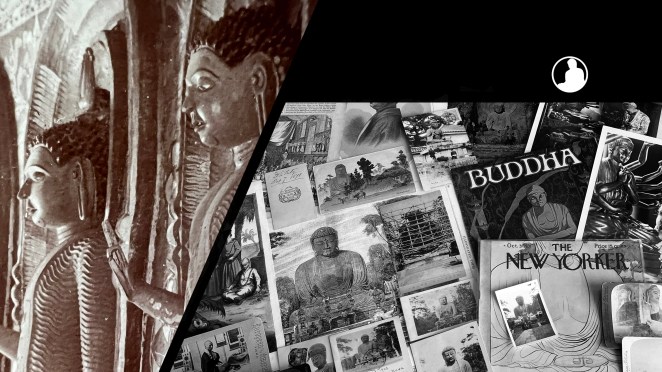
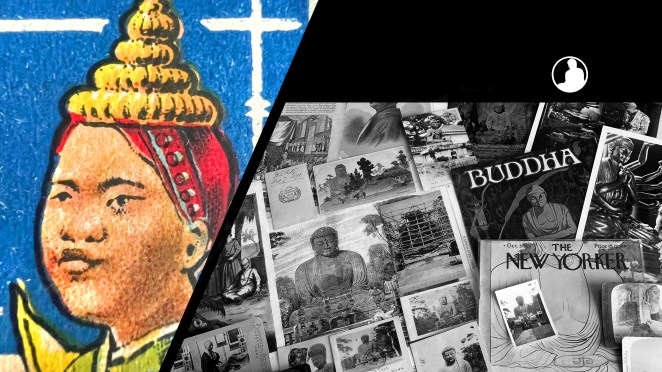
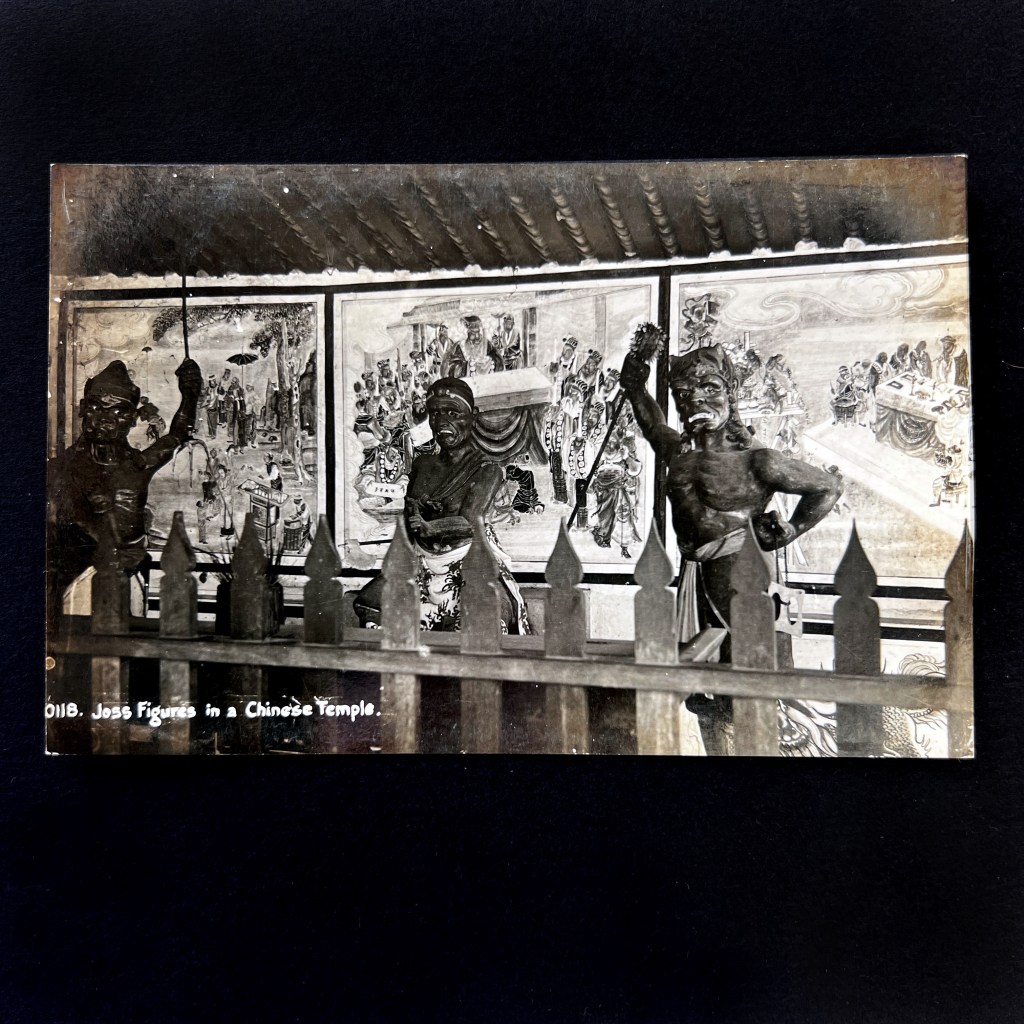
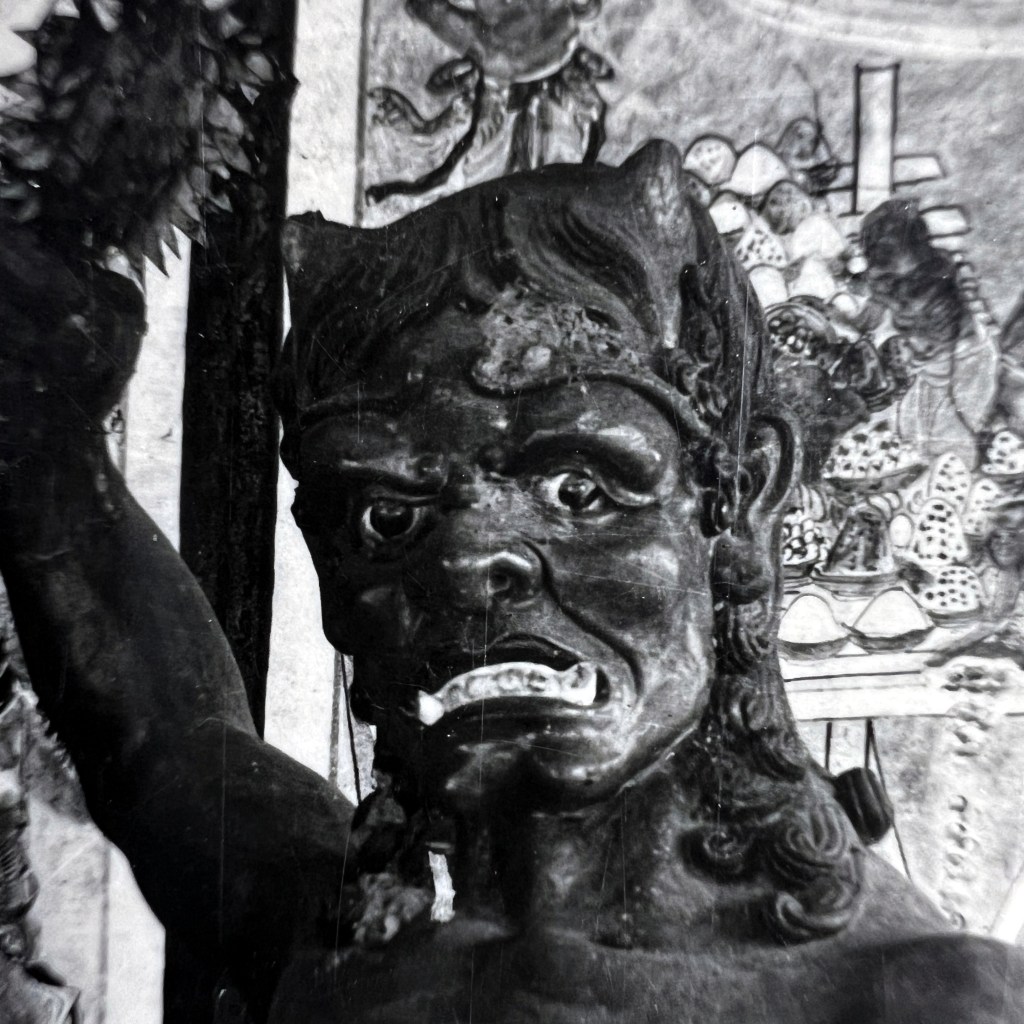
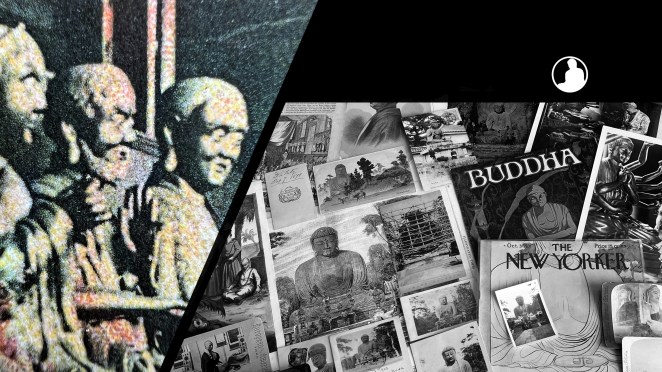
Unknown “Chinese” Temple: By the mid-to-late 19th century, the term “joss” typically referred to venerated Chinese religious icons. Here we see the term used to identify statues of Buddhist hell guardians. These figures are not typically the center of veneration in temples.

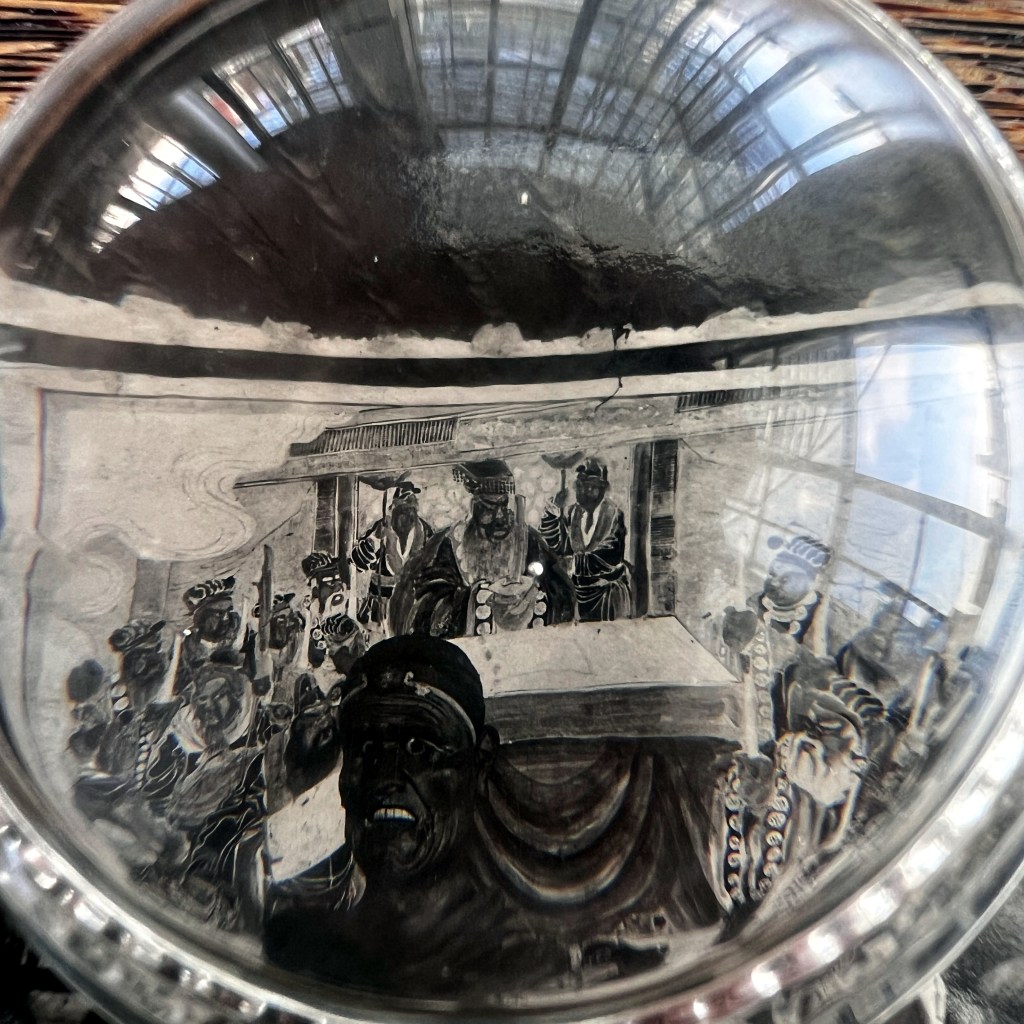
Moreover, the statues are positioned in front of murals depicting the Buddhist Ten Courts of Hell. Chinese Buddhist hell is viewed as an administrative center for the underworld where the dead are judged for their deeds in life.

The location is an unidentified Chinese Temple. Real photo post cards with similar reverse designs depict temples from Singapore; it is possible this is one of several “Chinese temples” from that area at the turn of the 20th century.

This photographic card likely dates to the 1920s. (I have seen a used version of this card hand-dated to 1930).

The National Archives of Singapore has a good selection of digitized photographs showing various Chinese Temples, available here: https://tinyurl.com/mr9nwcep.


The Buddhas in the West Material Archive is a digital scholarship project that catalogues artifacts depicting Buddhist material culture for Western audiences. It’s comprised of prints, photos, and an assortment of ephemera and other objects. For a brief introduction to this archive, visit the main Buddhas in the West project page.


For Related Buddhas in the West Posts Featuring Historical Real Photo Post Cards:


For the Most Recent Buddhas in the West Posts:


Mott Street Laughing Buddha Postcard

For all the new Buddhas in the West posts
follow us on Bluesky & Instagram


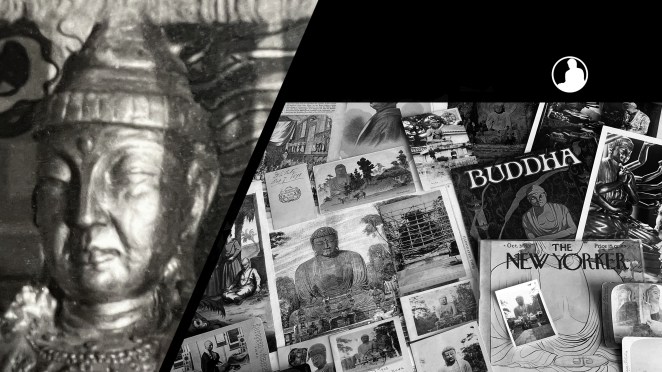
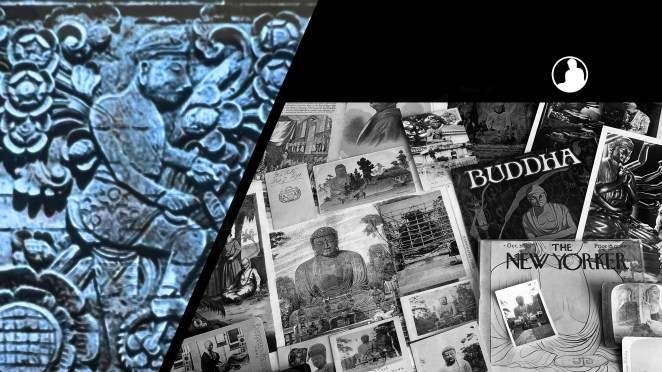
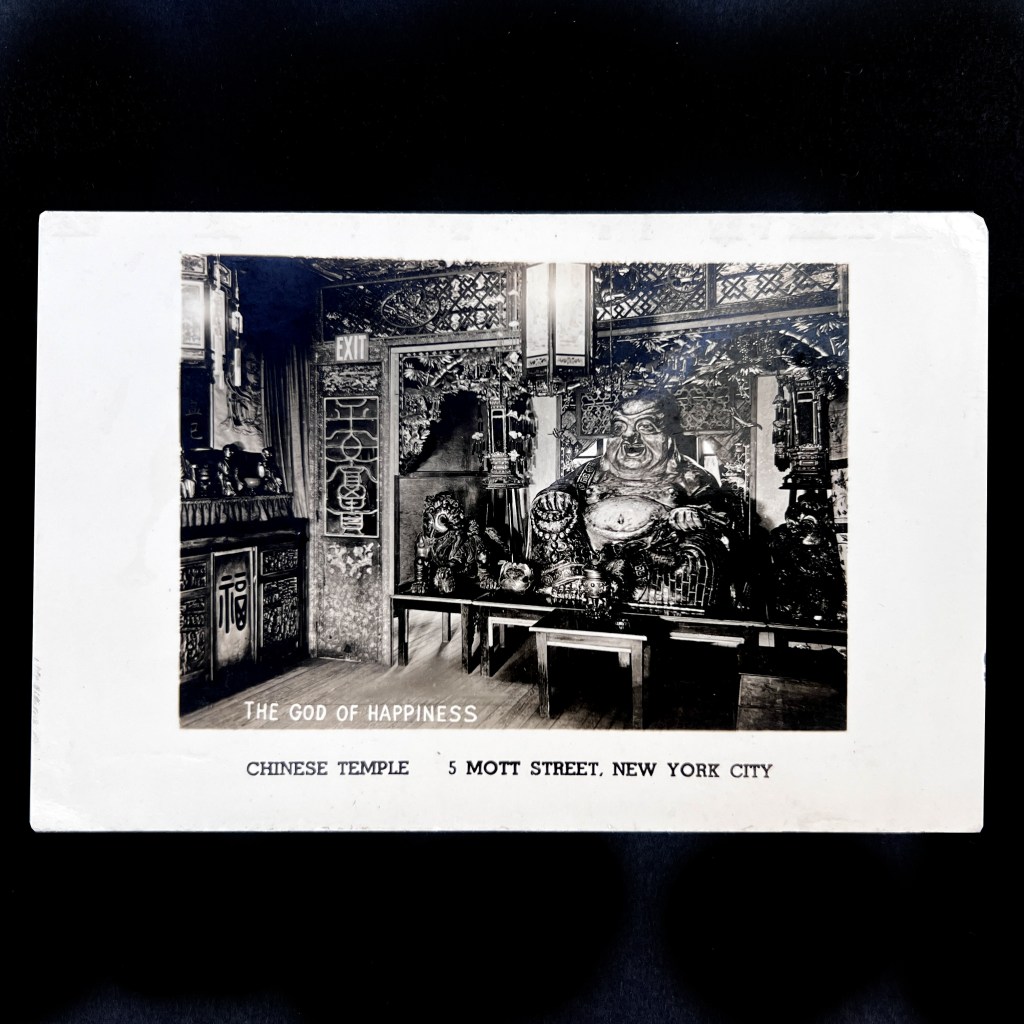
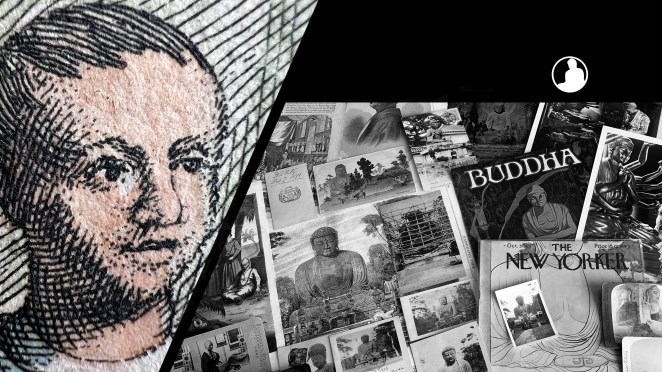
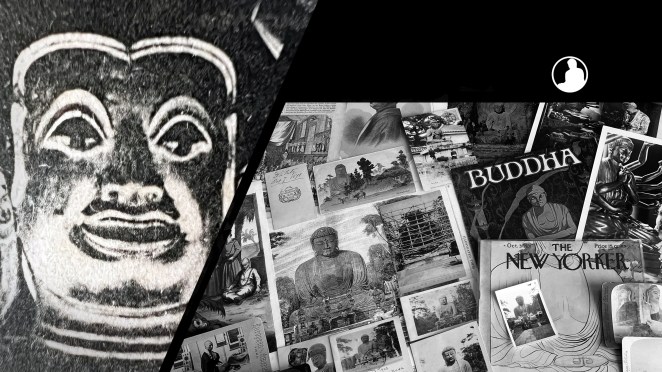
A Rare Buddha of New York: It was uncommon for early Chinese American temples to display Buddhist icons. Here we have the sitting figure of Budai, popularly known as the Laughing Buddha, shown in New York’s Chinatown in the 1930s.

Born in San Francisco in 1888, Poy Yee became secretary for one of the most influential tongs in New York, the On Leong Tong. In 1926, he opened the Chinese Temple at 5 Mott Street with this Budai icon.

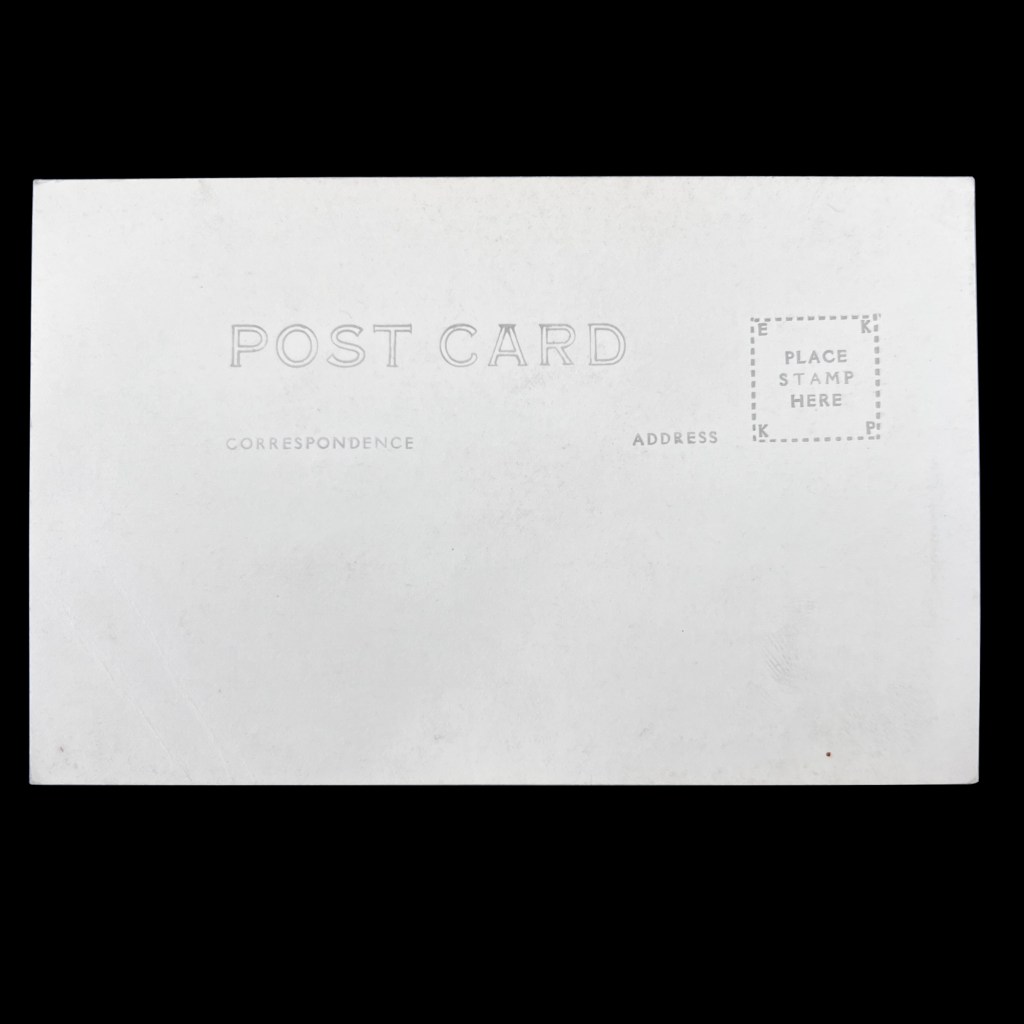
The image is on a “real photo post card,” meaning the image was produced on photosensitized paper directly. Based on the design of the obverse we can tell the card was produced between 1939 and 1950.

Yee called the space a Chinese Temple, but the interior was not typical of a religious space. He housed additional Chinese exhibits and charged Chinatown tourists 25c admission.

The statue was made of plaster and painted a bronze color; it reputedly weighed 1000 pounds. Yee closed his Chinese Temple in 1947.


The Buddhas in the West Material Archive is a digital scholarship project that catalogues artifacts depicting Buddhist material culture for Western audiences. It’s comprised of prints, photos, and an assortment of ephemera and other objects. For a brief introduction to this archive, visit the main Buddhas in the West project page.


For Related Buddhas in the West Posts Featuring Budai / Laughing Buddha:


For the Most Recent Buddhas in the West Posts: