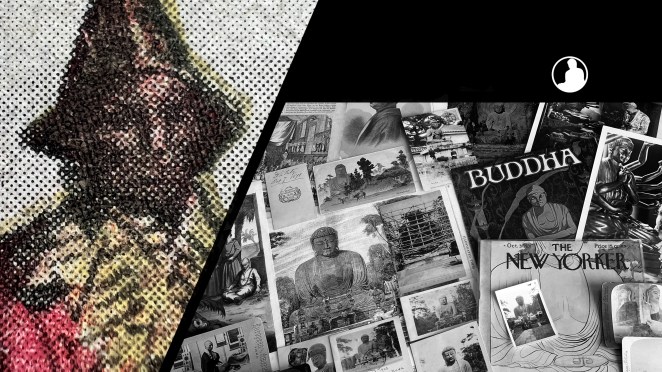
P.A. Johnston and Theodor Hoffmann’s Tibetan “Devil Dancers” Postcard

For all the new Buddhas in the West posts
follow us on Bluesky & Instagram


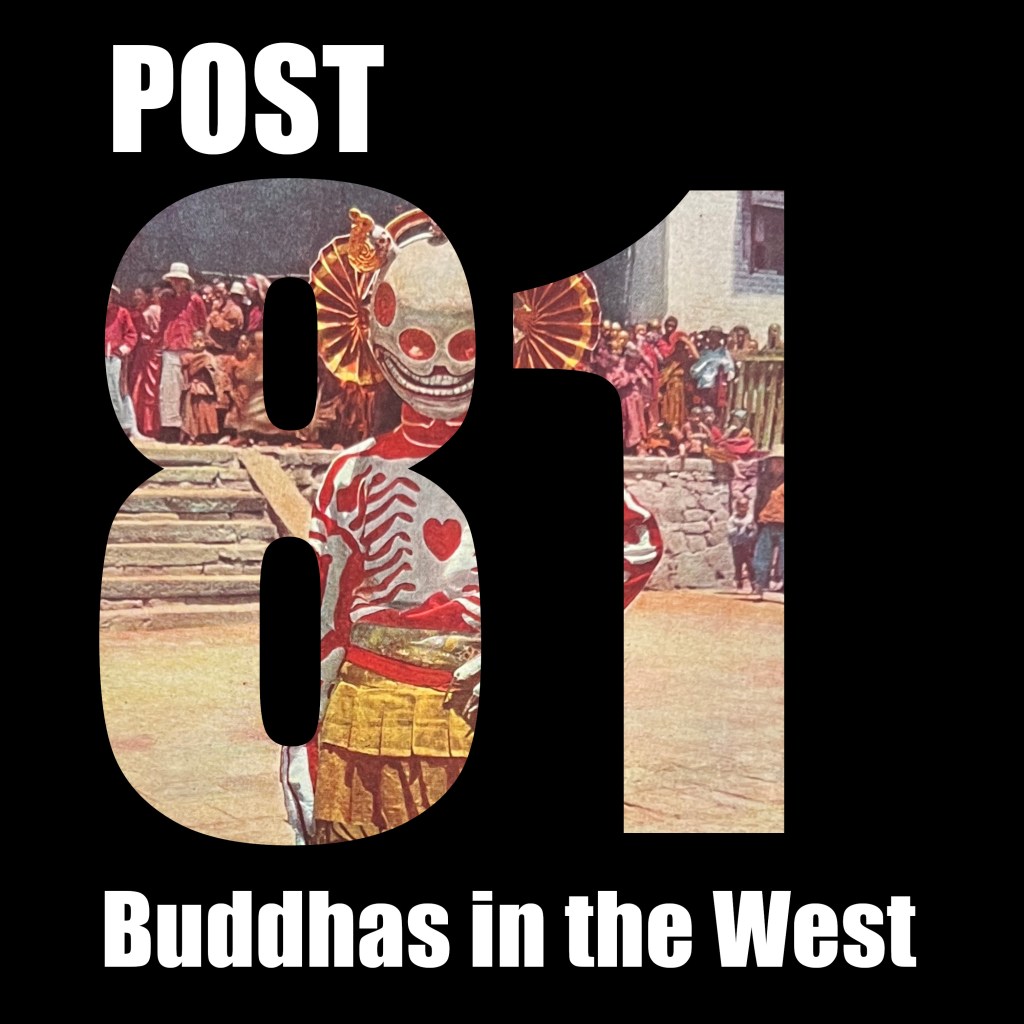
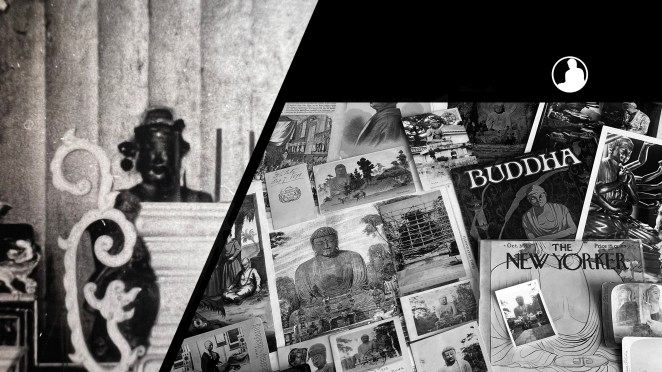
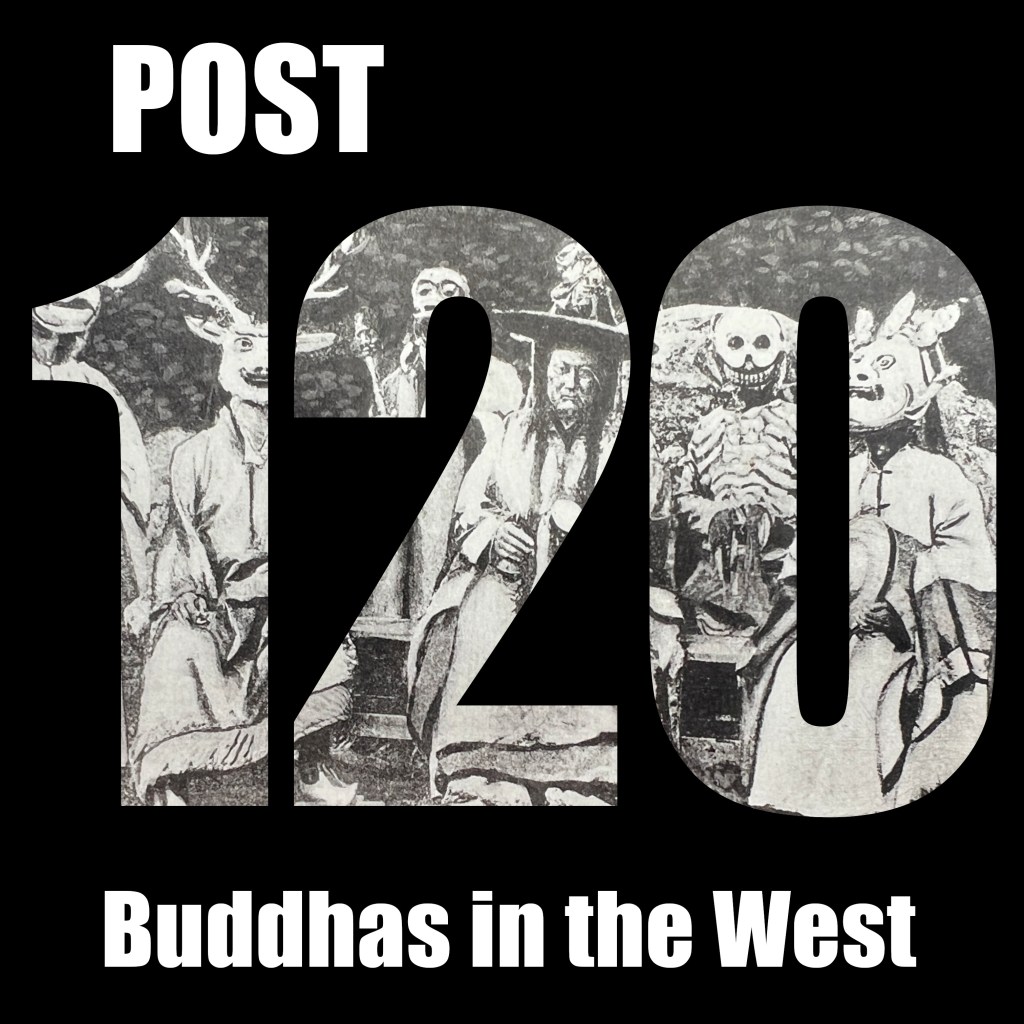
Tibetan ritual cham dances were often called “Devil Dances” by Western scholars and travelers through the turn of the 20th century. Dressed in the ceremonial regalia of masked dance, performing monks became a popular visual motif for representing Tibetan Buddhism.
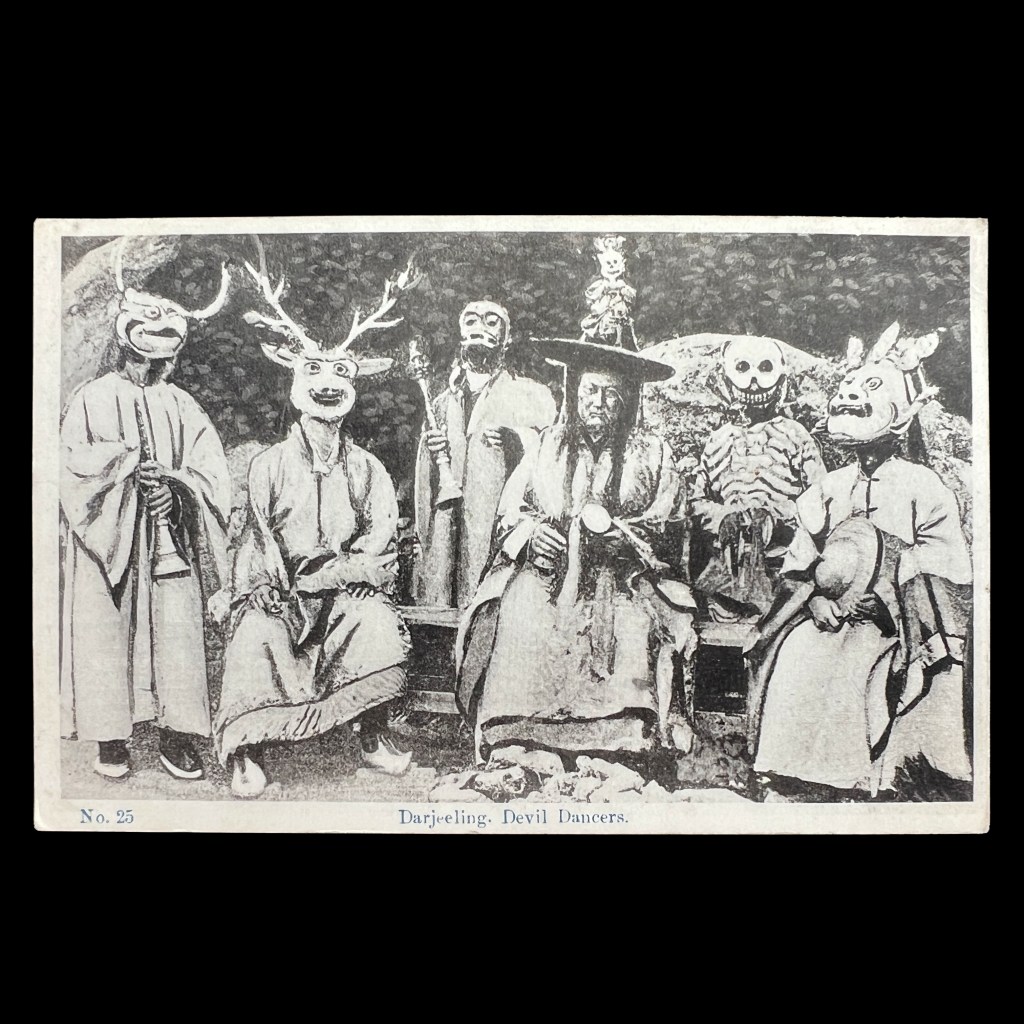
Traditionally traced to the semi-legendary 8th century tantric Buddhist Padmasambhava, ritual dances are usually held as part of larger religious festivals. Performers portray a range of figures from protector deities and heroes to comic characters.
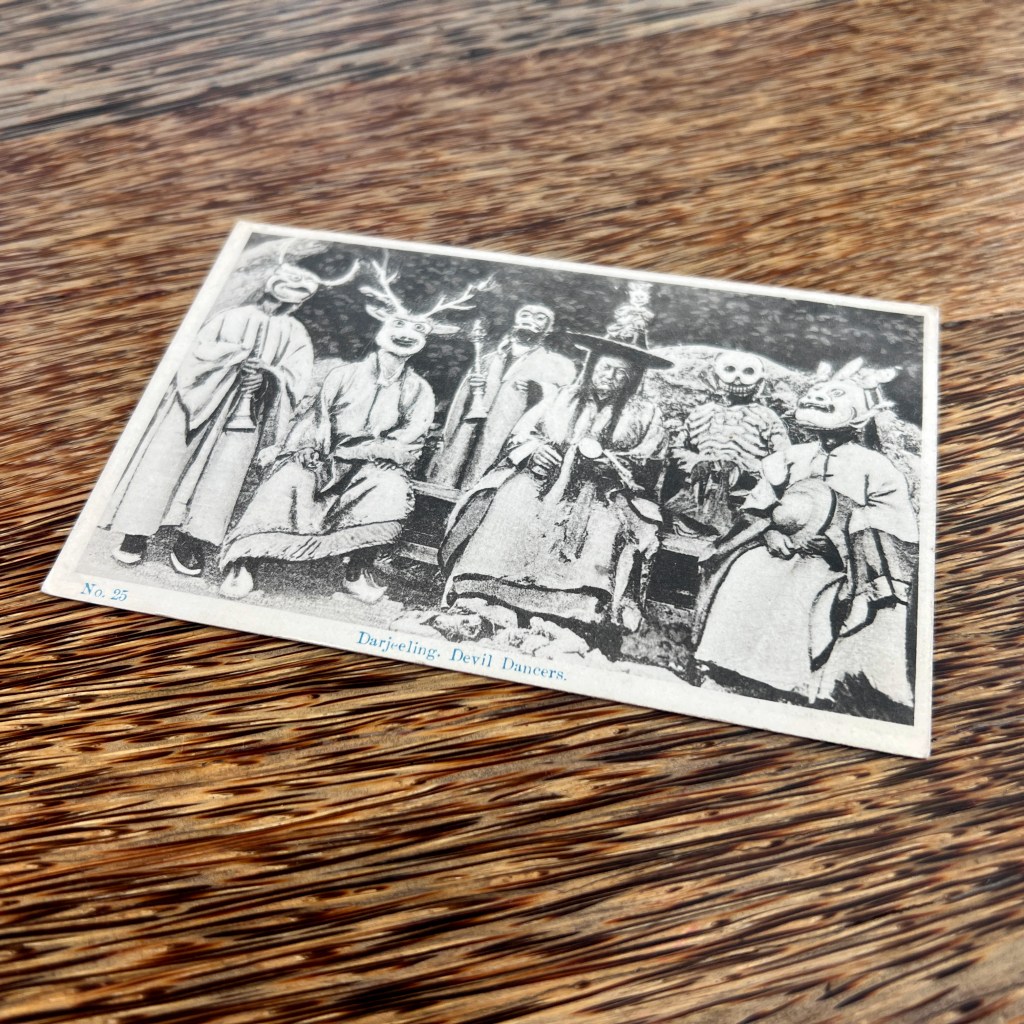
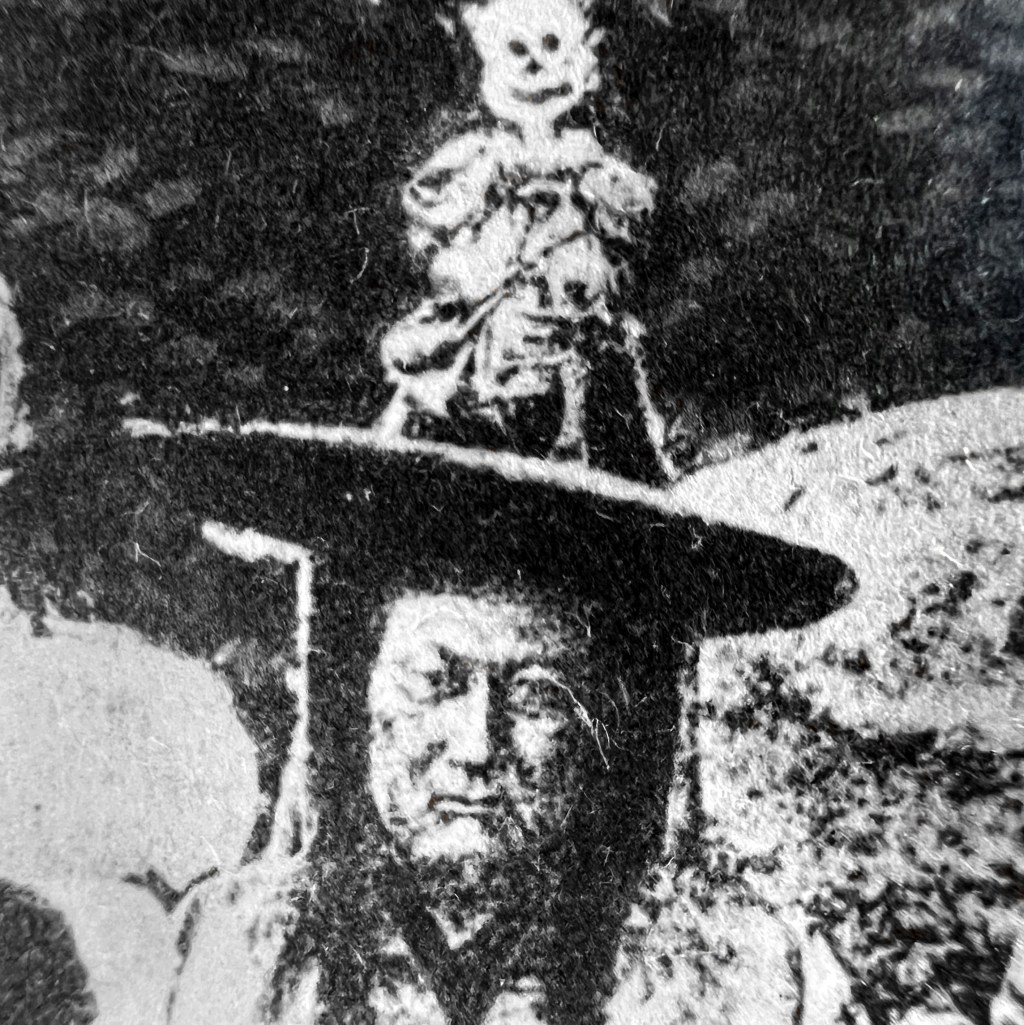
The photograph, retouched considerably here, was taken by P.A. Johnston and Theodor Hoffmann who opened a studio in Calcutta in 1882 and Darjeeling in 1890. This postcard, likely published in the 1920s, was printed in the epicenter of Asian postcard production at the time, Japan.

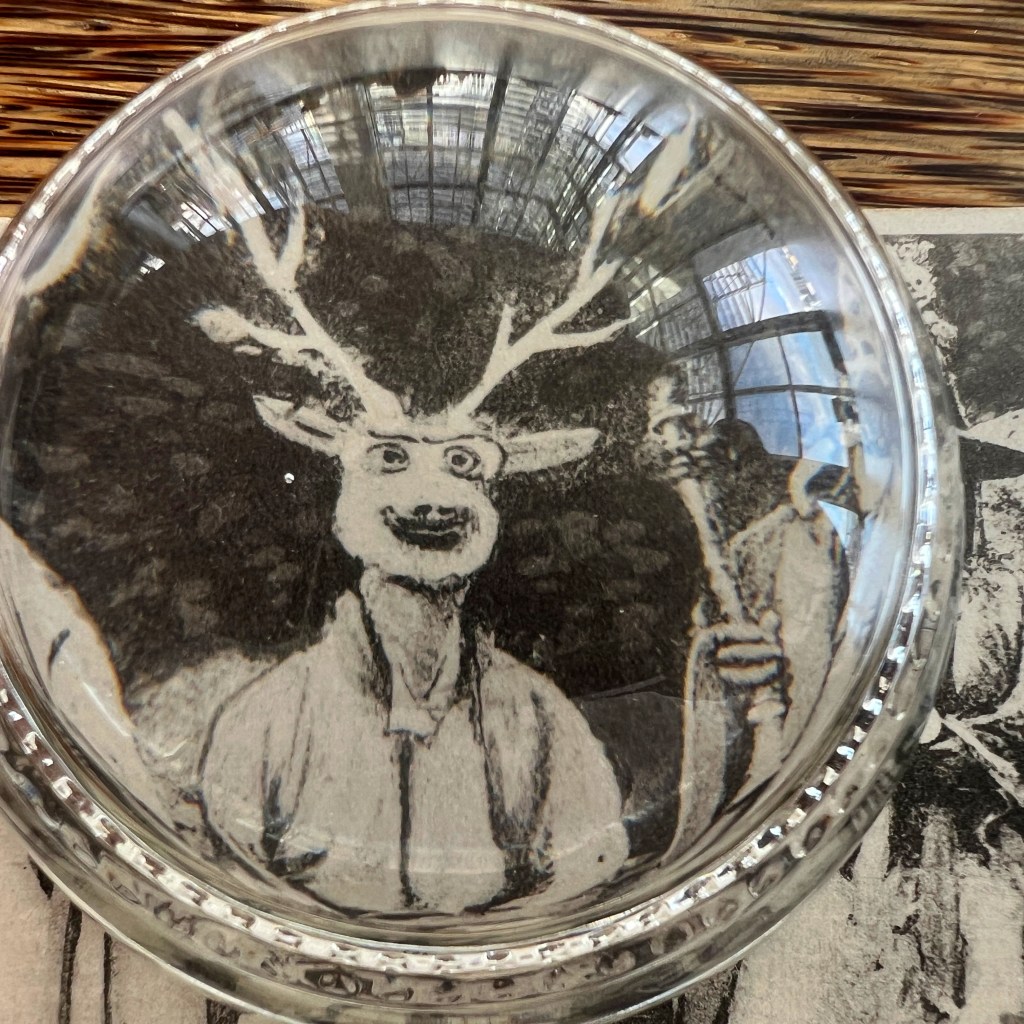
The stag mask recalls a dance symbolizing the repulsion of negative forces and the consecration of surrounding space for spiritual practice. One source claims this photo was taken in Bhutia Busty, a village in the Darjeeling district known for its cham performances at the local monastery.
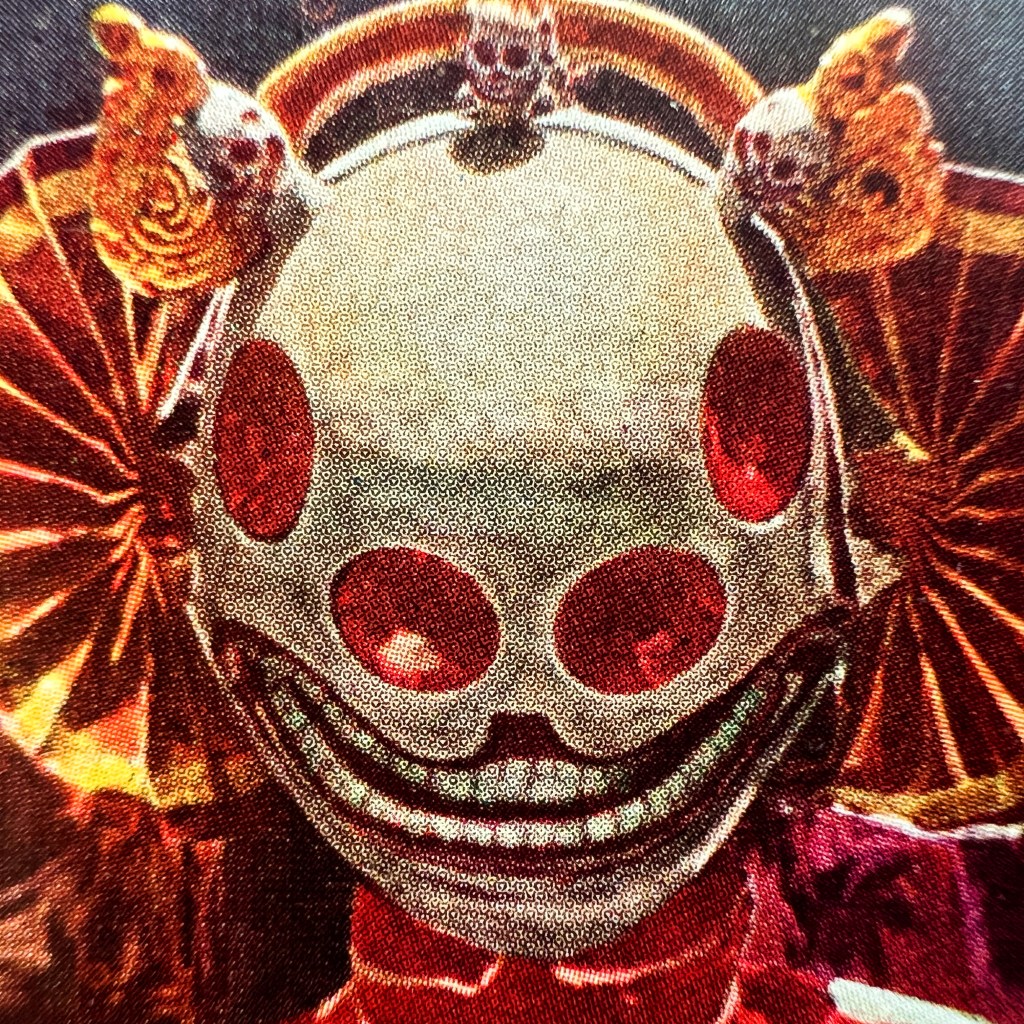
Another ritual performer, possibly a young boy, wears a skeleton mask with a blood-red suit sewn with white skeleton bones. Skeleton dancers can represent the impermanence of phenomena and sometimes play a semi-comedic role.
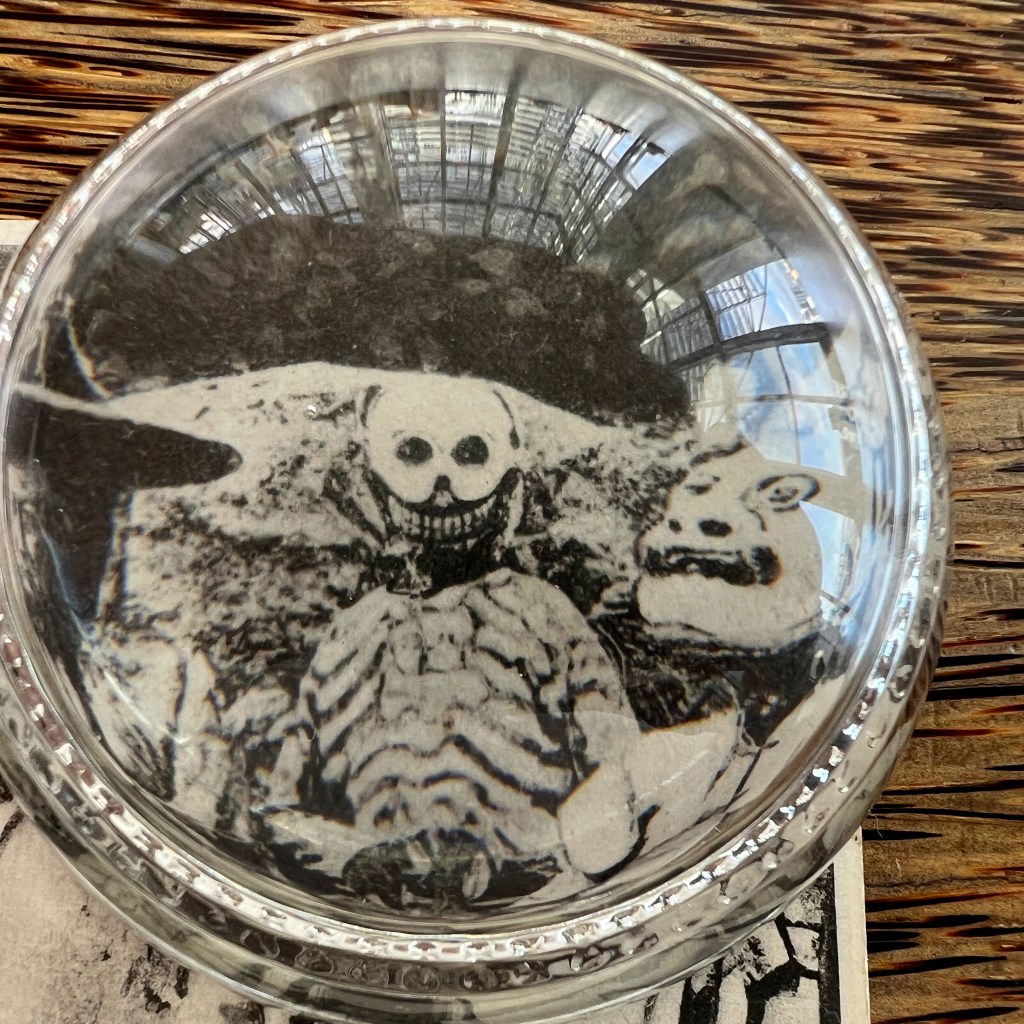
The central figure is representative of the Black Hat dance, sometimes seen as a celebration for the death of Langdarma, an enemy of Buddhism. For an introductory overview of Tibetan cham, see Ellen Pearlman, Tibetan Sacred Dance: A Journey into the Religious and Folk Traditions.
The Buddhas in the West Material Archive is a digital scholarship project that catalogues artifacts depicting Buddhist material culture for Western audiences. It’s comprised of prints, photos, and an assortment of ephemera and other objects. For a brief introduction to this archive, visit the main Buddhas in the West project page.


For Related Buddhas in the West Posts Featuring Ritual Dance:


For the Most Recent Buddhas in the West Posts:

Joseph Rock’s Photographs of Zhouni (Choni) Monastery

For all the new Buddhas in the West posts
follow us on Bluesky & Instagram


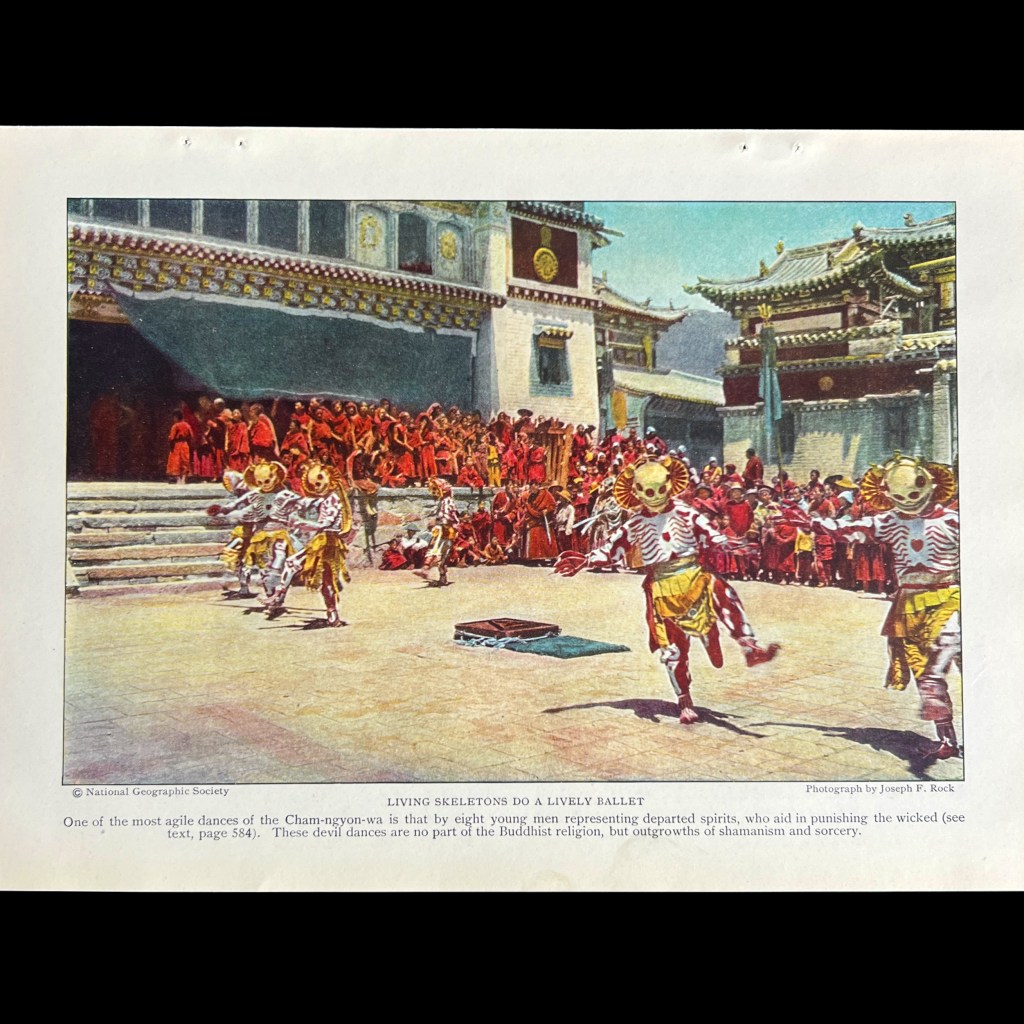
Joseph Rock took stunning photographs of the Tibet-China borderlands between 1922 and 1935, funded in part by the National Geographic Society. During this span, Rock wrote nine article for National Geographic; some were illustrated with gorgeous hand-colored prints.

Rock arrived in Zhuoni, China in April 1925 and stayed for two years, during which he wrote “Life among the Lamas of Choni” published in November 1928. Zhouni, then a Tibetan ruled chiefdom in Gansu province, was home to a bustling Buddhist monastery with hundreds of monks in residence.

The visual centerpiece of Rock’s article were photos of the Tibetan “Old Dance,” held on the sixth day of the sixth month. Eight agile skeleton dancers were part of the festivities, representing “departed spirits” as described by Rock.

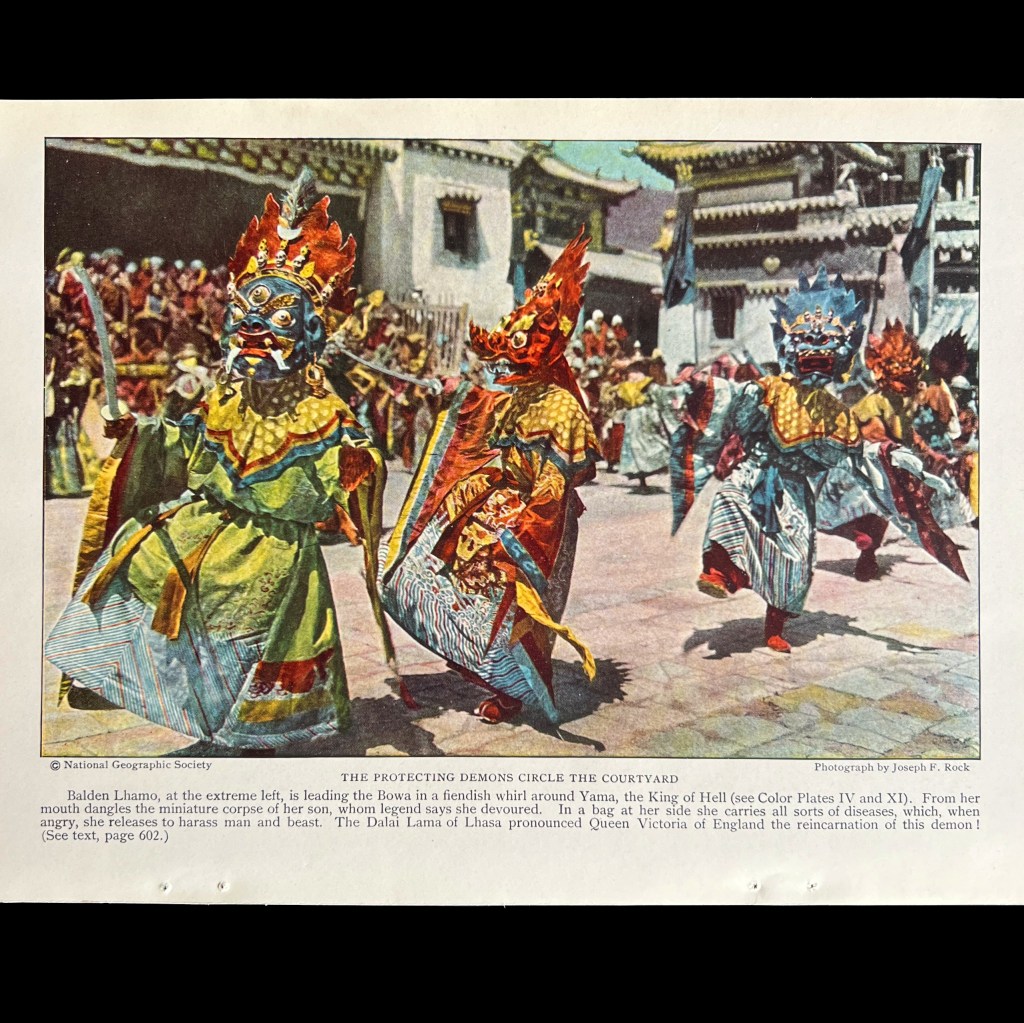
The climax of the Old Dance feature the appearance of Yama, the “grim ruler of the nether world.”

As recounted by Rock, the left-most figure here is Palden Lhamo, the wife of Yama who killed their son, seen dangling from her mouth. According to Rock, due to the British invasion of Tibet decades earlier, it was believed Queen Victoria was a reincarnation of this demon goddess.

Rock developed his own black and white glass negatives and sent them back to the United States. Artists then hand-colored the images according to detailed descriptions furnished by Rock (later, Rock would use potato starch based Autochrome color plates).

Rock was able to purchase a complete set of the Tibetan Buddhist canon printed at Choni Monastery before the printing blocks were destroyed in 1929. To read a digital version of Rock’s account of Choni Monastery in National Geographic, see tinyurl.com/4dwe2tmb.


The Buddhas in the West Material Archive is a digital scholarship project that catalogues artifacts depicting Buddhist material culture for Western audiences. It’s comprised of prints, photos, and an assortment of ephemera and other objects. For a brief introduction to this archive, visit the main Buddhas in the West project page.


For Related Buddhas in the West Posts Featuring Historical Magazines:


For the Most Recent Buddhas in the West Posts:


The “Dancing Lamas” and Epic of Everest (1924) Prologue Newspaper Illustration

For all the new Buddhas in the West posts
follow us on Bluesky & Instagram


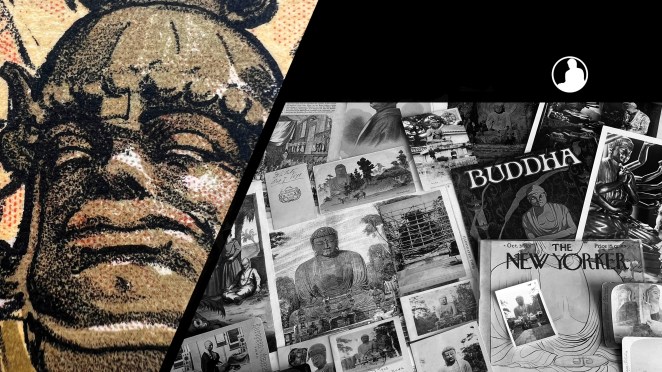
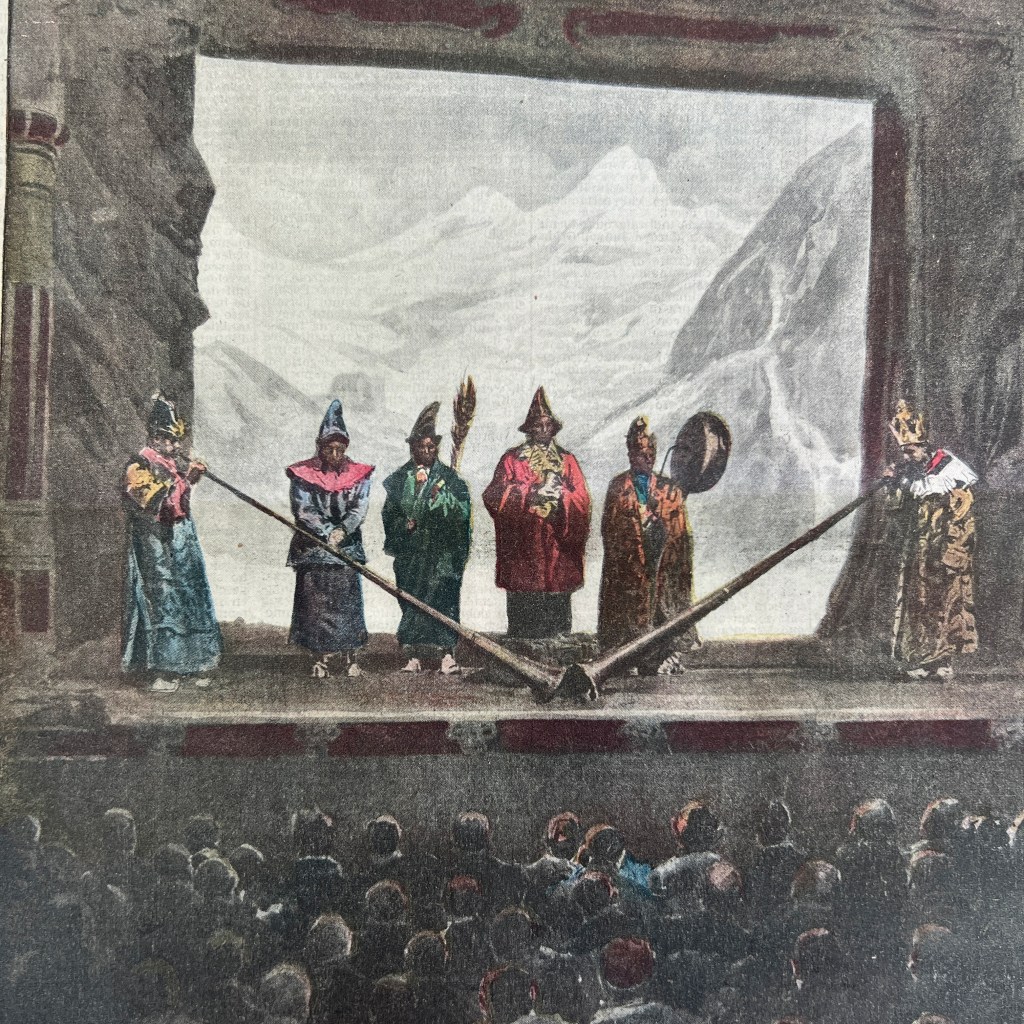
The arrival of the first Tibetan monks in Europe was surrounded with controversy, deeply straining Anglo-Tibetan relations. One group of monks, arriving in 1924, performed Buddhist rituals before showings of the silent film Epic of Everest, sparking the “Dancing Lamas” affair.

The director, John Noel, filmed the British Everest expedition where George Mallory and Andrew Irvine lost their lives. The first half of the film looks at Tibetan life in and around Rongbuk Monastery at the foot of Everest, including several brief scenes showing monastic ritual.

To help advertise the film in London, Noel brought several monks from Tibet and had them perform informal rituals as part of a “live prologue” (seen here). Newspapers report the monks chanted while playing long trumpets and beating drums and cymbals; some claimed they performed “devil dances.”

These reports were received in Tibet with furor; the Dalai Lama viewed the spectacle as disrespectful to Tibetan Buddhism and exploitative of Tibetan people. Consequently, a British Everest expedition the next year was refused by the Dalai Lama; the next British attempt at Everest came in 1932.

Noel toured Europe with his film accompanied by the Tibetan monks, but the controversy caused him to send the monks home before touring the United States. Noel’s silent film, Epic of Everest, is viewable here: tinyurl.com/3df4axfn.


The Buddhas in the West Material Archive is a digital scholarship project that catalogues artifacts depicting Buddhist material culture for Western audiences. It’s comprised of prints, photos, and an assortment of ephemera and other objects. For a brief introduction to this archive, visit the main Buddhas in the West project page.


For Related Buddhas in the West Posts Featuring Historical Periodicals:


For the Most Recent Buddhas in the West Posts:


Ruth St. Denis as Guanyin Tri-Fold Brochure

For all the new Buddhas in the West posts
follow us on Bluesky & Instagram


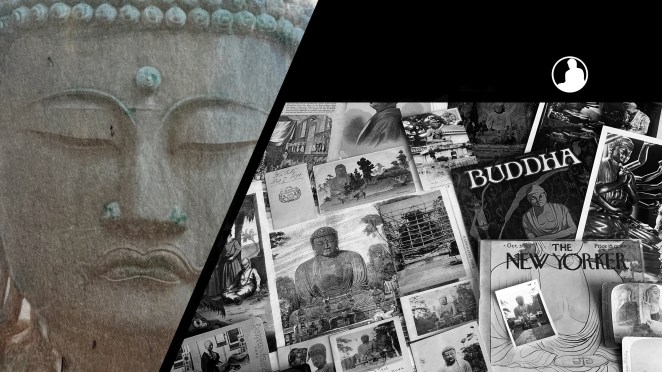
Ruth St. Denis, a pioneer of American modern dance, was among many performers interested in translating the static aesthetic of Greek statuary into motion. St. Denis set herself apart from her contemporaries by focusing on icons of the East, including the Chinese Buddhist goddess Guanyin.

This tri-fold brochure was made for the highly successful 1922–1925 tour under the prestigious impresario Daniel Mayer. St. Denis created her solo “Kuan yin” performance in 1919 using a chiffon robes and a crown to imitate the iconography of Guanyin.

St. Denis toured with her partner, Ted Shawn, who together created the Denishawn School of dance in 1915. The troupe performed both solo and large spectacle pieces and appeared in D. W. Griffith’s 1916 film, Intolerance.

During the Mayer tour, St. Denis performed the “Kuan Yin” piece as the opening act, considering it an “invocation.” The performance involved decorative poses using rhythmic manipulations of drapery and sculptural positioning of her hands, arms, and legs.

After touring Asia in 1926, St. Denis reused her Guanyin guise in a new act named “White Jade.” For further exploration, see Jon Soriano’s “Ruth St. Denis as Bodhisattva: An Art Historical Perspective on the Appropriation of Buddhist Imagery” in Water Moon Reflections (2021).


The Buddhas in the West Material Archive is a digital scholarship project that catalogues artifacts depicting Buddhist material culture for Western audiences. It’s comprised of prints, photos, and an assortment of ephemera and other objects. For a brief introduction to this archive, visit the main Buddhas in the West project page.


For Related Buddhas in the West Posts Featuring Guanyin / Avalokiteśvara:


For the Most Recent Buddhas in the West Posts: