Making Materials Speak: Performing a Material Analysis

Download a PDF of this webpage here!
Revised Summer 2024

What is a material analysis?

A material analysis closely inspects an artifact’s material and sensorial qualities and asks questions about its use and significance. Oftentimes, the data gathered supplements more traditional disciplinary methods, such as data gathered from textual analysis.

Starting in the 1980s disciplines like anthropology, archaeology, and art history – all areas with close ties to objects and museums – began to explore more complex relationships between the “cultural” and “material.” Consequently, material artifacts, especially commonplace objects of daily use (like the postcard pictured here), were viewed as not only reflecting important social values and identities, but also as mediating human behavior. A material analysis attempts to reconstruct how and why objects were used, often resulting in a more complex interpretation of human behavior.


Why might we want to perform a material analysis?

For one, objects tell us about the lives and experiences of people. Sometimes this may add to or complicate our understanding of an historical event or biographical narrative. At other times, this may contradict our presumptions and reveal new paths of inquiry.

Second, a material analysis also reveals to us that objects have their own “life story.” As artifacts move from one person’s possession (or spatial and/or cultural context) to another, their value, use, and meaning may change even if their form changes little. Charting such changes is oftentimes called a “cultural biography” of an object. 

Lastly, because people are enmeshed in a physical world, a material analysis reveals how objects help structure human activity in particular ways. For example, a large sun-lit cathedral hall will provoke different emotions and behaviors than a dark cave. Likewise, a sharp obsidian stone will shape a person’s response differently than a fluffy pile of goose down. In these cases, scholars have argued objects have agency because their materiality shapes human activity and subjectivity.


How do we perform a material analysis?

At one level, we examine the material properties of an artifact. This is best done with an object physically accessible to pokes and prods. This is a primary type of material analysis that directly inspects objecthood.

A secondary kind of analysis can be performed with care upon objects we access only by some kind of representational form, such as a photograph of the target artifact. This may be necessary if the artifact has been lost or destroyed or remains beyond our touch because it is hidden, restricted, or otherwise inaccessible. This may require amassing several visual documents (or written descriptions) to compile a more complete assessment of the target artifact. To take the postcard above as an example, one could use it as one documentary source to try and study the icon it depicts, the Kamakura Daibutsu. It would be more typical, however, to study the object at hand, namely the postcard itself.  

On another level, we also analyze the various networks of materiality that support and give meaning to an artifact. This means we also pay attention to how an object was made and by whom. Furthermore, we also examine who uses the object and for which purpose. It may be the case that we can infer some of these answers by closely inspecting the object and applying our general knowledge. Often, however, questions of production, consumption, and signification require additional research beyond inspecting objecthood.

Overall, there is no codified set of questions for a “proper” material analysis, although we typically start with our senses and extend outward to broader and more complex layers of social and intercultural meaning. [I’ve also prepared a list of 88* Questions to Ask an Artifact]


What can we do with a material analysis?

A close investigation of an artifact will provide the groundwork for your own interpretations. A material analysis can inform something as brief as a museum label. But just because museum labels are short by convention does not mean they are insignificant. Labels tell us how to interpret an artifact: should we see it as a curious anthropological object or as a piece of art? To use the postcard from above, should we frame it as a quaint, hand-written souvenir from the turn of the century or as a highly-technical hand-colored collotype print?

In addition, a material analysis can be used to compliment or complicate interpretations based on different materials and documents. For example, we may ask if American tourists to the Kamakura Daibutsu in the early twentieth century envisioned it as a sacred icon or as a piece of art. The inscription on the postcard here documents the statue’s dimensions and material composition, suggesting the visitor appreciated the craftsmanship over its sacredness. This can lead to different kinds of questions such as comparisons to Daibutsu talismans that were also sold on site to Japanese pilgrims.

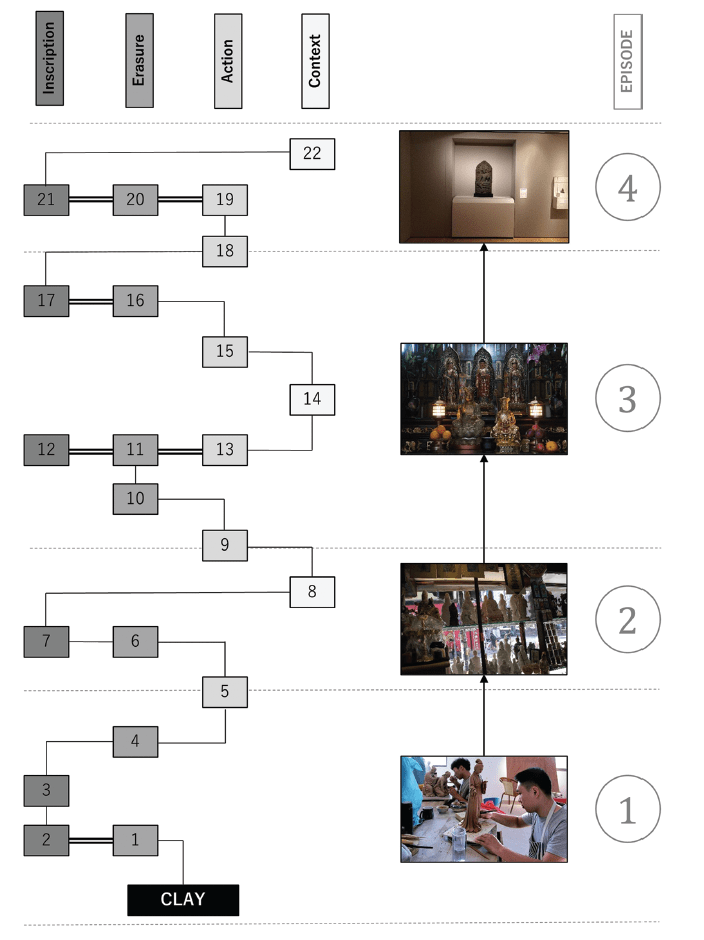
It is also possible to do a more extensive report on an object (or class of objects) in the vein of an “object biography.” In such a case it is important to consider how artifacts may go through different life episodes as they are modified and re-purposed throughout their lifespan. Chip Colwell has recently published an excellent overview of how one might envision this process. In his example, Colwell divides the lifespan of a Buddhist Guanyin statue into four episodes: its creation process, being sold in a store, being used as a ritual icon, and being displayed in a museum (see diagram).

During each stage the artifact can be modified (things are added/inscribed or taken away/erased), different actions are performed in service to it, and it is placed in different spatial and interpretive contexts. Such a perspective allow us to see that as artifacts enter new life stages they typically accumulate new layers of meaning, value, and status.


* See Chip Colwell, “A Palimpsest Theory of Objects,” Current Anthropology 63, no. 2 (2022): 129–57, https://doi.org/10.1086/719851.

*This handout was originally prepared by Peter Romaskiewicz as part of a university course that explored religion and material culture. Feel free to use and/or adapt to your needs. Email: peter.romaskiewicz@gmail.com.


Related Posts

88* Questions to Ask an Artifact

Download a PDF of this webpage here!
Revised Summer 2024

Instructions

Once you have a material artifact at hand you can being interrogating it. Below are a series of 88 questions (give-or-take) you can use to begin this process.

First, turn to the category of questions on Materiality and answer them by closely inspecting the artifact and thinking about your relationship to it.

Next, extend your analysis by attempting to infer answers to the questions under the second and third categories of Production and Consumption. You may find it worthwhile to do additional research beyond simple inspection to answer these.

The last category, Webs of Signification, attempts to create bridges between earlier questions. The overall point of this analysis method is to start small and build out larger networks of meaning that converge upon the artifact.


Category One: Materiality
  • What are the artifact’s most salient sensorial properties?
    • Visual characteristics: What do you notice about line and shape (two-dimensional) and/or form (three-dimensional)? What do you notice about color (hue, shade, vibrancy, &c.), texture (porous, reflective, matte), and pattern (plain, banded, spotted, &c.)?
    • Tactile characteristics: What do you notice about dimension and shape (flat, round, angular, &c.) and/or texture (tacky, smooth, rough, &c.)? What do you notice about density (soft, hard, malleable, &c.) and temperature (cool, warm)?
    • Aural characteristics: Does the object seem like it is intended to make a sound? Is that sound pleasant or unpleasant? Does it sound like something (wind, music, birds, voices, &c.)?
    • Olfactory characteristics:Does the object have a noticeable smell? Is it pleasant or unpleasant? Does it smell like something (flowers, citrus fruit, soil, &c.)?
    • Gustatory characteristics: Does the object seem like it is intended to be ingested? Is the taste pleasant or unpleasant? Does it taste like something?
  • What are the artifact’s most salient physical properties?
    • Materials: What is the object is made from (paper, wood, stone, metal, plastic, &c.)?
    • Size: What are the object’s measurements (length, height, depth, volume) or what can you say about its size (portable, awkward to grasp, imposing, &c.)?
    • Weight: What is the object’s weight or what can you say about its weight (light, moderately heavy, immovable, &c.)
    • Orientation: How is the object oriented? Is there a distinct front, back, top, bottom, inside, outside?
    • Integration: Is the object one part or is it made up of many parts? Is there organization among the parts? Do parts move, open, or connect?
    • Addition/Inscription: Are there parts or elements that seem to be added at later stages of the object’s life (inscriptions, stamps, modifications, &c.)?
    • Subtraction/Wear: Are there parts or elements or that seem to have been broken, worn off, or rearranged?
  • What is your initial relationship to the artifact?
    • Do you have an emotional response to the artifact? What is distinctive, salient, or special about the artifact? How do you interpret or explain the artifact? Do you feel others would interpret or explain it in similar ways?
    • How might the artifact impel people to act? Does the materiality (sensory and physical properties) of the artifact provoke a particular kind of response, action, or performance? Does its materiality (size, weight, odor, &c.) invite or restrain certain kinds of responses or uses?

Category Two: Production
  • What do we know about the artifact’s physical origins?
    • Fons et origo: Was the artifact human made, created through natural processes, or a meaningful combination of both? Is the artifact considered complete or is it part of something larger (part of an object, part of a set, &c.)? Is the object considered an original work or a copy (derivative of an original)? If the latter, what differences are there between the original (model) and the copy (derivation)?
    • Maker: Was the artifact signed or can it be attributed? Was more than one person involved in its creation? Who was the maker (artist, craftsperson, publisher, &c.)? Was the object designed by a different person or entity?
    • Age: When was the object created? Was it made in different stages and thus have different ages?
    • Place: Where was the object created (country, workshop, publishing house, &c.)? Does this place have a close relationship (cultural, economic, religions, &c.) to this type of object?
  • What do we know about the artifact’s creation process?
    • Creation: What skills, methods, and techniques were necessary to create this object? What tools or technology were required? How long did production take?
    • Materials: What raw materials were used to make the object or were otherwise crucial to its production? Are the materials rare, costly, or difficult to acquire? Did they have to be transported long distances to get to the object’s place of production?
    • Timing: Was the object made during a special time? Was it made in response to a specific historical event or during a specific occasion?
    • Uniqueness: Is the object singular or mass produced? It is part of a larger group or set of objects? Does the object have a special relationship to other objects? Is it part (or an expression) of a broader genre of item?

Category Three: Consumption
  • What do we know about the artifact’s physical destination?
    • Audience/Consumer: Was the object owned or used by a known individual or institution? Who is the type of person that would typically own or use this object?
    • Acquisition: Where did the consumer purchase or acquire the object? Was it close to where the object was produced? Was the object new or old at the time of acquisition?
    • Cost: What did this object cost? Was is relatively expensive, inexpensive, or free? Can appreciable cost be attributed to the object’s rarity, material composition, or the skill/time required in its production? What else might contribute to the cost of the object?
    • Placement: Where was the object located during acquisition? Was it placed in different locations at different times (from artist studio to temple altar, from store display to bookshelf, &c.)? Was it transported a long distance from its place of production? Was it kept in a private space (home, workspace, personal shrine, &c.) or public space (outside, museum, temple, &c.)? Was it kept in isolation or displayed with other objects?
  • What do we know about the artifact’s use?
    • Material-use: How was the object used by the owner (held, displayed, hidden, &c.)? Does the object display signs of material use (oxidation, wear, modification, &c.)? Was the object used individually or collectively with others? Was it used by non-human species (eaten, buried and decomposed, &c.)?
    • Time-use: When was this object used by its owner? Was it used daily/regularly or only during special occasions (holidays, festivals, &c.)?
    • Place-use: Where was the object used by its owner? Is this location different from where it is stored? Was it used in private or public spaces?

Category Four: Webs of Signification
  1. Does some known aspect of the artifact’s origin (maker, material, age, &c.) provoke certain kinds of responses or uses? Does the singularity or mass production of the artifact impact its reception or use? How does the artifact existing as either an original or derivation (copy) impact its reception or use?
  2. Who is the intended audience of this artifact? Does possession or use of the object signal one or more group identities or affiliations (religion, class, race, gender, sexuality, nationality, &c.)?
  3. What is the intended purpose of this artifact? Does it signify other concepts, meanings, or associations? What roles does it play within social, religious, and economic systems? Does possession or use of the artifact convey (or confirm) power or agency (human or divine)?
  4. What is the artifact’s current context and relevance? What do we know about its provenance (history of ownership)? How might the current contexts differ from the artifact’s intended meaning, audience, use, and purpose?
  5. Questions of a “religious” nature:
    • Does a divine presence “hold,” interact with, or inhabit the artifact? Does the object equate to divine presence (i.e. is the object an index of divinity)? Are there times when the divine presence is absent in regards to the artifact (i.e. profanation) ?
    • Does possession or use of the artifact signify divinity or elevated status in the user? Do all people have equal access to this divinity or status?
    • Do you feel the artifact, in its current material state and physical location, is adequately “religious”?
    • Does a religious message “travel through” this material object?
    • How does media shape the message of religion through this object?
    • How does replicability or non-replicability of the artifact impact its religious meaning?
    • Does the material object inspire belief or convey sacrality, divine power, or specialness?

*These questions were devised as part of a university course that explored religion and material culture. Feel free to use and adapt to your needs. Email: peter.romaskiewicz@gmail.com.


Related Posts

2020 Protest Pedagogy/Black Lives Matter Selected Teaching Resources

Here’s a short list of resources for university instructors and students that have been published or initiated – or have belatedly appeared on my radar – over the past week. It’s purposefully broad in scope, some pedagogical development, some personal development, some general (essential) reading.

For a very thoughtful discussion about the limitations of sharing anti-racist reading lists without further pedagogical guidance, see What Is an Anti-Racist Reading List For? by Lauren Michele Jackson. I think it strikes at the core mission of university instructors to foster new ways of thinking and cultivate new habits, not just deposit facts to those who are poorly prepared to think through them. [NB: There is a selection bias below for the humanities and religious studies.]


Syllabus Content/Readings

1. Institutionalized Racism: A Syllabus [JSTOR Daily]

“The United States has seen escalating protests over the past week, following the death of George Floyd while in custody of the Minneapolis police. Educators everywhere are asking how can we help students understand that this was not an isolated, tragic incident perpetrated by a few bad individuals, but part of a broader pattern of institutionalized racism…The following articles, published over the course of JSTOR Daily’s five years try to provide such context.”

2. 8 Minutes and 46 Seconds: Selections from the Archives of City & Society on Racism, Policing, and Protest [“Virtual issue” of journal City & Society containing free access articles, edited by Julian Brash, Sheri Lynn Gibbings, and Derek Pardue]

“In keeping with our responsibility to cultivate a national and international community of critical scholars of urban life, the editors of City & Society offer this selection of articles, accessible to all, from our archives as a small act of solidarity with all of those outraged and bereaved by the unjust deaths of George Floyd, Ahmaud Arbery, Breonna Taylor, Tony McDade and so many others.”

3. Black History Month Library [Google Drive via Charles Preston]

A sizeable collection of black authors’ works (as pdfs) arranged by genre and author’s name.


Critical/Anti-Racist Pedagogy

1. Naming Resistance and Religion in the Teaching of Race and White Supremacy: A Pedagogy of Counter-Signification for Black Lives Matter [article by Martin Nguyen for Race & Pedagogy Journal, Vol. 4, No. 3]

“The need to bring religion into our teaching of race and white supremacy is critically important, but by simply naming it, we take the first step in inviting our students to understand the how’s and why’s of it. The pedagogy of naming described herein, which is inspired by the #BlackLivesMatter movement, is theoretically grounded in the theory of signification and counter-signification developed by scholars of religion, Charles H. Long and Richard Brent Turner…Specifically, the study draws upon teaching units from my Black Lives Matter course in order to address how a critical analysis of Christian privilege and Christonormativity, Islam, and religious history can figure into critical engagements with race and white supremacy.”

2. Journal of the American Academy of Religion – Roundtable on “Religio-Racial Identity” [Vol. 88, No. 2; six articles plus introduction, need institutional access]

“Religious studies has a race problem. If recognition of a problem is the first step in addressing it, then calling out our race problem should draw our attention to the seemingly self-evident categories, questions, and modes of analysis through which we study ‘religion.'” (Laura McTighe)

3. Scaffolded Antiracism Resources [Google Doc via Anna Stamborski, Nikki Zimmermann, and Bailie Gregory]

“This is a working document for scaffolding anti-racism resources. The goal is to facilitate growth for white folks to become allies, and eventually accomplices for anti-racist work.”

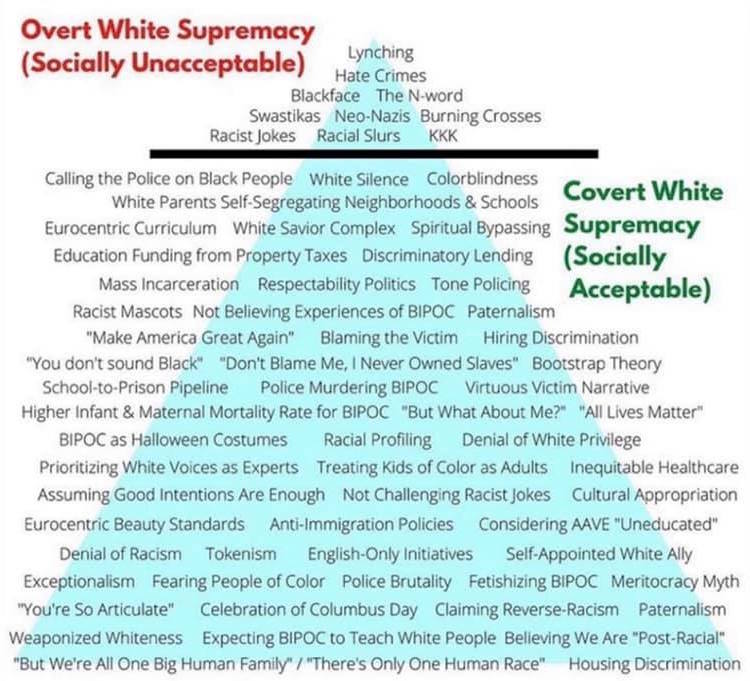
Chart used as part of an “Integration” activity in the above resource. Derived from Dwight Turner’s “‘You Shall Not Replace Us,’ White Supremacy, Psychotherapy, and Decolonization,” British Journal of Medical Psychology 18(1), pp. 1-12.

4. Essential BLM Reading [Google Doc]

A tightly curated and annotated bibliography (with links) to several influential authors, including works on pedagogy (Freire, Fanon, Baldwin, Davis, etc.)


Additional Resources

1. BLM Resources Master Doc [Google Doc]

Massive list of links to websites and other resources regarding potential donations locations, useful organizations, important petitions, protest resources, and general anti-racism resources.

2. How I’ve Implemented an Anti-racist Approach in My Teaching [Alyshia Gálvez, blog post]

One scholar’s practical approach to critically analyzing your syllabus


I have attempted to curate this list with new resources or items that speak directly to the current protest movements arising around the globe. There is a history of excellent research on anti-racist/decolonizing education that I do not attempt – nor would I have the requisite knowledge – to cover here; I suggest searching for phrases such as: “anti-racism syllabus,” “anti-racist pedagogy,” “decolonizing the syllabus,” and “protest as pedagogy,” among others, as a start. Endless gratitude to my friends and colleagues who alerted me to the existence of several of the resources above.

[An earlier post with resources about teaching with equity during the COVID-19 pandemic can be found here: 2020 Pandemic Pedagogy: Selected Resources]


*Frontispiece: Local artists painting plywood boards in downtown San Diego, June 2020. Photo by Peter Romaskiewicz.


2020 Pandemic Pedagogy: Selected Resources

[EDIT: Some may also be interested in these resources: 2020 Protest Pedagogy/Black Lives Matter Selected Teaching Resources]

Below is a short list of resources for university teachers and students to help plan the remainder of the 2020 academic year. We got this.

Disclaimer: While many of the resources are helpful for all disciplines, there is a bias towards the humanities in my selections. Additionally, if you are looking for more technical advice about using your school’s LMS or various online platforms, I’d suggest joining the new pedagogy communities forming in places like Facebook (see list at bottom of this post). One more housekeeping note: I’ve recently posted a primer about creating online student discussion forums.

First, the Fun Stuff…

Pandemic Pedagogy Meme [Renea Frey]

The Pandemic Pedagogy Theme Song [Michael Bruening, I Will Survive (Coronavirus Version)]

My Preferred Zoom Background [This Is Fine, KC Green]

Now, On to Business…

Crowdsourced Syllabus Content for COVID-19 and Related Themes

1. Treating Yellow Peril: Resources to Address Coronavirus Racism

“As we continue to track the development of the coronavirus, racial fears and anxieties have become a dominant frame in which people evaluate the concerns over the ongoing COVID-19 coronavirus infection. This page is intended to gather textual and digital resources to provide easy access to material useful for teach-ins, talking points, and classroom teaching.” 

2. Humanities Coronavirus Syllabus

“To help us think and teach about contagion, global health, and community in a time of social distancing and fear, we are collecting contributions to this crowd-sourced syllabus, which focuses on literary, historical, philosophical/religious, and cultural aspects of current health crisis and its history.”

3. Teaching COVID-19: An Anthropology Syllabus Project

“This developing document is designed to collect and share resources for anthropologists and other social scientists teaching about COVID-19.”

4. Visual Culture of COVID-19 Syllabus

“This is a collection of resources about the visual representation of COVID-19 in the historical context of visualizing contagion.”

5. #coronavirussyllabus | a crowdsourced cross-disciplinary resource

6. Queering the Pandemic Syllabus

“This is a working/crowd-sourced document that originated from the facebook group Queer Ph.D. Network as a resource for those looking for scholarship that provides a queer analysis/response/context to the COVID-19/Coronavirus pandemic of 2020.”

7. COVID-19 Left Perspectives

——————————————————————————————————————–

Setting Student Expectations and Advice on New Learning Environments

1. Adjusted Syllabus – Brandon Bayne’s principles for his students during his American Religions class

2. The COVID-19 Online Pivot: The Student Perspective – Blog post offering general advice (and links) for students who are studying in a new learning environment

3. Tips for Learning During Disruption – A pragmatically-oriented slide presentation (with speaker notes) for students

——————————————————————————————————————–

Advice for Instructors

1. Please Do a Bad Job of Putting Your Courses Online – By Rebecca Barrett-Fox, this blog post has quickly become the manifesto for fast transitioning to remote teaching [NB: the post is more constructive than the title suggests]

2. Inclusion, Equity, and Access While Teaching Remotely [really important!]

“Remote teaching presents a number of challenges for faculty, including the logistics–both pedagogical and technological–of how to transition course lectures, discussions, and lab or studio learning experiences online. One issue that needs particular attention is that of equitable access to the learning environment.”

3. Videoconferencing Alternatives: How Low-Bandwidth Teaching Will Save Us All [Remember, not all students will have access to reliable internet]

4. Creative Assignment Ideas for Teaching at a Distance [one of my favorite resources here]

“Faculty still need to decide what we will actually do with our students online, asynchronously and at a distance — which is why we developed this list of assignment ideas, which offer ways of rethinking how students might meaningfully engage with course content under these differently mediated circumstances.”

5. National Communication Association: Online Learning Resources

“In response to the COVID-19 pandemic, more and more colleges and universities are shuttering their physical campuses and ordering instructional faculty to migrate courses online. NCA’s Teaching & Learning Council has developed this list of online teaching & learning resources; please return for updates and new resources in the days/weeks to come.”


EDIT: Online/Physical Distance Instruction Tips

  1. Active Learning in Hybrid and Physically Distanced Classrooms

2. Can You Teach a ‘Transformative’ Humanities Course Online?


Helpful Facebook Groups

[Everything above was pulled from the groups below; there’s a great group of folks trying to make the best out of this tough scenario]:

  • Pandemic Pedagogy (group set to private, 20k+ members in March)
  • Pandemic Pedagogy (public [different from above], 3k+ members)
  • Teaching in the Time of Corona: Resources (private, 7k+ members)
  • Higher Ed Learning Collective (public, 16k+ members, formerly the Online Learning Collective, formerly the Spring 2020 Online Learning Collective)
  • Online Teaching Tips for the Plague-Averse (public 3k+ members)
  • Humane Humanities (private, 1k+ members, formerly #humanehumanities)
  • Remote Teaching Resources Group (private, 3k+ members)

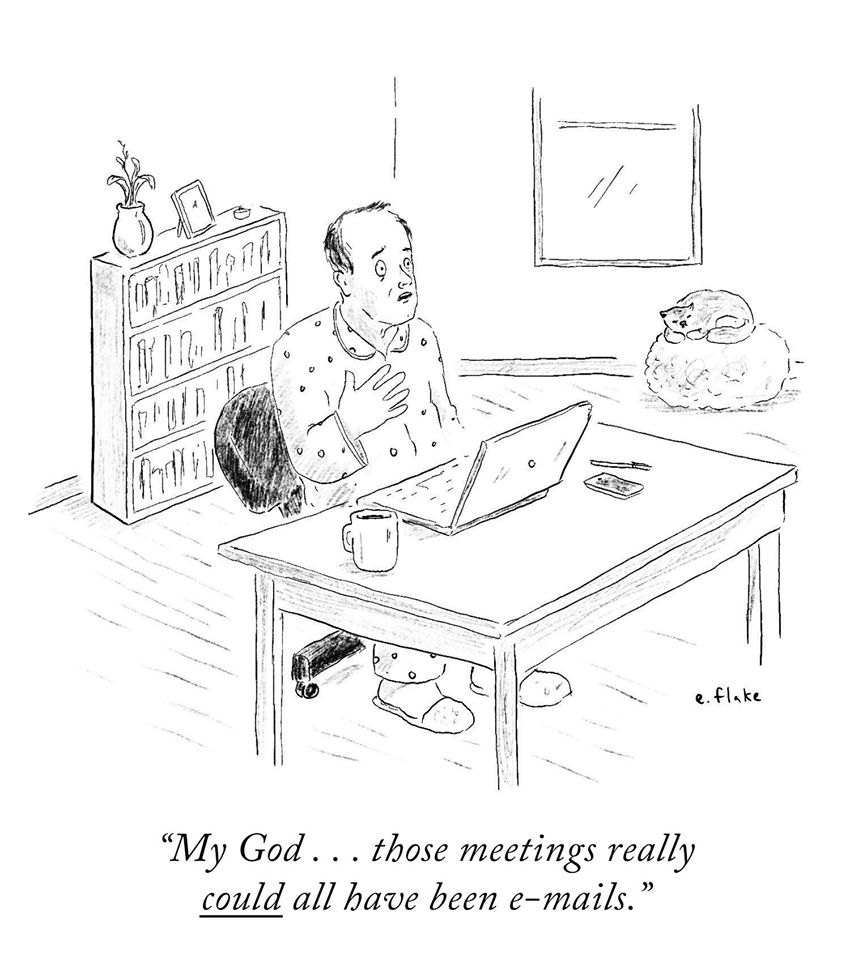
Lastly, always remember the most important insight gleaned from this experience [New Yorker]

Non-Traditional (Un)Grading Systems – An Overview

Introduction

It’s worth, first, marveling at the relative newness of grading. In fact, the now-standard letter-grading system only gained widespread popularity in US schools in the 1940s. This was partly a response to a decades-long concern over creating a standard of uniformity across institutions, thus standardized grading emerged as an administrative tool for inter-institutional coordination. Today, however, grading (or “evaluative feedback”) is mostly conceived as a pedagogical tool that operates as a source of communication to students and as a hotly debated source of student motivation.[1]

Over time, several different grading systems have developed, including non-grading (or un-grading) systems that see evaluative feedback as a detriment to student learning. Scholarly research on educational assessment is bewilderingly extensive, nevertheless here is a relatively short, curated list of several non-traditional methods of grading employed in higher education.


What is “Traditional Grading”?

We should note at the outset that there is no traditional “traditional grading” system, it’s an amorphous and ultimately abstract entity. Many instructors have vastly different grading policies and practices suited to their personal educational interests or tailored to their students’ needs. Yet, working from within a criteria-referenced paradigm, traditional grading could be characterized by its attempts to evaluate student work fairly, accurately, and uniformly across a class (and perhaps between classes or across time). Additionally, students earn points as assignments, projects, exams, and so forth, are completed to a certain level of quantified competency throughout the term. Lastly, a final grade is assigned based on these points values (often averaged) and a variety of other factors (like attendance, participation, extra credit, etc.).

Several concerns raised about this system include the perception that instructors are forced to inhabit the role of a grade “gate-keeper,” consequently engendering the distrust of their students. Some complain that the system encourages student grade performance over their learning mastery, a finding backed by research. Moreover, some question the ability for grades to be assigned fairly and uniformly across a class. Others will point to the potential waste of time for instructors who are forced to teach students who are satisfied with only the most minimal competency in a topic. Lastly, some would like to see a meaningful way to incorporate student effort in addition to student competency in any grading system.

Because of concerns like these, alternative grading systems have been proposed. While non-traditional systems are often promoted as better for learning and teaching, there is no value-neutral grading system. The mechanisms of the system will direct or encourage certain types of learning (and teaching) behaviors over others. Furthermore, certain grading systems may be more (or less) time-intensive for instructors or students, or cause efforts to be front-loaded or back-loaded in comparison to traditional systems. Because of this, it is worth making an informed decision on which grading system we employ, whether it’s a traditional or a non-traditional variety.

Wait…Aren’t these “Non-Traditional” Grading Systems Just Fads?

This is a fair question. Radical departures from norms may only seem “better” because they are new. One of the following examples, contract grading, has been widely studied since the 1970s and has been regularly found to have beneficial impacts on student learning and motivation. Additionally, both specifications grading and levels grading are built upon elements that have sound research behind them, even though, as entities, they have not yet been the focus of empirical research.

Specifically, and this applies to all three systems, a focus is placed on evaluation transparency, where the purpose of the exercise or assessment is clearly explained, the task is clearly described, and the evaluation criteria is clearly delineated (perhaps think of a grading rubric) and provided in advance so as to help students with self-evaluation.

In some ways, these three alternative grading systems are designed to fully operationalize the principle of transparency, a relatively simple teaching intervention that has been shown to demonstrably enhance student success, including academic performance, student mastery of skills, student confidence, a sense of belonging leading to better retention. This does not represent the totality of these grading systems, but helps to explain their particular design. Non-grading (which could also incorporate transparency) has long been shown to be a better motivator of student effort and allows instructors to put their time and energy into areas that have a more appreciable impact on learning. Overall, these are not transitory fads, but systems built on the best available research in educational psychology and instructional design. With that being said, the individual implementation of these systems can be quite varied (any investigation into the literature on these will quickly reveal this fact) and as such rely heavily on the specific interests, purposes, and needs of the instructor.


Contract Grading

With its origins in the early 1970s, this form of grading has been championed by Peter Elbow, whose work has left a lasting mark in the field of composition studies. Due in part to Elbow, contract grading is most commonly used in composition and rhetoric courses, although it has wide application across disciplines. In an attempt to move student interest away from the commodity of the grade and towards nurturing more essential learning skills and behaviors, contract grading is based on establishing an agreement with students regarding the quantity and quality of work they need to complete, among other criteria, which is correlated to a particular grade. These agreements can be negotiated with individual students as they propose activities and projects, which, when completed, receive the agreed-upon grade. Contract grading can also be non-negotiable, or applied equally to the whole class with instructors providing the specified criteria and the related grading output.[2] Jane Danielewicz and Peter Elbow have outlined the latter method by establishing a B-grade set of criteria (attending class regularly, participating in all in-class activities, providing thoughtful peer-feedback, etc.) for students to work on for most of the semester (see resource below). Only with the submission of a final portfolio would a final grade higher than a B be considered for students who fulfilled the contract. Grades lower than a B are possible, but as the authors note, “we are frankly trying to badger and cajole every student into getting a B.” Some recent research by Dana Lindemann and Colin Harbke suggests this grading system succeeds in discouraging students from failing a course and also provides students with higher competency in the desired skills and topics. Of the non-traditional systems noted here, contract grading has received by far the most research.

Resources:

  • Danielewicz, Jane & Elbow, Peter. 2009. “A Unilateral Grading Contract to Improve Learning and Teaching,” College Composition and Communication, Vol. 61, No. 2, pp. 244-268. [here]
  • Davidson, Cathy. [Twenty-First Century Literacies syllabus]
  • Hensen, Leslie. [syllabus]
  • Inoue, Asao B. 2014. “A Grade-less Writing Course that Focuses on Labor and Assessing.” In Teague, D. & Lunsford, R. (Eds.), First-Year Composition: From Theory to Practice. West Lafayette: Parlor Press, pp. 71-110. [despite the title, the focus is on implementing contract grading][here]
  • Inoue, Asao. [syllabus]
  • Lindemann, D. F., & Harbke, C. R. 2011. “Use of Contract Grading to Improve Grades Among College Freshmen in Introductory Psychology.” SAGE Open. [here]
  • Volk, Steve 2016. Contract Improv – Three Approaches to Contract Grading (Center for Teaching Innovation and Excellence at Oberlin College)[three different methods for implementing contract grading]

Specifications Grading

This is a more recent grading system – not entirely unrelated to contract grading – proposed by Linda Nilson and most robustly discussed in her 2015 work Specifications Grading: Restoring Rigor, Motivating Students, and Saving Faculty Time. At its core, “spec grading” relies on the establishment of clear and detailed specifications for what constitutes a passing piece of work (for Nilson, typically, B-level work or better). This is not unlike creating a grading rubric, but one only needs to detail a “satisfactory” set of criteria, not a full range of grading possibilities. Assignments are bundled and the more advanced bundles represent more complex skills and/or content. Students are graded only pass/fail for individual assignments or tests and progress as they receive passing grades. Bundles, however, are tied to overall course grades, thus spec grading allows students to determine which grade/bundle they want to compete. Also incorporated is the rather interesting idea of tokens. These are allotted at the beginning of the term to each student and can be redeemed to revise an unsatisfactory assignment, hand in work 24-hours late, take a make-up exam, and so forth. Given the limited number of tokens, students need to think about how to use tokens strategically.

Resources


Levels Grading

Modeled on video game mechanics, Dustin Locke has recently developed a grading system similar to specification grading, but with different nuances. There are a total of three levels, each of which consists of a larger, more complex project, and which are each evaluated on a four-tier system: complete, almost, good effort, and not much progress. A student progresses to the next project/level only when they have received a “complete” on the previous project/level. Like the spec system by Nilson, a student needs to gain a certain competency or mastery of a skill or content before moving on to the next project. Importantly, there are specific windows when students can attempt to complete levels, thus the project/level any given student needs to be adaptable to the content that is being covered at that time in the course. The final evaluation a student receives on a level is correlated to a final course grade. This system is currently growing among philosophy instructors.

Resources:


Portfolio Assessment

Not necessarily a fully reconceived grading system (eg. it is used as part of Peter Elbow’s contract grading system), portfolio assessment grew in popularity in the 1990s as interest gathered around alternative assessment techniques. In its simplest form, a portfolio is a collection of student work that exhibits their effort and progress in a course. It includes student-selected documents, learning products, or artifacts that they feel represent their best work, and as such, it usually represents work they have revised, sometimes significantly, and reflects their learning processes. Often students will be asked to include reflective documents, such as cover letters describing the selection process and the pieces the choose to include. Oftentimes perceived as an “authentic assessment” tool, this is very common in composition courses.

Resources


Ungrading

There have been many calls for the abolishment of grades, and there’s good research to suggest this is a wise pedagogical decision. In the broadest strokes, evaluative feedback (grades) alone, where students are essentially ranked in accordance to one another, doesn’t provide any valuable information about how to improve their understanding or competency nor has it been shown to provide any positive motivation for students to truly master a topic or take intellectual chances. Alfie Kohn, one of the most vocal proponents for diluting and removing grading, has made a career on this topic.

One point of confusion, however, is that by removing grading one removes all evaluation. This is not true. Emphasis shifts to descriptive evaluation where pertinent information related to improving student competency is shared and discussed. And while evaluative feedback and descriptive feedback are often coupled in practice in traditional grading systems, research cited by Kimberly Tanner and Jeffrey Schinske in their provocative “Teaching More by Grading Less (or Differently)” suggests that students are less likely to read comments that are paired with grades. Providing only descriptive feedback had been shown to be the most efficient for student learning and is also preferential to some students.

One of the most characteristic aspects of non-grading or ungrading is metacognition and self-assessment. Jesse Stommel, who has reflected thoughtfully on his practice of ungrading, has his students regularly engage in self-reflection through “process letters,” which open up a space of dialogue “not just about the course, but about their learning and about how learning happens.” This allows both for the instructor to provide constructive feedback and encouragement and for the student to cultivate the skills of critical self-assessment and future planning. Of course, working in a traditional institution, he needs to assign final course grades so Stommel has students grade themselves. He reserves the right to alter any grades his student submit, but he claims the most common alteration he makes is from an A- to an A, for the students who are too modest in their self-assessment.

Resources:


Final Thoughts

These alternatives are all reactions to dissatisfaction with traditional grading systems. From a bird’s eye view, these all emphasize pedagogical approaches that we should all immediately appreciate, including careful and strategic scaffolding of lesson plans and assignments, creating transparent and detailed evaluation rubrics, encouraging students to engage in metacognitive activity, and giving students a sense of purpose and ownership over their own learning. Several systems (perhaps my selection bias) foreground student competency or mastery that happens in stages, which in turn can allow for the implementation of a simpler evaluative feedback consisting of a two-tier pass/no pass (or pass/revise). In almost all cases, some power and authority is wrestled away from the instructor and placed in the hands of the student.

Other Resources on Grading

  • Docan, Tony N. 2006. “Positive and Negative Incentives in the Classroom: An Analysis of Grading Systems and Student Motivation, Journal of Scholarship of Teaching and Learning, Vol. 6, No. 2, pp. 21-40. [here]
  • Elbow, Peter. 1994. “Ranking, Evaluating, Liking: Sorting Out Three Forms of Judgment.” College English, Vol. 55, No. 2, pp. 187–206. [here]
  • Kohn, Alfie. 1999. Punished by Rewards: The Trouble with Gold Stars, Incentive Plans, A’s, Praise, and Other Bribes. Rev. ed. Boston: Houghton Mifflin.
  • Tanner, Kimberly & Schinske,, 2014. “Teaching More by Grading Less (or Differently),” CBE Life Science Education, Vol. 13, No. 2, pp. 187-206. [here]
  • Tchudi, Stephen, ed. 1997 (2011). Alternatives to Grading Student Writing. National Council of Teachers of English [here][this has been a constant source of inspiration for me]
  • Winkelmes, Mary-Ann; Bernacki, Matthew; Butler, Jeffrey; Zochowski, Michelle; Golanics, Jennifer & Weavil, Kathryn Harriss. 2016. “A Teaching Intervention that Increases Underserved College Students’ Success,” in Peer Review, Vol. 18, No. 1/2. [here]
  • Walvoord, Barbara E. and Virginia Johnson Anderson. Effective Grading: A Tool for Learning and Assessment. San Francisco: Jossey-Bass, 1998

Notes

[1] For a defense of the pedagogical utility of grading, see Walvoord & Anderson 1998. For a brief survey on the literature regarding the positive and negative motivating effect of grades, see Docan 2006. Evaluative feedback is often distinguished from descriptive feedback which provides specific information about how a student can become more competent. Often these are used in conjunction. Grades are also used in an organizational manner, such that they are used to partition lessons, units, or terms. In this context grades are seen as a “summative assessment,” in contrast to a “formative assessment” which places more focus on informal tests of students’ understanding before administering a summative assessment.

[2] These two broad forms of contract grading are described in the 1971 work, Wad-Ja-Get? The Grading Game in American Education, by Howard Kirschenbaum, Sidney B. Simon, and Rodney W. Napier. Incidentally, when contract grading was increasingly discussed as an alternative grading system in the early 1970s, the idea of instituting a two-tier pass/fail grading system in contrast to the A-to-F system was also discussed widely. We will see that the combination of elements from both contract grading and a two-tier grading system are found in some of the most common alternative systems circulating today.

Instructional Design in Higher Education: What is It?

Introduction

As a trained historian who has (rather belatedly) developed an interest in Instructional Design, I grew curious about its historical origins and development. Quite frankly, The more I learned about various teaching techniques the more I became interested in tracing the trajectories and relationships between specific theories and concepts. This is a cursory attempt to make sense of this field of study and place it in relation to the Scholarship of Teaching and Learning, the concept of Active Learning, and the advancements of Educational Technology.


Early Years

The origins of “Instructional Design” (ID) are often traced to the creation of training materials for the military during World War II. Yet, it was not until the 1960’s that a more systematic approach to effective teaching began to appear. This included combining aspects of task analysis, learning objective specification, and criterion testing – all hallmarks of modern higher education – into an overarching model for effective instruction. The elementary principles were derived from the works of psychologists such as B.F. Skinner, Benjamin Bloom, Robert Gagné, and Robert Mager.[1] At this stage, there was interest in creating an overarching “systems approach” to teaching and learning, thus creating what may be now considered a specialized field of study.

As a result of these advances, in the early 1970’s many universities started funding instructional improvement centers (with names such as the “Instructional Systems Development Center”) to help faculty improve the quality of their instruction. In 1977, the first peer-reviewed journal devoted to ID, the Journal of Instructional Development, was published.[2] Moreover, in the same year, the Association for Education Communication and Technology (AECT; originating as the Department of Visual Instruction in 1923) proposed a formal definition of ID centered on five core elements: analysis, design, development, implementation, and evaluation (ADDIE).[3] Thus, ID was founded on a specific methodology focused on improving teaching efficacy.

The interest in teaching instruction faltered in higher education, however, in the 1980s and many of the improvement centers were defunded or disbanded. Furthermore, the Journal of Instructional Development ceased publication in 1988 due to “fiscal austerity.”[4] The 1990s proved to be an important juncture for the study and practice of teaching in higher education.


Constructivism and “Active Learning”

One of the important shifts in the 1990s was the growing interest in constructivism as a learning theory. Constructivism, viewed most broadly, has roots in epistemology, psychology, and sociology, and attempts to explain how people come to know the world around them.[5] Constructionist perspectives on learning are oriented around several principles:

  1. learning is an active, adaptive process
  2. knowledge is idiosyncratically constructed through personal filters of experience, beliefs, or goals
  3. knowledge is socially constructed
  4. effective learning requires meaningful, authentic (“real world”), open-ended, and challenging problems for the learner to work through[6]

Overall, the constructivist theory of learning is commonly positioned in opposition to the older behaviorist model, where learning is characterized as a passive stimulus-response to highly controlled surroundings. Following this new theoretical approach, learners are no longer treated as inert, empty vessels to be filled with knowledge, but active participants who try to develop effective ways to solve novel problems. While some have criticized this simplistic characterization of behaviorism and the “traditional” views of learning, it cannot be denied that this new interest in constructivism in the 1990s spurred a novel wave of research into optimizing the learning environment for this new conception of the “engaged” learner.[7] Since knowledge (or, anything beyond low-order memorization) cannot be simply be transferred from one mind to another according to this new framework, this leads to an inconvenient reality, namely, “we can teach, even well, without having students learn.”[8] Consequently, developing a full repertoire of teaching strategies based on sound research became ever more important. This coincided with a broader interest in teaching-related scholarship (discussed below).

It should be remembered that constructivism is not an ID theory. Instructional Design attempts to adopt relevant learning theories and develop a systematic approach to effective teaching. It should also be noted that instructional design aims to develop a range of pedagogical techniques – a proverbial pedagogical toolbox – thus, constructivism is only one learning theory that has been adopted. Nevertheless, the 1990s saw a growth in literature speaking to constructivist-based “active learning” environments, so much so that many of the most common teaching best practices today reflect, or have been reinforced by, the so-called constructivist movement.

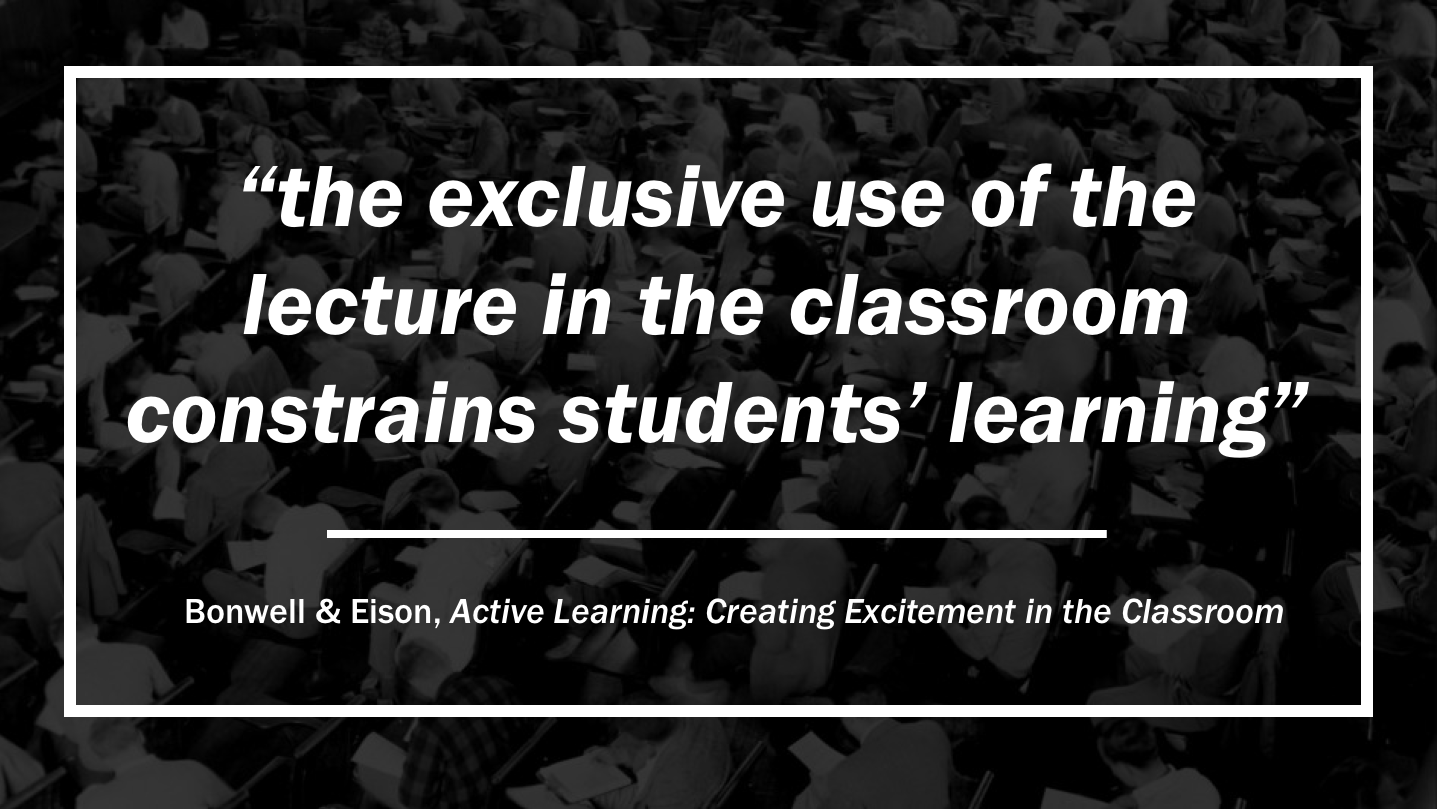
One of the most well-known targets of active learning proponents is the classical lecture, now sometimes framed (unjustly) as an out-of-date modality of instruction. In 1991, Charles Bonwell and James Eison, authors of the seminal work Active Learning: Creating Excitement in the Classroom, proclaimed that “the exclusive use of the lecture in the classroom constrains student learning.” Instead, they promoted instructional activities “involving students in doing things and thinking about what they are doing.” Critics will often interpret this to mean that all lecturing activities need to be replaced by student-led learning initiatives. This is a misunderstanding of the application of active learning. The concern of Bronson and Eison was directed towards the exclusive use of lecturing, where students only take notes and follow directions. To enhance learning, they recommend routinely engaging in activities throughout the lecture where students can reflect upon, analyze, evaluate or synthesize the material that was presented.

These activities can vary greatly, but the general goal is to have students engage in higher-order thinking through reading, writing, and discussing. These can be very simple activities (such as employing think-pair-share) or more complex (such as providing a new reading where a recently learned theory needs to be applied). In practice, these activities are not significantly different from what Michael Scriven called “formative evaluation” (or formative assessment) in 1967. These are assessment procedures performed during the learning process, as opposed to “summative evaluation” (or summative assessment) which takes place at the completion of a learning activity (often measured by exams).[9] A wide range of these activities which provide crucial feedback to students are often placed under the category of Classroom Assessment Techniques (CATs), first coined by K. Patricia Cross and Thomas Angelo in 1988.[10]

The point is to puncture lectures with moments of student activity in order to break the line of one-way transmission in exchange for more interactive moments of cognitive processing. This can occur between instructor and student, between students, or function as an individual reflective exercise. While there is no pre-determined time frame to engage active learning activities, the common recommendation is to allow time for reflection and processing every 12-20 minutes of lecture. The timing depends on the complexity, density, and novelty of the information as well as the goals of the instructor. In practice, the instructor revolves between two roles in the active classroom setting, functioning first as the “sage on the stage” by providing important information or modeling procedural knowledge, then acting as a “guide on the side” by coaching and providing feedback to assist in the students’ development.


Teaching Informed by Scholarship

A second shift in the 1990s was the interest in developing scholarly literature that focused on teaching and learning in higher education. The theoretical underpinnings were outlined in Ernst Boyer’s Scholarship Reconsidered: Priorities of the Professorate in 1990. Boyer was the president of the Carnegie Foundation for the Advancement of Teaching and called for faculty to expand beyond their traditional roles as scholars and consider how to better serve college and university missions to educate an increasingly diverse student population. Boyer proposed re-conceiving scholarship (“the work of the professoriate”) as four distinctive types: scholarship of discovery (e.g. traditional research in one’s discipline), scholarship of integration (e.g. composing introductory textbooks), scholarship of application (e.g. applied research), and scholarship of teaching.[11] It was this last category, scholarship of teaching, where Boyer argued that teaching should not merely be “tacked on” to the duties of faculty, but should be treated as an active area of intellectual exploration where instructors plan, evaluate, and revise their pedagogical approaches based on a rigorous understanding of relevant literature. In other words, teaching and research should not be seen as representing opposing scholarly interests because the research of teaching in higher education is a valuable contribution to scholarship in itself.

Soon after Boyer’s influential publication, other scholars such Robert B. Barr and John Tagg started to highlight the limitations of perceiving higher education as mere access to instruction and suggested examining the value of improving student learning. The suggestions of Barr and Tagg presumed a constructivist theory of education where the focus was centered on the learner.[12] Consequently, the following president of the Carnegie Foundation, Lee Schulman, formally incorporated “learning” into Boyer’s “scholarship of teaching,” thus creating the field of the Scholarship of Teaching and Learning (SoTL, often pronounced “sō-tul”) as it is known today.[13]

While there is no formal criteria for research to fall under the rubric of SoTL, one working definition has been suggested by Michael Potter and Erica Kustra: “the systematic study of teaching and learning, using established or validated criteria of scholarship, to understand how teaching (beliefs, behaviours [sic], attitudes, and values) can maximize learning, and/or develop a more accurate understanding of learning, resulting in products that are publicly shared for critique and use by an appropriate community.”[14] Generally, however, SoTL is rather broad and encompasses any approach to teaching and learning in higher education that mirrors traditional research, namely having defined goals, appropriate methods, significant results, and appropriate presentation.

I have seen no attempts to try and define the relationship between ID and SoTL. Even though they have disparate origins, they tend to share common methods and goals. In practice, because of the specific initiatives of the Carnegie Foundation, SoTL appears to represent the scholarly output of disciplinary specialists interested in researching teaching practices in higher education, while ID represents the pragmatic work done in departments found on campuses (e.g. holding workshops, publishing SoTL-oriented journals [see below], managing informative websites on pedagogy, etc.). These departments often appear under a wide range of names such as the Center for Teaching, Center for Excellence in Teaching and Learning, and Teaching Commons.[15] Perhaps the largest distinction is that historically ID has been interested in all levels of education (including training for business and the military), of which higher education was just one dimension. Additionally, ID has historically shown a closer affiliation with instructional media and technology (see below).

Ultimately, SoTL has become a recognized field of research both within individual disciplines and as a stand-alone discipline. Since 1990, there has been rapid growth in the publication of discipline-neutral journals exploring effective teaching. Below is an incomplete list of running publications falling under the SoTL rubric (including publications that existed previous to Boyer’s publication):

Numerous disciplines also have a history of studying how students learn within their fields, such as history (Teaching History, 1969-), sociology (Teaching Sociology, 1973-), or philosophy (Teaching Philosophy, 1975-), among many others. While SoTL research tends to be less tied to specific disciplinary domains, some will include these publications under the SoTL rubric. A helpful list of journal publications devoted to teaching and sorted by discipline is published digitally by the University of Saskatchewan Library (here).


Educational Technology and Instructional Media

A third shift in the 1990’s, which I will only discuss briefly here, was the growing interest in using computers and eventually the internet, for instructional purposes. Historically, we could trace the origins of ID to pre-World War II interests in technological advancements perceived as having an application for teaching. This would include early twentieth-century school museums and new visual media such as magic lantern slides and stereoview cards. In the coming decades, this interest would shift to the use of video and television.[16] This focus on researching (and adopting) the newest technology for the classroom is revealed in the name of one of the oldest professional groups dedicated to ID, the Association for Education Communication and Technology (AECT), which was started in 1923 as the Department of Visual Instruction. Additionally, many of the earliest journals dedicated to ID, published under the editorial supervision of the AECT, had titles such as A[udio] V[isual] Communication Review, Tech Trends, Media Management, and School Learning Resources. After World War II, Educational Technology (also known as Instructional Media, among other names) was increasingly seen as separate from the research interests of the newly developing field of ID. While these fields clearly overlap, they also covered specific, complementary niches.[17]

Some of the more recent interests of this field are the development and management of university Learning Management Systems (LMS) and the designing of online or blended classrooms, especially for long-distance courses. This has spawned a new major in several American colleges and universities called Learning Design and Technology (LDT).


TL;DR

Many Instructional Development departments in colleges and universities operate useful, information-rich websites. If I had to choose just one on the merits of providing ample, practical information about university pedagogy while also providing some historical context, it would be the Vanderbilt University Center for Teaching (if you navigate to the Center for Teaching home page, look for the Teaching Guides menu).


Notes

[1] I am indebted to Reiser 2001a and Reiser 2001b for this synoptic history of Instructional Design.

[2] The use and study of various forms of instructional media, such as audio-visual materials, is often treated as a parallel area of study to instructional design, with the recent focus on the use of computers and long-distance education.

[3] For discussion on the various definitions of Instructional Design see Branch & Dousay 2015: 14-8, and Reiser 2001a: 53-4. Robert Reiser offers a more nuanced definition of Instructional Design: “The field of instructional design and technology encompasses the analysis of learning and performance problems, and the design, development, implementation, evaluation and management of instructional and noninstructional processes and resources intended to improve learning and performance in a variety of settings, particularly educational institutions and the workplace. Professionals in the field of instructional design and technology often use systematic instructional design procedures and employ a variety of instructional media to accomplish their goals. Moreover, in recent years, they have paid increasing attention to noninstructional solutions to some performance problems. Research and theory related to each of the aforementioned areas is also an important part of the field.” See Reiser 2001a and 2001b. Some have suggested that instructional development mirrors the scientific method, see Andrews & Goodson 1980.

[4] Higgins et. al. 1989: 8. Technically, the Journal of Instructional Development was combined with Educational Communication and Technology Journal (titled previous to 1978 as A[udio] V[isual] Communication Review) and consolidated as Educational Technology Research and Development. Additionally, the publications Tech Trends, Media Management, and School Learning Resources were also consolidated, see Higgins et. al. 1989, also see Dick & Dick 1989: 87.

[5] The figures most prominently associated with constructivism are Lev Vygotsky and Jean Piaget. See, e.g. Owen-Smith 2018: 17-8.

[6] There is no consensus definition of the constructivist theory of learning, but a survey of the literature suggests a polythetic dimension. For delineations of the elements of constructivism see, among others, Fox 2001: 24, Reiser 2001b: 63, and Karagiorgi & Symeou 2005: 18.

[7] For a summary overview of critiques against the novelty of constructivism, see Fox 2001. I agree with Fox that it is highly unlikely any “traditionalist” view of learning proposed the learning process to be entirely passive. For a list of scholarship exploring the relationship between constructivism and more “traditional approaches, see Reiser 2001b: 63. Furthermore, in the camp of constructivism, there are more radical and more conservative views regarding the relative importance the external environment and internal, individual frameworks; see the brief discussion in Karagiorgi & Symeou 2005: 19.

[8] Karagiorgi & Symeou 2005: 18.

[9] The precursors to Scriven’s helpful distinction between formative and summative is discussed in Cambre 1981.

[10] Their recommendations were published in Classroom Assessment Techniques: A Handbook for Faculty. A collection of videos explaining some of these techniques can be found at the K. Patricia Cross website.

[11] This is outlined in Chin 2018: 304.

[12] Barr and Tagg differentiate between the Instruction Paradigm and the Learning Paradigm, see Barr & Tagg 1995.

[13] This is also reflected in the Carnegie Academy for the Scholarship of Teaching and Learning (CASTL) launched in 1998. For Shulman’s analysis of the importance of learning, see Shulman 1999. A brief history of SoTL can be found here (by Mary Huber) and here (by Nancy Chick).

[14] Potter & Kustra 2011: 2.

[15] It seems plausible to say that SoTL has superseded ID as the preferred terminology to name this field of research.

[16] See Reiser 2001a.

[17] See, e.g. Dick & Dick 1989.

References:

  • Andrews, Dee H. & Goodson, Ludwika A. 1980. “A Comparative Analysis of Models of Instructional Design.” Journal of Instructional Development, pp. 161-82.
  • Barr, Robert B. & Tagg, John. 1995. “From Teaching to Learning: A New Paradigm for Undergraduate Education,” Change, Vol. 27, No. 6, pp. 13-25.
  • Bonwell, Charles & Eison, James. 1991. Active Learning: Creating Excitement in the Classroom. ASHE-ERIC Higher Education Reports.
  • Boyer, Ernst. 1990. Scholarship Reconsidered: Priorities of the Professoriate. The Carnegie Foundation for the Advancement of Teaching: Princeton University Press.
  • Branch, Robert Maribe & Dousay, Tonia A. 2015. Survey of Instructional Design Models. Bloomington: Association for Educational Communication and Technology.
  • Cambre, Marjorie A. 1981. “Historical Overview of Formative Evaluation of Instructional Media Products,” Educational Communication and Technology, Vol. 29, No. 1, pp. 3-25.
  • Chin, Jeffrey. 2018. “Defining and Implementing the Scholarship of Teaching and Learning,” in Learning from Each Other: Refining the Practice of Teaching in Higher Education, eds. Michele Lee Kozimor-King, Jeffrey Chin, Berkeley: University of California Press, pp. 304-11.
  • Cross, K. Patricia & Angelo, Thomas. 1988 [1993]. Classroom Assessment Techniques: A Handbook for Faculty, 2nd edition. San Francisco: Jossey-Bass.
  • Dick, Walter & Dick, W. David. 1989. “Analytical and Empirical Comparisons of the Journal of Instructional Development and Educational Communication and Technology Journal.” Educational Technology Research and Development, Vol. 37, No. 1, pp. 81-87.
  • Fox, Richard. 2001. “Constructivism Examined,” Oxford Review of Education, Vol. 27, No. 1, pp. 23-35.
  • Higgins, Norman; Sullivan, Howard; Harper-Marinick, Maria & López, Cecilia. 1989. “Perspectives on Educational Technology Research and Development,” Educational Technology Research and Development, Vol. 37, No. 1, pp. 7-18.
  • Karagiorgi, Yiasemina & Symeou, Loizos.2005. “Translating Constructivism into Instructional Design: Potential and Limitations,” Journal of Educational Technology & Society , Vol. 8, No. 1, pp. 17-27.
  • Owen-Smith, Patricia. 2018. The Contemplative Mind in the Scholarship of Teaching and Learning. Bloomington: Indiana University Press.
  • Potter, Michael K. & Kustra, Erika D.H. 2011. “The Relationship between Scholarly Teaching and SoTL: Models, Distinctions, and Clarifications,” International Journal for the Scholarship of Teaching and Learning, Vol. 5, No. 1, Art. 23.
  • Reiser, Robert A. 2001a. “A History of Instructional Design and Technology: Part I: A History of Instructional Media,” Educational Technology Research and Development, Vol. 49, No. 1, pp. 53-64.
  • Reiser, Robert A. 2001b. “A History of Instructional Design and Technology: Part II: A History of Instructional Media,” Educational Technology Research and Development, Vol. 49, No. 2, pp. 57-67.
  • Shulman, Lee. 1999. “Taking Learning Seriously,” Change, Vol. 31, No. 4, pp. 11-17.

Teaching Writing When You Don’t (Want to) Teach Writing

epigraph.png

(Or…Teaching Writing in a ‘Content Course’)

I know. Student writing is horrible. The sky is falling. Doomsday has come. I’ve had several conversations with colleagues about the sordid state of student writing. I once hooped and hollered atop that bandwagon too. It was so easy to blame high school teachers and college writing instructors (or anyone else) for not preparing students adequately in the fine art of written argumentation.

Then, I got a job as a university writing instructor. I’ve come to see that the problem partly lies with me and my curmudgeon colleagues (its a blight that extends beyond religious studies). It’s our duty to teach writing too, we just don’t want to do it.[1] Student writing is also not that bad, if you give students a fighting chance.

I’m a traitor to the “but-I-don’t-teach-writing” cause. I know.

If I haven’t angered you to rage-close the browser tab, then let me explain. At one level, writing is a skill, not a “fact”; all students know how to write, but some may not be proficient at it. They need more practice – and guidance in The Writing Process.

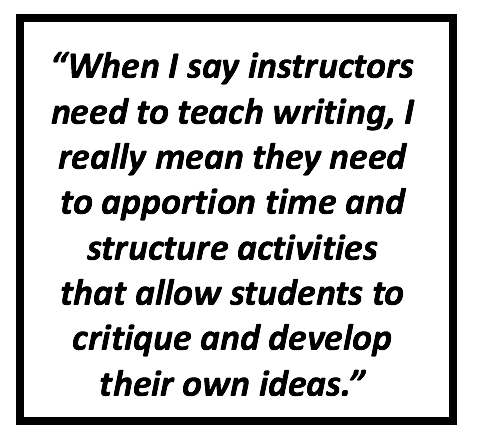
When I say instructors need to teach writing, I really mean they need to apportion time and structure activities that allow students to critique and develop their own ideas. Once students thoughtfully struggle with their ideas and arguments, they are more likely to want to “own” those ideas. As a result, almost magically, their writing will get better. In our religious studies courses (or humanities more broadly), we do not need to formally “teach writing,” as much as we need to give students the opportunity to work out their ideas in a strategic and structured manner. Teaching “writing” is just code for teaching critical thinking skills.

One of the key aspects of my writing courses focuses on (re)shaping student writing habits. We talk at length about “The Writing Process” and students develop their own ideal Process. While many facets are individual – some do their best writing in the library, some in their rooms; some listen to background music, some prefer silence; and so forth – other facets are non-negotiable. My writing course is structured around these non-negotiable facets, namely drafting, peer-review, and revision (see below). Ideally, my goal is to have students incorporate these elements into their natural Process, but like many new habits, they can be hard to adopt.[2]

In the non-teaching-writing classroom, it can be easy to omit drafting, peer-review, and revision activities (hereafter DPR). But these are precisely what students – and us scholars – need to produce our best writing. If done skillfully, DPR can all be handled by students themselves; there is no extra work for our already-exhausted teaching souls. I will admit, however, it does take time to devise drafting prompts, structured peer-review sessions, and direction for revision. Undoubtedly, these activities will go wrong before experience teaches us how to make them right (online research will certainly help too, or, gasp, conversations with colleagues about our failures).

Of course, I do think students benefit greatly from our expert insights on their ideas. If we can provide verbal, recorded audio, or written commentary at early stages in the Process, this will greatly assist students in developing their ideas. Spending time to get students to talk about their research in class with other is also valuable.

Overall, here are some thoughts about incorporating writing good critical thinking habits into your non-teaching-writing-classroom based around DPR.

Drafting: A simple recipe for disaster is to assign a big writing project due at the end of the term which does not also formally schedule several “checking-in” assessments along the way. These formative assessments could be a simple conversation with individual students or classroom activities where students discuss the early stages of their work. Drafting is another option. This does not have to be a full draft of the final essay. I’ve seen colleagues assign small segments of the essay that are due regularly throughout the term, such as drafting the introduction with a thesis, or body paragraphs with solid evidence, or the conclusion with the potential significance of the findings. More commonly, I’ve seen colleagues assign research proposals or annotated bibliographies, which discuss proposed research questions and potential lines of argument. Personally, I prefer (when possible) to assign smaller writing assignments that allows students to work on certain facets of their larger argument for their final paper. This works best if students don’t have an open-ended final research project, but are expected to address a pre-determined topic or theme at the end of the term (but I’m sure savvy instructors could still craft prompts that function in an open-ended manner). Overall, there are plenty of drafting options to help stimulate student thinking along the way, including daily writing reflections, for example. [3]

Peer-Review: It is important to remember that drafts can also be read by other students (even as homework), if reading students’ work is too time consuming for an instructor. Peer-review can be tricky to run effectively, however. One thing to keep in mind is that students will need assistance on how to critique the work of others; offering truly constructive criticism and thoughtful insight on writing is a skill in itself (as I’ve painfully learned as a writing instructor). Consequently, review sessions need to be highly structured. Provide a commentary rubric or the grading rubric you would use for evaluating the assignment. Or, at the very least, provide a list of things for students to pay attention to. I’d suggest saving the best papers from each term and sharing them during subsequent peer-review sessions. The entire class can read and comment upon the paper(s), thus helping to align expectations about the review process. I’d also strongly suggest having student converse with each other after providing written commentary; talking can easily clarify confusions on both sides. There are numerous discussions of running peer-review online, I’d suggest finding a method that might work best with your class and tinker with it.

Revision: The purpose of doing the above activities is so students think through their ideas and potentially see how others attempt to tackle the same or similar issues. Depending on the drafting assignment (suggestions above), you would have to decide how to have students build off of their initial insights. In other words, what is the next step in the Process? Does their thesis statement need to be re-thought (and possibly re-drafted)? Does their research proposal need to be more focused and peer-reviewed again? Is their annotated bibliography missing an important work? Will students’ smaller writing assignments dovetail cleanly into their larger argument or are there potential flaws which need to be redressed? While some of these interventions can be performed by other students, instructor commentary (or even better, conversation) will prove invaluable. Importantly, only work that will be revised merits extensive feedback, there is little pedagogical value in heavy commentary on final products – the real critical thinking work has already been done.

A final note: There are numerous other suggestions to consider as well when focusing on the Writing Process. One that was not immediately apparent to me was “exposing” myself as a writer to my students. I now regularly tell my classes about all of the writing projects I need to engage professionally as a writer: conference proposal, book review, dissertation chapter, journal submission, and so forth. I share with them the struggles, setbacks, and new insights gained through developing my work. It’s important for students to see or hear about writing that isn’t published, that isn’t perfect, that needs further reflection. By seeing the care that goes into our professional work, students can come to emulate that process.

Notes:

*Some of my comments here developed out of my ruminations on abandoing page-lengths for student writing.

[1] Duty might seem like a strong word, but I’ve used it purposefully. If we consider our course goals to include cultivating critical thinking skills, this almost certainly includes (there are reasonable exceptions) some form of writing assessment. As you will see, I do not consider the teaching of writing in the non-teaching-of-writing-classroom to be a review of low-level mechanics or refinement of diction, but the critique and development of ideas that normally happens in the Writing Process. In this case, the teaching of writing is, simply, the teaching of critical thinking.

[2] I’ll say it again, but now as a footnote: So-called “good writing” is not the memorization of facts. Most students are fully aware of the elements of a good thesis or how to make a strong argument. In many circumstances, what limits them is not their misunderstanding of these facts, but the underdeveloped ideas they have. By spending time on their ideas (researching, conversing, debating, refining, reflecting, etc. ) students generally come to care for those ideas. When folks don’t care about their ideas, they hand in “poorly written” work or plagiarize it.

[3] Even regular, short responses to readings can include a few comments by students on their relevance to a proposed final project. In other words, responses to readings don’t always need to be simple summary.

Further References:

Wingate, Ursula; Andon, Nick & Cogo, Alessia. 2011. “Embedding Academic Writing Instruction into Subject Teaching: A Case Study.” Active Learning in Higher Education, Vol. 12, No. 1., pp. 69–81.

Educational Tech in the Old School Classroom: A Review

Introduction

I have to admit, at times, I am a proud Luddite. I still love writing on the board, using handouts, and having students read in print (curse those liquid crystal displays![1]). Yet, I would be lying if I have not seen the potential value of educational technology in the classroom. I would also argue that it would be irresponsible to ignore the wave of digitally literate students coming into our classrooms and the skills they possess in those domains – with digital storytelling and data visualization having the most promise in my eyes. Of course, us Luddites do not need to mindlessly drink at the well of technology! There is an overabundance of educational apps and software being produced every year, and not all of it can easily be made to align with our pedagogical goals.

Moreso, the flash of technology should not blind us to its circumscribed value. The hanging question should not be how do we integrate technology into our classrooms, but whether technology can sustain or even advance our educational aims. Our expenditure of time and resources should not go into finding the newest educational tech iteration, but how to identify the technology’s potential to deepen our students’ learning. Sometimes, new technology may make us reconsider our final course outcomes (say, replacing a traditional reserch paper with image-driven scholarship), but I hope we also identify clear pedagogical reasons to do so.[2]

“But wait,” you may object, “I already use my university’s learning management system, I am tech savvy!” True, Moodle, Blackboard, Canvas, and other lesser known learning management systems (LMS) are often integrated into a school’s network and offer many educational avenues not available to the traditional non-digital learning environment. The question, I suggest, is how many of us use it beyond a digital repository for assignments and readings? Often there are many uses – such as online discussion forums – that can add a new teaching modality. Unfortunately for fans of LMS software, the new educational tech is more user friendly. In my view, this new tech (often marketed as apps) will not replace the more comprehensive LMS software (at least in the near future); but it does augment it in valuable ways. Overall, many of the new educational apps are more intuitive, interactive, and collaborative than the functions found in university learning management software.

Below I review several different kinds of digital education tools and the potential for their use in discussion based humanities courses, such as those found in Religious Studies.[3] Almost all of the educational tools below offer free versions of their applications with limited functionality. Since I have not paid the subscription for any of these tools, I will only discuss the free features. Regrettably, I have been introduced to many of these tools only recently and my comments remain, overall, rather cursory. Nevertheless, I have already imagined clear benefits to incorporating several of these tools into my course planning. I hope to update this page as my opinions develop and new tools emerge.


Polling Apps

Instead of using expensive classroom clickers, students can download an app on their cell phone and respond to questions set up by the instructor. Honestly, I see narrow value for technology like this because it too easily breeds an impersonal classroom environment. If I wanted to take a quick vote, I would rather ask for a simple show of hands (excepting large lectures). If I wanted to gather a variety of responses on a topic, I would rather engage in dialogue with a few students.

Of course, there are moments when polling apps could be very useful. For example, if you wanted to vote or gather data anonymously, such as providing a mid-term evaluation or “exit ticket” at the end of class.[4] Or, if you wanted to set up a debate between competing perspectives or interpretations, you may gather data to set the topics and parameters of the discussion. Alternatively, I could see a ranking task working well to stimulate discussion. In any regard, I suggest using polling apps judiciously and would say their ideal implementation includes a meaningful class discussion (e.g. analysis, interpretation, debate, perspective-taking, etc.)

  • Mentimeter: Perhaps my favorite because you have several visually appealing layouts to select when displaying student responses (like the “spider chart” for the scales-type question). There are ten types of questions to choose from (Multiple Choice, Open Ended, Scales, Image Choice, Ranking, etc.), but you can only ask three questions total in the free version of this app (hack: when using the scales-type, you can actually add several more questions). Students go to the Mentimeter website and enter a code to gain access to the poll; it’s pretty easy to use.
  • Poll Everywhere: More types of questions (around 20) than Mentimeter, but several are just variants of the open-ended type. One interesting question type allows an image to be uploaded (even a map) and students can click on various parts of it. Students have to text a rather long code to a designated number to get access to the poll.
  • VoxVote: This backend interface is not as easy to use as the others and I honestly just stopped trying to figure it out, but I’ll list it here as another free option.

Game-Style Quizlets

Naturally one could use these apps for exam review or even to review material from the previous day’s class (say, a casual five minute review as students stroll into class). Truly, the benefit of these apps is the ability to assign students to teams, which ramps up the competitive spirits of almost everyone. As with the polling apps, I am hesitant to use these games when simple class discussion would suffice. Additionally, multiple choice testing overall has limited educational value, but that is not to say it cannot be used effectively or wisely. Not surprisingly, some functionality of these quiz apps overlap with the polling apps above.

  • Kahoot: You can create three types of questions: multiple choice, a jumble (think of putting options into a correct order), or a survey. In order to lessen test anxiety, I presume, the potential answers are a mixture of shapes and colors, not the traditional letters (A-D). You can select to have the game played individually or as teams. It is easy to incorporate background images into the quiz, and the overall design is simple and visually appealing. Students go to the Kahoot website and enter a code to gain access to the quiz.
  • Socrative: You can create a quiz with three types of questions: multiple choice, true/false, and short answer (NB: the answer the student types has to match the answer you provide exactly, so it’s more of a fill in the blank than short essay). The “Space Race” option allows you to assign teams. There is also an option to make an “Exit Ticket” directly. Students go to the Socrative website and enter a code to gain access to the quiz or exit ticket. In my opinion, the visual appeal of Kahoot is better than Socrative.

Digital Storytelling

This is a broad category of tools that I divide into two categories, timelines and annotated media tools. The one common aspect is that these tools allow for a more visual and multi-media approach to creating narrative. Instructors could use these to supplement lecture, but I would argue their best usage is through having students create the content. As individuals or in groups, students could be given assignments to utilize these tools to create stimulating review, research, or presentation projects. These tools, in effect, represent a new(ish) genre of writing and content creation, and thus require the crafting of careful guidelines (or grading rubrics). Some instructors may find these suitable substitutes for traditional research papers.

      Timelines

  • Tiki-Toki: An interactive timeline tool which allows you to add interactive cells along a timeline and incorporate a multimedia source (image, video, audio) or weblink to the written text in the cell. The cells can be tagged and assigned colors so they are easy to visually identify (such as for distinguishing people, places, events, and so forth). The backend interface is relatively easy to use.
  • TimelineJS: This is among the suite of open-source tools for digital story-telling originally designed for journalists known as Knightlab. As with Tiki-Toki, you can add multimedia or weblinks to each cell with text. The backend interface uses a spreadsheet, and thus is not as intuitive as Tiki-Toki. The published presentation has a slightly more polished feel than Tiki-Toki, but ultimately they are quite comparable.
  • Sutori: Similar to the timeline tools above, this app allows you to create cells with multimedia sources or weblinks, as well as discussion forums and quizzes. This added functionality gives this online tool the feeling of LMS software, but with a graphical interface on the front end. While the cells are distributed sequentially along a line, the line does not incorporate dates, offering a streamlined vision of events (it is easy to add dates to the text within the individual cells if absolute dating is necessary). The backend interface is relatively easy to use.
  • StorylineJS: Not technically a timeline, but also part of the Knightlab suite. This tool allows you to annotate a line chart to give context behind the number represented.

      Annotated Media

  • Thinglink: A tool that allows you to imbed interactive cells into images (including an image of a map) and video. In addition, multimedia sources (images, videos, audio) or web links can be added to the embedded cells. Essentially, this allows for the creation of a non-linear narrative structured on a visual base. Perhaps the most interesting use of this tool involves creating interactive 360 degree photographs (the site provides a library of 360 degree images), but this function is behind the paywall. The finished 360 degree product could have more interactive capacities than the e-Dunhuang site, which provides some interactive cells in many of its cave photographs.
  • StorymapJS: Part of the Knightlab suite, this allows you to imbed interactive cells into a map and add multimedia sources (images, videos, audio) or web links. The published presentation can be quite stunning.
  • SoundciteJS: Part of the Knightlab suite, this allows soundclips (taken from Soundcloud) to be directly embedded in text. This works best with the blogging site WordPress.

Communication Applications

These tools are primarily meant to foster communication between students (and teacher-to-students) outside of the classroom setting. Most LMS cover the same functionality, but these newer technologies are better than the old online discussion forums found in most institutions.

  • Slack: An online communication hub that dispenses with the need for emails, online message boards, and discussion groups and provides the necessary space for conversation, questions, and file sharing. Slack is marketed as a more mobile-device-friendly LMS, and it has its ardent supporters among the MOOC community. Communication is accomplished through a mixture of channels, threads, and direct messages.
  • Screencast-o-matic: A rather easy-to-use tool for creating screencasts, i.e. videos that capture computer desktop activity and your voice (or image). This can be used for audio feedback on student assignments (with the digital document also captured in the video) or students can create screen-based videos as projects.

Grist for the Mill: On one hand, polling apps and game-style quizlets could easily be incorporated into an active, student-centered classroom. With careful planning, their use could foster discussion among students and even provide stimulus for lively debate. The digital storytelling tools, on the other hand, could be used as new creatvie expressions for student projects or as online sites for class collaboration. Finally, the communication apps can facilitate an out-of-class experience, allowing students and instructors to maintain avenues of contact that exceed the capacities of email or online discussion forums.


Notes

I would like to thank Mindy Colin for her workshop introducing many of these tools to me, and the members of the Japanese Religions Pedagogy seminar, Fabio Rambelli, Ellen Van Goethem, Ori Porath, Emm Simpson, Diamante Waters, Kaitlyn Ugoretz, and Daigengna Duoer, for our invaluable and spirited conversations about how to best implement them.

*This is part of a series where I discuss my evolving thought process on designing a new university course in Religious Studies. In practice, this process will result in a syllabus on Japanese Religions. These posts will remain informal and mostly reflective.

[1] I am being facetious, sorry my Luddite brothers and sisters! In reality, I try to consciously use a hybrid of old school and new school approaches. For example, I use a mix of print and digital reading resources in my courses. The more conceptually complex a reading – where I could imagine needing to flip back and forth between pages and ideas quickly – the more likely I am to assign it in print form.

[2] If you are hoping students will just like the techy new tools, or think they are cool, well, I would suggest that is not good enough.

[3] Generally, I see problem solving and task-oriented courses – think STEM classes and lab sessions – as employing different pedagogical methodologies. Of course, there is considerable overlap, but I could imagine a calculus instructor envisioning different uses for the tools I discuss.

[4] I suppose one could also these apps to ask questions about a sensitive topic where students would prefer to remain anonymous. In my view, however, I would rather use these tools to stimulate a good conversation, which might be difficult in this scenario – though I imagine it could be done strategically and skillfully.


More Pondering Pedagogy: Course Design Posts

In Defense of Lectures? [Part II]

[Part IX of the series Pondering Pedagogy: Course Design; Read Part III, III, IV, V, VI, VII, VIII, X]

[NB: In the first half of In Defense of Lectures? I note how most modern lecturing is mischaracterized and discuss the basic principles of an active learning environment.]

Defenders of the didactic lecture format will often point to a widely popular lecturing style seen on the internet – TED Talks (Technology, Entertainment, and Design Talks).[1] These talks typically combine the spoken word with various media (audio, video, image), thus resembling a tech savvy university lecture. The reasoning follows that college and university lecturers should emulate these TED Talks to best capture the attention of students.

Yet, TED Talks also keep a relatively tight time cap at 18 minutes, a fraction of the time for a typical university class period. What is our aspiring lecturer to do in the face of a 55 minute – or longer – lecture?

The emerging consensus seems to advocate for 10 to 15 minute blocks of “classic” lecture (i.e. straight presenting) divided by some sort of class activity where students reflect upon or apply the lecture content. This blend is often represented as an interactive lecture-tutorial hybrid, sometimes referred to as “lectorials” or sometimes “lecturettes.”[2] The assumption is that students will reset their internal “attention clocks” through these interspersed activities. Then have another 15 minutes before students attention precipitously wanes. Tick-tock tick-tock.

I would like to reflect on this for a moment. To me, the scenario above seems to conflate two different concerns. First, interactive teaching-learning activities (TLAs) are typically implemented in order to allow the students to deepen their knowledge of the concepts – this is what transforms the passive learning environment of the classic lecture into the active learning environment of the flipped classroom. It seems odd to me that TLAs would be considered “dead time” where students recharge their attention clocks.

Secondly, the worry over the attention span of students is a very different matter – one that is not based on empirical studies. A recent analysis offered by Neil Bradbury criticized the magical 10-15 minute window, summarily noting:

“A review of the literature on this topic reveals many discussions referring to prior studies but scant few primary investigations. Alarmingly, the most often cited source for a rapid decline in student attention during a lecture barely discusses student attention at all. Of the studies that do attempt to measure attention, many suffer from methodological flaws and subjectivity in data collection. Thus, the available primary data do not support the concept of a 10- to 15-min attention limit. Interestingly, the most consistent finding from a literature review is that the greatest variability in student attention arises from differences between teachers and not from the teaching format itself.”

Interestingly, and as other recent scholarship has shown, the ability to captivate the audience is not due to the format of the learning environment, but the performative ability of the instructor. Unsurprisingly, a bad performance can turn even a 5 minute lecture into an interminable affair. Eleanor Sandry makes an astute observation that educational research frequently excludes personality and rhetorical style from the quantitative evaluations of pedagogy, thus leaving the lecture to be uncharitably characterized as dead learning environment.[3]

I do not think it was accidental that the champion of the didactic argumentative style, Aristotle, was also the champion of rhetorical techniques (noted in our last post). According to Aristotle’s analysis of rhetoric, cool-headed logical persuasion (logos) was most effective when it was combined with emotional flourish (pathos). Academic writing, for better or worse, trains young scholars to avoid emotive expression in favor of logical argumentation. Yet, the ability to craft a sound argument is not the sole criterion for devising a good lecture that holds attention.[4] The performance, or acting if you will, of that argument in front of the class also matters.

Thomas Buchanan and Edward Palmer also pose an interesting critique on the anti-lecture paradigm – much of the current research focus on STEM disciplines, especially the applied sciences, where skill acquisition and demonstration is paramount. What of disciplines where interpretation is the primary skill? It can be argued that the act of interpretation necessitates the acquisition of large amounts of contextualizing information – of which the lecture is most effective at disseminating. Additionally, in the disciplines of history or religious studies, narrative creation and story-telling is not only central to their research agendas, but also in their classroom deployment, thus making lecture a valuable modality of pedagogy.[5]

Outside of having students engaging with higher-order thinking, a better argument for breaking up a lecture into segments than attention (or performance) deficit involves “cognitive load,” the idea that our working memory can manage a relatively limited amount of information at one time. Load increases based on the difficulty of the material itself (intrinsic cognitive load), the elements that aid in the information processing (germane cognitive load), and the elements that potentially distract from the information (extraneous cognitive load). Cognitive capacity diminishes not at a set point in time, but at a certain threshold of information – thus it is advised that we pay closer attention to the difficulty and amount of information provided, than merely the time it takes to present it.

Grist for the Mill: I am in no position to settle these arguments – and certainly wish to read more stimulating research – but it seems to me that if your goal is to simply deliver data, especially to students who have very little background, then lecturing would be entirely sufficient. If you have any performance chops or can craft a good story, that lecture could certainly last far longer than 10 or 15 minutes. More importantly, we should pay attention to the quantity and difficulty of the data, and intersperse activities accordingly so students can work with the data in more encompassing ways in order to form a better comprehension of it.

Yet, if we want students to do more than simply recognize and recall facts, or in other words to perform certain skills (such as interpretation, analysis, assessment, and so forth) we need to allow them to practice those skills in a more active classroom environment and this is where lecture falls flat.


Notes

*This is part of a series where I discuss my evolving thought process on designing a new university course in Religious Studies. In practice, this process will result in a syllabus on Japanese Religions. These posts will remain informal and mostly reflective.

[1] E.g. Freisen 2014, Bradbury 2016.

[2] The concept of the lectorial, punctuated with 10-15 minutes blocks, is discussed in Cavanagh 2011.

[3] Suggestions for livening-up a lecture include watching motivational or charismatic speakers (Bradbury 2016), and incorporating paralinguistic expression and kinesics (non-verbal voice qualities and bodily movement)(Sandry 2006).

[4] I am unaware of any studies that look at the reception of the classic lecture that is ritually delivered at almost every academic conference. If there are apologists among my readers who claim that you enjoy conference lectures, and consequently students should learn to enjoy all classroom lectures, please let me suggest this. The conference papers you enjoyed are either performed by charismatic scholars or are related to your deeply invested academic interests. Imagine at a conference I asked you to take copious notes on a poorly performed presentation of which you had no background knowledge. Then, after you sat bleary-eyed through the presentation, I would give you a quiz on it. Or even better, make you write a paper about it. Performance and motivation matters for lecturing and learning.

[5] Buchanan & Palmer 2017.

References:

  • Bradbury, Neil A. 2016. “Attention Span During Lectures: 8 Seconds, 10 Minutes, or More?” Advanced Physiological Education, Vol. 40, pp. 509–513
  • Buchanan, Thomas & Palmer, Edward. 2017. “Student Perceptions of the History Lecture: Does this Delivery Mode have a Future in the Humanities?” Journal of University Teaching & Learning Practice, Vol. 14, No. 2, pp. 1-17.
  • Cavanagh, Michael. 2011. “Students’ Experiences of Active Engagement through Cooperative Learning Activities in Lectures,” Active Learning in Higher Education, Vol. 1, No. 1, pp. 23–33.
  • Friesen, Norm. 2014. “A Brief History of the Lecture: A Multi-Media Analysis.”  Medien Pädagogik, Vol. 24, pp. 136–153.
  • Sandry, E. 2006. “Positively Speaking – Actively Listening: Interdisciplinary Reflections on Lecturing as Valuable in Higher Education,” in Critical Visions, Proceedings of the 29th HERDSA Annual Conference, Western Australia, 10-12 July 2006, pp. 324-330.

More Pondering Pedagogy: Course Design Posts

In Defense of Lectures? [Part I]

Screen Shot 2019-02-19 at 11.03.07.png

Introduction

Here at the Religious Studies blogging headquarters, we enjoy a good lecture.

Admitting this in certain circles may seem tone-deaf given the focus on student-centered learning.[1] If you have been hiding in a cave for the past few years (or ignoring the pleas of the Chronicle of Higher Education), the sage-on-the-stage format has been widely rejected in favor of the now-preferred guide-on-the-side.

Of course, over the past two decades good data has emerged from educational psychology announcing the successes of more “active learning” models of teaching, while the field of instructional design has tailored these theories to suit the needs of university environments. In preparation for a short seminar on the deficits of the classroom lecture for my colleagues, I wanted to take the stance of the apologetic – what was the best research-based defense of lectures I could muster?

The motivation was slightly nefarious, I had long been a convert to active learning environments, but found many of my colleagues in the humanities hesitant (if not hostile) to modify their lecture format, thus I wanted to be equipped with the best possible argument for lecture, in order to defeat it. At least, so went my thinking.


Punctuated Lectures

The two basic arguments against the lecture format can be boiled down to the efficacy of engendering “deep learning” and the ability to hold the attention of students for a sufficient period of time (typically, for the entire 50-55 minute lecture). Both of these actually require interesting caveats, which I will return to below (and in the next post).

Before we fully dive into this topic, I feel duty bound by my history training to cover some groundwork. The term “lecture” derives from Latin legere, “to read,” but more specifically here it means to read aloud, the dominant form of reading throughout the medieval period in Europe. Traditionally, the method of the lecture is more didactic than dialectical (or Socratic), a division stemming from ancient Greek distinctions in styles of argumentation. Aristotle is often presented as the champion of the didactic “lecture” style, where the straightforward presentation of information was paramount. Importantly for our brief analysis, Aristotle is also known for his interest in the artful use of rhetoric – for simplicity’s sake we can just call this “strategies of persuasion.” Thus Aristotle’s didactic style, suffused by artful presentation, became the origins of classic Roman oratory and even early ecclesiastical sermons.[2]

Moreover, the material conditions of the medieval European university helped maintain the lecture as the primary means of pedagogy. Manuscripts and other text media were relatively scarce, thus the most efficient means of disseminating information was to read aloud the written material that was available. In this case, the act of lecturing and reading aloud were functionally equivalent.[3]

Let us pause here. I do not think many would disagree that, given the widespread availability of textual materials, the bland and pedantic reading of a text retains little value in the modern university. I would also suggest in modern practice the lecture is more varied than simply reading text aloud. University lectures are often rife with multimodal media, incorporating image, audio, and video, in addition to text (via various presentation software, but also chalkboards and whiteboards).[4]

Consequently, one concern I have with several arguments against lecture is that they offer only the most uncharitable and limited definition of what lecture is in modern practice (at least in my personal experience).[5] To offer the full spectrum of definitions of lecture would bring me too far afield here, but I offer one characteristic gloss to situate my claims: “50-55 minutes of largely uninterrupted monologue from a lecturer with student activity being focused on listening and note-taking.”[6] Again, in my experience, lecture is oftentimes punctuated by instructor or student questions (or even brief analytical activities, such as inviting comments on a video), allowing for a calibration of understanding on both sides. In a strict senses, these activities fall outside the purview of the “classic lecture.”

This is important for university instructors to note, by calling for student responses they are already moving towards a flipped classroom. A bedrock claim of student-centered learning advocates is that the more students are involved in the learning process, the more effective knowledge acquisition becomes. Of course, the quantity and quality of these student-centered moments vary greatly by teacher, and at a basic level, I would encourage non-conformists to expand and explore more of these techniques. Nevertheless, a diagram depicting an active learning environment may already look like what many others simply call lecturing [Figure 1].

Figure 1 (from Lumpkin et. al. 2015)

Screen Shot 2019-01-31 at 09.22.19.pngCommon consensus “best practices” recommends that “classic lecturing” be divided frequently by student-centered exercises. Active learning does not replace lecturing, it complements it by structuring the learning experience with moments where students can reflect, analyze, evaluate or synthesize the material that was presented. This is, of course, not a full-throated defense of lecturing, but a qualified defense that it should be paired with other modalities of learning.

But for how long can a lecture captivate a student audience? How regularly do we need to incorporate student activities and what should be their purpose? We will return to these questions in out next post.


Notes

*This is part of a series where I discuss my evolving thought process on designing a new university course in Religious Studies. In practice, this process will result in a syllabus on Japanese Religions. These posts will remain informal and mostly reflective.

[1] For those unfamiliar with this jargon, here’s a brief primer: student-centered learning is opposed to teacher-directed learning and refers to the primary mode of educational engagement. This maps imperfectly to, but is oftentimes used synonymously with, active and passive learning as well as deep and surface learning, respectively. Student-centered, active, deep learning is often theoretically grounded in constructivist theories of learning, while teacher-directed, passive, surface learning is typically aligned with a vessel theory of learning. The flipped classroom signals a shift from the latter forms of pedagogy to the former. As with any theorized dichotomy, however, these distinctions are blurred quite frequently in practice.

[2] Many of these points are notes in Sandry 2006 and Friesen 2014.

[3] Friesen 2014: 138-9.

[4] Points raised in Freisen 2014.

[5] It seems to me that the modern attack on the lecture has its beginnings in the early 1990’s, specifically with the publications of Charles Bonwell and James Eison’s Active Learning: Creating Excitement in the Classroom (1991) and Diana Laurillard’s Rethinking University Teaching: A Framework for the Effective Use of Educational Technology (1993).

[6] Wood, et. al. 2007

References:

  • Friesen, Norm. 2014. “A Brief History of the Lecture: A Multi-Media Analysis.”  Medien Pädagogik, Vol. 24, pp. 136–153.
  • Lumpkin, Angela; Achen, Rebecca M.; Dodd, Regan K. 2015. “Student Perceptions of Active Learning.” College Student Journal, Vol. 49, No. 1, pp. 121-133.
  • Sandry, E. 2006. “Positively Speaking – Actively Listening: Interdisciplinary Reflections on Lecturing as Valuable in Higher Education,” in Critical Visions, Proceedings of the 29th HERDSA Annual Conference, Western Australia, 10-12 July 2006, pp. 324-330.
  • Wood, Leigh Norma; Petocz, Peter; Joyce, Sadhbh; Rodd, Melissa. 2007. “Learning in Lectures: Multiple Representations.” International Journal of Mathematical Education, Vol. 38, No. 7, pp. 907-915.

More Pondering Pedagogy: Course Design Posts