Chocolat Pupier’s “Le Japon ancien” Trade Card

For all the new Buddhas in the West posts
follow us on Bluesky & Instagram


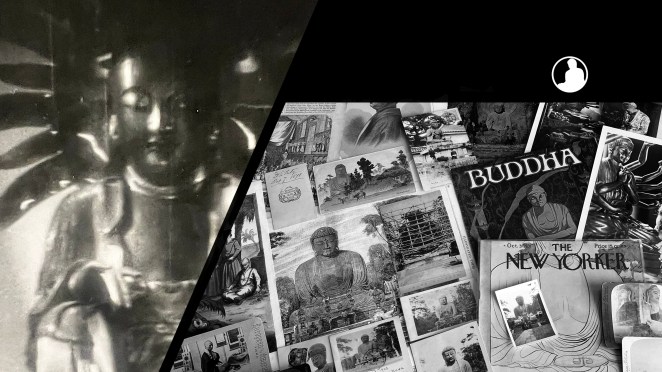
European and American chocolatiers were among the businesses that embraced the use of beautifully illustrated advertising trade cards. To inspire collection, the cards often depicted romantic, if not highly stereotyped, imagery.

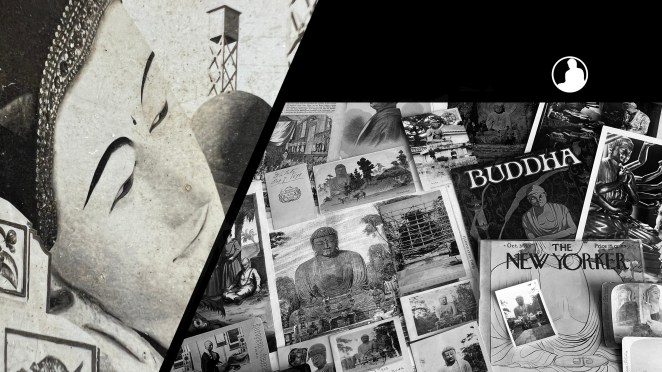
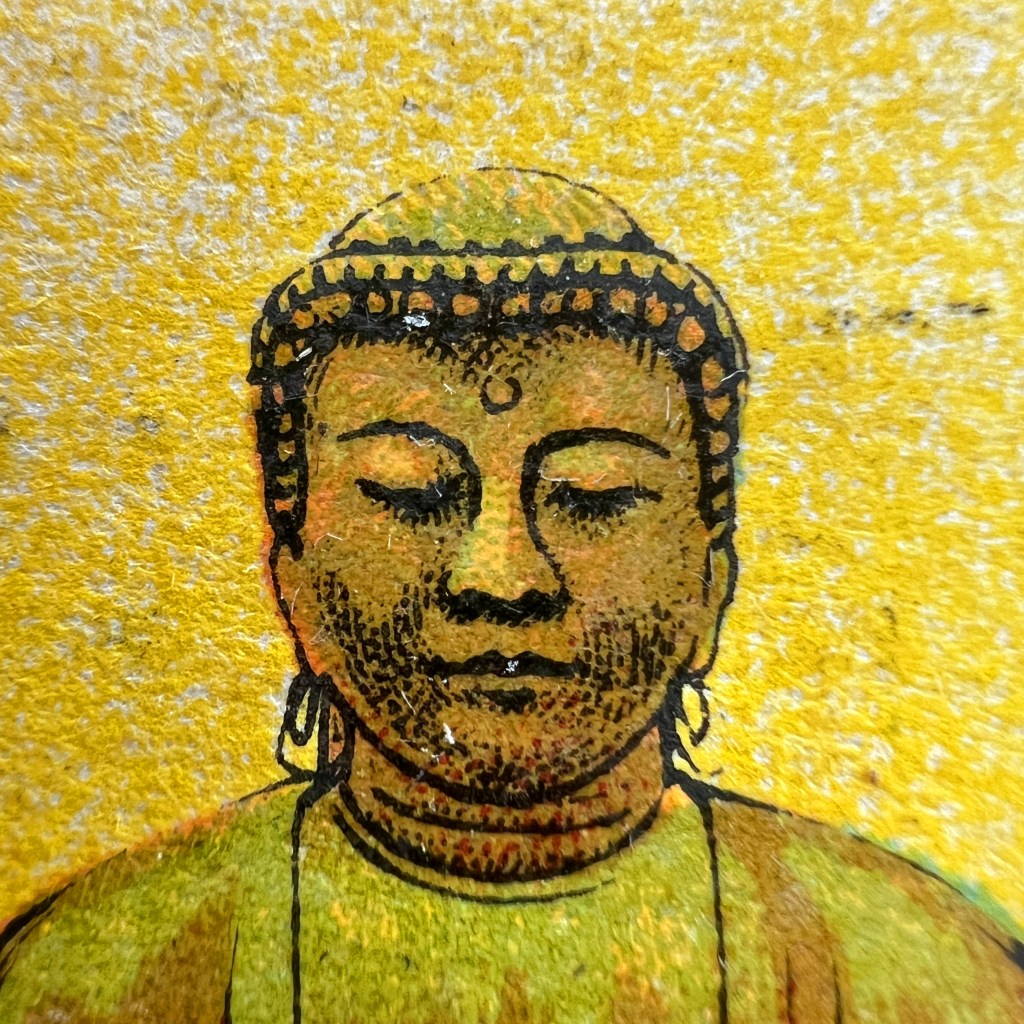
Looking closely, we can see the Kamakura Daibutsu is seemingly portrayed as a sightseeing destination, not a religious icon; the onlookers in Western attire hint more at curious observation than reverence.
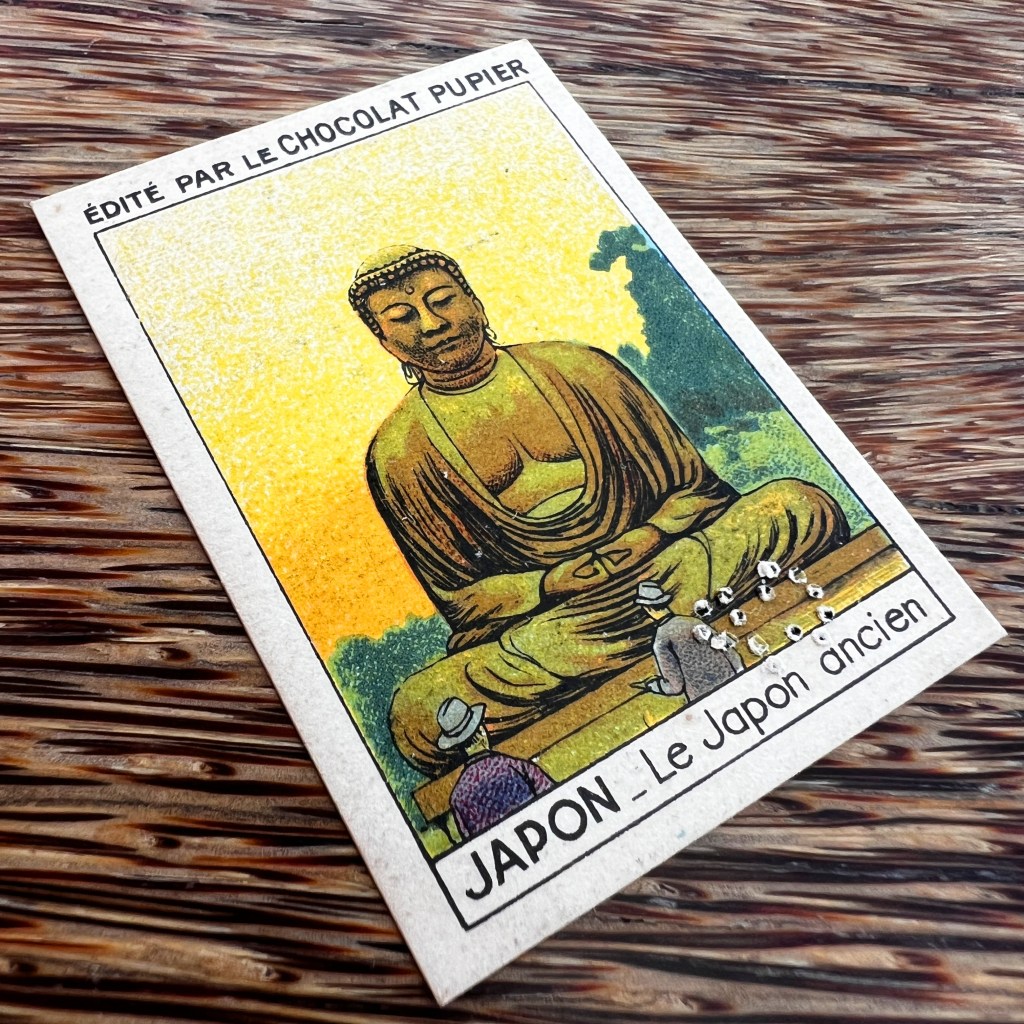
Moreover, the caption of “ancient Japan” plays to the idea of an ancient and mystical “Orient,” thus we might read the Buddhist icon as a quaint relic of the distant past, not part of a living religious tradition.

French confectioner Chocolat Pupier was a major producer of chromolithographed trade cards. An “Asia” album with 252 card slots could be purchased to display your collection (we see this is card number 140).

The rise of the postcard at the turn of the twentieth century and the growth of magazine advertising ended the widespread use of trade cards. For more on trade cards, see “The Short Rise and Fall of the Crazy-for-Cocoa-Trade Cards Craze,” viewable here: tinyurl.com/yc2a9y4b.
The Buddhas in the West Material Archive is a digital scholarship project that catalogues artifacts depicting Buddhist material culture for Western audiences. It’s comprised of prints, photos, and an assortment of ephemera and other objects. For a brief introduction to this archive, visit the main Buddhas in the West project page.


For Related Buddhas in the West Posts Featuring Historical Lithographic Prints:


For the Most Recent Buddhas in the West Posts:


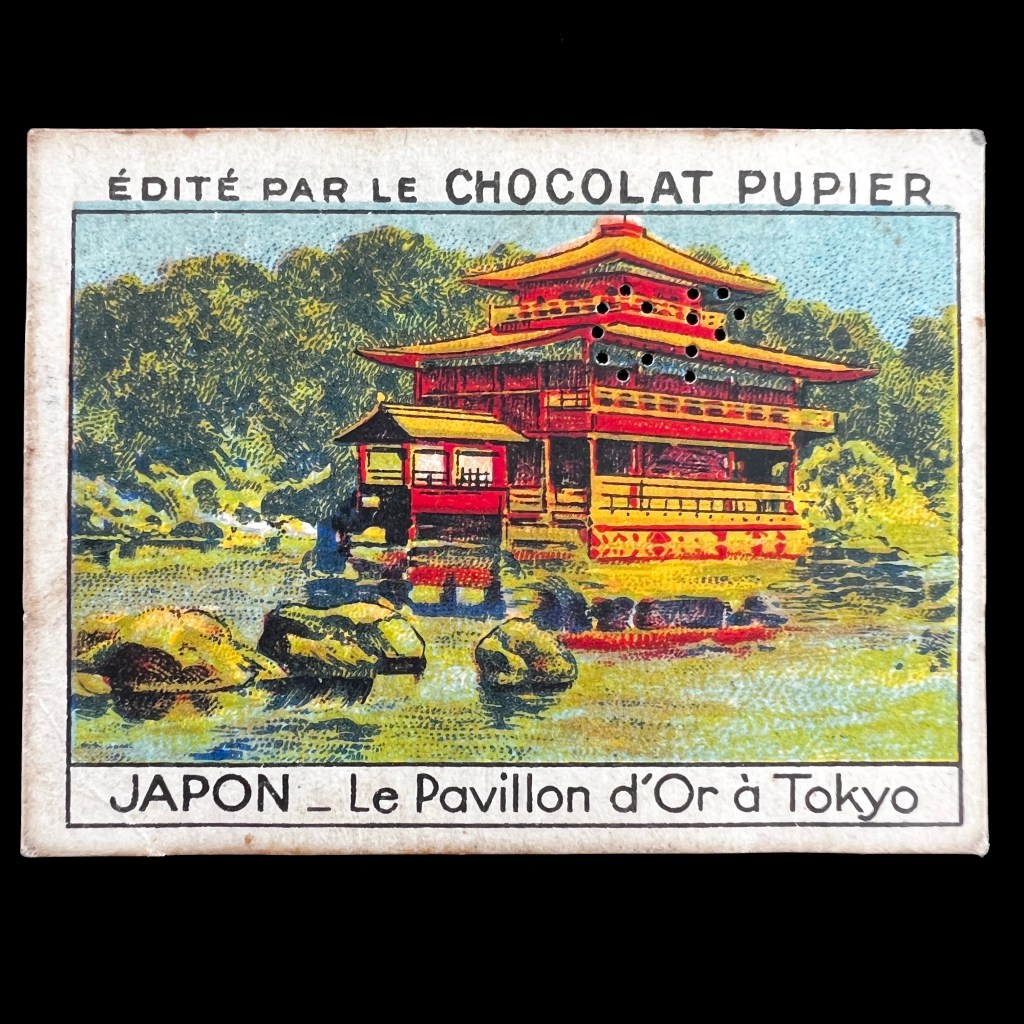
Chocolat Pupier’s Kinkaku-ji Trade Card

For all the new Buddhas in the West posts
follow us on Bluesky & Instagram


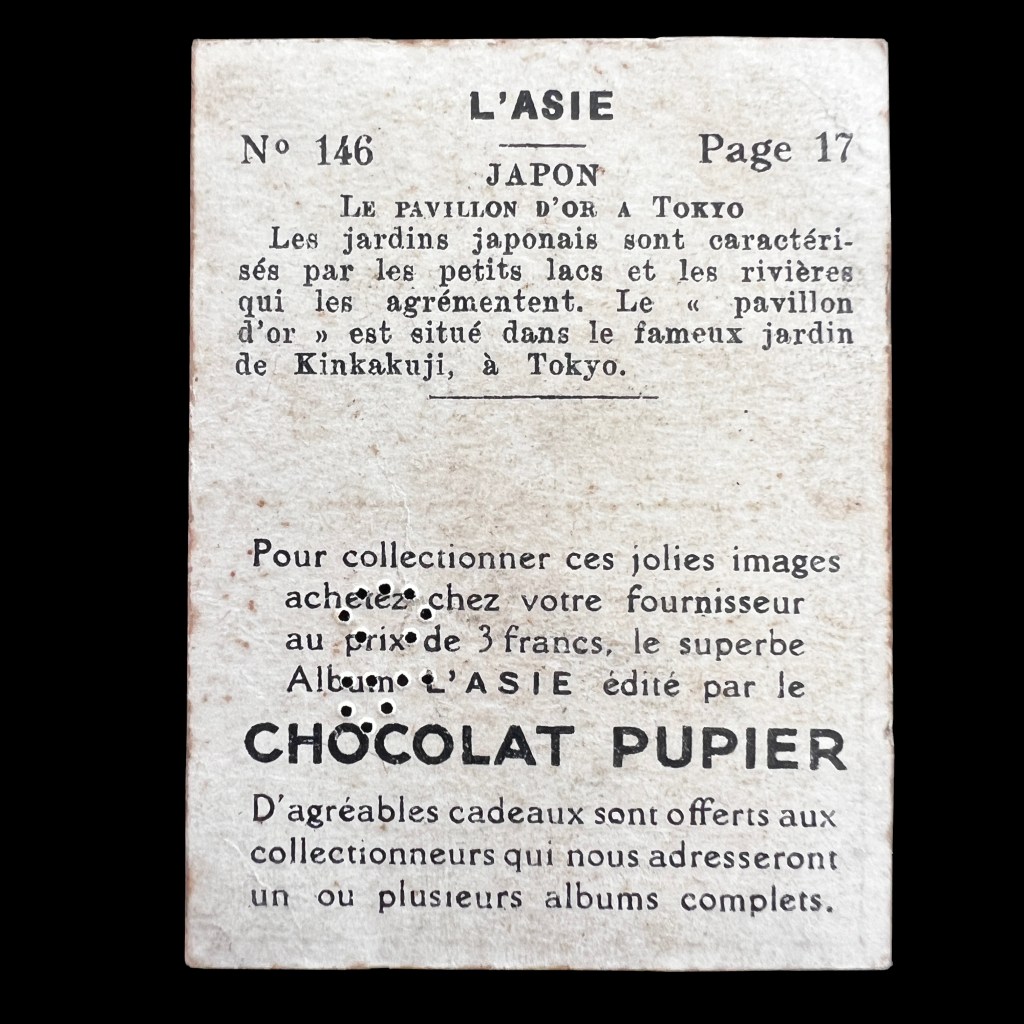
Turn of the century French chocolatiers took advantage of the popularity of colorful trade cards and included them with their products. In 1936 the Chocolat Pupier company created a collectable Asia series with several illustrations of Buddhist material culture.

An album with 252 card slots could be purchased to display your collection. If completed, Chocolat Pupier offered a gift to the consumer.

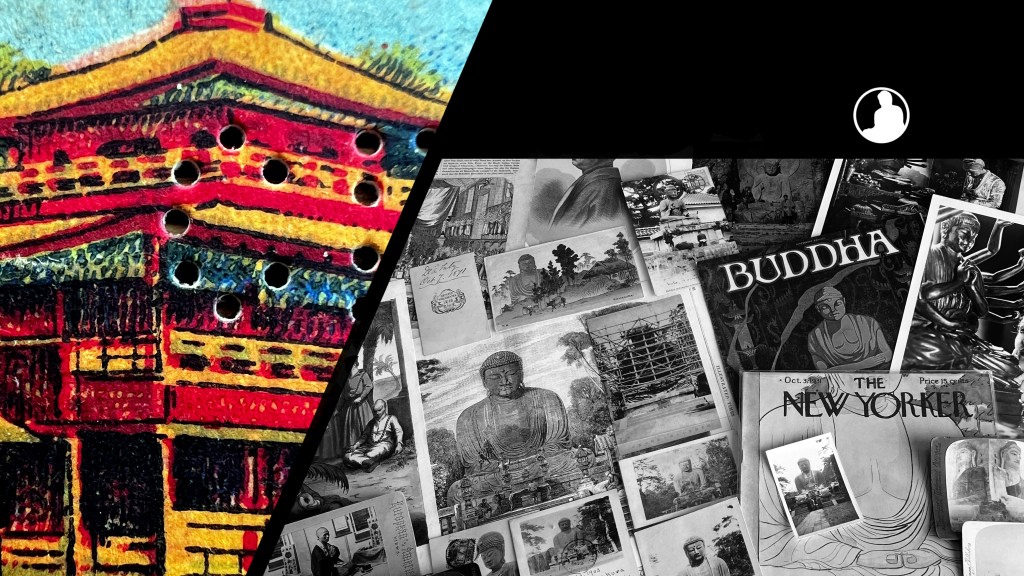
Chromo-lithographic printing offered an inexpensive way to mass produce colorful imagery. There is an error on this card, however, can you spot it?

The Gold Pavilion Temple, Kinkaku-ji, is not in Tokyo, buy Kyoto. In addition to Asia, Chocolat Pupier made cards related to Europe, North America, and Africa.

A small collection of Chocolat Pupier card was recently acquired by Duke University Library, see here: https://archives.lib.duke.edu/catalog/chocolatpupier.


The Buddhas in the West Material Archive is a digital scholarship project that catalogues artifacts depicting Buddhist material culture for Western audiences. It’s comprised of prints, photos, and an assortment of ephemera and other objects. For a brief introduction to this archive, visit the main Buddhas in the West project page.


For Related Buddhas in the West Posts Featuring Historical Trade Cards:


For the Most Recent Buddhas in the West Posts:

Liebig’s Chinese Buddha Advertising Card

For all the new Buddhas in the West posts
follow us on Bluesky & Instagram


Gods of Antiquity: In the early age of black and white mass market publications, chromolithography ushered in a new era of visual media. From massive broadside to Victorian trade cards, vibrant color was the future and the British Liebig company capitalized on this market.

Liebig started producing trade cards in 1872 and by the turn of the century their cards were printed in several languages. Several different sets were made each year and these sets soon became collector’s items, predating hobbies such as baseball card collecting.

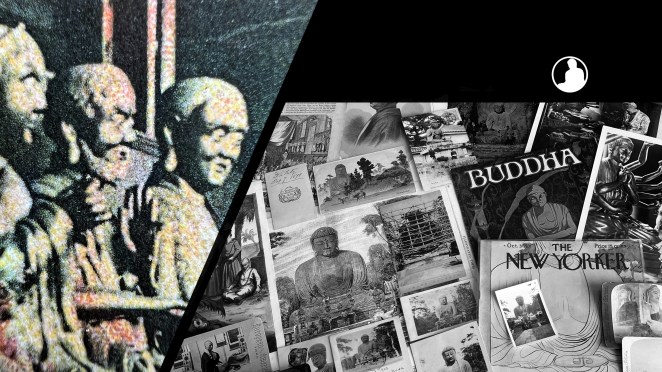
In 1895 Liebig released the Gods of Antiquity set, with the card here showing the worship of the Buddha by “Chinese nobles.” The scene is mostly a hodge-podge of turn of the century Chinese stereotypes.

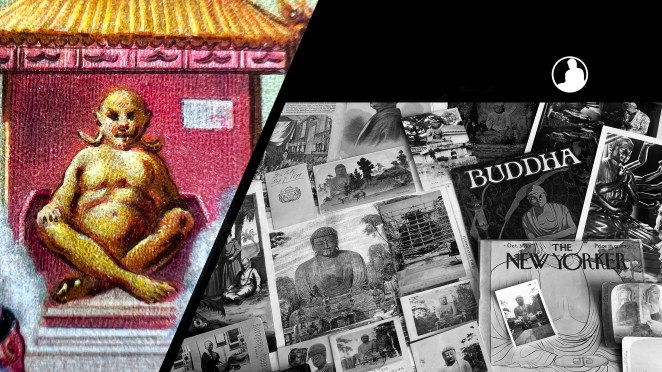
A gold Buddha, sitting awkwardly with legs crossed, takes center stage in this imaginary temple scene.

Chinese Buddhist rituals use instruments, but not of the kind depicted here.

For a short introduction to the Liebig Company’s trade cards by Princeton University’s Firestone Library, follow this link: https://tinyurl.com/3nzvs6mh.


The Buddhas in the West Material Archive is a digital scholarship project that catalogues artifacts depicting Buddhist material culture for Western audiences. It’s comprised of prints, photos, and an assortment of ephemera and other objects. For a brief introduction to this archive, visit the main Buddhas in the West project page.


For Related Buddhas in the West Posts Featuring China:


For the Most Recent Buddhas in the West Posts:


Paris’ Panorama du Tour du Monde Advertising Card

For all the new Buddhas in the West posts
follow us on Bluesky & Instagram


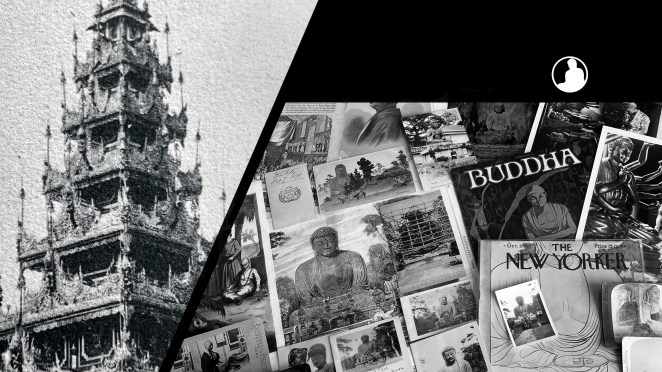
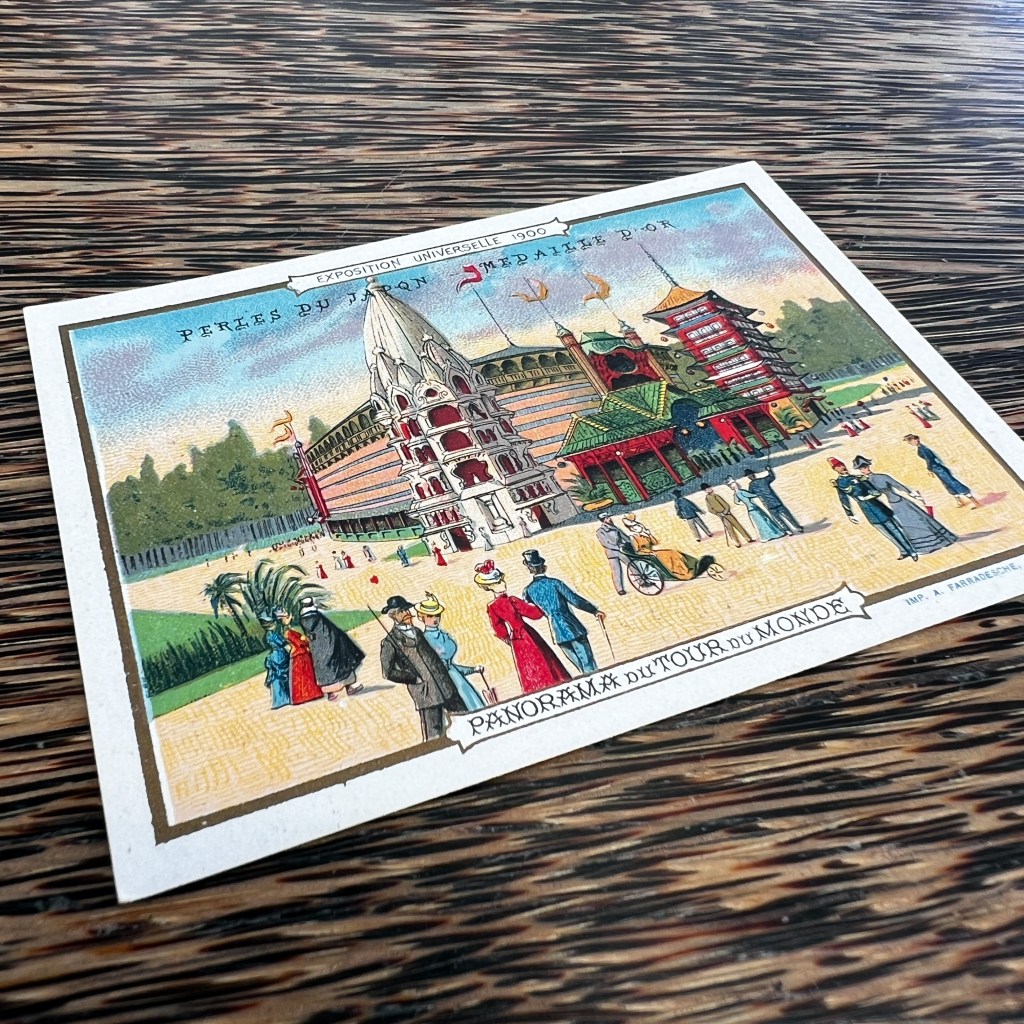
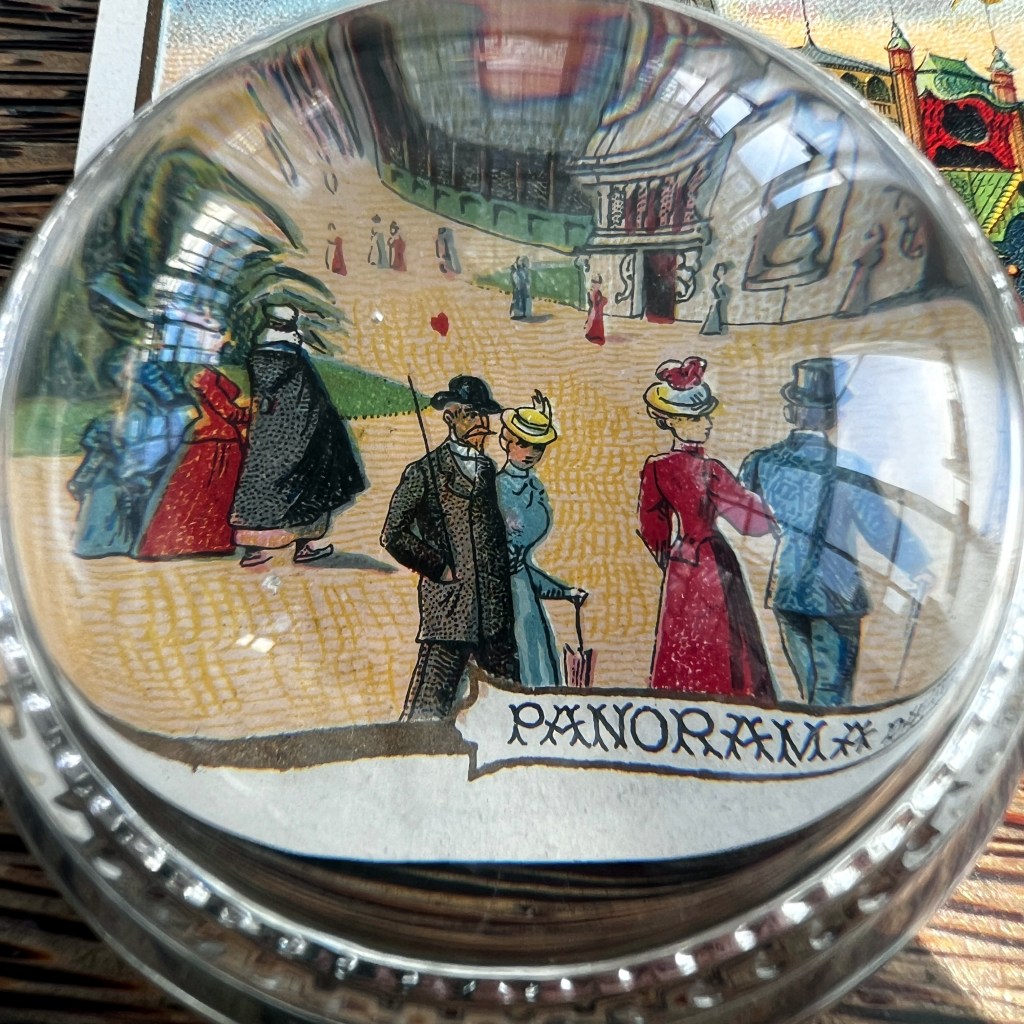
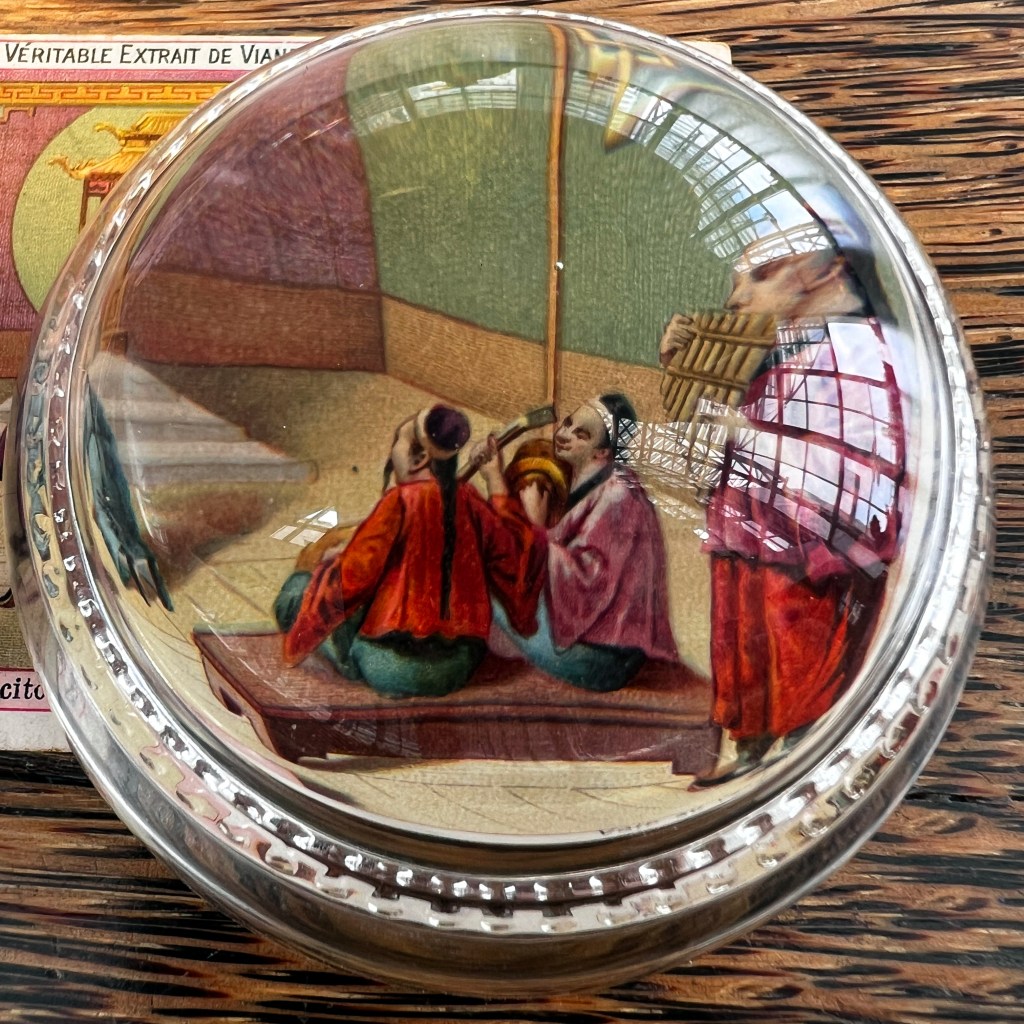
Panorama du Tour du Monde: By the 1900 Paris Exposition, amusement concessions were a major draw for all exposition visitors. Not far from the foot of the Eiffel Tower one found the Panorama du Tour du Monde which took patrons on a virtual voyage from Spain to Japan.

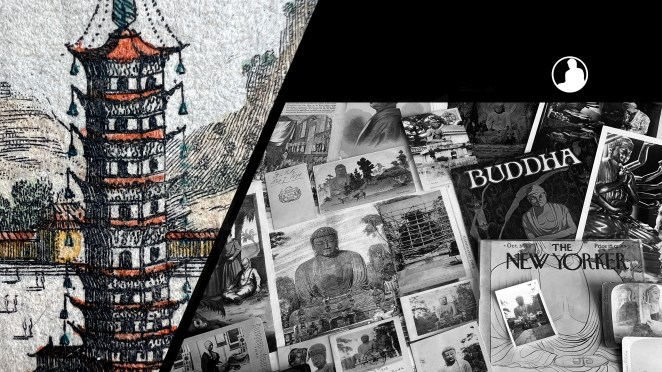
Built by Alexandre Marcel for a French sea-transport company, the architecture called to mind exotic locales with Asian-inspired structures. The main entrance was modeled on the Tōshō-gū in Nikkō, Japan. Some sources claim the red pagoda was based on a Chinese model.

Visitors were drawn in by large panoramic paintings of various foreign countries to give a sense of virtual travel. More astonishingly, the concession integrated many indigenous performers who engaged in various trades while wearing traditional foreign costumes

The beautiful lithographic print was part of an advertising campaign for a French company selling tapioca pearls, called “perles du Japon.”

King Leopold II was so struck by the building, he had Marcel build the Japanese Tower in Brussels. For more on the Tour du Monde exhibition, see https://tinyurl.com/2vbmr3c7.


The Buddhas in the West Material Archive is a digital scholarship project that catalogues artifacts depicting Buddhist material culture for Western audiences. It’s comprised of prints, photos, and an assortment of ephemera and other objects. For a brief introduction to this archive, visit the main Buddhas in the West project page.


For Related Buddhas in the West Posts Featuring France:


For the Most Recent Buddhas in the West Posts:

Liebig’s Komusō Advertising Card

For all the new Buddhas in the West posts
follow us on Bluesky & Instagram


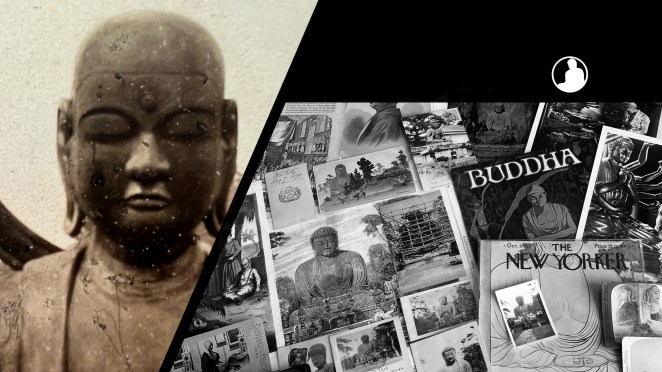
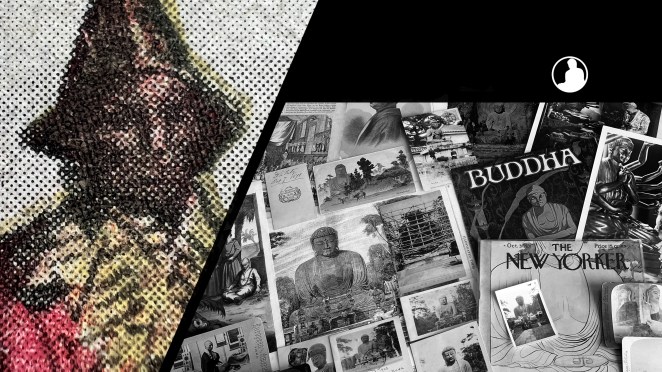
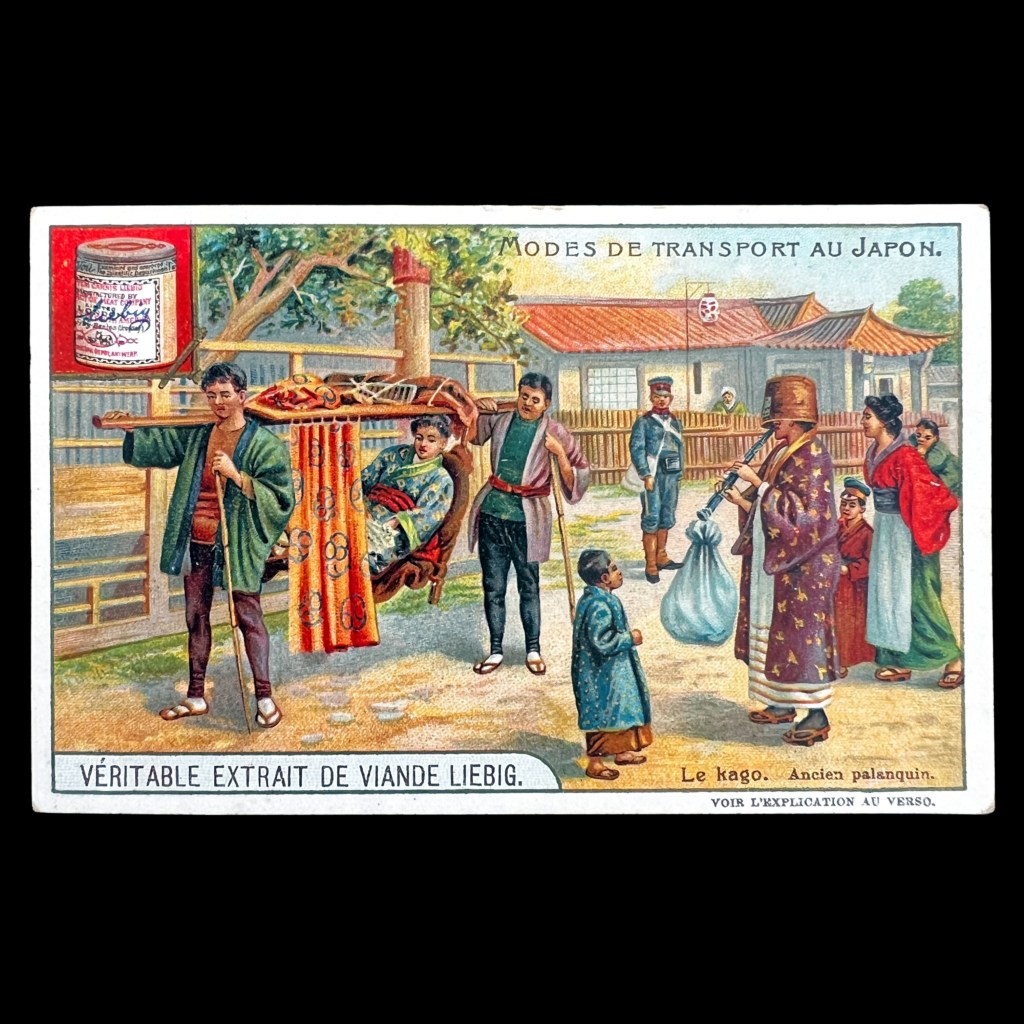
Komusō 虚無僧: Victorian trade card illustrations leaned into stereotypes to create collectables with easily identifiable cultures and peoples. With the 1905 Japanese modes of transportation series, the setting is provided a curious Buddhist figure: a flute playing monk.

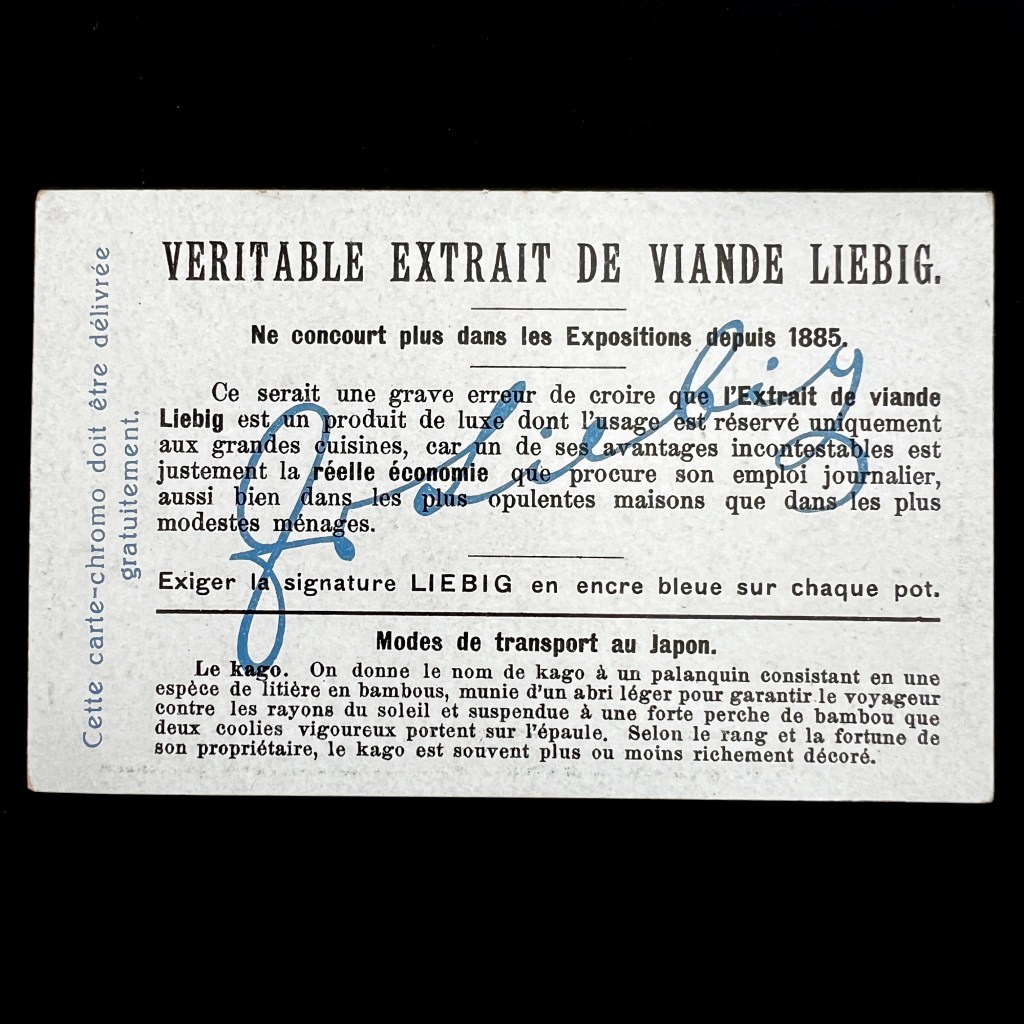
The British Liebig company started producing trade cards in 1872 and by the turn of the century the vibrant chromolithographic prints were widely popular and printed in several languages. This set comprised six cards, with the one here focusing on the Japanese palanquin.

The faceless Komusō – monks of nothingness – were depicted in woodblock prints of the late Edo period and were seen in souvenir photographs of Yokohama studios in c.1890s. Consequently they became one among the visual icons of Japan for Western tourists.

The Fuke school of the komusō was prohibited in 1871, but lay shakuhachi flute players continued the tradition of playing in public while dressed in full garb.


The Buddhas in the West Material Archive is a digital scholarship project that catalogues artifacts depicting Buddhist material culture for Western audiences. It’s comprised of prints, photos, and an assortment of ephemera and other objects. For a brief introduction to this archive, visit the main Buddhas in the West project page.


For Related Buddhas in the West Posts Featuring Historical Trade Cards:


For the Most Recent Buddhas in the West Posts:

Arbuckle Bros. Coffee Japan Advertising Card

For all the new Buddhas in the West posts
follow us on Bluesky & Instagram


Vibrant Victorian trade cards stuck out among a sea of black and white advertising. In the early age of engraved mass publications, chromolithography ushered in a new era of visual media.

Trade cards were popular advertising materials from 1875 to 1900. Typically businesses printed text-heavy advertising copy on the reverse of the card, saving the obverse for an image.

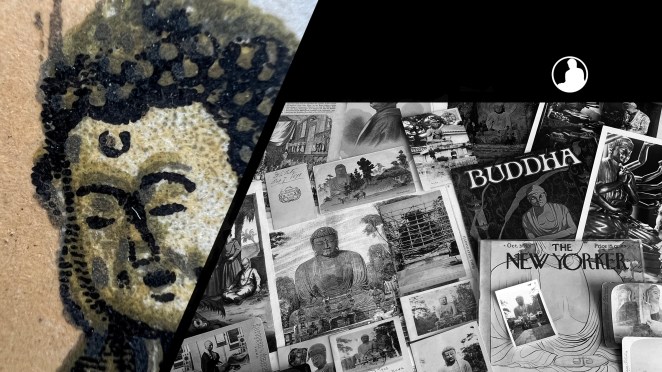
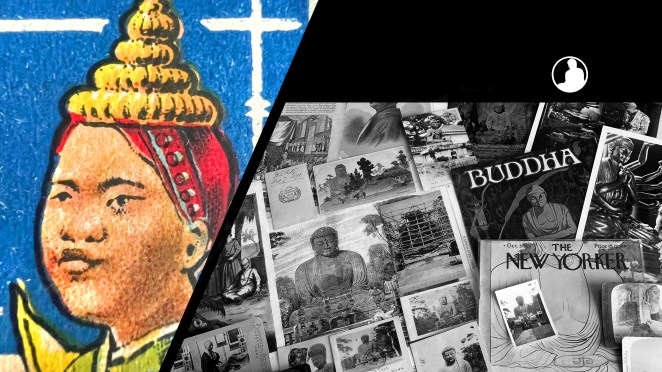
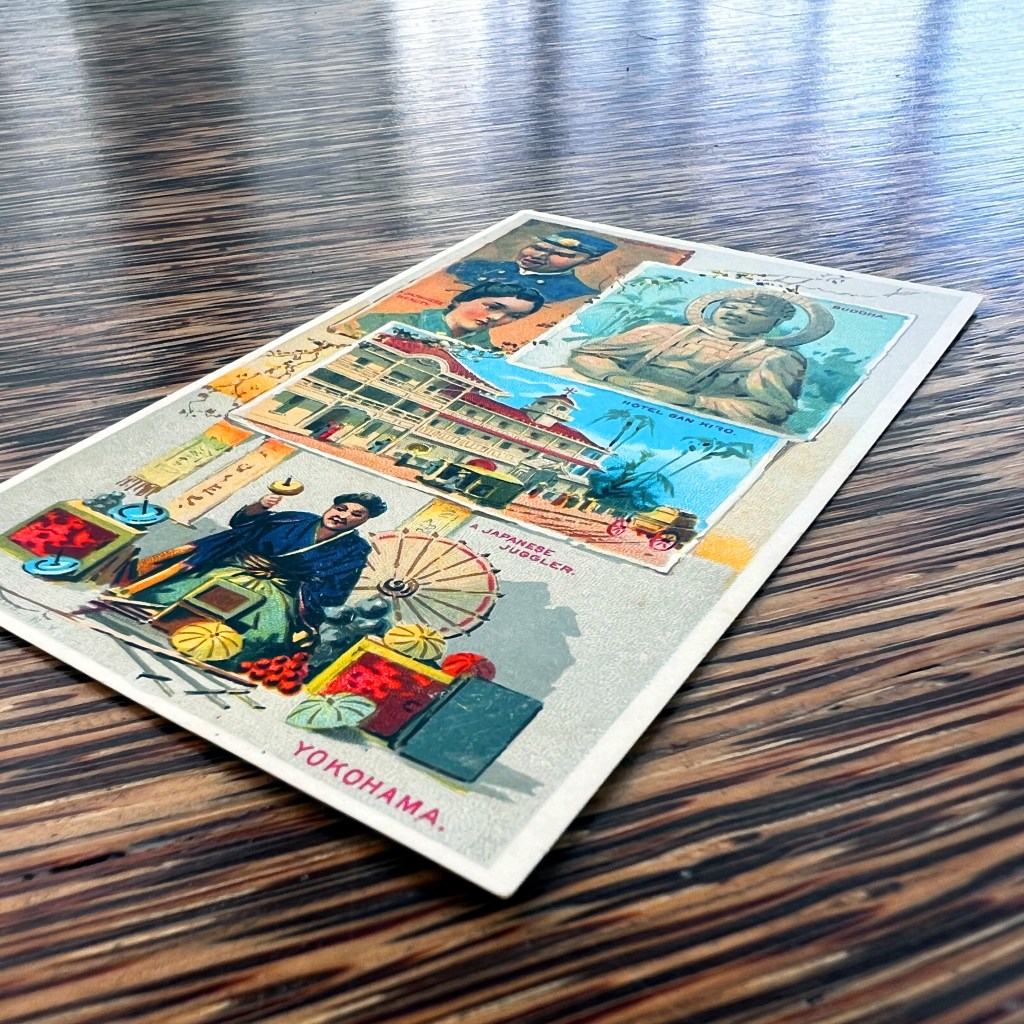
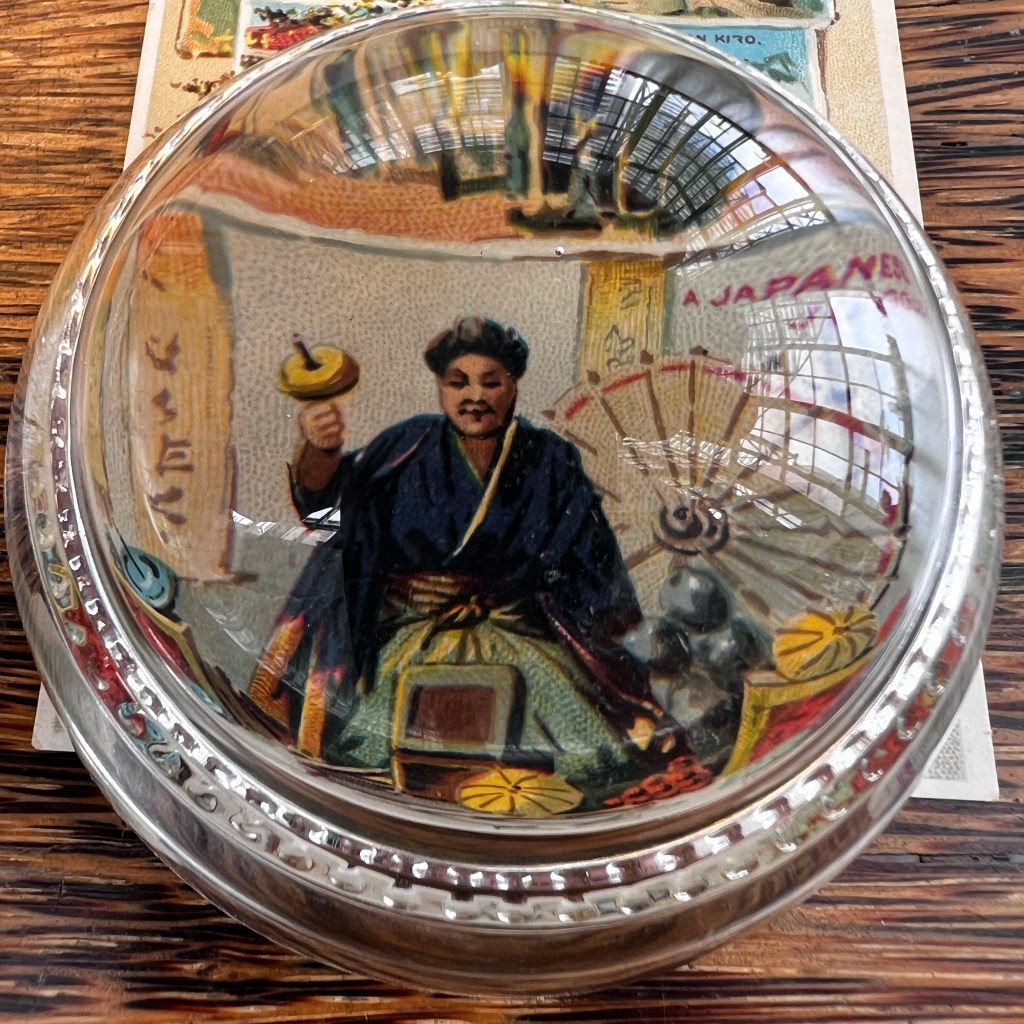
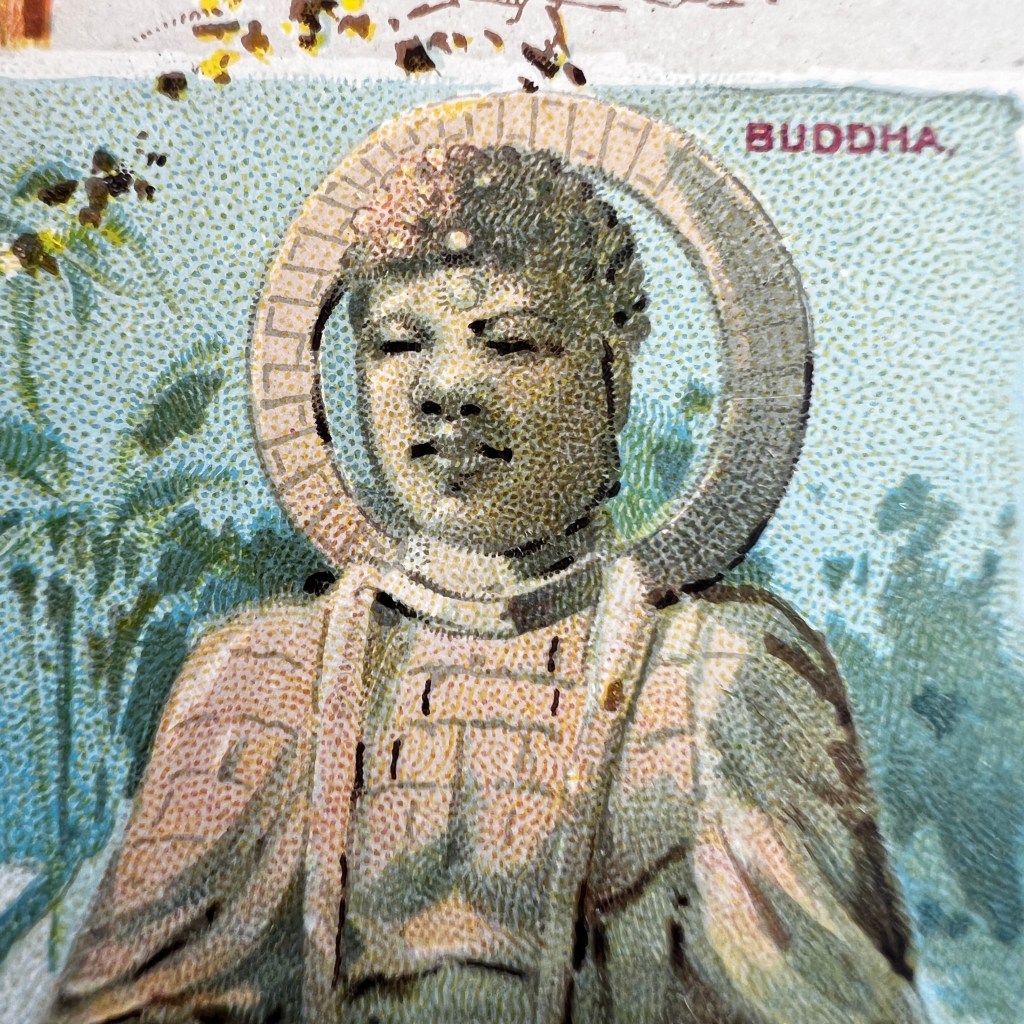
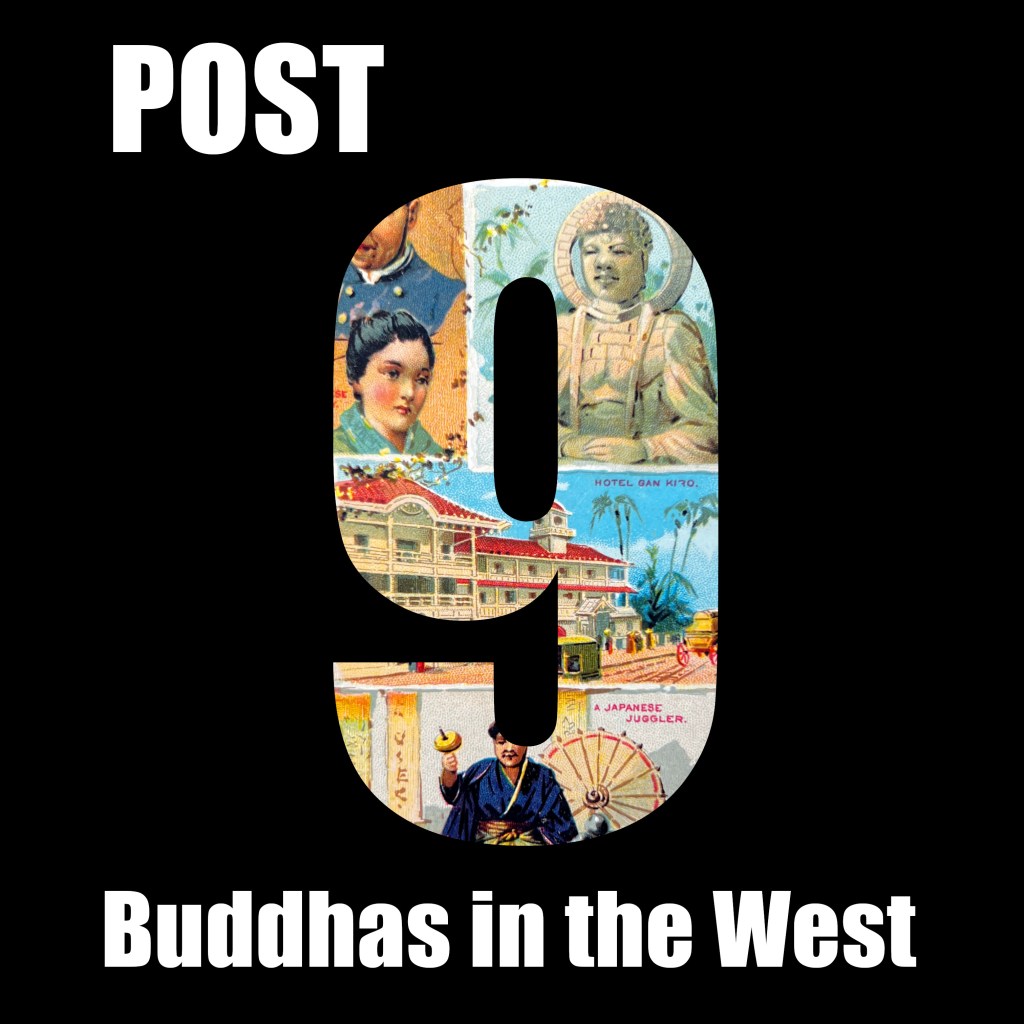
Here, Arbukle Bros. Coffee produced a 50 card set depicting around-the-world travel. This trade card highlights Yokohama, Japan, a treaty port city popular among 19th century tourists.

In reality, the card shows stereotypical imagery of Japan, including costumes, landscapes, and professions easily identifiable to foreign travelers.

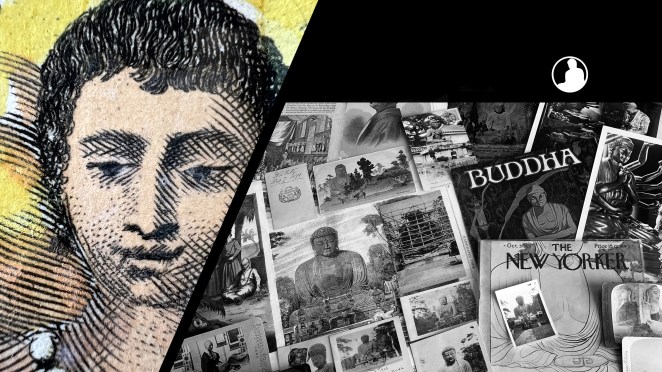
The Buddhist icon is unidentified, but this card reveals generic Buddhist imagery was closely connected to the popular image of Japan.


The Buddhas in the West Material Archive is a digital scholarship project that catalogues artifacts depicting Buddhist material culture for Western audiences. It’s comprised of prints, photos, and an assortment of ephemera and other objects. For a brief introduction to this archive, visit the main Buddhas in the West project page.


For Related Buddhas in the West Posts Featuring Historical Trade Cards:

For the Most Recent Buddhas in the West Posts: