For all the new Buddhas in the West posts
follow us on Bluesky & Instagram
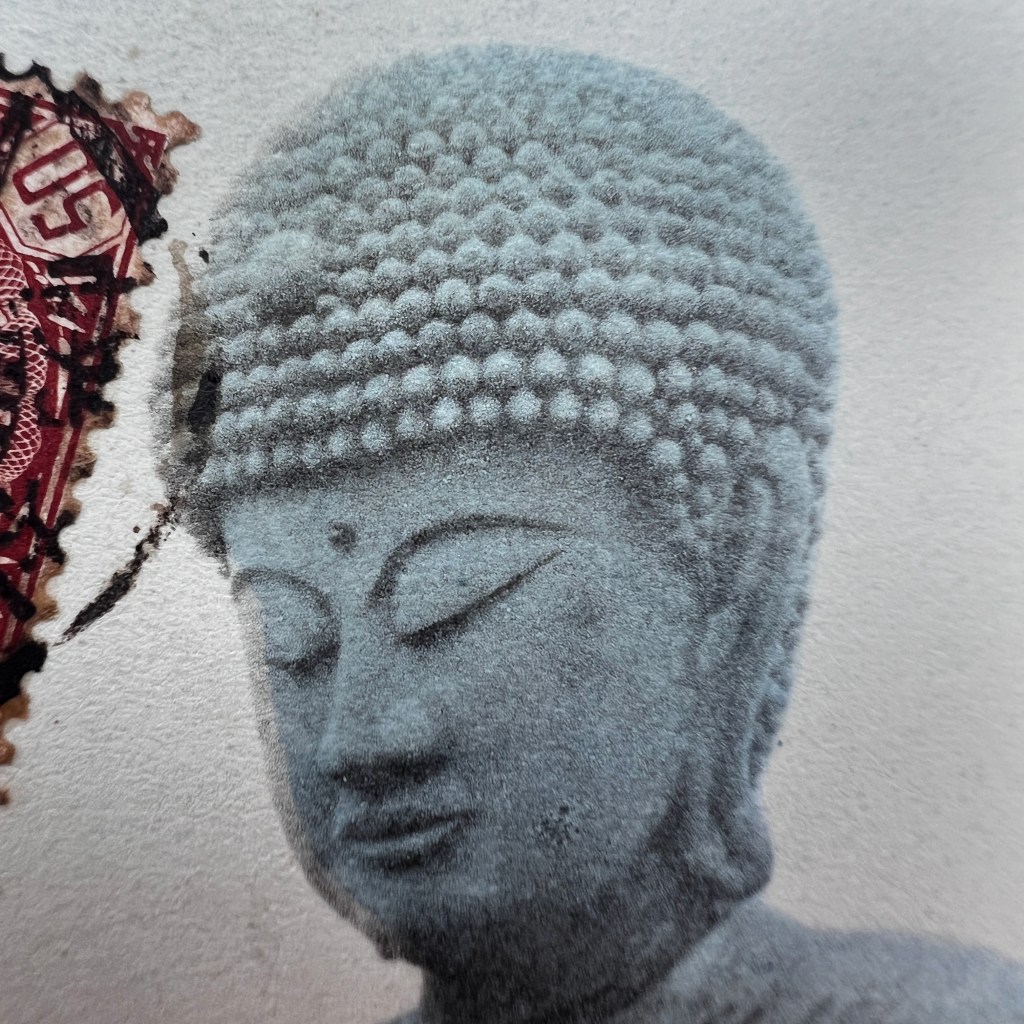
Nōfuku-ji, a Buddhist temple in the port city of Kobe, Japan, was reportedly founded by the monk Saichō in 805. A thousand years later, the colossal Hyōgo Daibutsu was built on temple grounds in 1891, but the statue did not survive beyond World War II.
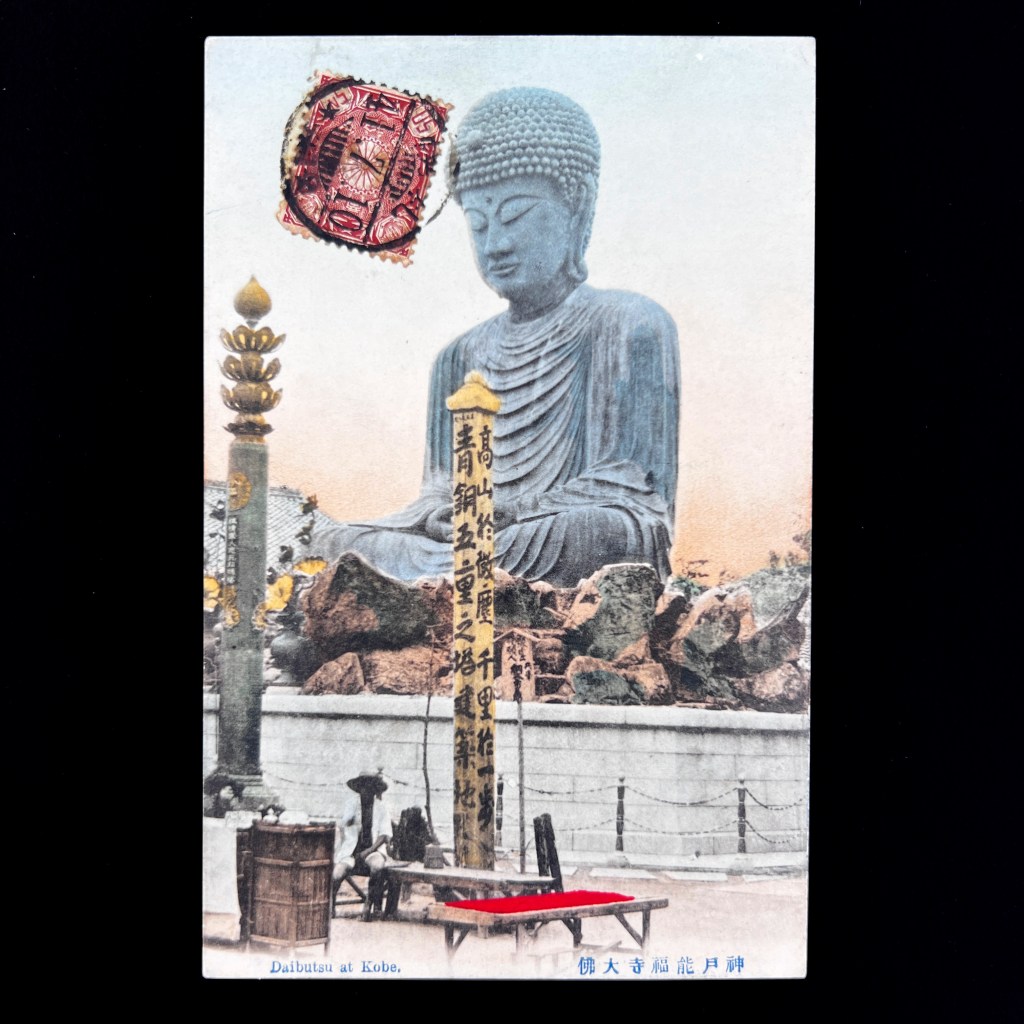
Commissioned by a local paper merchant, the bronze icon stood just under 15 meters (48 ft.) in height, but remained exposed and uncovered by a shrine hall. The Hyōgo Daibutsu represented Vairocana Buddha, the same figure enshrined at Tōdai-ji, in the ancient capital of Nara.
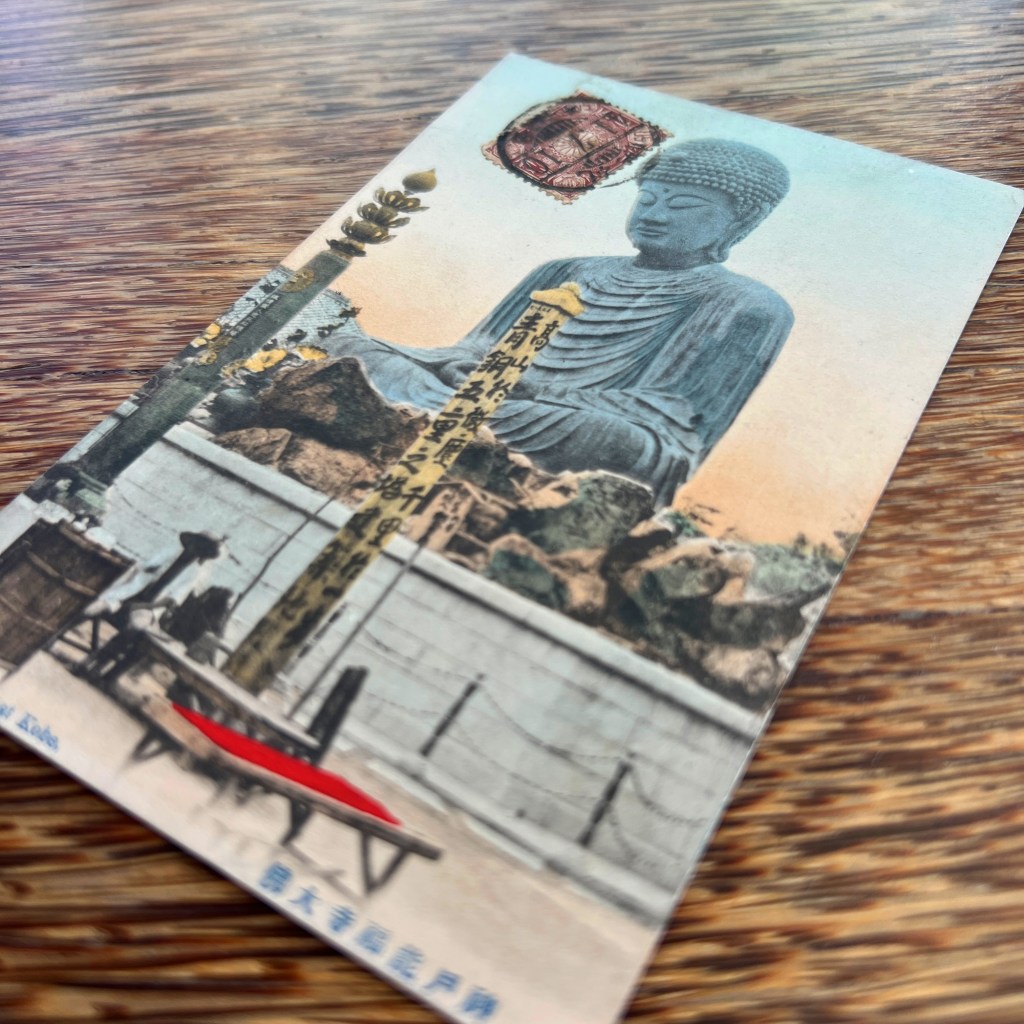
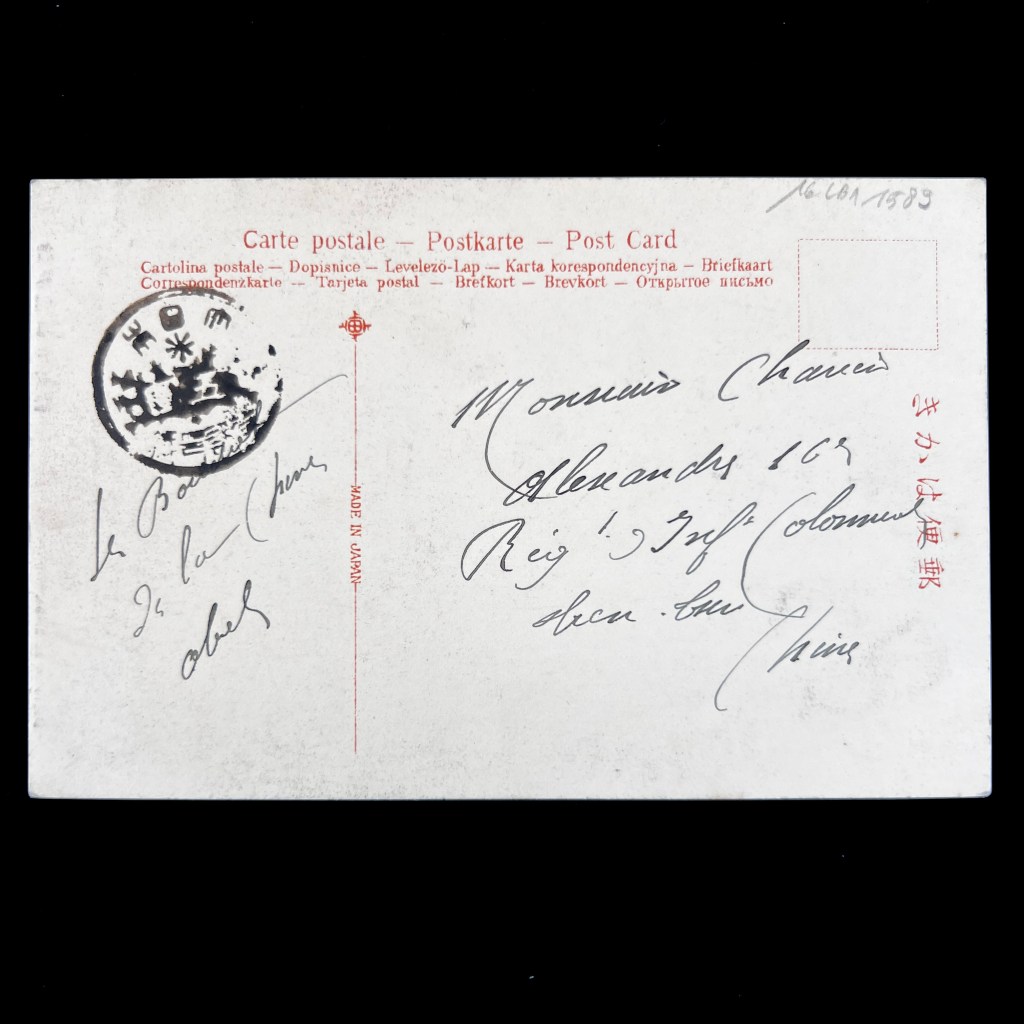
Guidebooks in the early 20th century refer to Nōfuku-ji as a worthy tourist destination when traveling through Kobe. Equally, Japanese postcard companies often used imagery of the Hyōgo Daibutsu; here we see a card made by Ueda Photo, one of the largest publishers during the late Meiji era.
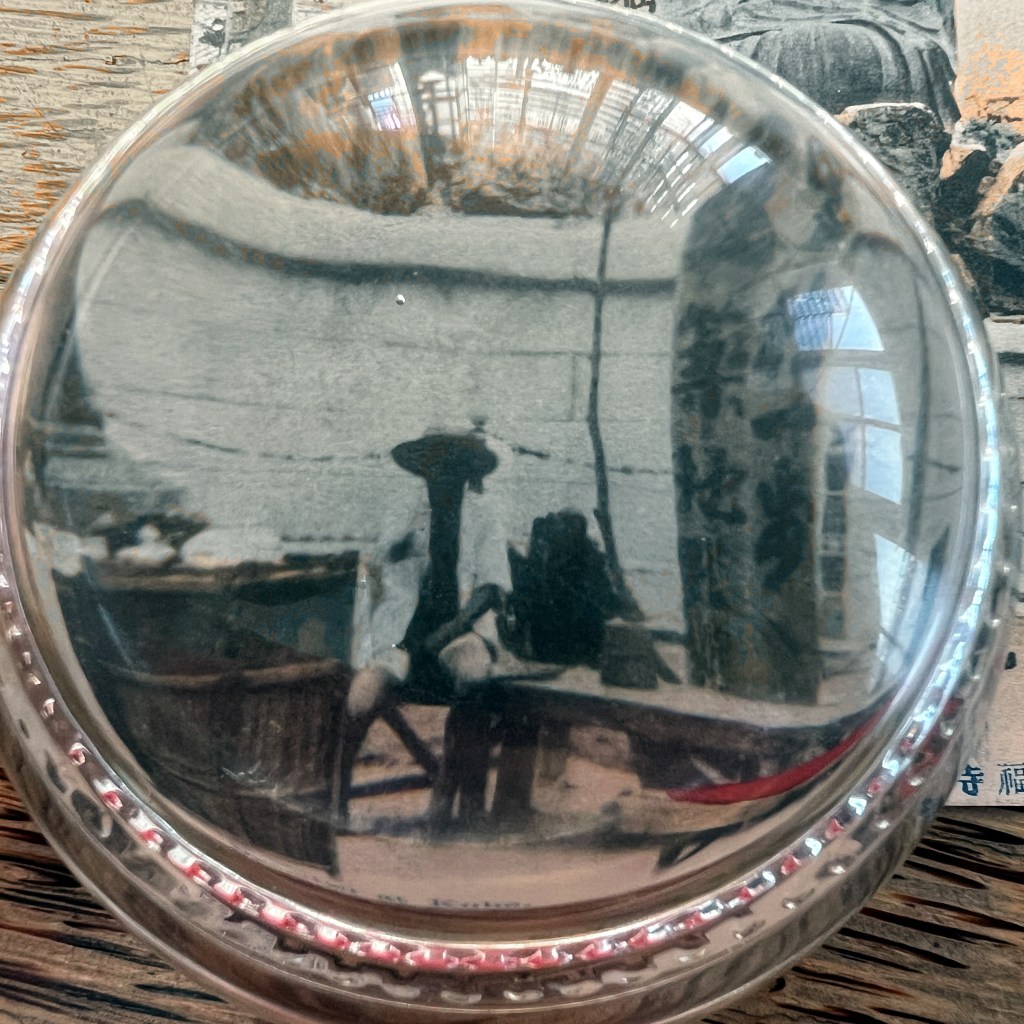
Like the Kamakura Daibutsu, the outdoor setting allowed visitors an easy opportunity to have photographs taken in front of the colossal statue.
The statue was dismantled under the Ordinance on the Collection of Metals issued as part of Japanese war efforts during WWII. In 1991, one hundred years after the original was complete, a new Hyōgo Daibutsu was consecrated and remains today at Nōfuku-ji.
The Buddhas in the West Material Archive is a digital scholarship project that catalogues artifacts depicting Buddhist material culture for Western audiences. It’s comprised of prints, photos, and an assortment of ephemera and other objects. For a brief introduction to this archive, visit the main Buddhas in the West project page.
For Related Buddhas in the West Posts Featuring the Hyōgo Daibutsu:

For the Most Recent Buddhas in the West Posts:




 Personal Site of Peter Romaskiewicz