For all the new Buddhas in the West posts
follow us on Bluesky & Instagram
In 1903, a titan of world postcard production, England-based Raphael Tuck & Sons, set themselves further apart by issuing the vibrantly colored Oilette Series based on commissioned oil paintings. Among the first sets released was devoted to the mysterious Himalayan nation of Tibet.
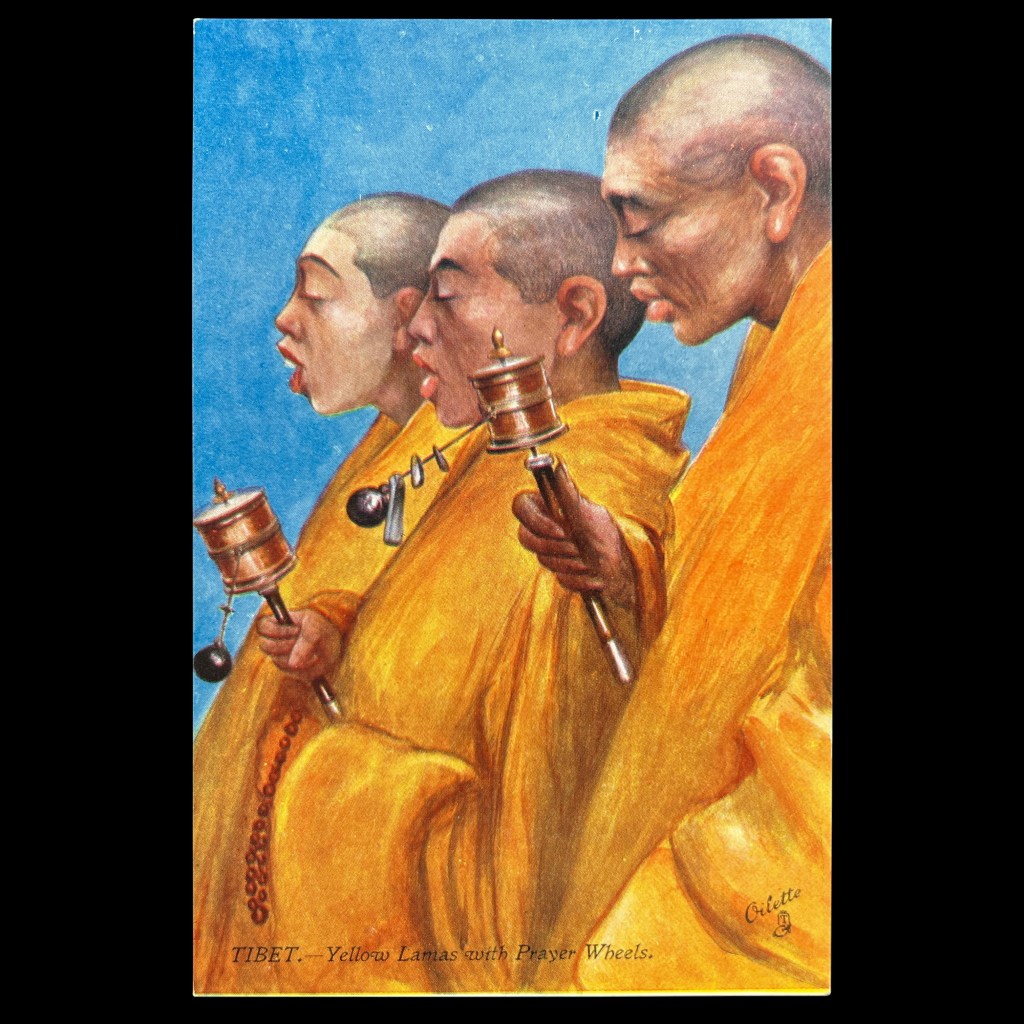
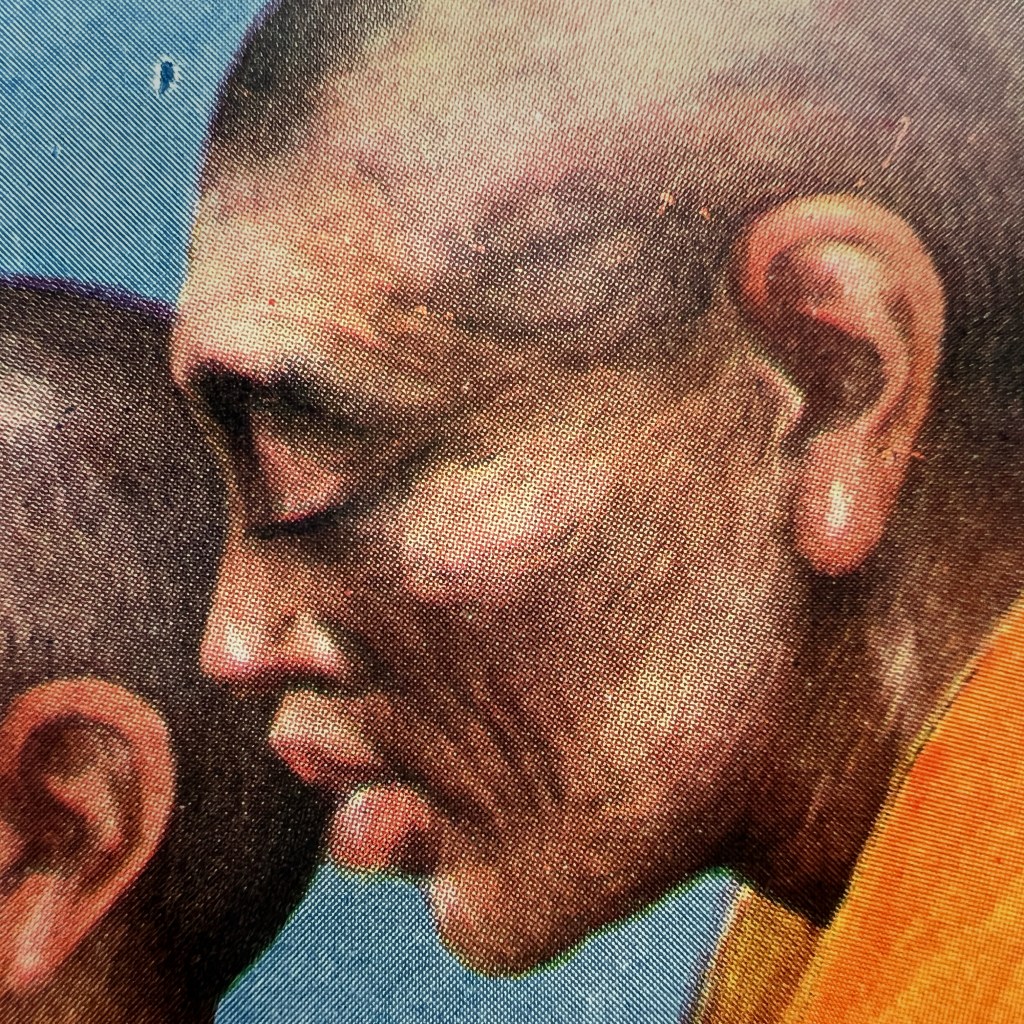
Six paintings were prepared by the explorer and artist Henry Savage Landor who wrote about his travels to the region in his 1898 book, In the Forbidden Land. Tuck printed Landor’s paintings as lithograph postcards at a time when photos of Tibet were only first starting to circulate.
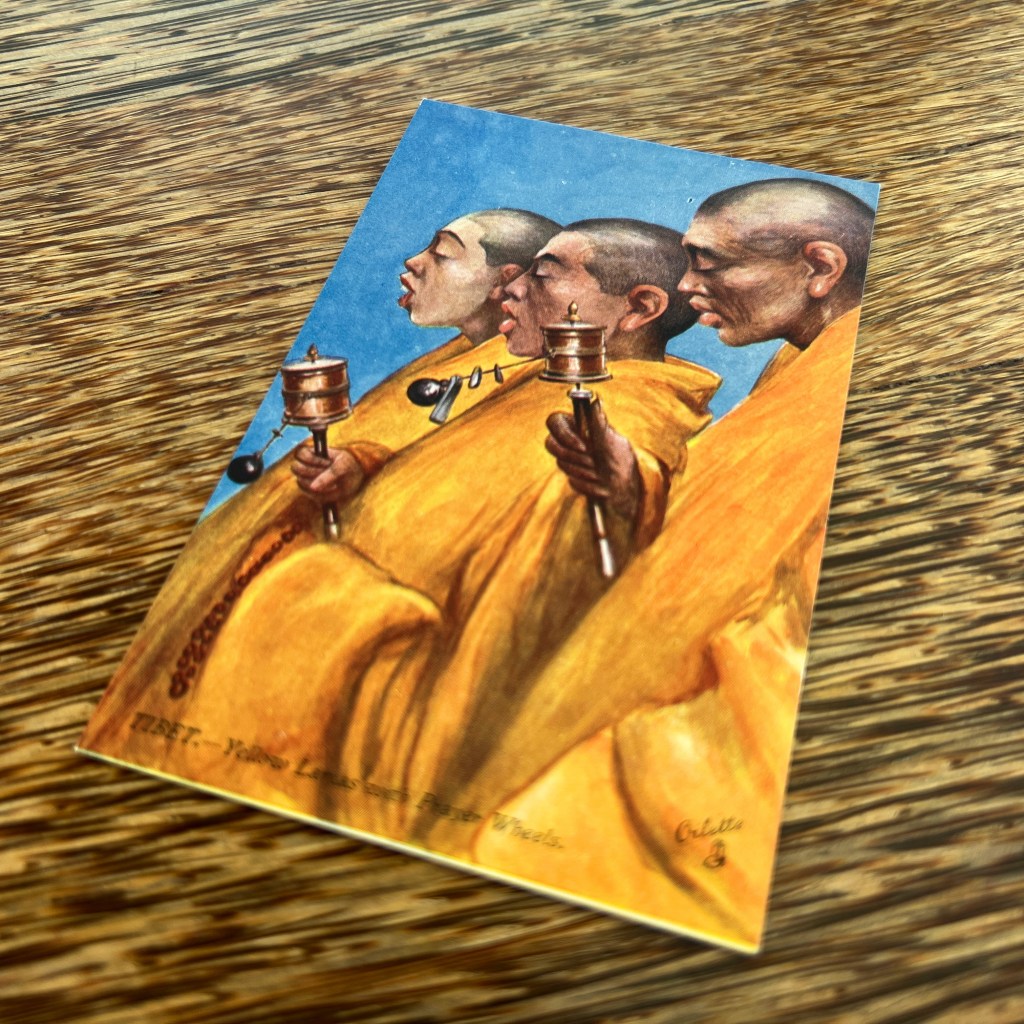
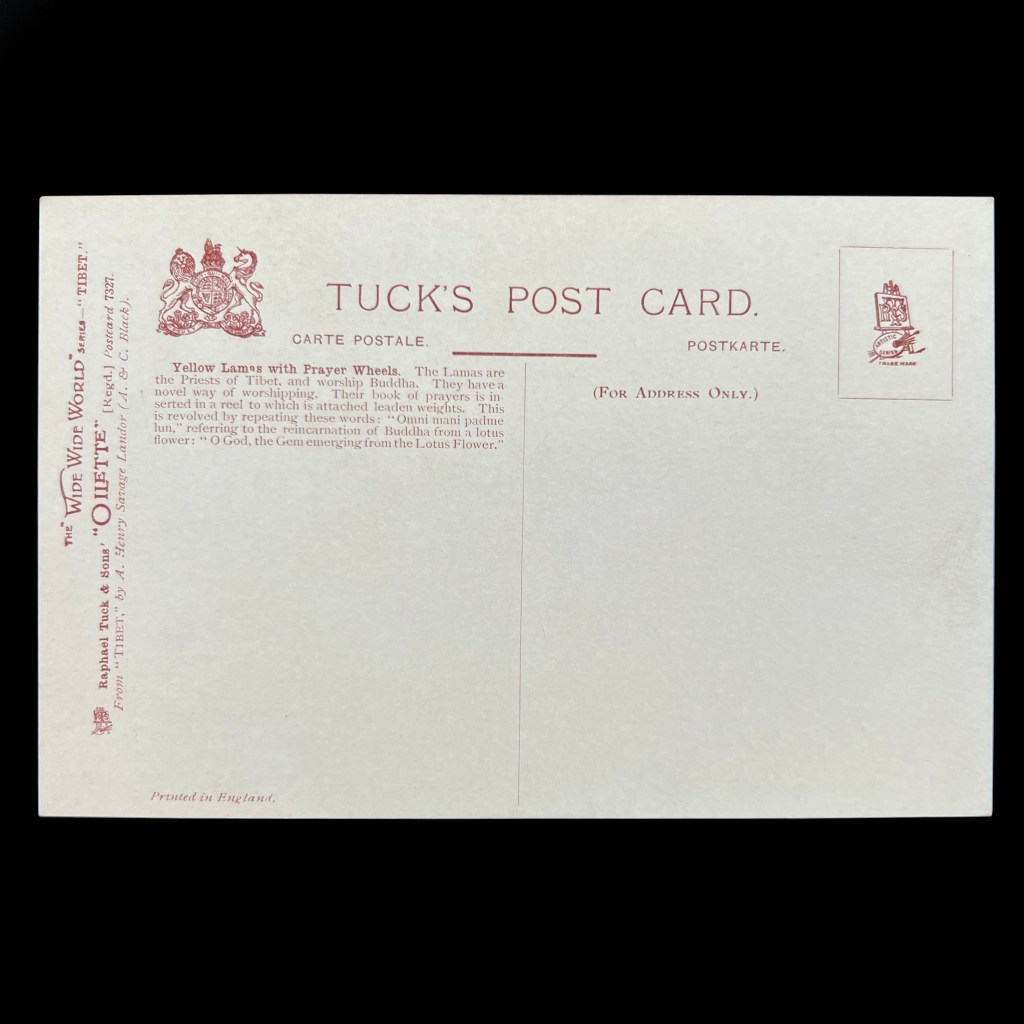
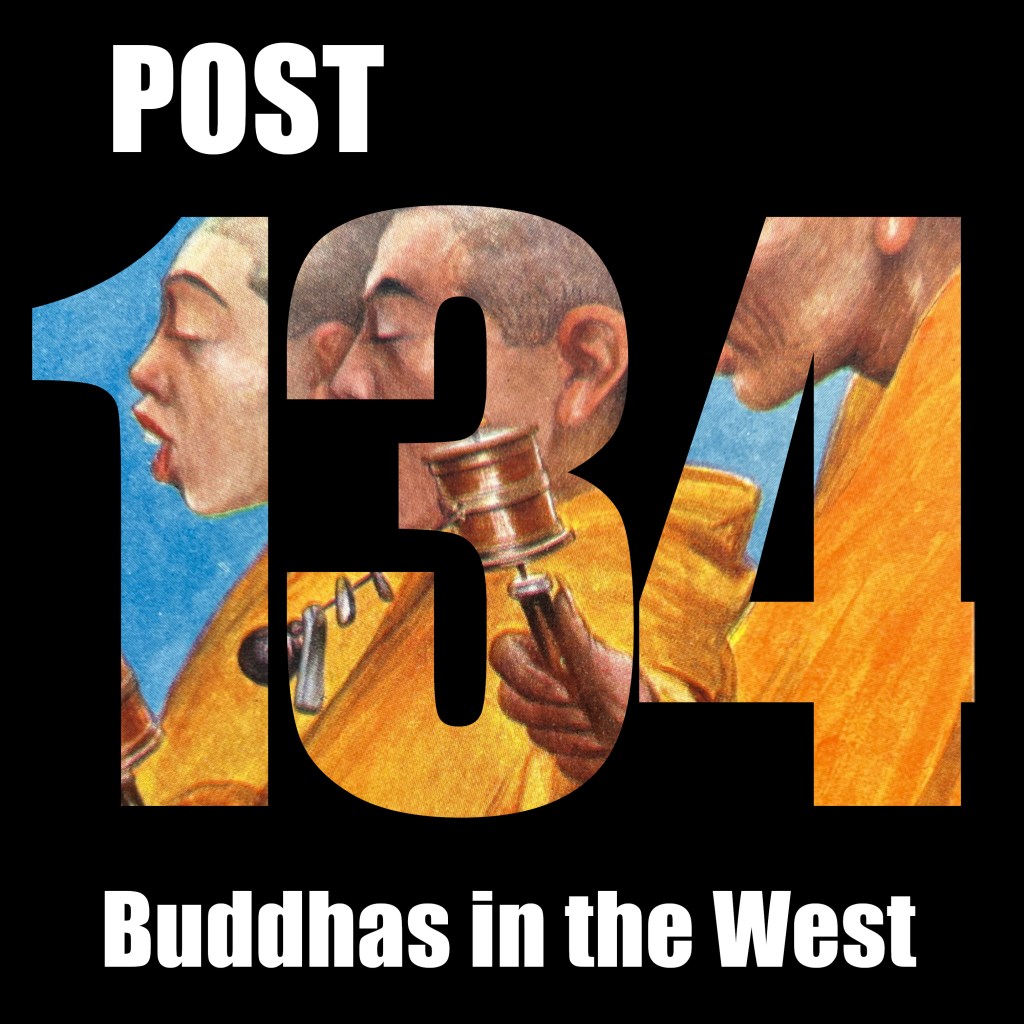
While a majority of Tuck’s pictorial stock focused on the English countryside, the Wide Wide World Series introduced colonial lands and other foreign cultures. Here the caption notes the use of Om mani padme hum, a six-syllable Sanskrit mantra common among Tibetan Buddhists.
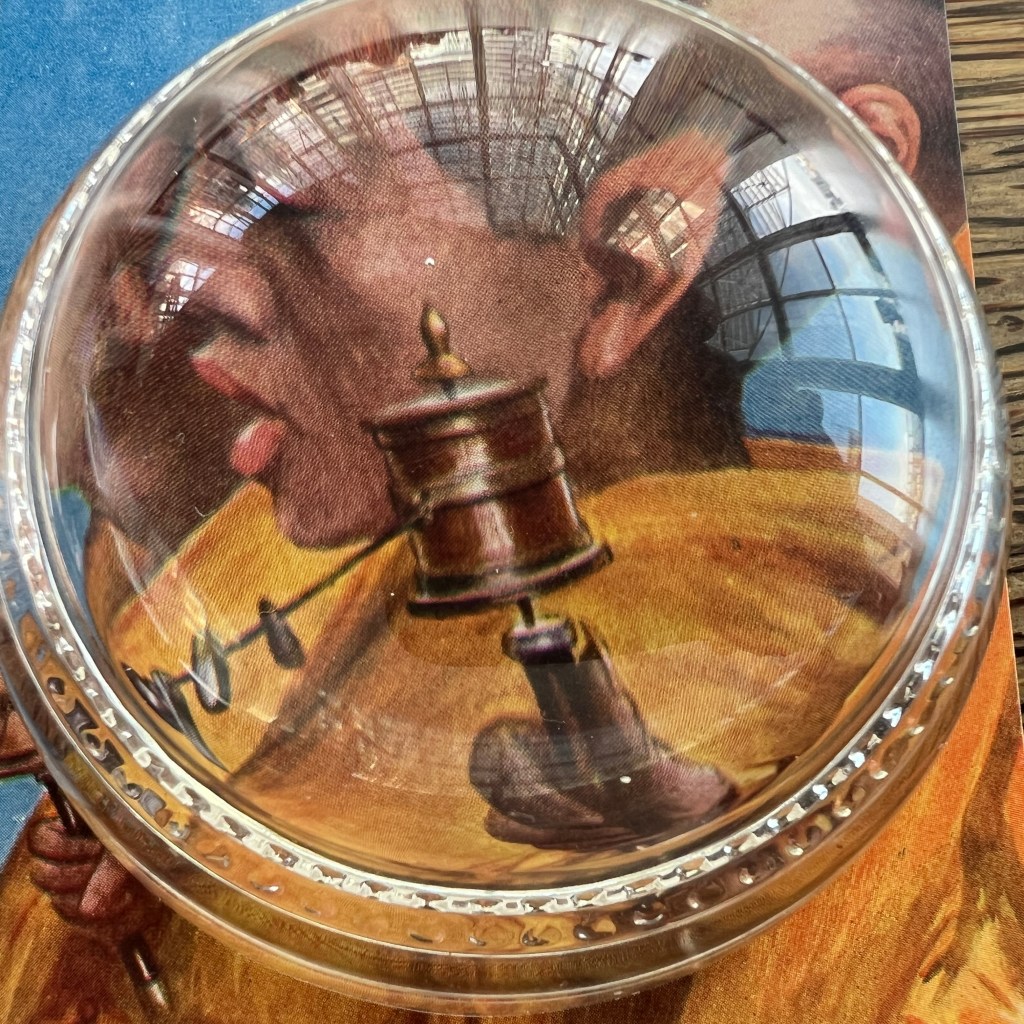
The visual focus of Landor’s painting is the monk’s use of the prayer wheel, noted as containing the Buddhist “book of prayers.” As with others of his time, Landor was fascinated by the ritual object, describing its use in his published work on Tibet.
Landor’s six card set was the only set of Tibet Tuck published before it stopped operation during WWII. For a comprehensive digitized catalogue of Tuck Oilette cards, see www.tuckdbpostcards.org.
The Buddhas in the West Material Archive is a digital scholarship project that catalogues artifacts depicting Buddhist material culture for Western audiences. It’s comprised of prints, photos, and an assortment of ephemera and other objects. For a brief introduction to this archive, visit the main Buddhas in the West project page.
For Related Buddhas in the West Posts Featuring Prayer Wheels:


For the Most Recent Buddhas in the West Posts:
 Personal Site of Peter Romaskiewicz