For all the new Buddhas in the West posts
follow us on Bluesky & Instagram
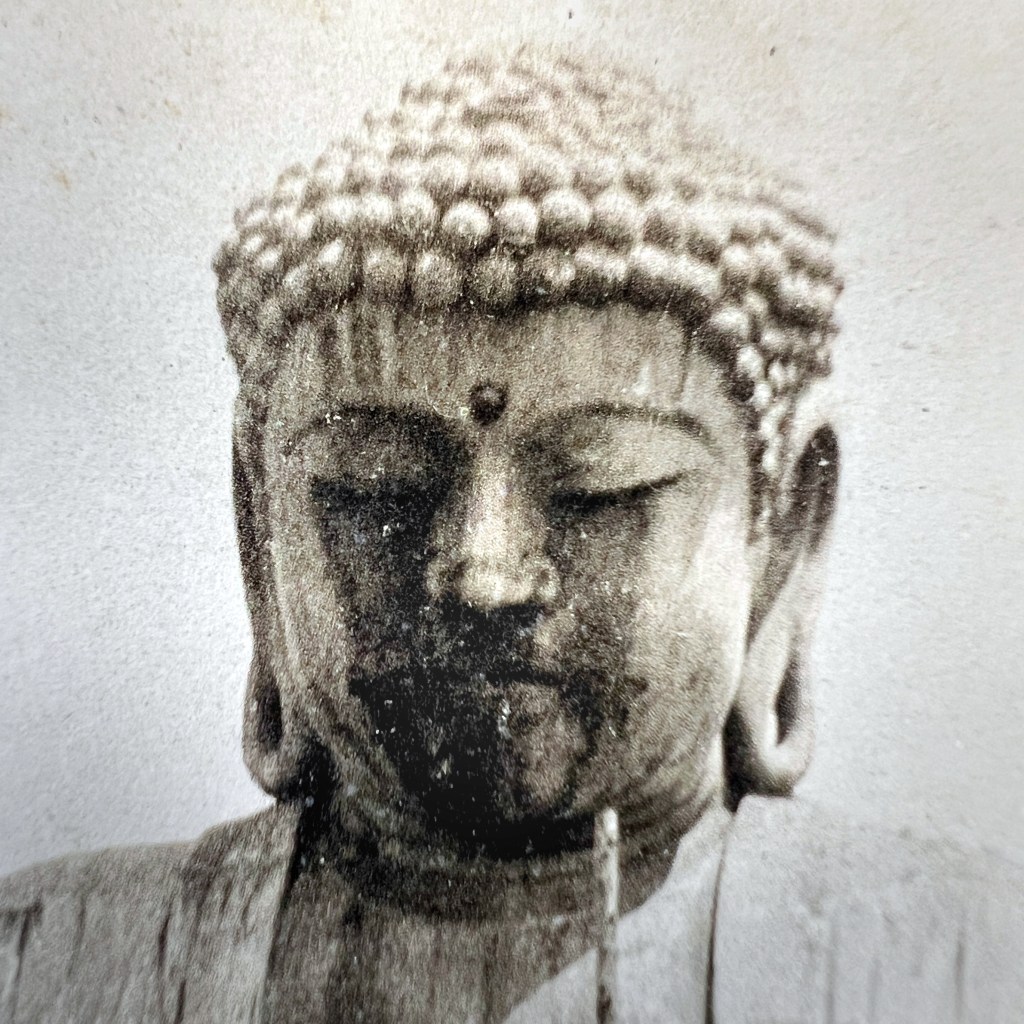
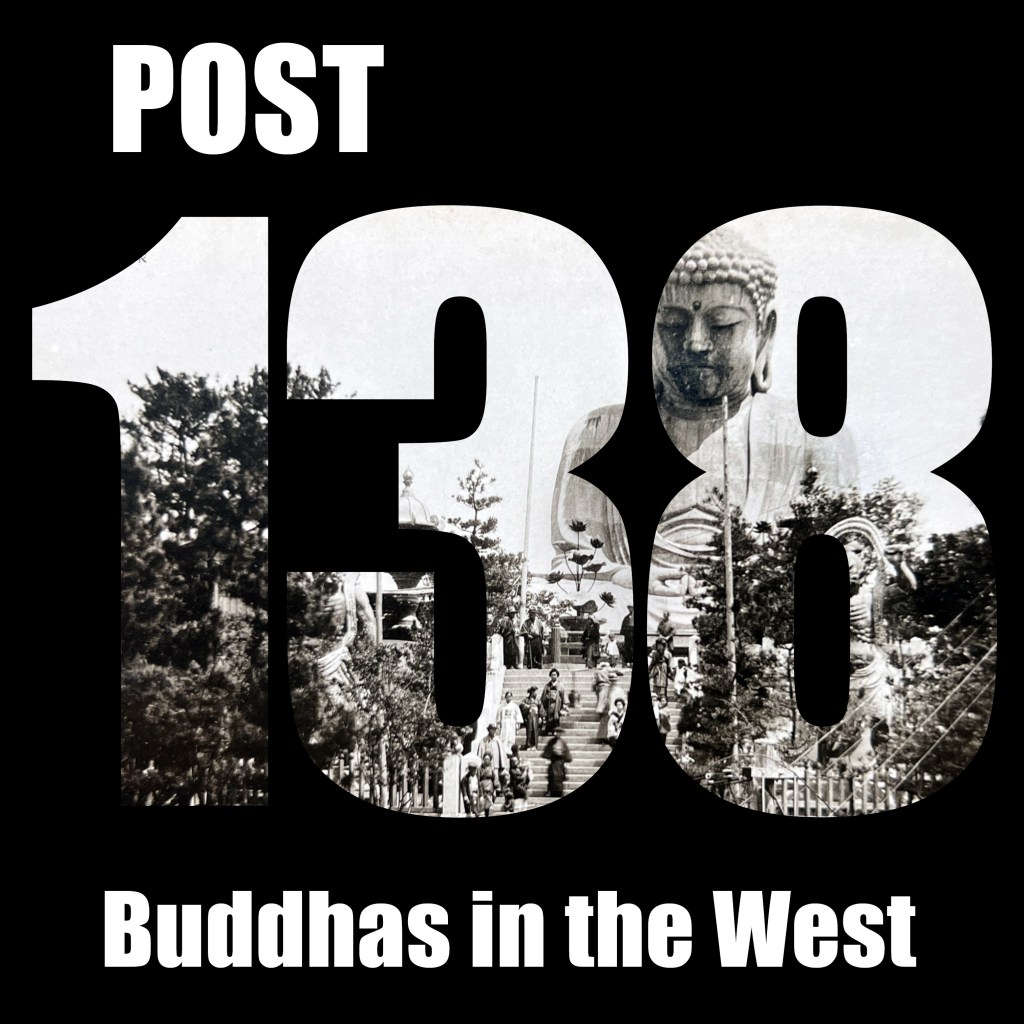
Decades before Godzilla, the 1934 “monster” film, The Great Buddha Arrival, featured a costumed actor as a giant Buddha roaming through a miniature city. The figure was based on the recently completed Shūrakuen Daibutsu, a colossal statue erected in 1927 near Nagoya.
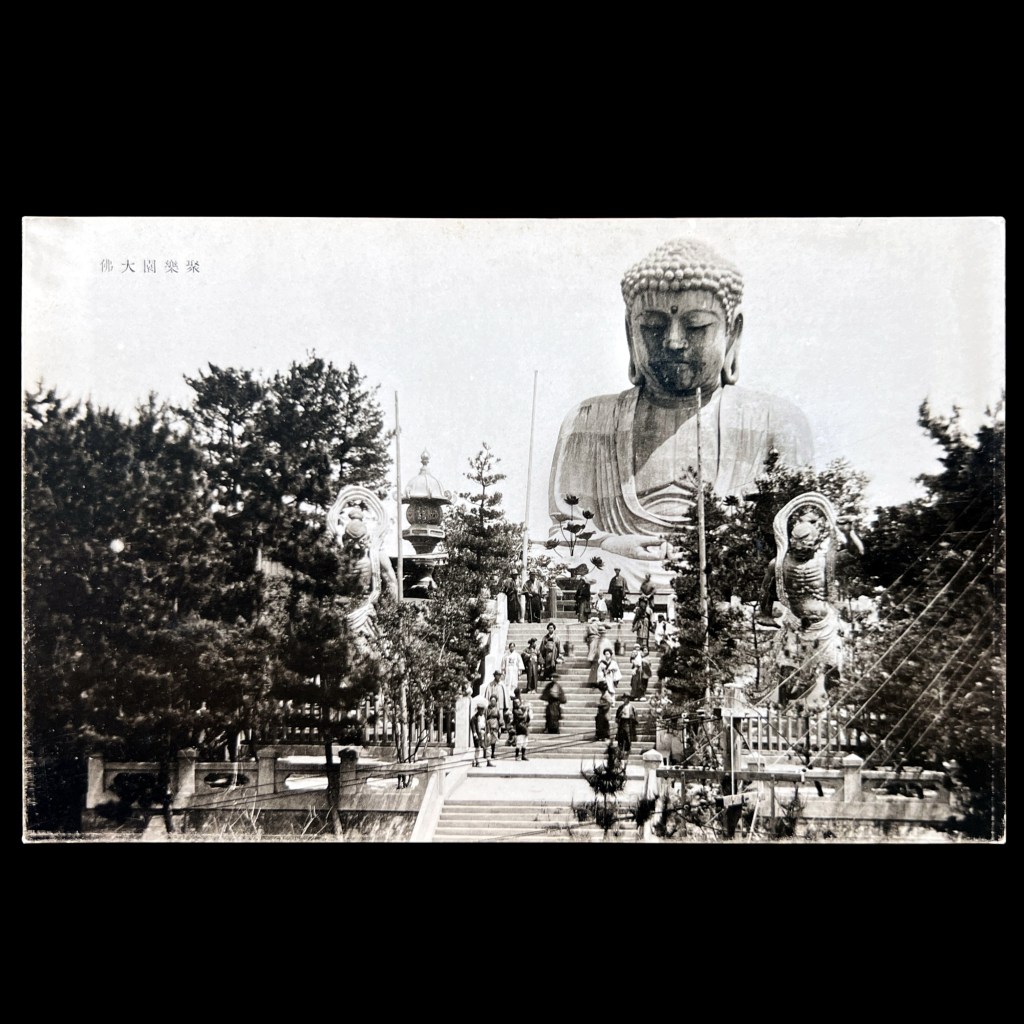
The statue was not cast in traditional bronze, but was made of reinforced concrete, reflecting the growing preference for modern, durable construction materials. Businessman Yamada Saikichi originally built the 19 m (62 ft) statue to commemorate the marriage of Emperor Shōwa.
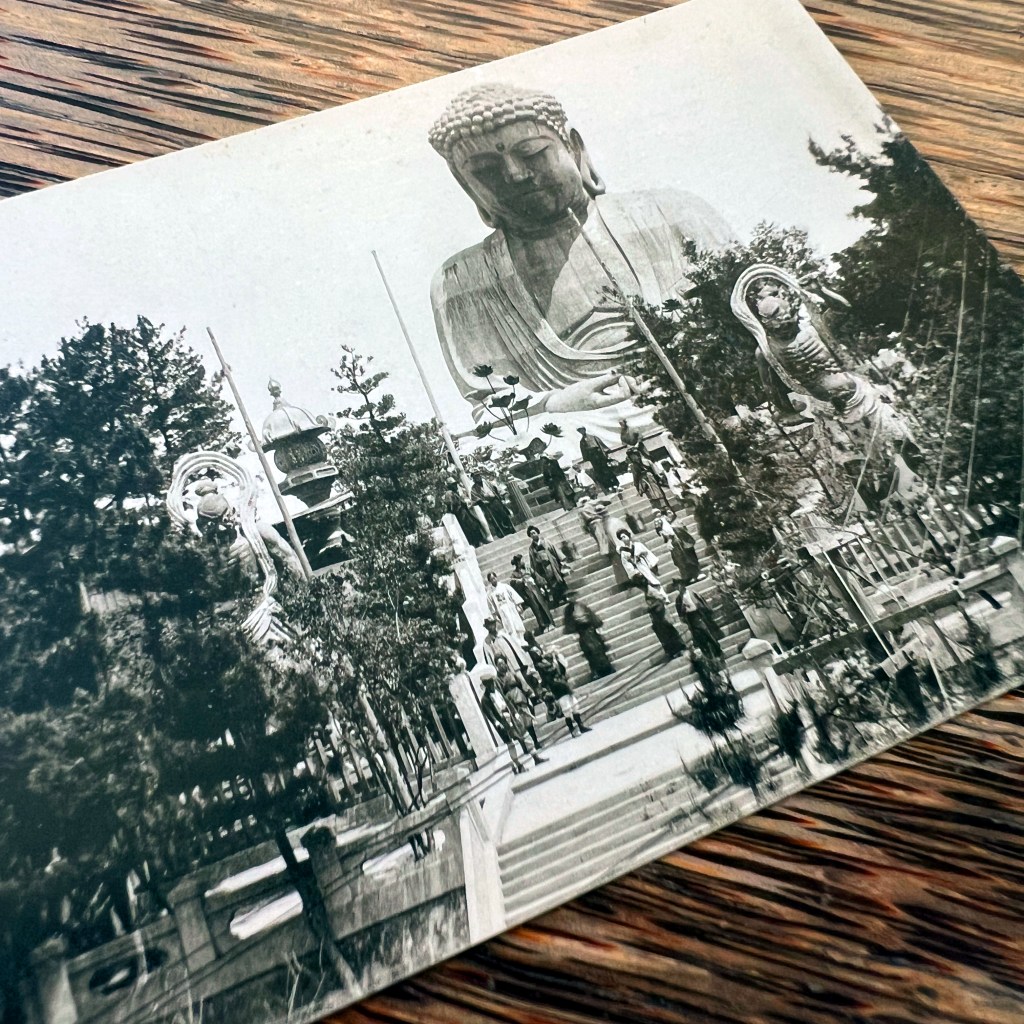
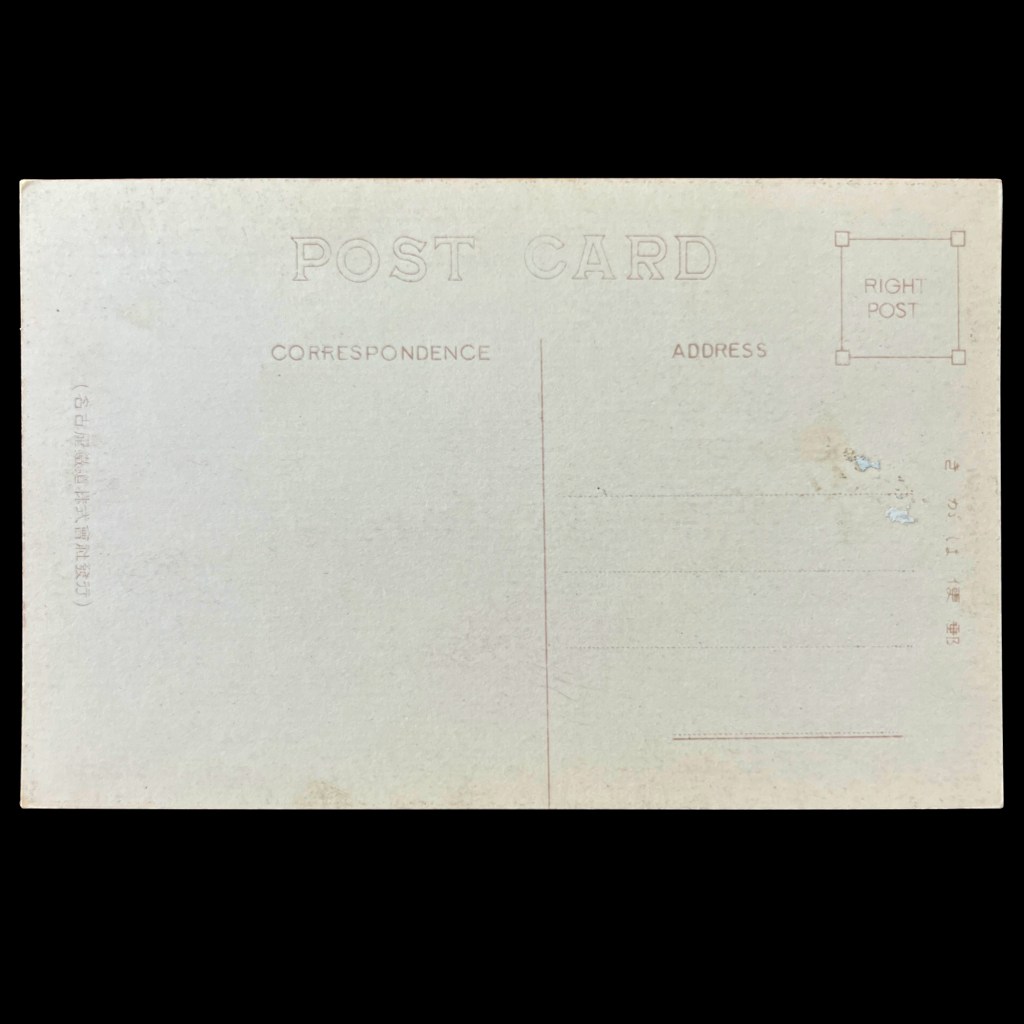
The Shūrakuen Daibutsu was also built during a period of expanding domestic tourism, soon becoming a regional attraction. Nagoya Railroad Co. issued this postcard in the late 1930s, a marketing strategy among railway companies seeking to stimulate interest in rail travel.
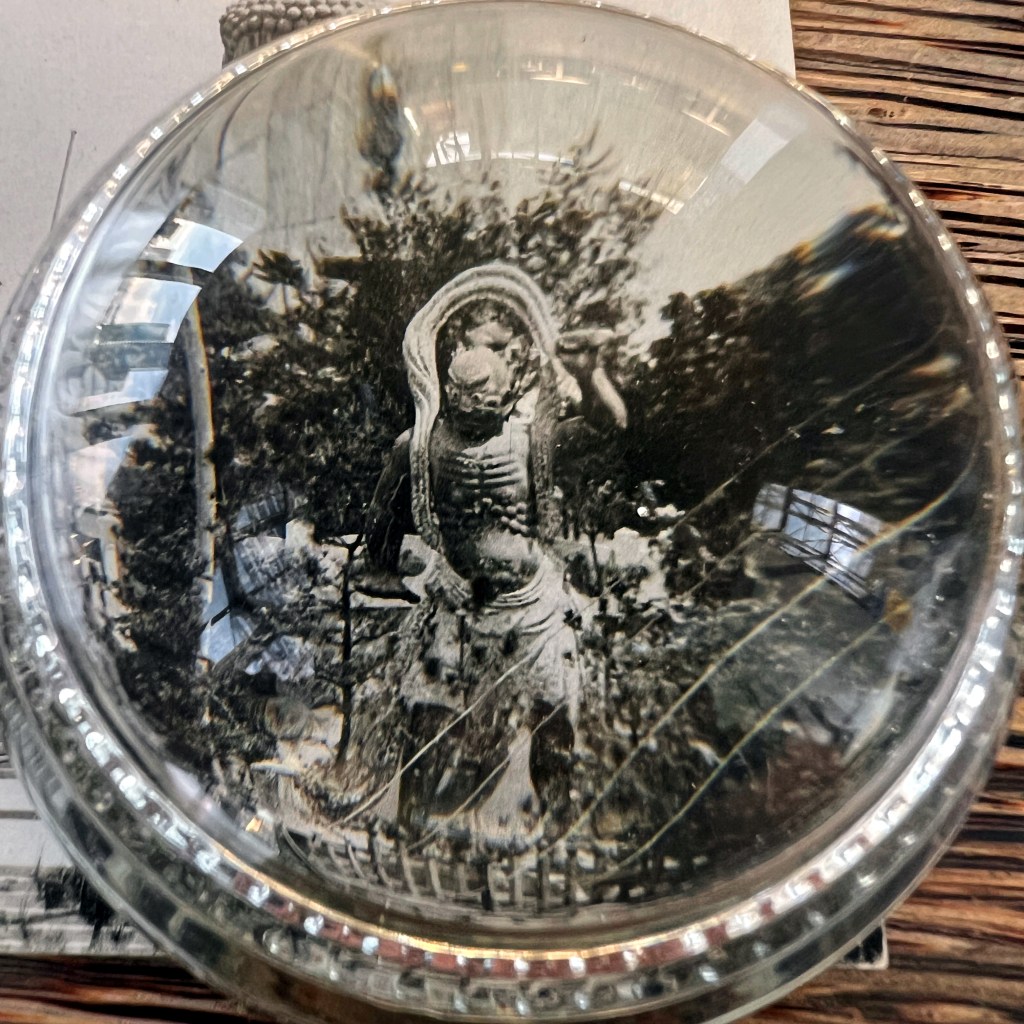
A pair of monumental guardian figures, like those traditionally found at the entrances to Buddhist temples, were also erected on the grounds. Because they were made of concrete rather than metal, these statues survived wartime metal requisition policies and still stand in the park today.
When completed, the Shūrakuen Daibutsu was the tallest colossal Buddha statue in Japan—four meters taller than the Nara Daibutsu—making it a natural choice to be brought to life on screen in The Great Buddha Arrival.
The Buddhas in the West Material Archive is a digital scholarship project that catalogues artifacts depicting Buddhist material culture for Western audiences. It’s comprised of prints, photos, and an assortment of ephemera and other objects. For a brief introduction to this archive, visit the main Buddhas in the West project page.
For Related Buddhas in the West Posts Featuring Japan:
For the Most Recent Buddhas in the West Posts:

 Personal Site of Peter Romaskiewicz