For all the new Buddhas in the West posts
follow us on Bluesky & Instagram
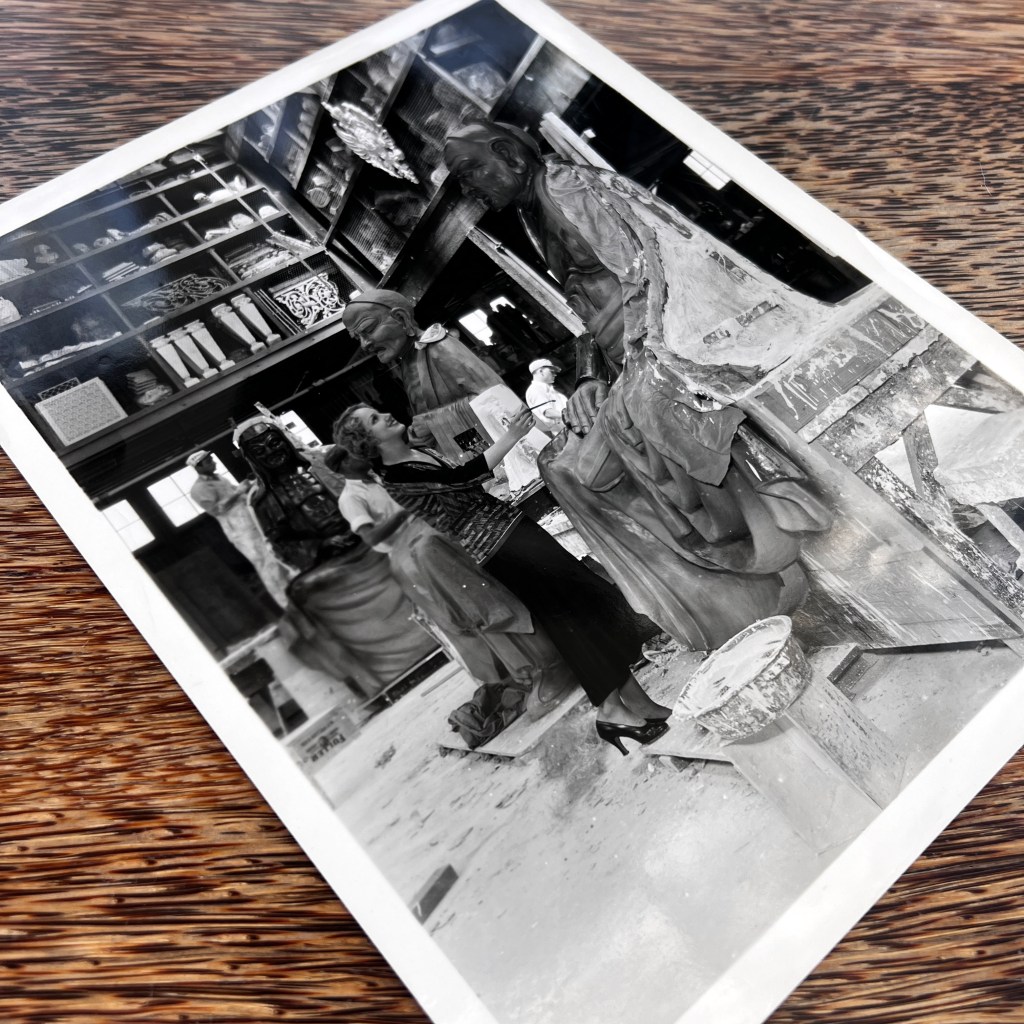
In this behind-the-scenes photo from The Mask of Fu Manchu (1932), MGM’s workshop prepares towering Buddhist statues for use as set design. Despite present-day associations with peace, art director Cedric Gibbons relied on this monumental Buddhist imagery to evoke mystery and danger.
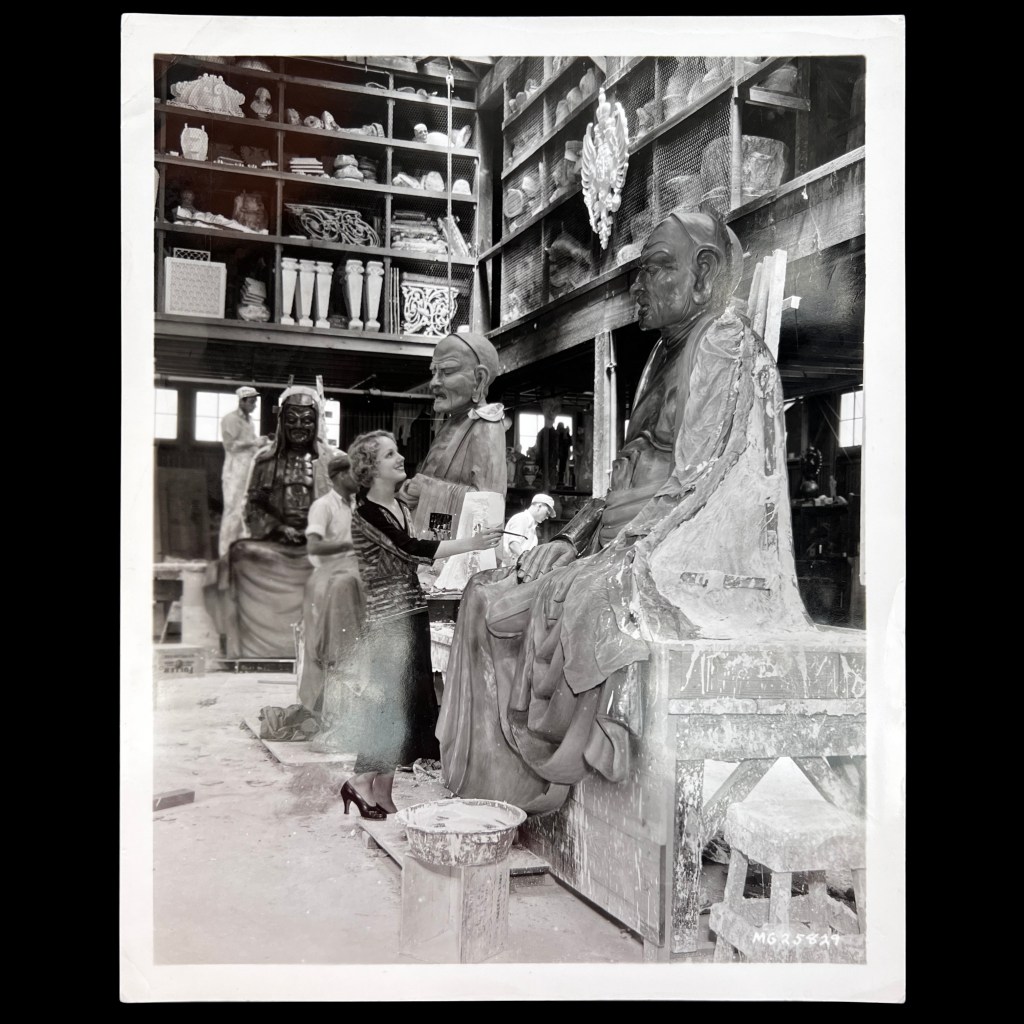
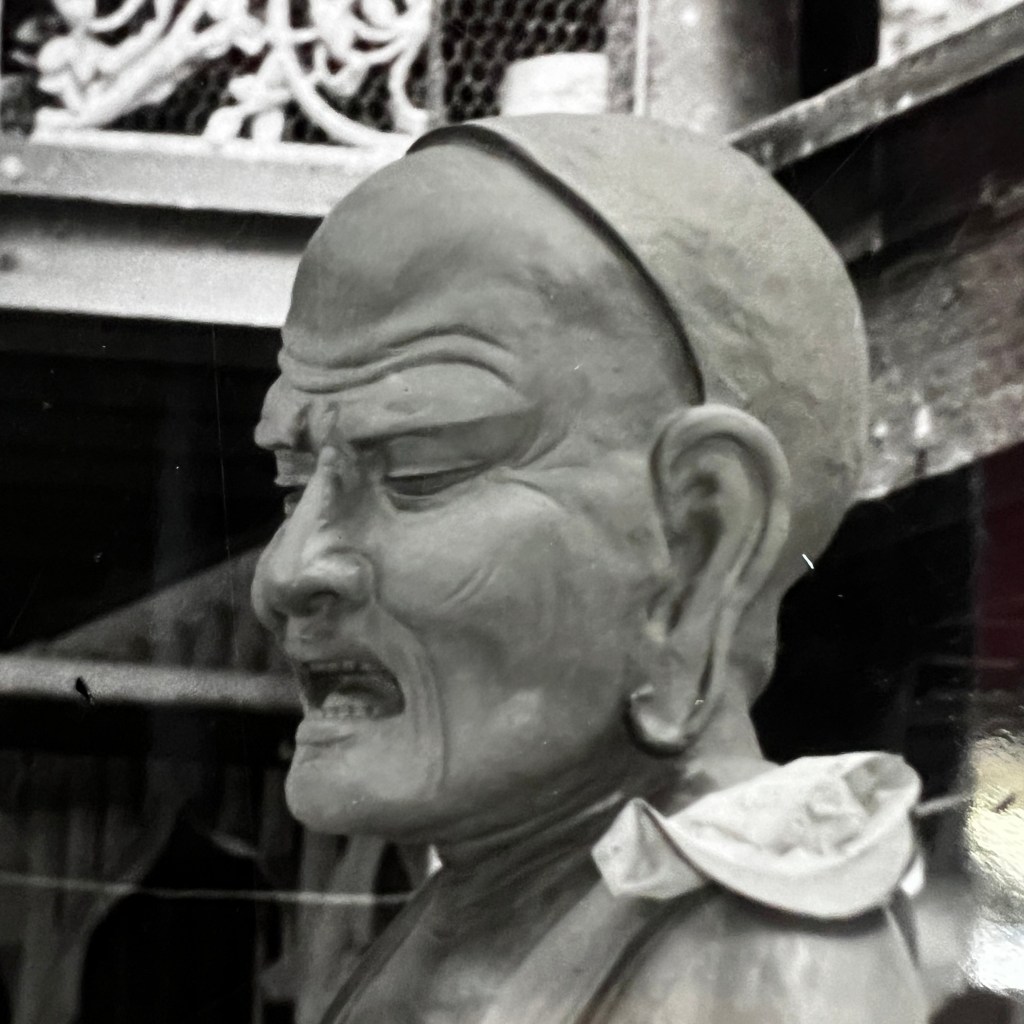
Gibbons made faithful reproductions of arhat statues, figures known in East Asia for having exaggerated and misshapen bodies and heads–signs of their supernatural attainments. These facts were unknown to most audiences who would have viewed them as expression of Fu Manchu’s grotesque villainy.
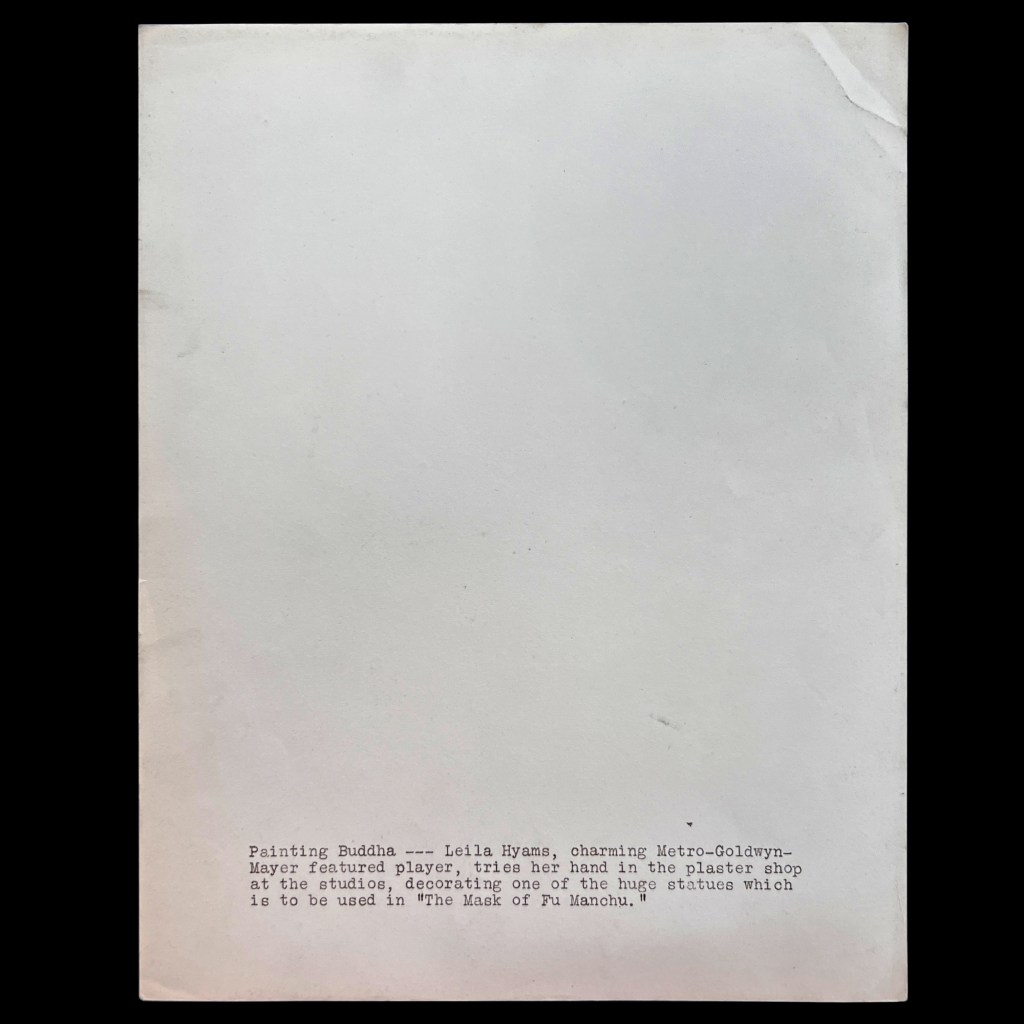
As typed on the back, the woman in the photo was Leila Hyams, an MGM studio actor who did not appear in The Mask of Fu Manchu, but had starred in MGM films since 1928.
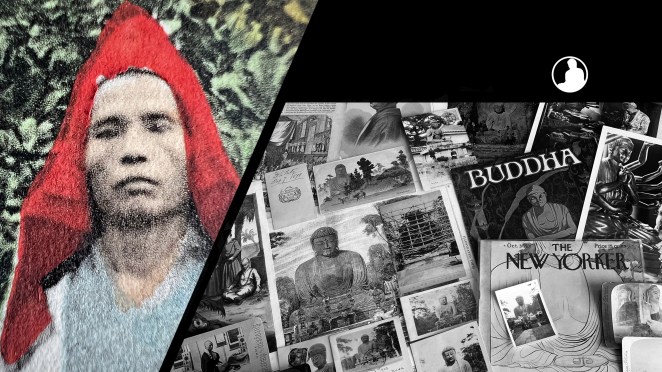
The statue in the rear with a hood is the famous Zen patriarch, Bodhidharma (perhaps his first depiction in American film?) In East Asia, Bodhidharma was sometimes included in sets of eighteen arhats that flanked the walls of Buddhist monasteries.
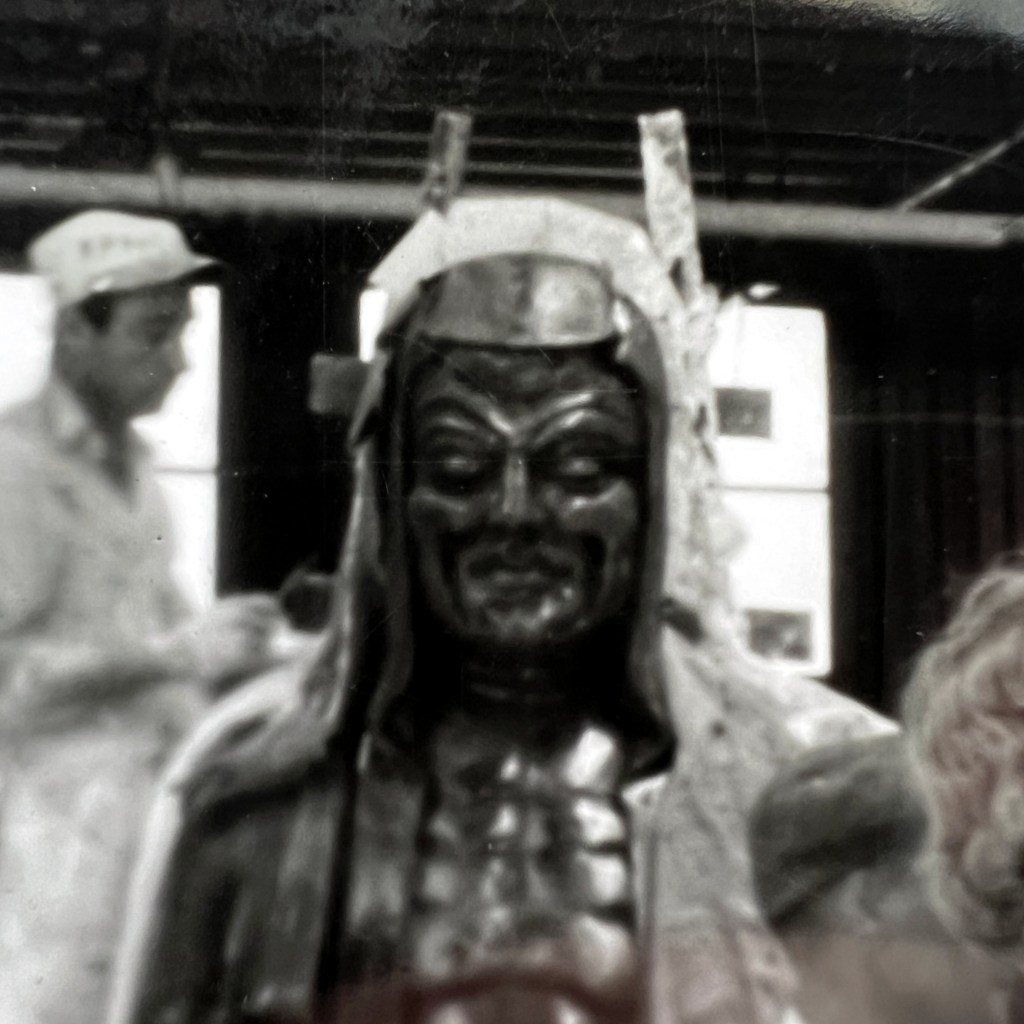
These oversized temple statuary, detached from their religious context, became atmospheric props signaling an imagined Asian world to Western audiences. For further discussion of Asian representation in cinema, see Naomi Greene’s From Fu Manchu to Kung Fu Panda (2014).
The Buddhas in the West Material Archive is a digital scholarship project that catalogues artifacts depicting Buddhist material culture for Western audiences. It’s comprised of prints, photos, and an assortment of ephemera and other objects. For a brief introduction to this archive, visit the main Buddhas in the West project page.
For Related Buddhas in the West Posts Featuring Arhats:

For the Most Recent Buddhas in the West Posts:
 Personal Site of Peter Romaskiewicz