For all the new Buddhas in the West posts
follow us on Bluesky & Instagram
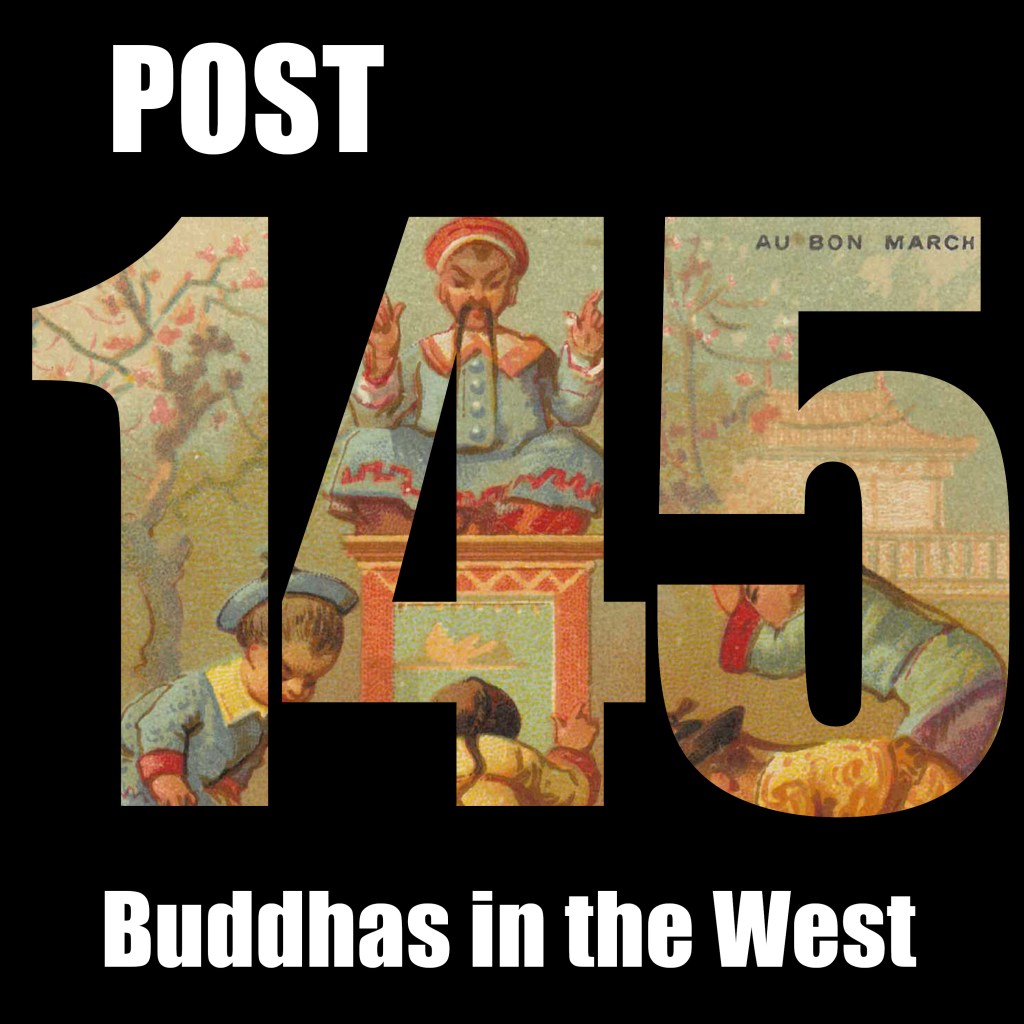
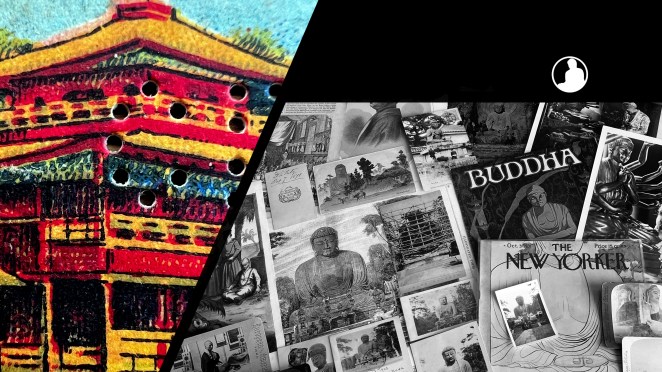
The centuries-long fascination with the Chinese-inspired aesthetic known as Chinoiserie had waned considerably by the end of the 19th century. Yet the famed Parisian department store Au Bon Marché continued to draw upon its familiar imagery for a series of popular advertising cards.
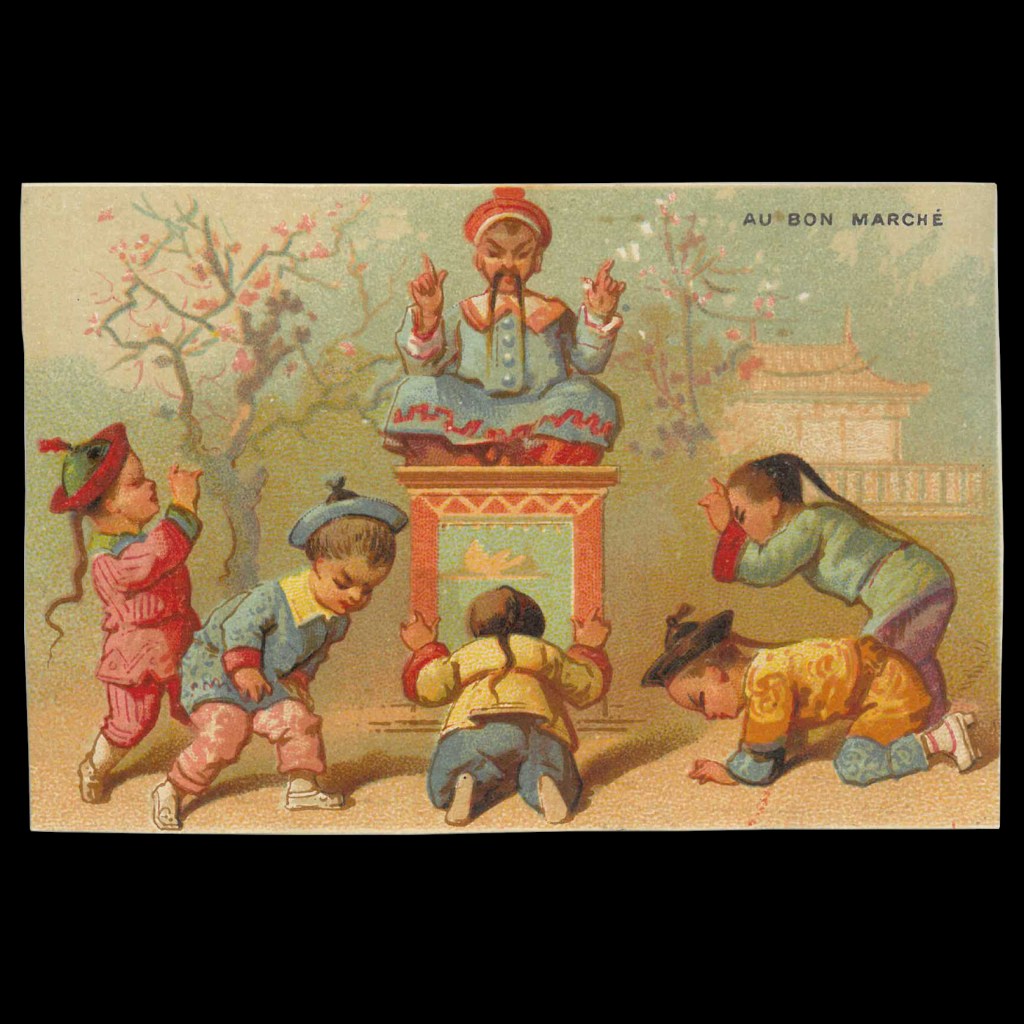
Chinoiserie offered a dreamlike vision of China, populated with pagodas, lush landscapes, and mysterious idols. After the First Opium War (1839–1842) and the expansion of colonial contact, however, depictions of China grew less romanticized, increasingly depicting the it as a land of idolatry.
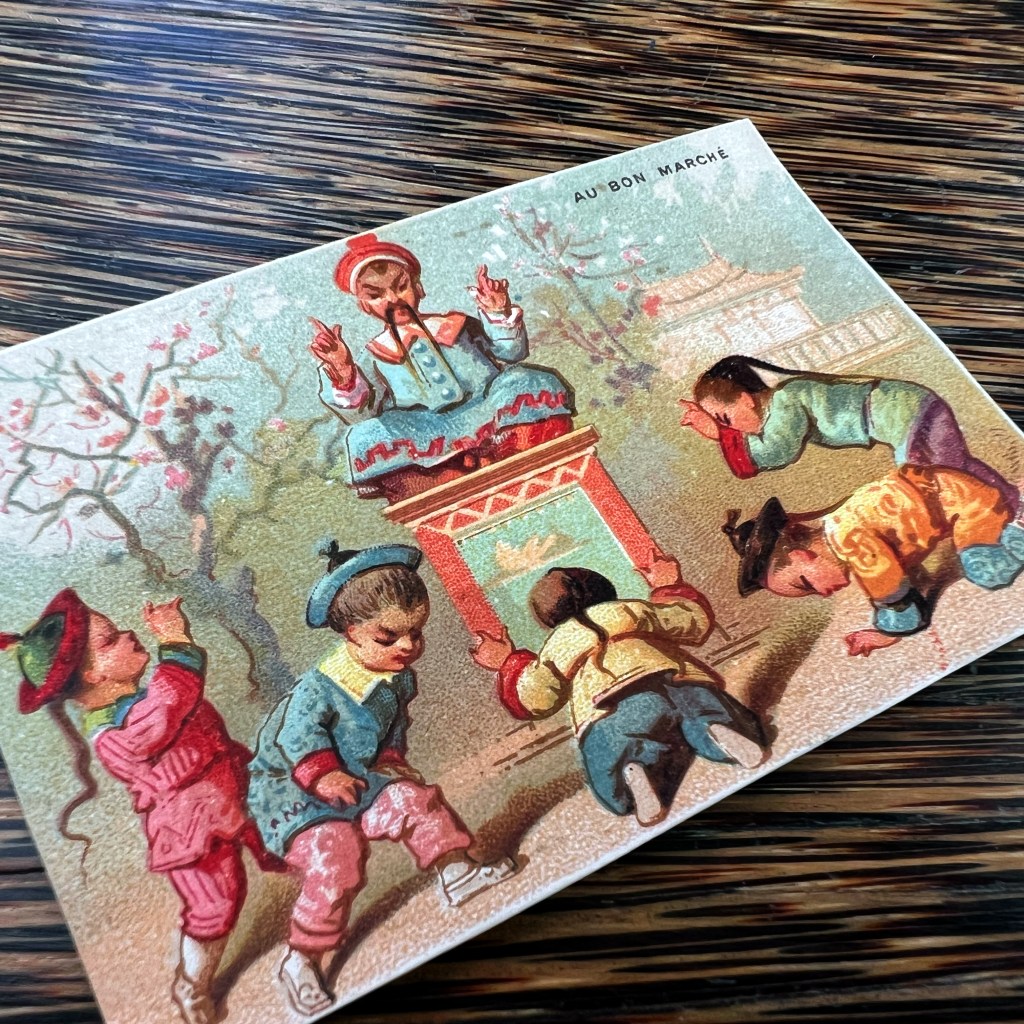
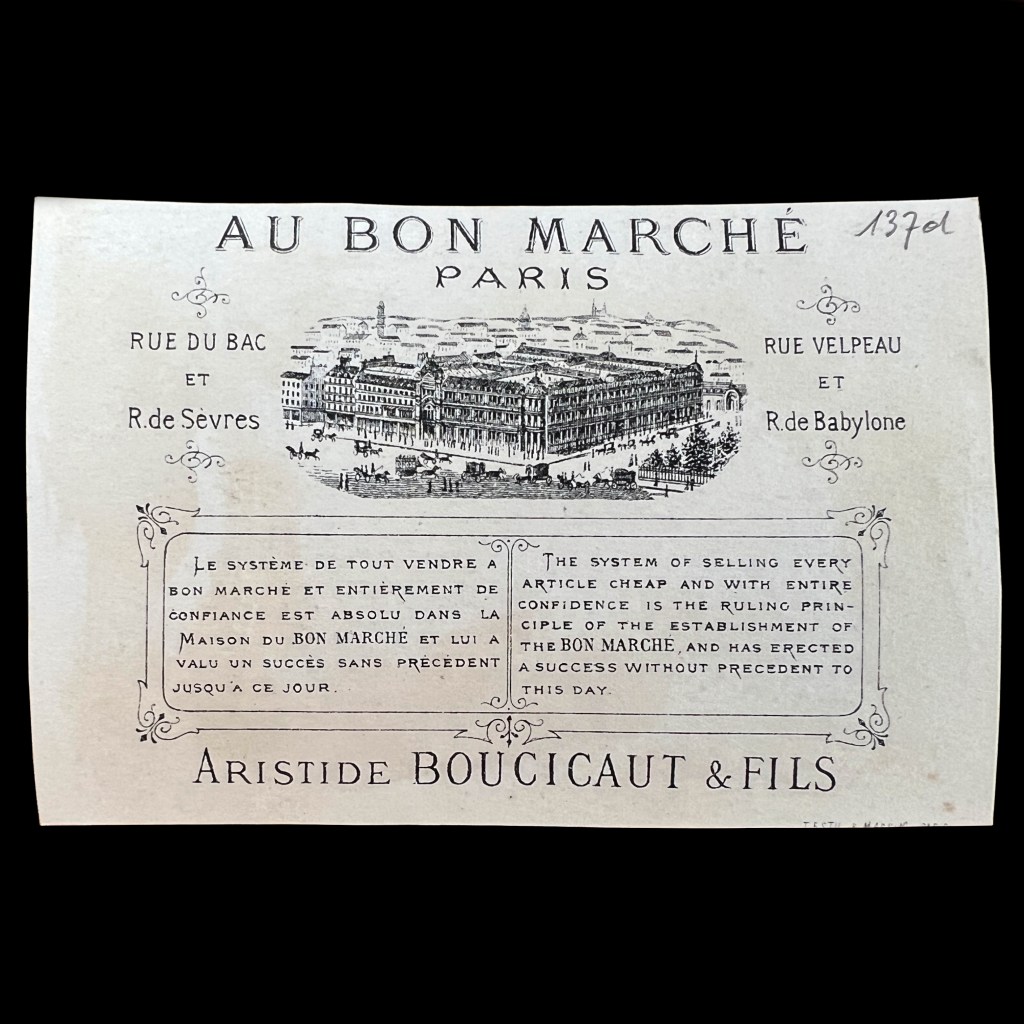
Au Bon Marché was reputedly the first store in Paris to distribute free lithographic prints to children, a practice soon adopted by other major department stores. Printed by Testu & Massin, this card belonged to a set of six illustrating various “Oriental” scenes.
The colorful image blends the ethereal with the corporeal, showing children prostrating before a Buddhist-style idol.
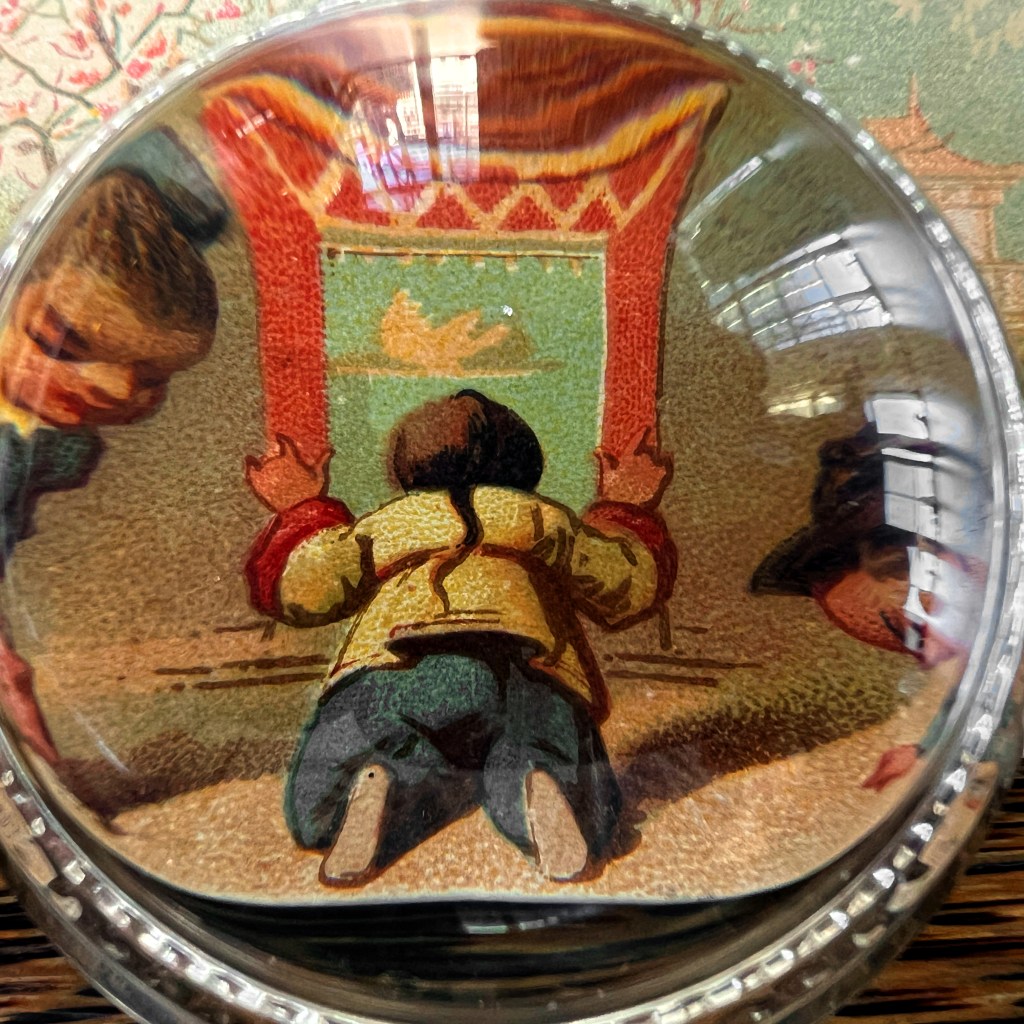
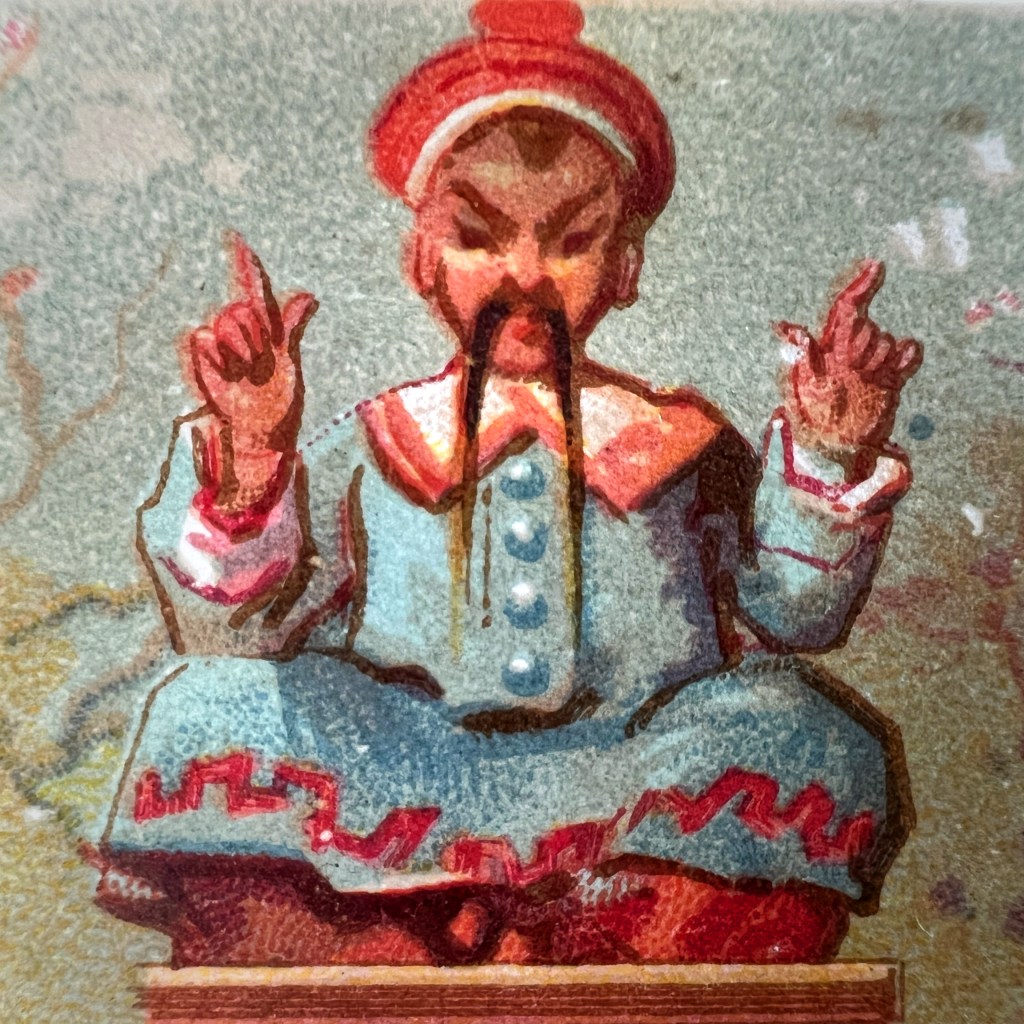
The idol itself merges a cross-legged Buddha with a racialized caricature of a Chinese man, complete with a long mustache and posed in what was known in France as the “Chinese dance.”
The Buddhas in the West Material Archive is a digital scholarship project that catalogues artifacts depicting Buddhist material culture for Western audiences. It’s comprised of prints, photos, and an assortment of ephemera and other objects. For a brief introduction to this archive, visit the main Buddhas in the West project page.
For Related Buddhas in the West Posts Featuring Advertising Cards:


For the Most Recent Buddhas in the West Posts:
 Personal Site of Peter Romaskiewicz