Guanyin Icon in The Mask of Fu Manchu (1932)

For all the new Buddhas in the West posts
follow us on Bluesky & Instagram


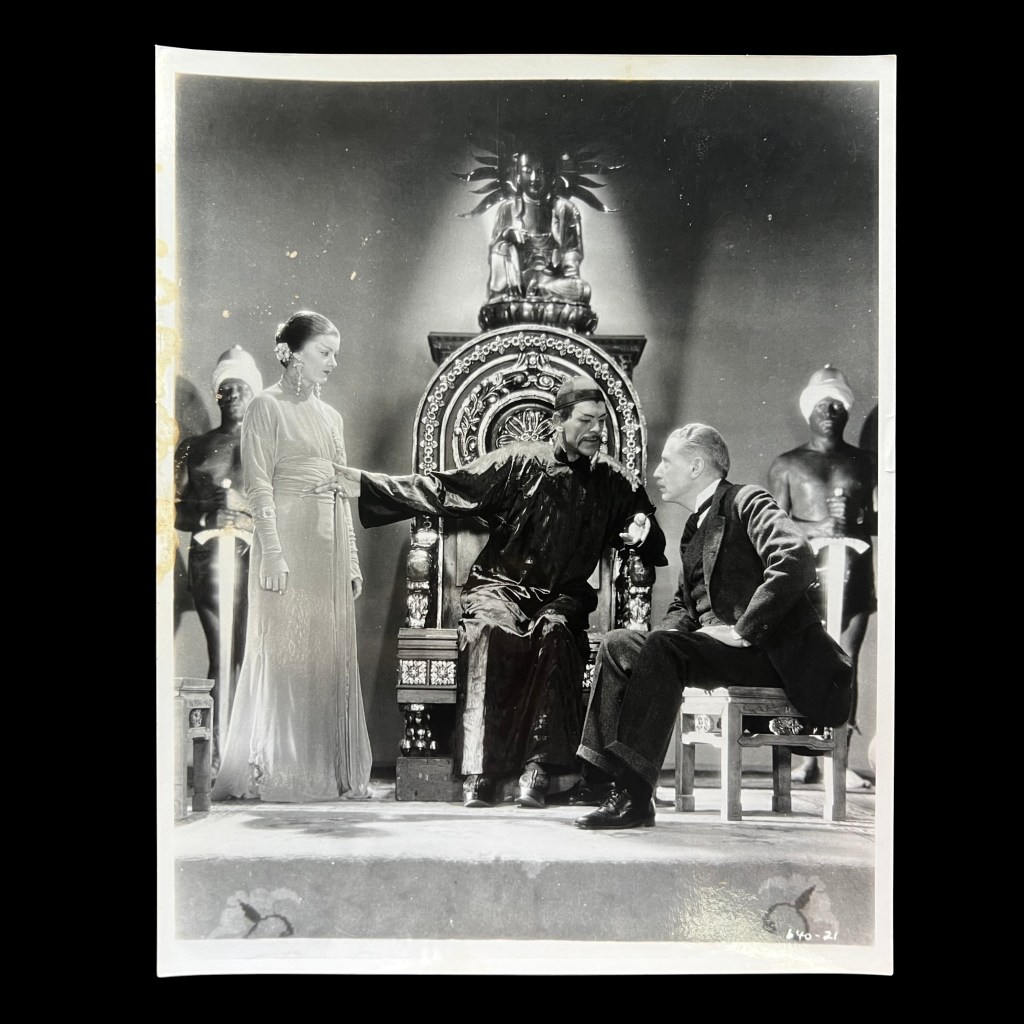
Fu Manchu’s opulent Gobi Desert lair seen in The Mask of Fu Manchu (1932) was assembled by MGM art director Cedric Gibbons. While the Art Deco inspired torture chambers remain horror classics, Gibbons’ strategic use of Buddhist statuary also hint to the audience impending danger.

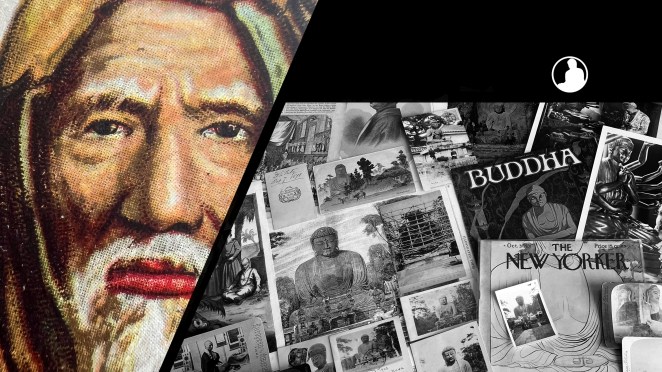
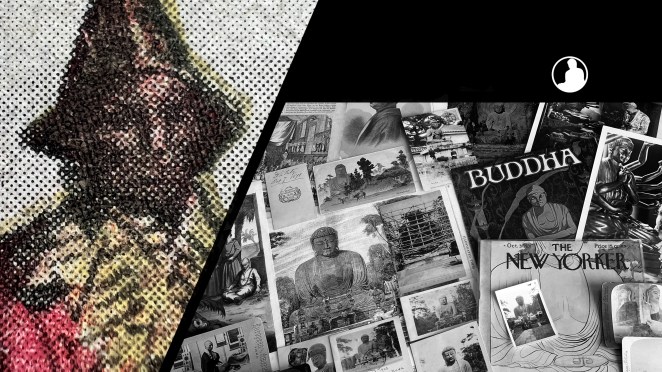
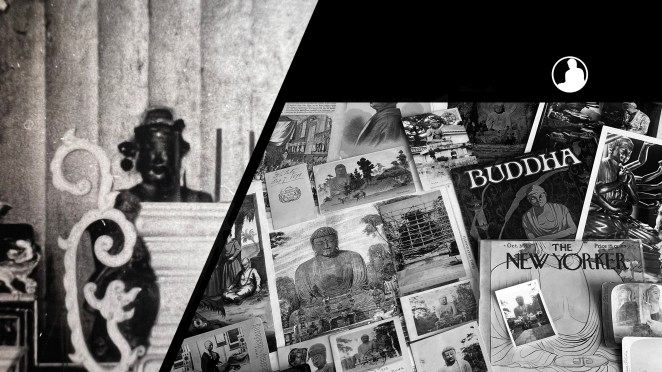
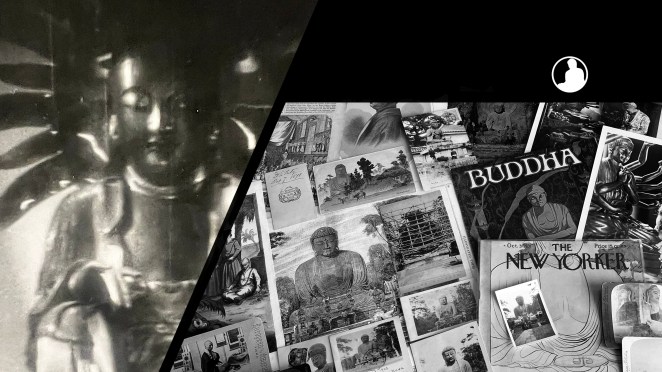
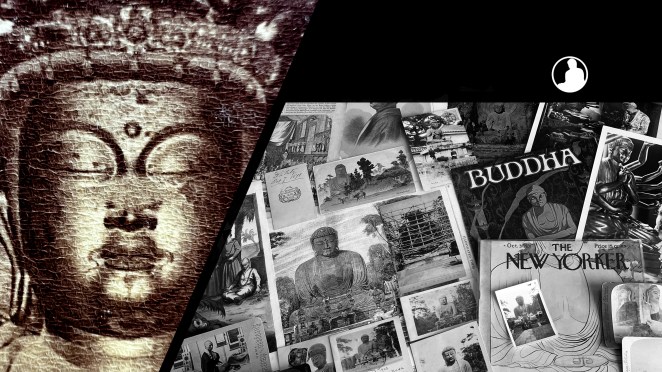
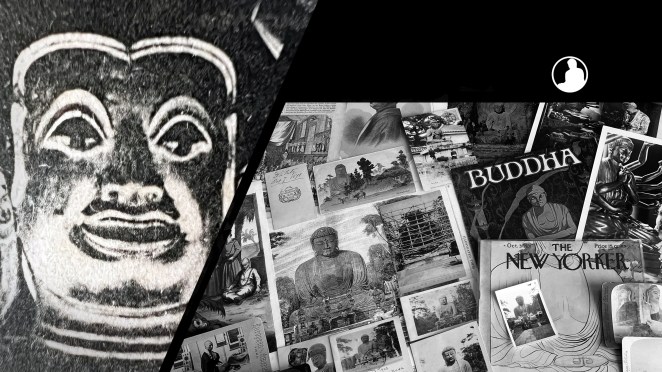
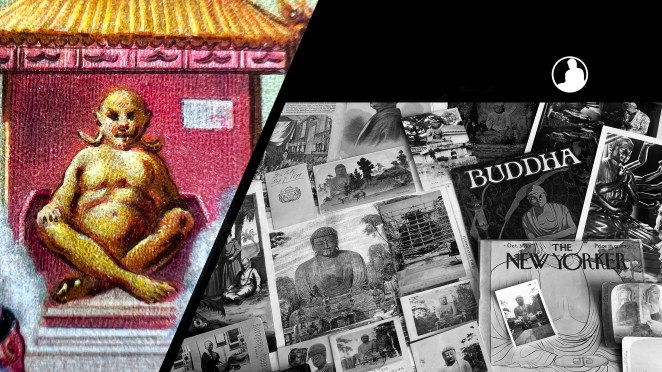
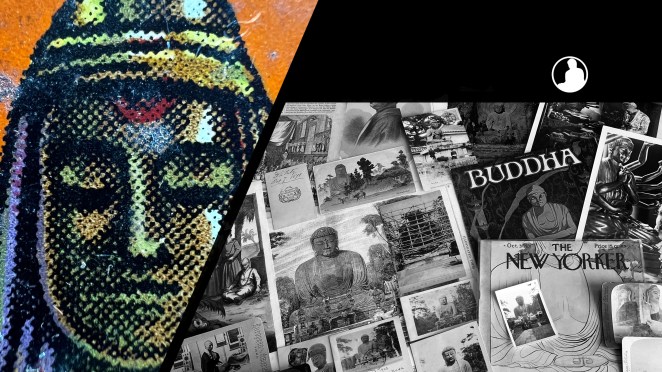
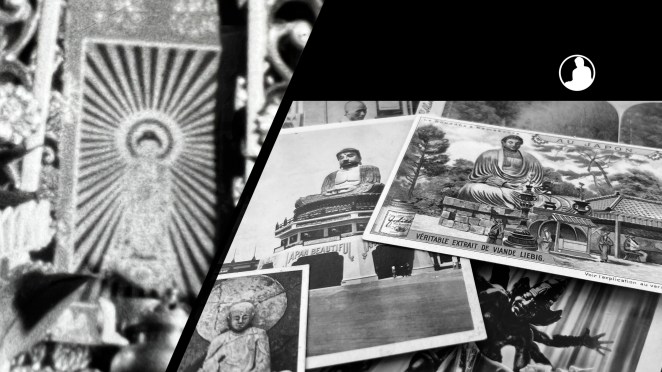
Boris Karloff portrayed the villainous doctor Fu Manchu, here sitting on a throne introducing his daughter Fah Lo See (Myrna Loy). This scene unfolds under the eyes of a shadowy Buddhist figure perched atop the throne; close inspection reveals this to be in the style of a Guanyin statue.

Many props Gibbons used were made at the studio, including some of the Buddhist statues seen on screen. The idiosyncratic elements, including the multi-rayed halo, suggested this statue was pieced together by set designers; it was seen previously in Daughter of the Dragon (1931).

Curiously, the ornate backrest of the throne makes it appear as if Fu Manchu himself is a statue encircled by a halo. Like a menacing statue come to life, the audience can surmise the visitor will suffer at the hands of the villain.

Fu Manchu played on the racist fears of the Yellow Peril; in film, these fears could also be signified by Buddhist imagery. For further discussion of the dueling positive and negative views of China in American cinema, see Naomi Greene’s From Fu Manchu to Kung Fu Panda (2014).


The Buddhas in the West Material Archive is a digital scholarship project that catalogues artifacts depicting Buddhist material culture for Western audiences. It’s comprised of prints, photos, and an assortment of ephemera and other objects. For a brief introduction to this archive, visit the main Buddhas in the West project page.


For Related Buddhas in the West Posts Featuring Guanyin / Avalokiteśvara:


For the Most Recent Buddhas in the West Posts:


1922 French Colonial Exposition Angkor Wat Replica Postcard

For all the new Buddhas in the West posts
follow us on Bluesky & Instagram


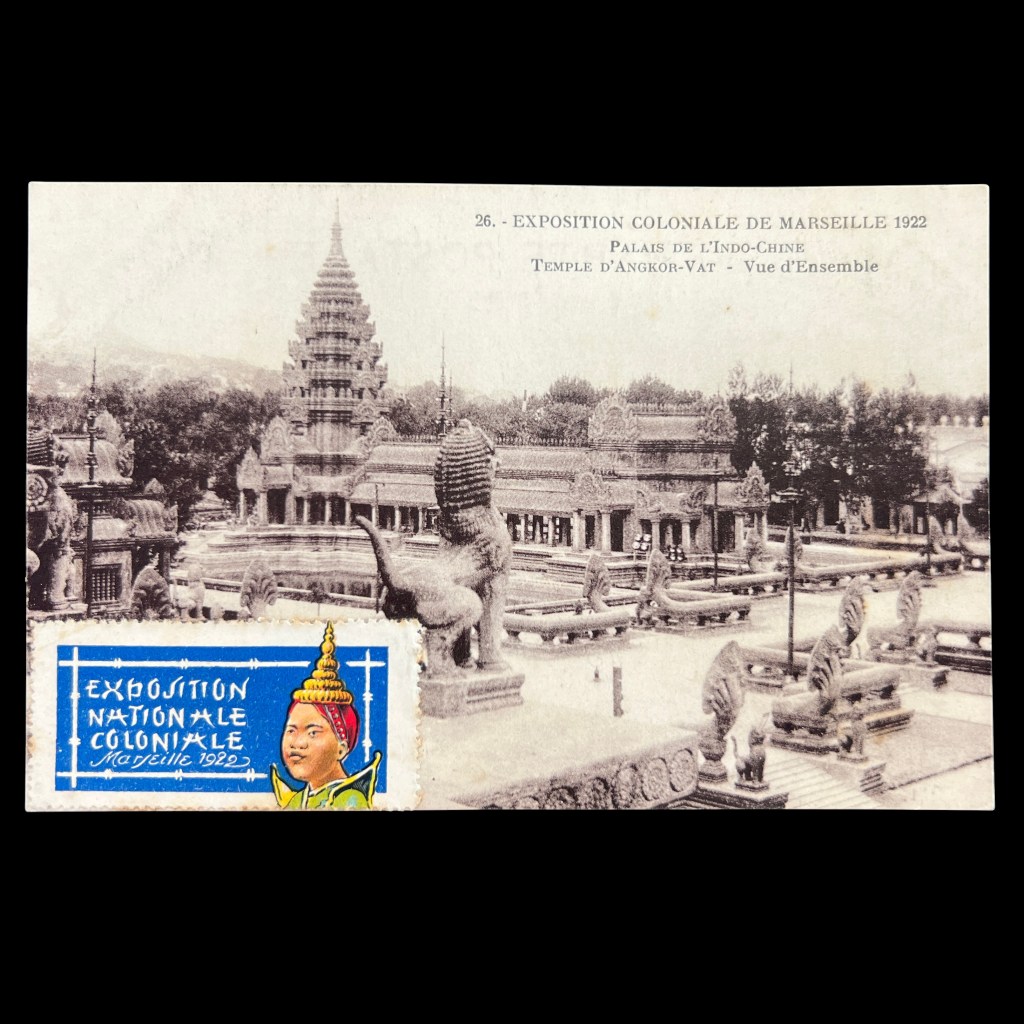
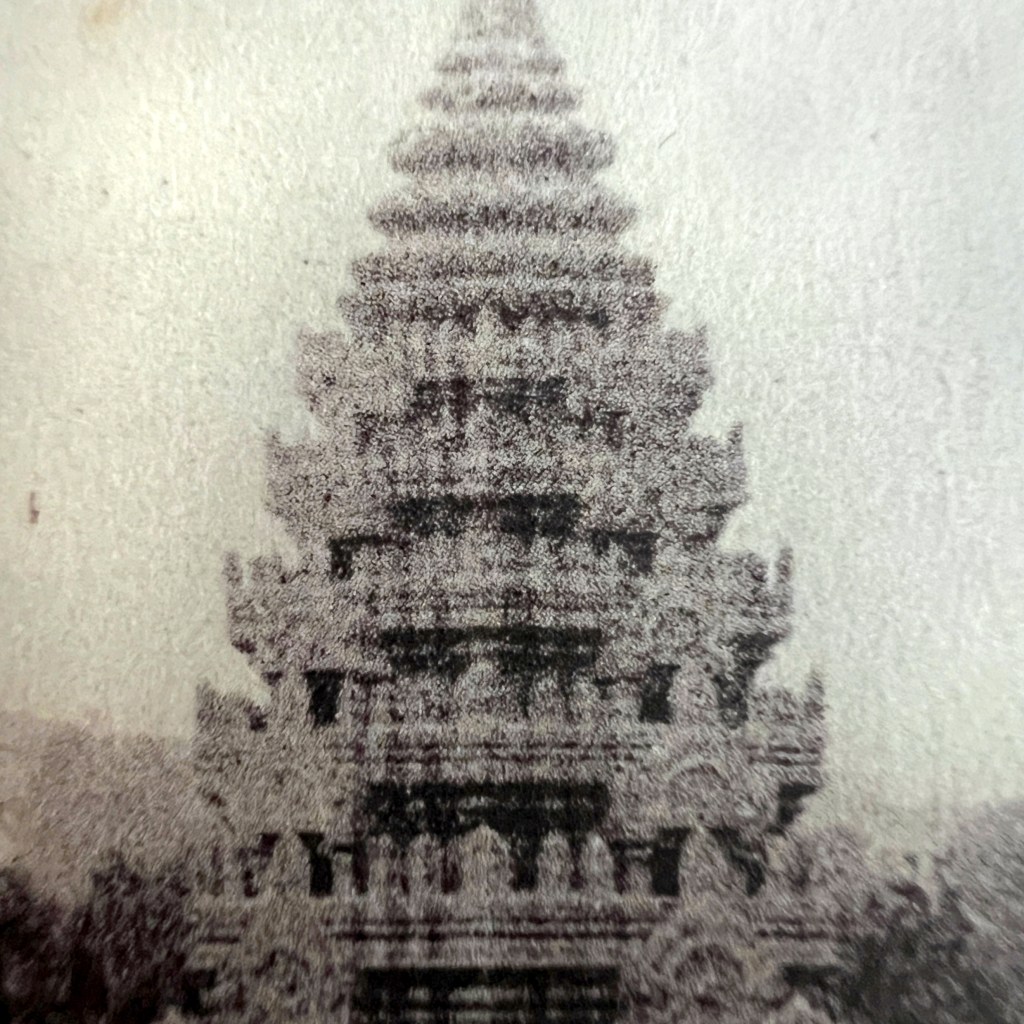
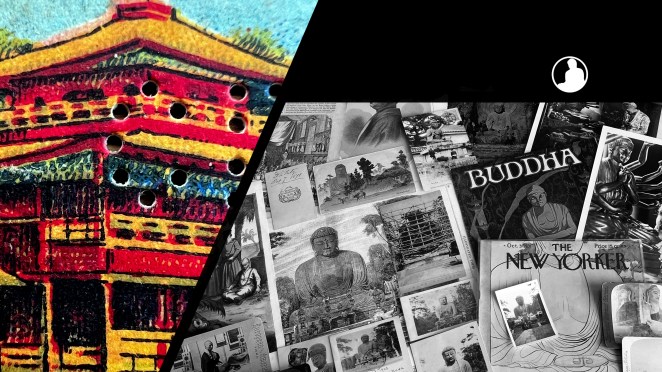
In 1922, the organizers of the Colonial Exposition in Marseille accomplished the impossible – a plaster recreation of Cambodia’s Angkor Wat. While only a partial replica, the central tower, built on a wooden skeleton, was 177 ft. (54m) tall and towered over the exposition grounds.

Cambodian “natives” were also brought in to add authenticity to the fabricated environment. The golden-clad Cambodian royal dance troupe proved to be a “must see” attraction; curiously, they performed the Orientalist opera Lakmé by composer Léo Delibes.

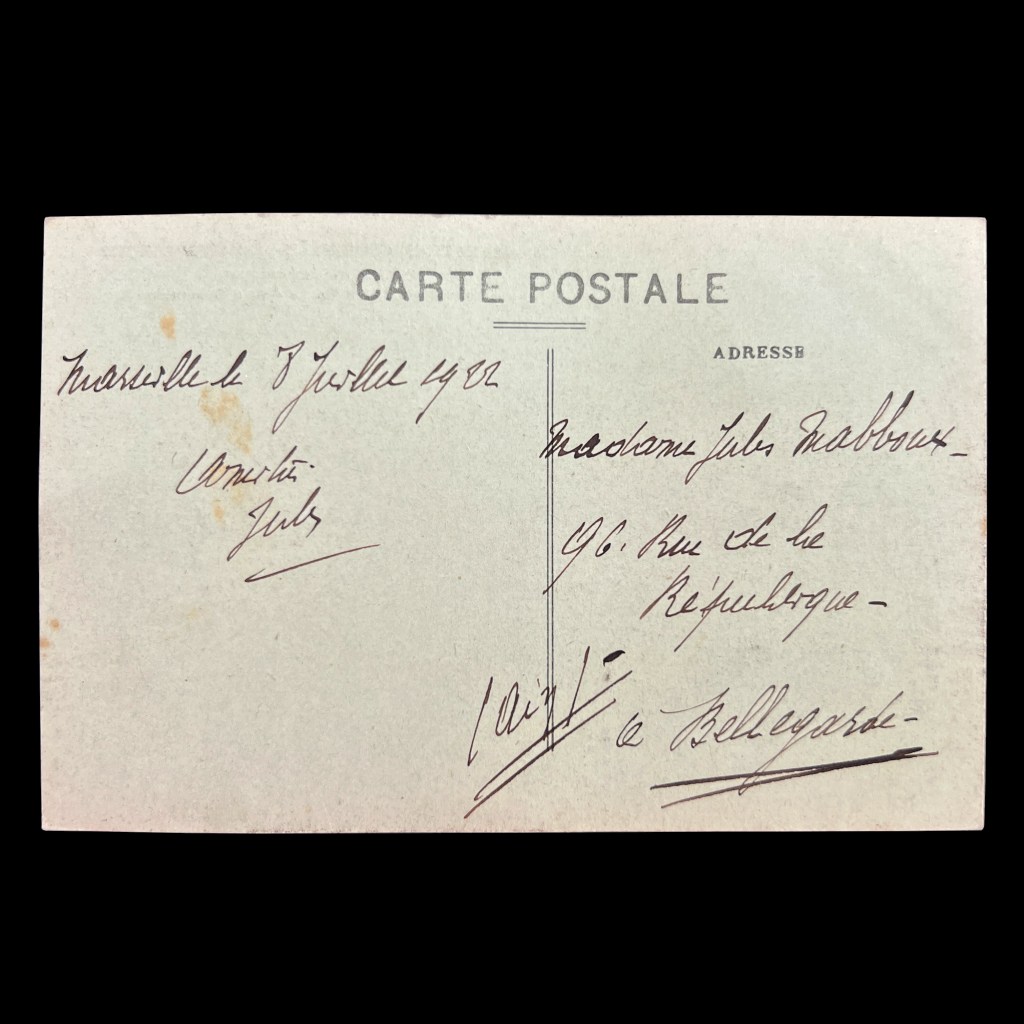
Cambodia was a protectorate of France since 1863 and French troops had already been sending home picture postcards of the real Angkor Wat ruins. Dated July 8, 1922, this card depicting Angkor Wat’s replica was prepared, but never mailed.

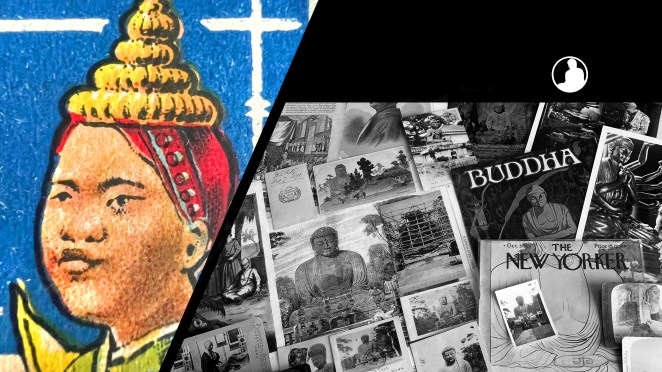
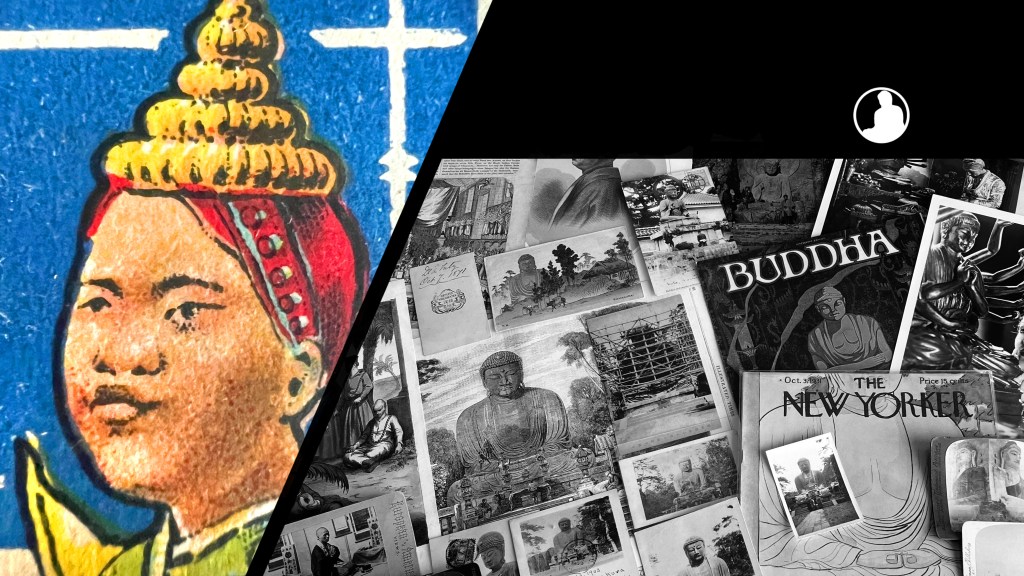
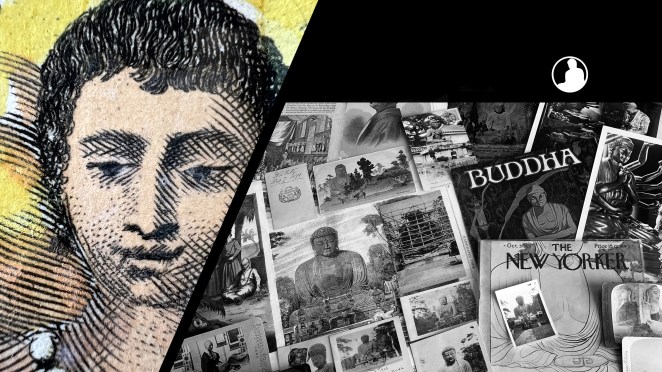
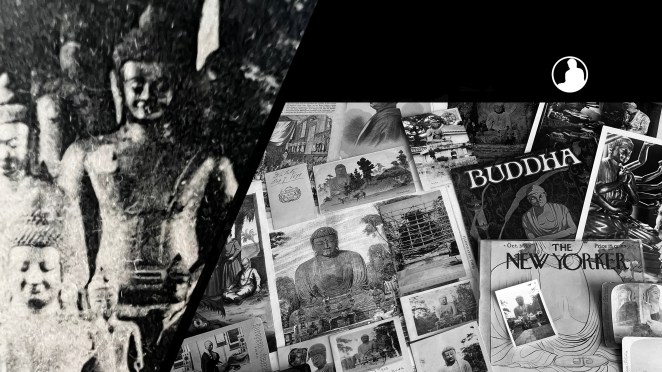
This stamp is a non-postal commemorative stamp, one of twelve designs made for the 1922 Marseille exposition. It depicts a royal dancer wearing a crown shaped like a Southeast Asian Buddhist stupa; such crowns are also seen in the stone reliefs decorating Angkor Wat.

While plasters casts made in Cambodia were used in Marseille, the replica temple had many alterations, creating only a semblance of reality. For more on the use of plasters casts and dancers, see Isabelle Flour’s “Orientalism and the Reality Effect: Angkor at the Universal Expositions” (2014).


The Buddhas in the West Material Archive is a digital scholarship project that catalogues artifacts depicting Buddhist material culture for Western audiences. It’s comprised of prints, photos, and an assortment of ephemera and other objects. For a brief introduction to this archive, visit the main Buddhas in the West project page.


For Related Buddhas in the West Posts Featuring Expositions:


For the Most Recent Buddhas in the West Posts:

D.A. Ahuja’s Kaunghmudaw Pagoda Postcard

For all the new Buddhas in the West posts
follow us on Bluesky & Instagram


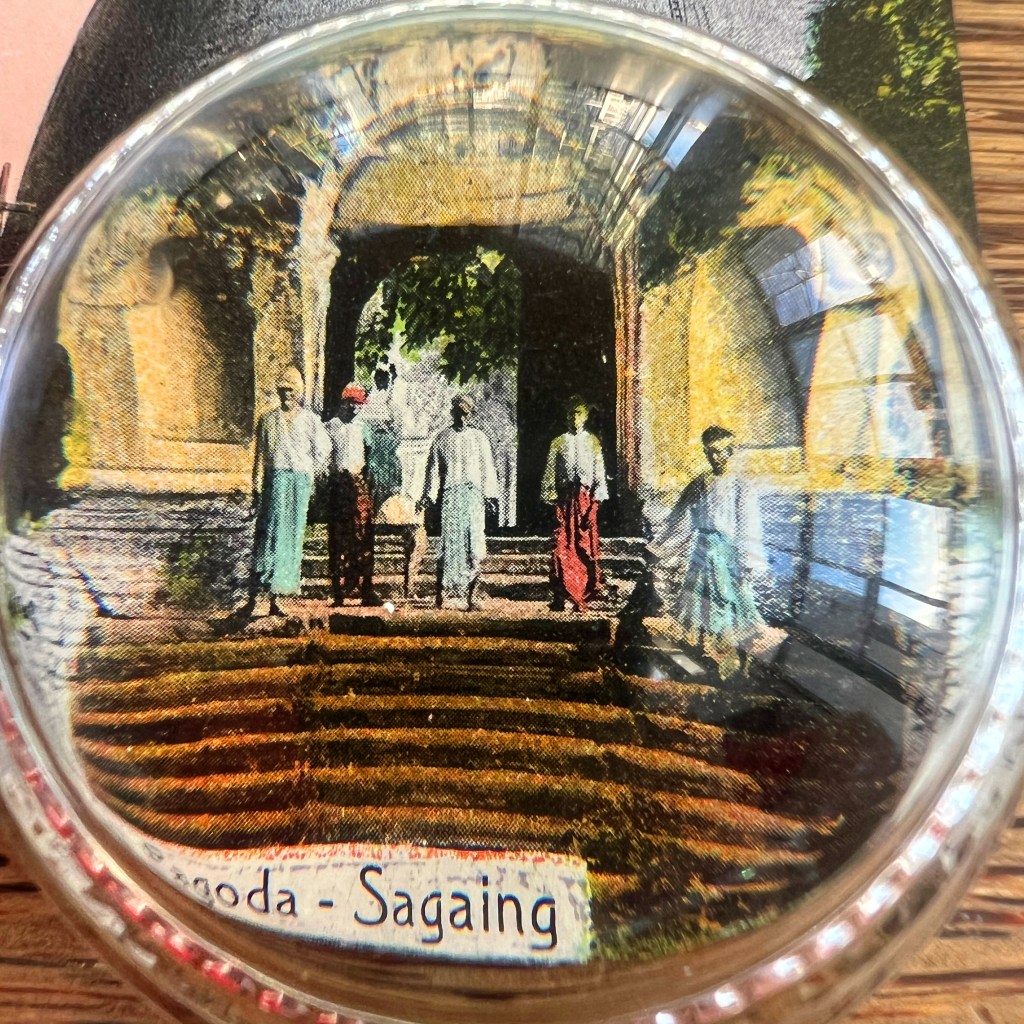
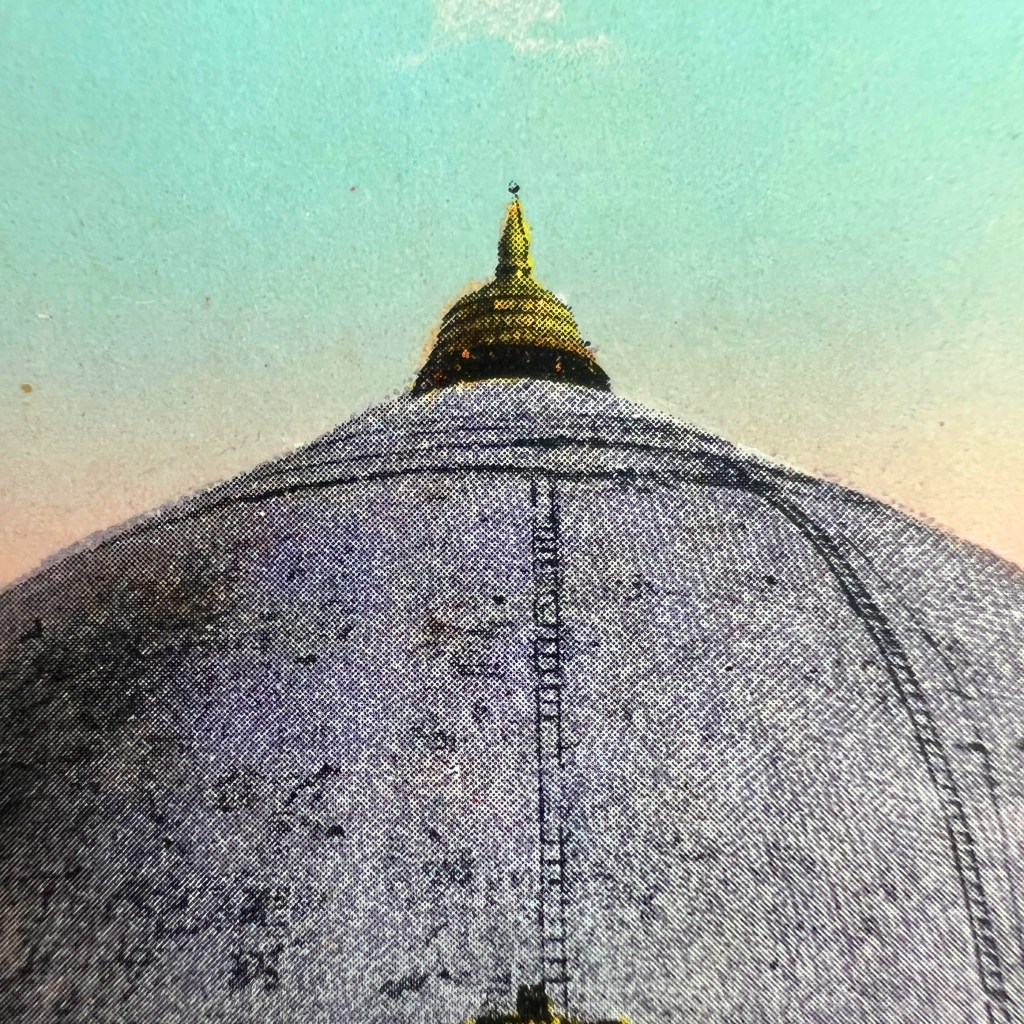
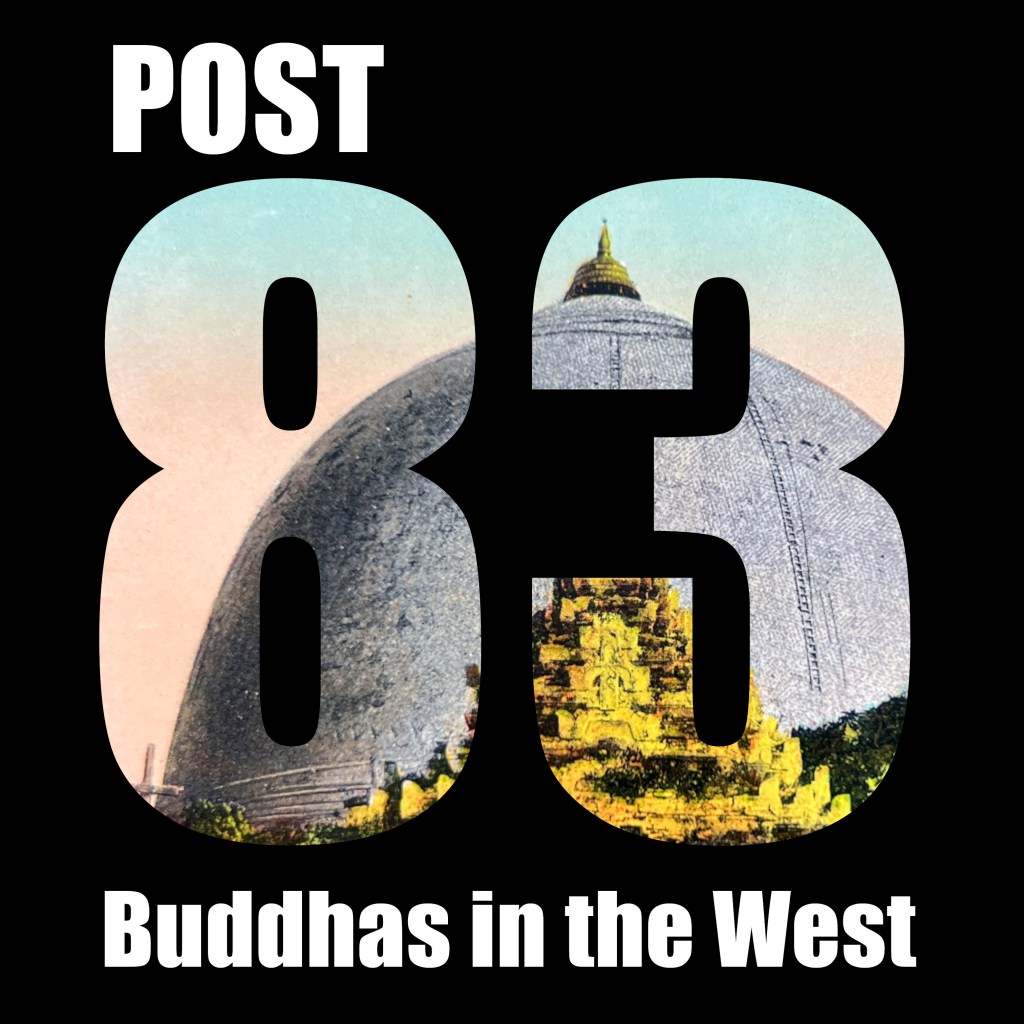
At the height of the worldwide postcard craze, no one produced more vibrant imagery of the Buddhist world than D.A. Ahuja. Here we see Myanmar’s 17th century Kaunghmudaw Pagoda with unique hemispherical dome – most Burmese pagodas are pyramidal structures.

According to Burmese chronicles, the Kaunghmudaw Pagoda enshrines the Buddha’s tooth relic among other religious treasures. This pagoda was intended to resemble Sri Lanka’s Maha Thupa, a structure reputed to hold the largest single cache of the Buddha’s relics.

The image was printed using a lithographic-halftone hybrid process, whereby a black halftone screen was applied on top of a multi-color lithographic substrate. The “divided back” design suggests the card was printed by Ahuja around 1910; he operated out of present-day Yangon.

Constructed in the Sagaing Hills, the Kaunghmudaw Pagoda houses a large marble statue of the Buddha hewn from the local quarry. The dome sits at a height of just over 150 feet (46m).

The use of a white dome was meant to symbolize a connection to the ancient past of Buddhist architecture. Just over a decade ago, however, the military government repainted the dome gold, against the outcry of local Buddhists.


The Buddhas in the West Material Archive is a digital scholarship project that catalogues artifacts depicting Buddhist material culture for Western audiences. It’s comprised of prints, photos, and an assortment of ephemera and other objects. For a brief introduction to this archive, visit the main Buddhas in the West project page.


For Related Buddhas in the West Posts Featuring Stūpas / Pagodas:


For the Most Recent Buddhas in the West Posts:


Kūkai’s Jizō at Hakone Postcard

For all the new Buddhas in the West posts
follow us on Bluesky & Instagram


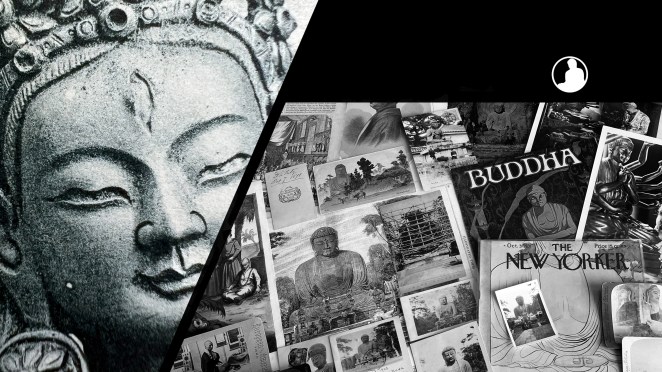
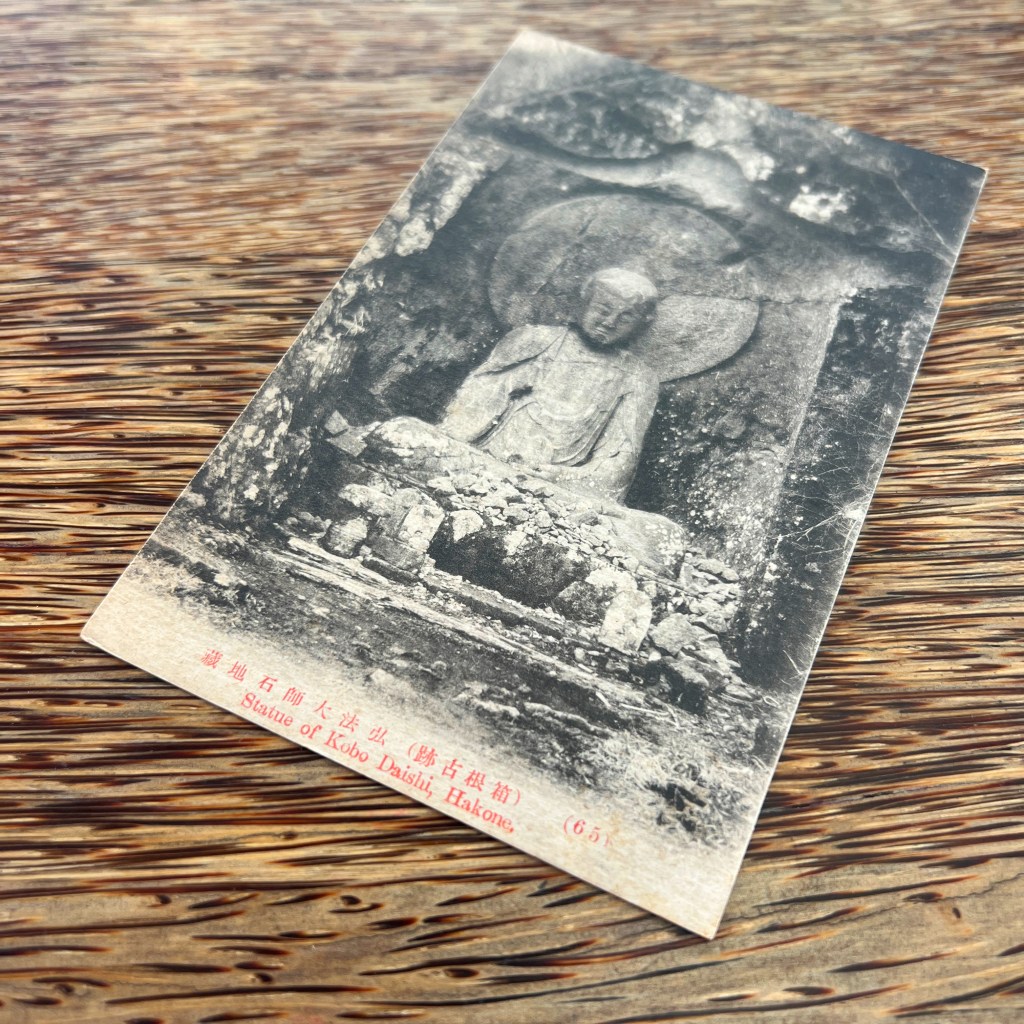
Despite the English caption, this is not a statue of the 9th century Buddhist monk Kōbō Daishi, otherwise known as Kūkai. As the Japanese caption reads, this is a stone relief carving of the bodhisattva Jizō at Hakone, attributed to Kūkai’s skilled craftsmanship.

The lore of Kūkai’s craftsmanship was known to 19th c. art historian Ernest Fenollosa: “This is said to have been carved by Kōbō himself on his journey to the North; yet…he hardly would have spared time for its execution.” Today, the statue is dated to the 13th century, well after Kūkai’s death.

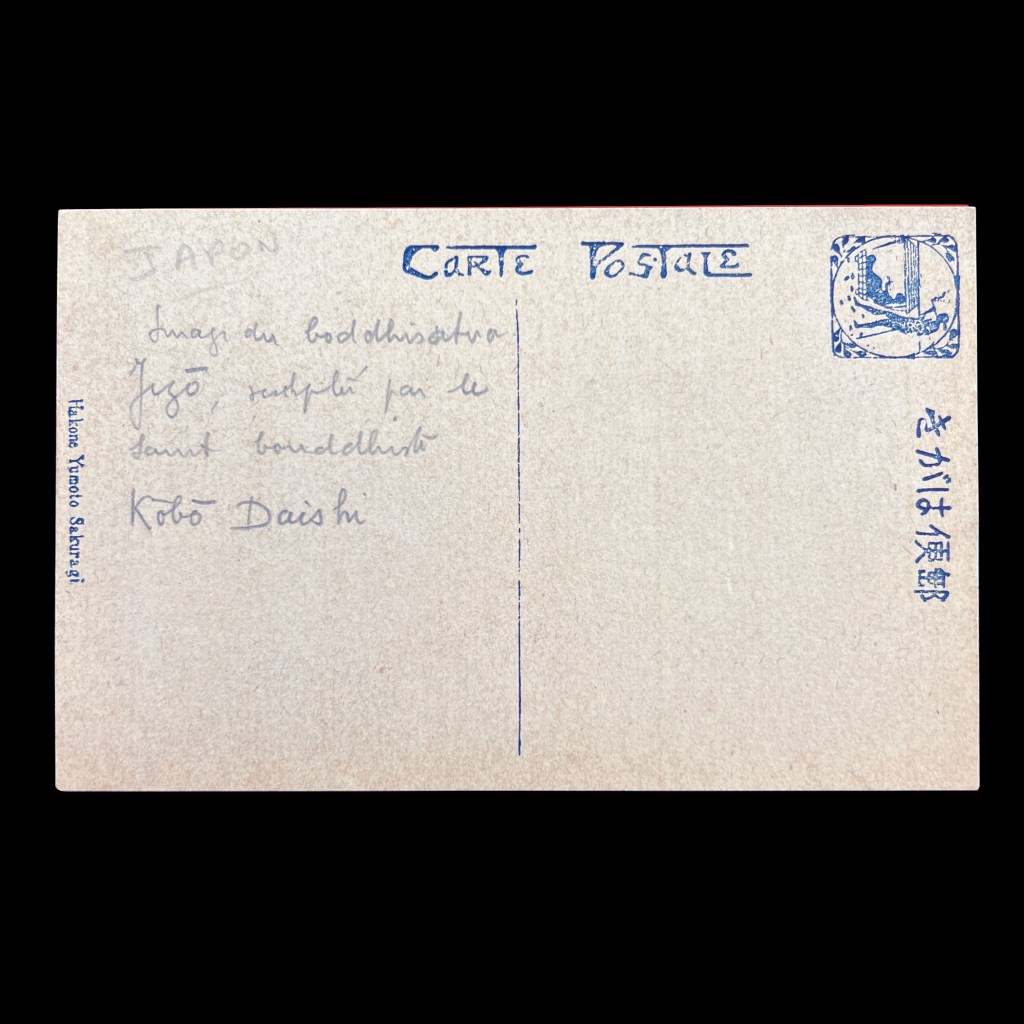
The note on the back, possibly written by a French tourist as a personal reminder, clarifies the English caption saying the image of Jizō was “sculpted by the Buddhist saint Kōbō Daishi.” The design of the reverse dates this Japanese postcard to between 1933 and 1945.

The pile of stones and pebbles on Jizō’s lap were common votive offerings presented by passing travelers and pilgrims.

Carved into the rock face, this statue still stands today in Hakone, sheltered by a small shrine. For more on Jizō and this particular icon, see Hank Glassman, The Face of Jizo: Image and Cult in Medieval Japanese Buddhism, 2012.


The Buddhas in the West Material Archive is a digital scholarship project that catalogues artifacts depicting Buddhist material culture for Western audiences. It’s comprised of prints, photos, and an assortment of ephemera and other objects. For a brief introduction to this archive, visit the main Buddhas in the West project page.


For Related Buddhas in the West Posts Featuring Jizō / Kṣitigarbha:


For the Most Recent Buddhas in the West Posts:


Joseph Rock’s Photographs of Zhouni (Choni) Monastery

For all the new Buddhas in the West posts
follow us on Bluesky & Instagram


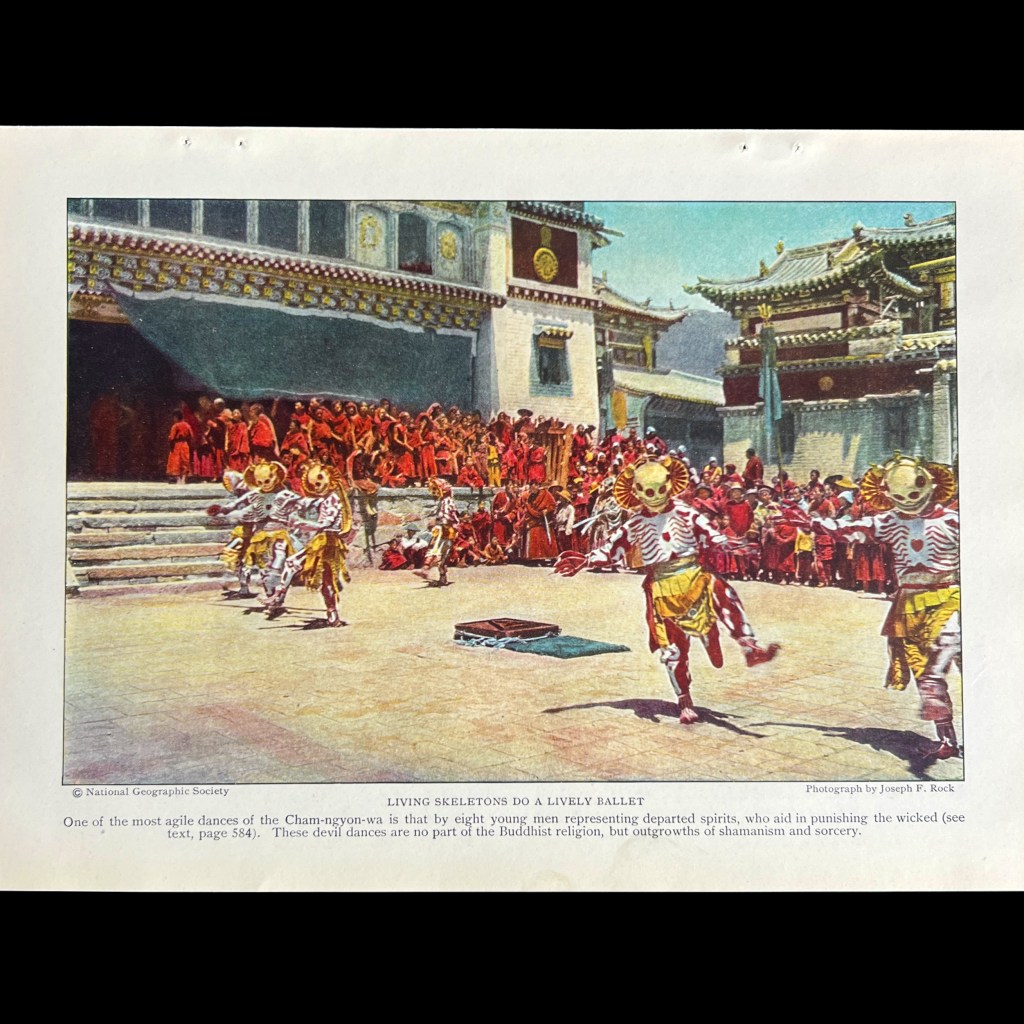
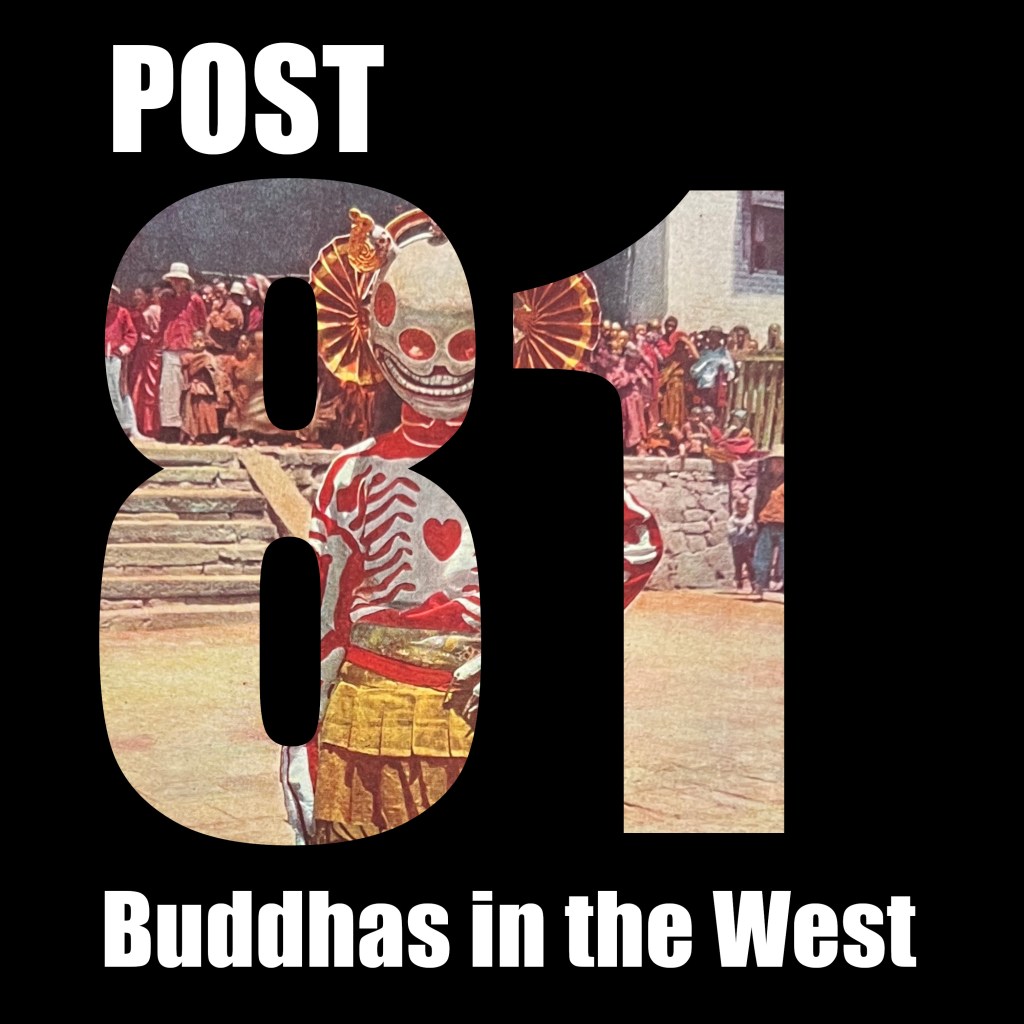
Joseph Rock took stunning photographs of the Tibet-China borderlands between 1922 and 1935, funded in part by the National Geographic Society. During this span, Rock wrote nine article for National Geographic; some were illustrated with gorgeous hand-colored prints.

Rock arrived in Zhuoni, China in April 1925 and stayed for two years, during which he wrote “Life among the Lamas of Choni” published in November 1928. Zhouni, then a Tibetan ruled chiefdom in Gansu province, was home to a bustling Buddhist monastery with hundreds of monks in residence.

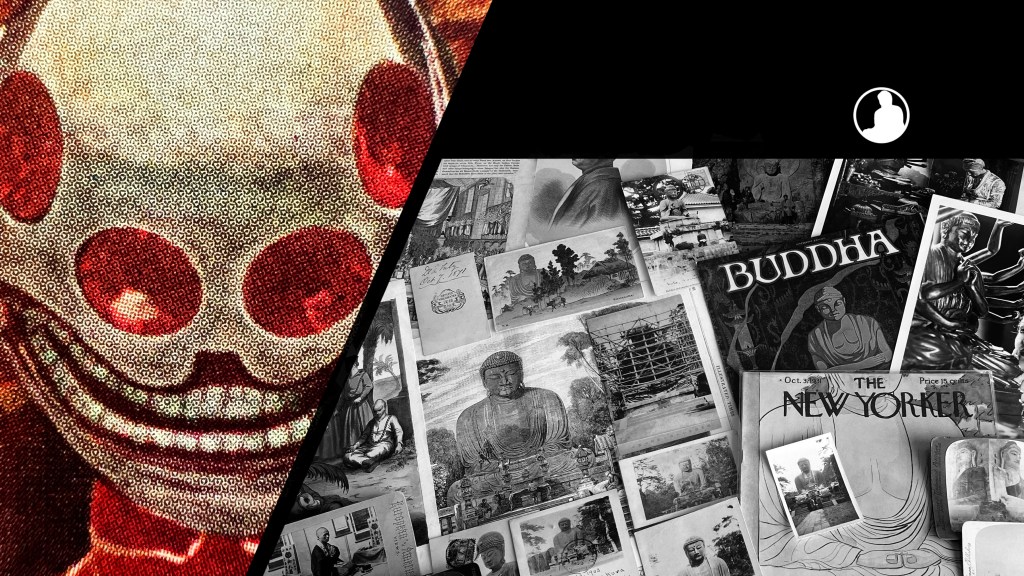
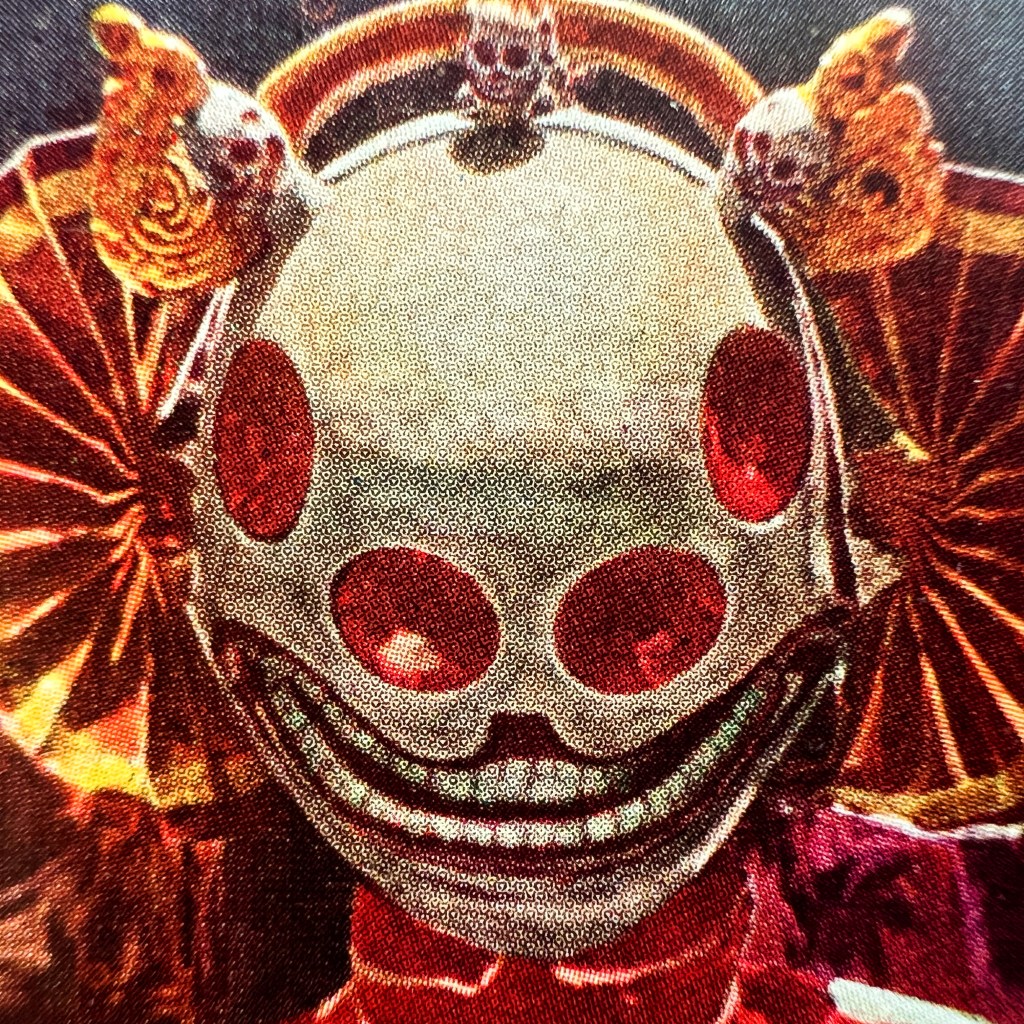
The visual centerpiece of Rock’s article were photos of the Tibetan “Old Dance,” held on the sixth day of the sixth month. Eight agile skeleton dancers were part of the festivities, representing “departed spirits” as described by Rock.

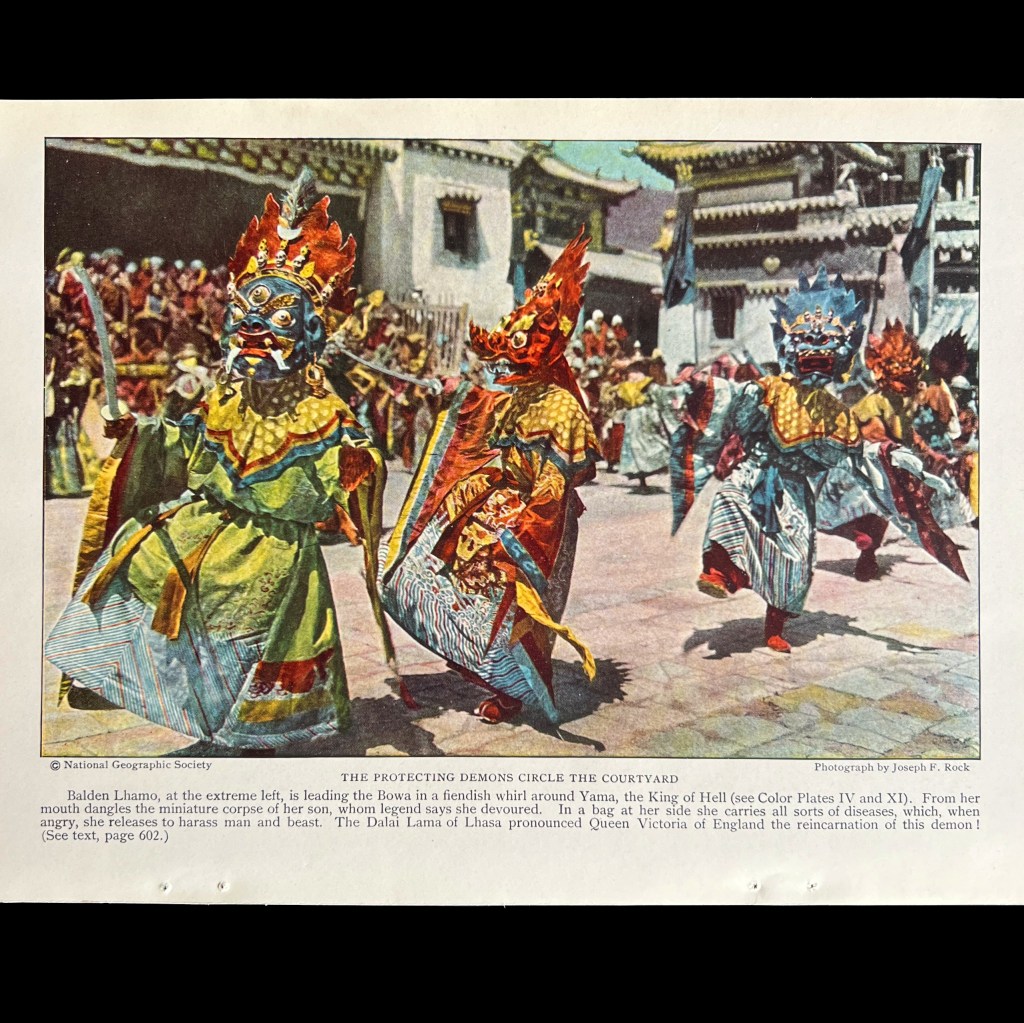
The climax of the Old Dance feature the appearance of Yama, the “grim ruler of the nether world.”

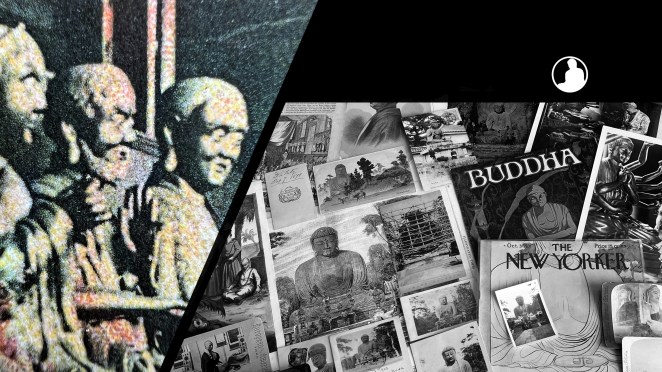
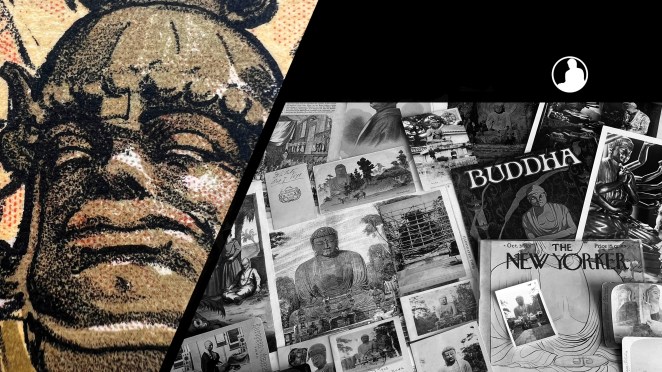
As recounted by Rock, the left-most figure here is Palden Lhamo, the wife of Yama who killed their son, seen dangling from her mouth. According to Rock, due to the British invasion of Tibet decades earlier, it was believed Queen Victoria was a reincarnation of this demon goddess.

Rock developed his own black and white glass negatives and sent them back to the United States. Artists then hand-colored the images according to detailed descriptions furnished by Rock (later, Rock would use potato starch based Autochrome color plates).

Rock was able to purchase a complete set of the Tibetan Buddhist canon printed at Choni Monastery before the printing blocks were destroyed in 1929. To read a digital version of Rock’s account of Choni Monastery in National Geographic, see tinyurl.com/4dwe2tmb.


The Buddhas in the West Material Archive is a digital scholarship project that catalogues artifacts depicting Buddhist material culture for Western audiences. It’s comprised of prints, photos, and an assortment of ephemera and other objects. For a brief introduction to this archive, visit the main Buddhas in the West project page.


For Related Buddhas in the West Posts Featuring Historical Magazines:


For the Most Recent Buddhas in the West Posts:

T. Enami’s “Buddha’s Bicycle” Lantern Slide

For all the new Buddhas in the West posts
follow us on Bluesky & Instagram


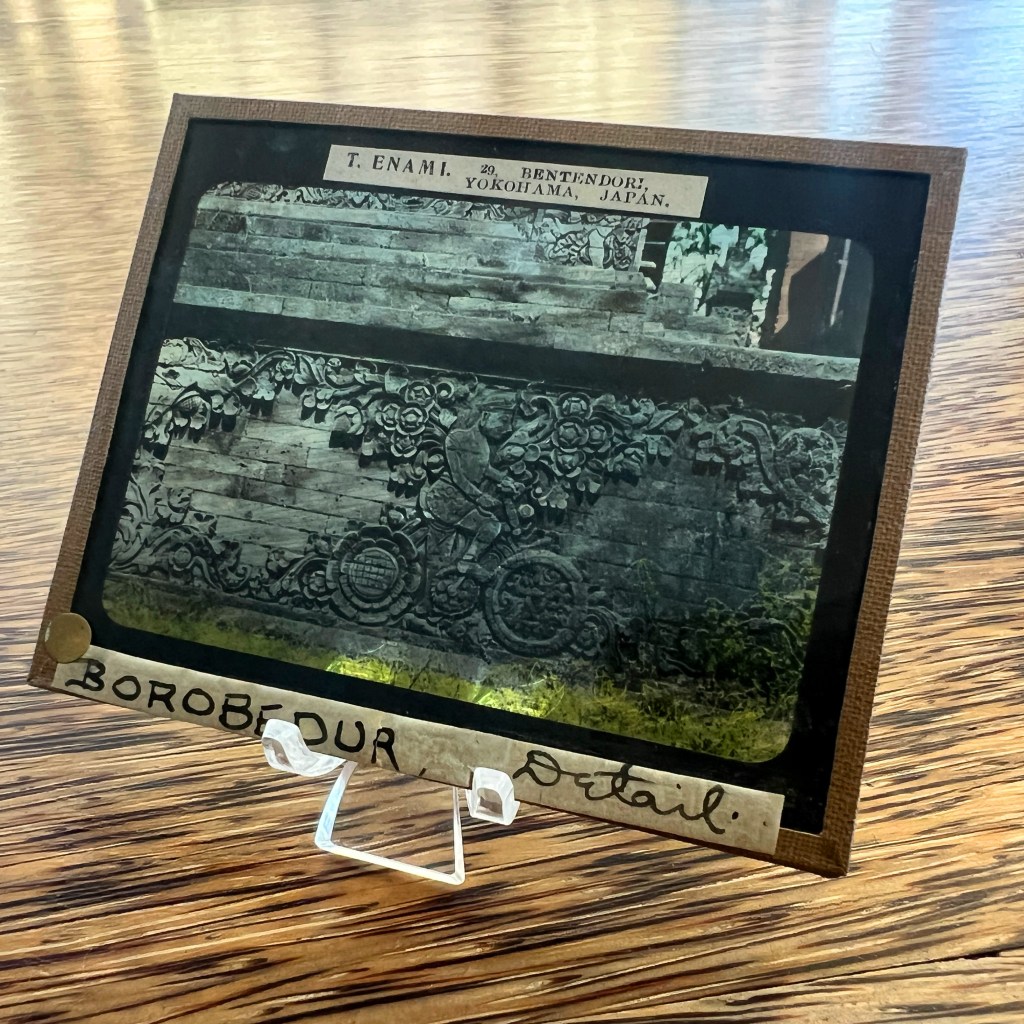
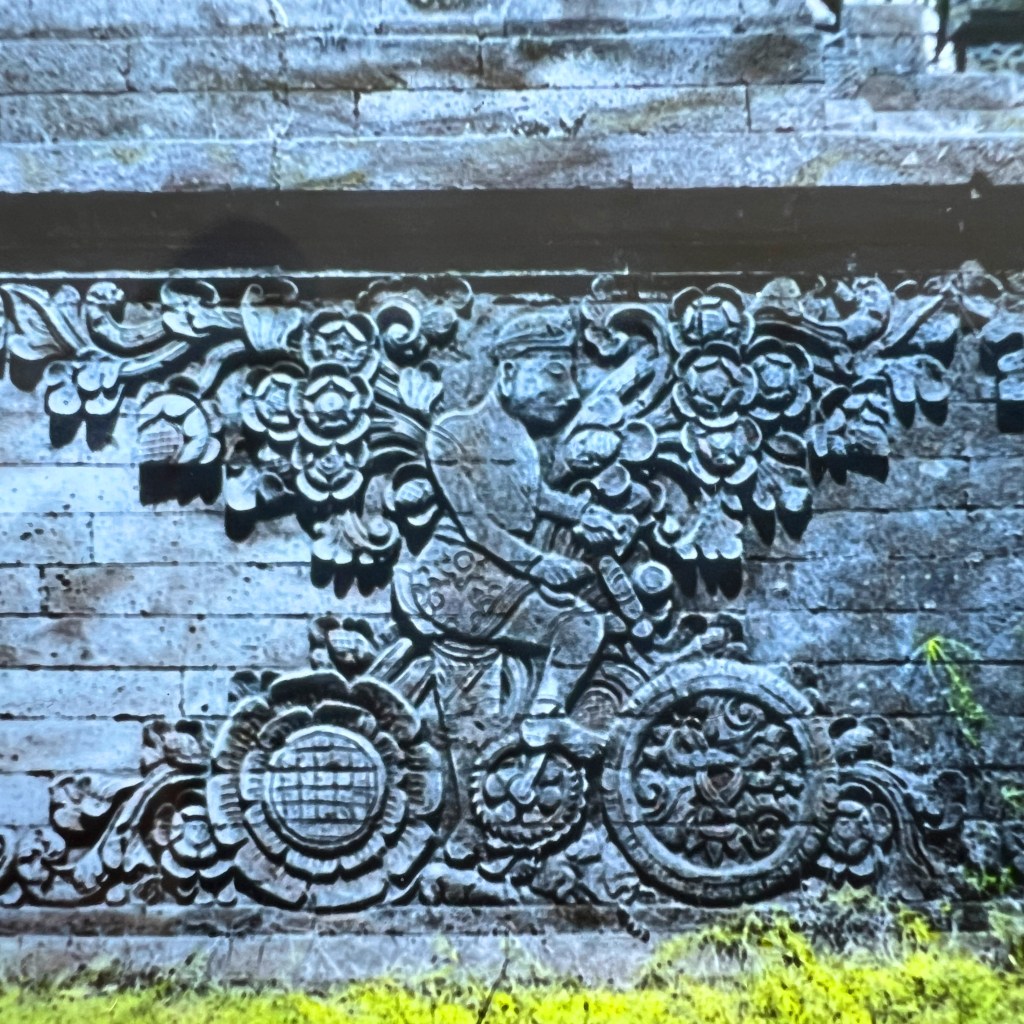
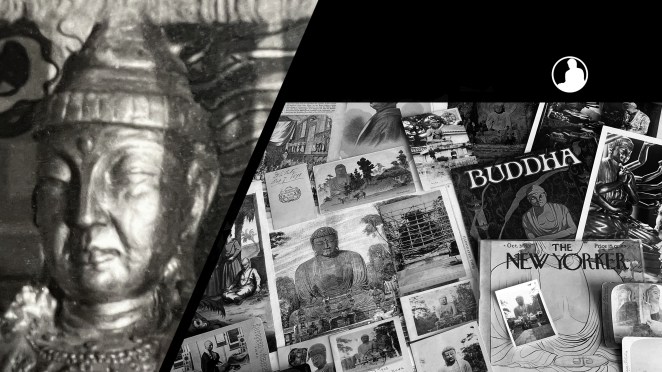
[Note: This post was originally published on April 1, 2025] Borobudur displays a unique image of the Buddha riding his favorite bicycle, a symbol of his mastery over the cycle of endless rebirth. Borobudur, a 9th century Buddhist monument in Central Java, also depicts bodhisattvas playing basketball and apsaras arm wrestling.


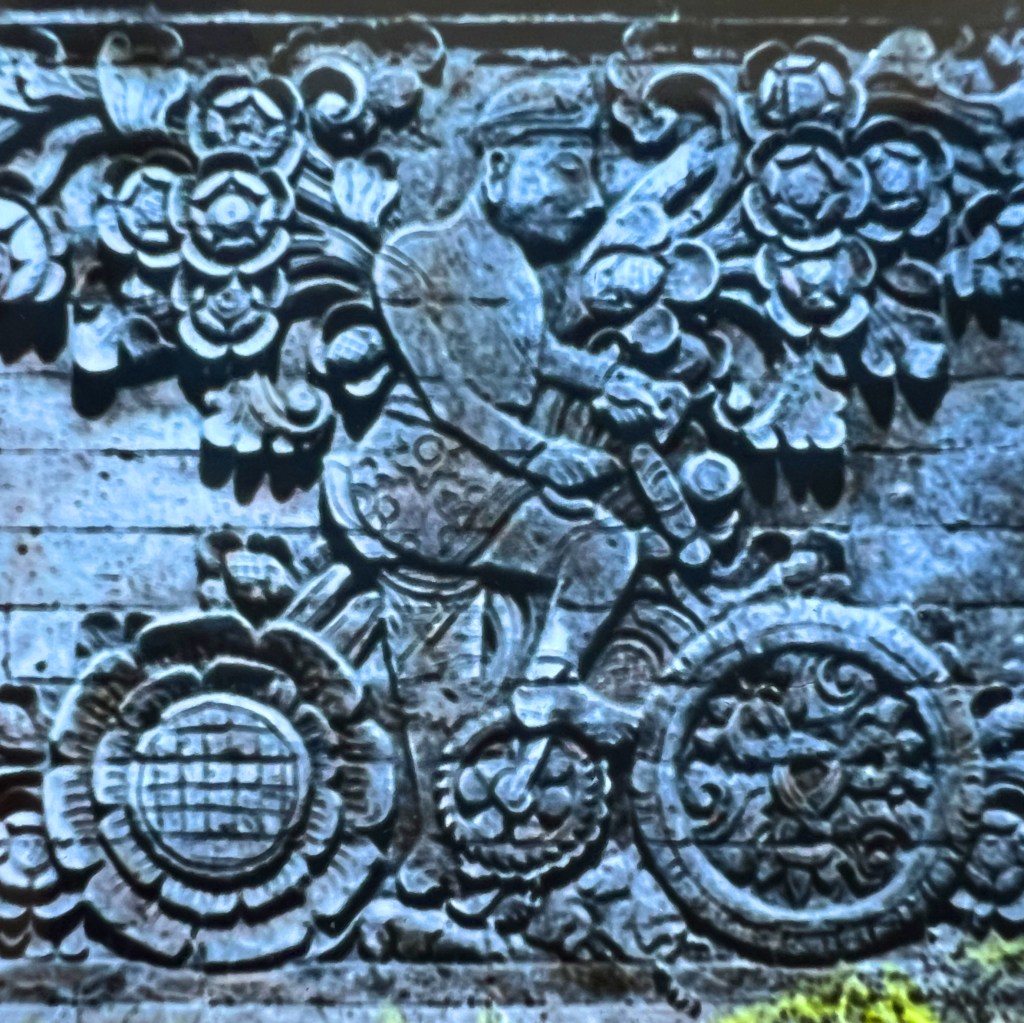
April Fools! In reality, when W.O.J. Nieuwenkamp (1874–1950) arrived in Bali with his bicycle in 1904 to explore, he caused, “real turmoil and panic,” as the Dutchman himself notes in his diary. Soon thereafter, he was immortalized at the Pura Meduwe Karang Temple (not Borobudur) in Bali.

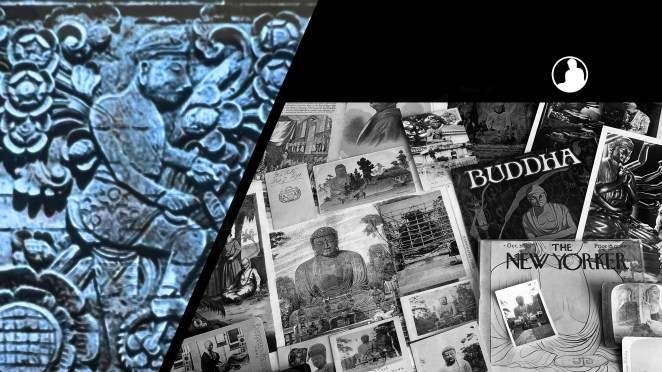
The glass lantern slide was taken by influential Japanese photographer Enami Nobukuni (1859–1929) between 1917 (when the relief was repaired, adding a rear lotus wheel) and 1929 (Enami’s passing). The label of Borobudur – a location also photographed by Enami – is mistaken.

Notably, the relief shows Nieuwenkamp wearing traditional Balinese clothes, creating a fusion of foreign and familiar. For further discussion on this curious relief, see Putra & Abdullah’s “Iconological Analysis of the ‘Man on a Bicycle’ Relief” (2023).


The Buddhas in the West Material Archive is a digital scholarship project that catalogues artifacts depicting Buddhist material culture for Western audiences. It’s comprised of prints, photos, and an assortment of ephemera and other objects. For a brief introduction to this archive, visit the main Buddhas in the West project page.


For Related Buddhas in the West Posts Featuring Historical Lantern Slides:


For the Most Recent Buddhas in the West Posts:

William Alexander’s Idol Temple Aquatint Print

For all the new Buddhas in the West posts
follow us on Bluesky & Instagram


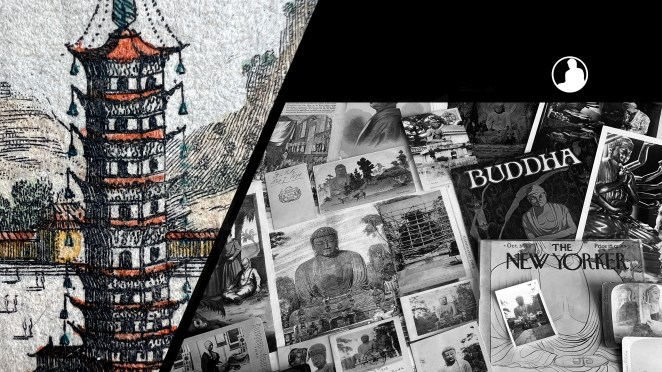
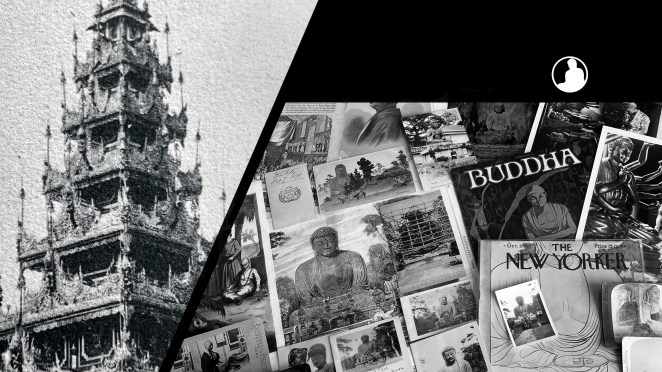
Artist William Alexander (1767–1816) accompanied the first British diplomatic mission to China in 1793 to visually document the embassy’s trip. Eager to be the first Brit to provide wide-ranging eye-witness accounts of China, Alexander’s published works blend fantasy and reality.

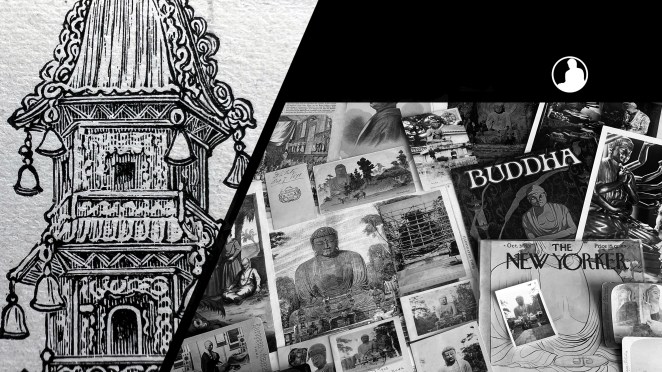
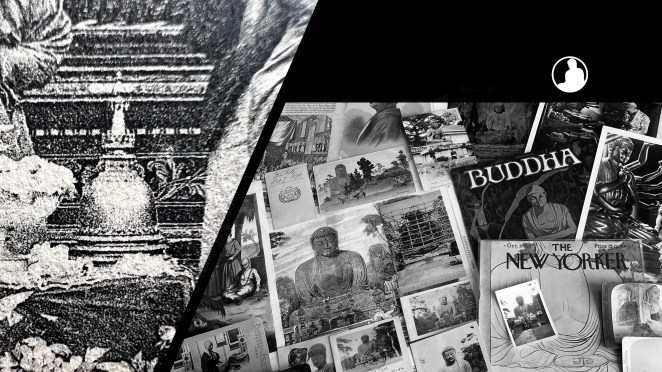
After arriving in China and sailing inland routes from Macao to Beijing, Alexander was mostly quarantined to the Summer Palace of the emperor. Alexander’s illustrations sometimes draw heavily upon European chinoiserie imagery, creating idyllic pagoda-filled land

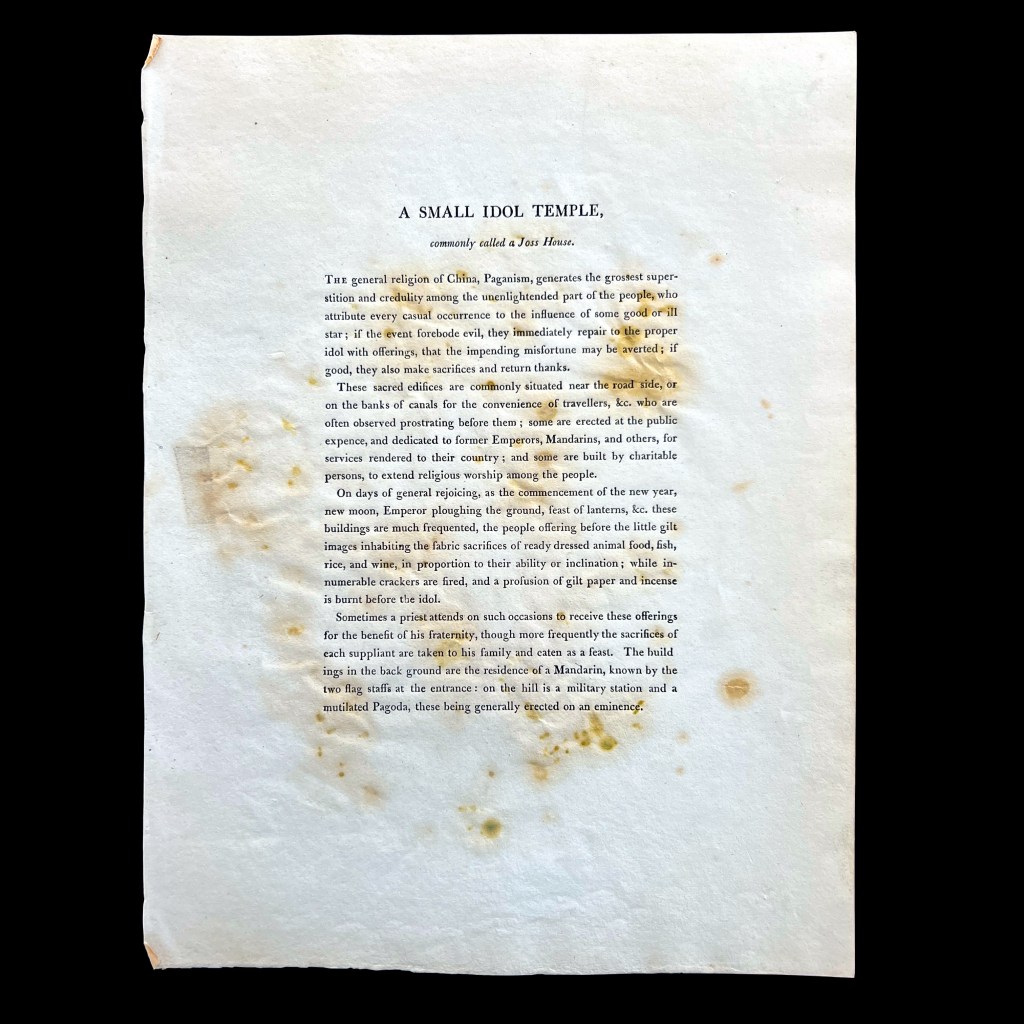
Alexander’s 1805 publication, The Costume of China [sic], was bound pairing images with short explanatory text. It’s notable that while the accompanying image shows a rudimentary Buddhist figure with crossed legs, the text only speaks generically of paganism, idols, and joss houses.

Alexander originally produced sketches and watercolors, but these were rendered into engravings for early publications recounting the British embassy. For The Costume of China, however, the London publisher used colored aquatints, a popular printmaking method at the turn of the 19th century.

As for the “continued biography” of this print, the masking tape indicates it was previously framed. The explanatory text was taped to the back of the image.

The pagoda was one of the most enduring visual icons of China in the European imagination. The crumbling top could indicate the diminishing stature of China in comparison so the growing industrial might and colonial reach of Britain.

Unlike earlier European visitors to China who focused on religion, few of Alexander’s artworks concern this topic, reflecting changing interests. For further discussion of Alexander’s illustrations of China, see Chen Yushu’s “William Alexander’s Image of Qing China” (2019).


The Buddhas in the West Material Archive is a digital scholarship project that catalogues artifacts depicting Buddhist material culture for Western audiences. It’s comprised of prints, photos, and an assortment of ephemera and other objects. For a brief introduction to this archive, visit the main Buddhas in the West project page.


For Related Buddhas in the West Posts Featuring Historical Prints:


For the Most Recent Buddhas in the West Posts:


Ueno Daibutsu after the Great Kantō Earthquake Postcard

For all the new Buddhas in the West posts
follow us on Bluesky & Instagram


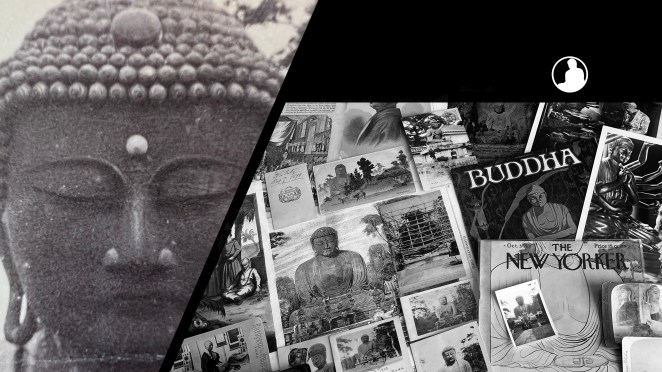
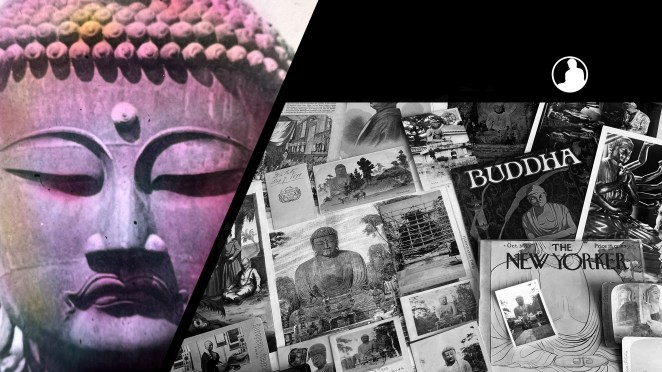
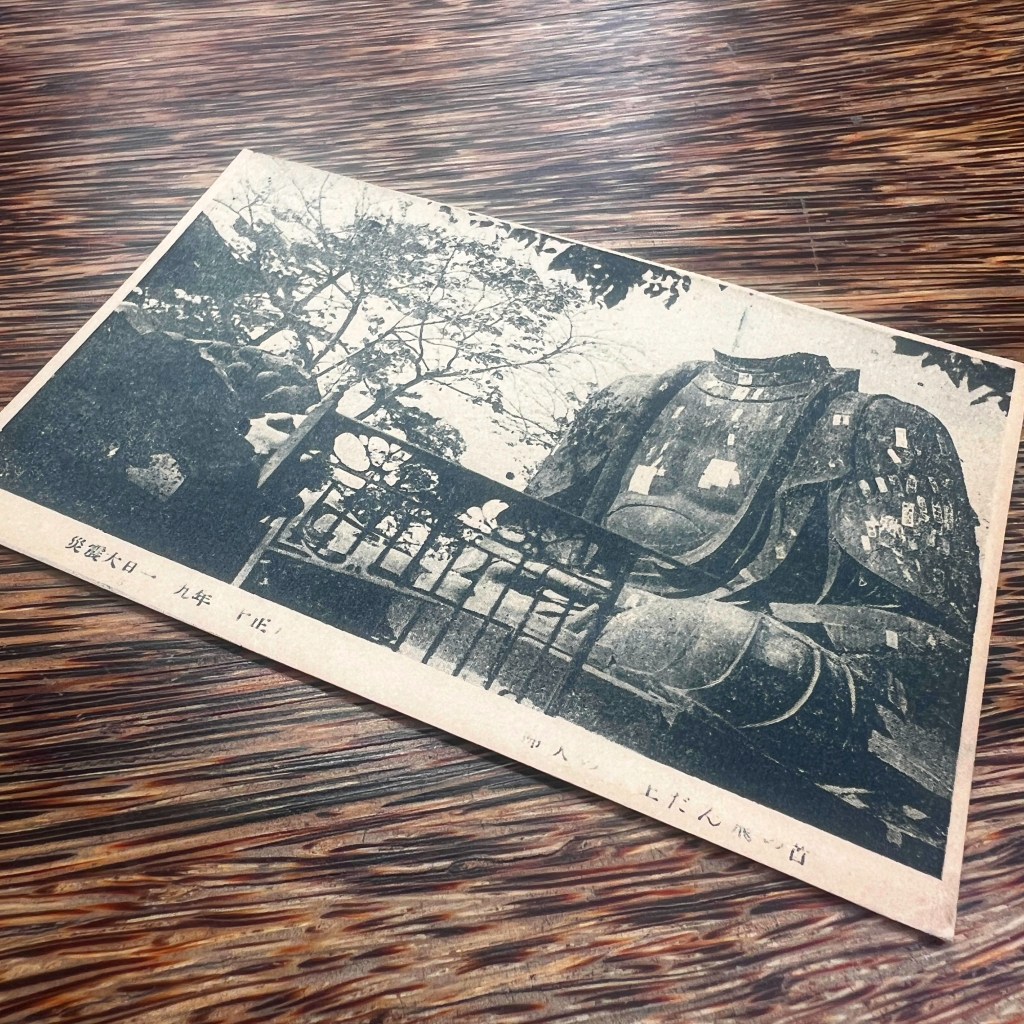
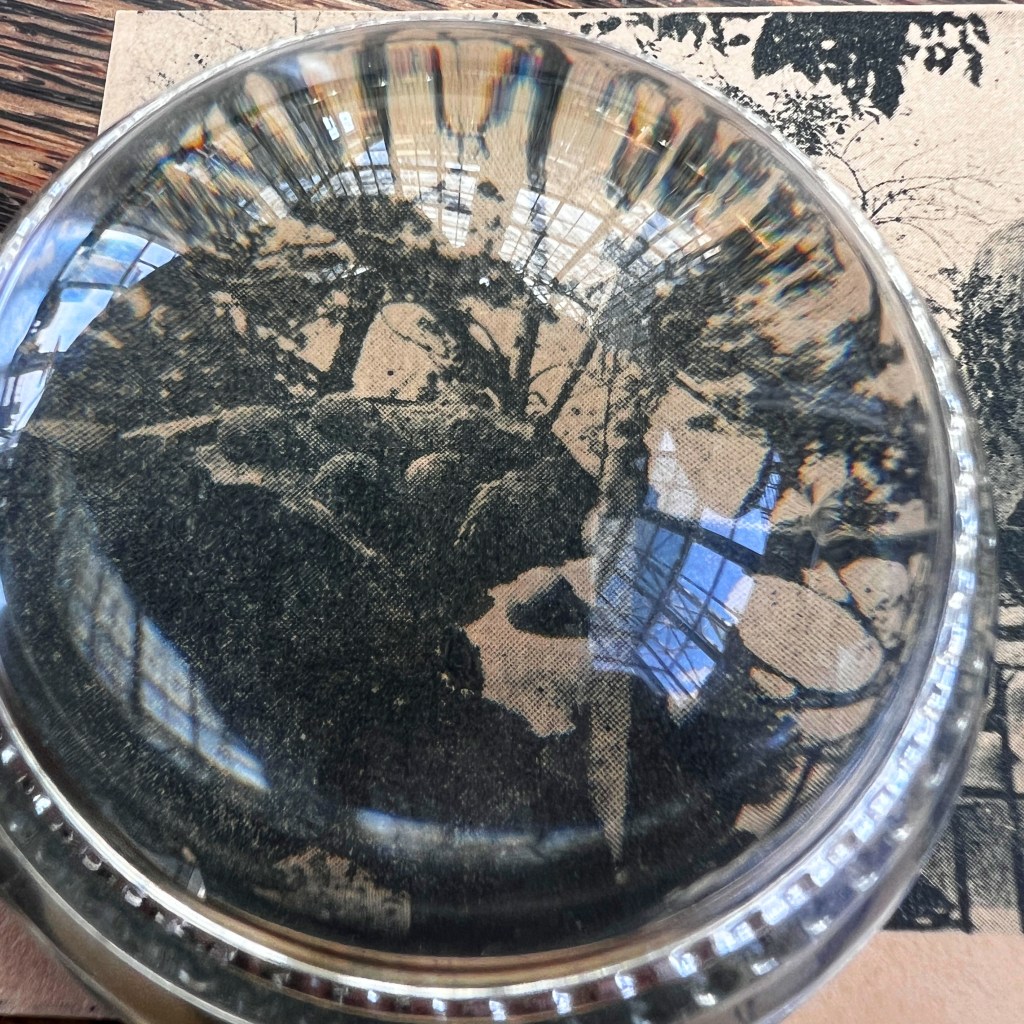
Constructed in 1843, the colossal Ueno Daibutsu in Tokyo was restored after damage from the 1855 Edo earthquake. Less than a century later, in 1923, the Great Kantō earthquake dislodged the icon’s head, providing a rare photographic opportunity.

The bronze statue, representing Śākyamuni Buddha, was the third iteration, replacing statues made in c. 1660 and 1631. The Ueno Daibutsu originally stood on the precincts of Kan’ei-ji 寛永寺, a family temple for the famed Tokugawa clan, but the grounds were turned into today’s Ueno Park in 1873.

The once booming Japanese postcard industry was devastated after the 1923 earthquake, as many paper manufacturers and printers had to rebuild. Postcards made during this period are often found on a cheaper, rough paper prone to yellowing; notably, the back here is not fully printed.

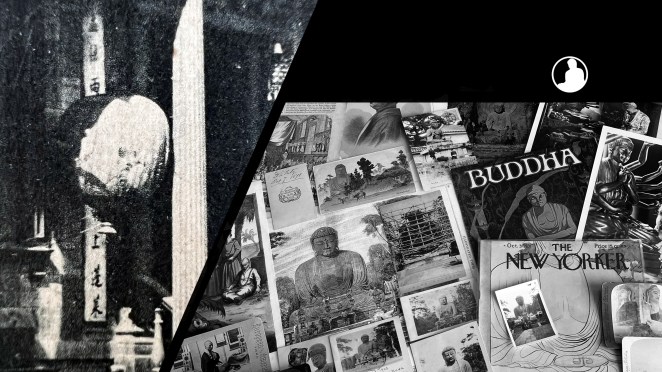
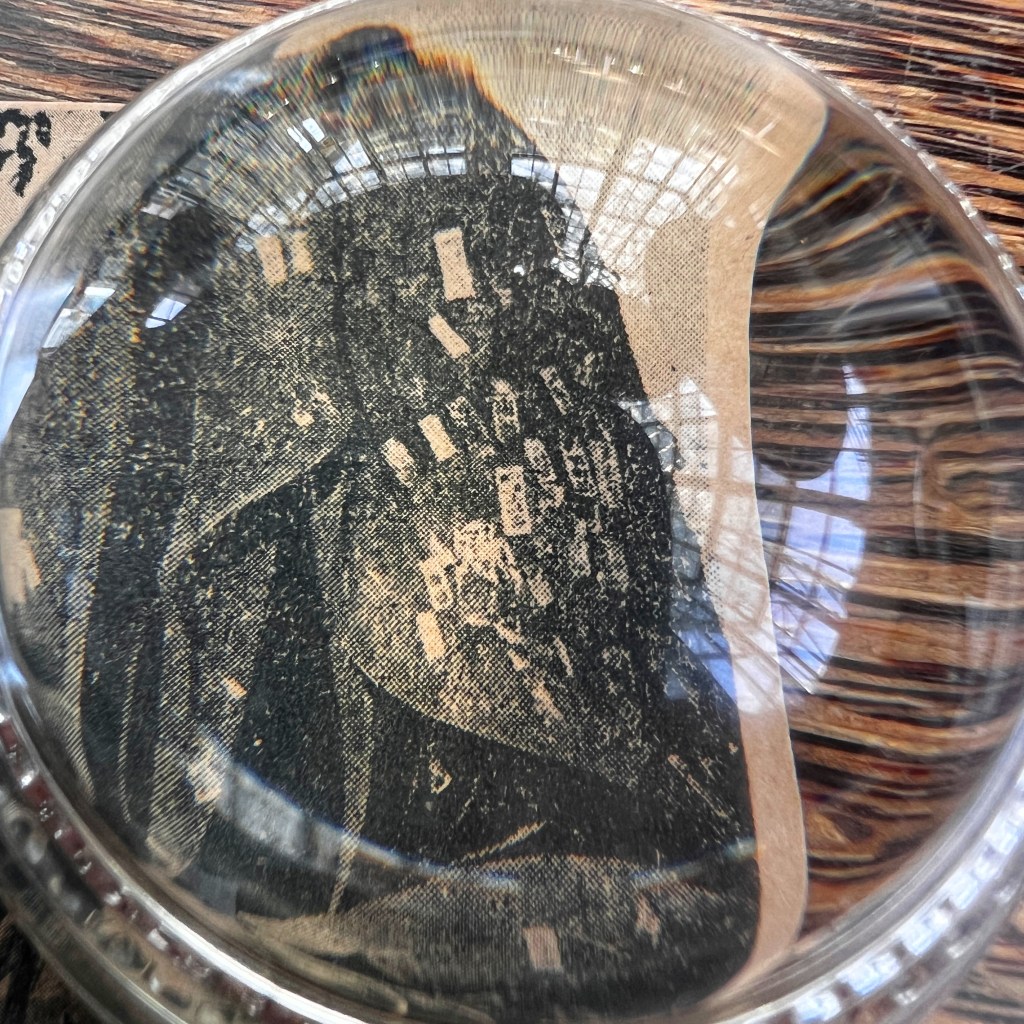
The older exquisite hand-colored collotype prints of a decade earlier were replaced with lower resolution halftone screen prints in black and white. This detail shows the icon’s head laying in the foreground; looking closely, it’s easy to see the hallmark halftone dot pattern.

Vestiges of religious activity can be seen through the remnants of senshafuda 千社札, votive slips pasted on the statue by pilgrims and visitors.

The Ueno Daibutsu body was melted down during WWII, thus today only the face remains on display in Ueno Park. Holding the belief that the statue “won’t fall any further,” it’s become a place for Japanese students to pray so they won’t fail exams.


The Buddhas in the West Material Archive is a digital scholarship project that catalogues artifacts depicting Buddhist material culture for Western audiences. It’s comprised of prints, photos, and an assortment of ephemera and other objects. For a brief introduction to this archive, visit the main Buddhas in the West project page.


For Related Buddhas in the West Posts Featuring Historical Postcards:


For the Most Recent Buddhas in the West Posts:

Kamakura Sightseeing Map (1912)

For all the new Buddhas in the West posts
follow us on Bluesky & Instagram


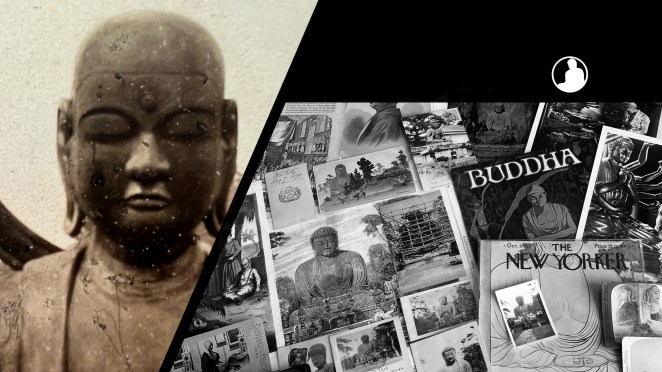
After the opening Japan in 1859, the old backwater capital of Kamakura was transformed into an international tourist destination. This bilingual tourist map from 1912 (Meiji 45) provides a glimpse into which Kamakura sites were seen as most significant, including the Kamakura Daibutsu.

The Complete Map of Kamakura Famous Places for Sightseeing (Kamakura yūran meisho zenzu 鎌倉遊覧名所全圖), loosely rendered into English as The Drawing of Kamakura Nipoon [sic], came inside a paper folder printed with symbols of the Japanese empire. The map was prepared by Kawakami Yasujirō 川上安次郎.

By the early 1890s, the Kamakura Kaihin Hotel, a converted medical therapy facility for seawater bathing, emerged as the premier resort for Kamakura travelers. In March 1893, the Japanese Welcome Society was established to help promote foreign travel in Japan.

For many Japanese travelers, the main attraction was the Hachiman Shrine, a large complex in the heart of the city found at the end of a long central promenade leading to the ocean. The red dot seen here suggests this site was highlighted by the original owners of the map.

Among the many dozens of sites named on the map, only a handful are marked by a red dot. Of those highlighted is Hase-dera, temple home to a famous 31-foot tall Eleven-Headed Kannon statue.

Another highlighted tourist attraction is the Kamakura Daibutsu at Kōtoku-in, here depicted by a small, yet easily identifiable, icon. For a digitized collection of Japanese maps held by the C. V. Starr East Asian Library at UC Berkeley, see tinyurl.com/yutj576z.


The Buddhas in the West Material Archive is a digital scholarship project that catalogues artifacts depicting Buddhist material culture for Western audiences. It’s comprised of prints, photos, and an assortment of ephemera and other objects. For a brief introduction to this archive, visit the main Buddhas in the West project page.


For Related Buddhas in the West Posts Featuring Japan:


For the Most Recent Buddhas in the West Posts:

Pierre Dieulefils’ Angkor Wat Pilgrimage Postcard

For all the new Buddhas in the West posts
follow us on Bluesky & Instagram


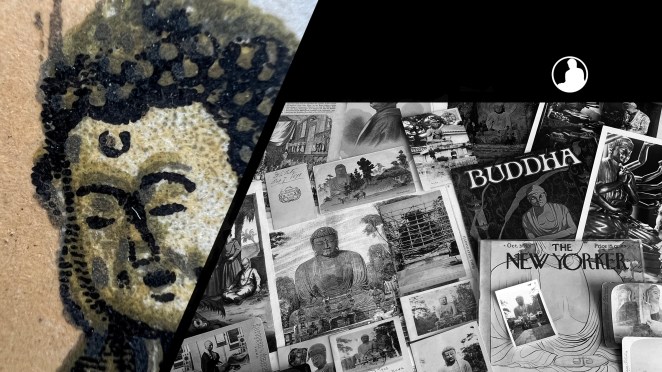
Given countless images showing the architectural grandeur of Angkor Wat, it’s easy to forget it was once an important religious site – not just a tourist destination. Here we see a photo by Pierre Dieulefils from 1905 showing “Buddhist monks on pilgrimage” to the sacred site.

In anticipation of the Exposition coloniale de Marseille in 1906, Dieulefils toured Cambodia to take photographs. His photos reveal many active shrines throughout the Angkor Wat complex, most of which have been cleared out and placed in museums today.

Dieulefils arrived in Vietnam as part of French military forces in 1885. Many of his photographs of Angkor Wat were printed as postcards that were popular among French officers who mailed them home to France.

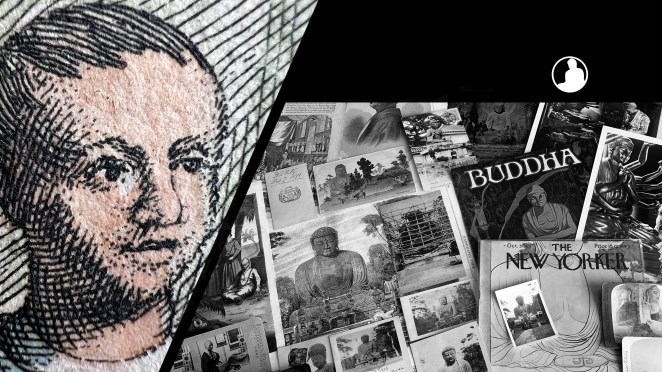
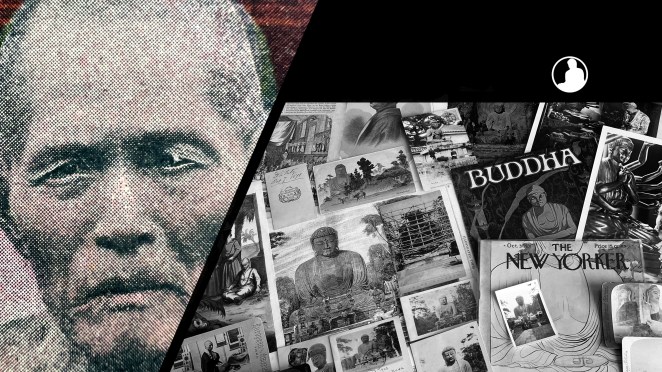
This Theravadin monk wears his outer cloak (saṃghāti) covering both shoulders, while the monk behind drapes his folded cloak over his left shoulder, bearing his right. Based on contrasting shades, we may infer this monk is wearing maroon robes, while the others wear brighter saffron.

Despite Dieulefils’ photographic record, French colonial guide books portrayed Angkor Wat as an abandoned archaeological marvel, see further discussion in Michael Falser’s “From Colonial Map to Visitor’s Parcours” in ‘Archaeologizing’ Heritage? (2013).


The Buddhas in the West Material Archive is a digital scholarship project that catalogues artifacts depicting Buddhist material culture for Western audiences. It’s comprised of prints, photos, and an assortment of ephemera and other objects. For a brief introduction to this archive, visit the main Buddhas in the West project page.


For Related Buddhas in the West Posts Featuring Cambodia:


For the Most Recent Buddhas in the West Posts: