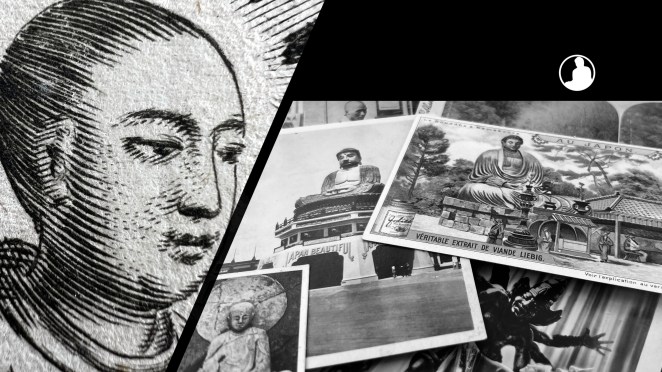
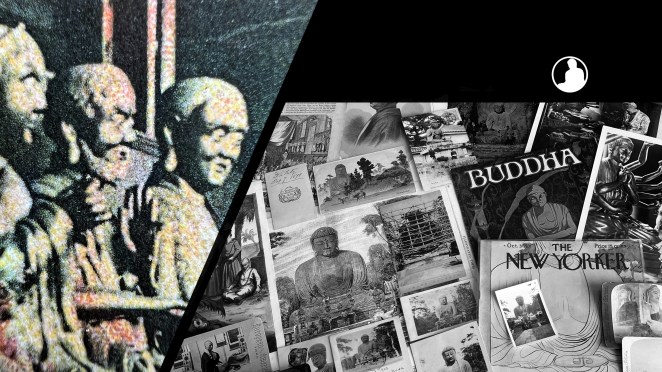
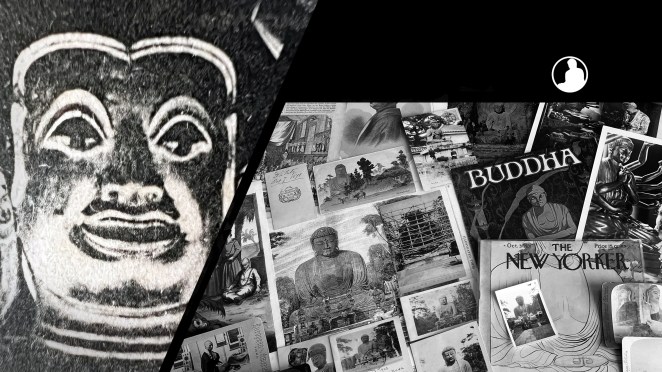
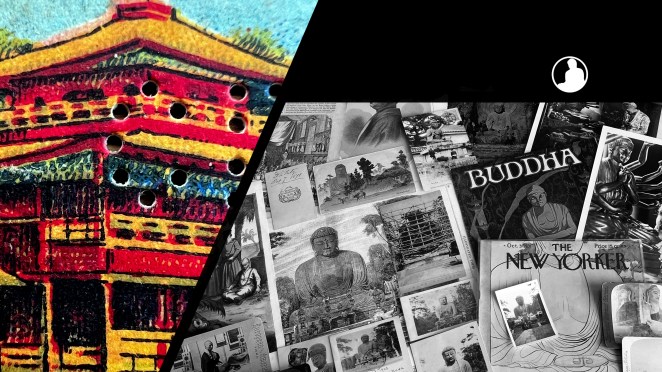
Nipponophone’s Moving Buddha Advertising Postcard

For all the new Buddhas in the West posts
follow us on Bluesky & Instagram


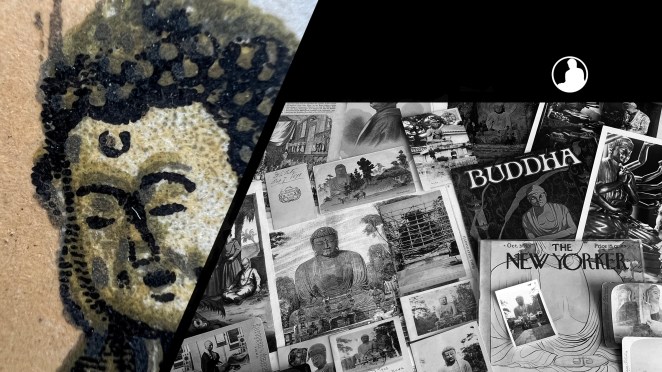
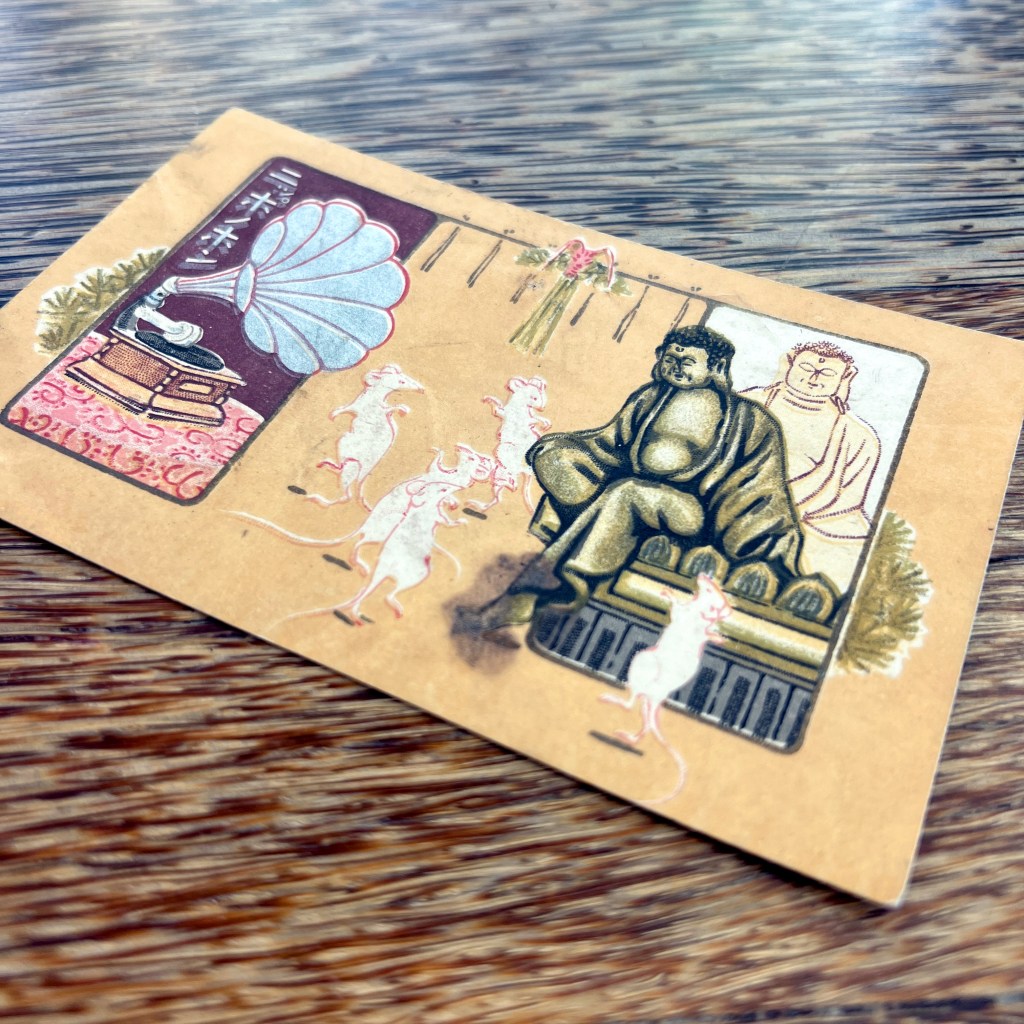
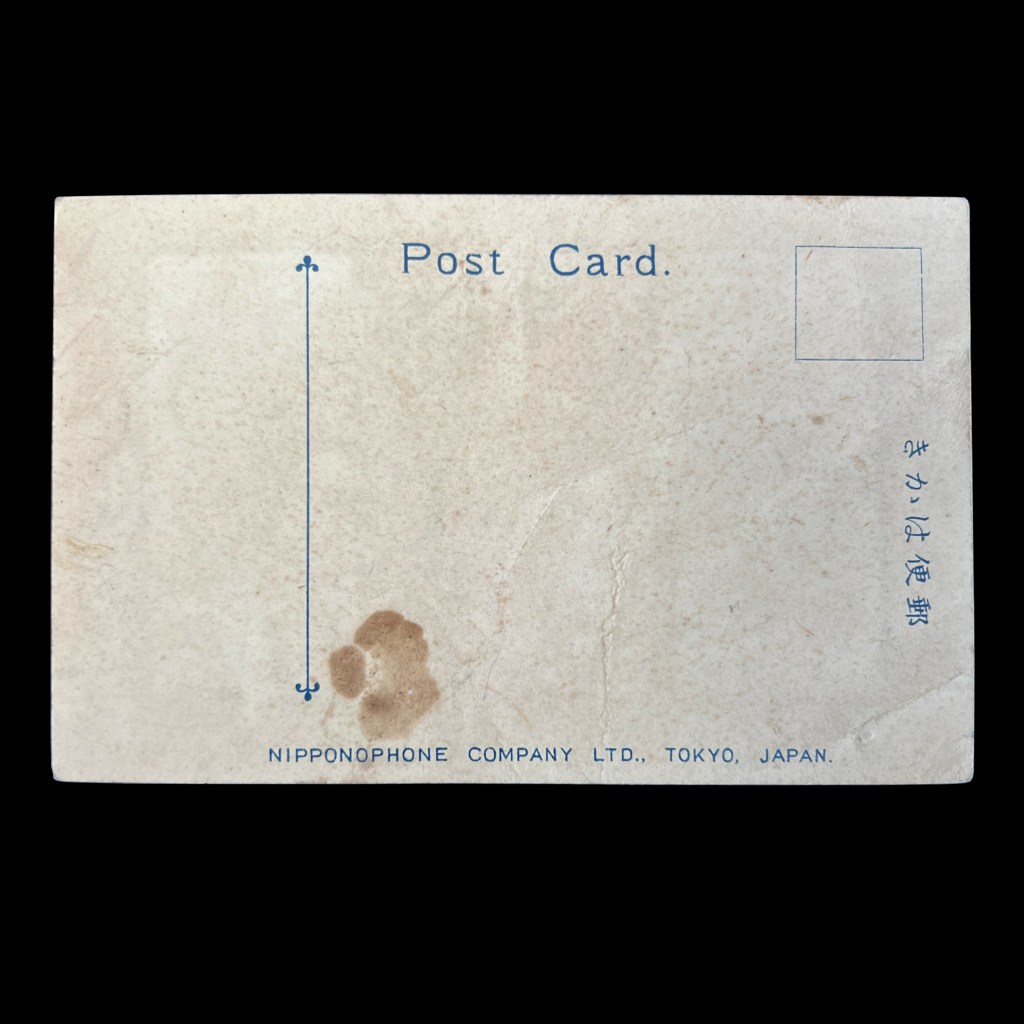
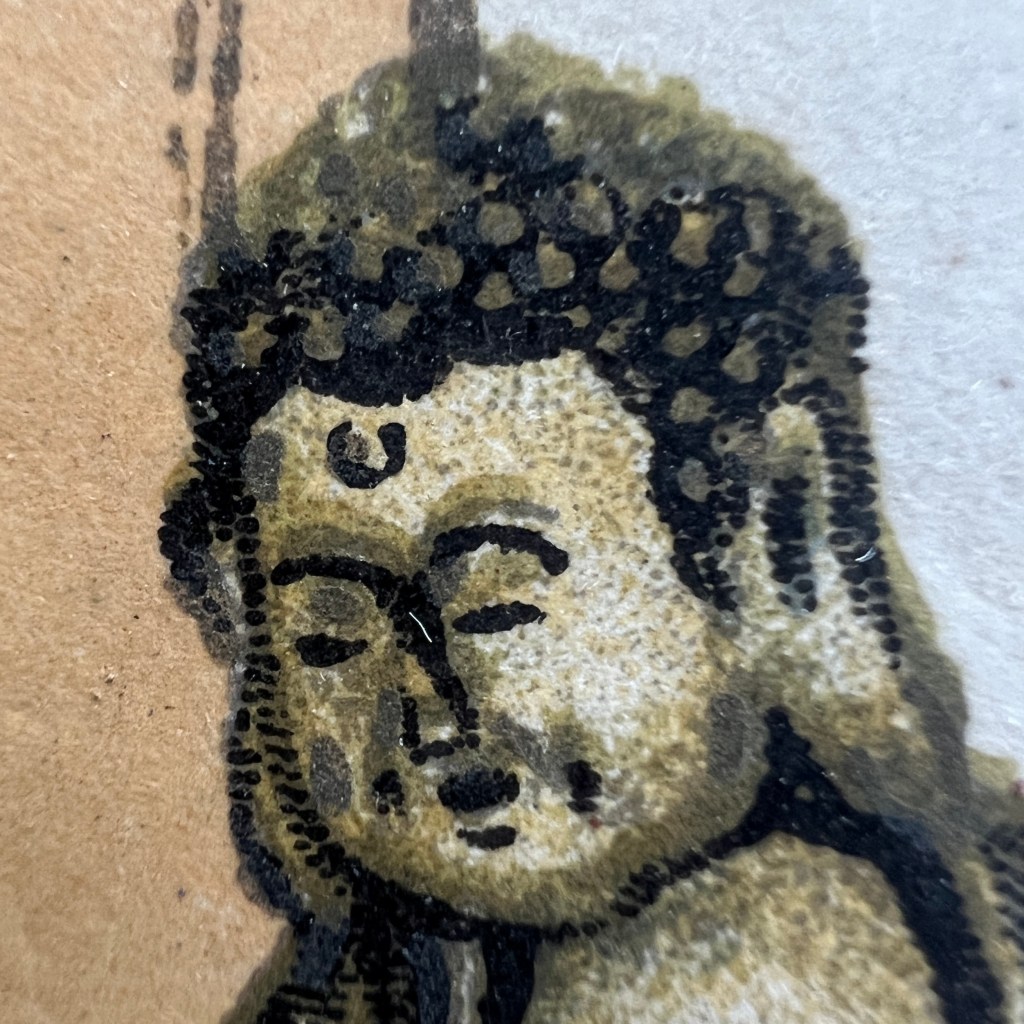
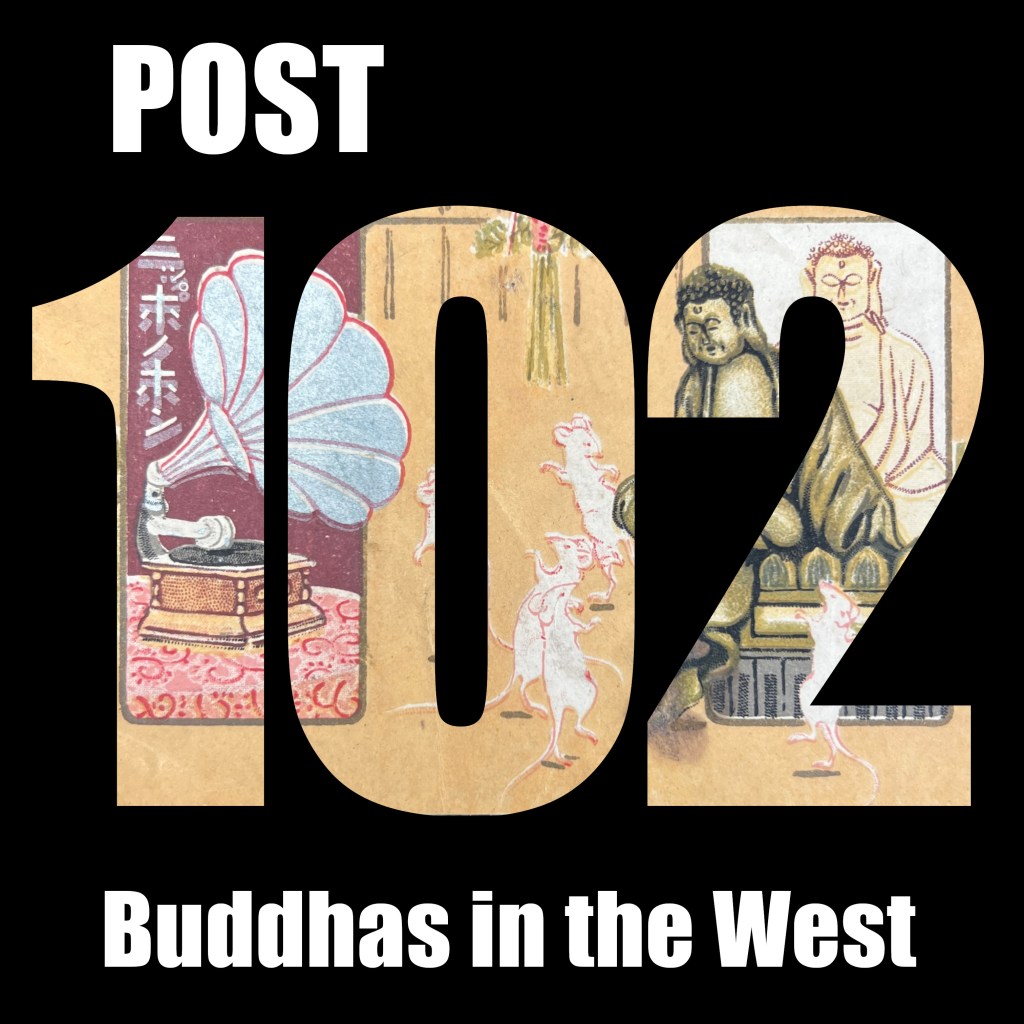
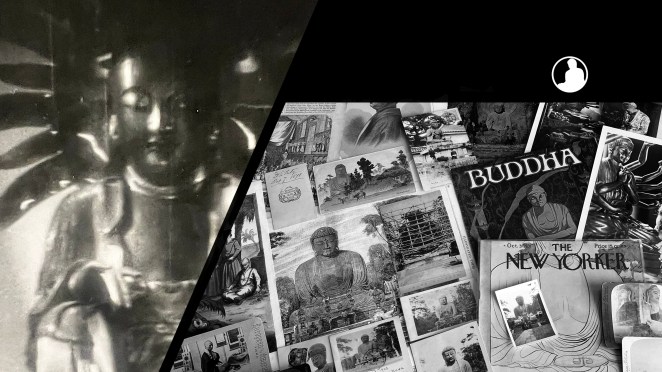
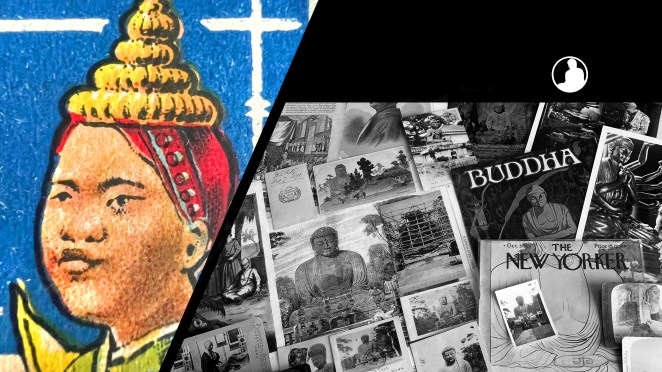
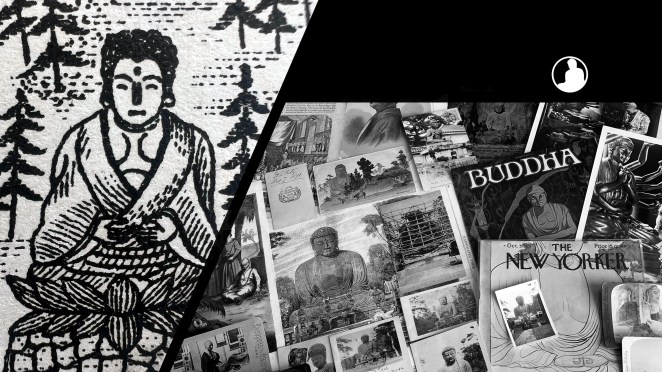
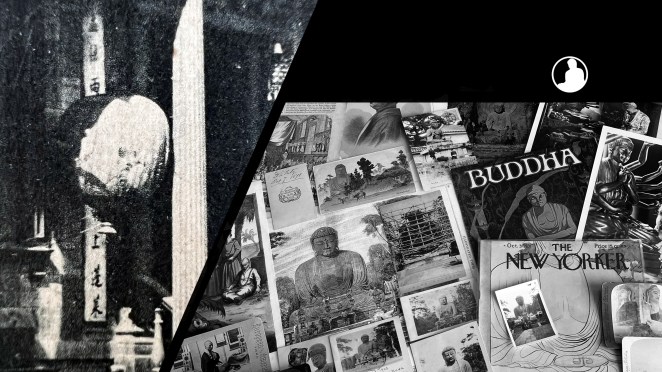
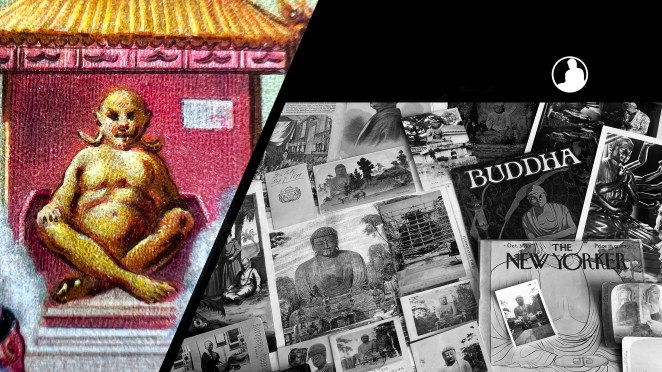
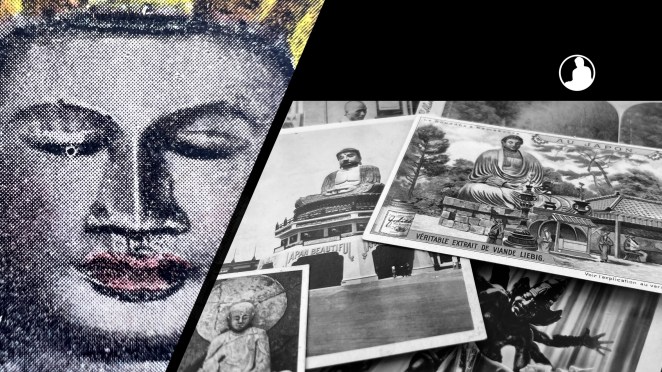
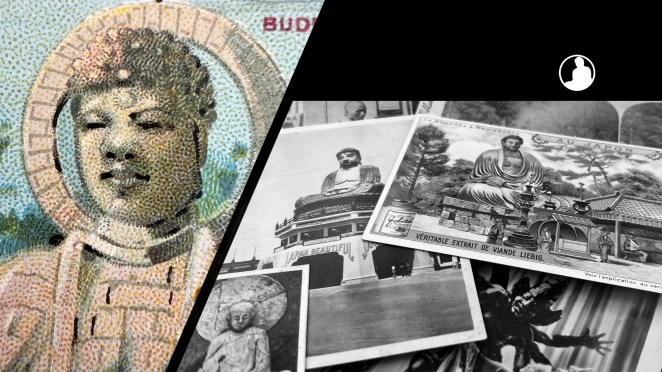
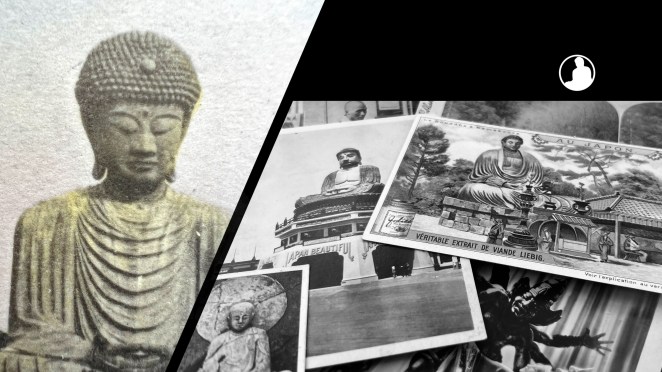
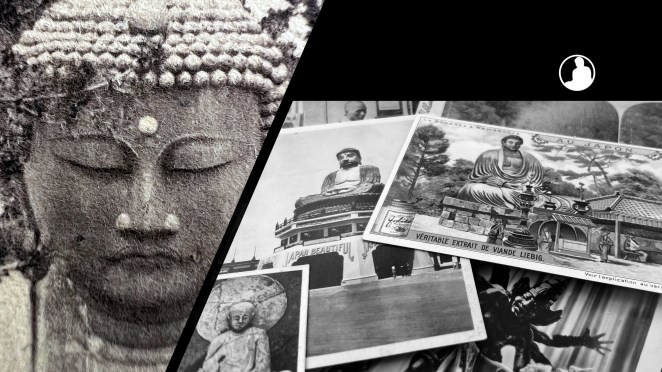
Nipponophone was an early Japanese record company, releasing the first domestically-produced phonograph in 1910 to commercial success. The company’s president, American Frederick Horn, adopted a large sitting Buddha for advertising, but with a subtle homage to another US brand.

Modern consumerism was just entering its stride and brand identity was emerging as central to advertising. In America, the most well-known music trademark at the time was Victor Records’ Nipper the dog who was depicted tilting his head to listen to his owner’s voice played on a record.

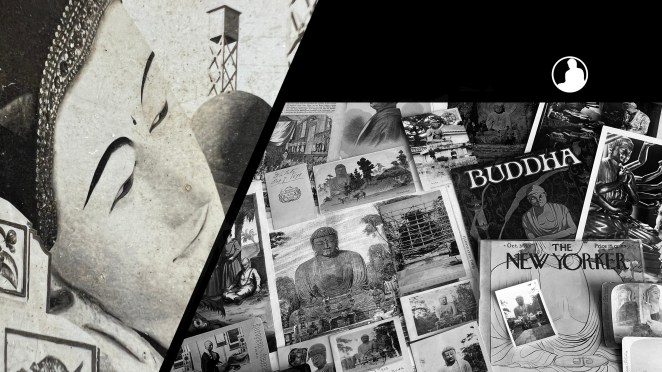
In contrast, designer Sassa Kōka used the otherwise stoically seated Buddha to illustrate the sonic appeal of the new phonograph. Such an image would undoubtedly strike Japanese audiences as unorthodox, but playful imagery was well-known in Japanese art through the Edo period (1600–1868).

During the height of the Japanese picture postcard boom (ehagaki būmu) it was not uncommon to see cards used as advertising. The placement of the address dividing line helps us date it to between 1910, when Nipponophone was founded, and 1918.

The moving Buddha image was used by Nipponophone in other business related ephemera. For example, it can be seen printed on the company’s paper record sleeves; one viewable here through the National Film and Sound Archive of Australia: https://tinyurl.com/4vk8f9sa


The Buddhas in the West Material Archive is a digital scholarship project that catalogues artifacts depicting Buddhist material culture for Western audiences. It’s comprised of prints, photos, and an assortment of ephemera and other objects. For a brief introduction to this archive, visit the main Buddhas in the West project page.


For Related Buddhas in the West Posts Featuring Historical Advertising:


For the Most Recent Buddhas in the West Posts:


Eliphalet Brown’s Buddhist Priest at Shimoda Lithograph

For all the new Buddhas in the West posts
follow us on Bluesky & Instagram


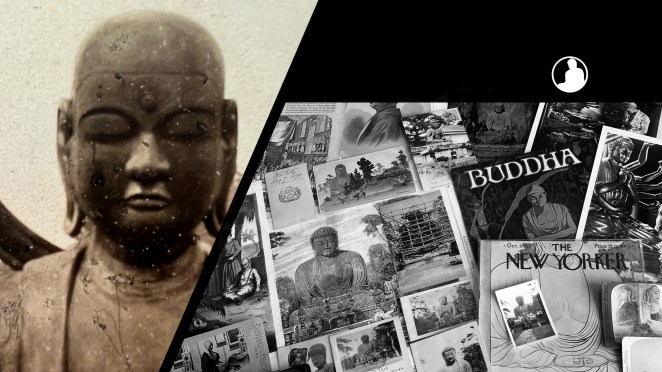
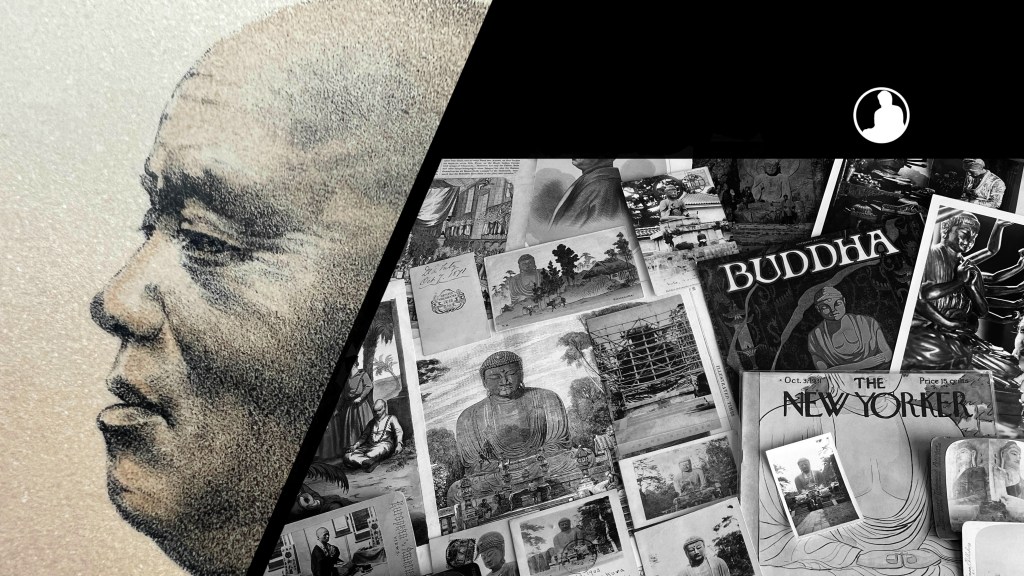
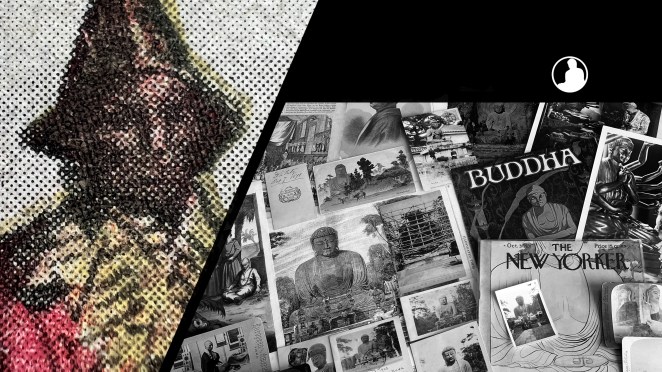
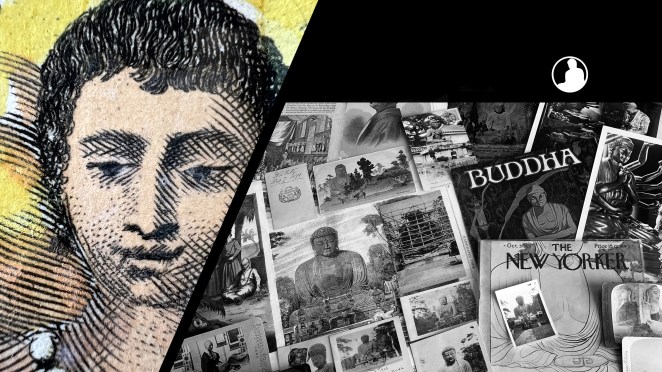
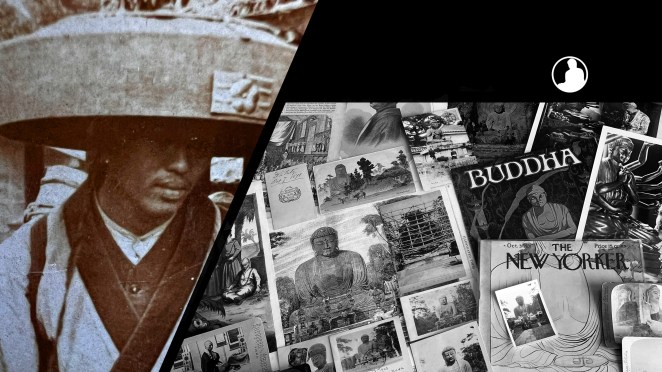
The earliest surviving photographs of Japan were shot by Eliphalet Brown as part of the Perry Expedition in 1853/54. Among many landscapes, Brown also took a few portraits, including this anonymous Buddhist priest at Shimoda – likely the earliest surviving photo of a Buddhist cleric.

Brown reportedly took more than 400 daguerreotypes during the expedition. Several dozen images, including fifteen from Shimoda, were used to illustrate the official US government report published as the Narrative of the Expedition of an American Squadron to the China Seas and Japan in 1856.

The selected daguerreotypes taken by Brown were first turned into paintings, most often by expedition artist Wilhelm Heine. These were then converted into sepia tone or color-tinted stone lithograph plates for printing; the caption below indicates this image was prepared by artist Peter Krämer.

Lithography is a printing process that uses drawings made with a waxy crayon on a stone plate. Due to a special “gumming” treatment applied to the stone, ink adheres only to the drawn lines, thus allowing prints to be made. The characteristic crayon marks can be easily seen here.

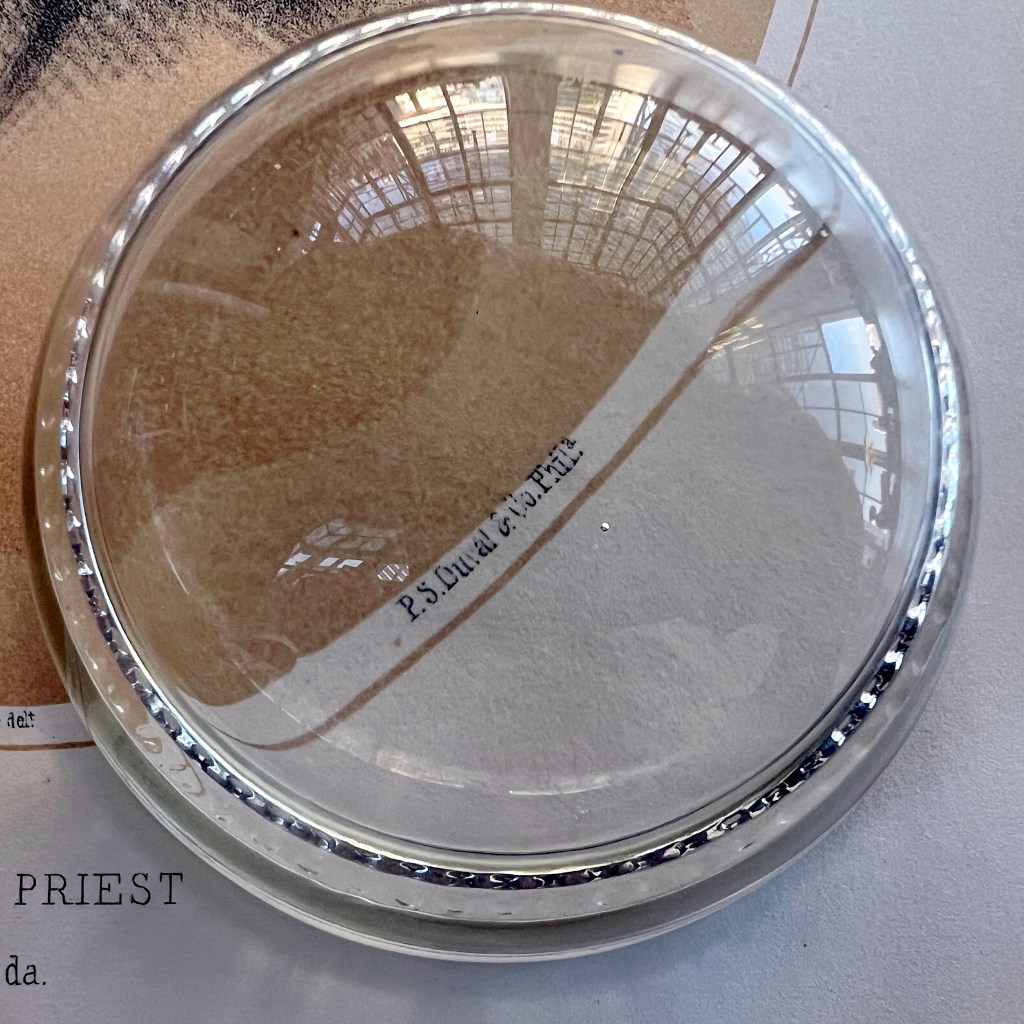
Only six of Brown’s daguerreotypes have been located; some were believed lost when the Philadelphia printer, P. S. Duval, suffered a fire in April 1856. In total, it is believed between 10,000 and 18,000 copies of Perry’s Expedition report were published.

When Perry landed in Shimoda on April 18, 1854, he reported a total of 7,000 inhabitants and nine Buddhist temples. The figure in Brown’s portrait remains unknown. The first volume of Perry’s report is viewable here: https://tinyurl.com/3rpscp9h.


The Buddhas in the West Material Archive is a digital scholarship project that catalogues artifacts depicting Buddhist material culture for Western audiences. It’s comprised of prints, photos, and an assortment of ephemera and other objects. For a brief introduction to this archive, visit the main Buddhas in the West project page.


For Related Buddhas in the West Posts Featuring Buddhist Clerics:


For the Most Recent Buddhas in the West Posts:

Arnoldus Montanus’ Icon with Thirty Arms Engraving

For all the new Buddhas in the West posts
follow us on Bluesky & Instagram


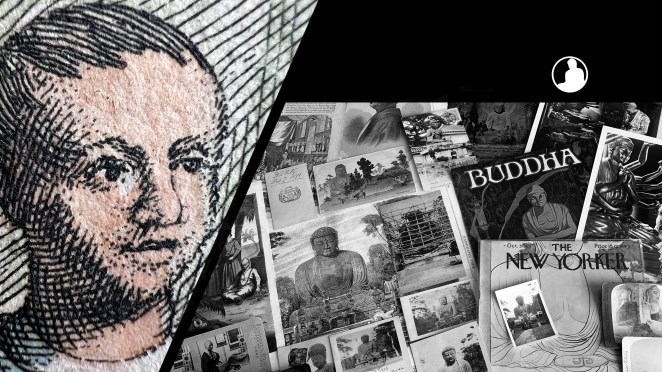
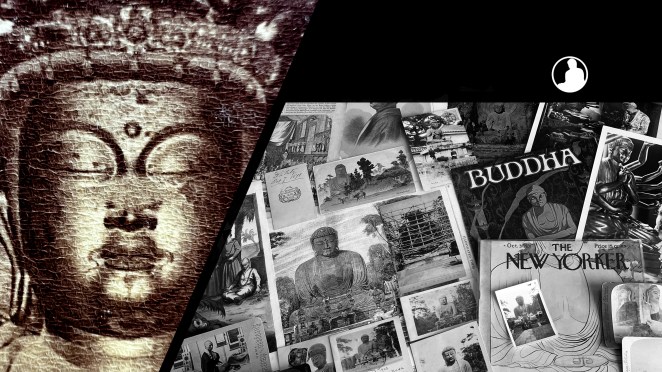
Following a pair of successful illustrated works on China, publisher Jacob van Meurs secured the rights to issue an illustrated book on Japan in 1669. The engravings, such as we see with the curious Buddhist icon here, were criticized for departing “a long way from the truth.”

Compiled by Arnoldus Montanus, a Protestant Minister who never left Holland, the engravings in Atlas Japannensis draw from both textual descriptions and an older European visual language of Asian idolatry. The work includes 23 large plates and 71 smaller vignettes set within the text.

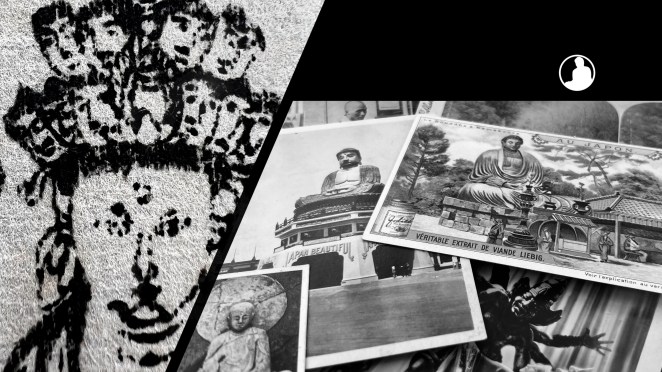
As for the icon here, the English translation of 1670 reads, “This Image hath thirty Arms, and as many Hands, in each two Arrows, a Face representing a handsome Youth, on his Breast seven humane Faces, with a Crown of Gold, richly inchas’d with Peals, Diamonds, and all sorts of Precious Gems.”

While multi-armed and multi-headed figures are not uncommon in Buddhism, the particular configuration here appears rather fanciful. Nevertheless, we are informed the illustration here represents the Bodhisattva Kannon, further curiously identified in the text as the son of Amida Buddha.

The markings on the pedestal are meant to signify non-alphabetic East Asian writing, but none can be resolved into legible characters.

Kannon’s temple is said to be located on a Buddhist mountain just east of Kyoto, most likely pointing to Mt. Hiei. The fires indicate part of Mt. Hiei’s history, as described by Montanus, when Oda Nobunaga razed Buddhist temples in the region in 1571.

Several of Montanus’ engravings were copied into later works on Japan, helping shape a visual lexicon for Buddhism into the 19th cent. The 1669 Dutch edition of Atlas Japannensis has been digitized by the National Library of the Netherlands, viewable here: tinyurl.com/5n6kstfy.


The Buddhas in the West Material Archive is a digital scholarship project that catalogues artifacts depicting Buddhist material culture for Western audiences. It’s comprised of prints, photos, and an assortment of ephemera and other objects. For a brief introduction to this archive, visit the main Buddhas in the West project page.


For Related Buddhas in the West Posts Featuring Historical Engravings:


For the Most Recent Buddhas in the West Posts:


Sherab Gyatso of Ghoom Monastery Postcard

For all the new Buddhas in the West posts
follow us on Bluesky & Instagram


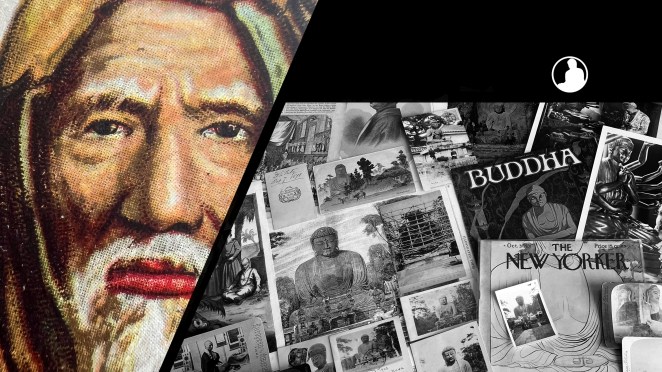
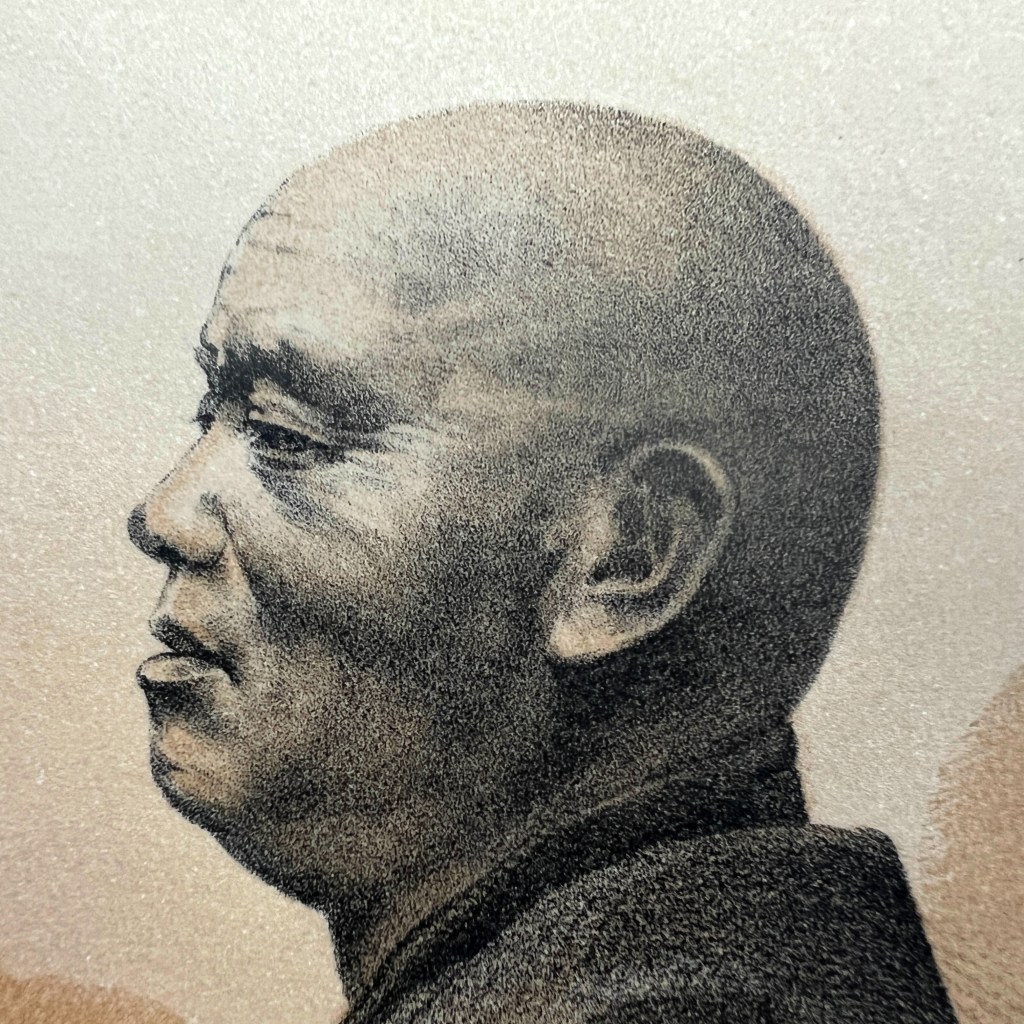
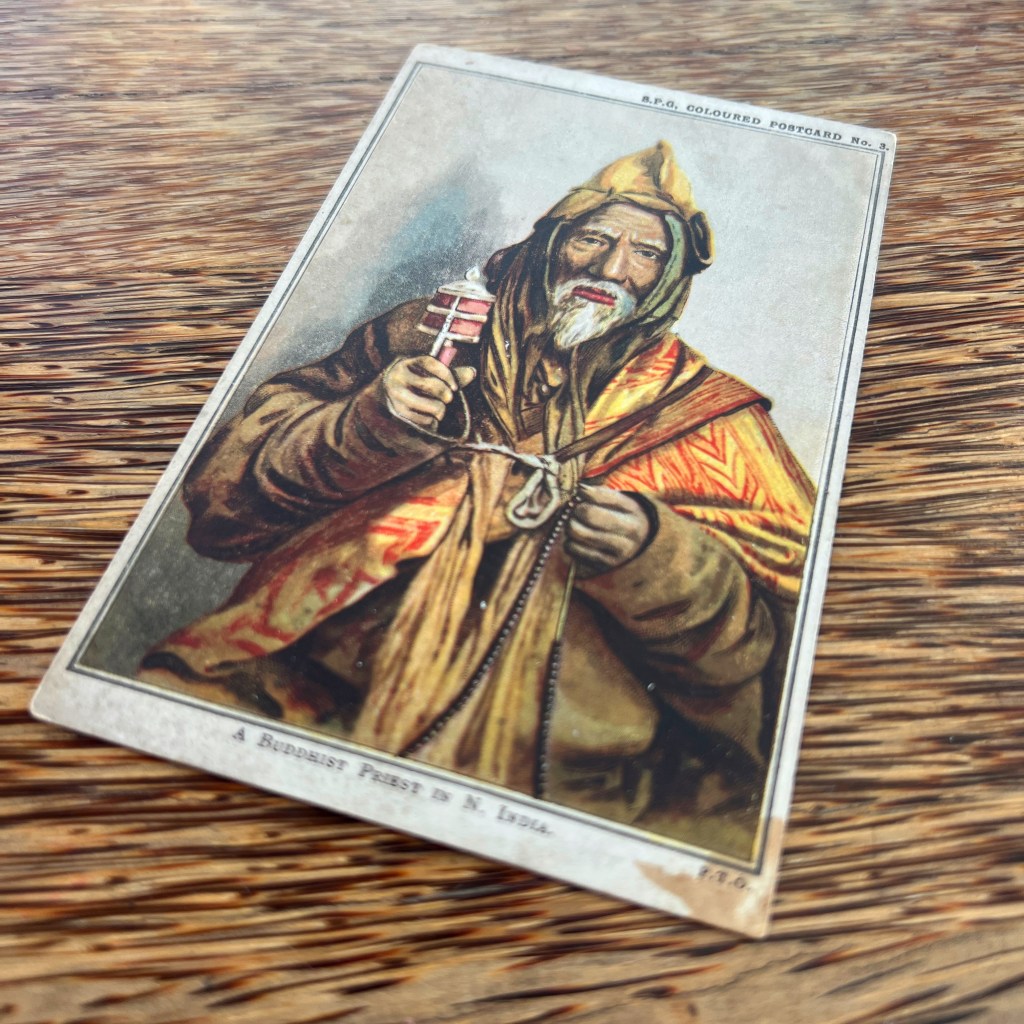
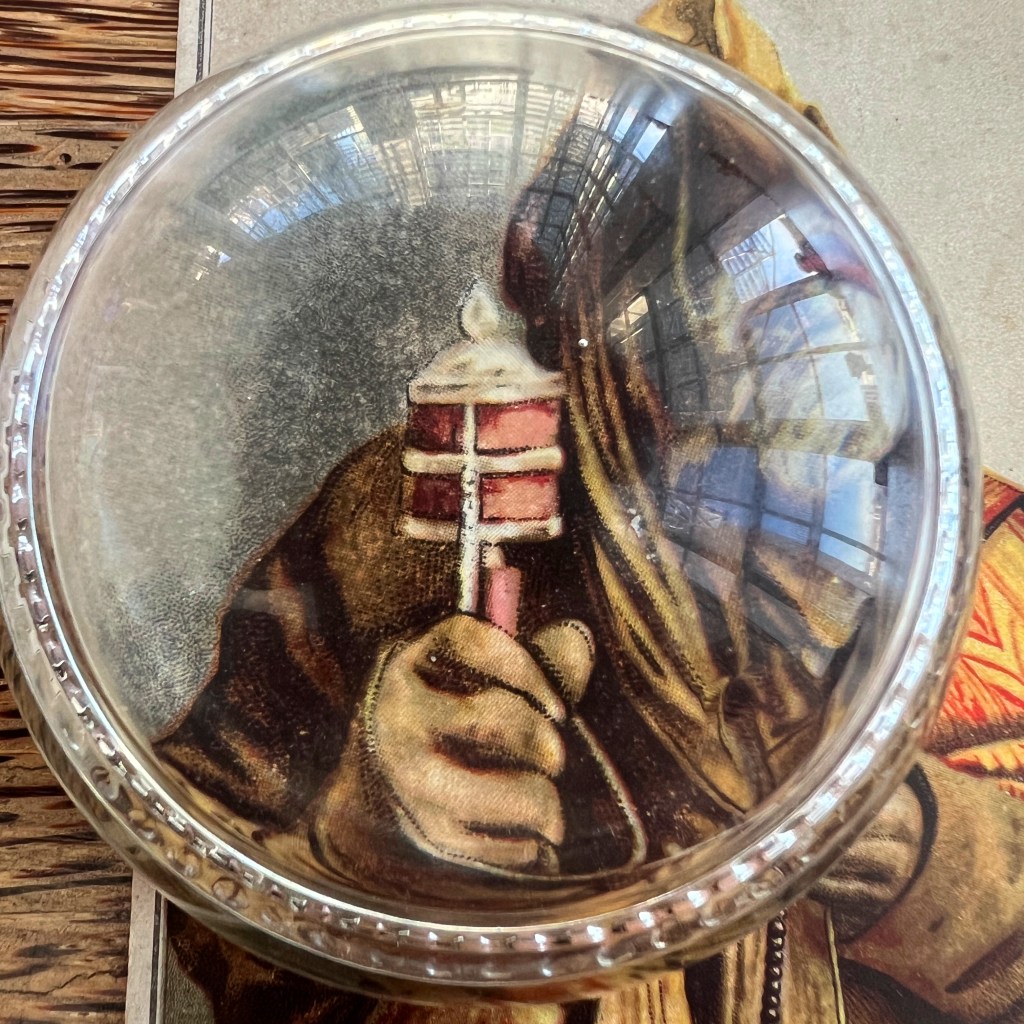
Identified as a “Buddhist priest” and holding a prayer wheel, a figure such as this would have passed for a generic Tibetan lama in the visual language of the early 20th century. In this case, however, we also know this monk’s name: Sherab Gyatso.

Scholar Clare Harris discovered an albumen print of the original photograph taken by Thomas Parr during the 1890s in Darjeeling; the negative was inscribed with the name “She-reb.” The monk was the head of the Geluk Monastery at Ghoom (Ghum) and was well known among the British as the “Mongol Lama.”

Gyatso’s image appears in a wide range of media, including travel guides, published travelogues, and postcards between 1890 and the 1910s. As noted by Harris, this monk emerged as a “poster-boy for Tibetan Buddhism” around the area of Darjeeling in northern India.

When posed for this portrait in Parr’s studio, the symbols of Tibetan ritual culture are clearly foregrounded, with one hand thumbing mala beads and the other holding a prayer wheel upright and ready for use.

Notably, a Tibetan-style painting and clay statue of Sherab Gyatso grace Ghoom’s monastery today, both derived from Paar’s photograph.

For further information of Sherab Gyatso and the history of early photography in Northern India and Tibet, see Clare Harris’ Photography in Tibet (2017).


The Buddhas in the West Material Archive is a digital scholarship project that catalogues artifacts depicting Buddhist material culture for Western audiences. It’s comprised of prints, photos, and an assortment of ephemera and other objects. For a brief introduction to this archive, visit the main Buddhas in the West project page.


For Related Buddhas in the West Posts Featuring Historical Postcards:


For the Most Recent Buddhas in the West Posts:


James Ricalton’s Priest at the Temple of the Tooth

For all the new Buddhas in the West posts
follow us on Bluesky & Instagram


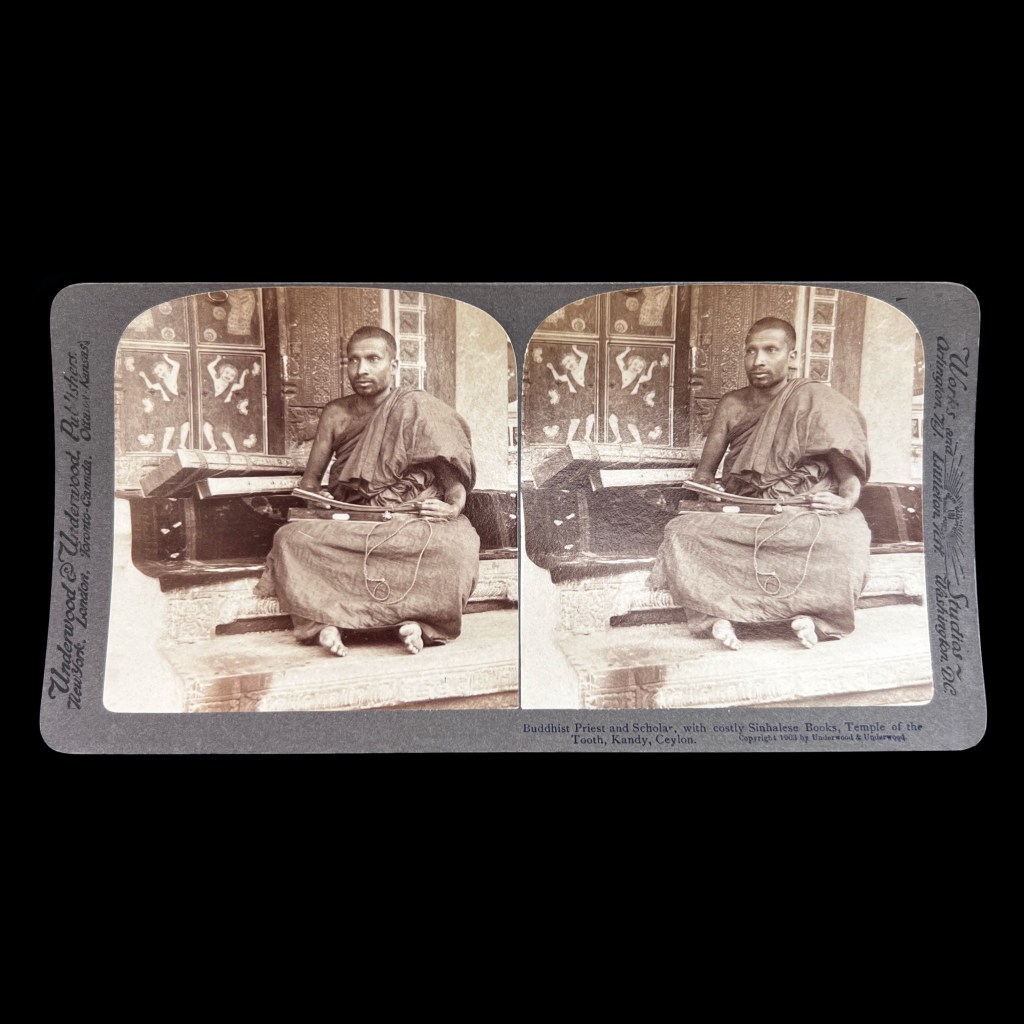
Just after the discovery of the Buddha’s relics at Piprahwa in 1898, James Ricalton was planning a photographic tour of the world. One of his planned stops was to visit the most famous Buddhist relic of his era, the Buddha’s tooth enshrined in the capital city of Kandy.

Ricalton’s employer, the largest stereoscope firm in the world, Underwood & Underwood, was launching several sets devoted to specific countries; Ceylon was slated to have 30 stereoview cards. Underwood’s slogan, ‘‘to see is to know,’’ drove its message that education was a main objective.

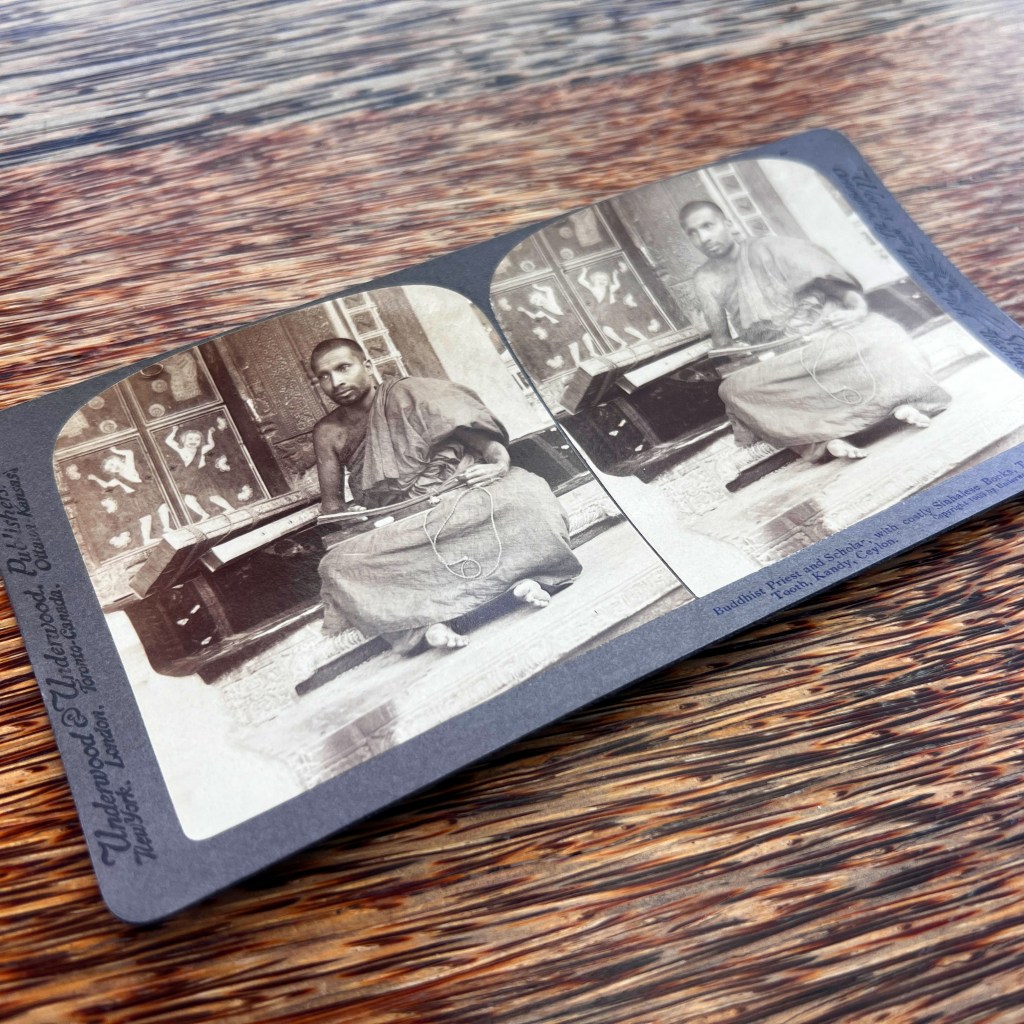
Shooting the Temple of the Tooth, Sri Dalada Maligawa, and a few stupas, this image was the only one for Ceylon showing a Buddhist monk. While it was common to depict monks on alms rounds, Ricalton shows this unnamed monk reading scripture, calling him a priest and scholar in the caption.

The monk sits holding the long, rectangular leaves of a Buddhist scripture in his lap. Views such as this were intended to give a glimpse into the “real lives” of the photographed subjects, thus allowing viewers to travel without the hassle of actually leaving home.

Selling “the world in a box,” stereoviews helped shape a vision of Buddhism for American consumers. For more on the powerful visual language of stereoviews, see Judith Babbitts’ “Stereographs and the Construction of a Visual Culture in the United States,” in History Bytes (2004).


The Buddhas in the West Material Archive is a digital scholarship project that catalogues artifacts depicting Buddhist material culture for Western audiences. It’s comprised of prints, photos, and an assortment of ephemera and other objects. For a brief introduction to this archive, visit the main Buddhas in the West project page.


For Related Buddhas in the West Posts Featuring Buddhist Clerics:


For the Most Recent Buddhas in the West Posts:

Chinatown’s Tin How Temple / Grass Valley Temple Real Photo Postcard

For all the new Buddhas in the West posts
follow us on Bluesky & Instagram


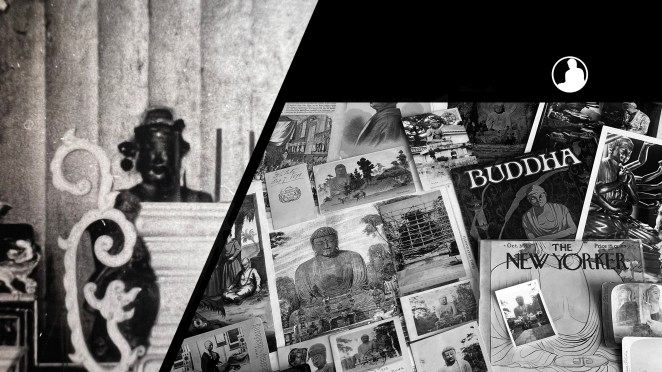
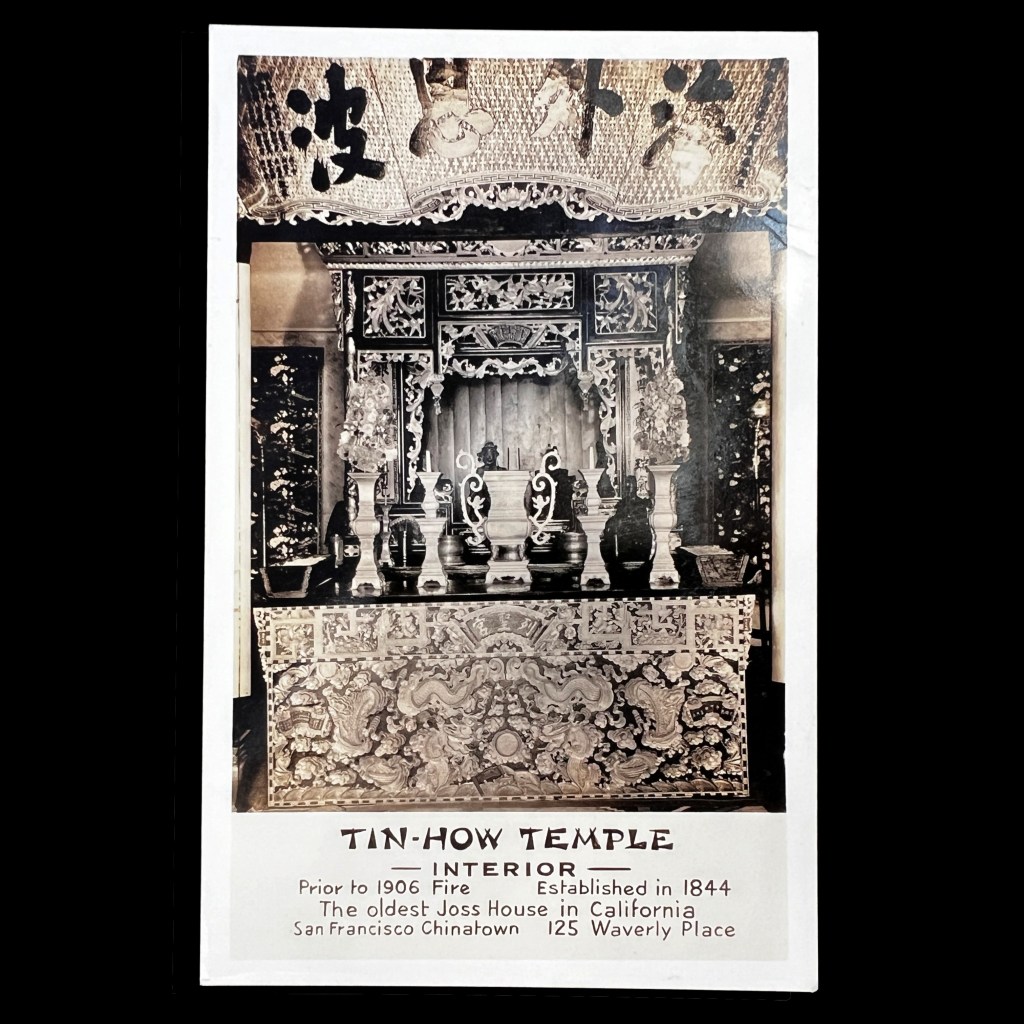
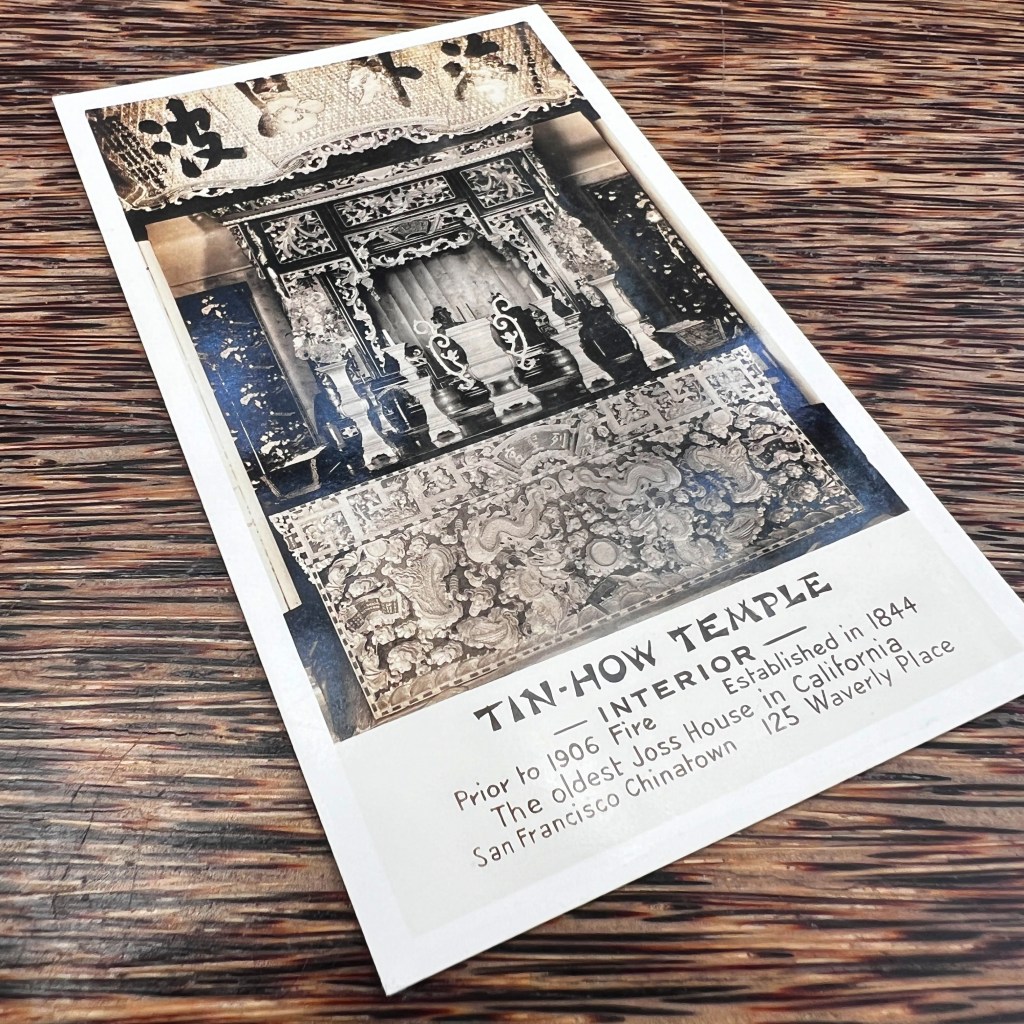
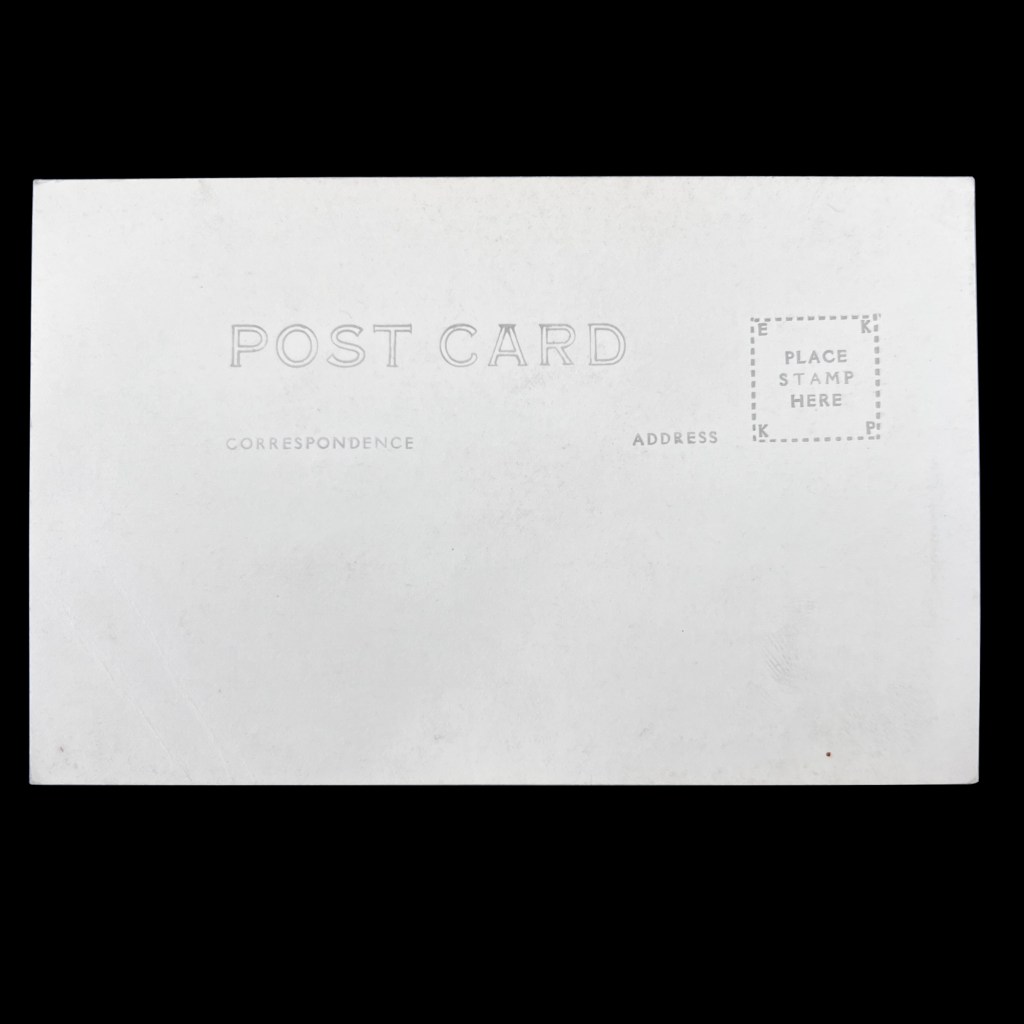
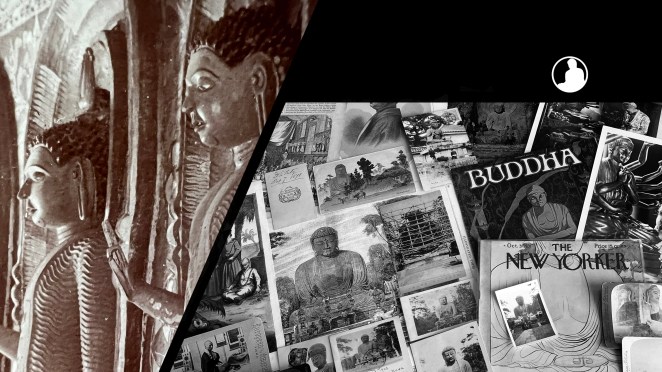
After the 1906 earthquake, San Francisco’s Tin How Temple was one of a fraction of Chinese religious institutions to rebuild, reopening in 1911 on the footprint of the original building. Despite the caption, this photo does not show the pre-1906 altar, nor is it a San Francisco temple.

Tin How, the Empress of Heaven, also known as Mazu, was popular along China’s southern coast and revered for her protective powers, especially at sea. Many early Chinese immigrants erected temples dedicated to her and other deities across North America.

The photo shows the altar of the old Chinese temple in Grass Valley, identifiable by the large carved inscription board reading “Waves of favor cross over the seas.” It’s likely the postcard publisher saw a more lucrative opportunity in selling a visual “relic” of the lost Tin How Temple shrine.

Moreover, the Grass Valley temple was dedicated to Houwang, not Mazu, yet both locations were alternatively called the Temple of Many Saints, seen carved on the altar façade from 1875. The Grass Valley temple fell into disrepair by 1933 and was closed soon thereafter.

The altar was preserved and is now displayed at the Nevada Firehouse No.1 Museum. For more history on the Grass Valley temple, see Chuimei Ho and Bennet Bronson’s Chinese Traditional Religion and Temple in NorthAmerica, 1849–1902 (2022).


The Buddhas in the West Material Archive is a digital scholarship project that catalogues artifacts depicting Buddhist material culture for Western audiences. It’s comprised of prints, photos, and an assortment of ephemera and other objects. For a brief introduction to this archive, visit the main Buddhas in the West project page.


For Related Buddhas in the West Posts Featuring Historical Real Photo Postcards:


For the Most Recent Buddhas in the West Posts:


Buddhist Temple of Los Angeles Postcard

For all the new Buddhas in the West posts
follow us on Bluesky & Instagram


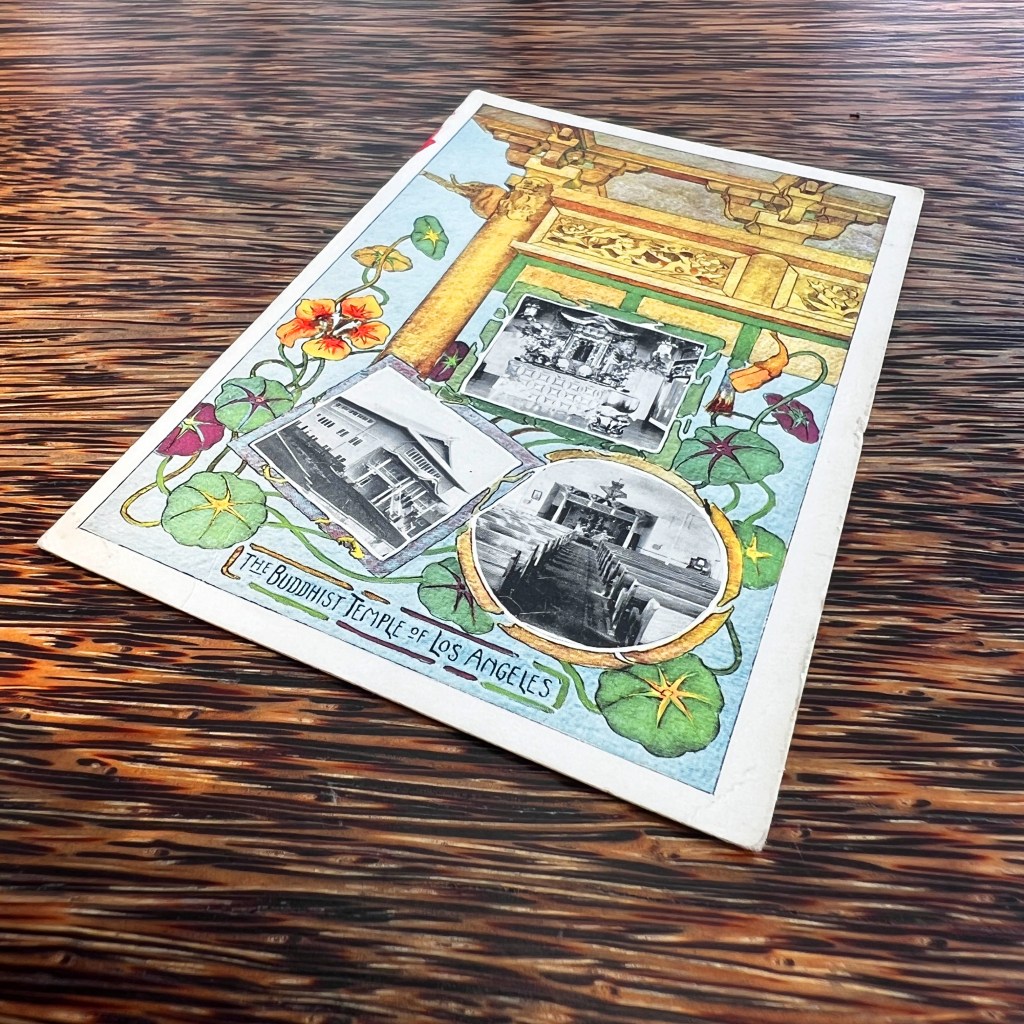
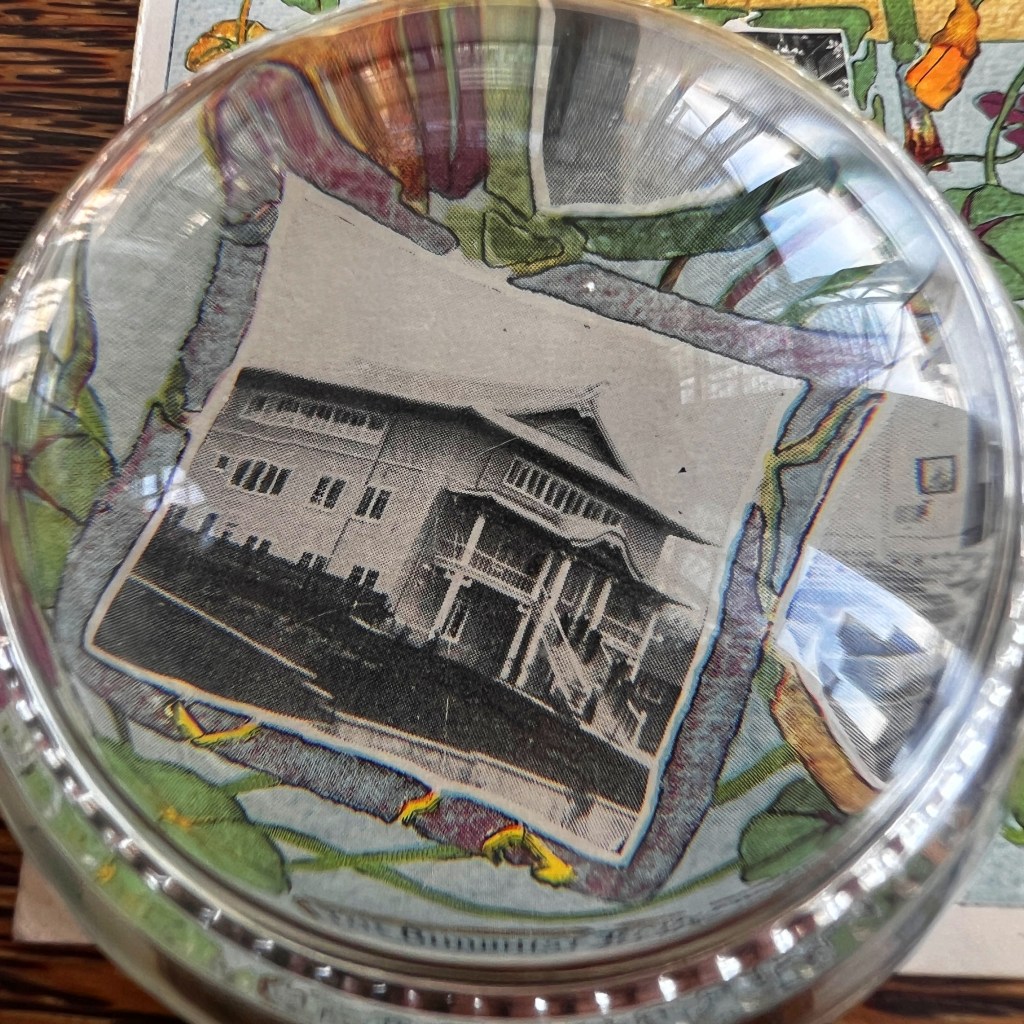
Inspired by the success in San Jose and Sacramento, Izumida Junjō 泉田準城 (1866–1951) arrived in Los Angeles in 1904 and opened the city’s first Buddhist temple for Japanese immigrants. After raising funds and purchasing land, a newer and larger temple was opened in 1911 on Savannah Street.

Associated with Nishi Hongan-ji, a Jōdo Shinshū Buddhist organization headquartered in Kyoto, Izumida organized the Rafu Bukkyō-kai 羅府仏教会, the Buddhist Mission of Los Angeles. It was meant to meet Japanese immigrants’ needs for funerals, memorial services, and spiritual guidance.

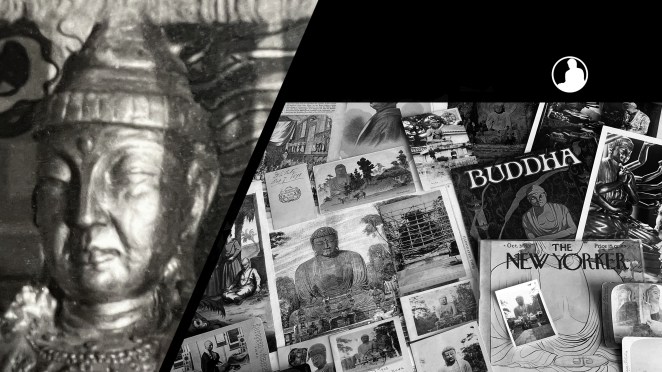
Possibly in celebration and promotion of the new temple, the Mission issued picture postcards highlighting both the interior and exterior of the building. The colorful illustrated elements on the front reveal an Arts and Crafts influence popular in the early 20th century.

The building was meant to reflect both American residential architecture and Japanese temple architecture. The latter can be seen in the curved eaves on the roof and the temple-style gate over the front porch.

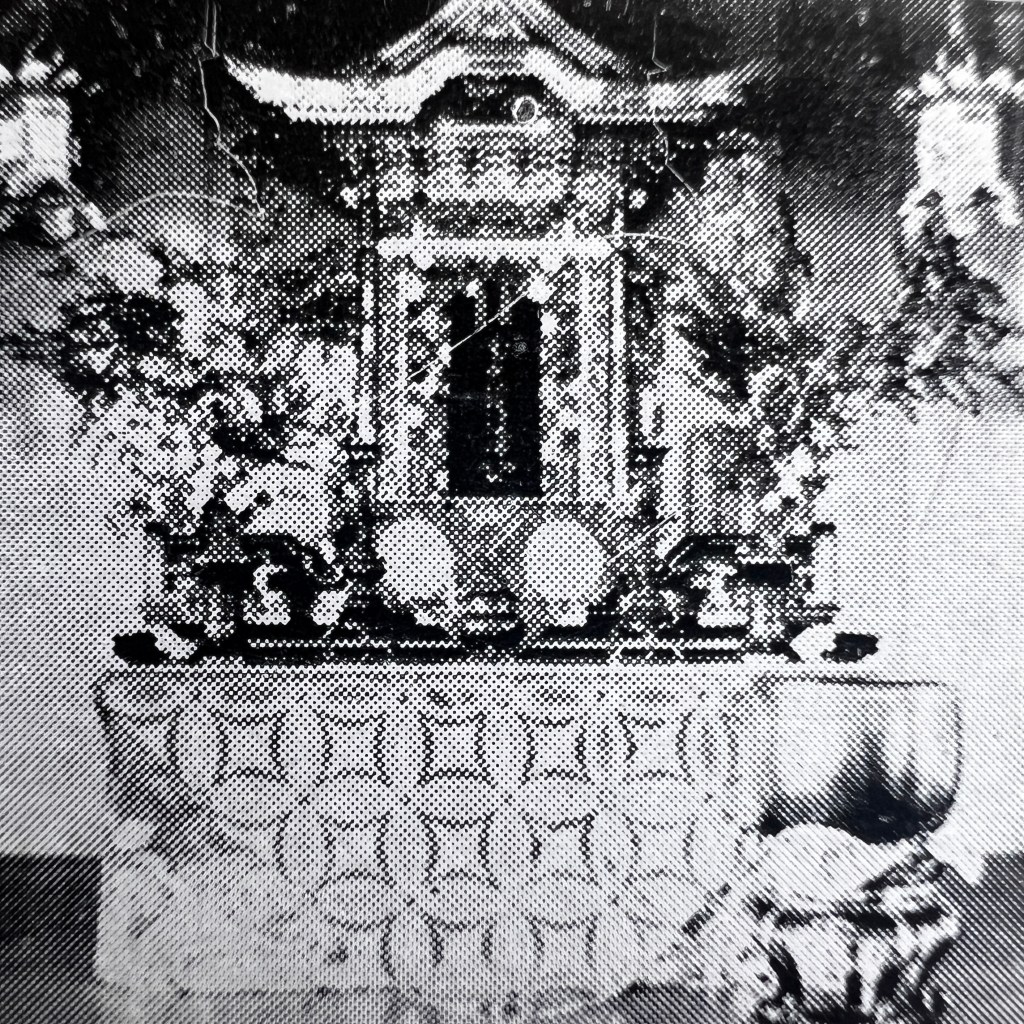
The interior also shows a hybrid style, with church-like pews set in front of a traditional Japanese Buddhist altar.

As a Jōdo Shinshū temple, the shrine is dedicated to Amida Buddha, here with a scroll bearing his name. For more on the history of this LA temple, see Michihiro Ama, Immigrants to the Pure Land: The Modernization, Acculturation, and Globalization of Shin Buddhism (2011).


The Buddhas in the West Material Archive is a digital scholarship project that catalogues artifacts depicting Buddhist material culture for Western audiences. It’s comprised of prints, photos, and an assortment of ephemera and other objects. For a brief introduction to this archive, visit the main Buddhas in the West project page.


For Related Buddhas in the West Posts Featuring Historical Trade Cards:


For the Most Recent Buddhas in the West Posts:

Fresno’s “Joss House” Press Photograph

For all the new Buddhas in the West posts
follow us on Bluesky & Instagram


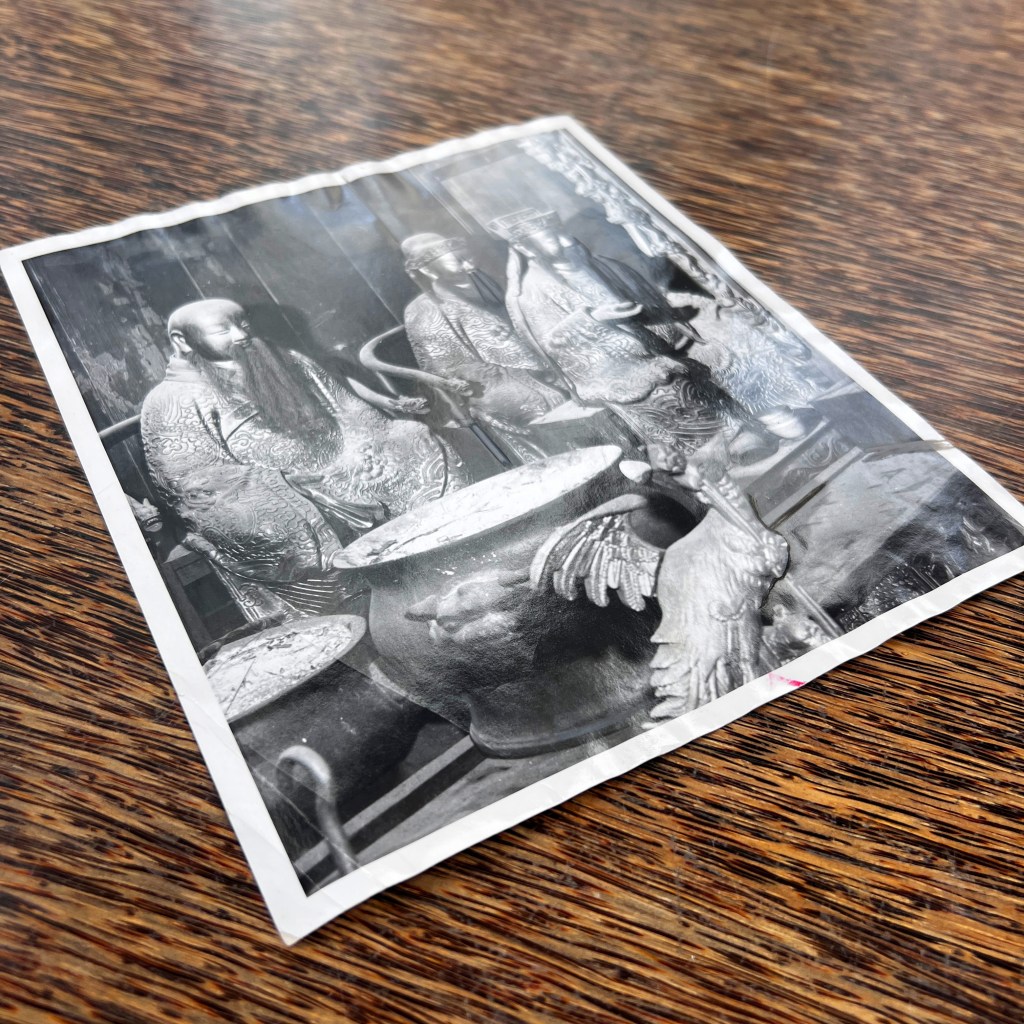
Often overshadowed by San Francisco, by 1890 Fresno’s Chinatown was one of the largest in California and the center of much religious activity. Notably, among the few surviving 19th century Chinese American religious icons, we can include those from Fresno’s Temple of Many Saints.

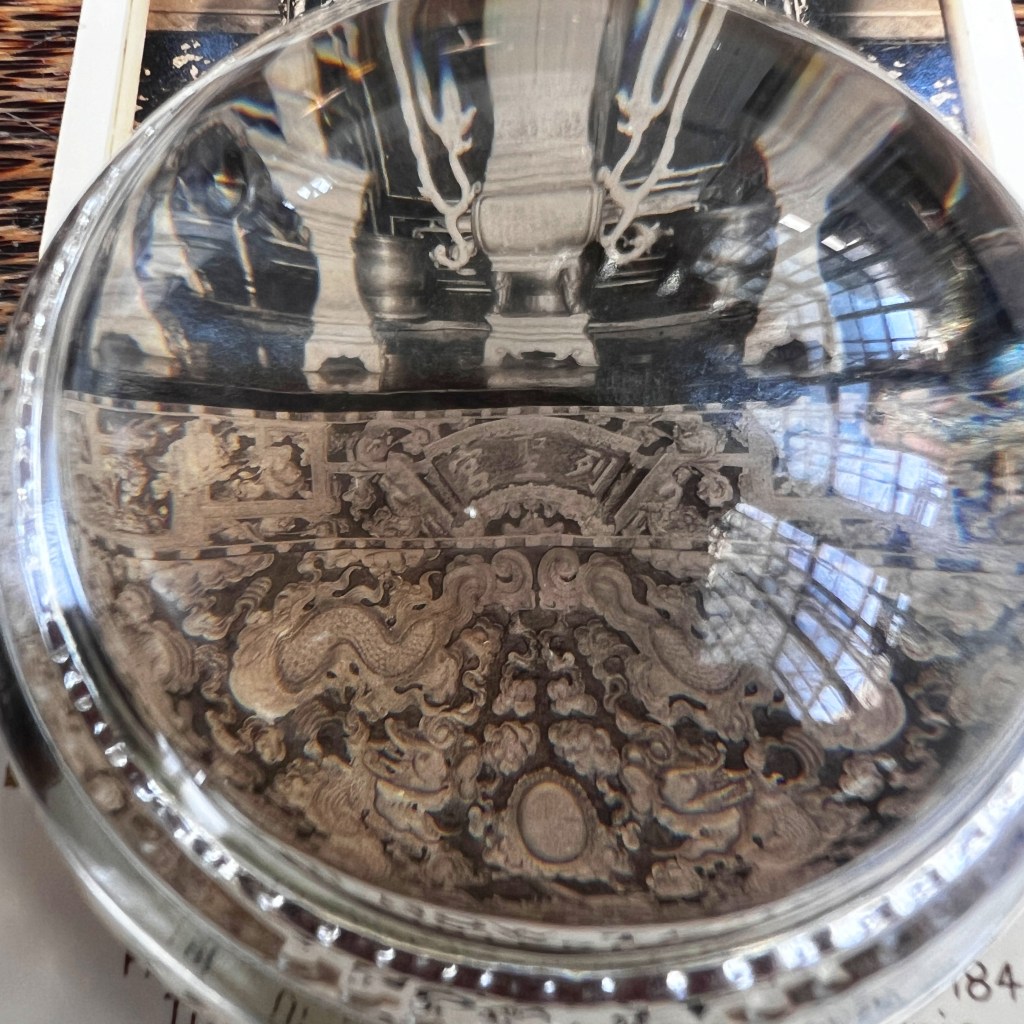
The Chinese diaspora community opened many religious centers across the Pacific under the name Temple of Many Saints (liesheng gong 列聖宮) for use among local Chinese immigrants. Fresno’s temple opened in the 1880s and was located on G Street.

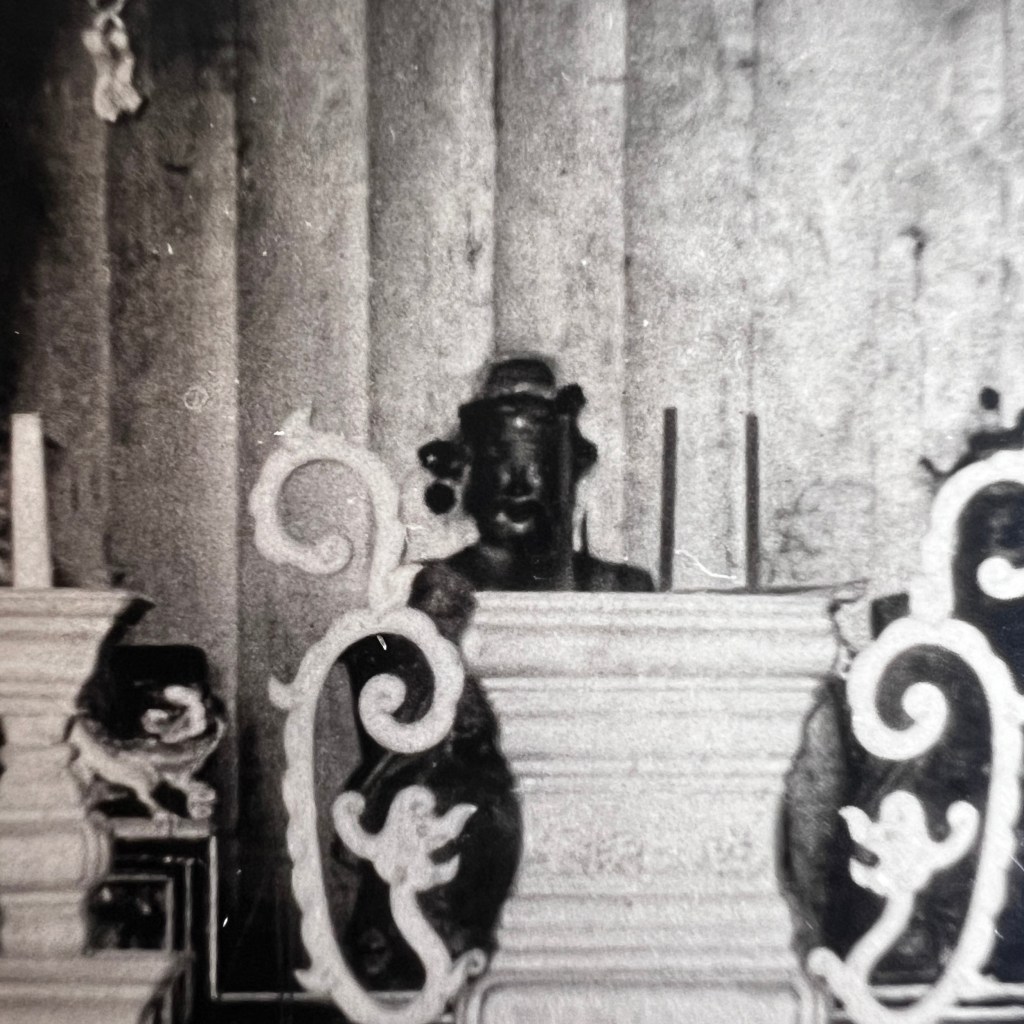
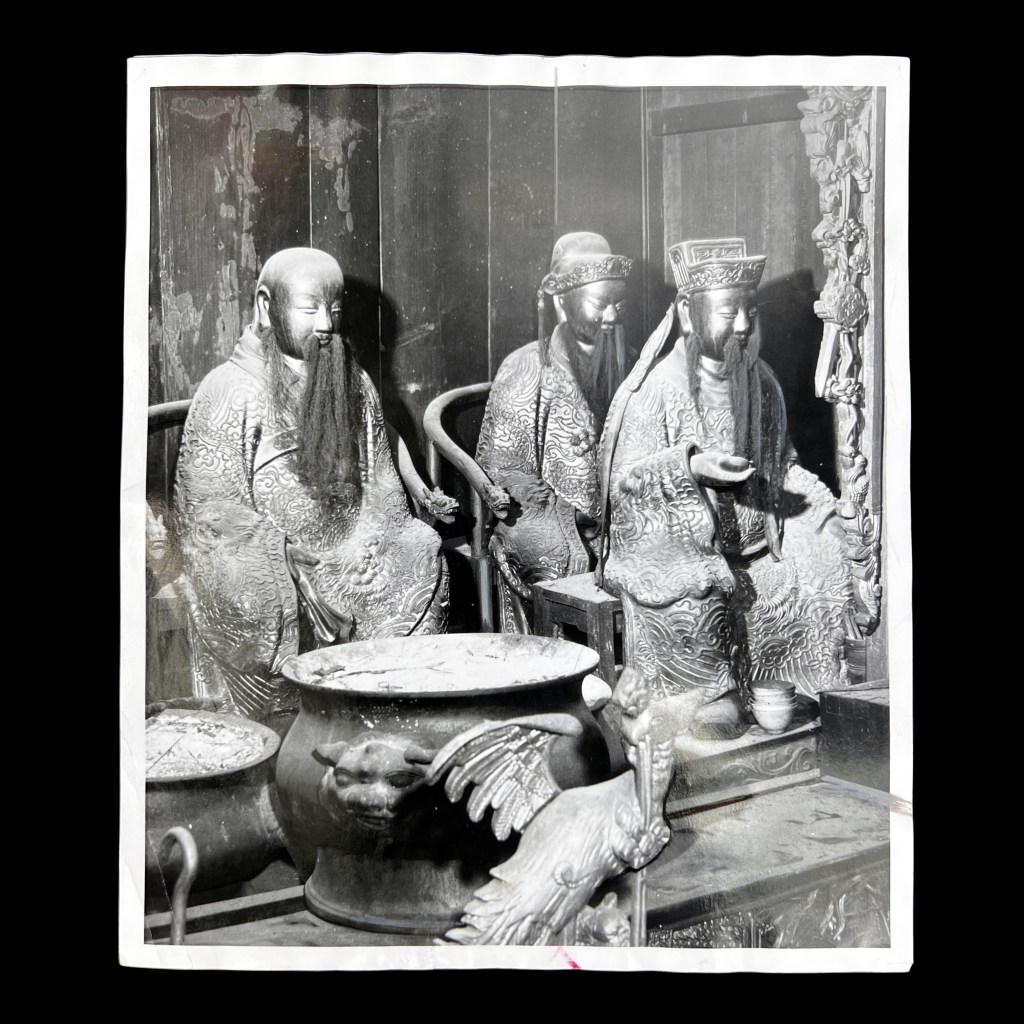
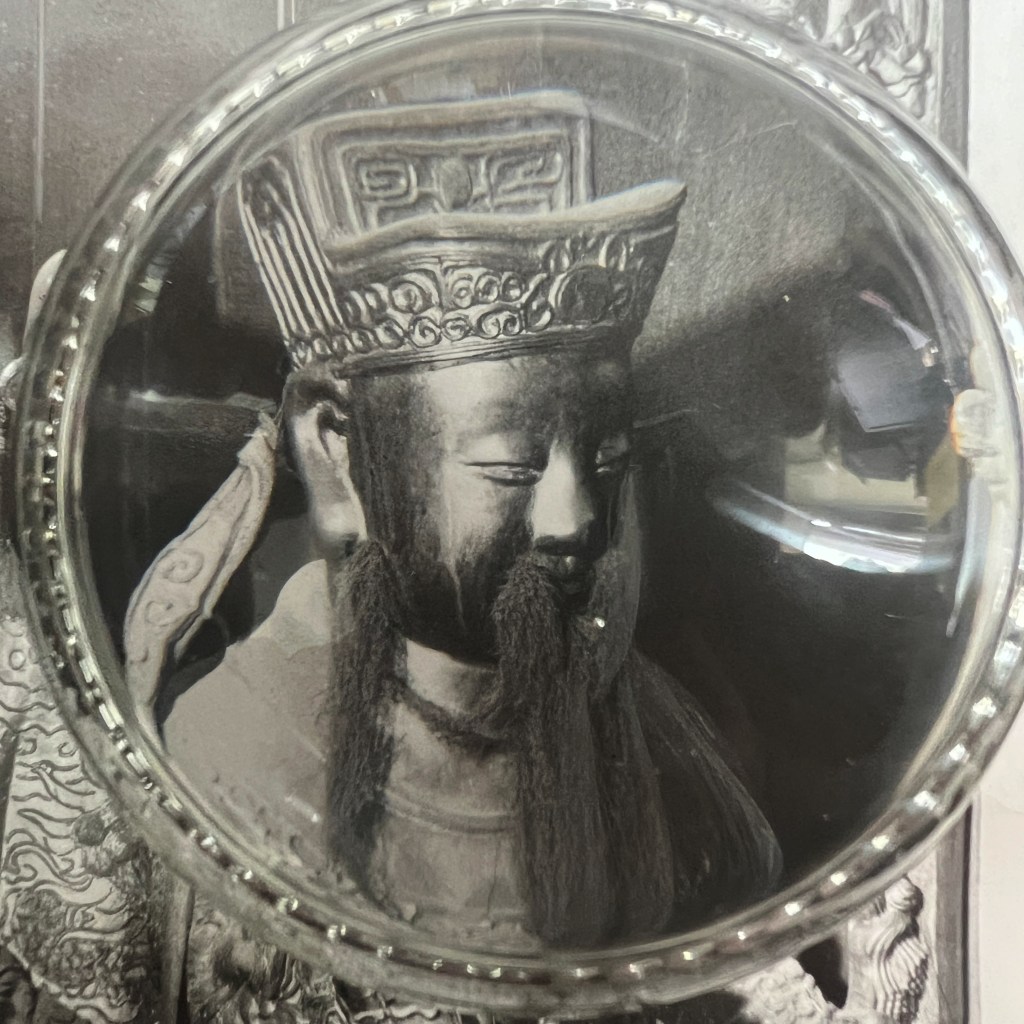
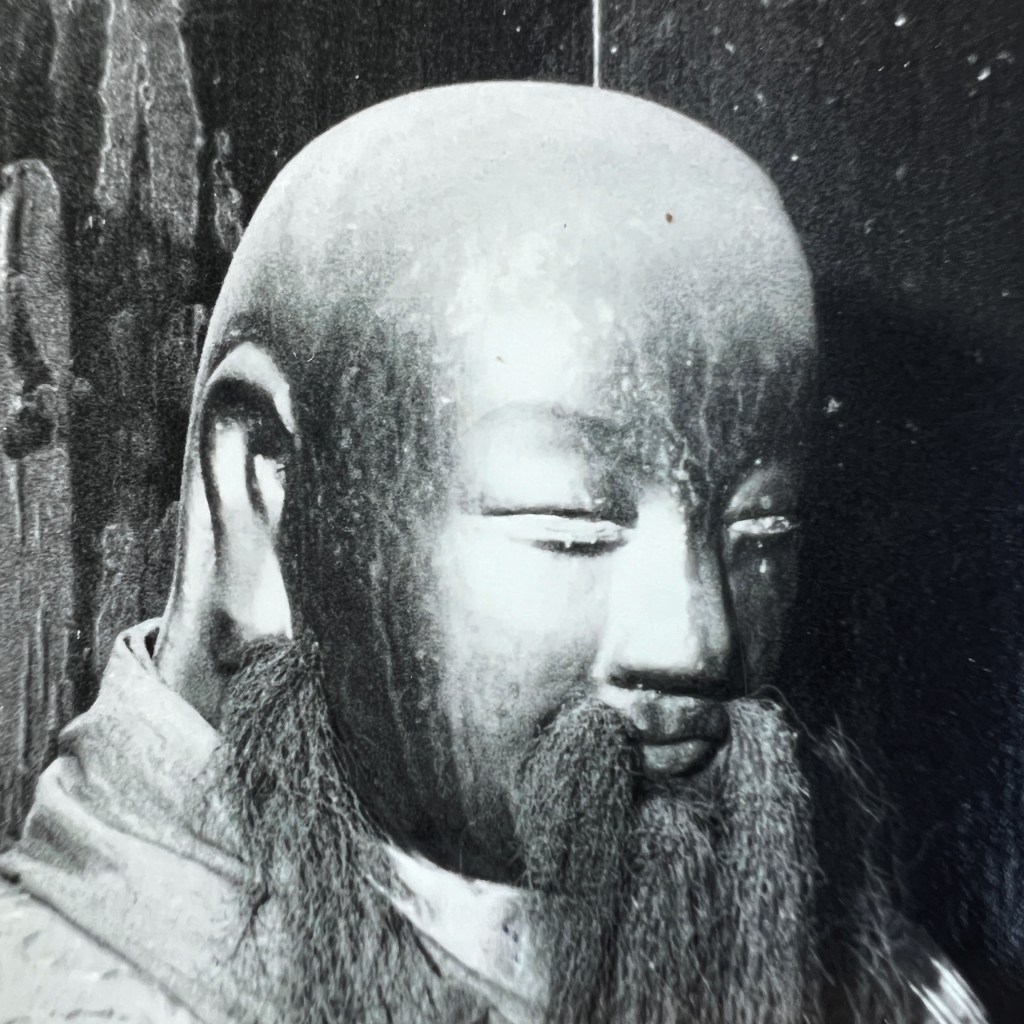
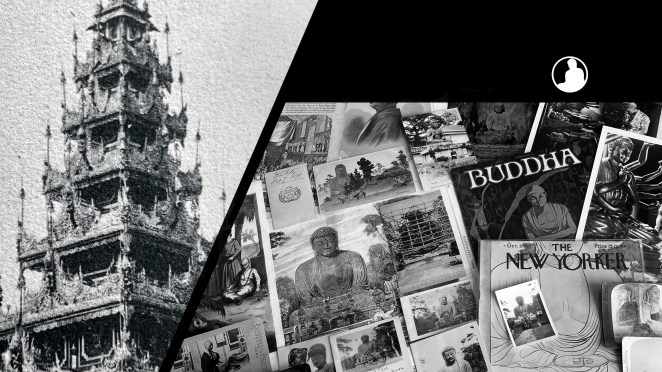
This Fresno Bee archival photograph shows three of the five icons displayed on the main altar. Closed to the public in 1936, the temple was demolished in 1965 shortly after this photograph; the temple artifacts were donated to the Fresno Historical Society and were in storage until last year.

The five icons included the Northern Emperor, Guandi, Tianhou, Huatuo, and Caishen, also known as the “God of Wealth” (seen here). At times, the Buddhist figure Guanyin replaced one of these icons in the Temple of Many Saints found across North America, but that was not the case in Fresno.

Guandi (seen here) was a deified historical general and cultural hero who was a symbol of integrity and loyalty. Widely celebrated by many Chinese district associations and fraternal societies, Guandi was arguably the most popular early Chinese American deity.

The Northern Emperor was a celestial deity famed among many immigrants from southern China. Last year, the Chinese American Museum Project and the Fresno Historical Society arranged a “From China to Fresno: A 150-year Cultural Journey” exhibit, see here: tinyurl.com/4jeea4cu.


The Buddhas in the West Material Archive is a digital scholarship project that catalogues artifacts depicting Buddhist material culture for Western audiences. It’s comprised of prints, photos, and an assortment of ephemera and other objects. For a brief introduction to this archive, visit the main Buddhas in the West project page.


For Related Buddhas in the West Posts Featuring Chinatown (US):


For the Most Recent Buddhas in the West Posts:

Wilhelm Burger’s Kamakura Daibutsu Photograph

For all the new Buddhas in the West posts
follow us on Bluesky & Instagram


Tales of Tourist Photos, Pt. 2*: Old “wet-plate” photography required glass negatives to be coated, sensitized, exposed, and developed in less than fifteen minutes. Using the dry-plate method, negatives could be prepared beforehand; Wilhelm Burger was among the first to use this in Japan.
*[Part 1]

Burger was photographer for the 1869 Imperial Austrian Expedition to East Asia, but illness allowed him to remain in Japan for the winter after the legation left. Tasked in part to photograph art objects, Burger visited the Kamakura Daibutsu with large glass negatives he prepared in Europe.

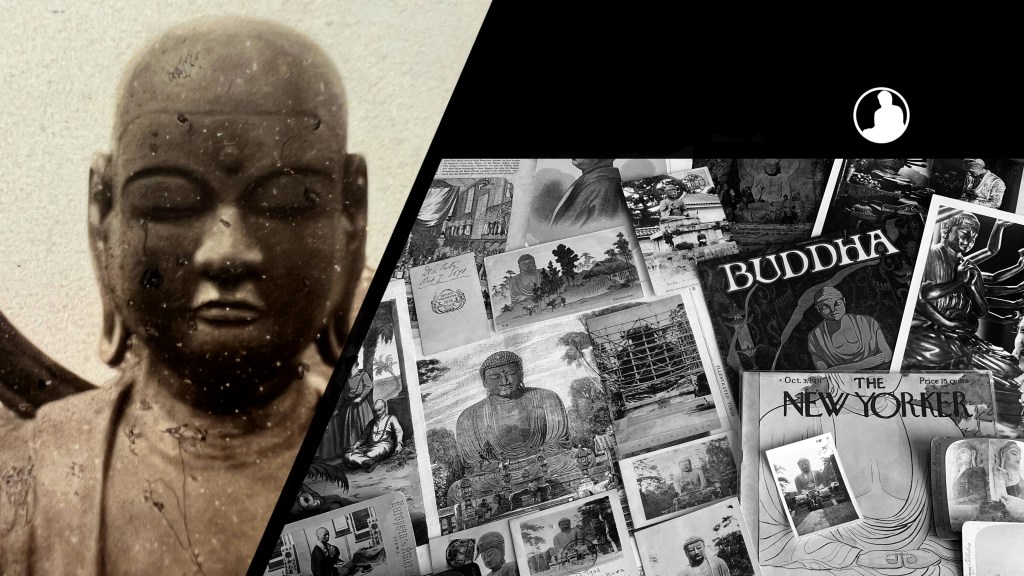
The handwritten inscription on the back of this photographic print reads, “This Image is all Bronze, name Diaboots.” “Diaboots,” or Daiboots, was the Yokohama treaty port vernacular for the Kamakura Daibutsu through the 1860s.

While Burger created a sizable portfolio of arts and crafts during the embassy, his photographs at Kōtoku-in in Kamakura appear more tourist-like than documentary. Here, several people pose for the camera, including what may appear to be Buddhist priests and three men in European attire.

To my knowledge, the people remain unidentified; Burger’s apprentice, Michael Moser, stayed in Japan after the embassy returned (and remained after Burger left). Moreover, Italian-born Felice Beato operated a successful Yokohama-based photography studio at the time – could either be seen here?

On his return to Vienna in 1870, Burger exhibited his Japanese portfolio to broad public acclaim. For more on Burger’s photographic process, see Tani Akiyoshi & Peter Pantzer’s “Wilhelm Burger’s Photographs of Japan,” PhotoResearcher 15 (2011): 40–50.


The Buddhas in the West Material Archive is a digital scholarship project that catalogues artifacts depicting Buddhist material culture for Western audiences. It’s comprised of prints, photos, and an assortment of ephemera and other objects. For a brief introduction to this archive, visit the main Buddhas in the West project page.


For Related Buddhas in the West Posts Featuring Historical Photography:


For the Most Recent Buddhas in the West Posts:


Eastman Kodak European Tour Group Real Photo Postcard

For all the new Buddhas in the West posts
follow us on Bluesky & Instagram


Tales of Tourist Photos, Pt. 1*: If photography changed the way people viewed the world, the Eastman Kodak camera transformed the late Victorian practice of tourism. The handheld Kodak made photography available to casual amateurs, creating the vernacular form of snapshot photography.
*[Part 2]

In contrast to a generation earlier, precise technical expertise was not necessary and photography became increasingly linked to personal experience. Foreign travel, such as visiting the Kamakura Daibutsu, increasingly “required” a photograph to validate the exotic experience.

By 1903, the Kodak 3A was released and fitted with rolled film creating negatives measuring 3¼ in. x 5½ in. – the exact size of a standard postcard. Eastman marketed a broad range of supplies for the amateur, including Velox paper for those developing and printing their own postcards.

This real photo postcard was shot and printed circa 1910–1915 and captures two dozen tourists arranged along the lap and stone pedestal of the Great Buddha of Kamakura.

Some of the earliest photographs of the Kamakura Daibutsu depict people climbing upon its lap and a ladder can be seen for helping a visitor’s ascent in photographs dating to the 1870s. By around 1915 climbing on the statue was prohibited.

For further discussion on the birth of the snapshot and its cultural impact, see Mia Fineman’s “Kodak and the Rise of Amateur Photography,” viewable here: https://www.metmuseum.org/essays/kodak-and-the-rise-of-amateur-photography.


The Buddhas in the West Material Archive is a digital scholarship project that catalogues artifacts depicting Buddhist material culture for Western audiences. It’s comprised of prints, photos, and an assortment of ephemera and other objects. For a brief introduction to this archive, visit the main Buddhas in the West project page.


For Related Buddhas in the West Posts Featuring Real Photo Postcards:


For the Most Recent Buddhas in the West Posts: