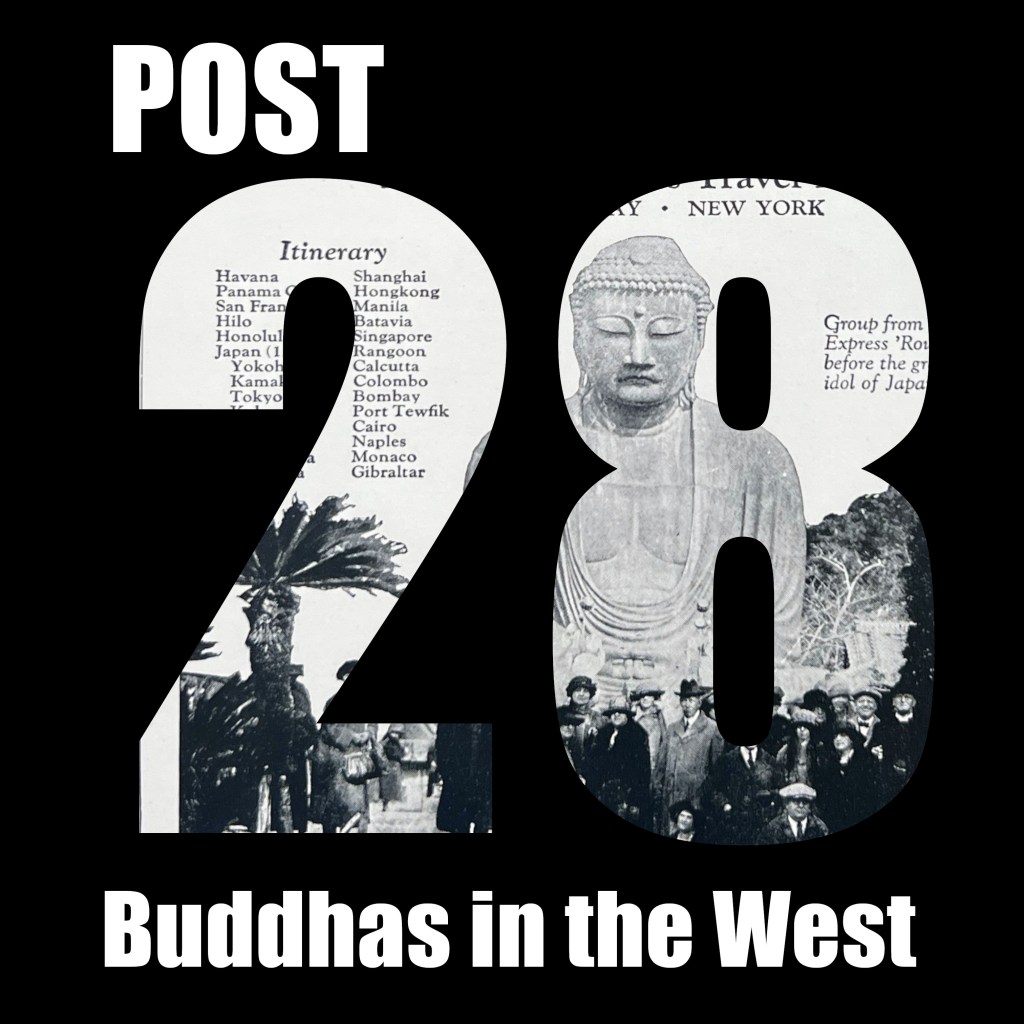
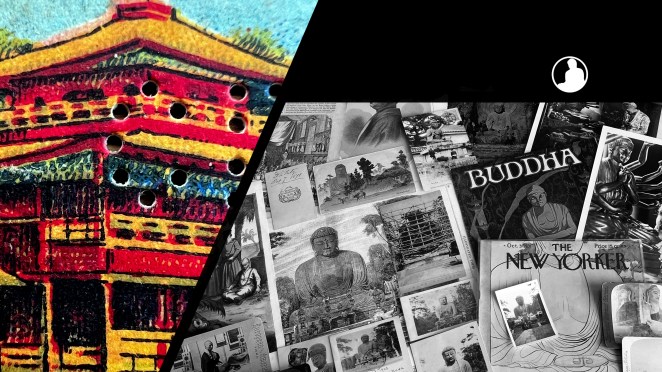
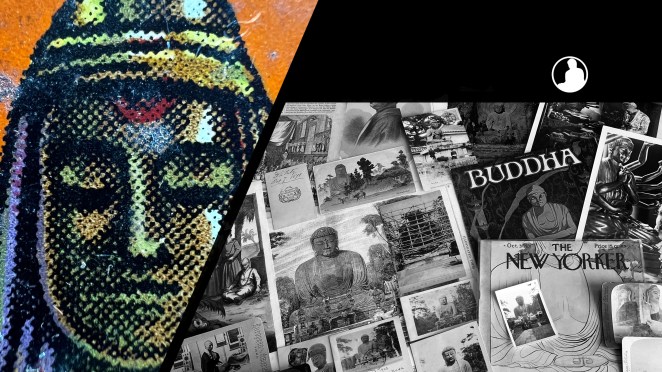
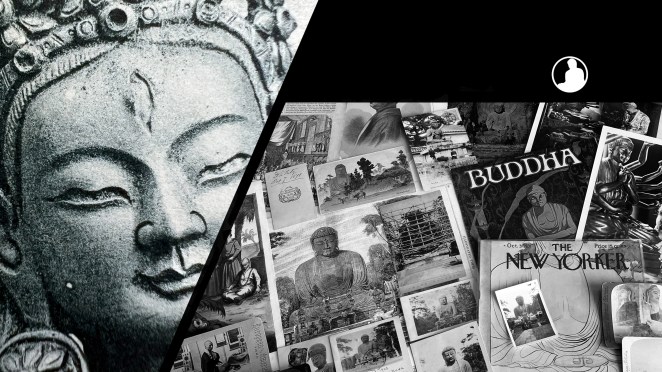
Argosy’s Jungle Justice Pulp Magazine Cover

For all the new Buddhas in the West posts
follow us on Bluesky & Instagram


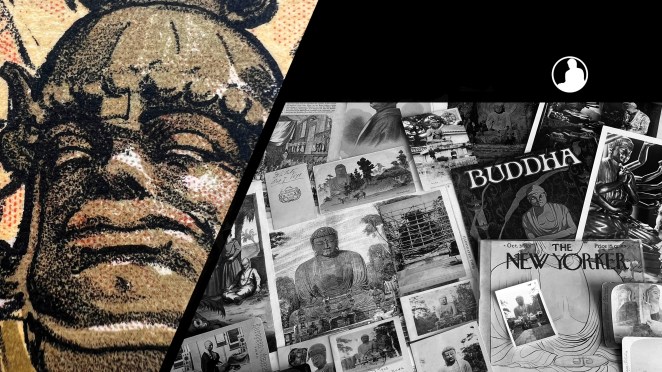
Pulp Fiction Buddhas: When editor Frank Munsey switched to inexpensive wood pulp paper in 1896, his publication, Argosy, was the first of what came to be known as pulp magazines. With over 150 publications in press by the 1930s, cover art was a critical driver for sales.

Argosy often featured episodic action and adventure stories, here starring Gillian Hazeltine as a crime solving lawyer in Jungle Justice. The cover of Paul Stahr vividly portrays the tropical setting and captures the tension between the hero and villain.

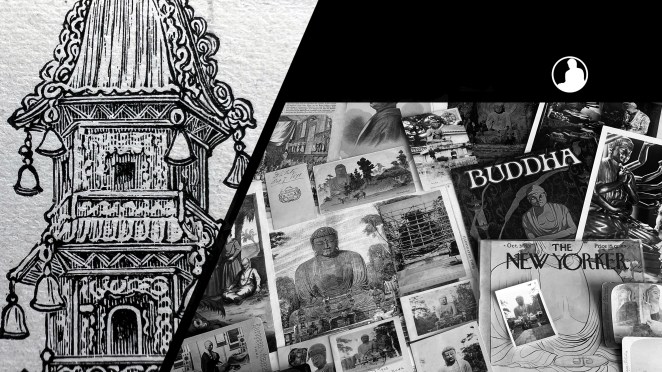
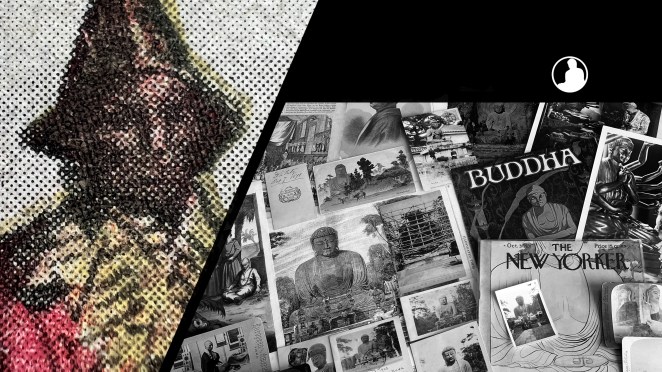
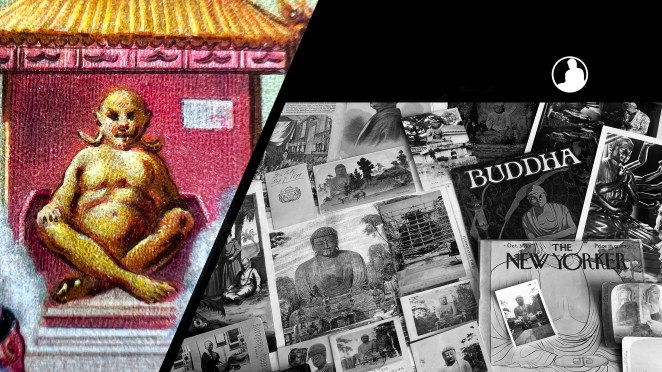
A closer look reveals a mélange of visual “Oriental” tropes: a grotesque Tibetan-style idol, a Japanese torii gate as shrine backdrop, and a turbaned menace hiding in the shadows.

The text is equally stereotypical, noting the location as “the Orient” (we are later informed its Saigon) and the villain as the “devil worshiper,” the Sultan of Senang.
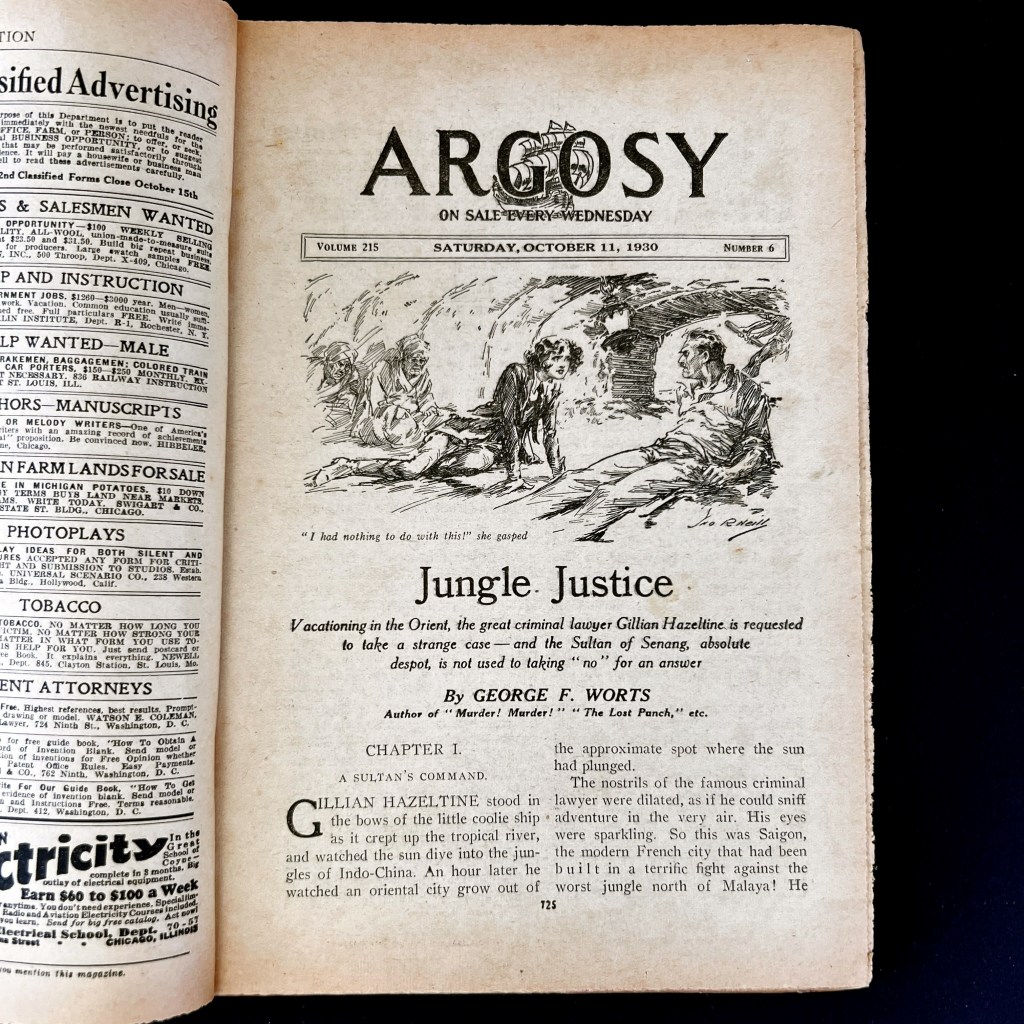
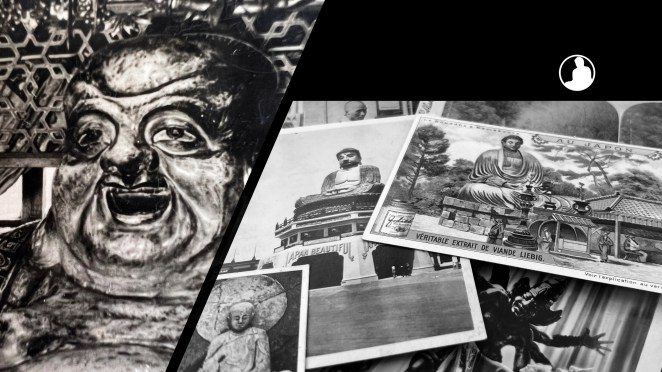
The idol’s face, likely intended to signal the Sultan’s devil worship, resembles a Tibetan Buddhist cham dance mask. Various issues from Argosy, including Jungle Justice, can be read here: https://www.pulpmagazines.org/the-argosy/.


The Buddhas in the West Material Archive is a digital scholarship project that catalogues artifacts depicting Buddhist material culture for Western audiences. It’s comprised of prints, photos, and an assortment of ephemera and other objects. For a brief introduction to this archive, visit the main Buddhas in the West project page.


For Related Buddhas in the West Posts Featuring Historical Magazines:


For the Most Recent Buddhas in the West Posts:


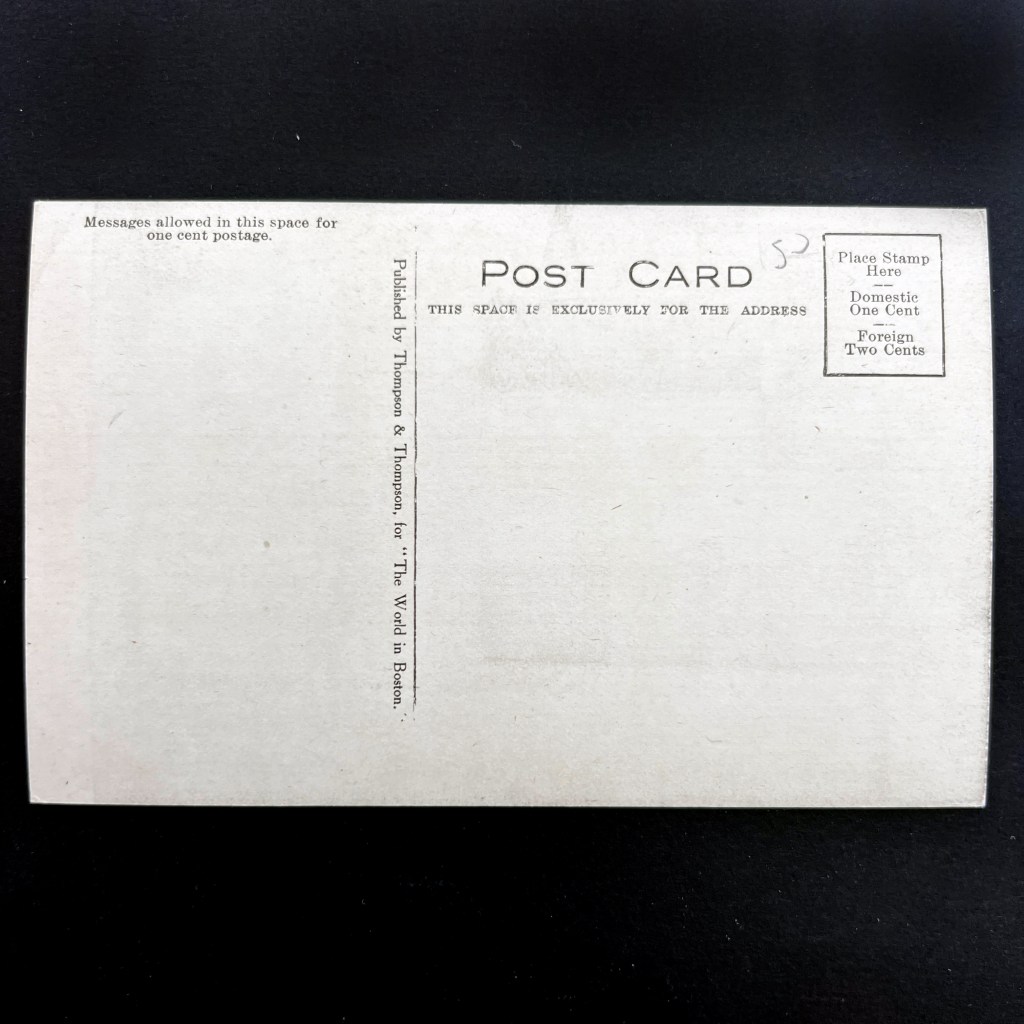
World in Boston Missionary Expo Buddhism Postcard

For all the new Buddhas in the West posts
follow us on Bluesky & Instagram


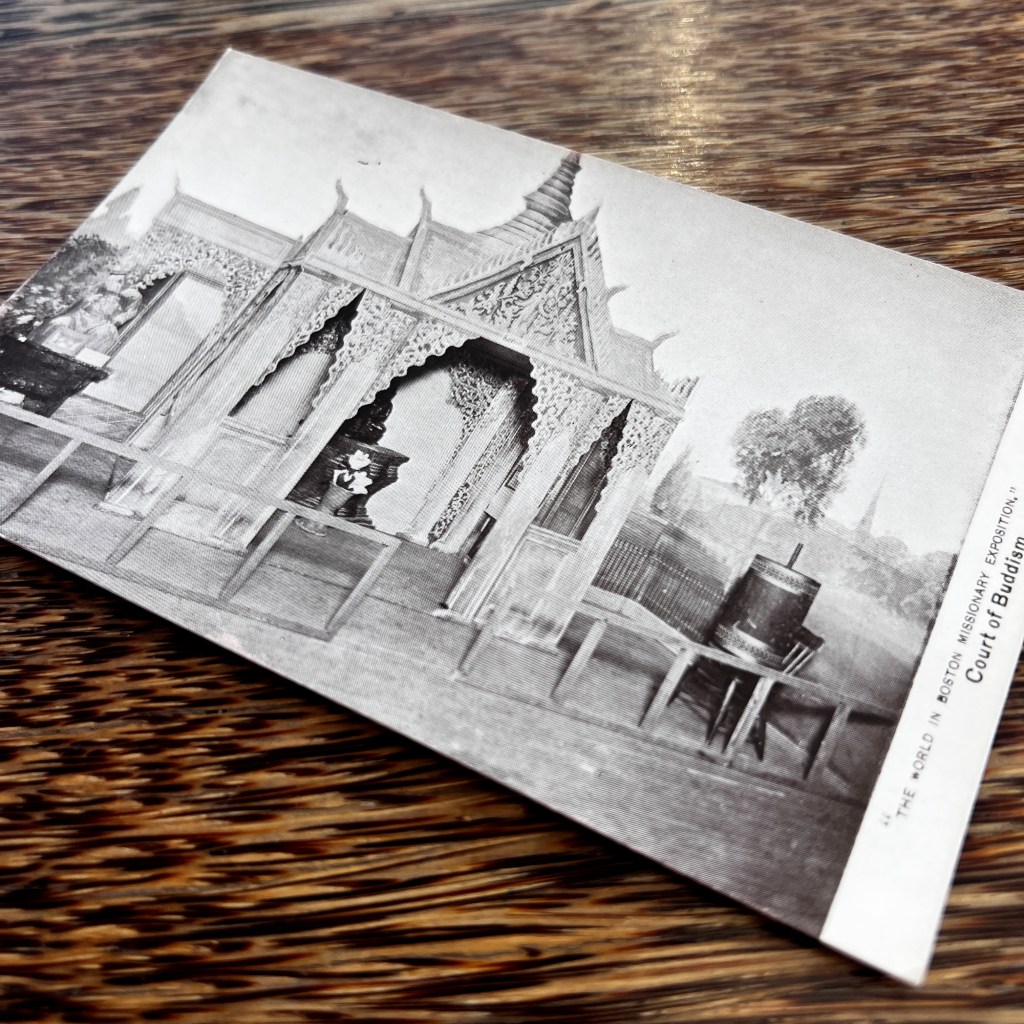
A Buddhist Object Lesson: Buddhist material culture was critical to the first US missionary exposition in 1911. Called The World In Boston, religious artifacts were employed to help give visitors a realistic glimpse into international missionary life.

An estimated 400,000 people visited the exposition where “Buddhism” comprised a modest court in the Hall of Religions. In contrast to conventional museum exhibits, a single Burmese Buddhist statue was housed in a small building resembling a typical Southeast Asian temple.

Inexpensive halftone printing allowed photographs to be reprinted as picture postcards, a very popular medium of the era. The image on the front bears only a loose resemblance to real Burmese temples found on postcards published by Philipp Klier and D.A. Ahuja.

On-site docents ensured religious icons were understood as props within a missionary narrative of attempting to save debased heathens. The American Baptist Mission in Burma provided some of the objects on display at The World in Boston, possibly even this enshrined Buddha.

For further exploration of the artifacts on display at the 1911 missionary exhibition, see Hasinoff, Erin L. Faith in Objects American Missionary Expositions in the Early Twentieth Century. New York: Palgrave Macmillan, 2011.


The Buddhas in the West Material Archive is a digital scholarship project that catalogues artifacts depicting Buddhist material culture for Western audiences. It’s comprised of prints, photos, and an assortment of ephemera and other objects. For a brief introduction to this archive, visit the main Buddhas in the West project page.


For Related Buddhas in the West Posts Featuring Expositions:


For the Most Recent Buddhas in the West Posts:

Keystone’s Nara Kokūzō Stereoview

For all the new Buddhas in the West posts
follow us on Bluesky & Instagram


3D Kokūzō 虛空: In the early 20th century, Keystone View Company emerged as a premier publisher of stereoviews with several tens-of-thousands of images in their catalogue. Around 1901, Keystone issued its first views of Japan, including a run of 23 odd-lot stereoviews.

Among their 1901 offerings, a 1/4 were stereo-photographs of religious sites or objects; this includes two views of Buddhist statues. At this time, other companies started offering special Japan box sets and following the Russo-Japanese War Japan sets became far more popular.

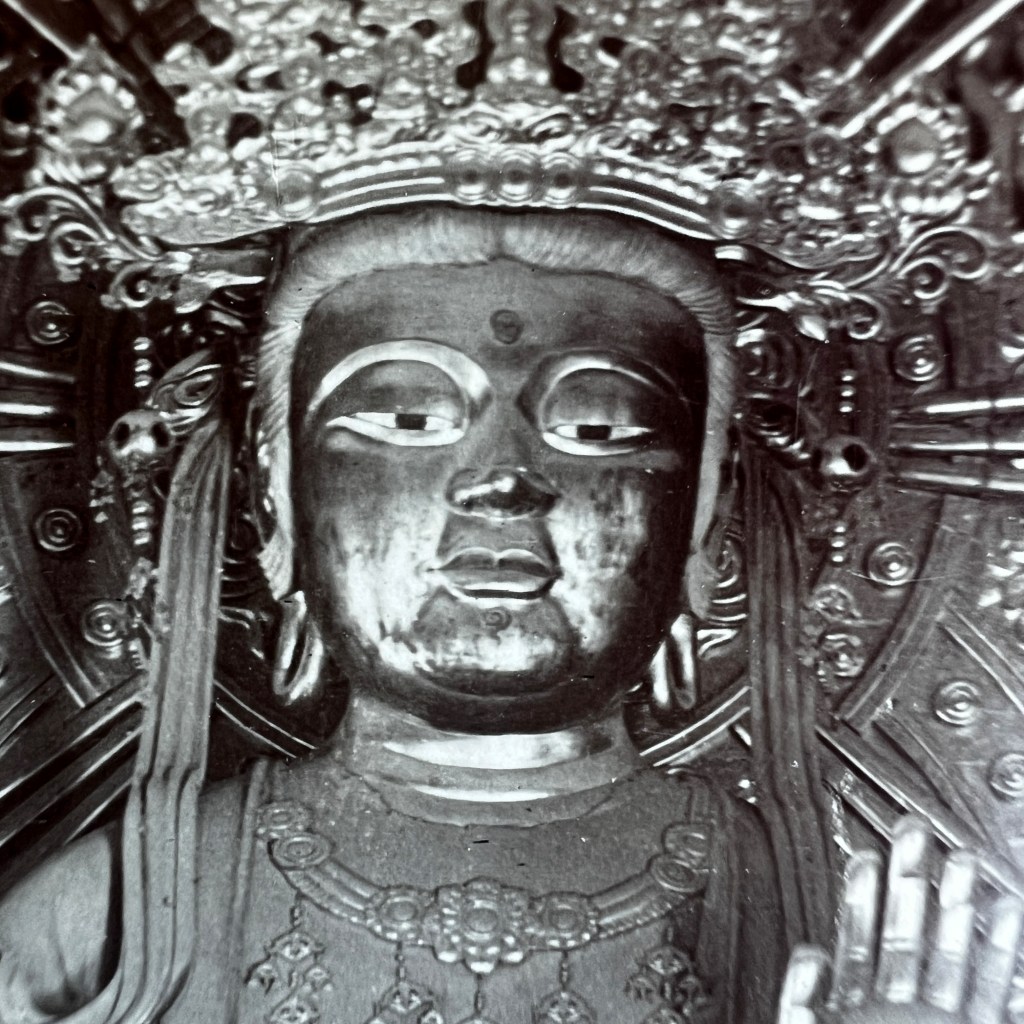
The card here depicts the Daibutsu Hall of Tōdai-ji in Nara. Curiously, it does not show the main figure for which the hall is named, the Nara Daibutsu. This icon is Kokūzō Bosatsu, otherwise known as Ākāśagarbha Bodhisattva (Keystone simply labelled it as a “god.”)

Part of Keystone’s commercial success was selling stereoviews to schools across the US. To view part of their early selection of Japan views, see the digitized collection at the Library of Congress, viewable here https://tinyurl.com/bdewbmva.


The Buddhas in the West Material Archive is a digital scholarship project that catalogues artifacts depicting Buddhist material culture for Western audiences. It’s comprised of prints, photos, and an assortment of ephemera and other objects. For a brief introduction to this archive, visit the main Buddhas in the West project page.


For Related Buddhas in the West Posts Featuring Japan:


For the Most Recent Buddhas in the West Posts:


The Cheat (1923) Production Photograph

For all the new Buddhas in the West posts
follow us on Bluesky & Instagram


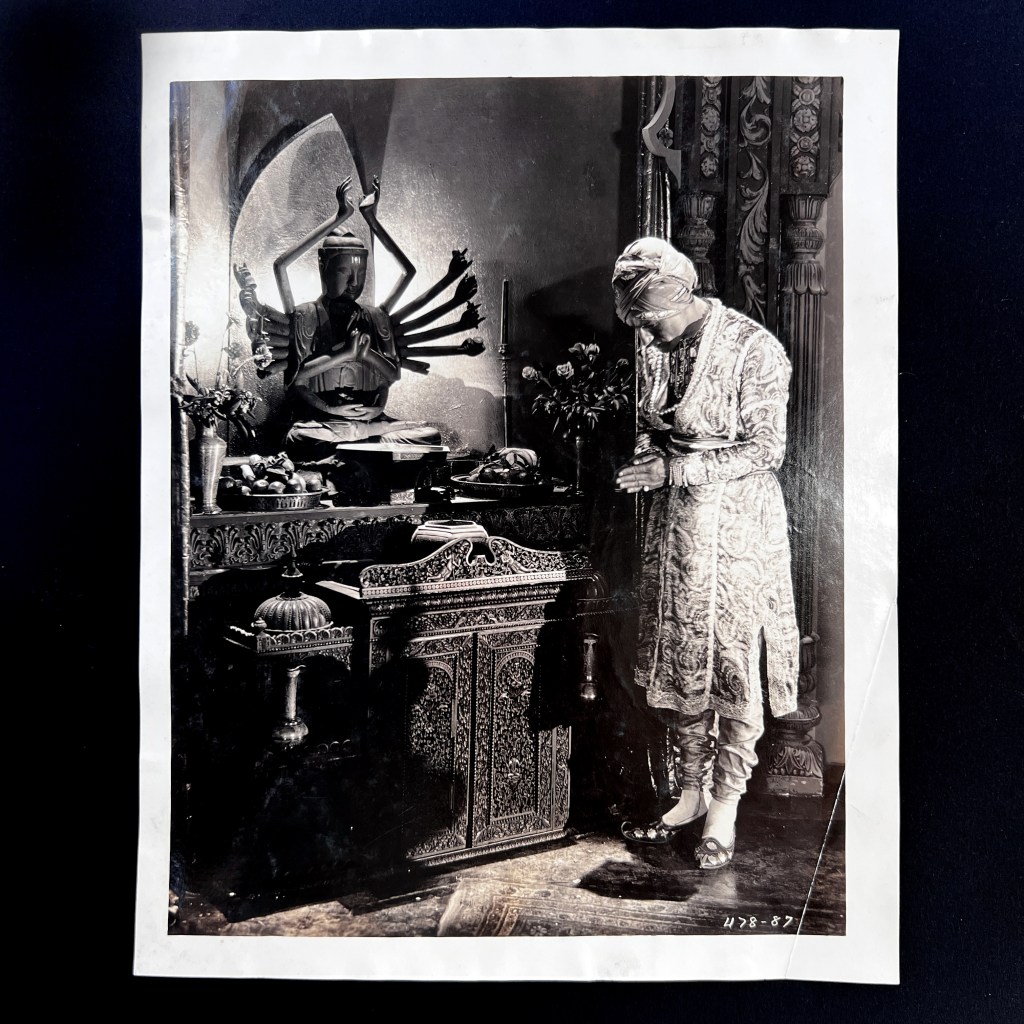
A Lost Film: The remake of The Cheat in 1923 starred Pola Negri in her second American film; she gave rise to the cinematic femme fatale. As with many silent films of the era, The Cheat is considered lost and theatrical stills are some of the only pictorial documents remaining.

Theatrical stills – shot since the advent of feature films in the 1910s – are simply production photographs. Over the last century they have become highly collected artifacts, here we can see where the photo was affixed to an album page.

The image here shows Charles de Rochefort playing a cunning art dealer masquerading as an East Indian Prince. The set design uses a multi-arm statue to underscore his foreign, and potentially nefarious, identity.

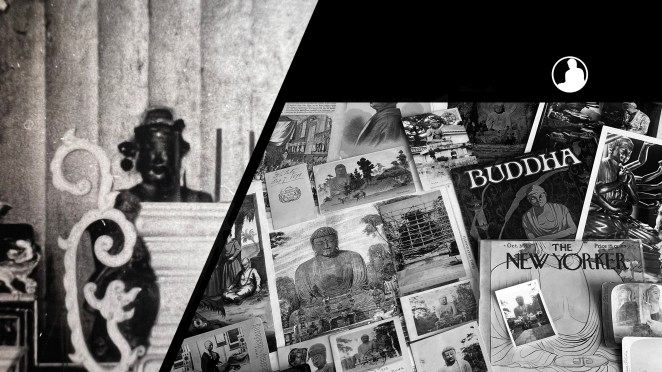
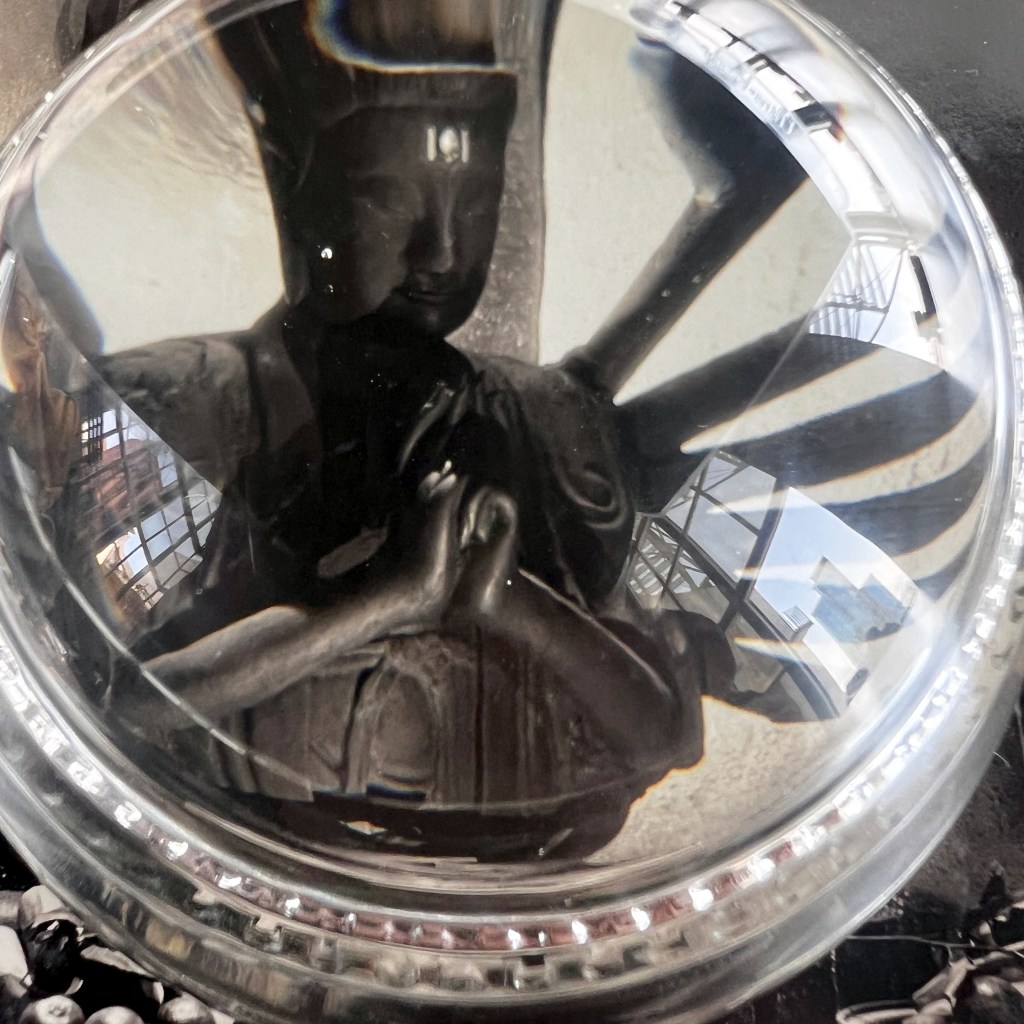
Looking closely at the statue, is does not appear to be a studio-made prop. The features and style suggest an authentic East Asian icon.

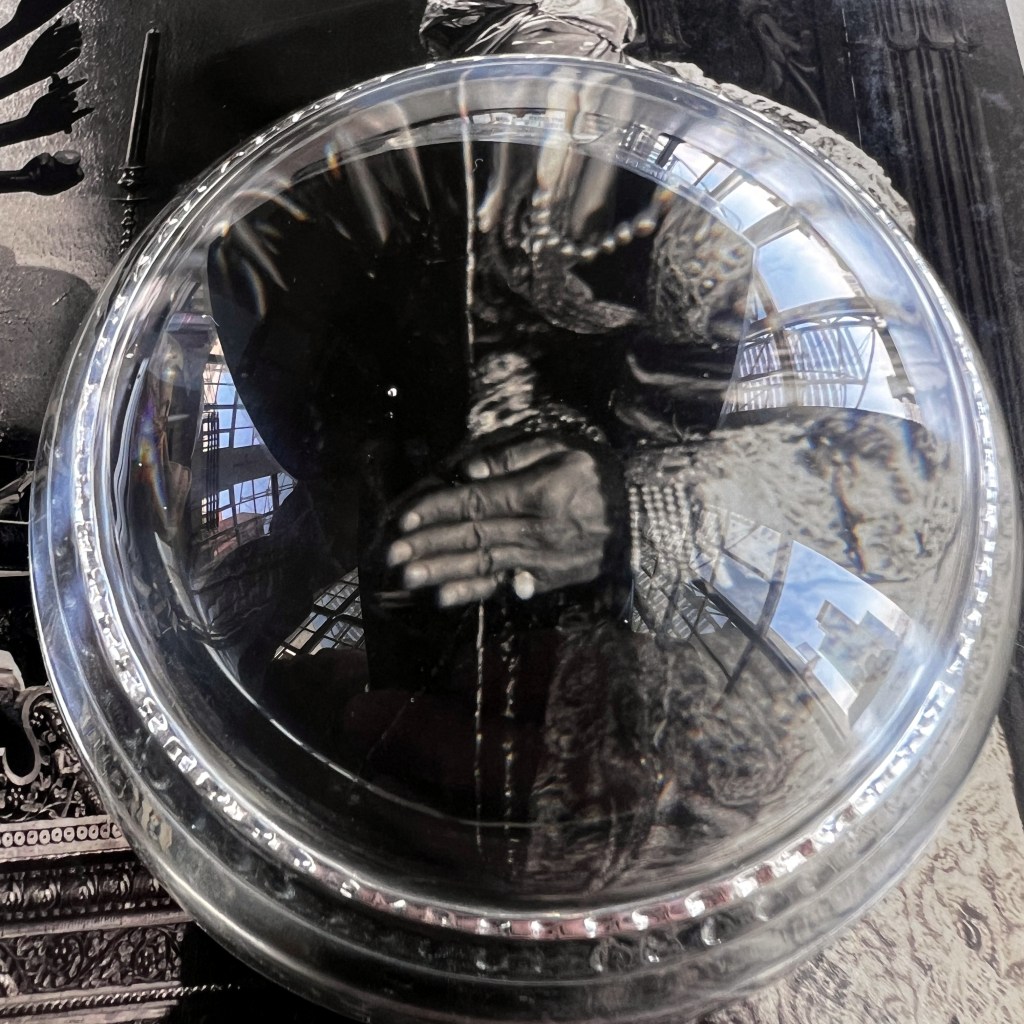
The richly brocaded costuming hints at the character’s royal pedigree, while his posture of reverence reveals his non-Christian religious allegiance.

A similar icon was photographed by German photographer Hedda Morrison in China between 1933–1946. It is viewable through Bristol’s Visualizing China project here: https://hpcbristol.net/visual/Hv08-085


The Buddhas in the West Material Archive is a digital scholarship project that catalogues artifacts depicting Buddhist material culture for Western audiences. It’s comprised of prints, photos, and an assortment of ephemera and other objects. For a brief introduction to this archive, visit the main Buddhas in the West project page.


For Related Buddhas in the West Posts Featuring Historical Photography:


For the Most Recent Buddhas in the West Posts:


American Express Daibutsu Advertisement

For all the new Buddhas in the West posts
follow us on Bluesky & Instagram


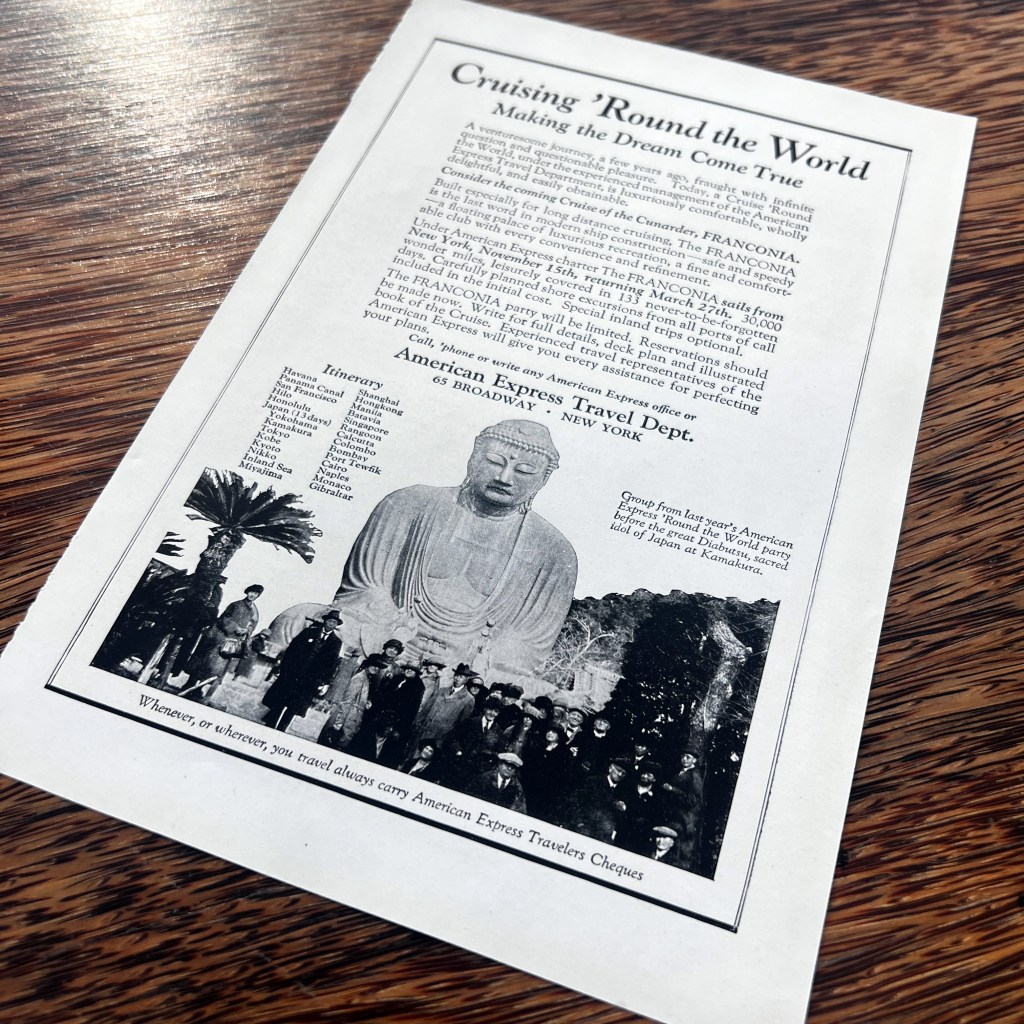
After the opening of the Panama Canal and the end of WWI, the first around-the-world commercial cruise was chartered by the American Express Company in late 1922. The following summer of 1923, American Express began advertising for its next cruise using the Great Buddha of Kamakura.

The success of the inaugural cruise is celebrated in the advertising copy. It notes how the journey is “luxuriously comfortable, wholly delightful, and easily obtainable.” The brief itinerary lists the major ports to be visited, including a long 13 day stay in Japan.

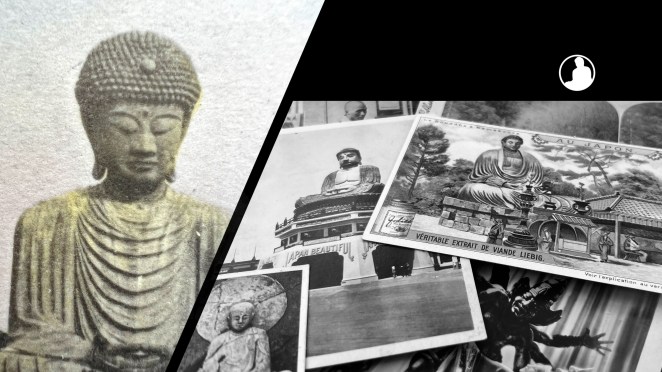
The most conspicuous element is the large cropped photo of the “sacred idol of Japan” – the Kamakura Daibutsu. Notably, the photo depicts the inaugural cruise passengers positioned in front, looking directly at the camera lens.

Unfortunately, the Great Kantō earthquake struck in September 1923, damaging the Daibutsu. The Second American Express Cruise Round the World continued, however, leaving New York in November 1923 and returning in March 1924.


The Buddhas in the West Material Archive is a digital scholarship project that catalogues artifacts depicting Buddhist material culture for Western audiences. It’s comprised of prints, photos, and an assortment of ephemera and other objects. For a brief introduction to this archive, visit the main Buddhas in the West project page.


For Related Buddhas in the West Posts Featuring Historical Advertising:


For the Most Recent Buddhas in the West Posts:

Baron Raimund von Stillfried’s Daibutsu Carte de visite

For all the new Buddhas in the West posts
follow us on Bluesky & Instagram


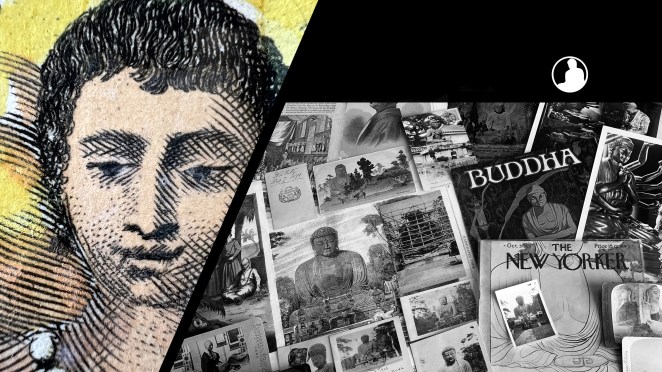
Early Photographic Souvenirs: When Baron Raimund von Stillfried (1839–1911) opened his Yokohama studio in 1871, globe-trotting was becoming the rage among wealthy elite. This phenomenon was reflected in Jules Verne’s Around the World in 80 Days, published in 1873.

A decade earlier, the small format carte-de-visite had emerged as one of the most popular products of commercial photography studios. Originally used as inexpensive family portraits carried in jacket pockets, they soon turned into common tourist souvenirs.

The 19th century globe-trotting circuit included port in Yokohama, the first landfall as you came west across the Pacific. Stillfried’s souvenir photo bears a handwritten note:
This is Diaboots
The Japanese God
what they worship
he is a big size

“Diaboots” refers to Daibutsu.

Stillfried became well known for his Japanese landscapes, a genre that was also popular among foreign globe-trotters.He would carefully frame Japanese people into his shots to underscore elements of foreignness.

Stillfried also published larger format prints bound into albums. An early exemplar from 1872, titled Views and Costumes of Japan, is held by the Metropolitan Museum of Art, viewable here: https://tinyurl.com/yuuf52u9.


The Buddhas in the West Material Archive is a digital scholarship project that catalogues artifacts depicting Buddhist material culture for Western audiences. It’s comprised of prints, photos, and an assortment of ephemera and other objects. For a brief introduction to this archive, visit the main Buddhas in the West project page.


For Related Buddhas in the West Posts Featuring Historical Photography:


For the Most Recent Buddhas in the West Posts:

Korea’s Eunjin Mireuk Postcard

For all the new Buddhas in the West posts
follow us on Bluesky & Instagram


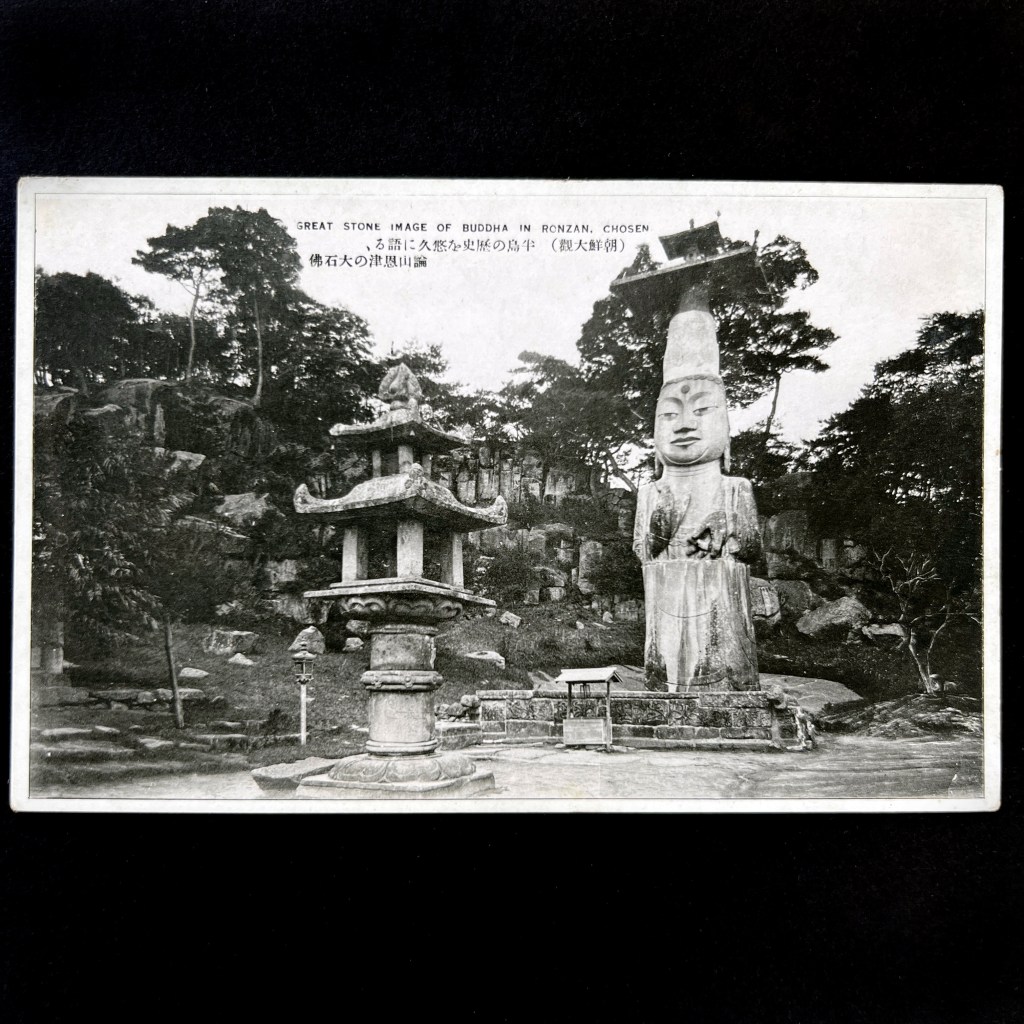
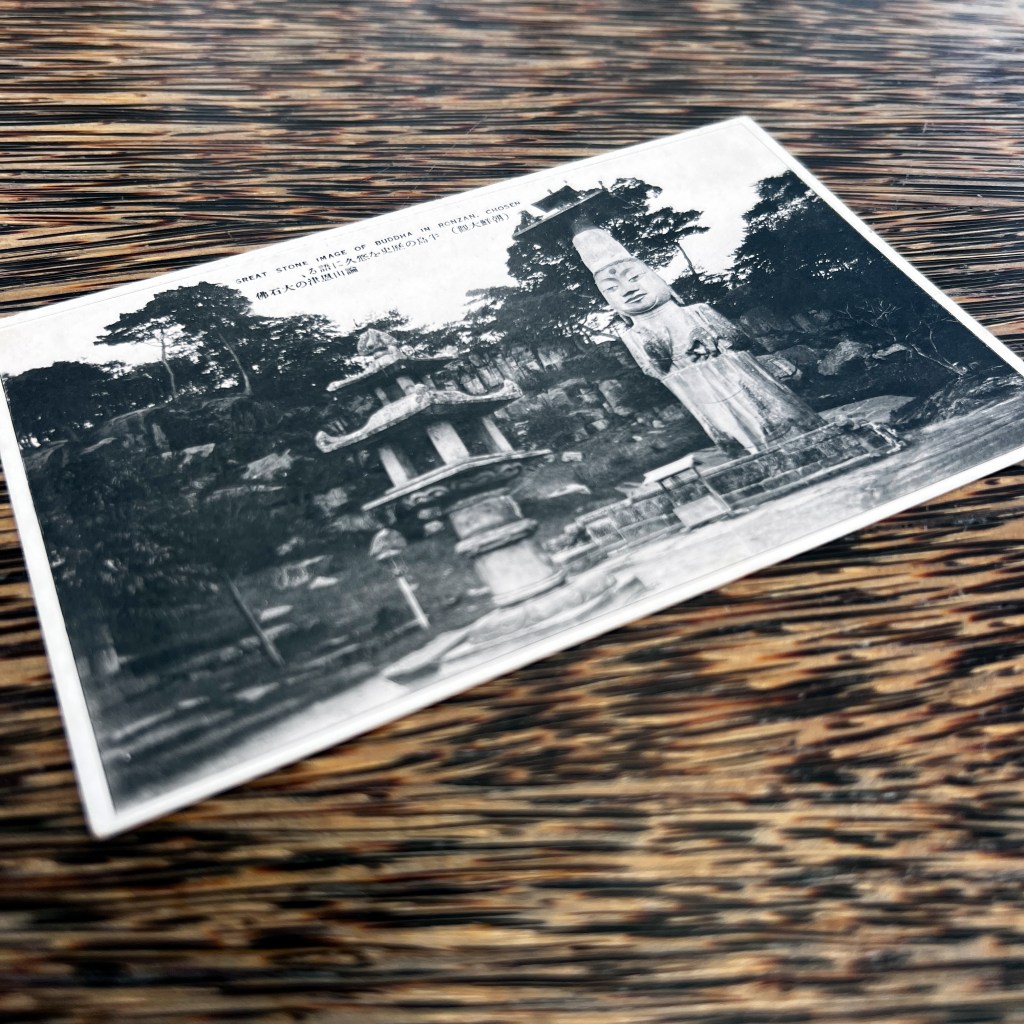
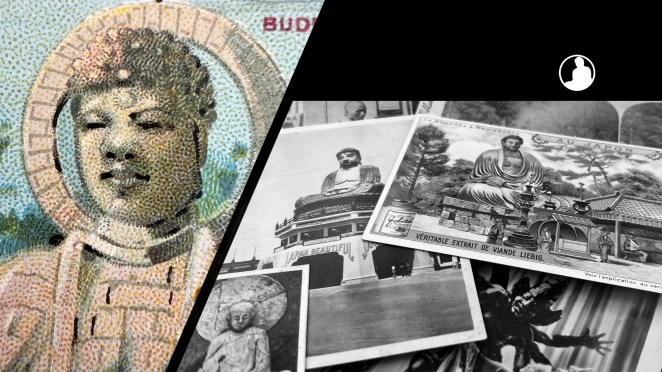
Colonized Korean Landscapes: This statue, known as Eunjin Mireuk 恩津彌勒, is on the grounds of Gwanchoksa Temple in South Korea. At just over 18 meters (60 feet), it is the tallest Buddhist statue in Korea.

During the Korean colonial period (1910–1945) postcards were made by various Japanese entities. One of the largest private publishers was Taishō Shashin Kōgeisho, headquartered in Wakayama (see logo in stamp box). The design tells us this card was printed between 1933 and 1945.

Hyung Gu Lynn has argued that images of Japan’s colonies were often depicted as backwards or in stasis. This included depicting rural villages and ancient historical locations. Does this Japanese postcard fit into this discourse?

The name “Mireuk” points to the bodhisattva Maitreya. The hands on this statue, however, are suggestive of an East Asian Guanyin. The Eunjin Mireuk is example of early Goryeo era (918–1392) sculpture and reflects an unusual regional style.

A photo was taken of this statue by US navy officer George Clayton Foulk in the mid-1880s. It has been digitized by the Library of Congress and can be viewed here: https://tinyurl.com/bdh7pwvc.


The Buddhas in the West Material Archive is a digital scholarship project that catalogues artifacts depicting Buddhist material culture for Western audiences. It’s comprised of prints, photos, and an assortment of ephemera and other objects. For a brief introduction to this archive, visit the main Buddhas in the West project page.


For Related Buddhas in the West Posts Featuring Historical Buddhist Statues:


For the Most Recent Buddhas in the West Posts:

Pierrot’s “Prisonnier dans la pagode” Magazine Cover

For all the new Buddhas in the West posts
follow us on Bluesky & Instagram


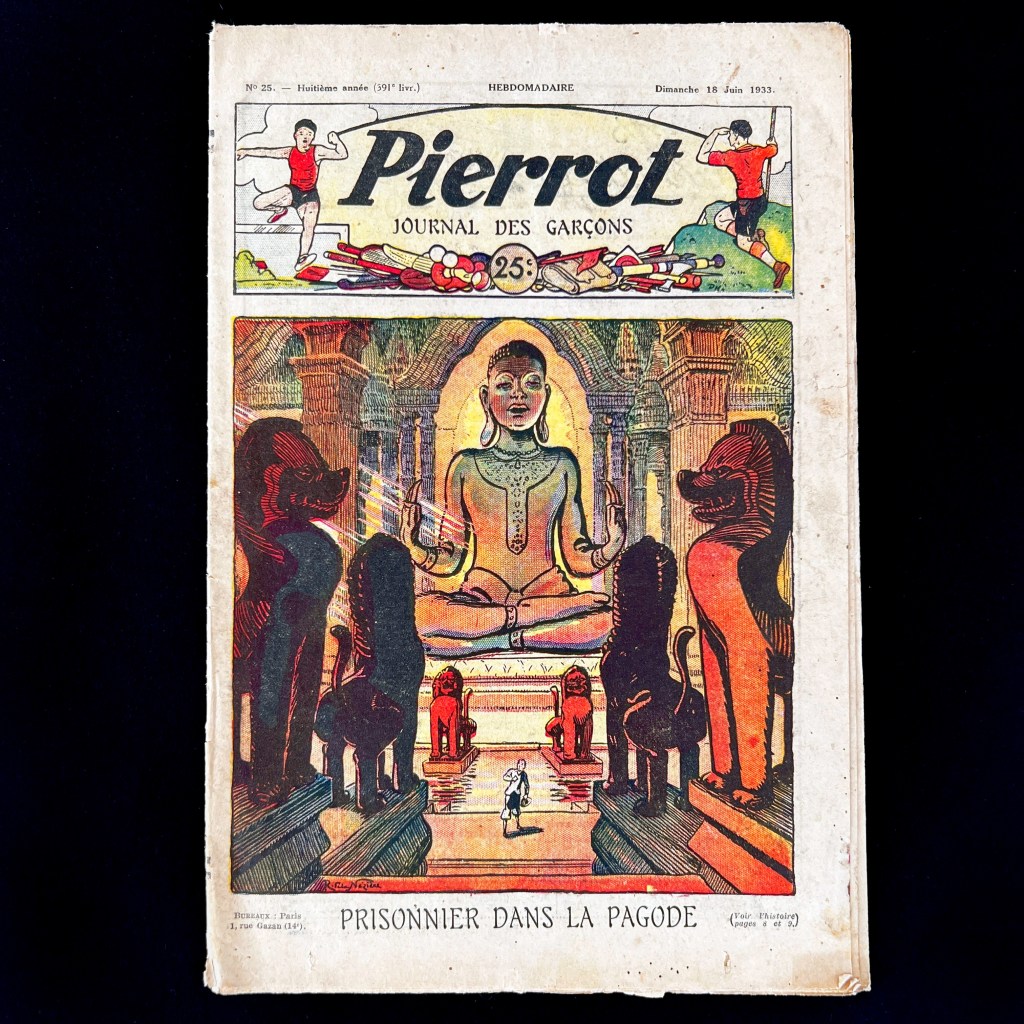
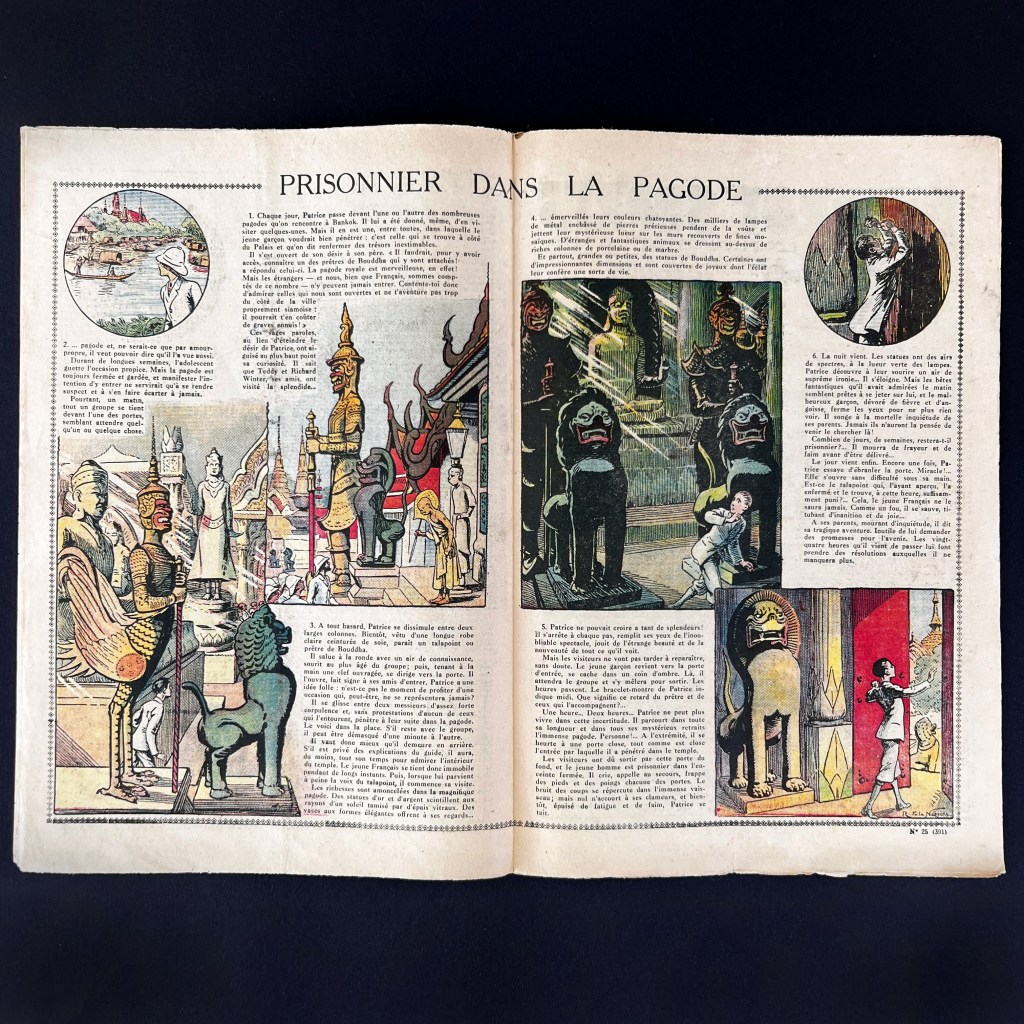
Prisoner in the Pagoda: Between World Wars, European periodicals geared towards boys grew in popularity. Many of these were written as action and adventure stories. Exotic locales, many of which were directly or indirectly colonized, became the sites of such exploits.

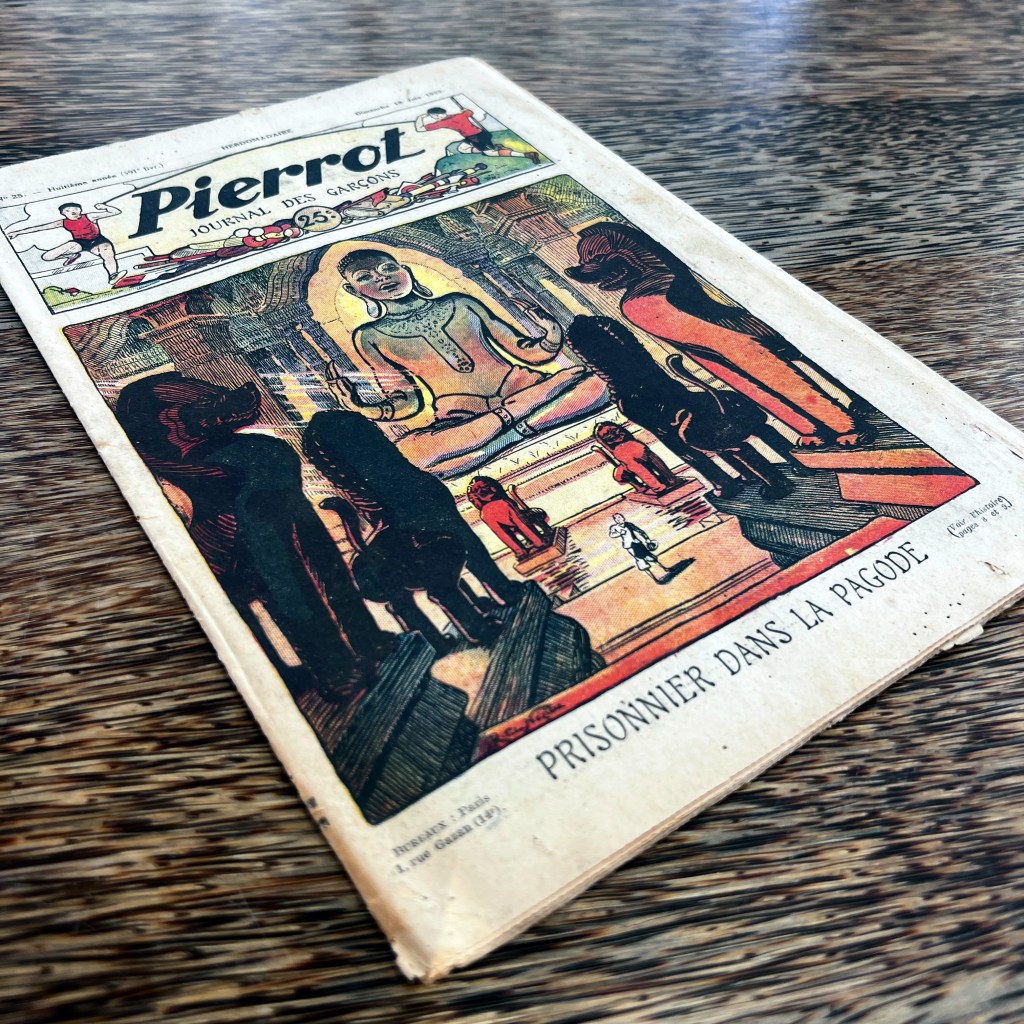
Pierrot, an illustrated French magazine first published in 1925, was a periodical in this vein. This 1933 issue has stories about pirates, piranha, and race cars, as well at the illustrated cover story, The Prisoner in the Pagoda.

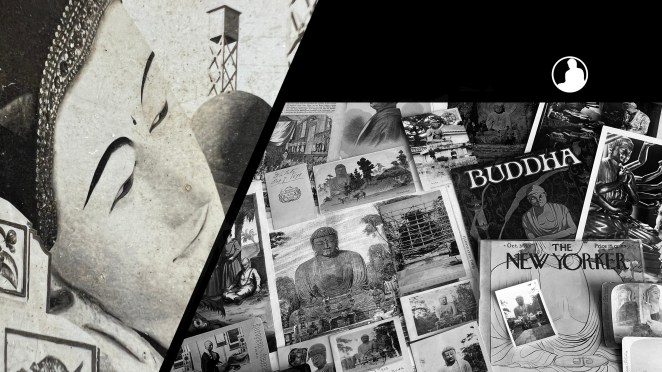
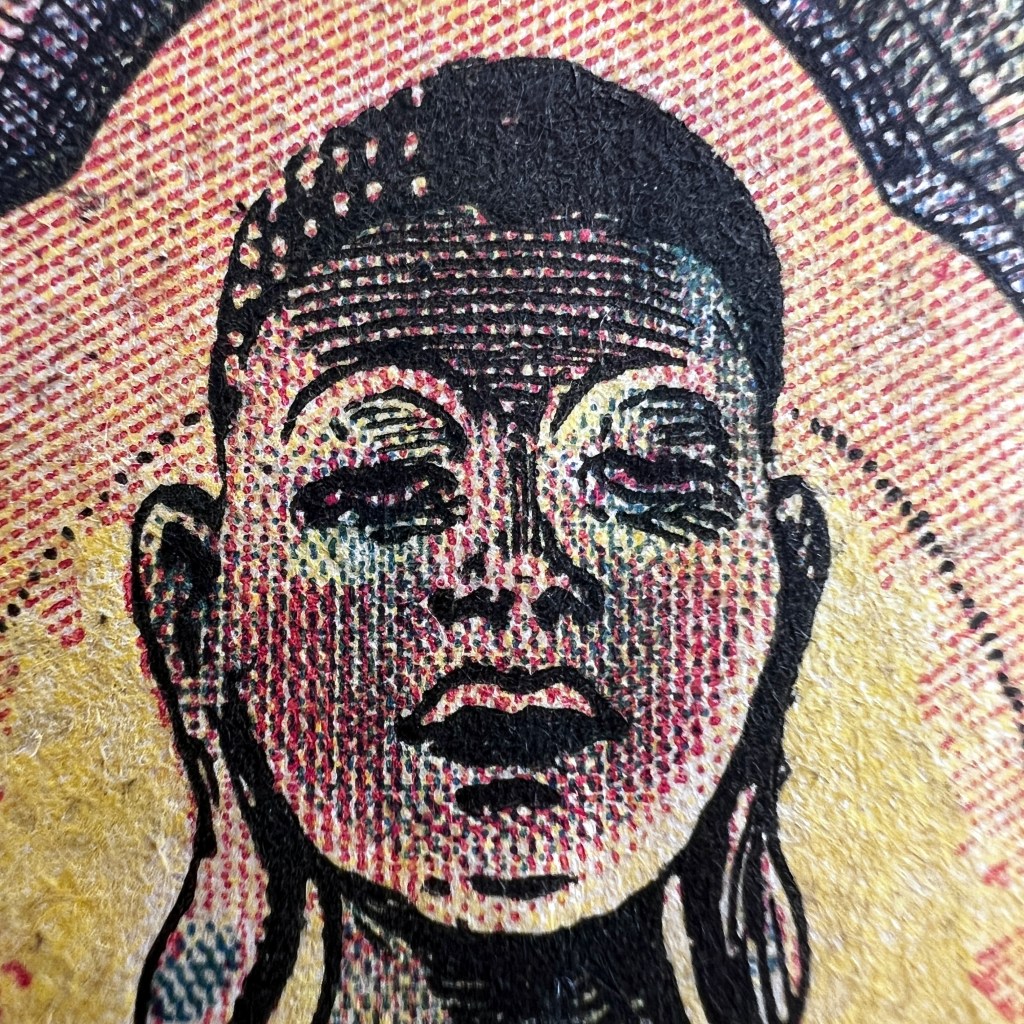
The art was intended to bring to mind the Temple of the Emerald Buddha at Wat Phra Kaew in Bangkok. The two-page spread tells the story of Patrice, an overly curious young boy who finds himself locked inside a Bangkok Buddhist temple overnight.

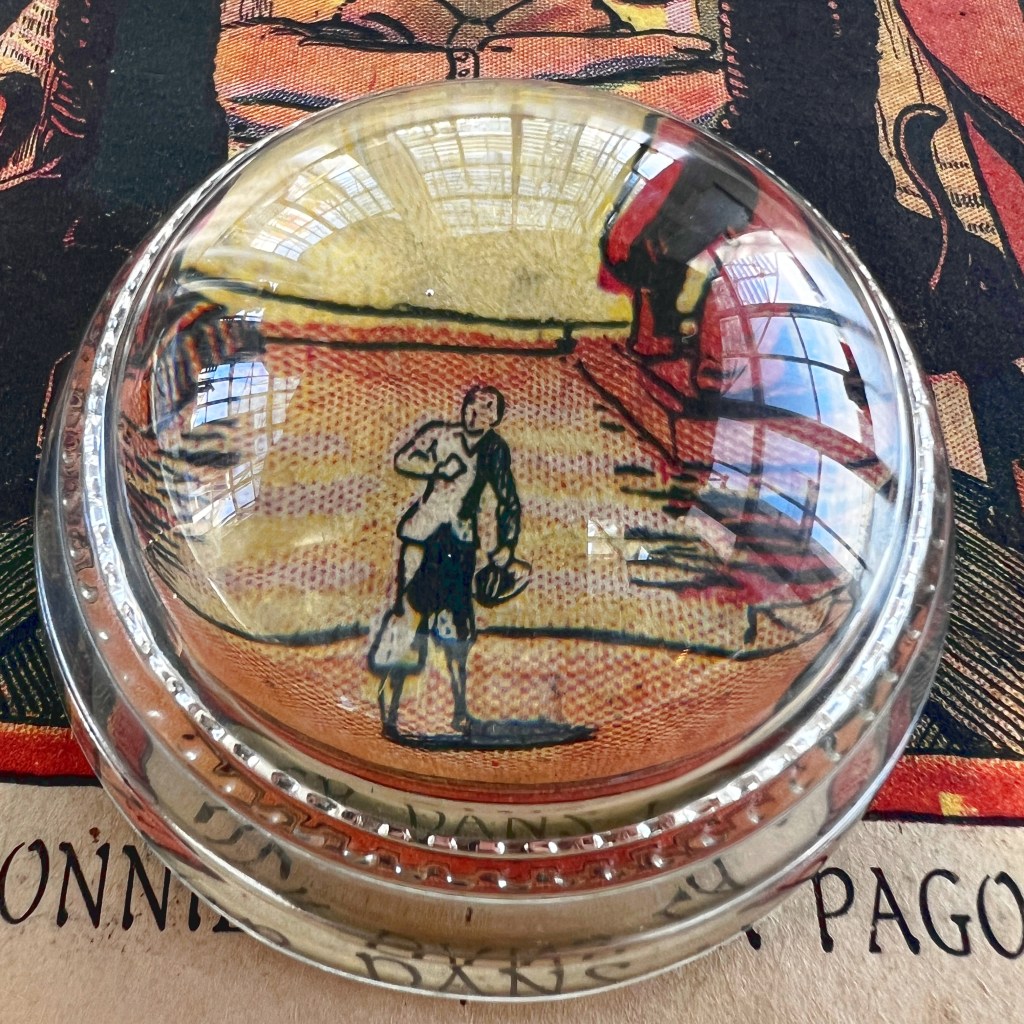
It follows a common trope of a mischievous boy who disregards his parents’ warnings and gets into trouble. Beyond mere trespassing, Patrice grows fearful of the strange buddhist icons that inhabit the temple.

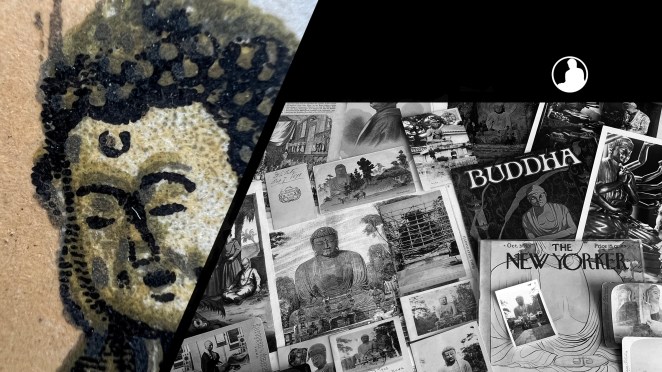
The Emerald Buddha is not drawn true to life and is made foreboding by its size and directional lighting.

The collection of Pierrot magazines has been digitized by the Bibliothèque nationale de France. The issue under review can be found here: https://tinyurl.com/yck22hde.


The Buddhas in the West Material Archive is a digital scholarship project that catalogues artifacts depicting Buddhist material culture for Western audiences. It’s comprised of prints, photos, and an assortment of ephemera and other objects. For a brief introduction to this archive, visit the main Buddhas in the West project page.


For Related Buddhas in the West Posts Featuring France:


For the Most Recent Buddhas in the West Posts:


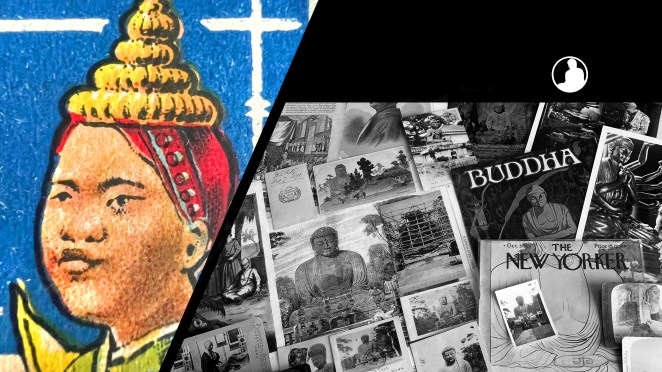
Lambert and Butler’s Kamakura Daibutsu Cigarette Card

For all the new Buddhas in the West posts
follow us on Bluesky & Instagram


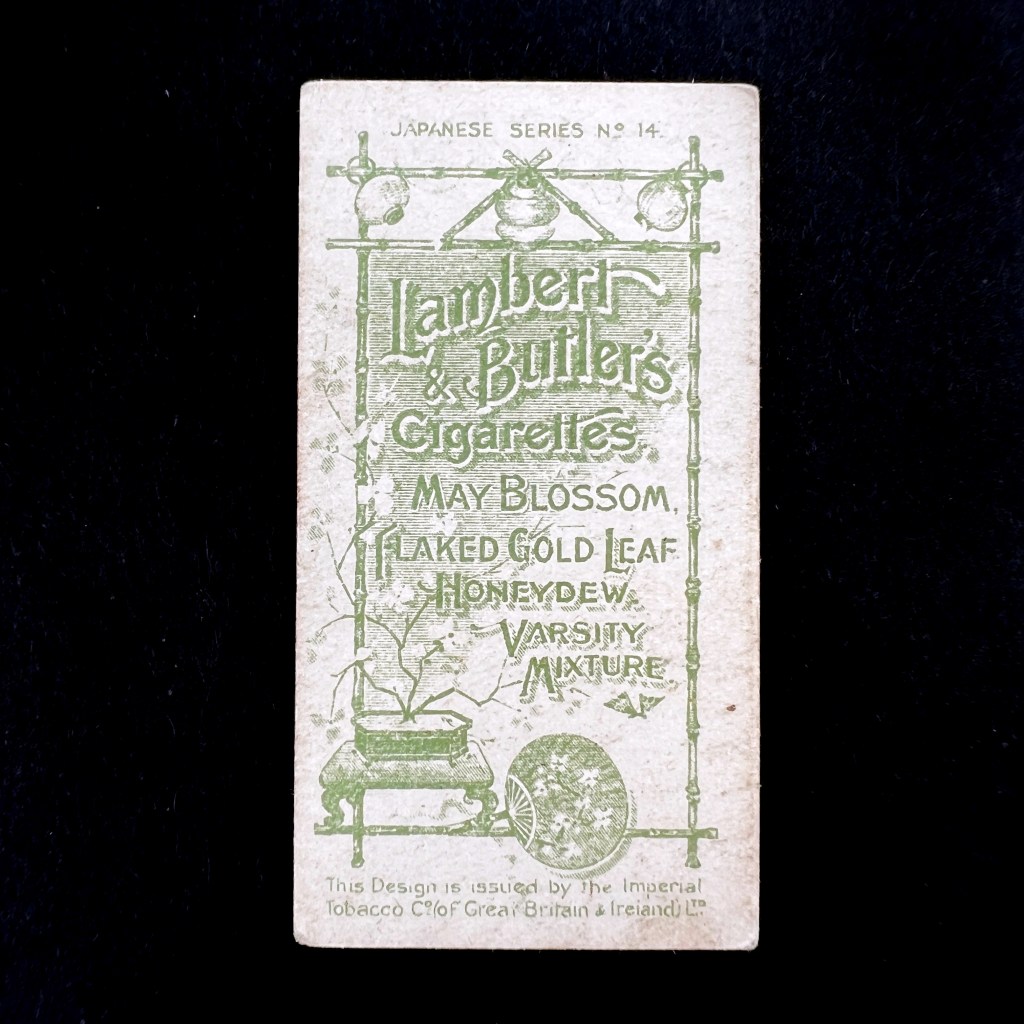
The Buddha’s “rookie” card? In the US, “cigarette cards” are perhaps best known for their early depiction of baseball players. These cards jump started a baseball card collecting phenomenon.

Tobacco companies drew upon a much larger visual repertoire than sports for their advertising cards. This sometimes included exotic locales. Intended to fit inside cigarette packs, these cards were relatively small.

Lambert & Butler was a former English tobacco manufacturing company that made a “Japanese Series” in 1904-1905.

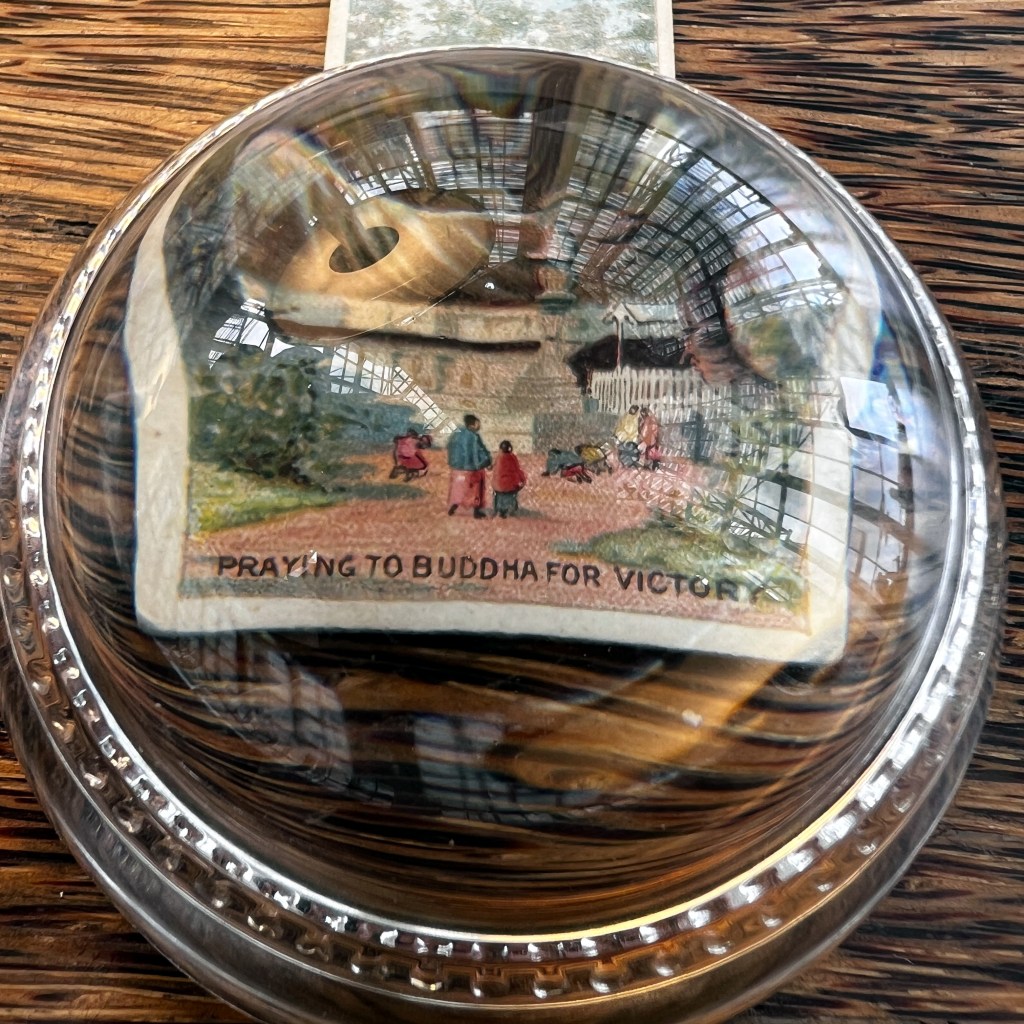
It memorialized the Russo-Japanese War. Thus we see a depiction of Japanese citizens praying at the foot of the Kamakura Daibutsu.

Similar to other Victorian trade cards, this was a colorful lithographic print. You can browse the collection of cigarette cards held by the NY Public Library here: https://tinyurl.com/cn23wud8.


Additional Archived Posts for the Buddhas in the West Project

The Buddhas in the West Material Archive is a digital scholarship project that catalogues artifacts depicting Buddhist material culture for Western audiences. It’s comprised of prints, photos, and an assortment of ephemera and other objects. For a brief introduction to this archive, visit the main Buddhas in the West project page.


For Related Buddhas in the West Posts Featuring Historical Trade Cards:


For the Most Recent Buddhas in the West Posts:

Singapore Buddhist Hell Guardian Postcard

For all the new Buddhas in the West posts
follow us on Bluesky & Instagram


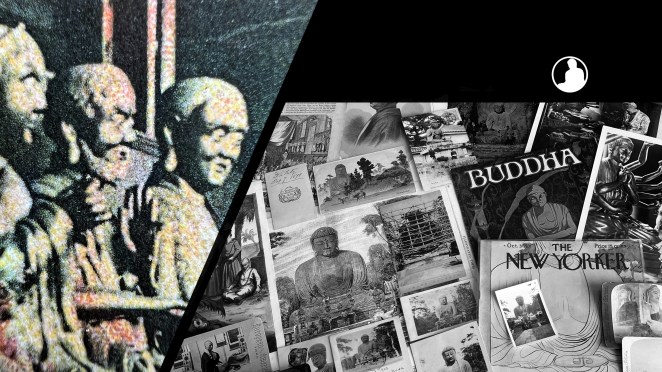
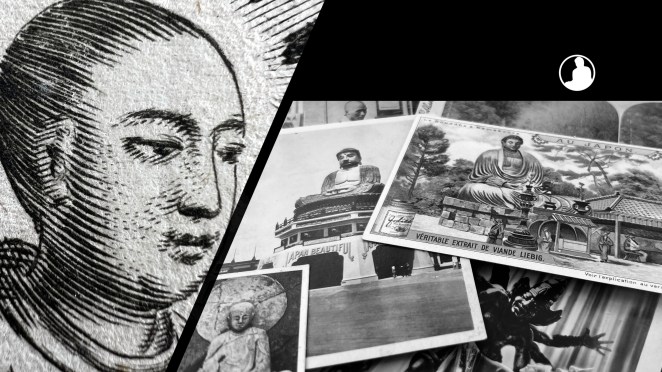
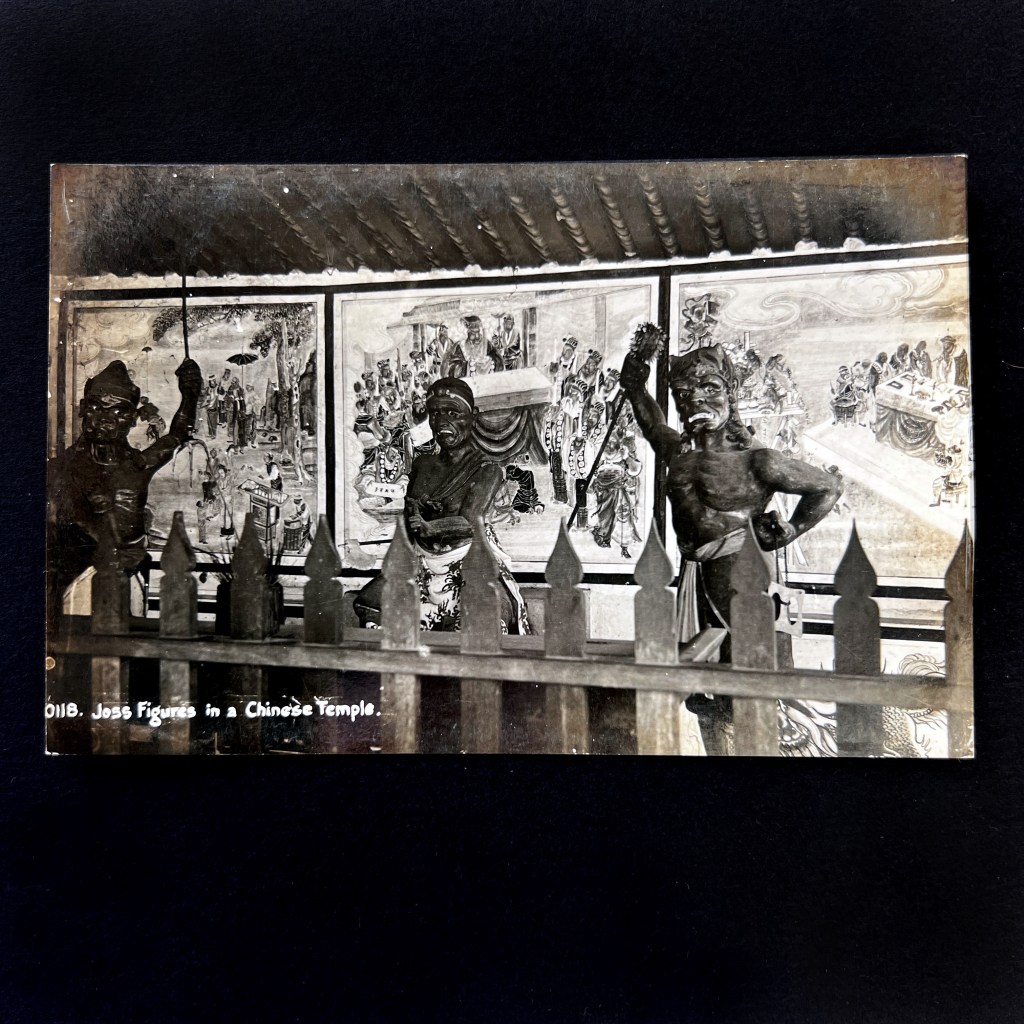
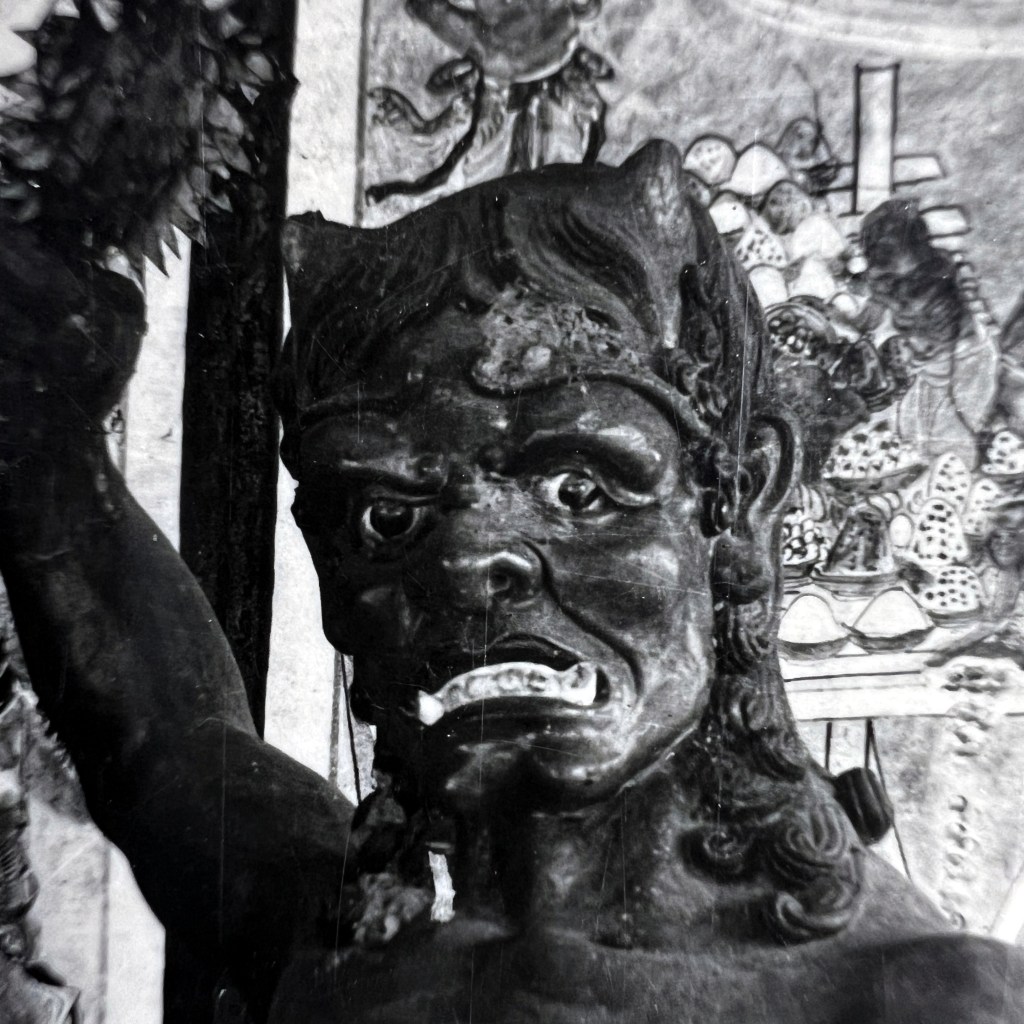
Unknown “Chinese” Temple: By the mid-to-late 19th century, the term “joss” typically referred to venerated Chinese religious icons. Here we see the term used to identify statues of Buddhist hell guardians. These figures are not typically the center of veneration in temples.

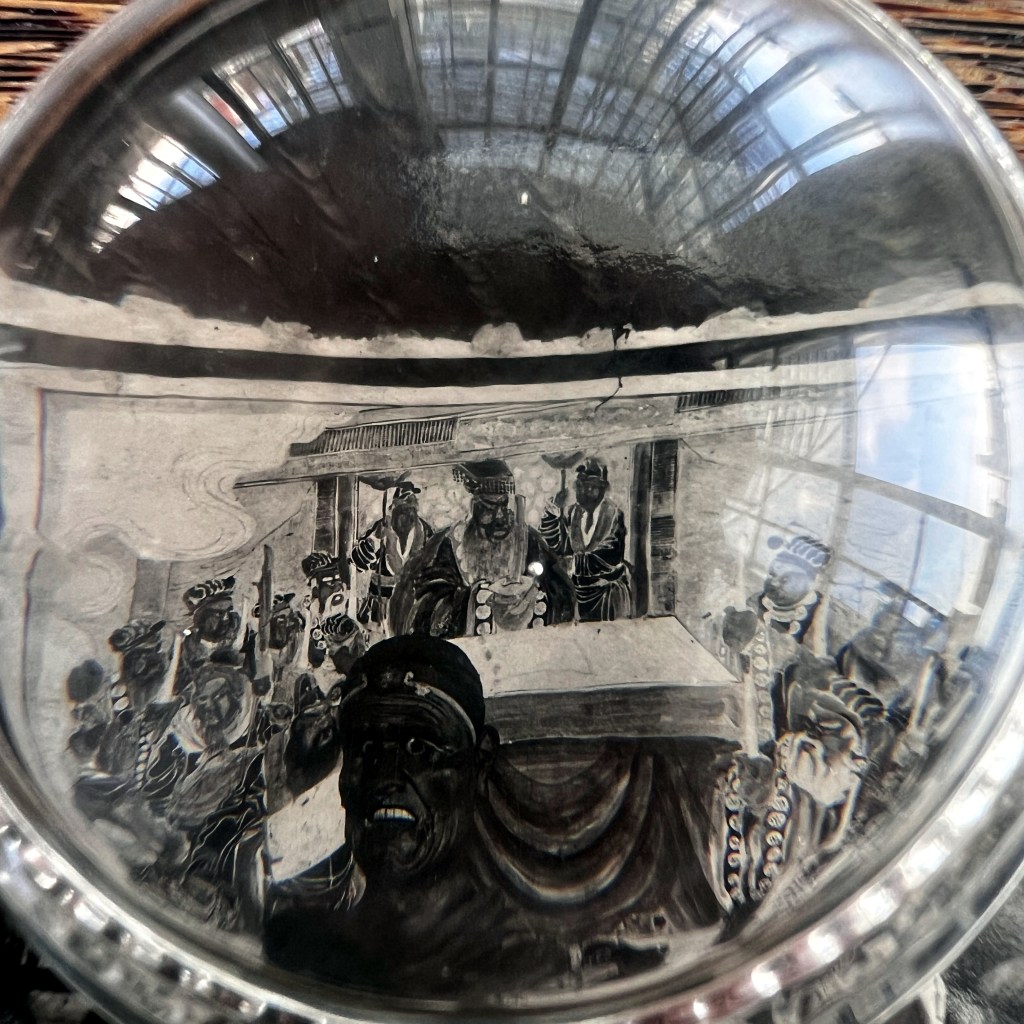
Moreover, the statues are positioned in front of murals depicting the Buddhist Ten Courts of Hell. Chinese Buddhist hell is viewed as an administrative center for the underworld where the dead are judged for their deeds in life.

The location is an unidentified Chinese Temple. Real photo post cards with similar reverse designs depict temples from Singapore; it is possible this is one of several “Chinese temples” from that area at the turn of the 20th century.

This photographic card likely dates to the 1920s. (I have seen a used version of this card hand-dated to 1930).

The National Archives of Singapore has a good selection of digitized photographs showing various Chinese Temples, available here: https://tinyurl.com/mr9nwcep.


The Buddhas in the West Material Archive is a digital scholarship project that catalogues artifacts depicting Buddhist material culture for Western audiences. It’s comprised of prints, photos, and an assortment of ephemera and other objects. For a brief introduction to this archive, visit the main Buddhas in the West project page.


For Related Buddhas in the West Posts Featuring Historical Real Photo Post Cards:

For the Most Recent Buddhas in the West Posts: