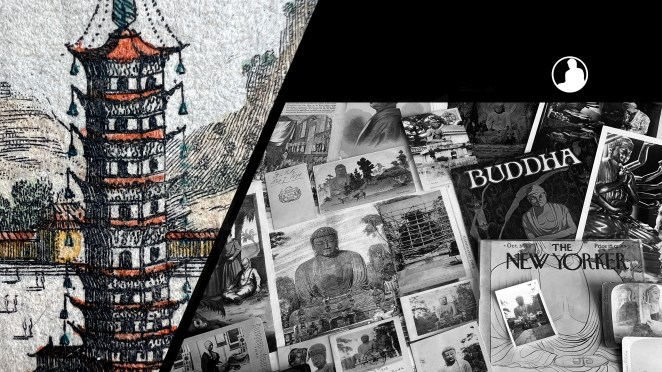
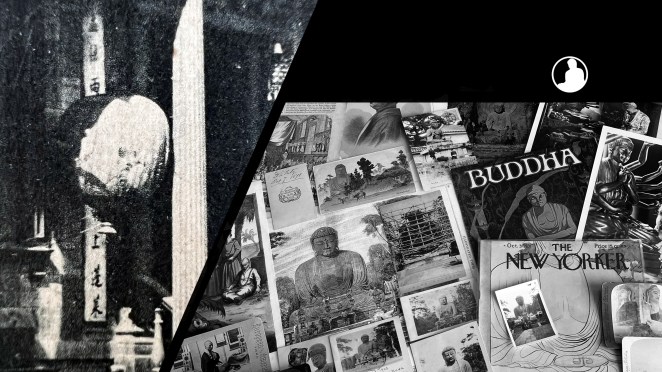
Joseph Keppler’s Crafty Priests Puck Magazine Cover

For all the new Buddhas in the West posts
follow us on Bluesky & Instagram


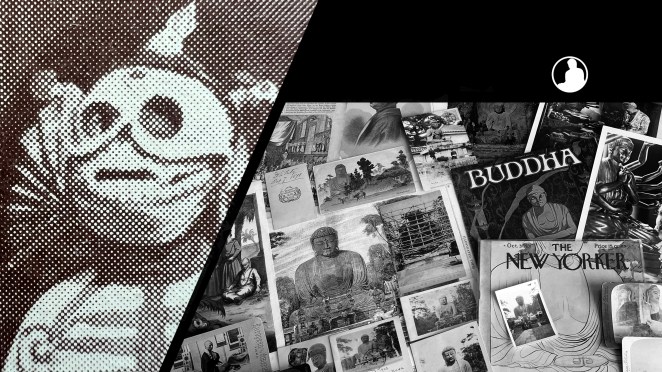
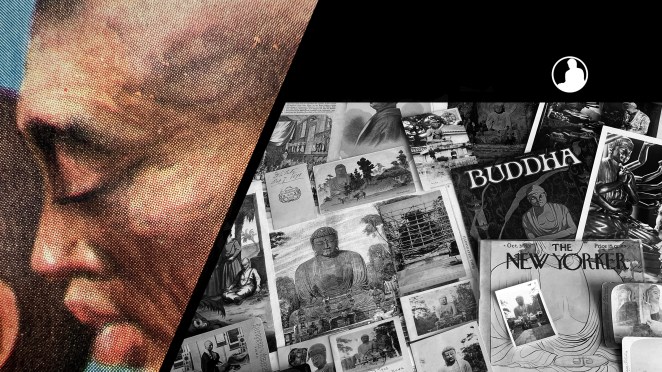
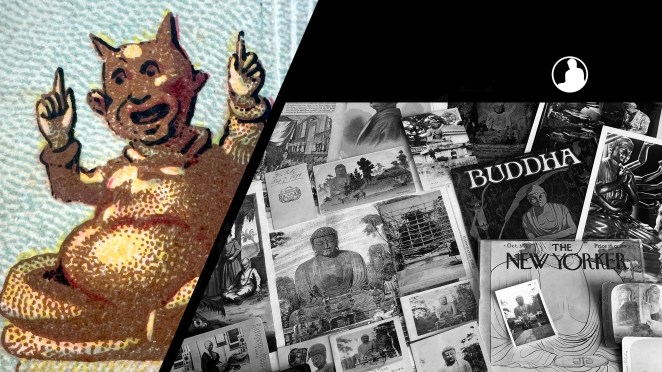
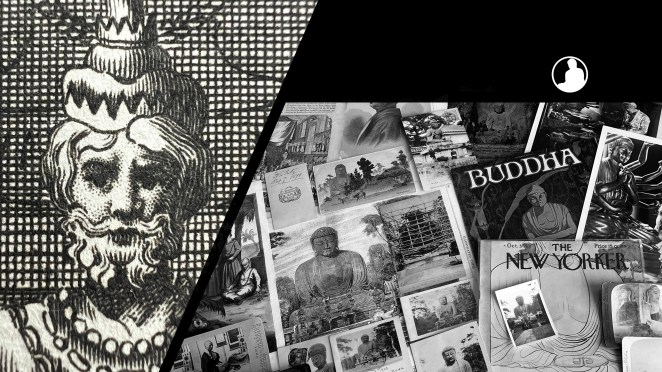
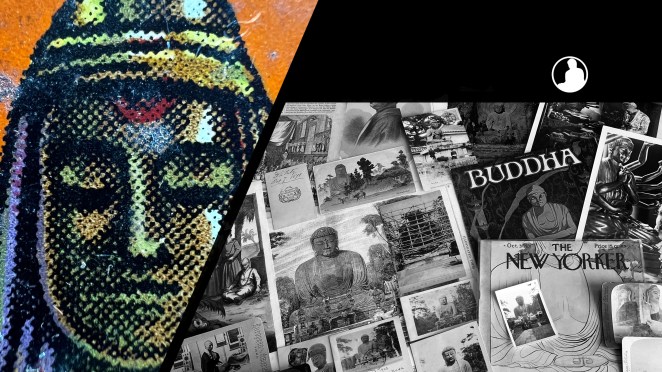
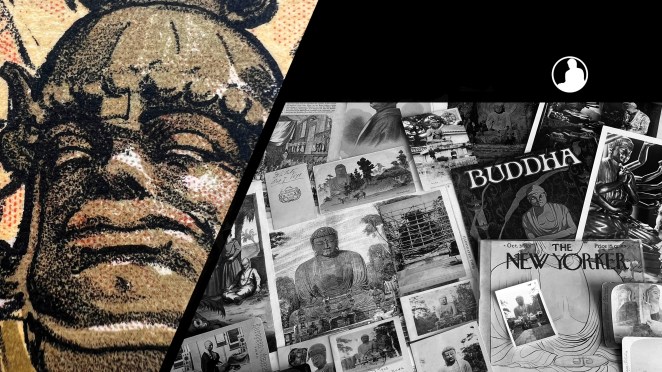
In the 1880s Puck was America’s premier satire magazine, but the publication stood out for another reason: it was among the first periodicals to use chromolithographic printing. Puck was founded by Joseph Keppler who was also a main artist – his work from 1888 is seen here.

The political commentary draws upon the old trope of “crafty priests” stealing from pious believers.
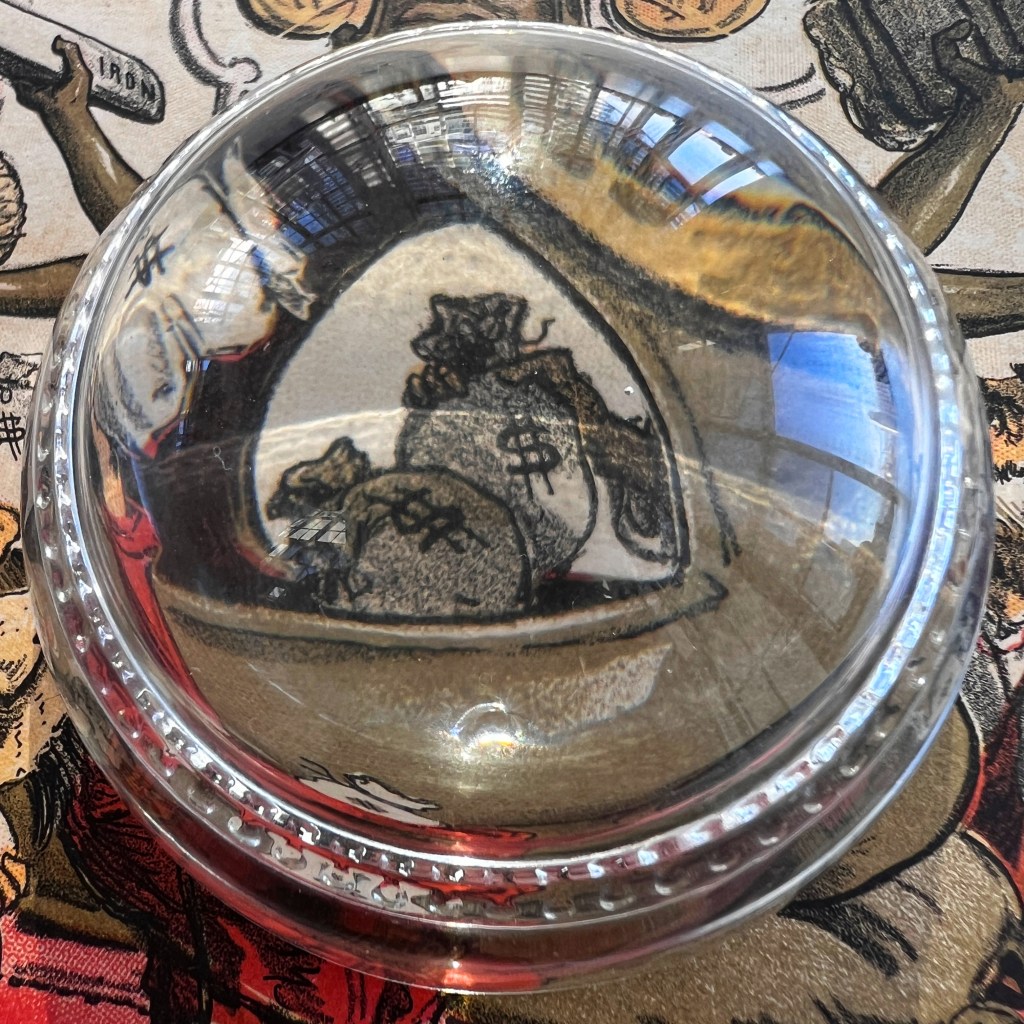
The visual trope, however, uses more recently circulating popular imagery of a cross-legged multi-arm idol. The traditional Biblical imagery of the golden calf has replaced by a stereotyped golden Asian icon. Moreover, the facial features are exaggerated to look more grotesque.

A large collection of Puck political cartoons has been digitized by the Library of Congress, viewable here: https://tinyurl.com/ycde4xtc.


The Buddhas in the West Material Archive is a digital scholarship project that catalogues artifacts depicting Buddhist material culture for Western audiences. It’s comprised of prints, photos, and an assortment of ephemera and other objects. For a brief introduction to this archive, visit the main Buddhas in the West project page.


For Related Buddhas in the West Posts Featuring Historical Magazines:

For the Most Recent Buddhas in the West Posts:

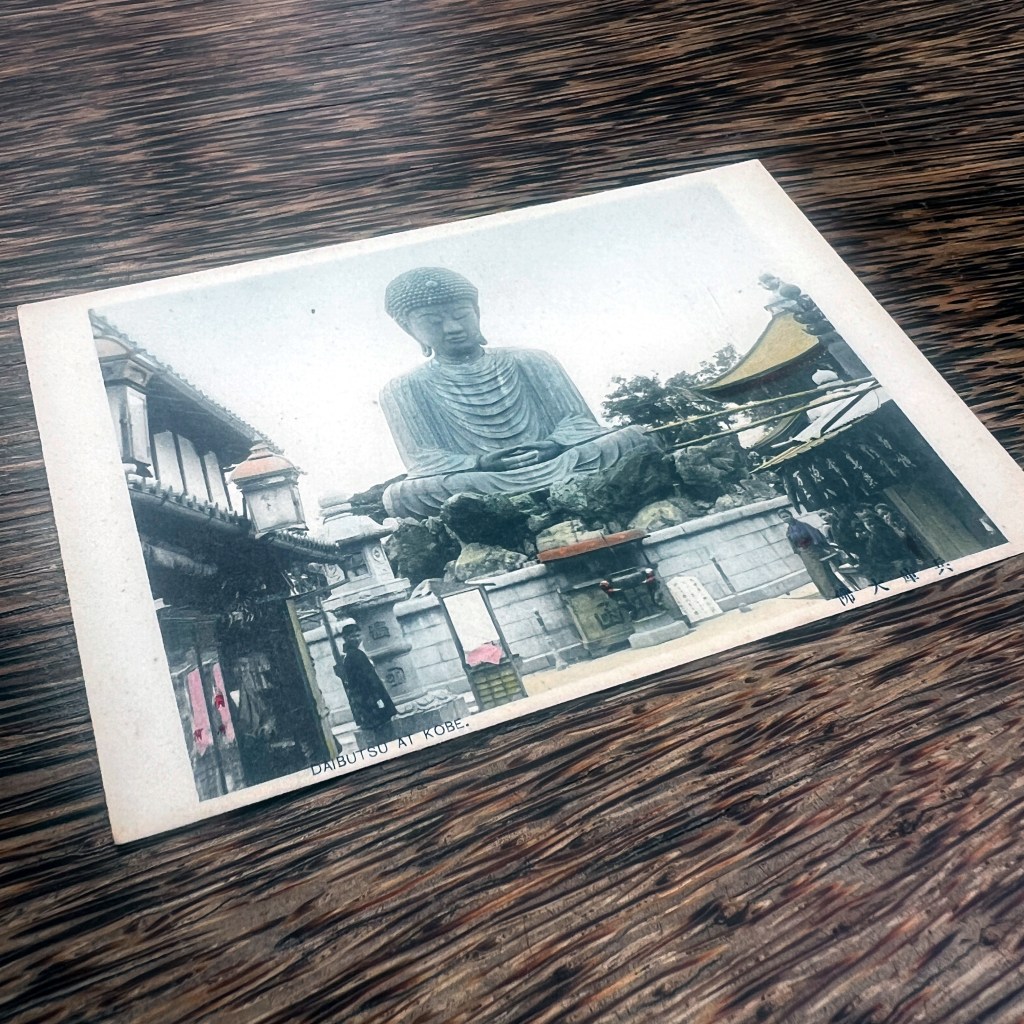
Hyōgo Daibutsu at Kobe F.S. Postcard

For all the new Buddhas in the West posts
follow us on Bluesky & Instagram


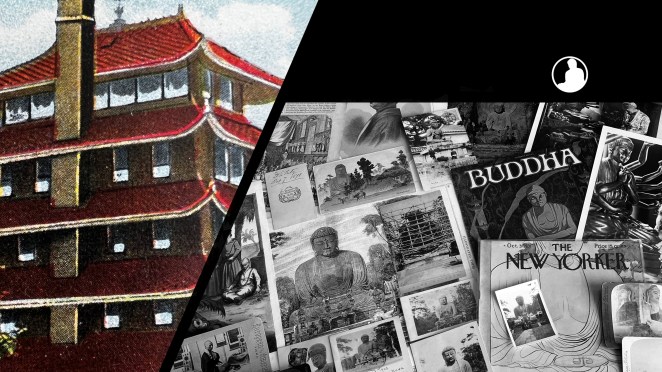
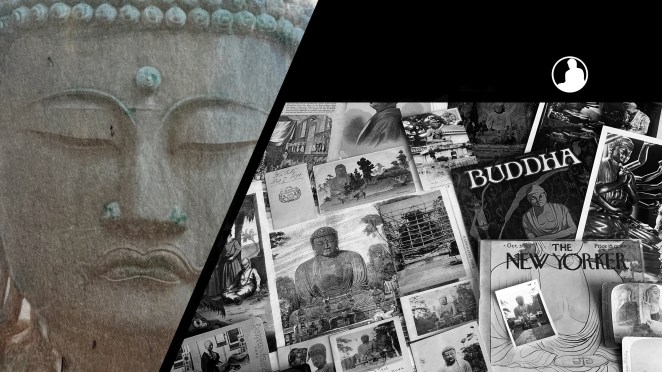
The original Hyōgo Daibutsu at Nōfuku-ji was the third largest Buddhist statue in Japan. It was dismantled by the Ordinance on the Collection of Metals issued in 1941 as part of Japanese war efforts during WWII.

Located in the port city of Kobe, the Daibutsu was approximately 12 meters in height. It became a popular tourist destination at the end of the 19th century, thus many photographs and postcards remain of the now lost icon.

This “undivided back” design informs us the postcard was printed before 1907. The “F.S.” in the stamp box refers to the publisher’s name (which I haven’t identified).

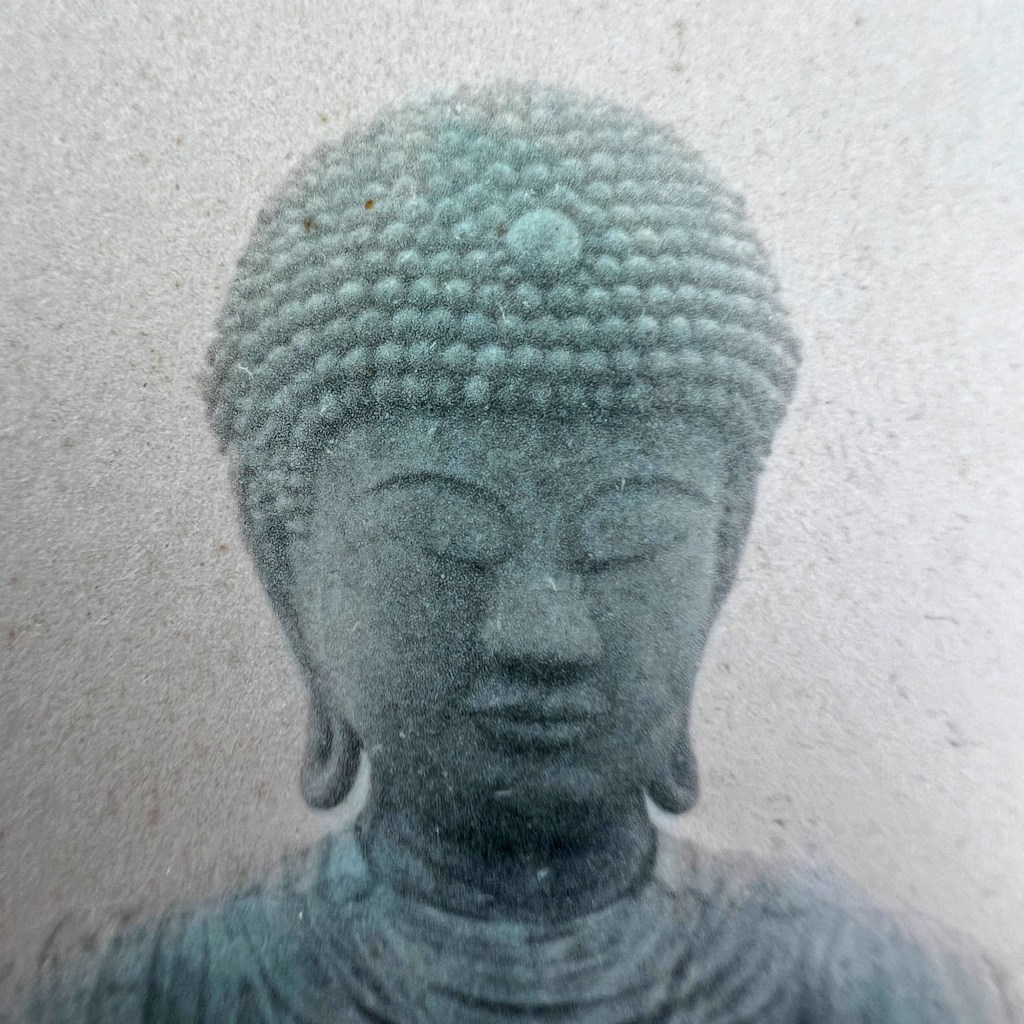
Many Japanese postcards of this period were hand-colored collotype prints. You can see the red ink splotches the colorist used to suggest design elements.

An albumen print photograph by Kusakabe Kinbei is held by the Nagasaki University Library, viewable here: http://oldphoto.lb.nagasaki-u.ac.jp/zoom/jp/record.php?id=1044


The Buddhas in the West Material Archive is a digital scholarship project that catalogues artifacts depicting Buddhist material culture for Western audiences. It’s comprised of prints, photos, and an assortment of ephemera and other objects. For a brief introduction to this archive, visit the main Buddhas in the West project page.


For Related Buddhas in the West Posts Featuring Postcards:


For the Most Recent Buddhas in the West Posts:

Liebig’s Chinese Buddha Advertising Card

For all the new Buddhas in the West posts
follow us on Bluesky & Instagram


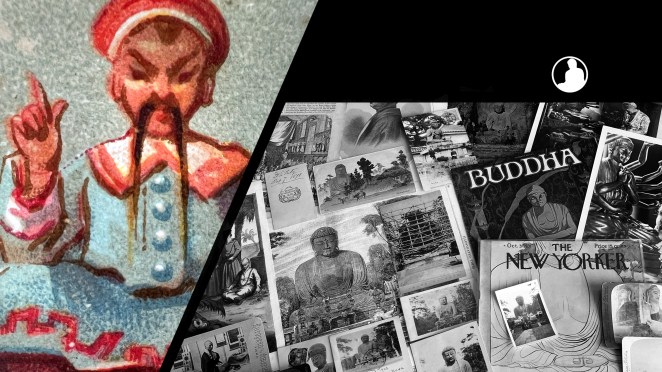
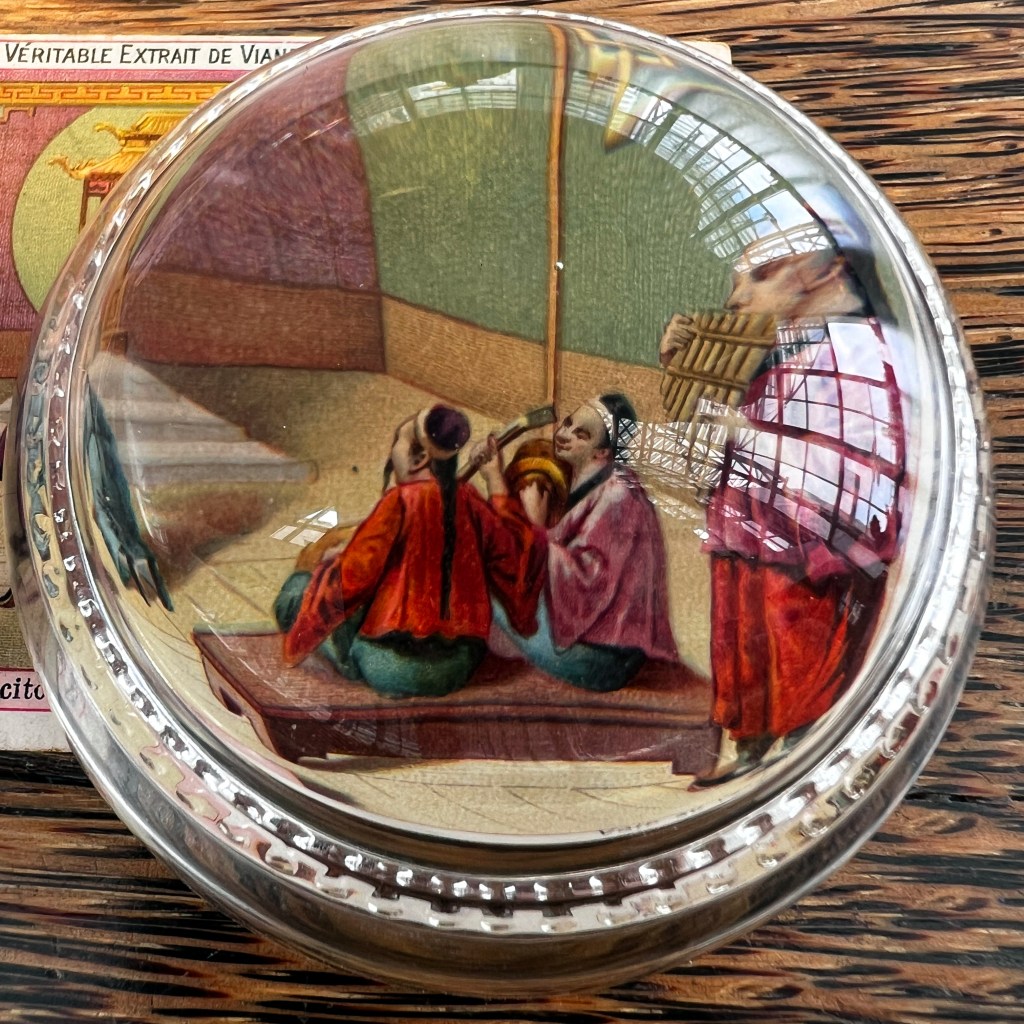
Gods of Antiquity: In the early age of black and white mass market publications, chromolithography ushered in a new era of visual media. From massive broadside to Victorian trade cards, vibrant color was the future and the British Liebig company capitalized on this market.

Liebig started producing trade cards in 1872 and by the turn of the century their cards were printed in several languages. Several different sets were made each year and these sets soon became collector’s items, predating hobbies such as baseball card collecting.

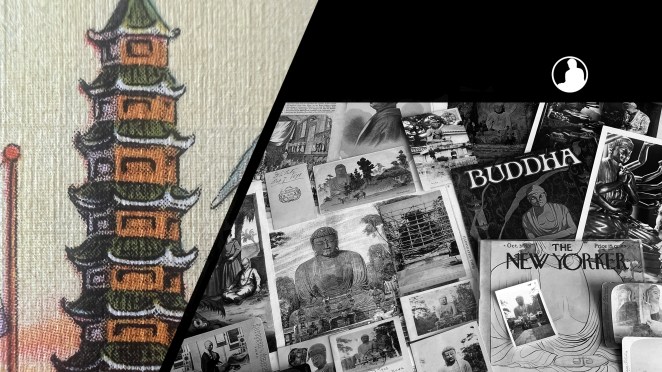
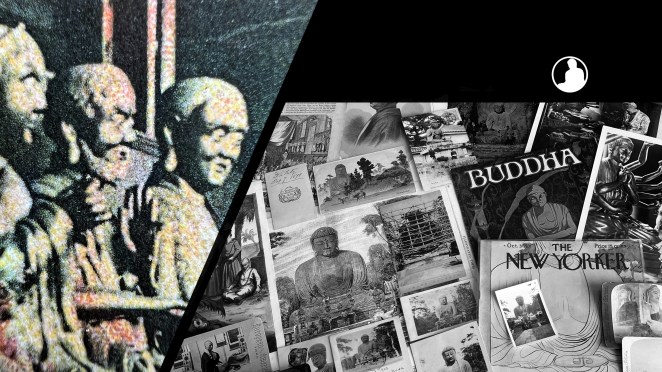
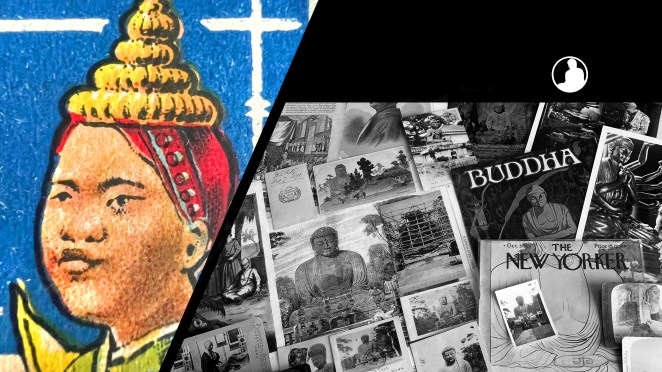
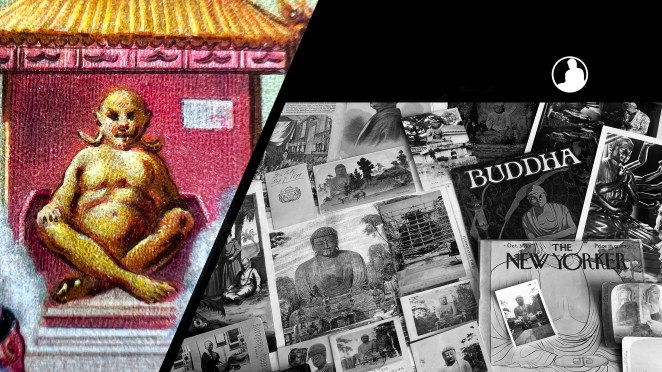
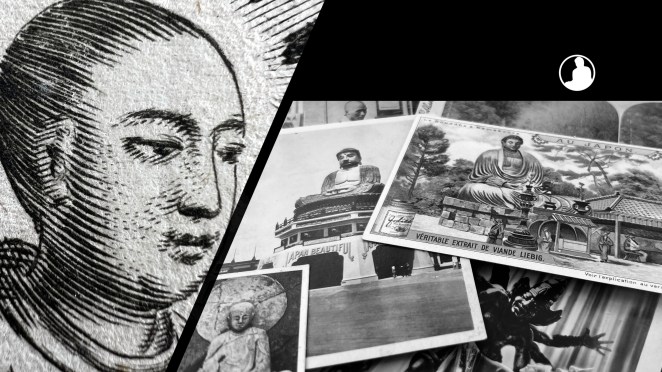
In 1895 Liebig released the Gods of Antiquity set, with the card here showing the worship of the Buddha by “Chinese nobles.” The scene is mostly a hodge-podge of turn of the century Chinese stereotypes.

A gold Buddha, sitting awkwardly with legs crossed, takes center stage in this imaginary temple scene.

Chinese Buddhist rituals use instruments, but not of the kind depicted here.

For a short introduction to the Liebig Company’s trade cards by Princeton University’s Firestone Library, follow this link: https://tinyurl.com/3nzvs6mh.


The Buddhas in the West Material Archive is a digital scholarship project that catalogues artifacts depicting Buddhist material culture for Western audiences. It’s comprised of prints, photos, and an assortment of ephemera and other objects. For a brief introduction to this archive, visit the main Buddhas in the West project page.


For Related Buddhas in the West Posts Featuring China:


For the Most Recent Buddhas in the West Posts:
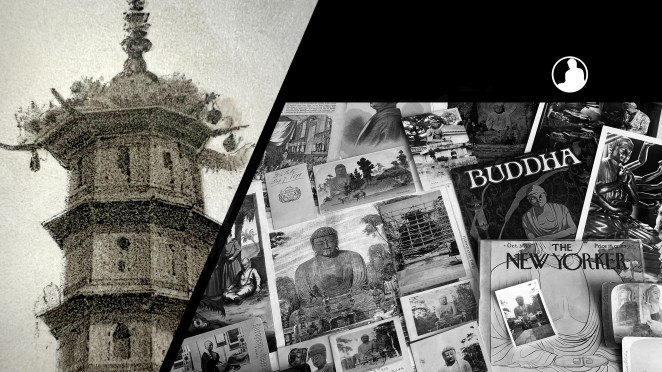

Pierre Dieulefils’ Angkor Wat Buddhapada Postcard

For all the new Buddhas in the West posts
follow us on Bluesky & Instagram


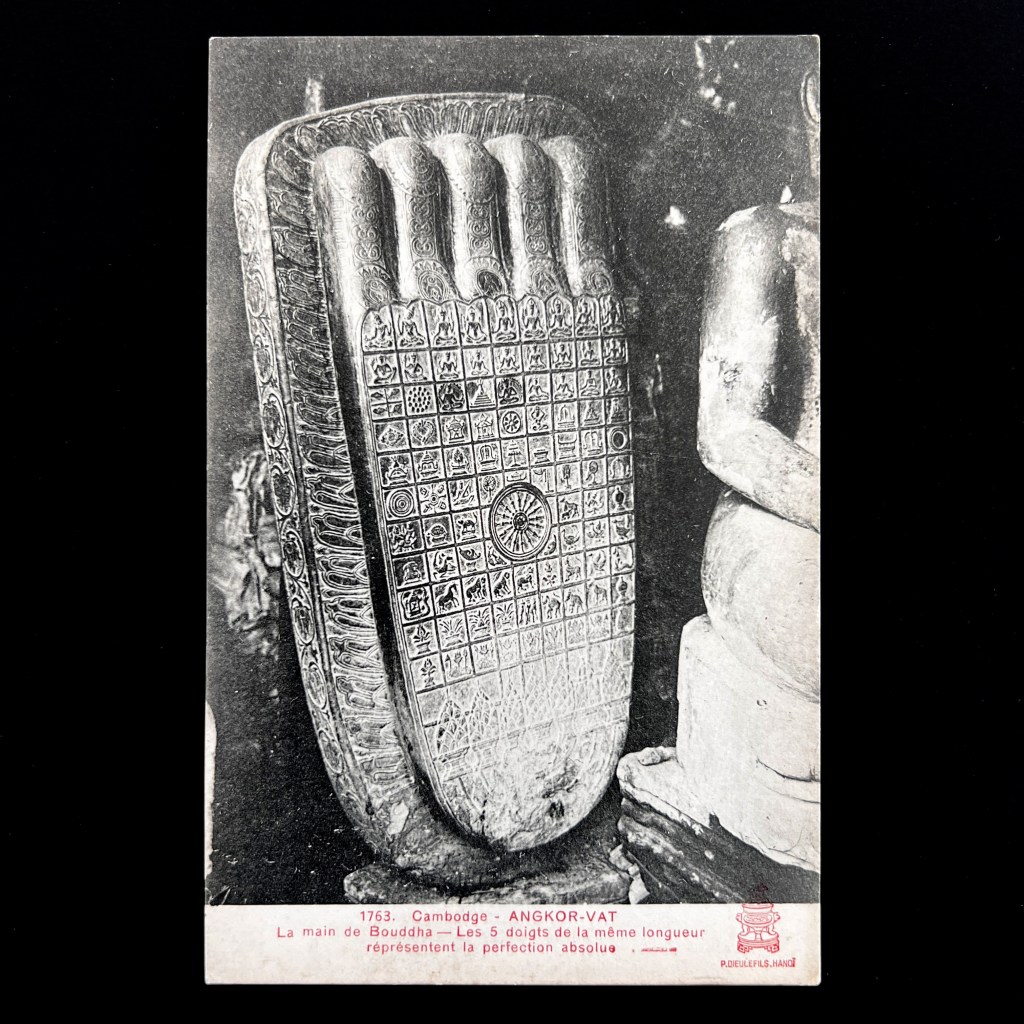
Pierre Dieulefils arrived in Vietnam as part of the French military forces in 1885 and opened a photography studio in Hanoi three years later. In anticipation of the great Exposition coloniale de Marseille, Dieulefils toured Cambodia in 1905 to take photographs of Angkor Wat.

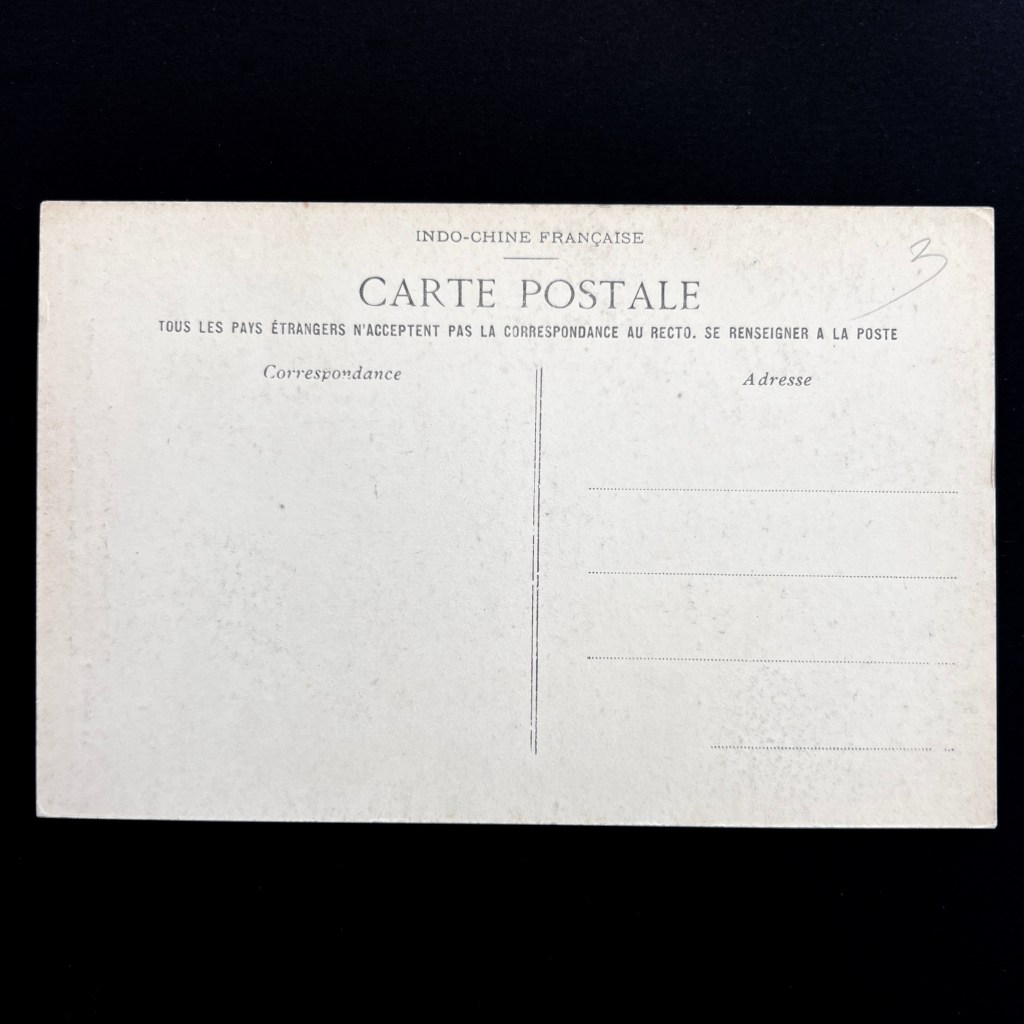
These images of Angkor Wat formed part of his thriving postcard business, driven in part by French officers sending cards home to France. The 1905 print run of cards is known as the red series for the red ink used on the obverse.

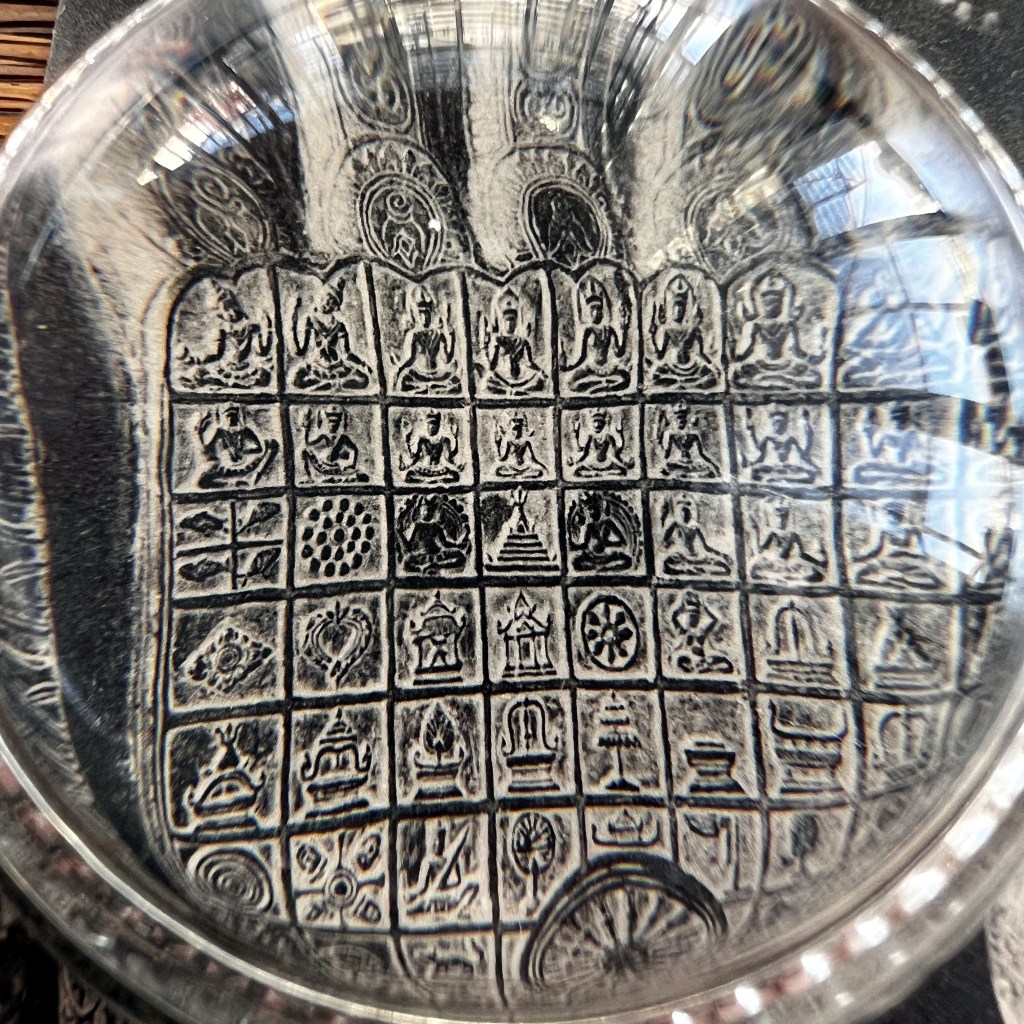
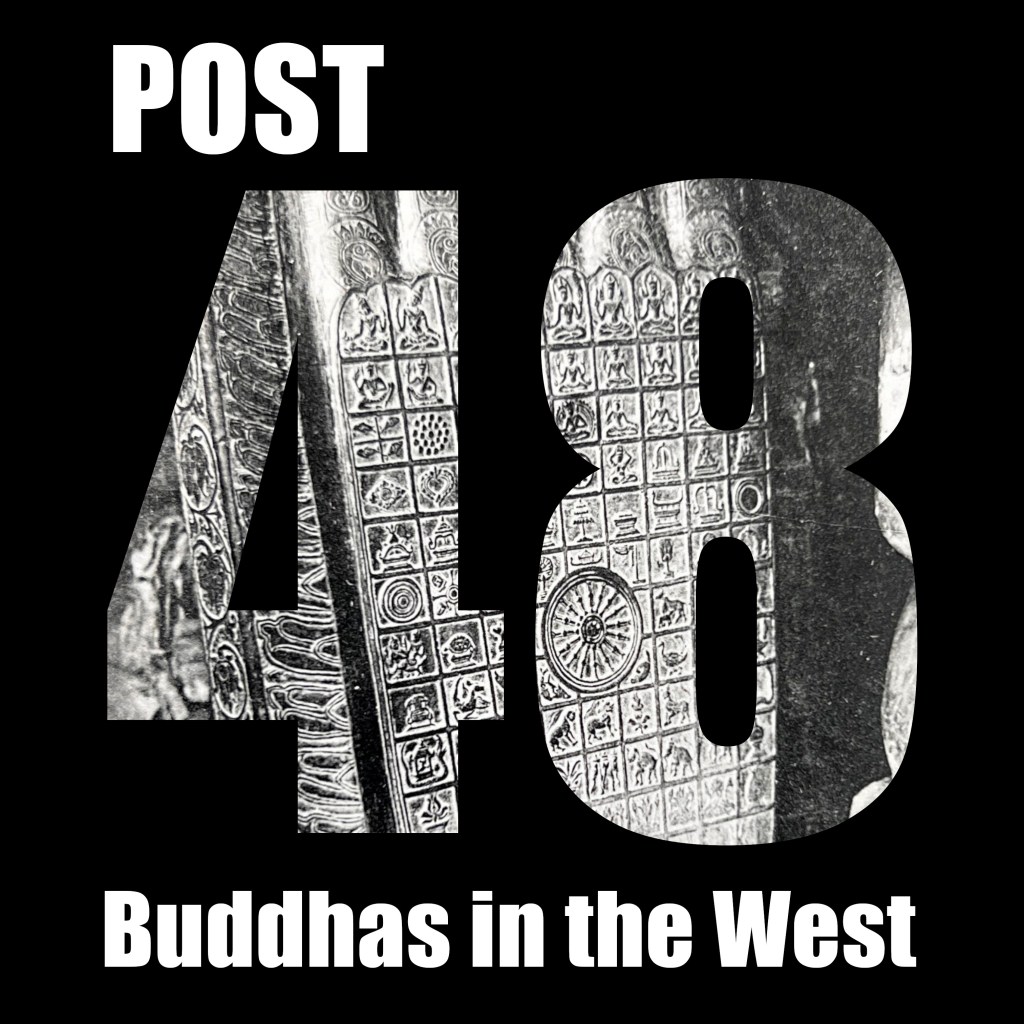
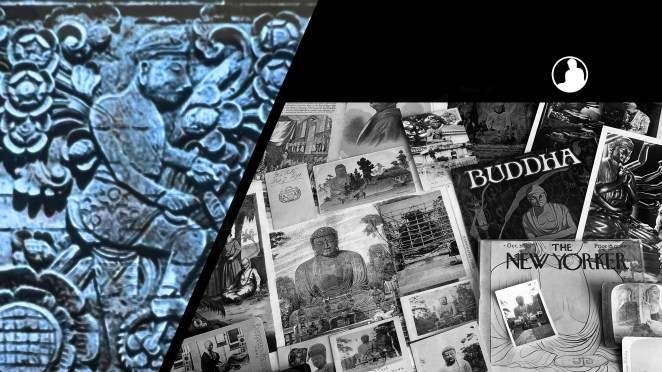
One of the objects Dieulefils photographed was this large sculptural footprint of the Buddha. Images of the Buddha’s footprints, called buddhapada, hint at his past presence and are considered venerated relics.

The buddhapada is often depicted with special characteristics, including 108 emblems of auspiciousness. The wheel of the Dharma is most commonly placed at the center of the sole.

This carving, weighing three tons, remained at Angkor Wat from the 14th century until 1985. In 2022 it was put on display at the Preah Norodom Sihanouk-Angkor Museum in Siam-reap, Cambodia.


The Buddhas in the West Material Archive is a digital scholarship project that catalogues artifacts depicting Buddhist material culture for Western audiences. It’s comprised of prints, photos, and an assortment of ephemera and other objects. For a brief introduction to this archive, visit the main Buddhas in the West project page.


For Related Buddhas in the West Posts Featuring Pierre Dieulefils’ Postcards:


For the Most Recent Buddhas in the West Posts:
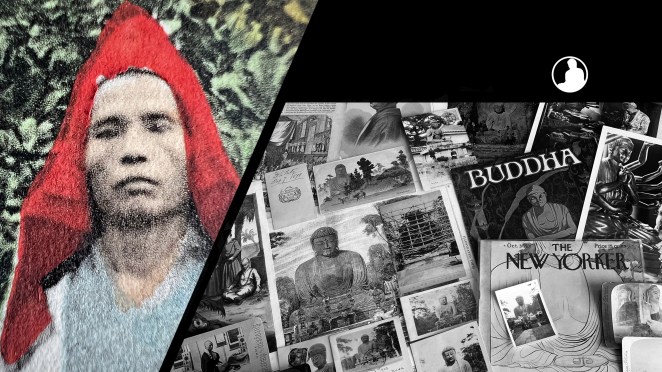

Marguerite Courtot c. 1920 Studio Portrait

For all the new Buddhas in the West posts
follow us on Bluesky & Instagram


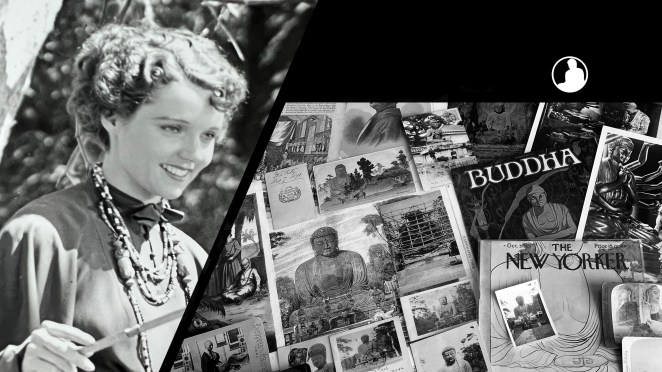
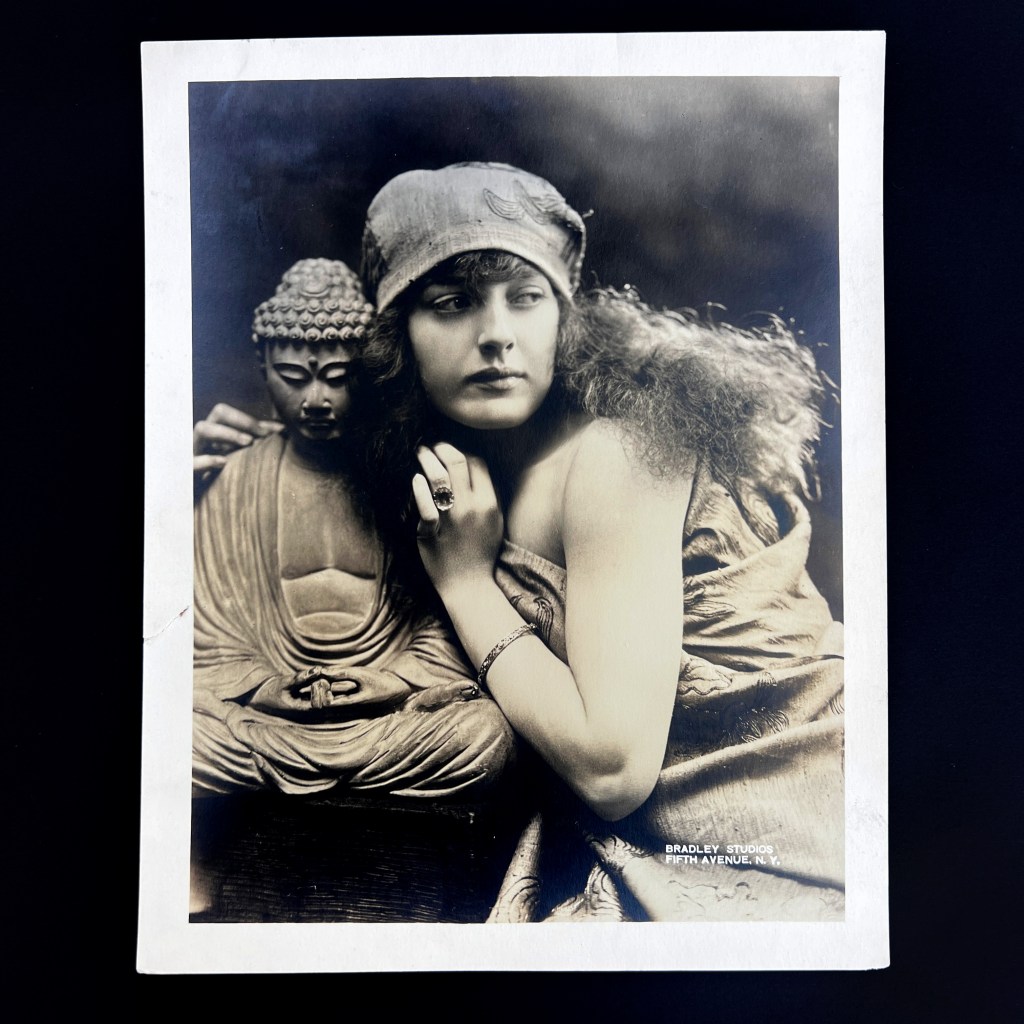
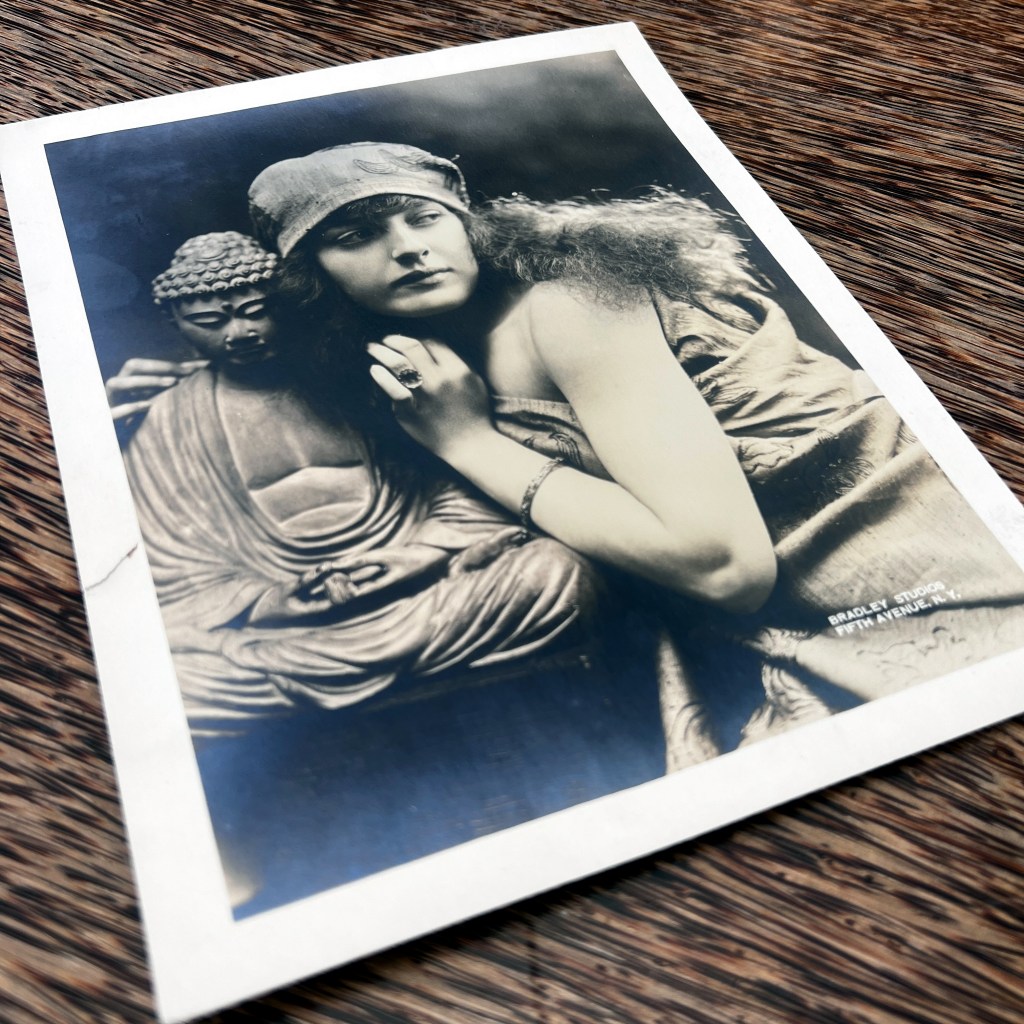
Silent film star Marguerite Courtot joined Pathé after WWI and became a centerpiece in the studio’s action-adventure serials. She starred in Pirate Gold (1920), Velvet Fingers(1920) and The Yellow Arm (1921), with the latter being a stereotypical “Yellow Menace” adventure.

This photo does not appear to be a production still (a movie set photo), but a studio portrait taken in New York City. The portrait dates to around 1920 when the silent film industry was still centered in Fort Lee, New Jersey.

Courtout grasps on to the Buddha statue using a dramatic stage gesture, a relic of the theater age that was adopted in early film. While The Yellow Arm serial is considered lost, it is possible this was a cast portrait used in promoting the film.

Short written synopses survive for several of the Yellow Arm episodes as copyright claims. The synopsis for episode one is held by the Library of Congress, viewable here: https://www.loc.gov/item/s1229l16612/.


The Buddhas in the West Material Archive is a digital scholarship project that catalogues artifacts depicting Buddhist material culture for Western audiences. It’s comprised of prints, photos, and an assortment of ephemera and other objects. For a brief introduction to this archive, visit the main Buddhas in the West project page.


For Related Buddhas in the West Posts Featuring Silent Films:


For the Most Recent Buddhas in the West Posts:
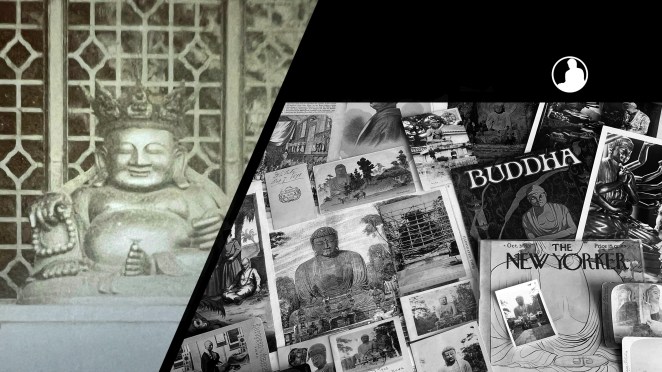

Anna Eva Faye’s Śiva Mascot Token

For all the new Buddhas in the West posts
follow us on Bluesky & Instagram


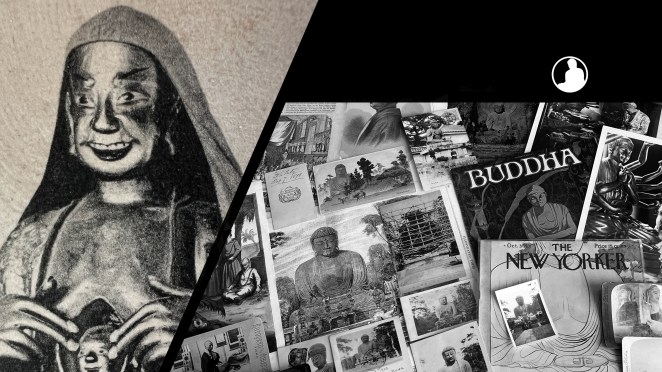
A rather unique mixture of religion, science, and stage magic was playing out on the Vaudeville circuit at the end of the 19th century. Anna Eva Faye, billed as the “Indescribable Phenomenon,” played to full houses with her other-worldly displays of mentalism.

As a souvenir of her show and a token of good luck (the generic sense of “mascot”), Faye sold coins bearing the image of the multi-armed Indian icon Śiva. The AEF below the figure refers to Anna Eva Faye.

The reverse bears a wreath (common to US coins of the era) enclosing the magic letters: AYX-7OD-77O. The coin reflects how the religious import of Śiva is funneled into larger American beliefs in occult power during this period.

This souvenir coin shows a decent amount of rub wear. This suggests the coin was a trusty good luck companion for someone in the past. The coin is about the size of a US quarter.

For a curated list of old newspaper articles about Anna Eva Faye, see the offering presented by the Library of Congress here: https://tinyurl.com/3jhkjsze.


The Buddhas in the West Material Archive is a digital scholarship project that catalogues artifacts depicting Buddhist material culture for Western audiences. It’s comprised of prints, photos, and an assortment of ephemera and other objects. For a brief introduction to this archive, visit the main Buddhas in the West project page.


For Related Buddhas in the West Posts Featuring Historical Advertising:


For the Most Recent Buddhas in the West Posts:

Albumen Photograph of Sanjūsangen-dō Kannon

For all the new Buddhas in the West posts
follow us on Bluesky & Instagram


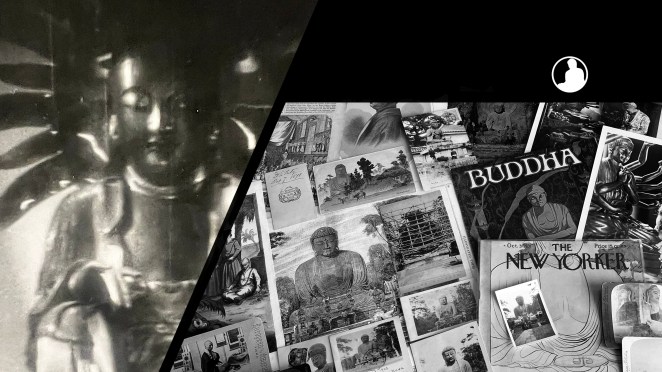
For visitors to Japan in the 1860s, Kyoto was seen as brimming with dangerous anti-foreign samurai. This changed in the 1870s when it was transformed by tourism, driven in part by foreign photography studios who were allowed to shoot the city for the 1872 Kyoto Exposition.

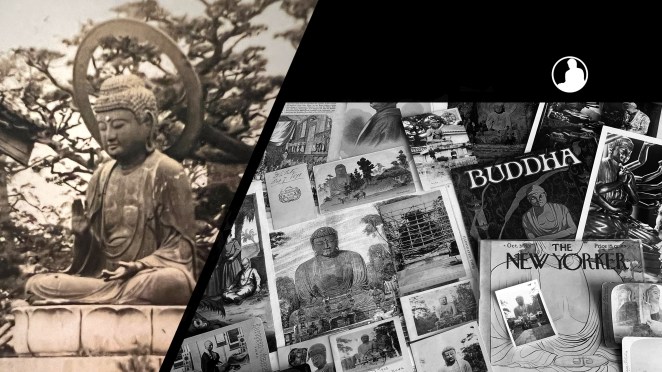
While Europeans knew of Kyoto’s Sanjūsangen-dō through late 17th century book engravings, the first photographs of the temple likely did not circulate until the early 1870s. This albumen print is by an unknown commercial photographer and likely dates to the 1880s.

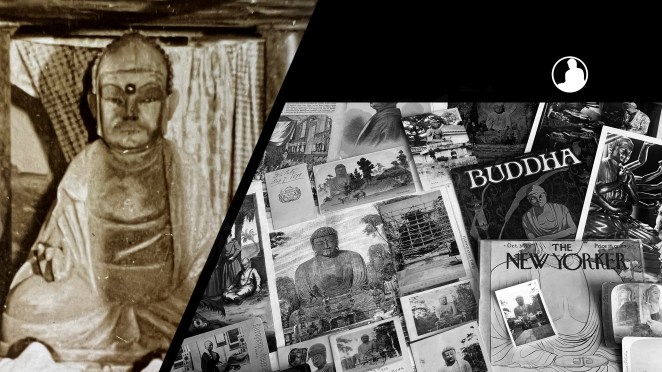
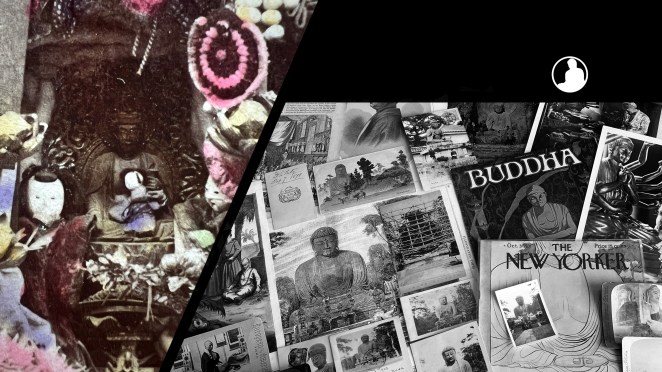
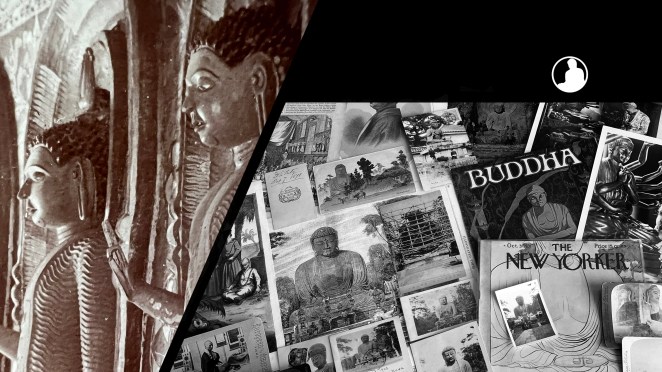
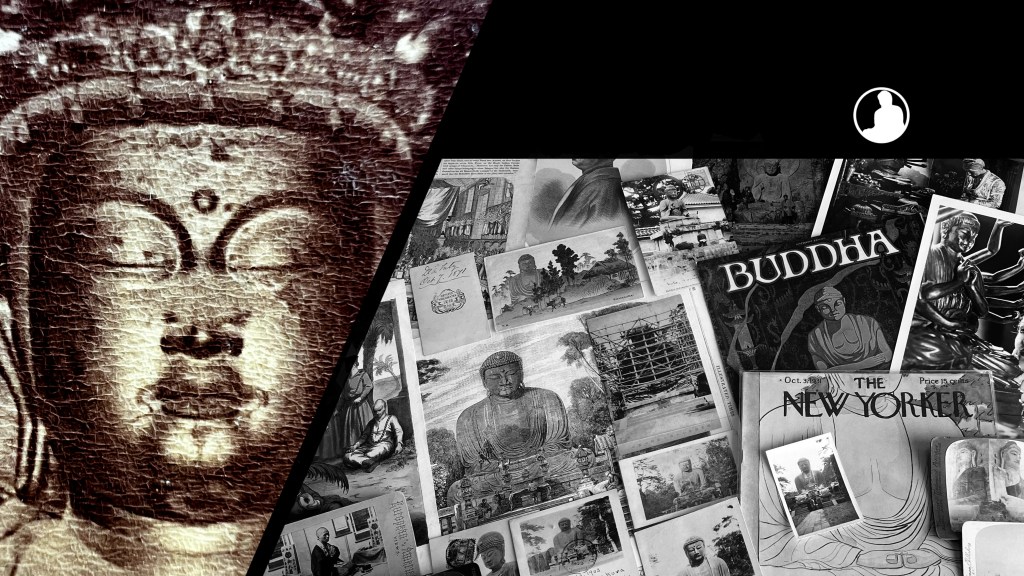
The central icon is a Thousand-armed Kannon from the 13th century and is recognized as a National Treasure of Japan.

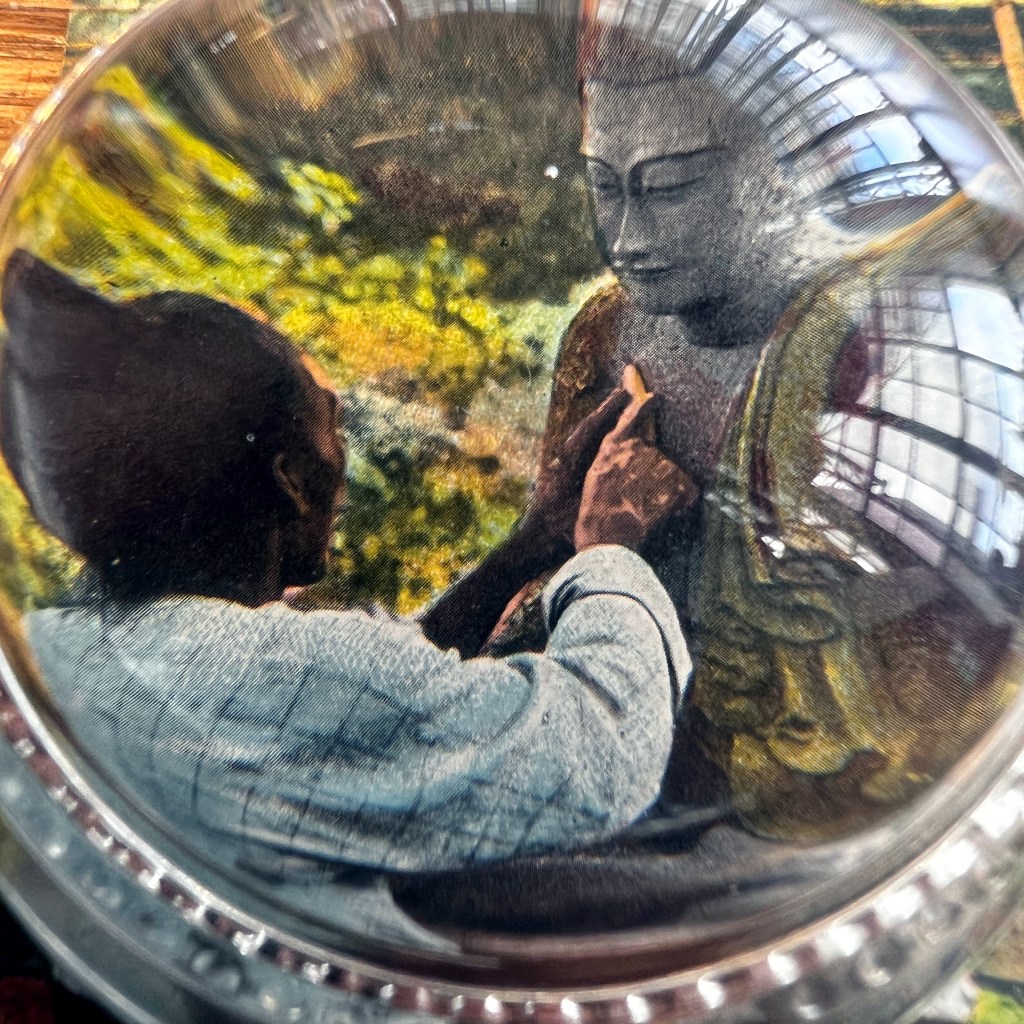
There appears to be a double exposure in this photograph, with a priest kneeling in front of the icon. The colorist gave the priest’s robes a wash of blue, but the paint did not cover over the woodwork designs of the altar.

Baron von Stillfried was among the foreign studio owners who photographed Kyoto in 1872. One of his albums, with views of Kyoto, can be seen through the Metropolitan Museum of Art here: https://tinyurl.com/yuuf52u9.


The Buddhas in the West Material Archive is a digital scholarship project that catalogues artifacts depicting Buddhist material culture for Western audiences. It’s comprised of prints, photos, and an assortment of ephemera and other objects. For a brief introduction to this archive, visit the main Buddhas in the West project page.


For Related Buddhas in the West Posts Featuring Kyoto, Japan:


For the Most Recent Buddhas in the West Posts:
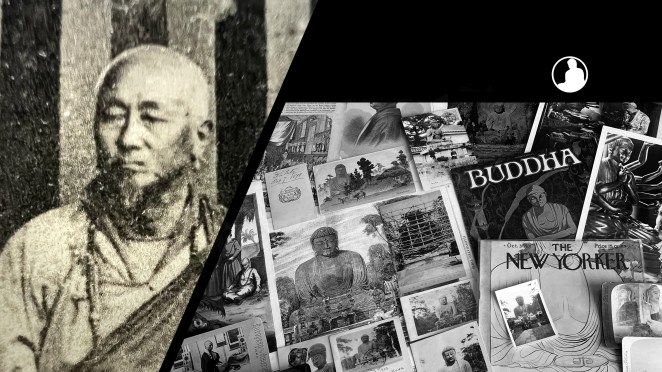

D.A. Ahuja’s Idol Maker Postcard

For all the new Buddhas in the West posts
follow us on Bluesky & Instagram


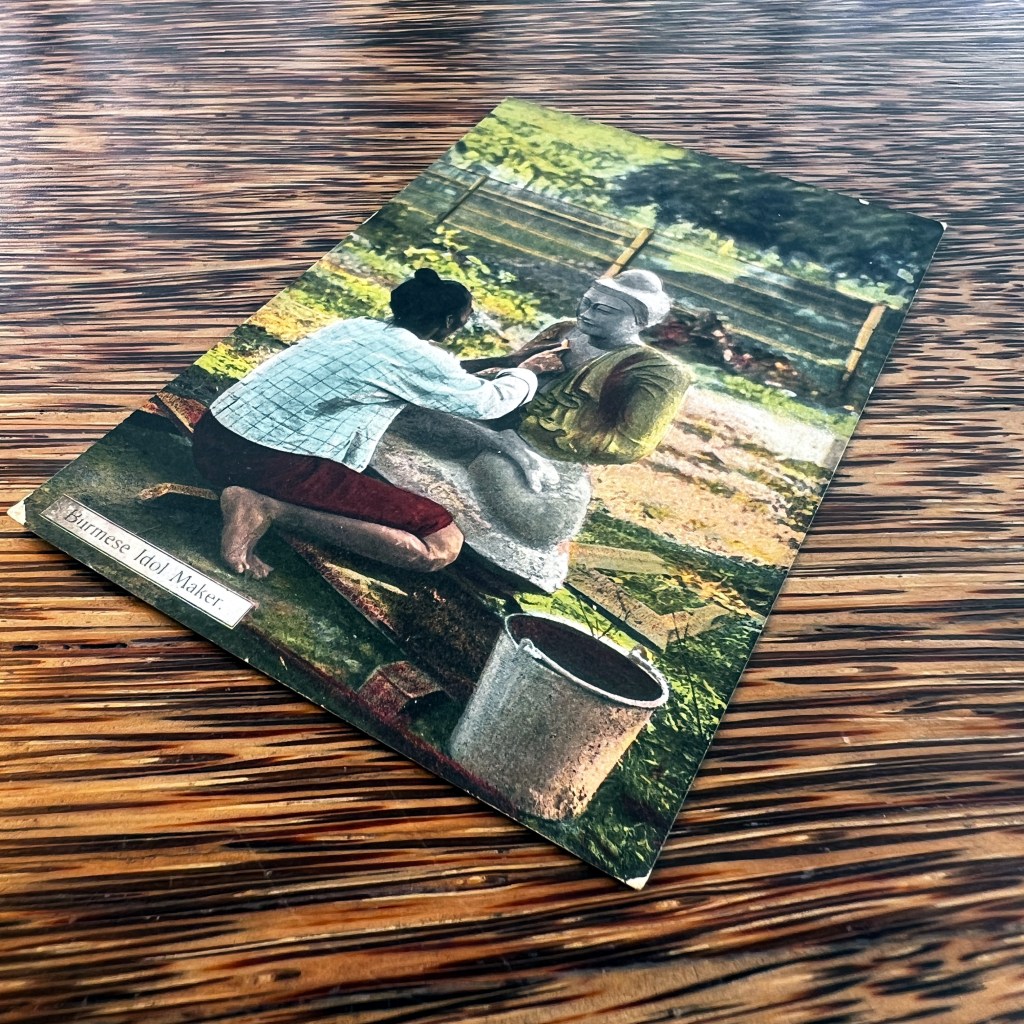
As new imagery of British colonial Burma circulated in the early 20th century, one trade received heightened interest: idol carving. The marble quarries north of Mandalay provided sufficient raw materials for the local carving industry centered around the village of Sagyin.

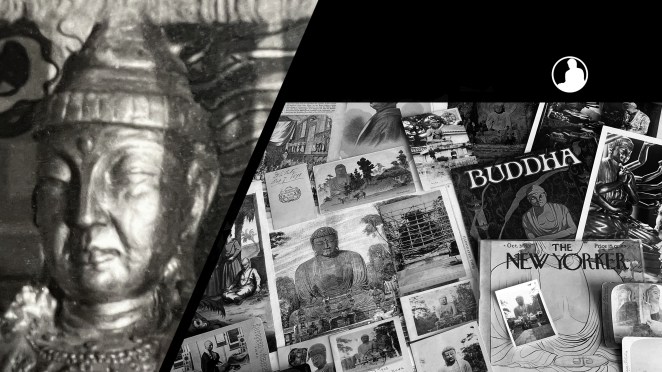
An active stone-workers’ quarter in Mandalay meant foreign travelers could encounter Burmese carvers working on Buddhist statuary. This postcard by D.A. Ahuja captures the crafting of a Mandalay-style marble Buddha, with thick garment folds and a band around the head.

The card reveals a lithographic-halftone hybrid process, whereby a black halftone screen was applied on top of a multi-color lithographic substrate. The reverse design suggests this card was printed around 1910.

Burmese white marble has been fashioned into Buddhist statuary since the Konbaung Dynasty (1752–1885). The trade continues in and around Sagyin and Mandalay today.

For further info on the history of Burmese marble carving and the early spread of Burmese Buddhas into China, see Deng, Beiyin. “Reimagining a Buddhist Cosmopolis: Conveying Marble Buddhas from Burma to China, 1890s-1930s.” Journal of Global Buddhism 24, no. 1 (2023): 25–46.


The Buddhas in the West Material Archive is a digital scholarship project that catalogues artifacts depicting Buddhist material culture for Western audiences. It’s comprised of prints, photos, and an assortment of ephemera and other objects. For a brief introduction to this archive, visit the main Buddhas in the West project page.


For Related Buddhas in the West Posts Featuring Myanmar / Burma:


For the Most Recent Buddhas in the West Posts:
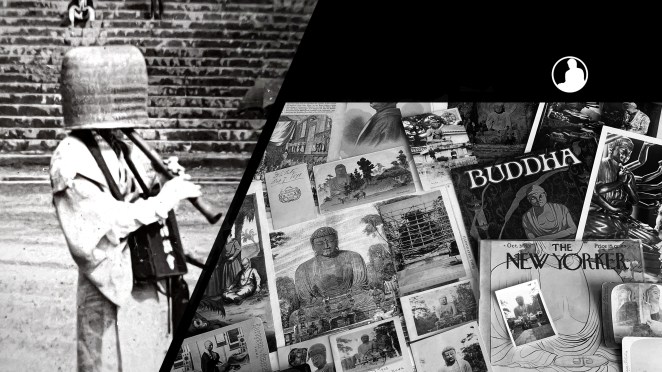

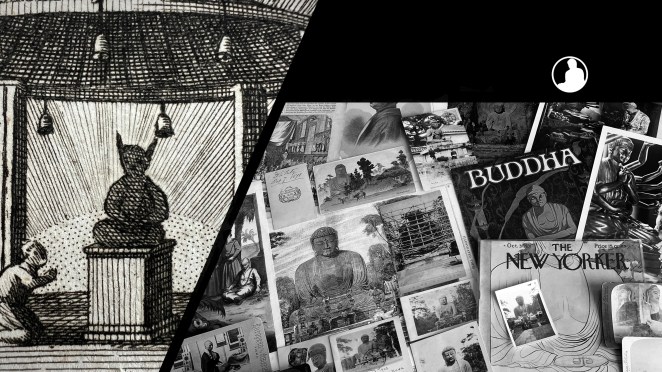
Thomas Allom’s Sticks of Fate Engraving

For all the new Buddhas in the West posts
follow us on Bluesky & Instagram


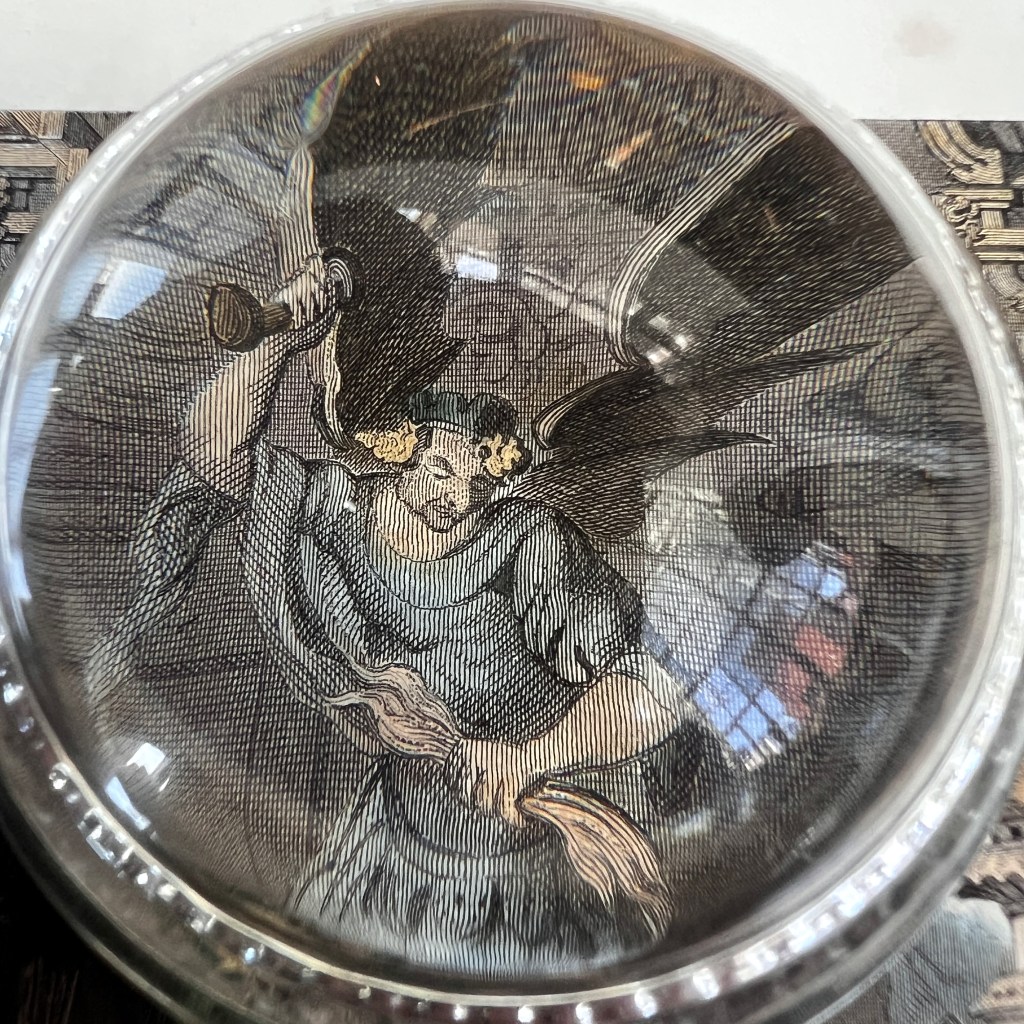
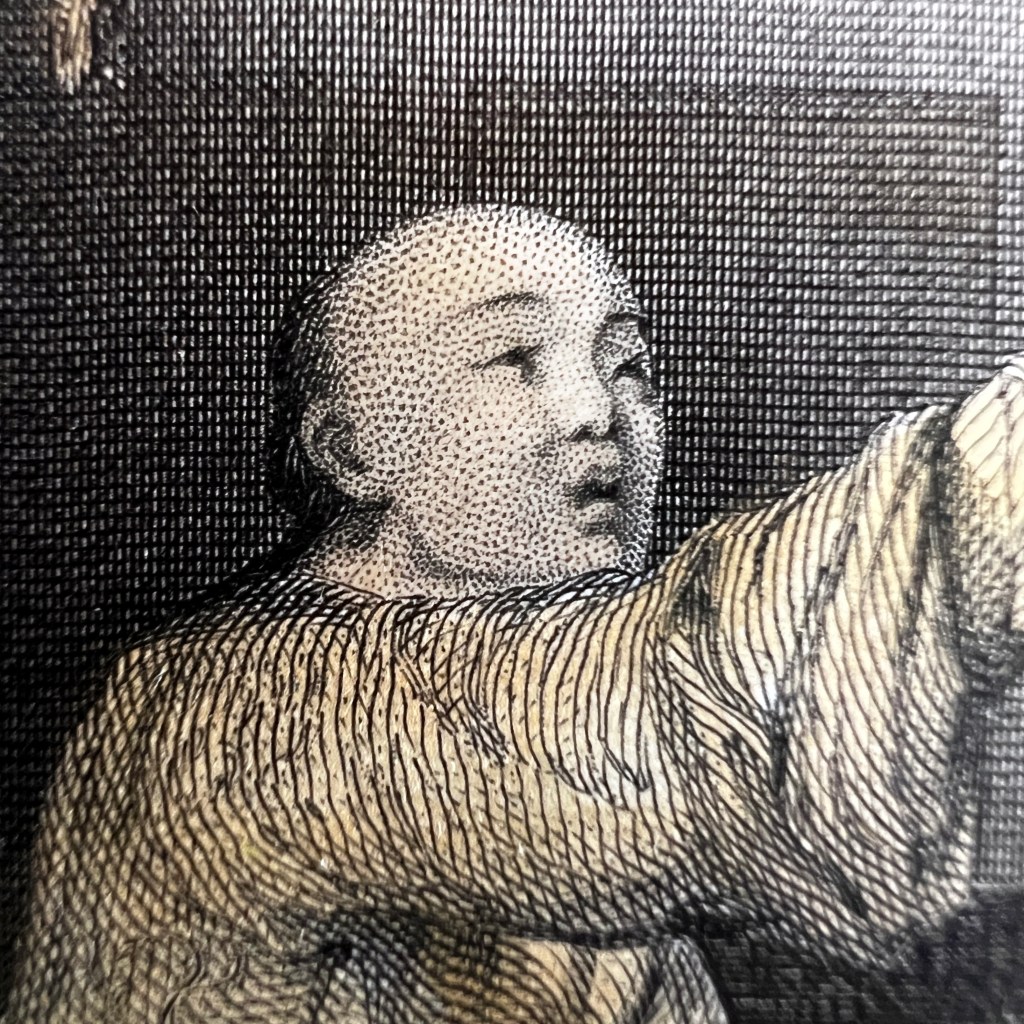
Having never traveled to China, Thomas Allom’s illustrations retain a touch of the fantastic common among his European pictorial predecessors. After the end of the Opium War in 1842 there was renewed interest in China and Allom’s book was among the first to serve this audience.

The text for China: In a Series of Views was composed by Rev. George Wright. He commonly portrayed the Chinese as inferior and infatuated with bizarre customs, reflecting a growing sentiment among Europeans after the Opium War.

A trained illustrator, Allom prepared watercolor paintings and had them engraved for his books. While some paintings were copies of earlier works by others, including those in the British military stationed in China, this illustration appears to be the creation of Allom.

Overall, Allom creates a dynamic image showing a commonplace Chinese temple practice of fortune telling. Some elements, however, appear out of place.

The New York Public Library has digitized Allom’s works on China with a layout of all his engraved illustrations viewable here: https://tinyurl.com/3b74hu7m.


The Buddhas in the West Material Archive is a digital scholarship project that catalogues artifacts depicting Buddhist material culture for Western audiences. It’s comprised of prints, photos, and an assortment of ephemera and other objects. For a brief introduction to this archive, visit the main Buddhas in the West project page.


For Related Buddhas in the West Posts Featuring China:


For the Most Recent Buddhas in the West Posts:
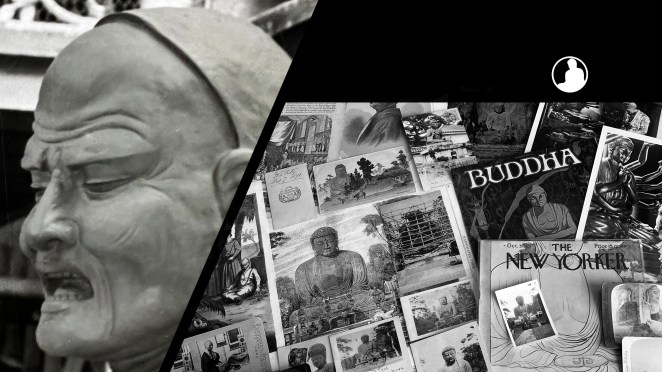

Daibutsu and Tour Group Glass Lantern Slide

For all the new Buddhas in the West posts
follow us on Bluesky & Instagram


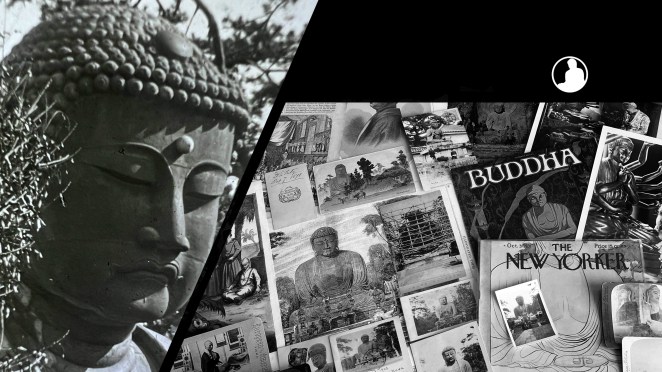
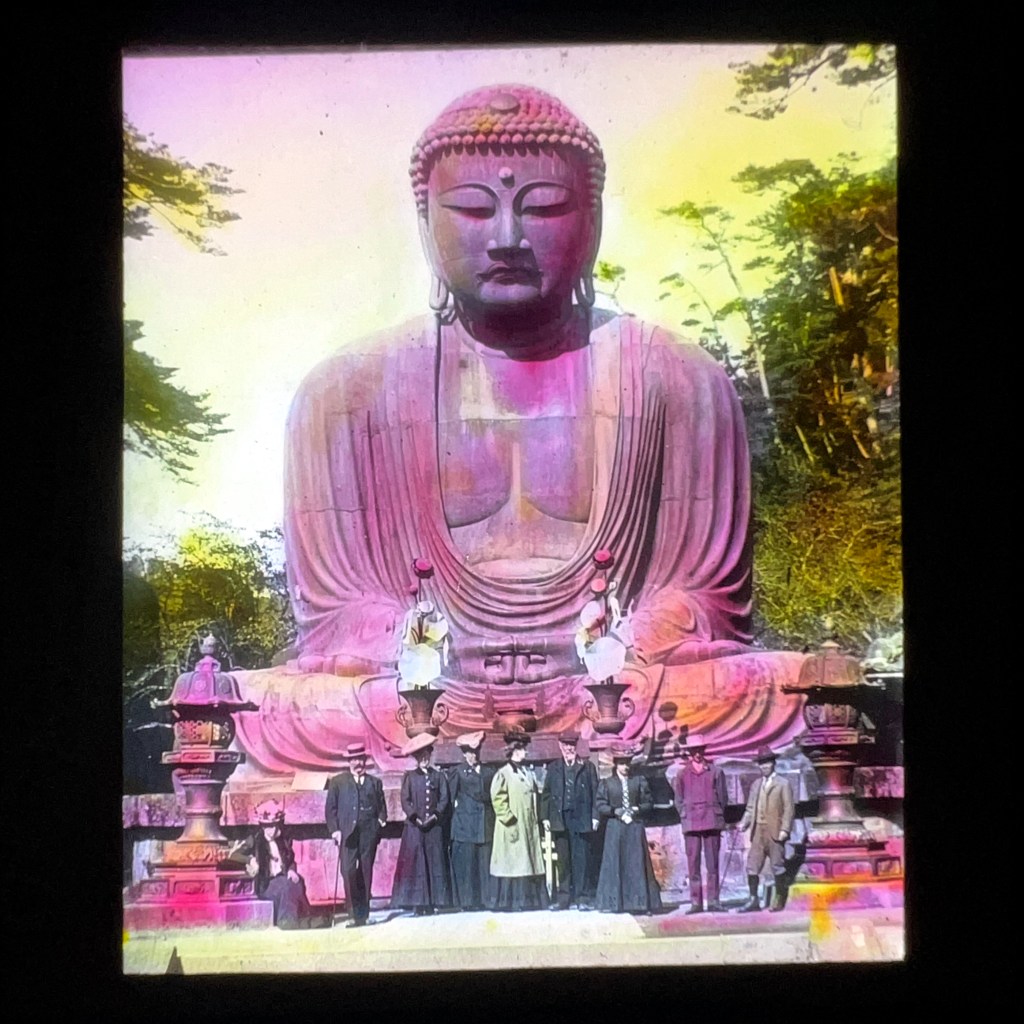
In the pre-film era, magic lantern slides were a part of popular entertainment alongside panoramas and mechanical theaters. Many amateur lecturers who returned from a trip would book a church hall or town theater to show slides illustrating their personal travel narrative.

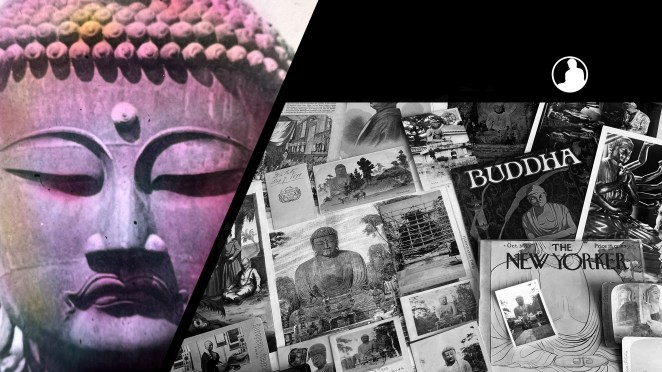
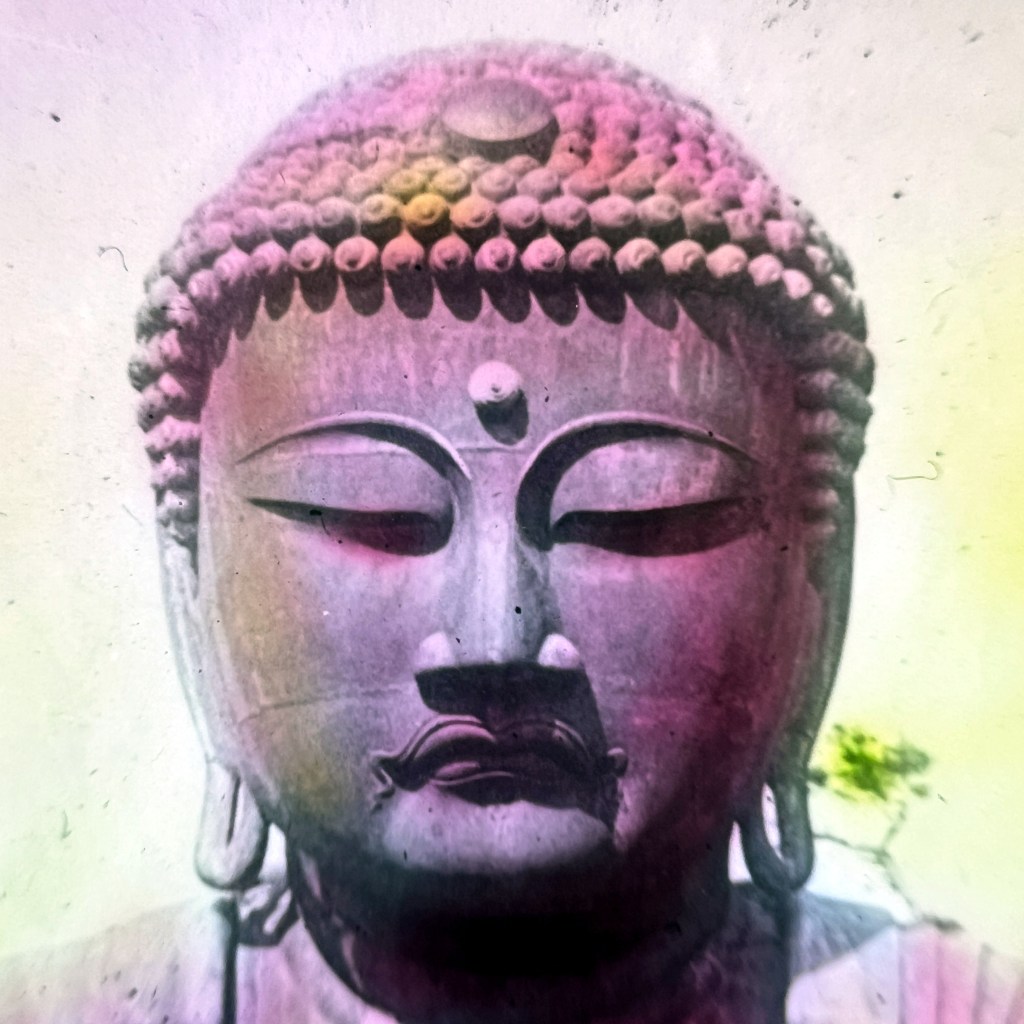
While photos and postcards were shared with friends in the home, glass lantern slides were also intended for showy public display. Consequently, glass slides were often hand-painted in eye-catching color; here we see the bronze Kamakura Daibutsu in uncharacteristic magenta.

Two pieces of glass, one of which bears the positive photographic print, sandwich the image to keep it safe from scratches and debris. Unlike the exemplar here, the publisher would often print their name on the matting around the image.

Based on the layout of the Daibutsu grounds, this photo was taken around 1910.

The University of Hawaii at Manoa has a large collection of slides as part of their Japan Collection, viewable here: https://tinyurl.com/8hdvfzad


The Buddhas in the West Material Archive is a digital scholarship project that catalogues artifacts depicting Buddhist material culture for Western audiences. It’s comprised of prints, photos, and an assortment of ephemera and other objects. For a brief introduction to this archive, visit the main Buddhas in the West project page.


For Related Buddhas in the West Posts Featuring Historical Glass Lantern Slides:

For the Most Recent Buddhas in the West Posts: