Henry Strohmeyer’s Jizō Statues Stereoview

For all the new Buddhas in the West posts
follow us on Bluesky & Instagram


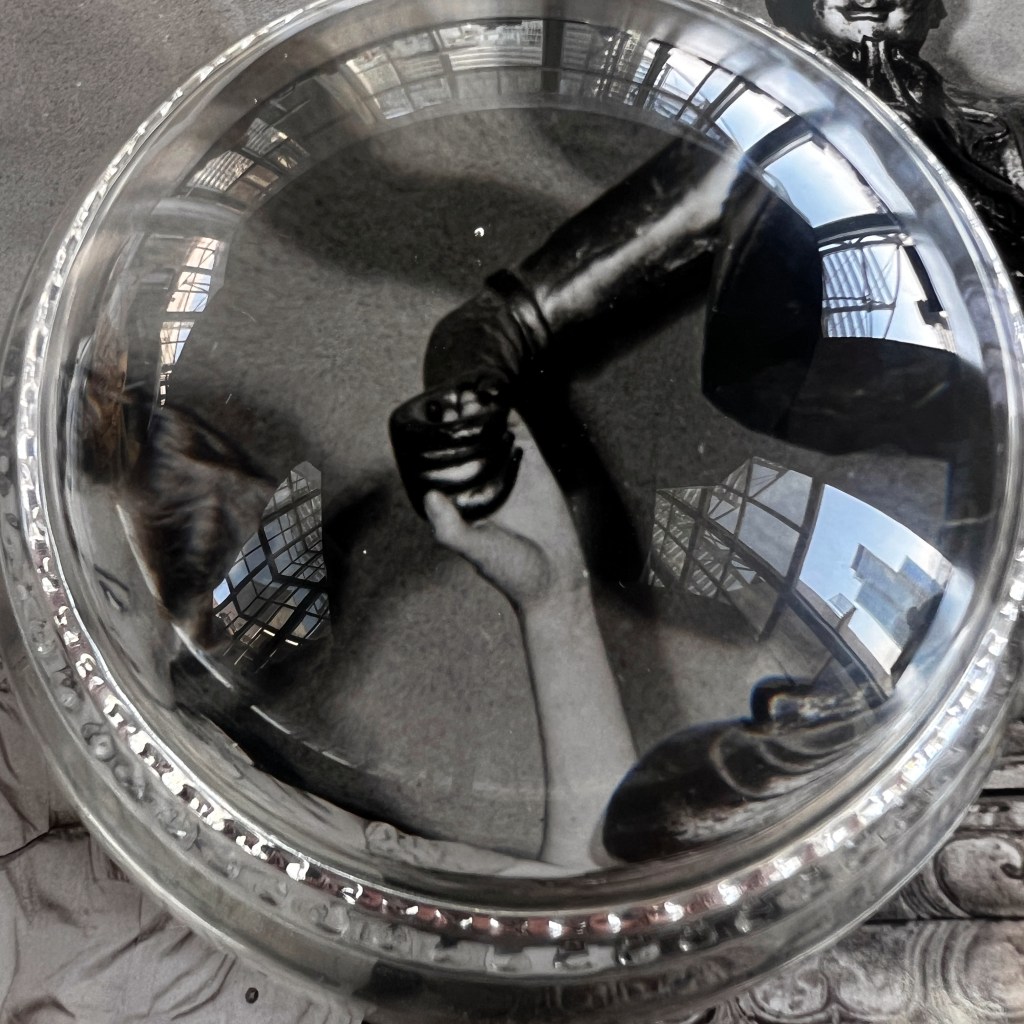
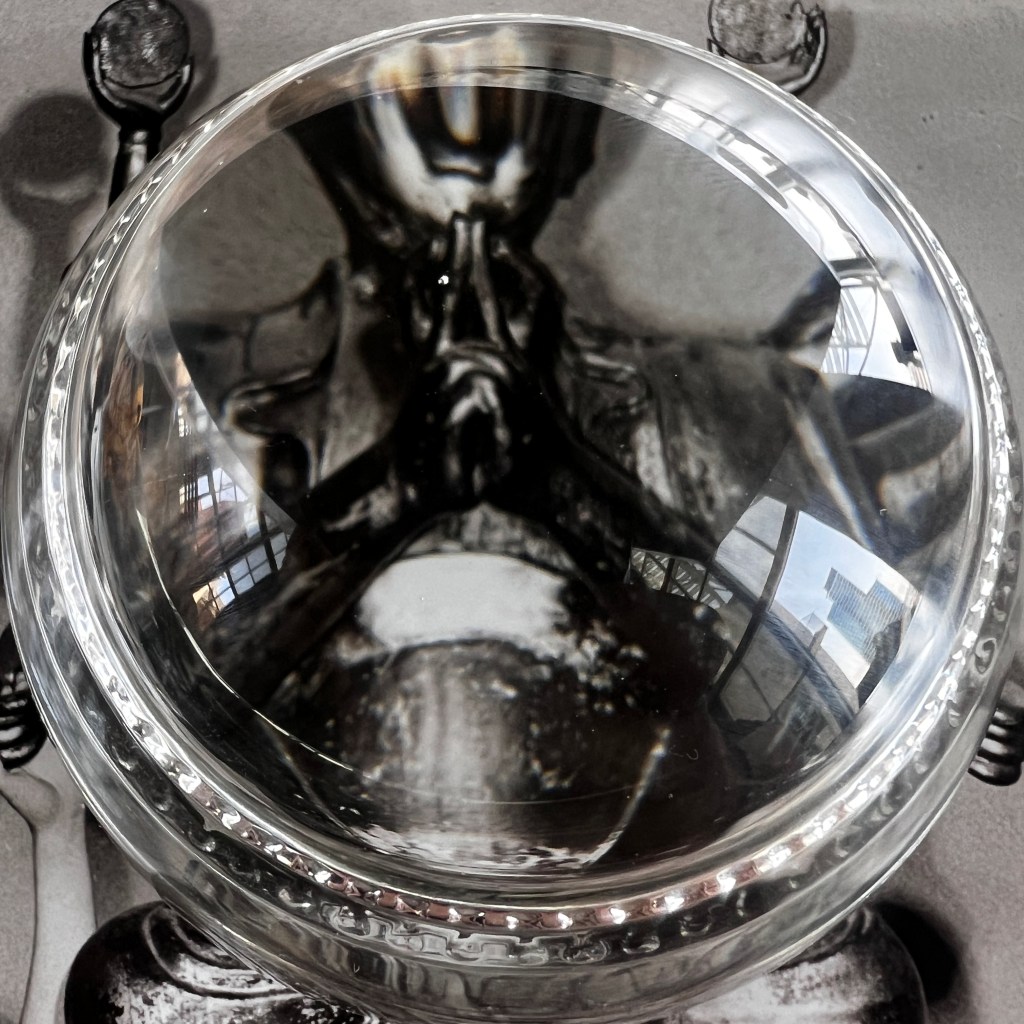
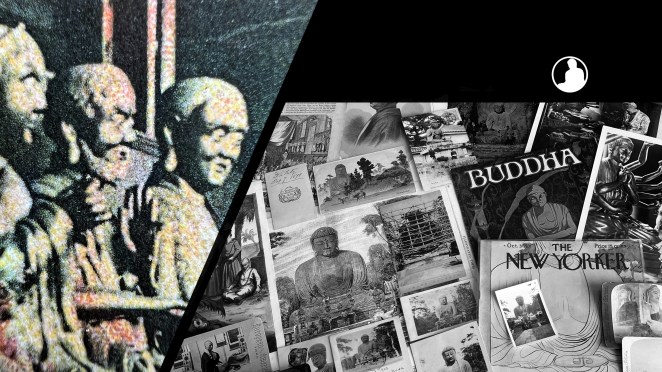
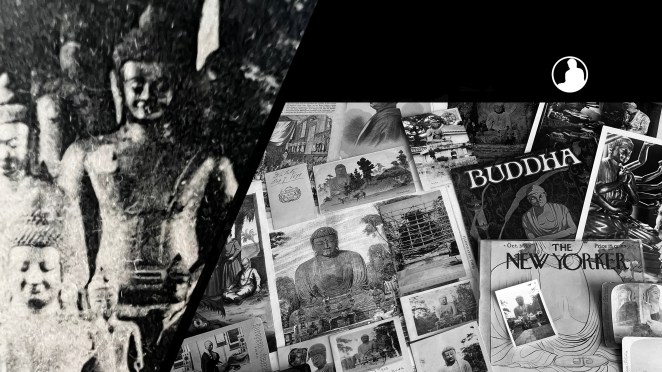
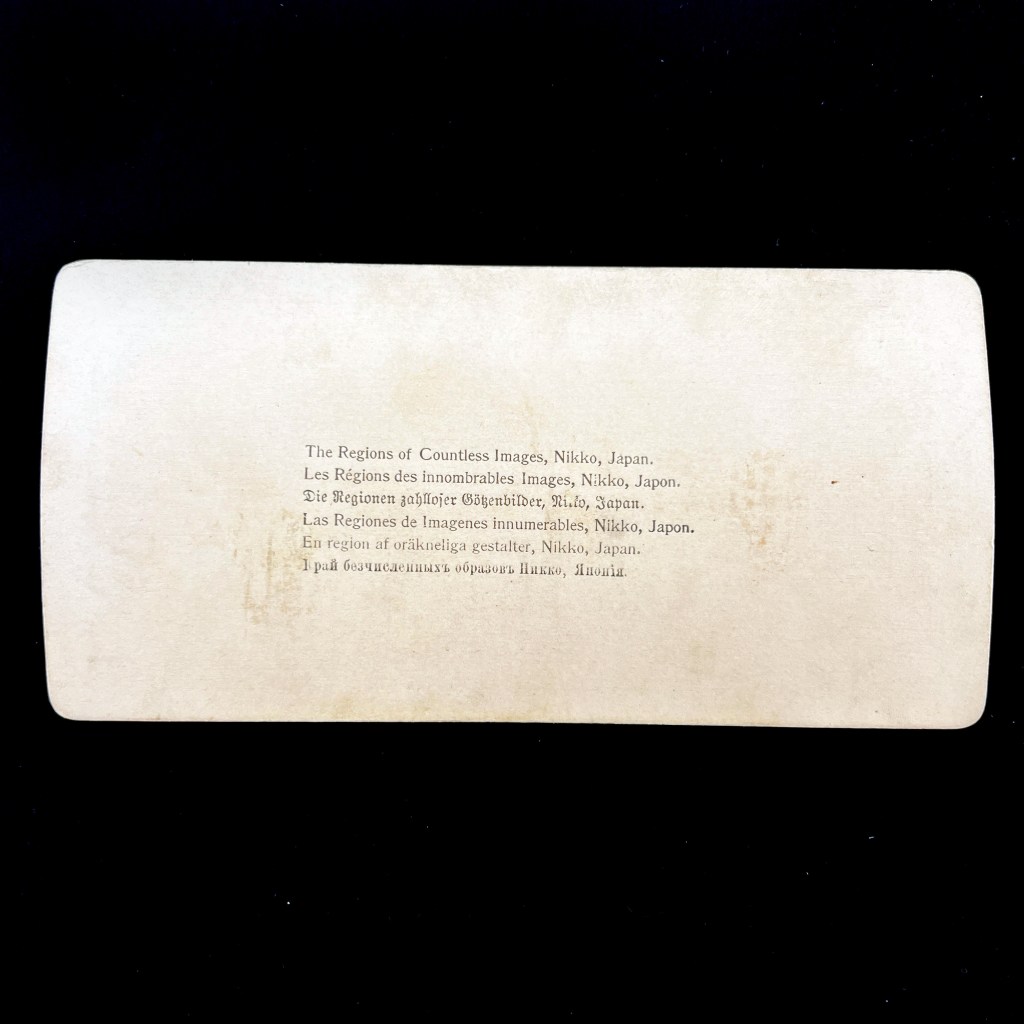
Countless Jizō: Tourist books from the early 20th century say no person could count the same number of Jizō statues in Nikko, Japan. In early 1896, Henry Strohmeyer left for an around-the-world tour and took this stereoscopic image; he left no report on how many he counted.
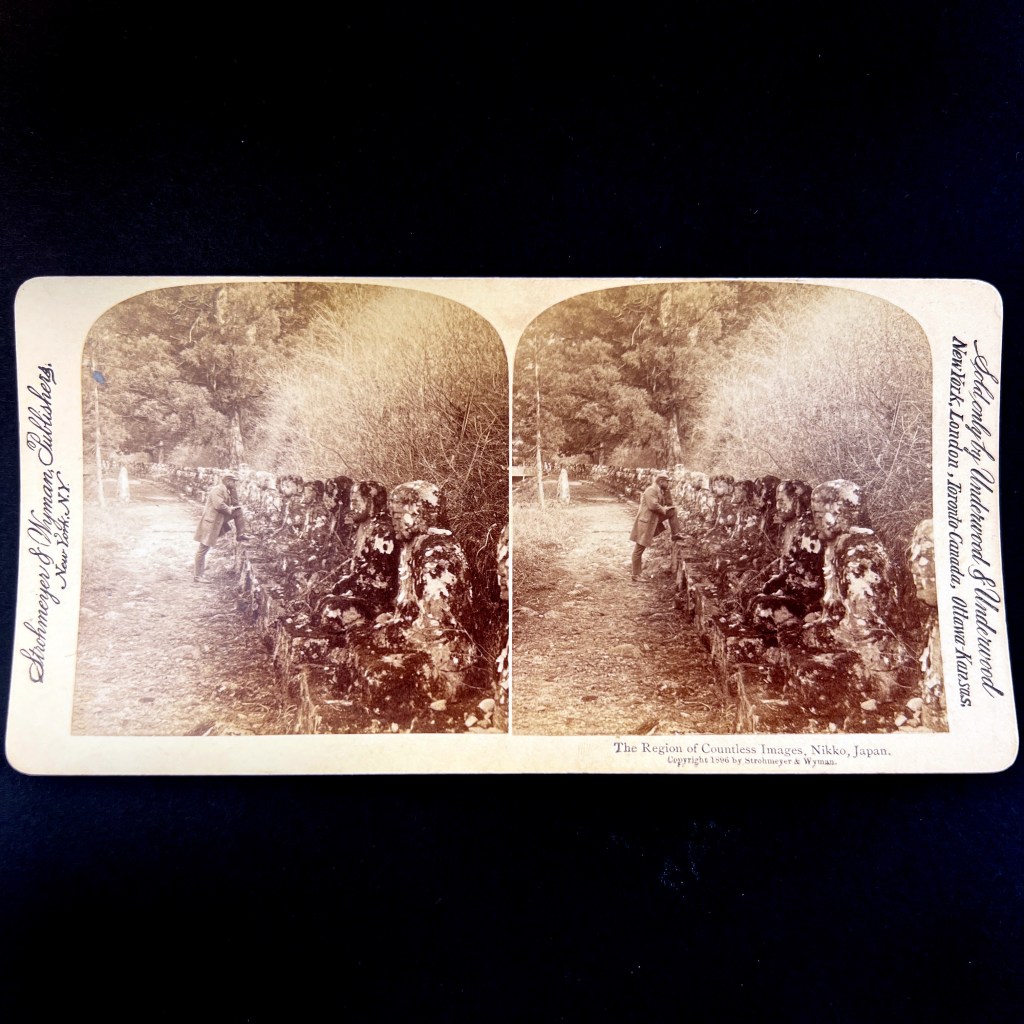
A dual-photograph stereoview card produces a single three-dimensional image when using a simple handheld device fashioned with special lenses (first invented by Oliver Wendell Holmes).

This was fashionable – and cutting edge – parlor room entertainment at the end of the nineteenth century for many American homes.

It provided people with the means for virtual reality travel and stereoviews were soon marketed to schools for educational purposes.
This card is a rare instance of where the cultural voyeurism is broken and we see a man in Western attire. It is believed this is Strohmeyer himself – a stereoscopic selfie.

For an insightful online illustrated essay on Strohmeyer’s impact on travel photography, see the exhibit by Tulane University here: https://tinyurl.com/5n7a28kf.


The Buddhas in the West Material Archive is a digital scholarship project that catalogues artifacts depicting Buddhist material culture for Western audiences. It’s comprised of prints, photos, and an assortment of ephemera and other objects. For a brief introduction to this archive, visit the main Buddhas in the West project page.


For Related Buddhas in the West Posts Featuring Historical Stereophotography:

For the Most Recent Buddhas in the West Posts:


Andrew Marton’s Storm Over Tibet (1952) Icon

For all the new Buddhas in the West posts
follow us on Bluesky & Instagram


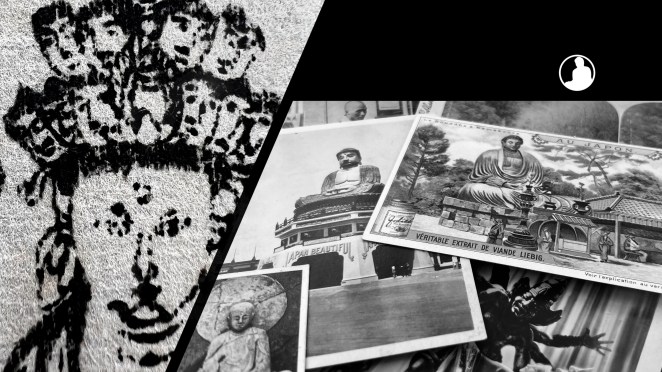
Buddhist Demon of Shangri-la: Andrew Marton’s 1952 film, Storm over Tibet, utilizes Buddhist material culture to drive the Cold War horror-fantasy narrative. Filmed in part at Lamayuru in Ladakh, a cursed cham dance mask is a surrogate for the menacing antagonist.

Storm Over Tibet was a remake of Marton’s pre-war German-Swiss film Demon of the Himalayas from 1935. For both films Marton used documentary footage from the 1934 International Himalayan Expedition. Some of the same footage also was used for Columbia’s Lost Horizon in 1937.

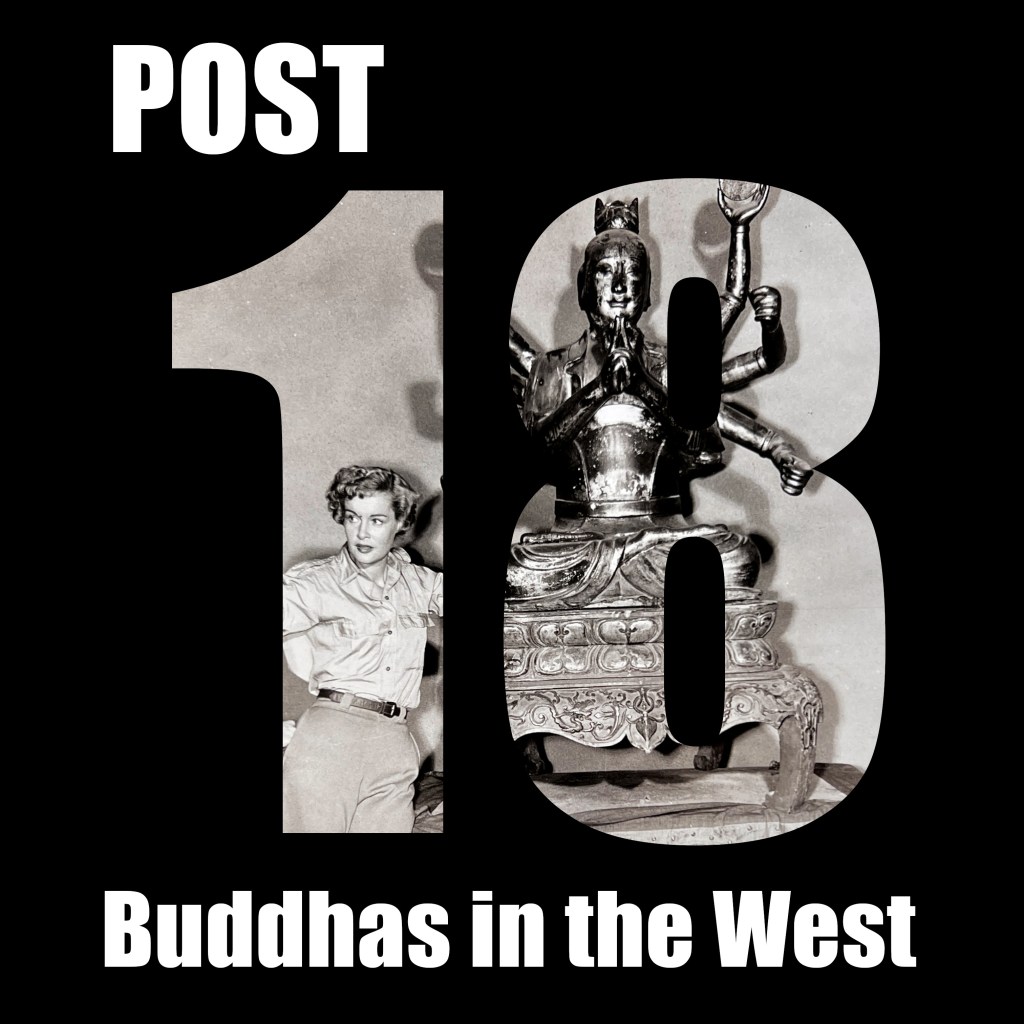
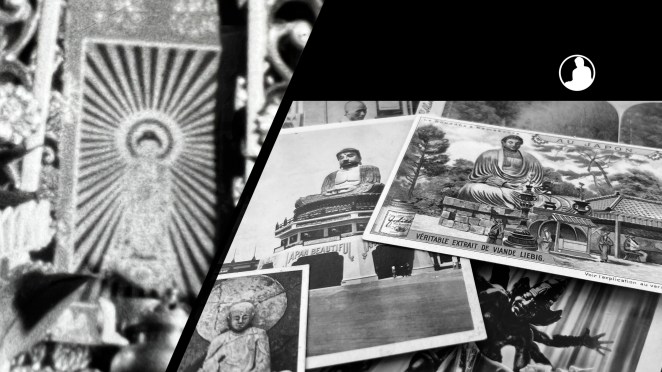
The co-lead, Diana Douglas, holds the hand of a Buddhist statue owed by the prop department of Columbia Pictures. It appears to be an image of Cundī. While large Asian statuary was oftentimes created by studio prop departments, this appears as if it was an authentic, yet incomplete, Buddhist artifact. [Update: This is the Daoist stellar deity Doumu, related to the Buddhist Cundī]

Marton’s 1935 German film, Demon of the Himalayas, incorporating on-location footage is available on the Internet Archive, viewable here: https://tinyurl.com/253rhr48.


The Buddhas in the West Material Archive is a digital scholarship project that catalogues artifacts depicting Buddhist material culture for Western audiences. It’s comprised of prints, photos, and an assortment of ephemera and other objects. For a brief introduction to this archive, visit the main Buddhas in the West project page.


For Related Buddhas in the West Posts Featuring Historical Film Photography:


For the Most Recent Buddhas in the West Posts:

D.A. Ahuja’s Arakan Mahāmuni Postcard

For all the new Buddhas in the West posts
follow us on Bluesky & Instagram


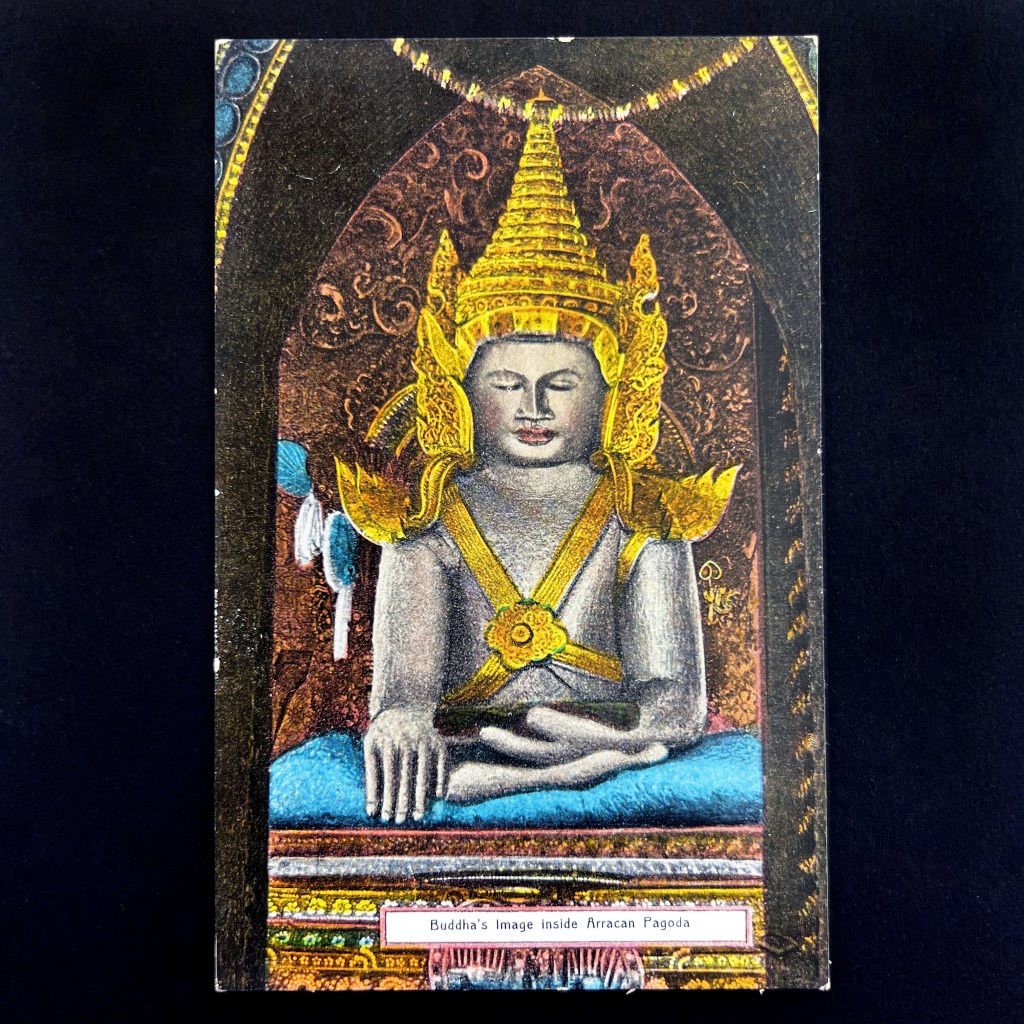
An image consecrated by the Buddha himself? The Mahāmuni image is among the most venerated in Burma. According to myth, the statue was cast during the lifetime of the Buddha and was “enlivened” to act as counsel to kings in the Buddha’s absence.

Originating in the coastal region of Arakan, the statue was moved to Upper Burma, into present-day Mandalay, at the turn of the 19th century.

The colorful postcard is a German lithographic-halftone print published by D. A. Ahuja circa 1910. Postcards emerged as highly valued souvenirs during the period of British colonial rule and helped spread knowledge of Buddhist material culture into the West.

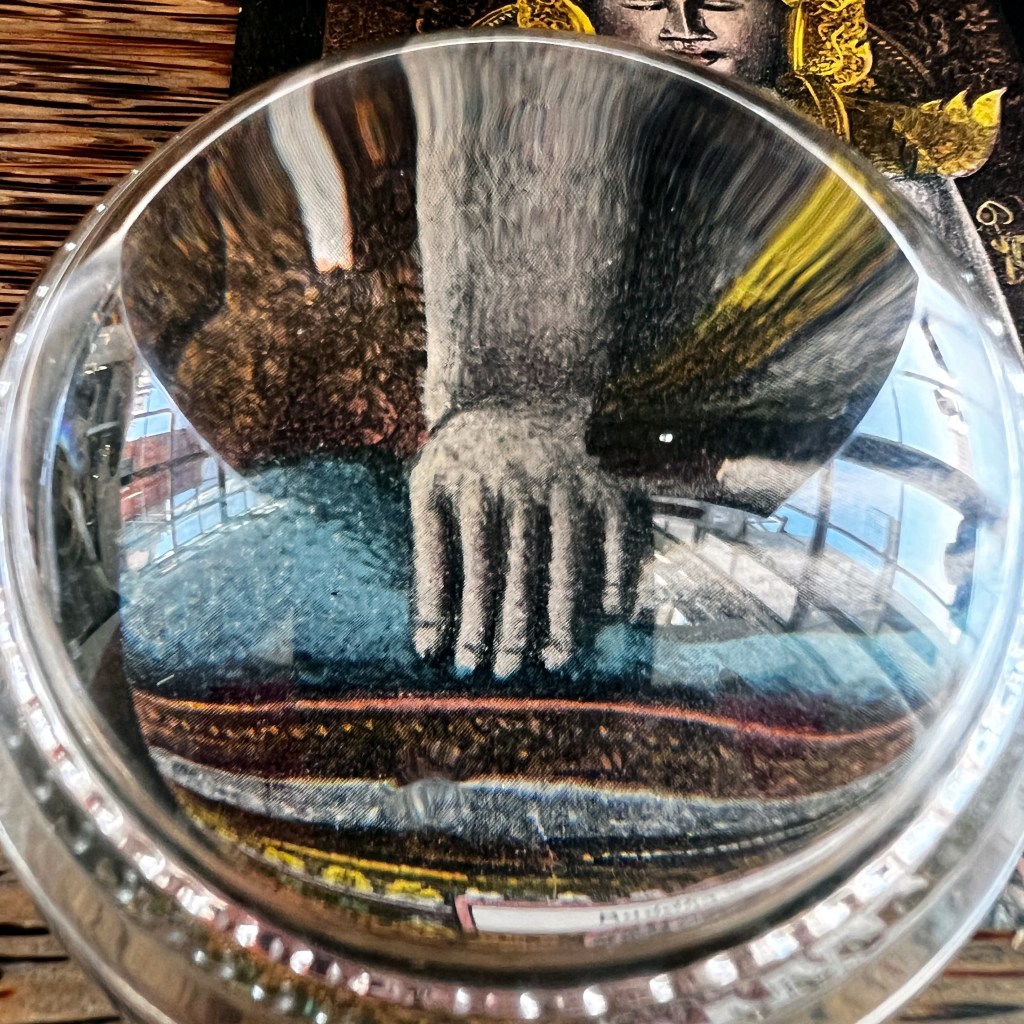
The brass statue depicts the moment when the Buddha calls upon the earth to testify to his generosity and to defeat Mara; this is symbolized by his right hand touching the ground.

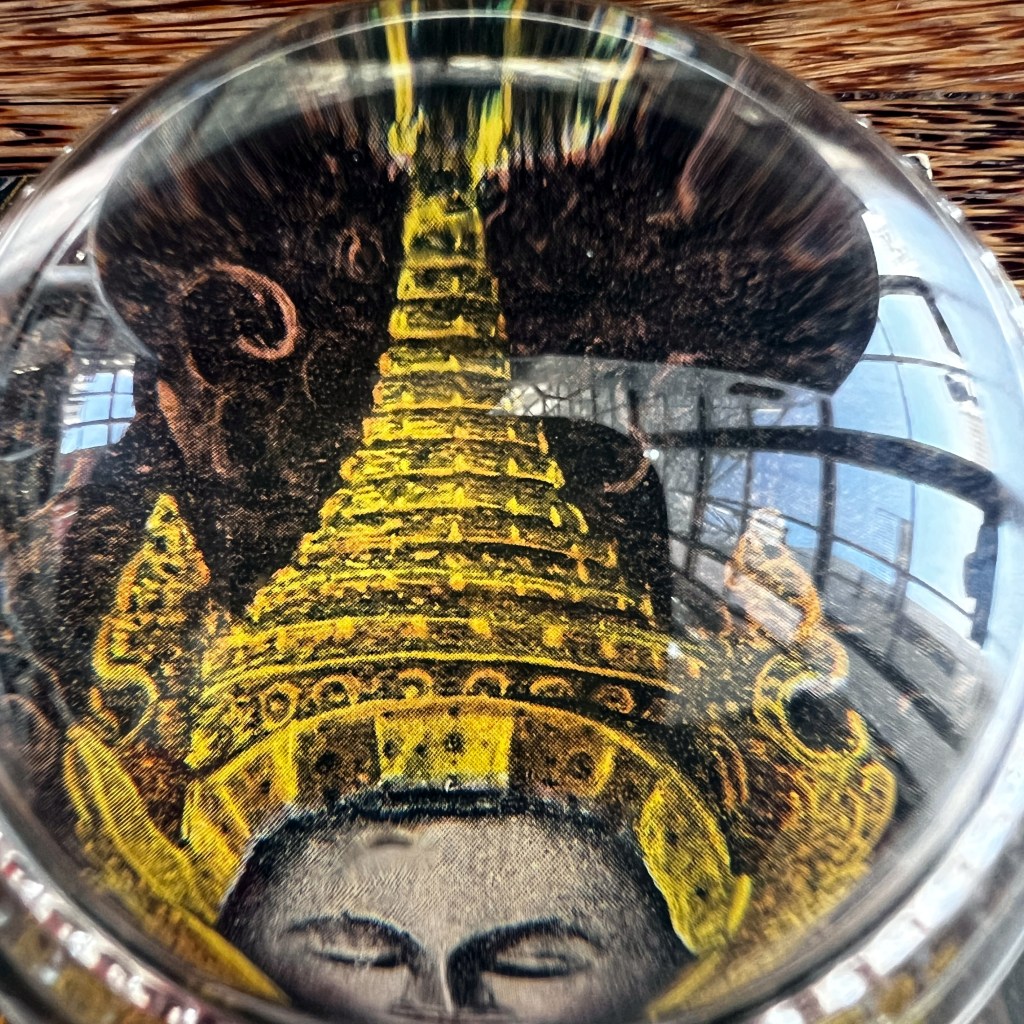
Over 12 feet in height, the image is topped by a crown – typical of the Jambupati style – and is intended to display the grandeur of the Buddha and his message.

F

or more on a Burmese Buddhist statue in a similar style, see the Asian Art Museum website here: https://tinyurl.com/mpvxn8j9.


The Buddhas in the West Material Archive is a digital scholarship project that catalogues artifacts depicting Buddhist material culture for Western audiences. It’s comprised of prints, photos, and an assortment of ephemera and other objects. For a brief introduction to this archive, visit the main Buddhas in the West project page.


For Related Buddhas in the West Posts Featuring the Historical Buddha / Gautama:


For the Most Recent Buddhas in the West Posts:


Rose and Pollack’s Buddha Foxtrot Sheet Music

For all the new Buddhas in the West posts
follow us on Bluesky & Instagram


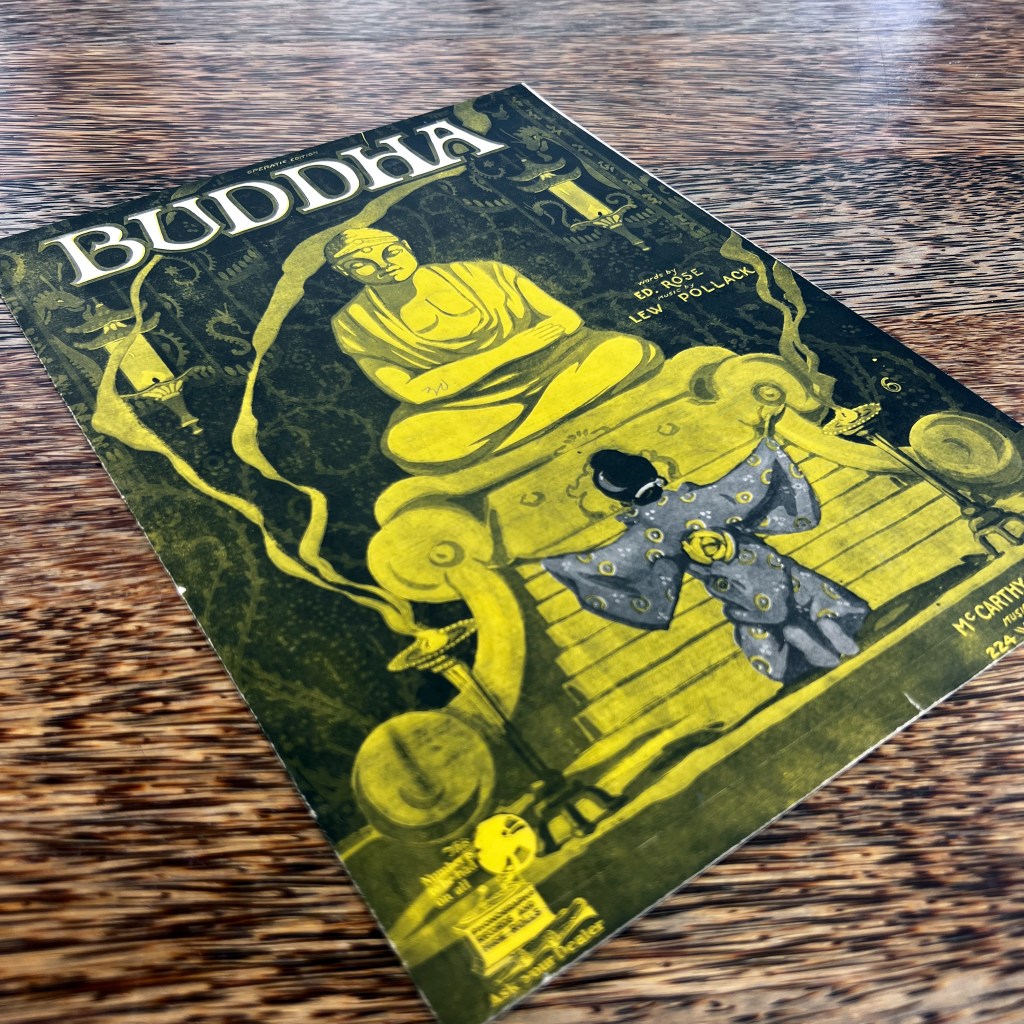
The Buddha Foxtrot: In the late 1910s era of ragtime, Vaudeville accompanist Lew Pollack composed the novelty piece “Buddha.” Several bands recorded versions of Pollack’s composition through the 1920’s; it was a moderate success.

The sheet music cover shows an imaginary scene of religious devotion, incorporating a woman in traditional Japanese dress praying to a Buddhist image.

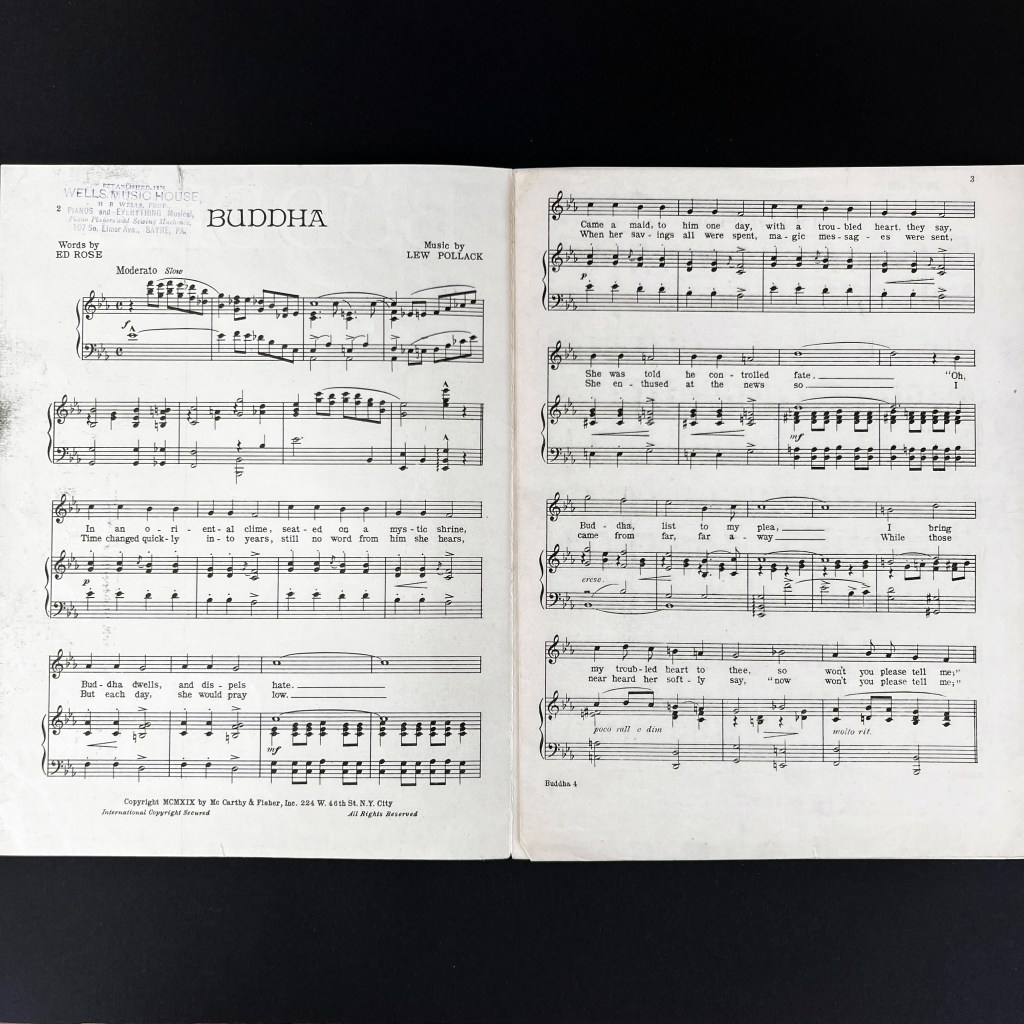
Lyrics were added to the musical composition by Ed Rose and the work was published in 1919. The song opens with the lyrics: “In an oriental clime, seated on a mystic shrine, Buddha dwells, and dispels hate.”

The song describes a woman who prays to the Buddha, pleading for her lover to return to her. This story reflects Giacomo Puccini’s opera Madame Butterfly, first performed in America in 1906.

I wrote a short post about the song and the imagery on the cover here: https://peterromaskiewicz.com/2019/01/09/the-buddha-foxtrot-by-pollack-and-rose-visual-literacy-of-buddhism/.


The Buddhas in the West Material Archive is a digital scholarship project that catalogues artifacts depicting Buddhist material culture for Western audiences. It’s comprised of prints, photos, and an assortment of ephemera and other objects. For a brief introduction to this archive, visit the main Buddhas in the West project page.


For Related Buddhas in the West Posts Featuring Historical Advertising:


For the Most Recent Buddhas in the West Posts:


Olfert Dapper’s Formosan Buddha Engraving

For all the new Buddhas in the West posts
follow us on Bluesky & Instagram


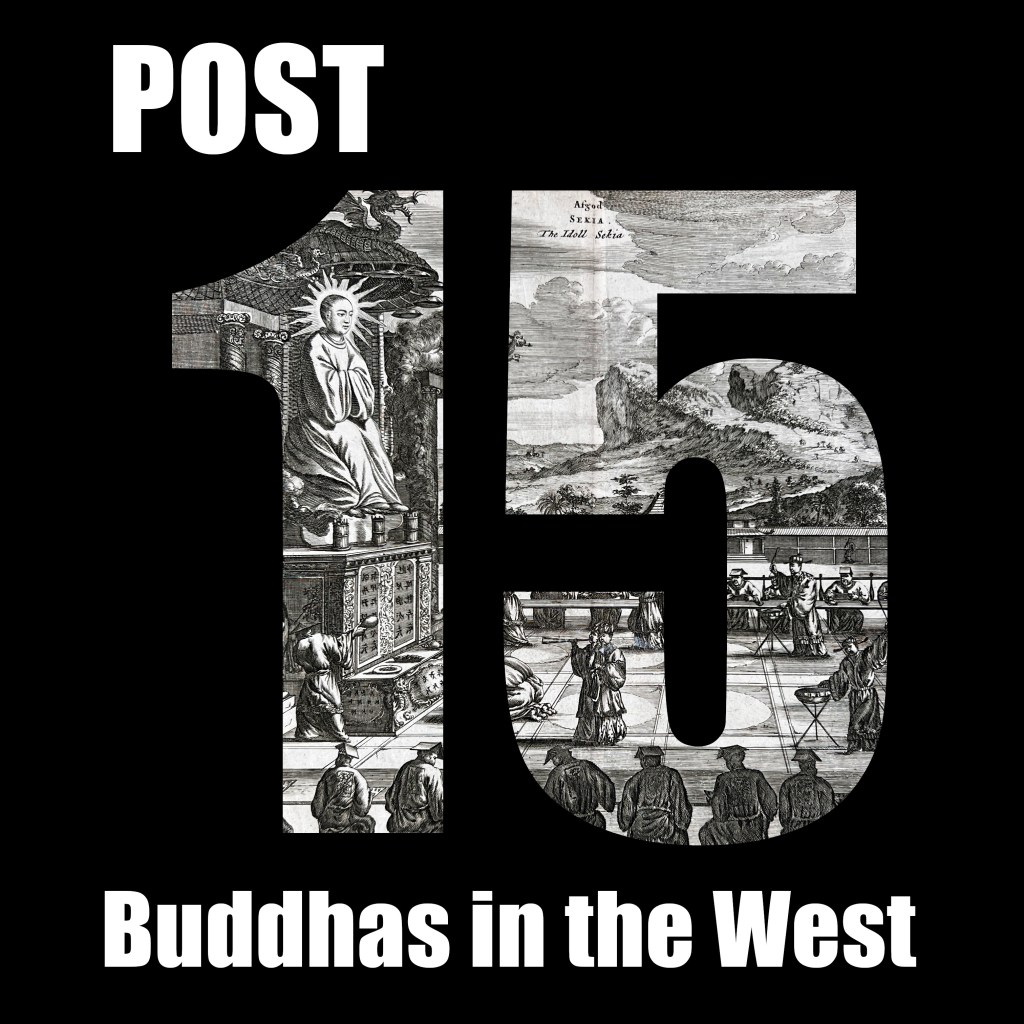
European book engravers often fabricated details to flesh out illustrations where textual accounts were silent. Such is the case here for “The Idoll Sekia” (Śākyamuni) showing a Buddhist temple in late 17th century Formosa, present-day Taiwan.


This illustration is from the 1674 German edition of Atlas Chinensis by Olfert Dapper (1636–1689). Dapper never visited Asia, but edited the travelogues of the second and third Dutch embassies to China and consulted Jesuit accounts.


The copperplate engraving were most likely prepared in the workshop of the publisher Jacob van Meurs. The image was based on Dapper’s retelling of the accounts of a Scotchman named David Wright who lived on Formosa in the 1650s.


Wright describes the use of music during worship and the prostrations of two priests day and night at the altar.


The main icon – never identified as the Buddha in the text – is described as depicting a religious man, now deified, who shaved his head and never ate animal flesh.


An English edition of Dapper’s work, published by John Ogilby in 1671, can be viewed through Stanford University here: https://tinyurl.com/ycyw93eb


The Buddhas in the West Material Archive is a digital scholarship project that catalogues artifacts depicting Buddhist material culture for Western audiences. It’s comprised of prints, photos, and an assortment of ephemera and other objects. For a brief introduction to this archive, visit the main Buddhas in the West project page.


For Related Buddhas in the West Posts Featuring Historical Engravings:


For the Most Recent Buddhas in the West Posts:

Mott Street Laughing Buddha Postcard

For all the new Buddhas in the West posts
follow us on Bluesky & Instagram


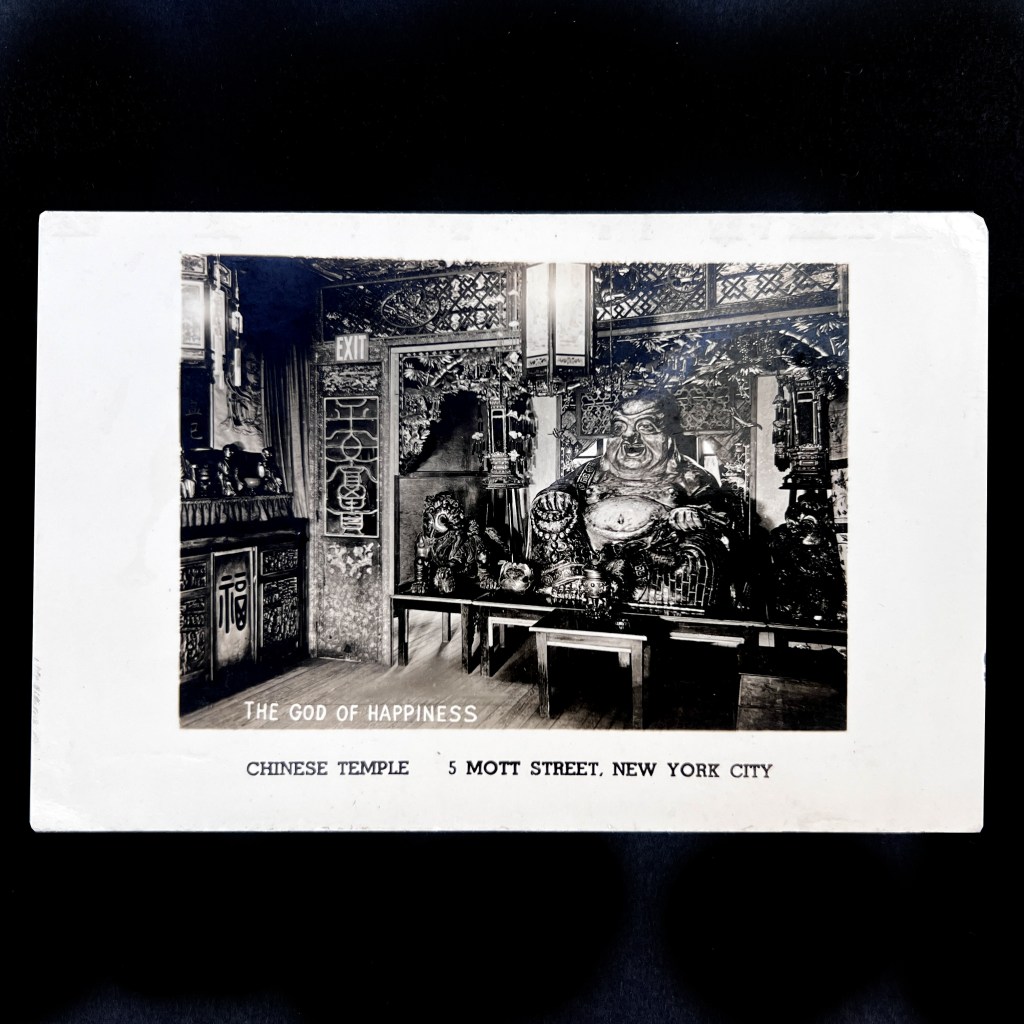
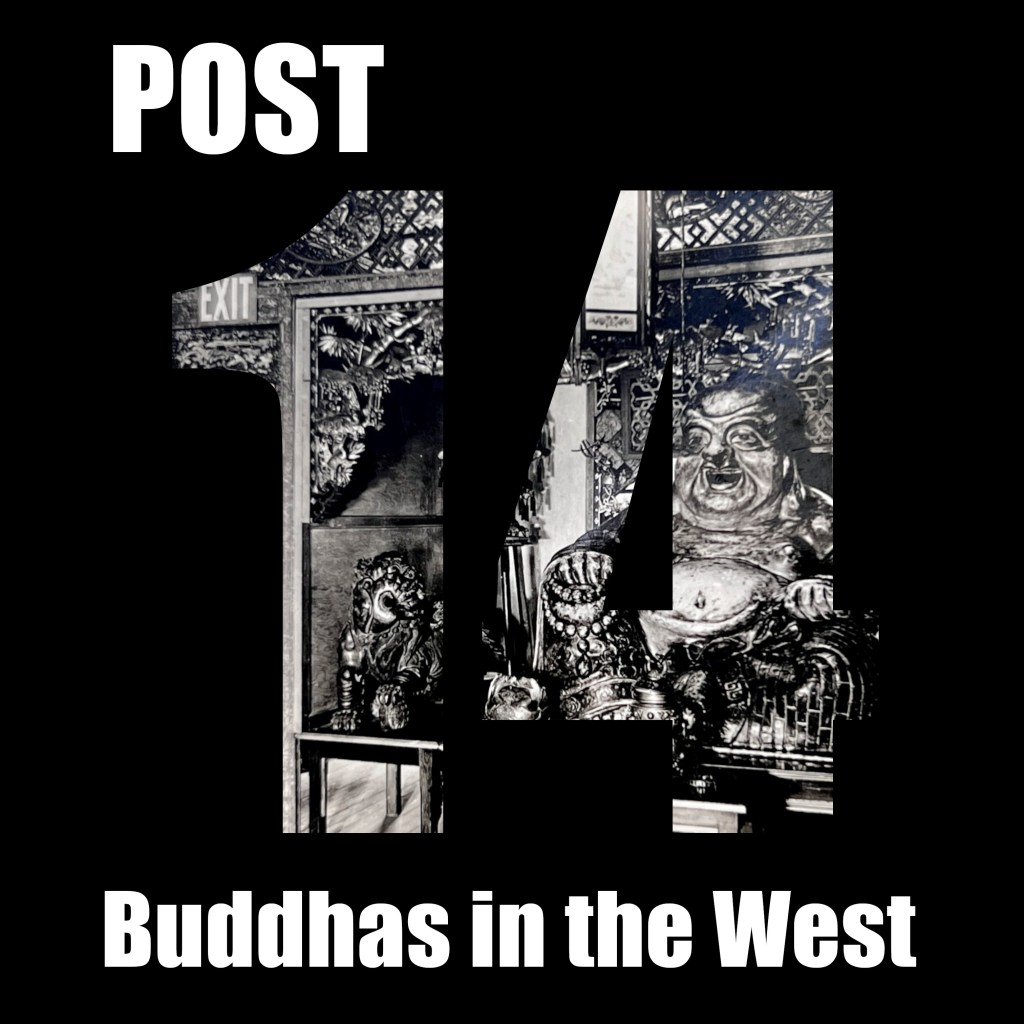
A Rare Buddha of New York: It was uncommon for early Chinese American temples to display Buddhist icons. Here we have the sitting figure of Budai, popularly known as the Laughing Buddha, shown in New York’s Chinatown in the 1930s.

Born in San Francisco in 1888, Poy Yee became secretary for one of the most influential tongs in New York, the On Leong Tong. In 1926, he opened the Chinese Temple at 5 Mott Street with this Budai icon.

The image is on a “real photo post card,” meaning the image was produced on photosensitized paper directly. Based on the design of the obverse we can tell the card was produced between 1939 and 1950.

Yee called the space a Chinese Temple, but the interior was not typical of a religious space. He housed additional Chinese exhibits and charged Chinatown tourists 25c admission.

The statue was made of plaster and painted a bronze color; it reputedly weighed 1000 pounds. Yee closed his Chinese Temple in 1947.


The Buddhas in the West Material Archive is a digital scholarship project that catalogues artifacts depicting Buddhist material culture for Western audiences. It’s comprised of prints, photos, and an assortment of ephemera and other objects. For a brief introduction to this archive, visit the main Buddhas in the West project page.


For Related Buddhas in the West Posts Featuring Budai / Laughing Buddha:


For the Most Recent Buddhas in the West Posts:

Bamiyan Buddha Saturday Magazine Print

For all the new Buddhas in the West posts
follow us on Bluesky & Instagram


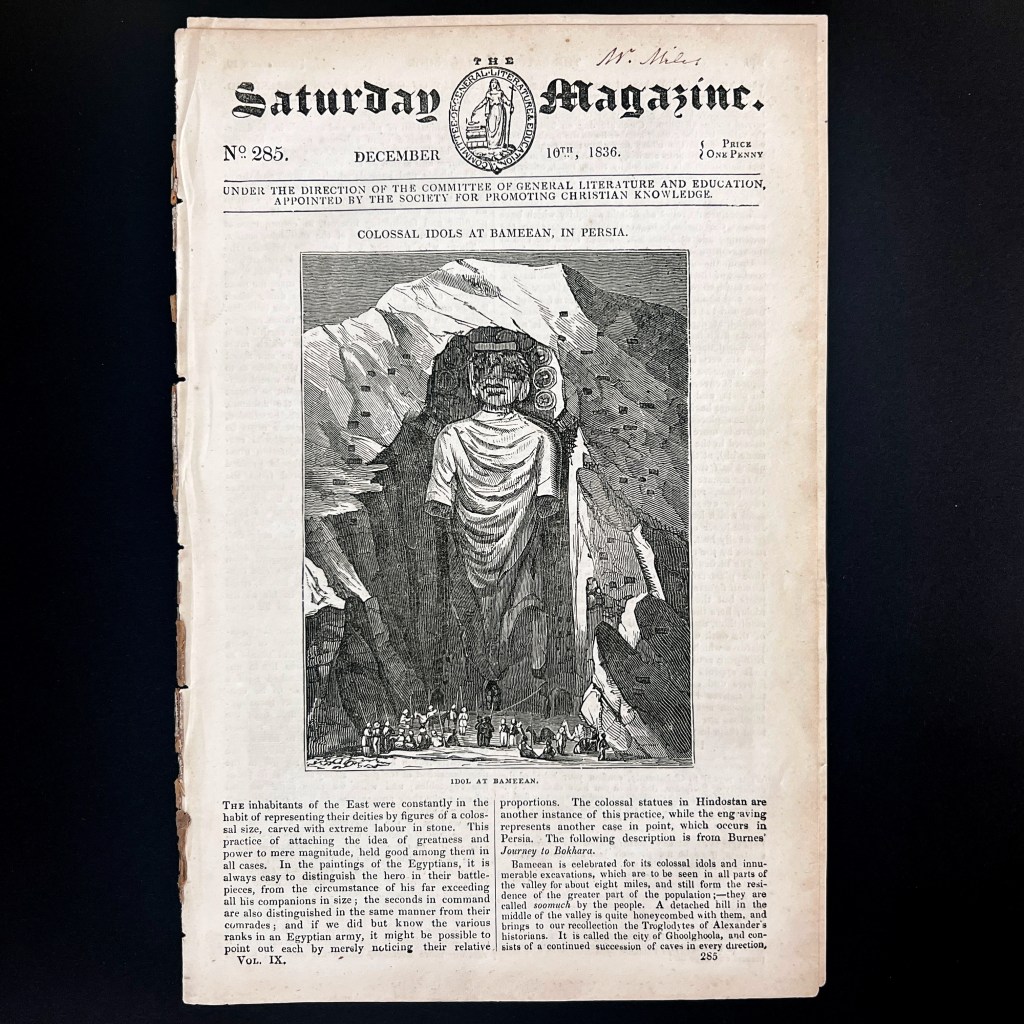
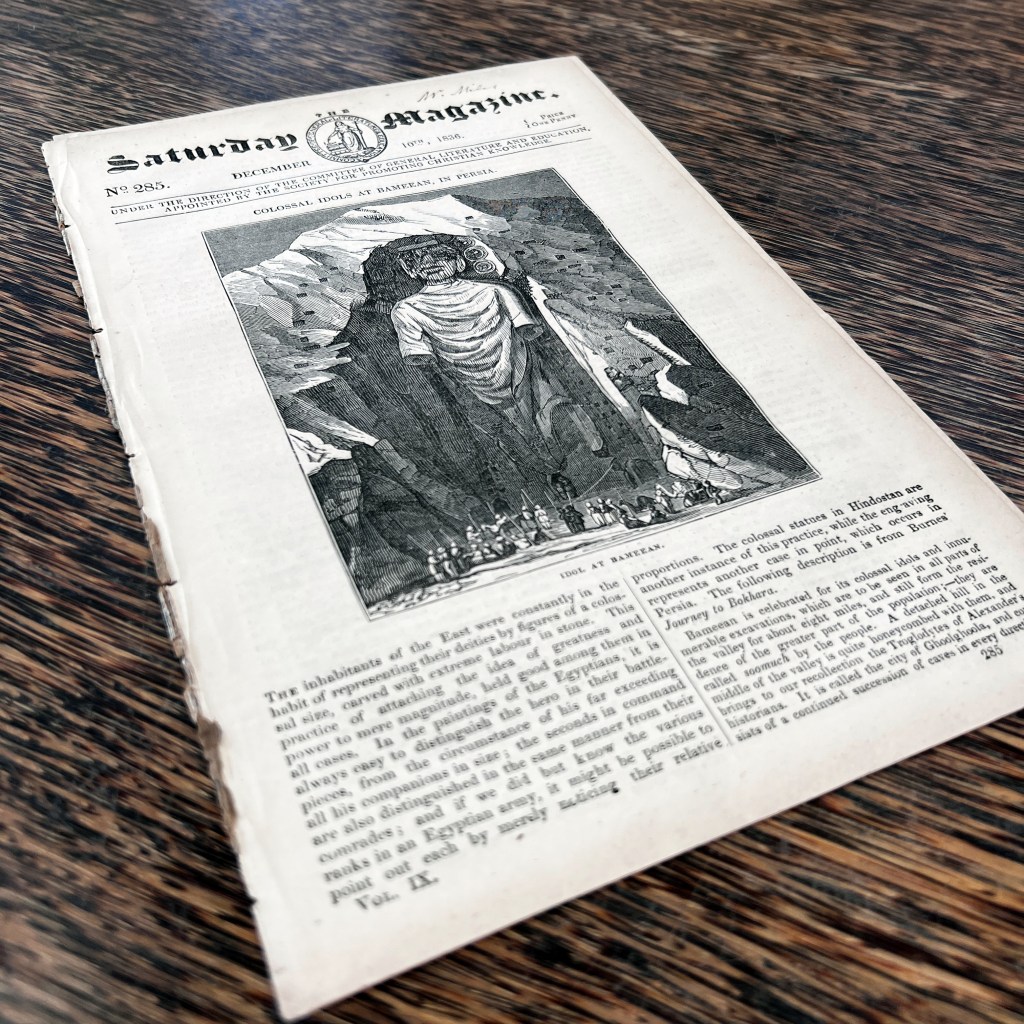
The idols of Bamiyan? Western knowledge of Buddhist material culture in the 1830s was quite limited. When Alexander Burnes “discovered” the colossal buddhas of Bamiyan in 1832, he only referred to them as idols and believed was one male and the other female.

The Saturday Magazine was an illustrated British periodical to help educate the working class. Published during British imperial expansion in the 19th century, articles would often detail exotic locales for the enjoyment of readers.

The woodblock print here was based on Burnes’ early sketch included in his Travels into Bokhara. The woodblock would have been locked into a form with hand-set moveable type to create large quantities of prints with relative ease.

Damage to the woodblock could often result in imperfect prints. Here, we can infer a scratch in the woodblock disrupted the ink transfer to the paper. Better mass printing technology would be created in the coming decades.

As for the statues, canon fire broke various segments in the 17th and 18th centuries; this damage is visible in the illustration. The colossal Bamiyan Buddhas were completely destroyed in 2001.


The Buddhas in the West Material Archive is a digital scholarship project that catalogues artifacts depicting Buddhist material culture for Western audiences. It’s comprised of prints, photos, and an assortment of ephemera and other objects. For a brief introduction to this archive, visit the main Buddhas in the West project page.


For Related Buddhas in the West Posts Featuring Historical Magazines:


For the Most Recent Buddhas in the West Posts:


Ueno Daibutsu Postcard

For all the new Buddhas in the West posts
follow us on Bluesky & Instagram


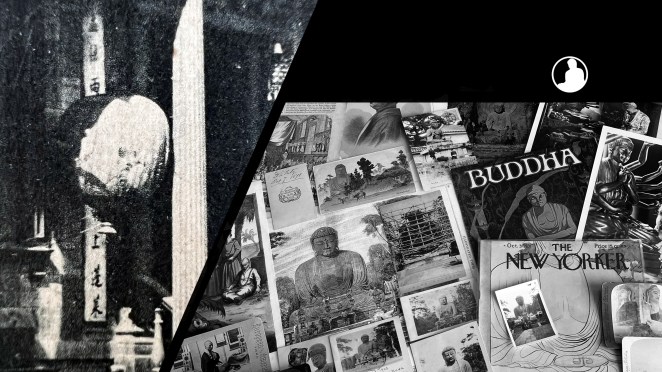
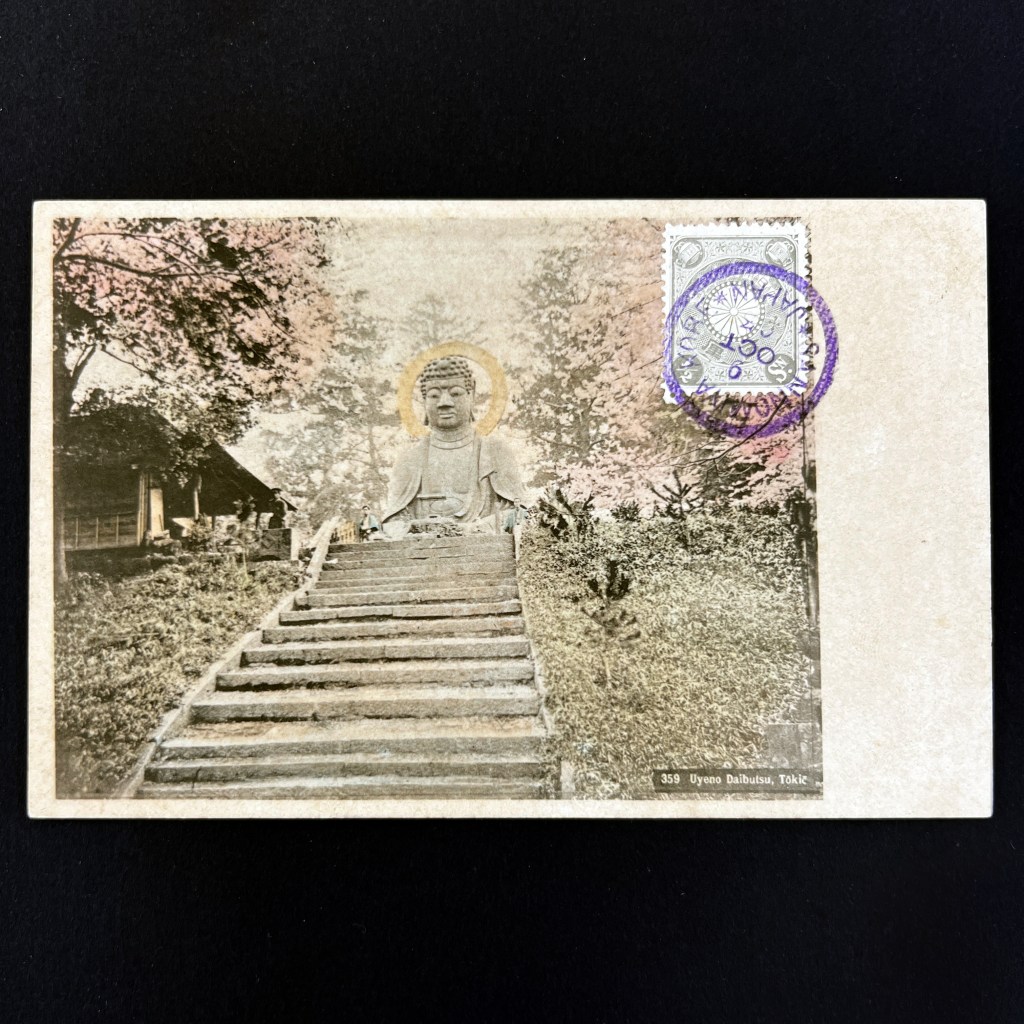
Only the face of the Ueno Daibutsu remains in Tokyo’s Ueno Park. Toppled during the 1923 Kantō earthquake, the salvaged body was eventually melted down during the Pacific War.


Picture postcards are some of the only remaining images of the intact statue. This plain design on the reverse reveals the print was made prior to 1907.

Q&A) Note, there is no address on the reverse…so why is there a cancelled stamp on the obverse?

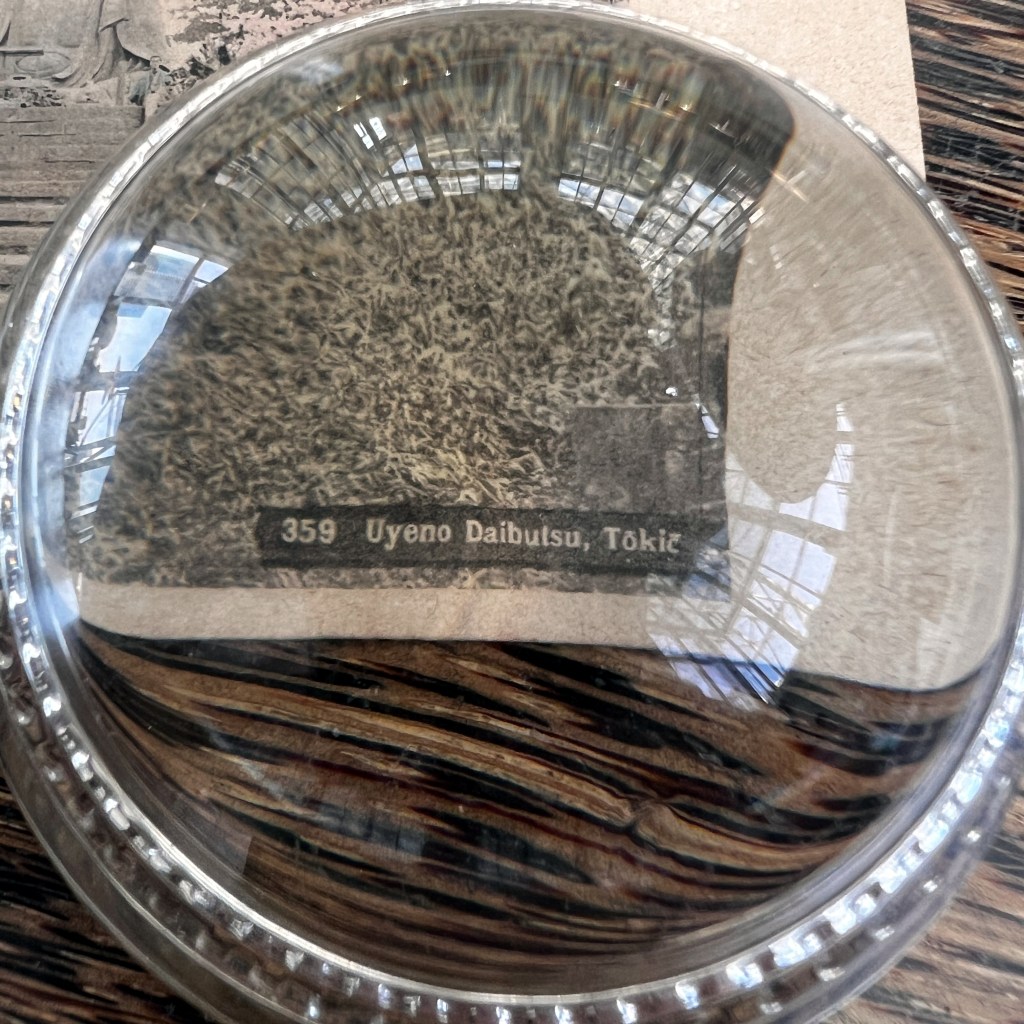
The caption style is strongly reminiscent of the professional Japanese tourist photography trade that grew steadily thorough the 1890s. Contemporary databases do not currently link this stock number and location with a known photographer.


Ueno Park is celebrated for its spring cherry blossoms, highlighted here by the hand-colorist who painted the trees pink. Q&A) The stamp and cancellation on the front suggest this card was intended for display in a postcard album.

After many years in storage in the nearby temple, the Daibutsu face was displayed in 1972 on the site of the original statue.


The Buddhas in the West Material Archive is a digital scholarship project that catalogues artifacts depicting Buddhist material culture for Western audiences. It’s comprised of prints, photos, and an assortment of ephemera and other objects. For a brief introduction to this archive, visit the main Buddhas in the West project page.


For Related Buddhas in the West Posts Featuring Japan:


For the Most Recent Buddhas in the West Posts:

Hamburg–American Cruise Postcard

For all the new Buddhas in the West posts
follow us on Bluesky & Instagram


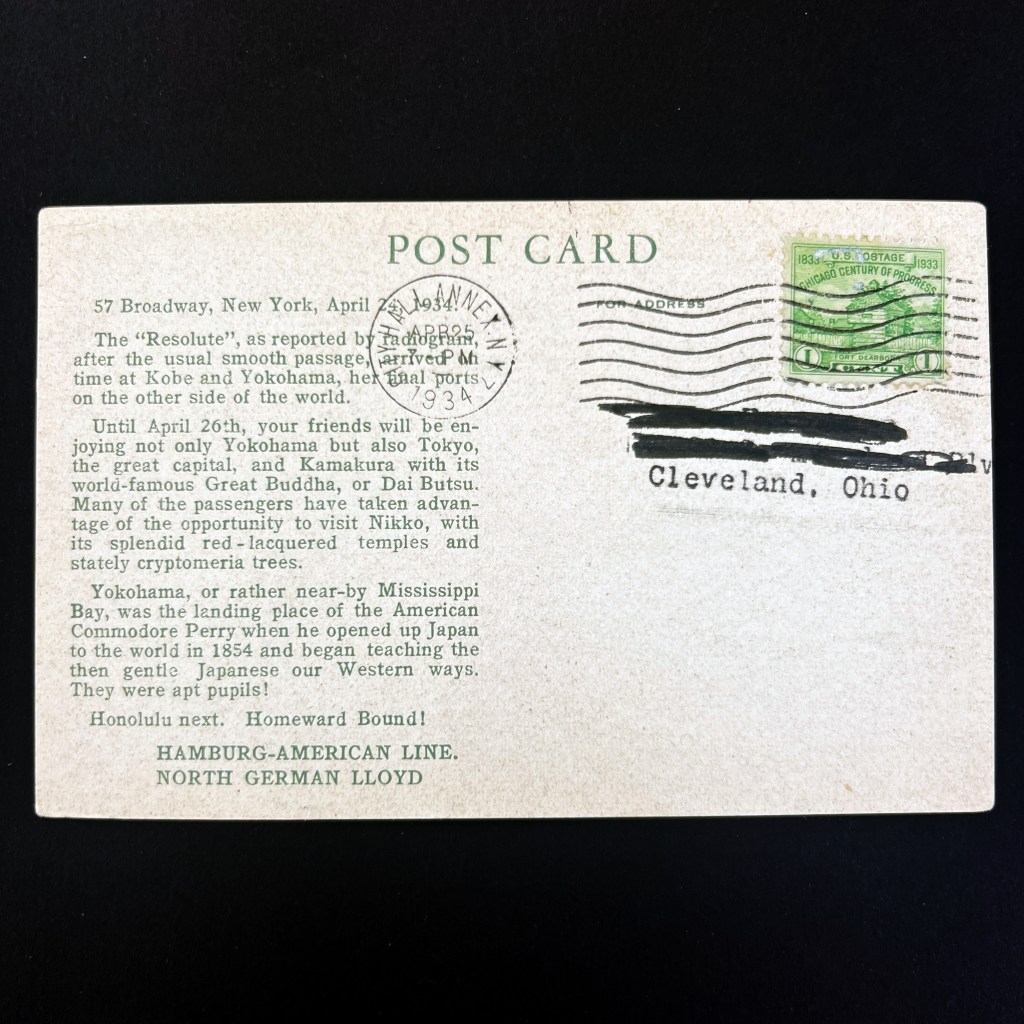
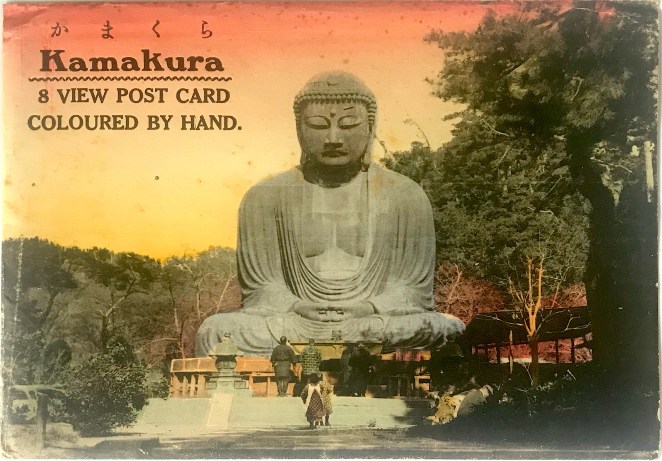
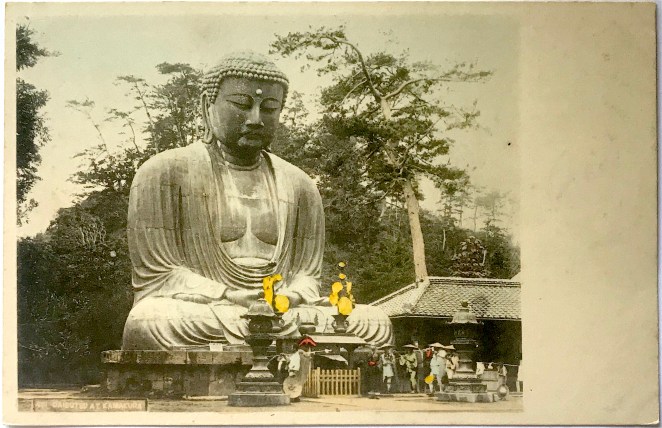
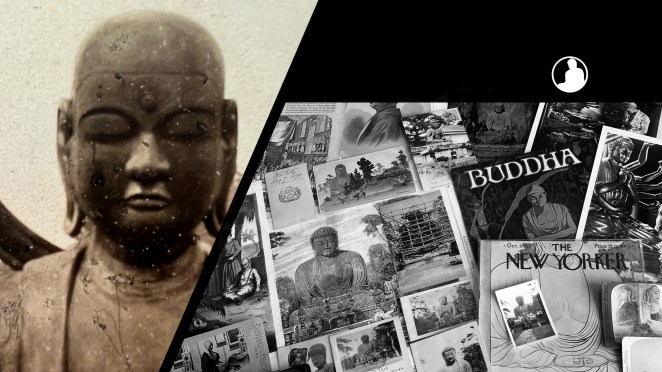
The first regular around-the-world commercial cruises began in the early 1920s. The Great Buddha of Kamakura was an iconic stop on the long sea passage; its international stature as a tourist destination was equivalent to the Taj Mahal and the Sphinx.

Within a decade, circumnavigation of the globe by passenger liner transformed into a stalwart luxury industry. The Hamburg–American Line was one of the main companies in the inter-war period.

Passengers kept family or friends abreast of their travels by having postcards automatically sent from ocean liner offices around the world. Here we see notification of the Resolute arriving in the ports of Japan on April 24, 1934. Tours through Nikko and Kamakura are noted.

The photograph printed here depicts a seemingly orchestrated scene that highlights the foreignness and apparent piousness of the Japanese.

The travel and souvenir journal of Eleanor Phelps, who embarked on the inaugural American Express Co. cruise around the world in 1922, is held by the University of South Carolina, viewable here: https://tinyurl.com/avt4xt2p.


Additional Archived Posts for the Buddhas in the West Project

The Buddhas in the West Material Archive is a digital scholarship project that catalogues artifacts depicting Buddhist material culture for Western audiences. It’s comprised of prints, photos, and an assortment of ephemera and other objects. For a brief introduction to this archive, visit the main Buddhas in the West project page.


For Related Buddhas in the West Posts Featuring the Kamakura Daibutsu:


For the Most Recent Buddhas in the West Posts:

Arbuckle Bros. Coffee Japan Advertising Card

For all the new Buddhas in the West posts
follow us on Bluesky & Instagram


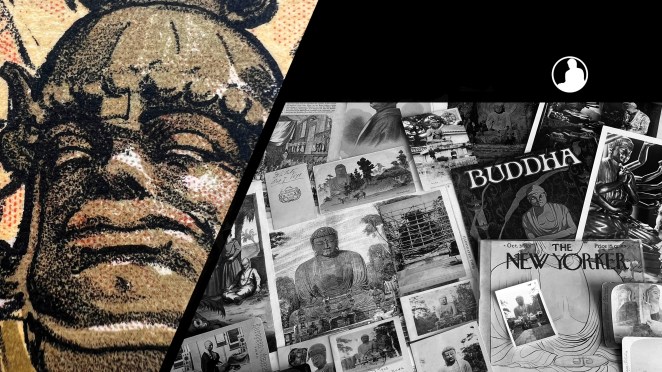
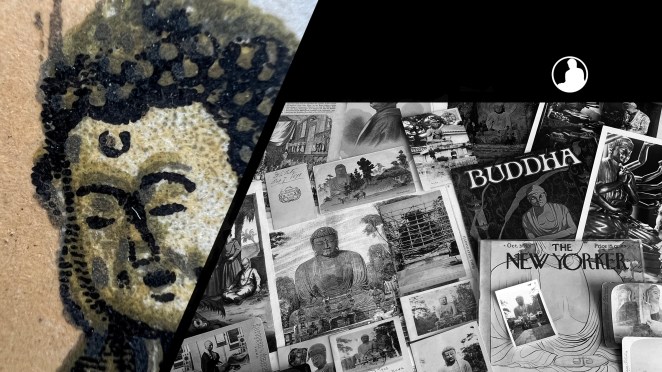
Vibrant Victorian trade cards stuck out among a sea of black and white advertising. In the early age of engraved mass publications, chromolithography ushered in a new era of visual media.

Trade cards were popular advertising materials from 1875 to 1900. Typically businesses printed text-heavy advertising copy on the reverse of the card, saving the obverse for an image.

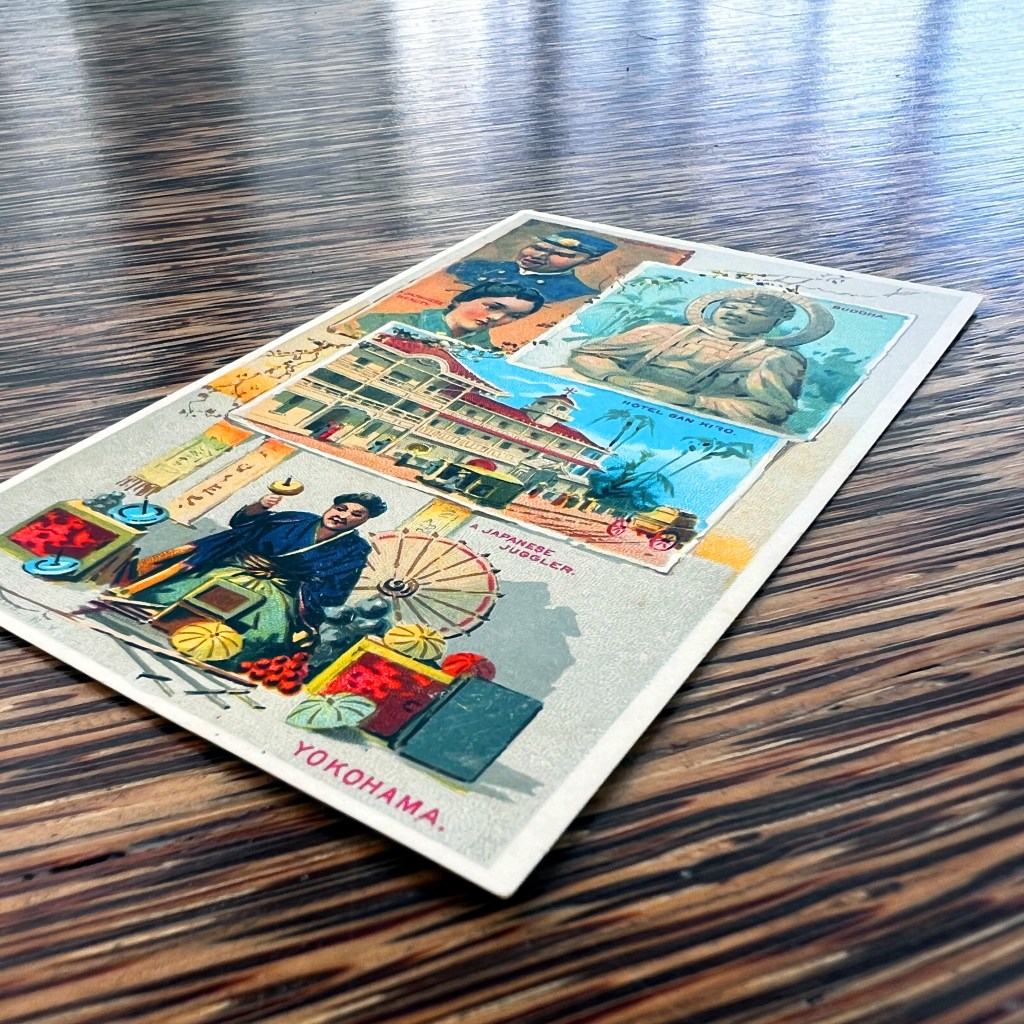
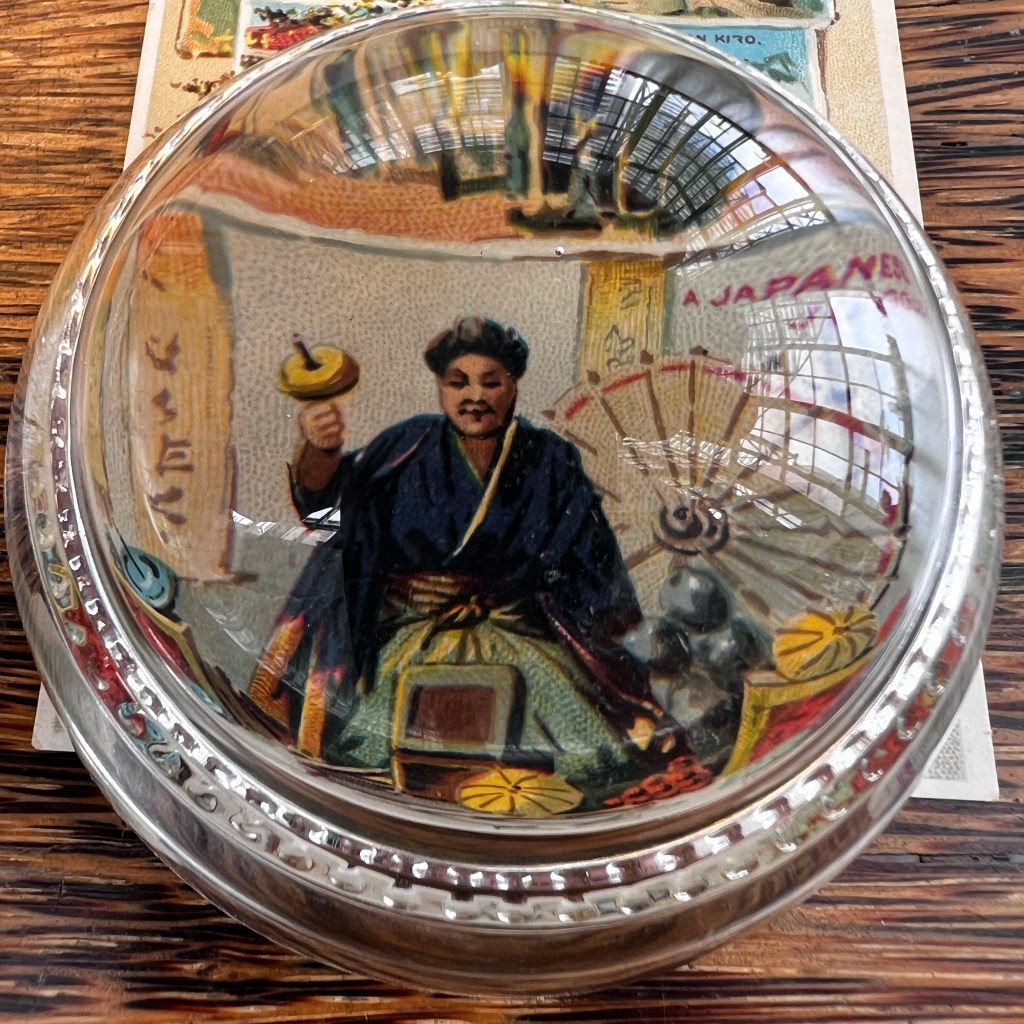
Here, Arbukle Bros. Coffee produced a 50 card set depicting around-the-world travel. This trade card highlights Yokohama, Japan, a treaty port city popular among 19th century tourists.

In reality, the card shows stereotypical imagery of Japan, including costumes, landscapes, and professions easily identifiable to foreign travelers.

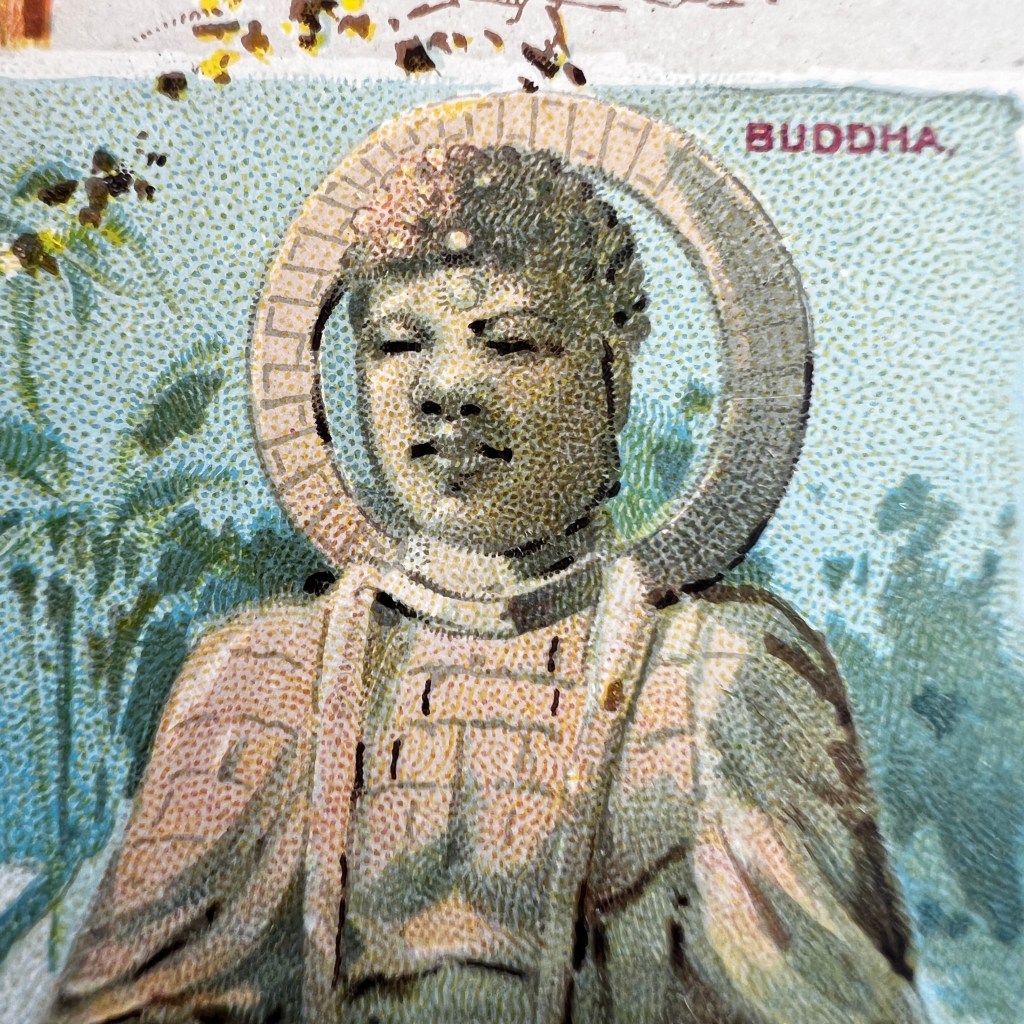
The Buddhist icon is unidentified, but this card reveals generic Buddhist imagery was closely connected to the popular image of Japan.


The Buddhas in the West Material Archive is a digital scholarship project that catalogues artifacts depicting Buddhist material culture for Western audiences. It’s comprised of prints, photos, and an assortment of ephemera and other objects. For a brief introduction to this archive, visit the main Buddhas in the West project page.


For Related Buddhas in the West Posts Featuring Historical Trade Cards:


For the Most Recent Buddhas in the West Posts: