Fresno Japanese Buddhist Temple Postcard

For all the new Buddhas in the West posts
follow us on Bluesky & Instagram


First Buddhist Temple Constructed on Mainland US: Two Japanese Buddhist temples were dedicated in San Francisco and Sacramento by 1900, but these were old converted residences. The Fresno temple was the first constructed to primarily function as a Buddhist temple.

The Fresno Buddhist Church was designed by the Japanese immigrant Kuninosuke Masumizu (1849-1915), a temple and shrine architect. The three-story wood structure was built on 1340 Kern Street and opened April 8, 1902. Construction continued through 1904.

This postcard is one of a few remaining photographs of the original building, it burned down in 1919. This card was postmarked in 1908 and was printed in Germany, the leader in photomechanical postcard printing of the era.

Reports describe the temple as having a Japanese style. In truth, the style is rather hybrid, with upward sloping eaves on the roof and a temple-style gate for the front porch. Overall, however, the building could easily blend into the residential architecture of the period.

The Fresno Buddhist Church was rebuilt in 1920. This building was sold in 2018 to local Burmese Americans and is now the Mrauk Oo Dhamma Center. The Japanese Jōdo Shinshū congregation built a new temple that opened in 2022.


The Buddhas in the West Material Archive is a digital scholarship project that catalogues artifacts depicting Buddhist material culture for Western audiences. It’s comprised of prints, photos, and an assortment of ephemera and other objects. For a brief introduction to this archive, visit the main Buddhas in the West project page.


For Related Buddhas in the West Posts Featuring the United States:


For the Most Recent Buddhas in the West Posts:


Singapore Buddhist Hell Guardian Postcard

For all the new Buddhas in the West posts
follow us on Bluesky & Instagram


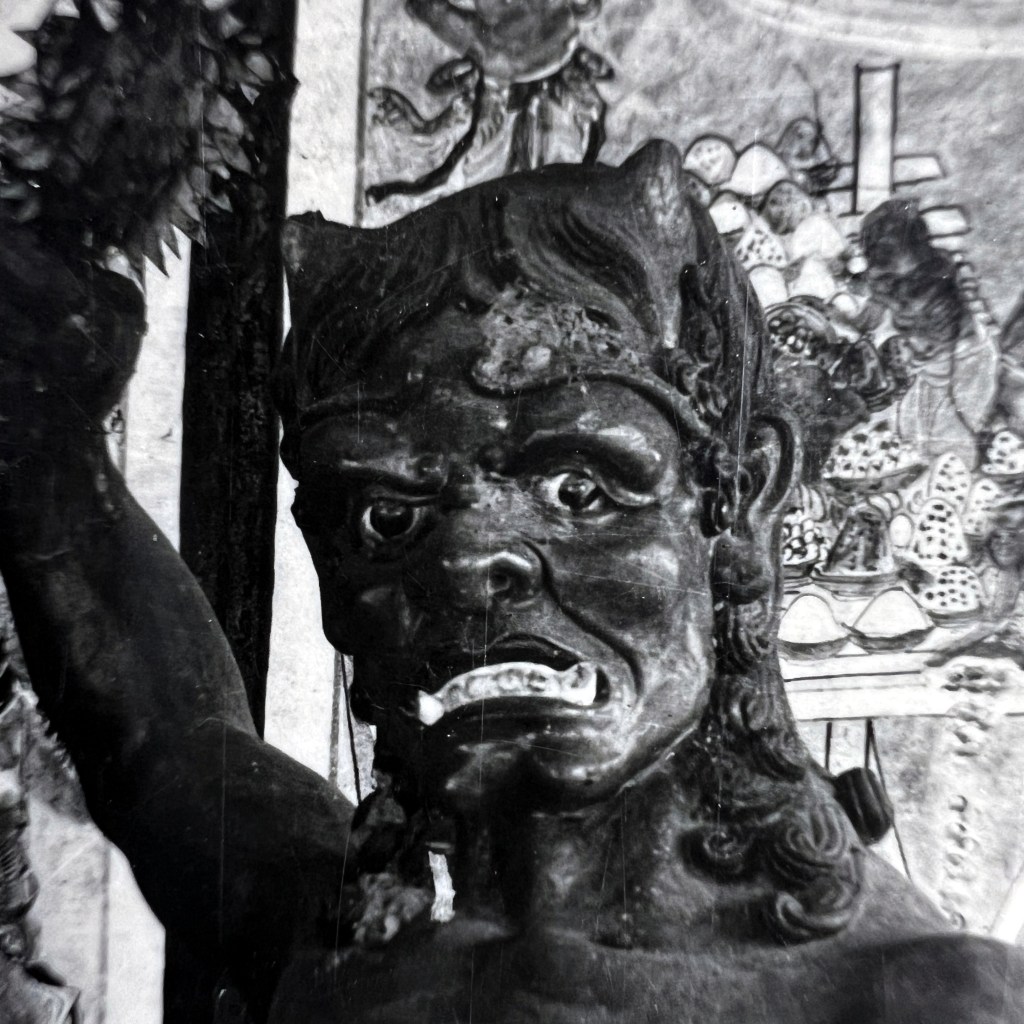
Unknown “Chinese” Temple: By the mid-to-late 19th century, the term “joss” typically referred to venerated Chinese religious icons. Here we see the term used to identify statues of Buddhist hell guardians. These figures are not typically the center of veneration in temples.
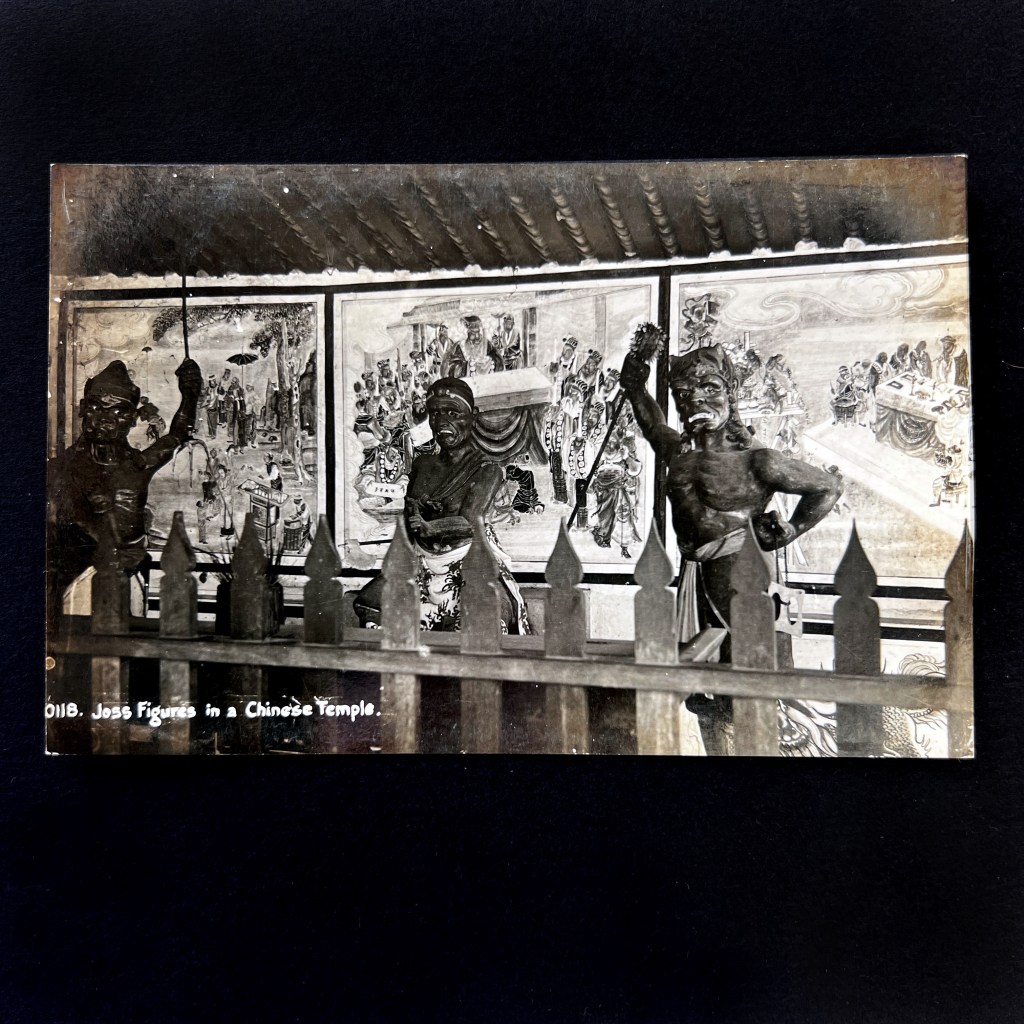
Moreover, the statues are positioned in front of murals depicting the Buddhist Ten Courts of Hell. Chinese Buddhist hell is viewed as an administrative center for the underworld where the dead are judged for their deeds in life.
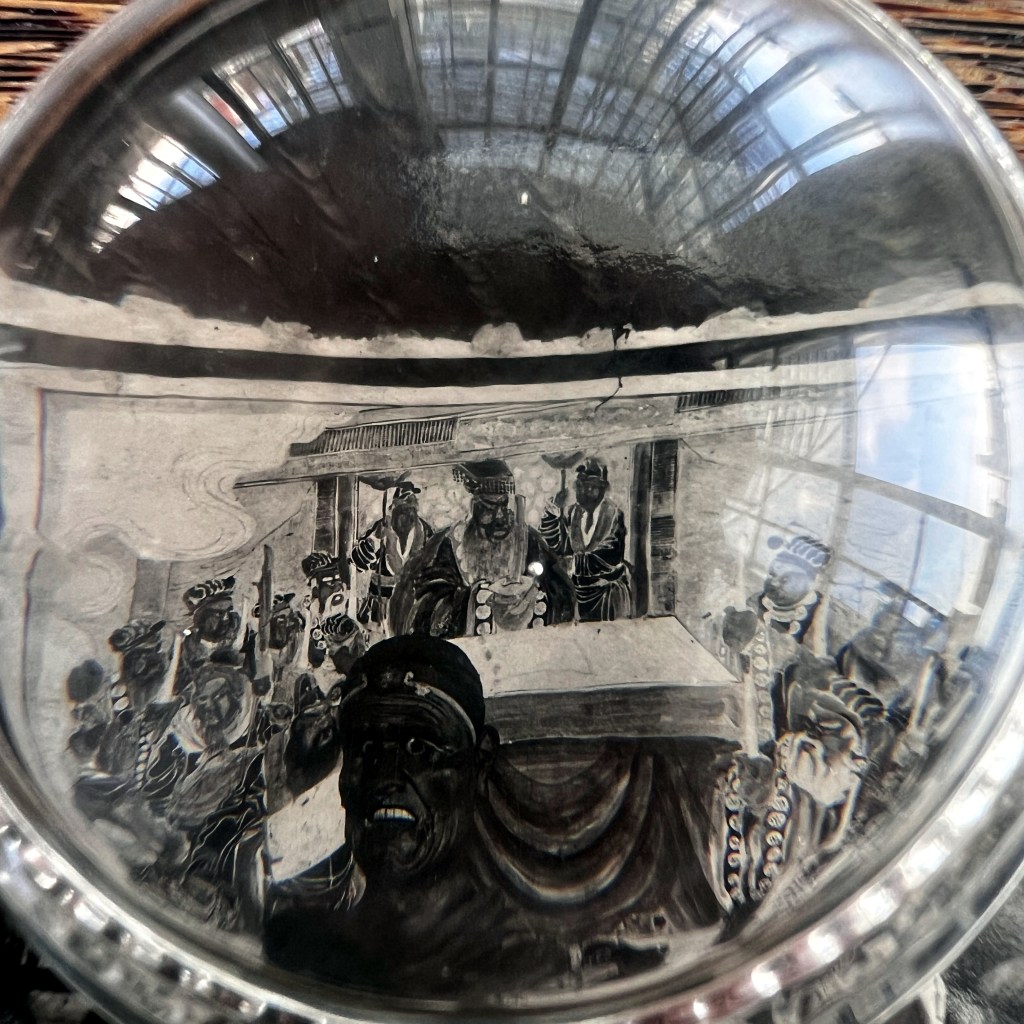
The location is an unidentified Chinese Temple. Real photo post cards with similar reverse designs depict temples from Singapore; it is possible this is one of several “Chinese temples” from that area at the turn of the 20th century.

This photographic card likely dates to the 1920s. (I have seen a used version of this card hand-dated to 1930).

The National Archives of Singapore has a good selection of digitized photographs showing various Chinese Temples, available here: https://tinyurl.com/mr9nwcep.

The Buddhas in the West Material Archive is a digital scholarship project that catalogues artifacts depicting Buddhist material culture for Western audiences. It’s comprised of prints, photos, and an assortment of ephemera and other objects. For a brief introduction to this archive, visit the main Buddhas in the West project page.


For Related Buddhas in the West Posts Featuring Historical Real Photo Post Cards:

For the Most Recent Buddhas in the West Posts:


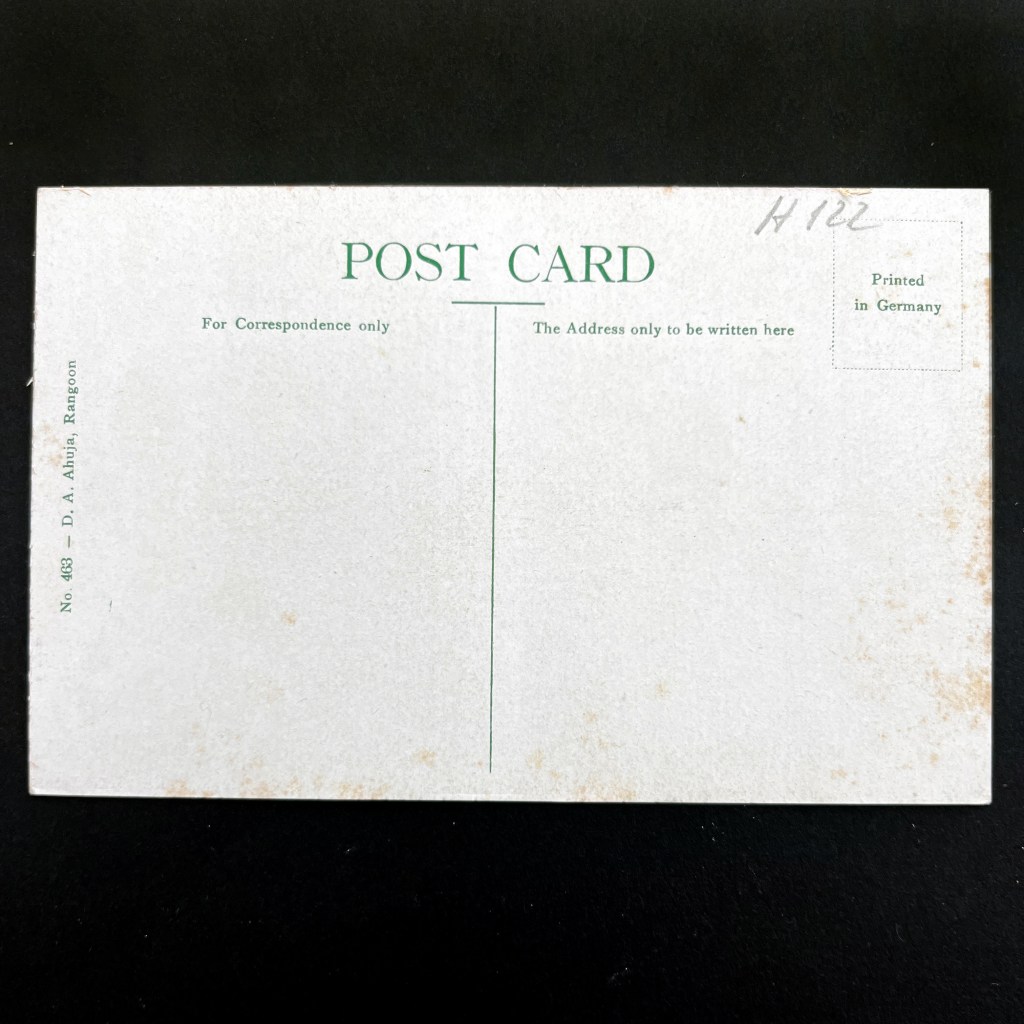
D.A. Ahuja’s Arakan Mahāmuni Postcard

For all the new Buddhas in the West posts
follow us on Bluesky & Instagram


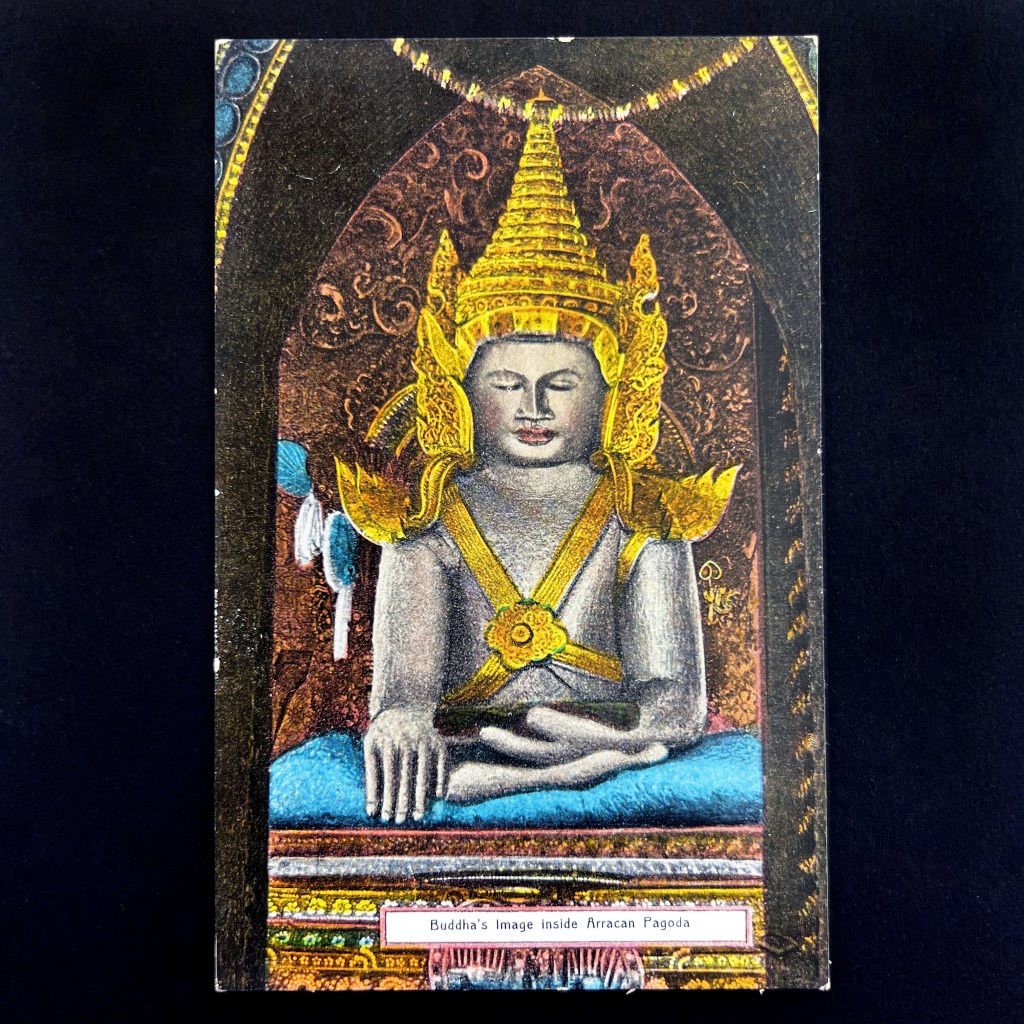
An image consecrated by the Buddha himself? The Mahāmuni image is among the most venerated in Burma. According to myth, the statue was cast during the lifetime of the Buddha and was “enlivened” to act as counsel to kings in the Buddha’s absence.

Originating in the coastal region of Arakan, the statue was moved to Upper Burma, into present-day Mandalay, at the turn of the 19th century.

The colorful postcard is a German lithographic-halftone print published by D. A. Ahuja circa 1910. Postcards emerged as highly valued souvenirs during the period of British colonial rule and helped spread knowledge of Buddhist material culture into the West.

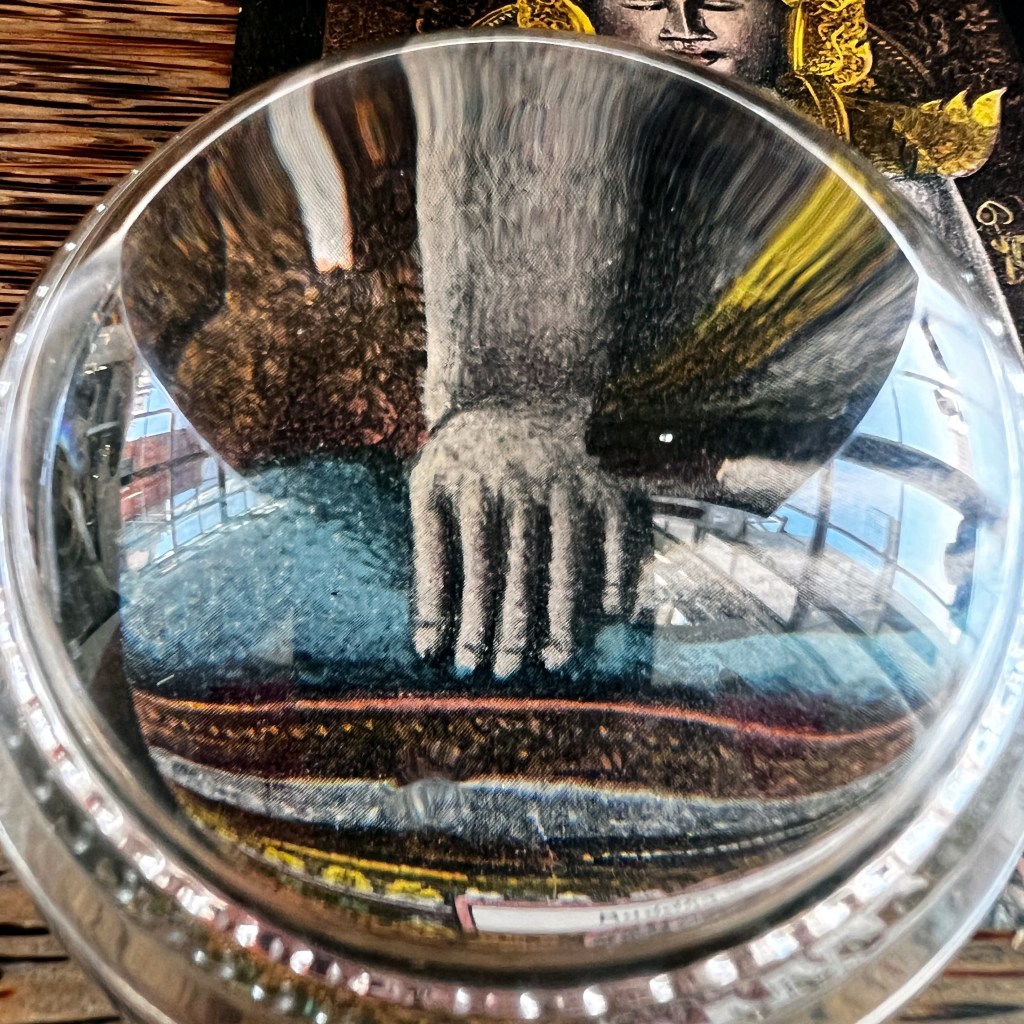
The brass statue depicts the moment when the Buddha calls upon the earth to testify to his generosity and to defeat Mara; this is symbolized by his right hand touching the ground.

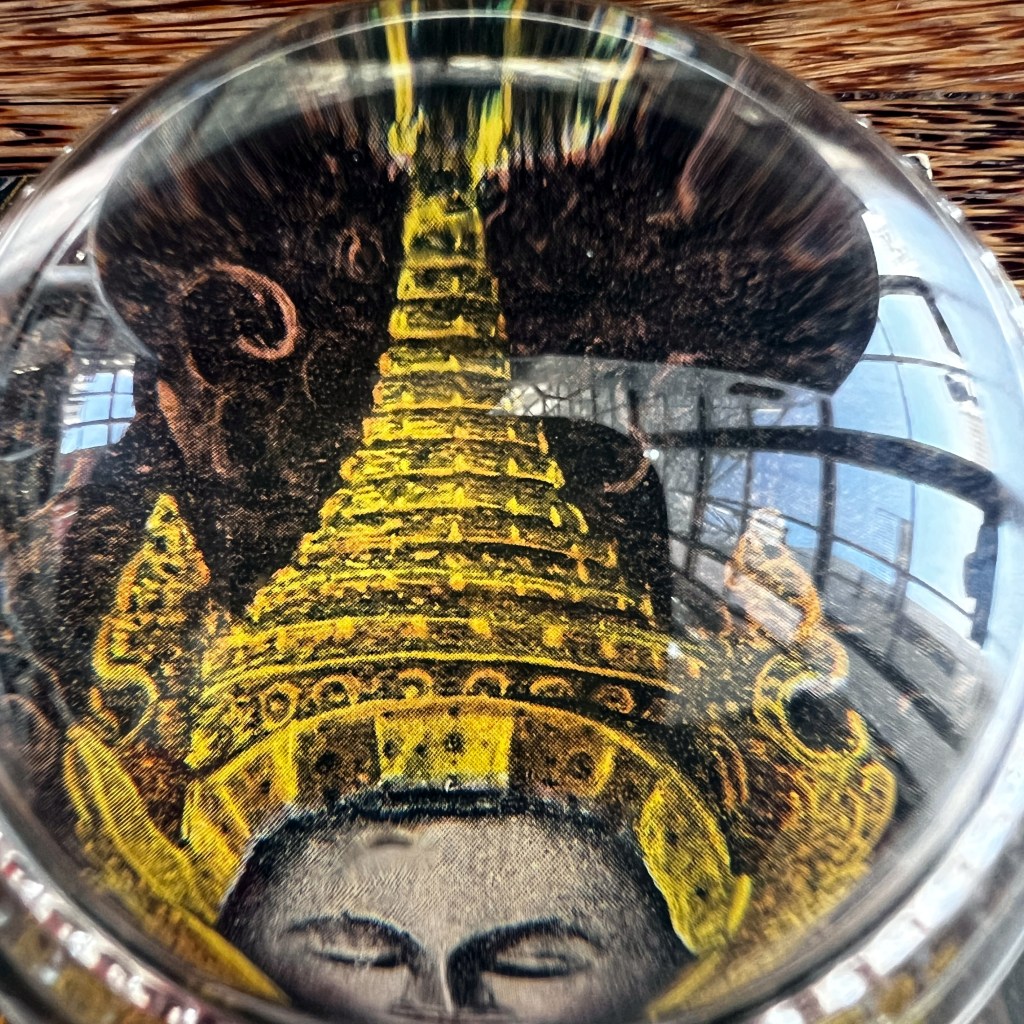
Over 12 feet in height, the image is topped by a crown – typical of the Jambupati style – and is intended to display the grandeur of the Buddha and his message.

F

or more on a Burmese Buddhist statue in a similar style, see the Asian Art Museum website here: https://tinyurl.com/mpvxn8j9.


The Buddhas in the West Material Archive is a digital scholarship project that catalogues artifacts depicting Buddhist material culture for Western audiences. It’s comprised of prints, photos, and an assortment of ephemera and other objects. For a brief introduction to this archive, visit the main Buddhas in the West project page.


For Related Buddhas in the West Posts Featuring the Historical Buddha / Gautama:


For the Most Recent Buddhas in the West Posts:

Olfert Dapper’s Formosan Buddha Engraving

For all the new Buddhas in the West posts
follow us on Bluesky & Instagram


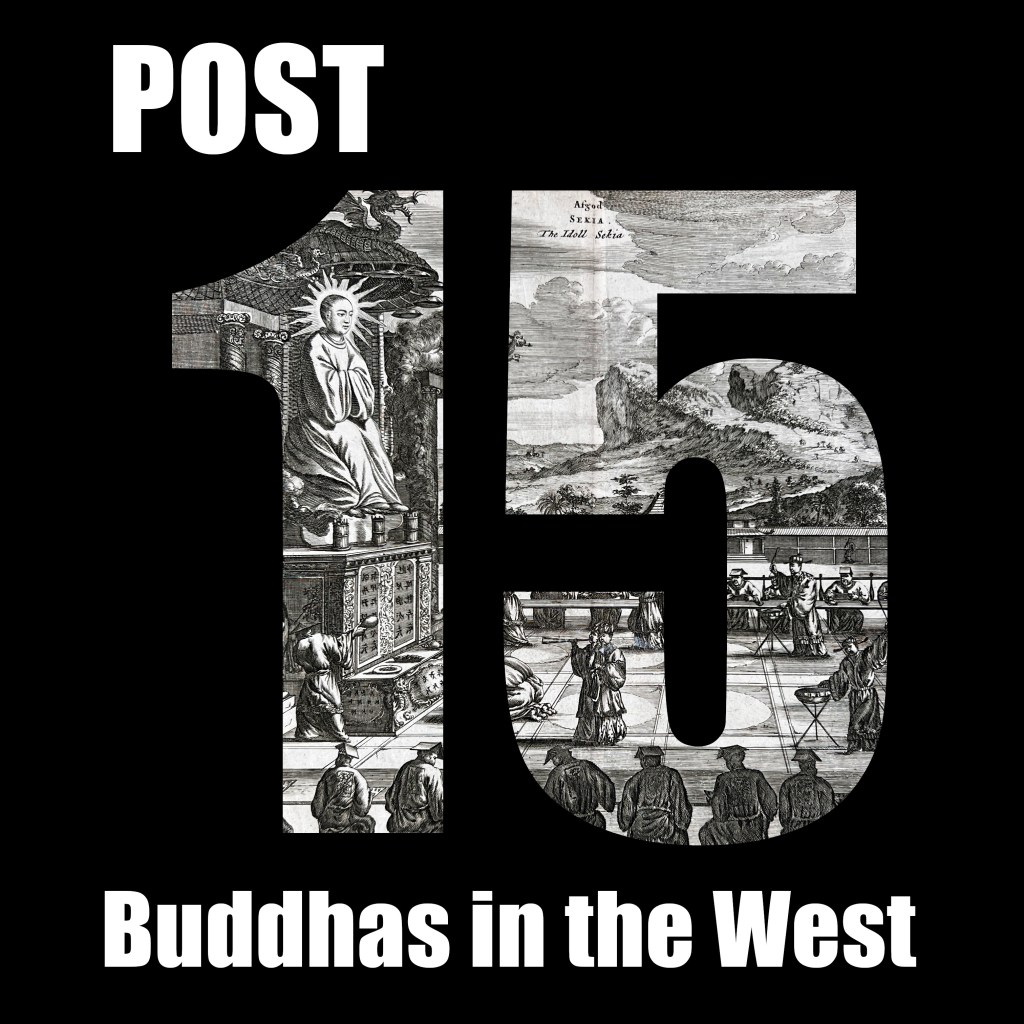
European book engravers often fabricated details to flesh out illustrations where textual accounts were silent. Such is the case here for “The Idoll Sekia” (Śākyamuni) showing a Buddhist temple in late 17th century Formosa, present-day Taiwan.


This illustration is from the 1674 German edition of Atlas Chinensis by Olfert Dapper (1636–1689). Dapper never visited Asia, but edited the travelogues of the second and third Dutch embassies to China and consulted Jesuit accounts.


The copperplate engraving were most likely prepared in the workshop of the publisher Jacob van Meurs. The image was based on Dapper’s retelling of the accounts of a Scotchman named David Wright who lived on Formosa in the 1650s.


Wright describes the use of music during worship and the prostrations of two priests day and night at the altar.


The main icon – never identified as the Buddha in the text – is described as depicting a religious man, now deified, who shaved his head and never ate animal flesh.


An English edition of Dapper’s work, published by John Ogilby in 1671, can be viewed through Stanford University here: https://tinyurl.com/ycyw93eb


The Buddhas in the West Material Archive is a digital scholarship project that catalogues artifacts depicting Buddhist material culture for Western audiences. It’s comprised of prints, photos, and an assortment of ephemera and other objects. For a brief introduction to this archive, visit the main Buddhas in the West project page.


For Related Buddhas in the West Posts Featuring Historical Engravings:


For the Most Recent Buddhas in the West Posts:


Johannes Nieuhof’s Temple Interior Engraving

For all the new Buddhas in the West posts
follow us on Bluesky & Instagram


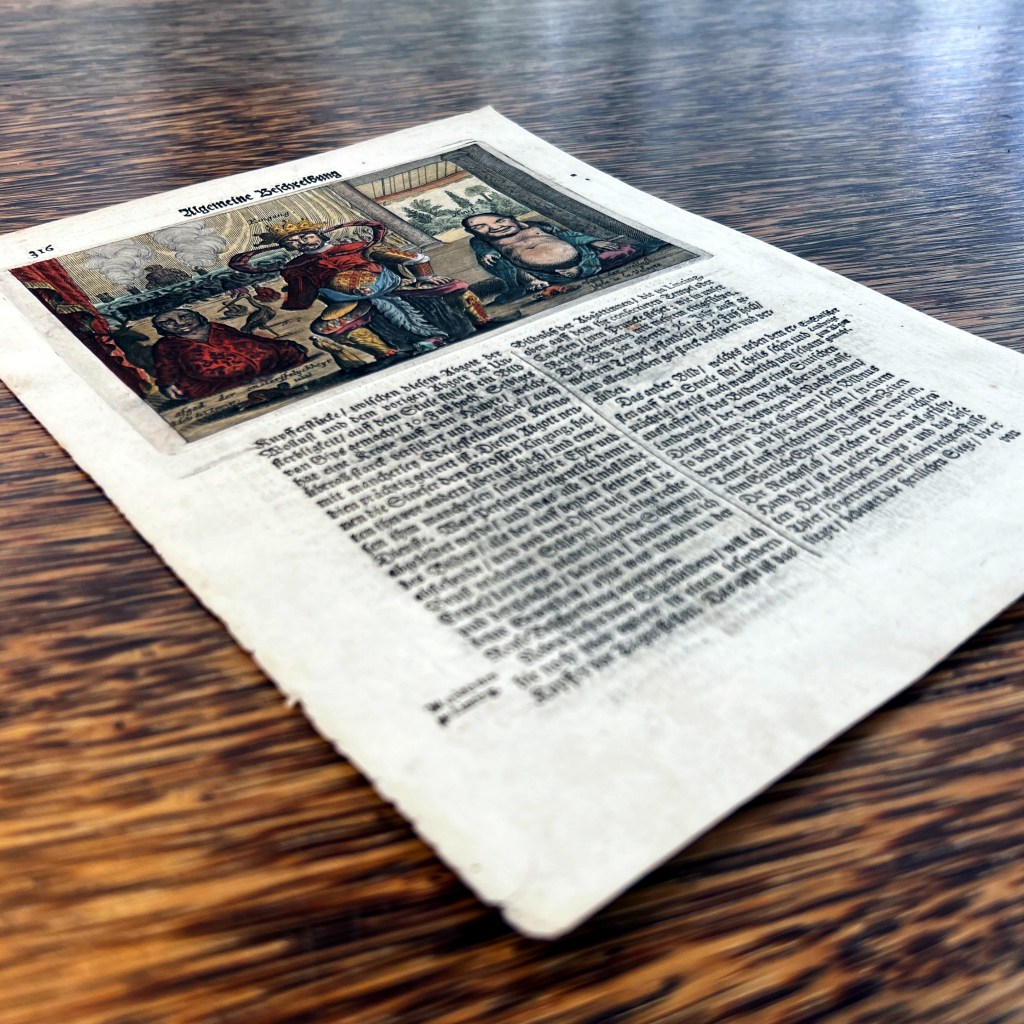
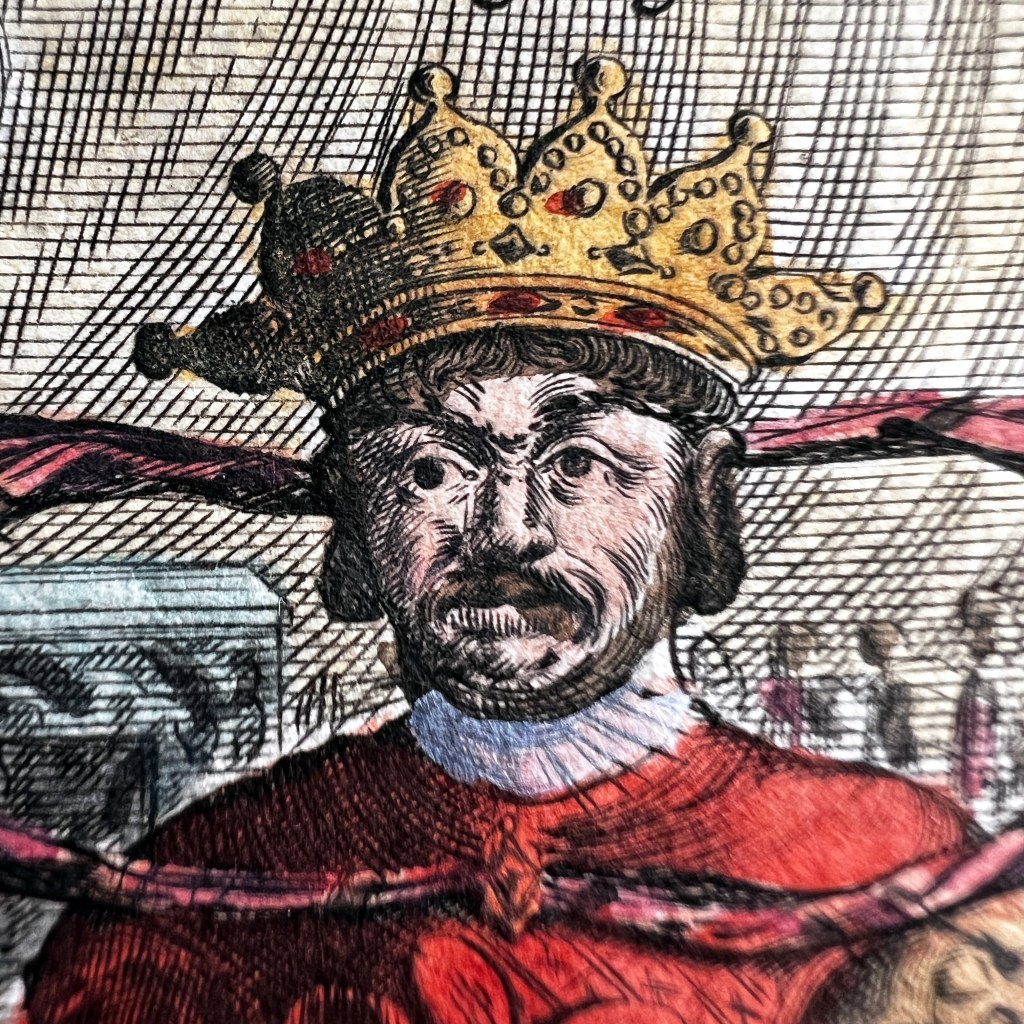
Some of the earliest Buddhist imagery in Europe appears as copperplate engravings in late 17th century books. Here’s a hand-colored page from the German edition of An Embassy of the Dutch East India Company by Johannes Nieuhof showing the imaginary interior of a Chinese temple.

Nieuhof’s work was the first illustrated European book on China. Moreover, after Nieuhof returned from the first Dutch envoy to China in 1657, his personal drawings formed the basis for many illustrations in this work.

The copper plates were most likely prepared in the workshop of the publisher Jacob van Meurs who printed the first Dutch edition in 1665; the German edition appeared in 1666. You can still see the impression of the plate in the paper. The text was standard letterpress.

This page was extracted from a volume and is 27 cm x 20 cm (10 in x 8 in) in size.

A Buddhist statue is also seen on the back altar.

Prostrating Buddhist devotees enliven the scene.

The etching reveals meticulous line work. Amazingly, A manuscript copy of Nieuhof’s sketches was discovered in the 1970s and is held by the Bibliothèque Nationale de France, it can be viewed here: https://tinyurl.com/yb94urpj


The Buddhas in the West Material Archive is a digital scholarship project that catalogues artifacts depicting Buddhist material culture for Western audiences. It’s comprised of prints, photos, and an assortment of ephemera and other objects. For a brief introduction to this archive, visit the main Buddhas in the West project page.


For Related Buddhas in the West Posts Featuring Historical Engravings:


For the Most Recent Buddhas in the West Posts: