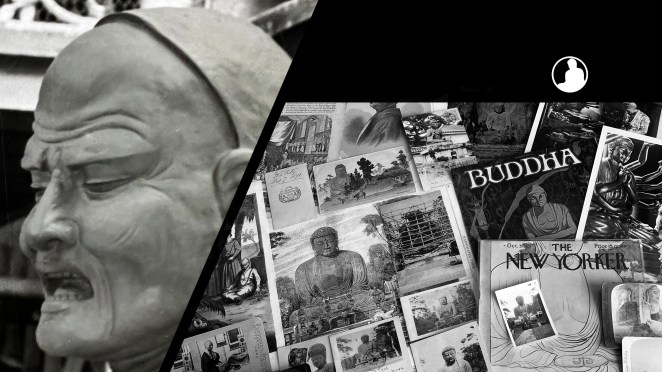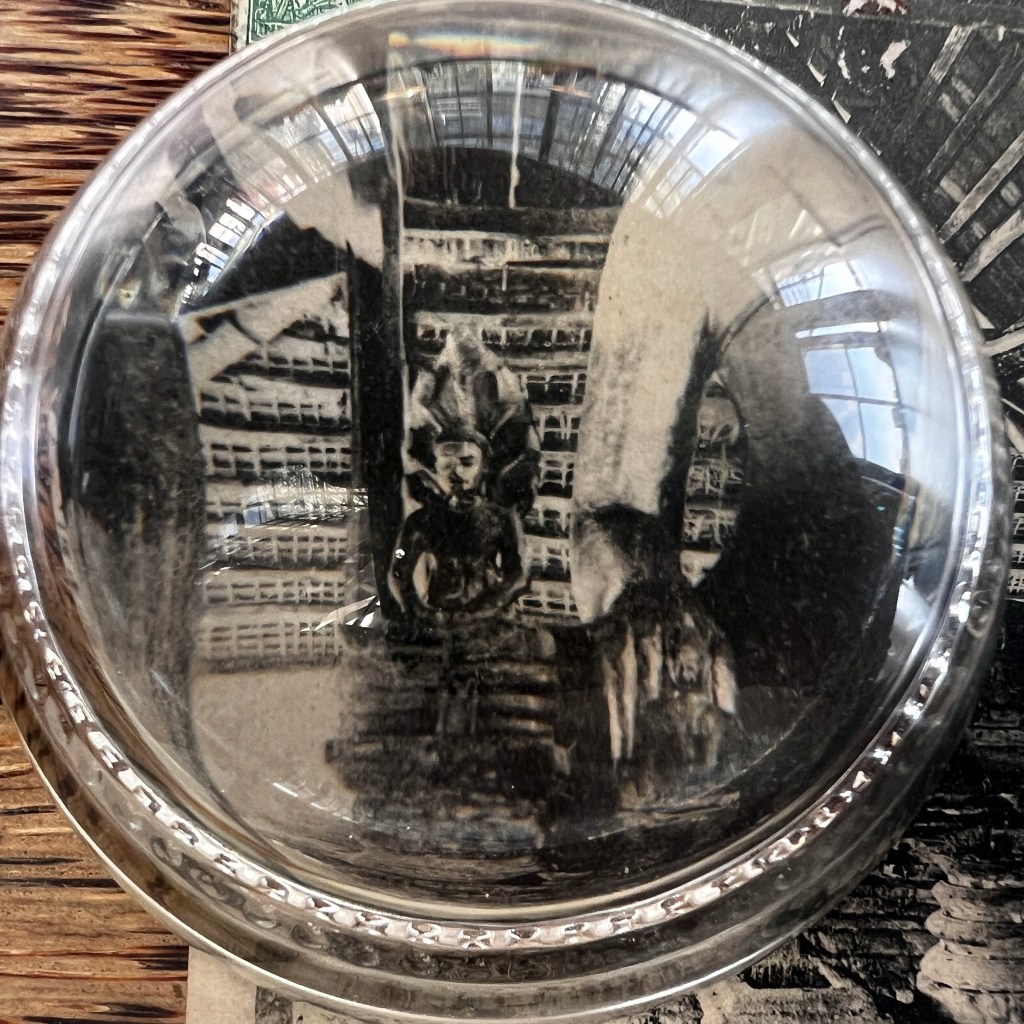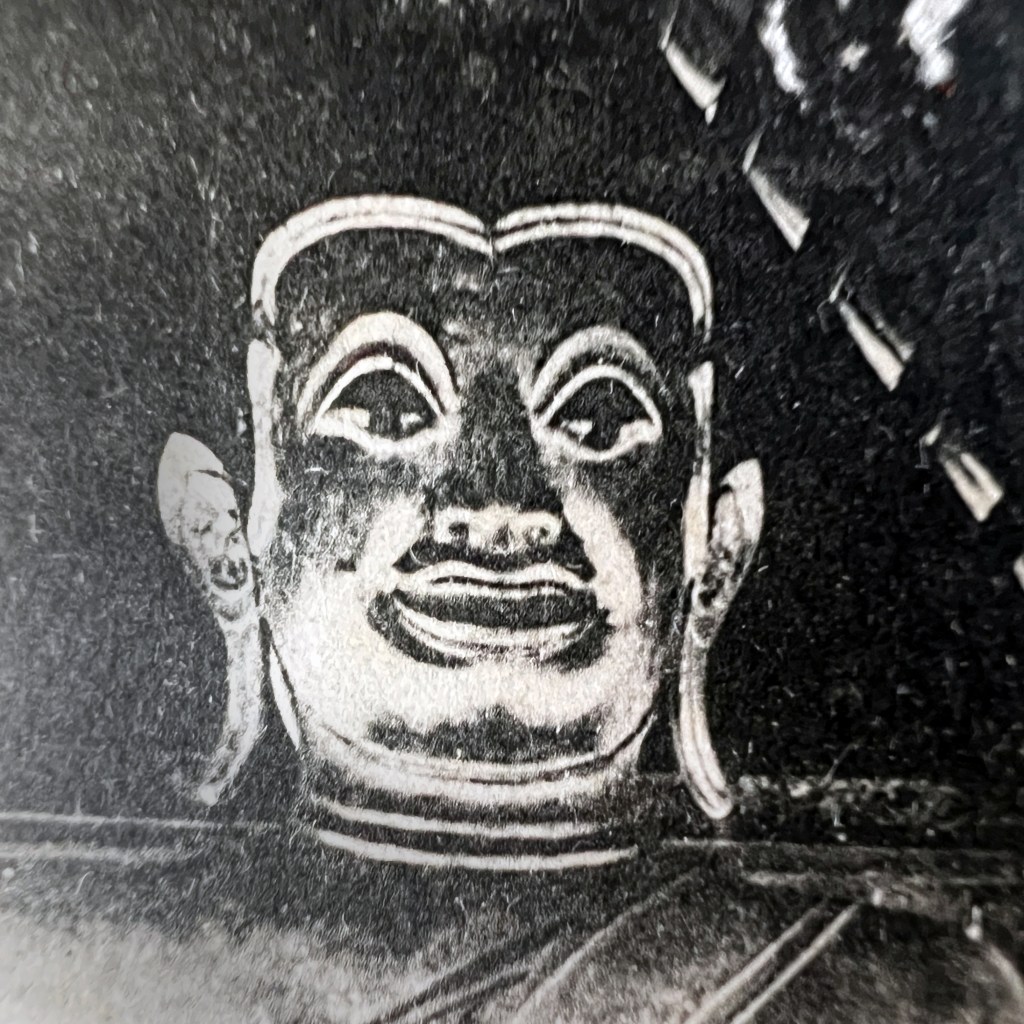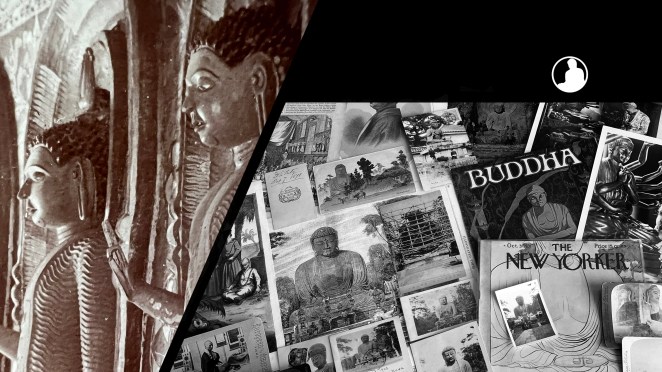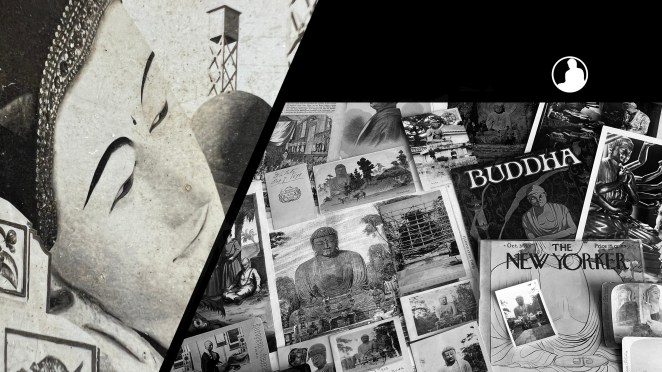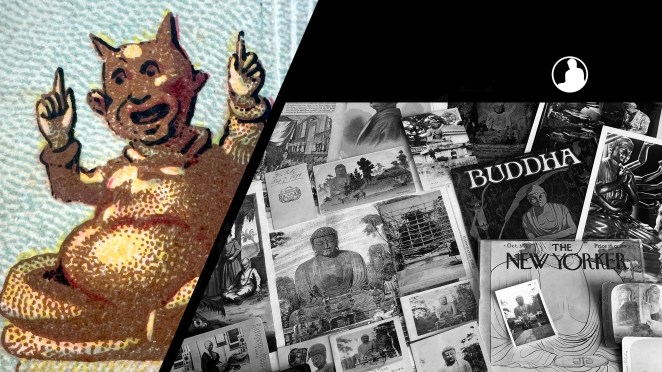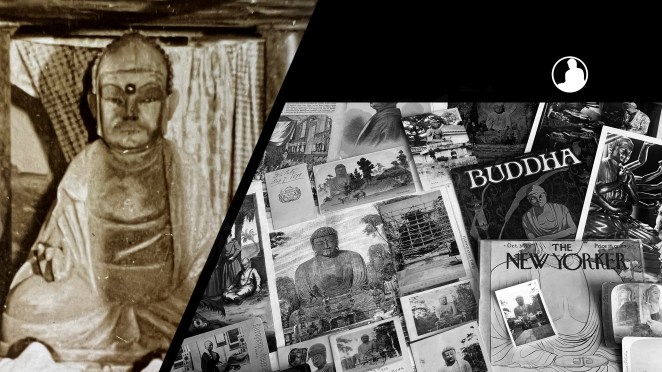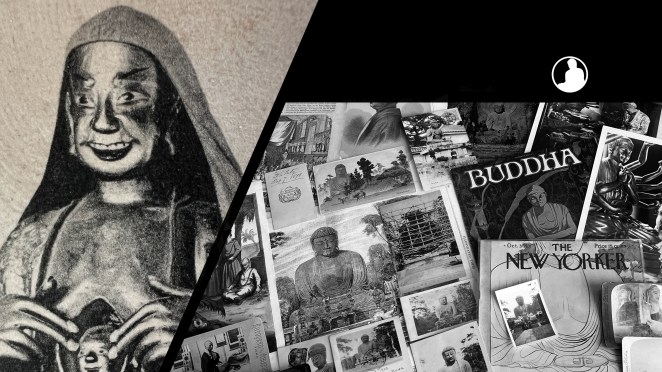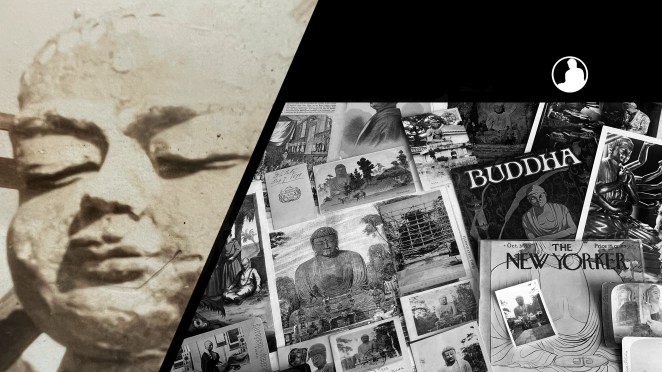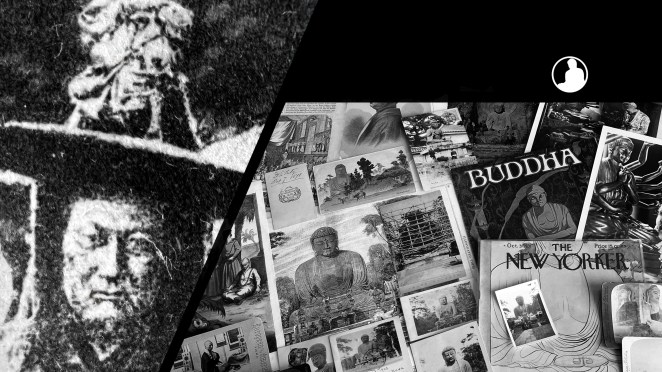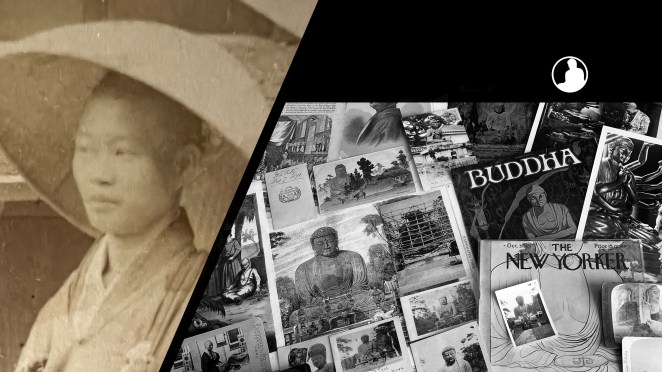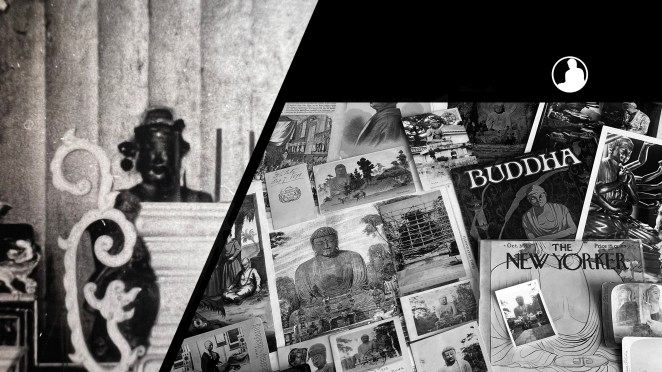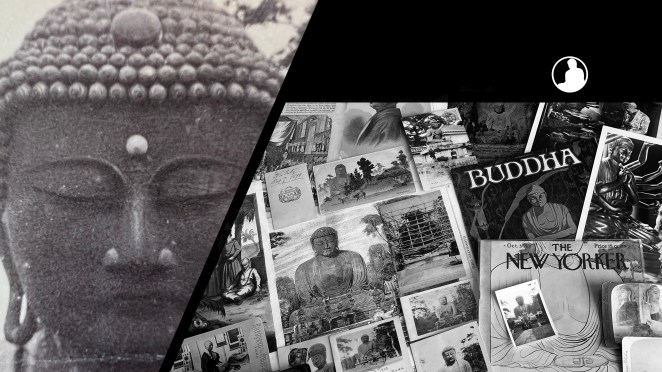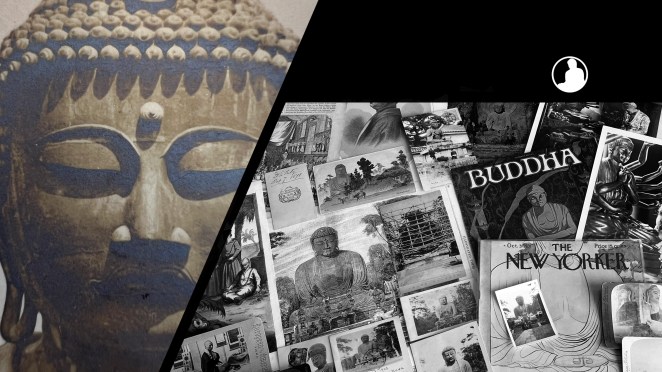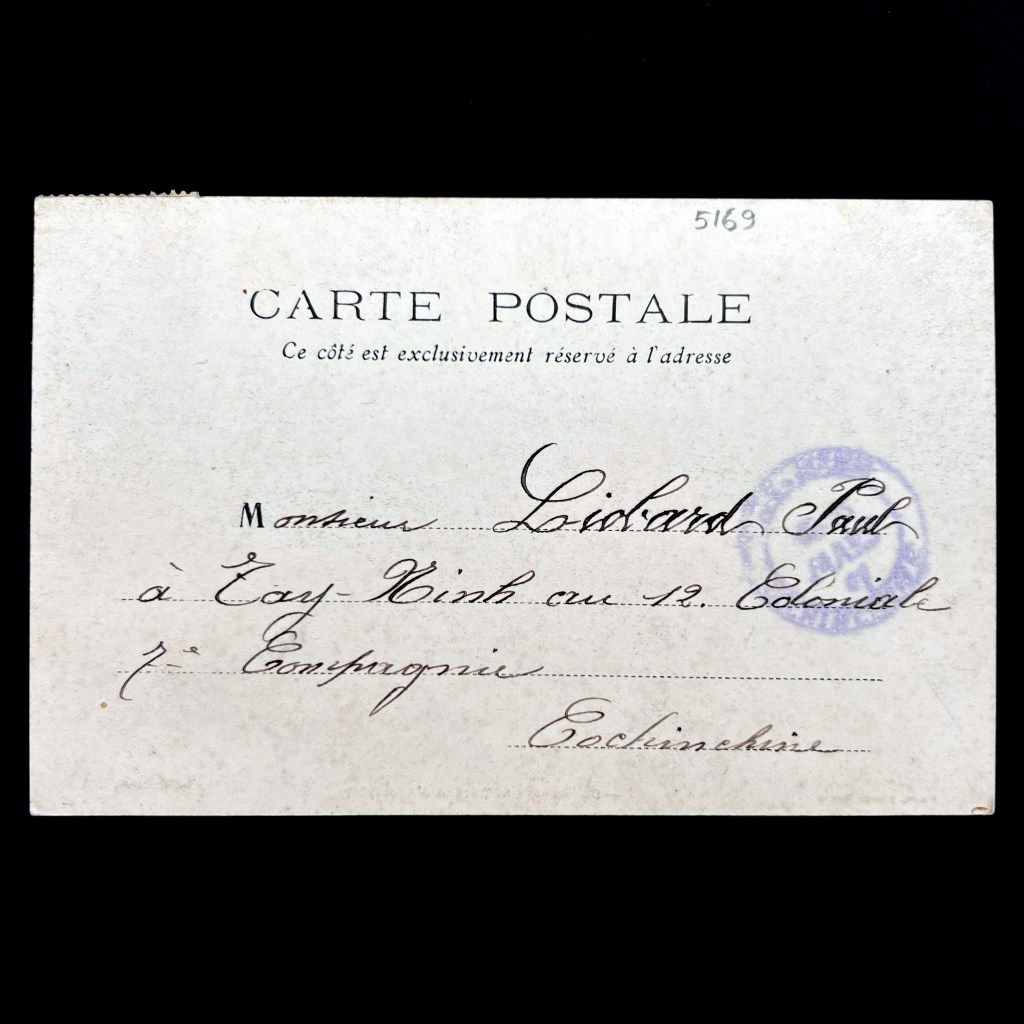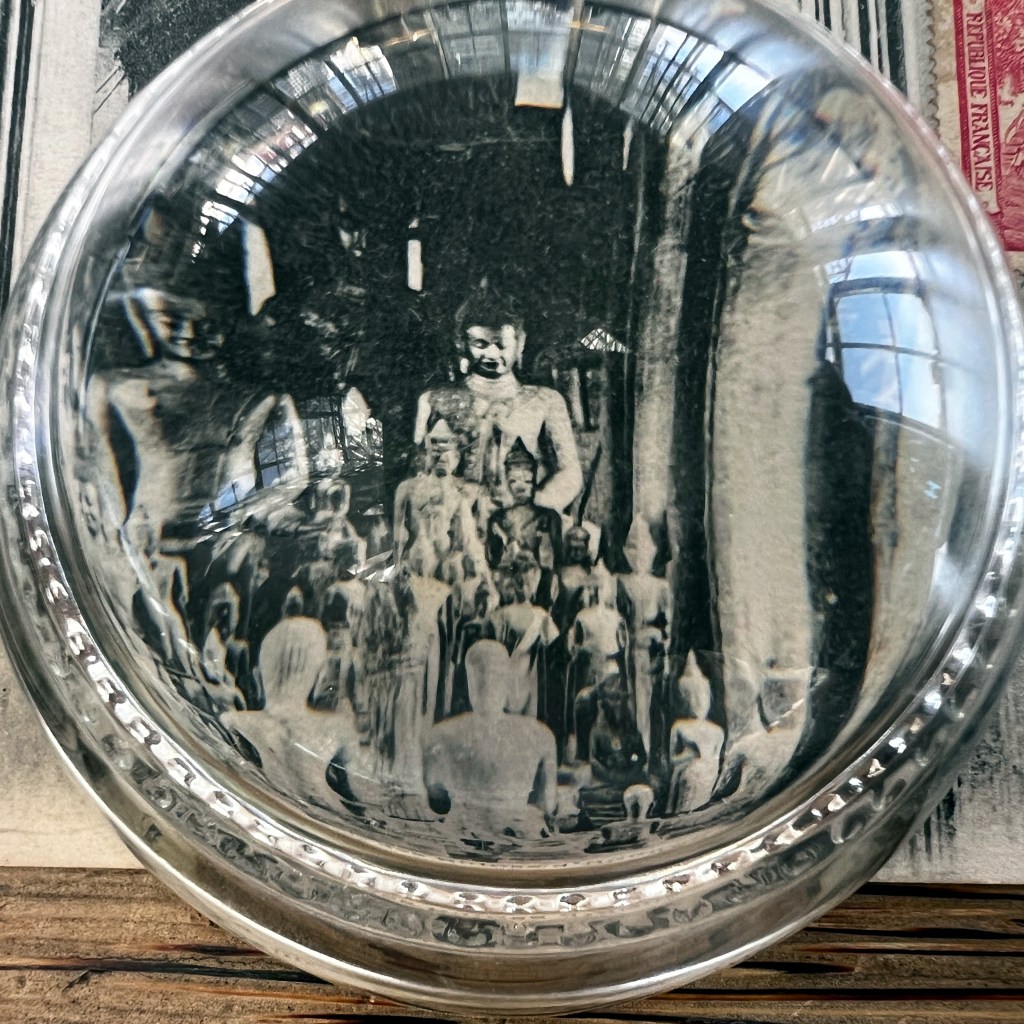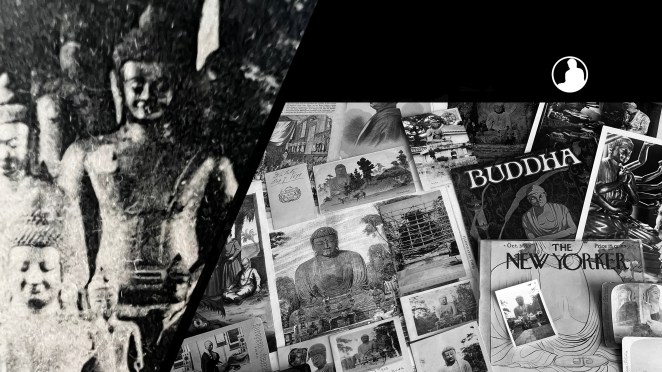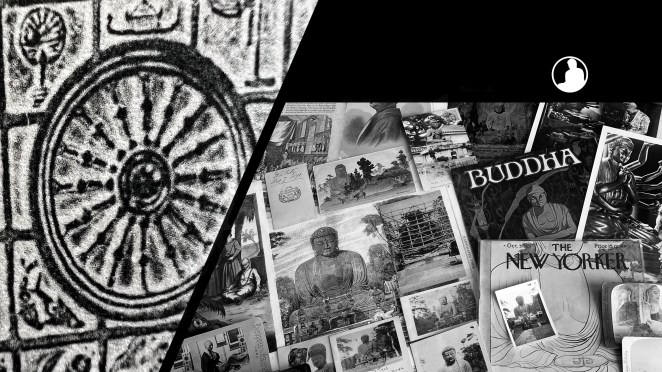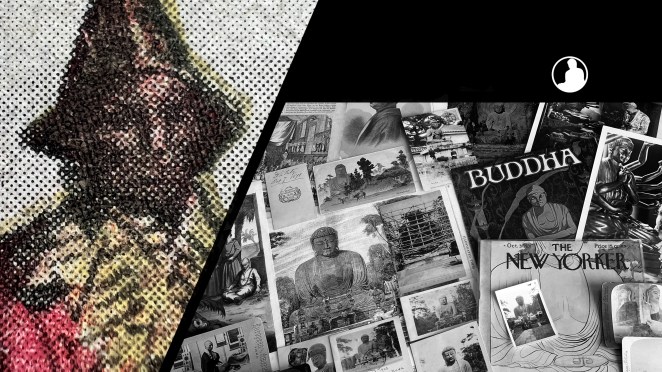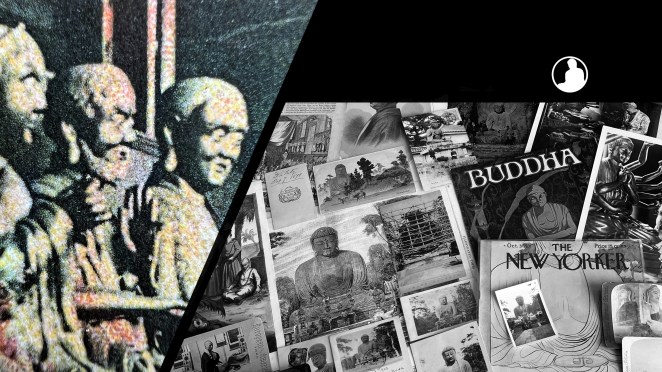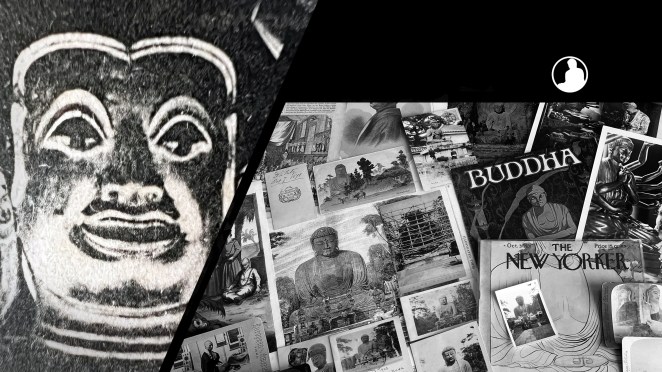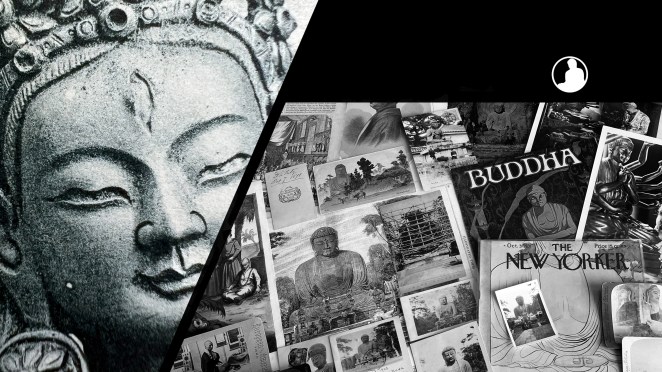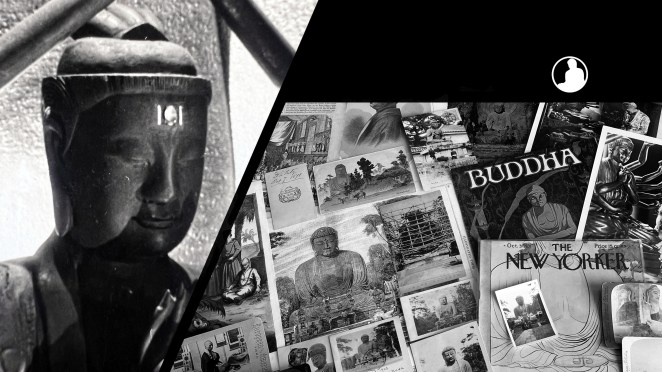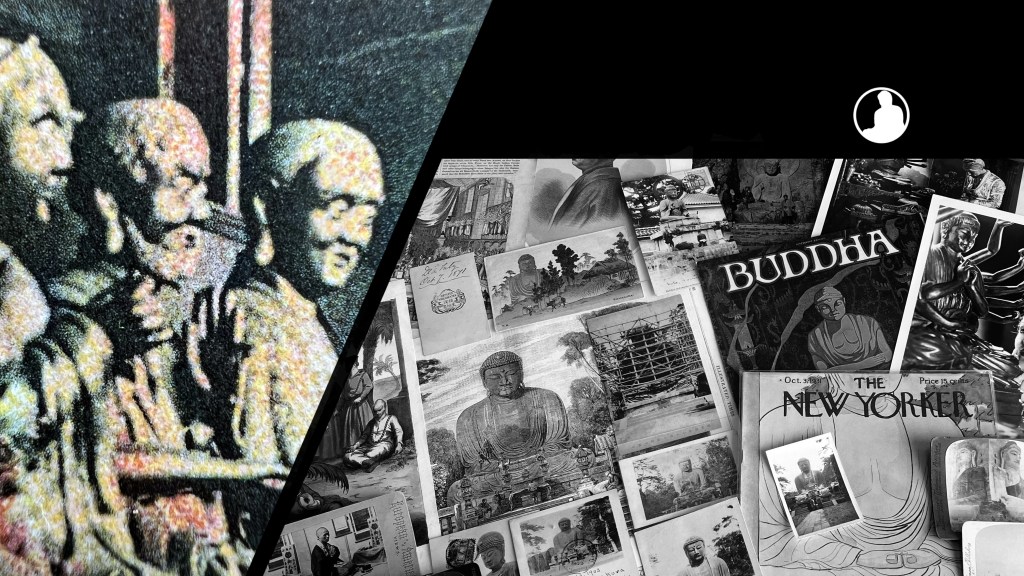
Wa Lum (Hualin) Temple 500 Arhats Hall Postcard

For all the new Buddhas in the West posts
follow us on Bluesky & Instagram


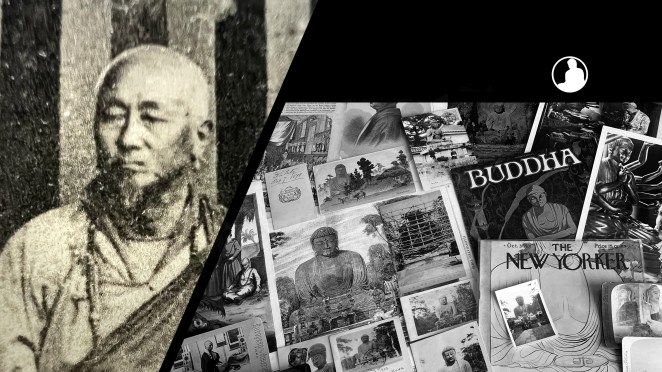
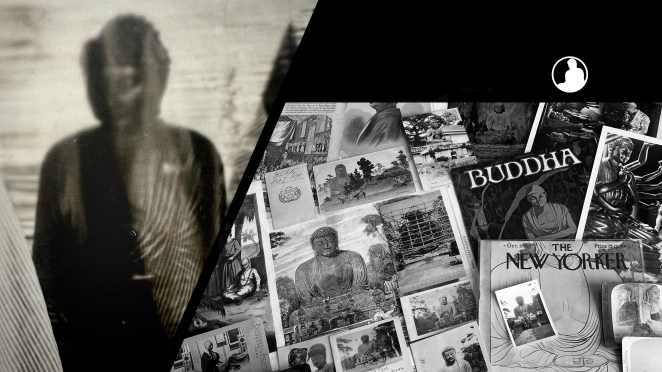
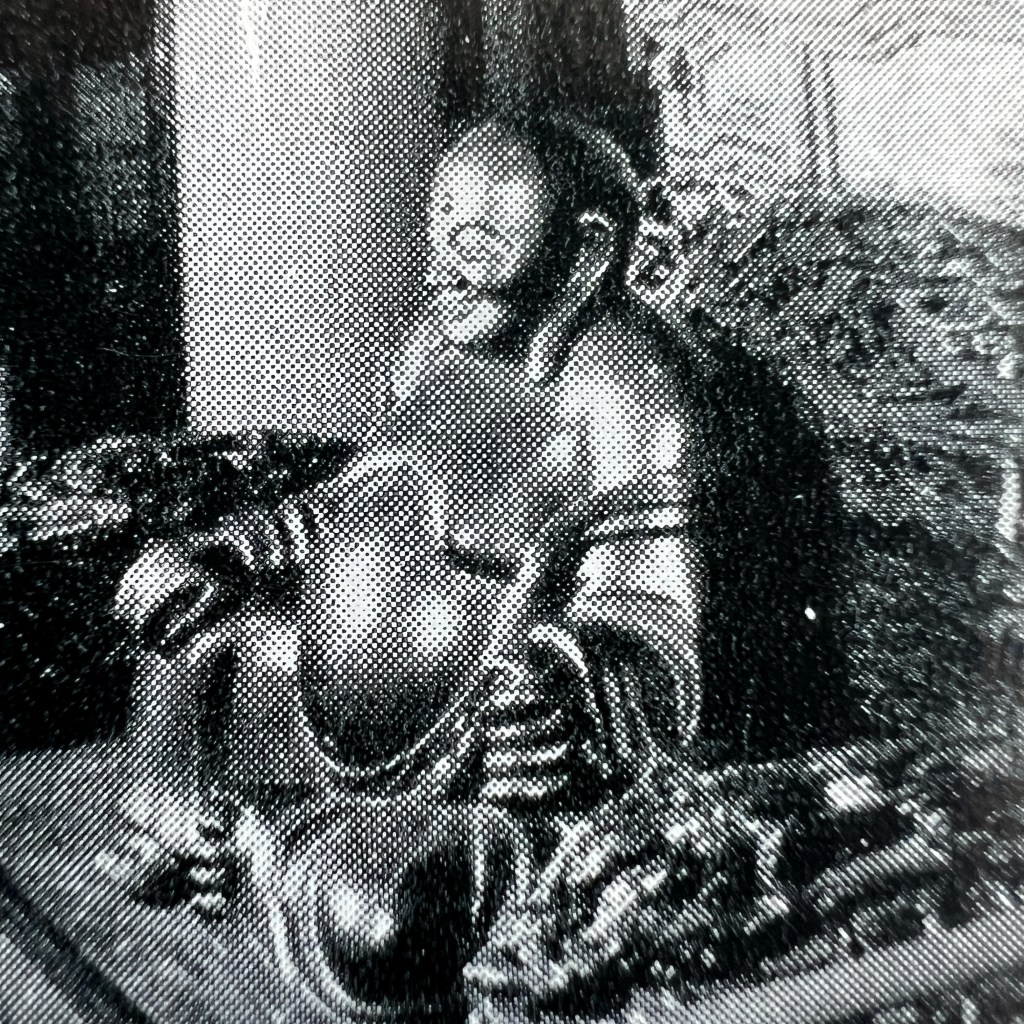
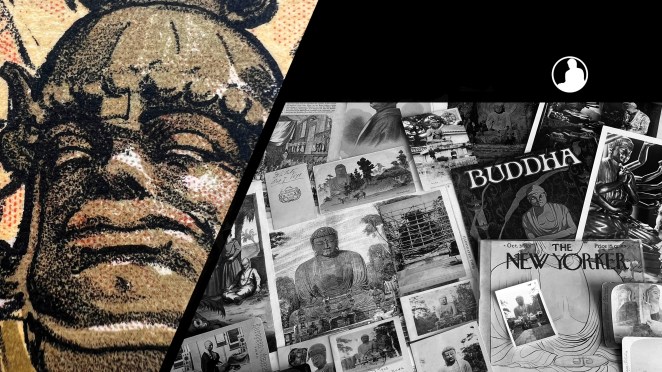
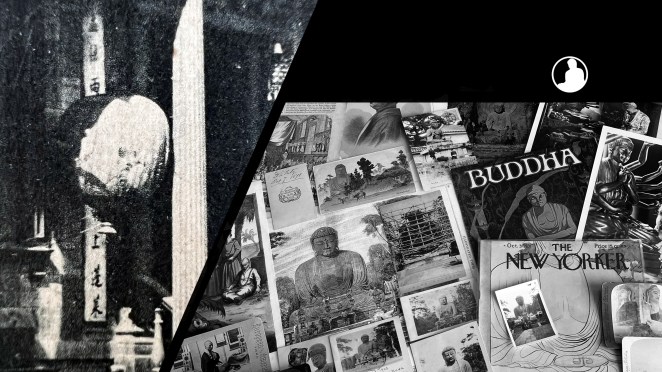
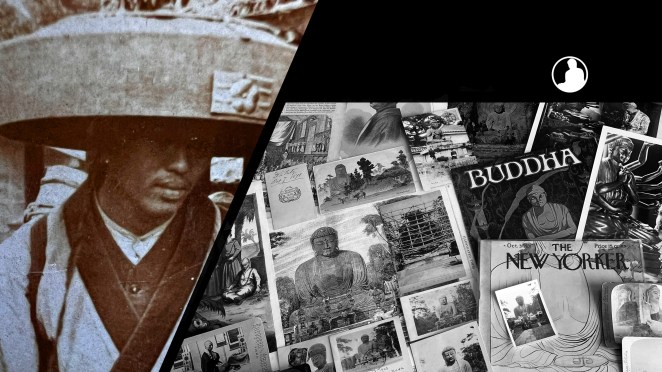
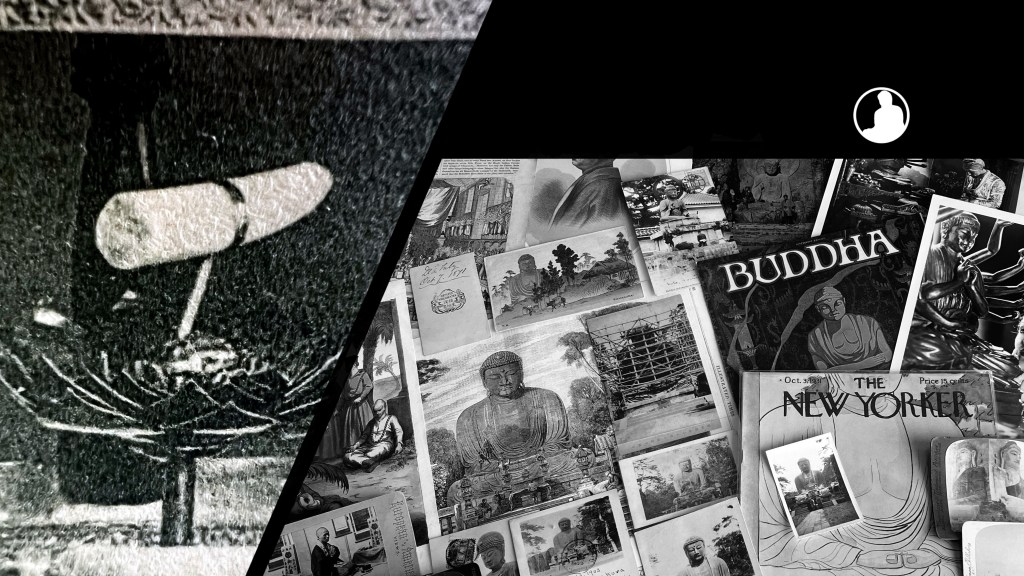
The Hualin Temple in Guangzhou, China was well known among foreign tourists at the end of the 19th century for its Hall of Five Hundred Arhats. Reportedly made of clay, the icons were installed in the early 1850s and remained until the Cultural Revolution a century later.
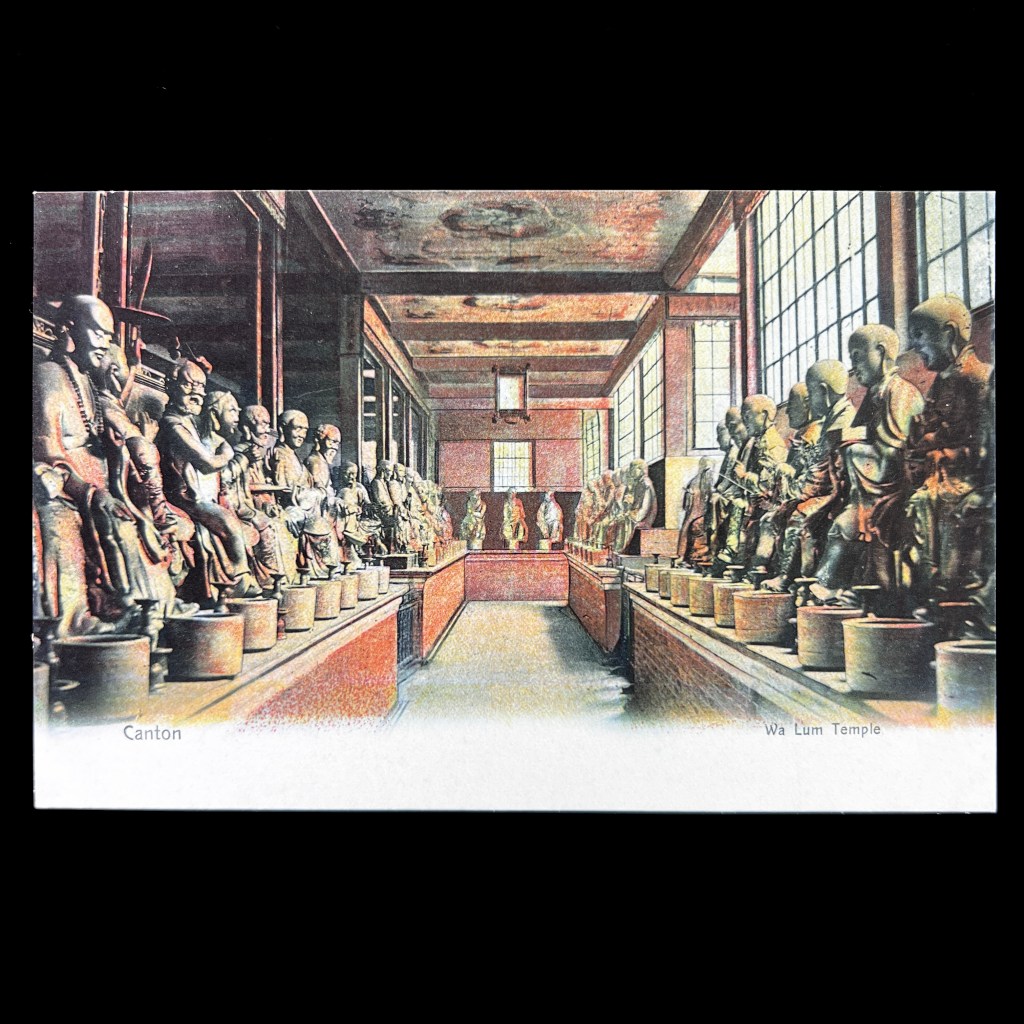
This postcard dates to c. 1910 and was published by the postcard dealer Moritz Sternberg who operated from Queen’s Road in Hong Kong. The original photo, however, is much older and is often attributed to Lai Afong, the most influential Chinese photographer of the late Qing.

While the temple has a history dating to the 6th century, the Arhat Hall was built in the late 1840s. It was one of the sites visited by the pioneering Scottish photographer John Thompson when he sojourned in China from 1868 to 1872.

By Thompson’s visit, rumor had spread that one of the arhat statues was actually an image of Marco Polo (not shown). Thompson notes “careful inquiry proves this statement incorrect,” nevertheless, the belief still persists to the present.
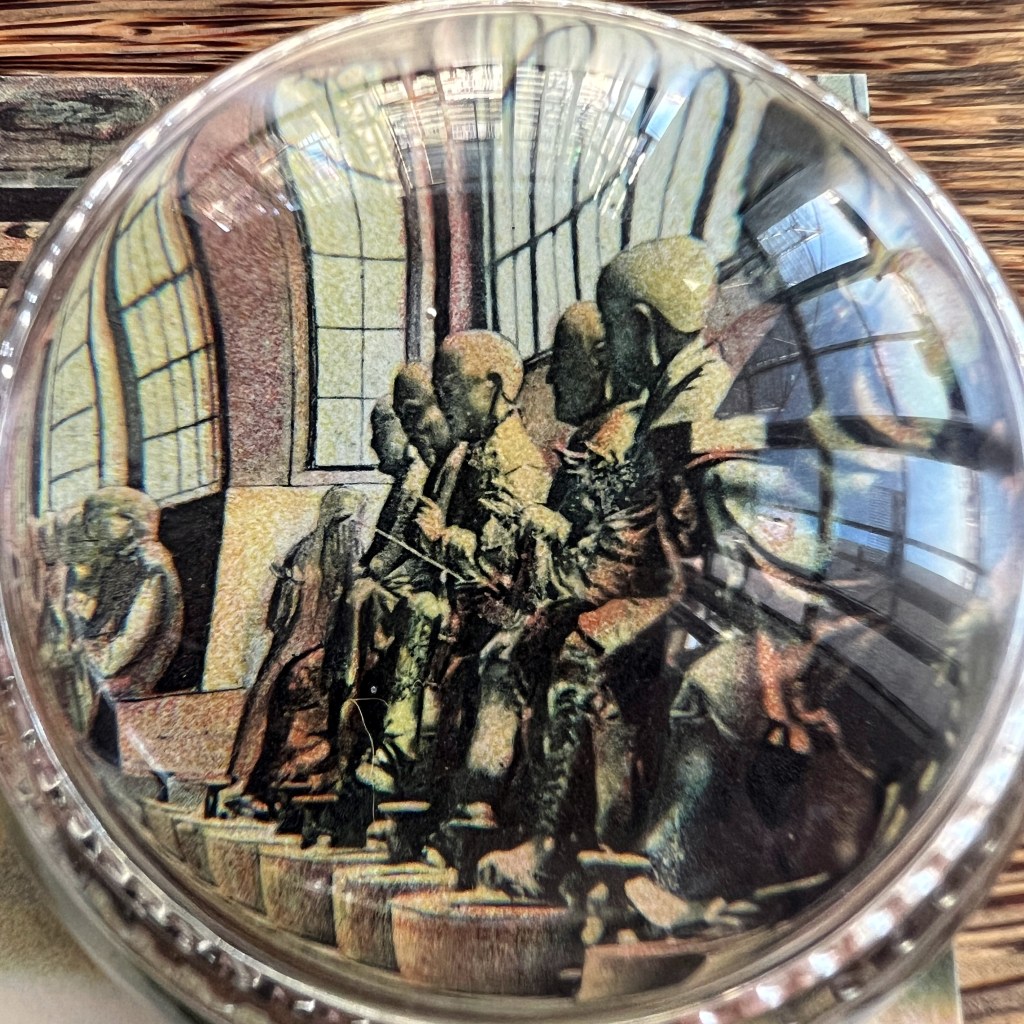
While the icons were replaced in the 1990s, several photographs exist of the originals that were destroyed. A copy of the original photo for this postcard is found in the Hotz Collection of Leiden University Library, viewable here: https://tinyurl.com/2syahybe


The Buddhas in the West Material Archive is a digital scholarship project that catalogues artifacts depicting Buddhist material culture for Western audiences. It’s comprised of prints, photos, and an assortment of ephemera and other objects. For a brief introduction to this archive, visit the main Buddhas in the West project page.


For Related Buddhas in the West Posts Featuring China:

For the Most Recent Buddhas in the West Posts:


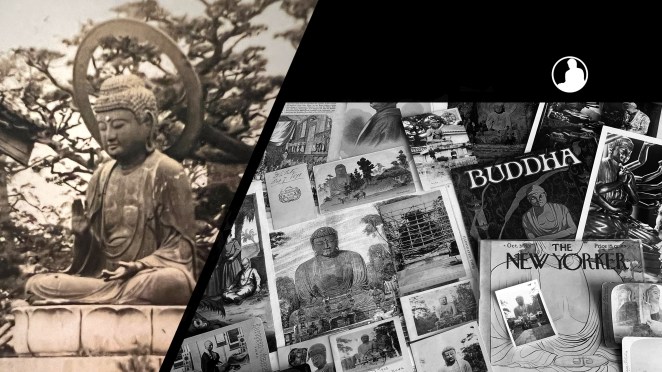
George Planté’s Ruins of Ankgor Postcard

For all the new Buddhas in the West posts
follow us on Bluesky & Instagram


The Golden Age of postcards began with early postcard illustrations of the Eiffel Tower in 1889. Thus, when French military arrived in French colonial Vietnam, then known as Indochina, a market emerged for pictorial imagery of the region – including Buddhist temples.

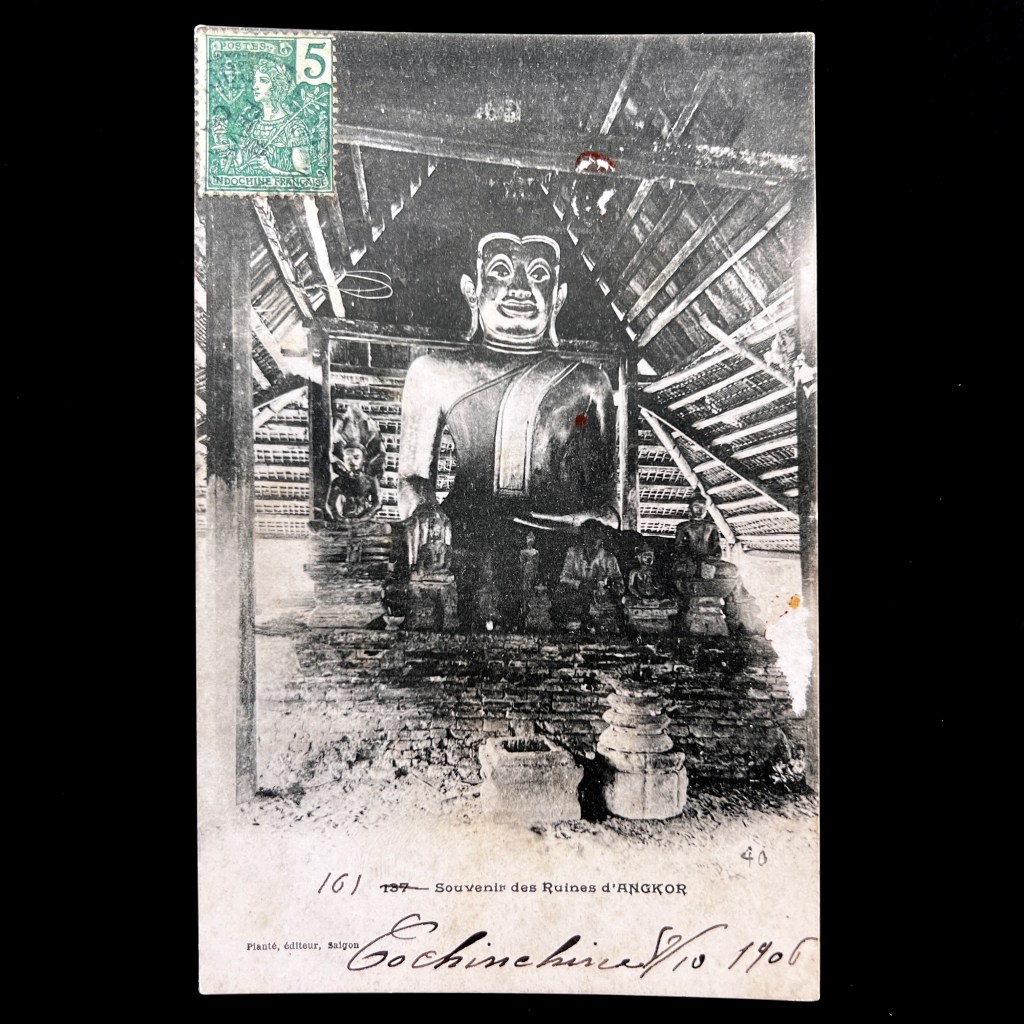
The caption here give the description: “Souvenir of the Ruins of ANGKOR.” The publisher, George Planté, had operated a photography studio in Saigon and started selling postcards by 1905.

In addition to the large central Buddha statue, several other Buddhist icons are placed on the altar. I have been unable to identify which area of Angkor this photograph depicts.

The design on the back suggests this card was published in 1905 (the date 1906 is inscribed on the front). The front also bears the affixed stamp – this was typically done so the card could be placed in an album and still display the cancelled stamp.

It was likely postcards such as this were printed in Europe using the most up-to-date photo-mechanical printing techniques and then sent back to the colonial publishers for resale.


The Buddhas in the West Material Archive is a digital scholarship project that catalogues artifacts depicting Buddhist material culture for Western audiences. It’s comprised of prints, photos, and an assortment of ephemera and other objects. For a brief introduction to this archive, visit the main Buddhas in the West project page.


For Related Buddhas in the West Posts Featuring Gautama, the historical Buddha:


For the Most Recent Buddhas in the West Posts:


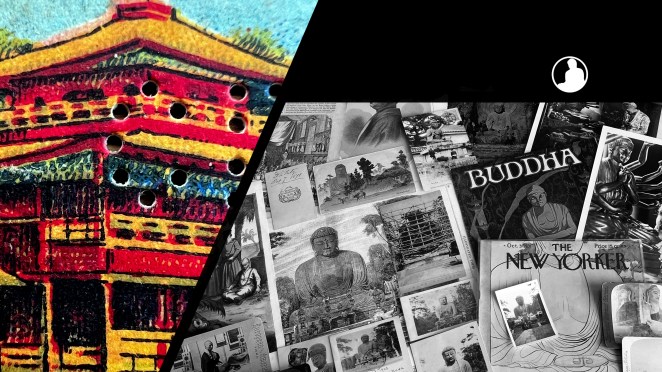
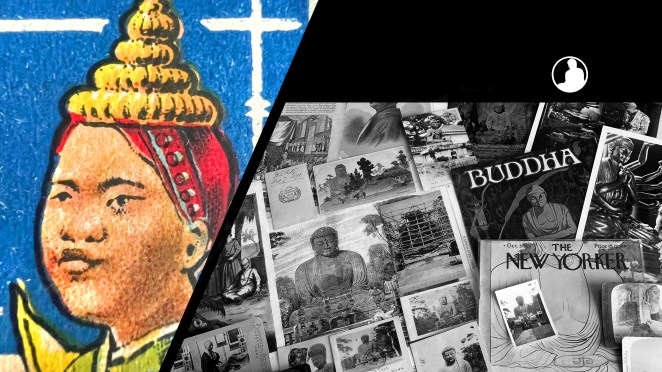
Chocolat Pupier’s Kinkaku-ji Trade Card

For all the new Buddhas in the West posts
follow us on Bluesky & Instagram


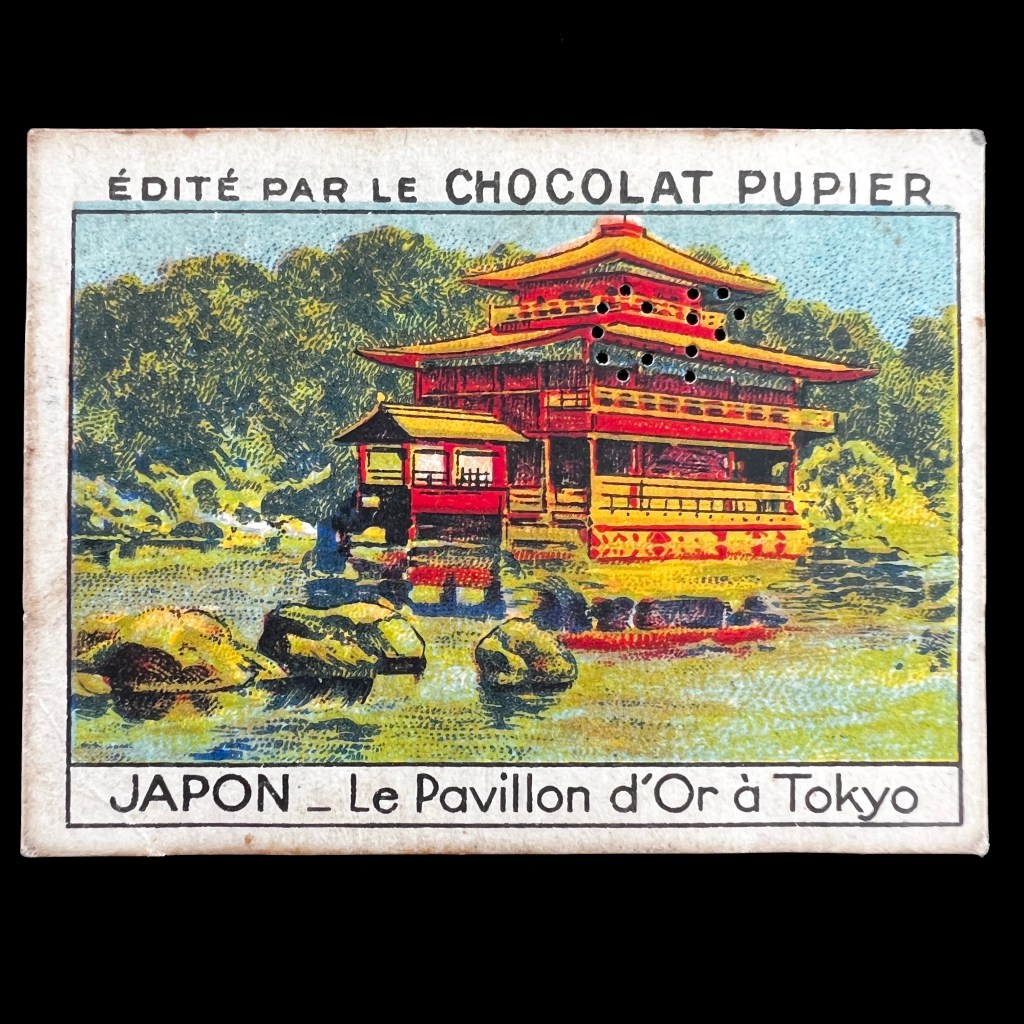
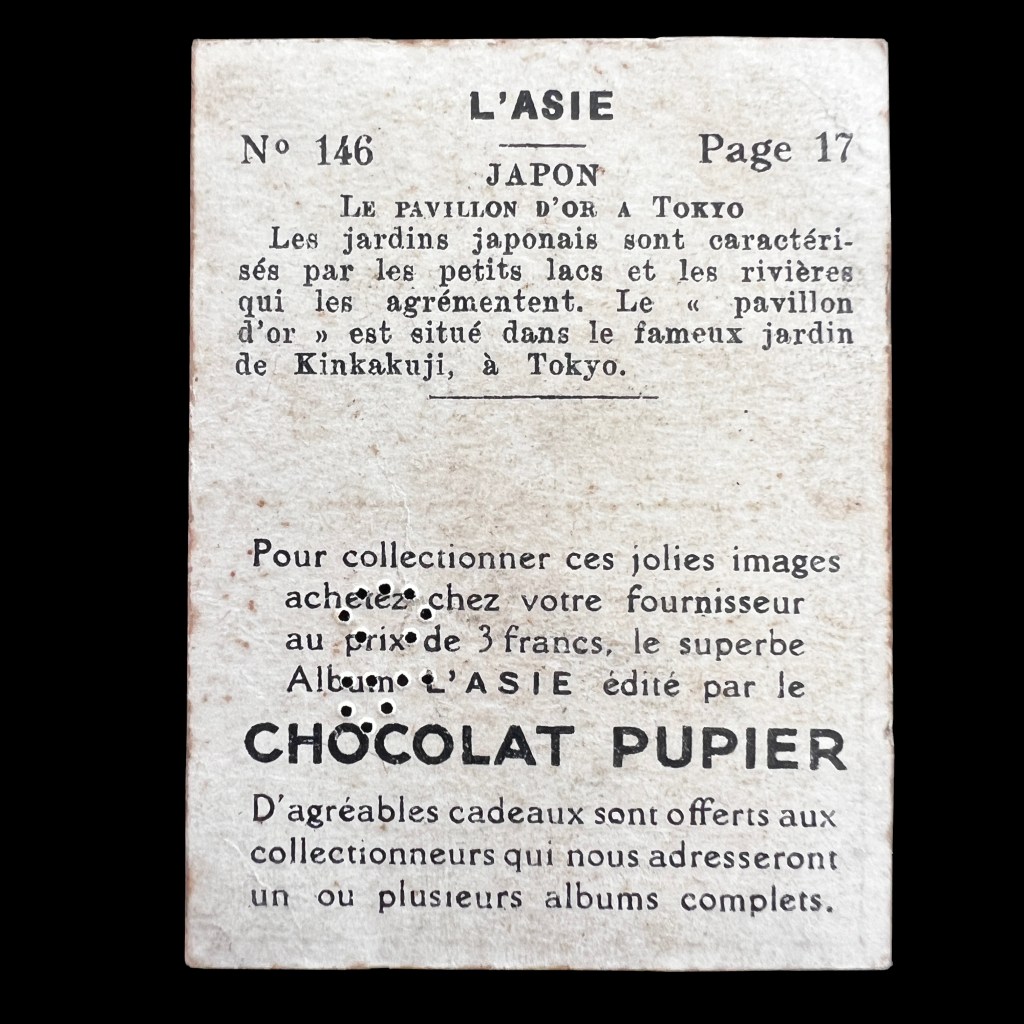
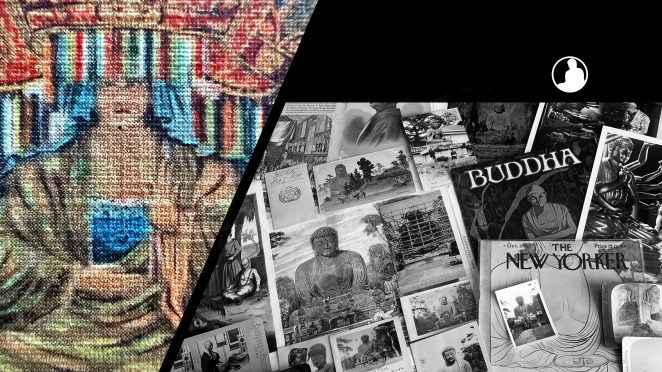
Turn of the century French chocolatiers took advantage of the popularity of colorful trade cards and included them with their products. In 1936 the Chocolat Pupier company created a collectable Asia series with several illustrations of Buddhist material culture.

An album with 252 card slots could be purchased to display your collection. If completed, Chocolat Pupier offered a gift to the consumer.

Chromo-lithographic printing offered an inexpensive way to mass produce colorful imagery. There is an error on this card, however, can you spot it?

The Gold Pavilion Temple, Kinkaku-ji, is not in Tokyo, buy Kyoto. In addition to Asia, Chocolat Pupier made cards related to Europe, North America, and Africa.

A small collection of Chocolat Pupier card was recently acquired by Duke University Library, see here: https://archives.lib.duke.edu/catalog/chocolatpupier.


The Buddhas in the West Material Archive is a digital scholarship project that catalogues artifacts depicting Buddhist material culture for Western audiences. It’s comprised of prints, photos, and an assortment of ephemera and other objects. For a brief introduction to this archive, visit the main Buddhas in the West project page.


For Related Buddhas in the West Posts Featuring Historical Trade Cards:


For the Most Recent Buddhas in the West Posts:


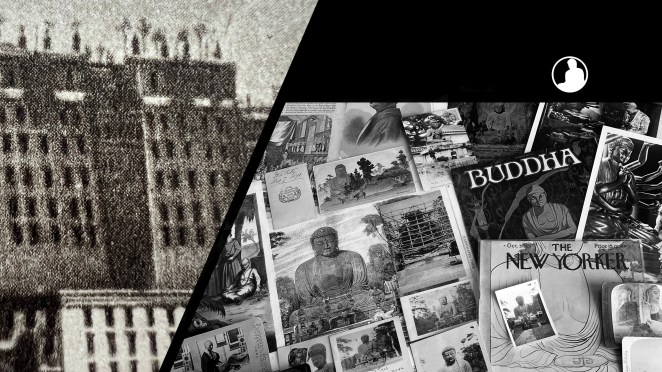
1904 Metropolitan Series “Japanese Pagoda” Stereoview

For all the new Buddhas in the West posts
follow us on Bluesky & Instagram


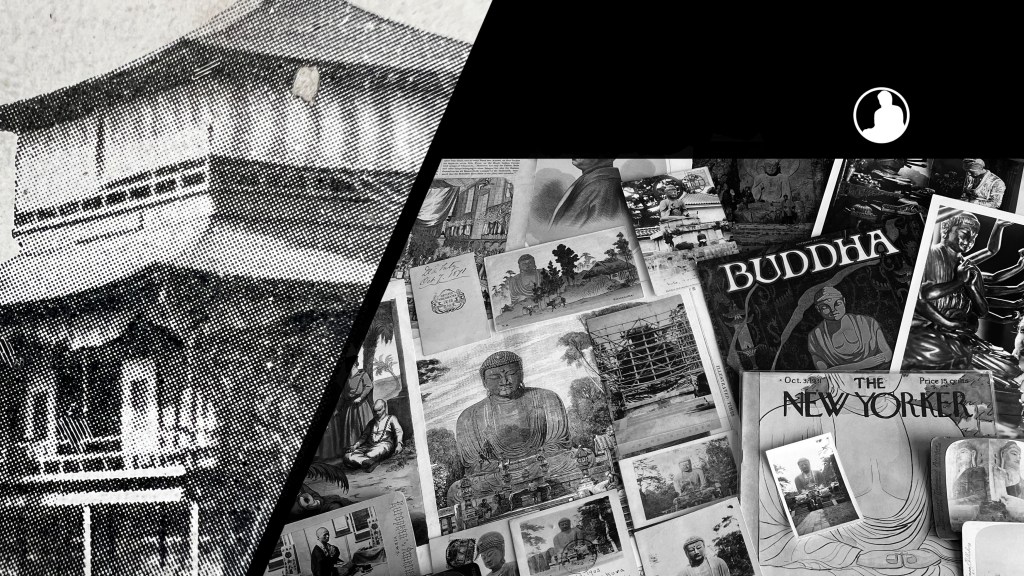
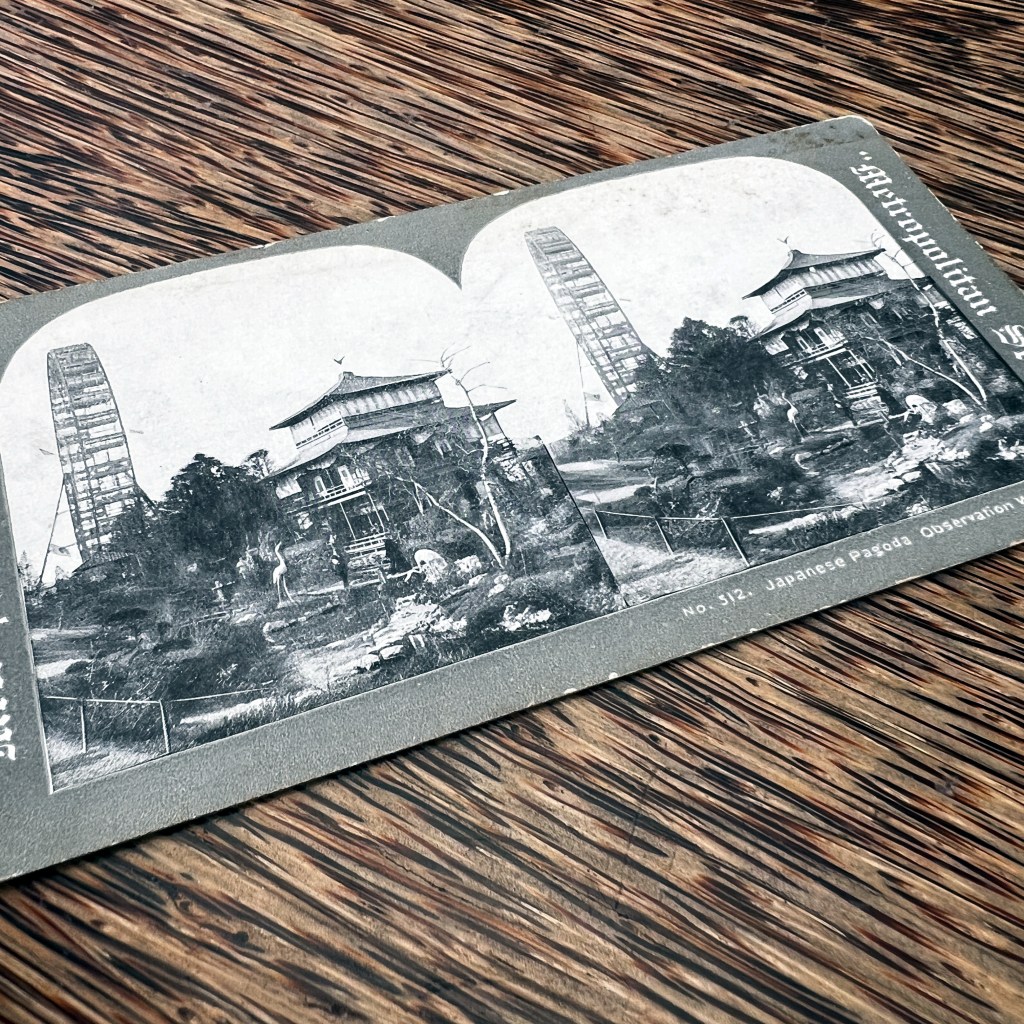
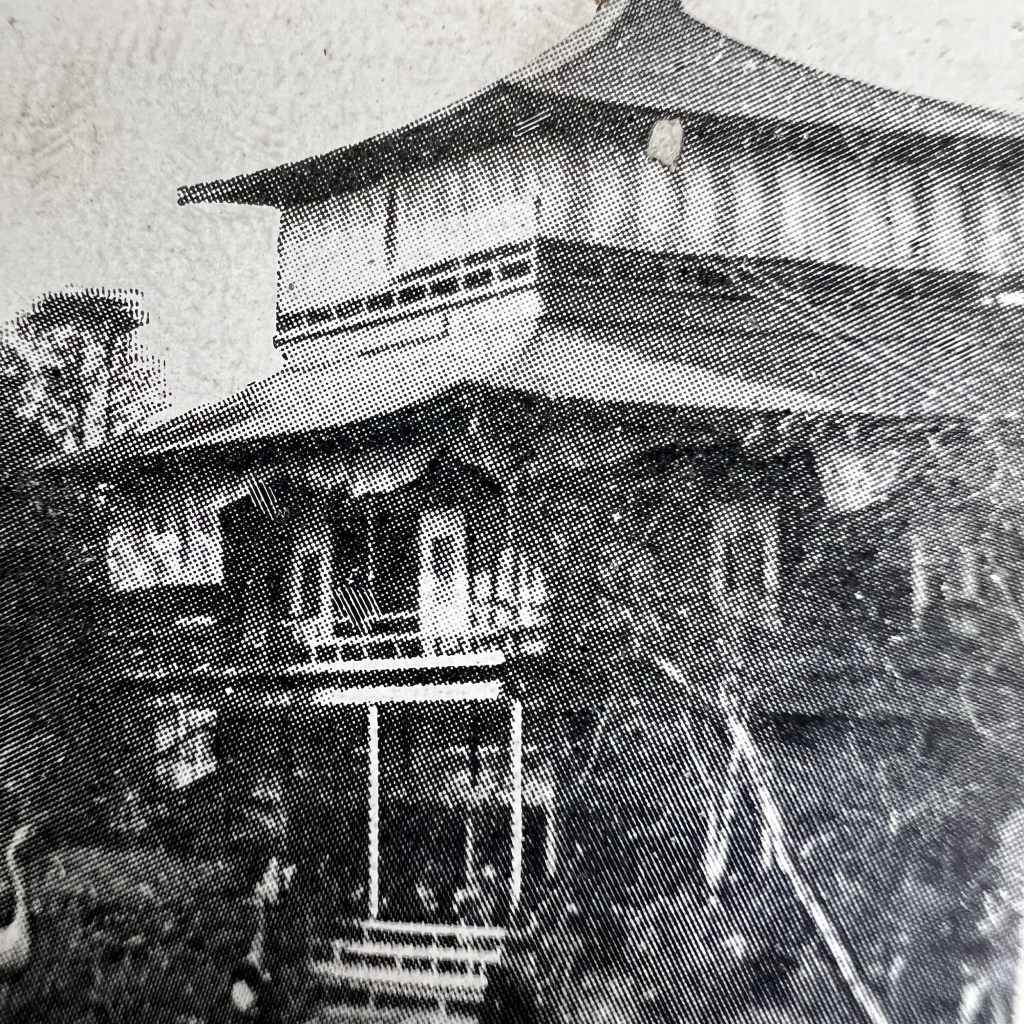
This is not an AI rendered image – it’s a Ferris Wheel towering over Kyoto’s famed Temple of the Golden Pavilion, known as Kinkaku-ji. More accurately, it’s a replica of Kinkaku-ji built for the 1904 St. Louis World’s Fair advertised as a Japanese imperial gardens pagoda.

The Kyoto original, dating to 1400, houses Buddhist relics while the St. Louis replica was built to serve Japanese tea. In both cases the respective buildings are surrounded by a garden and topped with a phoenix roof ornament.

The St. Louis garden was designed by the Japanese landscape architect Yukio Ichikawa 市川之雄.

Japan’s exhibitions were well attended, in part by the generally positive newspaper coverage as well as the publicity of the ongoing Russo-Japanese War. Many companies made stereoviews of the 1904 fairgrounds, with the Metropolitan Series sold through Sears catalogues.

Many attendees of the St. Louis fair expressed a sense of awe at Japan’s exhibitions. For more digitized photos of the St. Louis fair, see the offerings at the State Historical Museum of Missouri here https://tinyurl.com/5d7jcupa


The Buddhas in the West Material Archive is a digital scholarship project that catalogues artifacts depicting Buddhist material culture for Western audiences. It’s comprised of prints, photos, and an assortment of ephemera and other objects. For a brief introduction to this archive, visit the main Buddhas in the West project page.


For Related Buddhas in the West Posts Featuring Kyoto:


For the Most Recent Buddhas in the West Posts:


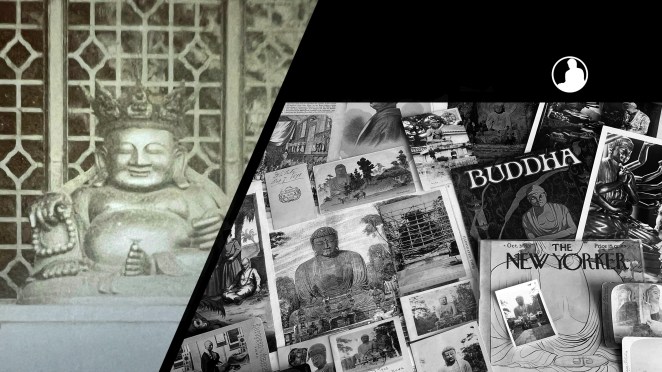
1933 Golden Pavilion Laughing Buddha Playing Card

For all the new Buddhas in the West posts
follow us on Bluesky & Instagram


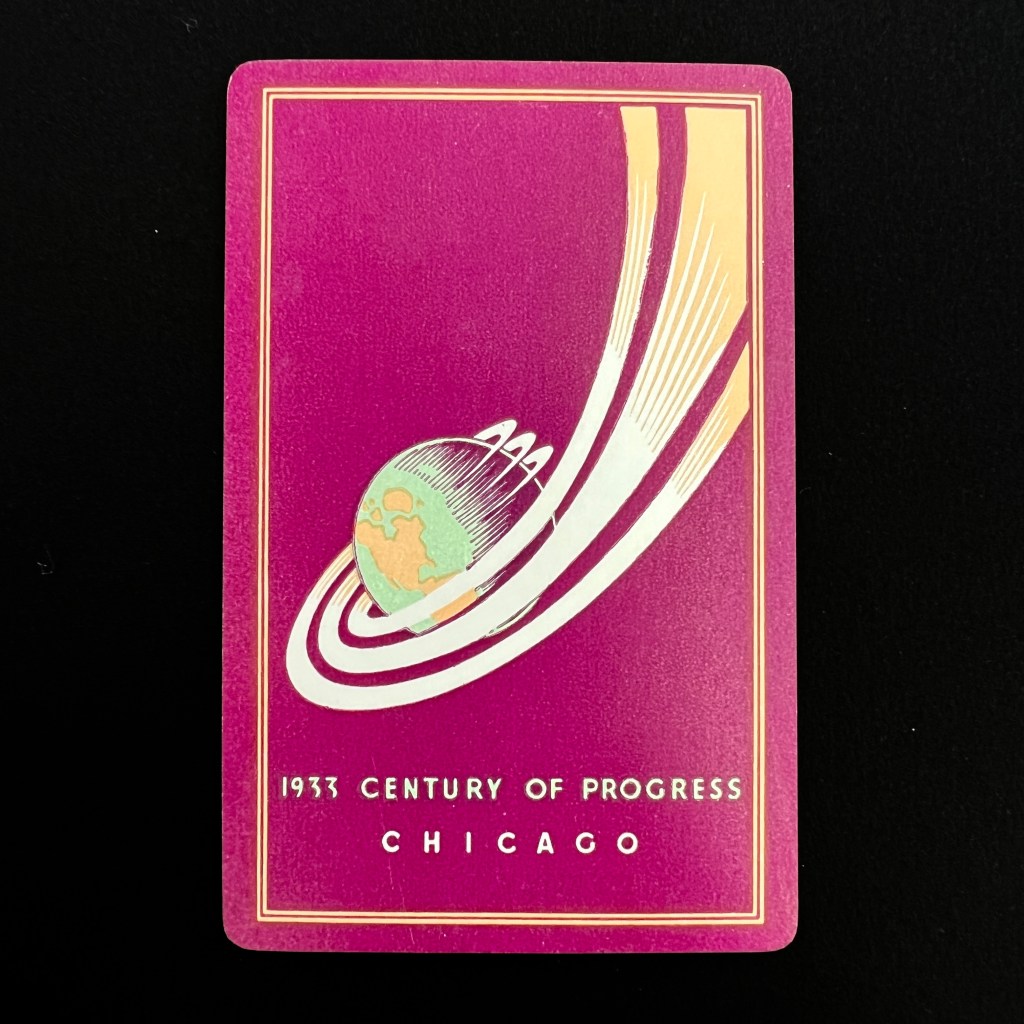
The 1933 Chicago World’s Fair held a true wonder: A Chinese replica of an 18th century Tibetan Buddhist shrine hall, the Golden Temple of Jehol. While the hall included a main shrine to Guanyin, the Laughing Buddha at the front entrance was often used in advertising.

Due to growing conflict in East Asia, the Chinese government withdrew from the 1933 World’s Fair. Subsequently, organizers arranged for display of the recently acquired temple replica of Vincent Bendix, a well-known Chicago industrialist.

Bendix had funded the expedition of Sved Hedin a few years earlier to procure a replica of a Chinese Buddhist temple. The original interest was to display two replica temples with Tibetan religious objects, one in Chicago and one in Stockholm.

Only one replica was made, but Hedin acquired many ritual implements, including thankas and icons, to outfit the building. Named the Bendix Golden Temple (or Pavilion), it was a Chinese-made replica of the Wanfaguiyi Hall in present-day Chengde (Jehol).

The temple was rebuilt for the 1939 World’s Fair in New York. As of 2018 the remains of the temple hall are in Stockholm, but the ritual items and furnishing have all been lost.


The Buddhas in the West Material Archive is a digital scholarship project that catalogues artifacts depicting Buddhist material culture for Western audiences. It’s comprised of prints, photos, and an assortment of ephemera and other objects. For a brief introduction to this archive, visit the main Buddhas in the West project page.


For Related Buddhas in the West Posts Featuring Budai / Laughing Buddha:


For the Most Recent Buddhas in the West Posts:


George Planté’s Hall of a Thousand Buddhas Postcard

For all the new Buddhas in the West posts
follow us on Bluesky & Instagram


George Planté came to Vietnam as a member of the colonial French government, but by 1893 had turned to photography and opened a studio in Saigon. He soon recognized the desire for postcards among the overseas French military and was selling the inexpensive souvenirs by 1905.

The undivided back design of this French card suggests it was published in 1905 or before. Around this time, Planté seems to have acquired the old stock of Aurélien Pestel, thus the photograph on the front may have been taken by Pestel.

The caption gives the location as Angkor Wat, but this is the interior of the Preah Poan, known commonly as the Hall of a Thousand Buddhas. The presence of the Buddhist statues clearly shows how the original temple devoted to Viṣṇu was taken over by Buddhists.

The statues that once filled the open cruciform hall have all been removed in the course of restoration and preservation.

Photographs from the turn of the century capture how the hall once looked filled with Buddhist icons. Google Arts & Culture has a 360-degree view of the hall today, see here: https://tinyurl.com/yckkbumz


The Buddhas in the West Material Archive is a digital scholarship project that catalogues artifacts depicting Buddhist material culture for Western audiences. It’s comprised of prints, photos, and an assortment of ephemera and other objects. For a brief introduction to this archive, visit the main Buddhas in the West project page.


For Related Buddhas in the West Posts Featuring Angkor Wat:


For the Most Recent Buddhas in the West Posts:


Alain Mallet’s Porcelain Pagoda of Baoen Temple Engraving

For all the new Buddhas in the West posts
follow us on Bluesky & Instagram


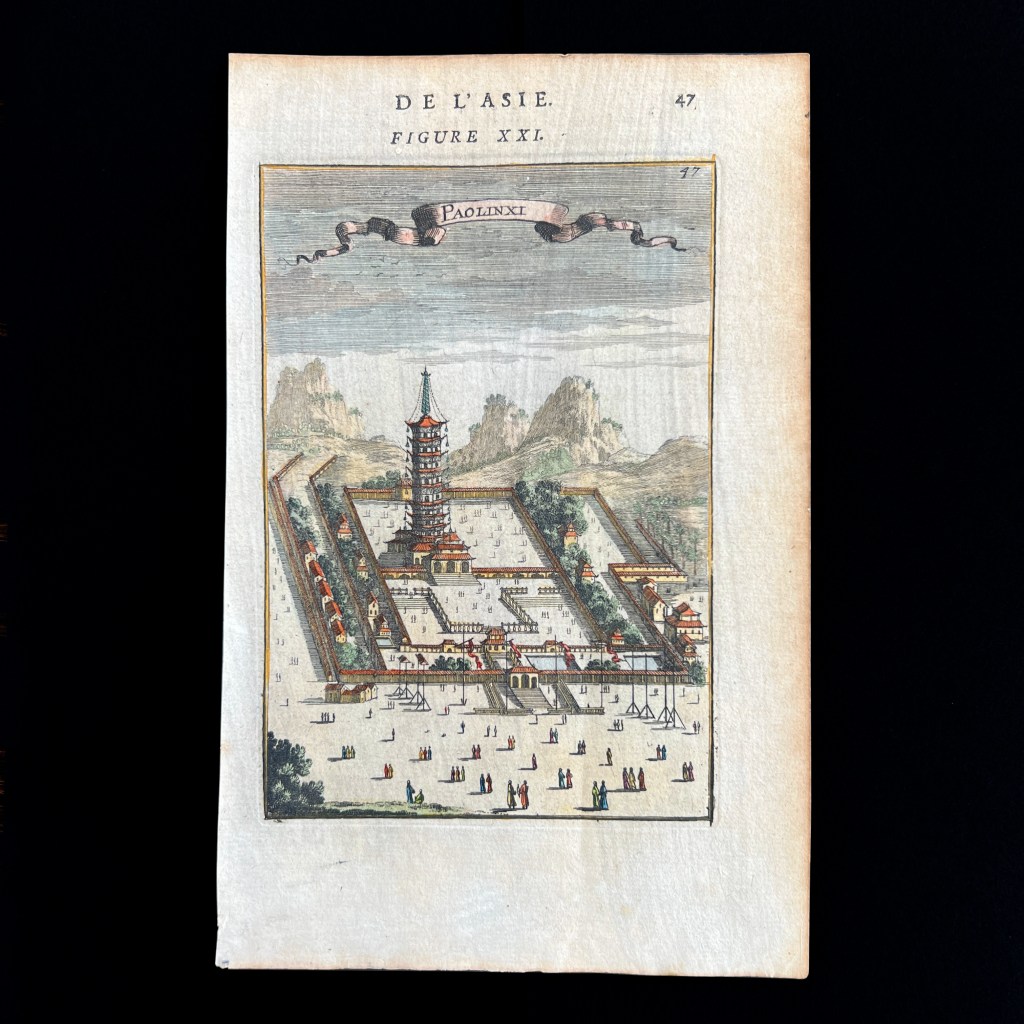
In 1683, the French military commander Alain Mallet published his illustrated five-volume set entitled Description de l’univers. While it received tepid reviews, Mallet’s encyclopedic approach drew together diverse information about East Asia that was still relatively new to European audiences.

Trained as an engineer and draughtsman, Mallet is sometimes claimed to have drawn the images for his books. While his cartography and celestial charts may have been original works, the images of Asia were copies of earlier published illustrations.

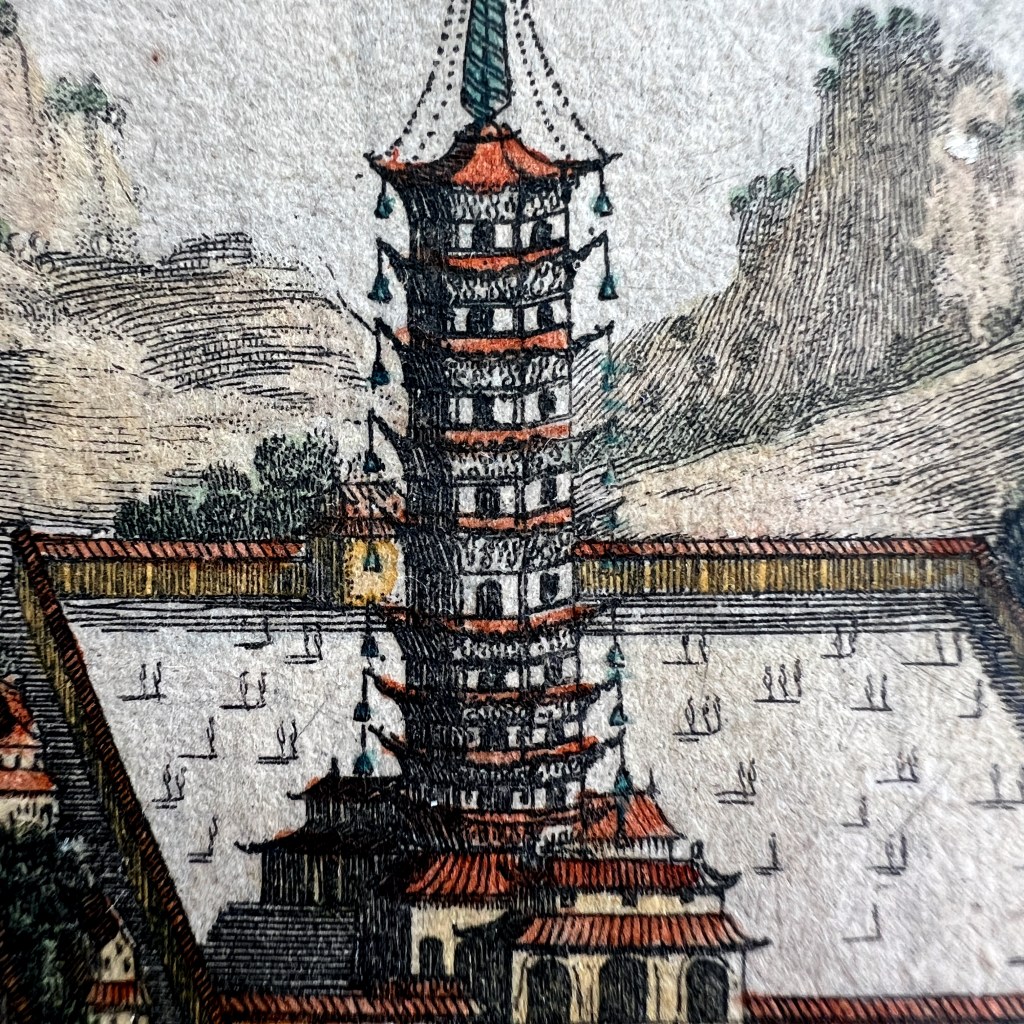
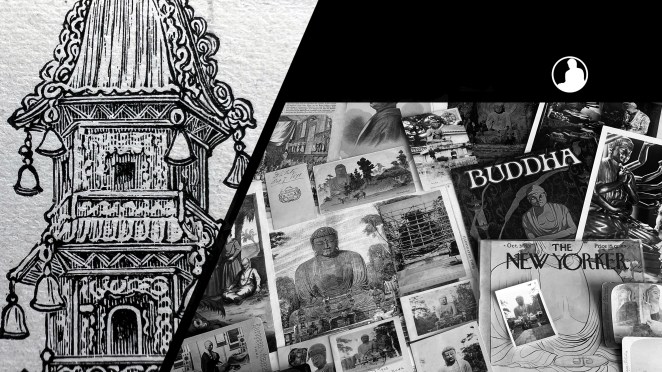
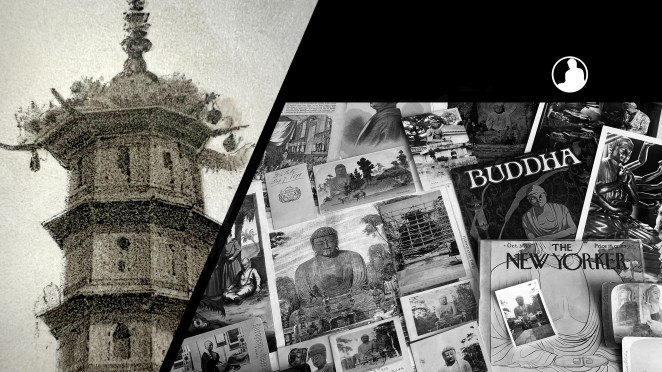
This illustration of the famed Porcelain Pagoda of Baoen Temple in Nanjing was a copy of Johan Nieuhof’s illustration more than a decade earlier. This included the irregular mountains in the back and the people added for scale.

It was publications like Description de l’univers, however, the kept the pagoda alive in the European imagination, making it a key visual element in chinoiserie.


The Buddhas in the West Material Archive is a digital scholarship project that catalogues artifacts depicting Buddhist material culture for Western audiences. It’s comprised of prints, photos, and an assortment of ephemera and other objects. For a brief introduction to this archive, visit the main Buddhas in the West project page.


For Related Buddhas in the West Posts Featuring Historical Engravings:


For the Most Recent Buddhas in the West Posts:


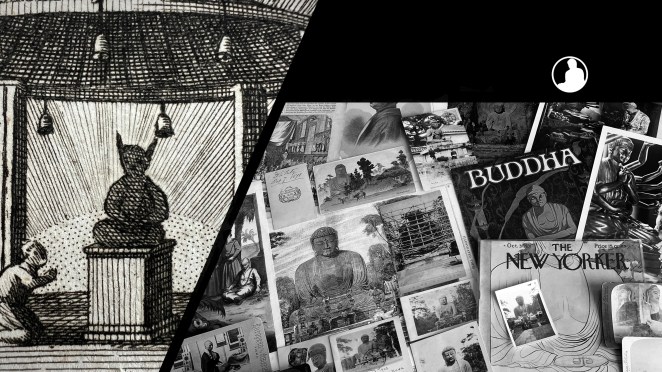
Liebig’s Chinese Buddha Advertising Card

For all the new Buddhas in the West posts
follow us on Bluesky & Instagram


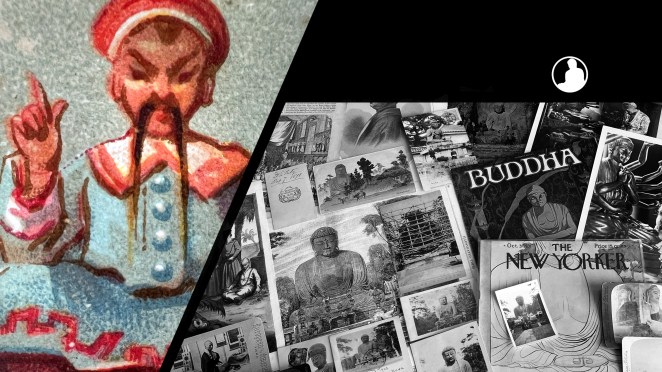
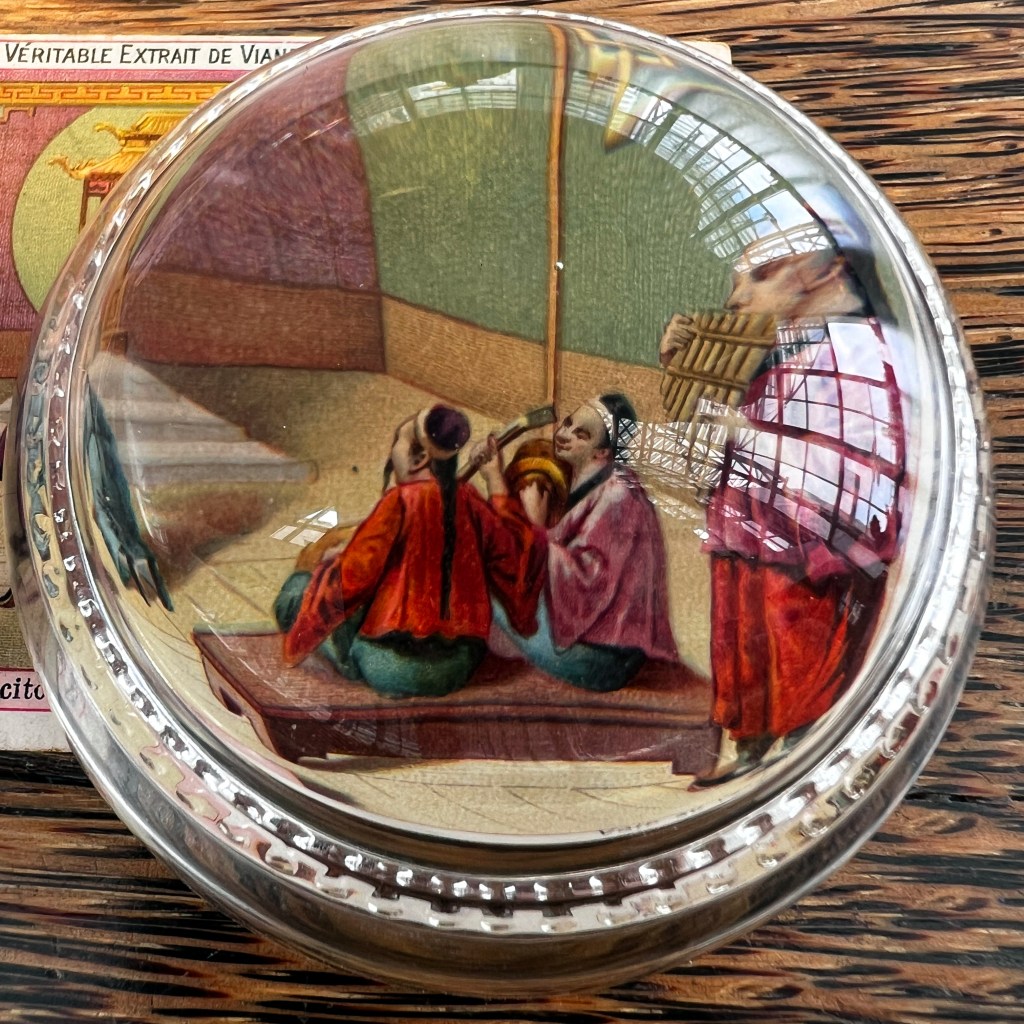
Gods of Antiquity: In the early age of black and white mass market publications, chromolithography ushered in a new era of visual media. From massive broadside to Victorian trade cards, vibrant color was the future and the British Liebig company capitalized on this market.

Liebig started producing trade cards in 1872 and by the turn of the century their cards were printed in several languages. Several different sets were made each year and these sets soon became collector’s items, predating hobbies such as baseball card collecting.

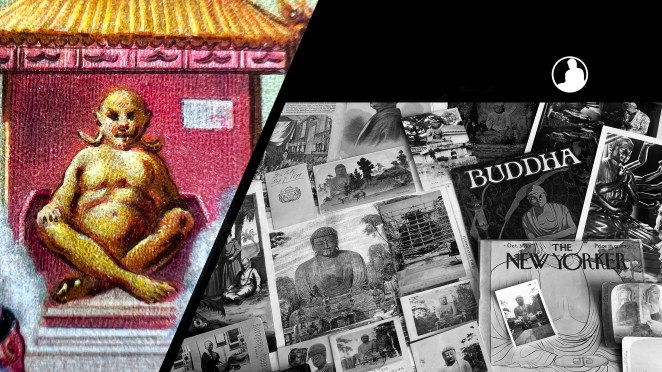
In 1895 Liebig released the Gods of Antiquity set, with the card here showing the worship of the Buddha by “Chinese nobles.” The scene is mostly a hodge-podge of turn of the century Chinese stereotypes.

A gold Buddha, sitting awkwardly with legs crossed, takes center stage in this imaginary temple scene.

Chinese Buddhist rituals use instruments, but not of the kind depicted here.

For a short introduction to the Liebig Company’s trade cards by Princeton University’s Firestone Library, follow this link: https://tinyurl.com/3nzvs6mh.


The Buddhas in the West Material Archive is a digital scholarship project that catalogues artifacts depicting Buddhist material culture for Western audiences. It’s comprised of prints, photos, and an assortment of ephemera and other objects. For a brief introduction to this archive, visit the main Buddhas in the West project page.


For Related Buddhas in the West Posts Featuring China:

For the Most Recent Buddhas in the West Posts:
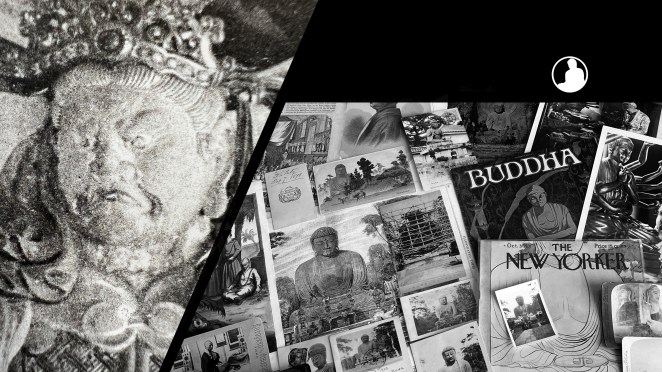

Tooth of the Buddha Reliquary Postcard

For all the new Buddhas in the West posts
follow us on Bluesky & Instagram


When the British re-enshrined the Buddha’s tooth relic at Kandy’s Temple of the Tooth in 1815, few among the British public were aware of the events. In 1875, however, when the Prince of Wales visits the relic, great interest in the sacred tooth spreads across England.

The undivided back design on the reverse indicates this card was printed before 1902, following British postal code. Unlike today, the message had to be written on the other side of the card, thus the blank space on the bottom edge of the obverse.

The “life story” of the tooth relic is preserved in the Dāṭhavaṃsa, compiled in the early 13th century. According to this work, in the ancient past a non-Buddhist Indian king tried to burn and smash the tooth, but it remained unscathed.

Consequently, as the story goes, the king converted to Buddhism and the tooth eventually made its way to Sri Lanka. Here we see the tooth encased in a stupa-shaped reliquary.

For a small collection of South Asian postcards, including a mailed version of the one shown here, see the offerings by the University of San Diego here: https://tinyurl.com/3nphs2k2.


The Buddhas in the West Material Archive is a digital scholarship project that catalogues artifacts depicting Buddhist material culture for Western audiences. It’s comprised of prints, photos, and an assortment of ephemera and other objects. For a brief introduction to this archive, visit the main Buddhas in the West project page.


For Related Buddhas in the West Posts Featuring Sri Lanka / Ceylon:


For the Most Recent Buddhas in the West Posts:
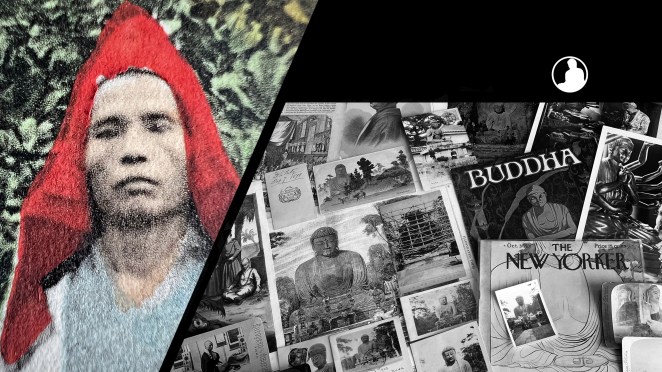

Albumen Photograph of Sanjūsangen-dō Kannon

For all the new Buddhas in the West posts
follow us on Bluesky & Instagram


For visitors to Japan in the 1860s, Kyoto was seen as brimming with dangerous anti-foreign samurai. This changed in the 1870s when it was transformed by tourism, driven in part by foreign photography studios who were allowed to shoot the city for the 1872 Kyoto Exposition.

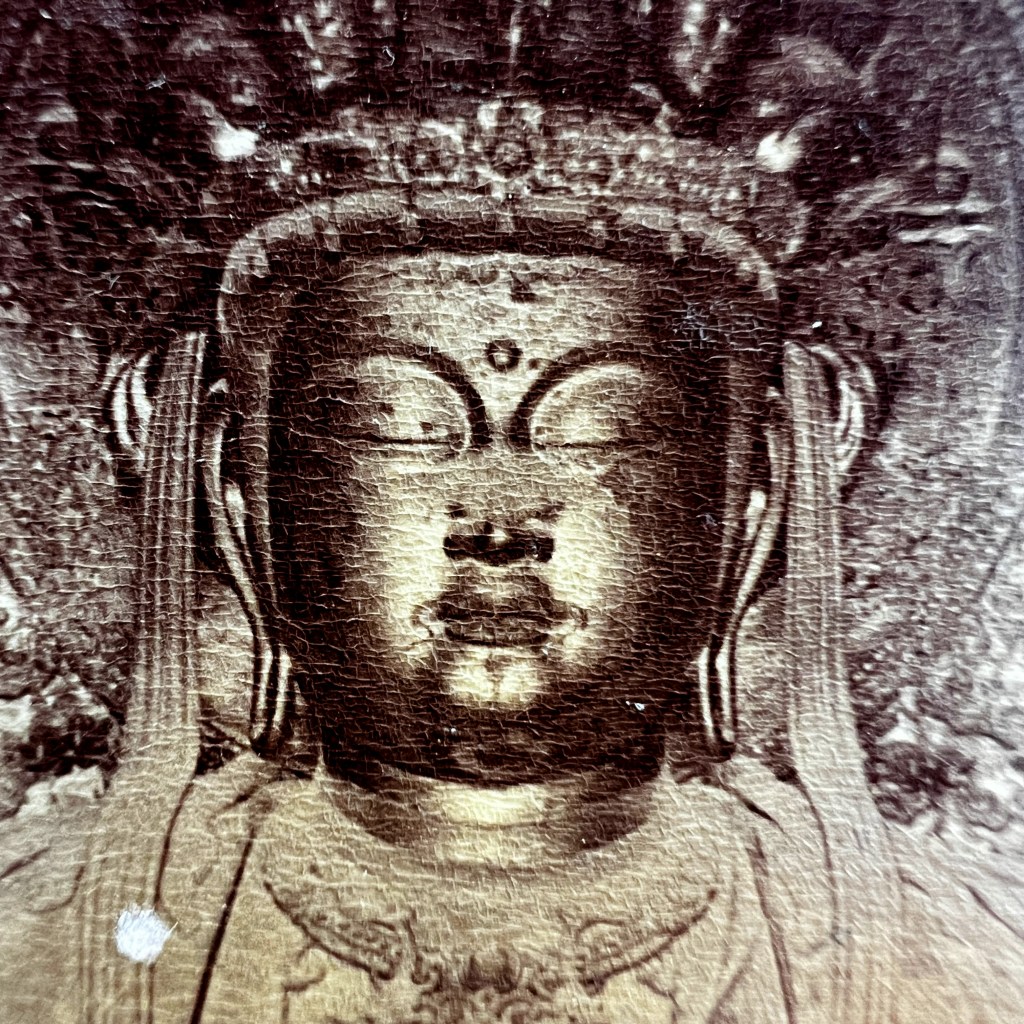
While Europeans knew of Kyoto’s Sanjūsangen-dō through late 17th century book engravings, the first photographs of the temple likely did not circulate until the early 1870s. This albumen print is by an unknown commercial photographer and likely dates to the 1880s.

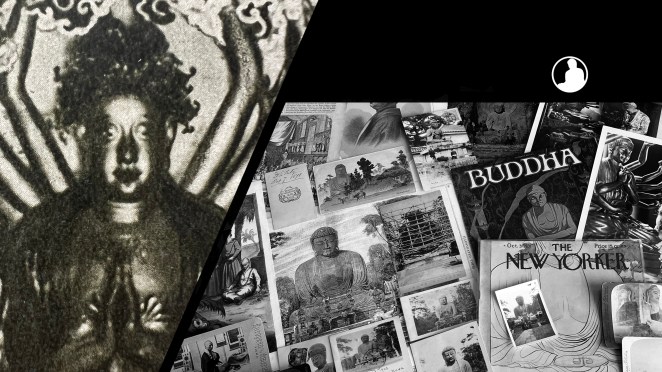
The central icon is a Thousand-armed Kannon from the 13th century and is recognized as a National Treasure of Japan.

There appears to be a double exposure in this photograph, with a priest kneeling in front of the icon. The colorist gave the priest’s robes a wash of blue, but the paint did not cover over the woodwork designs of the altar.

Baron von Stillfried was among the foreign studio owners who photographed Kyoto in 1872. One of his albums, with views of Kyoto, can be seen through the Metropolitan Museum of Art here: https://tinyurl.com/yuuf52u9.


The Buddhas in the West Material Archive is a digital scholarship project that catalogues artifacts depicting Buddhist material culture for Western audiences. It’s comprised of prints, photos, and an assortment of ephemera and other objects. For a brief introduction to this archive, visit the main Buddhas in the West project page.


For Related Buddhas in the West Posts Featuring Kyoto, Japan:


For the Most Recent Buddhas in the West Posts: