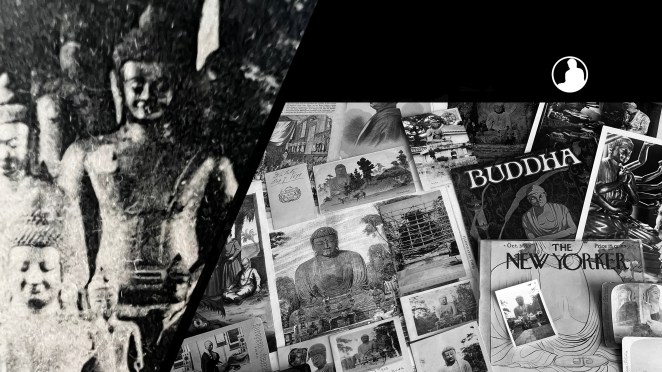
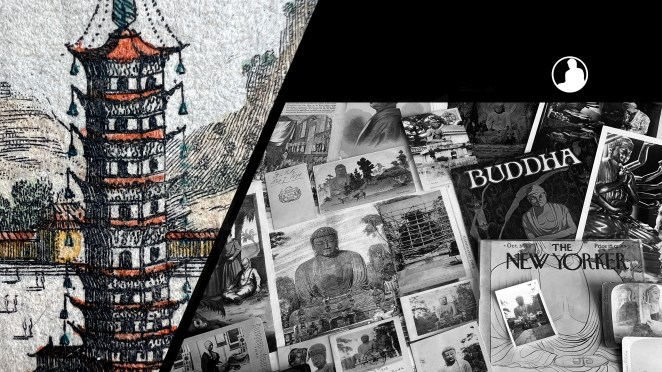
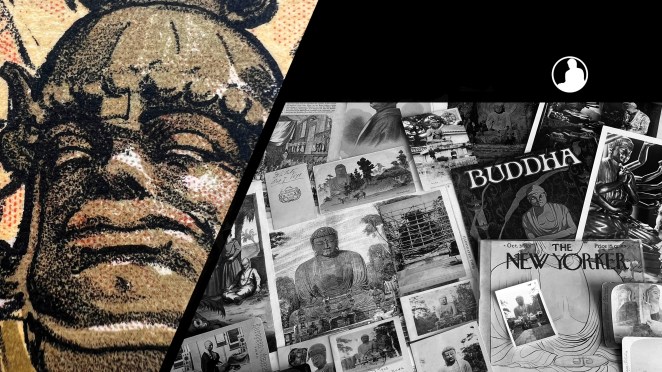
Keystone’s Kotte Temple Stereoview

For all the new Buddhas in the West posts
follow us on Bluesky & Instagram


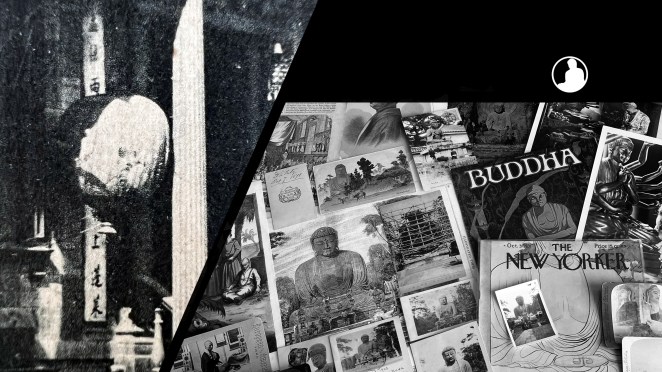
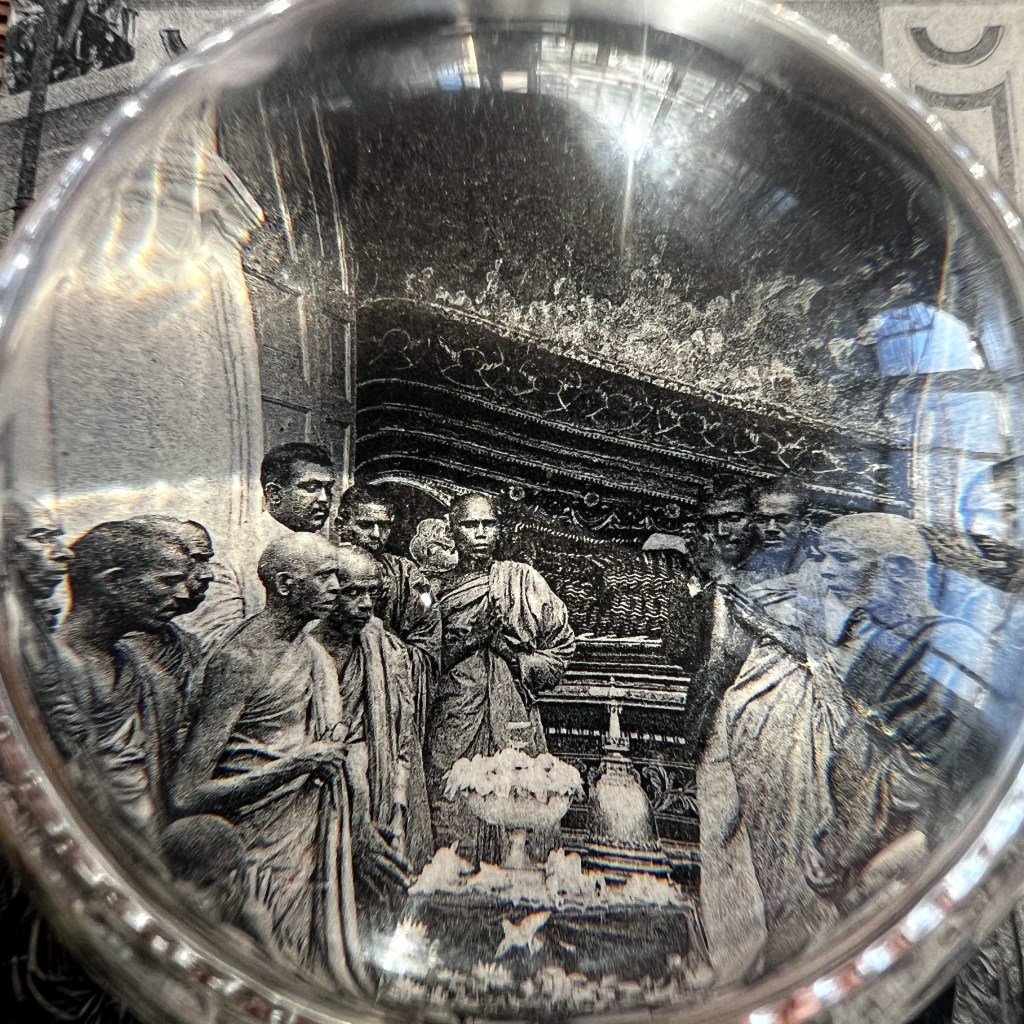
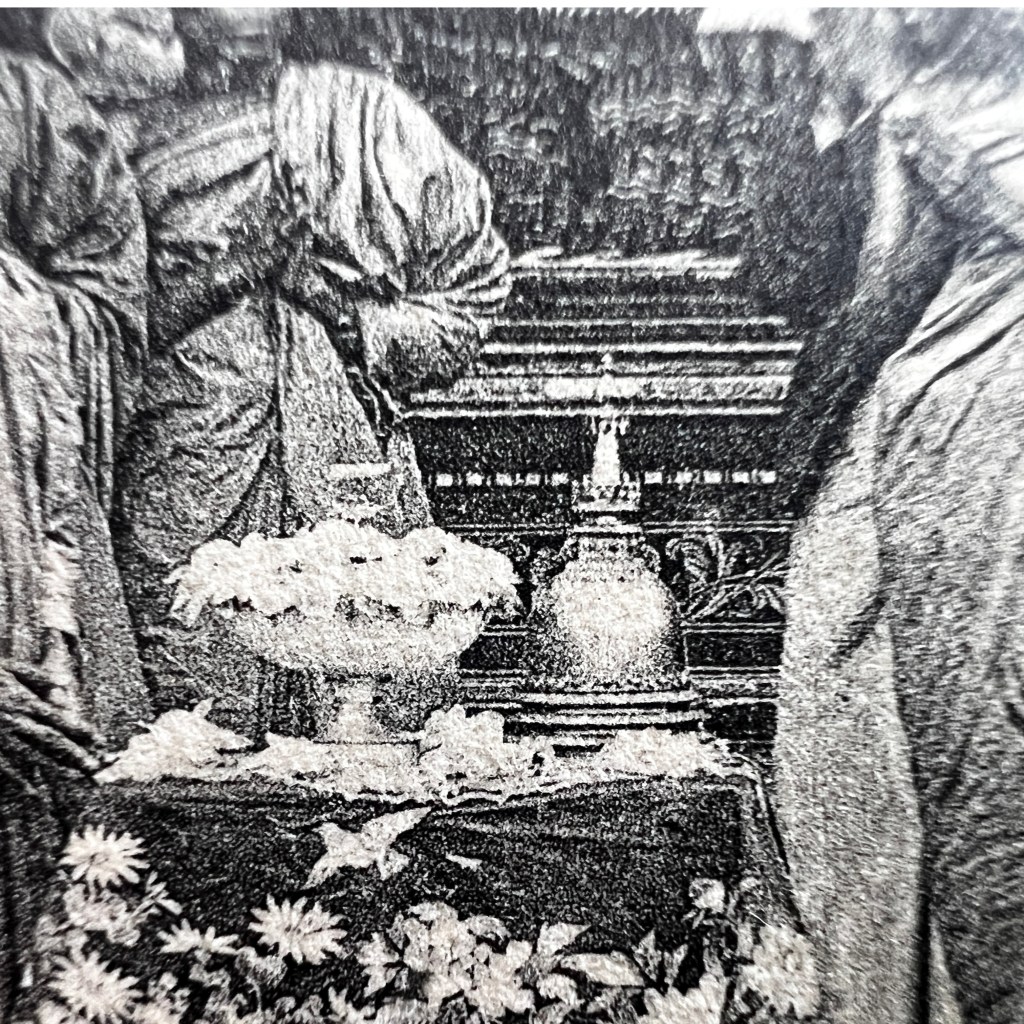
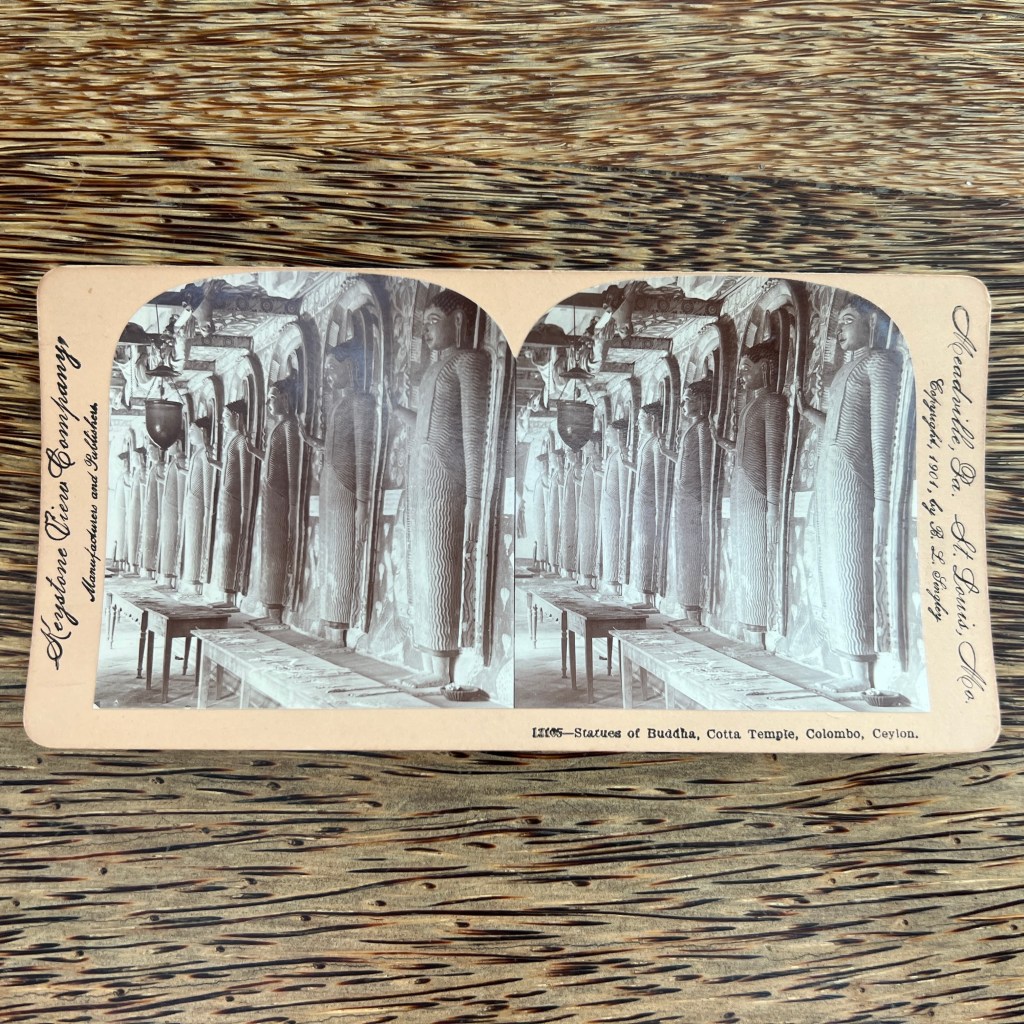
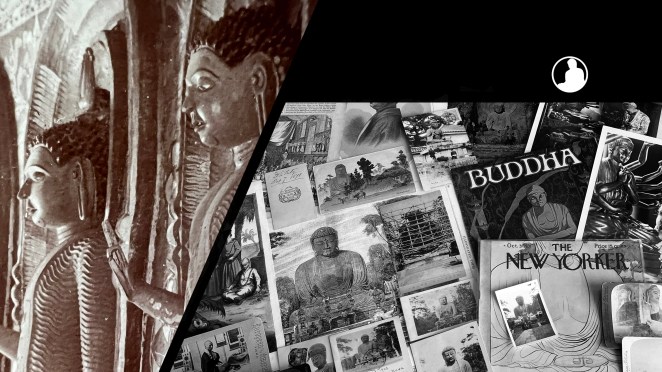
The Kotte Rajamaha Vihara was founded in the 15th century under royal patronage to house a sacred tooth relic of the Buddha. At the time, some considered this the holiest site in Sri Lanka, greater than Aśoka’s Bodhi tree in Anuradhapura and the Buddha’s footprint on Adam’s Peak.
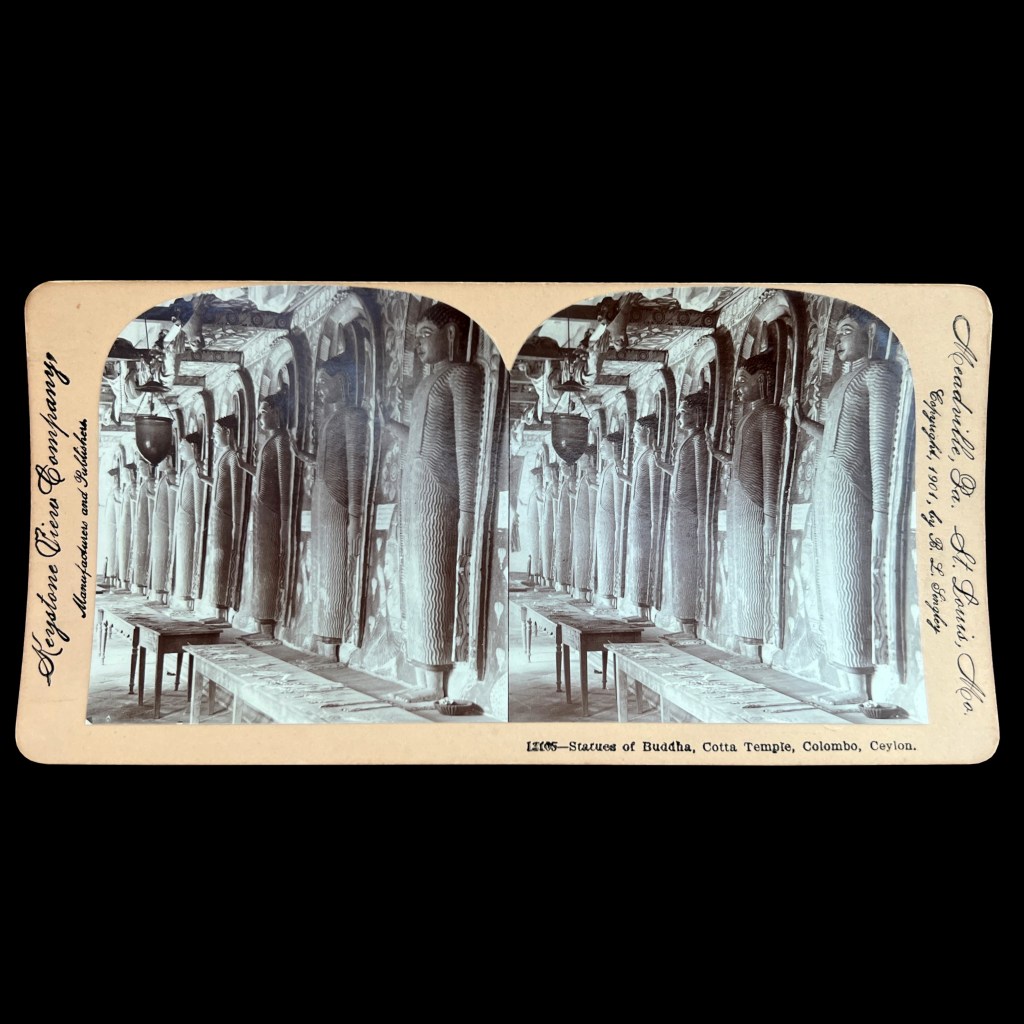
The Cūḷavaṃsa, a Buddhist historical record, describes King Parākramabāhu’s construction of a golden reliquary for the tooth and annual festivals held in celebration. Unfortunately, Kotte temple was destroyed during the Dutch occupation of Sri Lanka, but was rebuilt in the early 19th century.
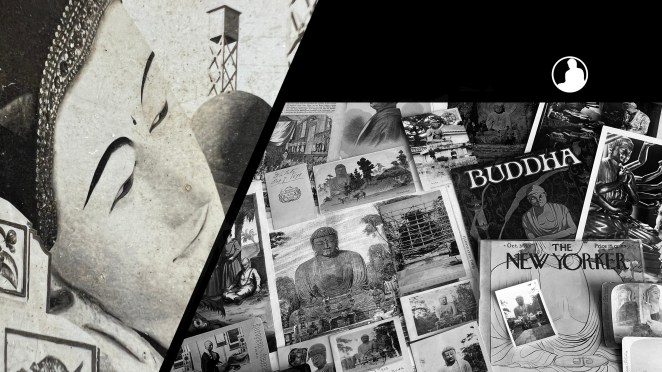
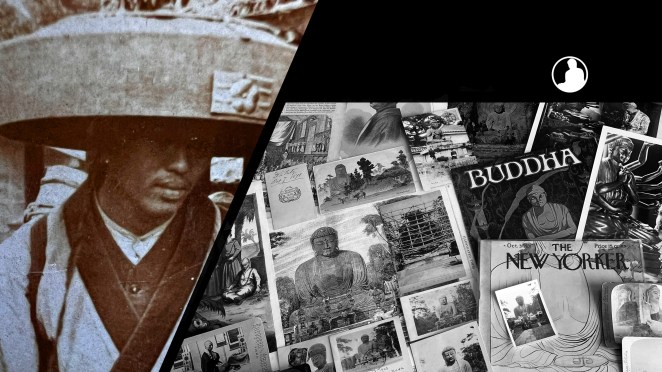
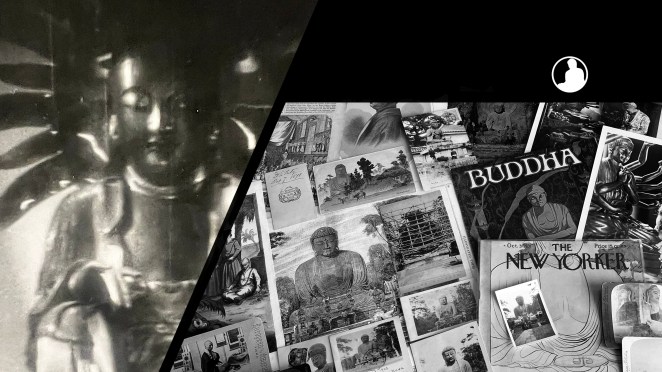
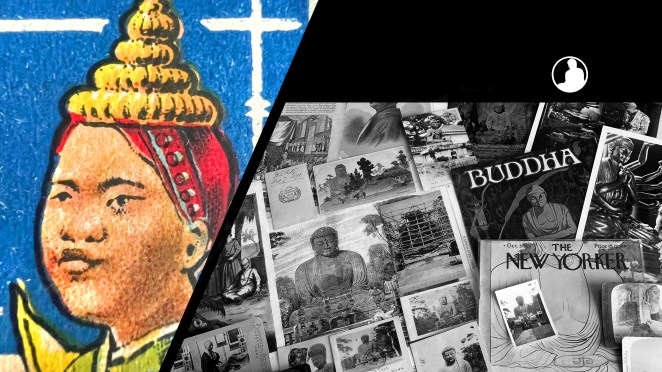
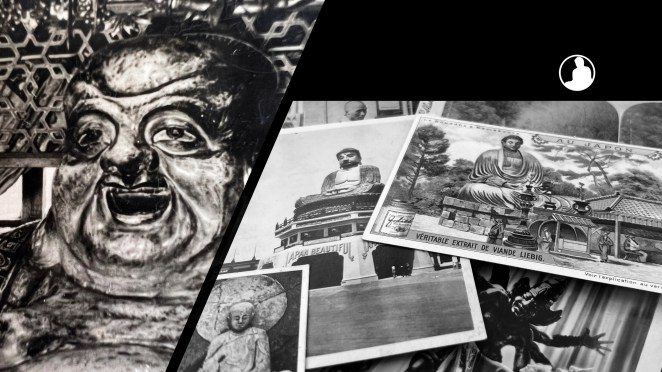
Marketed as education material, the information on the back of this stereoview offers a few generic facts about Buddhism. The unknown author also offers pointed criticism, calling the statues on the front “rigid” and chastising Buddhists for being “practically idolatrous.”

This stereophotograph was taken in 1900/01 and was incorporated into a 30-view set devoted to Ceylon. While the copyright is granted to B.L. Singley, the president of Keystone, this photo was taken by one of several unknown staff photographers scattered over the world.

According to lore, the tooth relic was removed from Kotte about a century after its enshrinement to save it from Portuguese looters. For further history on the tooth relic, see John Strong’s The Buddha’s Tooth: Western Tales of a Sri Lankan Relic (2021).


The Buddhas in the West Material Archive is a digital scholarship project that catalogues artifacts depicting Buddhist material culture for Western audiences. It’s comprised of prints, photos, and an assortment of ephemera and other objects. For a brief introduction to this archive, visit the main Buddhas in the West project page.


For Related Buddhas in the West Posts Featuring Sri Lanke / Ceylon:

For the Most Recent Buddhas in the West Posts:


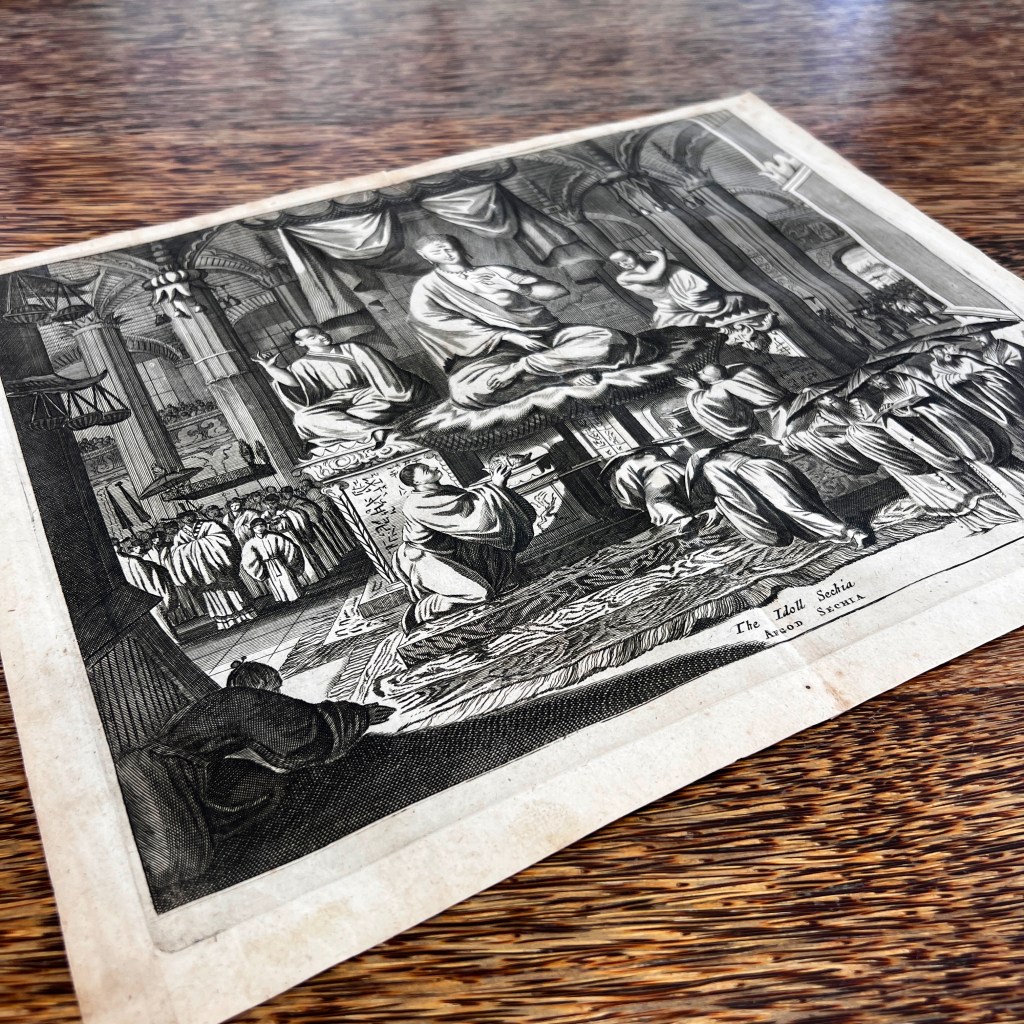
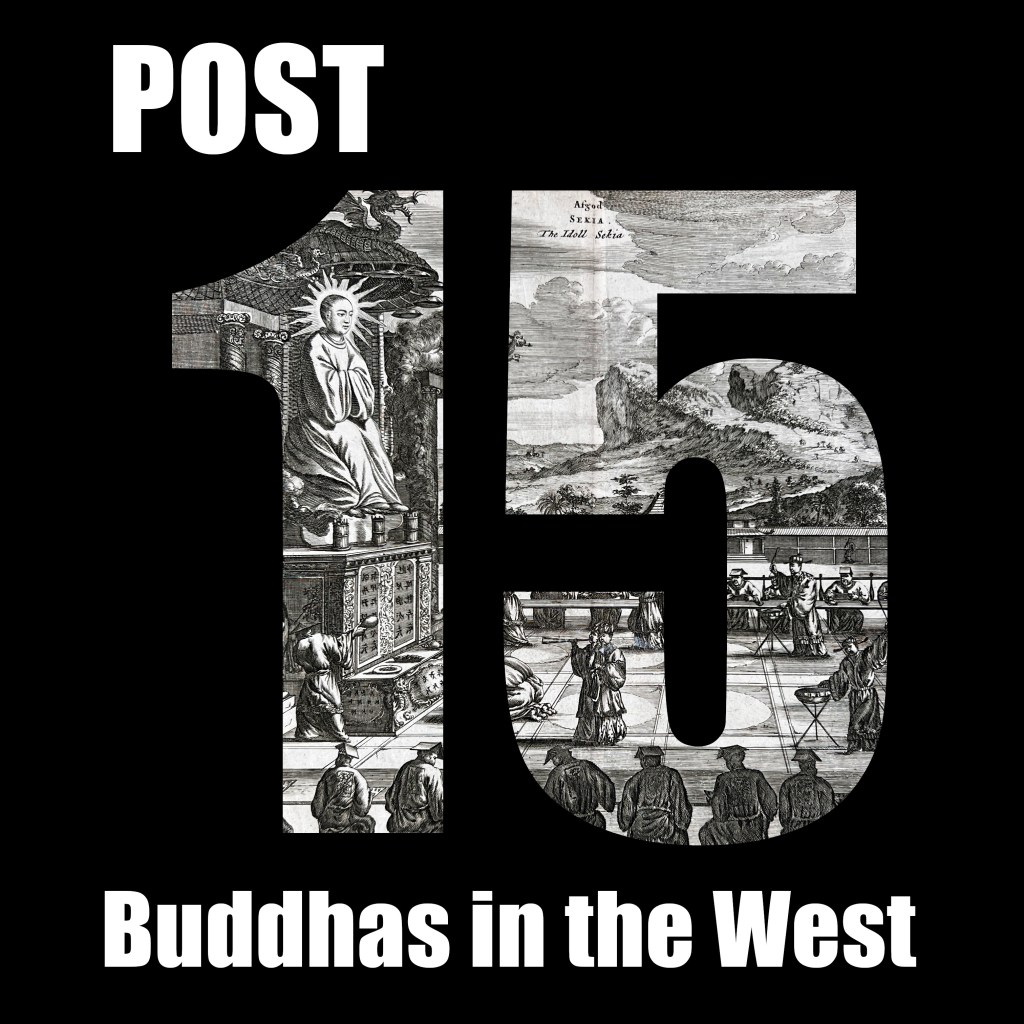
Olfert Dapper’s “The Idoll Sechia” Engraving

For all the new Buddhas in the West posts
follow us on Bluesky & Instagram


The Atlas Chinensis by Olfert Dapper (1636–1689) is among the most visually embellished European treatments of China from the late 17th century. Never traveling to Asia, Dapper used reports from the 2nd and 3rd Dutch embassies to China and consulted older Jesuit accounts.

The copperplate engravings were likely prepared in the workshop of publisher Jacob van Meurs who found reasonable success issuing illustrated books on Asia. The illustration here is from the 1674 German edition of Atlas Chinensis; it was originally published in Dutch in 1670.

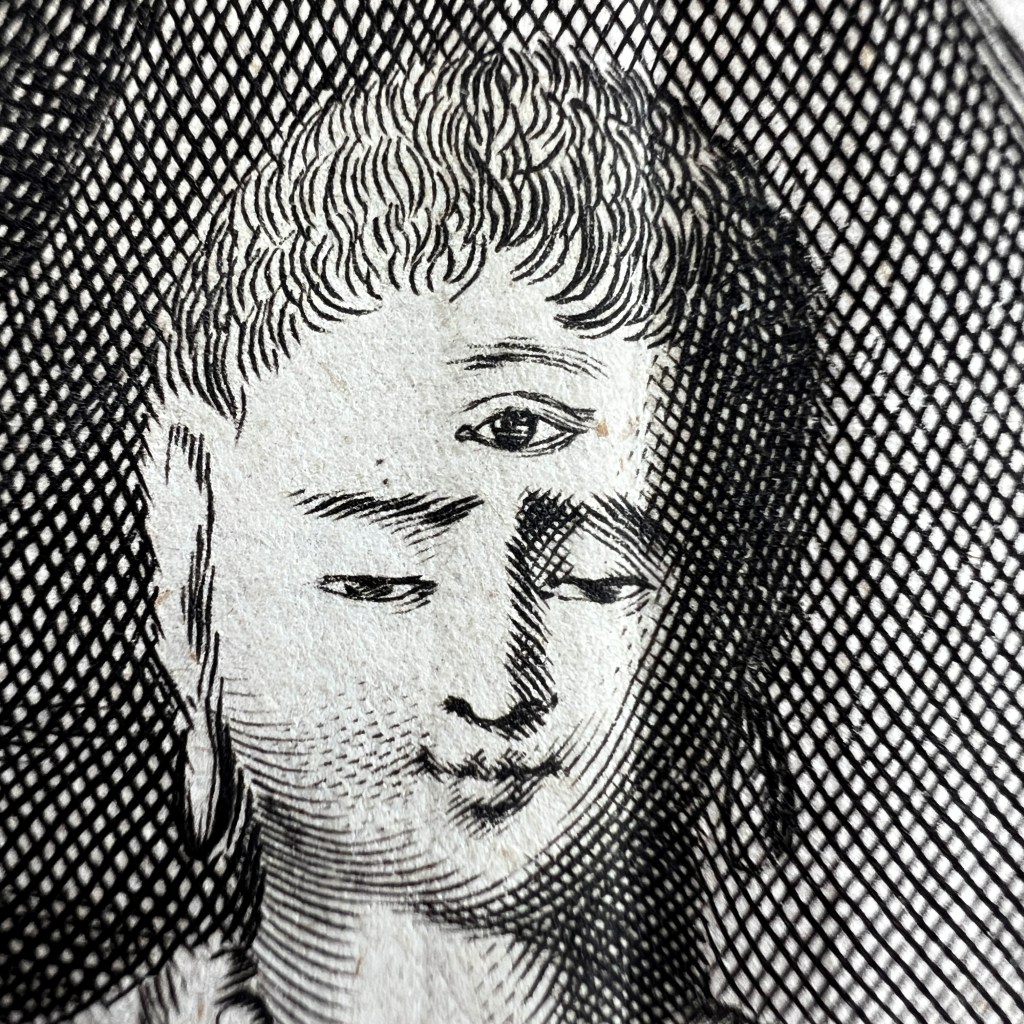
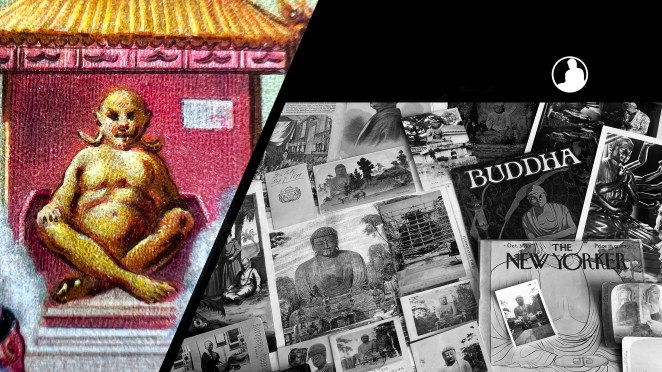
In a section describing Buddhism, Dapper notes that images of the “Idoll Sechia” (Śākyamuni) are found in temples, “in the shape of a fair Youth; with a third Eye in his forehead.” Engravers had great liberty to interpret and add further details.

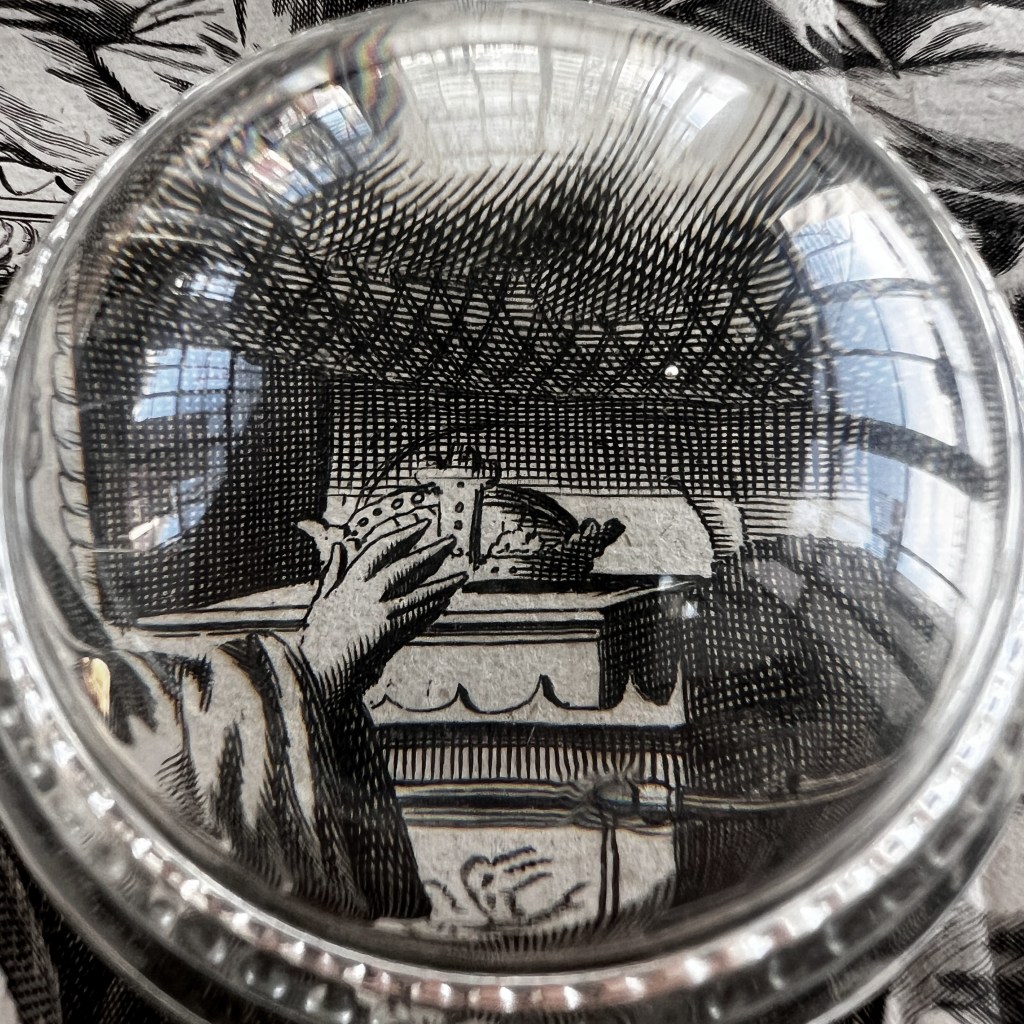
Some details, such as the European-style crown at the base of the altar, suggest fabricated visual embellishments intended to make the scene more familiar to European readers.

While other details that might appear odd, such as the flanking figures scratching their ears, are actually based on authentic Buddhist imagery of the arhats (C. luohan). Unpublished Jesuit sketches available to Dapper likely informed some of these details.

An English edition of Dapper’s work, published by John Ogilby in 1671 (and curiously misattributed to Arnoldus Montanus), can be viewed through Stanford University here: tinyurl.com/ycyw93eb.


The Buddhas in the West Material Archive is a digital scholarship project that catalogues artifacts depicting Buddhist material culture for Western audiences. It’s comprised of prints, photos, and an assortment of ephemera and other objects. For a brief introduction to this archive, visit the main Buddhas in the West project page.


For Related Buddhas in the West Posts Featuring Historical Engravings:


For the Most Recent Buddhas in the West Posts:

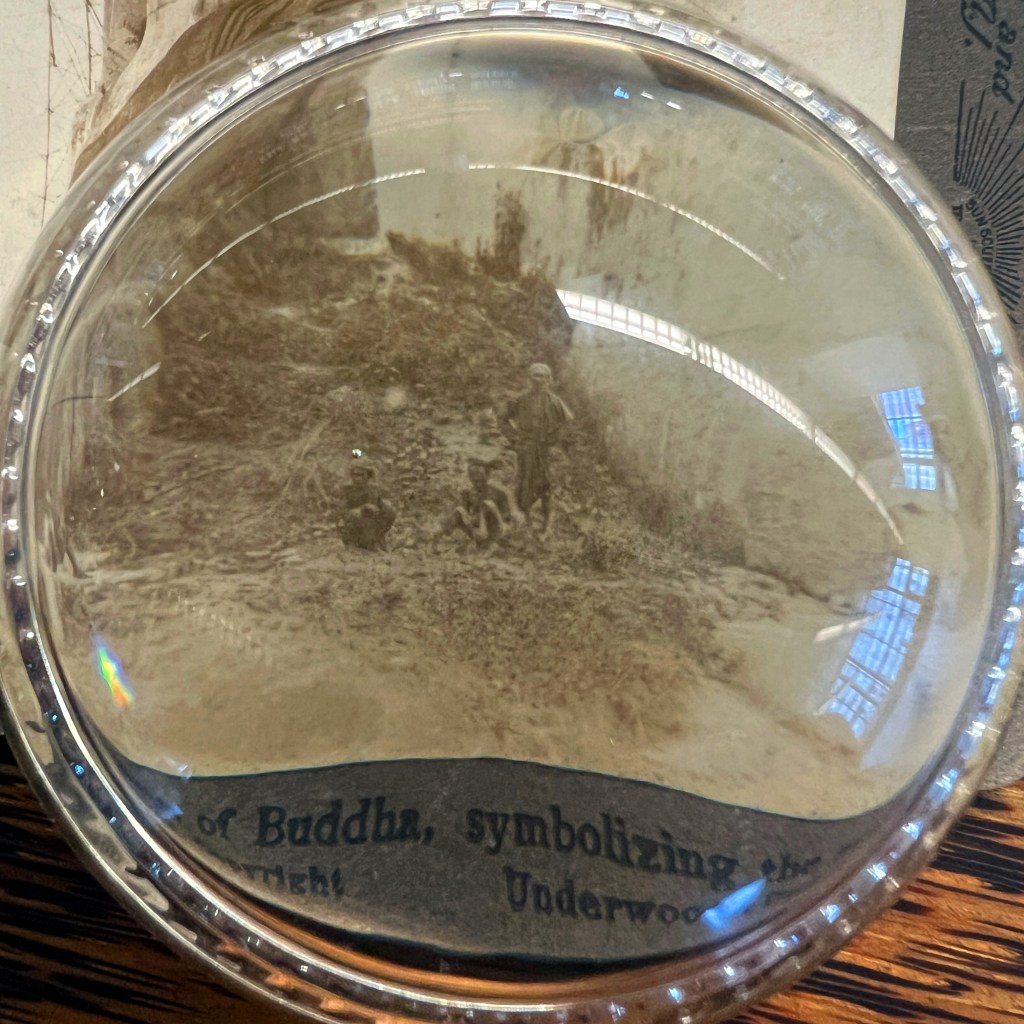
Underwood’s Four Seated Buddhas of Bago Stereoview

For all the new Buddhas in the West posts
follow us on Bluesky & Instagram


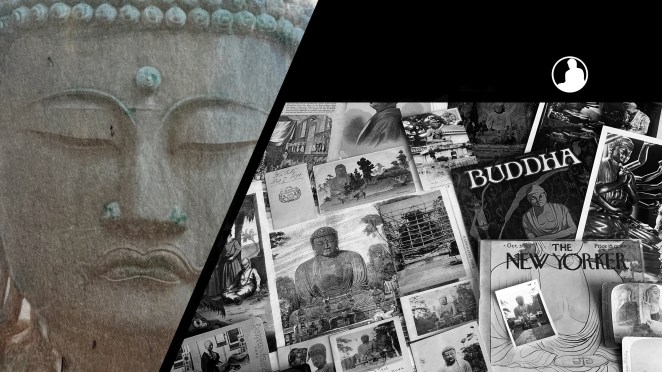
For nearly six centuries the four seated Buddhas of Bago have towered over the surrounding Burmese countryside. Constructed by the former Buddhist monk turned king, Dhammazedi, in 1476, the four colossal statues represent the four Buddhas of the past.

The Kyaikpun, as this site is known, also houses a relic chamber beneath the central rectangular pillar. Under Mon control, Bago served as a vital regional entrepôt and thriving hub of Theravada Buddhism with many shrines and monasteries.

This stereoview was part of the educational Underwood Stereoscopic Tour series from 1907, comprised of national sets with individual cards arranged as “a tourist might visit the actual scenes.” The Burma set was originally sold with fifty different views (this card is number 12).

The structure, which is over 90 ft. (27m) tall, was in near ruin by the 1890s, but local fundraising was able to repair the statues by the turn of the century. This stereoview, taken around 1905, still shows the remnants of rubble and scaffolding in the rear.

The Buddha facing north, representing Gautama Buddha, remained in the best condition, thus the other three statues were reputedly modeled after it during renovation. To see thirty-six views from Underwood’s Burma series held by the National Archives UK, visit tinyurl.com/3xwvkbsb.


The Buddhas in the West Material Archive is a digital scholarship project that catalogues artifacts depicting Buddhist material culture for Western audiences. It’s comprised of prints, photos, and an assortment of ephemera and other objects. For a brief introduction to this archive, visit the main Buddhas in the West project page.


For Related Buddhas in the West Posts Featuring Historical Stereophotography:


For the Most Recent Buddhas in the West Posts:


Herbert Ponting’s Shwethalyaung Sleeping Buddha Stereoview

For all the new Buddhas in the West posts
follow us on Bluesky & Instagram


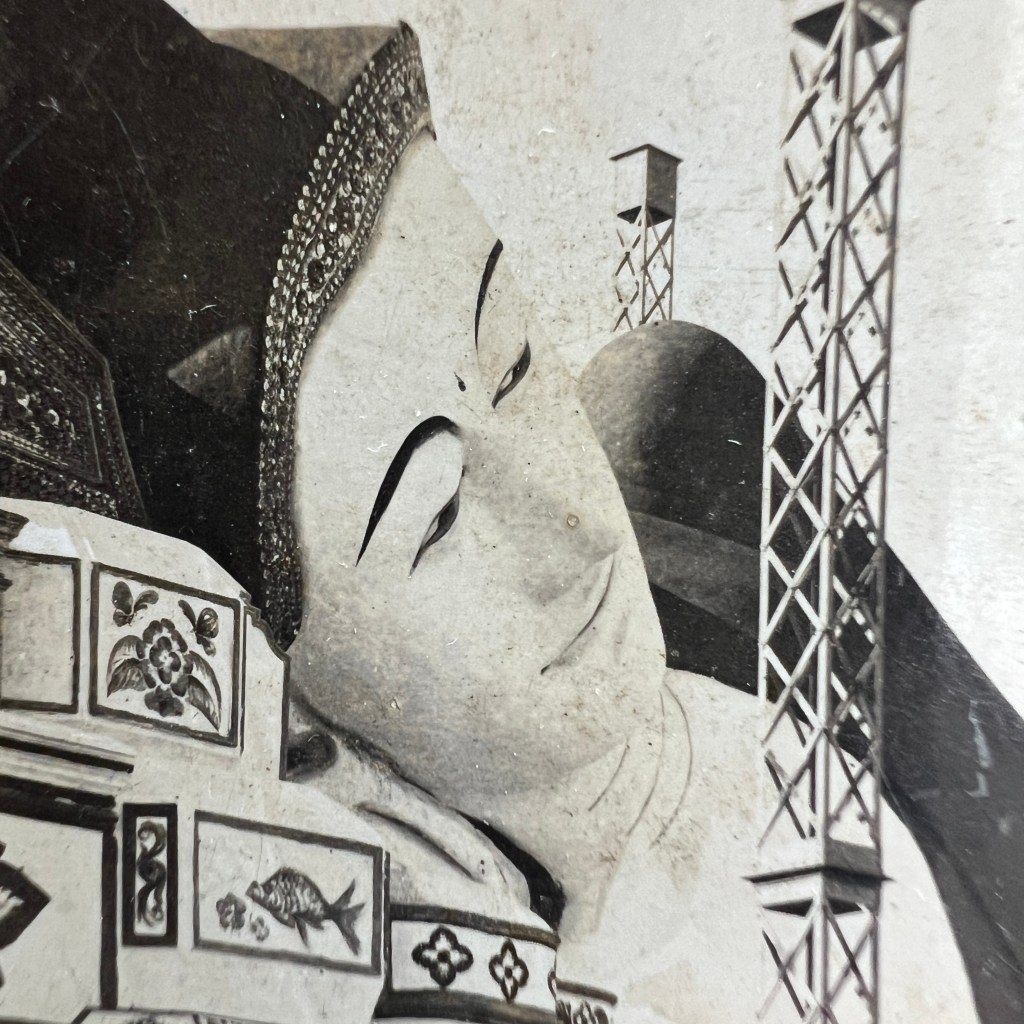
This colossal Sleeping Buddha was lost to the jungle when the Burmese city of Bago fell to invading forces in 1757. The statue was recovered in 1881 after railroad workers began digging through a tree-covered mound looking for scrap stone.

At 55 meters (180 ft) long and 16 meters (52 ft) high at the shoulder, the Shwethalyaung Buddha is among the largest reclining Buddha statues ever constructed. Made of brick and stucco, it is believed to have been built in the late tenth century under the patronage of a local king.

This stereograph was taken by Herbert Ponting who had returned from Manchuria after photographing the Russo-Japan War for publisher H. C. White.

Ponting had an expert eye; his placement of the man in the foreground produces a strong three-dimensional depth effect when viewed stereoscopically.

An earlier photograph of the Shwethalyaung Sleeping Buddha before decoration was published in Julius Smith’s Ten Years in Burma from 1902, viewable here: tinyurl.com/5n85dsxn.


The Buddhas in the West Material Archive is a digital scholarship project that catalogues artifacts depicting Buddhist material culture for Western audiences. It’s comprised of prints, photos, and an assortment of ephemera and other objects. For a brief introduction to this archive, visit the main Buddhas in the West project page.


For Related Buddhas in the West Posts Featuring Myanmar / Burma:


For the Most Recent Buddhas in the West Posts:


George Planté’s Ruins of Ankgor Postcard

For all the new Buddhas in the West posts
follow us on Bluesky & Instagram


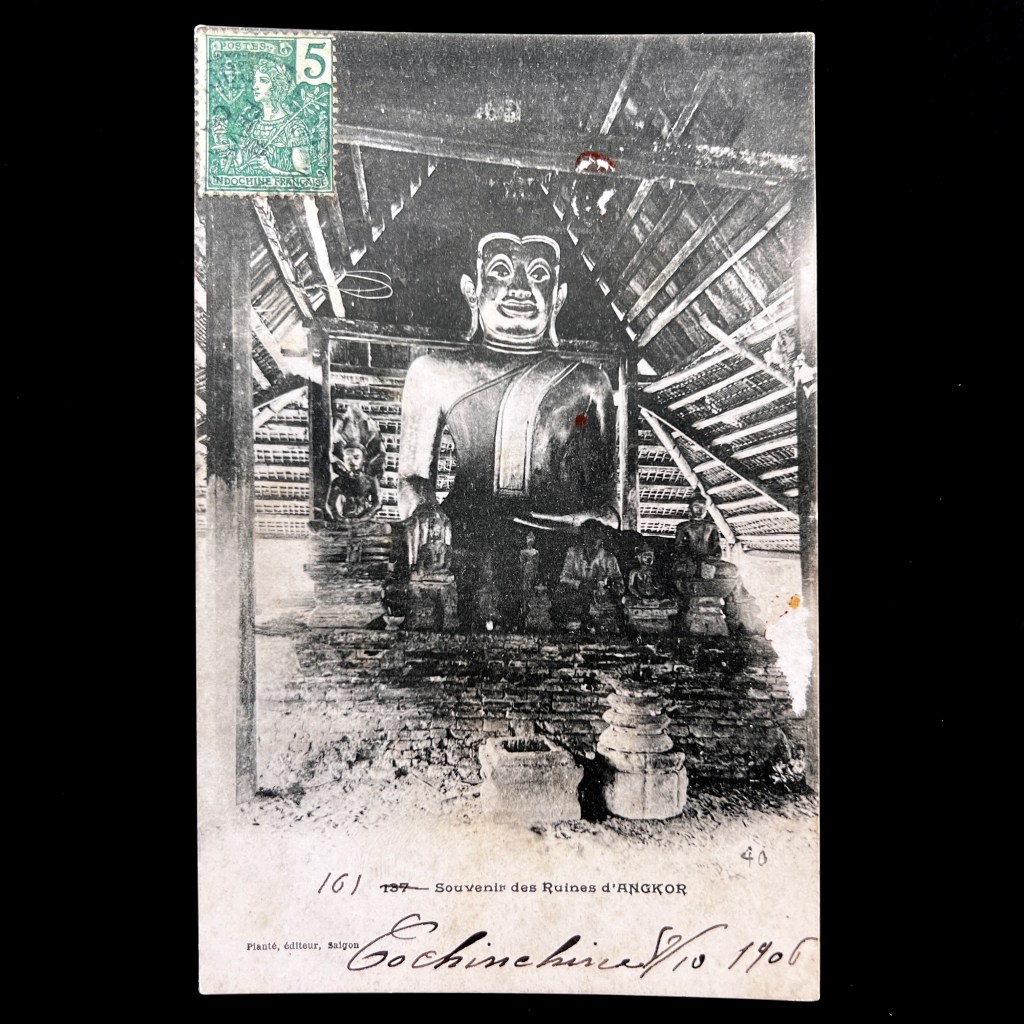
The Golden Age of postcards began with early postcard illustrations of the Eiffel Tower in 1889. Thus, when French military arrived in French colonial Vietnam, then known as Indochina, a market emerged for pictorial imagery of the region – including Buddhist temples.

The caption here give the description: “Souvenir of the Ruins of ANGKOR.” The publisher, George Planté, had operated a photography studio in Saigon and started selling postcards by 1905.

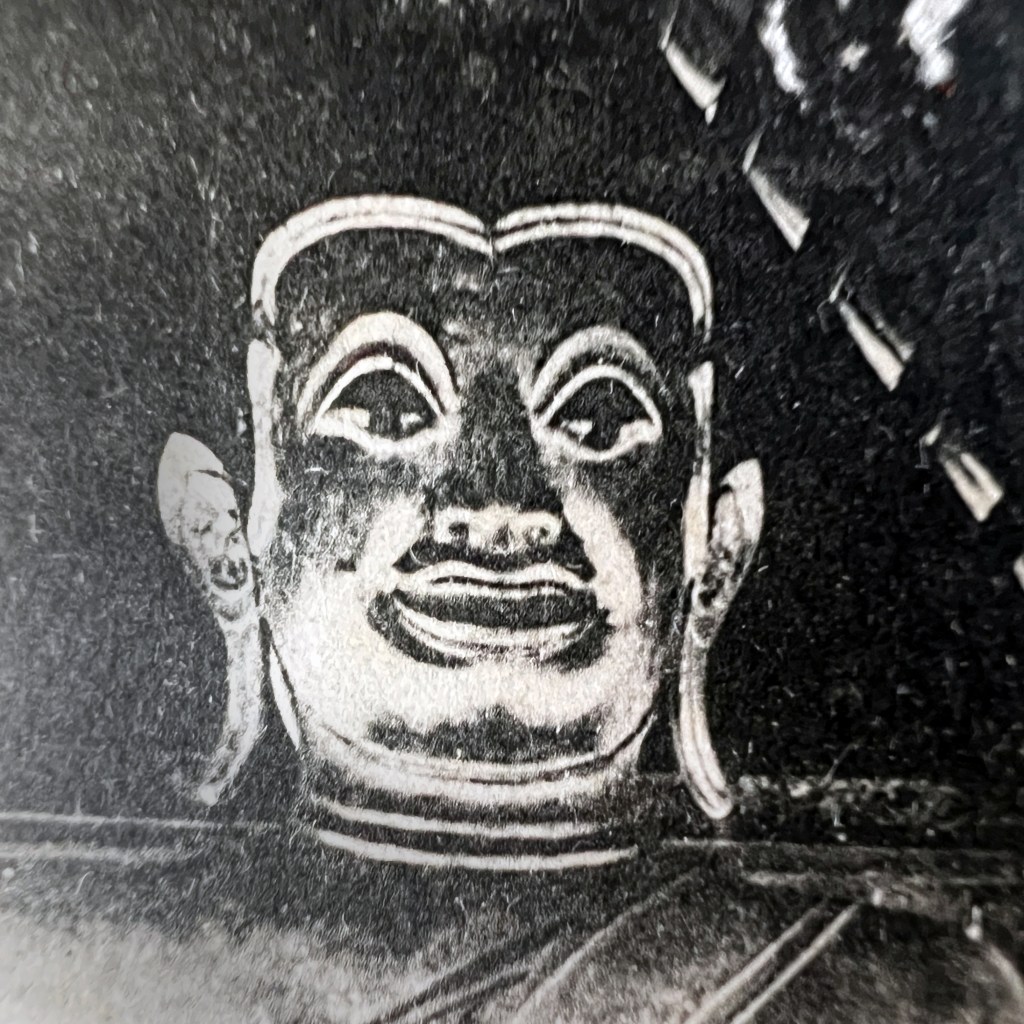
In addition to the large central Buddha statue, several other Buddhist icons are placed on the altar. I have been unable to identify which area of Angkor this photograph depicts.

The design on the back suggests this card was published in 1905 (the date 1906 is inscribed on the front). The front also bears the affixed stamp – this was typically done so the card could be placed in an album and still display the cancelled stamp.

It was likely postcards such as this were printed in Europe using the most up-to-date photo-mechanical printing techniques and then sent back to the colonial publishers for resale.


The Buddhas in the West Material Archive is a digital scholarship project that catalogues artifacts depicting Buddhist material culture for Western audiences. It’s comprised of prints, photos, and an assortment of ephemera and other objects. For a brief introduction to this archive, visit the main Buddhas in the West project page.


For Related Buddhas in the West Posts Featuring Gautama, the historical Buddha:


For the Most Recent Buddhas in the West Posts:

D.A. Ahuja’s Idol Maker Postcard

For all the new Buddhas in the West posts
follow us on Bluesky & Instagram


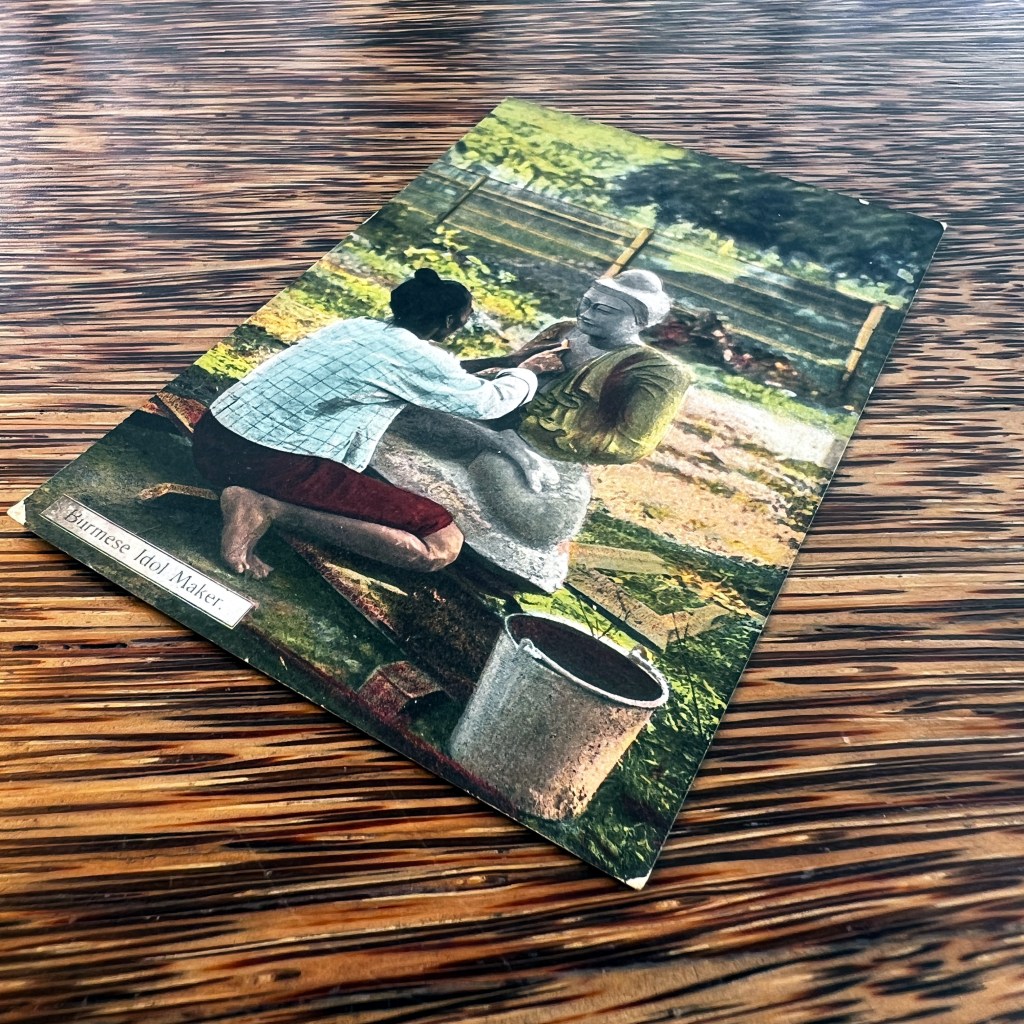
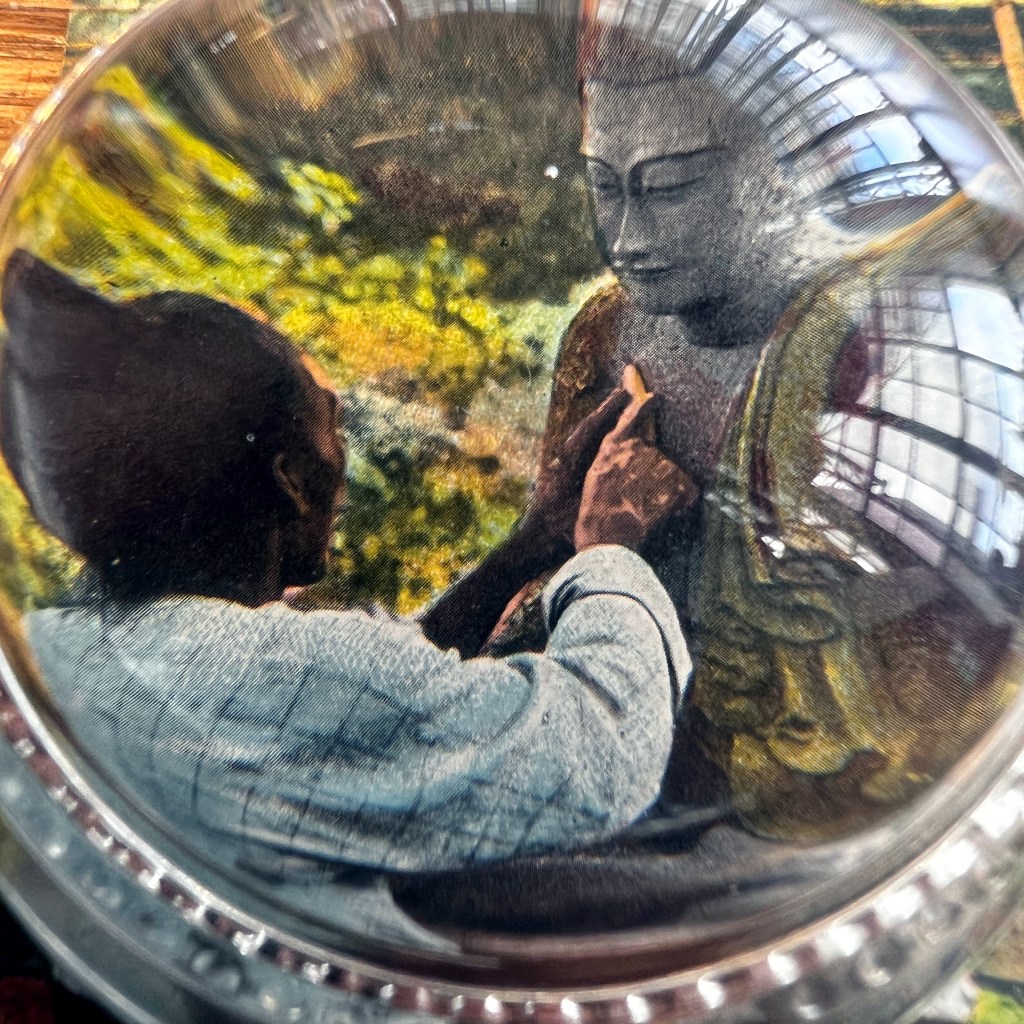
As new imagery of British colonial Burma circulated in the early 20th century, one trade received heightened interest: idol carving. The marble quarries north of Mandalay provided sufficient raw materials for the local carving industry centered around the village of Sagyin.

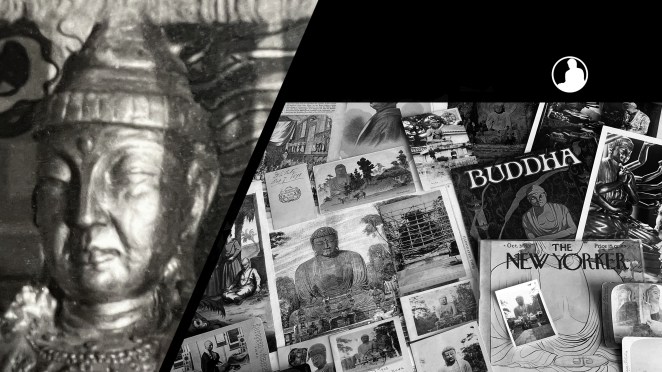
An active stone-workers’ quarter in Mandalay meant foreign travelers could encounter Burmese carvers working on Buddhist statuary. This postcard by D.A. Ahuja captures the crafting of a Mandalay-style marble Buddha, with thick garment folds and a band around the head.

The card reveals a lithographic-halftone hybrid process, whereby a black halftone screen was applied on top of a multi-color lithographic substrate. The reverse design suggests this card was printed around 1910.

Burmese white marble has been fashioned into Buddhist statuary since the Konbaung Dynasty (1752–1885). The trade continues in and around Sagyin and Mandalay today.

For further info on the history of Burmese marble carving and the early spread of Burmese Buddhas into China, see Deng, Beiyin. “Reimagining a Buddhist Cosmopolis: Conveying Marble Buddhas from Burma to China, 1890s-1930s.” Journal of Global Buddhism 24, no. 1 (2023): 25–46.


The Buddhas in the West Material Archive is a digital scholarship project that catalogues artifacts depicting Buddhist material culture for Western audiences. It’s comprised of prints, photos, and an assortment of ephemera and other objects. For a brief introduction to this archive, visit the main Buddhas in the West project page.


For Related Buddhas in the West Posts Featuring Myanmar / Burma:


For the Most Recent Buddhas in the West Posts:

A.W. Plâté’s Reliquary Offering Postcard

For all the new Buddhas in the West posts
follow us on Bluesky & Instagram


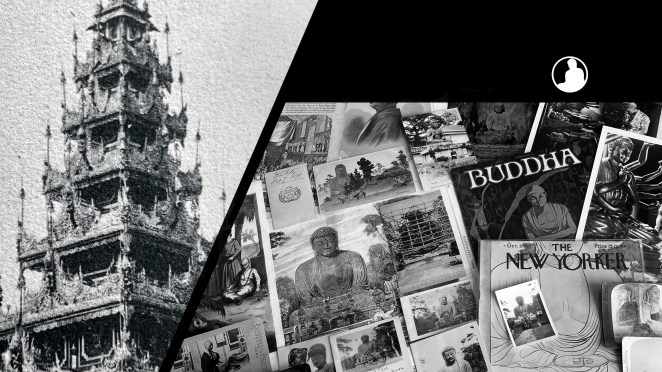
The first private company to sell Singhalese postcards was A. W. Plâté & Co. In 1890 Plâté first opened his photography studio and by 1907 he dominated the domestic postcard market, selling half a million cards that year.

As was common in many parts of the world, this card was printed in Germany, here identified with a rubber stamp. The hand written note describes the colors of the monk’s robes, suggesting this was purchased as an inexpensive photographic souvenir with no intention to mail.

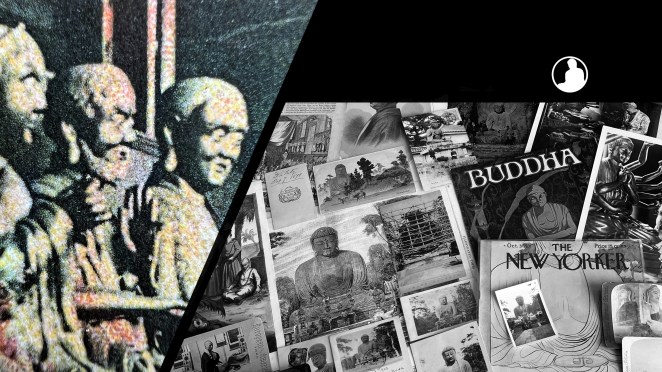
Still in operation, Plâté’s photographic archives are a trove of Singhalese visual records. Can you find the partly obscured Buddha statue among the group of worshiping monks?

There is a Sleeping Buddha statue in just inside the temple doorway.

The monks pay homage to a small reliquary shrine that is dressed with flower offerings. For a discussion of Plâté’s legacy in the history of Singhalese photography, see the article by Benita Stambler here: https://tinyurl.com/sytn2mmd.


The Buddhas in the West Material Archive is a digital scholarship project that catalogues artifacts depicting Buddhist material culture for Western audiences. It’s comprised of prints, photos, and an assortment of ephemera and other objects. For a brief introduction to this archive, visit the main Buddhas in the West project page.


For Related Buddhas in the West Posts Featuring Historical Postcards:


For the Most Recent Buddhas in the West Posts:


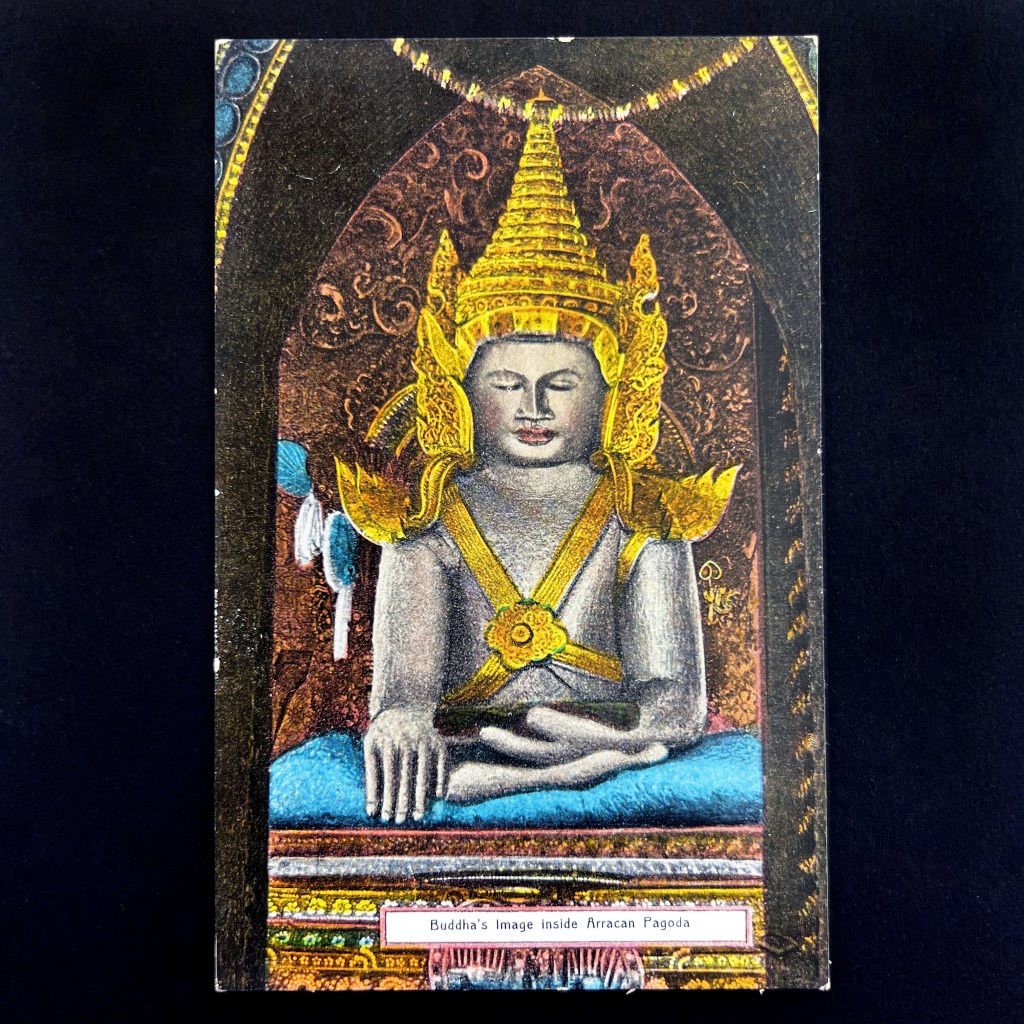
D.A. Ahuja’s Arakan Mahāmuni Postcard

For all the new Buddhas in the West posts
follow us on Bluesky & Instagram


An image consecrated by the Buddha himself? The Mahāmuni image is among the most venerated in Burma. According to myth, the statue was cast during the lifetime of the Buddha and was “enlivened” to act as counsel to kings in the Buddha’s absence.

Originating in the coastal region of Arakan, the statue was moved to Upper Burma, into present-day Mandalay, at the turn of the 19th century.

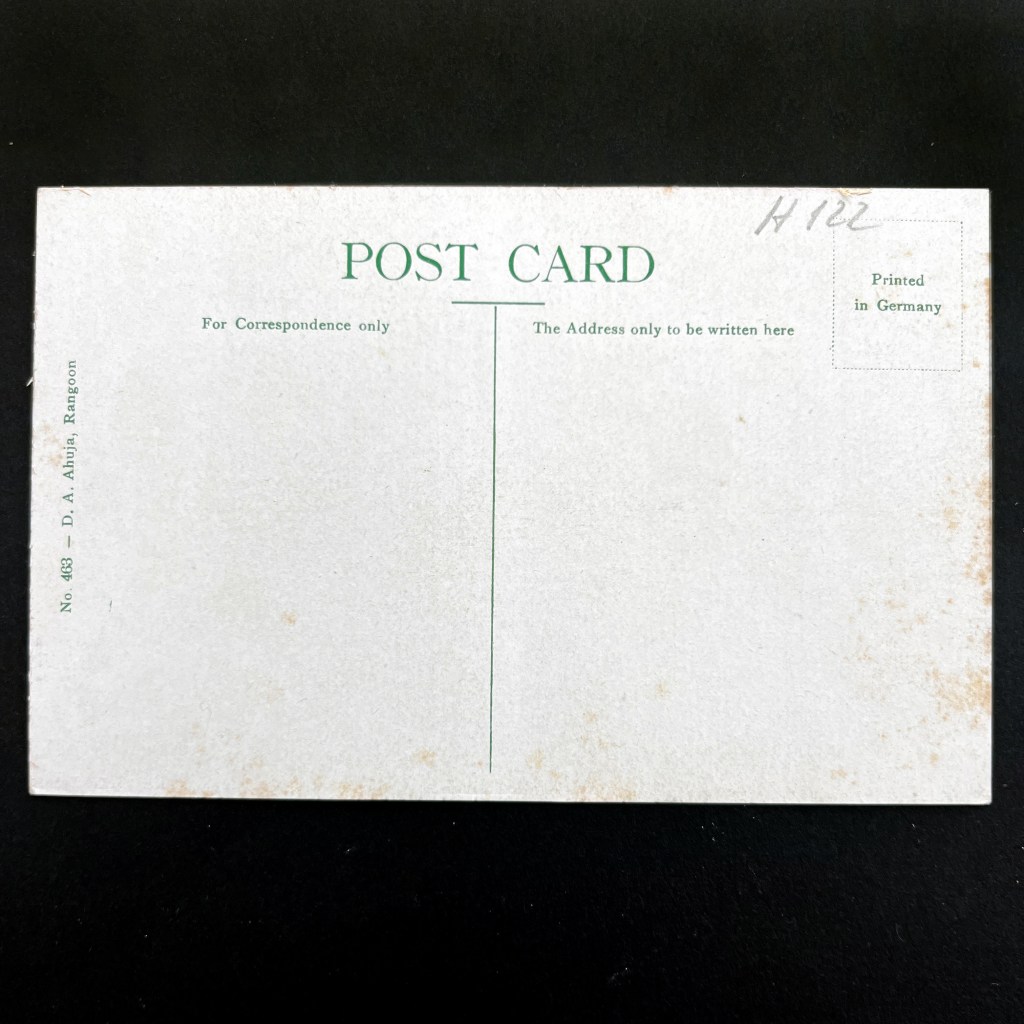
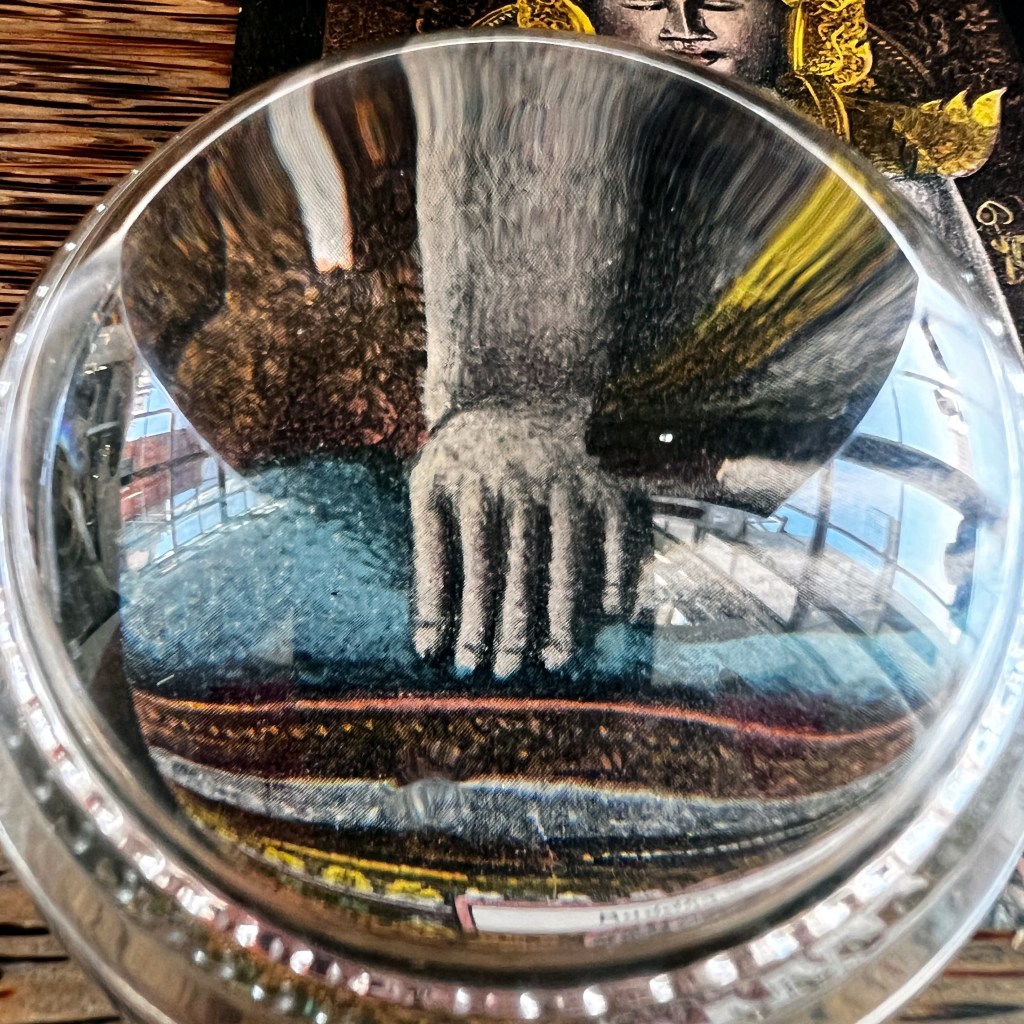
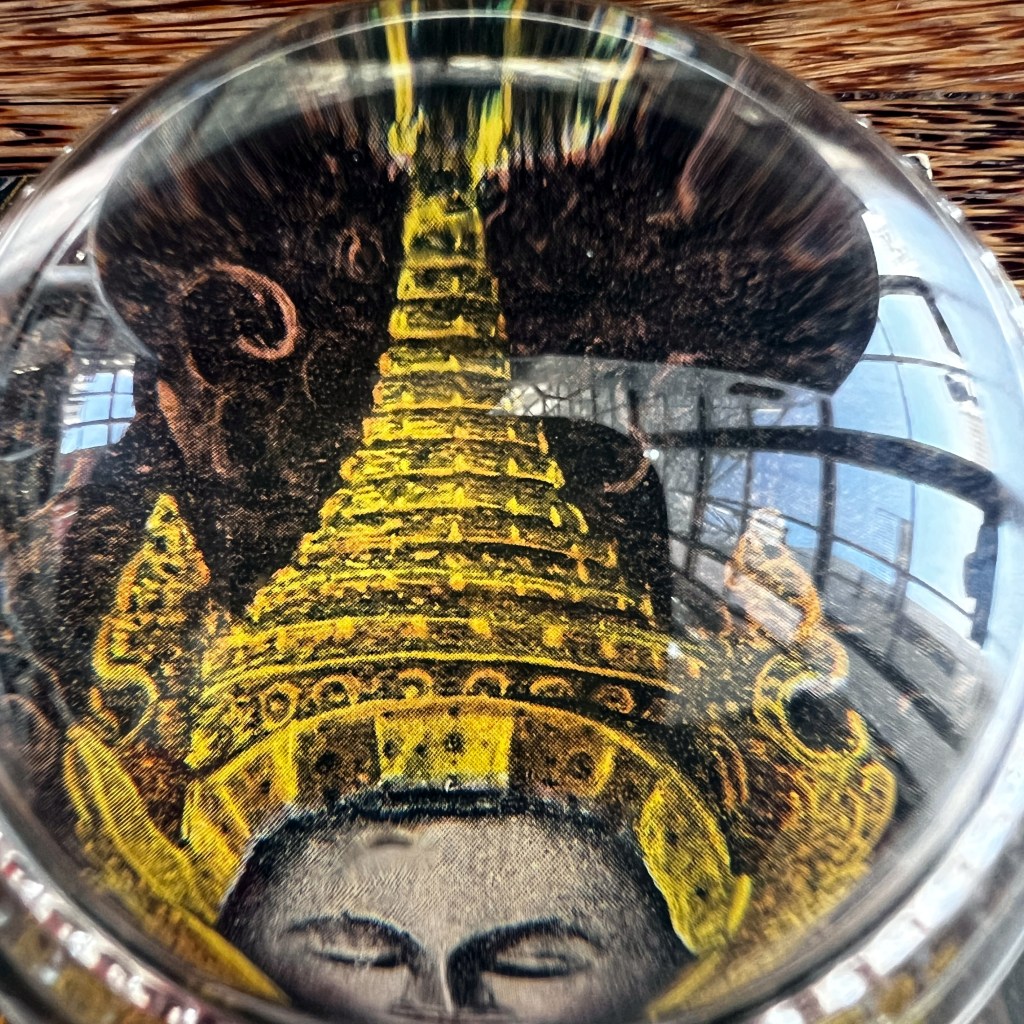
The colorful postcard is a German lithographic-halftone print published by D. A. Ahuja circa 1910. Postcards emerged as highly valued souvenirs during the period of British colonial rule and helped spread knowledge of Buddhist material culture into the West.

The brass statue depicts the moment when the Buddha calls upon the earth to testify to his generosity and to defeat Mara; this is symbolized by his right hand touching the ground.

Over 12 feet in height, the image is topped by a crown – typical of the Jambupati style – and is intended to display the grandeur of the Buddha and his message.

F

or more on a Burmese Buddhist statue in a similar style, see the Asian Art Museum website here: https://tinyurl.com/mpvxn8j9.


The Buddhas in the West Material Archive is a digital scholarship project that catalogues artifacts depicting Buddhist material culture for Western audiences. It’s comprised of prints, photos, and an assortment of ephemera and other objects. For a brief introduction to this archive, visit the main Buddhas in the West project page.


For Related Buddhas in the West Posts Featuring the Historical Buddha / Gautama:


For the Most Recent Buddhas in the West Posts:
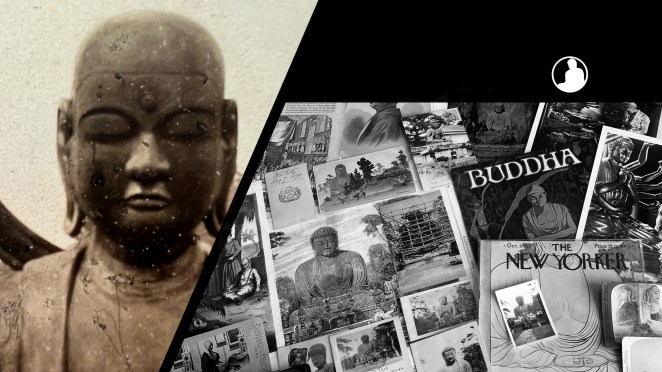

Olfert Dapper’s Formosan Buddha Engraving

For all the new Buddhas in the West posts
follow us on Bluesky & Instagram


European book engravers often fabricated details to flesh out illustrations where textual accounts were silent. Such is the case here for “The Idoll Sekia” (Śākyamuni) showing a Buddhist temple in late 17th century Formosa, present-day Taiwan.


This illustration is from the 1674 German edition of Atlas Chinensis by Olfert Dapper (1636–1689). Dapper never visited Asia, but edited the travelogues of the second and third Dutch embassies to China and consulted Jesuit accounts.


The copperplate engraving were most likely prepared in the workshop of the publisher Jacob van Meurs. The image was based on Dapper’s retelling of the accounts of a Scotchman named David Wright who lived on Formosa in the 1650s.


Wright describes the use of music during worship and the prostrations of two priests day and night at the altar.


The main icon – never identified as the Buddha in the text – is described as depicting a religious man, now deified, who shaved his head and never ate animal flesh.


An English edition of Dapper’s work, published by John Ogilby in 1671, can be viewed through Stanford University here: https://tinyurl.com/ycyw93eb


The Buddhas in the West Material Archive is a digital scholarship project that catalogues artifacts depicting Buddhist material culture for Western audiences. It’s comprised of prints, photos, and an assortment of ephemera and other objects. For a brief introduction to this archive, visit the main Buddhas in the West project page.


For Related Buddhas in the West Posts Featuring Historical Engravings:


For the Most Recent Buddhas in the West Posts:
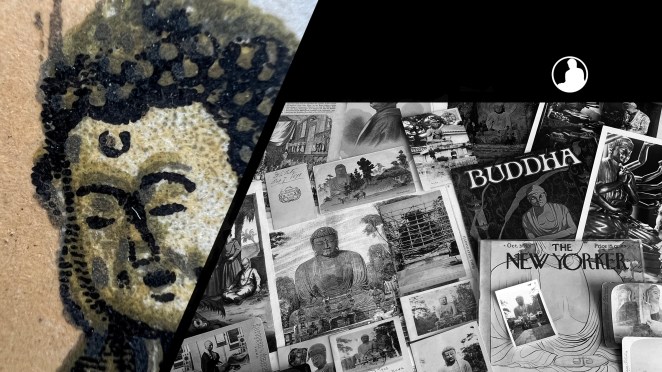

D.A. Ahuja’s Postcard Buddhas

For all the new Buddhas in the West posts
follow us on Bluesky & Instagram


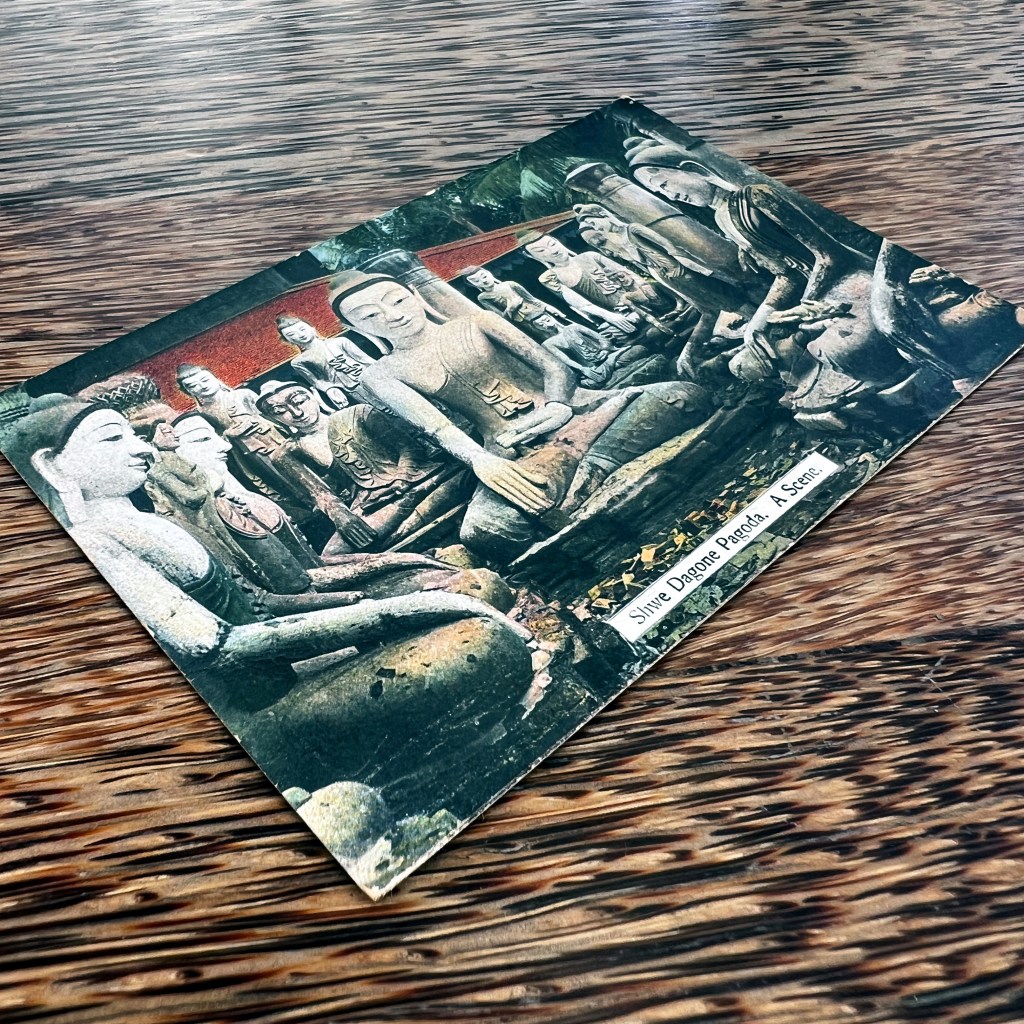
At the turn of the twentieth century, D. A. Ahuja was chronicling Burmese Buddhist culture in stunning color.

Operating out of Rangoon (modern Yangon) Ahuja published some of the highest quality picture postcards in Asia.

Ahuja outsourced printing to Germany, the commercial center of postcard printing worldwide. By 1903, German printing houses were putting out two postcards for every human on the planet.

These German firms used a lithographic-halftone hybrid process, first applying layers of color using a lithographic substrate and then applying a black halftone screen. Only the final key plate carried the fine black detail of the photograph.

Despite having his name imprinted on the reverse of the card, Ahuja either licensed or pirated this image from a competitor, Philip Klier, who used this photo on earlier black and white postcards.

A handful of Ahuja’s postcards can be viewed at the New York Public Library website: https://tinyurl.com/z9np5myb.


The Buddhas in the West Material Archive is a digital scholarship project that catalogues artifacts depicting Buddhist material culture for Western audiences. It’s comprised of prints, photos, and an assortment of ephemera and other objects. For a brief introduction to this archive, visit the main Buddhas in the West project page.


For Related Buddhas in the West Posts Featuring D.A. Ahuja Postcards:

For the Most Recent Buddhas in the West Posts: