For all the new Buddhas in the West posts
follow us on Bluesky & Instagram
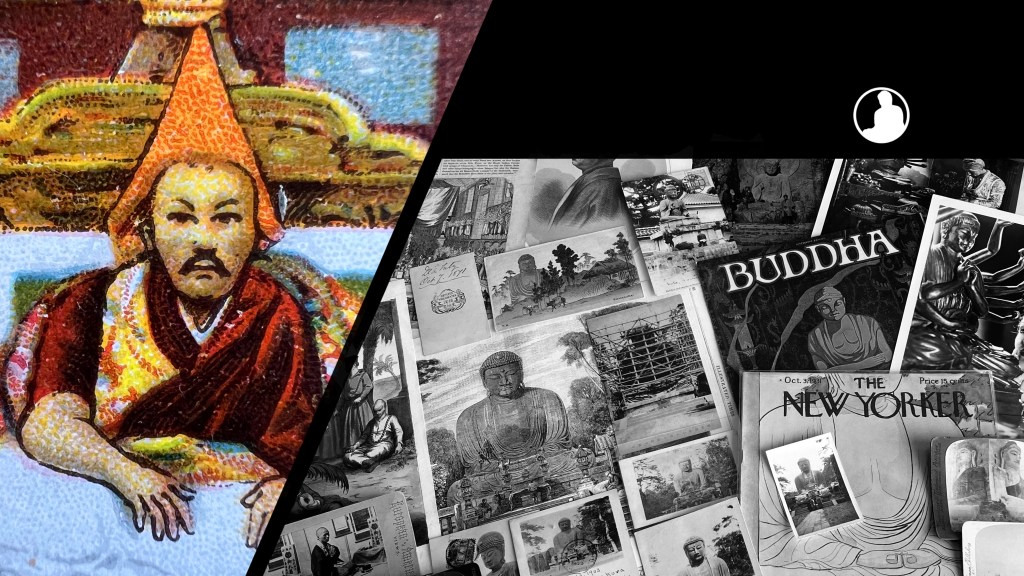
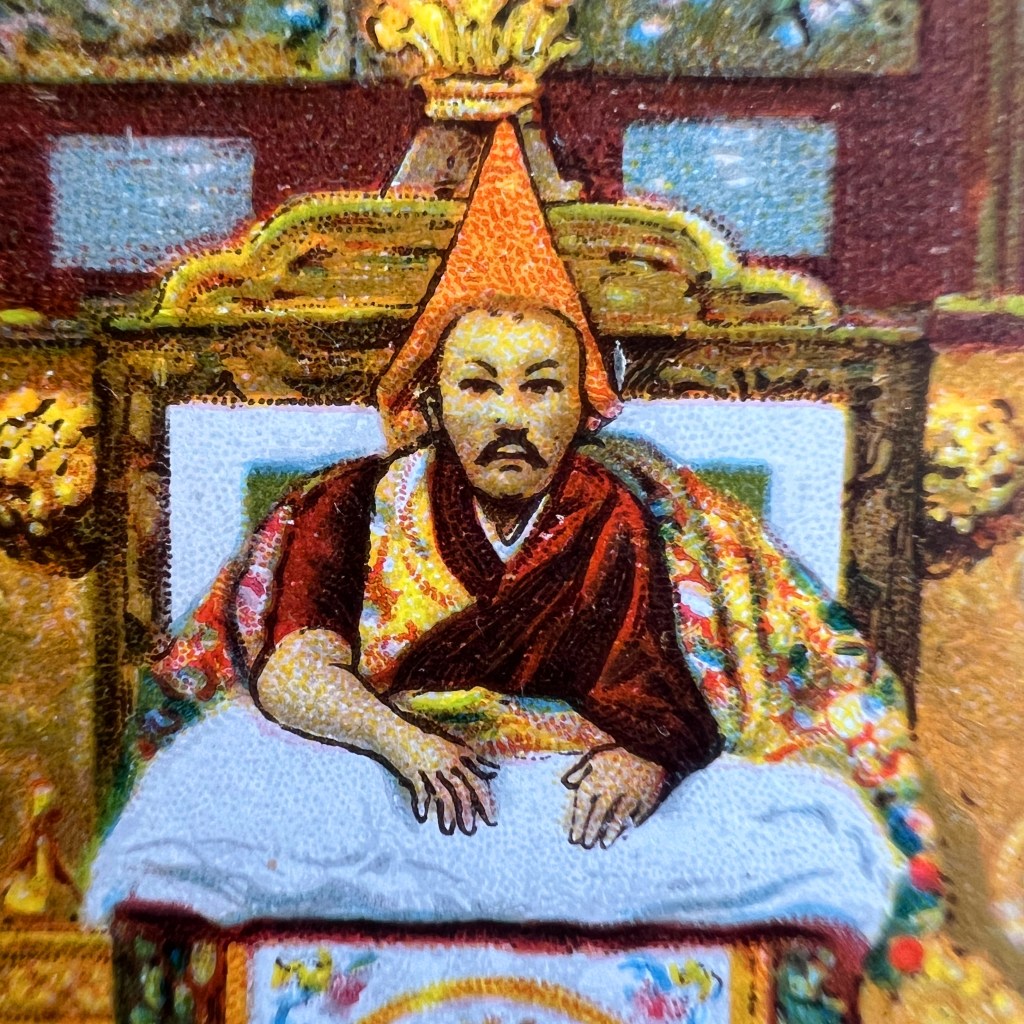
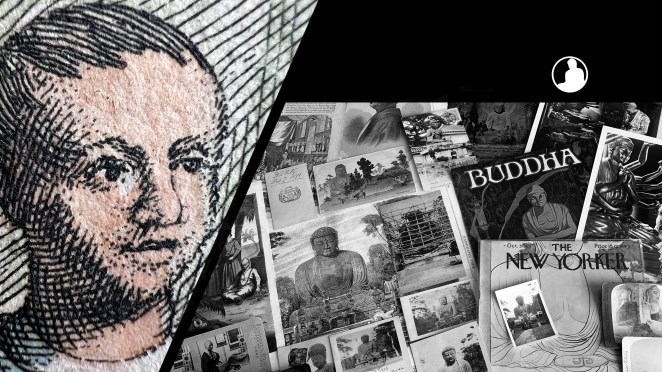
The first photograph of the Dalai Lama in Tibet was taken in 1921; it depicts “the Great Thirteenth,” Tubten Gyatso (1876–1933). The image was published in various Western media, even making its way on to a multicolor lithograph trade card for the German company Liebig in 1935.
*The first photograph of the Dalai Lama was taken in India in 1910 following the incursion of the Qing army into Tibet.

The photograph was taken by Charles Bell and Rabden Lepcha at Norbulingka, the summer palace of the Dalai Lama. Previously, images of the Dalai Lama were only spread through devotional tapestries (thangka) and gilt statues; now photographs could be shared among faithful Tibetans.

The Liebig company started printing colorful advertising cards in 1872, helping to support a popular collector’s hobby. This set from 1935 focused on Lhasa and included six cards, including an image of Potala Palace and large Tibetan prayer wheel, both iconic images in popular consciousness.

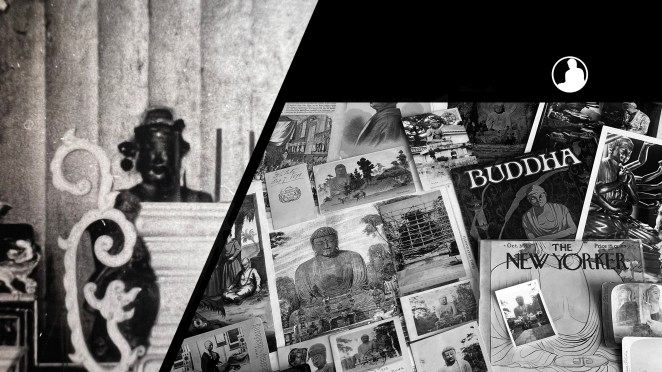
The original black and white photograph shows the Dalai Lama sitting on a throne behind an ornate dais. On the back wall hangs nine silk thangka depicting the Buddha, but the lithographic artist only loosely renders them as Buddhist images.

For a brief account of the Dalai Lama photograph and discussion on the impact of photography in Tibet, see Riga Shakya’s Lenses of Modernity: Photography in Tibet and the Himalayas, viewable here: tinyurl.com/bdzzcw4m.

The Buddhas in the West Material Archive is a digital scholarship project that catalogues artifacts depicting Buddhist material culture for Western audiences. It’s comprised of prints, photos, and an assortment of ephemera and other objects. For a brief introduction to this archive, visit the main Buddhas in the West project page.
For Related Buddhas in the West Posts Featuring Tibet:


For the Most Recent Buddhas in the West Posts:












 Personal Site of Peter Romaskiewicz