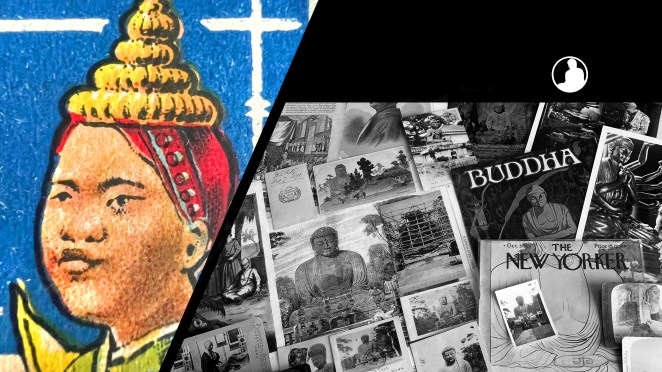
Fritz Kapp’s Lamas and Disciples Postcard

For all the new Buddhas in the West posts
follow us on Bluesky & Instagram


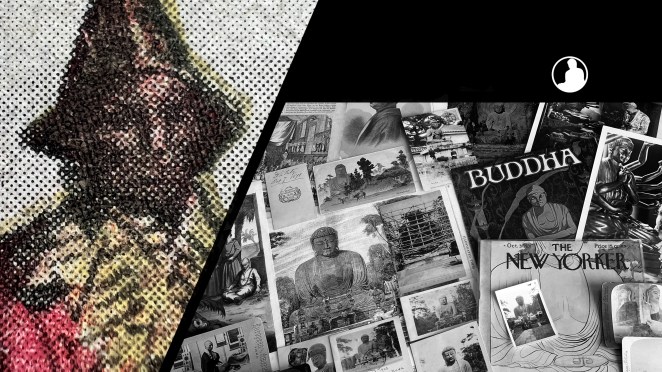
In 1900, traveling to Darjeeling meant gazing upon the grandeur of the snow-capped Himalayas and imagining the inaccessible lands that lay beyond them in Tibet. Visiting Darjeeling at this time also meant having the rare opportunity to encounter and observe real Tibetan lamas.

Following the completion of the Darjeeling Himalayan Railway in 1881, the first commercial photography studios opened in the region. As the tourist demand for photographic souvenirs soared, studios increasingly staged scenes of various “ethnic” activities, including Tibetan Buddhist ritual.
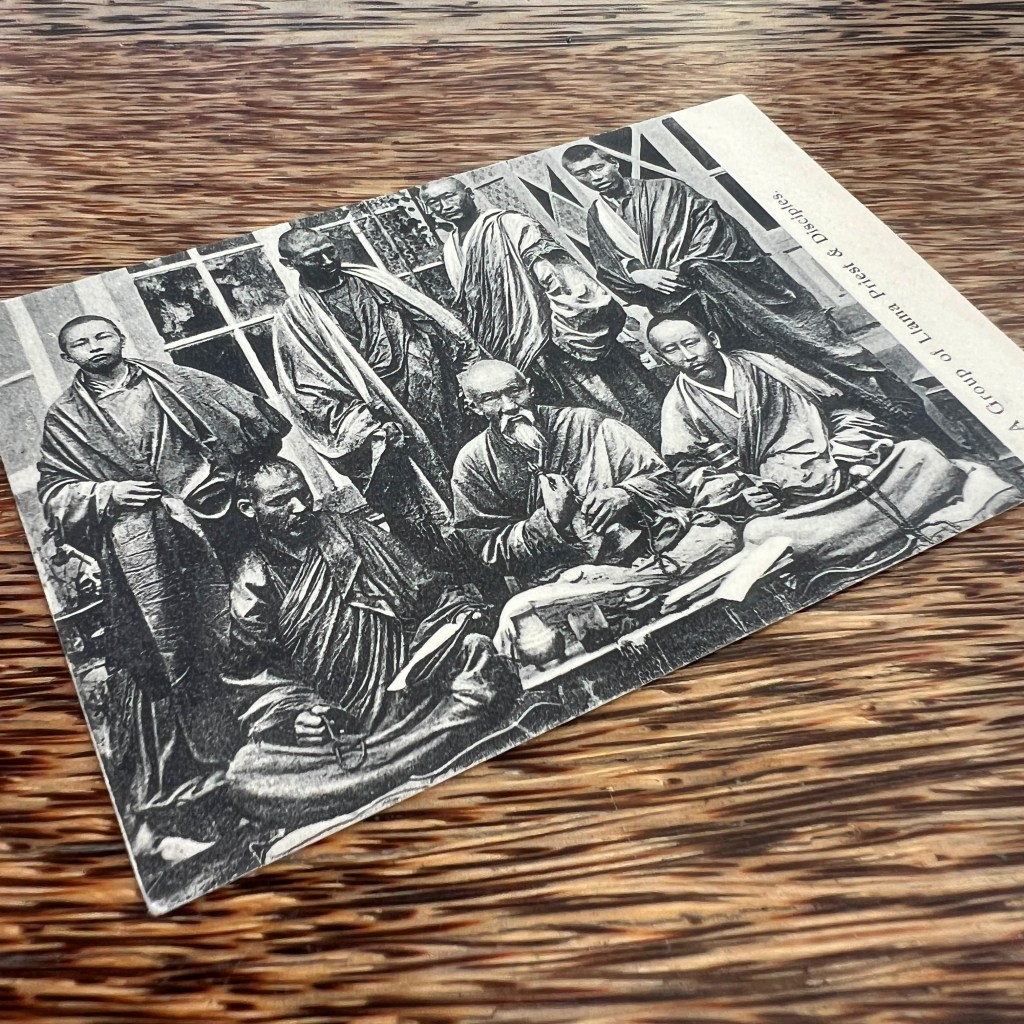
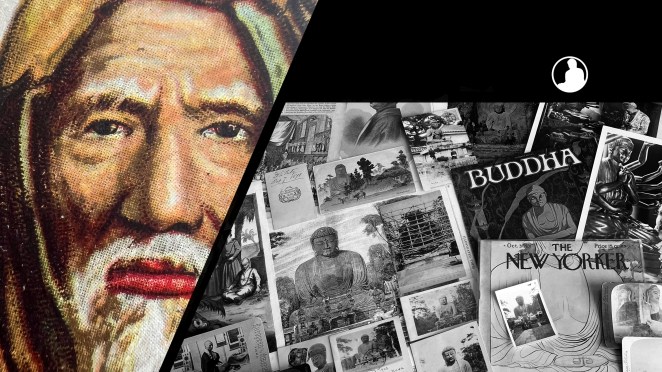
The original photographer for this shot was Fritz Kapp who ran a studio at Calcutta and Darjeeling from about 1888 to 1903. When the picture postcard format was first introduced to Darjeeling in the 1890s, they became a cheaper alternative to photographs and a highly collectable souvenir.

Driven in part by an anthropological mode of seeing and recording, staged studio photographs required appropriate clothing and props to clearly identify the “ethnic type.” Monk’s robes, mala beads, and prayer wheels all signaled the presence of “Llama [sic] priests” as cited in the caption.
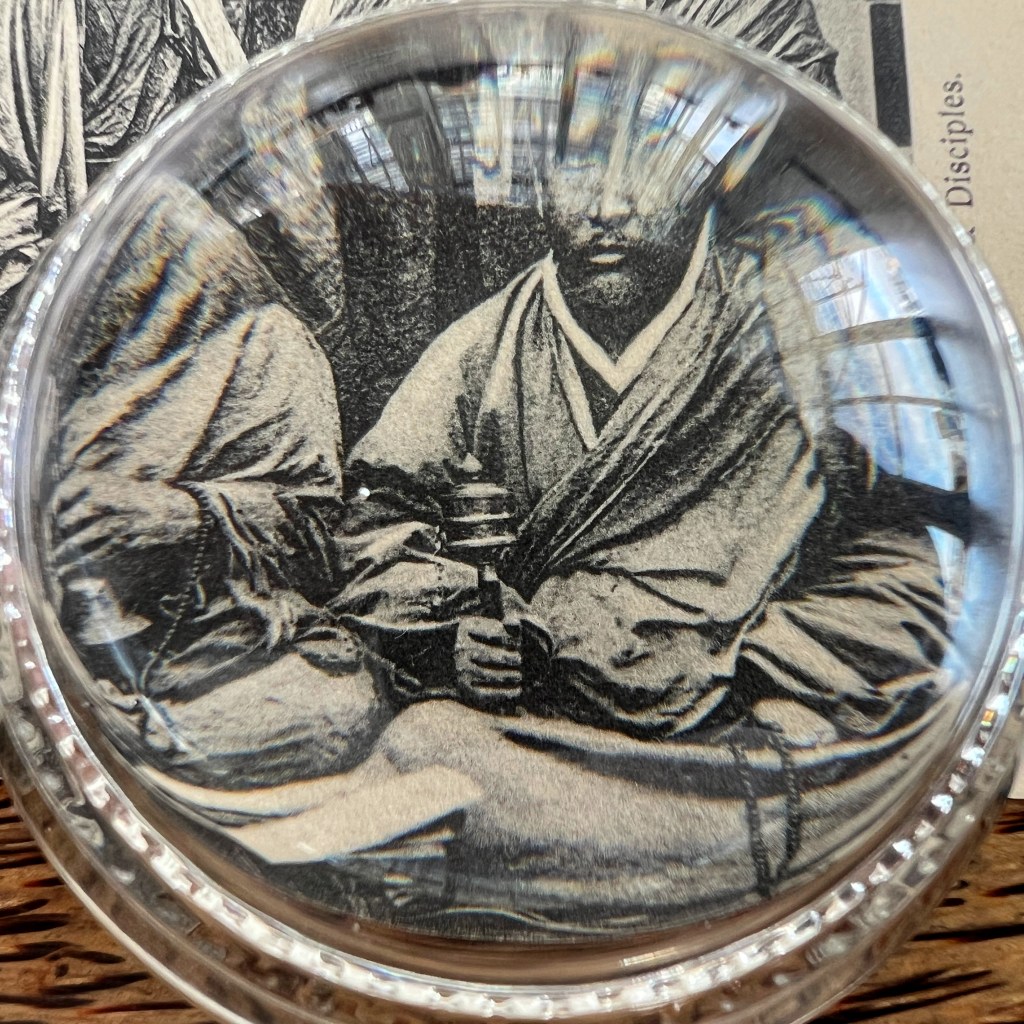
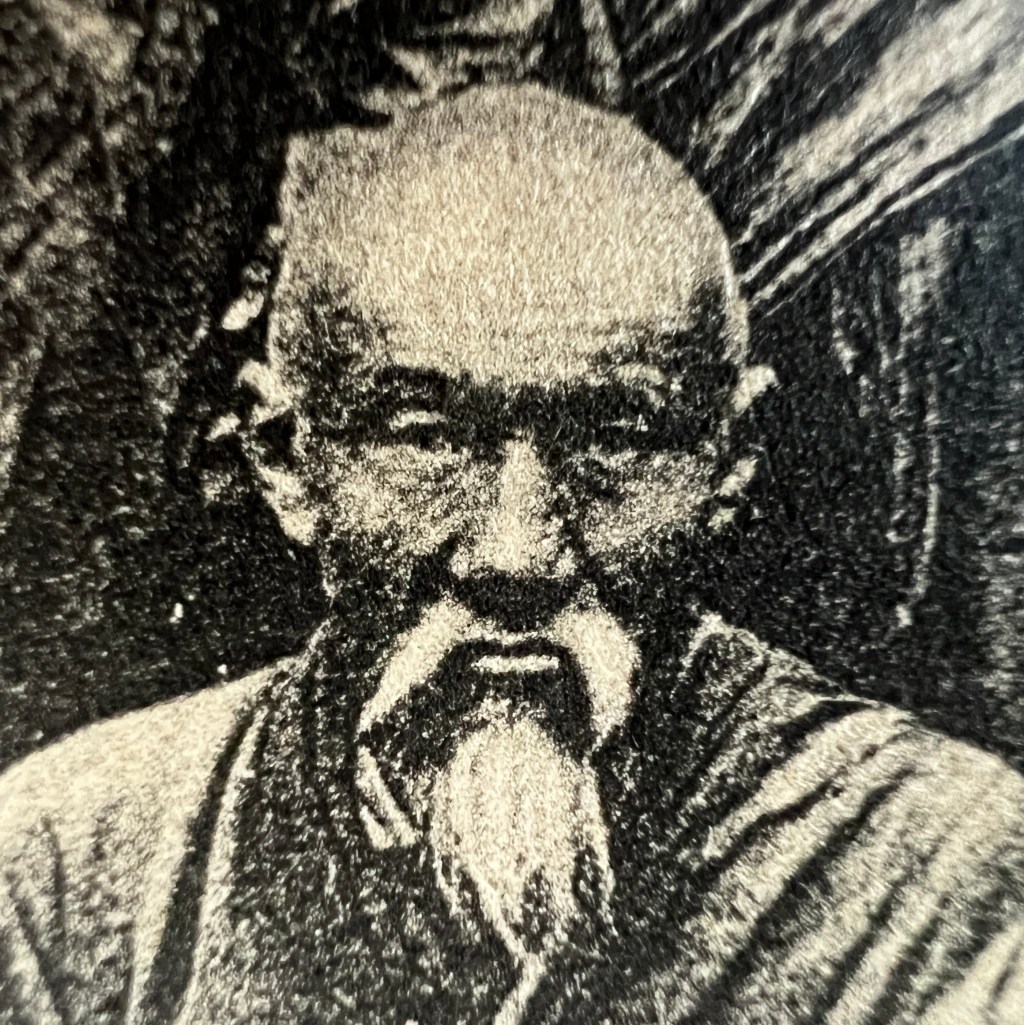
The central figure, looking directly at the camera, holds both a ritual vajra and bell; he is also a real Tibetan monk. Historian Clare Harris has identified this figure as Sherab Gyatso, the abbot of Ghoom Monastery located on the outskirts of Darjeeling.
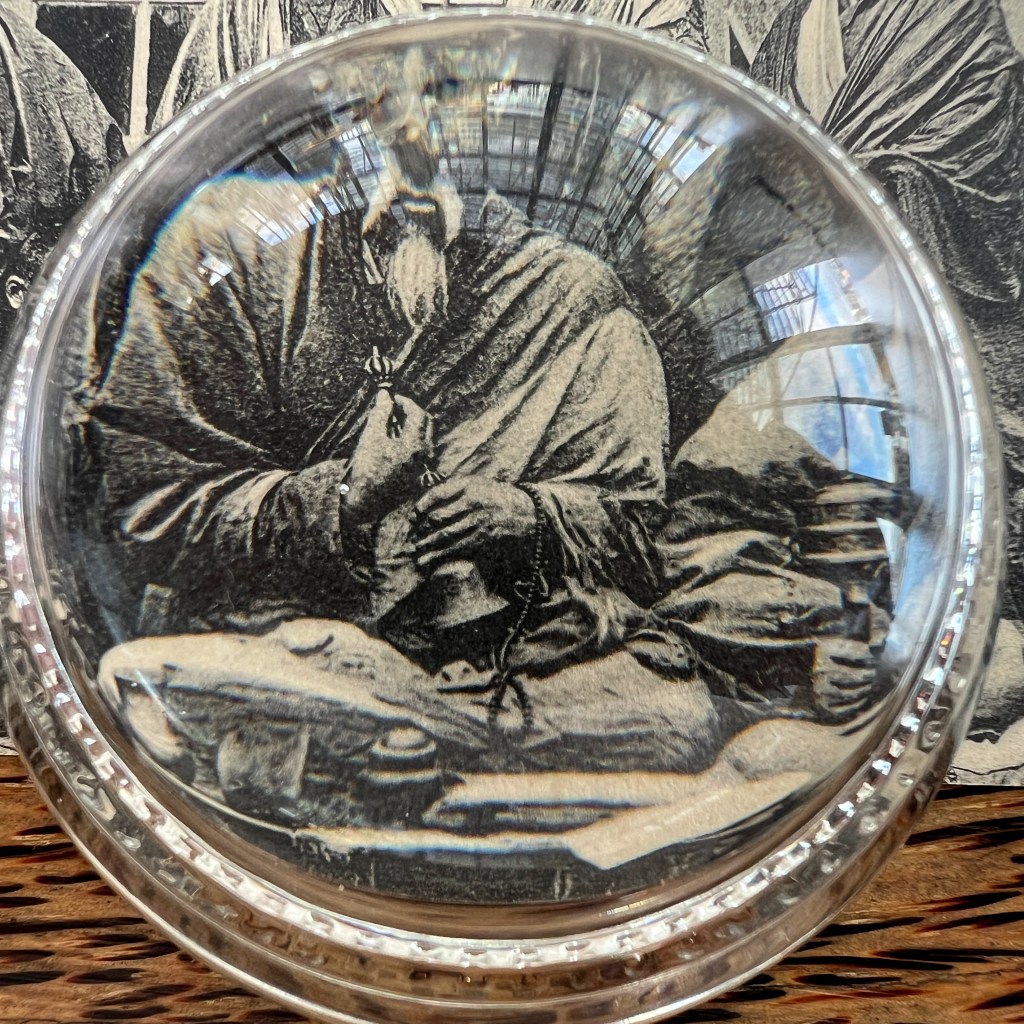
A November 2021 Sotheby’s sale of the original photo was inscribed: “Lama priests by F. Kapp./ Lama Sherb, Gyatso (front middle).” For more on the history of photography in Darjeeling, see Clare Harris’ Photography in Tiber (2016).

The Buddhas in the West Material Archive is a digital scholarship project that catalogues artifacts depicting Buddhist material culture for Western audiences. It’s comprised of prints, photos, and an assortment of ephemera and other objects. For a brief introduction to this archive, visit the main Buddhas in the West project page.


For Related Buddhas in the West Posts Featuring Prayer Wheels:


For the Most Recent Buddhas in the West Posts:


Sherab Gyatso of Ghoom Monastery Postcard

For all the new Buddhas in the West posts
follow us on Bluesky & Instagram


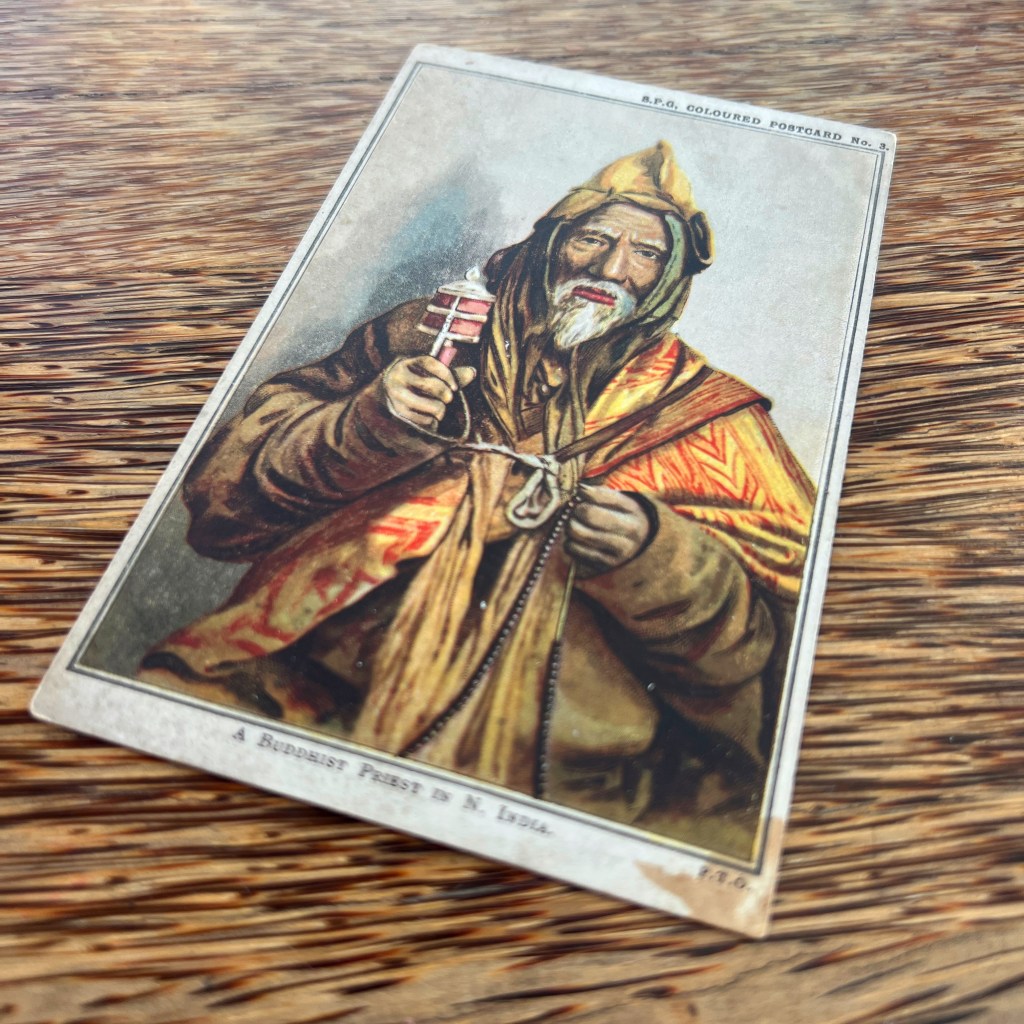
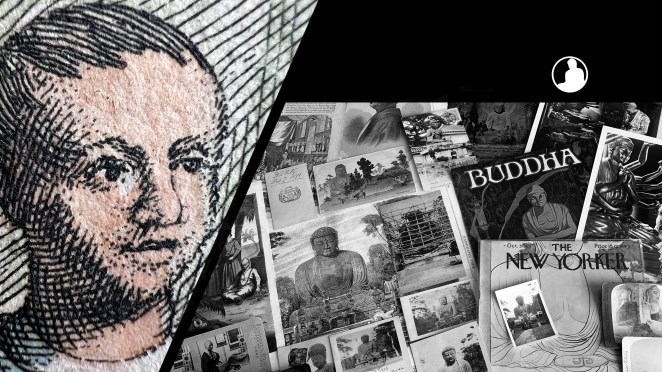
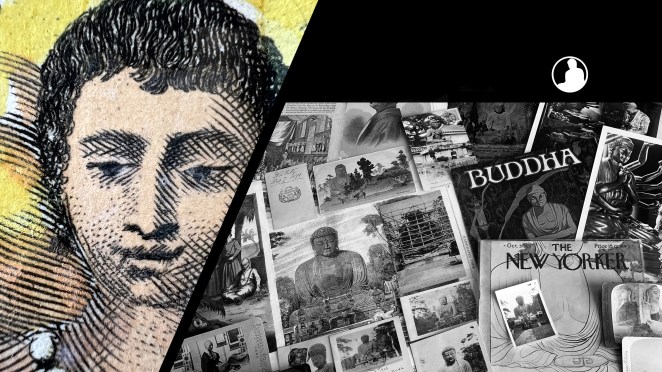
Identified as a “Buddhist priest” and holding a prayer wheel, a figure such as this would have passed for a generic Tibetan lama in the visual language of the early 20th century. In this case, however, we also know this monk’s name: Sherab Gyatso.

Scholar Clare Harris discovered an albumen print of the original photograph taken by Thomas Parr during the 1890s in Darjeeling; the negative was inscribed with the name “She-reb.” The monk was the head of the Geluk Monastery at Ghoom (Ghum) and was well known among the British as the “Mongol Lama.”

Gyatso’s image appears in a wide range of media, including travel guides, published travelogues, and postcards between 1890 and the 1910s. As noted by Harris, this monk emerged as a “poster-boy for Tibetan Buddhism” around the area of Darjeeling in northern India.

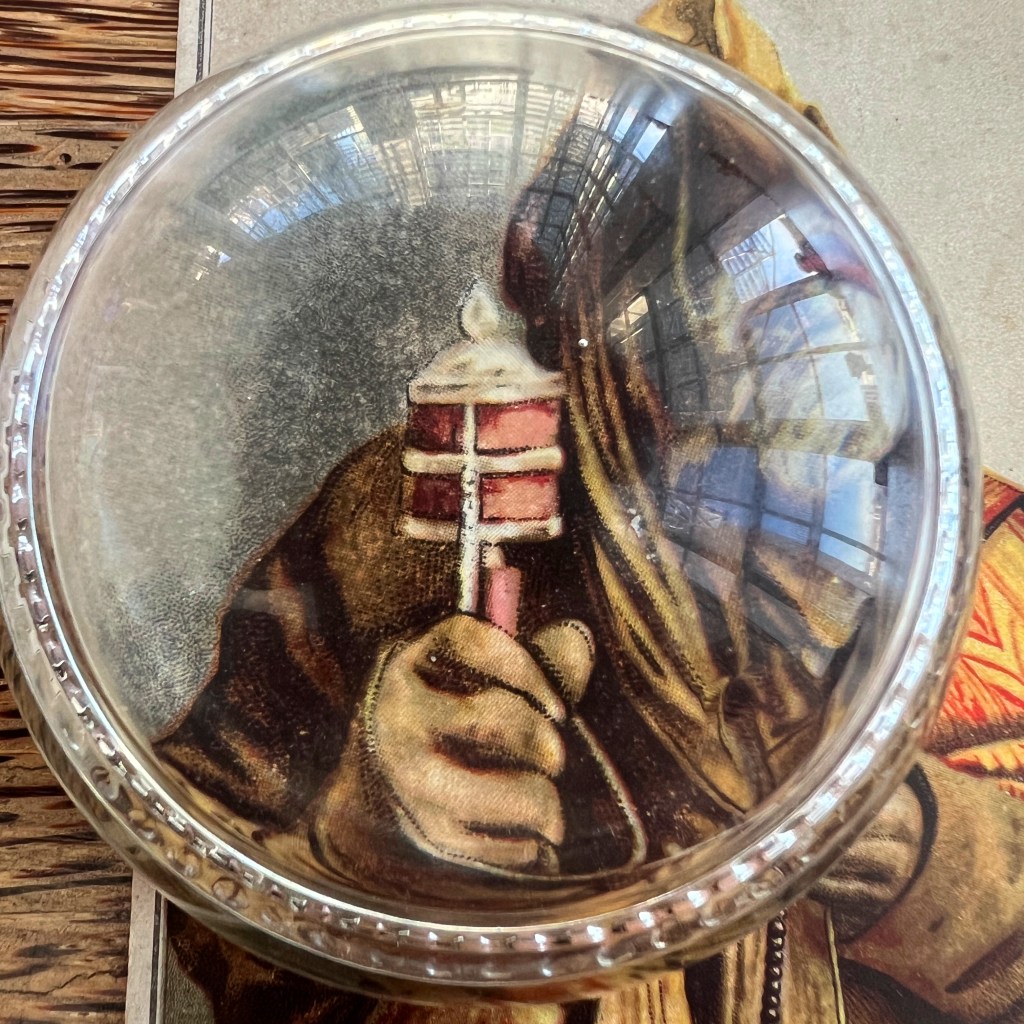
When posed for this portrait in Parr’s studio, the symbols of Tibetan ritual culture are clearly foregrounded, with one hand thumbing mala beads and the other holding a prayer wheel upright and ready for use.

Notably, a Tibetan-style painting and clay statue of Sherab Gyatso grace Ghoom’s monastery today, both derived from Paar’s photograph.

For further information of Sherab Gyatso and the history of early photography in Northern India and Tibet, see Clare Harris’ Photography in Tibet (2017).


The Buddhas in the West Material Archive is a digital scholarship project that catalogues artifacts depicting Buddhist material culture for Western audiences. It’s comprised of prints, photos, and an assortment of ephemera and other objects. For a brief introduction to this archive, visit the main Buddhas in the West project page.


For Related Buddhas in the West Posts Featuring Historical Postcards:


For the Most Recent Buddhas in the West Posts:

James Ricalton’s Priest at the Temple of the Tooth

For all the new Buddhas in the West posts
follow us on Bluesky & Instagram


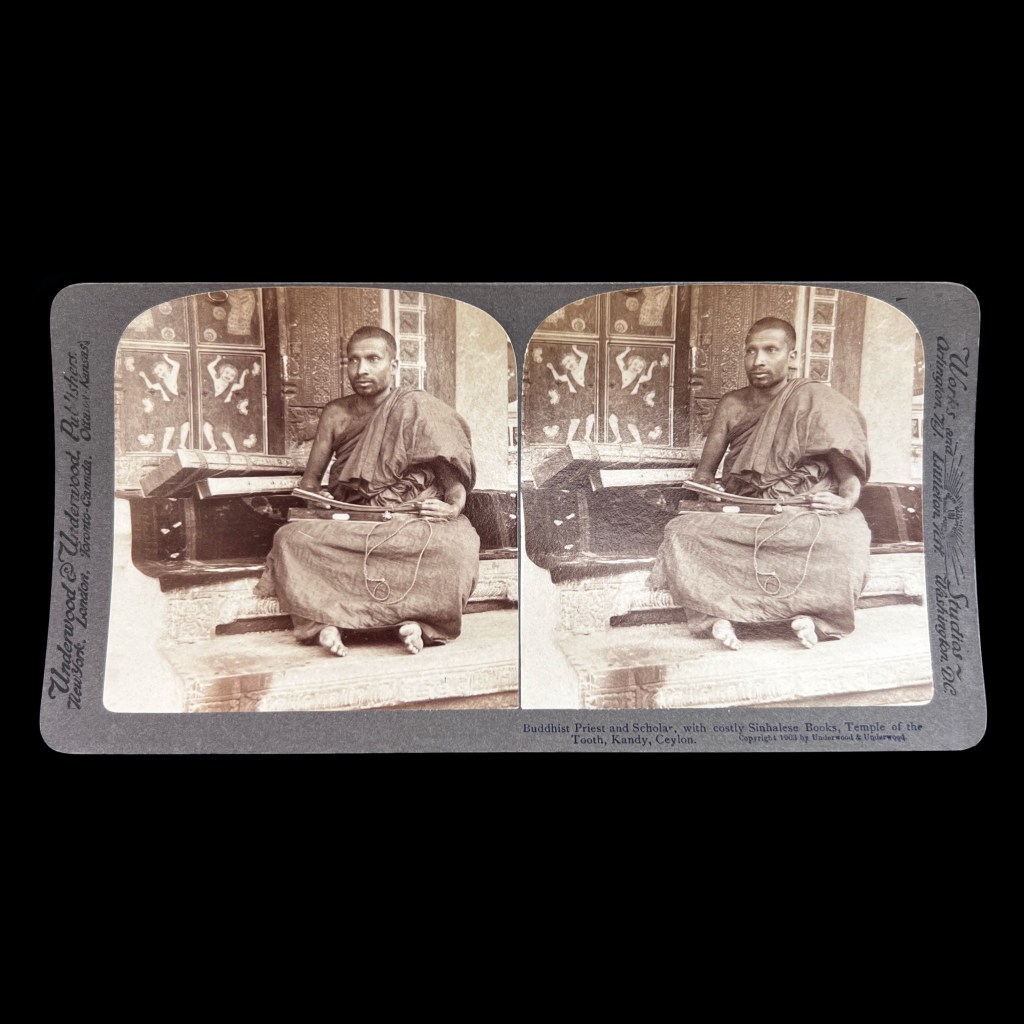
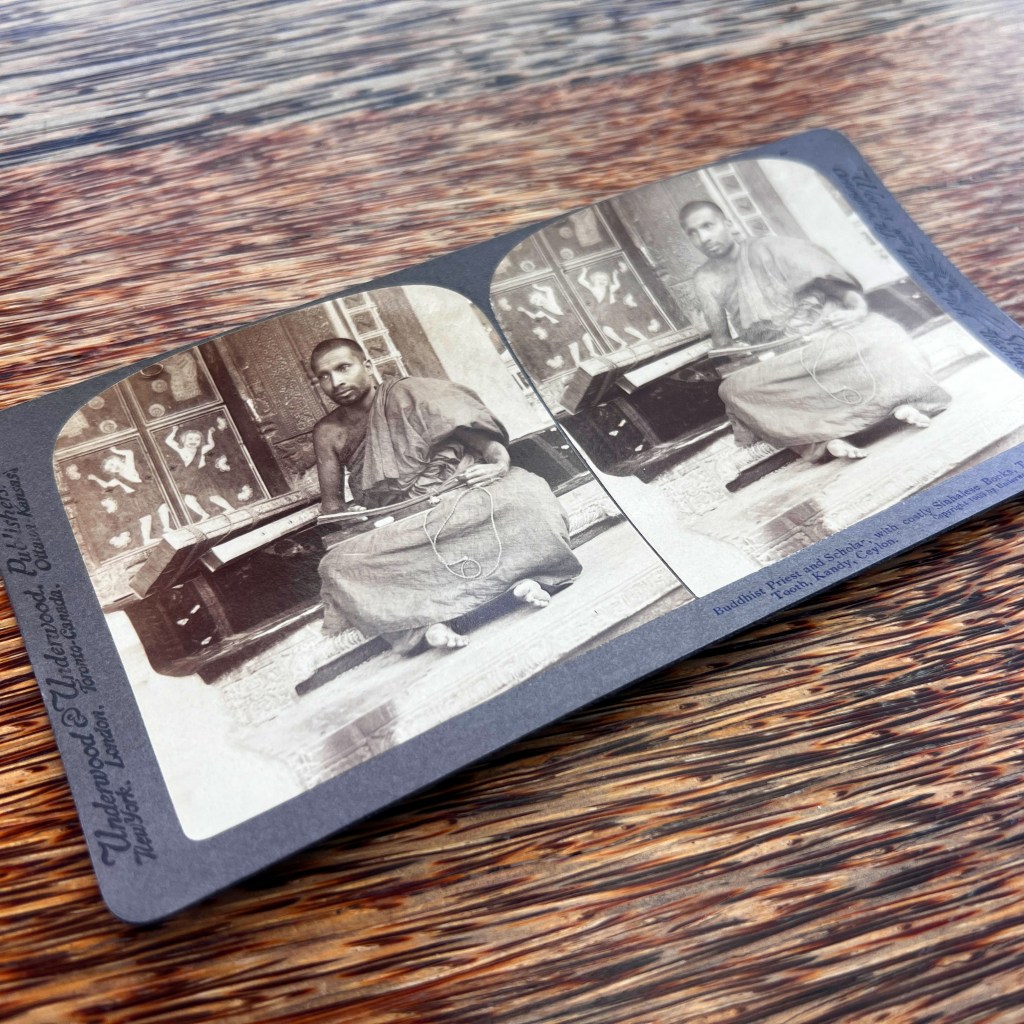
Just after the discovery of the Buddha’s relics at Piprahwa in 1898, James Ricalton was planning a photographic tour of the world. One of his planned stops was to visit the most famous Buddhist relic of his era, the Buddha’s tooth enshrined in the capital city of Kandy.

Ricalton’s employer, the largest stereoscope firm in the world, Underwood & Underwood, was launching several sets devoted to specific countries; Ceylon was slated to have 30 stereoview cards. Underwood’s slogan, ‘‘to see is to know,’’ drove its message that education was a main objective.

Shooting the Temple of the Tooth, Sri Dalada Maligawa, and a few stupas, this image was the only one for Ceylon showing a Buddhist monk. While it was common to depict monks on alms rounds, Ricalton shows this unnamed monk reading scripture, calling him a priest and scholar in the caption.

The monk sits holding the long, rectangular leaves of a Buddhist scripture in his lap. Views such as this were intended to give a glimpse into the “real lives” of the photographed subjects, thus allowing viewers to travel without the hassle of actually leaving home.

Selling “the world in a box,” stereoviews helped shape a vision of Buddhism for American consumers. For more on the powerful visual language of stereoviews, see Judith Babbitts’ “Stereographs and the Construction of a Visual Culture in the United States,” in History Bytes (2004).


The Buddhas in the West Material Archive is a digital scholarship project that catalogues artifacts depicting Buddhist material culture for Western audiences. It’s comprised of prints, photos, and an assortment of ephemera and other objects. For a brief introduction to this archive, visit the main Buddhas in the West project page.


For Related Buddhas in the West Posts Featuring Buddhist Clerics:


For the Most Recent Buddhas in the West Posts:


Alain Mallet’s Dalai Lama Engraving

For all the new Buddhas in the West posts
follow us on Bluesky & Instagram


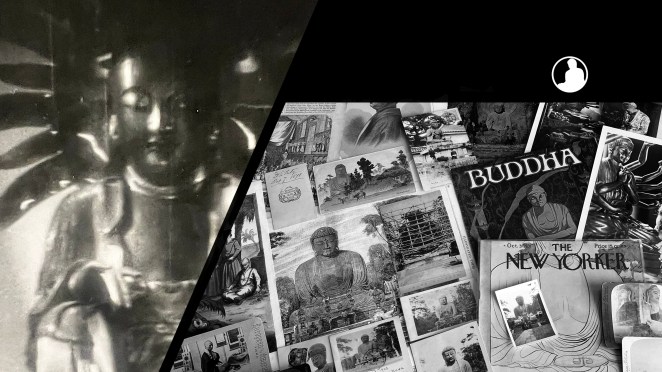
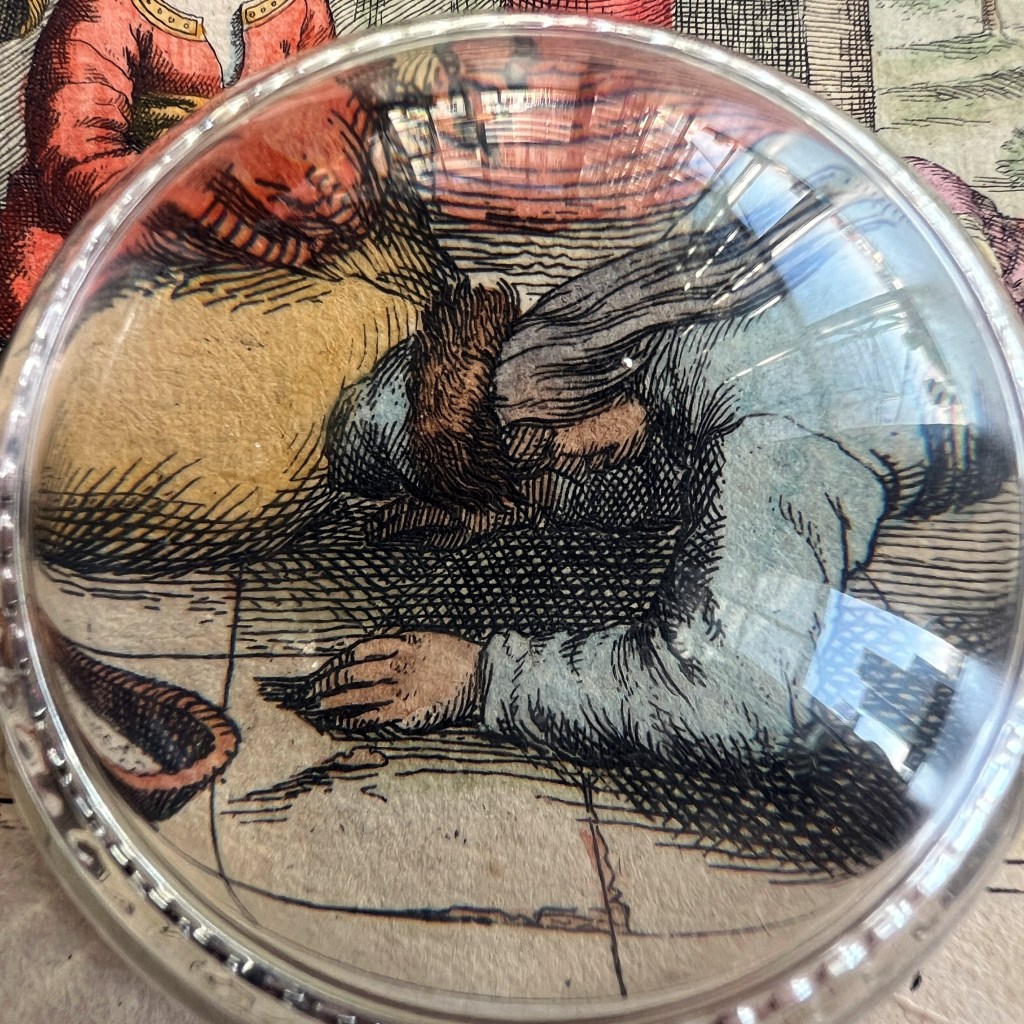
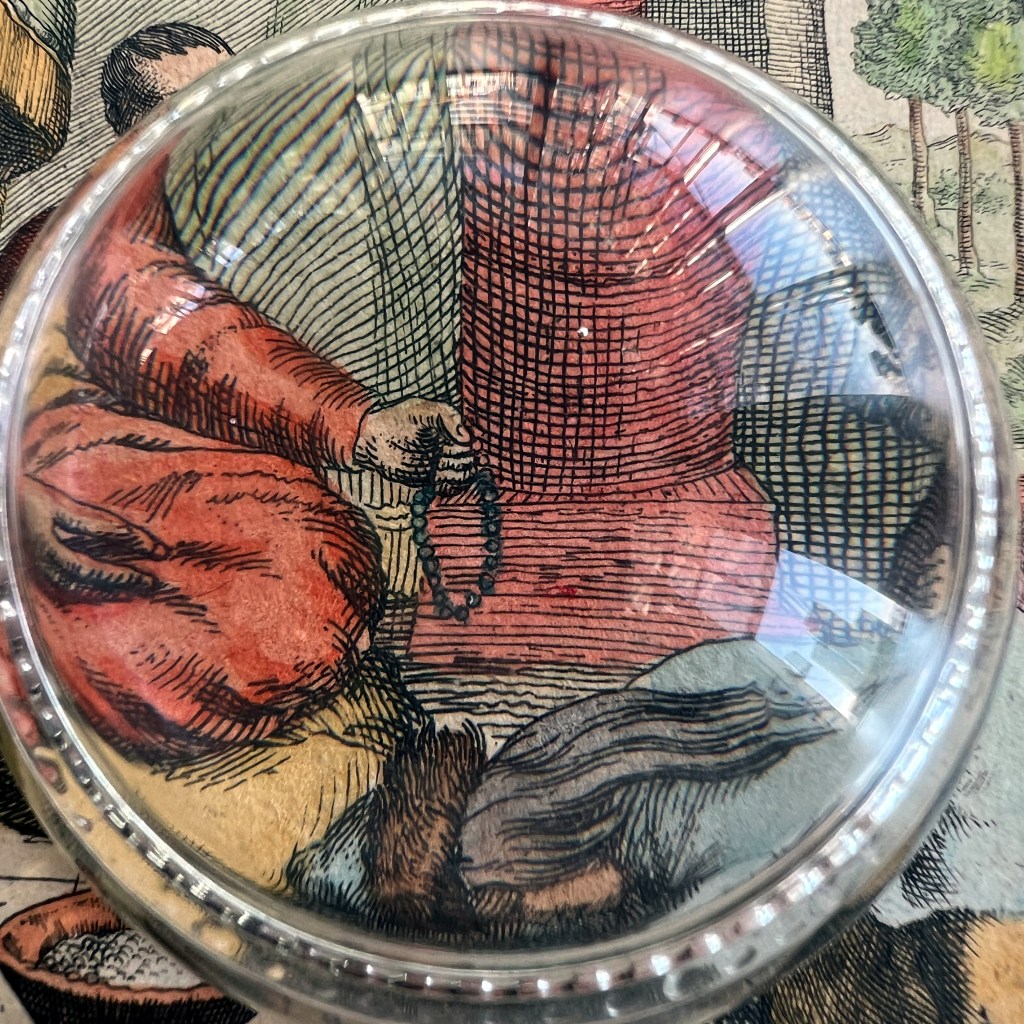
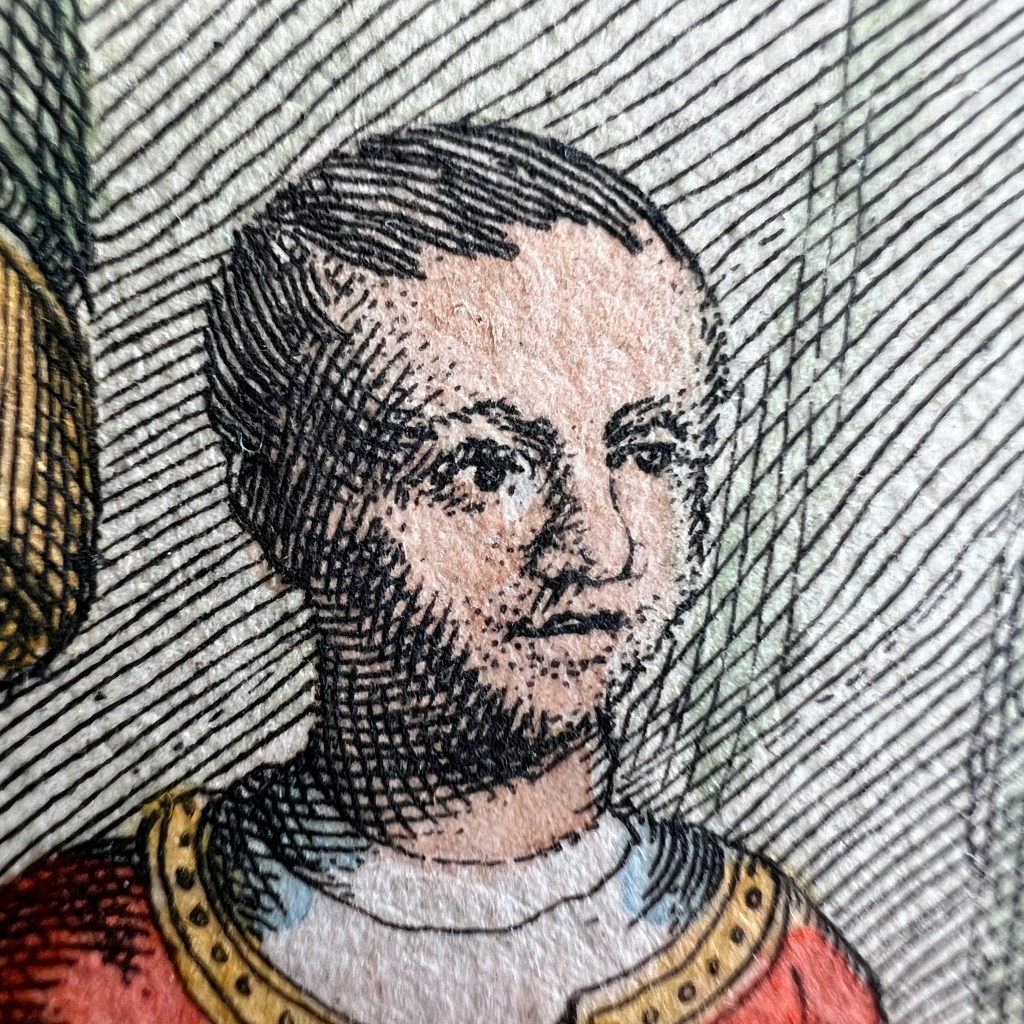
Earliest European depiction of the Dalai Lama? In 1683 Alain Mallet published his illustrated five-volume set entitled Description de l’univers. The second volume, devoted to Asia, contained an illustration of the Grand Lama, a “living and true God.”

Mallet copied an earlier illustration of Althanius Kircher from 1667 with minimal changes. The engraving shown here was hand colored (possibly after publication), giving the Dalai Lama a dark red robe.

While not named in the text, the original illustration was published during the lifetime of the famed Fifth Dalai Lama, Ngawang Lobsang Gyatso. Information about the Dalai Lama was gleaned from the reports of Jesuit missionary Johann Grueber who visited Lhasa in 1661.

The Fifth Dalai Lama died in 1682, a year before Mallet’s publication, but his passing was concealed for more than a decade. Mallet reports on the process of reincarnation, describing it as a “deception.”

To read Mallet’s text associated with this image, see the digitized scan provided by the University of Ottawa here: https://tinyurl.com/37895xc9


The Buddhas in the West Material Archive is a digital scholarship project that catalogues artifacts depicting Buddhist material culture for Western audiences. It’s comprised of prints, photos, and an assortment of ephemera and other objects. For a brief introduction to this archive, visit the main Buddhas in the West project page.


For Related Buddhas in the West Posts Featuring Engravings:


For the Most Recent Buddhas in the West Posts: