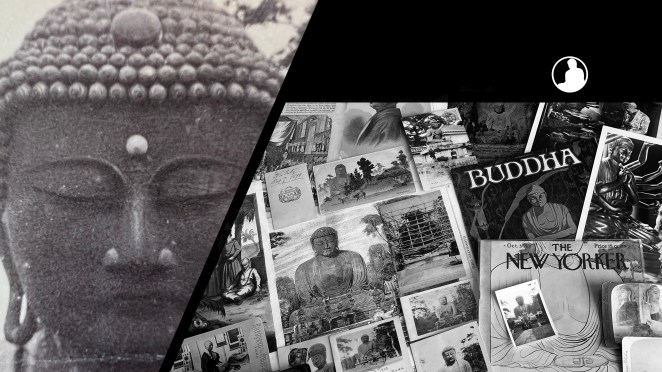
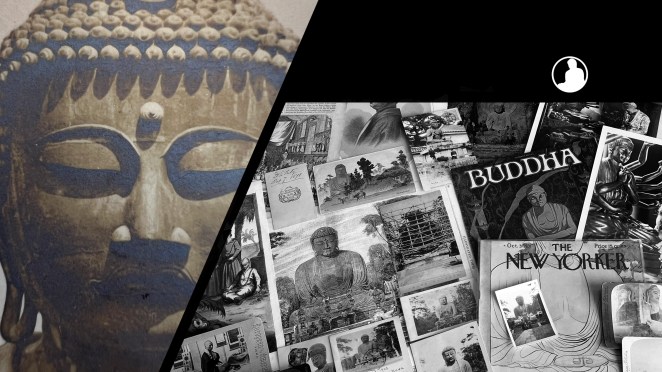
Engraving the Grotesque Buddha, 1660–1850 Exhibit

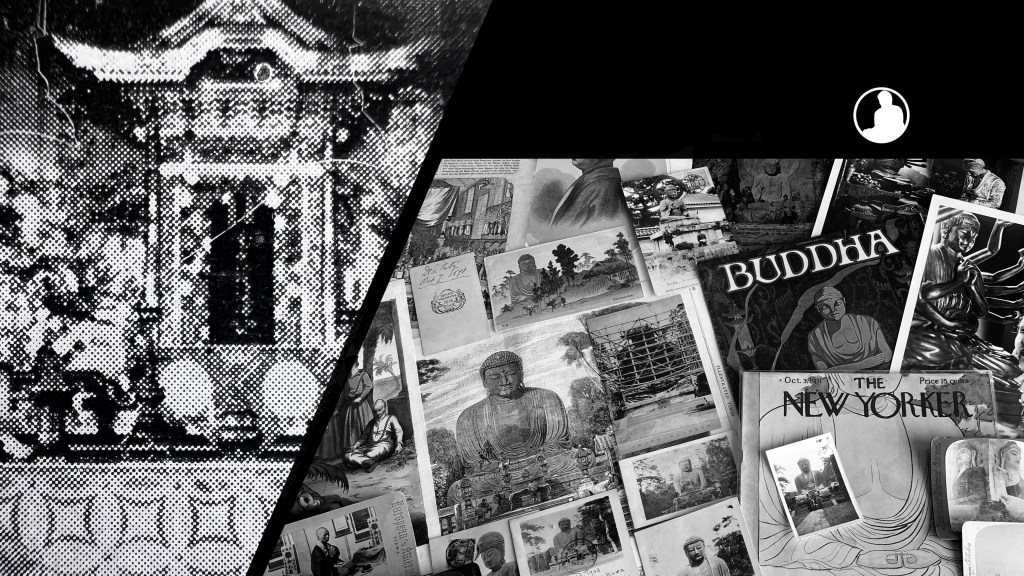
The Buddhas in the West Material Archive pop-up exhibit, entitled “Engraving the Grotesque Buddha, 1660–1850” will be on display November 22, 2025 at CGIS S050 at Harvard University.


Introduction to the Exhibit

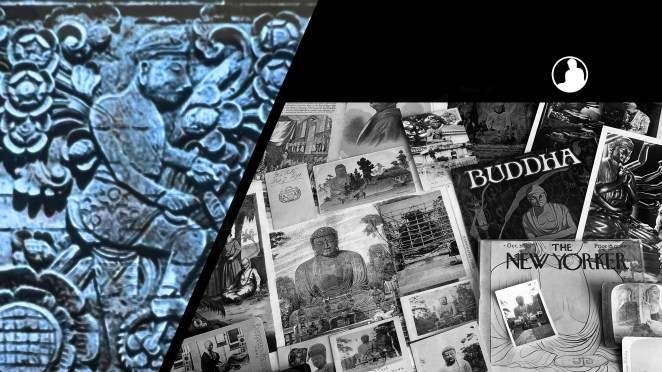
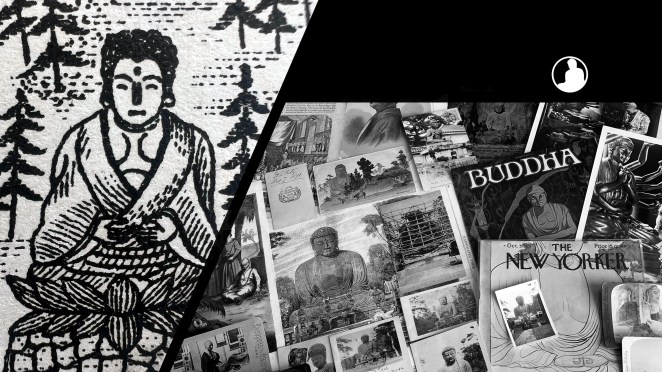
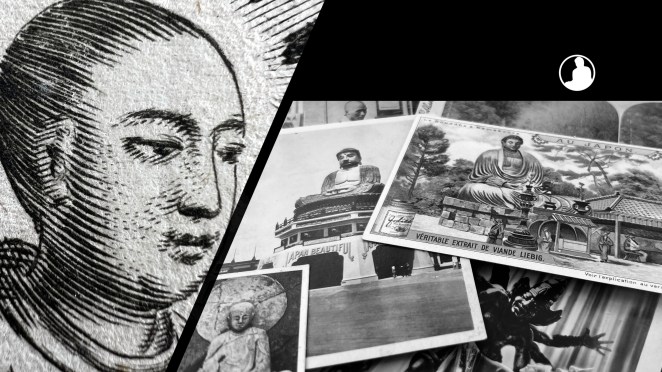
Through the 1650s Buddhist material culture remained an enigma to much of Europe. Yet, in the late 1660s, Amsterdam-based publisher Jacob van Meurs (1619/1620–c.1680) started publishing illustrated books devoted to China and Japan. These works proved popular and helped introduce Buddhist material culture to broader European audiences.

Van Meurs’ influence was substantial. The engravings produced by his workshop were widely reproduced in publications over the next century. Some illustrations continued to be reused well into the nineteenth century until the invention of photography and adoption of photomechanical reproduction finally rendered the illustrations outdated. Consequently, some of the images from van Meurs’ workshop exhibited a strong media echo for nearly two-hundred years.

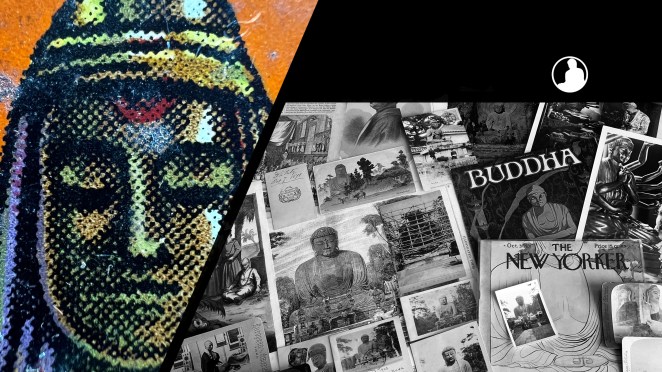
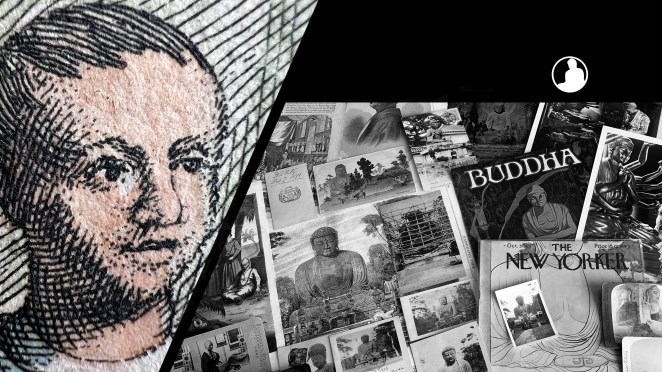
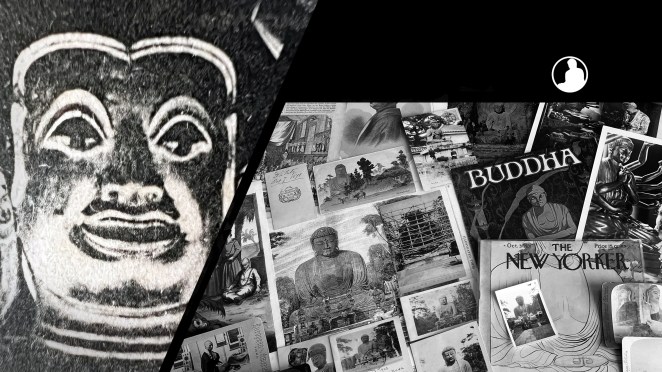
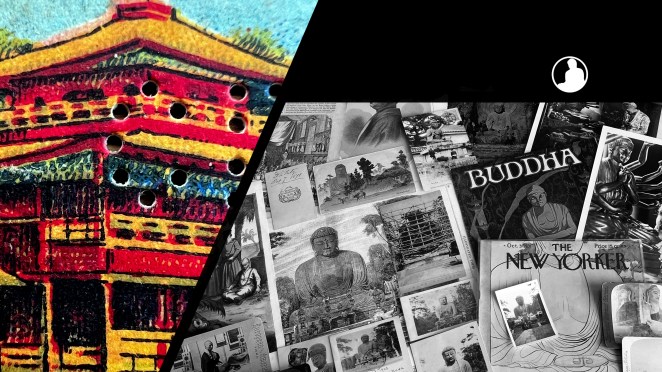
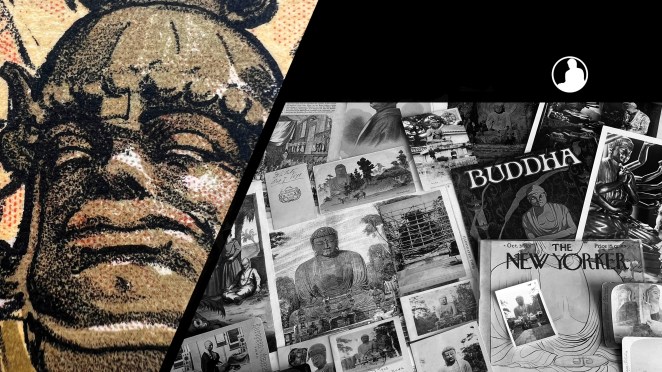
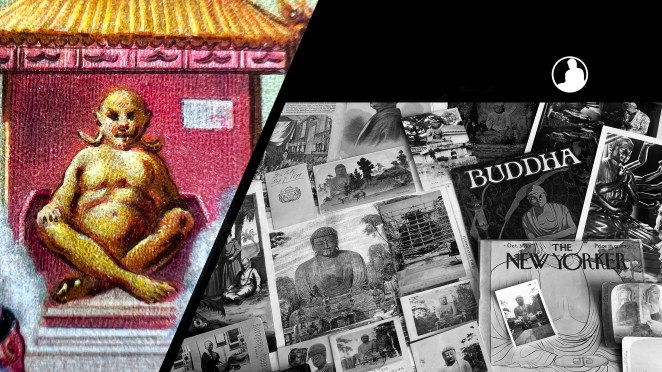
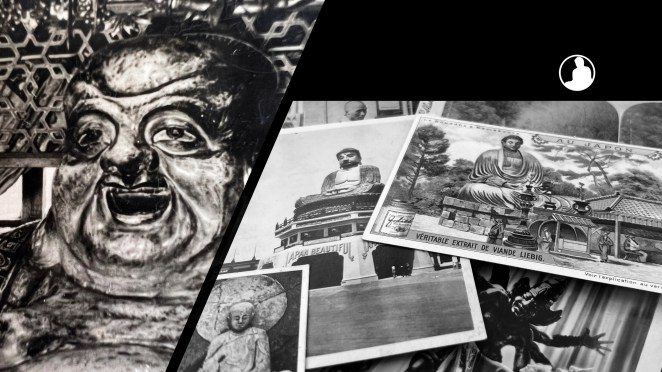
Notably, many of the images of Buddhist icons and Buddhist monks were embellished, often veering towards the uncanny, ghoulish, or grotesque.

The exhibit will be comprised of eighteen prints published between 1665 and 1863 that show the lasting influence of Jacob van Meurs’ printed works on the visual literacy of Buddhist material culture in the West.


Selected Prints


The Buddhas in the West Material Archive is a digital scholarship project that catalogues artifacts depicting Buddhist material culture for Western audiences. It’s comprised of prints, photos, and an assortment of ephemera and other objects. For a brief introduction to this archive, visit the main Buddhas in the West project page.


For the Most Recent Buddhas in the West Posts:


a

1906 French Colonial Exposition Annam Pavilion Postcard

For all the new Buddhas in the West posts
follow us on Bluesky & Instagram


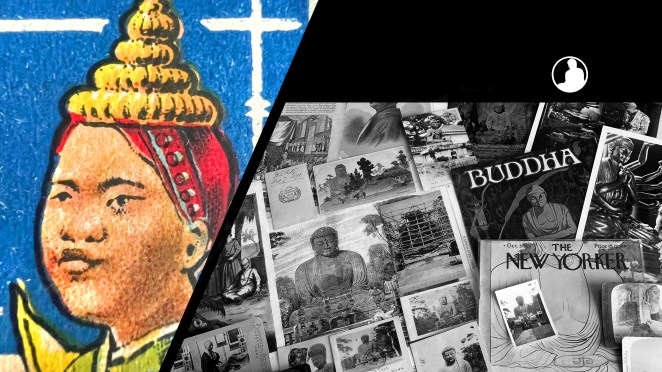
Following the success of colonial pavilions at World’s Fairs, France initiated its own independent Colonial Expositions in the 1890s. In Marseilles in 1906, famous architectural sites from French Indochina were reconstructed, including a towering Buddhist pagoda representing Annam.

Jules Charles-Roux, organizer of the colonial portions of the Paris World’s Fair of 1900 and head of the 1906 exposition, showcased the pagoda behind the main Indochina gate. The pagoda was also set at the head of a replicated “Hanoi road” populated with real inhabitants of the protectorate.
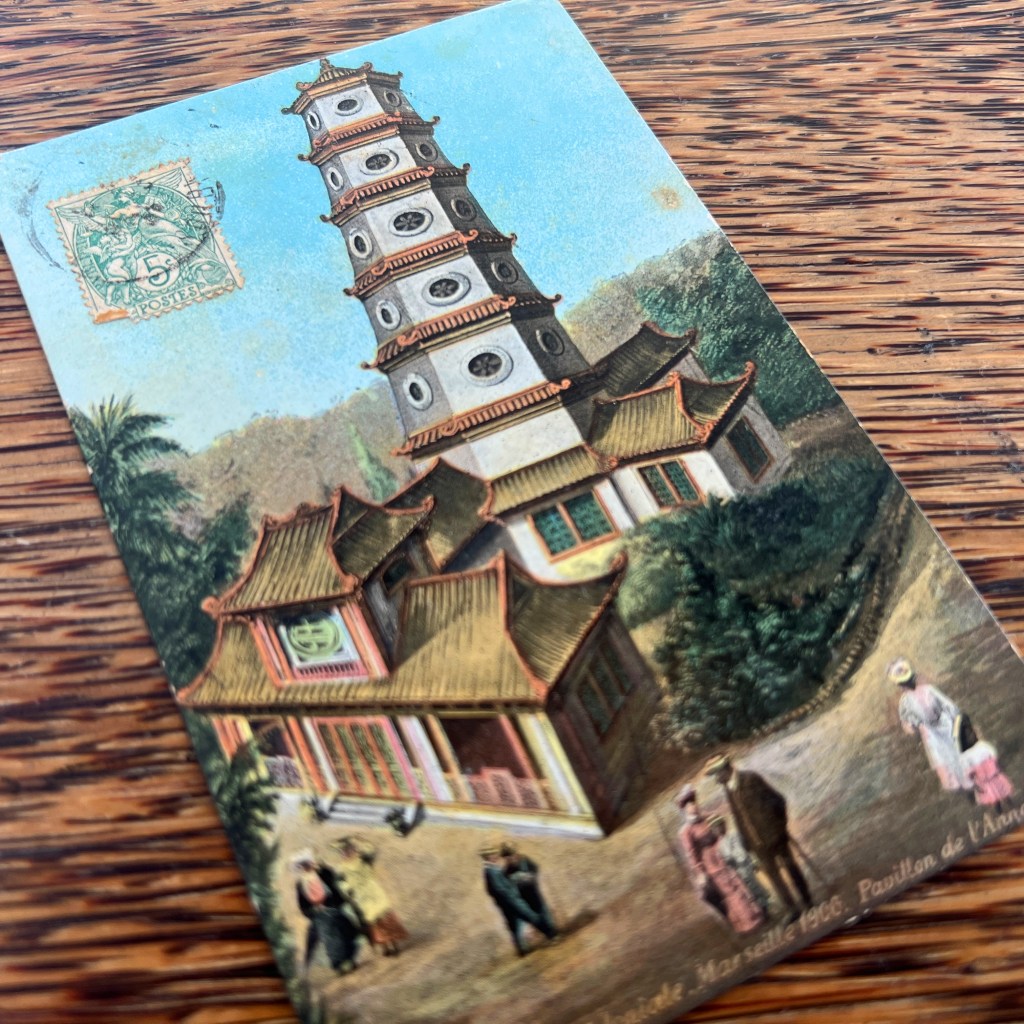
Held during the height of the postcard craze, the exposition grounds opened its own dedicated postcard pavilion. While the cancellation is unclear on the obverse, this card appears to have been sent from Marseilles; its destination was Port-Vendres, further down the Mediterranean coast.

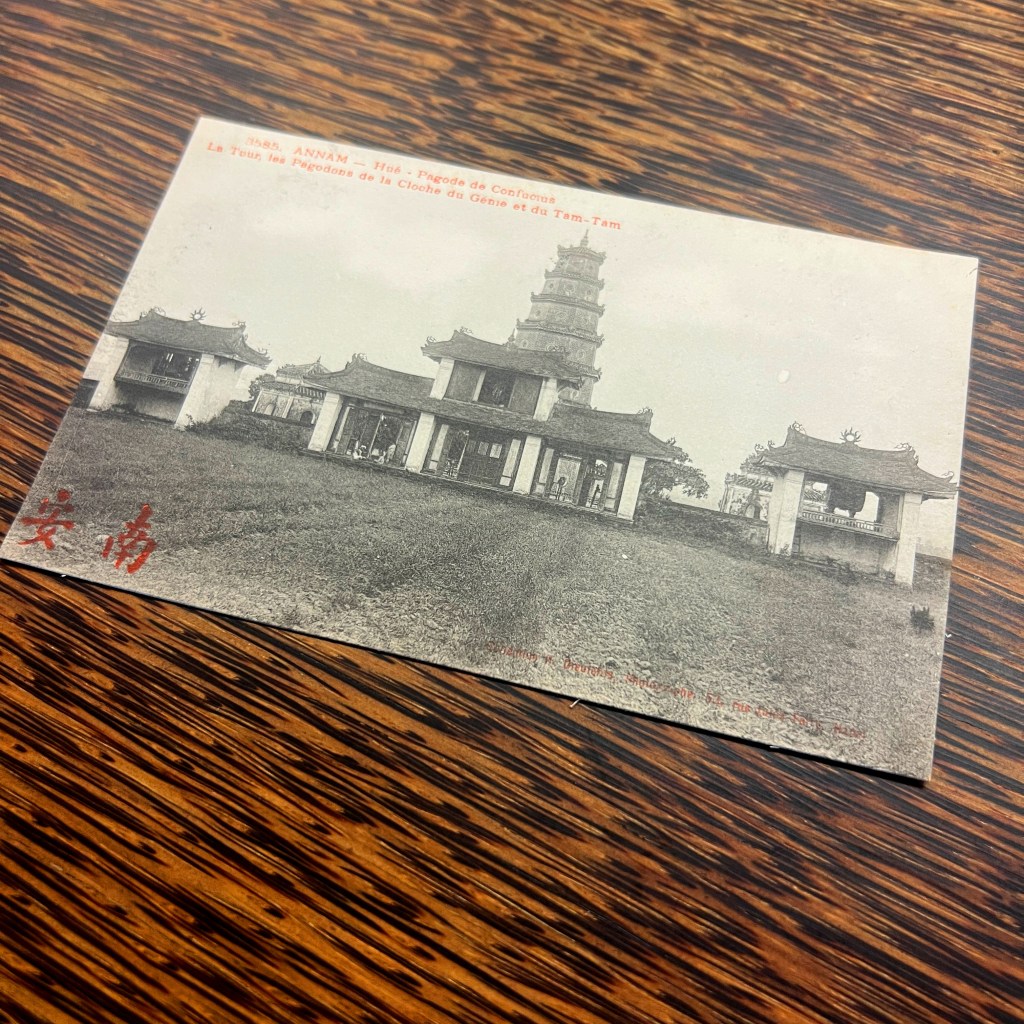
While often obscure in exposition literature, the “Annam Pavilion” was a replica of the pagoda from Tien Mu Temple, in the city of Hue, which was founded in 1601. The pagoda was a popular subject of souvenir photographs sold by studios throughout French Cochinchina, Annam, and Tonkin.

The following year, in 1907, Paris held another colonial exposition, but recreated a different pagoda to represent Annam. A photo illustrated book of the 1906 Marseilles Exposition is digitized by the University of Aix-Marseille, viewable here: https://tinyurl.com/mczsvn6s.


The Buddhas in the West Material Archive is a digital scholarship project that catalogues artifacts depicting Buddhist material culture for Western audiences. It’s comprised of prints, photos, and an assortment of ephemera and other objects. For a brief introduction to this archive, visit the main Buddhas in the West project page.


For Related Buddhas in the West Posts Featuring Vietnam / French Indochina:


For the Most Recent Buddhas in the West Posts:

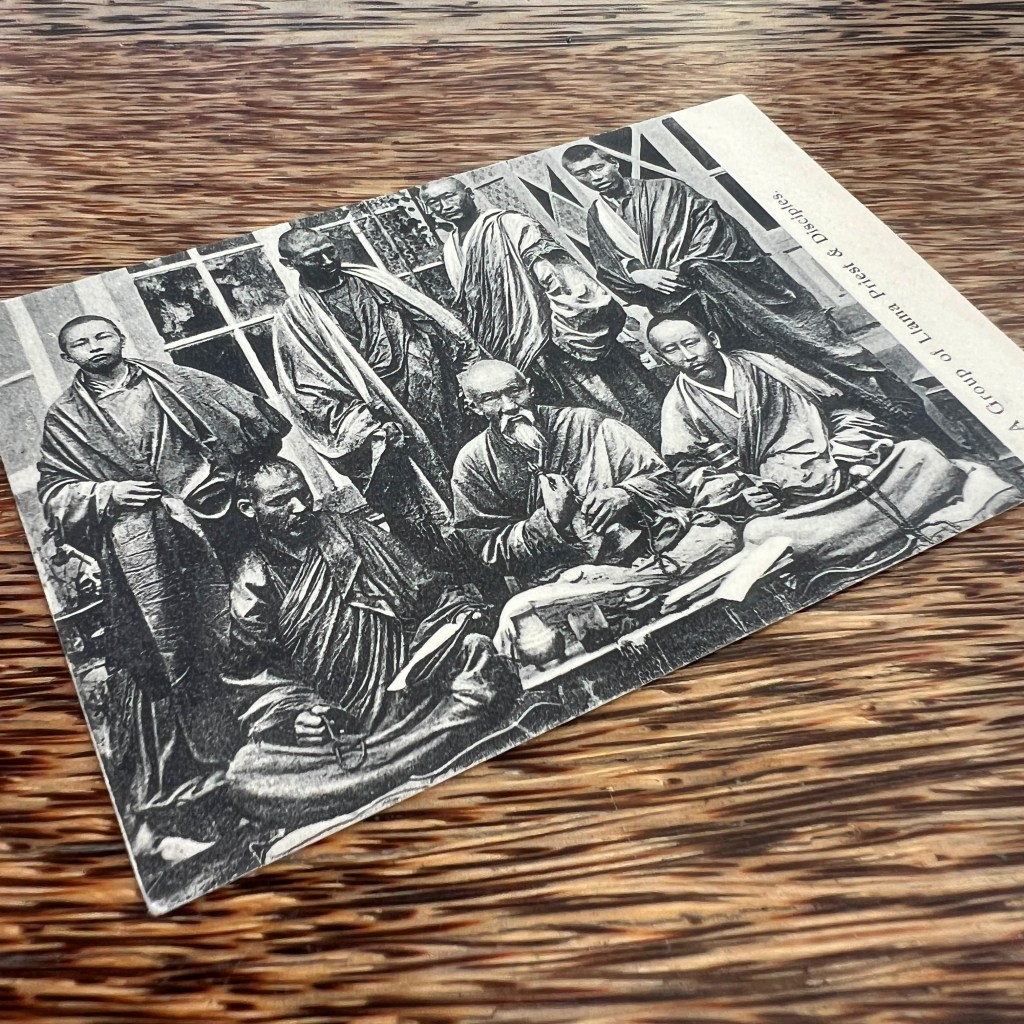
Fritz Kapp’s Lamas and Disciples Postcard

For all the new Buddhas in the West posts
follow us on Bluesky & Instagram


In 1900, traveling to Darjeeling meant gazing upon the grandeur of the snow-capped Himalayas and imagining the inaccessible lands that lay beyond them in Tibet. Visiting Darjeeling at this time also meant having the rare opportunity to encounter and observe real Tibetan lamas.

Following the completion of the Darjeeling Himalayan Railway in 1881, the first commercial photography studios opened in the region. As the tourist demand for photographic souvenirs soared, studios increasingly staged scenes of various “ethnic” activities, including Tibetan Buddhist ritual.

The original photographer for this shot was Fritz Kapp who ran a studio at Calcutta and Darjeeling from about 1888 to 1903. When the picture postcard format was first introduced to Darjeeling in the 1890s, they became a cheaper alternative to photographs and a highly collectable souvenir.

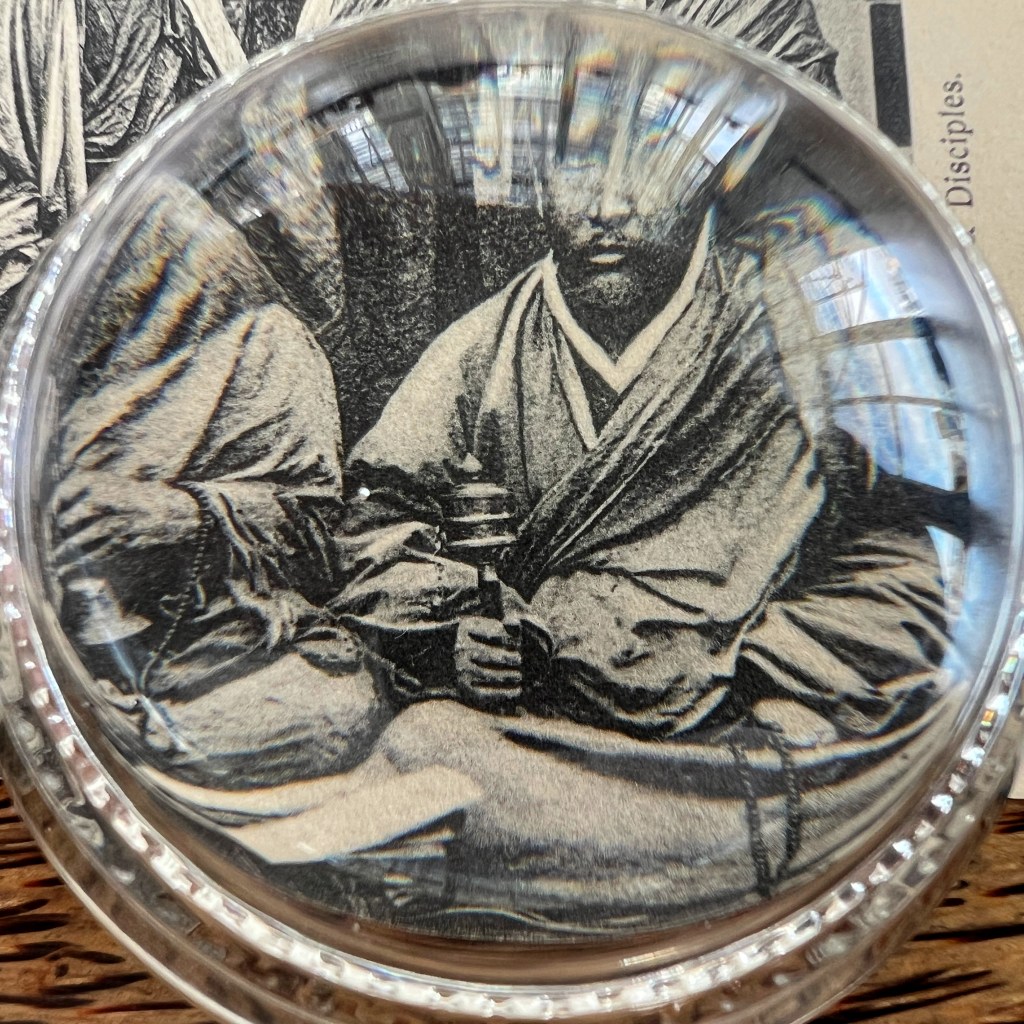
Driven in part by an anthropological mode of seeing and recording, staged studio photographs required appropriate clothing and props to clearly identify the “ethnic type.” Monk’s robes, mala beads, and prayer wheels all signaled the presence of “Llama [sic] priests” as cited in the caption.

The central figure, looking directly at the camera, holds both a ritual vajra and bell; he is also a real Tibetan monk. Historian Clare Harris has identified this figure as Sherab Gyatso, the abbot of Ghoom Monastery located on the outskirts of Darjeeling.

A November 2021 Sotheby’s sale of the original photo was inscribed: “Lama priests by F. Kapp./ Lama Sherb, Gyatso (front middle).” For more on the history of photography in Darjeeling, see Clare Harris’ Photography in Tiber (2016).


The Buddhas in the West Material Archive is a digital scholarship project that catalogues artifacts depicting Buddhist material culture for Western audiences. It’s comprised of prints, photos, and an assortment of ephemera and other objects. For a brief introduction to this archive, visit the main Buddhas in the West project page.


For Related Buddhas in the West Posts Featuring Prayer Wheels:


For the Most Recent Buddhas in the West Posts:


Philip Klier’s “Scene on the Shwe Dagon Pagoda” Postcard

For all the new Buddhas in the West posts
follow us on Bluesky & Instagram


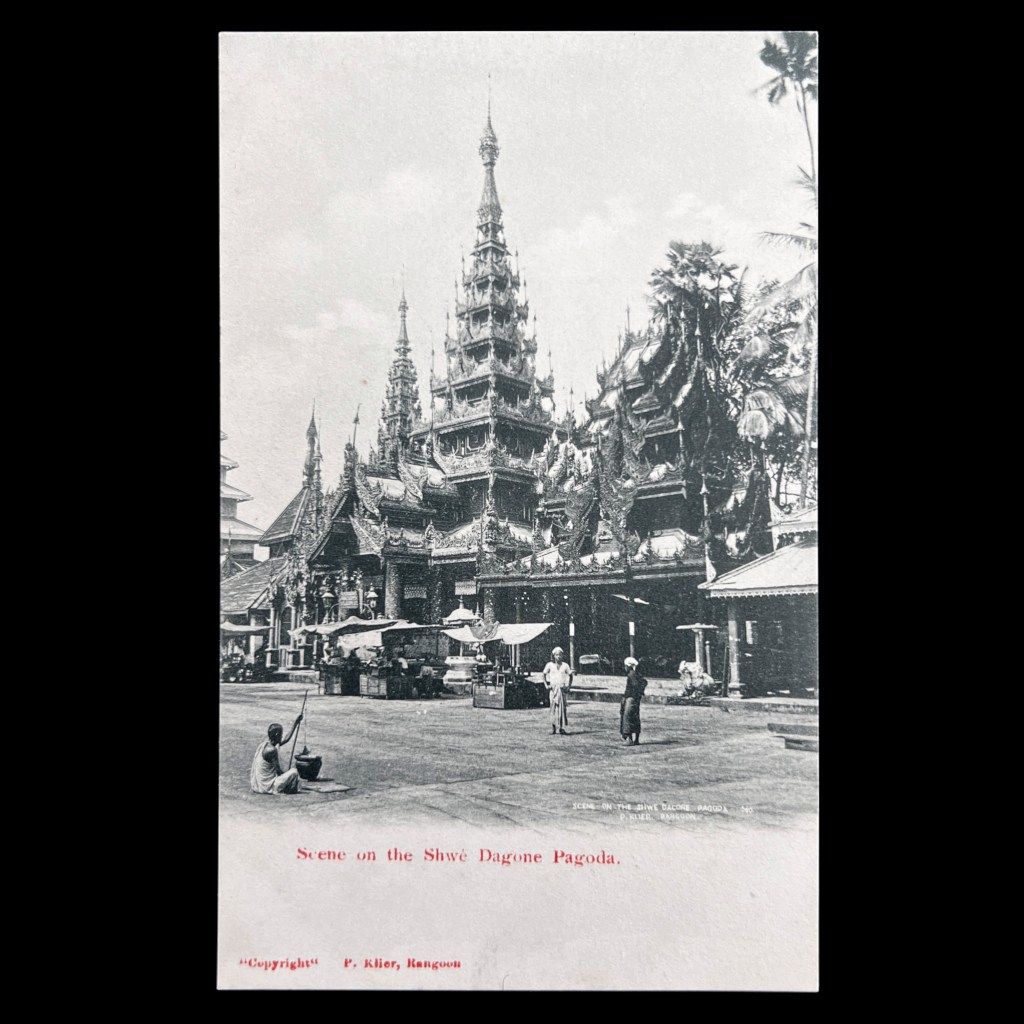
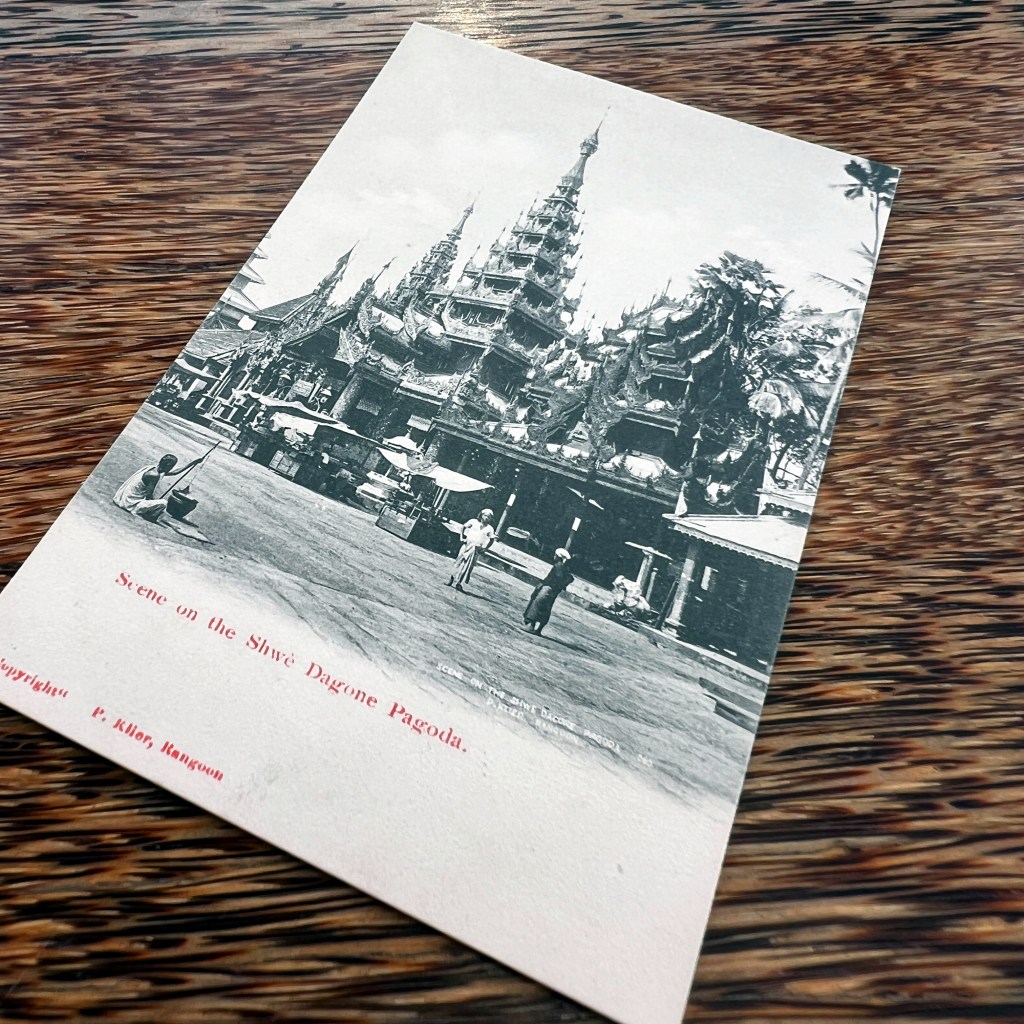
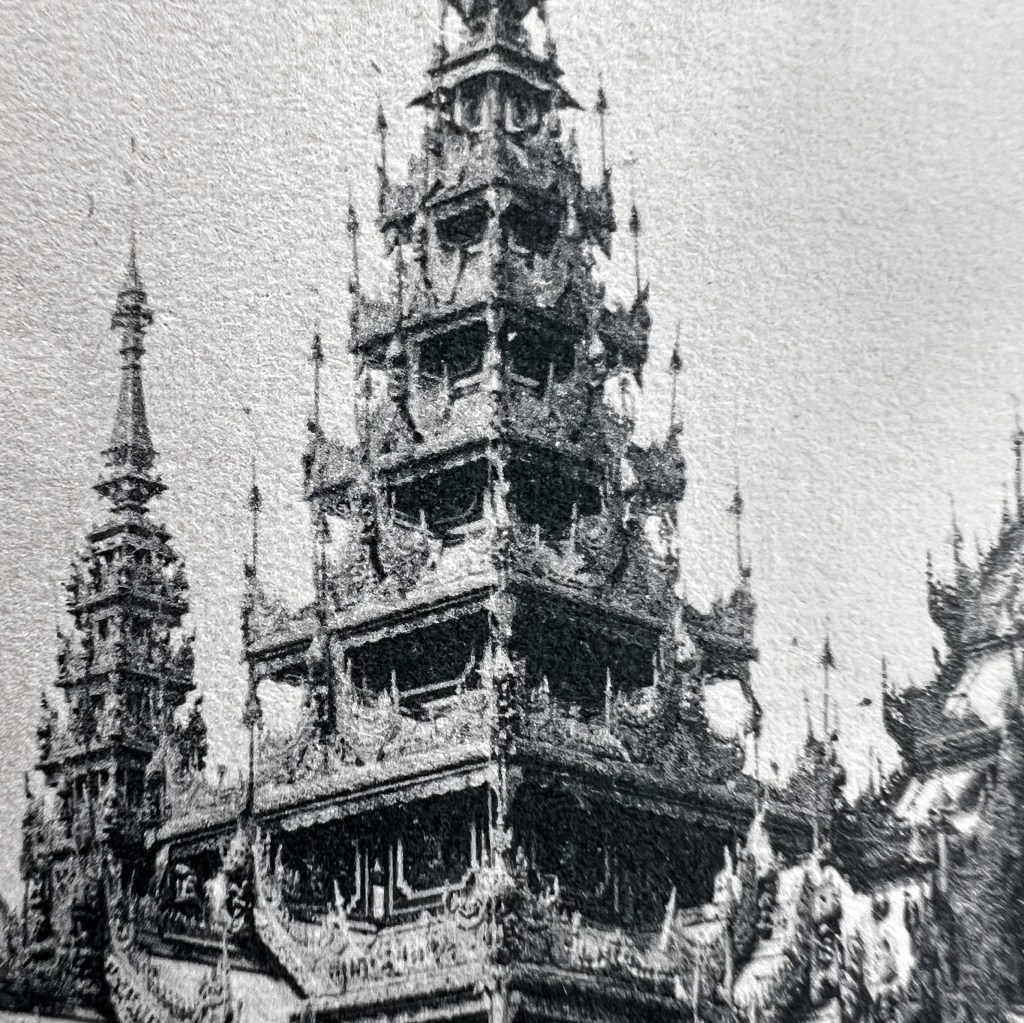
Shwedagon Pagoda is the most sacred Buddhist pilgrimage site in Myanmar, thought to enshrine eight hair strands of the Buddha. Philip Klier’s photo, taken in the 1880s, shows the activities of both monks and merchants on the main platform in front of the pagoda.

Built atop Singutarra Hill in the city of Yangon, four main entrance pavilions on the cardinal directions lead to a spacious open court where vendors sold ritual supplies. Small kiosks with shade coverings can be seen on the far side of the courtyard here.

When German photographer Philip Klier relocated to the British capital at Yangon in c. 1880, he opened a studio just south of Shwedagon Pagoda. By the turn of the century he started selling postcards of his photographs, a media popular among foreign tourists visiting the site.

Klier’s name is inscribed on the negative with the title of his photo: “Scene on the Shwe Dagon Pagoda.” Surprisingly, the Shwedagon Pagoda is not actually in the frame of Klier’s photograph, it sits just off to the left.

In the foreground we see a Theravada monk sitting on the ground with an alms bowl.

The distinctive building in the back is a seven-tiered pyatthat, characteristic of sacred Burmese architecture. For more of Klier’s photography, see the digitized collection at the National Gallery Singapore, viewable here: https://tinyurl.com/mtd9y72x.

Several of Montanus’ engravings were copied into later works on Japan, helping shape a visual lexicon for Buddhism into the 19th cent. The 1669 Dutch edition of Atlas Japannensis has been digitized by the National Library of the Netherlands, viewable here: tinyurl.com/5n6kstfy.


The Buddhas in the West Material Archive is a digital scholarship project that catalogues artifacts depicting Buddhist material culture for Western audiences. It’s comprised of prints, photos, and an assortment of ephemera and other objects. For a brief introduction to this archive, visit the main Buddhas in the West project page.


For Related Buddhas in the West Posts Featuring Myanmar / Burma:


For the Most Recent Buddhas in the West Posts:


Dreamland’s Japanese Tea Garden Pagoda, “Greeting From Coney Island” Postcard

For all the new Buddhas in the West posts
follow us on Bluesky & Instagram


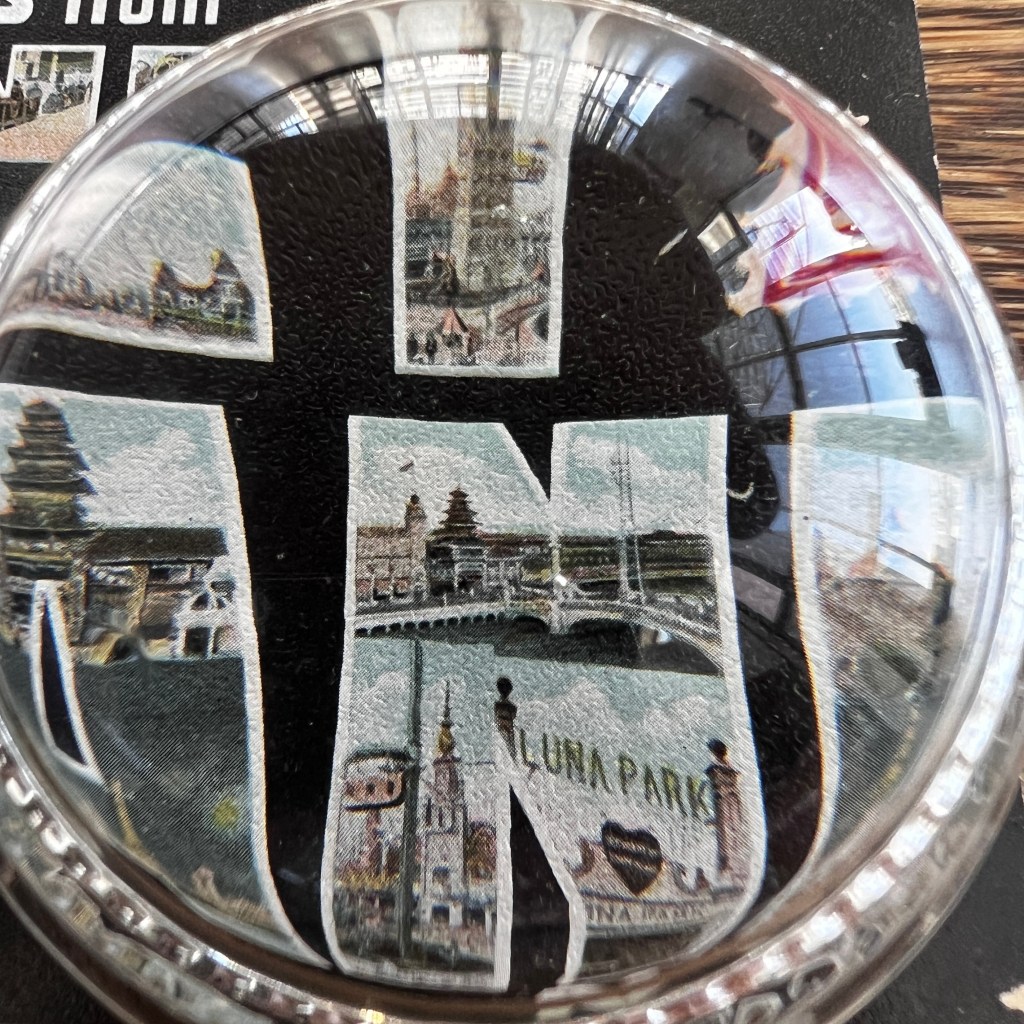
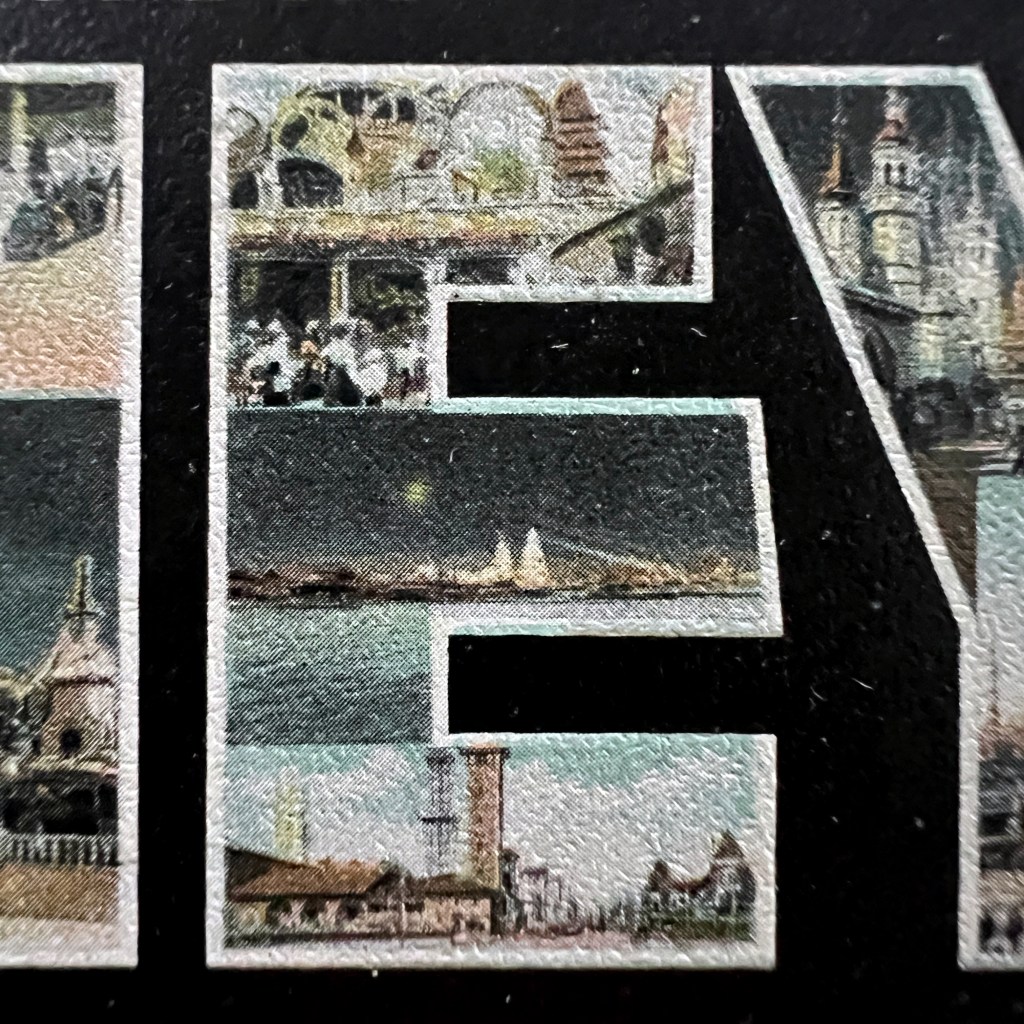
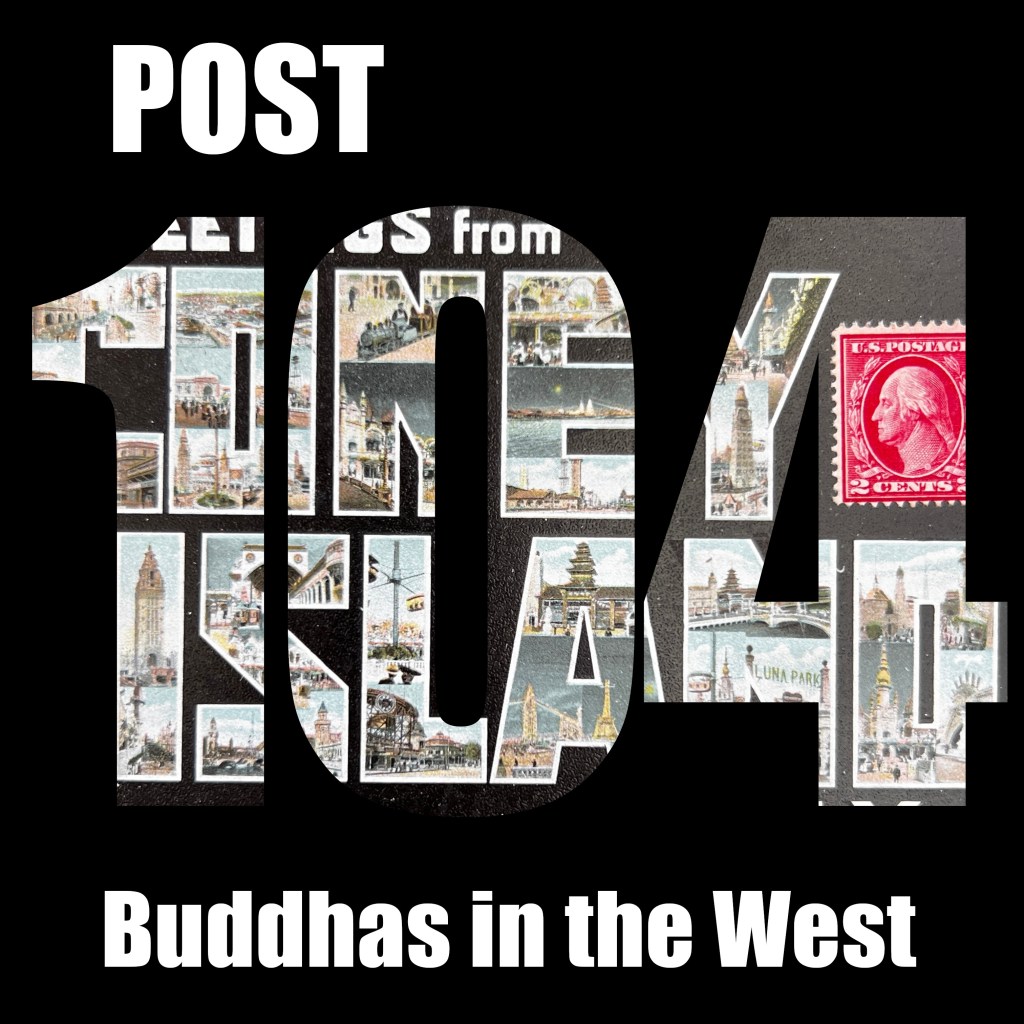
During the Golden Age of American amusement parks, New York’s Coney Island was king, sporting the trifecta of the Steeplechase, Dreamland, and Luna Park. Opening in May 1904, Dreamland advertised a “faithful reproduction of a Japanese temple,” attempting to pull customers away from its rivals.

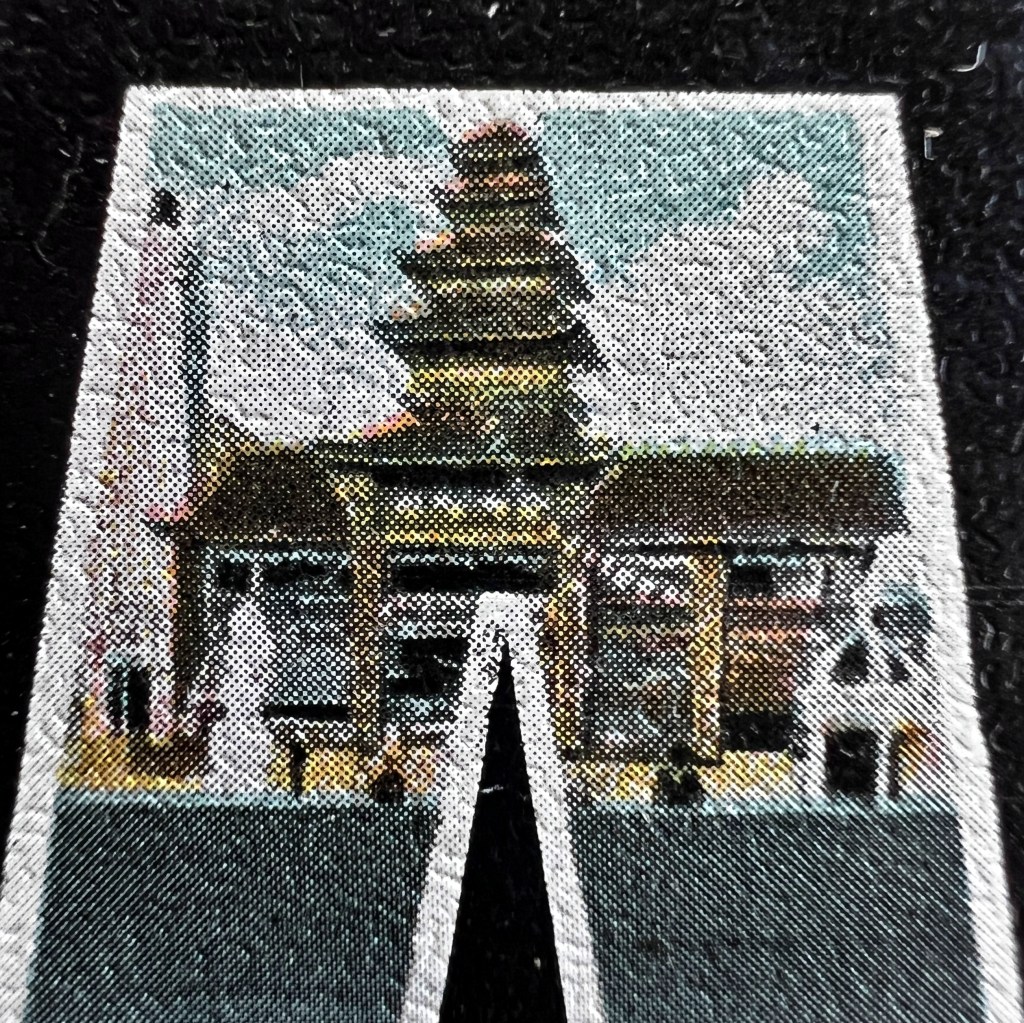
The “temple” attraction was mostly bluster, but a two-story Japanese-style pavilion was built as a tea house, crowned by an additional four-level pagoda. Iconic in its own right, this pagoda is featured at least two times in this classic “Greetings from” postcard design.

Mailed from Brooklyn to Bavaria in 1912, this postcard was originally printed in Germany, the worldwide epicenter of postcard production previous to WWI. Note the stamp indicating the postage was affixed on the obverse; this allowed collectors to display the postcard in an album.

Based on World’s Fair amusement zones, the buildings at Dreamland each had their own architectural style to showcase their offerings: Canals of Venice, Coast through Switzerland, Destruction of Pompeii, etc. The pagoda’s distinctive features (seen in the “N”) identified the Japanese tea garden.

Luna Park, which opened the previous year in 1903, expanded its own Japanese Roof Garden with towering pagodas; this park’s pagoda is just visible in the top of the letter “E”. As new Luna Parks opened across the US, some added their own Japanese style pagodas.

Dreamland was destroyed in 1911 when a fire ripped through the park. An extraordinarily detailed map of Coney Island’s three parks c.1906 is available through the Library of Congress (Dreamland’s pagoda is in the lower right), viewable here: https://tinyurl.com/xvdtw8yt.


The Buddhas in the West Material Archive is a digital scholarship project that catalogues artifacts depicting Buddhist material culture for Western audiences. It’s comprised of prints, photos, and an assortment of ephemera and other objects. For a brief introduction to this archive, visit the main Buddhas in the West project page.


For Related Buddhas in the West Posts Featuring Amusements at World’s Fairs:


For the Most Recent Buddhas in the West Posts:

Nipponophone’s Moving Buddha Advertising Postcard

For all the new Buddhas in the West posts
follow us on Bluesky & Instagram


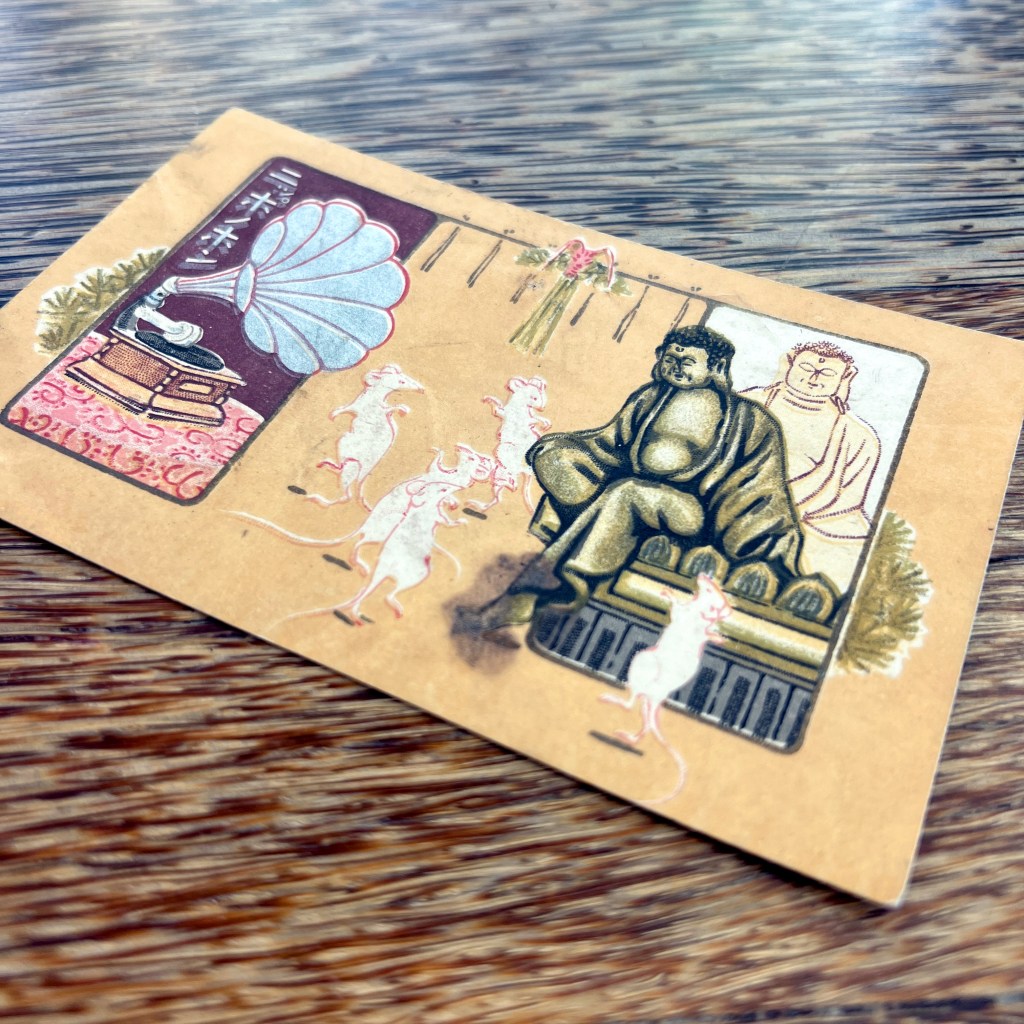
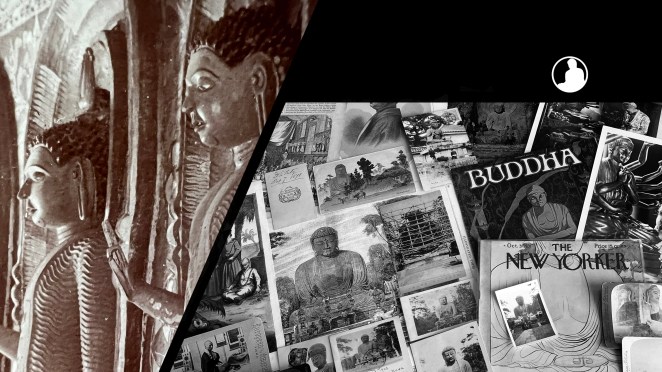
Nipponophone was an early Japanese record company, releasing the first domestically-produced phonograph in 1910 to commercial success. The company’s president, American Frederick Horn, adopted a large sitting Buddha for advertising, but with a subtle homage to another US brand.

Modern consumerism was just entering its stride and brand identity was emerging as central to advertising. In America, the most well-known music trademark at the time was Victor Records’ Nipper the dog who was depicted tilting his head to listen to his owner’s voice played on a record.

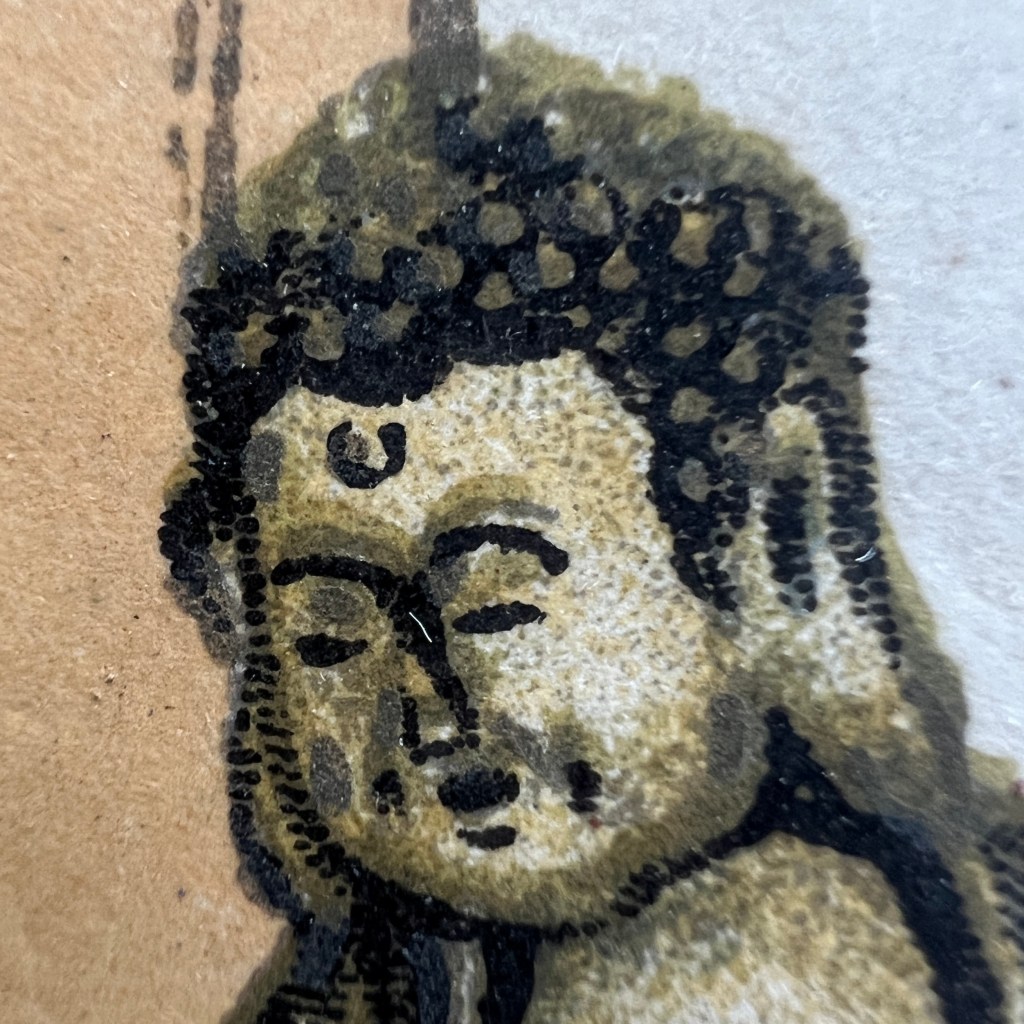
In contrast, designer Sassa Kōka used the otherwise stoically seated Buddha to illustrate the sonic appeal of the new phonograph. Such an image would undoubtedly strike Japanese audiences as unorthodox, but playful imagery was well-known in Japanese art through the Edo period (1600–1868).

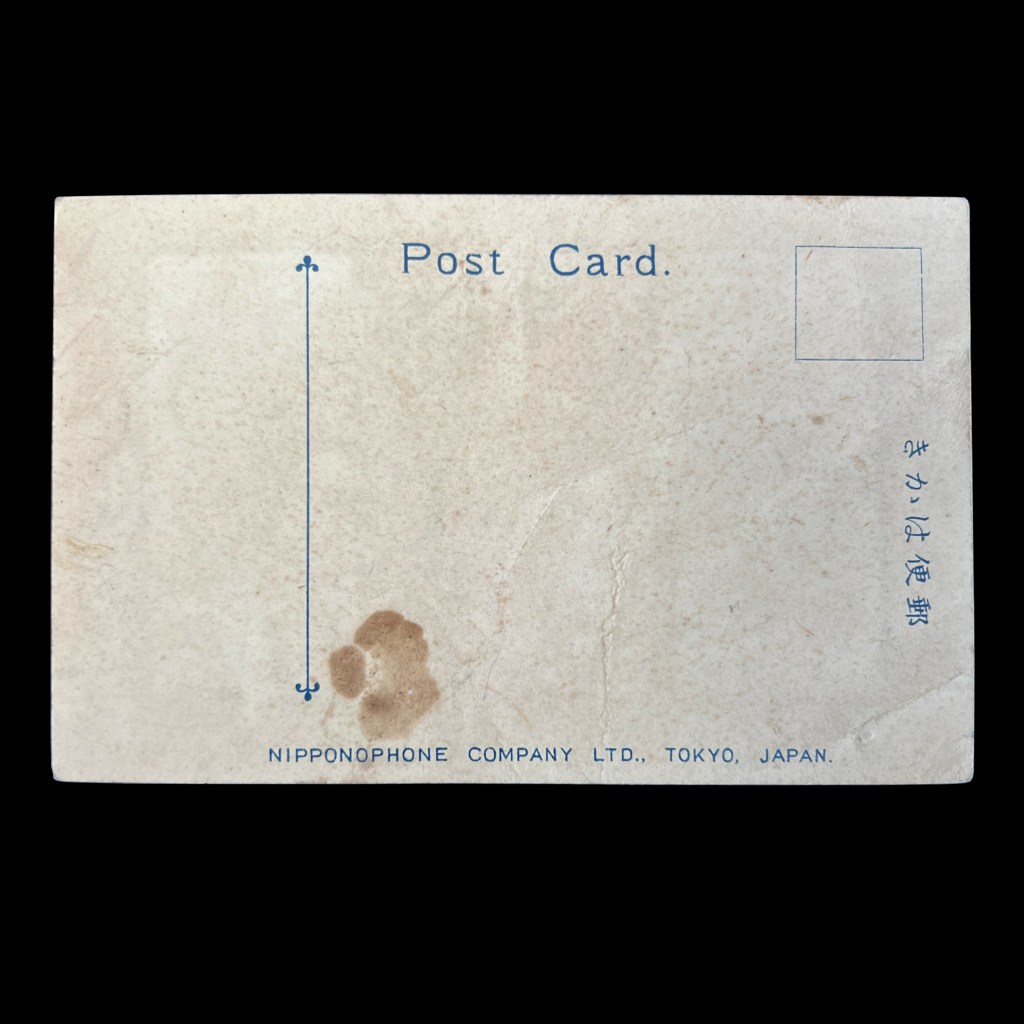
During the height of the Japanese picture postcard boom (ehagaki būmu) it was not uncommon to see cards used as advertising. The placement of the address dividing line helps us date it to between 1910, when Nipponophone was founded, and 1918.

The moving Buddha image was used by Nipponophone in other business related ephemera. For example, it can be seen printed on the company’s paper record sleeves; one viewable here through the National Film and Sound Archive of Australia: https://tinyurl.com/4vk8f9sa


The Buddhas in the West Material Archive is a digital scholarship project that catalogues artifacts depicting Buddhist material culture for Western audiences. It’s comprised of prints, photos, and an assortment of ephemera and other objects. For a brief introduction to this archive, visit the main Buddhas in the West project page.


For Related Buddhas in the West Posts Featuring Historical Advertising:


For the Most Recent Buddhas in the West Posts:

Sherab Gyatso of Ghoom Monastery Postcard

For all the new Buddhas in the West posts
follow us on Bluesky & Instagram


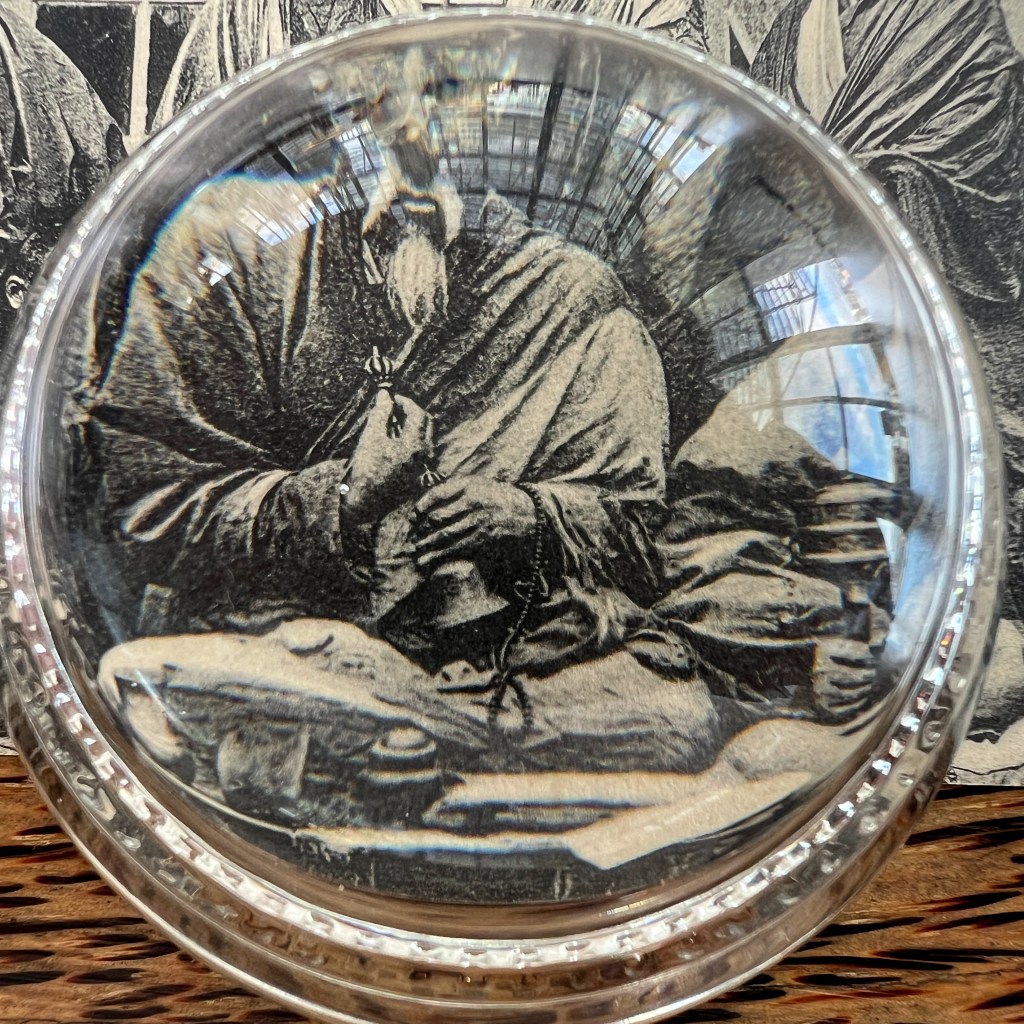
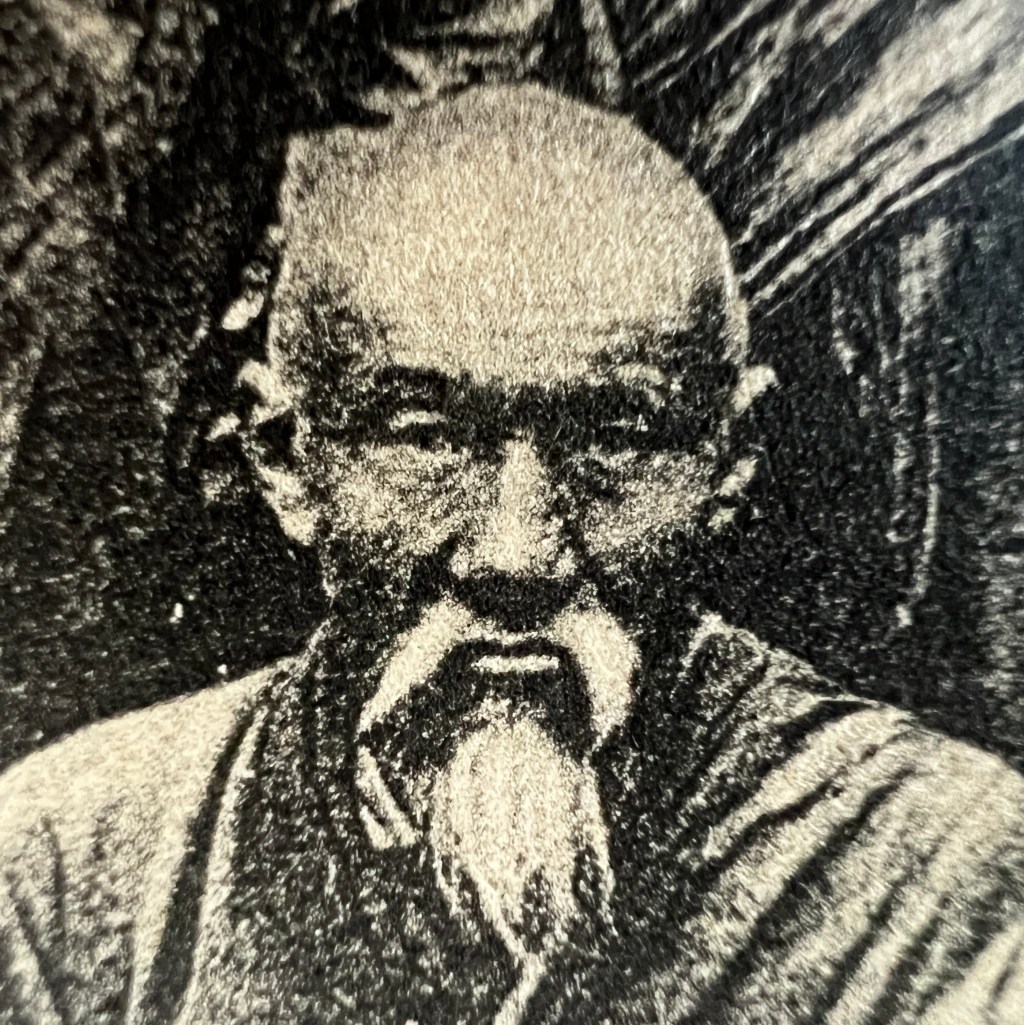
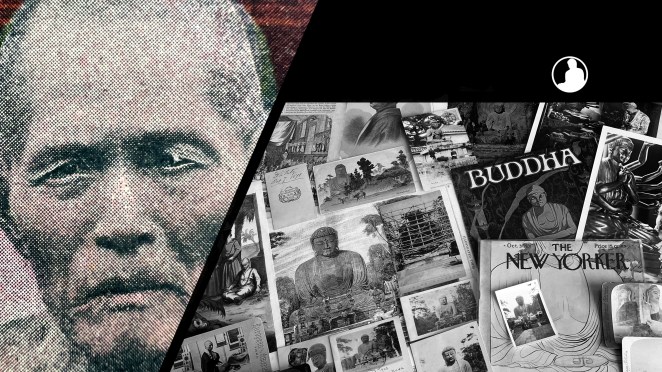
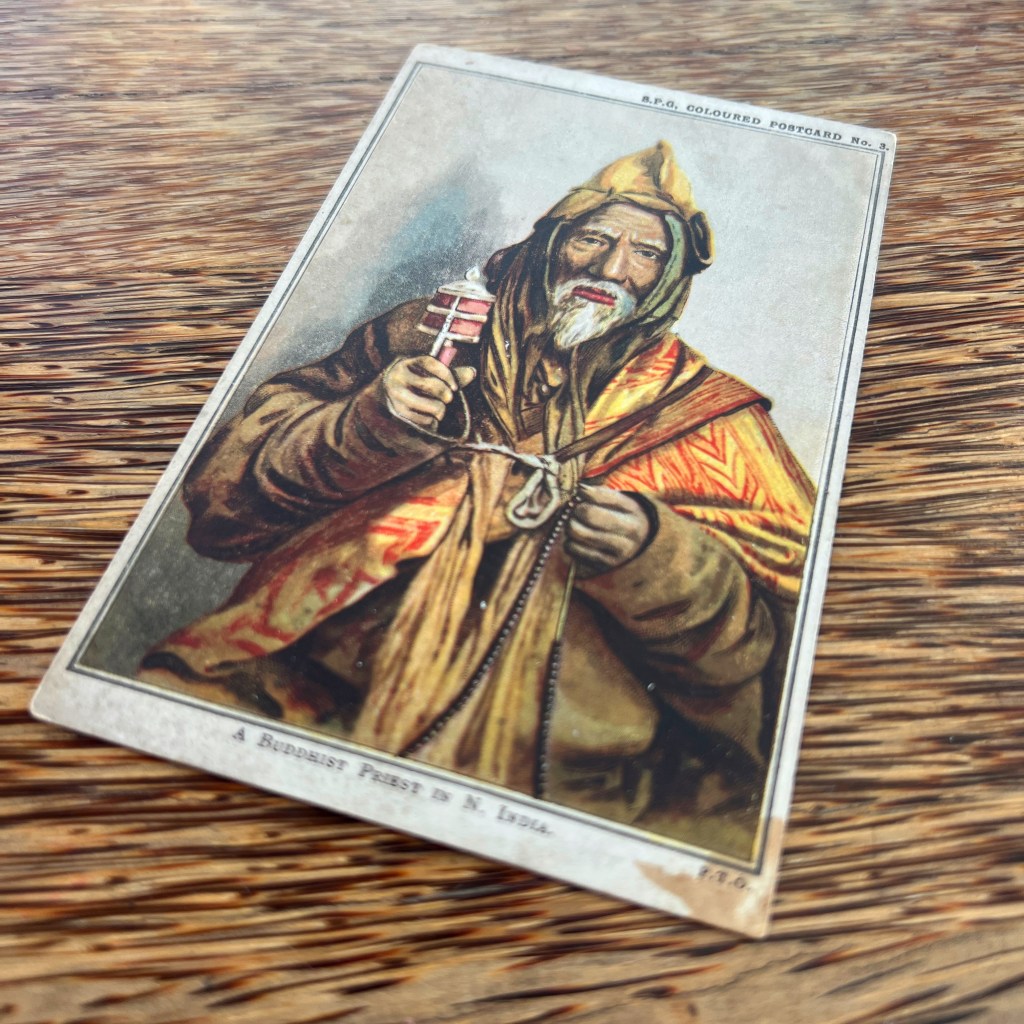
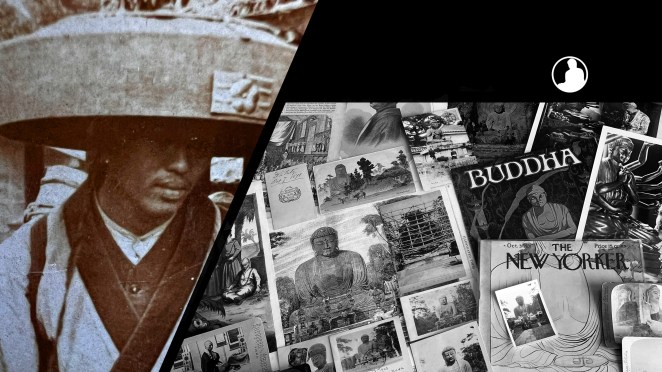
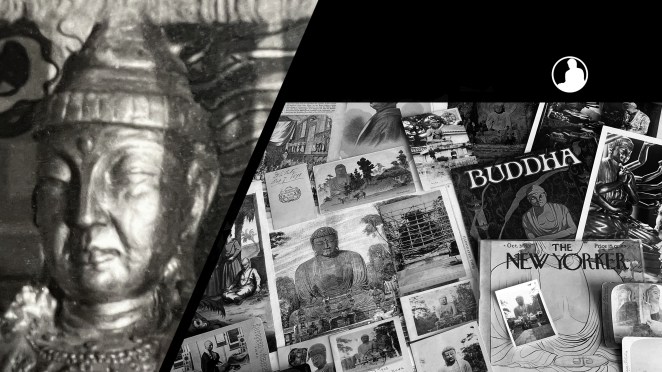
Identified as a “Buddhist priest” and holding a prayer wheel, a figure such as this would have passed for a generic Tibetan lama in the visual language of the early 20th century. In this case, however, we also know this monk’s name: Sherab Gyatso.

Scholar Clare Harris discovered an albumen print of the original photograph taken by Thomas Parr during the 1890s in Darjeeling; the negative was inscribed with the name “She-reb.” The monk was the head of the Geluk Monastery at Ghoom (Ghum) and was well known among the British as the “Mongol Lama.”

Gyatso’s image appears in a wide range of media, including travel guides, published travelogues, and postcards between 1890 and the 1910s. As noted by Harris, this monk emerged as a “poster-boy for Tibetan Buddhism” around the area of Darjeeling in northern India.

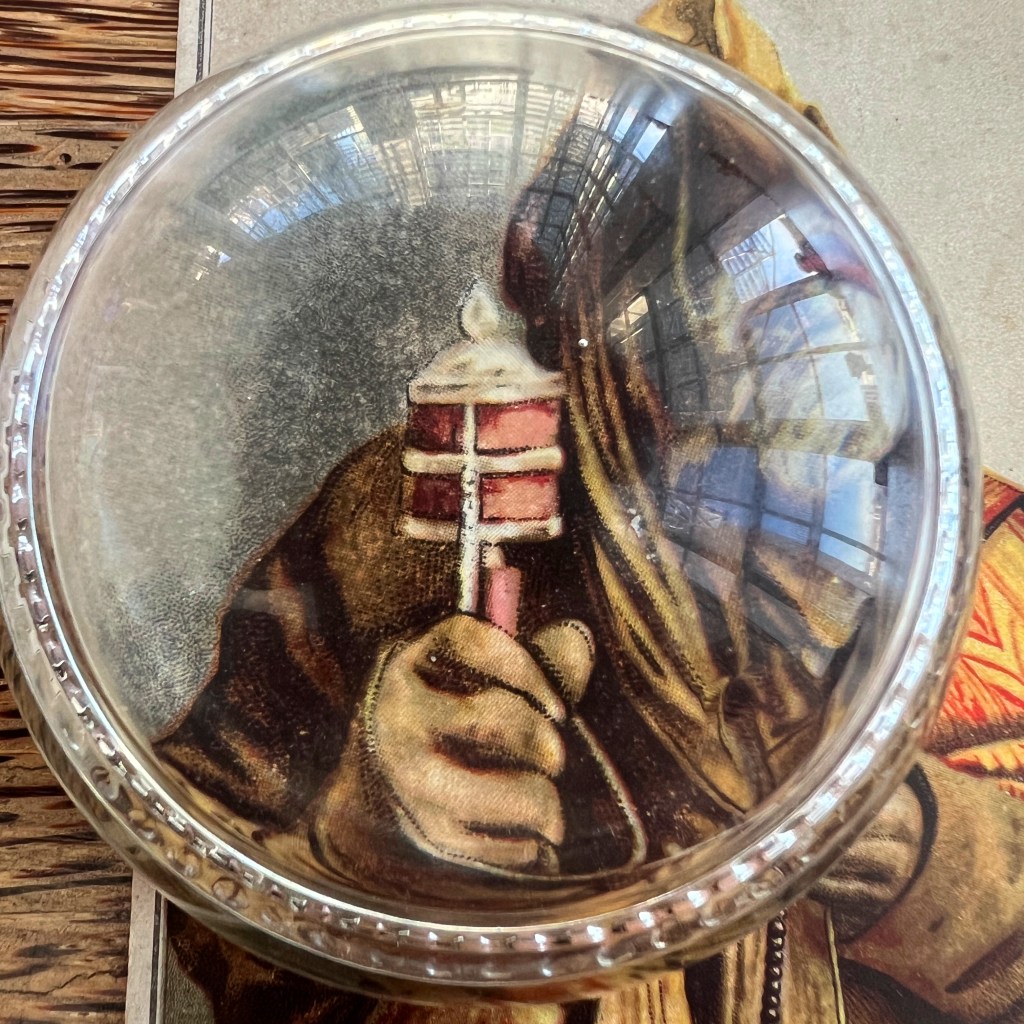
When posed for this portrait in Parr’s studio, the symbols of Tibetan ritual culture are clearly foregrounded, with one hand thumbing mala beads and the other holding a prayer wheel upright and ready for use.

Notably, a Tibetan-style painting and clay statue of Sherab Gyatso grace Ghoom’s monastery today, both derived from Paar’s photograph.

For further information of Sherab Gyatso and the history of early photography in Northern India and Tibet, see Clare Harris’ Photography in Tibet (2017).


The Buddhas in the West Material Archive is a digital scholarship project that catalogues artifacts depicting Buddhist material culture for Western audiences. It’s comprised of prints, photos, and an assortment of ephemera and other objects. For a brief introduction to this archive, visit the main Buddhas in the West project page.


For Related Buddhas in the West Posts Featuring Historical Postcards:


For the Most Recent Buddhas in the West Posts:

Chinatown’s Tin How Temple / Grass Valley Temple Real Photo Postcard

For all the new Buddhas in the West posts
follow us on Bluesky & Instagram


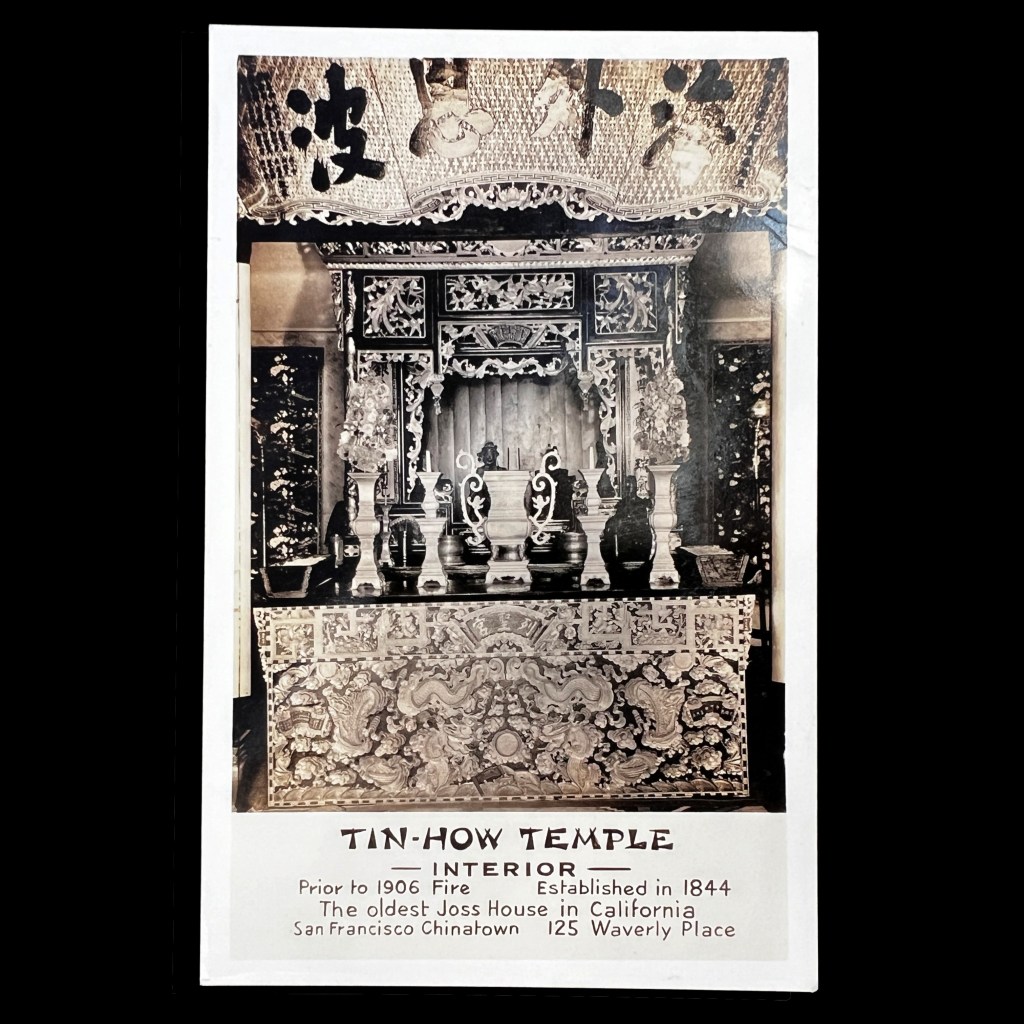
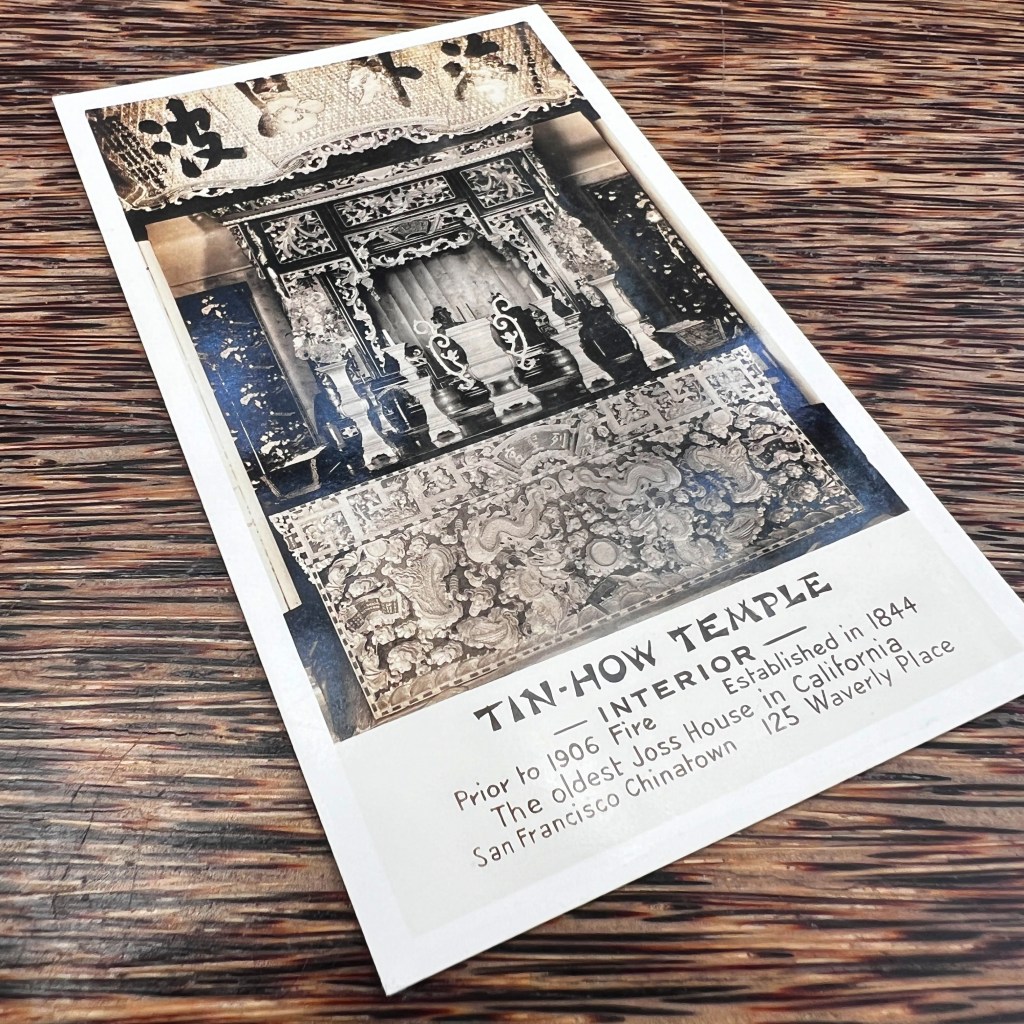
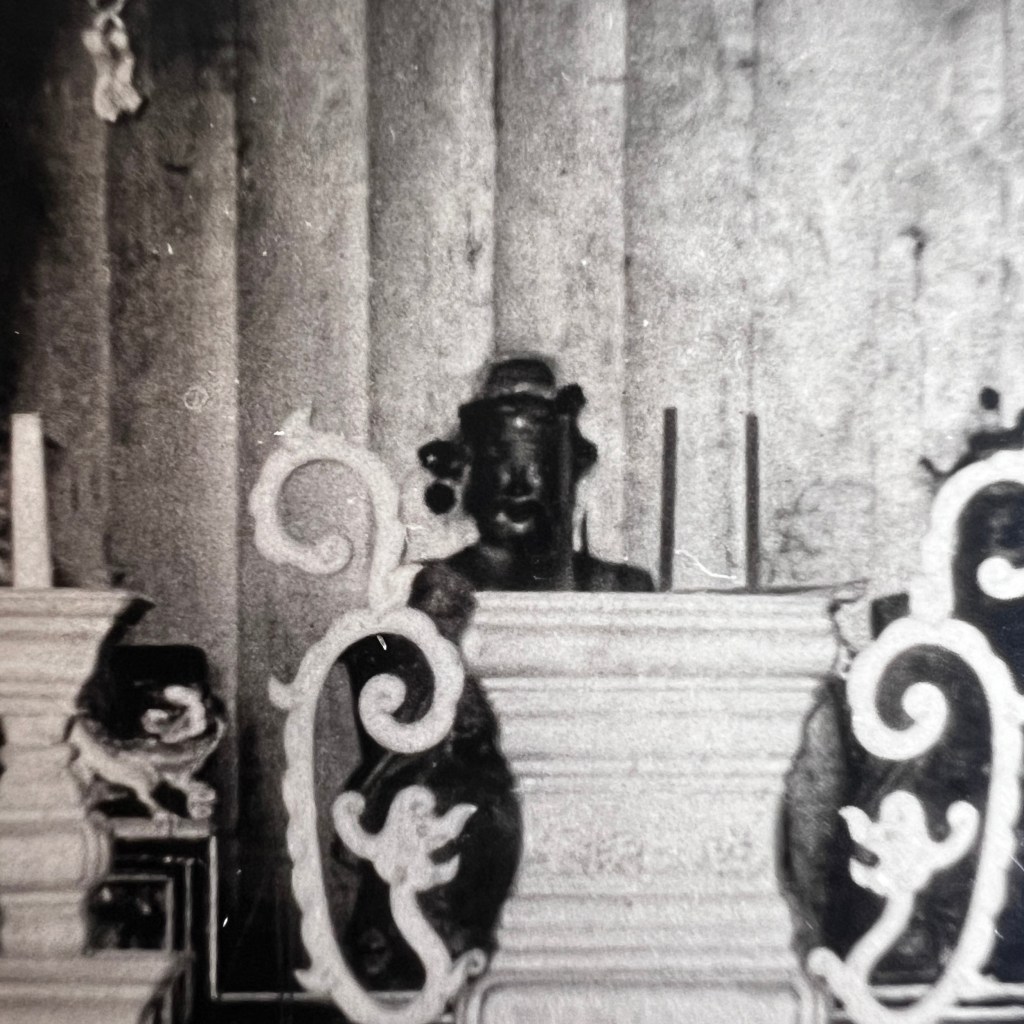
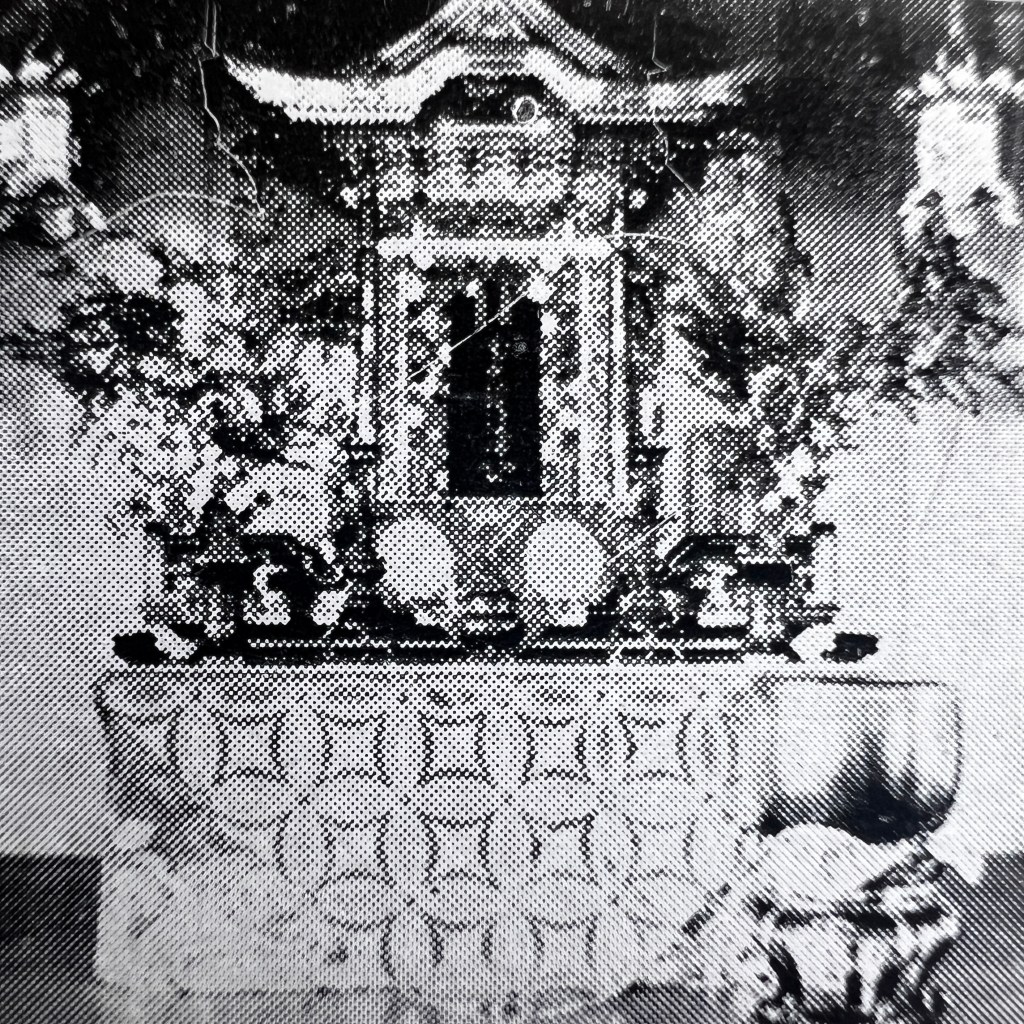
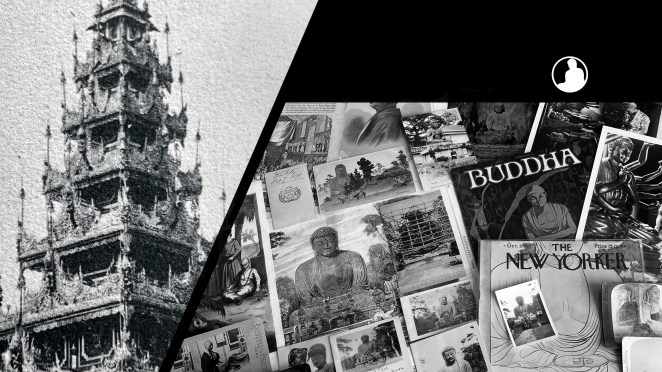
After the 1906 earthquake, San Francisco’s Tin How Temple was one of a fraction of Chinese religious institutions to rebuild, reopening in 1911 on the footprint of the original building. Despite the caption, this photo does not show the pre-1906 altar, nor is it a San Francisco temple.

Tin How, the Empress of Heaven, also known as Mazu, was popular along China’s southern coast and revered for her protective powers, especially at sea. Many early Chinese immigrants erected temples dedicated to her and other deities across North America.

The photo shows the altar of the old Chinese temple in Grass Valley, identifiable by the large carved inscription board reading “Waves of favor cross over the seas.” It’s likely the postcard publisher saw a more lucrative opportunity in selling a visual “relic” of the lost Tin How Temple shrine.

Moreover, the Grass Valley temple was dedicated to Houwang, not Mazu, yet both locations were alternatively called the Temple of Many Saints, seen carved on the altar façade from 1875. The Grass Valley temple fell into disrepair by 1933 and was closed soon thereafter.

The altar was preserved and is now displayed at the Nevada Firehouse No.1 Museum. For more history on the Grass Valley temple, see Chuimei Ho and Bennet Bronson’s Chinese Traditional Religion and Temple in NorthAmerica, 1849–1902 (2022).


The Buddhas in the West Material Archive is a digital scholarship project that catalogues artifacts depicting Buddhist material culture for Western audiences. It’s comprised of prints, photos, and an assortment of ephemera and other objects. For a brief introduction to this archive, visit the main Buddhas in the West project page.


For Related Buddhas in the West Posts Featuring Historical Real Photo Postcards:


For the Most Recent Buddhas in the West Posts:


Buddhist Temple of Los Angeles Postcard

For all the new Buddhas in the West posts
follow us on Bluesky & Instagram


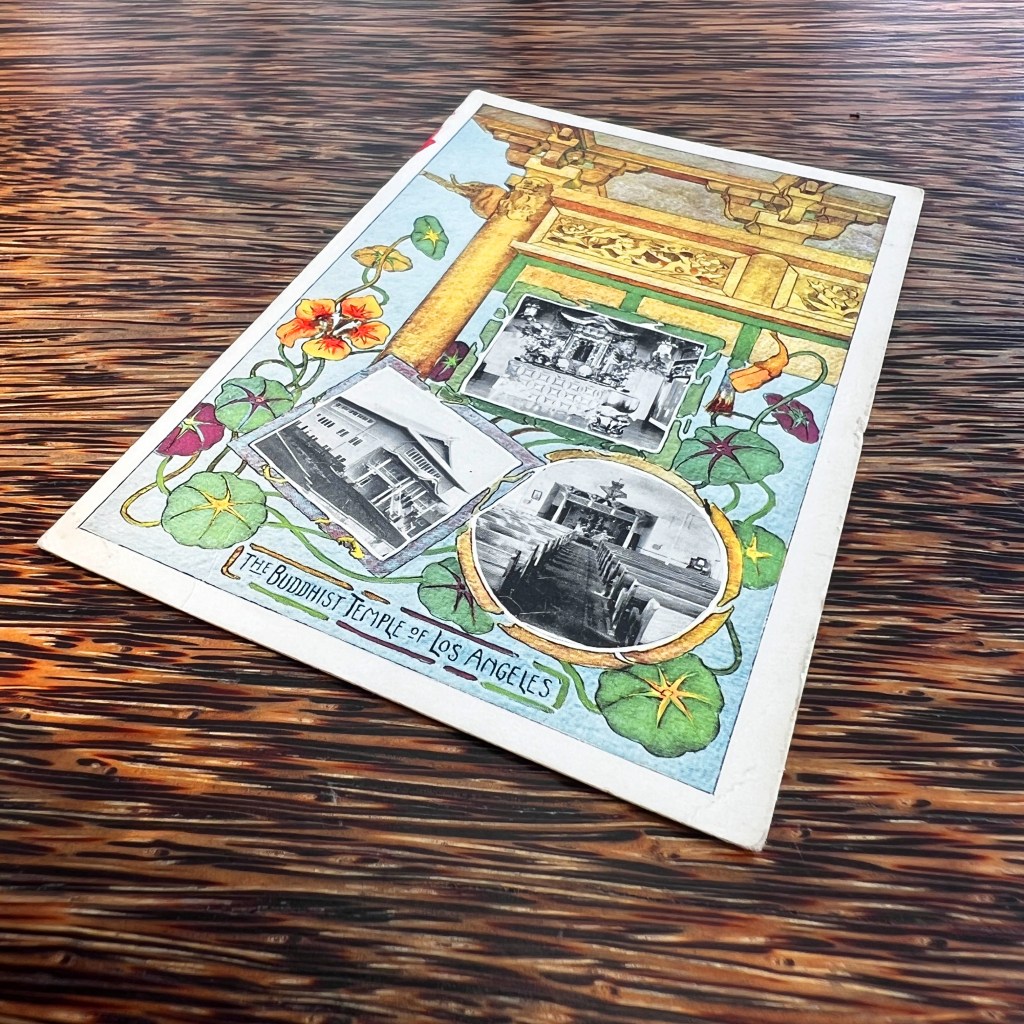
Inspired by the success in San Jose and Sacramento, Izumida Junjō 泉田準城 (1866–1951) arrived in Los Angeles in 1904 and opened the city’s first Buddhist temple for Japanese immigrants. After raising funds and purchasing land, a newer and larger temple was opened in 1911 on Savannah Street.

Associated with Nishi Hongan-ji, a Jōdo Shinshū Buddhist organization headquartered in Kyoto, Izumida organized the Rafu Bukkyō-kai 羅府仏教会, the Buddhist Mission of Los Angeles. It was meant to meet Japanese immigrants’ needs for funerals, memorial services, and spiritual guidance.

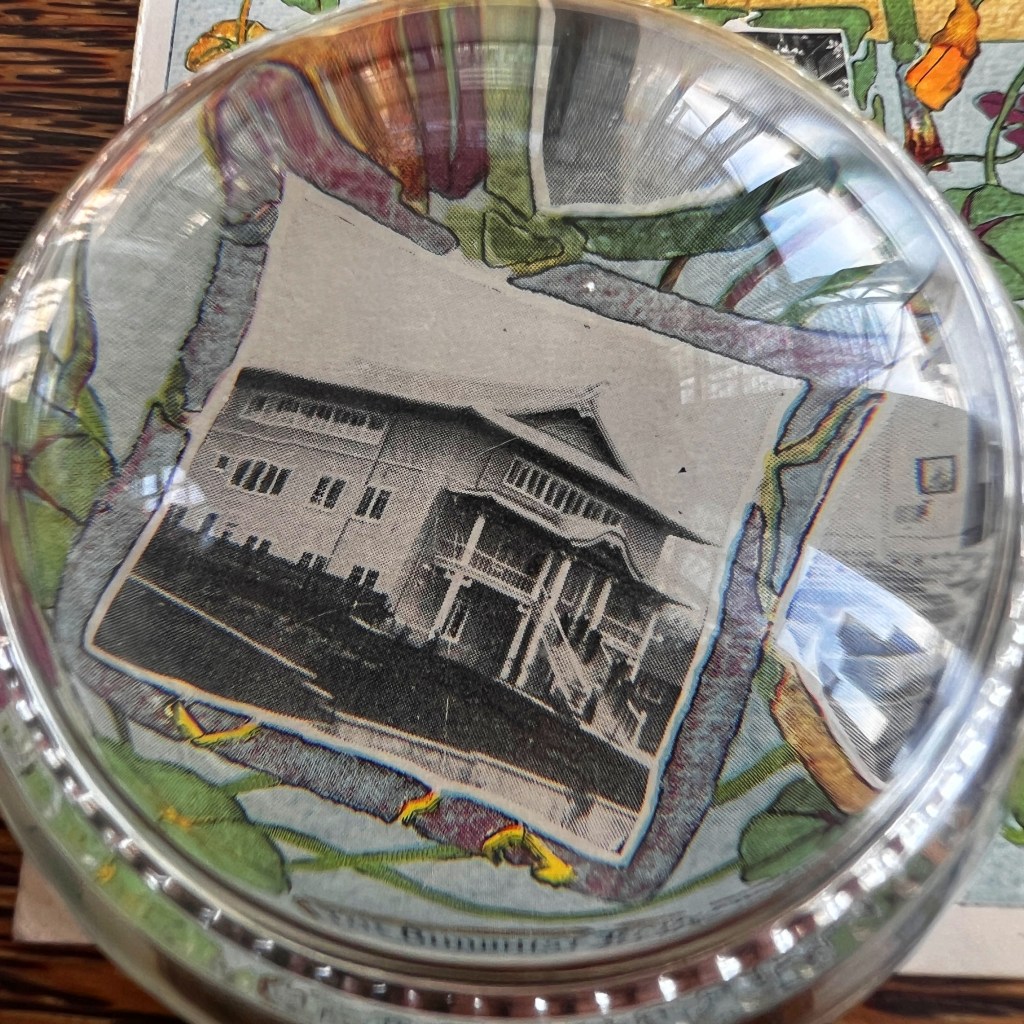
Possibly in celebration and promotion of the new temple, the Mission issued picture postcards highlighting both the interior and exterior of the building. The colorful illustrated elements on the front reveal an Arts and Crafts influence popular in the early 20th century.

The building was meant to reflect both American residential architecture and Japanese temple architecture. The latter can be seen in the curved eaves on the roof and the temple-style gate over the front porch.

The interior also shows a hybrid style, with church-like pews set in front of a traditional Japanese Buddhist altar.

As a Jōdo Shinshū temple, the shrine is dedicated to Amida Buddha, here with a scroll bearing his name. For more on the history of this LA temple, see Michihiro Ama, Immigrants to the Pure Land: The Modernization, Acculturation, and Globalization of Shin Buddhism (2011).


The Buddhas in the West Material Archive is a digital scholarship project that catalogues artifacts depicting Buddhist material culture for Western audiences. It’s comprised of prints, photos, and an assortment of ephemera and other objects. For a brief introduction to this archive, visit the main Buddhas in the West project page.


For Related Buddhas in the West Posts Featuring Historical Trade Cards:


For the Most Recent Buddhas in the West Posts:

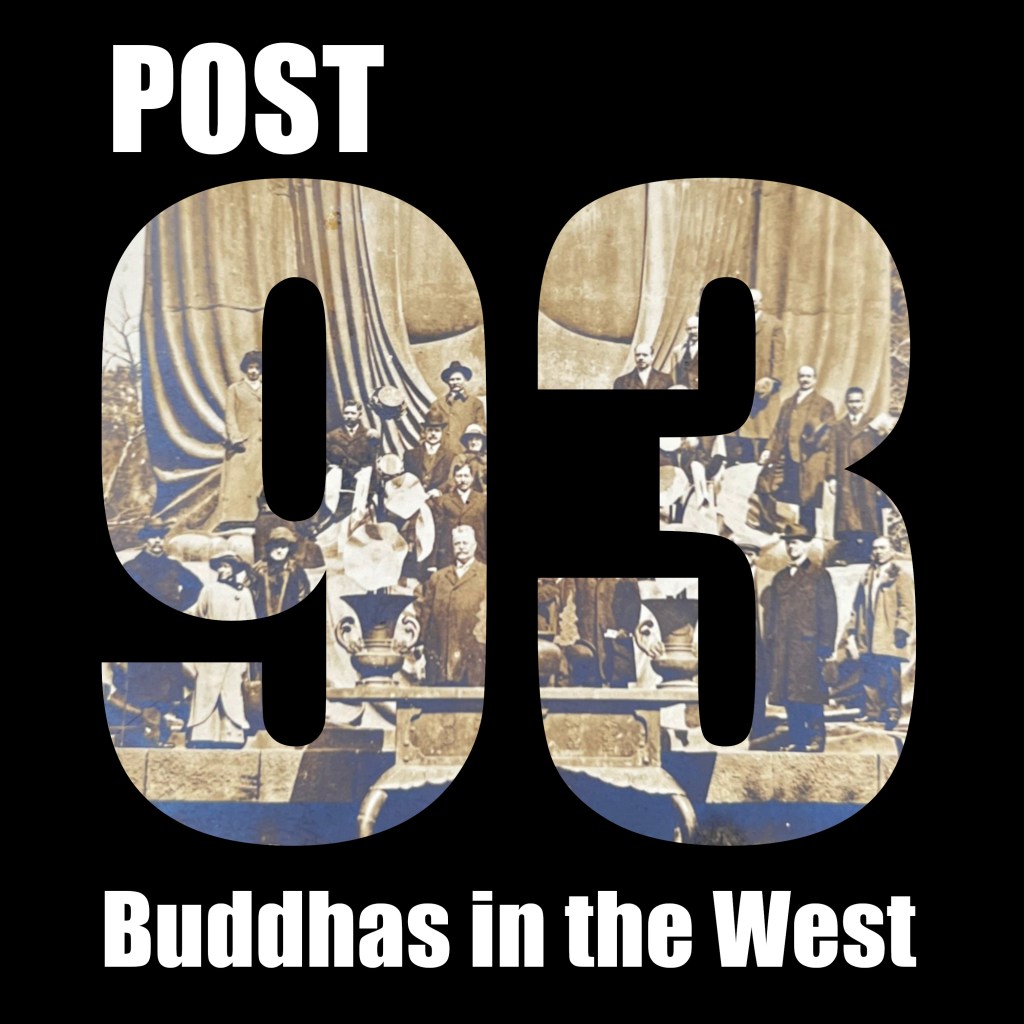
Eastman Kodak European Tour Group Real Photo Postcard

For all the new Buddhas in the West posts
follow us on Bluesky & Instagram


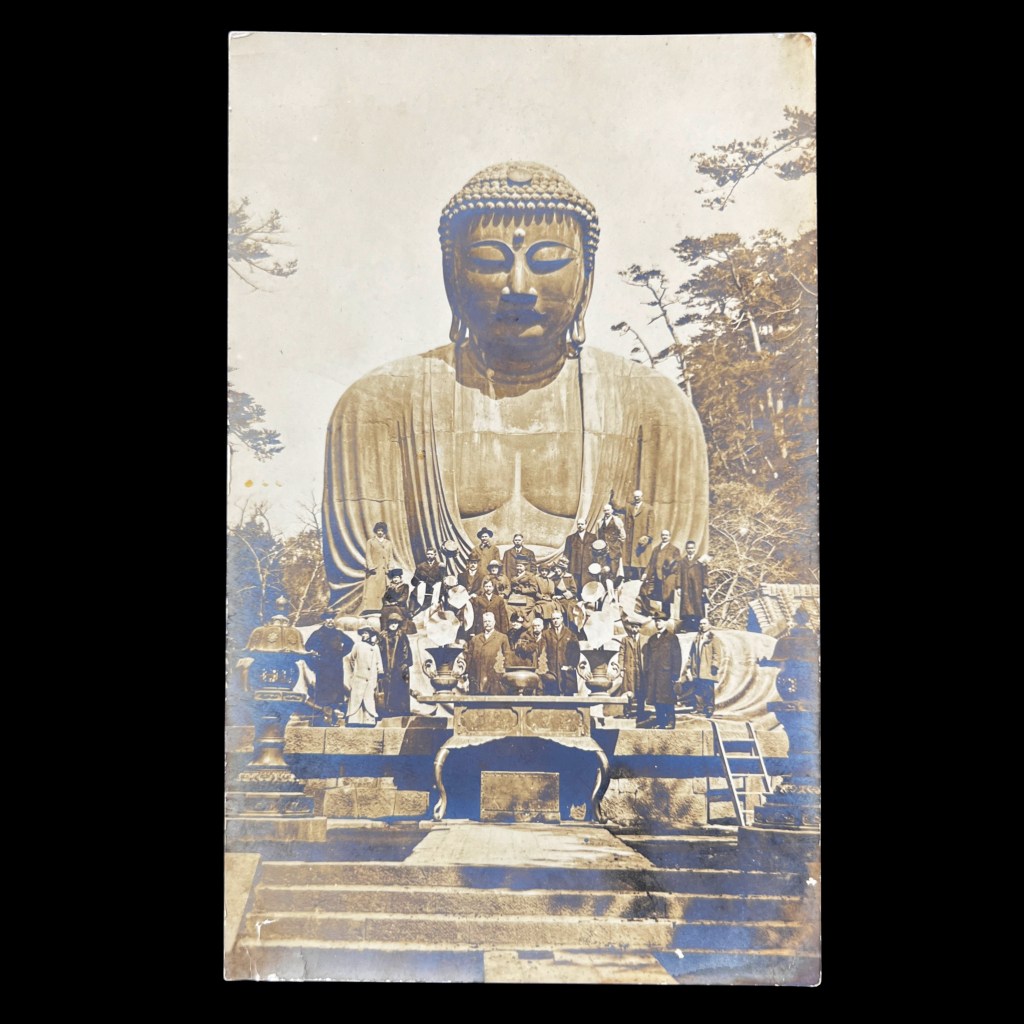
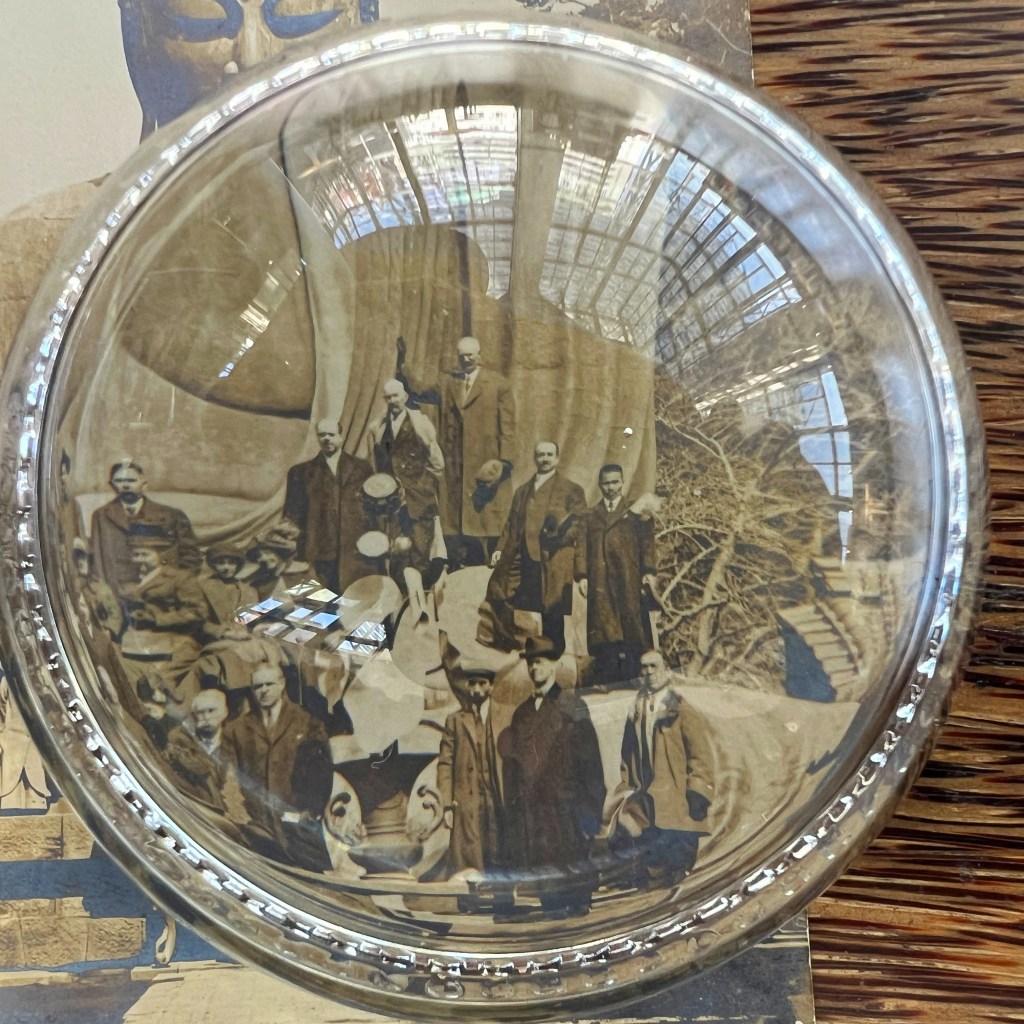
Tales of Tourist Photos, Pt. 1*: If photography changed the way people viewed the world, the Eastman Kodak camera transformed the late Victorian practice of tourism. The handheld Kodak made photography available to casual amateurs, creating the vernacular form of snapshot photography.
*[Part 2]

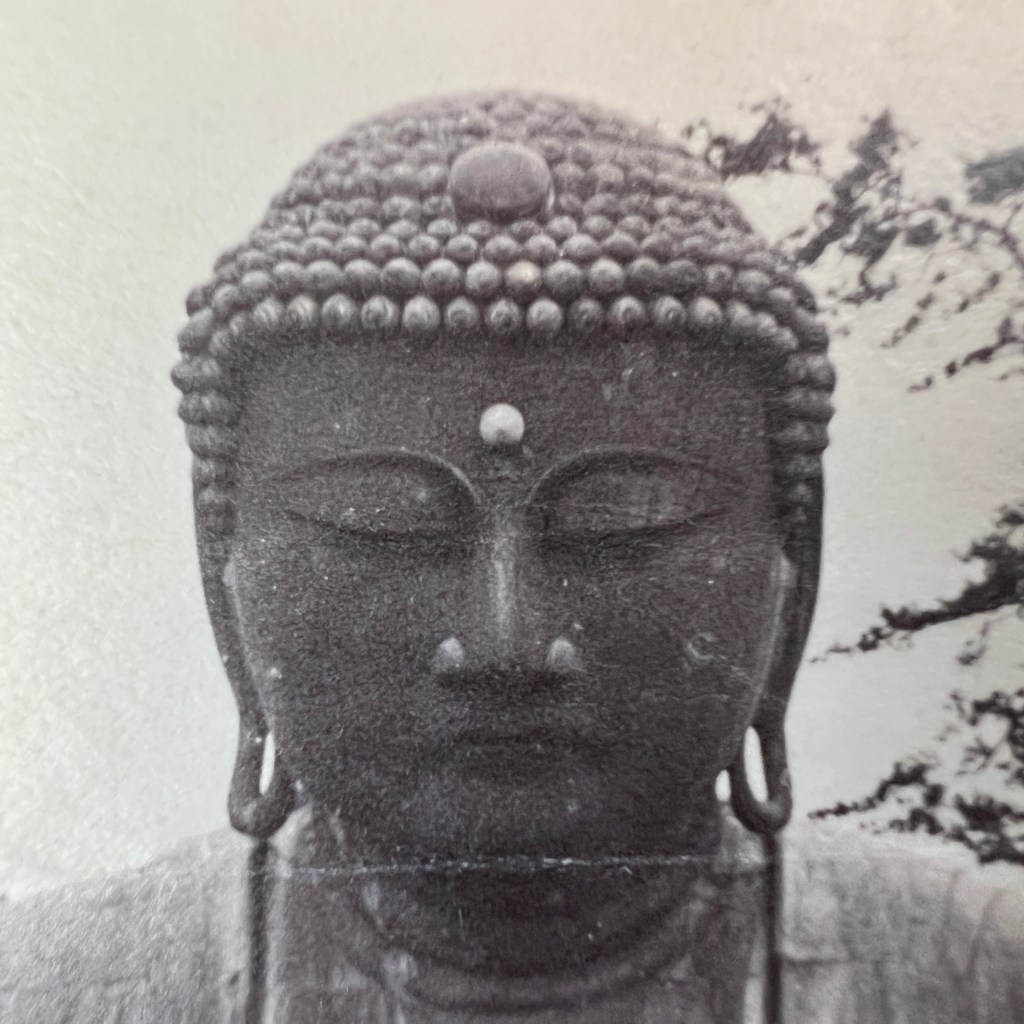
In contrast to a generation earlier, precise technical expertise was not necessary and photography became increasingly linked to personal experience. Foreign travel, such as visiting the Kamakura Daibutsu, increasingly “required” a photograph to validate the exotic experience.

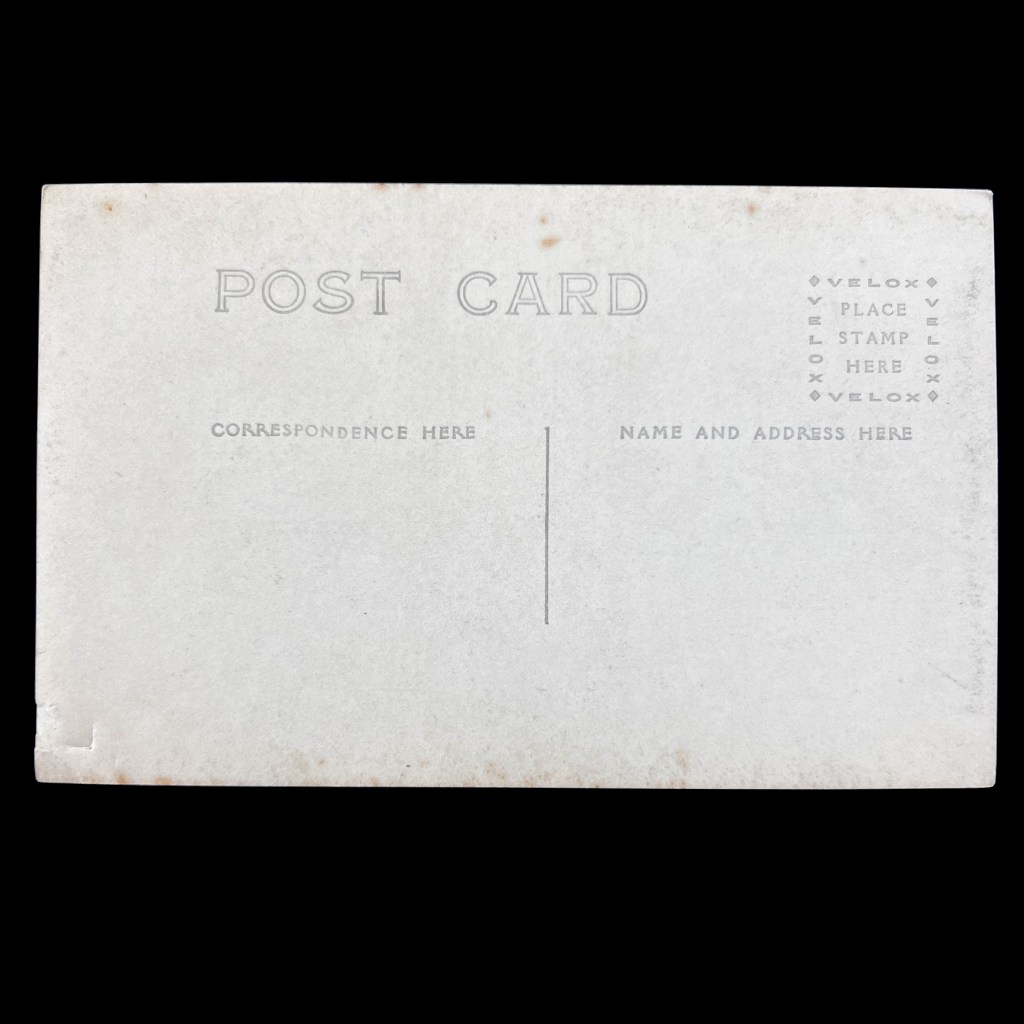
By 1903, the Kodak 3A was released and fitted with rolled film creating negatives measuring 3¼ in. x 5½ in. – the exact size of a standard postcard. Eastman marketed a broad range of supplies for the amateur, including Velox paper for those developing and printing their own postcards.

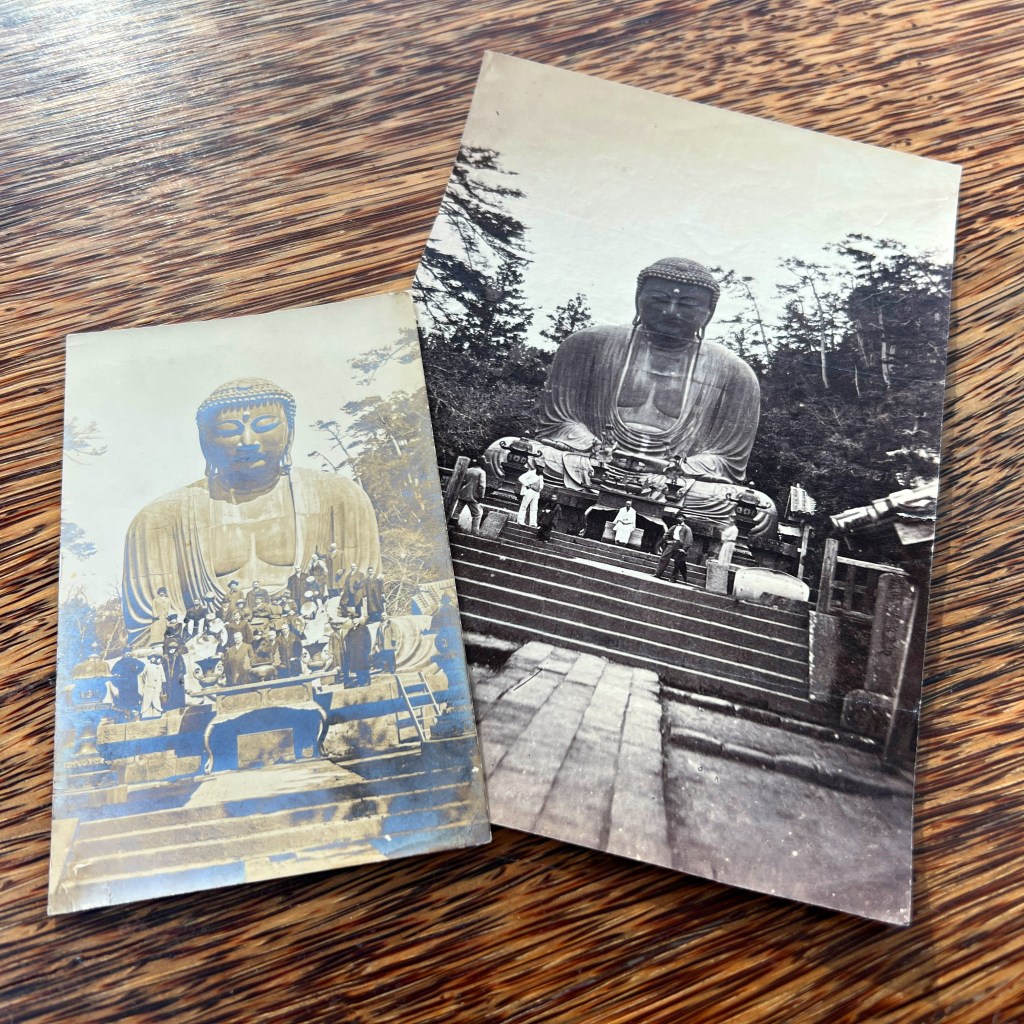
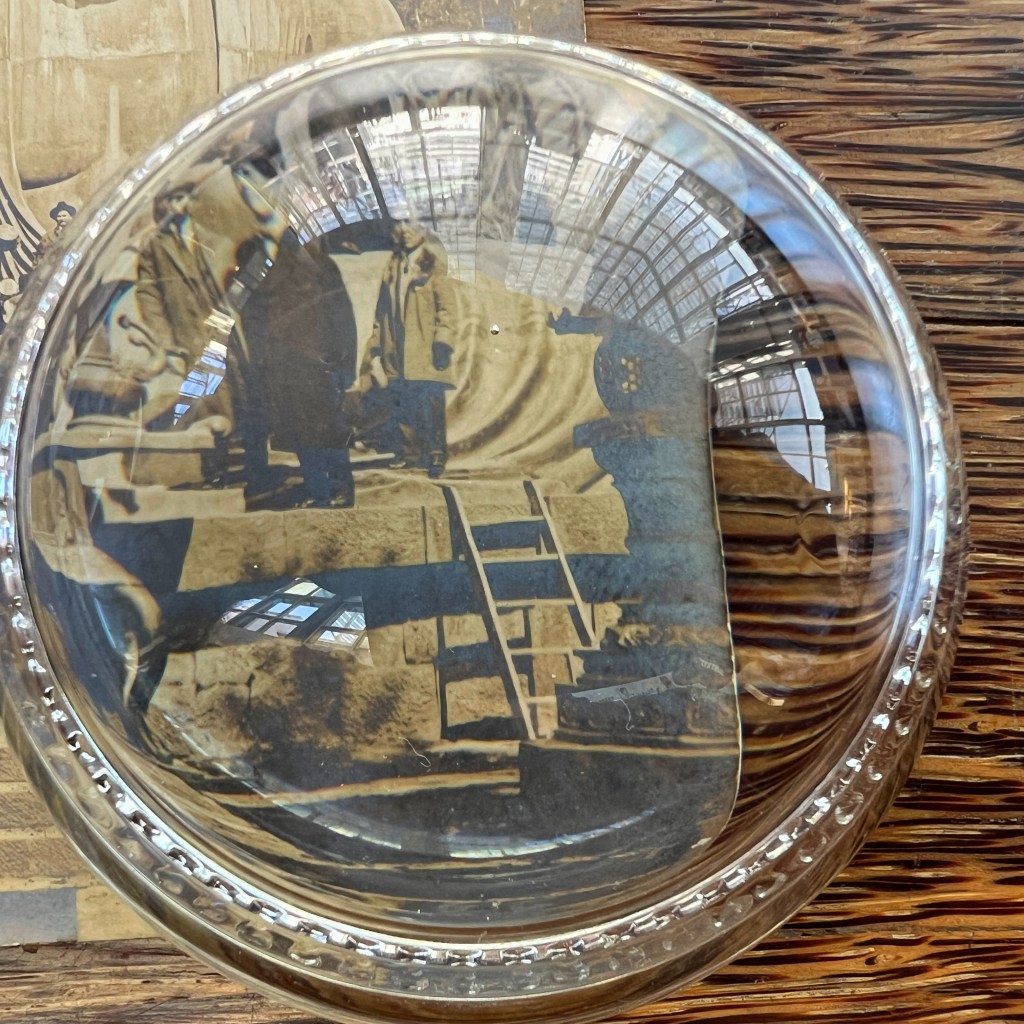
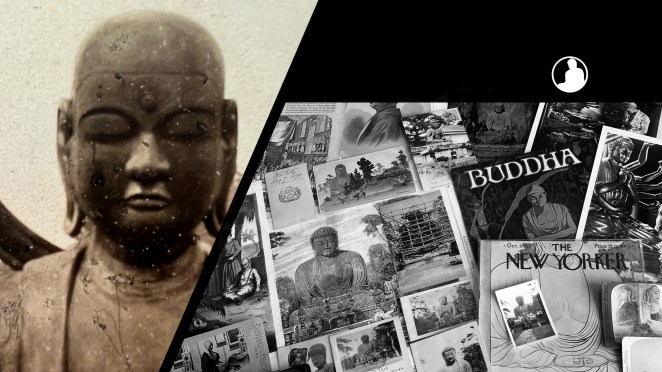
This real photo postcard was shot and printed circa 1910–1915 and captures two dozen tourists arranged along the lap and stone pedestal of the Great Buddha of Kamakura.

Some of the earliest photographs of the Kamakura Daibutsu depict people climbing upon its lap and a ladder can be seen for helping a visitor’s ascent in photographs dating to the 1870s. By around 1915 climbing on the statue was prohibited.

For further discussion on the birth of the snapshot and its cultural impact, see Mia Fineman’s “Kodak and the Rise of Amateur Photography,” viewable here: https://www.metmuseum.org/essays/kodak-and-the-rise-of-amateur-photography.


The Buddhas in the West Material Archive is a digital scholarship project that catalogues artifacts depicting Buddhist material culture for Western audiences. It’s comprised of prints, photos, and an assortment of ephemera and other objects. For a brief introduction to this archive, visit the main Buddhas in the West project page.


For Related Buddhas in the West Posts Featuring Real Photo Postcards:


For the Most Recent Buddhas in the West Posts: