For all the new Buddhas in the West posts
follow us on Bluesky & Instagram
The first photos of Saigon, present-day Ho Chi Min City, were taken by French naval officers during the 1858 French invasion. The first commercial photography studios in Vietnam opened in Saigon soon afterwards, with some producing intimate views of local Buddhist temple life.
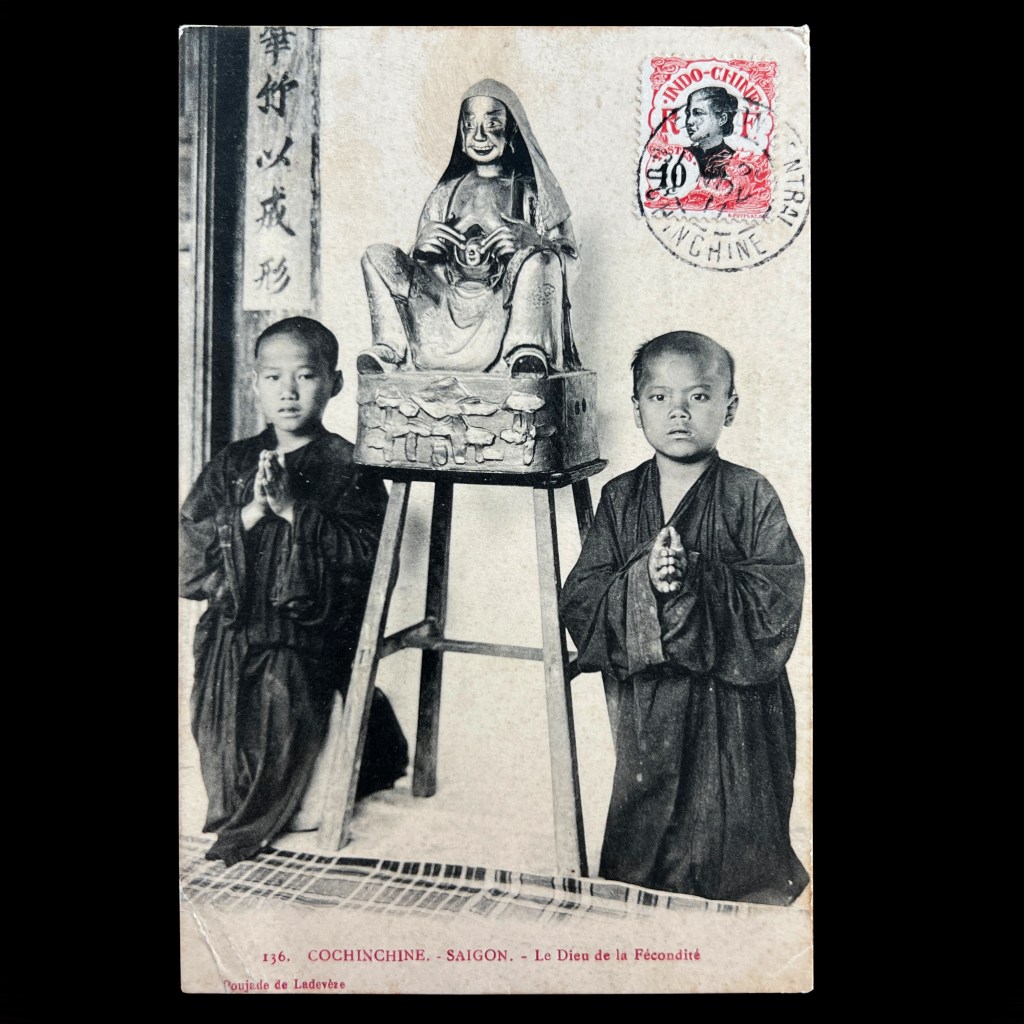
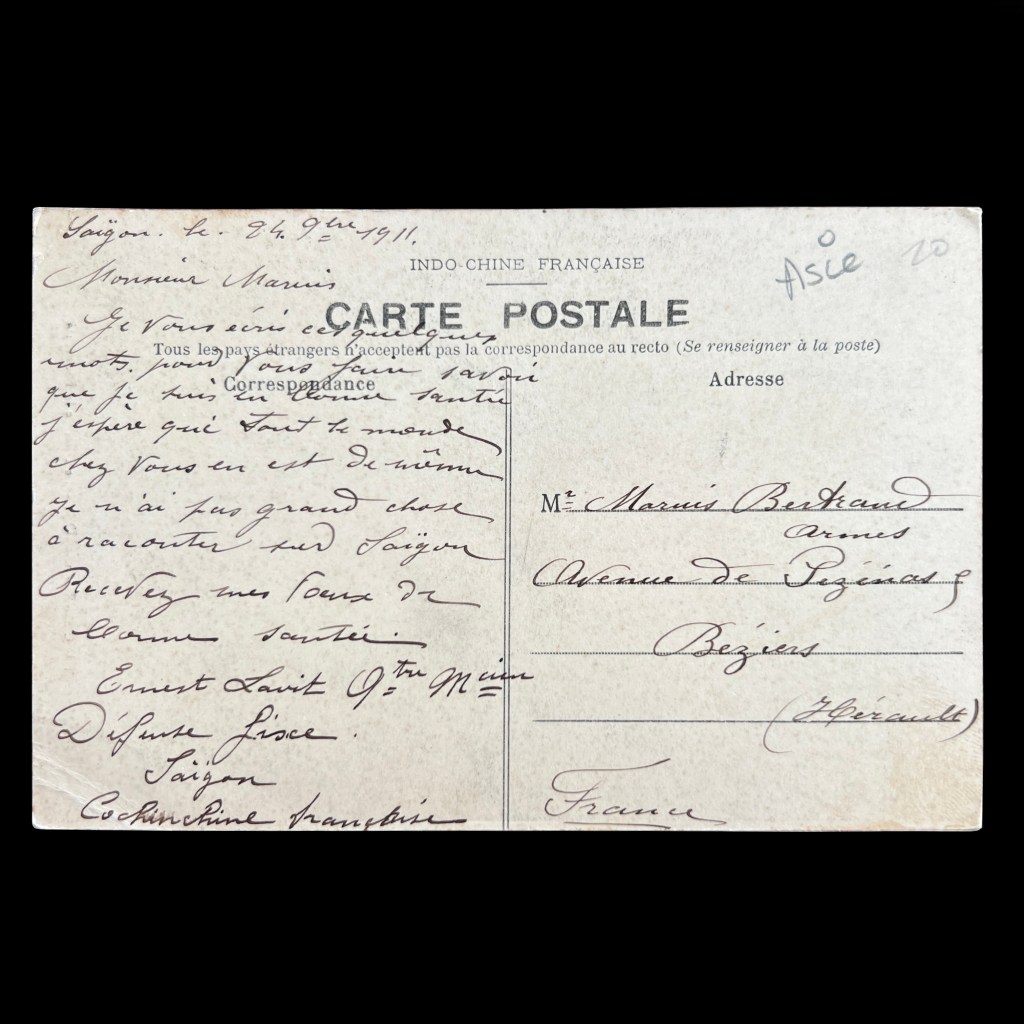
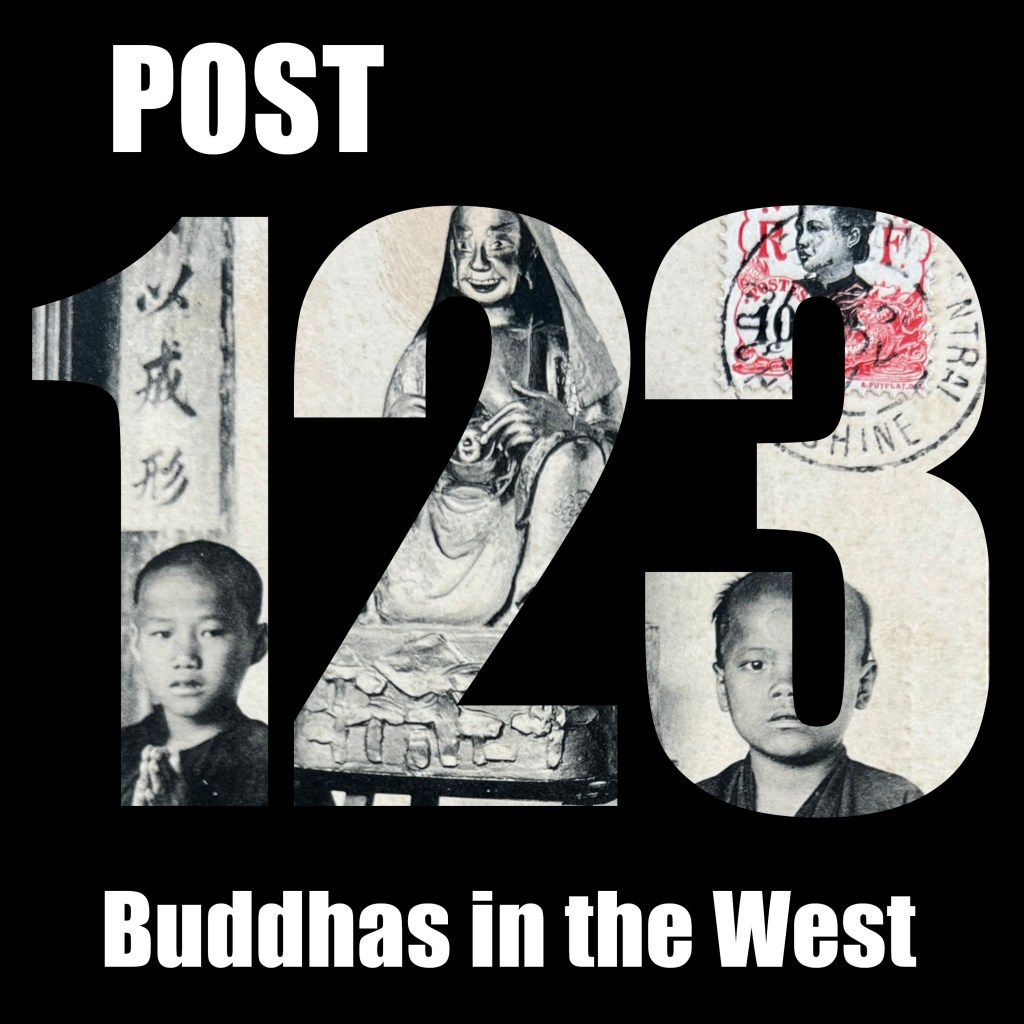
Poujade de Ladevèze, the name we see under the front caption, was an early postcard publisher in Saigon who appears in directories by 1908. Hoping to write home, French colonial soldiers were the primary clientele for postcards; this card was sent to France by an infantry member in 1911.
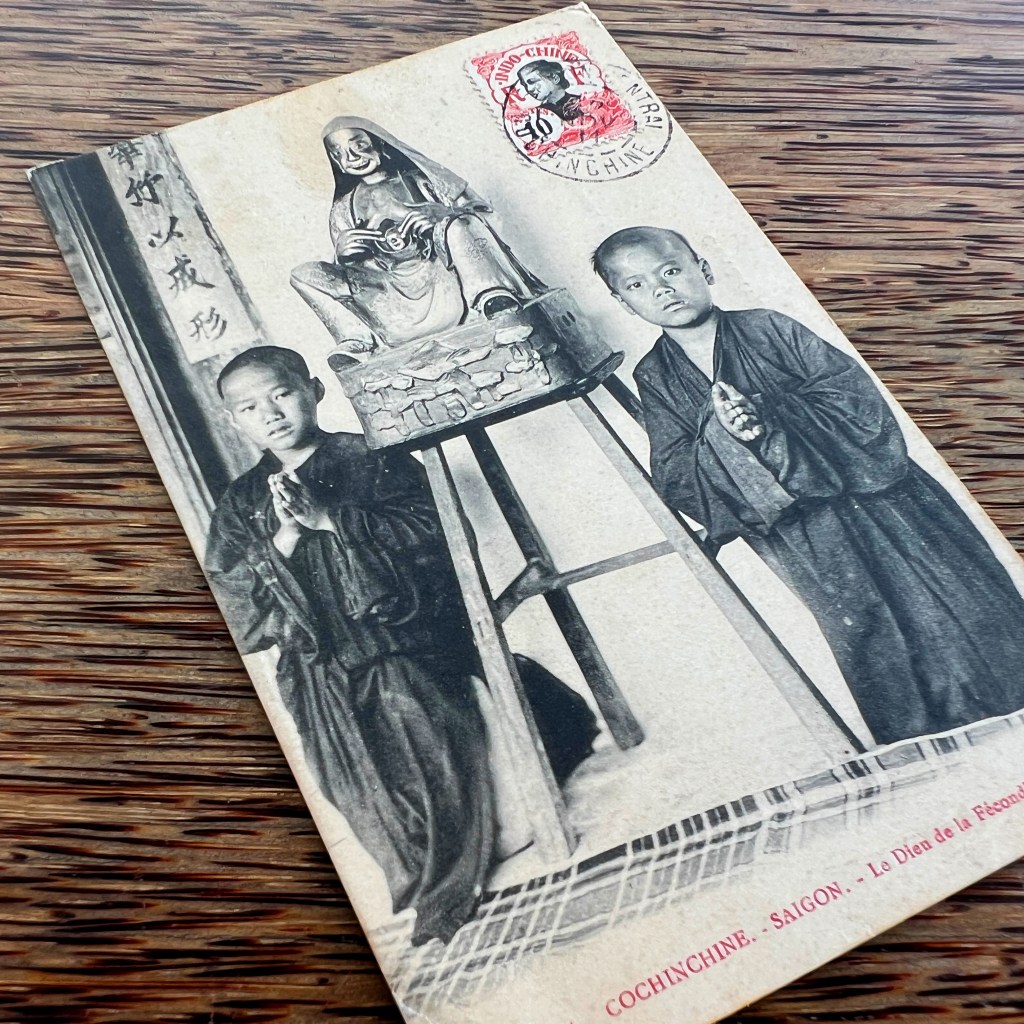
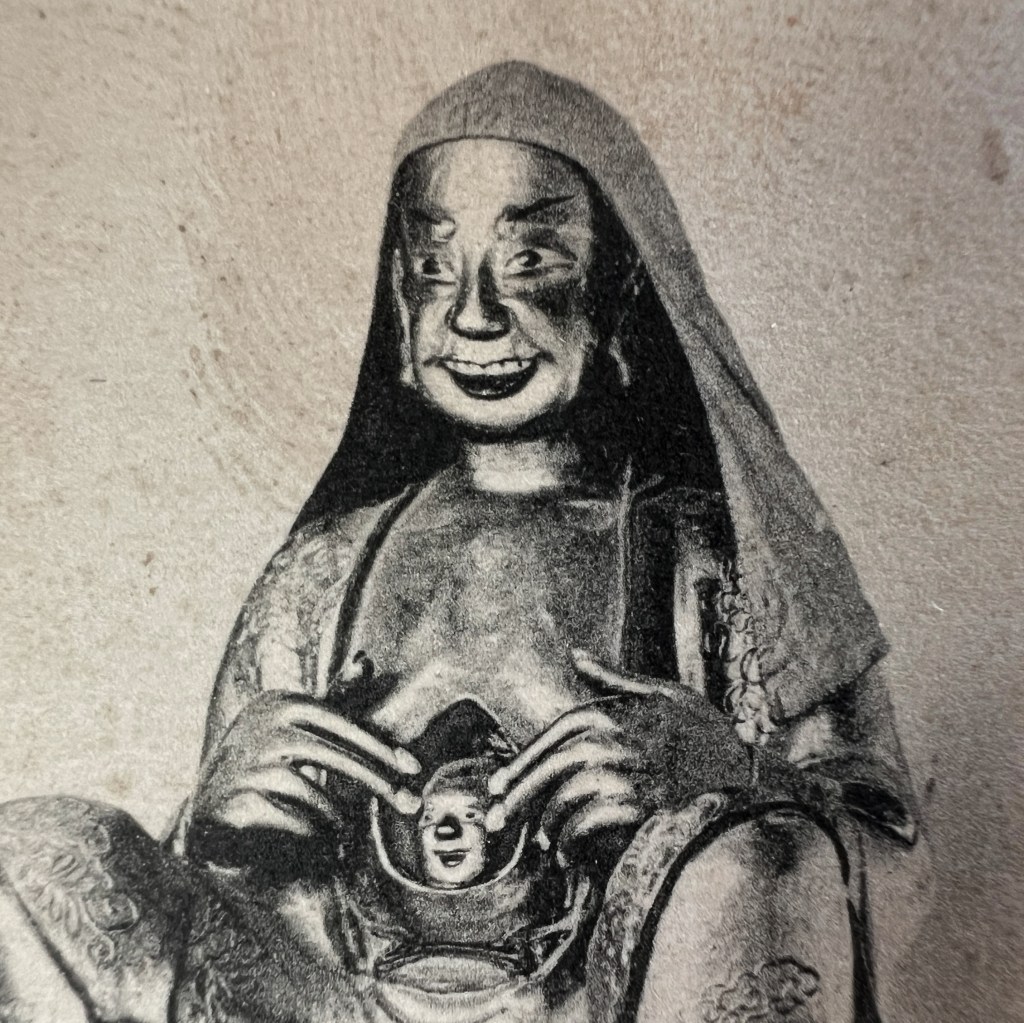
The caption presents the icon as a “god of fertility,” perhaps due to the curious head set inside the abdomen of the figure. The placement of two young novice monks adds weight to the perception this icon was the object of prayer for hopeful parents.
Traditionally, this figure is recognized as one of eighteen Awakened disciples of the Buddha, known as arhats, whose lore developed in medieval China. Each arhat had his own distinctive features and this figure was known as “The Arhat Who Reveals His Heart.”
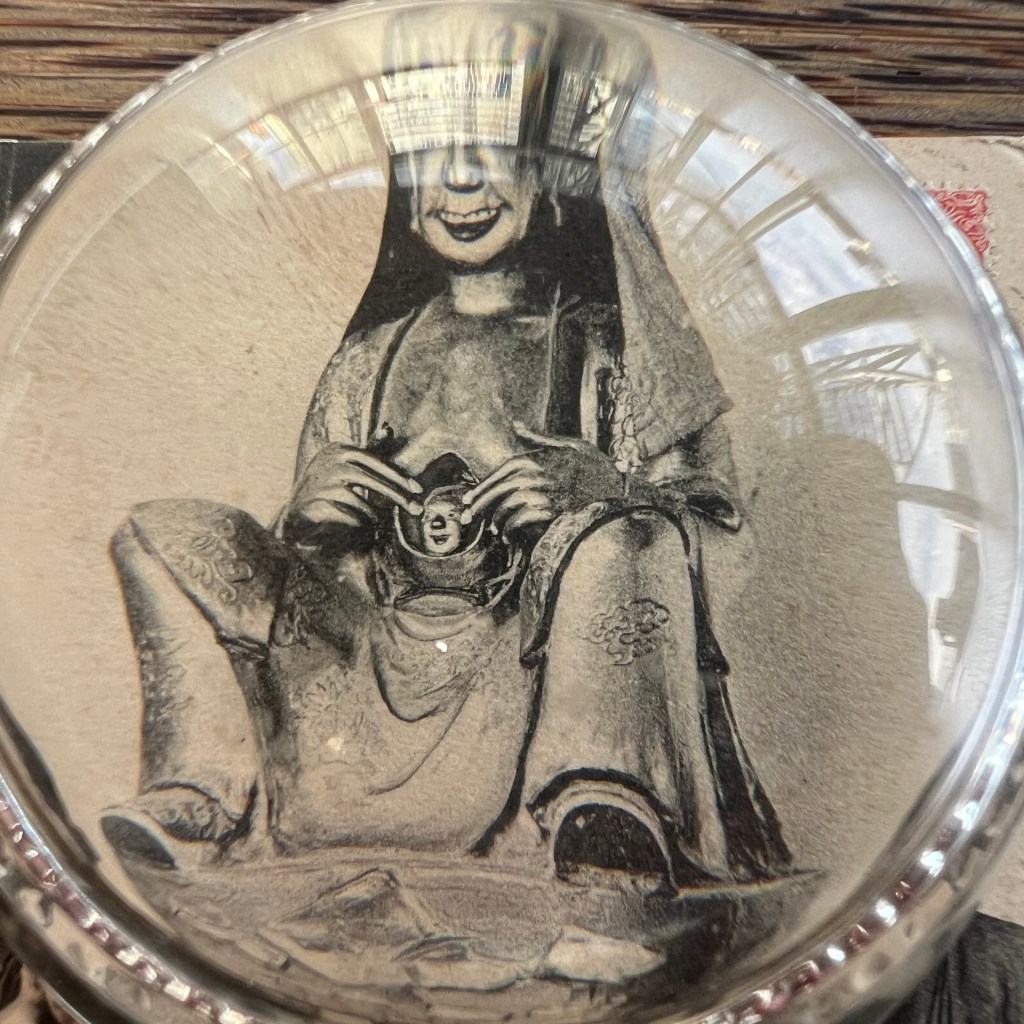
This figure is often treated as a visual representation of the Buddha Nature principle, namely, that all living beings have the innate potential to become buddhas.
The Buddhas in the West Material Archive is a digital scholarship project that catalogues artifacts depicting Buddhist material culture for Western audiences. It’s comprised of prints, photos, and an assortment of ephemera and other objects. For a brief introduction to this archive, visit the main Buddhas in the West project page.
For Related Buddhas in the West Posts Featuring Vietnam:


For the Most Recent Buddhas in the West Posts:
 Personal Site of Peter Romaskiewicz