For all the new Buddhas in the West posts
follow us on Bluesky & Instagram
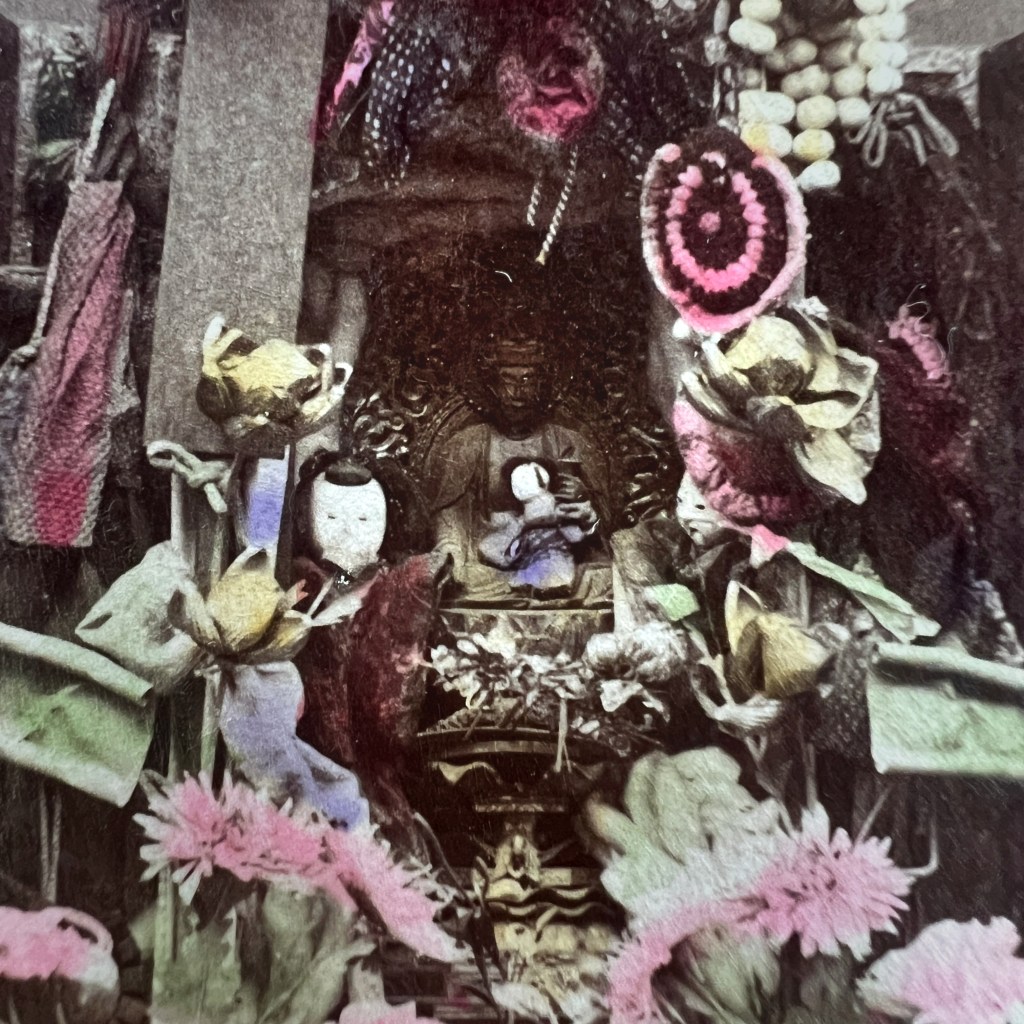
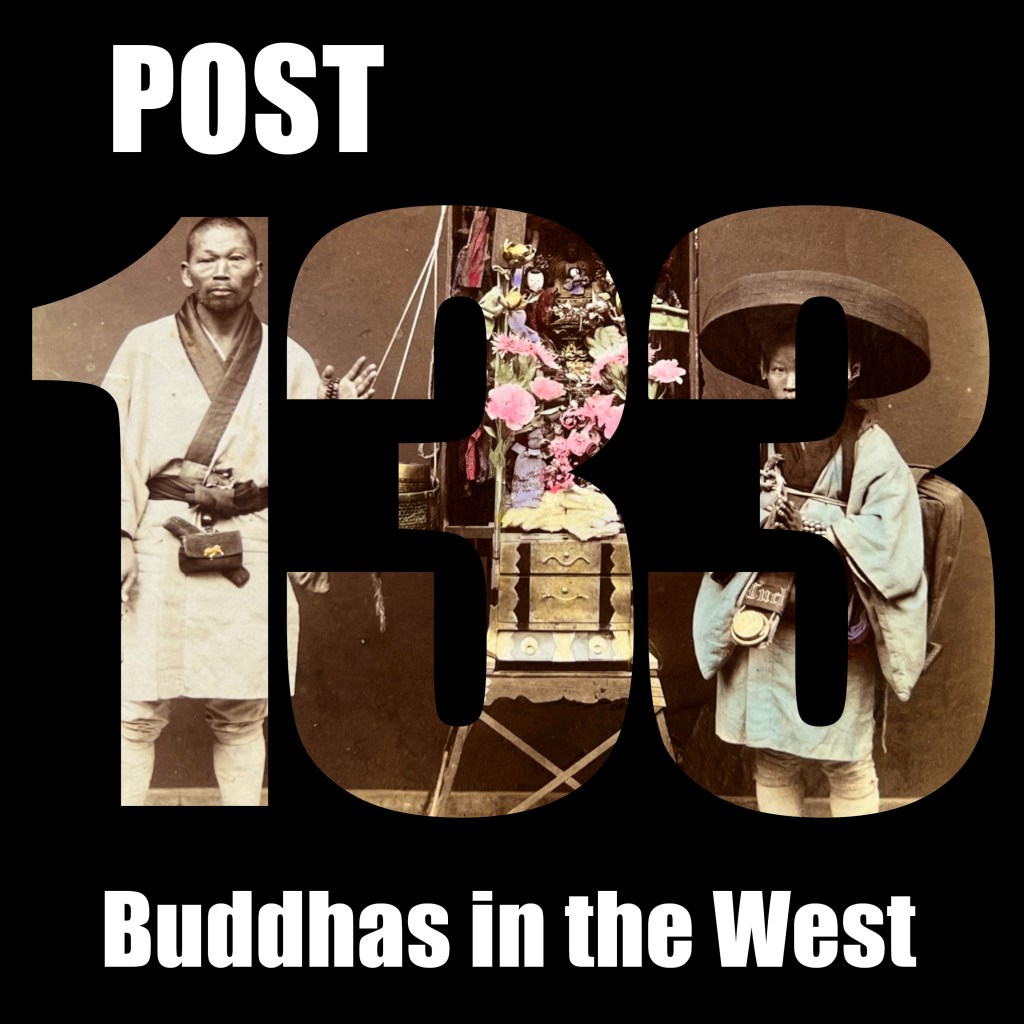
While temple visitors might view Buddhist images as immovable fixtures, Meiji-era photography reveals the remarkable portability of Buddhist icons. Here we see a pair of Japanese pilgrims with their portable shrine traveling through Nikko, a sign of Buddhist faith on the move.
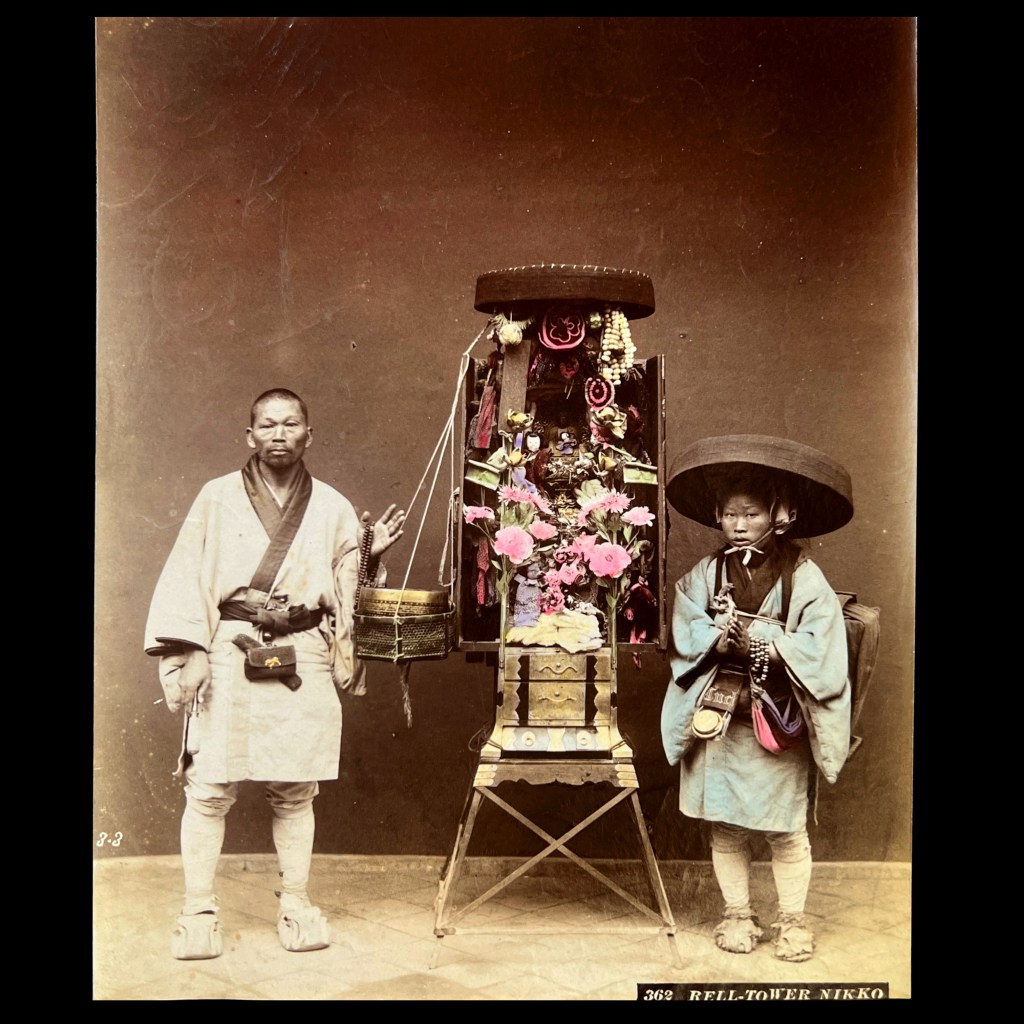
The studio stock number (362) is currently unattributed, but fits within a sequence of numbers for photos taken in Nikko by Esaki Reiji, likely in the late 1880s or 1890s. Esaki was a prominent souvenir album photographer in Asakusa, a tourist-friendly area of Tokyo.
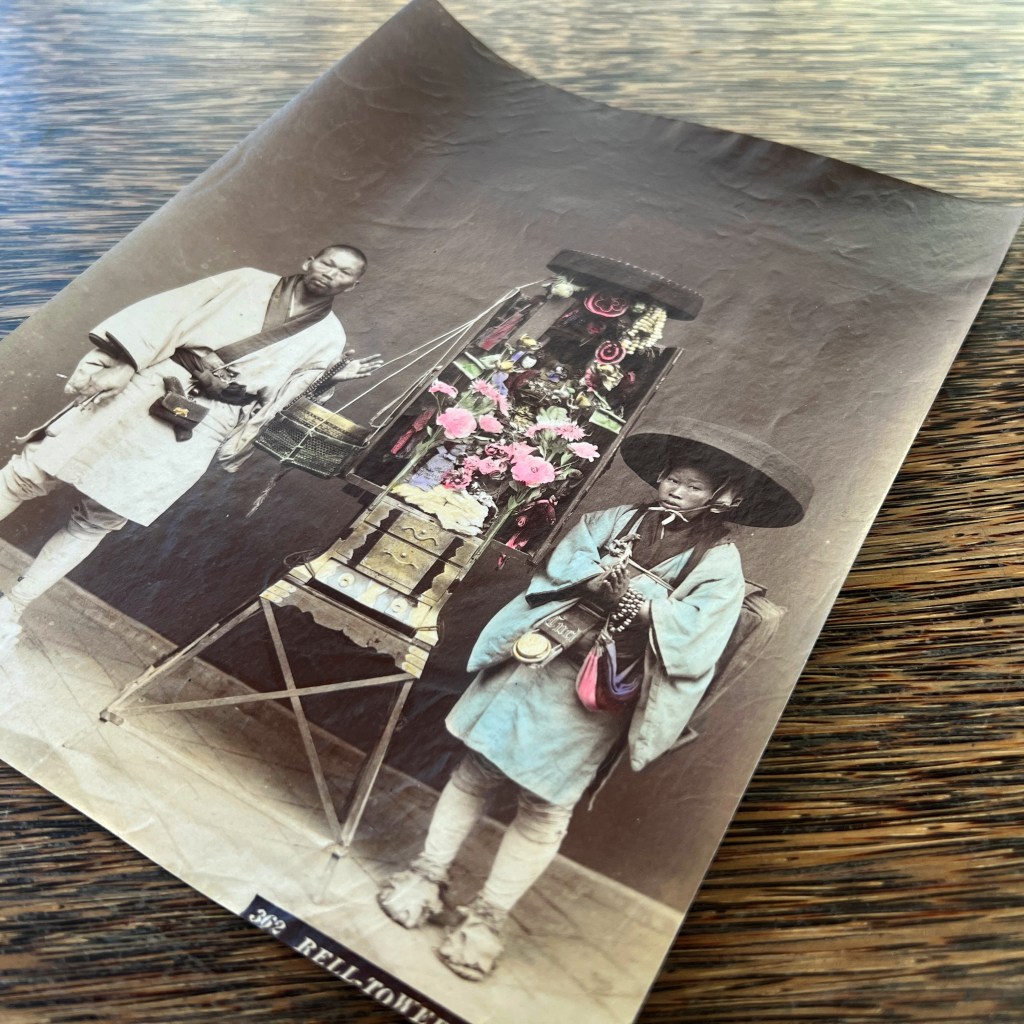
As described by Chun-Wa Chan, portable Buddhist shrines were already in use by the 5th century in the region of Gandhara and were introduced into Japan a few centuries later. Portable Japanese shrines (zushi) were often ornately decorated and fitted with doors to conceal the icon inside.
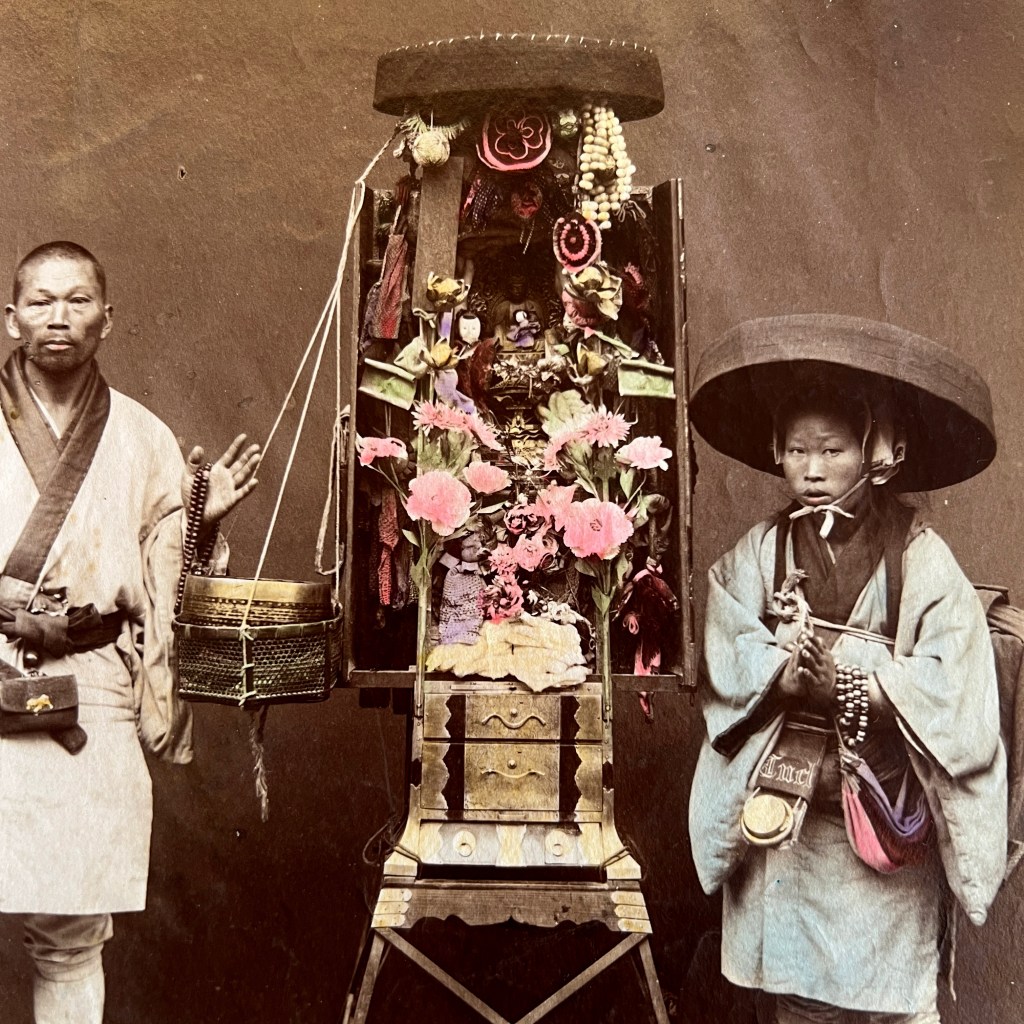
Pilgrims would carry the frame on their backs as they moved from one location to the next. A large bell rests in a basket hung off the side, ready to be struck by a mallet held in the pilgrim’s hand on the left. His other hand holds a long string of mala beads.
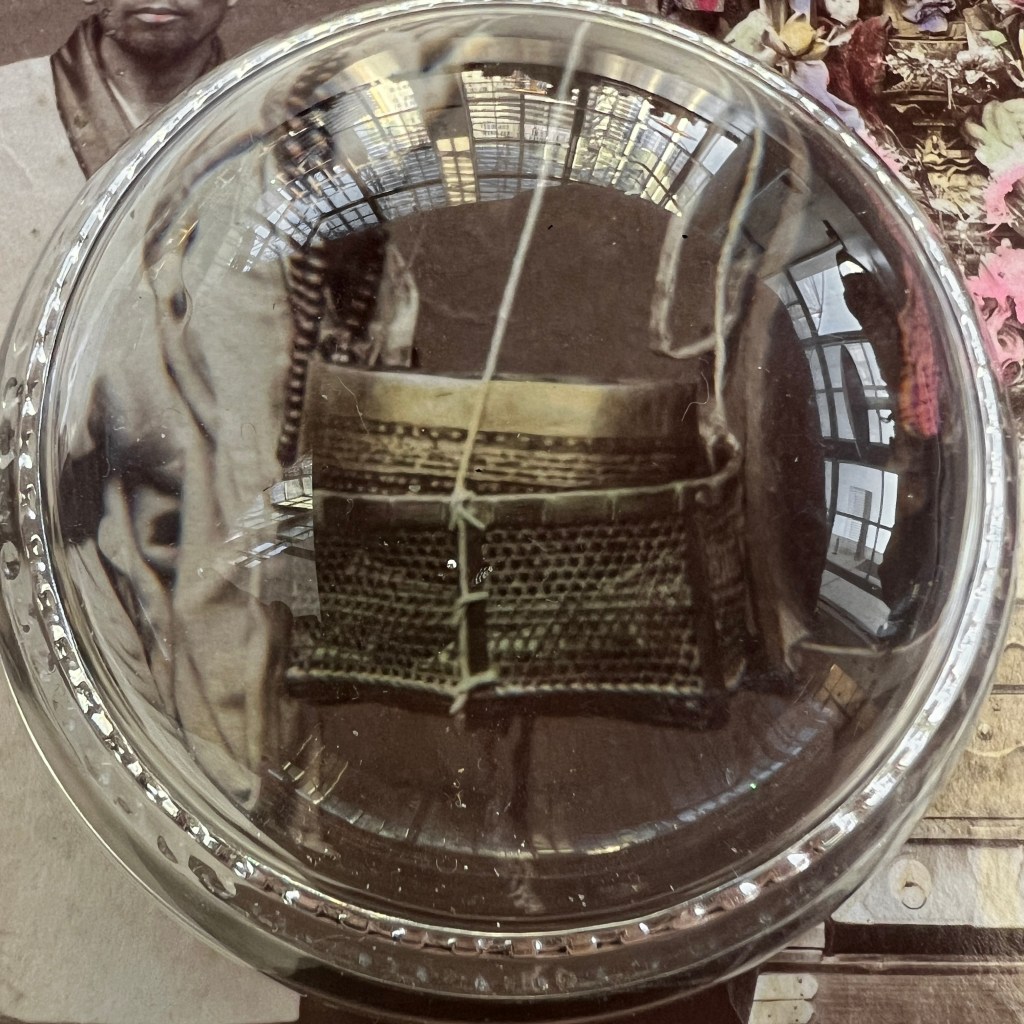
Obscured by flower offerings, the Buddhist icon sits at just above eye level in the shrine. For more on this topic, see Chan’s “Portable Faith: Toward a Non-Site-Specific History of Buddhist Art in Japan,” viewable here: https://tinyurl.com/3tde394d.
The Buddhas in the West Material Archive is a digital scholarship project that catalogues artifacts depicting Buddhist material culture for Western audiences. It’s comprised of prints, photos, and an assortment of ephemera and other objects. For a brief introduction to this archive, visit the main Buddhas in the West project page.
For Related Buddhas in the West Posts Featuring Nikko:

For the Most Recent Buddhas in the West Posts:
 Personal Site of Peter Romaskiewicz