For all the new Buddhas in the West posts
follow us on Bluesky & Instagram
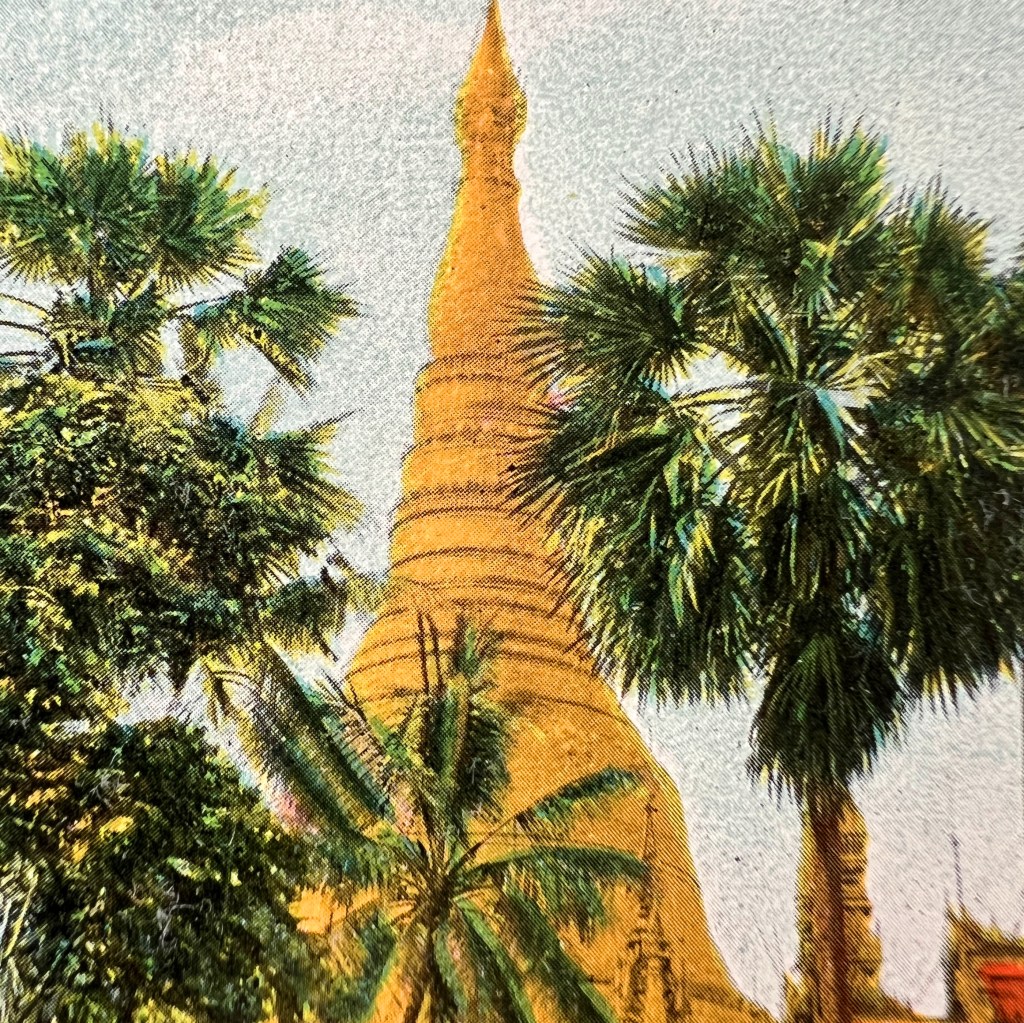
At the turn of the 20th century, tourists entering British Burma on a steamer would have looked down the Rangoon River to see the golden Shwedagon Pagoda in the far distance. Myanmar’s most sacred Buddhist site, the pagoda stands 112 m (367 ft) tall and dominates the Yangon skyline.
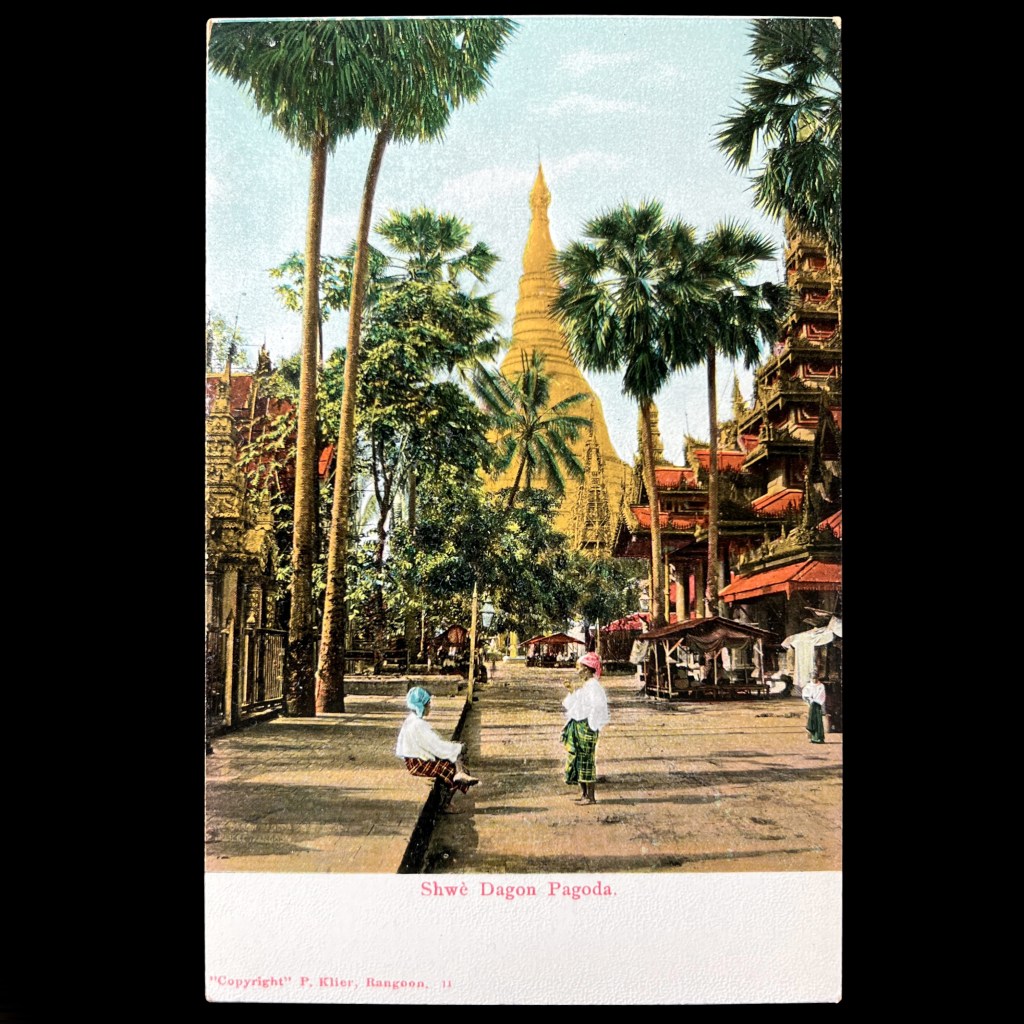
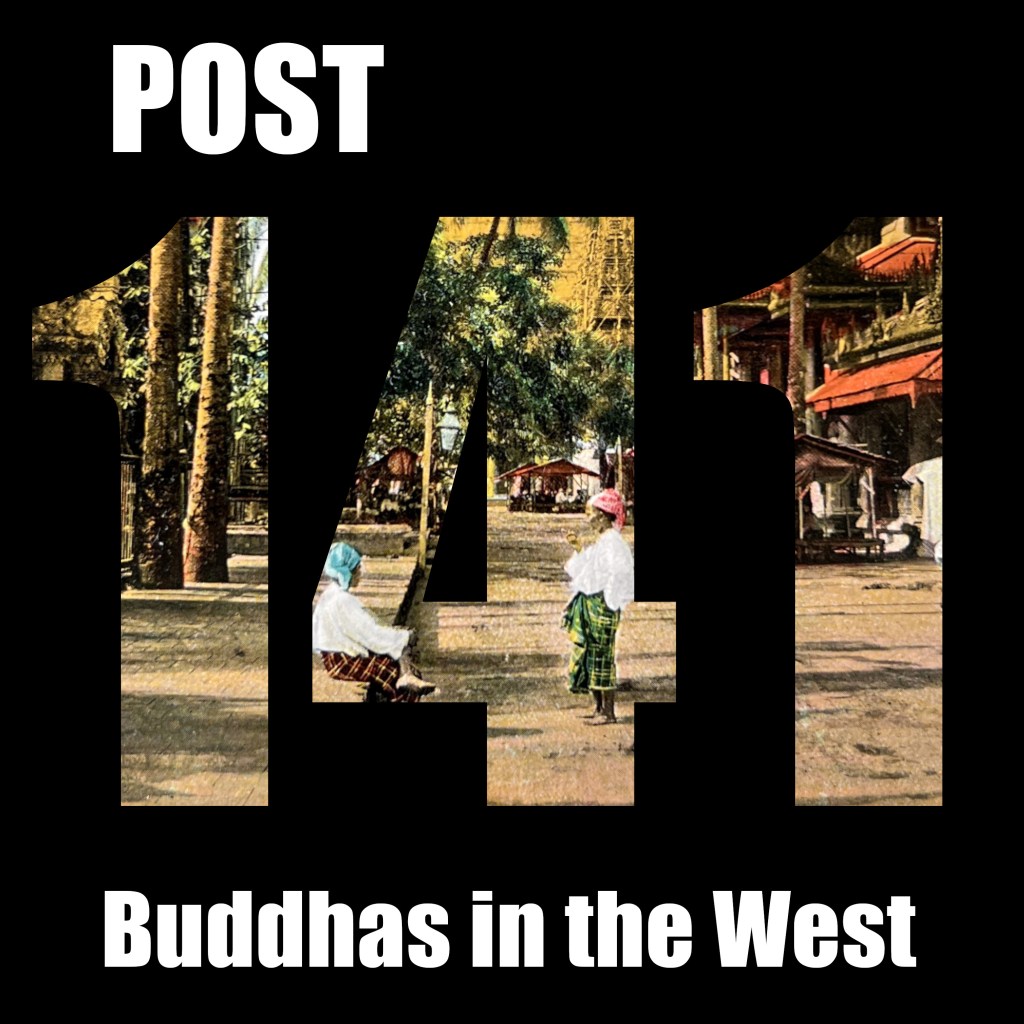
German photographer Philip Klier’s image blends monumentality with everyday life; palm trees frame the towering golden stupa while Burmese figures animate the foreground and provide scale. Klier presents an idyllic vision for colonial consumers seeking the “exotic” East.
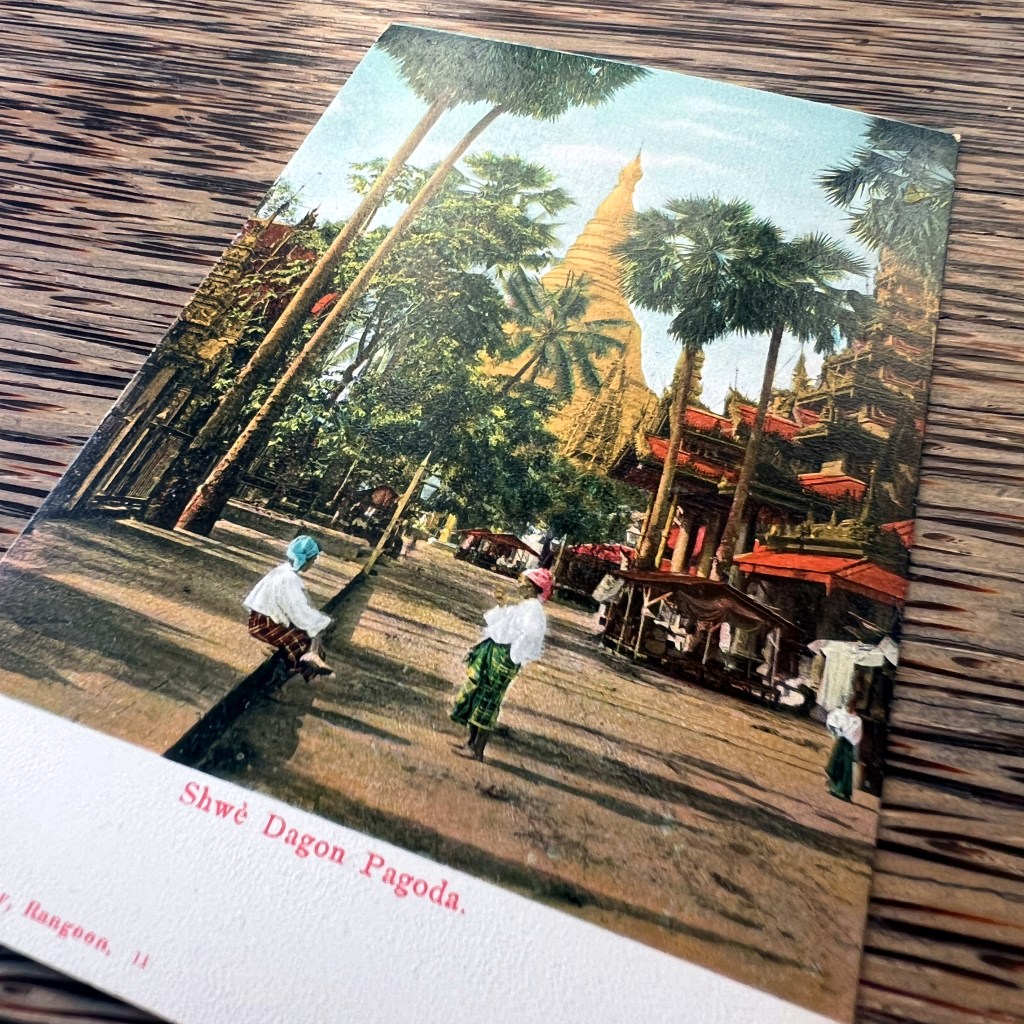
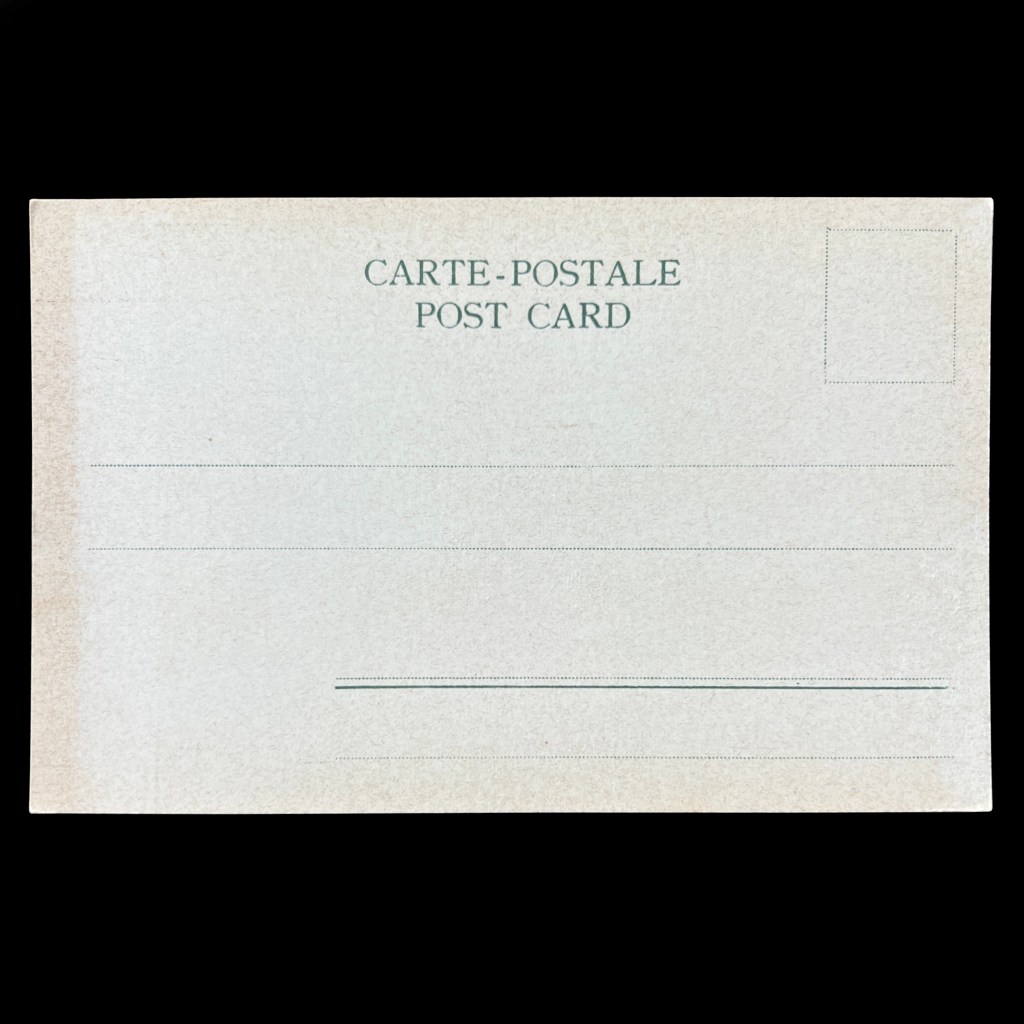
Following the postcard boom, Klier used his studio album photographs as the basis for portable, vibrantly colored postcards. Such cards circulated through imperial mail networks, shaping how distant places like Burma were imagined by audiences in Europe and beyond.
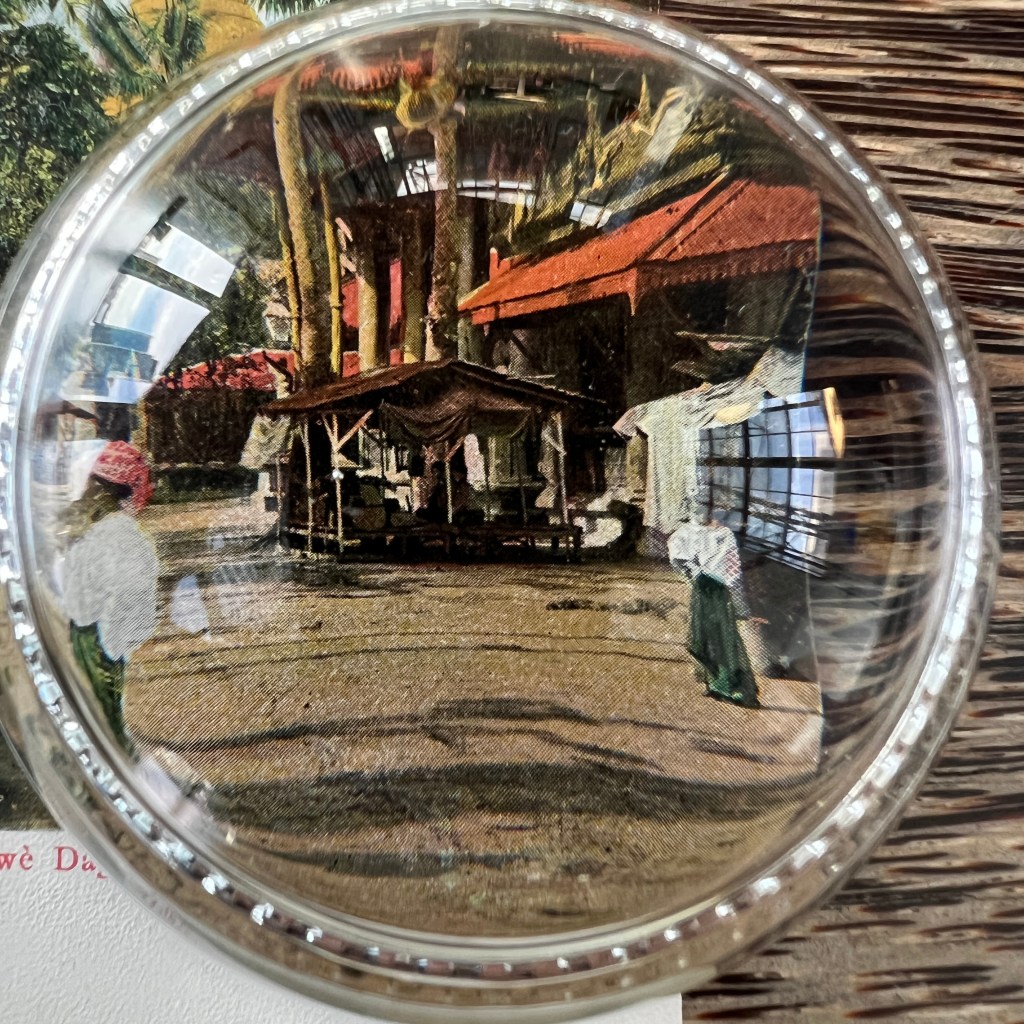
In the colonial period, some Burmese merchants became wealthy through trade in rice and timber and sites like Shwedagon Pagoda experienced rapid growth. Newly built resting pavilions and stalls selling flowers, parasols, and curios could be seen all over the grounds.
More than kitsch souvenirs, postcards reveal how colonial interactions and photography mediated encounters between Burma and the wider world at the turn of the century. For more on colonial photography in Burma, see Noel Singer’s Burma: A Photographic Journey (1993).
The Buddhas in the West Material Archive is a digital scholarship project that catalogues artifacts depicting Buddhist material culture for Western audiences. It’s comprised of prints, photos, and an assortment of ephemera and other objects. For a brief introduction to this archive, visit the main Buddhas in the West project page.
For Related Buddhas in the West Posts Featuring the Shwedagon Pagoda:

For the Most Recent Buddhas in the West Posts:
 Personal Site of Peter Romaskiewicz