For all the new Buddhas in the West posts
follow us on Bluesky & Instagram
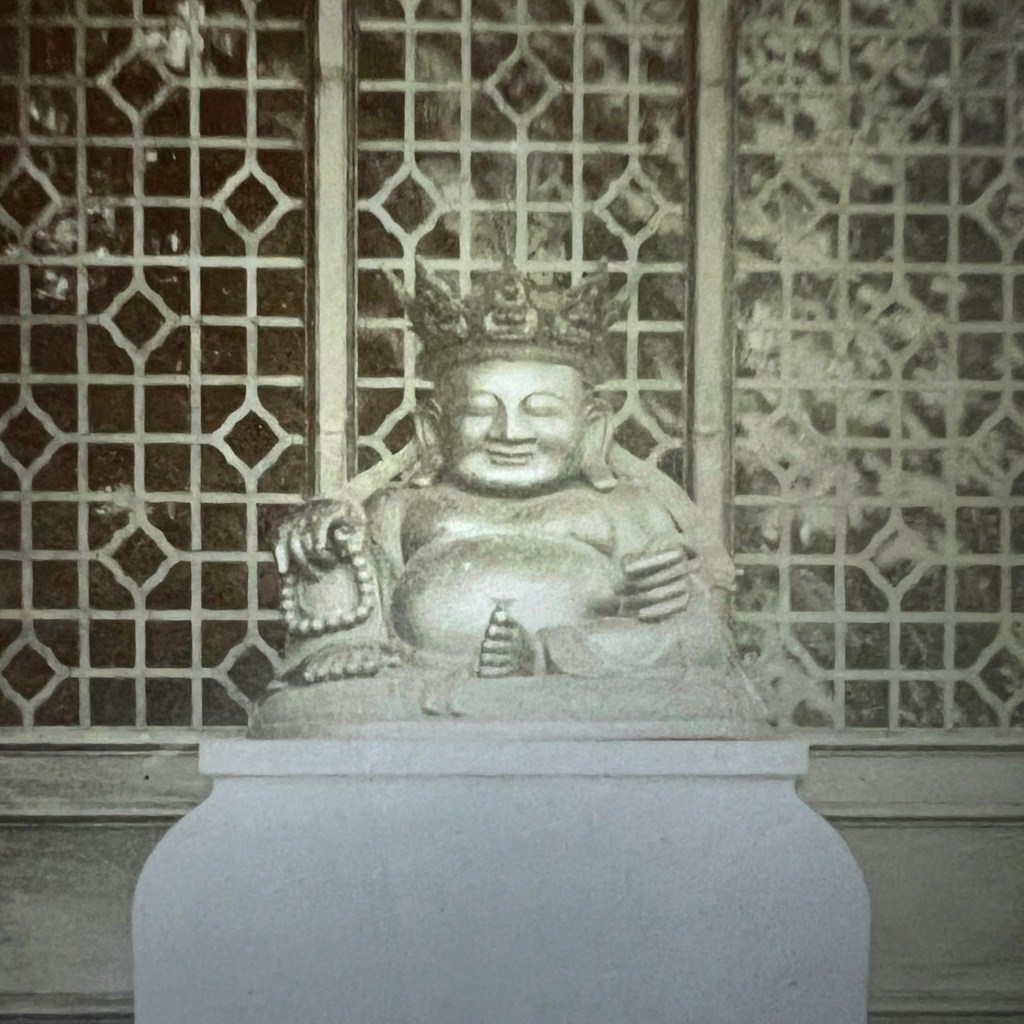
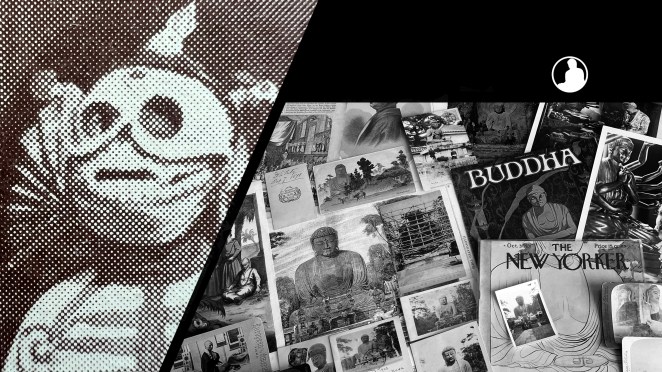
This gilded Laughing Buddha wearing an eight-pointed crown once graced a Chinese Buddhist monastery. Today, the statue sits in a very different setting on the grounds of the royal Sandringham estate as an unusual imperial garden ornament.
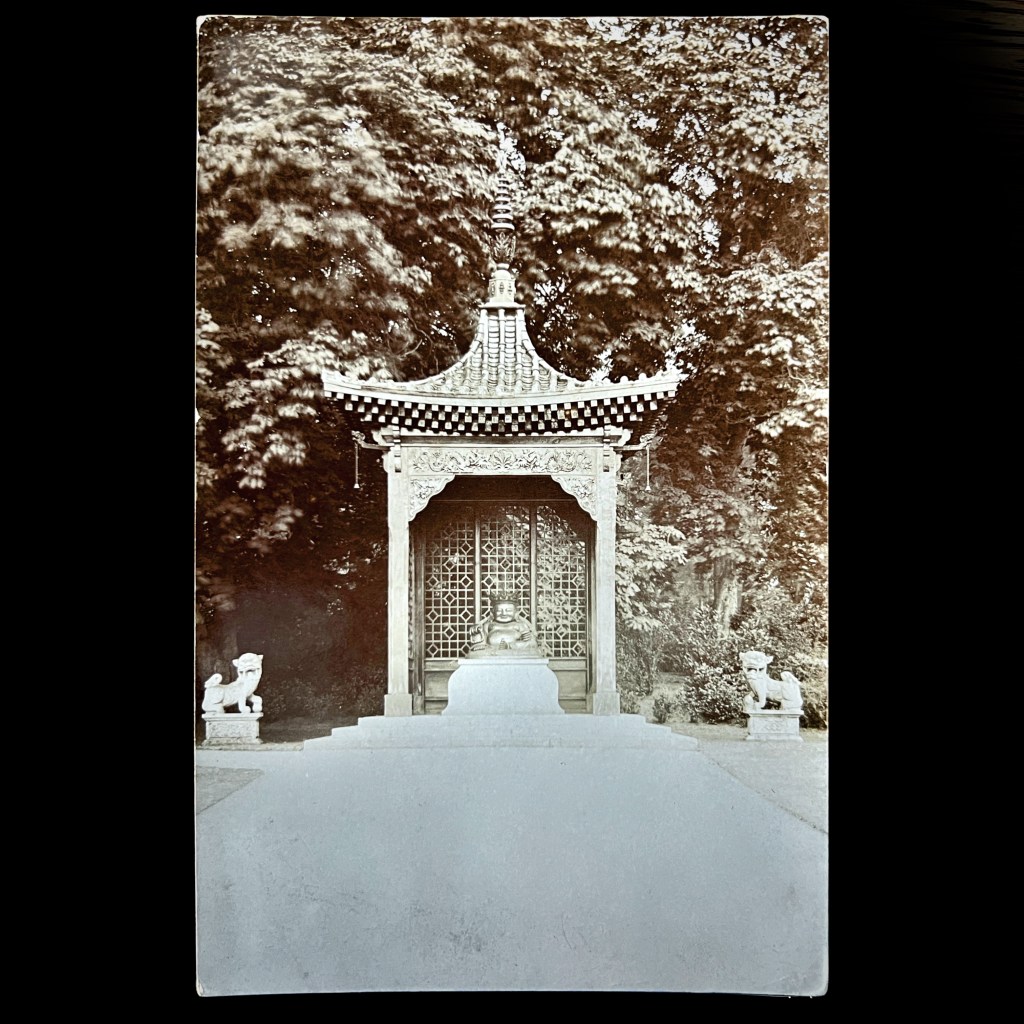
The Sandringham Buddha was sent to Britain by Admiral Sir Henry Keppel in 1869. After encountering the statue in Beijing, he shipped it home aboard HMS Rodney and presented it to the Prince of Wales (later Edward VII) as a gift for the newly built Sandringham House.
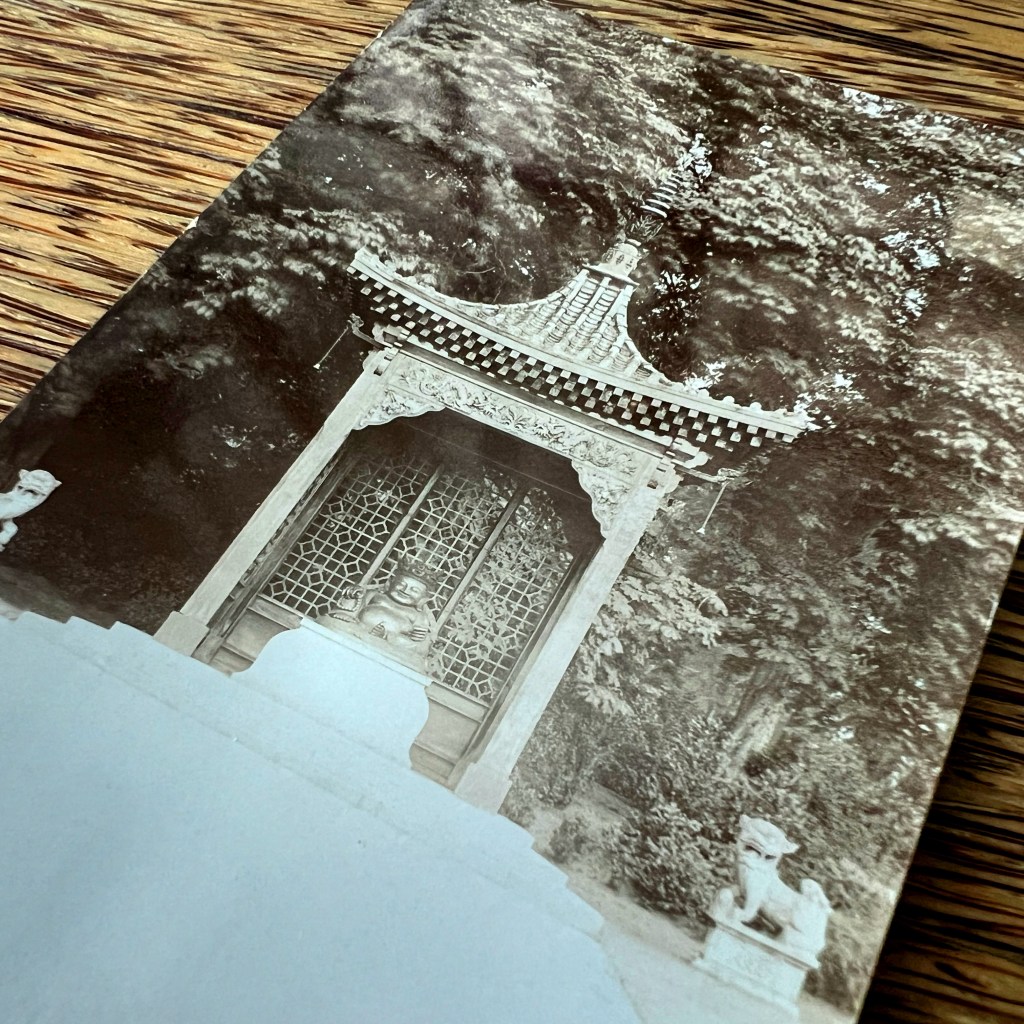
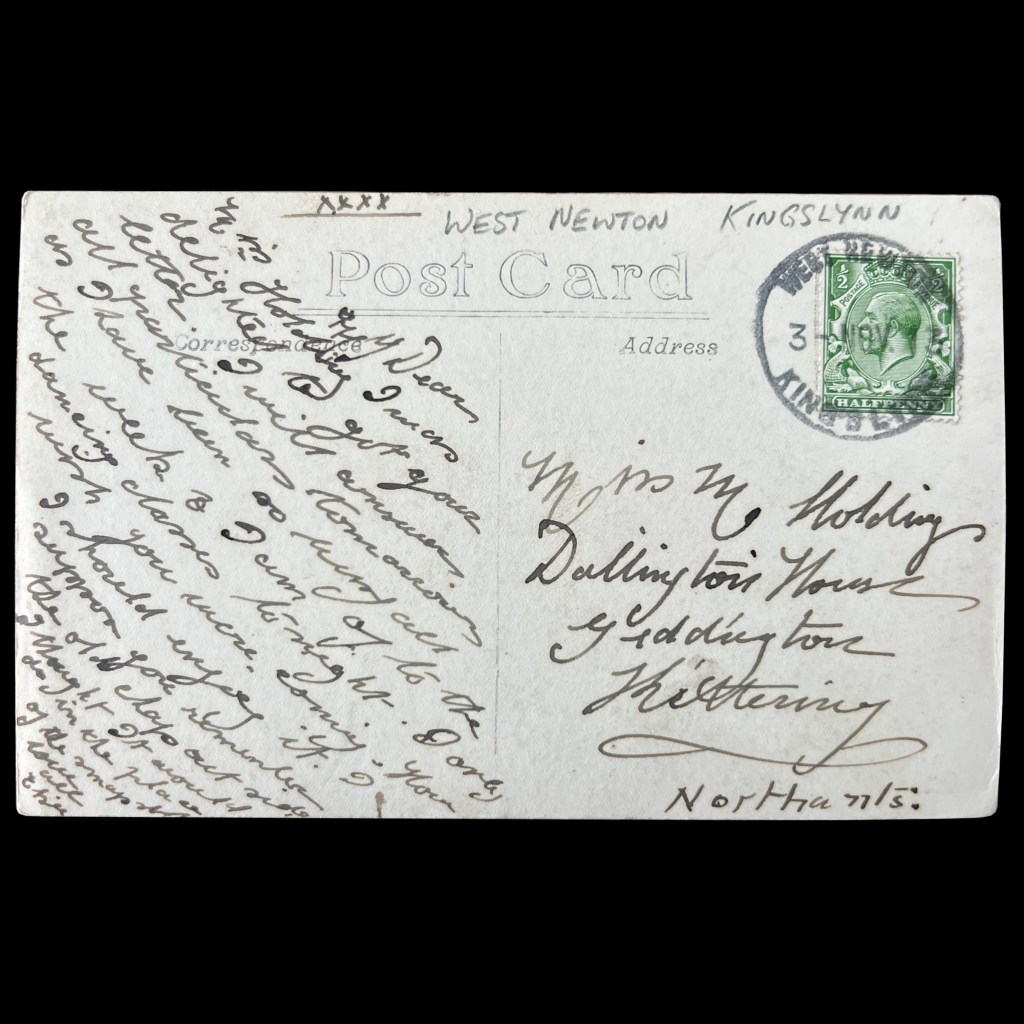
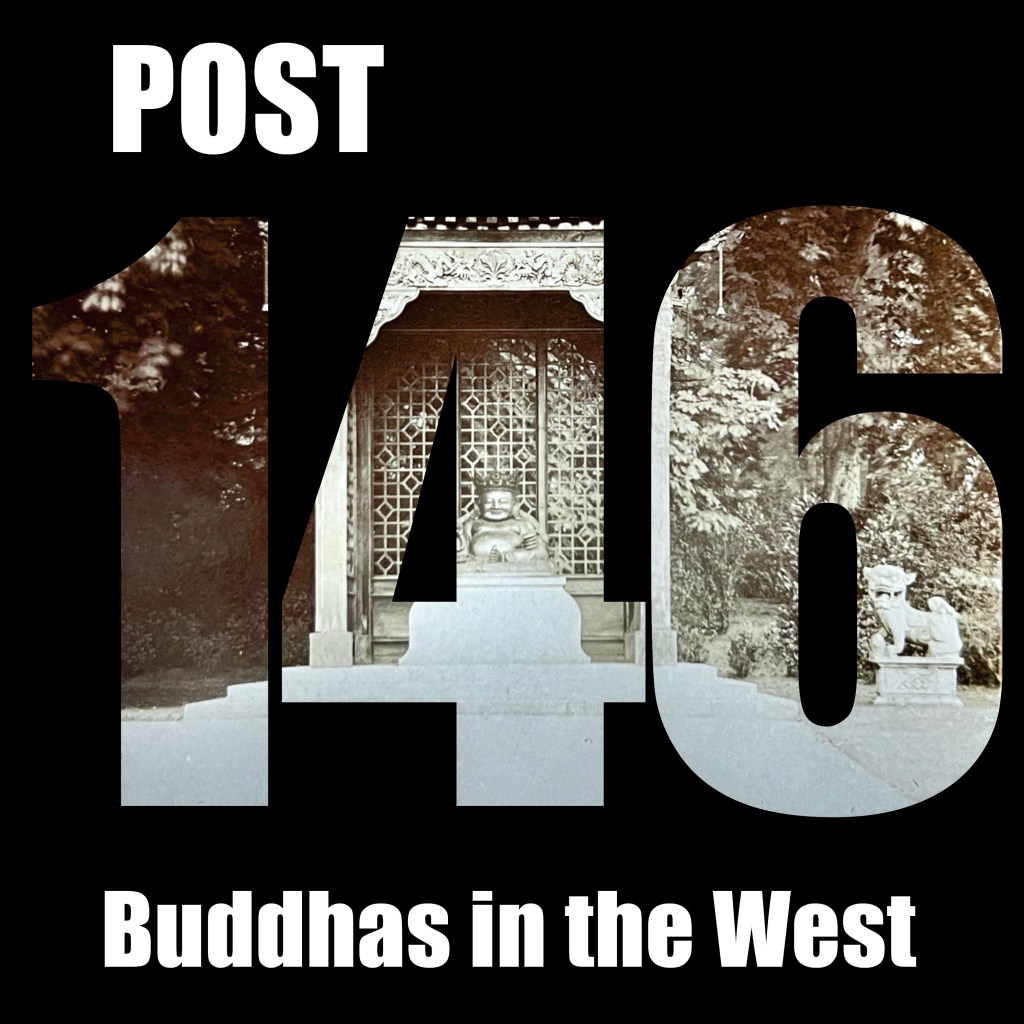
The image here was produced as a “real photo” postcard—created by printing a photographic positive directly onto photosensitized postcard stock. This card was mailed in 1913, near the end of the great postcard boom that was soon cut short by the First World War.
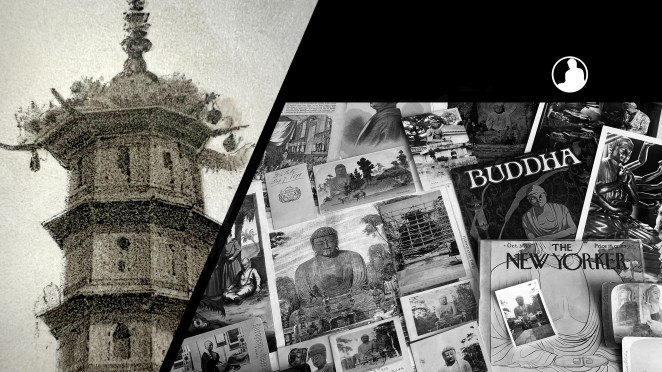
In the 1870s, estate carpenters built a wooden pagoda canopy above the statue, flanked by granite Japanese lions. The structure stood for decades before eventually rotting away and being demolished in 1960, leaving the Buddha exposed.
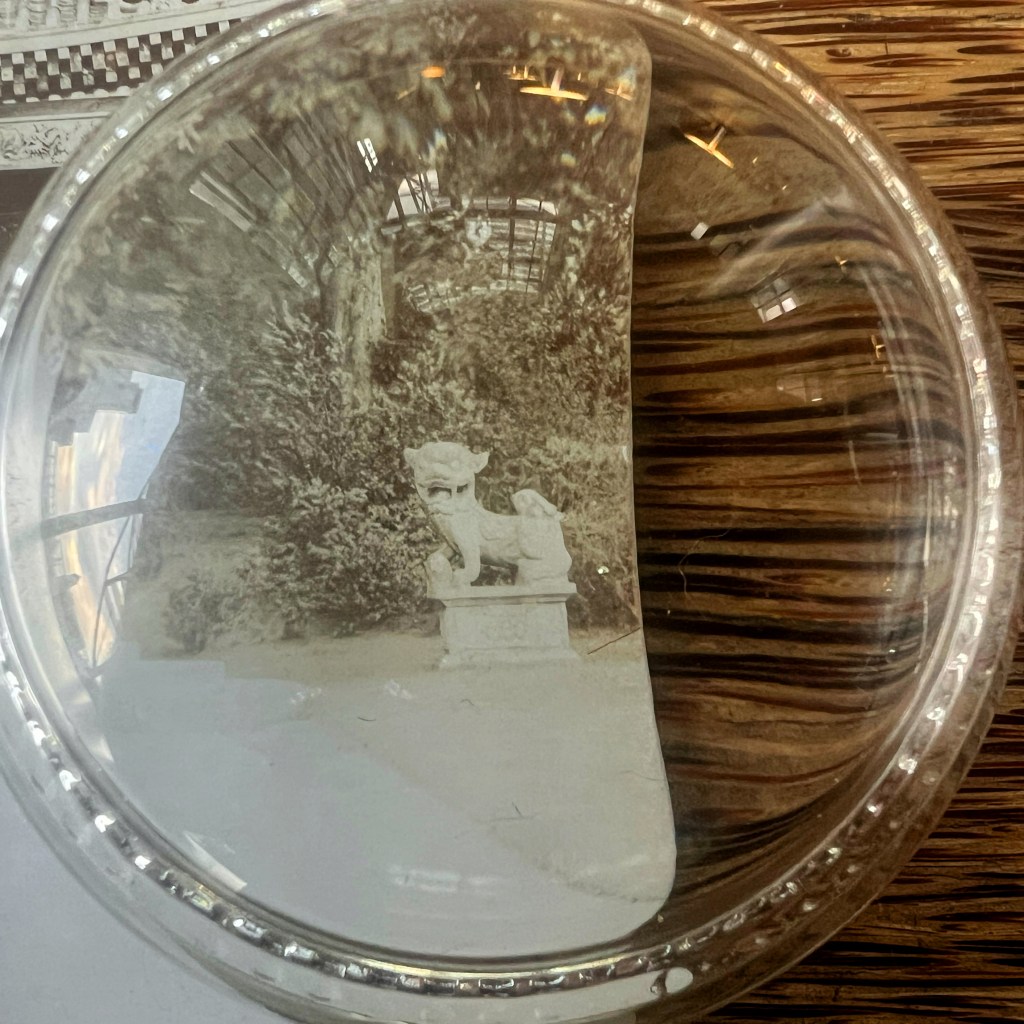
It is thought the statue was cast in 1690 and was found to have many Chinese coins inside it, likely offerings placed there by pious Buddhists. For more on this icon, see Jamie Carstairs’ “Location/Dislocation” viewable here: https://tinyurl.com/5w4tbpr7.
The Buddhas in the West Material Archive is a digital scholarship project that catalogues artifacts depicting Buddhist material culture for Western audiences. It’s comprised of prints, photos, and an assortment of ephemera and other objects. For a brief introduction to this archive, visit the main Buddhas in the West project page.
For Related Buddhas in the West Posts Featuring the Laughing Buddha | Budai:



For the Most Recent Buddhas in the West Posts:
 Personal Site of Peter Romaskiewicz