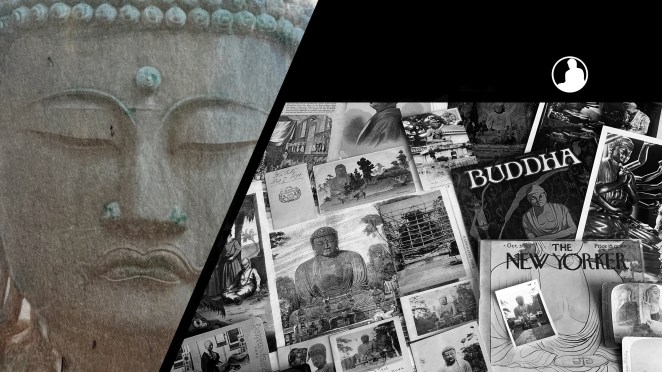
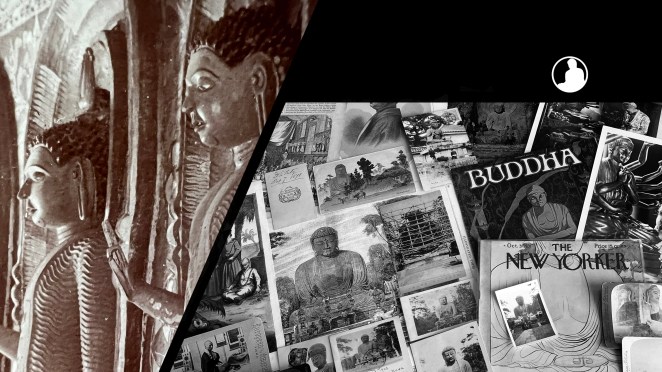
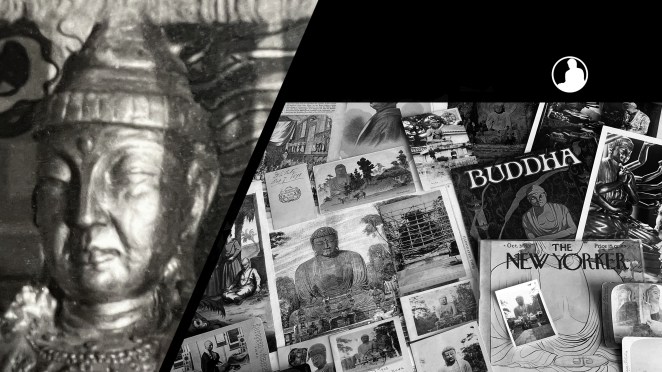
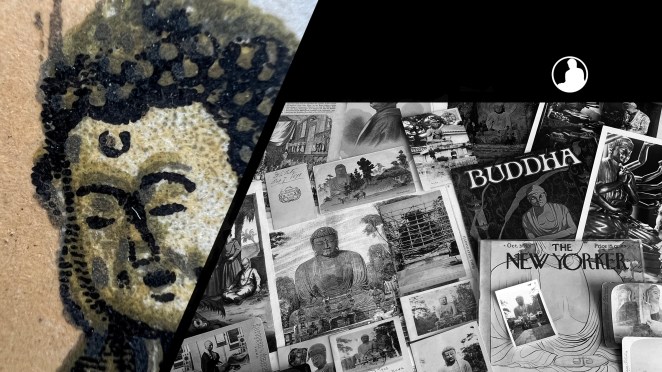
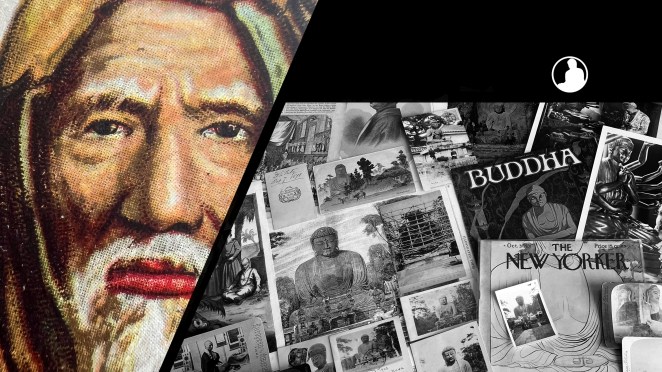
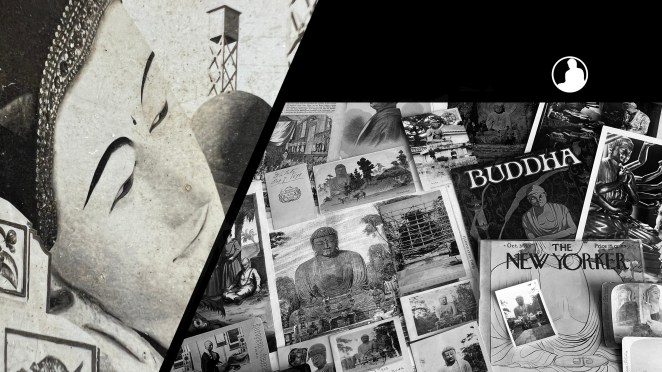
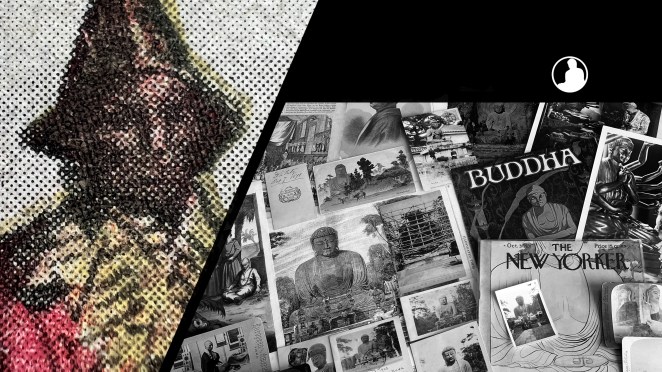
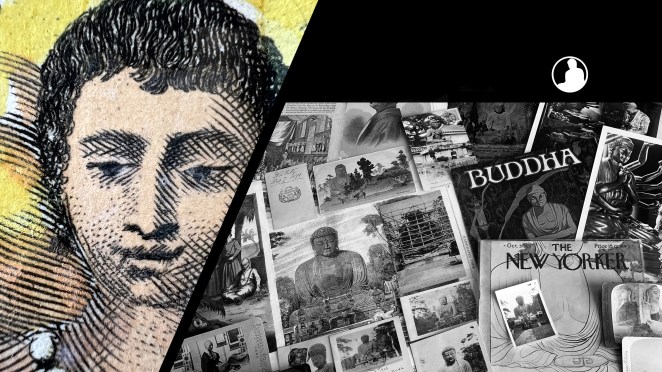
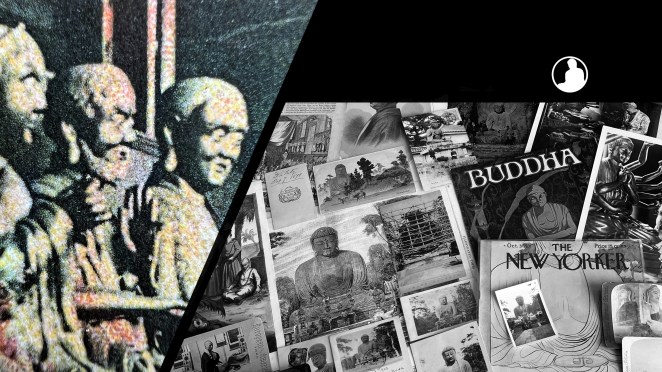
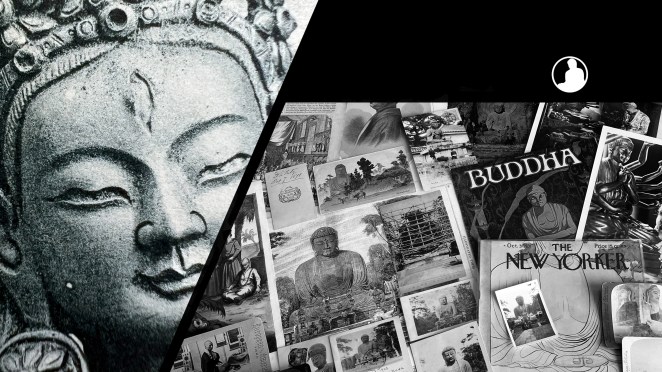
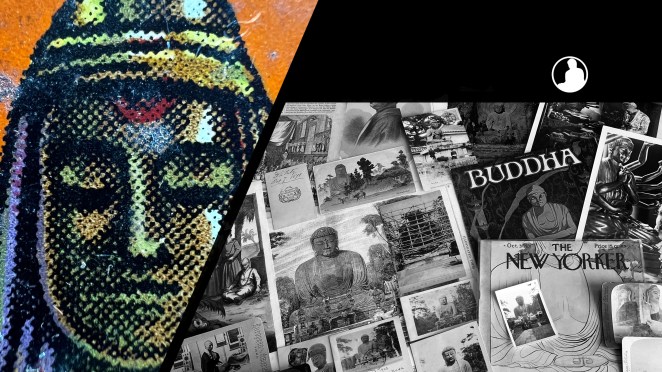
Engraving the Grotesque Buddha, 1660–1850 Exhibit

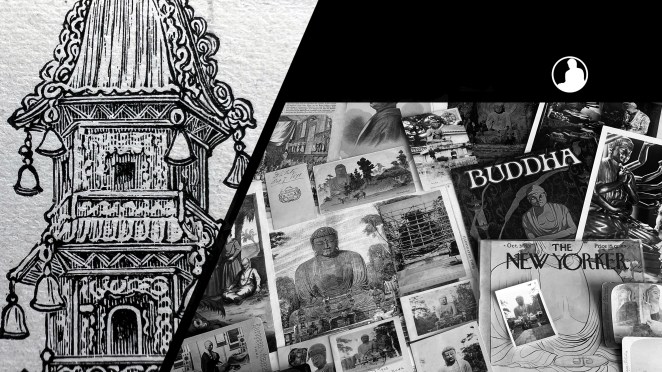
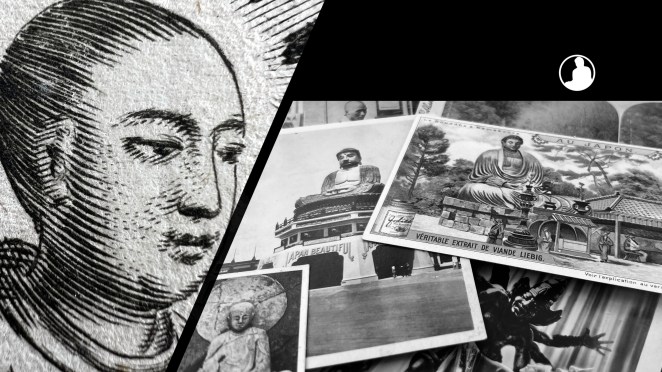
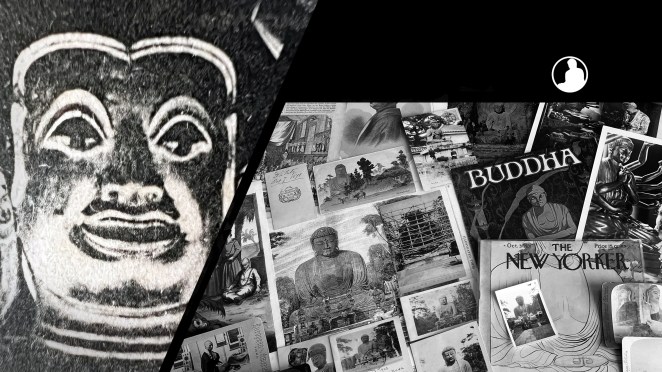
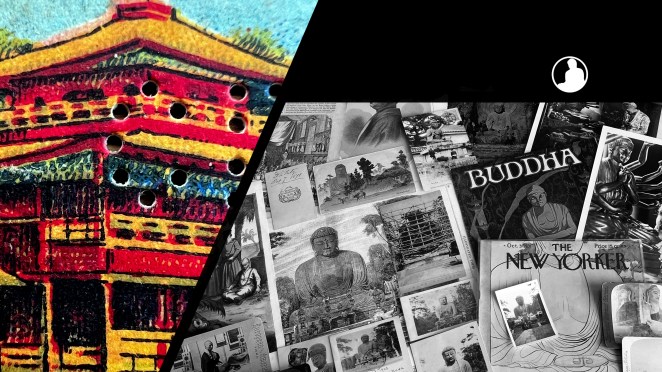
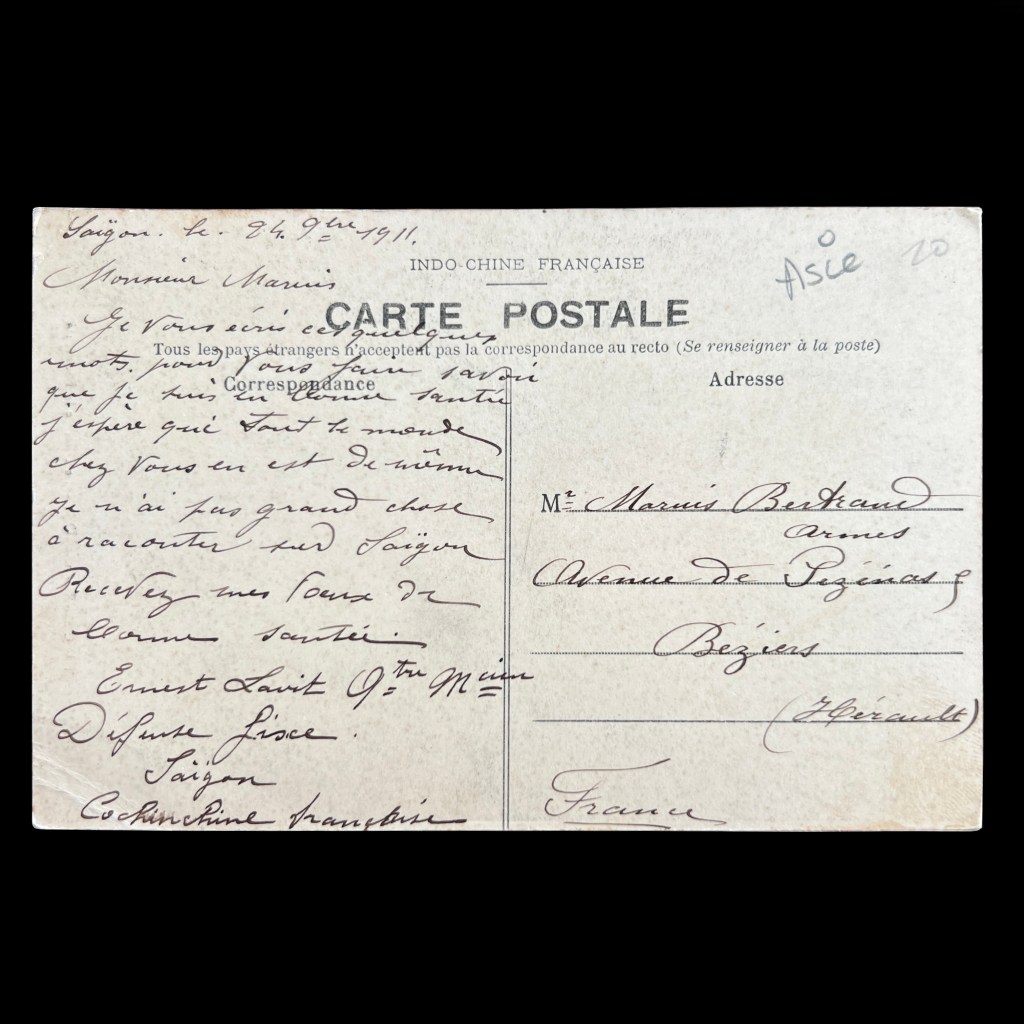
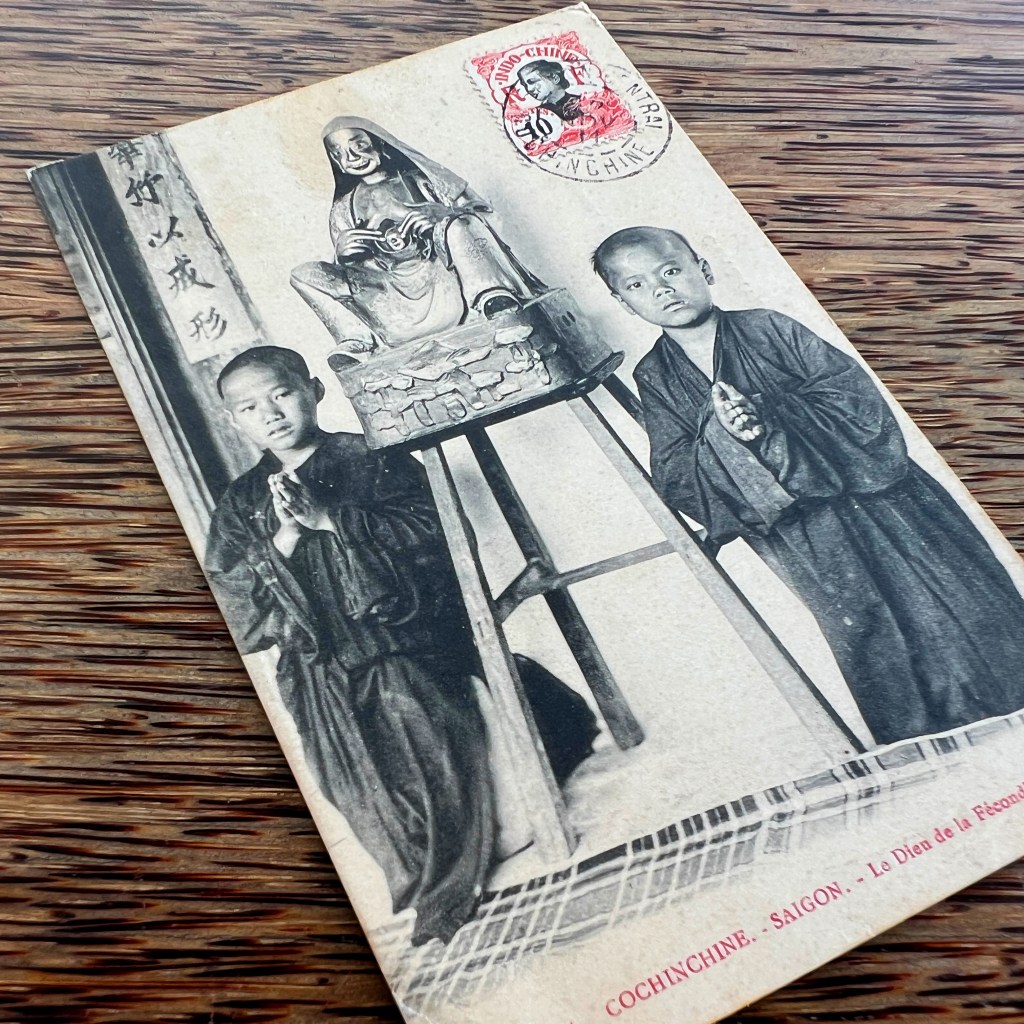
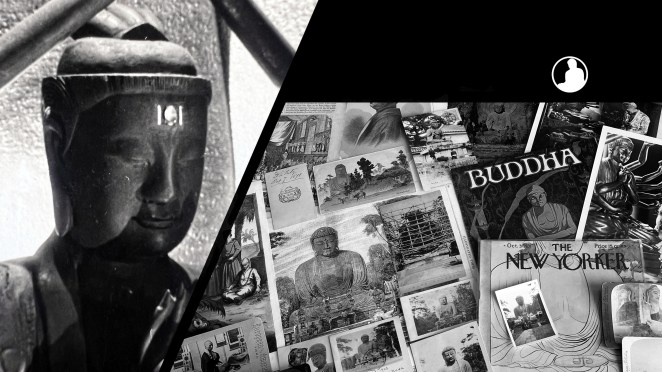
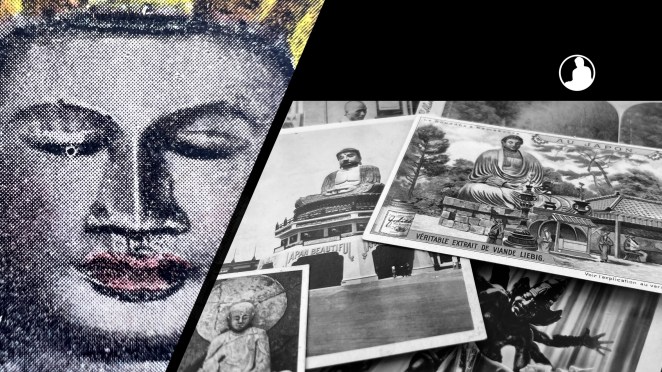
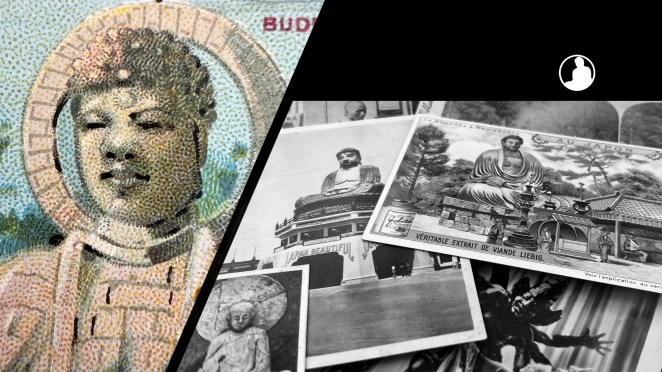
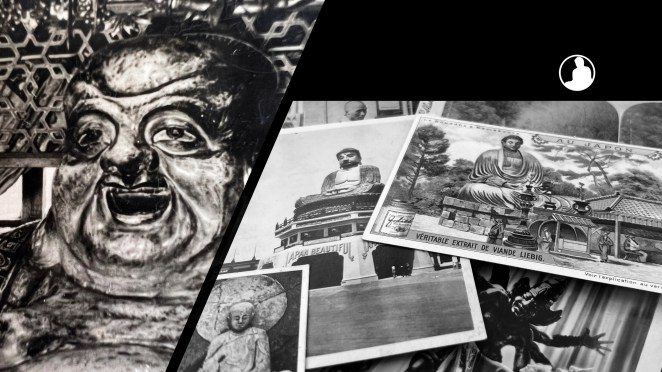
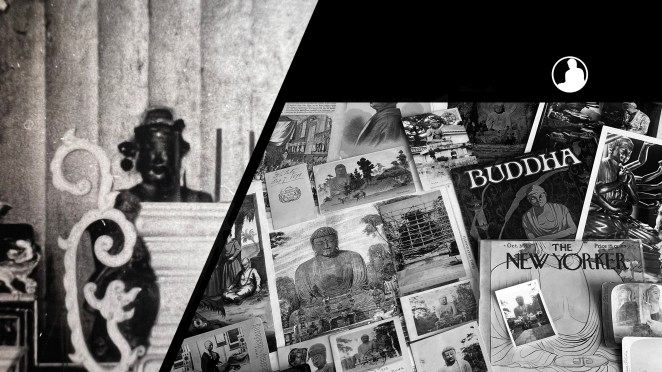
The Buddhas in the West Material Archive pop-up exhibit, entitled “Engraving the Grotesque Buddha, 1660–1850” will be on display November 22, 2025 at CGIS S050 at Harvard University.


Introduction to the Exhibit

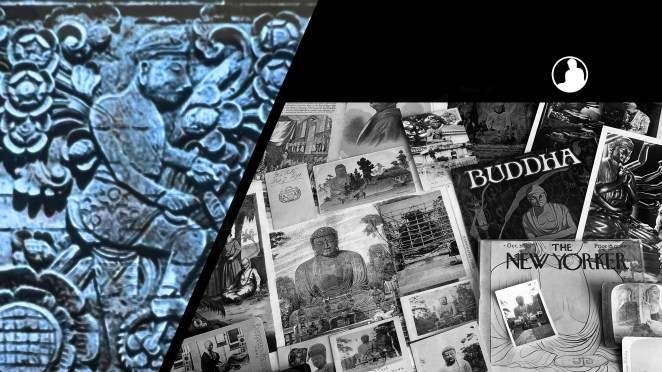
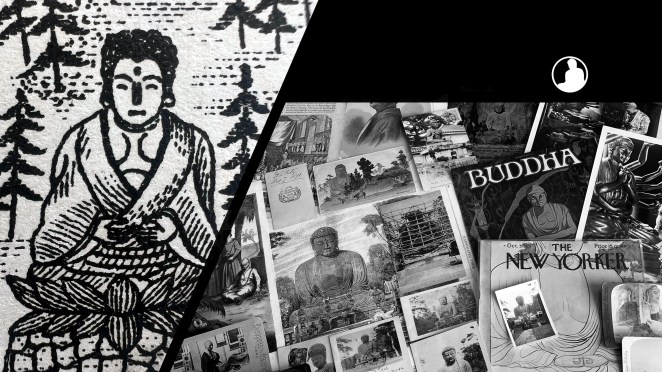
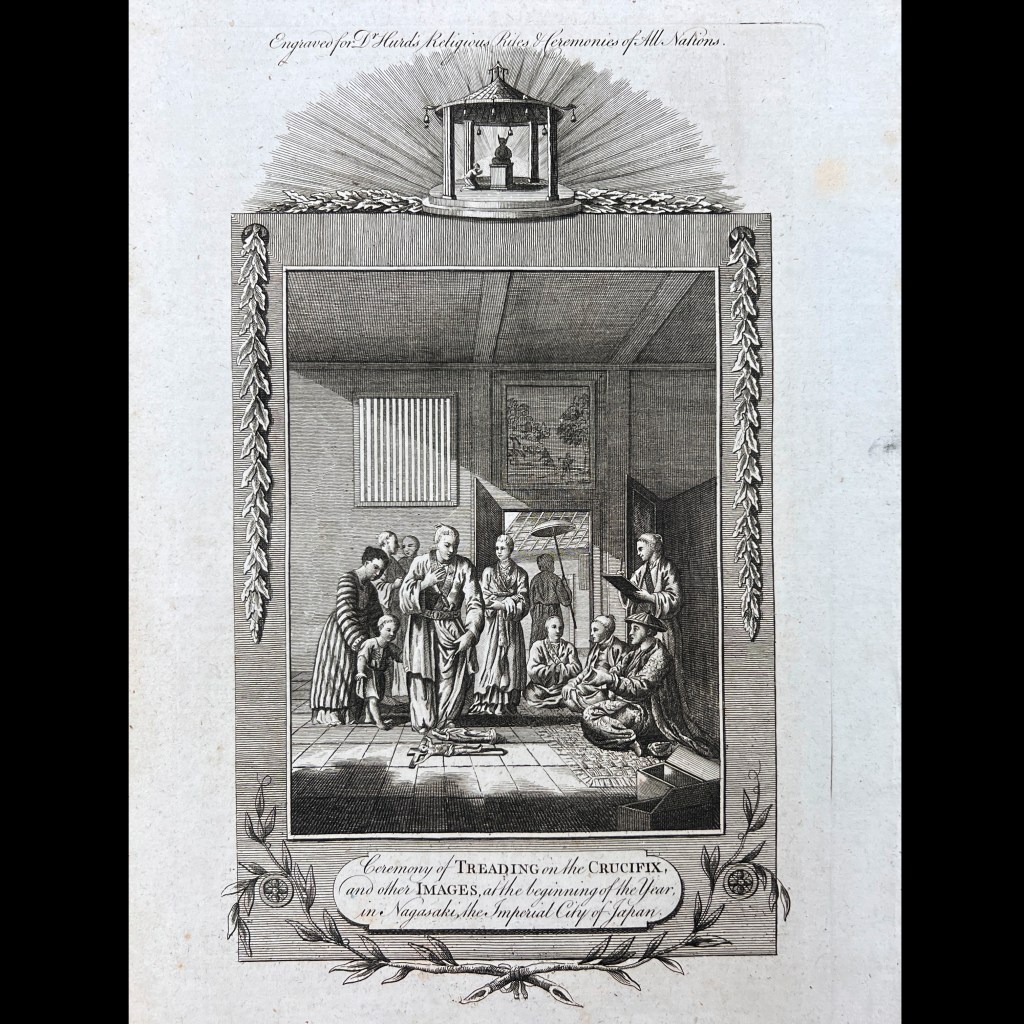
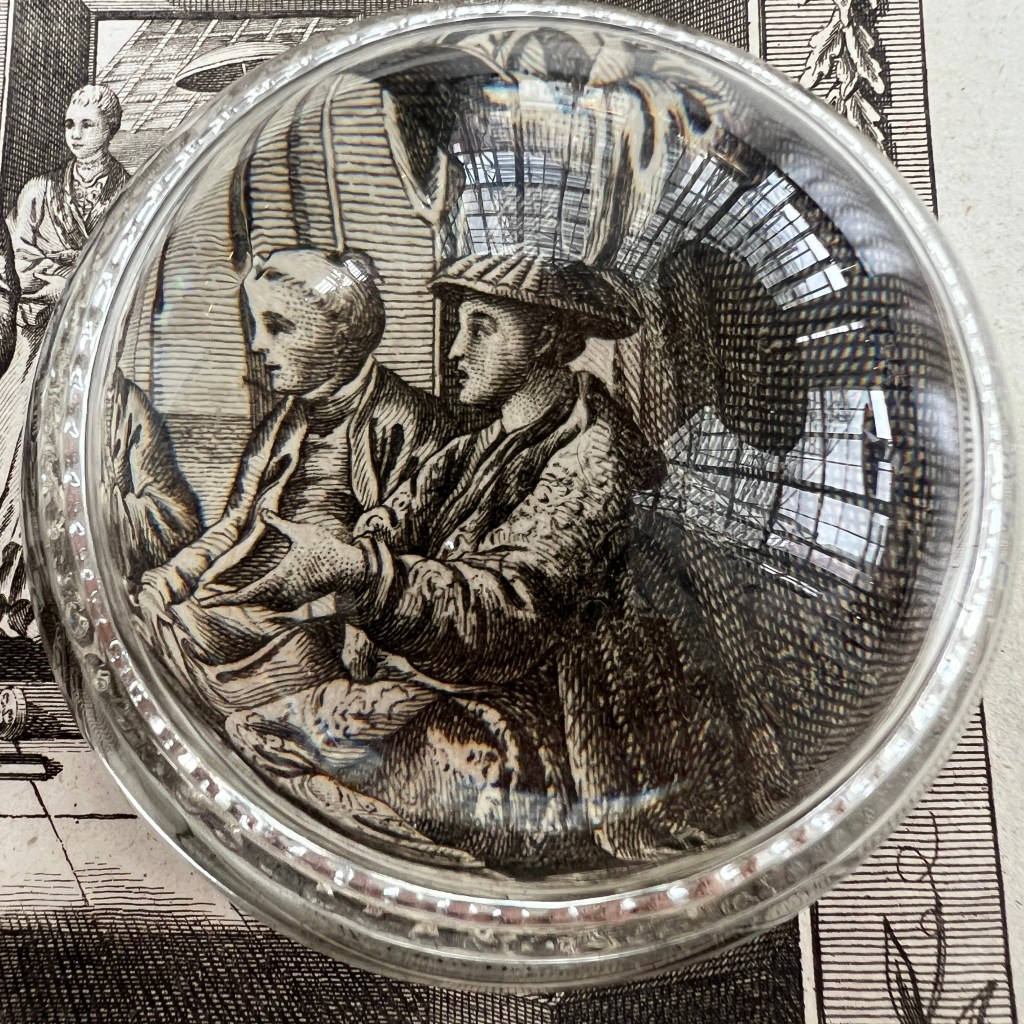
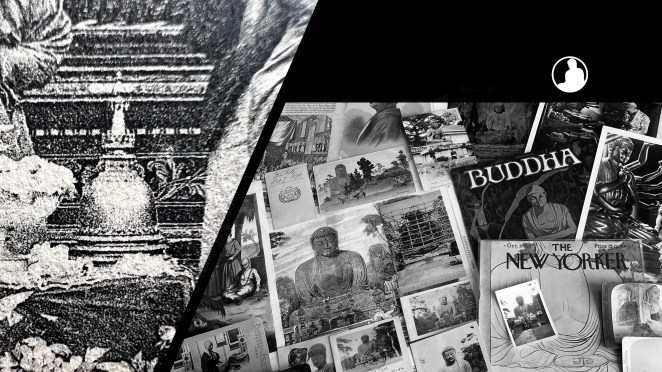
Through the 1650s Buddhist material culture remained an enigma to much of Europe. Yet, in the late 1660s, Amsterdam-based publisher Jacob van Meurs (1619/1620–c.1680) started publishing illustrated books devoted to China and Japan. These works proved popular and helped introduce Buddhist material culture to broader European audiences.

Van Meurs’ influence was substantial. The engravings produced by his workshop were widely reproduced in publications over the next century. Some illustrations continued to be reused well into the nineteenth century until the invention of photography and adoption of photomechanical reproduction finally rendered the illustrations outdated. Consequently, some of the images from van Meurs’ workshop exhibited a strong media echo for nearly two-hundred years.

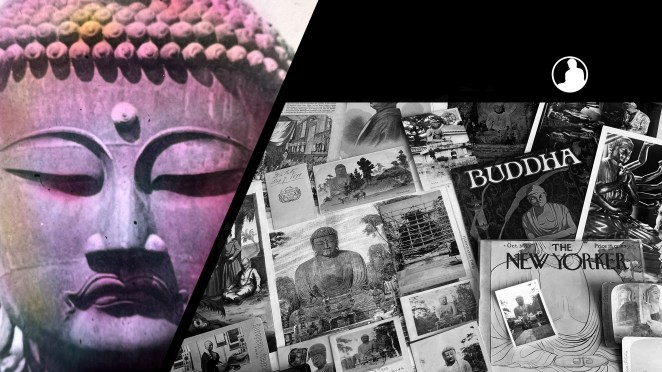
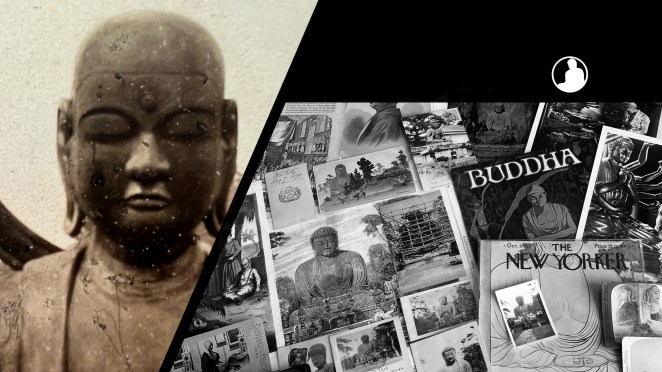
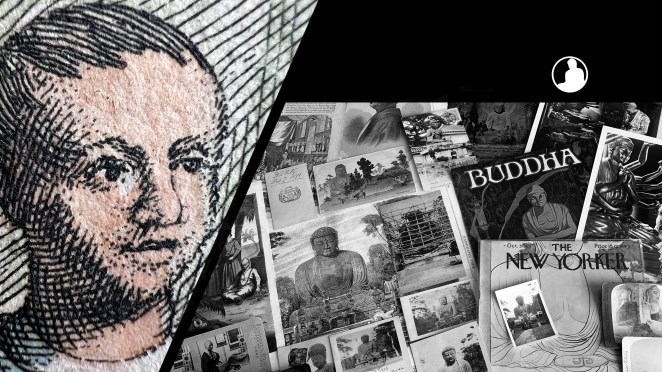
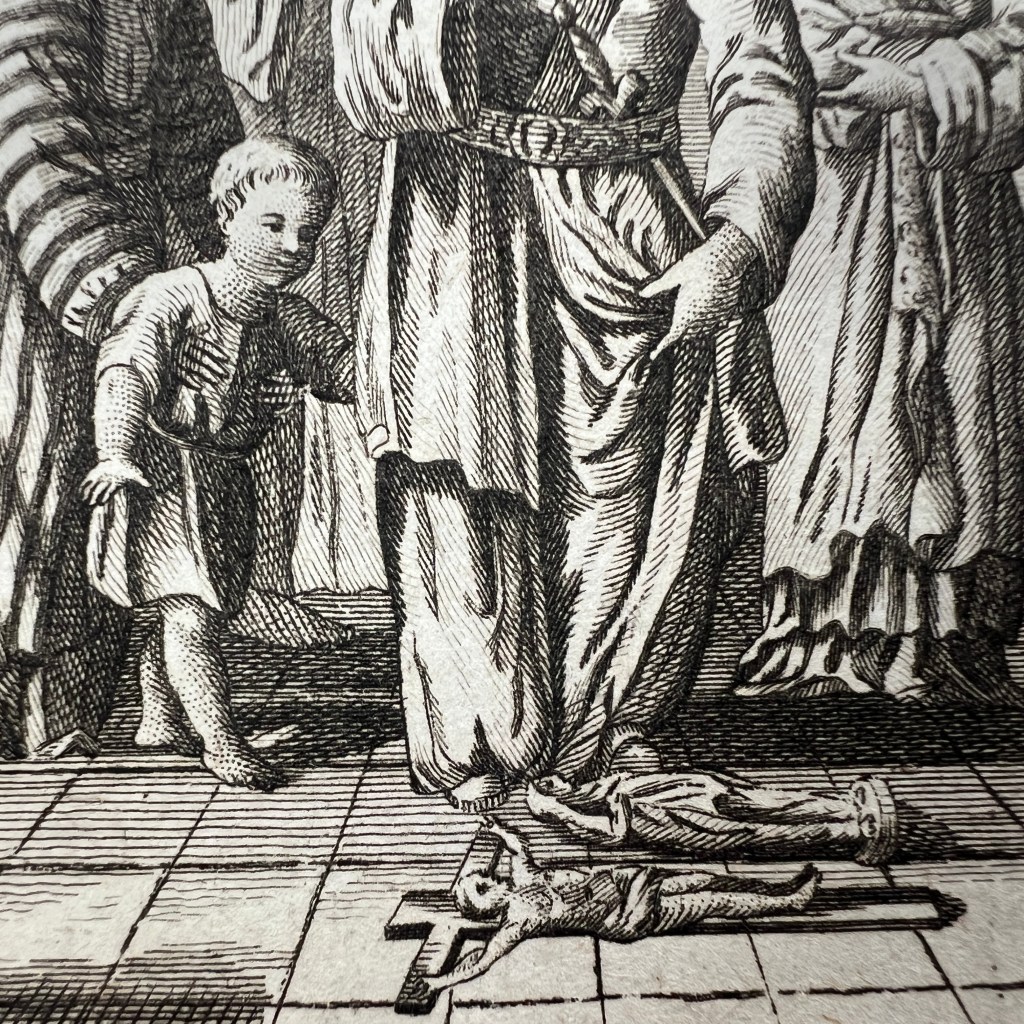
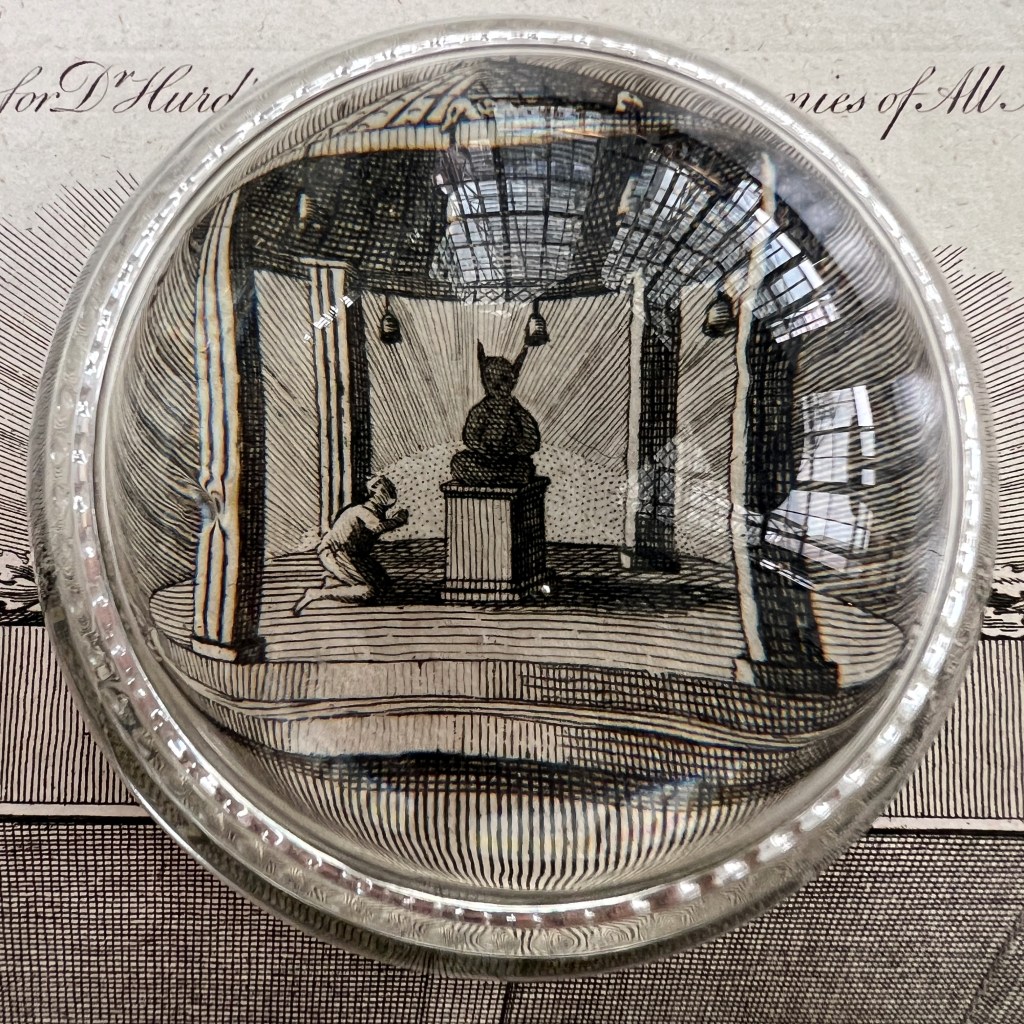
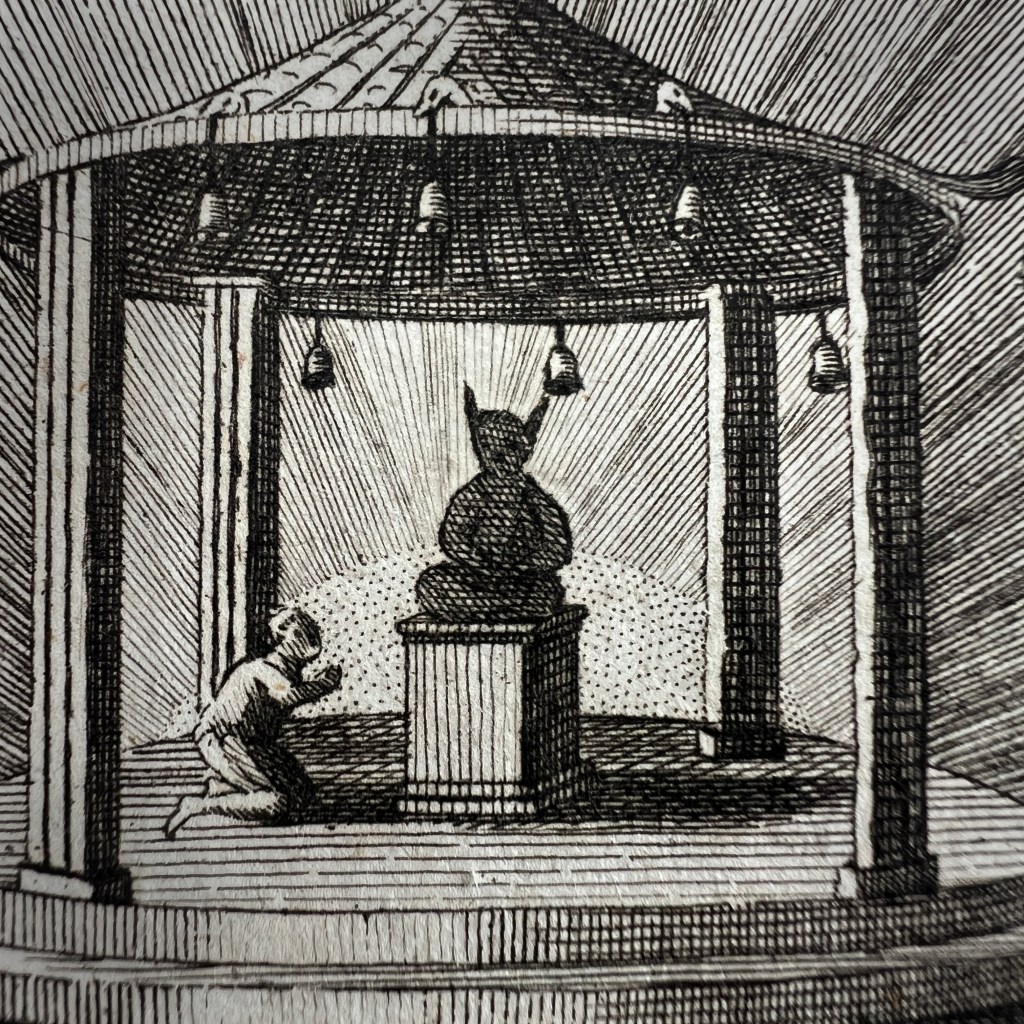
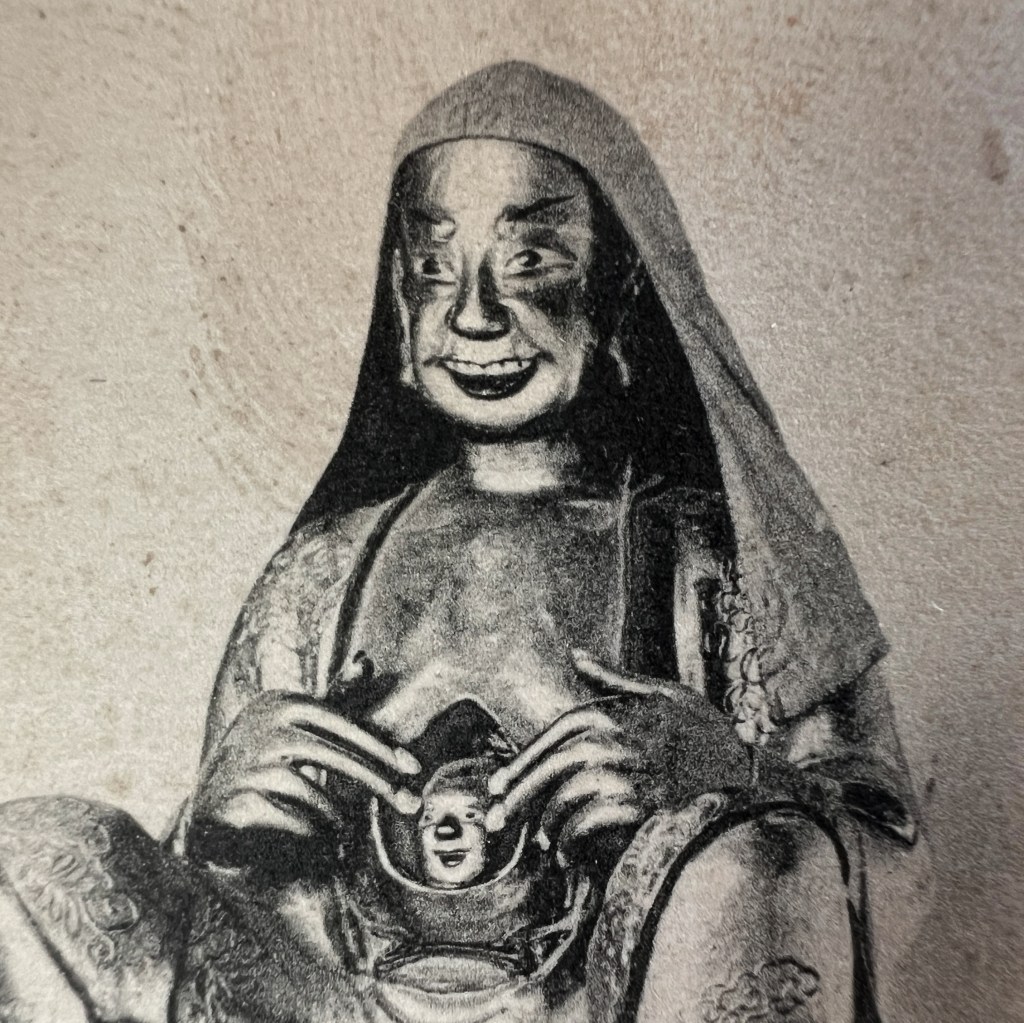
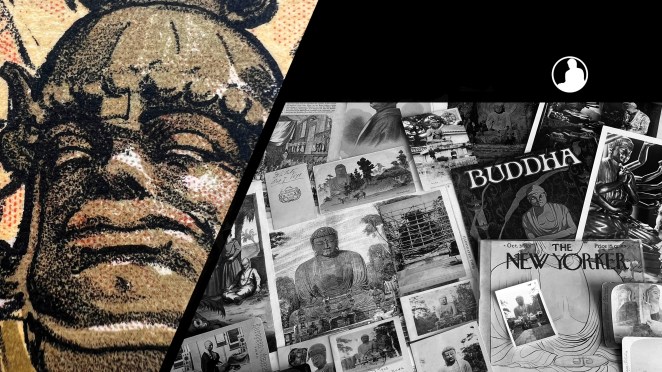
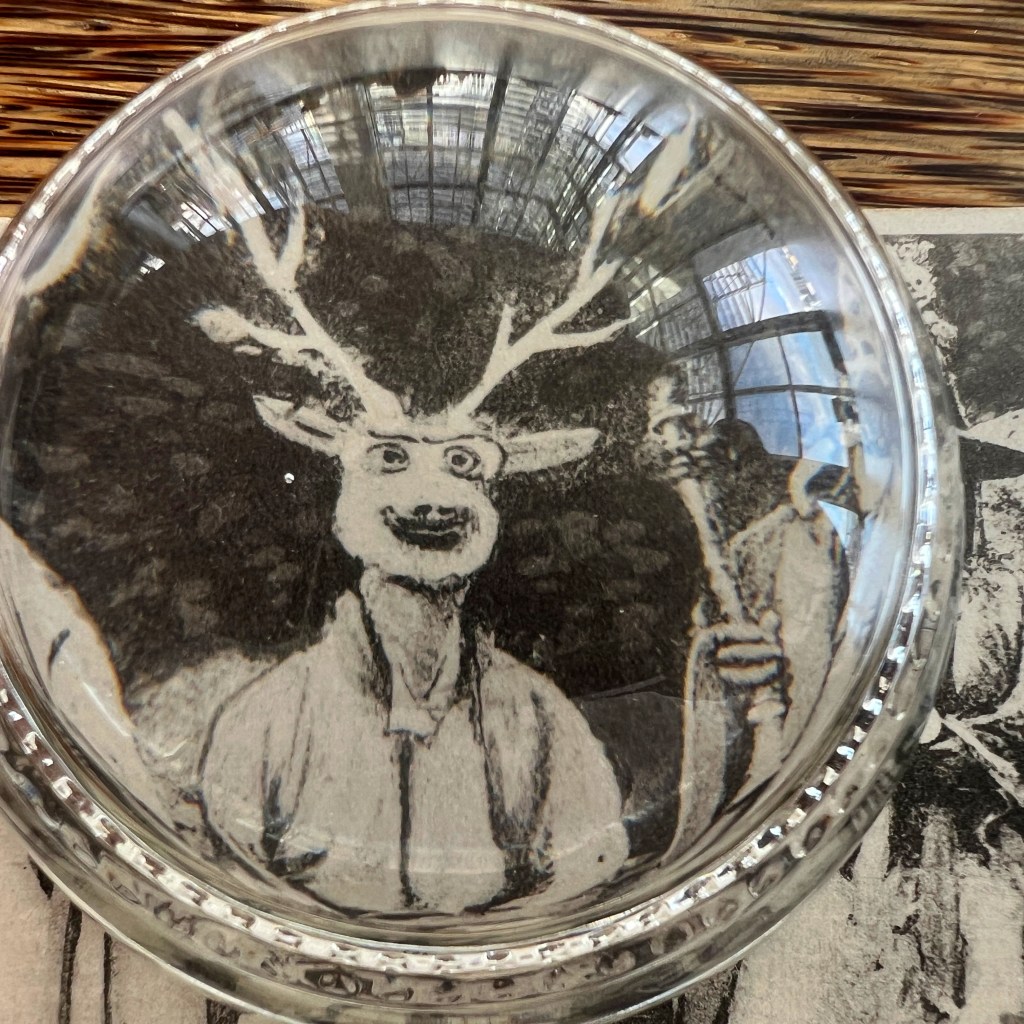
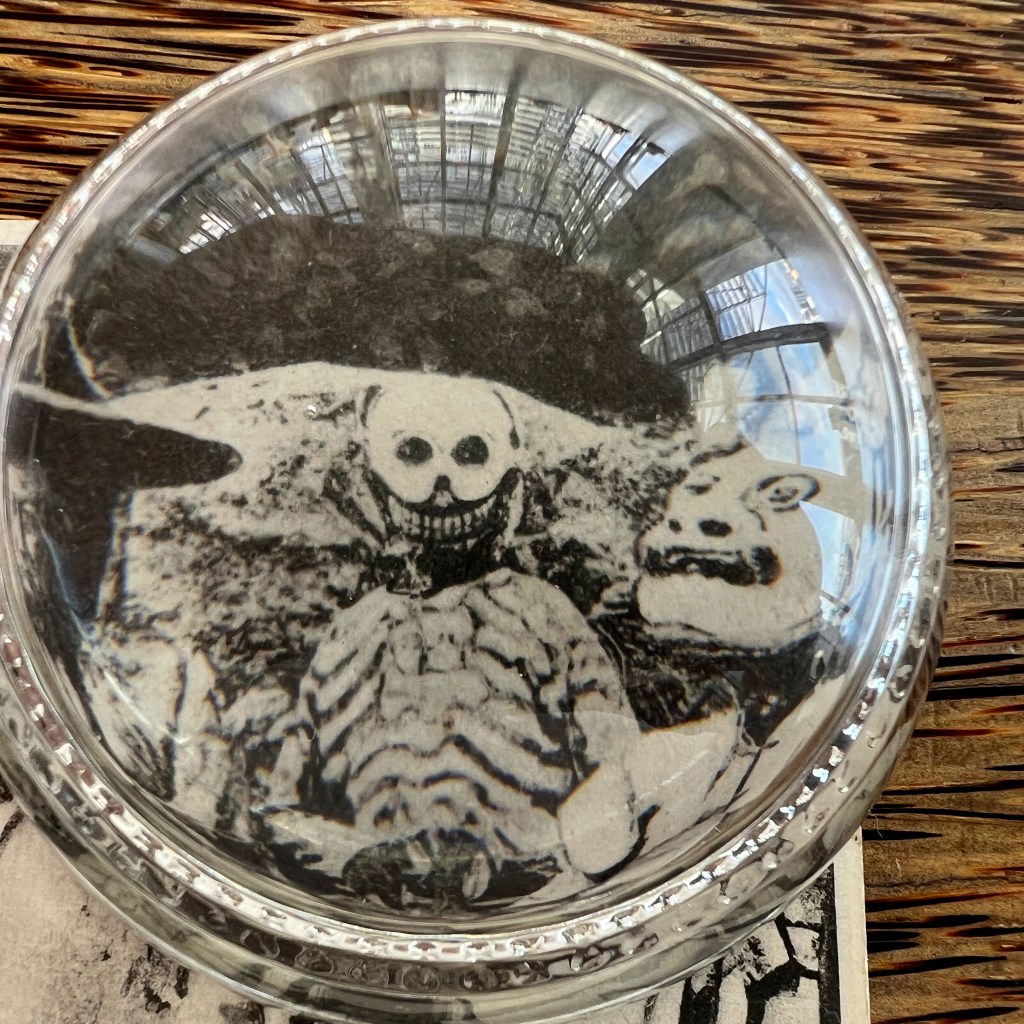
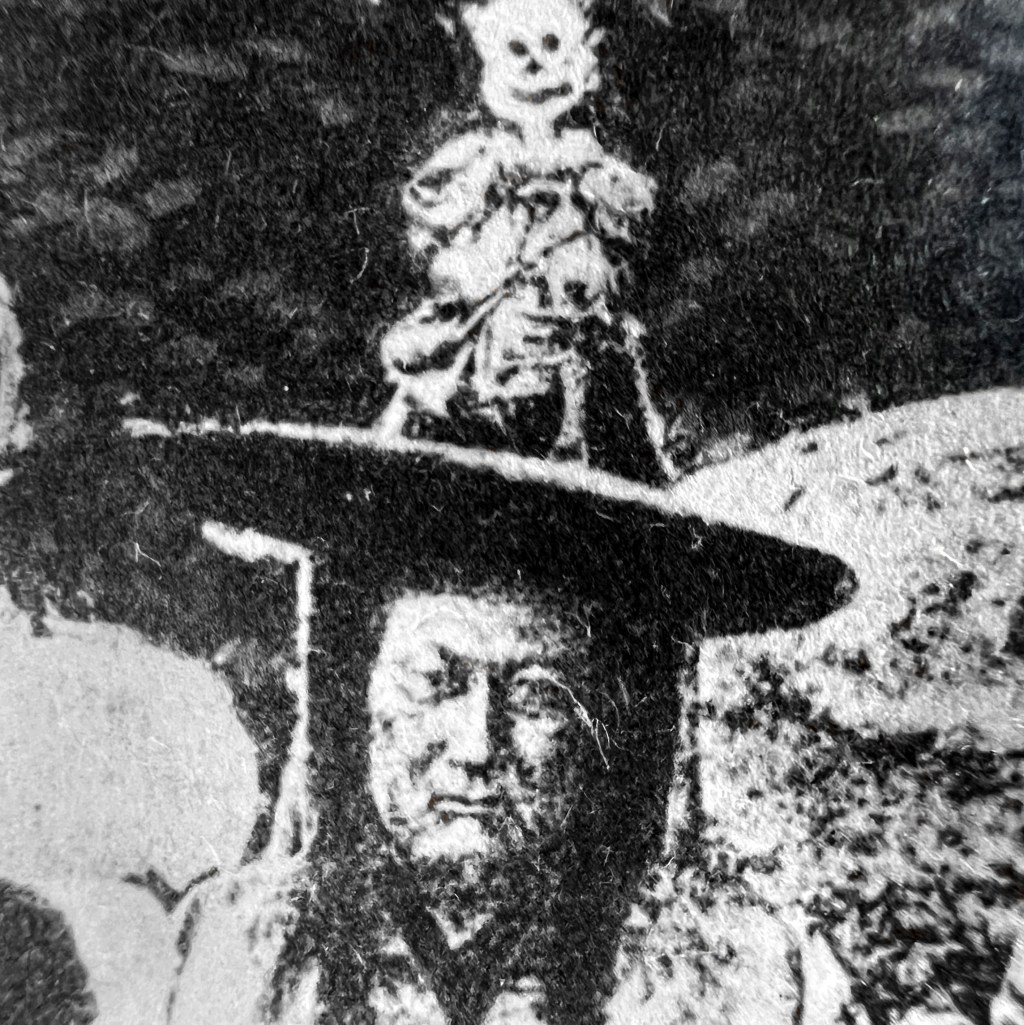
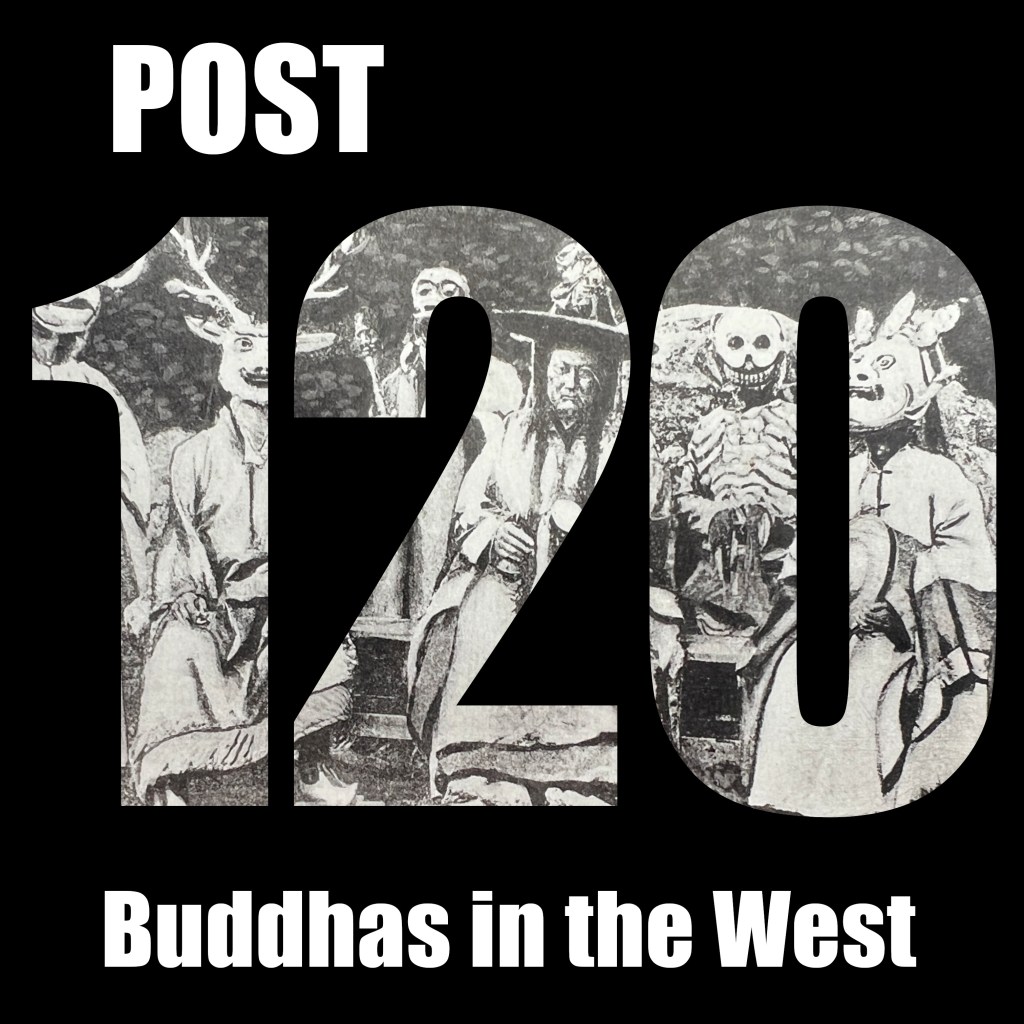
Notably, many of the images of Buddhist icons and Buddhist monks were embellished, often veering towards the uncanny, ghoulish, or grotesque.

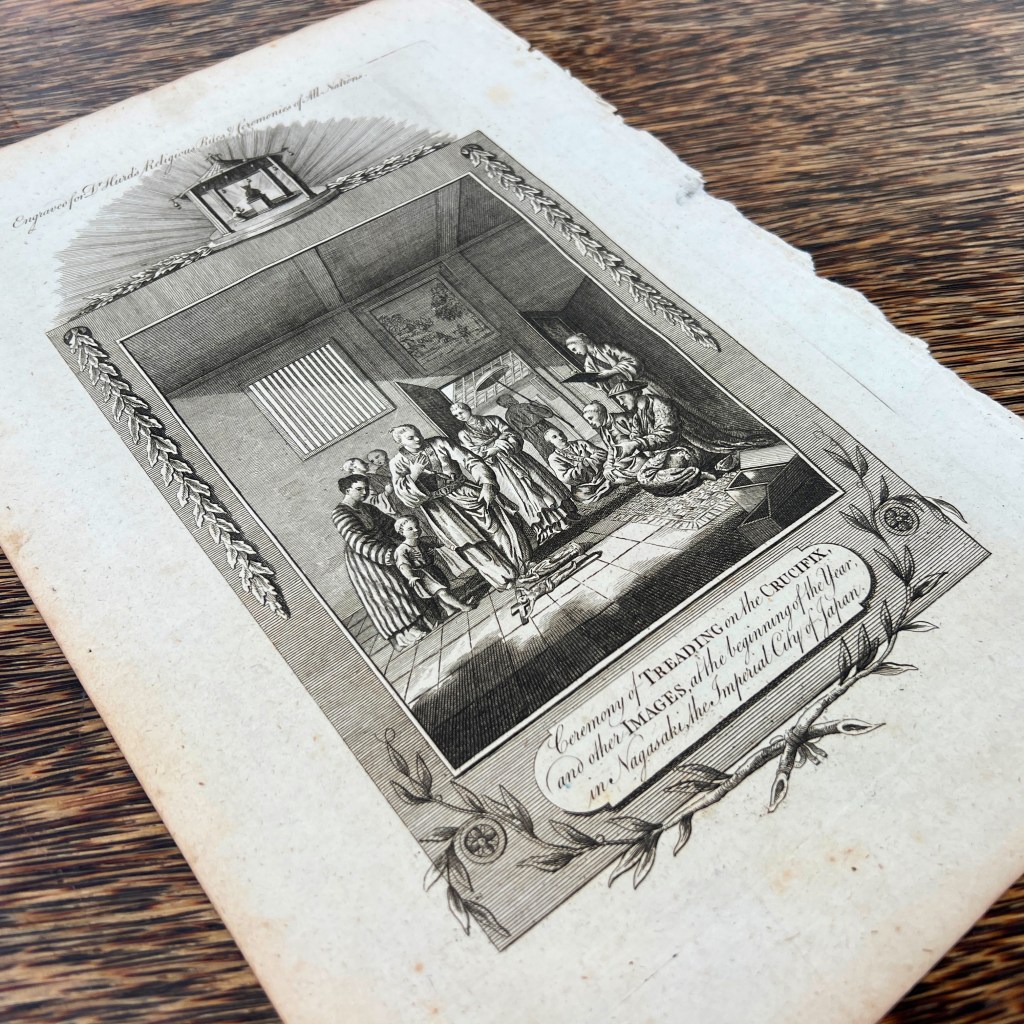
The exhibit will be comprised of eighteen prints published between 1665 and 1863 that show the lasting influence of Jacob van Meurs’ printed works on the visual literacy of Buddhist material culture in the West.


Selected Prints


The Buddhas in the West Material Archive is a digital scholarship project that catalogues artifacts depicting Buddhist material culture for Western audiences. It’s comprised of prints, photos, and an assortment of ephemera and other objects. For a brief introduction to this archive, visit the main Buddhas in the West project page.


For the Most Recent Buddhas in the West Posts:

a

1906 French Colonial Exposition Annam Pavilion Postcard

For all the new Buddhas in the West posts
follow us on Bluesky & Instagram


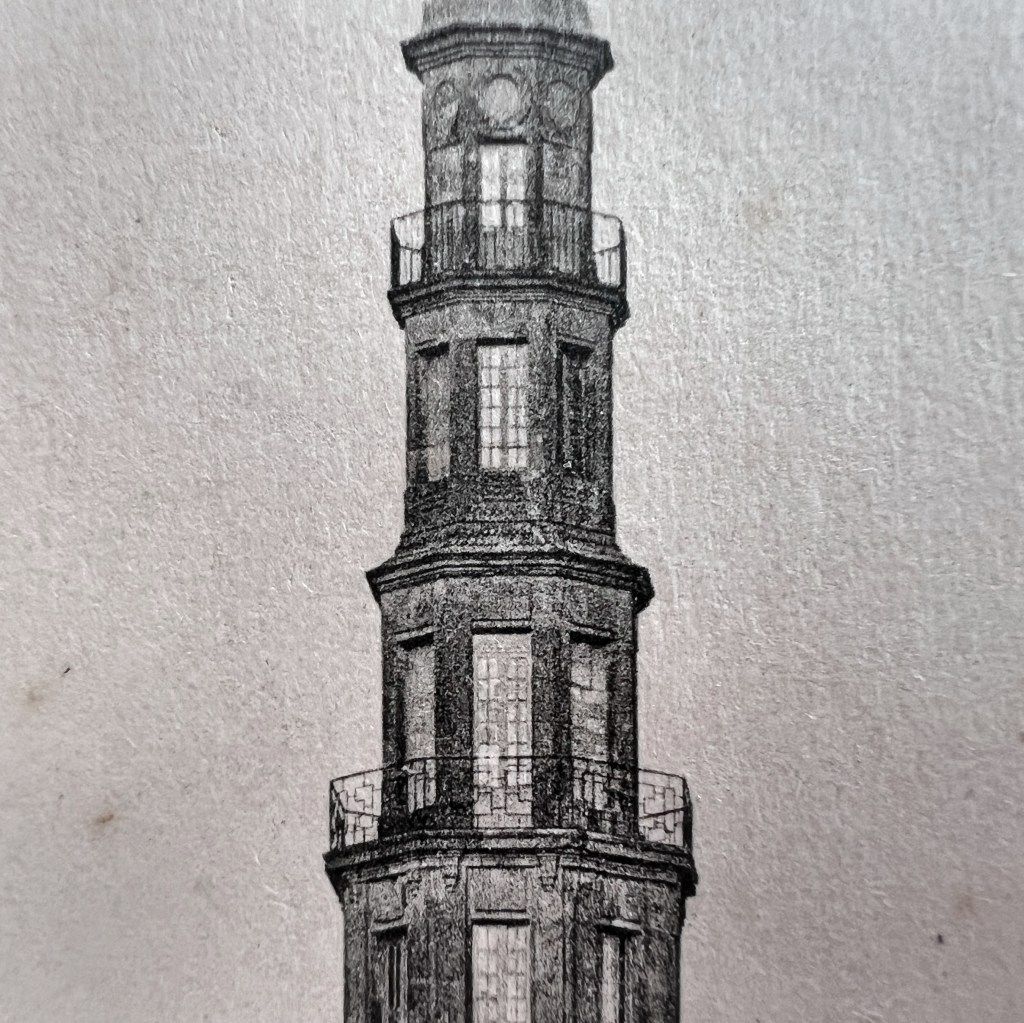
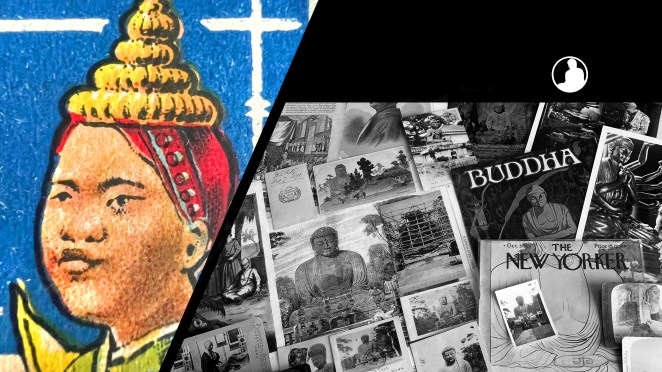
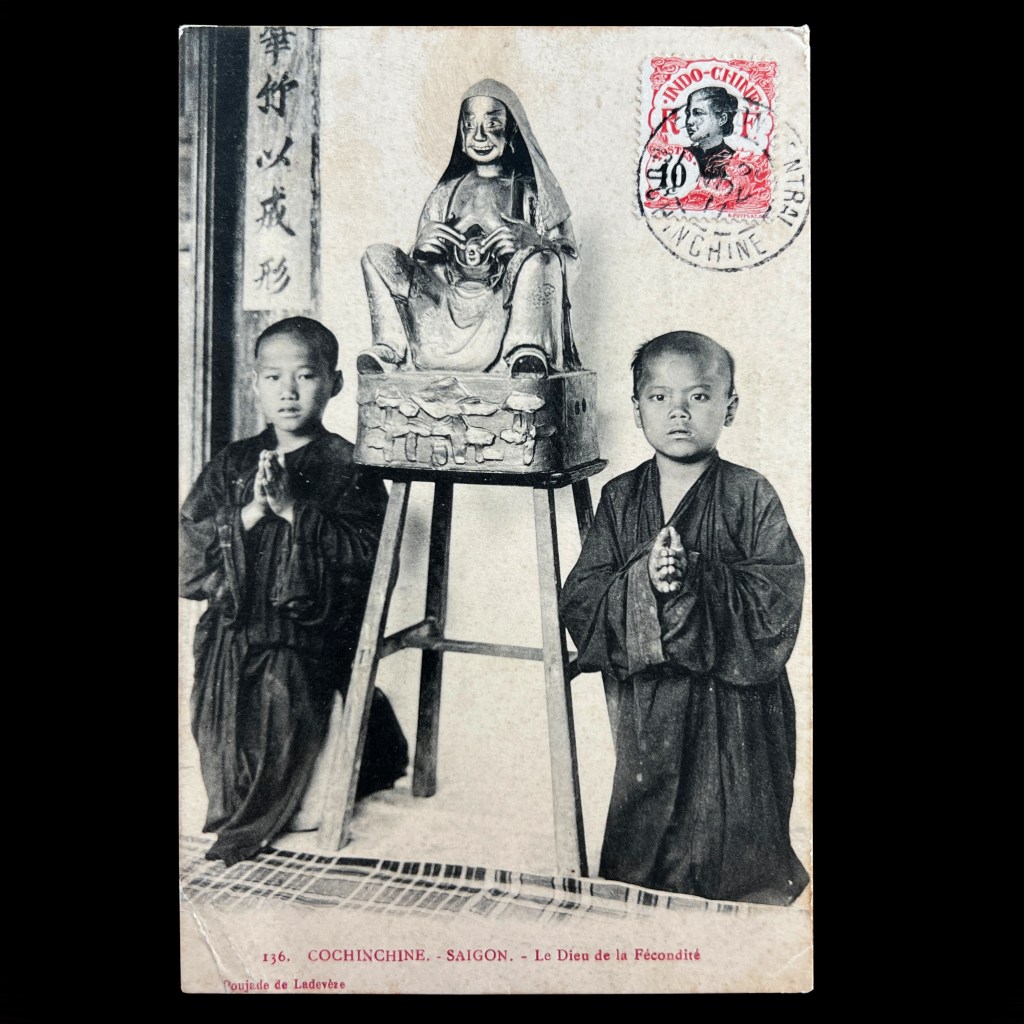
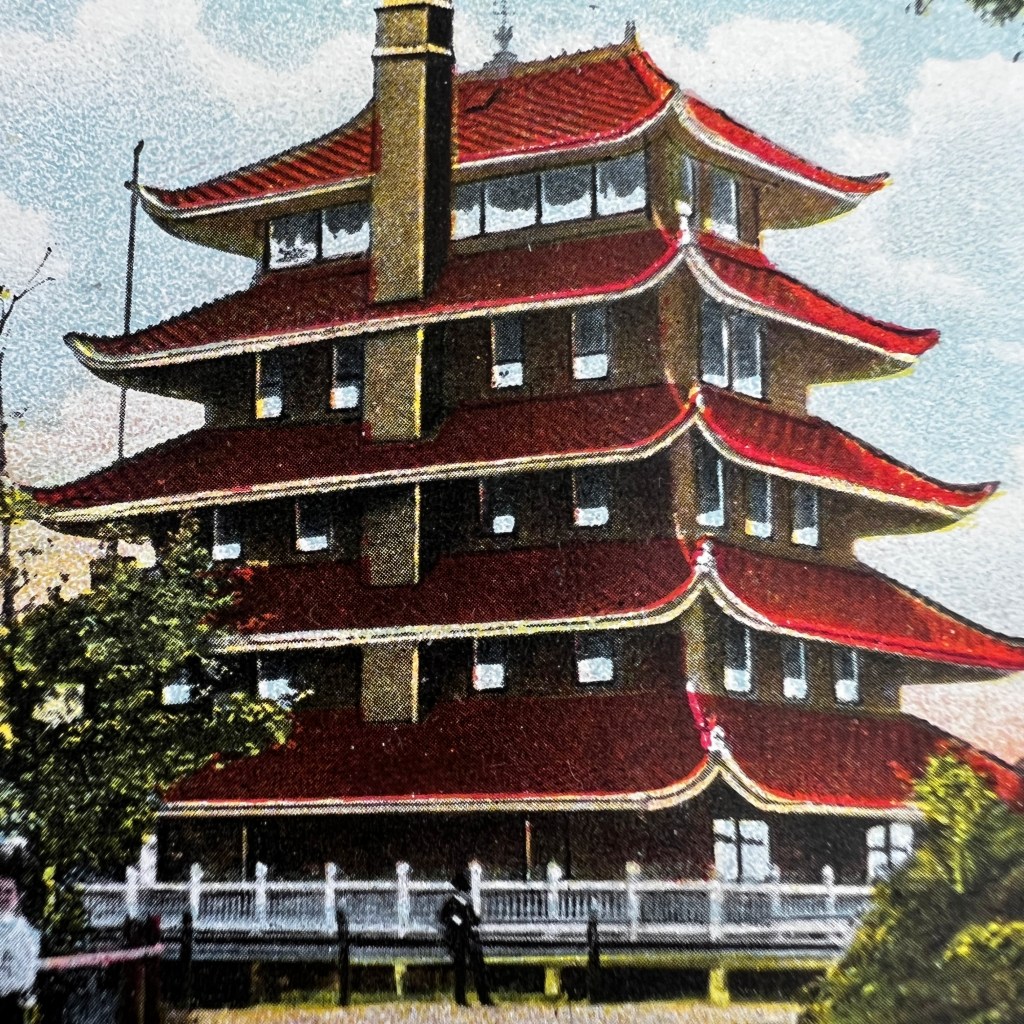
Following the success of colonial pavilions at World’s Fairs, France initiated its own independent Colonial Expositions in the 1890s. In Marseilles in 1906, famous architectural sites from French Indochina were reconstructed, including a towering Buddhist pagoda representing Annam.

Jules Charles-Roux, organizer of the colonial portions of the Paris World’s Fair of 1900 and head of the 1906 exposition, showcased the pagoda behind the main Indochina gate. The pagoda was also set at the head of a replicated “Hanoi road” populated with real inhabitants of the protectorate.

Held during the height of the postcard craze, the exposition grounds opened its own dedicated postcard pavilion. While the cancellation is unclear on the obverse, this card appears to have been sent from Marseilles; its destination was Port-Vendres, further down the Mediterranean coast.

While often obscure in exposition literature, the “Annam Pavilion” was a replica of the pagoda from Tien Mu Temple, in the city of Hue, which was founded in 1601. The pagoda was a popular subject of souvenir photographs sold by studios throughout French Cochinchina, Annam, and Tonkin.

The following year, in 1907, Paris held another colonial exposition, but recreated a different pagoda to represent Annam. A photo illustrated book of the 1906 Marseilles Exposition is digitized by the University of Aix-Marseille, viewable here: https://tinyurl.com/mczsvn6s.


The Buddhas in the West Material Archive is a digital scholarship project that catalogues artifacts depicting Buddhist material culture for Western audiences. It’s comprised of prints, photos, and an assortment of ephemera and other objects. For a brief introduction to this archive, visit the main Buddhas in the West project page.


For Related Buddhas in the West Posts Featuring Vietnam / French Indochina:


For the Most Recent Buddhas in the West Posts:

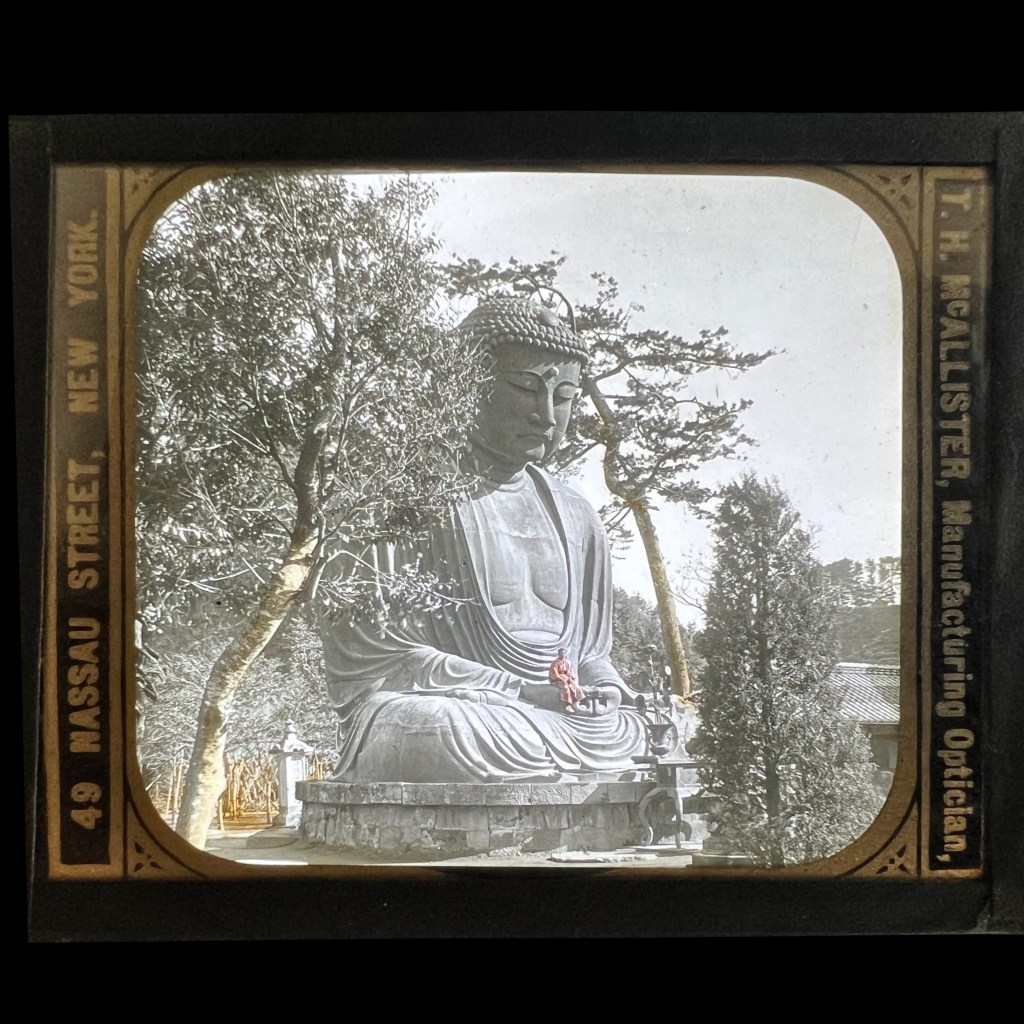
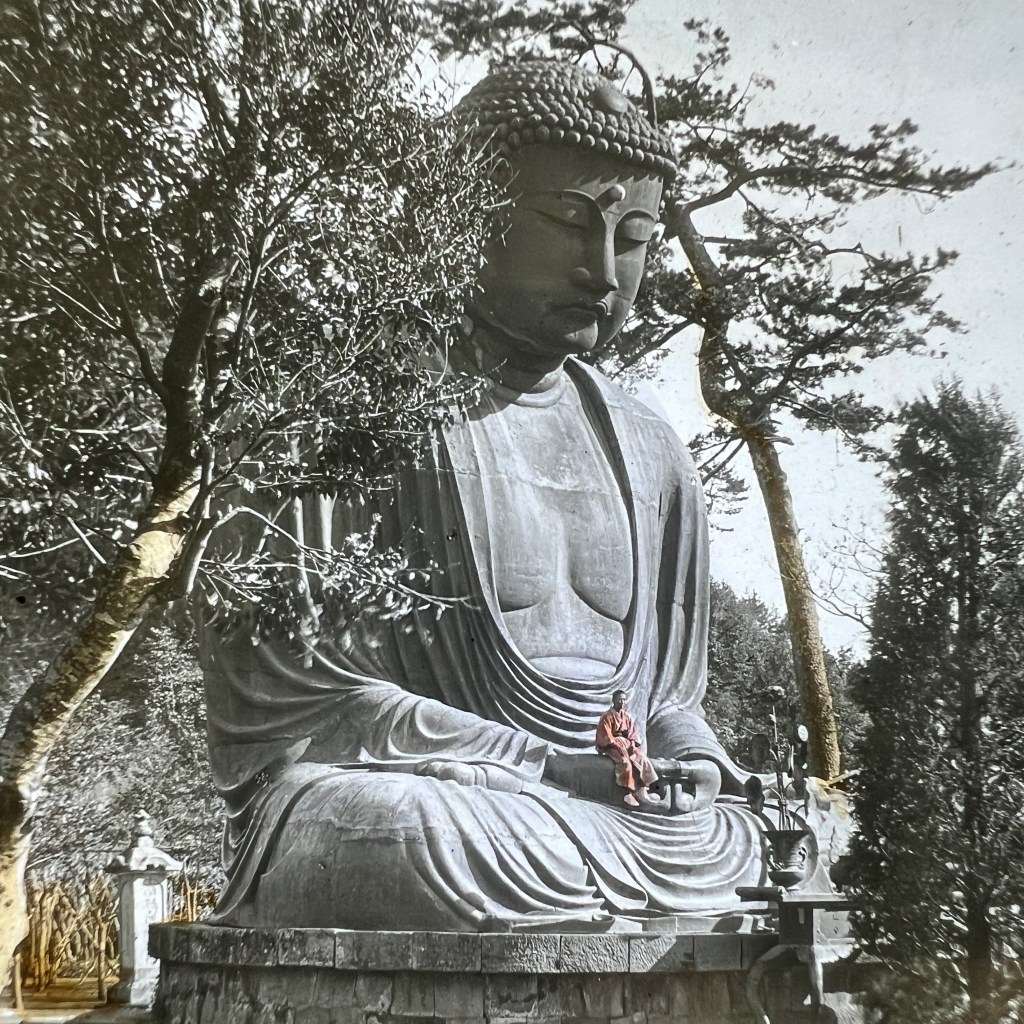
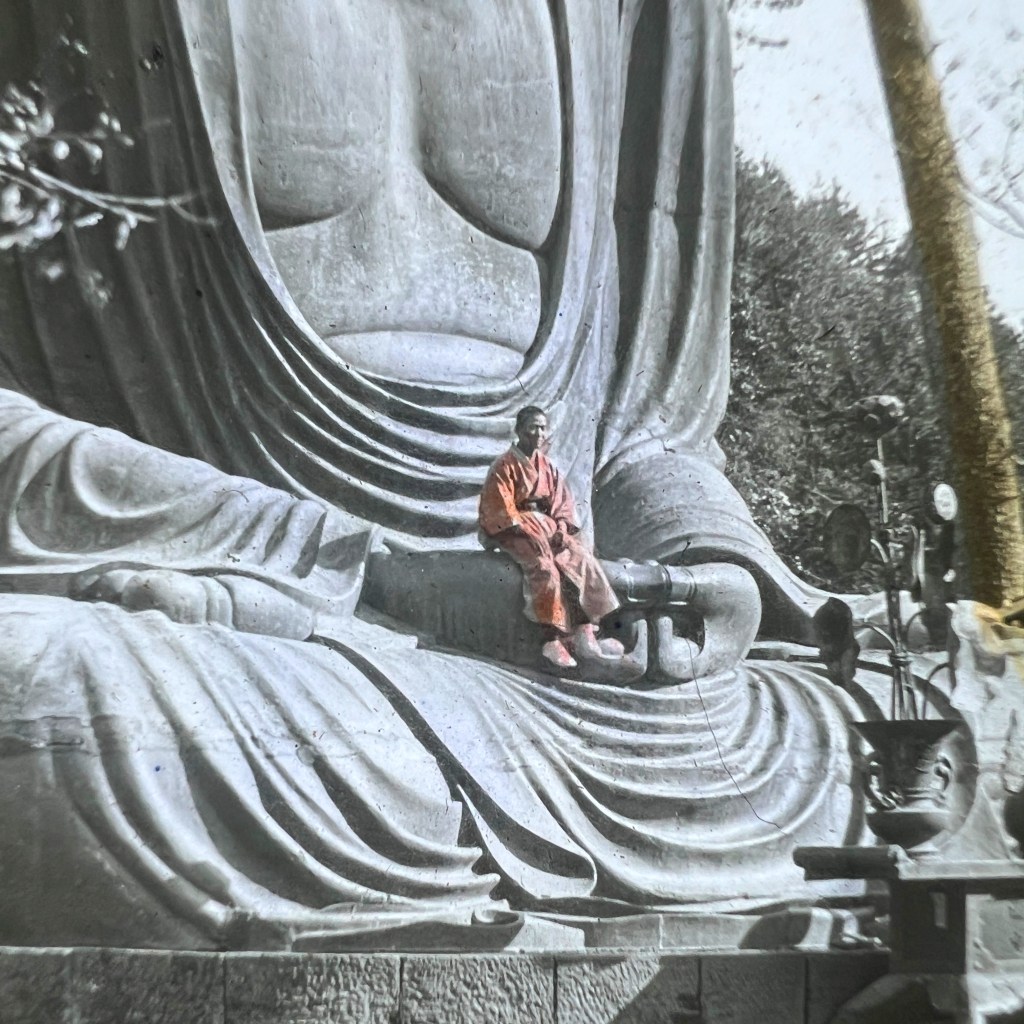
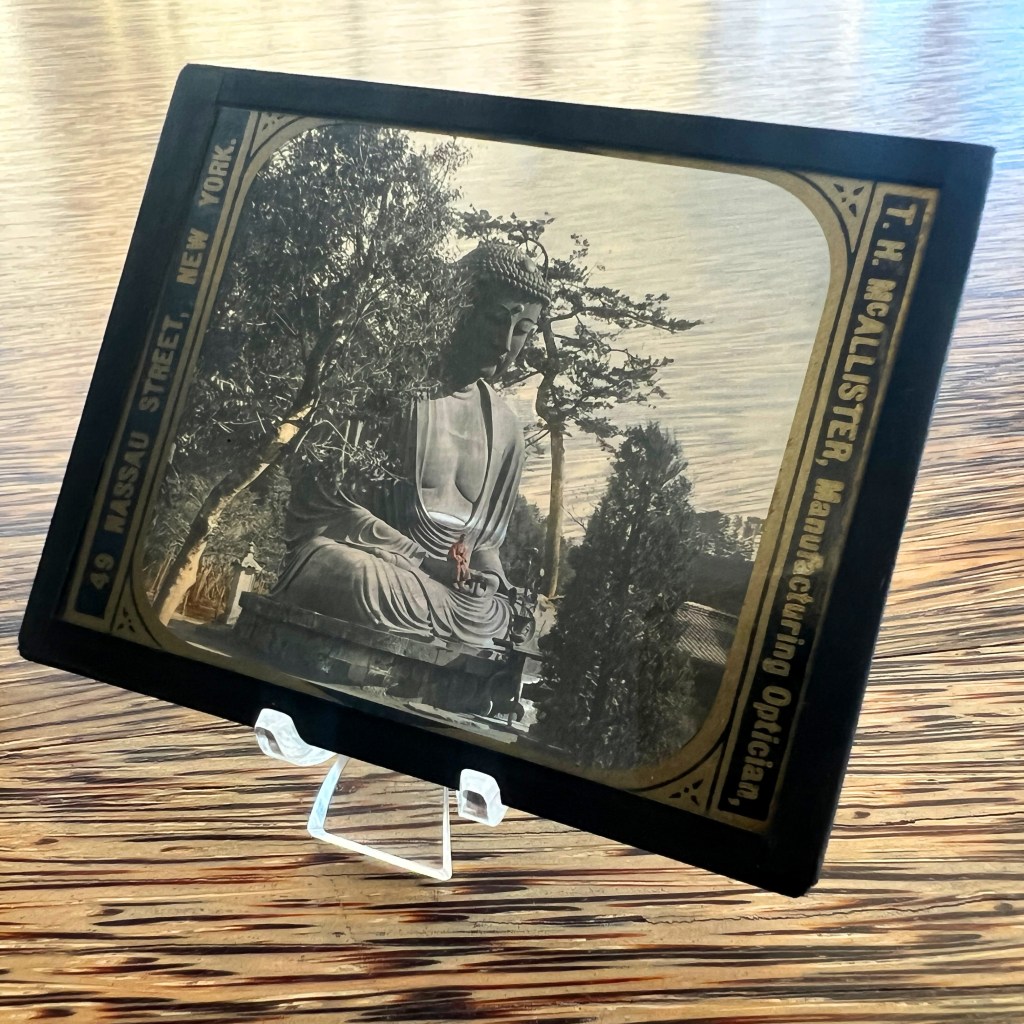
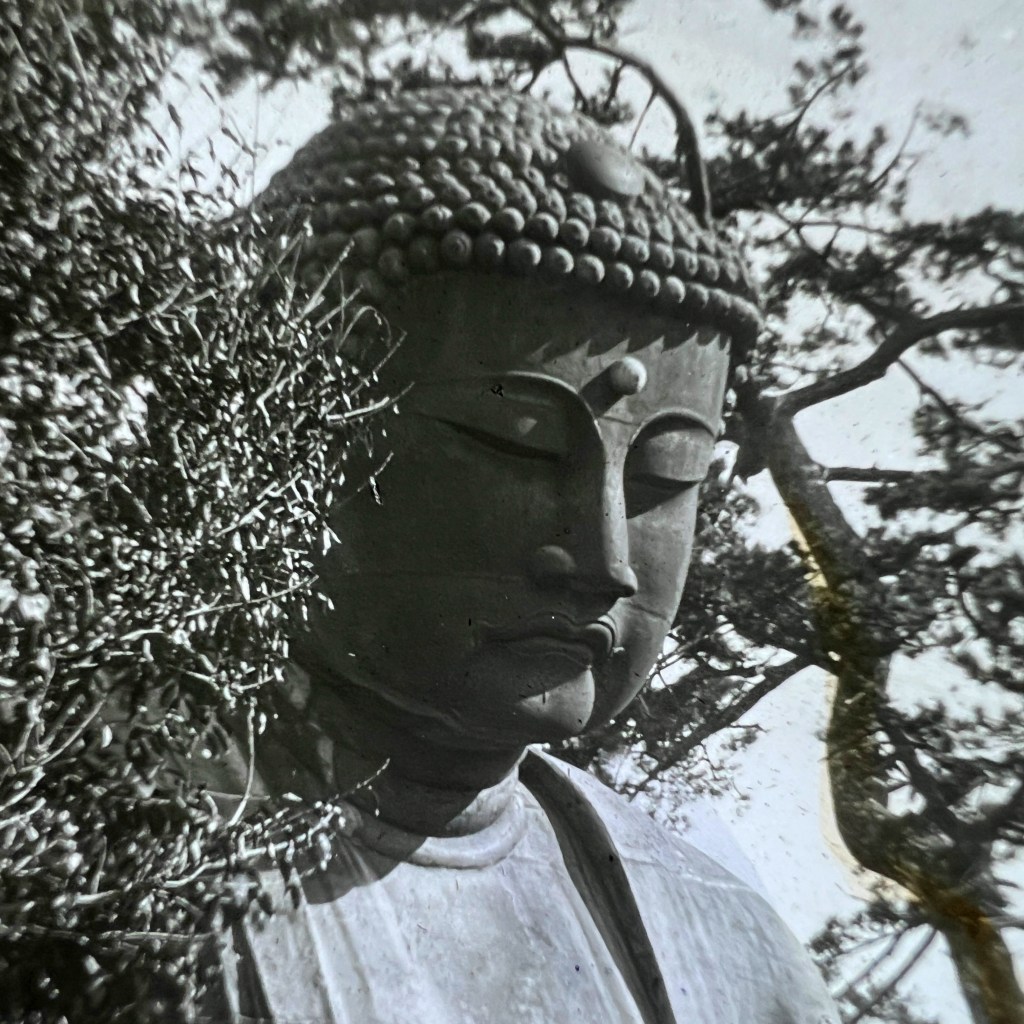
Tamamura Kōzaburō’s Kamakura Daibutsu Photograph For Brinkley’s Japan

For all the new Buddhas in the West posts
follow us on Bluesky & Instagram


An astounding 400,000 hand-colored photographic prints were used for all editions of Francis Brinkley’s Japan: Described and Illustrated by the Japanese. Produced in Boston between 1897 and 1898, this work was the pinnacle of photographic book publishing at the turn of the century.

The photographs were imported from Japan from the Yokohama studio of Tamamura Kōzaburō, one of the most prolific Japanese photographers of his generation. He reportedly employed 350 artists for several months to complete the job, yet Tamamura’s name is omitted from the final publication.

Unlike most books of the era which used photomechanical prints, Brinkley’s Japan used mounted photographs. The Great Buddha of Kamakura was the second full page photograph, following Mt. Fuji, in the first volume, suggesting its perceived value in the American visual language of Japan.

Tamamura’s output was so extensive in preparation for Brinkley’s book, there was a fivefold increase in Japan’s photography exports between 1895 and 1896. This volume of work was achieved at expense of quality, as many of the color washes are pale and poorly executed.

While the number of one million photos for Brinkley’s Japan was likely exaggerated by Tamamura for publicity, this was truly an enormous undertaking. To view the first volume of Brinkley’s Japan held by the Getty Museum, see here: https://tinyurl.com/bddt5z32.


The Buddhas in the West Material Archive is a digital scholarship project that catalogues artifacts depicting Buddhist material culture for Western audiences. It’s comprised of prints, photos, and an assortment of ephemera and other objects. For a brief introduction to this archive, visit the main Buddhas in the West project page.


For Related Buddhas in the West Posts Featuring the Kamakura Daibutsu:


For the Most Recent Buddhas in the West Posts:

Henri Laas’ “Dieu des Amours” Advertising Card

For all the new Buddhas in the West posts
follow us on Bluesky & Instagram


Advances in chromolithography in the 1870s and 80s helped flood America and Europe with inexpensive, colorful imagery. This had the greatest impact in advertising with the introduction of trade cards, often bearing humorous or provocative images to elicit consumer interest.

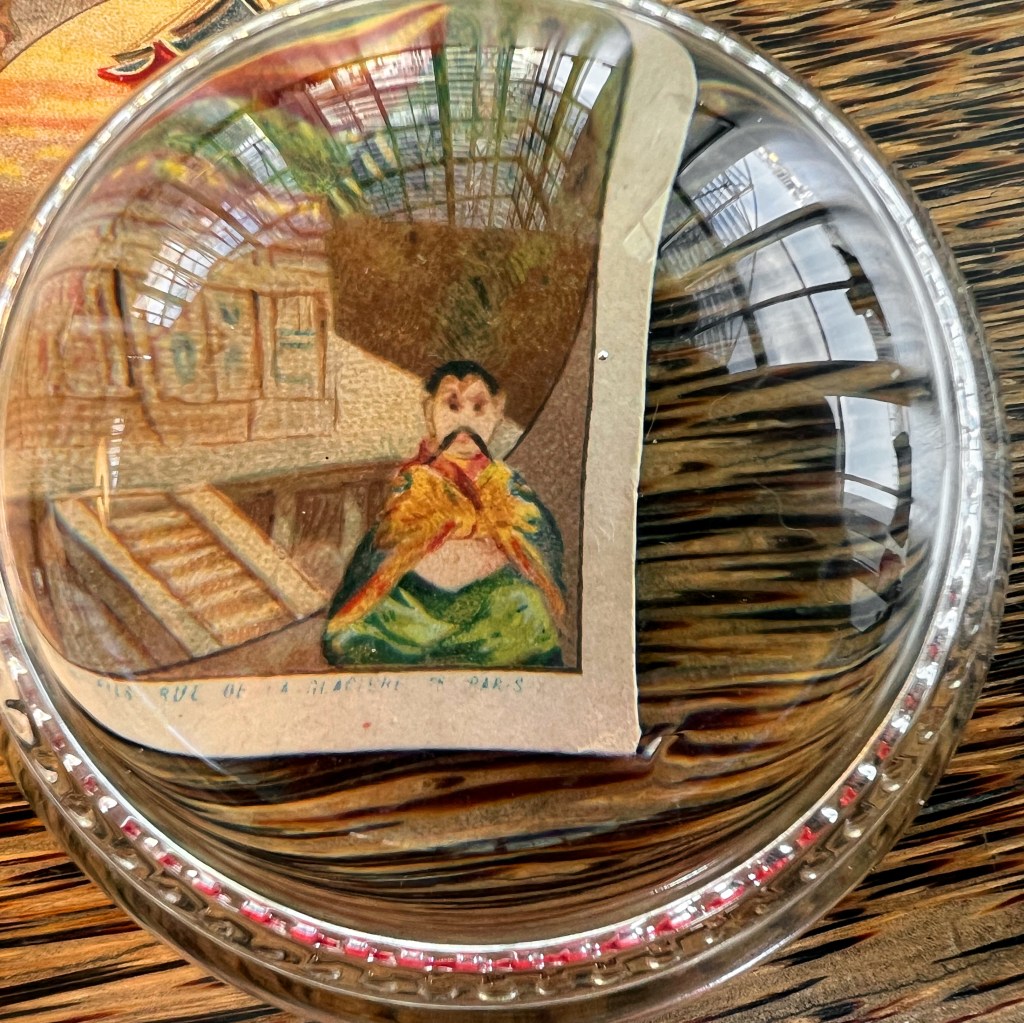
To meet demand, printers like Henri Laas in Paris, created series of stock illustrated cards which could be imprinted with a store’s name and address. The store Moreau-Gouffier, seen here, had a “specialty in shoes” and sold “articles for soldiers,” probably during the 1890s.

Stock imagery was often unrelated to the store, but instead drew upon popular visual motifs. Coinciding with the growth of trade cards, France experienced another wave of chinoiserie following the looting of the Beijing Summer Palace and creation of Empress Eugénie’s Chinese Museum in the 1860s.

Moreover, French colonial expansion into East Asia increased the circulation of imagery of the region and its people through the French illustrated press. Trade cards drew upon popular ethnic stereotypes, such as we see with the caricatures of Chinese clothing, hairstyle, and skin complexion.

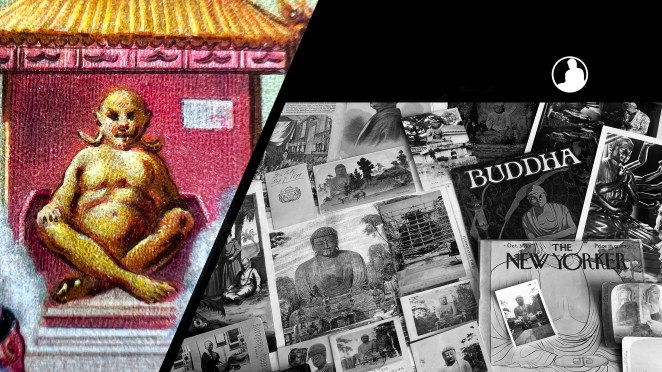
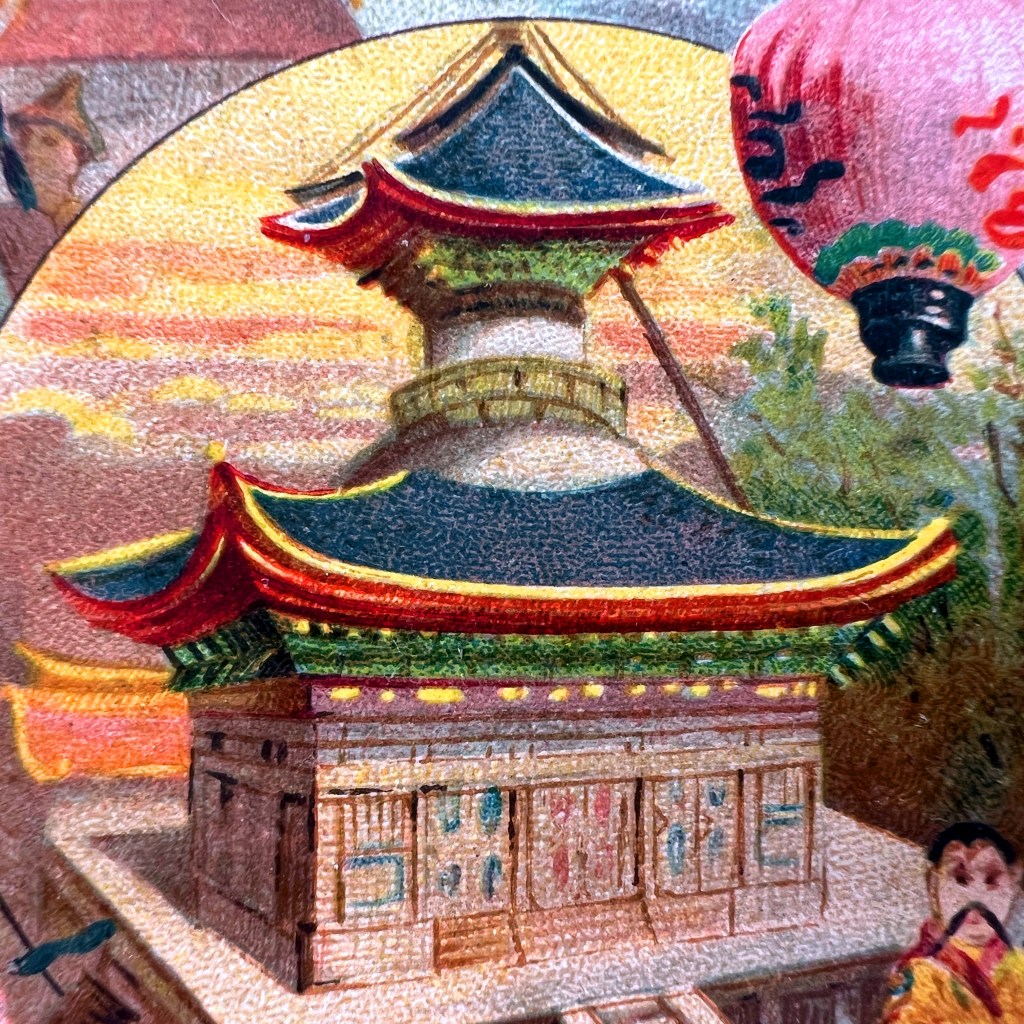
This card is part of a set that tells a story, with each scene set around a particular Chinese artifact; here we see a highly-stylized statue of a buddha. In the story, two secret lovers approach the statue, presented as a “god of love,” to seek his help.

The statue mimics a buddhist icon, but is also racially stylized with mustache and queue. To read more about the Buddhist artifacts and the looting of the Summer Palace, see Louise Tythacott’s The Lives of Chinese Objects: Buddhism, Imperialism and Display (2011).


The Buddhas in the West Material Archive is a digital scholarship project that catalogues artifacts depicting Buddhist material culture for Western audiences. It’s comprised of prints, photos, and an assortment of ephemera and other objects. For a brief introduction to this archive, visit the main Buddhas in the West project page.


For Related Buddhas in the West Posts Featuring Lithographic Prints:


For the Most Recent Buddhas in the West Posts:

Fritz Kapp’s Lamas and Disciples Postcard

For all the new Buddhas in the West posts
follow us on Bluesky & Instagram


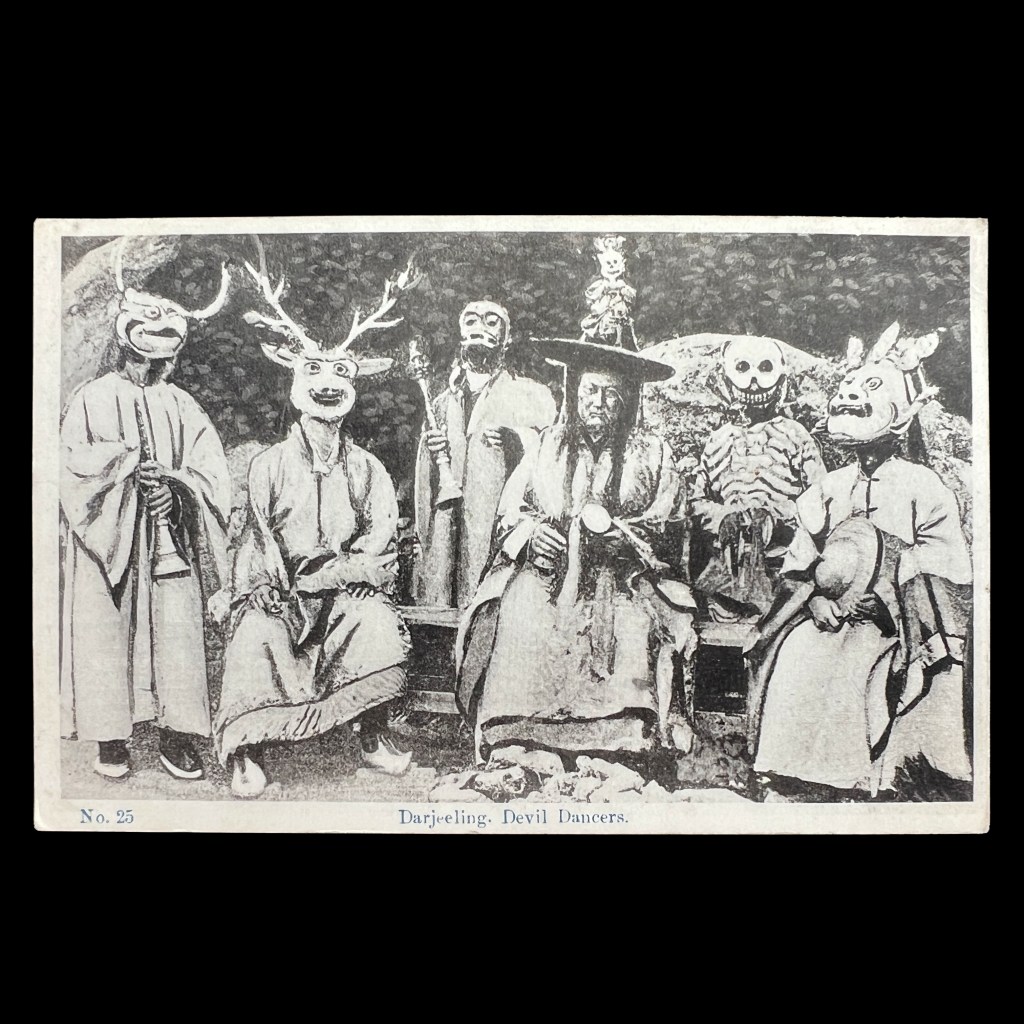
In 1900, traveling to Darjeeling meant gazing upon the grandeur of the snow-capped Himalayas and imagining the inaccessible lands that lay beyond them in Tibet. Visiting Darjeeling at this time also meant having the rare opportunity to encounter and observe real Tibetan lamas.

Following the completion of the Darjeeling Himalayan Railway in 1881, the first commercial photography studios opened in the region. As the tourist demand for photographic souvenirs soared, studios increasingly staged scenes of various “ethnic” activities, including Tibetan Buddhist ritual.

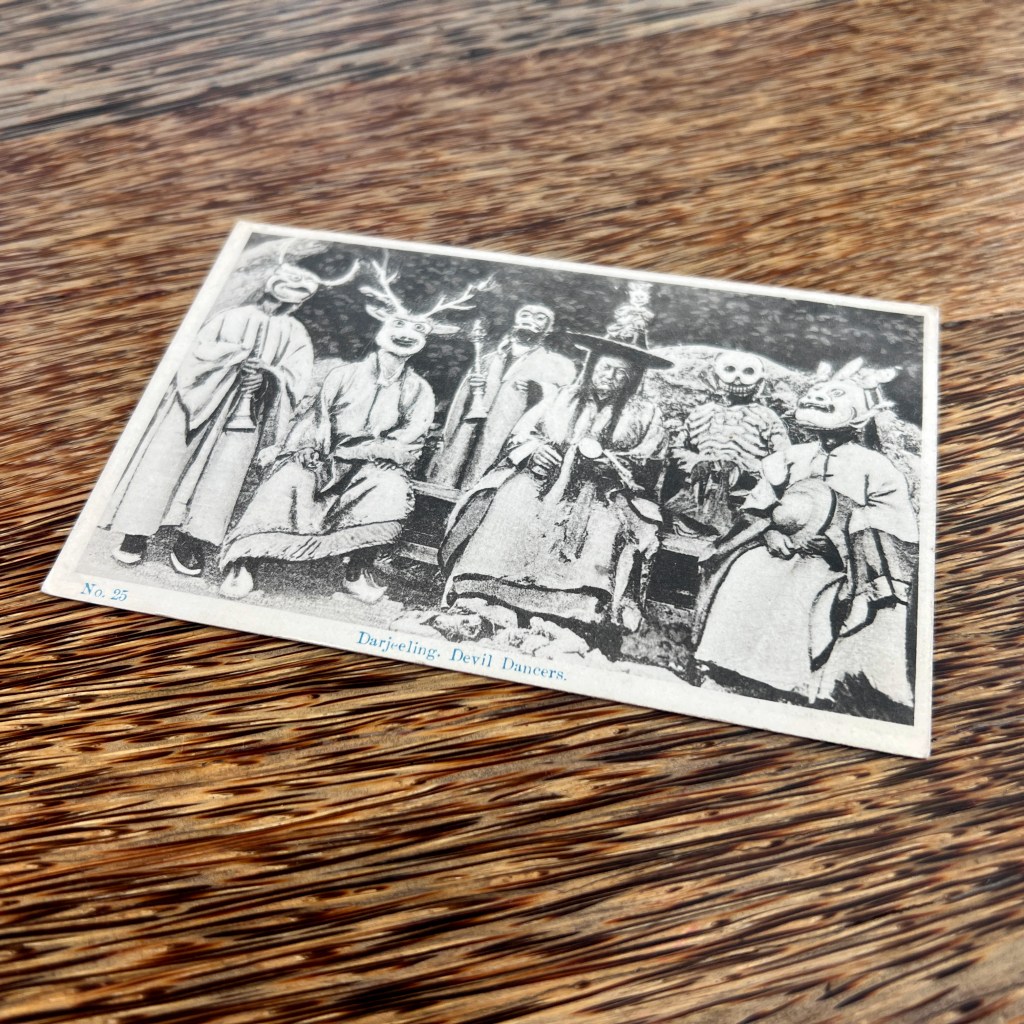
The original photographer for this shot was Fritz Kapp who ran a studio at Calcutta and Darjeeling from about 1888 to 1903. When the picture postcard format was first introduced to Darjeeling in the 1890s, they became a cheaper alternative to photographs and a highly collectable souvenir.

Driven in part by an anthropological mode of seeing and recording, staged studio photographs required appropriate clothing and props to clearly identify the “ethnic type.” Monk’s robes, mala beads, and prayer wheels all signaled the presence of “Llama [sic] priests” as cited in the caption.

The central figure, looking directly at the camera, holds both a ritual vajra and bell; he is also a real Tibetan monk. Historian Clare Harris has identified this figure as Sherab Gyatso, the abbot of Ghoom Monastery located on the outskirts of Darjeeling.

A November 2021 Sotheby’s sale of the original photo was inscribed: “Lama priests by F. Kapp./ Lama Sherb, Gyatso (front middle).” For more on the history of photography in Darjeeling, see Clare Harris’ Photography in Tiber (2016).


The Buddhas in the West Material Archive is a digital scholarship project that catalogues artifacts depicting Buddhist material culture for Western audiences. It’s comprised of prints, photos, and an assortment of ephemera and other objects. For a brief introduction to this archive, visit the main Buddhas in the West project page.


For Related Buddhas in the West Posts Featuring Prayer Wheels:


For the Most Recent Buddhas in the West Posts:

Keystone’s Kotte Temple Stereoview

For all the new Buddhas in the West posts
follow us on Bluesky & Instagram


The Kotte Rajamaha Vihara was founded in the 15th century under royal patronage to house a sacred tooth relic of the Buddha. At the time, some considered this the holiest site in Sri Lanka, greater than Aśoka’s Bodhi tree in Anuradhapura and the Buddha’s footprint on Adam’s Peak.

The Cūḷavaṃsa, a Buddhist historical record, describes King Parākramabāhu’s construction of a golden reliquary for the tooth and annual festivals held in celebration. Unfortunately, Kotte temple was destroyed during the Dutch occupation of Sri Lanka, but was rebuilt in the early 19th century.

Marketed as education material, the information on the back of this stereoview offers a few generic facts about Buddhism. The unknown author also offers pointed criticism, calling the statues on the front “rigid” and chastising Buddhists for being “practically idolatrous.”

This stereophotograph was taken in 1900/01 and was incorporated into a 30-view set devoted to Ceylon. While the copyright is granted to B.L. Singley, the president of Keystone, this photo was taken by one of several unknown staff photographers scattered over the world.

According to lore, the tooth relic was removed from Kotte about a century after its enshrinement to save it from Portuguese looters. For further history on the tooth relic, see John Strong’s The Buddha’s Tooth: Western Tales of a Sri Lankan Relic (2021).


The Buddhas in the West Material Archive is a digital scholarship project that catalogues artifacts depicting Buddhist material culture for Western audiences. It’s comprised of prints, photos, and an assortment of ephemera and other objects. For a brief introduction to this archive, visit the main Buddhas in the West project page.


For Related Buddhas in the West Posts Featuring Sri Lanke / Ceylon:


For the Most Recent Buddhas in the West Posts:

Chinese Buddhist Shrine in The Mysterious Dr. Fu Manchu (1929)

For all the new Buddhas in the West posts
follow us on Bluesky & Instagram


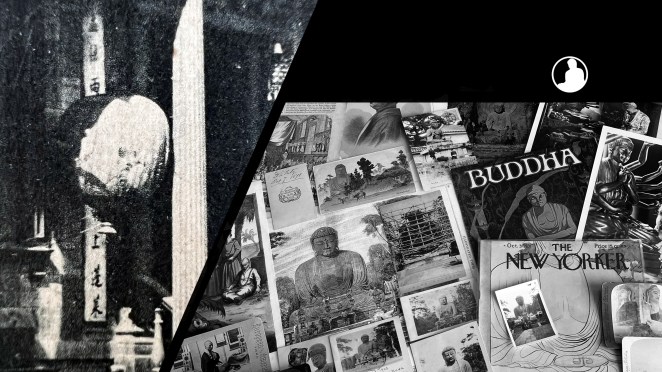
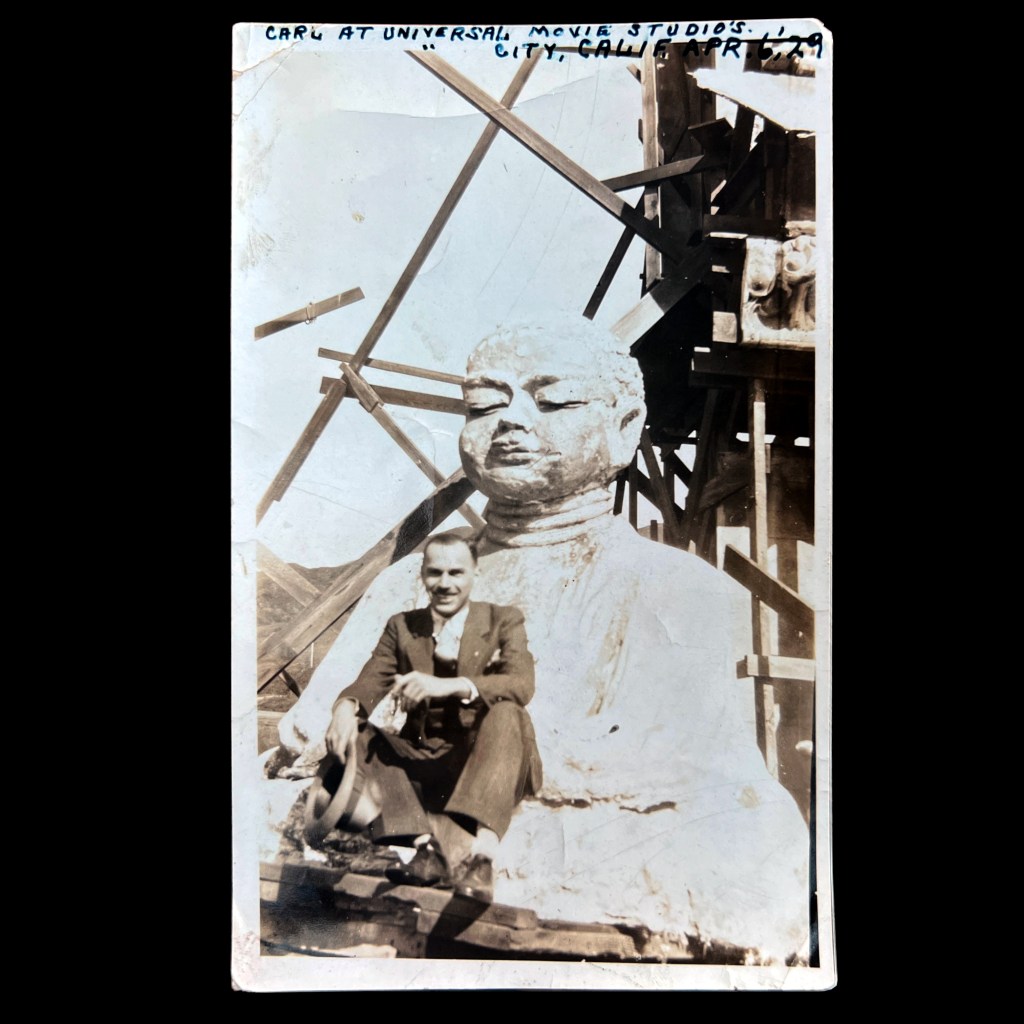
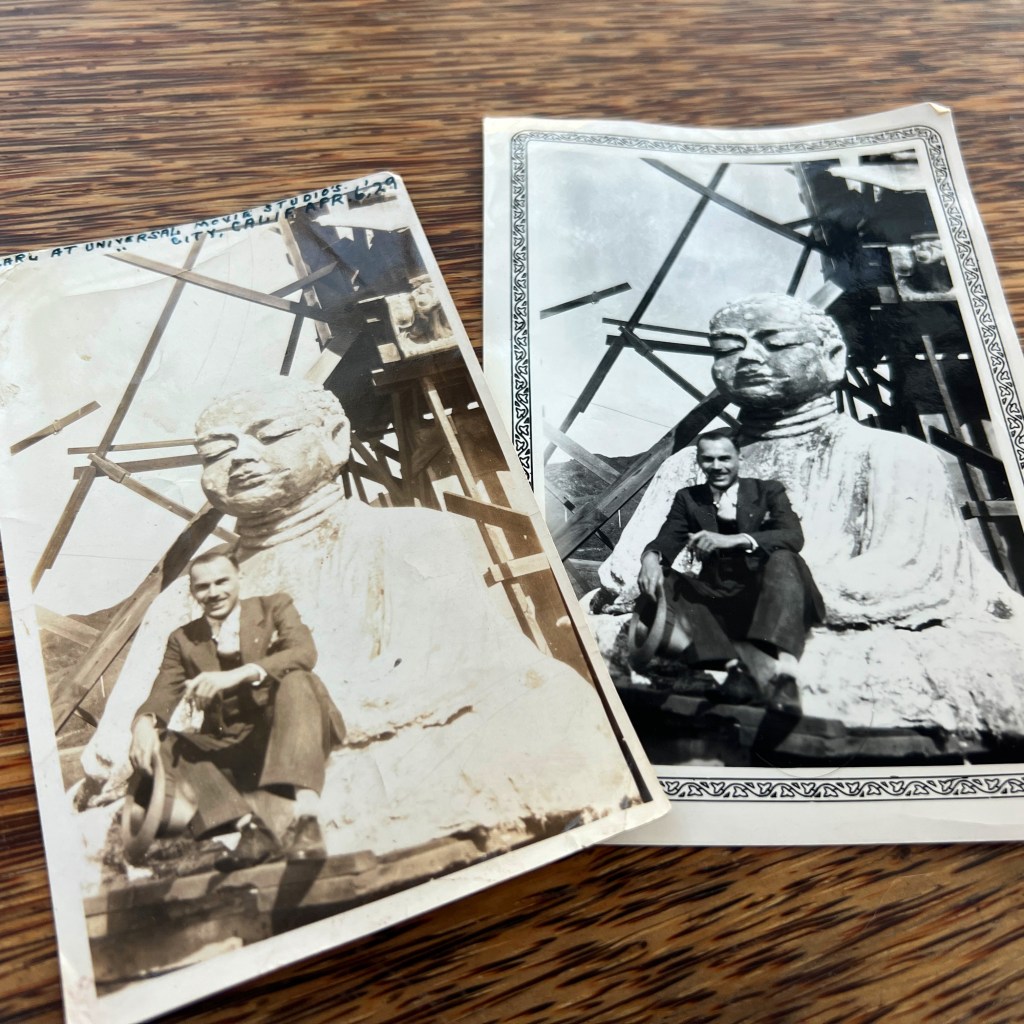
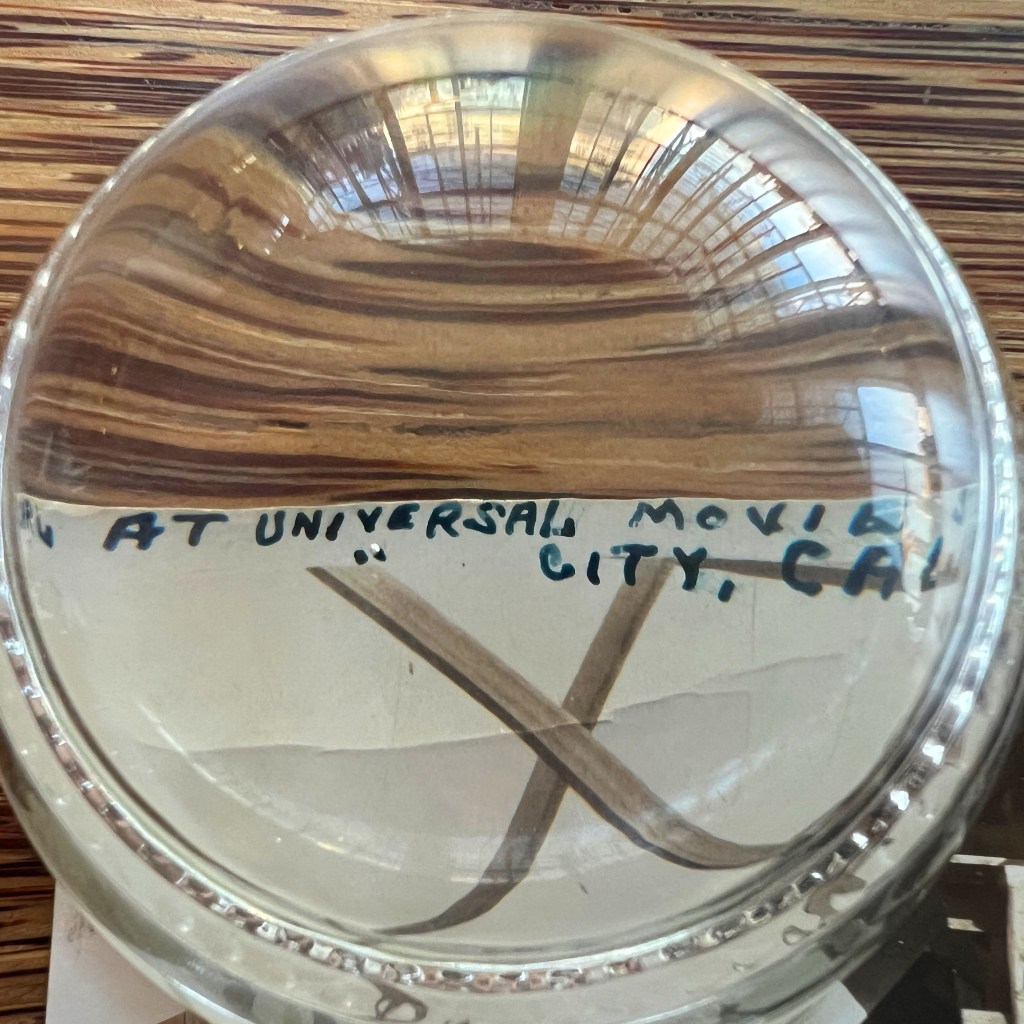
This photo casts a rather uncanny site with unnaturally bright side lighting, awkwardly wooden human figures, and a very odd Buddhist icon. This is not a real Chinese Buddhist temple, but a movie set designed for a famous 1929 Paramount film.

The photo is from a series of stills taken to preserve the set design and layout for The Mysterious Dr. Fu Manchu, starring Warner Oland in the titular role. This scene portrays the moment before that death of the doctor’s wife and son by errant British cannon fire during the Boxer rebellion.

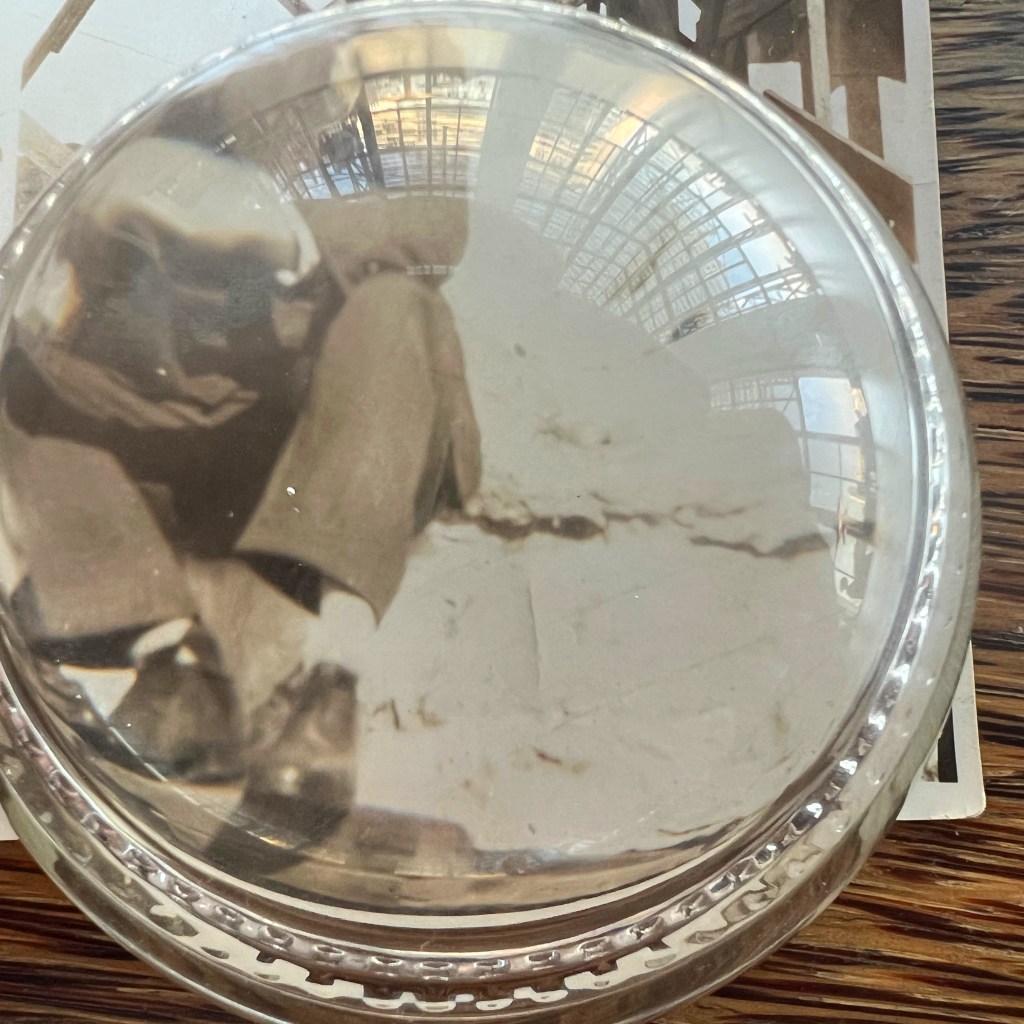
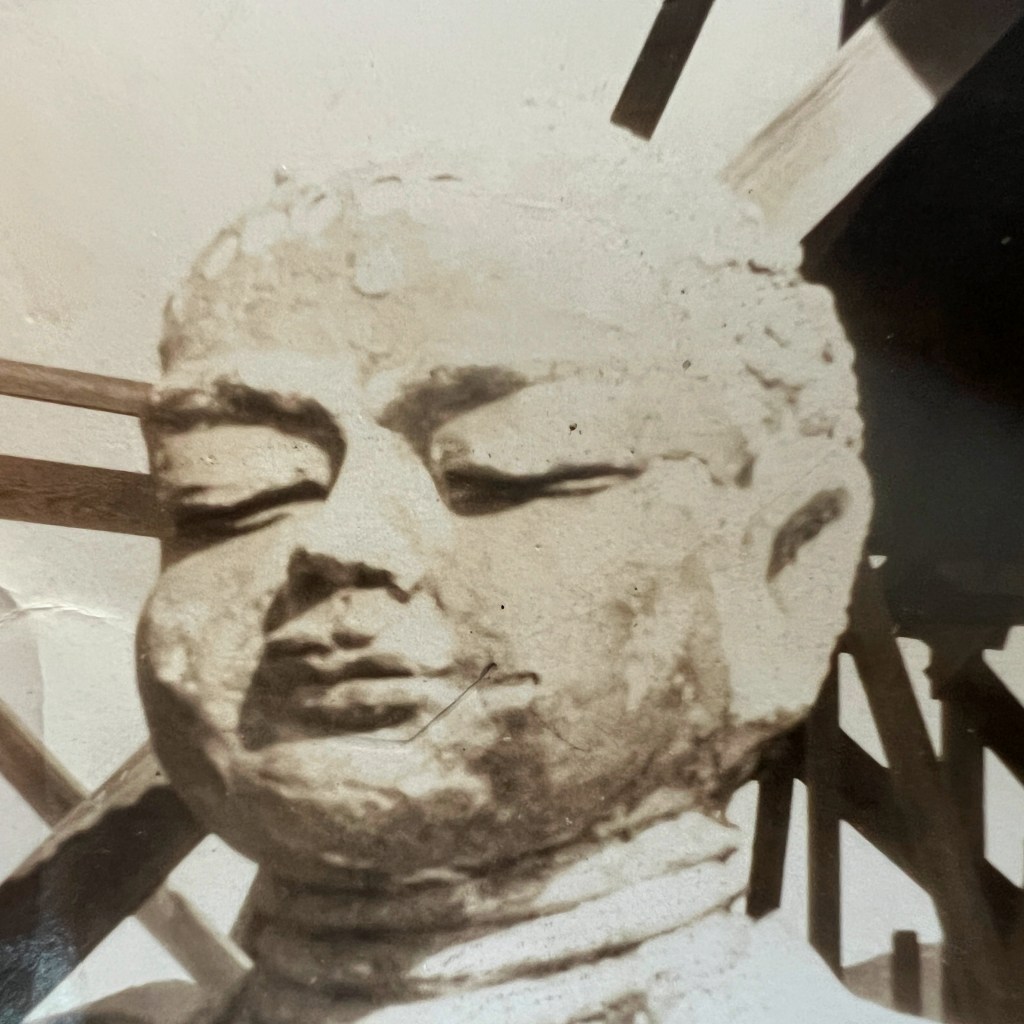
It’s worth marveling at this franken-buddha. While silent films of the 1910s and 20s sometimes used genuine Buddhist statuary, larger props were made of plaster. The craftsmen cobbled together the face of a buddha, the body of a jeweled bodhisattva, and adopted a two-fisted meditation mudra.

The prostrating mannequins represent the doctor’s family praying at the family shrine moments before the altar is destroyed by a shell, crashing rubble on top of them. Fu Manchu swears vengeance in front of his dead family and demolished Buddhist icon.

Buddhist statues appear elsewhere in the film, but mostly as room décor signaling a curio Buddhist statues appear elsewhere in the film, but as one reviewer in 1929 describes, they are among “the appurtenances of Oriental diablerie.” The “all talking” version of Mysterious Dr. Fu Manchu survives today and is viewable here: tinyurl.com/r5d9h7e5.


The Buddhas in the West Material Archive is a digital scholarship project that catalogues artifacts depicting Buddhist material culture for Western audiences. It’s comprised of prints, photos, and an assortment of ephemera and other objects. For a brief introduction to this archive, visit the main Buddhas in the West project page.


For Related Buddhas in the West Posts Featuring Historical Films:


For the Most Recent Buddhas in the West Posts:

Philip Klier’s “Scene on the Shwe Dagon Pagoda” Postcard

For all the new Buddhas in the West posts
follow us on Bluesky & Instagram


Shwedagon Pagoda is the most sacred Buddhist pilgrimage site in Myanmar, thought to enshrine eight hair strands of the Buddha. Philip Klier’s photo, taken in the 1880s, shows the activities of both monks and merchants on the main platform in front of the pagoda.

Built atop Singutarra Hill in the city of Yangon, four main entrance pavilions on the cardinal directions lead to a spacious open court where vendors sold ritual supplies. Small kiosks with shade coverings can be seen on the far side of the courtyard here.

When German photographer Philip Klier relocated to the British capital at Yangon in c. 1880, he opened a studio just south of Shwedagon Pagoda. By the turn of the century he started selling postcards of his photographs, a media popular among foreign tourists visiting the site.

Klier’s name is inscribed on the negative with the title of his photo: “Scene on the Shwe Dagon Pagoda.” Surprisingly, the Shwedagon Pagoda is not actually in the frame of Klier’s photograph, it sits just off to the left.

In the foreground we see a Theravada monk sitting on the ground with an alms bowl.

The distinctive building in the back is a seven-tiered pyatthat, characteristic of sacred Burmese architecture. For more of Klier’s photography, see the digitized collection at the National Gallery Singapore, viewable here: https://tinyurl.com/mtd9y72x.

Several of Montanus’ engravings were copied into later works on Japan, helping shape a visual lexicon for Buddhism into the 19th cent. The 1669 Dutch edition of Atlas Japannensis has been digitized by the National Library of the Netherlands, viewable here: tinyurl.com/5n6kstfy.


The Buddhas in the West Material Archive is a digital scholarship project that catalogues artifacts depicting Buddhist material culture for Western audiences. It’s comprised of prints, photos, and an assortment of ephemera and other objects. For a brief introduction to this archive, visit the main Buddhas in the West project page.


For Related Buddhas in the West Posts Featuring Myanmar / Burma:


For the Most Recent Buddhas in the West Posts:


Dreamland’s Japanese Tea Garden Pagoda, “Greeting From Coney Island” Postcard

For all the new Buddhas in the West posts
follow us on Bluesky & Instagram


During the Golden Age of American amusement parks, New York’s Coney Island was king, sporting the trifecta of the Steeplechase, Dreamland, and Luna Park. Opening in May 1904, Dreamland advertised a “faithful reproduction of a Japanese temple,” attempting to pull customers away from its rivals.

The “temple” attraction was mostly bluster, but a two-story Japanese-style pavilion was built as a tea house, crowned by an additional four-level pagoda. Iconic in its own right, this pagoda is featured at least two times in this classic “Greetings from” postcard design.

Mailed from Brooklyn to Bavaria in 1912, this postcard was originally printed in Germany, the worldwide epicenter of postcard production previous to WWI. Note the stamp indicating the postage was affixed on the obverse; this allowed collectors to display the postcard in an album.

Based on World’s Fair amusement zones, the buildings at Dreamland each had their own architectural style to showcase their offerings: Canals of Venice, Coast through Switzerland, Destruction of Pompeii, etc. The pagoda’s distinctive features (seen in the “N”) identified the Japanese tea garden.

Luna Park, which opened the previous year in 1903, expanded its own Japanese Roof Garden with towering pagodas; this park’s pagoda is just visible in the top of the letter “E”. As new Luna Parks opened across the US, some added their own Japanese style pagodas.

Dreamland was destroyed in 1911 when a fire ripped through the park. An extraordinarily detailed map of Coney Island’s three parks c.1906 is available through the Library of Congress (Dreamland’s pagoda is in the lower right), viewable here: https://tinyurl.com/xvdtw8yt.


The Buddhas in the West Material Archive is a digital scholarship project that catalogues artifacts depicting Buddhist material culture for Western audiences. It’s comprised of prints, photos, and an assortment of ephemera and other objects. For a brief introduction to this archive, visit the main Buddhas in the West project page.


For Related Buddhas in the West Posts Featuring Amusements at World’s Fairs:


For the Most Recent Buddhas in the West Posts:


Felice Beato’s Kichizo Jizō Photograph

For all the new Buddhas in the West posts
follow us on Bluesky & Instagram


This Jizō statue stood on the banks of Lake Ashi in Hakone for 150 years when Felice Beato took this photo in the 1860s. Within a decade, the lakeside statue would be vandalized, sold, and removed in the aftermath of the Buddhist persecution during the early Meiji era.

Beato was a Yokohama-based photographer who found success selling photographic prints to early, thrill-seeking globetrotters. Here we see a hand-colored albumen print of the statue known as Kichizo Jizō, originally found on the grounds of Kongō-ō Temple off the Tōkaidō route.

Another photo showing scenic Lake Ashi is attached to the reverse, but this image is often attributed to Baron von Stillfried. Beato sold most of his stock to Stillfried in 1877, suggesting this page was removed from a tourist album sold by Stillfried in the late 1870s.

The bronze Kichizo Jizo statue was commissioned in 1713 and was placed with a cluster of smaller Jizō statues that sat along the shoreline (another Jizō is partly visible on the far right edge). Looking closely at Beato’s photo, we also see two Japanese men praying to the bodhisattva.

During Japan’s Buddhist persecution, the large Kongōō Temple lost its holdings and much of its statuary was eventually sold off. While smaller statues were lost in the chaos, the Kichizo Jizo was sold to a Tokyo dealer who transported it down the Odawara coast to be shipped off.

According to lore, the icon became immovable at port and was subsequently purchased by Tokujo Temple, where it remains enshrined today. To view an intact 1868 Beato souvenir album containing this photo, see the Hood Museum at Dartmouth: https://tinyurl.com/mpzhrb5d.

The Buddhas in the West Material Archive is a digital scholarship project that catalogues artifacts depicting Buddhist material culture for Western audiences. It’s comprised of prints, photos, and an assortment of ephemera and other objects. For a brief introduction to this archive, visit the main Buddhas in the West project page.


For Related Buddhas in the West Posts Featuring Jizō:


For the Most Recent Buddhas in the West Posts: