Adolfo Farsari’s Kamakura Daibutsu Photograph

For all the new Buddhas in the West posts
follow us on Bluesky & Instagram


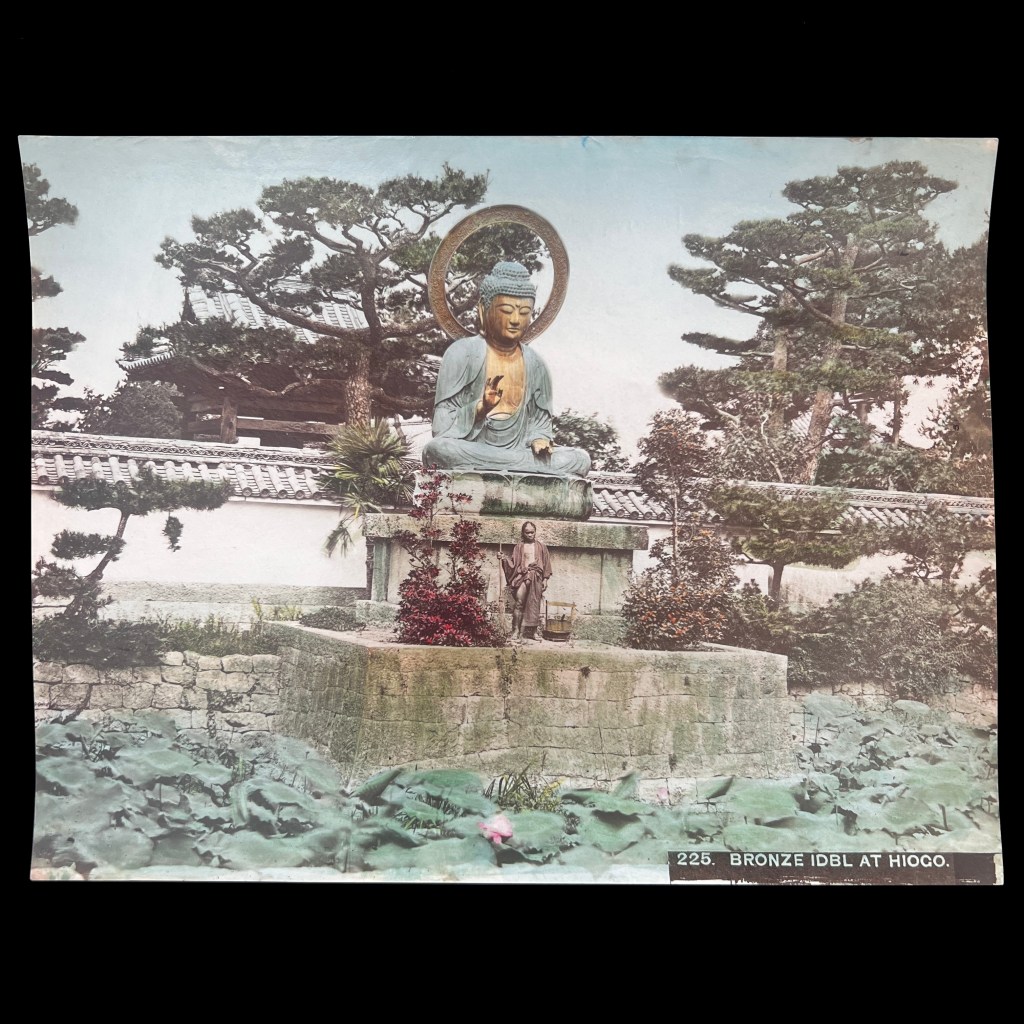
In 1886, a year after Adolfo Farsari opened his Yokohama photography studio, it burned to the ground during a city-wide fire. Farsari spent the next several months traveling Japan to replenish his stock, including several Buddhist sites popular among globetrotting tourists.

Moreover, with the destruction of Farsari’s studio, he also lost the older negatives of Felice Beato and Baron von Stillfried. Farsari’s studio was among the last of the foreign studios in Yokohama as more Japanese photographers were turning to professional ventures.

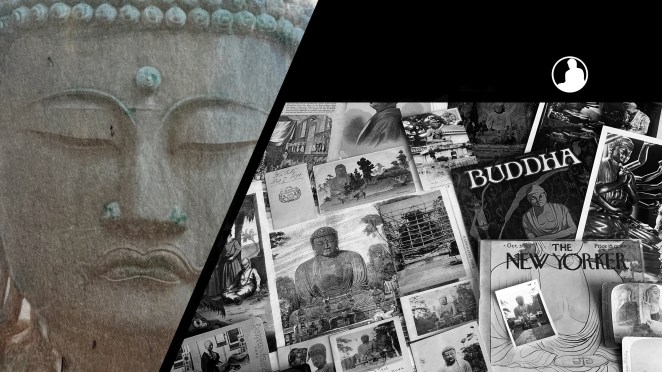
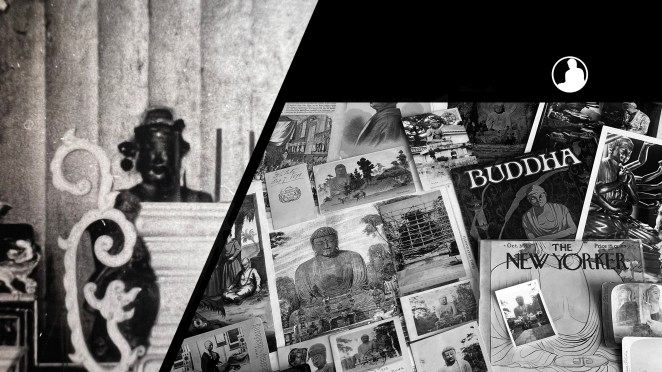
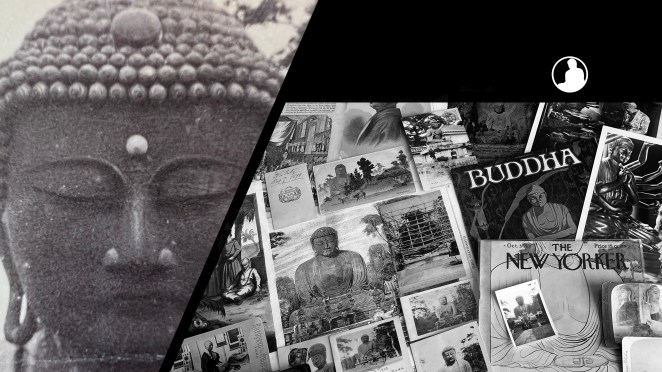
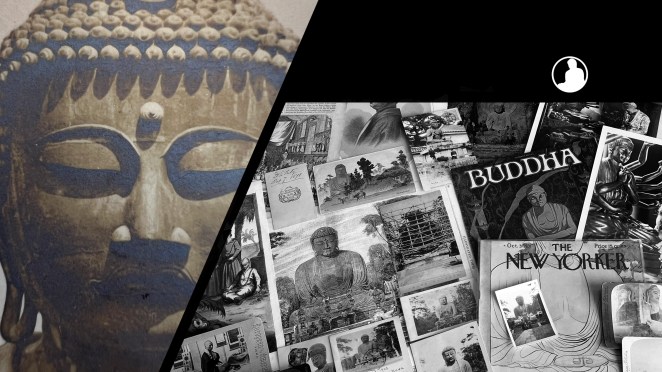
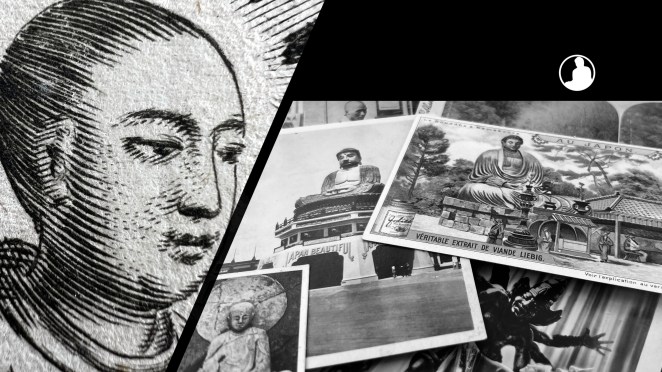
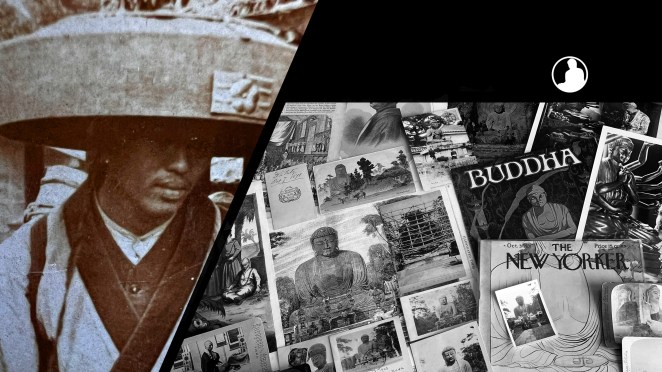
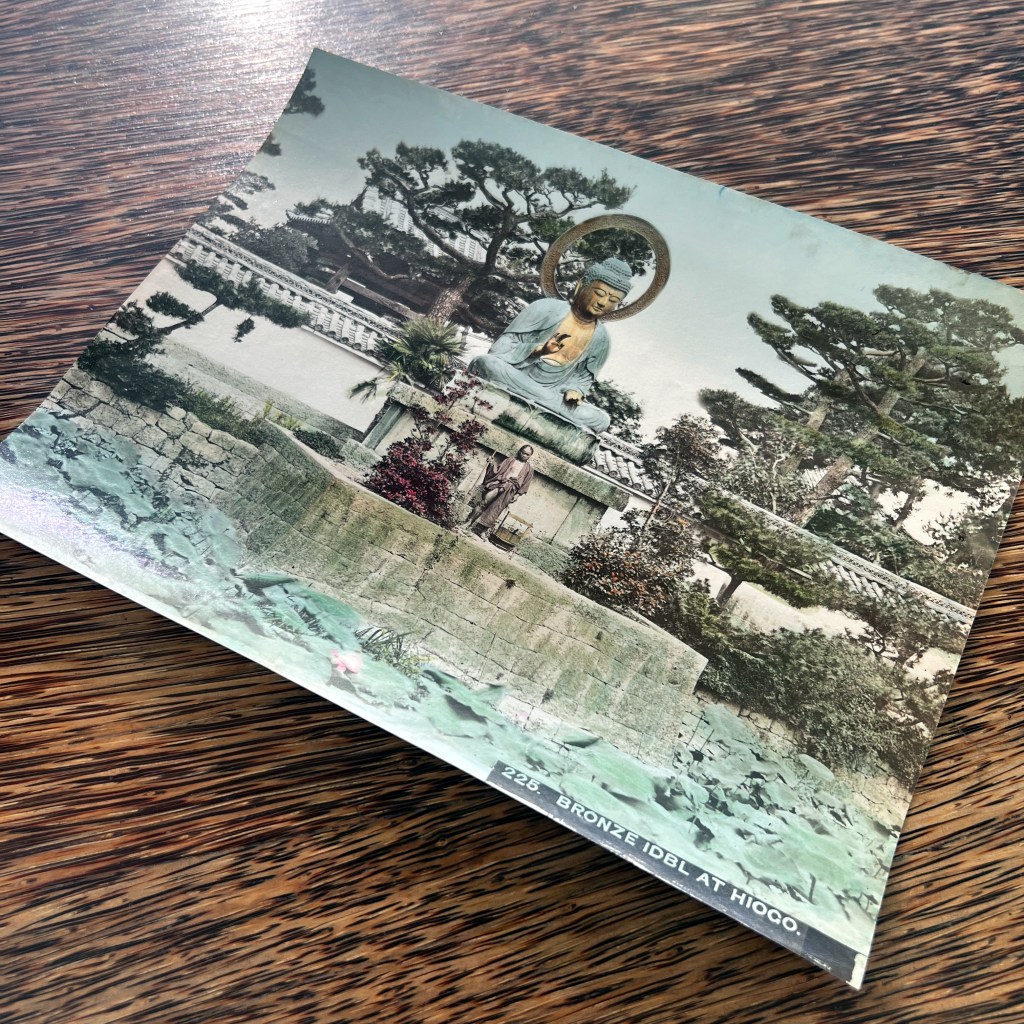
Farsari’s scene of the Kamakura Daibutsu shows a person in the middle of prayer.

We can also see another man standing on the stone pedestal, a common sight in photographs of this era.

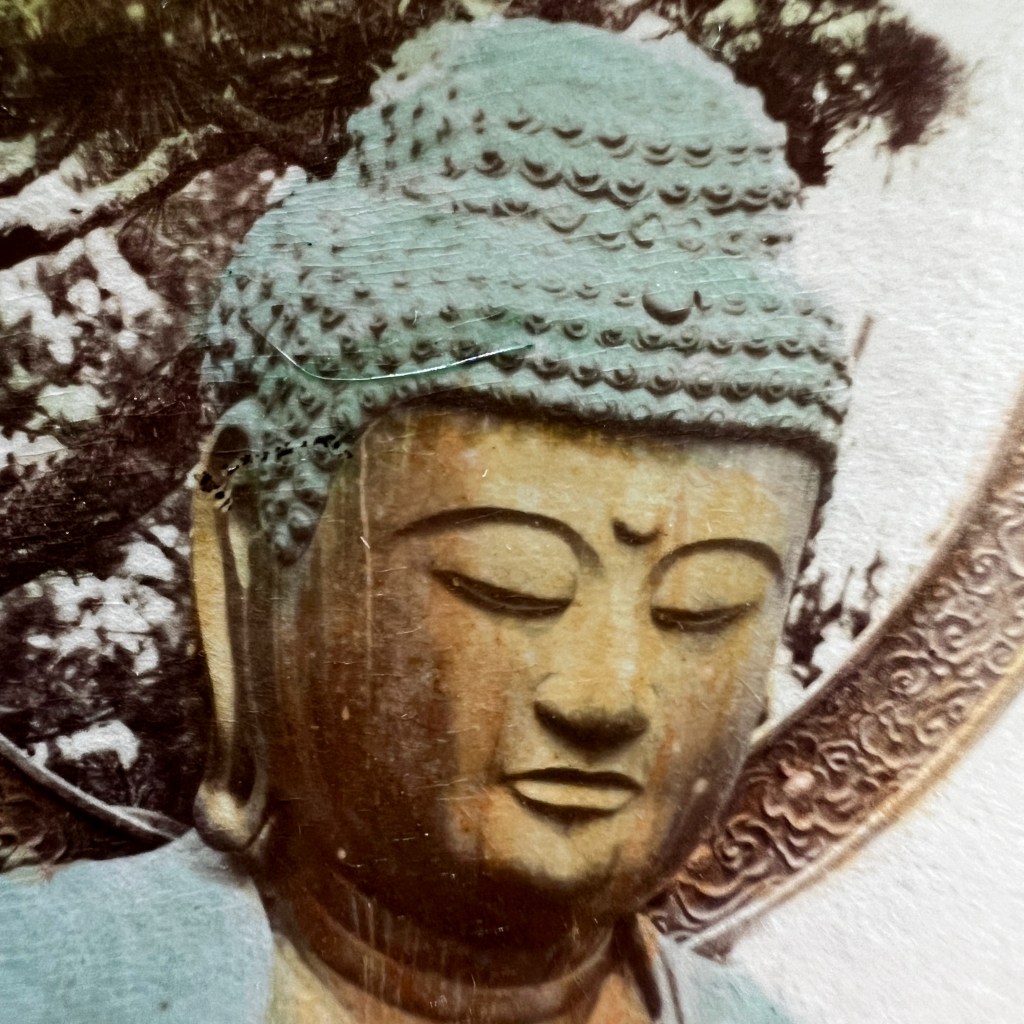
Farsari’s work earned the praise Rudyard Kipling who complimented him on the fidelity of the hand-coloring. Further commentary on Farsari’s Kamakura Daibutsu photo can be found here: https://peterromaskiewicz.com/2019/01/19/farsaris-dai-butsu-visual-literacy-of-buddhism/


The Buddhas in the West Material Archive is a digital scholarship project that catalogues artifacts depicting Buddhist material culture for Western audiences. It’s comprised of prints, photos, and an assortment of ephemera and other objects. For a brief introduction to this archive, visit the main Buddhas in the West project page.


For Related Buddhas in the West Posts Featuring Historical Photography:


For the Most Recent Buddhas in the West Posts:

George Planté’s Hall of a Thousand Buddhas Postcard

For all the new Buddhas in the West posts
follow us on Bluesky & Instagram


George Planté came to Vietnam as a member of the colonial French government, but by 1893 had turned to photography and opened a studio in Saigon. He soon recognized the desire for postcards among the overseas French military and was selling the inexpensive souvenirs by 1905.

The undivided back design of this French card suggests it was published in 1905 or before. Around this time, Planté seems to have acquired the old stock of Aurélien Pestel, thus the photograph on the front may have been taken by Pestel.

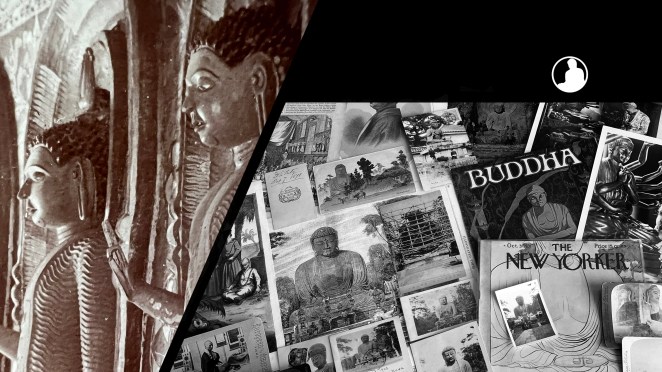
The caption gives the location as Angkor Wat, but this is the interior of the Preah Poan, known commonly as the Hall of a Thousand Buddhas. The presence of the Buddhist statues clearly shows how the original temple devoted to Viṣṇu was taken over by Buddhists.

The statues that once filled the open cruciform hall have all been removed in the course of restoration and preservation.

Photographs from the turn of the century capture how the hall once looked filled with Buddhist icons. Google Arts & Culture has a 360-degree view of the hall today, see here: https://tinyurl.com/yckkbumz


The Buddhas in the West Material Archive is a digital scholarship project that catalogues artifacts depicting Buddhist material culture for Western audiences. It’s comprised of prints, photos, and an assortment of ephemera and other objects. For a brief introduction to this archive, visit the main Buddhas in the West project page.


For Related Buddhas in the West Posts Featuring Angkor Wat:


For the Most Recent Buddhas in the West Posts:


Alain Mallet’s Porcelain Pagoda of Baoen Temple Engraving

For all the new Buddhas in the West posts
follow us on Bluesky & Instagram


In 1683, the French military commander Alain Mallet published his illustrated five-volume set entitled Description de l’univers. While it received tepid reviews, Mallet’s encyclopedic approach drew together diverse information about East Asia that was still relatively new to European audiences.

Trained as an engineer and draughtsman, Mallet is sometimes claimed to have drawn the images for his books. While his cartography and celestial charts may have been original works, the images of Asia were copies of earlier published illustrations.

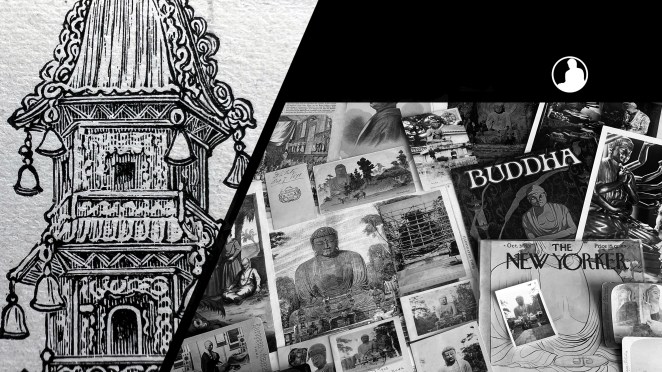
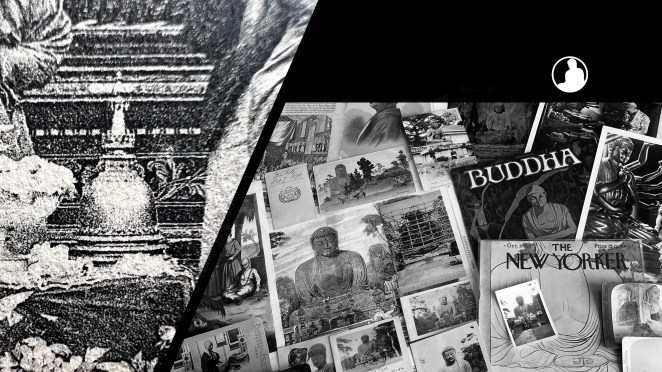
This illustration of the famed Porcelain Pagoda of Baoen Temple in Nanjing was a copy of Johan Nieuhof’s illustration more than a decade earlier. This included the irregular mountains in the back and the people added for scale.

It was publications like Description de l’univers, however, the kept the pagoda alive in the European imagination, making it a key visual element in chinoiserie.


The Buddhas in the West Material Archive is a digital scholarship project that catalogues artifacts depicting Buddhist material culture for Western audiences. It’s comprised of prints, photos, and an assortment of ephemera and other objects. For a brief introduction to this archive, visit the main Buddhas in the West project page.


For Related Buddhas in the West Posts Featuring Historical Engravings:


For the Most Recent Buddhas in the West Posts:

Joseph Keppler’s Crafty Priests Puck Magazine Cover

For all the new Buddhas in the West posts
follow us on Bluesky & Instagram


In the 1880s Puck was America’s premier satire magazine, but the publication stood out for another reason: it was among the first periodicals to use chromolithographic printing. Puck was founded by Joseph Keppler who was also a main artist – his work from 1888 is seen here.

The political commentary draws upon the old trope of “crafty priests” stealing from pious believers.

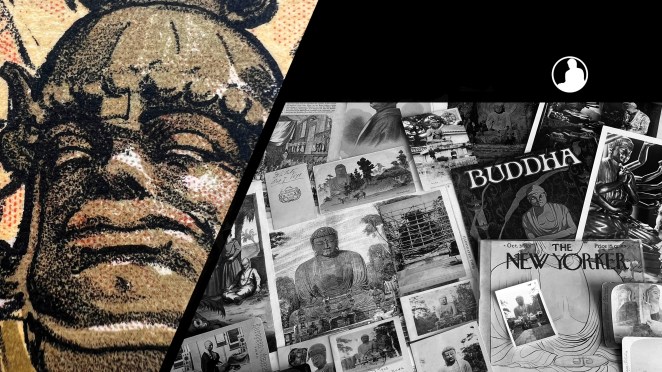
The visual trope, however, uses more recently circulating popular imagery of a cross-legged multi-arm idol. The traditional Biblical imagery of the golden calf has replaced by a stereotyped golden Asian icon. Moreover, the facial features are exaggerated to look more grotesque.

A large collection of Puck political cartoons has been digitized by the Library of Congress, viewable here: https://tinyurl.com/ycde4xtc.


The Buddhas in the West Material Archive is a digital scholarship project that catalogues artifacts depicting Buddhist material culture for Western audiences. It’s comprised of prints, photos, and an assortment of ephemera and other objects. For a brief introduction to this archive, visit the main Buddhas in the West project page.


For Related Buddhas in the West Posts Featuring Historical Magazines:


For the Most Recent Buddhas in the West Posts:

Hyōgo Daibutsu at Kobe F.S. Postcard

For all the new Buddhas in the West posts
follow us on Bluesky & Instagram


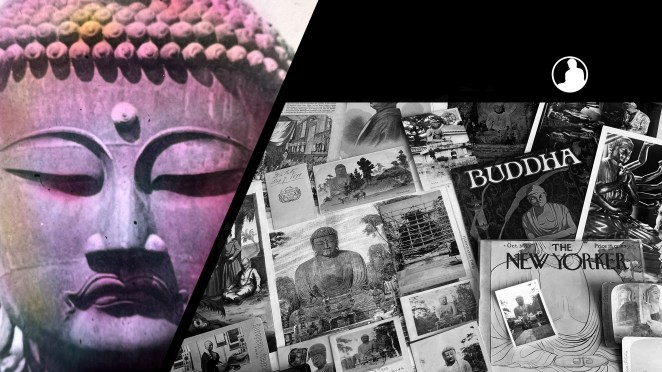
The original Hyōgo Daibutsu at Nōfuku-ji was the third largest Buddhist statue in Japan. It was dismantled by the Ordinance on the Collection of Metals issued in 1941 as part of Japanese war efforts during WWII.

Located in the port city of Kobe, the Daibutsu was approximately 12 meters in height. It became a popular tourist destination at the end of the 19th century, thus many photographs and postcards remain of the now lost icon.

This “undivided back” design informs us the postcard was printed before 1907. The “F.S.” in the stamp box refers to the publisher’s name (which I haven’t identified).

Many Japanese postcards of this period were hand-colored collotype prints. You can see the red ink splotches the colorist used to suggest design elements.

An albumen print photograph by Kusakabe Kinbei is held by the Nagasaki University Library, viewable here: http://oldphoto.lb.nagasaki-u.ac.jp/zoom/jp/record.php?id=1044


The Buddhas in the West Material Archive is a digital scholarship project that catalogues artifacts depicting Buddhist material culture for Western audiences. It’s comprised of prints, photos, and an assortment of ephemera and other objects. For a brief introduction to this archive, visit the main Buddhas in the West project page.


For Related Buddhas in the West Posts Featuring Postcards:


For the Most Recent Buddhas in the West Posts:

Fritz Müller’s Tin How Temple Postcard

For all the new Buddhas in the West posts
follow us on Bluesky & Instagram


Chinatown’s Iconic Joss House: We lack a rich photographic history of the religious life of San Francisco’s Chinatown before the 1906 earthquake. Of the photos we have, this Chinese temple on Waverly Place is arguably the most iconic – the Tin How Temple.

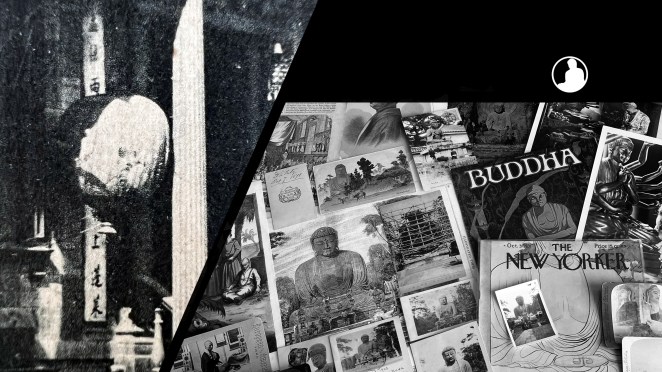
The goddess Tin How, otherwise known as Mazu, is known for her devoted protection of sailors and close association with early southern Chinese immigrants who came to the US. A close inspection of the second floor reveals her name, Tin How 天后, on plaques beside the doorway.

For a time, different temple shrines occupied the second and third floors of the adjacent building. One shrine was dedicated to the Emperor of the North, Beidi 北帝, who was an old stellar deity popular in the Pearl Delta Region.

Due to the design on the back we know this post card was issued before 1907. The front informs the San Francisco publisher Fritz Müller had the cards printed in Germany, a common occurrence at the time.

For an insightful commentary on how to conceptualize traditional Chinese religion through Mazu worship, see Natasha’s Heller’s “Using Mazu to Teach Key Elements of Chinese Religions” available here: https://tinyurl.com/48smwjx2.


The Buddhas in the West Material Archive is a digital scholarship project that catalogues artifacts depicting Buddhist material culture for Western audiences. It’s comprised of prints, photos, and an assortment of ephemera and other objects. For a brief introduction to this archive, visit the main Buddhas in the West project page.


For Related Buddhas in the West Posts Featuring Chinatown:


For the Most Recent Buddhas in the West Posts:
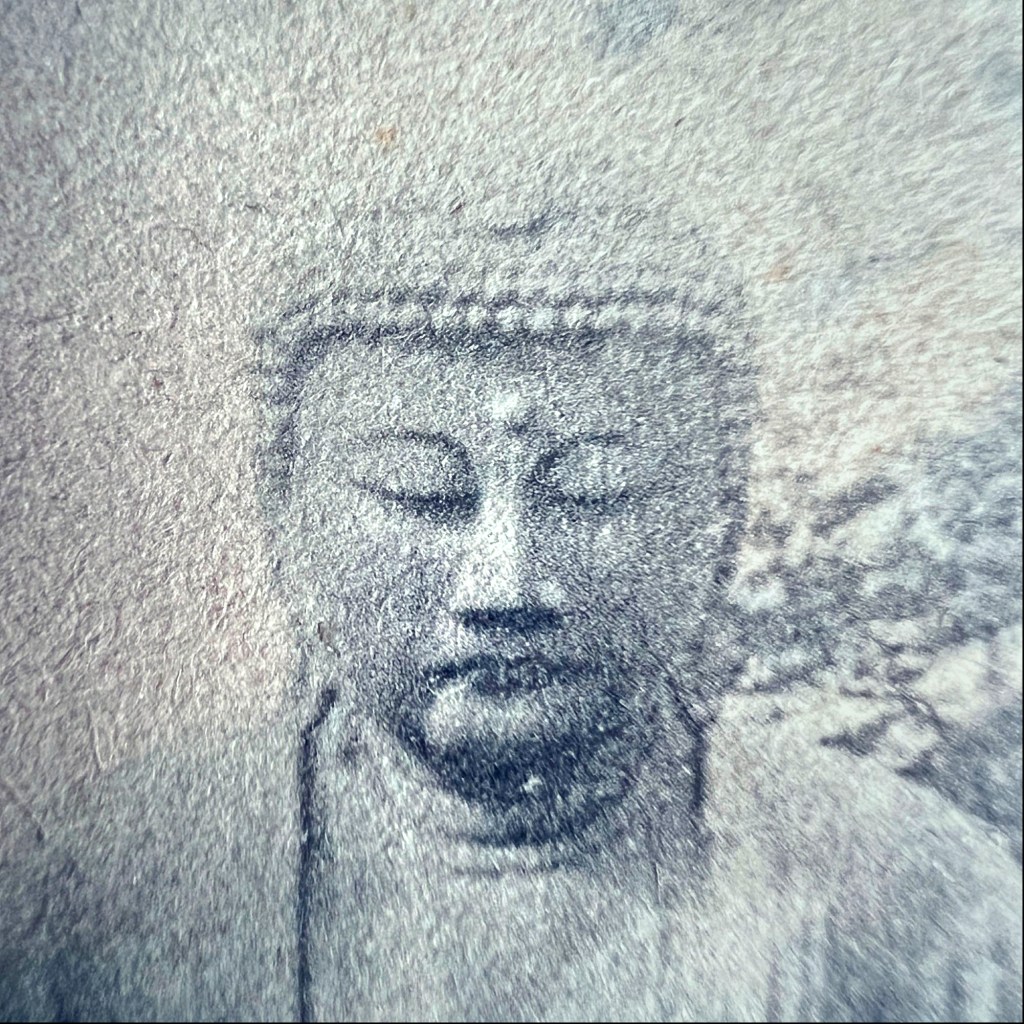


Liebig’s Chinese Buddha Advertising Card

For all the new Buddhas in the West posts
follow us on Bluesky & Instagram


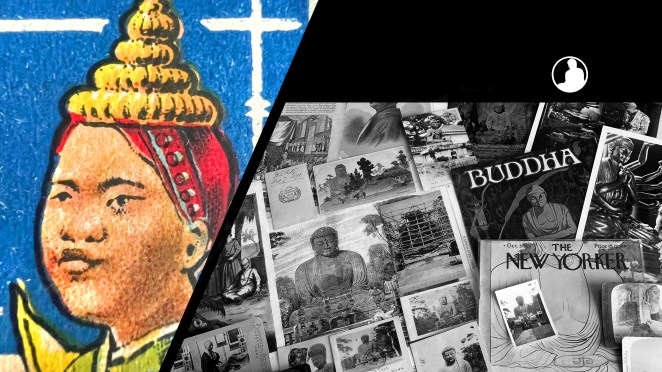
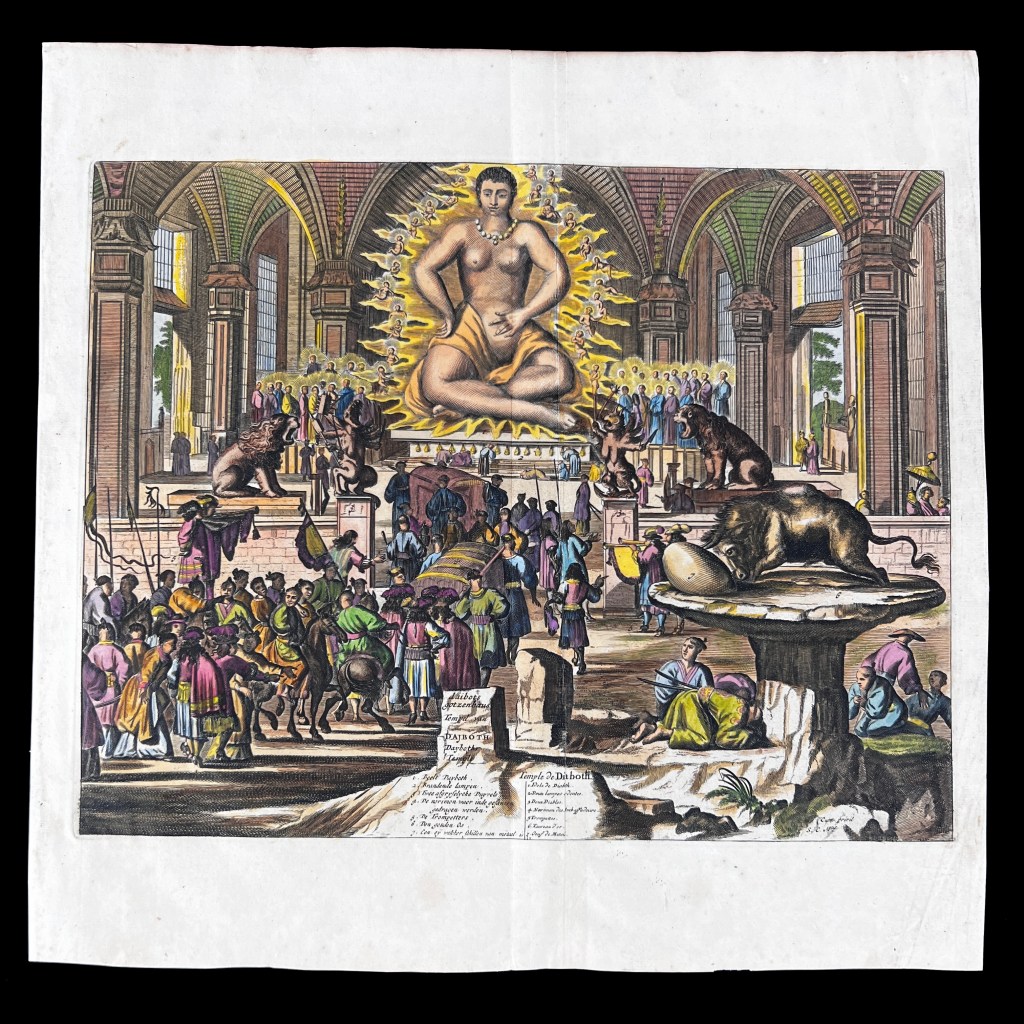
Gods of Antiquity: In the early age of black and white mass market publications, chromolithography ushered in a new era of visual media. From massive broadside to Victorian trade cards, vibrant color was the future and the British Liebig company capitalized on this market.

Liebig started producing trade cards in 1872 and by the turn of the century their cards were printed in several languages. Several different sets were made each year and these sets soon became collector’s items, predating hobbies such as baseball card collecting.

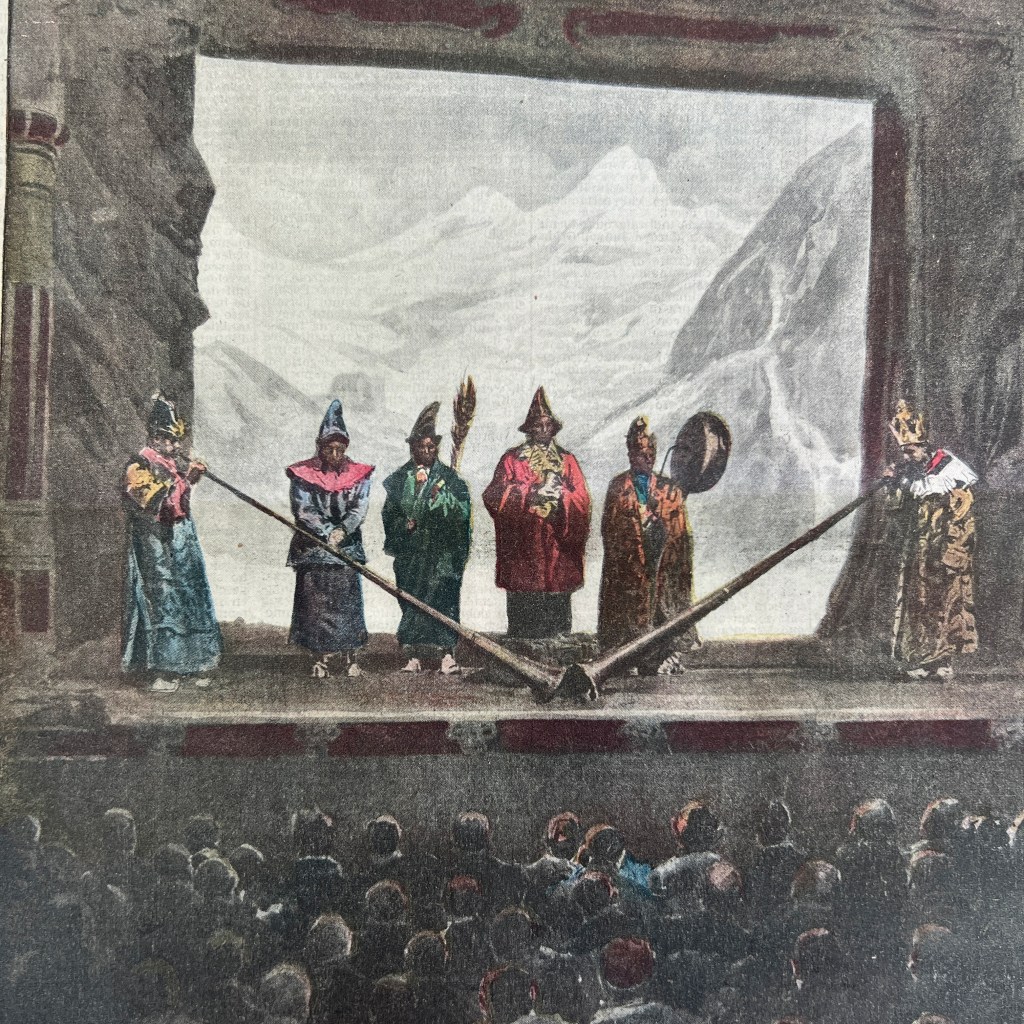
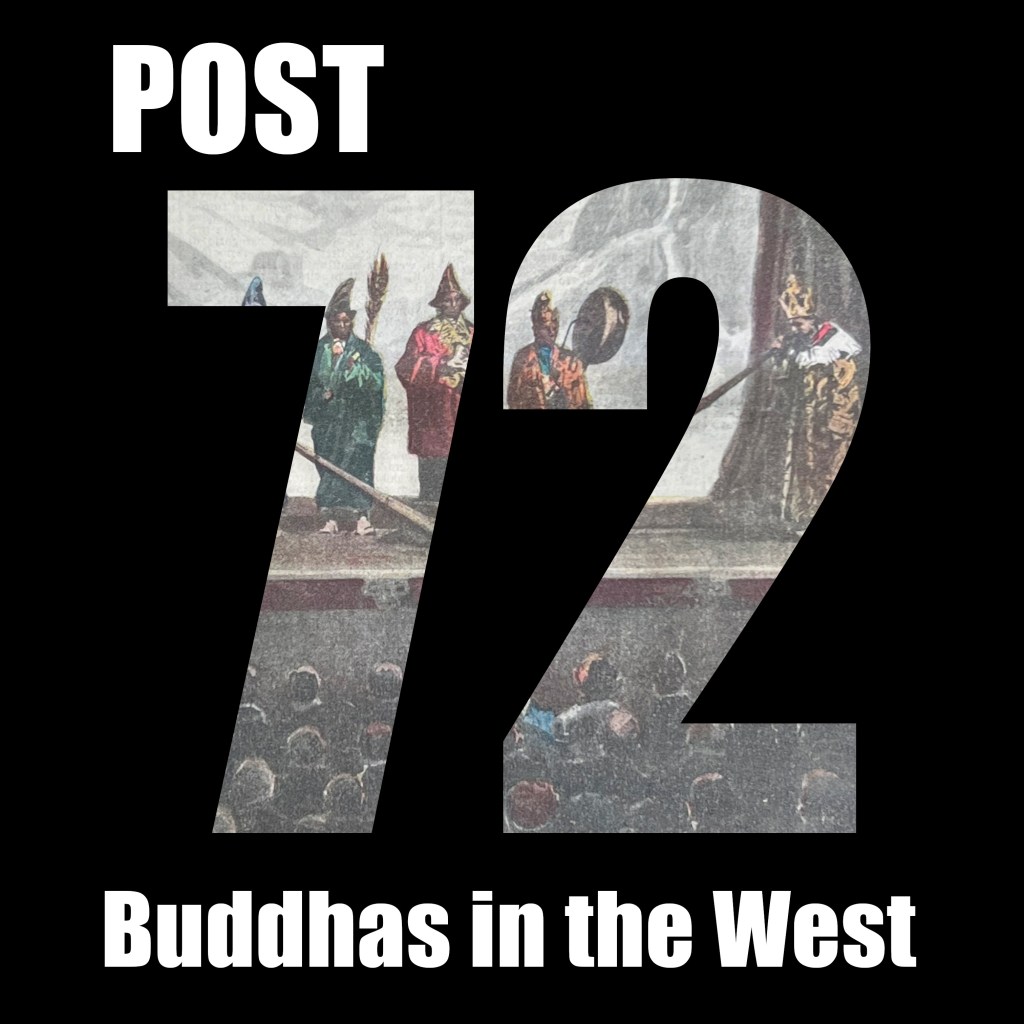
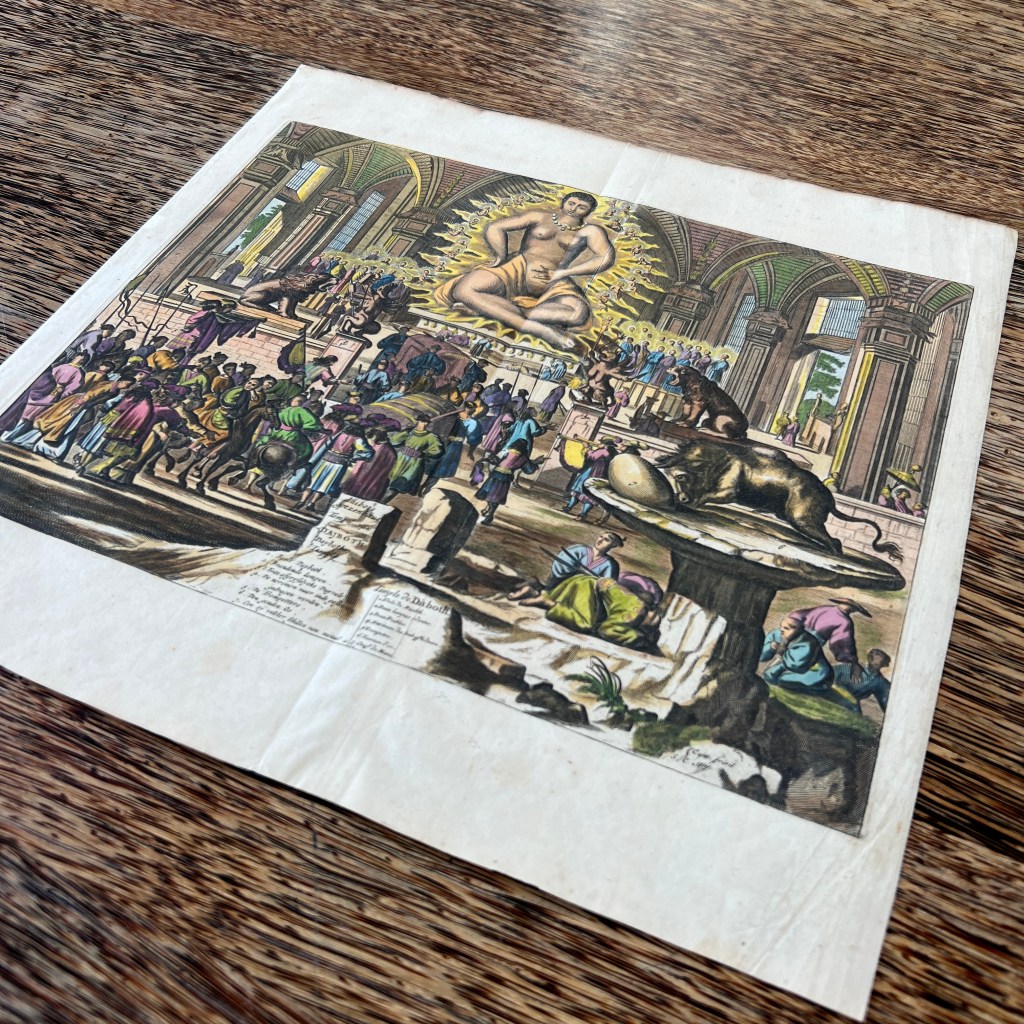
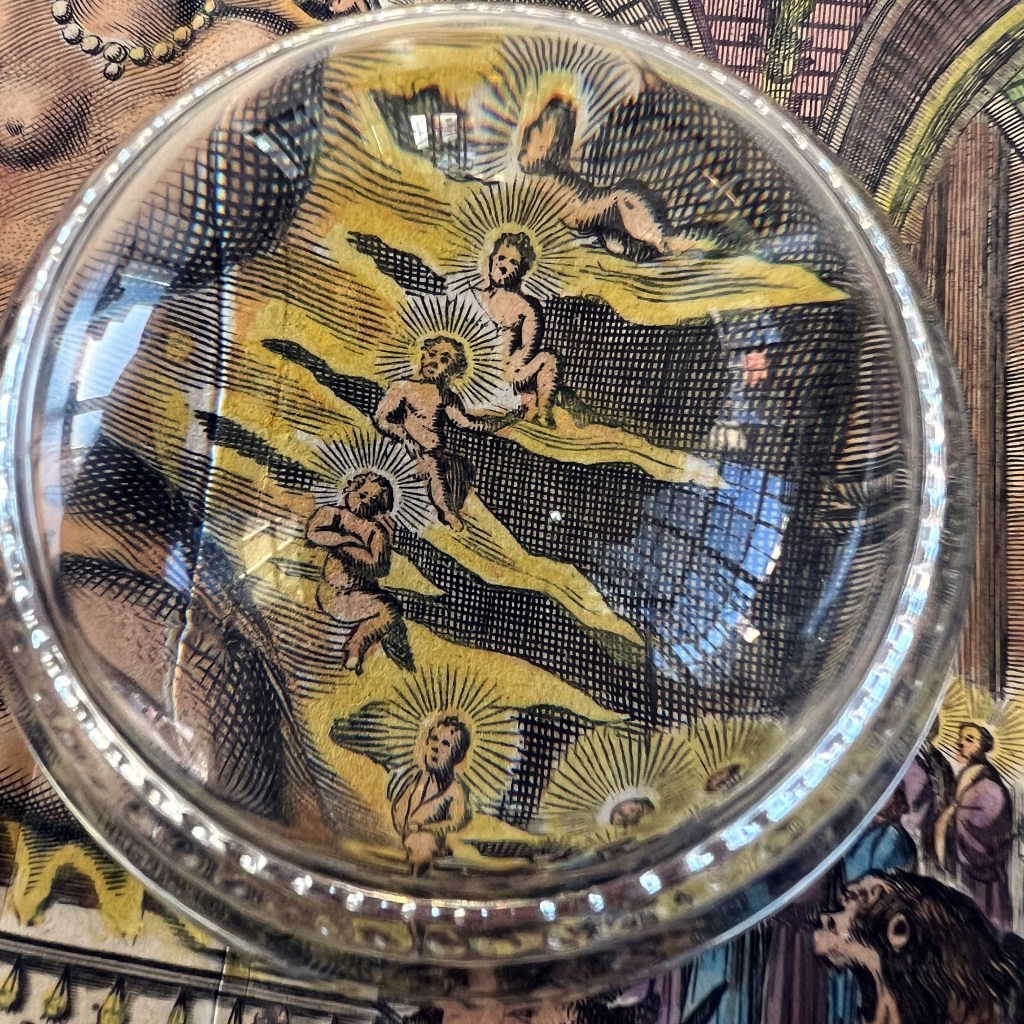
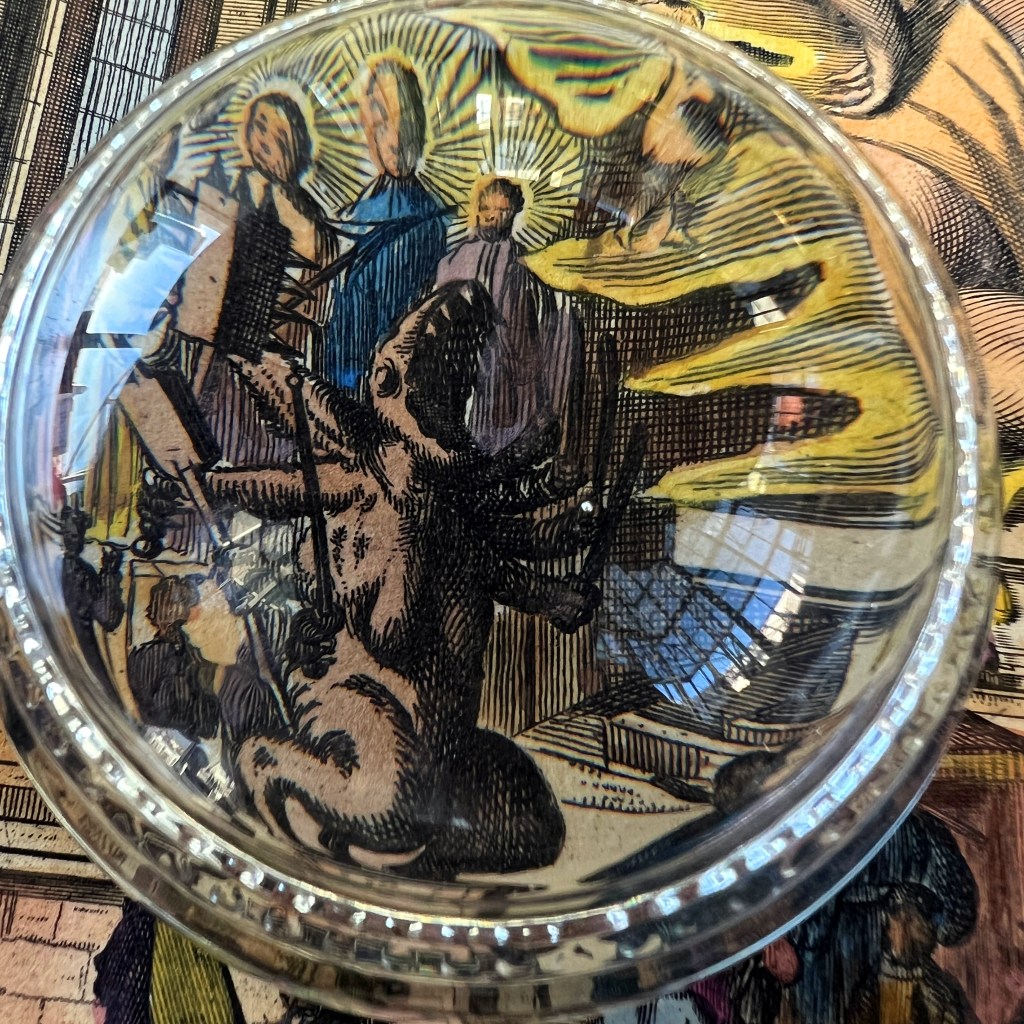
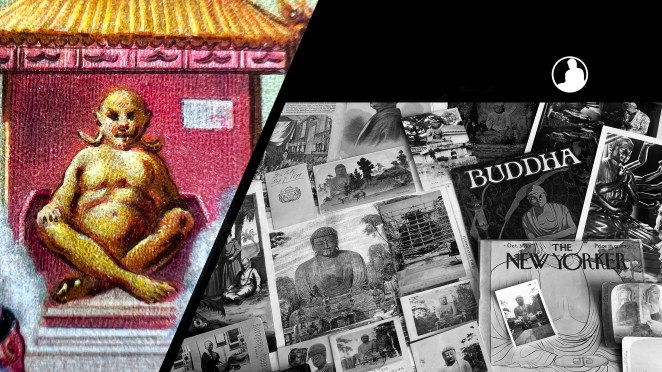
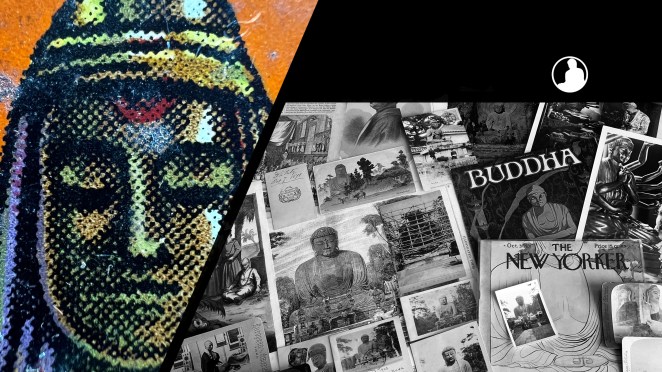
In 1895 Liebig released the Gods of Antiquity set, with the card here showing the worship of the Buddha by “Chinese nobles.” The scene is mostly a hodge-podge of turn of the century Chinese stereotypes.

A gold Buddha, sitting awkwardly with legs crossed, takes center stage in this imaginary temple scene.

Chinese Buddhist rituals use instruments, but not of the kind depicted here.

For a short introduction to the Liebig Company’s trade cards by Princeton University’s Firestone Library, follow this link: https://tinyurl.com/3nzvs6mh.


The Buddhas in the West Material Archive is a digital scholarship project that catalogues artifacts depicting Buddhist material culture for Western audiences. It’s comprised of prints, photos, and an assortment of ephemera and other objects. For a brief introduction to this archive, visit the main Buddhas in the West project page.


For Related Buddhas in the West Posts Featuring China:


For the Most Recent Buddhas in the West Posts:

Pierre Dieulefils’ Angkor Wat Buddhapada Postcard

For all the new Buddhas in the West posts
follow us on Bluesky & Instagram


Pierre Dieulefils arrived in Vietnam as part of the French military forces in 1885 and opened a photography studio in Hanoi three years later. In anticipation of the great Exposition coloniale de Marseille, Dieulefils toured Cambodia in 1905 to take photographs of Angkor Wat.

These images of Angkor Wat formed part of his thriving postcard business, driven in part by French officers sending cards home to France. The 1905 print run of cards is known as the red series for the red ink used on the obverse.

One of the objects Dieulefils photographed was this large sculptural footprint of the Buddha. Images of the Buddha’s footprints, called buddhapada, hint at his past presence and are considered venerated relics.

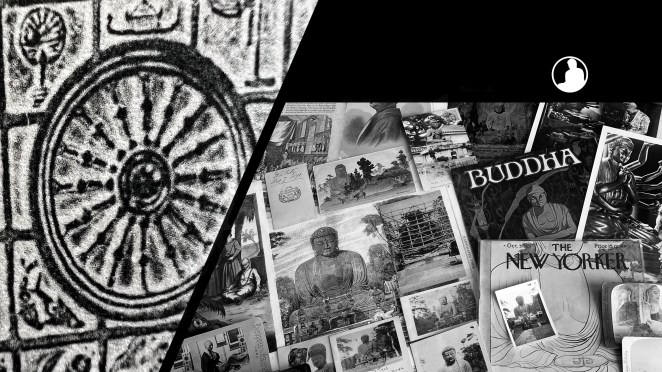
The buddhapada is often depicted with special characteristics, including 108 emblems of auspiciousness. The wheel of the Dharma is most commonly placed at the center of the sole.

This carving, weighing three tons, remained at Angkor Wat from the 14th century until 1985. In 2022 it was put on display at the Preah Norodom Sihanouk-Angkor Museum in Siam-reap, Cambodia.


The Buddhas in the West Material Archive is a digital scholarship project that catalogues artifacts depicting Buddhist material culture for Western audiences. It’s comprised of prints, photos, and an assortment of ephemera and other objects. For a brief introduction to this archive, visit the main Buddhas in the West project page.


For Related Buddhas in the West Posts Featuring Pierre Dieulefils’ Postcards:


For the Most Recent Buddhas in the West Posts:


Herbert Ponting’s Japanese Pilgrims near Lake Kawaguchi Stereoview

For all the new Buddhas in the West posts
follow us on Bluesky & Instagram


After 1900, publishers of stereoviews started emphasizing their educational rather than entertainment value, oftentimes selling thematic boxed sets. The card here is part of Underwood & Underwood’s 100-view Japan set from 1904.

We know from the negative number (#3852) this stereophoto was taken by expedition photographer Herbert Ponting during his trip to Japan in 1903. The location at Lake Kawaguchi was a well-known gathering spot for pilgrims looking to ascend Mt. Fuji.

By 1904 it was increasingly common to print educational information on the reverse of the card. Here we also find additional books recommended, including Lafcadio Hearn’s Glimpses of Unfamiliar Japan, from which much of the information is cobbled together.

The distinctive clothing and ritual apparatus mark the traveler as a religious pilgrim.

The Ponting-Underwood set, published on the outset of the Russo-Japanese War, became one of the more popular sets on Japan. A scan of the full collection by the Smithsonian Institute is viewable here: https://tinyurl.com/2ukzu87c


The Buddhas in the West Material Archive is a digital scholarship project that catalogues artifacts depicting Buddhist material culture for Western audiences. It’s comprised of prints, photos, and an assortment of ephemera and other objects. For a brief introduction to this archive, visit the main Buddhas in the West project page.


For Related Buddhas in the West Posts Featuring Herber Ponting’s Photography:


For the Most Recent Buddhas in the West Posts:


Marguerite Courtot c. 1920 Studio Portrait

For all the new Buddhas in the West posts
follow us on Bluesky & Instagram


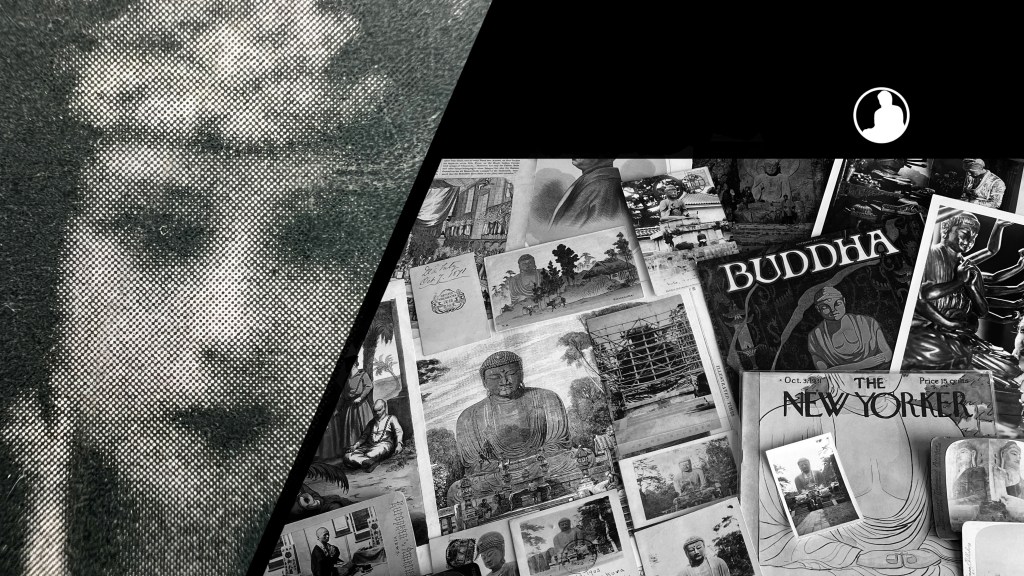
Silent film star Marguerite Courtot joined Pathé after WWI and became a centerpiece in the studio’s action-adventure serials. She starred in Pirate Gold (1920), Velvet Fingers(1920) and The Yellow Arm (1921), with the latter being a stereotypical “Yellow Menace” adventure.

This photo does not appear to be a production still (a movie set photo), but a studio portrait taken in New York City. The portrait dates to around 1920 when the silent film industry was still centered in Fort Lee, New Jersey.

Courtout grasps on to the Buddha statue using a dramatic stage gesture, a relic of the theater age that was adopted in early film. While The Yellow Arm serial is considered lost, it is possible this was a cast portrait used in promoting the film.

Short written synopses survive for several of the Yellow Arm episodes as copyright claims. The synopsis for episode one is held by the Library of Congress, viewable here: https://www.loc.gov/item/s1229l16612/.


The Buddhas in the West Material Archive is a digital scholarship project that catalogues artifacts depicting Buddhist material culture for Western audiences. It’s comprised of prints, photos, and an assortment of ephemera and other objects. For a brief introduction to this archive, visit the main Buddhas in the West project page.


For Related Buddhas in the West Posts Featuring Silent Films:


For the Most Recent Buddhas in the West Posts: