Henri Laas’ “Dieu des Amours” Advertising Card

For all the new Buddhas in the West posts
follow us on Bluesky & Instagram


Advances in chromolithography in the 1870s and 80s helped flood America and Europe with inexpensive, colorful imagery. This had the greatest impact in advertising with the introduction of trade cards, often bearing humorous or provocative images to elicit consumer interest.

To meet demand, printers like Henri Laas in Paris, created series of stock illustrated cards which could be imprinted with a store’s name and address. The store Moreau-Gouffier, seen here, had a “specialty in shoes” and sold “articles for soldiers,” probably during the 1890s.

Stock imagery was often unrelated to the store, but instead drew upon popular visual motifs. Coinciding with the growth of trade cards, France experienced another wave of chinoiserie following the looting of the Beijing Summer Palace and creation of Empress Eugénie’s Chinese Museum in the 1860s.
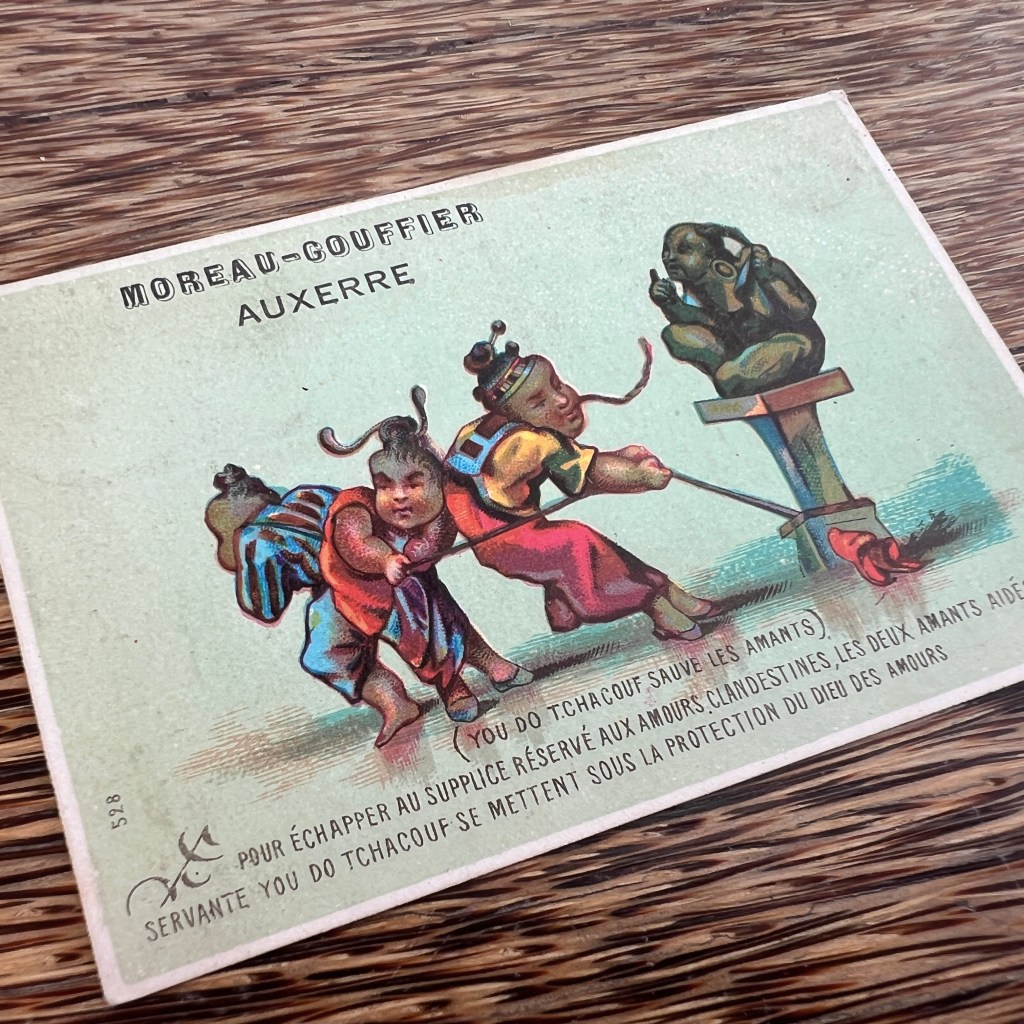
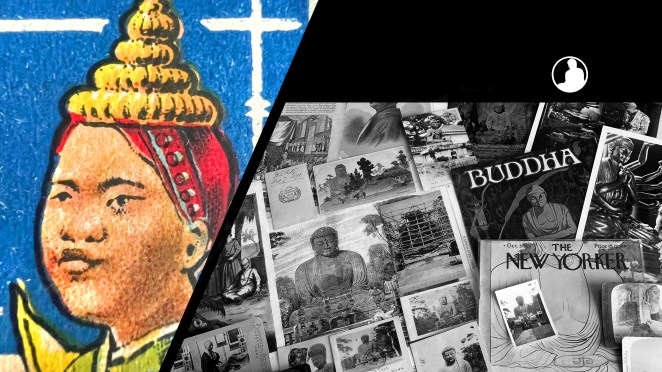
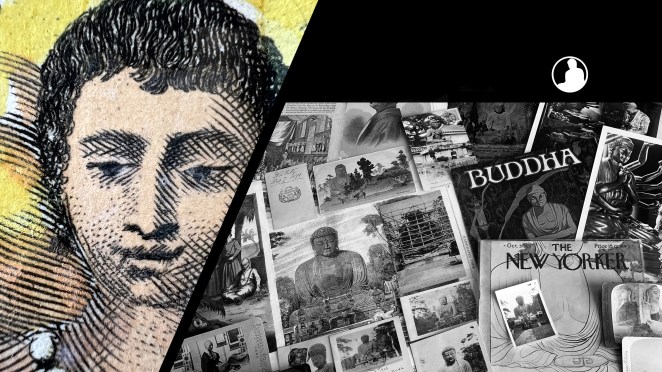
Moreover, French colonial expansion into East Asia increased the circulation of imagery of the region and its people through the French illustrated press. Trade cards drew upon popular ethnic stereotypes, such as we see with the caricatures of Chinese clothing, hairstyle, and skin complexion.

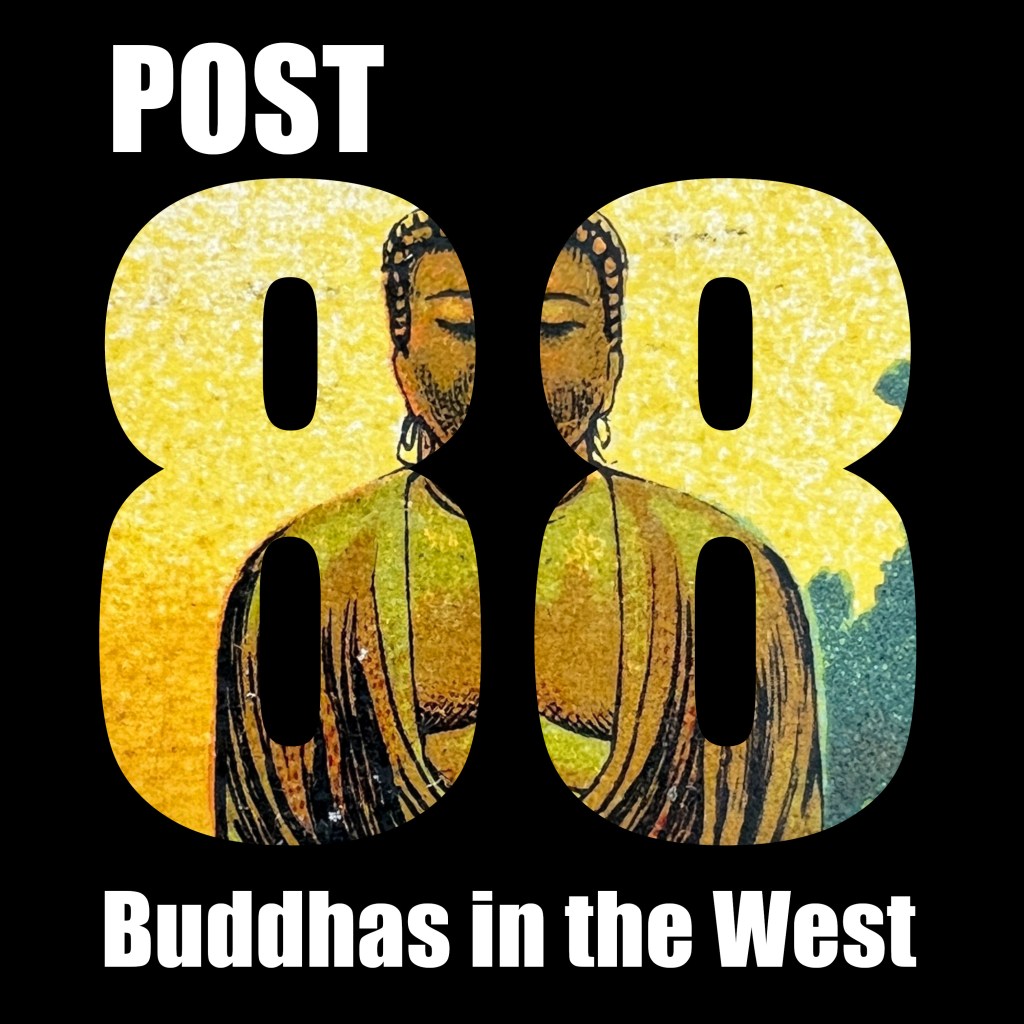
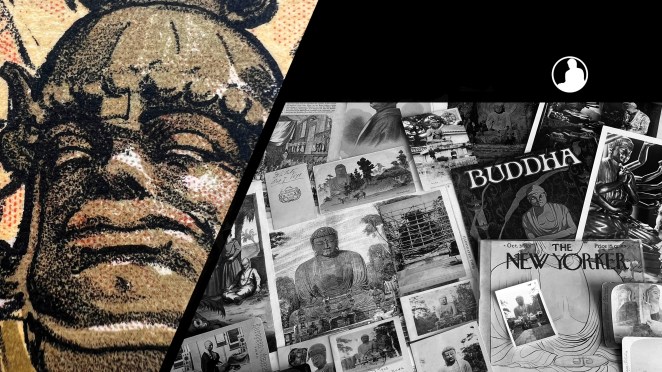
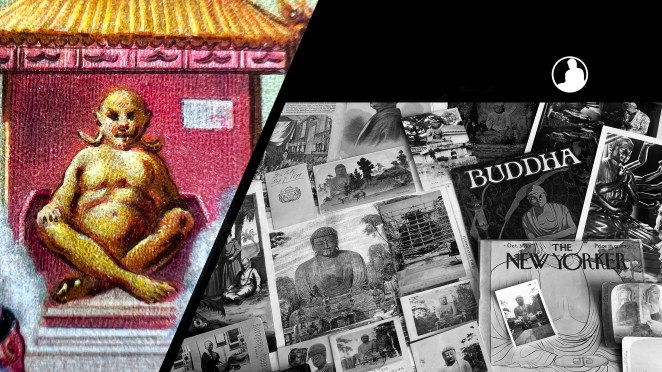
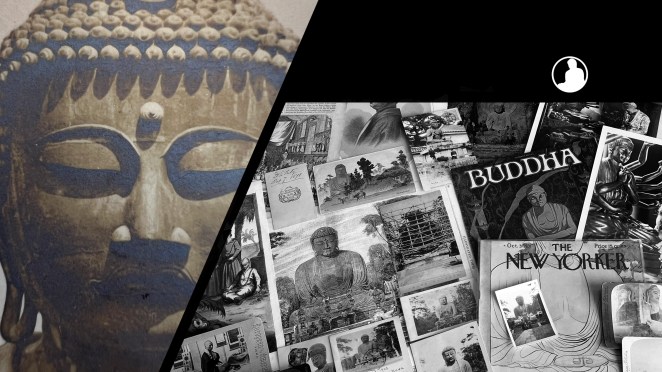
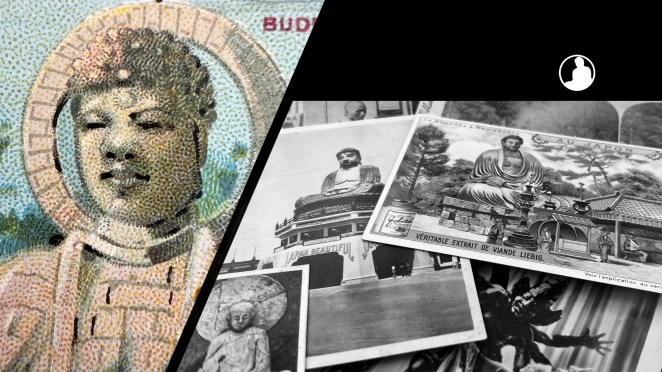
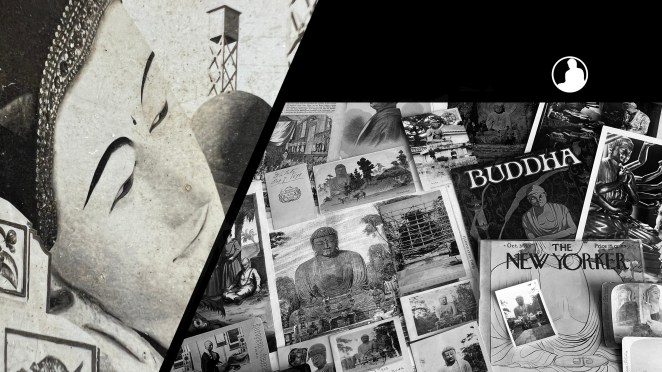
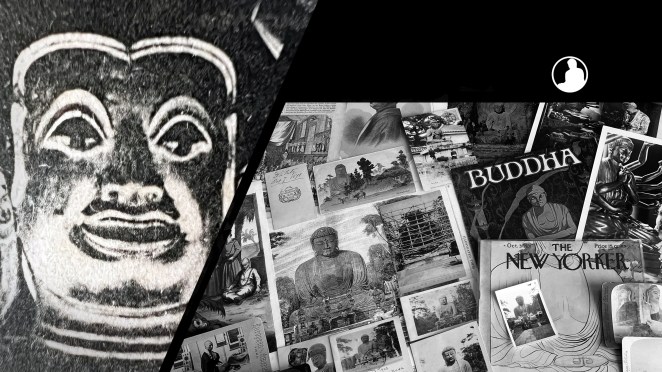
This card is part of a set that tells a story, with each scene set around a particular Chinese artifact; here we see a highly-stylized statue of a buddha. In the story, two secret lovers approach the statue, presented as a “god of love,” to seek his help.
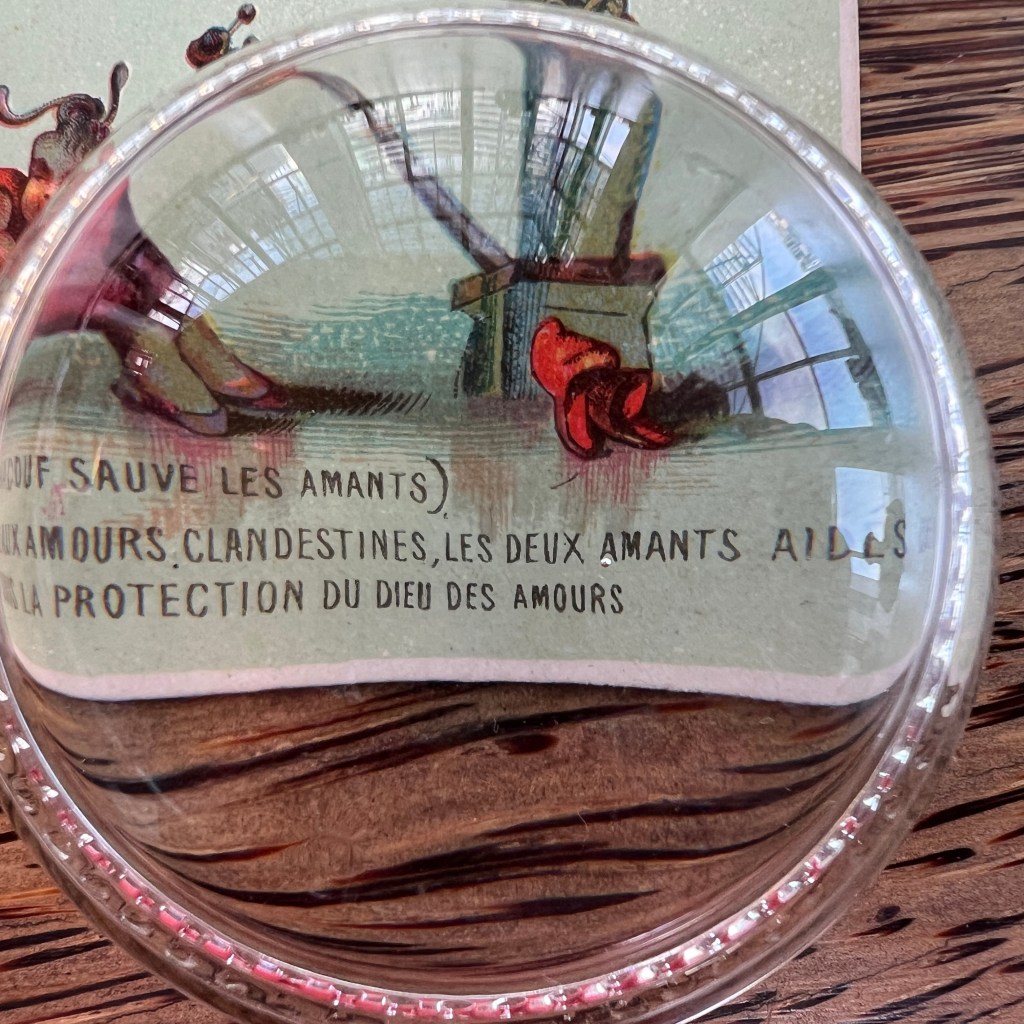
The statue mimics a buddhist icon, but is also racially stylized with mustache and queue. To read more about the Buddhist artifacts and the looting of the Summer Palace, see Louise Tythacott’s The Lives of Chinese Objects: Buddhism, Imperialism and Display (2011).


The Buddhas in the West Material Archive is a digital scholarship project that catalogues artifacts depicting Buddhist material culture for Western audiences. It’s comprised of prints, photos, and an assortment of ephemera and other objects. For a brief introduction to this archive, visit the main Buddhas in the West project page.


For Related Buddhas in the West Posts Featuring Lithographic Prints:


For the Most Recent Buddhas in the West Posts:


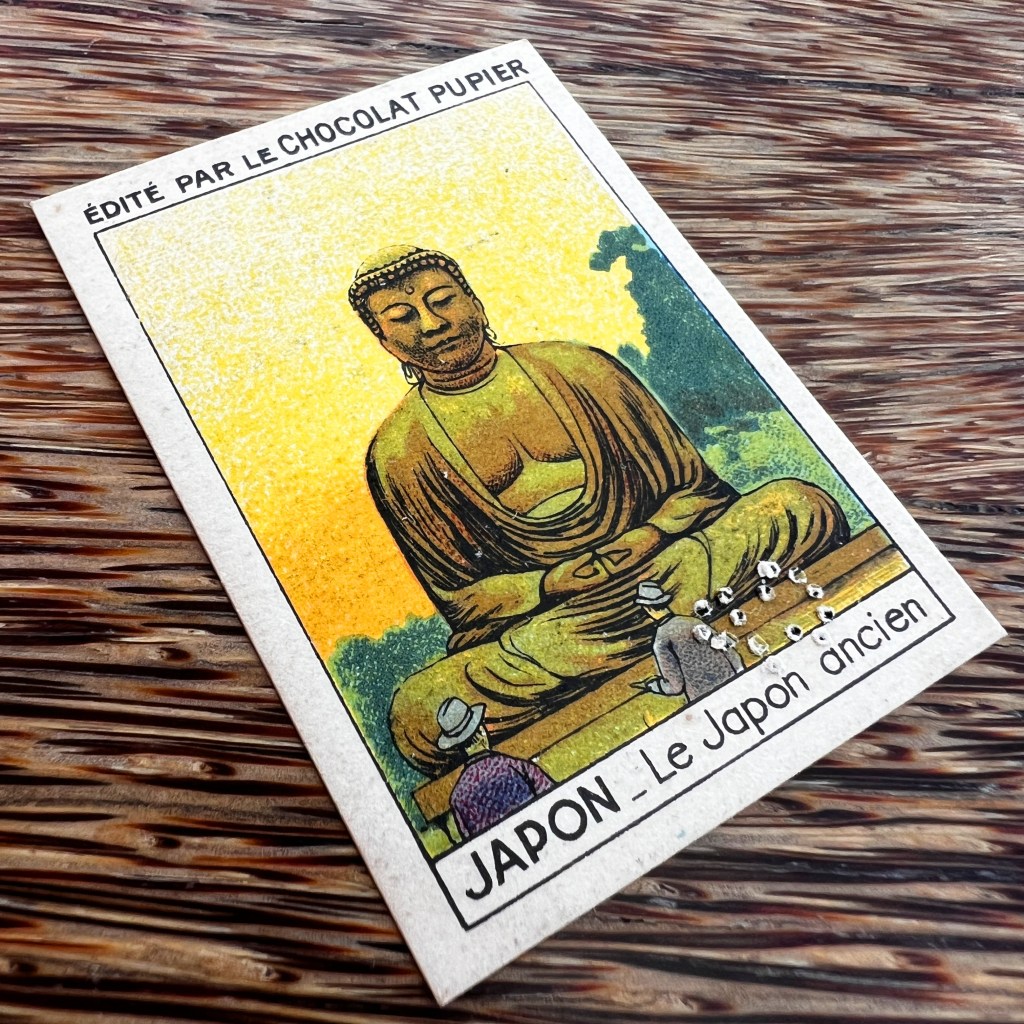
Chocolat Pupier’s “Le Japon ancien” Trade Card

For all the new Buddhas in the West posts
follow us on Bluesky & Instagram


European and American chocolatiers were among the businesses that embraced the use of beautifully illustrated advertising trade cards. To inspire collection, the cards often depicted romantic, if not highly stereotyped, imagery.

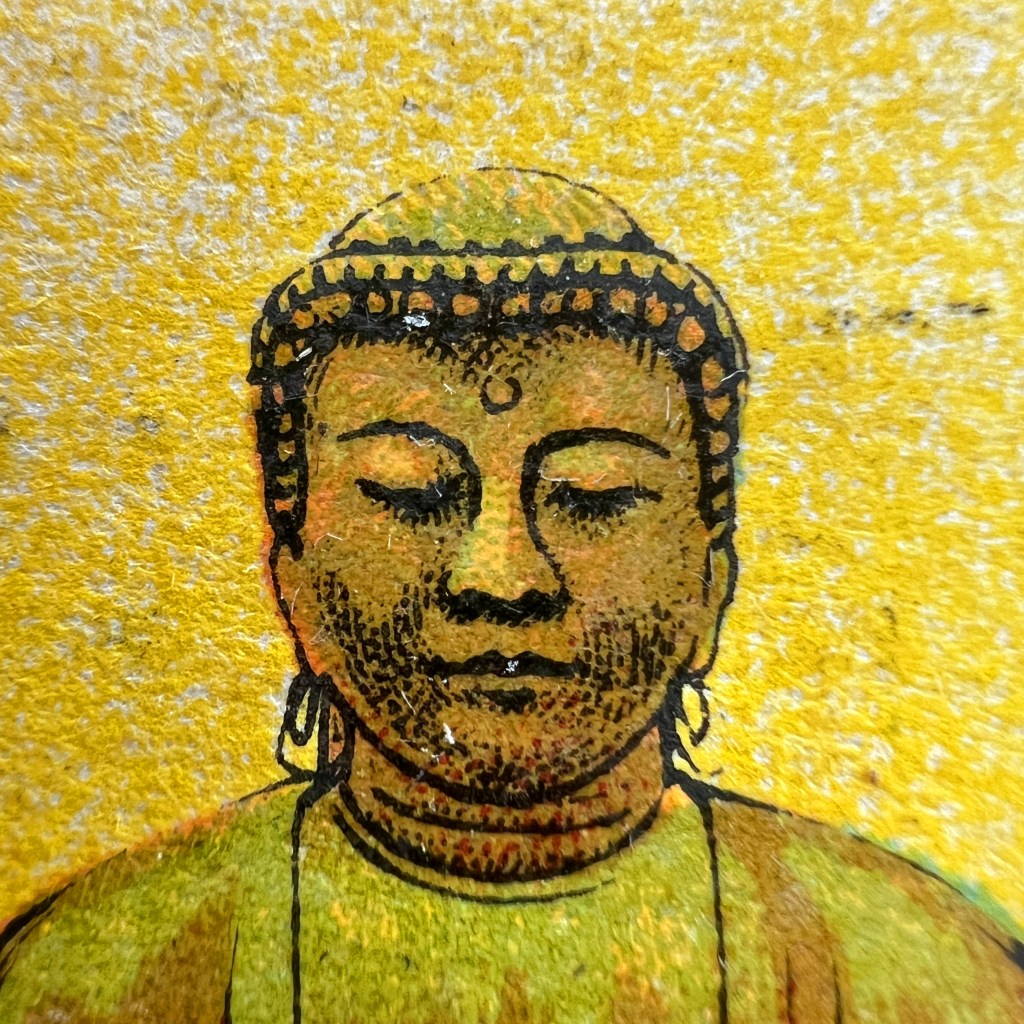
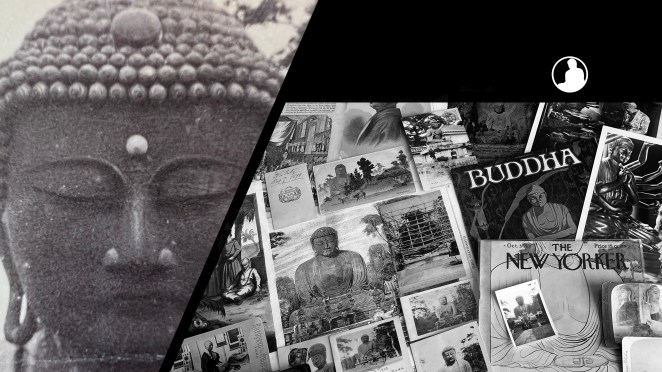
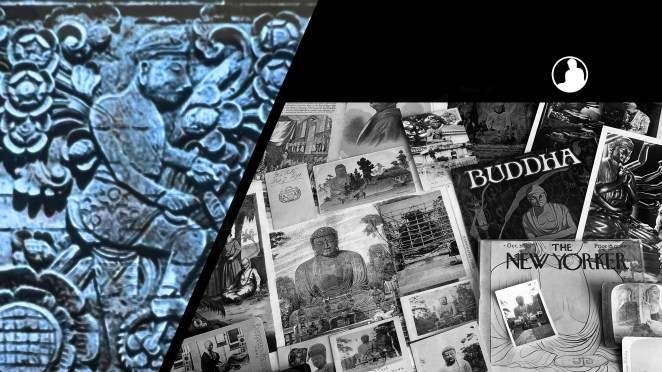
Looking closely, we can see the Kamakura Daibutsu is seemingly portrayed as a sightseeing destination, not a religious icon; the onlookers in Western attire hint more at curious observation than reverence.

Moreover, the caption of “ancient Japan” plays to the idea of an ancient and mystical “Orient,” thus we might read the Buddhist icon as a quaint relic of the distant past, not part of a living religious tradition.

French confectioner Chocolat Pupier was a major producer of chromolithographed trade cards. An “Asia” album with 252 card slots could be purchased to display your collection (we see this is card number 140).

The rise of the postcard at the turn of the twentieth century and the growth of magazine advertising ended the widespread use of trade cards. For more on trade cards, see “The Short Rise and Fall of the Crazy-for-Cocoa-Trade Cards Craze,” viewable here: tinyurl.com/yc2a9y4b.


The Buddhas in the West Material Archive is a digital scholarship project that catalogues artifacts depicting Buddhist material culture for Western audiences. It’s comprised of prints, photos, and an assortment of ephemera and other objects. For a brief introduction to this archive, visit the main Buddhas in the West project page.


For Related Buddhas in the West Posts Featuring Historical Lithographic Prints:


For the Most Recent Buddhas in the West Posts:

Liebig Dalai Lama Advertising Card

For all the new Buddhas in the West posts
follow us on Bluesky & Instagram


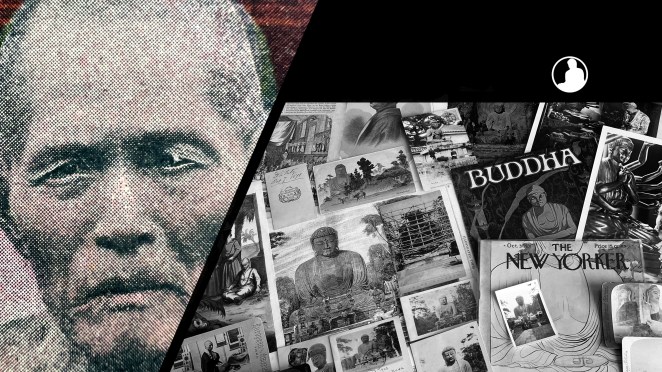
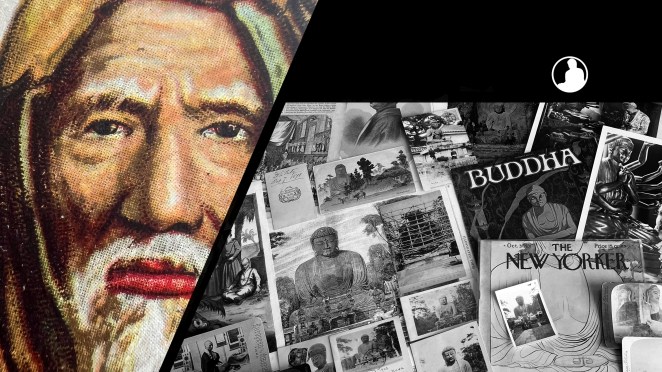
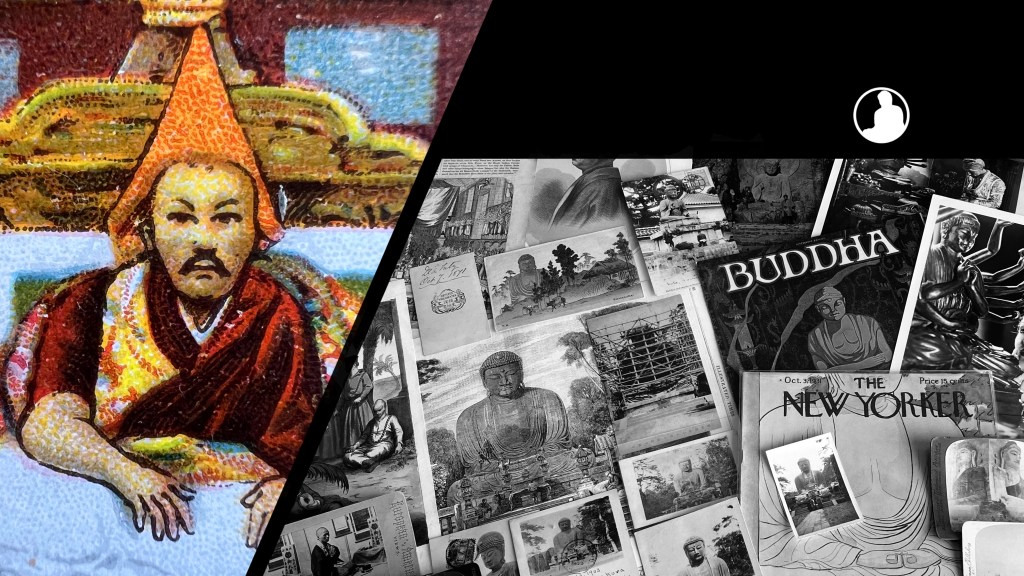
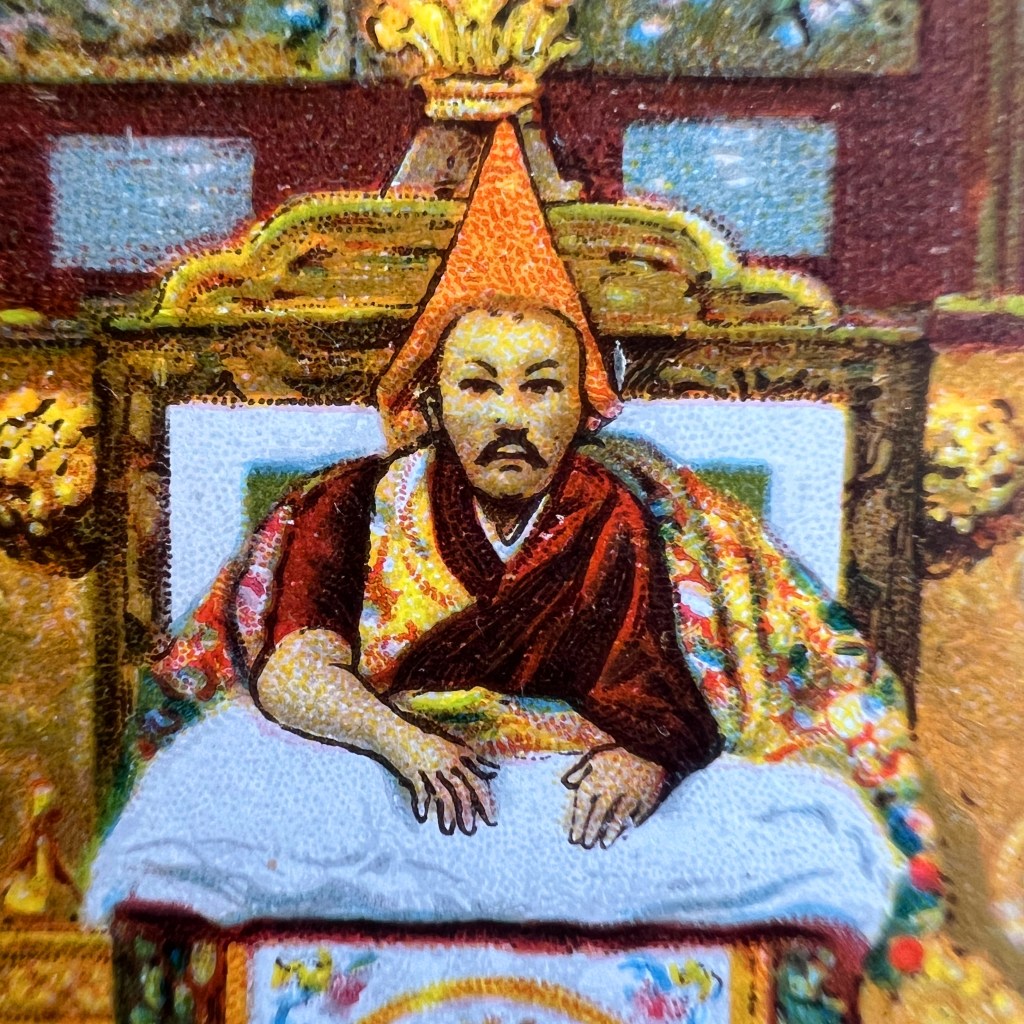
The first photograph of the Dalai Lama in Tibet was taken in 1921; it depicts “the Great Thirteenth,” Tubten Gyatso (1876–1933). The image was published in various Western media, even making its way on to a multicolor lithograph trade card for the German company Liebig in 1935.
*The first photograph of the Dalai Lama was taken in India in 1910 following the incursion of the Qing army into Tibet.

The photograph was taken by Charles Bell and Rabden Lepcha at Norbulingka, the summer palace of the Dalai Lama. Previously, images of the Dalai Lama were only spread through devotional tapestries (thangka) and gilt statues; now photographs could be shared among faithful Tibetans.

The Liebig company started printing colorful advertising cards in 1872, helping to support a popular collector’s hobby. This set from 1935 focused on Lhasa and included six cards, including an image of Potala Palace and large Tibetan prayer wheel, both iconic images in popular consciousness.

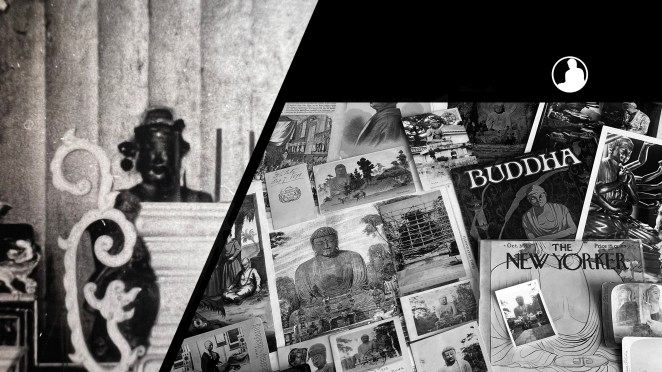
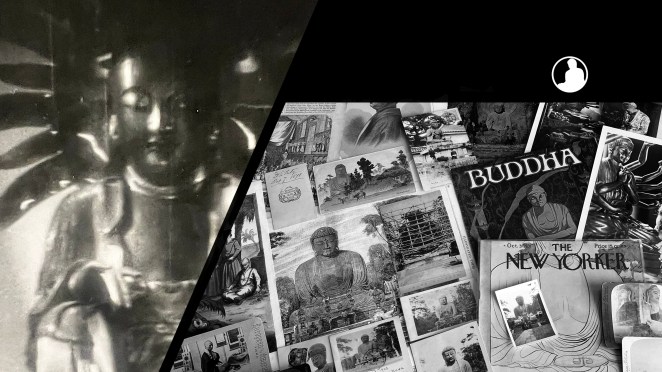
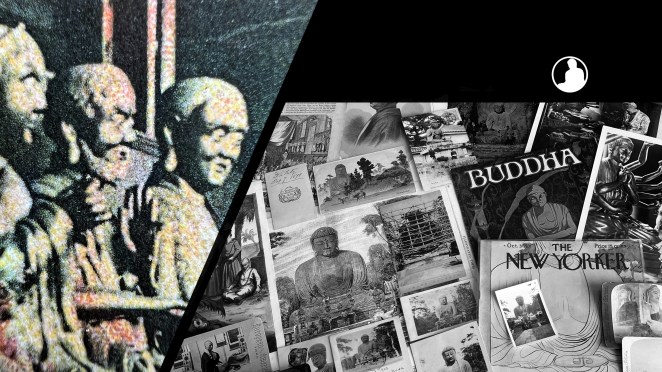
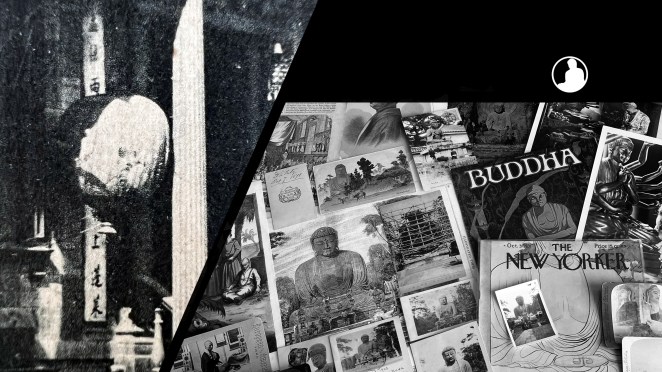
The original black and white photograph shows the Dalai Lama sitting on a throne behind an ornate dais. On the back wall hangs nine silk thangka depicting the Buddha, but the lithographic artist only loosely renders them as Buddhist images.

For a brief account of the Dalai Lama photograph and discussion on the impact of photography in Tibet, see Riga Shakya’s Lenses of Modernity: Photography in Tibet and the Himalayas, viewable here: tinyurl.com/bdzzcw4m.


The Buddhas in the West Material Archive is a digital scholarship project that catalogues artifacts depicting Buddhist material culture for Western audiences. It’s comprised of prints, photos, and an assortment of ephemera and other objects. For a brief introduction to this archive, visit the main Buddhas in the West project page.


For Related Buddhas in the West Posts Featuring Tibet:


For the Most Recent Buddhas in the West Posts:


Chocolat Pupier’s Kinkaku-ji Trade Card

For all the new Buddhas in the West posts
follow us on Bluesky & Instagram


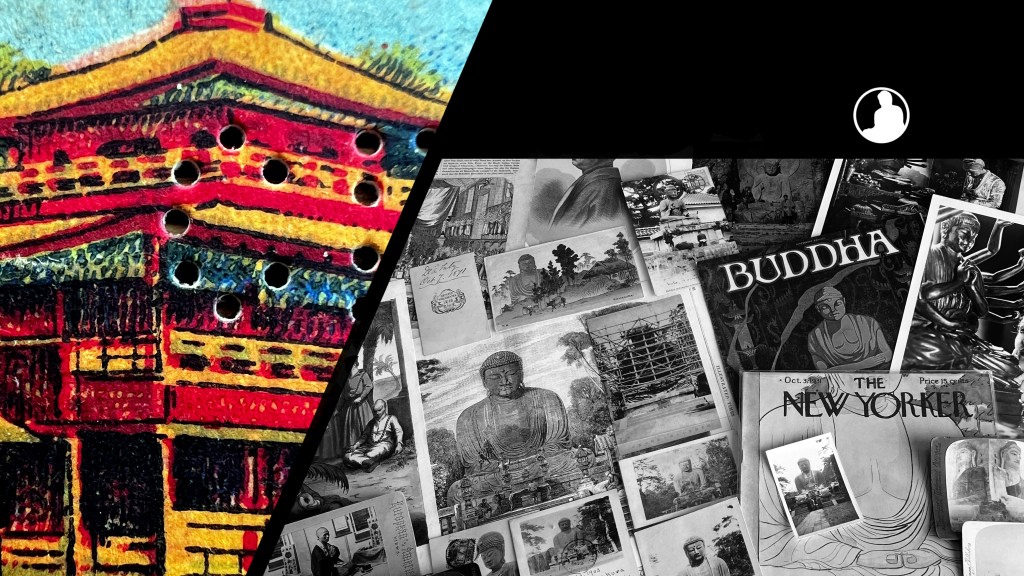
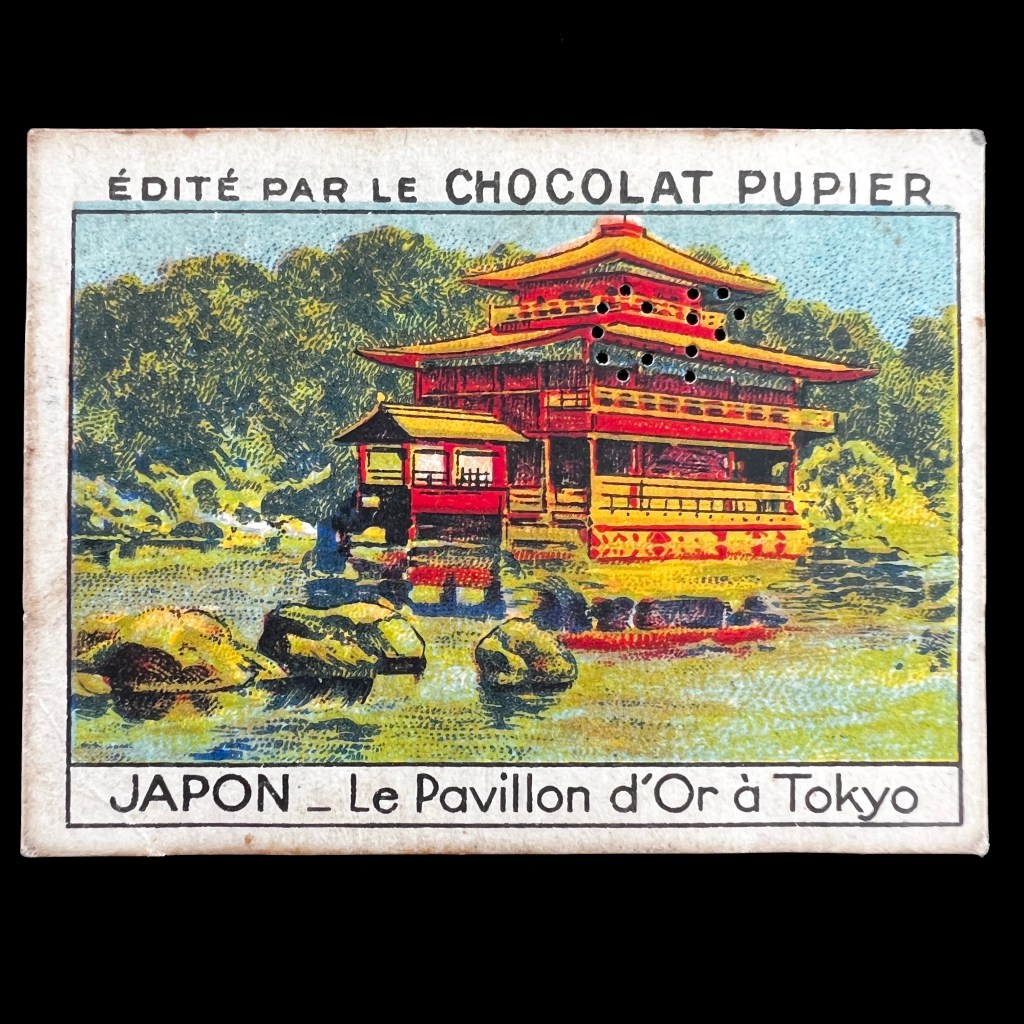
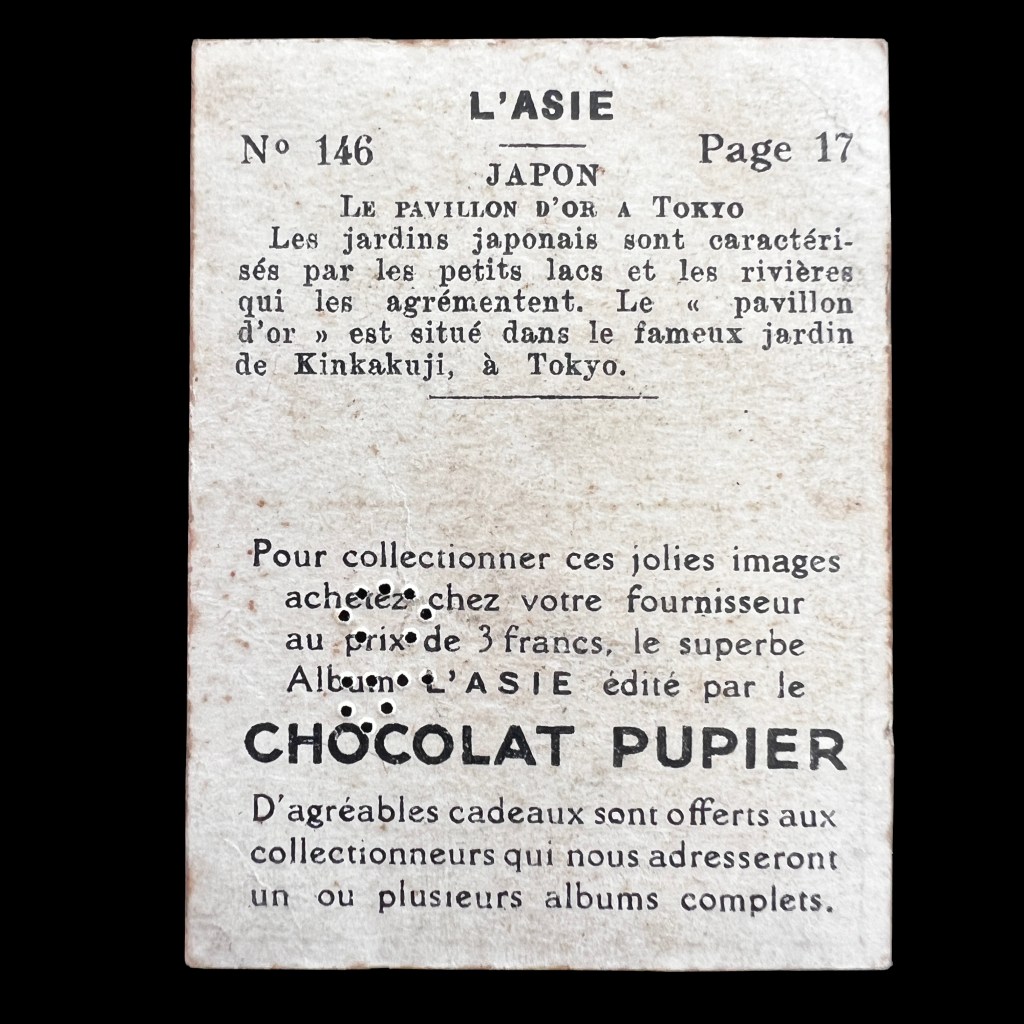
Turn of the century French chocolatiers took advantage of the popularity of colorful trade cards and included them with their products. In 1936 the Chocolat Pupier company created a collectable Asia series with several illustrations of Buddhist material culture.

An album with 252 card slots could be purchased to display your collection. If completed, Chocolat Pupier offered a gift to the consumer.

Chromo-lithographic printing offered an inexpensive way to mass produce colorful imagery. There is an error on this card, however, can you spot it?

The Gold Pavilion Temple, Kinkaku-ji, is not in Tokyo, buy Kyoto. In addition to Asia, Chocolat Pupier made cards related to Europe, North America, and Africa.

A small collection of Chocolat Pupier card was recently acquired by Duke University Library, see here: https://archives.lib.duke.edu/catalog/chocolatpupier.


The Buddhas in the West Material Archive is a digital scholarship project that catalogues artifacts depicting Buddhist material culture for Western audiences. It’s comprised of prints, photos, and an assortment of ephemera and other objects. For a brief introduction to this archive, visit the main Buddhas in the West project page.


For Related Buddhas in the West Posts Featuring Historical Trade Cards:


For the Most Recent Buddhas in the West Posts:

Paris’ Panorama du Tour du Monde Advertising Card

For all the new Buddhas in the West posts
follow us on Bluesky & Instagram


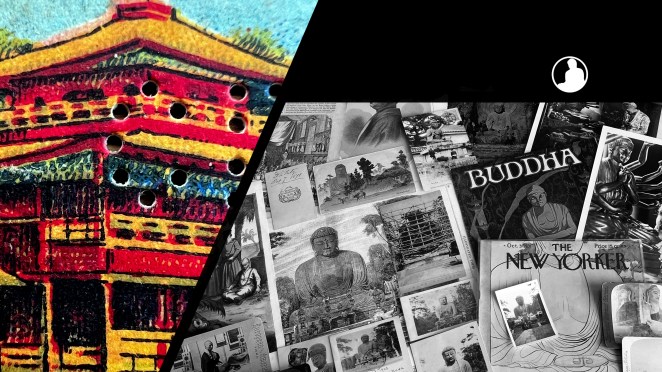
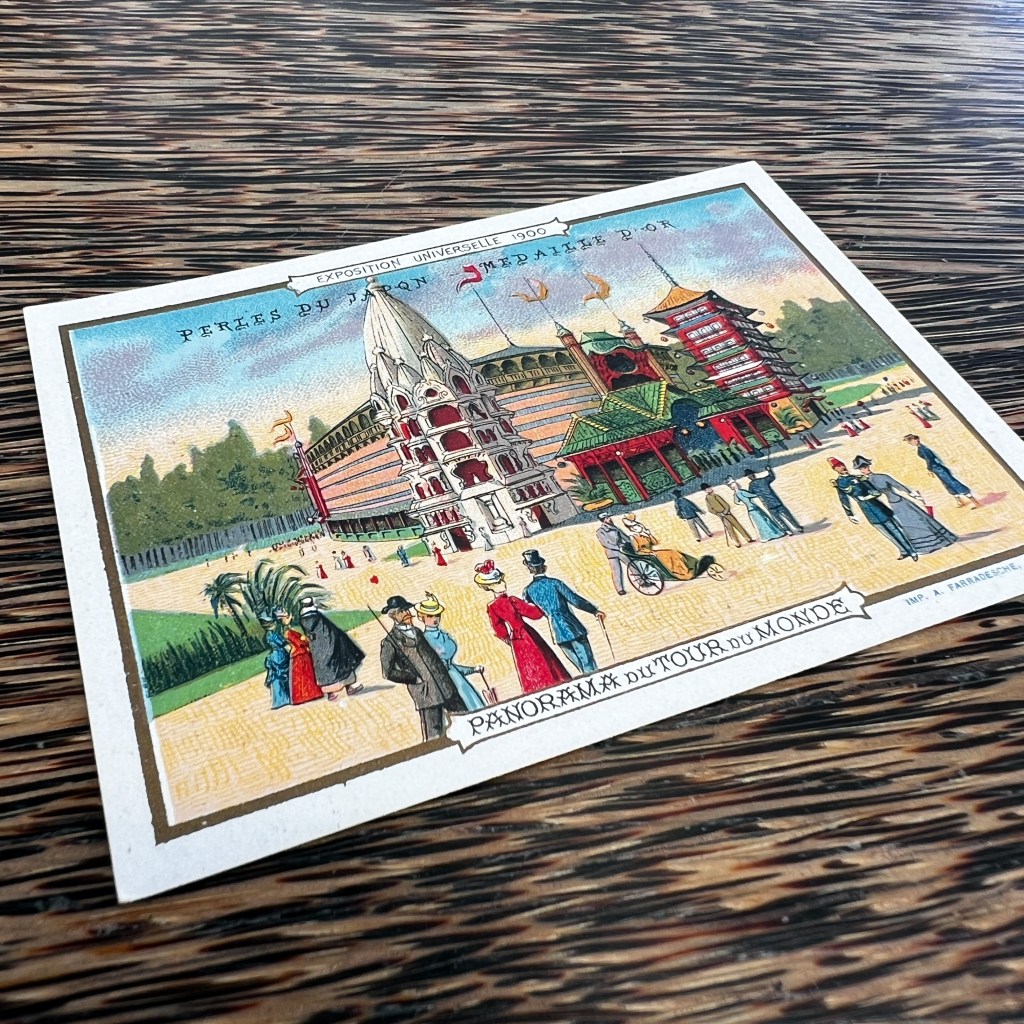
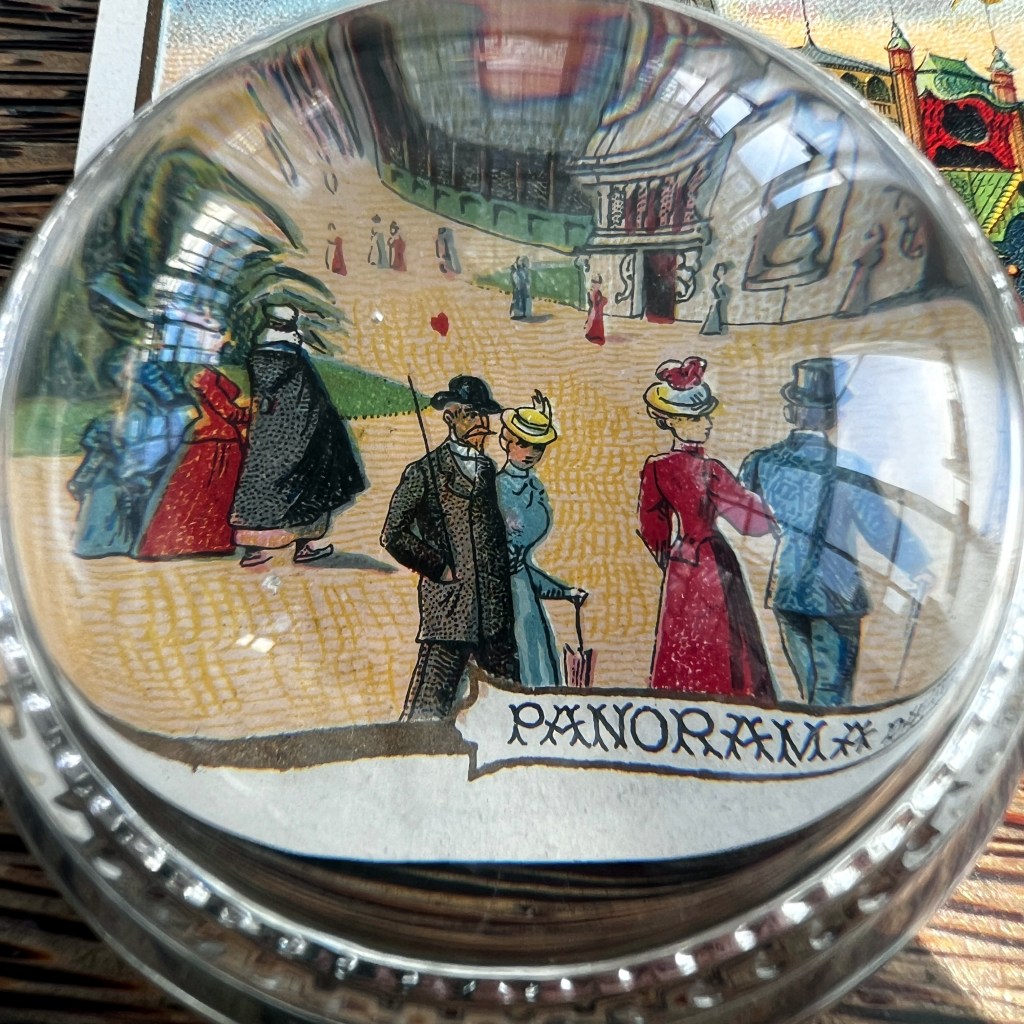
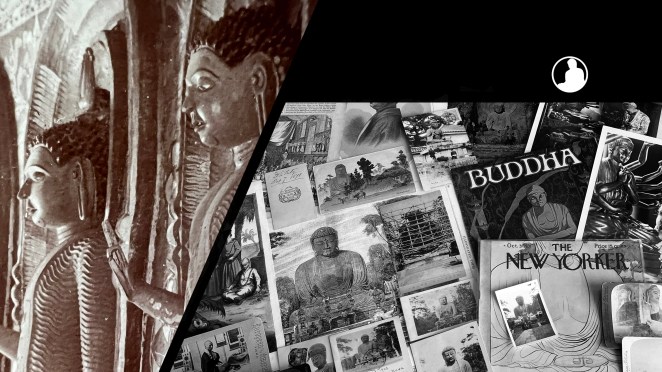
Panorama du Tour du Monde: By the 1900 Paris Exposition, amusement concessions were a major draw for all exposition visitors. Not far from the foot of the Eiffel Tower one found the Panorama du Tour du Monde which took patrons on a virtual voyage from Spain to Japan.

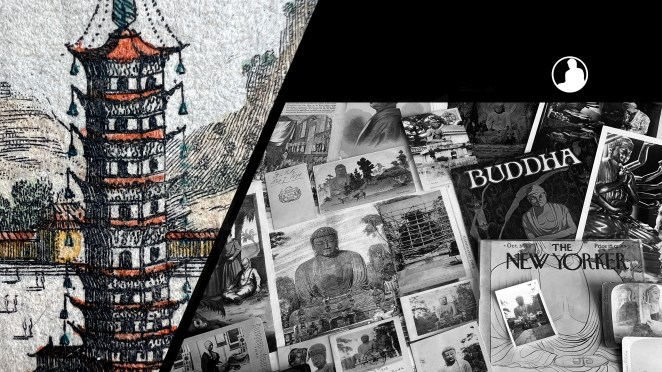
Built by Alexandre Marcel for a French sea-transport company, the architecture called to mind exotic locales with Asian-inspired structures. The main entrance was modeled on the Tōshō-gū in Nikkō, Japan. Some sources claim the red pagoda was based on a Chinese model.

Visitors were drawn in by large panoramic paintings of various foreign countries to give a sense of virtual travel. More astonishingly, the concession integrated many indigenous performers who engaged in various trades while wearing traditional foreign costumes

The beautiful lithographic print was part of an advertising campaign for a French company selling tapioca pearls, called “perles du Japon.”

King Leopold II was so struck by the building, he had Marcel build the Japanese Tower in Brussels. For more on the Tour du Monde exhibition, see https://tinyurl.com/2vbmr3c7.


The Buddhas in the West Material Archive is a digital scholarship project that catalogues artifacts depicting Buddhist material culture for Western audiences. It’s comprised of prints, photos, and an assortment of ephemera and other objects. For a brief introduction to this archive, visit the main Buddhas in the West project page.


For Related Buddhas in the West Posts Featuring France:


For the Most Recent Buddhas in the West Posts:

Liebig’s Komusō Advertising Card

For all the new Buddhas in the West posts
follow us on Bluesky & Instagram


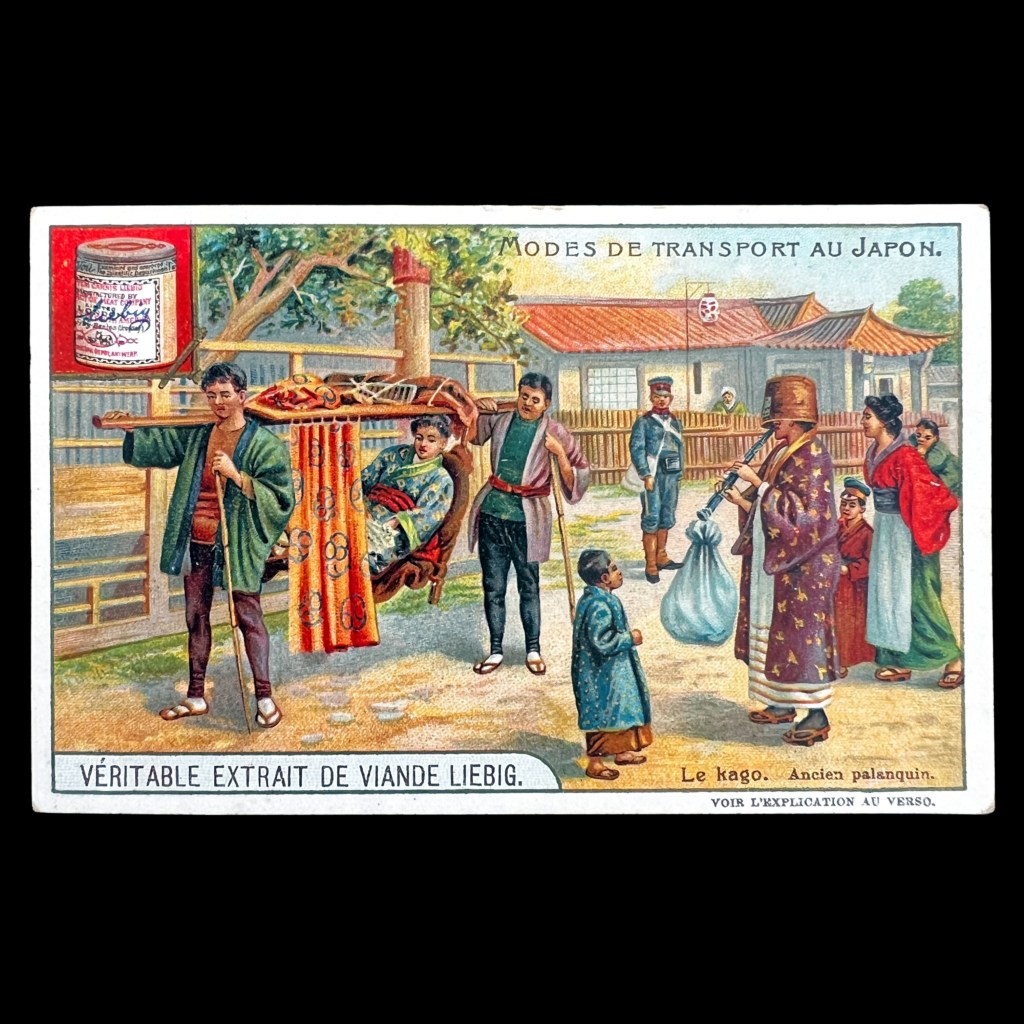
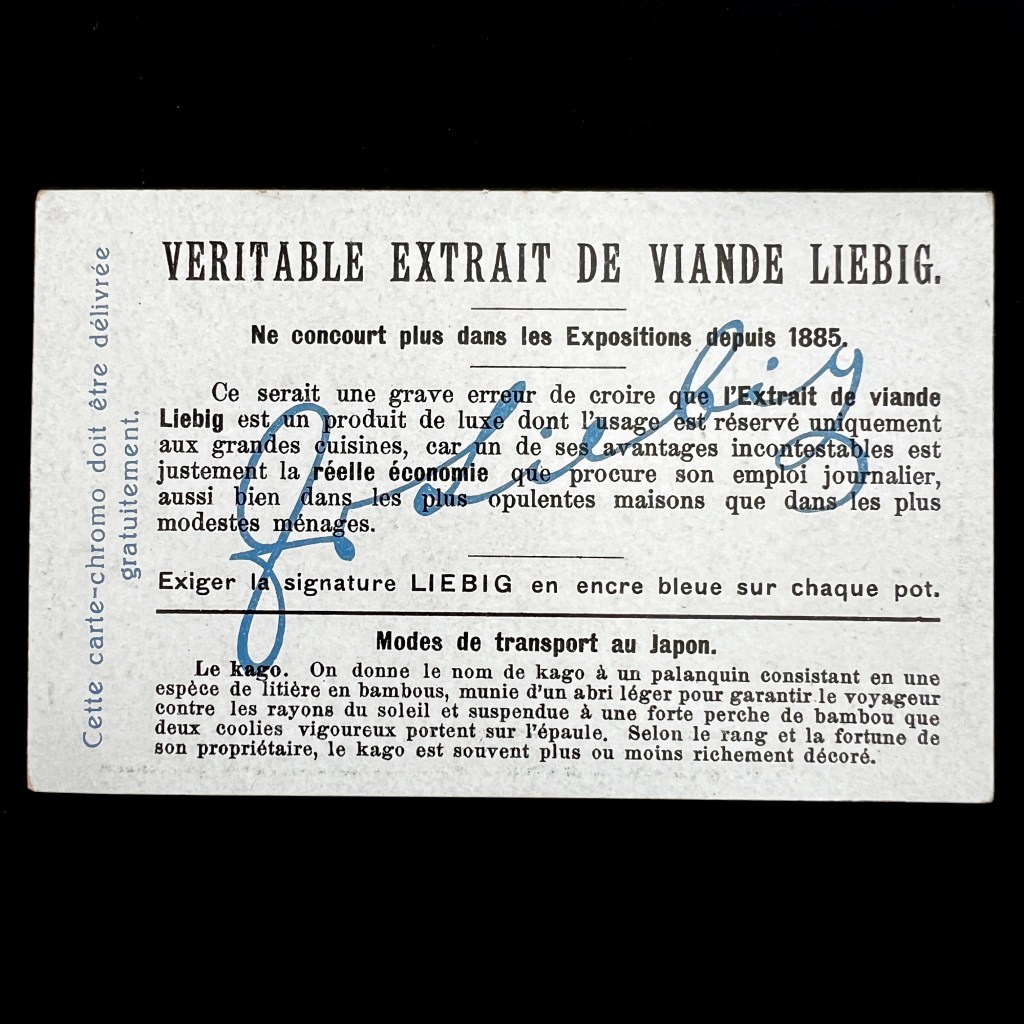
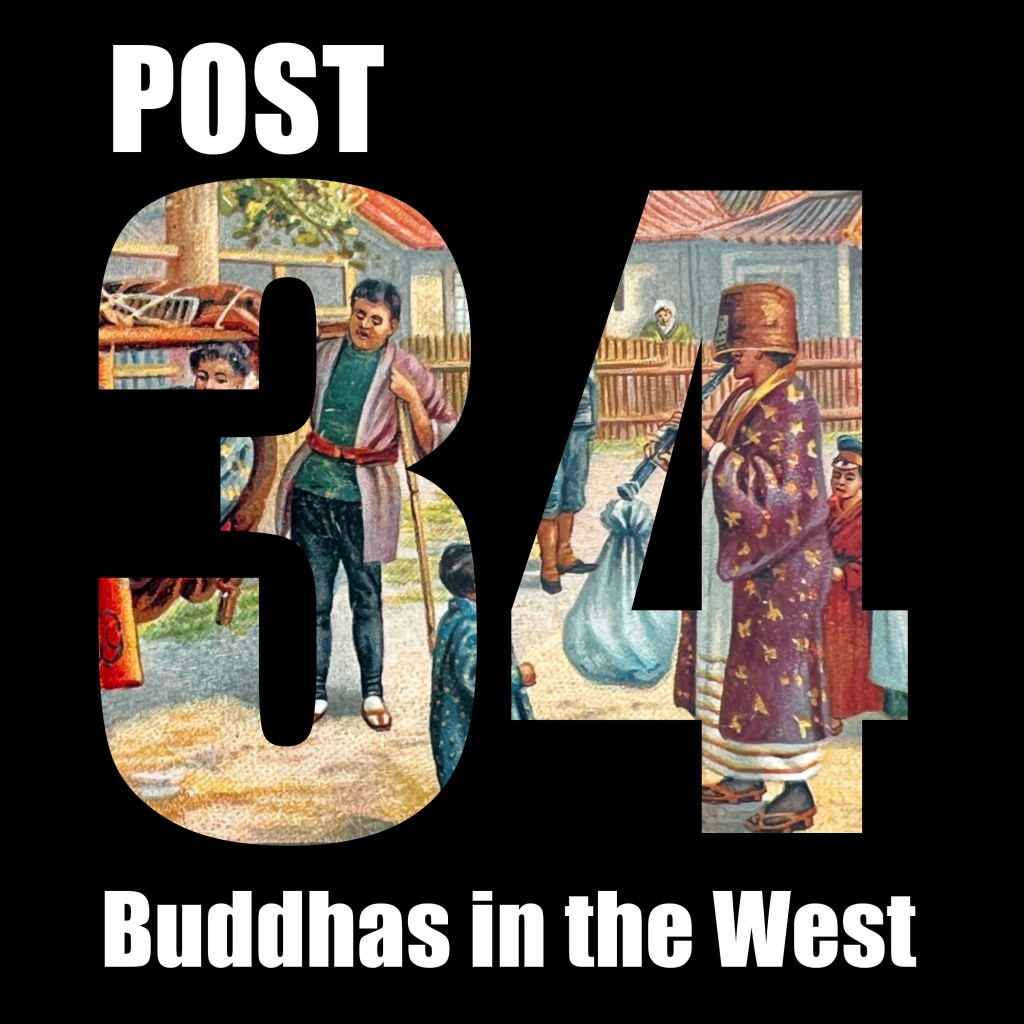
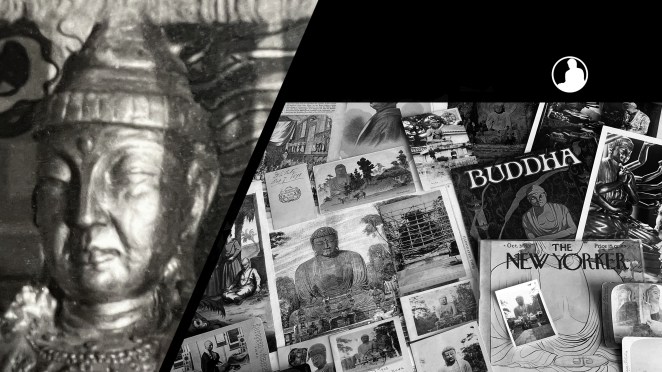
Komusō 虚無僧: Victorian trade card illustrations leaned into stereotypes to create collectables with easily identifiable cultures and peoples. With the 1905 Japanese modes of transportation series, the setting is provided a curious Buddhist figure: a flute playing monk.

The British Liebig company started producing trade cards in 1872 and by the turn of the century the vibrant chromolithographic prints were widely popular and printed in several languages. This set comprised six cards, with the one here focusing on the Japanese palanquin.

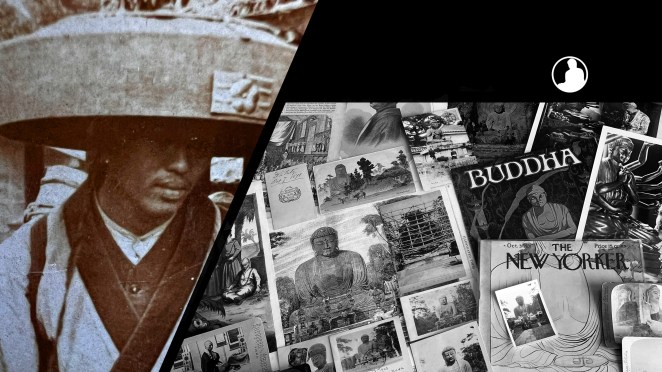
The faceless Komusō – monks of nothingness – were depicted in woodblock prints of the late Edo period and were seen in souvenir photographs of Yokohama studios in c.1890s. Consequently they became one among the visual icons of Japan for Western tourists.

The Fuke school of the komusō was prohibited in 1871, but lay shakuhachi flute players continued the tradition of playing in public while dressed in full garb.


The Buddhas in the West Material Archive is a digital scholarship project that catalogues artifacts depicting Buddhist material culture for Western audiences. It’s comprised of prints, photos, and an assortment of ephemera and other objects. For a brief introduction to this archive, visit the main Buddhas in the West project page.


For Related Buddhas in the West Posts Featuring Historical Trade Cards:


For the Most Recent Buddhas in the West Posts:

Lambert and Butler’s Kamakura Daibutsu Cigarette Card

For all the new Buddhas in the West posts
follow us on Bluesky & Instagram


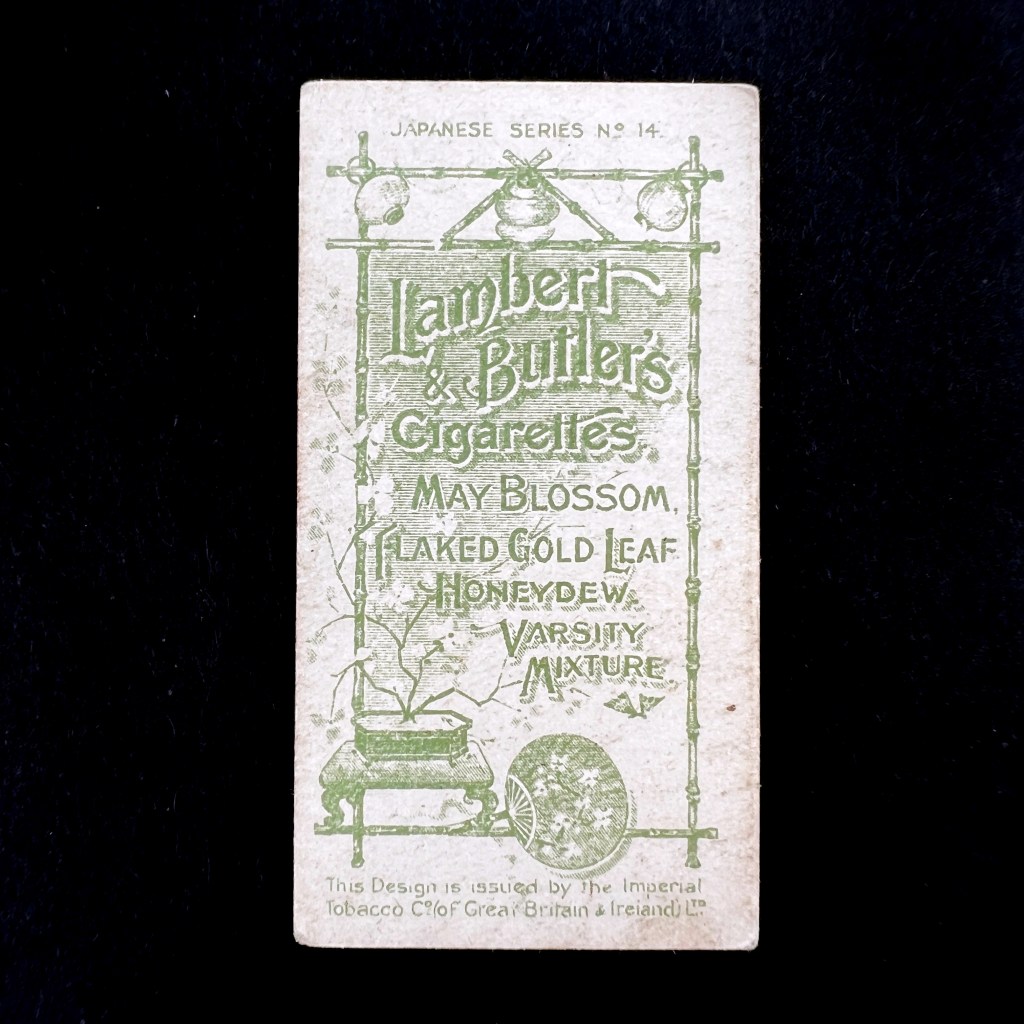
The Buddha’s “rookie” card? In the US, “cigarette cards” are perhaps best known for their early depiction of baseball players. These cards jump started a baseball card collecting phenomenon.

Tobacco companies drew upon a much larger visual repertoire than sports for their advertising cards. This sometimes included exotic locales. Intended to fit inside cigarette packs, these cards were relatively small.

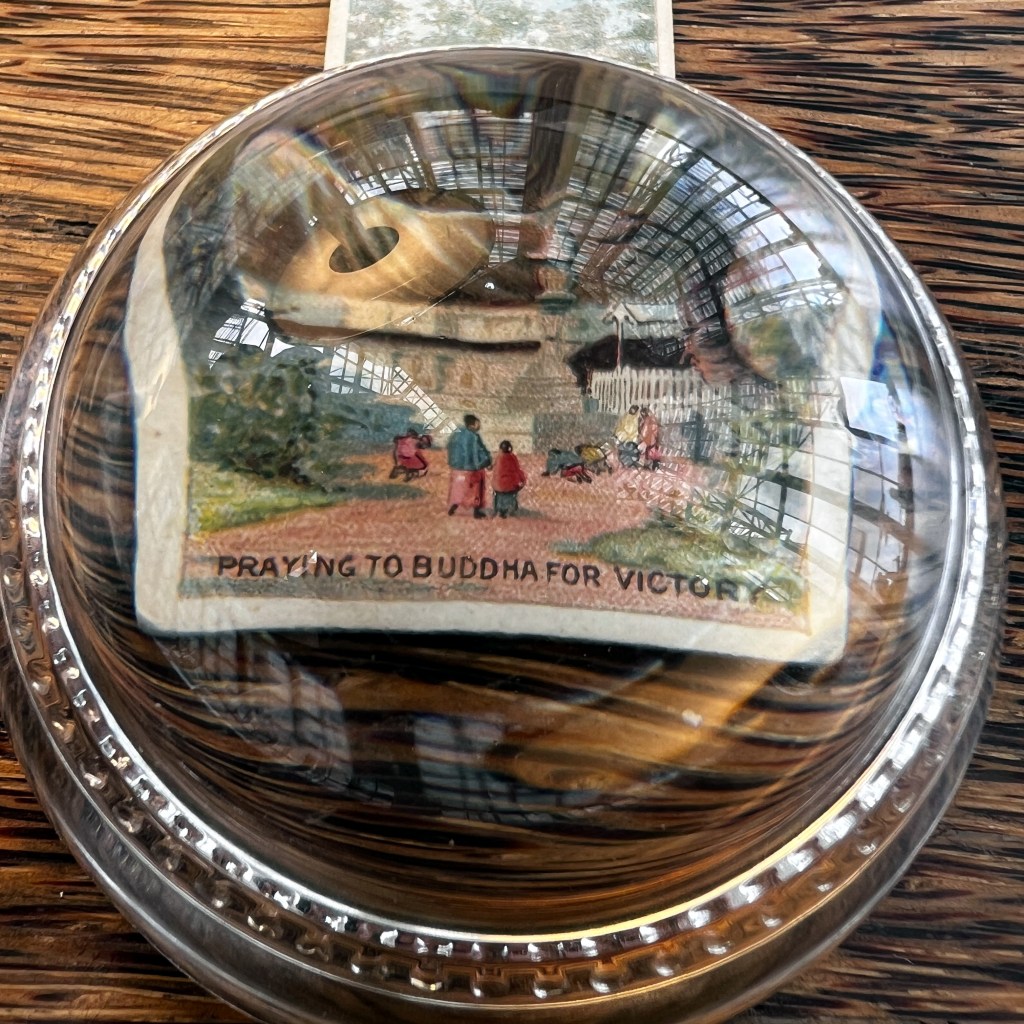
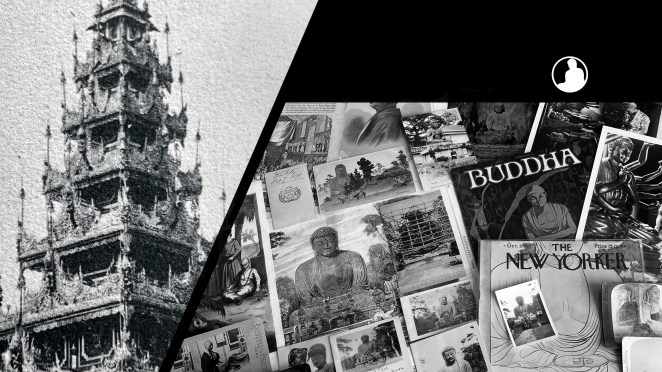
Lambert & Butler was a former English tobacco manufacturing company that made a “Japanese Series” in 1904-1905.

It memorialized the Russo-Japanese War. Thus we see a depiction of Japanese citizens praying at the foot of the Kamakura Daibutsu.

Similar to other Victorian trade cards, this was a colorful lithographic print. You can browse the collection of cigarette cards held by the NY Public Library here: https://tinyurl.com/cn23wud8.


Additional Archived Posts for the Buddhas in the West Project

The Buddhas in the West Material Archive is a digital scholarship project that catalogues artifacts depicting Buddhist material culture for Western audiences. It’s comprised of prints, photos, and an assortment of ephemera and other objects. For a brief introduction to this archive, visit the main Buddhas in the West project page.


For Related Buddhas in the West Posts Featuring Historical Trade Cards:


For the Most Recent Buddhas in the West Posts:


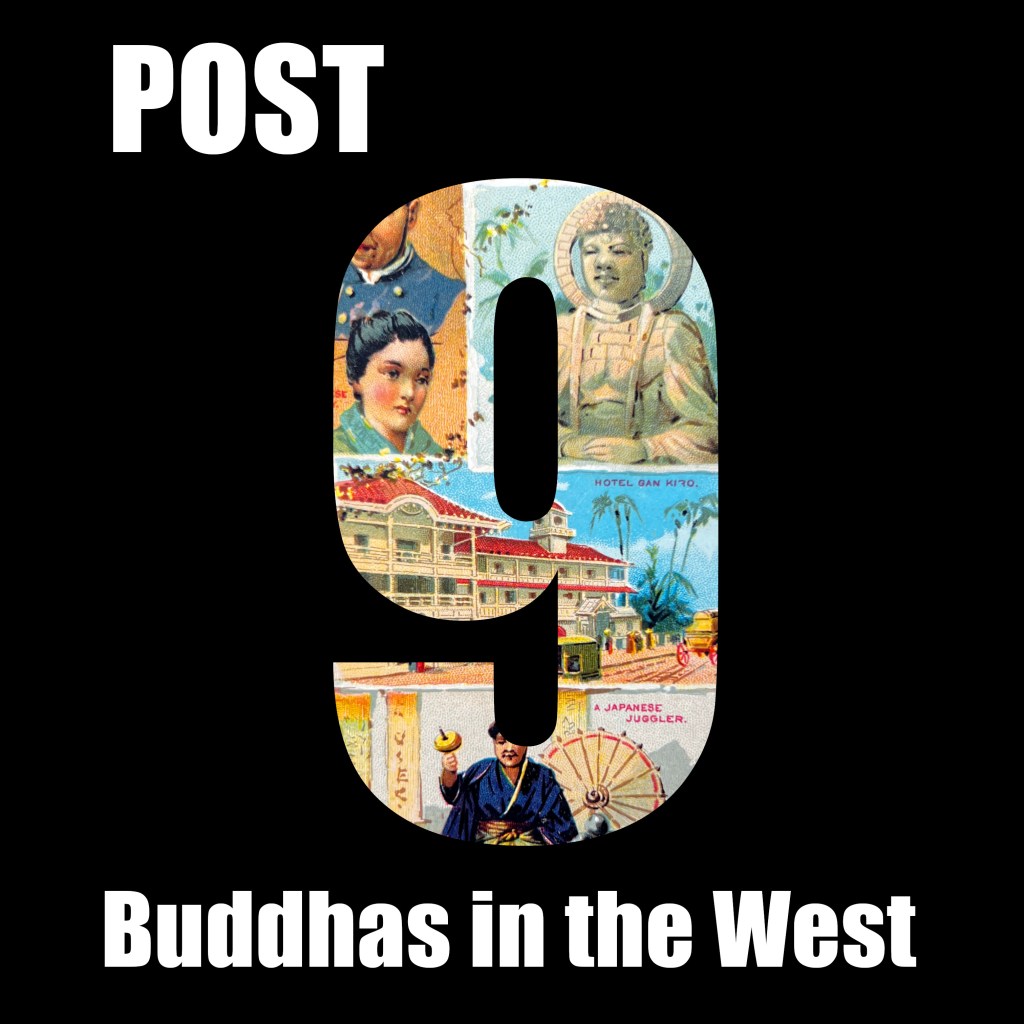
Arbuckle Bros. Coffee Japan Advertising Card

For all the new Buddhas in the West posts
follow us on Bluesky & Instagram


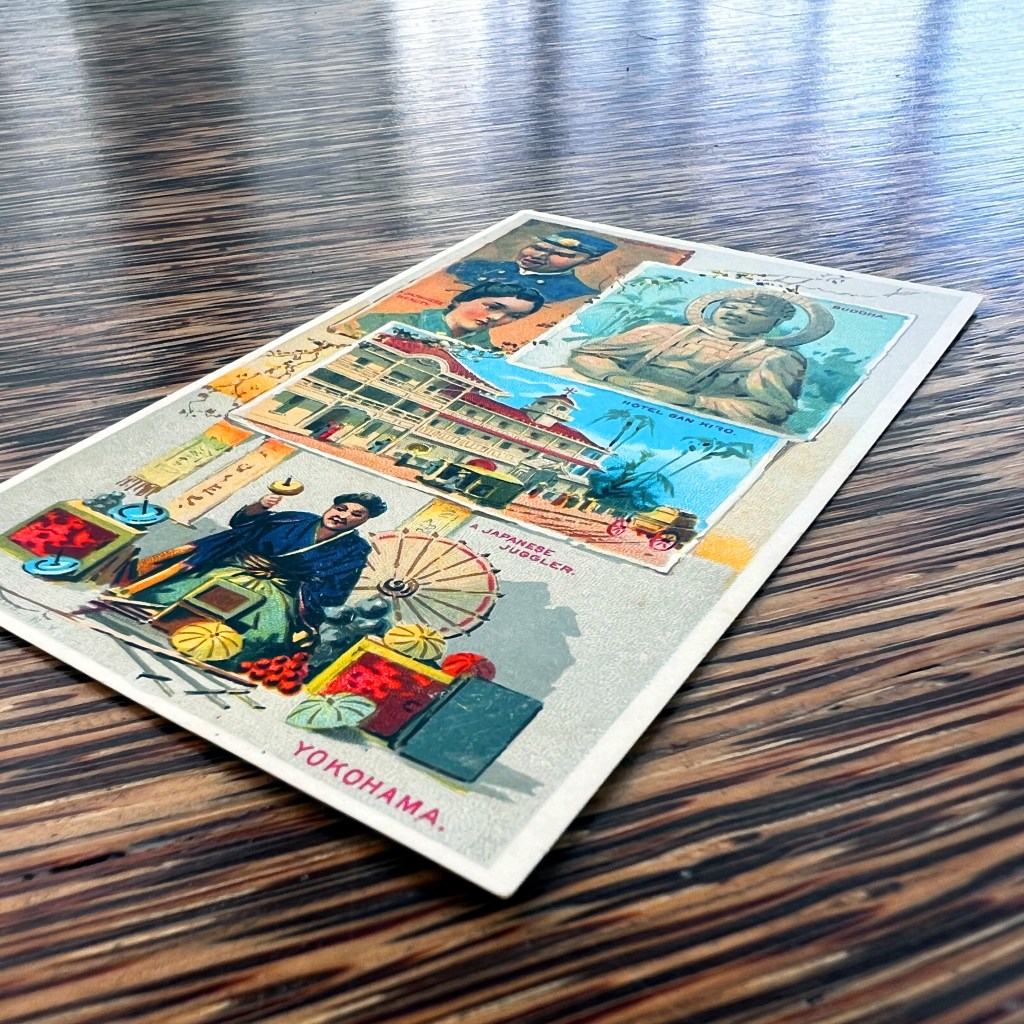
Vibrant Victorian trade cards stuck out among a sea of black and white advertising. In the early age of engraved mass publications, chromolithography ushered in a new era of visual media.

Trade cards were popular advertising materials from 1875 to 1900. Typically businesses printed text-heavy advertising copy on the reverse of the card, saving the obverse for an image.

Here, Arbukle Bros. Coffee produced a 50 card set depicting around-the-world travel. This trade card highlights Yokohama, Japan, a treaty port city popular among 19th century tourists.

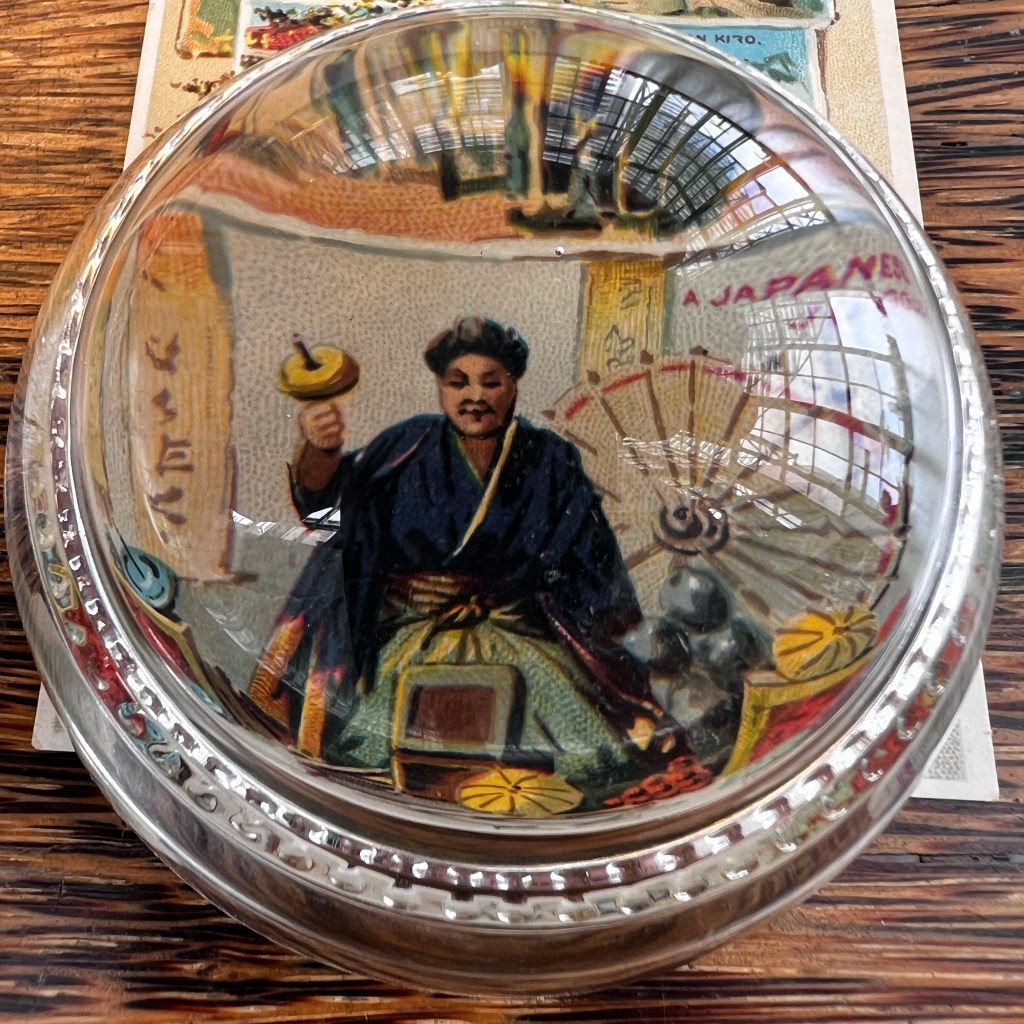
In reality, the card shows stereotypical imagery of Japan, including costumes, landscapes, and professions easily identifiable to foreign travelers.

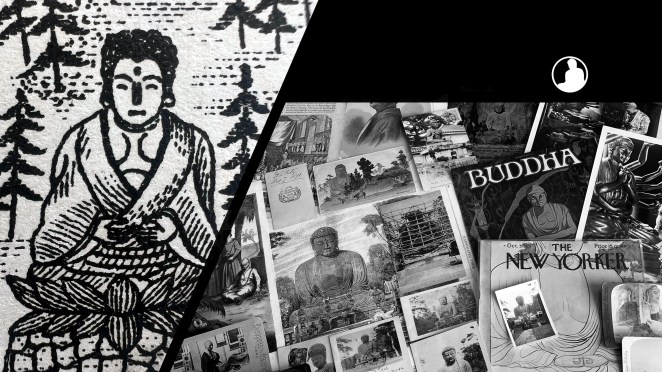
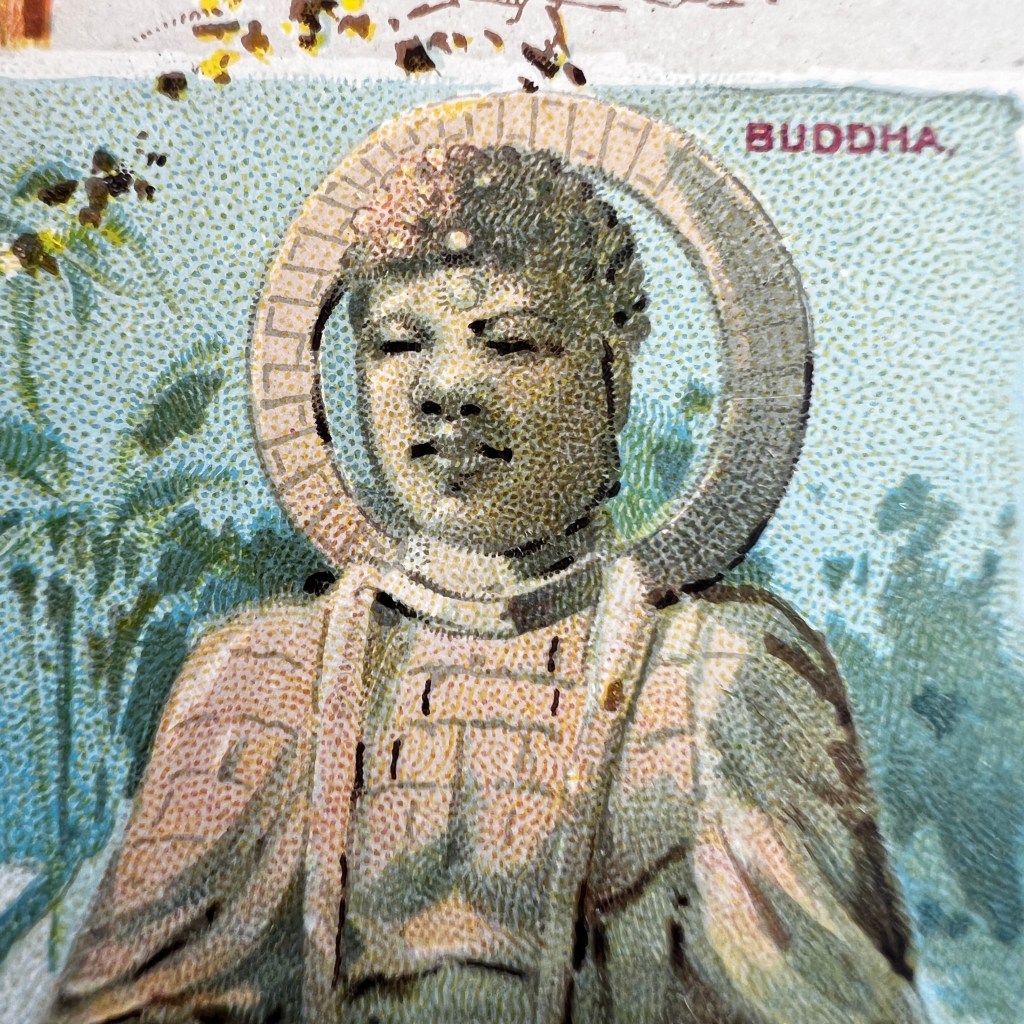
The Buddhist icon is unidentified, but this card reveals generic Buddhist imagery was closely connected to the popular image of Japan.


The Buddhas in the West Material Archive is a digital scholarship project that catalogues artifacts depicting Buddhist material culture for Western audiences. It’s comprised of prints, photos, and an assortment of ephemera and other objects. For a brief introduction to this archive, visit the main Buddhas in the West project page.


For Related Buddhas in the West Posts Featuring Historical Trade Cards:

For the Most Recent Buddhas in the West Posts: