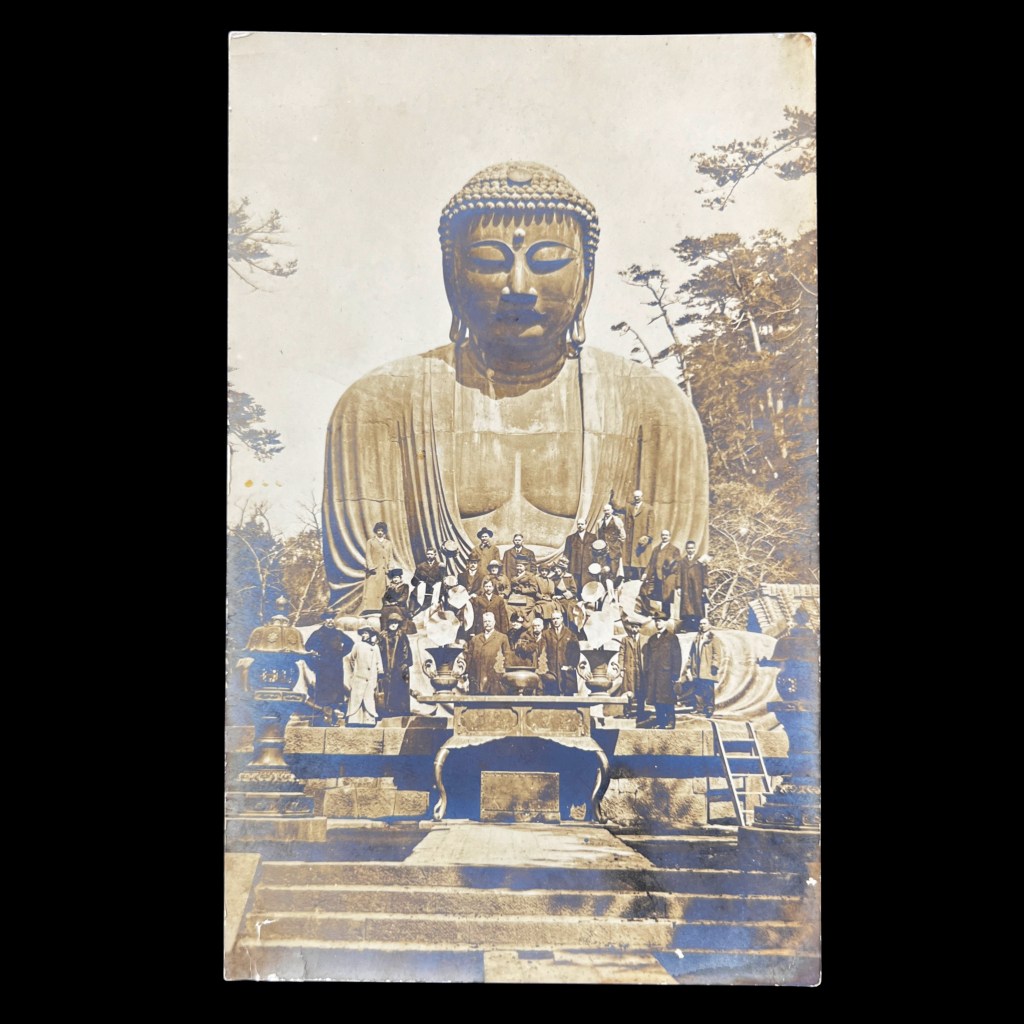
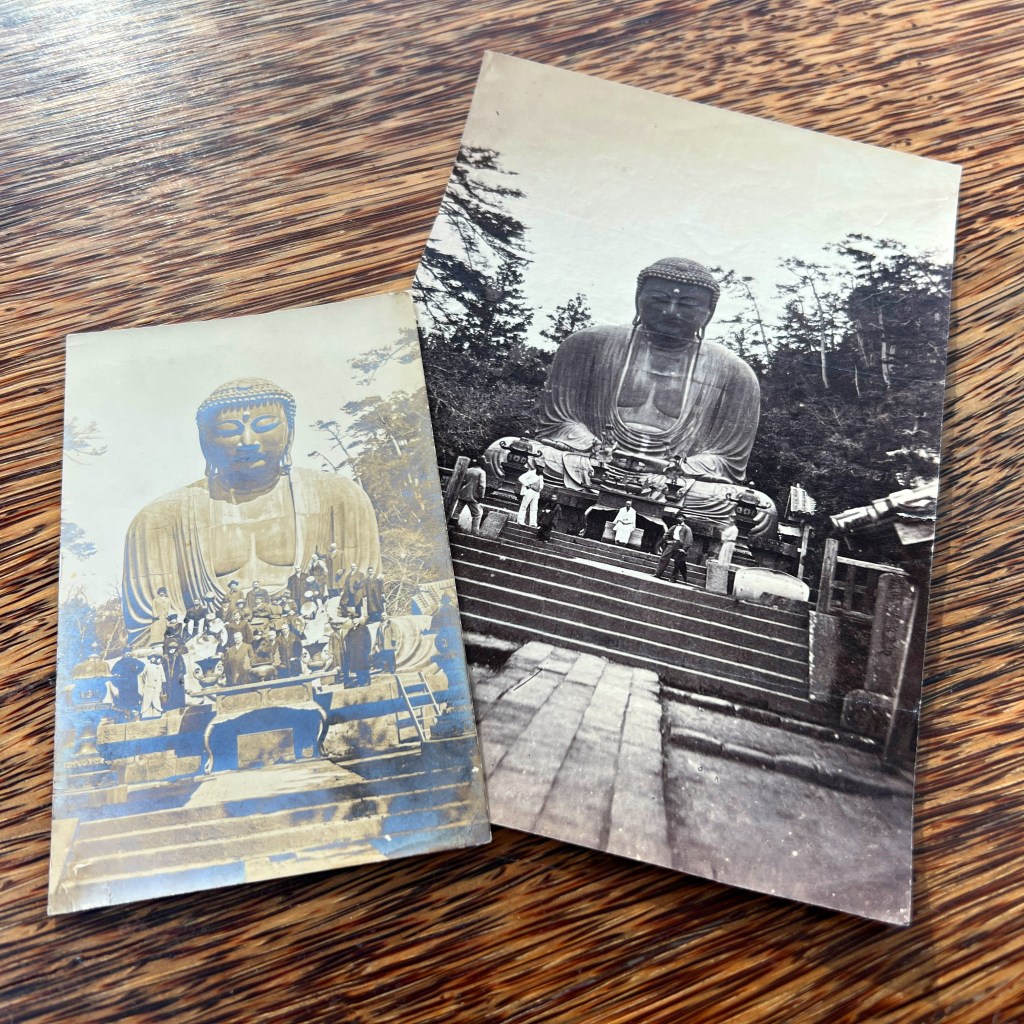
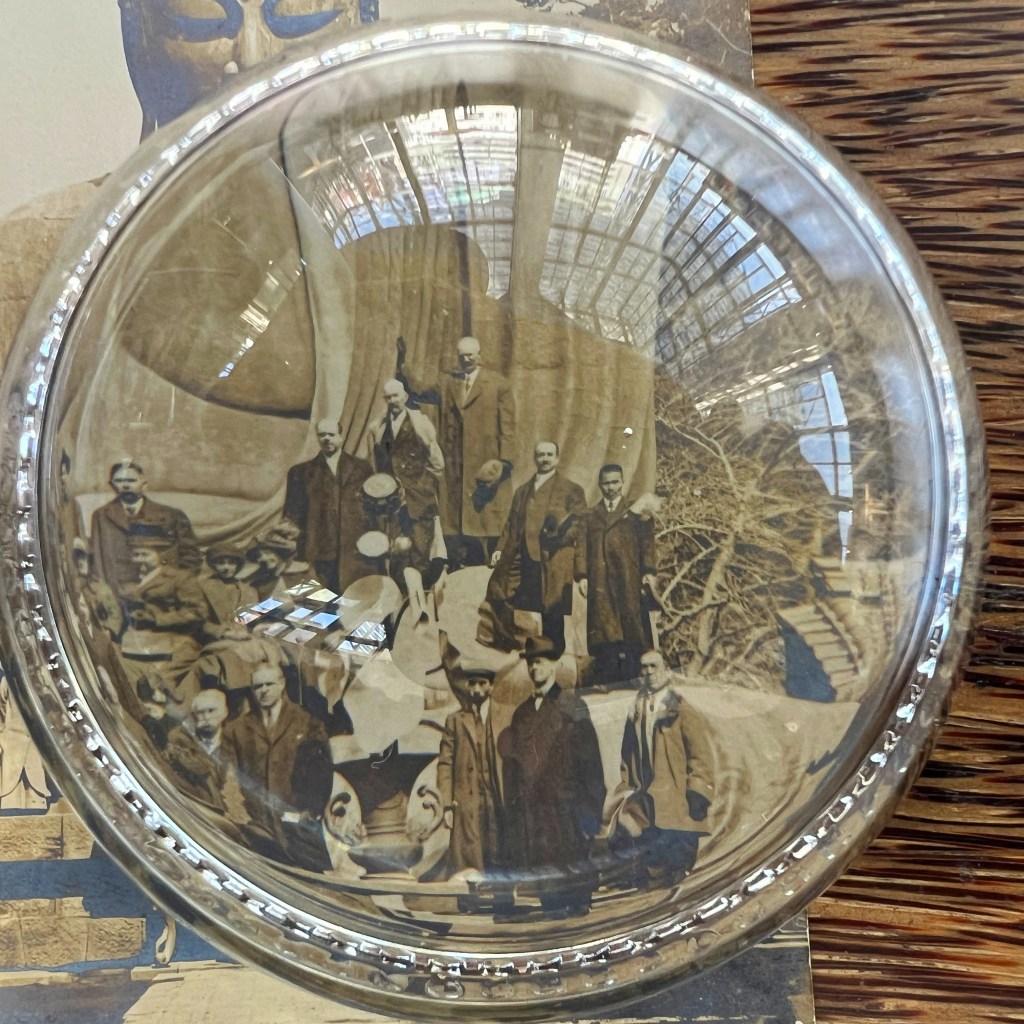
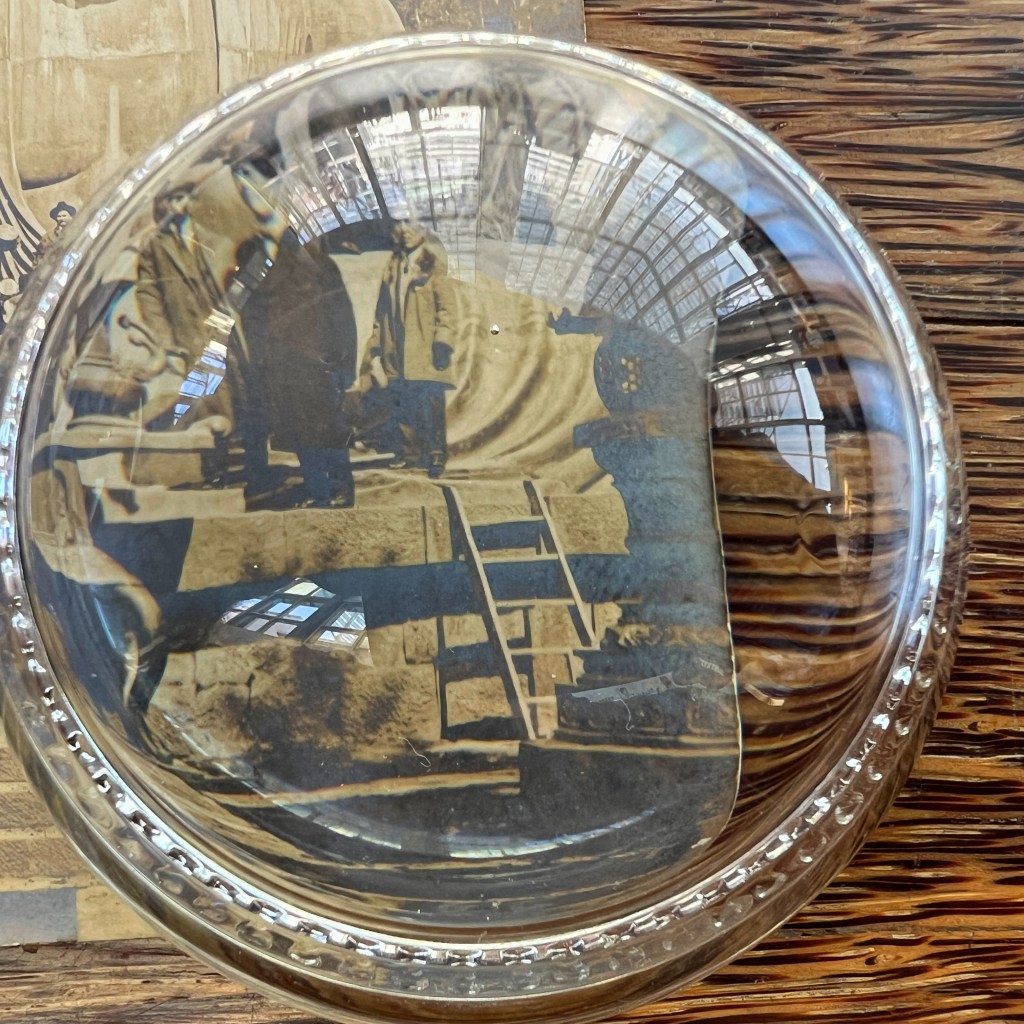
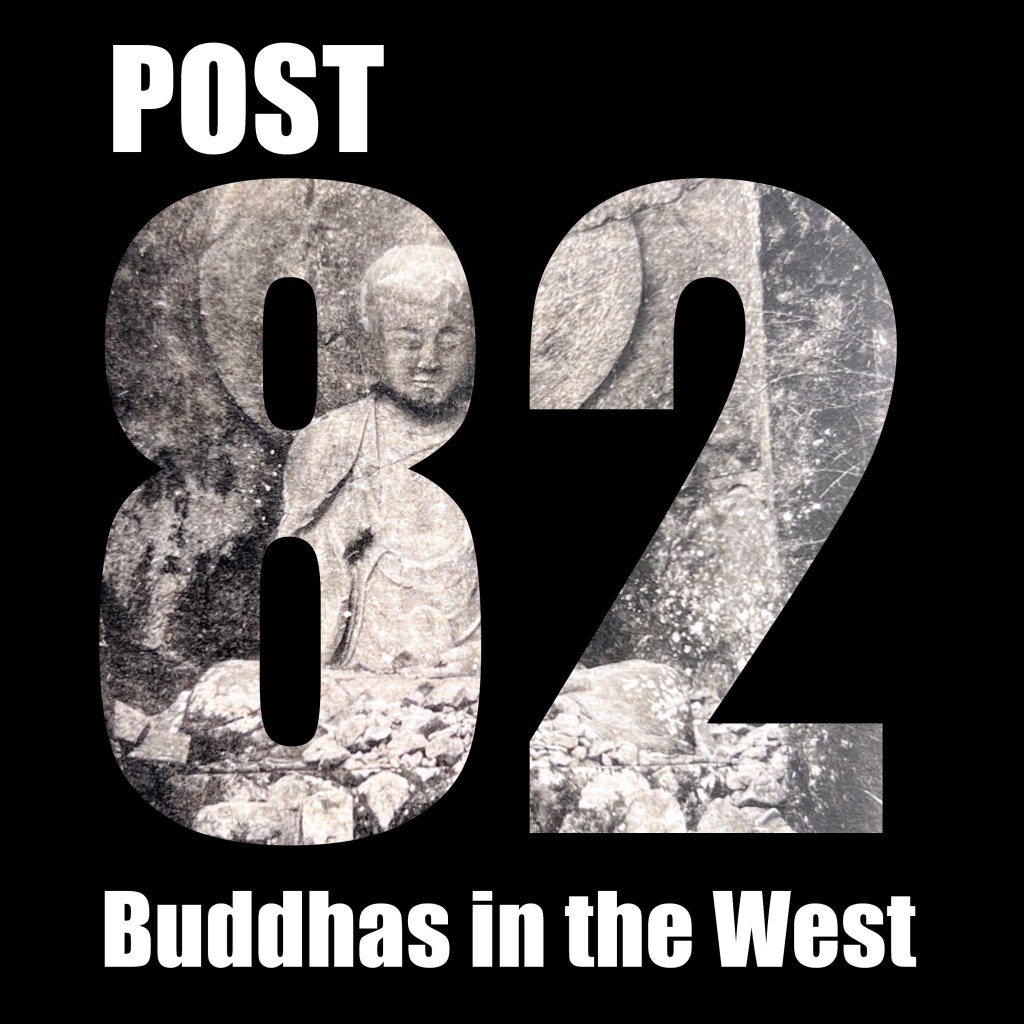
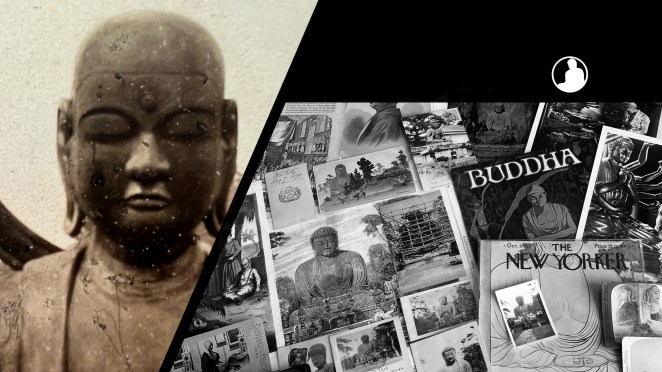
Daibutsu and Tour Group Glass Lantern Slide

For all the new Buddhas in the West posts
follow us on Bluesky & Instagram


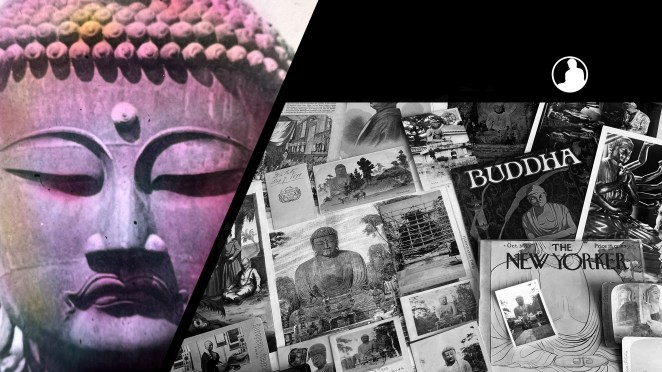
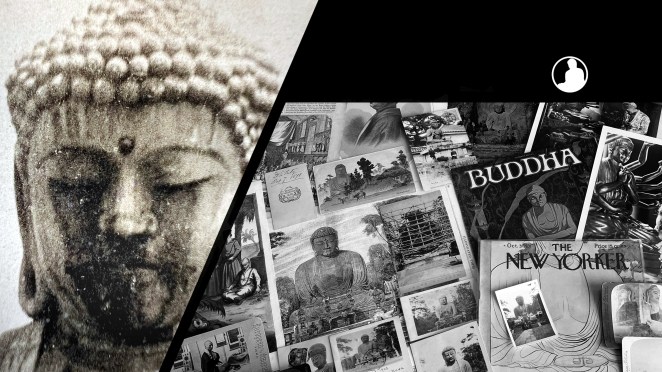
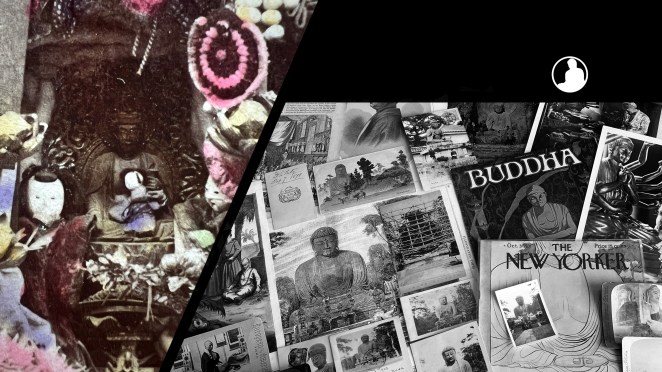
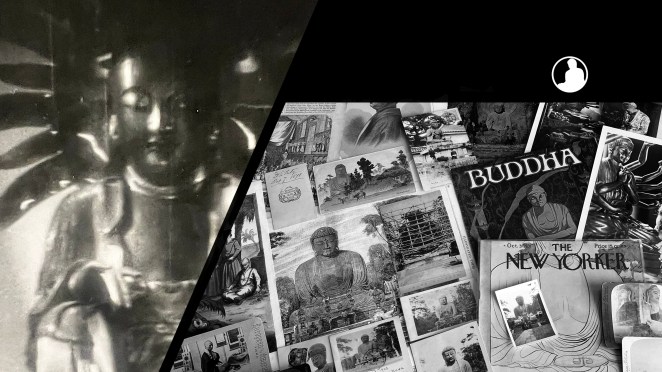
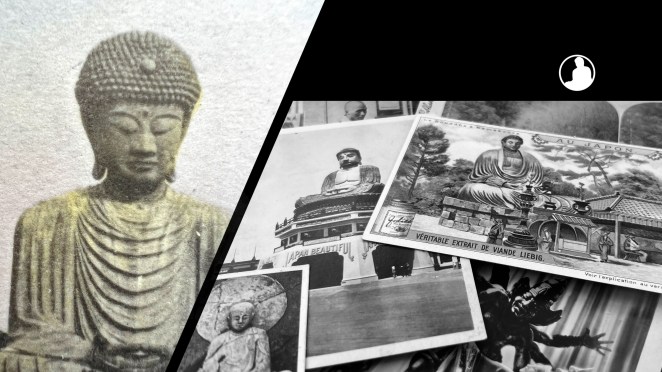
In the pre-film era, magic lantern slides were a part of popular entertainment alongside panoramas and mechanical theaters. Many amateur lecturers who returned from a trip would book a church hall or town theater to show slides illustrating their personal travel narrative.

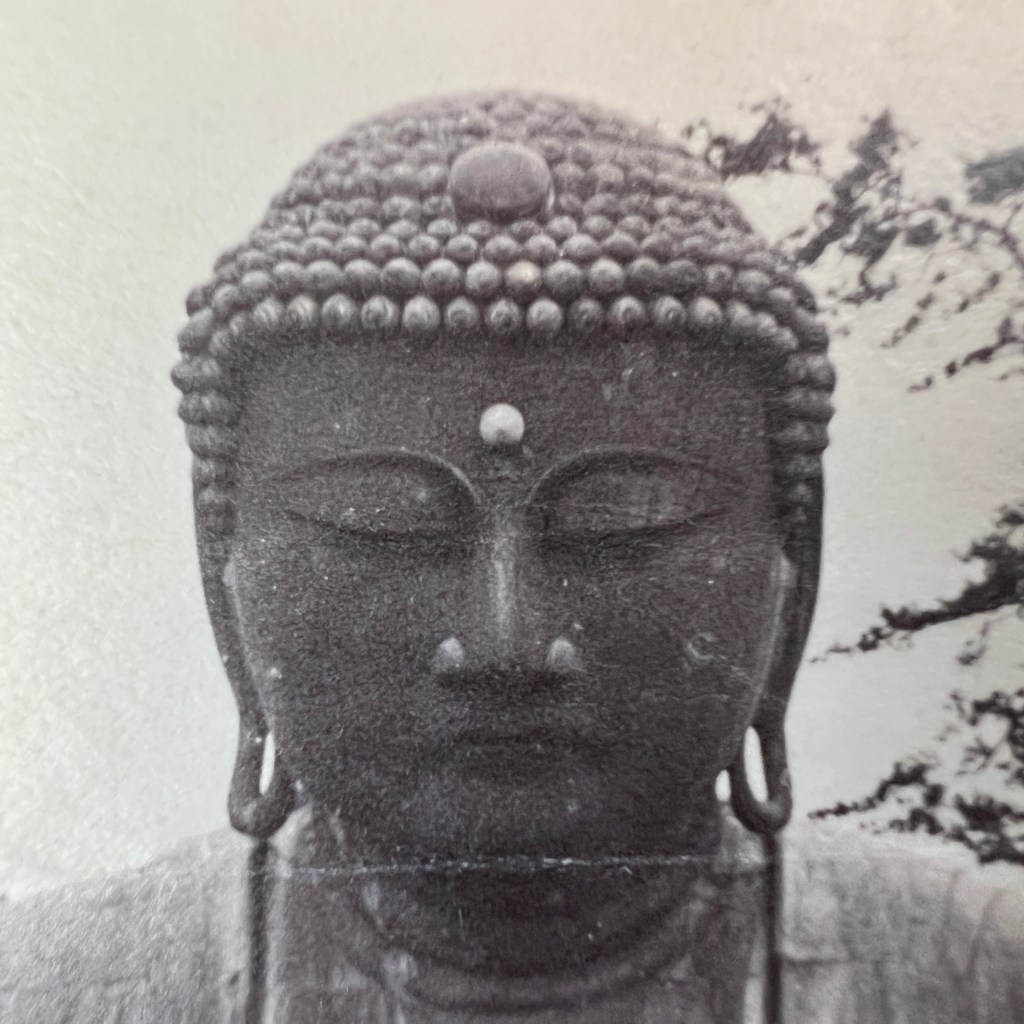
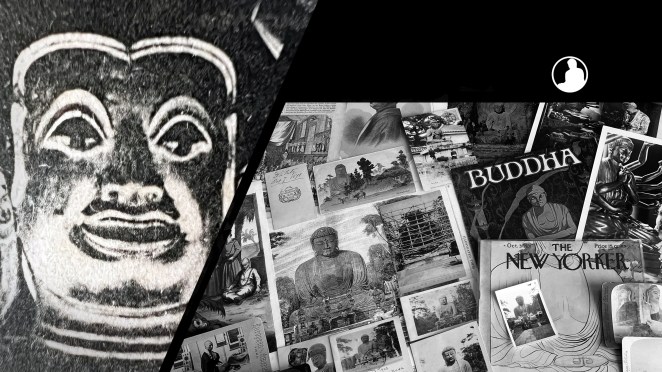
While photos and postcards were shared with friends in the home, glass lantern slides were also intended for showy public display. Consequently, glass slides were often hand-painted in eye-catching color; here we see the bronze Kamakura Daibutsu in uncharacteristic magenta.

Two pieces of glass, one of which bears the positive photographic print, sandwich the image to keep it safe from scratches and debris. Unlike the exemplar here, the publisher would often print their name on the matting around the image.

Based on the layout of the Daibutsu grounds, this photo was taken around 1910.

The University of Hawaii at Manoa has a large collection of slides as part of their Japan Collection, viewable here: https://tinyurl.com/8hdvfzad


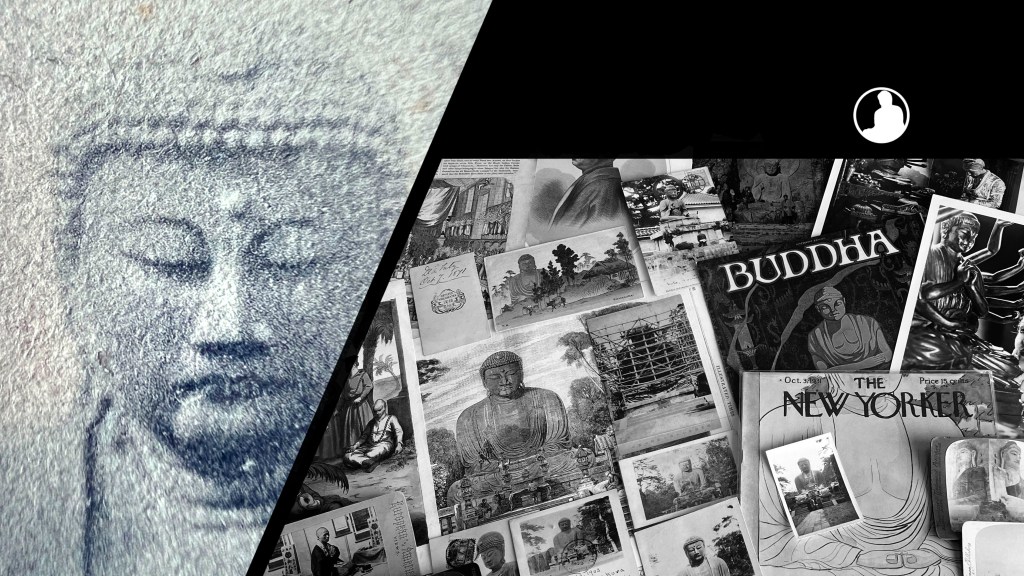
The Buddhas in the West Material Archive is a digital scholarship project that catalogues artifacts depicting Buddhist material culture for Western audiences. It’s comprised of prints, photos, and an assortment of ephemera and other objects. For a brief introduction to this archive, visit the main Buddhas in the West project page.


For Related Buddhas in the West Posts Featuring Historical Glass Lantern Slides:


For the Most Recent Buddhas in the West Posts:

Paris’ Panorama du Tour du Monde Advertising Card

For all the new Buddhas in the West posts
follow us on Bluesky & Instagram


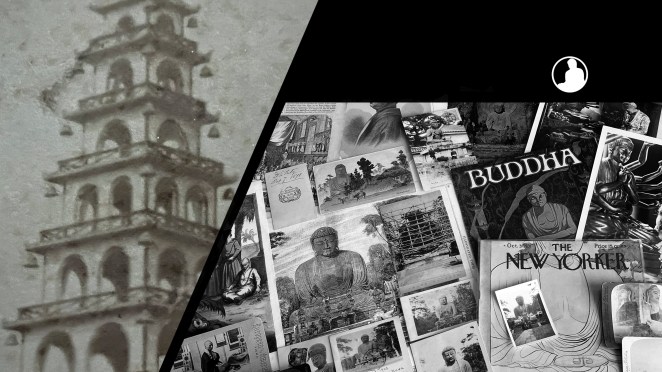
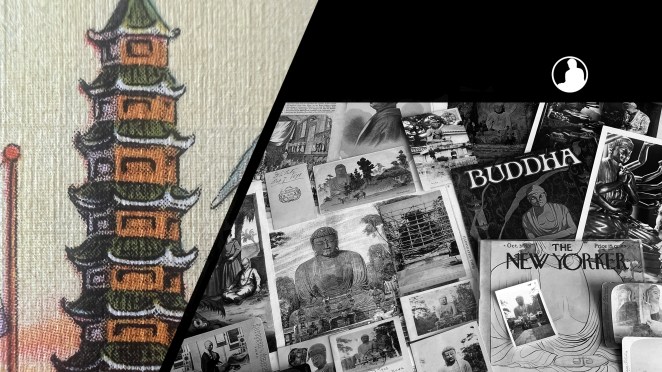
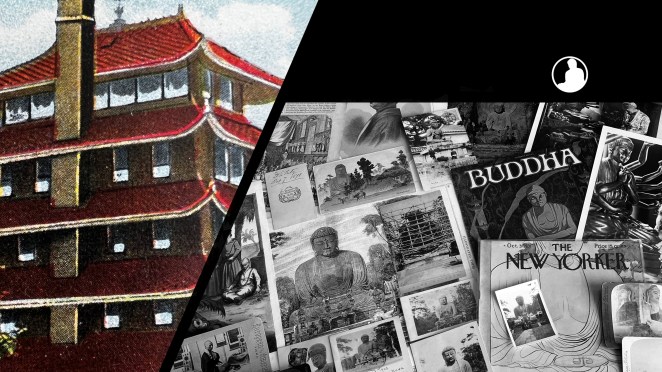
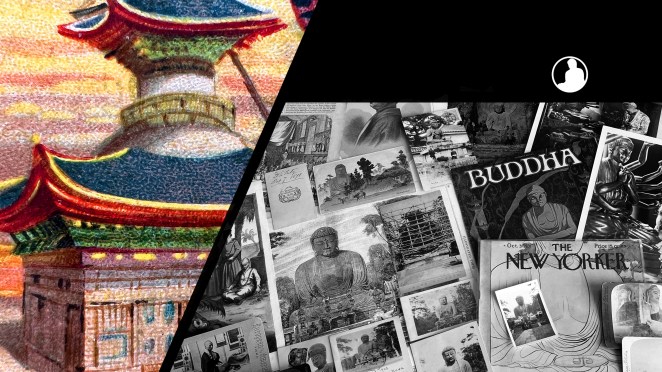
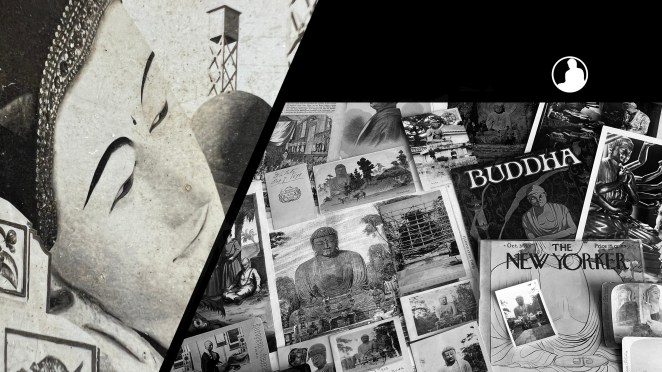
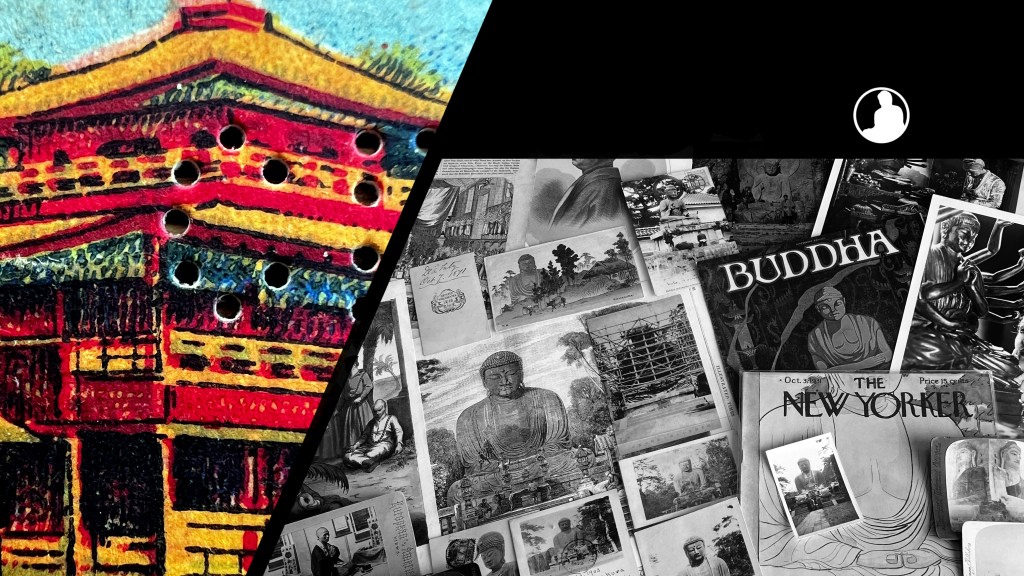
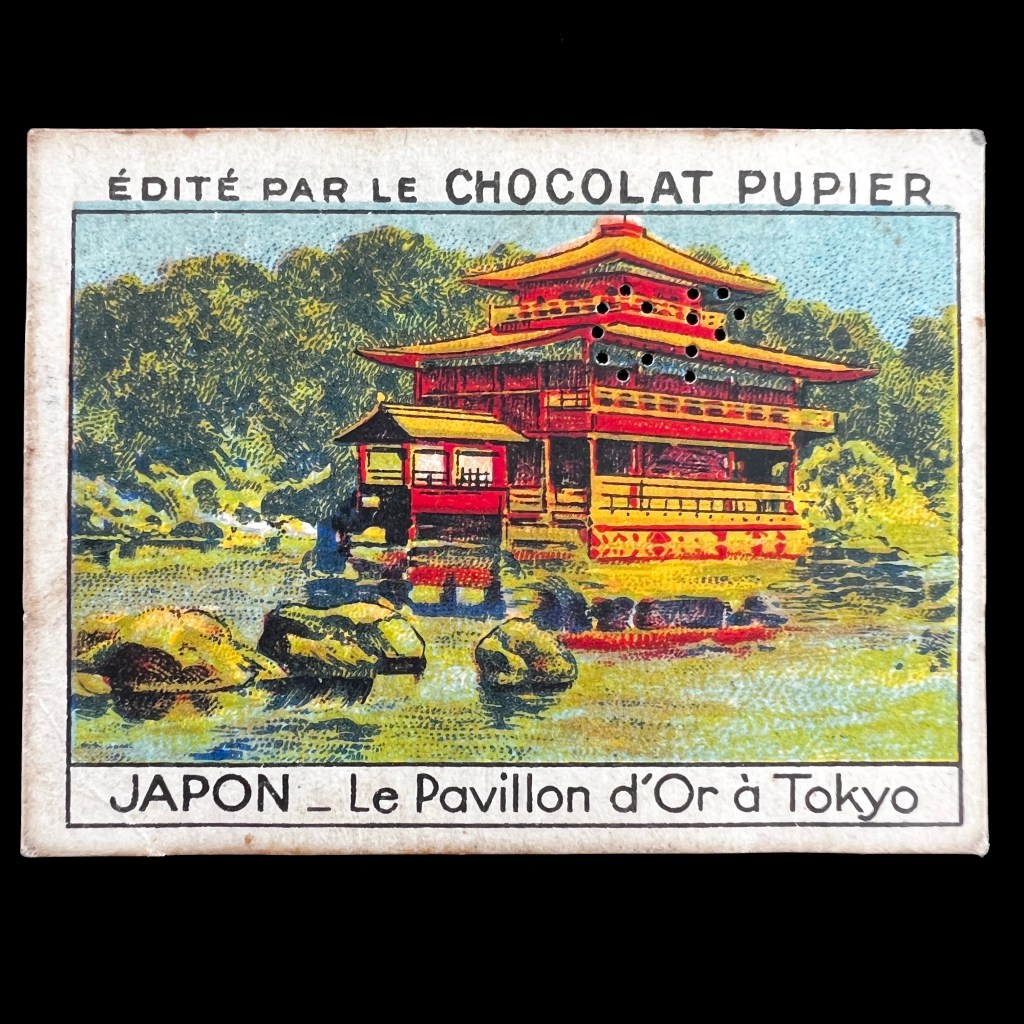
Panorama du Tour du Monde: By the 1900 Paris Exposition, amusement concessions were a major draw for all exposition visitors. Not far from the foot of the Eiffel Tower one found the Panorama du Tour du Monde which took patrons on a virtual voyage from Spain to Japan.

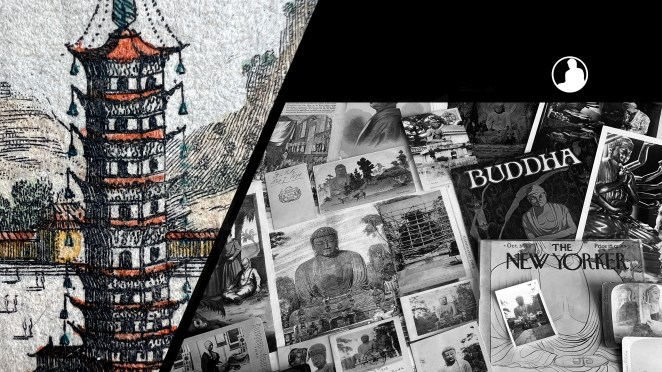
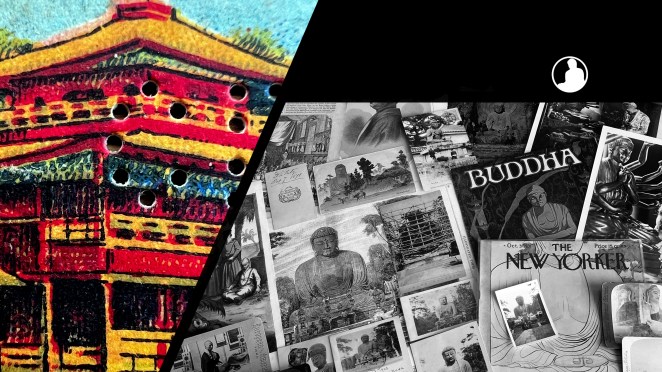
Built by Alexandre Marcel for a French sea-transport company, the architecture called to mind exotic locales with Asian-inspired structures. The main entrance was modeled on the Tōshō-gū in Nikkō, Japan. Some sources claim the red pagoda was based on a Chinese model.

Visitors were drawn in by large panoramic paintings of various foreign countries to give a sense of virtual travel. More astonishingly, the concession integrated many indigenous performers who engaged in various trades while wearing traditional foreign costumes

The beautiful lithographic print was part of an advertising campaign for a French company selling tapioca pearls, called “perles du Japon.”

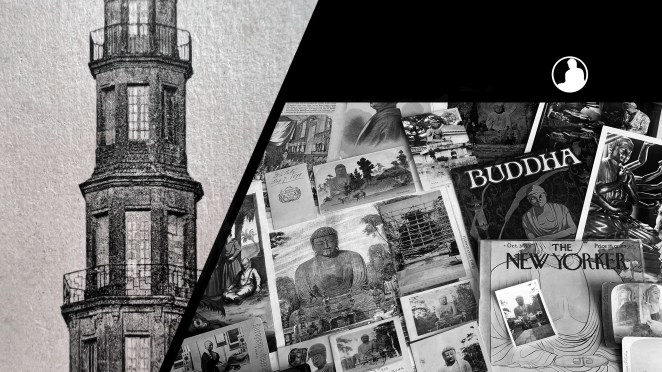
King Leopold II was so struck by the building, he had Marcel build the Japanese Tower in Brussels. For more on the Tour du Monde exhibition, see https://tinyurl.com/2vbmr3c7.


The Buddhas in the West Material Archive is a digital scholarship project that catalogues artifacts depicting Buddhist material culture for Western audiences. It’s comprised of prints, photos, and an assortment of ephemera and other objects. For a brief introduction to this archive, visit the main Buddhas in the West project page.


For Related Buddhas in the West Posts Featuring France:


For the Most Recent Buddhas in the West Posts:

Hand-Colored Daibutsu Postcard Comparison

For all the new Buddhas in the West posts
follow us on Bluesky & Instagram


The US postal service delivered over 900 million postcards on the eve of WWI. In Japan, that number was 1.5 billion. Despite nearly doubling the total number of cards mailed, many Japanese picture postcards were also rather unique – they were individually hand painted.

As far as we can tell, a template card was painted by a specialist before it was sent out with dozens of plain cards to colorists, many of whom were women. At times you can find more notable coloring discrepancies between paired images.

Note the differences in the boy’s garments, the open umbrella, the obi-sash, and stone pedestal in the background. It is also possible to see how the washes of color line up imperfectly with the collotype print in black ink.

Due to the temple landscaping around the Kamakura Daibutsu, we know this photograph was likely taken between 1903 and 1910. According to the postal mark, the stamp was cancelled on October 15, 1912 (Taisho 1) and mailed to the United States (thus requiring a 4 sen stamp). We also have a rare publisher’s mark along the edge: James Eades & Co., Yokohama, Japan.

The Kamakura Daibustu was among the most popular tourist destinations in Japan and countless images of the bronze statue were sent as postcards around the world in the early 20th century.


The Buddhas in the West Material Archive is a digital scholarship project that catalogues artifacts depicting Buddhist material culture for Western audiences. It’s comprised of prints, photos, and an assortment of ephemera and other objects. For a brief introduction to this archive, visit the main Buddhas in the West project page.


For Related Buddhas in the West Posts Featuring the Kamakura Daibutsu:


For the Most Recent Buddhas in the West Posts:

Liebig’s Komusō Advertising Card

For all the new Buddhas in the West posts
follow us on Bluesky & Instagram


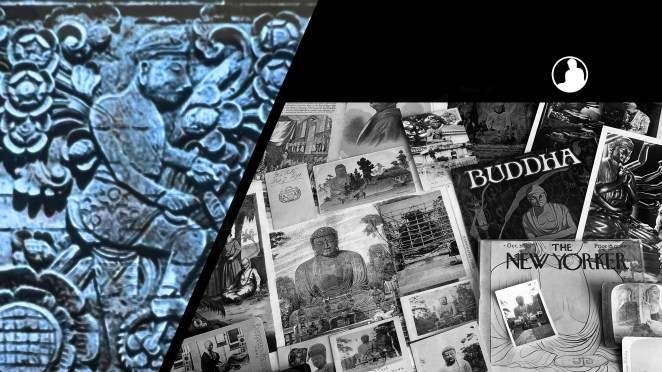
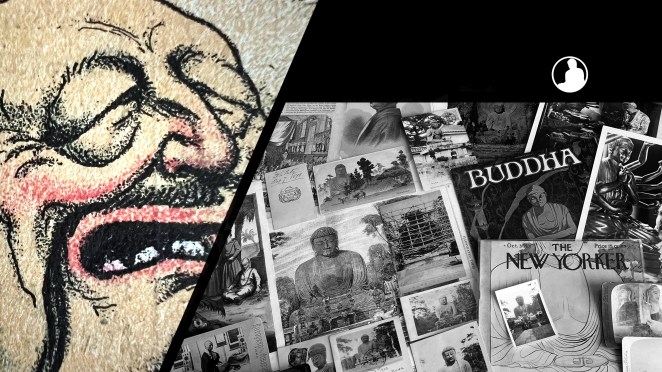
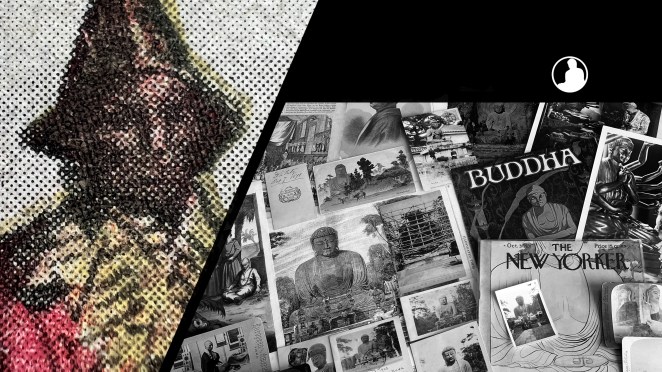
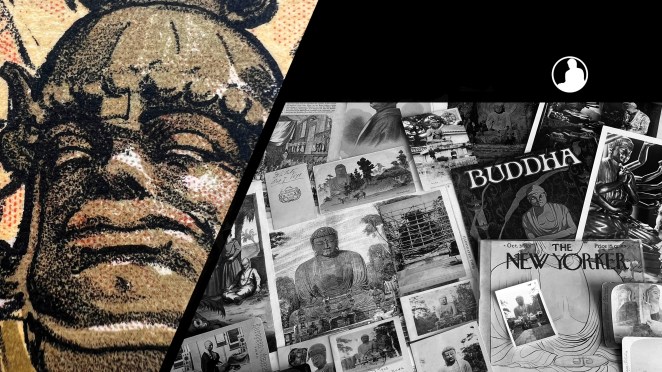
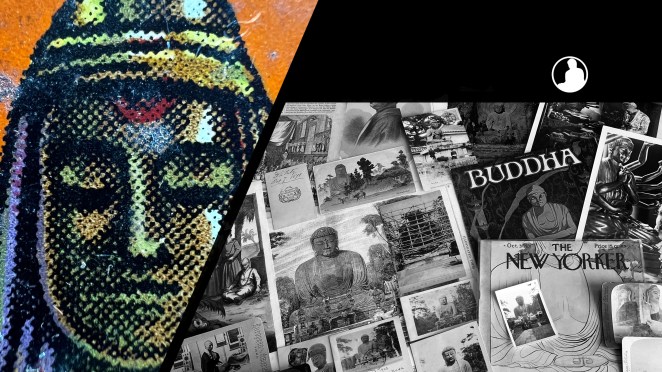
Komusō 虚無僧: Victorian trade card illustrations leaned into stereotypes to create collectables with easily identifiable cultures and peoples. With the 1905 Japanese modes of transportation series, the setting is provided a curious Buddhist figure: a flute playing monk.

The British Liebig company started producing trade cards in 1872 and by the turn of the century the vibrant chromolithographic prints were widely popular and printed in several languages. This set comprised six cards, with the one here focusing on the Japanese palanquin.

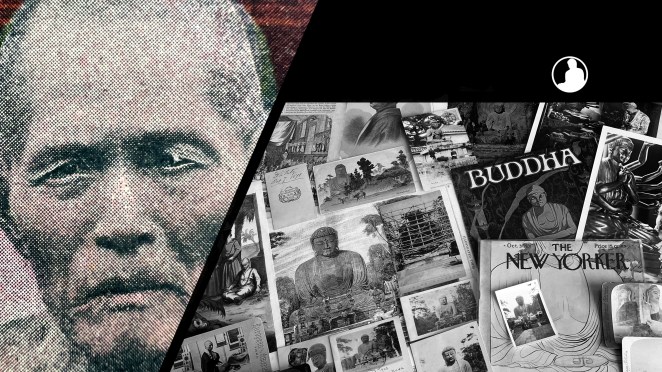
The faceless Komusō – monks of nothingness – were depicted in woodblock prints of the late Edo period and were seen in souvenir photographs of Yokohama studios in c.1890s. Consequently they became one among the visual icons of Japan for Western tourists.

The Fuke school of the komusō was prohibited in 1871, but lay shakuhachi flute players continued the tradition of playing in public while dressed in full garb.


The Buddhas in the West Material Archive is a digital scholarship project that catalogues artifacts depicting Buddhist material culture for Western audiences. It’s comprised of prints, photos, and an assortment of ephemera and other objects. For a brief introduction to this archive, visit the main Buddhas in the West project page.


For Related Buddhas in the West Posts Featuring Historical Trade Cards:


For the Most Recent Buddhas in the West Posts:

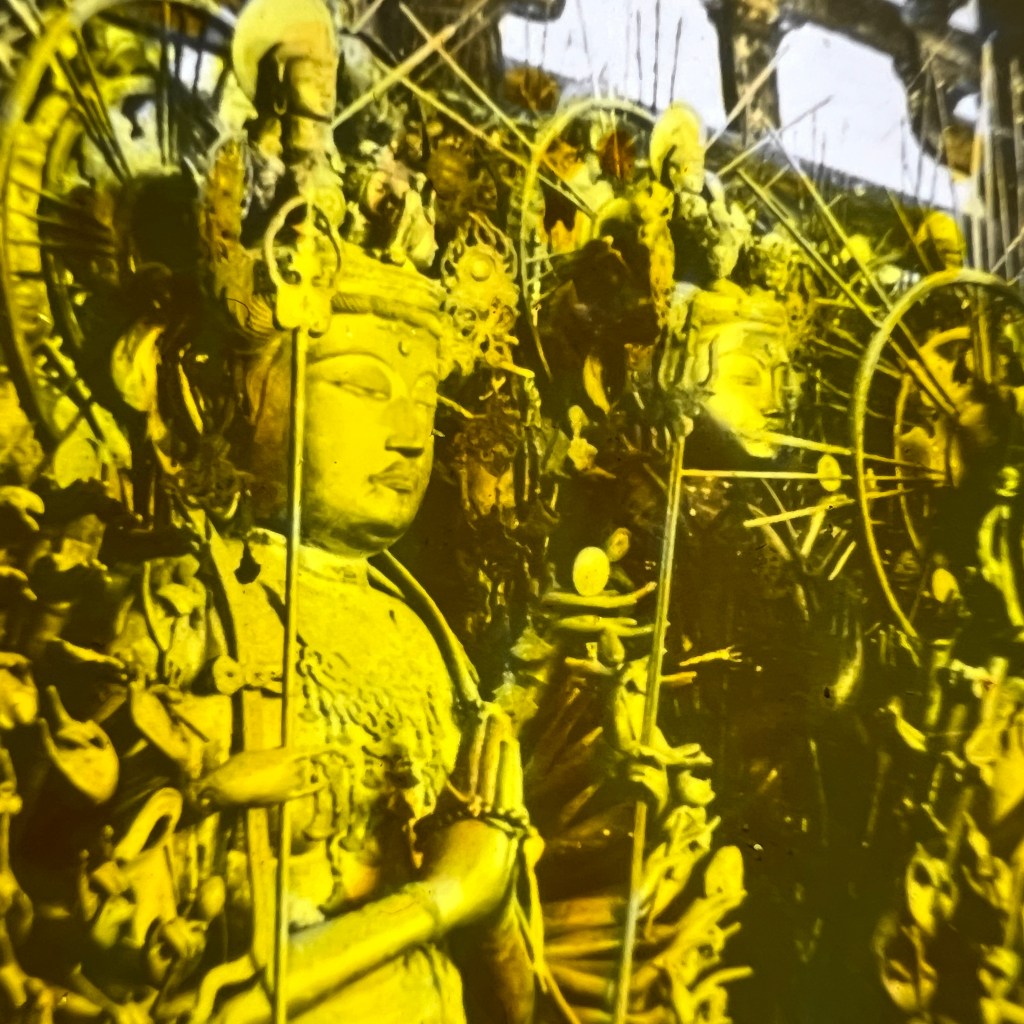
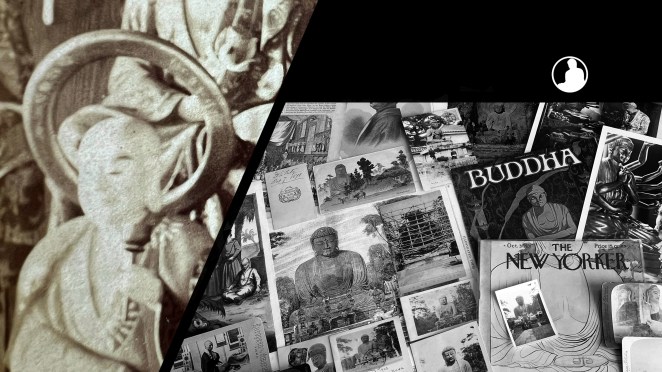
Keystone’s Nara Kokūzō Stereoview

For all the new Buddhas in the West posts
follow us on Bluesky & Instagram


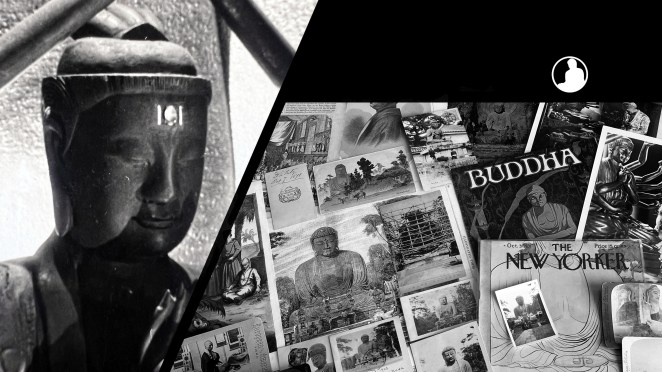
3D Kokūzō 虛空: In the early 20th century, Keystone View Company emerged as a premier publisher of stereoviews with several tens-of-thousands of images in their catalogue. Around 1901, Keystone issued its first views of Japan, including a run of 23 odd-lot stereoviews.

Among their 1901 offerings, a 1/4 were stereo-photographs of religious sites or objects; this includes two views of Buddhist statues. At this time, other companies started offering special Japan box sets and following the Russo-Japanese War Japan sets became far more popular.

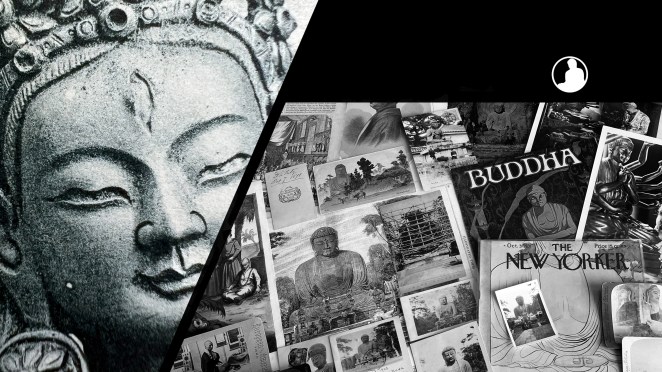
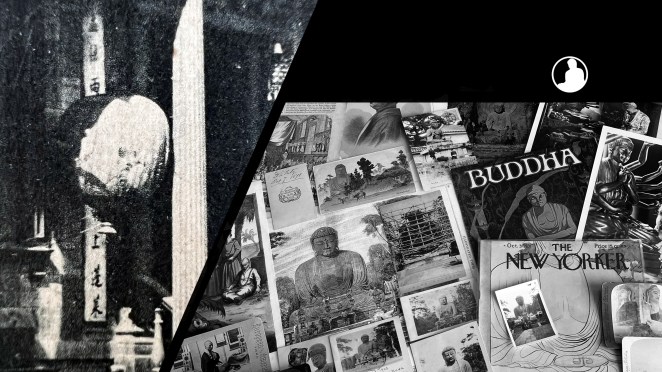
The card here depicts the Daibutsu Hall of Tōdai-ji in Nara. Curiously, it does not show the main figure for which the hall is named, the Nara Daibutsu. This icon is Kokūzō Bosatsu, otherwise known as Ākāśagarbha Bodhisattva (Keystone simply labelled it as a “god.”)

Part of Keystone’s commercial success was selling stereoviews to schools across the US. To view part of their early selection of Japan views, see the digitized collection at the Library of Congress, viewable here https://tinyurl.com/bdewbmva.


The Buddhas in the West Material Archive is a digital scholarship project that catalogues artifacts depicting Buddhist material culture for Western audiences. It’s comprised of prints, photos, and an assortment of ephemera and other objects. For a brief introduction to this archive, visit the main Buddhas in the West project page.


For Related Buddhas in the West Posts Featuring Japan:


For the Most Recent Buddhas in the West Posts:

American Express Daibutsu Advertisement

For all the new Buddhas in the West posts
follow us on Bluesky & Instagram


After the opening of the Panama Canal and the end of WWI, the first around-the-world commercial cruise was chartered by the American Express Company in late 1922. The following summer of 1923, American Express began advertising for its next cruise using the Great Buddha of Kamakura.

The success of the inaugural cruise is celebrated in the advertising copy. It notes how the journey is “luxuriously comfortable, wholly delightful, and easily obtainable.” The brief itinerary lists the major ports to be visited, including a long 13 day stay in Japan.

The most conspicuous element is the large cropped photo of the “sacred idol of Japan” – the Kamakura Daibutsu. Notably, the photo depicts the inaugural cruise passengers positioned in front, looking directly at the camera lens.

Unfortunately, the Great Kantō earthquake struck in September 1923, damaging the Daibutsu. The Second American Express Cruise Round the World continued, however, leaving New York in November 1923 and returning in March 1924.


The Buddhas in the West Material Archive is a digital scholarship project that catalogues artifacts depicting Buddhist material culture for Western audiences. It’s comprised of prints, photos, and an assortment of ephemera and other objects. For a brief introduction to this archive, visit the main Buddhas in the West project page.


For Related Buddhas in the West Posts Featuring Historical Advertising:


For the Most Recent Buddhas in the West Posts:

Lambert and Butler’s Kamakura Daibutsu Cigarette Card

For all the new Buddhas in the West posts
follow us on Bluesky & Instagram


The Buddha’s “rookie” card? In the US, “cigarette cards” are perhaps best known for their early depiction of baseball players. These cards jump started a baseball card collecting phenomenon.

Tobacco companies drew upon a much larger visual repertoire than sports for their advertising cards. This sometimes included exotic locales. Intended to fit inside cigarette packs, these cards were relatively small.

Lambert & Butler was a former English tobacco manufacturing company that made a “Japanese Series” in 1904-1905.

It memorialized the Russo-Japanese War. Thus we see a depiction of Japanese citizens praying at the foot of the Kamakura Daibutsu.

Similar to other Victorian trade cards, this was a colorful lithographic print. You can browse the collection of cigarette cards held by the NY Public Library here: https://tinyurl.com/cn23wud8.


Additional Archived Posts for the Buddhas in the West Project

The Buddhas in the West Material Archive is a digital scholarship project that catalogues artifacts depicting Buddhist material culture for Western audiences. It’s comprised of prints, photos, and an assortment of ephemera and other objects. For a brief introduction to this archive, visit the main Buddhas in the West project page.


For Related Buddhas in the West Posts Featuring Historical Trade Cards:


For the Most Recent Buddhas in the West Posts:

Ueno Daibutsu Postcard

For all the new Buddhas in the West posts
follow us on Bluesky & Instagram


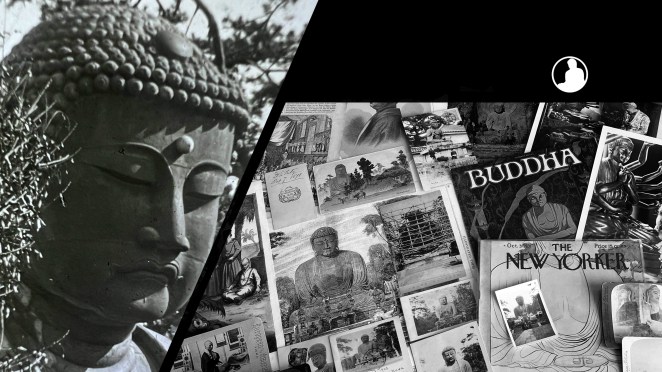
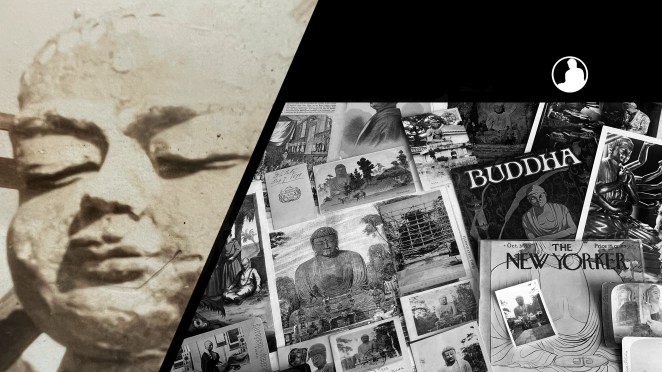
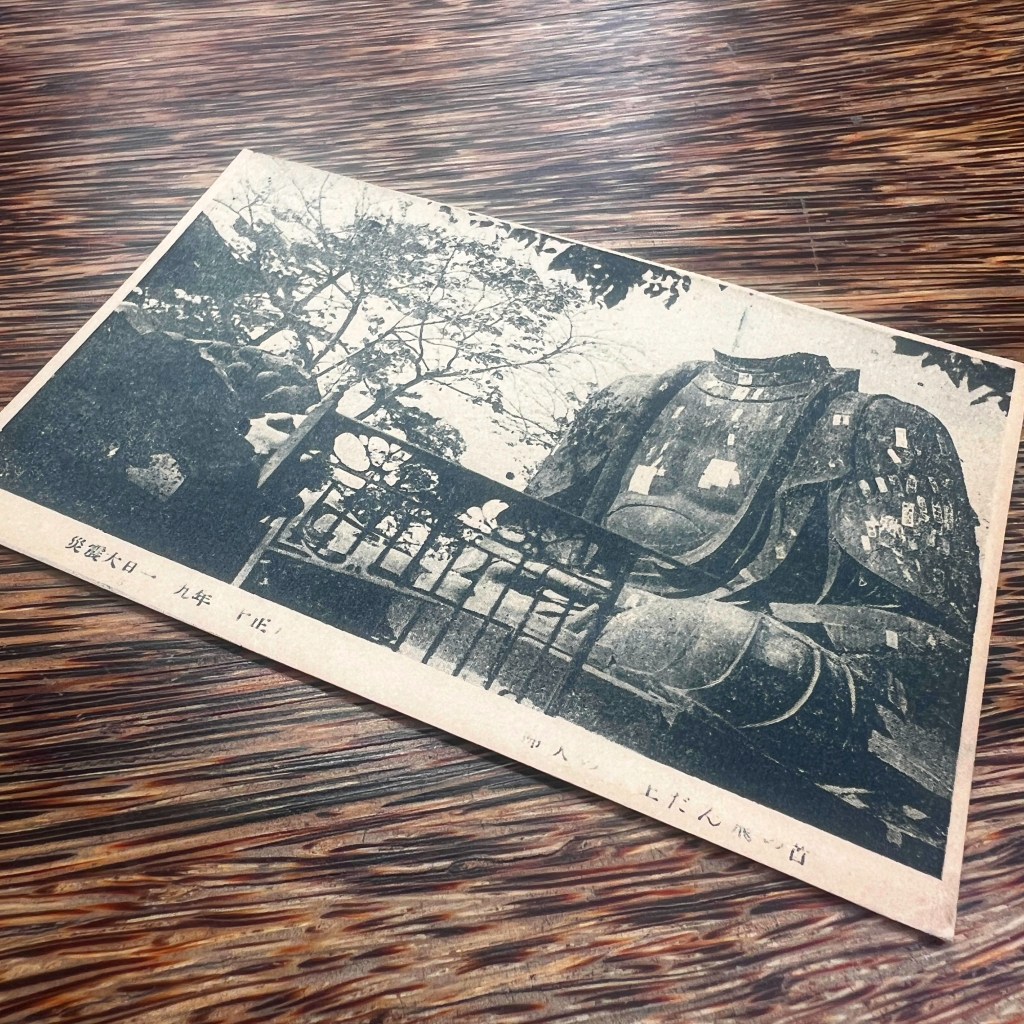
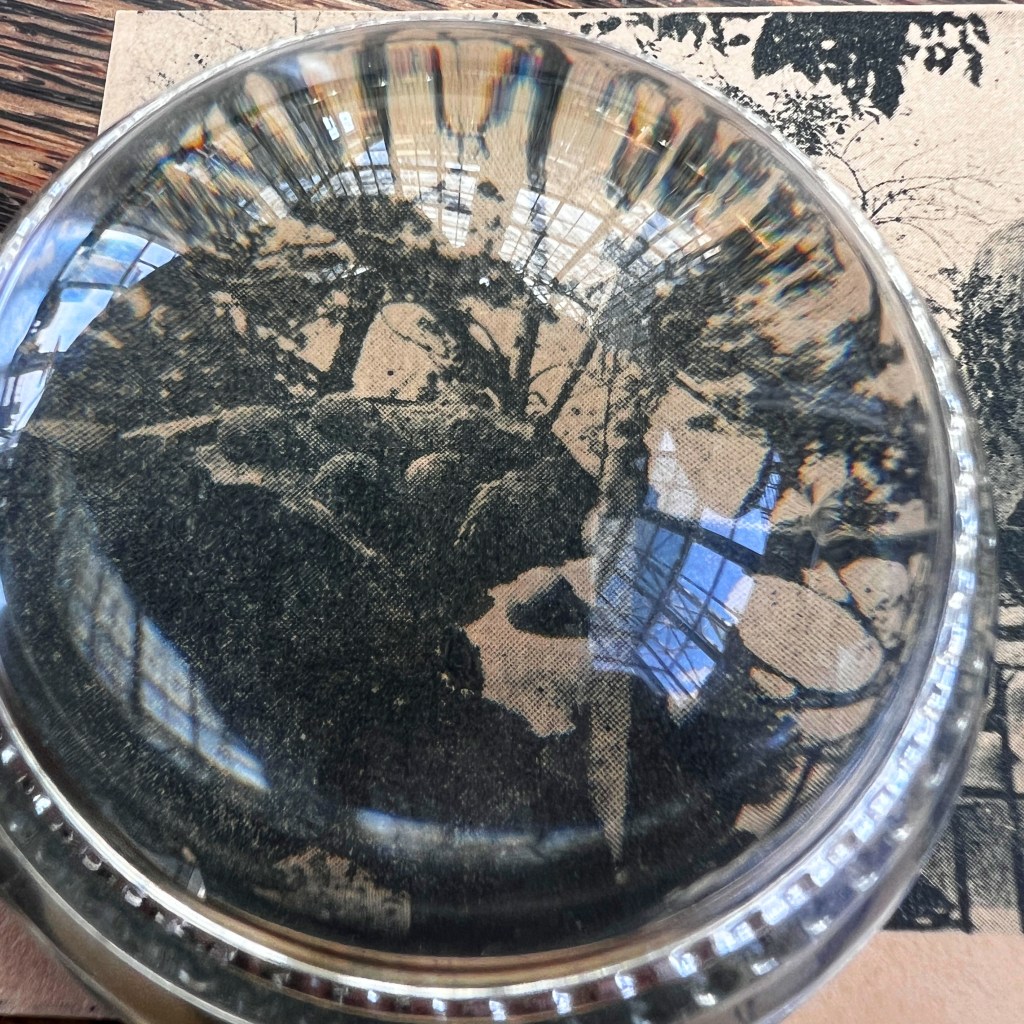
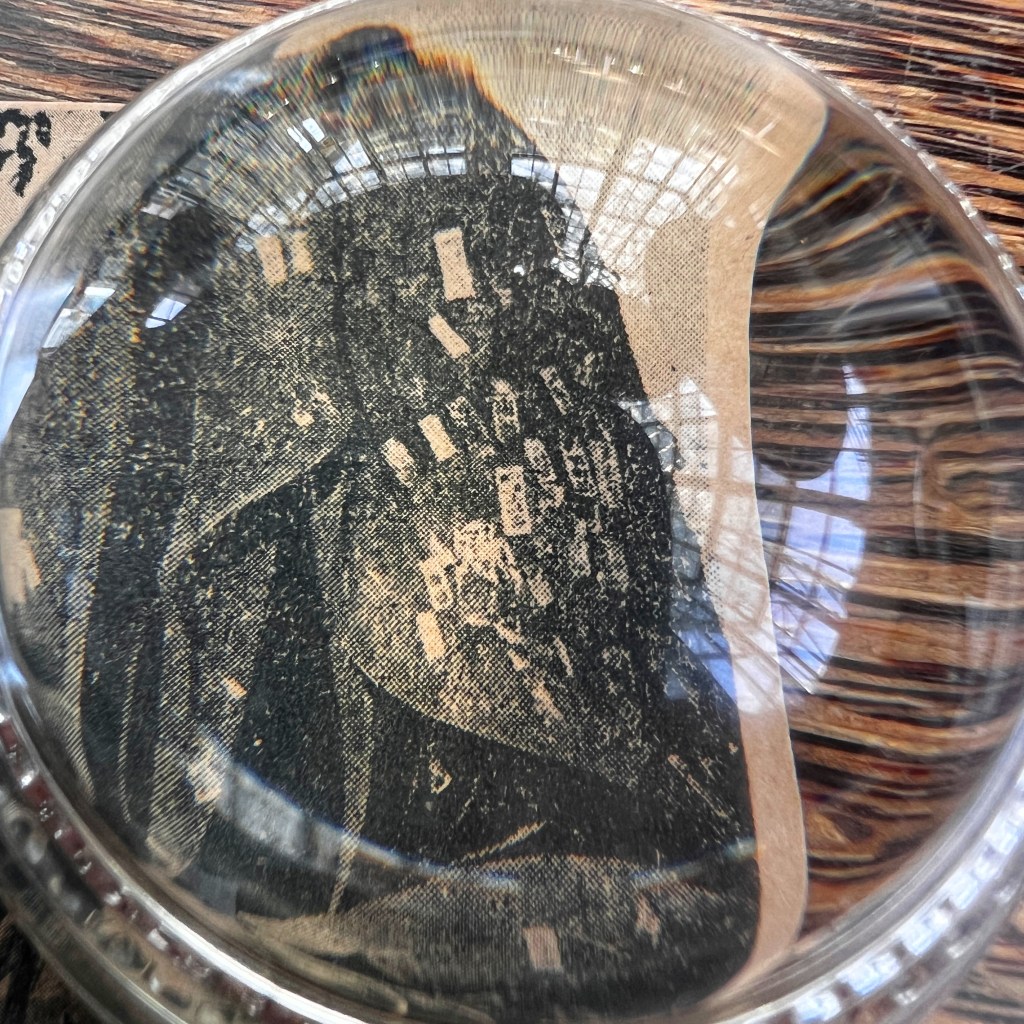
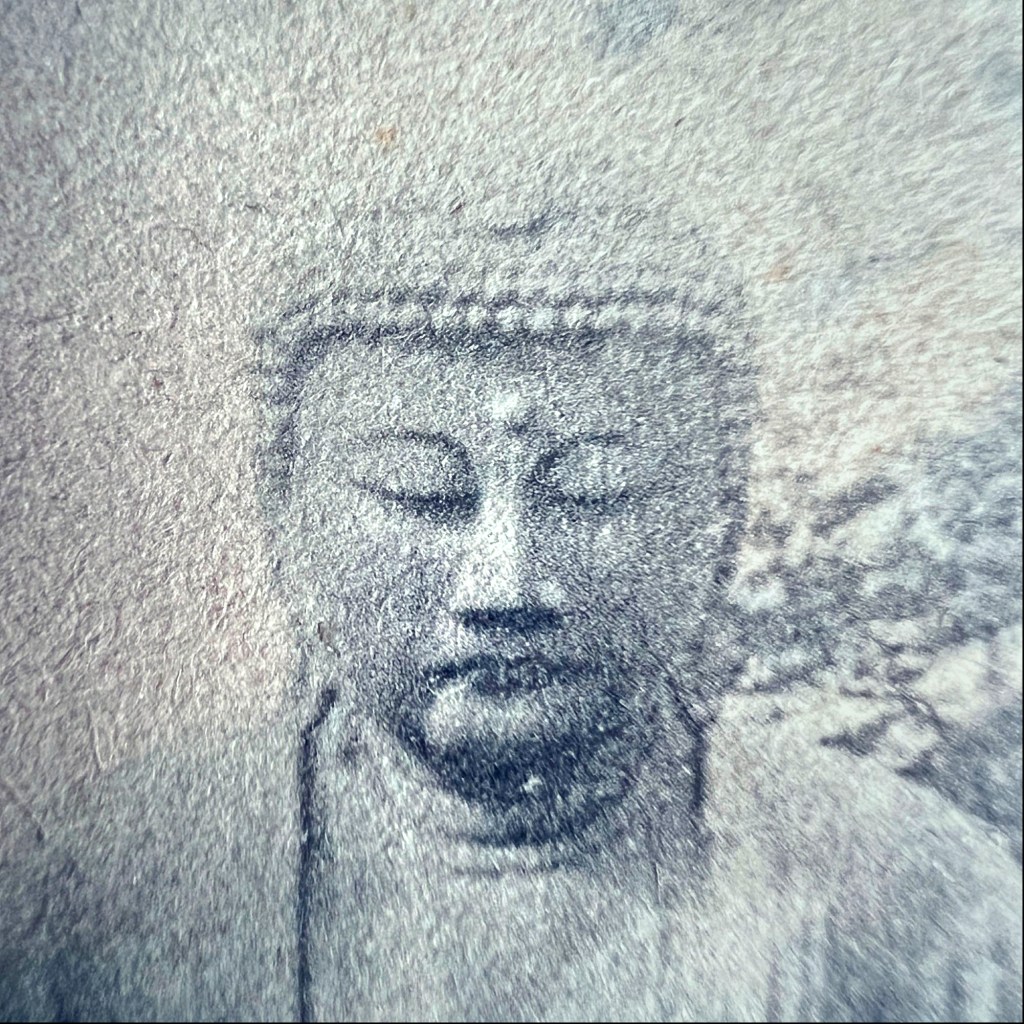
Only the face of the Ueno Daibutsu remains in Tokyo’s Ueno Park. Toppled during the 1923 Kantō earthquake, the salvaged body was eventually melted down during the Pacific War.


Picture postcards are some of the only remaining images of the intact statue. This plain design on the reverse reveals the print was made prior to 1907.

Q&A) Note, there is no address on the reverse…so why is there a cancelled stamp on the obverse?

The caption style is strongly reminiscent of the professional Japanese tourist photography trade that grew steadily thorough the 1890s. Contemporary databases do not currently link this stock number and location with a known photographer.


Ueno Park is celebrated for its spring cherry blossoms, highlighted here by the hand-colorist who painted the trees pink. Q&A) The stamp and cancellation on the front suggest this card was intended for display in a postcard album.

After many years in storage in the nearby temple, the Daibutsu face was displayed in 1972 on the site of the original statue.


The Buddhas in the West Material Archive is a digital scholarship project that catalogues artifacts depicting Buddhist material culture for Western audiences. It’s comprised of prints, photos, and an assortment of ephemera and other objects. For a brief introduction to this archive, visit the main Buddhas in the West project page.


For Related Buddhas in the West Posts Featuring Japan:


For the Most Recent Buddhas in the West Posts:

Hamburg–American Cruise Postcard

For all the new Buddhas in the West posts
follow us on Bluesky & Instagram


The first regular around-the-world commercial cruises began in the early 1920s. The Great Buddha of Kamakura was an iconic stop on the long sea passage; its international stature as a tourist destination was equivalent to the Taj Mahal and the Sphinx.

Within a decade, circumnavigation of the globe by passenger liner transformed into a stalwart luxury industry. The Hamburg–American Line was one of the main companies in the inter-war period.

Passengers kept family or friends abreast of their travels by having postcards automatically sent from ocean liner offices around the world. Here we see notification of the Resolute arriving in the ports of Japan on April 24, 1934. Tours through Nikko and Kamakura are noted.

The photograph printed here depicts a seemingly orchestrated scene that highlights the foreignness and apparent piousness of the Japanese.

The travel and souvenir journal of Eleanor Phelps, who embarked on the inaugural American Express Co. cruise around the world in 1922, is held by the University of South Carolina, viewable here: https://tinyurl.com/avt4xt2p.


Additional Archived Posts for the Buddhas in the West Project

The Buddhas in the West Material Archive is a digital scholarship project that catalogues artifacts depicting Buddhist material culture for Western audiences. It’s comprised of prints, photos, and an assortment of ephemera and other objects. For a brief introduction to this archive, visit the main Buddhas in the West project page.


For Related Buddhas in the West Posts Featuring the Kamakura Daibutsu:


For the Most Recent Buddhas in the West Posts:

Arbuckle Bros. Coffee Japan Advertising Card

For all the new Buddhas in the West posts
follow us on Bluesky & Instagram


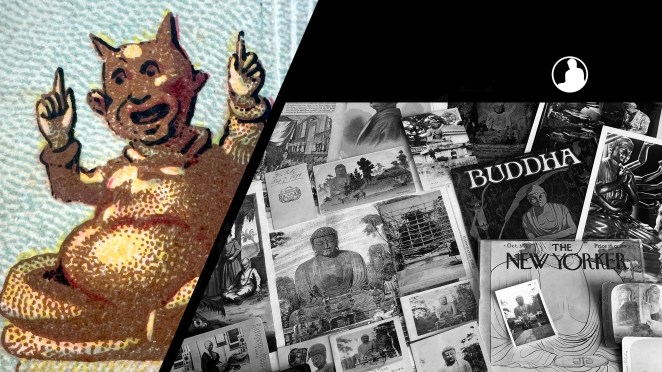
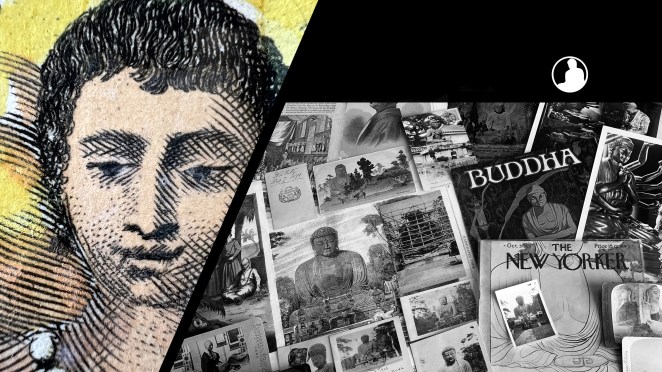
Vibrant Victorian trade cards stuck out among a sea of black and white advertising. In the early age of engraved mass publications, chromolithography ushered in a new era of visual media.

Trade cards were popular advertising materials from 1875 to 1900. Typically businesses printed text-heavy advertising copy on the reverse of the card, saving the obverse for an image.

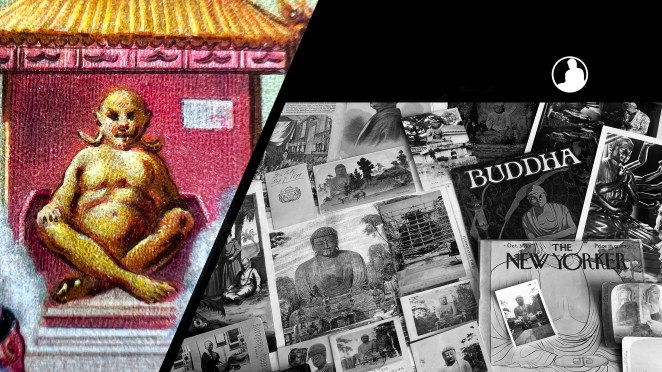
Here, Arbukle Bros. Coffee produced a 50 card set depicting around-the-world travel. This trade card highlights Yokohama, Japan, a treaty port city popular among 19th century tourists.

In reality, the card shows stereotypical imagery of Japan, including costumes, landscapes, and professions easily identifiable to foreign travelers.

The Buddhist icon is unidentified, but this card reveals generic Buddhist imagery was closely connected to the popular image of Japan.


The Buddhas in the West Material Archive is a digital scholarship project that catalogues artifacts depicting Buddhist material culture for Western audiences. It’s comprised of prints, photos, and an assortment of ephemera and other objects. For a brief introduction to this archive, visit the main Buddhas in the West project page.


For Related Buddhas in the West Posts Featuring Historical Trade Cards:


For the Most Recent Buddhas in the West Posts: