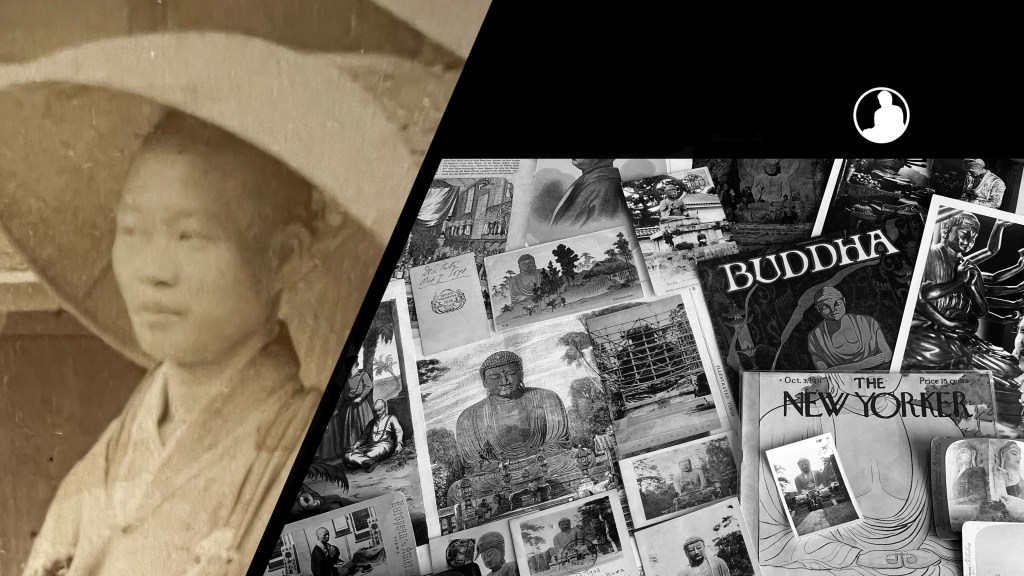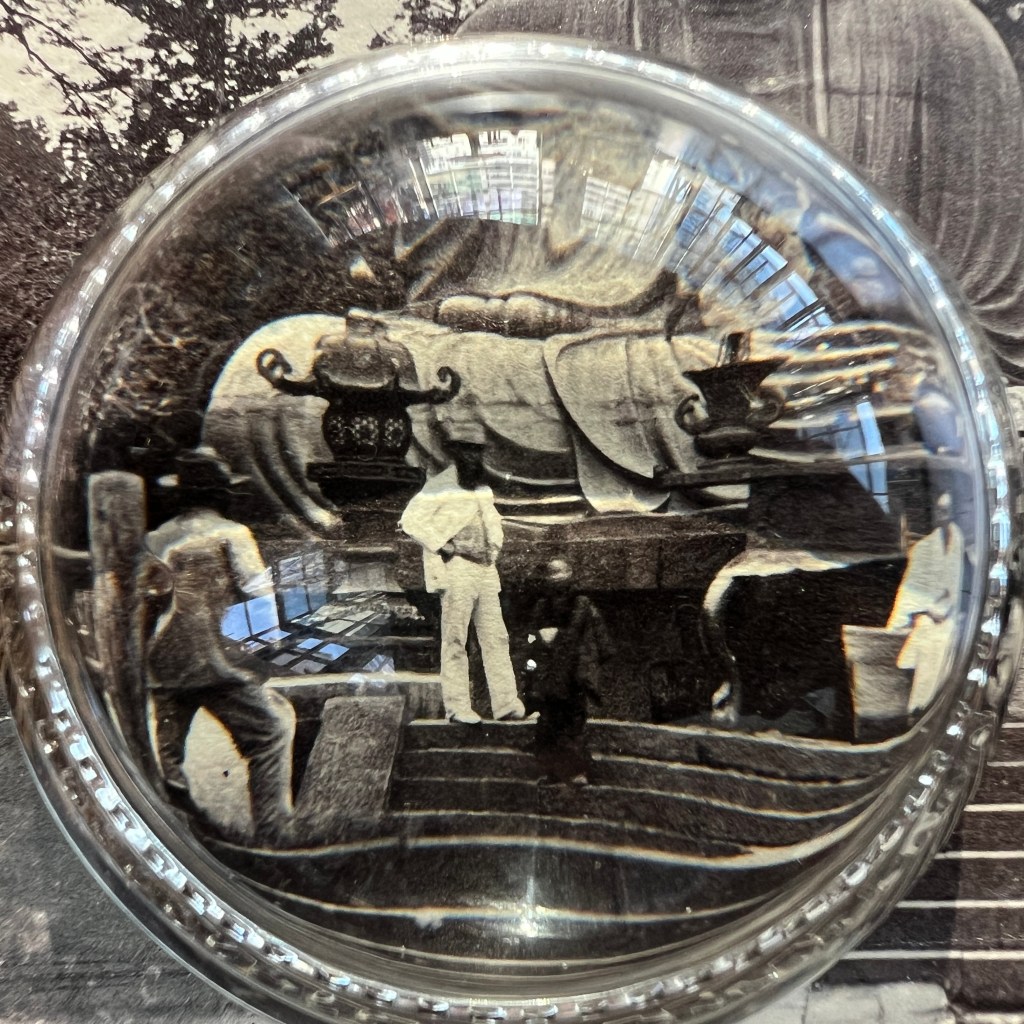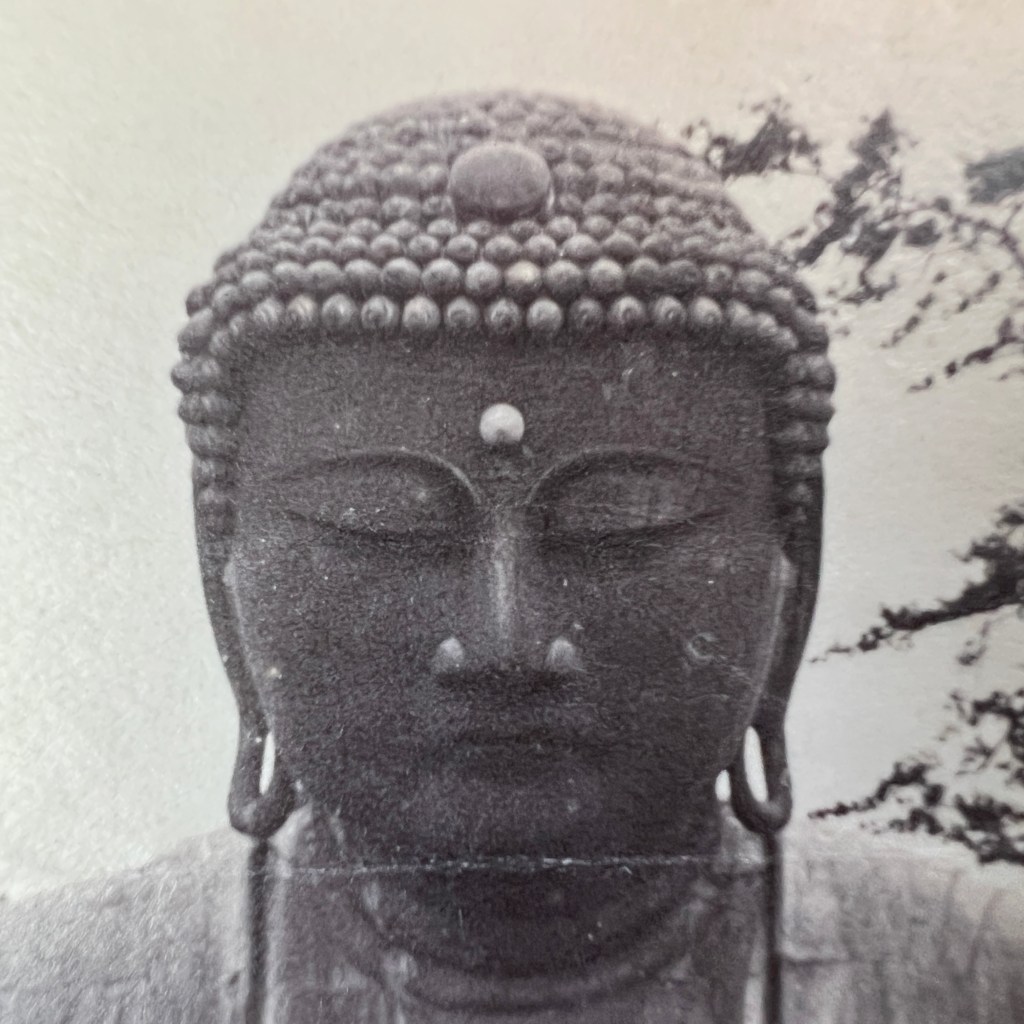
Eliphalet Brown’s Buddhist Priest at Shimoda Lithograph

For all the new Buddhas in the West posts
follow us on Bluesky & Instagram


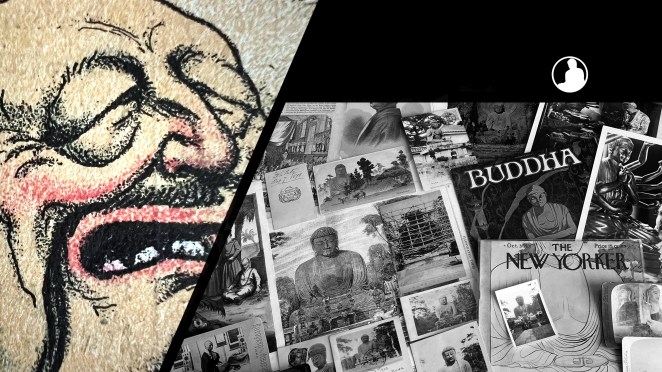
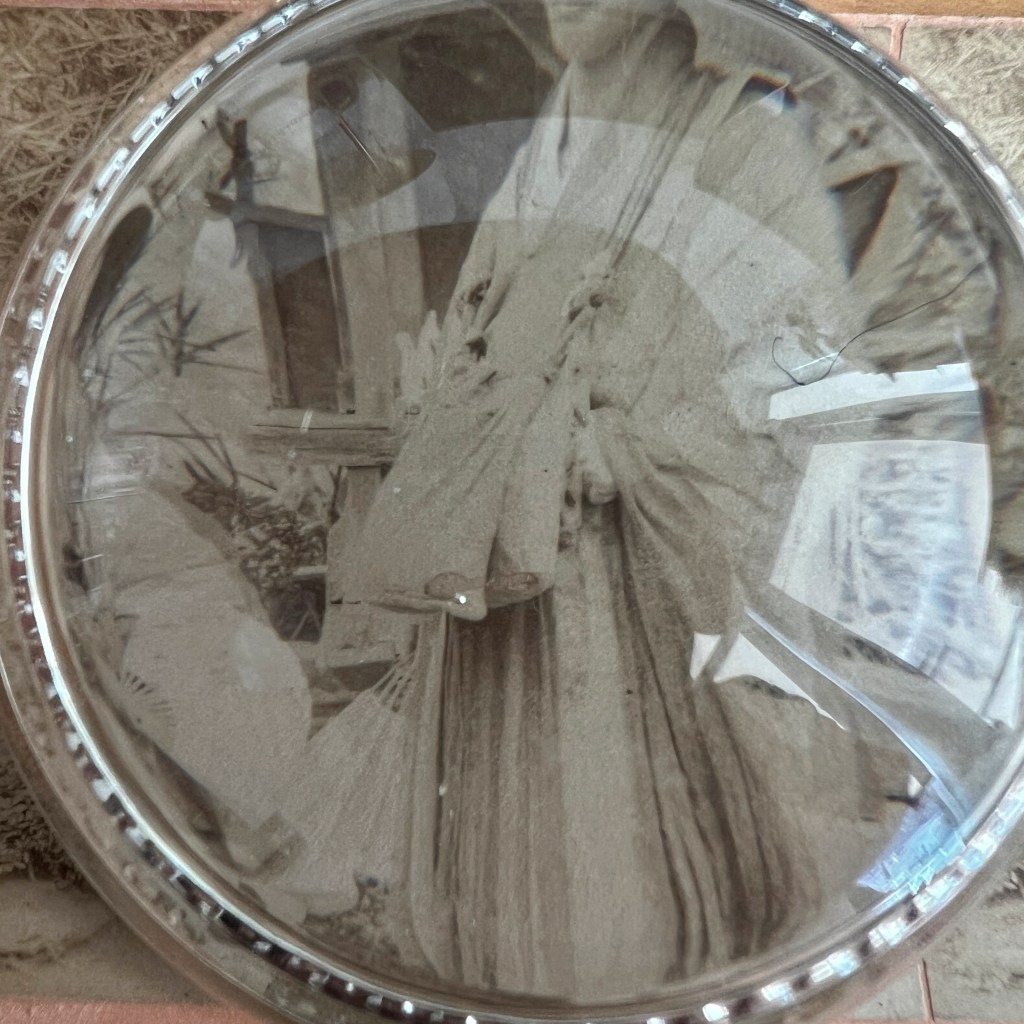
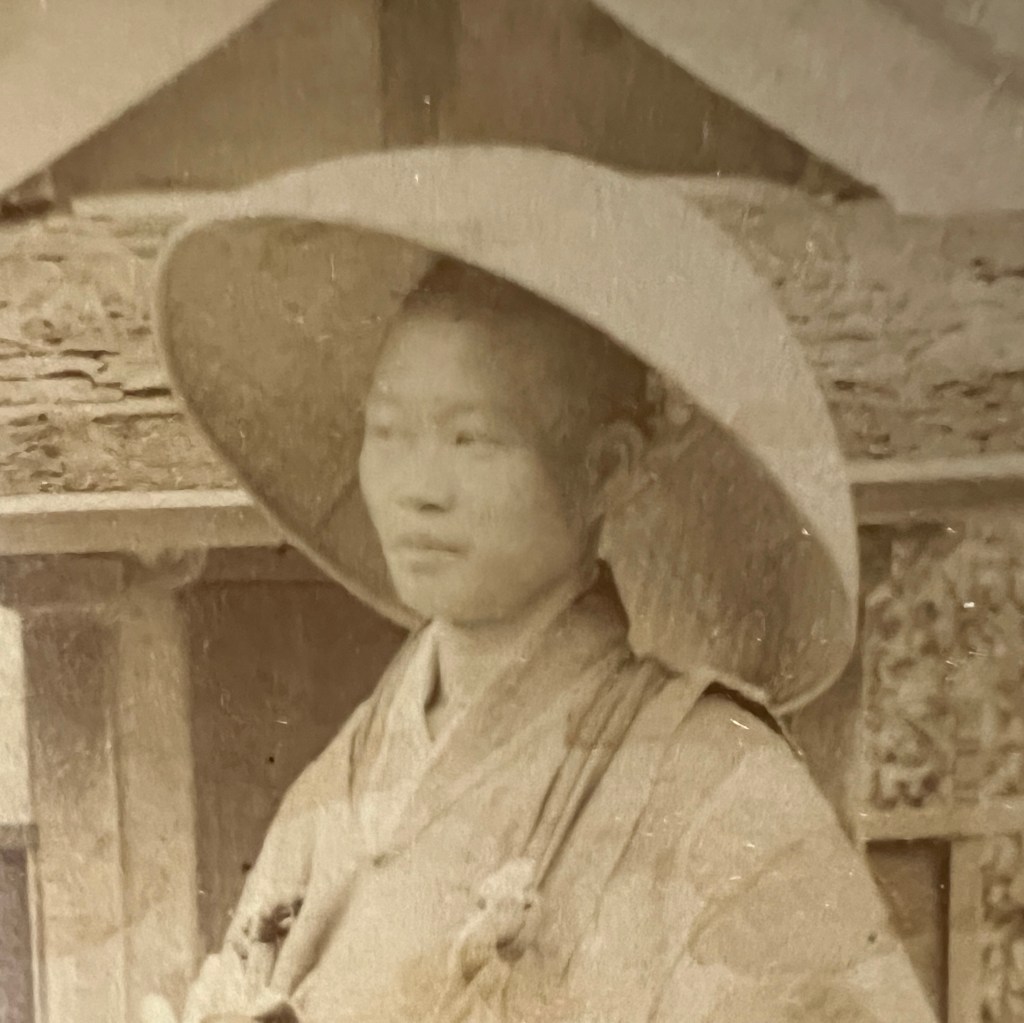
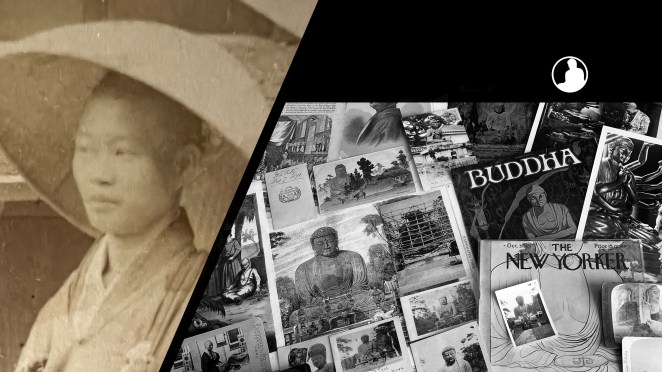
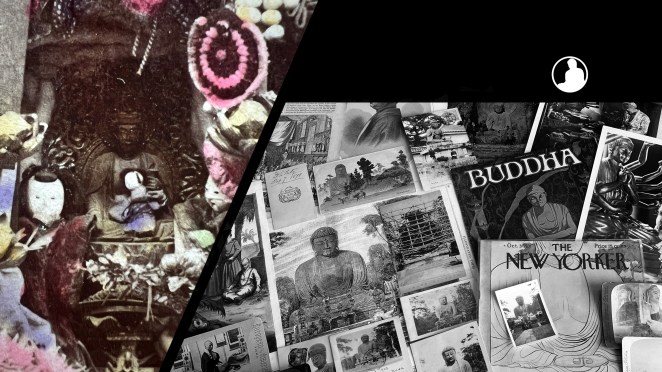
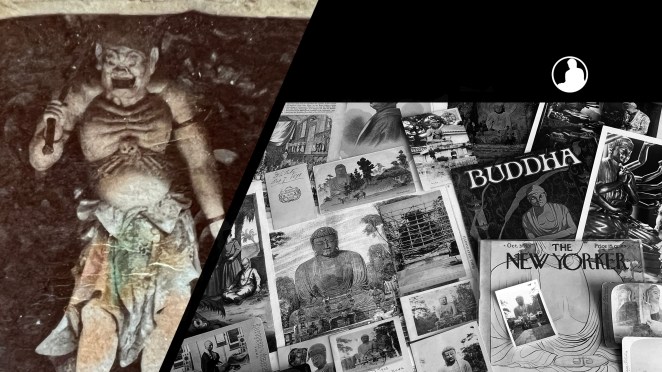
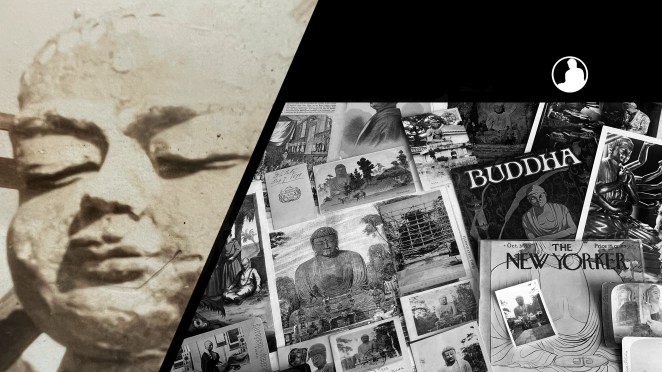
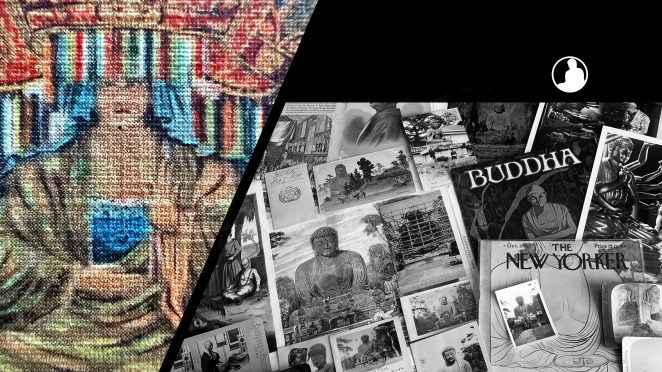
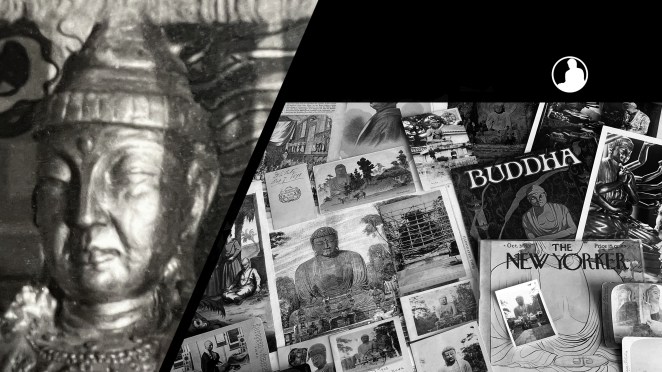
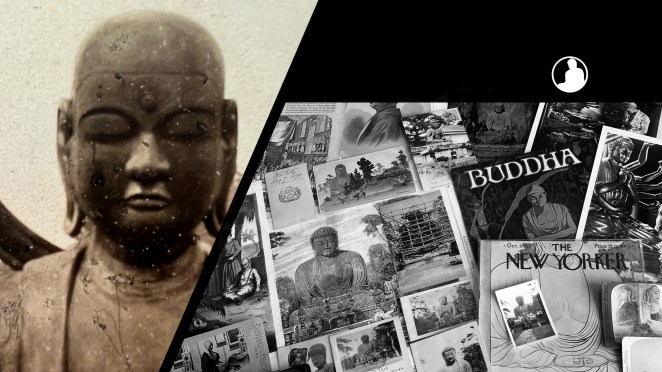
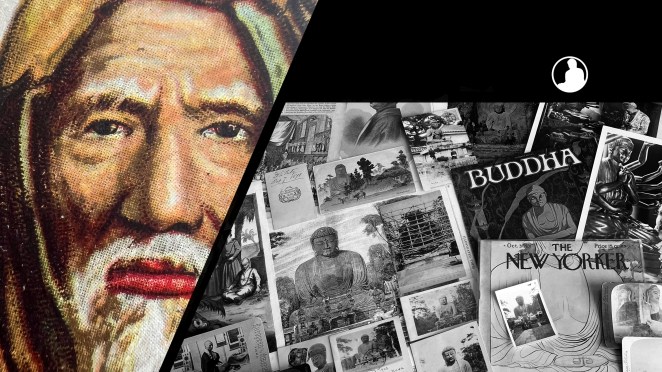
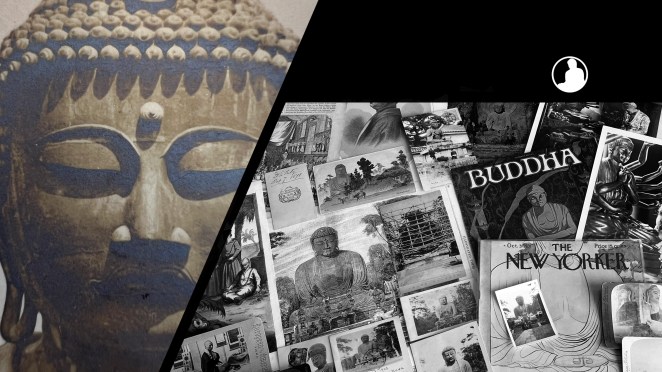
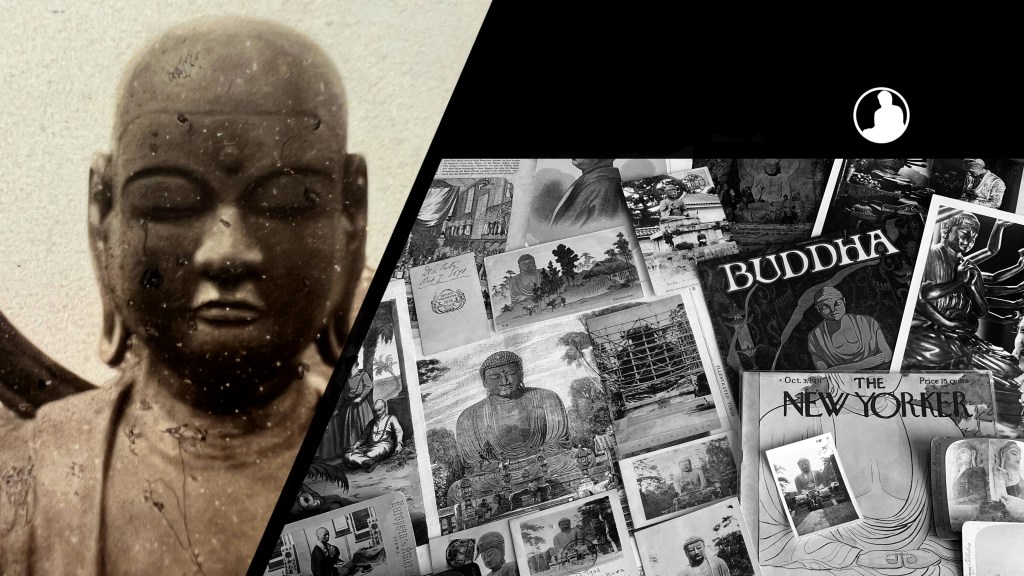
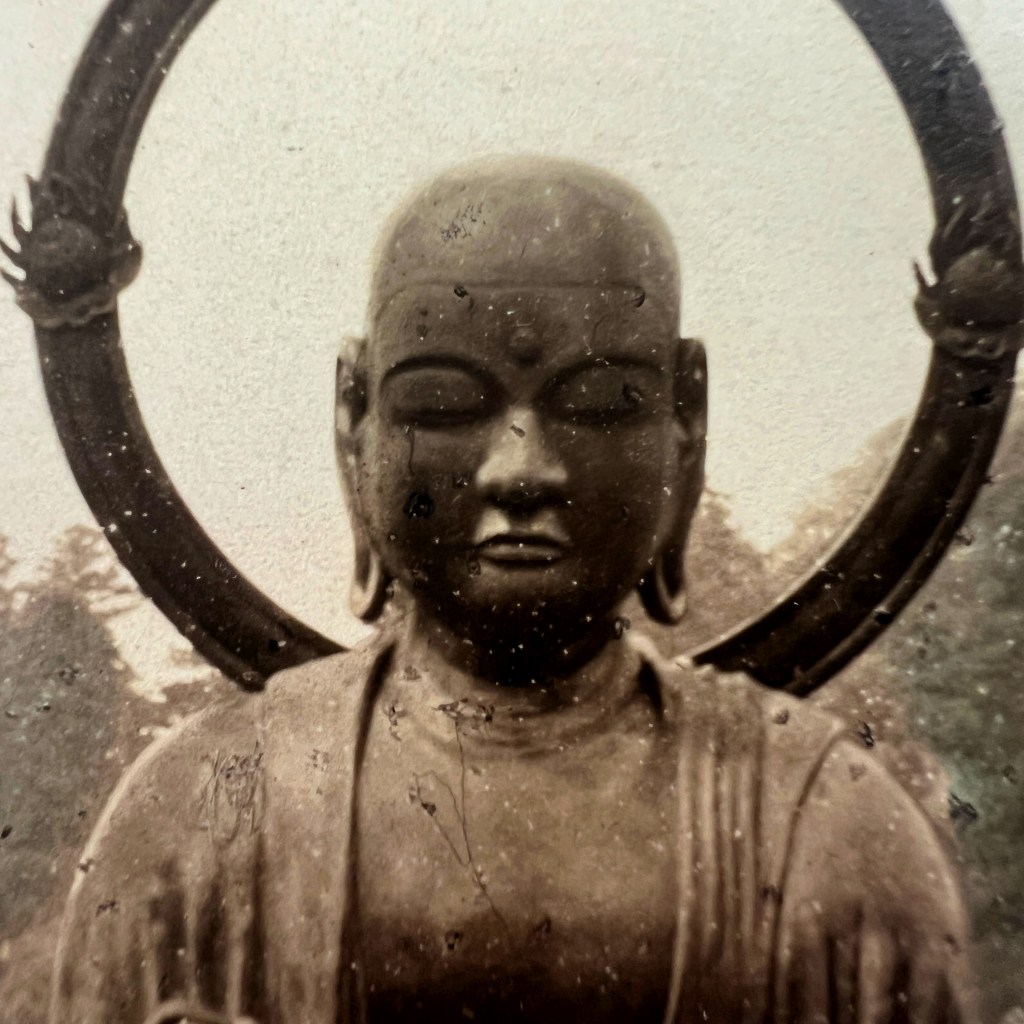
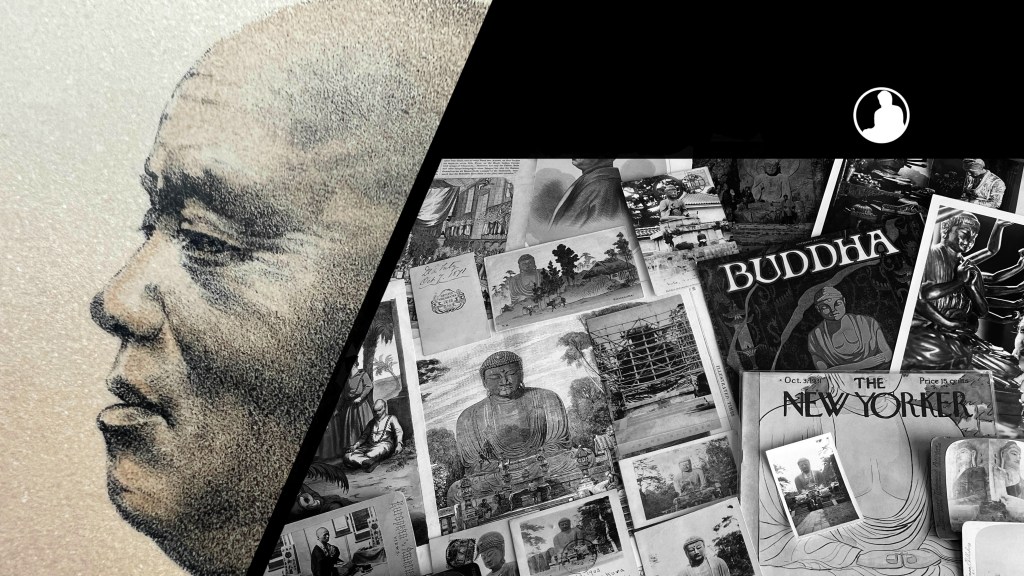
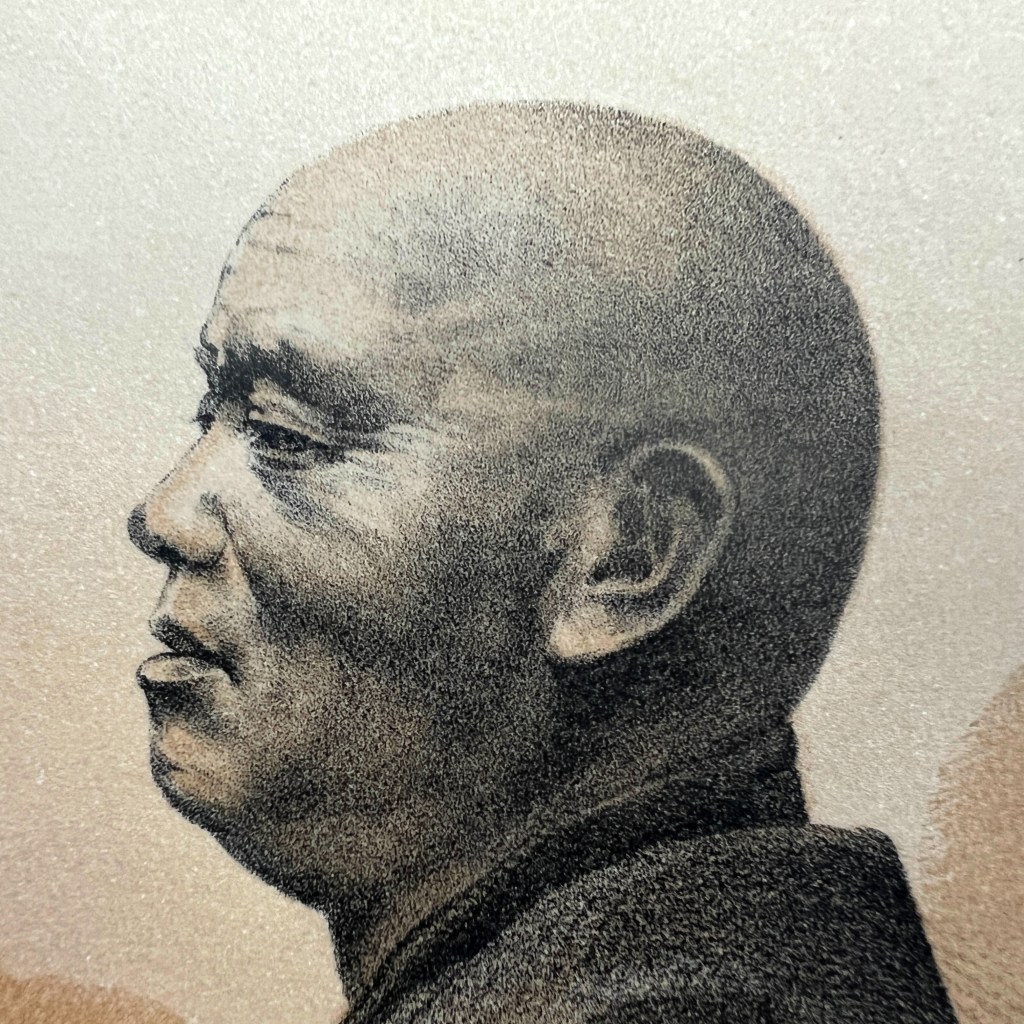
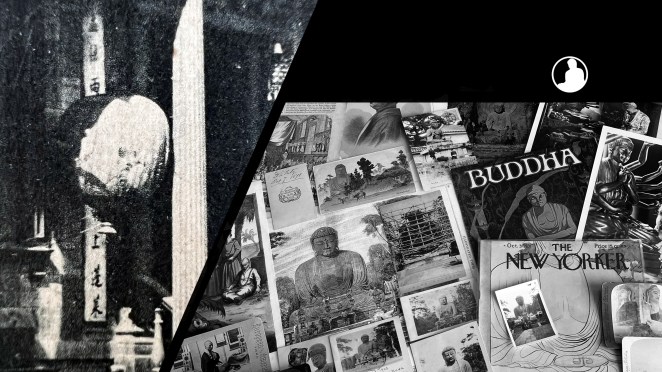
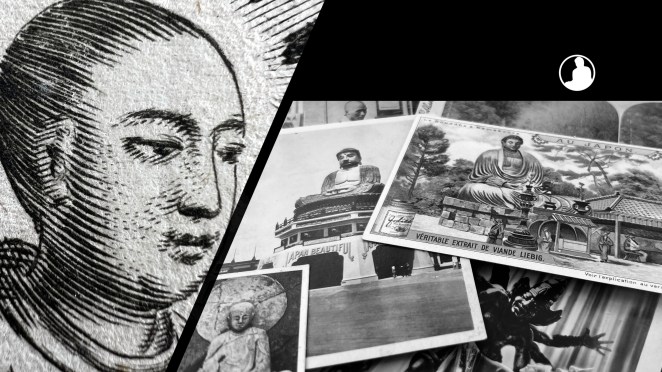
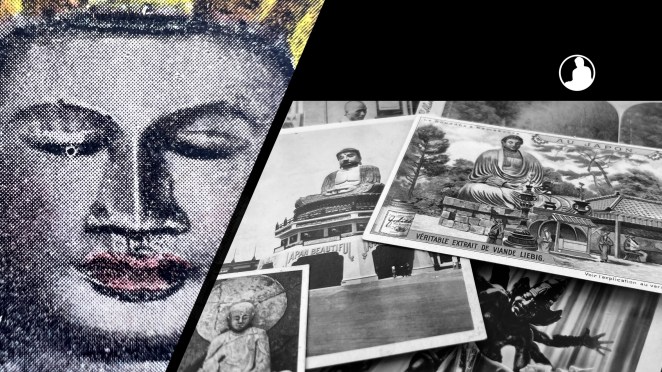
The earliest surviving photographs of Japan were shot by Eliphalet Brown as part of the Perry Expedition in 1853/54. Among many landscapes, Brown also took a few portraits, including this anonymous Buddhist priest at Shimoda – likely the earliest surviving photo of a Buddhist cleric.

Brown reportedly took more than 400 daguerreotypes during the expedition. Several dozen images, including fifteen from Shimoda, were used to illustrate the official US government report published as the Narrative of the Expedition of an American Squadron to the China Seas and Japan in 1856.

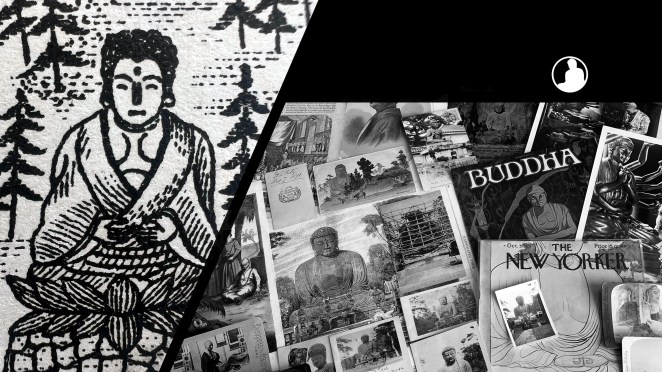
The selected daguerreotypes taken by Brown were first turned into paintings, most often by expedition artist Wilhelm Heine. These were then converted into sepia tone or color-tinted stone lithograph plates for printing; the caption below indicates this image was prepared by artist Peter Krämer.

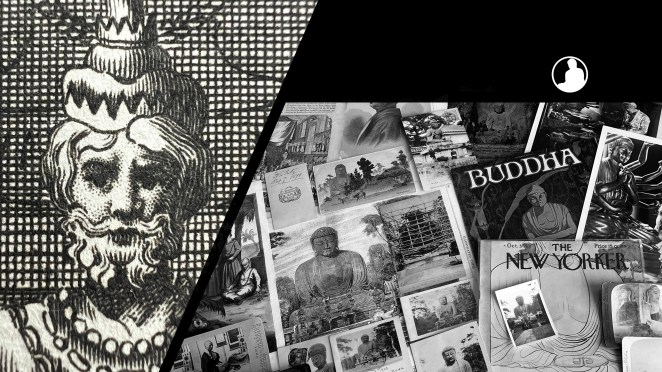
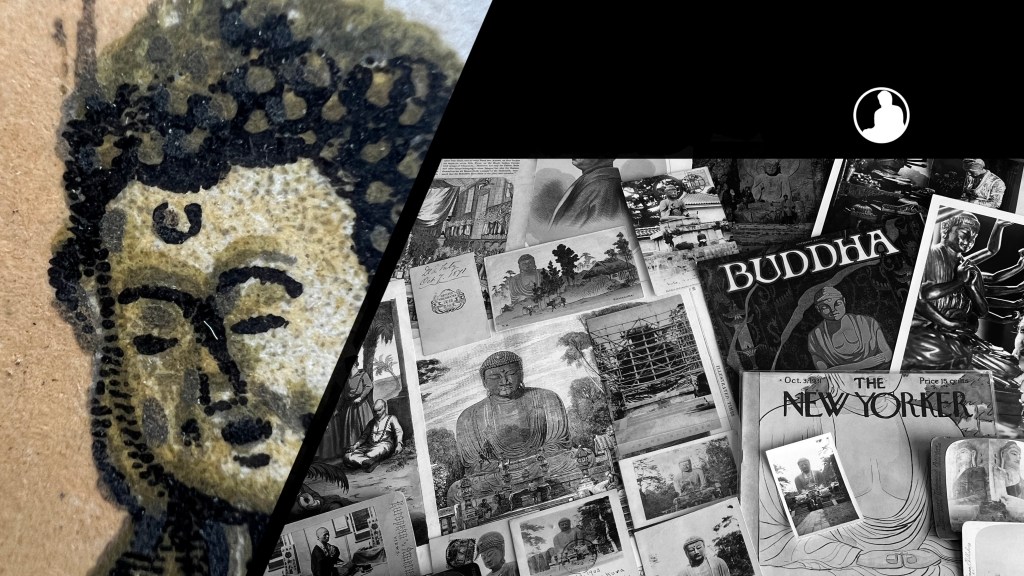
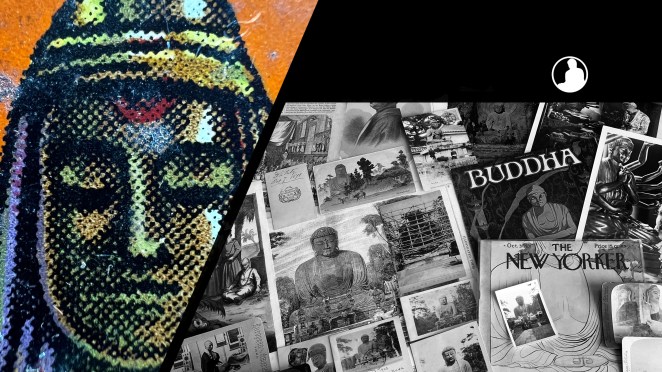
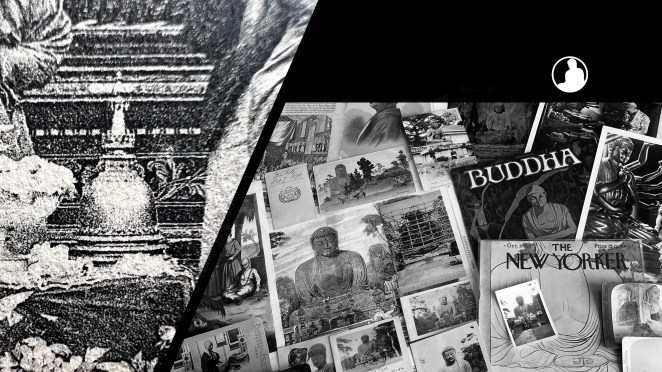
Lithography is a printing process that uses drawings made with a waxy crayon on a stone plate. Due to a special “gumming” treatment applied to the stone, ink adheres only to the drawn lines, thus allowing prints to be made. The characteristic crayon marks can be easily seen here.

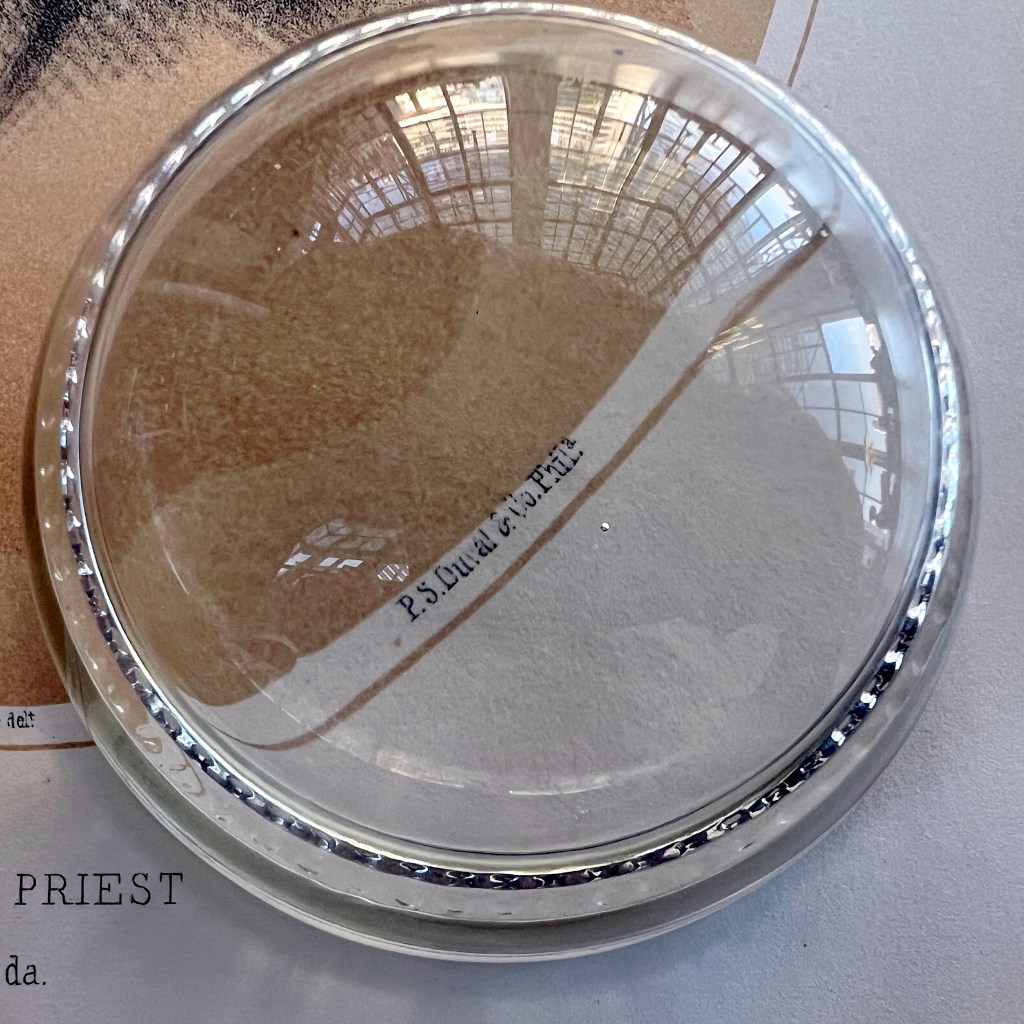
Only six of Brown’s daguerreotypes have been located; some were believed lost when the Philadelphia printer, P. S. Duval, suffered a fire in April 1856. In total, it is believed between 10,000 and 18,000 copies of Perry’s Expedition report were published.

When Perry landed in Shimoda on April 18, 1854, he reported a total of 7,000 inhabitants and nine Buddhist temples. The figure in Brown’s portrait remains unknown. The first volume of Perry’s report is viewable here: https://tinyurl.com/3rpscp9h.


The Buddhas in the West Material Archive is a digital scholarship project that catalogues artifacts depicting Buddhist material culture for Western audiences. It’s comprised of prints, photos, and an assortment of ephemera and other objects. For a brief introduction to this archive, visit the main Buddhas in the West project page.


For Related Buddhas in the West Posts Featuring Buddhist Clerics:


For the Most Recent Buddhas in the West Posts:

Arnoldus Montanus’ Icon with Thirty Arms Engraving

For all the new Buddhas in the West posts
follow us on Bluesky & Instagram


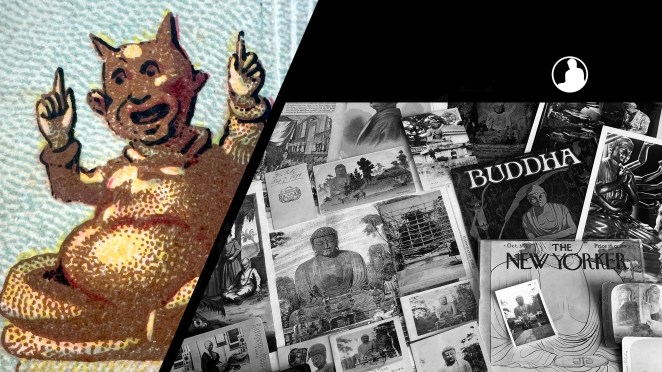
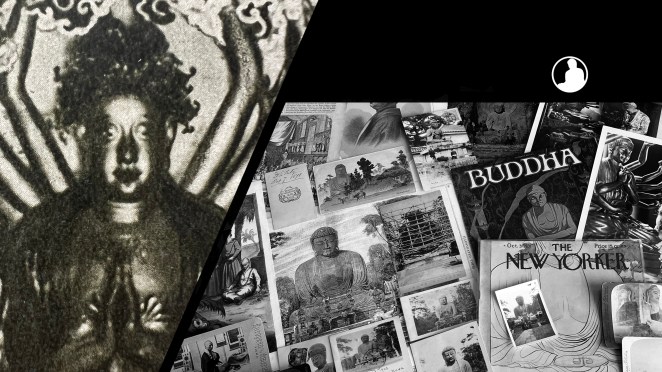
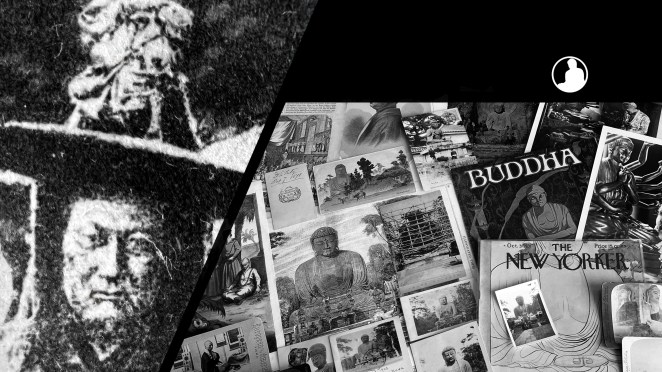
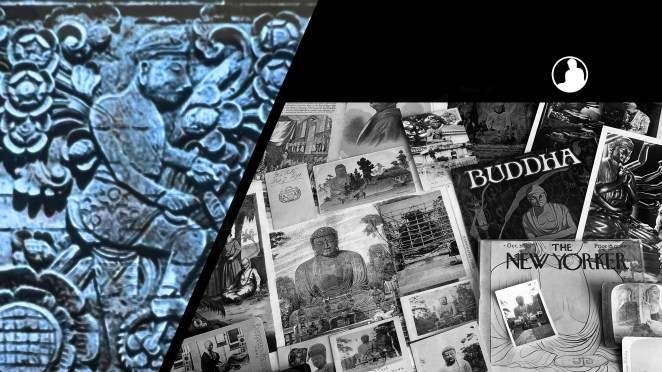
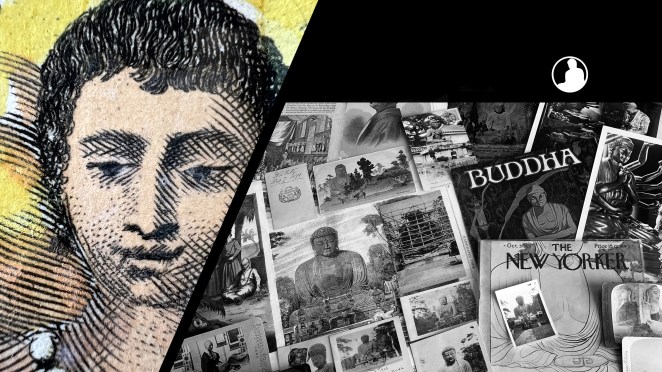
Following a pair of successful illustrated works on China, publisher Jacob van Meurs secured the rights to issue an illustrated book on Japan in 1669. The engravings, such as we see with the curious Buddhist icon here, were criticized for departing “a long way from the truth.”

Compiled by Arnoldus Montanus, a Protestant Minister who never left Holland, the engravings in Atlas Japannensis draw from both textual descriptions and an older European visual language of Asian idolatry. The work includes 23 large plates and 71 smaller vignettes set within the text.

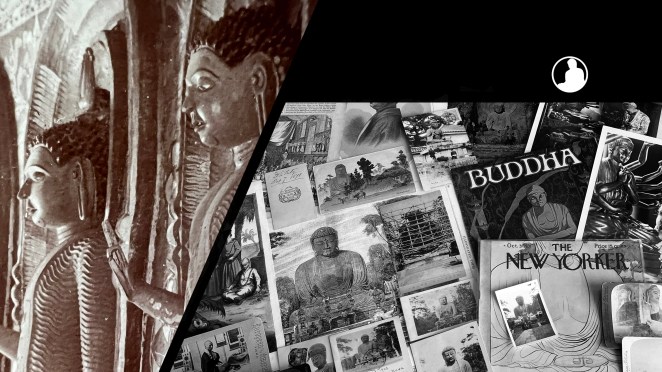
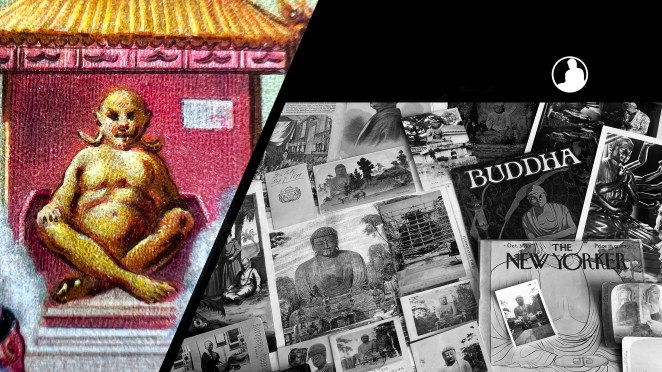
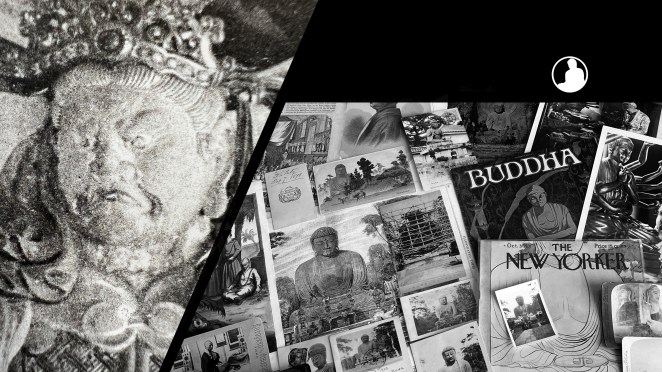
As for the icon here, the English translation of 1670 reads, “This Image hath thirty Arms, and as many Hands, in each two Arrows, a Face representing a handsome Youth, on his Breast seven humane Faces, with a Crown of Gold, richly inchas’d with Peals, Diamonds, and all sorts of Precious Gems.”

While multi-armed and multi-headed figures are not uncommon in Buddhism, the particular configuration here appears rather fanciful. Nevertheless, we are informed the illustration here represents the Bodhisattva Kannon, further curiously identified in the text as the son of Amida Buddha.

The markings on the pedestal are meant to signify non-alphabetic East Asian writing, but none can be resolved into legible characters.

Kannon’s temple is said to be located on a Buddhist mountain just east of Kyoto, most likely pointing to Mt. Hiei. The fires indicate part of Mt. Hiei’s history, as described by Montanus, when Oda Nobunaga razed Buddhist temples in the region in 1571.

Several of Montanus’ engravings were copied into later works on Japan, helping shape a visual lexicon for Buddhism into the 19th cent. The 1669 Dutch edition of Atlas Japannensis has been digitized by the National Library of the Netherlands, viewable here: tinyurl.com/5n6kstfy.


The Buddhas in the West Material Archive is a digital scholarship project that catalogues artifacts depicting Buddhist material culture for Western audiences. It’s comprised of prints, photos, and an assortment of ephemera and other objects. For a brief introduction to this archive, visit the main Buddhas in the West project page.


For Related Buddhas in the West Posts Featuring Historical Engravings:


For the Most Recent Buddhas in the West Posts:
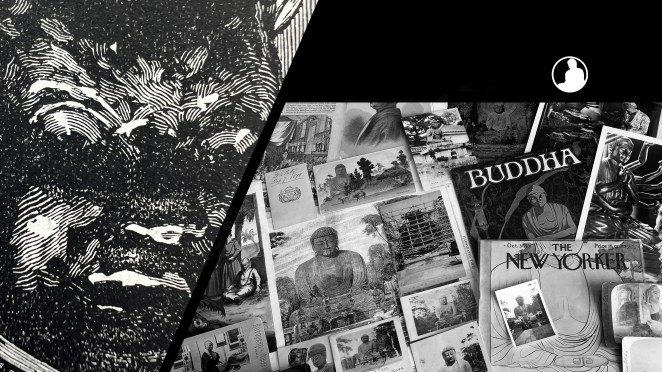

Wilhelm Burger’s Kamakura Daibutsu Photograph

For all the new Buddhas in the West posts
follow us on Bluesky & Instagram


Tales of Tourist Photos, Pt. 2*: Old “wet-plate” photography required glass negatives to be coated, sensitized, exposed, and developed in less than fifteen minutes. Using the dry-plate method, negatives could be prepared beforehand; Wilhelm Burger was among the first to use this in Japan.
*[Part 1]

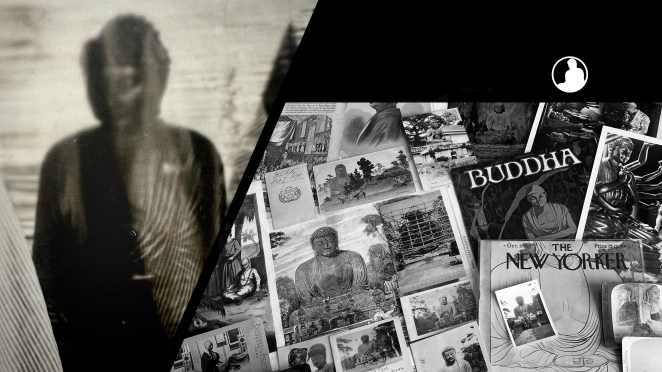
Burger was photographer for the 1869 Imperial Austrian Expedition to East Asia, but illness allowed him to remain in Japan for the winter after the legation left. Tasked in part to photograph art objects, Burger visited the Kamakura Daibutsu with large glass negatives he prepared in Europe.

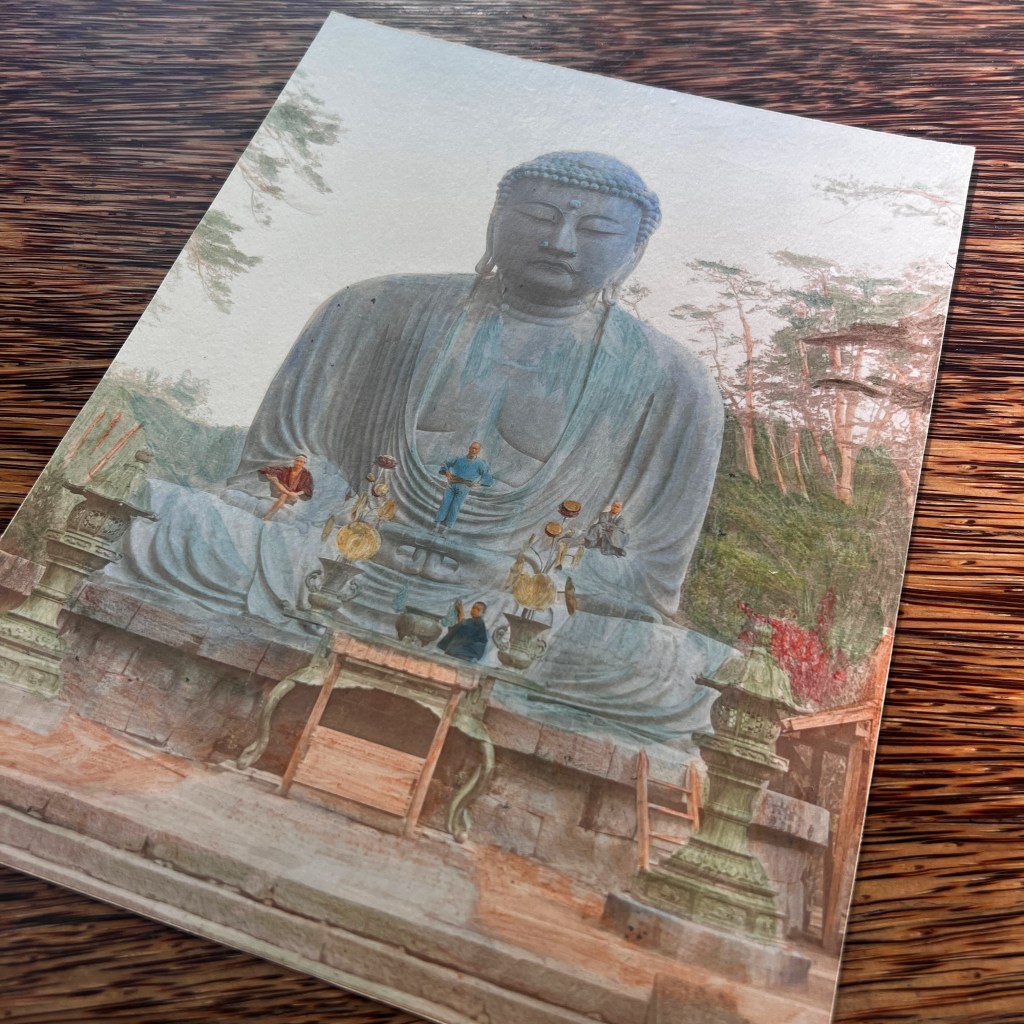
The handwritten inscription on the back of this photographic print reads, “This Image is all Bronze, name Diaboots.” “Diaboots,” or Daiboots, was the Yokohama treaty port vernacular for the Kamakura Daibutsu through the 1860s.

While Burger created a sizable portfolio of arts and crafts during the embassy, his photographs at Kōtoku-in in Kamakura appear more tourist-like than documentary. Here, several people pose for the camera, including what may appear to be Buddhist priests and three men in European attire.

To my knowledge, the people remain unidentified; Burger’s apprentice, Michael Moser, stayed in Japan after the embassy returned (and remained after Burger left). Moreover, Italian-born Felice Beato operated a successful Yokohama-based photography studio at the time – could either be seen here?

On his return to Vienna in 1870, Burger exhibited his Japanese portfolio to broad public acclaim. For more on Burger’s photographic process, see Tani Akiyoshi & Peter Pantzer’s “Wilhelm Burger’s Photographs of Japan,” PhotoResearcher 15 (2011): 40–50.


The Buddhas in the West Material Archive is a digital scholarship project that catalogues artifacts depicting Buddhist material culture for Western audiences. It’s comprised of prints, photos, and an assortment of ephemera and other objects. For a brief introduction to this archive, visit the main Buddhas in the West project page.


For Related Buddhas in the West Posts Featuring Historical Photography:


For the Most Recent Buddhas in the West Posts:
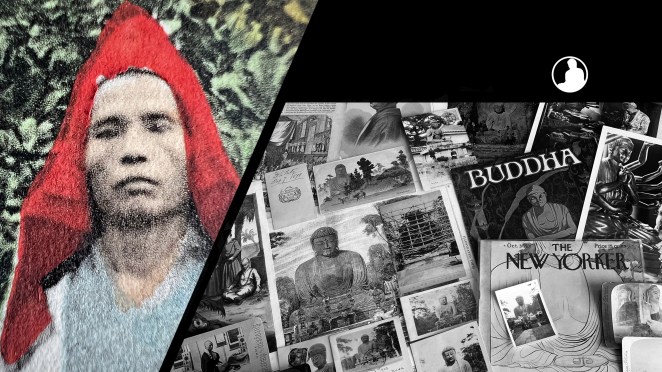

Eastman Kodak European Tour Group Real Photo Postcard

For all the new Buddhas in the West posts
follow us on Bluesky & Instagram


Tales of Tourist Photos, Pt. 1*: If photography changed the way people viewed the world, the Eastman Kodak camera transformed the late Victorian practice of tourism. The handheld Kodak made photography available to casual amateurs, creating the vernacular form of snapshot photography.
*[Part 2]

In contrast to a generation earlier, precise technical expertise was not necessary and photography became increasingly linked to personal experience. Foreign travel, such as visiting the Kamakura Daibutsu, increasingly “required” a photograph to validate the exotic experience.

By 1903, the Kodak 3A was released and fitted with rolled film creating negatives measuring 3¼ in. x 5½ in. – the exact size of a standard postcard. Eastman marketed a broad range of supplies for the amateur, including Velox paper for those developing and printing their own postcards.

This real photo postcard was shot and printed circa 1910–1915 and captures two dozen tourists arranged along the lap and stone pedestal of the Great Buddha of Kamakura.

Some of the earliest photographs of the Kamakura Daibutsu depict people climbing upon its lap and a ladder can be seen for helping a visitor’s ascent in photographs dating to the 1870s. By around 1915 climbing on the statue was prohibited.

For further discussion on the birth of the snapshot and its cultural impact, see Mia Fineman’s “Kodak and the Rise of Amateur Photography,” viewable here: https://www.metmuseum.org/essays/kodak-and-the-rise-of-amateur-photography.


The Buddhas in the West Material Archive is a digital scholarship project that catalogues artifacts depicting Buddhist material culture for Western audiences. It’s comprised of prints, photos, and an assortment of ephemera and other objects. For a brief introduction to this archive, visit the main Buddhas in the West project page.


For Related Buddhas in the West Posts Featuring Real Photo Postcards:


For the Most Recent Buddhas in the West Posts:
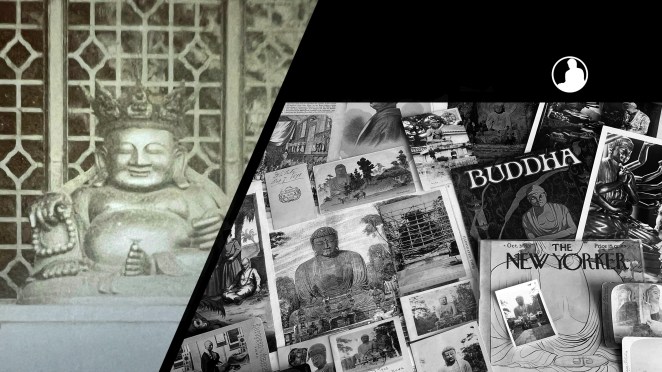

T. Enami’s Sanjūsangen-dō Lantern Slide

For all the new Buddhas in the West posts
follow us on Bluesky & Instagram


Before nickelodeons and cinema halls, “magic lantern” shows were an important part of popular American entertainment. Hand tinted glass slides were used by children’s story tellers, stage magicians, and traveling public lecturers in town and cities across the United States.

Enami Nobukuni, known professionally as T. Enami, opened his Yokohama photography studio in 1892 and by 1915 offered a very large glass slide portfolio. Objects such as this would have been sold as visual aids for public presentations or parlor room entertainment.

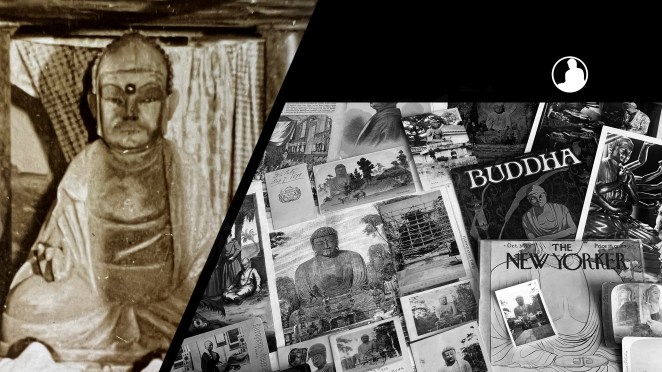
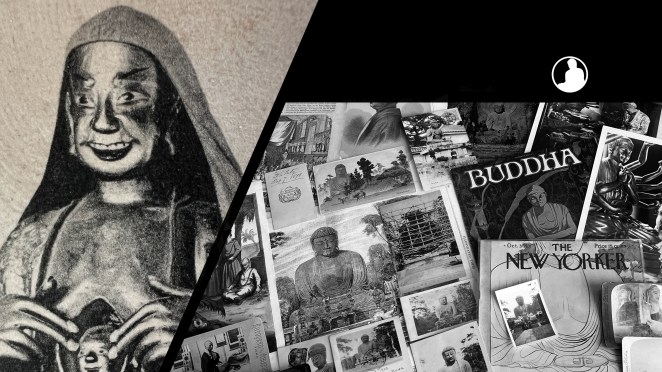
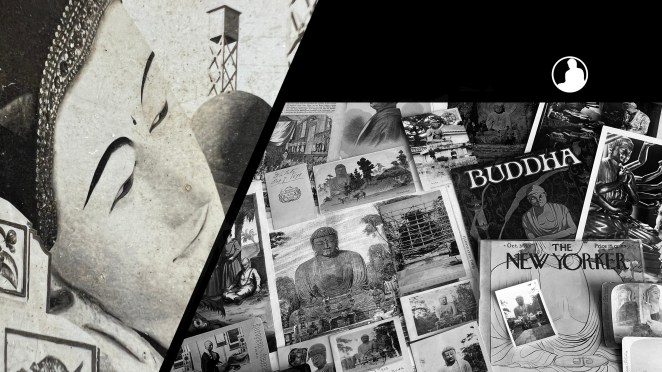
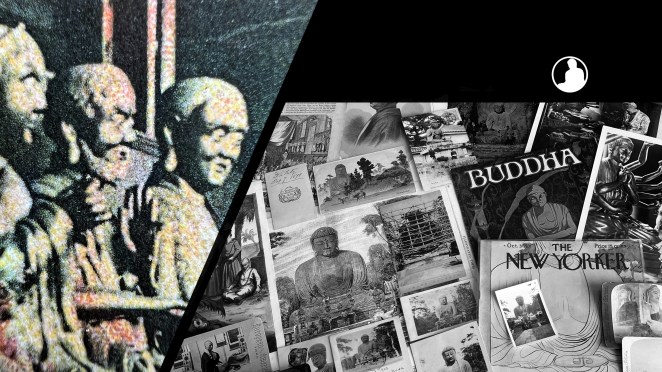
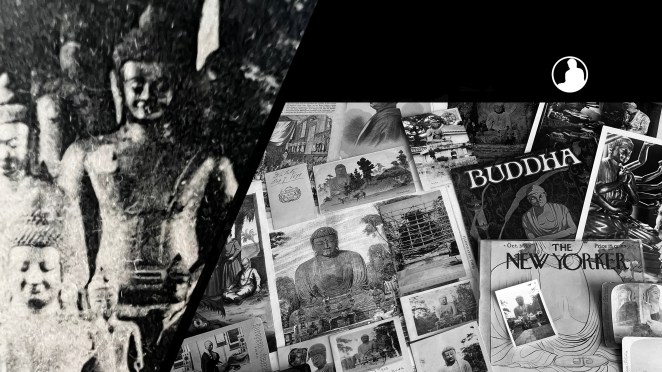
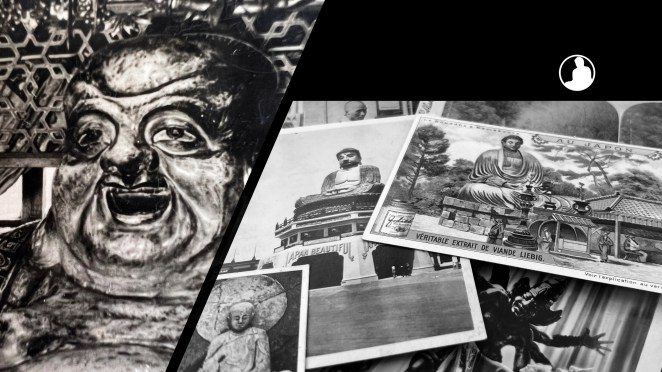
This slide shows a grouping of the famous one thousand Kannon statues of Sanjūsangendō in Kyoto, one of the most commonly photographed tourist sites in Japan during the late Meiji and Victorian periods.

Enami was celebrated for the beautiful hand tinting of his slides, but the coloring here suggests this slide was produced after his death in 1929, when his son took over the business and did not have an eye for finer detail like his father.

Enami was Japan’s most prolific producer of small format photographs and was often showcased in National Geographic Magazine. To view a selection of Enami’s photographs, see the digitized collection of Kjeld Duits, viewable here: tinyurl.com/245skpf8.


The Buddhas in the West Material Archive is a digital scholarship project that catalogues artifacts depicting Buddhist material culture for Western audiences. It’s comprised of prints, photos, and an assortment of ephemera and other objects. For a brief introduction to this archive, visit the main Buddhas in the West project page.


For Related Buddhas in the West Posts Featuring Lantern Slides:


For the Most Recent Buddhas in the West Posts:
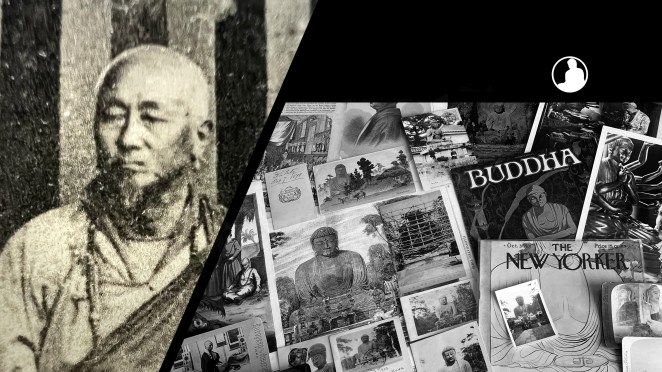

Kūkai’s Jizō at Hakone Postcard

For all the new Buddhas in the West posts
follow us on Bluesky & Instagram


Despite the English caption, this is not a statue of the 9th century Buddhist monk Kōbō Daishi, otherwise known as Kūkai. As the Japanese caption reads, this is a stone relief carving of the bodhisattva Jizō at Hakone, attributed to Kūkai’s skilled craftsmanship.

The lore of Kūkai’s craftsmanship was known to 19th c. art historian Ernest Fenollosa: “This is said to have been carved by Kōbō himself on his journey to the North; yet…he hardly would have spared time for its execution.” Today, the statue is dated to the 13th century, well after Kūkai’s death.

The note on the back, possibly written by a French tourist as a personal reminder, clarifies the English caption saying the image of Jizō was “sculpted by the Buddhist saint Kōbō Daishi.” The design of the reverse dates this Japanese postcard to between 1933 and 1945.

The pile of stones and pebbles on Jizō’s lap were common votive offerings presented by passing travelers and pilgrims.

Carved into the rock face, this statue still stands today in Hakone, sheltered by a small shrine. For more on Jizō and this particular icon, see Hank Glassman, The Face of Jizo: Image and Cult in Medieval Japanese Buddhism, 2012.


The Buddhas in the West Material Archive is a digital scholarship project that catalogues artifacts depicting Buddhist material culture for Western audiences. It’s comprised of prints, photos, and an assortment of ephemera and other objects. For a brief introduction to this archive, visit the main Buddhas in the West project page.


For Related Buddhas in the West Posts Featuring Jizō / Kṣitigarbha:


For the Most Recent Buddhas in the West Posts:
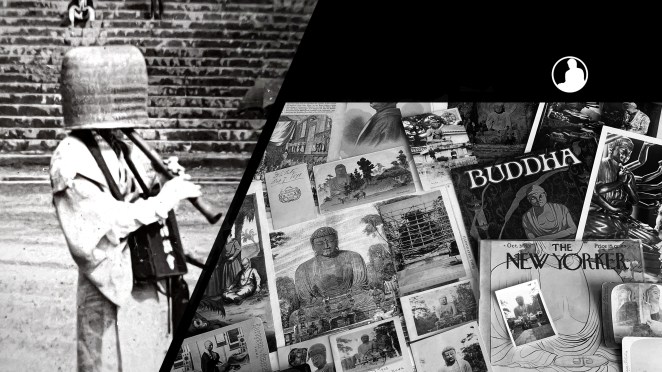

Ueno Daibutsu after the Great Kantō Earthquake Postcard

For all the new Buddhas in the West posts
follow us on Bluesky & Instagram


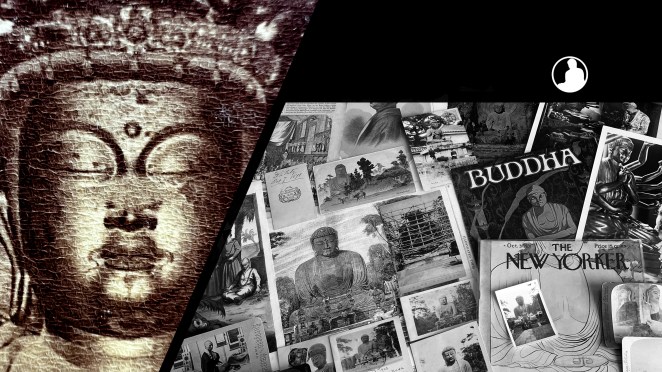
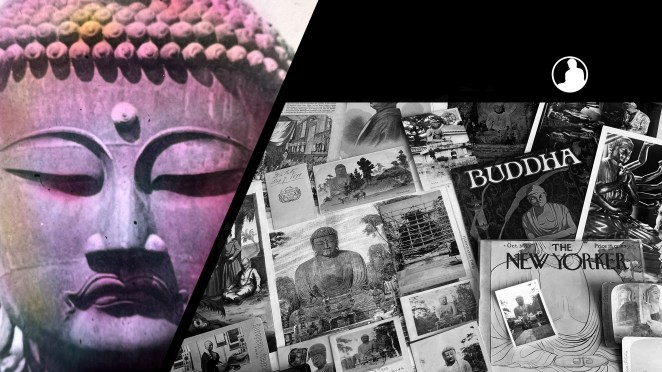
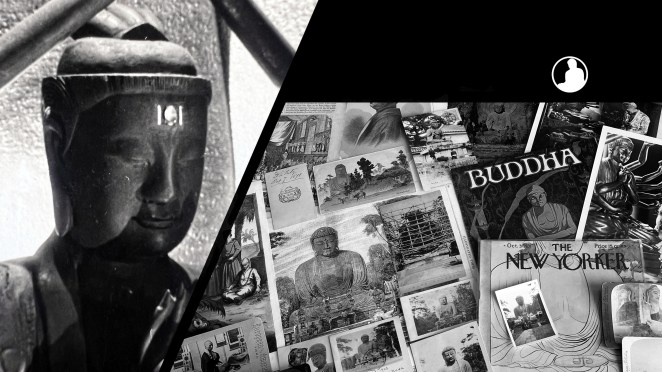
Constructed in 1843, the colossal Ueno Daibutsu in Tokyo was restored after damage from the 1855 Edo earthquake. Less than a century later, in 1923, the Great Kantō earthquake dislodged the icon’s head, providing a rare photographic opportunity.

The bronze statue, representing Śākyamuni Buddha, was the third iteration, replacing statues made in c. 1660 and 1631. The Ueno Daibutsu originally stood on the precincts of Kan’ei-ji 寛永寺, a family temple for the famed Tokugawa clan, but the grounds were turned into today’s Ueno Park in 1873.

The once booming Japanese postcard industry was devastated after the 1923 earthquake, as many paper manufacturers and printers had to rebuild. Postcards made during this period are often found on a cheaper, rough paper prone to yellowing; notably, the back here is not fully printed.

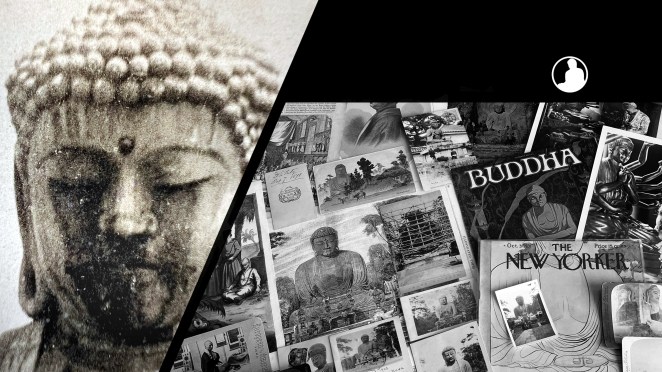
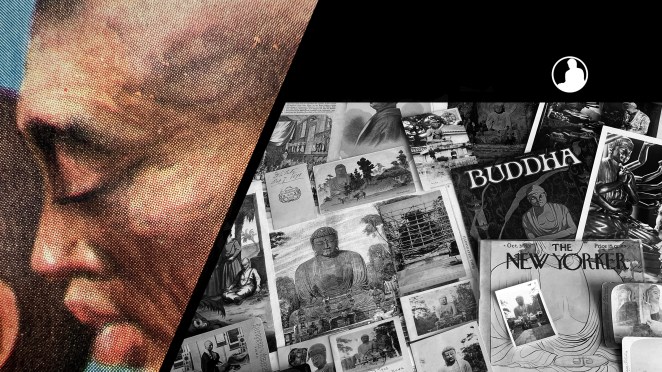
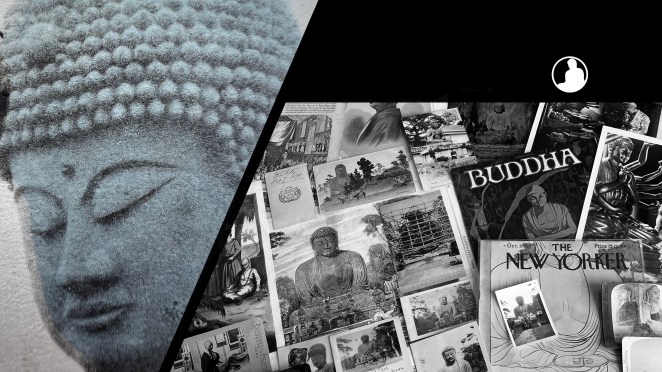
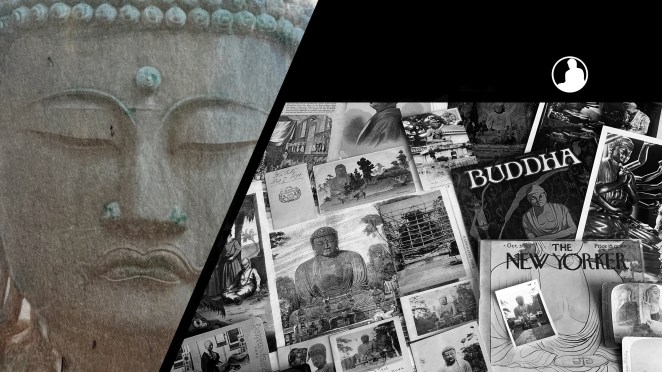
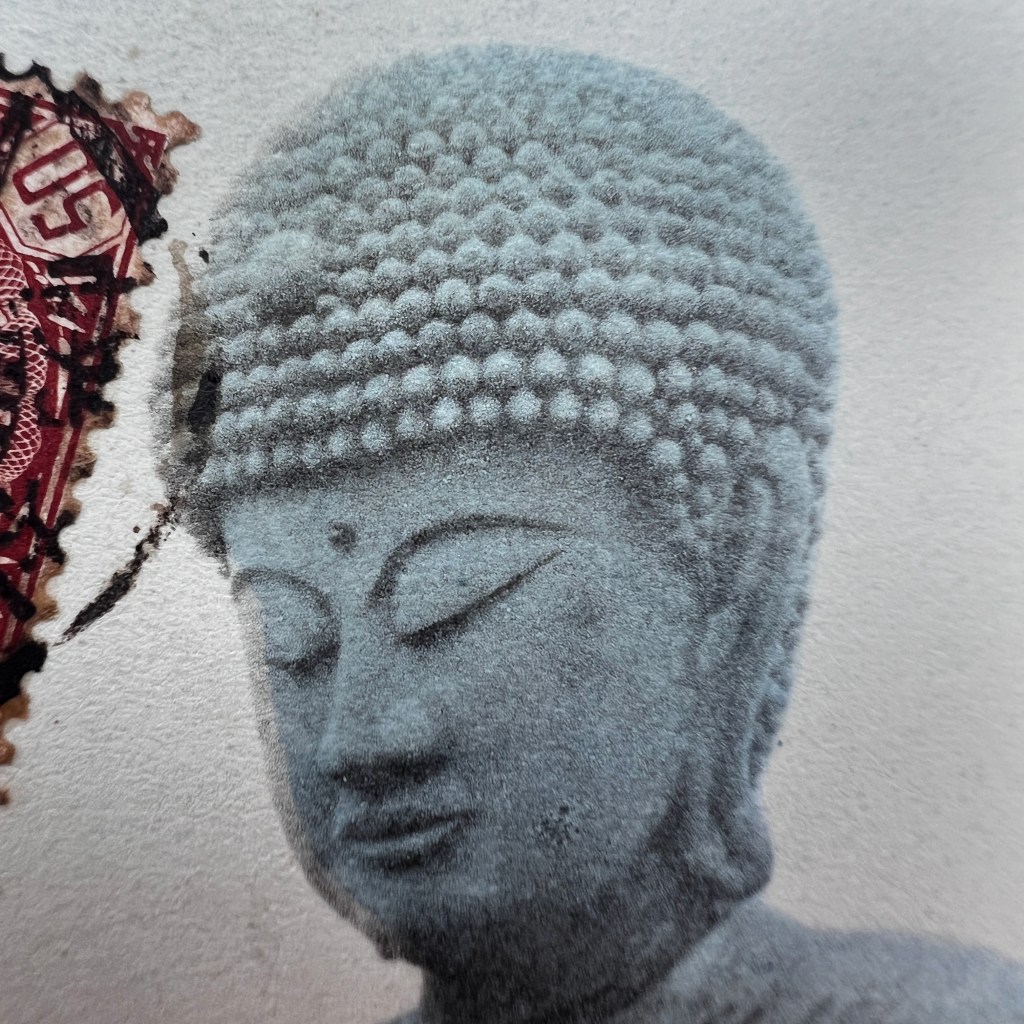
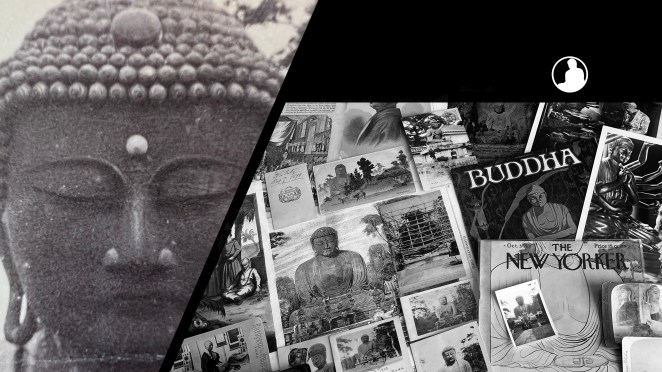
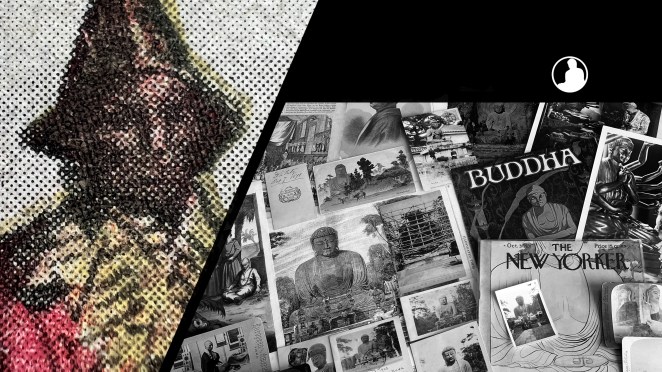
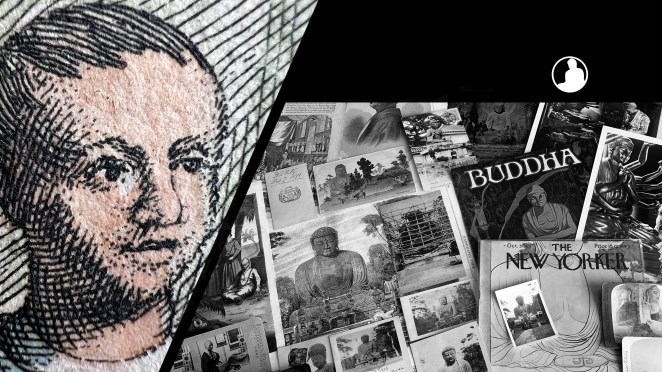
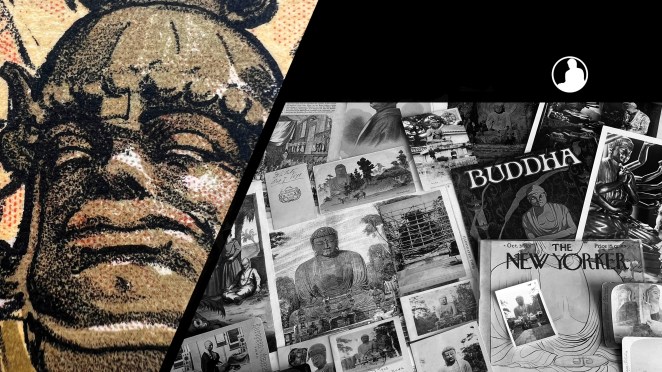
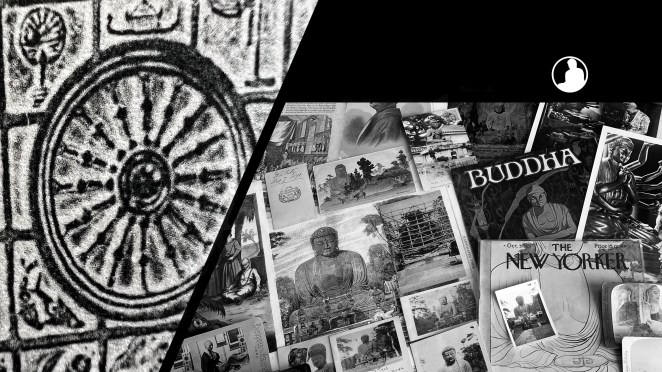
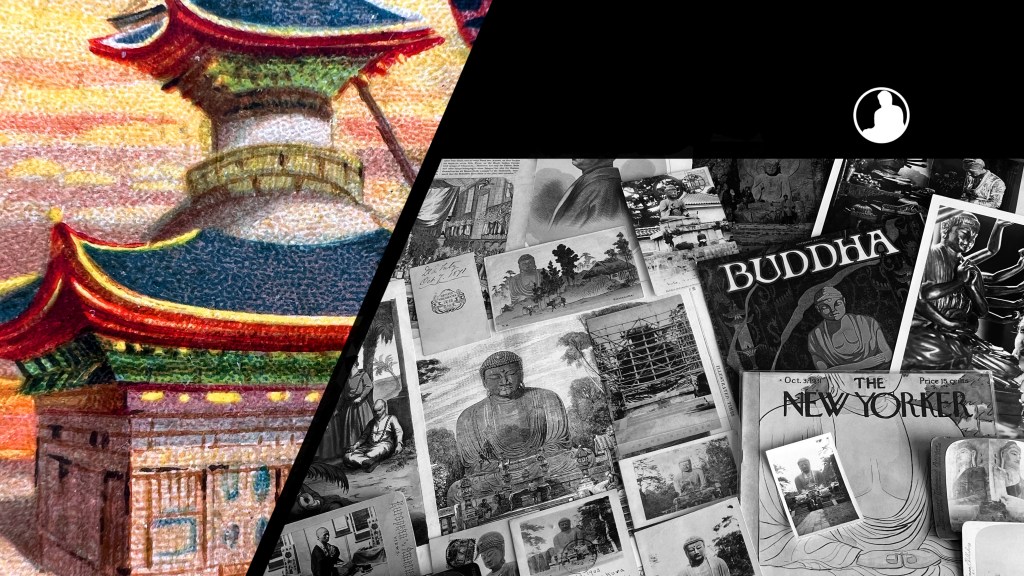
The older exquisite hand-colored collotype prints of a decade earlier were replaced with lower resolution halftone screen prints in black and white. This detail shows the icon’s head laying in the foreground; looking closely, it’s easy to see the hallmark halftone dot pattern.

Vestiges of religious activity can be seen through the remnants of senshafuda 千社札, votive slips pasted on the statue by pilgrims and visitors.

The Ueno Daibutsu body was melted down during WWII, thus today only the face remains on display in Ueno Park. Holding the belief that the statue “won’t fall any further,” it’s become a place for Japanese students to pray so they won’t fail exams.


The Buddhas in the West Material Archive is a digital scholarship project that catalogues artifacts depicting Buddhist material culture for Western audiences. It’s comprised of prints, photos, and an assortment of ephemera and other objects. For a brief introduction to this archive, visit the main Buddhas in the West project page.


For Related Buddhas in the West Posts Featuring Historical Postcards:


For the Most Recent Buddhas in the West Posts:
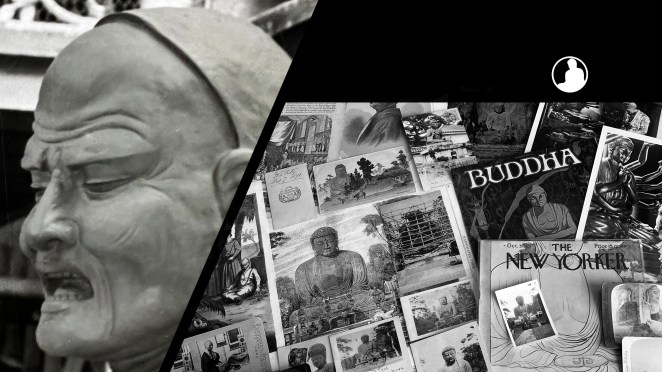

Kamakura Sightseeing Map (1912)

For all the new Buddhas in the West posts
follow us on Bluesky & Instagram


After the opening Japan in 1859, the old backwater capital of Kamakura was transformed into an international tourist destination. This bilingual tourist map from 1912 (Meiji 45) provides a glimpse into which Kamakura sites were seen as most significant, including the Kamakura Daibutsu.

The Complete Map of Kamakura Famous Places for Sightseeing (Kamakura yūran meisho zenzu 鎌倉遊覧名所全圖), loosely rendered into English as The Drawing of Kamakura Nipoon [sic], came inside a paper folder printed with symbols of the Japanese empire. The map was prepared by Kawakami Yasujirō 川上安次郎.

By the early 1890s, the Kamakura Kaihin Hotel, a converted medical therapy facility for seawater bathing, emerged as the premier resort for Kamakura travelers. In March 1893, the Japanese Welcome Society was established to help promote foreign travel in Japan.

For many Japanese travelers, the main attraction was the Hachiman Shrine, a large complex in the heart of the city found at the end of a long central promenade leading to the ocean. The red dot seen here suggests this site was highlighted by the original owners of the map.

Among the many dozens of sites named on the map, only a handful are marked by a red dot. Of those highlighted is Hase-dera, temple home to a famous 31-foot tall Eleven-Headed Kannon statue.

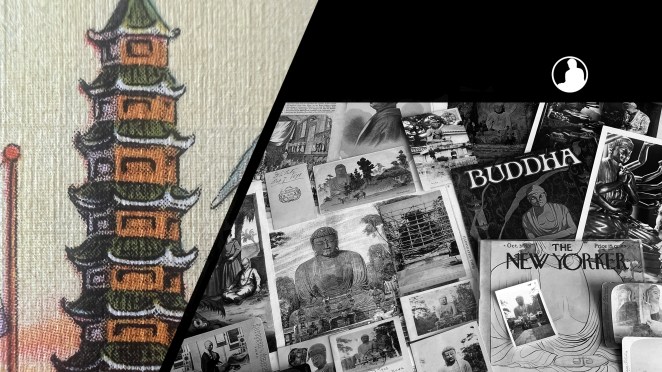
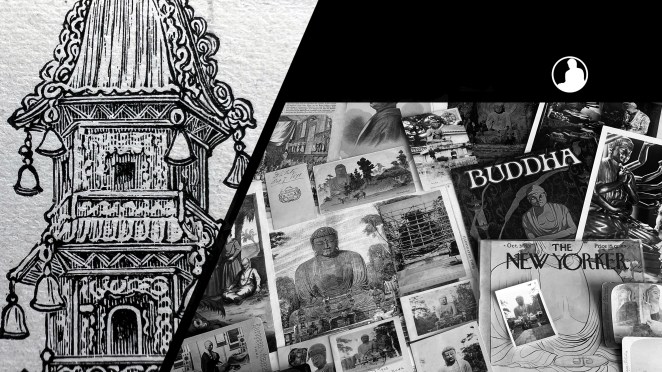
Another highlighted tourist attraction is the Kamakura Daibutsu at Kōtoku-in, here depicted by a small, yet easily identifiable, icon. For a digitized collection of Japanese maps held by the C. V. Starr East Asian Library at UC Berkeley, see tinyurl.com/yutj576z.


The Buddhas in the West Material Archive is a digital scholarship project that catalogues artifacts depicting Buddhist material culture for Western audiences. It’s comprised of prints, photos, and an assortment of ephemera and other objects. For a brief introduction to this archive, visit the main Buddhas in the West project page.


For Related Buddhas in the West Posts Featuring Japan:


For the Most Recent Buddhas in the West Posts:
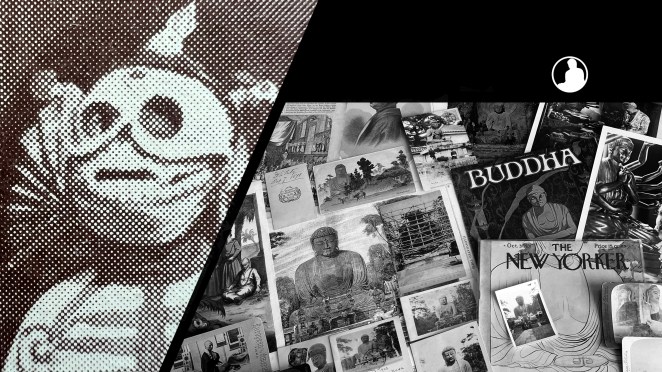

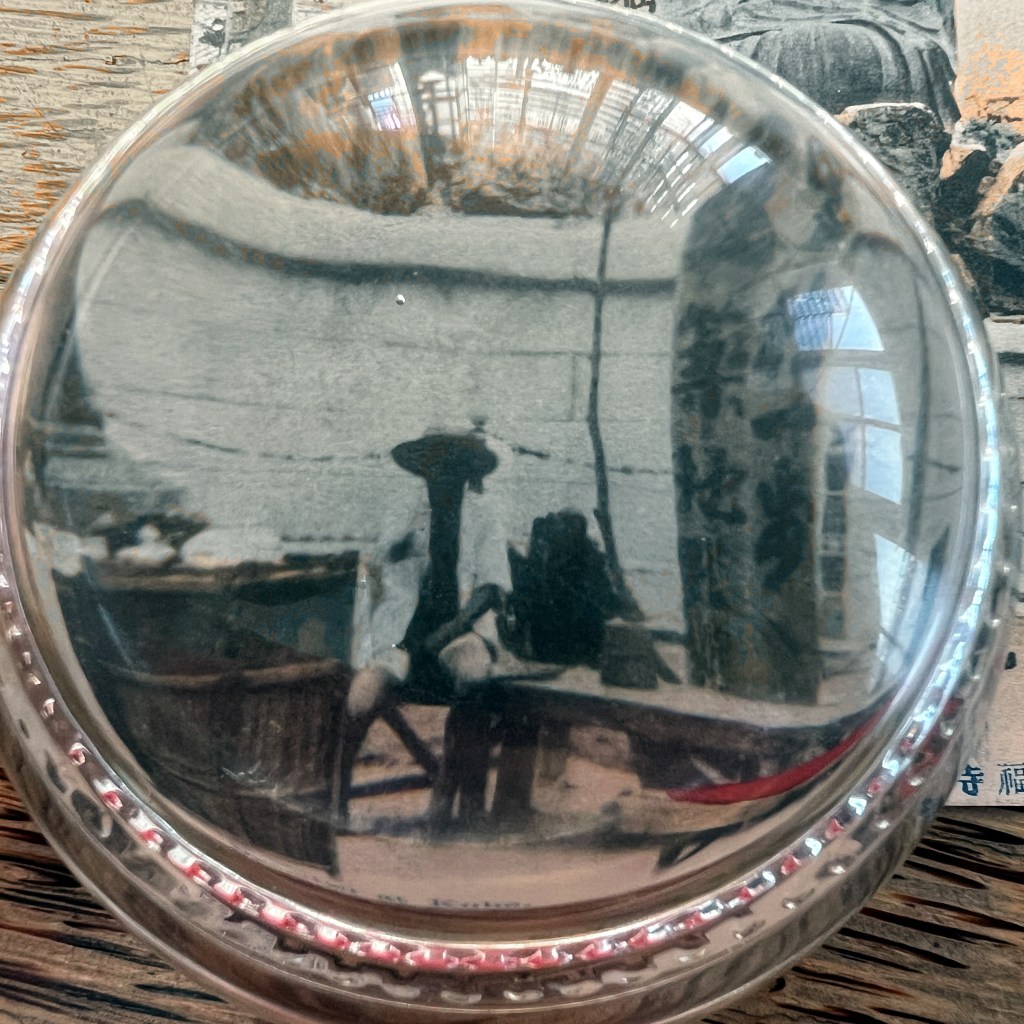
Used Postcard with Kamakura Daibutsu Dimensions

For all the new Buddhas in the West posts
follow us on Bluesky & Instagram


In 2025, seven of the top ten tallest freestanding statues in the world are Buddhist figures (as well as 31 of the top 50). The colossal size of Buddhist statuary is nothing new; foreign travelers in Asia have often noted this fact, as we see in this postcard message from 1906.

Used postcards are valuable because they reveal which aspects of the Kamakura Daibutsu site in Japan were more salient to visitors. The exact measurements given here were not taken on site by the visitor, but were likely copied from one of the popular Japan tourism guides.

The reverse gives us some insight into the “extended biography” of the postcard after its departure from Tokyo. Notably, the missing postage stamp suggests it was prized by a philatelist – a stamp collector.

The focus on the size, craftsmanship, and materials of the statue minimize the religious importance of such an icon and highlight its value as fine art.

Teaching Resource: For a brief introduction to material analysis that uses this postcard as an example, see the post and handout: Making Materials Speak: Performing a Material Analysis, viewable here: tinyurl.com/nhhuh4nk.


The Buddhas in the West Material Archive is a digital scholarship project that catalogues artifacts depicting Buddhist material culture for Western audiences. It’s comprised of prints, photos, and an assortment of ephemera and other objects. For a brief introduction to this archive, visit the main Buddhas in the West project page.


For Related Buddhas in the West Posts Featuring Historical Postcards:


For the Most Recent Buddhas in the West Posts:
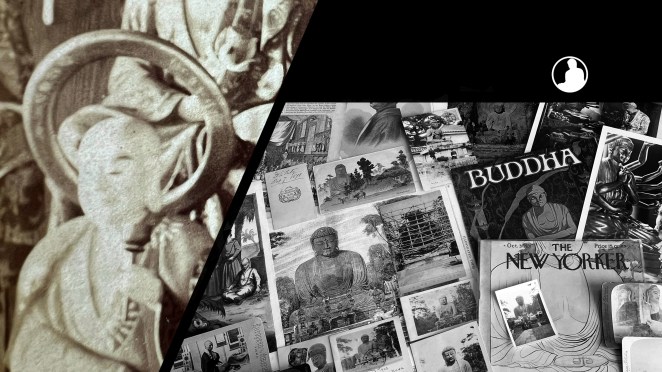

Arnoldus Montanus’ Great Buddha of Hōkō-ji Engraving

For all the new Buddhas in the West posts
follow us on Bluesky & Instagram


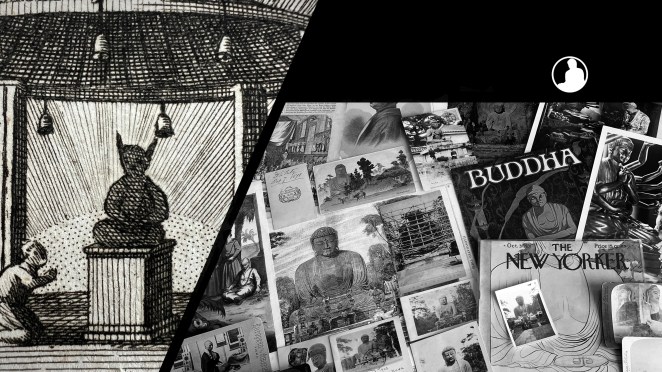
In 1649, while traveling from Nagasaki to Edo (modern Tokyo), the visiting Dutch Embassy made an obligatory stop in Kyoto where they saw the Great Buddha of Hōkō-ji. The Great Buddha stood nearly 60 feet tall and was completed in 1612, replacing an older destroyed icon.

The original Dutch report by Andries Frisius was eventually published by Arnoldus Montanus in 1669 as part of his Atlas Japannensis. Based in part on the report of Frisius, the printer, Jacob van Meurs, had a large copperplate engraving made to illustrate the embassy’s visit.

The temple icon was Vairocana Buddha which was described by Montanus as a “terrible Image… with his Legs across under him.” Furthermore, “the whole statue represents a Woman sitting in a Ring of Darting beams richly gilded.”

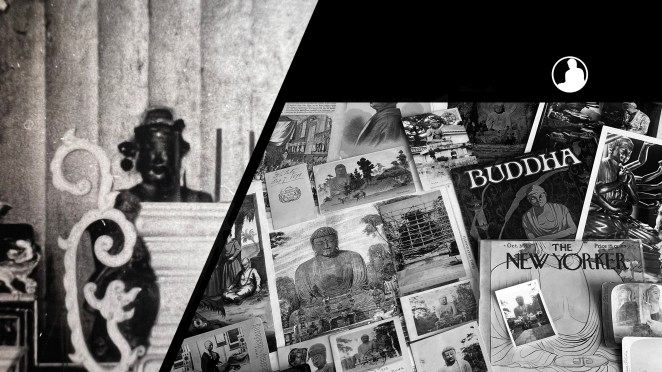
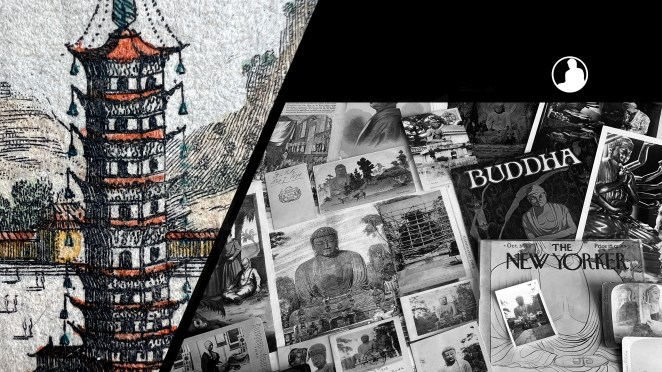
Van Meurs’ engravers seemingly took inspiration from the text, but also had to draw upon their own visual repertoire to fill in details. This includes the masonry columns in the back of the temple as well as playful cherub-like figures in the “Ring of Darting beams.”

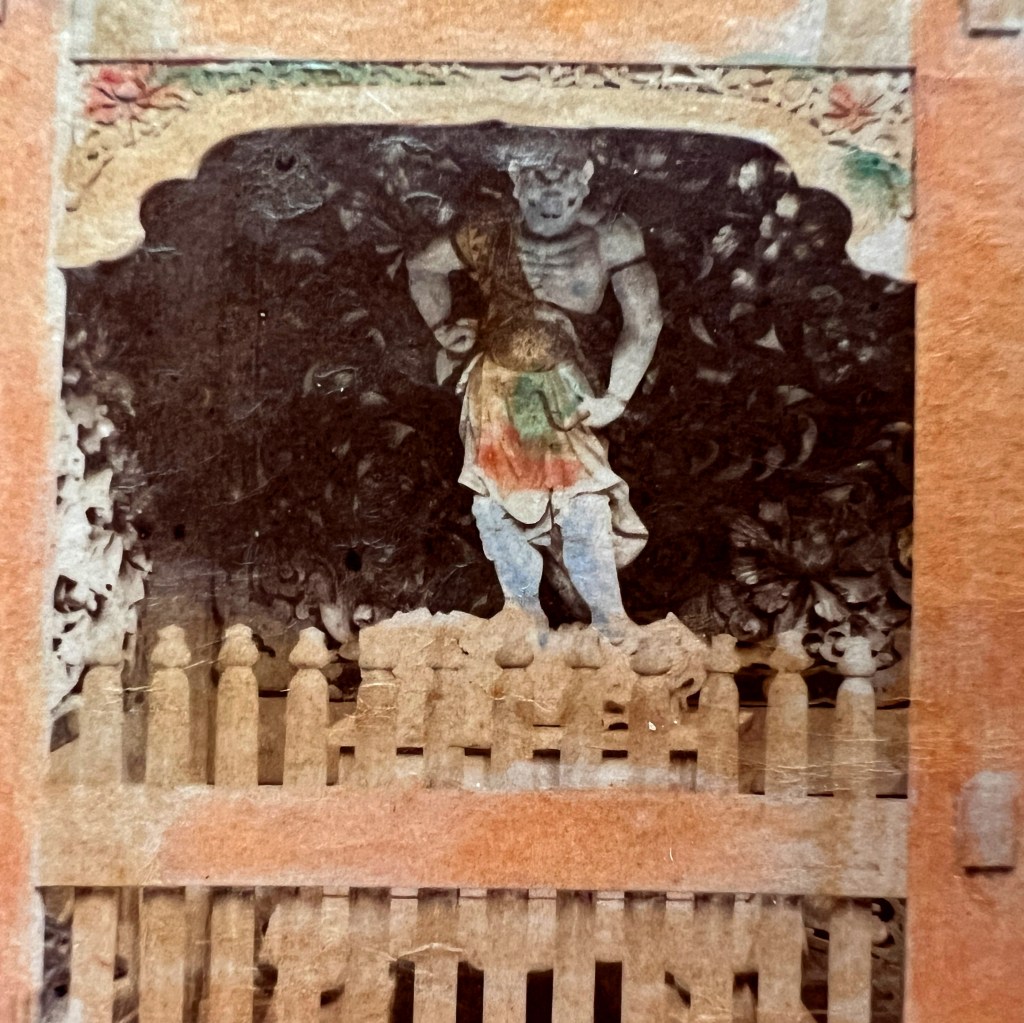
“Two horrible Fiends, with Stiletto’s in their hands” – certainly the fearsome Niō – are described a guarding the temple entrance. The engraver places these grotesque figures inside the main temple hall.

Atlas Japannensis was first published in Dutch in 1669; an English version came the following year. The hand-colored print shown here came from the French edition of 1680. As noted by Isa van Eeghen, the English legend was burnished off of the plate and re-inscribed in French.

By the time of printing, the colossal Buddha of Hōkō-ji had been destroyed by an earthquake in 1662; a wooden image replaced it in 1667. The 1669 Dutch edition of Atlas Japannensis has been digitized by the National Library of the Netherlands, viewable here: tinyurl.com/5n6kstfy.


The Buddhas in the West Material Archive is a digital scholarship project that catalogues artifacts depicting Buddhist material culture for Western audiences. It’s comprised of prints, photos, and an assortment of ephemera and other objects. For a brief introduction to this archive, visit the main Buddhas in the West project page.


For Related Buddhas in the West Posts Featuring Historical Engravings:

For the Most Recent Buddhas in the West Posts: