Tamamura Kōzaburō’s Kamakura Daibutsu Photograph For Brinkley’s Japan

For all the new Buddhas in the West posts
follow us on Bluesky & Instagram


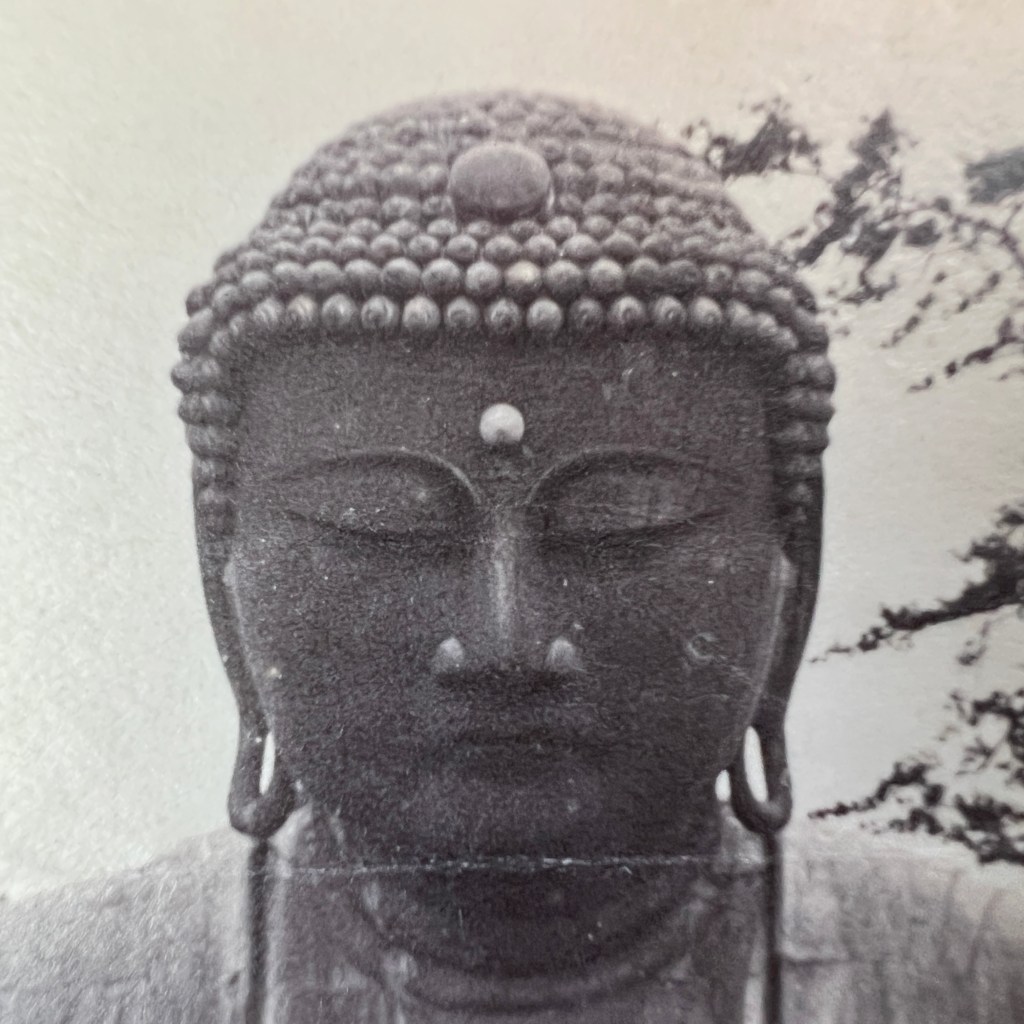
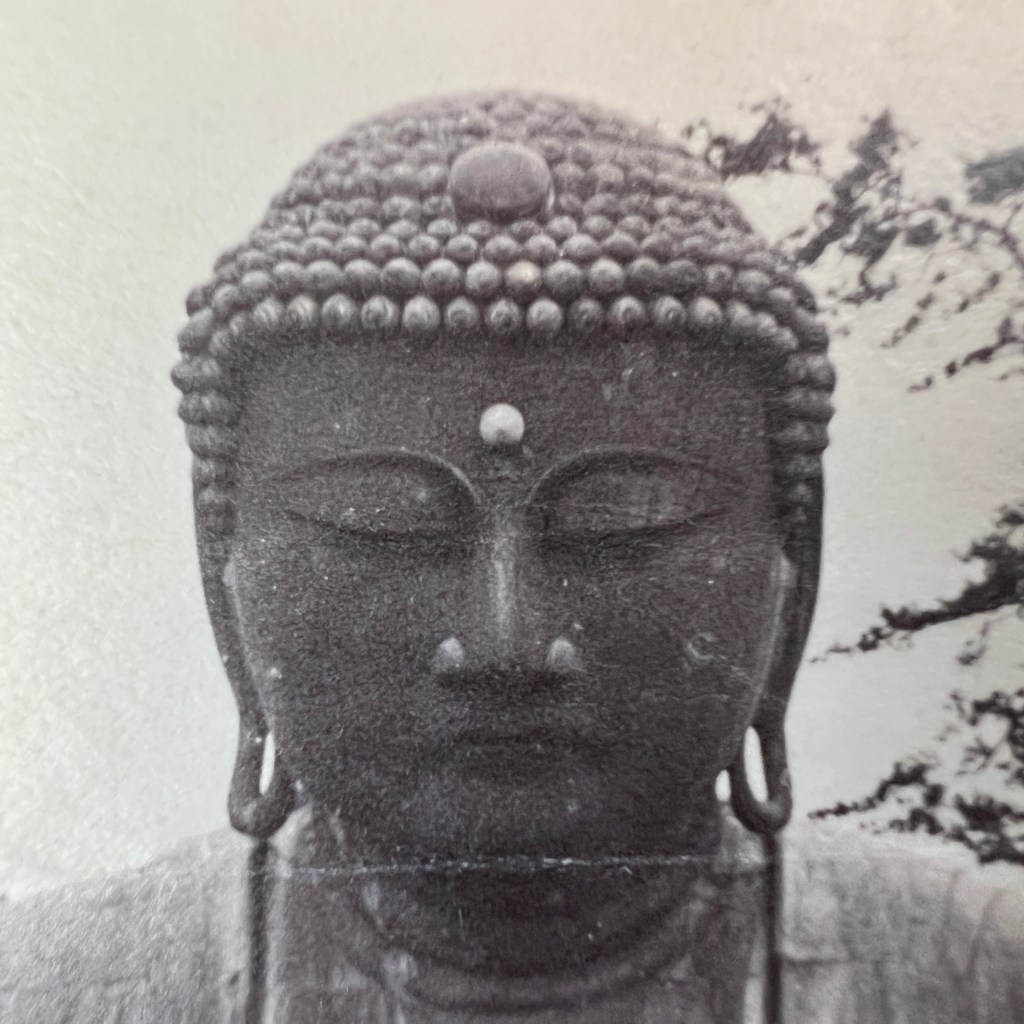
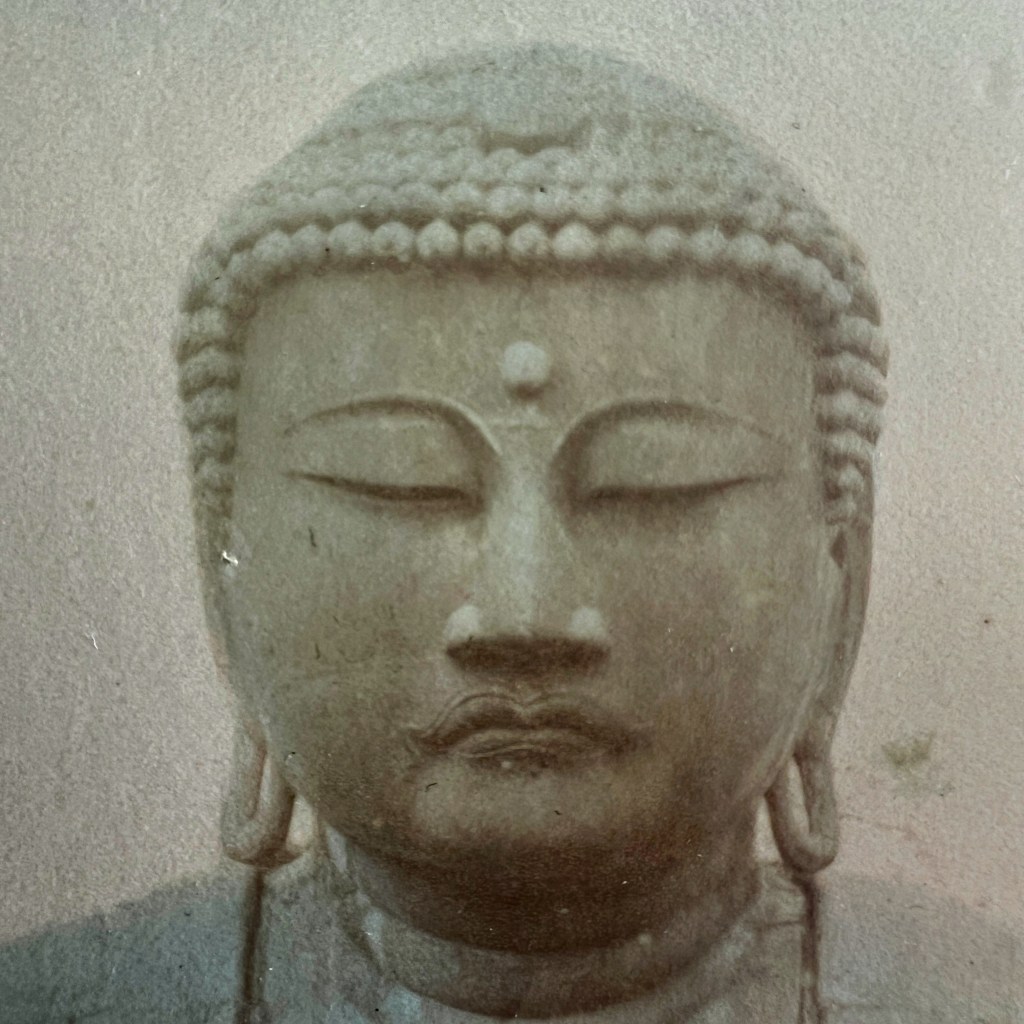
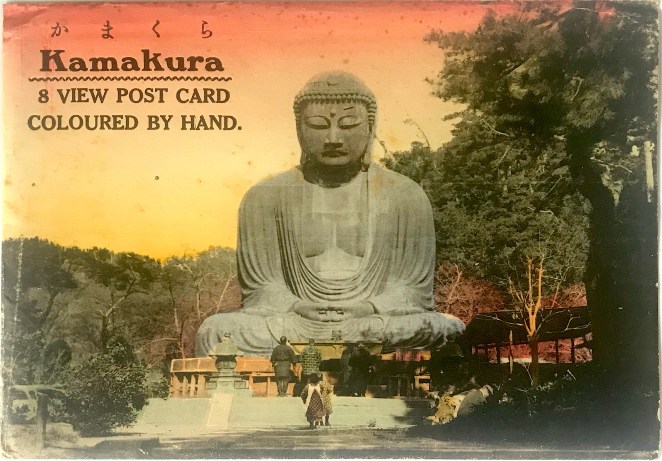
An astounding 400,000 hand-colored photographic prints were used for all editions of Francis Brinkley’s Japan: Described and Illustrated by the Japanese. Produced in Boston between 1897 and 1898, this work was the pinnacle of photographic book publishing at the turn of the century.

The photographs were imported from Japan from the Yokohama studio of Tamamura Kōzaburō, one of the most prolific Japanese photographers of his generation. He reportedly employed 350 artists for several months to complete the job, yet Tamamura’s name is omitted from the final publication.
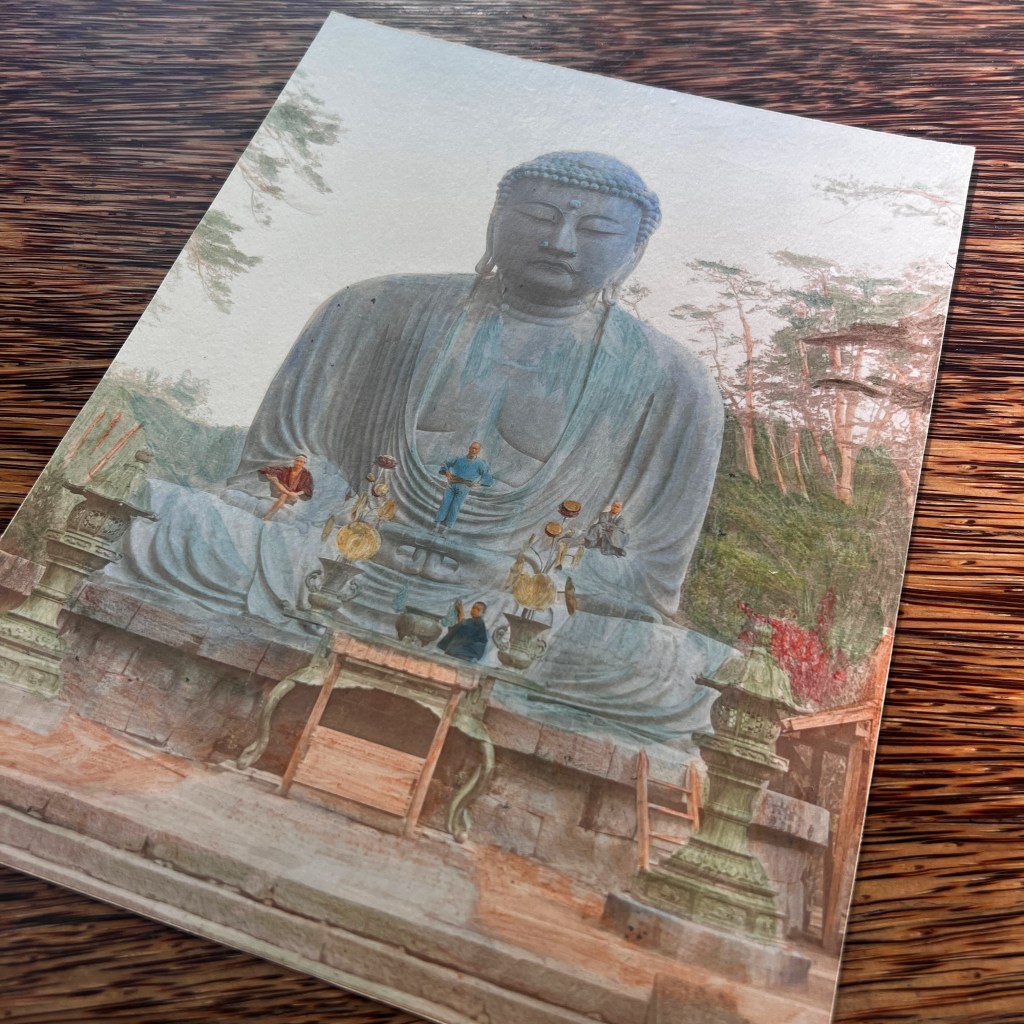
Unlike most books of the era which used photomechanical prints, Brinkley’s Japan used mounted photographs. The Great Buddha of Kamakura was the second full page photograph, following Mt. Fuji, in the first volume, suggesting its perceived value in the American visual language of Japan.

Tamamura’s output was so extensive in preparation for Brinkley’s book, there was a fivefold increase in Japan’s photography exports between 1895 and 1896. This volume of work was achieved at expense of quality, as many of the color washes are pale and poorly executed.

While the number of one million photos for Brinkley’s Japan was likely exaggerated by Tamamura for publicity, this was truly an enormous undertaking. To view the first volume of Brinkley’s Japan held by the Getty Museum, see here: https://tinyurl.com/bddt5z32.


The Buddhas in the West Material Archive is a digital scholarship project that catalogues artifacts depicting Buddhist material culture for Western audiences. It’s comprised of prints, photos, and an assortment of ephemera and other objects. For a brief introduction to this archive, visit the main Buddhas in the West project page.


For Related Buddhas in the West Posts Featuring the Kamakura Daibutsu:

For the Most Recent Buddhas in the West Posts:


Wilhelm Burger’s Kamakura Daibutsu Photograph

For all the new Buddhas in the West posts
follow us on Bluesky & Instagram


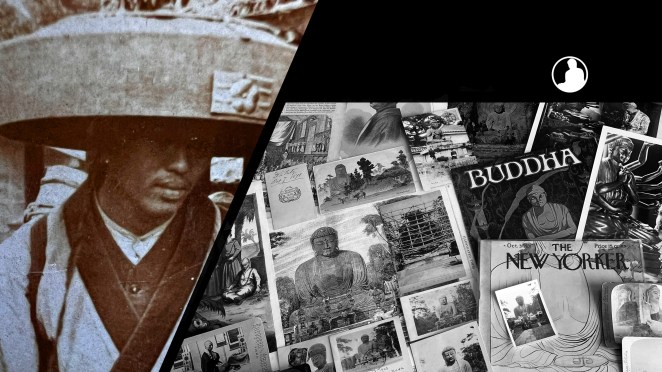
Tales of Tourist Photos, Pt. 2*: Old “wet-plate” photography required glass negatives to be coated, sensitized, exposed, and developed in less than fifteen minutes. Using the dry-plate method, negatives could be prepared beforehand; Wilhelm Burger was among the first to use this in Japan.
*[Part 1]

Burger was photographer for the 1869 Imperial Austrian Expedition to East Asia, but illness allowed him to remain in Japan for the winter after the legation left. Tasked in part to photograph art objects, Burger visited the Kamakura Daibutsu with large glass negatives he prepared in Europe.

The handwritten inscription on the back of this photographic print reads, “This Image is all Bronze, name Diaboots.” “Diaboots,” or Daiboots, was the Yokohama treaty port vernacular for the Kamakura Daibutsu through the 1860s.

While Burger created a sizable portfolio of arts and crafts during the embassy, his photographs at Kōtoku-in in Kamakura appear more tourist-like than documentary. Here, several people pose for the camera, including what may appear to be Buddhist priests and three men in European attire.

To my knowledge, the people remain unidentified; Burger’s apprentice, Michael Moser, stayed in Japan after the embassy returned (and remained after Burger left). Moreover, Italian-born Felice Beato operated a successful Yokohama-based photography studio at the time – could either be seen here?

On his return to Vienna in 1870, Burger exhibited his Japanese portfolio to broad public acclaim. For more on Burger’s photographic process, see Tani Akiyoshi & Peter Pantzer’s “Wilhelm Burger’s Photographs of Japan,” PhotoResearcher 15 (2011): 40–50.


The Buddhas in the West Material Archive is a digital scholarship project that catalogues artifacts depicting Buddhist material culture for Western audiences. It’s comprised of prints, photos, and an assortment of ephemera and other objects. For a brief introduction to this archive, visit the main Buddhas in the West project page.


For Related Buddhas in the West Posts Featuring Historical Photography:


For the Most Recent Buddhas in the West Posts:


Eastman Kodak European Tour Group Real Photo Postcard

For all the new Buddhas in the West posts
follow us on Bluesky & Instagram


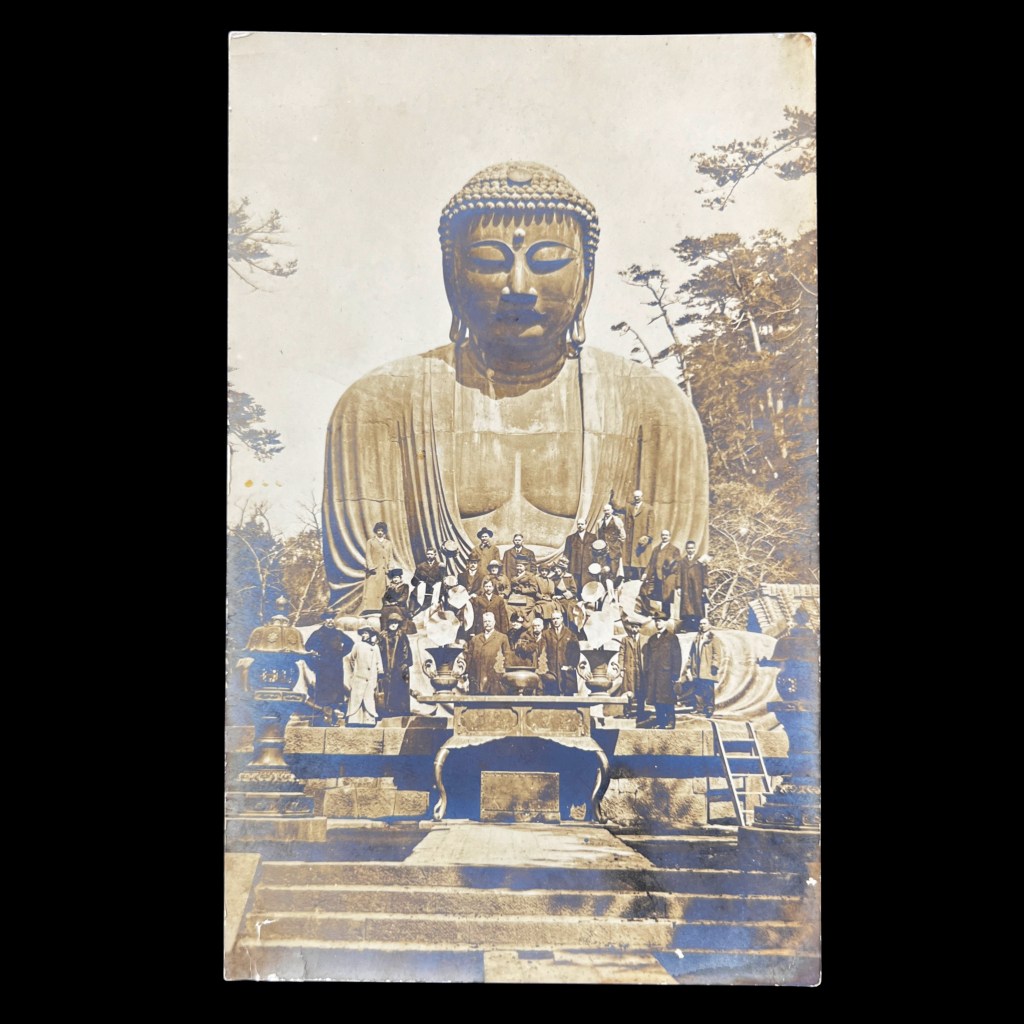
Tales of Tourist Photos, Pt. 1*: If photography changed the way people viewed the world, the Eastman Kodak camera transformed the late Victorian practice of tourism. The handheld Kodak made photography available to casual amateurs, creating the vernacular form of snapshot photography.
*[Part 2]

In contrast to a generation earlier, precise technical expertise was not necessary and photography became increasingly linked to personal experience. Foreign travel, such as visiting the Kamakura Daibutsu, increasingly “required” a photograph to validate the exotic experience.

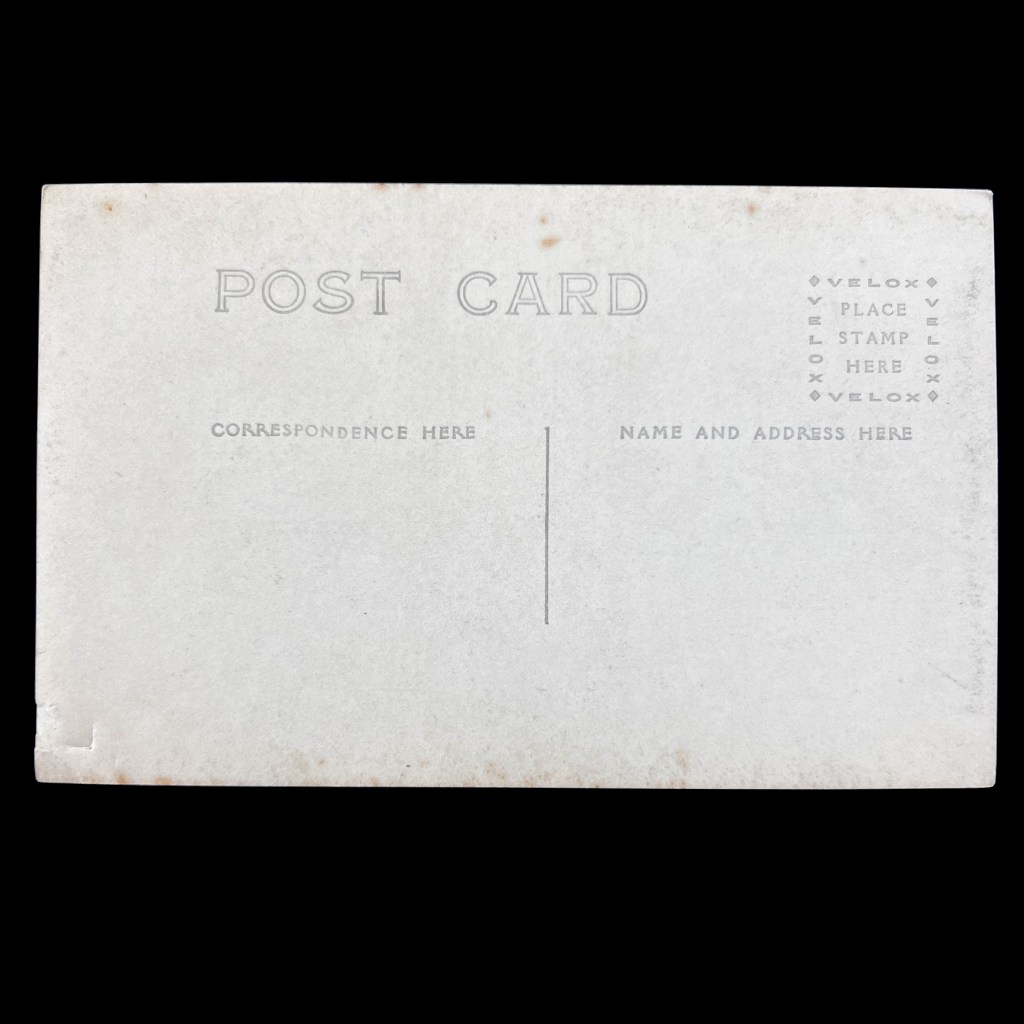
By 1903, the Kodak 3A was released and fitted with rolled film creating negatives measuring 3¼ in. x 5½ in. – the exact size of a standard postcard. Eastman marketed a broad range of supplies for the amateur, including Velox paper for those developing and printing their own postcards.

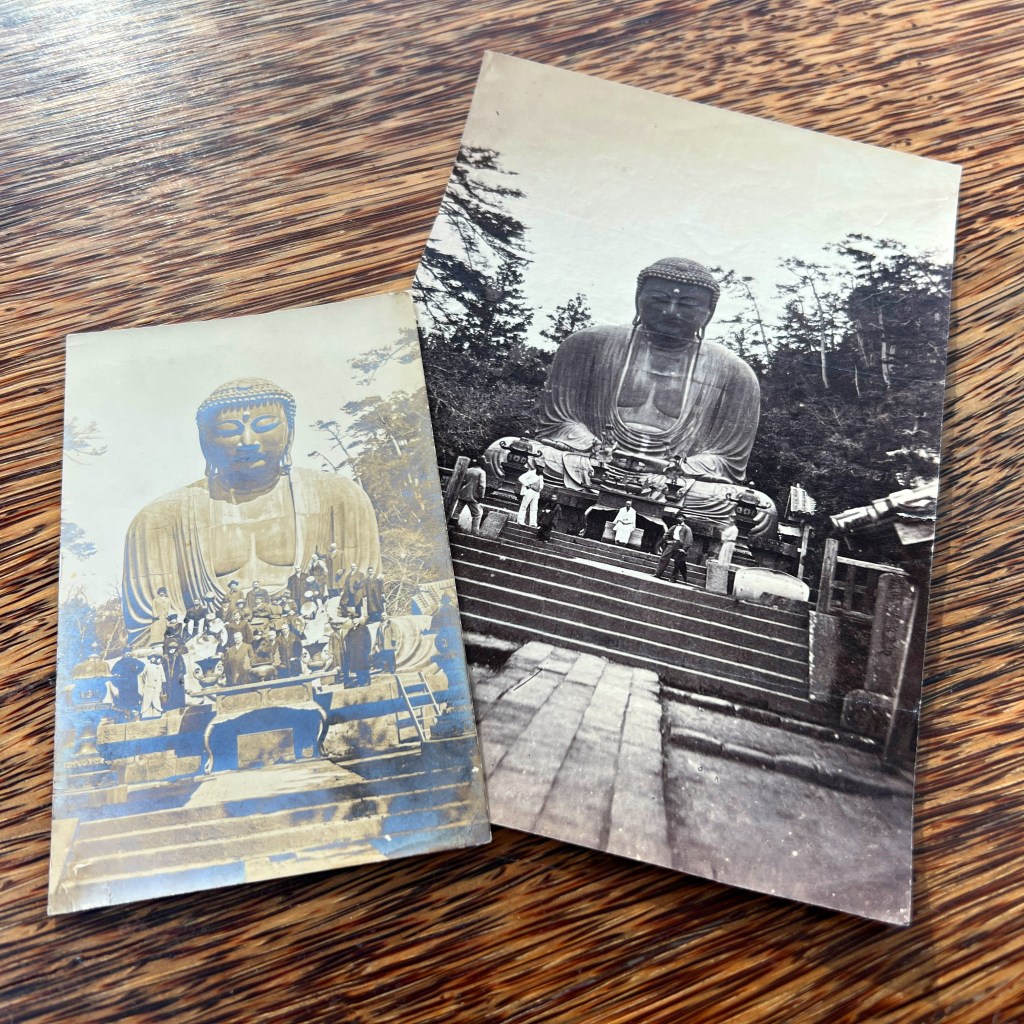
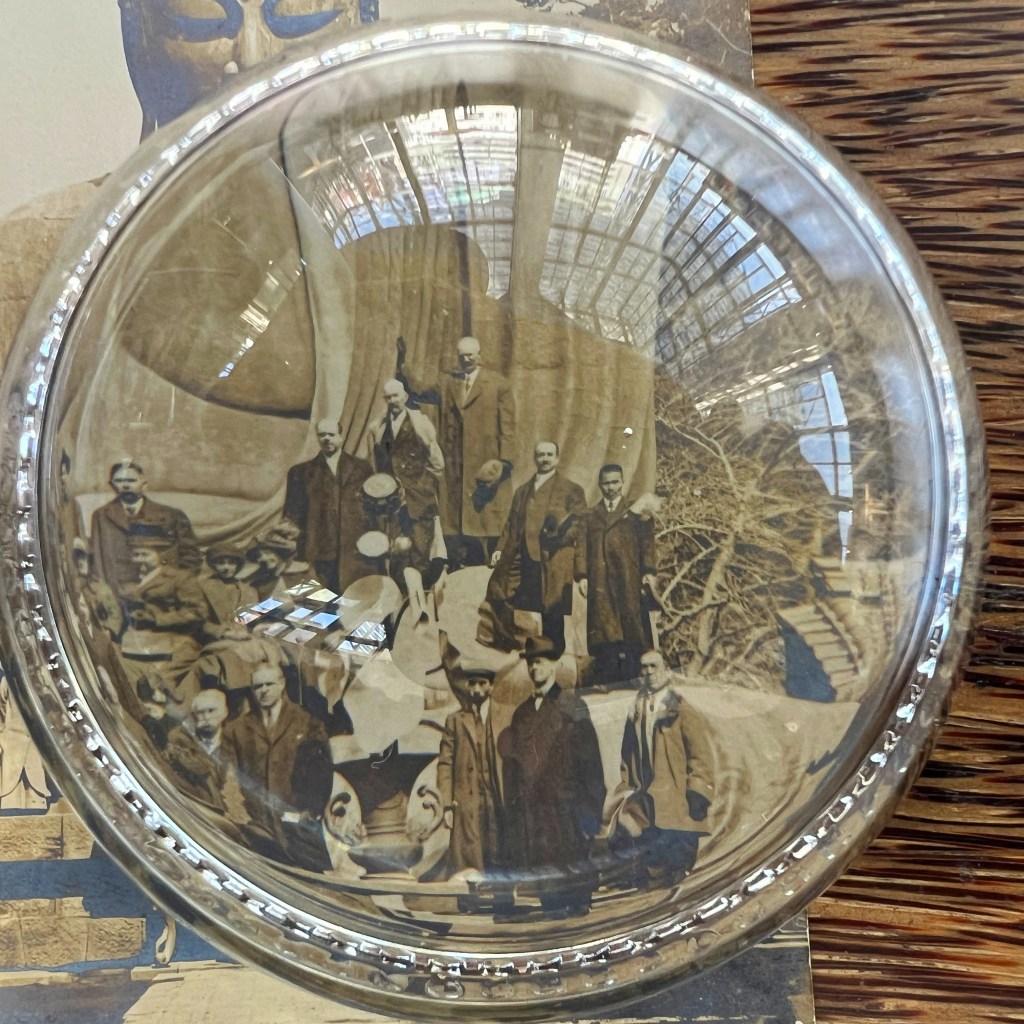
This real photo postcard was shot and printed circa 1910–1915 and captures two dozen tourists arranged along the lap and stone pedestal of the Great Buddha of Kamakura.

Some of the earliest photographs of the Kamakura Daibutsu depict people climbing upon its lap and a ladder can be seen for helping a visitor’s ascent in photographs dating to the 1870s. By around 1915 climbing on the statue was prohibited.

For further discussion on the birth of the snapshot and its cultural impact, see Mia Fineman’s “Kodak and the Rise of Amateur Photography,” viewable here: https://www.metmuseum.org/essays/kodak-and-the-rise-of-amateur-photography.


The Buddhas in the West Material Archive is a digital scholarship project that catalogues artifacts depicting Buddhist material culture for Western audiences. It’s comprised of prints, photos, and an assortment of ephemera and other objects. For a brief introduction to this archive, visit the main Buddhas in the West project page.


For Related Buddhas in the West Posts Featuring Real Photo Postcards:


For the Most Recent Buddhas in the West Posts:


Chocolat Pupier’s “Le Japon ancien” Trade Card

For all the new Buddhas in the West posts
follow us on Bluesky & Instagram


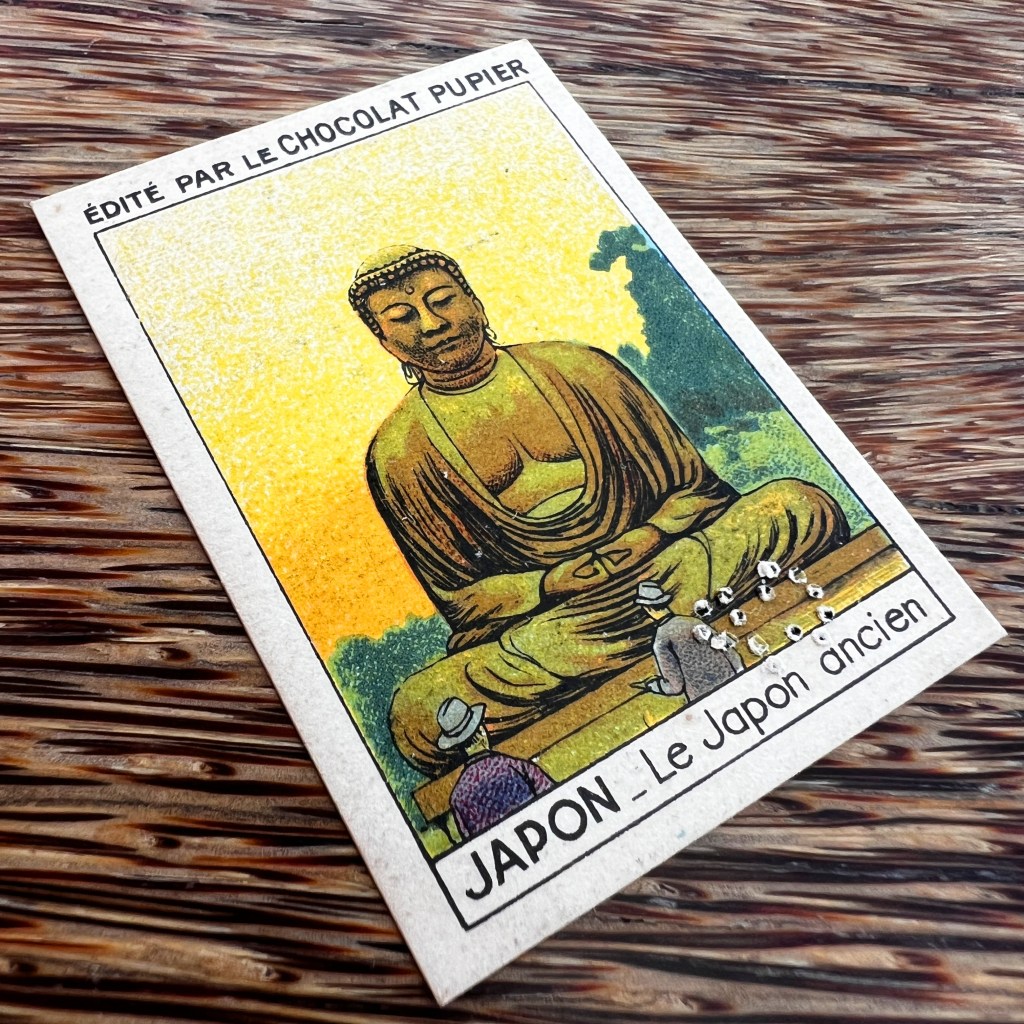
European and American chocolatiers were among the businesses that embraced the use of beautifully illustrated advertising trade cards. To inspire collection, the cards often depicted romantic, if not highly stereotyped, imagery.

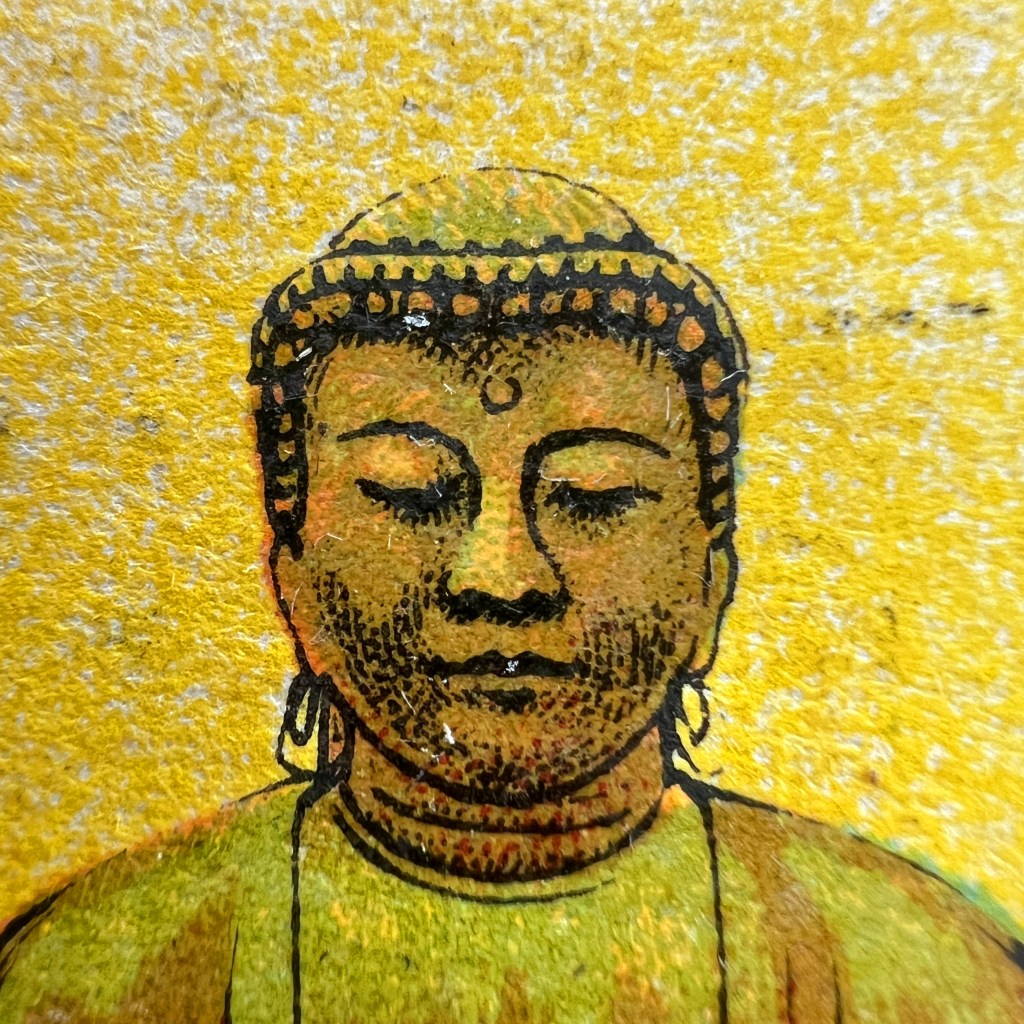
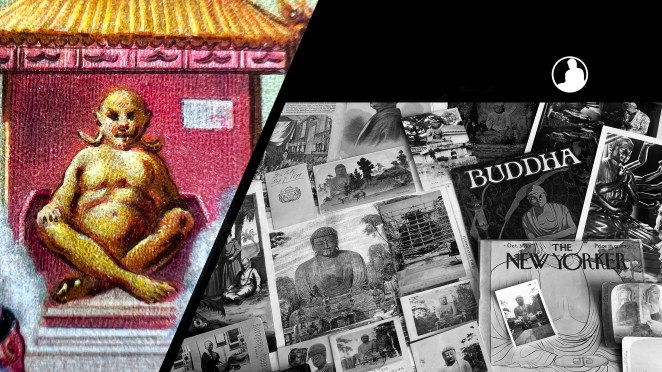
Looking closely, we can see the Kamakura Daibutsu is seemingly portrayed as a sightseeing destination, not a religious icon; the onlookers in Western attire hint more at curious observation than reverence.

Moreover, the caption of “ancient Japan” plays to the idea of an ancient and mystical “Orient,” thus we might read the Buddhist icon as a quaint relic of the distant past, not part of a living religious tradition.

French confectioner Chocolat Pupier was a major producer of chromolithographed trade cards. An “Asia” album with 252 card slots could be purchased to display your collection (we see this is card number 140).

The rise of the postcard at the turn of the twentieth century and the growth of magazine advertising ended the widespread use of trade cards. For more on trade cards, see “The Short Rise and Fall of the Crazy-for-Cocoa-Trade Cards Craze,” viewable here: tinyurl.com/yc2a9y4b.


The Buddhas in the West Material Archive is a digital scholarship project that catalogues artifacts depicting Buddhist material culture for Western audiences. It’s comprised of prints, photos, and an assortment of ephemera and other objects. For a brief introduction to this archive, visit the main Buddhas in the West project page.


For Related Buddhas in the West Posts Featuring Historical Lithographic Prints:


For the Most Recent Buddhas in the West Posts:


Kamakura Sightseeing Map (1912)

For all the new Buddhas in the West posts
follow us on Bluesky & Instagram


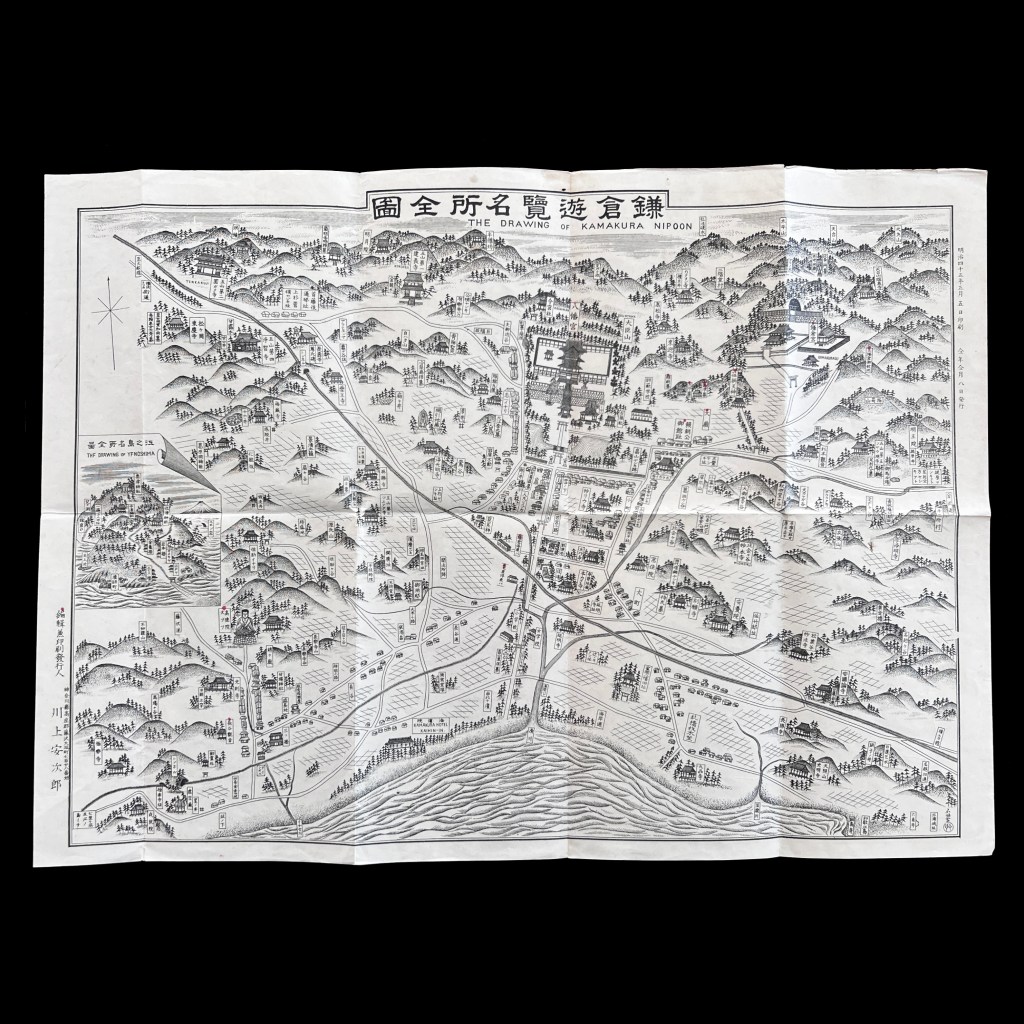
After the opening Japan in 1859, the old backwater capital of Kamakura was transformed into an international tourist destination. This bilingual tourist map from 1912 (Meiji 45) provides a glimpse into which Kamakura sites were seen as most significant, including the Kamakura Daibutsu.

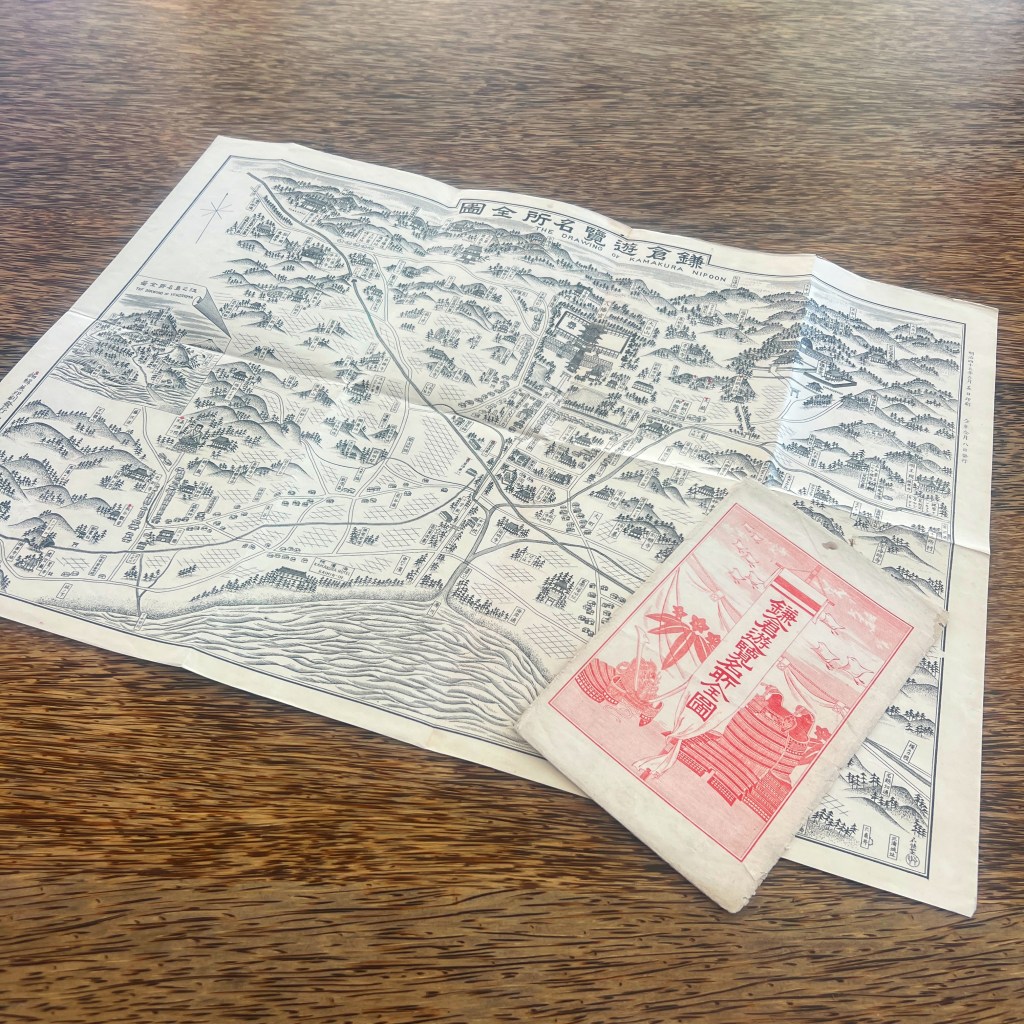
The Complete Map of Kamakura Famous Places for Sightseeing (Kamakura yūran meisho zenzu 鎌倉遊覧名所全圖), loosely rendered into English as The Drawing of Kamakura Nipoon [sic], came inside a paper folder printed with symbols of the Japanese empire. The map was prepared by Kawakami Yasujirō 川上安次郎.

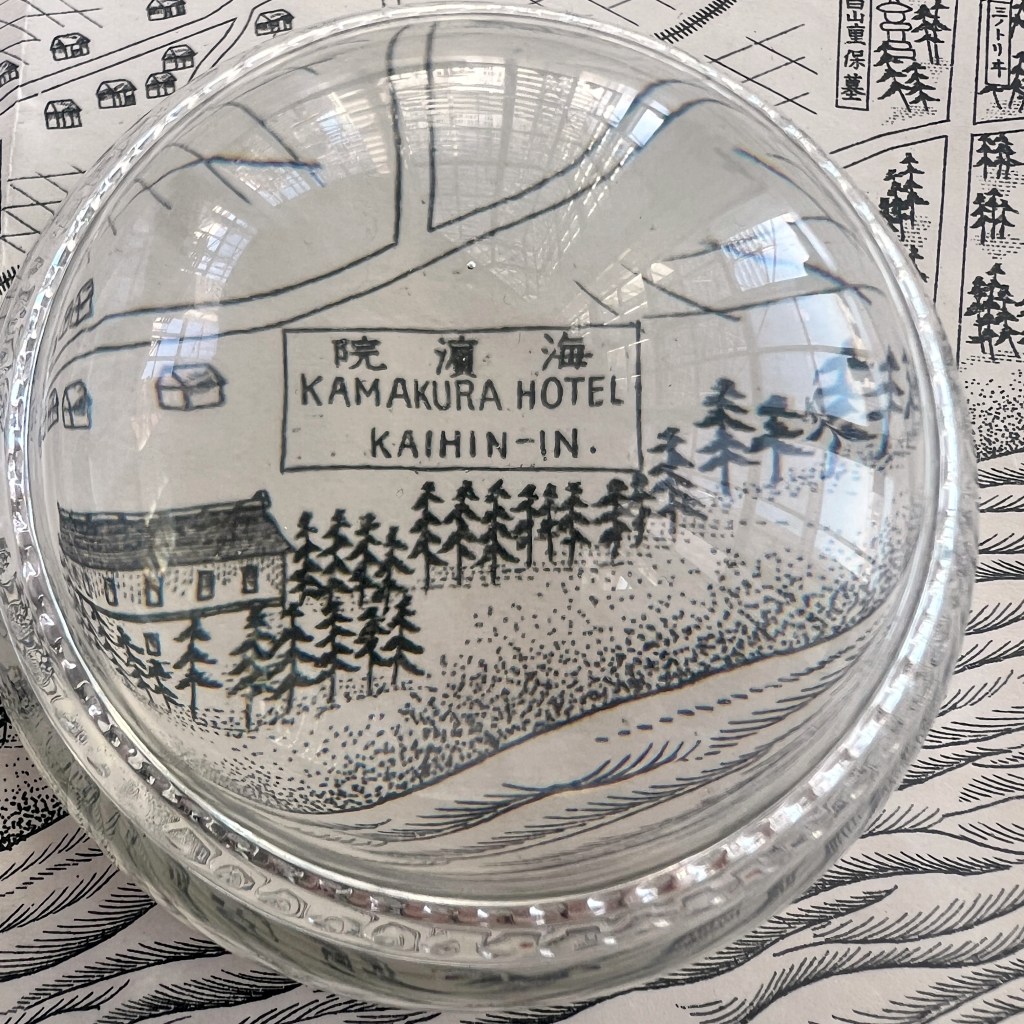
By the early 1890s, the Kamakura Kaihin Hotel, a converted medical therapy facility for seawater bathing, emerged as the premier resort for Kamakura travelers. In March 1893, the Japanese Welcome Society was established to help promote foreign travel in Japan.

For many Japanese travelers, the main attraction was the Hachiman Shrine, a large complex in the heart of the city found at the end of a long central promenade leading to the ocean. The red dot seen here suggests this site was highlighted by the original owners of the map.

Among the many dozens of sites named on the map, only a handful are marked by a red dot. Of those highlighted is Hase-dera, temple home to a famous 31-foot tall Eleven-Headed Kannon statue.

Another highlighted tourist attraction is the Kamakura Daibutsu at Kōtoku-in, here depicted by a small, yet easily identifiable, icon. For a digitized collection of Japanese maps held by the C. V. Starr East Asian Library at UC Berkeley, see tinyurl.com/yutj576z.


The Buddhas in the West Material Archive is a digital scholarship project that catalogues artifacts depicting Buddhist material culture for Western audiences. It’s comprised of prints, photos, and an assortment of ephemera and other objects. For a brief introduction to this archive, visit the main Buddhas in the West project page.


For Related Buddhas in the West Posts Featuring Japan:


For the Most Recent Buddhas in the West Posts:


Used Postcard with Kamakura Daibutsu Dimensions

For all the new Buddhas in the West posts
follow us on Bluesky & Instagram


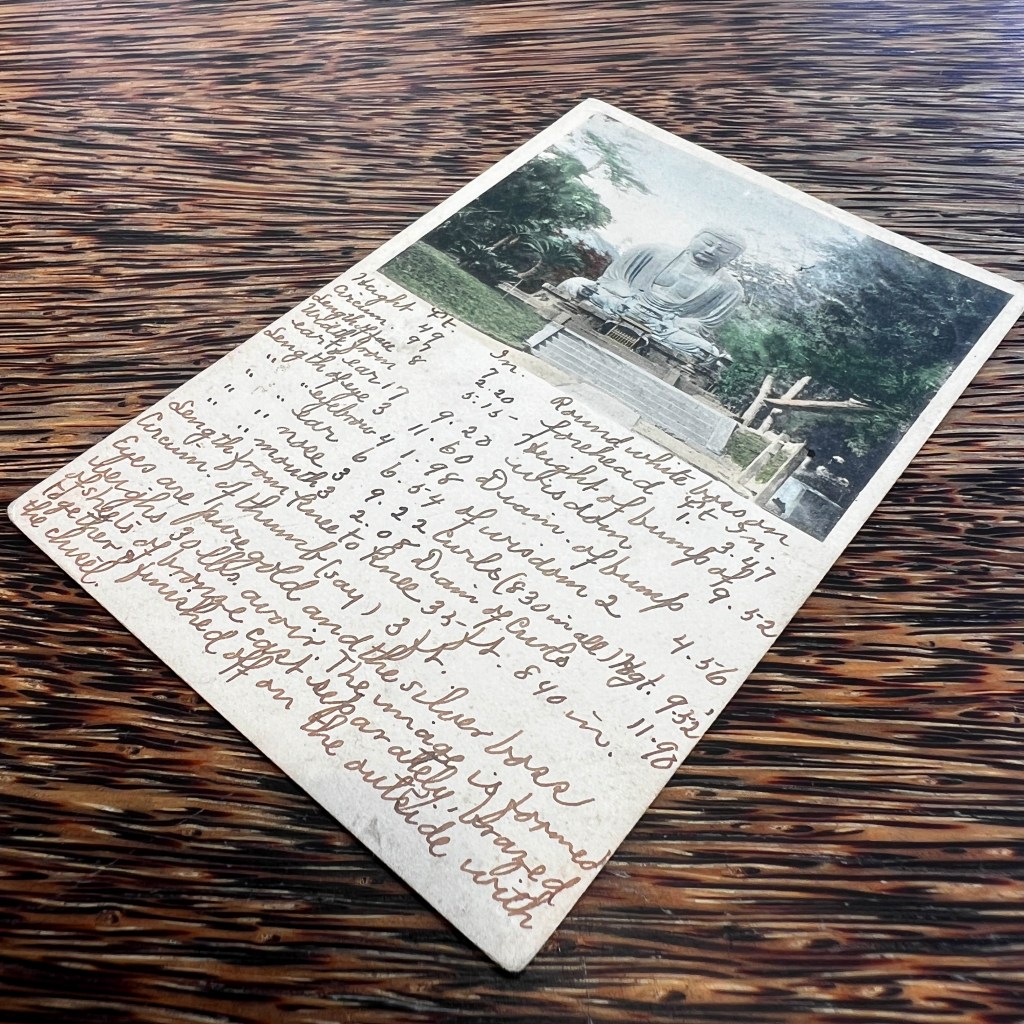
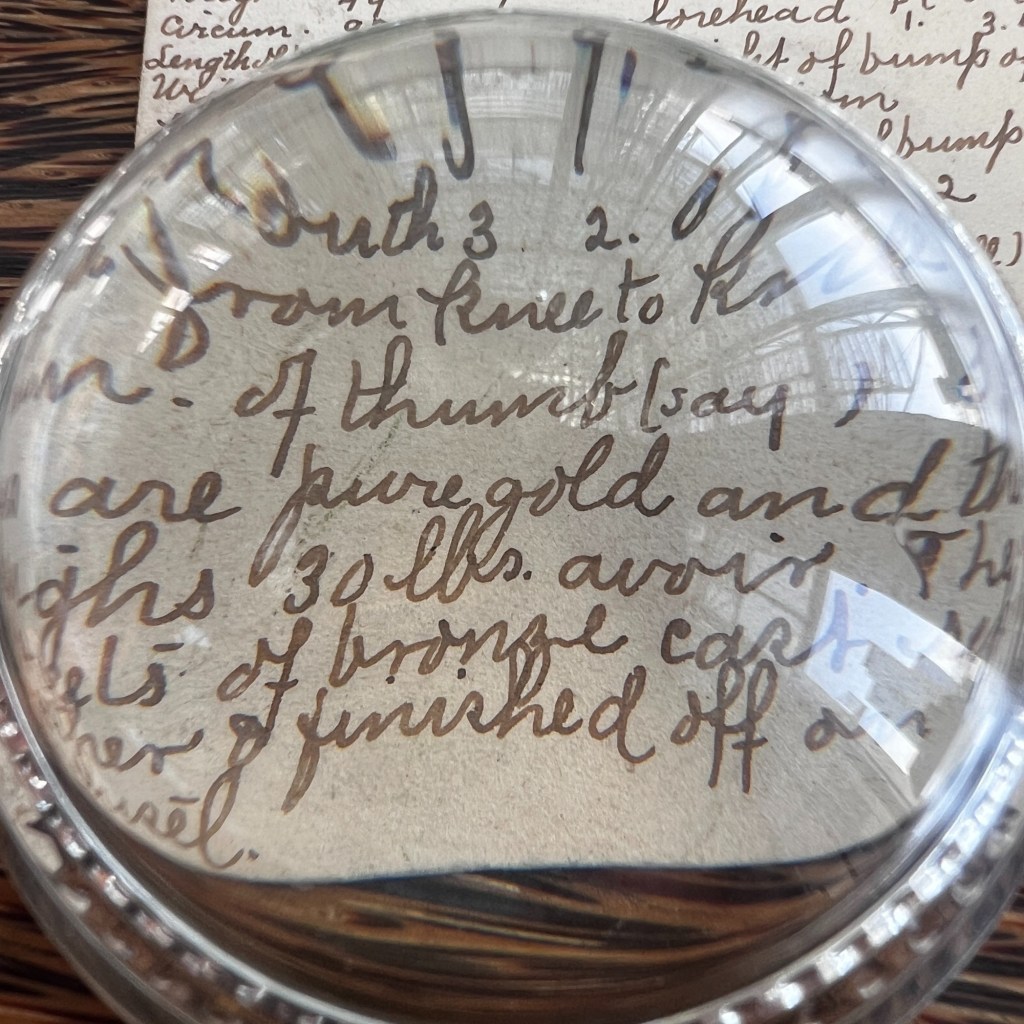
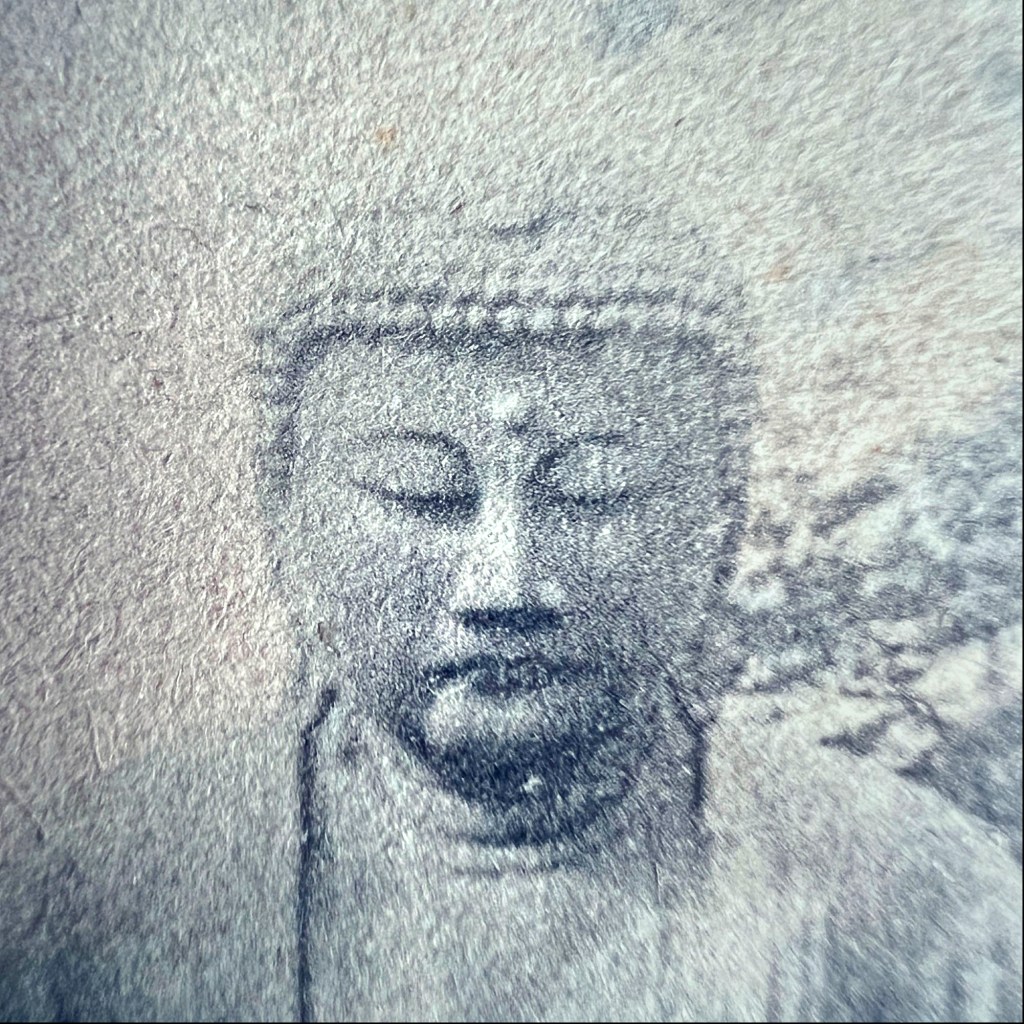
In 2025, seven of the top ten tallest freestanding statues in the world are Buddhist figures (as well as 31 of the top 50). The colossal size of Buddhist statuary is nothing new; foreign travelers in Asia have often noted this fact, as we see in this postcard message from 1906.

Used postcards are valuable because they reveal which aspects of the Kamakura Daibutsu site in Japan were more salient to visitors. The exact measurements given here were not taken on site by the visitor, but were likely copied from one of the popular Japan tourism guides.

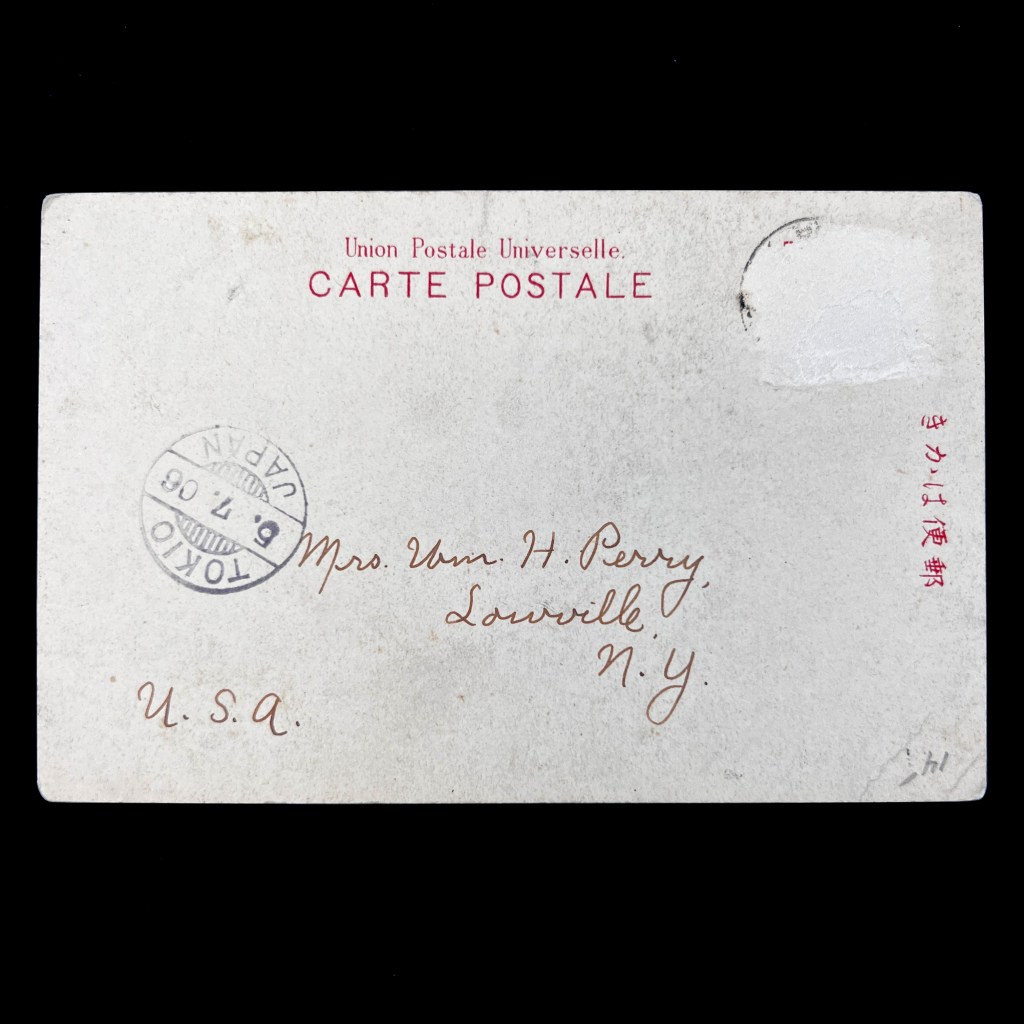
The reverse gives us some insight into the “extended biography” of the postcard after its departure from Tokyo. Notably, the missing postage stamp suggests it was prized by a philatelist – a stamp collector.

The focus on the size, craftsmanship, and materials of the statue minimize the religious importance of such an icon and highlight its value as fine art.

Teaching Resource: For a brief introduction to material analysis that uses this postcard as an example, see the post and handout: Making Materials Speak: Performing a Material Analysis, viewable here: tinyurl.com/nhhuh4nk.


The Buddhas in the West Material Archive is a digital scholarship project that catalogues artifacts depicting Buddhist material culture for Western audiences. It’s comprised of prints, photos, and an assortment of ephemera and other objects. For a brief introduction to this archive, visit the main Buddhas in the West project page.


For Related Buddhas in the West Posts Featuring Historical Postcards:


For the Most Recent Buddhas in the West Posts:


Adolfo Farsari’s Kamakura Daibutsu Photograph

For all the new Buddhas in the West posts
follow us on Bluesky & Instagram


In 1886, a year after Adolfo Farsari opened his Yokohama photography studio, it burned to the ground during a city-wide fire. Farsari spent the next several months traveling Japan to replenish his stock, including several Buddhist sites popular among globetrotting tourists.

Moreover, with the destruction of Farsari’s studio, he also lost the older negatives of Felice Beato and Baron von Stillfried. Farsari’s studio was among the last of the foreign studios in Yokohama as more Japanese photographers were turning to professional ventures.

Farsari’s scene of the Kamakura Daibutsu shows a person in the middle of prayer.

We can also see another man standing on the stone pedestal, a common sight in photographs of this era.

Farsari’s work earned the praise Rudyard Kipling who complimented him on the fidelity of the hand-coloring. Further commentary on Farsari’s Kamakura Daibutsu photo can be found here: https://peterromaskiewicz.com/2019/01/19/farsaris-dai-butsu-visual-literacy-of-buddhism/


The Buddhas in the West Material Archive is a digital scholarship project that catalogues artifacts depicting Buddhist material culture for Western audiences. It’s comprised of prints, photos, and an assortment of ephemera and other objects. For a brief introduction to this archive, visit the main Buddhas in the West project page.


For Related Buddhas in the West Posts Featuring Historical Photography:


For the Most Recent Buddhas in the West Posts:


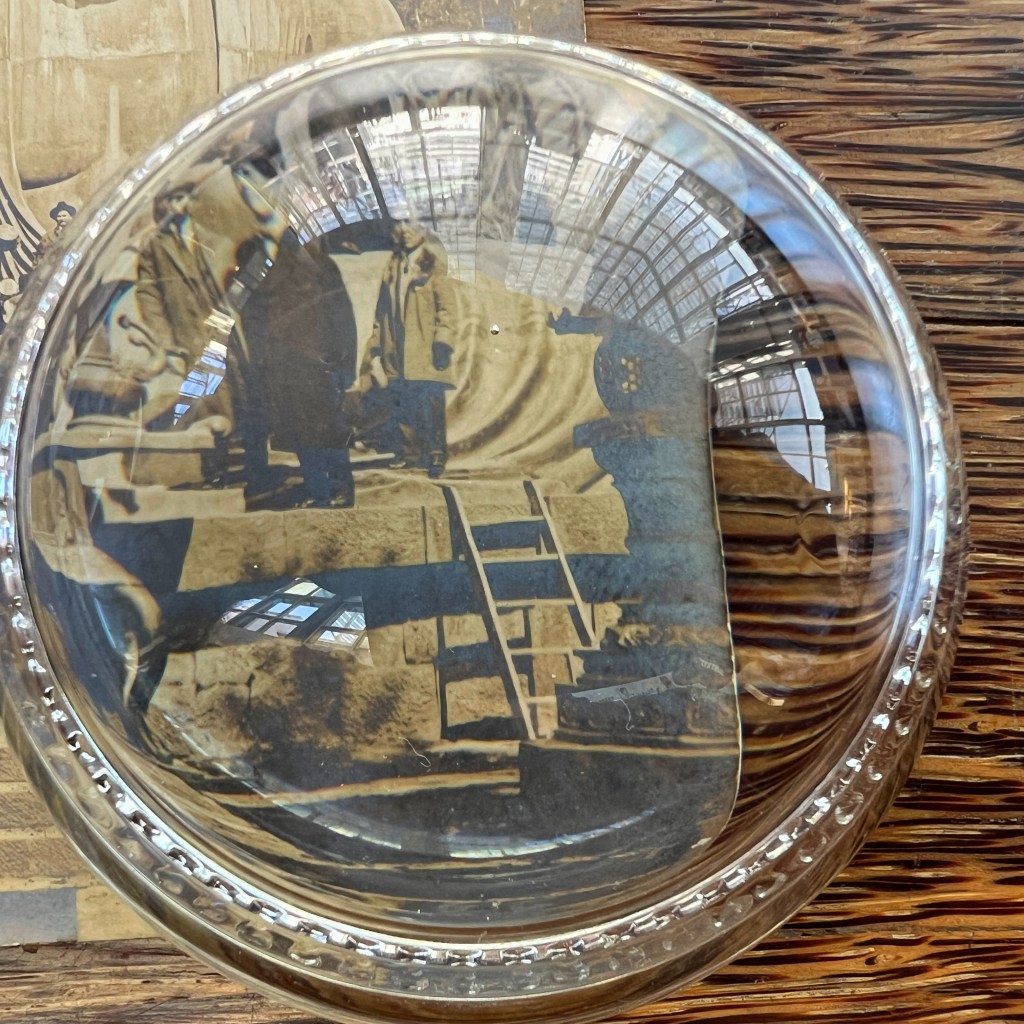
Daibutsu and Tour Group Glass Lantern Slide

For all the new Buddhas in the West posts
follow us on Bluesky & Instagram


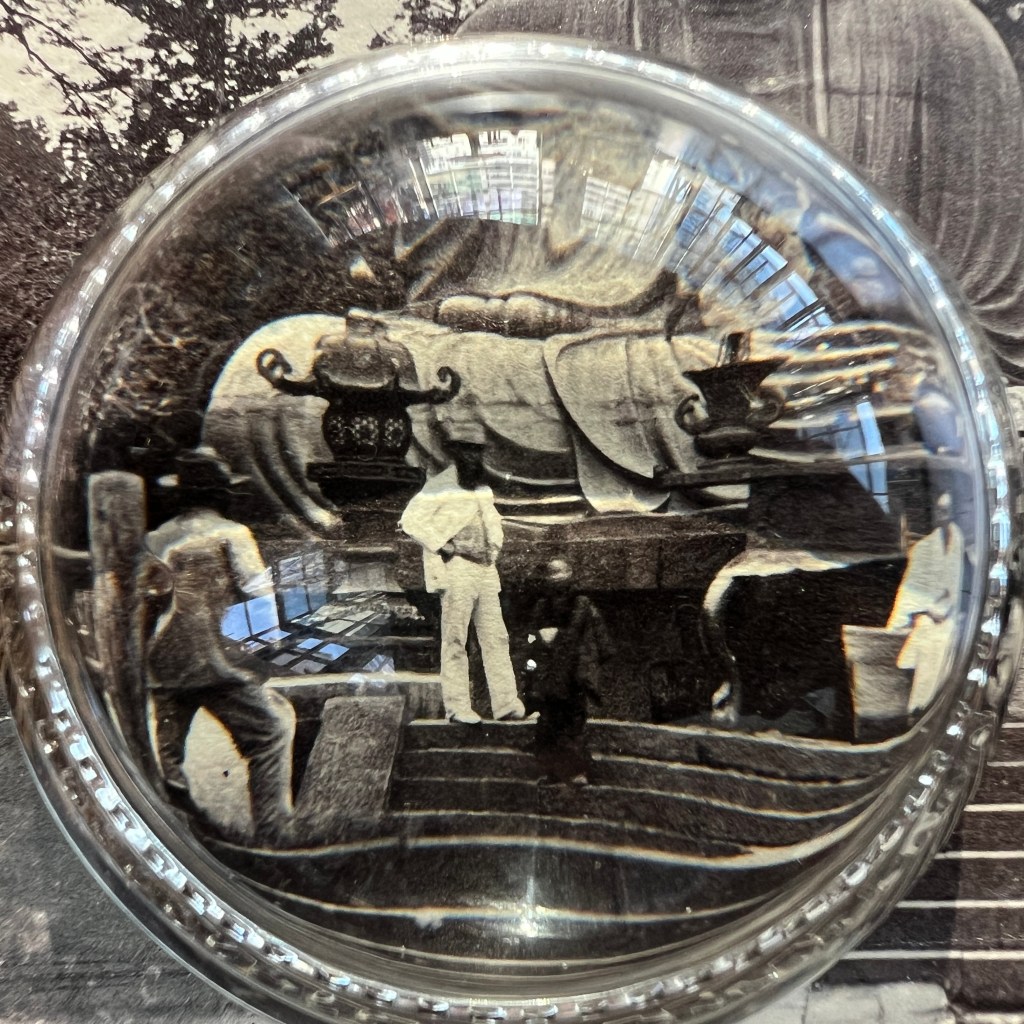
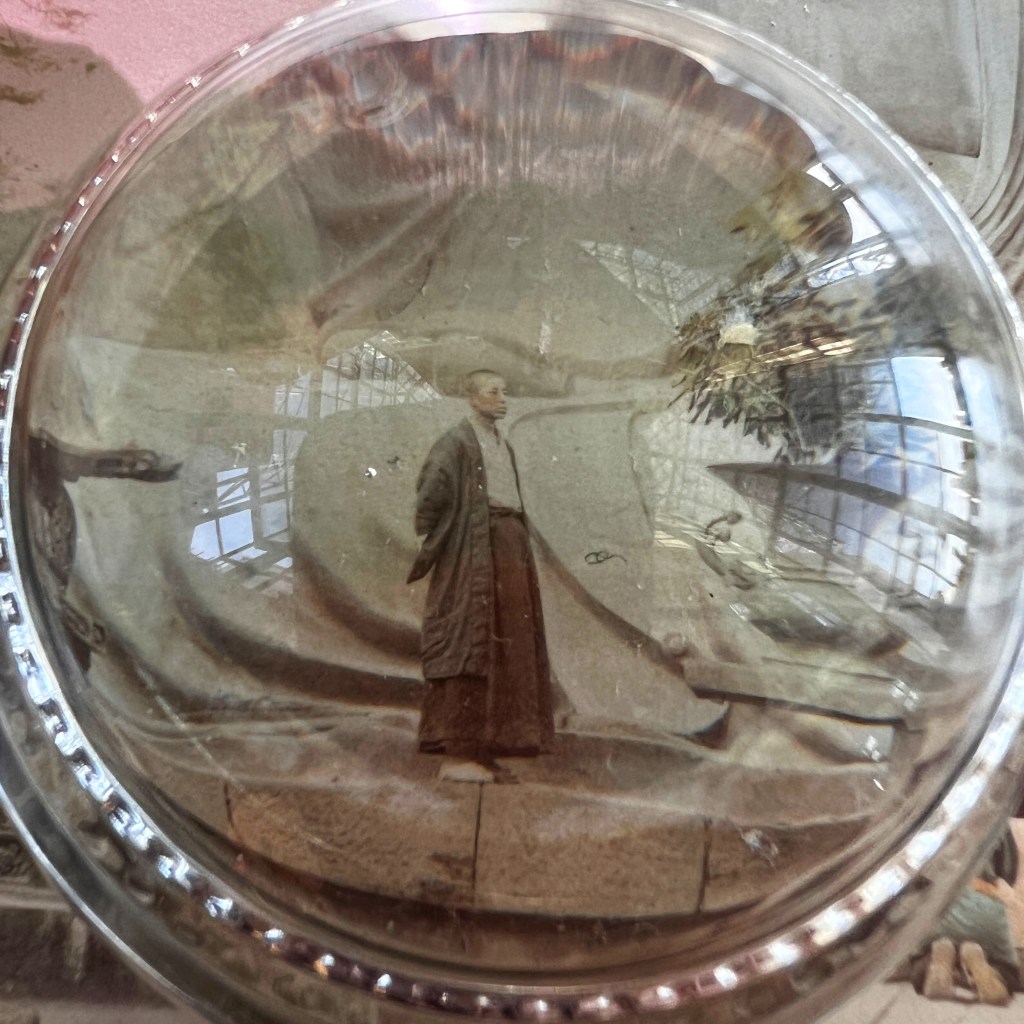
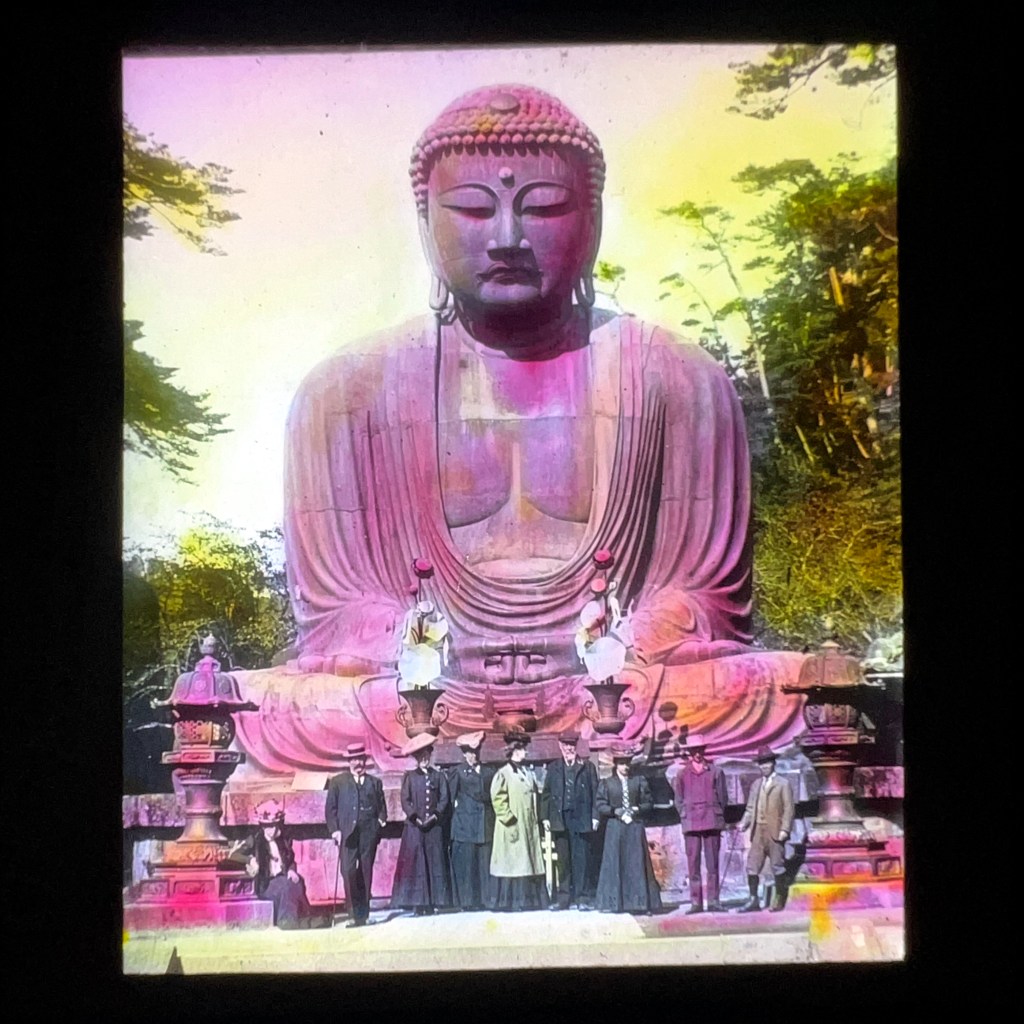
In the pre-film era, magic lantern slides were a part of popular entertainment alongside panoramas and mechanical theaters. Many amateur lecturers who returned from a trip would book a church hall or town theater to show slides illustrating their personal travel narrative.

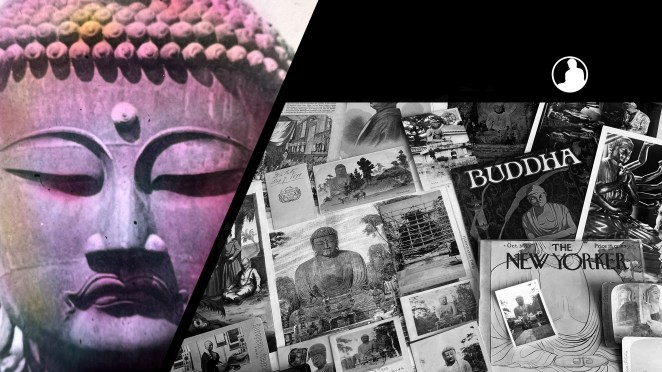
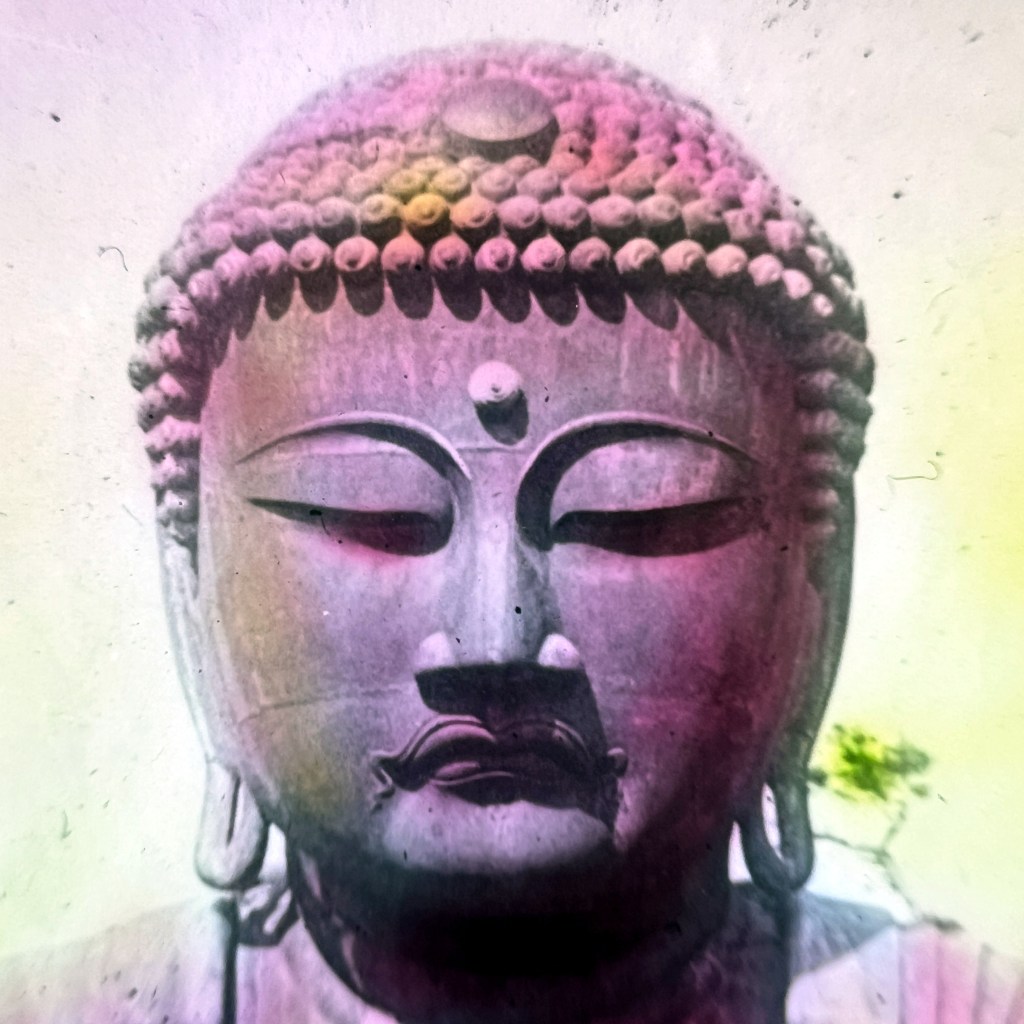
While photos and postcards were shared with friends in the home, glass lantern slides were also intended for showy public display. Consequently, glass slides were often hand-painted in eye-catching color; here we see the bronze Kamakura Daibutsu in uncharacteristic magenta.

Two pieces of glass, one of which bears the positive photographic print, sandwich the image to keep it safe from scratches and debris. Unlike the exemplar here, the publisher would often print their name on the matting around the image.

Based on the layout of the Daibutsu grounds, this photo was taken around 1910.

The University of Hawaii at Manoa has a large collection of slides as part of their Japan Collection, viewable here: https://tinyurl.com/8hdvfzad


The Buddhas in the West Material Archive is a digital scholarship project that catalogues artifacts depicting Buddhist material culture for Western audiences. It’s comprised of prints, photos, and an assortment of ephemera and other objects. For a brief introduction to this archive, visit the main Buddhas in the West project page.


For Related Buddhas in the West Posts Featuring Historical Glass Lantern Slides:


For the Most Recent Buddhas in the West Posts:


Hand-Colored Daibutsu Postcard Comparison

For all the new Buddhas in the West posts
follow us on Bluesky & Instagram


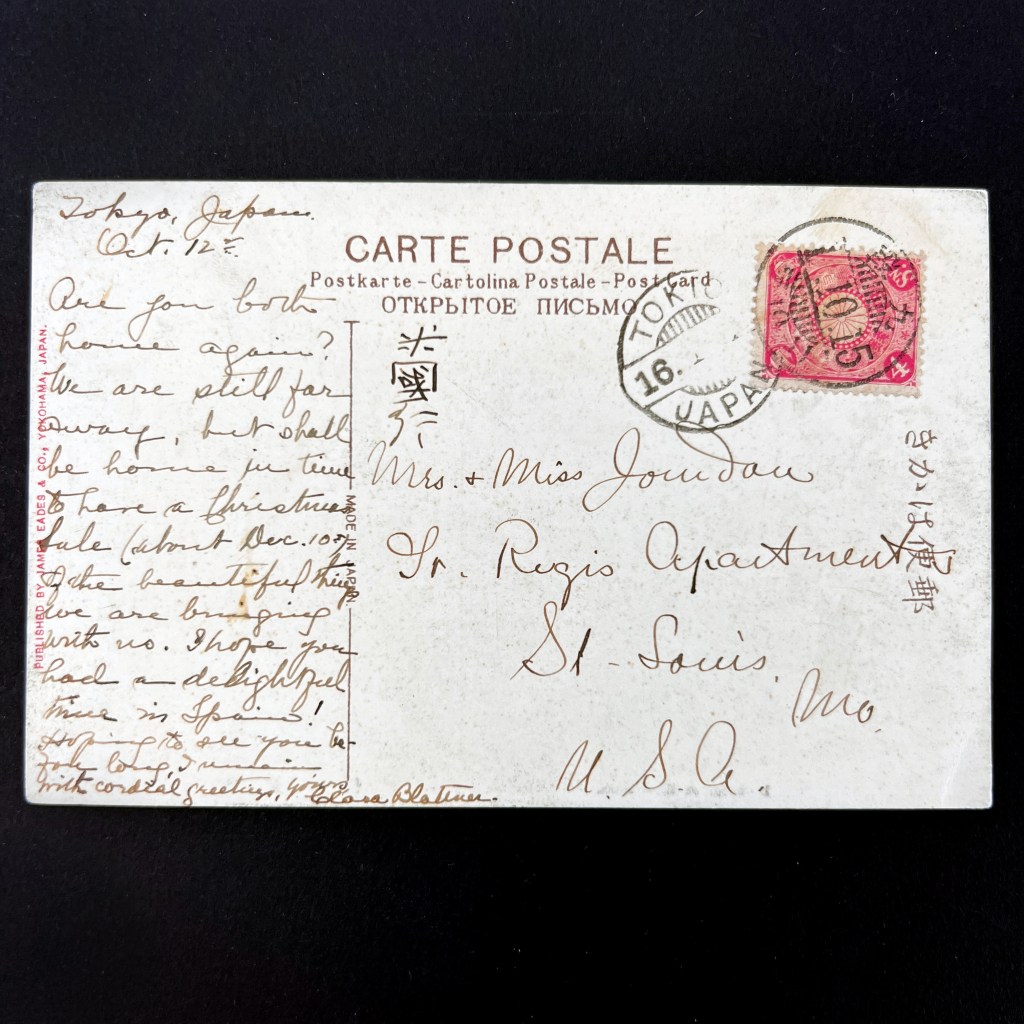
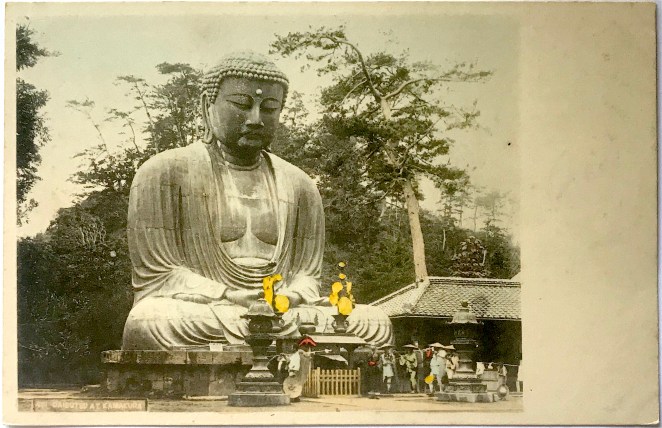
The US postal service delivered over 900 million postcards on the eve of WWI. In Japan, that number was 1.5 billion. Despite nearly doubling the total number of cards mailed, many Japanese picture postcards were also rather unique – they were individually hand painted.

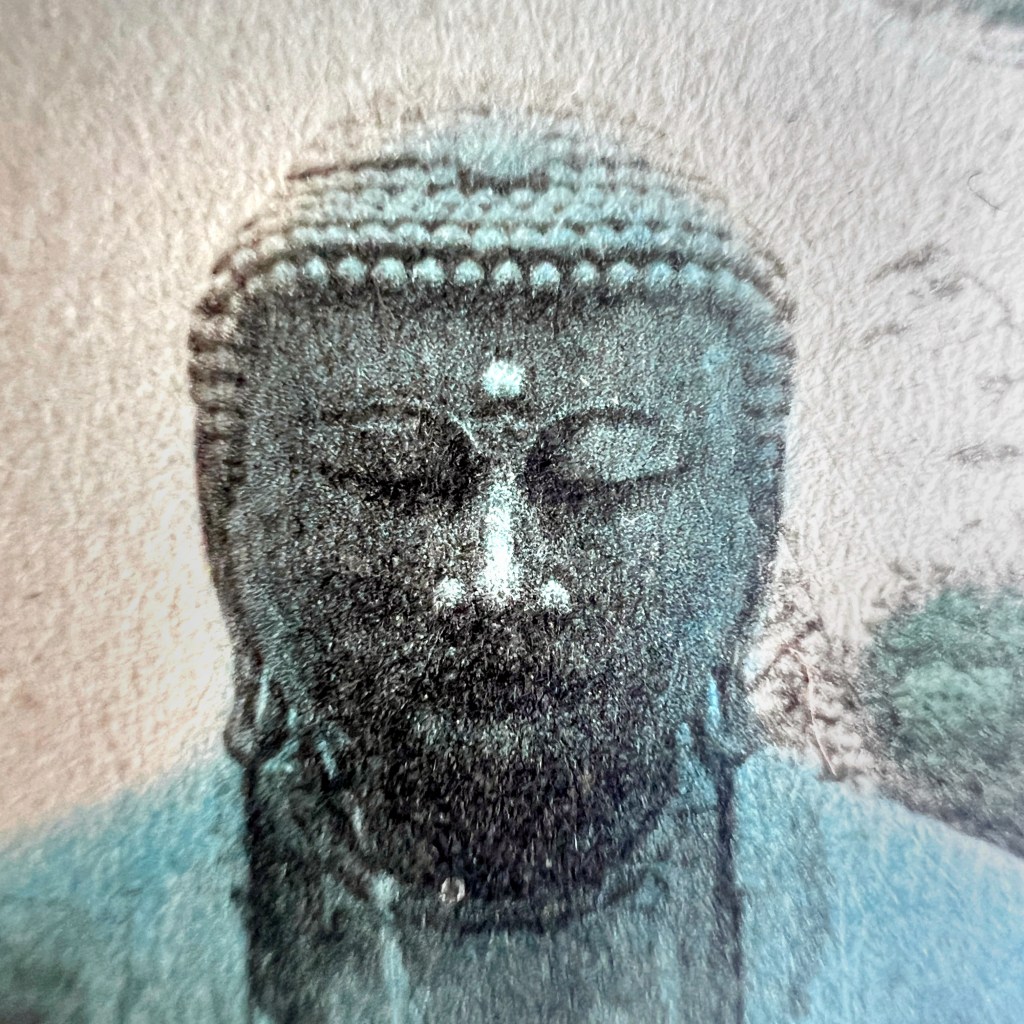
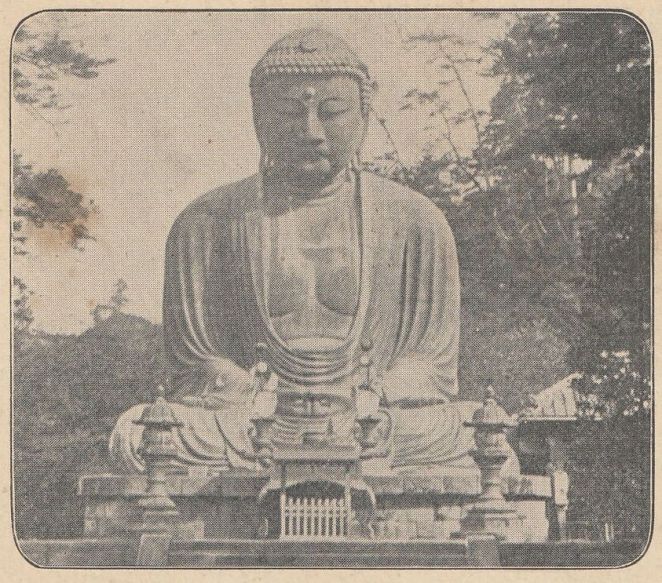
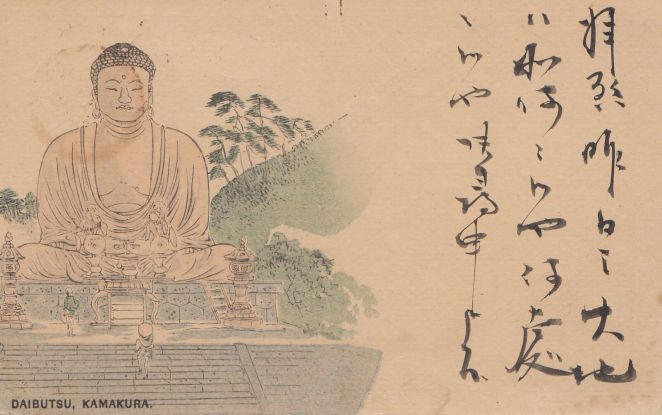
As far as we can tell, a template card was painted by a specialist before it was sent out with dozens of plain cards to colorists, many of whom were women. At times you can find more notable coloring discrepancies between paired images.

Note the differences in the boy’s garments, the open umbrella, the obi-sash, and stone pedestal in the background. It is also possible to see how the washes of color line up imperfectly with the collotype print in black ink.

Due to the temple landscaping around the Kamakura Daibutsu, we know this photograph was likely taken between 1903 and 1910. According to the postal mark, the stamp was cancelled on October 15, 1912 (Taisho 1) and mailed to the United States (thus requiring a 4 sen stamp). We also have a rare publisher’s mark along the edge: James Eades & Co., Yokohama, Japan.

The Kamakura Daibustu was among the most popular tourist destinations in Japan and countless images of the bronze statue were sent as postcards around the world in the early 20th century.


The Buddhas in the West Material Archive is a digital scholarship project that catalogues artifacts depicting Buddhist material culture for Western audiences. It’s comprised of prints, photos, and an assortment of ephemera and other objects. For a brief introduction to this archive, visit the main Buddhas in the West project page.


For Related Buddhas in the West Posts Featuring the Kamakura Daibutsu:

For the Most Recent Buddhas in the West Posts:


American Express Daibutsu Advertisement

For all the new Buddhas in the West posts
follow us on Bluesky & Instagram


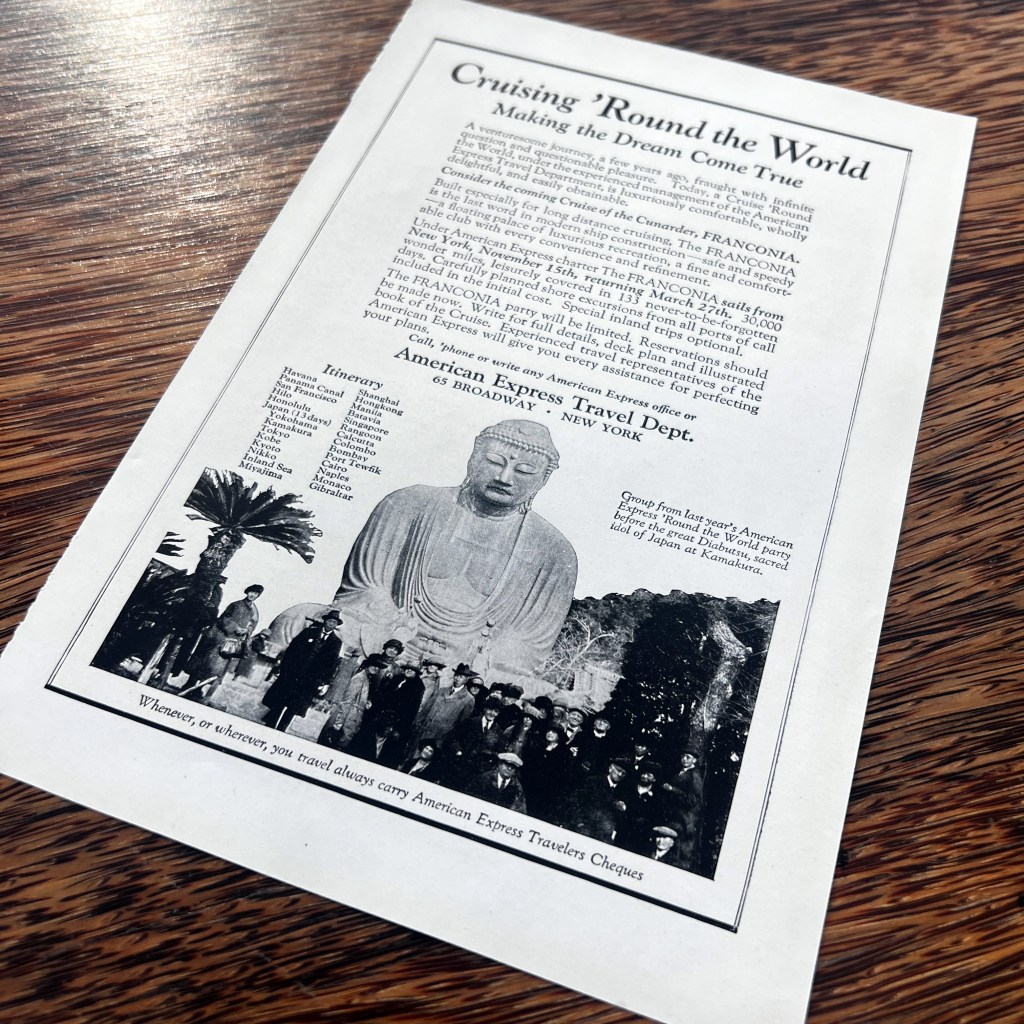
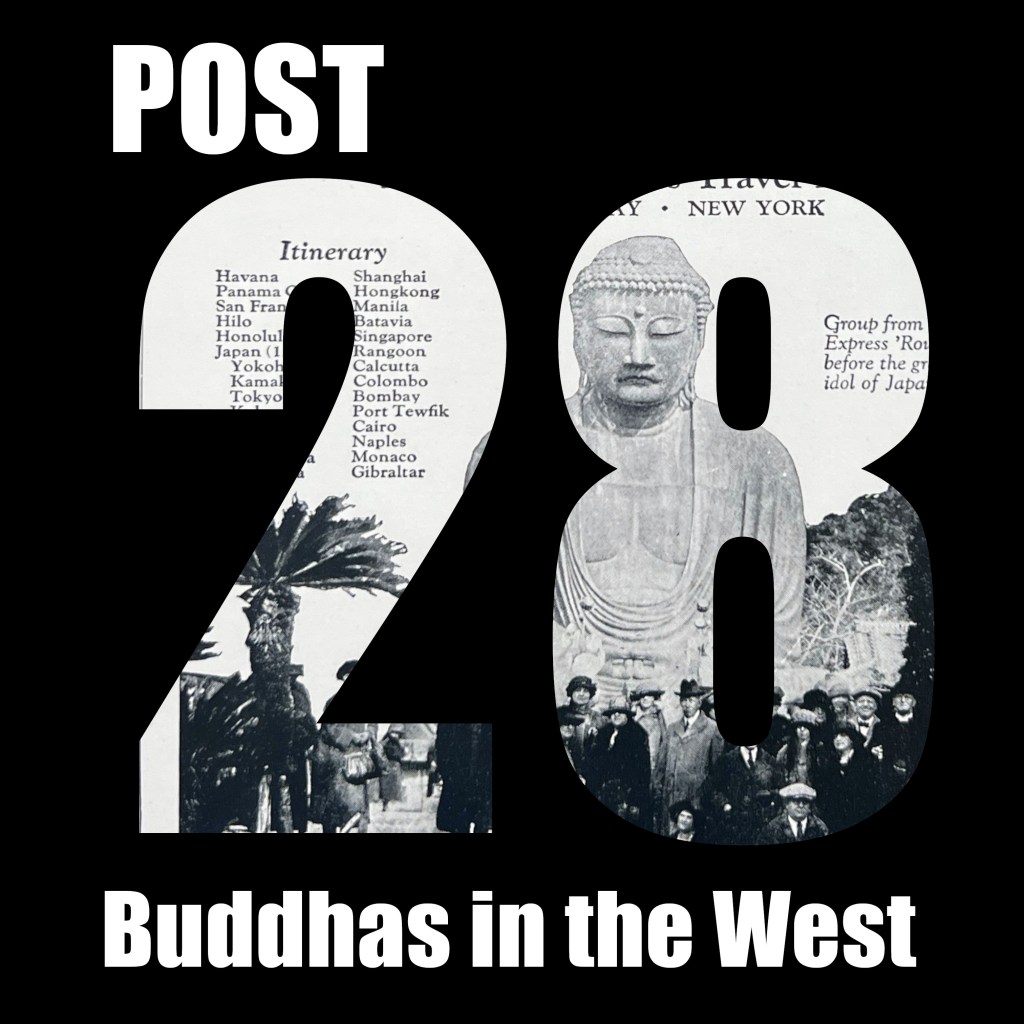
After the opening of the Panama Canal and the end of WWI, the first around-the-world commercial cruise was chartered by the American Express Company in late 1922. The following summer of 1923, American Express began advertising for its next cruise using the Great Buddha of Kamakura.

The success of the inaugural cruise is celebrated in the advertising copy. It notes how the journey is “luxuriously comfortable, wholly delightful, and easily obtainable.” The brief itinerary lists the major ports to be visited, including a long 13 day stay in Japan.

The most conspicuous element is the large cropped photo of the “sacred idol of Japan” – the Kamakura Daibutsu. Notably, the photo depicts the inaugural cruise passengers positioned in front, looking directly at the camera lens.

Unfortunately, the Great Kantō earthquake struck in September 1923, damaging the Daibutsu. The Second American Express Cruise Round the World continued, however, leaving New York in November 1923 and returning in March 1924.


The Buddhas in the West Material Archive is a digital scholarship project that catalogues artifacts depicting Buddhist material culture for Western audiences. It’s comprised of prints, photos, and an assortment of ephemera and other objects. For a brief introduction to this archive, visit the main Buddhas in the West project page.


For Related Buddhas in the West Posts Featuring Historical Advertising:


For the Most Recent Buddhas in the West Posts: