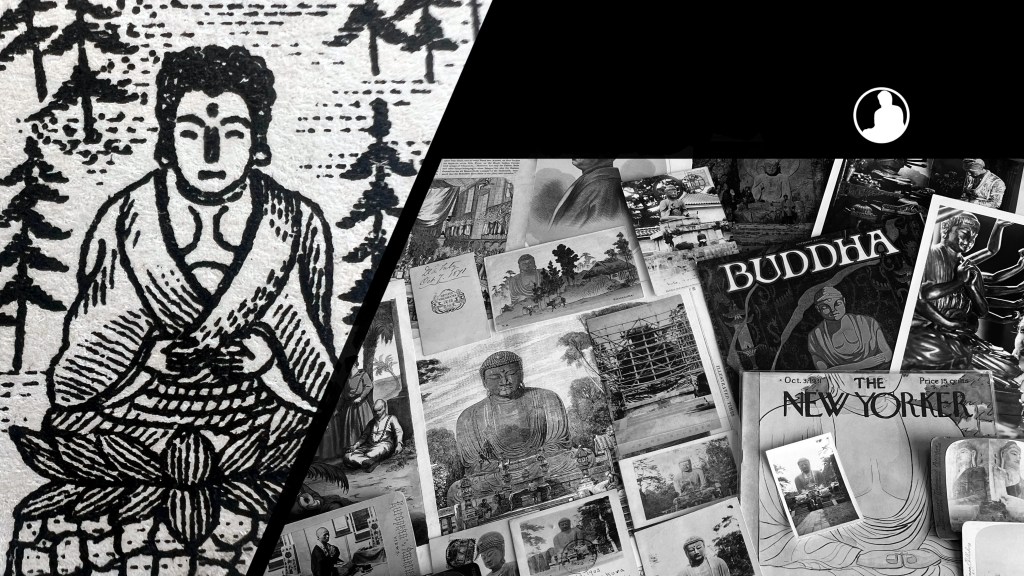
Kamakura Sightseeing Map (1912)

For all the new Buddhas in the West posts
follow us on Bluesky & Instagram


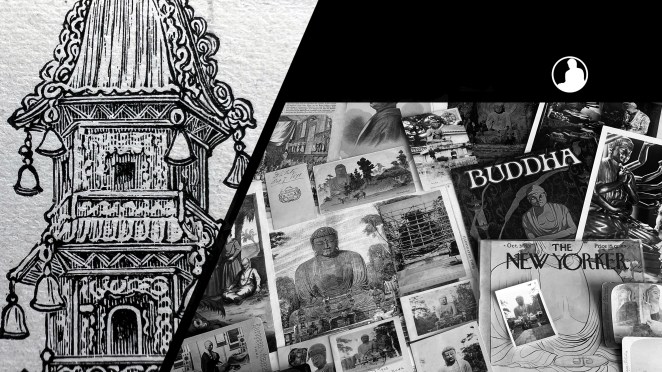
After the opening Japan in 1859, the old backwater capital of Kamakura was transformed into an international tourist destination. This bilingual tourist map from 1912 (Meiji 45) provides a glimpse into which Kamakura sites were seen as most significant, including the Kamakura Daibutsu.
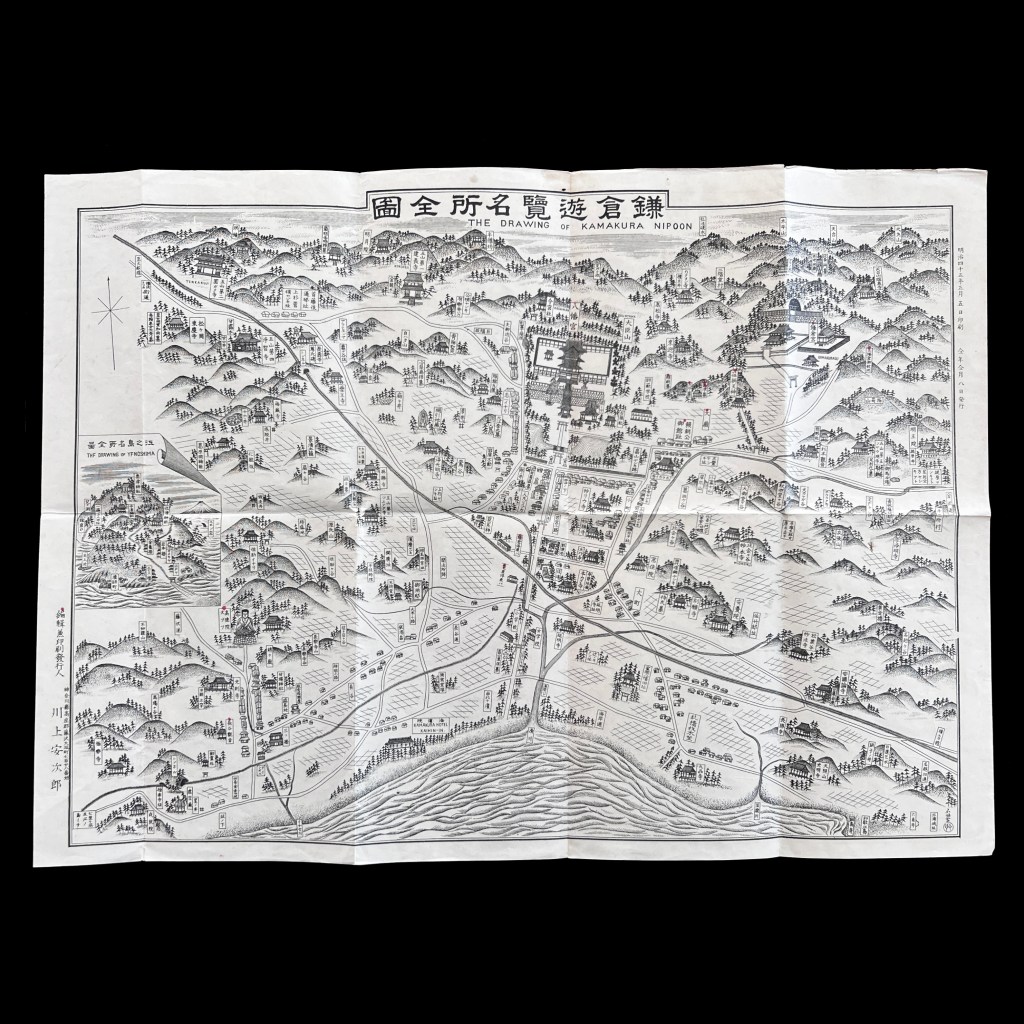
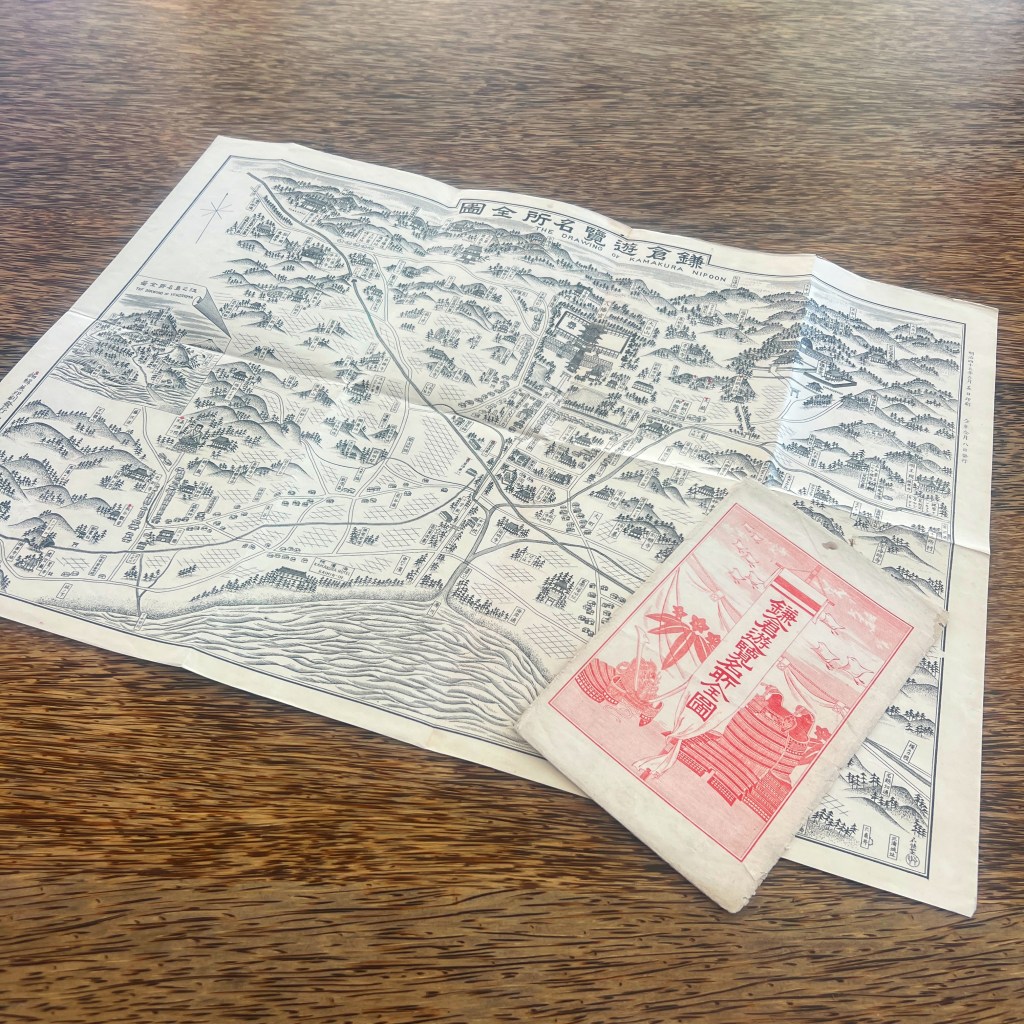
The Complete Map of Kamakura Famous Places for Sightseeing (Kamakura yūran meisho zenzu 鎌倉遊覧名所全圖), loosely rendered into English as The Drawing of Kamakura Nipoon [sic], came inside a paper folder printed with symbols of the Japanese empire. The map was prepared by Kawakami Yasujirō 川上安次郎.
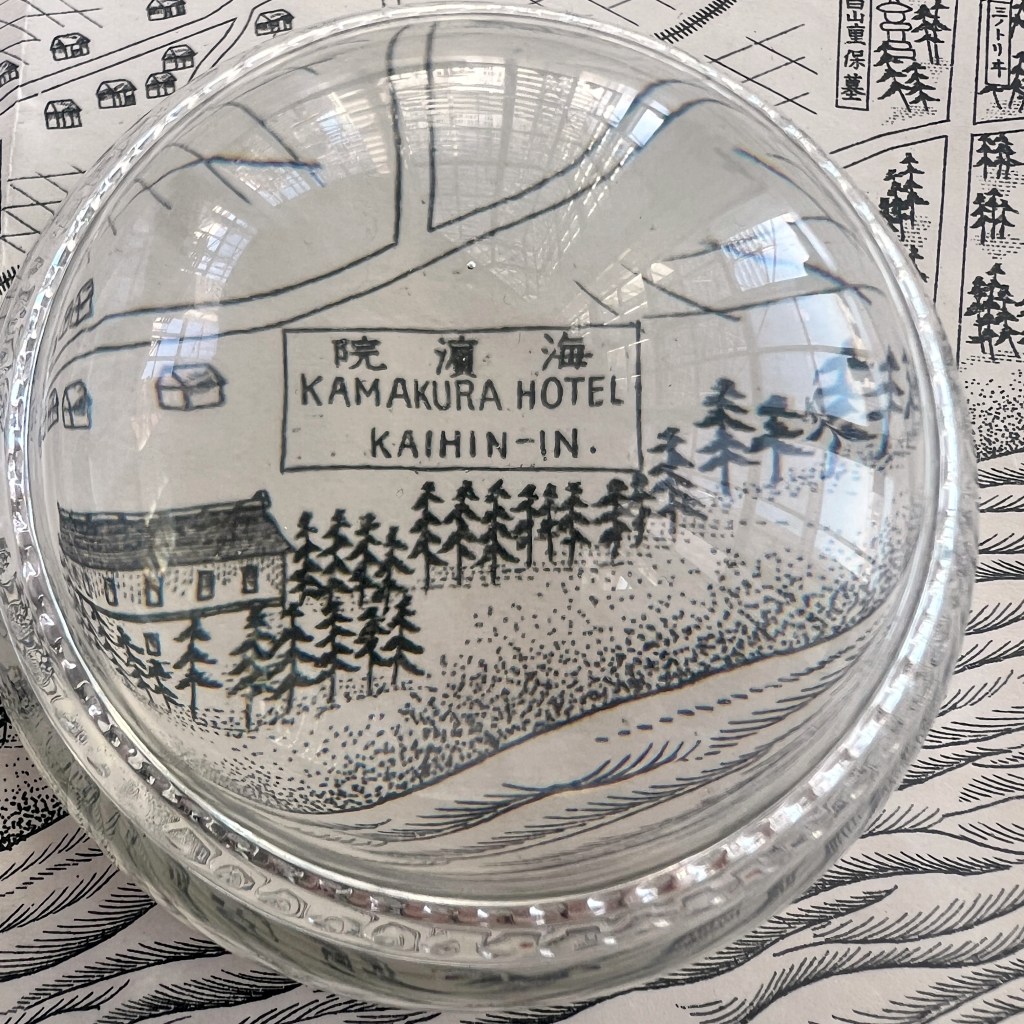
By the early 1890s, the Kamakura Kaihin Hotel, a converted medical therapy facility for seawater bathing, emerged as the premier resort for Kamakura travelers. In March 1893, the Japanese Welcome Society was established to help promote foreign travel in Japan.
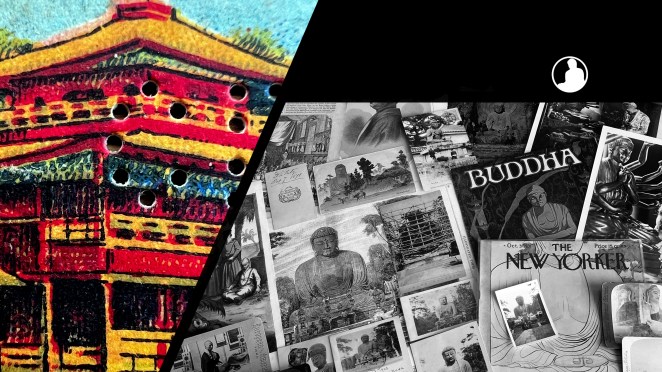
For many Japanese travelers, the main attraction was the Hachiman Shrine, a large complex in the heart of the city found at the end of a long central promenade leading to the ocean. The red dot seen here suggests this site was highlighted by the original owners of the map.

Among the many dozens of sites named on the map, only a handful are marked by a red dot. Of those highlighted is Hase-dera, temple home to a famous 31-foot tall Eleven-Headed Kannon statue.

Another highlighted tourist attraction is the Kamakura Daibutsu at Kōtoku-in, here depicted by a small, yet easily identifiable, icon. For a digitized collection of Japanese maps held by the C. V. Starr East Asian Library at UC Berkeley, see tinyurl.com/yutj576z.


The Buddhas in the West Material Archive is a digital scholarship project that catalogues artifacts depicting Buddhist material culture for Western audiences. It’s comprised of prints, photos, and an assortment of ephemera and other objects. For a brief introduction to this archive, visit the main Buddhas in the West project page.


For Related Buddhas in the West Posts Featuring Japan:

For the Most Recent Buddhas in the West Posts:


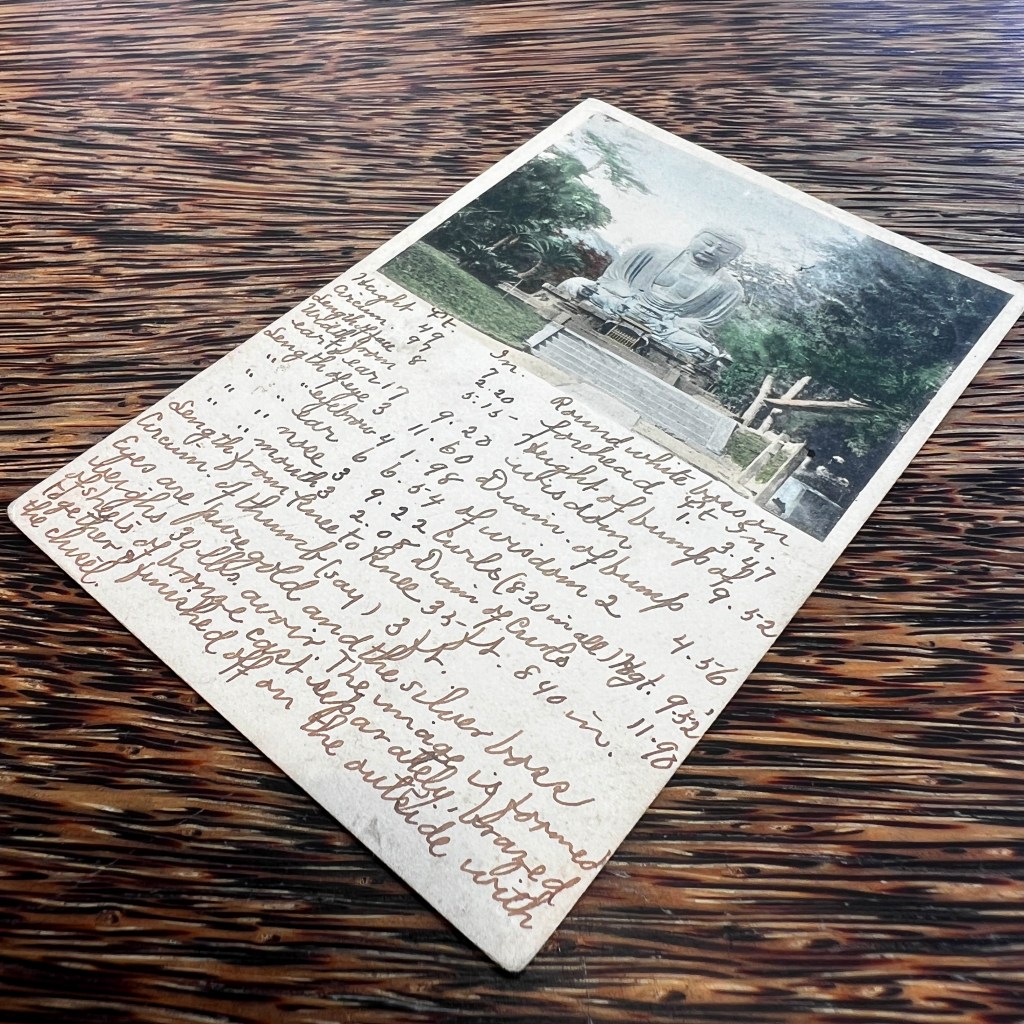
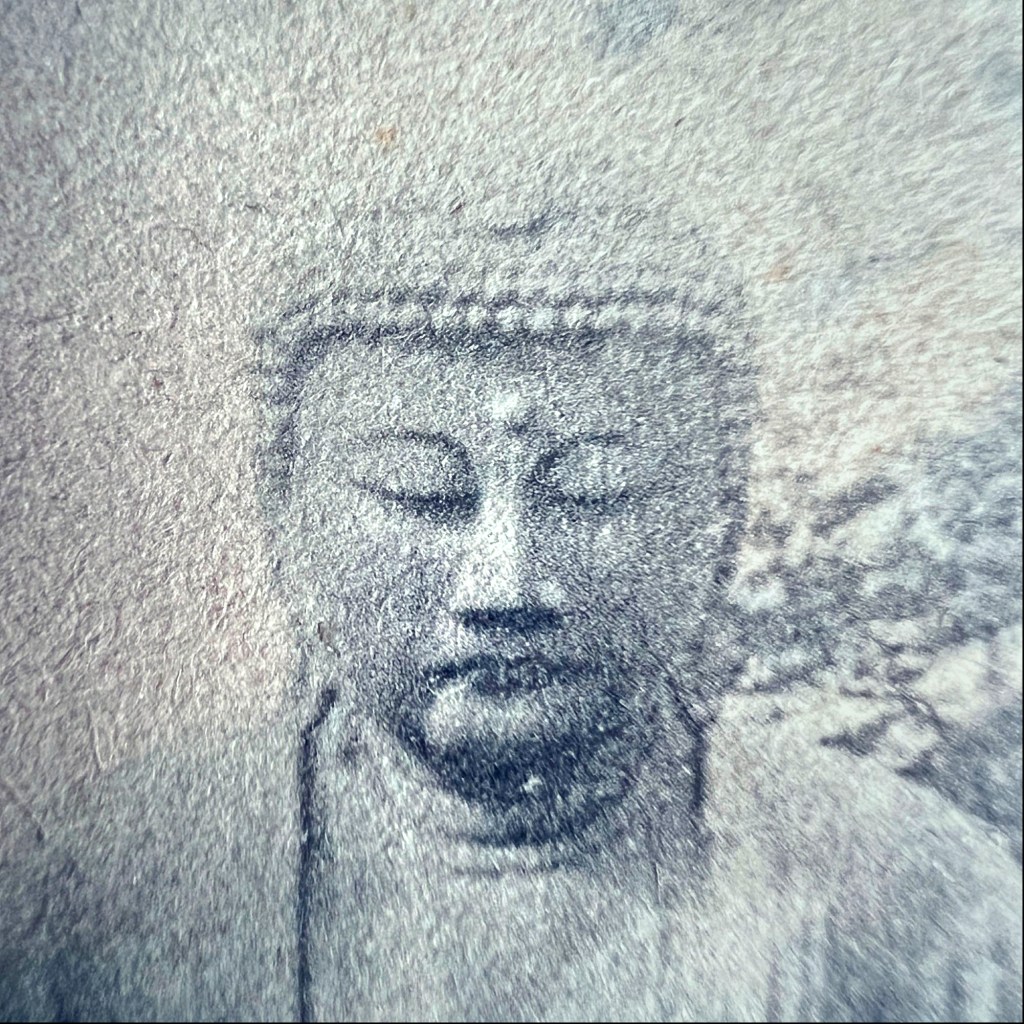
Used Postcard with Kamakura Daibutsu Dimensions

For all the new Buddhas in the West posts
follow us on Bluesky & Instagram


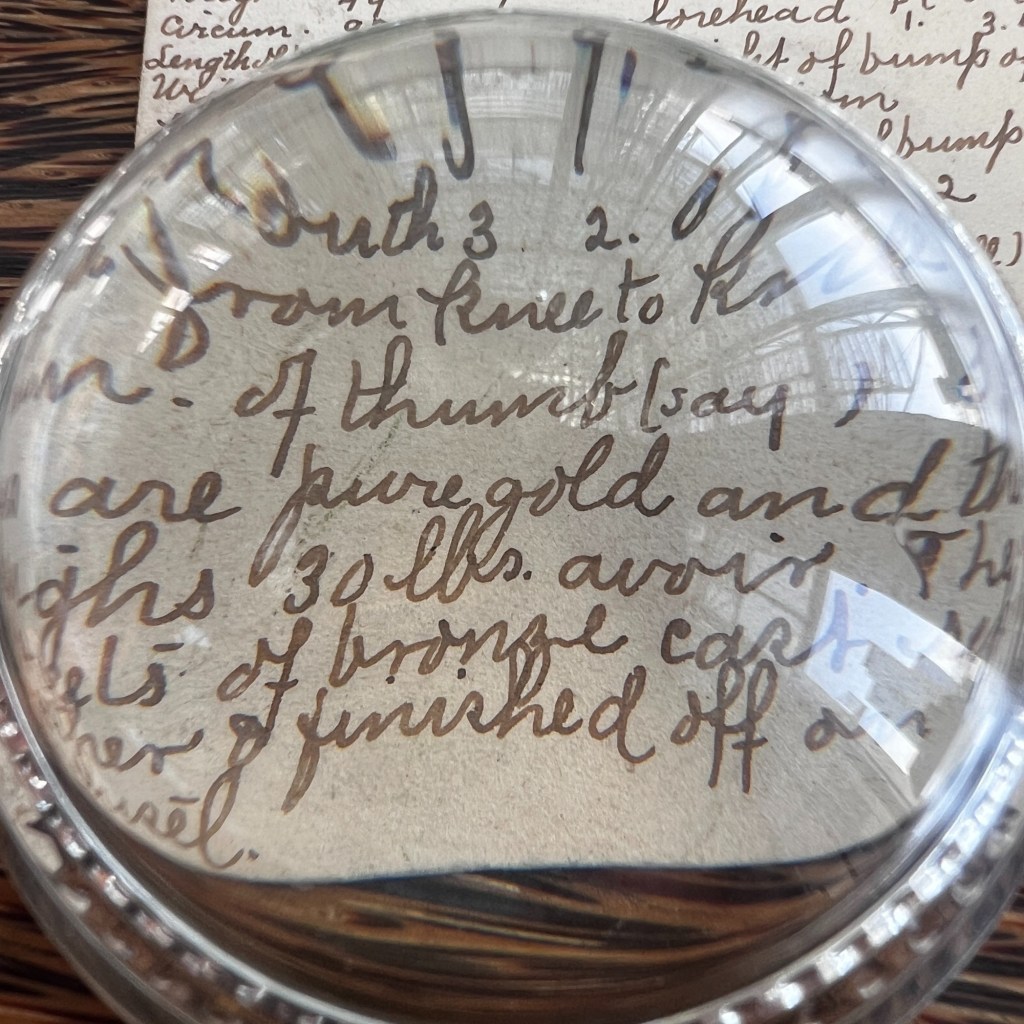
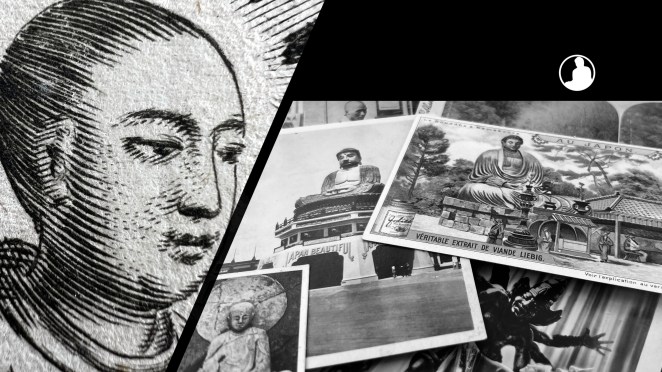
In 2025, seven of the top ten tallest freestanding statues in the world are Buddhist figures (as well as 31 of the top 50). The colossal size of Buddhist statuary is nothing new; foreign travelers in Asia have often noted this fact, as we see in this postcard message from 1906.

Used postcards are valuable because they reveal which aspects of the Kamakura Daibutsu site in Japan were more salient to visitors. The exact measurements given here were not taken on site by the visitor, but were likely copied from one of the popular Japan tourism guides.

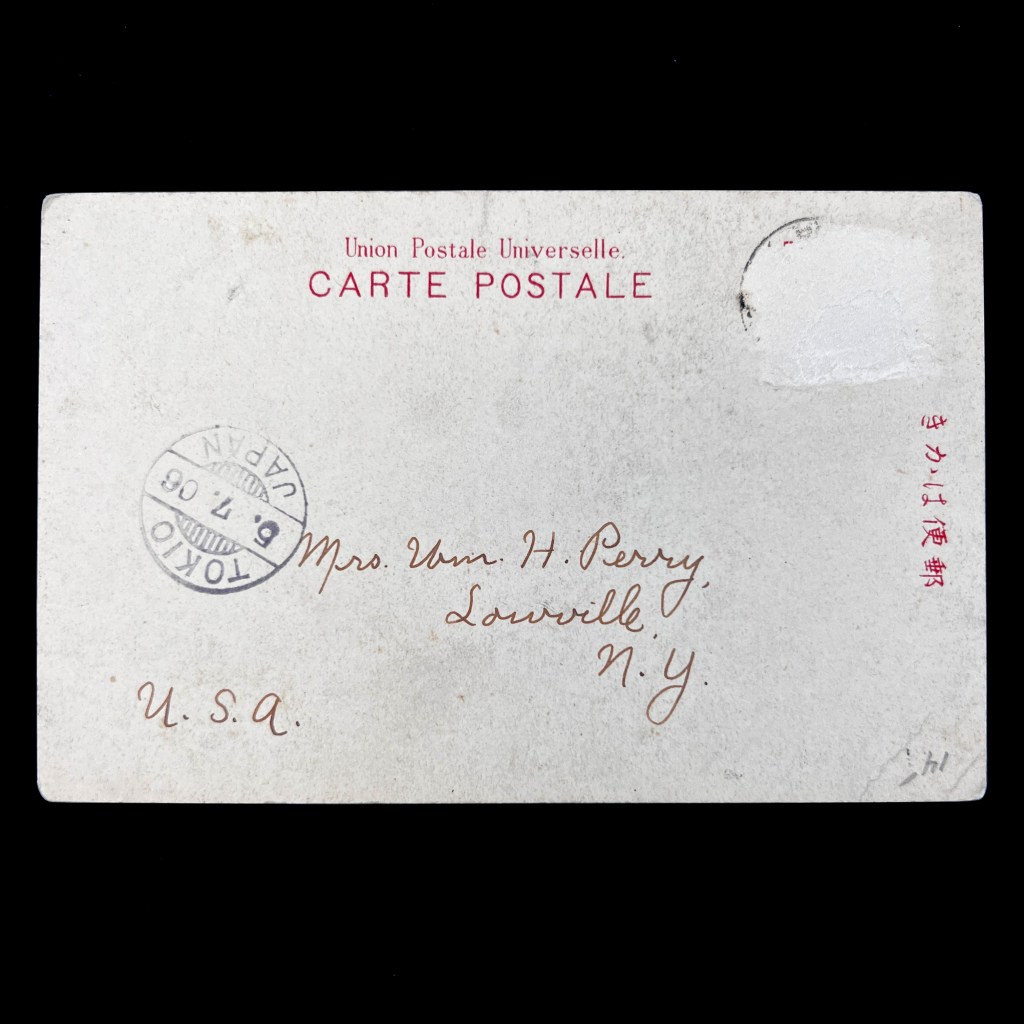
The reverse gives us some insight into the “extended biography” of the postcard after its departure from Tokyo. Notably, the missing postage stamp suggests it was prized by a philatelist – a stamp collector.

The focus on the size, craftsmanship, and materials of the statue minimize the religious importance of such an icon and highlight its value as fine art.

Teaching Resource: For a brief introduction to material analysis that uses this postcard as an example, see the post and handout: Making Materials Speak: Performing a Material Analysis, viewable here: tinyurl.com/nhhuh4nk.


The Buddhas in the West Material Archive is a digital scholarship project that catalogues artifacts depicting Buddhist material culture for Western audiences. It’s comprised of prints, photos, and an assortment of ephemera and other objects. For a brief introduction to this archive, visit the main Buddhas in the West project page.


For Related Buddhas in the West Posts Featuring Historical Postcards:


For the Most Recent Buddhas in the West Posts:


Herbert Ponting’s Shwethalyaung Sleeping Buddha Stereoview

For all the new Buddhas in the West posts
follow us on Bluesky & Instagram


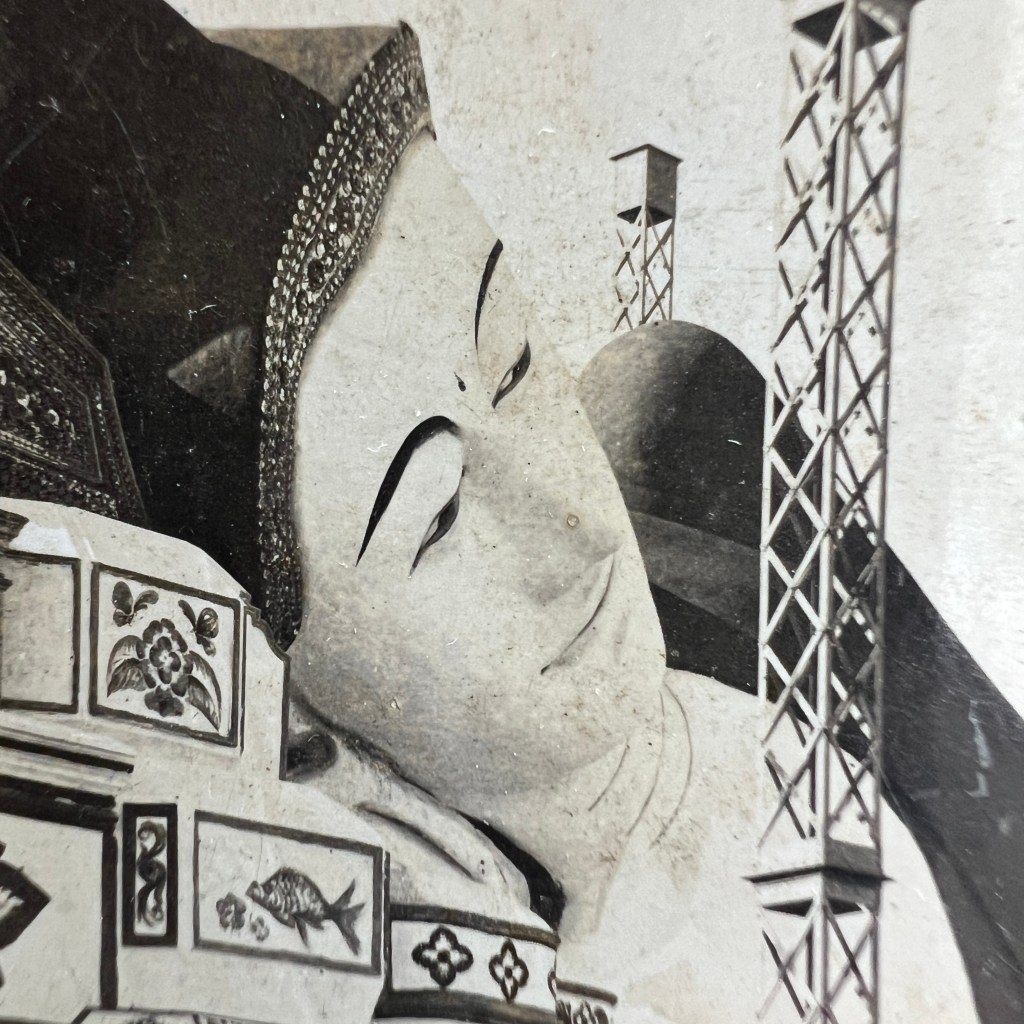
This colossal Sleeping Buddha was lost to the jungle when the Burmese city of Bago fell to invading forces in 1757. The statue was recovered in 1881 after railroad workers began digging through a tree-covered mound looking for scrap stone.

At 55 meters (180 ft) long and 16 meters (52 ft) high at the shoulder, the Shwethalyaung Buddha is among the largest reclining Buddha statues ever constructed. Made of brick and stucco, it is believed to have been built in the late tenth century under the patronage of a local king.

This stereograph was taken by Herbert Ponting who had returned from Manchuria after photographing the Russo-Japan War for publisher H. C. White.

Ponting had an expert eye; his placement of the man in the foreground produces a strong three-dimensional depth effect when viewed stereoscopically.

An earlier photograph of the Shwethalyaung Sleeping Buddha before decoration was published in Julius Smith’s Ten Years in Burma from 1902, viewable here: tinyurl.com/5n85dsxn.


The Buddhas in the West Material Archive is a digital scholarship project that catalogues artifacts depicting Buddhist material culture for Western audiences. It’s comprised of prints, photos, and an assortment of ephemera and other objects. For a brief introduction to this archive, visit the main Buddhas in the West project page.


For Related Buddhas in the West Posts Featuring Myanmar / Burma:


For the Most Recent Buddhas in the West Posts:


Ruth St. Denis as Guanyin Tri-Fold Brochure

For all the new Buddhas in the West posts
follow us on Bluesky & Instagram


Ruth St. Denis, a pioneer of American modern dance, was among many performers interested in translating the static aesthetic of Greek statuary into motion. St. Denis set herself apart from her contemporaries by focusing on icons of the East, including the Chinese Buddhist goddess Guanyin.

This tri-fold brochure was made for the highly successful 1922–1925 tour under the prestigious impresario Daniel Mayer. St. Denis created her solo “Kuan yin” performance in 1919 using a chiffon robes and a crown to imitate the iconography of Guanyin.

St. Denis toured with her partner, Ted Shawn, who together created the Denishawn School of dance in 1915. The troupe performed both solo and large spectacle pieces and appeared in D. W. Griffith’s 1916 film, Intolerance.

During the Mayer tour, St. Denis performed the “Kuan Yin” piece as the opening act, considering it an “invocation.” The performance involved decorative poses using rhythmic manipulations of drapery and sculptural positioning of her hands, arms, and legs.

After touring Asia in 1926, St. Denis reused her Guanyin guise in a new act named “White Jade.” For further exploration, see Jon Soriano’s “Ruth St. Denis as Bodhisattva: An Art Historical Perspective on the Appropriation of Buddhist Imagery” in Water Moon Reflections (2021).


The Buddhas in the West Material Archive is a digital scholarship project that catalogues artifacts depicting Buddhist material culture for Western audiences. It’s comprised of prints, photos, and an assortment of ephemera and other objects. For a brief introduction to this archive, visit the main Buddhas in the West project page.


For Related Buddhas in the West Posts Featuring Guanyin / Avalokiteśvara:


For the Most Recent Buddhas in the West Posts:

D.A. Ahuja’s Kyauktawgyi Icon

For all the new Buddhas in the West posts
follow us on Bluesky & Instagram


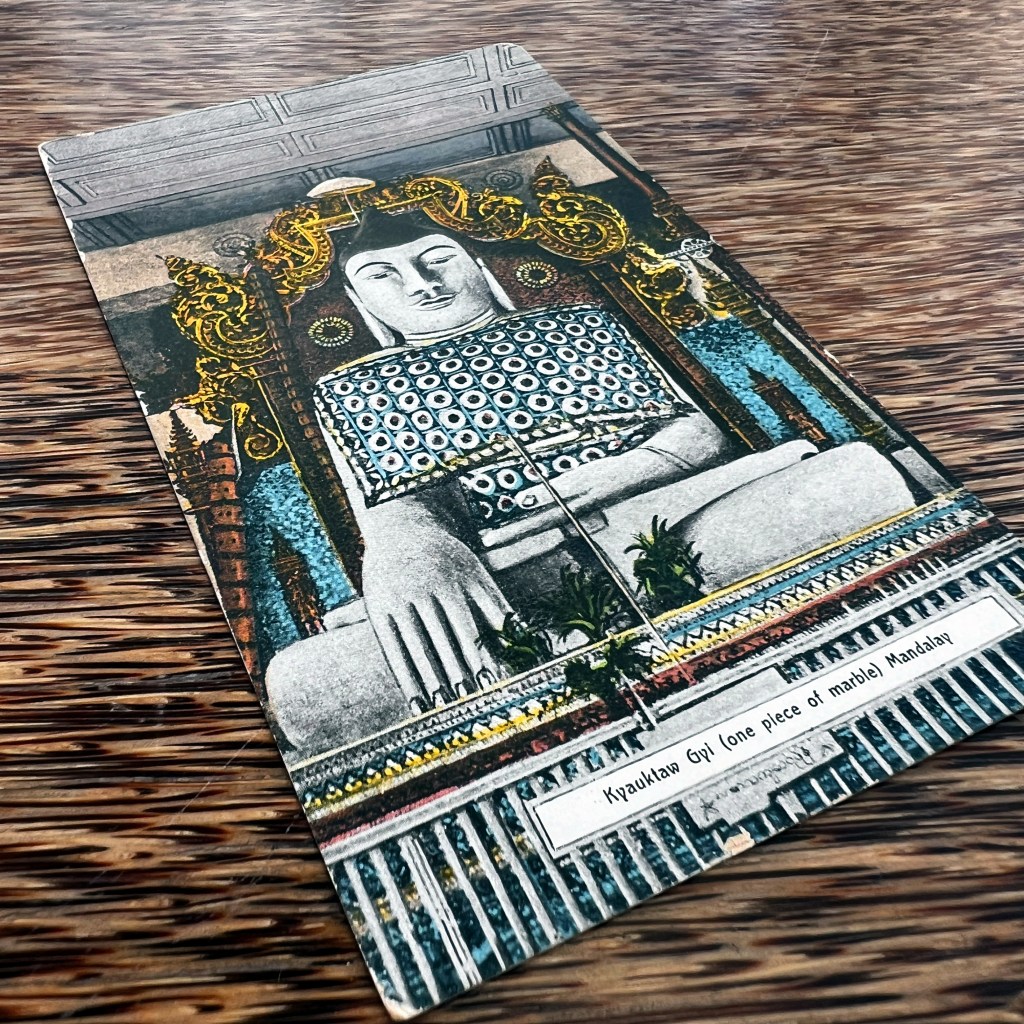
Carved from a single giant marble slab, the Burmese Kyauktawgyi icon stands at a height of 26 feet. Over the span of two weeks the slab was moved from Sagyin quarry to Mandalay Hill and after more than two years of carving the image was consecrated in 1865.

This vibrant postcard was published by Rangoon-based D. A. Ahuja (c.1865–c.1939). The print used a lithographic-halftone hybrid process, first applying color with a lithographic substrate and then applying a black halftone screen; only the final key plate carried the fine detail.

The stamp box informs us this card was printed in Germany, which by the early 20th century was the center of postcard printing worldwide. By 1910, the approximate date of this card, Ahuja was among the most commercially successful postcard publishers during the period of British colonial rule.

The icon was commissioned by King Mindon and depicts the Buddha touching the ground with his right hand, symbolizing his defeat Māra. This gives rise to the formal name of the statue, Mahāsakyamārajina, or the Great Sakya Conqueror of Māra.

The original photo of the marble statue was likely licensed by Ahuja for publication. A copy of the original photograph can found in an album held by the Rijksmuseum, viewable here: tinyurl.com/4pfrhmc6.


The Buddhas in the West Material Archive is a digital scholarship project that catalogues artifacts depicting Buddhist material culture for Western audiences. It’s comprised of prints, photos, and an assortment of ephemera and other objects. For a brief introduction to this archive, visit the main Buddhas in the West project page.


For Related Buddhas in the West Posts Featuring D.A. Ahuja Postcards:


For the Most Recent Buddhas in the West Posts:

Arnoldus Montanus’ Great Buddha of Hōkō-ji Engraving

For all the new Buddhas in the West posts
follow us on Bluesky & Instagram


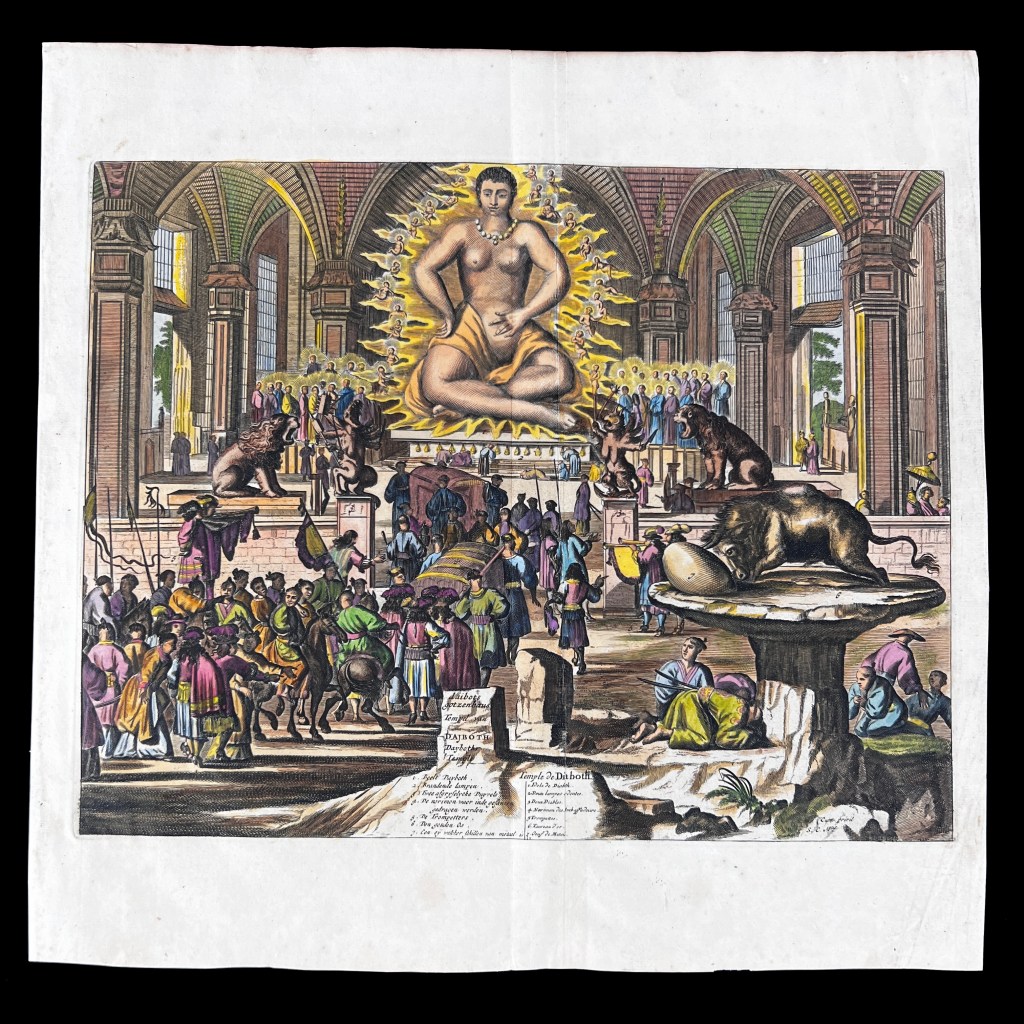
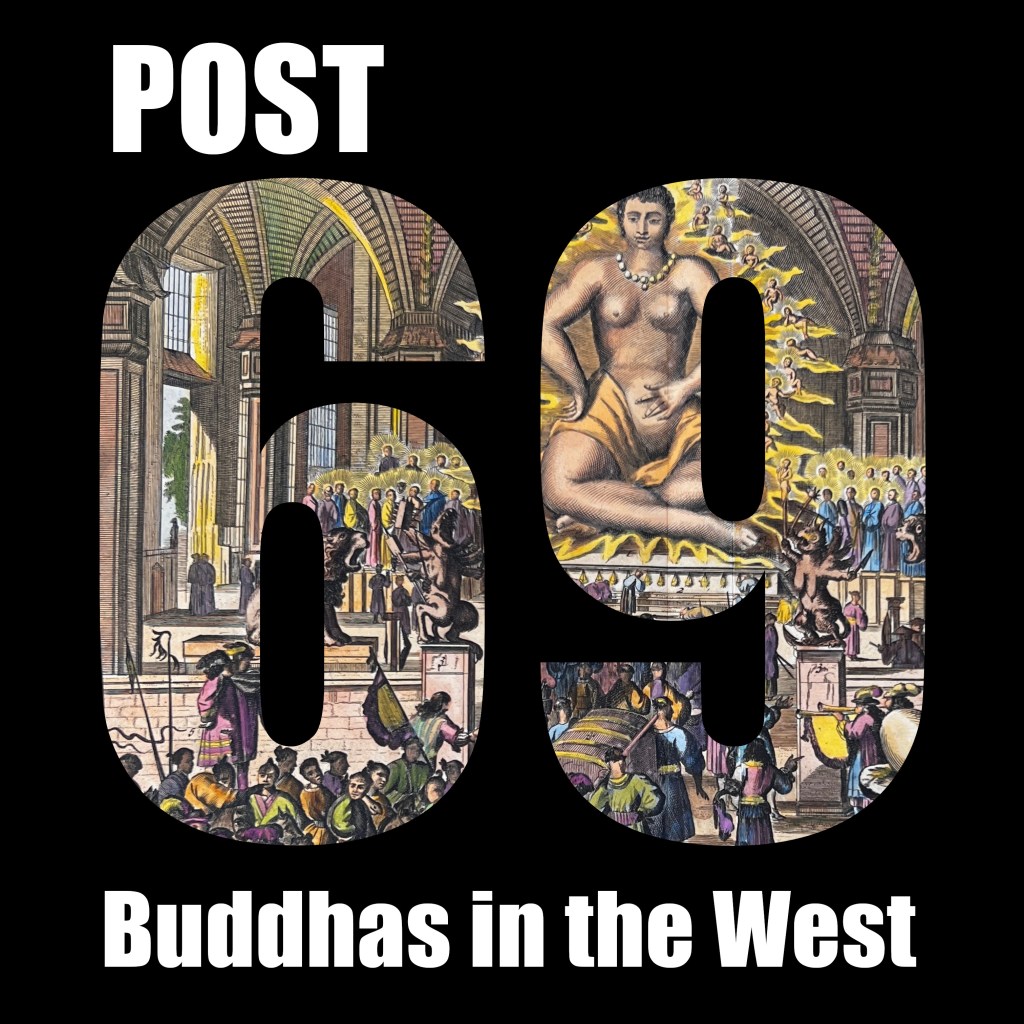
In 1649, while traveling from Nagasaki to Edo (modern Tokyo), the visiting Dutch Embassy made an obligatory stop in Kyoto where they saw the Great Buddha of Hōkō-ji. The Great Buddha stood nearly 60 feet tall and was completed in 1612, replacing an older destroyed icon.

The original Dutch report by Andries Frisius was eventually published by Arnoldus Montanus in 1669 as part of his Atlas Japannensis. Based in part on the report of Frisius, the printer, Jacob van Meurs, had a large copperplate engraving made to illustrate the embassy’s visit.

The temple icon was Vairocana Buddha which was described by Montanus as a “terrible Image… with his Legs across under him.” Furthermore, “the whole statue represents a Woman sitting in a Ring of Darting beams richly gilded.”

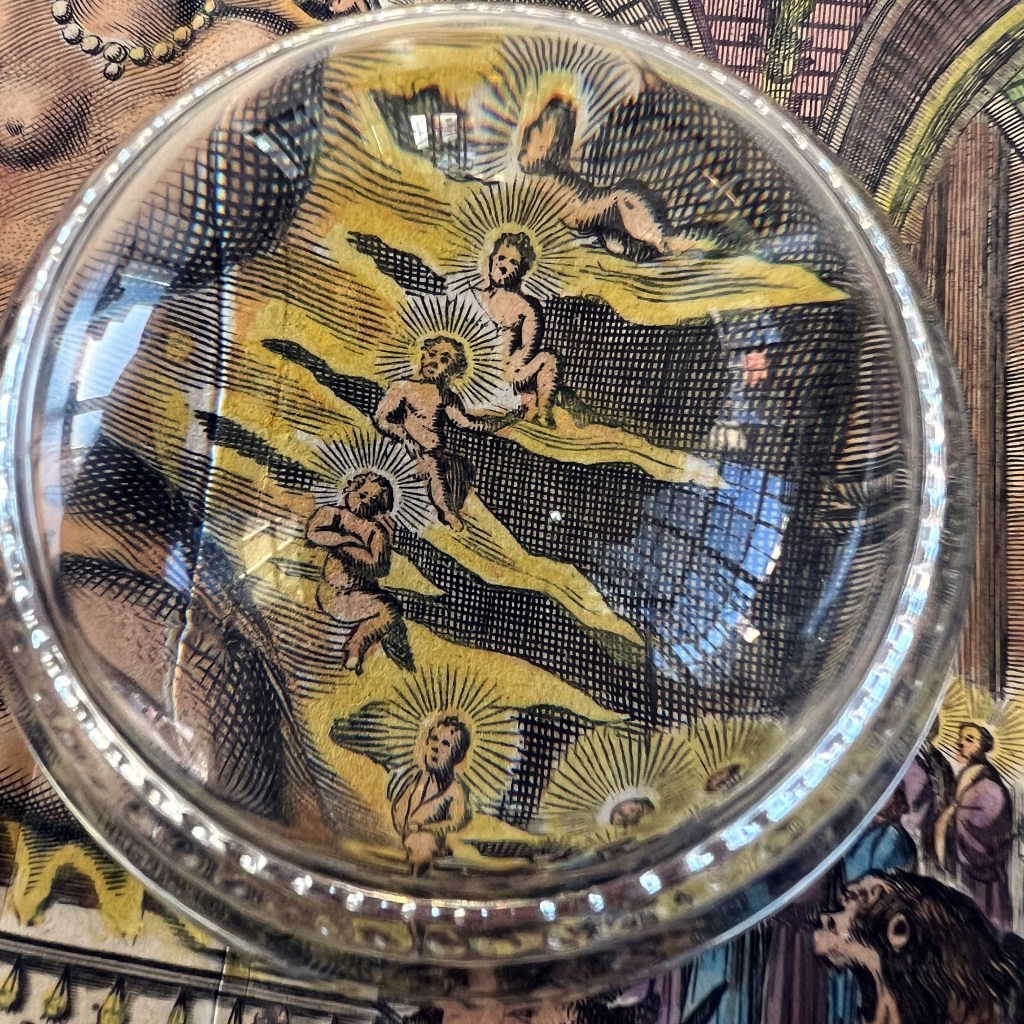
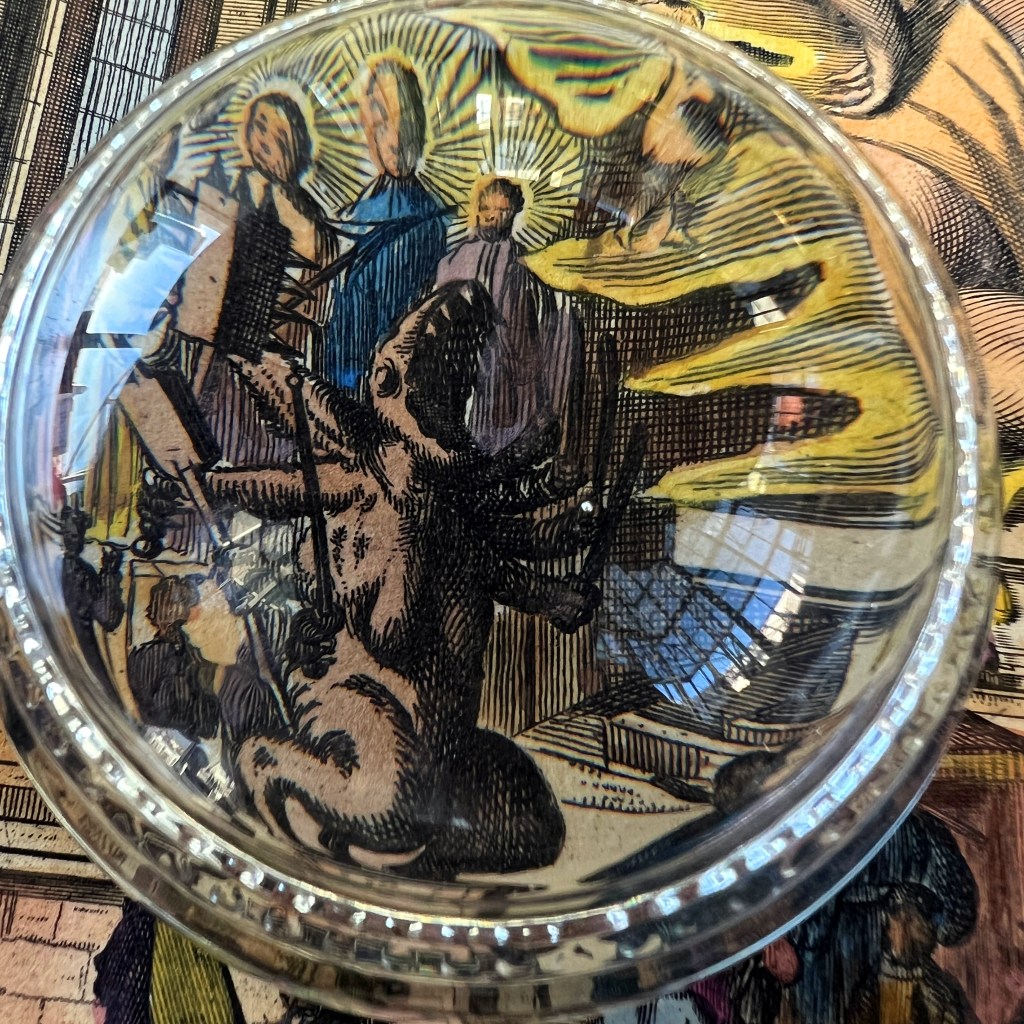
Van Meurs’ engravers seemingly took inspiration from the text, but also had to draw upon their own visual repertoire to fill in details. This includes the masonry columns in the back of the temple as well as playful cherub-like figures in the “Ring of Darting beams.”

“Two horrible Fiends, with Stiletto’s in their hands” – certainly the fearsome Niō – are described a guarding the temple entrance. The engraver places these grotesque figures inside the main temple hall.

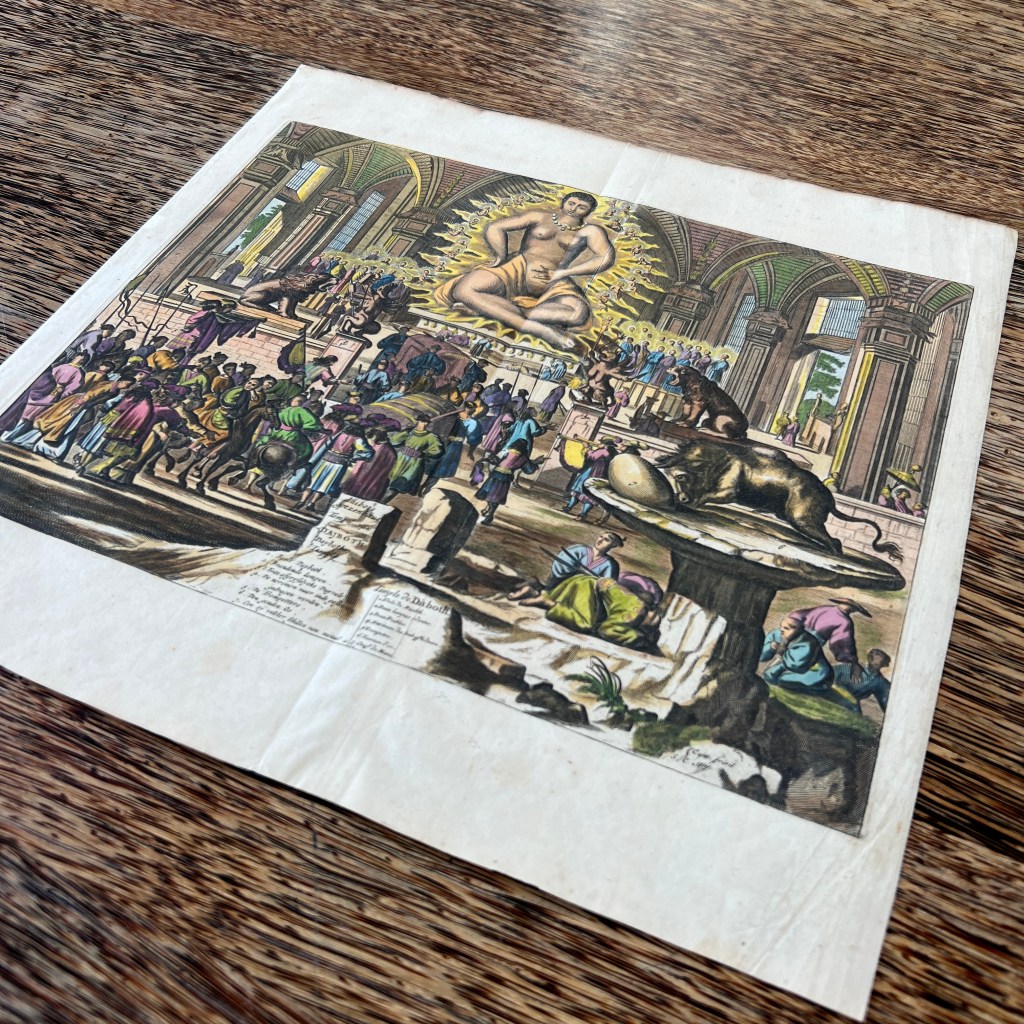
Atlas Japannensis was first published in Dutch in 1669; an English version came the following year. The hand-colored print shown here came from the French edition of 1680. As noted by Isa van Eeghen, the English legend was burnished off of the plate and re-inscribed in French.

By the time of printing, the colossal Buddha of Hōkō-ji had been destroyed by an earthquake in 1662; a wooden image replaced it in 1667. The 1669 Dutch edition of Atlas Japannensis has been digitized by the National Library of the Netherlands, viewable here: tinyurl.com/5n6kstfy.


The Buddhas in the West Material Archive is a digital scholarship project that catalogues artifacts depicting Buddhist material culture for Western audiences. It’s comprised of prints, photos, and an assortment of ephemera and other objects. For a brief introduction to this archive, visit the main Buddhas in the West project page.


For Related Buddhas in the West Posts Featuring Historical Engravings:


For the Most Recent Buddhas in the West Posts:

World Wide Magazine 1938 Laughing Buddha Cover

For all the new Buddhas in the West posts
follow us on Bluesky & Instagram


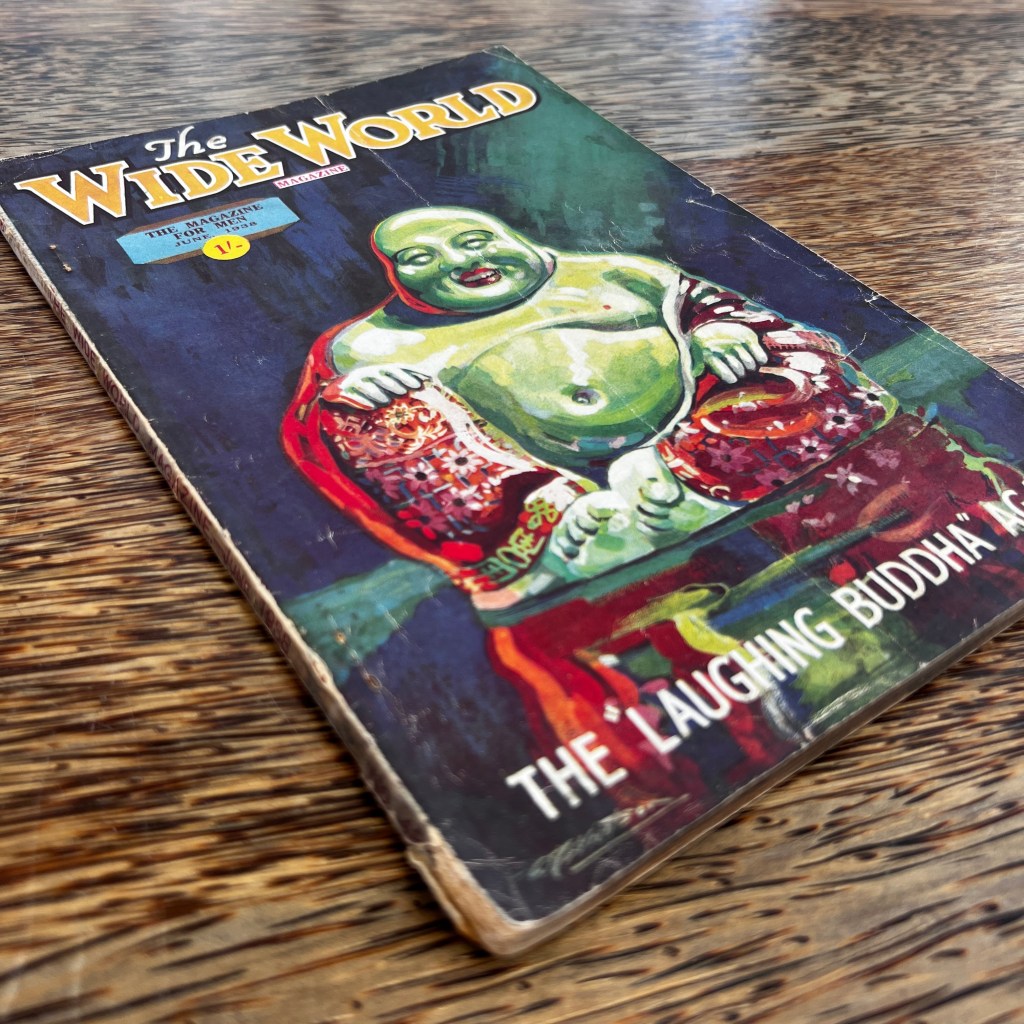
Founded in 1898, the Wide World Magazine was “devoted to romance of travel, adventure, and exploration.” Stories were promoted as “true in every detail” and submissions required a written statement by the author to this effect (they were, of course, not true).

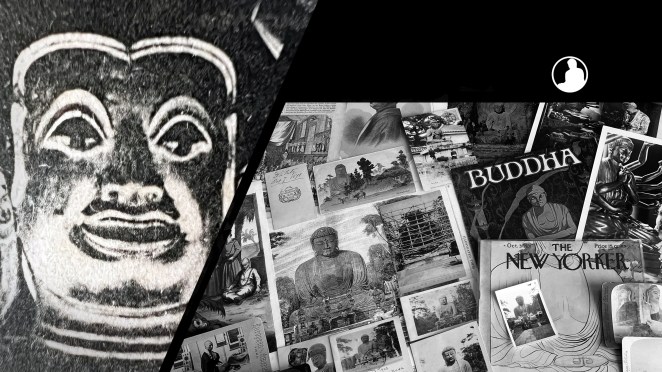
Over 150 pulp magazine titles were sold in the 1930s, thus striking cover art was critical for newsstand sales. The cover here depicts a brightly colored green-skinned Laughing Buddha statue

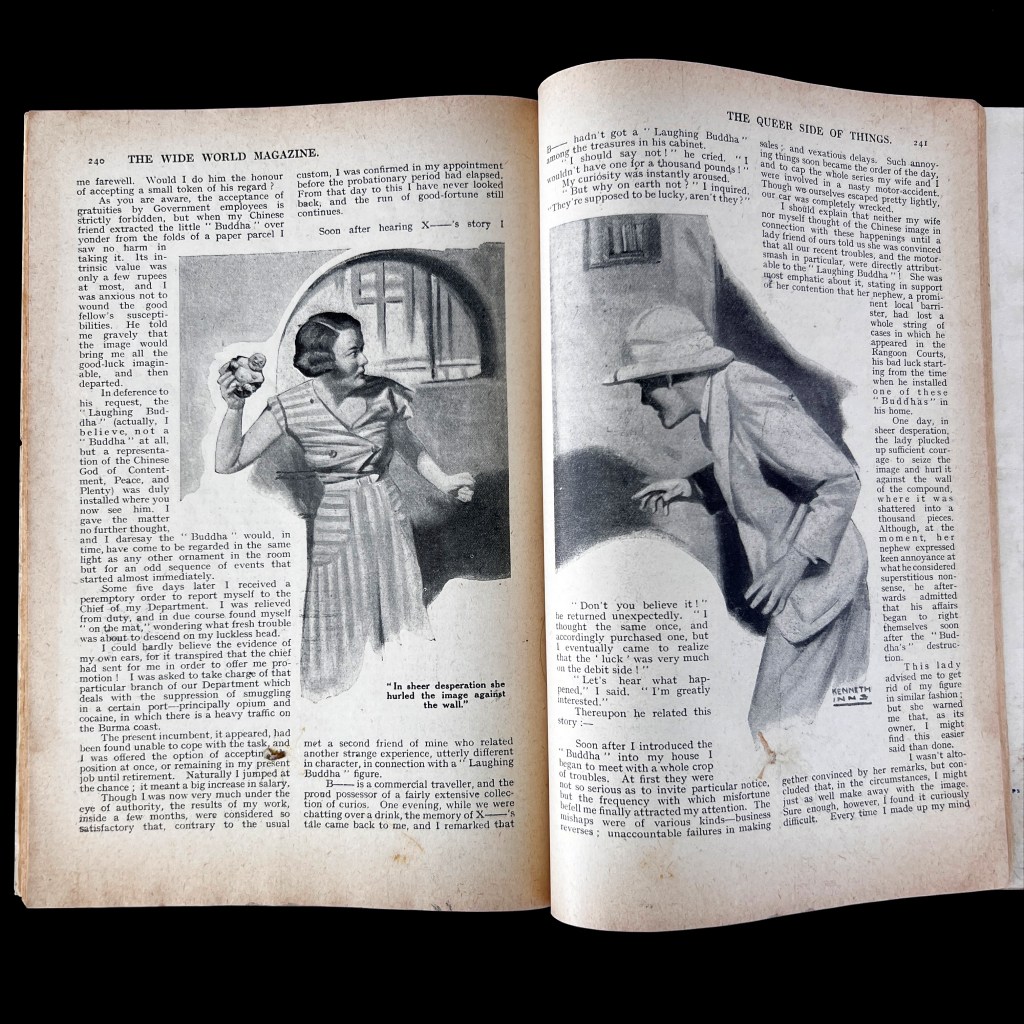
The cover story of June 1938 issue contained a report provided by one “Dennis Blake of Rangoon, Burma,” concerning the curious effects of Buddhist images.

In this report, two small Chinese Laughing Buddha statues were believed to either cause blessings or misfortune to its owners. The artwork by Kenneth Inns shows a statue about to be broken against the wall.

The stories are resolved when we are told that gifted Buddhist statues bring luck, while purchased Buddhist statues bring misfortune!


The Buddhas in the West Material Archive is a digital scholarship project that catalogues artifacts depicting Buddhist material culture for Western audiences. It’s comprised of prints, photos, and an assortment of ephemera and other objects. For a brief introduction to this archive, visit the main Buddhas in the West project page.


For Related Buddhas in the West Posts Featuring the Laughing Buddha:


For the Most Recent Buddhas in the West Posts:


Tamamura Kōzaburō’s Shinkōji Vairocana Photograph

For all the new Buddhas in the West posts
follow us on Bluesky & Instagram


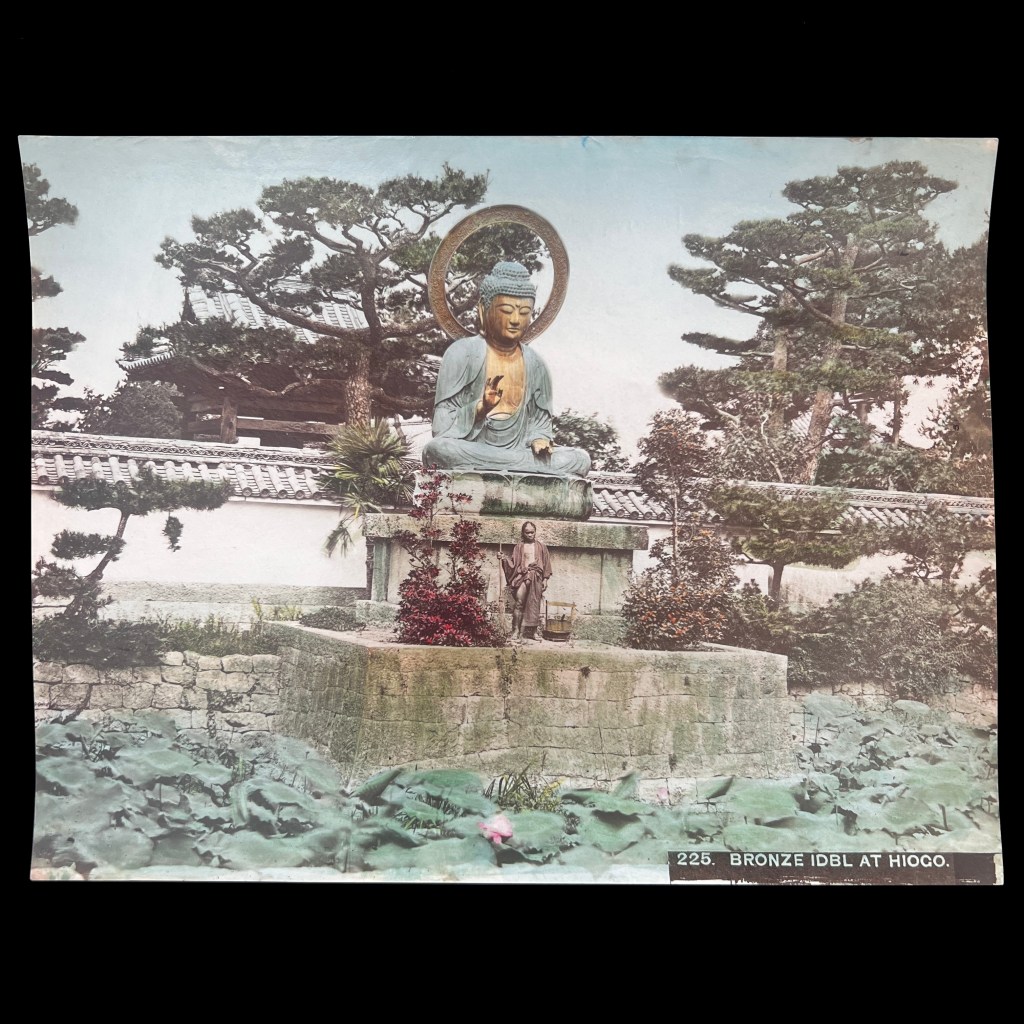
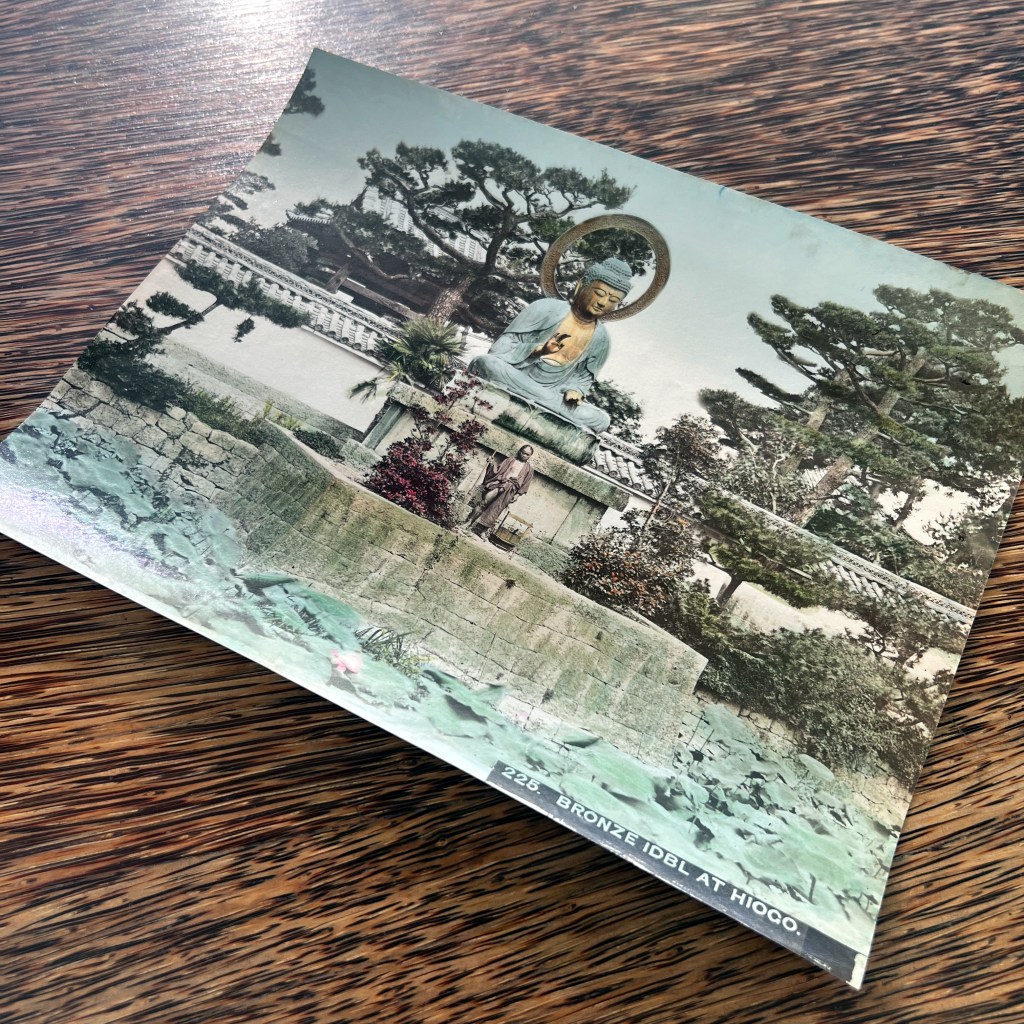
For late Victorian-era globetrotters, religious sites around Japanese port cities were often treated as picturesque tourist destinations. Such a site can be found with the Shinkō-ji lotus pond surrounding a large bronze Buddhist statue, not far from Kobe harbor.

This photograph was taken by Tamamura Kōzaburō who operated a well-known studio based in Yokohama since the early 1880s. Tamamura, like many of his peers, often sold photographic souvenirs of sites, objects, and people sought out by foreign tourists.

It was common for photographers to add people to the scene to help provide a sense of scale. The height of the Shinkō-ji statue is claimed to have been 4.8 meters tall.

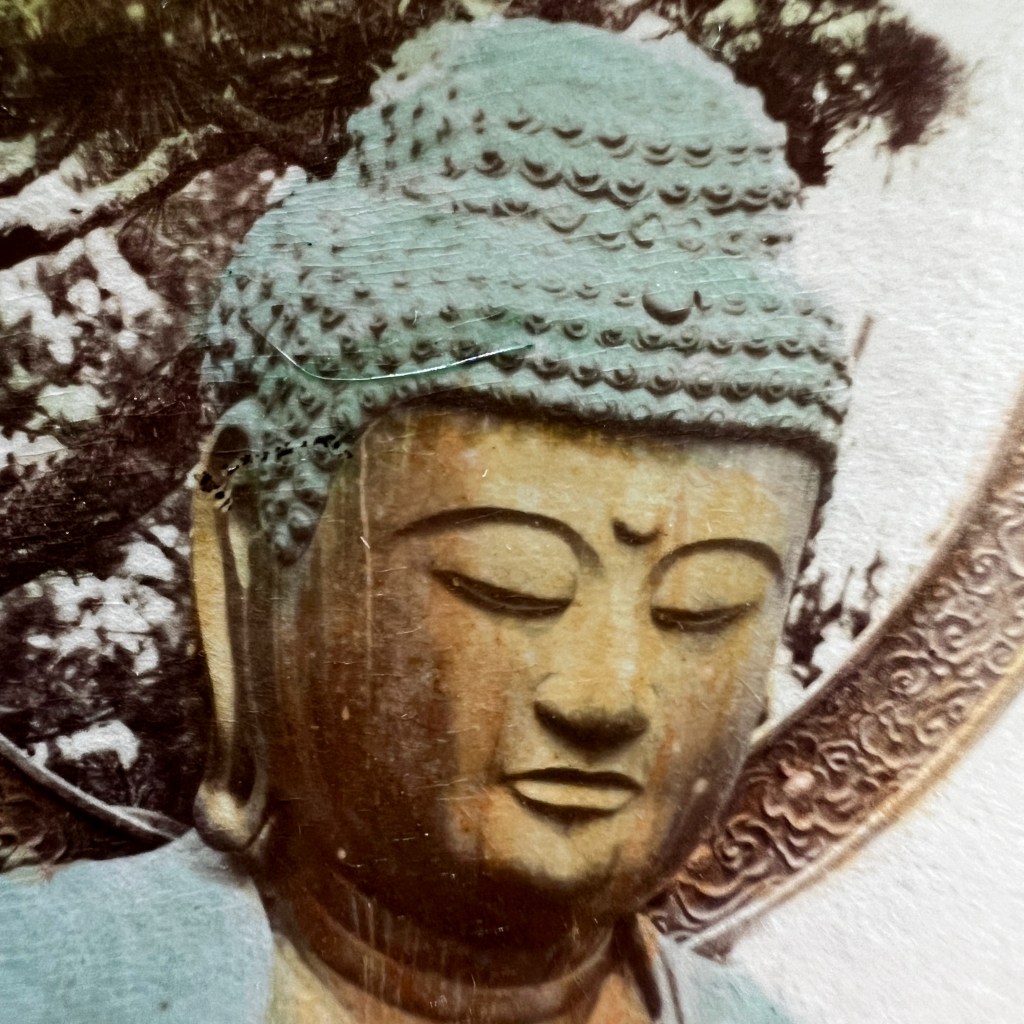
While the caption on the photo identifies the statue generically as an idol, Shinkō-ji identifies it as Vairocana Buddha. According to temple records the icon was installed in 1760.

Unfortunately, to the best of my knowledge, this icon was likely destroyed by allied firebomb attacks in March 1945 during World War II. A Tamamura album with 50 photograph has been scanned by Harvard University Library, viewable here: https://tinyurl.com/3jn672n5


The Buddhas in the West Material Archive is a digital scholarship project that catalogues artifacts depicting Buddhist material culture for Western audiences. It’s comprised of prints, photos, and an assortment of ephemera and other objects. For a brief introduction to this archive, visit the main Buddhas in the West project page.


For Related Buddhas in the West Posts Featuring Kobe, Japan:


For the Most Recent Buddhas in the West Posts:

Wa Lum (Hualin) Temple 500 Arhats Hall Postcard

For all the new Buddhas in the West posts
follow us on Bluesky & Instagram


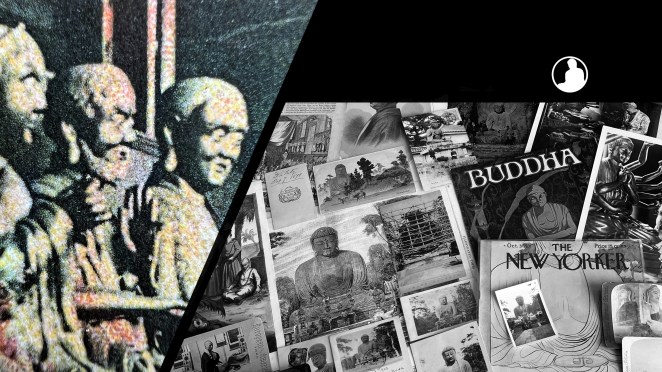
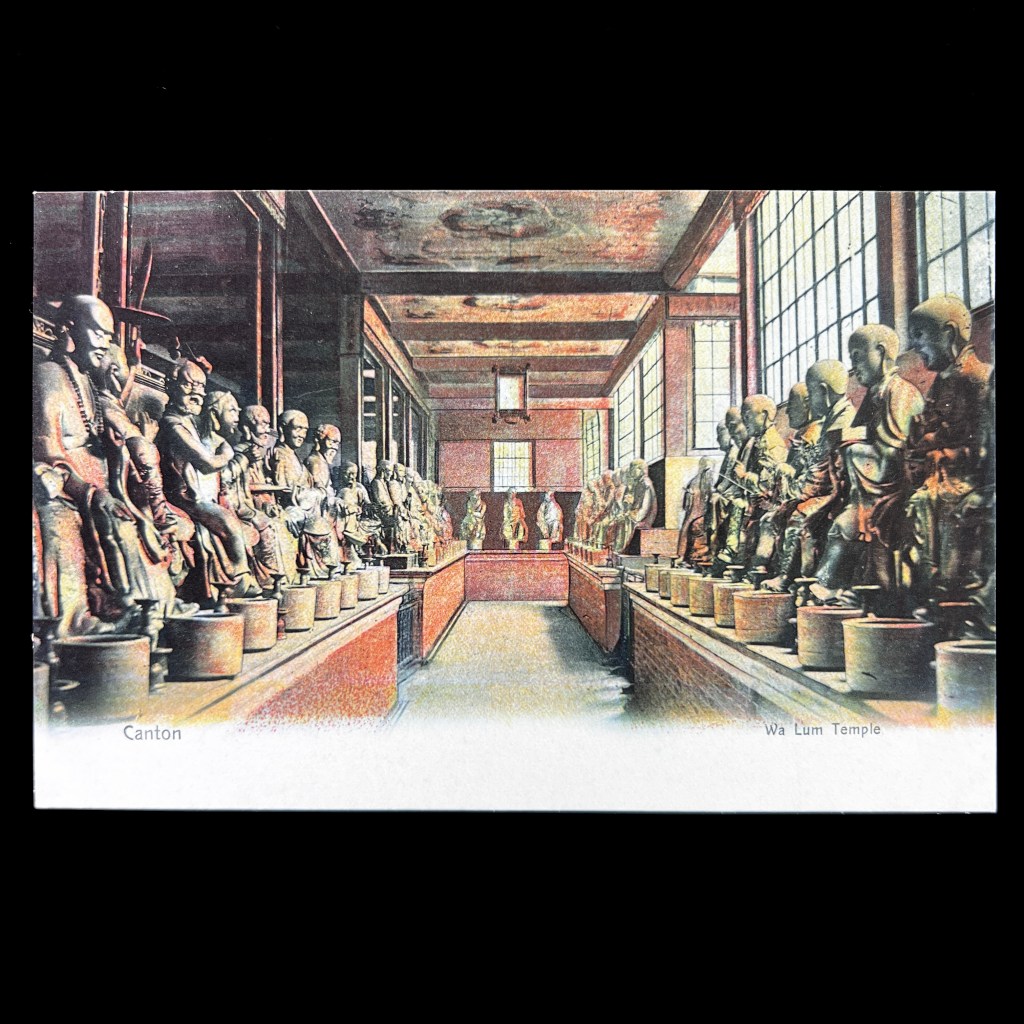
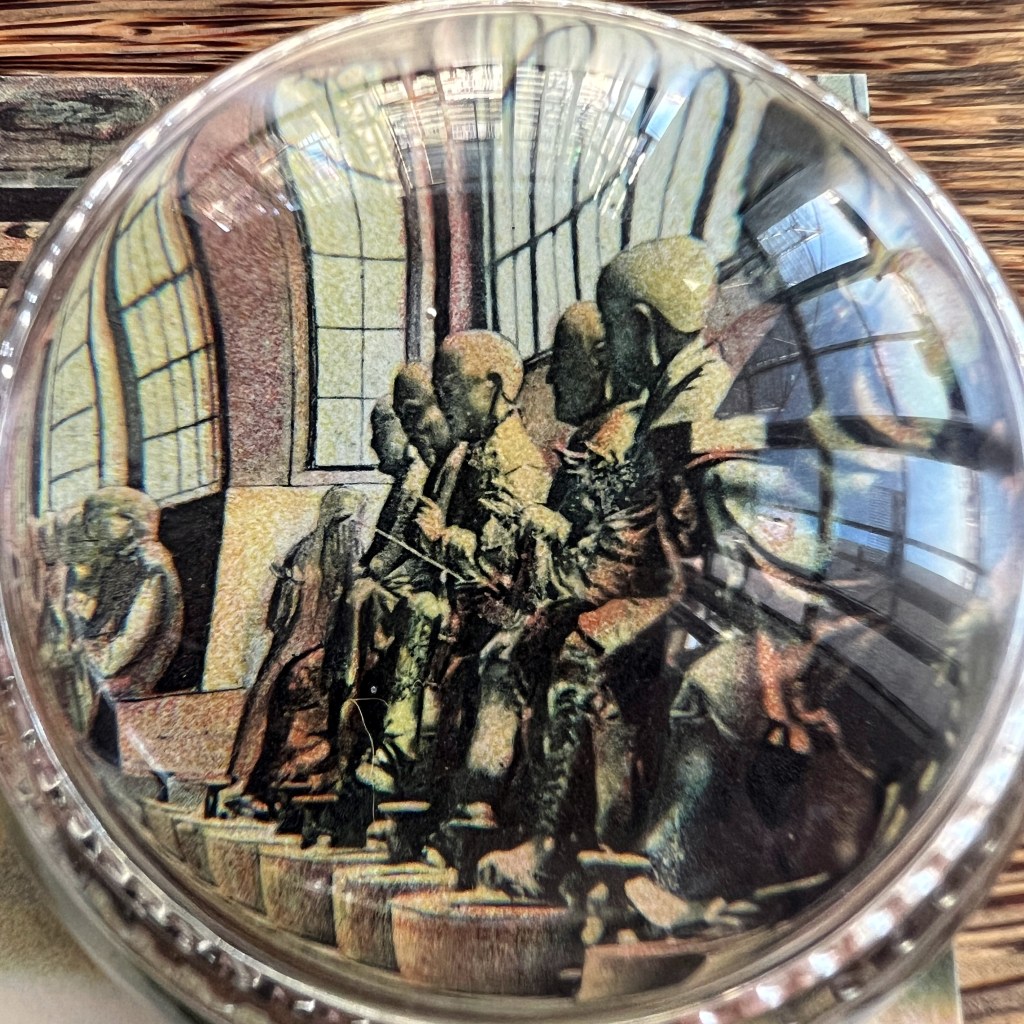
The Hualin Temple in Guangzhou, China was well known among foreign tourists at the end of the 19th century for its Hall of Five Hundred Arhats. Reportedly made of clay, the icons were installed in the early 1850 and remained until the Cultural Revolution a century later.

This postcard dates to c. 1910 and was published by the postcard dealer Moritz Sternberg who operated from Queen’s Road in Hong Kong. The original photo, however, is much older and is often attributed to Lai Afong, the most influential Chinese photographer of the late Qing.

While the temple has a history dating to the 6th century, the Arhat Hall was built in the late 1840s. It was one of the sites visited by the pioneering Scottish photographer John Thompson when he sojourned in China from 1868 to 1872.

By Thompson’s visit, rumor had spread that one of the arhat statues was actually an image of Marco Polo (not shown). Thompson notes “careful inquiry proves this statement incorrect,” nevertheless, the belief still persists to the present.

While the icons were replaced in the 1990s, several photographs exist of the originals that were destroyed. A copy of the original photo for this postcard is found in the Hotz Collection of Leiden University Library, viewable here: https://tinyurl.com/2syahybe


The Buddhas in the West Material Archive is a digital scholarship project that catalogues artifacts depicting Buddhist material culture for Western audiences. It’s comprised of prints, photos, and an assortment of ephemera and other objects. For a brief introduction to this archive, visit the main Buddhas in the West project page.


For Related Buddhas in the West Posts Featuring China:


For the Most Recent Buddhas in the West Posts:


Hakone Pass Jizō Magic Lantern Slide

For all the new Buddhas in the West posts
follow us on Bluesky & Instagram


At the end of the 19th century, glass “magic lantern” slides were part of popular American entertainment. After returning home, world travelers sometimes gave informal lectures in church halls or town theaters about their experiences, often using these slides.

This monumental Jizō was created c. 1300 and sits by a mountain pass where travelers on the famed Tōkaidō made their journey. We can see the rocky outlines of an old wooden roof; the small shrine hall was destroyed during an eruption of Mt. Fuji in 1707.

The slide was produced by a New York studio and featured an unknown Euro-American tourist center frame.

Japanese porters can be seen among the entourage.

The photosensitive emulsion is sandwiched between two panels of glass for protection. The tape around the edges holds the glass panels together.

The Hakone Pass Jizō was a popular tourist destination at the turn of the 20th century; it is still viewable today. For more on Jizō and this particular icon, see Hank Glassman, The Face of Jizo: Image and Cult in Medieval Japanese Buddhism, 2012.


The Buddhas in the West Material Archive is a digital scholarship project that catalogues artifacts depicting Buddhist material culture for Western audiences. It’s comprised of prints, photos, and an assortment of ephemera and other objects. For a brief introduction to this archive, visit the main Buddhas in the West project page.


For Related Buddhas in the West Posts Featuring Lantern Slides:

For the Most Recent Buddhas in the West Posts: