World in Cincinnati Japan Scene Postcard

For all the new Buddhas in the West posts
follow us on Bluesky & Instagram


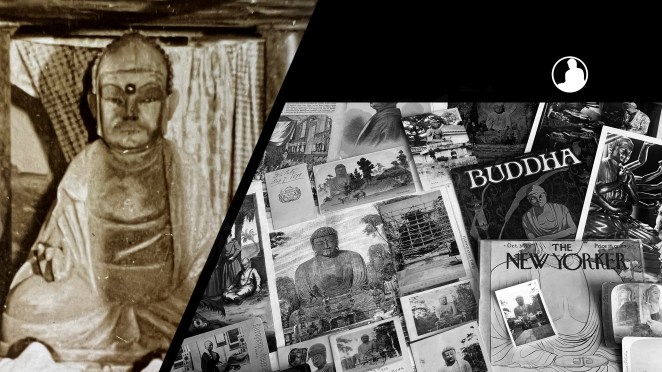
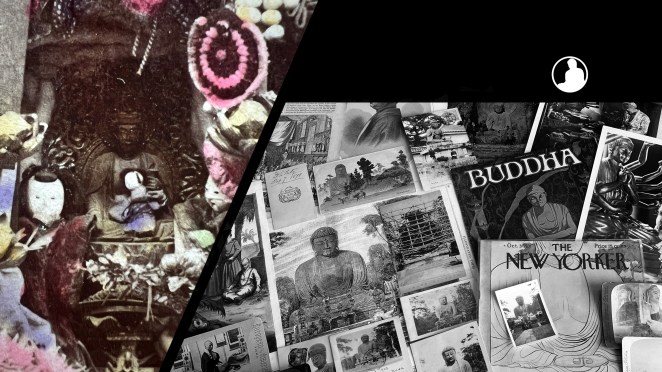
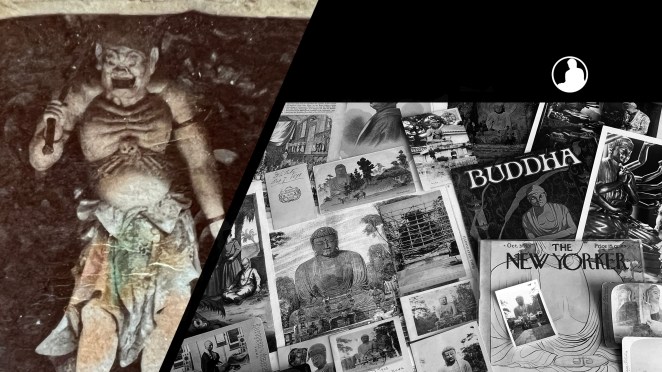
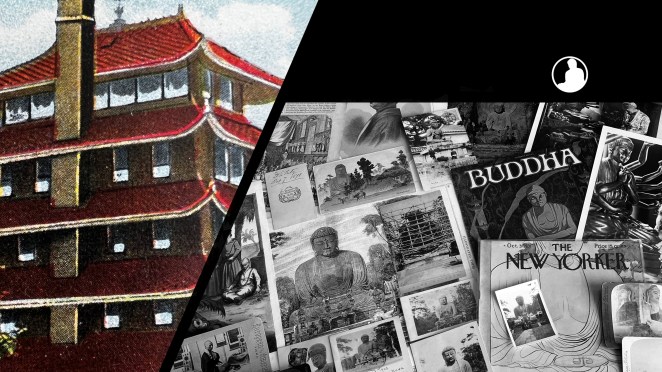
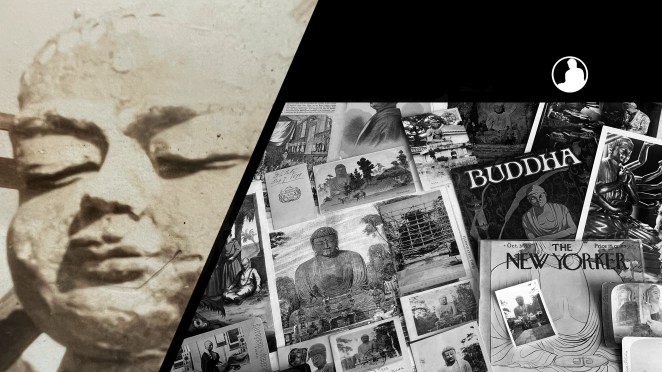
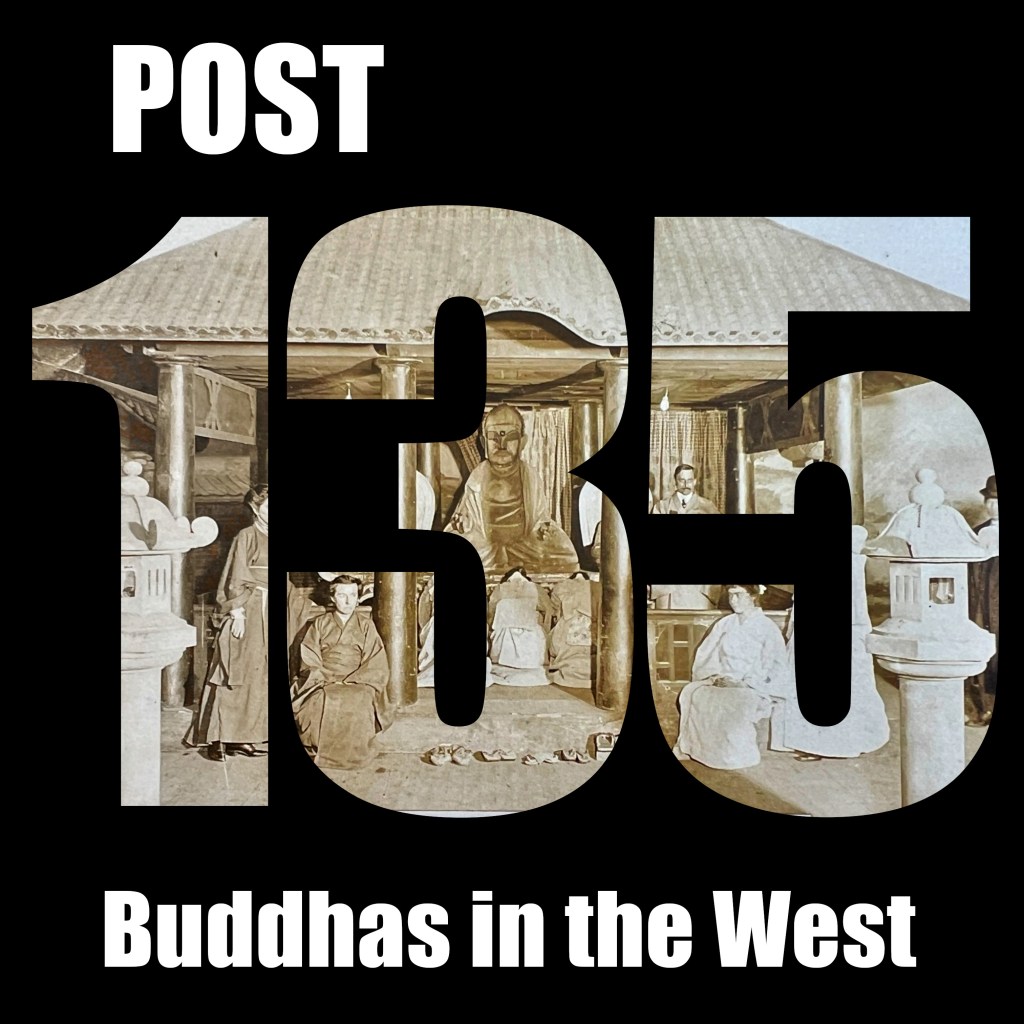
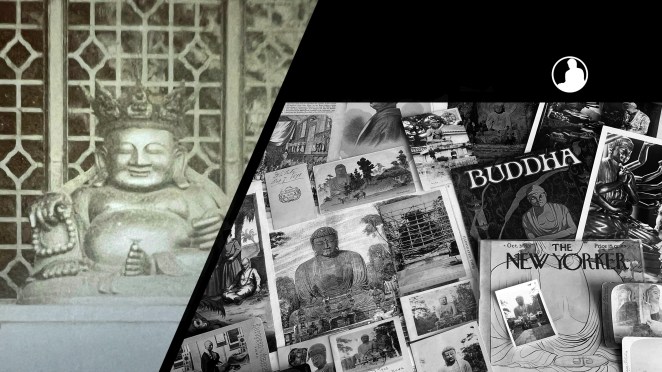
In 1911, to promote efforts of American missionaries abroad, an arm of the missions board sponsored a massive traveling exhibit of the world’s religions. The “Japan Scene” was dominated by a replica of a Buddhist temple, traveling from Boston to Cincinnati and elsewhere.
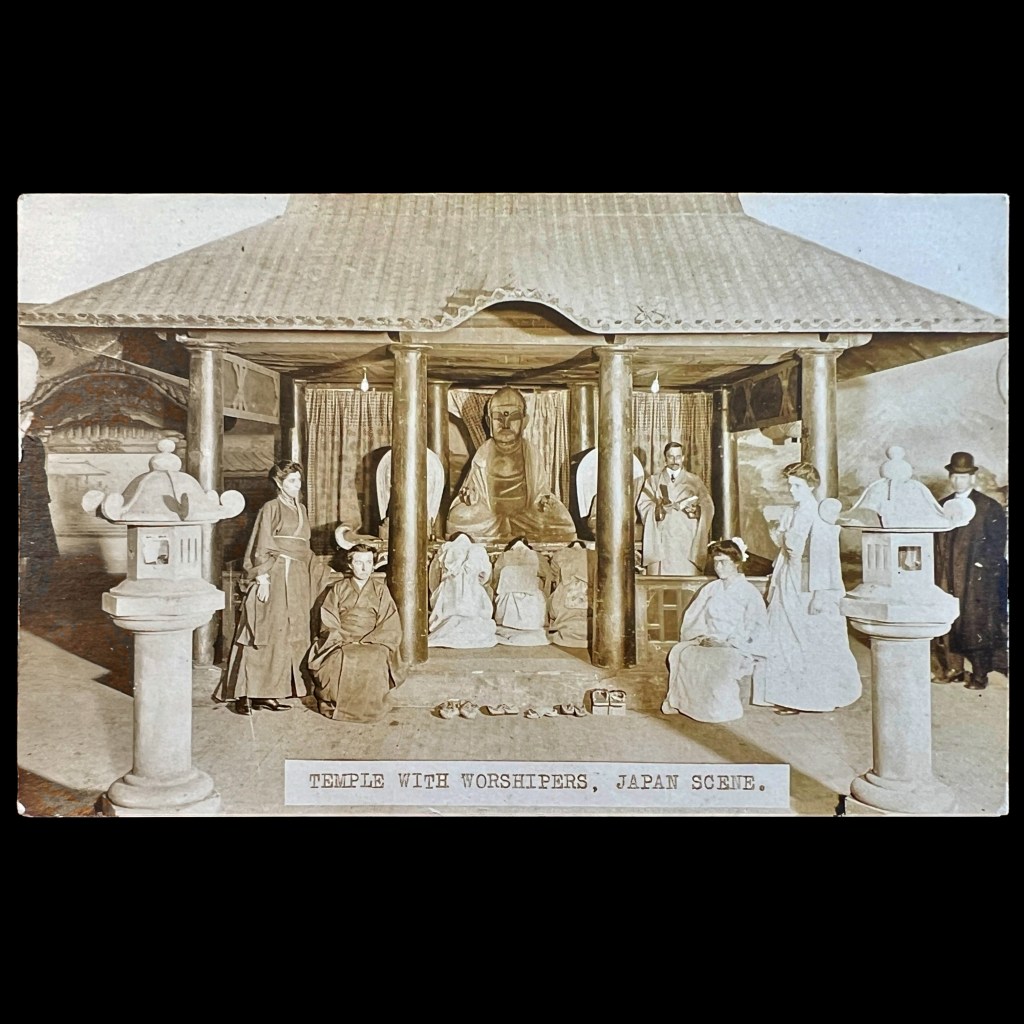
Flanked by shops and scenes of everyday Japanese life, the exhibit was considered an exercise in immersive visual educational. Partition walls were painted with panoramic views of distant locales such as Mt. Fuji and lotus ponds to further create a sense of virtual travel.
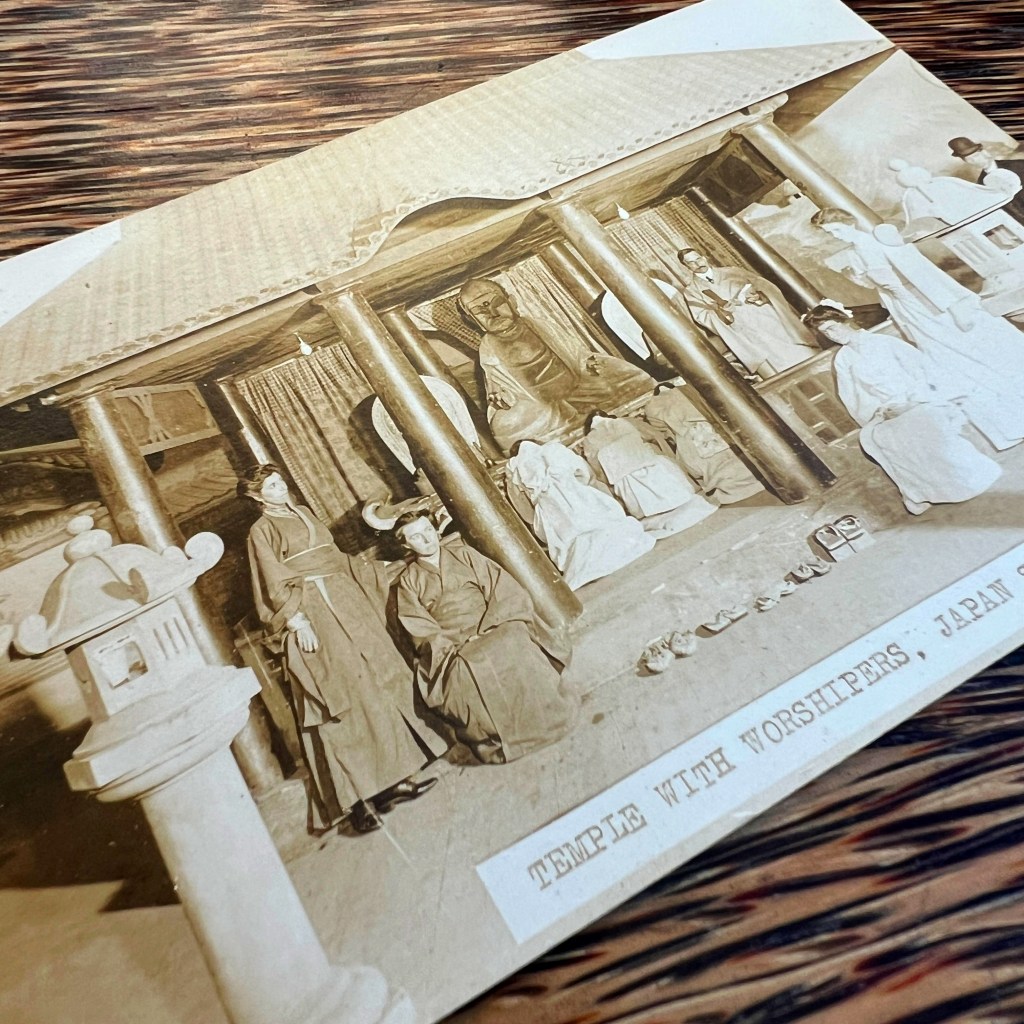
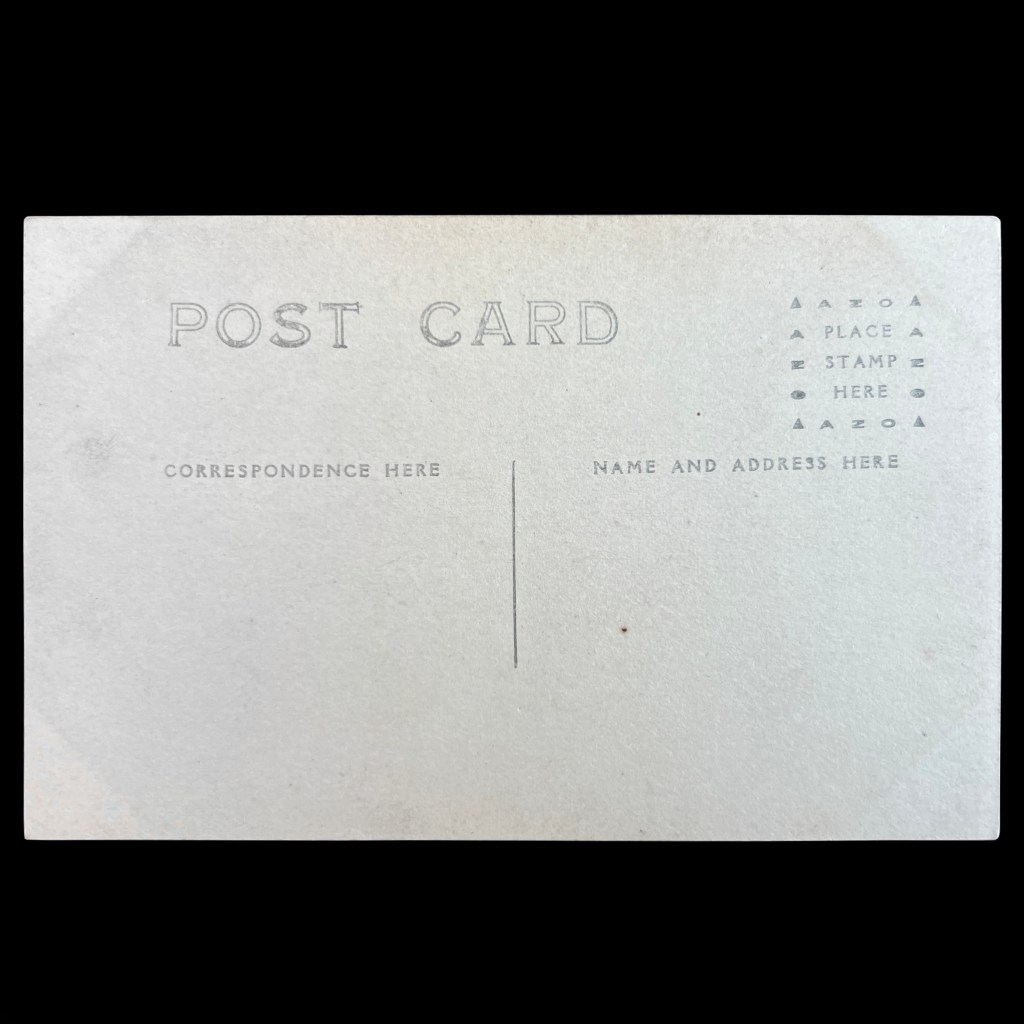
A variety of print ephemera, such as maps, posters, and postcards, were sold as souvenirs and visual learning aids to visitors. The superimposed label printed on front of this real photo post card helps identify it as from the “World in Cincinnati,” similar to other known examples.
In Cincinnati, the replicated foreign lands were populated by more than 5000 stewards from more than 200 local churches portraying native peoples.
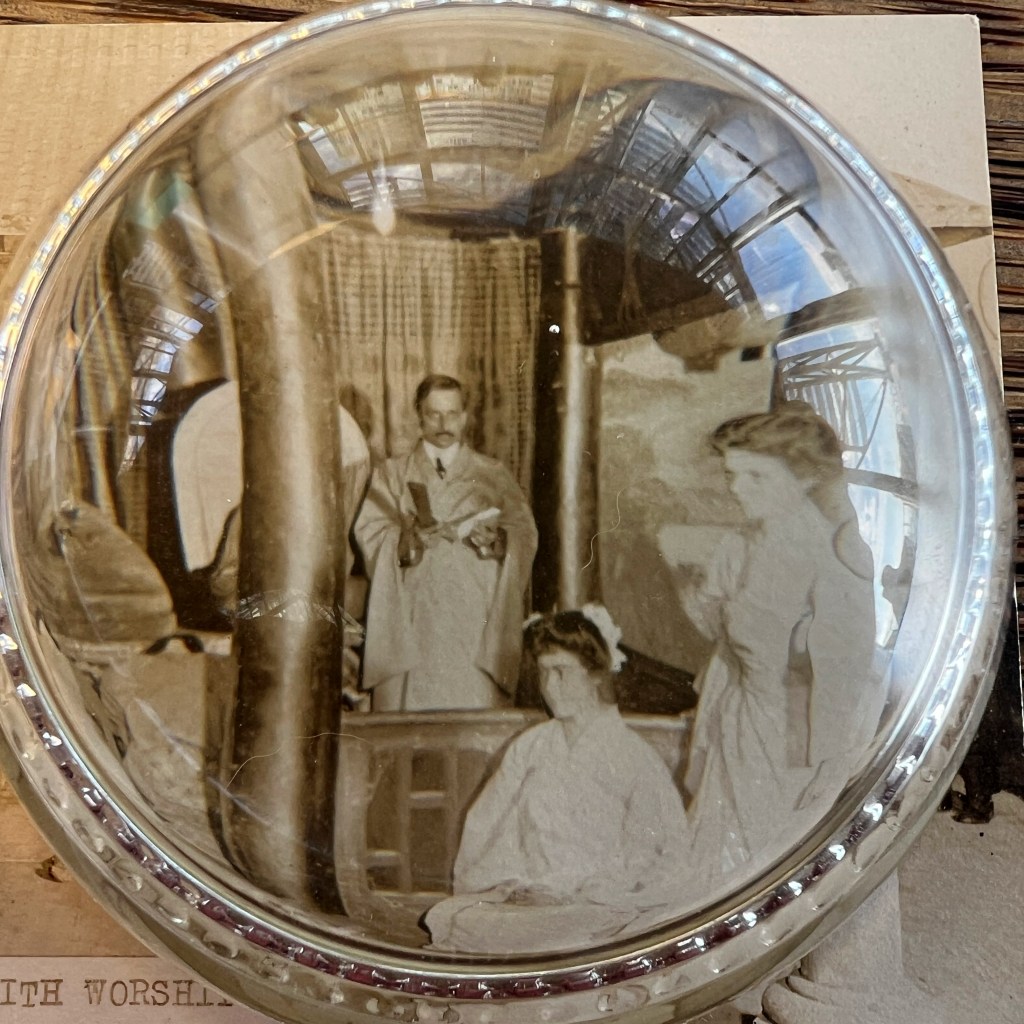
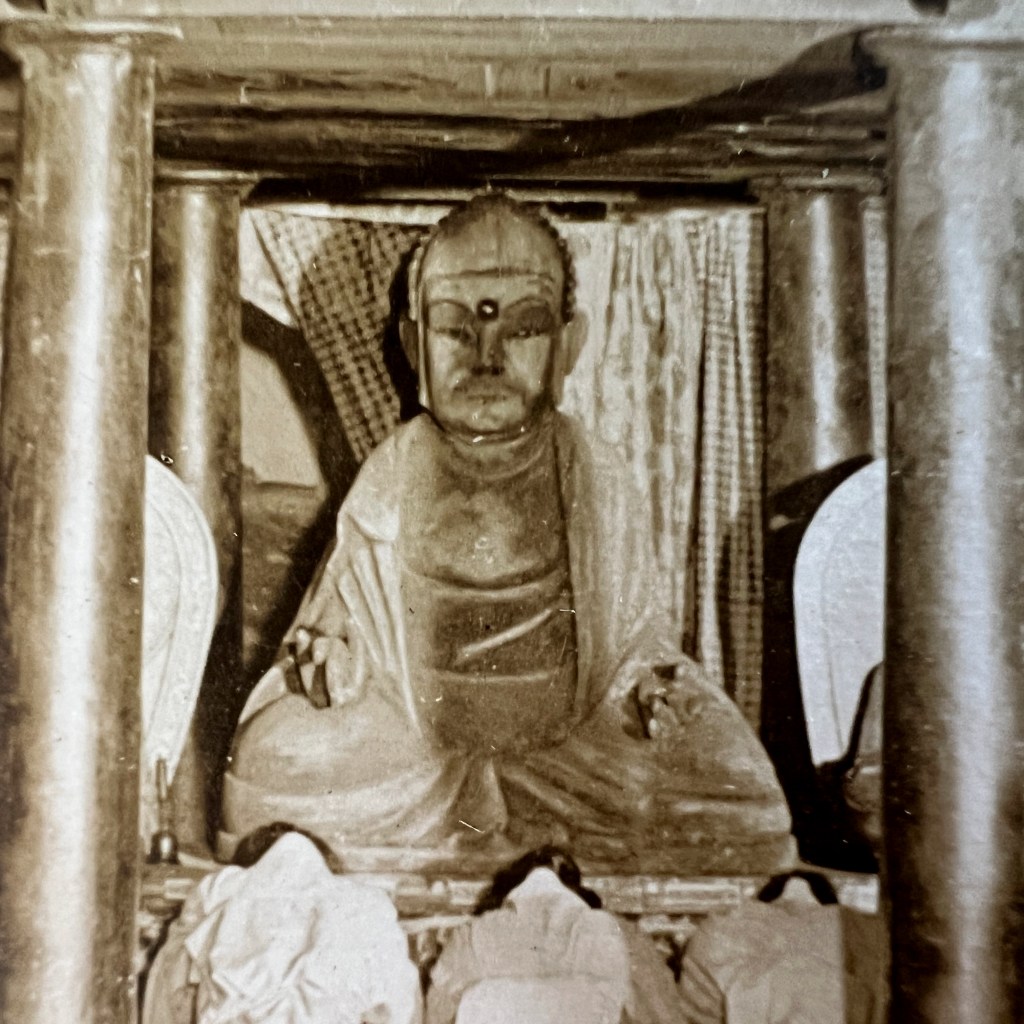
While some replicated scenes were decorated with authentic religious imagery, Japan’s icon appears to be recreated with wood or plaster. For more about missionary exhibits, see April Makgoeng’s “Visualizing Missions: The Power of the Image in Promoting Foreign Missions” (2021).
The Buddhas in the West Material Archive is a digital scholarship project that catalogues artifacts depicting Buddhist material culture for Western audiences. It’s comprised of prints, photos, and an assortment of ephemera and other objects. For a brief introduction to this archive, visit the main Buddhas in the West project page.


For Related Buddhas in the West Posts Featuring Real Photo Post Cards:

For the Most Recent Buddhas in the West Posts:

Esaki Reiji’s Pilgrims with Portable Shrine Photograph

For all the new Buddhas in the West posts
follow us on Bluesky & Instagram


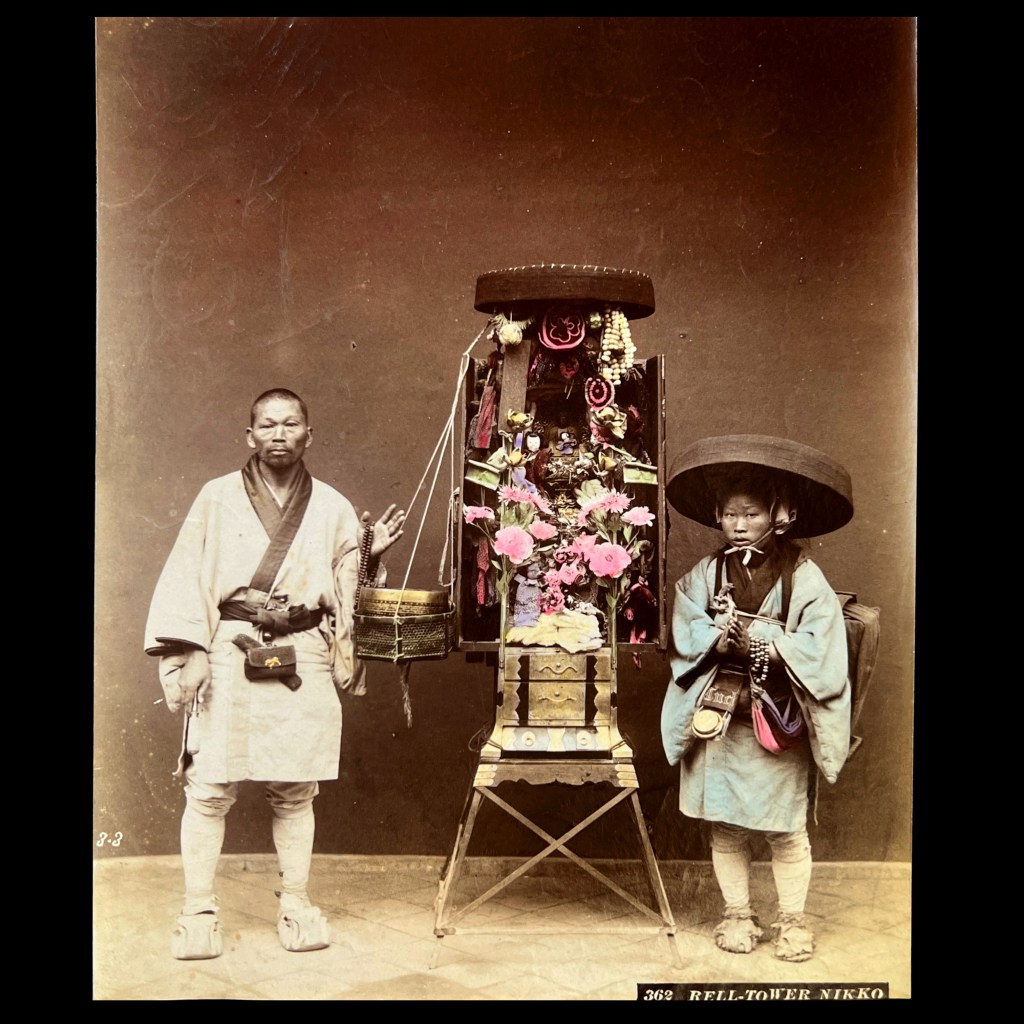
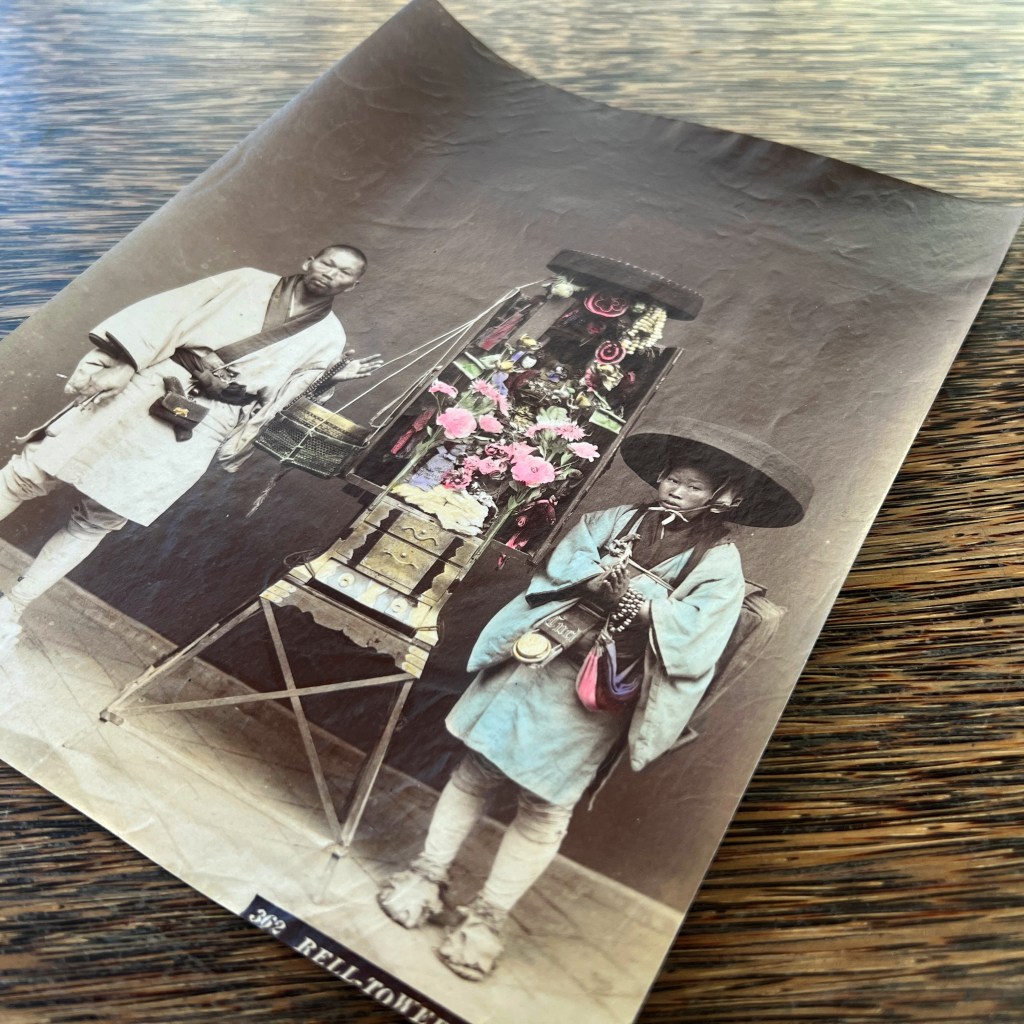
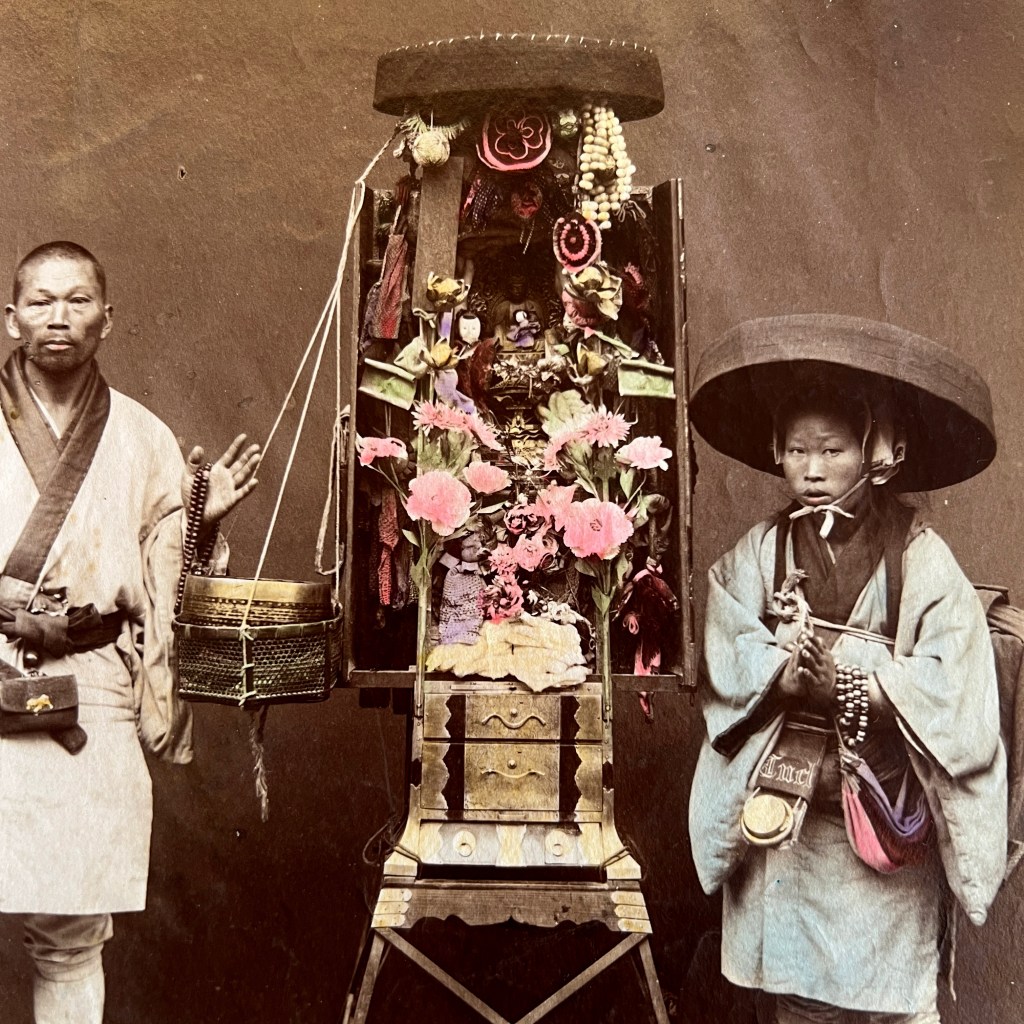
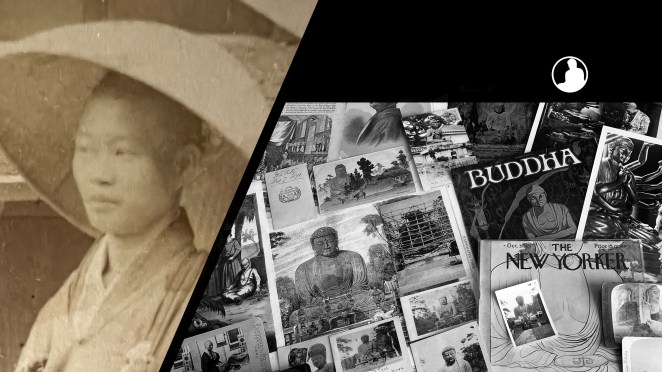
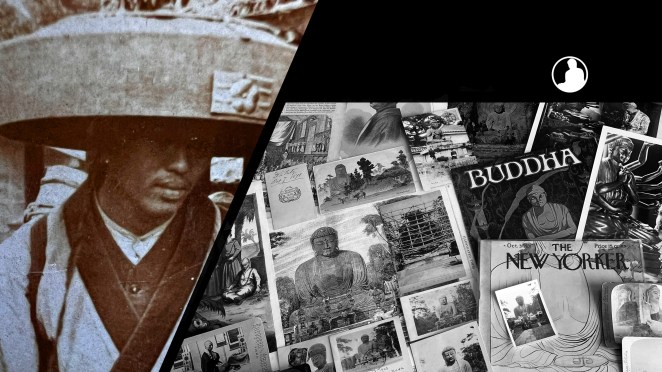
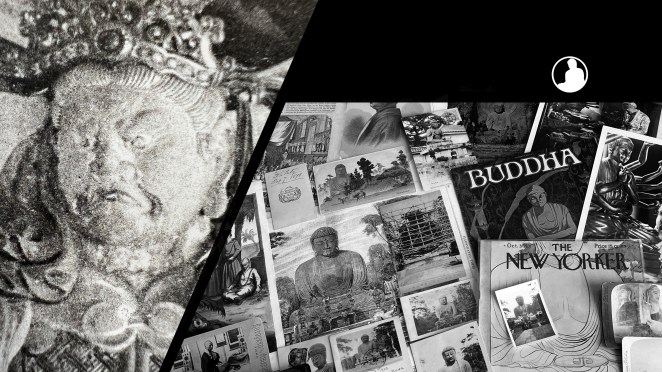
While temple visitors might view Buddhist images as immovable fixtures, Meiji-era photography reveals the remarkable portability of Buddhist icons. Here we see a pair of Japanese pilgrims with their portable shrine traveling through Nikko, a sign of Buddhist faith on the move.

The studio stock number (362) is currently unattributed, but fits within a sequence of numbers for photos taken in Nikko by Esaki Reiji, likely in the late 1880s or 1890s. Esaki was a prominent souvenir album photographer in Asakusa, a tourist-friendly area of Tokyo.

As described by Chun-Wa Chan, portable Buddhist shrines were already in use by the 5th century in the region of Gandhara and were introduced into Japan a few centuries later. Portable Japanese shrines (zushi) were often ornately decorated and fitted with doors to conceal the icon inside.

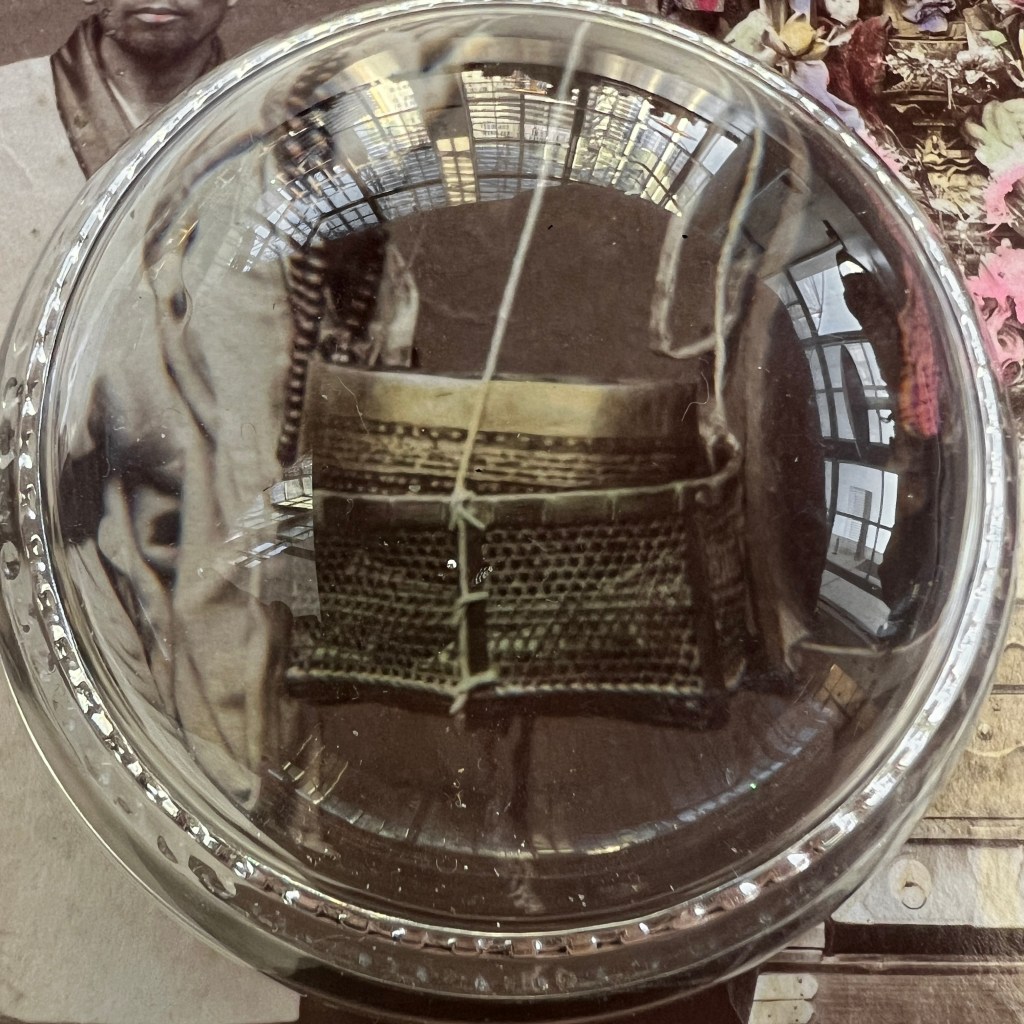
Pilgrims would carry the frame on their backs as they moved from one location to the next. A large bell rests in a basket hung off the side, ready to be struck by a mallet held in the pilgrim’s hand on the left. His other hand holds a long string of mala beads.

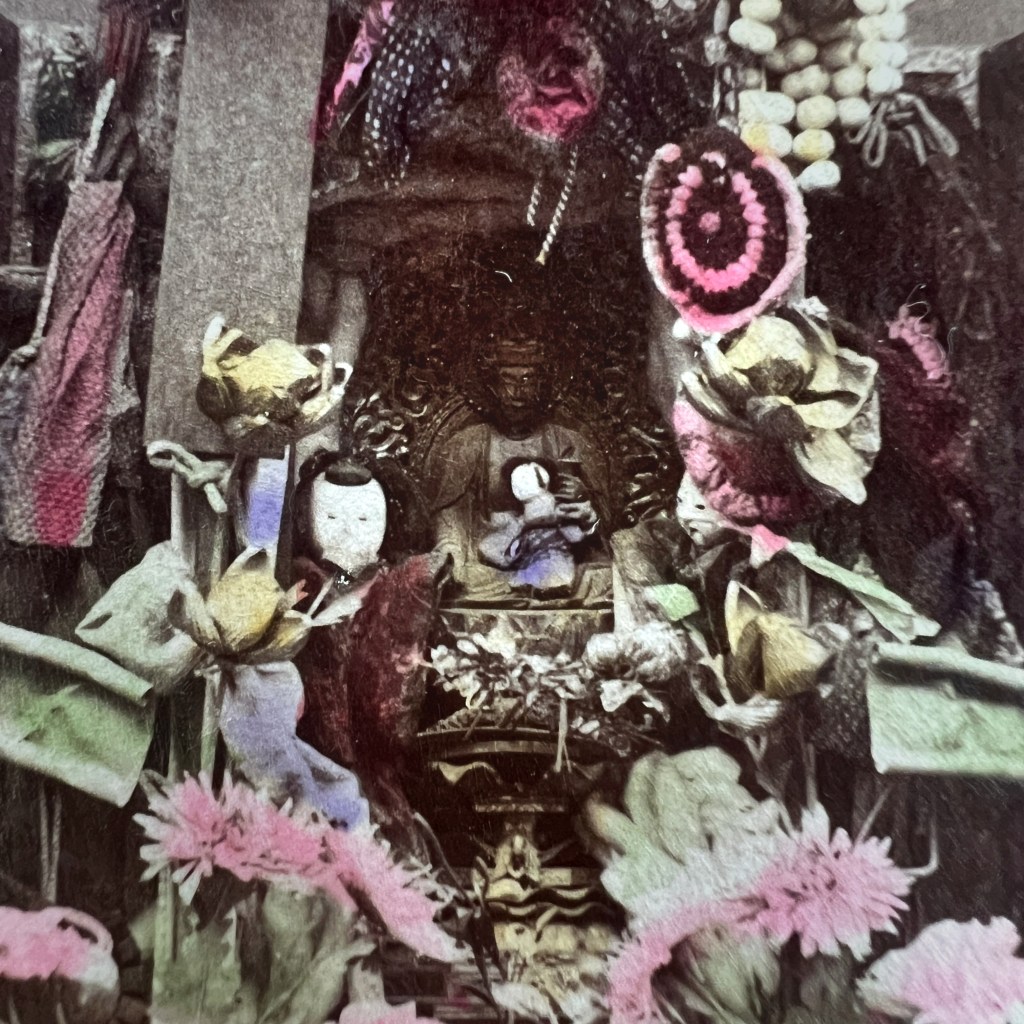
Obscured by flower offerings, the Buddhist icon sits at just above eye level in the shrine. For more on this topic, see Chan’s “Portable Faith: Toward a Non-Site-Specific History of Buddhist Art in Japan,” viewable here: https://tinyurl.com/3tde394d.


The Buddhas in the West Material Archive is a digital scholarship project that catalogues artifacts depicting Buddhist material culture for Western audiences. It’s comprised of prints, photos, and an assortment of ephemera and other objects. For a brief introduction to this archive, visit the main Buddhas in the West project page.


For Related Buddhas in the West Posts Featuring Nikko:


For the Most Recent Buddhas in the West Posts:

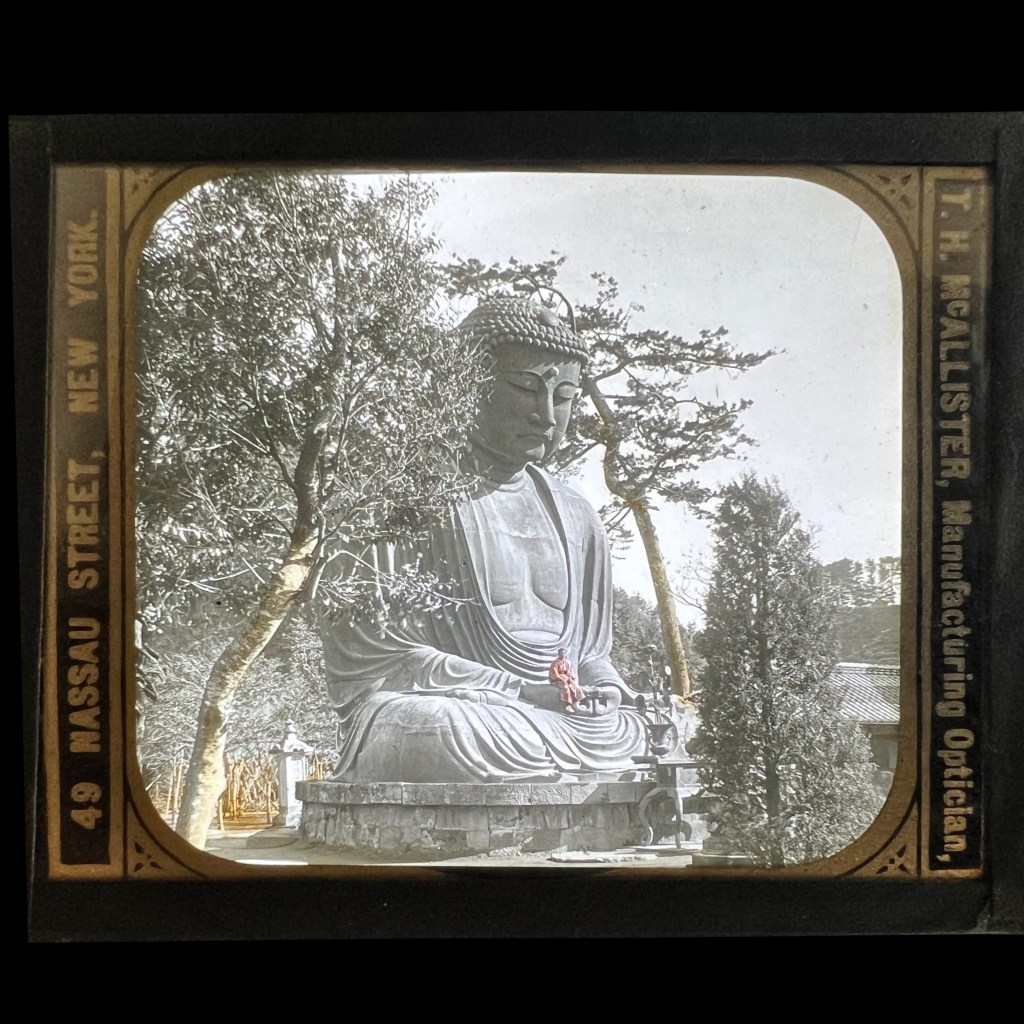
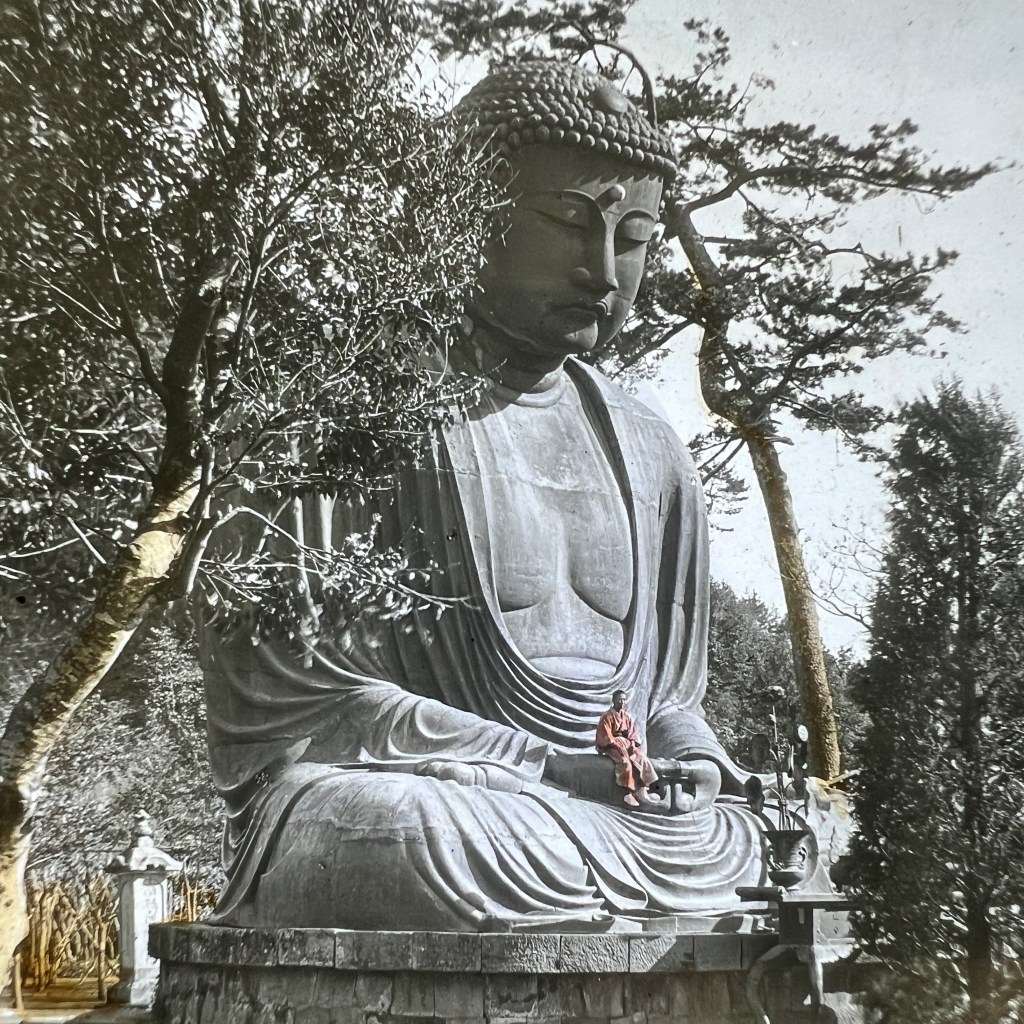
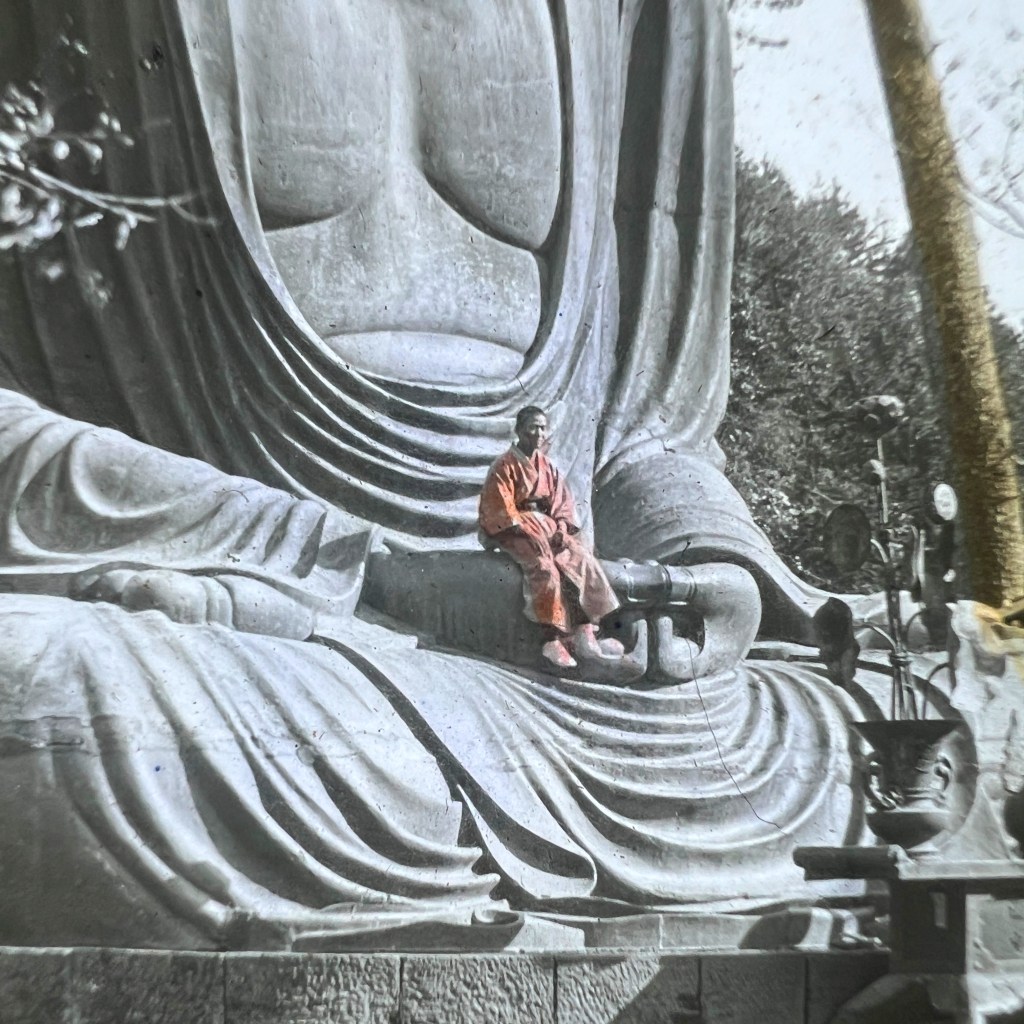
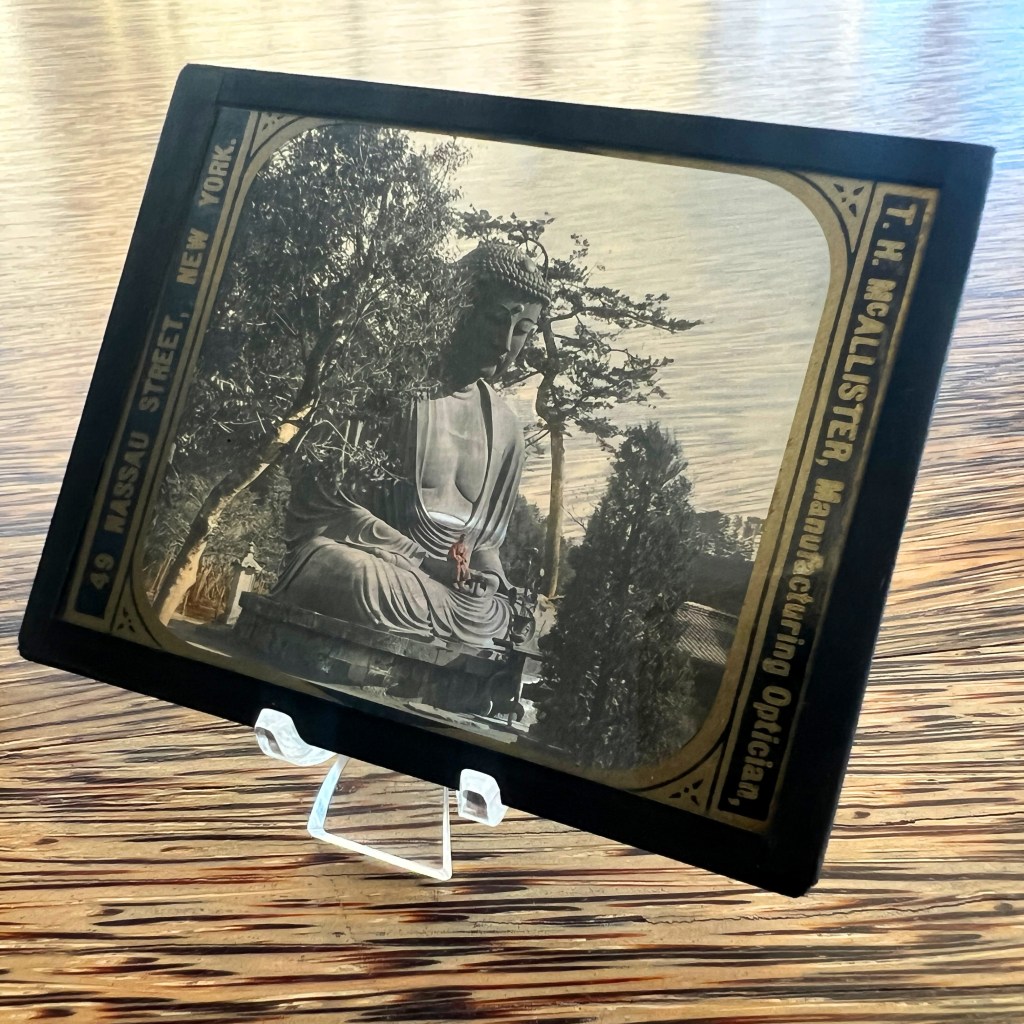
T. H. McAllister’s Kamakura Daibutsu Lantern Slide

For all the new Buddhas in the West posts
follow us on Bluesky & Instagram


By the 1890s it was possible to browse American newspapers and see advertisements for informal lectures on countries around the world. Occupying church halls or town theaters, returning travelers often used “magic lantern” slides to illustrate their gripping travel narratives.

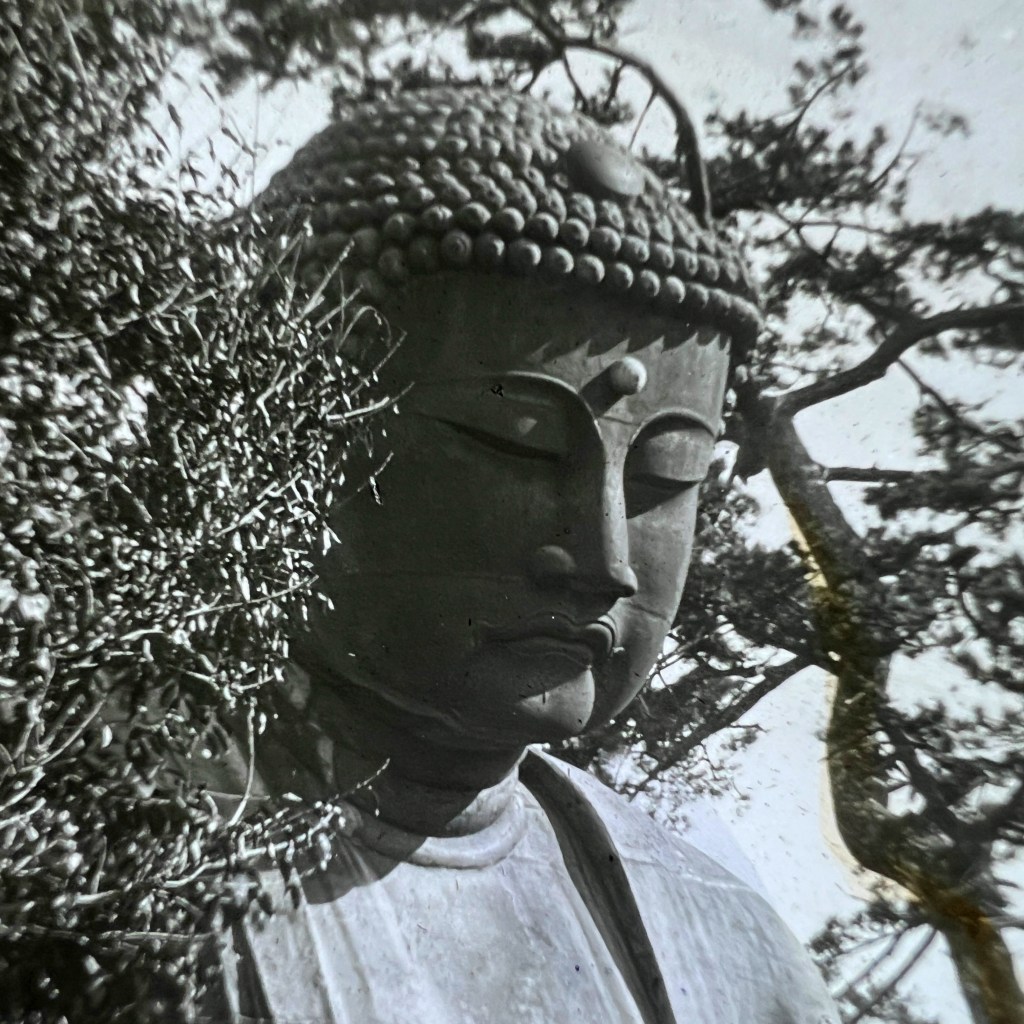
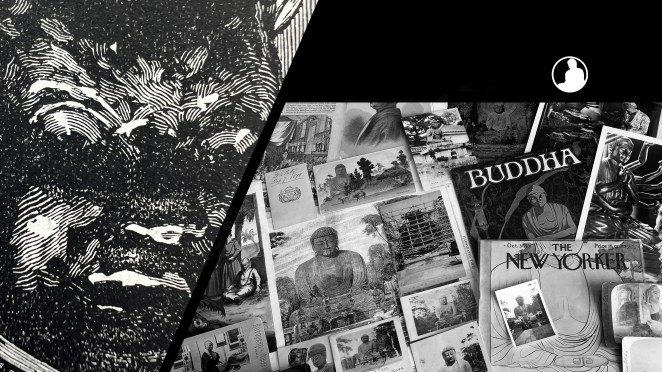
A typical trans-Pacific cruise of the era would port in Yokohama, a short day trip away from the colossal Kamakura Daibutsu. An image projected onto a wall or screen would enliven the presentation and provide visual details impossible to elaborate through words alone.

As the Victorian era progressed, there was increasing demand for visual education and moral entertainments, and the illustrated travelogue reflected such interests. We might find the past splendor of Asia, as seen through it monuments, contrasted with its then-current political strife.

By 1887 T. H. McAllister was selling a set of 61 slides for a stock presentation entitled, “Around the World in 80 Minutes.” For a total of $30.25, the slides and lecture notes could be purchased by an aspiring lecturer so as to be “well prepared to describe the various scenes intelligently.”

Beginning in England and ending in Washington DC, the Kamakura Daibutsu is the only Buddhist location visited during the lecture. For more on the importance of travel lecturers in spreading information about Asia, see Jeanette Roan’s Envisioning Asia (2010).


The Buddhas in the West Material Archive is a digital scholarship project that catalogues artifacts depicting Buddhist material culture for Western audiences. It’s comprised of prints, photos, and an assortment of ephemera and other objects. For a brief introduction to this archive, visit the main Buddhas in the West project page.


For Related Buddhas in the West Posts Featuring Lantern Slides:


For the Most Recent Buddhas in the West Posts:

Sakaeya’s Shinkōji Vairocana Buddha Postcard

For all the new Buddhas in the West posts
follow us on Bluesky & Instagram


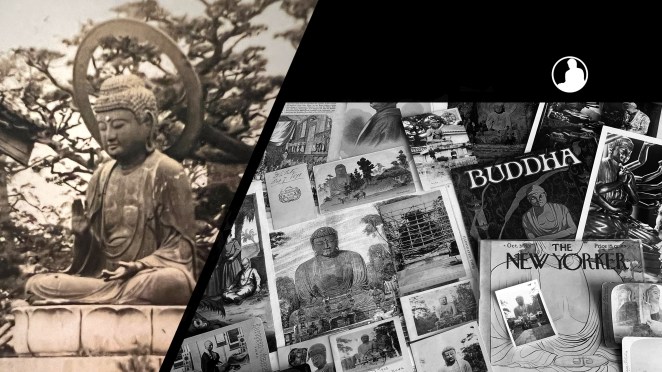
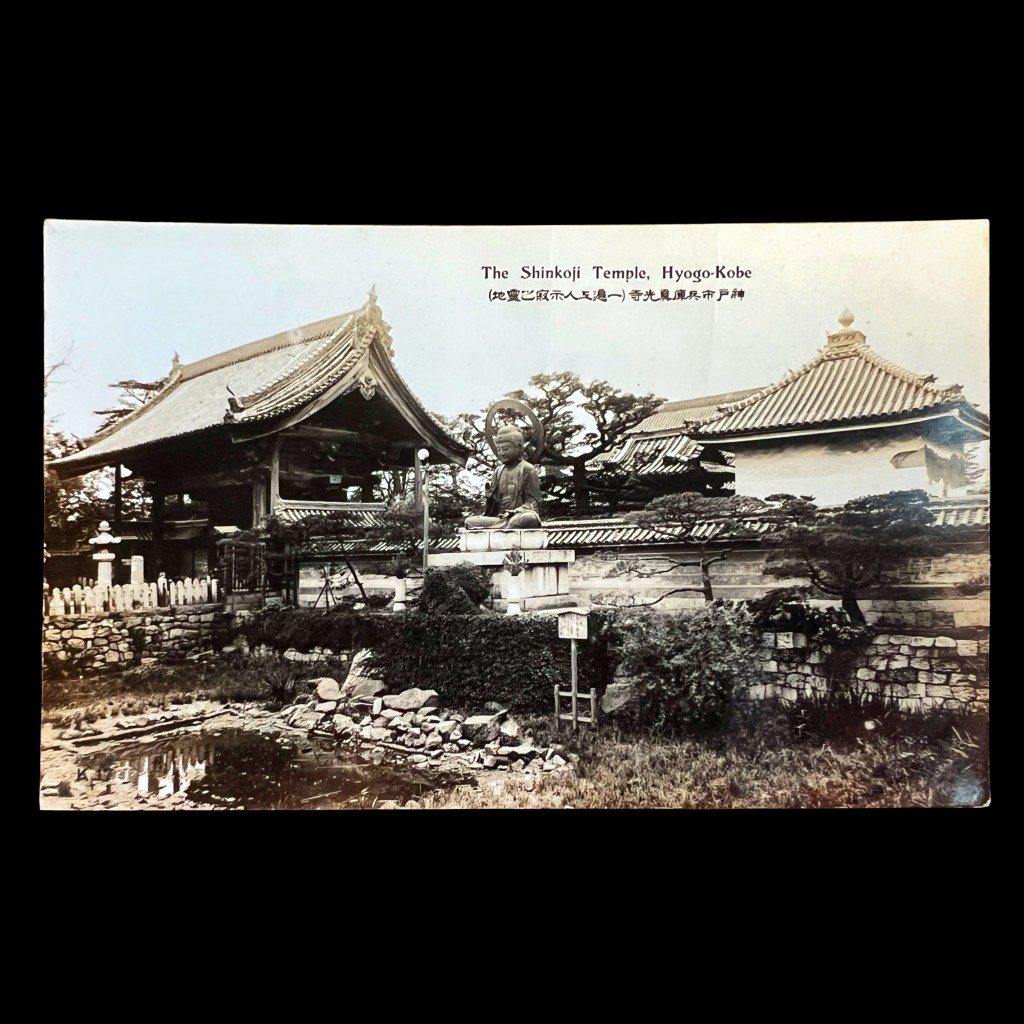
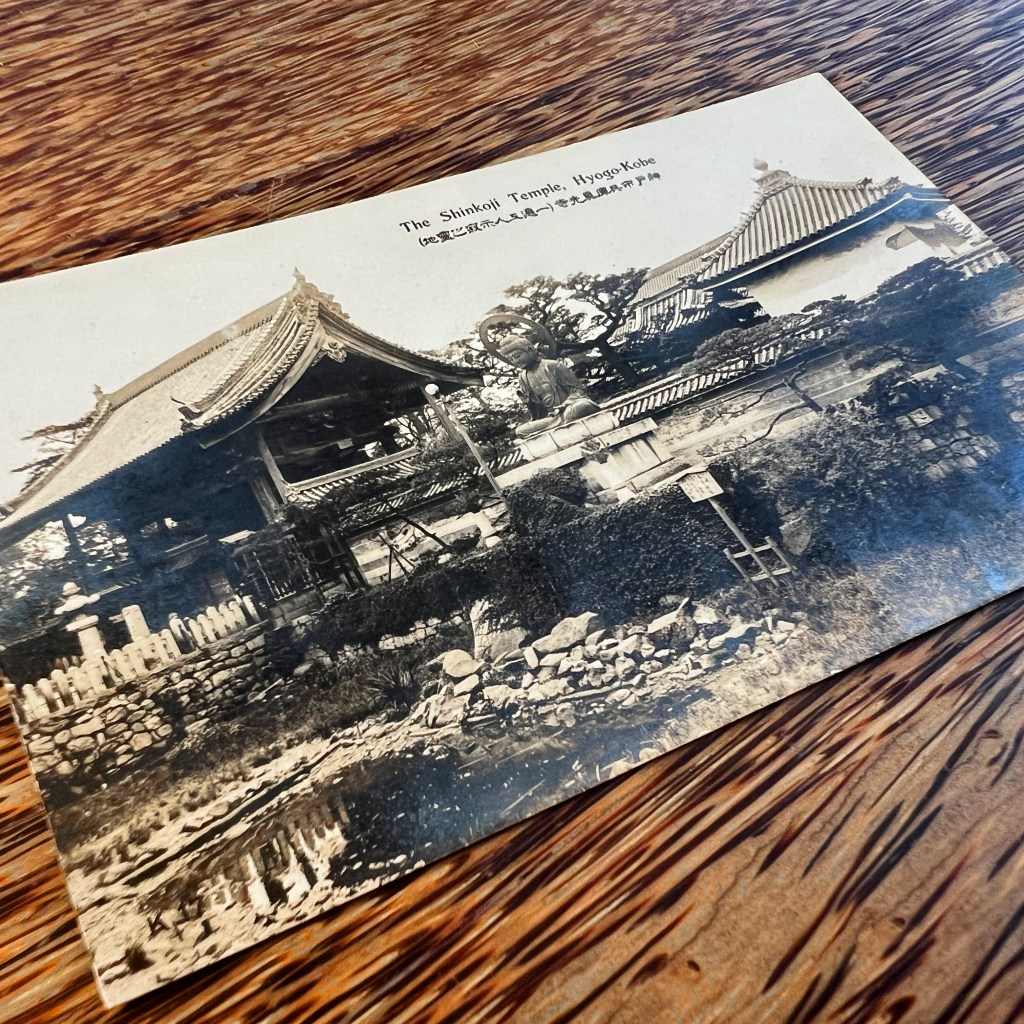
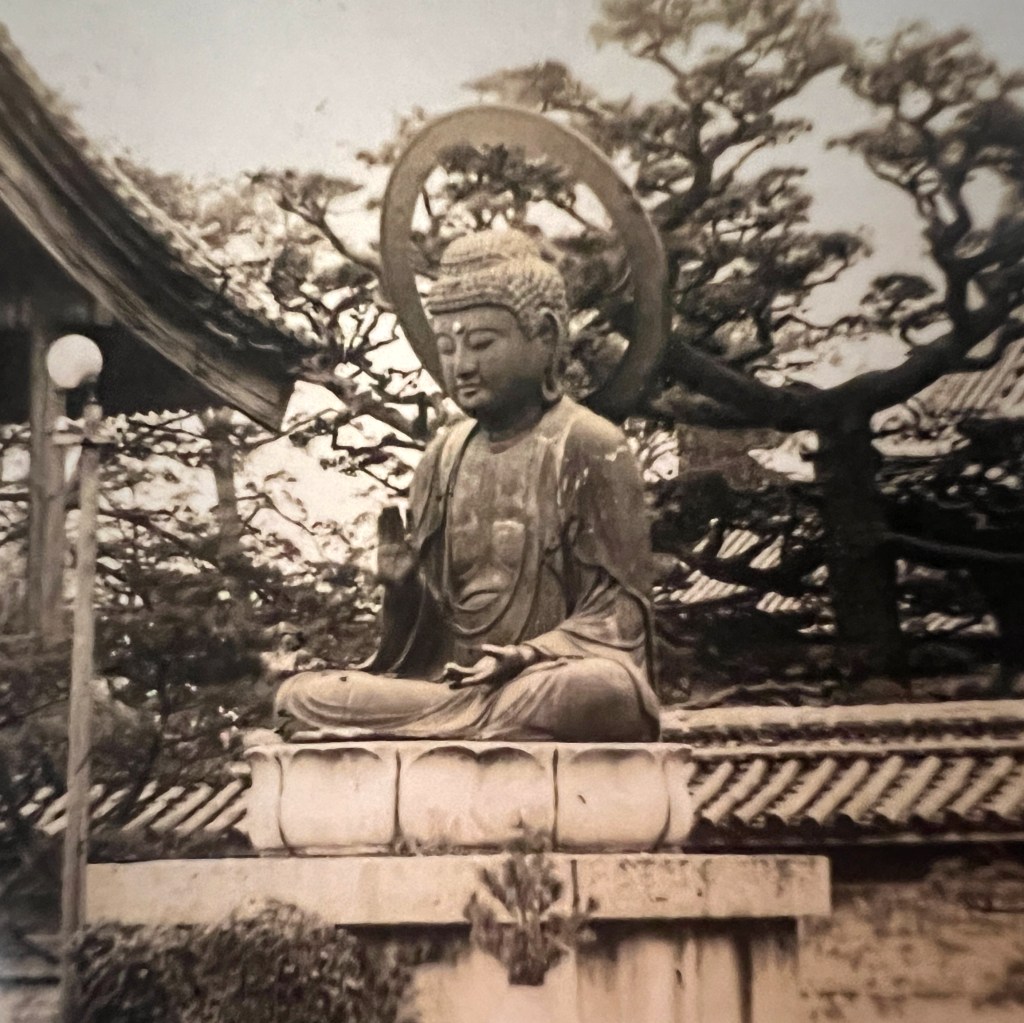
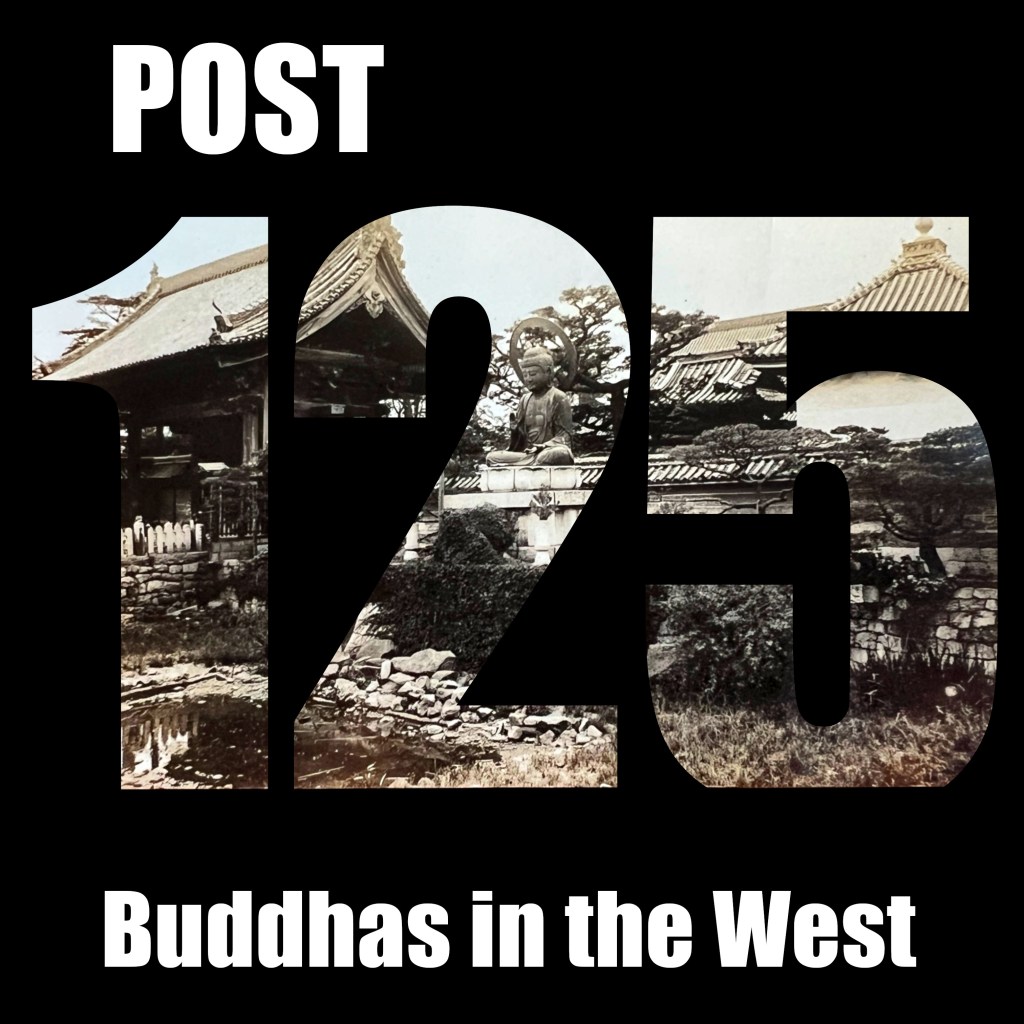
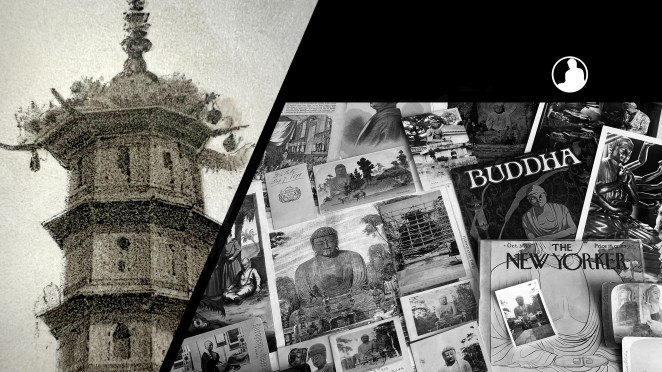
The Japanese port city of Kobe was a major tourist hub by the turn of the 20th century. One if the city’s main attractions was a giant statue of Vairocana Buddha displayed outside the main temple gate of Shinkōji until the complex was destroyed during WWII.

Documents record the height of the statue at 4.8 meters (16 feet). It sat atop an elevated pedestal in the middle of a lotus pond which was used as a habitat for rescued turtles. Behind the plastered wall we see the tiled roofs of the bell tower and main hall.

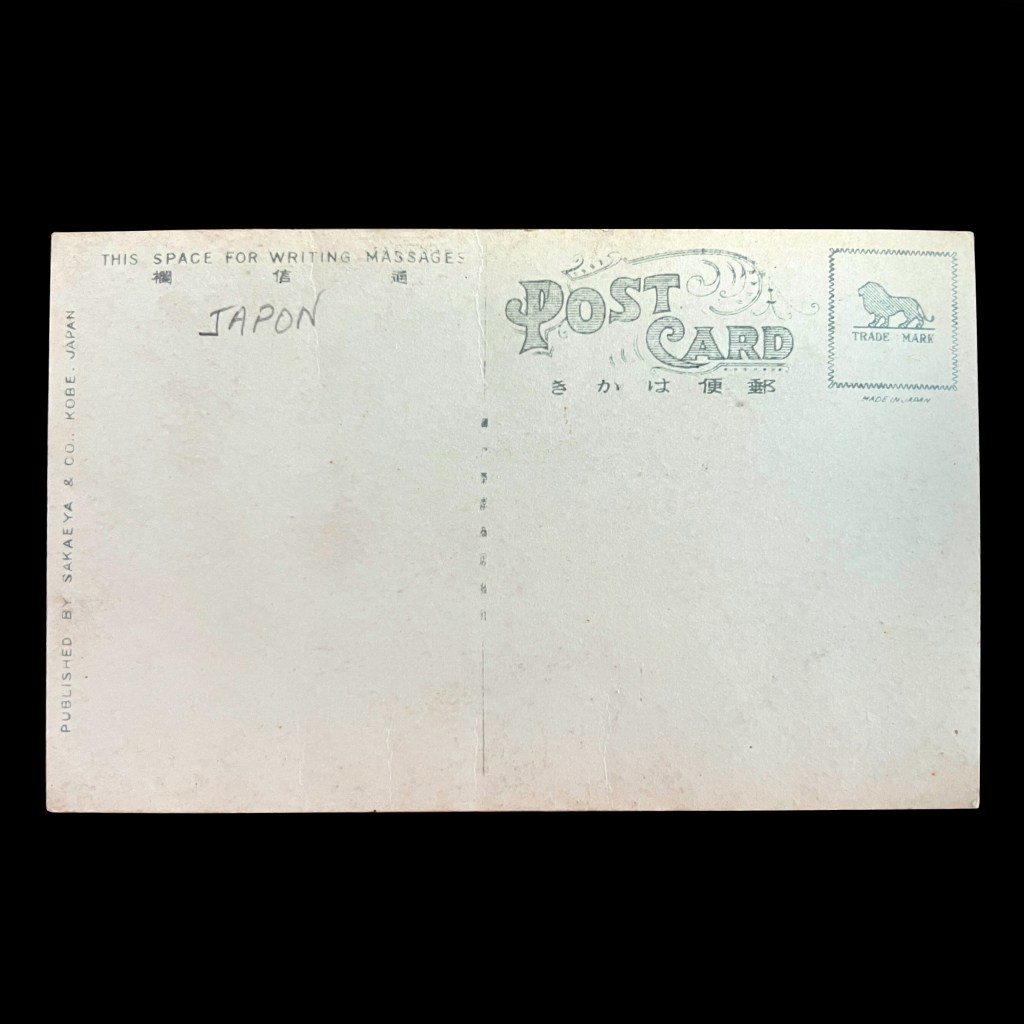
Unlike many Japanese postcards of the era, this is not a photomechanical print, but a chemically processed “real photo” postcard likely released in the early 1920s. The publisher, Sakaeya & Co., was based in Kobe and focused on cards depicting the environs of the bustling port city.

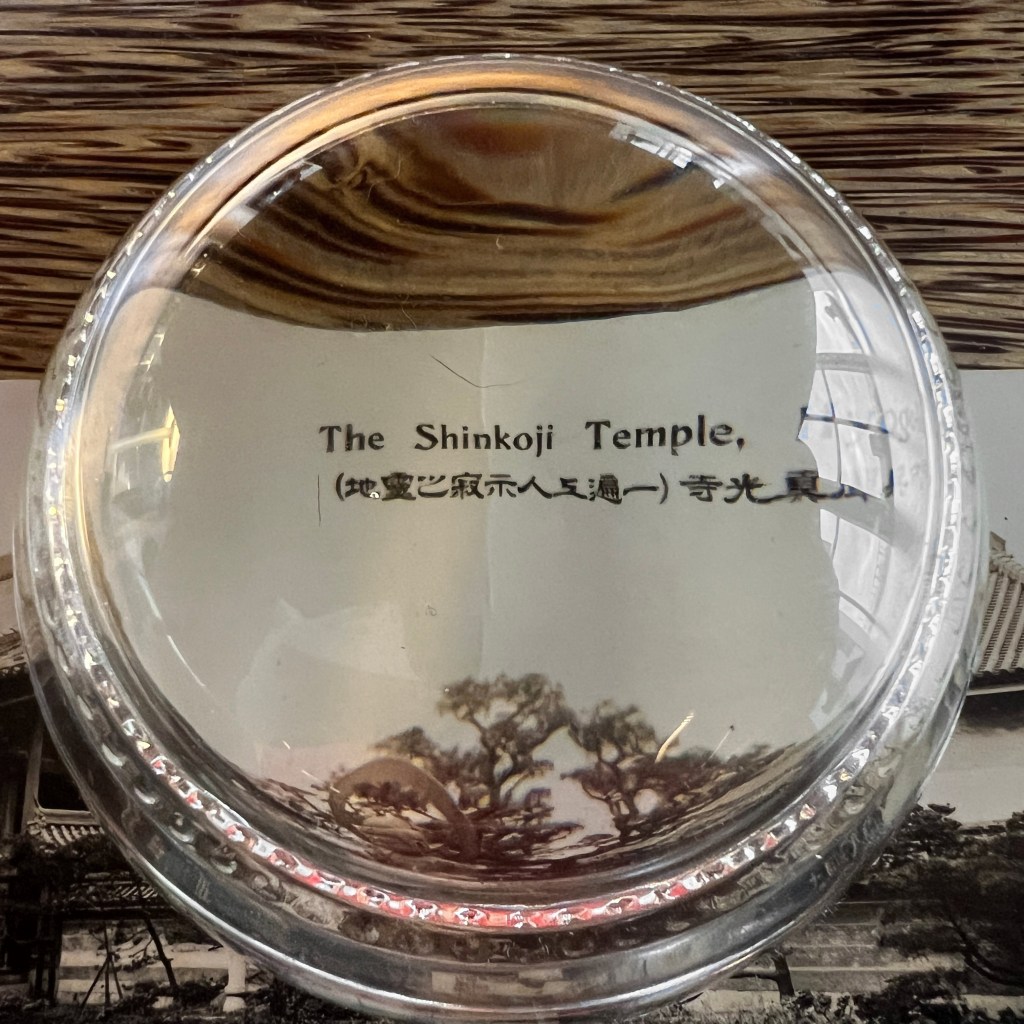
Notably, the Japanese caption provides more commentary on the religious relevance of the site than the English. It notes that Shinkōji was a sacred location where the Buddhist priest Ippen (1239–1289), known for his devotion to the Pure Land, passed away.

The temple was noted as being “worth a visit” by the widely circulated third edition of Murray’s Handbook for Travelers in Japan, published in 1891. Fifty years later, the statue was destroyed by allied firebomb attacks on Kobe in March 1945.


The Buddhas in the West Material Archive is a digital scholarship project that catalogues artifacts depicting Buddhist material culture for Western audiences. It’s comprised of prints, photos, and an assortment of ephemera and other objects. For a brief introduction to this archive, visit the main Buddhas in the West project page.


For Related Buddhas in the West Posts Featuring Kobe, Japan:


For the Most Recent Buddhas in the West Posts:

William Hurd’s Treading on the Crucifix Engraving

For all the new Buddhas in the West posts
follow us on Bluesky & Instagram


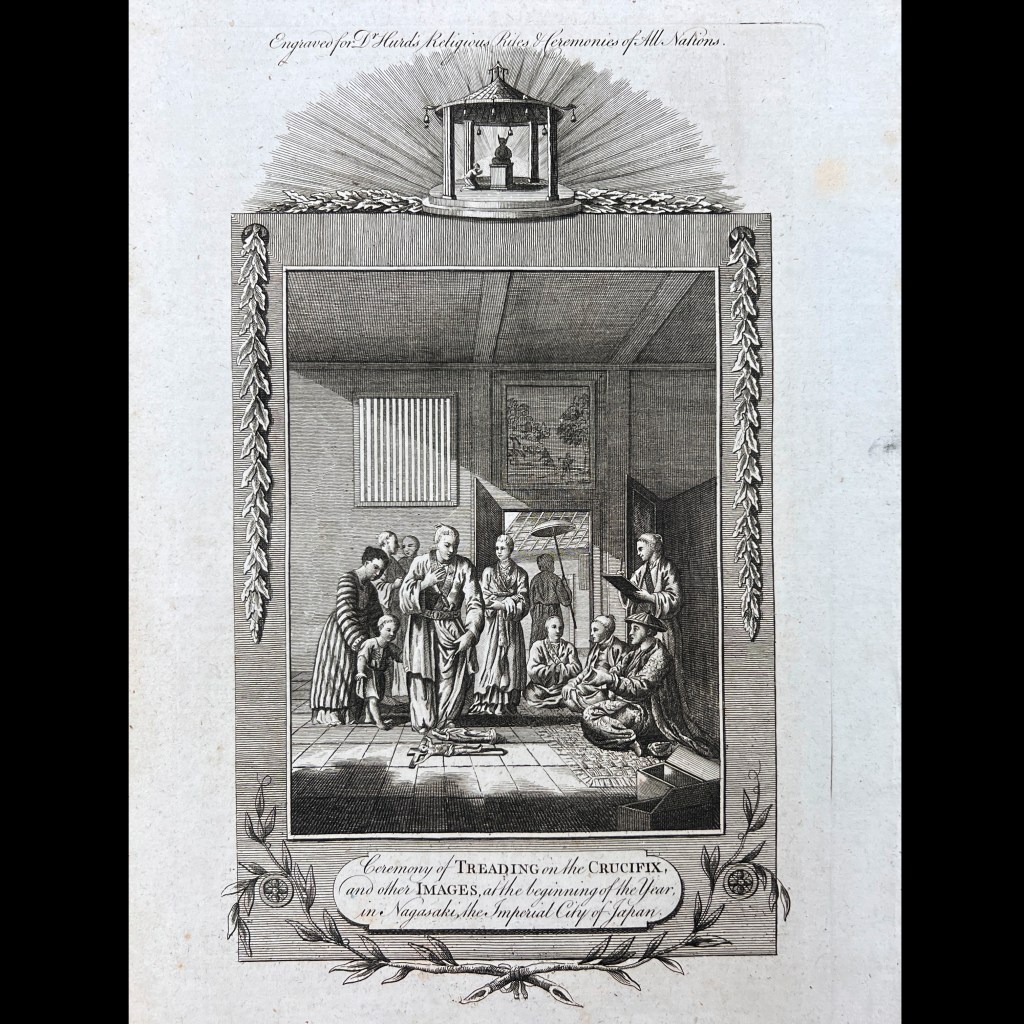
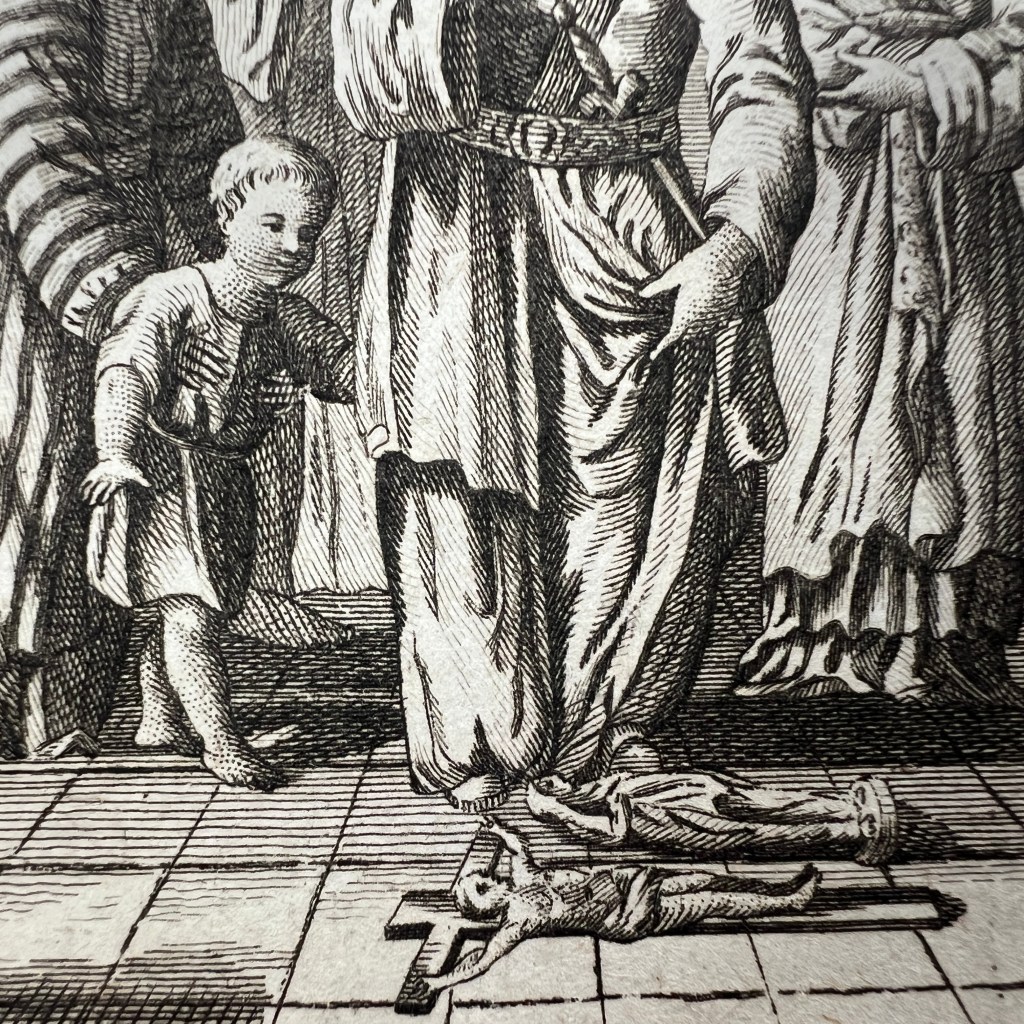
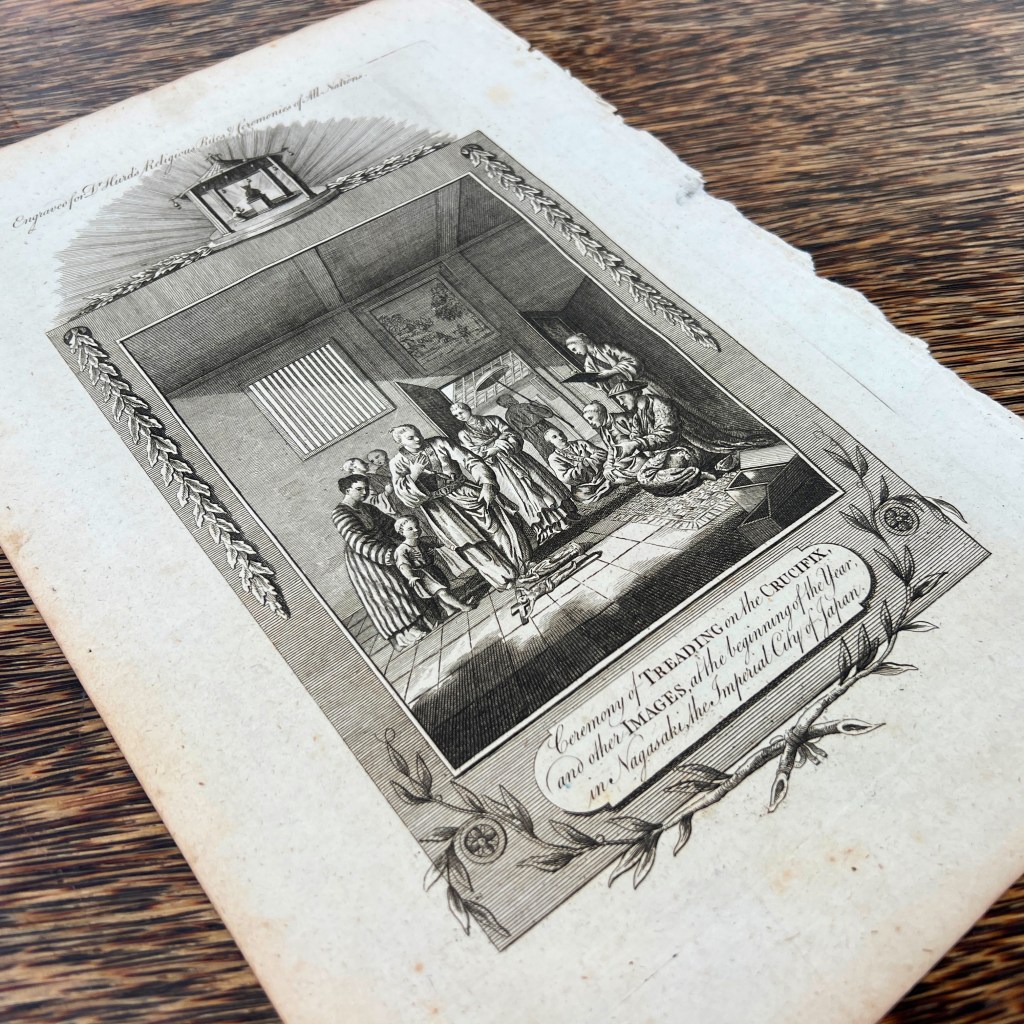
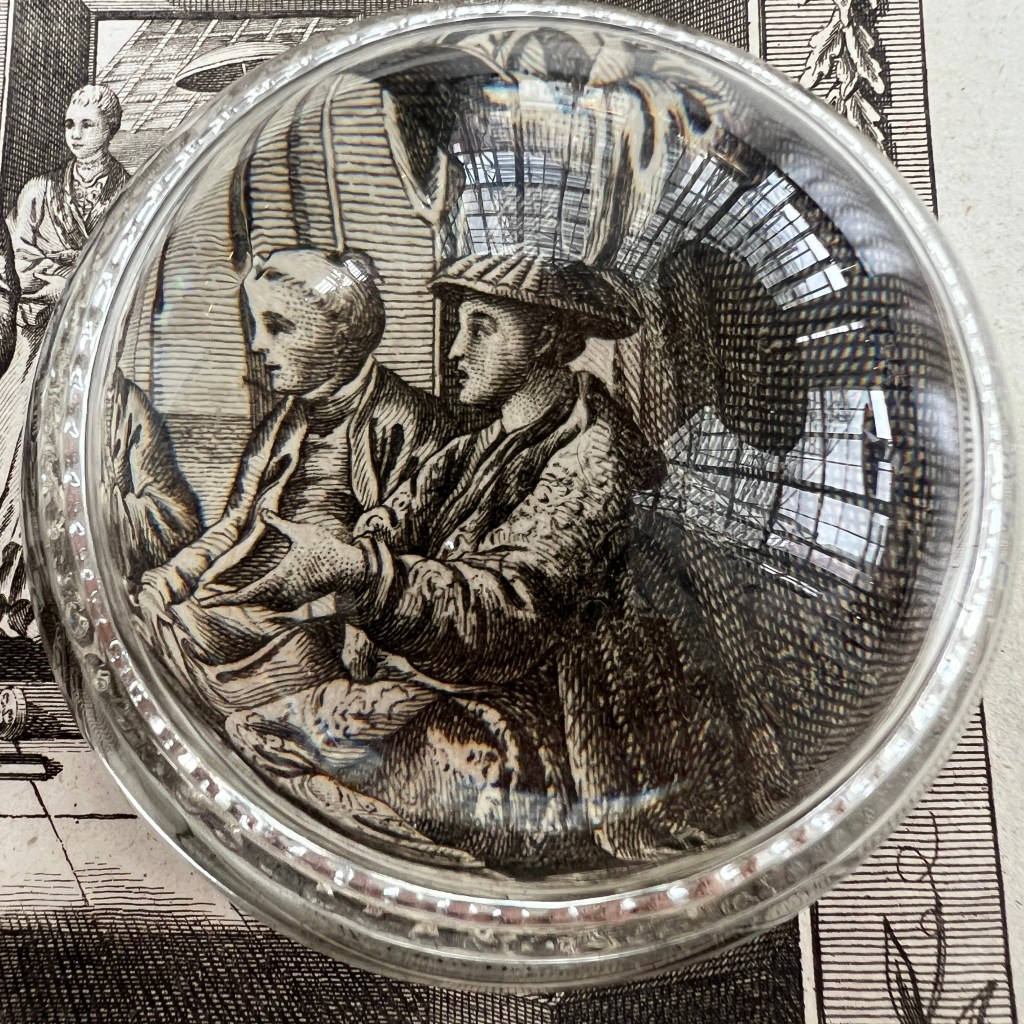
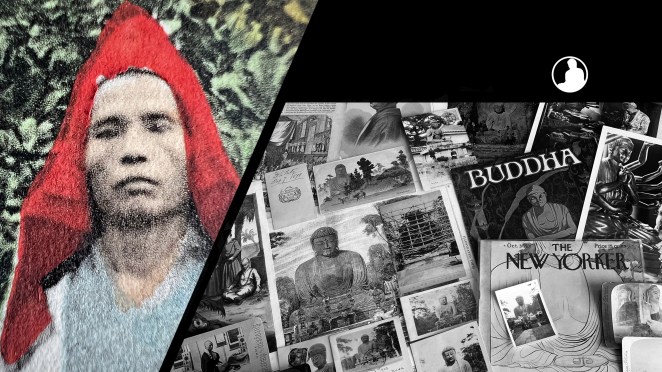
In the 17th century, to uncover suspected Christians, Japanese authorities in Nagasaki forced commoners to step on an image of Jesus or Mary. As knowledge of this practice spread to Europe, depictions of “treading on the crucifix,” appeared in illustrated works by the 18th century.

To ferret out “hidden Christians,” local villagers were forced to commit blasphemy by stepping on icons sacred to Christianity; such objects were called fumi-e 踏絵, or “images for stomping.” If anyone refused, authorities turned to torture to procure apostasy, or they were killed.

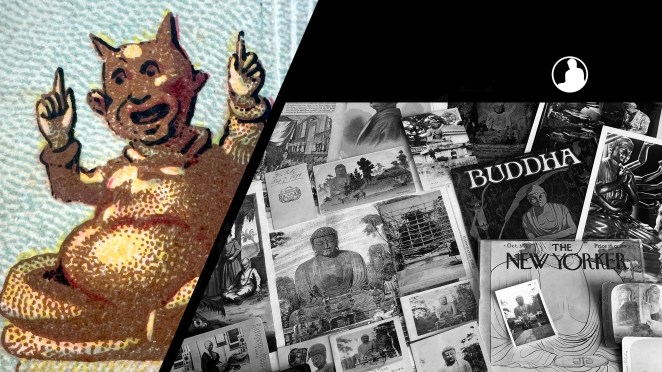
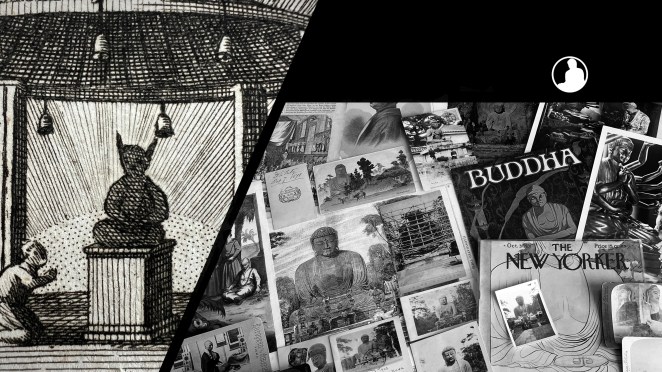
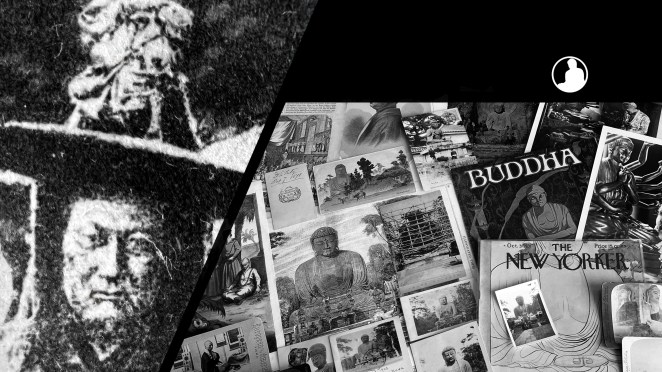
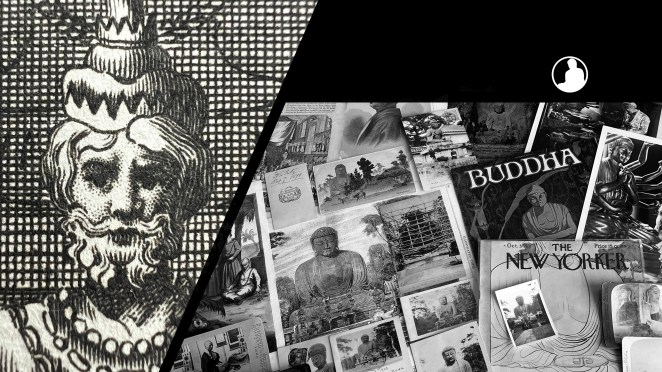
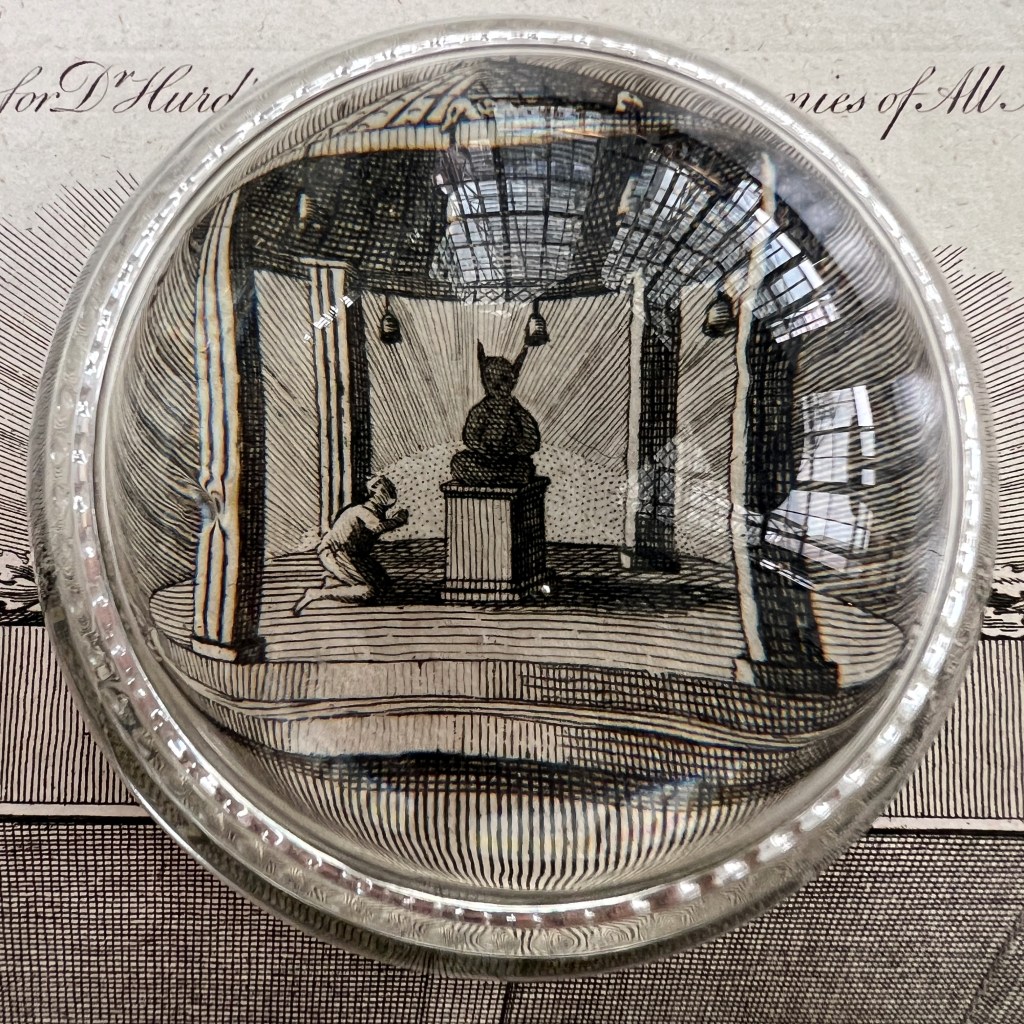
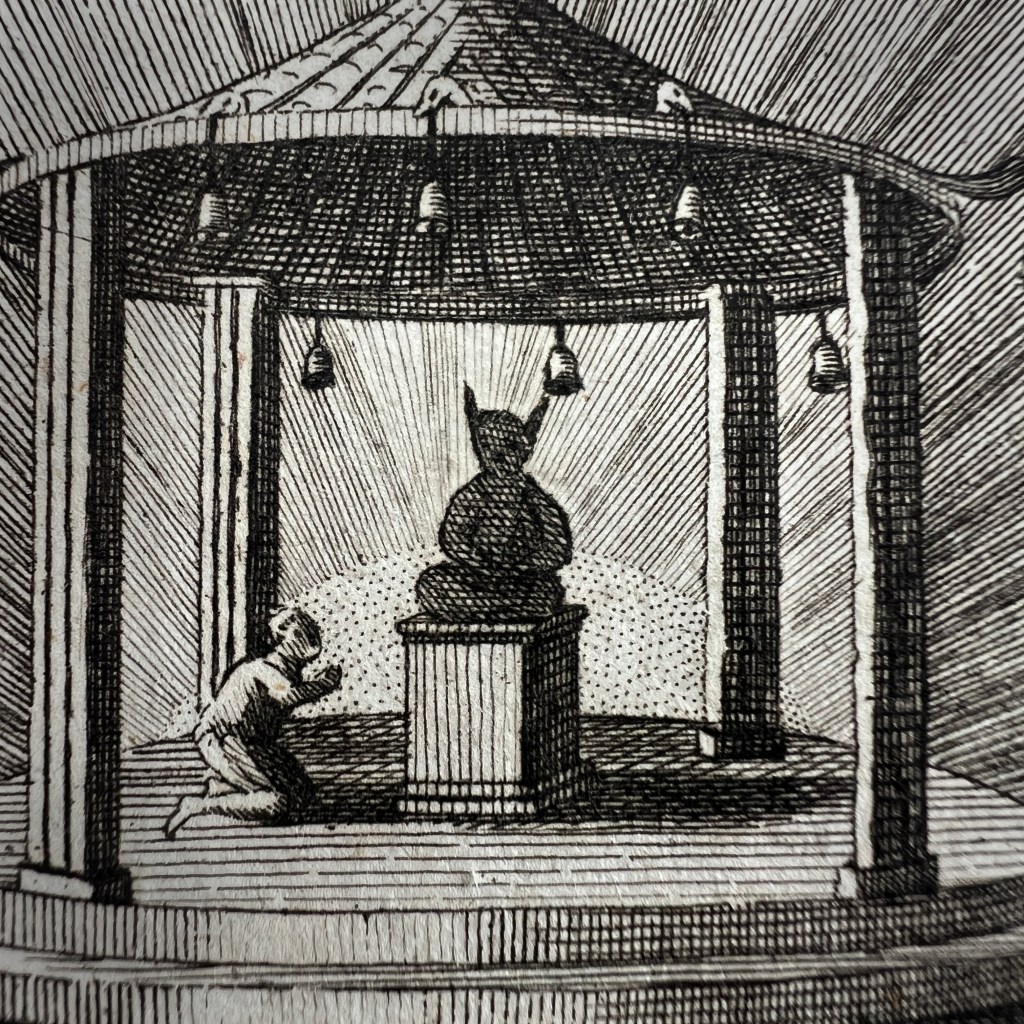
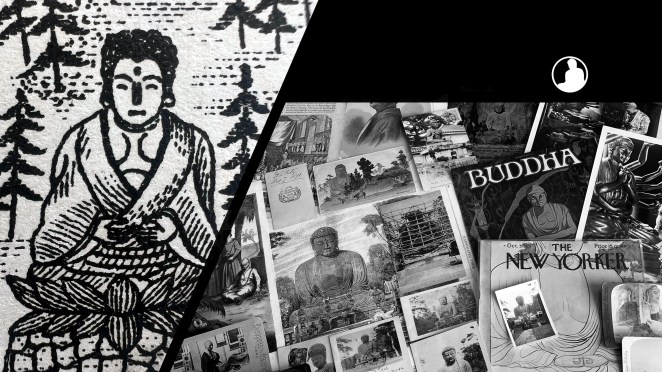
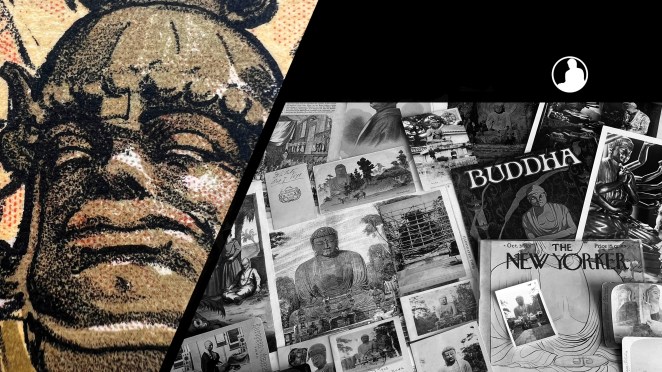
Stories of this practice circulated in popular European literature, such as Jonathan Swift’s Gulliver’s Travels (1726) and Voltaire’s Candide (1759). For European Christians, such actions were perceived as a vile act of paganism, reflected in this engraving by a buddha with devil horns.

This image of a horned buddha is placed at the crown of the page as an ornamental embellishment. William Hurd’s New Universal History (1780) copied the main engraving from an older work, but added this detail to help further contextualize the depicted activity as demonic.

Unexpectedly, Hurd blames, in part, the proselytizing activities of the Jesuits who still placed importance in Christian icons. Had they taught the “simple truth, without the use of images,” Hurd implies the Japanese may have embraced Christianity, turning away from idolatry altogether.

This use of fumi-e continued until 1858 when it was formally abandoned. To read a scientific analysis of historical paper-made fumi-e, see Montanari et al., “Kami Fumi-e: Japanese Paper Images to Be Trampled on—A Mystery Resolved” (2025), here: https://www.mdpi.com/2571-9408/8/2/78.


The Buddhas in the West Material Archive is a digital scholarship project that catalogues artifacts depicting Buddhist material culture for Western audiences. It’s comprised of prints, photos, and an assortment of ephemera and other objects. For a brief introduction to this archive, visit the main Buddhas in the West project page.


For Related Buddhas in the West Posts Featuring Engravings:


For the Most Recent Buddhas in the West Posts:

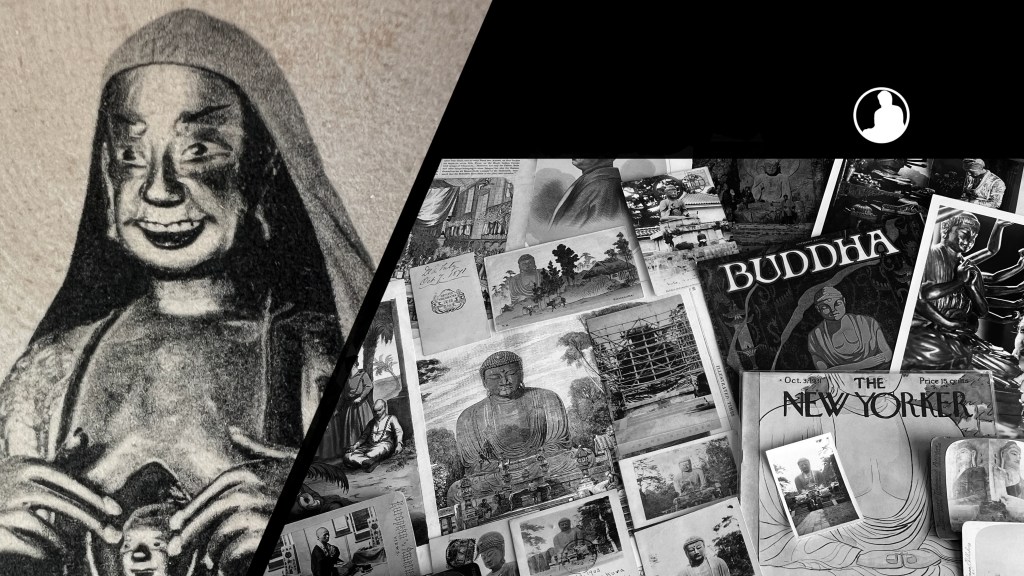
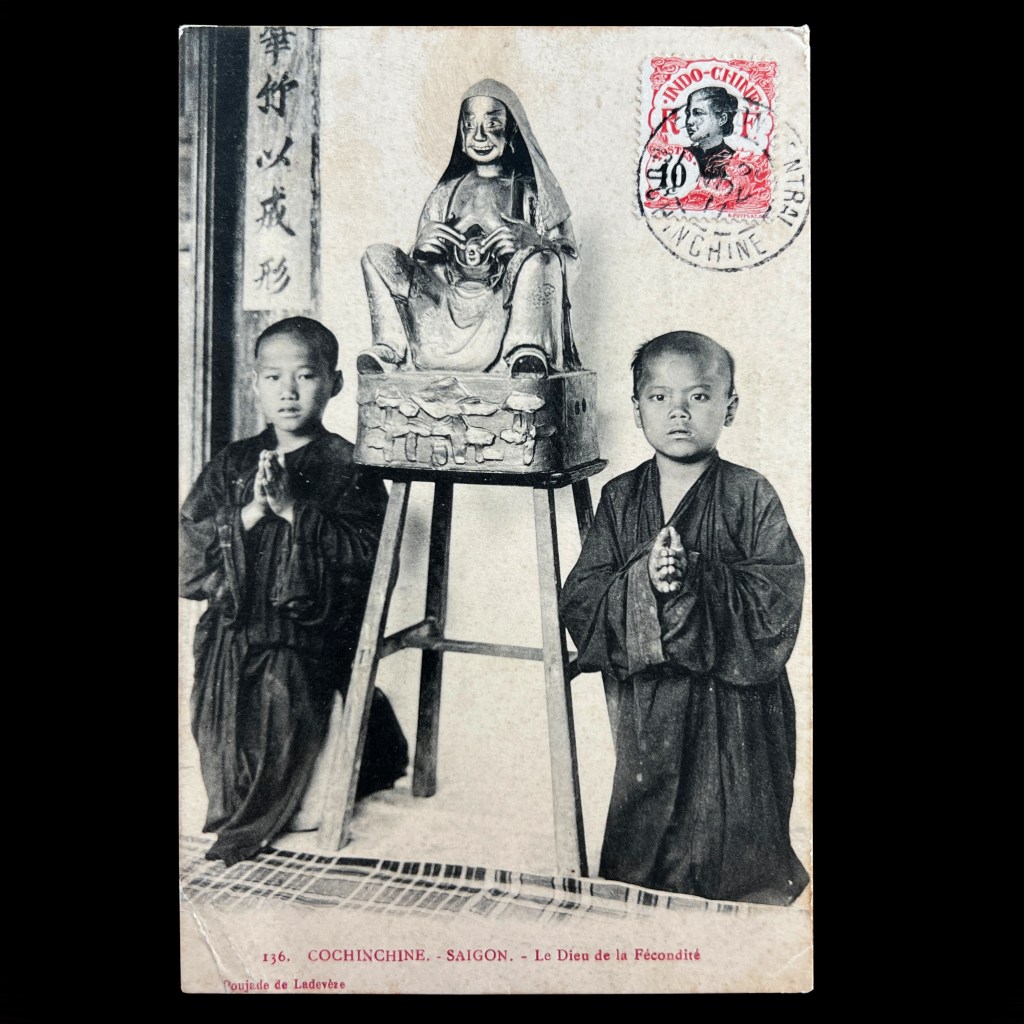
Poujade de Ladevèze’s Arhat Who Reveals His Heart Postcard

For all the new Buddhas in the West posts
follow us on Bluesky & Instagram


The first photos of Saigon, present-day Ho Chi Min City, were taken by French naval officers during the 1858 French invasion. The first commercial photography studios in Vietnam opened in Saigon soon afterwards, with some producing intimate views of local Buddhist temple life.

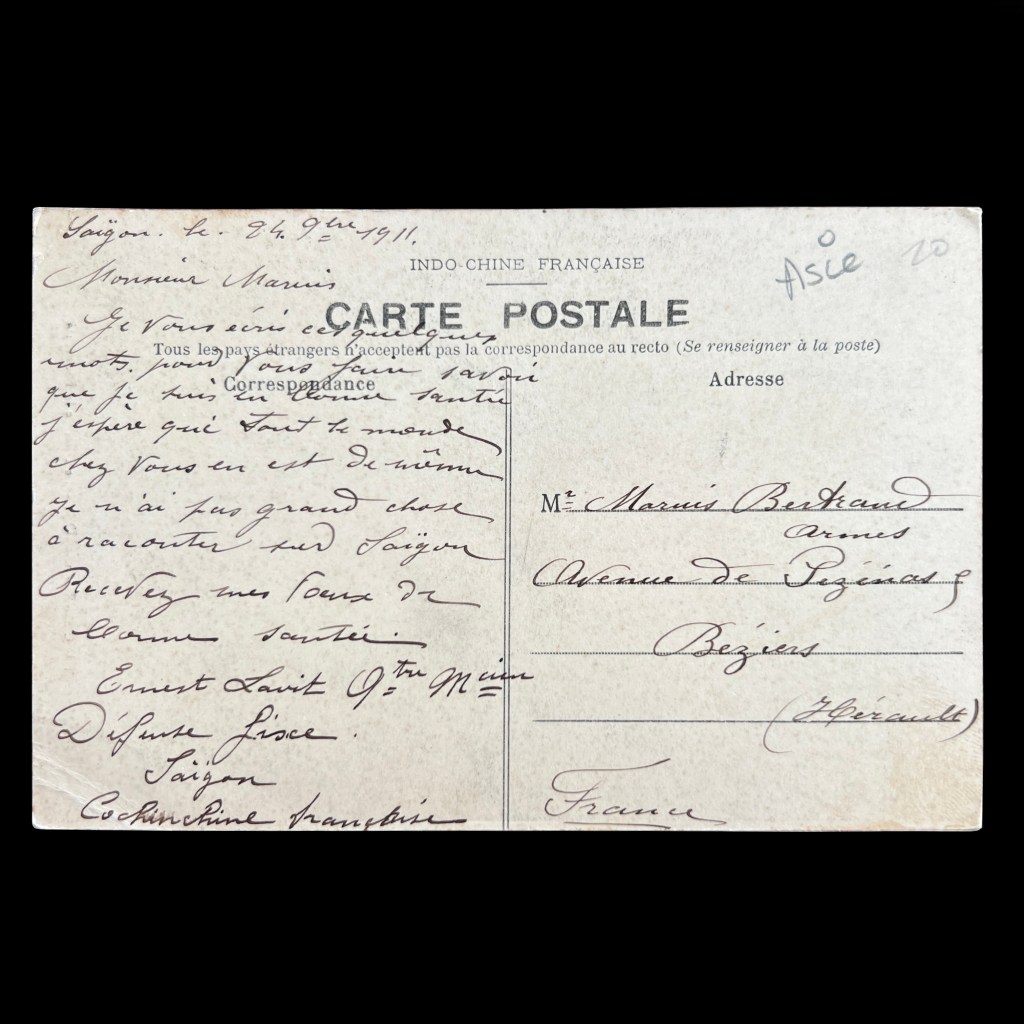
Poujade de Ladevèze, the name we see under the front caption, was an early postcard publisher in Saigon who appears in directories by 1908. Hoping to write home, French colonial soldiers were the primary clientele for postcards; this card was sent to France by an infantry member in 1911.

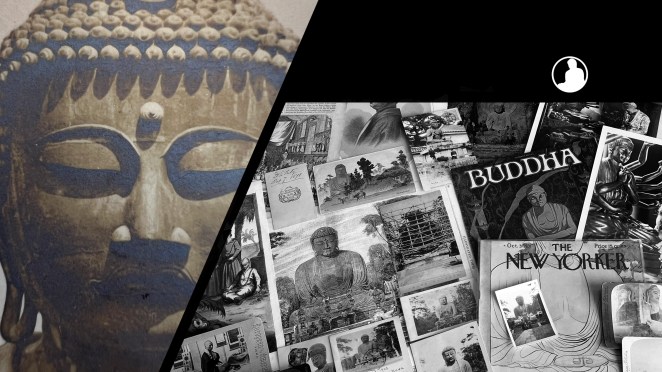
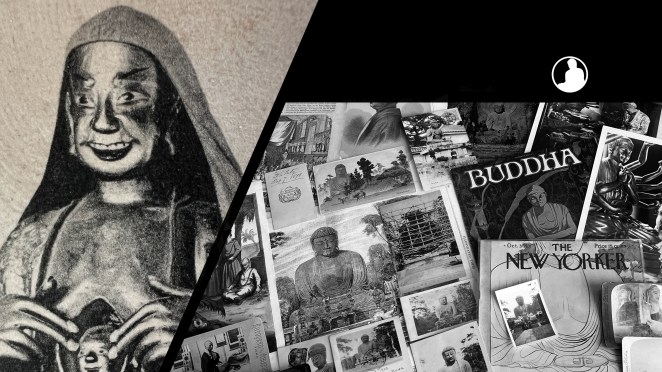
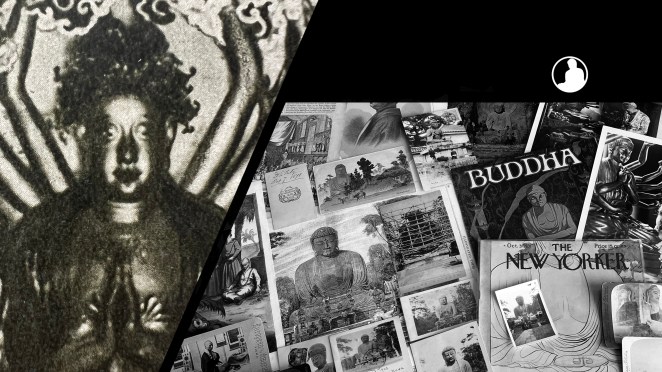
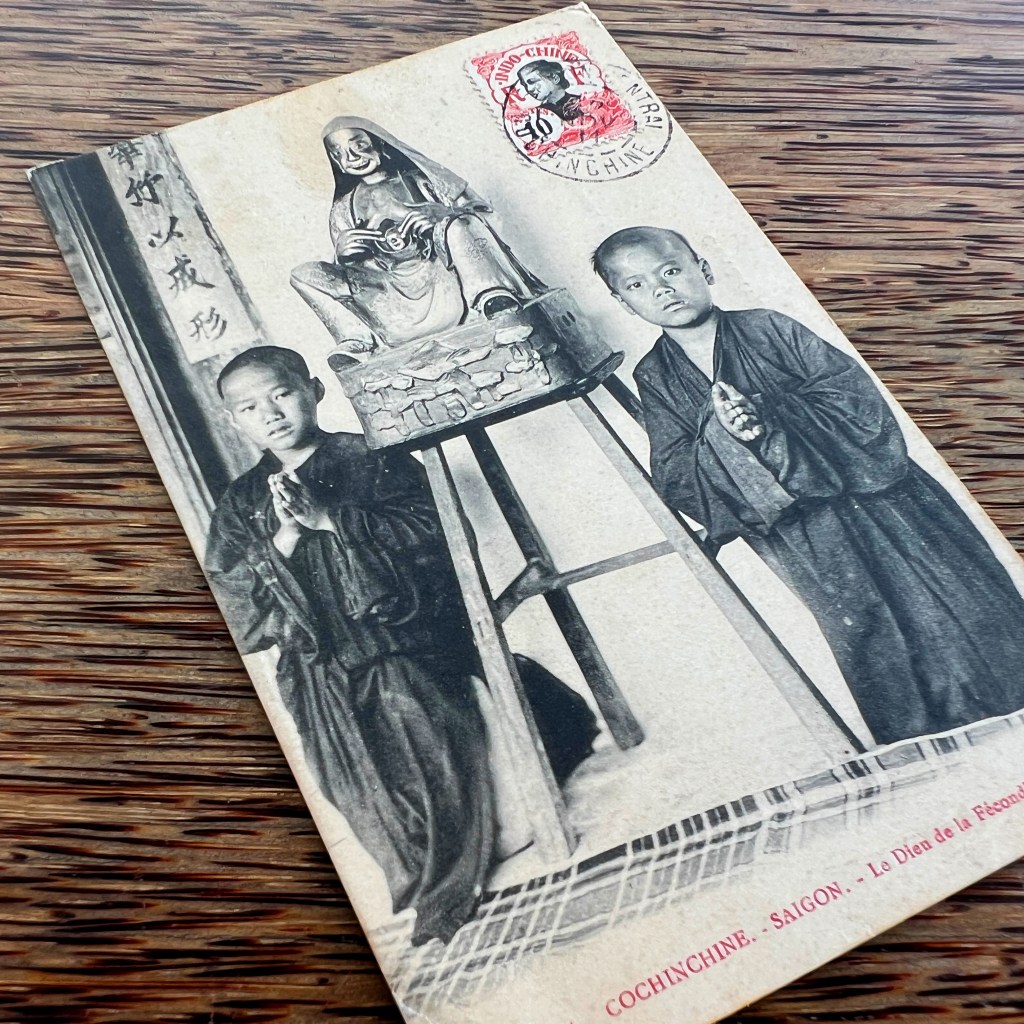
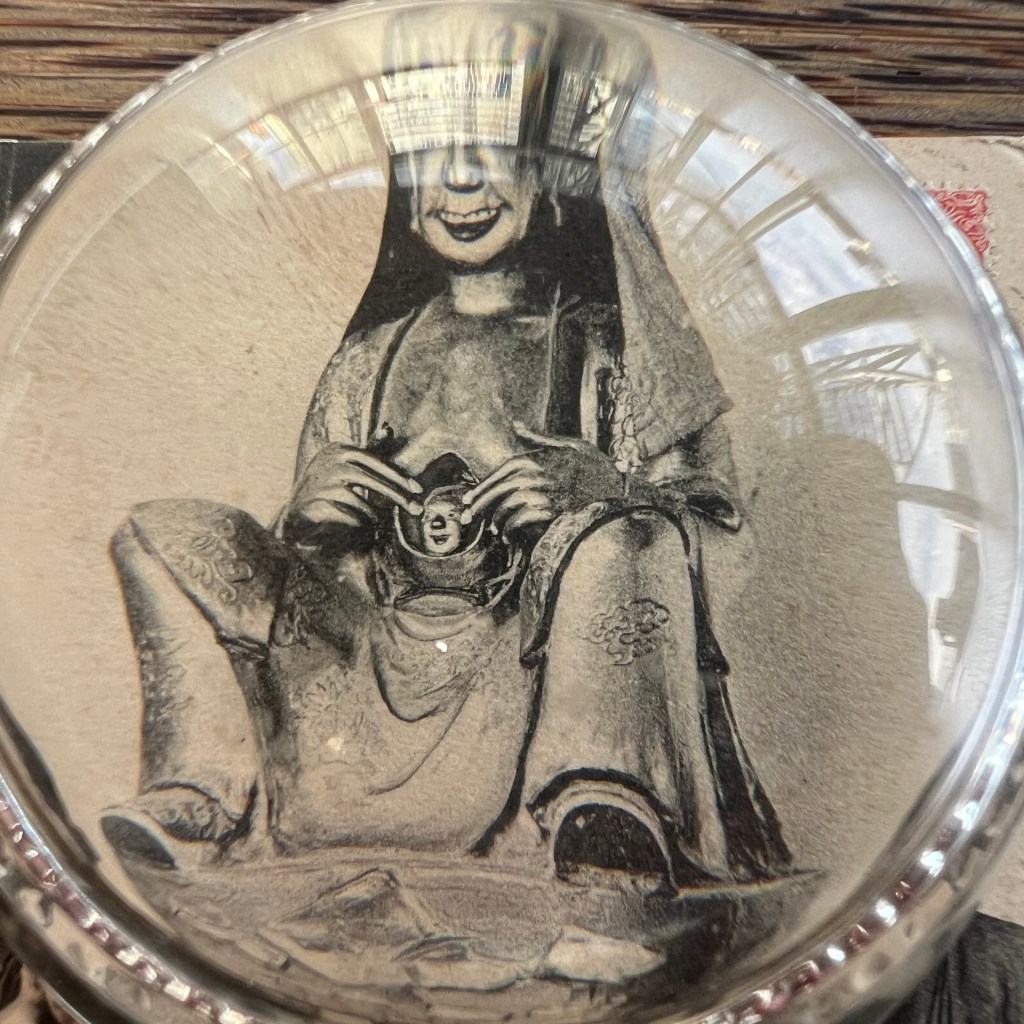
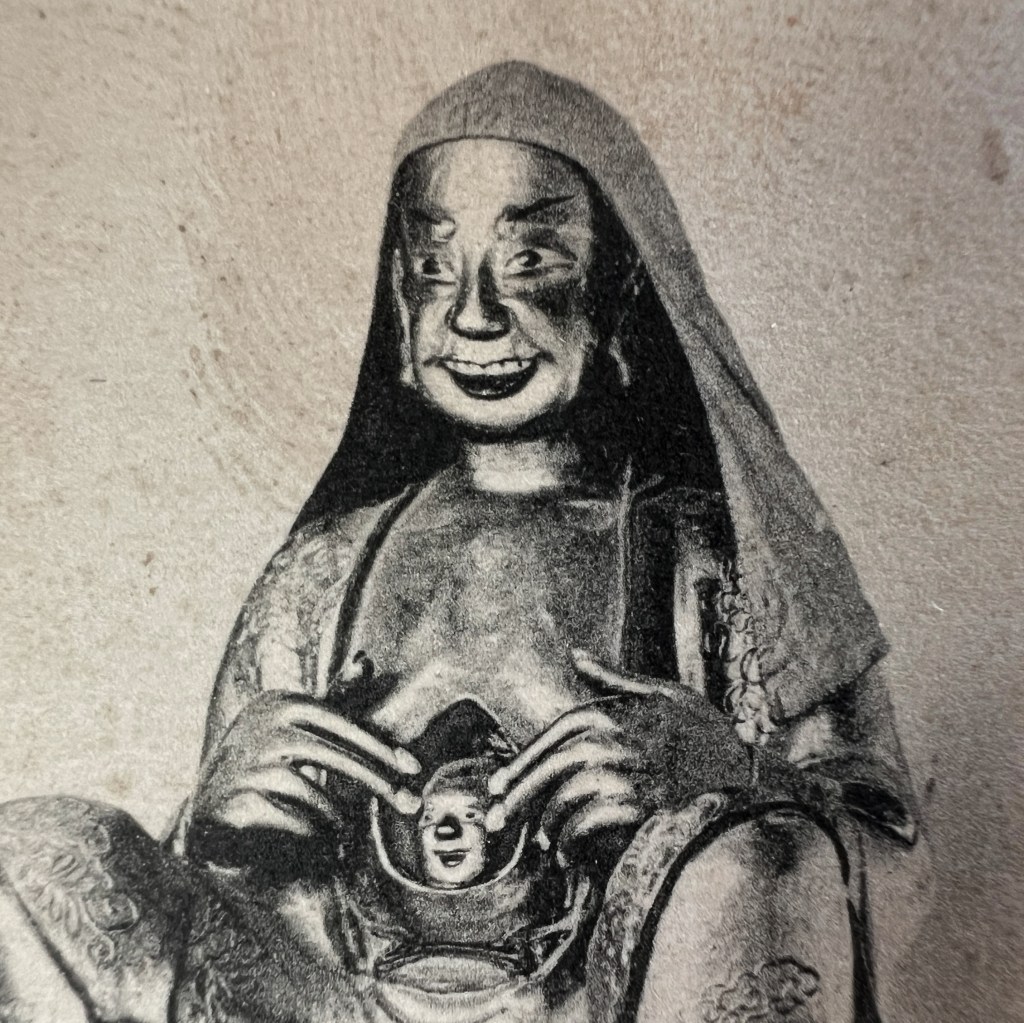
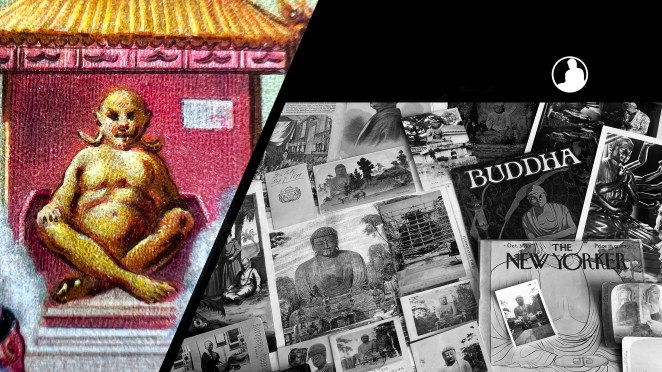
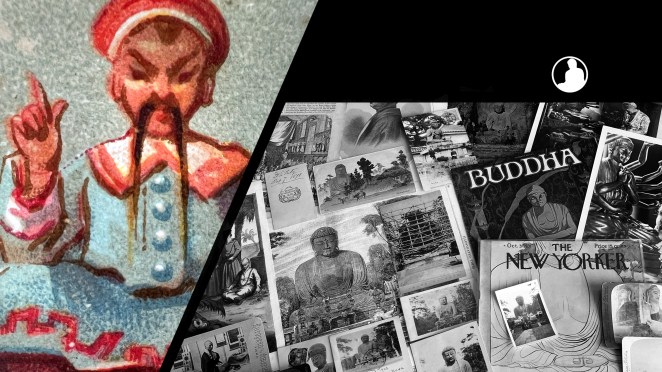
The caption presents the icon as a “god of fertility,” perhaps due to the curious head set inside the abdomen of the figure. The placement of two young novice monks adds weight to the perception this icon was the object of prayer for hopeful parents.

Traditionally, this figure is recognized as one of eighteen Awakened disciples of the Buddha, known as arhats, whose lore developed in medieval China. Each arhat had his own distinctive features and this figure was known as “The Arhat Who Reveals His Heart.”

This figure is often treated as a visual representation of the Buddha Nature principle, namely, that all living beings have the innate potential to become buddhas.


The Buddhas in the West Material Archive is a digital scholarship project that catalogues artifacts depicting Buddhist material culture for Western audiences. It’s comprised of prints, photos, and an assortment of ephemera and other objects. For a brief introduction to this archive, visit the main Buddhas in the West project page.


For Related Buddhas in the West Posts Featuring Vietnam:


For the Most Recent Buddhas in the West Posts:

Universal Studio’s Back Lot Buddha Photograph

For all the new Buddhas in the West posts
follow us on Bluesky & Instagram


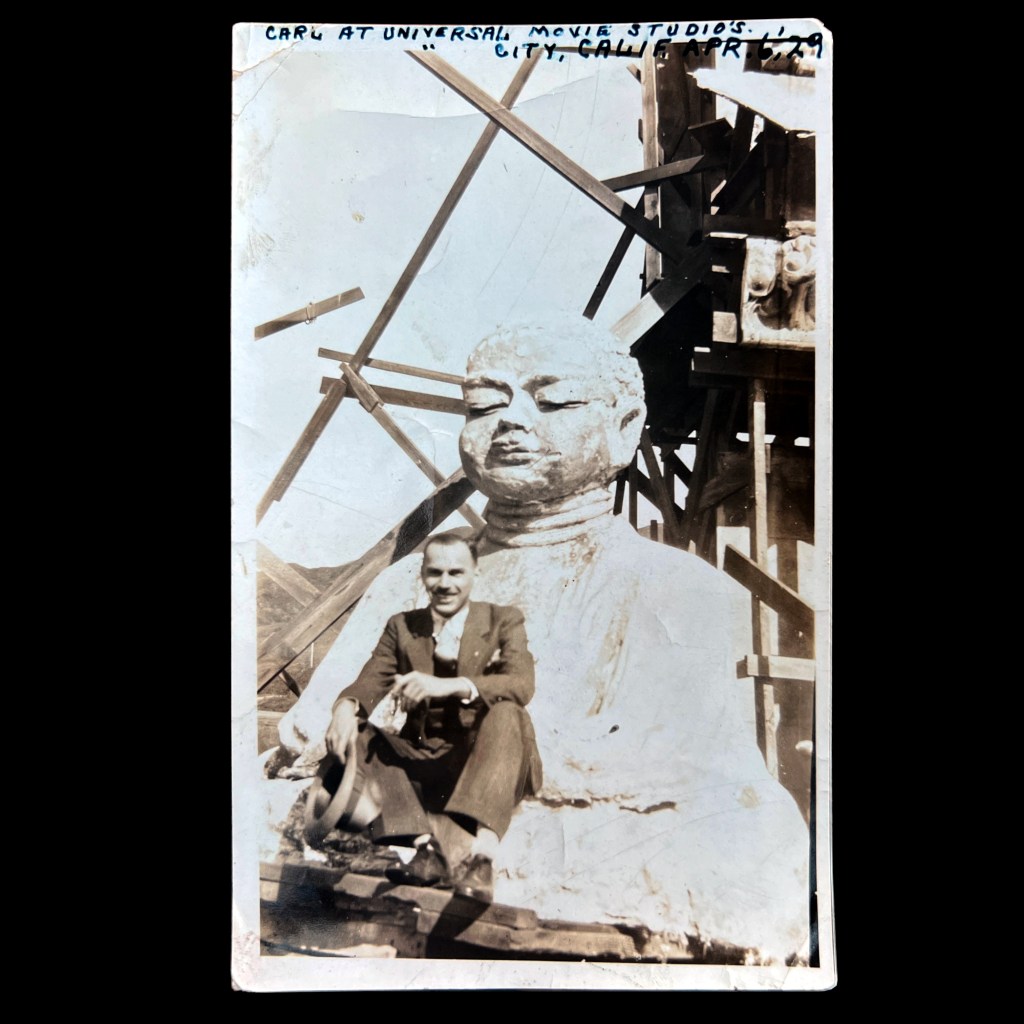
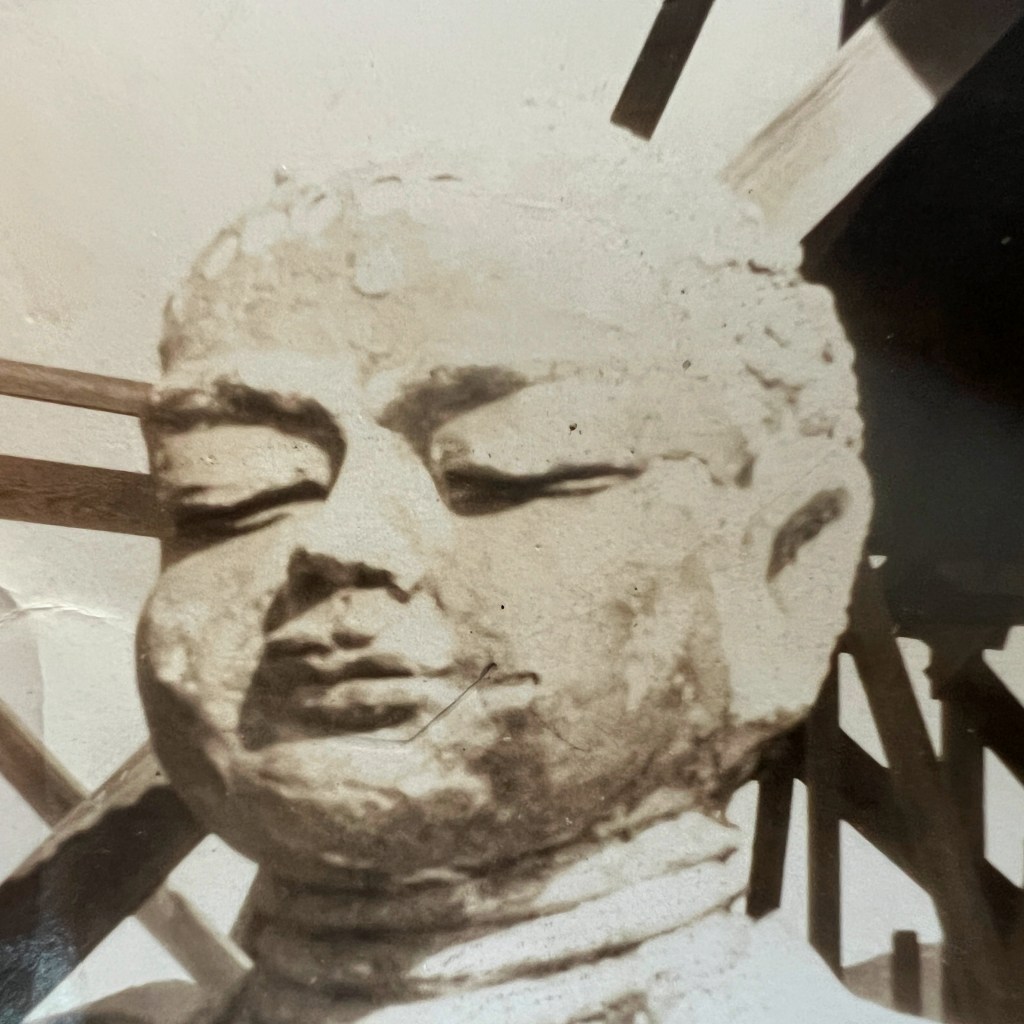
The Golden Age of Hollywood expanded the theatrical tradition of set design to create a more immersive world on screen. Through the 1920s studio art directors built bigger sets and fine Buddhist statuary that was once purchased or borrowed was increasingly made of wood and plaster.

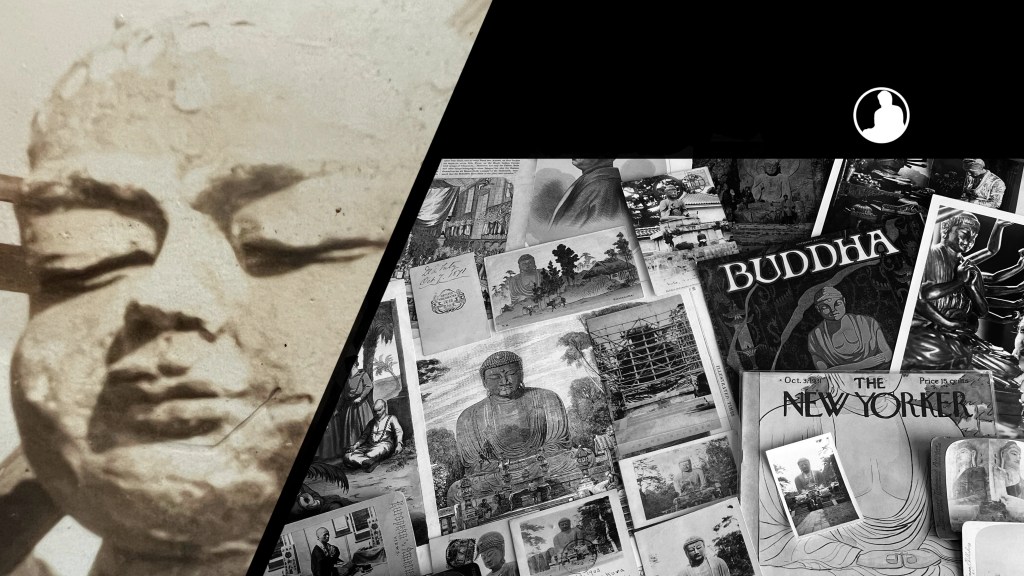
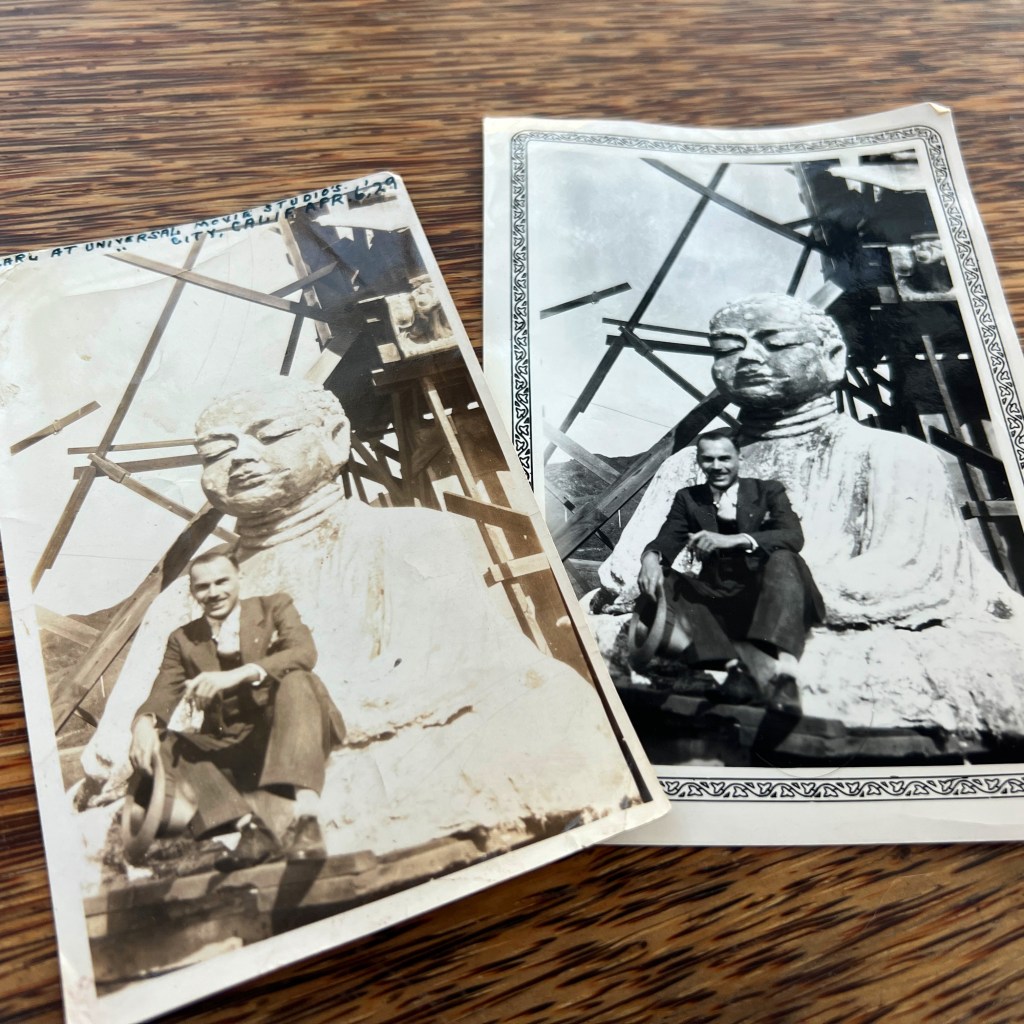
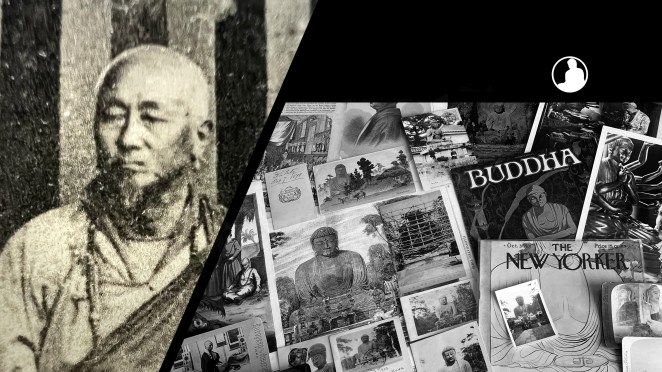
When Carl Laemmle opened Universal City in 1915, it garnered such public acclaim he decided to make studio tours a permanent attraction. Here we see a photograph (and duplicate) of the Universal back lot where a visitor sizes up one of the plaster buddhas on display.

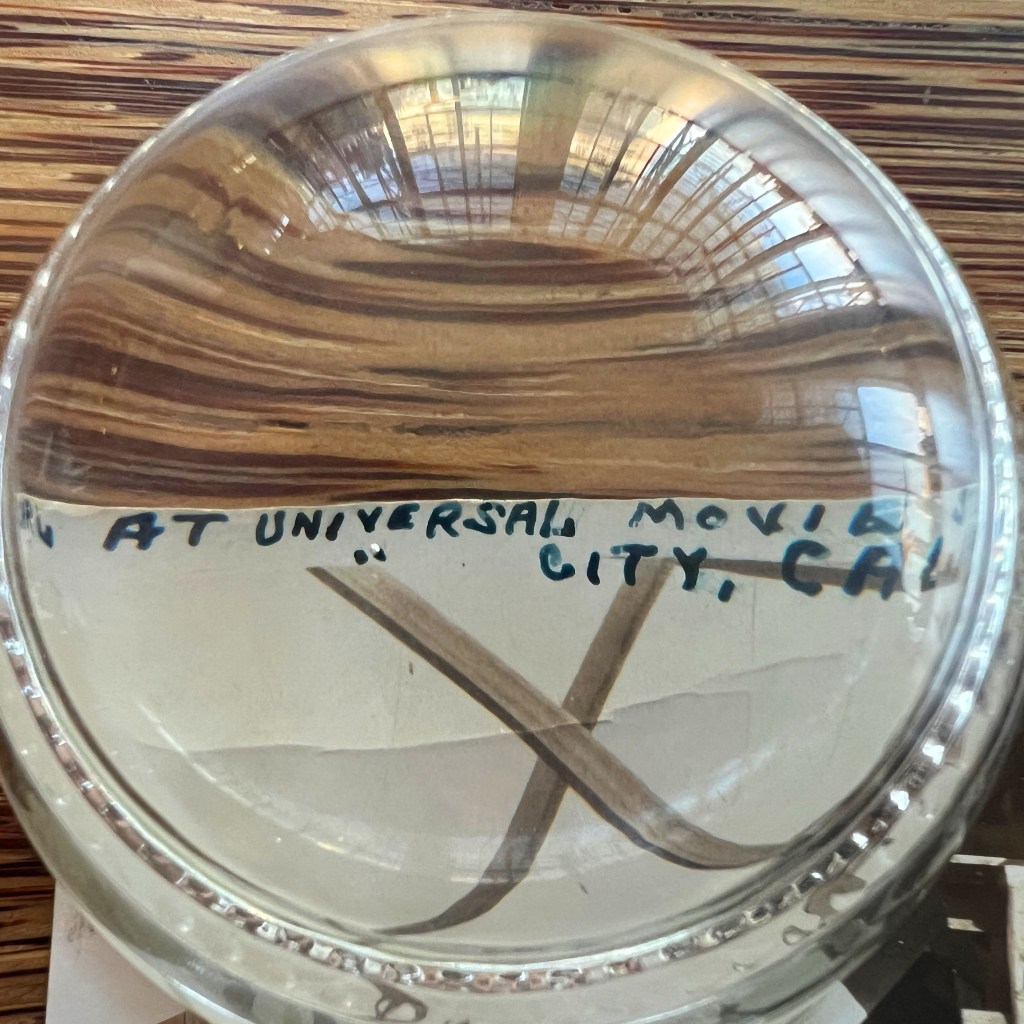
An inscription dates the photo to 1929. At this time Charles Hall was the art director for Universal, famous for his gothic aesthetic seen in the classic films Phantom of the Opera, Dracula, and Frankenstein. Was this buddha statue a creation of Hall for a new Universal film?

believe not. The cracks in the plaster suggest wear and age, not the process of crafting (see also the broken curls of hair below). Moreover, a very similar plaster buddha was created for Universal’s The Breath of the Gods in 1920, before Hall was hired, starring Tsuru Aoki.

Unfortunately, The Breath of the Gods is now lost and production stills remain the best evidence for set design. Popular Science ran a short article on the film, showing the construction of a new plaster buddha, is it the same one? Article viewable here: https://tinyurl.com/3jzhc3rj.


The Buddhas in the West Material Archive is a digital scholarship project that catalogues artifacts depicting Buddhist material culture for Western audiences. It’s comprised of prints, photos, and an assortment of ephemera and other objects. For a brief introduction to this archive, visit the main Buddhas in the West project page.


For Related Buddhas in the West Posts Featuring Photography:


For the Most Recent Buddhas in the West Posts:

Guérin-Boutron’s Mysteries of Japan Advertising Card

For all the new Buddhas in the West posts
follow us on Bluesky & Instagram


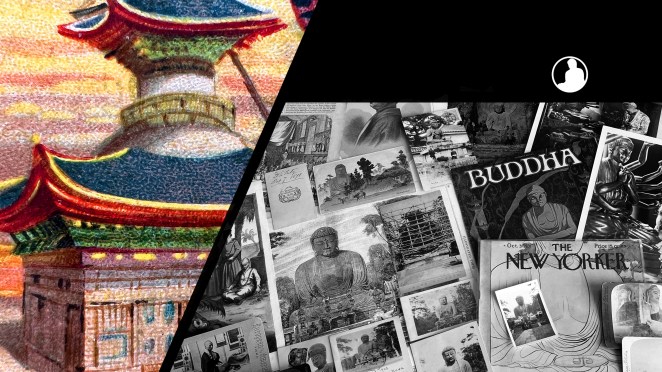
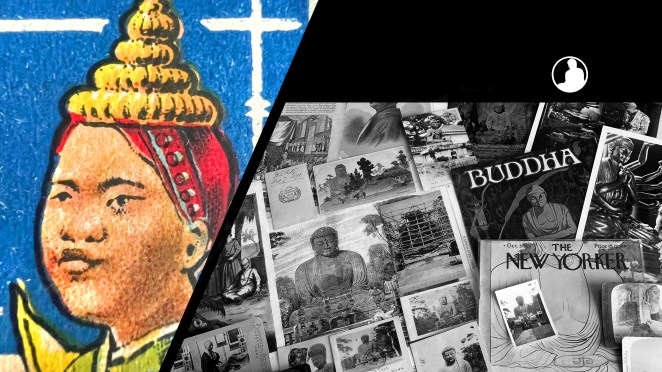
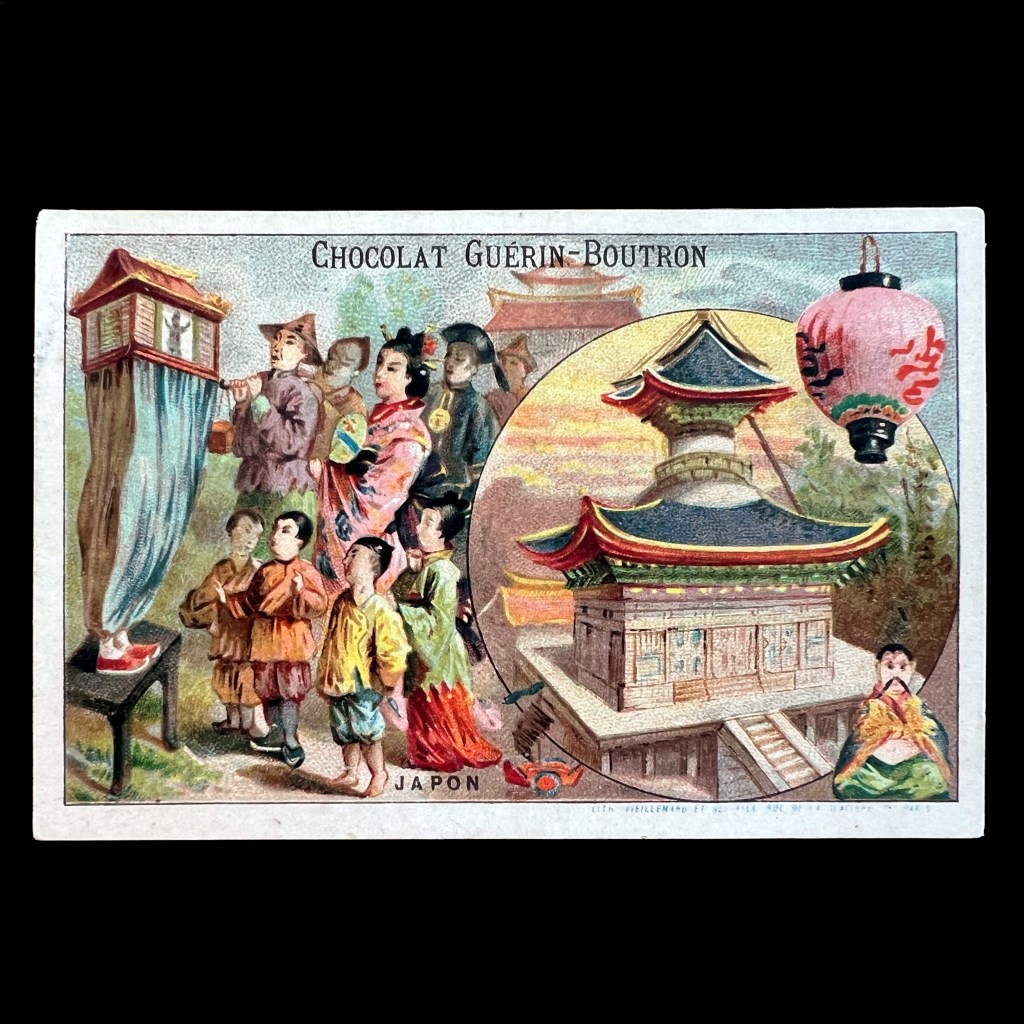
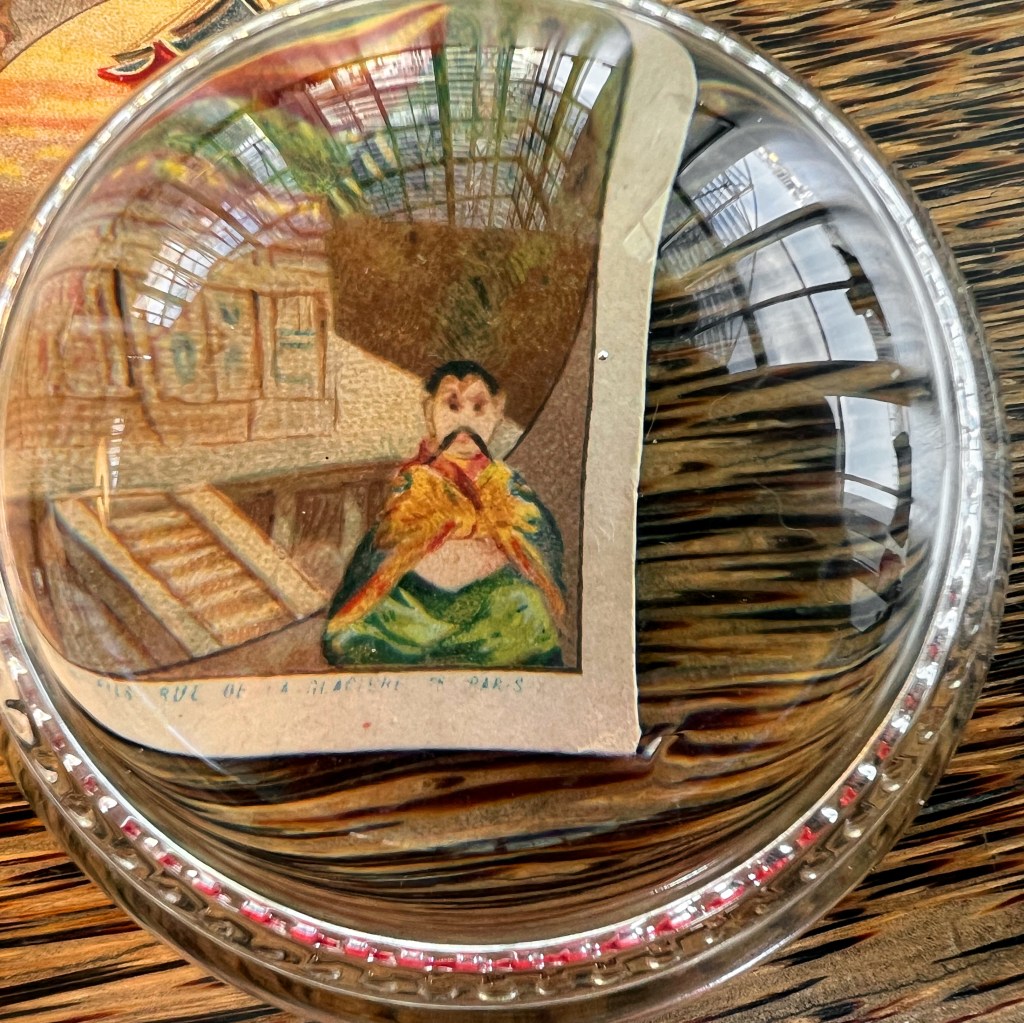
By the turn of the 20th century advertising cards were sought-after collectables, often pasted alongside other printed ephemera inside scrap books. The main visual language was the stereotype, and places like Japan were depicted as a mélange of mystery, pagodas, and odd idols.

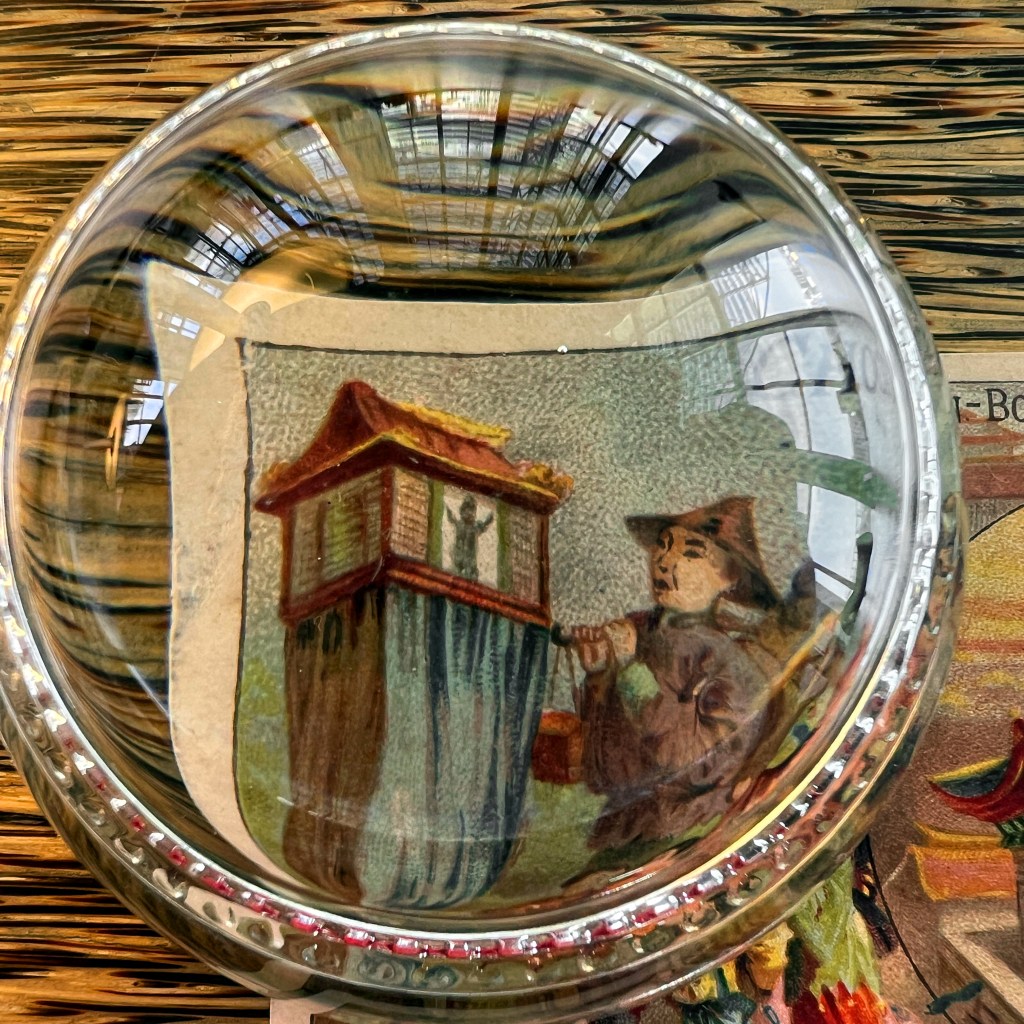
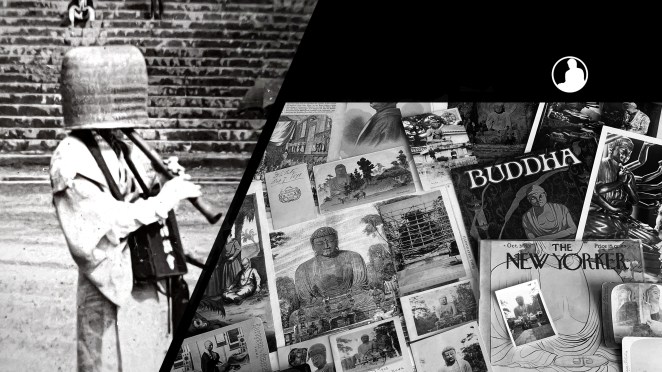
The mystery figure on the left edge is a Chinese puppeteer; distinctions between China and Japan often dissolved under the umbrella of “the Orient.” Such imagery had circulated in Europe since the late 18th century through southern Chinese export paintings depicting popular Chinese occupations.

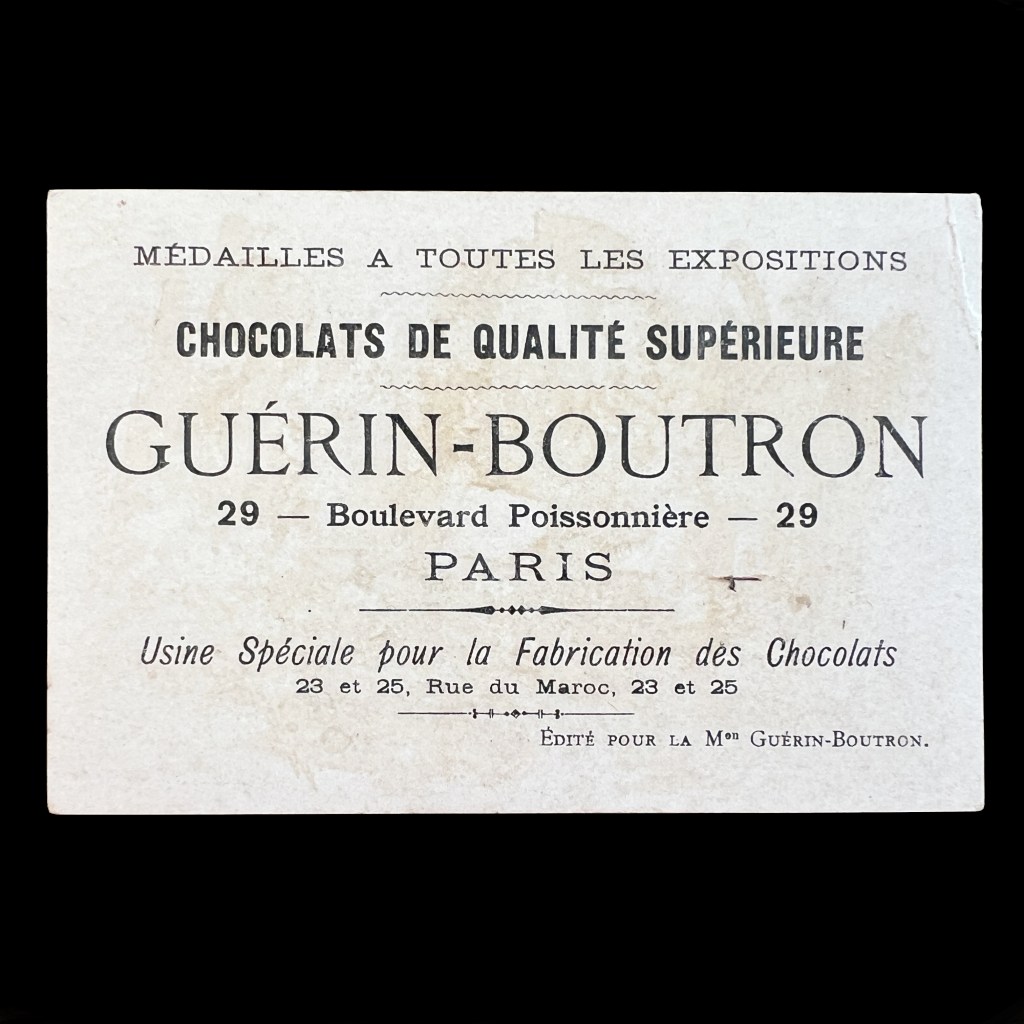
Guérin-Boutron was a luxury Parisian chocolatier and early adopter of chromolithographed trade cards, creating this set of worldwide nations and cities in the early 1900s.The printer, Vieillemard Fils & Cie, was a premier lithographer for major French trade card producers of the era.

The figure in the lower right corner is a crude rendering of a seated buddha. Pronounced ethnic facial features and flowing silk garments were sometimes used to signify “authentic” Asian religions iconography.

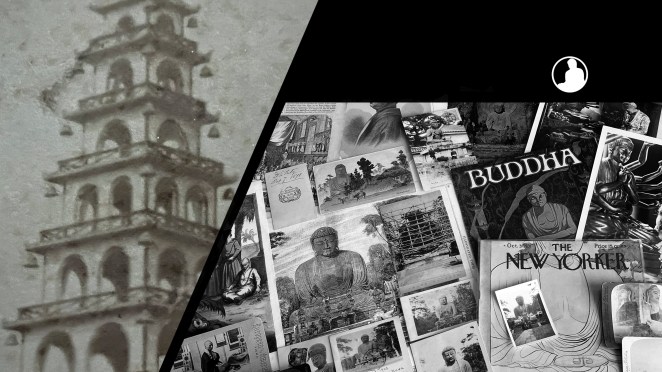
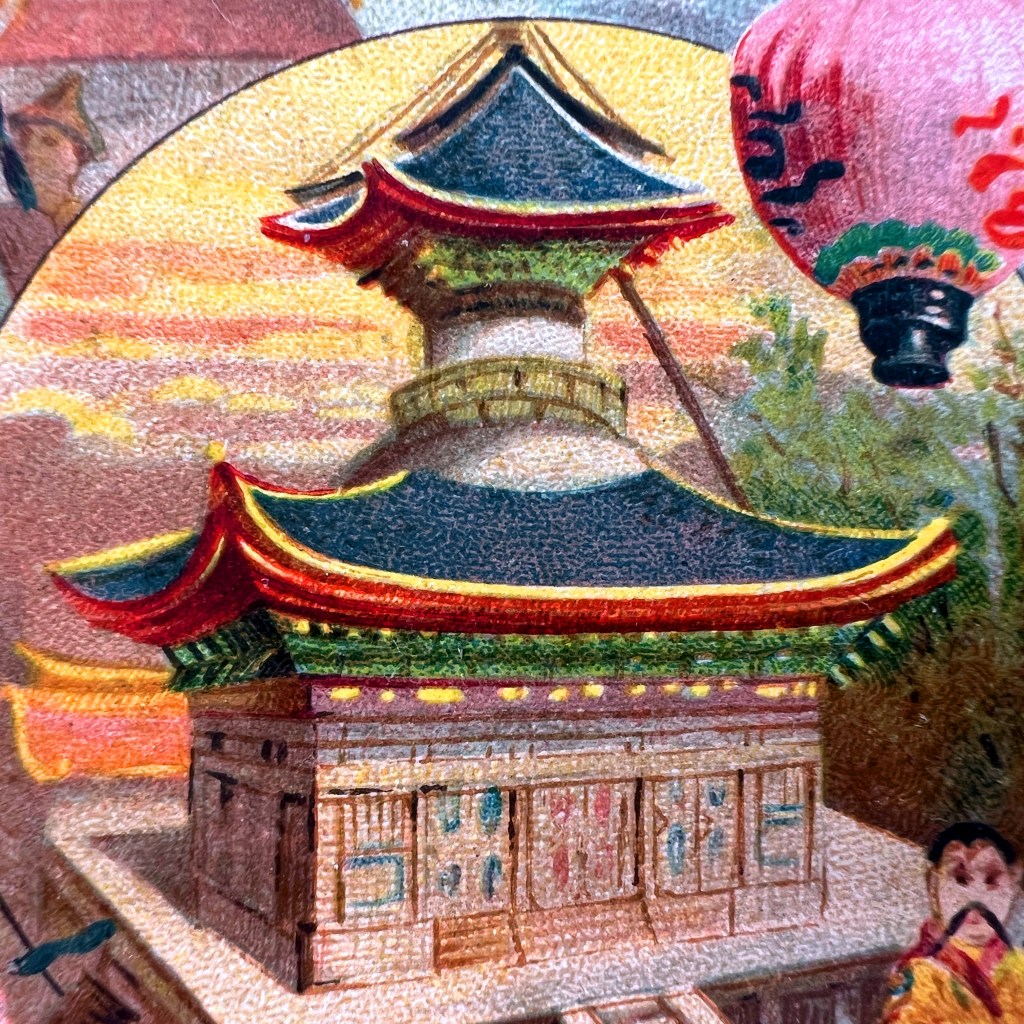
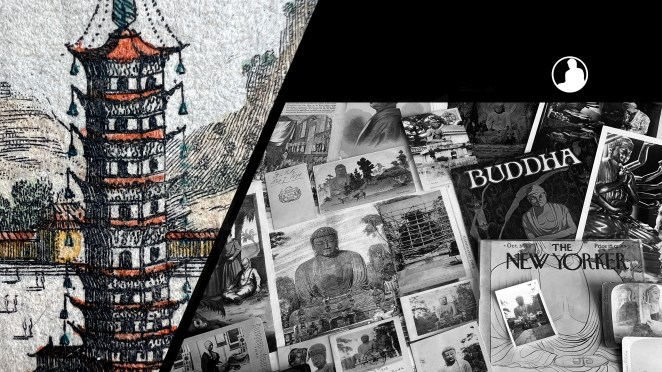
The circular insert depicts an uncommon two-story pagoda known as the Many Treasures Pagoda (tahōtō 多宝塔) described in the Lotus Sutra. This illustration shows the one built at Hachiman Shrine which was destroyed in 1870, several decades before this card was issued.


The Buddhas in the West Material Archive is a digital scholarship project that catalogues artifacts depicting Buddhist material culture for Western audiences. It’s comprised of prints, photos, and an assortment of ephemera and other objects. For a brief introduction to this archive, visit the main Buddhas in the West project page.


For Related Buddhas in the West Posts Featuring Lithography:


For the Most Recent Buddhas in the West Posts:

Captured in Chinatown (1935) Production Photograph

For all the new Buddhas in the West posts
follow us on Bluesky & Instagram


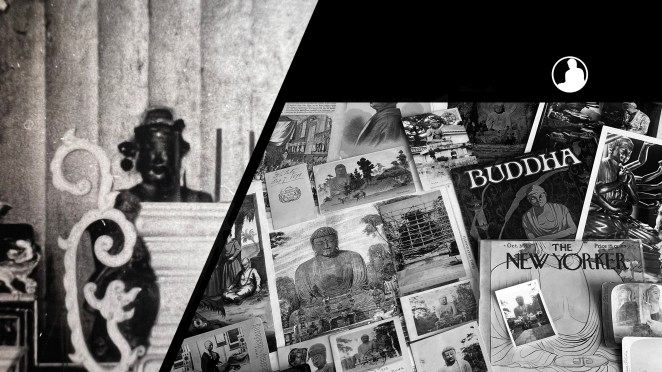
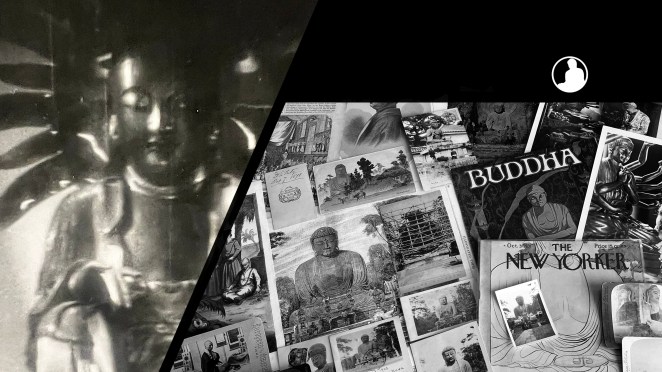
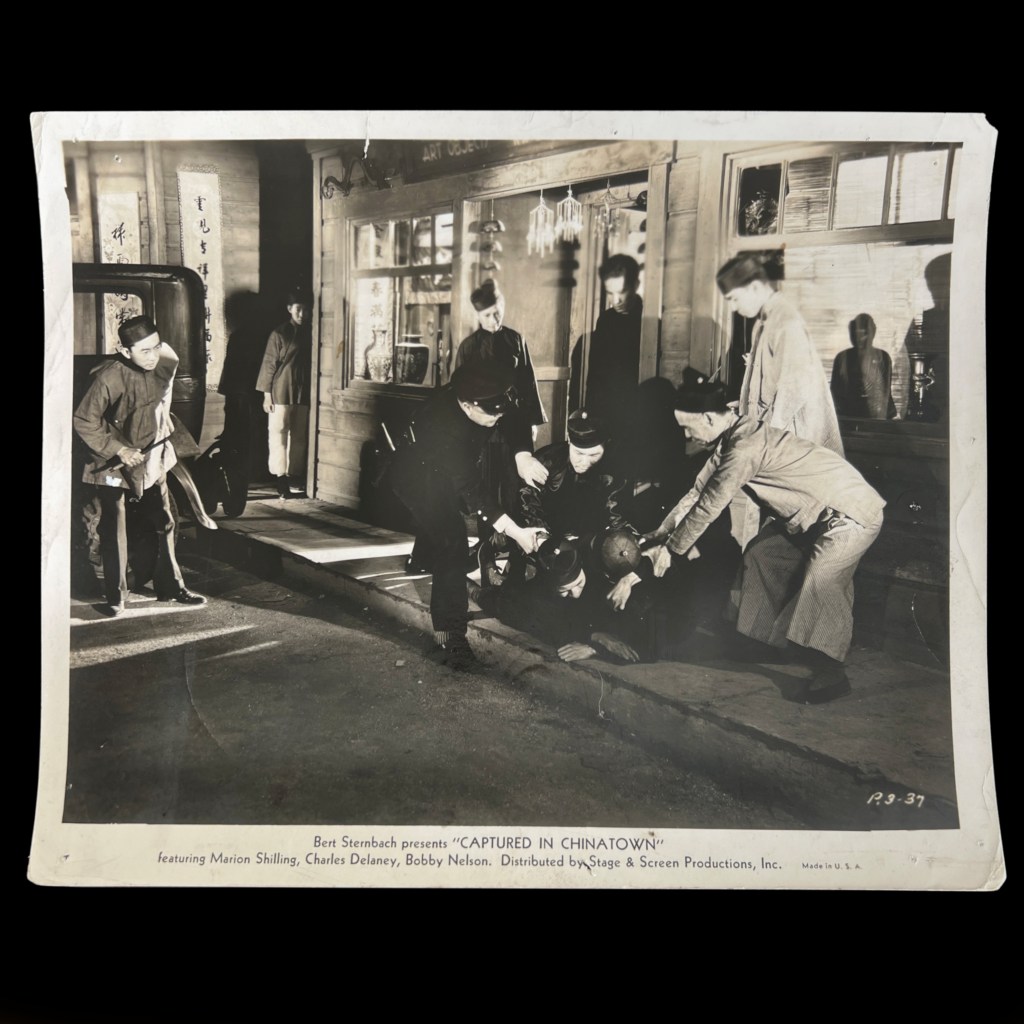
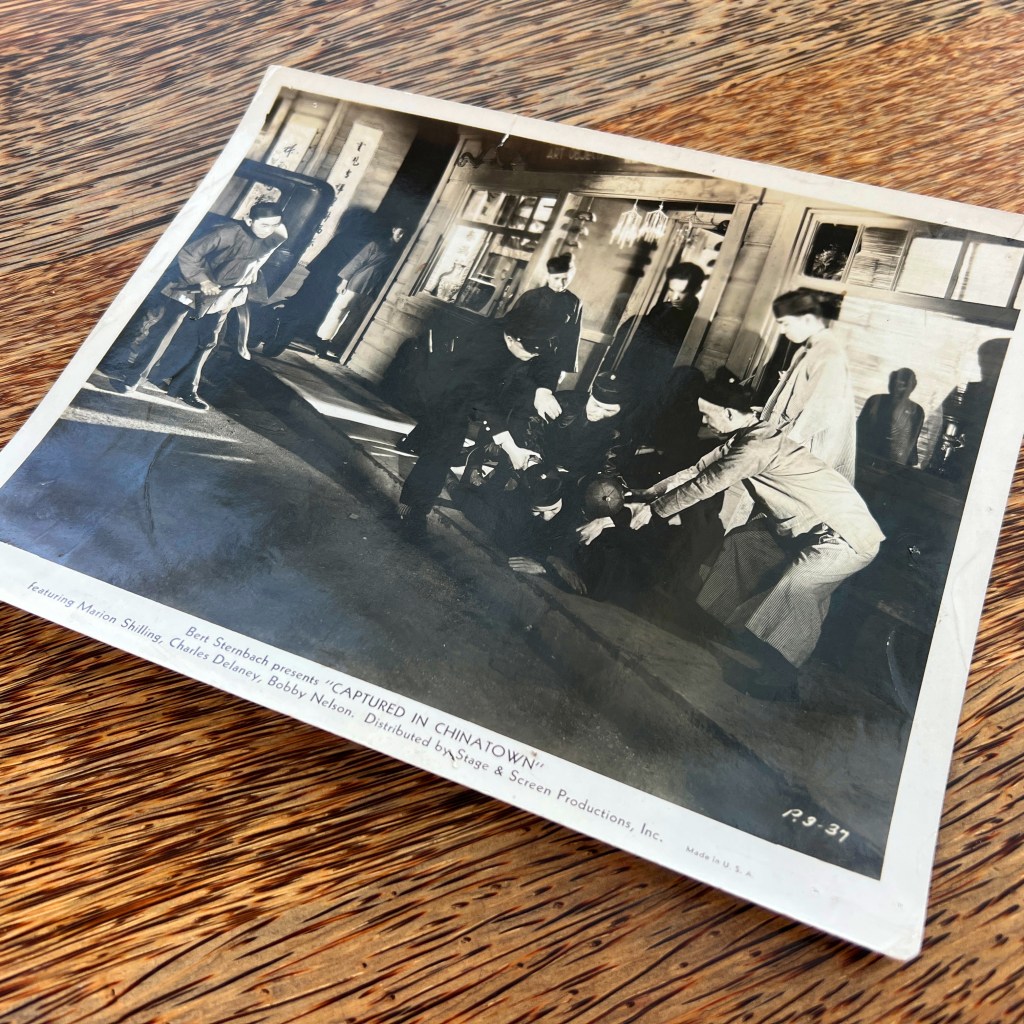
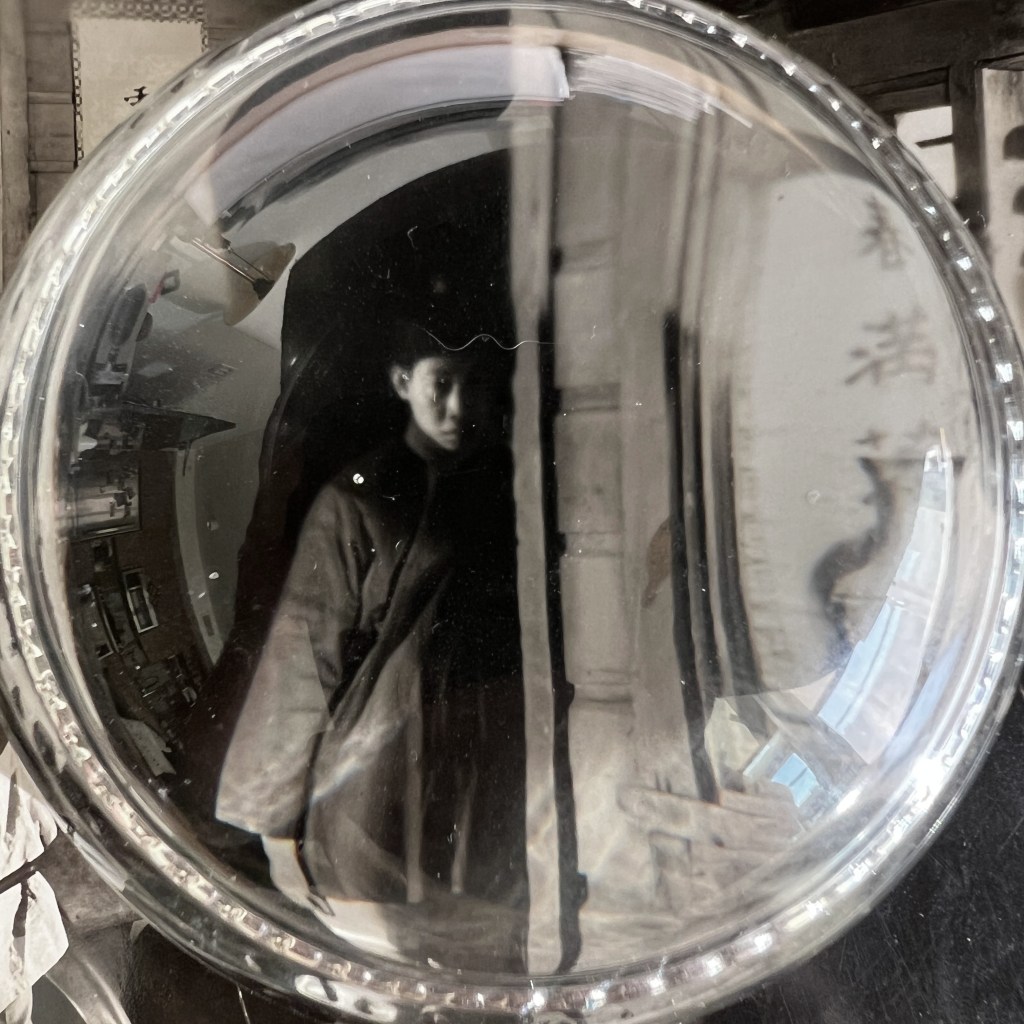
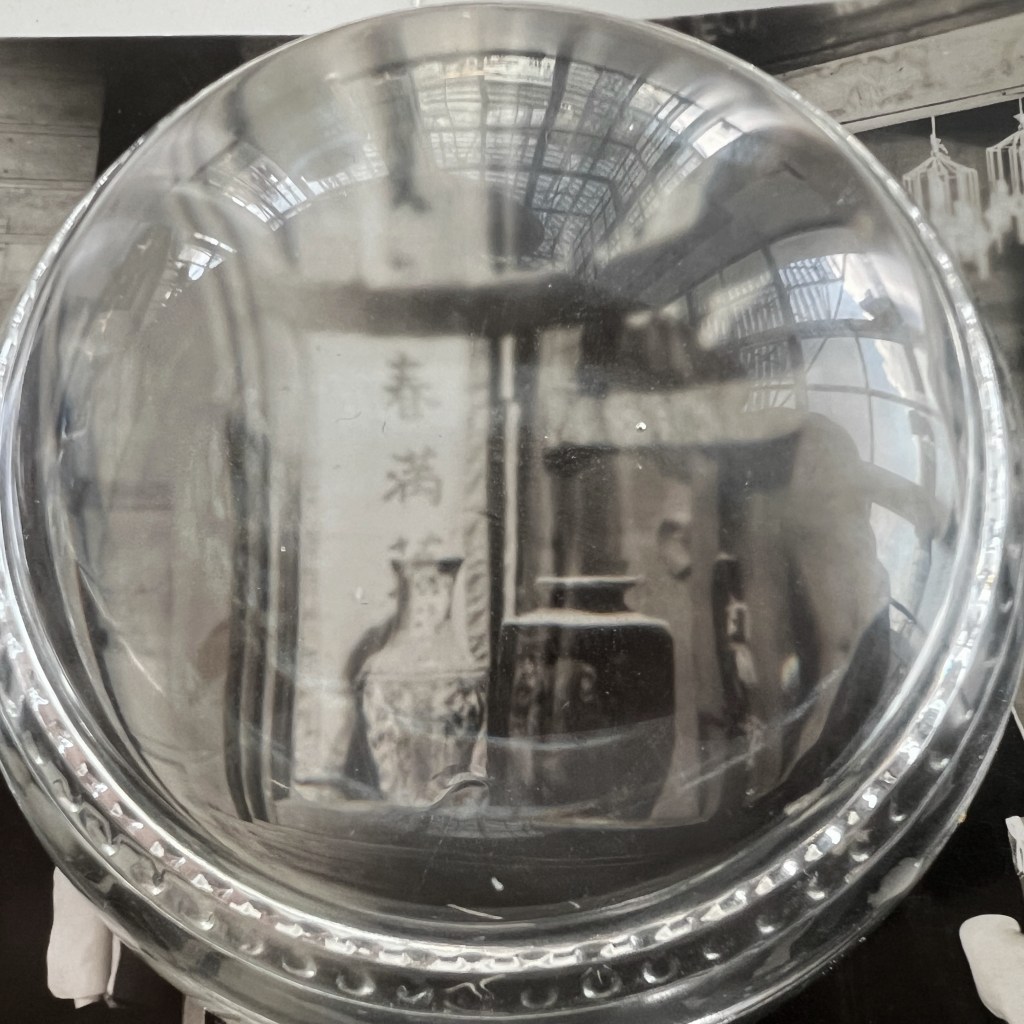
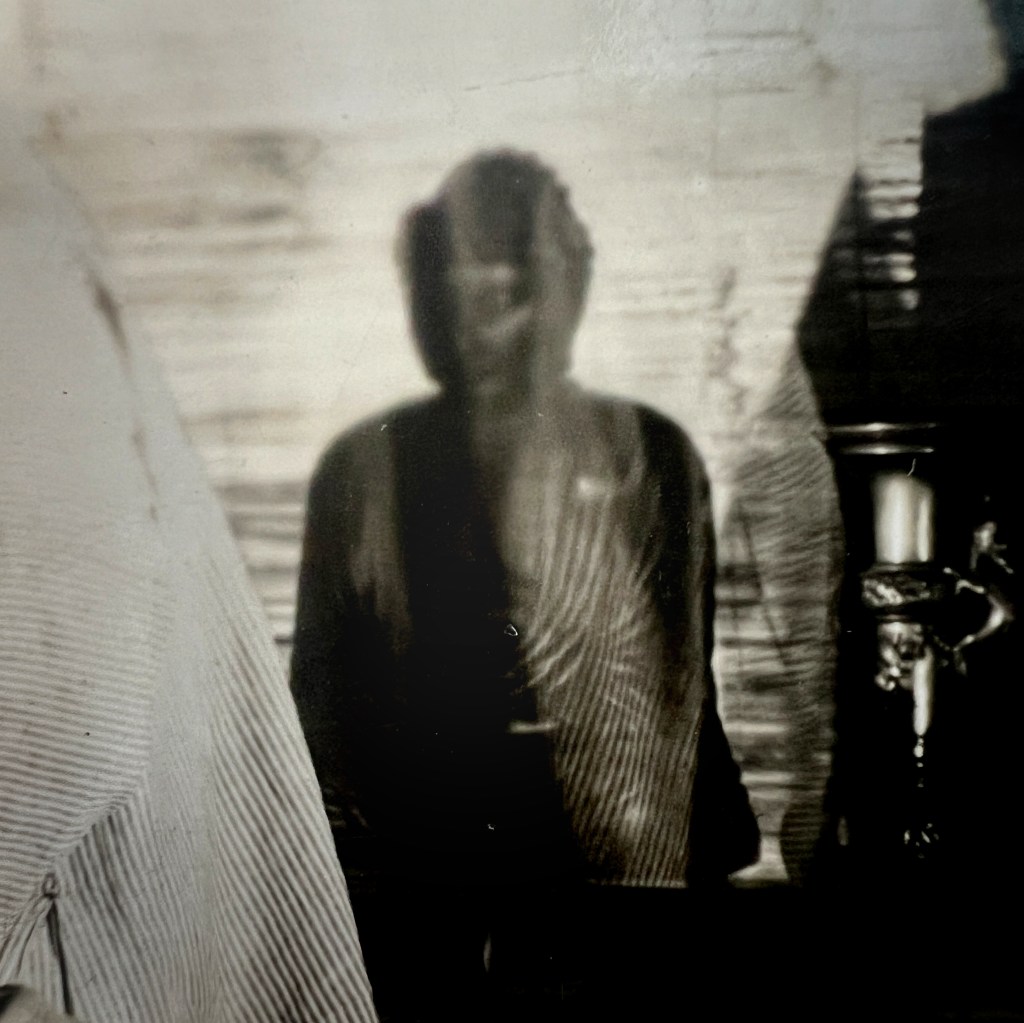
Two figures seen here in the shadows emerged in the 1920s and 30s as part of the cinematic shorthand for American Chinatowns. One, the murderous hatchet man, can be seen in the back alley, while other is seen peering out the curio shop window: an icon of a buddha.

This film, Captured in Chinatown, is a melodrama from 1935 that portrays a Romeo and Juliet style love story and a growing war between two Chinatown tongs. As Philippa Gates suggests, it also shows the promise of American assimilation provided outdated Chinese ways are abandoned.

While the American-born Chinese lovers embrace American life, their immigrant parents remain stuck in petty and violent family feuds. Unlike many major Hollywood productions, this B film cast Asian American actors in all of the leading Chinese roles.

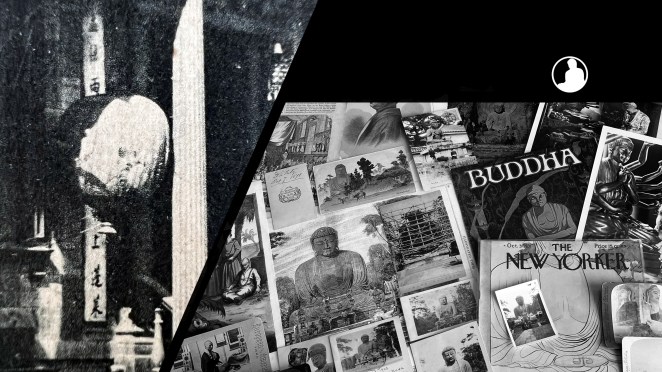
One of the main sets includes the interior of Lieu Ling Importers which displays a Buddhist statue in the window, presumably for sale. There is also a different Buddhist shrine inside the shop where the female Chinese lead prays to Amitābha Buddha, invoking him with, “Amituofo.”

The film ends with the two lovers reunited, thanking the revered “Most High One” for ending the feud. For more on the portrayal of Chinatown in films of this era, see Philippa Gates, Criminalization/Assimilation: Chinese/Americans and Chinatowns in Classical Hollywood Film (2019).


The Buddhas in the West Material Archive is a digital scholarship project that catalogues artifacts depicting Buddhist material culture for Western audiences. It’s comprised of prints, photos, and an assortment of ephemera and other objects. For a brief introduction to this archive, visit the main Buddhas in the West project page.


For Related Buddhas in the West Posts Featuring Films:


For the Most Recent Buddhas in the West Posts:

Postcard of Guanyin at Chicago’s Ling Long Chinese Museum

For all the new Buddhas in the West posts
follow us on Bluesky & Instagram


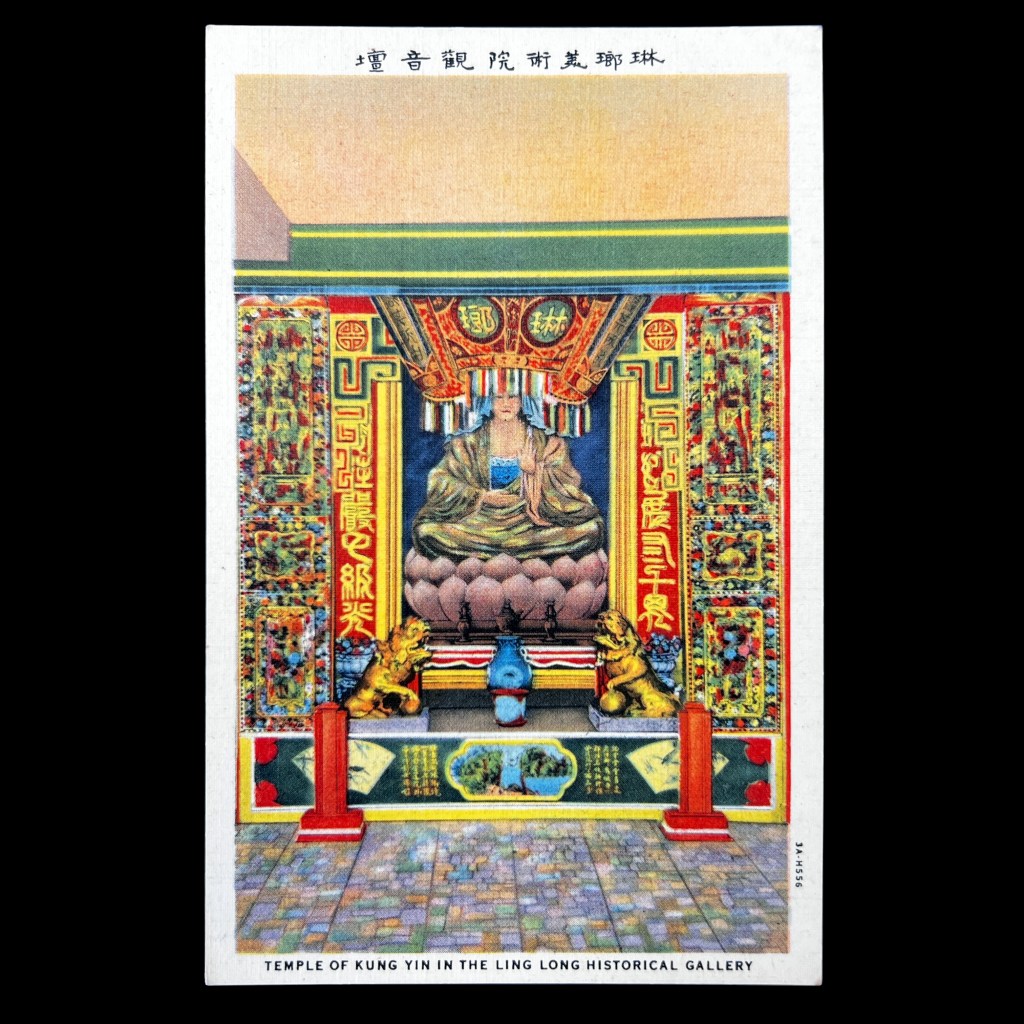
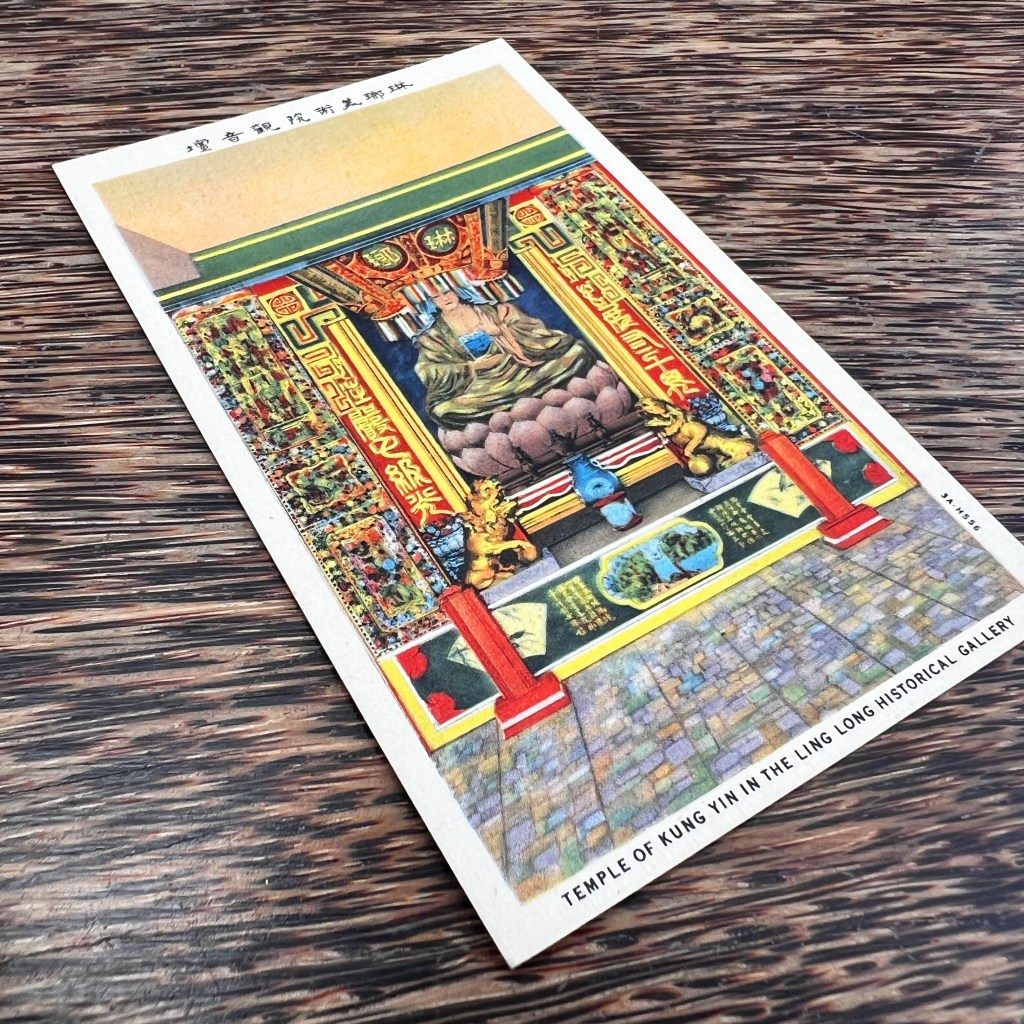
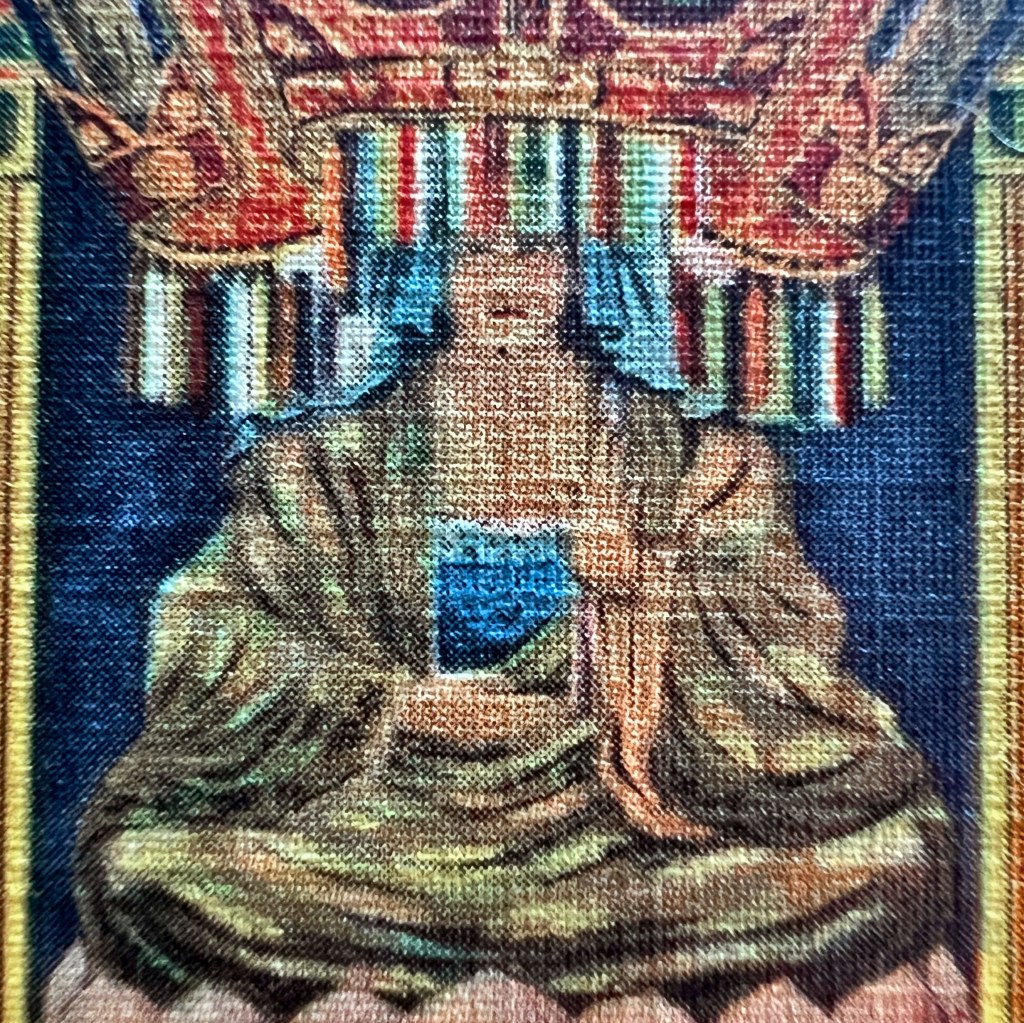
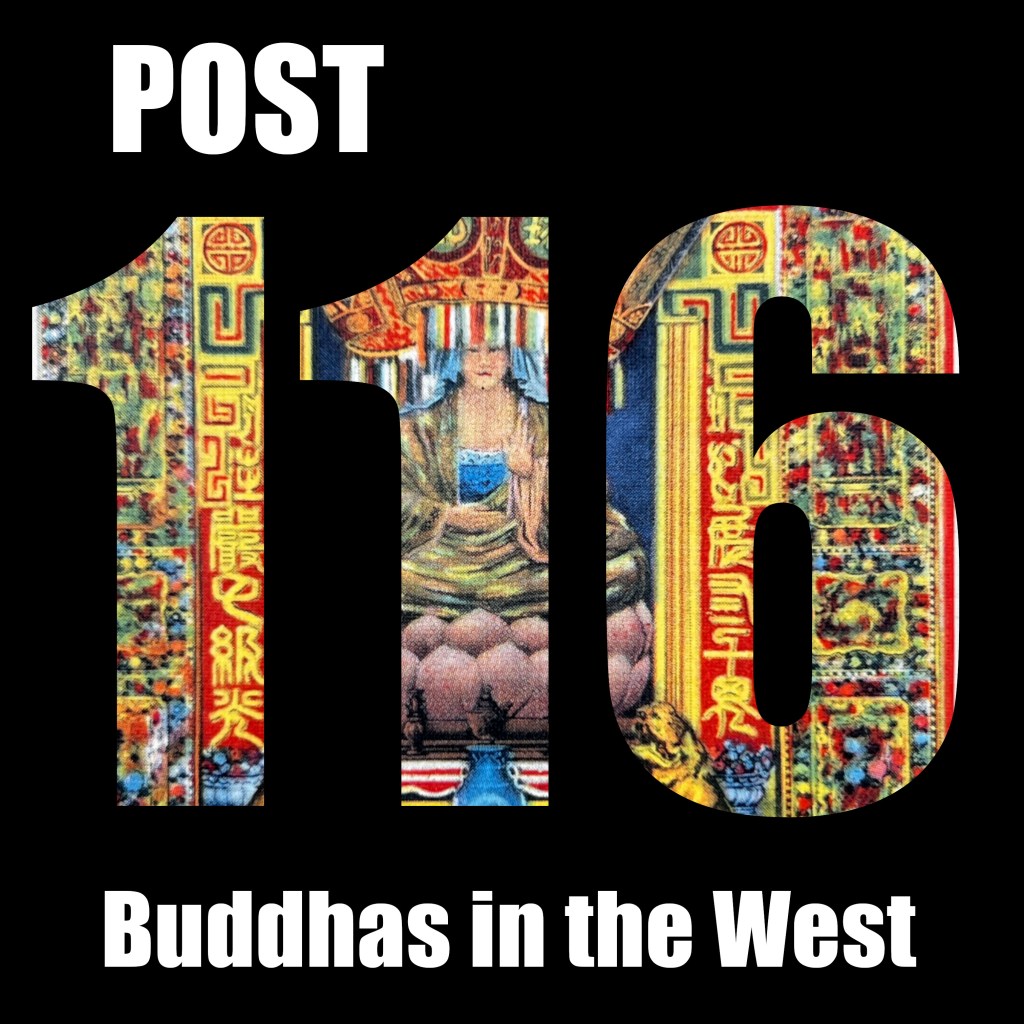
The Ling Long Chinese Museum in Chicago opened prior to the 1933 World’s Fair hoping to draw visitors and help erase the popular view that US Chinatowns were “immoral and dangerous.” The museum housed a large altar in the rear of the main arcade to enshrine an icon of Guanyin.

The was the first American museum owned and operated by Chinese immigrants. One of the main attractions were a series of twenty-four dioramas flanking the “shrine hall” that displayed historical stories and legends from China’s past.

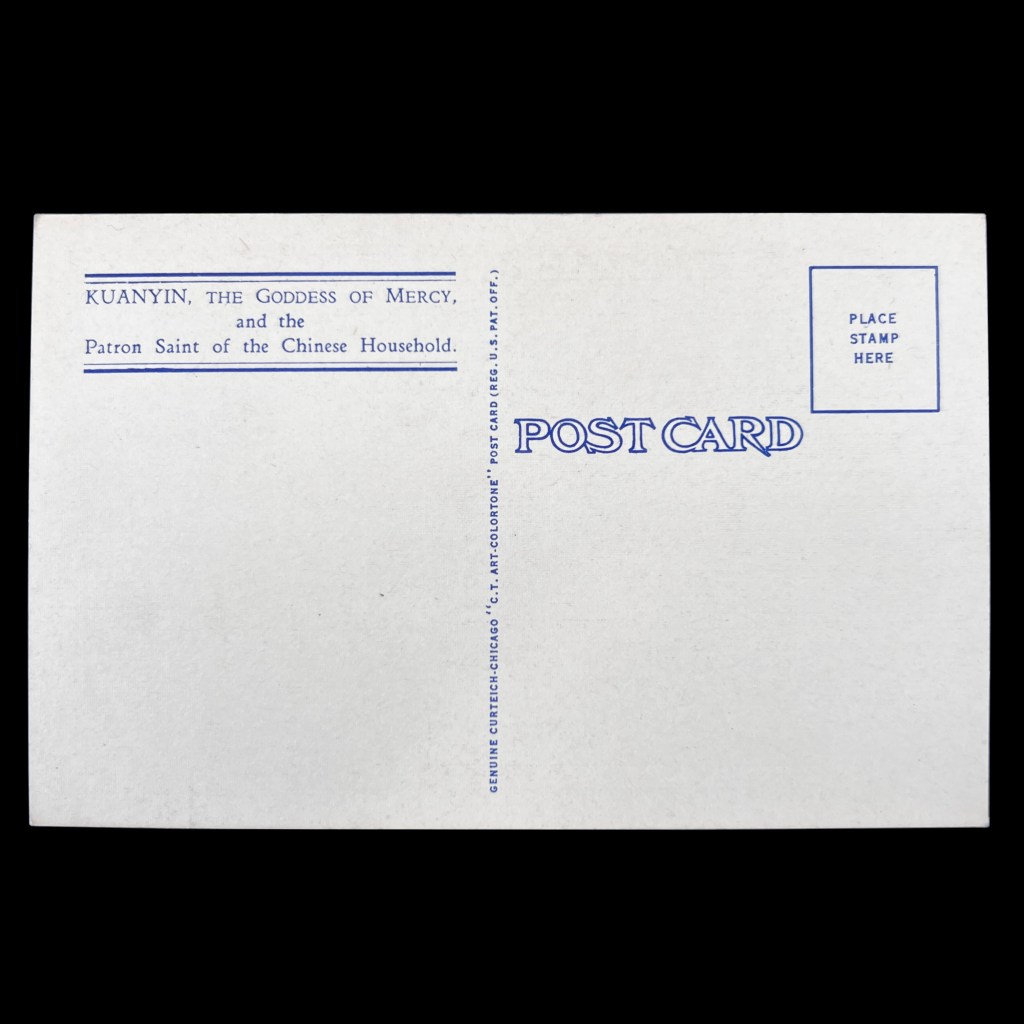
Chicago’s Curt Teich & Co. spearheaded new technology to print postcards in hyperreal colors in 1931, starting the “linen card” era that ran through World War II. Based on production numbers, we know this card was first published for the Ling Long Museum in 1933, the year it first opened.

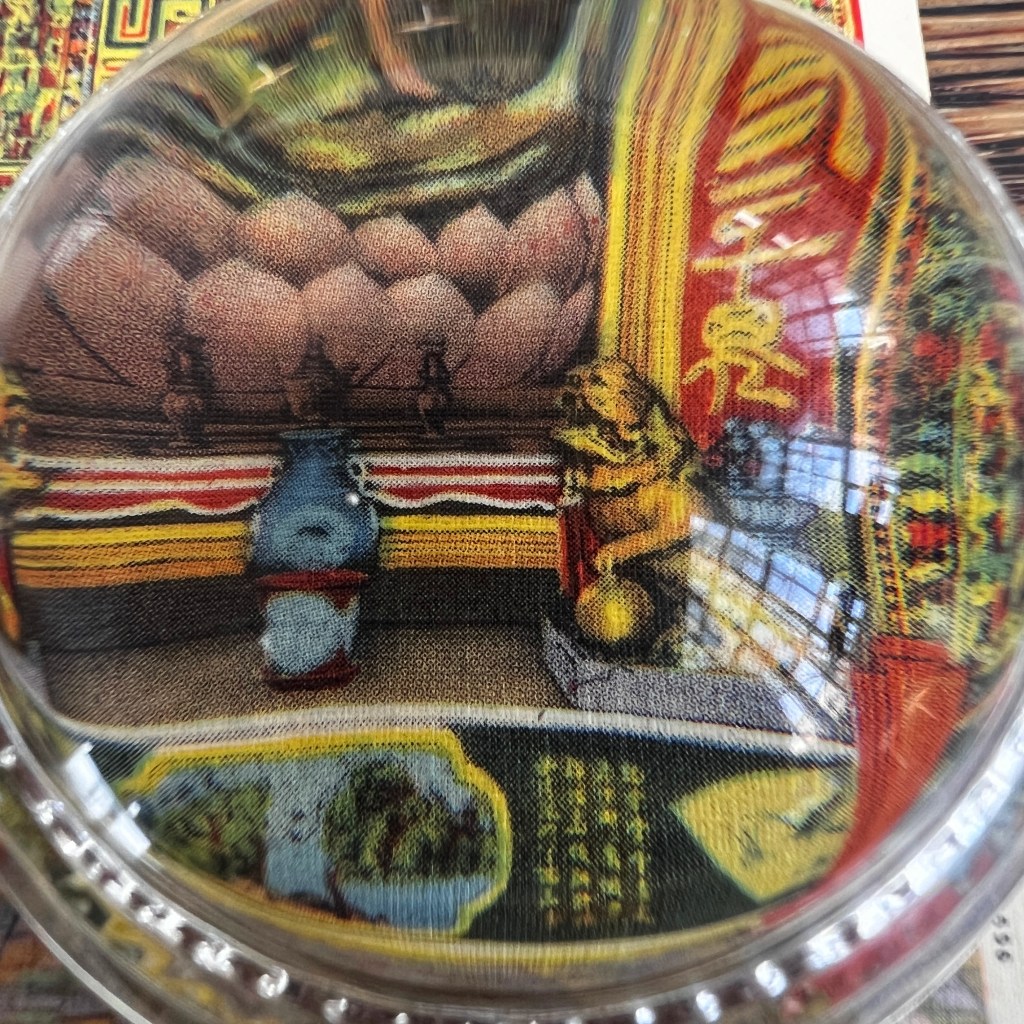
The Guanyin altar was set-up during the period of Chinese Exclusion when many Chinatown temples across the US were closing. Even the shrine seen here displays altar arrangements not commonly seen, such as including lion statuettes.

The museum was open through the 1970s before changing over to a Chinese restaurant. Many items were moved to the Chinese-American Museum of Chicago, but a fire in 2008 destroyed much of the collection, including most of the original dioramas; the Guanyin image is presumed lost.


The Buddhas in the West Material Archive is a digital scholarship project that catalogues artifacts depicting Buddhist material culture for Western audiences. It’s comprised of prints, photos, and an assortment of ephemera and other objects. For a brief introduction to this archive, visit the main Buddhas in the West project page.


For Related Buddhas in the West Posts Featuring the United States:

For the Most Recent Buddhas in the West Posts: