Kamakura Sightseeing Map (1912)

For all the new Buddhas in the West posts
follow us on Bluesky & Instagram


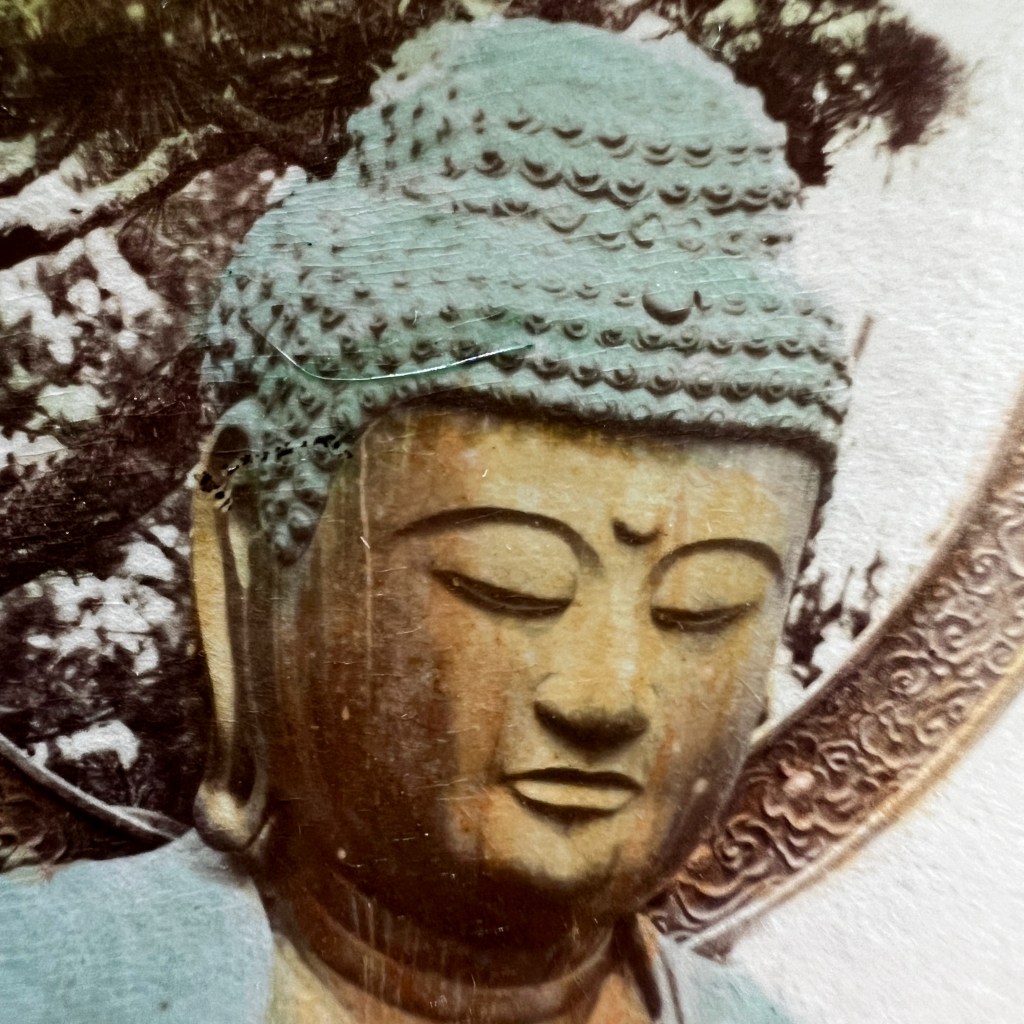
After the opening Japan in 1859, the old backwater capital of Kamakura was transformed into an international tourist destination. This bilingual tourist map from 1912 (Meiji 45) provides a glimpse into which Kamakura sites were seen as most significant, including the Kamakura Daibutsu.
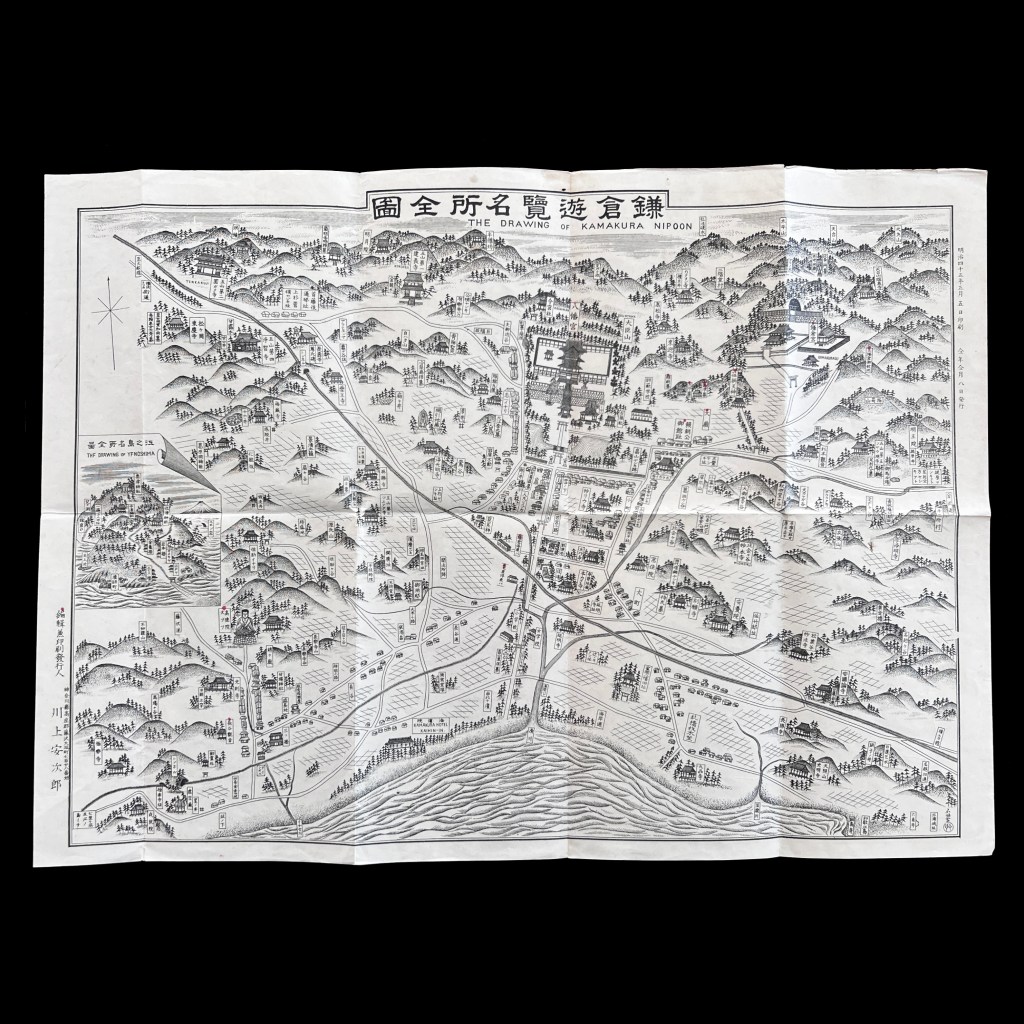
The Complete Map of Kamakura Famous Places for Sightseeing (Kamakura yūran meisho zenzu 鎌倉遊覧名所全圖), loosely rendered into English as The Drawing of Kamakura Nipoon [sic], came inside a paper folder printed with symbols of the Japanese empire. The map was prepared by Kawakami Yasujirō 川上安次郎.
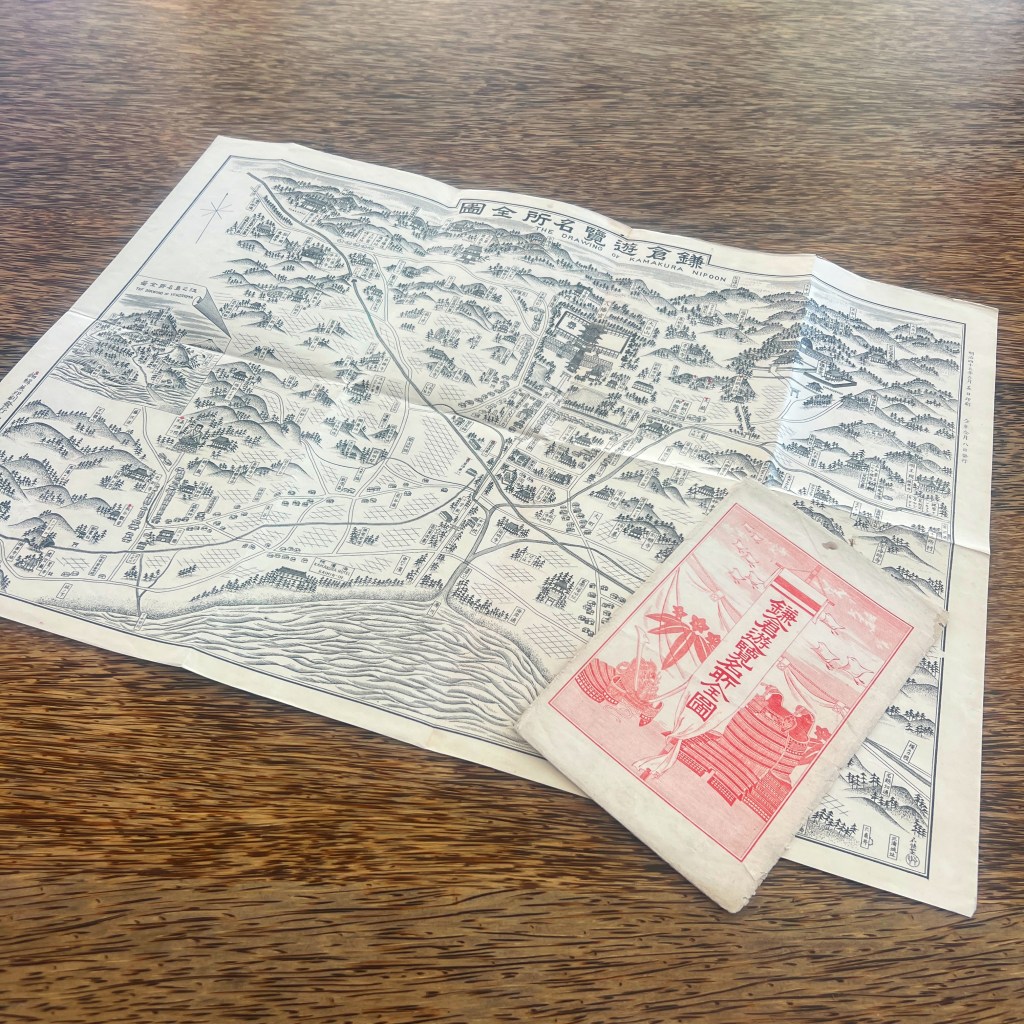
By the early 1890s, the Kamakura Kaihin Hotel, a converted medical therapy facility for seawater bathing, emerged as the premier resort for Kamakura travelers. In March 1893, the Japanese Welcome Society was established to help promote foreign travel in Japan.
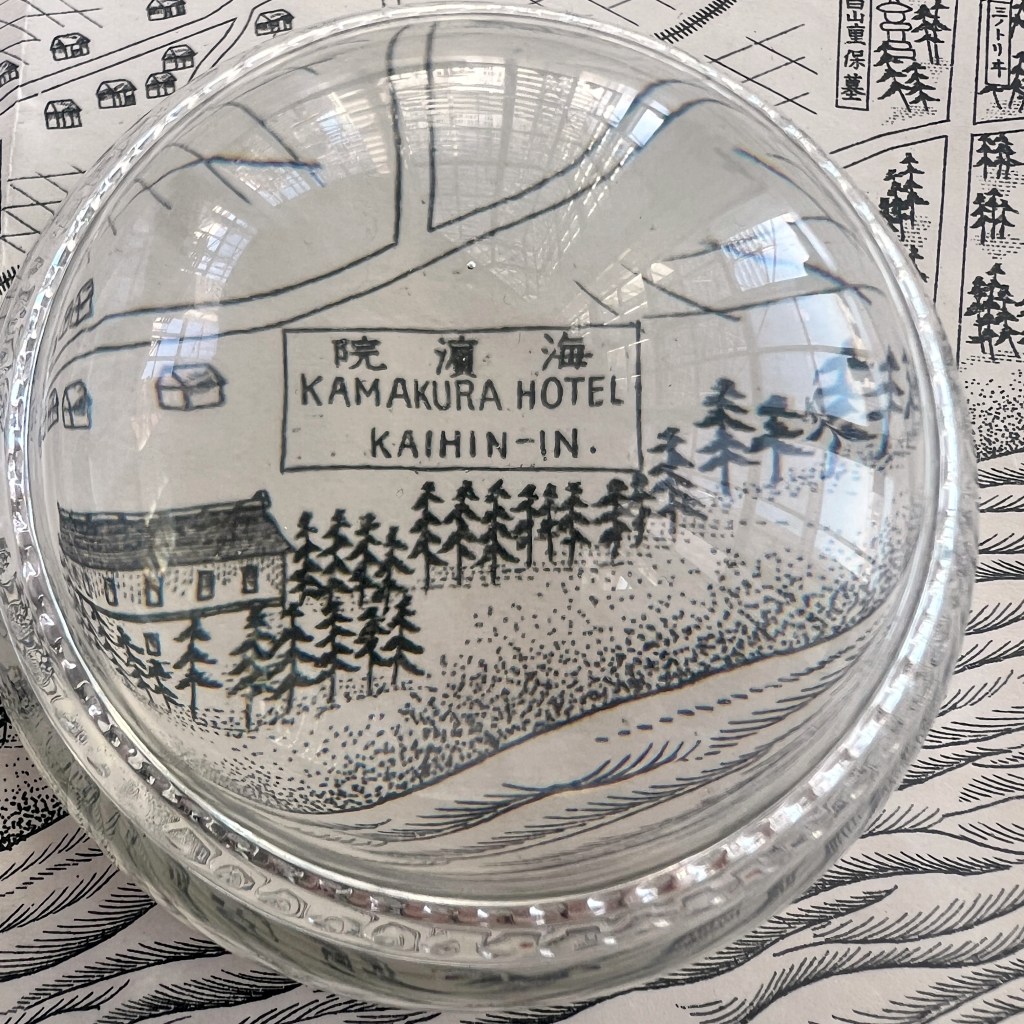
For many Japanese travelers, the main attraction was the Hachiman Shrine, a large complex in the heart of the city found at the end of a long central promenade leading to the ocean. The red dot seen here suggests this site was highlighted by the original owners of the map.

Among the many dozens of sites named on the map, only a handful are marked by a red dot. Of those highlighted is Hase-dera, temple home to a famous 31-foot tall Eleven-Headed Kannon statue.

Another highlighted tourist attraction is the Kamakura Daibutsu at Kōtoku-in, here depicted by a small, yet easily identifiable, icon. For a digitized collection of Japanese maps held by the C. V. Starr East Asian Library at UC Berkeley, see tinyurl.com/yutj576z.


The Buddhas in the West Material Archive is a digital scholarship project that catalogues artifacts depicting Buddhist material culture for Western audiences. It’s comprised of prints, photos, and an assortment of ephemera and other objects. For a brief introduction to this archive, visit the main Buddhas in the West project page.


For Related Buddhas in the West Posts Featuring Japan:

For the Most Recent Buddhas in the West Posts:


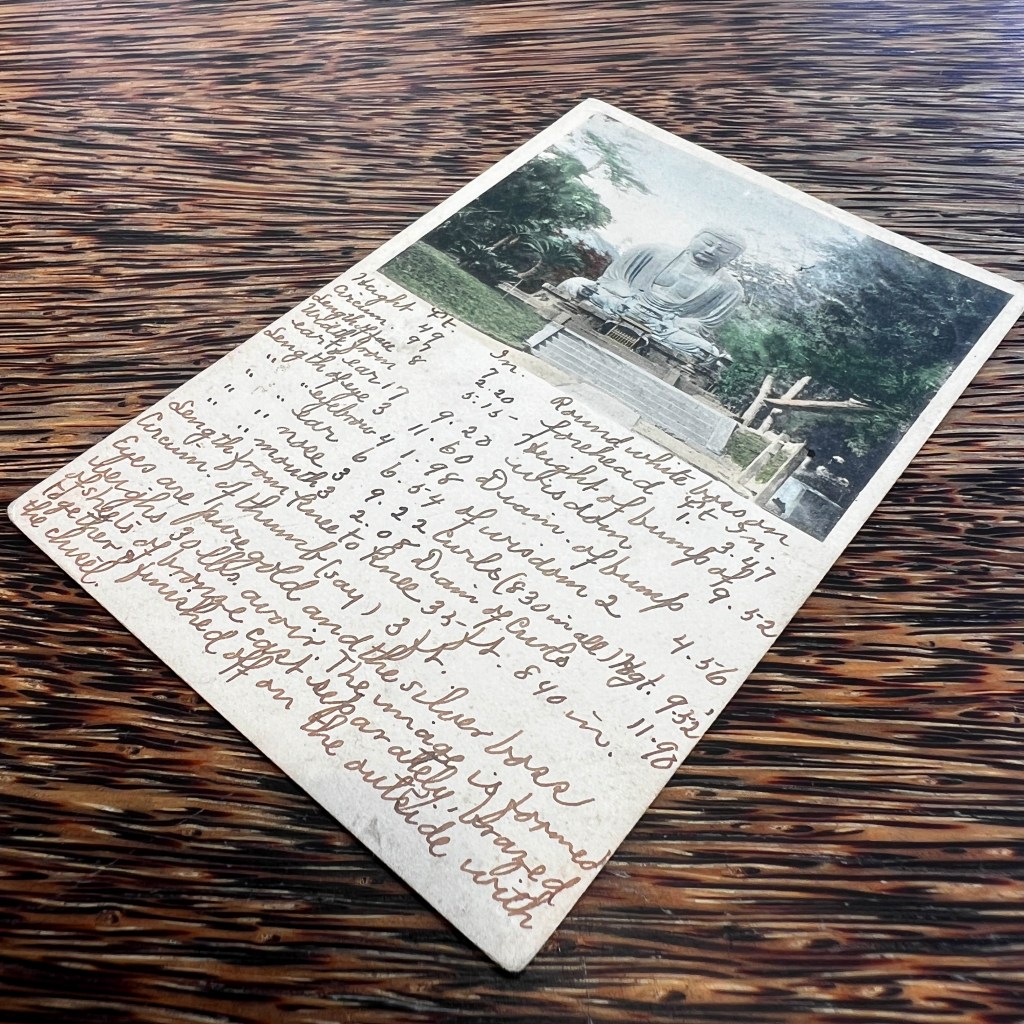
Used Postcard with Kamakura Daibutsu Dimensions

For all the new Buddhas in the West posts
follow us on Bluesky & Instagram


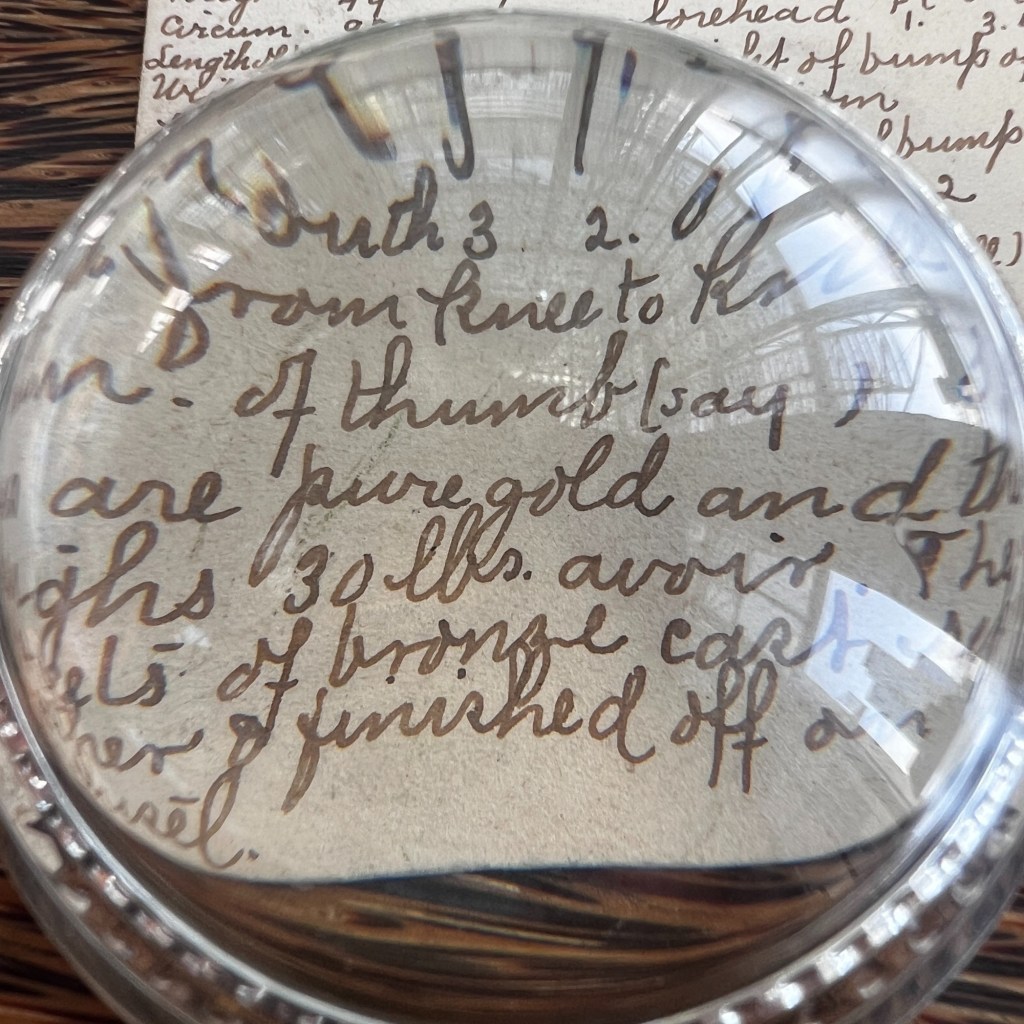
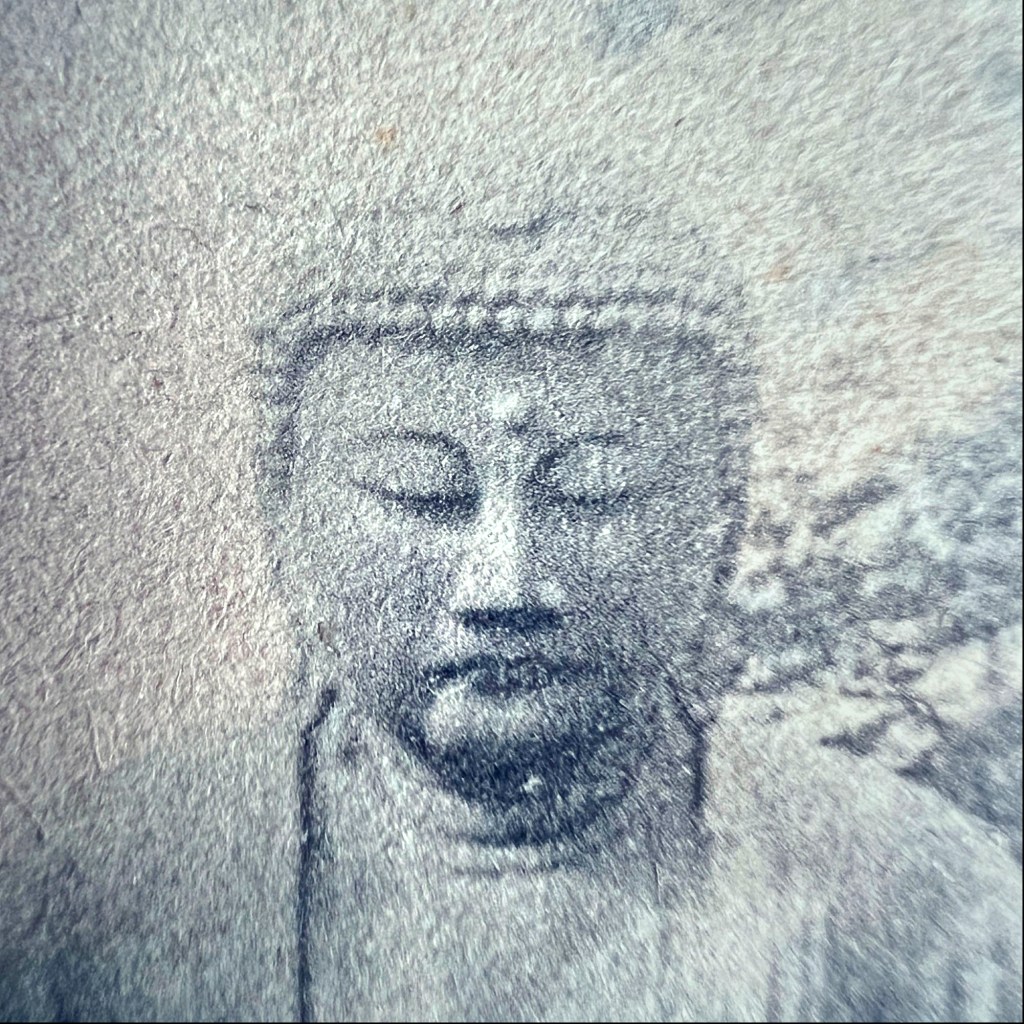
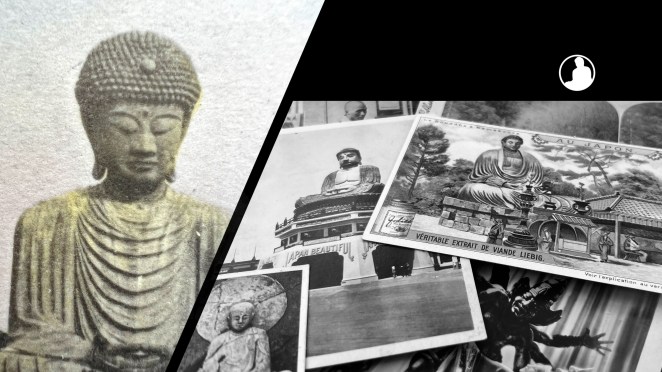
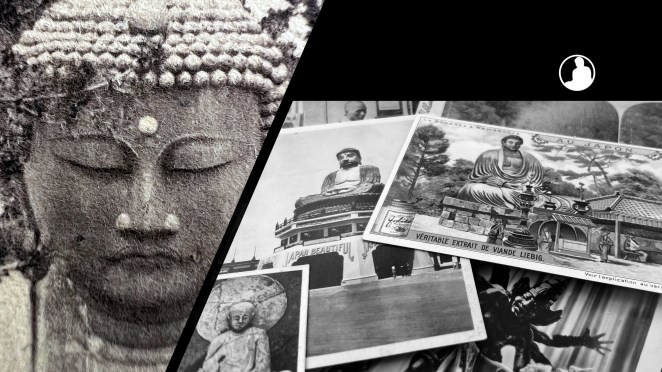
In 2025, seven of the top ten tallest freestanding statues in the world are Buddhist figures (as well as 31 of the top 50). The colossal size of Buddhist statuary is nothing new; foreign travelers in Asia have often noted this fact, as we see in this postcard message from 1906.

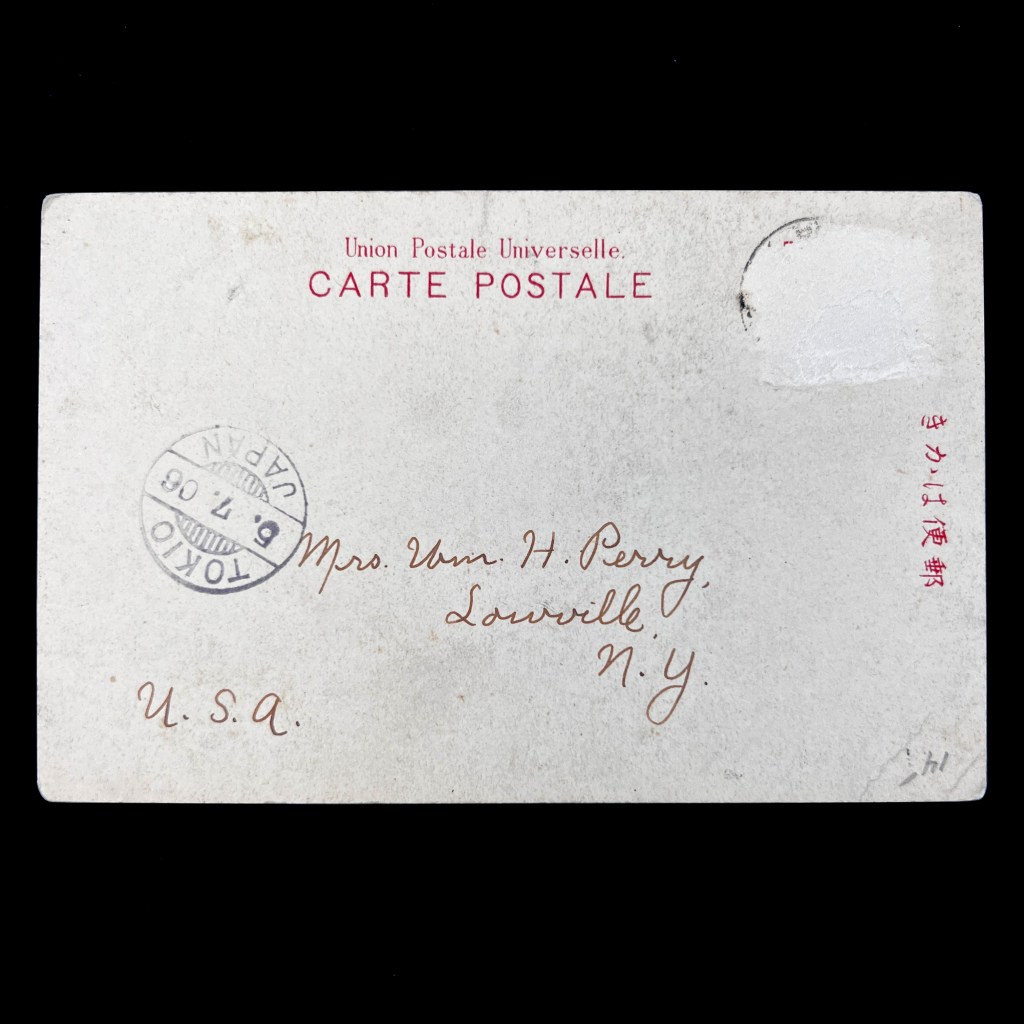
Used postcards are valuable because they reveal which aspects of the Kamakura Daibutsu site in Japan were more salient to visitors. The exact measurements given here were not taken on site by the visitor, but were likely copied from one of the popular Japan tourism guides.

The reverse gives us some insight into the “extended biography” of the postcard after its departure from Tokyo. Notably, the missing postage stamp suggests it was prized by a philatelist – a stamp collector.

The focus on the size, craftsmanship, and materials of the statue minimize the religious importance of such an icon and highlight its value as fine art.

Teaching Resource: For a brief introduction to material analysis that uses this postcard as an example, see the post and handout: Making Materials Speak: Performing a Material Analysis, viewable here: tinyurl.com/nhhuh4nk.


The Buddhas in the West Material Archive is a digital scholarship project that catalogues artifacts depicting Buddhist material culture for Western audiences. It’s comprised of prints, photos, and an assortment of ephemera and other objects. For a brief introduction to this archive, visit the main Buddhas in the West project page.


For Related Buddhas in the West Posts Featuring Historical Postcards:


For the Most Recent Buddhas in the West Posts:


Arnoldus Montanus’ Great Buddha of Hōkō-ji Engraving

For all the new Buddhas in the West posts
follow us on Bluesky & Instagram


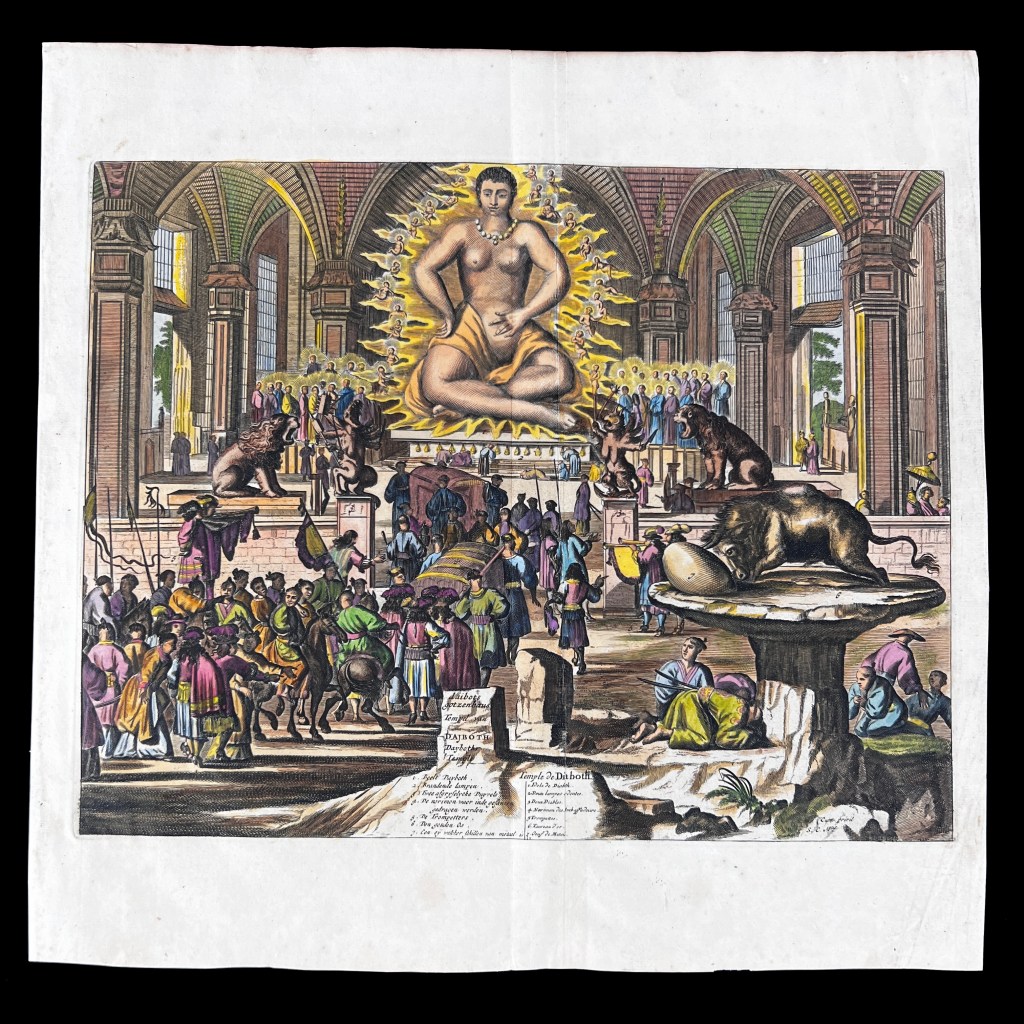
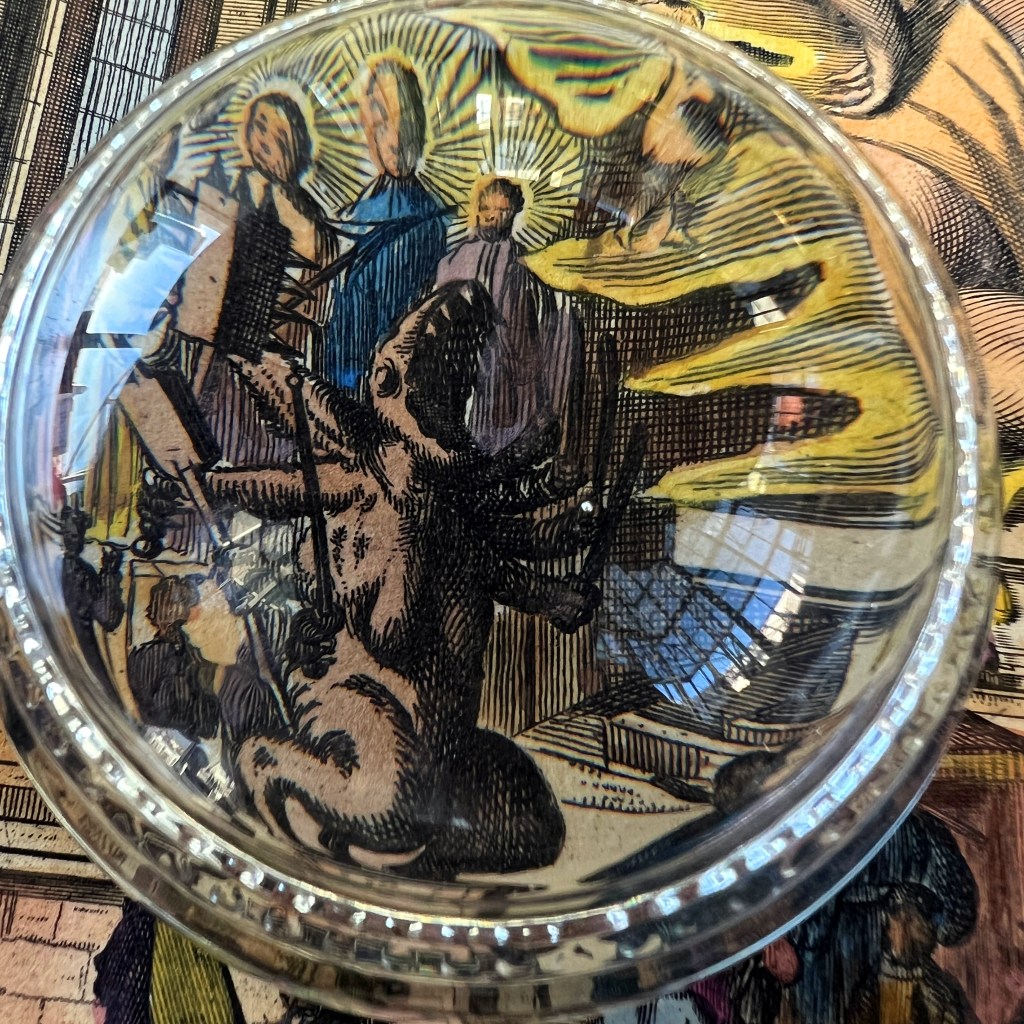
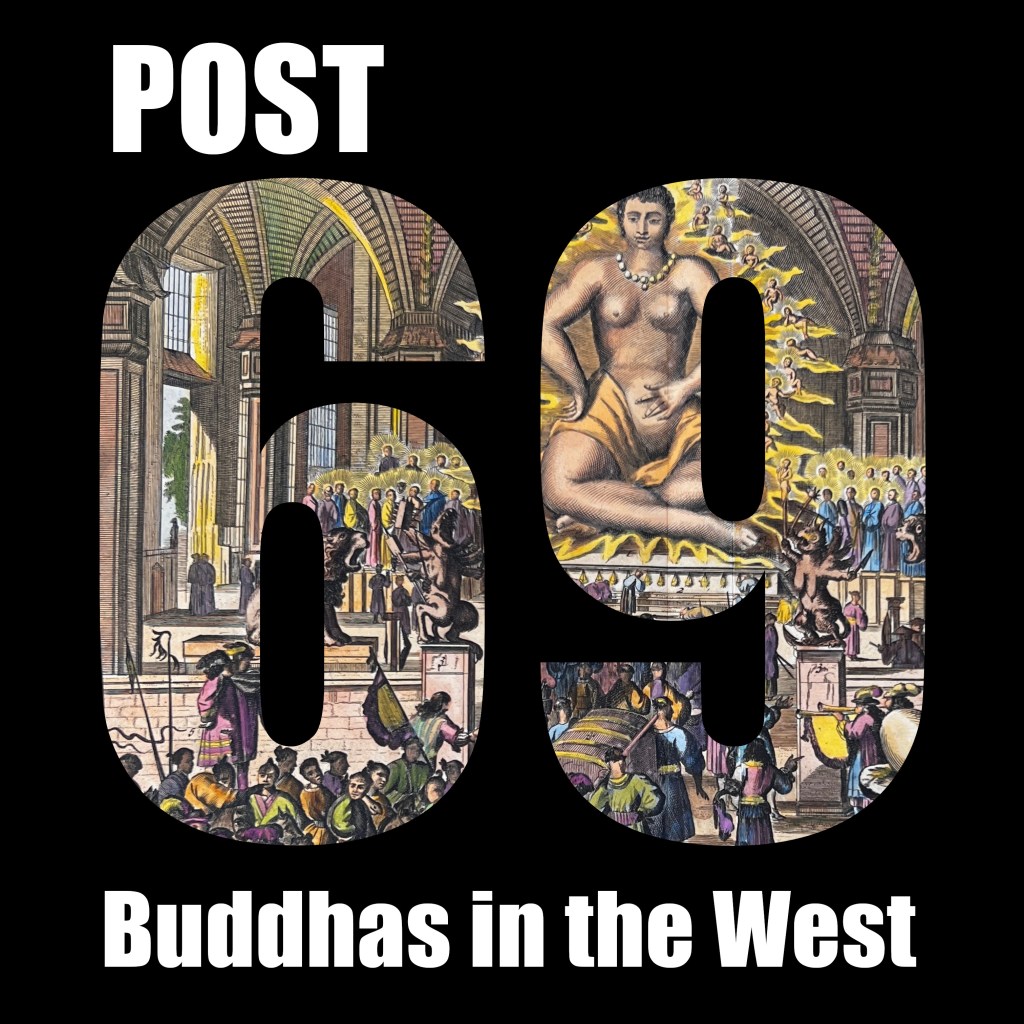
In 1649, while traveling from Nagasaki to Edo (modern Tokyo), the visiting Dutch Embassy made an obligatory stop in Kyoto where they saw the Great Buddha of Hōkō-ji. The Great Buddha stood nearly 60 feet tall and was completed in 1612, replacing an older destroyed icon.

The original Dutch report by Andries Frisius was eventually published by Arnoldus Montanus in 1669 as part of his Atlas Japannensis. Based in part on the report of Frisius, the printer, Jacob van Meurs, had a large copperplate engraving made to illustrate the embassy’s visit.

The temple icon was Vairocana Buddha which was described by Montanus as a “terrible Image… with his Legs across under him.” Furthermore, “the whole statue represents a Woman sitting in a Ring of Darting beams richly gilded.”

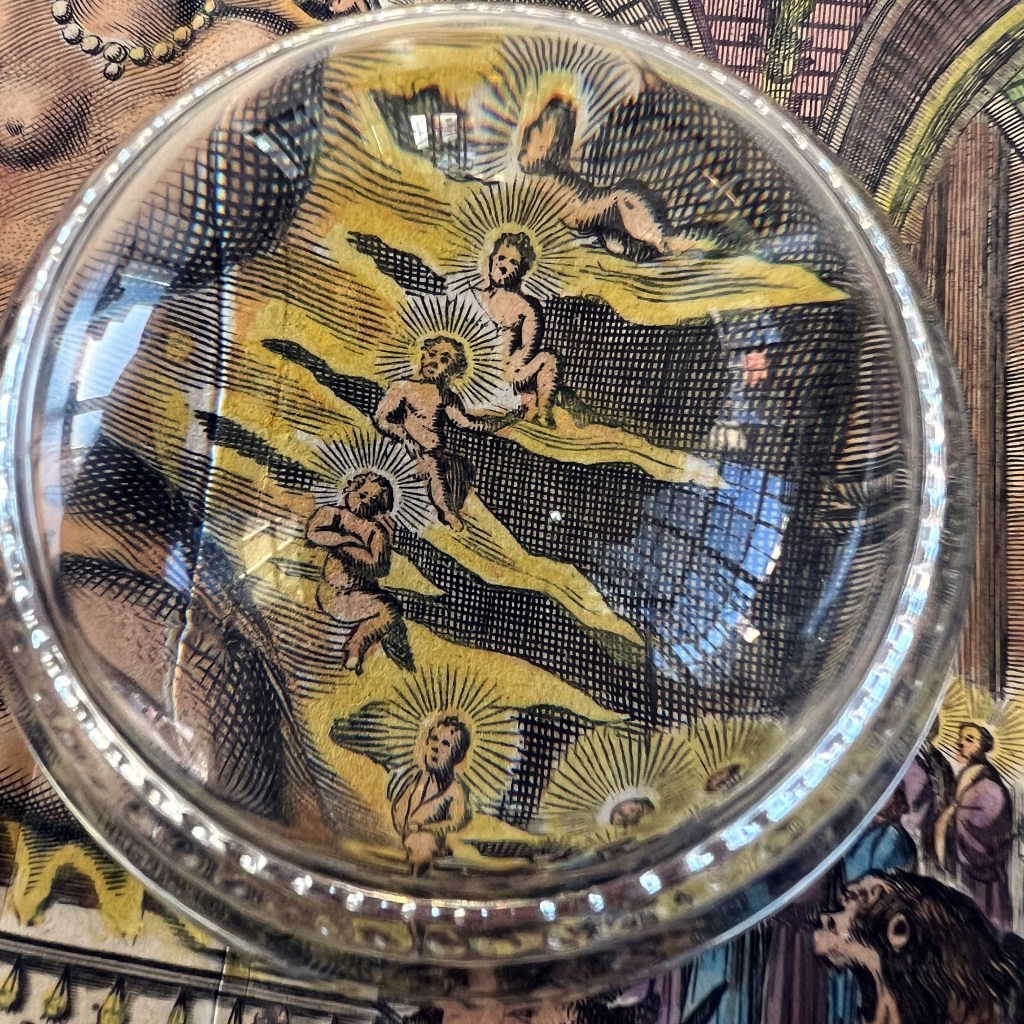
Van Meurs’ engravers seemingly took inspiration from the text, but also had to draw upon their own visual repertoire to fill in details. This includes the masonry columns in the back of the temple as well as playful cherub-like figures in the “Ring of Darting beams.”

“Two horrible Fiends, with Stiletto’s in their hands” – certainly the fearsome Niō – are described a guarding the temple entrance. The engraver places these grotesque figures inside the main temple hall.

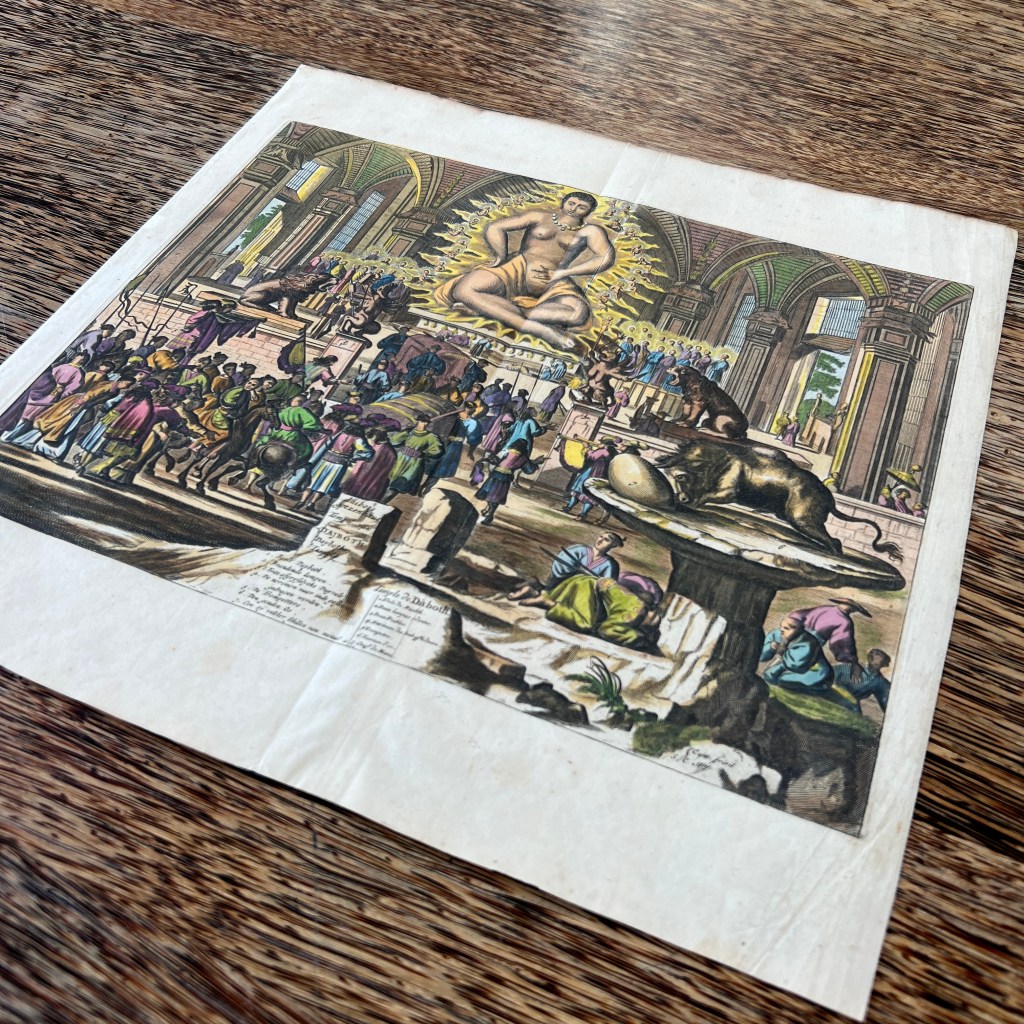
Atlas Japannensis was first published in Dutch in 1669; an English version came the following year. The hand-colored print shown here came from the French edition of 1680. As noted by Isa van Eeghen, the English legend was burnished off of the plate and re-inscribed in French.

By the time of printing, the colossal Buddha of Hōkō-ji had been destroyed by an earthquake in 1662; a wooden image replaced it in 1667. The 1669 Dutch edition of Atlas Japannensis has been digitized by the National Library of the Netherlands, viewable here: tinyurl.com/5n6kstfy.


The Buddhas in the West Material Archive is a digital scholarship project that catalogues artifacts depicting Buddhist material culture for Western audiences. It’s comprised of prints, photos, and an assortment of ephemera and other objects. For a brief introduction to this archive, visit the main Buddhas in the West project page.


For Related Buddhas in the West Posts Featuring Historical Engravings:


For the Most Recent Buddhas in the West Posts:


Tamamura Kōzaburō’s Shinkōji Vairocana Photograph

For all the new Buddhas in the West posts
follow us on Bluesky & Instagram


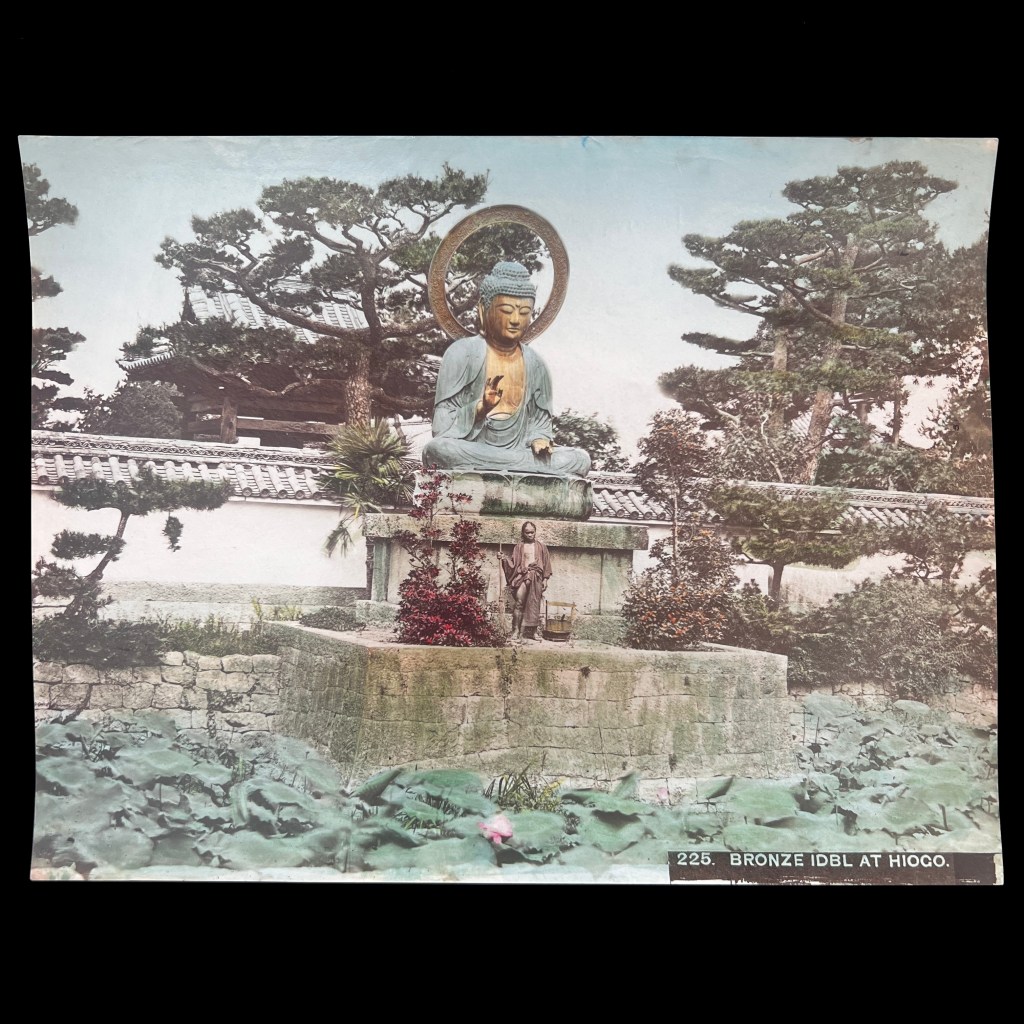
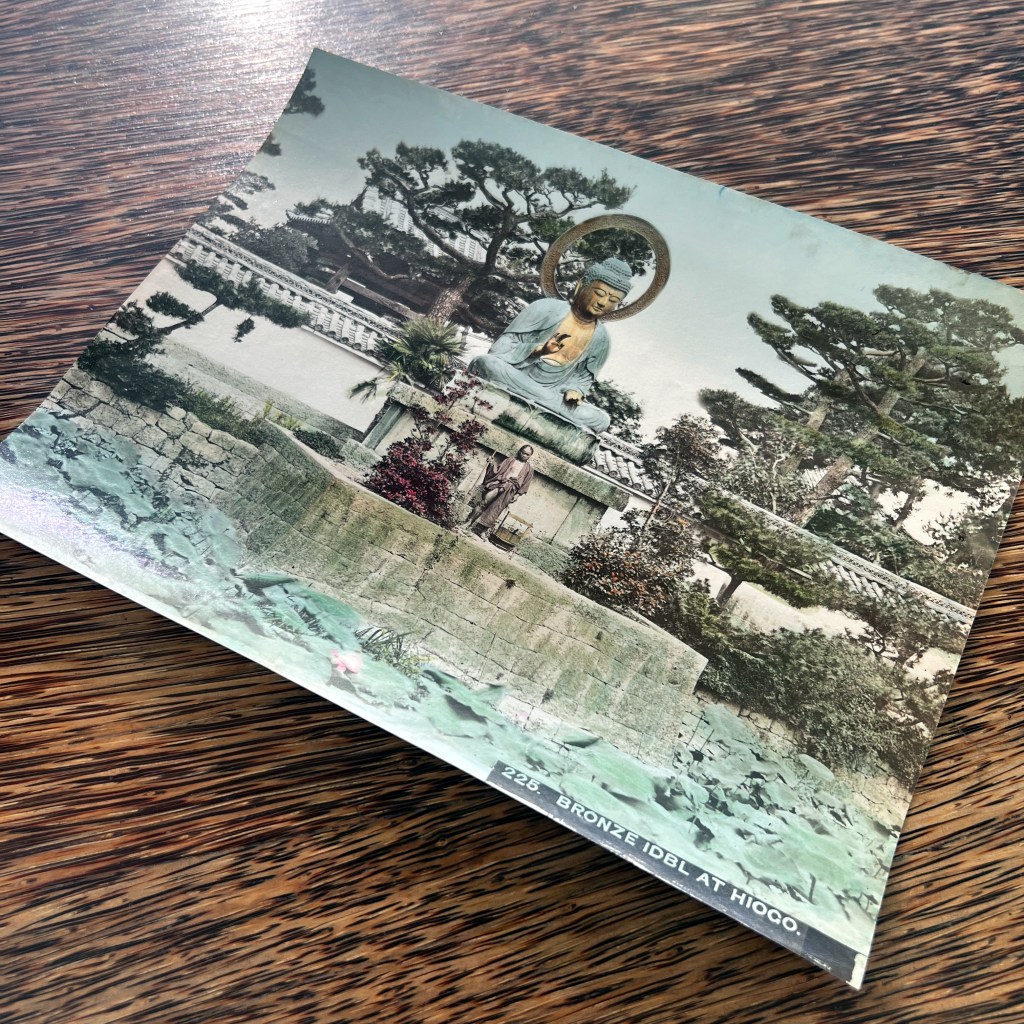
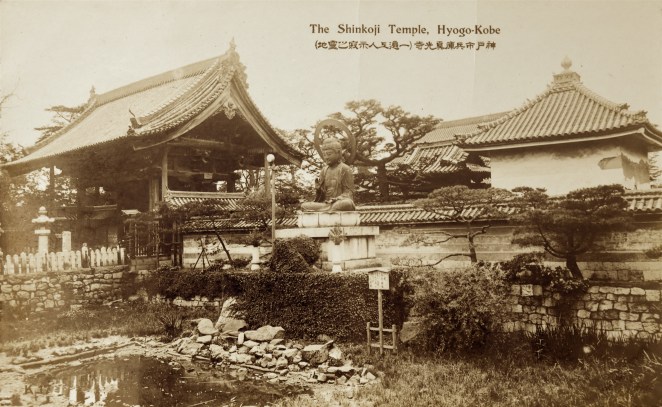
For late Victorian-era globetrotters, religious sites around Japanese port cities were often treated as picturesque tourist destinations. Such a site can be found with the Shinkō-ji lotus pond surrounding a large bronze Buddhist statue, not far from Kobe harbor.

This photograph was taken by Tamamura Kōzaburō who operated a well-known studio based in Yokohama since the early 1880s. Tamamura, like many of his peers, often sold photographic souvenirs of sites, objects, and people sought out by foreign tourists.

It was common for photographers to add people to the scene to help provide a sense of scale. The height of the Shinkō-ji statue is claimed to have been 4.8 meters tall.

While the caption on the photo identifies the statue generically as an idol, Shinkō-ji identifies it as Vairocana Buddha. According to temple records the icon was installed in 1760.

Unfortunately, to the best of my knowledge, this icon was likely destroyed by allied firebomb attacks in March 1945 during World War II. A Tamamura album with 50 photograph has been scanned by Harvard University Library, viewable here: https://tinyurl.com/3jn672n5


The Buddhas in the West Material Archive is a digital scholarship project that catalogues artifacts depicting Buddhist material culture for Western audiences. It’s comprised of prints, photos, and an assortment of ephemera and other objects. For a brief introduction to this archive, visit the main Buddhas in the West project page.


For Related Buddhas in the West Posts Featuring Kobe, Japan:


For the Most Recent Buddhas in the West Posts:

Hakone Pass Jizō Magic Lantern Slide

For all the new Buddhas in the West posts
follow us on Bluesky & Instagram


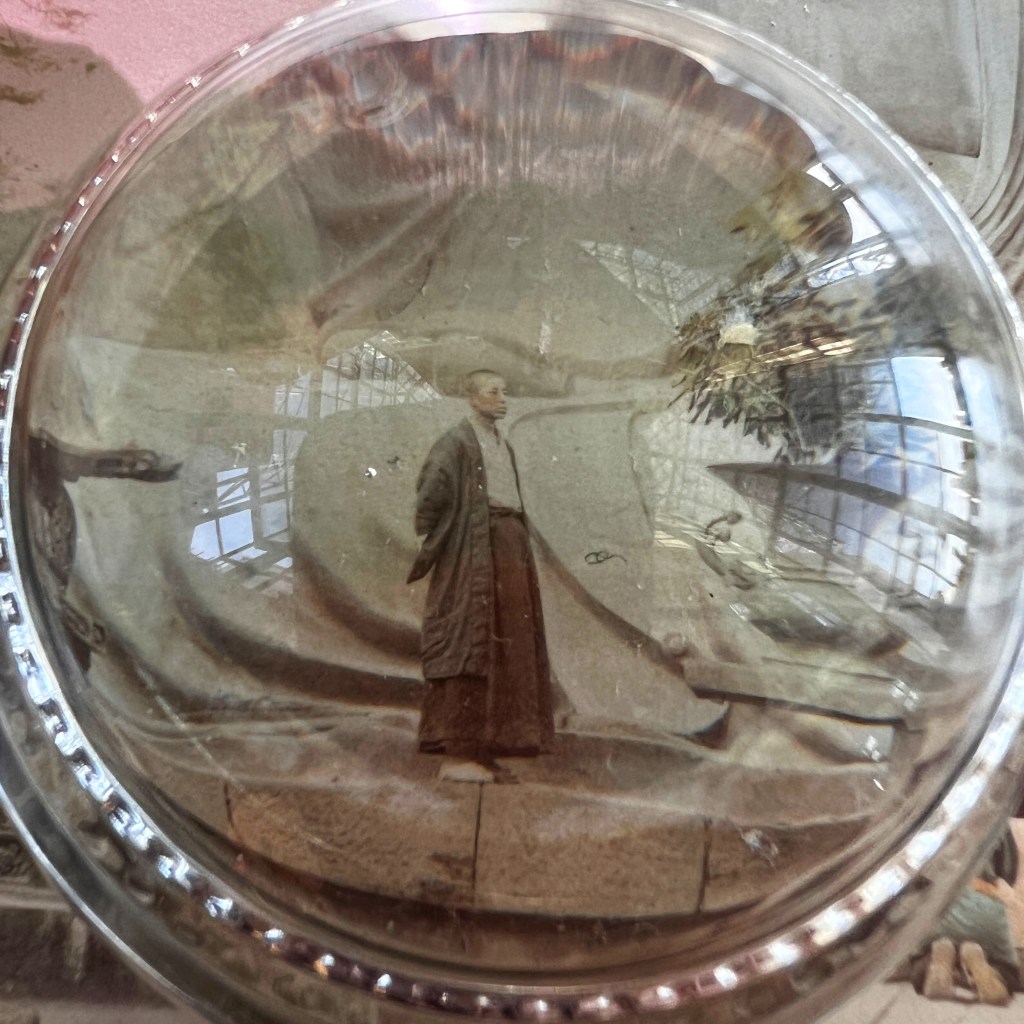
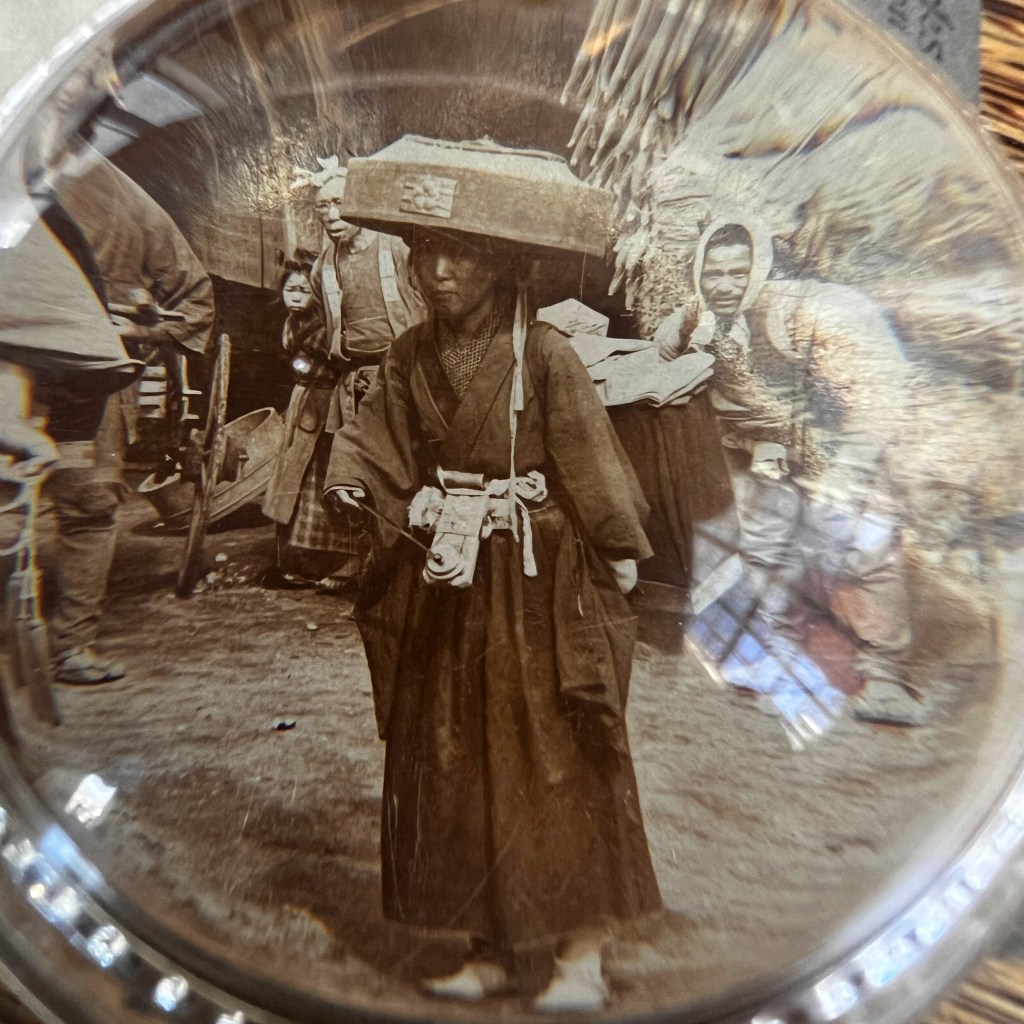
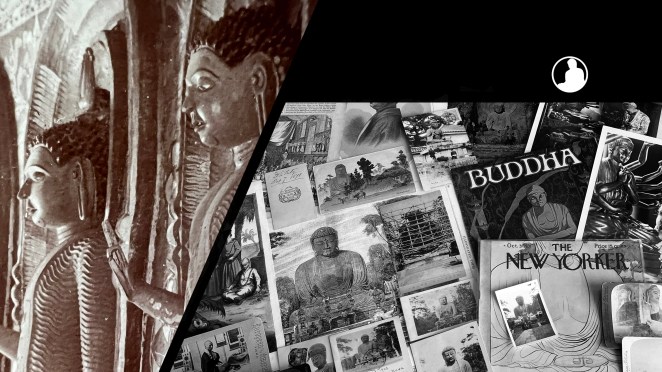
At the end of the 19th century, glass “magic lantern” slides were part of popular American entertainment. After returning home, world travelers sometimes gave informal lectures in church halls or town theaters about their experiences, often using these slides.

This monumental Jizō was created c. 1300 and sits by a mountain pass where travelers on the famed Tōkaidō made their journey. We can see the rocky outlines of an old wooden roof; the small shrine hall was destroyed during an eruption of Mt. Fuji in 1707.

The slide was produced by a New York studio and featured an unknown Euro-American tourist center frame.

Japanese porters can be seen among the entourage.

The photosensitive emulsion is sandwiched between two panels of glass for protection. The tape around the edges holds the glass panels together.

The Hakone Pass Jizō was a popular tourist destination at the turn of the 20th century; it is still viewable today. For more on Jizō and this particular icon, see Hank Glassman, The Face of Jizo: Image and Cult in Medieval Japanese Buddhism, 2012.


The Buddhas in the West Material Archive is a digital scholarship project that catalogues artifacts depicting Buddhist material culture for Western audiences. It’s comprised of prints, photos, and an assortment of ephemera and other objects. For a brief introduction to this archive, visit the main Buddhas in the West project page.


For Related Buddhas in the West Posts Featuring Lantern Slides:


For the Most Recent Buddhas in the West Posts:

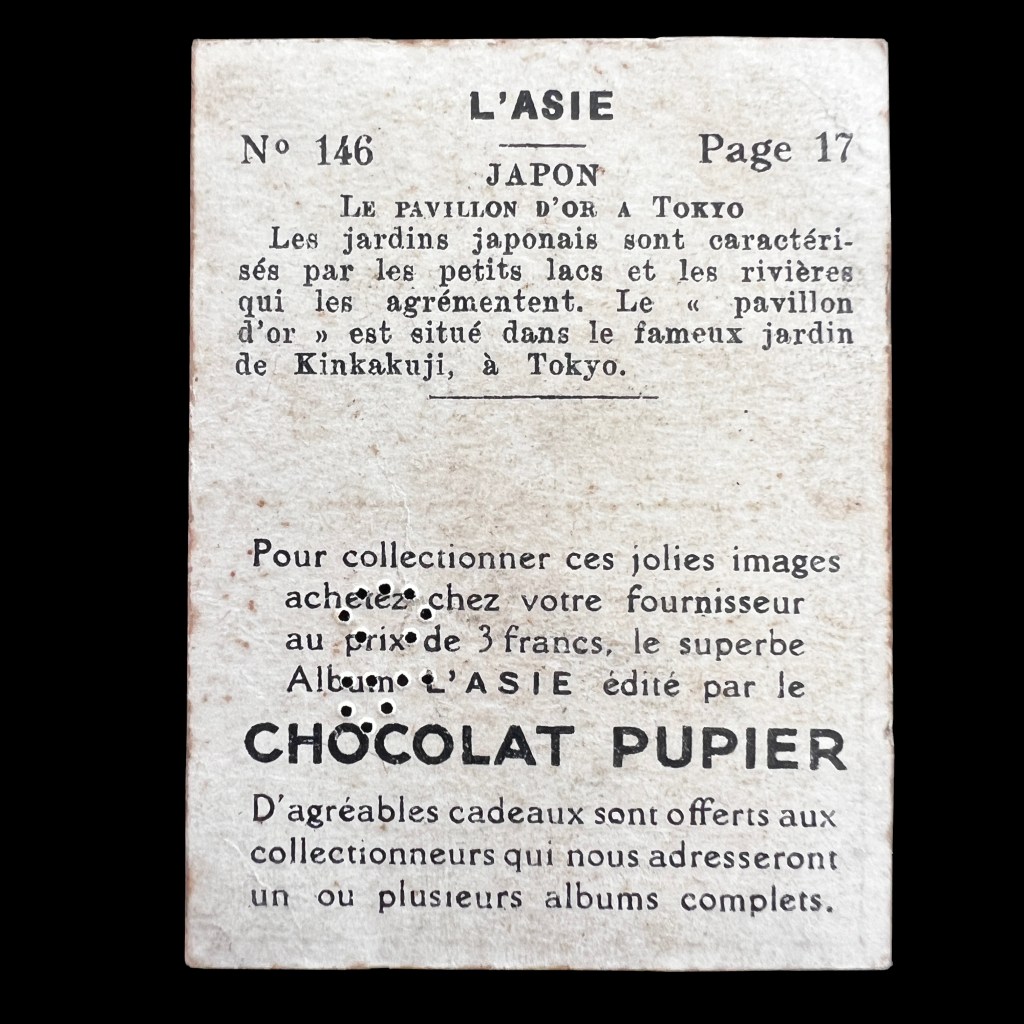
Chocolat Pupier’s Kinkaku-ji Trade Card

For all the new Buddhas in the West posts
follow us on Bluesky & Instagram


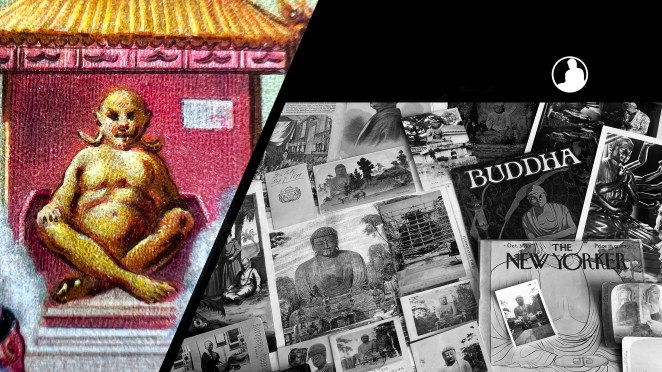
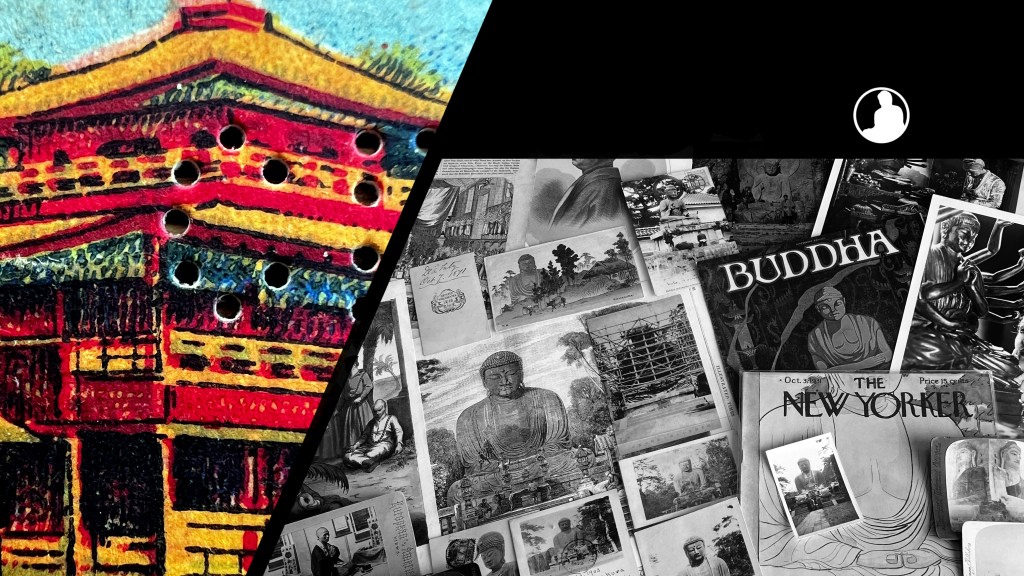
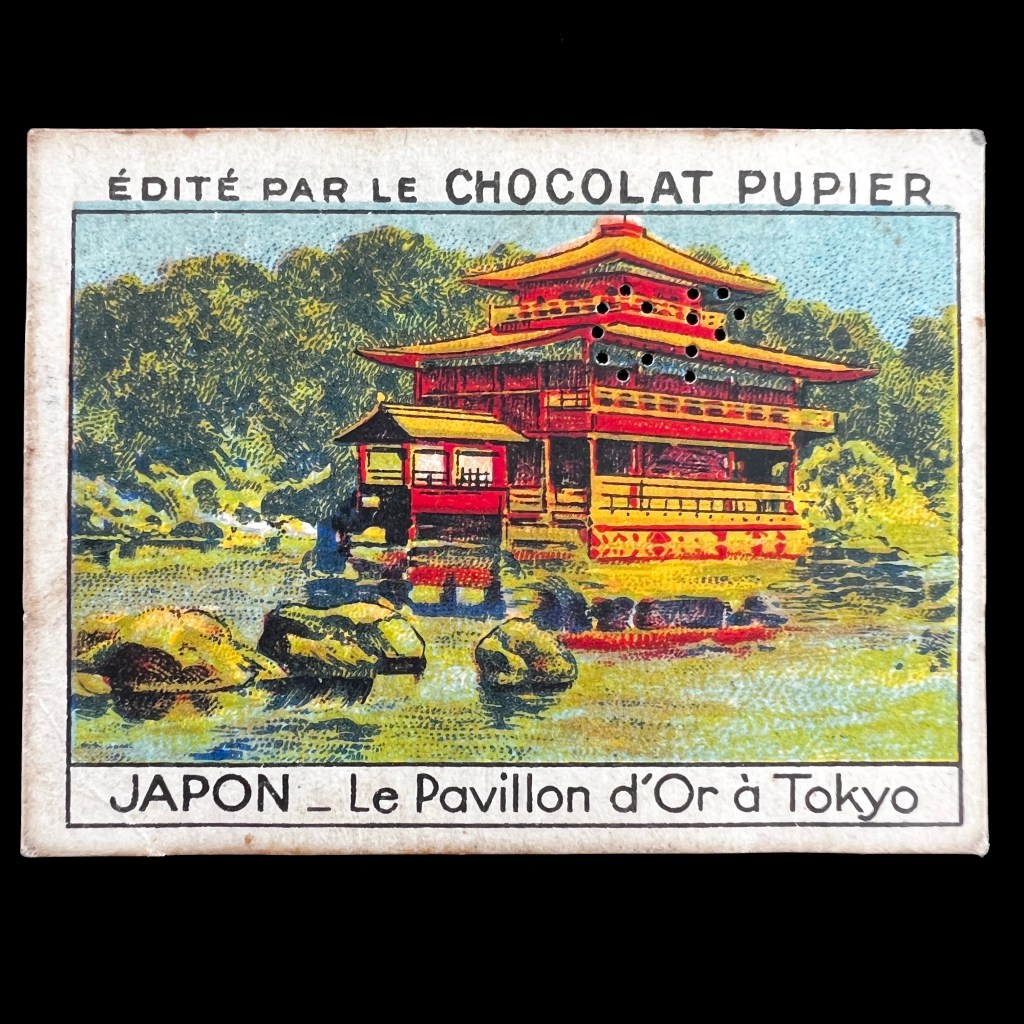
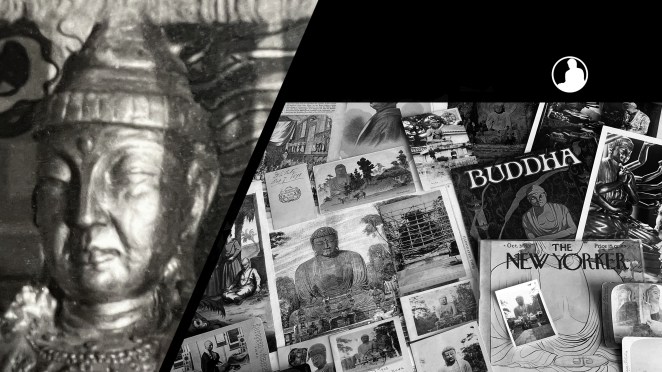
Turn of the century French chocolatiers took advantage of the popularity of colorful trade cards and included them with their products. In 1936 the Chocolat Pupier company created a collectable Asia series with several illustrations of Buddhist material culture.

An album with 252 card slots could be purchased to display your collection. If completed, Chocolat Pupier offered a gift to the consumer.

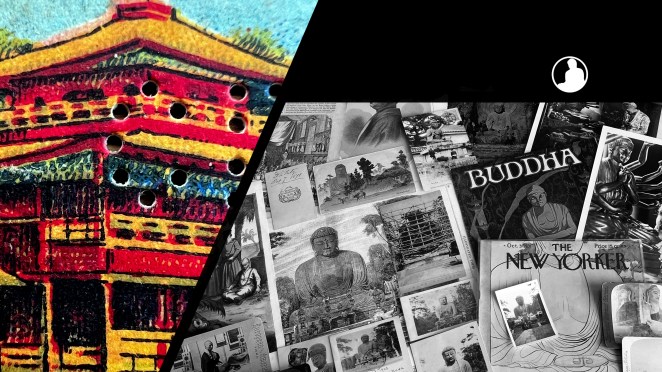
Chromo-lithographic printing offered an inexpensive way to mass produce colorful imagery. There is an error on this card, however, can you spot it?

The Gold Pavilion Temple, Kinkaku-ji, is not in Tokyo, buy Kyoto. In addition to Asia, Chocolat Pupier made cards related to Europe, North America, and Africa.

A small collection of Chocolat Pupier card was recently acquired by Duke University Library, see here: https://archives.lib.duke.edu/catalog/chocolatpupier.


The Buddhas in the West Material Archive is a digital scholarship project that catalogues artifacts depicting Buddhist material culture for Western audiences. It’s comprised of prints, photos, and an assortment of ephemera and other objects. For a brief introduction to this archive, visit the main Buddhas in the West project page.


For Related Buddhas in the West Posts Featuring Historical Trade Cards:


For the Most Recent Buddhas in the West Posts:

Adolfo Farsari’s Kamakura Daibutsu Photograph

For all the new Buddhas in the West posts
follow us on Bluesky & Instagram


In 1886, a year after Adolfo Farsari opened his Yokohama photography studio, it burned to the ground during a city-wide fire. Farsari spent the next several months traveling Japan to replenish his stock, including several Buddhist sites popular among globetrotting tourists.

Moreover, with the destruction of Farsari’s studio, he also lost the older negatives of Felice Beato and Baron von Stillfried. Farsari’s studio was among the last of the foreign studios in Yokohama as more Japanese photographers were turning to professional ventures.

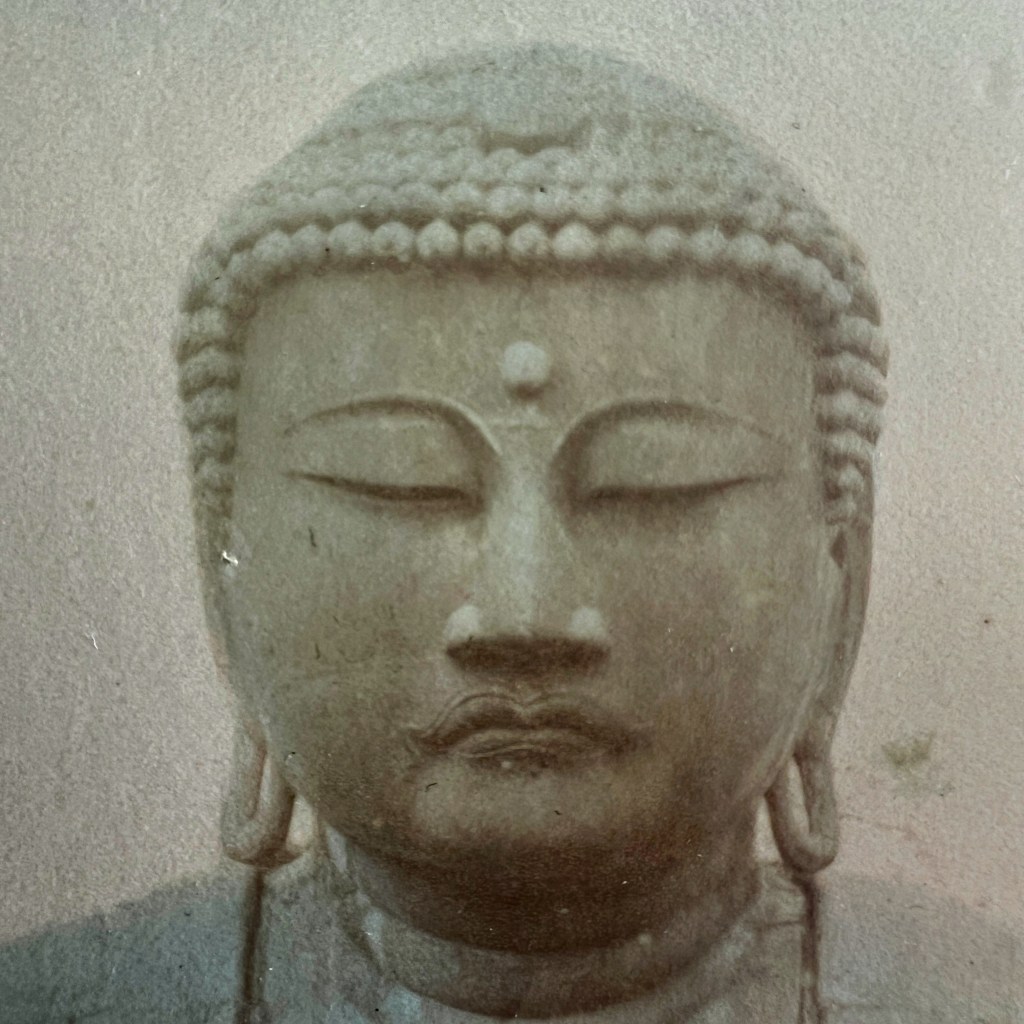
Farsari’s scene of the Kamakura Daibutsu shows a person in the middle of prayer.

We can also see another man standing on the stone pedestal, a common sight in photographs of this era.

Farsari’s work earned the praise Rudyard Kipling who complimented him on the fidelity of the hand-coloring. Further commentary on Farsari’s Kamakura Daibutsu photo can be found here: https://peterromaskiewicz.com/2019/01/19/farsaris-dai-butsu-visual-literacy-of-buddhism/


The Buddhas in the West Material Archive is a digital scholarship project that catalogues artifacts depicting Buddhist material culture for Western audiences. It’s comprised of prints, photos, and an assortment of ephemera and other objects. For a brief introduction to this archive, visit the main Buddhas in the West project page.


For Related Buddhas in the West Posts Featuring Historical Photography:


For the Most Recent Buddhas in the West Posts:


Hyōgo Daibutsu at Kobe F.S. Postcard

For all the new Buddhas in the West posts
follow us on Bluesky & Instagram


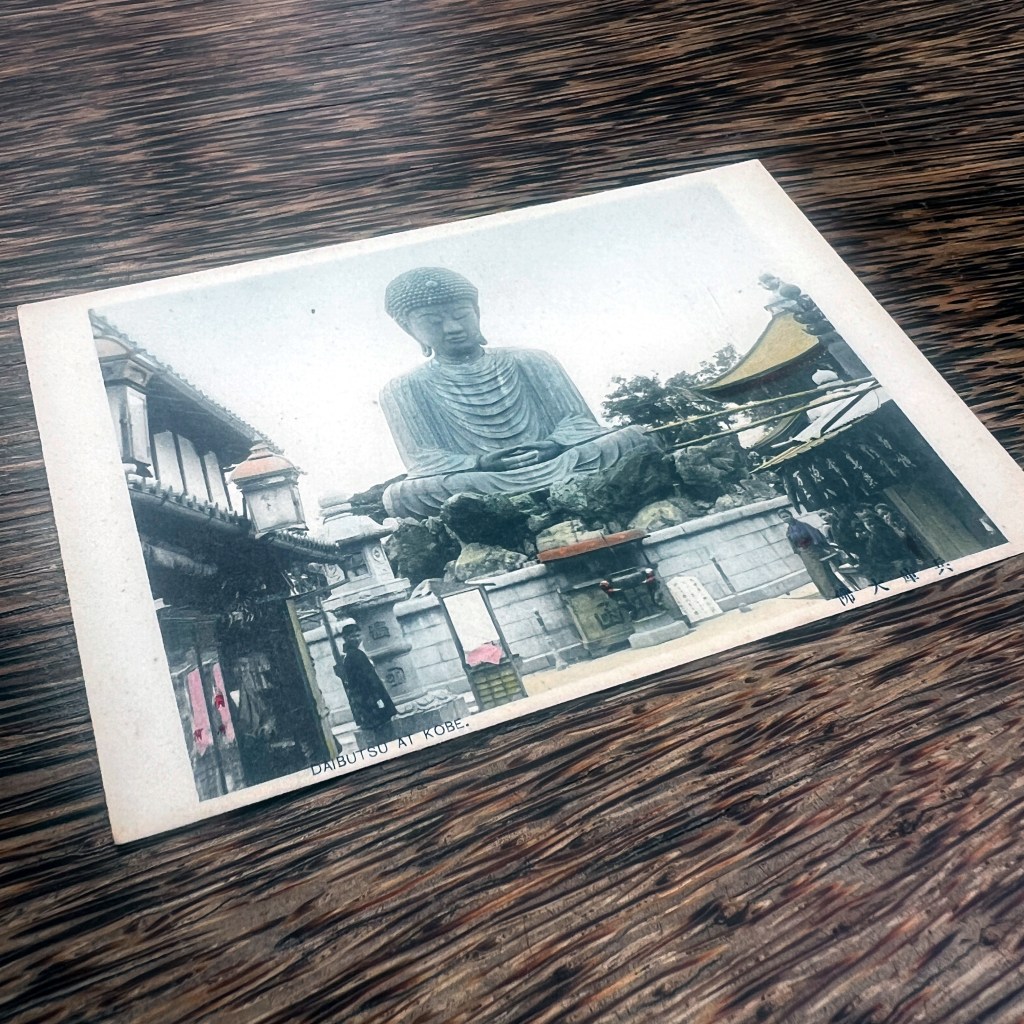
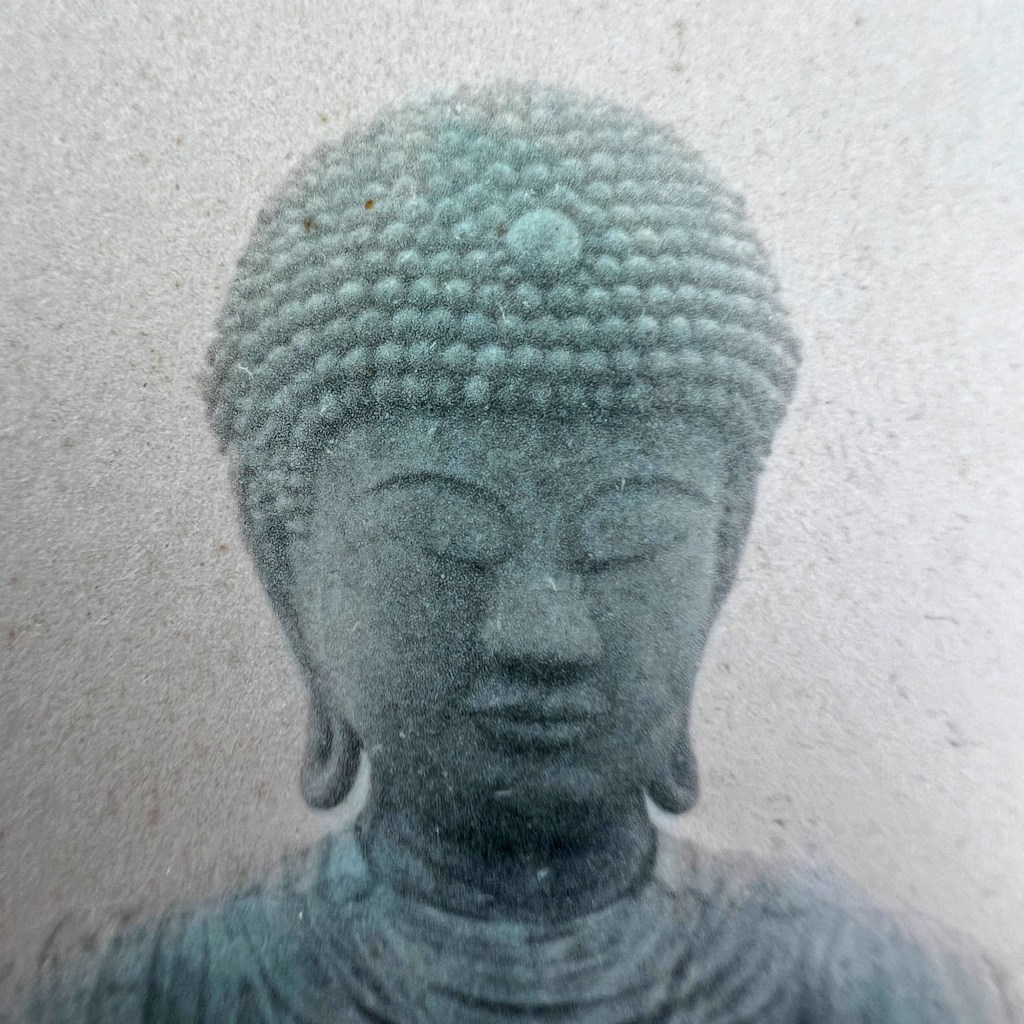
The original Hyōgo Daibutsu at Nōfuku-ji was the third largest Buddhist statue in Japan. It was dismantled by the Ordinance on the Collection of Metals issued in 1941 as part of Japanese war efforts during WWII.

Located in the port city of Kobe, the Daibutsu was approximately 12 meters in height. It became a popular tourist destination at the end of the 19th century, thus many photographs and postcards remain of the now lost icon.

This “undivided back” design informs us the postcard was printed before 1907. The “F.S.” in the stamp box refers to the publisher’s name (which I haven’t identified).

Many Japanese postcards of this period were hand-colored collotype prints. You can see the red ink splotches the colorist used to suggest design elements.

An albumen print photograph by Kusakabe Kinbei is held by the Nagasaki University Library, viewable here: http://oldphoto.lb.nagasaki-u.ac.jp/zoom/jp/record.php?id=1044


The Buddhas in the West Material Archive is a digital scholarship project that catalogues artifacts depicting Buddhist material culture for Western audiences. It’s comprised of prints, photos, and an assortment of ephemera and other objects. For a brief introduction to this archive, visit the main Buddhas in the West project page.


For Related Buddhas in the West Posts Featuring Postcards:


For the Most Recent Buddhas in the West Posts:

Herbert Ponting’s Japanese Pilgrims near Lake Kawaguchi Stereoview

For all the new Buddhas in the West posts
follow us on Bluesky & Instagram


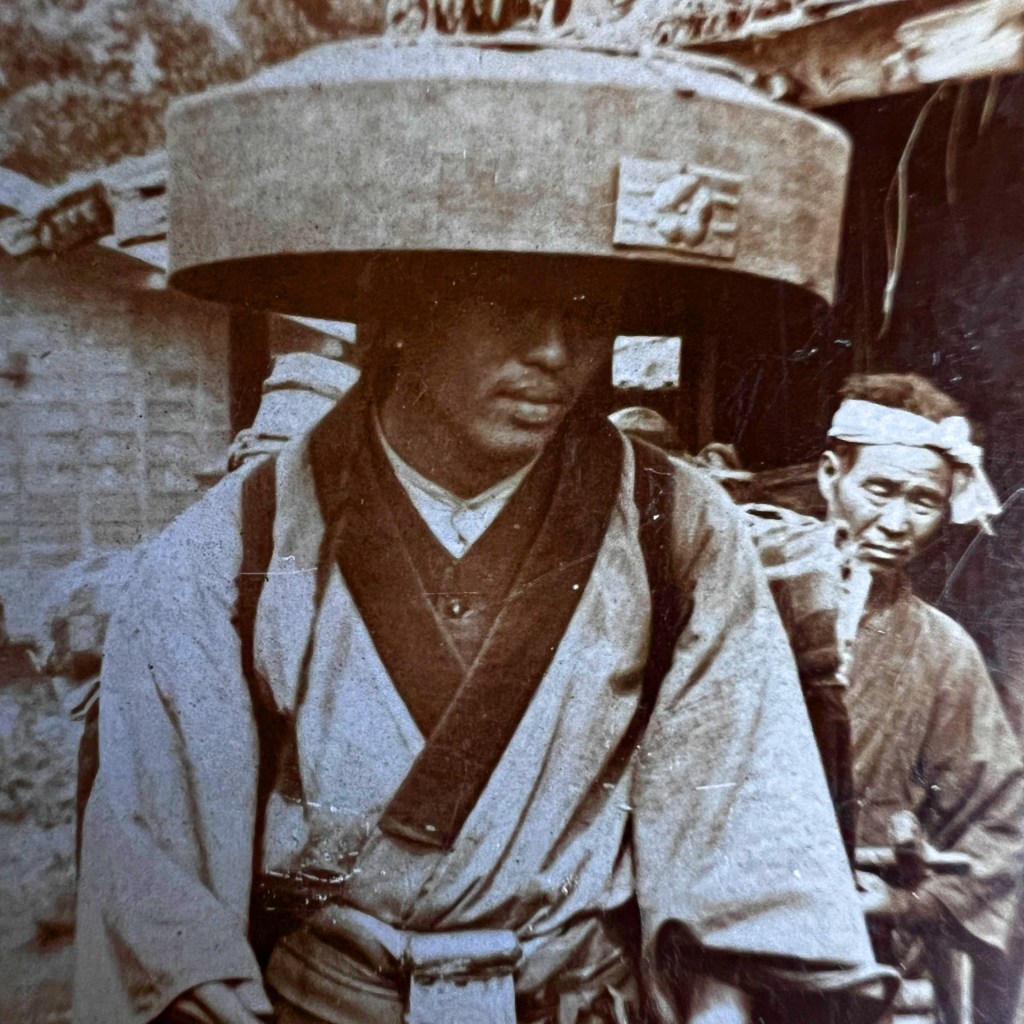
After 1900, publishers of stereoviews started emphasizing their educational rather than entertainment value, oftentimes selling thematic boxed sets. The card here is part of Underwood & Underwood’s 100-view Japan set from 1904.

We know from the negative number (#3852) this stereophoto was taken by expedition photographer Herbert Ponting during his trip to Japan in 1903. The location at Lake Kawaguchi was a well-known gathering spot for pilgrims looking to ascend Mt. Fuji.

By 1904 it was increasingly common to print educational information on the reverse of the card. Here we also find additional books recommended, including Lafcadio Hearn’s Glimpses of Unfamiliar Japan, from which much of the information is cobbled together.

The distinctive clothing and ritual apparatus mark the traveler as a religious pilgrim.

The Ponting-Underwood set, published on the outset of the Russo-Japanese War, became one of the more popular sets on Japan. A scan of the full collection by the Smithsonian Institute is viewable here: https://tinyurl.com/2ukzu87c


The Buddhas in the West Material Archive is a digital scholarship project that catalogues artifacts depicting Buddhist material culture for Western audiences. It’s comprised of prints, photos, and an assortment of ephemera and other objects. For a brief introduction to this archive, visit the main Buddhas in the West project page.


For Related Buddhas in the West Posts Featuring Herber Ponting’s Photography:


For the Most Recent Buddhas in the West Posts:


Albumen Photograph of Sanjūsangen-dō Kannon

For all the new Buddhas in the West posts
follow us on Bluesky & Instagram


For visitors to Japan in the 1860s, Kyoto was seen as brimming with dangerous anti-foreign samurai. This changed in the 1870s when it was transformed by tourism, driven in part by foreign photography studios who were allowed to shoot the city for the 1872 Kyoto Exposition.

While Europeans knew of Kyoto’s Sanjūsangen-dō through late 17th century book engravings, the first photographs of the temple likely did not circulate until the early 1870s. This albumen print is by an unknown commercial photographer and likely dates to the 1880s.

The central icon is a Thousand-armed Kannon from the 13th century and is recognized as a National Treasure of Japan.

There appears to be a double exposure in this photograph, with a priest kneeling in front of the icon. The colorist gave the priest’s robes a wash of blue, but the paint did not cover over the woodwork designs of the altar.

Baron von Stillfried was among the foreign studio owners who photographed Kyoto in 1872. One of his albums, with views of Kyoto, can be seen through the Metropolitan Museum of Art here: https://tinyurl.com/yuuf52u9.


The Buddhas in the West Material Archive is a digital scholarship project that catalogues artifacts depicting Buddhist material culture for Western audiences. It’s comprised of prints, photos, and an assortment of ephemera and other objects. For a brief introduction to this archive, visit the main Buddhas in the West project page.


For Related Buddhas in the West Posts Featuring Kyoto, Japan:


For the Most Recent Buddhas in the West Posts: