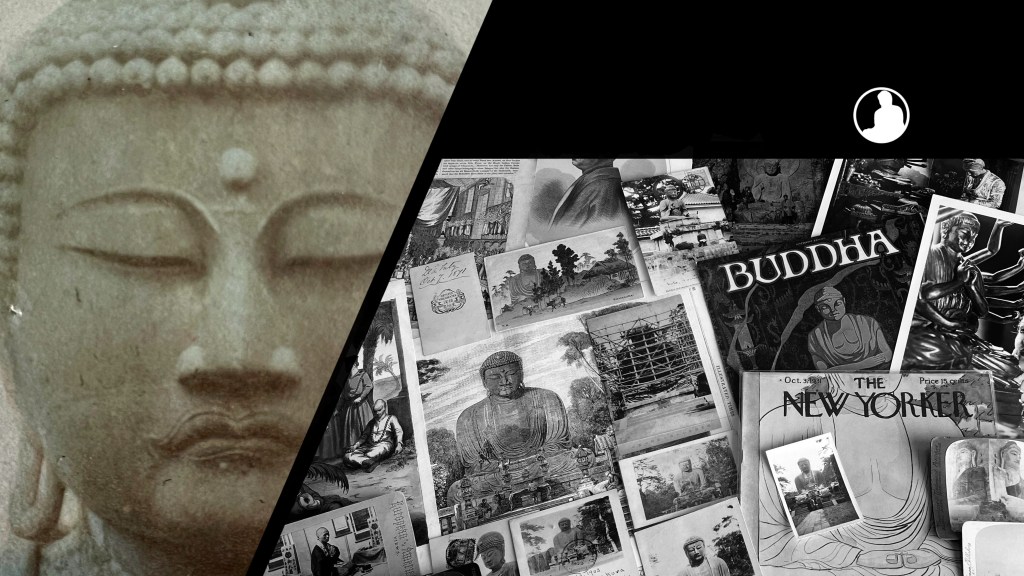
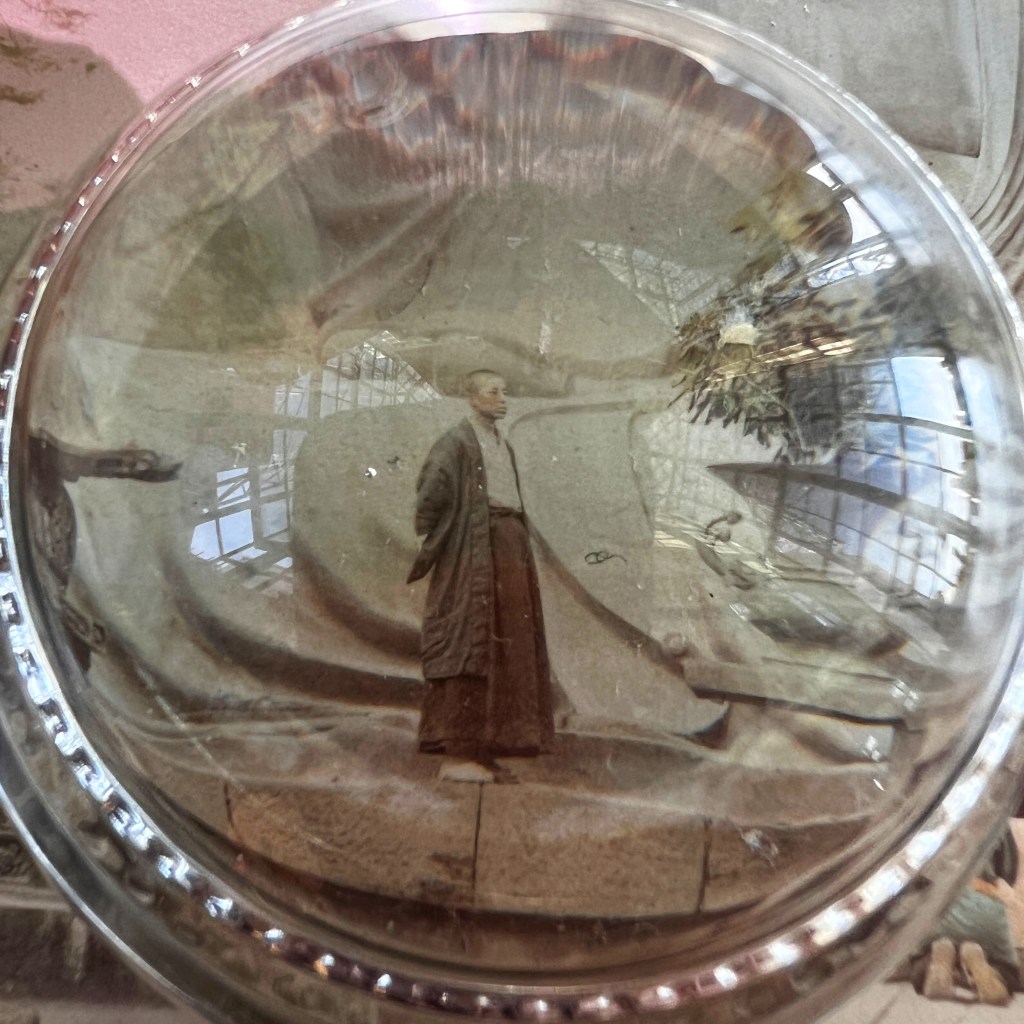
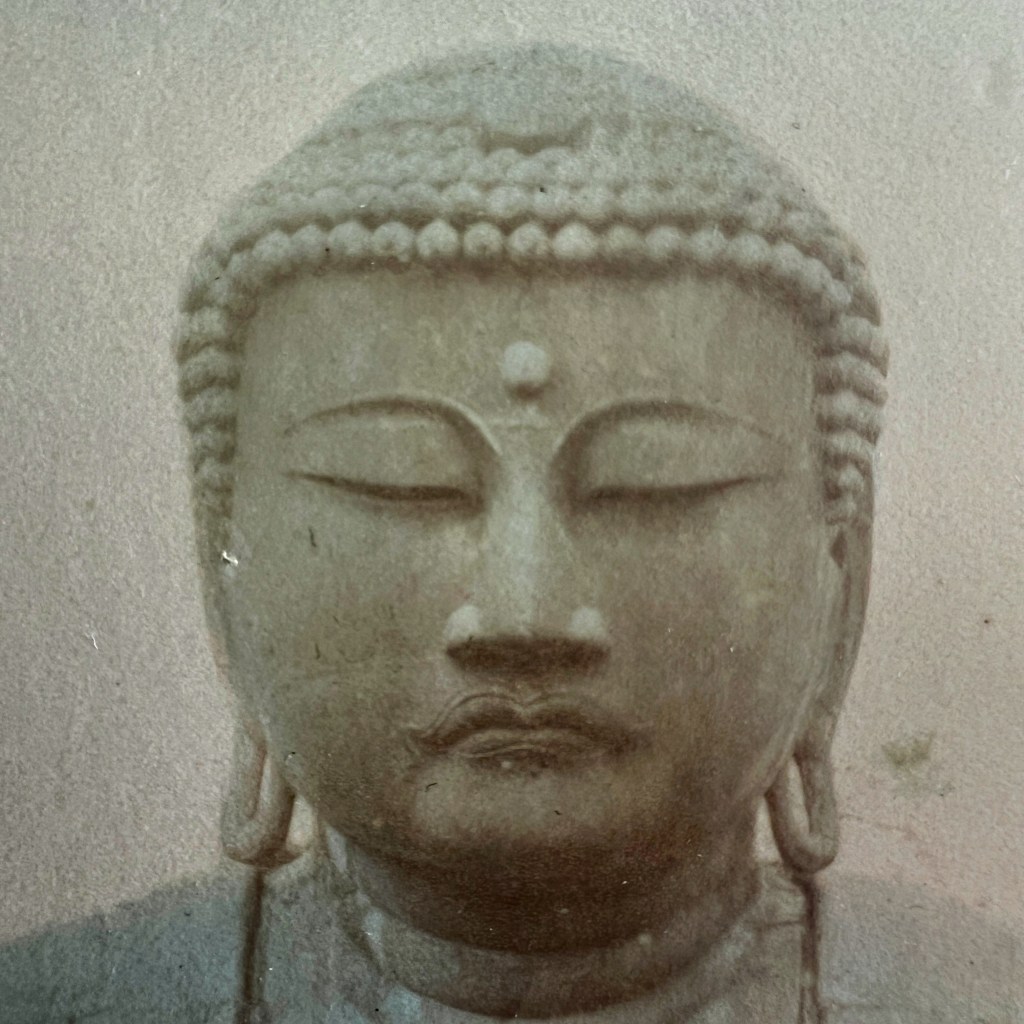
Tamamura Kōzaburō’s Kamakura Daibutsu Photograph For Brinkley’s Japan

For all the new Buddhas in the West posts
follow us on Bluesky & Instagram


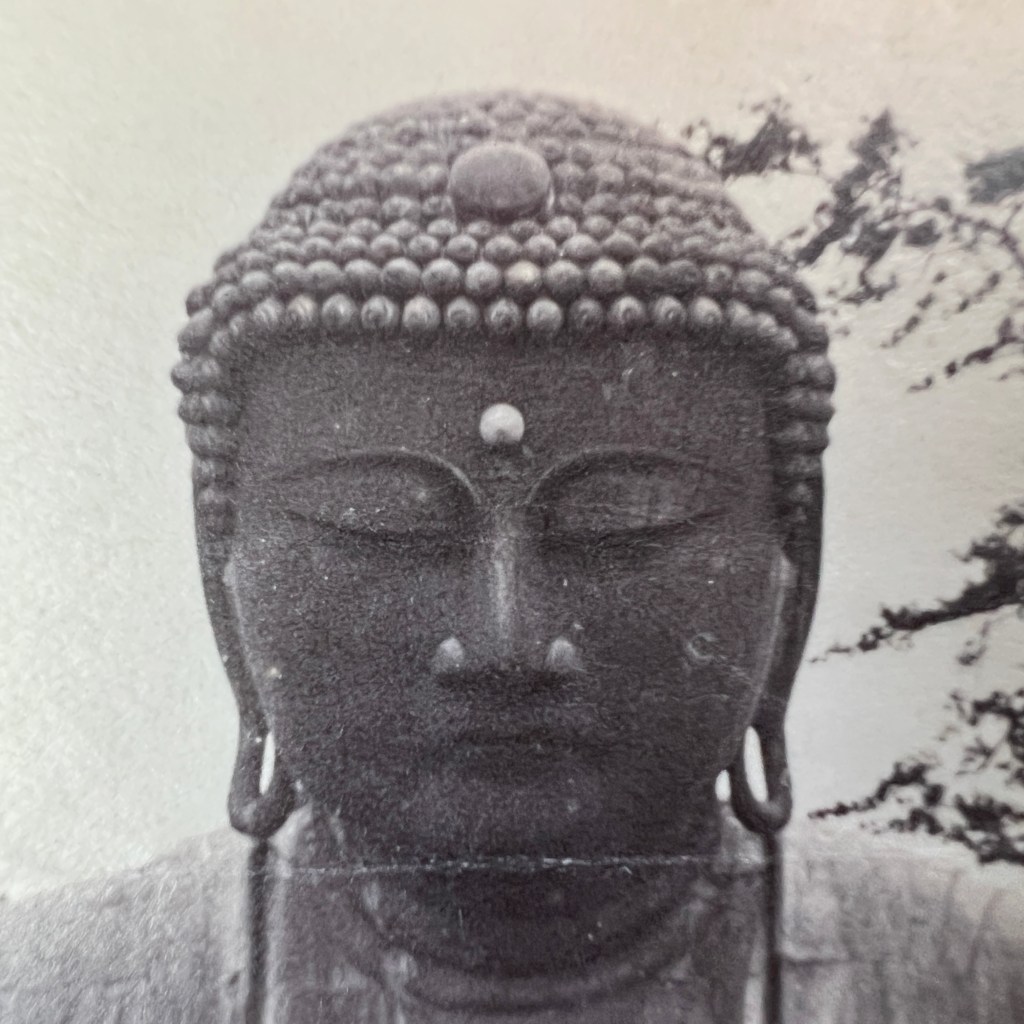
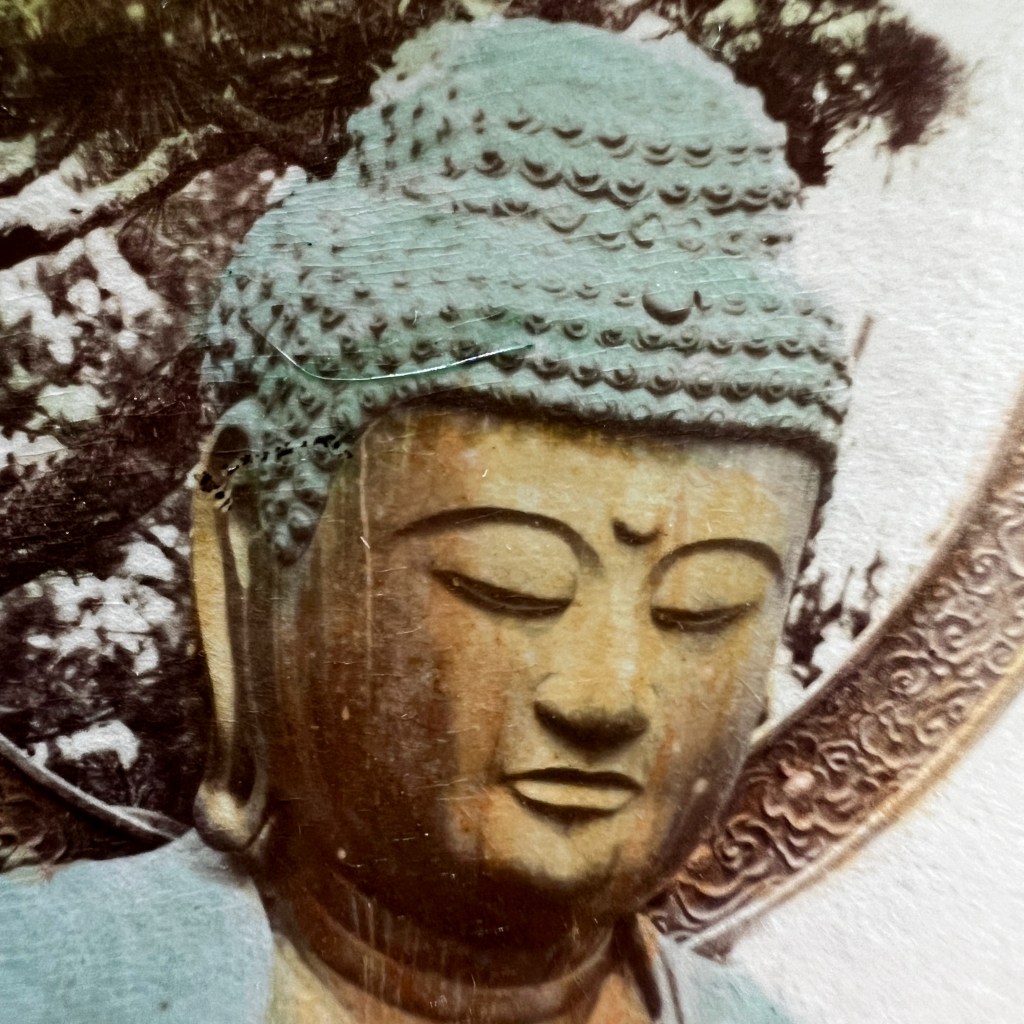
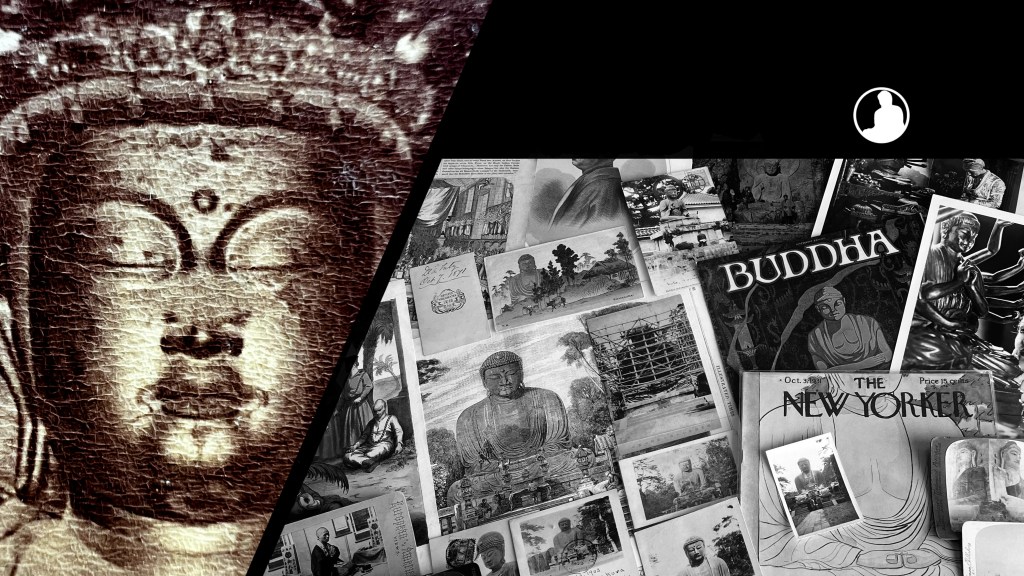
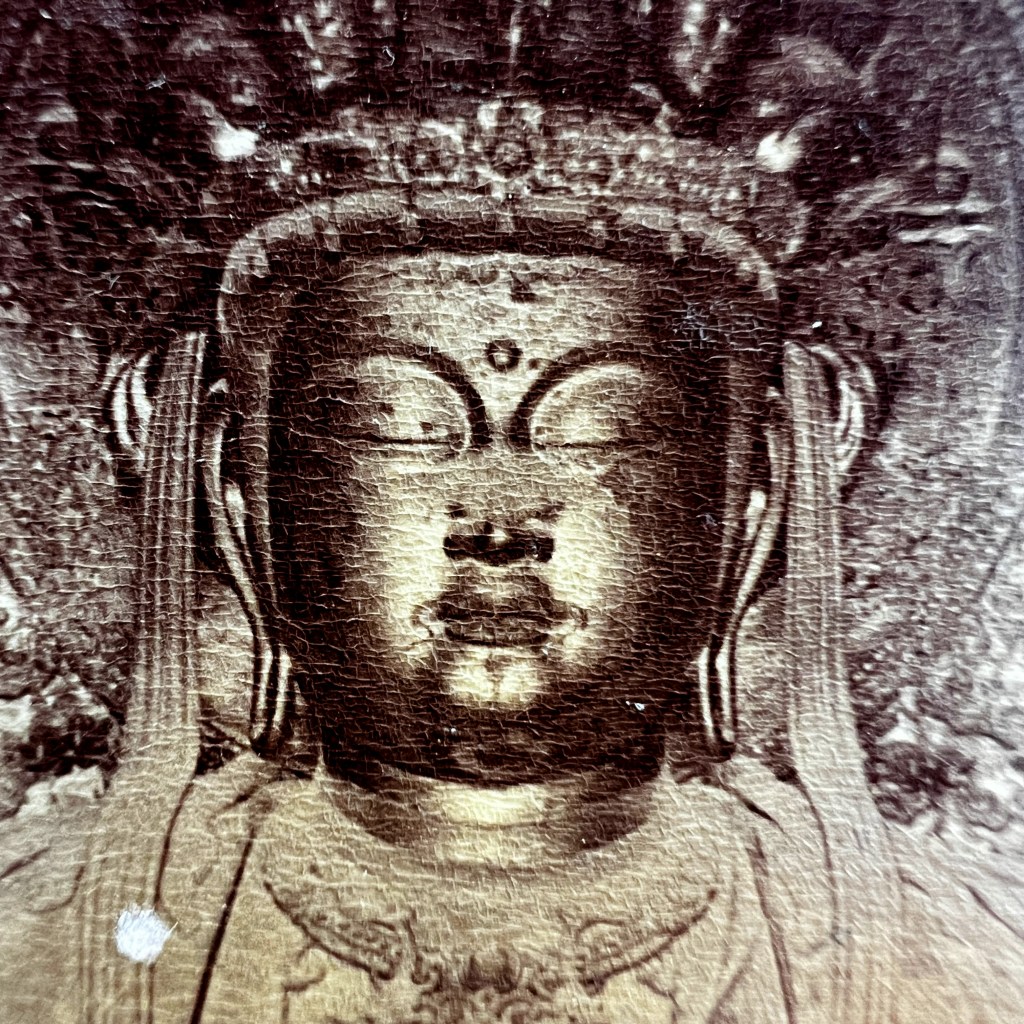
An astounding 400,000 hand-colored photographic prints were used for all editions of Francis Brinkley’s Japan: Described and Illustrated by the Japanese. Produced in Boston between 1897 and 1898, this work was the pinnacle of photographic book publishing at the turn of the century.

The photographs were imported from Japan from the Yokohama studio of Tamamura Kōzaburō, one of the most prolific Japanese photographers of his generation. He reportedly employed 350 artists for several months to complete the job, yet Tamamura’s name is omitted from the final publication.
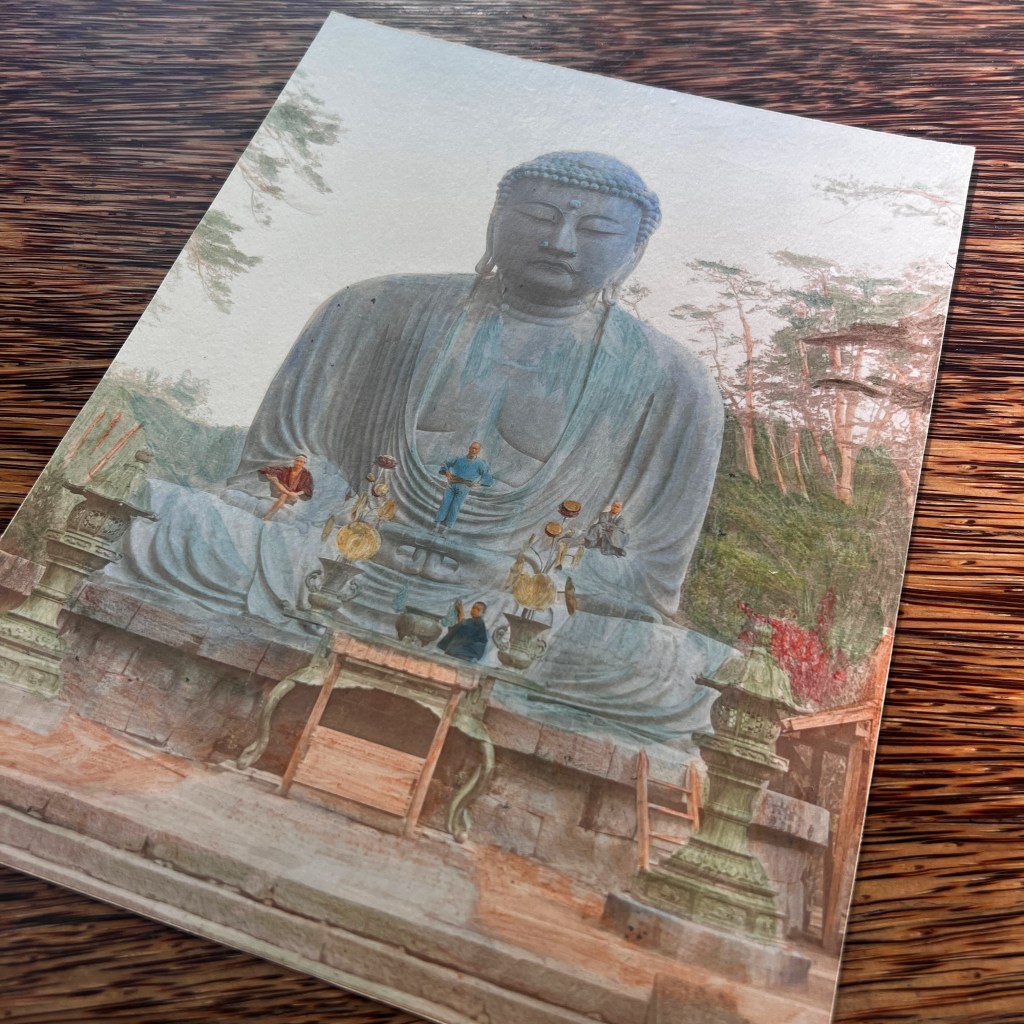
Unlike most books of the era which used photomechanical prints, Brinkley’s Japan used mounted photographs. The Great Buddha of Kamakura was the second full page photograph, following Mt. Fuji, in the first volume, suggesting its perceived value in the American visual language of Japan.

Tamamura’s output was so extensive in preparation for Brinkley’s book, there was a fivefold increase in Japan’s photography exports between 1895 and 1896. This volume of work was achieved at expense of quality, as many of the color washes are pale and poorly executed.

While the number of one million photos for Brinkley’s Japan was likely exaggerated by Tamamura for publicity, this was truly an enormous undertaking. To view the first volume of Brinkley’s Japan held by the Getty Museum, see here: https://tinyurl.com/bddt5z32.


The Buddhas in the West Material Archive is a digital scholarship project that catalogues artifacts depicting Buddhist material culture for Western audiences. It’s comprised of prints, photos, and an assortment of ephemera and other objects. For a brief introduction to this archive, visit the main Buddhas in the West project page.


For Related Buddhas in the West Posts Featuring the Kamakura Daibutsu:

For the Most Recent Buddhas in the West Posts:


Felice Beato’s Kichizo Jizō Photograph

For all the new Buddhas in the West posts
follow us on Bluesky & Instagram


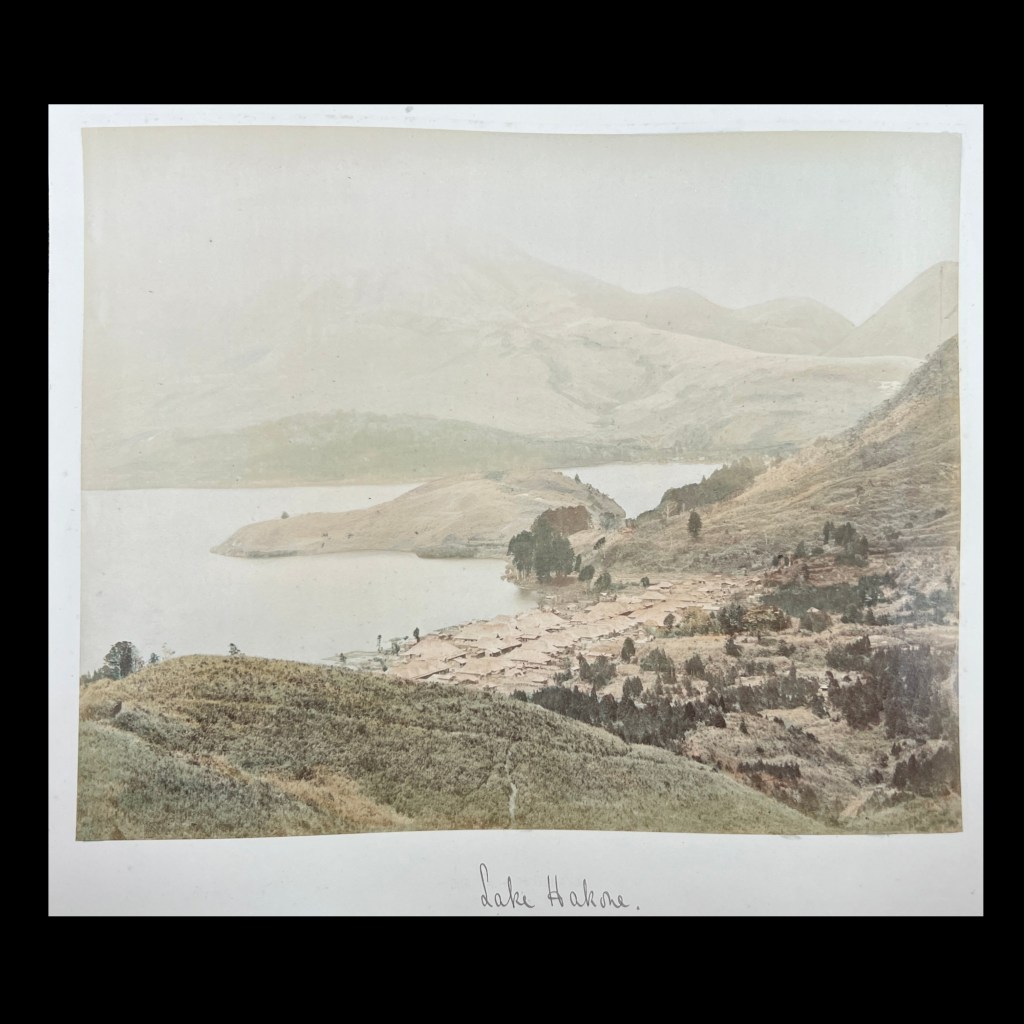
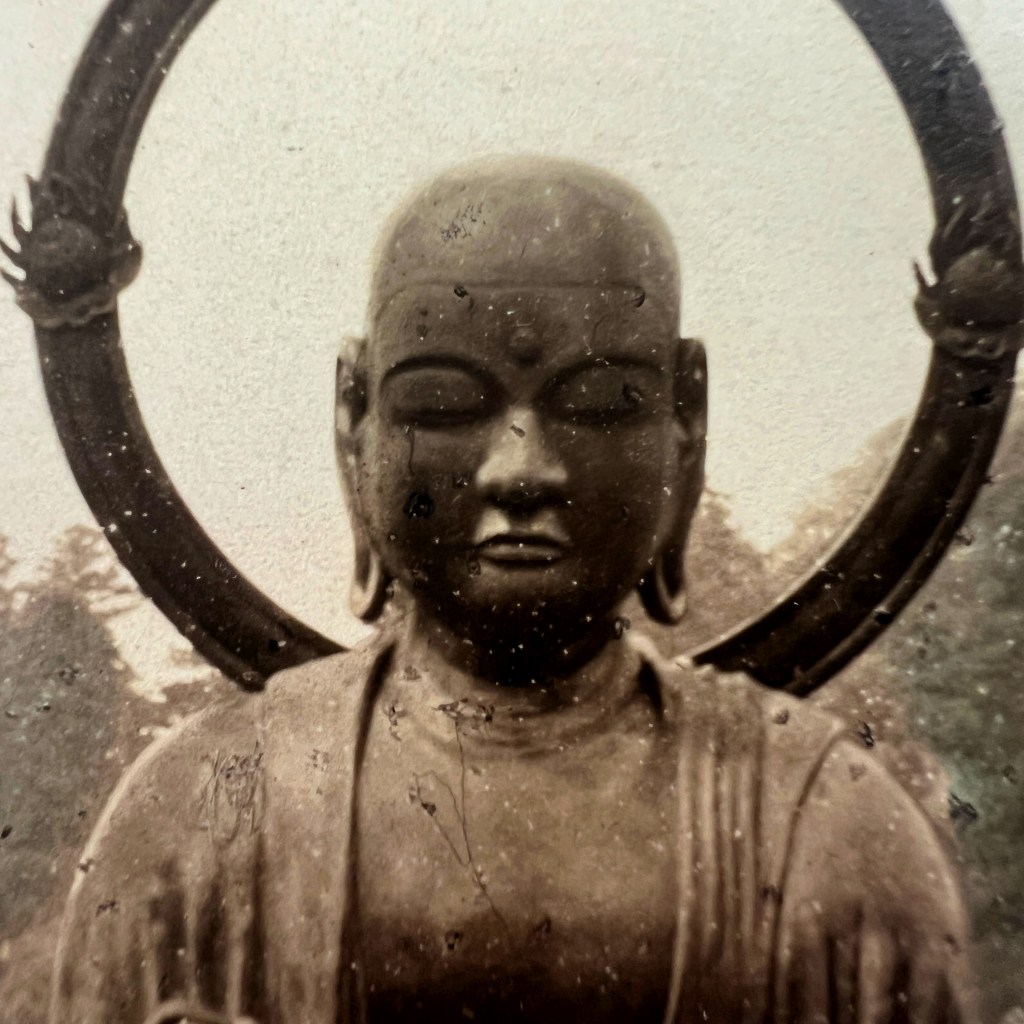
This Jizō statue stood on the banks of Lake Ashi in Hakone for 150 years when Felice Beato took this photo in the 1860s. Within a decade, the lakeside statue would be vandalized, sold, and removed in the aftermath of the Buddhist persecution during the early Meiji era.

Beato was a Yokohama-based photographer who found success selling photographic prints to early, thrill-seeking globetrotters. Here we see a hand-colored albumen print of the statue known as Kichizo Jizō, originally found on the grounds of Kongō-ō Temple off the Tōkaidō route.

Another photo showing scenic Lake Ashi is attached to the reverse, but this image is often attributed to Baron von Stillfried. Beato sold most of his stock to Stillfried in 1877, suggesting this page was removed from a tourist album sold by Stillfried in the late 1870s.

The bronze Kichizo Jizo statue was commissioned in 1713 and was placed with a cluster of smaller Jizō statues that sat along the shoreline (another Jizō is partly visible on the far right edge). Looking closely at Beato’s photo, we also see two Japanese men praying to the bodhisattva.

During Japan’s Buddhist persecution, the large Kongōō Temple lost its holdings and much of its statuary was eventually sold off. While smaller statues were lost in the chaos, the Kichizo Jizo was sold to a Tokyo dealer who transported it down the Odawara coast to be shipped off.

According to lore, the icon became immovable at port and was subsequently purchased by Tokujo Temple, where it remains enshrined today. To view an intact 1868 Beato souvenir album containing this photo, see the Hood Museum at Dartmouth: https://tinyurl.com/mpzhrb5d.


The Buddhas in the West Material Archive is a digital scholarship project that catalogues artifacts depicting Buddhist material culture for Western audiences. It’s comprised of prints, photos, and an assortment of ephemera and other objects. For a brief introduction to this archive, visit the main Buddhas in the West project page.


For Related Buddhas in the West Posts Featuring Jizō:


For the Most Recent Buddhas in the West Posts:


Fresno’s “Joss House” Press Photograph

For all the new Buddhas in the West posts
follow us on Bluesky & Instagram


Often overshadowed by San Francisco, by 1890 Fresno’s Chinatown was one of the largest in California and the center of much religious activity. Notably, among the few surviving 19th century Chinese American religious icons, we can include those from Fresno’s Temple of Many Saints.

The Chinese diaspora community opened many religious centers across the Pacific under the name Temple of Many Saints (liesheng gong 列聖宮) for use among local Chinese immigrants. Fresno’s temple opened in the 1880s and was located on G Street.

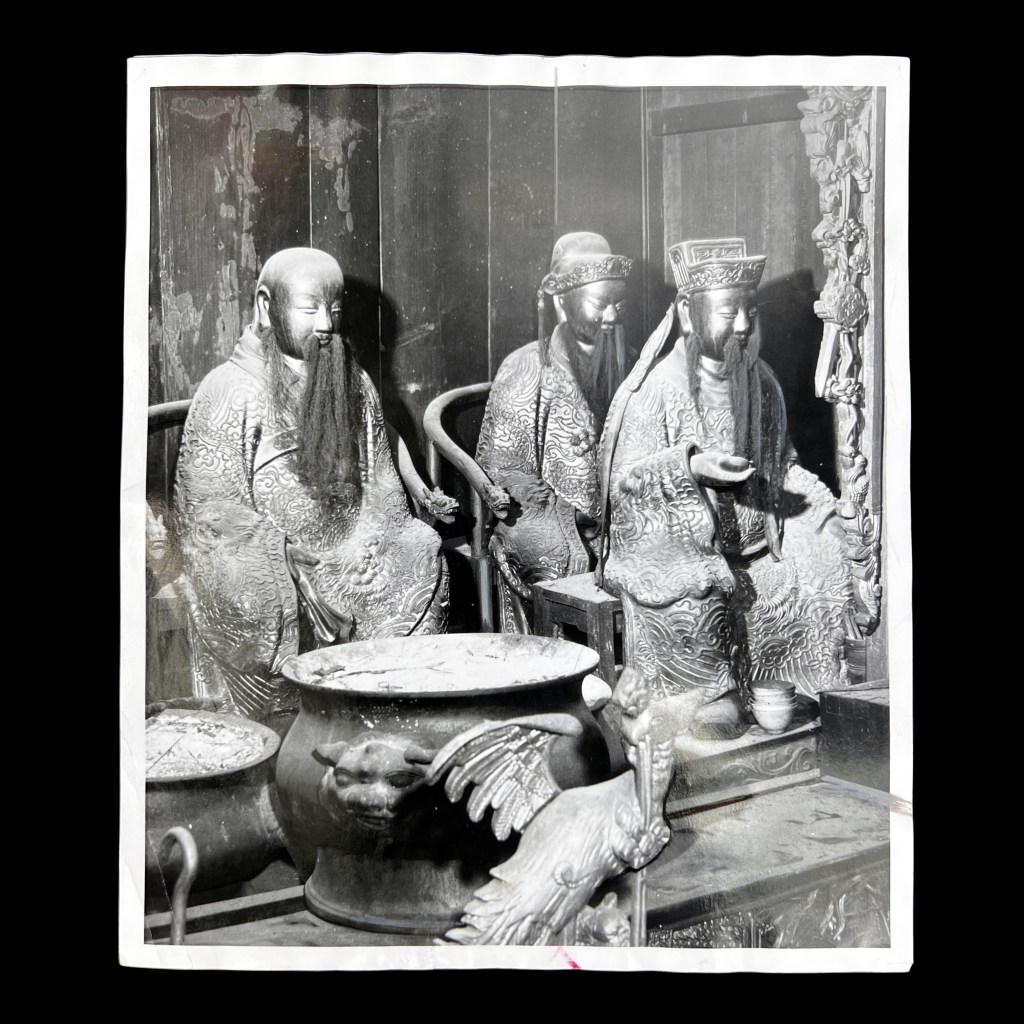
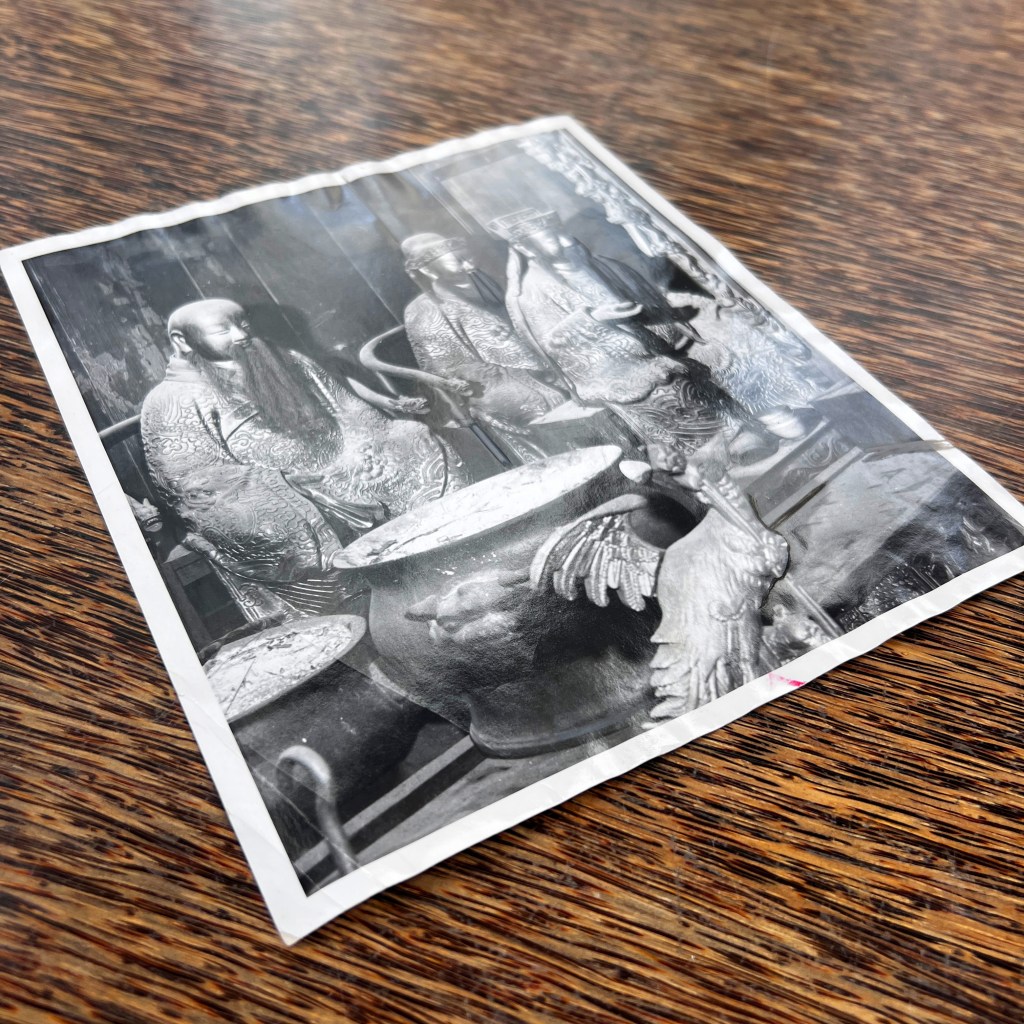
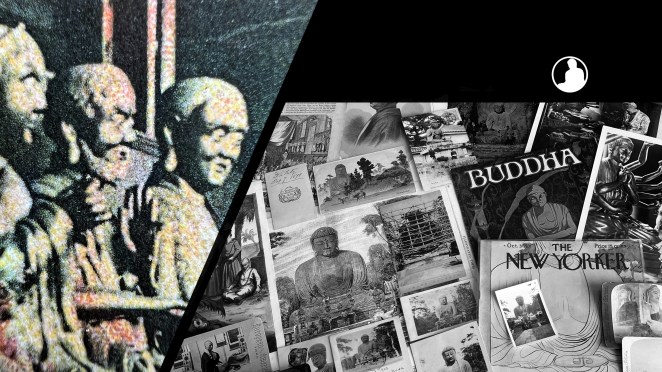
This Fresno Bee archival photograph shows three of the five icons displayed on the main altar. Closed to the public in 1936, the temple was demolished in 1965 shortly after this photograph; the temple artifacts were donated to the Fresno Historical Society and were in storage until last year.

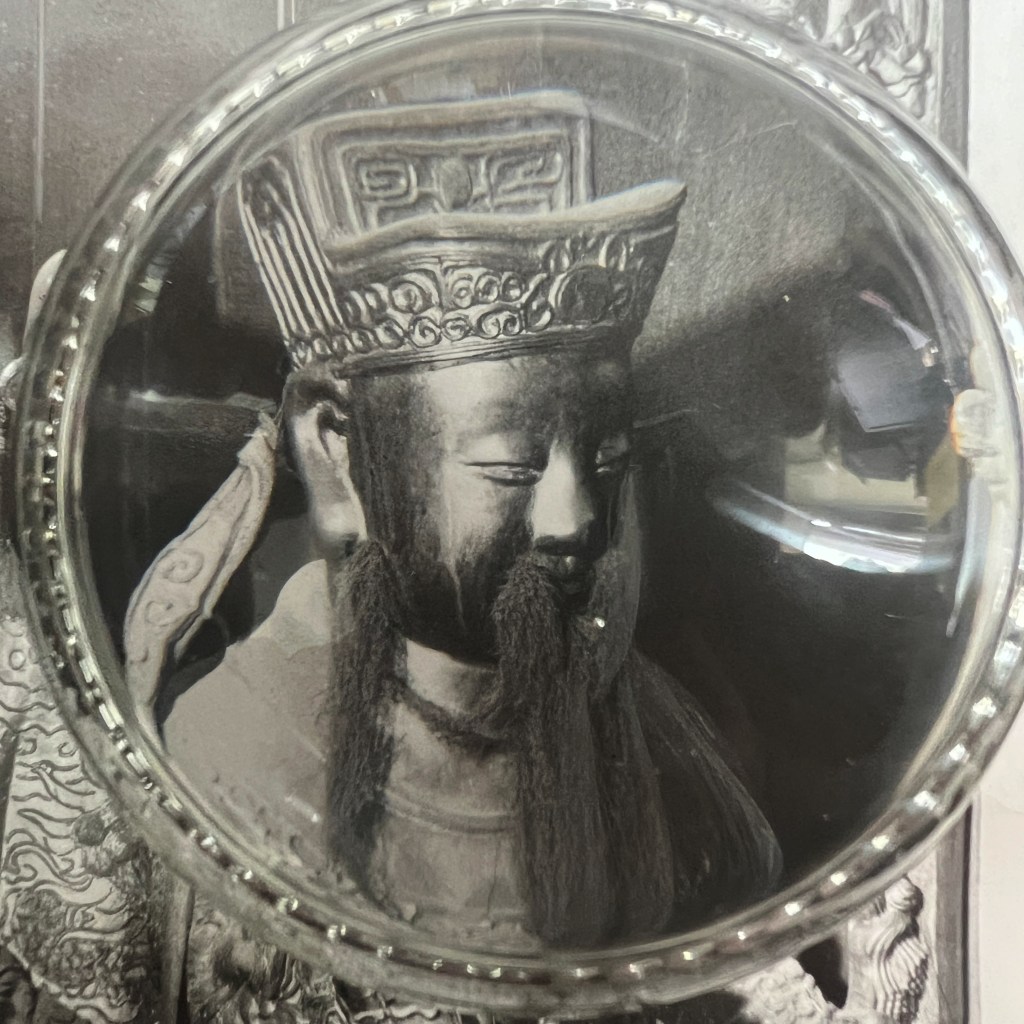
The five icons included the Northern Emperor, Guandi, Tianhou, Huatuo, and Caishen, also known as the “God of Wealth” (seen here). At times, the Buddhist figure Guanyin replaced one of these icons in the Temple of Many Saints found across North America, but that was not the case in Fresno.

Guandi (seen here) was a deified historical general and cultural hero who was a symbol of integrity and loyalty. Widely celebrated by many Chinese district associations and fraternal societies, Guandi was arguably the most popular early Chinese American deity.

The Northern Emperor was a celestial deity famed among many immigrants from southern China. Last year, the Chinese American Museum Project and the Fresno Historical Society arranged a “From China to Fresno: A 150-year Cultural Journey” exhibit, see here: tinyurl.com/4jeea4cu.


The Buddhas in the West Material Archive is a digital scholarship project that catalogues artifacts depicting Buddhist material culture for Western audiences. It’s comprised of prints, photos, and an assortment of ephemera and other objects. For a brief introduction to this archive, visit the main Buddhas in the West project page.


For Related Buddhas in the West Posts Featuring Chinatown (US):


For the Most Recent Buddhas in the West Posts:


Wilhelm Burger’s Kamakura Daibutsu Photograph

For all the new Buddhas in the West posts
follow us on Bluesky & Instagram


Tales of Tourist Photos, Pt. 2*: Old “wet-plate” photography required glass negatives to be coated, sensitized, exposed, and developed in less than fifteen minutes. Using the dry-plate method, negatives could be prepared beforehand; Wilhelm Burger was among the first to use this in Japan.
*[Part 1]

Burger was photographer for the 1869 Imperial Austrian Expedition to East Asia, but illness allowed him to remain in Japan for the winter after the legation left. Tasked in part to photograph art objects, Burger visited the Kamakura Daibutsu with large glass negatives he prepared in Europe.

The handwritten inscription on the back of this photographic print reads, “This Image is all Bronze, name Diaboots.” “Diaboots,” or Daiboots, was the Yokohama treaty port vernacular for the Kamakura Daibutsu through the 1860s.

While Burger created a sizable portfolio of arts and crafts during the embassy, his photographs at Kōtoku-in in Kamakura appear more tourist-like than documentary. Here, several people pose for the camera, including what may appear to be Buddhist priests and three men in European attire.

To my knowledge, the people remain unidentified; Burger’s apprentice, Michael Moser, stayed in Japan after the embassy returned (and remained after Burger left). Moreover, Italian-born Felice Beato operated a successful Yokohama-based photography studio at the time – could either be seen here?

On his return to Vienna in 1870, Burger exhibited his Japanese portfolio to broad public acclaim. For more on Burger’s photographic process, see Tani Akiyoshi & Peter Pantzer’s “Wilhelm Burger’s Photographs of Japan,” PhotoResearcher 15 (2011): 40–50.


The Buddhas in the West Material Archive is a digital scholarship project that catalogues artifacts depicting Buddhist material culture for Western audiences. It’s comprised of prints, photos, and an assortment of ephemera and other objects. For a brief introduction to this archive, visit the main Buddhas in the West project page.


For Related Buddhas in the West Posts Featuring Historical Photography:


For the Most Recent Buddhas in the West Posts:

Guanyin Icon in The Mask of Fu Manchu (1932)

For all the new Buddhas in the West posts
follow us on Bluesky & Instagram


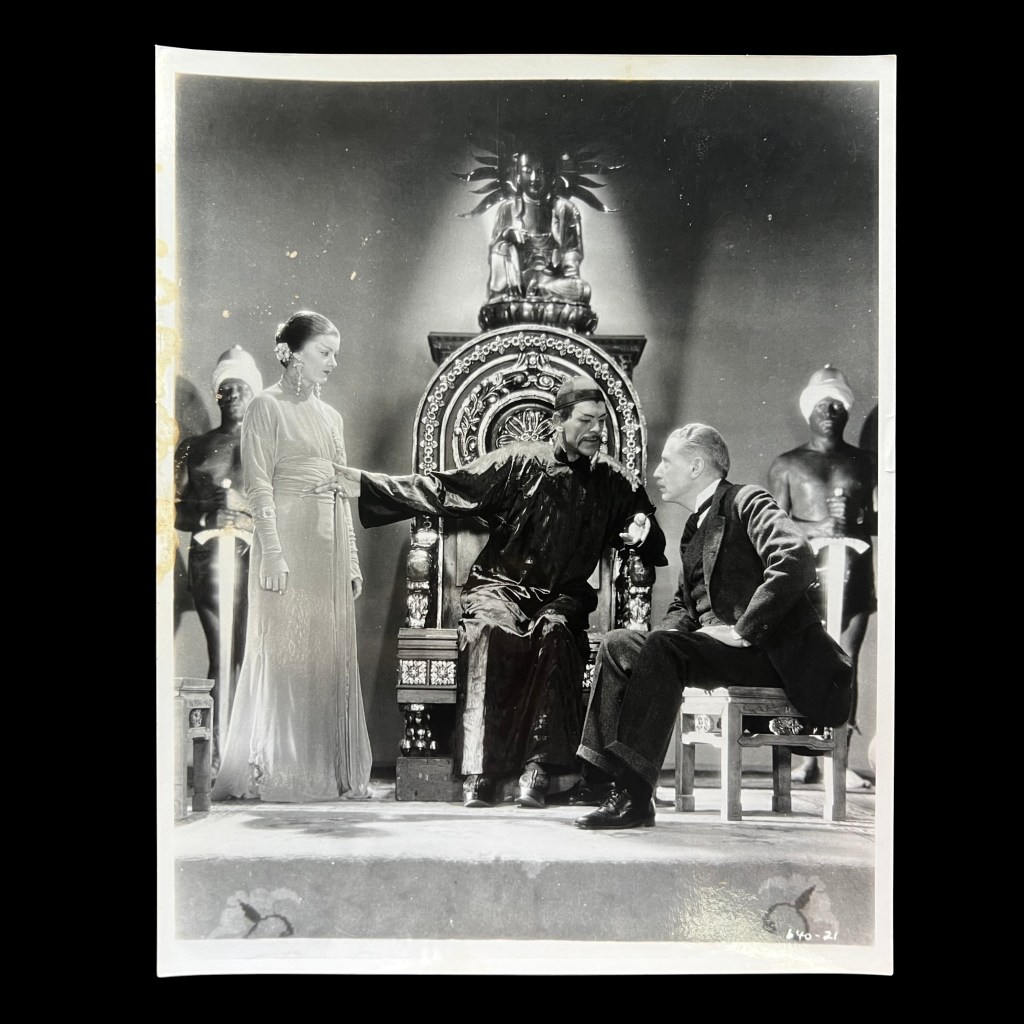
Fu Manchu’s opulent Gobi Desert lair seen in The Mask of Fu Manchu (1932) was assembled by MGM art director Cedric Gibbons. While the Art Deco inspired torture chambers remain horror classics, Gibbons’ strategic use of Buddhist statuary also hint to the audience impending danger.

Boris Karloff portrayed the villainous doctor Fu Manchu, here sitting on a throne introducing his daughter Fah Lo See (Myrna Loy). This scene unfolds under the eyes of a shadowy Buddhist figure perched atop the throne; close inspection reveals this to be in the style of a Guanyin statue.

Many props Gibbons used were made at the studio, including some of the Buddhist statues seen on screen. The idiosyncratic elements, including the multi-rayed halo, suggested this statue was pieced together by set designers; it was seen previously in Daughter of the Dragon (1931).

Curiously, the ornate backrest of the throne makes it appear as if Fu Manchu himself is a statue encircled by a halo. Like a menacing statue come to life, the audience can surmise the visitor will suffer at the hands of the villain.

Fu Manchu played on the racist fears of the Yellow Peril; in film, these fears could also be signified by Buddhist imagery. For further discussion of the dueling positive and negative views of China in American cinema, see Naomi Greene’s From Fu Manchu to Kung Fu Panda (2014).


The Buddhas in the West Material Archive is a digital scholarship project that catalogues artifacts depicting Buddhist material culture for Western audiences. It’s comprised of prints, photos, and an assortment of ephemera and other objects. For a brief introduction to this archive, visit the main Buddhas in the West project page.


For Related Buddhas in the West Posts Featuring Guanyin / Avalokiteśvara:


For the Most Recent Buddhas in the West Posts:

Tamamura Kōzaburō’s Shinkōji Vairocana Photograph

For all the new Buddhas in the West posts
follow us on Bluesky & Instagram


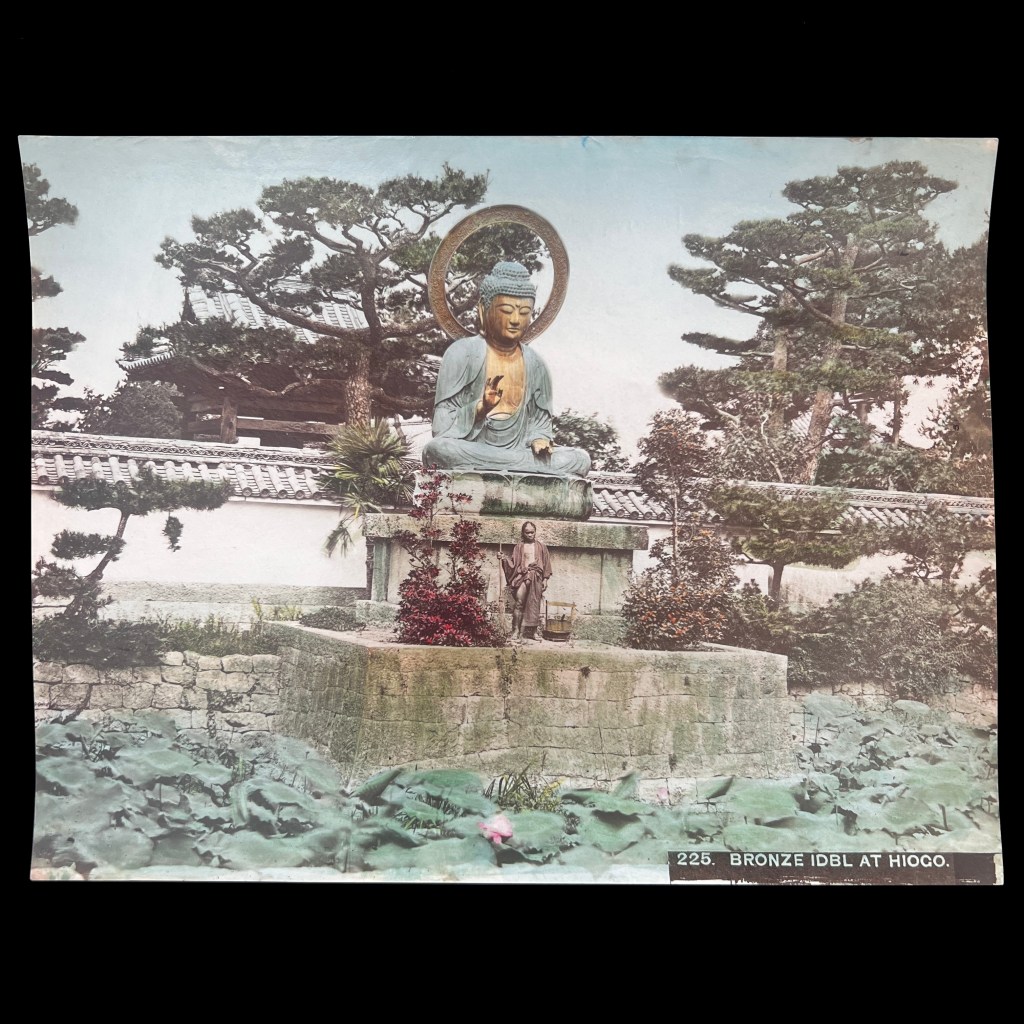
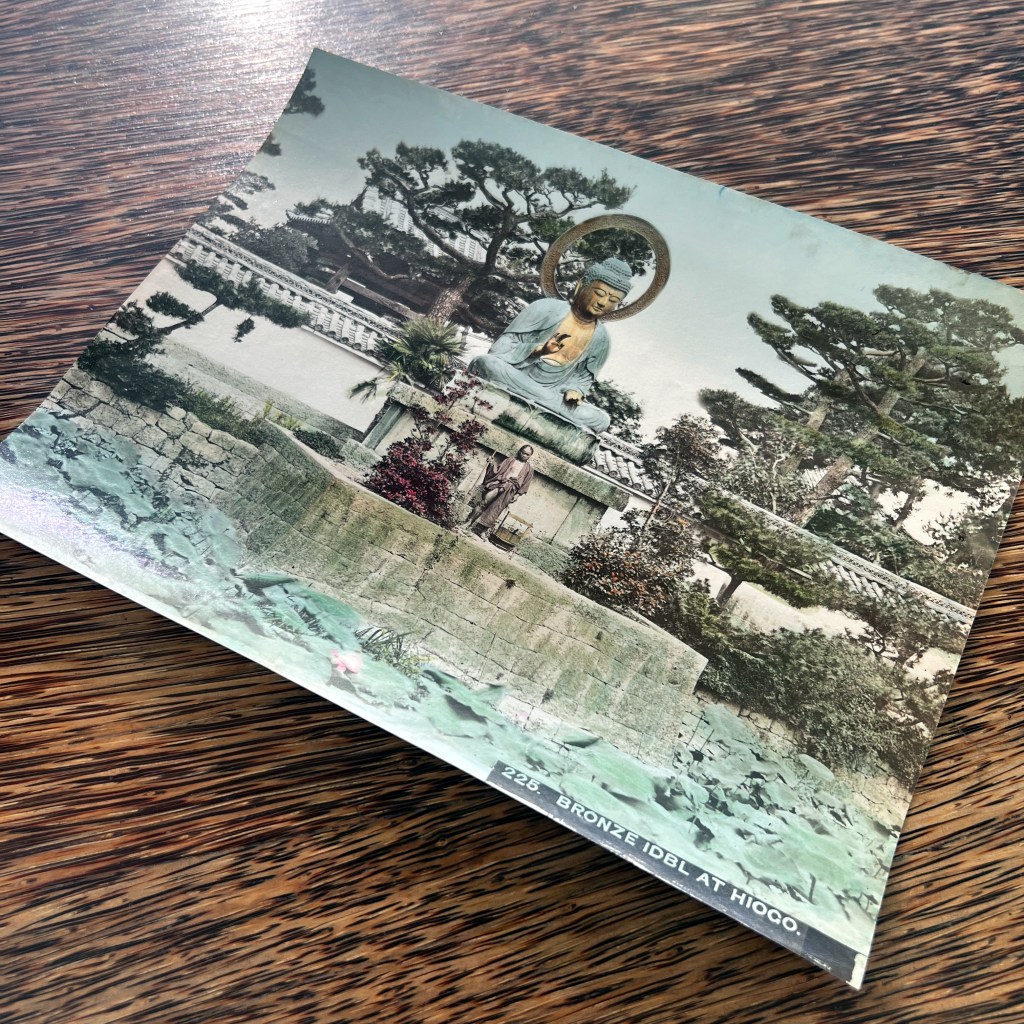
For late Victorian-era globetrotters, religious sites around Japanese port cities were often treated as picturesque tourist destinations. Such a site can be found with the Shinkō-ji lotus pond surrounding a large bronze Buddhist statue, not far from Kobe harbor.

This photograph was taken by Tamamura Kōzaburō who operated a well-known studio based in Yokohama since the early 1880s. Tamamura, like many of his peers, often sold photographic souvenirs of sites, objects, and people sought out by foreign tourists.

It was common for photographers to add people to the scene to help provide a sense of scale. The height of the Shinkō-ji statue is claimed to have been 4.8 meters tall.

While the caption on the photo identifies the statue generically as an idol, Shinkō-ji identifies it as Vairocana Buddha. According to temple records the icon was installed in 1760.

Unfortunately, to the best of my knowledge, this icon was likely destroyed by allied firebomb attacks in March 1945 during World War II. A Tamamura album with 50 photograph has been scanned by Harvard University Library, viewable here: https://tinyurl.com/3jn672n5


The Buddhas in the West Material Archive is a digital scholarship project that catalogues artifacts depicting Buddhist material culture for Western audiences. It’s comprised of prints, photos, and an assortment of ephemera and other objects. For a brief introduction to this archive, visit the main Buddhas in the West project page.


For Related Buddhas in the West Posts Featuring Kobe, Japan:


For the Most Recent Buddhas in the West Posts:

Adolfo Farsari’s Kamakura Daibutsu Photograph

For all the new Buddhas in the West posts
follow us on Bluesky & Instagram


In 1886, a year after Adolfo Farsari opened his Yokohama photography studio, it burned to the ground during a city-wide fire. Farsari spent the next several months traveling Japan to replenish his stock, including several Buddhist sites popular among globetrotting tourists.

Moreover, with the destruction of Farsari’s studio, he also lost the older negatives of Felice Beato and Baron von Stillfried. Farsari’s studio was among the last of the foreign studios in Yokohama as more Japanese photographers were turning to professional ventures.

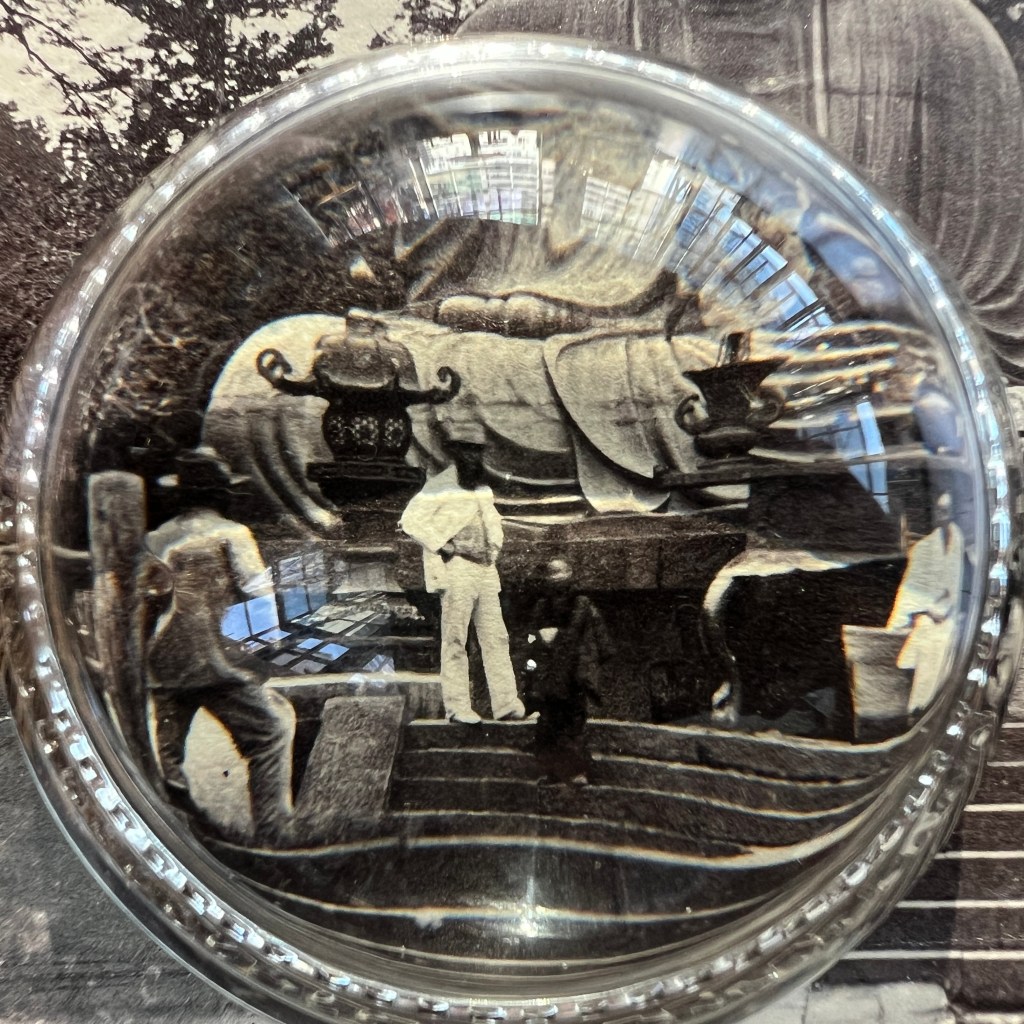
Farsari’s scene of the Kamakura Daibutsu shows a person in the middle of prayer.

We can also see another man standing on the stone pedestal, a common sight in photographs of this era.

Farsari’s work earned the praise Rudyard Kipling who complimented him on the fidelity of the hand-coloring. Further commentary on Farsari’s Kamakura Daibutsu photo can be found here: https://peterromaskiewicz.com/2019/01/19/farsaris-dai-butsu-visual-literacy-of-buddhism/


The Buddhas in the West Material Archive is a digital scholarship project that catalogues artifacts depicting Buddhist material culture for Western audiences. It’s comprised of prints, photos, and an assortment of ephemera and other objects. For a brief introduction to this archive, visit the main Buddhas in the West project page.


For Related Buddhas in the West Posts Featuring Historical Photography:


For the Most Recent Buddhas in the West Posts:


Marguerite Courtot c. 1920 Studio Portrait

For all the new Buddhas in the West posts
follow us on Bluesky & Instagram


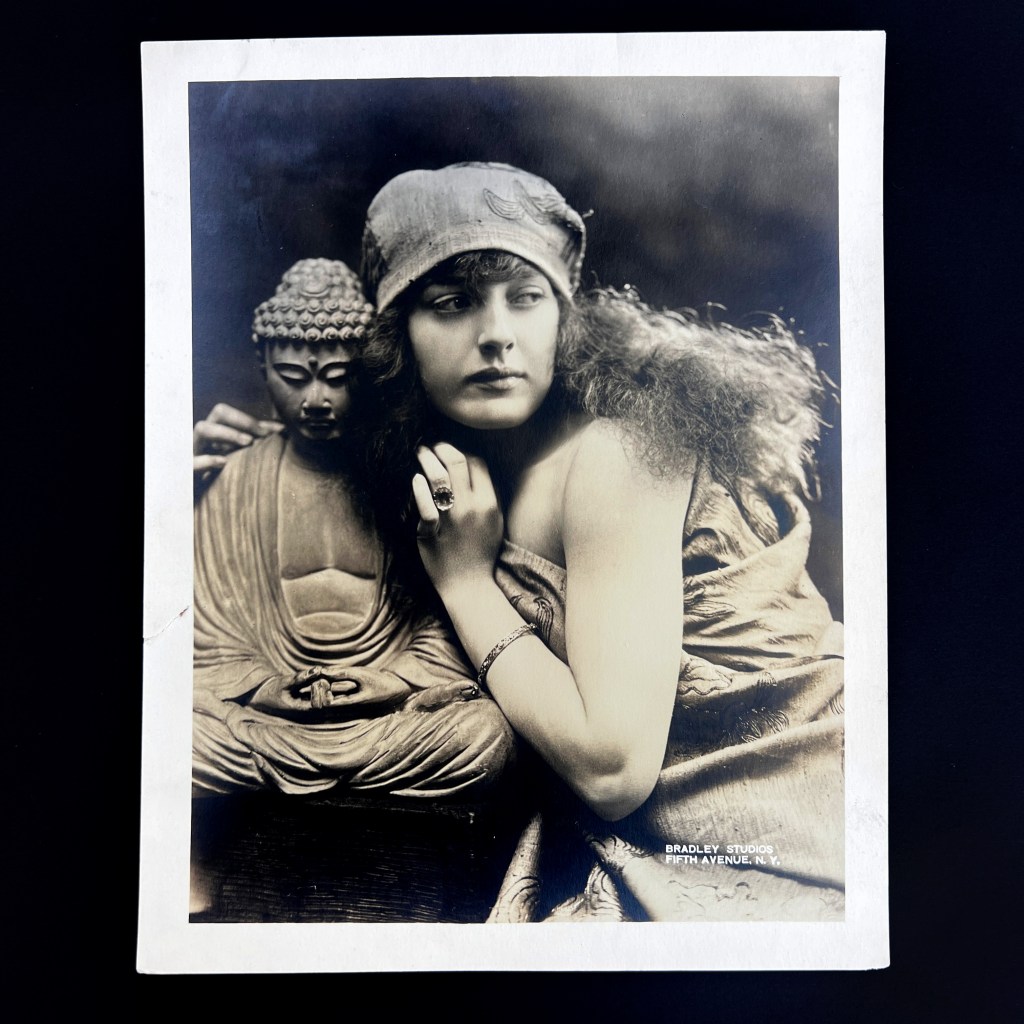
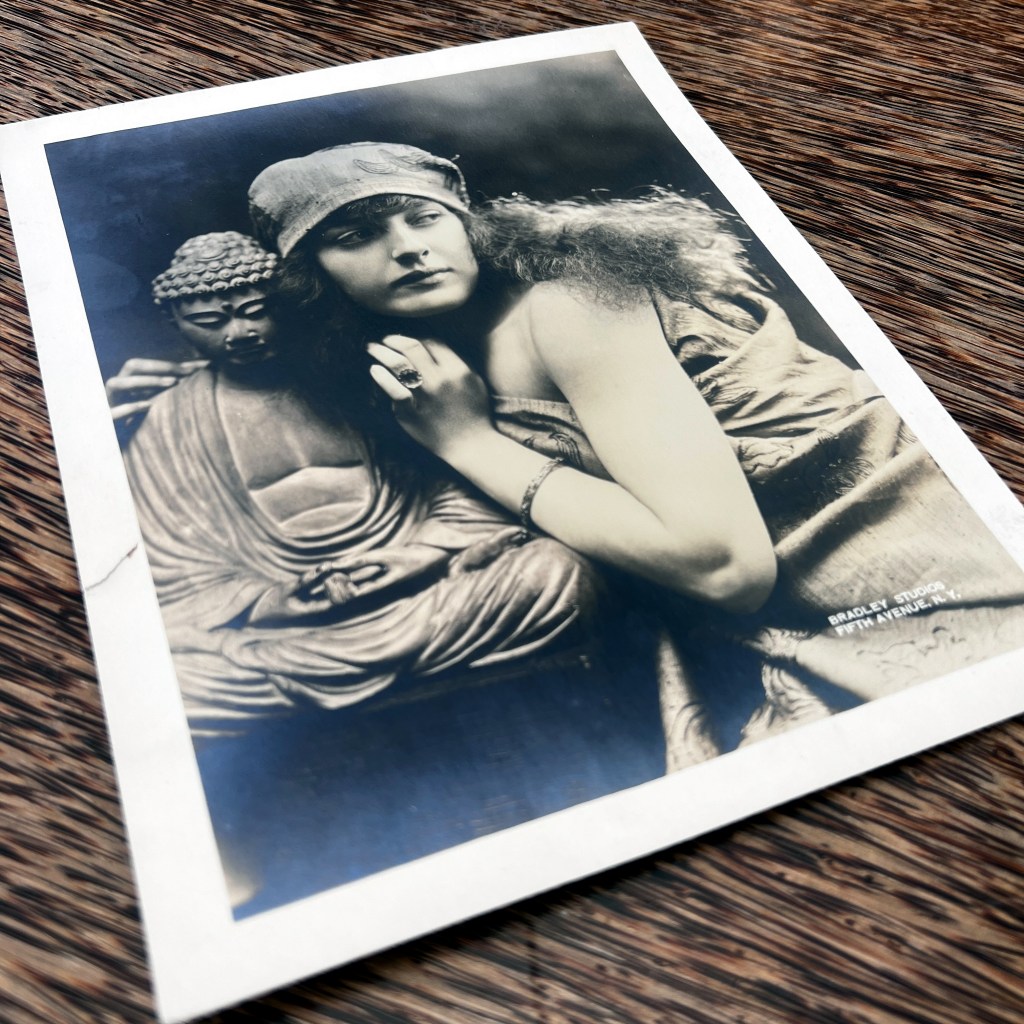
Silent film star Marguerite Courtot joined Pathé after WWI and became a centerpiece in the studio’s action-adventure serials. She starred in Pirate Gold (1920), Velvet Fingers(1920) and The Yellow Arm (1921), with the latter being a stereotypical “Yellow Menace” adventure.

This photo does not appear to be a production still (a movie set photo), but a studio portrait taken in New York City. The portrait dates to around 1920 when the silent film industry was still centered in Fort Lee, New Jersey.

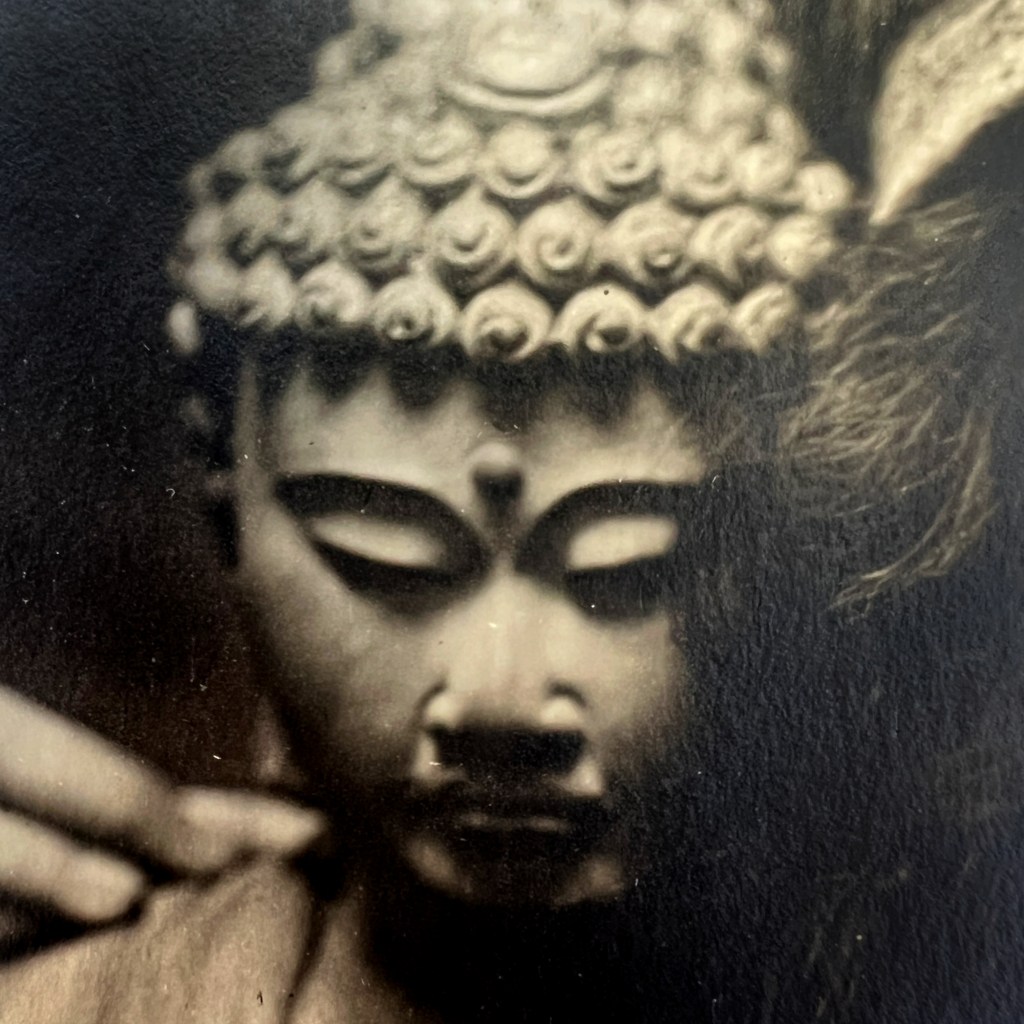
Courtout grasps on to the Buddha statue using a dramatic stage gesture, a relic of the theater age that was adopted in early film. While The Yellow Arm serial is considered lost, it is possible this was a cast portrait used in promoting the film.

Short written synopses survive for several of the Yellow Arm episodes as copyright claims. The synopsis for episode one is held by the Library of Congress, viewable here: https://www.loc.gov/item/s1229l16612/.


The Buddhas in the West Material Archive is a digital scholarship project that catalogues artifacts depicting Buddhist material culture for Western audiences. It’s comprised of prints, photos, and an assortment of ephemera and other objects. For a brief introduction to this archive, visit the main Buddhas in the West project page.


For Related Buddhas in the West Posts Featuring Silent Films:


For the Most Recent Buddhas in the West Posts:
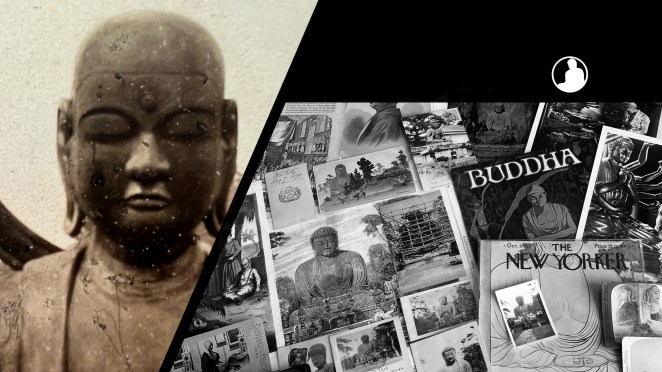

Albumen Photograph of Sanjūsangen-dō Kannon

For all the new Buddhas in the West posts
follow us on Bluesky & Instagram


For visitors to Japan in the 1860s, Kyoto was seen as brimming with dangerous anti-foreign samurai. This changed in the 1870s when it was transformed by tourism, driven in part by foreign photography studios who were allowed to shoot the city for the 1872 Kyoto Exposition.

While Europeans knew of Kyoto’s Sanjūsangen-dō through late 17th century book engravings, the first photographs of the temple likely did not circulate until the early 1870s. This albumen print is by an unknown commercial photographer and likely dates to the 1880s.

The central icon is a Thousand-armed Kannon from the 13th century and is recognized as a National Treasure of Japan.

There appears to be a double exposure in this photograph, with a priest kneeling in front of the icon. The colorist gave the priest’s robes a wash of blue, but the paint did not cover over the woodwork designs of the altar.

Baron von Stillfried was among the foreign studio owners who photographed Kyoto in 1872. One of his albums, with views of Kyoto, can be seen through the Metropolitan Museum of Art here: https://tinyurl.com/yuuf52u9.


The Buddhas in the West Material Archive is a digital scholarship project that catalogues artifacts depicting Buddhist material culture for Western audiences. It’s comprised of prints, photos, and an assortment of ephemera and other objects. For a brief introduction to this archive, visit the main Buddhas in the West project page.


For Related Buddhas in the West Posts Featuring Kyoto, Japan:


For the Most Recent Buddhas in the West Posts:
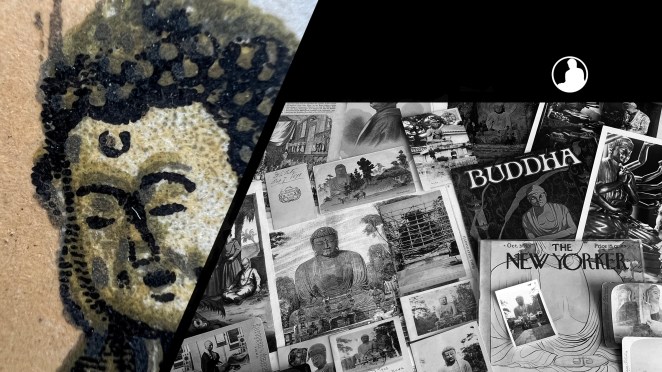

Keystone’s Nara Kokūzō Stereoview

For all the new Buddhas in the West posts
follow us on Bluesky & Instagram


3D Kokūzō 虛空: In the early 20th century, Keystone View Company emerged as a premier publisher of stereoviews with several tens-of-thousands of images in their catalogue. Around 1901, Keystone issued its first views of Japan, including a run of 23 odd-lot stereoviews.

Among their 1901 offerings, a 1/4 were stereo-photographs of religious sites or objects; this includes two views of Buddhist statues. At this time, other companies started offering special Japan box sets and following the Russo-Japanese War Japan sets became far more popular.

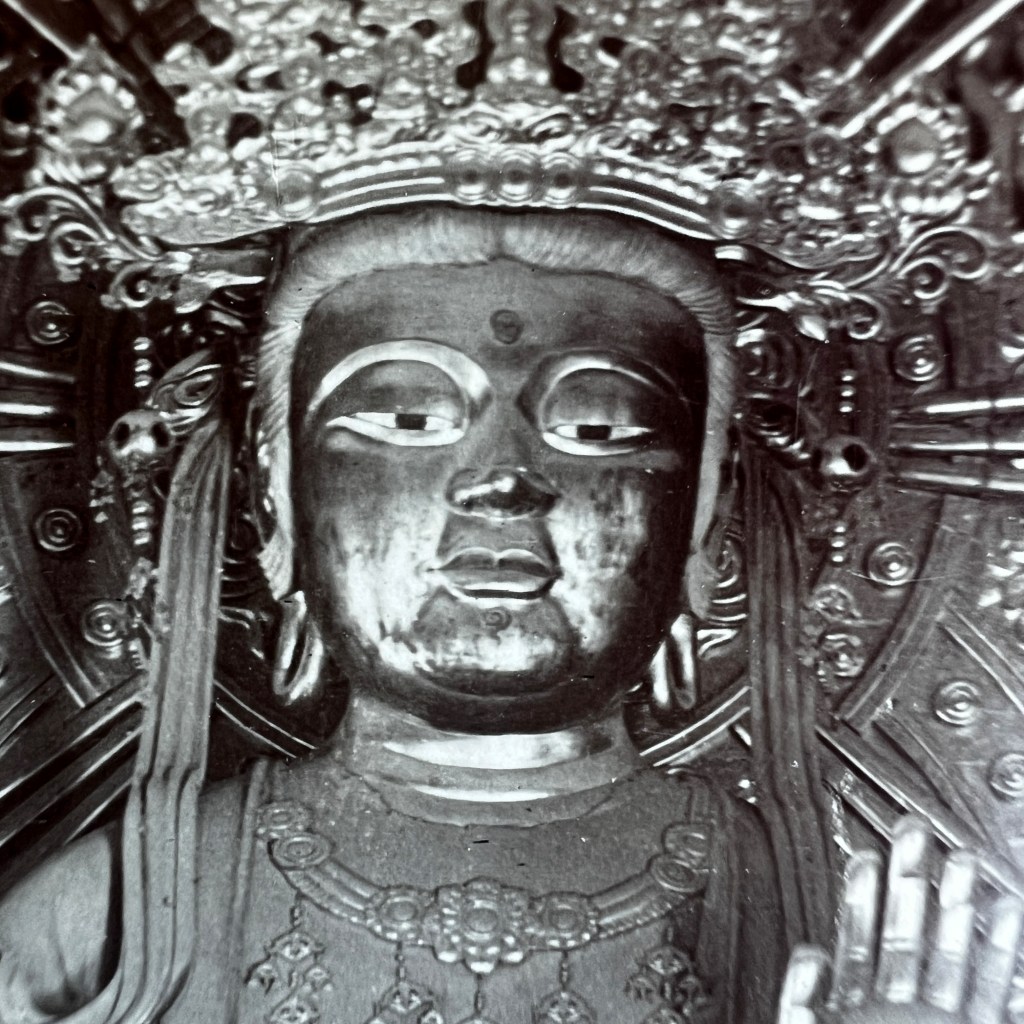
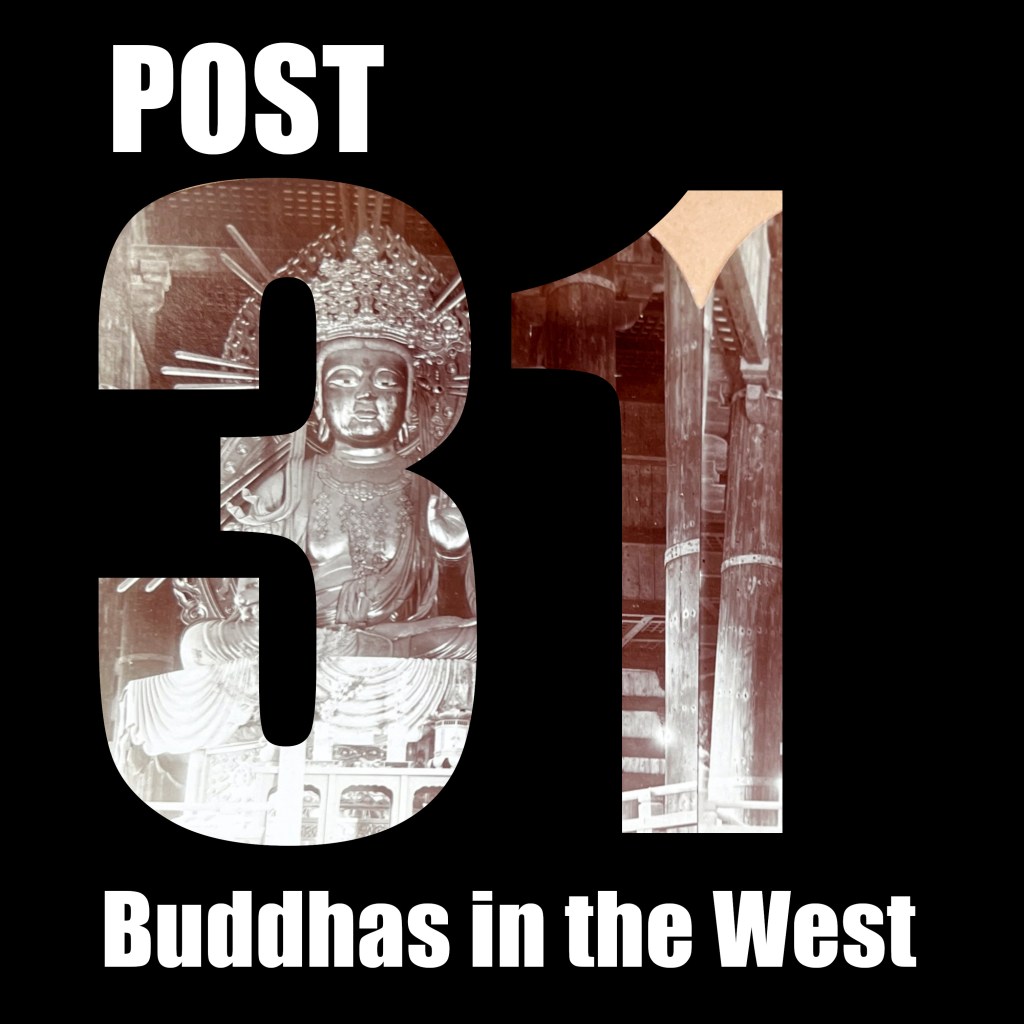
The card here depicts the Daibutsu Hall of Tōdai-ji in Nara. Curiously, it does not show the main figure for which the hall is named, the Nara Daibutsu. This icon is Kokūzō Bosatsu, otherwise known as Ākāśagarbha Bodhisattva (Keystone simply labelled it as a “god.”)

Part of Keystone’s commercial success was selling stereoviews to schools across the US. To view part of their early selection of Japan views, see the digitized collection at the Library of Congress, viewable here https://tinyurl.com/bdewbmva.


The Buddhas in the West Material Archive is a digital scholarship project that catalogues artifacts depicting Buddhist material culture for Western audiences. It’s comprised of prints, photos, and an assortment of ephemera and other objects. For a brief introduction to this archive, visit the main Buddhas in the West project page.


For Related Buddhas in the West Posts Featuring Japan:

For the Most Recent Buddhas in the West Posts: