Tamamura Kōzaburō’s Shinkōji Vairocana Photograph

For all the new Buddhas in the West posts
follow us on Bluesky & Instagram


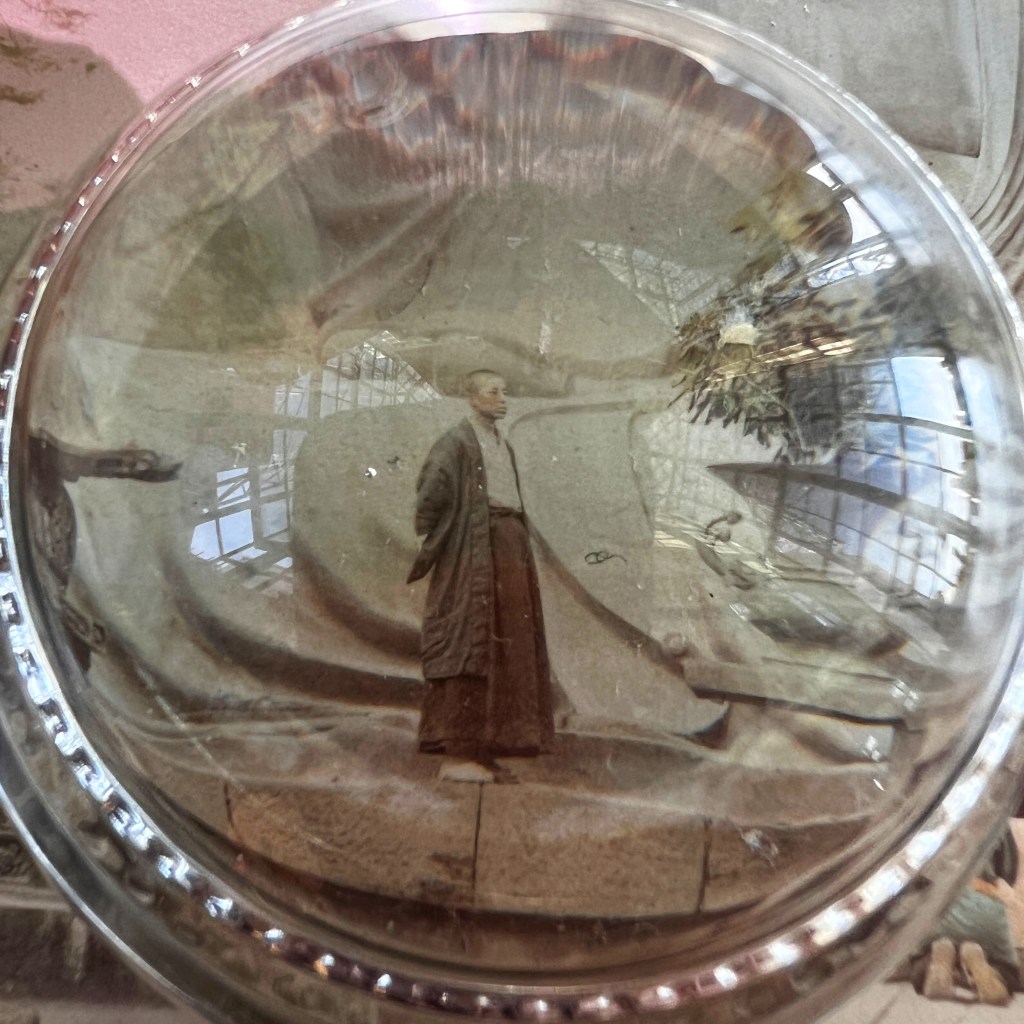
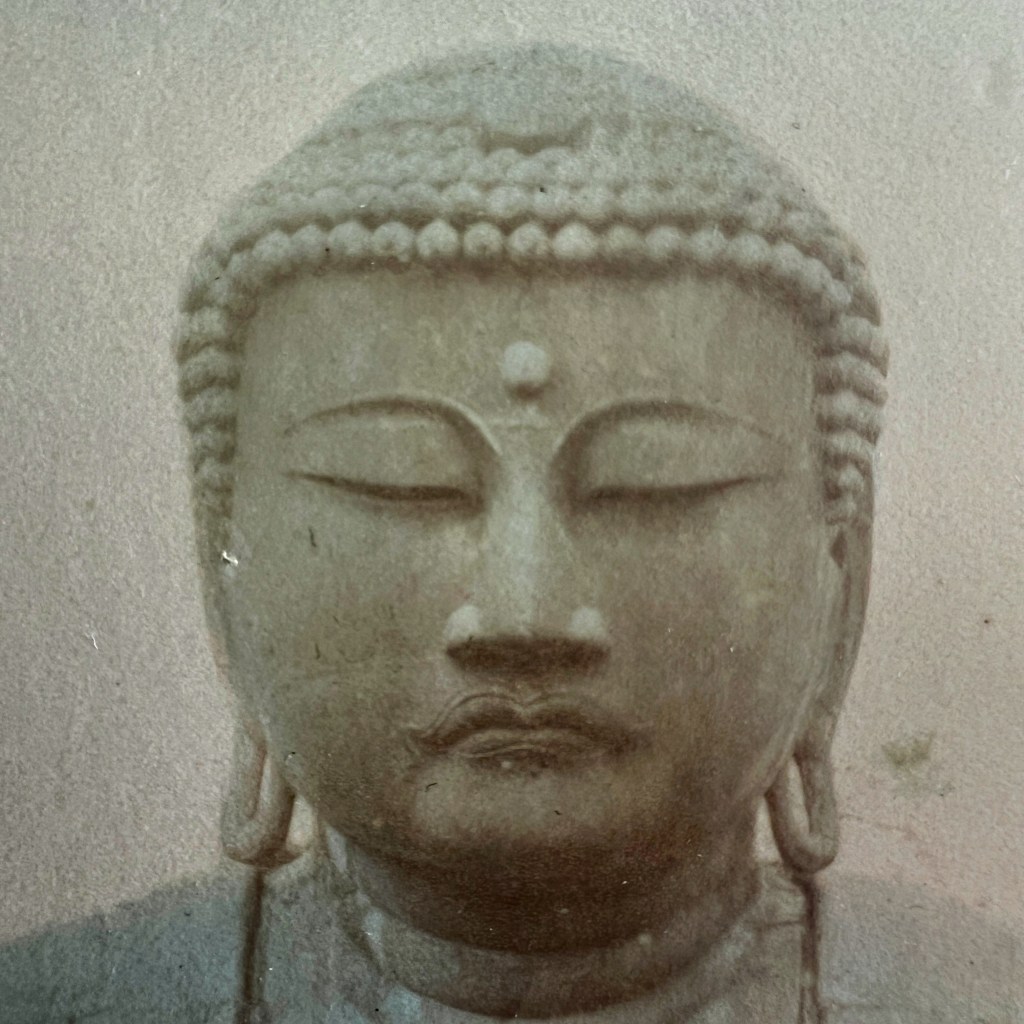
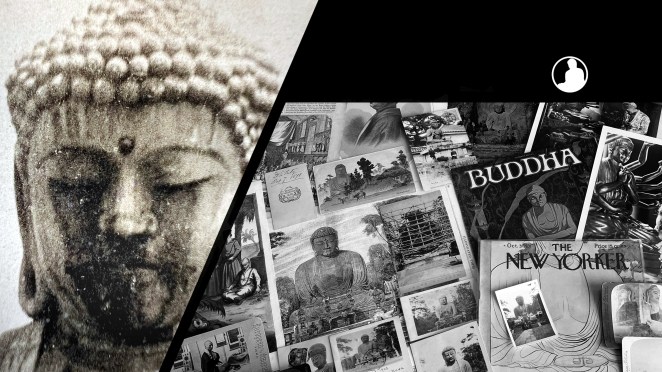
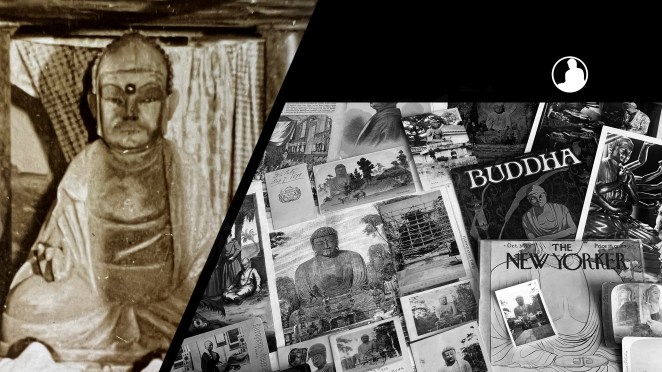
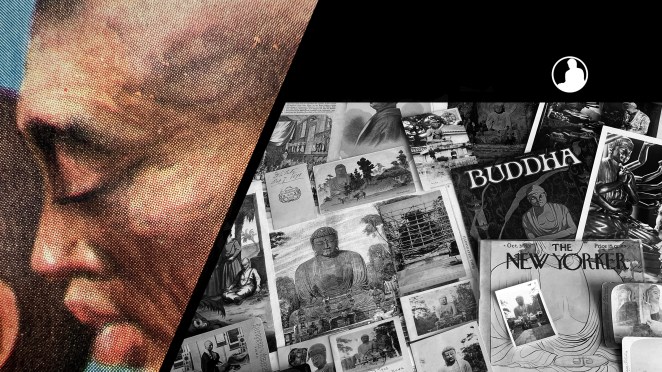
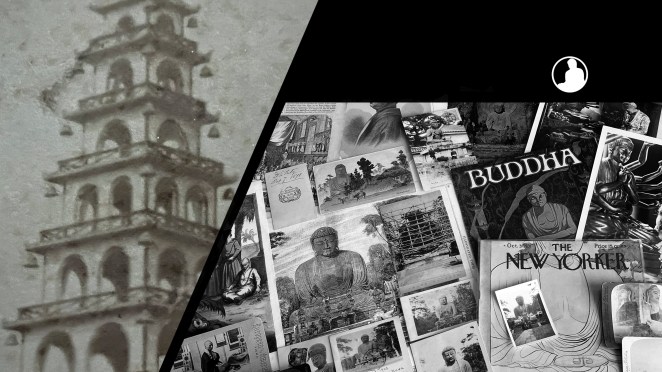
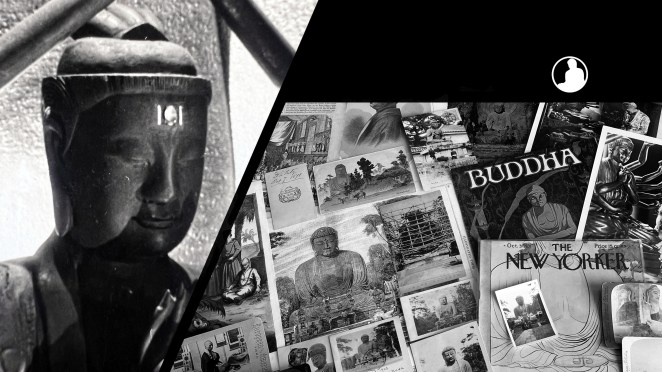
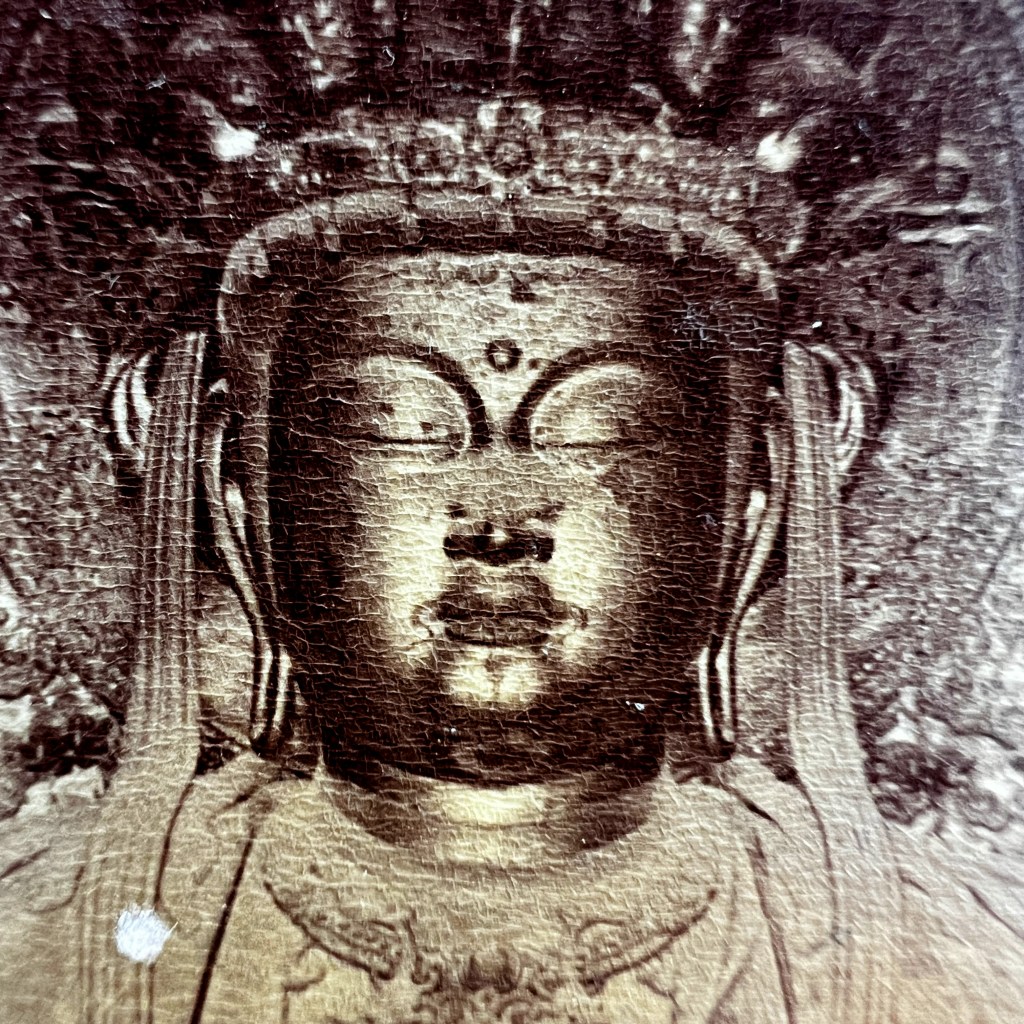
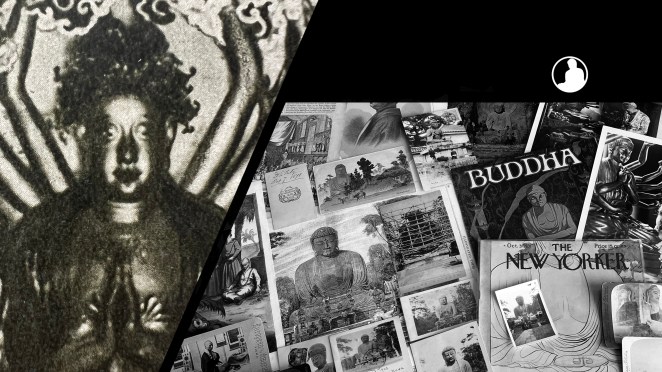
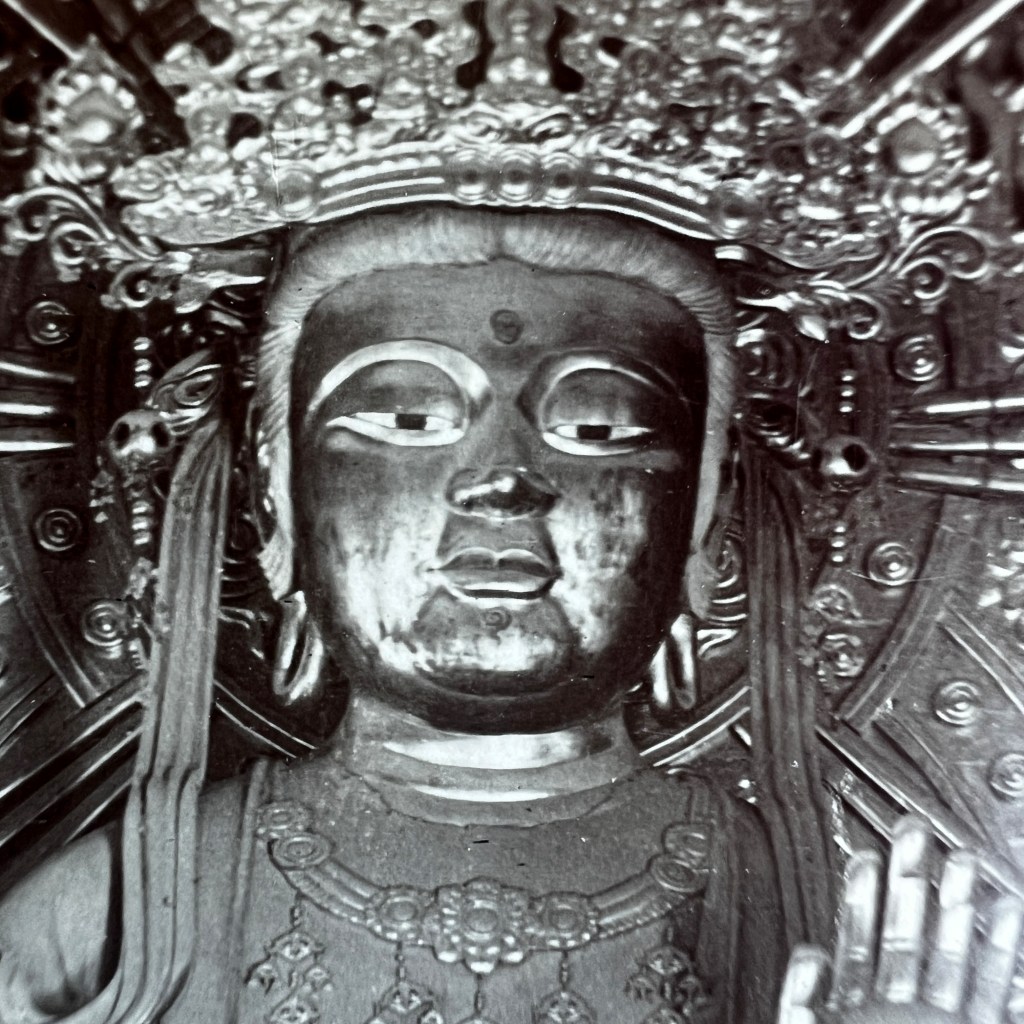
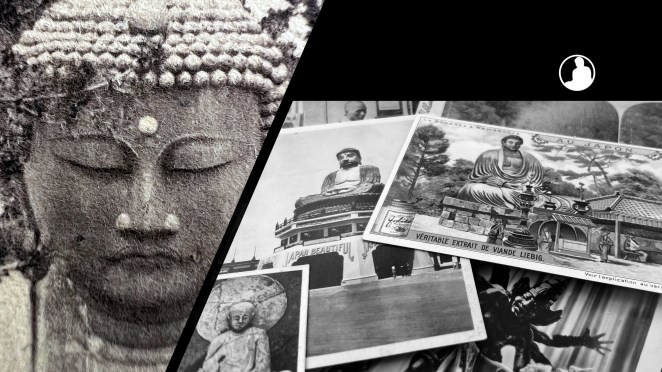
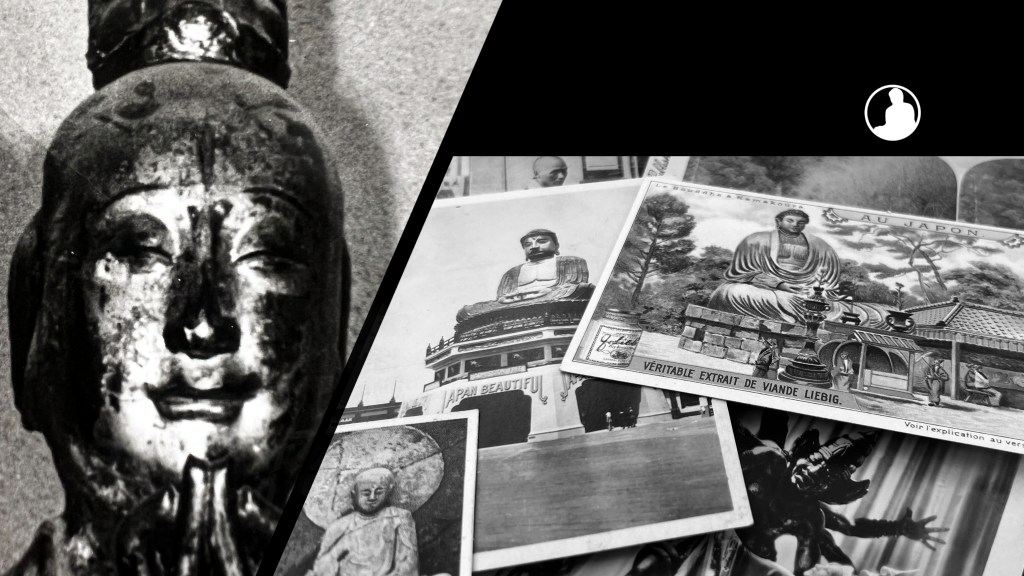
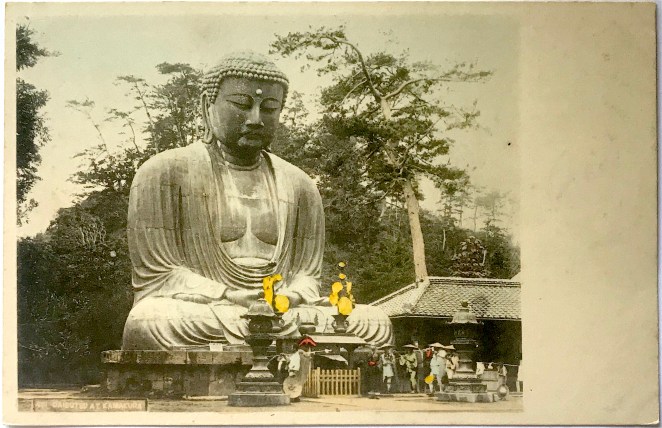
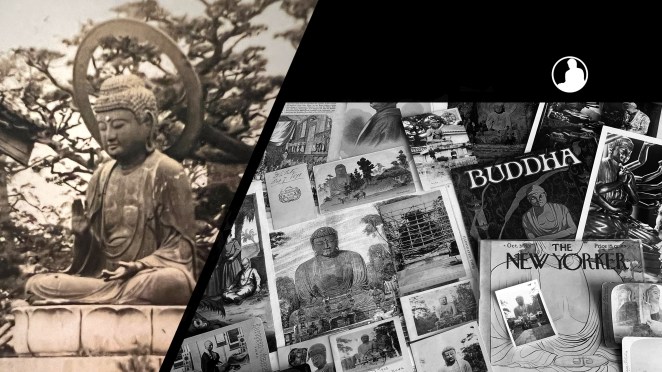
For late Victorian-era globetrotters, religious sites around Japanese port cities were often treated as picturesque tourist destinations. Such a site can be found with the Shinkō-ji lotus pond surrounding a large bronze Buddhist statue, not far from Kobe harbor.
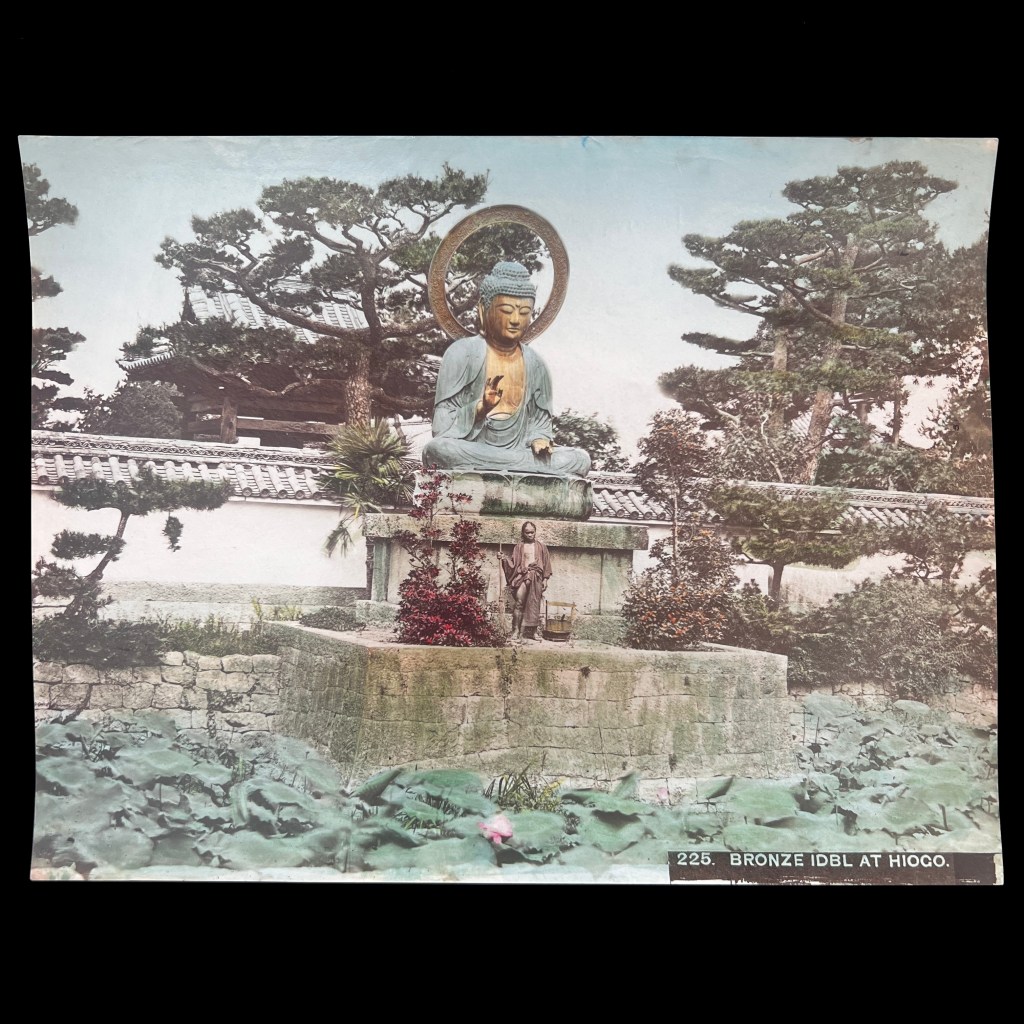
This photograph was taken by Tamamura Kōzaburō who operated a well-known studio based in Yokohama since the early 1880s. Tamamura, like many of his peers, often sold photographic souvenirs of sites, objects, and people sought out by foreign tourists.
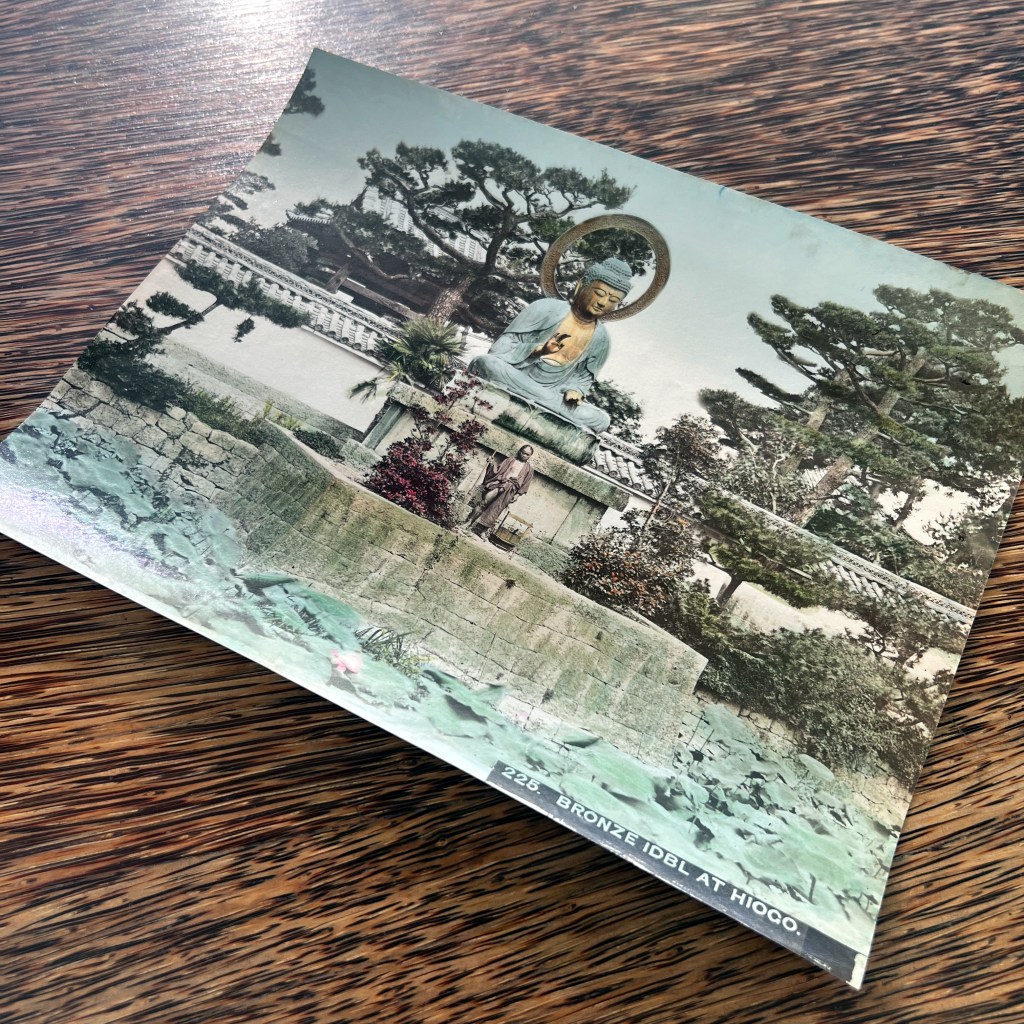
It was common for photographers to add people to the scene to help provide a sense of scale. The height of the Shinkō-ji statue is claimed to have been 4.8 meters tall.

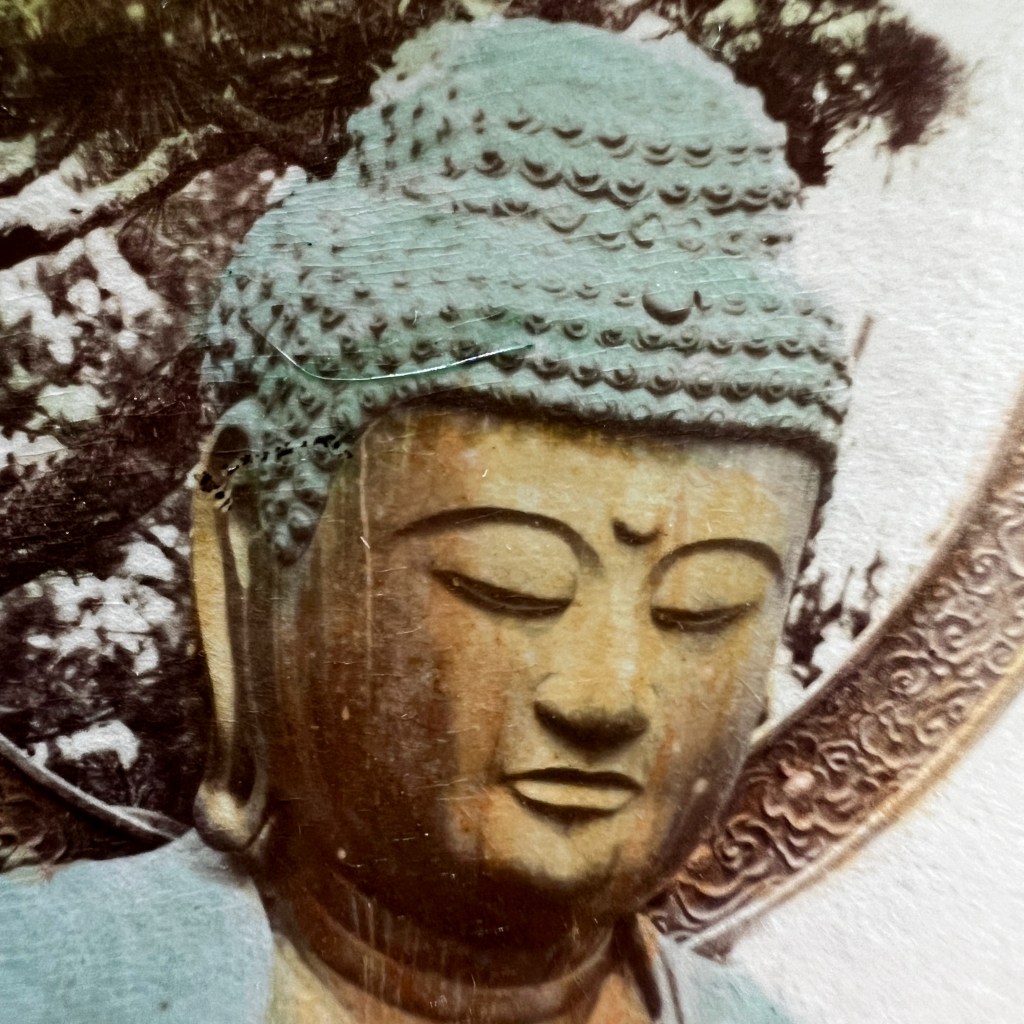
While the caption on the photo identifies the statue generically as an idol, Shinkō-ji identifies it as Vairocana Buddha. According to temple records the icon was installed in 1760.

Unfortunately, to the best of my knowledge, this icon was likely destroyed by allied firebomb attacks in March 1945 during World War II. A Tamamura album with 50 photograph has been scanned by Harvard University Library, viewable here: https://tinyurl.com/3jn672n5

The Buddhas in the West Material Archive is a digital scholarship project that catalogues artifacts depicting Buddhist material culture for Western audiences. It’s comprised of prints, photos, and an assortment of ephemera and other objects. For a brief introduction to this archive, visit the main Buddhas in the West project page.


For Related Buddhas in the West Posts Featuring Kobe, Japan:

For the Most Recent Buddhas in the West Posts:

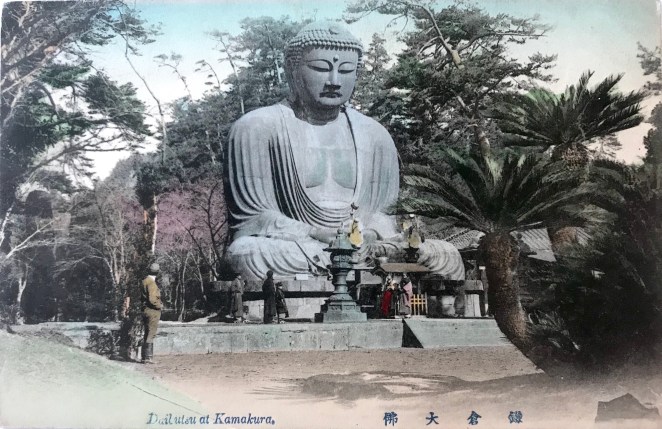
Adolfo Farsari’s Kamakura Daibutsu Photograph

For all the new Buddhas in the West posts
follow us on Bluesky & Instagram


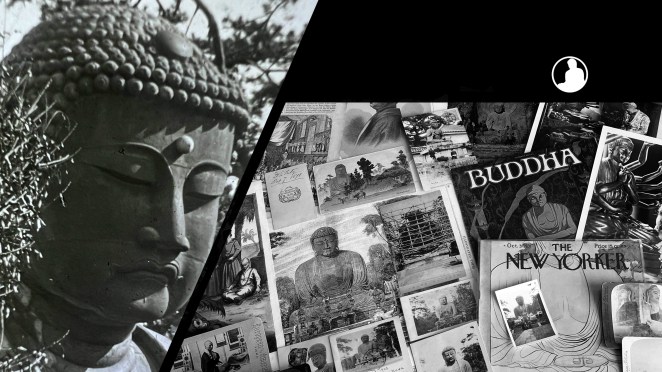
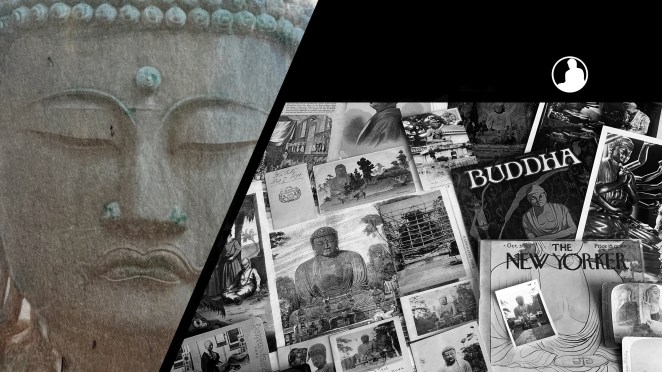
In 1886, a year after Adolfo Farsari opened his Yokohama photography studio, it burned to the ground during a city-wide fire. Farsari spent the next several months traveling Japan to replenish his stock, including several Buddhist sites popular among globetrotting tourists.

Moreover, with the destruction of Farsari’s studio, he also lost the older negatives of Felice Beato and Baron von Stillfried. Farsari’s studio was among the last of the foreign studios in Yokohama as more Japanese photographers were turning to professional ventures.

Farsari’s scene of the Kamakura Daibutsu shows a person in the middle of prayer.

We can also see another man standing on the stone pedestal, a common sight in photographs of this era.

Farsari’s work earned the praise Rudyard Kipling who complimented him on the fidelity of the hand-coloring. Further commentary on Farsari’s Kamakura Daibutsu photo can be found here: https://peterromaskiewicz.com/2019/01/19/farsaris-dai-butsu-visual-literacy-of-buddhism/


The Buddhas in the West Material Archive is a digital scholarship project that catalogues artifacts depicting Buddhist material culture for Western audiences. It’s comprised of prints, photos, and an assortment of ephemera and other objects. For a brief introduction to this archive, visit the main Buddhas in the West project page.


For Related Buddhas in the West Posts Featuring Historical Photography:


For the Most Recent Buddhas in the West Posts:

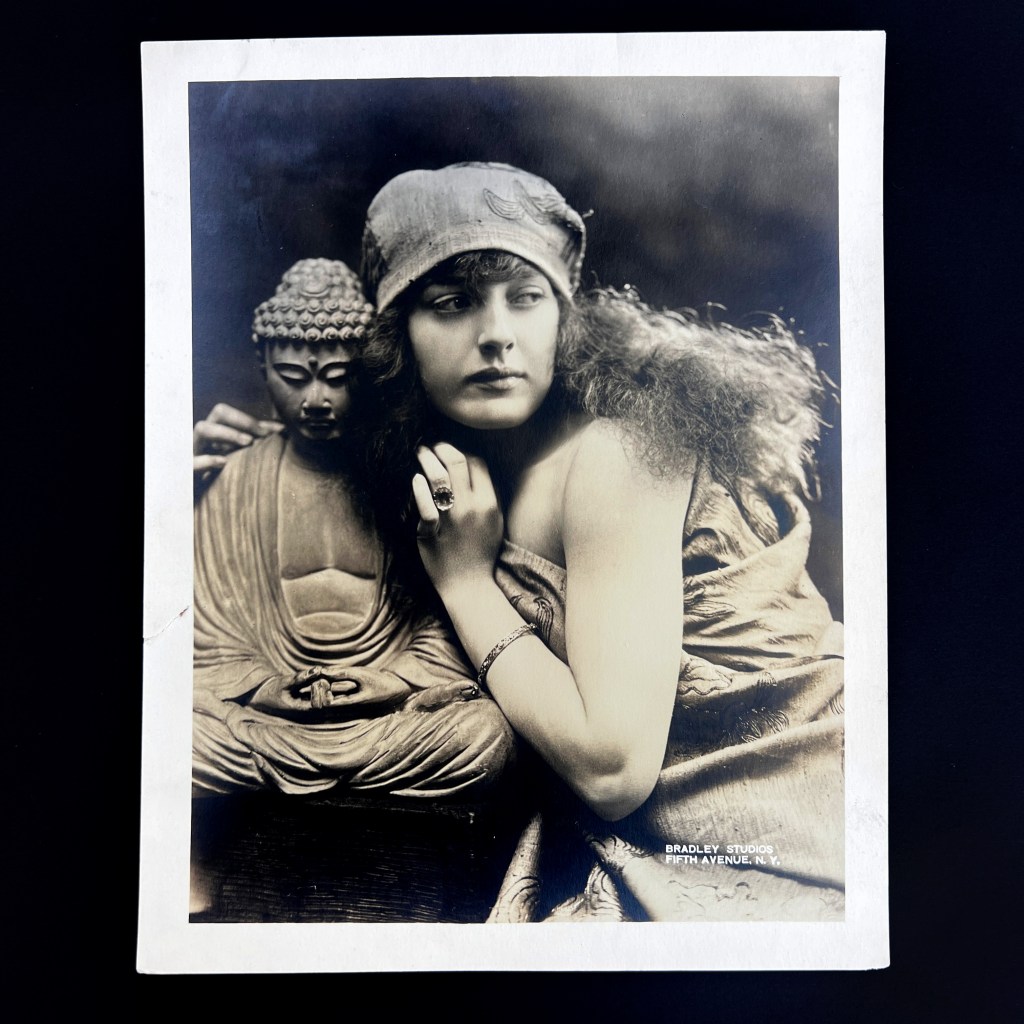
Marguerite Courtot c. 1920 Studio Portrait

For all the new Buddhas in the West posts
follow us on Bluesky & Instagram


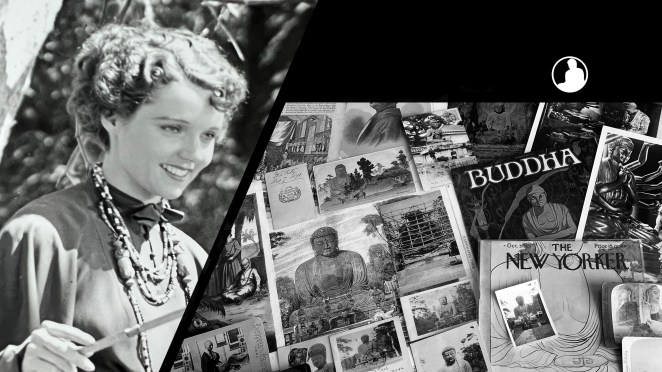
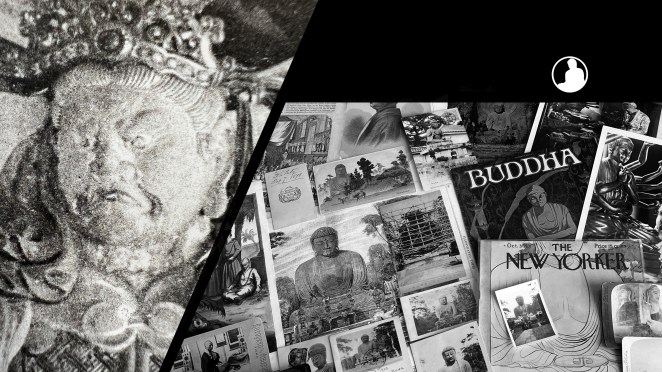
Silent film star Marguerite Courtot joined Pathé after WWI and became a centerpiece in the studio’s action-adventure serials. She starred in Pirate Gold (1920), Velvet Fingers(1920) and The Yellow Arm (1921), with the latter being a stereotypical “Yellow Menace” adventure.

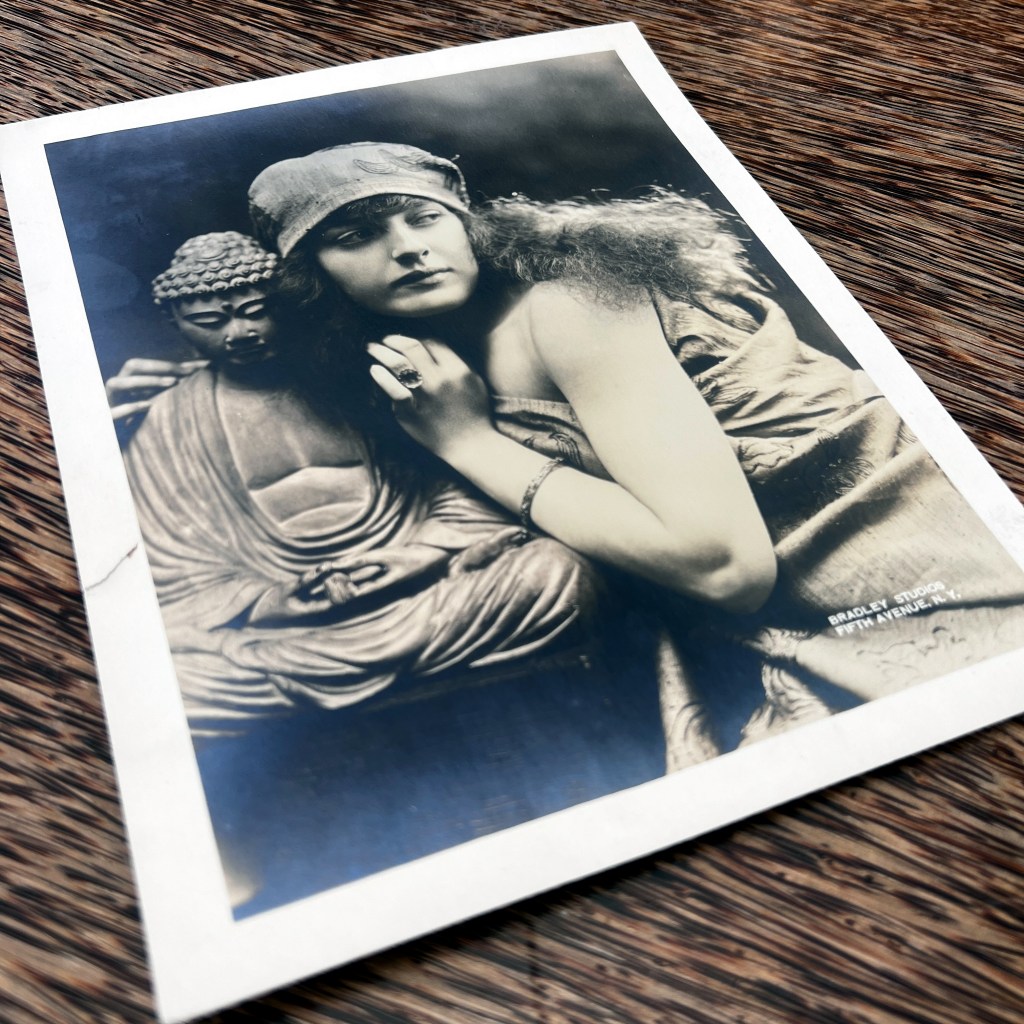
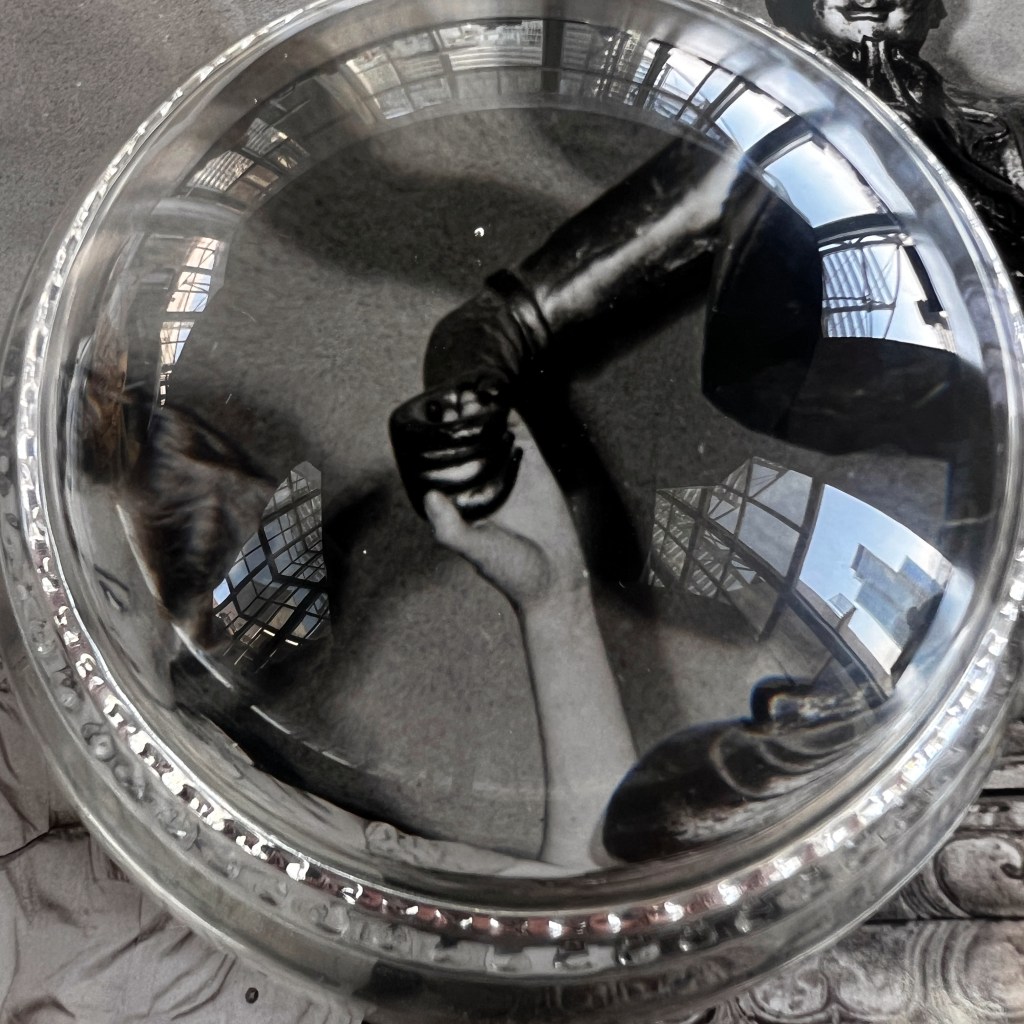
This photo does not appear to be a production still (a movie set photo), but a studio portrait taken in New York City. The portrait dates to around 1920 when the silent film industry was still centered in Fort Lee, New Jersey.

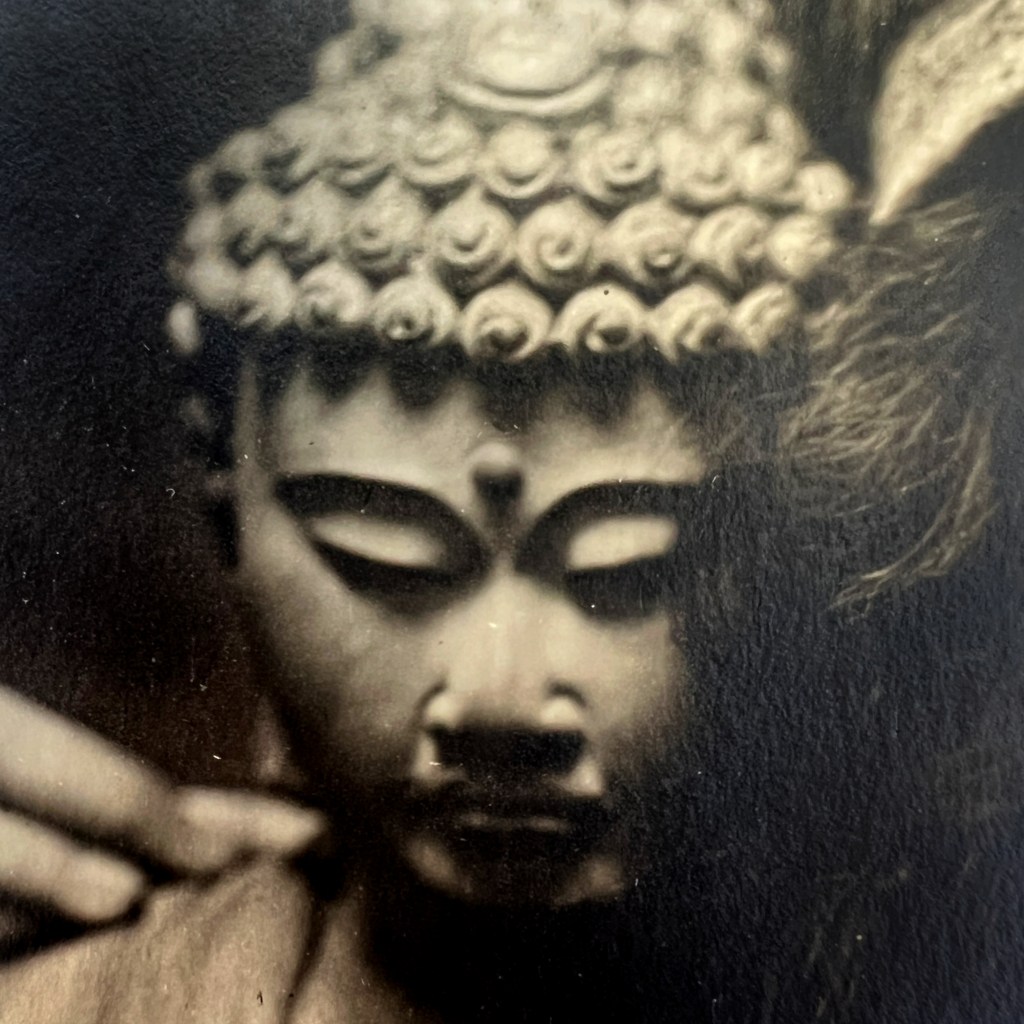
Courtout grasps on to the Buddha statue using a dramatic stage gesture, a relic of the theater age that was adopted in early film. While The Yellow Arm serial is considered lost, it is possible this was a cast portrait used in promoting the film.

Short written synopses survive for several of the Yellow Arm episodes as copyright claims. The synopsis for episode one is held by the Library of Congress, viewable here: https://www.loc.gov/item/s1229l16612/.


The Buddhas in the West Material Archive is a digital scholarship project that catalogues artifacts depicting Buddhist material culture for Western audiences. It’s comprised of prints, photos, and an assortment of ephemera and other objects. For a brief introduction to this archive, visit the main Buddhas in the West project page.


For Related Buddhas in the West Posts Featuring Silent Films:


For the Most Recent Buddhas in the West Posts:

Albumen Photograph of Sanjūsangen-dō Kannon

For all the new Buddhas in the West posts
follow us on Bluesky & Instagram


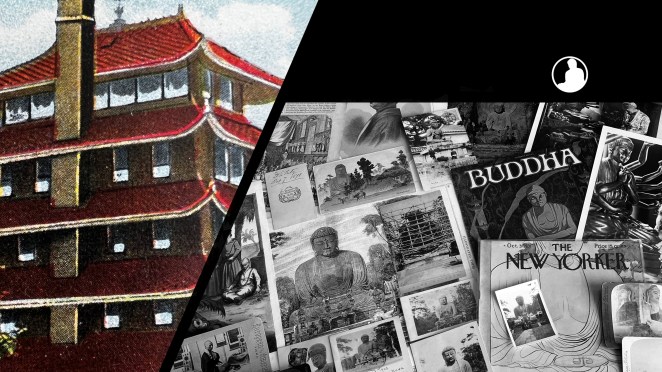
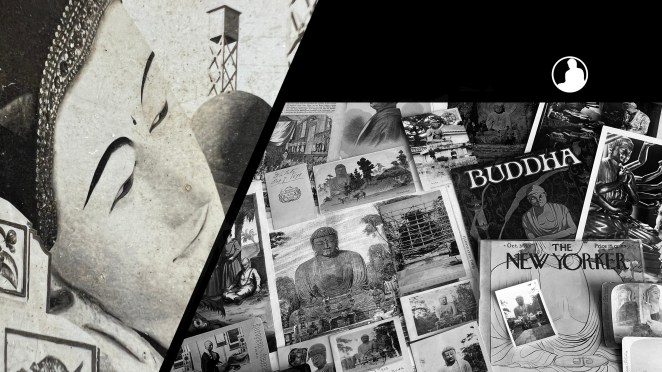
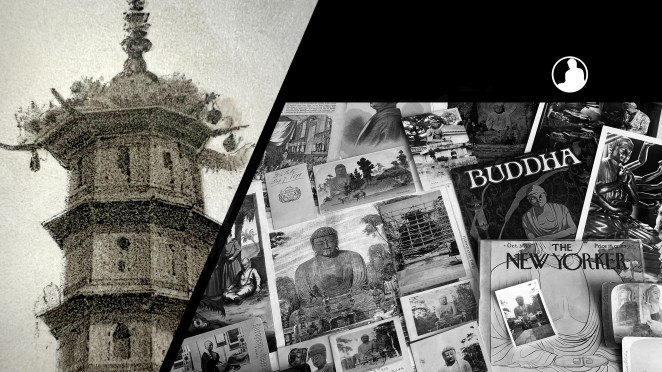
For visitors to Japan in the 1860s, Kyoto was seen as brimming with dangerous anti-foreign samurai. This changed in the 1870s when it was transformed by tourism, driven in part by foreign photography studios who were allowed to shoot the city for the 1872 Kyoto Exposition.

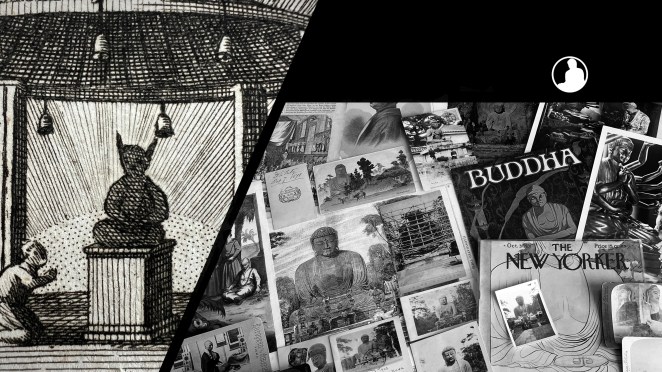
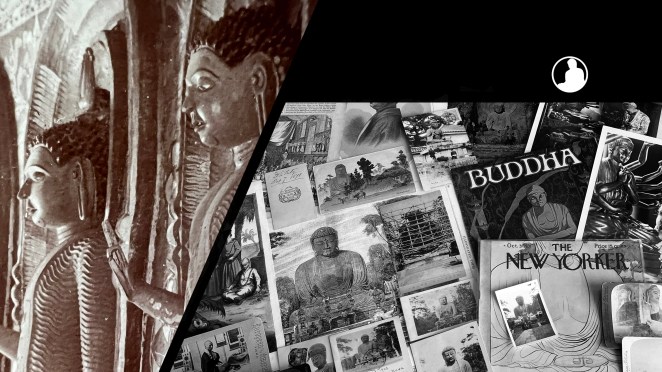
While Europeans knew of Kyoto’s Sanjūsangen-dō through late 17th century book engravings, the first photographs of the temple likely did not circulate until the early 1870s. This albumen print is by an unknown commercial photographer and likely dates to the 1880s.

The central icon is a Thousand-armed Kannon from the 13th century and is recognized as a National Treasure of Japan.

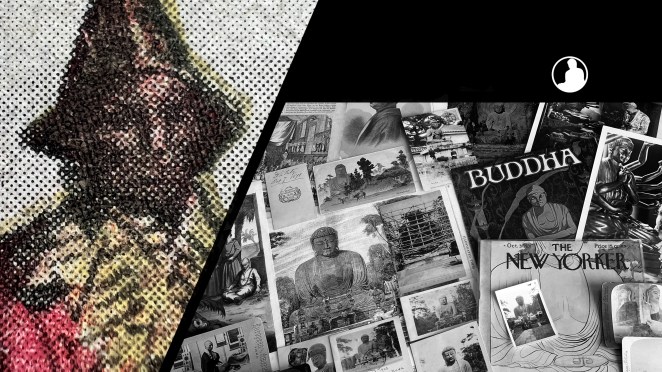
There appears to be a double exposure in this photograph, with a priest kneeling in front of the icon. The colorist gave the priest’s robes a wash of blue, but the paint did not cover over the woodwork designs of the altar.

Baron von Stillfried was among the foreign studio owners who photographed Kyoto in 1872. One of his albums, with views of Kyoto, can be seen through the Metropolitan Museum of Art here: https://tinyurl.com/yuuf52u9.


The Buddhas in the West Material Archive is a digital scholarship project that catalogues artifacts depicting Buddhist material culture for Western audiences. It’s comprised of prints, photos, and an assortment of ephemera and other objects. For a brief introduction to this archive, visit the main Buddhas in the West project page.


For Related Buddhas in the West Posts Featuring Kyoto, Japan:


For the Most Recent Buddhas in the West Posts:
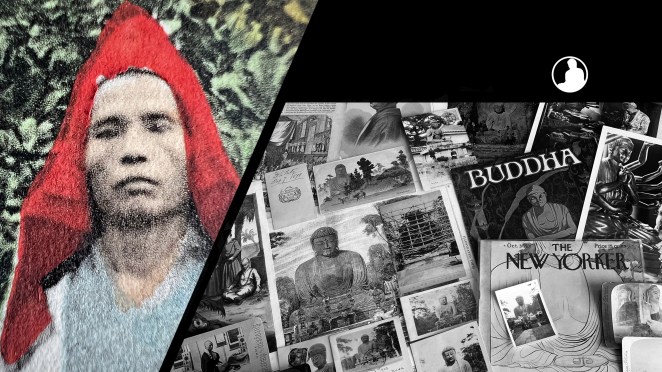

Keystone’s Nara Kokūzō Stereoview

For all the new Buddhas in the West posts
follow us on Bluesky & Instagram


3D Kokūzō 虛空: In the early 20th century, Keystone View Company emerged as a premier publisher of stereoviews with several tens-of-thousands of images in their catalogue. Around 1901, Keystone issued its first views of Japan, including a run of 23 odd-lot stereoviews.

Among their 1901 offerings, a 1/4 were stereo-photographs of religious sites or objects; this includes two views of Buddhist statues. At this time, other companies started offering special Japan box sets and following the Russo-Japanese War Japan sets became far more popular.

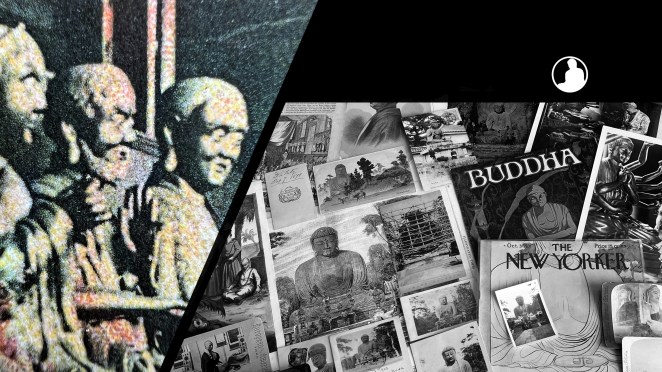
The card here depicts the Daibutsu Hall of Tōdai-ji in Nara. Curiously, it does not show the main figure for which the hall is named, the Nara Daibutsu. This icon is Kokūzō Bosatsu, otherwise known as Ākāśagarbha Bodhisattva (Keystone simply labelled it as a “god.”)

Part of Keystone’s commercial success was selling stereoviews to schools across the US. To view part of their early selection of Japan views, see the digitized collection at the Library of Congress, viewable here https://tinyurl.com/bdewbmva.


The Buddhas in the West Material Archive is a digital scholarship project that catalogues artifacts depicting Buddhist material culture for Western audiences. It’s comprised of prints, photos, and an assortment of ephemera and other objects. For a brief introduction to this archive, visit the main Buddhas in the West project page.


For Related Buddhas in the West Posts Featuring Japan:


For the Most Recent Buddhas in the West Posts:
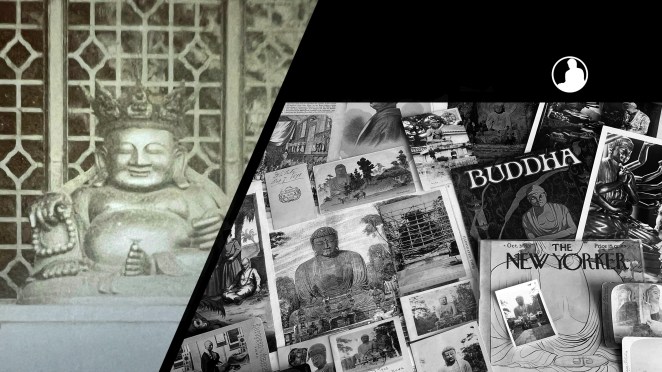

The Cheat (1923) Production Photograph

For all the new Buddhas in the West posts
follow us on Bluesky & Instagram


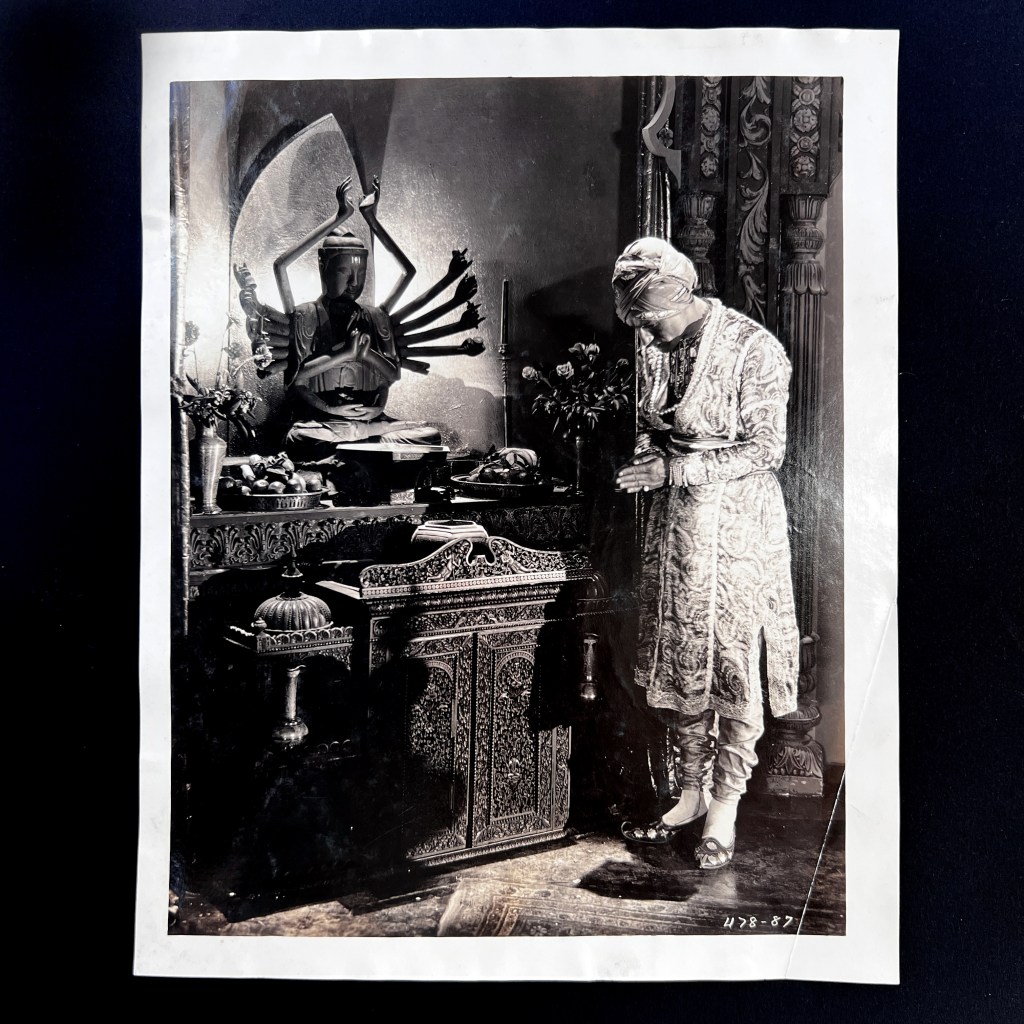
A Lost Film: The remake of The Cheat in 1923 starred Pola Negri in her second American film; she gave rise to the cinematic femme fatale. As with many silent films of the era, The Cheat is considered lost and theatrical stills are some of the only pictorial documents remaining.

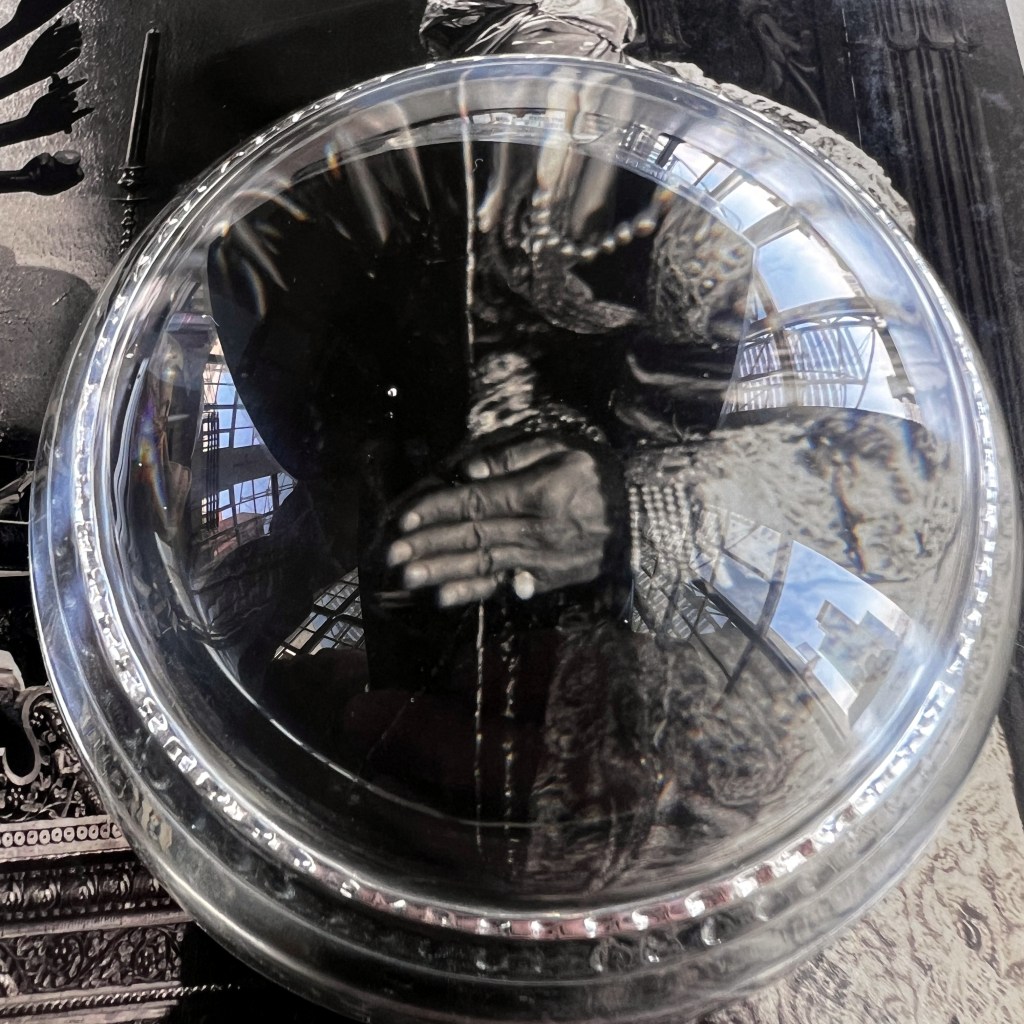
Theatrical stills – shot since the advent of feature films in the 1910s – are simply production photographs. Over the last century they have become highly collected artifacts, here we can see where the photo was affixed to an album page.

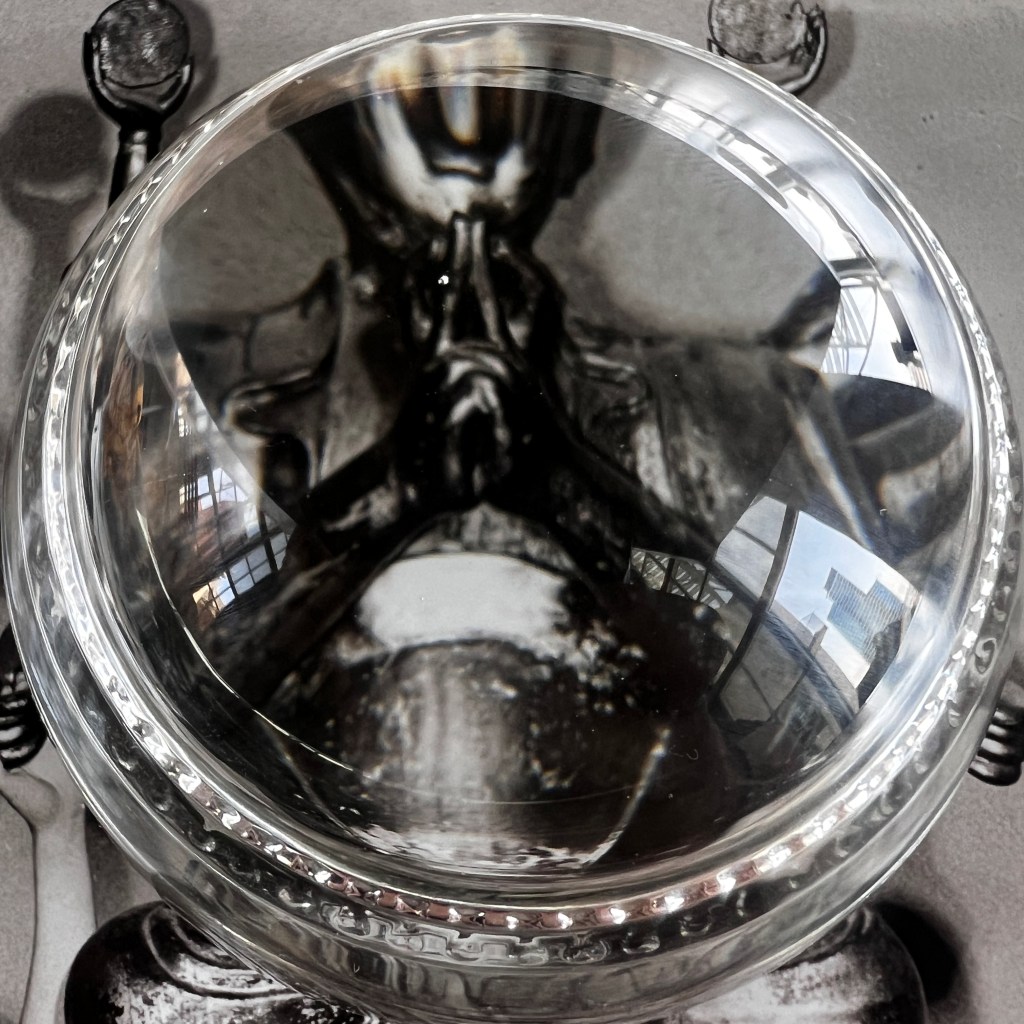
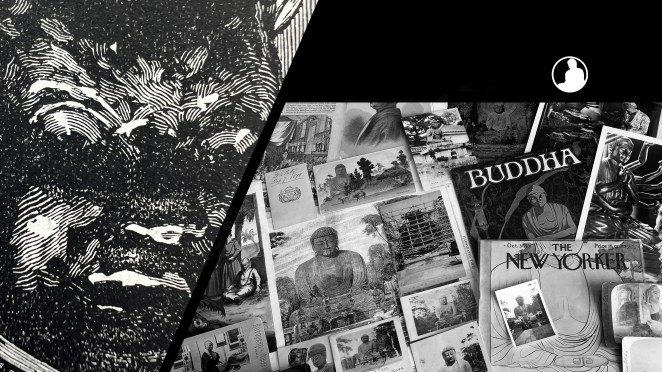
The image here shows Charles de Rochefort playing a cunning art dealer masquerading as an East Indian Prince. The set design uses a multi-arm statue to underscore his foreign, and potentially nefarious, identity.

Looking closely at the statue, is does not appear to be a studio-made prop. The features and style suggest an authentic East Asian icon.

The richly brocaded costuming hints at the character’s royal pedigree, while his posture of reverence reveals his non-Christian religious allegiance.

A similar icon was photographed by German photographer Hedda Morrison in China between 1933–1946. It is viewable through Bristol’s Visualizing China project here: https://hpcbristol.net/visual/Hv08-085


The Buddhas in the West Material Archive is a digital scholarship project that catalogues artifacts depicting Buddhist material culture for Western audiences. It’s comprised of prints, photos, and an assortment of ephemera and other objects. For a brief introduction to this archive, visit the main Buddhas in the West project page.


For Related Buddhas in the West Posts Featuring Historical Photography:


For the Most Recent Buddhas in the West Posts:
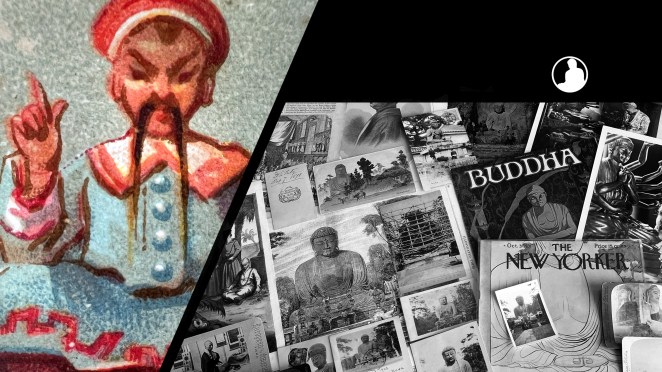

Baron Raimund von Stillfried’s Daibutsu Carte de visite

For all the new Buddhas in the West posts
follow us on Bluesky & Instagram


Early Photographic Souvenirs: When Baron Raimund von Stillfried (1839–1911) opened his Yokohama studio in 1871, globe-trotting was becoming the rage among wealthy elite. This phenomenon was reflected in Jules Verne’s Around the World in 80 Days, published in 1873.

A decade earlier, the small format carte-de-visite had emerged as one of the most popular products of commercial photography studios. Originally used as inexpensive family portraits carried in jacket pockets, they soon turned into common tourist souvenirs.

The 19th century globe-trotting circuit included port in Yokohama, the first landfall as you came west across the Pacific. Stillfried’s souvenir photo bears a handwritten note:
This is Diaboots
The Japanese God
what they worship
he is a big size

“Diaboots” refers to Daibutsu.

Stillfried became well known for his Japanese landscapes, a genre that was also popular among foreign globe-trotters.He would carefully frame Japanese people into his shots to underscore elements of foreignness.

Stillfried also published larger format prints bound into albums. An early exemplar from 1872, titled Views and Costumes of Japan, is held by the Metropolitan Museum of Art, viewable here: https://tinyurl.com/yuuf52u9.


The Buddhas in the West Material Archive is a digital scholarship project that catalogues artifacts depicting Buddhist material culture for Western audiences. It’s comprised of prints, photos, and an assortment of ephemera and other objects. For a brief introduction to this archive, visit the main Buddhas in the West project page.


For Related Buddhas in the West Posts Featuring Historical Photography:


For the Most Recent Buddhas in the West Posts:
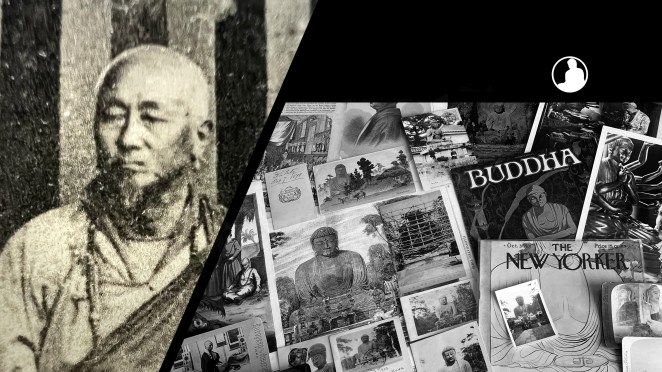

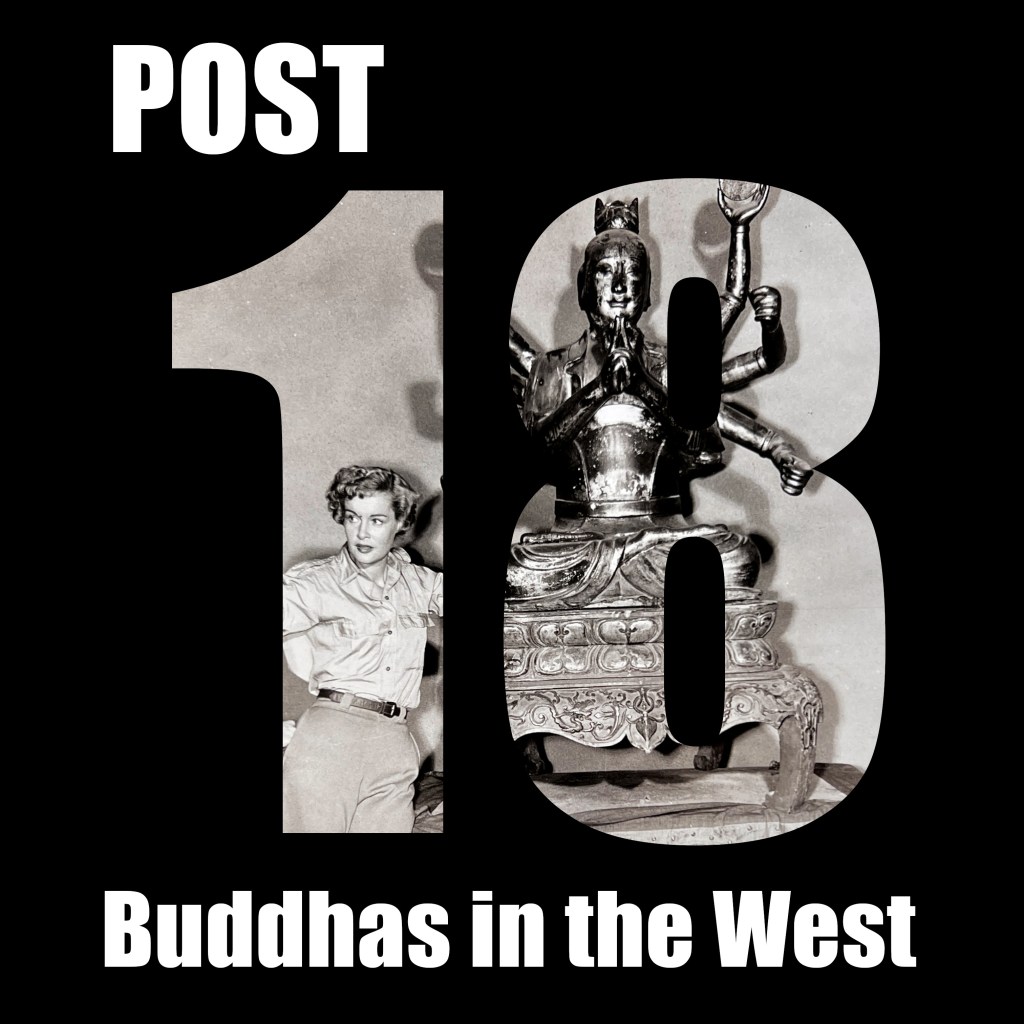
Andrew Marton’s Storm Over Tibet (1952) Icon

For all the new Buddhas in the West posts
follow us on Bluesky & Instagram


Buddhist Demon of Shangri-la: Andrew Marton’s 1952 film, Storm over Tibet, utilizes Buddhist material culture to drive the Cold War horror-fantasy narrative. Filmed in part at Lamayuru in Ladakh, a cursed cham dance mask is a surrogate for the menacing antagonist.

Storm Over Tibet was a remake of Marton’s pre-war German-Swiss film Demon of the Himalayas from 1935. For both films Marton used documentary footage from the 1934 International Himalayan Expedition. Some of the same footage also was used for Columbia’s Lost Horizon in 1937.

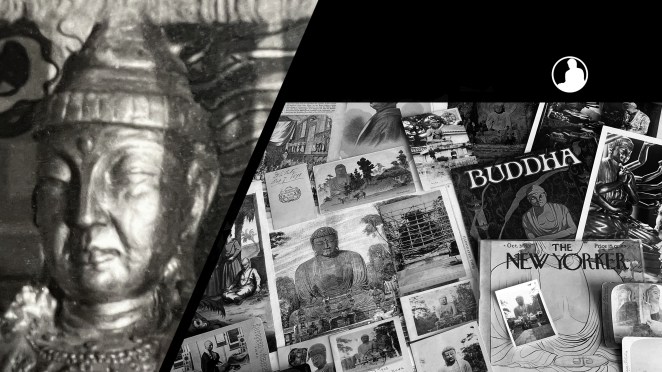
The co-lead, Diana Douglas, holds the hand of a Buddhist statue owed by the prop department of Columbia Pictures. It appears to be an image of Cundī. While large Asian statuary was oftentimes created by studio prop departments, this appears as if it was an authentic, yet incomplete, Buddhist artifact. [Update: This is the Daoist stellar deity Doumu, related to the Buddhist Cundī]

Marton’s 1935 German film, Demon of the Himalayas, incorporating on-location footage is available on the Internet Archive, viewable here: https://tinyurl.com/253rhr48.


The Buddhas in the West Material Archive is a digital scholarship project that catalogues artifacts depicting Buddhist material culture for Western audiences. It’s comprised of prints, photos, and an assortment of ephemera and other objects. For a brief introduction to this archive, visit the main Buddhas in the West project page.


For Related Buddhas in the West Posts Featuring Historical Film Photography:


For the Most Recent Buddhas in the West Posts:

Jerome Camp Amida Shrine News Photograph

For all the new Buddhas in the West posts
follow us on Bluesky & Instagram


Barbed-wire Buddhas: Buddhist objects were precious – and rare – at American Japanese internment camps during WWII. Here, issei Buddhist priest Rev. Gyōdō Kōno, stands in front of a small shrine to Amida Buddha at the Jerome relocation camp in Arkansas.


In February 1942, Executive Order 9066 was authorized, forcing the incarceration of more than 110,000 Americans of Japanese descent. Most were Buddhist. Japanese Buddhist temples on American soil were closed and only a few small religious items could be brought to the camps.


Often, items like shrines (butsudan), altar tables, and other ritual implements were made from scraps of wood with delicate care.


Buddhist rosaries (o-nenju), like the one held by Rev. Kōno, were important ritual items for the Jodo Shinshu sect.

After leaving the Jerome camp, Rev. Kōno relocated to Chicago and founded the Midwest Buddhist Temple which is still open today.

The Smithsonian National Museum of American History owns one of the internment camp Buddhist shrines from Jerome along with other items from the internment era. The shrine can be viewed here: https://tinyurl.com/yvb3heut


The Buddhas in the West Material Archive is a digital scholarship project that catalogues artifacts depicting Buddhist material culture for Western audiences. It’s comprised of prints, photos, and an assortment of ephemera and other objects. For a brief introduction to this archive, visit the main Buddhas in the West project page.


For Related Buddhas in the West Posts Featuring Historical Photographs:


For the Most Recent Buddhas in the West Posts:

Greta Garbo’s Guanyin in The Painted Veil (1934)

For all the new Buddhas in the West posts
follow us on Bluesky & Instagram


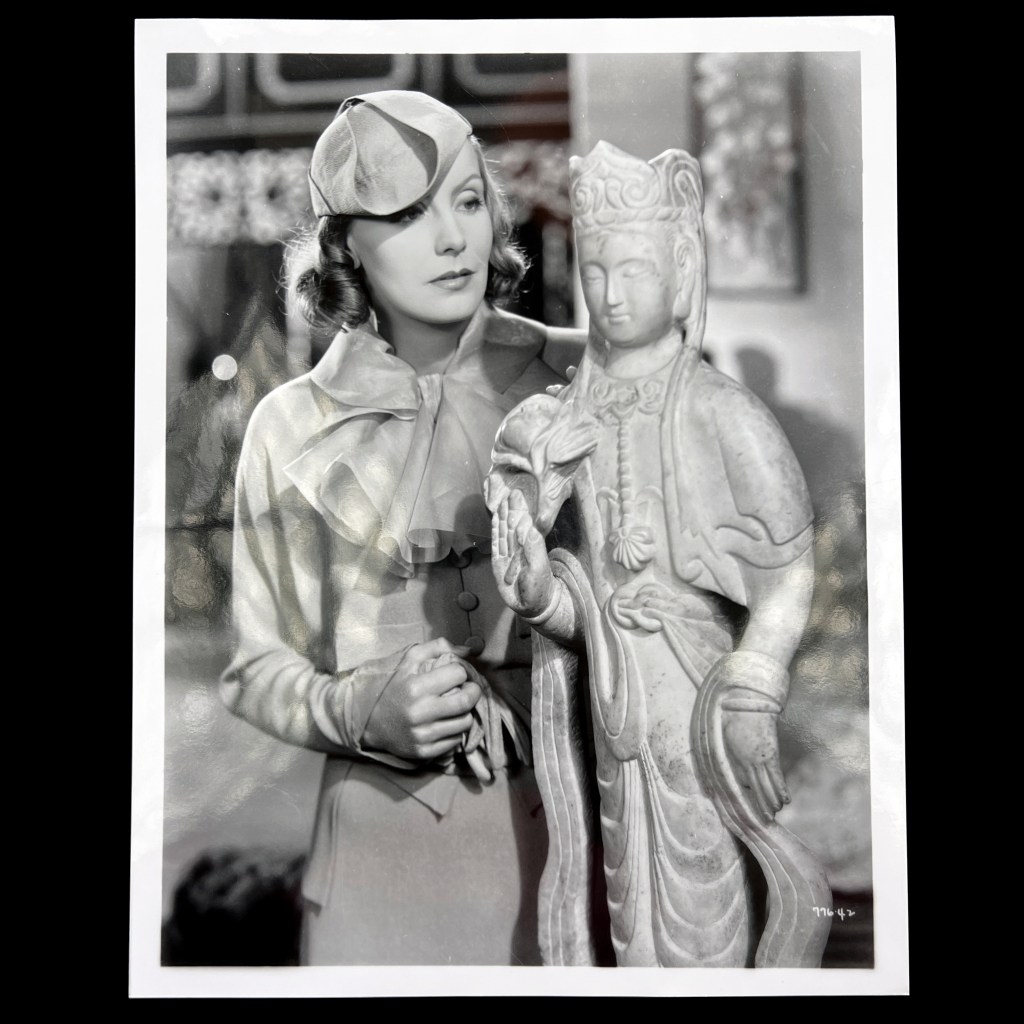
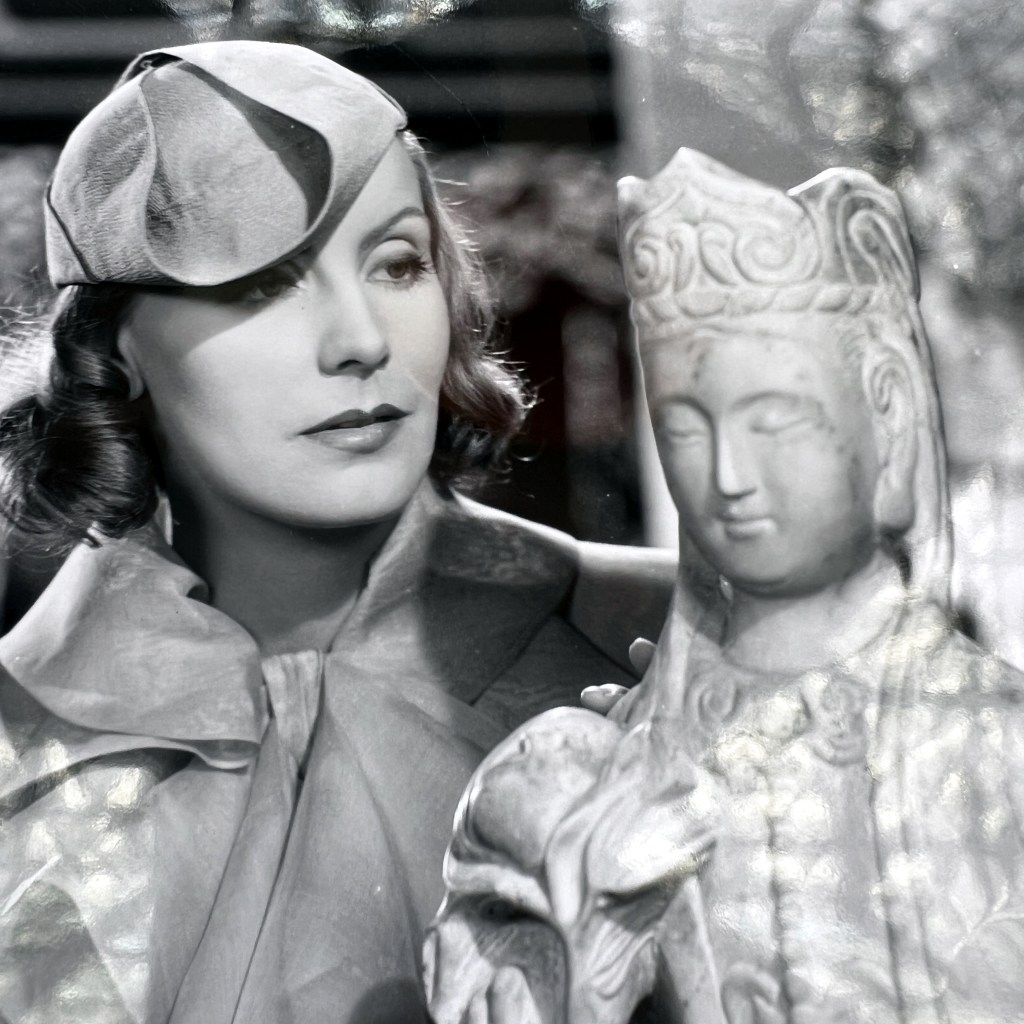
A theatrical still of Greta Garbo in the 1934 film The Painted Veil gazing upon a standing image of Guanyin. Looking closely, we see Garbo’s hand touching the shoulder of Guanyin, a moment of contact between the “icons.”

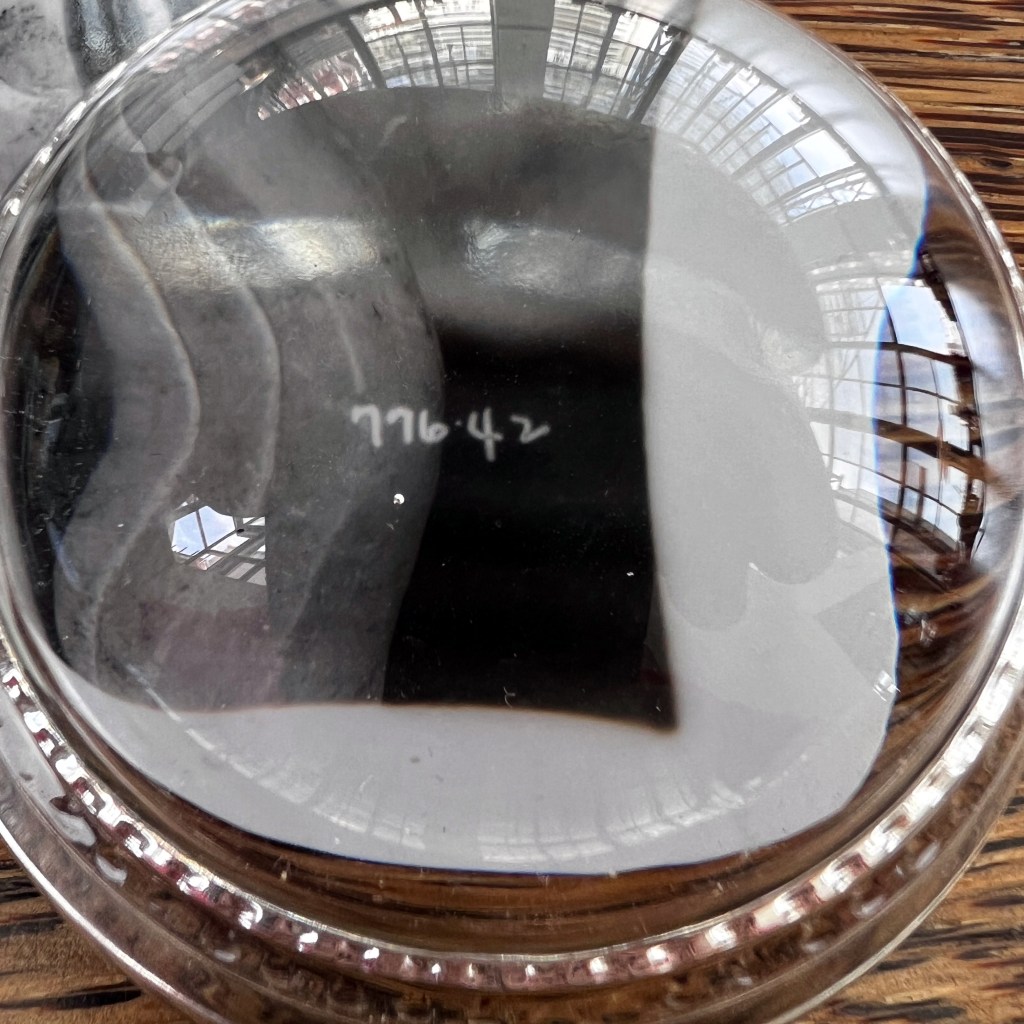
Theatrical stills – shot since the advent of feature films in the 1910s – are production photographs. Many were kept by the studio in albums called keybooks, while others were printed for promotional purposes, often marked with a code (here we see 776–42).

As advertising material, stills would often picture “tension, struggle, action,” but not reveal main elements of the plot, as noted by David Shields.

The scene here is not in the final edit of The Painted Veil, but would have occurred when Garbo’s character arrived in rural China during a cholera outbreak. The touch of the shoulder signaled an arrival into a far-away land, reflected in the materiality of the Buddhist icon.

For more on the history and interpretation of early film still photography, see David S. Shields’ Still: American Silent Motion Picture Photography (2013).


The Buddhas in the West Material Archive is a digital scholarship project that catalogues artifacts depicting Buddhist material culture for Western audiences. It’s comprised of prints, photos, and an assortment of ephemera and other objects. For a brief introduction to this archive, visit the main Buddhas in the West project page.


For Related Buddhas in the West Posts Featuring Historical Film Photography:

For the Most Recent Buddhas in the West Posts: