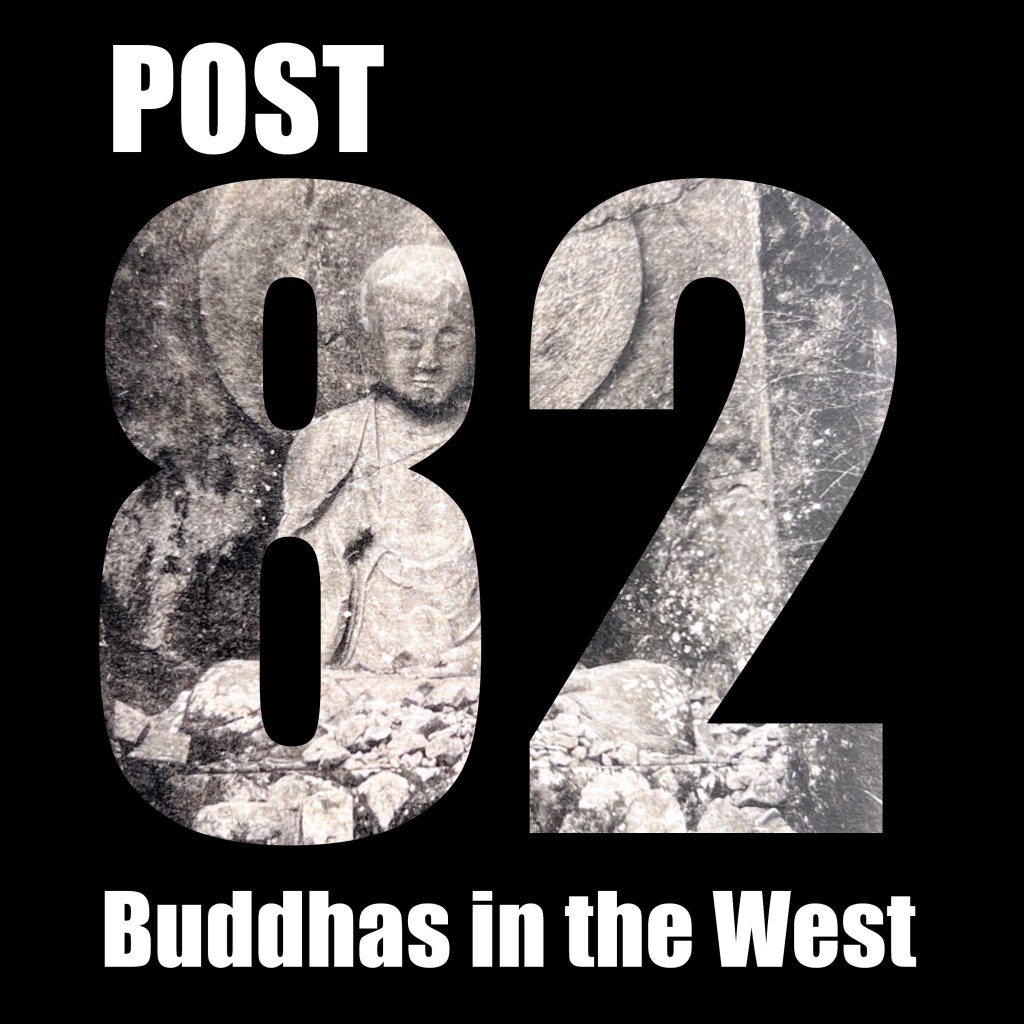
Sherab Gyatso of Ghoom Monastery Postcard

For all the new Buddhas in the West posts
follow us on Bluesky & Instagram


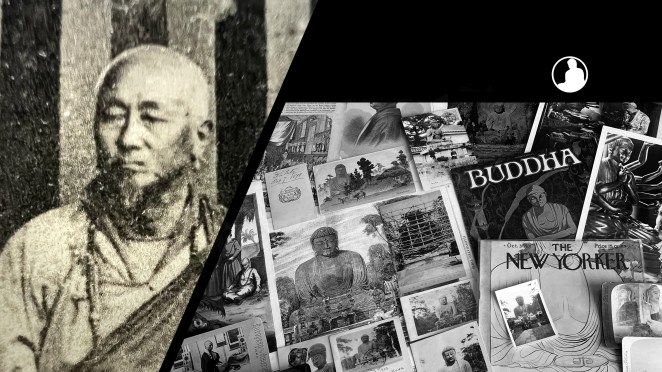
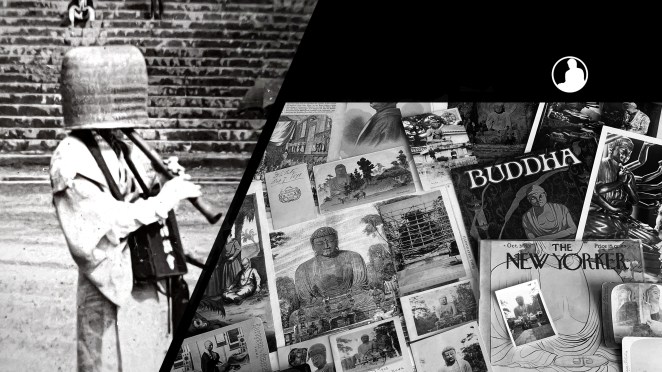
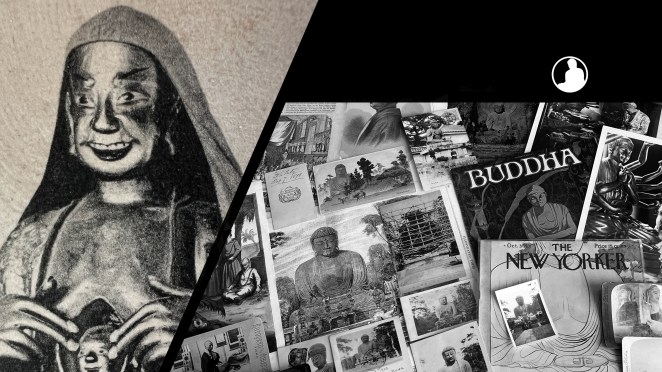
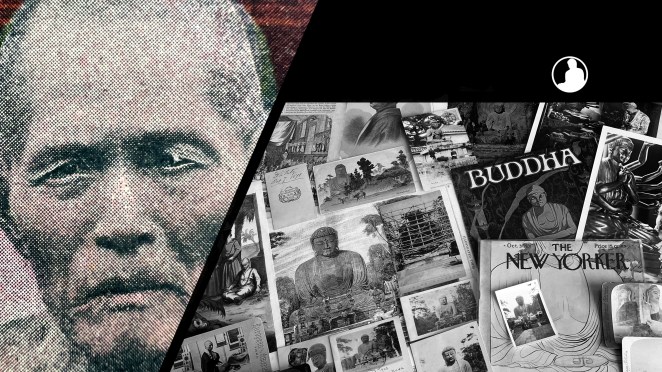
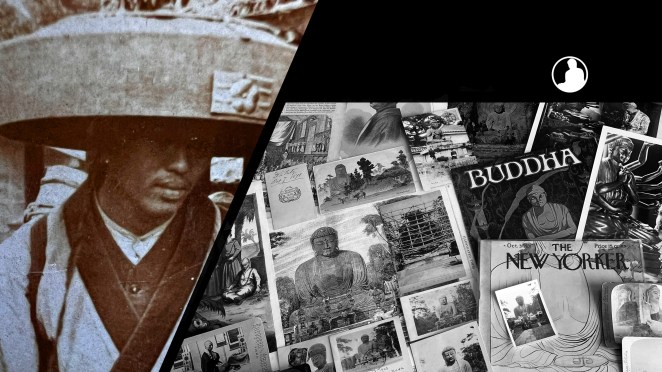
Identified as a “Buddhist priest” and holding a prayer wheel, a figure such as this would have passed for a generic Tibetan lama in the visual language of the early 20th century. In this case, however, we also know this monk’s name: Sherab Gyatso.

Scholar Clare Harris discovered an albumen print of the original photograph taken by Thomas Parr during the 1890s in Darjeeling; the negative was inscribed with the name “She-reb.” The monk was the head of the Geluk Monastery at Ghoom (Ghum) and was well known among the British as the “Mongol Lama.”
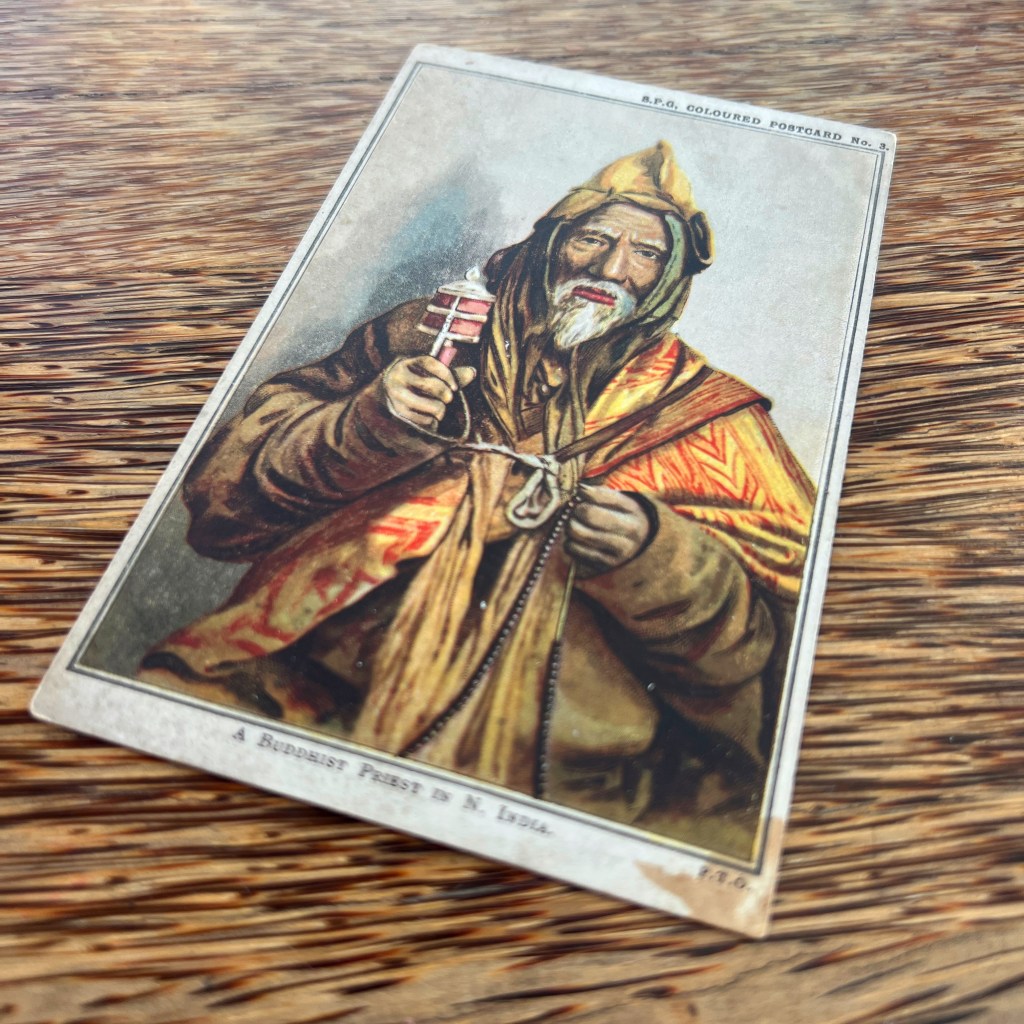
Gyatso’s image appears in a wide range of media, including travel guides, published travelogues, and postcards between 1890 and the 1910s. As noted by Harris, this monk emerged as a “poster-boy for Tibetan Buddhism” around the area of Darjeeling in northern India.

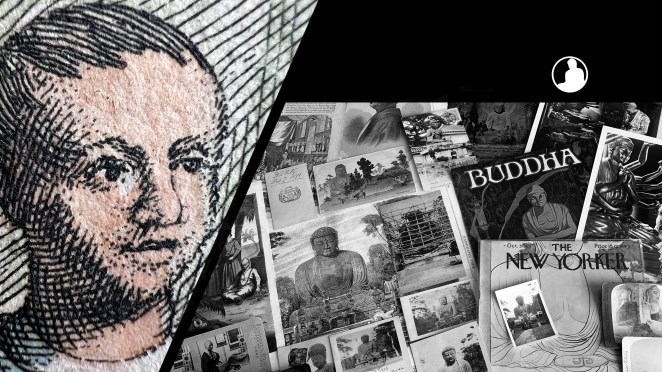
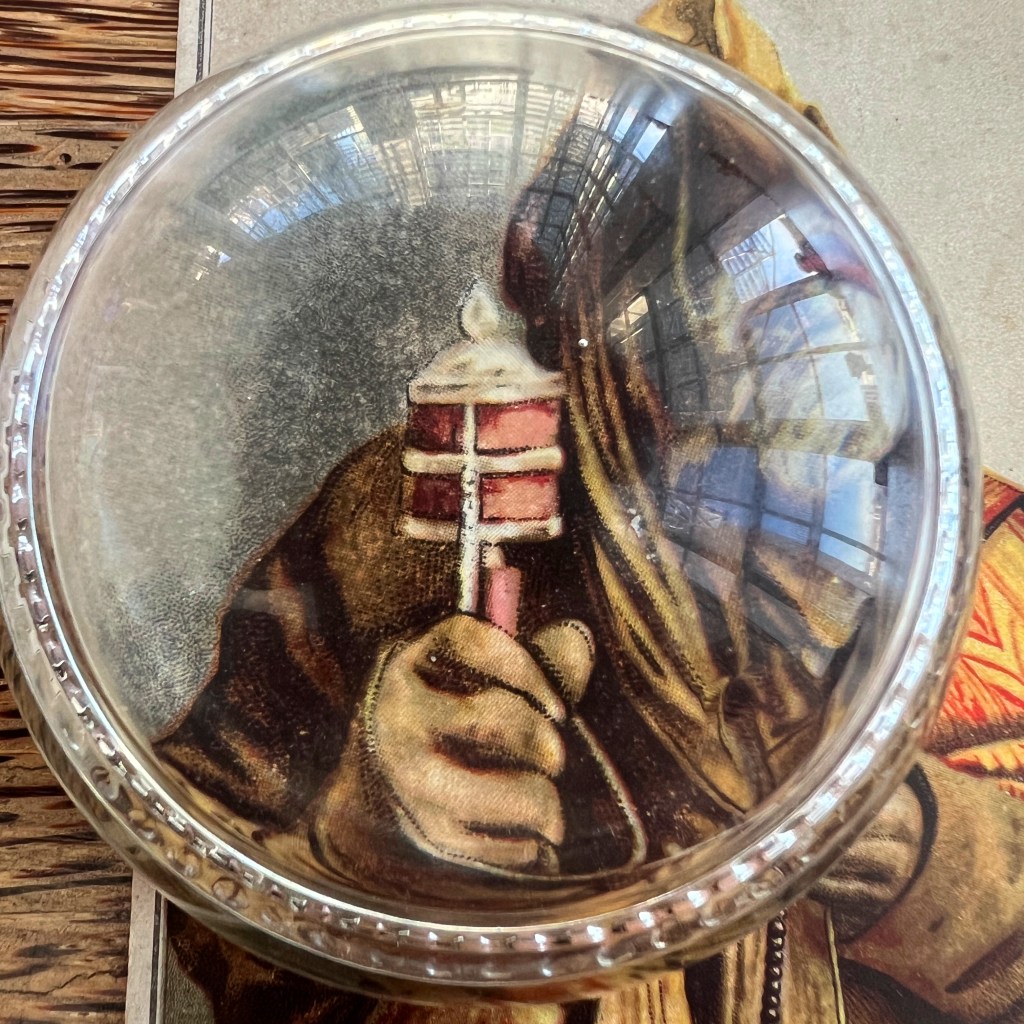
When posed for this portrait in Parr’s studio, the symbols of Tibetan ritual culture are clearly foregrounded, with one hand thumbing mala beads and the other holding a prayer wheel upright and ready for use.

Notably, a Tibetan-style painting and clay statue of Sherab Gyatso grace Ghoom’s monastery today, both derived from Paar’s photograph.
For further information of Sherab Gyatso and the history of early photography in Northern India and Tibet, see Clare Harris’ Photography in Tibet (2017).


The Buddhas in the West Material Archive is a digital scholarship project that catalogues artifacts depicting Buddhist material culture for Western audiences. It’s comprised of prints, photos, and an assortment of ephemera and other objects. For a brief introduction to this archive, visit the main Buddhas in the West project page.


For Related Buddhas in the West Posts Featuring Historical Postcards:

For the Most Recent Buddhas in the West Posts:


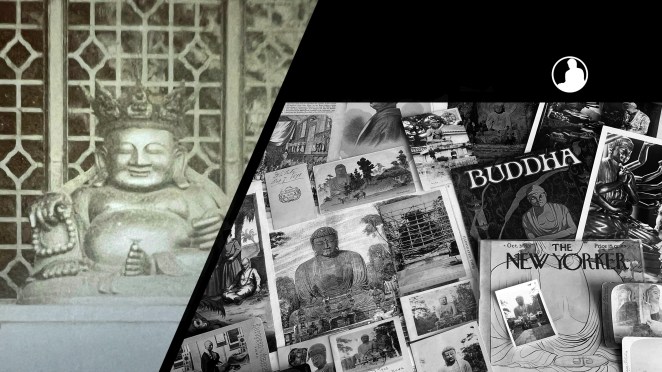
Chinatown’s Tin How Temple / Grass Valley Temple Real Photo Postcard

For all the new Buddhas in the West posts
follow us on Bluesky & Instagram


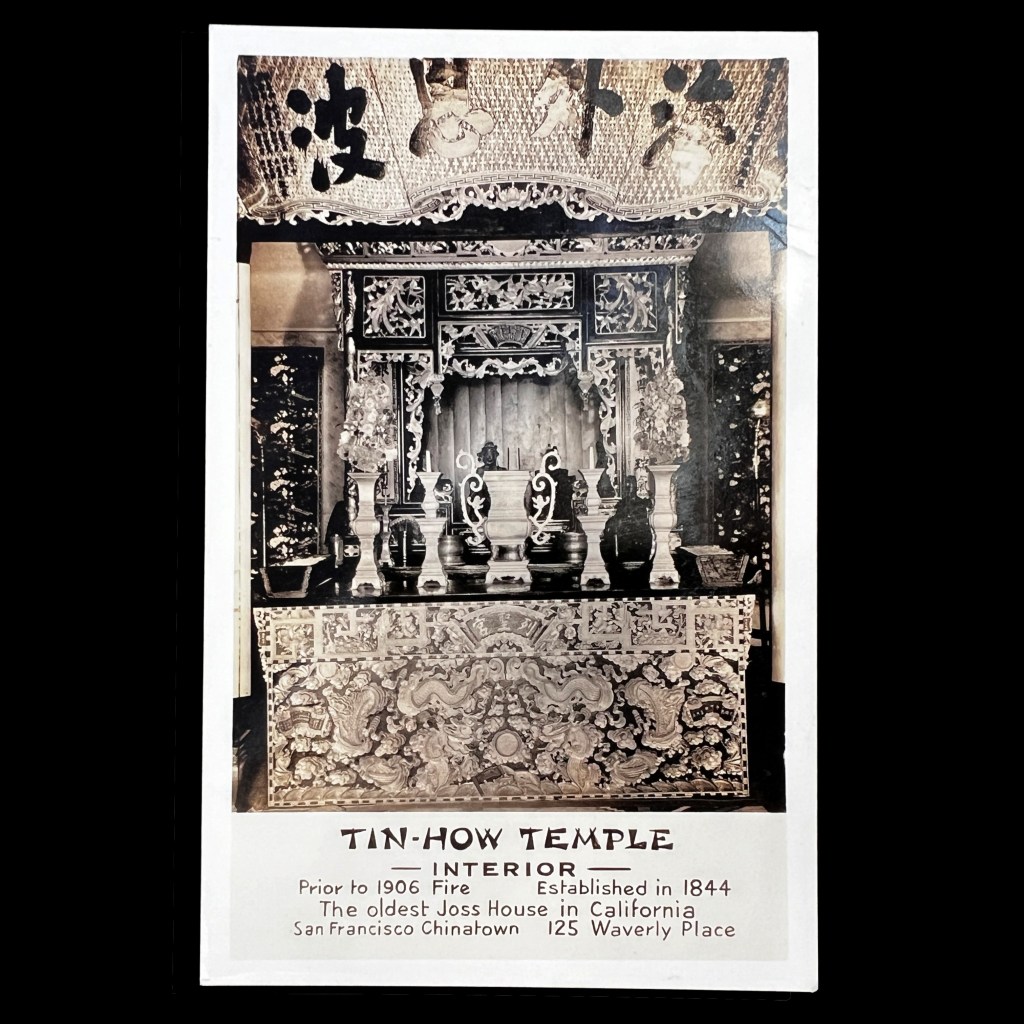
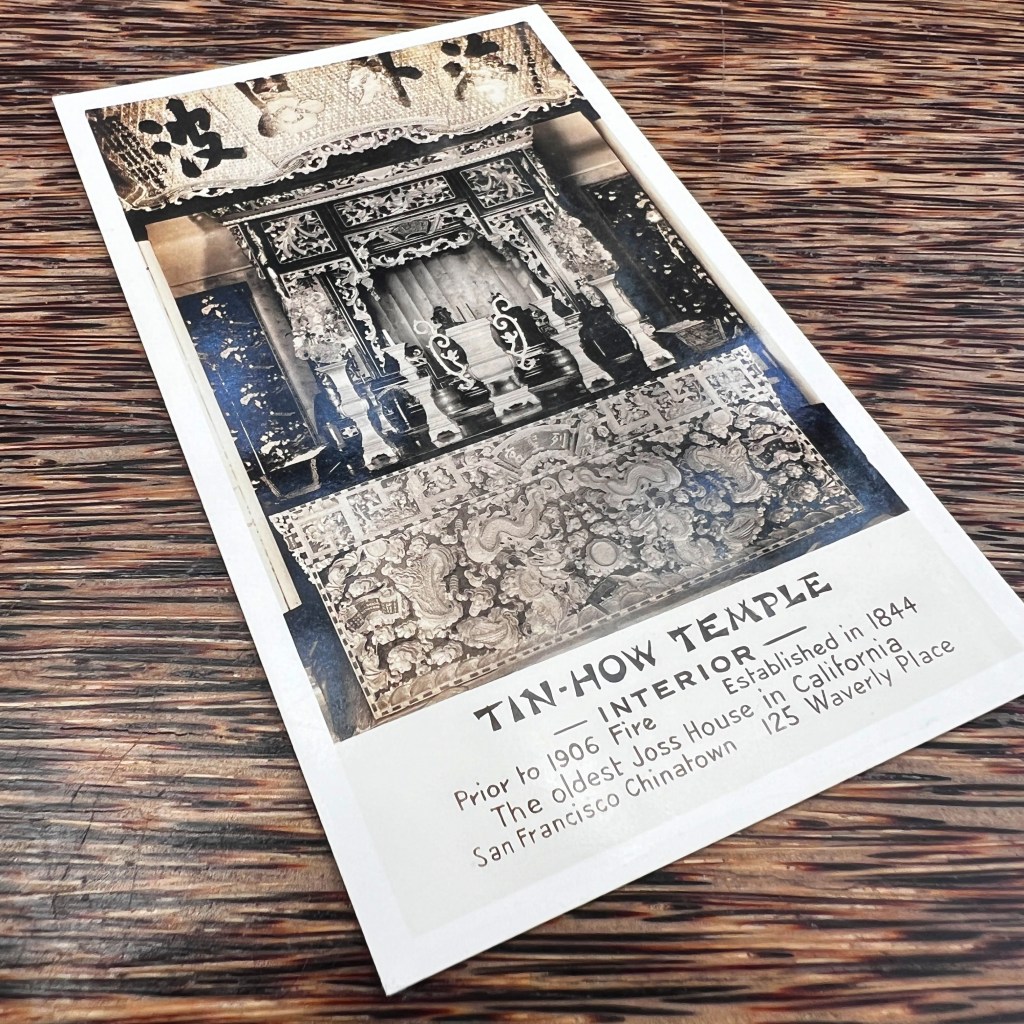
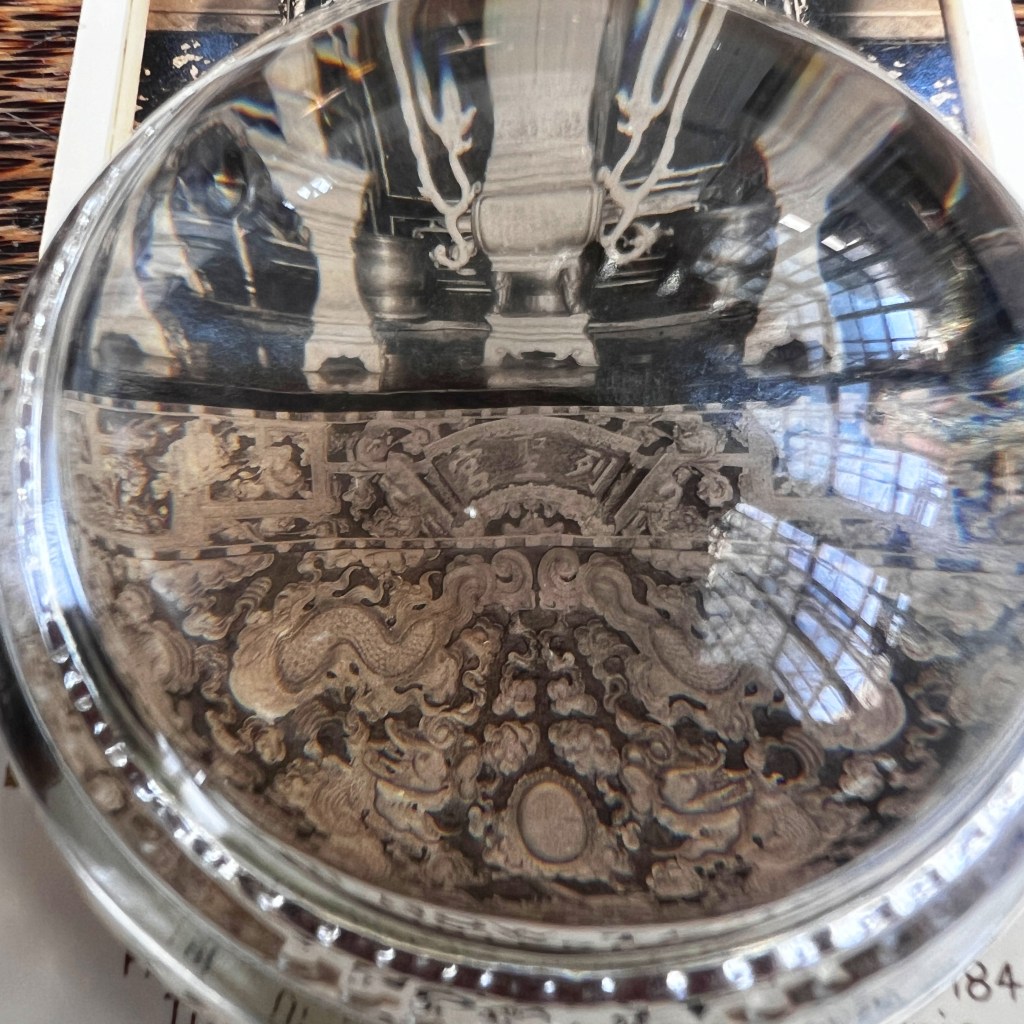
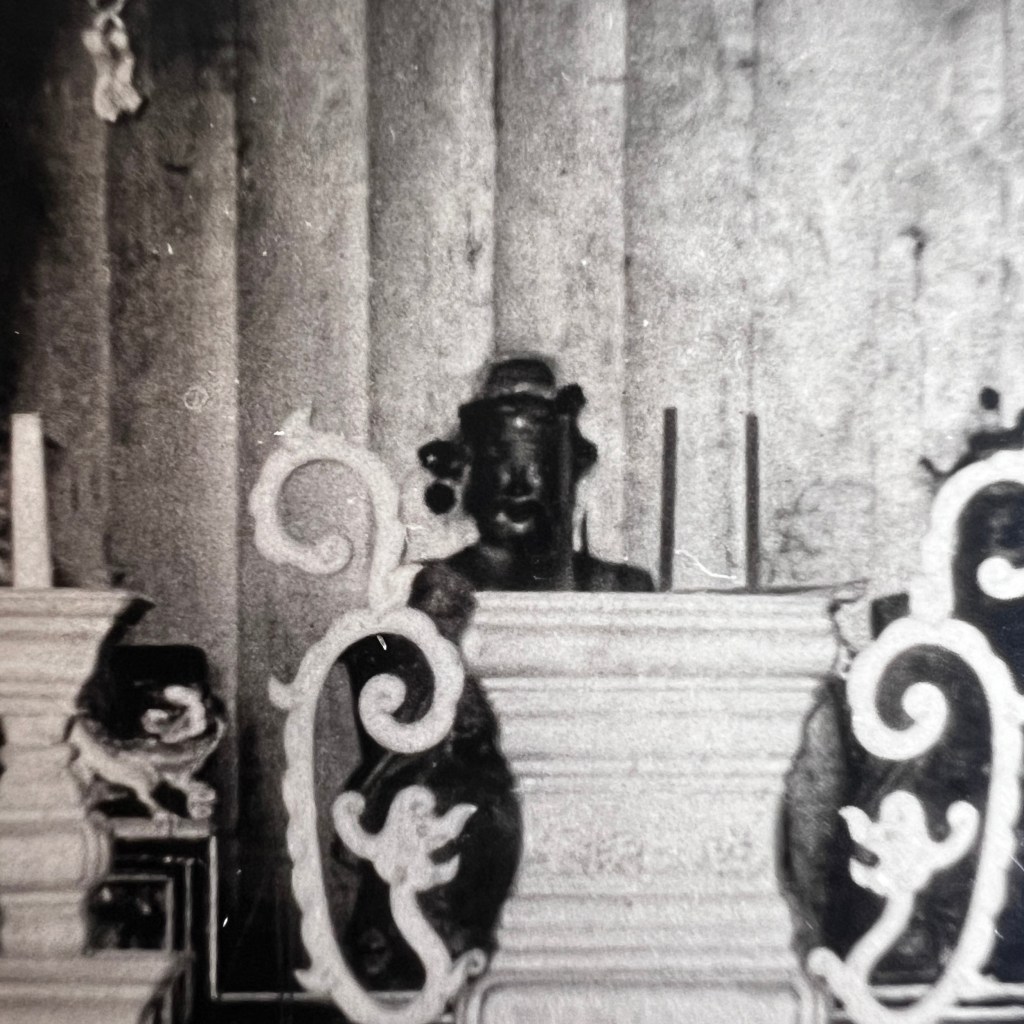
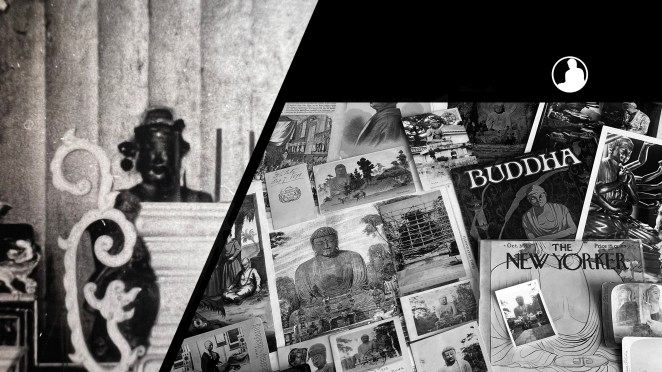
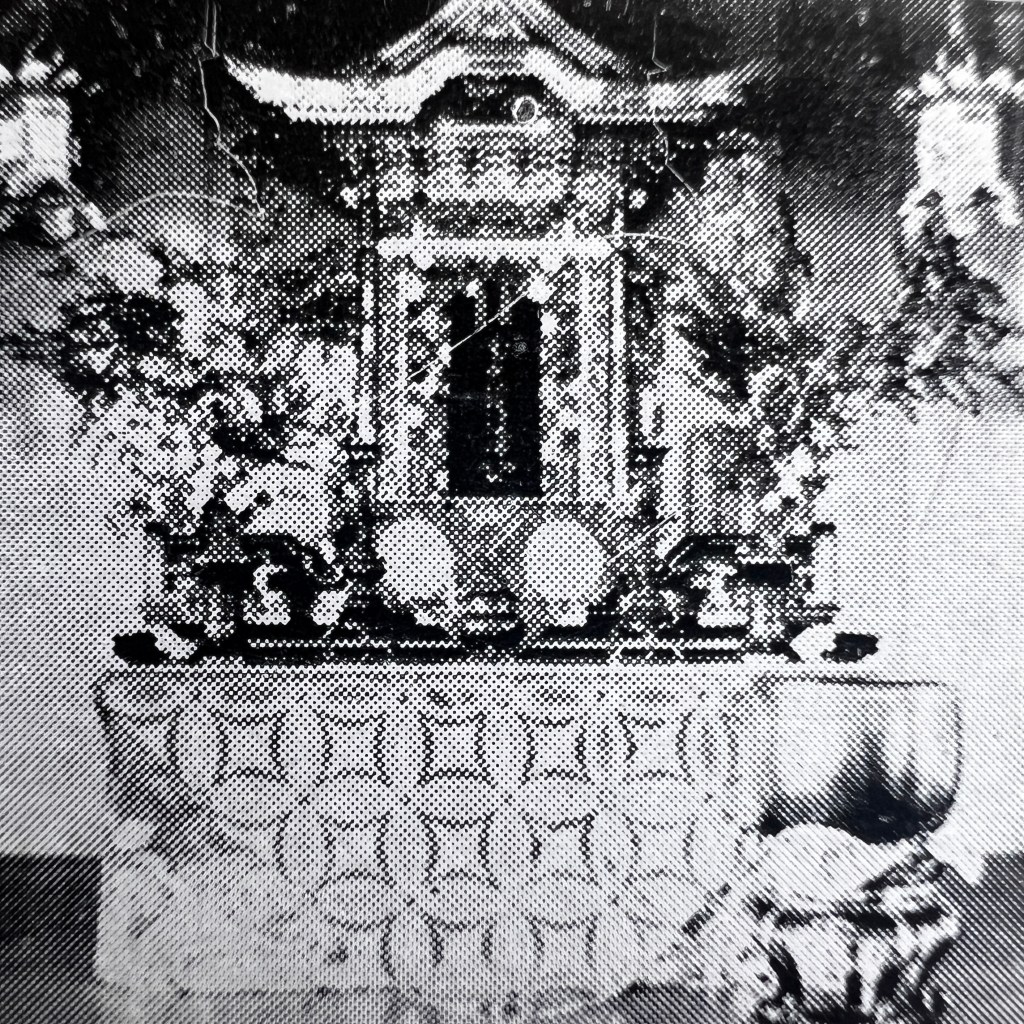
After the 1906 earthquake, San Francisco’s Tin How Temple was one of a fraction of Chinese religious institutions to rebuild, reopening in 1911 on the footprint of the original building. Despite the caption, this photo does not show the pre-1906 altar, nor is it a San Francisco temple.

Tin How, the Empress of Heaven, also known as Mazu, was popular along China’s southern coast and revered for her protective powers, especially at sea. Many early Chinese immigrants erected temples dedicated to her and other deities across North America.

The photo shows the altar of the old Chinese temple in Grass Valley, identifiable by the large carved inscription board reading “Waves of favor cross over the seas.” It’s likely the postcard publisher saw a more lucrative opportunity in selling a visual “relic” of the lost Tin How Temple shrine.

Moreover, the Grass Valley temple was dedicated to Houwang, not Mazu, yet both locations were alternatively called the Temple of Many Saints, seen carved on the altar façade from 1875. The Grass Valley temple fell into disrepair by 1933 and was closed soon thereafter.

The altar was preserved and is now displayed at the Nevada Firehouse No.1 Museum. For more history on the Grass Valley temple, see Chuimei Ho and Bennet Bronson’s Chinese Traditional Religion and Temple in NorthAmerica, 1849–1902 (2022).


The Buddhas in the West Material Archive is a digital scholarship project that catalogues artifacts depicting Buddhist material culture for Western audiences. It’s comprised of prints, photos, and an assortment of ephemera and other objects. For a brief introduction to this archive, visit the main Buddhas in the West project page.


For Related Buddhas in the West Posts Featuring Historical Real Photo Postcards:


For the Most Recent Buddhas in the West Posts:


Buddhist Temple of Los Angeles Postcard

For all the new Buddhas in the West posts
follow us on Bluesky & Instagram


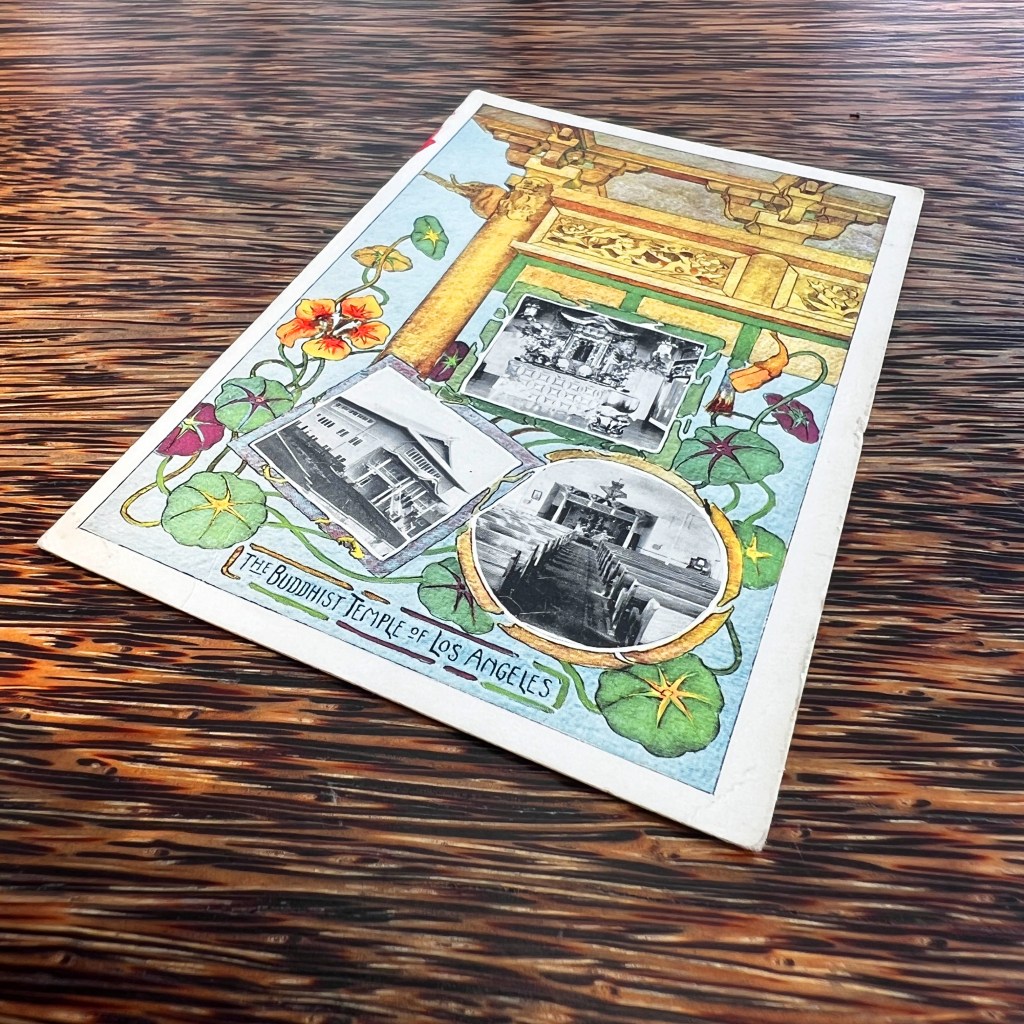
Inspired by the success in San Jose and Sacramento, Izumida Junjō 泉田準城 (1866–1951) arrived in Los Angeles in 1904 and opened the city’s first Buddhist temple for Japanese immigrants. After raising funds and purchasing land, a newer and larger temple was opened in 1911 on Savannah Street.

Associated with Nishi Hongan-ji, a Jōdo Shinshū Buddhist organization headquartered in Kyoto, Izumida organized the Rafu Bukkyō-kai 羅府仏教会, the Buddhist Mission of Los Angeles. It was meant to meet Japanese immigrants’ needs for funerals, memorial services, and spiritual guidance.

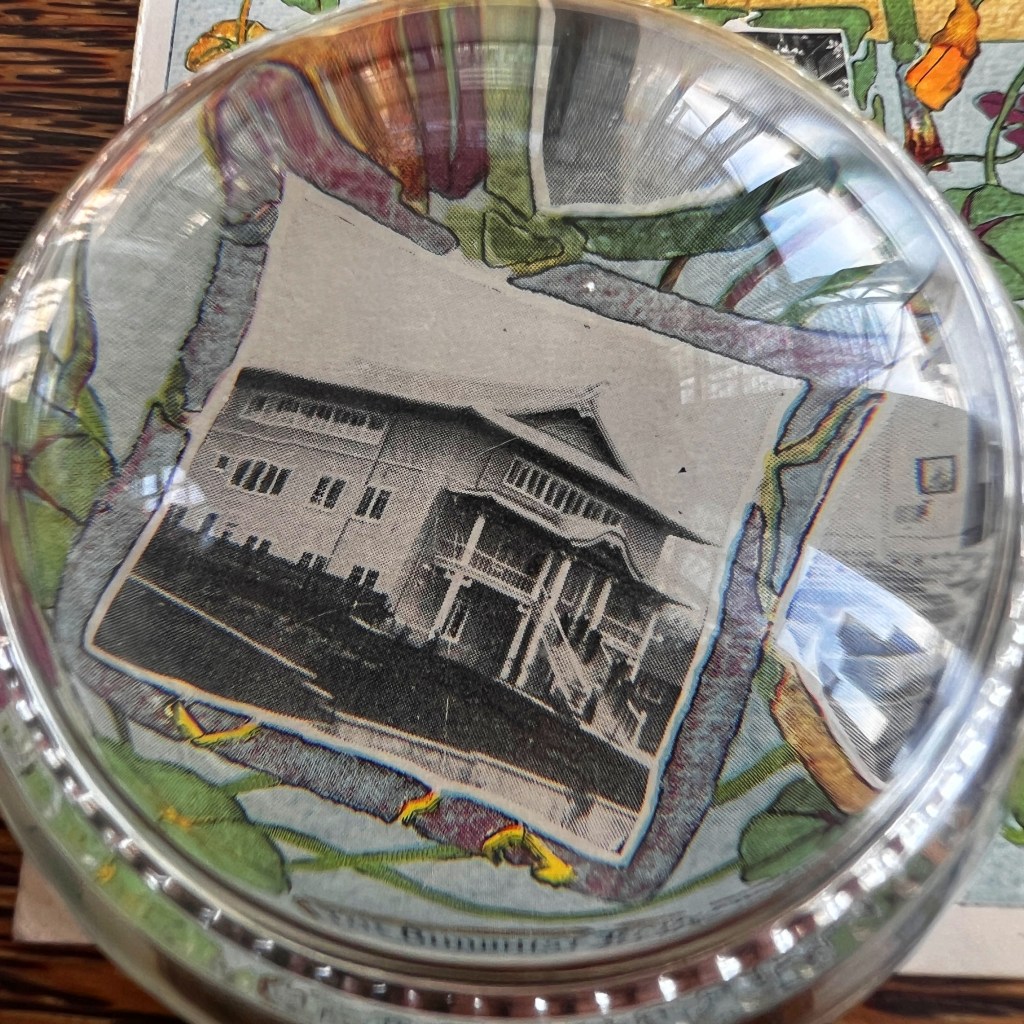
Possibly in celebration and promotion of the new temple, the Mission issued picture postcards highlighting both the interior and exterior of the building. The colorful illustrated elements on the front reveal an Arts and Crafts influence popular in the early 20th century.

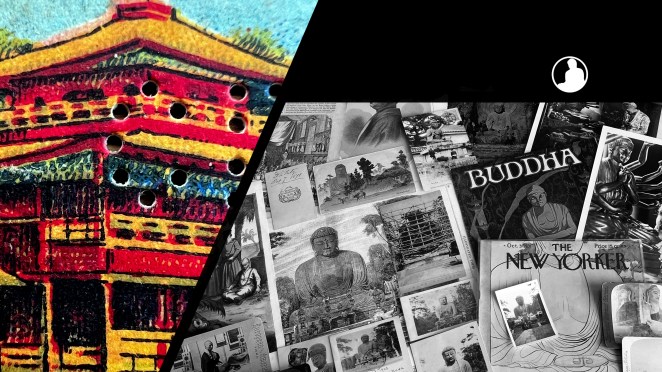
The building was meant to reflect both American residential architecture and Japanese temple architecture. The latter can be seen in the curved eaves on the roof and the temple-style gate over the front porch.

The interior also shows a hybrid style, with church-like pews set in front of a traditional Japanese Buddhist altar.

As a Jōdo Shinshū temple, the shrine is dedicated to Amida Buddha, here with a scroll bearing his name. For more on the history of this LA temple, see Michihiro Ama, Immigrants to the Pure Land: The Modernization, Acculturation, and Globalization of Shin Buddhism (2011).


The Buddhas in the West Material Archive is a digital scholarship project that catalogues artifacts depicting Buddhist material culture for Western audiences. It’s comprised of prints, photos, and an assortment of ephemera and other objects. For a brief introduction to this archive, visit the main Buddhas in the West project page.


For Related Buddhas in the West Posts Featuring Historical Trade Cards:


For the Most Recent Buddhas in the West Posts:


Eastman Kodak European Tour Group Real Photo Postcard

For all the new Buddhas in the West posts
follow us on Bluesky & Instagram


Tales of Tourist Photos, Pt. 1*: If photography changed the way people viewed the world, the Eastman Kodak camera transformed the late Victorian practice of tourism. The handheld Kodak made photography available to casual amateurs, creating the vernacular form of snapshot photography.
*[Part 2]

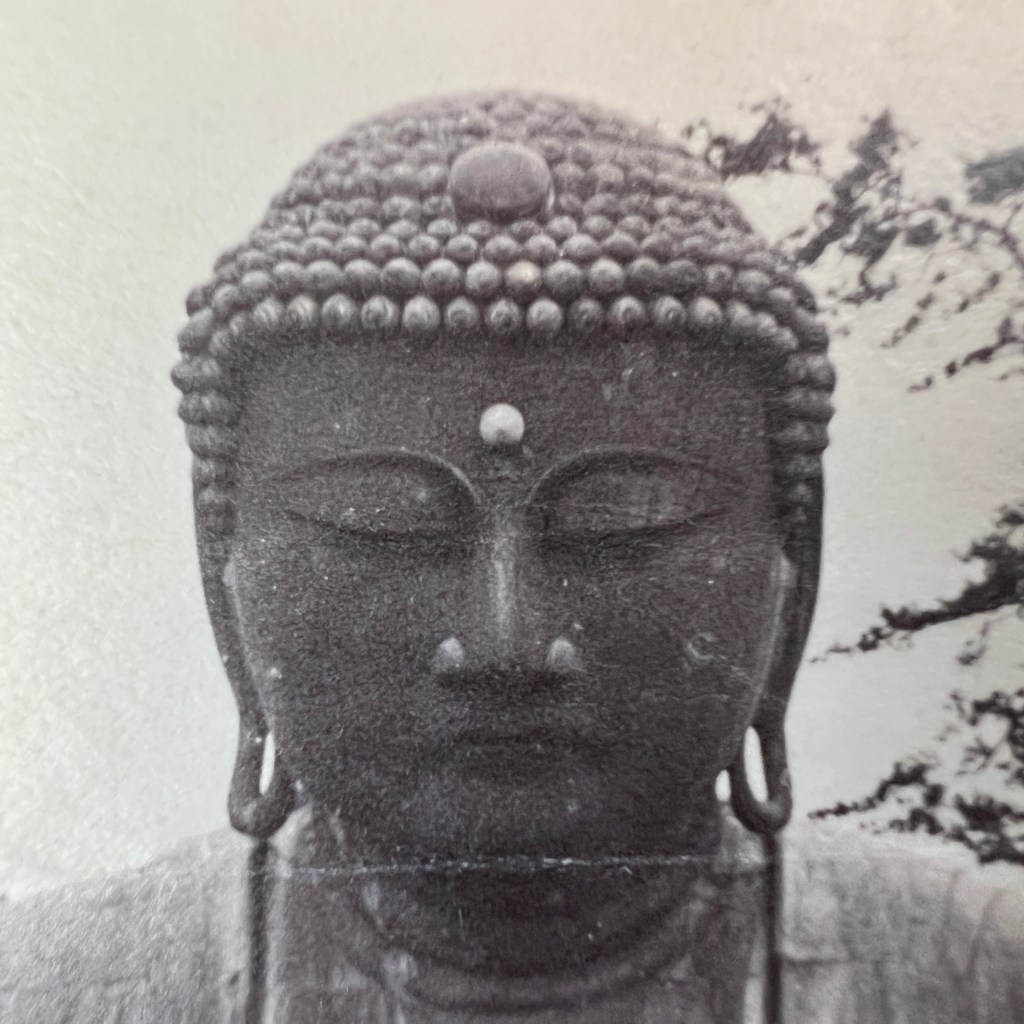
In contrast to a generation earlier, precise technical expertise was not necessary and photography became increasingly linked to personal experience. Foreign travel, such as visiting the Kamakura Daibutsu, increasingly “required” a photograph to validate the exotic experience.

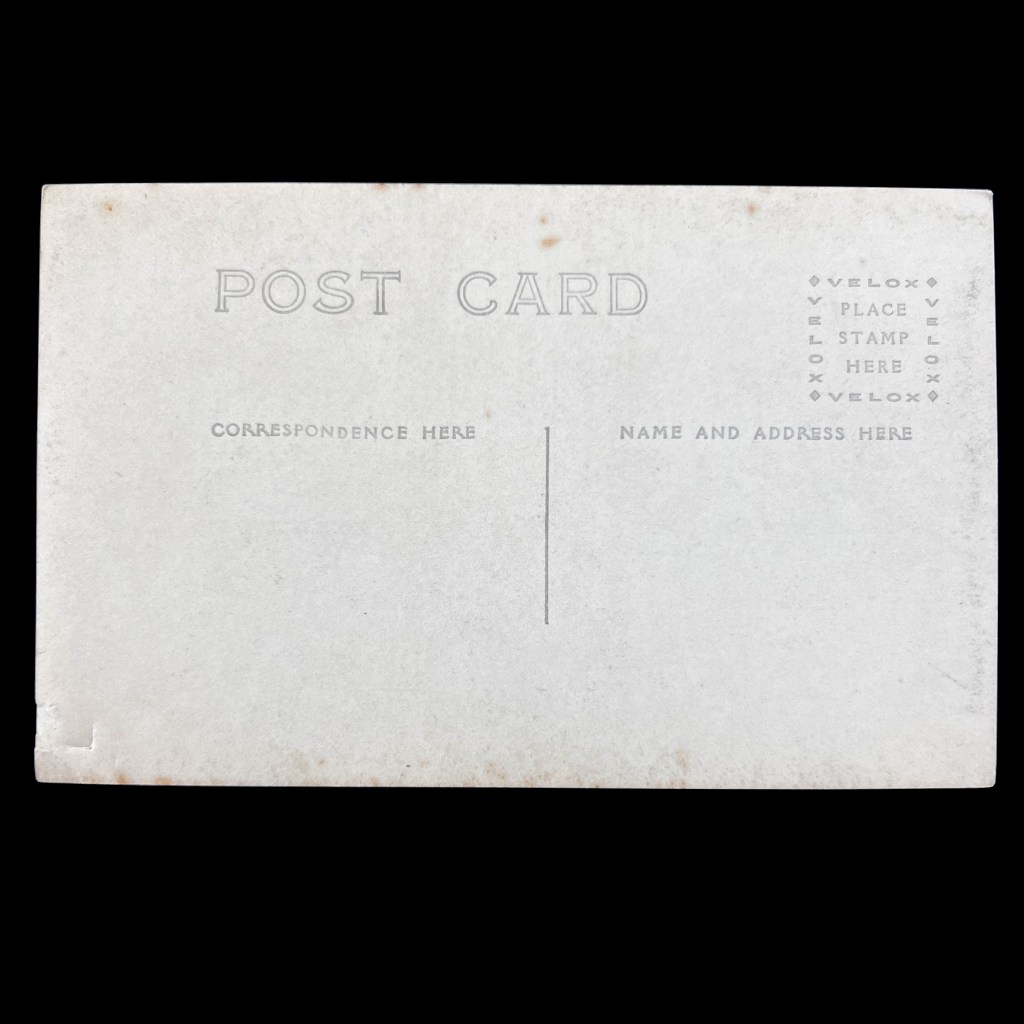
By 1903, the Kodak 3A was released and fitted with rolled film creating negatives measuring 3¼ in. x 5½ in. – the exact size of a standard postcard. Eastman marketed a broad range of supplies for the amateur, including Velox paper for those developing and printing their own postcards.

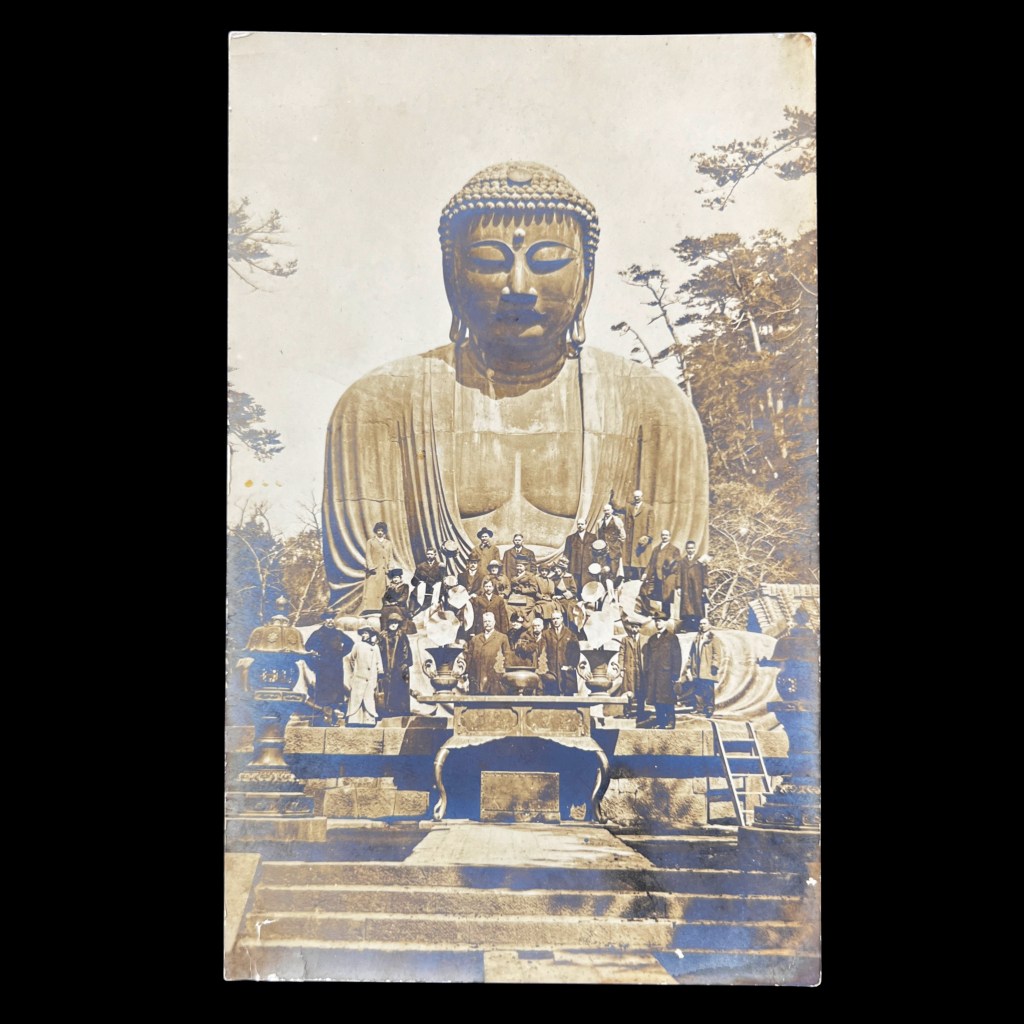
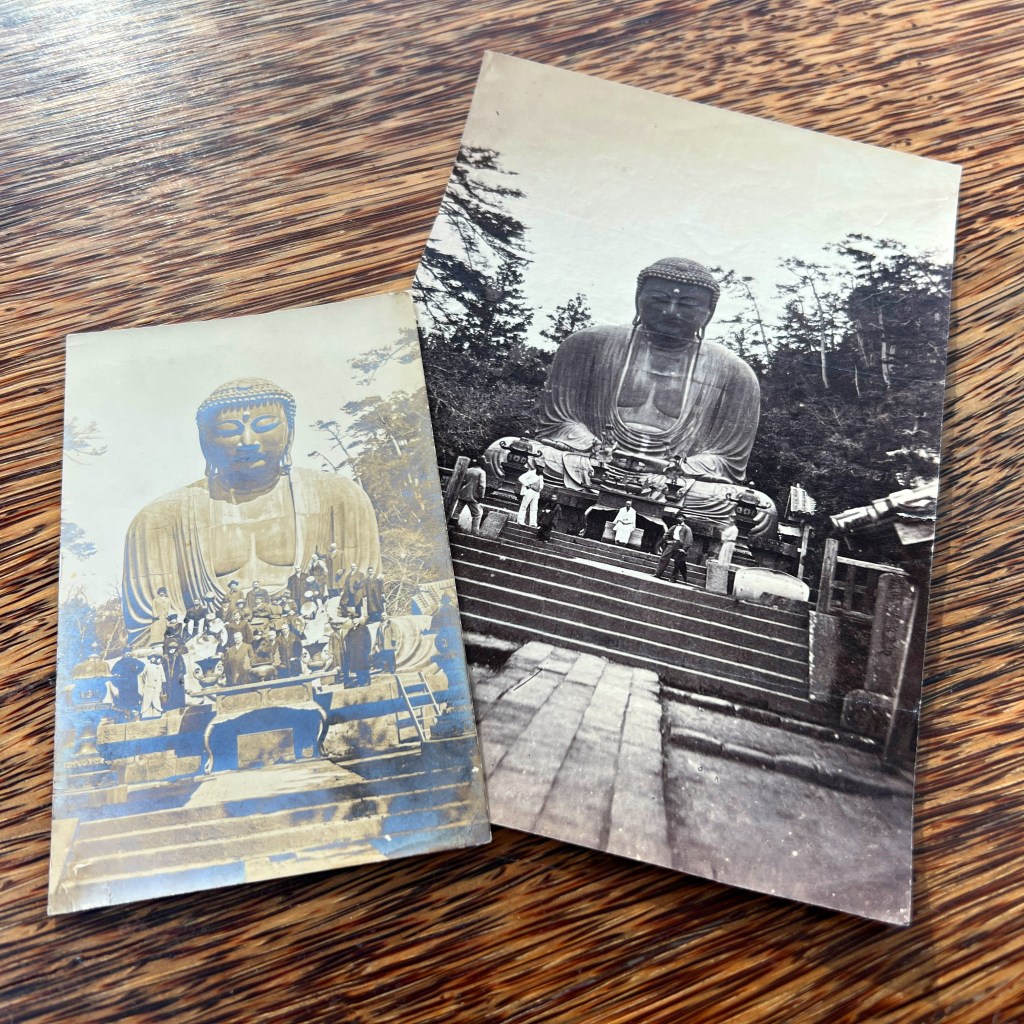
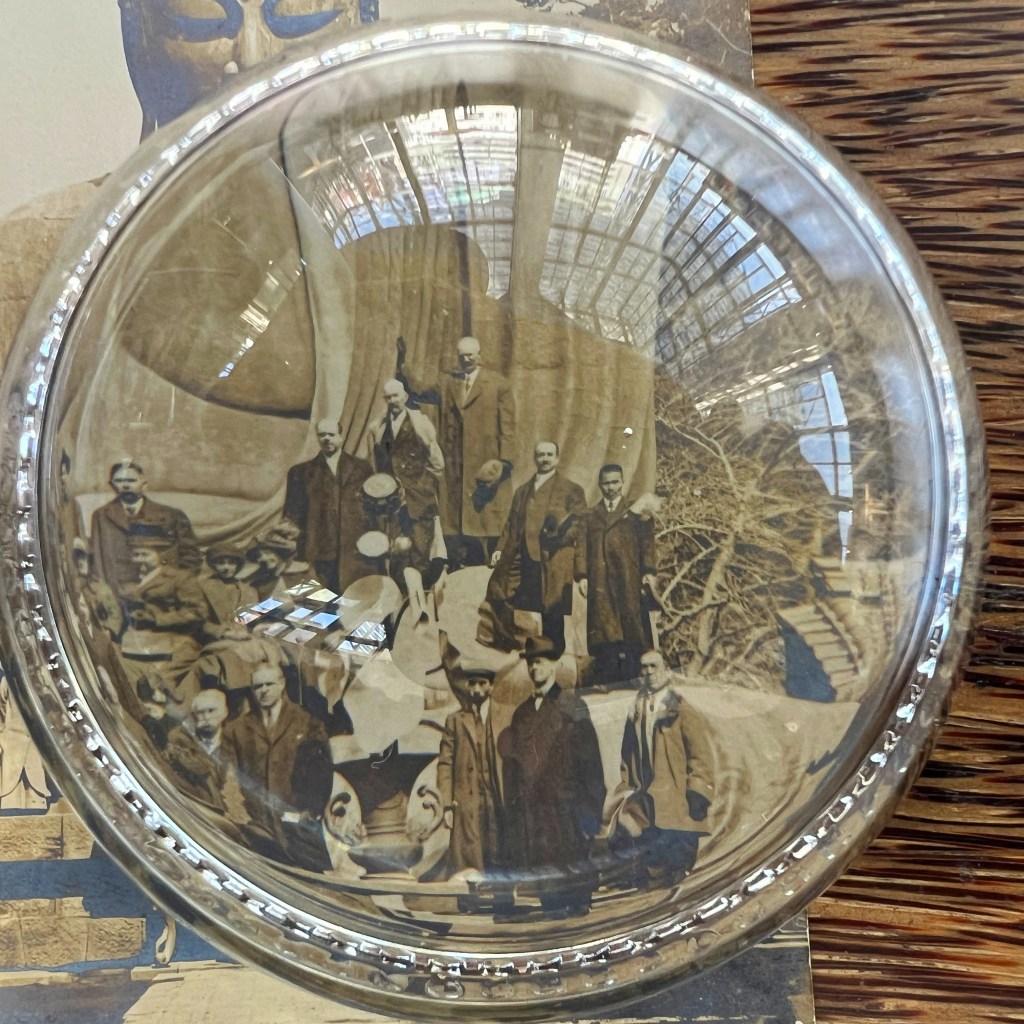
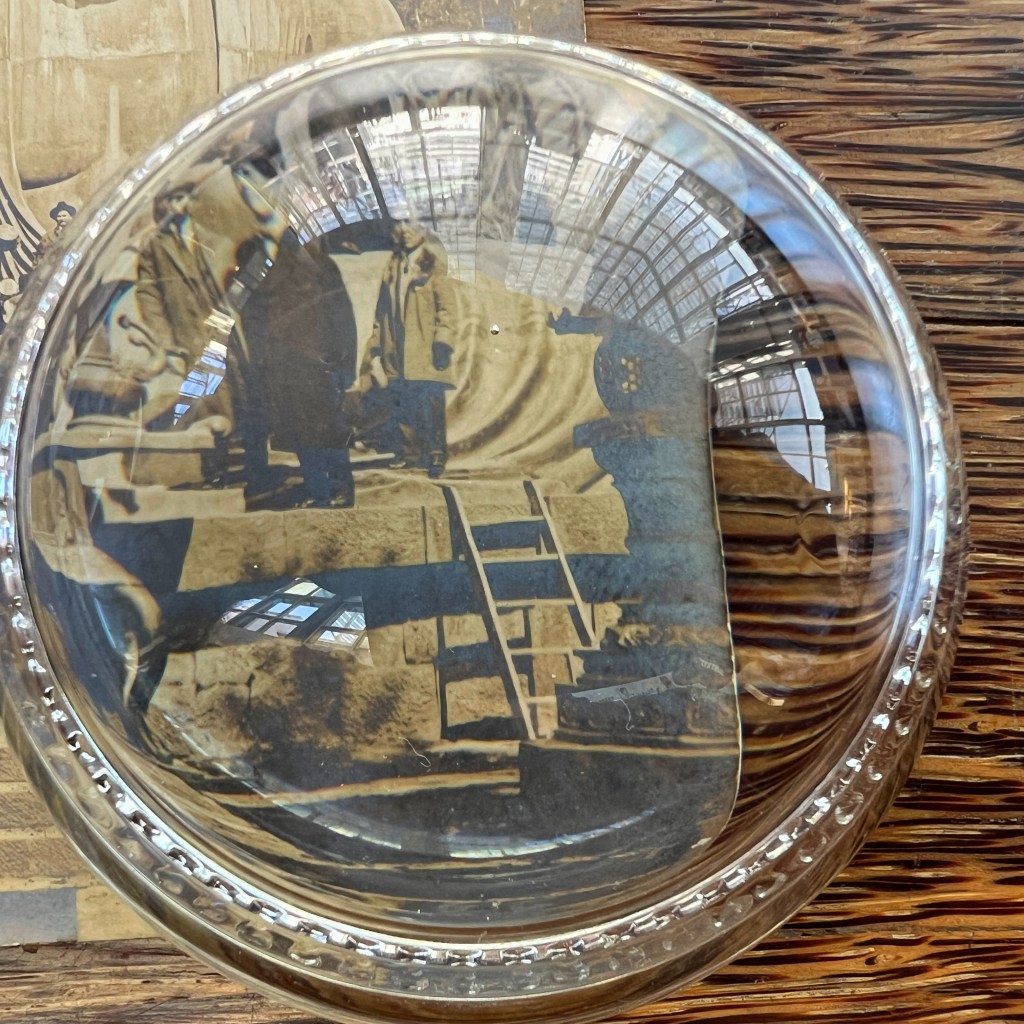
This real photo postcard was shot and printed circa 1910–1915 and captures two dozen tourists arranged along the lap and stone pedestal of the Great Buddha of Kamakura.

Some of the earliest photographs of the Kamakura Daibutsu depict people climbing upon its lap and a ladder can be seen for helping a visitor’s ascent in photographs dating to the 1870s. By around 1915 climbing on the statue was prohibited.

For further discussion on the birth of the snapshot and its cultural impact, see Mia Fineman’s “Kodak and the Rise of Amateur Photography,” viewable here: https://www.metmuseum.org/essays/kodak-and-the-rise-of-amateur-photography.


The Buddhas in the West Material Archive is a digital scholarship project that catalogues artifacts depicting Buddhist material culture for Western audiences. It’s comprised of prints, photos, and an assortment of ephemera and other objects. For a brief introduction to this archive, visit the main Buddhas in the West project page.


For Related Buddhas in the West Posts Featuring Real Photo Postcards:


For the Most Recent Buddhas in the West Posts:


Pierre Dieulefils’ Tien Mu Temple Postcard

For all the new Buddhas in the West posts
follow us on Bluesky & Instagram


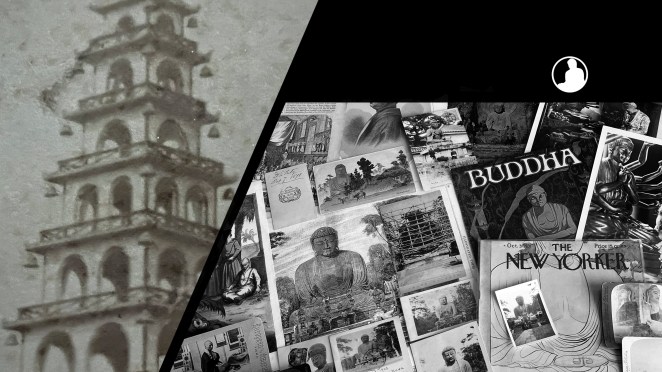
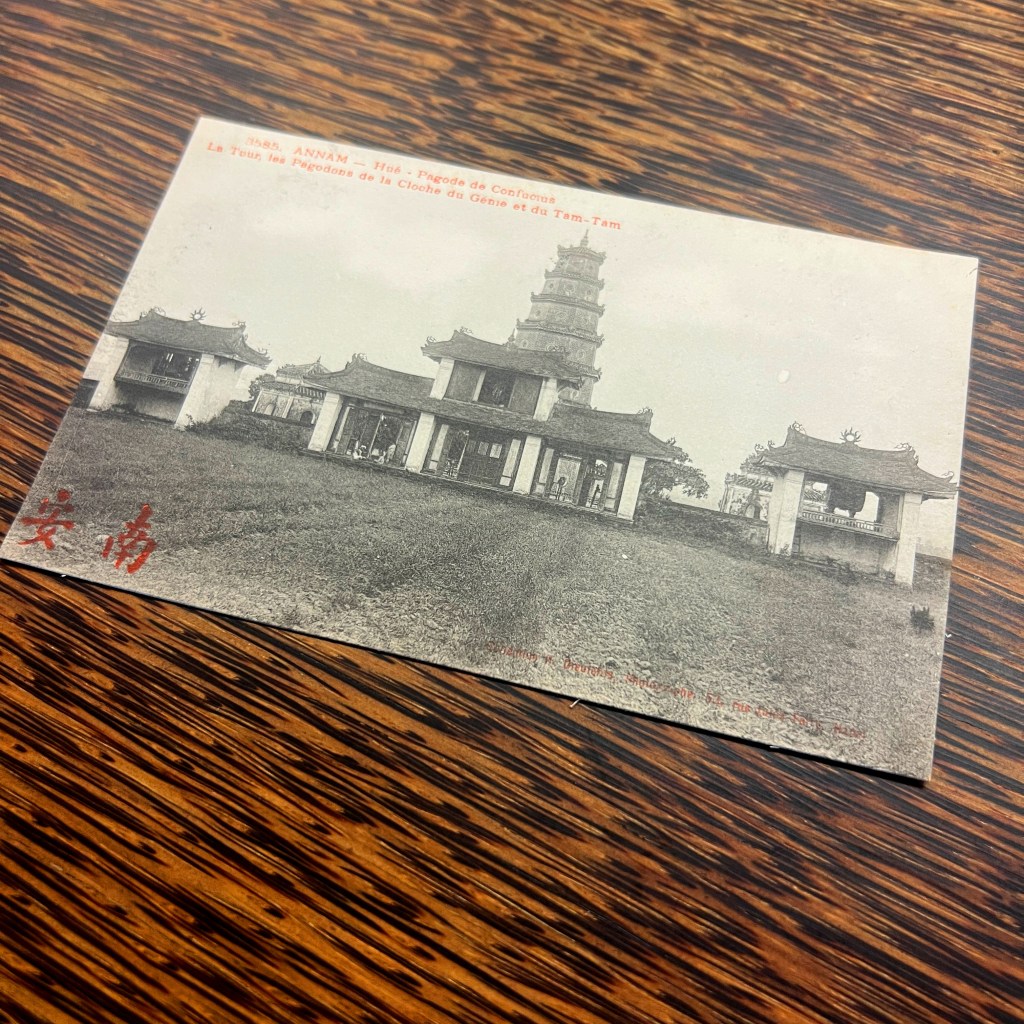
Tien Mu Temple, located in the city of Hue, is among the most historically important Buddhist sites in Vietnam. For its modern political importance, Tien Mu Temple emerged as the center of anti-government protest and was home to Thich Quang Duc who self-immolated in 1963.

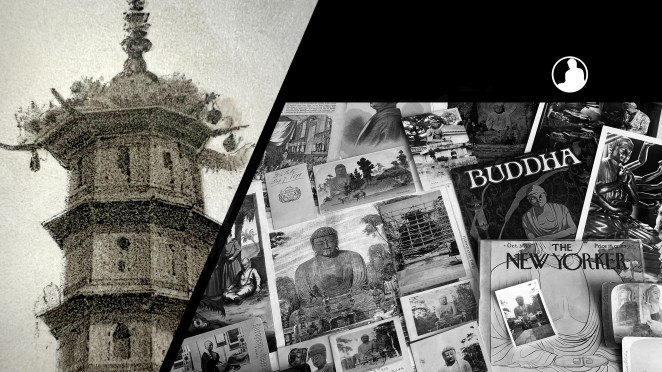
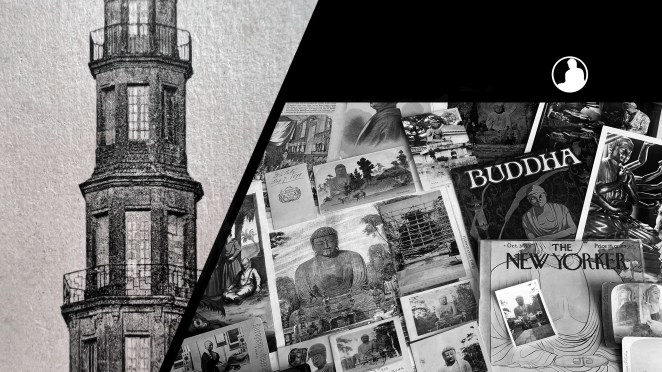
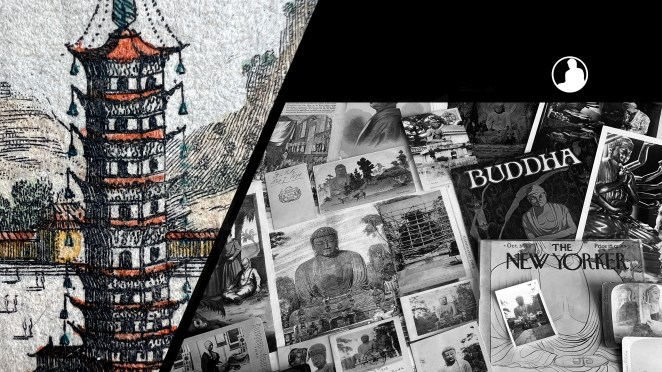
Tien Mu Temple, seen here, was founded in 1601, but replaced a much older shrine to local Cham deity, Po Nagar. The seven-story pagoda, now a popular symbol of Hue, was built in 1844 and is nearly 70 ft (21 m) tall; it was originally named the Pagoda of Compassion and Benevolence.

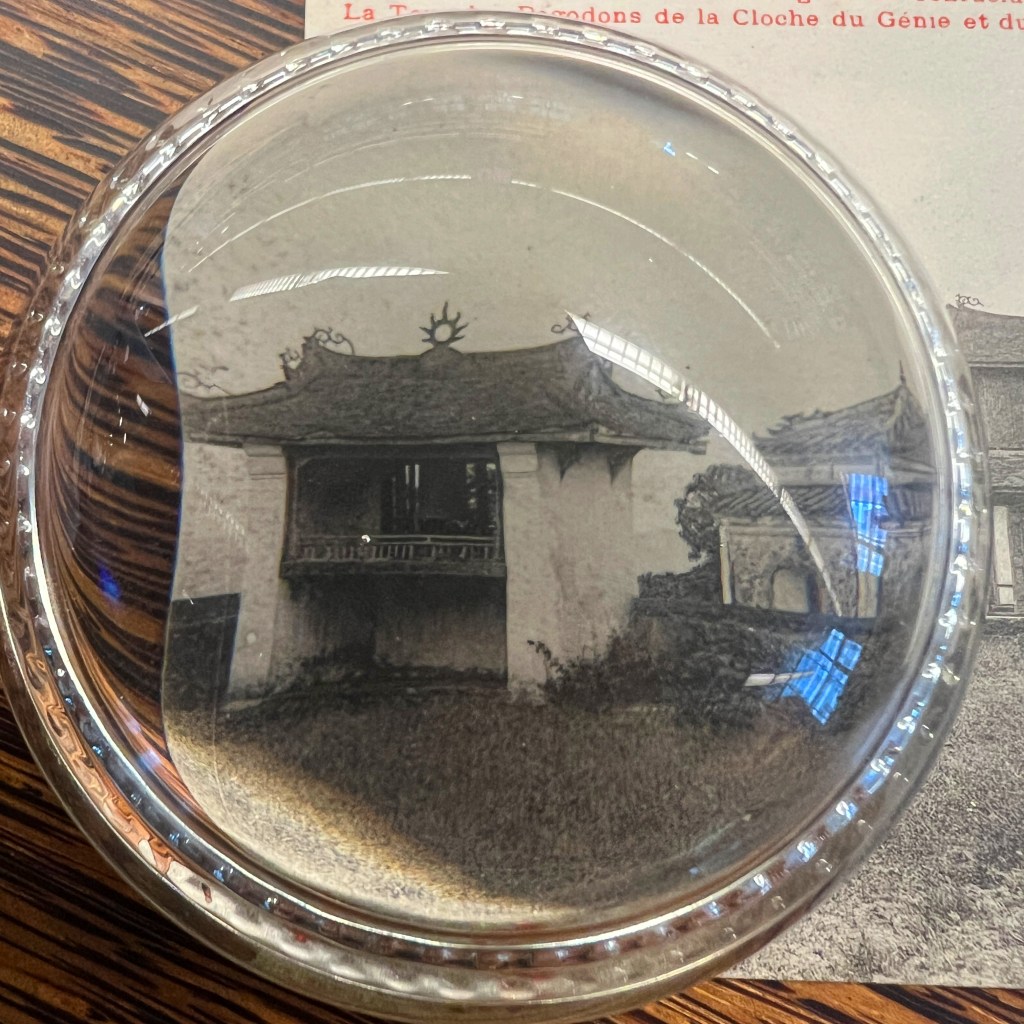
Photographer Pierre Dieulefils opened a studio in Hanoi 1885 and spent the next three decades visually chronicling French Indochina; picture postcards became his specialty. It’s possible the photograph seen on the obverse was taken before a 1904 storm damaged many of the temple structures.

Often misnamed the “Pagoda of Confucius” by turn of the century foreign visitors, the drum and bell tower were also of popular tourist interest. The temple bell was cast in 1710 and is considered an important cultural relic.

The powder blue Austin Westminster car that drove Thich Quang Duc to Saigon in 1963, also seen in the famous photographs of his act of protest against the Diem regime, remains today on display at Tien Mu Temple, a “contact relic” of the venerated monk.


The Buddhas in the West Material Archive is a digital scholarship project that catalogues artifacts depicting Buddhist material culture for Western audiences. It’s comprised of prints, photos, and an assortment of ephemera and other objects. For a brief introduction to this archive, visit the main Buddhas in the West project page.


For Related Buddhas in the West Posts Featuring Historical Temples:


For the Most Recent Buddhas in the West Posts:


1922 French Colonial Exposition Angkor Wat Replica Postcard

For all the new Buddhas in the West posts
follow us on Bluesky & Instagram


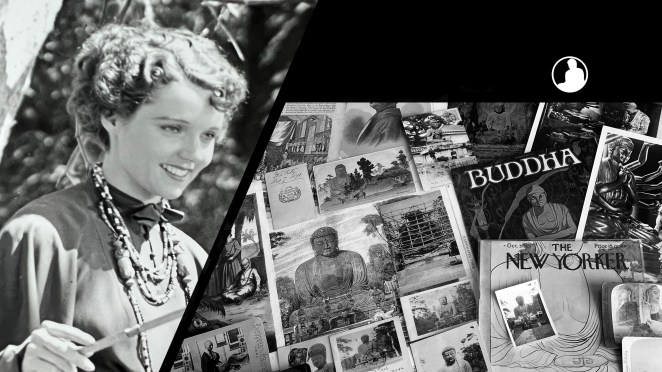
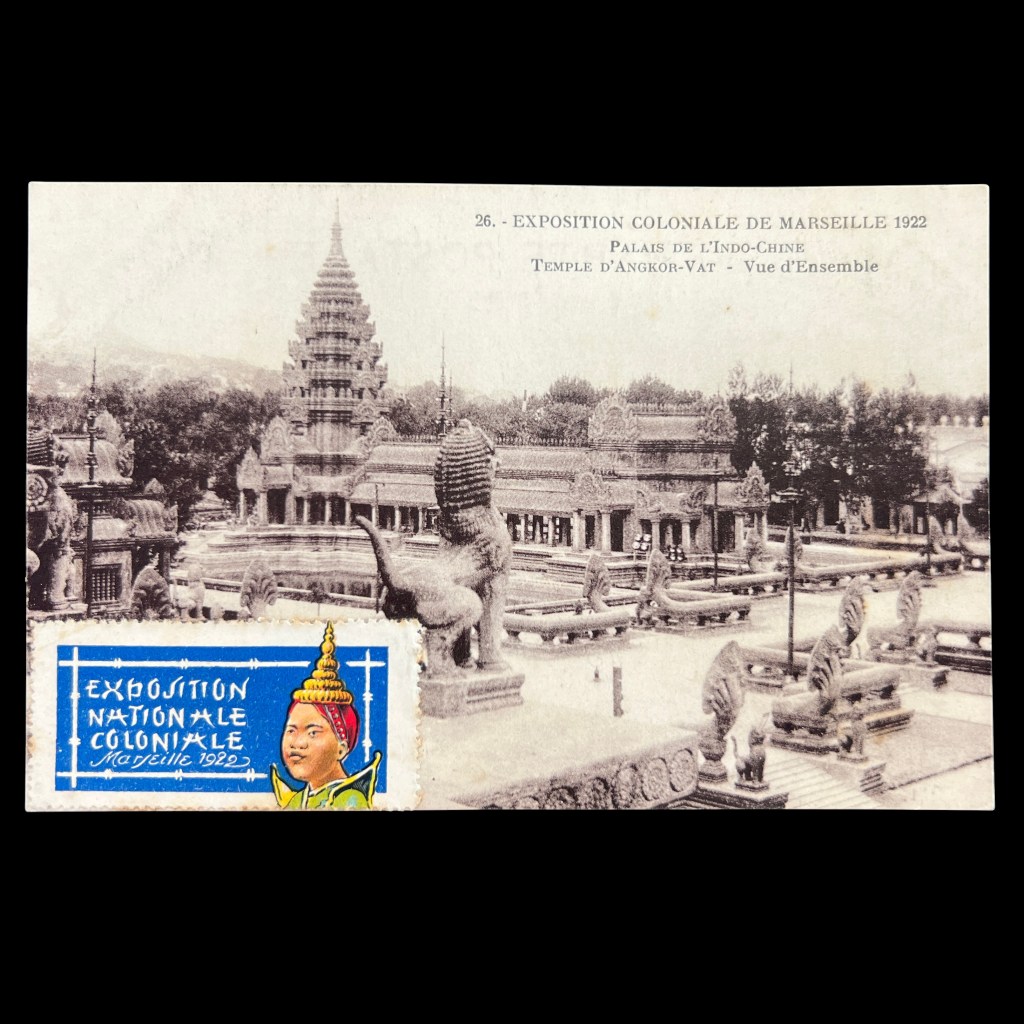
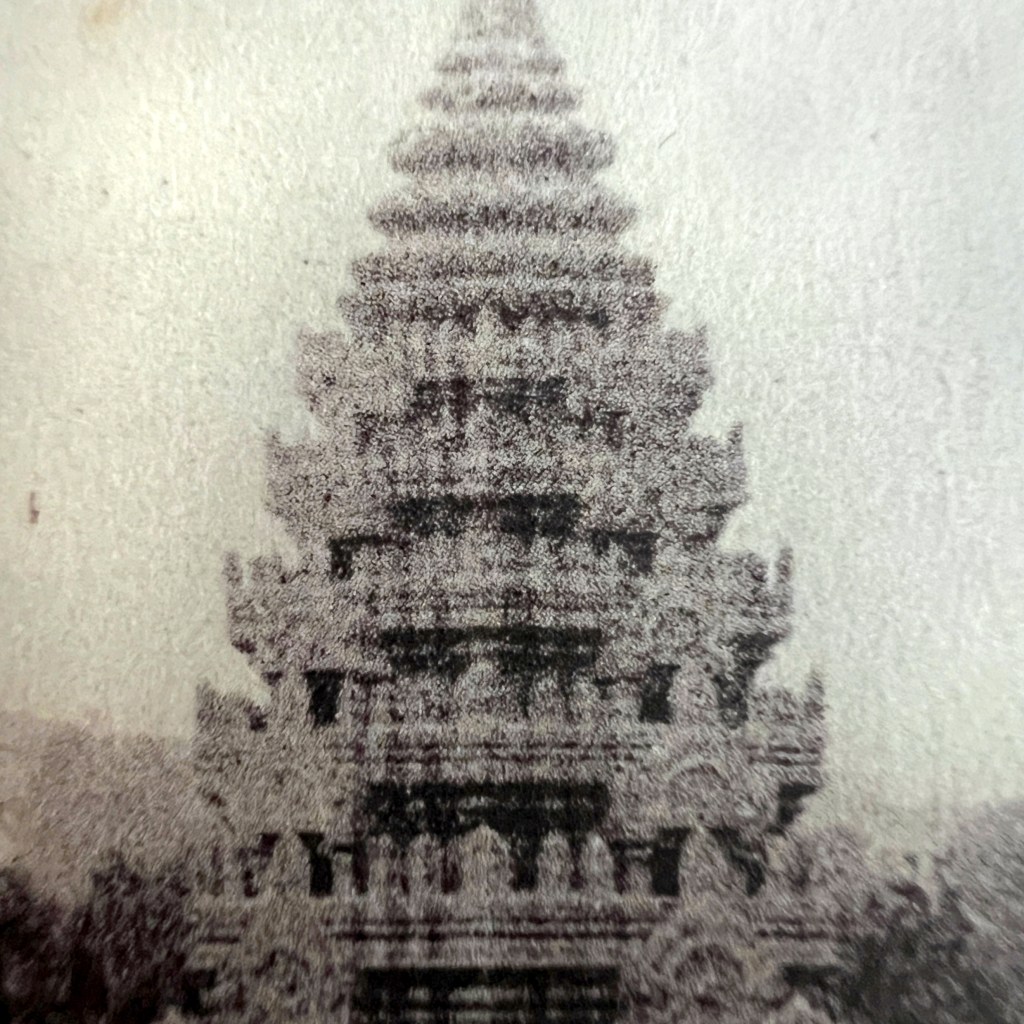
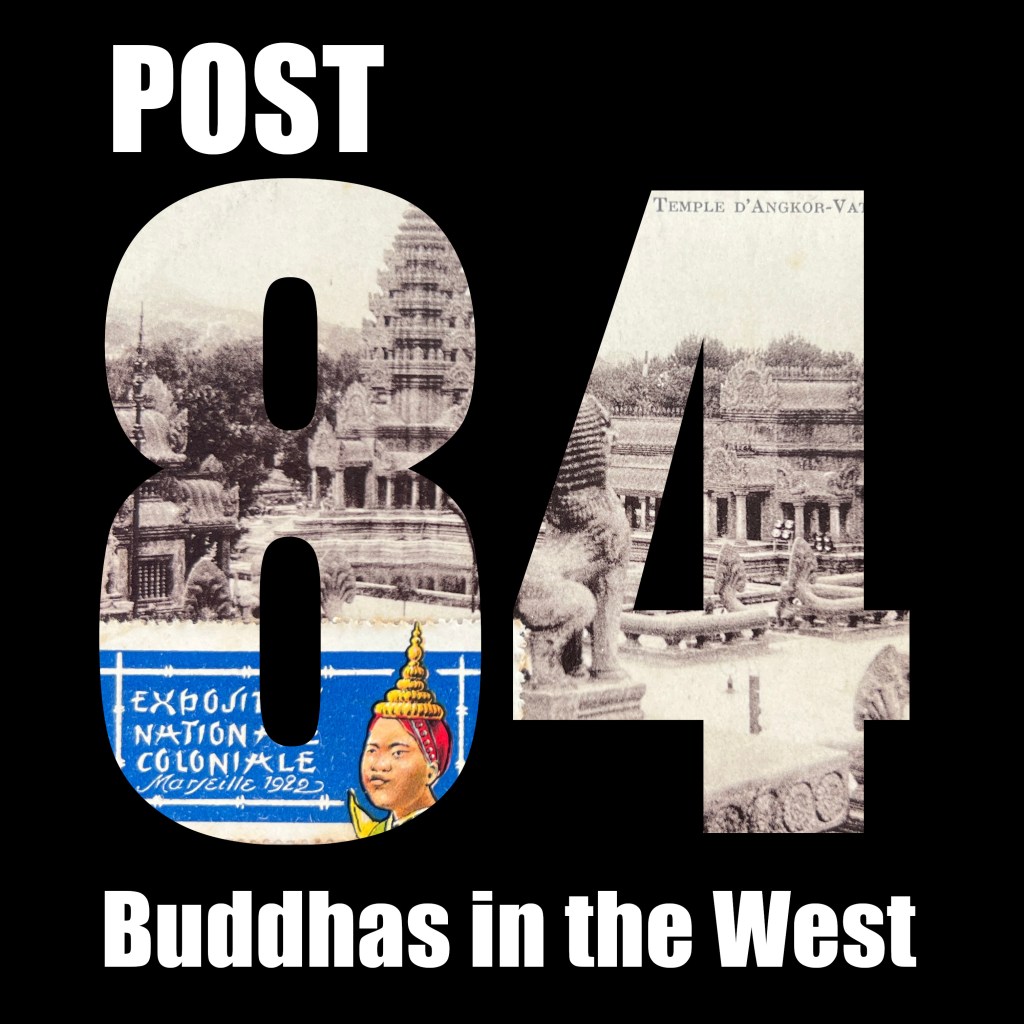
In 1922, the organizers of the Colonial Exposition in Marseille accomplished the impossible – a plaster recreation of Cambodia’s Angkor Wat. While only a partial replica, the central tower, built on a wooden skeleton, was 177 ft. (54m) tall and towered over the exposition grounds.

Cambodian “natives” were also brought in to add authenticity to the fabricated environment. The golden-clad Cambodian royal dance troupe proved to be a “must see” attraction; curiously, they performed the Orientalist opera Lakmé by composer Léo Delibes.

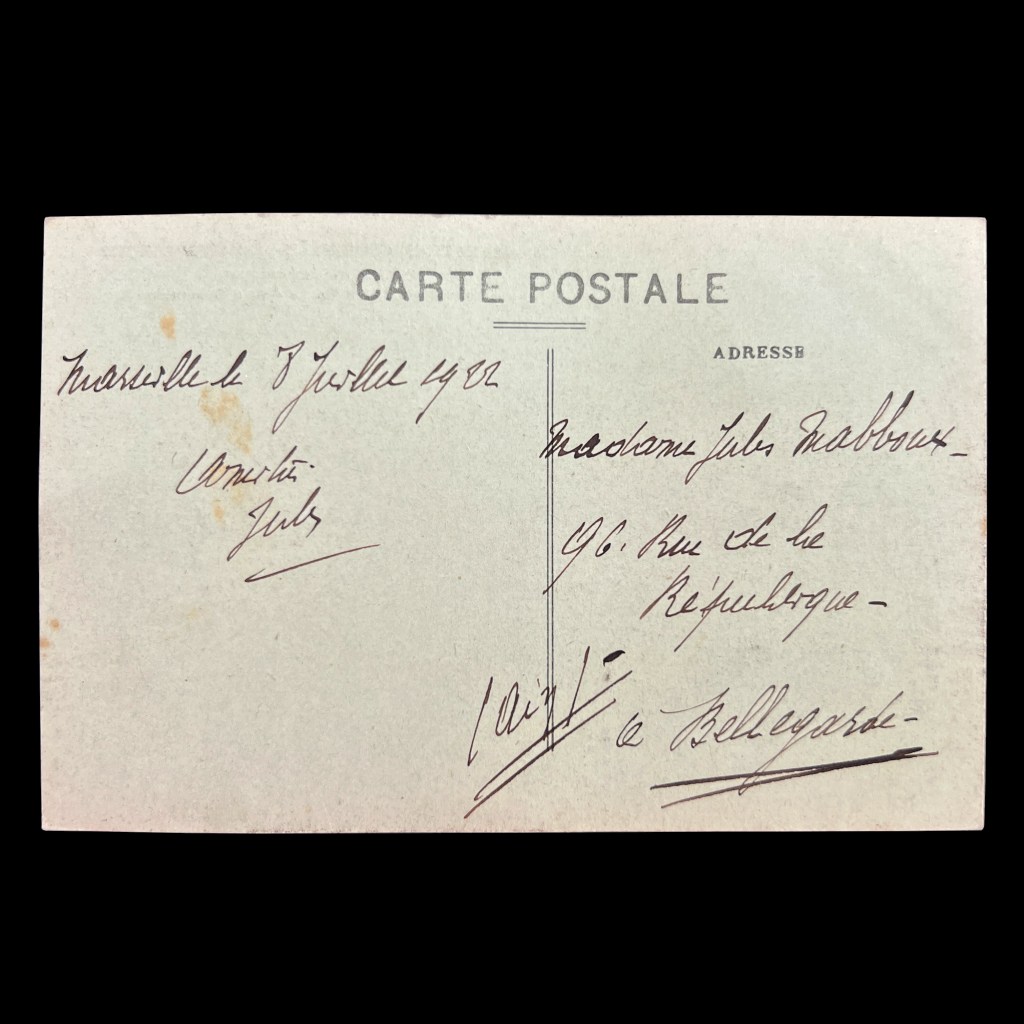
Cambodia was a protectorate of France since 1863 and French troops had already been sending home picture postcards of the real Angkor Wat ruins. Dated July 8, 1922, this card depicting Angkor Wat’s replica was prepared, but never mailed.

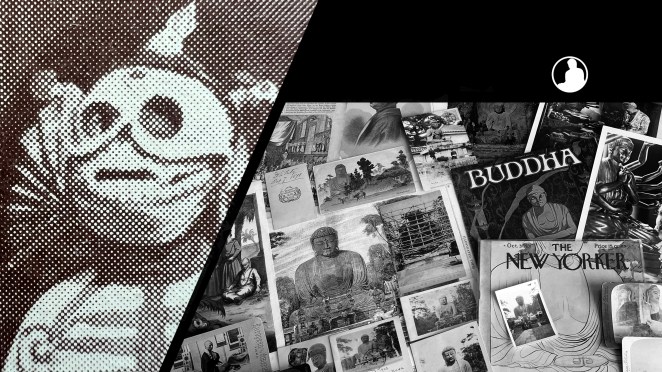
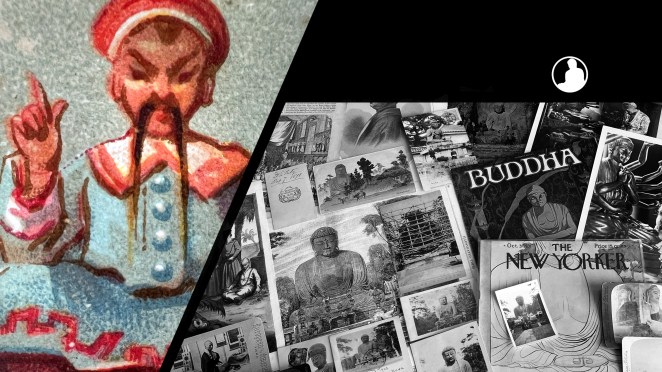
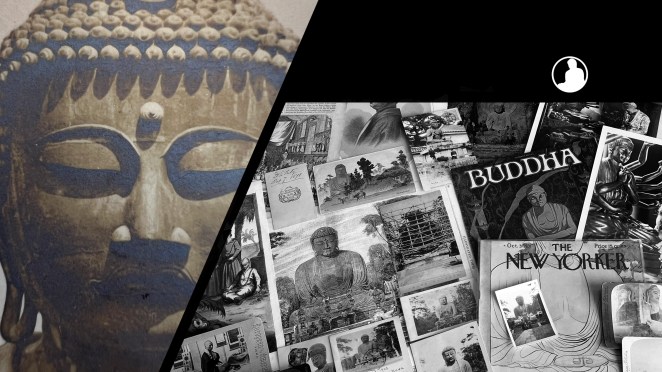
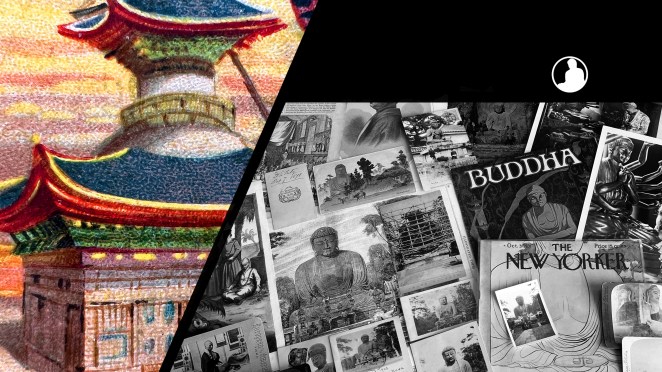
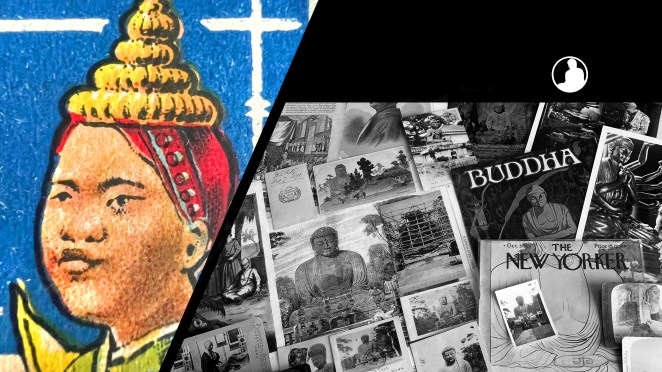
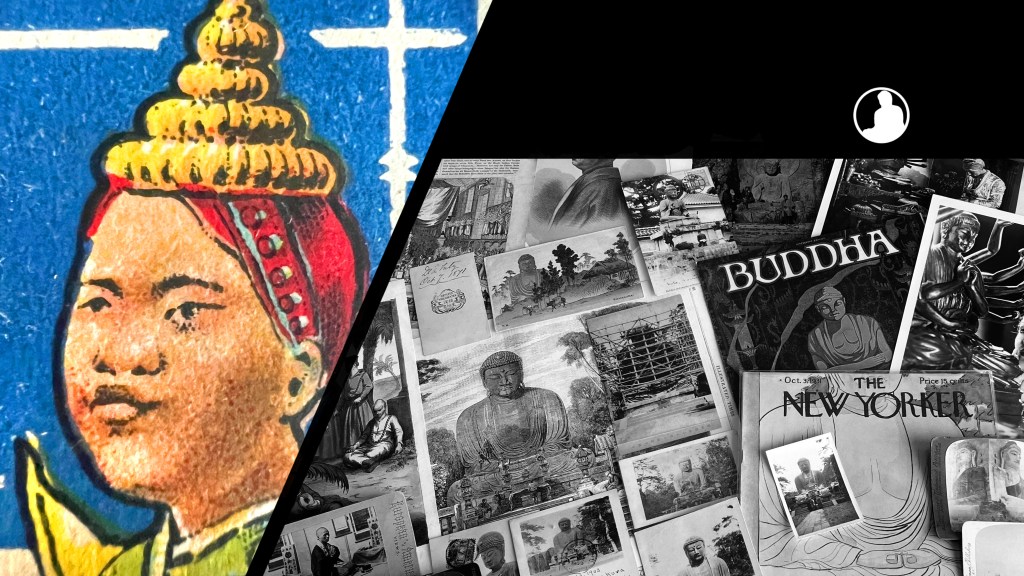
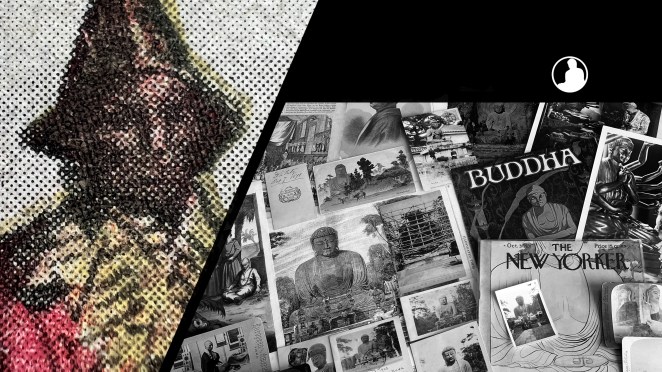
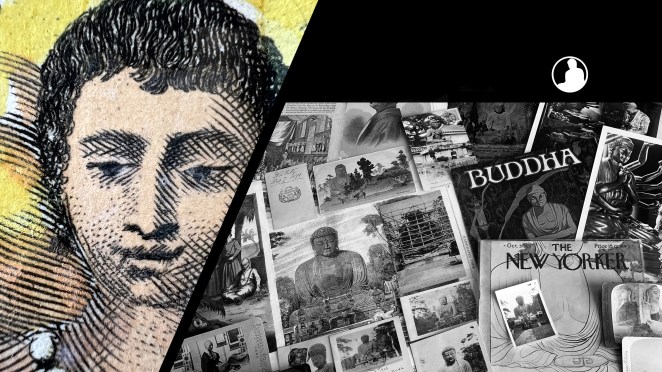
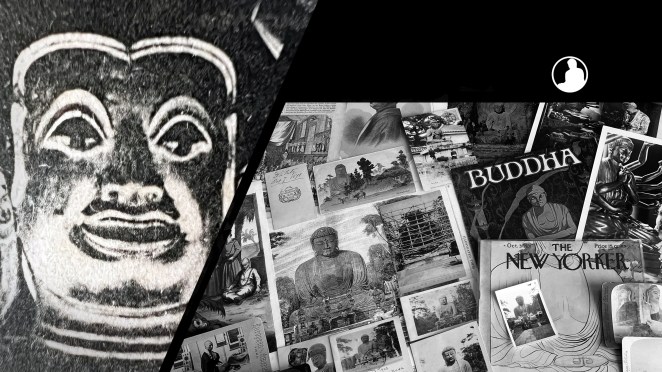
This stamp is a non-postal commemorative stamp, one of twelve designs made for the 1922 Marseille exposition. It depicts a royal dancer wearing a crown shaped like a Southeast Asian Buddhist stupa; such crowns are also seen in the stone reliefs decorating Angkor Wat.

While plasters casts made in Cambodia were used in Marseille, the replica temple had many alterations, creating only a semblance of reality. For more on the use of plasters casts and dancers, see Isabelle Flour’s “Orientalism and the Reality Effect: Angkor at the Universal Expositions” (2014).


The Buddhas in the West Material Archive is a digital scholarship project that catalogues artifacts depicting Buddhist material culture for Western audiences. It’s comprised of prints, photos, and an assortment of ephemera and other objects. For a brief introduction to this archive, visit the main Buddhas in the West project page.


For Related Buddhas in the West Posts Featuring Expositions:


For the Most Recent Buddhas in the West Posts:


D.A. Ahuja’s Kaunghmudaw Pagoda Postcard

For all the new Buddhas in the West posts
follow us on Bluesky & Instagram


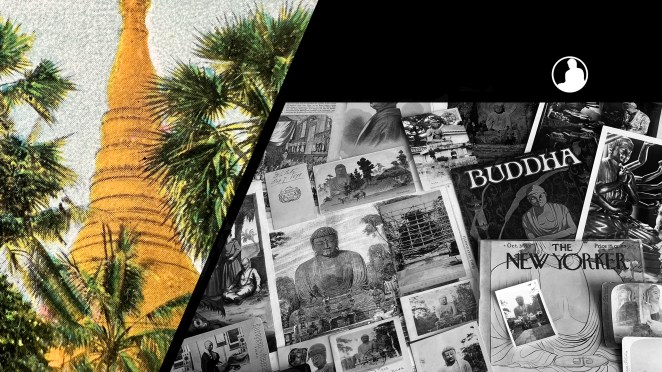
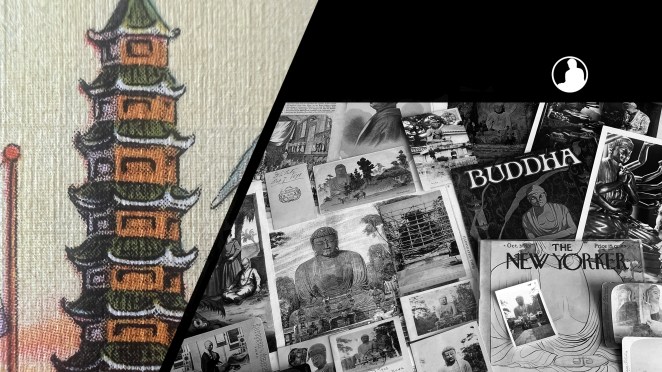
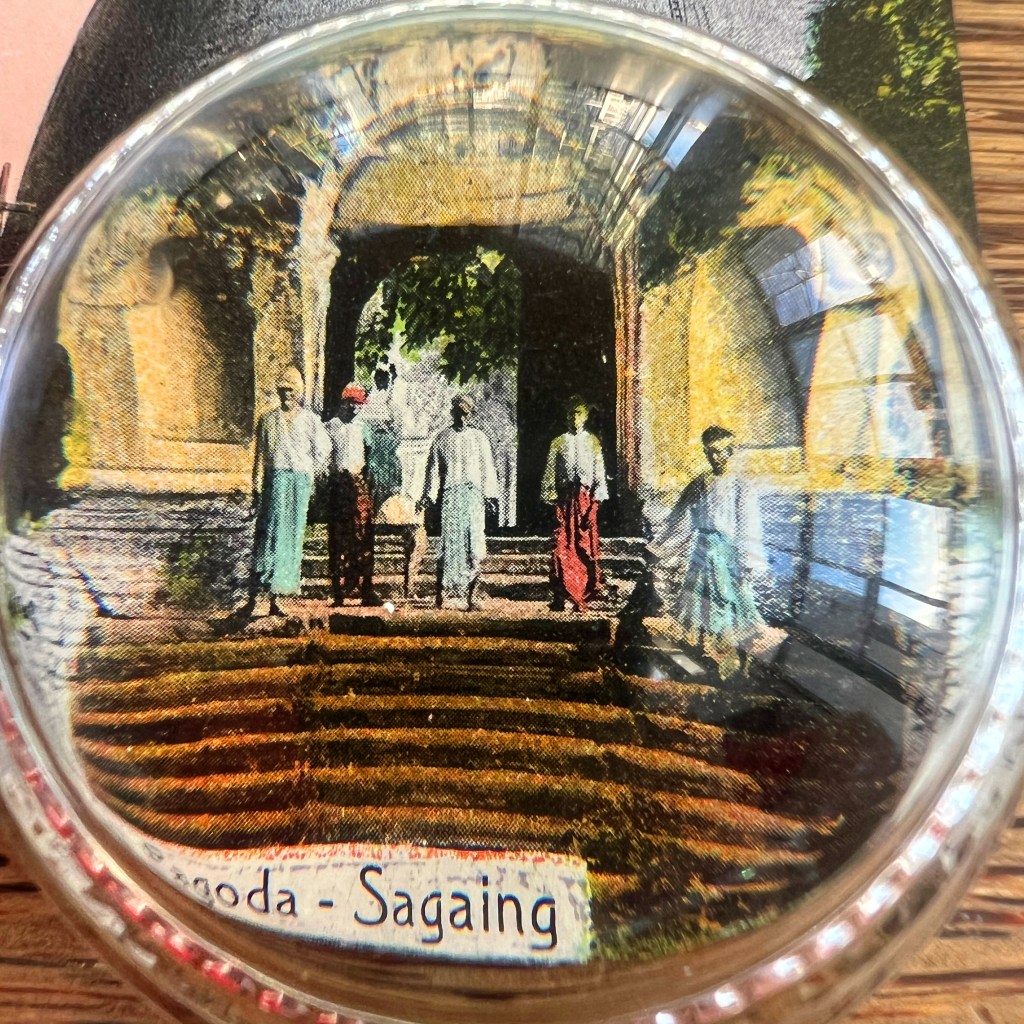
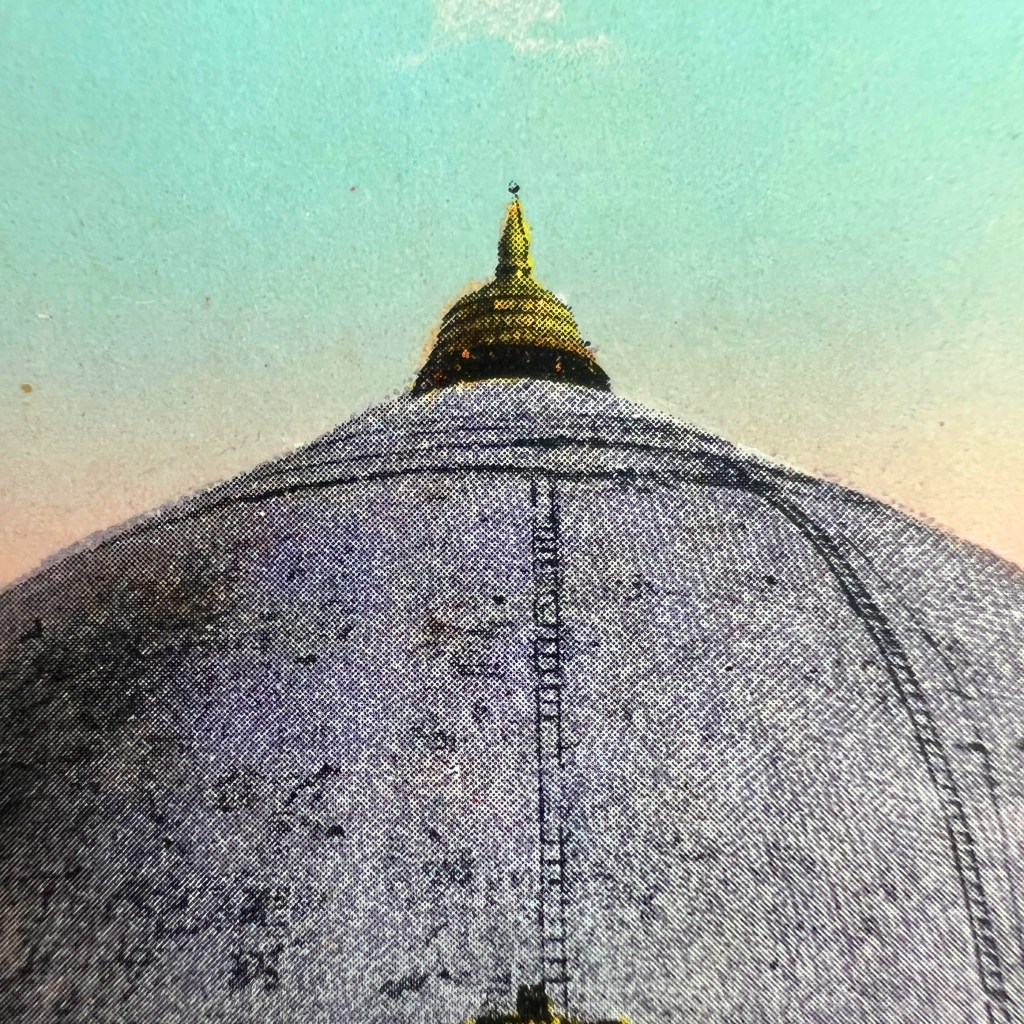
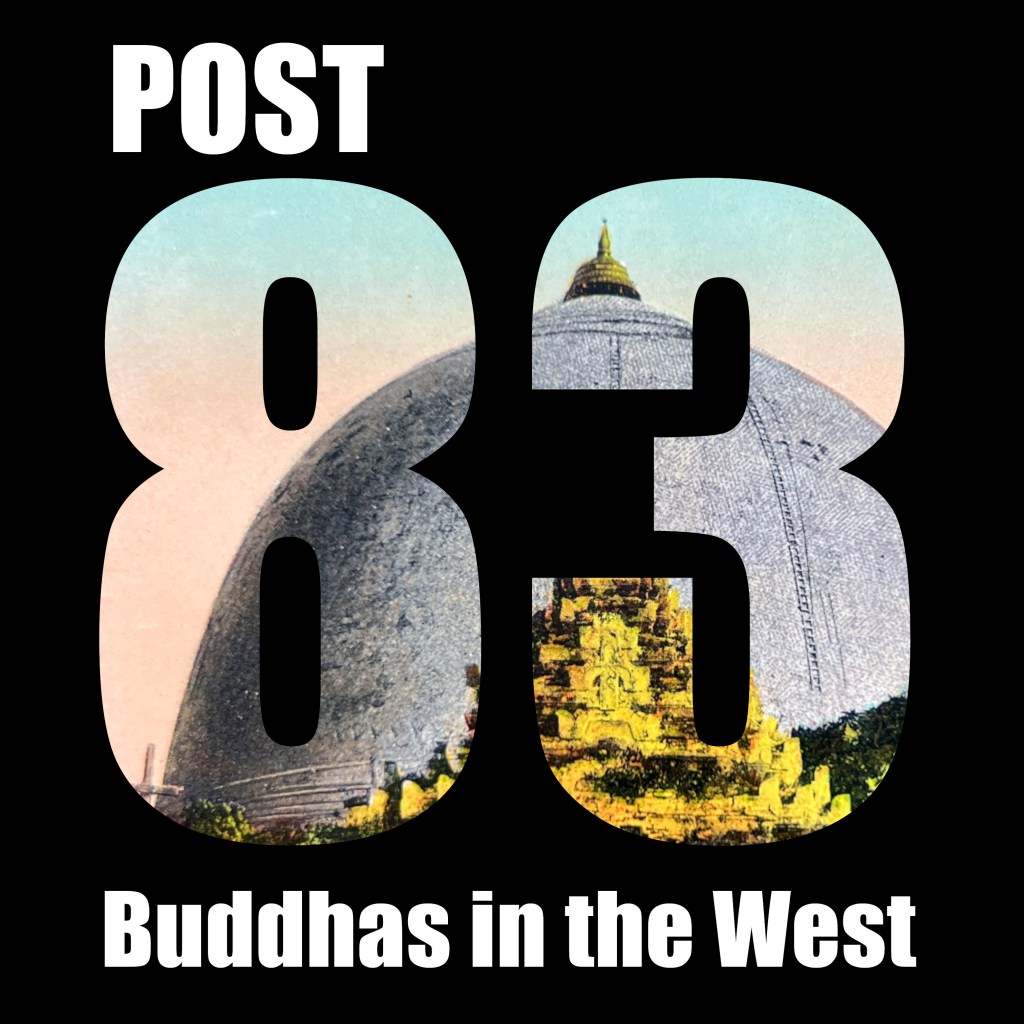
At the height of the worldwide postcard craze, no one produced more vibrant imagery of the Buddhist world than D.A. Ahuja. Here we see Myanmar’s 17th century Kaunghmudaw Pagoda with unique hemispherical dome – most Burmese pagodas are pyramidal structures.

According to Burmese chronicles, the Kaunghmudaw Pagoda enshrines the Buddha’s tooth relic among other religious treasures. This pagoda was intended to resemble Sri Lanka’s Maha Thupa, a structure reputed to hold the largest single cache of the Buddha’s relics.

The image was printed using a lithographic-halftone hybrid process, whereby a black halftone screen was applied on top of a multi-color lithographic substrate. The “divided back” design suggests the card was printed by Ahuja around 1910; he operated out of present-day Yangon.

Constructed in the Sagaing Hills, the Kaunghmudaw Pagoda houses a large marble statue of the Buddha hewn from the local quarry. The dome sits at a height of just over 150 feet (46m).

The use of a white dome was meant to symbolize a connection to the ancient past of Buddhist architecture. Just over a decade ago, however, the military government repainted the dome gold, against the outcry of local Buddhists.


The Buddhas in the West Material Archive is a digital scholarship project that catalogues artifacts depicting Buddhist material culture for Western audiences. It’s comprised of prints, photos, and an assortment of ephemera and other objects. For a brief introduction to this archive, visit the main Buddhas in the West project page.


For Related Buddhas in the West Posts Featuring Stūpas / Pagodas:


For the Most Recent Buddhas in the West Posts:


Kūkai’s Jizō at Hakone Postcard

For all the new Buddhas in the West posts
follow us on Bluesky & Instagram


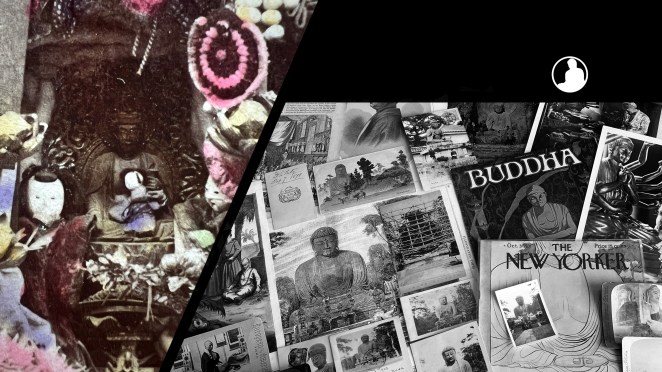
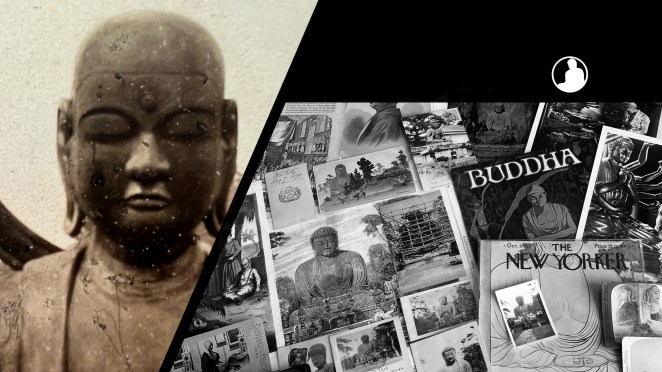
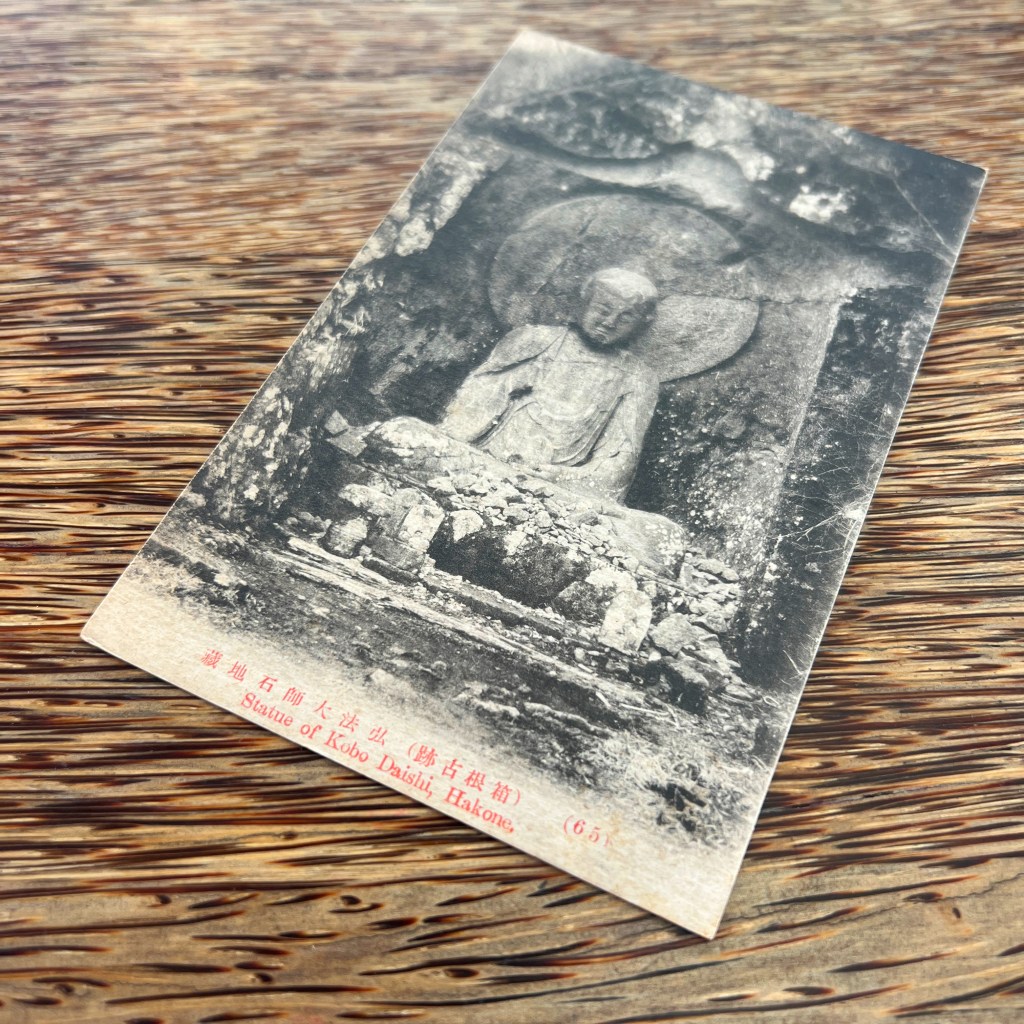
Despite the English caption, this is not a statue of the 9th century Buddhist monk Kōbō Daishi, otherwise known as Kūkai. As the Japanese caption reads, this is a stone relief carving of the bodhisattva Jizō at Hakone, attributed to Kūkai’s skilled craftsmanship.

The lore of Kūkai’s craftsmanship was known to 19th c. art historian Ernest Fenollosa: “This is said to have been carved by Kōbō himself on his journey to the North; yet…he hardly would have spared time for its execution.” Today, the statue is dated to the 13th century, well after Kūkai’s death.

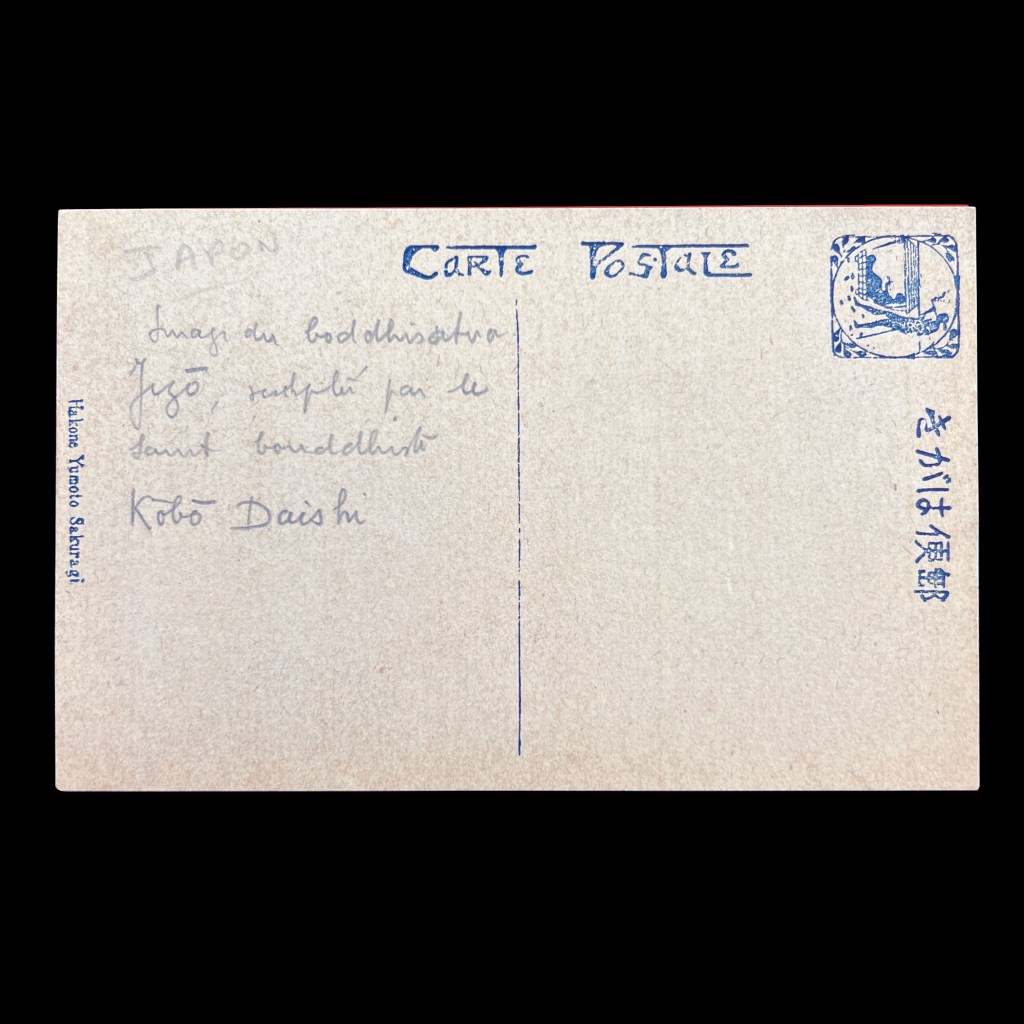
The note on the back, possibly written by a French tourist as a personal reminder, clarifies the English caption saying the image of Jizō was “sculpted by the Buddhist saint Kōbō Daishi.” The design of the reverse dates this Japanese postcard to between 1933 and 1945.

The pile of stones and pebbles on Jizō’s lap were common votive offerings presented by passing travelers and pilgrims.

Carved into the rock face, this statue still stands today in Hakone, sheltered by a small shrine. For more on Jizō and this particular icon, see Hank Glassman, The Face of Jizo: Image and Cult in Medieval Japanese Buddhism, 2012.


The Buddhas in the West Material Archive is a digital scholarship project that catalogues artifacts depicting Buddhist material culture for Western audiences. It’s comprised of prints, photos, and an assortment of ephemera and other objects. For a brief introduction to this archive, visit the main Buddhas in the West project page.


For Related Buddhas in the West Posts Featuring Jizō / Kṣitigarbha:


For the Most Recent Buddhas in the West Posts:


Ueno Daibutsu after the Great Kantō Earthquake Postcard

For all the new Buddhas in the West posts
follow us on Bluesky & Instagram


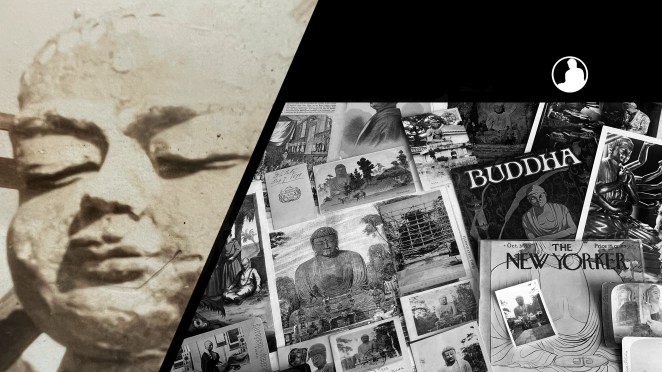
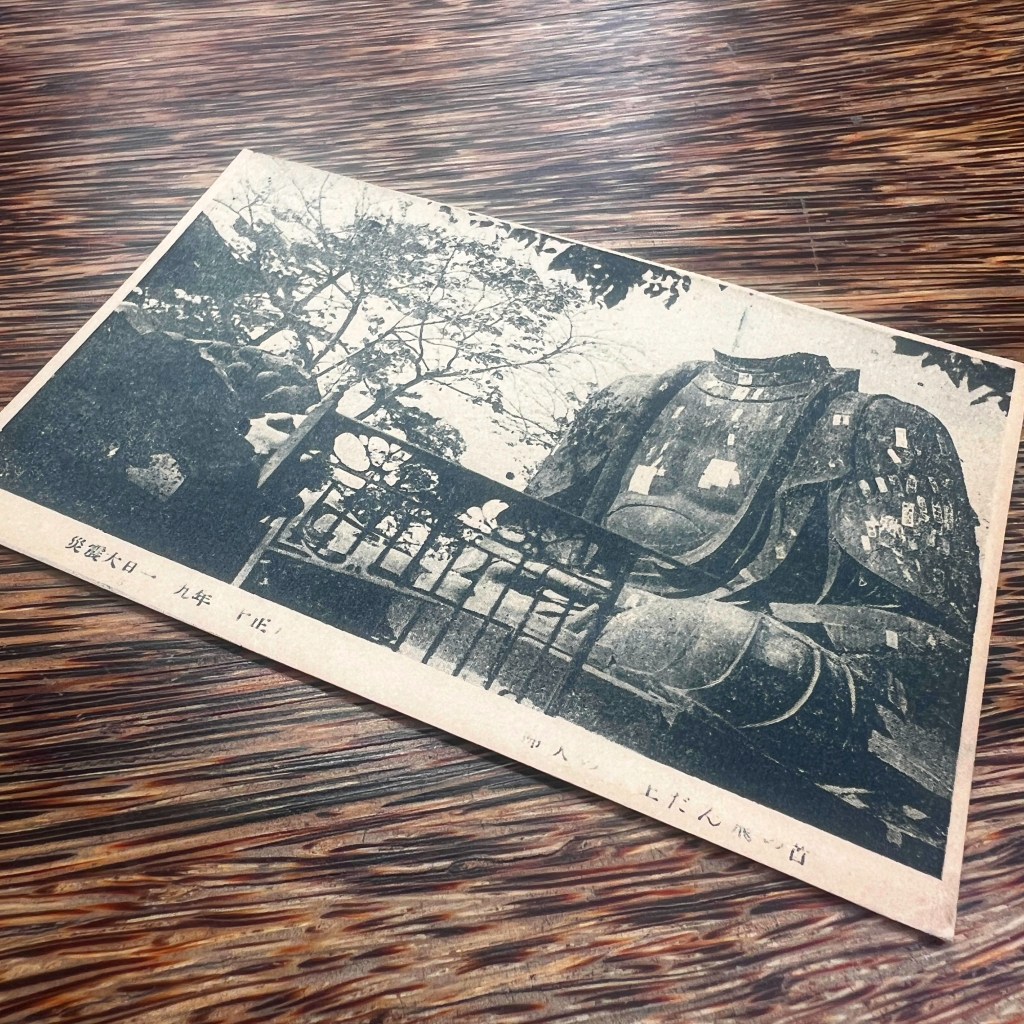
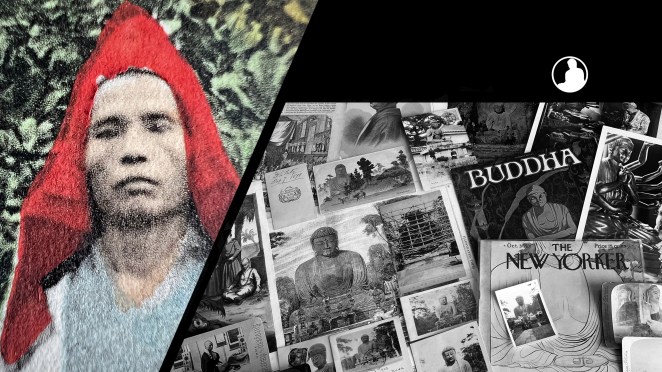
Constructed in 1843, the colossal Ueno Daibutsu in Tokyo was restored after damage from the 1855 Edo earthquake. Less than a century later, in 1923, the Great Kantō earthquake dislodged the icon’s head, providing a rare photographic opportunity.

The bronze statue, representing Śākyamuni Buddha, was the third iteration, replacing statues made in c. 1660 and 1631. The Ueno Daibutsu originally stood on the precincts of Kan’ei-ji 寛永寺, a family temple for the famed Tokugawa clan, but the grounds were turned into today’s Ueno Park in 1873.

The once booming Japanese postcard industry was devastated after the 1923 earthquake, as many paper manufacturers and printers had to rebuild. Postcards made during this period are often found on a cheaper, rough paper prone to yellowing; notably, the back here is not fully printed.

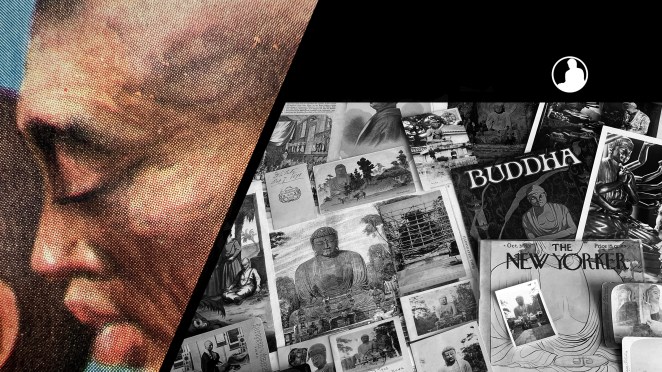
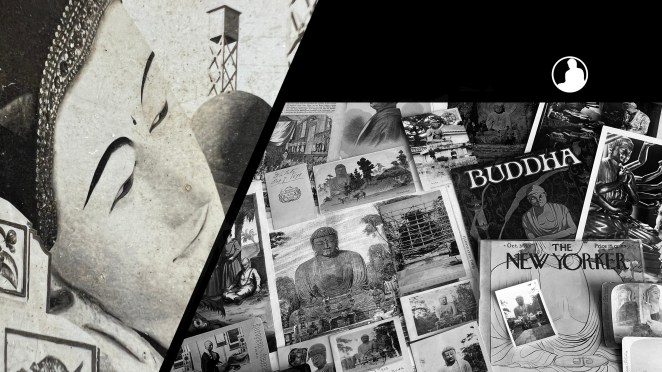
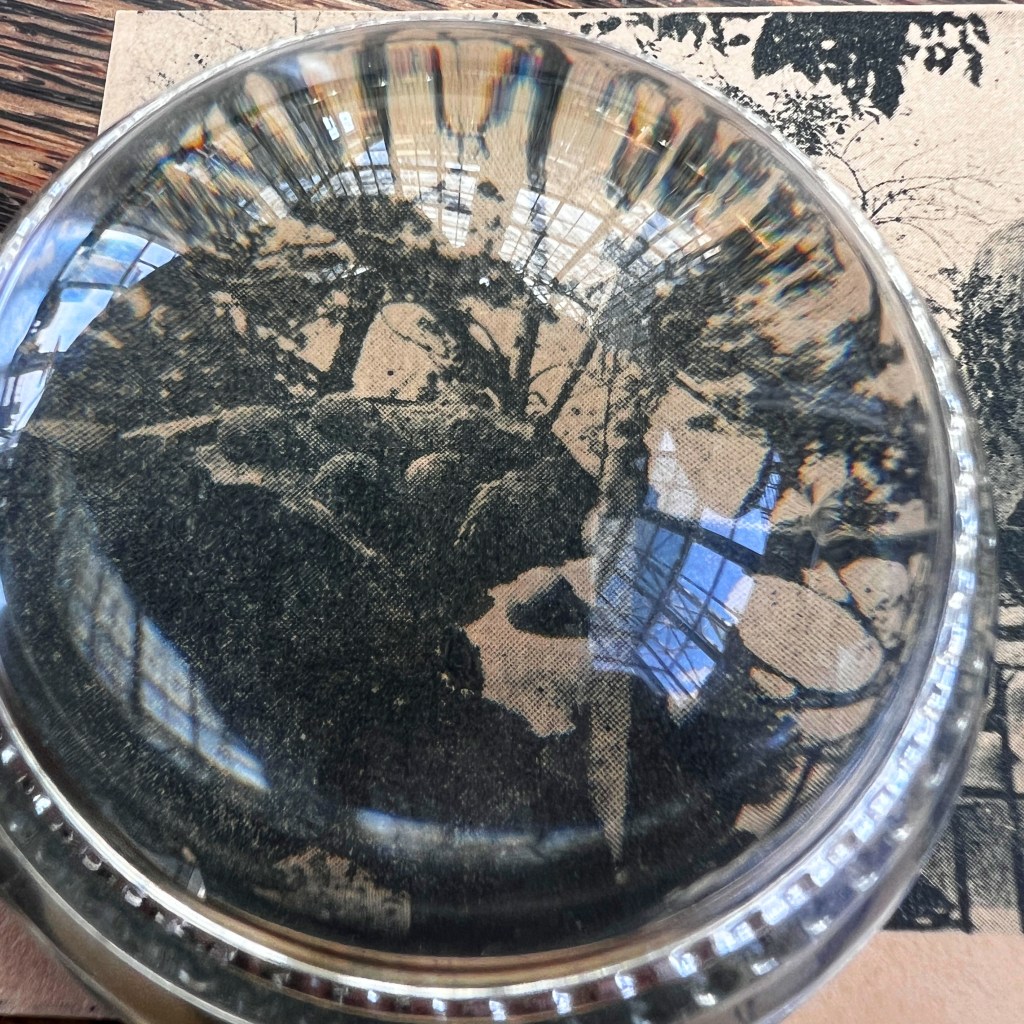
The older exquisite hand-colored collotype prints of a decade earlier were replaced with lower resolution halftone screen prints in black and white. This detail shows the icon’s head laying in the foreground; looking closely, it’s easy to see the hallmark halftone dot pattern.

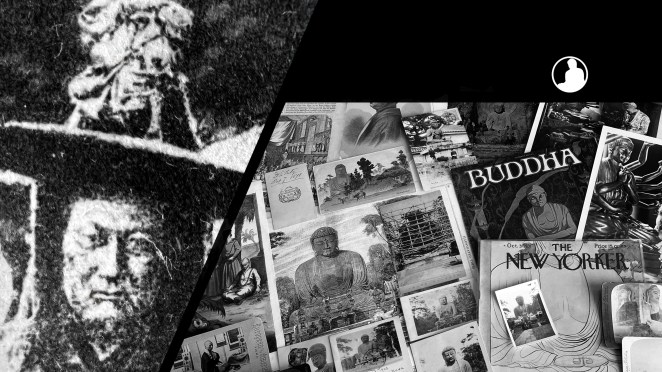
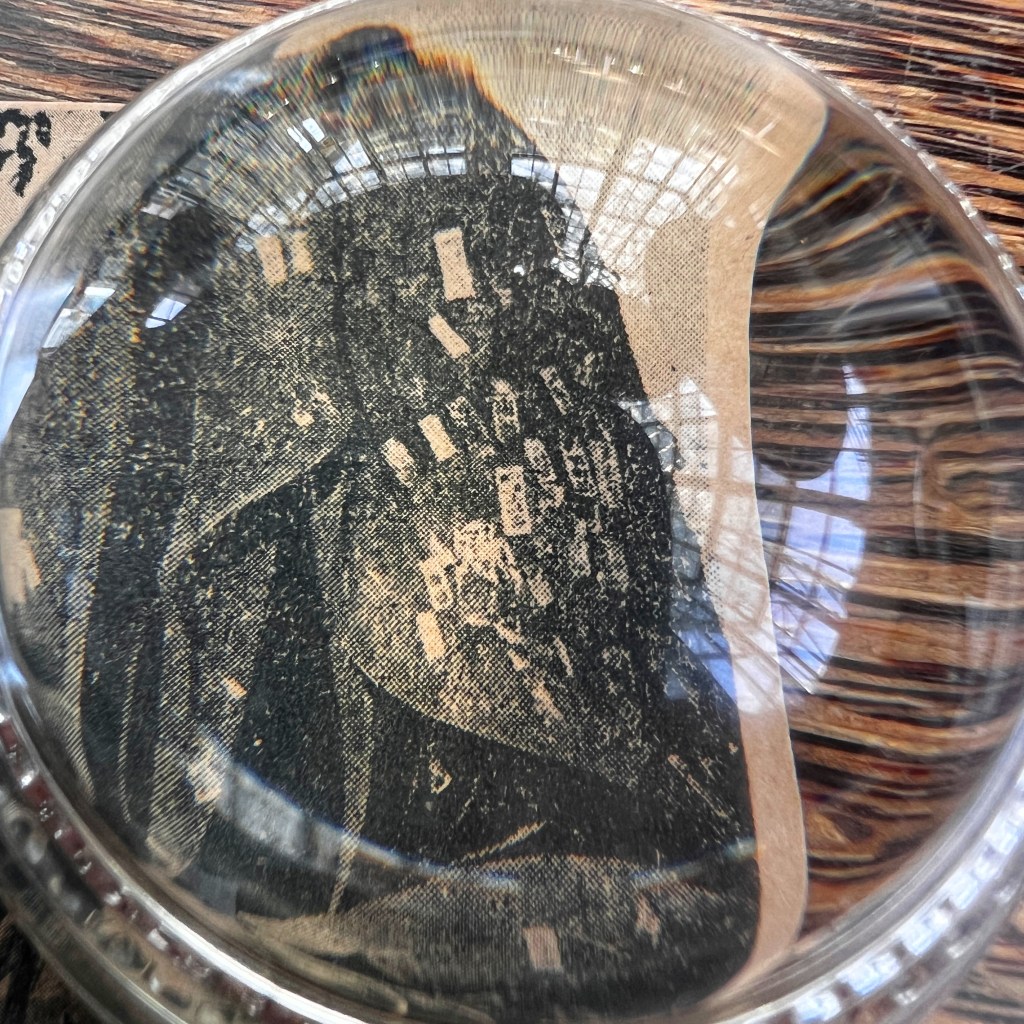
Vestiges of religious activity can be seen through the remnants of senshafuda 千社札, votive slips pasted on the statue by pilgrims and visitors.

The Ueno Daibutsu body was melted down during WWII, thus today only the face remains on display in Ueno Park. Holding the belief that the statue “won’t fall any further,” it’s become a place for Japanese students to pray so they won’t fail exams.


The Buddhas in the West Material Archive is a digital scholarship project that catalogues artifacts depicting Buddhist material culture for Western audiences. It’s comprised of prints, photos, and an assortment of ephemera and other objects. For a brief introduction to this archive, visit the main Buddhas in the West project page.


For Related Buddhas in the West Posts Featuring Historical Postcards:

For the Most Recent Buddhas in the West Posts:

Pierre Dieulefils’ Angkor Wat Pilgrimage Postcard

For all the new Buddhas in the West posts
follow us on Bluesky & Instagram


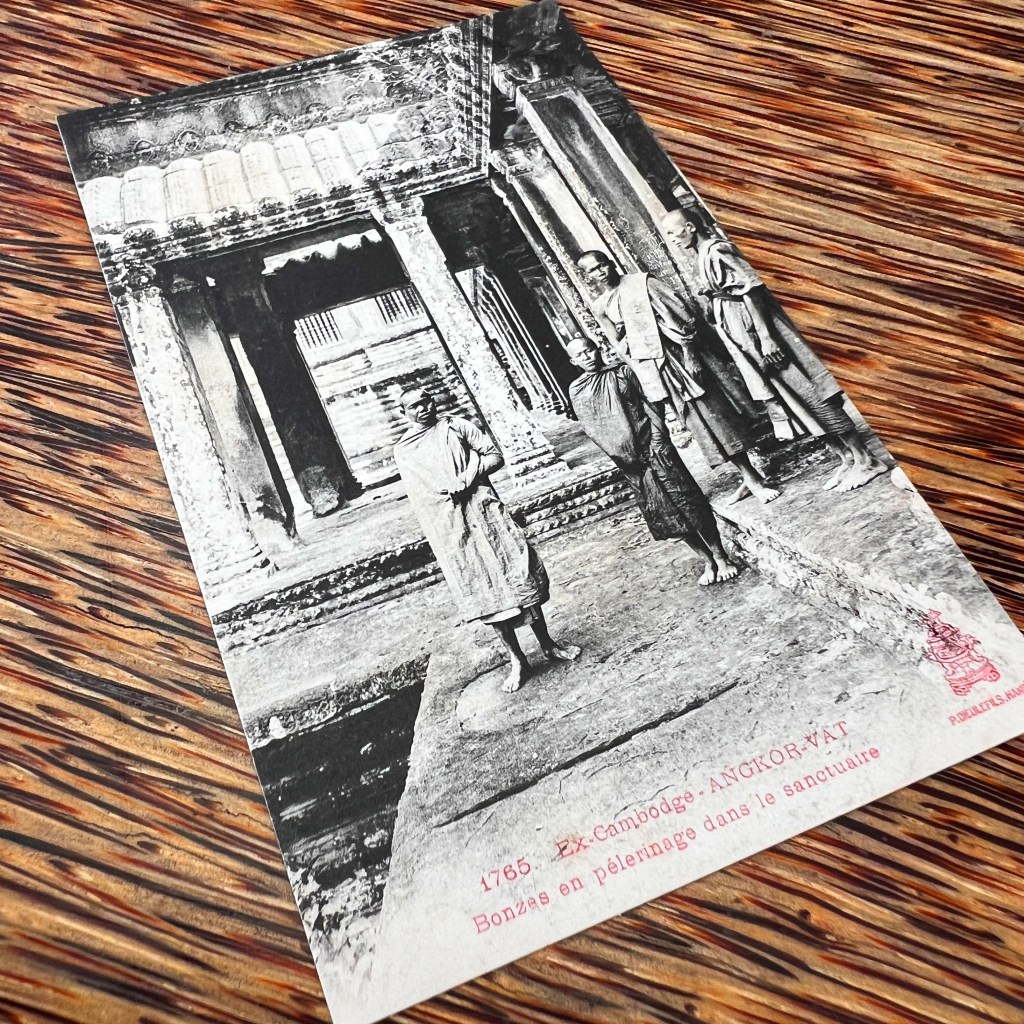
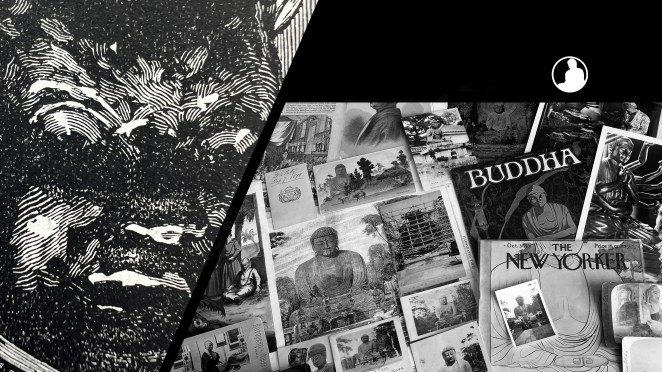
Given countless images showing the architectural grandeur of Angkor Wat, it’s easy to forget it was once an important religious site – not just a tourist destination. Here we see a photo by Pierre Dieulefils from 1905 showing “Buddhist monks on pilgrimage” to the sacred site.

In anticipation of the Exposition coloniale de Marseille in 1906, Dieulefils toured Cambodia to take photographs. His photos reveal many active shrines throughout the Angkor Wat complex, most of which have been cleared out and placed in museums today.

Dieulefils arrived in Vietnam as part of French military forces in 1885. Many of his photographs of Angkor Wat were printed as postcards that were popular among French officers who mailed them home to France.

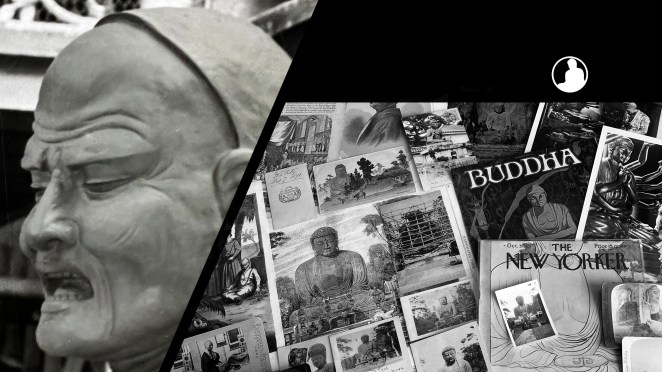
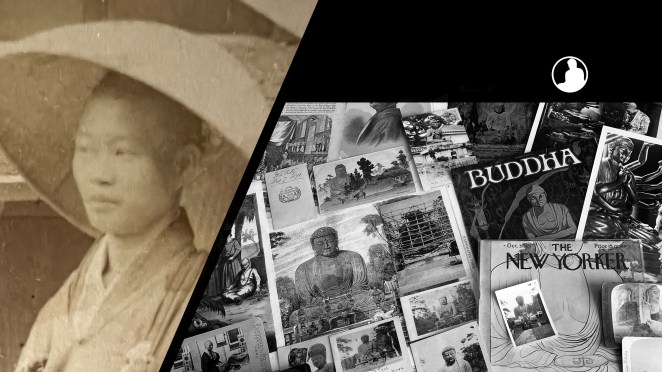
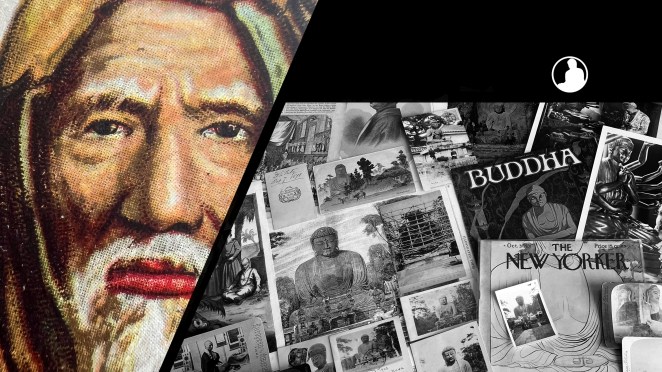
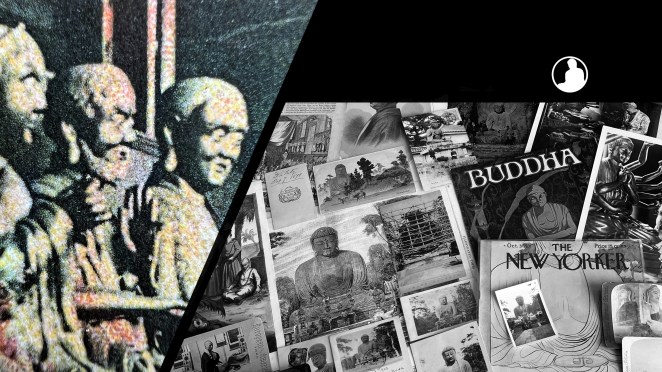
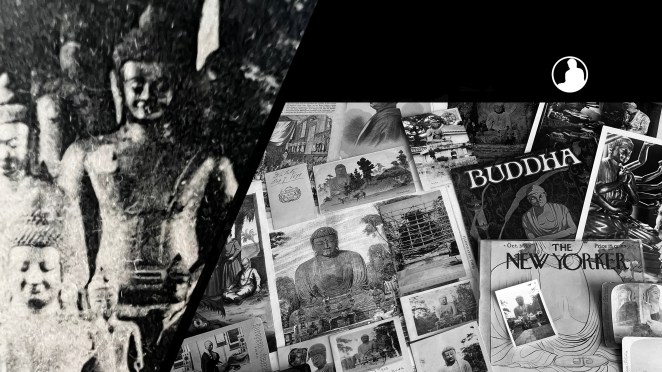
This Theravadin monk wears his outer cloak (saṃghāti) covering both shoulders, while the monk behind drapes his folded cloak over his left shoulder, bearing his right. Based on contrasting shades, we may infer this monk is wearing maroon robes, while the others wear brighter saffron.

Despite Dieulefils’ photographic record, French colonial guide books portrayed Angkor Wat as an abandoned archaeological marvel, see further discussion in Michael Falser’s “From Colonial Map to Visitor’s Parcours” in ‘Archaeologizing’ Heritage? (2013).


The Buddhas in the West Material Archive is a digital scholarship project that catalogues artifacts depicting Buddhist material culture for Western audiences. It’s comprised of prints, photos, and an assortment of ephemera and other objects. For a brief introduction to this archive, visit the main Buddhas in the West project page.


For Related Buddhas in the West Posts Featuring Cambodia:


For the Most Recent Buddhas in the West Posts: