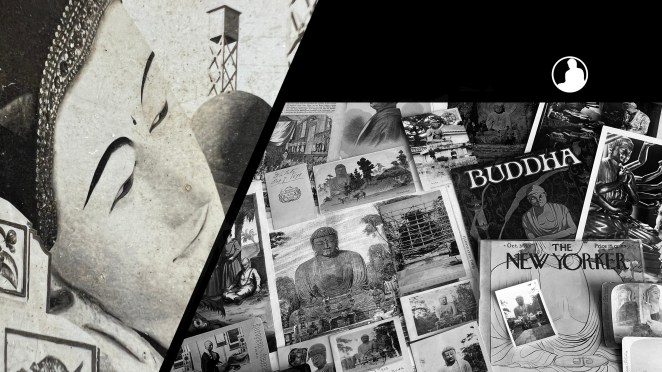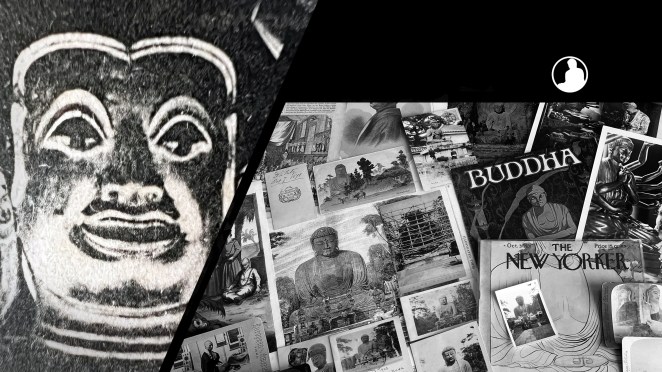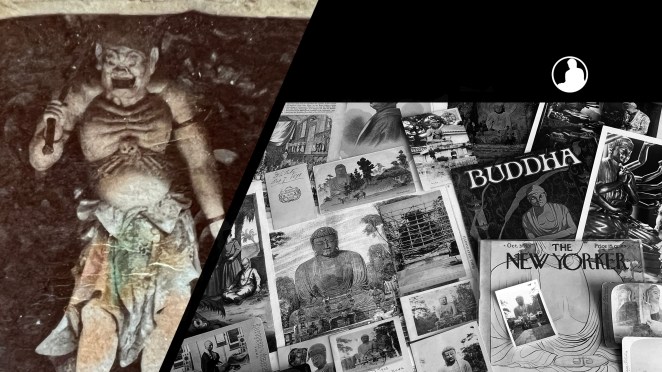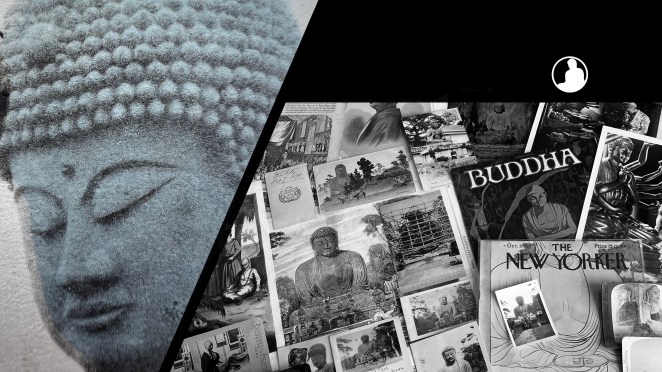
Used Postcard with Kamakura Daibutsu Dimensions

For all the new Buddhas in the West posts
follow us on Bluesky & Instagram


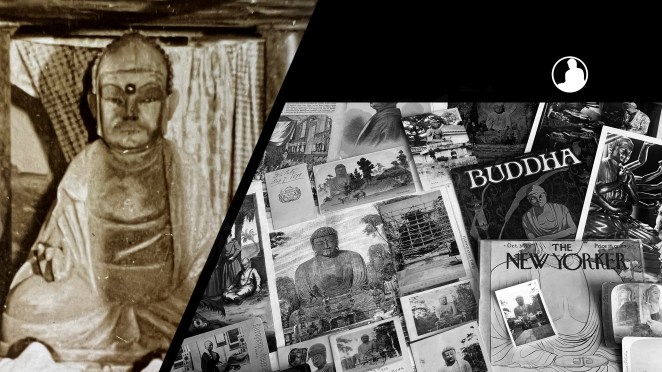
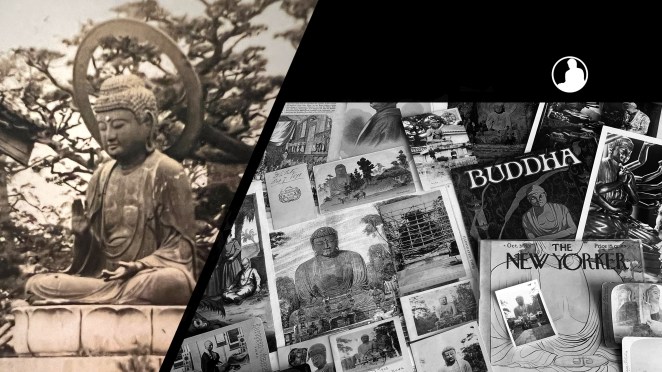
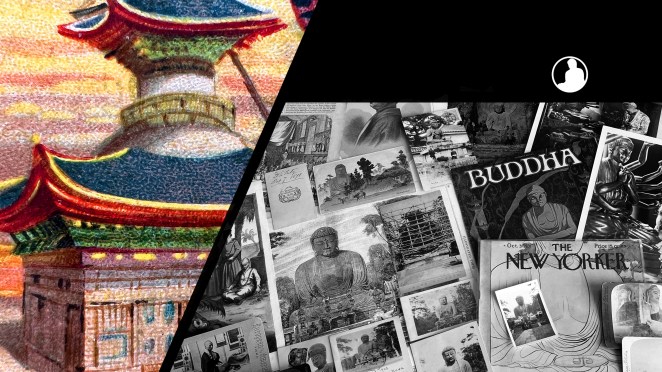
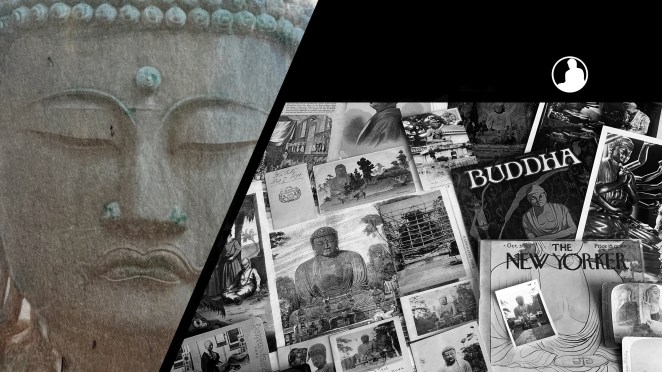
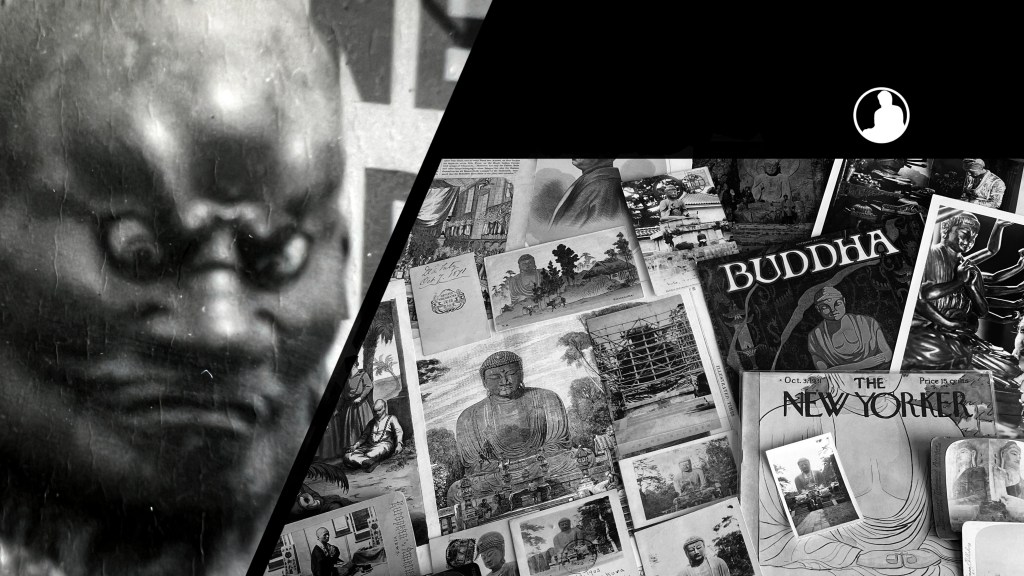
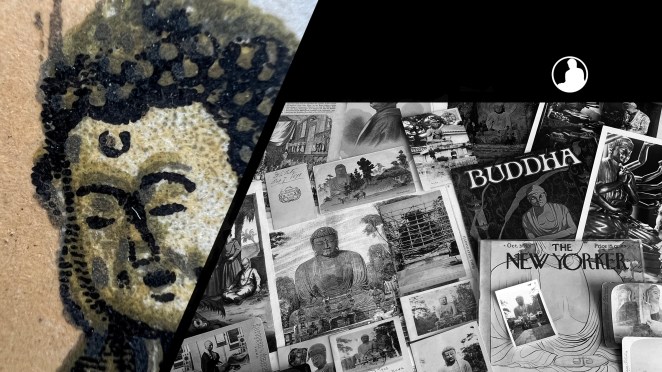
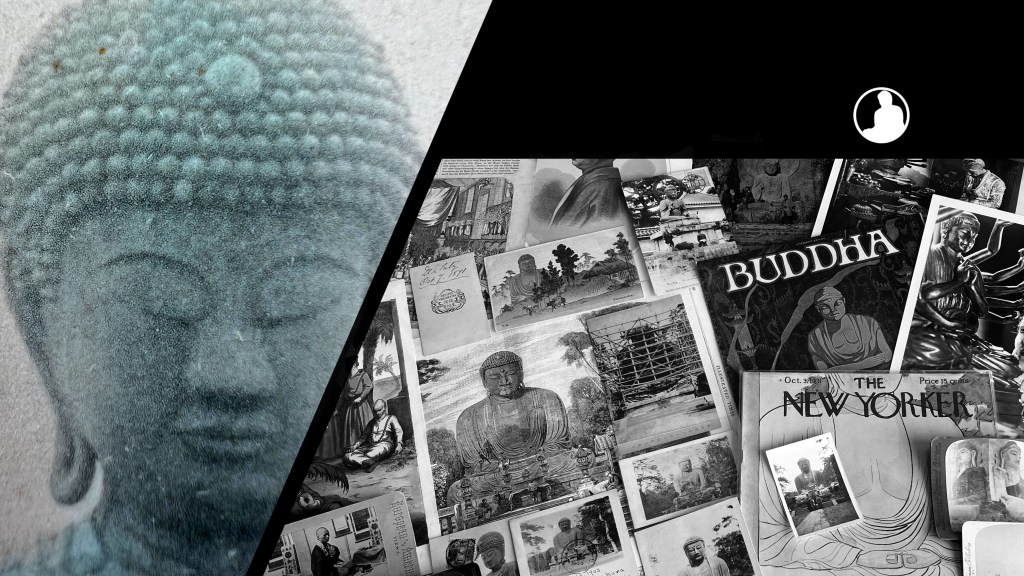
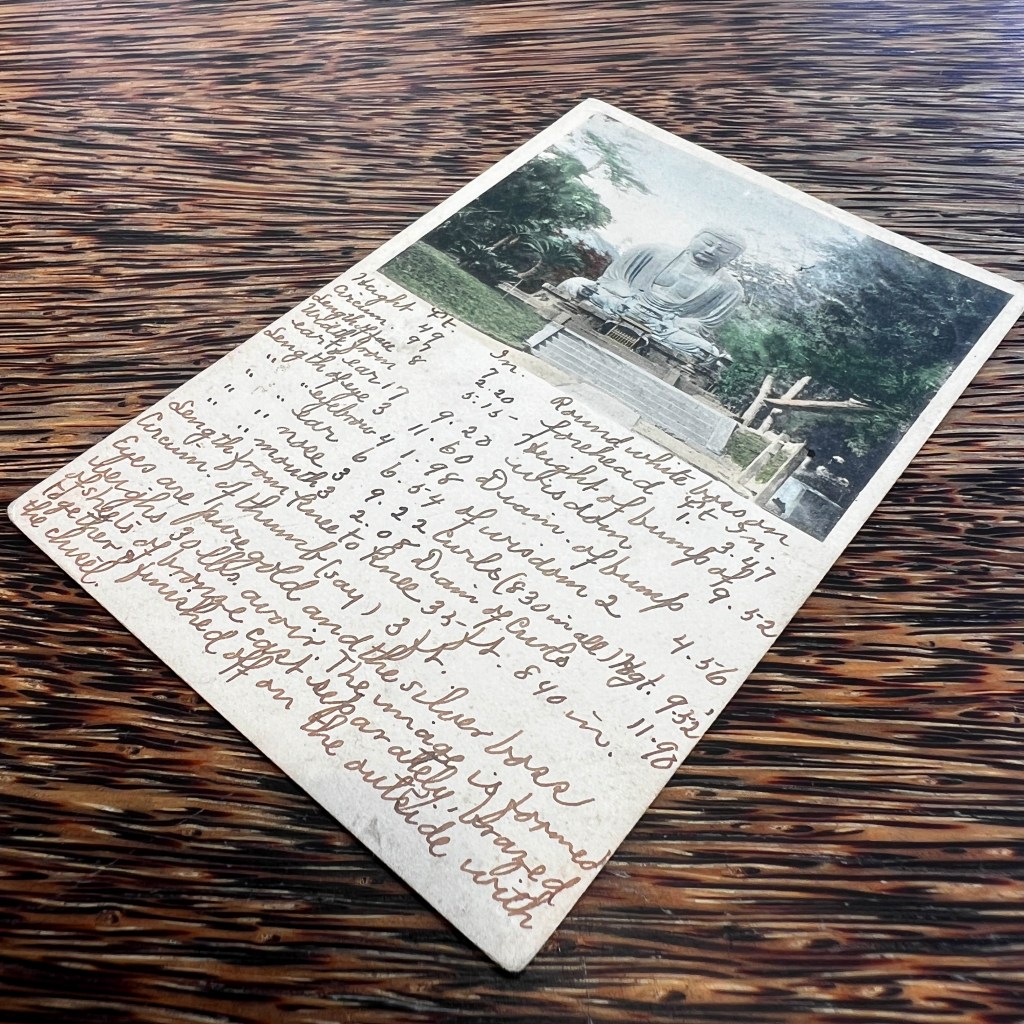
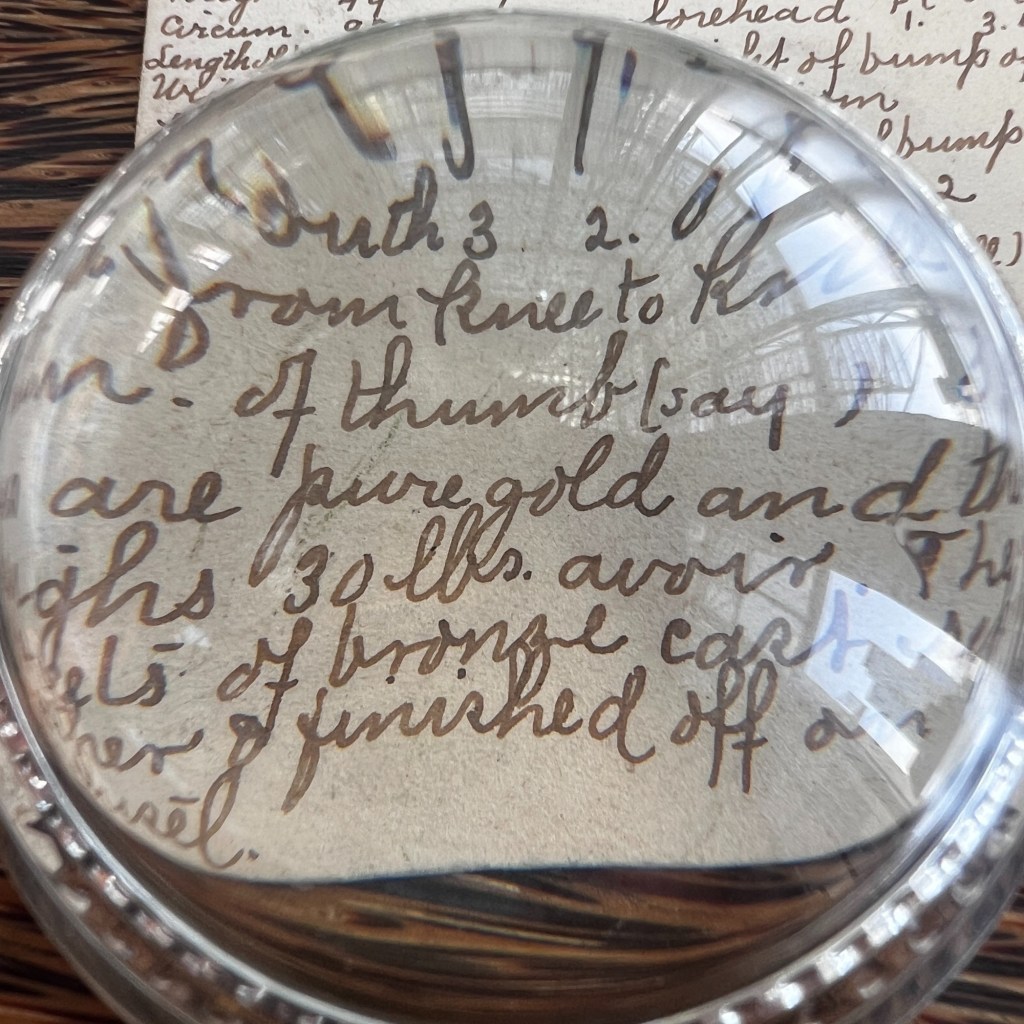
In 2025, seven of the top ten tallest freestanding statues in the world are Buddhist figures (as well as 31 of the top 50). The colossal size of Buddhist statuary is nothing new; foreign travelers in Asia have often noted this fact, as we see in this postcard message from 1906.

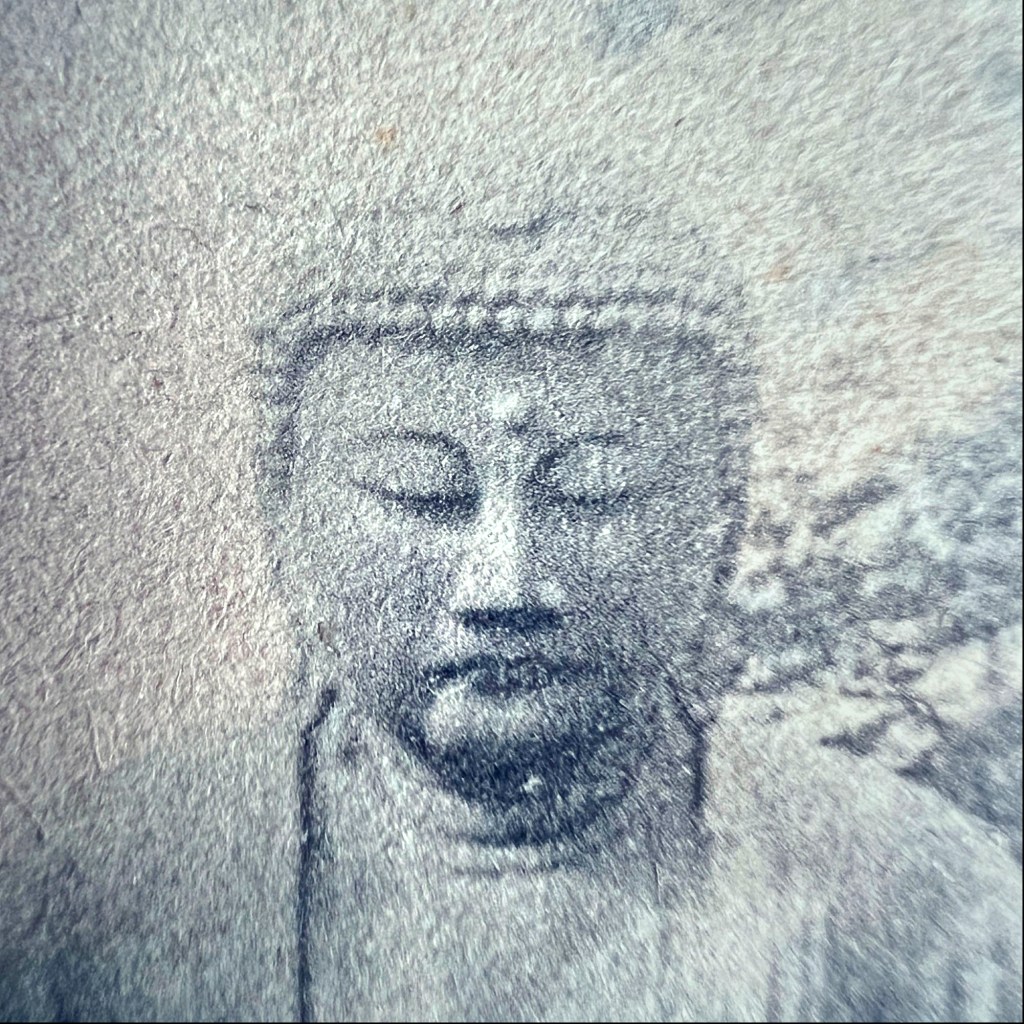
Used postcards are valuable because they reveal which aspects of the Kamakura Daibutsu site in Japan were more salient to visitors. The exact measurements given here were not taken on site by the visitor, but were likely copied from one of the popular Japan tourism guides.
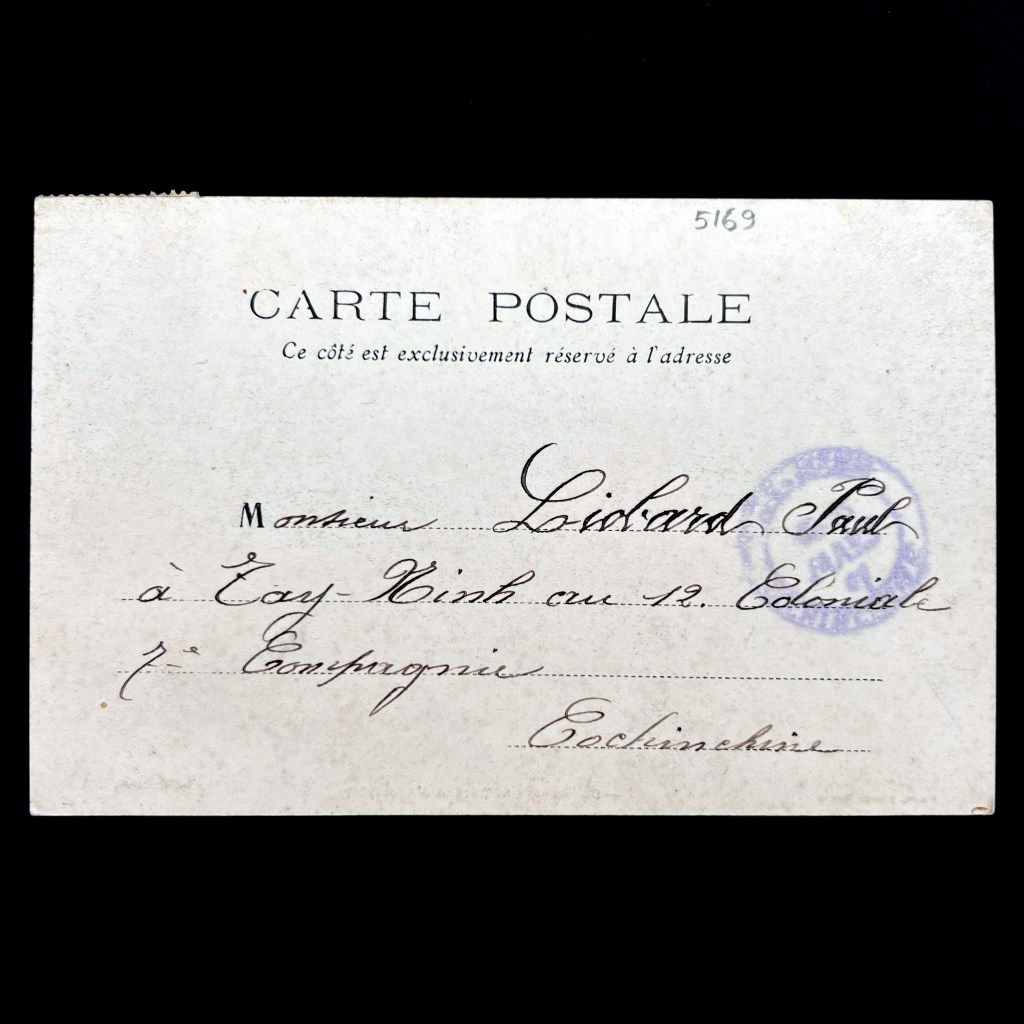
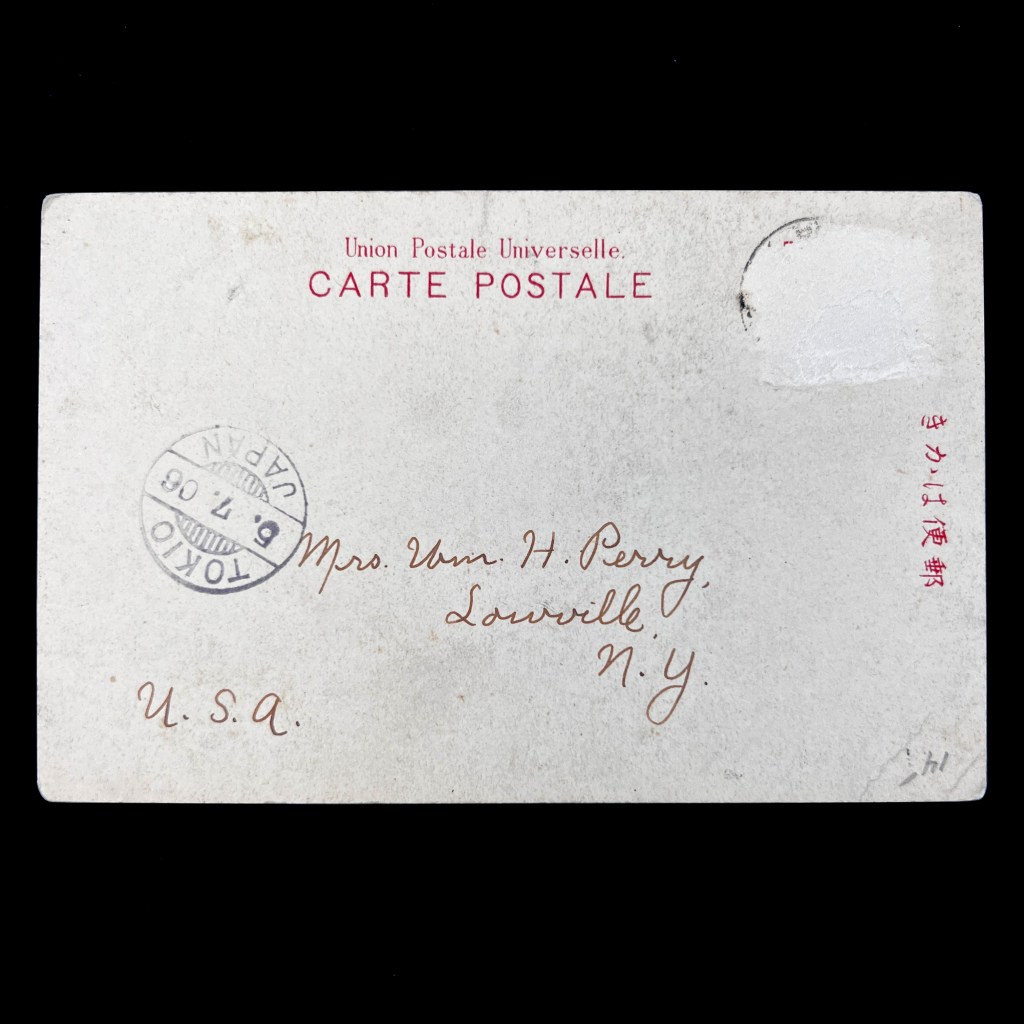
The reverse gives us some insight into the “extended biography” of the postcard after its departure from Tokyo. Notably, the missing postage stamp suggests it was prized by a philatelist – a stamp collector.
The focus on the size, craftsmanship, and materials of the statue minimize the religious importance of such an icon and highlight its value as fine art.
Teaching Resource: For a brief introduction to material analysis that uses this postcard as an example, see the post and handout: Making Materials Speak: Performing a Material Analysis, viewable here: tinyurl.com/nhhuh4nk.
The Buddhas in the West Material Archive is a digital scholarship project that catalogues artifacts depicting Buddhist material culture for Western audiences. It’s comprised of prints, photos, and an assortment of ephemera and other objects. For a brief introduction to this archive, visit the main Buddhas in the West project page.


For Related Buddhas in the West Posts Featuring Historical Postcards:

For the Most Recent Buddhas in the West Posts:
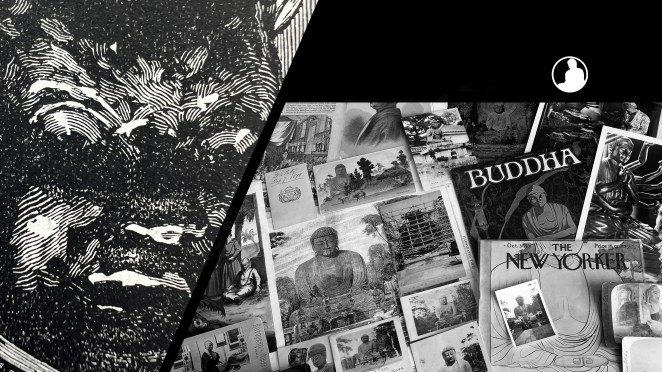

D.A. Ahuja’s Kyauktawgyi Icon

For all the new Buddhas in the West posts
follow us on Bluesky & Instagram


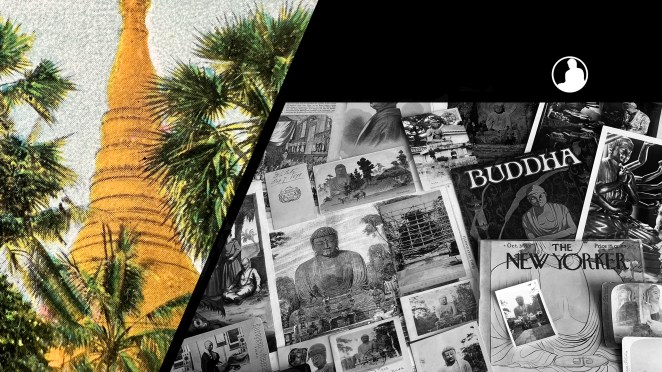
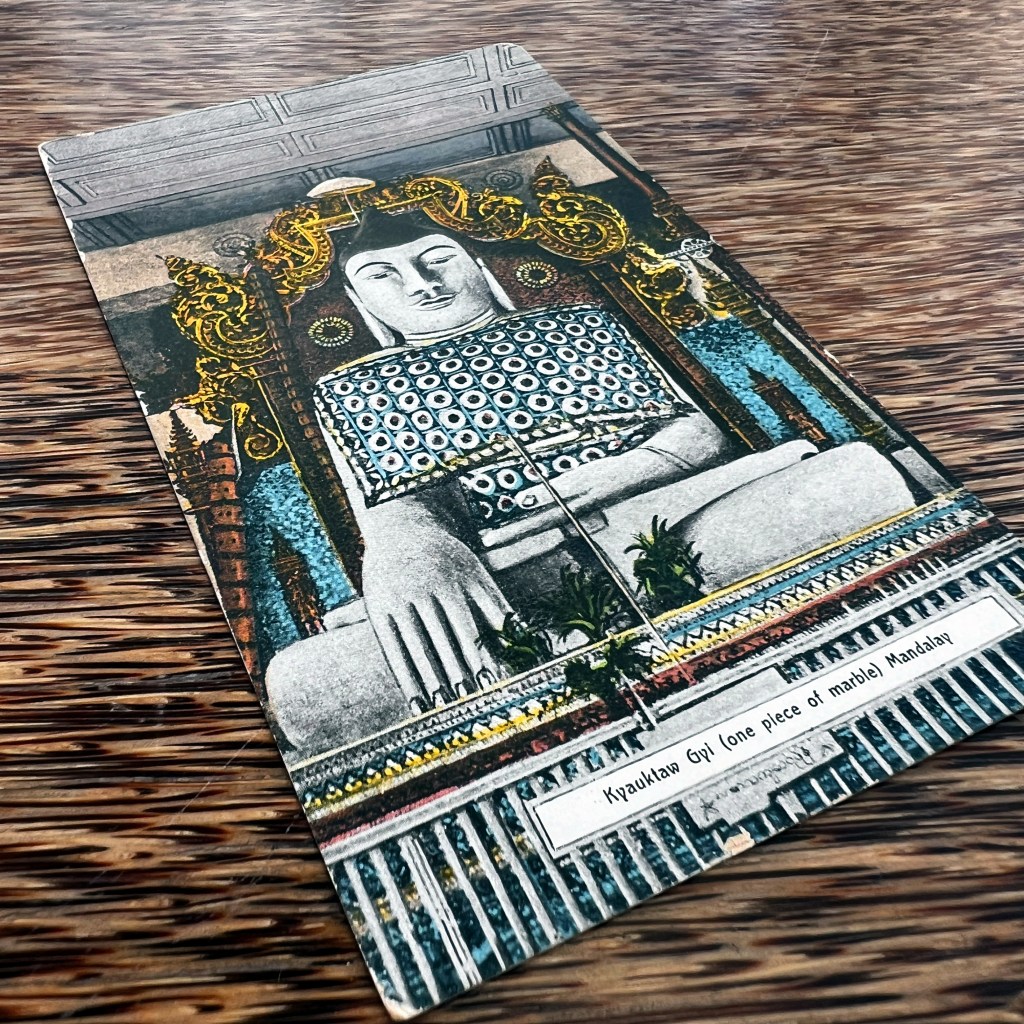
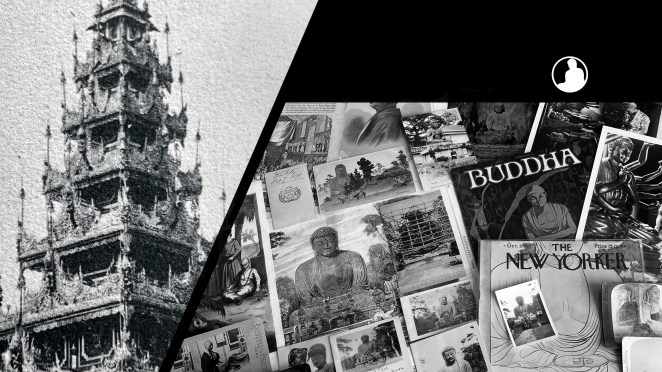
Carved from a single giant marble slab, the Burmese Kyauktawgyi icon stands at a height of 26 feet. Over the span of two weeks the slab was moved from Sagyin quarry to Mandalay Hill and after more than two years of carving the image was consecrated in 1865.

This vibrant postcard was published by Rangoon-based D. A. Ahuja (c.1865–c.1939). The print used a lithographic-halftone hybrid process, first applying color with a lithographic substrate and then applying a black halftone screen; only the final key plate carried the fine detail.

The stamp box informs us this card was printed in Germany, which by the early 20th century was the center of postcard printing worldwide. By 1910, the approximate date of this card, Ahuja was among the most commercially successful postcard publishers during the period of British colonial rule.

The icon was commissioned by King Mindon and depicts the Buddha touching the ground with his right hand, symbolizing his defeat Māra. This gives rise to the formal name of the statue, Mahāsakyamārajina, or the Great Sakya Conqueror of Māra.

The original photo of the marble statue was likely licensed by Ahuja for publication. A copy of the original photograph can found in an album held by the Rijksmuseum, viewable here: tinyurl.com/4pfrhmc6.


The Buddhas in the West Material Archive is a digital scholarship project that catalogues artifacts depicting Buddhist material culture for Western audiences. It’s comprised of prints, photos, and an assortment of ephemera and other objects. For a brief introduction to this archive, visit the main Buddhas in the West project page.


For Related Buddhas in the West Posts Featuring D.A. Ahuja Postcards:


For the Most Recent Buddhas in the West Posts:
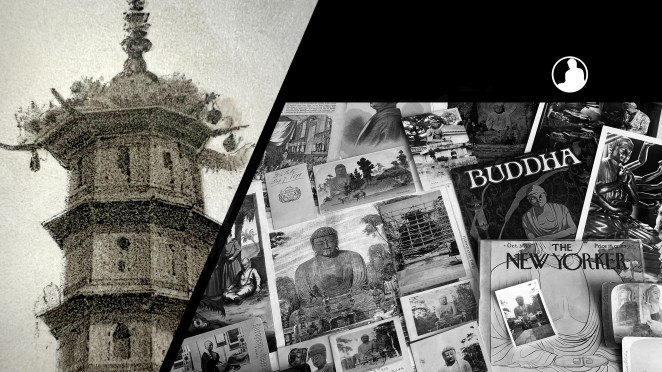

Wa Lum (Hualin) Temple 500 Arhats Hall Postcard

For all the new Buddhas in the West posts
follow us on Bluesky & Instagram


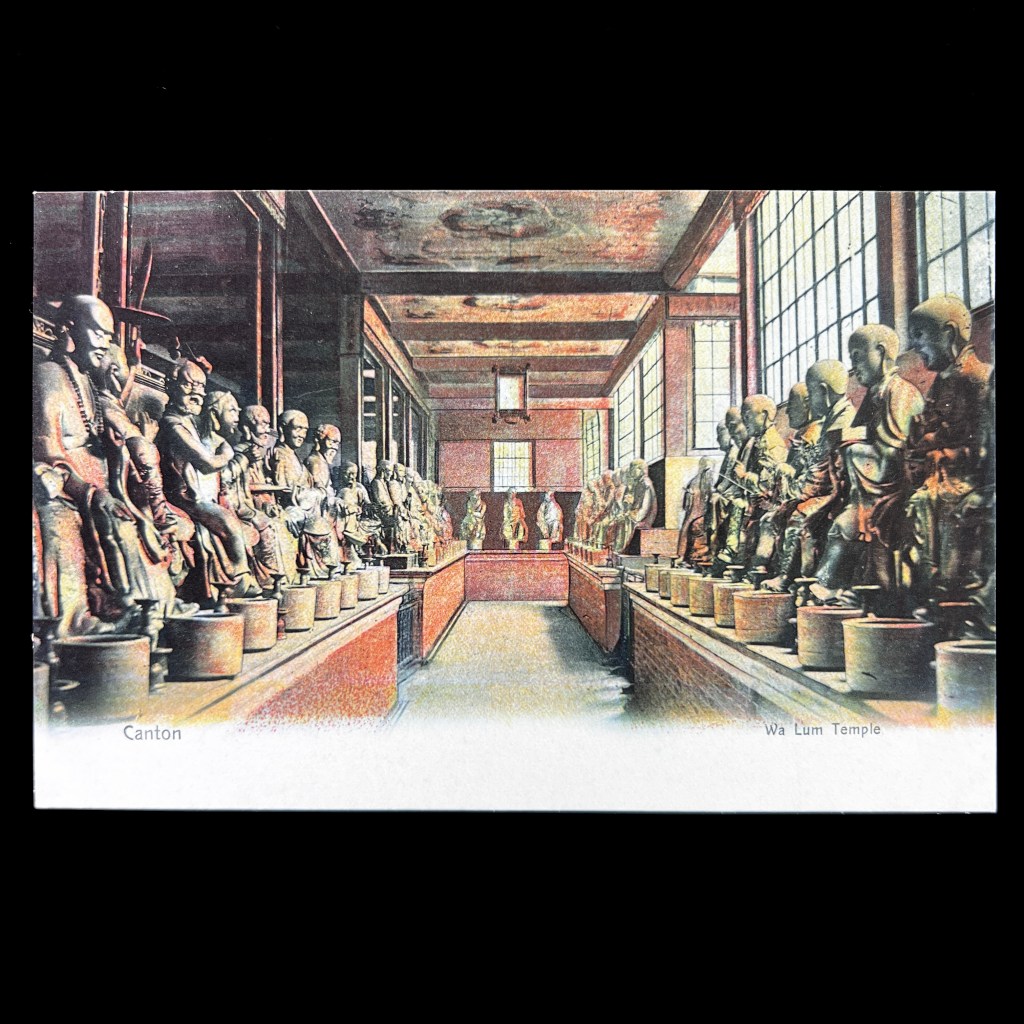
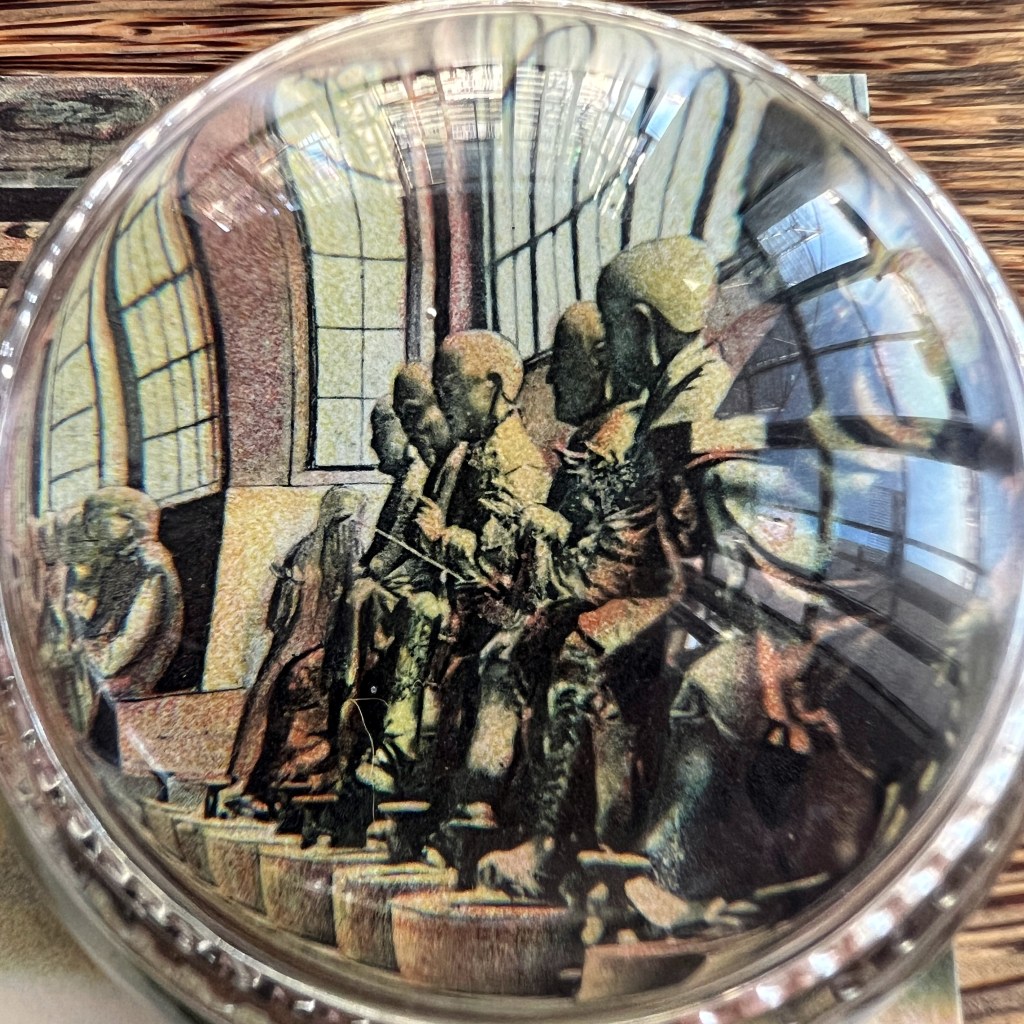
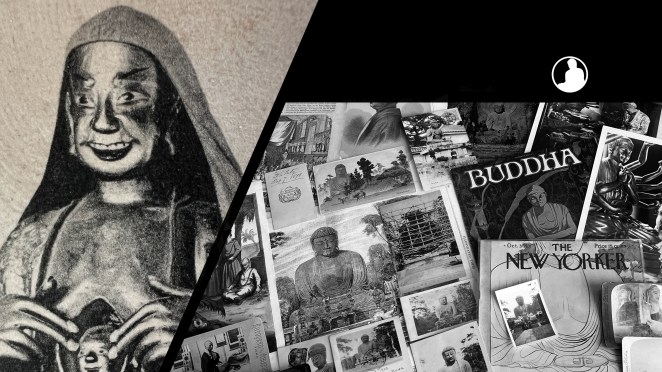
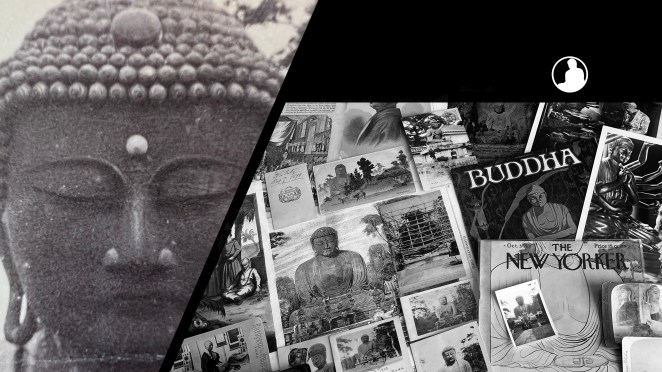
The Hualin Temple in Guangzhou, China was well known among foreign tourists at the end of the 19th century for its Hall of Five Hundred Arhats. Reportedly made of clay, the icons were installed in the early 1850s and remained until the Cultural Revolution a century later.

This postcard dates to c. 1910 and was published by the postcard dealer Moritz Sternberg who operated from Queen’s Road in Hong Kong. The original photo, however, is much older and is often attributed to Lai Afong, the most influential Chinese photographer of the late Qing.

While the temple has a history dating to the 6th century, the Arhat Hall was built in the late 1840s. It was one of the sites visited by the pioneering Scottish photographer John Thompson when he sojourned in China from 1868 to 1872.

By Thompson’s visit, rumor had spread that one of the arhat statues was actually an image of Marco Polo (not shown). Thompson notes “careful inquiry proves this statement incorrect,” nevertheless, the belief still persists to the present.

While the icons were replaced in the 1990s, several photographs exist of the originals that were destroyed. A copy of the original photo for this postcard is found in the Hotz Collection of Leiden University Library, viewable here: https://tinyurl.com/2syahybe


The Buddhas in the West Material Archive is a digital scholarship project that catalogues artifacts depicting Buddhist material culture for Western audiences. It’s comprised of prints, photos, and an assortment of ephemera and other objects. For a brief introduction to this archive, visit the main Buddhas in the West project page.


For Related Buddhas in the West Posts Featuring China:


For the Most Recent Buddhas in the West Posts:
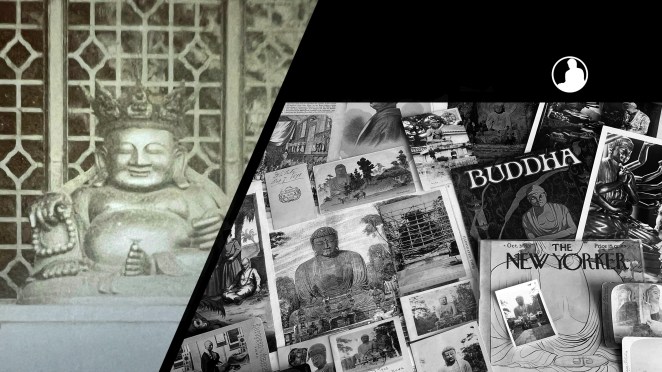

George Planté’s Ruins of Ankgor Postcard

For all the new Buddhas in the West posts
follow us on Bluesky & Instagram


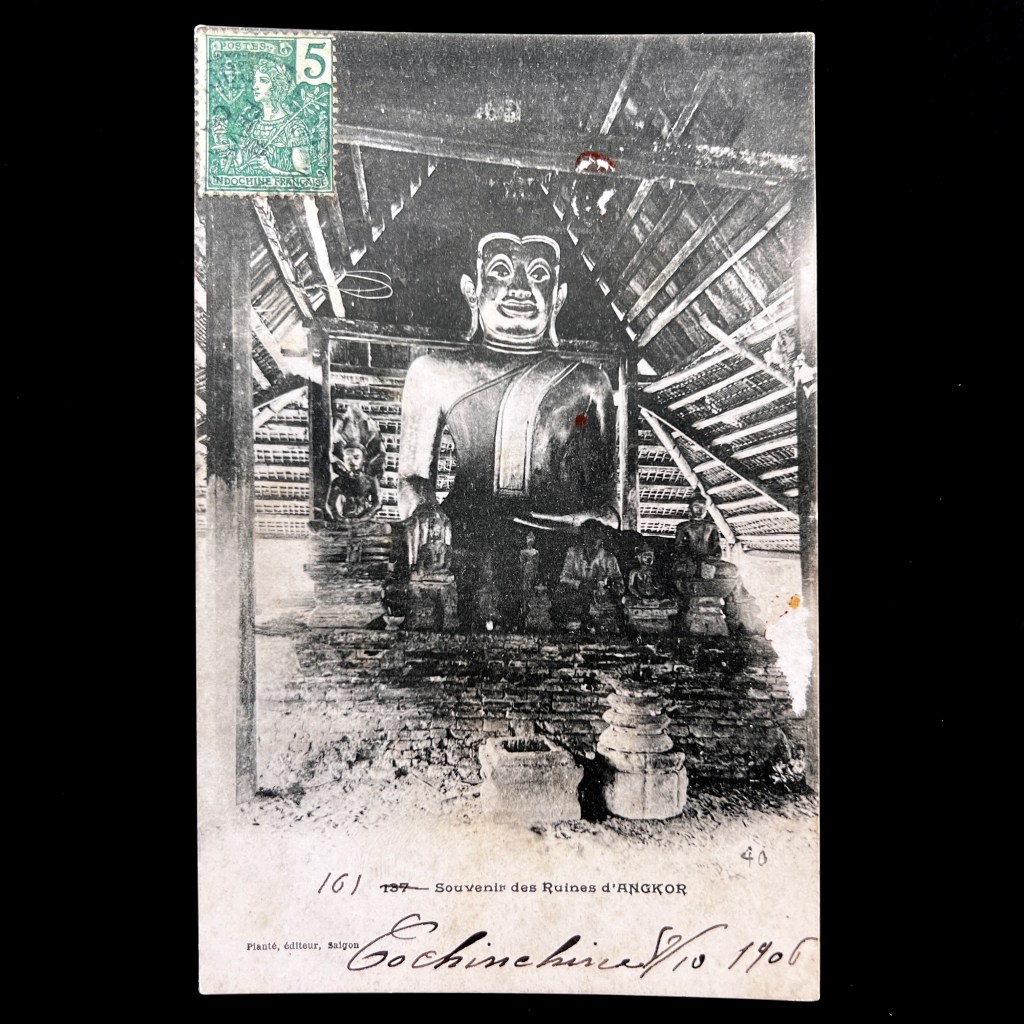
The Golden Age of postcards began with early postcard illustrations of the Eiffel Tower in 1889. Thus, when French military arrived in French colonial Vietnam, then known as Indochina, a market emerged for pictorial imagery of the region – including Buddhist temples.

The caption here give the description: “Souvenir of the Ruins of ANGKOR.” The publisher, George Planté, had operated a photography studio in Saigon and started selling postcards by 1905.

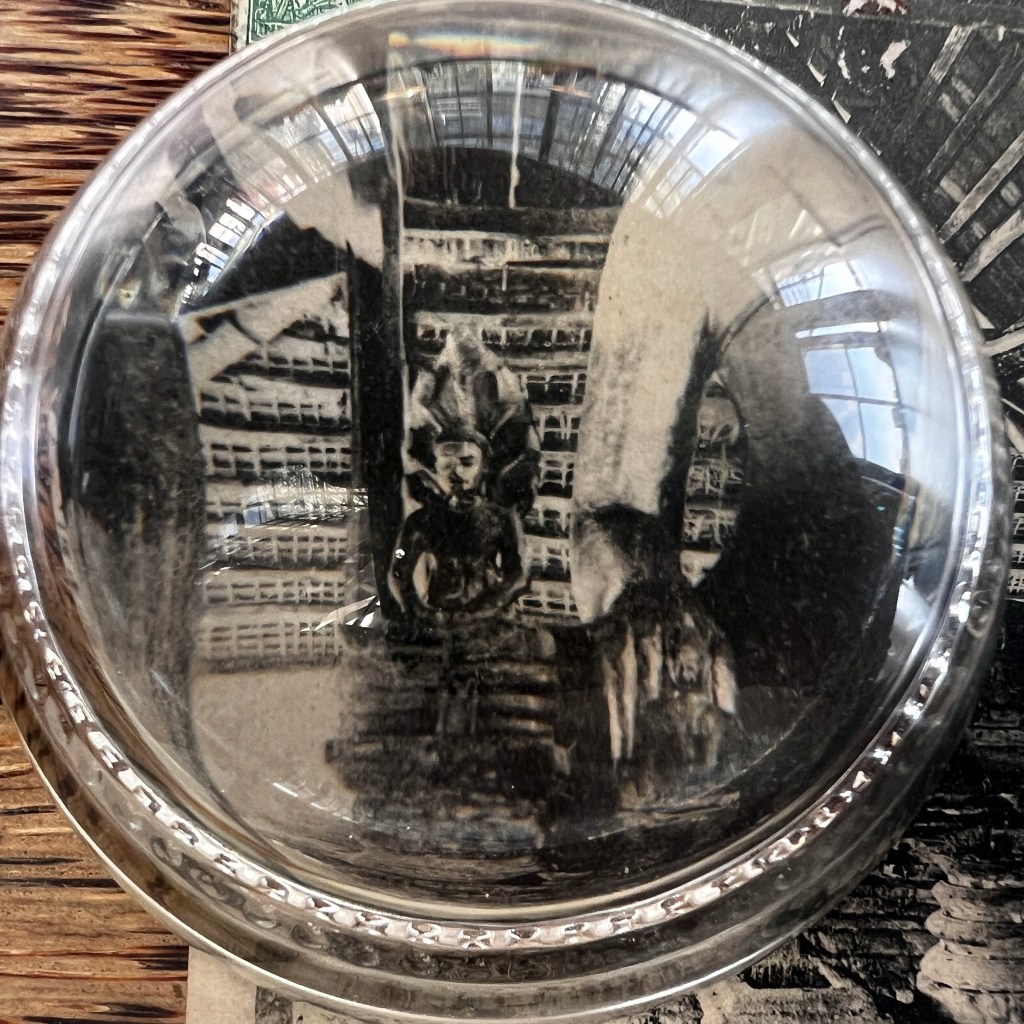
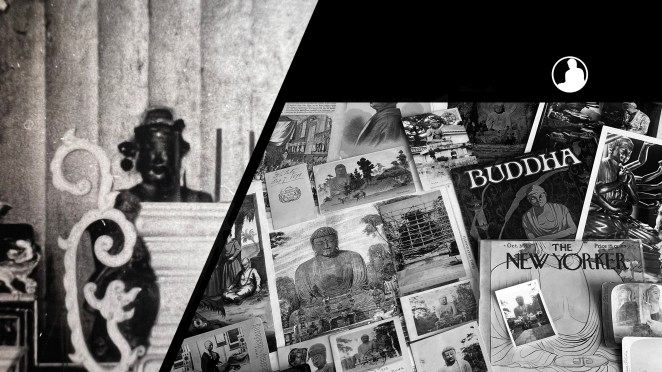
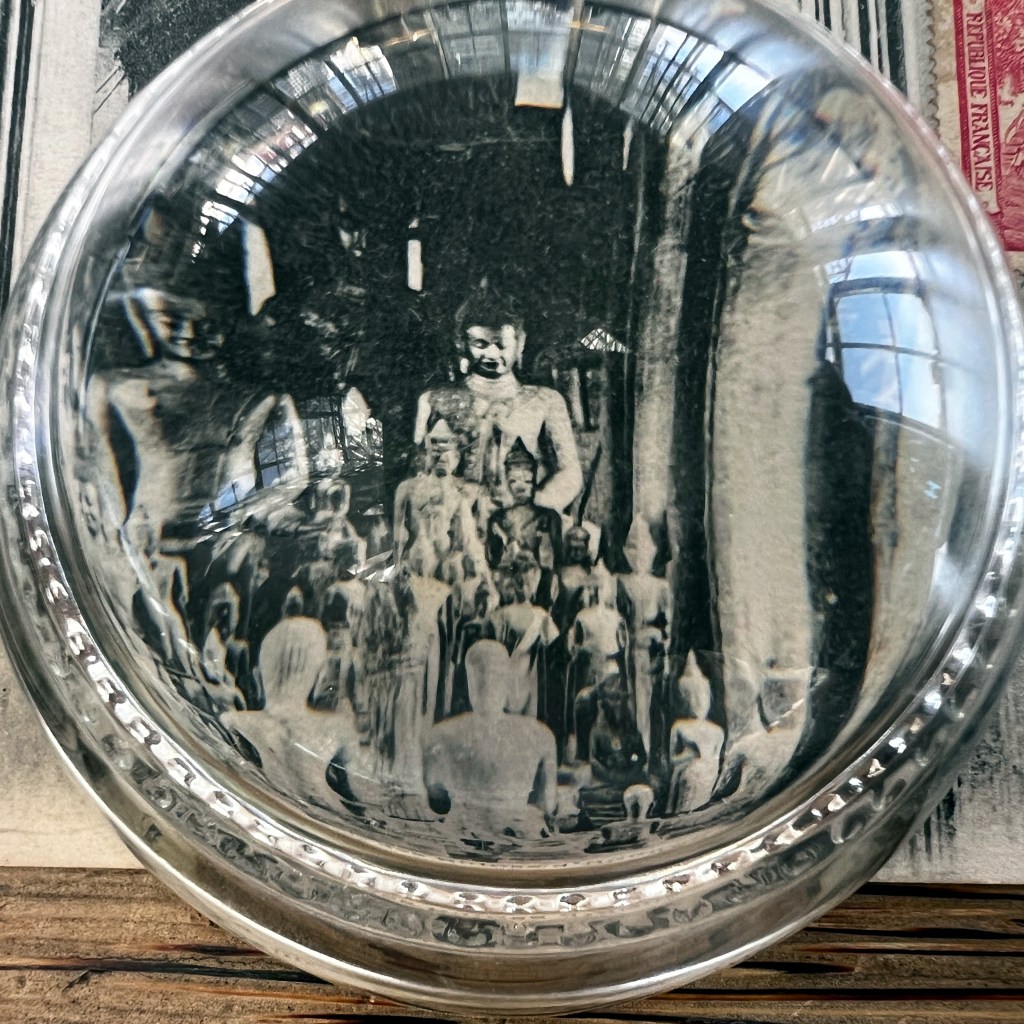
In addition to the large central Buddha statue, several other Buddhist icons are placed on the altar. I have been unable to identify which area of Angkor this photograph depicts.

The design on the back suggests this card was published in 1905 (the date 1906 is inscribed on the front). The front also bears the affixed stamp – this was typically done so the card could be placed in an album and still display the cancelled stamp.

It was likely postcards such as this were printed in Europe using the most up-to-date photo-mechanical printing techniques and then sent back to the colonial publishers for resale.


The Buddhas in the West Material Archive is a digital scholarship project that catalogues artifacts depicting Buddhist material culture for Western audiences. It’s comprised of prints, photos, and an assortment of ephemera and other objects. For a brief introduction to this archive, visit the main Buddhas in the West project page.


For Related Buddhas in the West Posts Featuring Gautama, the historical Buddha:


For the Most Recent Buddhas in the West Posts:
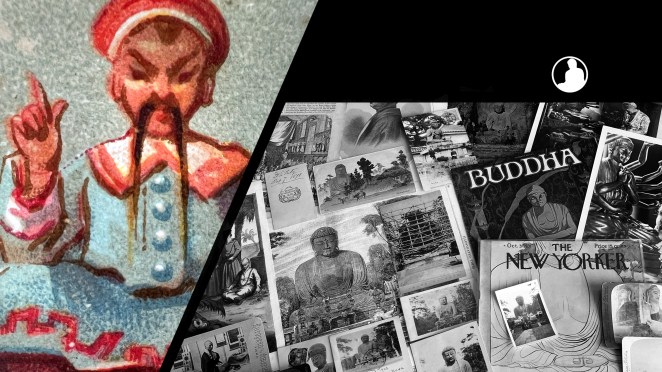

Pacific Curio Shop Niō Statue Postcard

For all the new Buddhas in the West posts
follow us on Bluesky & Instagram


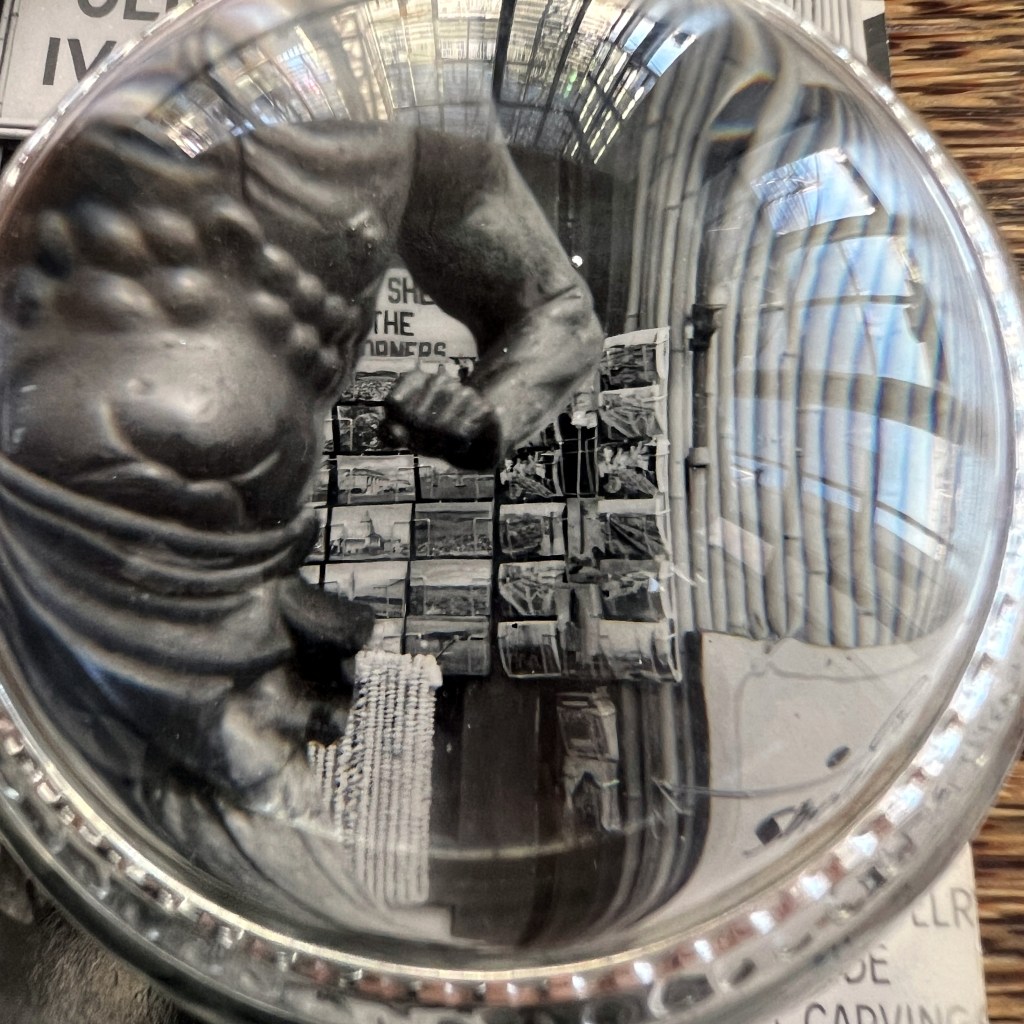
A pair of muscular, wrathful Niō, “Benevolent Kings,” often stand guard at the entrance to Japanese Buddhist temples. In the late 1950s, however, this Niō was stationed outside John Saxby’s Pacific Curio Shop on Fisherman’s Wharf in San Francisco.

Saxby was a WWI veteran and a Merchant Marine who became a well-respected amateur conchologist. In addition to offering a world-class shell exhibit, Saxby imported Japanese curios, a thriving market post-WWII.

Strands of shells and postcards can also be seen for sale.

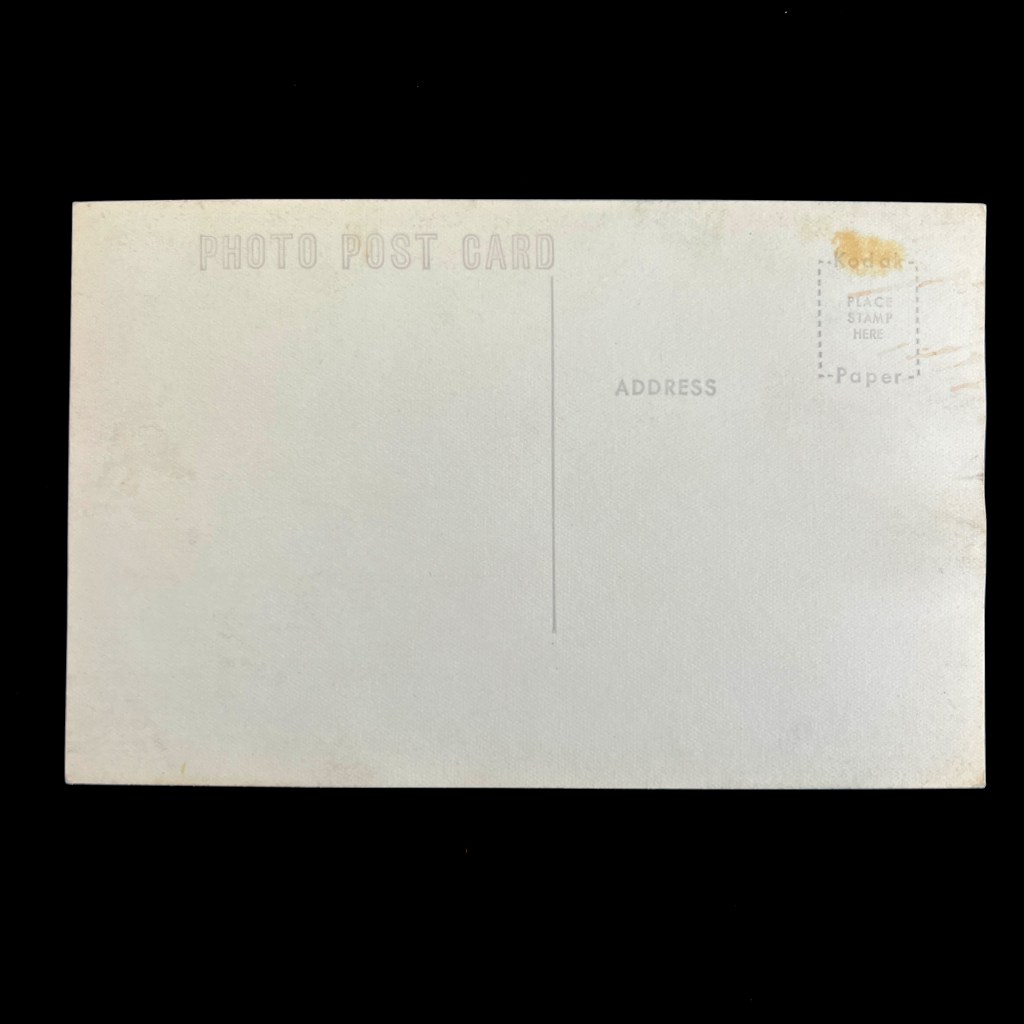
The shop’s “Temple Guardian” was apparently important enough to warrant its own postcard. The “Kodak Paper” stamp box dates this card to after 1950.

The icon’s closed mouth identifies this guardian as Ungyō; I am unsure of where this statue originated. A photo of Saxby inspecting another imported icon can be found at the San Francisco Public Library: https://digitalsf.org/islandora/object/islandora:137138


The Buddhas in the West Material Archive is a digital scholarship project that catalogues artifacts depicting Buddhist material culture for Western audiences. It’s comprised of prints, photos, and an assortment of ephemera and other objects. For a brief introduction to this archive, visit the main Buddhas in the West project page.


For Related Buddhas in the West Posts Featuring San Francisco:


For the Most Recent Buddhas in the West Posts:

Pierre Dieulefils’ Tārā Postcard

For all the new Buddhas in the West posts
follow us on Bluesky & Instagram


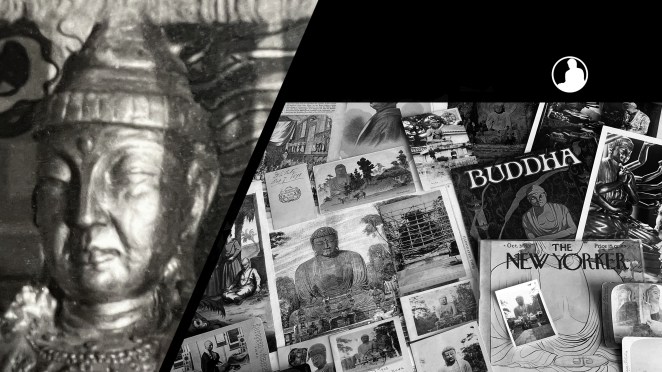
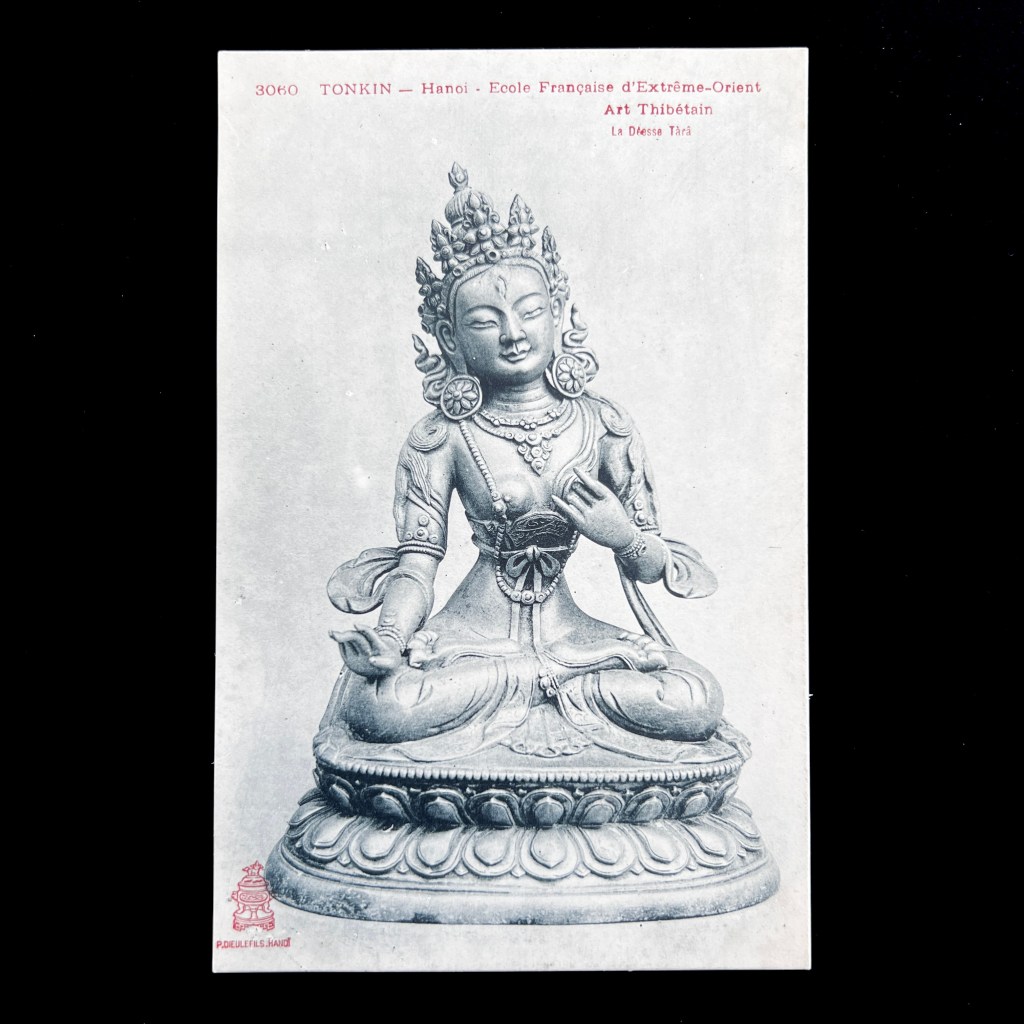
The École Française d’Extrême-Orient was founded at the turn of the 20th century in Hanoi in what was then French Indochina. Around 1905 Pierre Dieulefils appears to have taken photographs of the institution’s nascent collection of Buddhist statuary.

The date of 1905 is derived from the presumed publication date of Dieulefils “red series” postcards. Dieulefils’ studio was also in Hanoi and he worked closely with the French institution photographing Angkor Wat.

The red letterpress caption at the top of the card identifies the icon as the Goddess Tārā. I have been unable to determine who has possession of the statue today.

Dieulefils built a thriving postcard business upon the desires of French officers to send picture souvenirs home to France.

Since 1958 the old archaeological research institution of the École Française d’Extrême-Orient in Hanoi has operated as the Vietnam National Museum of History. The museum’s website can be found here: https://baotanglichsu.vn/vi


The Buddhas in the West Material Archive is a digital scholarship project that catalogues artifacts depicting Buddhist material culture for Western audiences. It’s comprised of prints, photos, and an assortment of ephemera and other objects. For a brief introduction to this archive, visit the main Buddhas in the West project page.


For Related Buddhas in the West Posts Featuring Guanyin / Avalokitésvara:


For the Most Recent Buddhas in the West Posts:

D.A. Ahuja’s Buddhist Priest Portrait Postcard

For all the new Buddhas in the West posts
follow us on Bluesky & Instagram


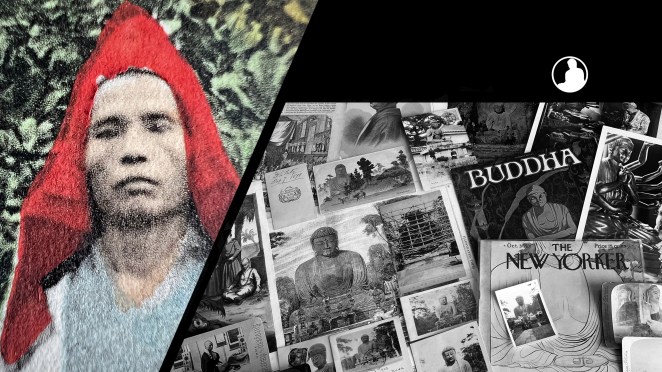
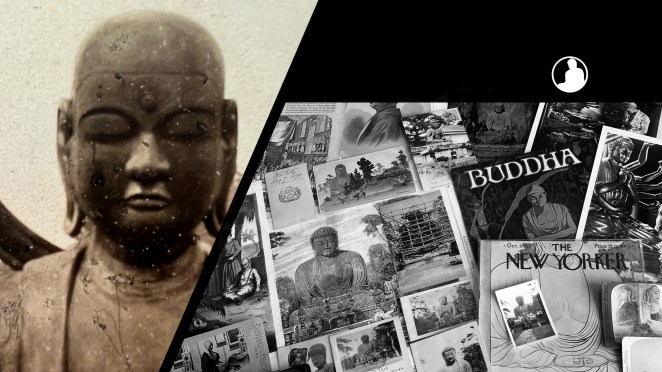
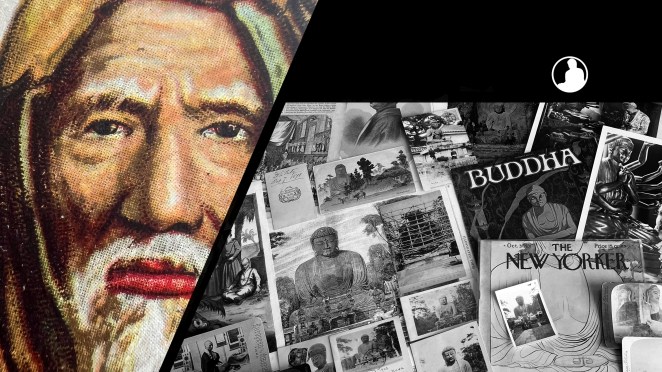
At the turn of the twentieth century, photographer D. A. Ahuja was integral in creating a visual canon of British colonial Burma. His picture postcards were among the most reprinted images of the era, including this portrait of an unnamed “Burmese priest.”

The image was made by a lithographic-halftone hybrid process, whereby a black halftone screen was applied on top of a multi-color lithographic substrate. The “divided back” design suggests Ahuja printed this card around 1910.

Burmese pagodas and monks were common enough to warrant claiming they constituted their own visual genre of “Burmese religious life.” The colorist here inaccurately represented the monk’s robes, combining the two most common colorways – saffron and maroon – into one.

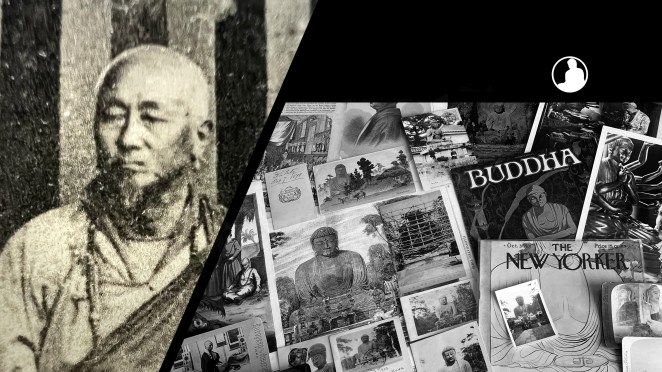
Somewhat unique to his oeuvre, Ahuja photographs his subject in formal portraiture, sitting in an ornate wooden chair on top of carpet. Holding a Buddhist mala, the elderly monk poses, without facial expression, for the camera.

Was he a highly regarded monk – as his portraiture might suggest? A collection of Burmese postcards has recently been digitized by Stanford University, available here: https://exhibits.stanford.edu/missionarypostcards


The Buddhas in the West Material Archive is a digital scholarship project that catalogues artifacts depicting Buddhist material culture for Western audiences. It’s comprised of prints, photos, and an assortment of ephemera and other objects. For a brief introduction to this archive, visit the main Buddhas in the West project page.


For Related Buddhas in the West Posts Featuring Buddhist Monastics:


For the Most Recent Buddhas in the West Posts:

George Planté’s Hall of a Thousand Buddhas Postcard

For all the new Buddhas in the West posts
follow us on Bluesky & Instagram


George Planté came to Vietnam as a member of the colonial French government, but by 1893 had turned to photography and opened a studio in Saigon. He soon recognized the desire for postcards among the overseas French military and was selling the inexpensive souvenirs by 1905.

The undivided back design of this French card suggests it was published in 1905 or before. Around this time, Planté seems to have acquired the old stock of Aurélien Pestel, thus the photograph on the front may have been taken by Pestel.

The caption gives the location as Angkor Wat, but this is the interior of the Preah Poan, known commonly as the Hall of a Thousand Buddhas. The presence of the Buddhist statues clearly shows how the original temple devoted to Viṣṇu was taken over by Buddhists.

The statues that once filled the open cruciform hall have all been removed in the course of restoration and preservation.

Photographs from the turn of the century capture how the hall once looked filled with Buddhist icons. Google Arts & Culture has a 360-degree view of the hall today, see here: https://tinyurl.com/yckkbumz


The Buddhas in the West Material Archive is a digital scholarship project that catalogues artifacts depicting Buddhist material culture for Western audiences. It’s comprised of prints, photos, and an assortment of ephemera and other objects. For a brief introduction to this archive, visit the main Buddhas in the West project page.


For Related Buddhas in the West Posts Featuring Angkor Wat:


For the Most Recent Buddhas in the West Posts:

Hyōgo Daibutsu at Kobe F.S. Postcard

For all the new Buddhas in the West posts
follow us on Bluesky & Instagram


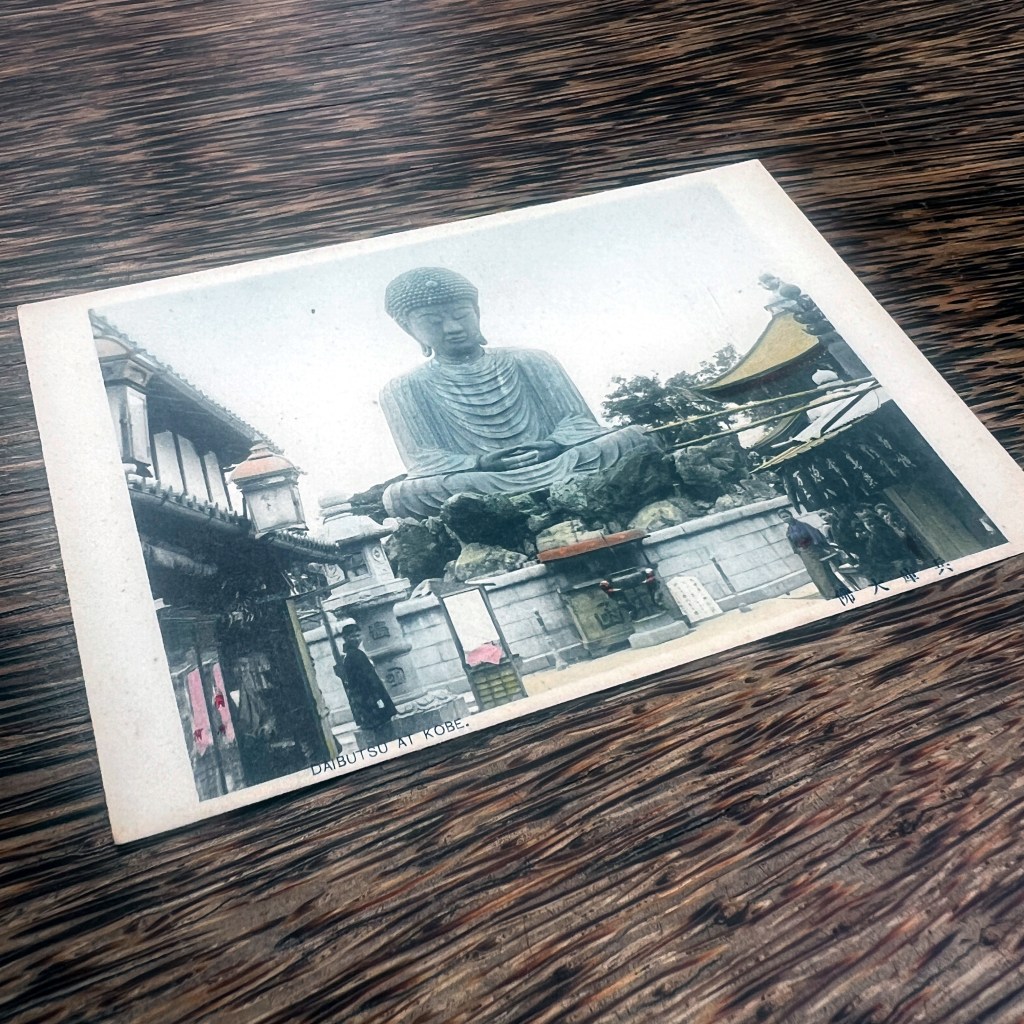
The original Hyōgo Daibutsu at Nōfuku-ji was the third largest Buddhist statue in Japan. It was dismantled by the Ordinance on the Collection of Metals issued in 1941 as part of Japanese war efforts during WWII.

Located in the port city of Kobe, the Daibutsu was approximately 12 meters in height. It became a popular tourist destination at the end of the 19th century, thus many photographs and postcards remain of the now lost icon.

This “undivided back” design informs us the postcard was printed before 1907. The “F.S.” in the stamp box refers to the publisher’s name (which I haven’t identified).

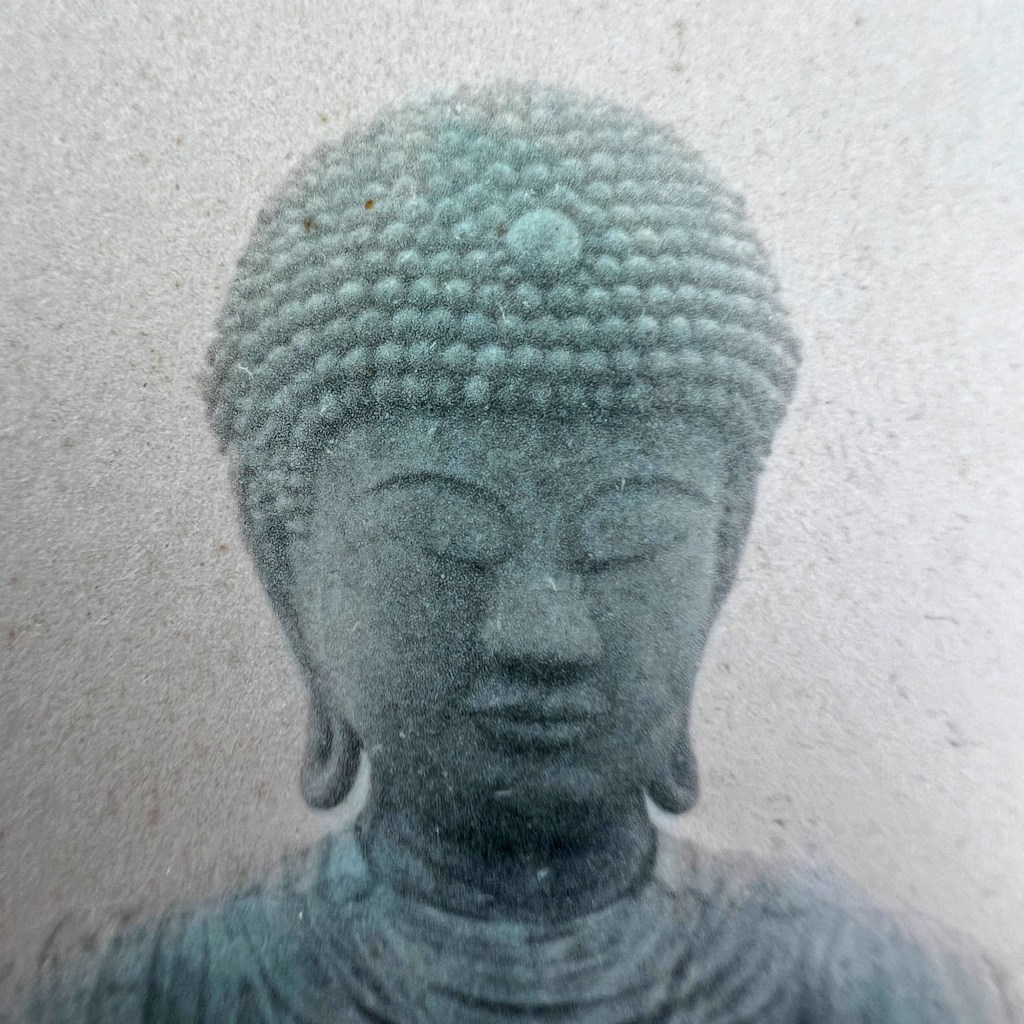
Many Japanese postcards of this period were hand-colored collotype prints. You can see the red ink splotches the colorist used to suggest design elements.

An albumen print photograph by Kusakabe Kinbei is held by the Nagasaki University Library, viewable here: http://oldphoto.lb.nagasaki-u.ac.jp/zoom/jp/record.php?id=1044


The Buddhas in the West Material Archive is a digital scholarship project that catalogues artifacts depicting Buddhist material culture for Western audiences. It’s comprised of prints, photos, and an assortment of ephemera and other objects. For a brief introduction to this archive, visit the main Buddhas in the West project page.


For Related Buddhas in the West Posts Featuring Postcards:


For the Most Recent Buddhas in the West Posts:

Fritz Müller’s Tin How Temple Postcard

For all the new Buddhas in the West posts
follow us on Bluesky & Instagram


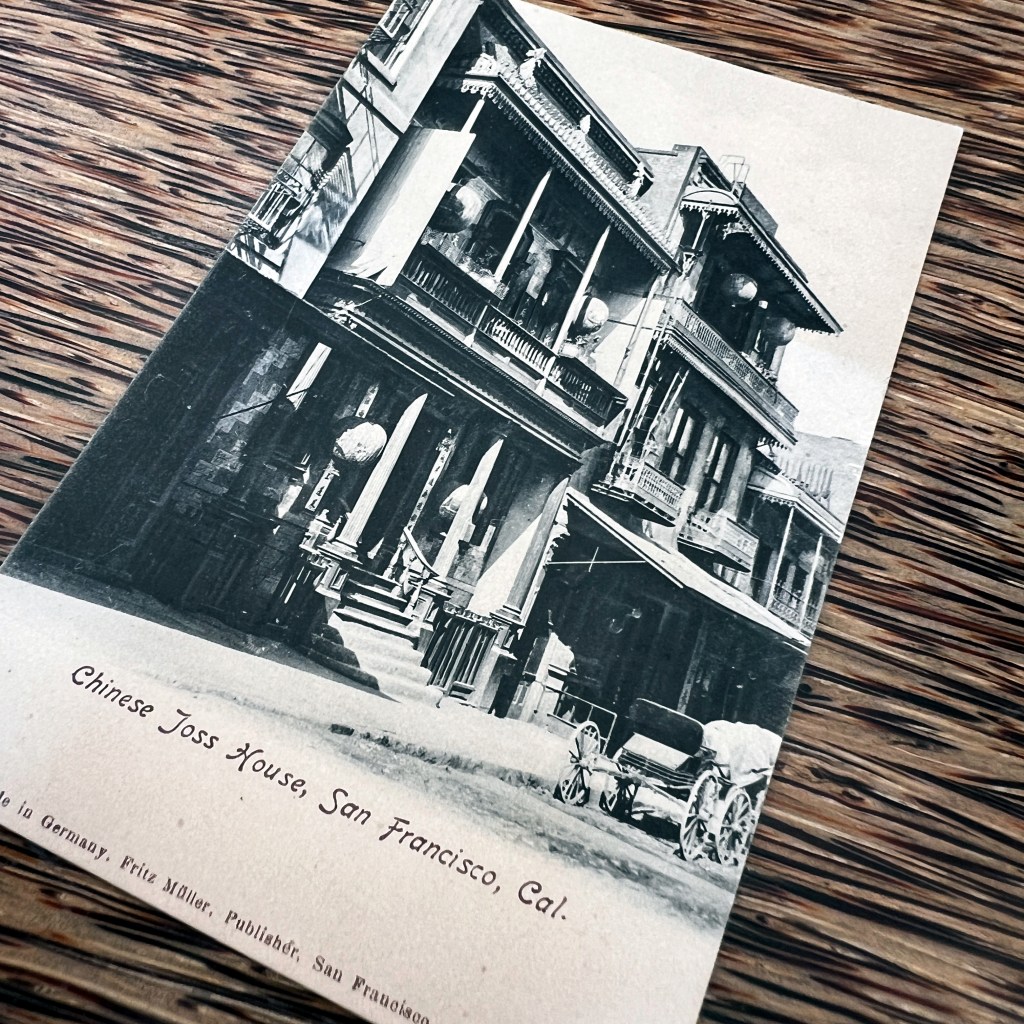
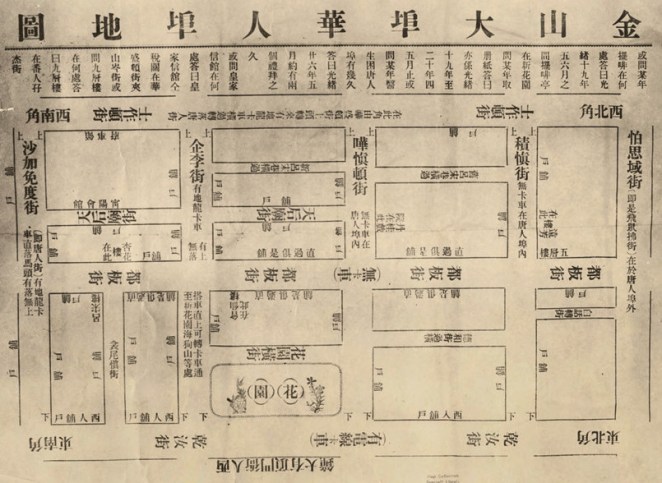
Chinatown’s Iconic Joss House: We lack a rich photographic history of the religious life of San Francisco’s Chinatown before the 1906 earthquake. Of the photos we have, this Chinese temple on Waverly Place is arguably the most iconic – the Tin How Temple.

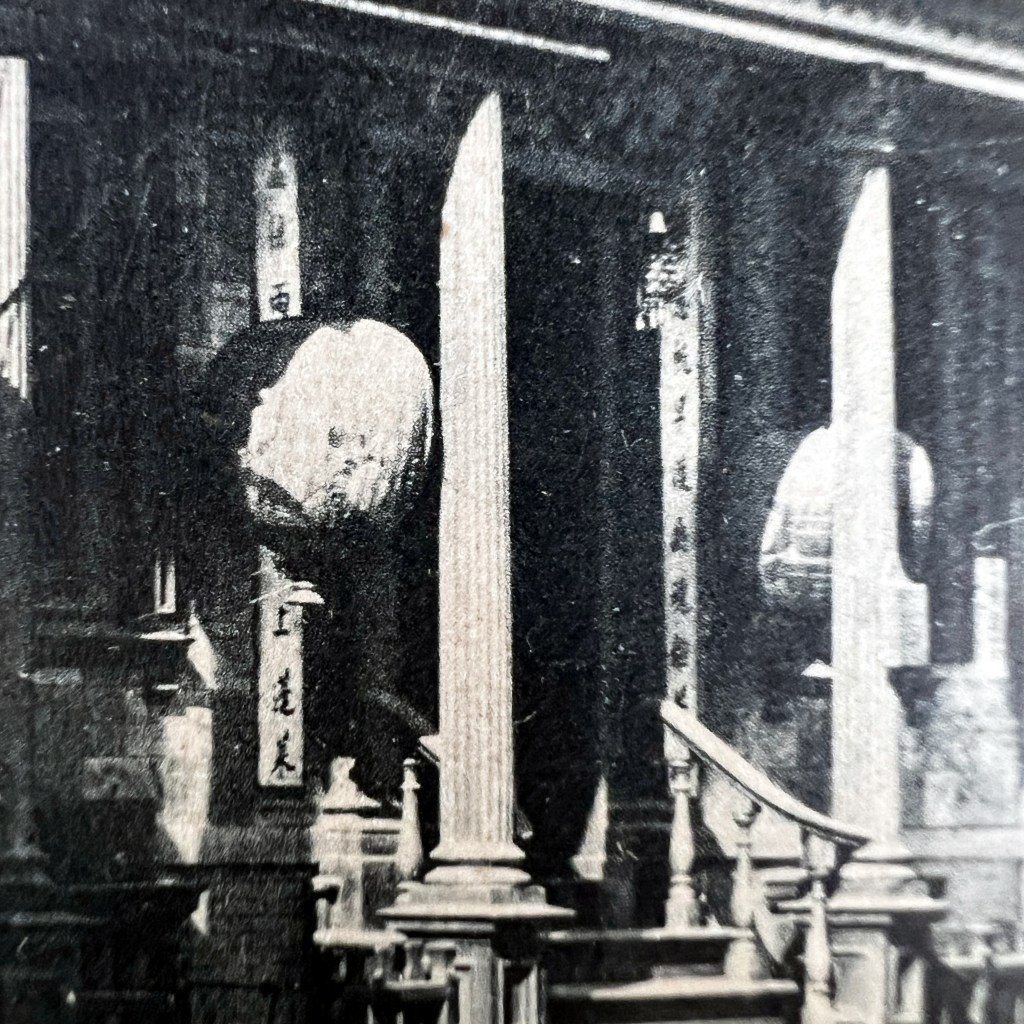
The goddess Tin How, otherwise known as Mazu, is known for her devoted protection of sailors and close association with early southern Chinese immigrants who came to the US. A close inspection of the second floor reveals her name, Tin How 天后, on plaques beside the doorway.

For a time, different temple shrines occupied the second and third floors of the adjacent building. One shrine was dedicated to the Emperor of the North, Beidi 北帝, who was an old stellar deity popular in the Pearl Delta Region.

Due to the design on the back we know this post card was issued before 1907. The front informs the San Francisco publisher Fritz Müller had the cards printed in Germany, a common occurrence at the time.

For an insightful commentary on how to conceptualize traditional Chinese religion through Mazu worship, see Natasha’s Heller’s “Using Mazu to Teach Key Elements of Chinese Religions” available here: https://tinyurl.com/48smwjx2.


The Buddhas in the West Material Archive is a digital scholarship project that catalogues artifacts depicting Buddhist material culture for Western audiences. It’s comprised of prints, photos, and an assortment of ephemera and other objects. For a brief introduction to this archive, visit the main Buddhas in the West project page.


For Related Buddhas in the West Posts Featuring Chinatown:


For the Most Recent Buddhas in the West Posts: