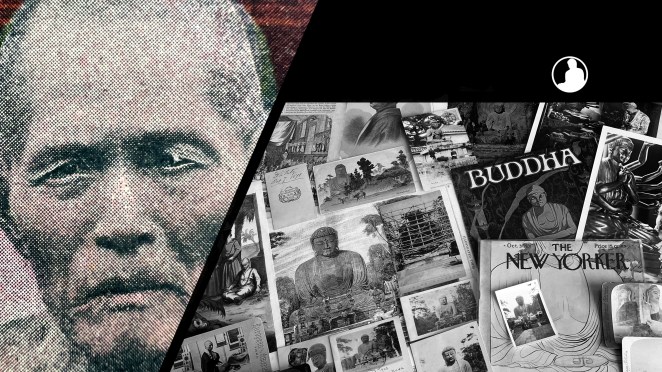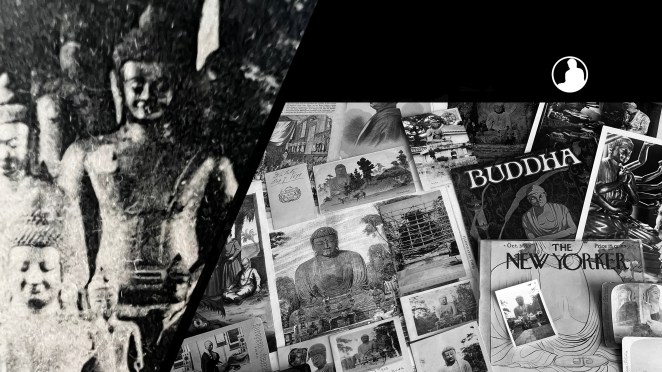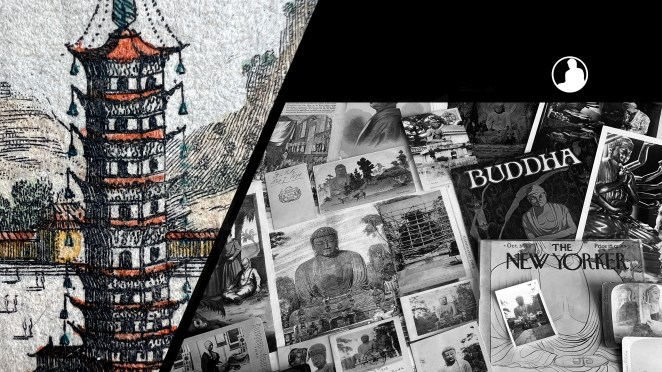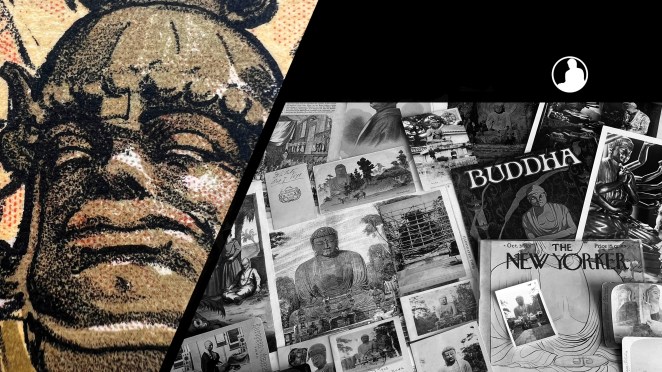
Tōdai-ji’s Heavenly King Bishamonten Postcard

For all the new Buddhas in the West posts
follow us on Bluesky & Instagram


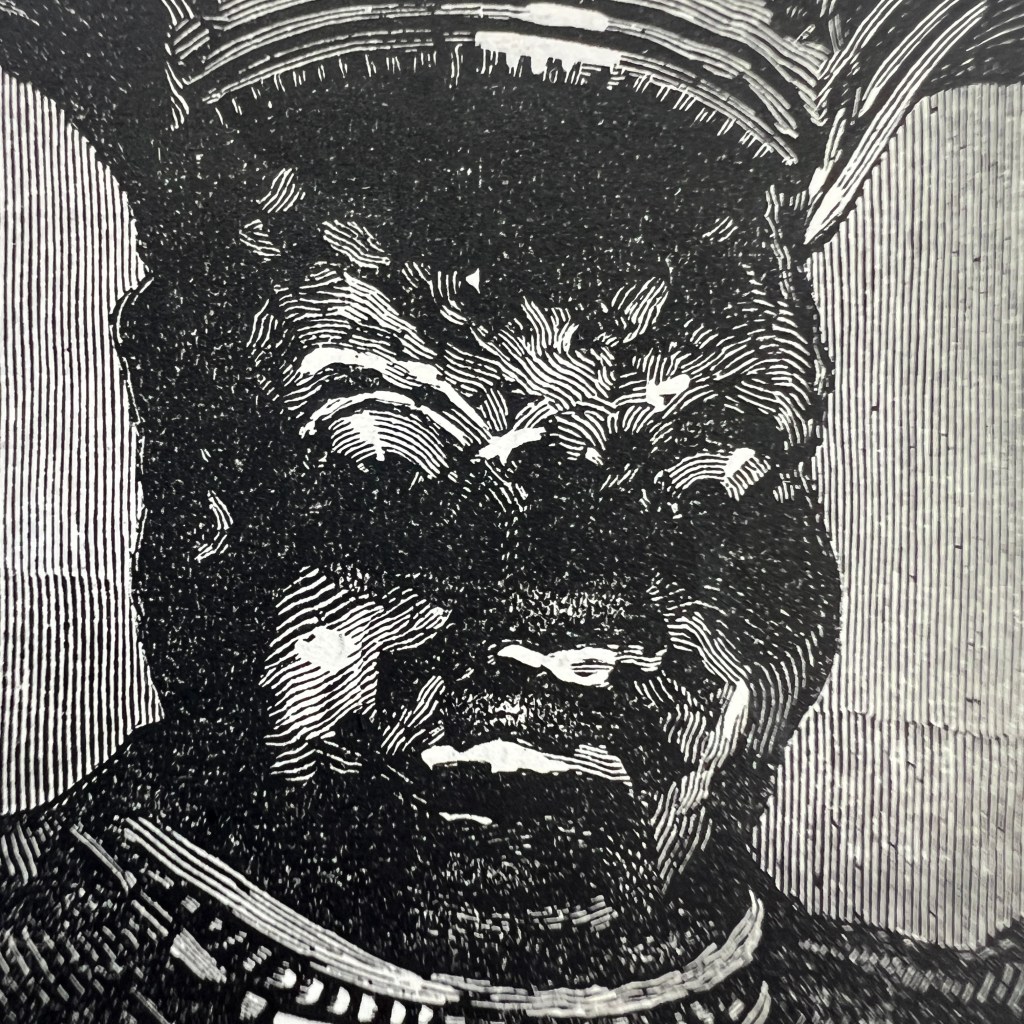
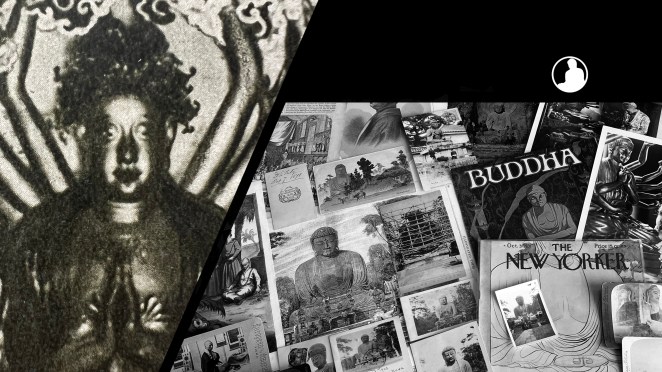
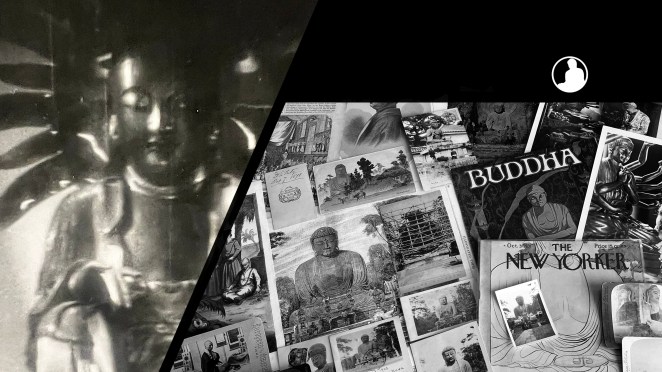
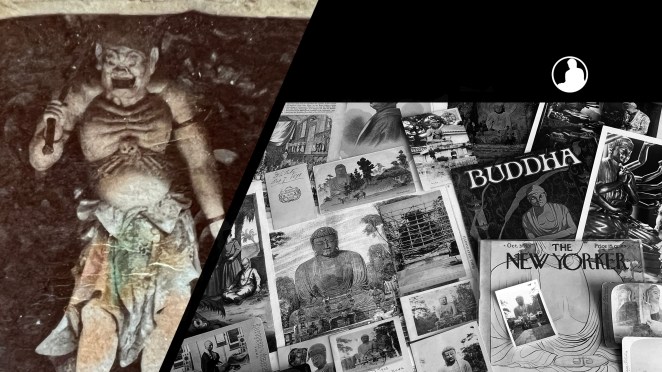
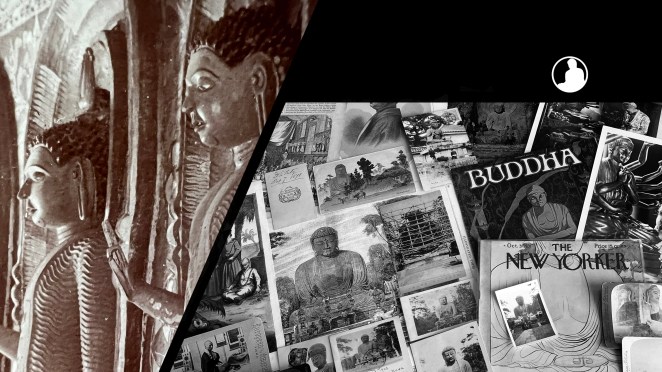
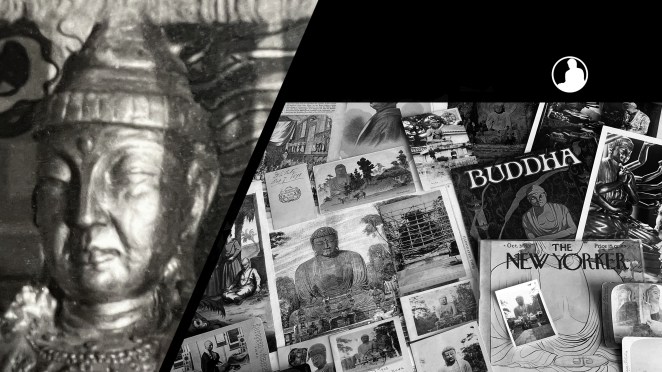
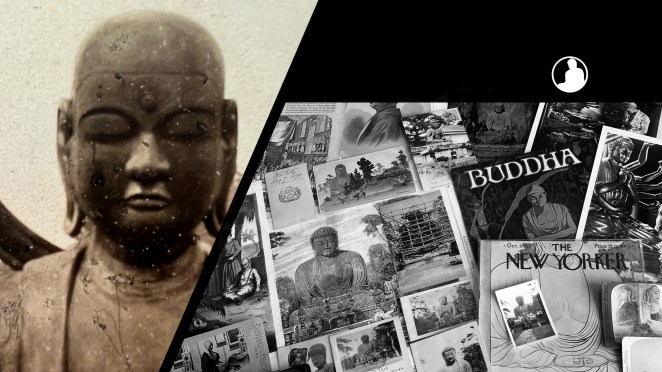
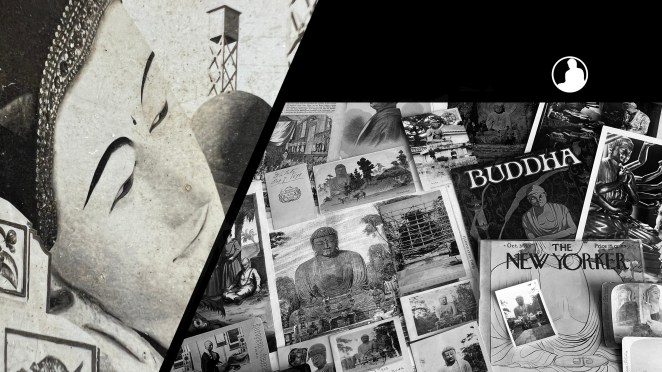
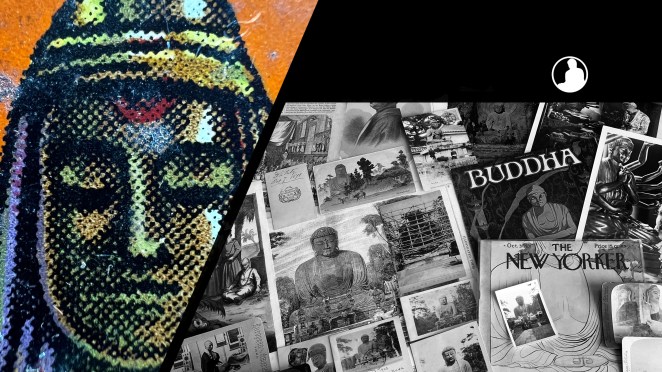
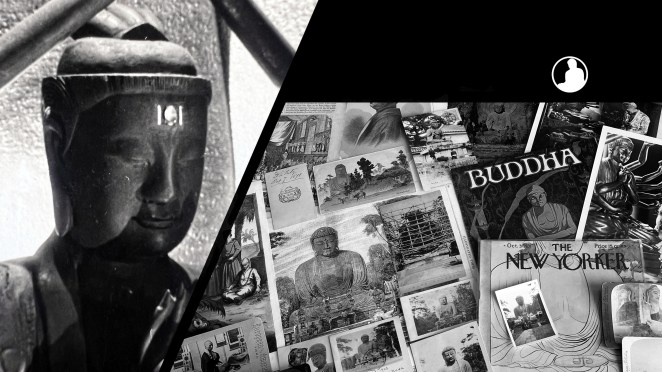
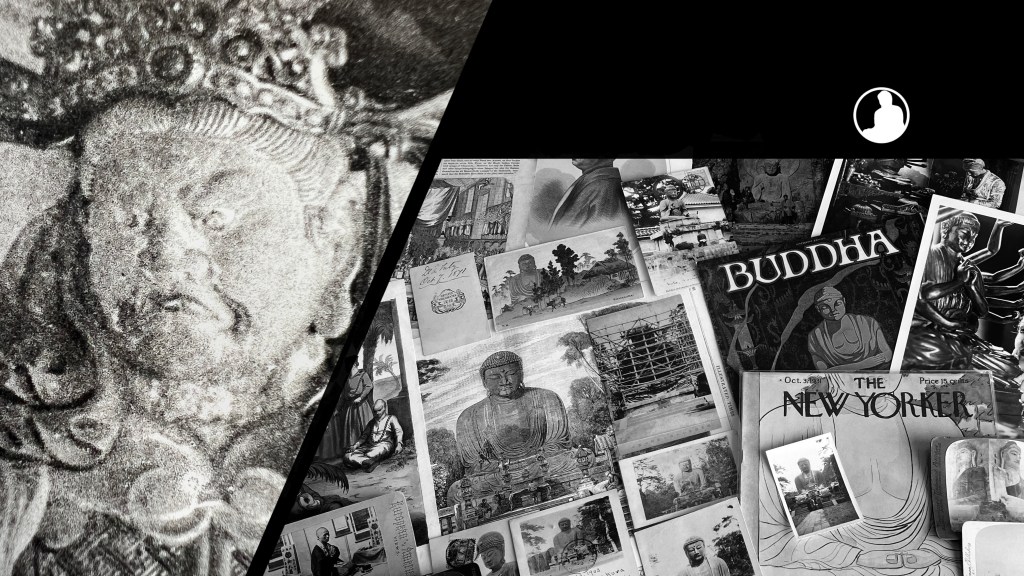
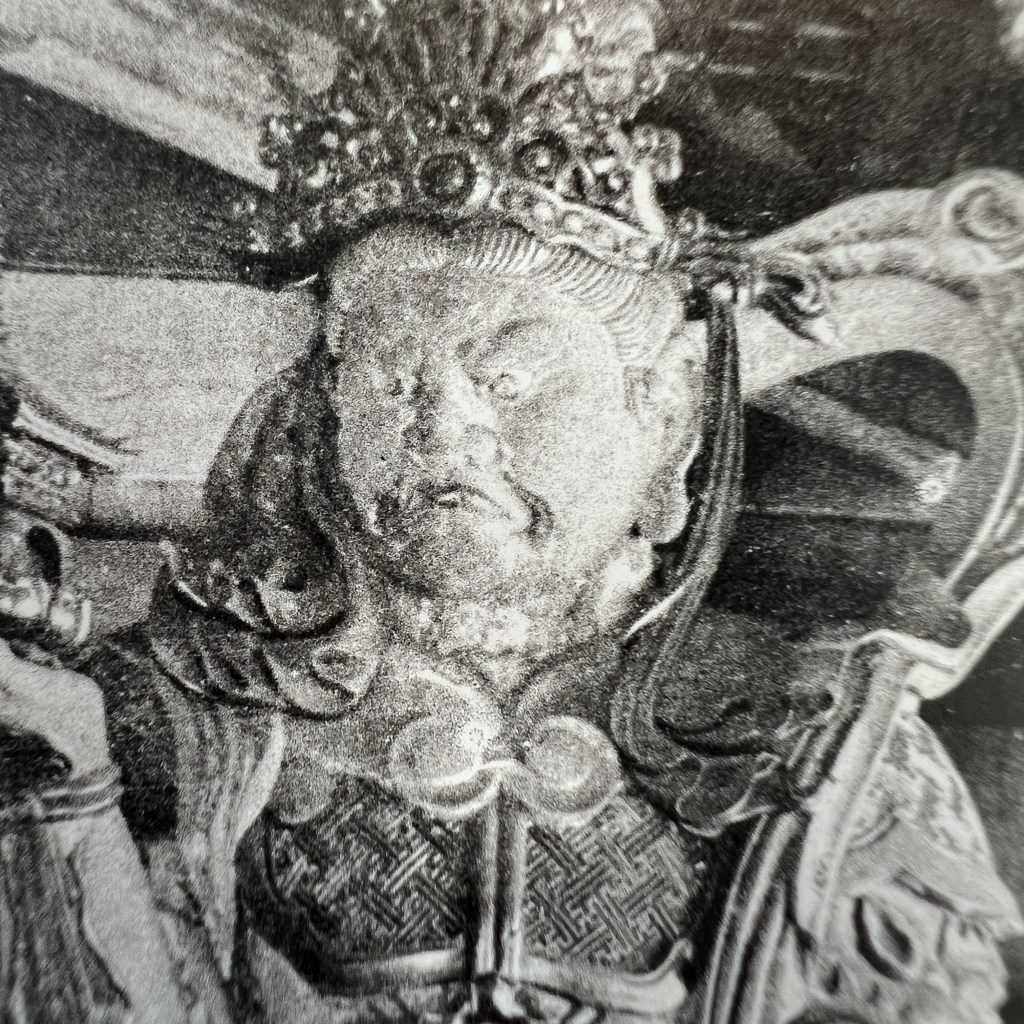
Hidden among the treasures of Nara’s Tōdai-ji stands a fierce guardian: Bishamonten, the Heavenly King of the North. Clad in armor with eyes blazing, this towering 4.2-meter cypress statue exemplifies the remarkable craftsmanship of thirteenth-century Japanese Buddhist sculpture.
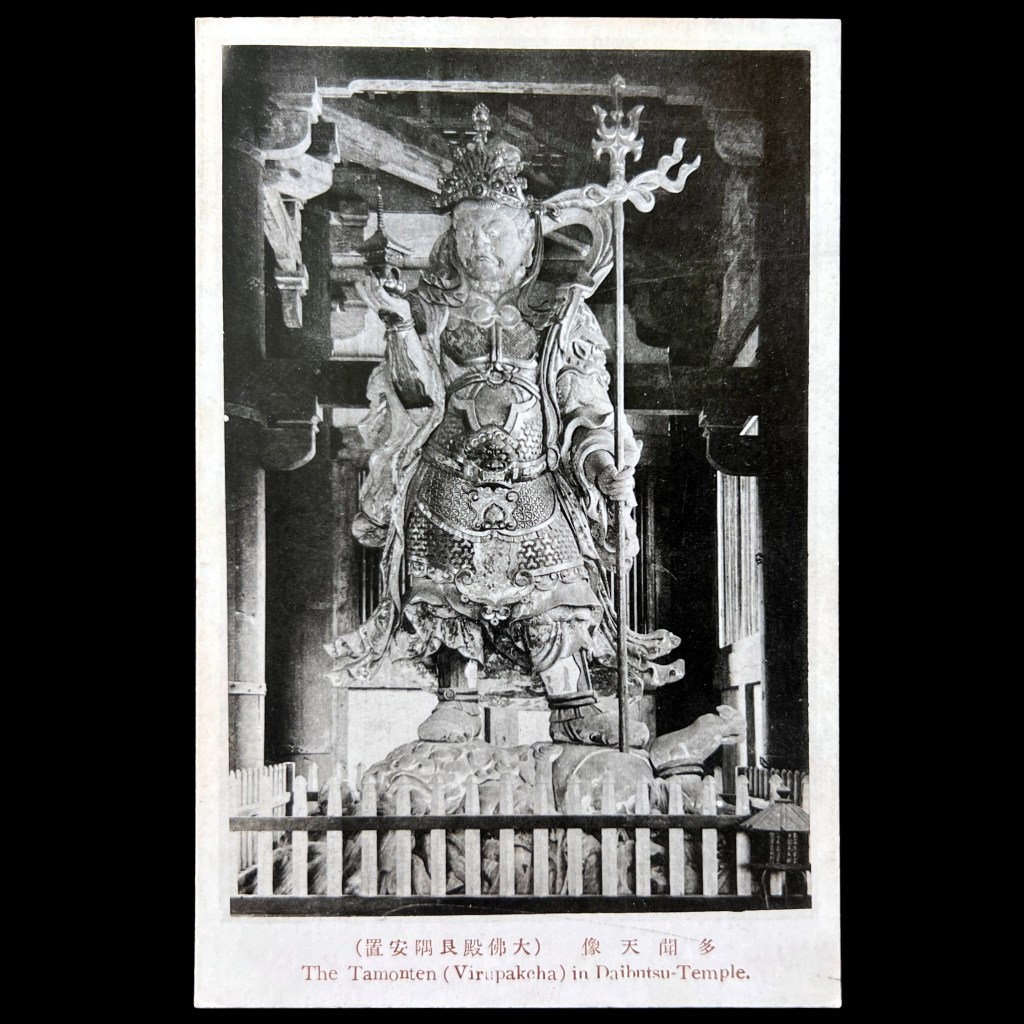
Bishamonten, adapted from the Indian deity Vaiśravaṇa, is foremost a “demon subduer who subjugates maleficent entities,” and by extension serves as a protector of the Buddhist teachings and of the rulers who uphold them. In Japan, he also came to be revered as a patron deity of warriors.
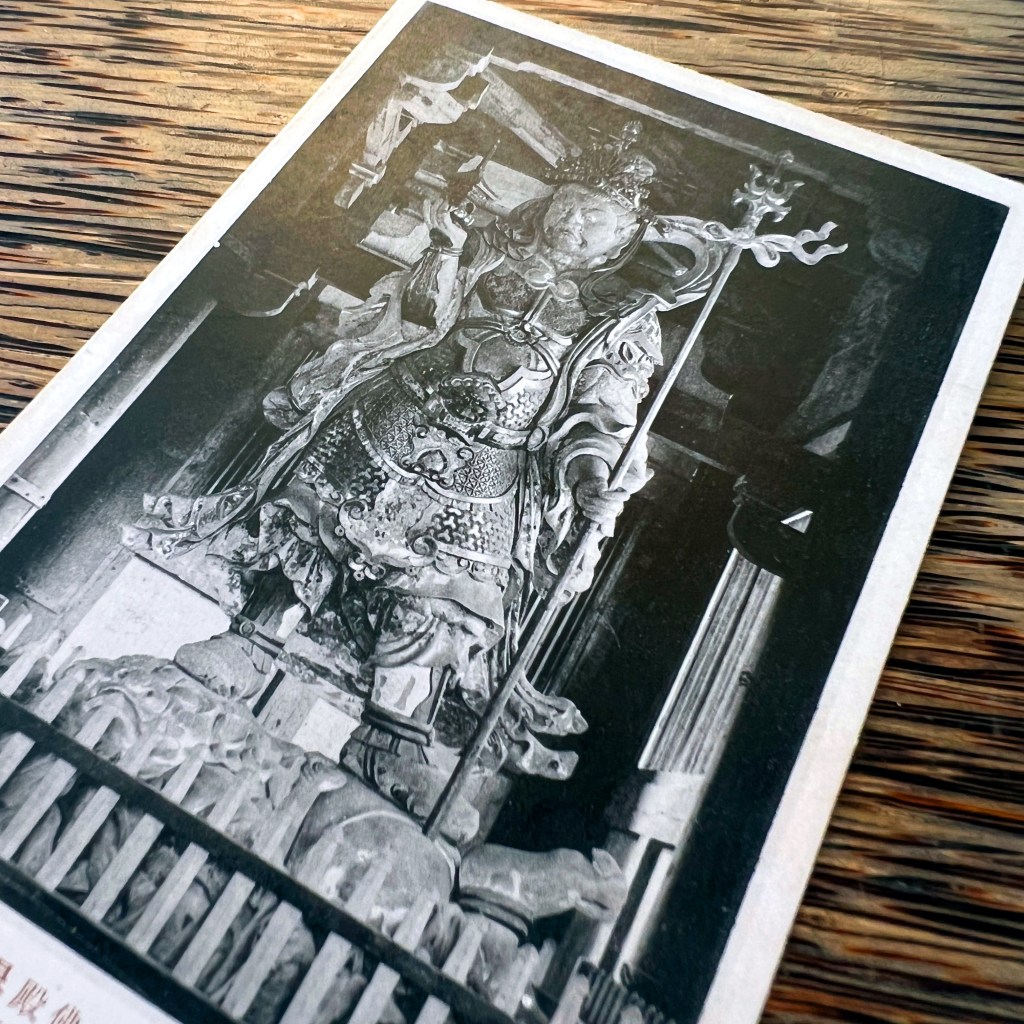
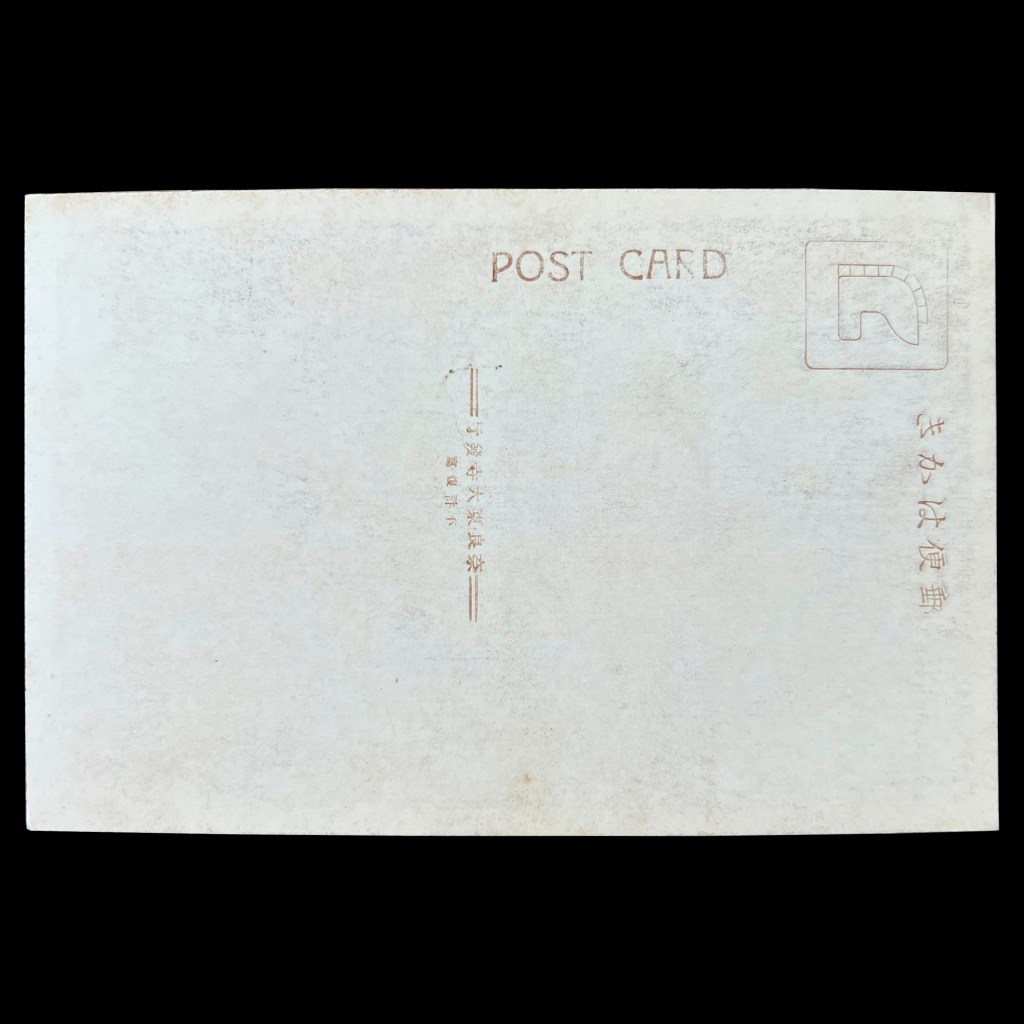
This postcard was published by Tōdai-ji, the historically powerful temple complex in the ancient capital of Nara. It was likely issued as part of a souvenir set in the late 1930s. The small emblem in the stamp box depicts the great fish-shaped roof ornament crowning the temple’s main hall.
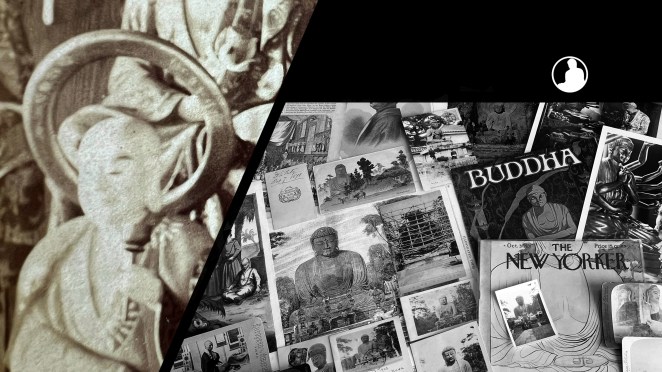
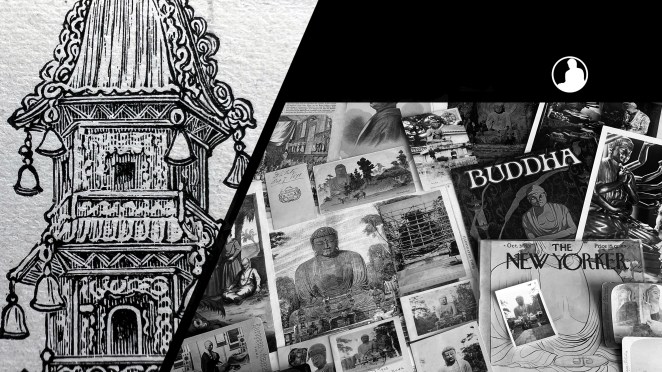
In his hand Bishamonten holds a miniature pagoda, a reliquary associated with the relics of the Buddha. The object underscores his role as a guardian of the Buddhist teachings, while also reflecting his parallel identity as a protector of treasure and bestower of prosperity.
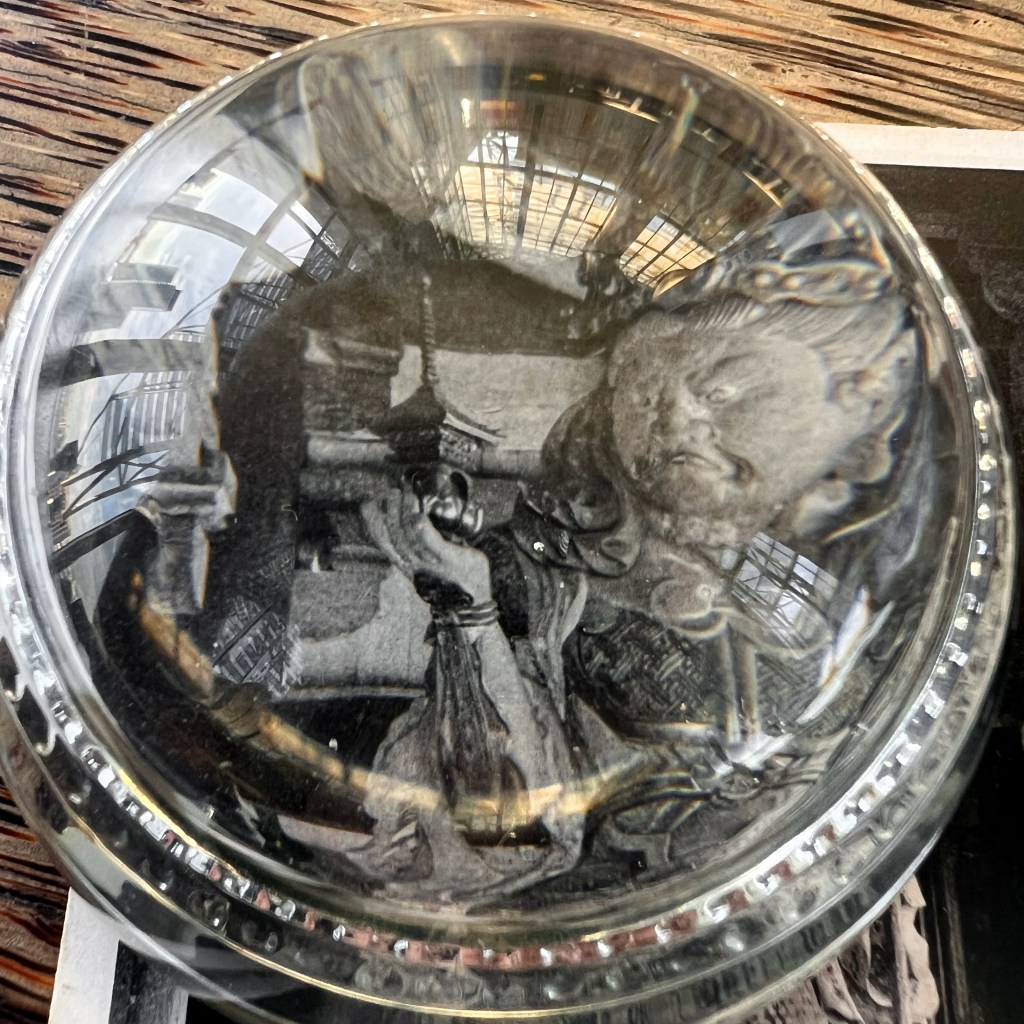
For this reason, Bishamonten is also venerated as one of Japan’s Seven Gods of Good Fortune. For more on the many roles of Bishamonten, see Bernard Faure, Gods of Medieval Japan: Protectors and Predators (2015).
The Buddhas in the West Material Archive is a digital scholarship project that catalogues artifacts depicting Buddhist material culture for Western audiences. It’s comprised of prints, photos, and an assortment of ephemera and other objects. For a brief introduction to this archive, visit the main Buddhas in the West project page.


For Related Buddhas in the West Posts Featuring Nara:

For the Most Recent Buddhas in the West Posts:
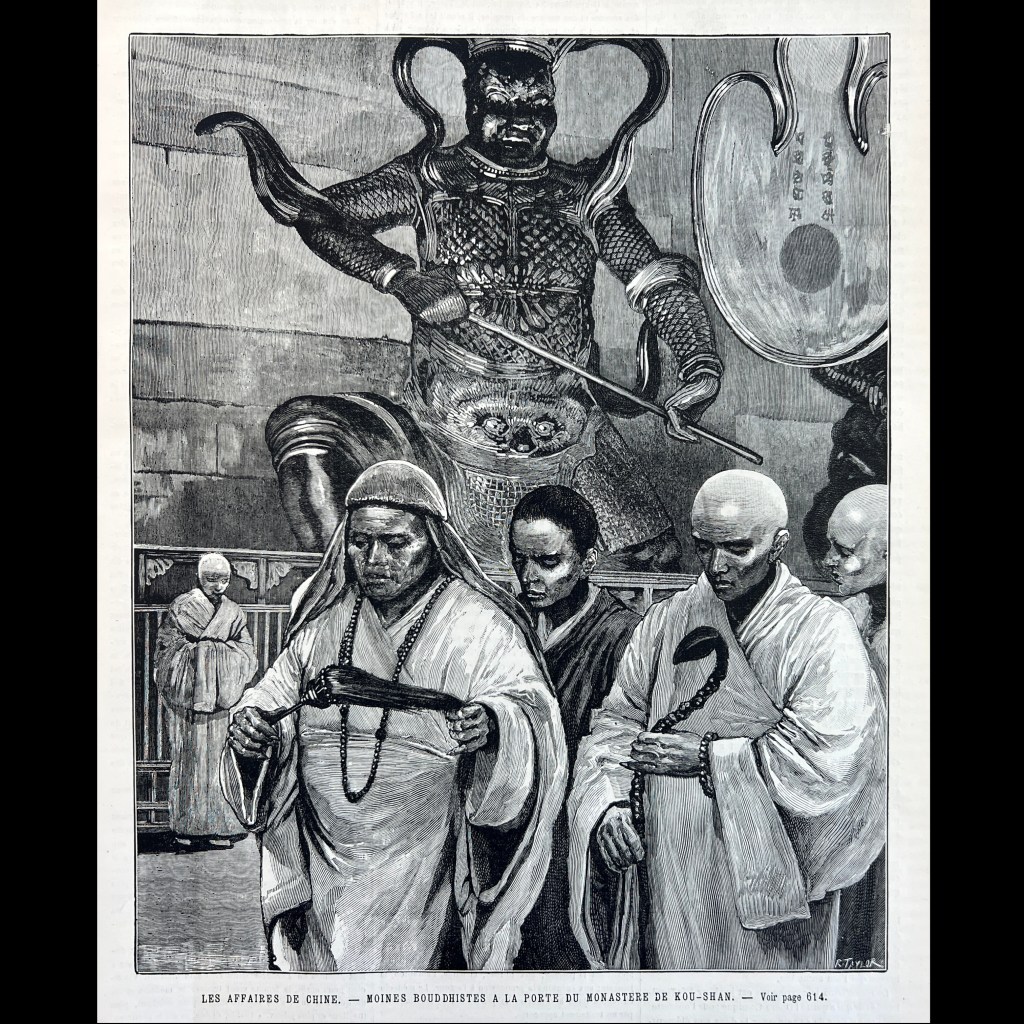
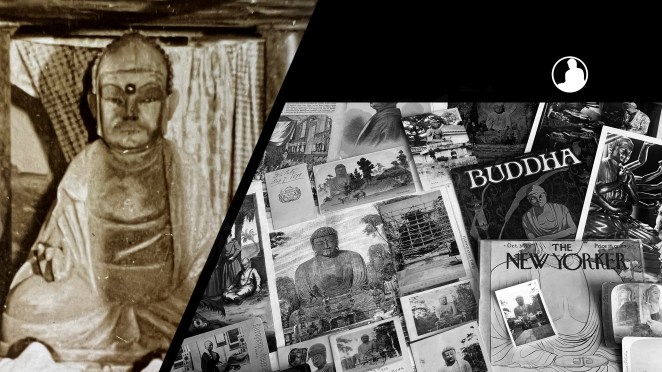
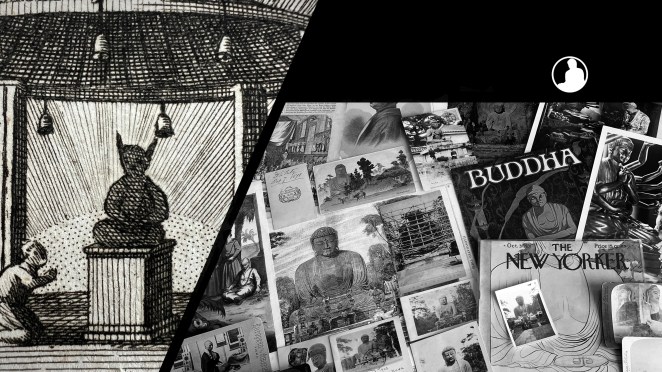
Engraving of John Thomson’s Photograph of Gushan’s Monks

For all the new Buddhas in the West posts
follow us on Bluesky & Instagram


After Fuzhou opened to foreign trade in 1842, missionaries, merchants, and travelers began climbing the stone stairway to Gushan. The dramatic setting with temple roofs rising from forested slopes above the Min River plain made it irresistible to photographers and travel writers.

Set on the peaks of Gushan, Yongquan Monastery was a large complex with many monks and thus drew considerable attention from foreigners. The temple was relatively close to the city center of Fuzhou, making excursions into the mountains feasible for many.

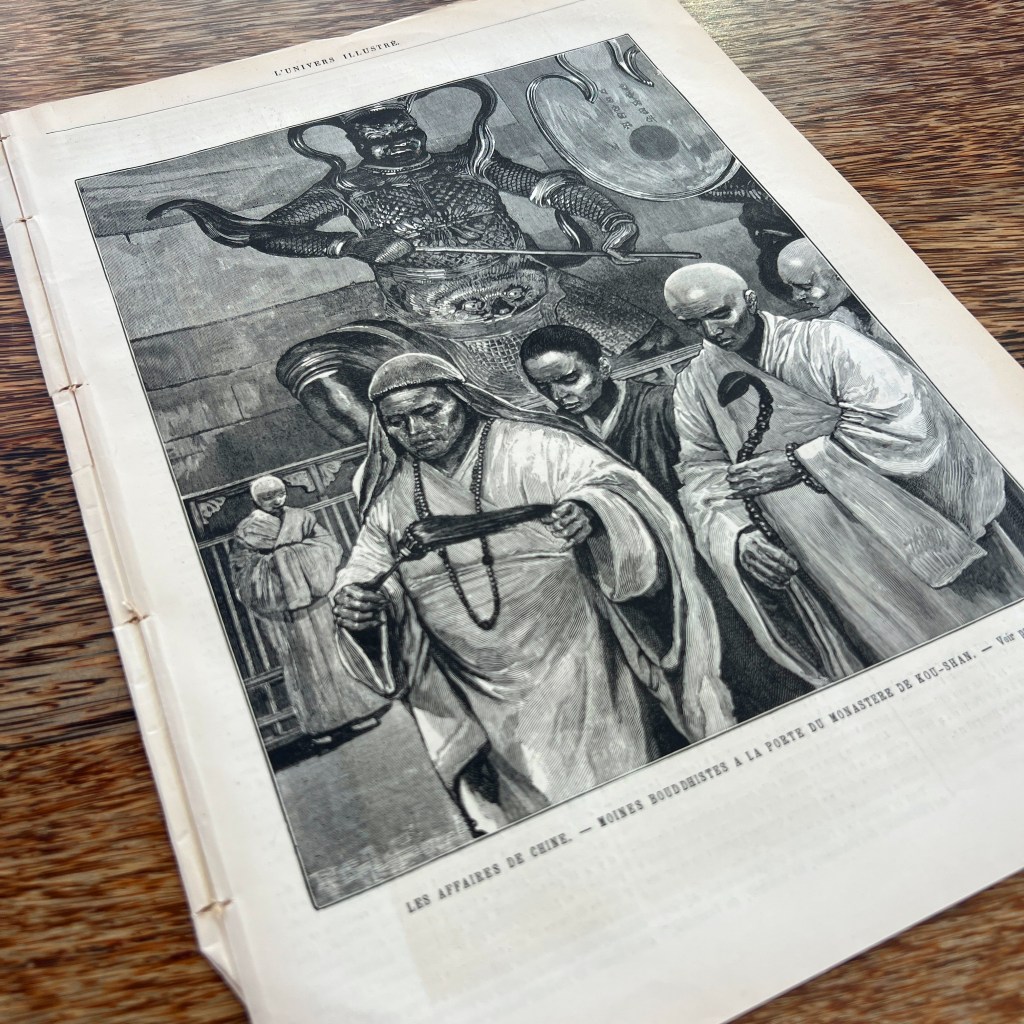
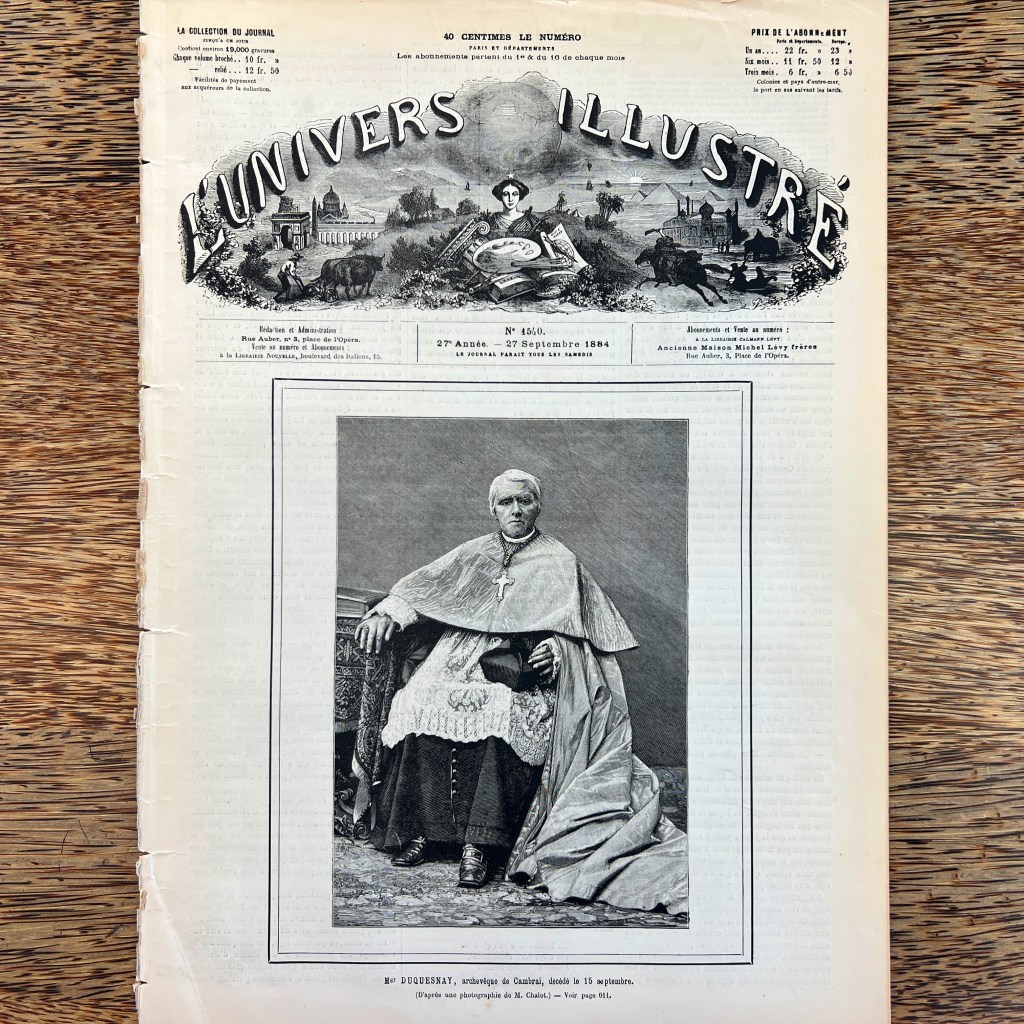
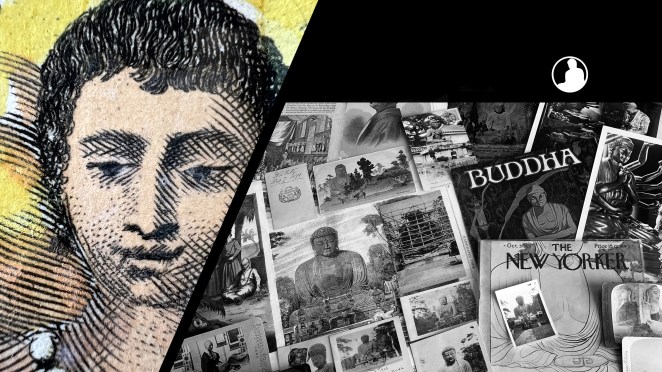
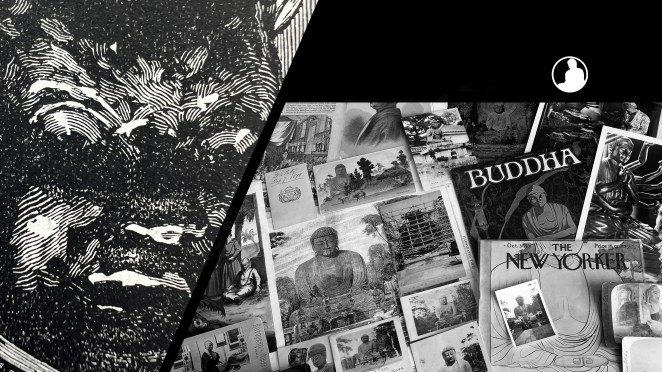
The woodcut engraving depicting the monks of Gushan appeared in an 1884 edition of L’Univers illustré, an illustrated weekly French newspaper. The accompanying short article notes the Buddhist monastery on Gushan “ranks among the most renowned” in Fuzhou.

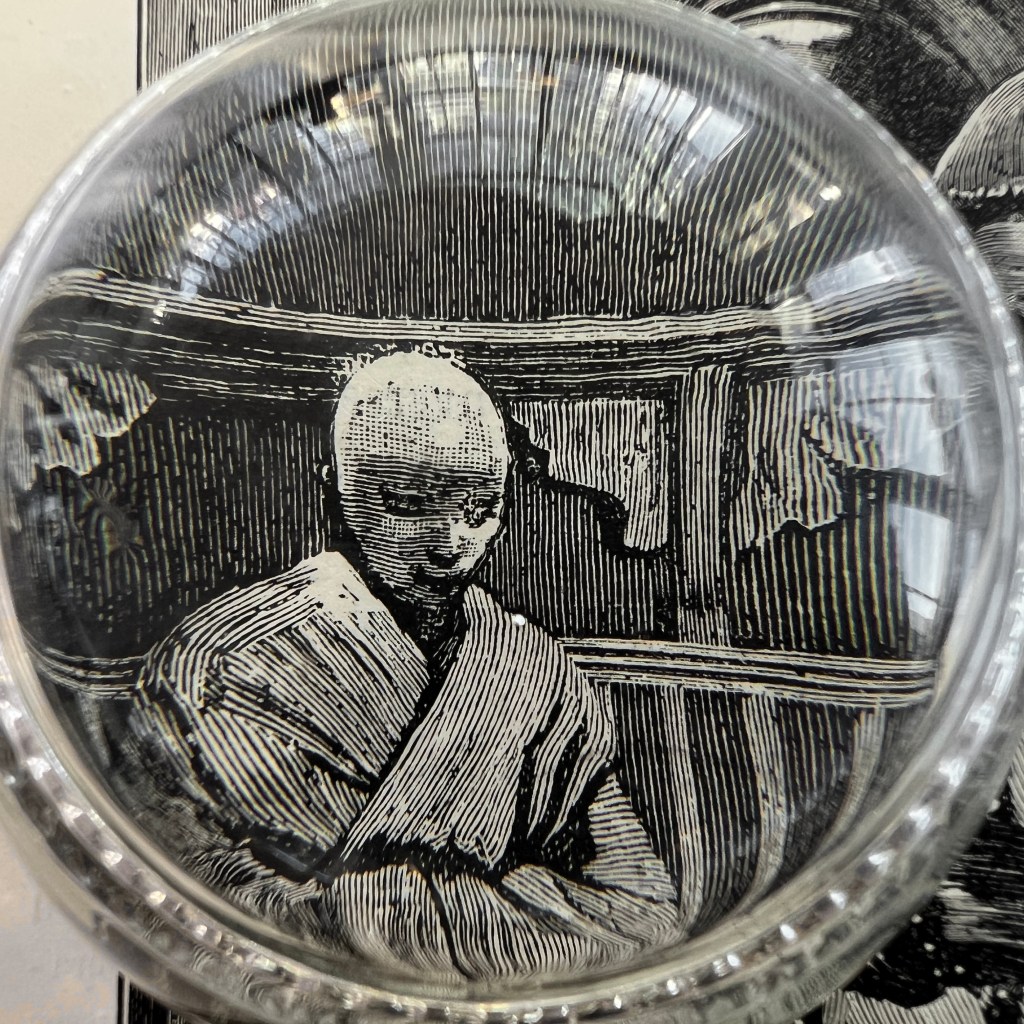
Scottish photographer John Thomson took many photos of Fuzhou and the Min River in the 1870s, including the monks of Yongquan Monastery. This engraving clearly draws upon a photograph first published by Thomson in his Foochow and the River Min (1873).

The artist R. Caton Woodville transformed Thomson’s formal sitting portrait into a more animated scene with monks walking by the temple gate; the Heavenly King statue was added for dramatic effect. To compare the engraving with Thomson’s photo, see here: https://tinyurl.com/yeuepkht.


The Buddhas in the West Material Archive is a digital scholarship project that catalogues artifacts depicting Buddhist material culture for Western audiences. It’s comprised of prints, photos, and an assortment of ephemera and other objects. For a brief introduction to this archive, visit the main Buddhas in the West project page.


For Related Buddhas in the West Posts Featuring China:


For the Most Recent Buddhas in the West Posts:

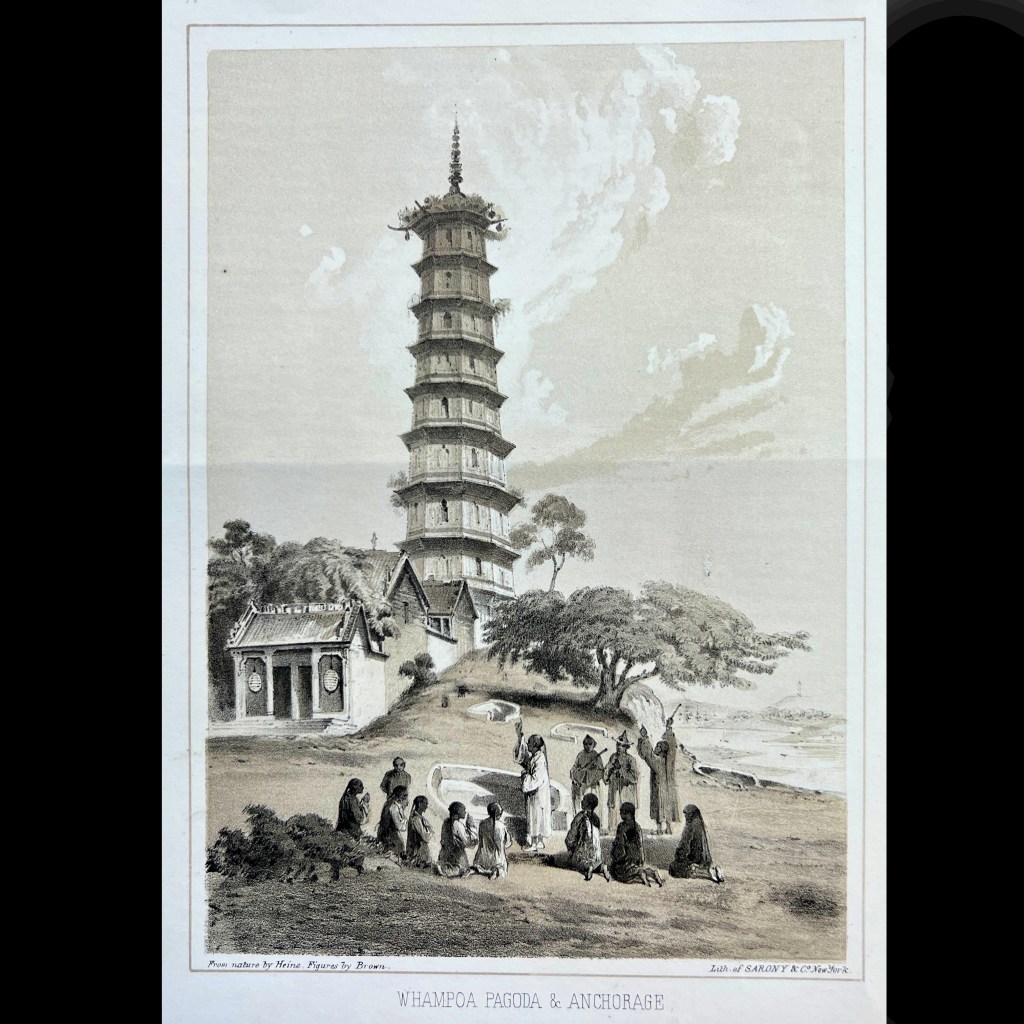
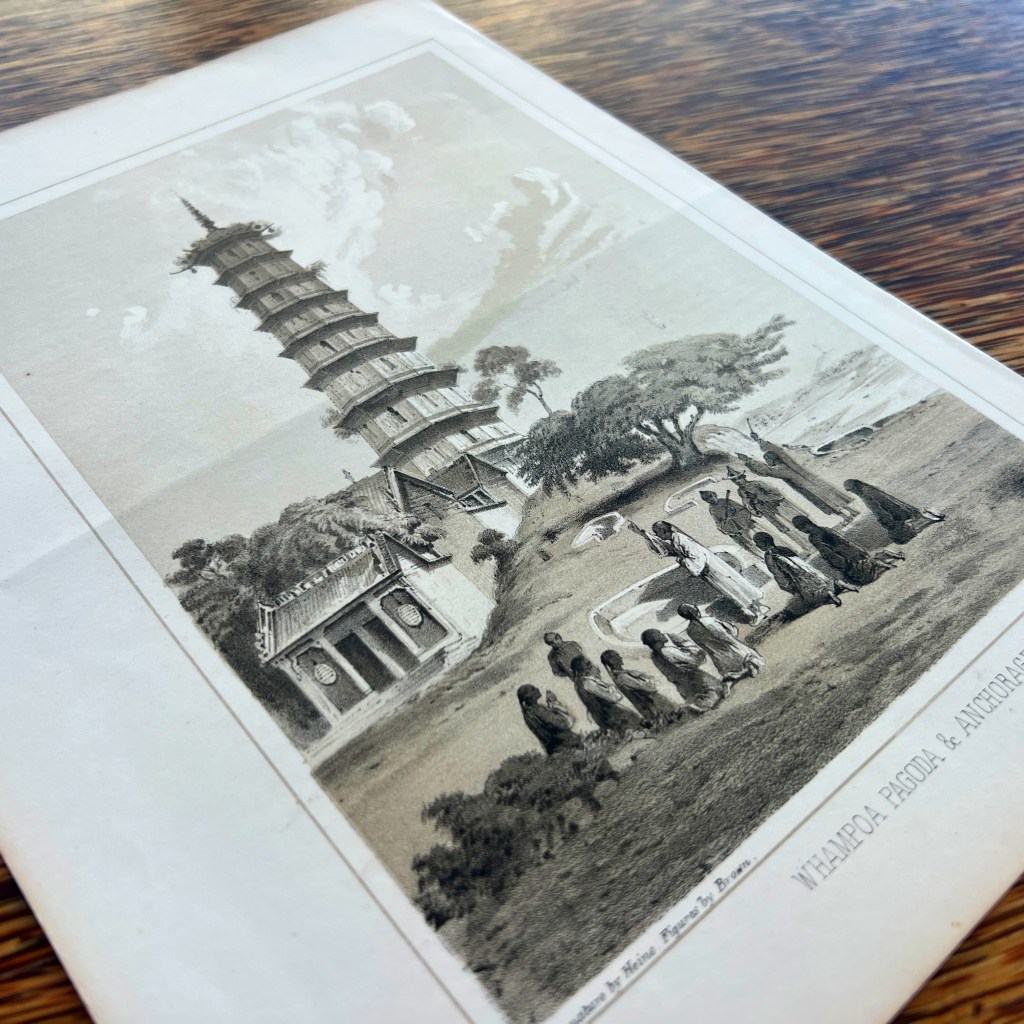
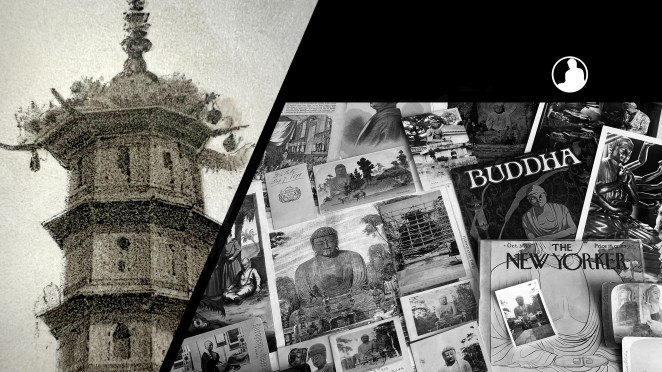
Wilhelm Heine’s Whampoa Pagoda Lithograph

For all the new Buddhas in the West posts
follow us on Bluesky & Instagram


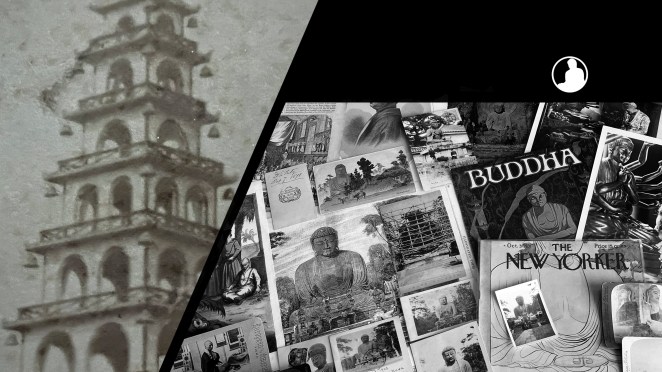
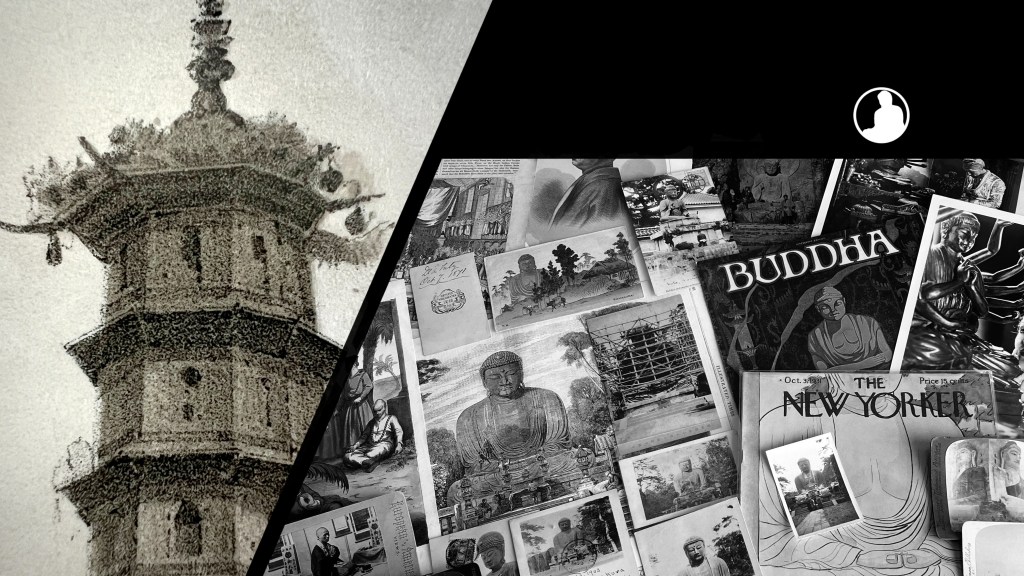
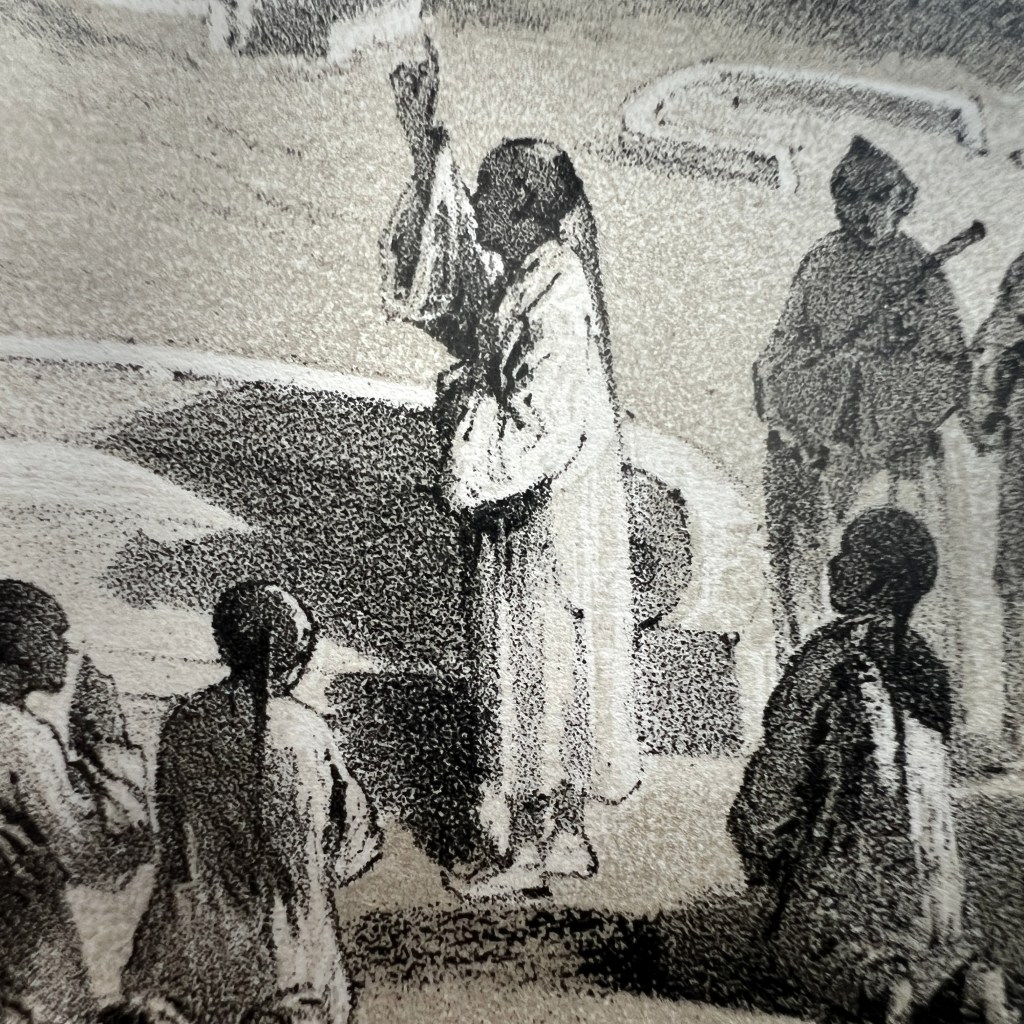
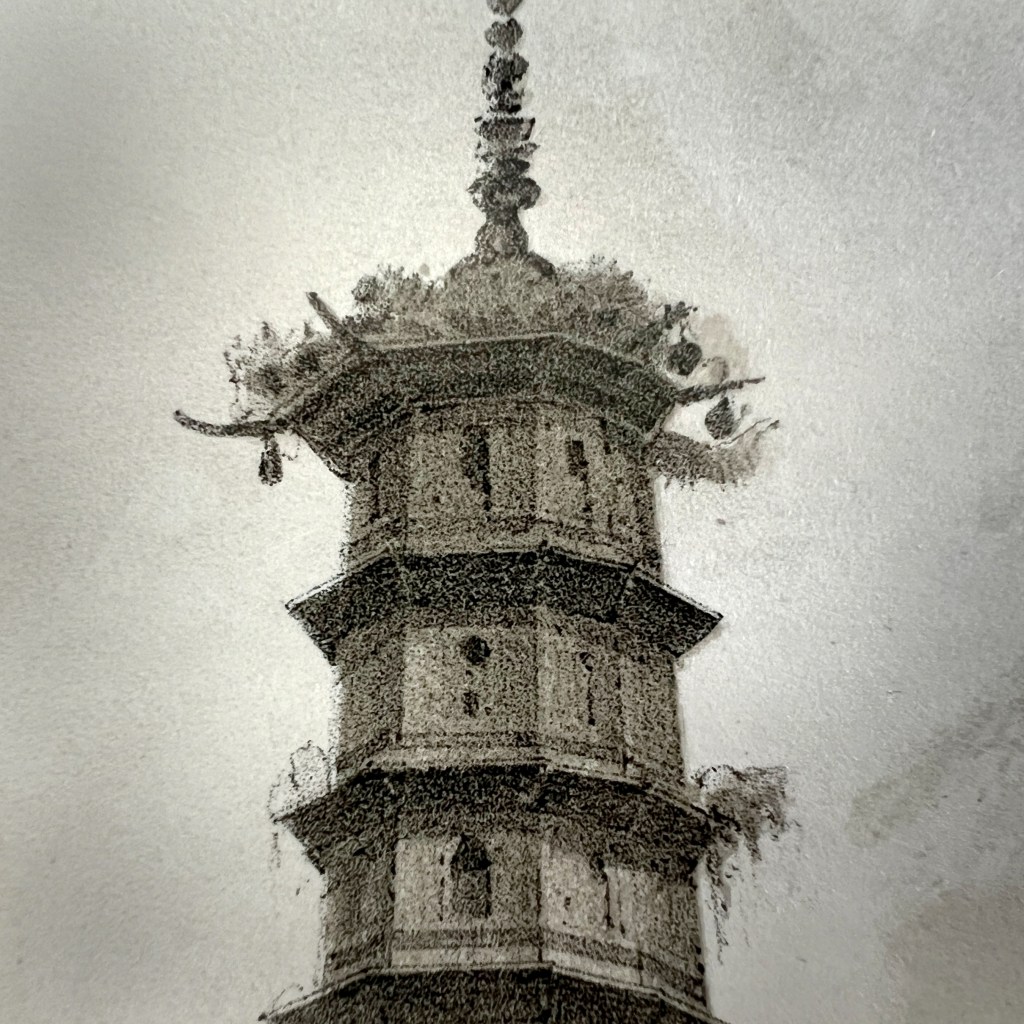
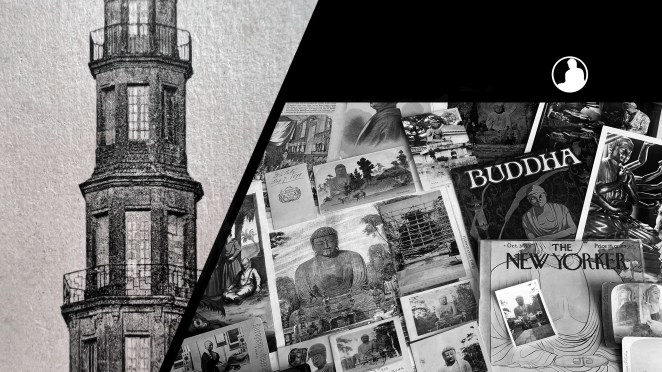
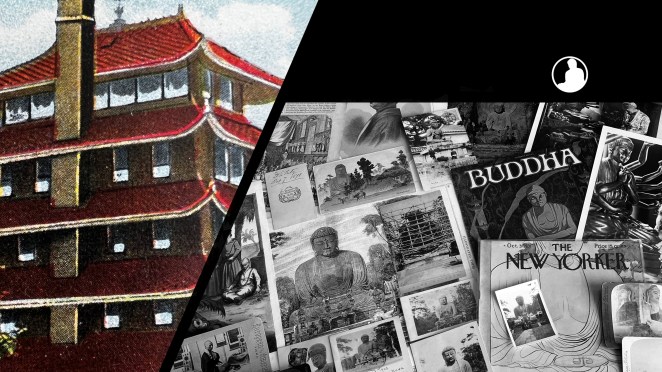
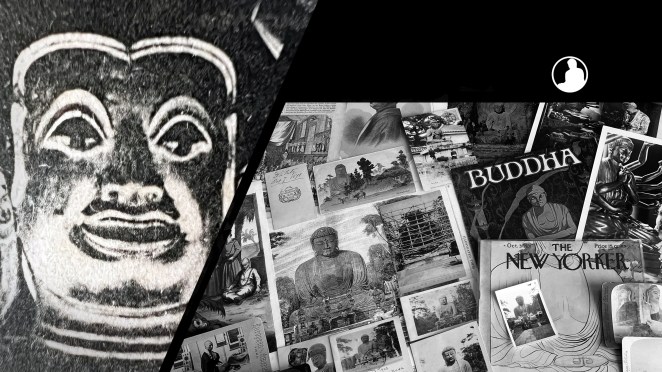
En route to Japan in 1853, the Perry Expedition stopped in Guangdong, the historic center of China’s foreign trade. Anchored in the Pearl River, expedition artist Wilhelm Heine sketched arguably one of the most famous pagodas in the world at the time: the Whampoa Pagoda.

Matthew Perry noted the religious significance of the Pazhou Pagoda, as it was known in China, but also emphasized its value as a landmark, as ships “steer and anchor by its bearings.” Under the Canton System, foreign vessels often waited months at the Whampoa anchorage for Chinese cargo.

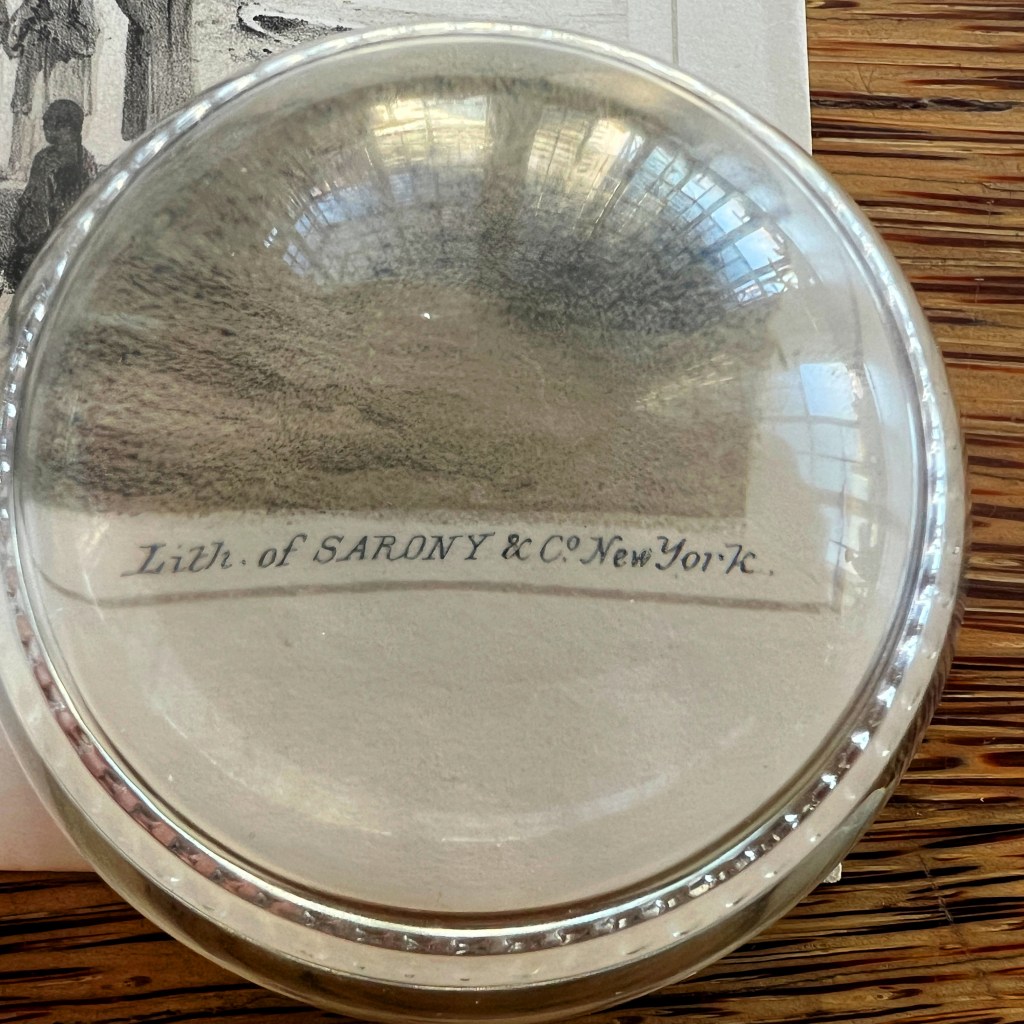
Heine’s paintings were later converted into sepia and hand-tinted stone lithographs to illustrate the official U.S. government report on the mission, Narrative of the Expedition of an American Squadron to the China Seas and Japan (1856).

Because foreign ships spent long periods at Whampoa, the nine-story pagoda became familiar to many merchants and sailors. It also emerged as a visual emblem of China, appearing in numerous paintings, news illustrations, and on decorative objects such as porcelain and hand fans.

The octagonal brick pagoda, built in 1600 and rising more than 60 meters, was destroyed during the Cultural Revolution. For more on the visual importance of the Whampoa Pagoda, see Peter Perdue’s essay on the Canton System for MIT’s Visualizing Culture: tinyurl.com/46xrpkxf.


The Buddhas in the West Material Archive is a digital scholarship project that catalogues artifacts depicting Buddhist material culture for Western audiences. It’s comprised of prints, photos, and an assortment of ephemera and other objects. For a brief introduction to this archive, visit the main Buddhas in the West project page.


For Related Buddhas in the West Posts Featuring Pagodas:


For the Most Recent Buddhas in the West Posts:

Pierre Dieulefils’ Abbot of Marble Mountains Postcard

For all the new Buddhas in the West posts
follow us on Bluesky & Instagram


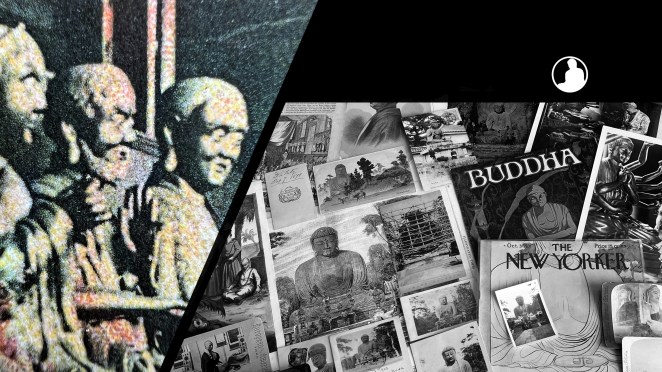
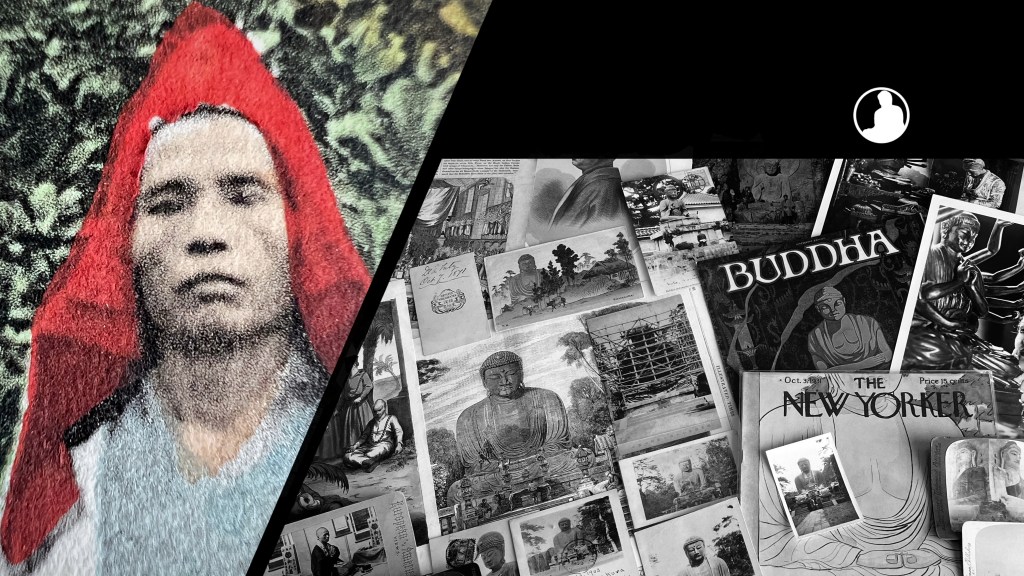
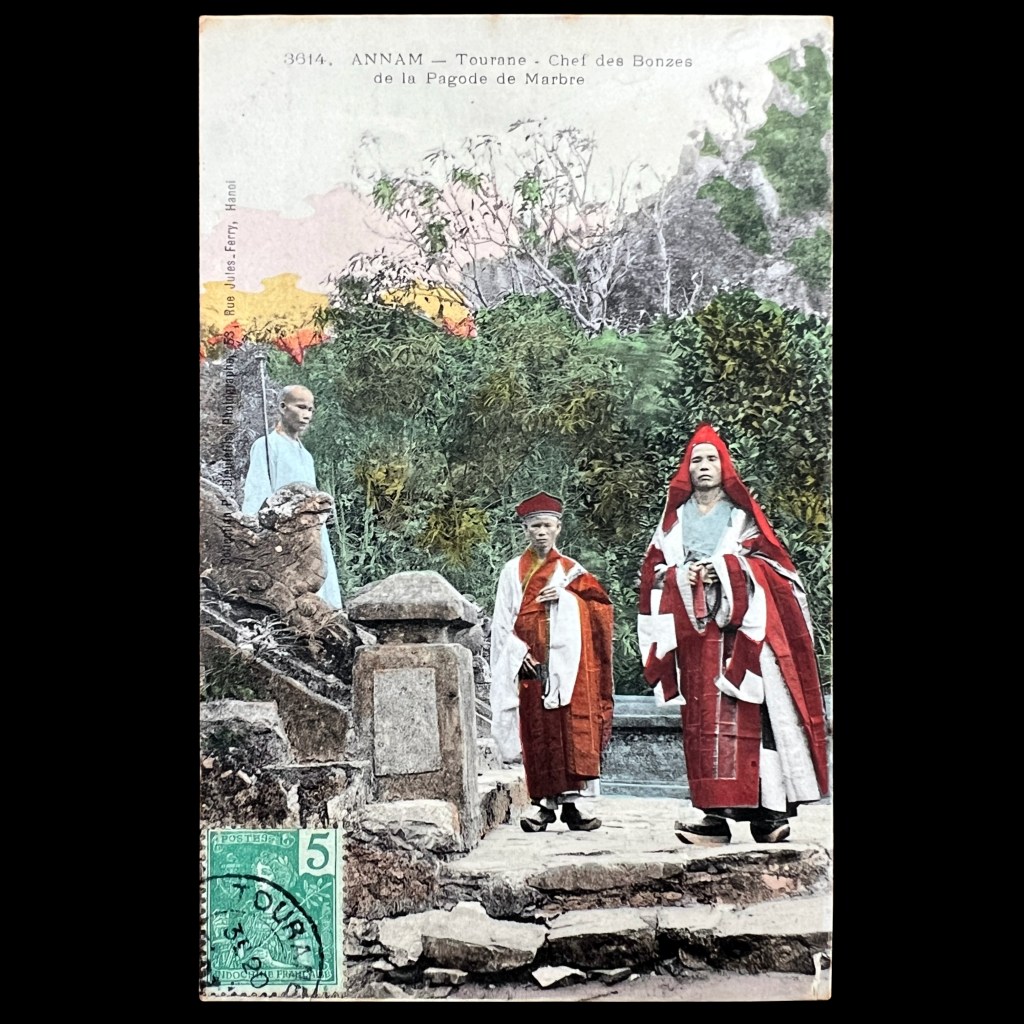
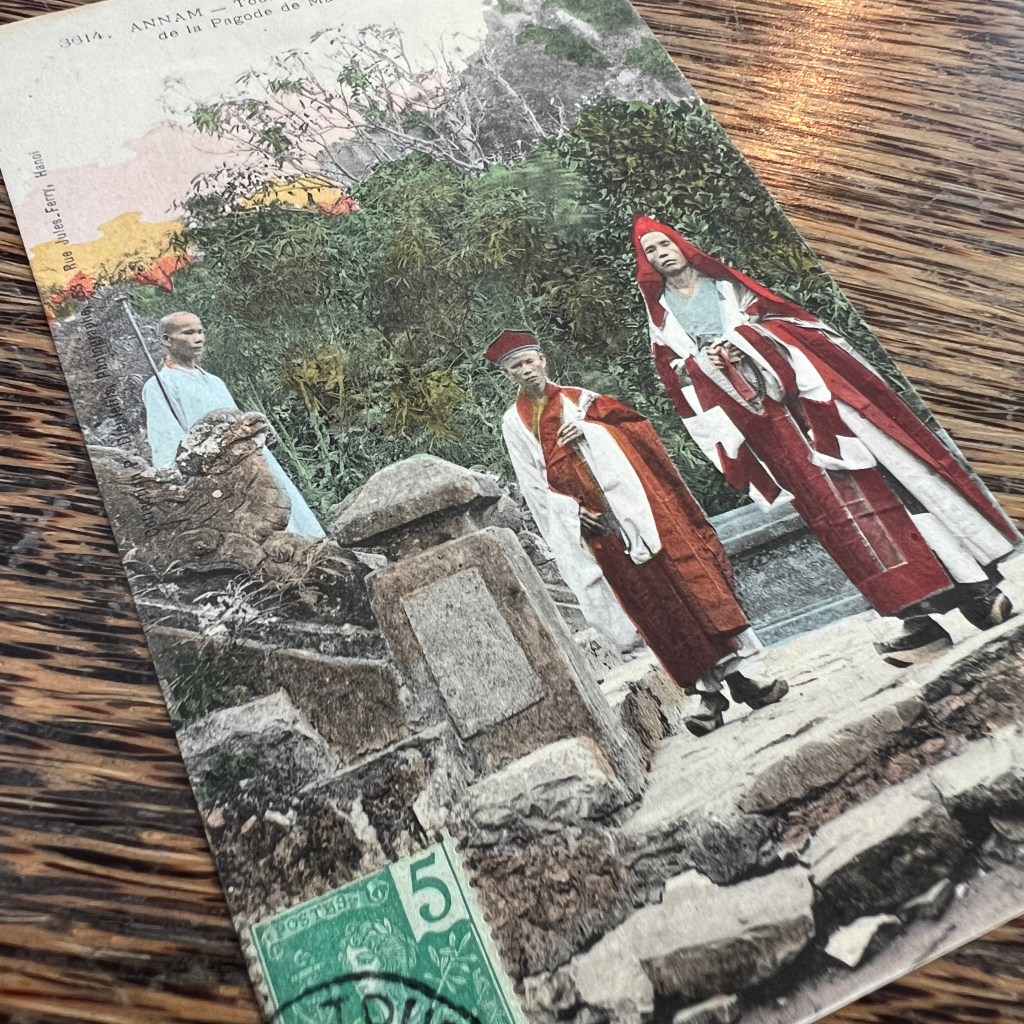
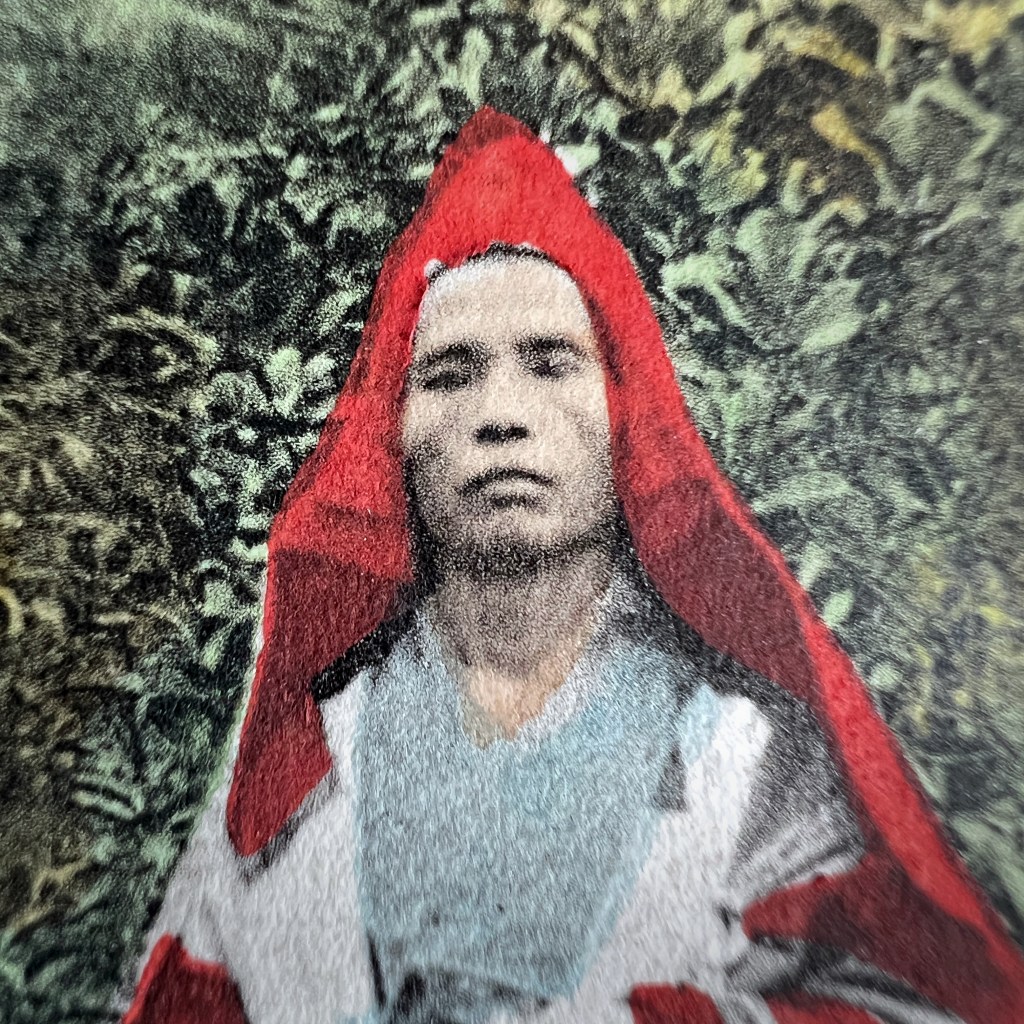
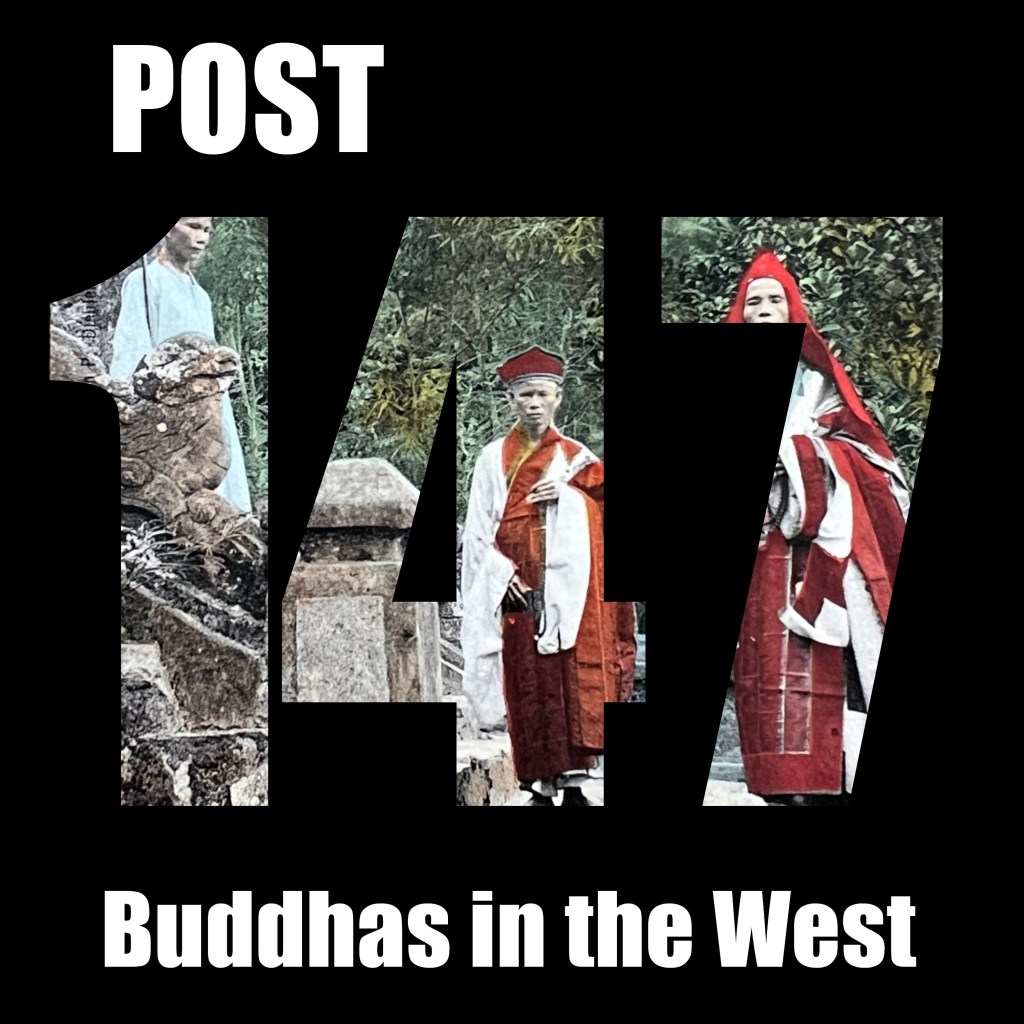
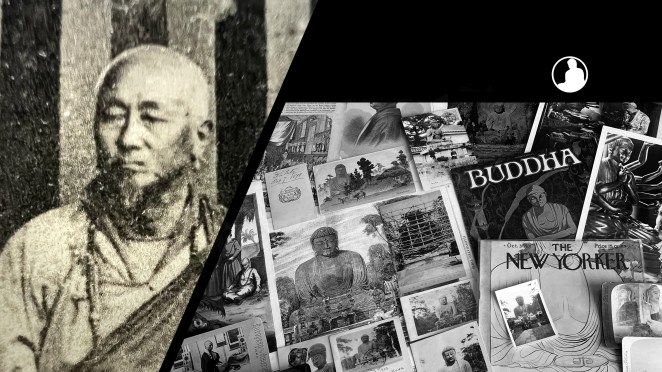
This early photograph from Tourane (today’s Da Nang) shows three Buddhist monks at the Marble Mountains temple complex. It is a rare colonial-era view of the full hierarchy of Vietnamese Buddhist monastic dress, from a novice’s plain robe to the ceremonial vestments of a senior abbot.

Originally revered by the Cham people, the Marble Mountains, known locally as the Five Element Mountains (Ngu Hanh Son), later evolved into an important Buddhist pilgrimage center. Under imperial order, temples were built and grottoes were developed here in the 1820s.

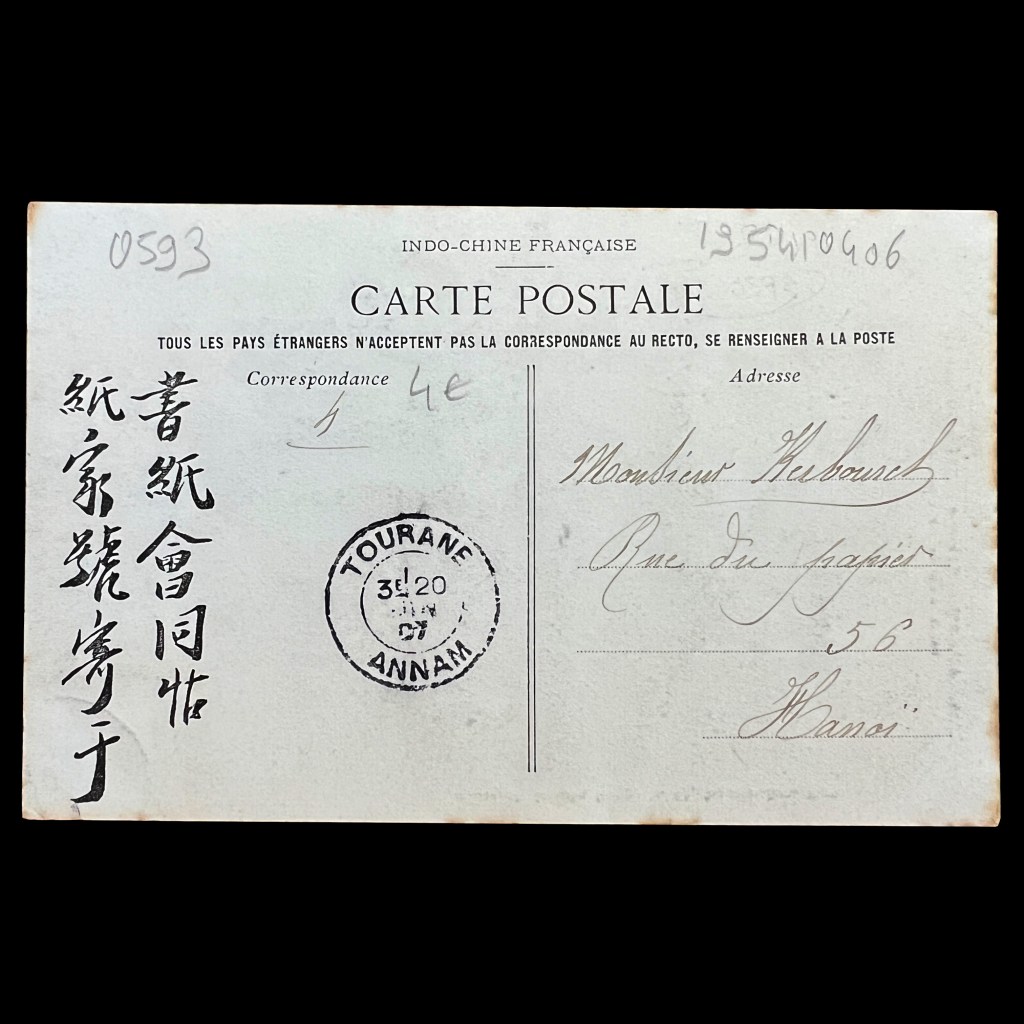
Photographer Pierre Dieulefils produced postcards like this for French soldiers and colonial tourists, but they also preserve a rare glimpse of Vietnamese Buddhist life at the turn of the twentieth century. The cancellation stamp shows this card was mailed in 1907.

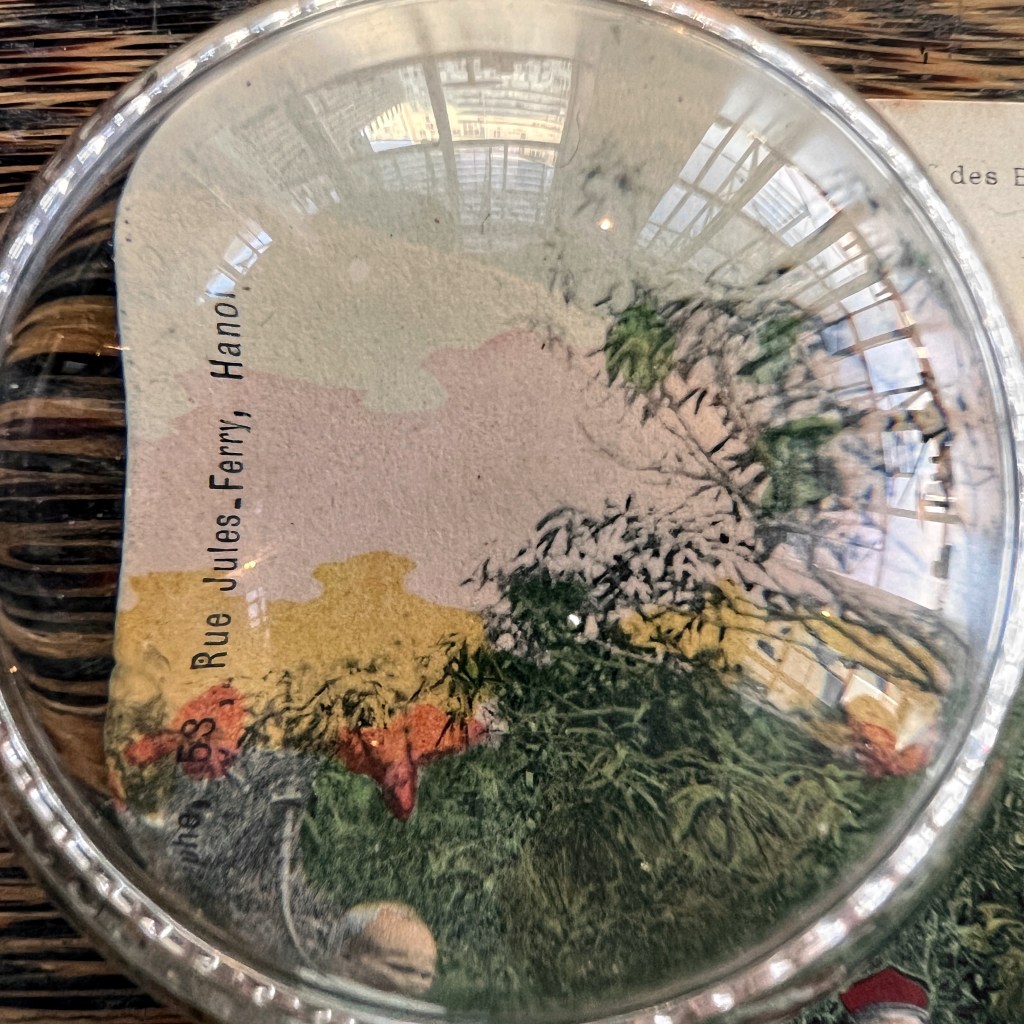
While many of Dieulefils’s postcards were issued in plain black and white, this example was hand-colored, a technique widely used by Japanese postcard publishers at the time. The crisp edges of the gradated sky reveal the use of a time-saving stencil.

The central figure is likely Lê Văn Sành, the abbot of Tam Thai Pagoda within the Marble Mountains complex. For more on the history of this remarkable site, see Albert Sallet’s Les Montagnes de Marbre (1925).


The Buddhas in the West Material Archive is a digital scholarship project that catalogues artifacts depicting Buddhist material culture for Western audiences. It’s comprised of prints, photos, and an assortment of ephemera and other objects. For a brief introduction to this archive, visit the main Buddhas in the West project page.


For Related Buddhas in the West Posts Featuring Vietnam:


For the Most Recent Buddhas in the West Posts:

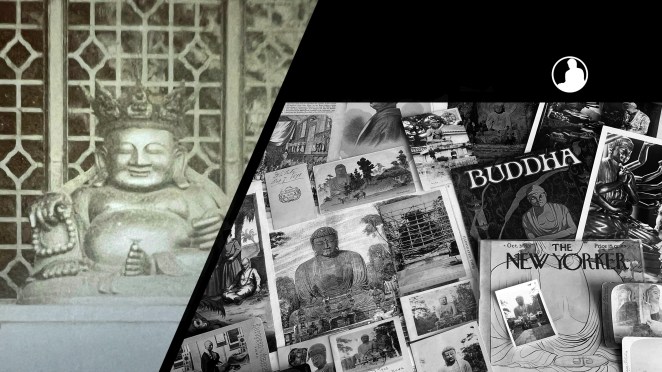
Sandringham Laughing Buddha Real Photo Post Card

For all the new Buddhas in the West posts
follow us on Bluesky & Instagram


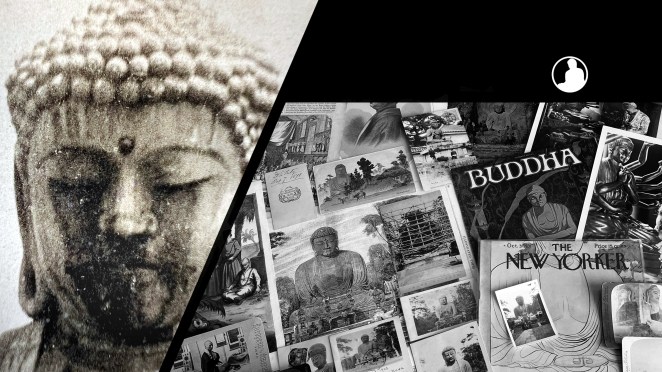
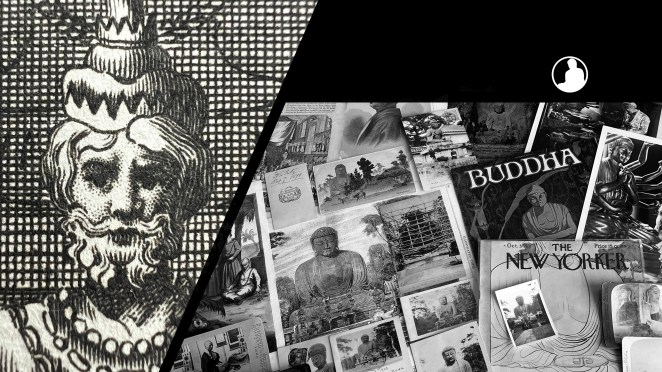
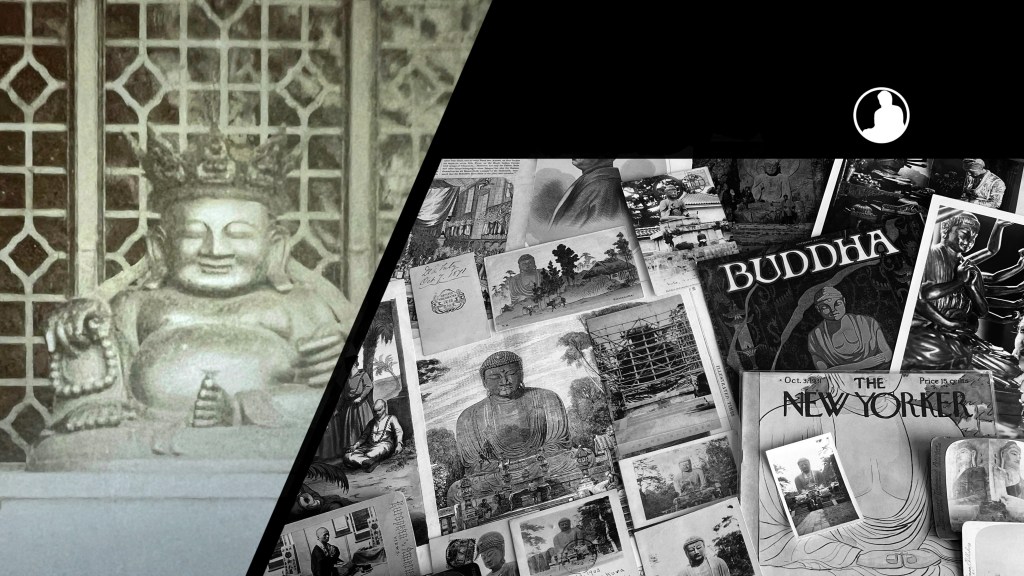
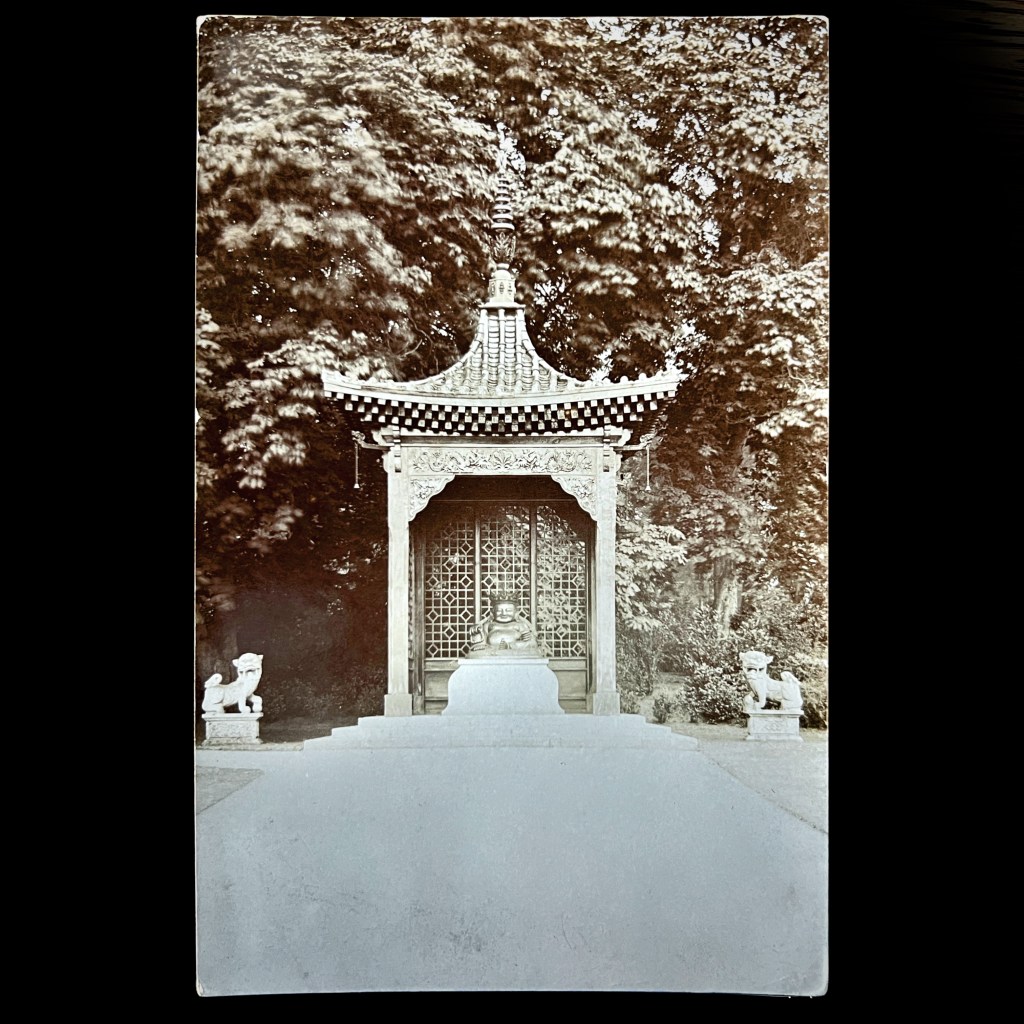
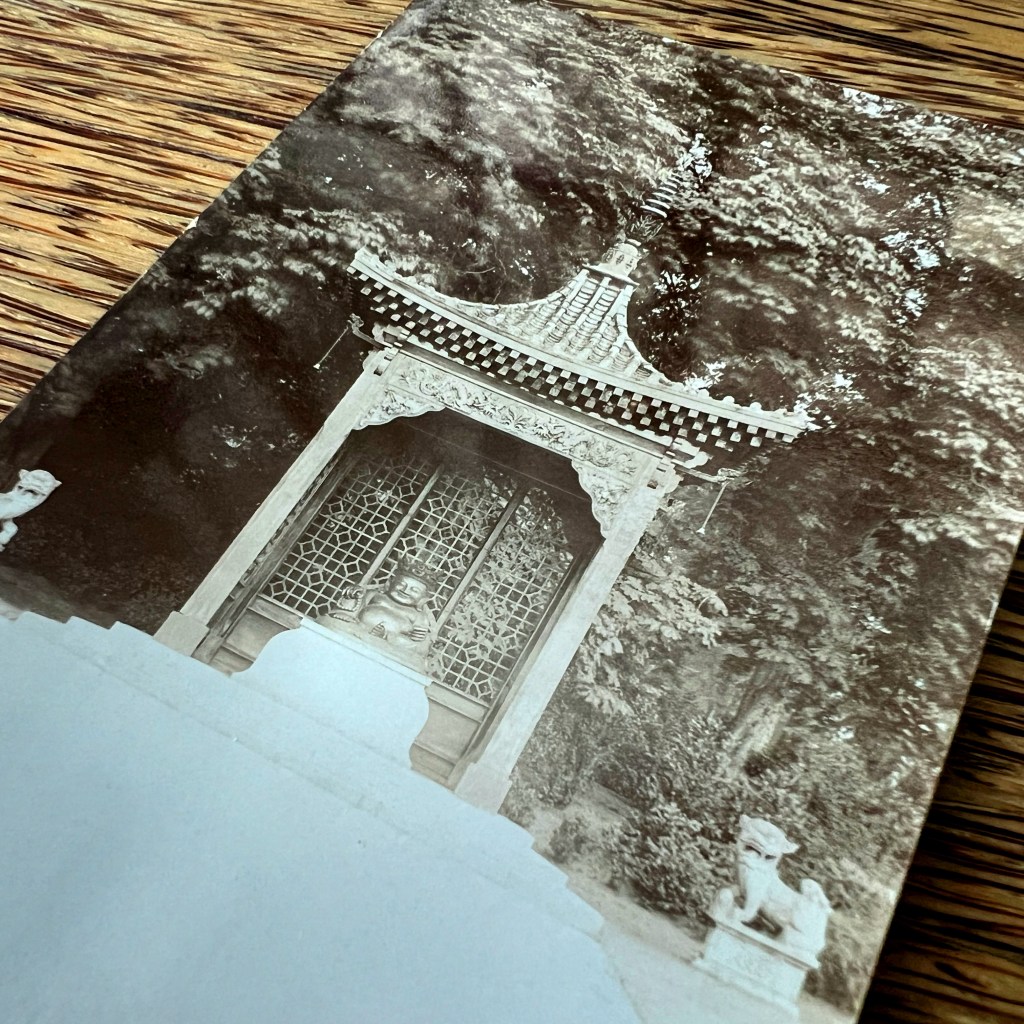
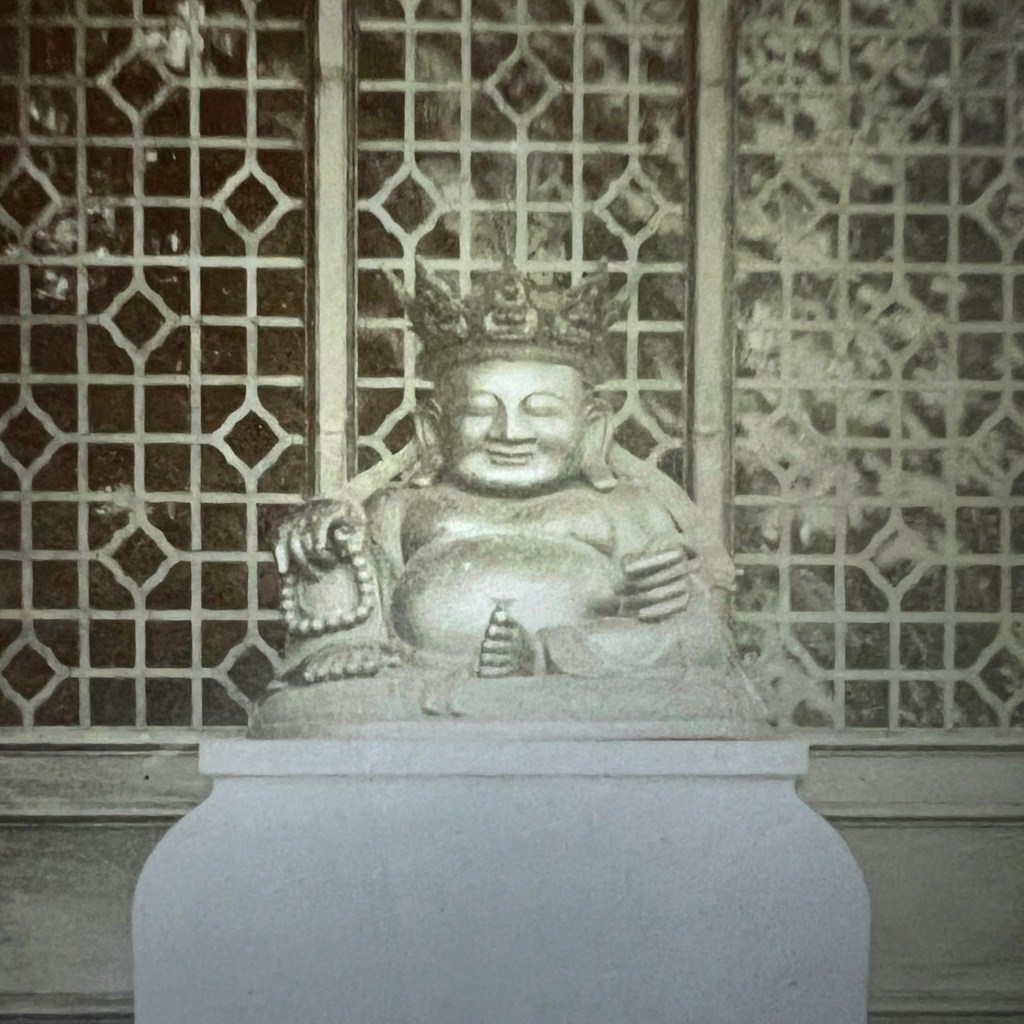
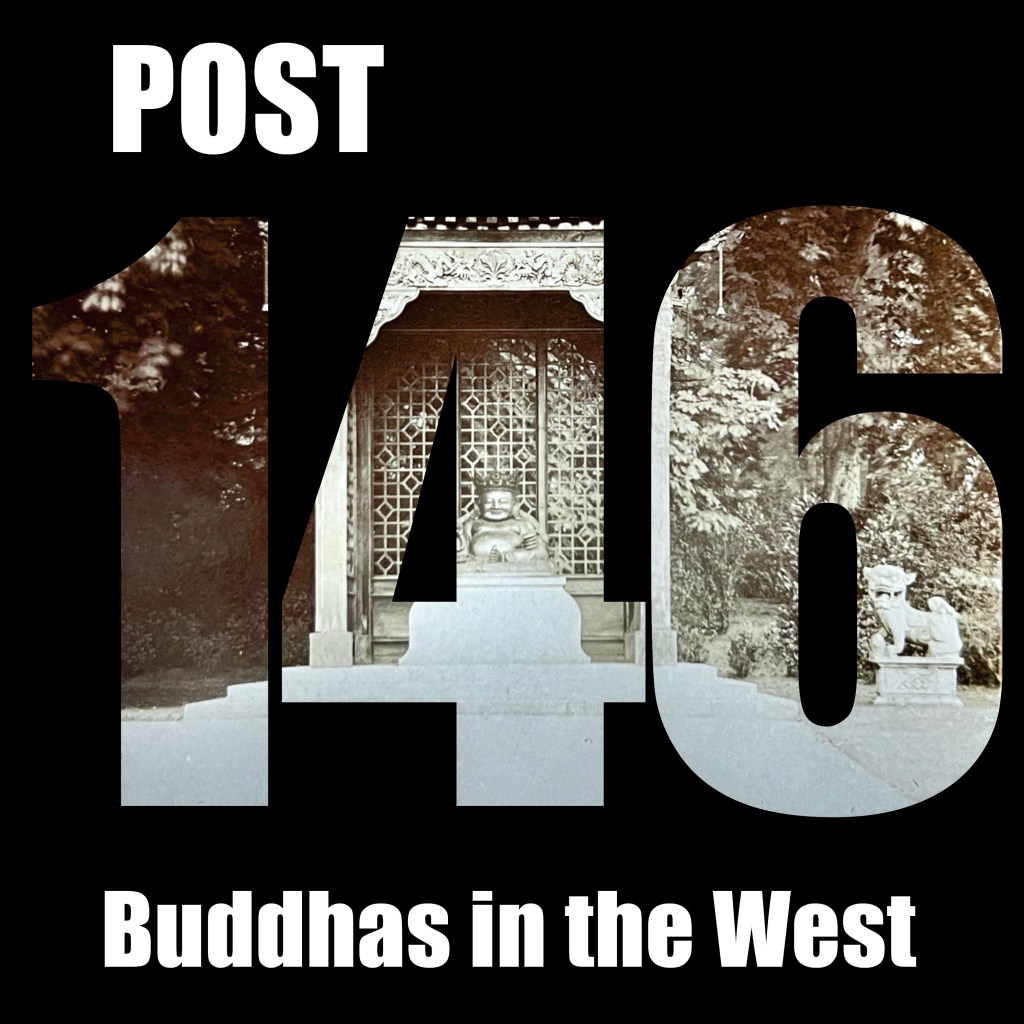
This gilded Laughing Buddha wearing an eight-pointed crown once graced a Chinese Buddhist monastery. Today, the statue sits in a very different setting on the grounds of the royal Sandringham estate as an unusual imperial garden ornament.

The Sandringham Buddha was sent to Britain by Admiral Sir Henry Keppel in 1869. After encountering the statue in Beijing, he shipped it home aboard HMS Rodney and presented it to the Prince of Wales (later Edward VII) as a gift for the newly built Sandringham House.

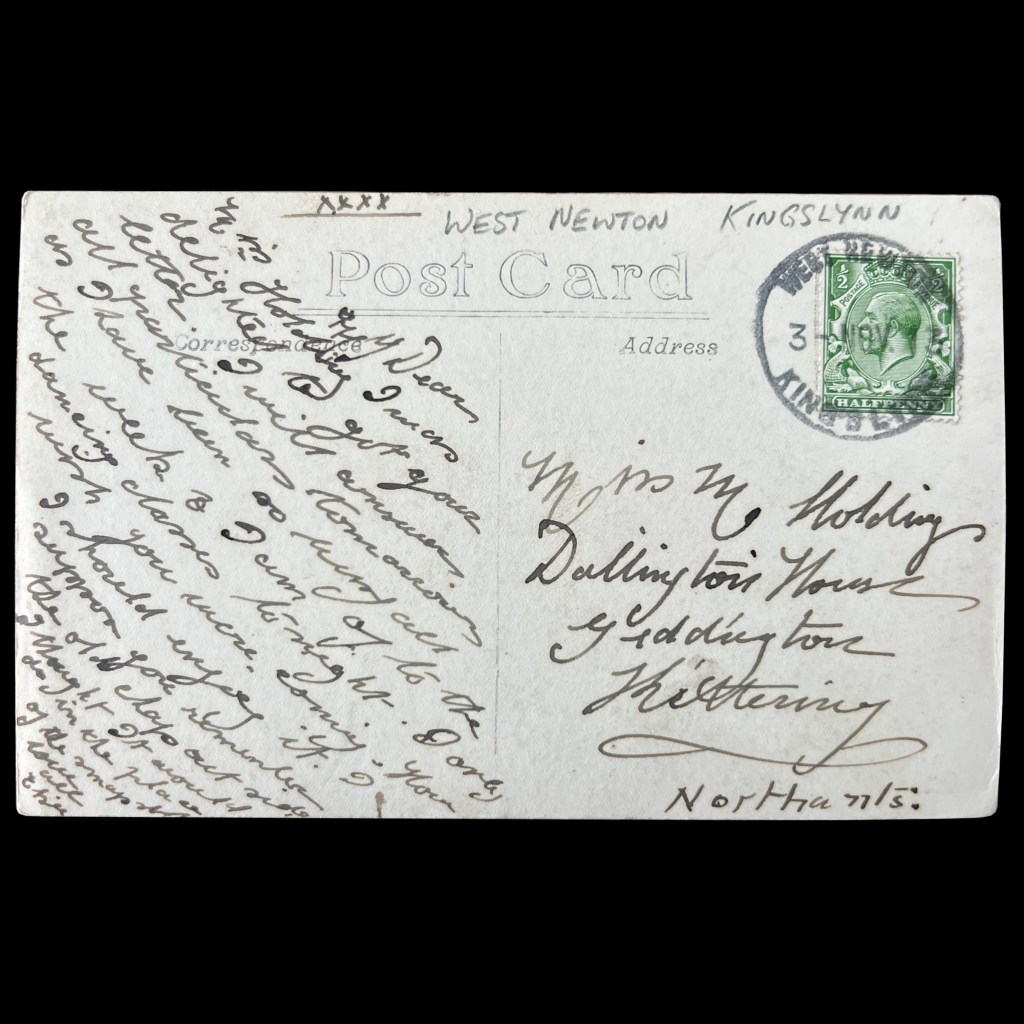
The image here was produced as a “real photo” postcard—created by printing a photographic positive directly onto photosensitized postcard stock. This card was mailed in 1913, near the end of the great postcard boom that was soon cut short by the First World War.

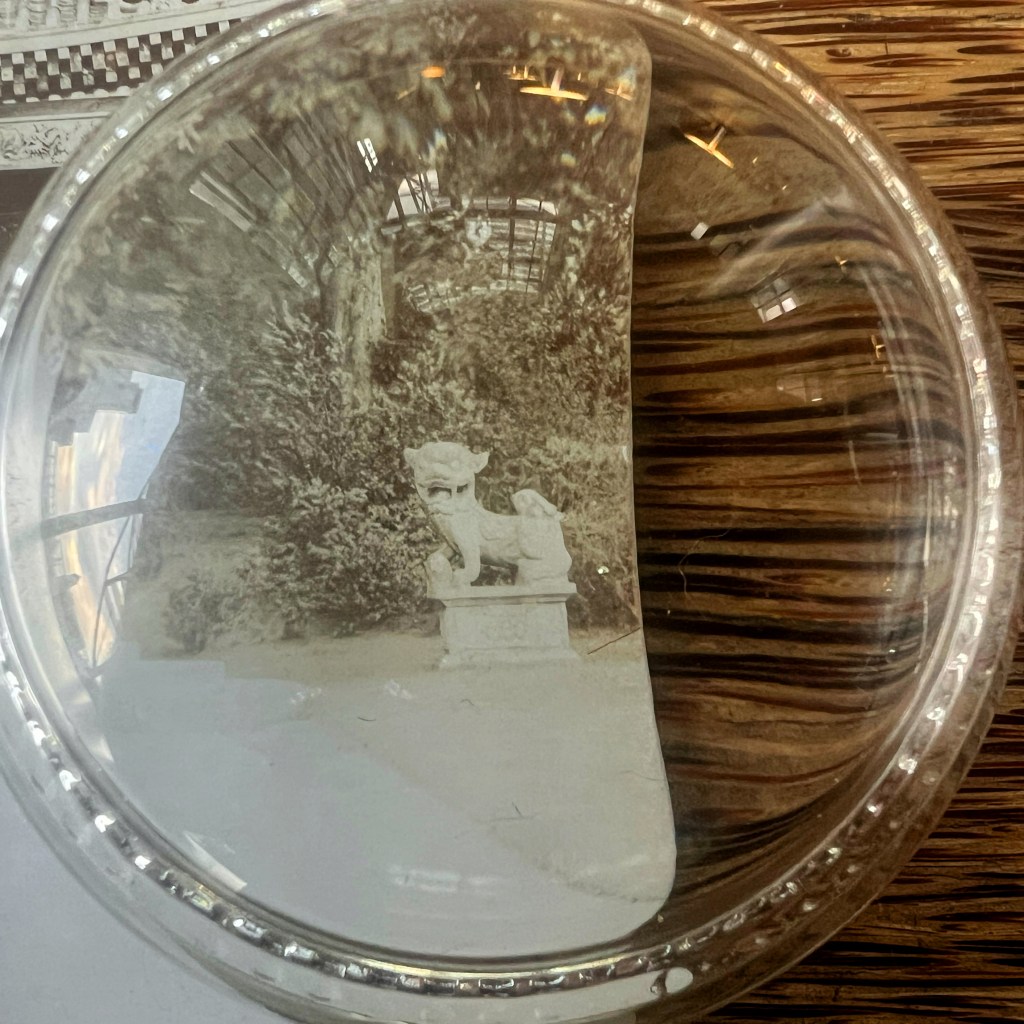
In the 1870s, estate carpenters built a wooden pagoda canopy above the statue, flanked by granite Japanese lions. The structure stood for decades before eventually rotting away and being demolished in 1960, leaving the Buddha exposed.

It is thought the statue was cast in 1690 and was found to have many Chinese coins inside it, likely offerings placed there by pious Buddhists. For more on this icon, see Jamie Carstairs’ “Location/Dislocation” viewable here: https://tinyurl.com/5w4tbpr7.


The Buddhas in the West Material Archive is a digital scholarship project that catalogues artifacts depicting Buddhist material culture for Western audiences. It’s comprised of prints, photos, and an assortment of ephemera and other objects. For a brief introduction to this archive, visit the main Buddhas in the West project page.


For Related Buddhas in the West Posts Featuring the Laughing Buddha | Budai:


For the Most Recent Buddhas in the West Posts:

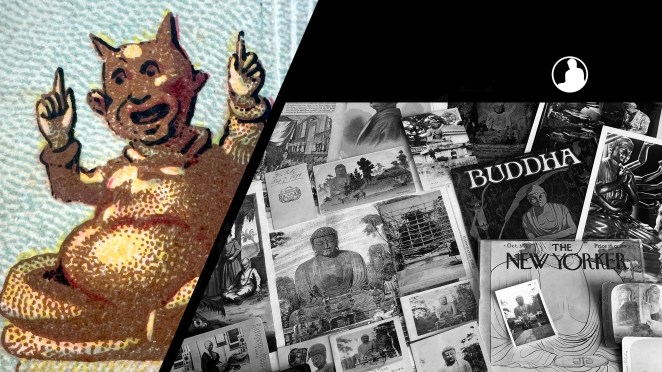
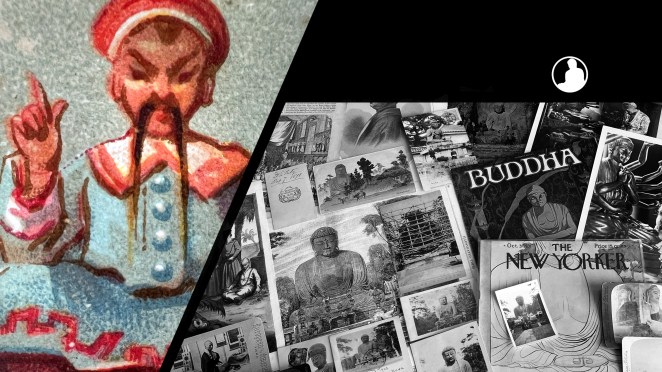
Au Bon Marché’s Chinese Idolatry Advertising Card

For all the new Buddhas in the West posts
follow us on Bluesky & Instagram


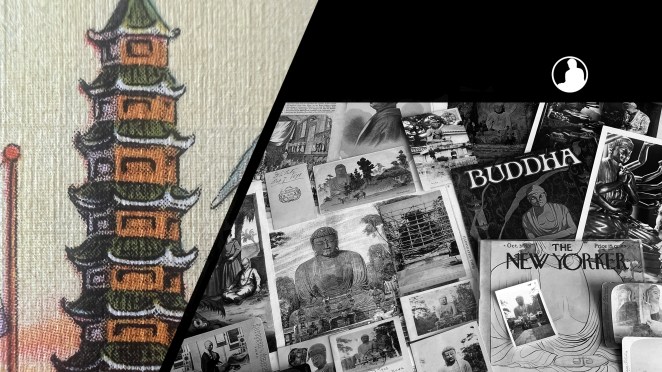
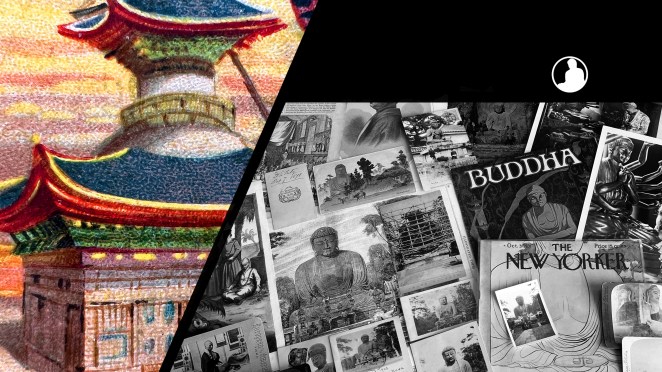
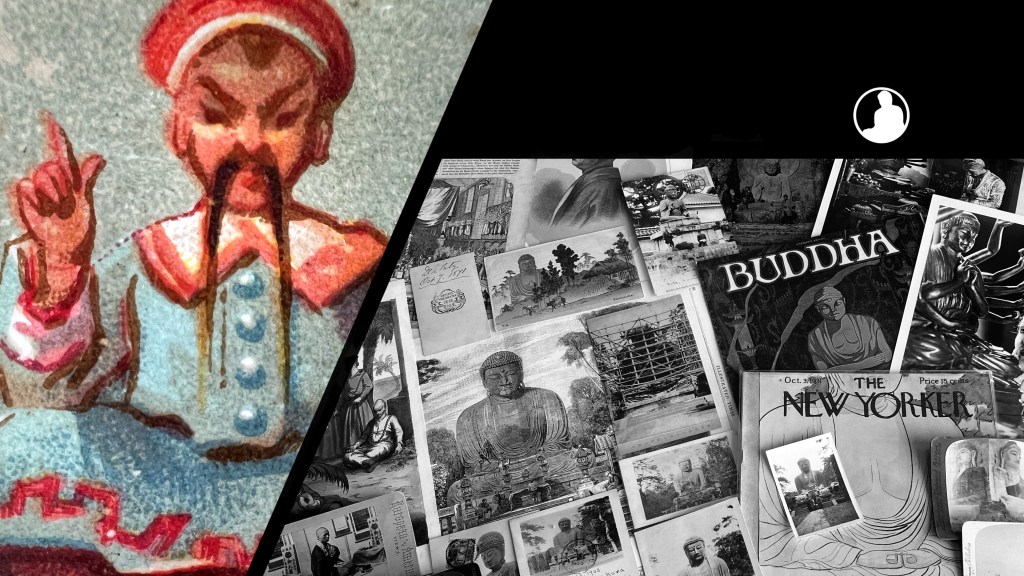
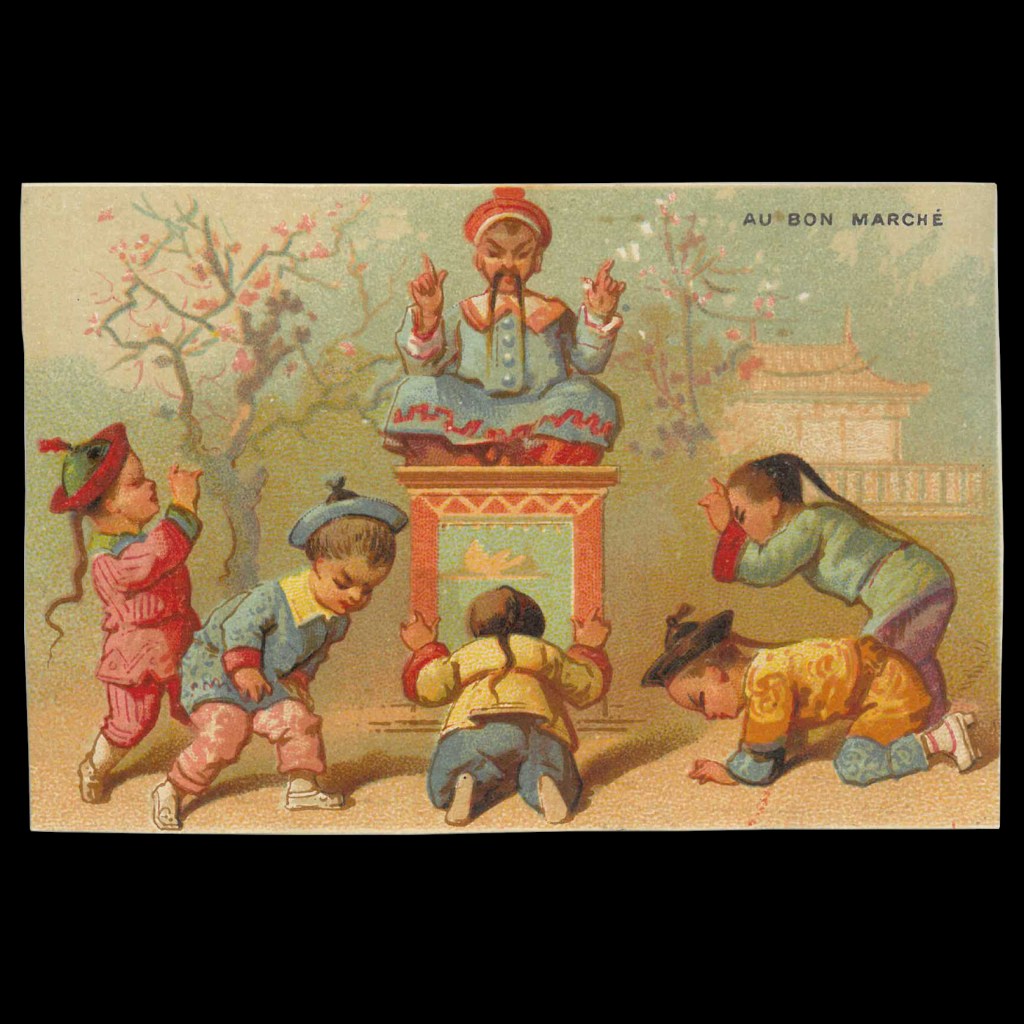
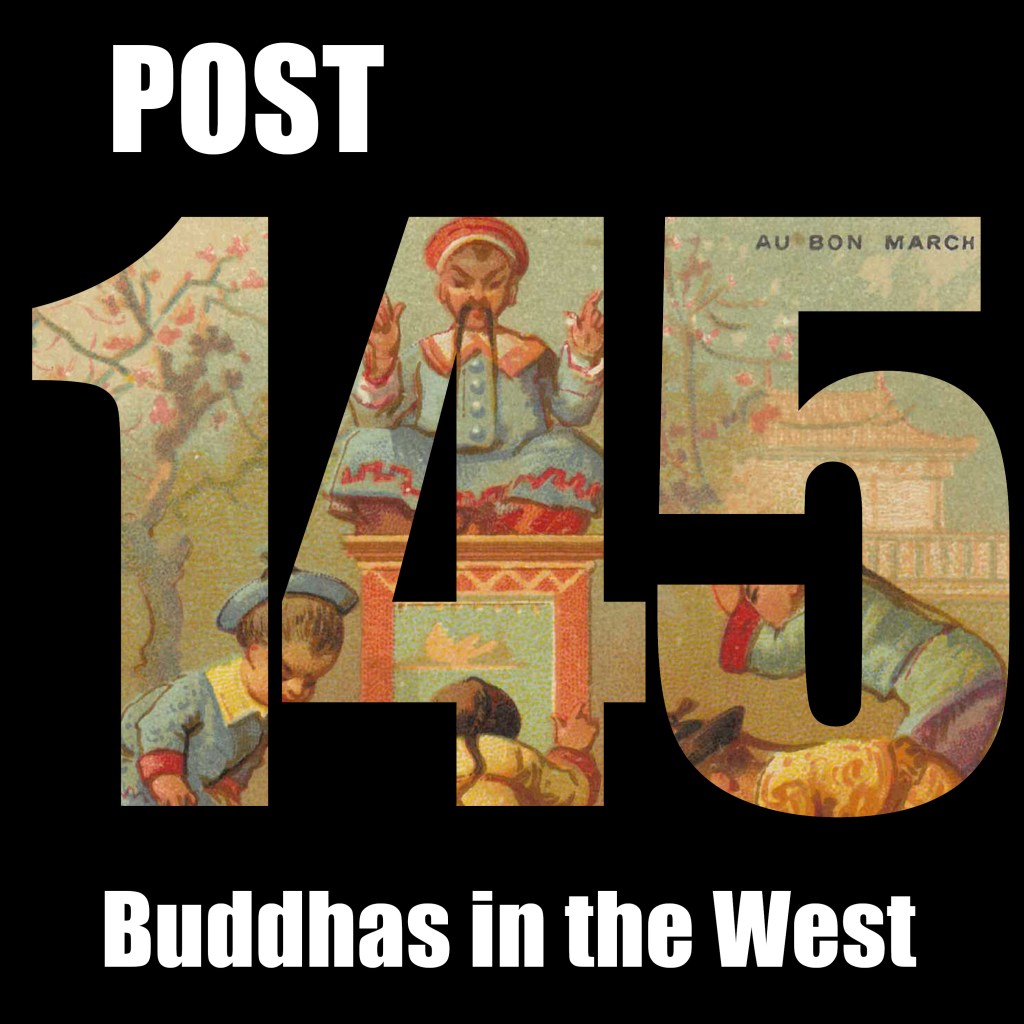
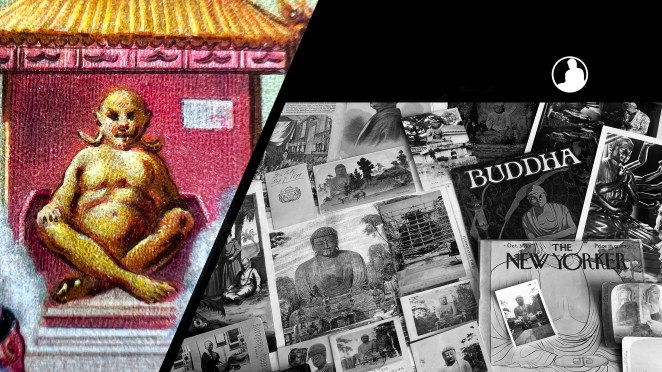
The centuries-long fascination with the Chinese-inspired aesthetic known as Chinoiserie had waned considerably by the end of the 19th century. Yet the famed Parisian department store Au Bon Marché continued to draw upon its familiar imagery for a series of popular advertising cards.

Chinoiserie offered a dreamlike vision of China, populated with pagodas, lush landscapes, and mysterious idols. After the First Opium War (1839–1842) and the expansion of colonial contact, however, depictions of China grew less romanticized, increasingly depicting the it as a land of idolatry.

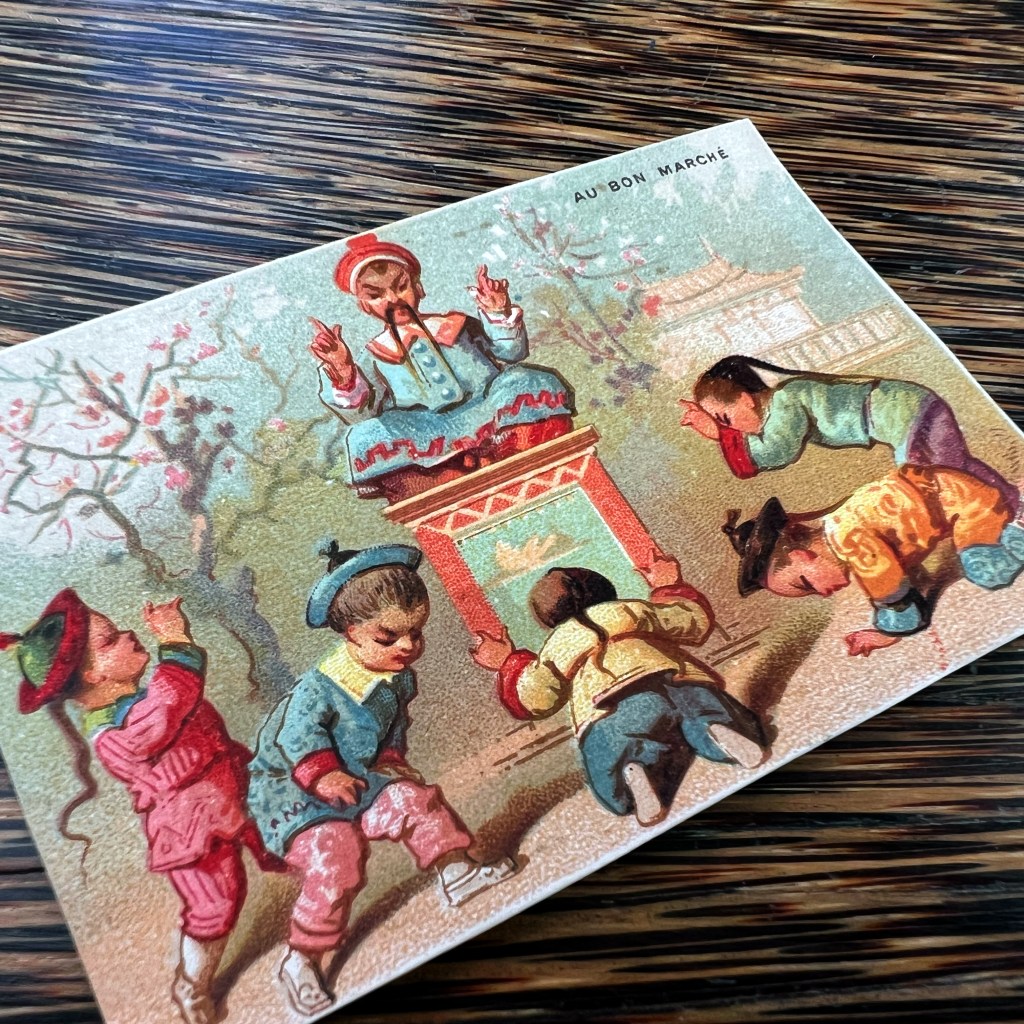
Au Bon Marché was reputedly the first store in Paris to distribute free lithographic prints to children, a practice soon adopted by other major department stores. Printed by Testu & Massin, this card belonged to a set of six illustrating various “Oriental” scenes.

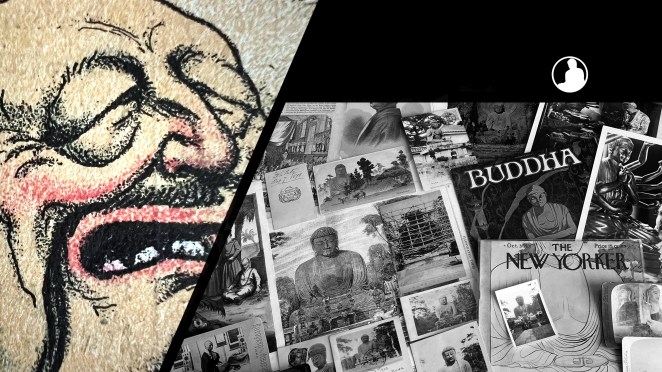
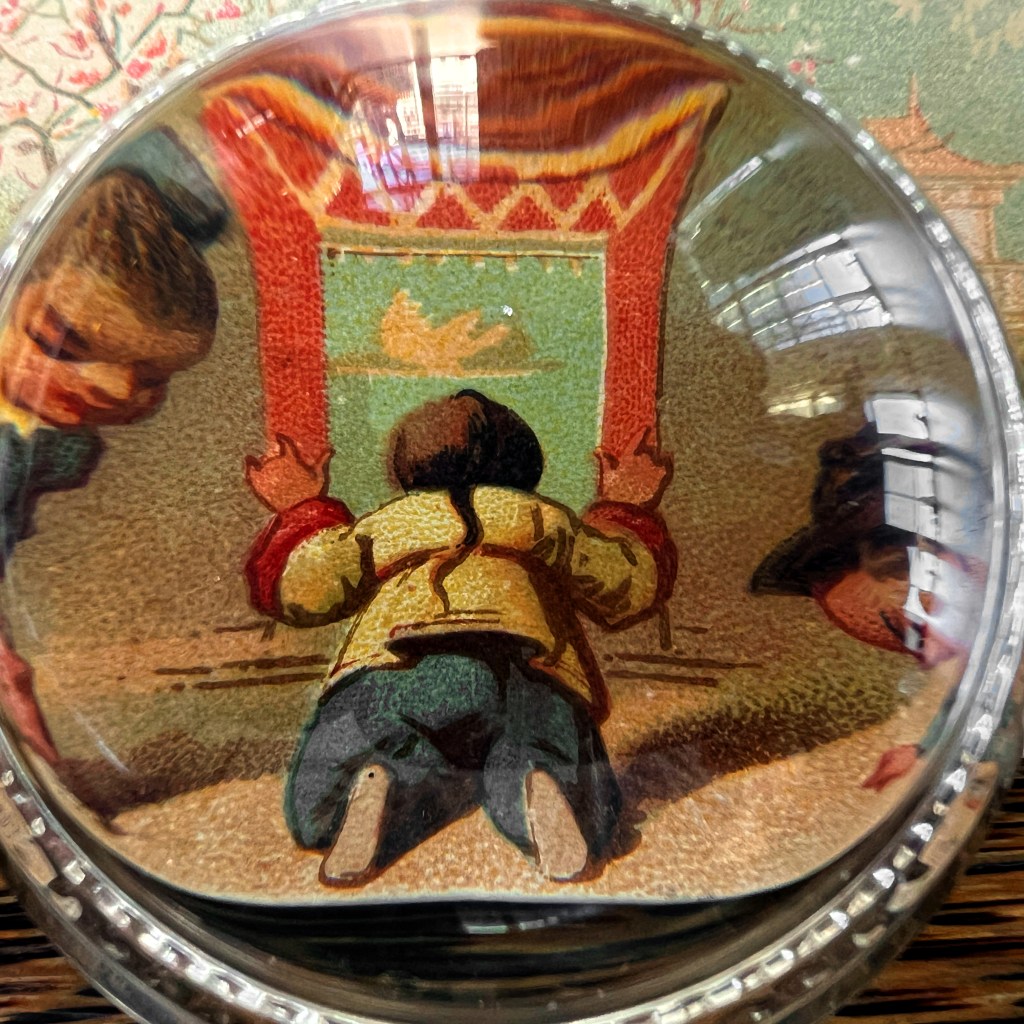
The colorful image blends the ethereal with the corporeal, showing children prostrating before a Buddhist-style idol.

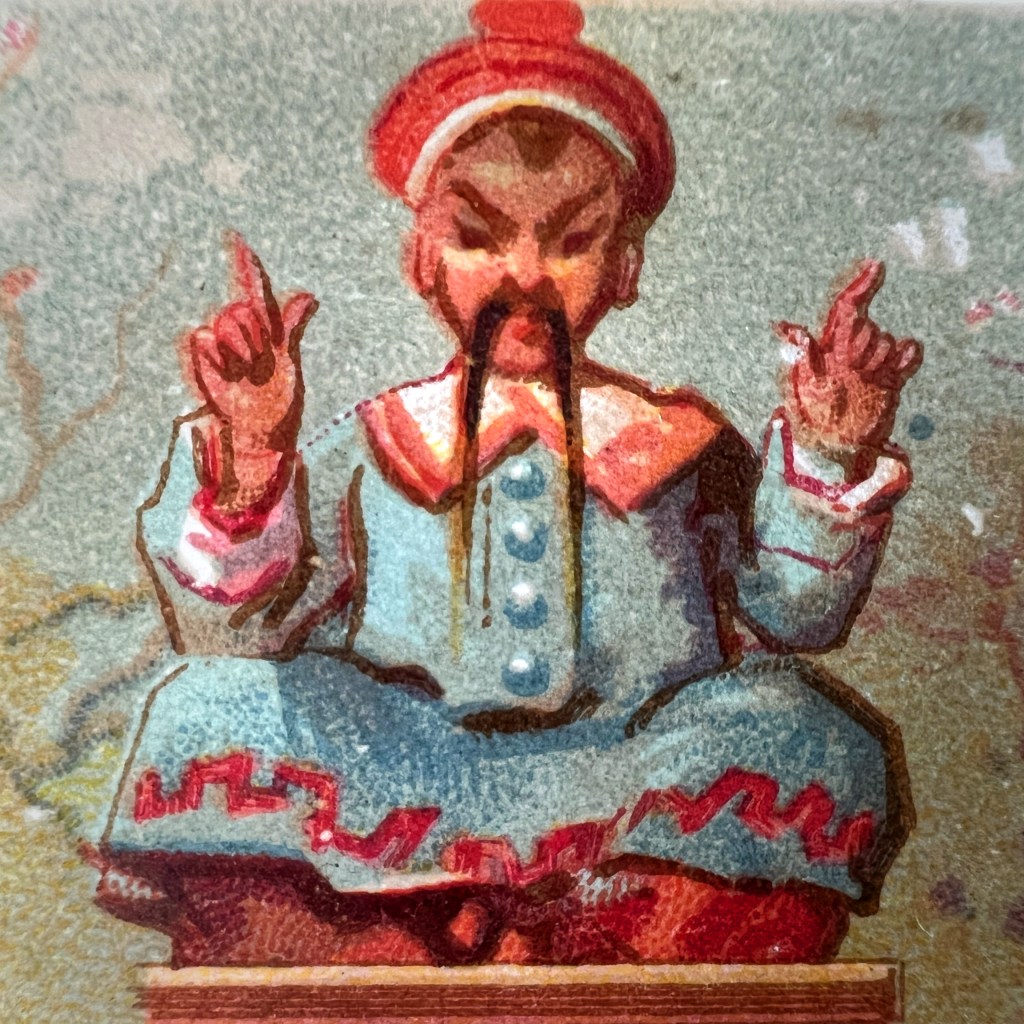
The idol itself merges a cross-legged Buddha with a racialized caricature of a Chinese man, complete with a long mustache and posed in what was known in France as the “Chinese dance.”


The Buddhas in the West Material Archive is a digital scholarship project that catalogues artifacts depicting Buddhist material culture for Western audiences. It’s comprised of prints, photos, and an assortment of ephemera and other objects. For a brief introduction to this archive, visit the main Buddhas in the West project page.


For Related Buddhas in the West Posts Featuring Advertising Cards:


For the Most Recent Buddhas in the West Posts:

Robert Phillips’ “Thibetan Musicians” Postcard

For all the new Buddhas in the West posts
follow us on Bluesky & Instagram


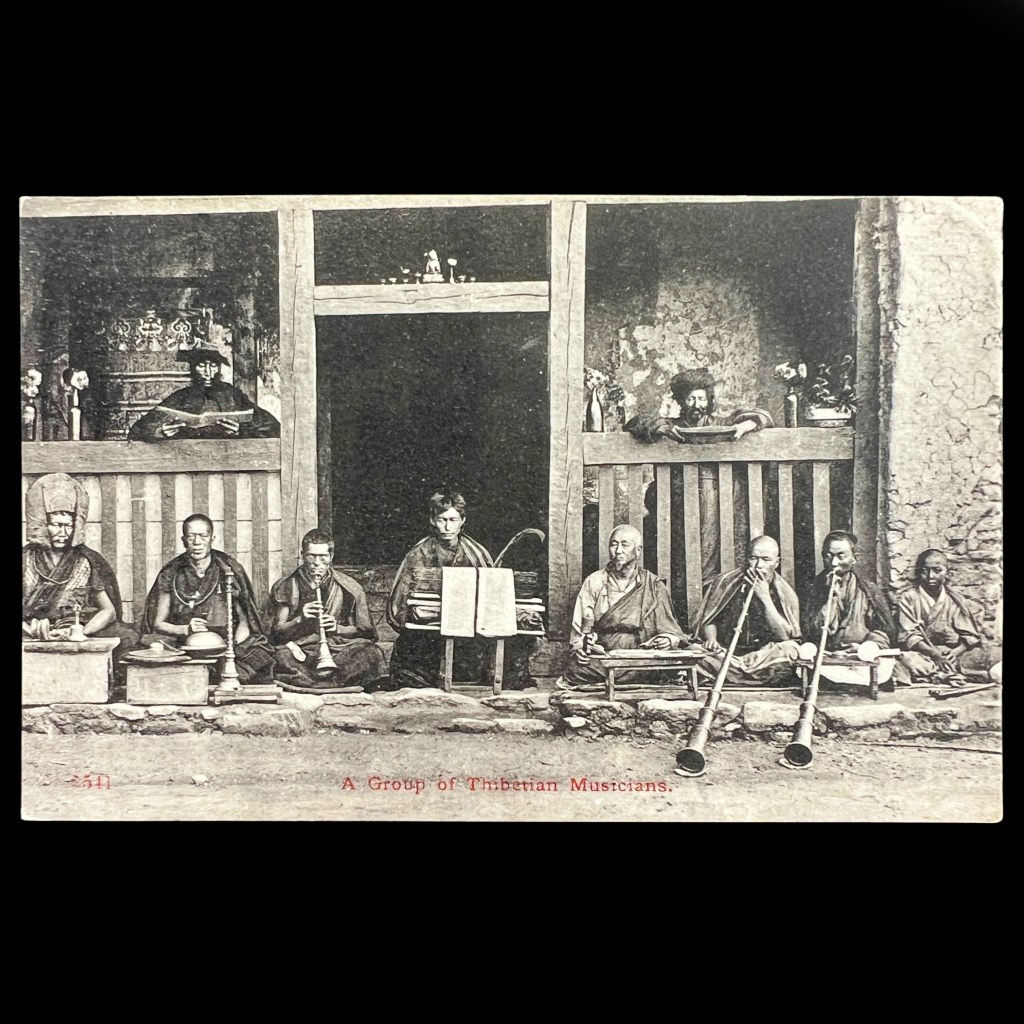
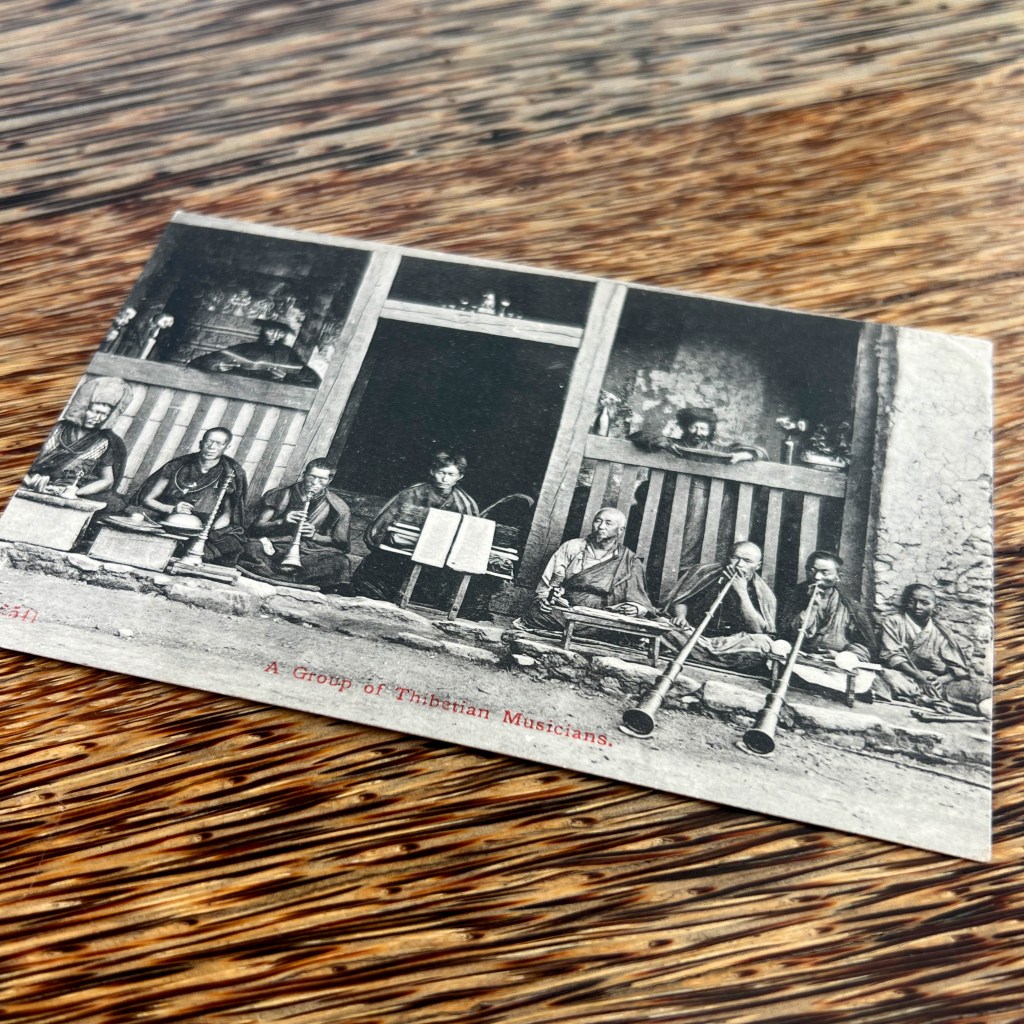
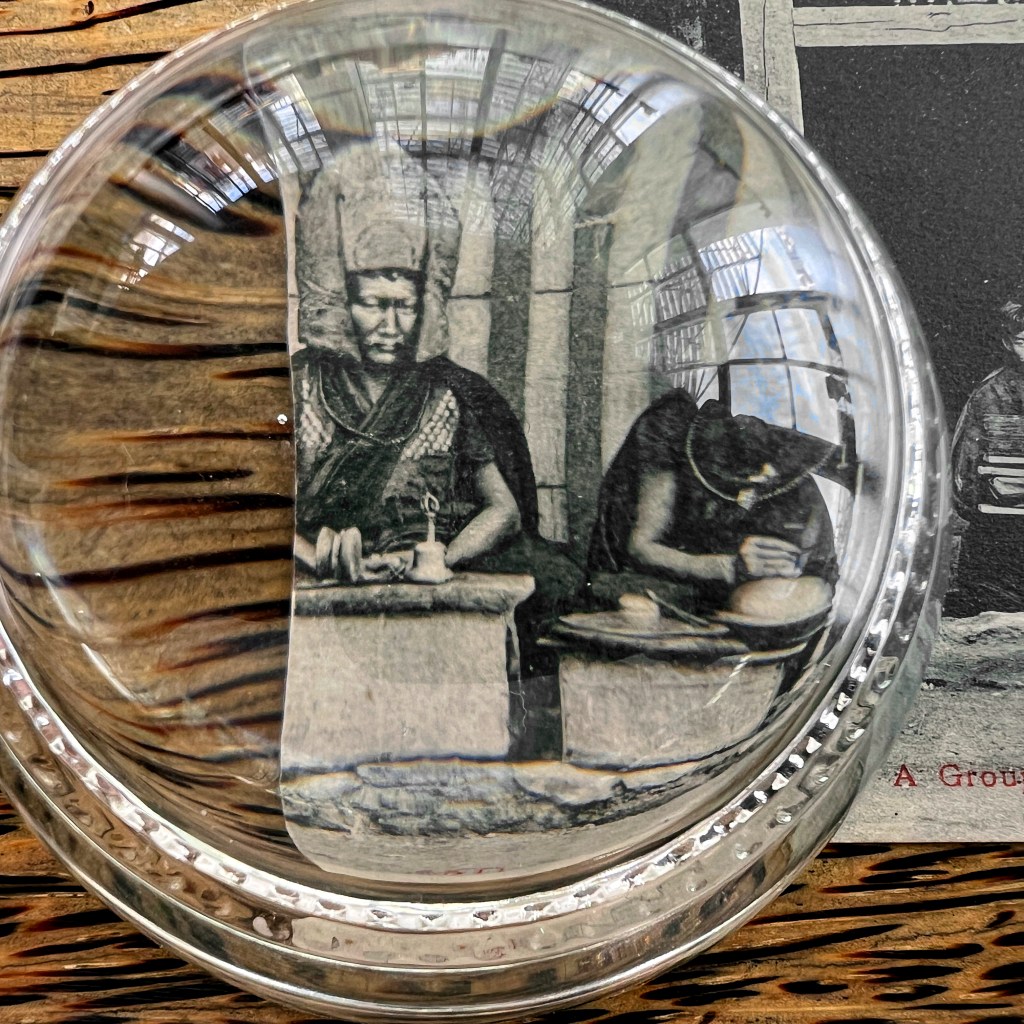
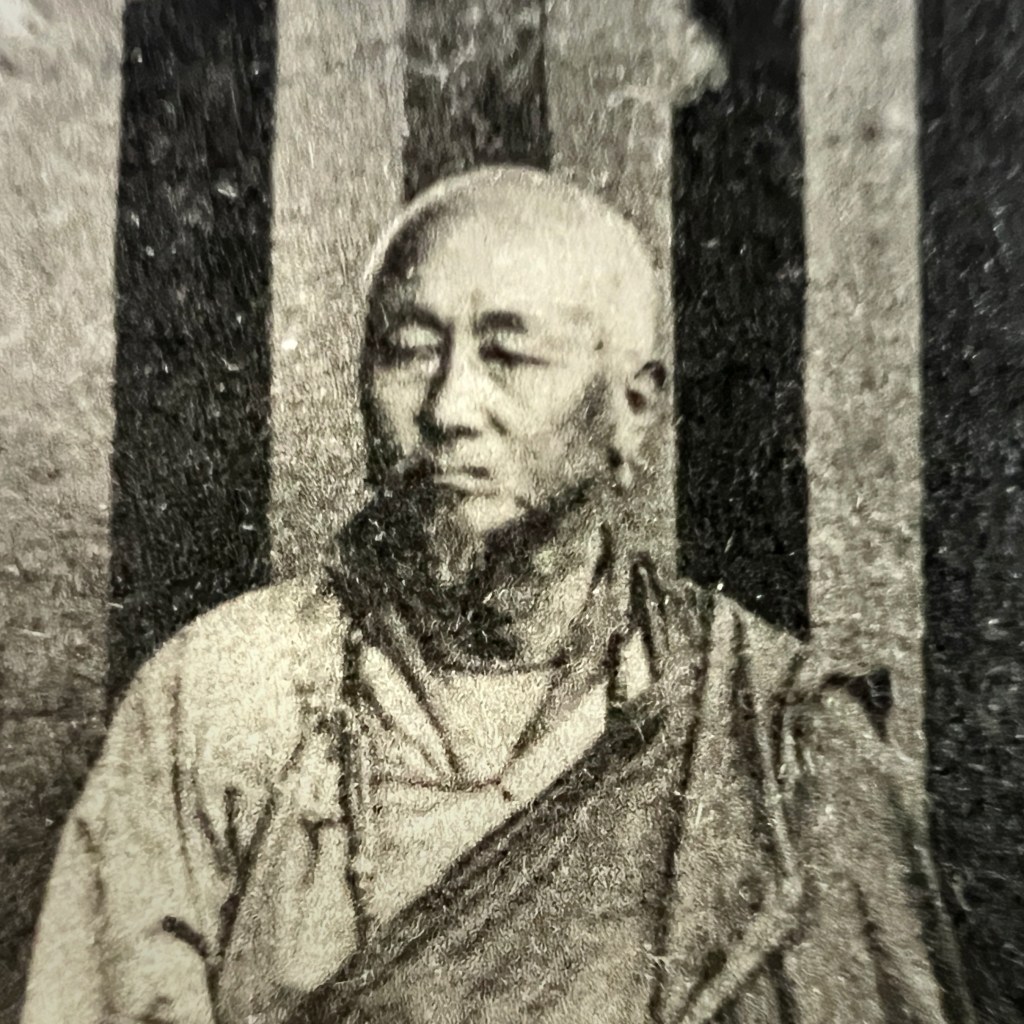
Despite the ambiguous caption—”A Group of Thibetan Musicians”—the history behind this anonymous photograph is remarkably well-documented. Taken by Robert Phillips before 1873, we see a gathering of the resident lamas at Sangchen Thongdrol Ling, a Nyingma monastery in Darjeeling.

Phillips, who operated a prominent studio in the colonial hill-station, submitted his photograph to the Illustrated London News which published an engraving of this image with an accompanying article in 1873. The sitting lama are described as natives of Sikkhim posing with ritual instruments.

Great Britain pioneered divided back postcards in 1902, allowing messages on the address side for the first time. This innovation sparked a surge in popularity for postcards featuring full-view images—even if, as in this case, the photographs were already decades old.

The newspaper article identifies figure on the far left as the head officiating lama. Before him are placed ritual instruments including a small hand drum, a vajra scepter, and bell.

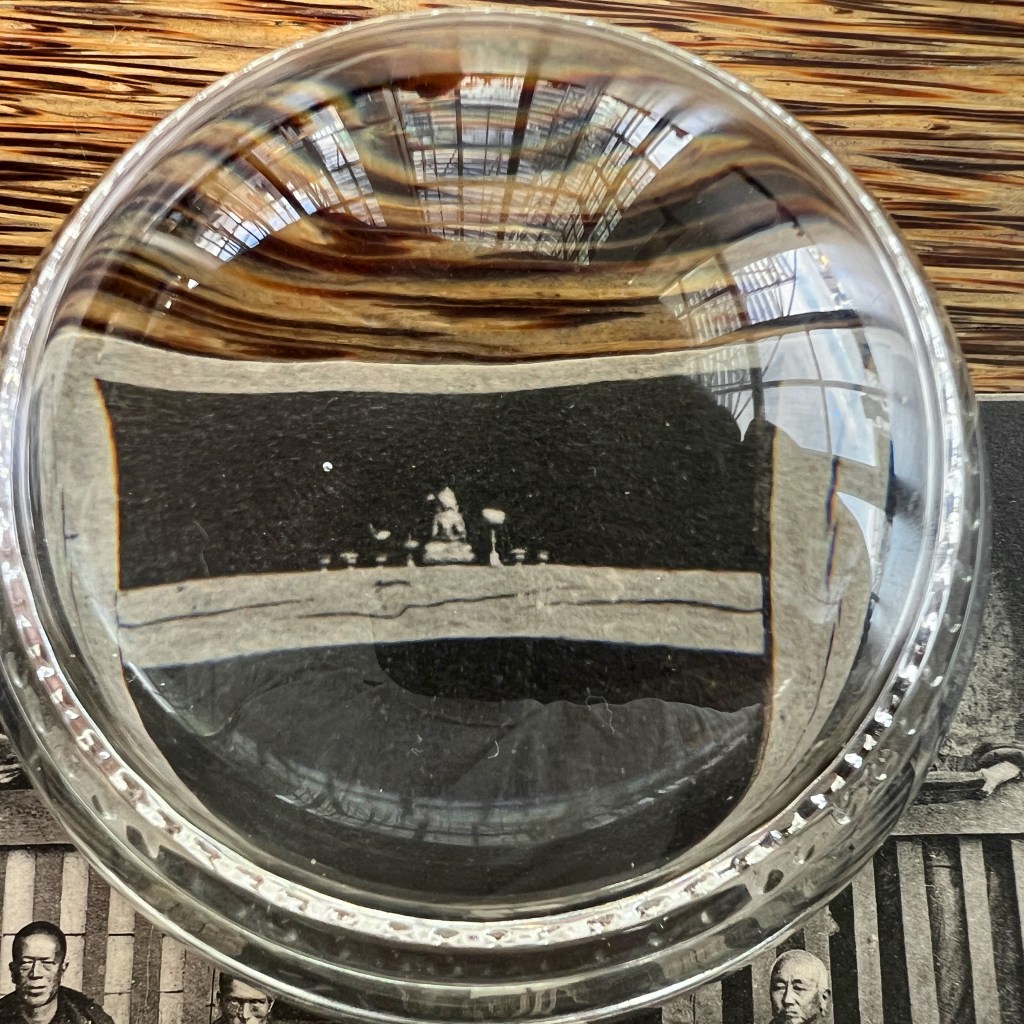
A small Buddhist icons rests above the doorway with small brass offering bowls of oil and rice set on both sides. The main altar, not visible in the photograph, reportedly enshrined an image of Padmasambhava, the Indian adept famed for introducing Tantric Buddhism into Tibet.

Often described as the oldest Buddhist monastery in Darjeeling, the temple was forced to relocate in 1879 to Ging by British authorities. To read more about details in Phillips’ photograph, consult the Illustrated London News article, viewable here: https://tinyurl.com/329mh668.


The Buddhas in the West Material Archive is a digital scholarship project that catalogues artifacts depicting Buddhist material culture for Western audiences. It’s comprised of prints, photos, and an assortment of ephemera and other objects. For a brief introduction to this archive, visit the main Buddhas in the West project page.


For Related Buddhas in the West Posts Featuring Tibet:


For the Most Recent Buddhas in the West Posts:

Herbert Ponting’s Flute Playing Komusō Stereoview

For all the new Buddhas in the West posts
follow us on Bluesky & Instagram


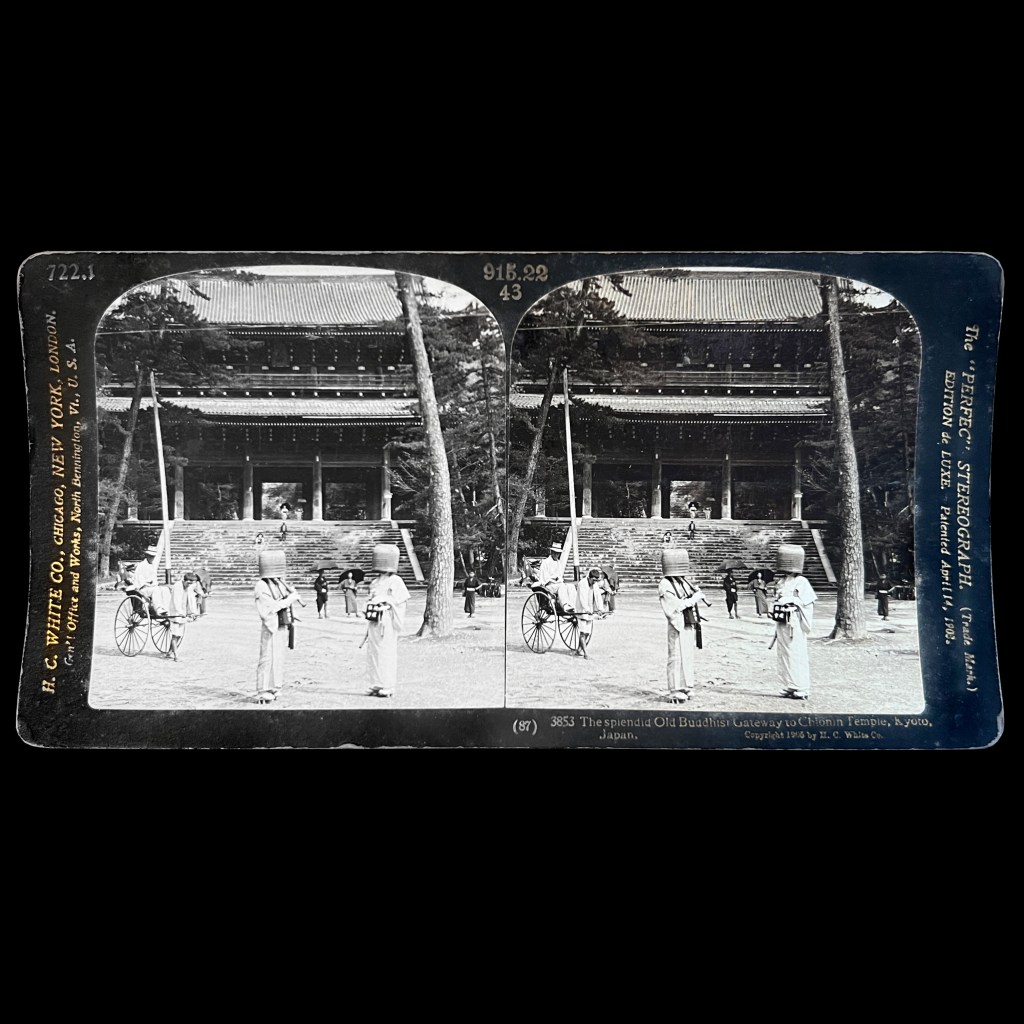
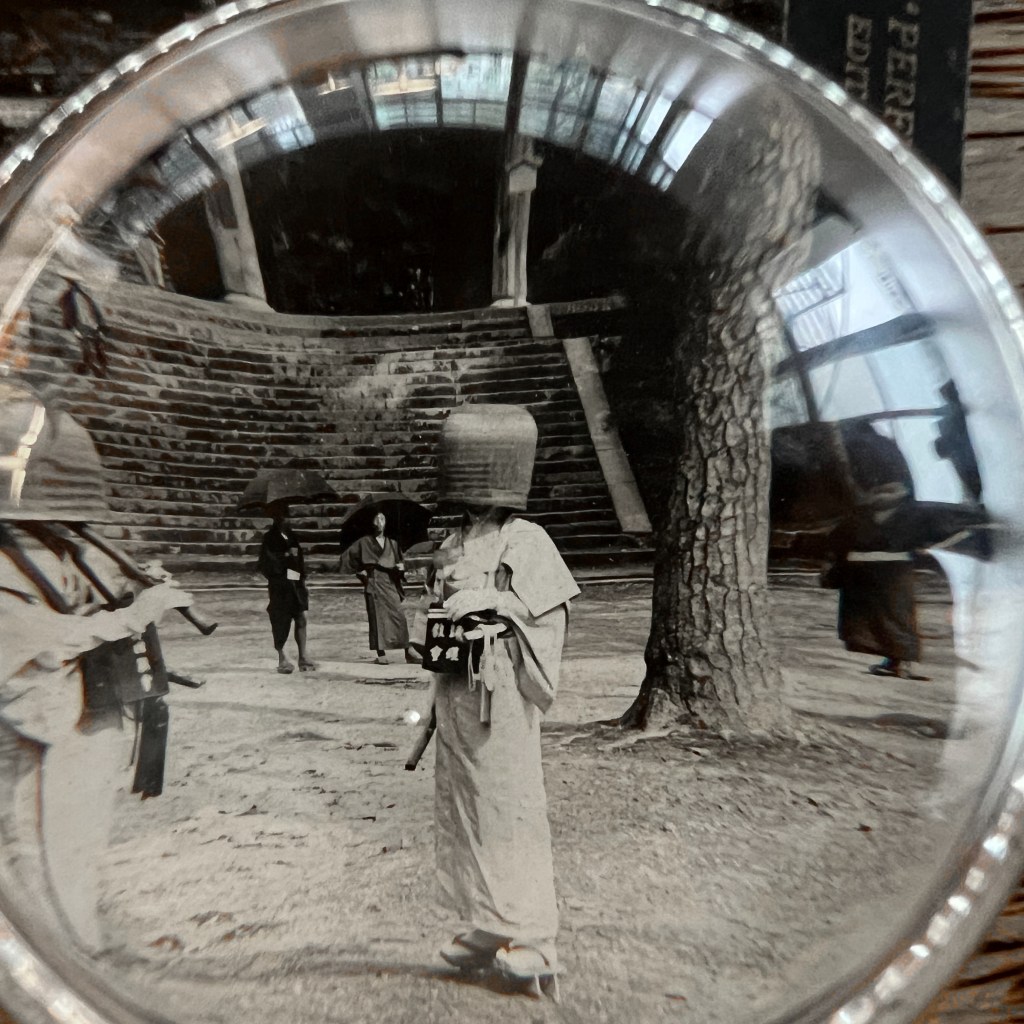
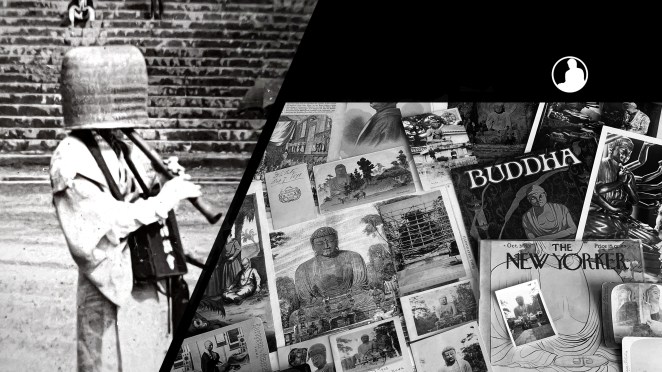
The Russo-Japanese War (1904–05) fueled Western demand for new images of a rapidly modernizing Japan. Among the companies meeting this demand was H. C. White, which issued boxed stereoview sets of Japan highlighting both its cultural traditions and signs of modern progress.

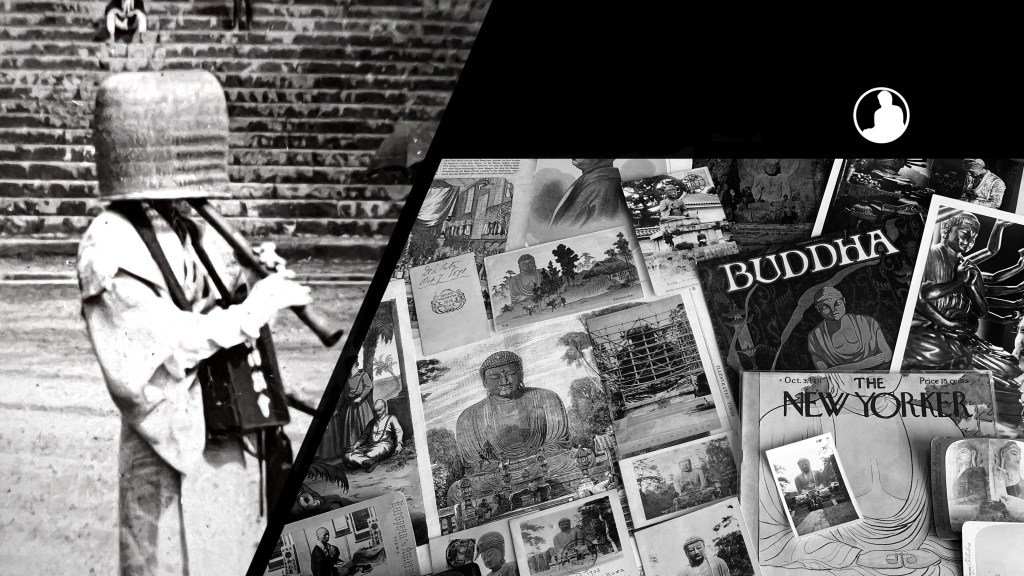
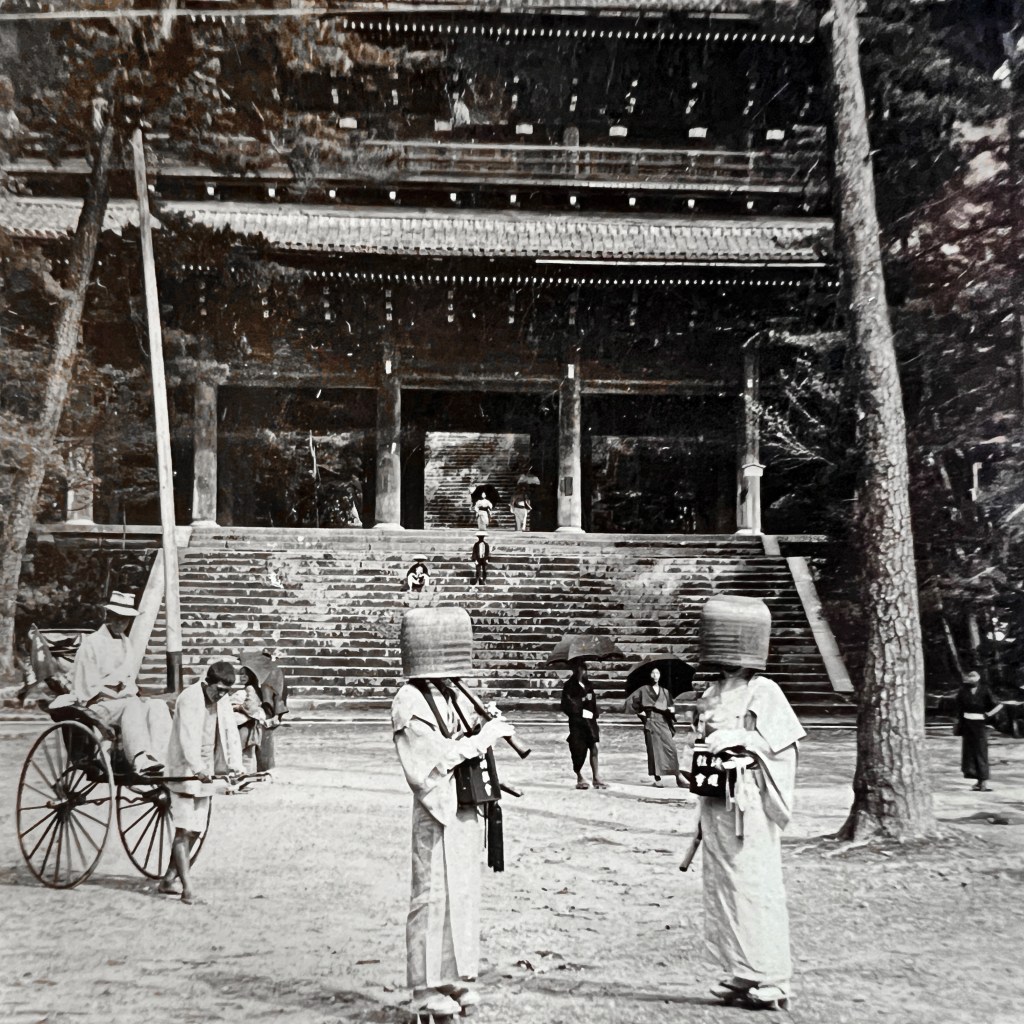
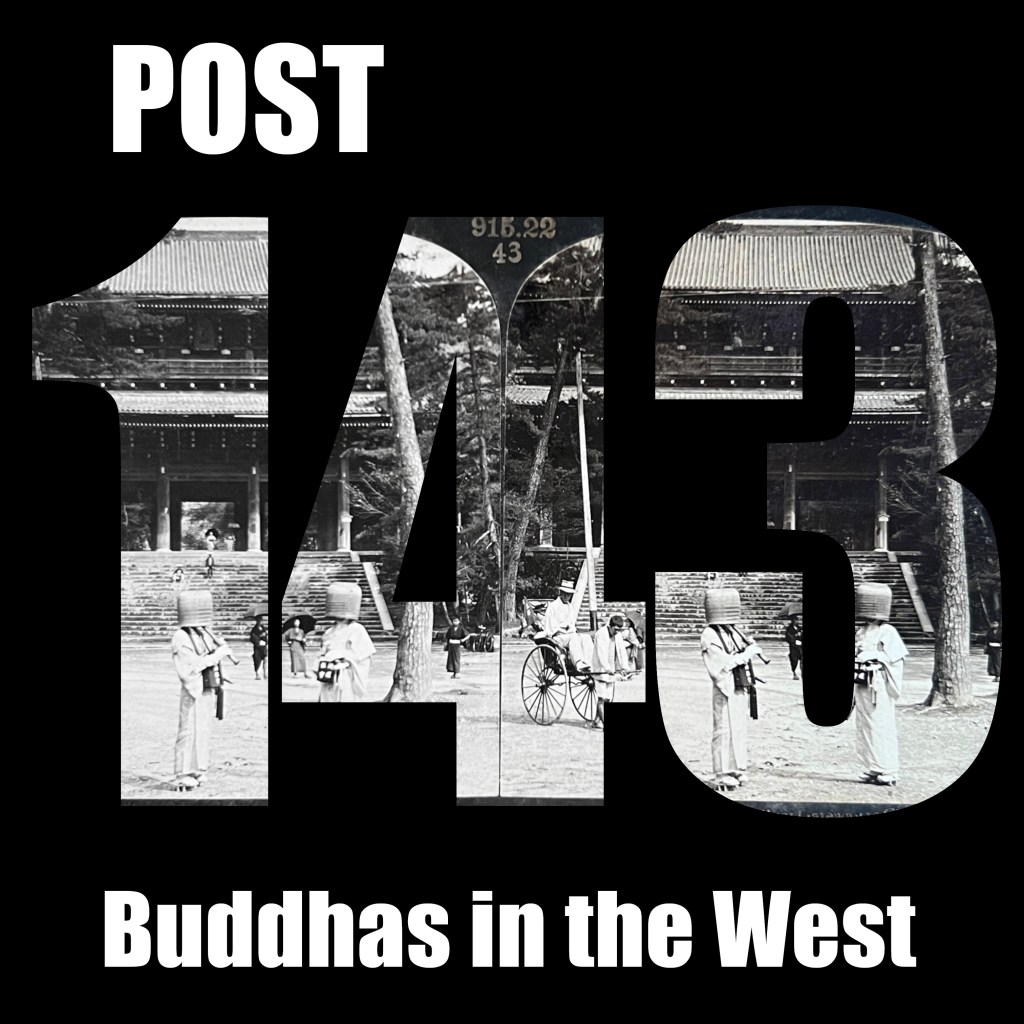
This photograph was taken by the seasoned stereophotographer Herbert Ponting, who had produced Japan sets for other studios, including H. C. Graves and Underwood. The scene depicts the front gate of Chion-in, the head monastery of the Pure Land sect founded by Hōnen in the 12th century.

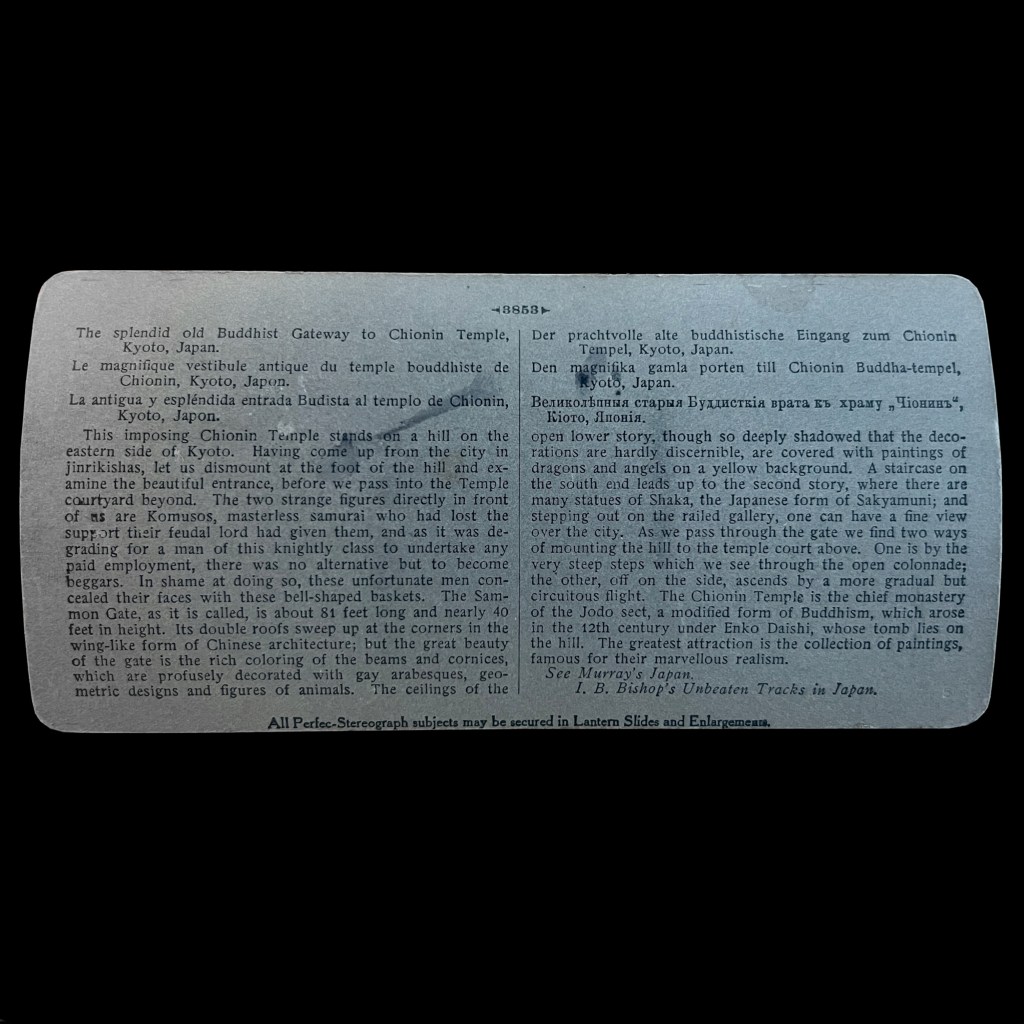
The accompanying description reads like a guided tour of the temple grounds, lending narrative weight to the immersive “virtual reality” effect of stereophotography. It blends historical context with vivid visual detail, inviting viewers to examine the scene closely.

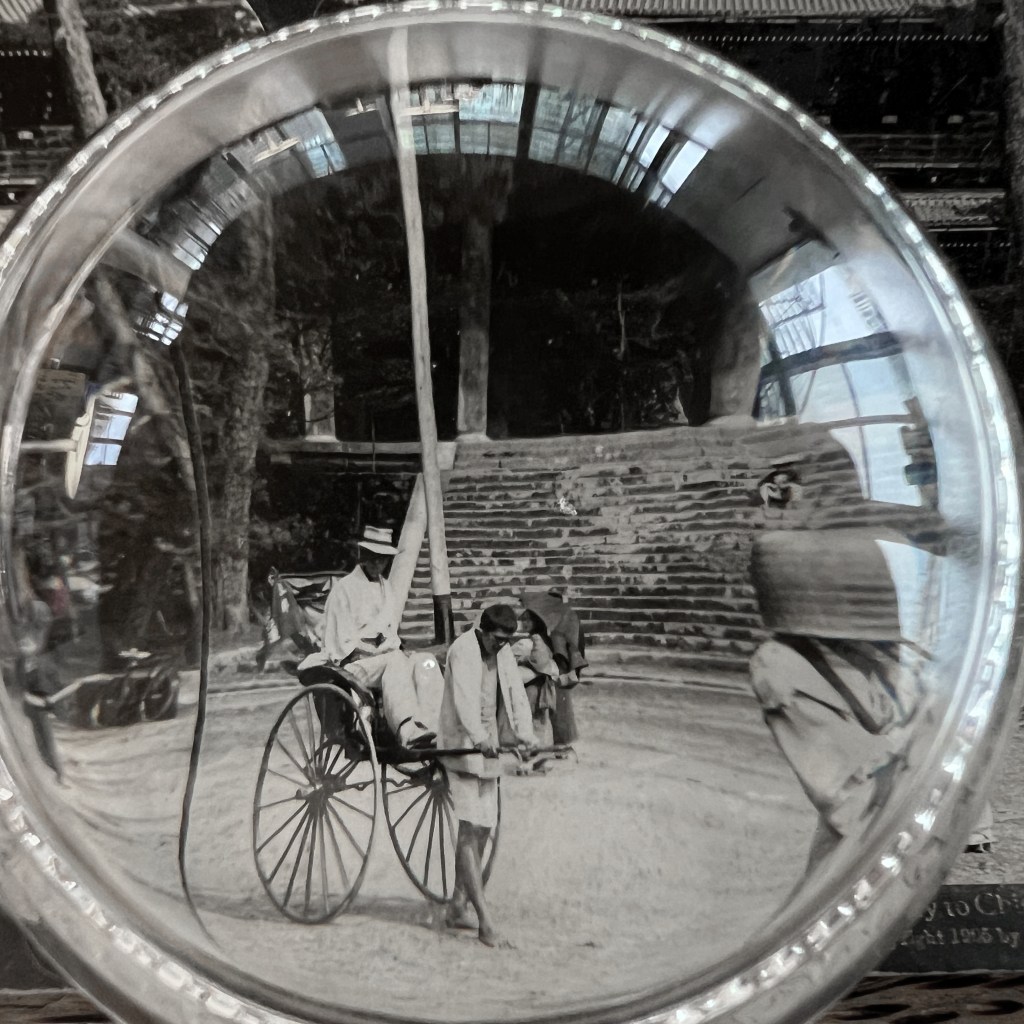
Compositional touches, such as the tourist seated in a pulled rickshaw, reinforce Japan’s presentation as a traveler’s paradise for Western audiences.

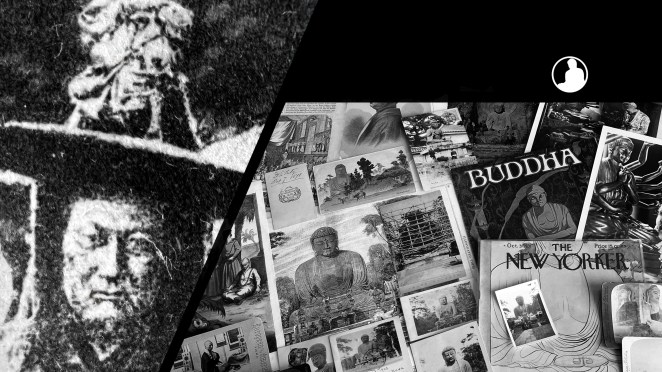
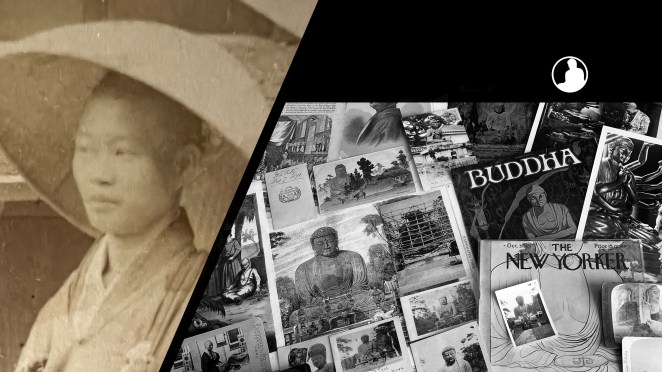
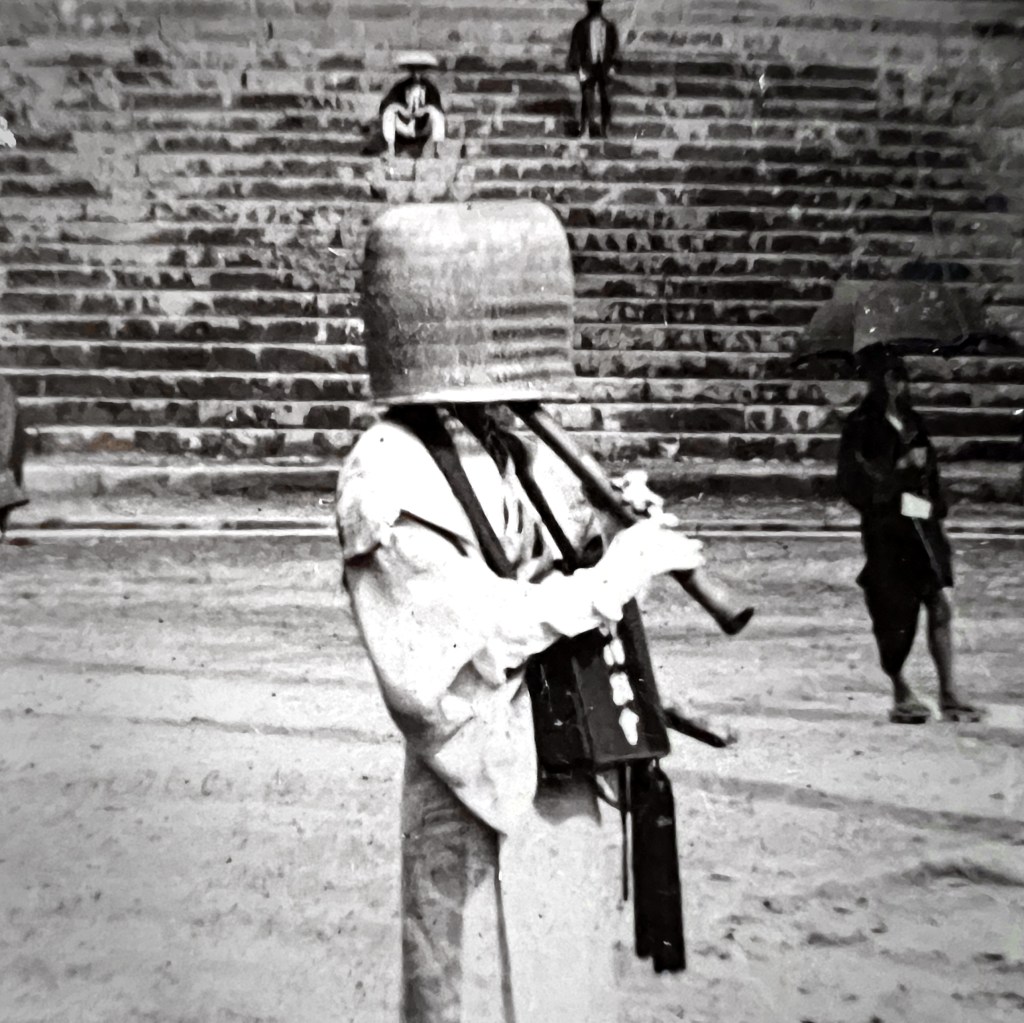
At the center stand komusō, “monks of nothingness,” recognizable by their basket hats and their playing of the bamboo shakuhachi during begging rounds.

In the West, shakuhachi performance is often linked to a Zen-like moment of spiritual awakening – an interpretation largely absent from Japanese historical practice. For more, see Max Deeg, “Komusō and Shakuhachi-Zen: From Historical Legitimation to the Spiritualisation” (2007).


The Buddhas in the West Material Archive is a digital scholarship project that catalogues artifacts depicting Buddhist material culture for Western audiences. It’s comprised of prints, photos, and an assortment of ephemera and other objects. For a brief introduction to this archive, visit the main Buddhas in the West project page.


For Related Buddhas in the West Posts Featuring Herbert Ponting:


For the Most Recent Buddhas in the West Posts:

The Mask of Fu Manchu (1932) Art Studio Photograph

For all the new Buddhas in the West posts
follow us on Bluesky & Instagram


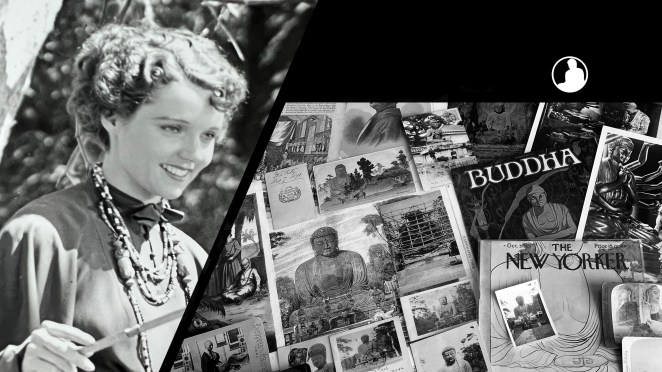
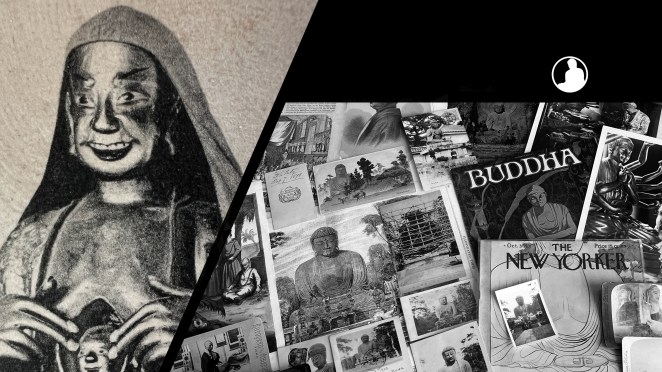
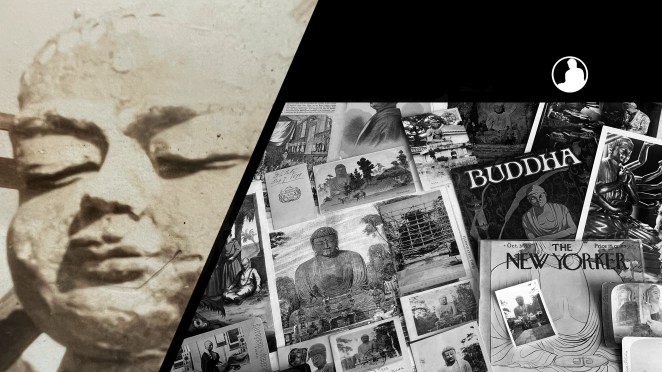
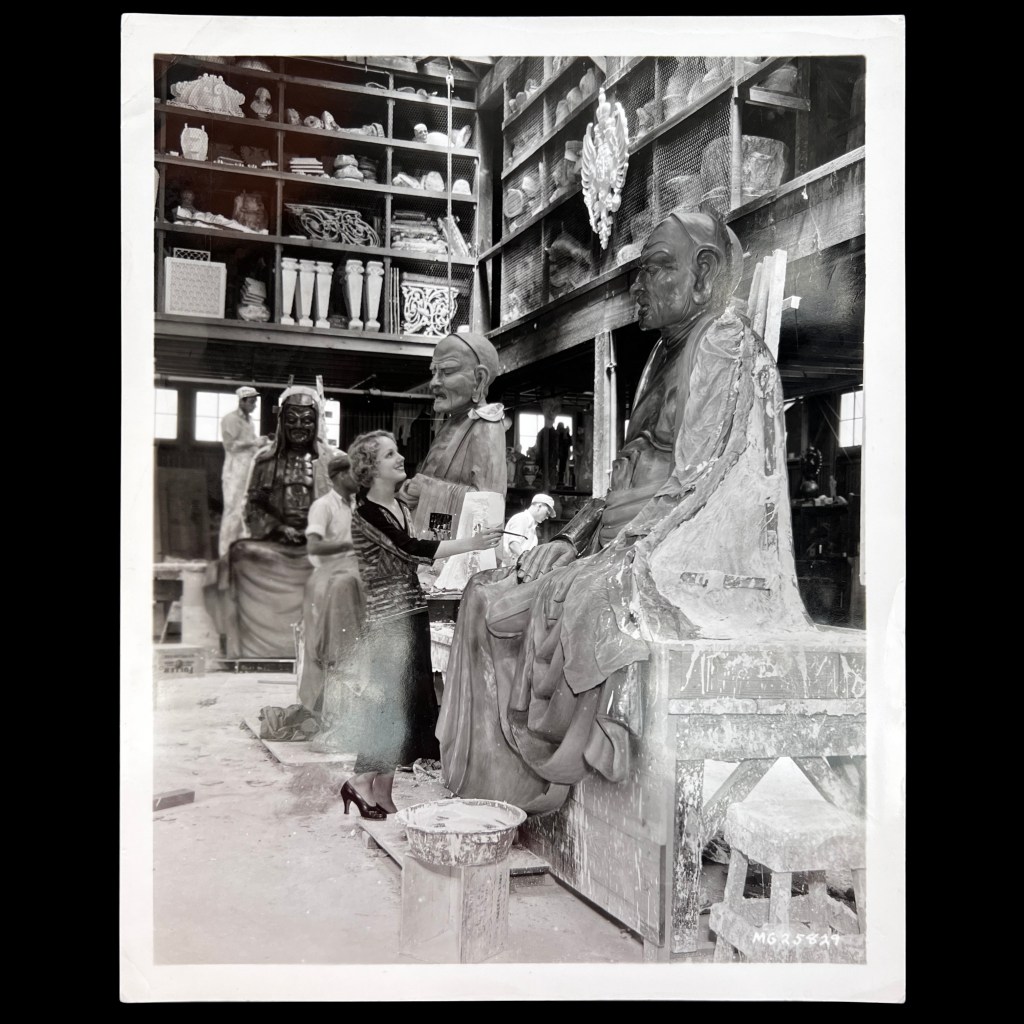
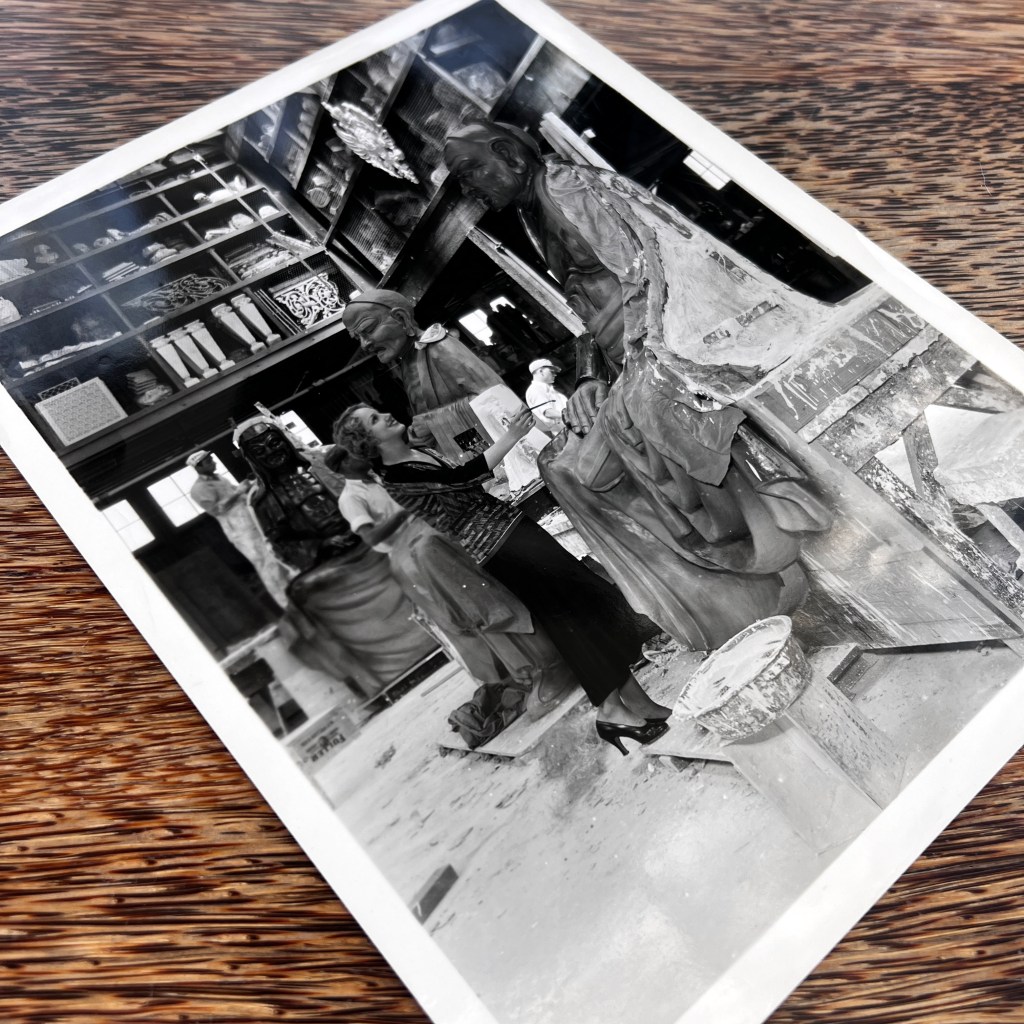
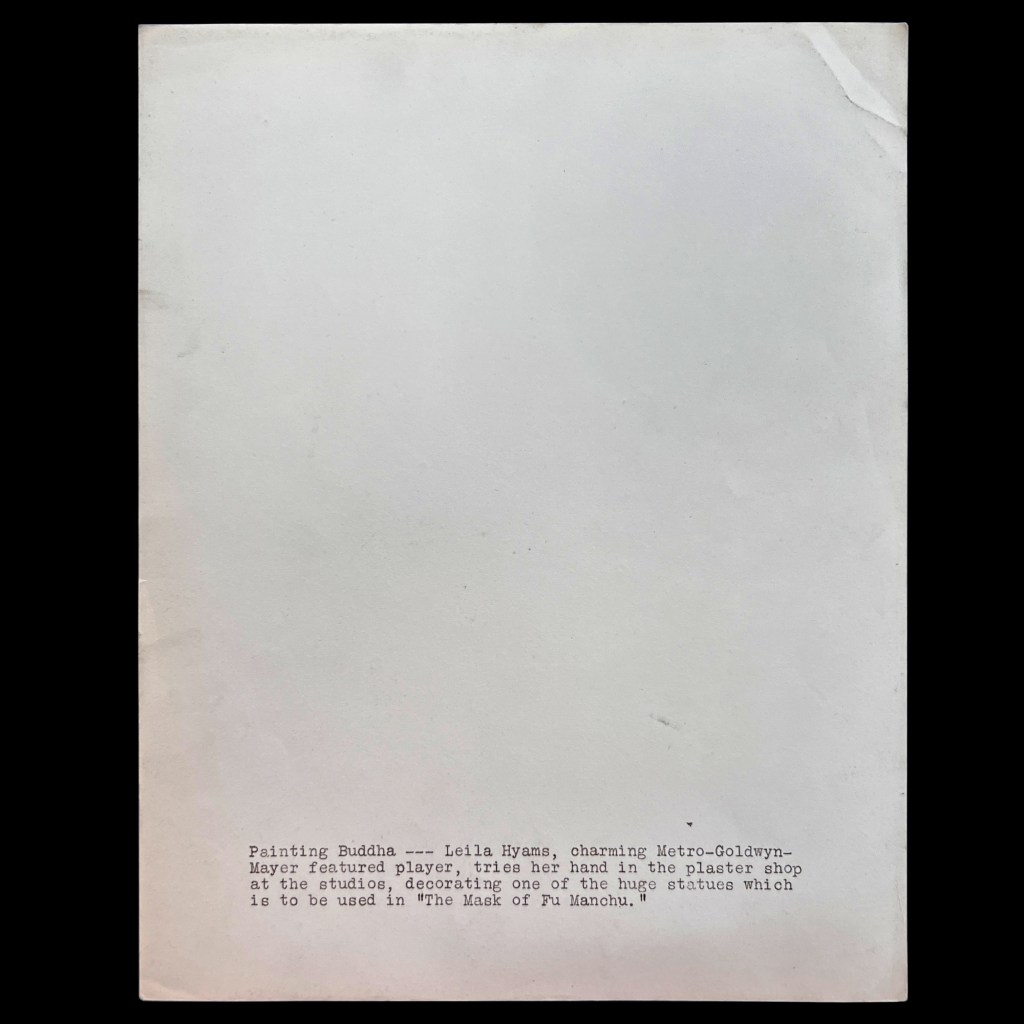
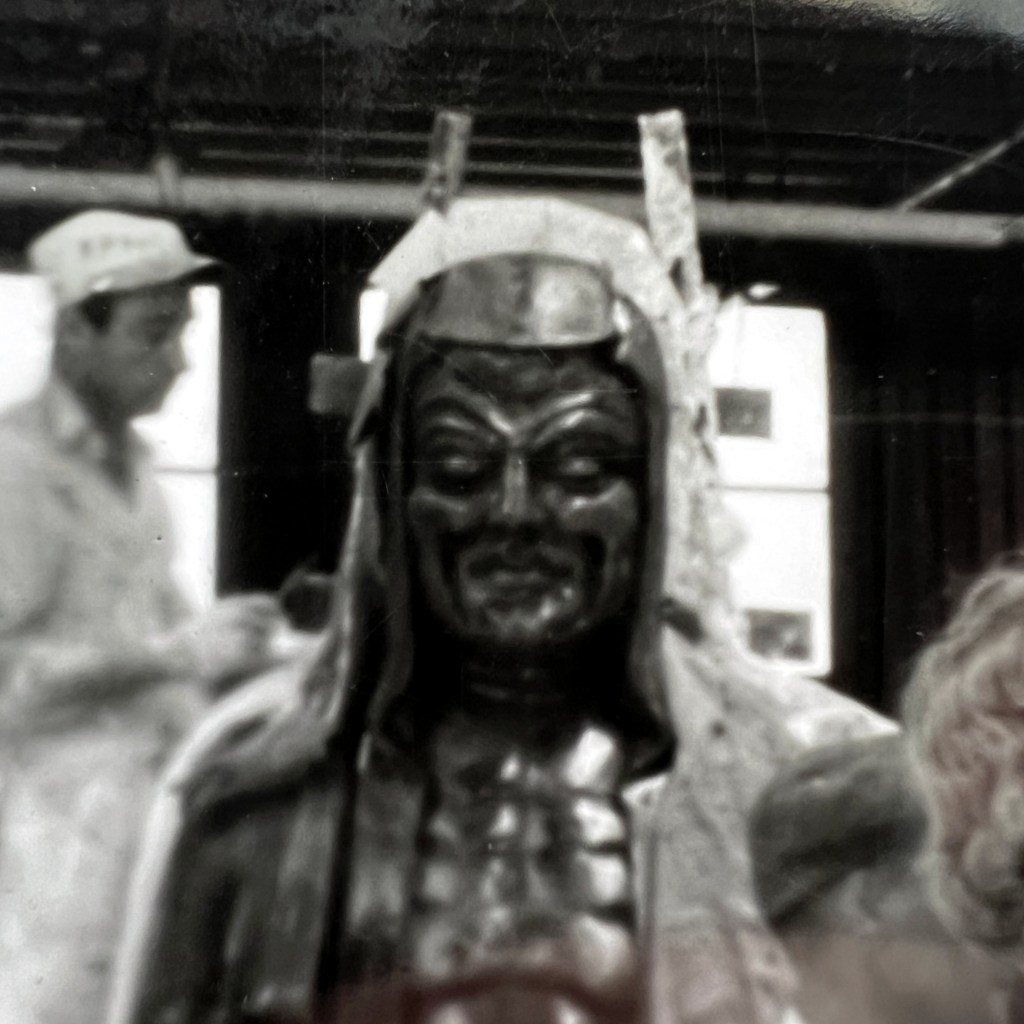
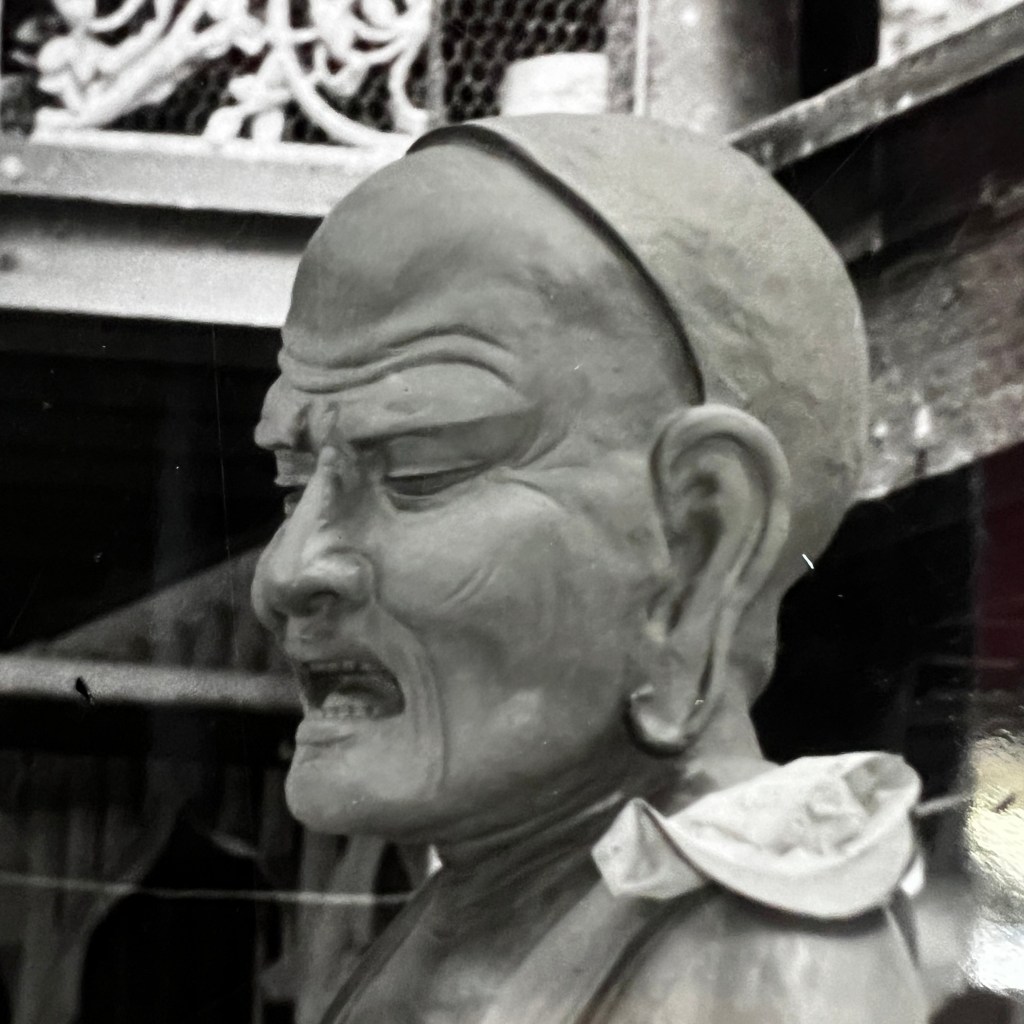
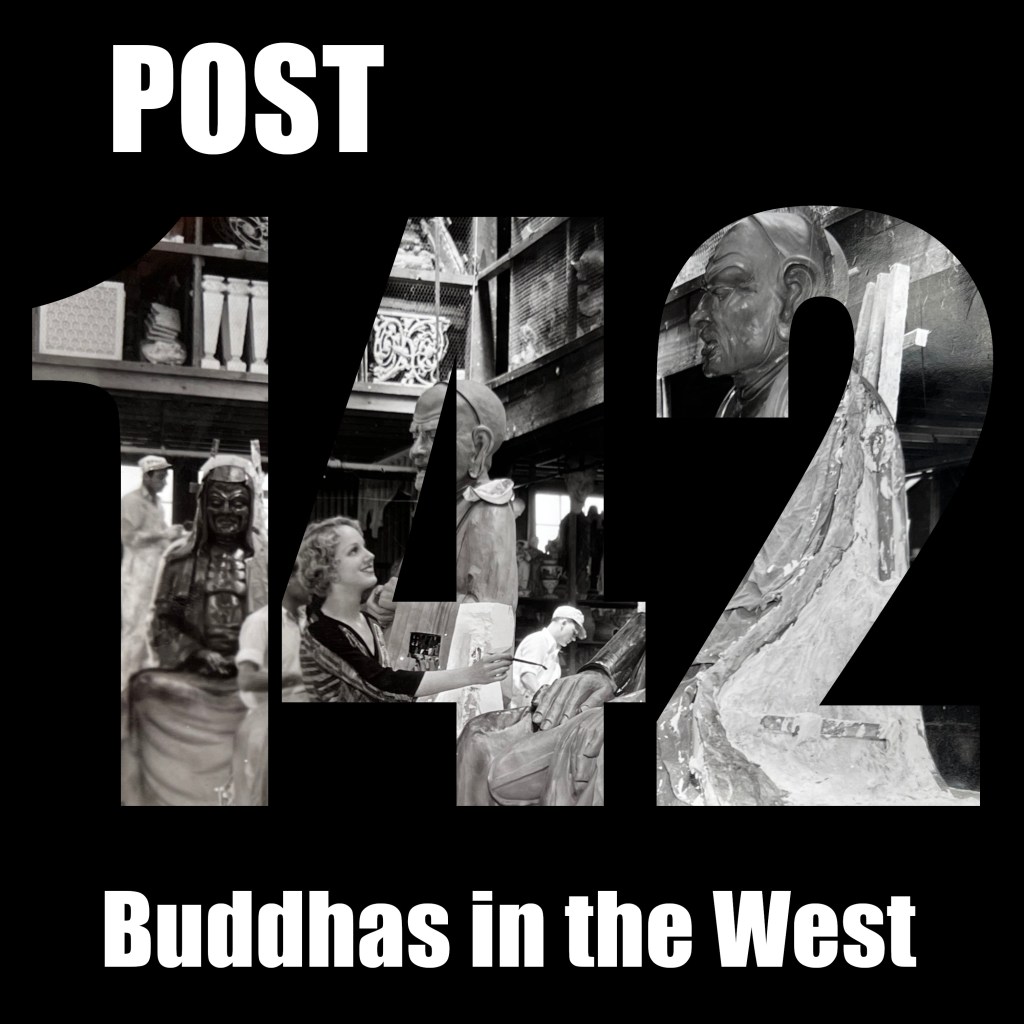
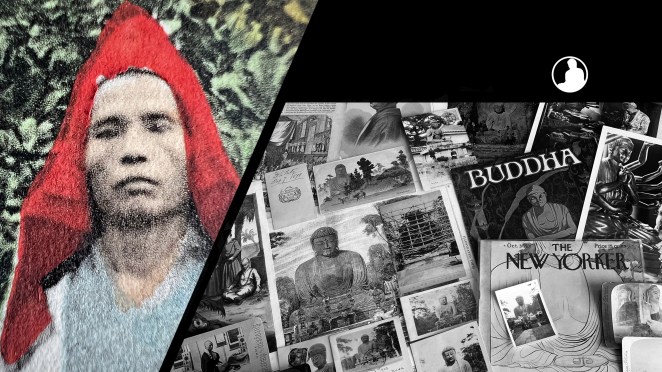
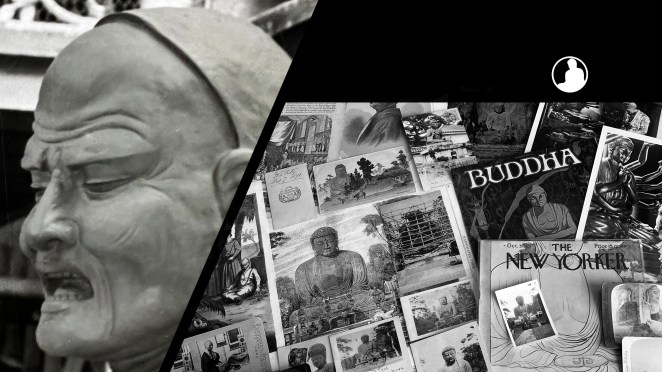
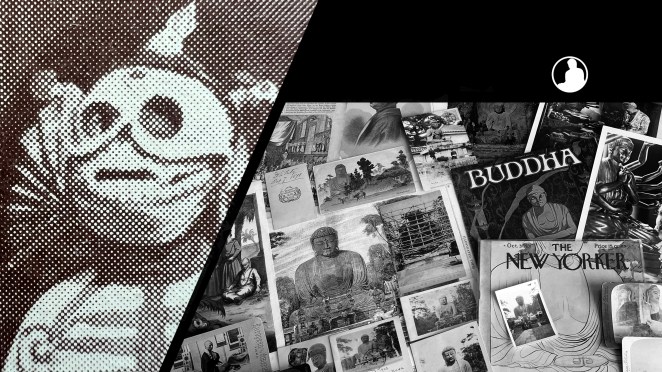
In this behind-the-scenes photo from The Mask of Fu Manchu (1932), MGM’s workshop prepares towering Buddhist statues for use as set design. Despite present-day associations with peace, art director Cedric Gibbons relied on this monumental Buddhist imagery to evoke mystery and danger.

Gibbons made faithful reproductions of arhat statues, figures known in East Asia for having exaggerated and misshapen bodies and heads–signs of their supernatural attainments. These facts were unknown to most audiences who would have viewed them as expression of Fu Manchu’s grotesque villainy.

As typed on the back, the woman in the photo was Leila Hyams, an MGM studio actor who did not appear in The Mask of Fu Manchu, but had starred in MGM films since 1928.

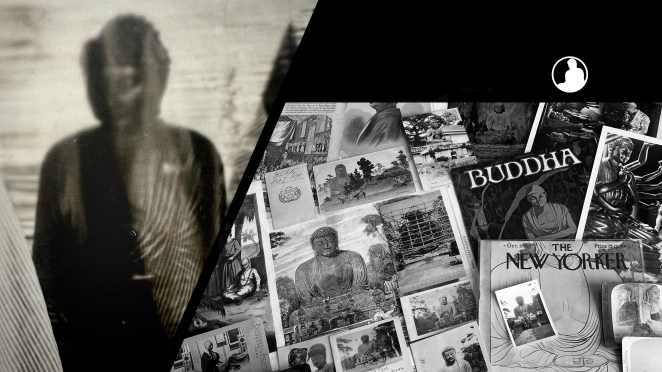
The statue in the rear with a hood is the famous Zen patriarch, Bodhidharma (perhaps his first depiction in American film?) In East Asia, Bodhidharma was sometimes included in sets of eighteen arhats that flanked the walls of Buddhist monasteries.

These oversized temple statuary, detached from their religious context, became atmospheric props signaling an imagined Asian world to Western audiences. For further discussion of Asian representation in cinema, see Naomi Greene’s From Fu Manchu to Kung Fu Panda (2014).


The Buddhas in the West Material Archive is a digital scholarship project that catalogues artifacts depicting Buddhist material culture for Western audiences. It’s comprised of prints, photos, and an assortment of ephemera and other objects. For a brief introduction to this archive, visit the main Buddhas in the West project page.


For Related Buddhas in the West Posts Featuring Arhats:


For the Most Recent Buddhas in the West Posts:

Philip Klier’s Shwedagon Pagoda Postcard

For all the new Buddhas in the West posts
follow us on Bluesky & Instagram


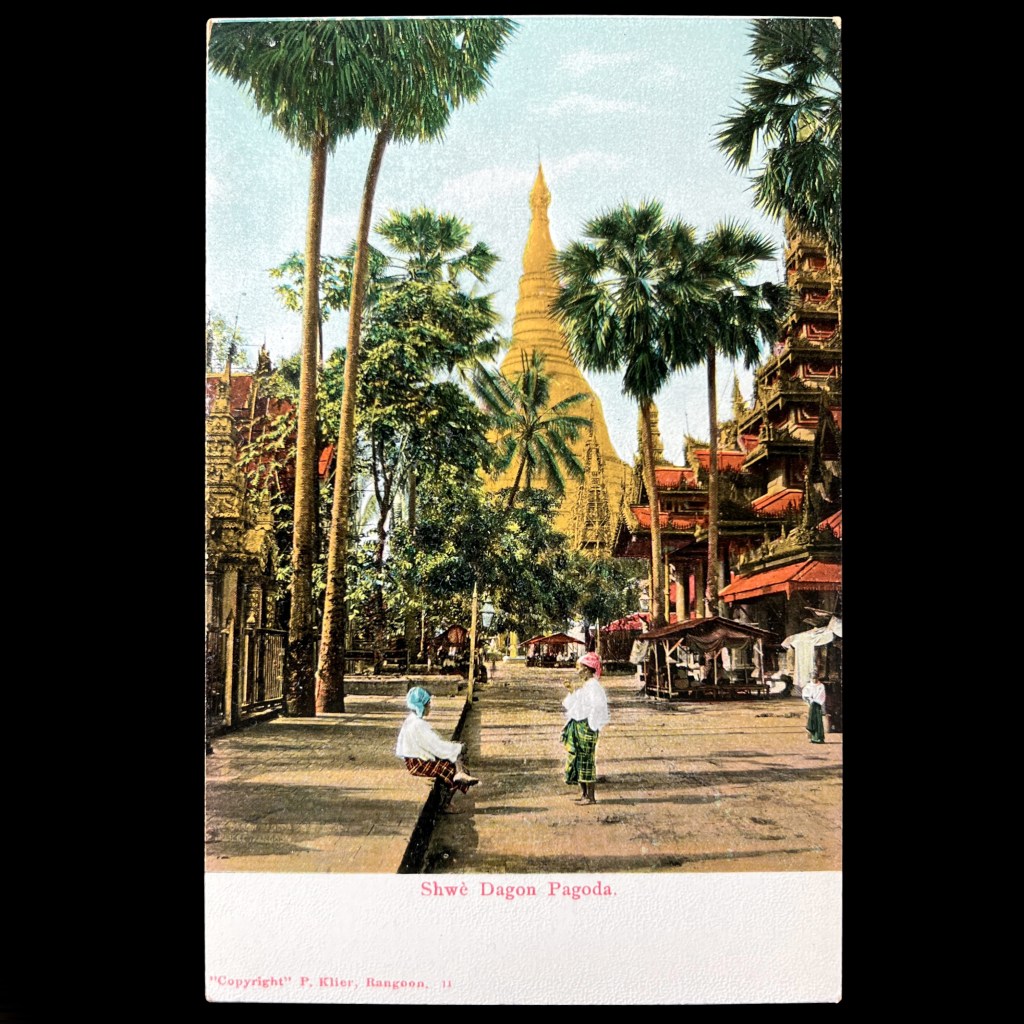
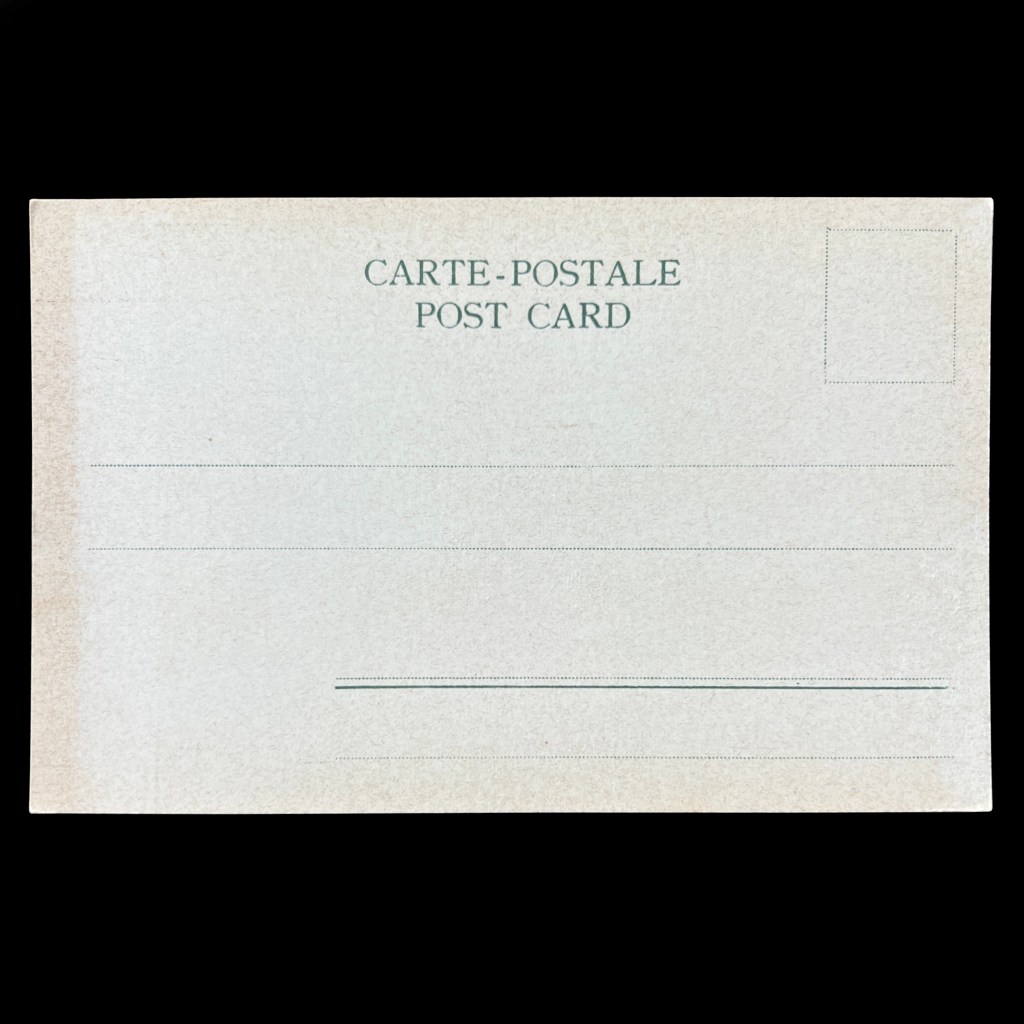
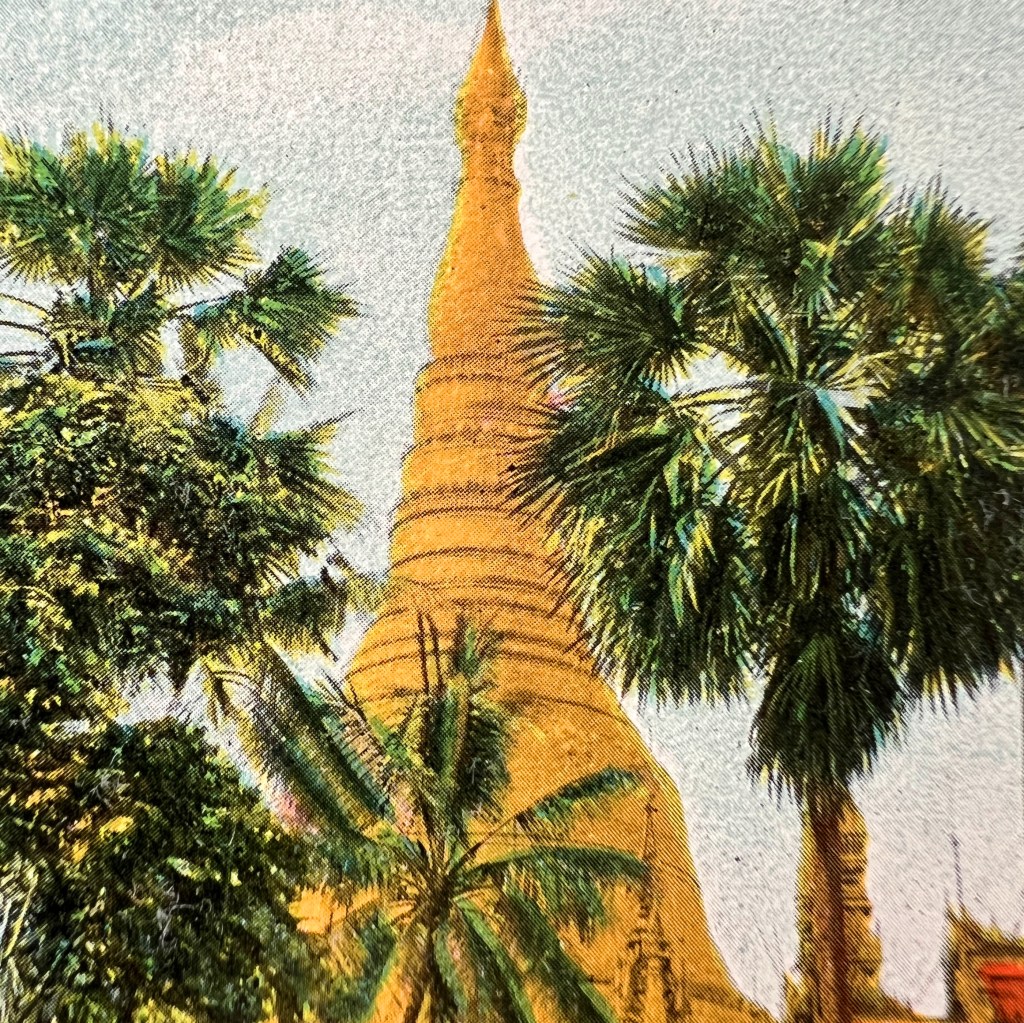
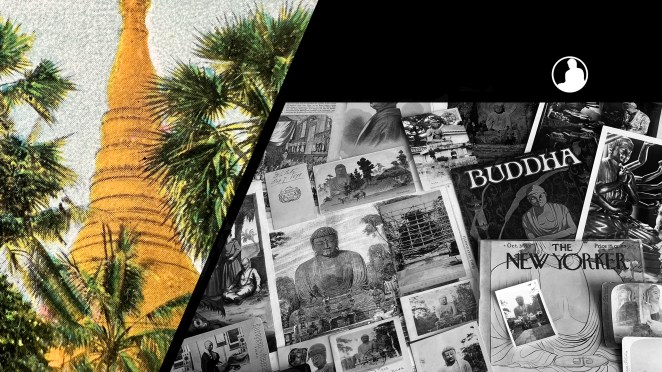
At the turn of the 20th century, tourists entering British Burma on a steamer would have looked down the Rangoon River to see the golden Shwedagon Pagoda in the far distance. Myanmar’s most sacred Buddhist site, the pagoda stands 112 m (367 ft) tall and dominates the Yangon skyline.

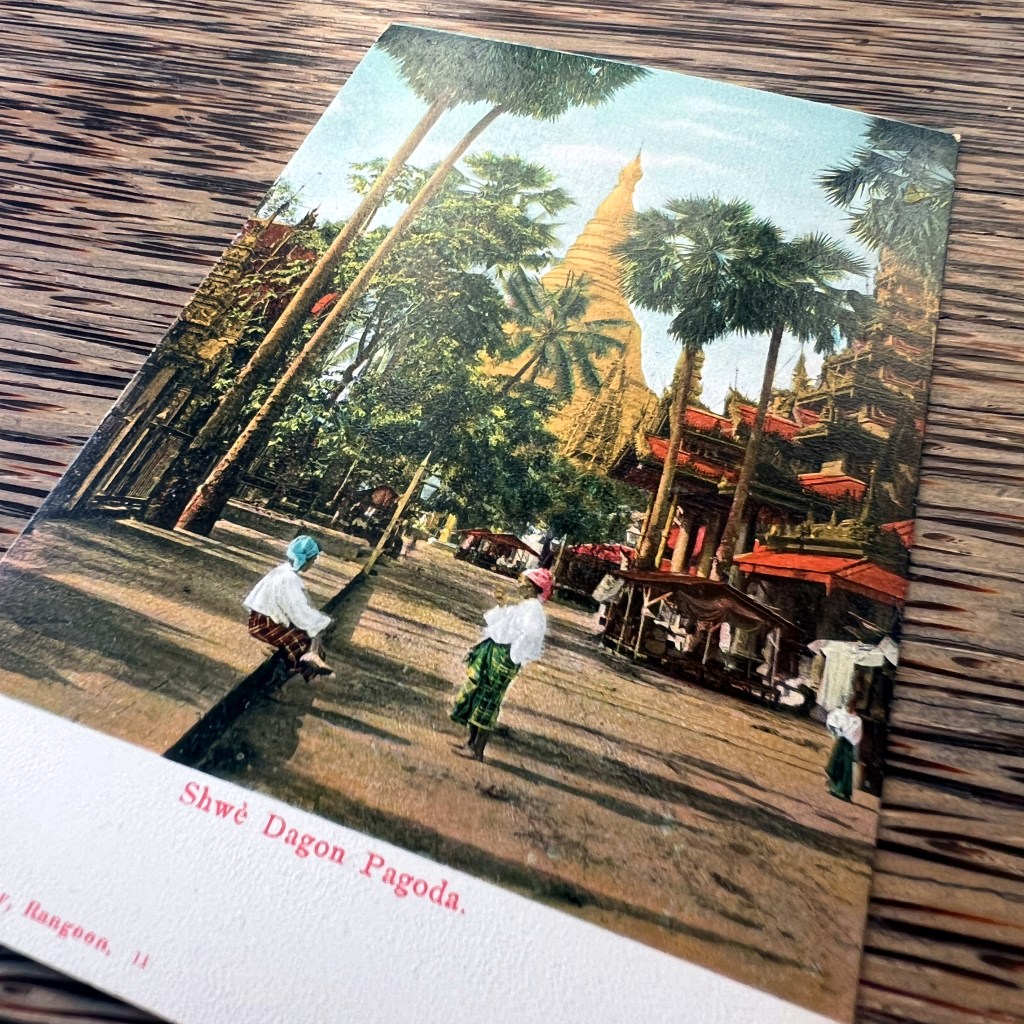
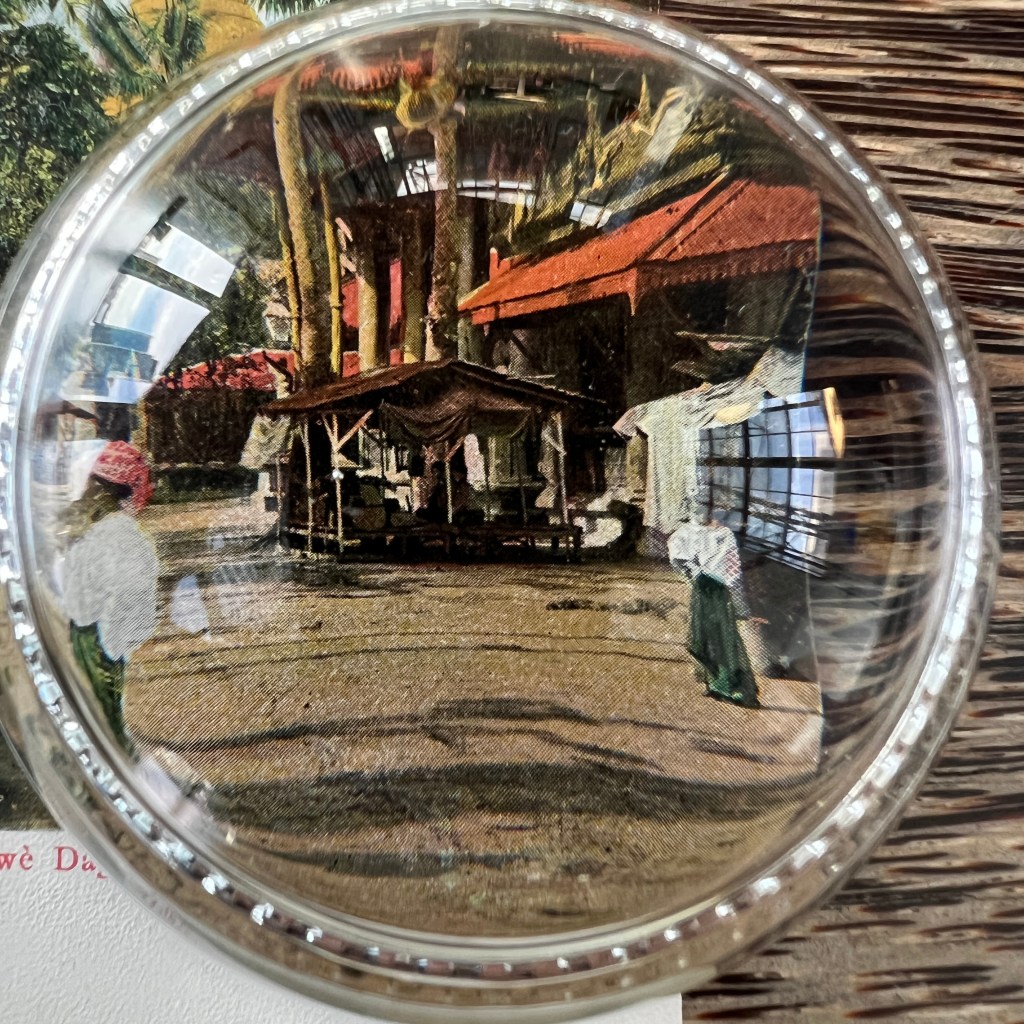
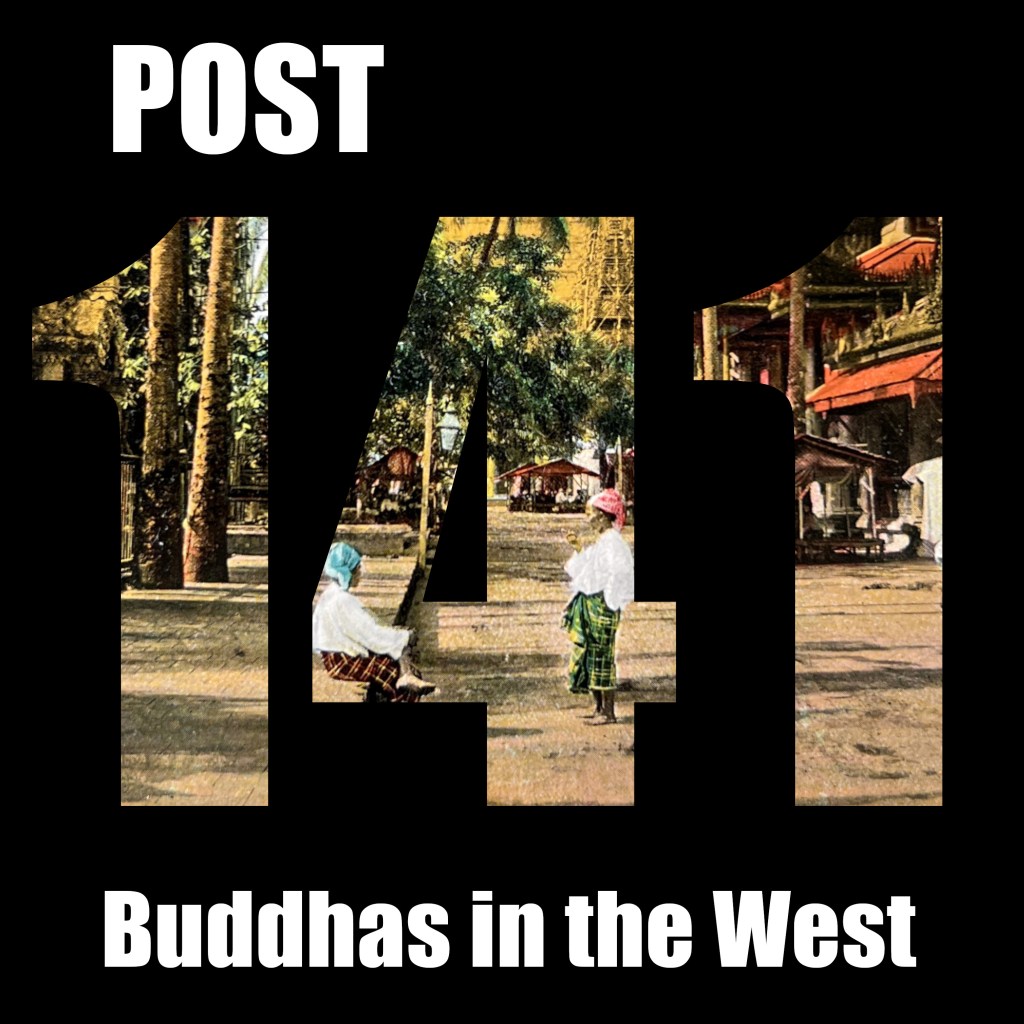
German photographer Philip Klier’s image blends monumentality with everyday life; palm trees frame the towering golden stupa while Burmese figures animate the foreground and provide scale. Klier presents an idyllic vision for colonial consumers seeking the “exotic” East.

Following the postcard boom, Klier used his studio album photographs as the basis for portable, vibrantly colored postcards. Such cards circulated through imperial mail networks, shaping how distant places like Burma were imagined by audiences in Europe and beyond.

In the colonial period, some Burmese merchants became wealthy through trade in rice and timber and sites like Shwedagon Pagoda experienced rapid growth. Newly built resting pavilions and stalls selling flowers, parasols, and curios could be seen all over the grounds.

More than kitsch souvenirs, postcards reveal how colonial interactions and photography mediated encounters between Burma and the wider world at the turn of the century. For more on colonial photography in Burma, see Noel Singer’s Burma: A Photographic Journey (1993).

The Buddhas in the West Material Archive is a digital scholarship project that catalogues artifacts depicting Buddhist material culture for Western audiences. It’s comprised of prints, photos, and an assortment of ephemera and other objects. For a brief introduction to this archive, visit the main Buddhas in the West project page.


For Related Buddhas in the West Posts Featuring the Shwedagon Pagoda:

For the Most Recent Buddhas in the West Posts: