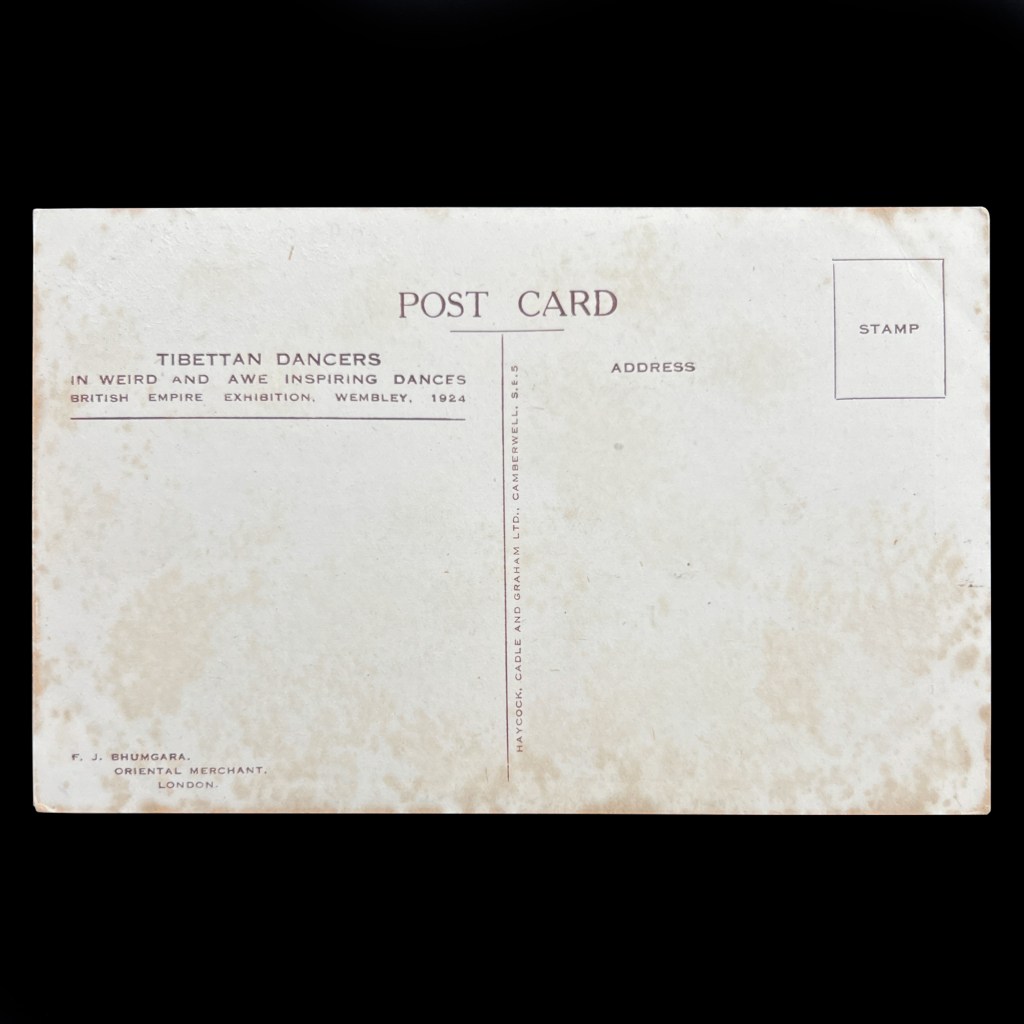
1924 British Empire Exhibition Tibetan Dancers Postcard

For all the new Buddhas in the West posts
follow us on Bluesky & Instagram


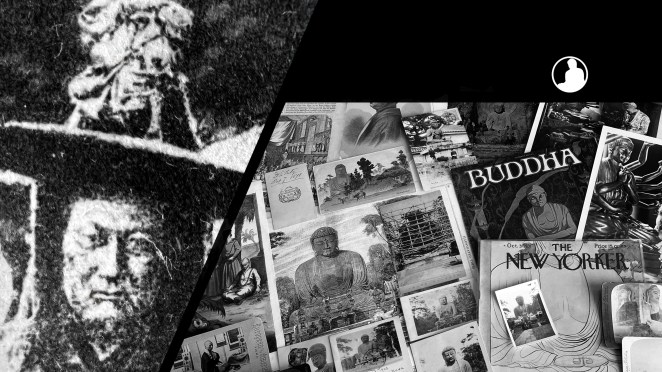
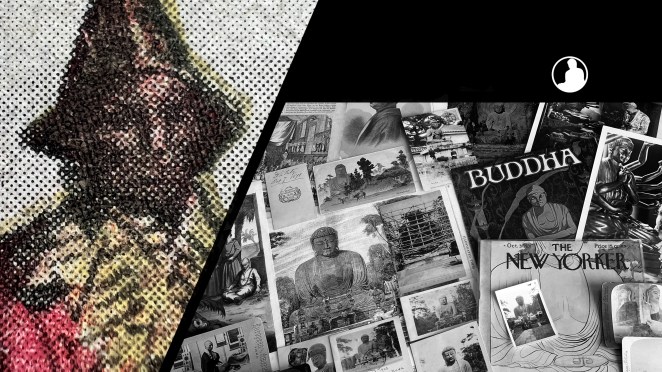
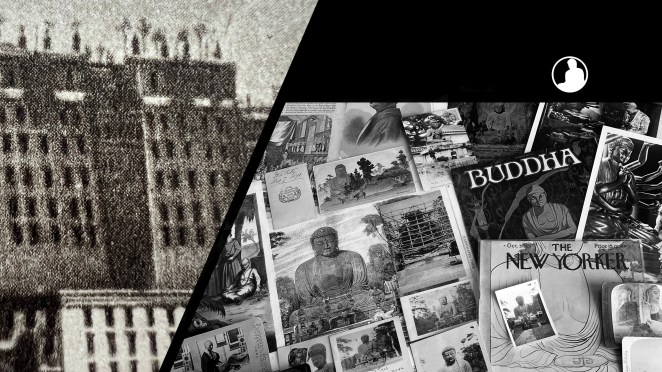
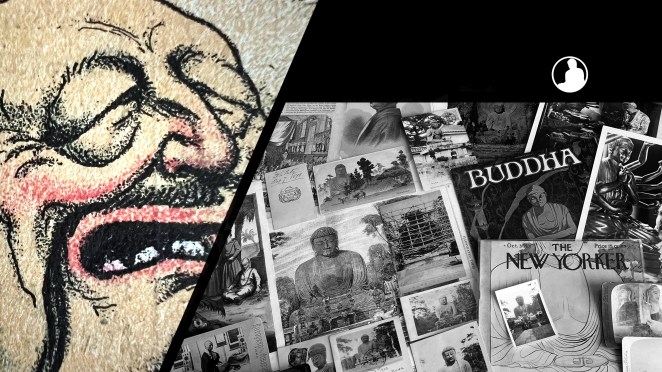
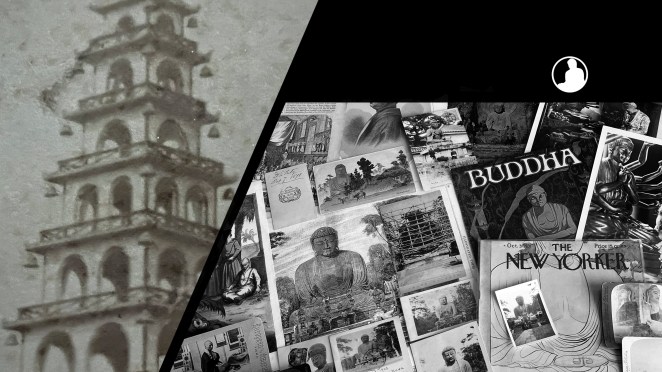
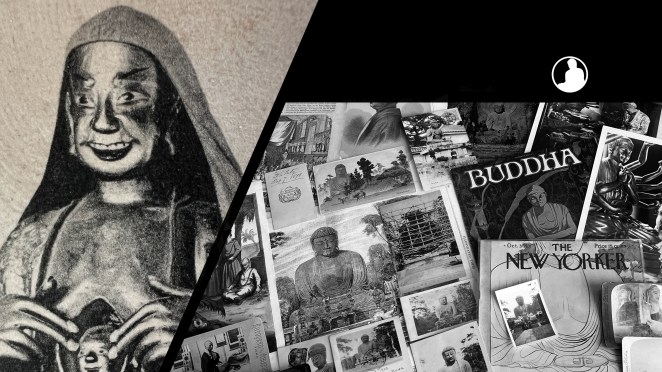
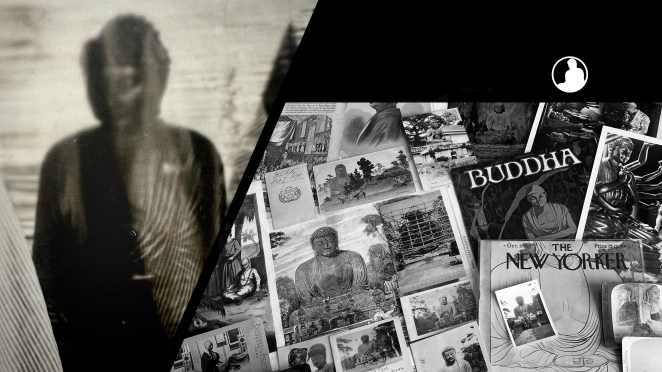
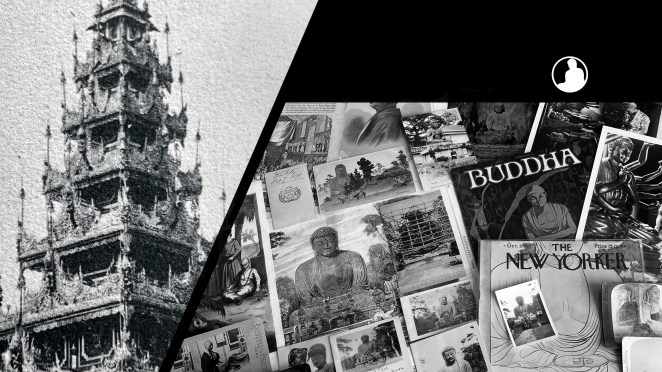
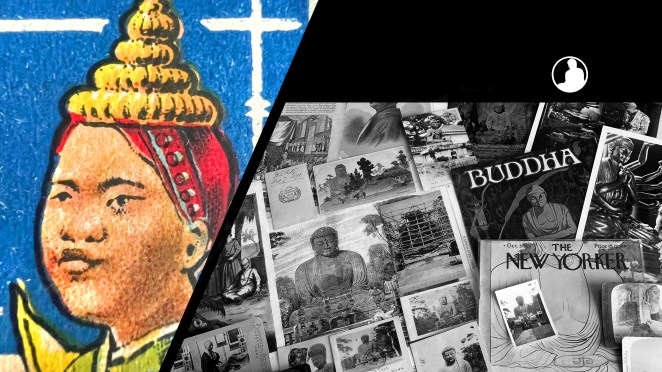
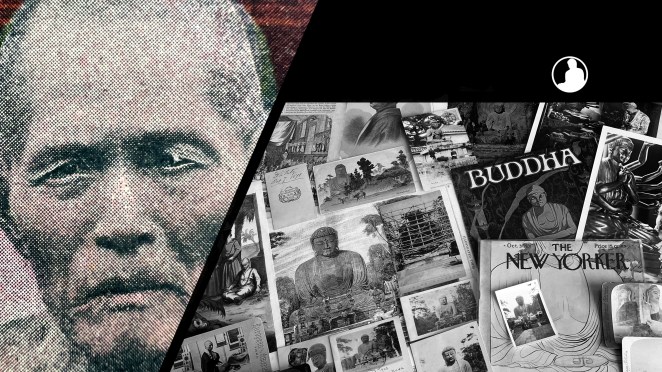
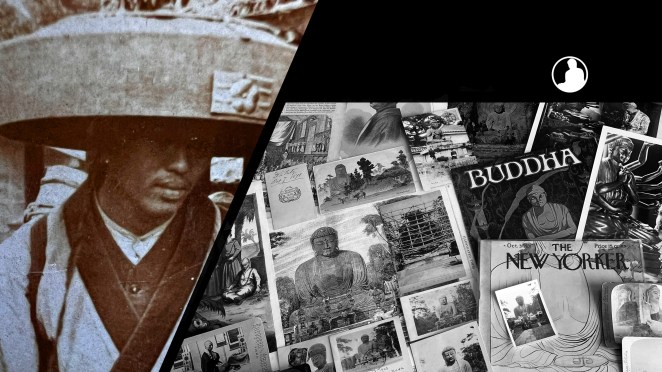
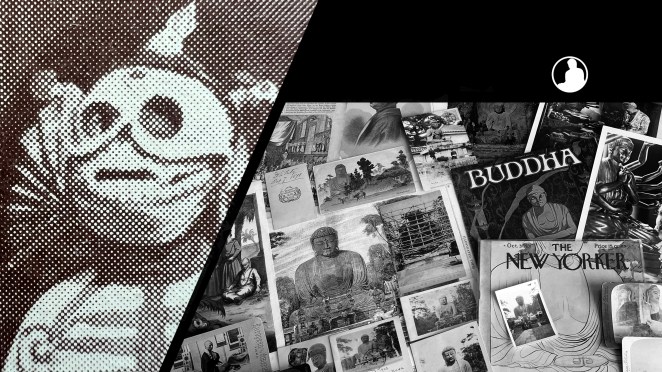
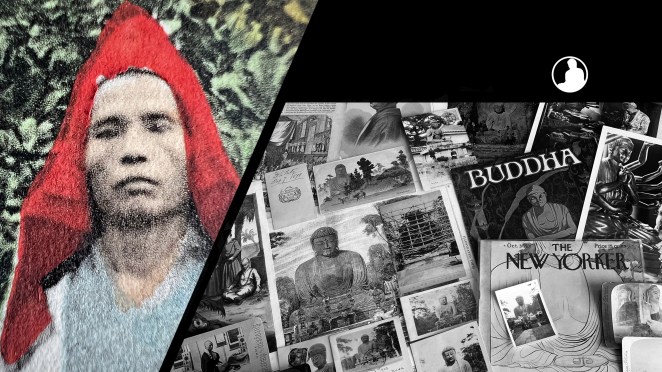
The first Tibetan Buddhist monks came to Europe amid the surge of interest over attempts to summit Mt. Everest in the 1920s. Capitalizing on this excitement, a promoter in Darjeeling recruited men to pose as Tibetan cham dancers for the British Empire Exhibition at Wembley in 1924.
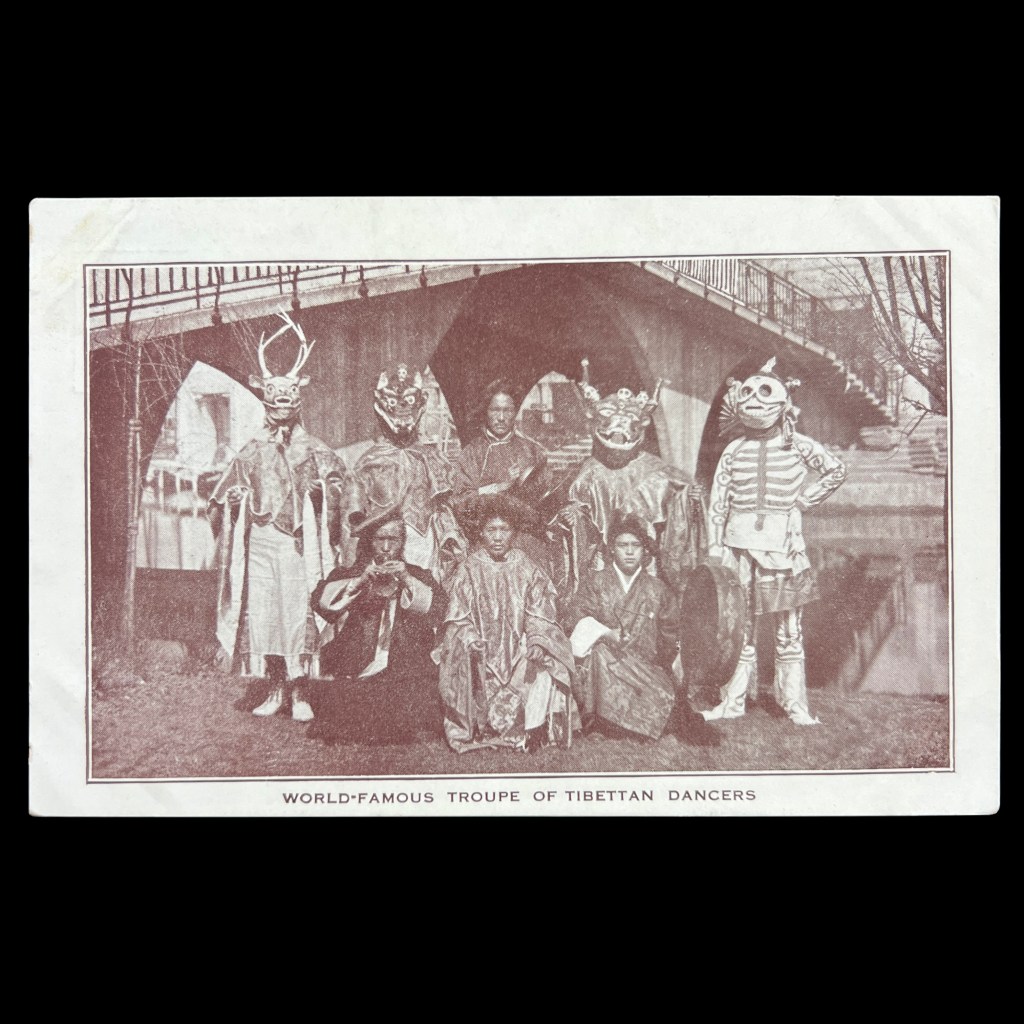
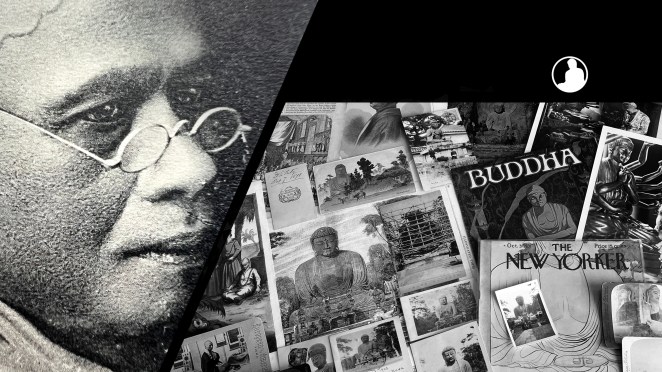
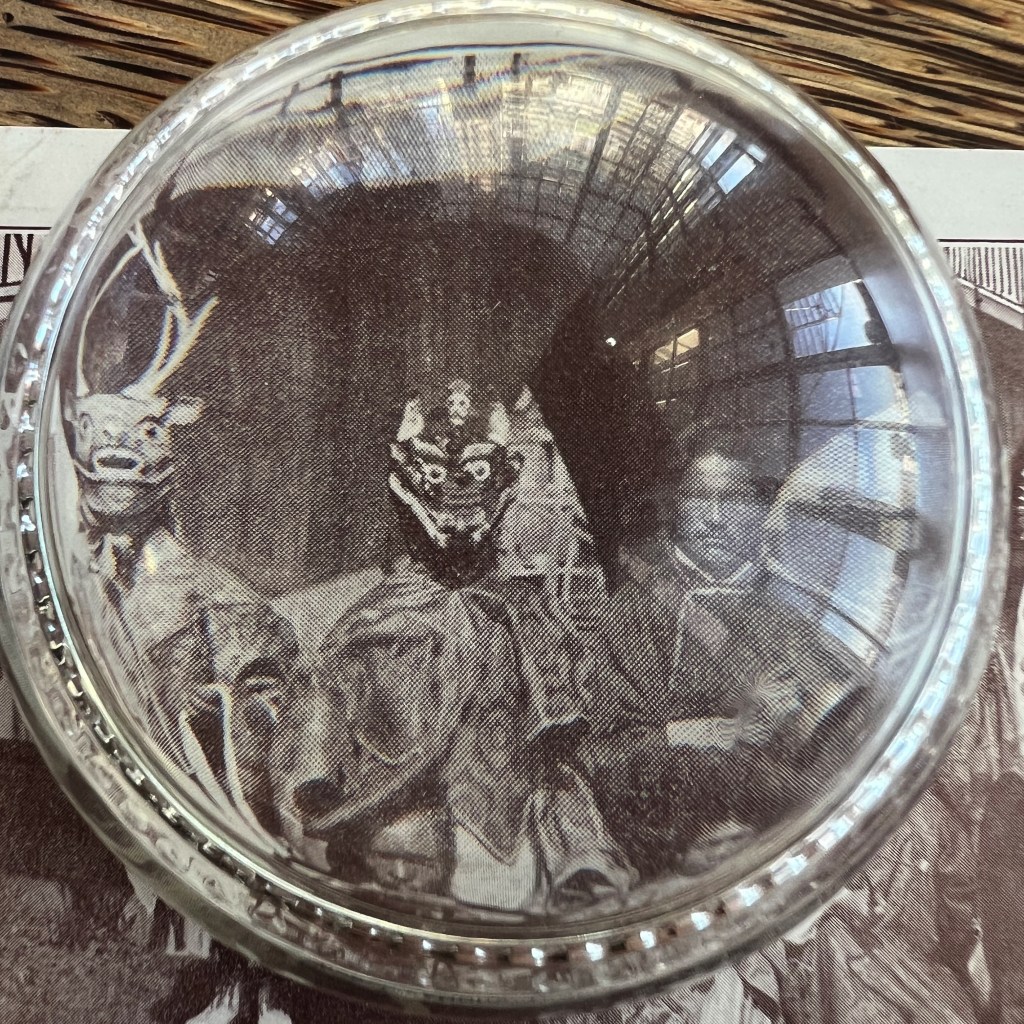
Dressed in what appeared to be authentic masks and robes, the troupe performed in a theater attached to the India Pavilion. Not everyone was impressed; a Tibetan student then studying in England regarded the performances as inauthentic and insulting to both Tibet and Buddhism.
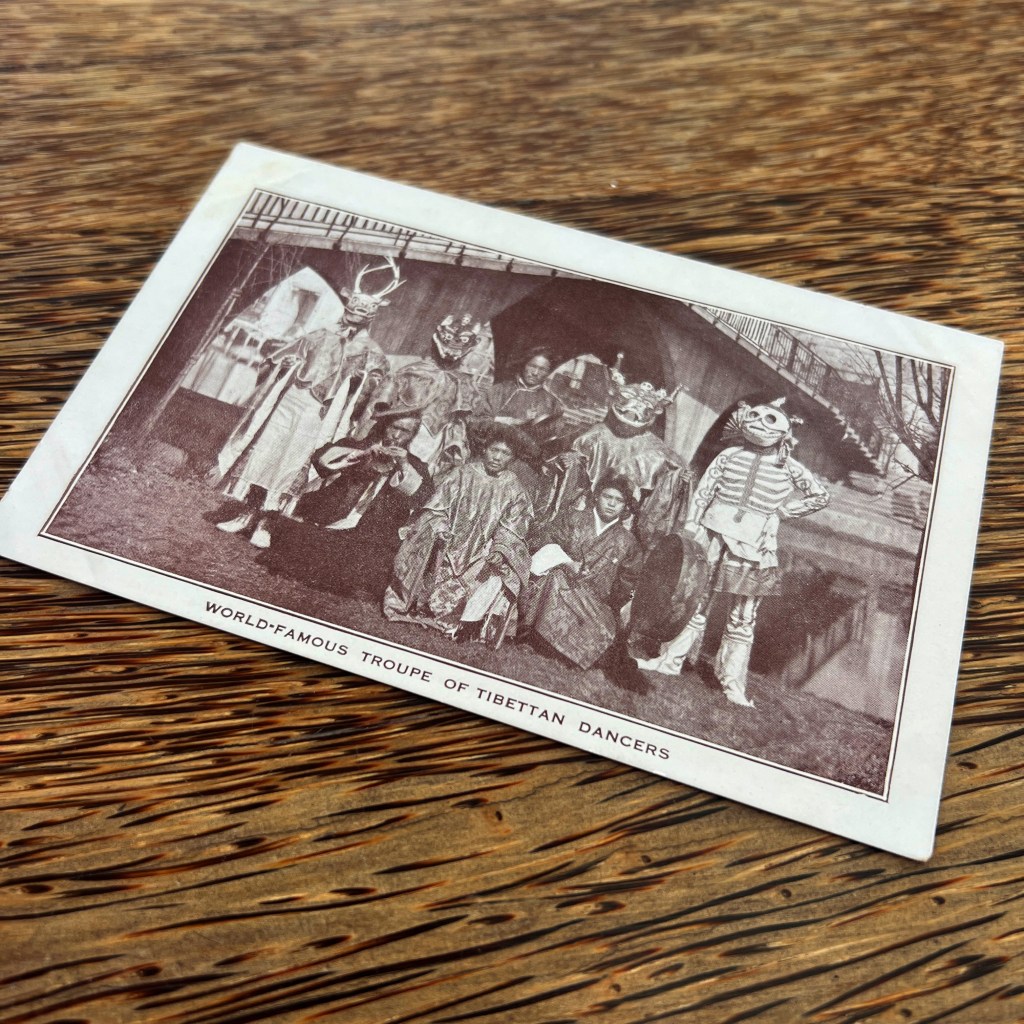
Advertised as performing “weird and awe inspiring dances,” the troupe shared the stage alongside Indian snake charmers, jugglers, and magicians. This spectacle formed part of a long-standing colonial practice of publicly displaying foreign people as part of ethnological “human zoos.”
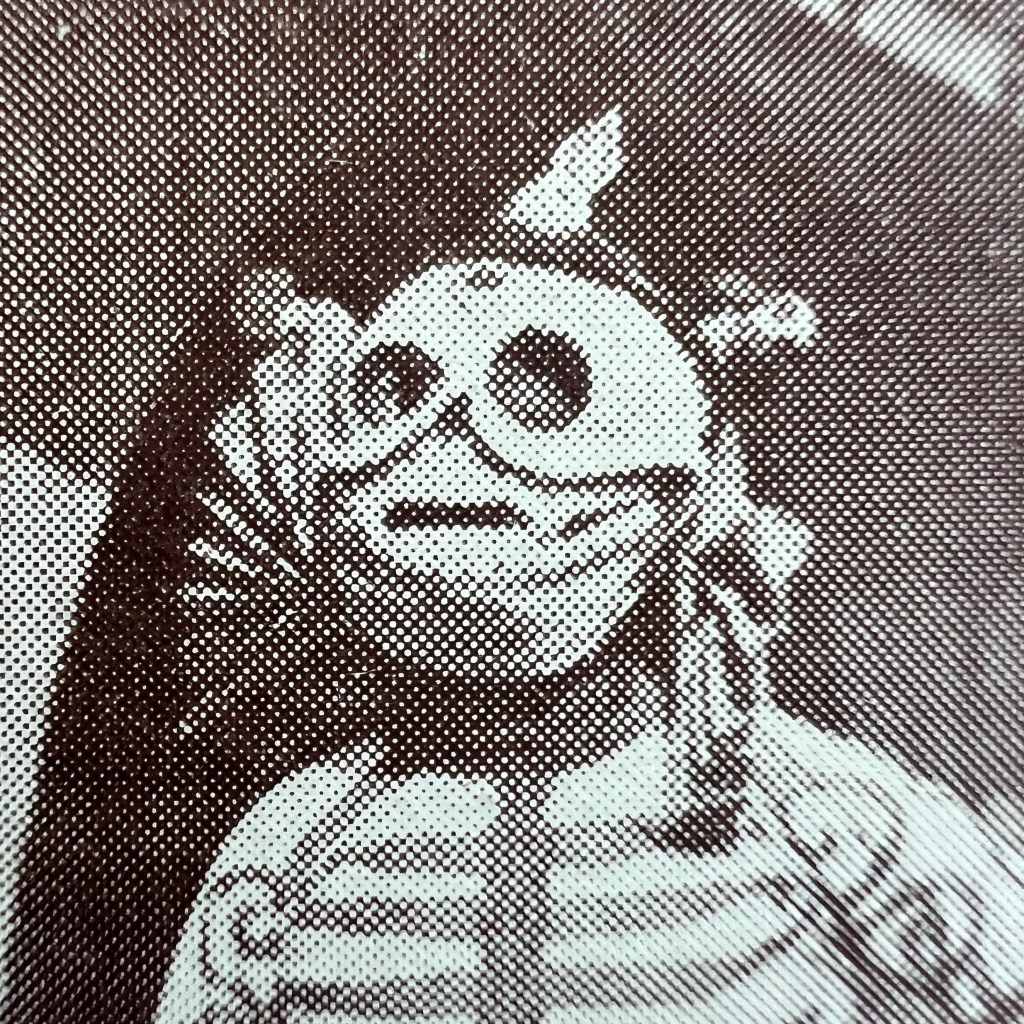
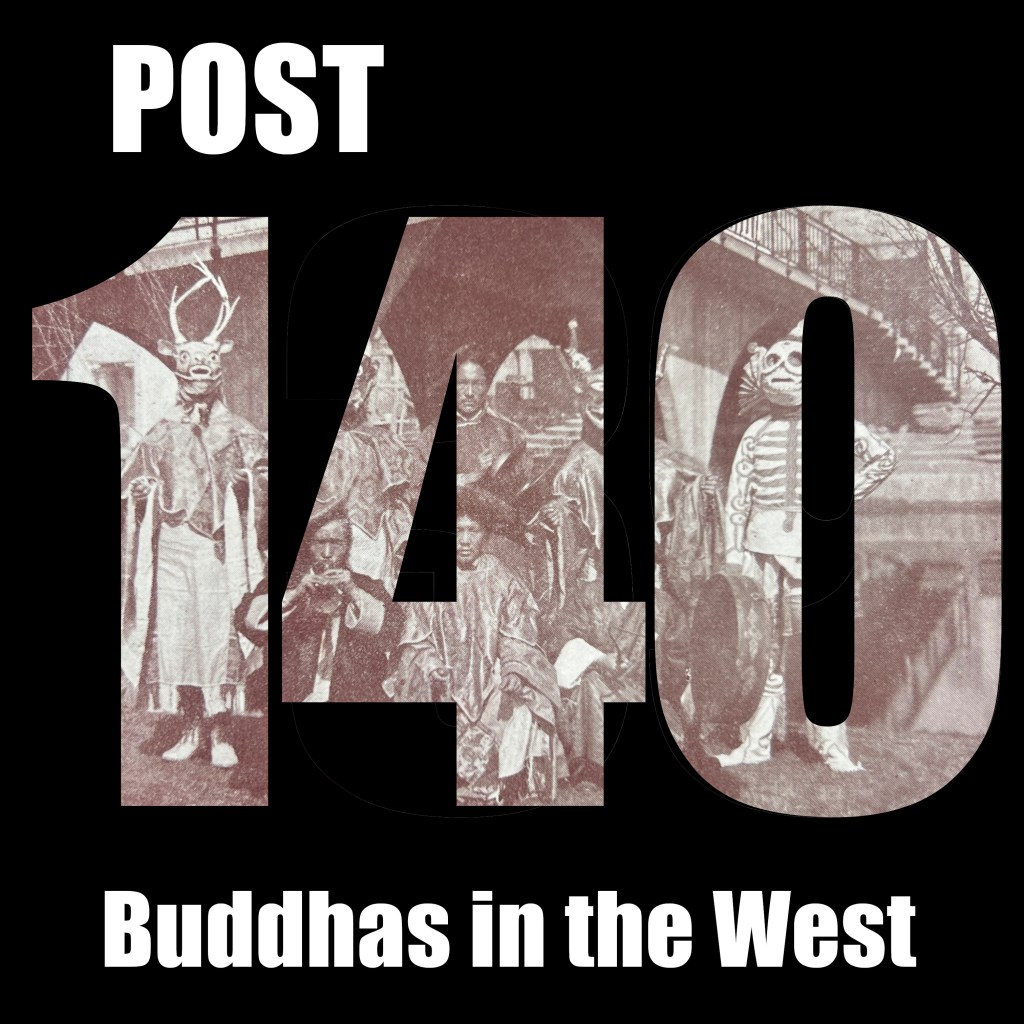
The costumes themselves drew on figures from actual cham rituals, including the fierce Buddhist deity Yama and a sacred stag.
Despite the unease of Tibetan officials, “real” Tibetan monks were allowed to tour Europe for the 1924 premier of the Epic of Everest, performing music as part of a live prologue to the film. For more on these monks, see Peter Hansen’s “The Dancing Lamas of Everest” (1996).
The Buddhas in the West Material Archive is a digital scholarship project that catalogues artifacts depicting Buddhist material culture for Western audiences. It’s comprised of prints, photos, and an assortment of ephemera and other objects. For a brief introduction to this archive, visit the main Buddhas in the West project page.


For Related Buddhas in the West Posts Featuring Ritual Dance:

For the Most Recent Buddhas in the West Posts:

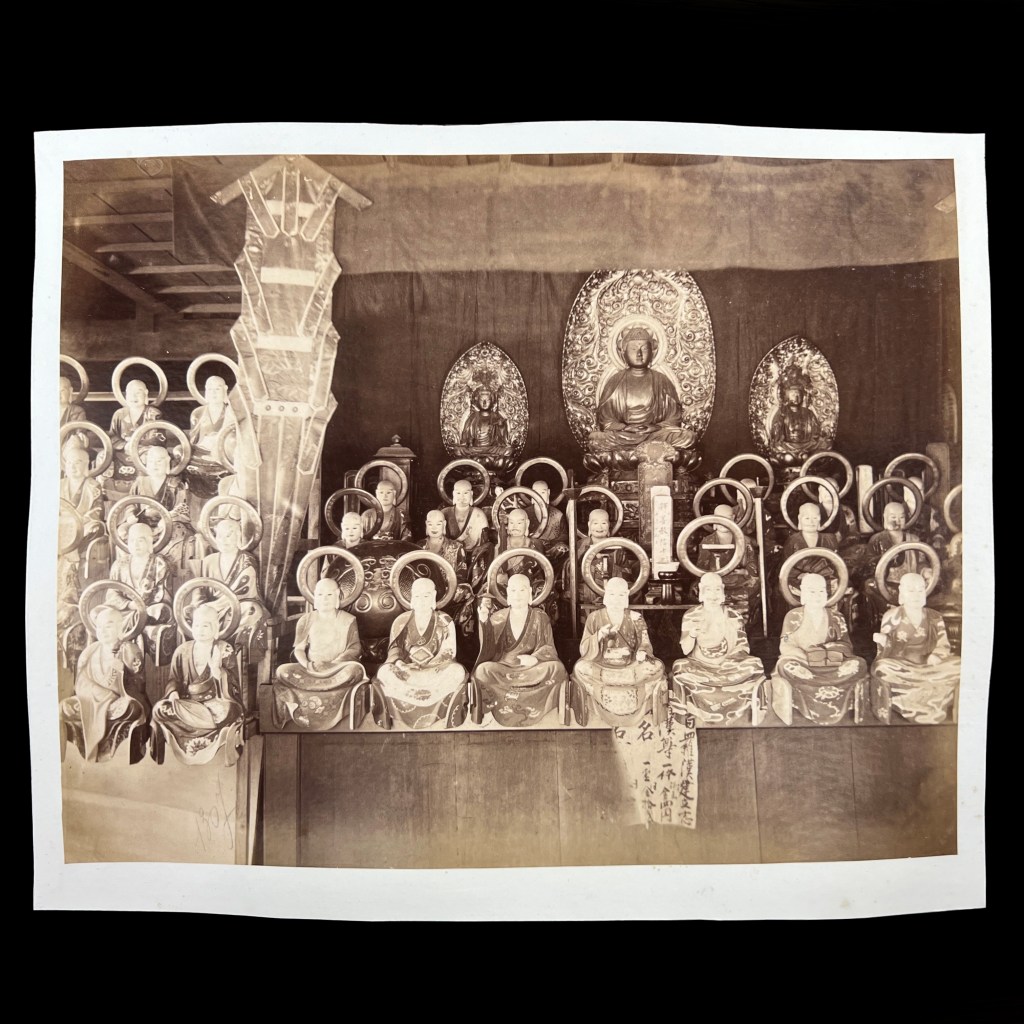
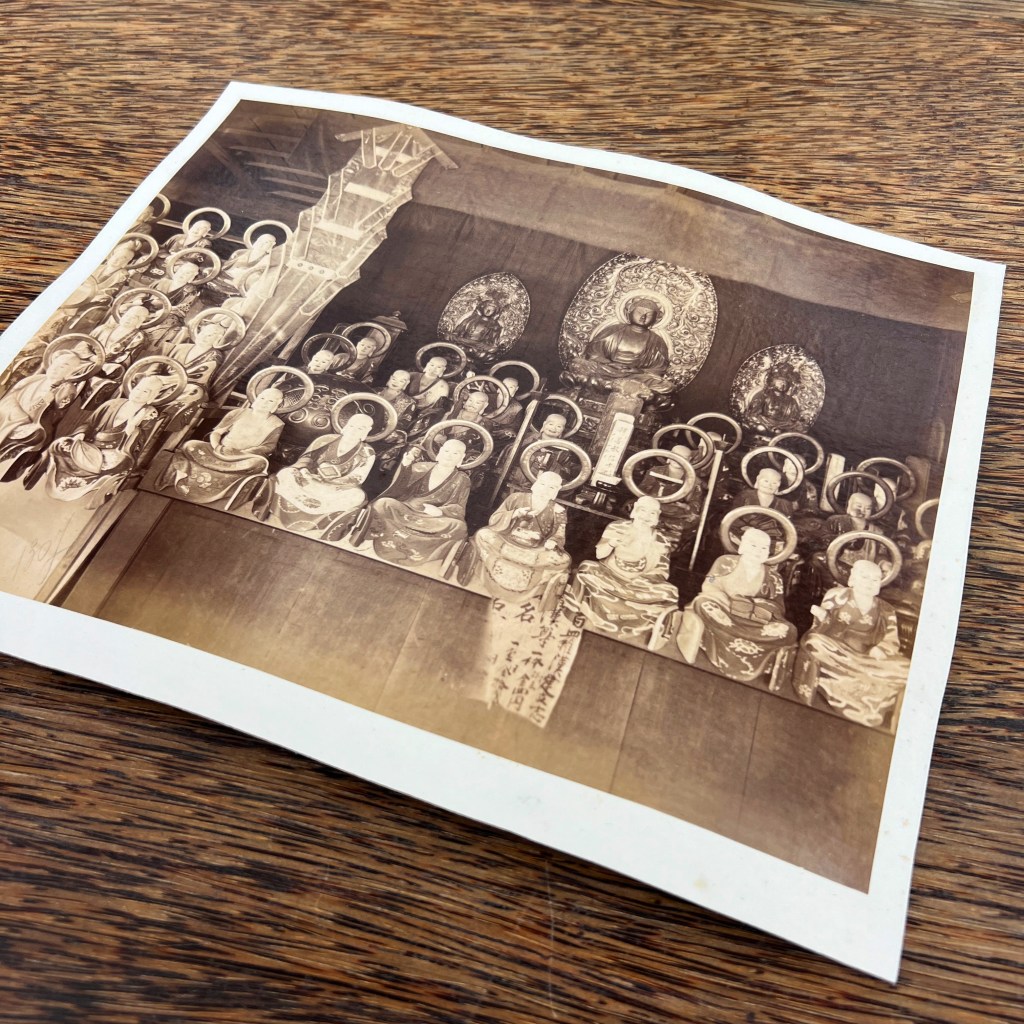
Kimbei’s Five Hundred Arhats of Zenpō-ji Photograph

For all the new Buddhas in the West posts
follow us on Bluesky & Instagram


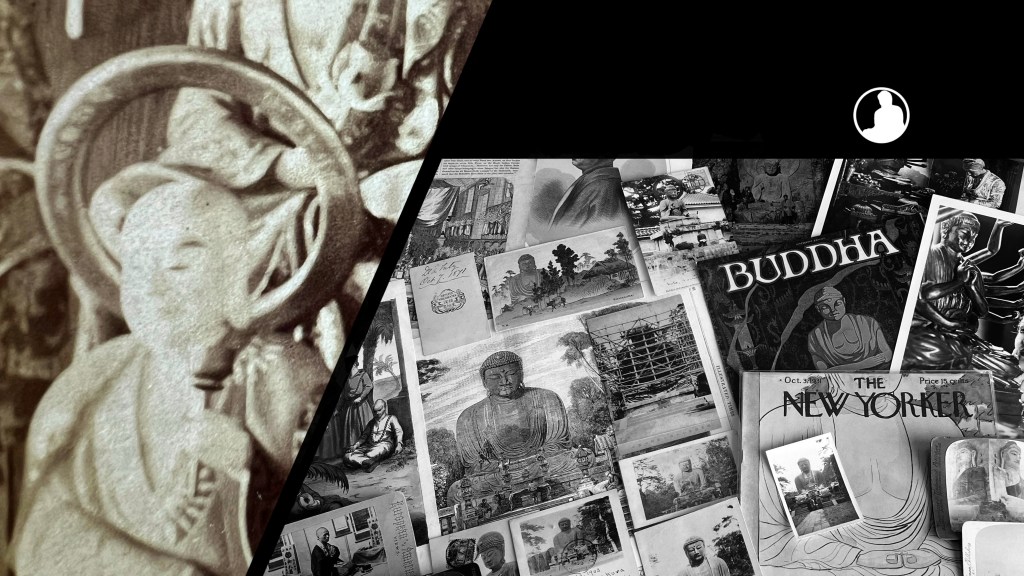
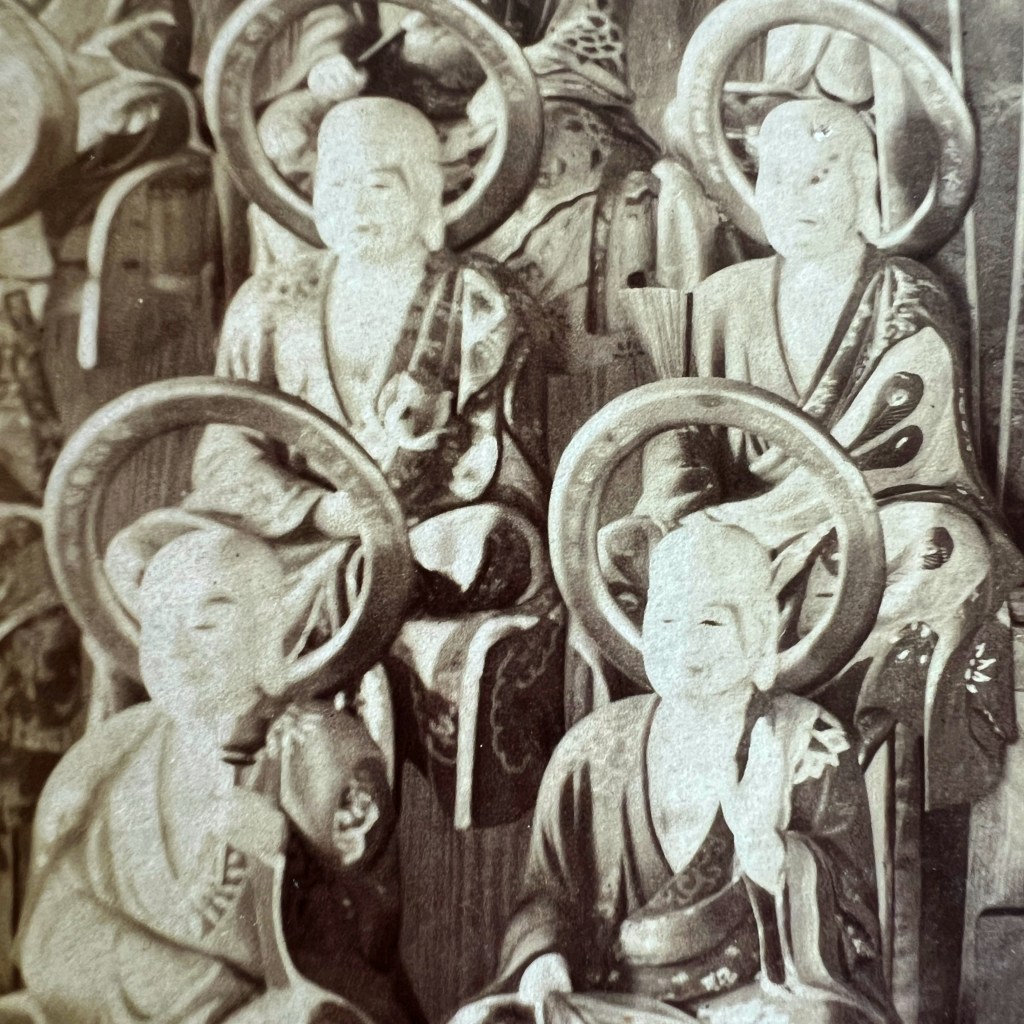
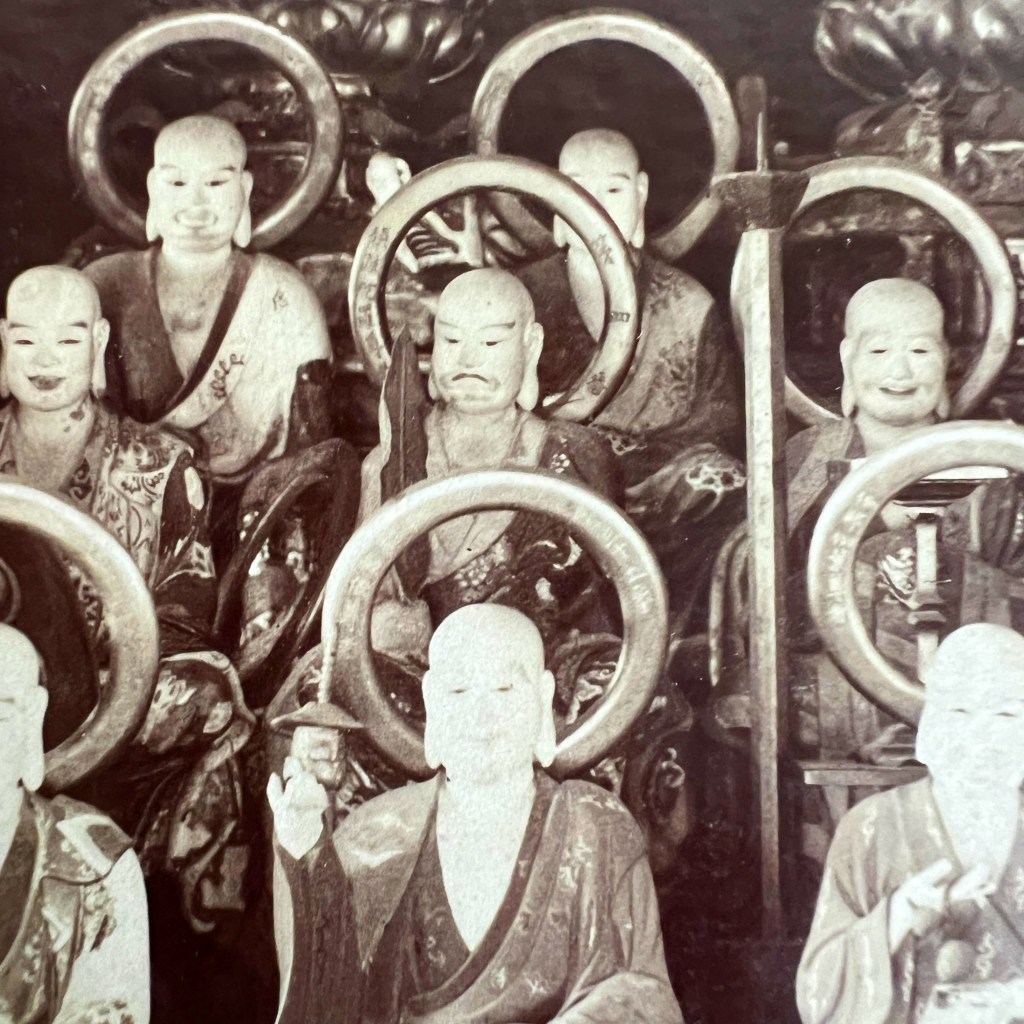
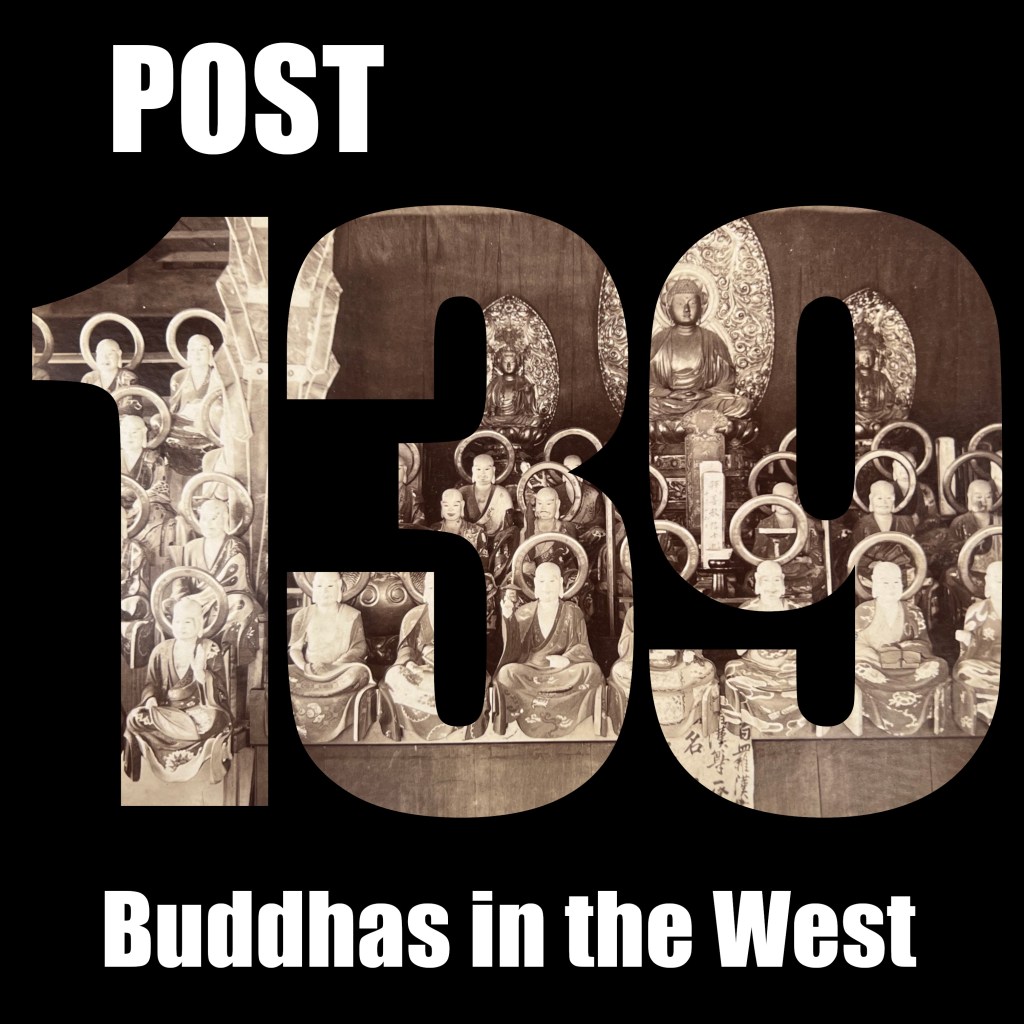
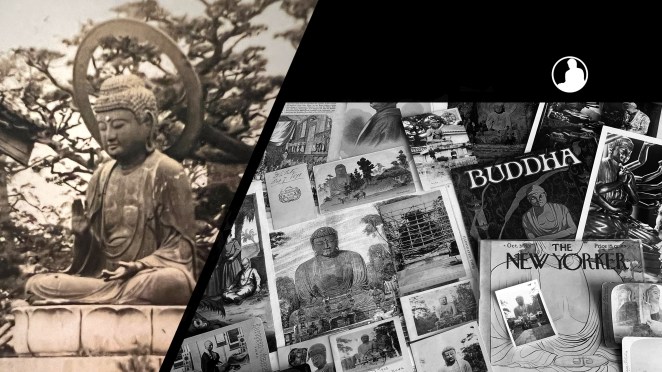
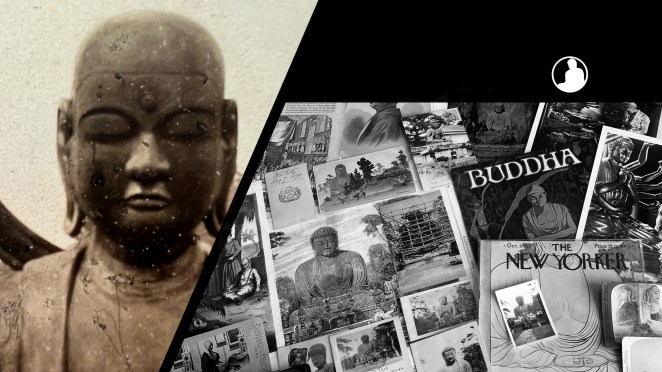
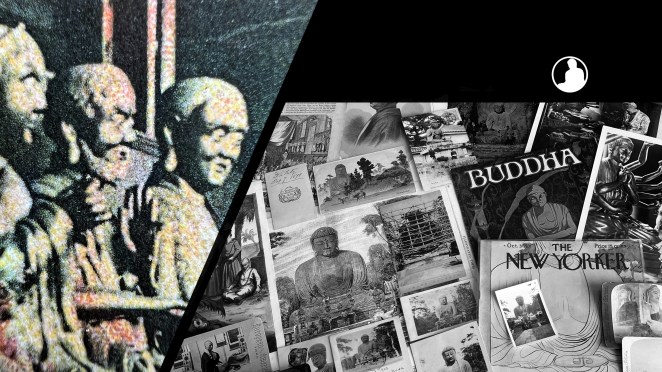
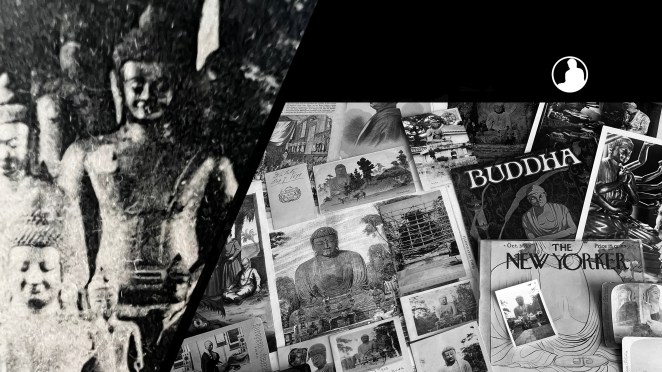
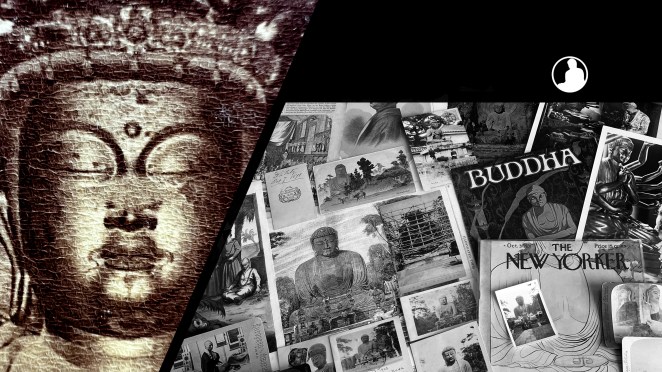
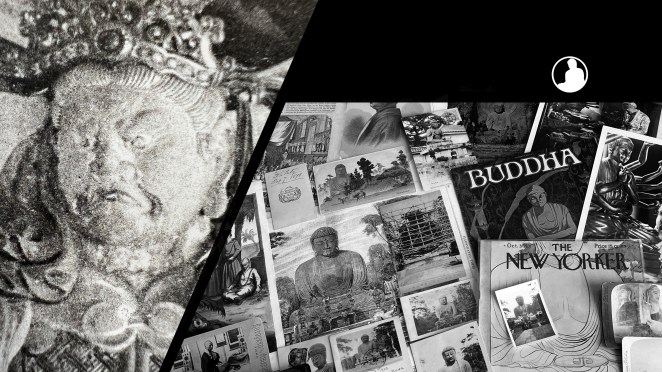
Founded in the 10th century, Zenpō-ji, a Sōtō Zen monastery, is renowned for the protective prayers its resident priests chant each day. The temple is also famous for its remarkable collection of more than five hundred arhat statues, each carved with a distinct facial expression.

Arhats, the Awakened disciples of the Buddha, are regarded in East Asia as protectors of the Buddha’s teaching. Zenpō-ji, located near Tsuruoka in northeast Japan, has 531 unique arhat statues that were carved in the early 1850s.

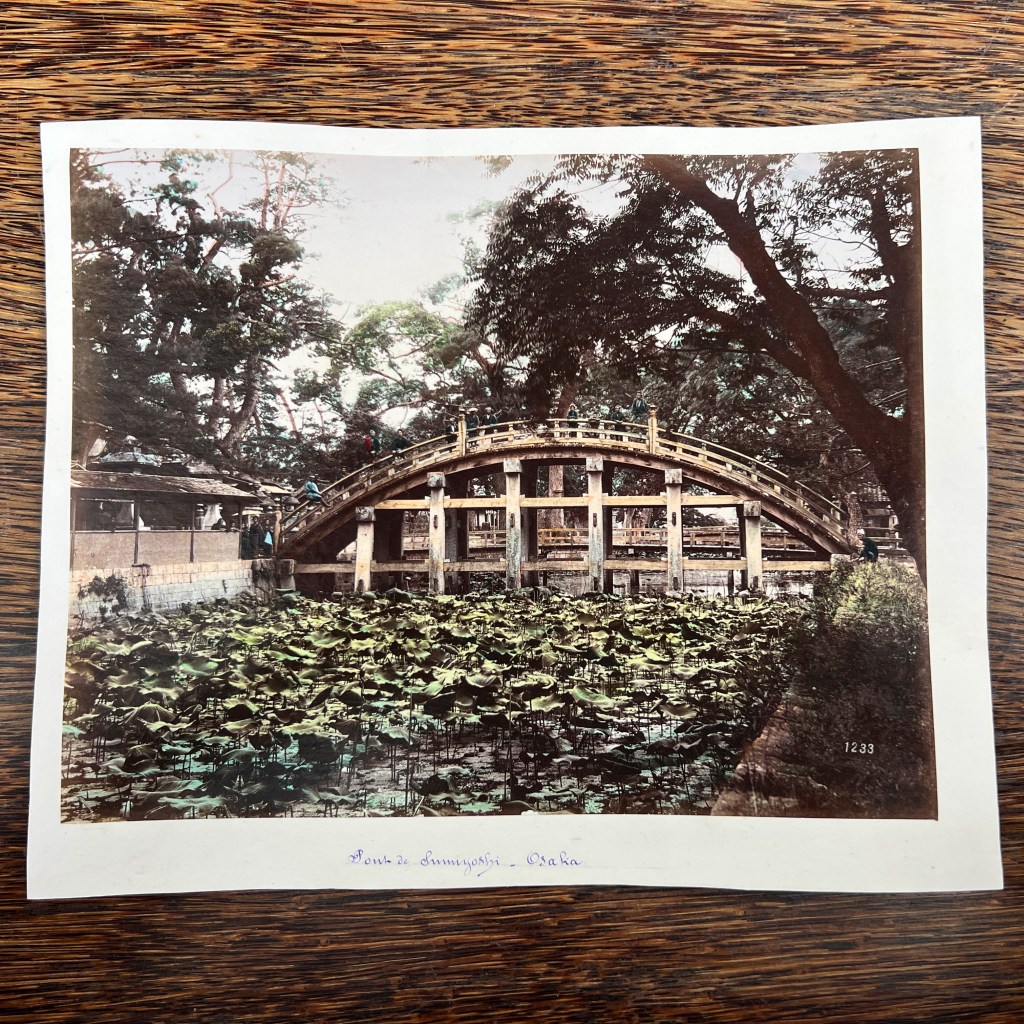
The back of the mount bears a second photo of the Drum Bridge at Sumiyoshi in Osaka, suggesting this page was extracted from a tourist album of photographs. This hand-painted photo is attributed to Kusakabe Kimbei and dates to the 1890s; the photo of Zenpō-ji may also be a Kimbei print.

According to the temple, visitors are encouraged to look among the statues for one whose features resemble those of a deceased relative and to make offerings before it.

All 531 arhat statues were recently restored and repainted. For an informative introduction to Zenpō-ji and a behind-the-scenes look at the restoration process, see the temple’s video viewable here: https://tinyurl.com/4cefw6xp.


The Buddhas in the West Material Archive is a digital scholarship project that catalogues artifacts depicting Buddhist material culture for Western audiences. It’s comprised of prints, photos, and an assortment of ephemera and other objects. For a brief introduction to this archive, visit the main Buddhas in the West project page.


For Related Buddhas in the West Posts Featuring Photography:


For the Most Recent Buddhas in the West Posts:

Nagoya Railroad’s Shūrakuen Daibutsu Postcard

For all the new Buddhas in the West posts
follow us on Bluesky & Instagram


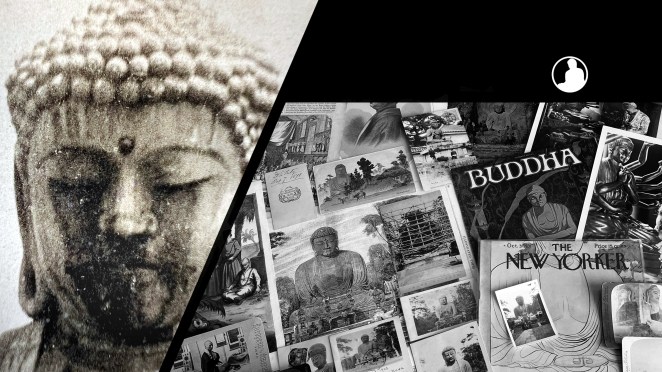
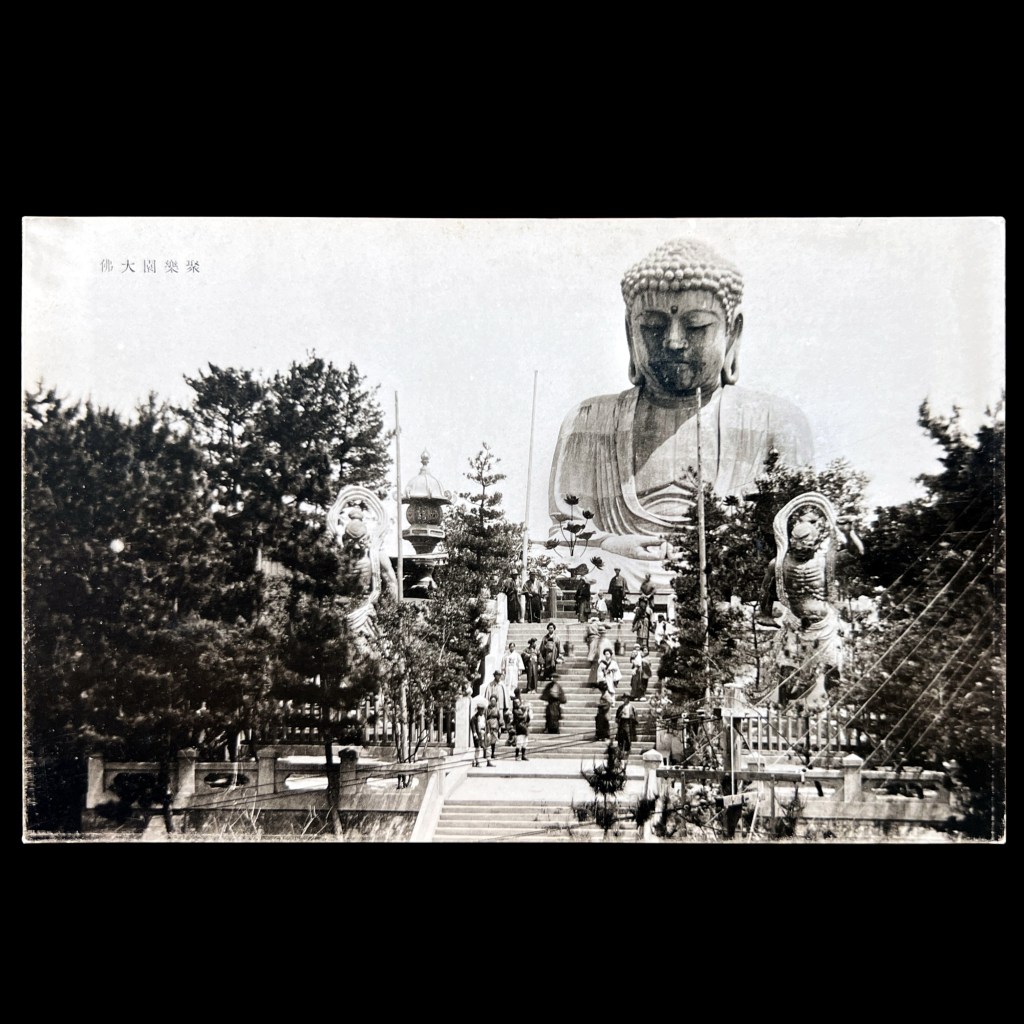
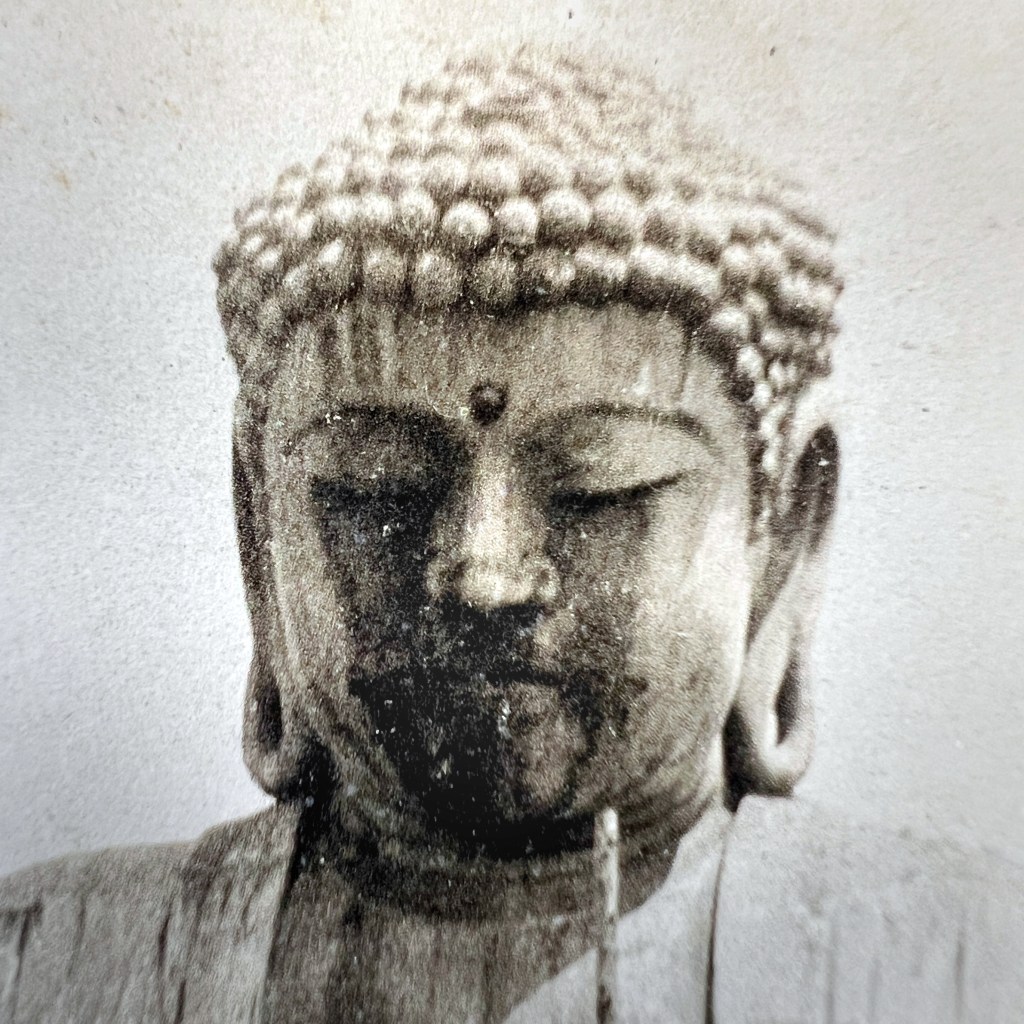
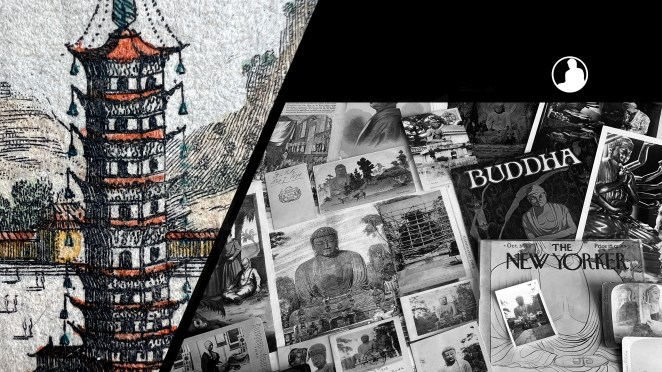
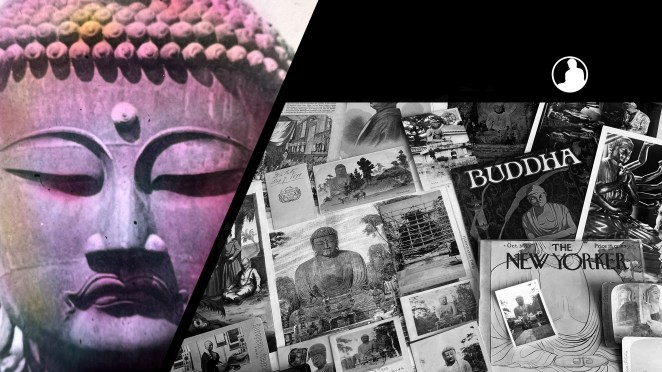
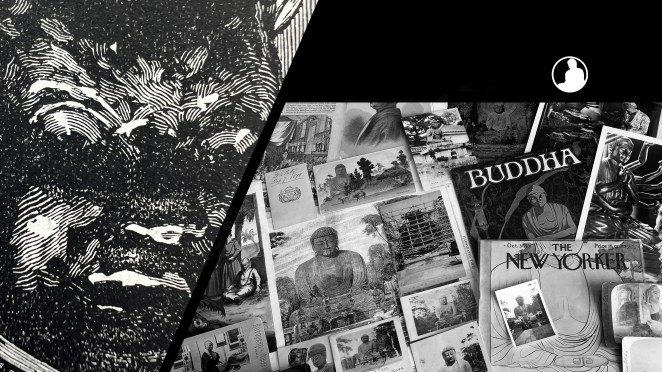
Decades before Godzilla, the 1934 “monster” film, The Great Buddha Arrival, featured a costumed actor as a giant Buddha roaming through a miniature city. The figure was based on the recently completed Shūrakuen Daibutsu, a colossal statue erected in 1927 near Nagoya.

The statue was not cast in traditional bronze, but was made of reinforced concrete, reflecting the growing preference for modern, durable construction materials. Businessman Yamada Saikichi originally built the 19 m (62 ft) statue to commemorate the marriage of Emperor Shōwa.

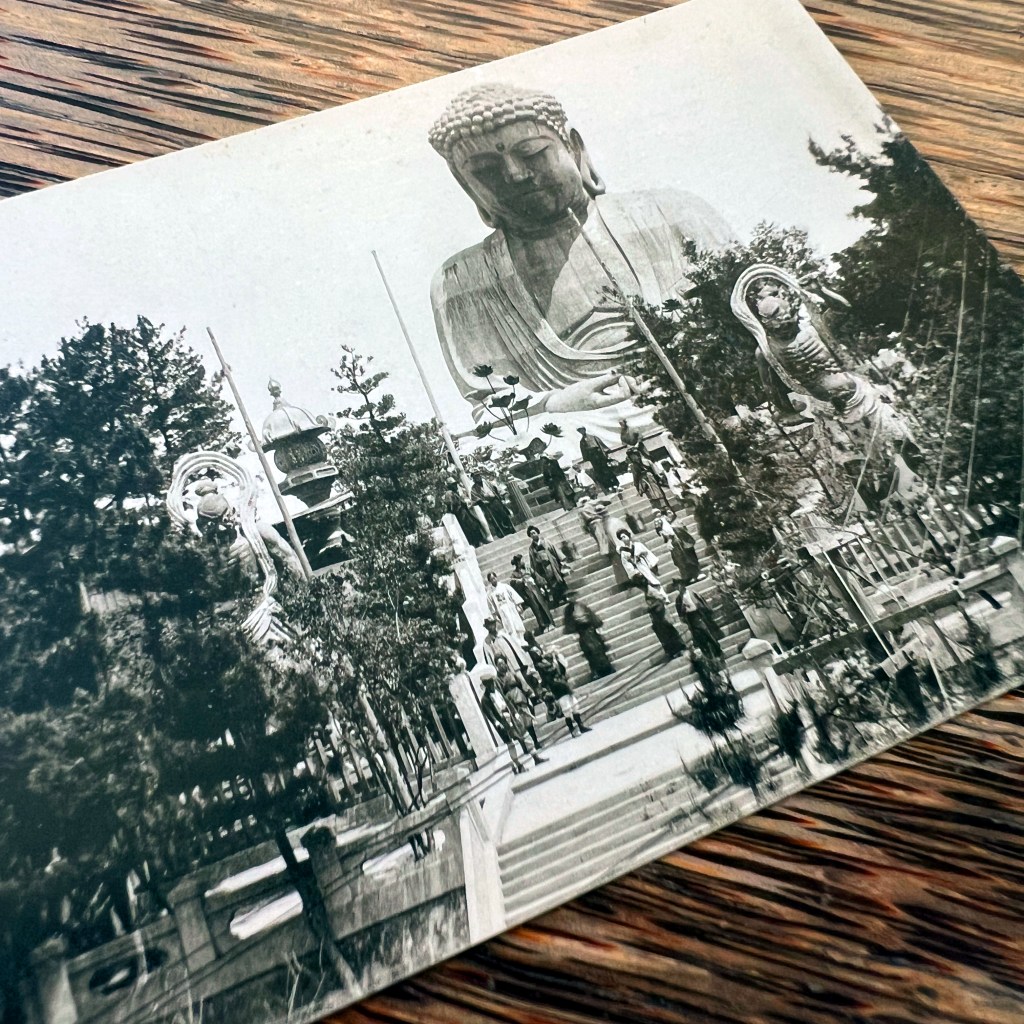
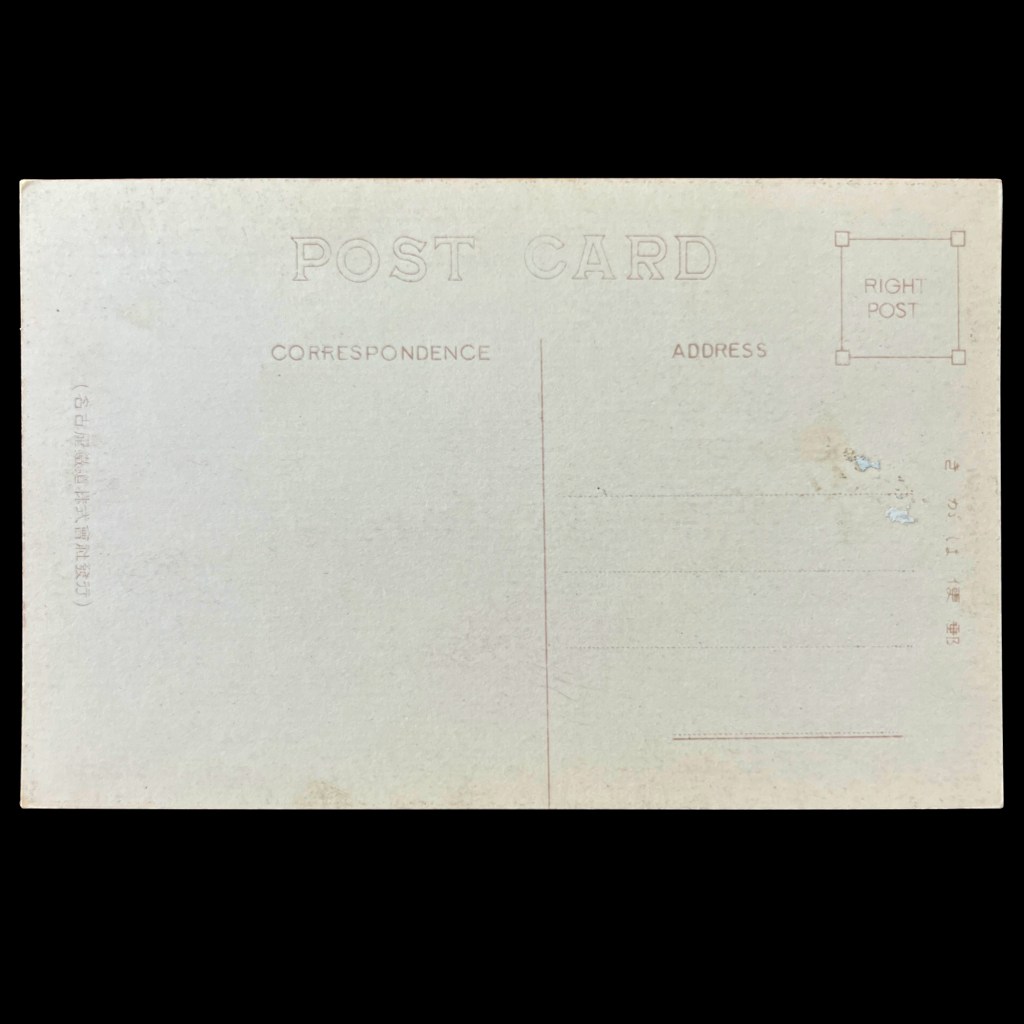
The Shūrakuen Daibutsu was also built during a period of expanding domestic tourism, soon becoming a regional attraction. Nagoya Railroad Co. issued this postcard in the late 1930s, a marketing strategy among railway companies seeking to stimulate interest in rail travel.

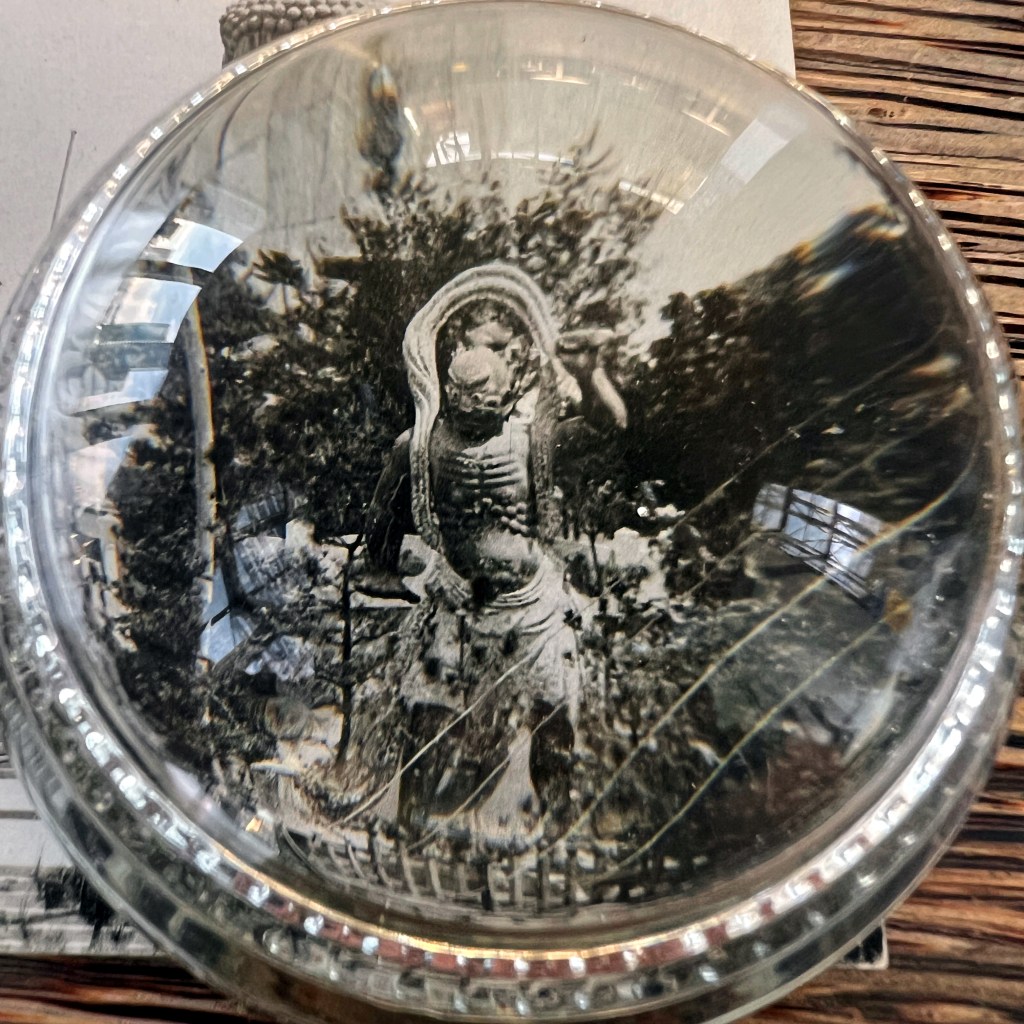
A pair of monumental guardian figures, like those traditionally found at the entrances to Buddhist temples, were also erected on the grounds. Because they were made of concrete rather than metal, these statues survived wartime metal requisition policies and still stand in the park today.

When completed, the Shūrakuen Daibutsu was the tallest colossal Buddha statue in Japan—four meters taller than the Nara Daibutsu—making it a natural choice to be brought to life on screen in The Great Buddha Arrival.


The Buddhas in the West Material Archive is a digital scholarship project that catalogues artifacts depicting Buddhist material culture for Western audiences. It’s comprised of prints, photos, and an assortment of ephemera and other objects. For a brief introduction to this archive, visit the main Buddhas in the West project page.


For Related Buddhas in the West Posts Featuring Japan:


For the Most Recent Buddhas in the West Posts:

Puck Magazine’s Benjamin Butler as Joss Buddha Cover

For all the new Buddhas in the West posts
follow us on Bluesky & Instagram


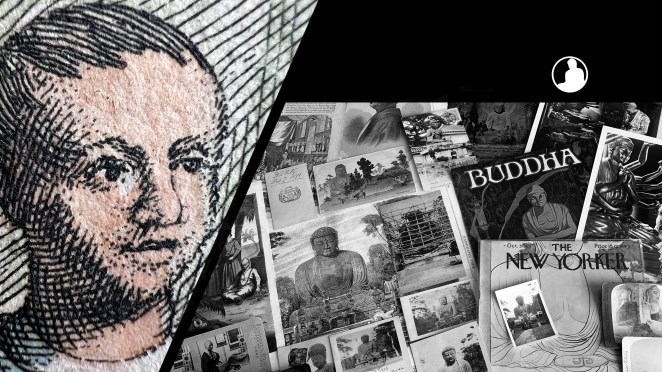
By the 1880s, Chinese American temples were sufficiently familiar to the public imagination to serve as an effective visual basis for political satire. Yet, however, the imagery was often not rooted in ethnographic realism; it remained a caricature of Western fantasy.

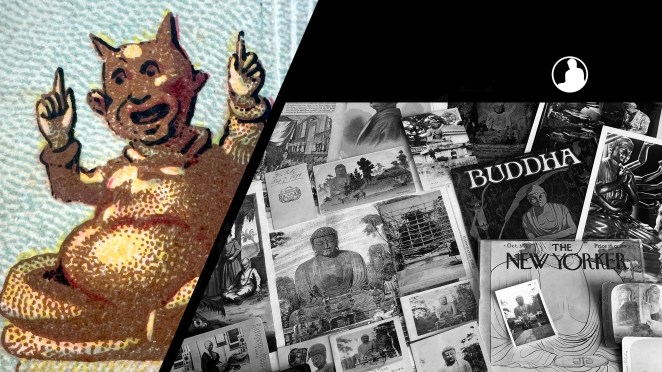
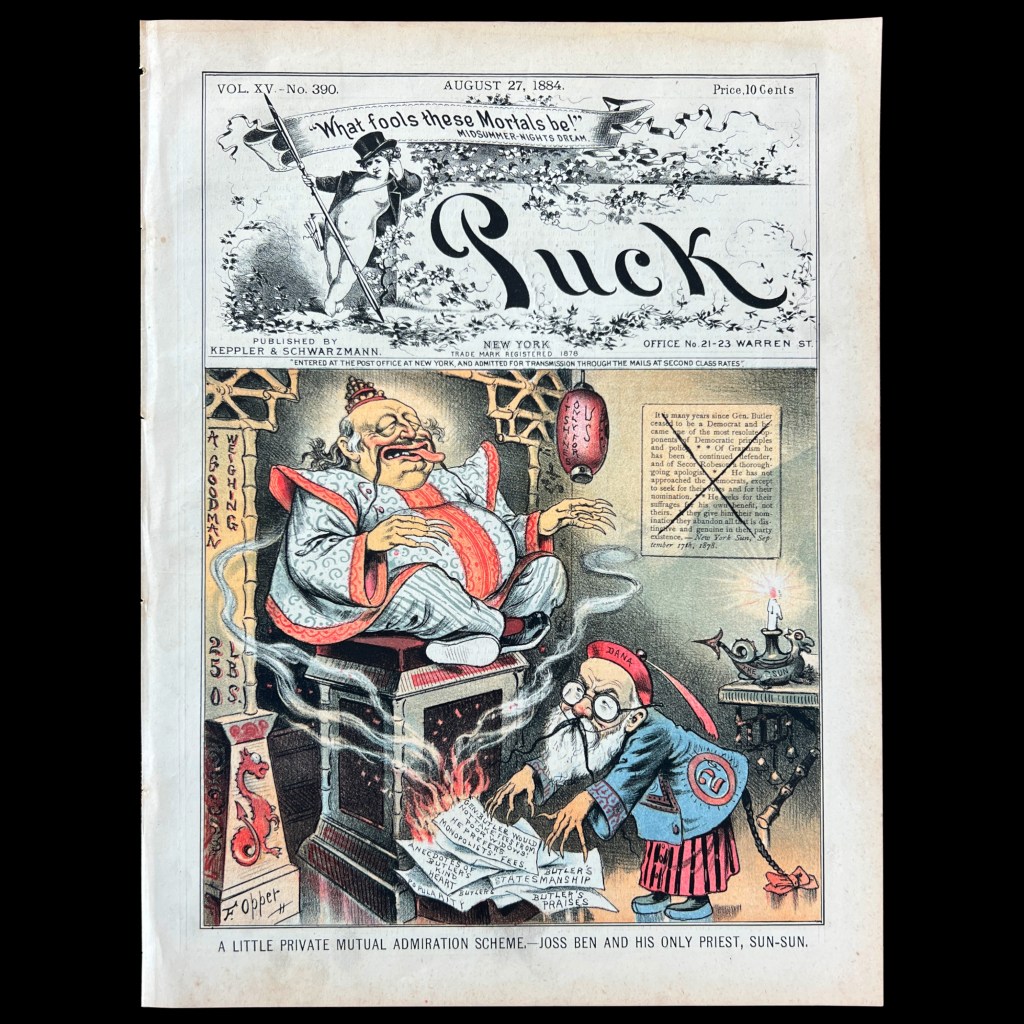
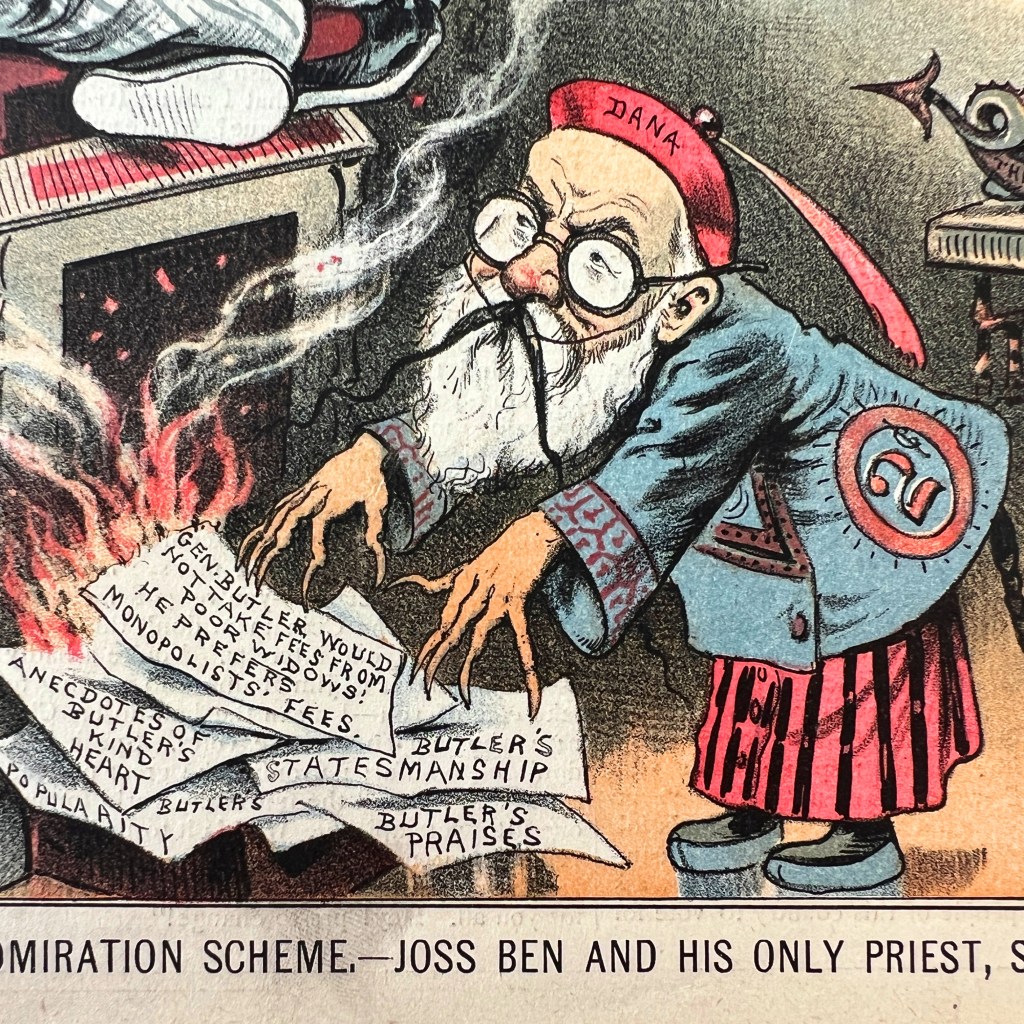
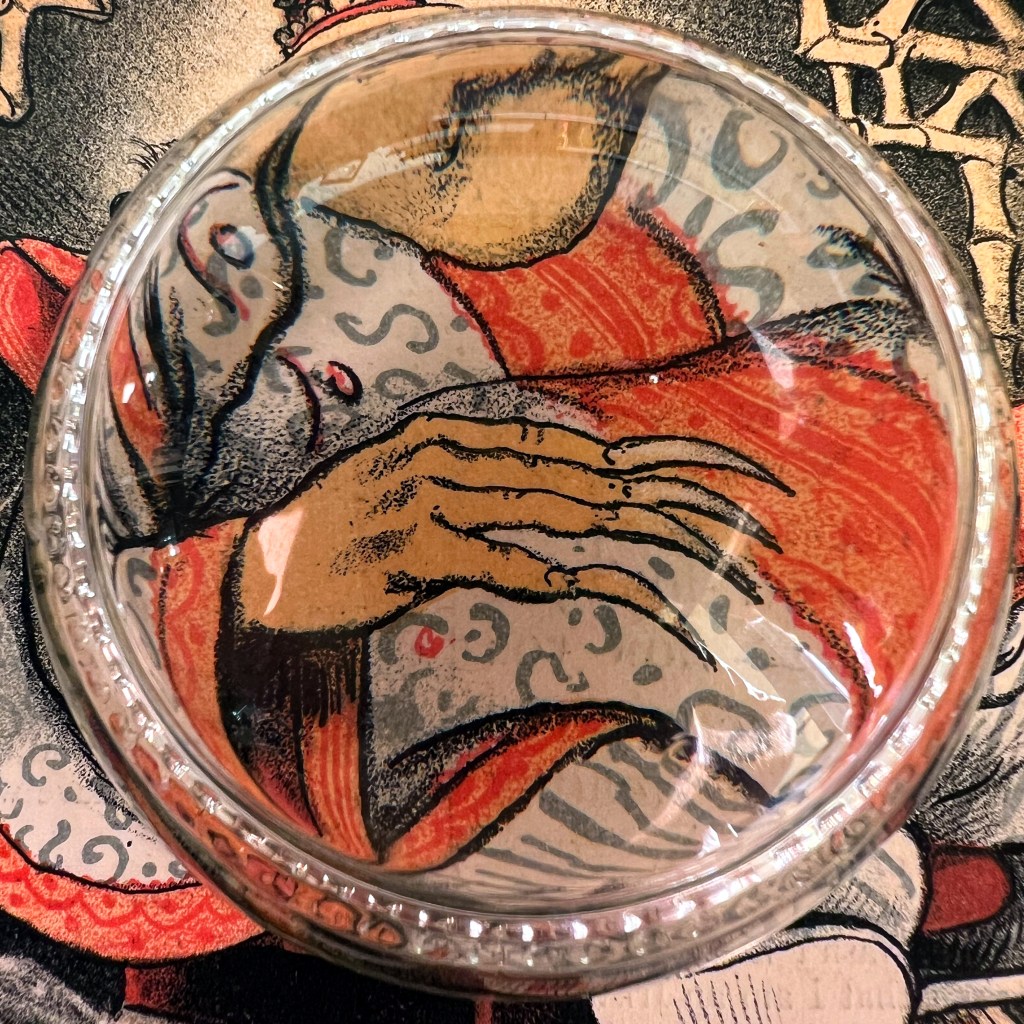
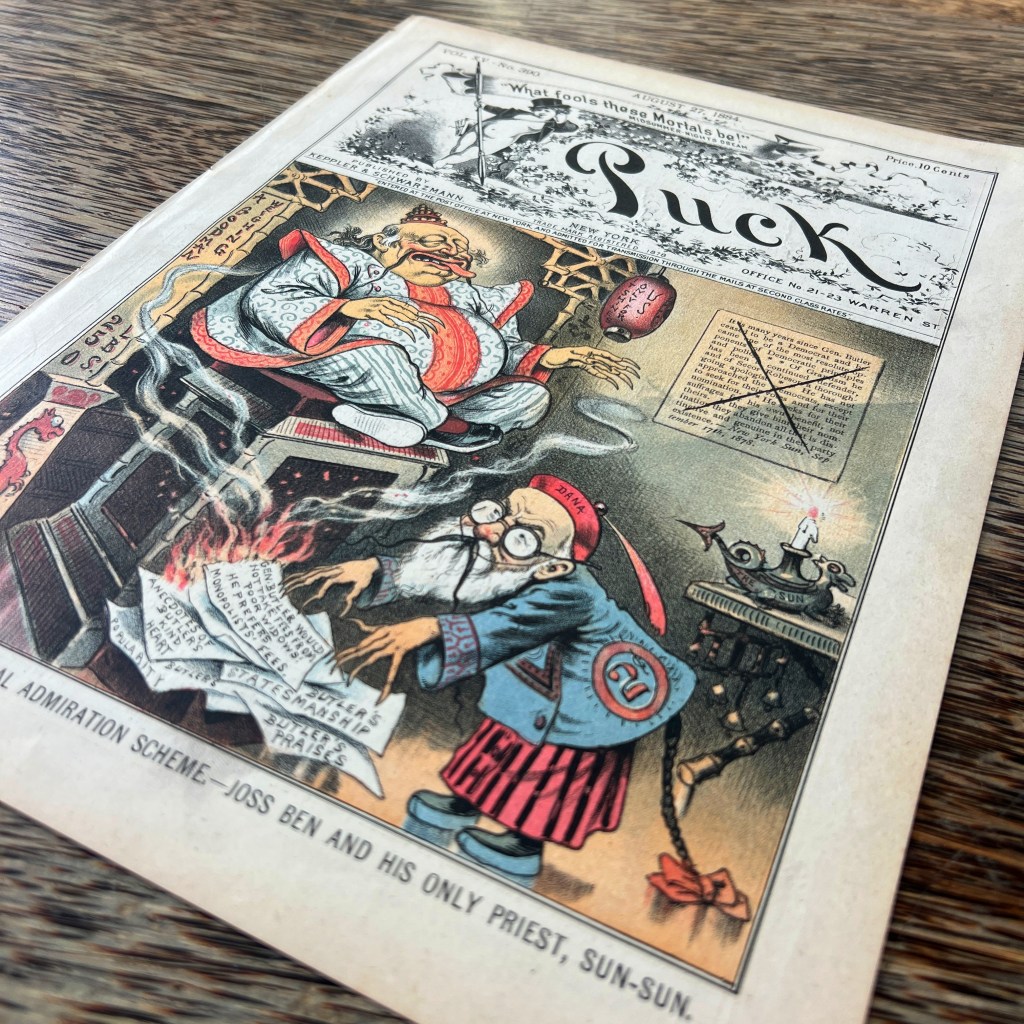
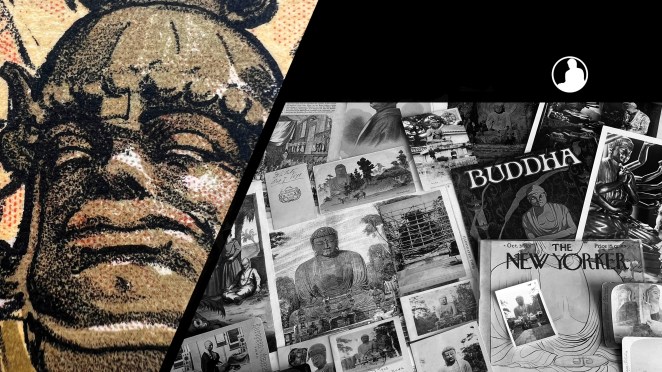
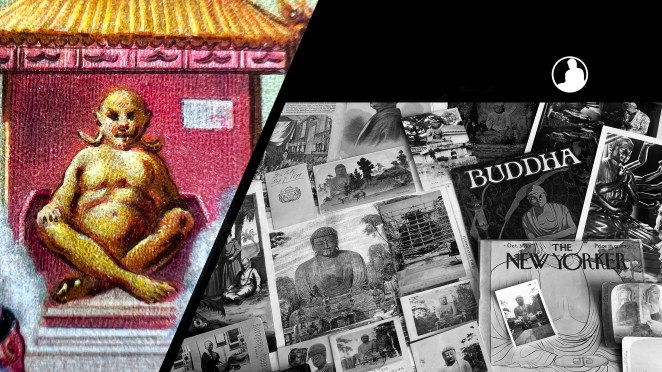
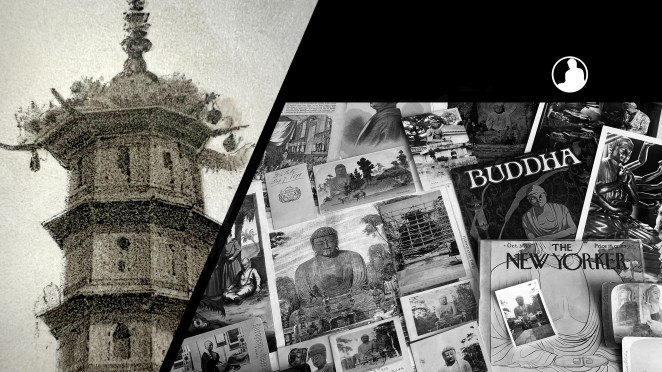
This 1884 cover of Puck depicts Gen. Benjamin Butler as a Chinese deity named “Ben Joss” receiving offerings from Charles Dana, the editor of the New York Sun, dressed in yellowface. Frederick Opper’s illustration draws attention to the effusive editorial praise Dana lavished upon Butler.

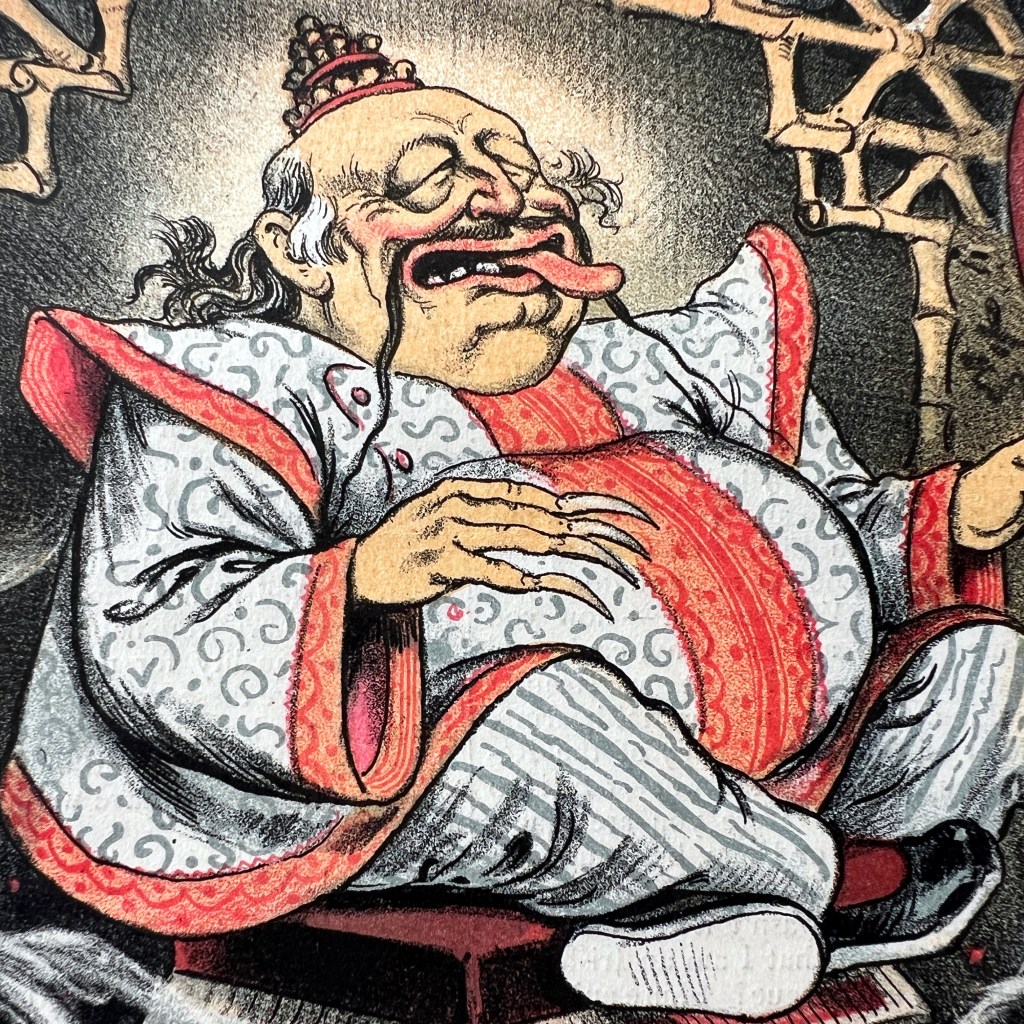
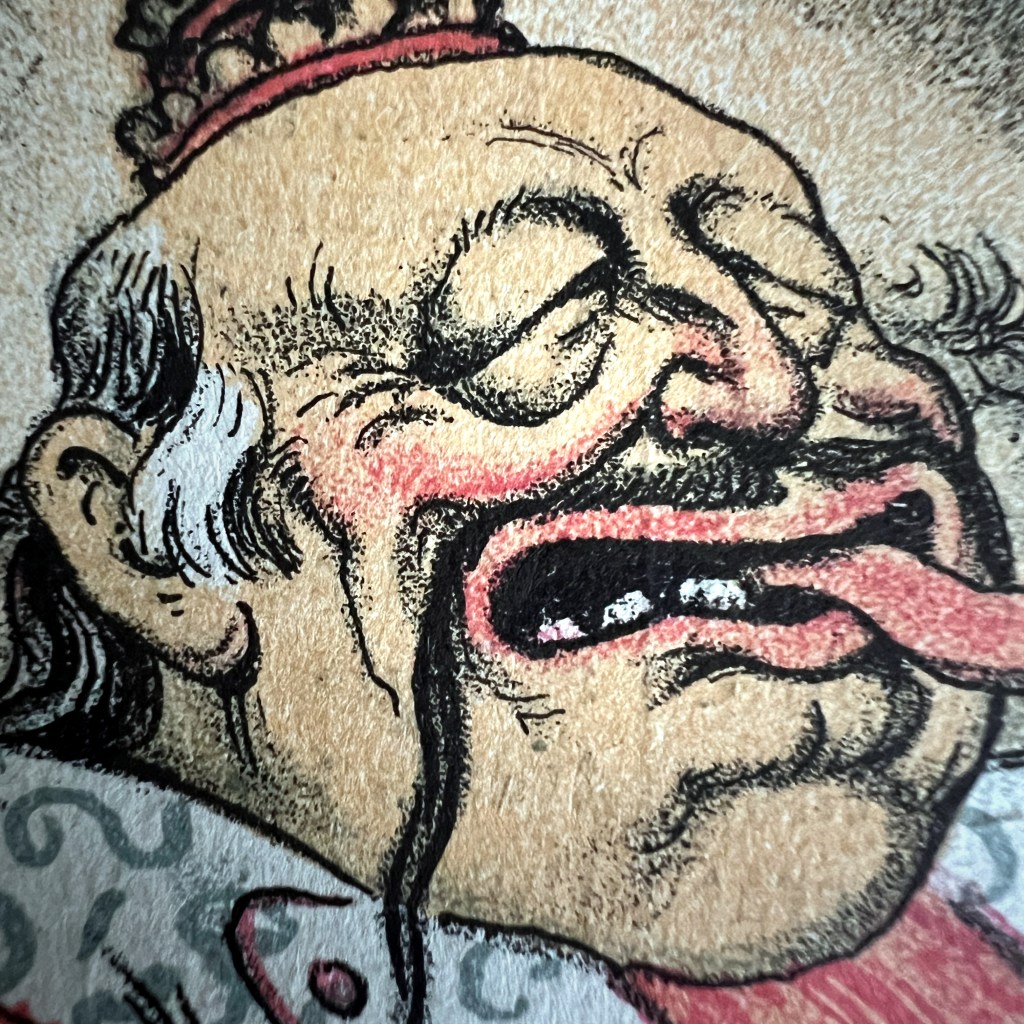
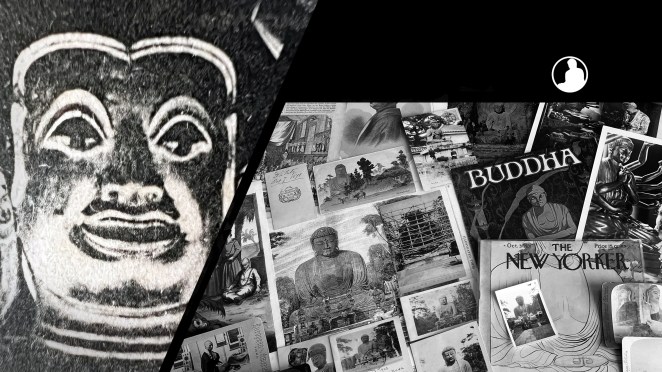
The lithograph portrays Butler as a cross-legged Buddha, but such figures were nearly non-existent in Chinese American temples of the era. In fact, the image portrays a “nodding” chinoiserie magot figurine, a European caricature of a Chinese Laughing Buddha, with bobbing hands and tongue.

Magots were popularized in Europe as grotesque and whimsical decorative figurines, made with mechanically balanced heads, tongues, and hands that moved. Opper’s illustrations adds a string-like mustache and pointy fingernails to Butler, racialized visual cues to identify the figure as Chinese.

Even as satire, such illustrations imply buddhas were commonplace in Chinese American temples, but this was not the case. Opper’s illustration is a pastiche of visual tropes – paper lanterns, dragon candle holders, and Buddha statues – to evoke a exoticized notion of Chinese religiosity.

To see a better representation of the kinds of icons enshrined in early Chinese American temples, see the online “Map of Temples in San Francisco’s Chinatown: 1850s-1906,” viewable here: https://tinyurl.com/ykyaas2d.


The Buddhas in the West Material Archive is a digital scholarship project that catalogues artifacts depicting Buddhist material culture for Western audiences. It’s comprised of prints, photos, and an assortment of ephemera and other objects. For a brief introduction to this archive, visit the main Buddhas in the West project page.


For Related Buddhas in the West Posts Featuring Magazines:


For the Most Recent Buddhas in the West Posts:

Chinese Idolatry Stock Advertising Card

For all the new Buddhas in the West posts
follow us on Bluesky & Instagram


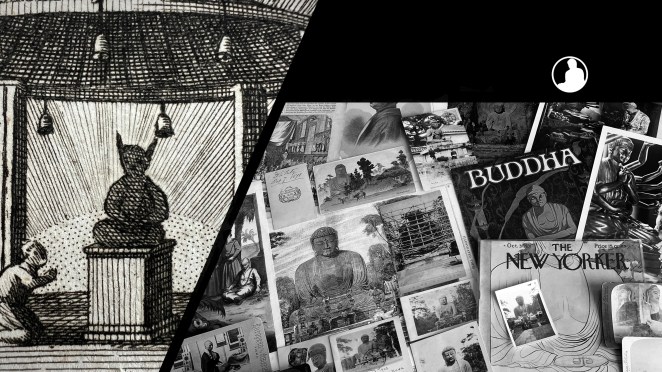
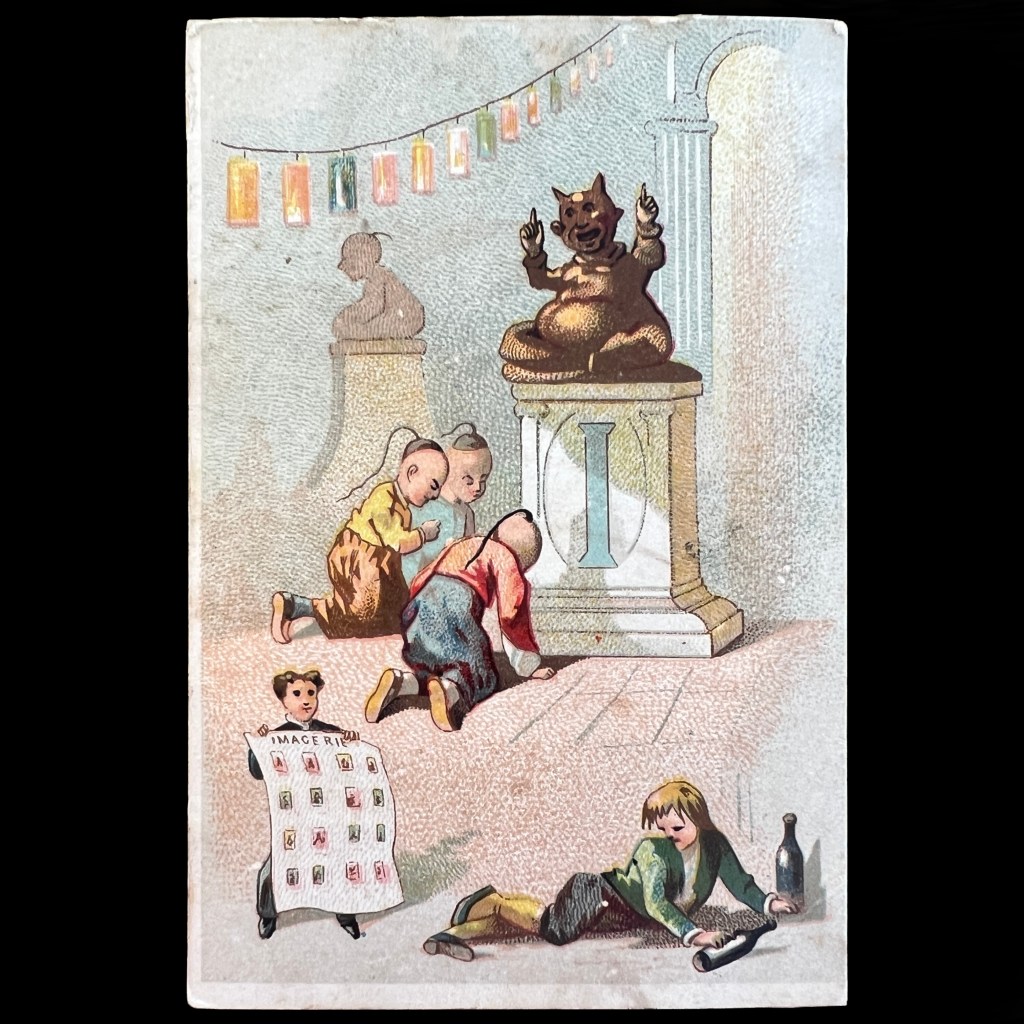
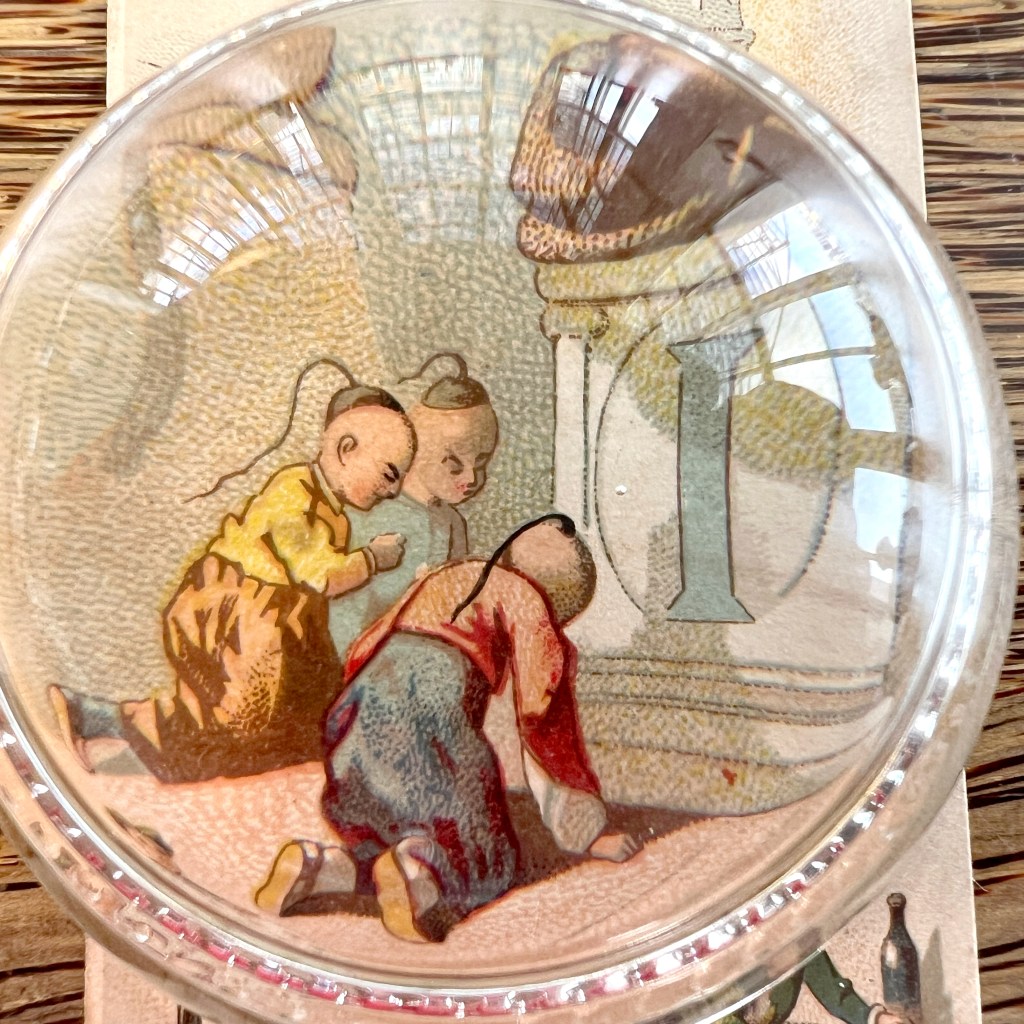
Victorian trade cards often employed the same visual language found in contemporary political cartoons. In the late 1870s and 1880s, as anti-Chinese xenophobia intensified in the US, depictions of the “heathen chinee” prostrating before Buddhist idols became more widespread.

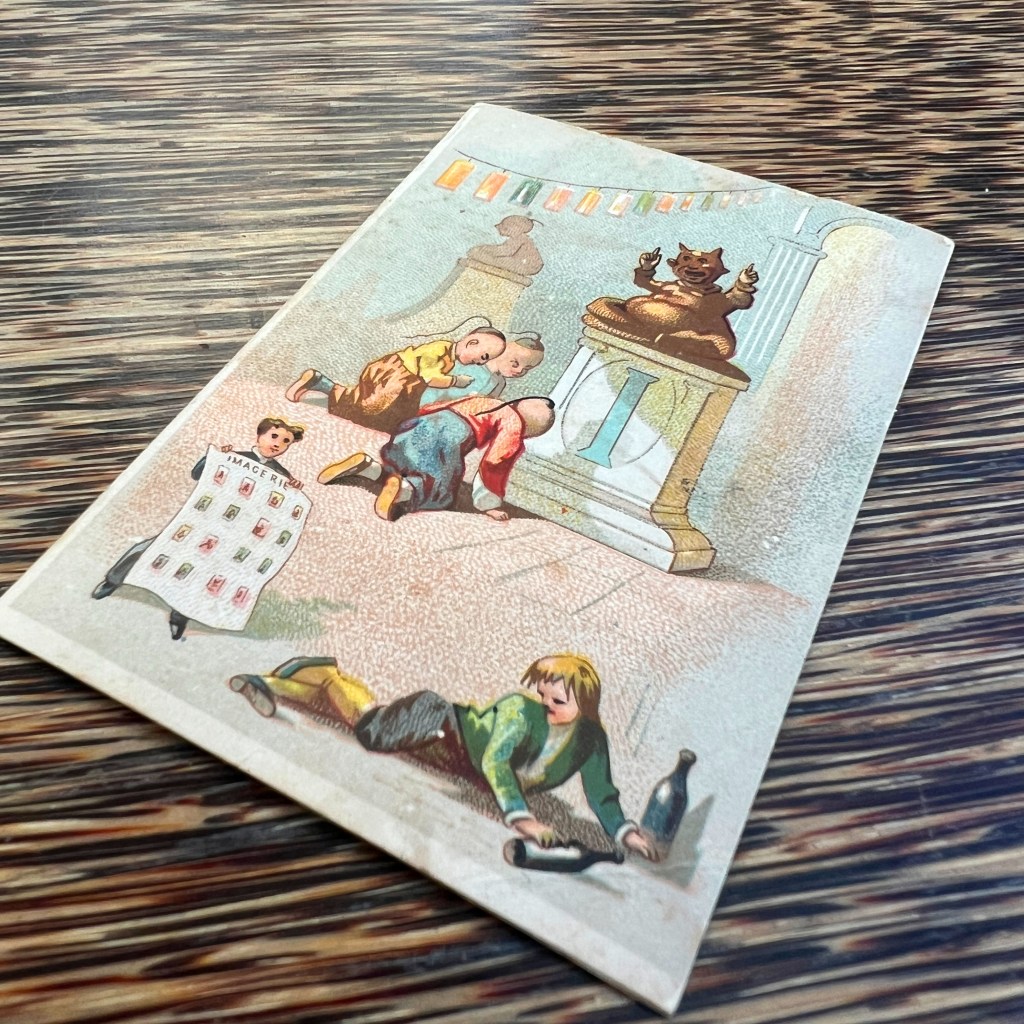
This stock card was from an alphabet primer series, appealing to one of the primary audiences for trade cards, children. The letter “I” can be spotted on the pedestal in the rear, thus asking viewers to interpret the scenes through the lens of words beginning with “I.”

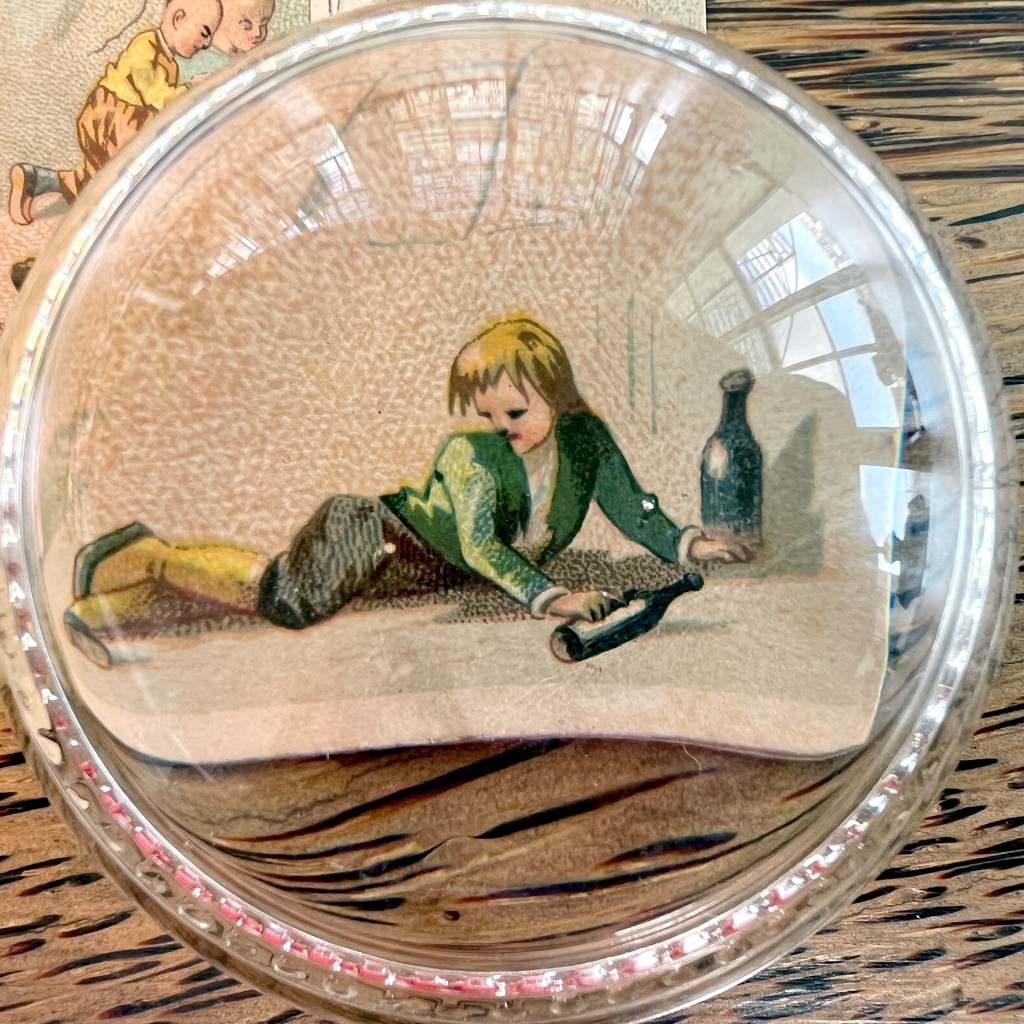
The moralizing tone of the images is apparent. In the foreground we see a child lying on the floor clutching a bottle, representing inebriation or intoxication.

The Chinese children in the background, clearly identified by their long queues and flowing garments, represent idolators practicing foreign idolatry.

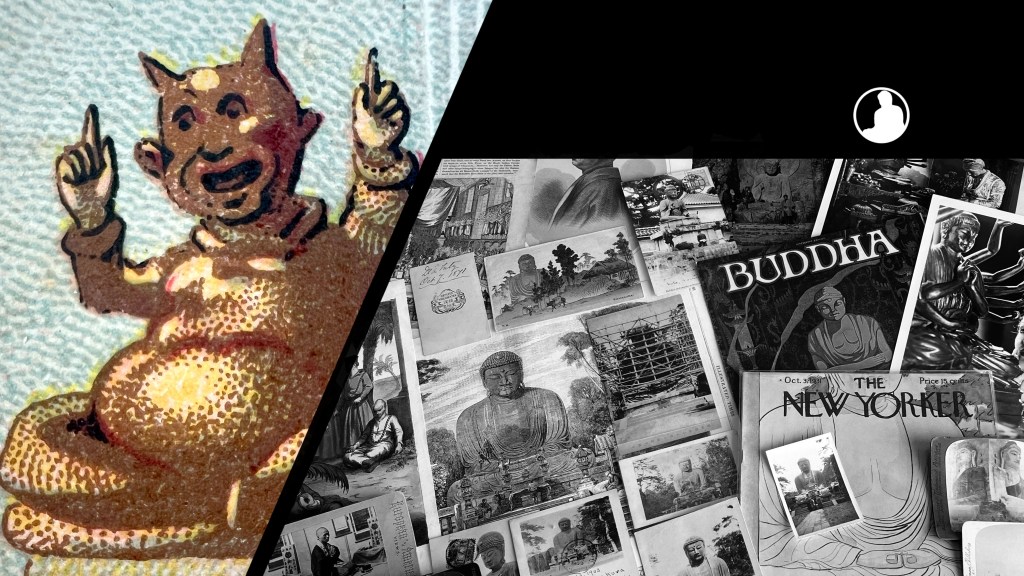
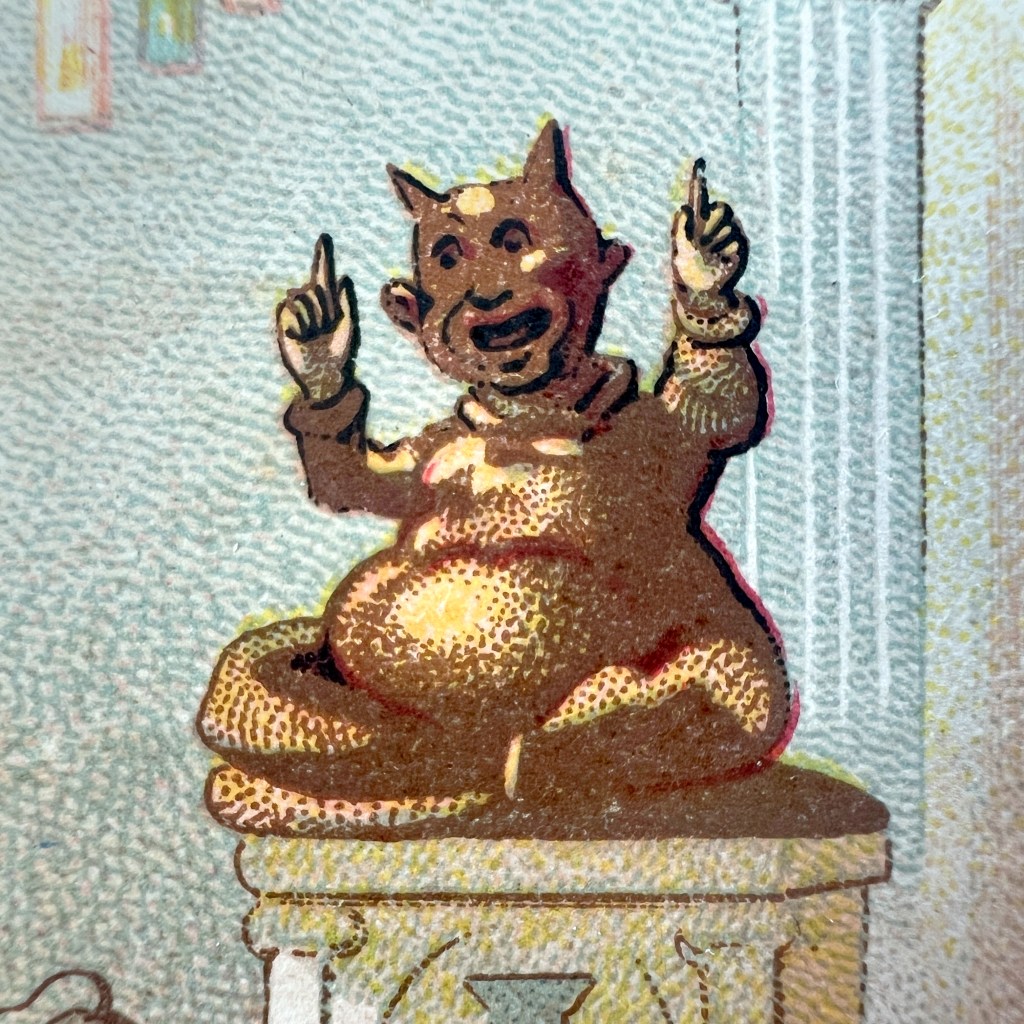
The idol is a distorted version of a sitting buddha, portrayed with horns and performing a “Chinese dance.” For more on the visual language of trade cards, see Lenore Metrick-chen, “The Chinese of the American Imagination: 19th Century Trade Card Images” (2007).


The Buddhas in the West Material Archive is a digital scholarship project that catalogues artifacts depicting Buddhist material culture for Western audiences. It’s comprised of prints, photos, and an assortment of ephemera and other objects. For a brief introduction to this archive, visit the main Buddhas in the West project page.


For Related Buddhas in the West Posts Featuring Chinese in the United States:


For the Most Recent Buddhas in the West Posts:

World in Cincinnati Japan Scene Postcard

For all the new Buddhas in the West posts
follow us on Bluesky & Instagram


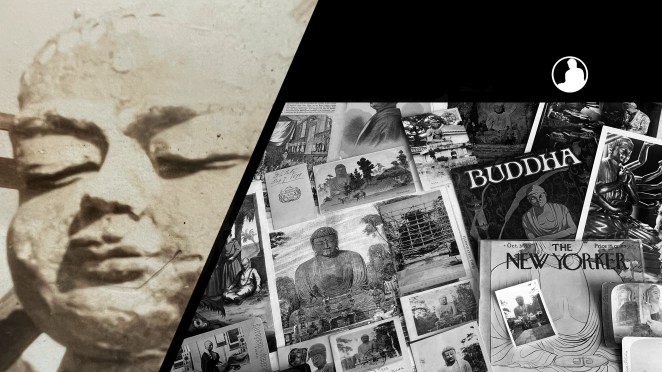
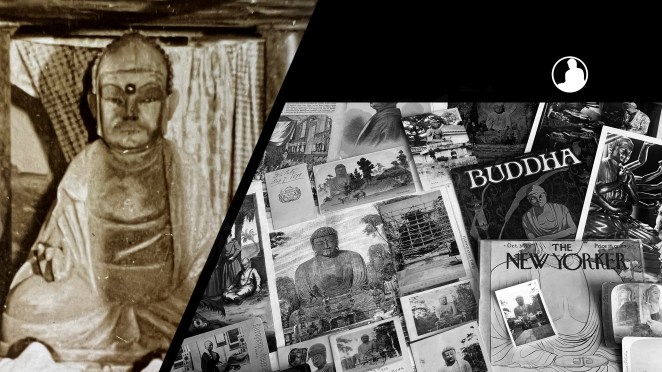
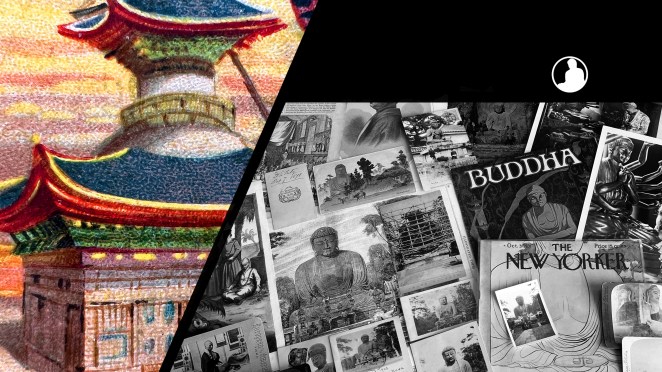
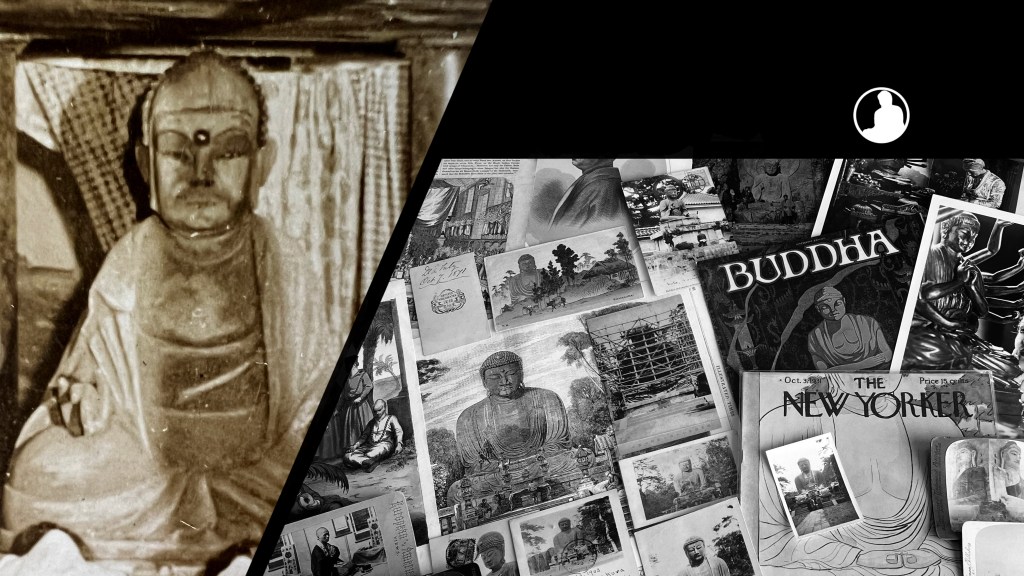
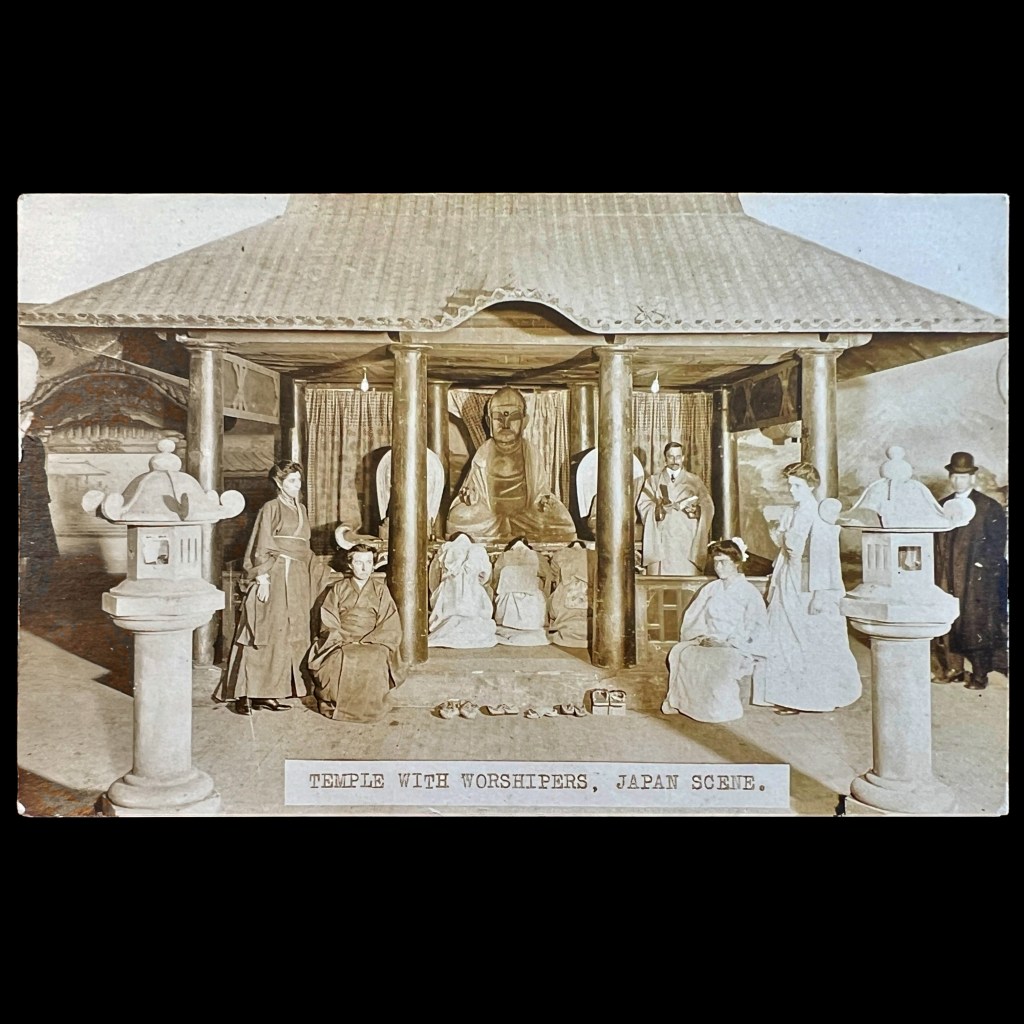
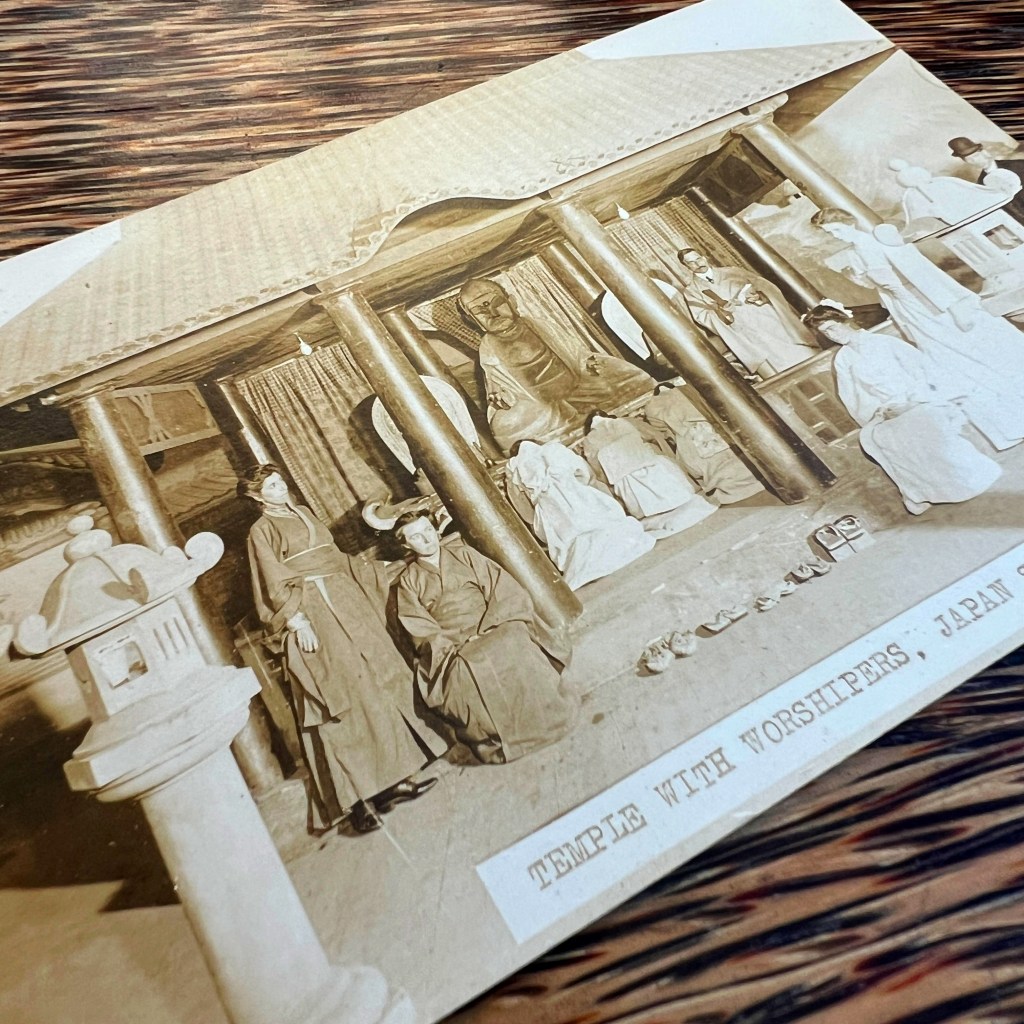
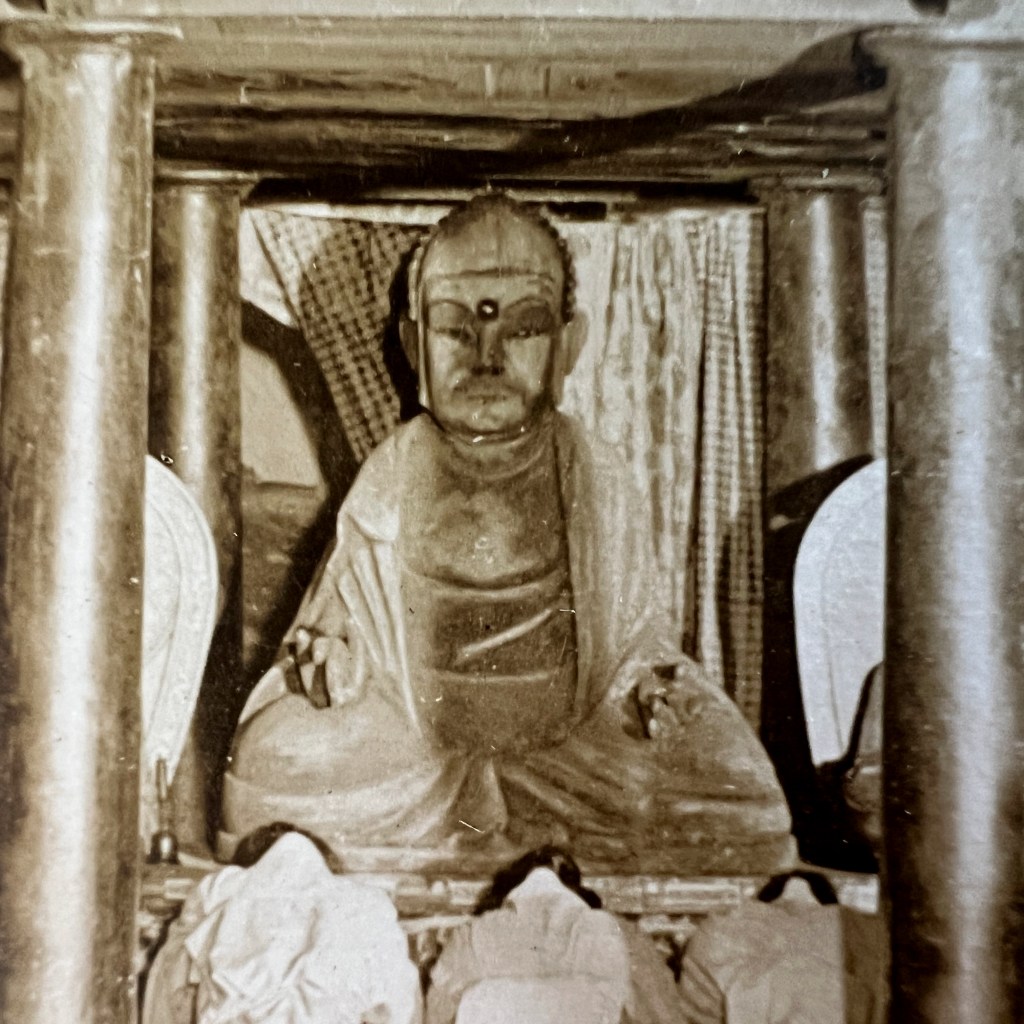
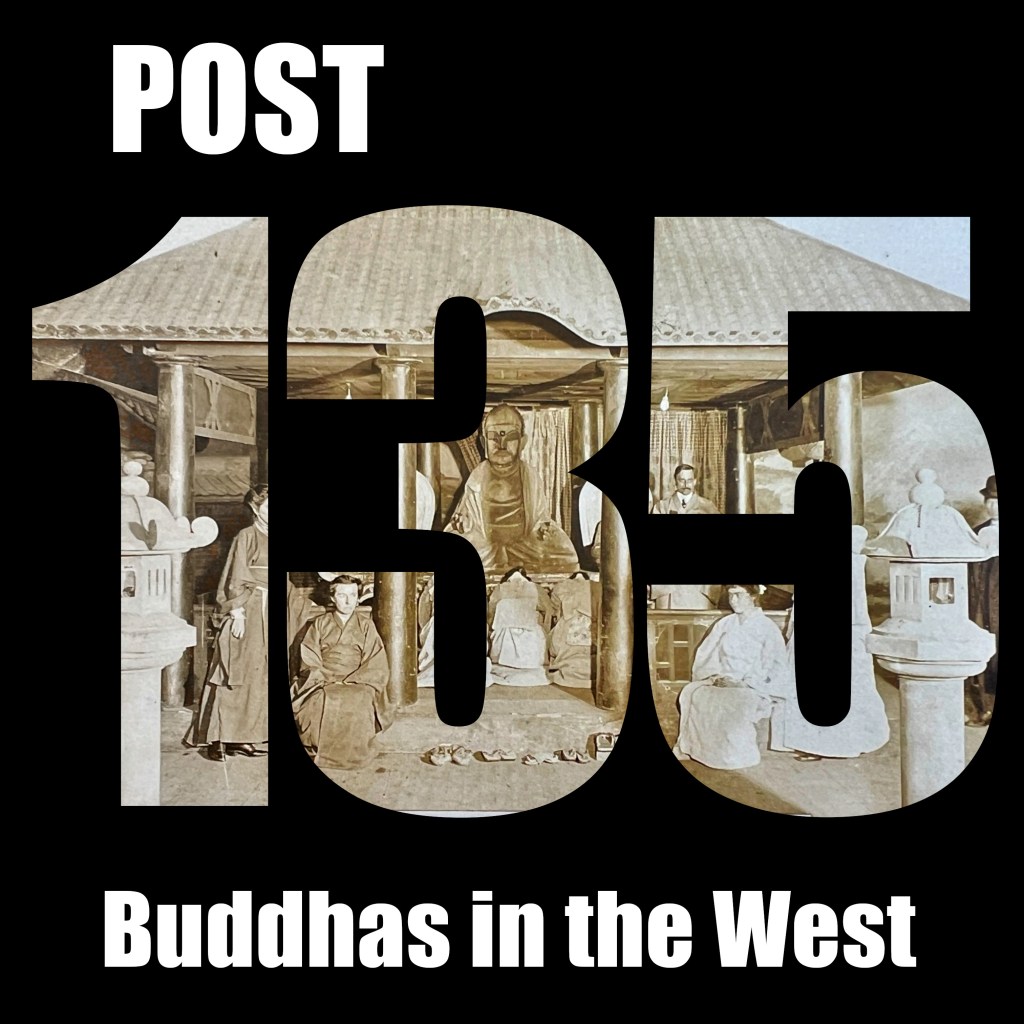
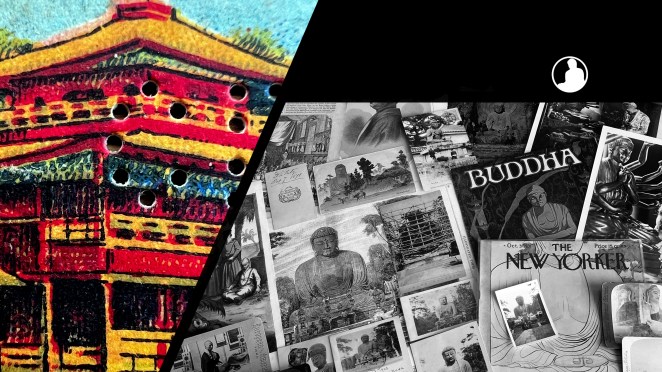
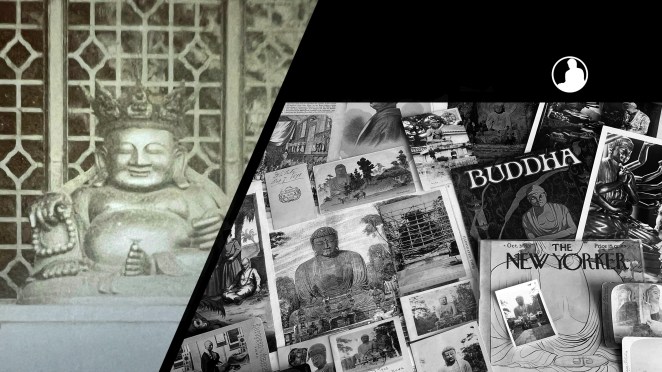
In 1911, to promote efforts of American missionaries abroad, an arm of the missions board sponsored a massive traveling exhibit of the world’s religions. The “Japan Scene” was dominated by a replica of a Buddhist temple, traveling from Boston to Cincinnati and elsewhere.

Flanked by shops and scenes of everyday Japanese life, the exhibit was considered an exercise in immersive visual educational. Partition walls were painted with panoramic views of distant locales such as Mt. Fuji and lotus ponds to further create a sense of virtual travel.

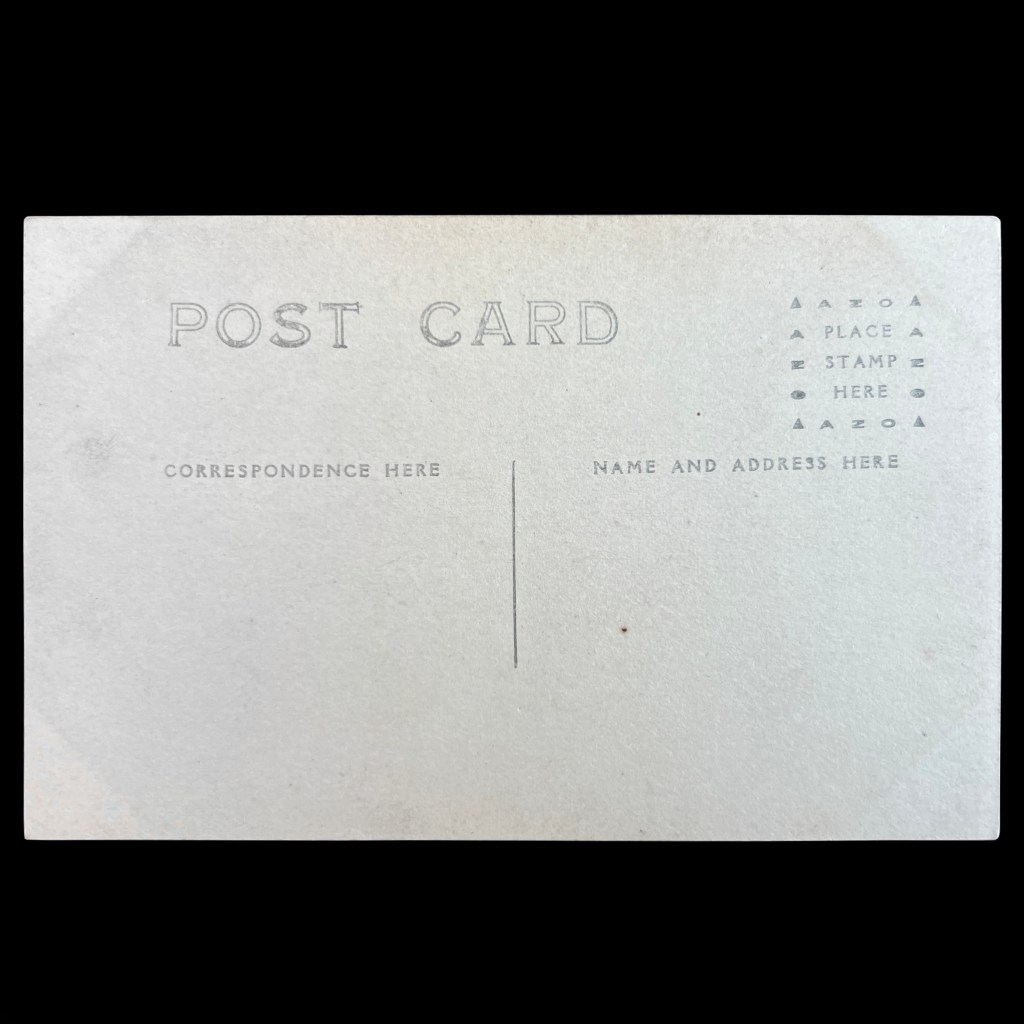
A variety of print ephemera, such as maps, posters, and postcards, were sold as souvenirs and visual learning aids to visitors. The superimposed label printed on front of this real photo post card helps identify it as from the “World in Cincinnati,” similar to other known examples.

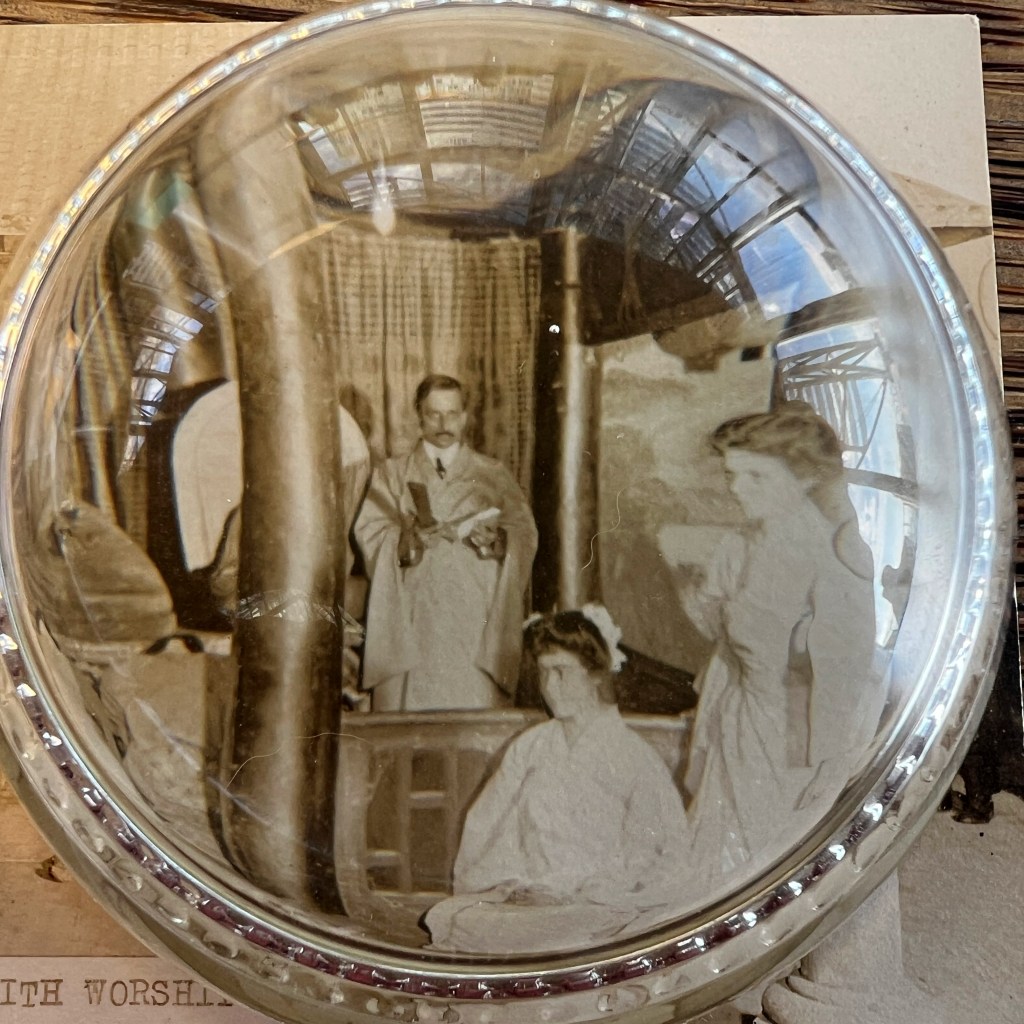
In Cincinnati, the replicated foreign lands were populated by more than 5000 stewards from more than 200 local churches portraying native peoples.

While some replicated scenes were decorated with authentic religious imagery, Japan’s icon appears to be recreated with wood or plaster. For more about missionary exhibits, see April Makgoeng’s “Visualizing Missions: The Power of the Image in Promoting Foreign Missions” (2021).


The Buddhas in the West Material Archive is a digital scholarship project that catalogues artifacts depicting Buddhist material culture for Western audiences. It’s comprised of prints, photos, and an assortment of ephemera and other objects. For a brief introduction to this archive, visit the main Buddhas in the West project page.


For Related Buddhas in the West Posts Featuring Real Photo Post Cards:


For the Most Recent Buddhas in the West Posts:

Tuck’s Henry Savage Landor Tibetan Lamas Postcard

For all the new Buddhas in the West posts
follow us on Bluesky & Instagram


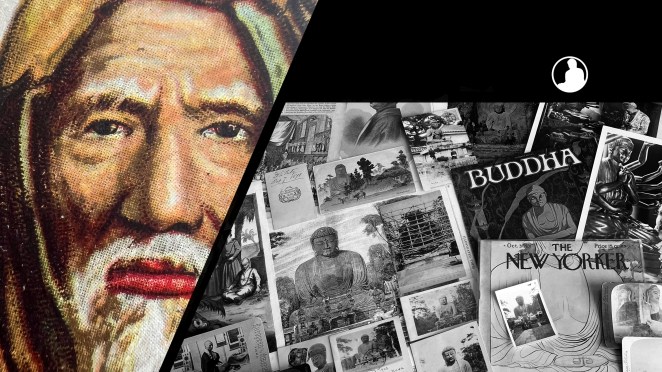
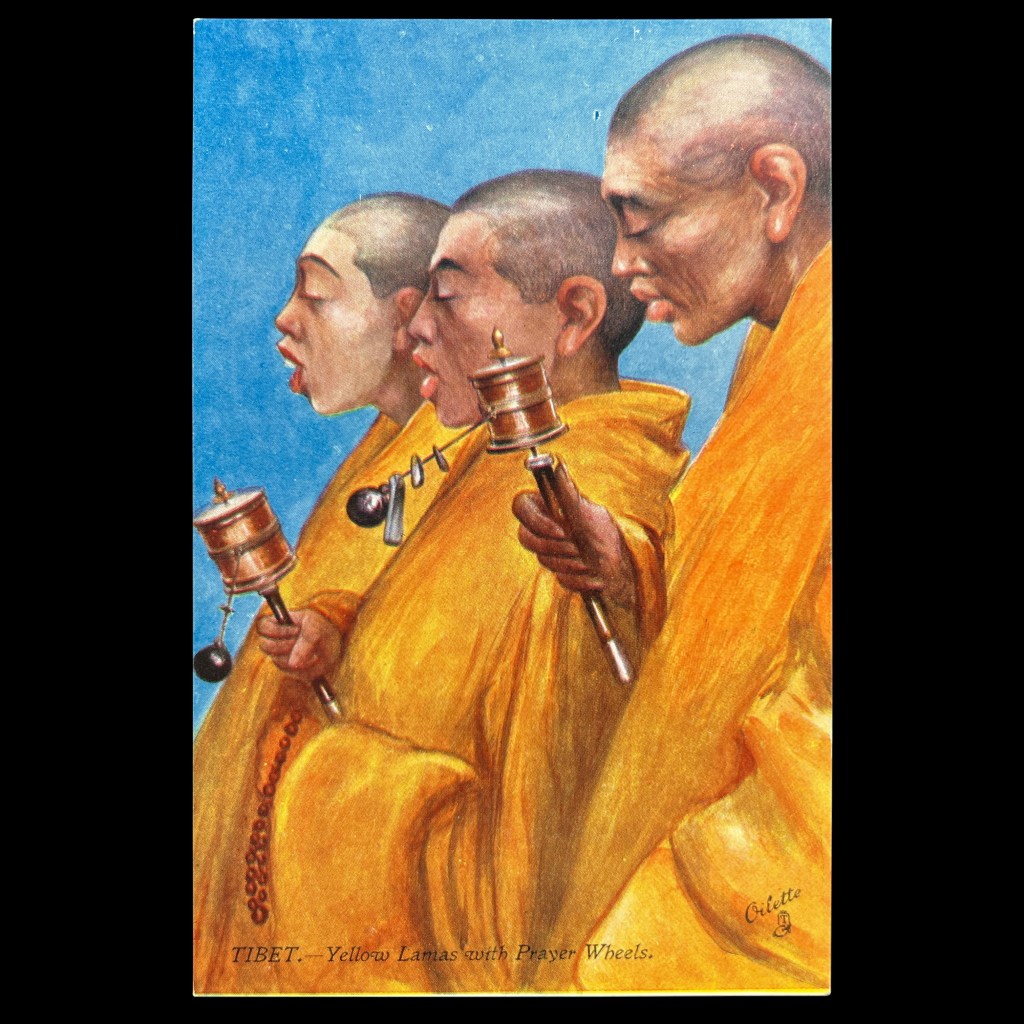
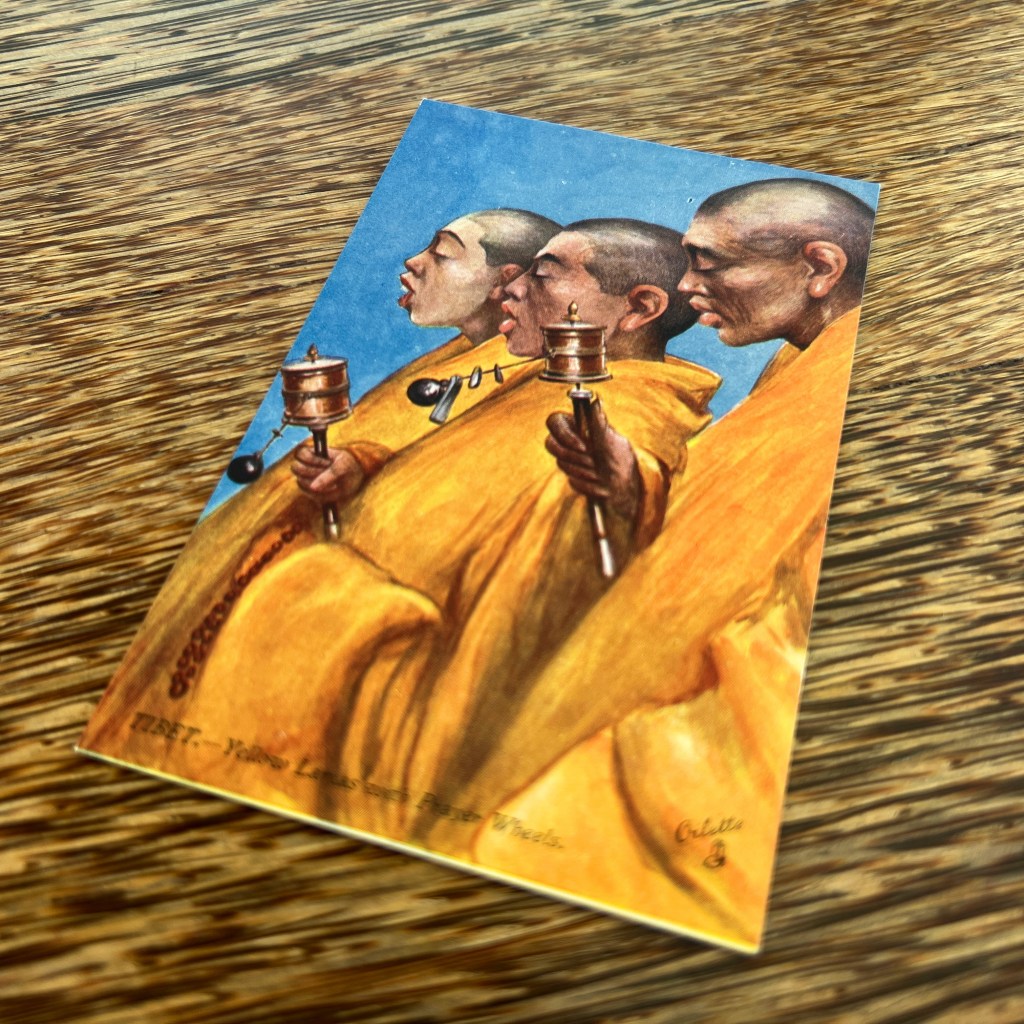
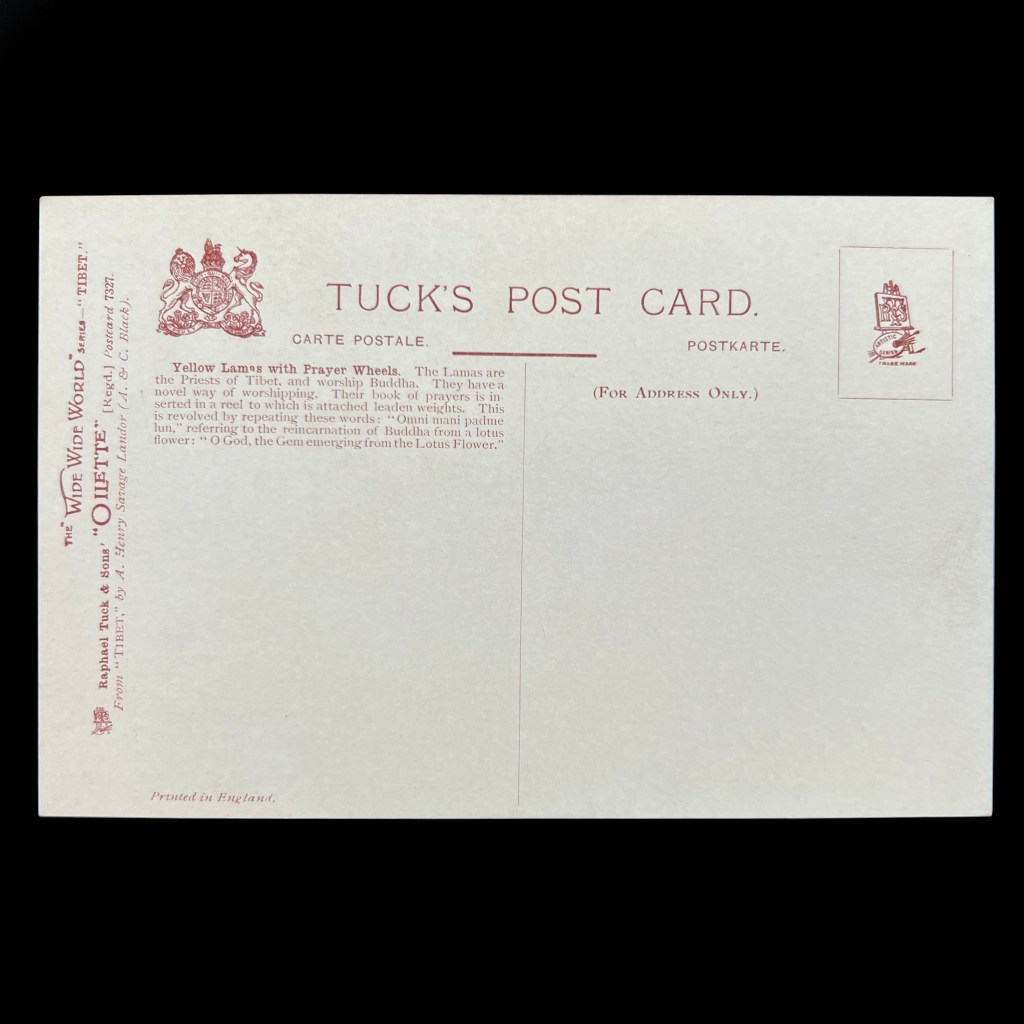
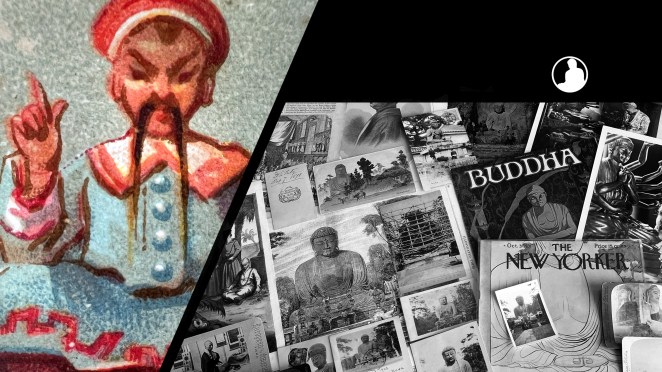
In 1903, a titan of world postcard production, England-based Raphael Tuck & Sons, set themselves further apart by issuing the vibrantly colored Oilette Series based on commissioned oil paintings. Among the first sets released was devoted to the mysterious Himalayan nation of Tibet.

Six paintings were prepared by the explorer and artist Henry Savage Landor who wrote about his travels to the region in his 1898 book, In the Forbidden Land. Tuck printed Landor’s paintings as lithograph postcards at a time when photos of Tibet were only first starting to circulate.

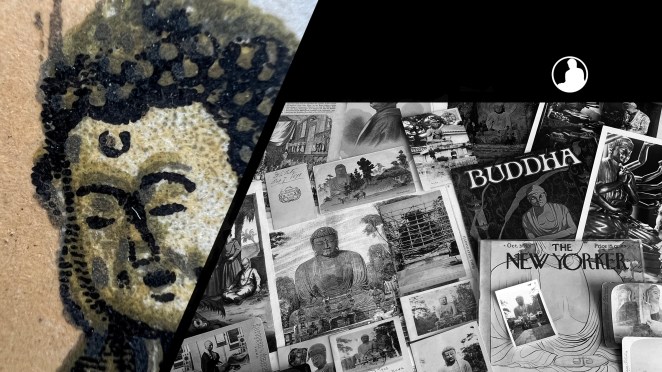
While a majority of Tuck’s pictorial stock focused on the English countryside, the Wide Wide World Series introduced colonial lands and other foreign cultures. Here the caption notes the use of Om mani padme hum, a six-syllable Sanskrit mantra common among Tibetan Buddhists.

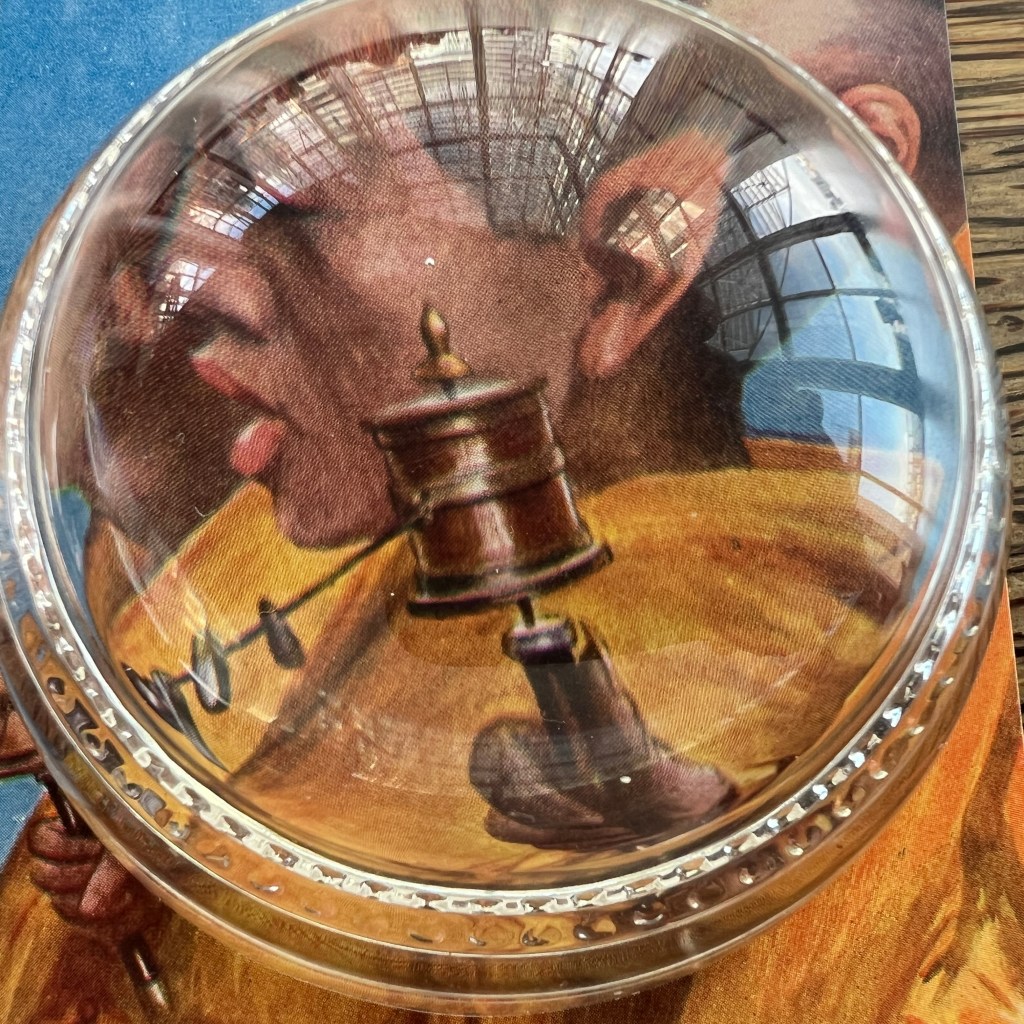
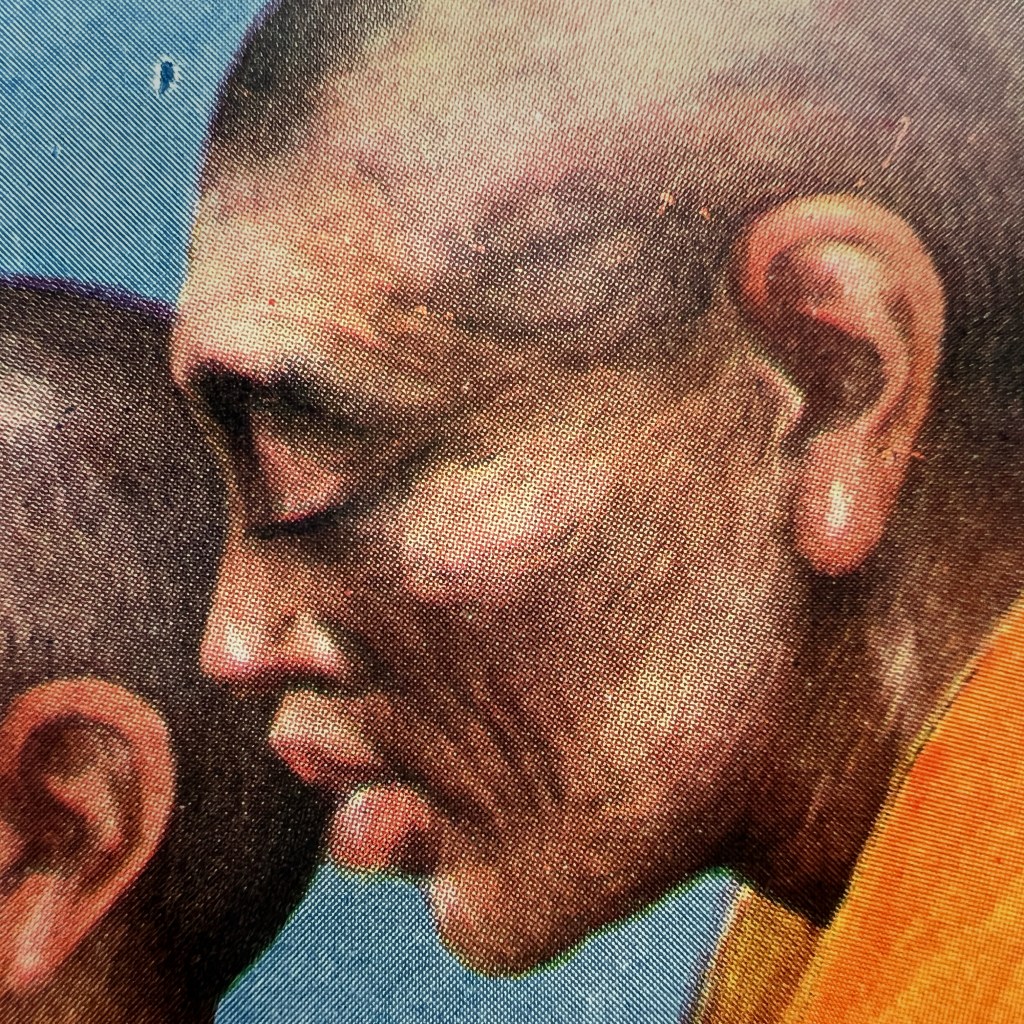
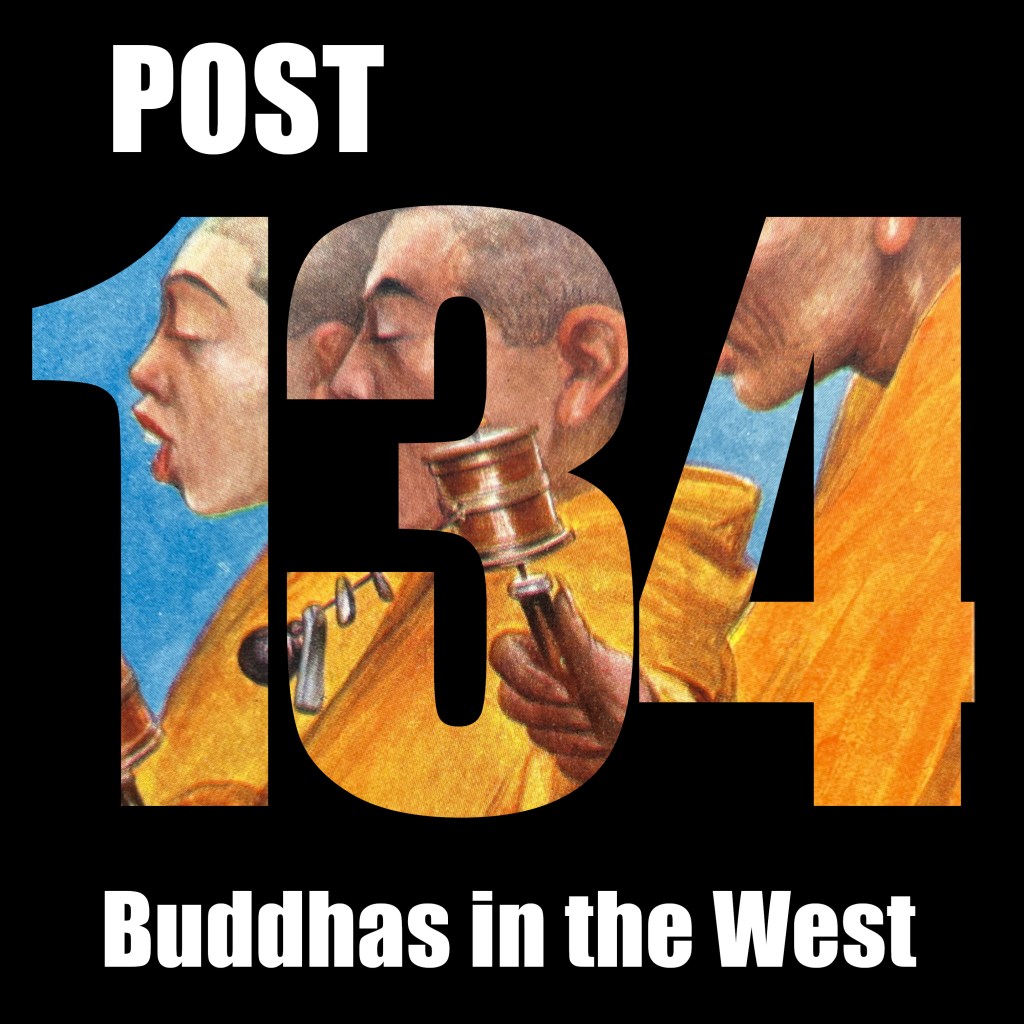
The visual focus of Landor’s painting is the monk’s use of the prayer wheel, noted as containing the Buddhist “book of prayers.” As with others of his time, Landor was fascinated by the ritual object, describing its use in his published work on Tibet.

Landor’s six card set was the only set of Tibet Tuck published before it stopped operation during WWII. For a comprehensive digitized catalogue of Tuck Oilette cards, see www.tuckdbpostcards.org.


The Buddhas in the West Material Archive is a digital scholarship project that catalogues artifacts depicting Buddhist material culture for Western audiences. It’s comprised of prints, photos, and an assortment of ephemera and other objects. For a brief introduction to this archive, visit the main Buddhas in the West project page.


For Related Buddhas in the West Posts Featuring Prayer Wheels:


For the Most Recent Buddhas in the West Posts:

Esaki Reiji’s Pilgrims with Portable Shrine Photograph

For all the new Buddhas in the West posts
follow us on Bluesky & Instagram


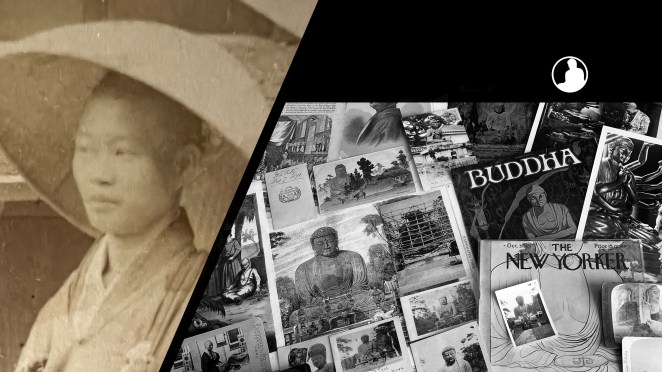
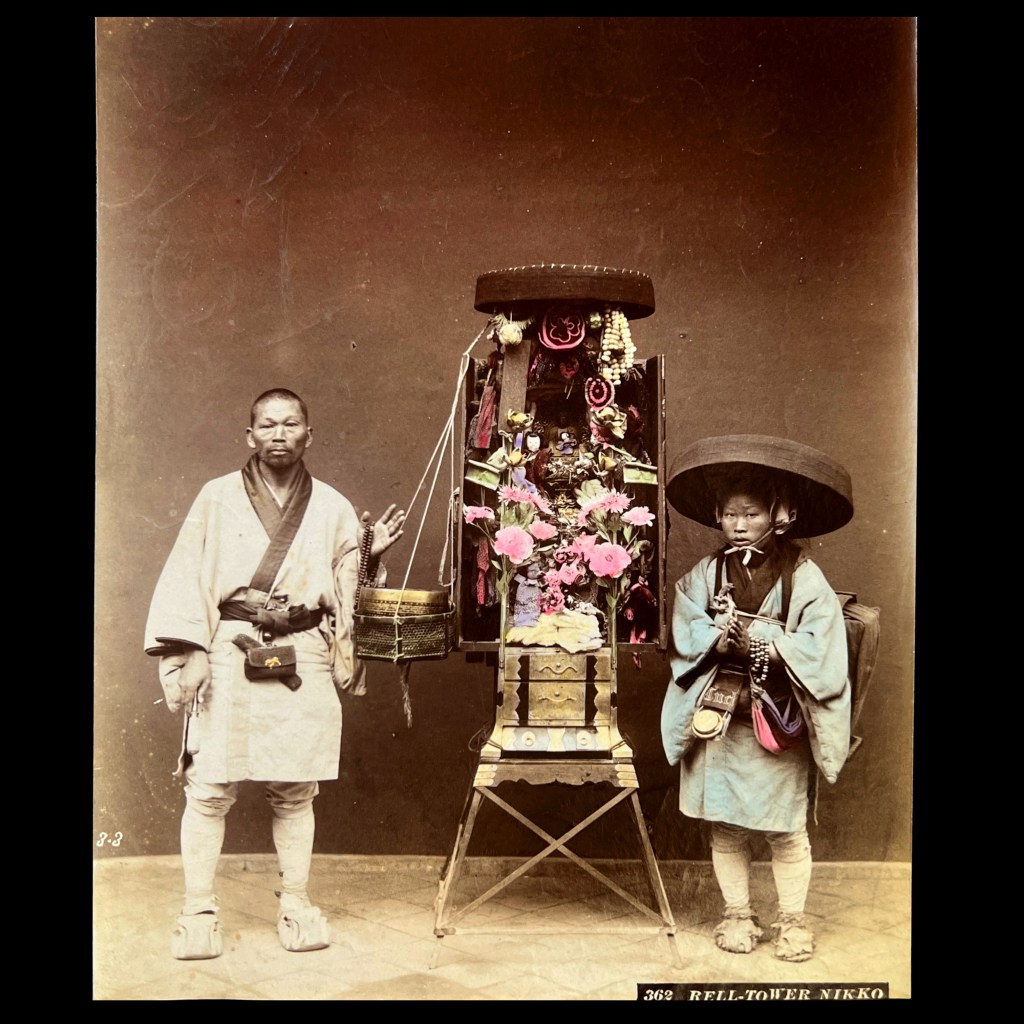
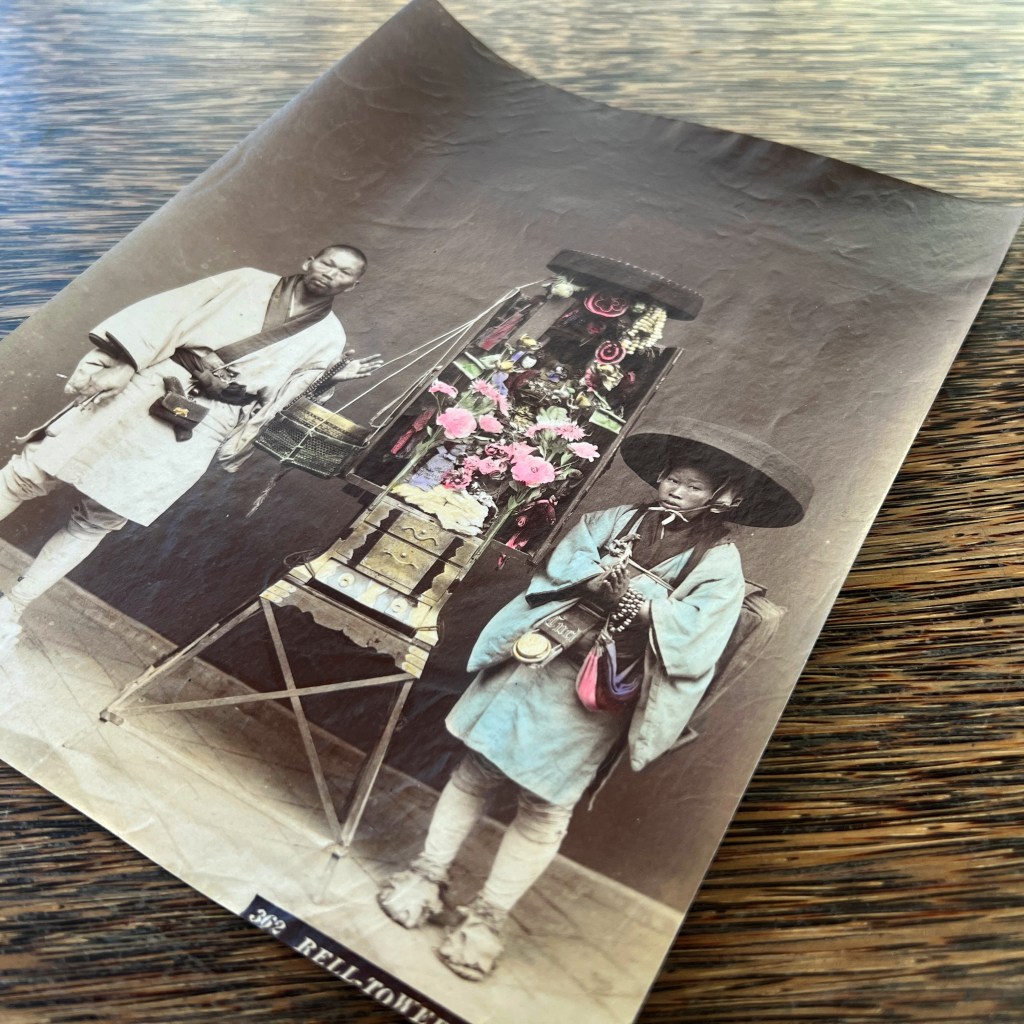
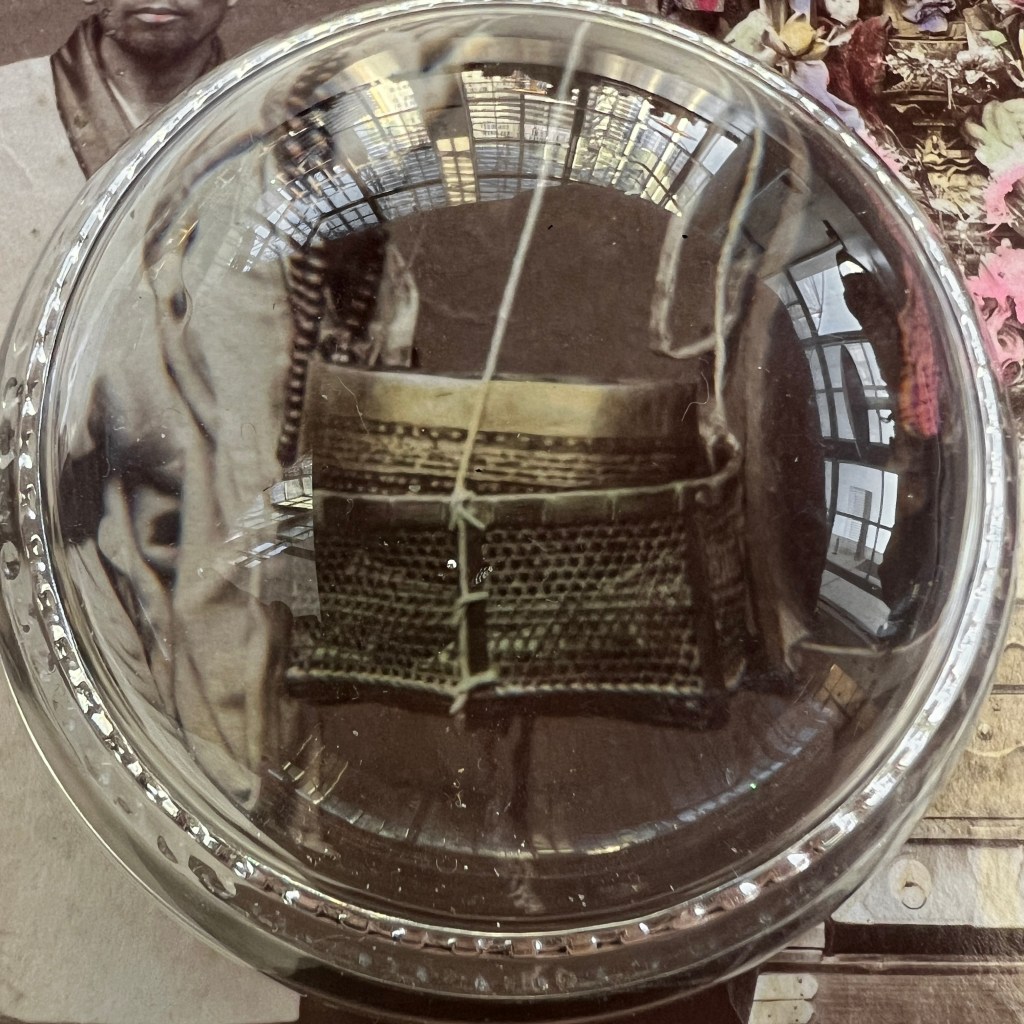
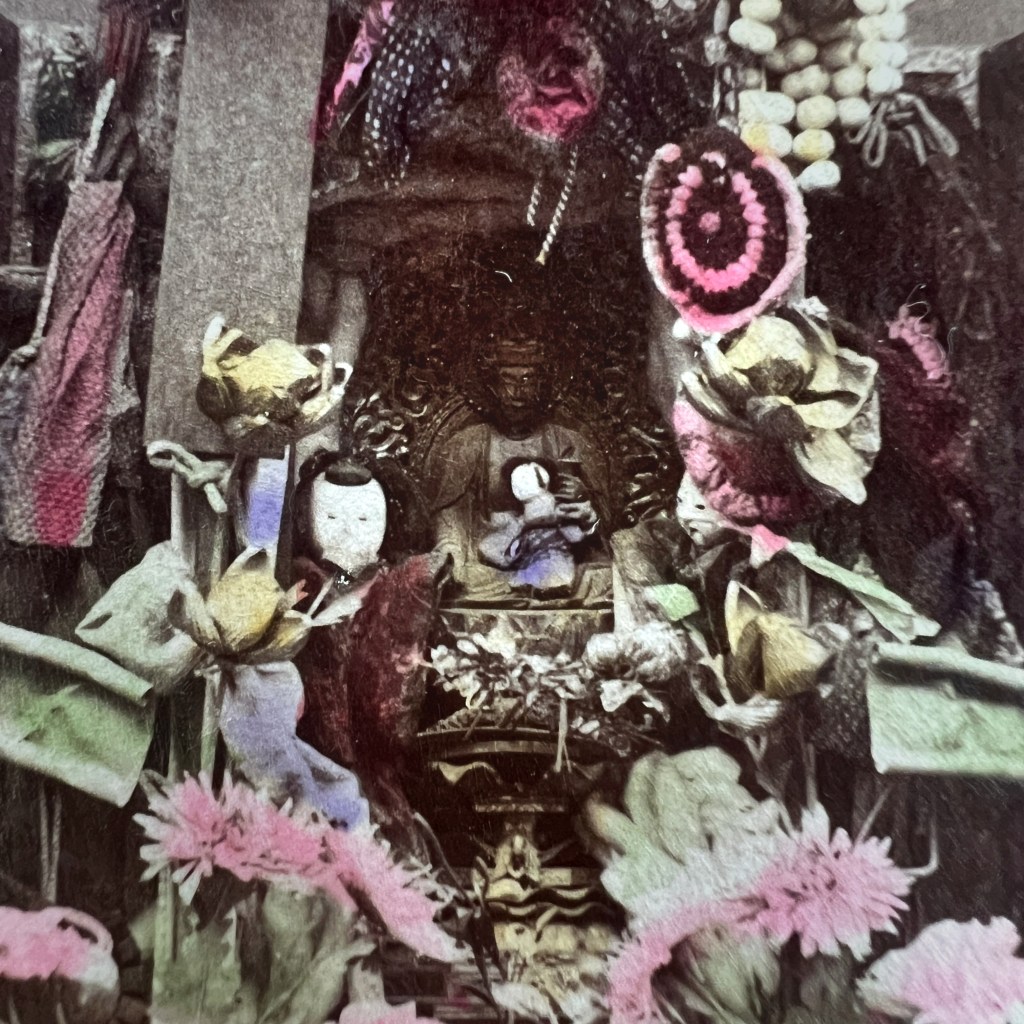
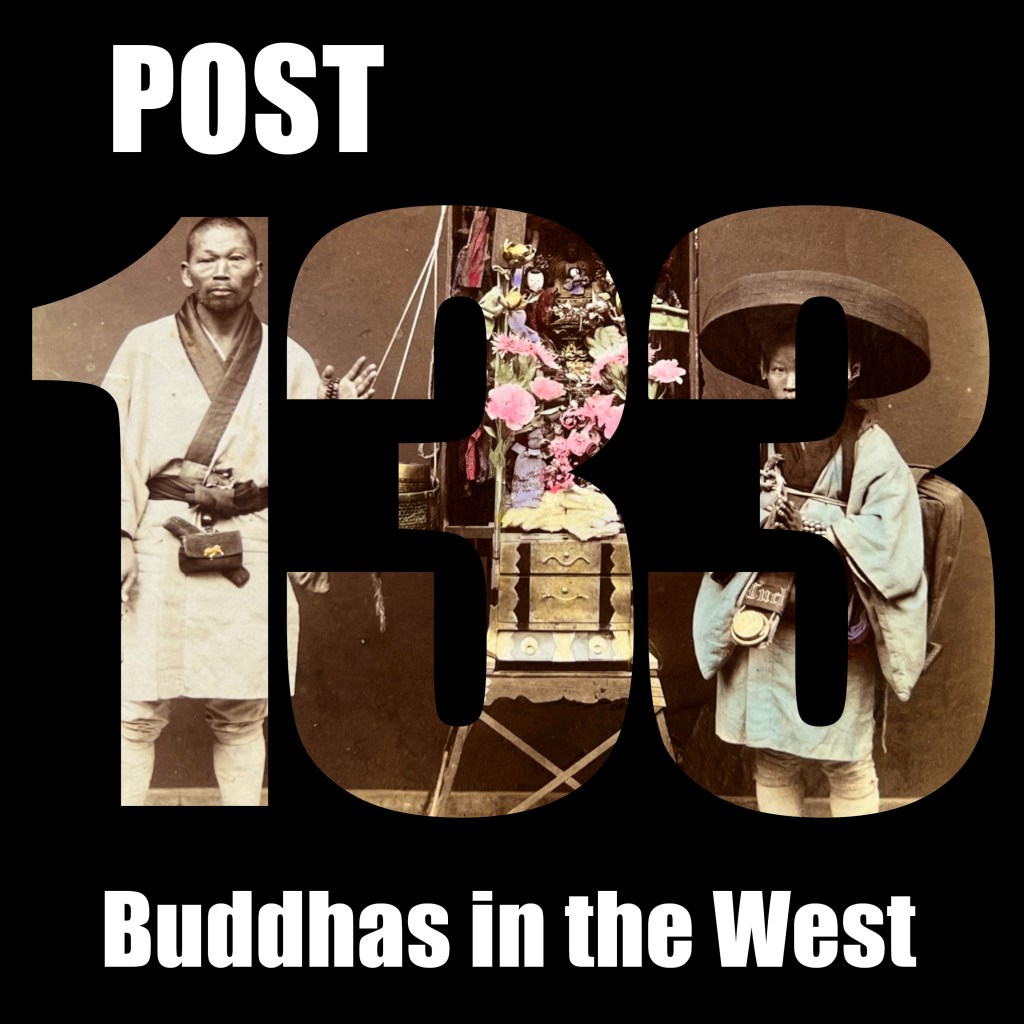
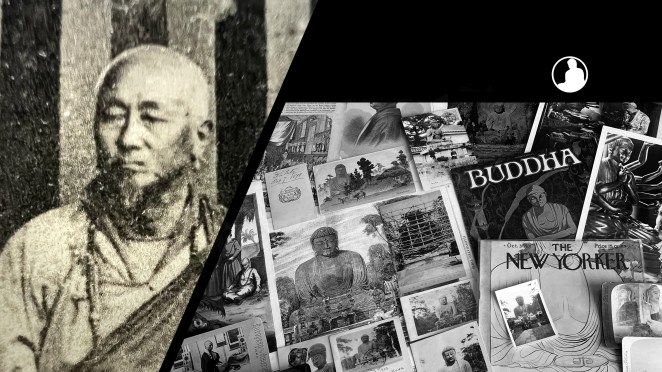
While temple visitors might view Buddhist images as immovable fixtures, Meiji-era photography reveals the remarkable portability of Buddhist icons. Here we see a pair of Japanese pilgrims with their portable shrine traveling through Nikko, a sign of Buddhist faith on the move.

The studio stock number (362) is currently unattributed, but fits within a sequence of numbers for photos taken in Nikko by Esaki Reiji, likely in the late 1880s or 1890s. Esaki was a prominent souvenir album photographer in Asakusa, a tourist-friendly area of Tokyo.

As described by Chun-Wa Chan, portable Buddhist shrines were already in use by the 5th century in the region of Gandhara and were introduced into Japan a few centuries later. Portable Japanese shrines (zushi) were often ornately decorated and fitted with doors to conceal the icon inside.

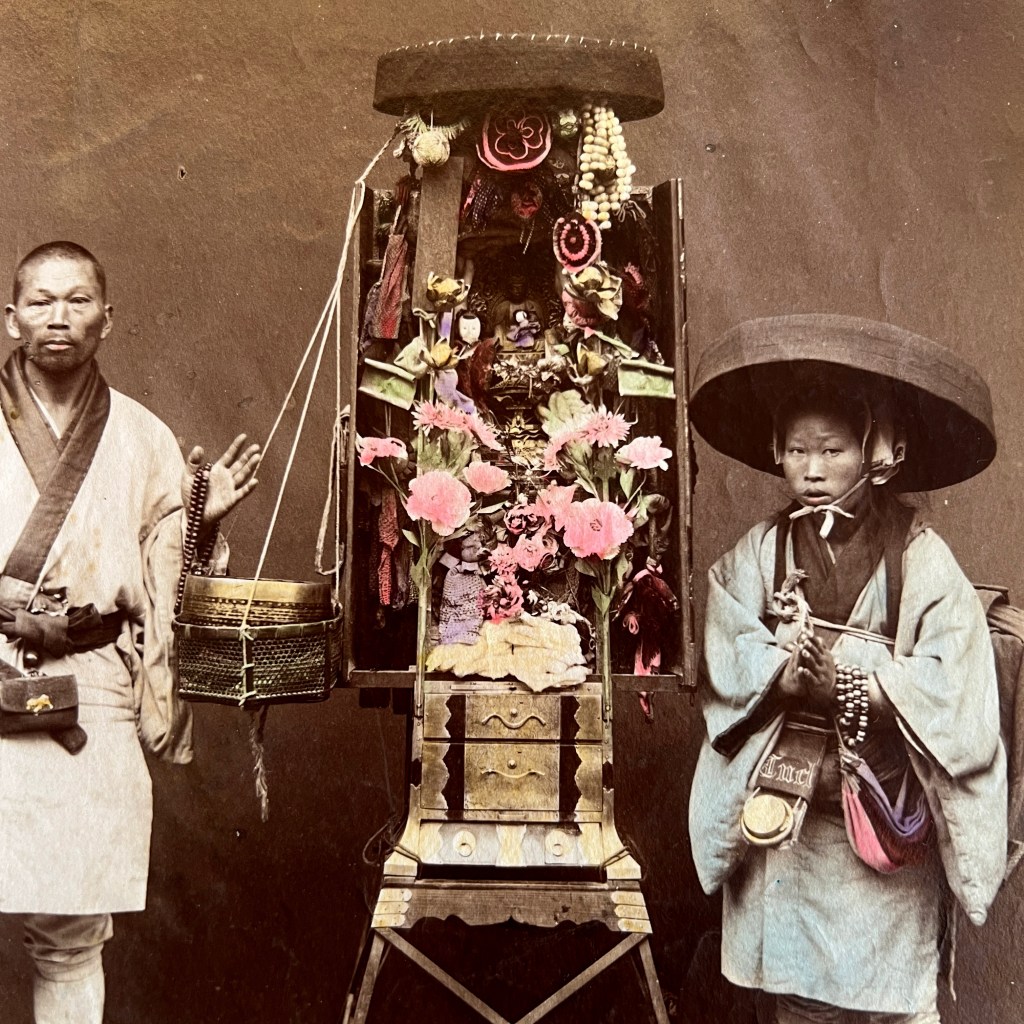
Pilgrims would carry the frame on their backs as they moved from one location to the next. A large bell rests in a basket hung off the side, ready to be struck by a mallet held in the pilgrim’s hand on the left. His other hand holds a long string of mala beads.

Obscured by flower offerings, the Buddhist icon sits at just above eye level in the shrine. For more on this topic, see Chan’s “Portable Faith: Toward a Non-Site-Specific History of Buddhist Art in Japan,” viewable here: https://tinyurl.com/3tde394d.


The Buddhas in the West Material Archive is a digital scholarship project that catalogues artifacts depicting Buddhist material culture for Western audiences. It’s comprised of prints, photos, and an assortment of ephemera and other objects. For a brief introduction to this archive, visit the main Buddhas in the West project page.


For Related Buddhas in the West Posts Featuring Nikko:


For the Most Recent Buddhas in the West Posts:

1893 Chinese Theater and Joss House Stereoview

For all the new Buddhas in the West posts
follow us on Bluesky & Instagram


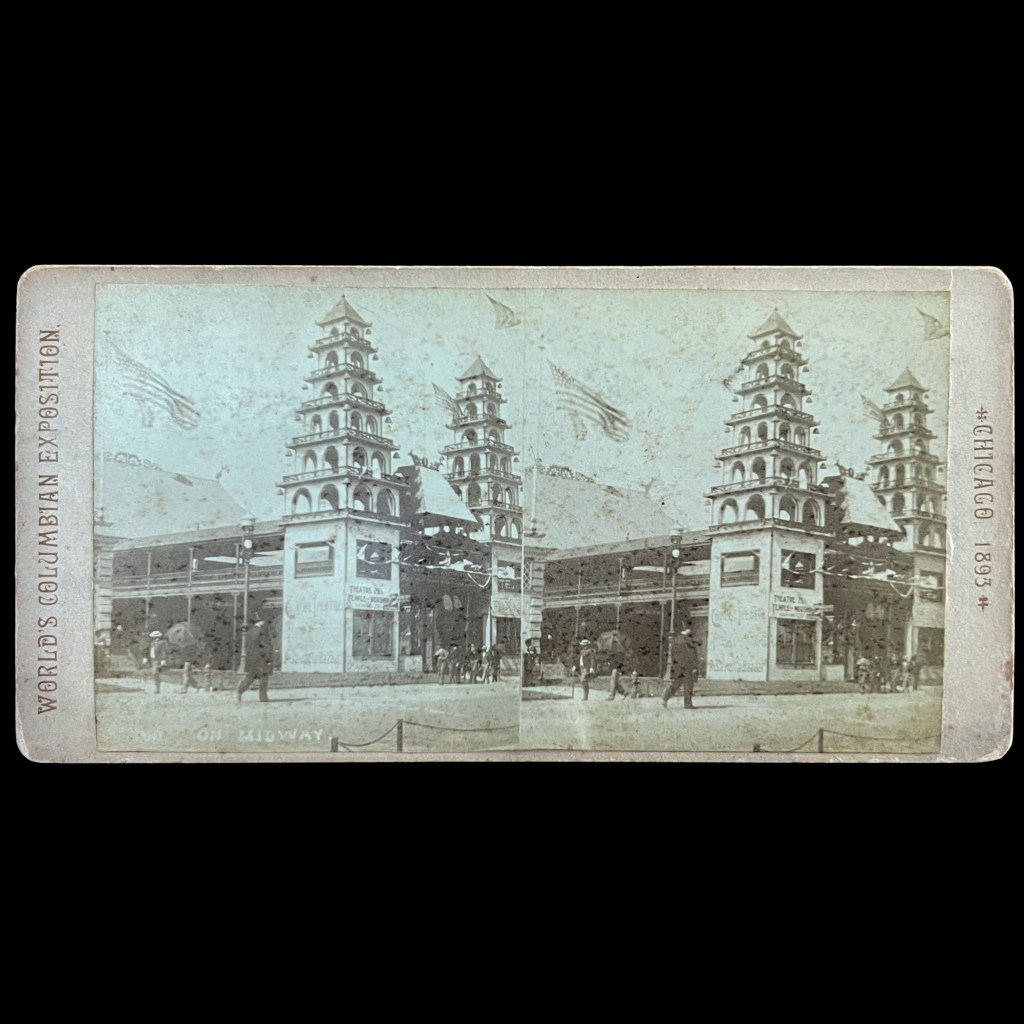
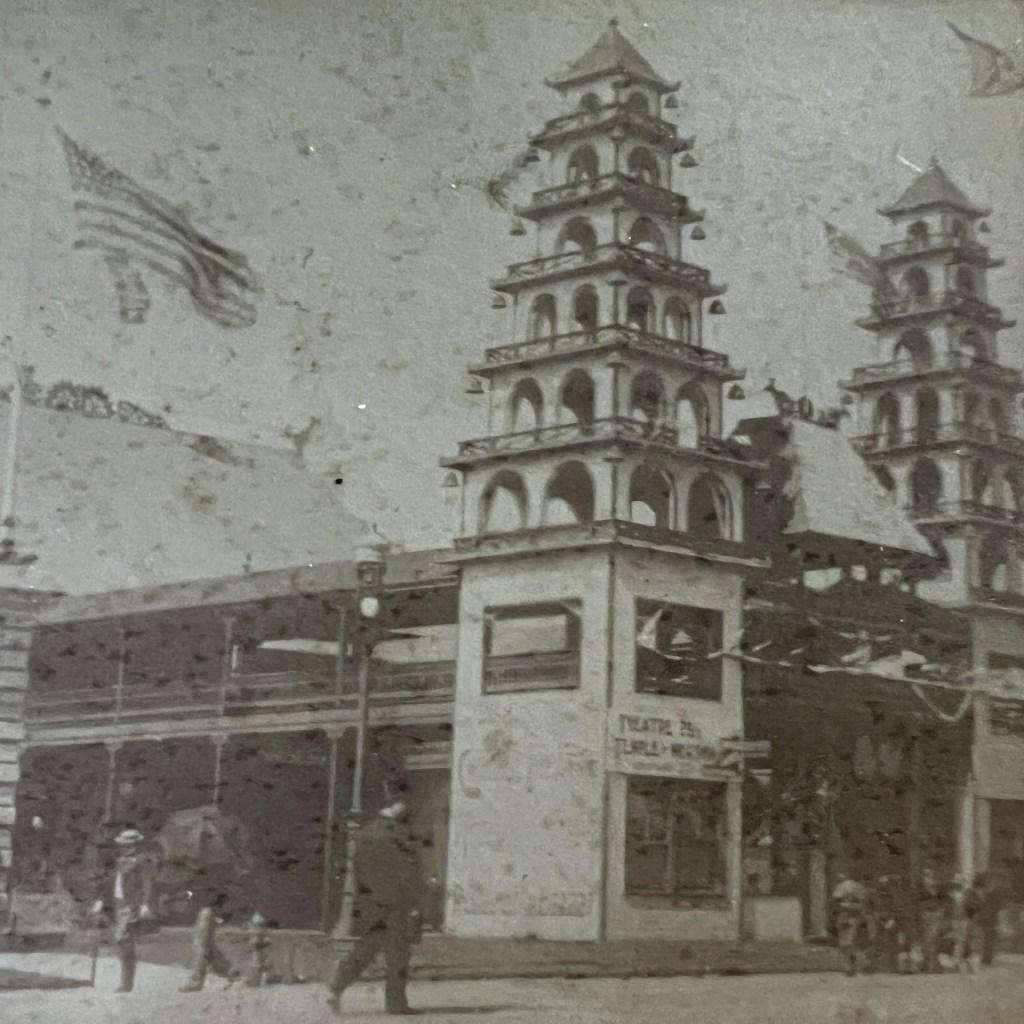
Due to the US extension of the Chinese Exclusion Act in 1892, the Chinese Qing Empire withdrew from the 1893 World’s Columbian Exposition in Chicago. This created the opportunity for local Chinese Chicagoans to build a Chinese Theatre and Joss House as an amusement concession.

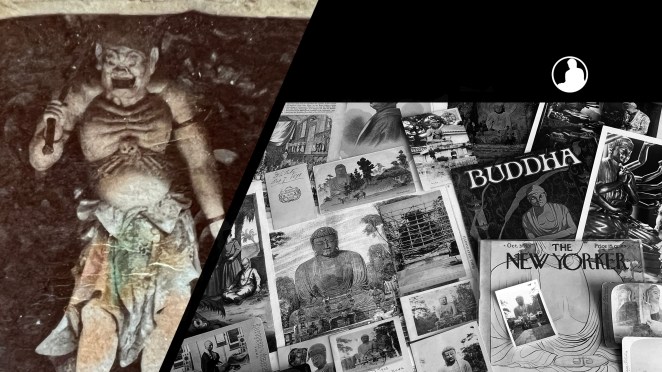
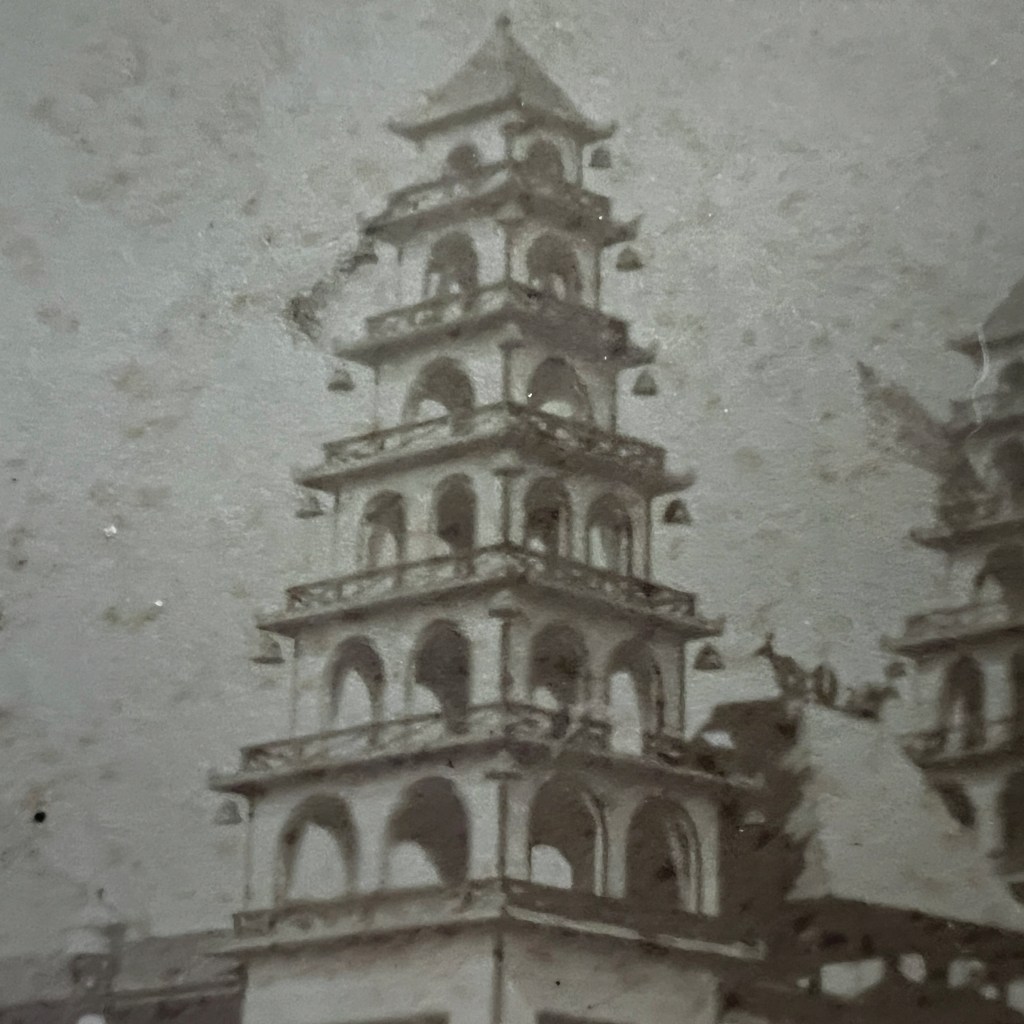
The concession was financed and managed by three Chinese immigrants operating as the Wah Mee Exposition Company. The second floor held “thousands of idols” from the “Buddhist stand-point” as well as depictions of the Buddhist hells “with the many different modes of punishment.”

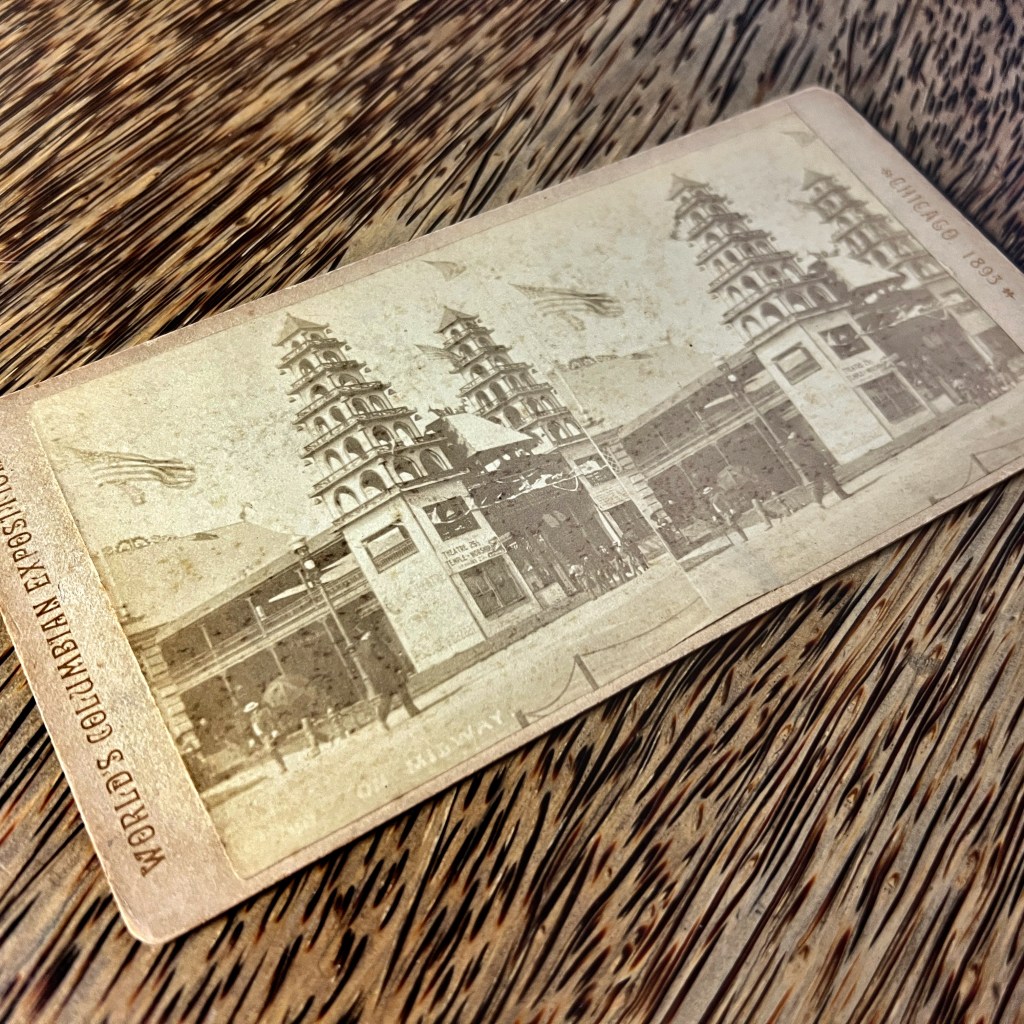
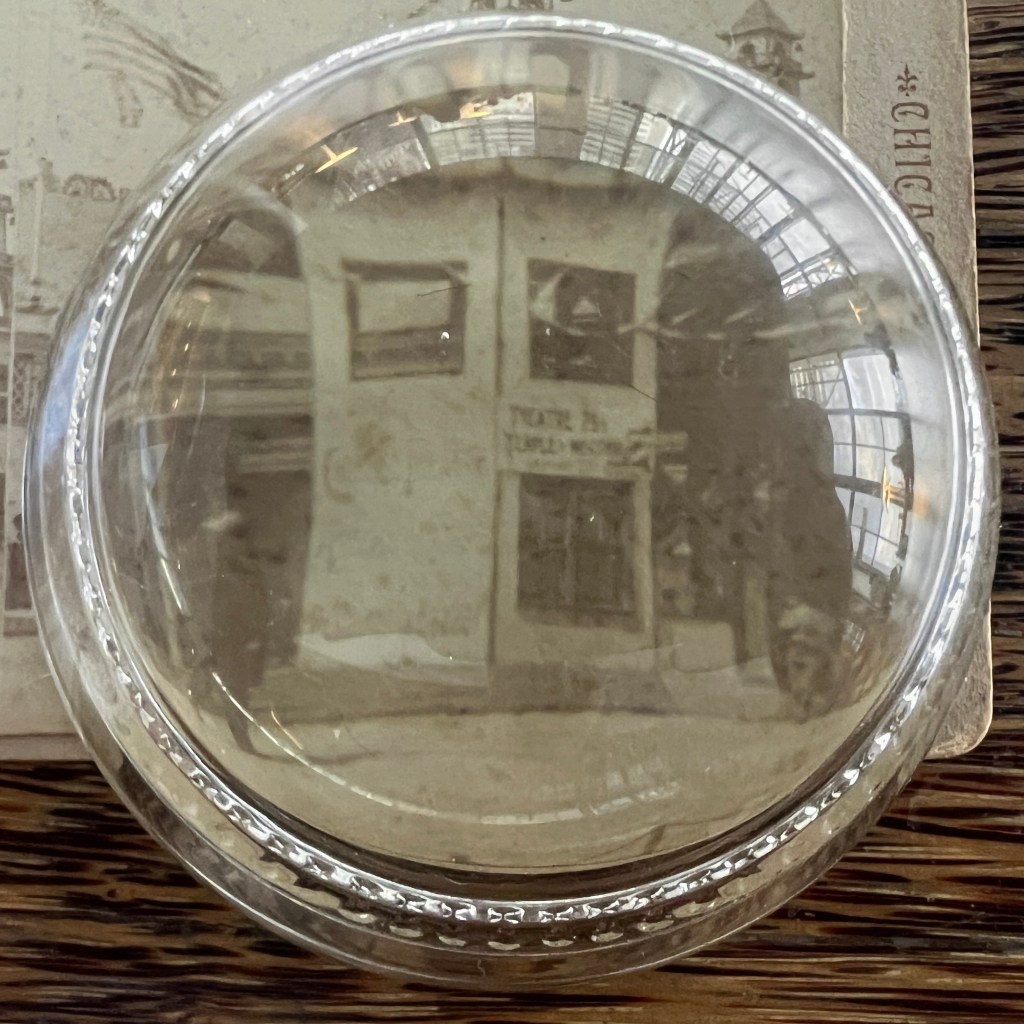
Charles Dudley Arnold was the official photographer of the 1893 exposition, but many other studios sold photographic souvenirs of the fair grounds. While sold as a stereoview, this card by an unknown publisher reproduces the same photograph twice, creating a pseudo-stereoscopic image.

Signage notes admission to the Cantonese theater hall and temple cost 25 cents. An estimated 27 million people visited the fair in Chicago, many of whom would have walked the amusements along the Midway Plaisance where the joss house was located.

While prominent Buddhists attended the World’s Parliament of Religions in 1893, fair visitors were also exposed to Buddhism through the joss house attraction. For more on Chinese participation, see Mae Ngai’s “Transnationalism and the Transformation of the ‘Other'” (2005).


The Buddhas in the West Material Archive is a digital scholarship project that catalogues artifacts depicting Buddhist material culture for Western audiences. It’s comprised of prints, photos, and an assortment of ephemera and other objects. For a brief introduction to this archive, visit the main Buddhas in the West project page.


For Related Buddhas in the West Posts Featuring World’s Fairs:


For the Most Recent Buddhas in the West Posts:

Shangri-la in Lost Horizon (1937) Production Photograph

For all the new Buddhas in the West posts
follow us on Bluesky & Instagram


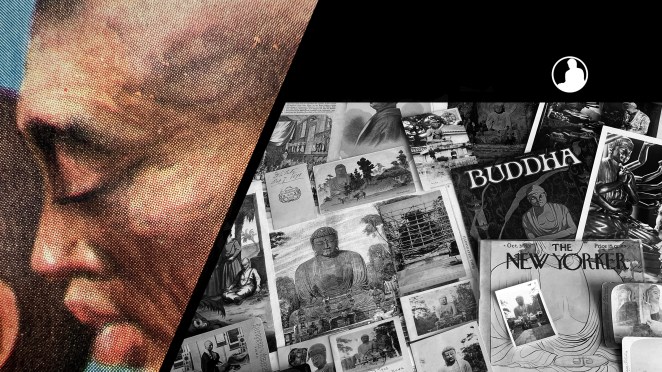
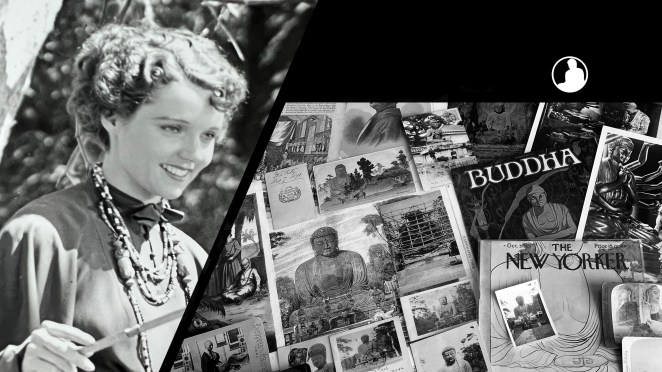
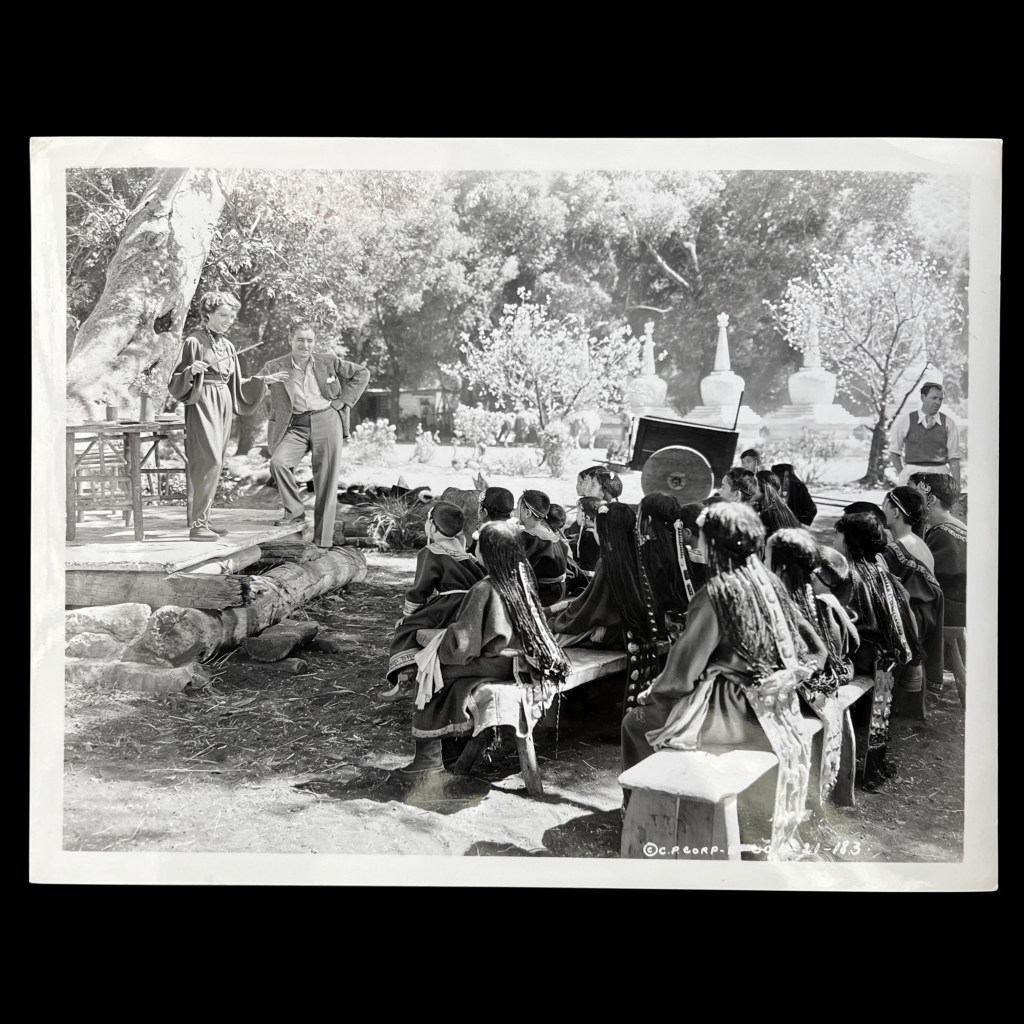
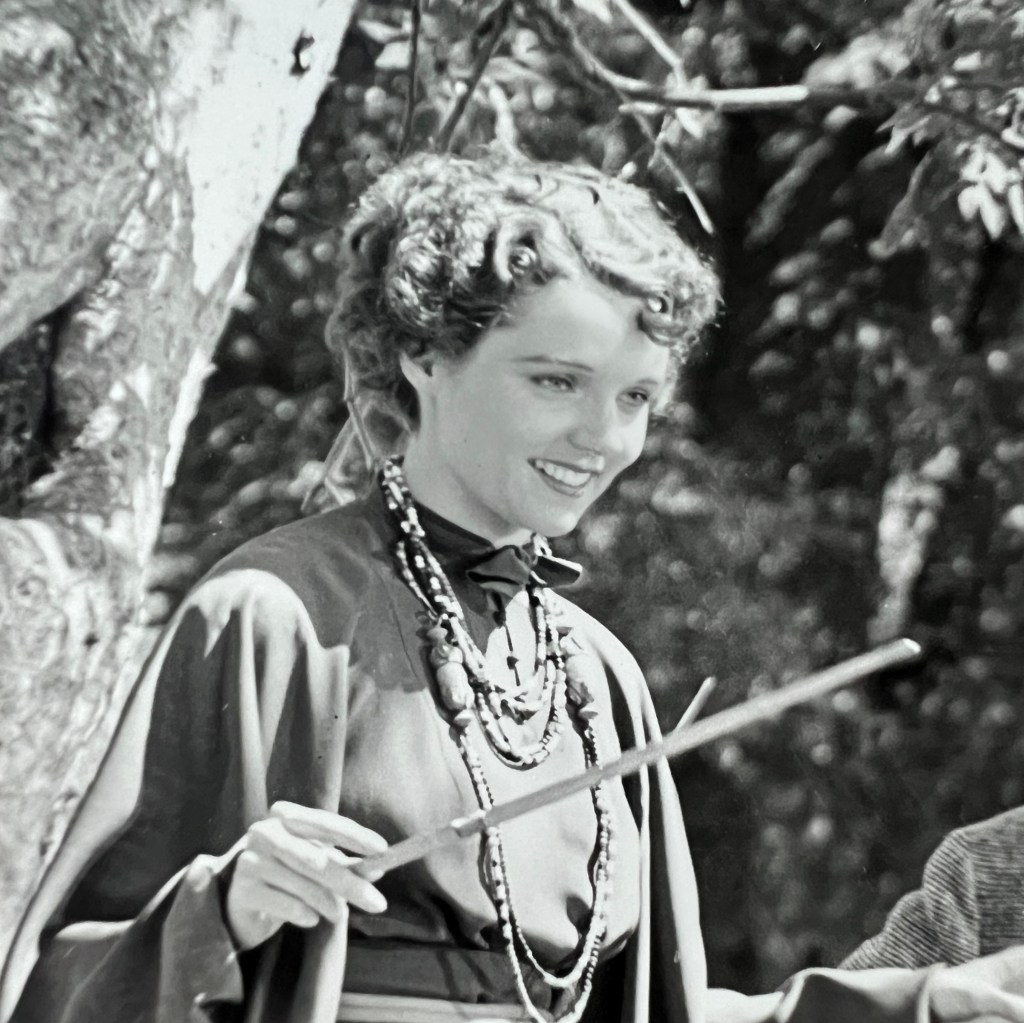
American escapist films grew in prominence during the Depression Era 1930s and Frank Capra’s 1937 film, Lost Horizon, was an important Buddhist entry to this genre. The early 20th century romantic imagery of Tibet helped raise interest in the film’s Himalayan utopia of Shangri-la.

The pristine beauty of Shangri-la as seen in Lost Horizon played to the fantasy of an enchanted landscape of the Oriental Other filled with peace and prosperity. Tibetan Buddhist lamas are initially portrayed as the protectors of this hidden mountain kingdom.

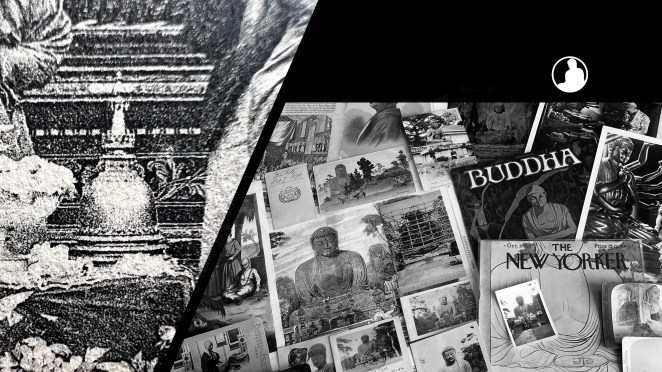
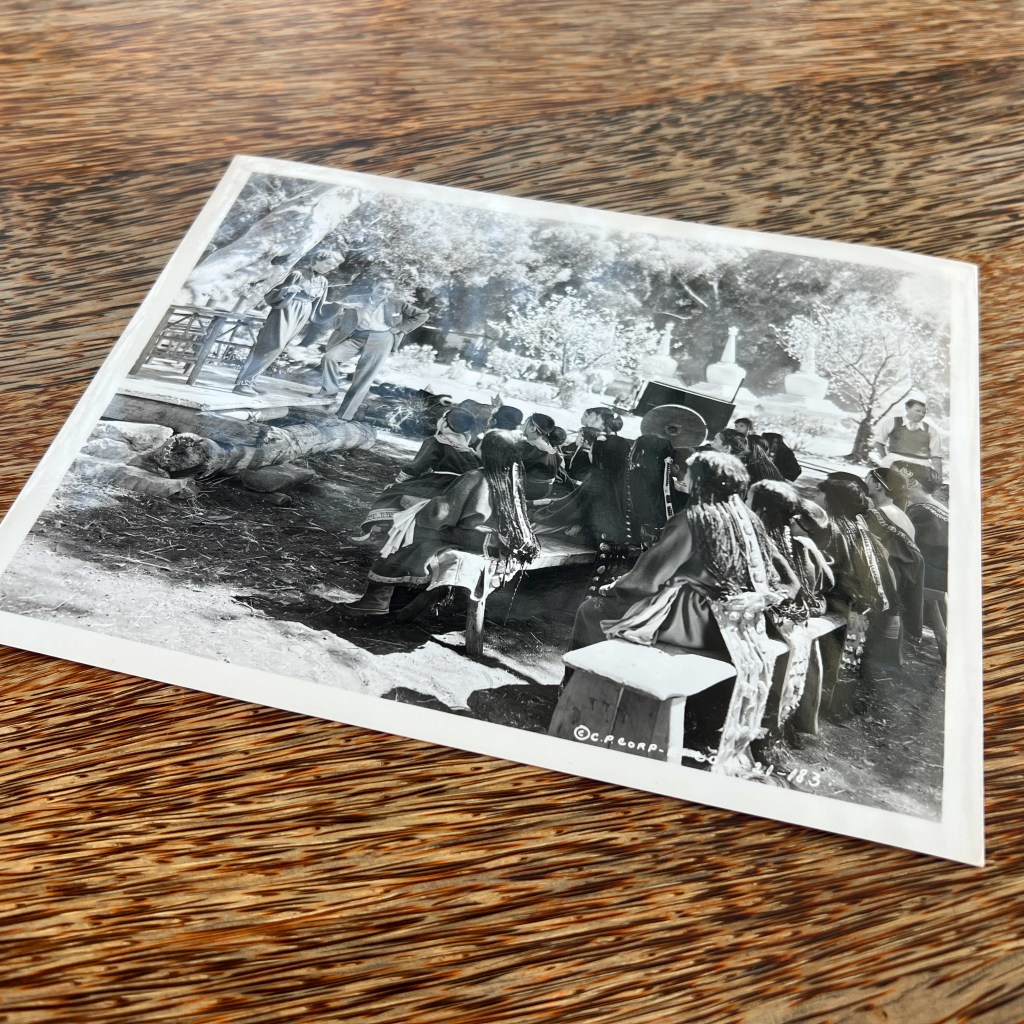
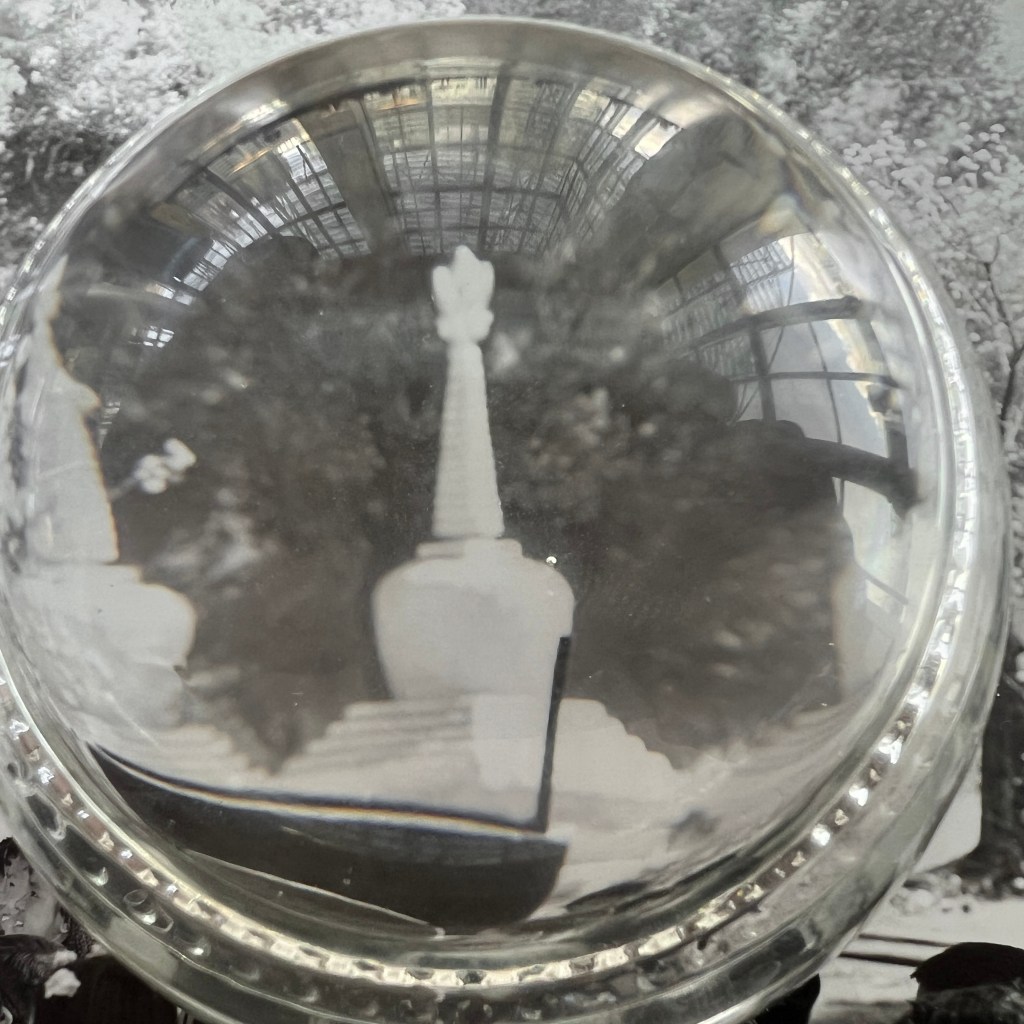
While filmed in a Hollywood back lot fitted with Streamlined Art Deco buildings, elements – such as the Tibetan-stye stūpa reliquaries – clued the appropriate Buddhist mise-en-scène.

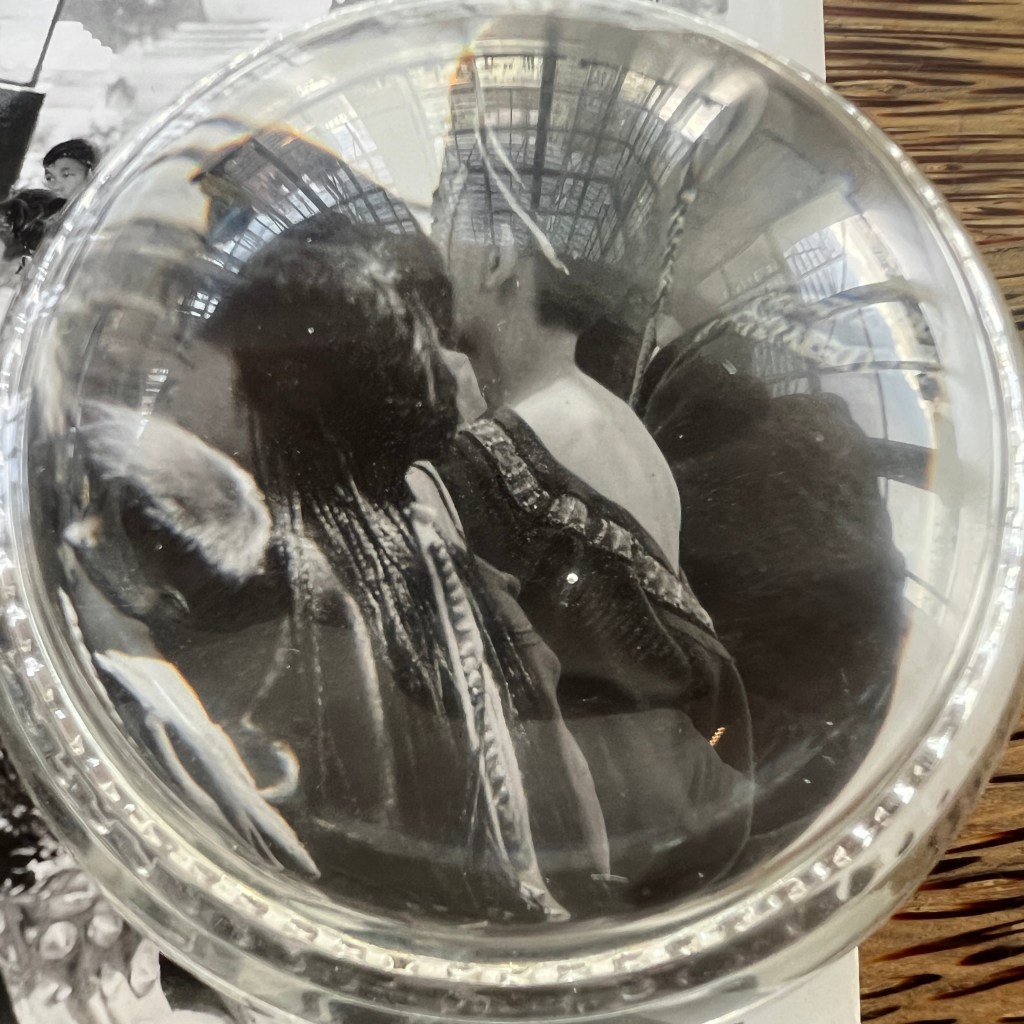
The film’s Tibetan-style costuming often showed exposed skin, suggesting the inhabitants had a child-like innocence and a pre-modern lifestyle. Ultimately we learn the High Lama is not Tibetan at all, but a Belgian Catholic priest who is the founder and caretaker of Shangri-la.

While flourishing and peaceful, Shangri-la still needed a benevolent colonial ruling hand to realize its full mission. For further exploration of the portrayal of Buddhism in American film, see Sharon Suh’s Silver Screen Buddha (2015).


The Buddhas in the West Material Archive is a digital scholarship project that catalogues artifacts depicting Buddhist material culture for Western audiences. It’s comprised of prints, photos, and an assortment of ephemera and other objects. For a brief introduction to this archive, visit the main Buddhas in the West project page.


For Related Buddhas in the West Posts Featuring Chicago:

For the Most Recent Buddhas in the West Posts: