For all the new Buddhas in the West posts follow us on Bluesky & Instagram
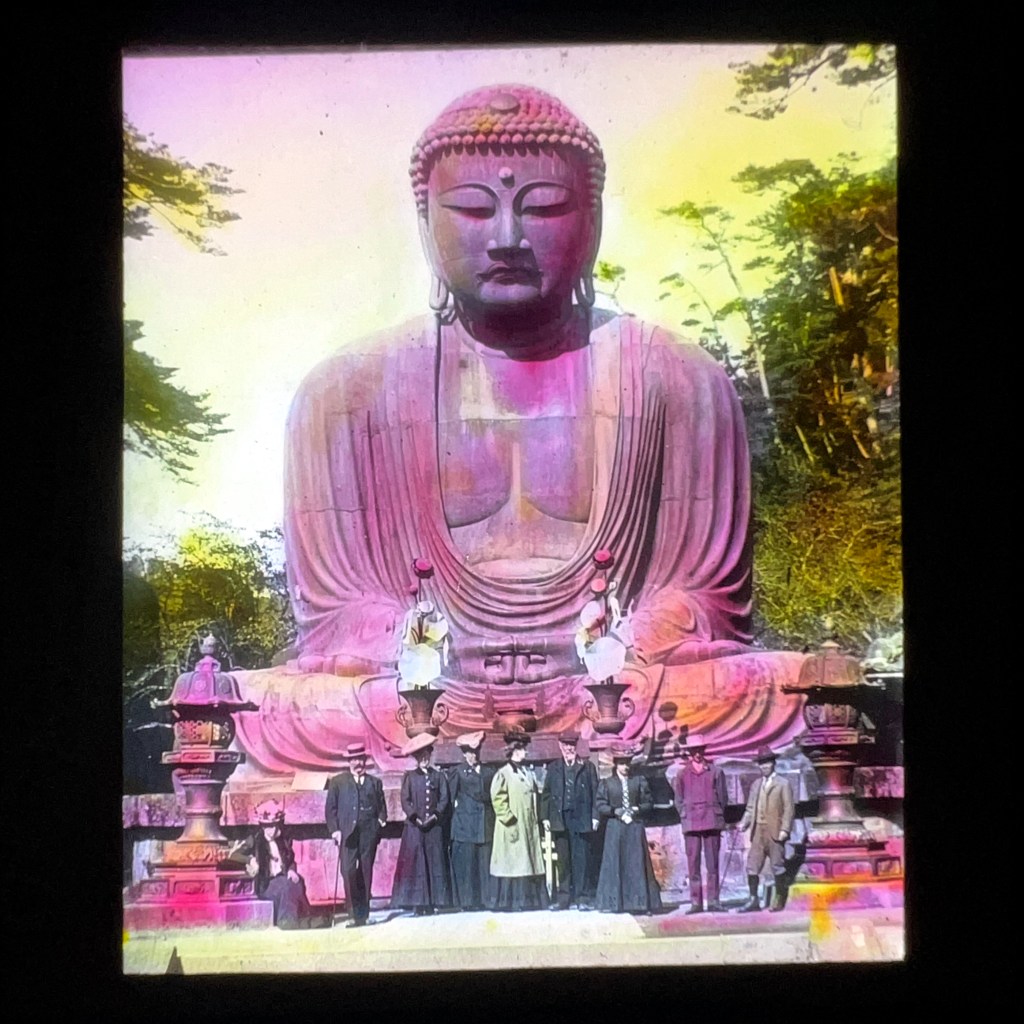
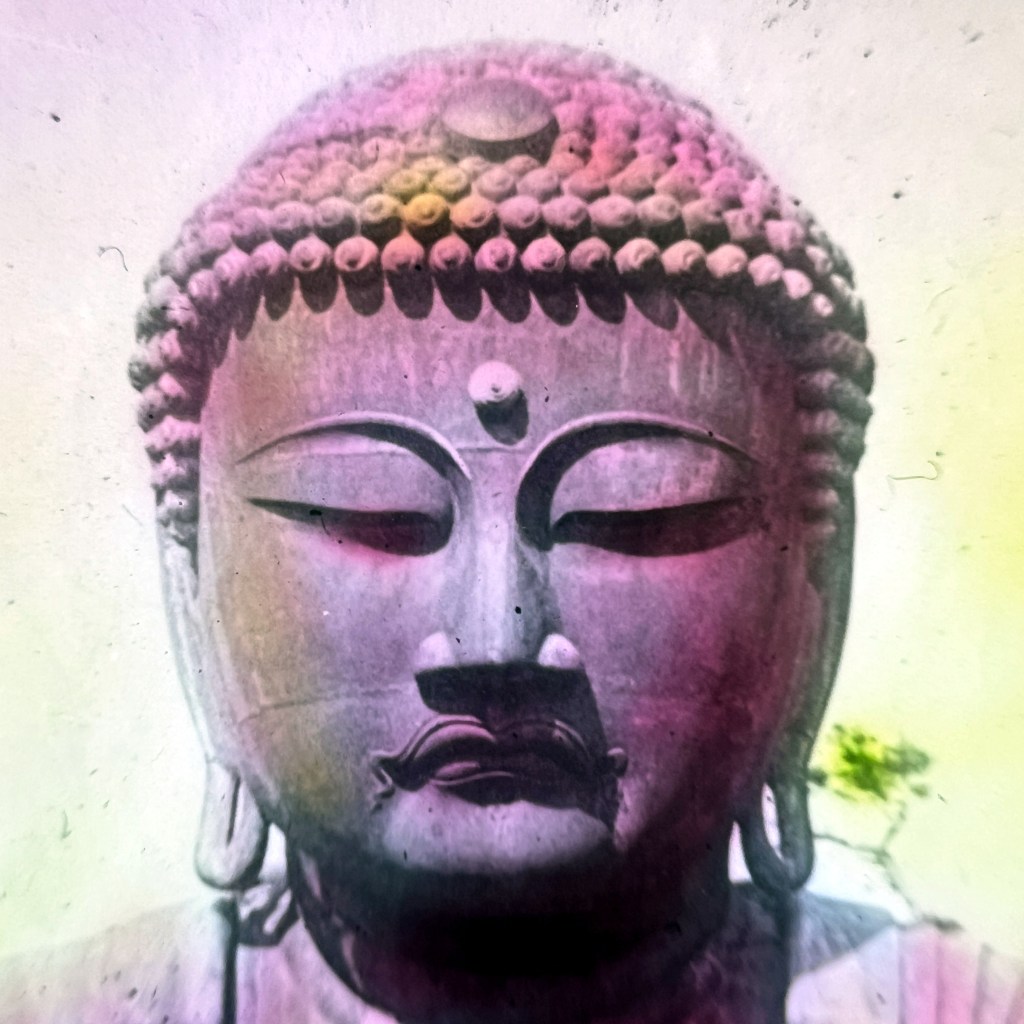
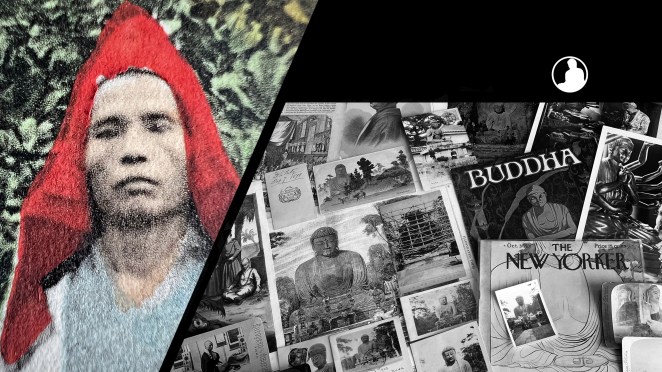
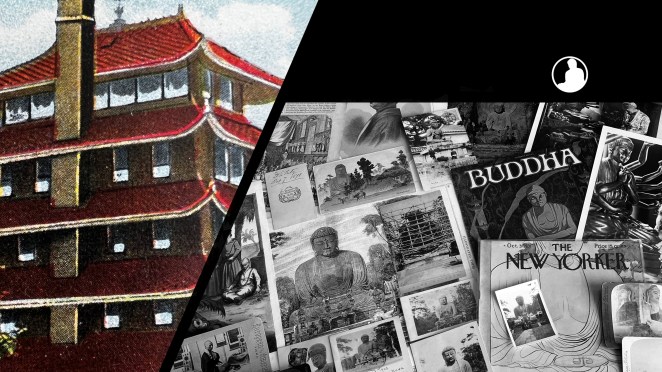
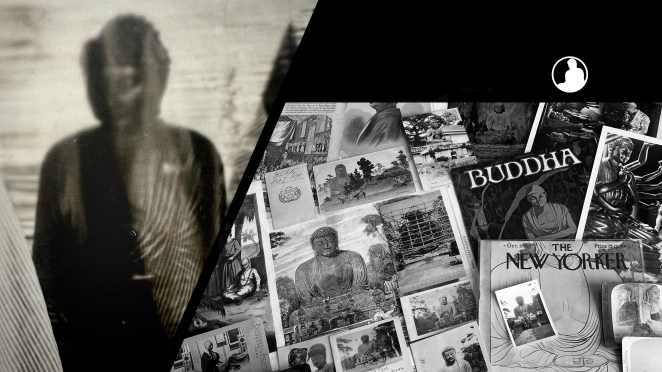
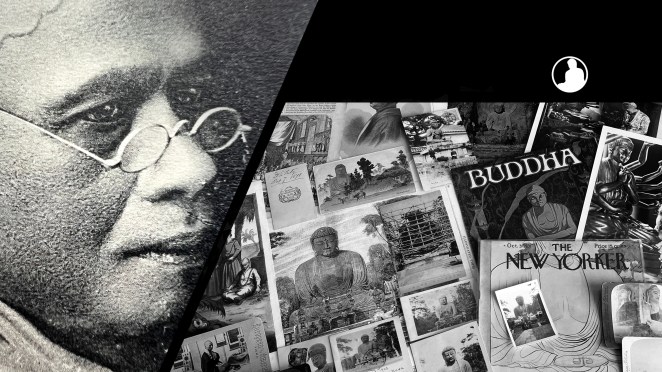
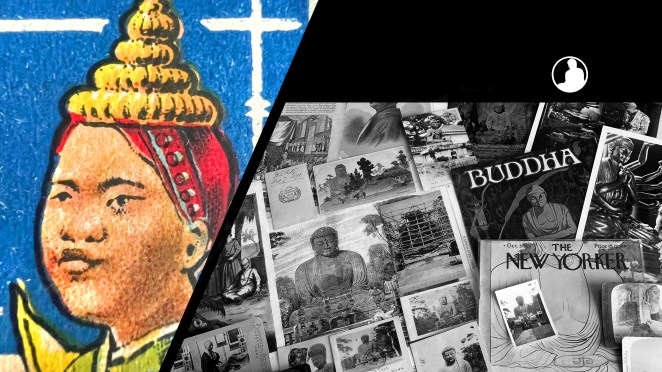
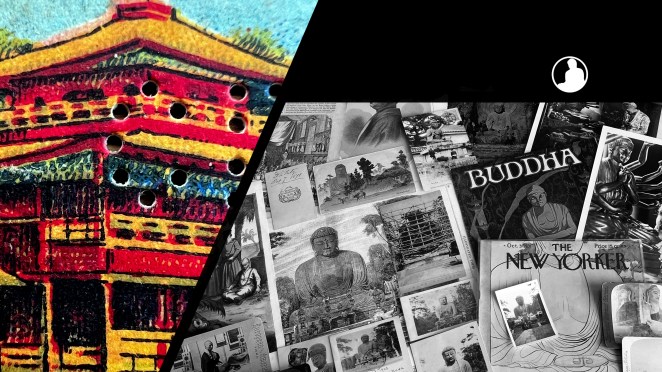
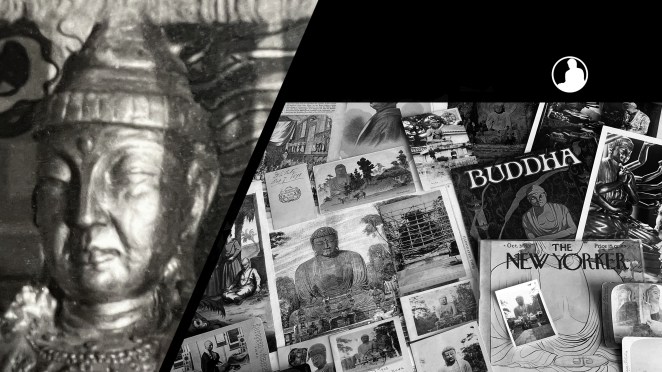
At the turn of the twentieth century, D. A. Ahuja was chronicling Burmese Buddhist culture in stunning color.
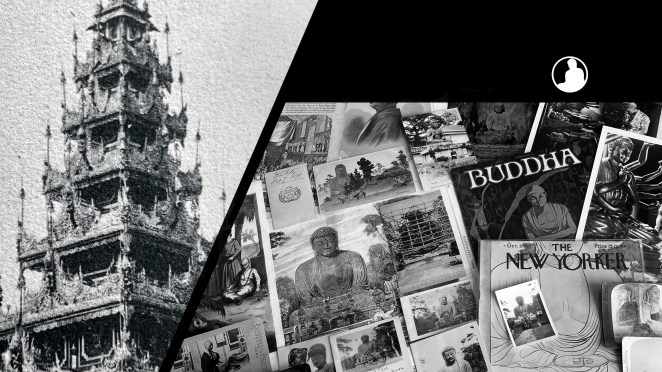
Operating out of Rangoon (modern Yangon) Ahuja published some of the highest quality picture postcards in Asia.
Ahuja outsourced printing to Germany, the commercial center of postcard printing worldwide. By 1903, German printing houses were putting out two postcards for every human on the planet.
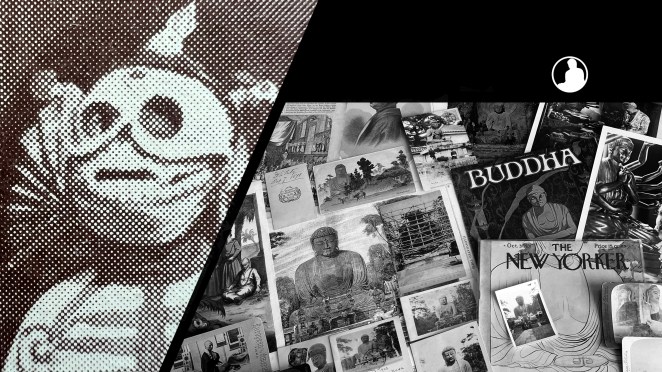
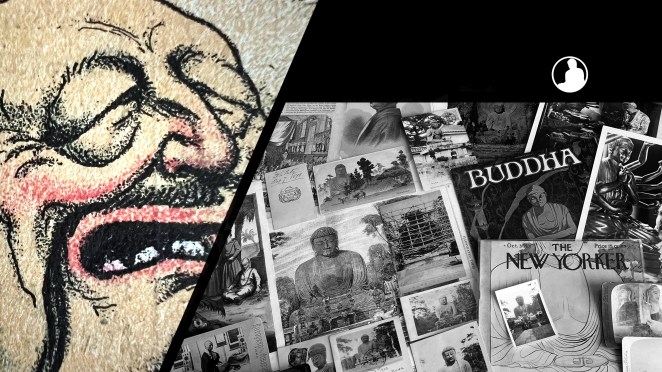
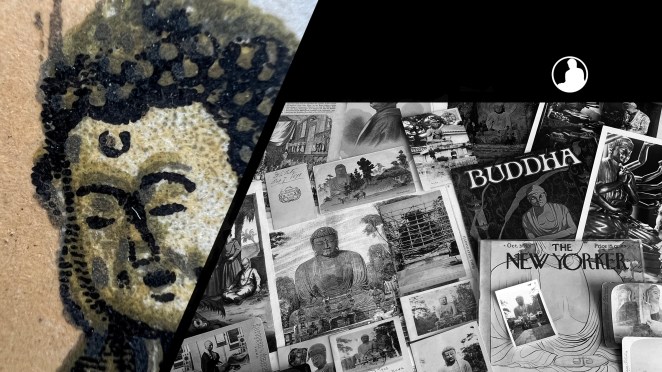
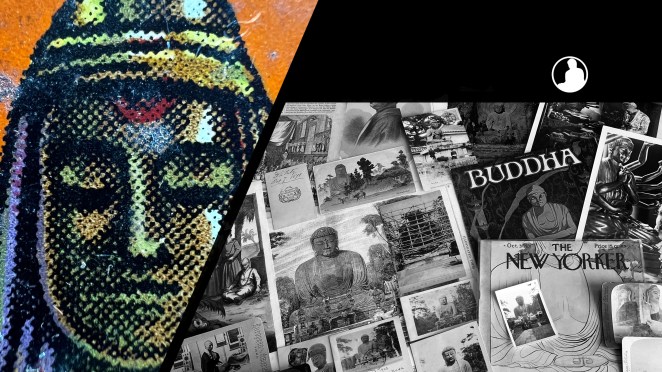
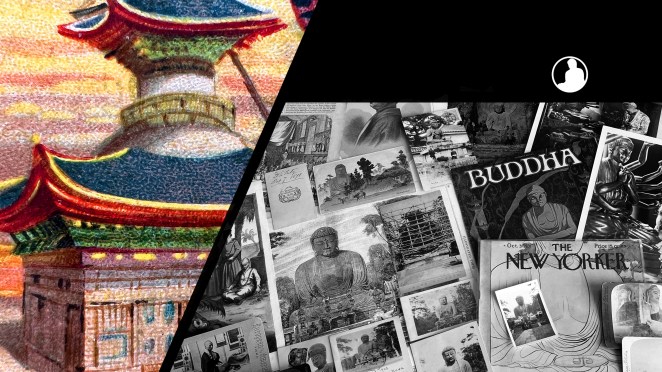
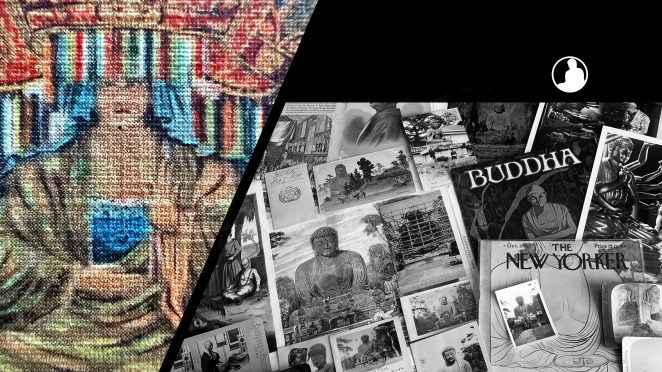
These German firms used a lithographic-halftone hybrid process, first applying layers of color using a lithographic substrate and then applying a black halftone screen. Only the final key plate carried the fine black detail of the photograph.
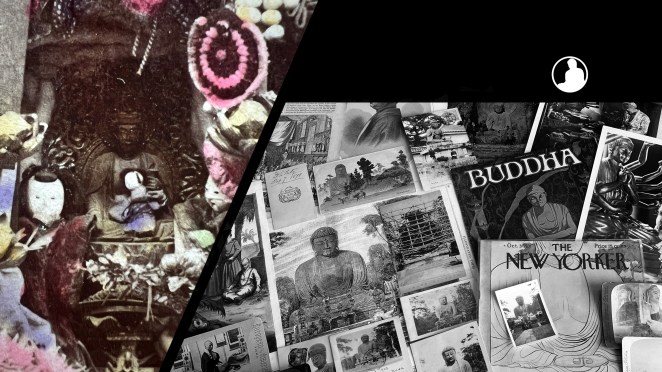
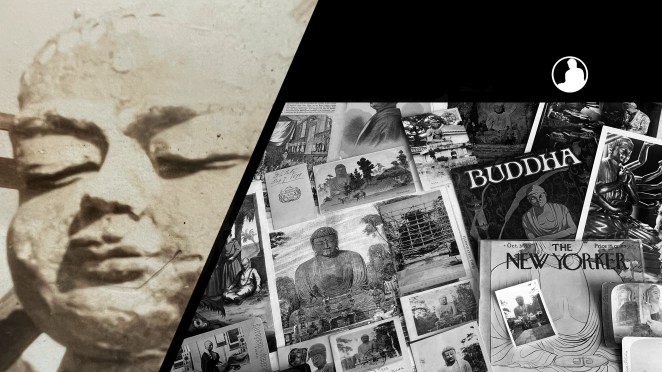
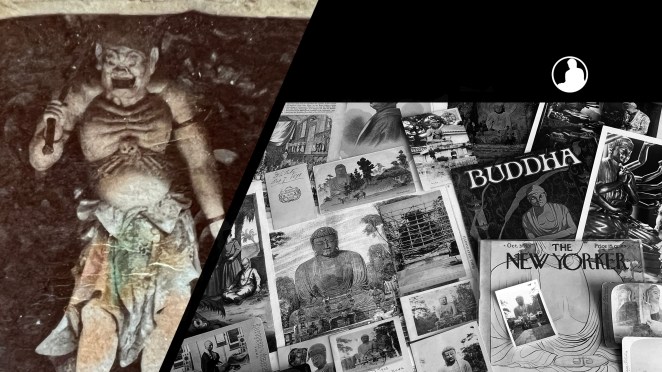
Despite having his name imprinted on the reverse of the card, Ahuja either licensed or pirated this image from a competitor, Philip Klier, who used this photo on earlier black and white postcards.
A handful of Ahuja’s postcards can be viewed at the New York Public Library website: https://tinyurl.com/z9np5myb.
The Buddhas in the West Material Archive is a digital scholarship project that catalogues artifacts depicting Buddhist material culture for Western audiences. It’s comprised of prints, photos, and an assortment of ephemera and other objects. For a brief introduction to this archive, visit the main Buddhas in the West project page.
For Related Buddhas in the West Posts Featuring D.A. Ahuja Postcards:
For all the new Buddhas in the West posts follow us on Bluesky & Instagram
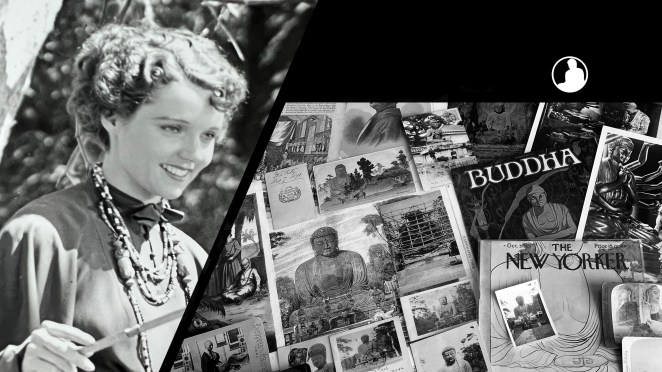
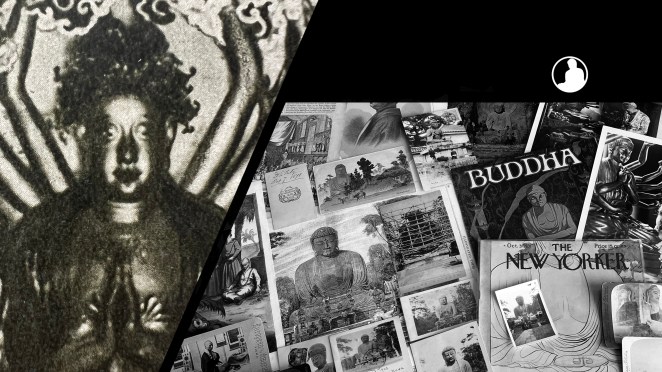
A theatrical still of Greta Garbo in the 1934 film The Painted Veil gazing upon a standing image of Guanyin. Looking closely, we see Garbo’s hand touching the shoulder of Guanyin, a moment of contact between the “icons.”
Theatrical stills – shot since the advent of feature films in the 1910s – are production photographs. Many were kept by the studio in albums called keybooks, while others were printed for promotional purposes, often marked with a code (here we see 776–42).
As advertising material, stills would often picture “tension, struggle, action,” but not reveal main elements of the plot, as noted by David Shields.
The scene here is not in the final edit of The Painted Veil, but would have occurred when Garbo’s character arrived in rural China during a cholera outbreak. The touch of the shoulder signaled an arrival into a far-away land, reflected in the materiality of the Buddhist icon.
For more on the history and interpretation of early film still photography, see David S. Shields’ Still: American Silent Motion Picture Photography (2013).
The Buddhas in the West Material Archive is a digital scholarship project that catalogues artifacts depicting Buddhist material culture for Western audiences. It’s comprised of prints, photos, and an assortment of ephemera and other objects. For a brief introduction to this archive, visit the main Buddhas in the West project page.
For Related Buddhas in the West Posts Featuring Historical Film Photography:
For all the new Buddhas in the West posts follow us on Bluesky & Instagram
Isabella Stewart Gardner, founder of Gardner Museum, was an early American collector of Asian art with an affinity towards Buddhist artifacts.
Gardner returned from Asia in 1884 with a Japanese talisman very similar to the one shown here. Both talismans came from Kamakura Hasa-dera 長谷寺 and depict the temple’s main Kannon icon. Talismans (ofuda お札) are woodblock prints sold by various shrines and temples typically for their protective or salutary effects. They were also popular among Japanese pilgrims.
Printed on thin paper, pilgrims would often carry these talismans in a special bag called a fudabasami.
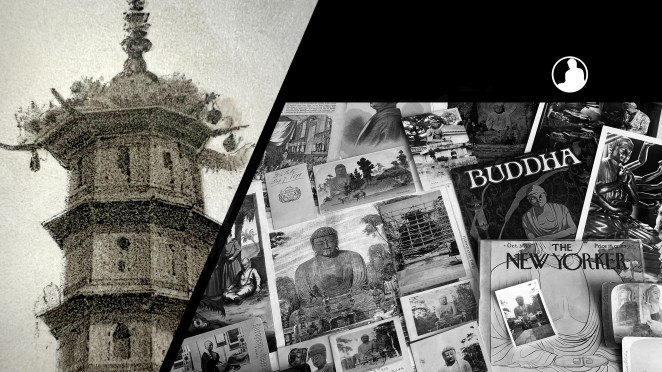
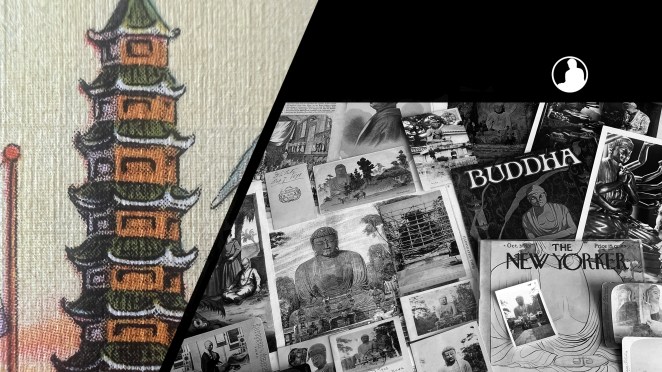
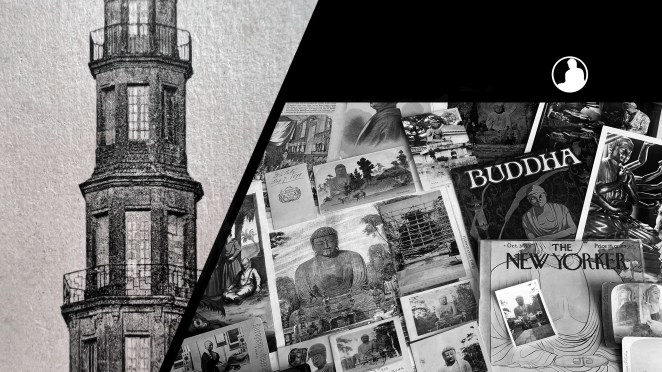
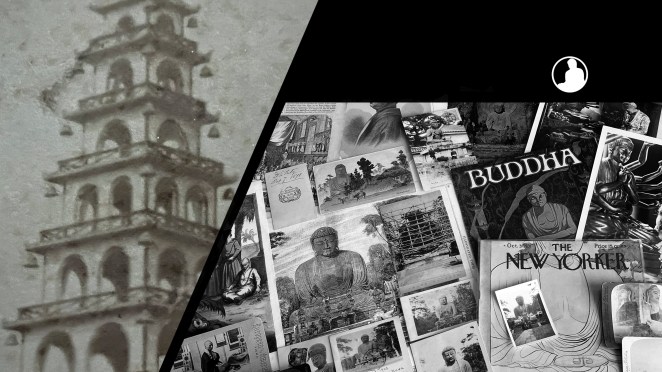
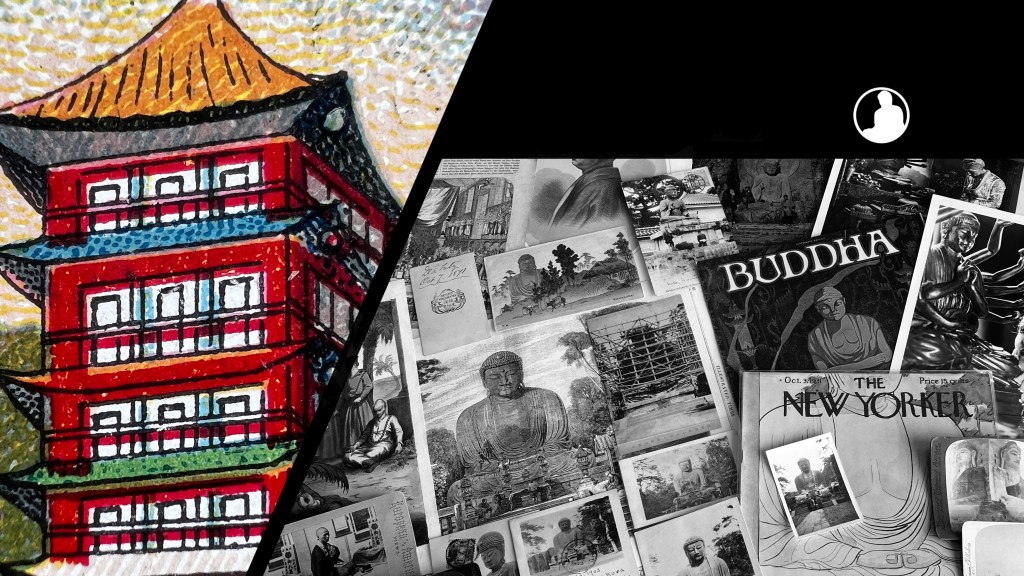
A close examination of the print shows small details, including this pagoda.
Buddhist imagery proved inspirational for Garder as she commissioned John Stewart Sargent to paint her portrait in 1888 which bears a strong likeness to the standing Kannon icon. A discussion of the portrait and its Buddhist influence can be read here: https://tinyurl.com/359r522m.
The Buddhas in the West Material Archive is a digital scholarship project that catalogues artifacts depicting Buddhist material culture for Western audiences. It’s comprised of prints, photos, and an assortment of ephemera and other objects. For a brief introduction to this archive, visit the main Buddhas in the West project page.
For Related Buddhas in the West Posts Featuring Kannon / Avalokiteśvara:
For all the new Buddhas in the West posts follow us on Bluesky & Instagram
It’s said the postcard was the first truly democratic photograph, providing people with images of places and things for the cost of a few pennies. In 1913, Japanese postal carriers delivered 1.5 billion cards, second only to Germany with 1.8 billion cards delivered.
In Japan, postcards of Buddhist temples, priests, and other elements of religious practice were popular as both domestic and foreign souvenirs as well as collector’s items (postcard collecting is known as deltiology).
Collecting picture postcards (ehagaki 絵葉書) for display in albums was commonplace. In the case of the postcard here, the stamp is affixed to the image side of the card – this allows the stamp and postal mark to be displayed when the card is attached to an album page.
According to the postal mark, the stamp was cancelled on October 1, 1925 (Taisho 14) in Kobe, the same location as the statue in the image. The cost of international postage for postcards at this time was four sen. The final destination of this card was France.
The composition of the photograph includes people thus helping us gauge the size of the Buddhist state. As far as I can tell, this state was destroyed in World War II by allied firebomb attacks on Kobe in March 1945.
Joanne Bernardi has curated a wonderful collection of Japanese postcards at the University of Rochester, available to be viewed here: https://tinyurl.com/57fae58f.
The Buddhas in the West Material Archive is a digital scholarship project that catalogues artifacts depicting Buddhist material culture for Western audiences. It’s comprised of prints, photos, and an assortment of ephemera and other objects. For a brief introduction to this archive, visit the main Buddhas in the West project page.
For Related Buddhas in the West Posts Featuring Japan:
For all the new Buddhas in the West posts follow us on Bluesky & Instagram
Shimooka Renjō 下岡蓮杖 was one of the first Japanese to practice commercial photography, opening a studio in Yokohama in 1862. A treaty port teaming with globetrotting tourists, Yokohama was also in close proximity to the Kamakaura Daibutsu.
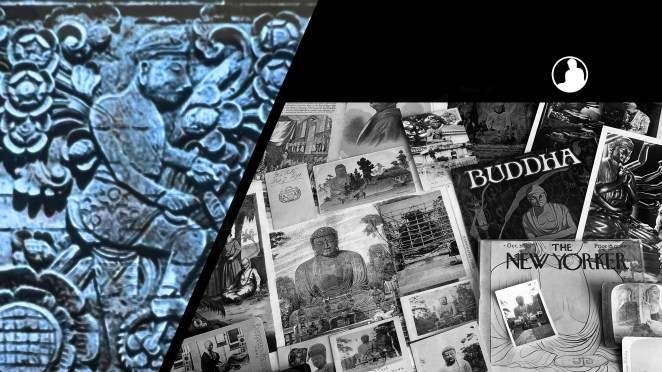
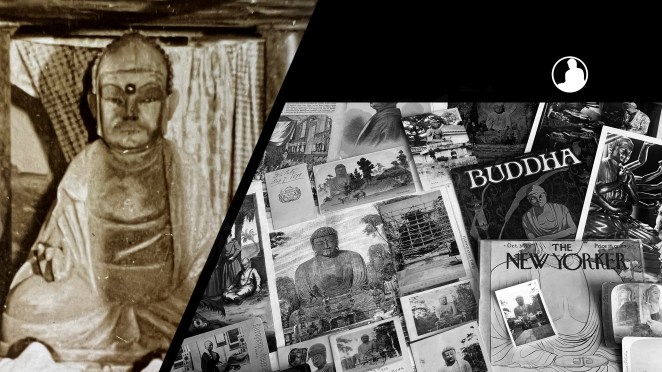
This is a bronze statue of Amida Buddha dating to the 13th century. The small format carte-de-visite (CDV) print shown here is hand dated to October 7, 1871 – possibly the date when a tourist visited the Daibutsu site. Renjō’s stamp identifies him as the photographer.
The portability of the CDV made them good souvenirs of travel, especially before the picture postcard industry blossomed a few decades later. The thin photosensitized print was affixed to thicker card stock for added durability.
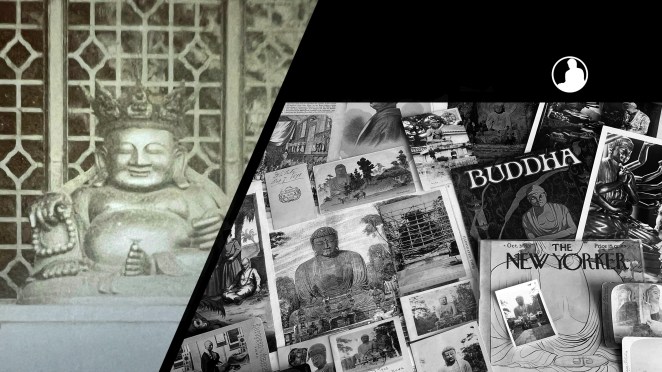
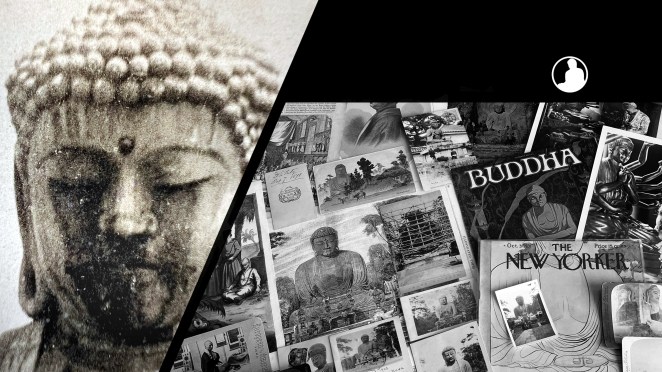
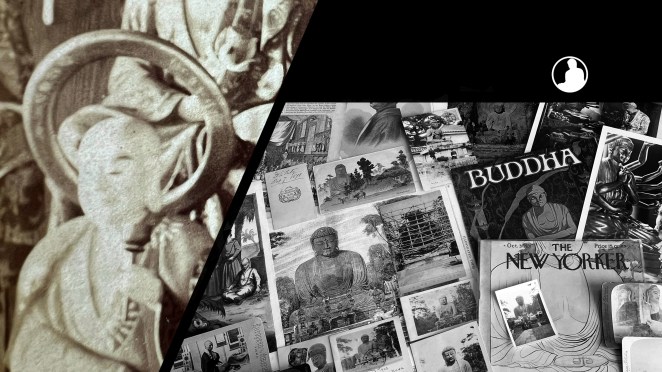
Even small details can be captured by the relatively early wet-plate photographic process.
For an excellent introduction to early Japanese photography and 19th century tourist photography see the collection at Harvard Library here: https://tinyurl.com/yfsbj7du.
The Buddhas in the West Material Archive is a digital scholarship project that catalogues artifacts depicting Buddhist material culture for Western audiences. It’s comprised of prints, photos, and an assortment of ephemera and other objects. For a brief introduction to this archive, visit the main Buddhas in the West project page.
For Related Buddhas in the West Posts Featuring Historical Photography:
For all the new Buddhas in the West posts follow us on Bluesky & Instagram
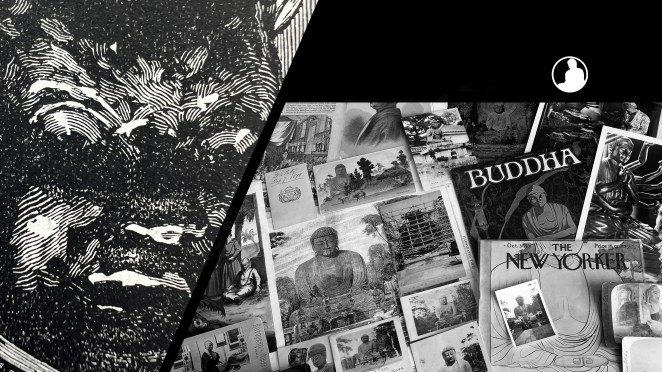
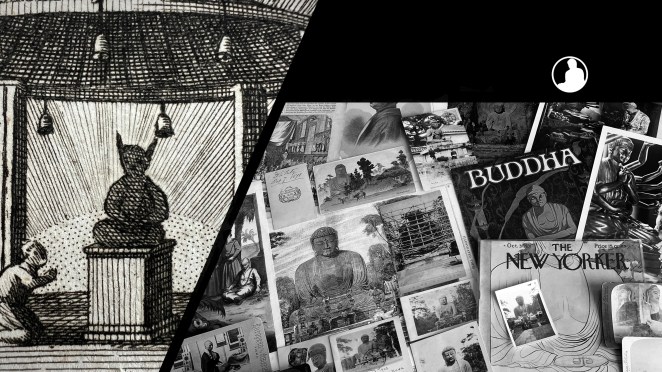
Some of the earliest Buddhist imagery in Europe appears as copperplate engravings in late 17th century books. Here’s a hand-colored page from the German edition of An Embassy of the Dutch East India Company by Johannes Nieuhof showing the imaginary interior of a Chinese temple.
Nieuhof’s work was the first illustrated European book on China. Moreover, after Nieuhof returned from the first Dutch envoy to China in 1657, his personal drawings formed the basis for many illustrations in this work.
The copper plates were most likely prepared in the workshop of the publisher Jacob van Meurs who printed the first Dutch edition in 1665; the German edition appeared in 1666. You can still see the impression of the plate in the paper. The text was standard letterpress.
This page was extracted from a volume and is 27 cm x 20 cm (10 in x 8 in) in size.
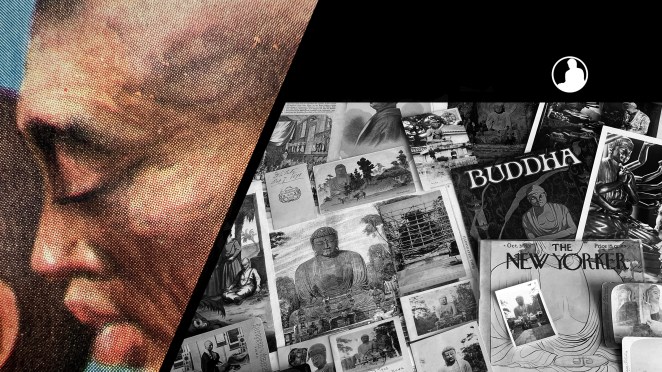
A Buddhist statue is also seen on the back altar.
Prostrating Buddhist devotees enliven the scene.
The etching reveals meticulous line work. Amazingly, A manuscript copy of Nieuhof’s sketches was discovered in the 1970s and is held by the Bibliothèque Nationale de France, it can be viewed here: https://tinyurl.com/yb94urpj
The Buddhas in the West Material Archive is a digital scholarship project that catalogues artifacts depicting Buddhist material culture for Western audiences. It’s comprised of prints, photos, and an assortment of ephemera and other objects. For a brief introduction to this archive, visit the main Buddhas in the West project page.
For Related Buddhas in the West Posts Featuring Historical Engravings:
In 1868 Wilhelm Burger (1844–1920) was appointed as the official photographer to the Austria-Hungary ligation to Siam, China, and Japan. In preparation for this inaugural diplomatic and commercial enterprise, Burger prepared numerous photographic glass negatives that could be later exposed to capture images of the mission. By employing the dry collodion process for capturing photographs, Burger no longer needed to use a portable darkroom as was necessary with the older wet collodion process. Burger was among the first to use the dry collodion method in Japan.[1]
Recently, Luke Gartlan has shown that Burger did not arrive in Japan with the lead Austrian naval vessel, the Donau, in early September 1869, but was delayed in Shanghai taking photographic records of Chinese artworks. He arrived a few weeks later, skipping the customary port-of-call at Nagasaki and rejoining the ligation at Yokohama.[2] After falling ill and subsequently requiring hospitalization, Burger was allowed to remain in Japan to continue his photographic documentary work as the rest of the mission continued on to South America that November. Burger remained in Japan until March 1870, disembarking out of Nagasaki on his way back to the Austrian Empire.
During his sixth month stay Burger was able to amass a large portfolio of Japanese images, both larger format landscapes and smaller format studio portraits.[3] Based on studio furnishings and props, it has long been known that Burger’s portraits were taken in the pioneering Japanese photographic studios of Ueno Hikoma 上野彦馬 (1838–1904), established in Nagasaki, and Shimooka Renjō 下岡蓮杖 (1823–1914), established in Yokohama. More critically, it has recently been shown that some of Burger’s purported photographs were more than likely taken by Ueno Hikoma and Shimooka Renjō themselves. For example, as Tani Akiyoshi and Peter Pantzer have demonstrated, the studio portrait negatives that remain in the Austrian National Library were prepared with the wet collodion process used extensively across Japan.[4] We may assume that Burger purchased these smaller format negatives and their copyrights to print and sell back in Europe.[5]
Figure 1
When we turn to Burger’s published portfolio of fifty-seven Japanese views held at the British Museum, catalogued as A Series of 56 [sic] Views of Towns, Villages in Japan, we find Buddhist figural imagery prominent in eight photographs, including three individual plates of the Kamakura Daibutsu.[6] One of these latter photographs (plate 59), with another example shown above [Fig. 1], depicts three men in Western attire, with two looking towards the camera and one towards the colossal bronze.
This photograph has sometimes been attributed to the famous photographer and Yokohama resident Felice Beato (1832–1909), but I feel this is unwarranted.[7] In spite of the fact that a photograph published under Burger’s name does not necessarily prove he made the original exposure, Burger did arrive in Japan prepared to take larger format landscape photographs, just as we see with this image of the Daibutsu. Moreover, as noted by Akiyoshi and Pantzer, the average size of Burger’s surviving dry collodion plates was 150 x 200 mm.[8] These would be contact printed on photosynthesized paper, thus a resulting print would have the same dimensions. The print illustrated here measures 135 x 200 mm, approximating the average size of Burger’s negative plates.
Moreover, given the popularity of the Daibutsu among foreigners in Yokohama (it was one of the few places within the established treaty boundaries), it seems natural that Burger would make the excursion during his stay in Japan from late fall to early spring and attempt to preserve it as part of his photographic record.[9] Other commercial photographers, such as William Saunders (1832–1892), William Andrew (fl. 1865), and Felice Beato, all previously included the bronze Kamakura icon as part of their studio portfolios.[10] The statue was arguably one of the most photographed objects in the region at the time.
The men in Western clothing in Burger’s photo remain unidentified. Another print showing some the same men in different positions is held by the Yokohama Museum of Fine Art; this is also currently attributed to Beato.[11]
After Burger’s return to the Austrian Empire he was granted the title of imperial and royal photographer (k.k. Hofphotograph) in November 1871. That same year he published Bilder aus Japan, a portfolio of his Japanese prints. A copy is held by the British Museum under the aforementioned English name A Series of 56Views of Towns, Villages in Japan.
[1] Gartlan 2009: 73, Akiyoshi & Pantzer 2011: 44, 49. There are notices of the French photographer Paul Champion (1838–?) (albeit with very limited success) and English amateur photographer Angus C. Fairweather using dry collodion plates in Japan before Burger’s arrival, see Bennett 2006b: 124 and 307.
[3] Upon his return to Austria, Burger also sold stereoviews of his travels, but these were not taken with a stereo camera and thus do not produce stereoscopic 3-D images, see Bennett 2006a: 169.
[4] According to the estimates of Akiyoshi and Pantzer, out of the 188 surviving negatives of Japan, 27 plates should be ascribed to Ueno Hikoma and 44 plates to Shimooka Renjō, see Akiyoshi & Pantzer 2011: 41. The authors raise other concerns as well, such as the limited time Burger had to organize and set up all of the studio models as well as his apparent misunderstanding, as exemplified in his later captions, of the locals portrayed.
[5] Such a practice was not uncommon at the time, see Akiyoshi & Pantzer 2011: 49–50.
[6] This includes object numbers: c13562-26 (plate 19), c13562-30 (plate 23), c13562-33 (plate 26), c13562-37 (plate 30), c13562-54 (plate 47), c13562-66 (plate 59), c13562-67 (plate 60), and c13562-68 (plate 61). The final three objects listed here depict the Kamakura Daibutsu.
[7] See, for example, the identification of this photograph held by the Santa Barbara Museum of Art (Ac. 2003.42.3) and the National Library of New Zealand (Ref. PA1-f-021-057-2). The latter photograph is part of the album compiled by Alexander Fisher (fl. 1861–1879) and entitled Album of Photographs Compiled on Cruises aboard HMS Endymion with the Flying Squadron and in the Mediterranean. The HMS Endymion sojourned in Yokohama for a few days in April 1870, only a month after Burger departed Japan. I speculate the Burger left a few prints of his work in local Yokohama shops before returning to Austria. Another print showing some the same men in different positions is held by the Yokohama Museum of Fine Art (Ref. 91-PHF-008); it is also attributed to Beato.
[9] Judging from the three photographs, it appears Burger made at least two trips, a possibly three, to the Kamakura Daibutsu: once in winter when the foliage was absent from some trees (see British Library items c13562-66 [plate 59] and c13562-67 [plate 60]) and once in early spring when the foliage had returned (c13562-68 [plate 61]). This latter photograph also shows additional damage to the railing on the left side of the image, suggesting it was taken at a different time. Another photograph of the Daibutsu reputedly taken by Burger can be found in his published stereoview set. One copy of the stereograph is preserved in the Nagasaki University Library (No. 3436). This image shows the entire railing intact and thus was either taken during Burger’s winter excursion or he procured it from another photographer in Japan. In any regard, the non-stereo photograph is found in Burger’s K. K. Mission nach Ostasien 1868-1871 preserved by the Museum für angewandte Kunst (Ref. KI 13660-15-2). It measures 86 x 71 mm, an approximate size that is appropriate for a stereoview.
Burger may have also taken another photograph that was used for the inaugural publication of the The Far East: A Monthly Illustrated Journal on May 30, 1870. It shows the left side railing completely removed. This would suggest Burger took at least a third trip to the Kamakura Daibutsu (or it is possibly the work of another photographer). Nevertheless, a copy of the photo is found in Burger’s K. K. Mission nach Ostasien 1868-1871 preserved by the Museum für angewandte Kunst (Ref. KI 14291-395). It measures 195 x 141 mm, although it appears part of the glass negative extends beyond the print.
[10] An article in the October 25th, 1862 issue of the Japan Herald describes Saunders selling a photograph of the Daibutsu, see Bennett 2006a: 59. An advertisement in the October 14th, 1865 issue of the Japan Herald notes Andrew selling a Daibutsu print, see Bennett 2006b: 120. The Daibutsu was a staple of Beato’s albums in the 1860s, see, for example, Lacoste 2010: 15.
Akiyoshi, Tani, and Peter Pantzer. 2011. “Wilhelm Burger’s Photographs of Japan: New Attributions of His Glass Negative Collection in the Austrian National Library.” PhotoResearcher 15:40–50.
Bennett, Terry. 2006a. Old Japanese Photographs Collectors’ Data Guide. London: Bernard Quaritch Ltd.
Bennett, Terry. 2006b. Photography in Japan 1853-1912. Rutland, VT: Tuttle Publishing.
Gartlan, Luke. 2009. “Photography and the Imperial Austrian Expedition in Nagasaki (1869-70).” Koshashin Kenkyu 古写真研究 3:72–77.
Lacoste, Anne. 2010. Felice Beato: A Photographer on the Eastern Road. Los Angeles: J. Paul Getty Museum.
The World Parliament of Religions, held as one of the many international congresses at the 1893 Columbian Exposition in Chicago, is often regarded as a significant factor in the birth of religious pluralism in the United States. Equally, it is treated as one of the earliest formal encounters between leading Asian missionaries and American audiences, leading to a wider acceptance of Eastern Religions. Here, I want to briefly look beyond the speeches and presentations given at the World Parliament of Religions and examine the broader presence of a Buddhist material culture at the fair which lasted from May through the end of October. Outside of the Buddhist representatives at the Parliament, an event that lasted only two weeks, what other ways were Americans interacting with expressions of Buddhism at the fair?
Figure 1
Hōōden (Phoenix Pavilion) on Wooden Isle at the 1893 Columbian Exposition
Japan Building (Phoenix Pavilion): The centerpiece of Japan’s exhibits at the Columbian Exposition was the Hōōden 鳳凰殿, or Phoenix Pavilion, a large wooden building that was built in Japan, disassembled, and then reconstructed by Japanese craftsmen in Chicago [Fig. 1]. The Japanese concession building was a slightly smaller replica of the Phoenix Hall (Hōōdō 鳳凰堂) at Uji in Kyoto Prefecture. The original building in Japan, also known as the Amida Hall, was part of the eleventh century Buddhist temple complex known as Byōdōin. The exposition replica, however, was not fitted with Buddhist imagery and ritual paraphernalia, but in the words of Okakura Kakuzō, was “modified to adapt it for secular use.” The building was gifted to the city of Chicago after the fair. After decades of decline, the site was refurbished and re-opened as a tea house in 1935 until 1941. Vandals set fire to the building in 1946, reducing it to ashes. A set of three transom panels from the original building still exist in the collection of the Art Institute of Chicago.
Figure 2
Front entrance to the Japanese exhibit in the West Court of the Palace of Fine Arts
Figure 3
Japanese exhibit on the second floor gallery of the East Court (note the entwined flags of Japan)
Figure 4
Japanese exhibit on the second floor gallery of the East Court
Figure5
Kannon (Ishikawa Kōmei)
Figure 6
Gigeiten (Takenouchi Kyuichi)
Japanese Exhibit, Palace of Fine Arts: For the first time in the history of World Fairs, Japan was allowed to present works under the category of Fine Arts at the Columbian Exposition. Of the hundreds of works submitted and put on display, about a dozen pieces directly represented Buddhist figures, Buddhist architecture, or Buddhist themes more generally. Japanese artworks occupied two areas in the Palace of Fine Arts, one on the main gallery in the west wing [Fig. 2] and the other on the second floor gallery surrounding three of the four sides of the central rotunda [Fig. 3]. Some of the most stunning sculptural pieces were Buddhist inspired and placed at the front and center of these exhibition spaces. Guarding one side of the entrance to the Japan exhibit on the main concourse was a giant bronze image of a fierce Buddhist figure who often protects the entrance of Japanese Buddhist temples, named Shukongōjin 執金剛神 (S. Vajradhāra)[Fig. 2]. This image was cast by Okazaki Sessei 岡崎雪聲 (1854–1921) and is currently owned by the Waseda University Aizu Yaichi Memorial Museum. A carefully carved miniature replica of the Yasaka Pagoda 八坂の塔 , executed by Niwa Keisuke 丹羽圭介 (1856–1941), was also placed in the alcove in front of the entrance [Fig. 2]. Lastly, a smaller image of Kannon Bodhisattva in ivory, carved by Ishikawa Kōmei 石川光明 (1852-1913), was also positioned at the entrance [Fig. 5]. One the second floor gallery overlooking the east court we find an expressive rendition of Gigeiten 技芸天 (S. Sarasvatī), a minor Buddhist deity who is considered a patron of the arts [Figs. 4 & 6]. This piece was carved in wood by Takenouchi Kyuichi 竹内久一 (1857–1916) and is currently owned by the University Art Museum at Tokyo University of the Arts.
Figure 7
Stereoscopic view of the Japanese exhibit in the Manufacturers and Liberal Arts Building
Japanese Exhibit, Manufacturers and Liberal Arts Building: At least one “handsome pagoda” was on display in at this exhibit [Fig. 7]. I have been unable to identify the maker of this object.
Japanese Exhibit, Horticulture Building: Japan’s horticulture and floriculture exhibit incorporated traditional stone lanterns (dōrō) into its garden displays.
Figure 8
Ceylon Building (Ceylon Court)
Ceylon Building (Ceylon Court): The official governmental building of Ceylon, now Sri Lanka, occupied over 18,000 square feet and was comprised of a central octagonal hall with two wings spreading to the north and south [Fig. 8]. The architectural form borrowed from Sinhalese Buddhist temple design in the Dravidian style. Photographs of temples in Sri Lanka were hung throughout the court. Most notably, the main central hall was flanked on both sides by large statues, one of the seated Buddha in meditation and one of a four-armed Viṣṇu painted in his characteristic dark blue hue. Figures such as nāgas, garudas, and yakṣas were also worked into various balustrades, pillars, and other architectural elements. A model of the Ruwanweli stūpa in Anuradhapura was constructed just outside of the main building, and was apparently “set apart for the use of the Ceylon court staff” [Handy 1893: 112]. After the fair, the main building was purchased by real estate mogul Frank R. Chandler and moved to Lake Geneva, Wisconsin, where it stood until it was demolished in 1958. While the front exterior of the building was commonly photographed, I have seen no imagery of the interior or the stūpa constructed in the back.
Sinhalese Exhibit, Manufacturers and Liberal Arts Building: The Sinhalese pavilion in the Manufacturers Building was positioned between the Korean and Indian pavilions. It was reputedly created “in the form of a small Cingalese [sic] temple” [Bancroft 1893: 1.186, also Handy 1893: 112, White & Igleheart 1893: 135]. The interior displayed frescoes representing the life of the Buddha, which were made as copies from tenth and thirteenth century originals. Additionally, figures of the Buddha were found in the ornamental screen panels placed around the exhibit [White & Igleheart 1893: 135]. I have not located any photographs or illustrations of this exhibit.
Sinhalese Exhibit, Anthropological Building: The Ceylon Commission displayed a figure of a Buddhist monk and the Colombo Museum, now the National Museum of Colombo, provided a model of the Buddha’s tooth relic, presumably that which is preserved in Kandy, and a reliquary. Notably, a bronze statue of the Buddha was displayed by Don Carlos Appuhamy (1833–1906), a pioneer of the Buddhist revival movement in Sri Lanka and father of Anagārika Dharmapāla (1864–1933)[Handy 1893: 1102]. All of these objects fell under Group 164, which was described as “models and representations of ancient buildings, cities, or monuments of the historic period anterior to the discovery of America” [Anon 1891: 54]. I have not located any photographs or illustrations of this exhibit.
Figure 9
Interior of the East India Building
East India Building: Located close to the Sweden Building, the East India Building was a private venture funded by the Indian Tea Association of Calcutta. It occupied a 4,800 square foot footprint and was ornamented in an elaborate arabesque design [Handy 1893: 128]. The interior of the rectangular hall displayed goods for sale and was decorated with statues of the Buddha [Fig. 9]. Hanging signage advertised “Buddhist Idol [sic].” Additionally, “Burmese pagodas” were listed as on display in the official directory [Handy 1893: 274].
Figure 10
Siamese exhibit at the Manufacturers and Liberal Arts Building
Siamese Exhibit, Manufacters and Liberal Arts Building: Siam, now known as Thailand, did not construct a separate governmental building, but its pavilion located in the Manufacters and Liberal Arts Building was partly created in a traditional temple style with elaborate sloped roofs and inlaid glass mosaic [Mayer 1893: 10]. Images of the Buddha, framed by floral designs, were carved in ivory and hung at the entrance of the pavilion [Bancroft 1893: 2.220][Fig. 10].
Figure 11
Gandharan Buddhist relief on display in the Anthropology Building
Figure 12
Stone carving of the Buddha’s hand in the Anthropology Building
Private British Collection, Anthropological Building: A unnamed British collector of curios also displayed at least two Indian Buddhist pieces of artwork [White & Igleheart 1893: 424]. One was a Gandharan relief depicting a narrative scene in the life of the Buddha [Fig. 11]. This item was reportedly originally recovered by an officer in the British army. The other item was the remnant of the webbed hand of the Buddha [Bancroft 1893: 643, 661-662][Fig. 12]. I am unsure of the whereabouts of these two items today. The exposition’s Department of Ethnology was under the supervision of Frederick Ward Putnan, the director of the Peabody Museum at Harvard, who was also in charge of arranging the displays in the Anthropological Building. Due to various delays, the Anthropological Building was not ready for visitors until one month after the fair opened [Hinsley 1991: 349]. This might account for the difficulty in finding a detailed directory of the building’s contents or schematic map of its displays (as we find, for example, with both the Palace of Fine Art and the Manufacturers and Liberal Arts Building)[for diagrams of the fair’s buildings, minus the Anthropological Building, see Handy 1893]. Notably, while the outdoor ethnographic exhibits on the Midway Plaisance fell under the oversight of Putnam, in reality, Sol Bloom, a San Francisco businessman, was in charge of their installation [Hinsely 1991: 349].
Foreign Missionary Society, Women’s Building: A collection of “curios” from foreign missionary work was placed on display, of which “converted heathendom has also contributed to the collection a Turkish prayer roll, and a Buddhist rosary.” [Bancroft 1893: 2.285]. I have not located any photographs or illustrations of this exhibit.
Chinese Exhibit, Manufacturers and Liberal Arts Building: Since China declined to participate in the fair due to the recently enacted American laws against Chinese immigrants, especially the 1892 Geary Act, the Chinese presence was entirely comprised by private ventures. Merchants from Canton exhibited Chinese goods at the Manufacturers Building, which reputedly included tiny carvings of joss houses and pagodas [Bancroft 1893: 2.221]. I have not located any photographs or illustrations of this exhibit.
Figure 13
Exterior of the Chinese Village on the Midway Plaisance
Figure 14
Interior of the Joss House
Figure 15
Interior of the Joss House
Chinese Village, Theatre, and Joss House, Midway Plaisance: The Columbian Exposition was divided into two sections. The first was comprised mainly of large neoclassical buildings which housed the displays of international exhibitors. Known as the White City (or Dream City), this section was interpreted as by contemporary visitors and modern scholars as the utopian vision of a good, modern life. In contrast to the educational function of the exhibits in the White City, the carnivalesque amusement concession, known as the Midway Plaisance, was in the words of Robert Rydell, the “honky-tonk sector” of the fair. [Rydell 1978: 255]. Under the supervision of Sol Bloom, the Midway was principally a commercial endeavor, populated by displays installed by private entrepreneurs. The Wah Mee Exposition Company, operated and financed by three Chinese immigrants, opened a building complex that housed a Chinese theater, tea house (in some maps erected separately on the southern side of the Midway walkway), restaurant, shopping bazaar, shrine hall, and living diorama of daily life in a Chinese village. The shrine hall, adopting the common American nomenclature of “joss house,” was located on the second floor of the large building in the rear of the concession space. While some fair-goers describe the entirety of the hall as “Buddhist,” photographs reveal a relatively typical Chinese American shine populated with folk deities, semi-historical figures, and tutelary gods. It is very likely an image of Bodhisattva Guanyin was included on the altar, although I cannot clearly locate one in the surviving souvenir photographs. Textual accounts also note an additional display of Yama’s Ten Courts of Hell where different figures are represented in various modes of karmically determined tortures. Although the concession was created for tourists, the joss house appears to have been a fully functional shrine hall. At the closing of the fair, the contents of the joss house were auctioned off, but a few items were sold to the Field Museum, including a set of fortune sticks.
Other exhibits that could have displayed Buddhist objects: Japanese Bazaar, Midway Plaisance; Korean Exhibit, Manufactures and Liberal Arts Building; East Indian Exhibit, Manufactures and Liberal Arts Building; East Indian Exhibit, Anthropological Building; Gunning Collection, Anthropological Building; Cullin Collection, Anthropological Building.
The Kamakura period (1185-1333) was a time of intense religious activity in Japan. In particular, Buddhist priests who promoted faith in Amitābha Buddha, a figure who resided in the Western Pure Land and taught those fortunate to be reborn there, were influential in shaping the future of Japanese Buddhism. The founder of the Ji School (Jishū 時宗) of Pure Land Buddhism, Ippen 一遍 (1239-1289), was among the more obscure of these figures, but traditionally he is given the honorific title, Shōnin 上人, a name reserved for the most eminent of Buddhist priests. He is perhaps most celebrated for his sixteen year period of homeless wandering as a holy mendicant during which he distributed small talismans bearing the name of Amitābha Buddha. A central practice of the Pure Land schools was reciting this buddha’s name, thus the practice was called nembutsu 念仏, “recalling [Amitābha] Buddha.” Ippen sought to encourage this salvific practice among as many people as he could reach. In 1289, he passed away in a hall dedicated to the Buddhist bodhisattva of compassion, Avalokiteśvara, in a small temple that would soon come to be known as Shinkōji 真光寺. Located in Hyōgo, far from the Japanese capital, Shinkōji never became a powerful center of Japanese Buddhism, but it’s connection to Ippen – as it would come to house his remains – would garner it a small bit of local fame.
When foreign tourists first started traveling in large numbers to Japan in the last decades of the nineteenth century, Yokohama was the main port of entry for people traveling across the Pacific Ocean. The port of Hyōgo, which came to be subsumed by its neighbor Kōbe in 1892, was the next harbor that ships used when taking passengers further south along the Japanese coast. The ships would then eventually continue on to China, if not further west or even around the globe. This influx of travelers gave sites around the port of Kōbe more attention, of which Shinko-ji received a small share. For example, the temple was noted as being “worth a visit” by the widely circulated third edition of Murray’s Handbook for Travellers in Japan, published in 1891.[1] It was also noted in Keeling’s Guide to Japan, a popular illustrated guidebook sold in Yokohama at Adolfo Farsari’s shop. The centerpiece for most foreign tourists was a large bronze statue of a buddha, situated outside the main temple gate. At a height of just under sixteen feet, the statue was not as colossal as the Great Buddha in Kamakura, but its placement in the middle of a lush lotus pond made it a picturesque and desirable location for visitors to enjoy. While some sources claim the Shinkōji statue depicts Amitābha Buddha, the iconography suggests Vairocana Buddha, an identification substantiated by Shinkōji today.
Figure 1
Title/Caption: The Shinkoji Temple, Hyogo-Kobe
Year: 1920’s
Publisher: Sakaeya & Co.
Medium: silver gelatin print on cardstock
Dimensions: 5.5 in X 3.3 in
Reverse Imprint: Postcard/郵便はかき
The postcard here depicts the Shinkōji statue atop its pedestal in the middle of the lotus pond [Fig. 1]. To the left of the statue is a large gable roof structure which acted as the main gate giving access to the inner monastic compound. Behind the plastered wall we see the tiled roofs of the bell tower and main hall. The small pond in front was used to rescue and release turtles.
The English caption clearly denotes the location of the image, but the Japanese caption provides more commentary on the religious relevance of the site. It notes that this temple as sacred location where Ippen passed away, a story that would resonate more with Japanese pilgrims than Western tourists. This also tacitly acknowledges the diverse reasons for visiting temples, as more foreign visitors were interested in seeing – and capturing – the picturesque sites of Japan. Like curio collectors they could return home with their souvenir spoils.
Figure 2 (detail of Figure 1)
The large halo fixed to the statue’s upper back, suggesting a radiant glow emanating from the icon, helps draw attention to the calm features of the buddha’s face [Fig. 2]. Without a person in the picture for scale it is difficult to assess that the statue is much larger than life-size; a person standing atop the ivy covered base would barely surpass the height of the square white stone pedestal.[2] The pole to the left of the pedestal appears to support a small round light that is level with the statue’s head. Viewed from the harbor, the city of Kobe and surrounding hillsides were known to cast a delightful glow at night, suggesting electric lights were installed throughout the region. When turned on, this light likely would have cast a gentle glow on the buddha’s face at night.[3]
Figure 3
Figure 4
Unlike many Japanese produced postcards of the time, this is not a photomechanical print made with ink, but a silver gelatin photograph. Thus, this “real photo” postcard was chemically processed as a photograph on cardstock bearing a postcard design. By the early 1920’s several Japanese publishers were issuing real photo postcards as part of their commercial catalogues. Sakaeya & Co., the publisher of this postcard, was based in Kobe and many of its cards depict the environs of the bustling port city. The lion insignia in the stamp box was the trademark of Sakaeya, which was one of the largest distributors of postcards in Japan [Figs. 3 & 4]. Based on similar cards issued by other publishers, this card likely dates to the early 1920’s.
During World War II, the entire Hyōgo ward of Kōbe was destroyed by the allied firebomb attacks in March 1945. Most of “Old” Shinkōji was destroyed and the statue at the front gate appears to have been lost.[4]Temple records reveal the statue was installed on temple grounds in 1760. Nineteenth century Japanese photography studio prints and twentieth century picture postcards remain some of the best artifacts cataloguing this wonderful piece of Japanese Buddhist art.
[2] The height of the Shinkō-ji statue is noted as being 4.8 meters tall. This height is equivalent to the traditional measurement of “one jō and six shaku” (一丈六尺 ichijō rokushaku, often shortened to jōroku 丈六), which was considered to be the true height of the historical Buddha while standing. Many “Great Buddha” images in Japan were made to match this height. Since the Shinkōji image was made sitting, it would be close to twice the traditional height of the Buddha.
[3] The pole does not appear in studio photographs from the nineteenth century, nor in postcards issued before 1918. Another postcard in the Archive clearly shows wires leading from the pole to behind the statue towards the wall (it is missing a light bulb, however). It also shows towering wooden power lines in the background, proving the temple had electricity by at least the early 1920’s. See a cropped image of this postcards here:
Power lines run from the temple to the pole in front of the pedestal; also note the power lines supported by the wood tower in the background (on the right).
[4] The temple website does not currently count the statue as among its current holdings. It is worth noting that a statue of the Buddhist figure Jizō was enshrined in 1936 and still remains on the temple grounds, thus some objects did survive the bombing. I have not found any resource to confirm the statue was destroyed, but it does not appear to be on display at this point. As for now, I must leave the question regarding the statue’s current existence as unknown.
Kaufman, Laura. 1992. “Nature, Courtly Imagery, and Sacred Meaning in the Ippen Hijiri-e,” in Flowing Traces: Buddhism in the Literary and Visual Arts of Japan, eds. James H. Sanford, William R. LaFleur and Masatoshi Nagatomi, Princeton: Princeton University Press, pp. 47-75.
Yanagi Sōetsu, and Waddell, Norman. 1973. “Ippen Shōnin,” The Eastern Buddhist, Vol. 6, No. 2, pp. 33-57.
Additional Posts in Visual Literacy of Buddhism Series
During the long period of British rule in Burma (modern Myanmar), the Imperial Post Office of India oversaw all mail delivery across British India, which included a circuit in eastern-most Burma. Postcards were introduced through the British postal department in 1879 and were first marketed at the inexpensive rate of a quarter-anna. That same year, a popular Indian newspaper proclaimed, “Postal cards are now a rage all over India.” [1]
The immediate popularity of the mail system, and postcards in particular, was not the case in Burma, however. Few Burmese elected to use the colonial mail system (unlike in India, Burma had no native mail system previous to British occupation) and postal employees conversant in Burmese were difficult to recruit. By the 1890s, postcards were still a rarity in both Lower and Upper Burma. And while more than fourteen million letters and postcards were sent across the Burmese province in 1900, more than three quarters were written by non-Burmese.[2] Nevertheless, a viable commercial postcard market grew in the first decade of the twentieth century, centered in the provincial capital of Rangoon (modern Yangon). Many of the early Burmese postcard publishers operated professional photography studios and thus many postcard images can also be found in commercial tourist albums now in personal and private collections around the world. This included the work of Felice Beato, Philip Klier, D.A. Ahuja, and Frederick Albert Edward Skeen and Harry Walker Watts. A sizable collection of Burmese postcards can be found in the Pitt Rivers Museum archive at the University of Oxford, donated in 1986 by the Burma-born artist Noel F. Singer, and the wonderfully digitized collection of Sharman Minus.
D. A. Ahuja
Reverse of Ahuja studio carte-de-viste mounting card. Ahuja was at this address from approx. 1906-1920.
The firm D.A. Ahuja & Co. was the largest publisher of postcards in colonial Burma and continued operation through the late 1950s. Very little is known about the personal life of the proprietor, D.A. Ahuja (c.1865–c.1939), but he claims to have established his business in Rangoon in 1885. It is likely he immigrated from India, along with thousands of other Indians during the colonial period, but his family’s precise origins remain debated, with both Punjab and Shikarpur (in modern Pakistan) as suggestions. The earliest firm documentation comes in 1900, when he announced the change of his company name from Kundandass & Co. to his own personal name, located at 87 Dalhousie Street in Rangoon. The following year Ahuja published a photography manual in Burmese and in English translation, with the latter entitled Photography in Burmese for Amateurs. In a 1917 advertisement pictorial postcards remained “a specialty” for Ahuja, but his business had expanded beyond photography and involved exporting a wide variety of Burmese goods.[3]
Ahuja produced some of the most distinctive and vibrant color postcards in South Asia. As is noted on the reverse of his cards, they were printed in Germany, then the commercial center of postcard printing. German printers used a lithographic-halftone hybrid process, first applying layers of color using a lithographic substrate and then applying a black halftone screen. Only the final key plate (i.e. black ink plate) carried the fine detail of the photograph. Several of Ahuja’s images were taken from his competitors, including Philip Klier and Watts & Skeen. While Ahuja apparently bought out the photographic stock of Watts & Skeen, Klier filed a lawsuit against Ahuja for copyright infringement in 1907. Klier won the claim, but it appears Ahuja paid for the rights to reproduce Klier’s photographs since he continued to print them years after the lawsuit.
I still remain uncertain when the colonial British post office allowed divided back postcards. This began in England in 1902, but thus far I have not confirmed if this was the case for the Post Office of India. Postcards were first introduced nine years later in British India, thus I assume there might be a lag in changes in Indian postal code.
Undivided Back
Type 1: This is the only undivided back design I have seen from Ahuja, printed in a distinctive evergreen color. It cannot predate his business name change in 1900. I have not seen any examples with a printed stamp box. Note that the design is similar to the undivide Klier card. The obverse always leaves a small portion of the card on the bottom (for both vertical and horizontally oriented photographs) blank for correspondence. The photograph is otherwise bled to the edges of the card. The caption uses red ink with an italicized front.
Divided Back
Type 2: I presume this to be the earliest divided back design of Ahuja cards since it follows the undivided back design so closely. Again, I have not seen any examples with a printed stamp box. Significantly, there also appears to be a renumbering of the photographic stock numbers when compared to the same images on the undivided back cards. In many cases a blank space with caption is retained on the obverse, just as we saw with the undivided back specimens. In a handful of cases, the photograph is bled to all edges of the card and the caption is printed directly atop the image. Type 3: The black ink design signals an overhaul of the entire card design by Ahuja. The stock number is brought to the front of the publisher line. Ahuja’s use of the word “copyright” is very inconsistent. I have noticed, however, that he uses the term when his is copying a photograph of Klier, a rather unintuitive practice given a lawsuit was brought against him by Klier in 1907. The upper limit of stock numbers for the black-back design I have seen thus far is 155. The earliest cancellation date I have seen for this design is November 1907. We now encounter Ahuja’s distinctive captioning style, a white label placed at the bottom of the image. There are slight variations in font, but I have not been able to trance out any rationale for the changes. Type 4: A green ink is now used for the reverse design. “Printed in Germany” is marked in the stamp box. All notices of “copyright” are removed, even if the photograph was originally taken by Klier (I presume Ahuja obtained the rights after the lawsuit). The upper limit of stock numbers for the green-back design I have seen thus far is 614. The earliest date I have seen for this design is August 1912.Type 5: This card design remains curious to me. It retains the older method of placing the stock number at the end of the publisher line, but still has the stamp box marking printing in Germany. The obverse design also has a white border around the photograph with the stock number as part of the caption.
Philip Klier
Reverse of Klier studio carte-de-viste mounting card.
Philip Adolphe Klier (1845–1911) first arrived in Moulmein, Lower Burma, in 1870 and established business that offered a range of services, one of them being a photography studio. By the late 1870s he created a large portfolio of photographs and moved to a new location in Rangoon, the bustling capital of British Burma. Klier’s business continued after his death for about another decade.
Klier produced large format albumen prints of various locations around Burma, focusing on the major cities of Moulmein, Rangoon, and Mandalay. His studio photographs would be inscribed with the name of the location and a stock number while later photos from the late 1880s or early 1890s would also include his name. A large digitized collection of Klier’s work is housed at the National Gallery of Australia. It is difficult to ascertain when Klier started publishing postcards from his photography stock, but it was certainly sometime during the 1890s. Noel Singer has suggested the well known German printer, Verlag v. Albert Aust, in Hamburg partnered with Klier to produce a series, Birma Series Asien.[4] The earliest issues (at least, imprinted with Klier’s name) were collages, typically of two or three monochromatic photographs with significant blank incorporated around the images for correspondence. Eventually, this style gave way to single photo cards and then tinted cards.
The analysis below is preliminary – there appear to be a wide variety of variants in both the obverse and reverse design.
Undivided Back
Type 1: The reverse for the Birma Series Asien cards issued by Verlag v. Albert Aust. In addition to the caption providing the location of the photograph, a series stock number was included.Type 2: The reverse deign for the early monochromatic collage cards (see above). Except for the inclusion of the stamp box, this design is similar to the back of the undivided Ahuja cards. The collage cards backs are typically in red ink. The obverse of the collage cards, in addition to the caption, would incorporate Klier’s name and address, and the word “copyright” – presumably in accordance with new trademark laws enacted in 1894 (see Berchiolly 2018: 98n.16). Type 3: The reverse design for an unknown publisher that used Klier’s photographs, only identified by Klier’s inscription on the original photograph, not imprinted on the card. Not all cards with this reverse design have a photograph with Klier’s inscription in view, thus more research needs to be done on these issues. Type 4: Similar to the reverse design above, the obverse bears a single image bled to three edges (the bottom or right side is left blank for correspondence). The image could be monochromatic or polychromatic. Some monochromatic images are printed in dark blue ink for both the obverse caption and reverse design. Colored images typically have black ink reverse designs, like above. I presume these to be later than the collage cards with red ink reverse designs. The obverse bears Klier’s name and a stock number.
Divided Back
Type 5: A reverse design for monochromatic images bled to all four edges.Type 6: A reverse design for monochromatic images bled to all four edges. I am unsure of the number in the bottom right.Type 7: A reverse design for colored images. I am unsure of the number in the bottom right.
Notes
[1] Clarke 1921: 8.
[2] Frost 2016: 1059.
[3] Berchiolly 2018: 113. I am indebted to Berchiolly’s work for the life of Ahuja and Klier.
[4] Noted in Berchiolly 2018: 98.
References
Berchiolly, Carmin. 2018. “Capturing Burma: Reactivating Colonial Photographic Images through the British Raj’s Gaze,” MA Thesis, Northern Illinois University.
Birk, Lukas and Berchiolly, Carmín. Reproduced: Rethinking P.A. Klier and D.A. Ahuja. Vienna: Fraglich Publishing.
Clarke, Geoffrey. 1921. The Post Office of India and its Story. London.
Davis, G., and Martin, D. 1971. Burma Postal History. London.
Falconer, John. 2014. “Cameras at the Golden Foot: Nineteenth-century Photography in Burma,” in 7 Days in Myanmar: A Portrait of Burma by 30 Great Photographers, by John Falconer, Denis Gray, Thaw Kaung, Patrick Winn, Nicholas Grossman, and Myint-U Thant. Singapore: Didier Millet, pp. 27-29.
Frost, Mark. R. 2016. “Pandora’s Post Box: Empire and Information in India, 1854–1914,” English Historical Review, Vol. 131, No. 552, pp 1043-73.
Imamura, Jackie. “Early Burma Photographs at the American Baptist Historical Society,” Archives, Vol. 4, No. 1. [here]
Khan, Omar. 2018. Paper Jewels: Postcards form the Raj. Mapin Publishing Pvt. Limited. [also see website below]
Sadan, Mandy . 2014. “The Historical Visual Economy of Photography in Burma,” Bijdragen Tot De Taal-, Land- En Volkenkunde / Journal of the Humanities and Social Sciences of Southeast Asia, Vol. 170, pp. 281-312.
Singer, Noel F. 1993. Burmah: A Photographic Journey, 1855-1925. Gartmore, Stirling: Paul Strachan Kiscadale.
Singer, Noel F. 1999. “Philipp Klier: A German Photographer in Burma,” Arts of Asia, Vol. 29, No. 1, pp. 106-13.